Wall Clock · Listicle
30 Wall Clock Decor Living Room Ideas To Copy

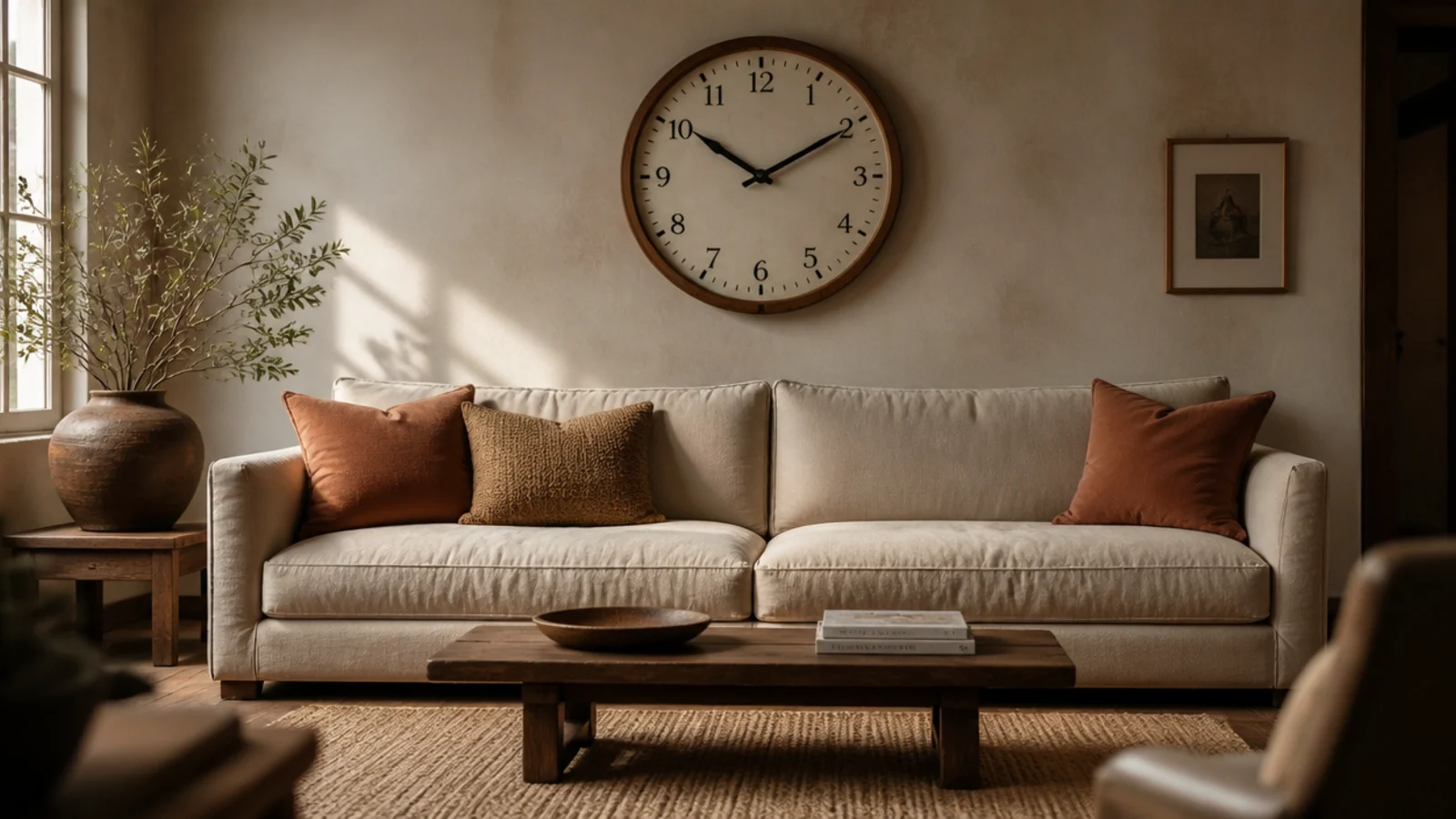
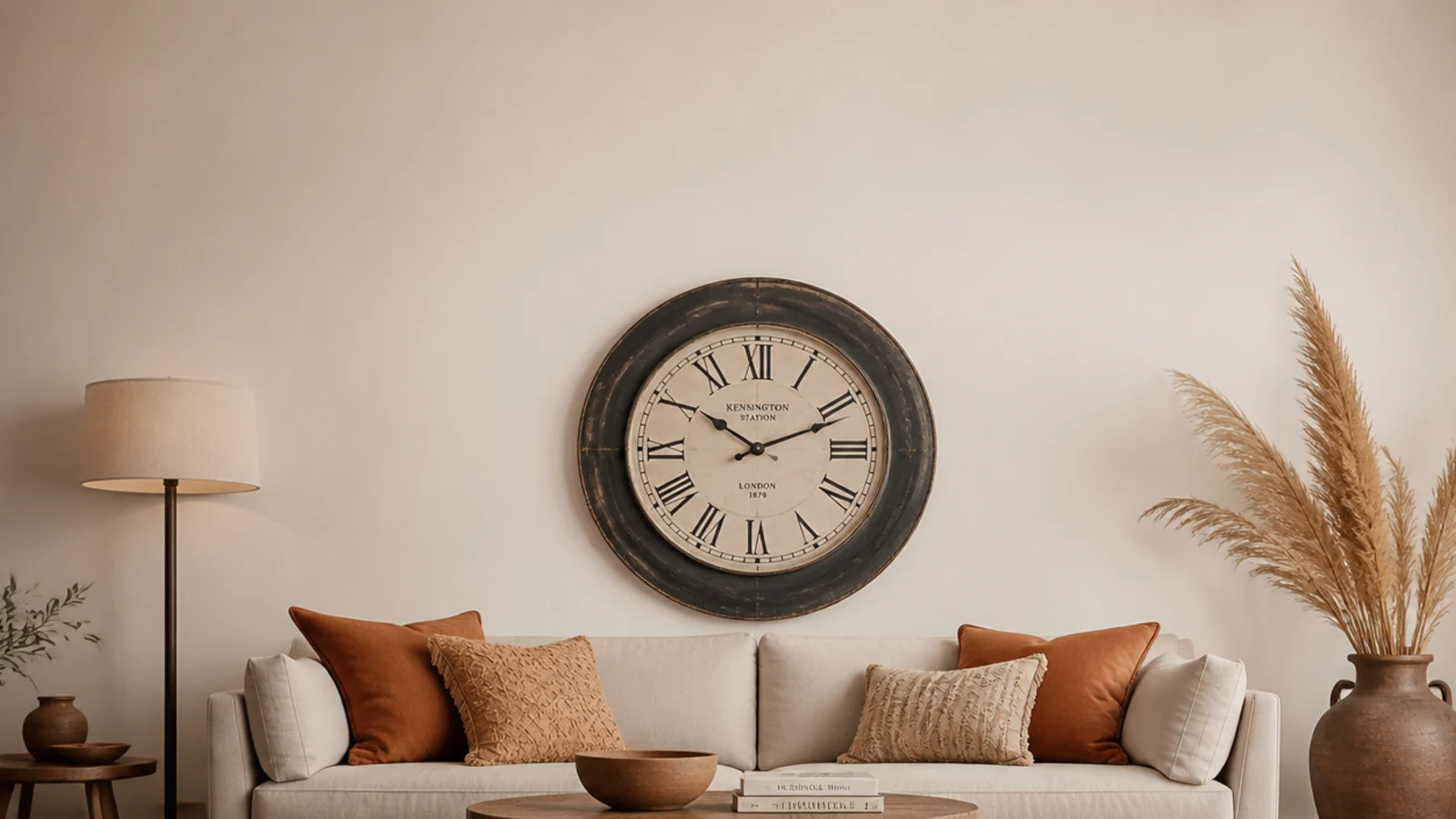
Nearly every wall clock decor living room plan I have been asked to rescue had the same fault, and it was never the clock. It was centred on the wall instead of on the sofa, hung eight inches too high, and held up by the plastic plug that came taped to the back. Those three things take twenty minutes to get right and they decide whether the whole wall reads as designed. Below are thirty arrangements that work in real rooms, with the measurements that make each one land.
In this guide32 sections — tap to openHide
- 1.Where wall clock decor living room plans usually slip
- 2.Centre the clock on the sofa, not on the wall
- 3.Leave eight to twelve inches above the back cushions
- 4.One thirty-inch face instead of three small ones
- 5.Offset the clock above the long arm of a sectional
- 6.Six to ten inches above a console table
- 7.Flank the clock with two narrow frames
- 8.Chimney breast: mantel height plus six inches
- 9.Exposed gears for a double-height wall
- 10.Repeat the sofa leg metal in the clock hands
- 11.Make the clock the top point of a triangle
- 12.Hang it beside the television, not above it
- 13.Lean a clock on a shelf instead of hanging it
- 14.Pale dial on a dark painted wall
- 15.A forty-inch face for a twelve-foot wall
- 16.Round clock to break a room of rectangles
- 17.Paint the case the wall colour in a small room
- 18.Keep the rim above the tallest lamp shade
- 19.Pair the clock with a floating shelf below
- 20.Hang above a low bookcase, not a tall one
- 21.A silent movement for a room with a television
- 22.Centre a clock on the pier between two windows
- 23.Warm the dial in a cool grey scheme
- 24.Two matched clocks for an open-plan double space
- 25.Lift the clock above the door line in a tall room
- 26.Backlight the rim for evening
- 27.A vintage face against modern joinery
- 28.Drop a small clock inside built-in shelving
- 29.Size the clock against a gallery wall grid
- 30.Weigh the clock before you choose the fixing
- 31.Mark the stud and hang from framing
- 32.Mistakes to Skip
Where wall clock decor living room plans usually slip
Three numbers do most of the work. The first is diameter against furniture: take about a third of the width of whatever sits below. An 84-inch sofa wants 24 to 30 inches, a 60-inch console wants 18 to 22, and an empty wall with nothing under it wants 30 to 36 before it stops looking underdressed.
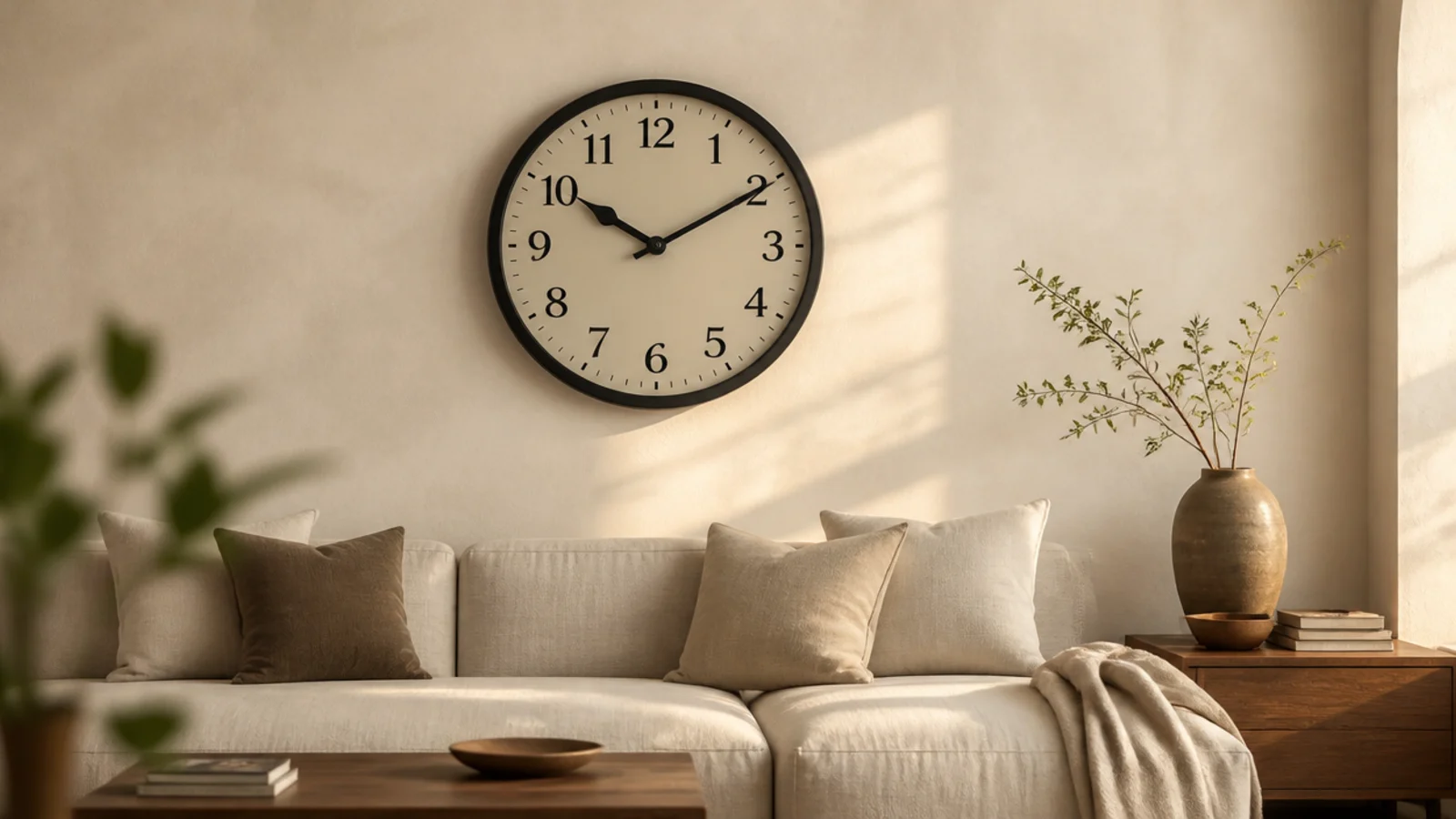
The second is the gap. Leave 8 to 12 inches of clear plaster between the top of the sofa back and the bottom of the rim. Under 8 inches the clock looks like it is resting on the cushions; over about 14 the two objects stop reading as a pair. Above a console, 6 to 10 inches works because the surface is lower and the objects on it fill part of the space.
The third is the centre line. Fifty-seven inches from the floor is standing eye level, and that stays the target unless the furniture pushes you higher. Anything with a centre above 65 inches forces people to tilt their heads.
Then weigh it. A 24-inch MDF face is 5 to 8 pounds, a 36-inch metal one 12 to 20. Above a sofa, where people sit underneath, anything over 8 pounds belongs on a number eight screw into a stud rather than a plug — studs land 16 inches apart, and moving the clock 3 inches to catch one costs nothing. Where no stud lands, a spring toggle holds 25 to 50 pounds in half-inch drywall. Budget $40 to $120 at 24 inches, $120 to $350 oversized. The full size and style guide covers the buying side.
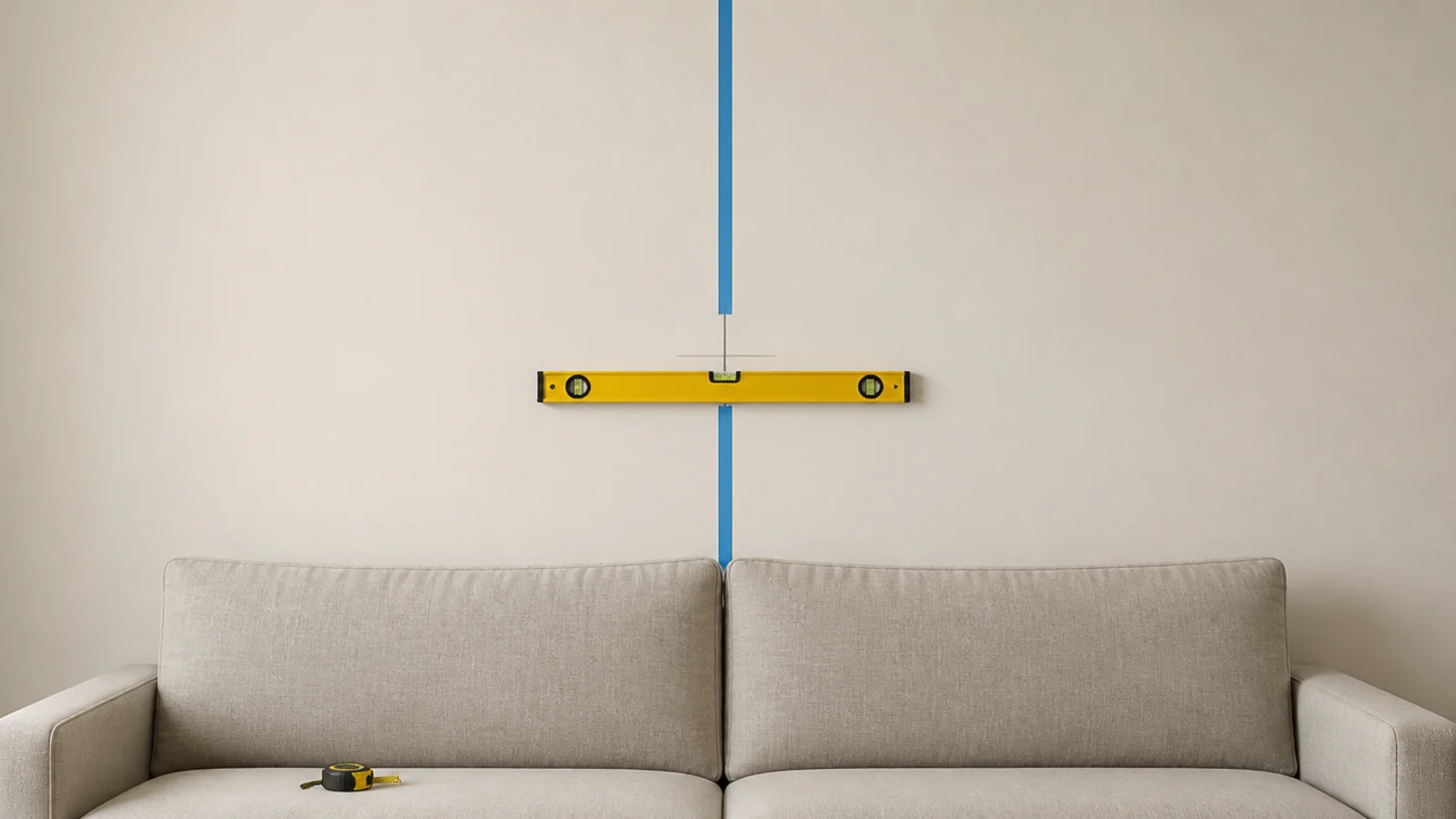
1. Centre the clock on the sofa, not on the wall
The single fix that solves most bad clock walls. Measure the sofa, find its middle, and drop a plumb line from there. In an alcove or beside a chimney breast the sofa is almost never centred on the wall, and the eye reads the furniture line first every time.
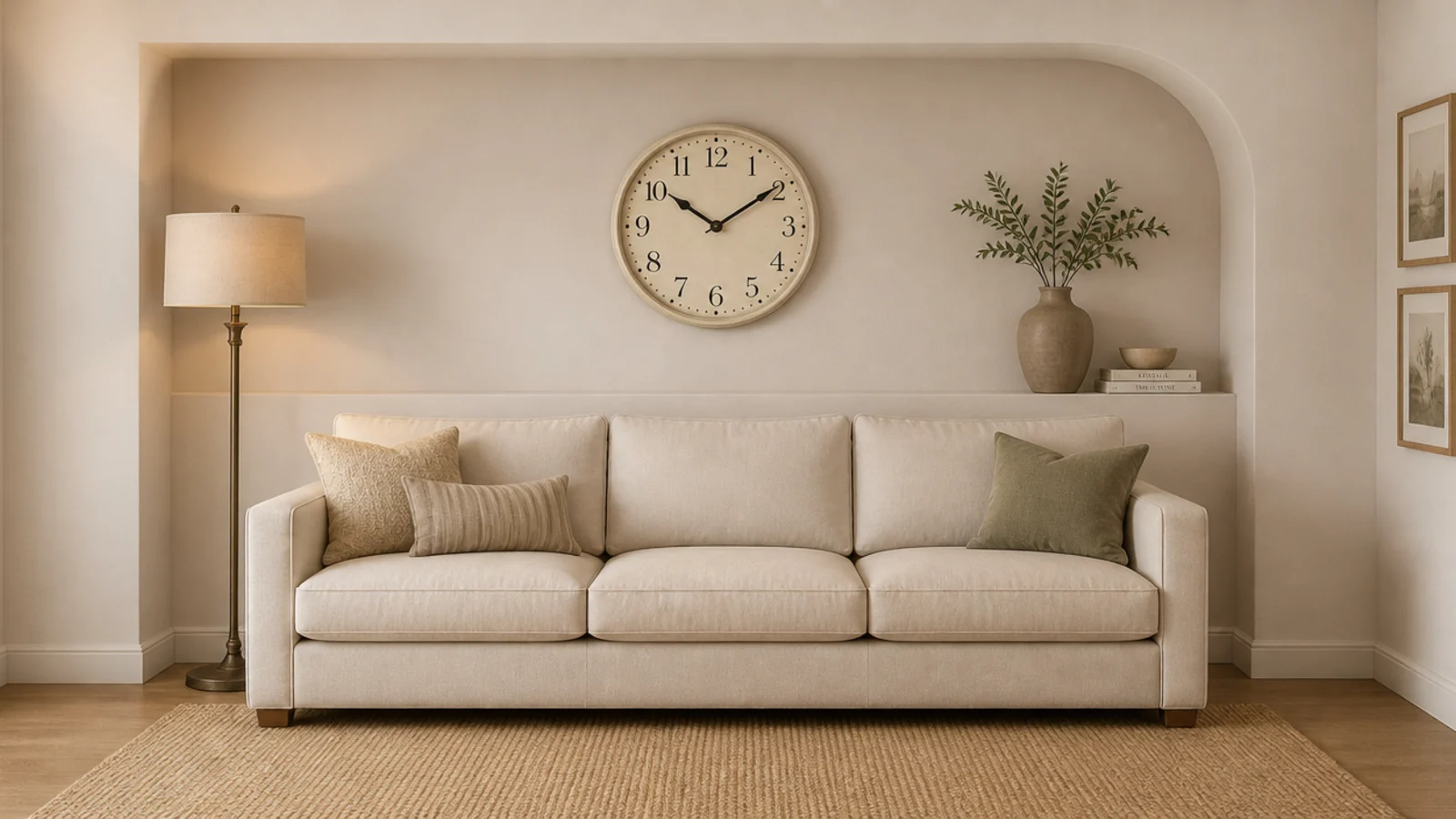
2. Leave eight to twelve inches above the back cushions
Hold a sheet of paper the size of the clock against the wall and slide it up until the gap looks like a hand span. That is 8 to 12 inches on most sofas at 32 to 36 inches tall. Mark the bottom of the rim in pencil before you measure to the centre.
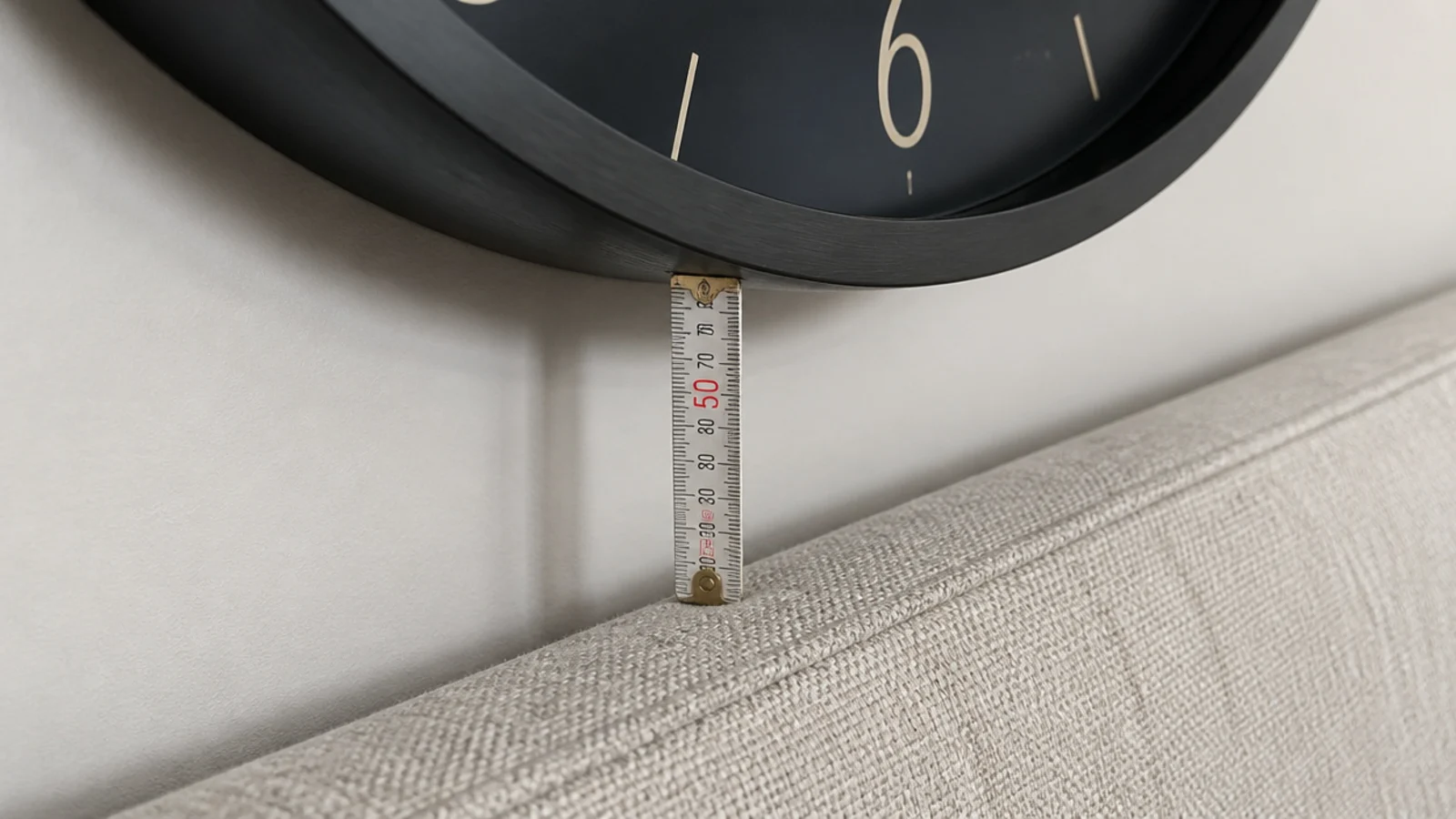
3. One thirty-inch face instead of three small ones
Three 12-inch clocks on a sofa wall compete; one 30-inch face resolves it. If the wall runs 9 feet or more with a sofa below, a single large circle costs about the same as three small ones and needs one fixing instead of six holes.
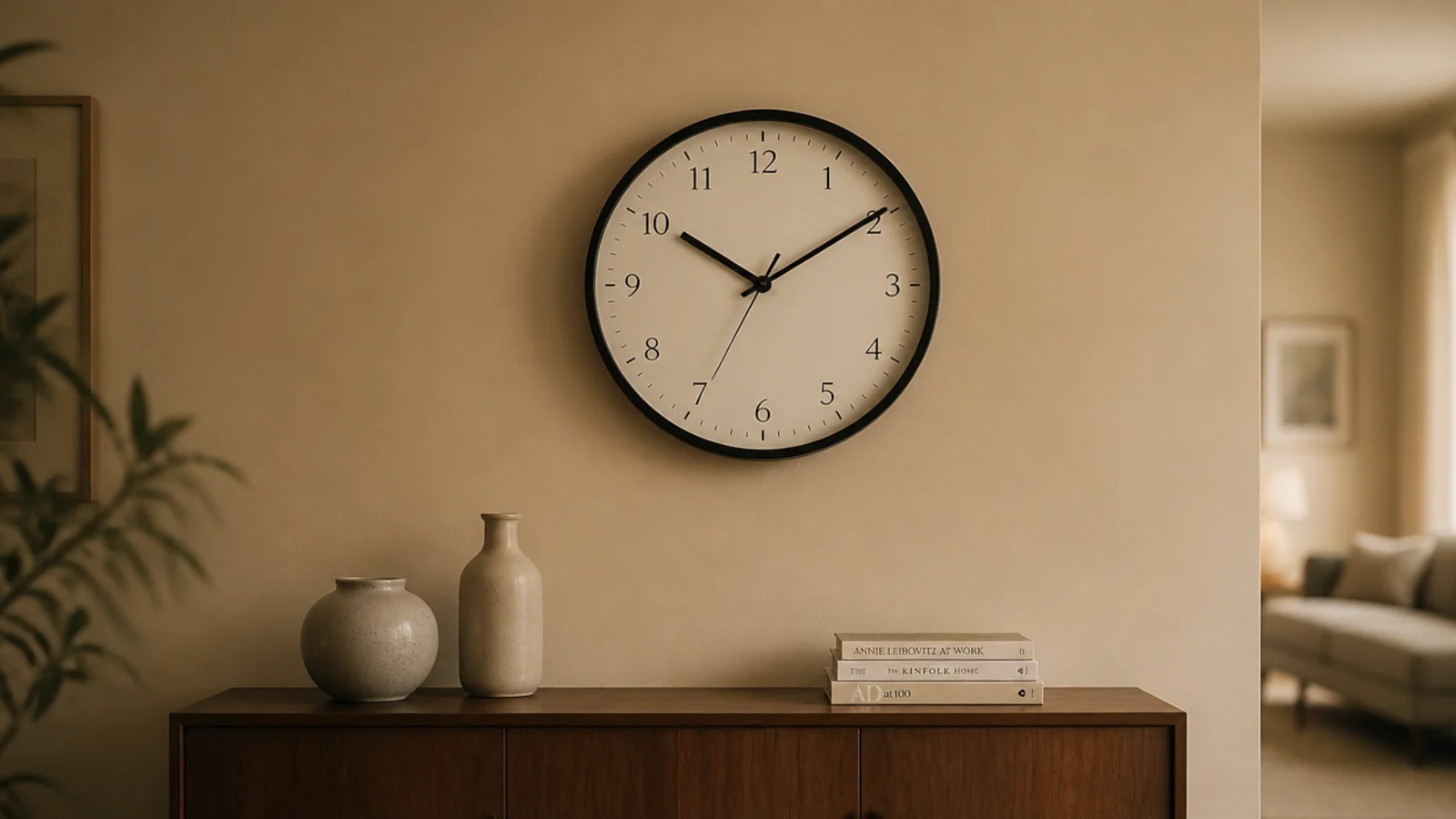
4. Offset the clock above the long arm of a sectional
An L-shaped sofa moves the visual centre of the wall sideways. Find the midpoint of the longer run rather than the midpoint of the whole footprint, and hang there. It looks wrong on paper and correct in the room, which is the reliable test.
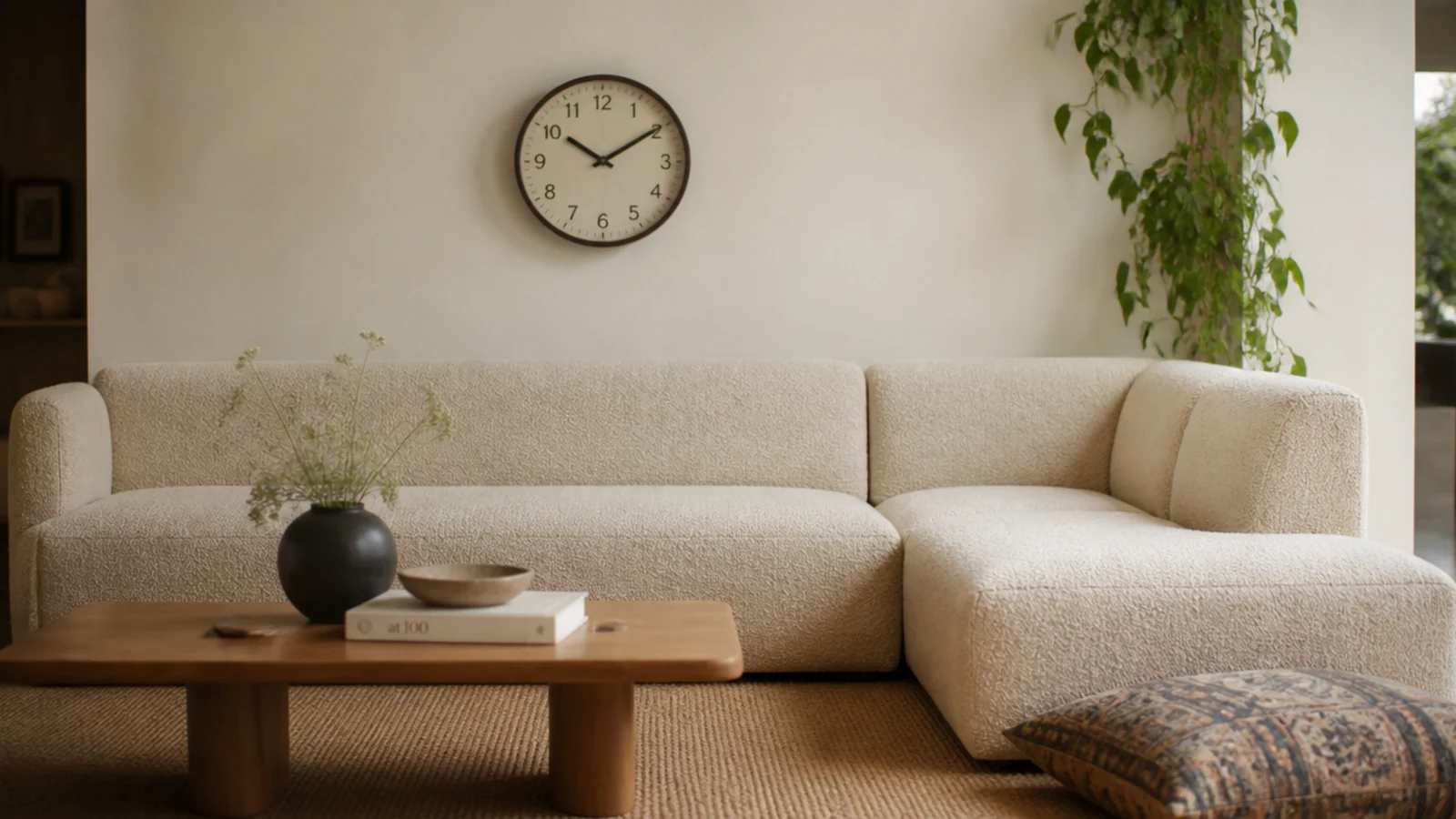
5. Six to ten inches above a console table
A console is lower than a sofa and usually carries objects, so the clock can sit closer. Six to ten inches above the surface keeps them as one group. Check the tallest thing on the console — a lamp shade should not overlap the bottom of the dial.
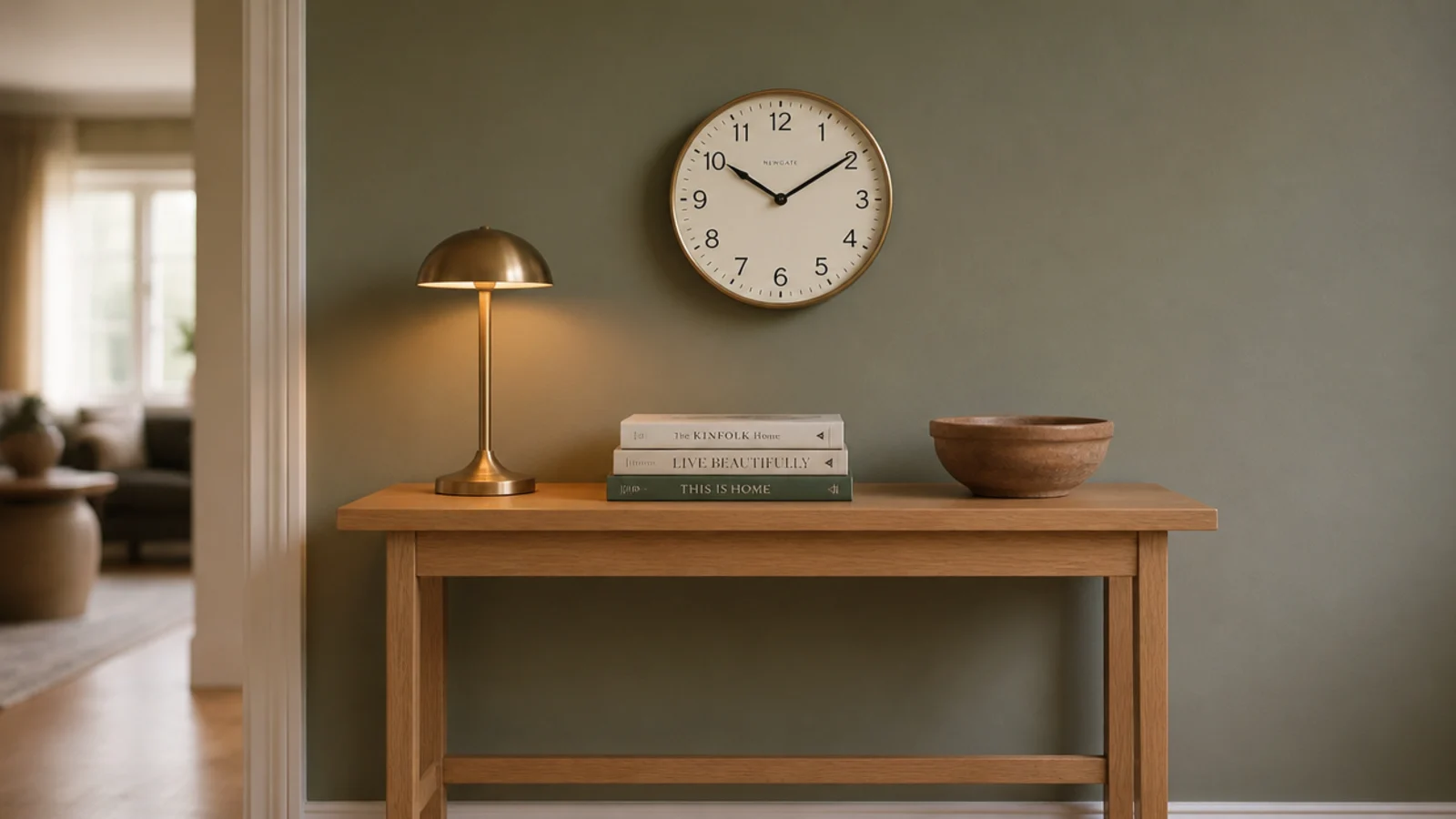
6. Flank the clock with two narrow frames
A circle alone on a wide wall can float. Two tall, narrow frames either side at 3 to 4 inches of spacing give it edges. Keep the frames at least 6 inches shorter than the clock diameter so the clock stays the largest object.
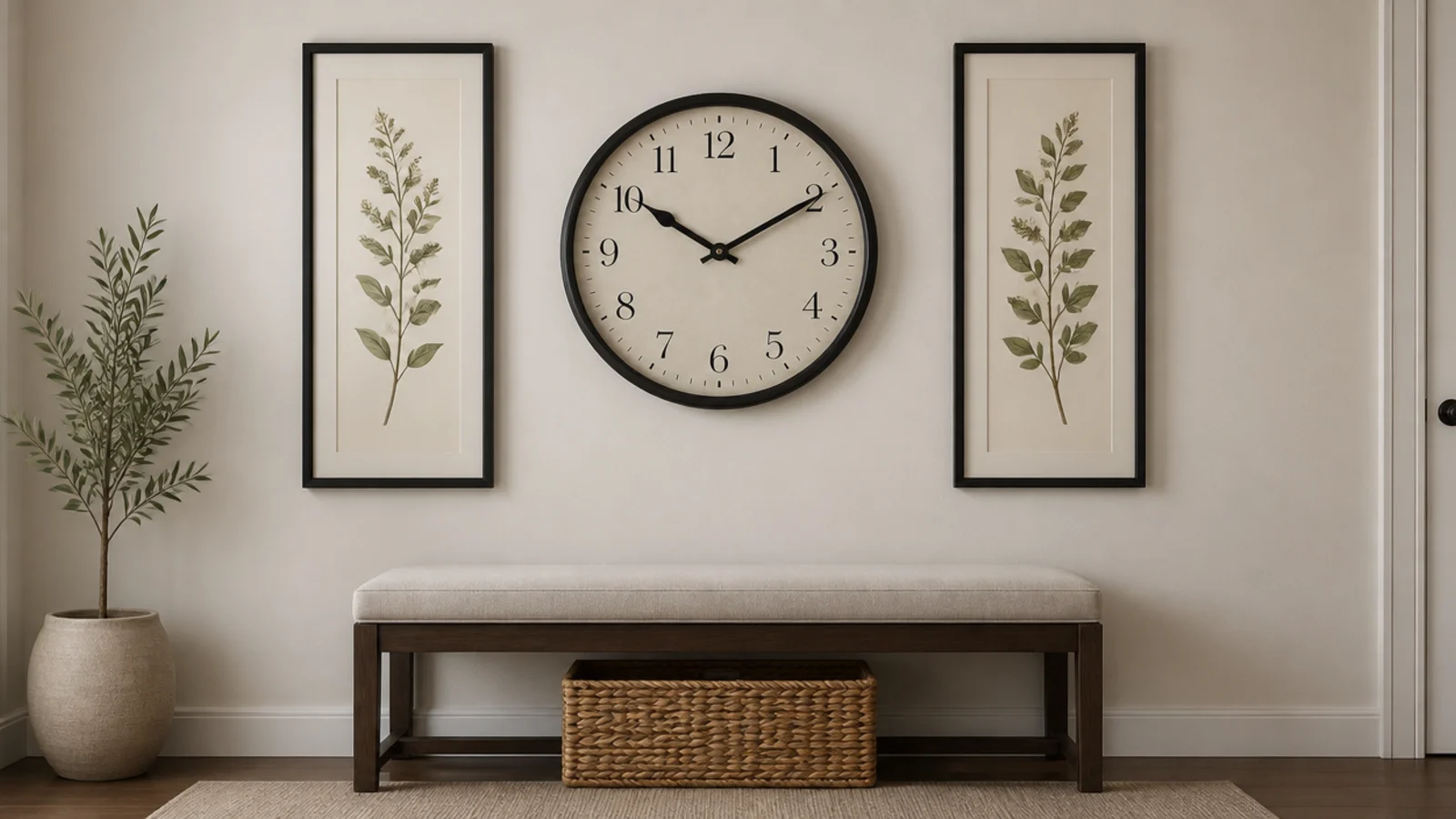
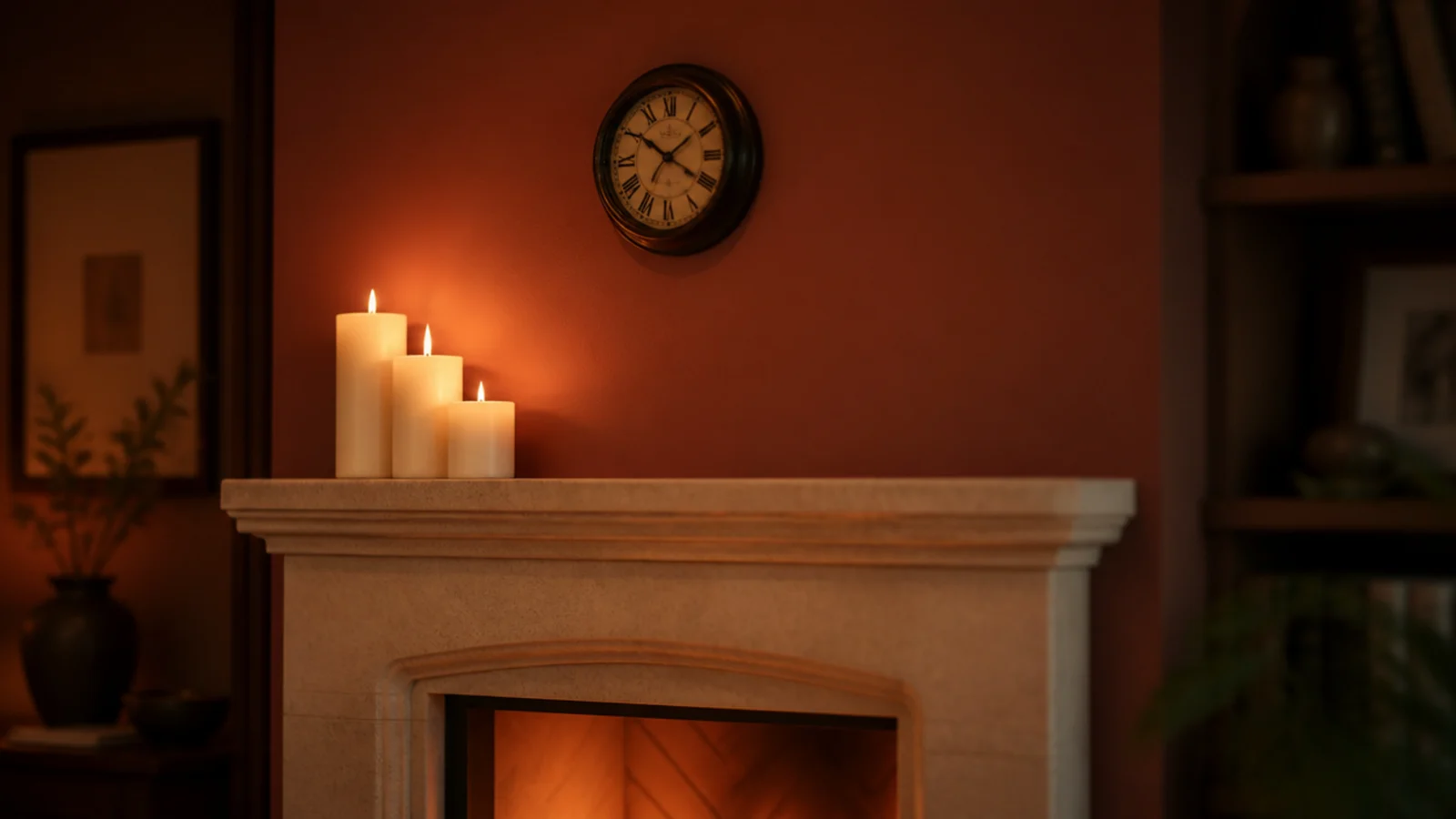
7. Chimney breast: mantel height plus six inches
Over a fireplace, the mantel shelf sets the bottom line rather than eye level. Four to eight inches of gap is the working range, and the clock should sit at least 6 inches narrower than the mantel at each end so it does not crowd the returns.
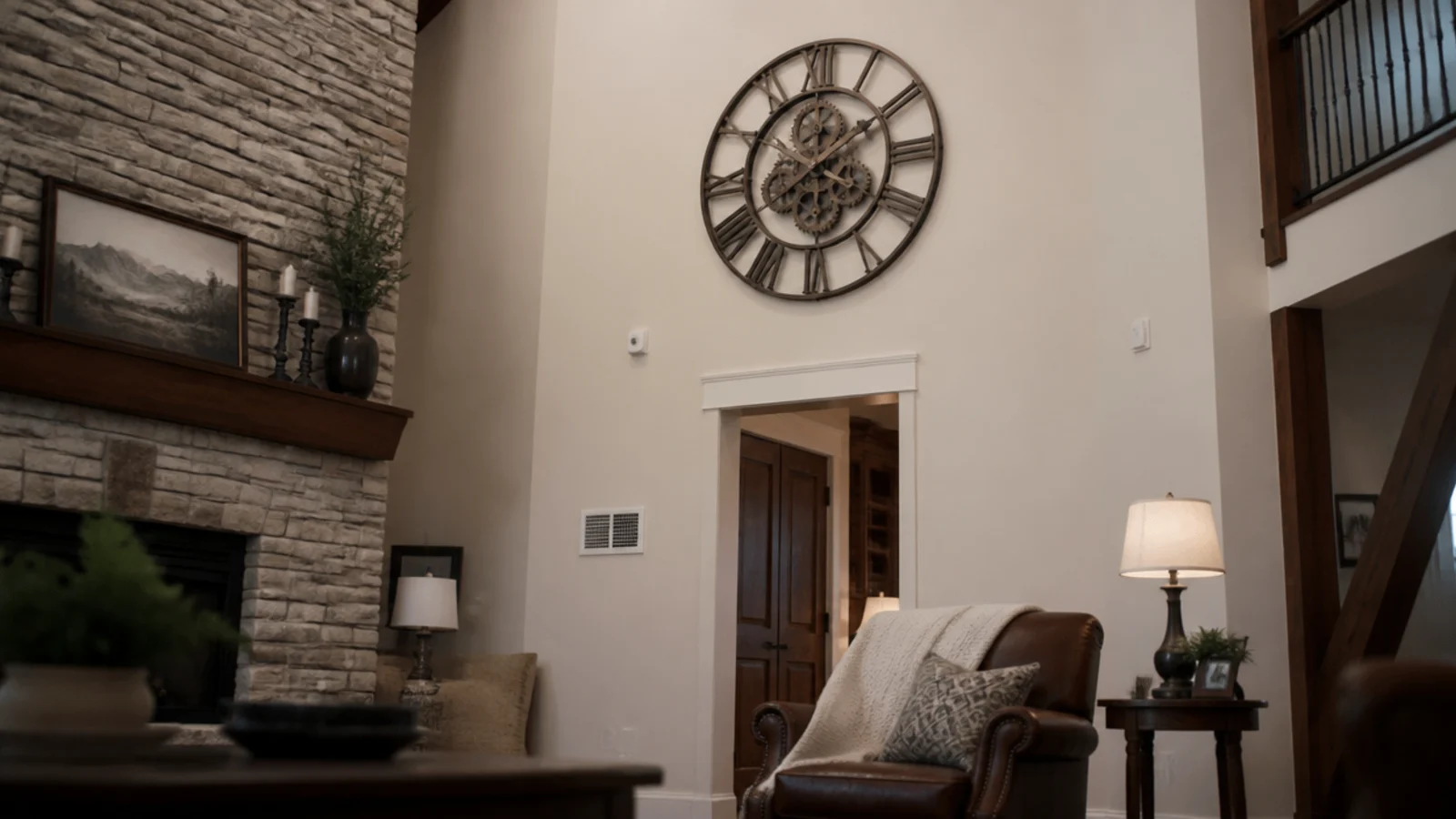
8. Exposed gears for a double-height wall
A tall wall swallows detail. An exposed-gear or open-frame clock at 30 to 40 inches gives the eye something to resolve from 15 feet back, which a flat printed dial at the same size will not. These run heavy at 15 to 25 pounds, so it is a framing fixing only.
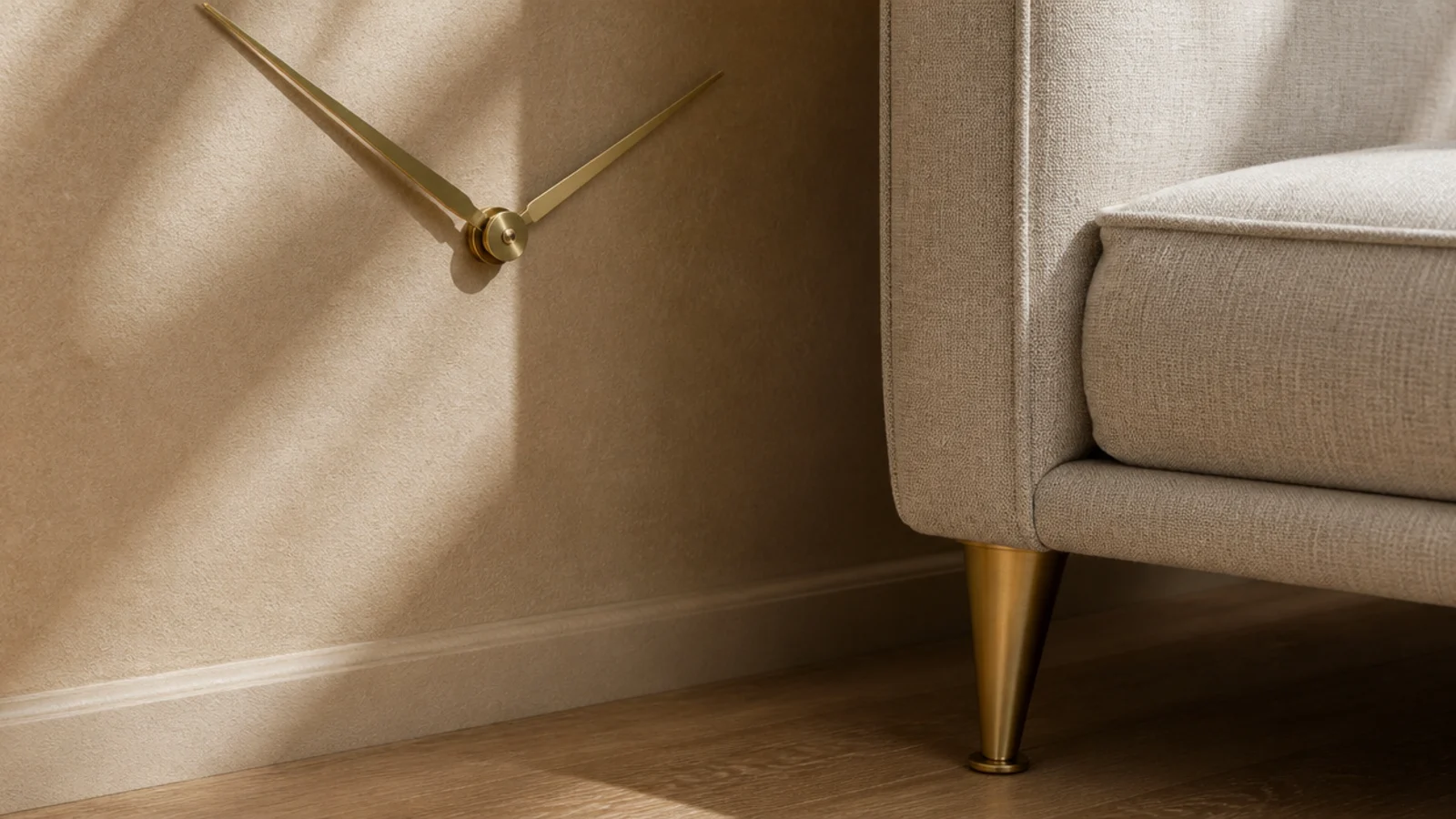
9. Repeat the sofa leg metal in the clock hands
If the sofa stands on brass feet, brass hands tie the wall to the furniture for free. One repeated metal does more to make a living room feel considered than matching the timber tones, and it costs nothing at the point of choosing.
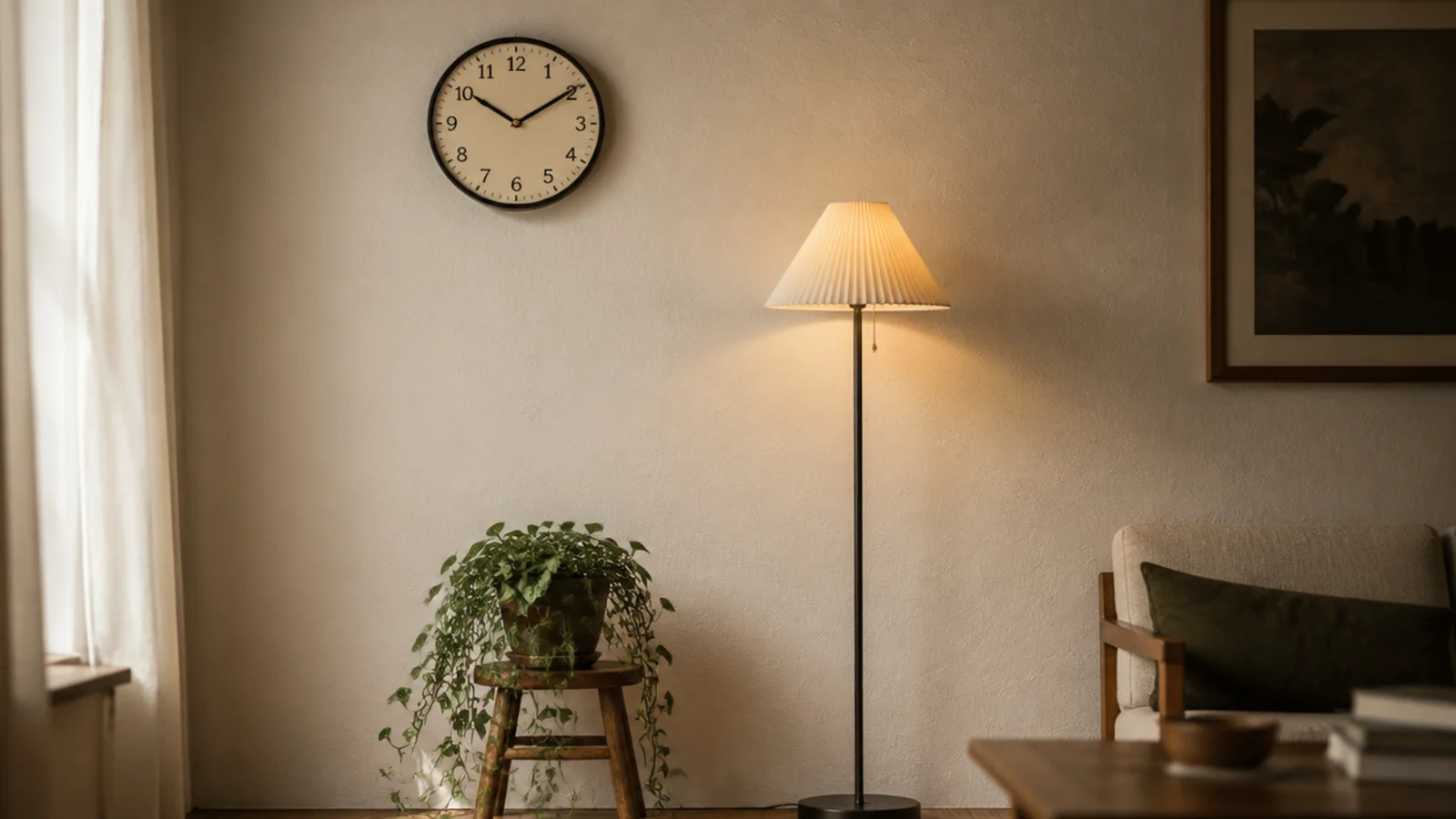
10. Make the clock the top point of a triangle
Put the clock high, a floor lamp at mid height and a low plant or stool below, and the corner reads as an arrangement rather than three unrelated objects. Keep the three roughly within a 4-foot span so the eye links them.
11. Hang it beside the television, not above it
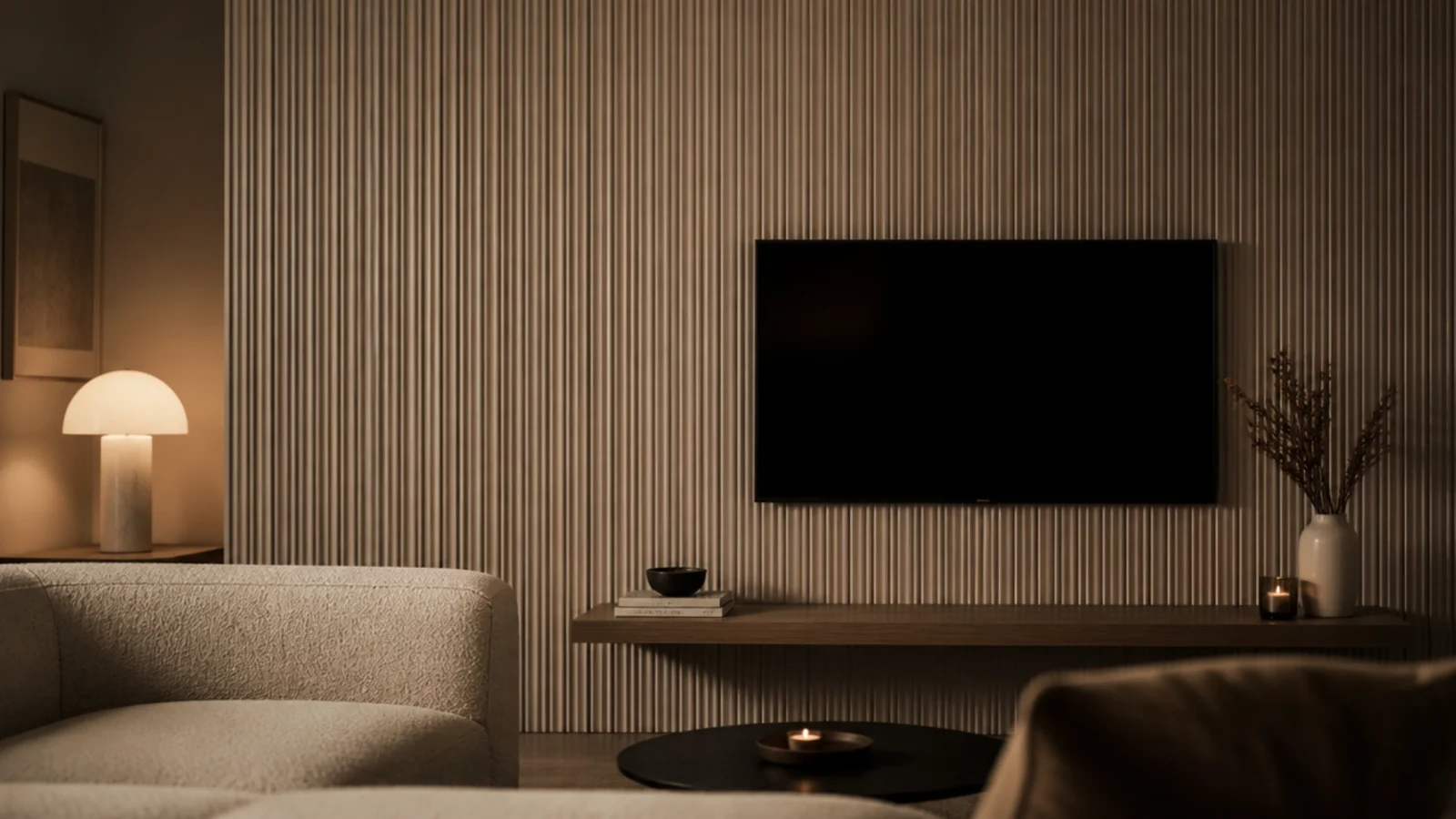
A screen already owns that wall, and a clock above it sits too high to read and too close to compete. Move it to the adjacent wall or the plaster return beside the media unit. The living room TV wall guide covers balancing both on one wall.
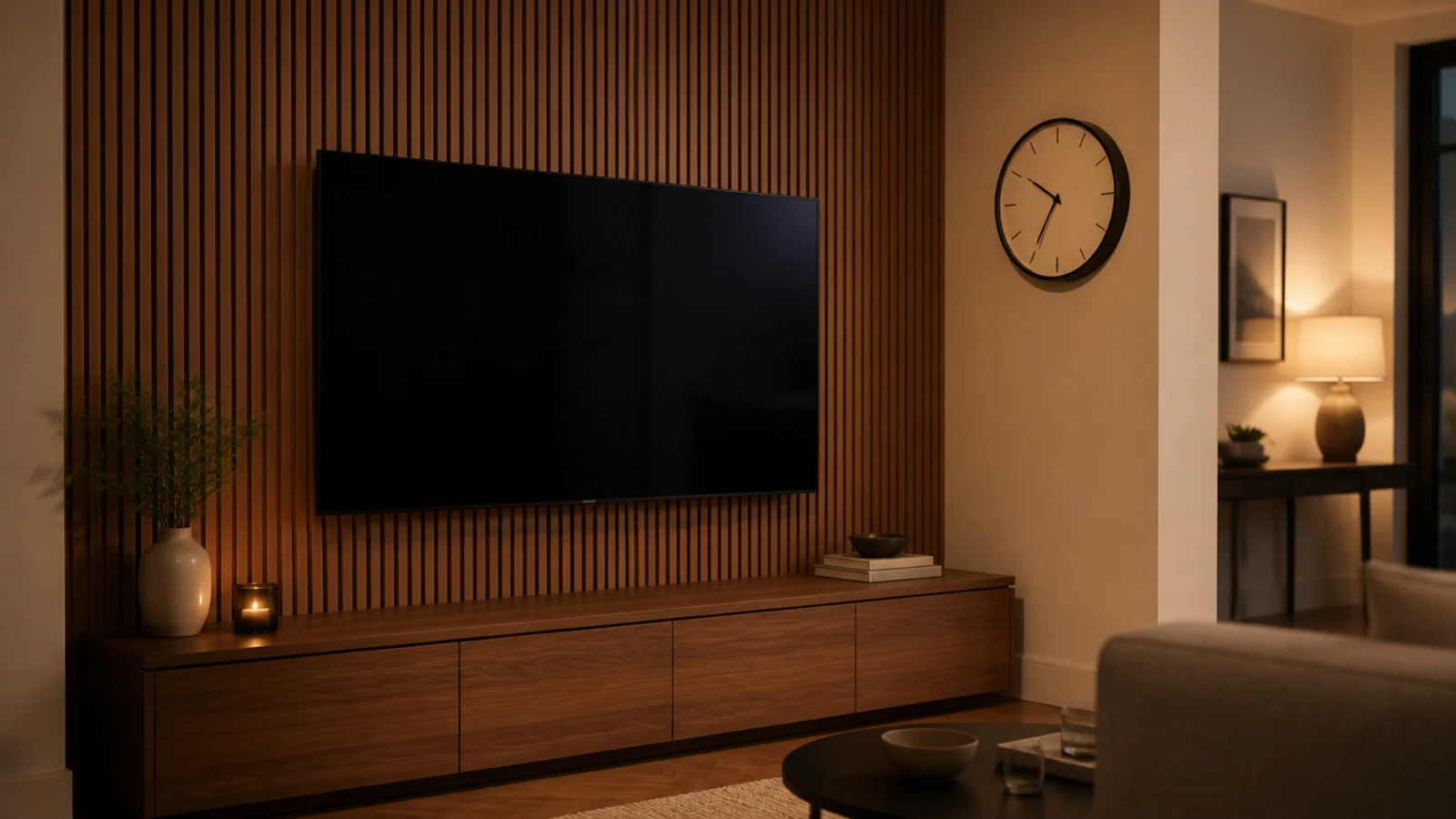
12. Lean a clock on a shelf instead of hanging it
On a picture ledge 4 inches deep, a 10 to 14 inch clock leans back against the wall with no fixing at all. It is the rental-friendly version, it restyles in seconds, and a small strip of museum putty under the rim stops it sliding.
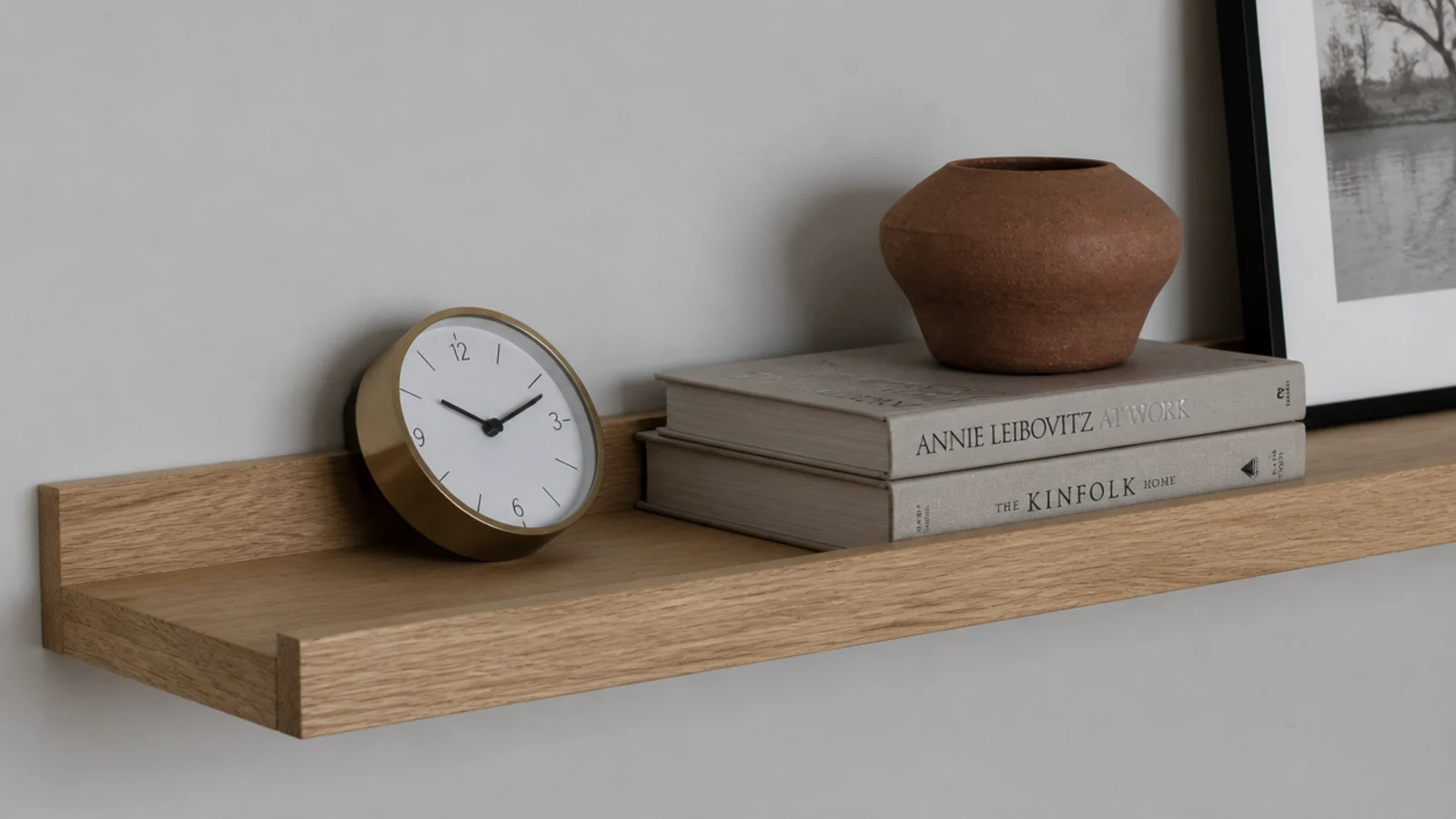
13. Pale dial on a dark painted wall
Contrast is what makes a clock readable across a room. A cream or bone dial on charcoal or deep green paint stays legible at 20 feet, where a dark dial on a dark wall becomes an unreadable disc after about 8.
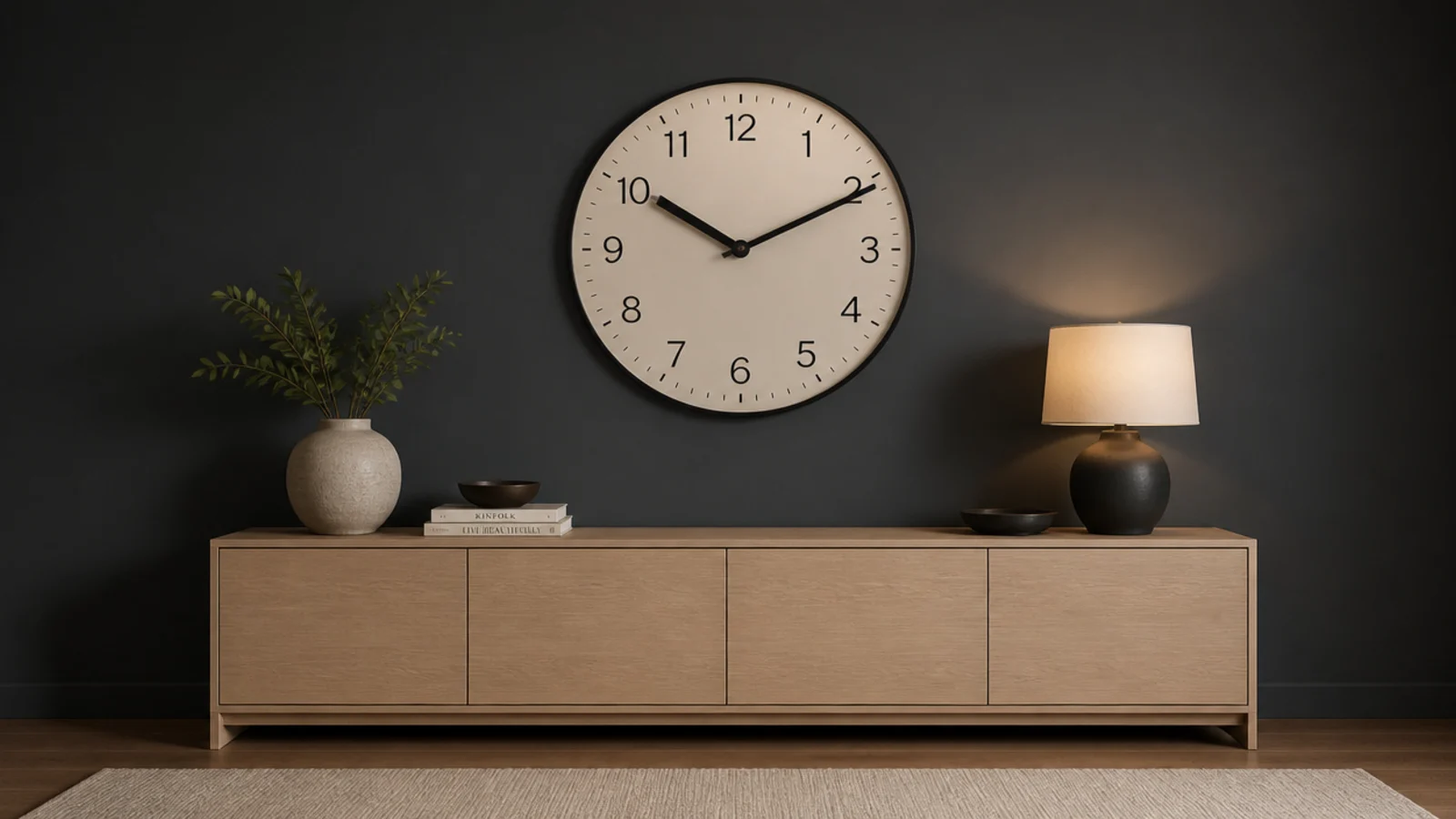
14. A forty-inch face for a twelve-foot wall
Long unbroken walls need one big move, not several small ones. At 12 feet across, 36 to 40 inches of clock still leaves generous plaster either side. Check the ceiling height too — under 8 feet, 36 inches starts to feel crowded vertically.
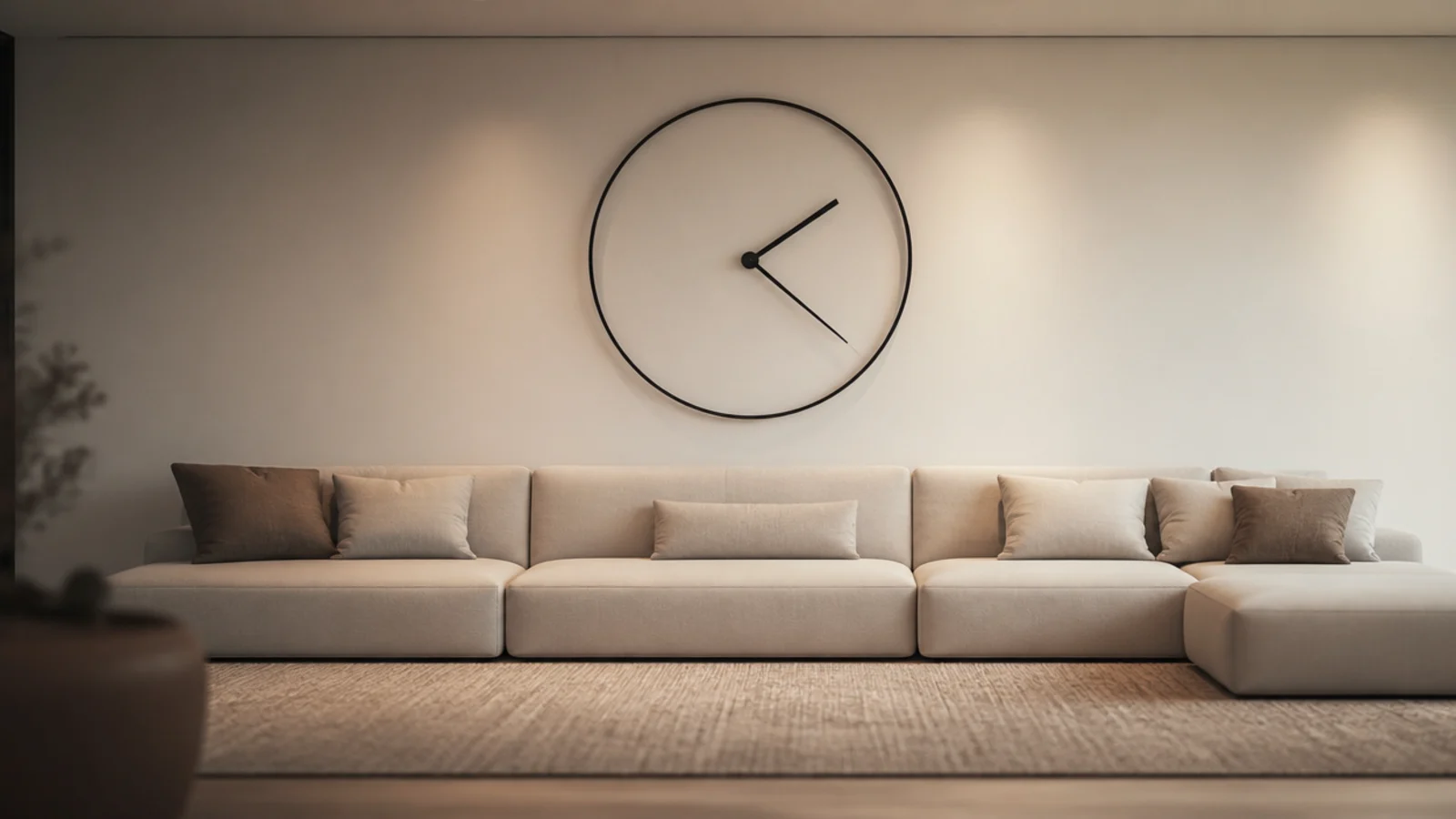
15. Round clock to break a room of rectangles
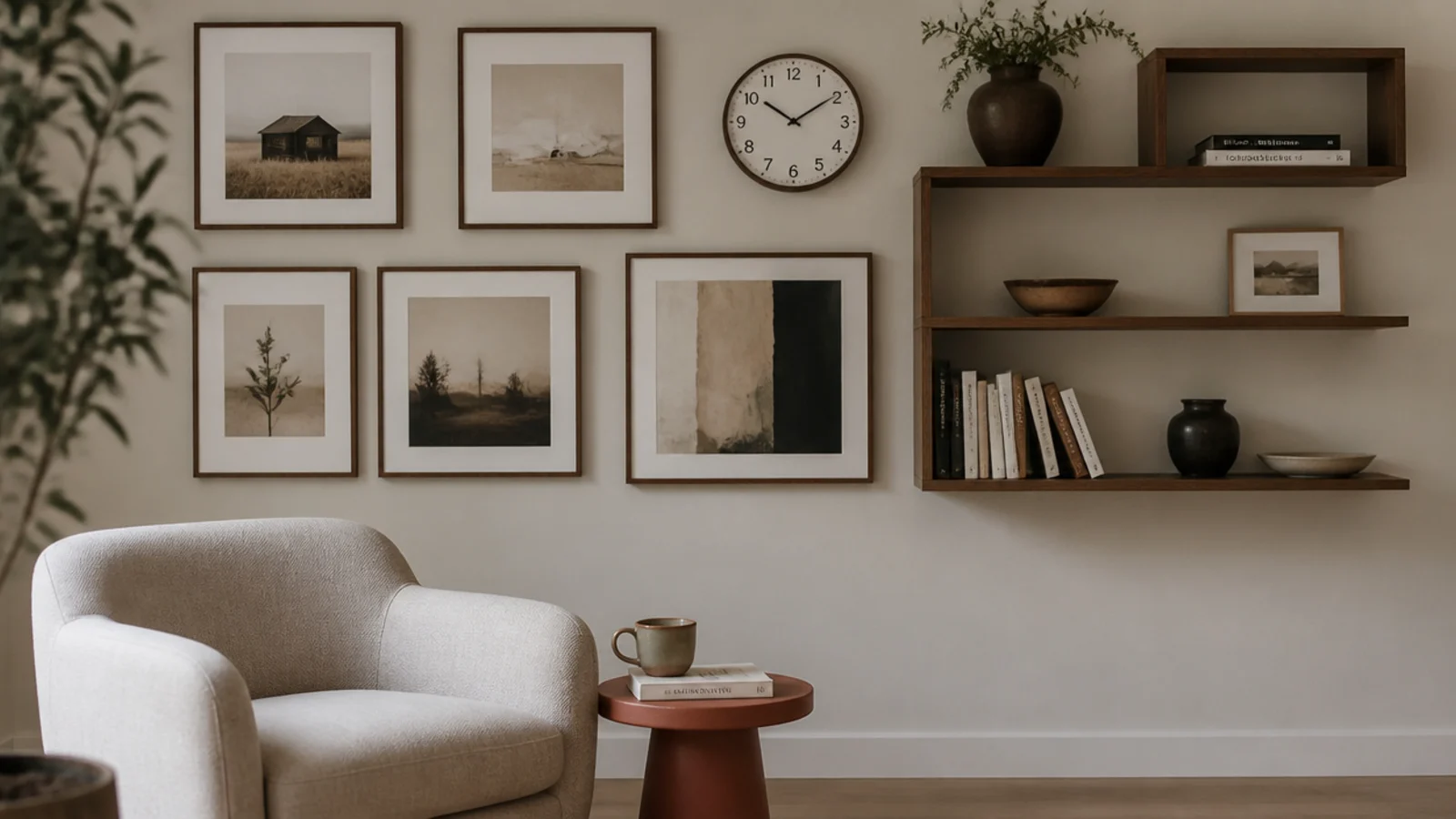
Most living rooms are entirely rectangles: sofa, rug, screen, frames, shelves. A circle is the cheapest way to relieve that, and it works best when it is the only round object on the wall rather than one of several.
16. Paint the case the wall colour in a small room
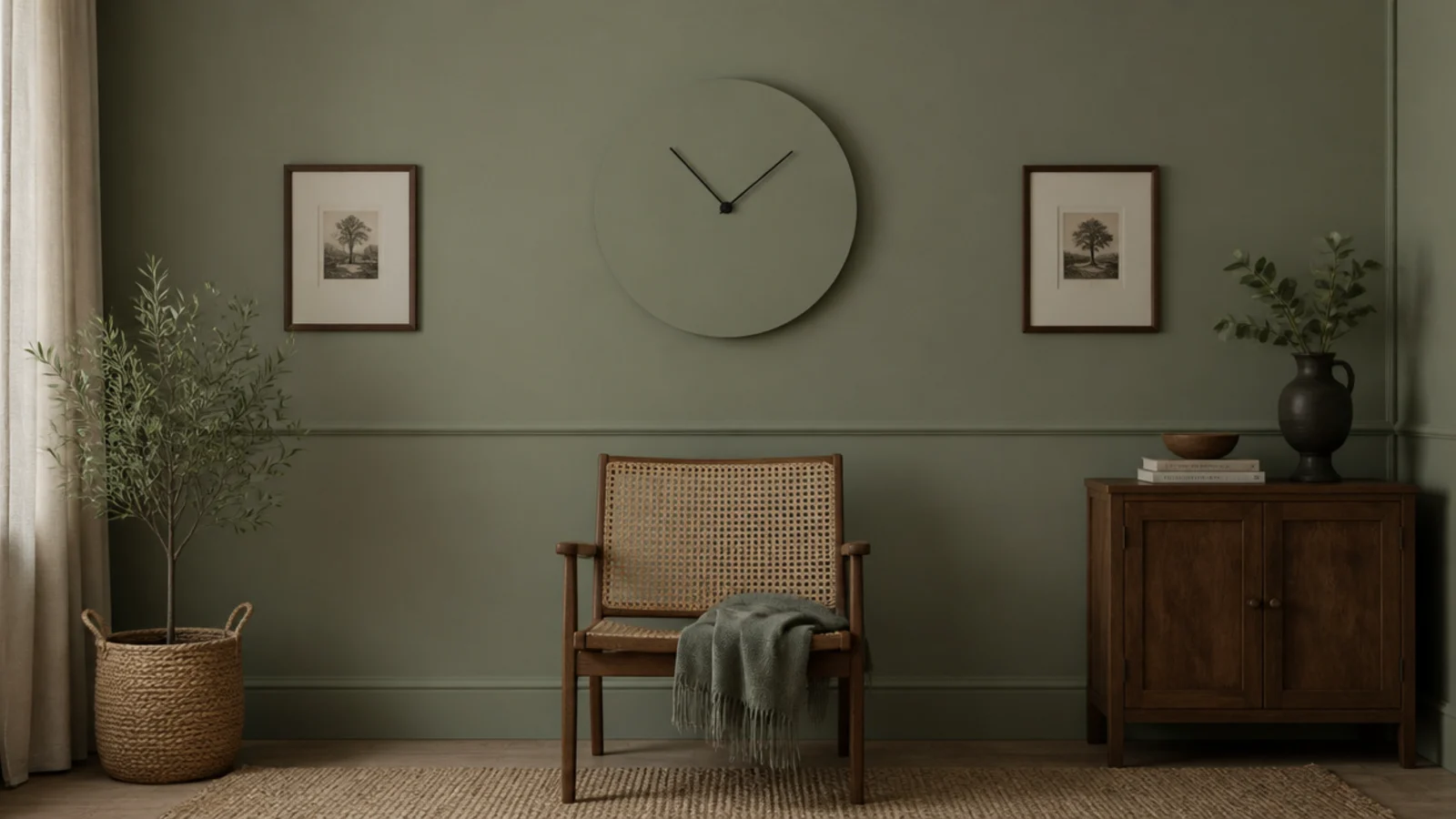
In a room under about 12 feet square, a contrasting circle eats visual space. Painting the case in the exact wall colour and sheen leaves only the hands and markers reading, which keeps the function without the bulk. Two thin coats of eggshell, sanded lightly between.
17. Keep the rim above the tallest lamp shade
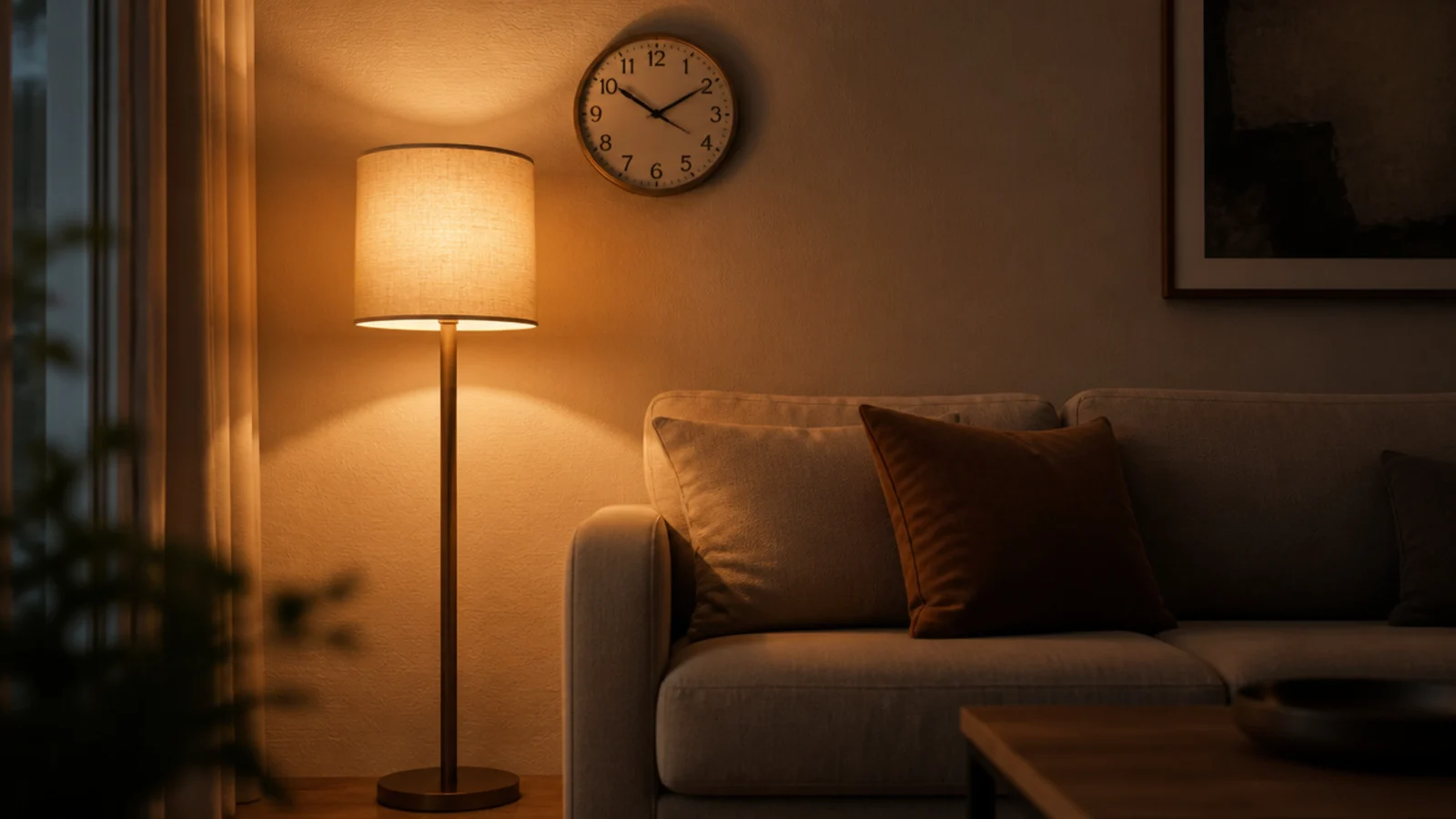
Nothing should overlap the bottom of the dial from a seated position. Sit down, look up, and check the sightline before you drill. A floor lamp shade cutting the bottom third of a clock is the most common overlap in a living room.
18. Pair the clock with a floating shelf below
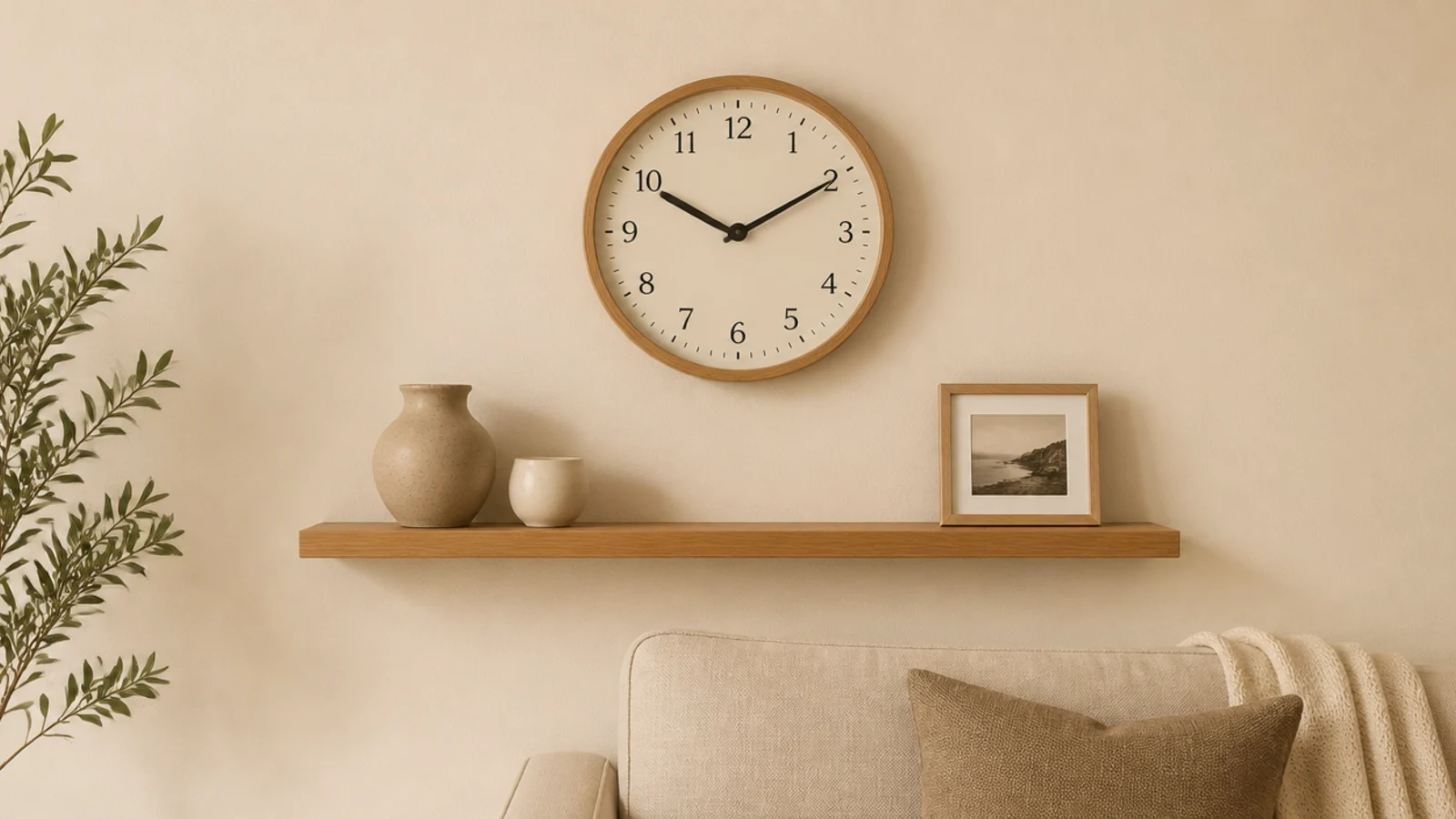
A 24-inch shelf mounted 10 to 14 inches under a clock turns two objects into one composition and gives the wall a base. Keep the shelf narrower than the clock diameter plus 6 inches, or the pairing stops looking related.
19. Hang above a low bookcase, not a tall one
A bookcase over about 48 inches leaves too little wall above it for a clock to breathe. Below that height you have room for the 6 to 10 inch gap plus the dial. The built-in shelving guide has the heights that leave usable wall.
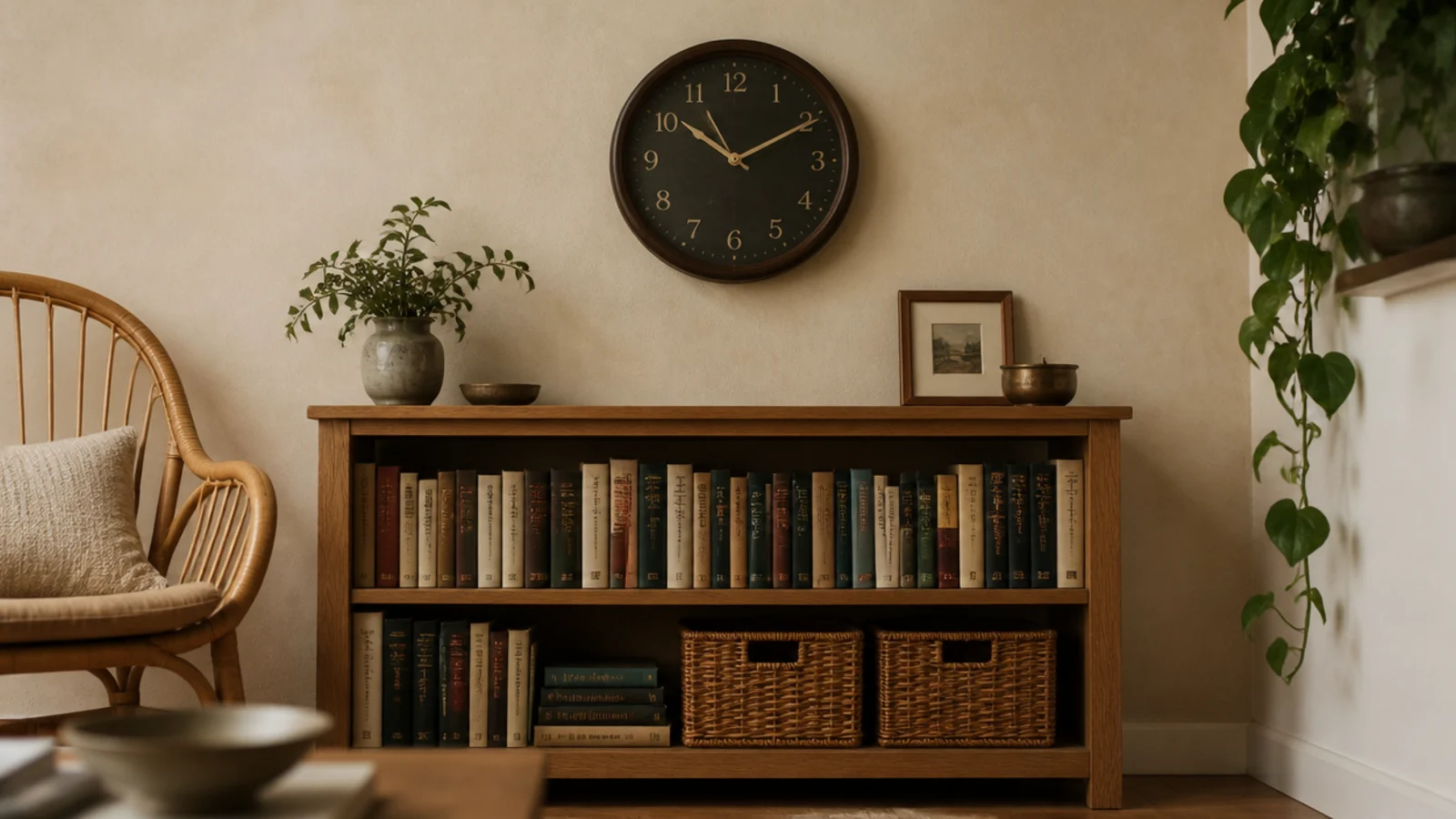
20. A silent movement for a room with a television
A step-tick movement measures around 25 to 30 decibels at a metre, which sits right under quiet dialogue. A continuous-sweep movement removes it for a few dollars more, at the cost of some battery life — 8 to 12 months rather than 12 to 18.
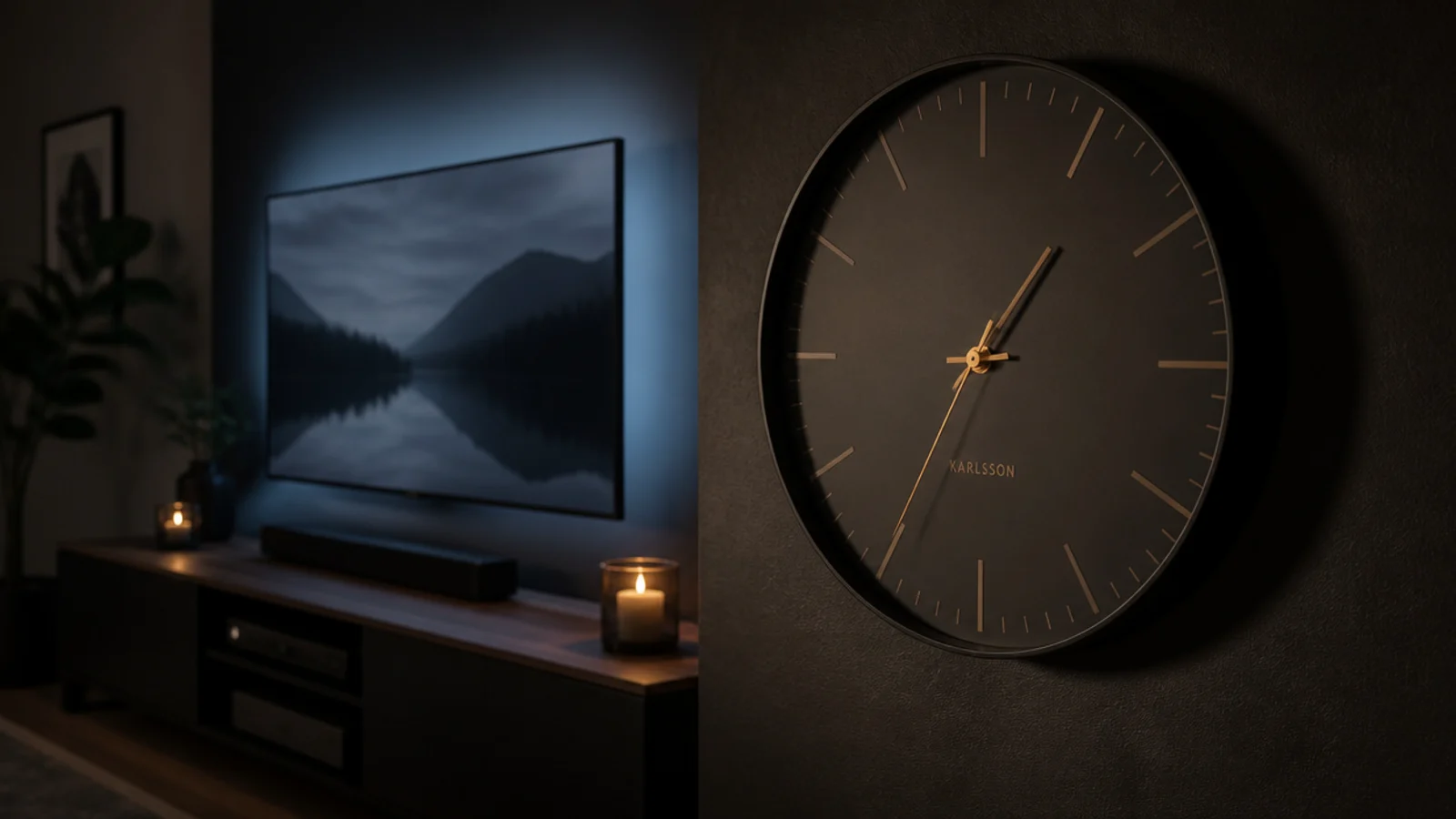
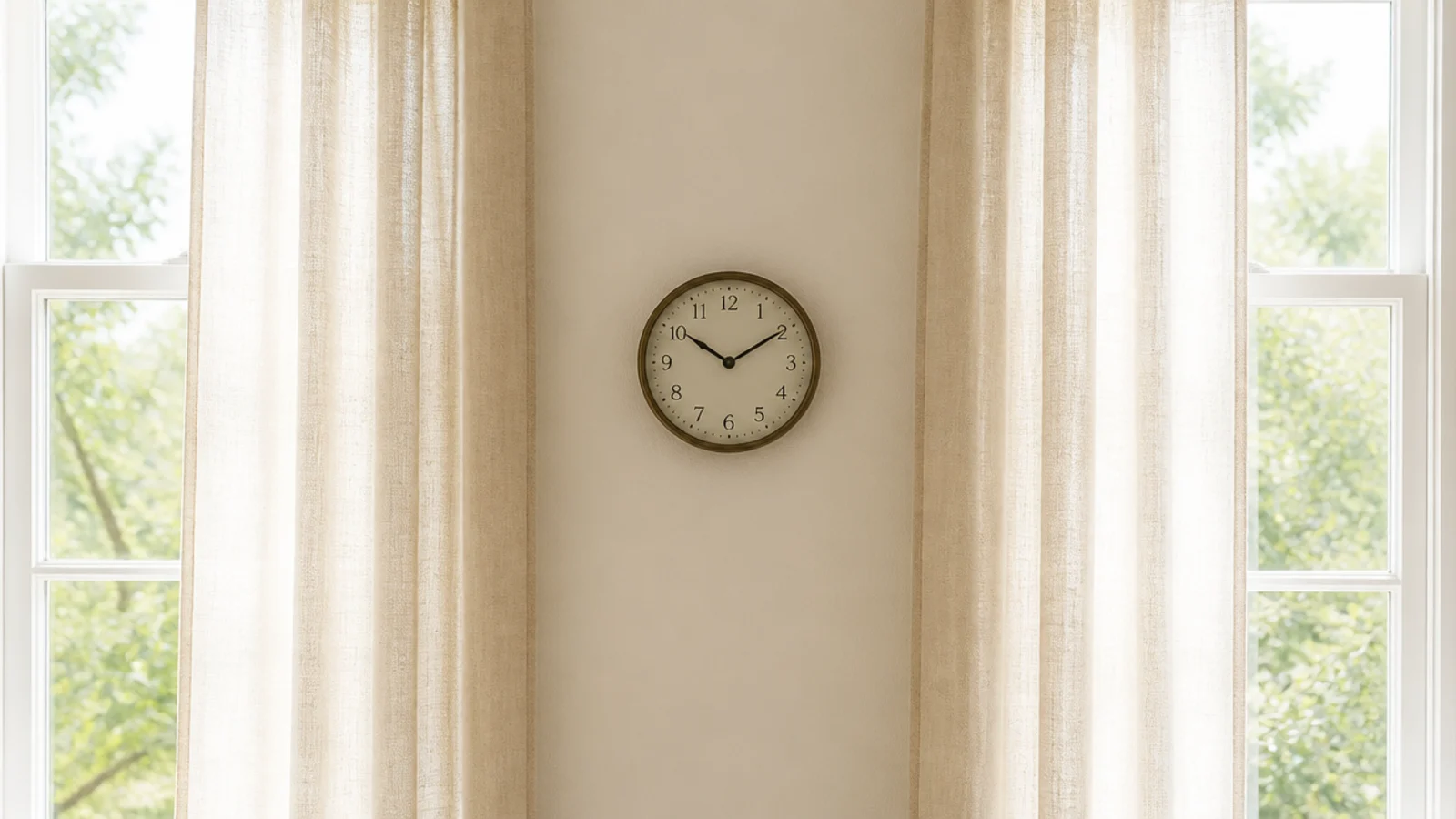
21. Centre a clock on the pier between two windows
The narrow strip of wall between two windows is usually dead space. A 12 to 16 inch clock centred there at 57 inches uses it without blocking any light, and the backlighting from both sides gives the rim a permanent soft edge.
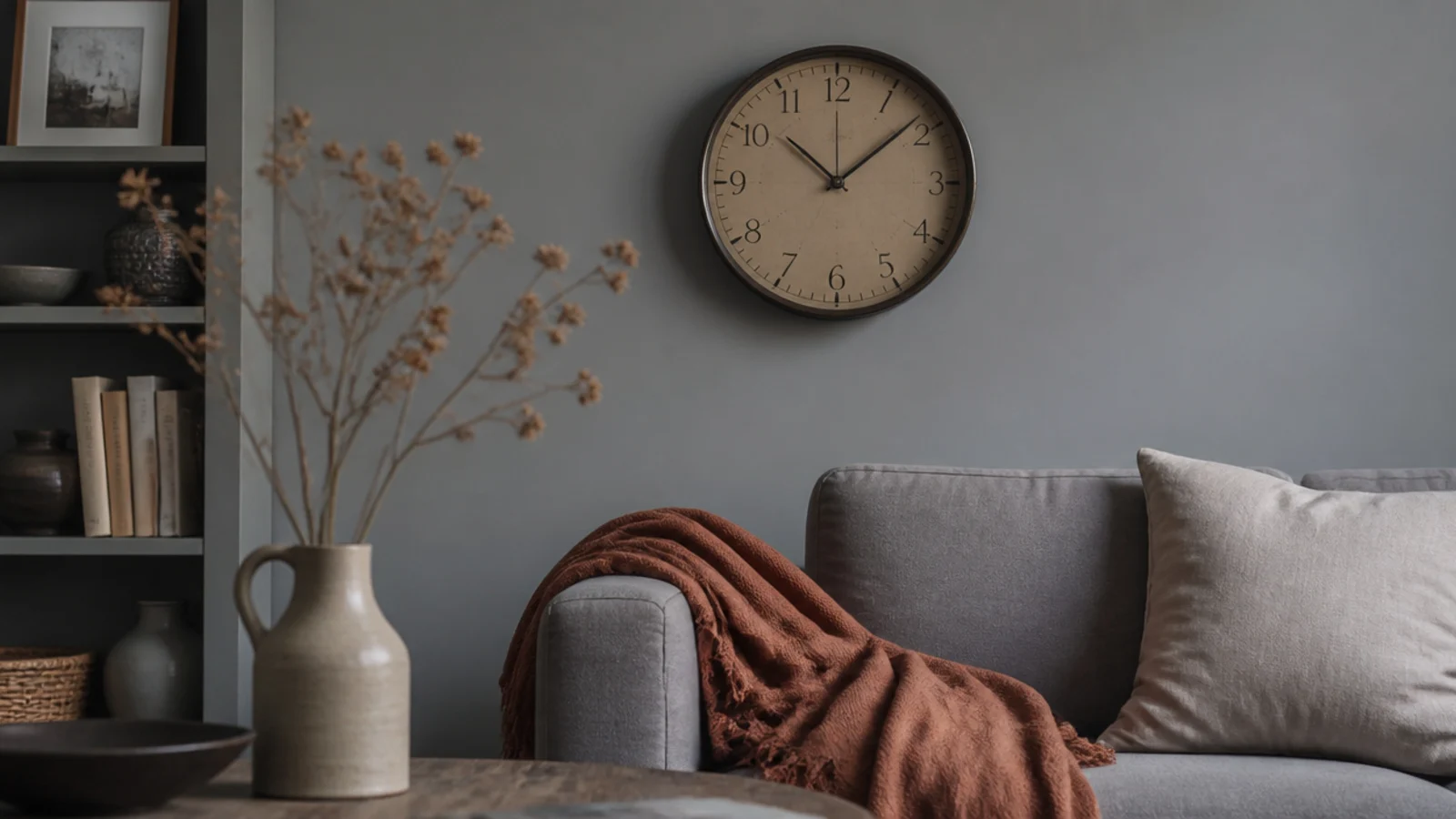
22. Warm the dial in a cool grey scheme
Grey rooms go flat under artificial light. A sand or bone dial with brass hands puts warmth at eye level without adding another cushion. It is a small correction that shows most in the evening, when cool paint loses whatever daylight was carrying it.
23. Two matched clocks for an open-plan double space
In a long knocked-through room, one clock only serves one end. Two identical faces on opposite end walls read as deliberate rather than duplicated, provided they match in diameter and finish and both sit on the same 57-inch centre line.
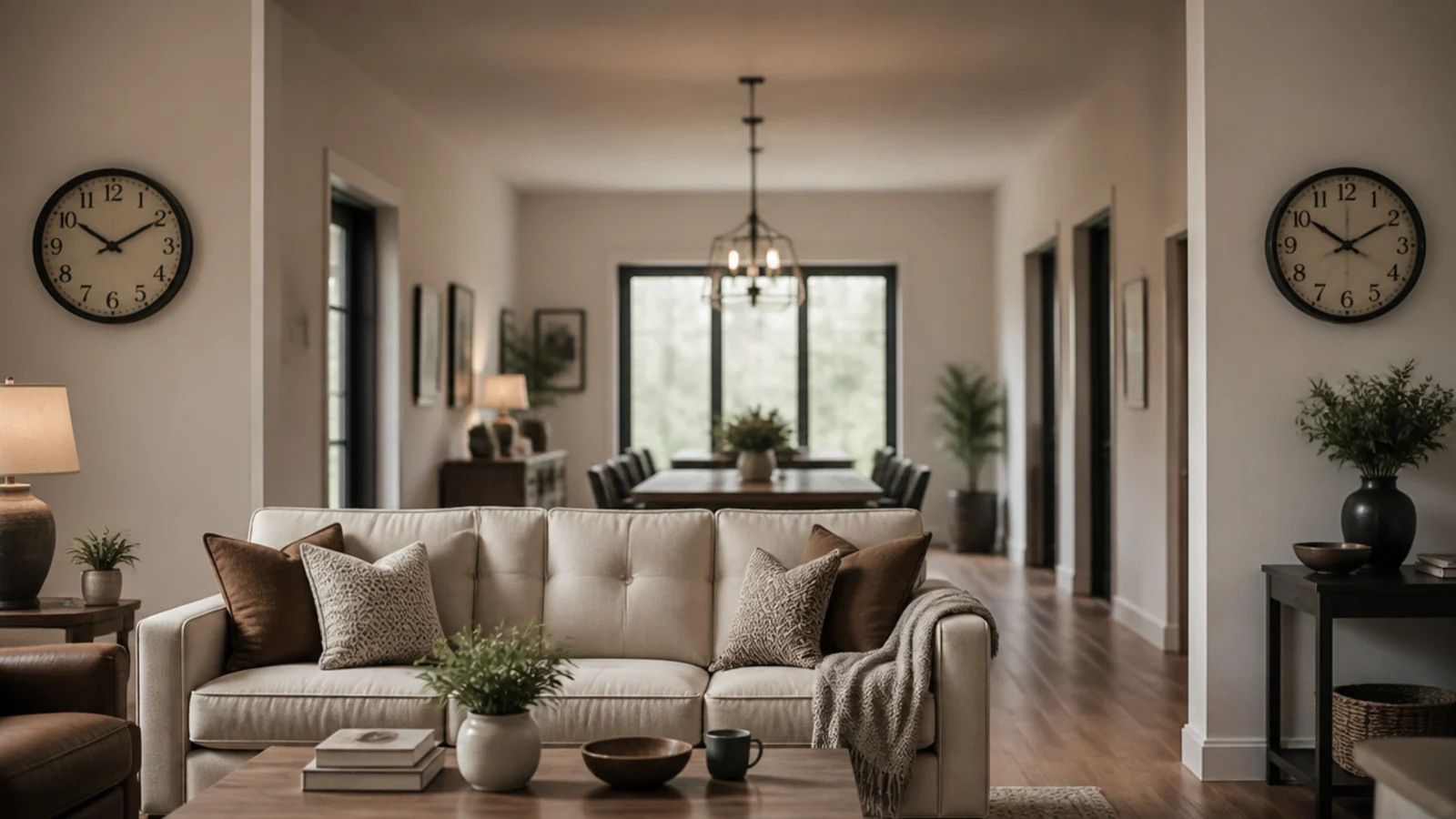
24. Lift the clock above the door line in a tall room
With 10-foot ceilings, hanging at 57 inches can leave a lot of blank plaster above. Raising the centre to align with or just above the top of the nearest door head keeps the room proportional, provided nothing on that wall needs reading at a glance.
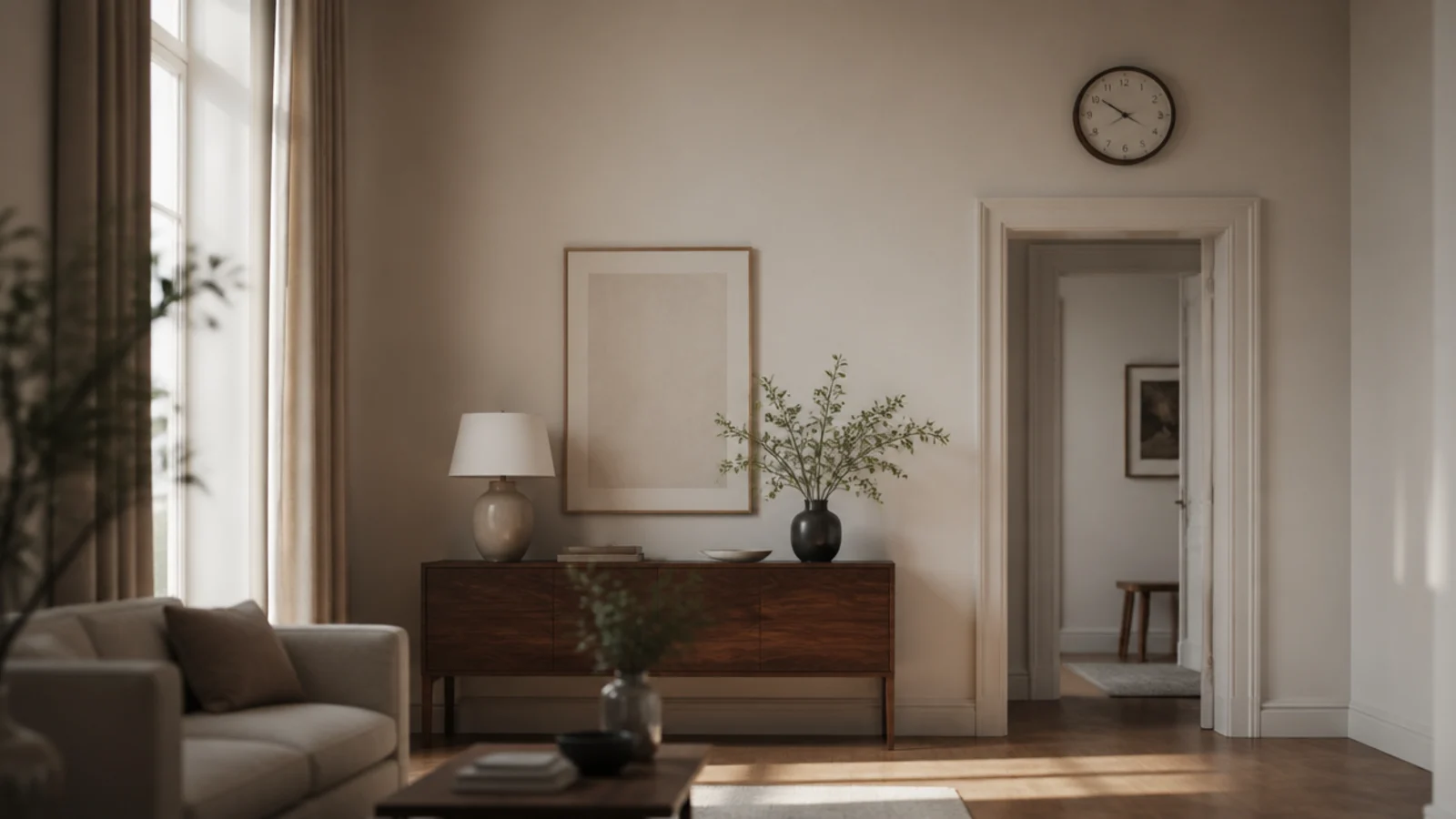
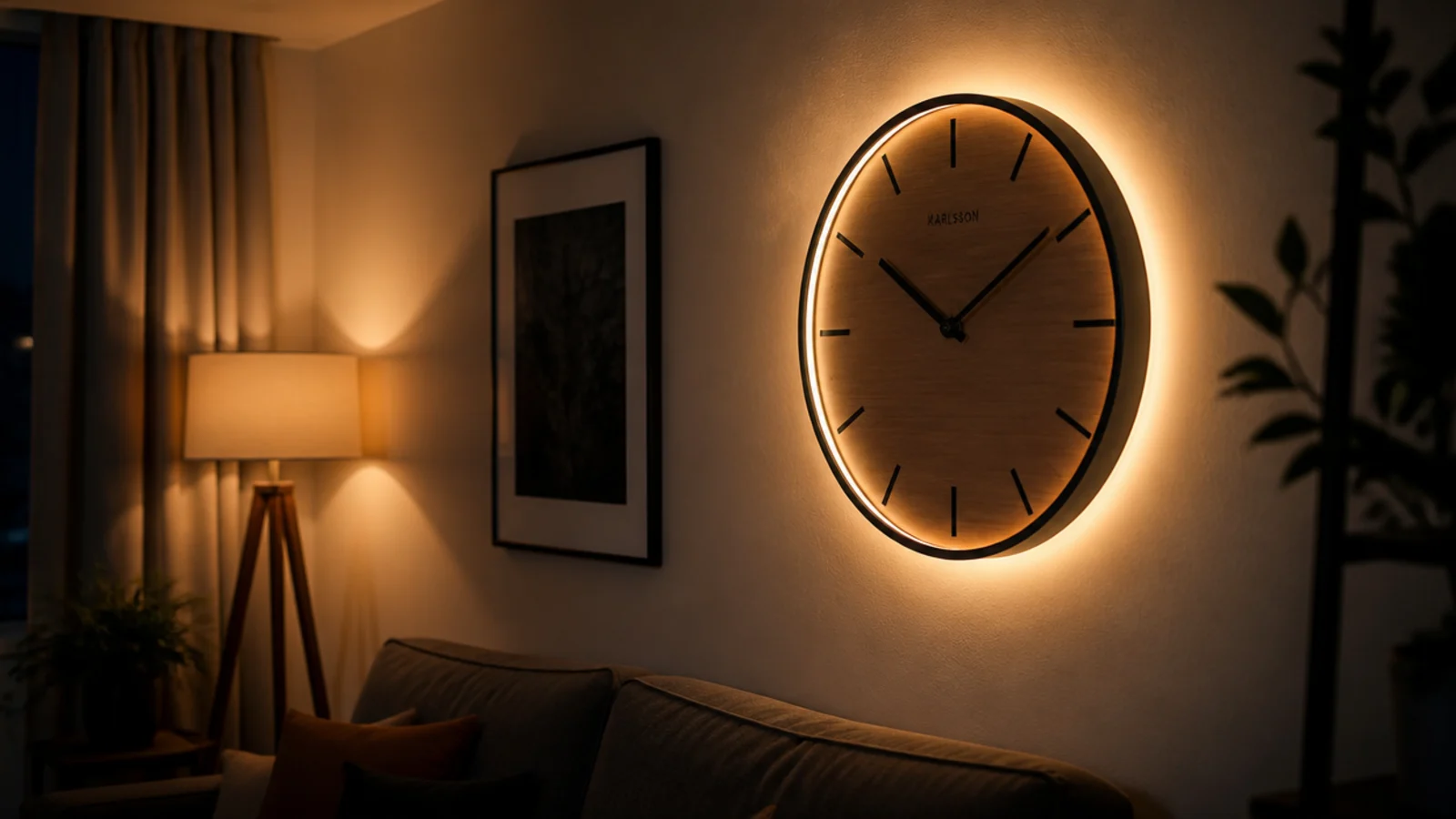
25. Backlight the rim for evening
A warm LED strip behind a deep-cased clock throws a halo onto the plaster and makes the dial appear to float after dark. Use a low-output warm strip on a plug transformer rather than anything wired in, and keep the cable running down behind the case.
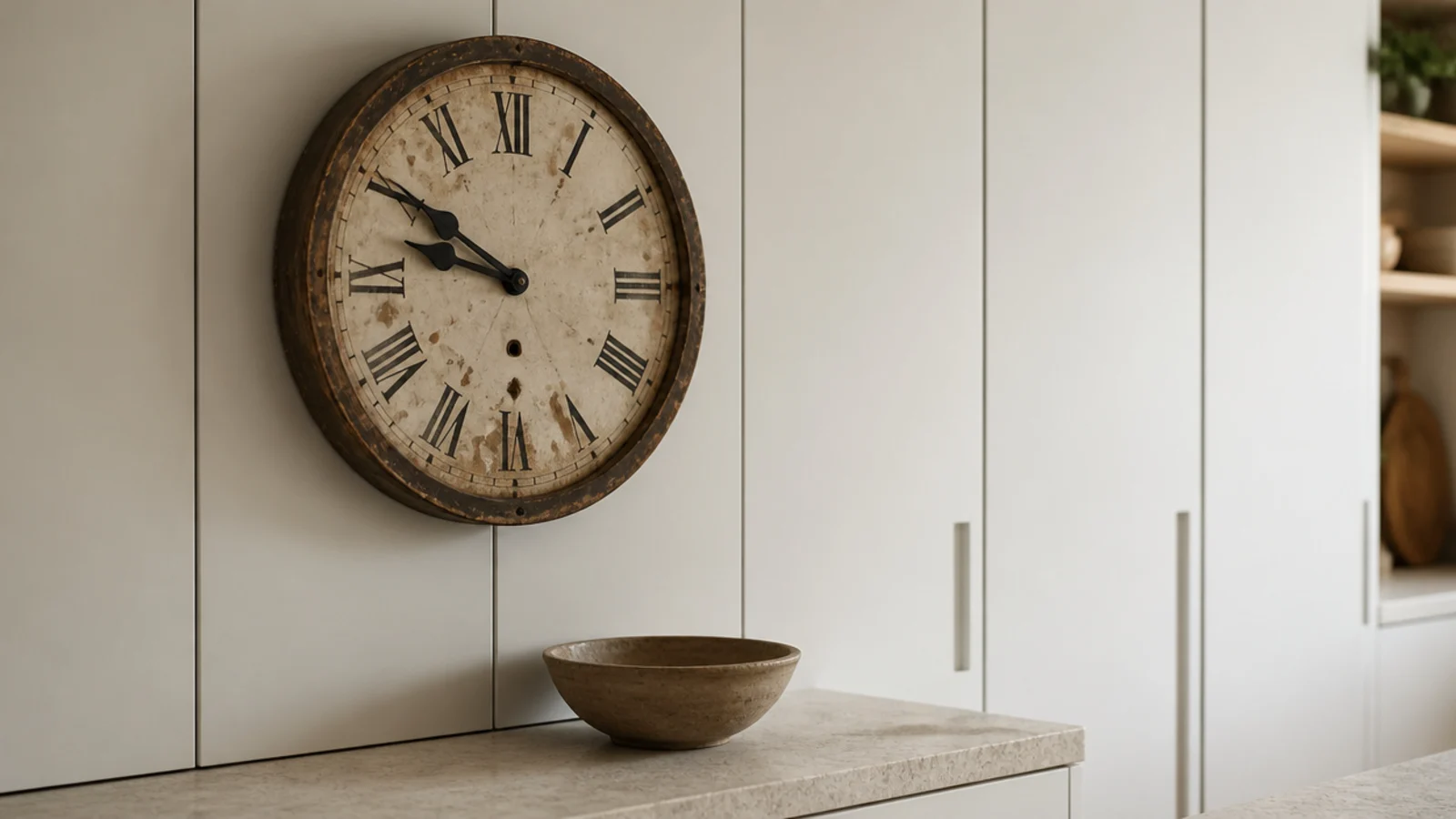
26. A vintage face against modern joinery
Flat modern cabinetry can read clinical. One aged timber clock with real patina against it is the fastest correction, and secondhand pieces at 16 to 20 inches run $30 to $90. The thrifted vintage clock notes cover what to check before buying.
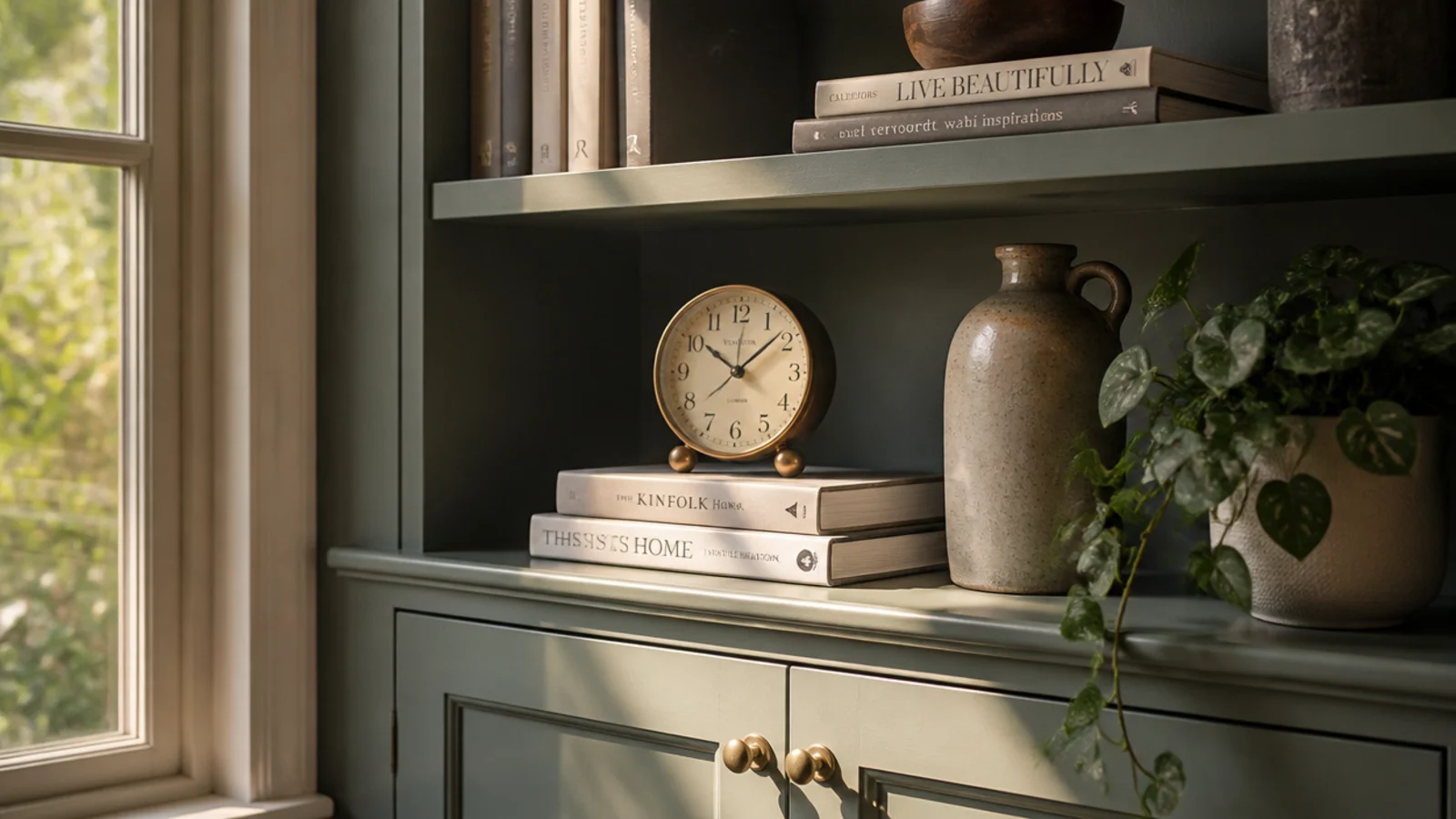
27. Drop a small clock inside built-in shelving
A 6 to 8 inch clock standing among books inside a shelf bay becomes part of the styling rather than a separate wall object. It also solves the problem of a living room where every wall is either window, screen or joinery.
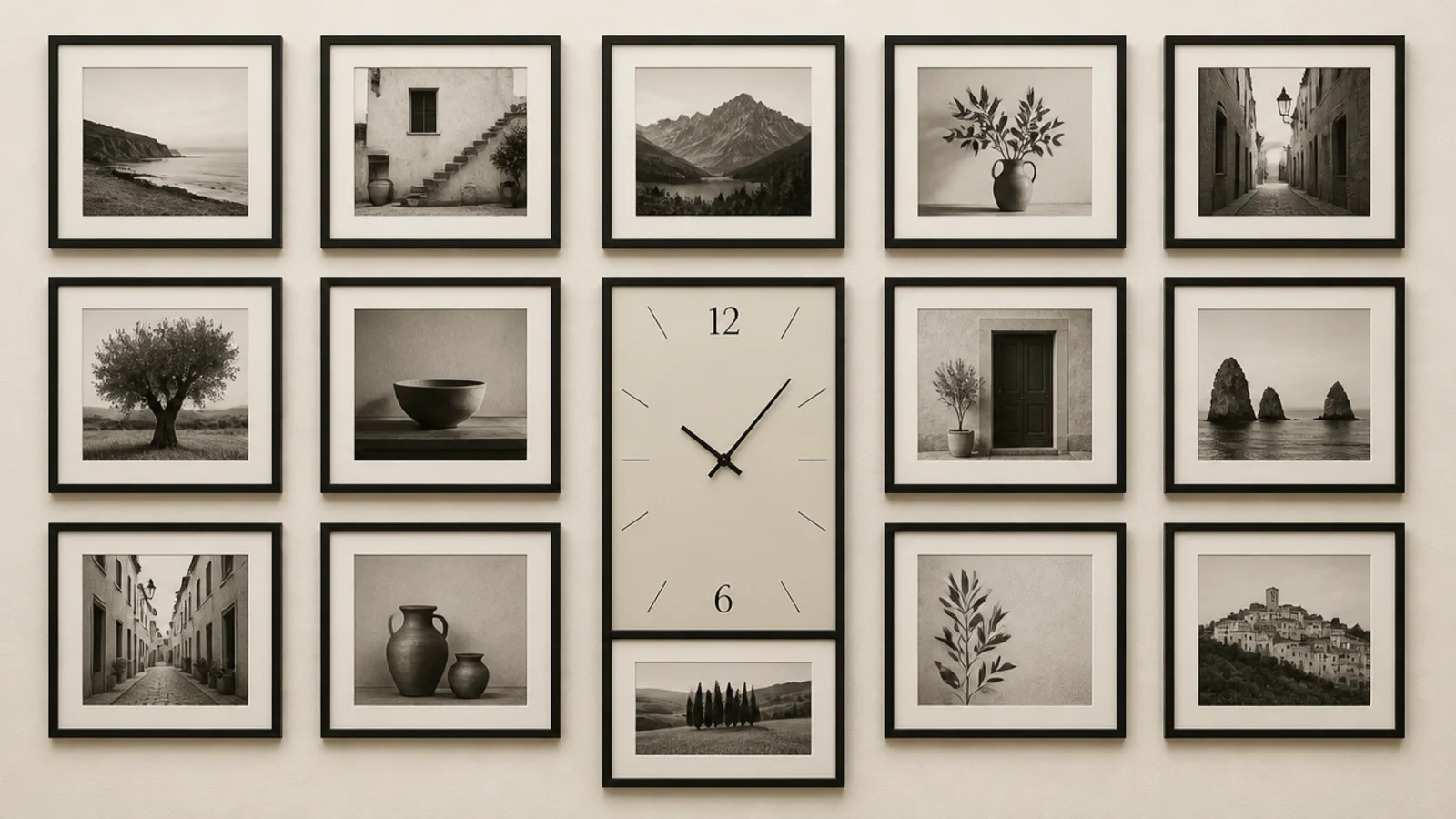
28. Size the clock against a gallery wall grid
If the wall already carries a frame grid, size the clock to a whole number of frame modules — one frame wide, or exactly two stacked frames tall. Keep the same 2 to 3 inch spacing you used between frames and the arrangement holds together.
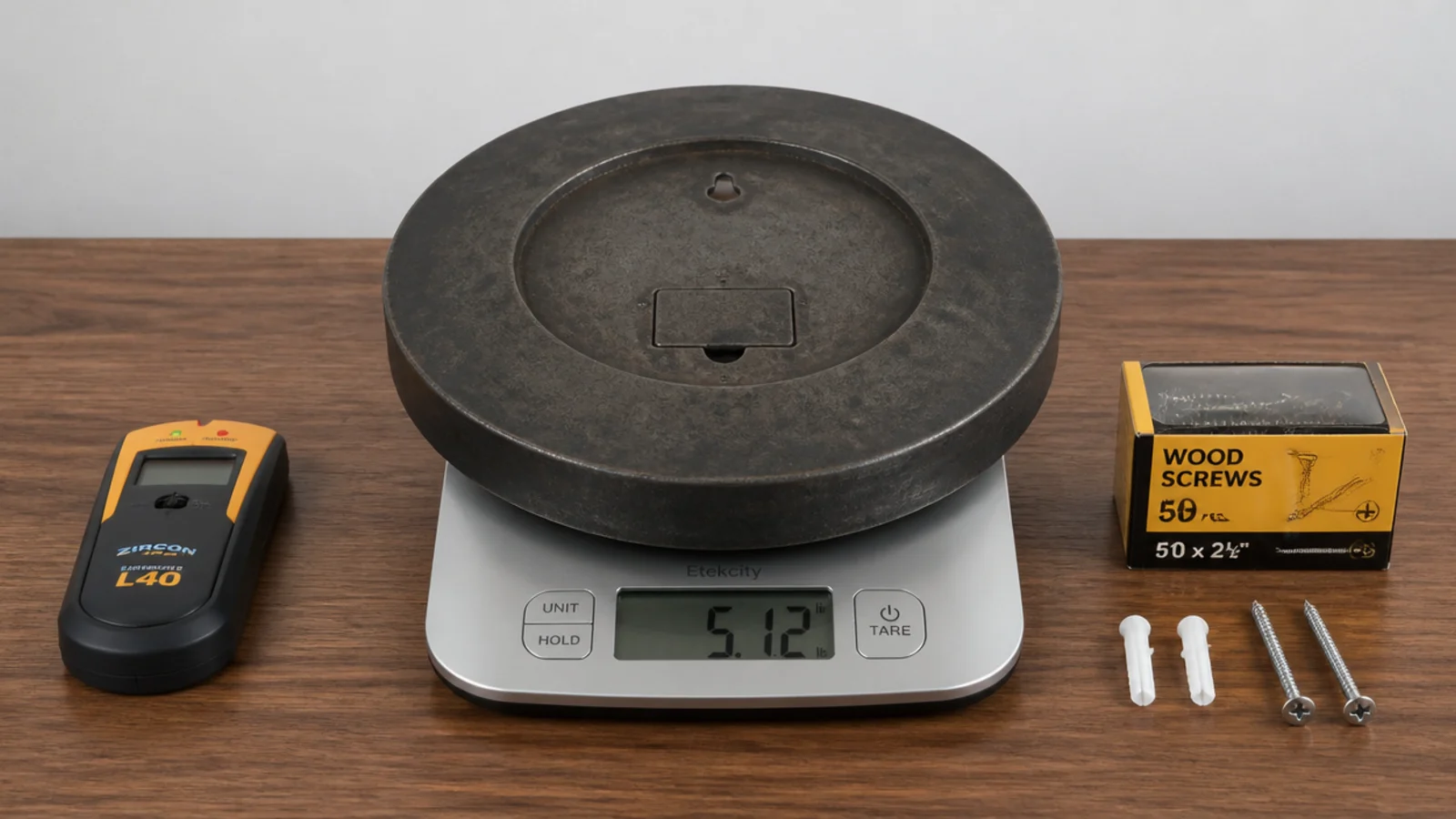
29. Weigh the clock before you choose the fixing
Put it on a kitchen scale. Under 5 pounds, a good self-drilling drywall anchor is fine. Five to 8 pounds, use two. Over 8 pounds, or anywhere above seating, find framing — the guesswork is what puts clocks on the floor.
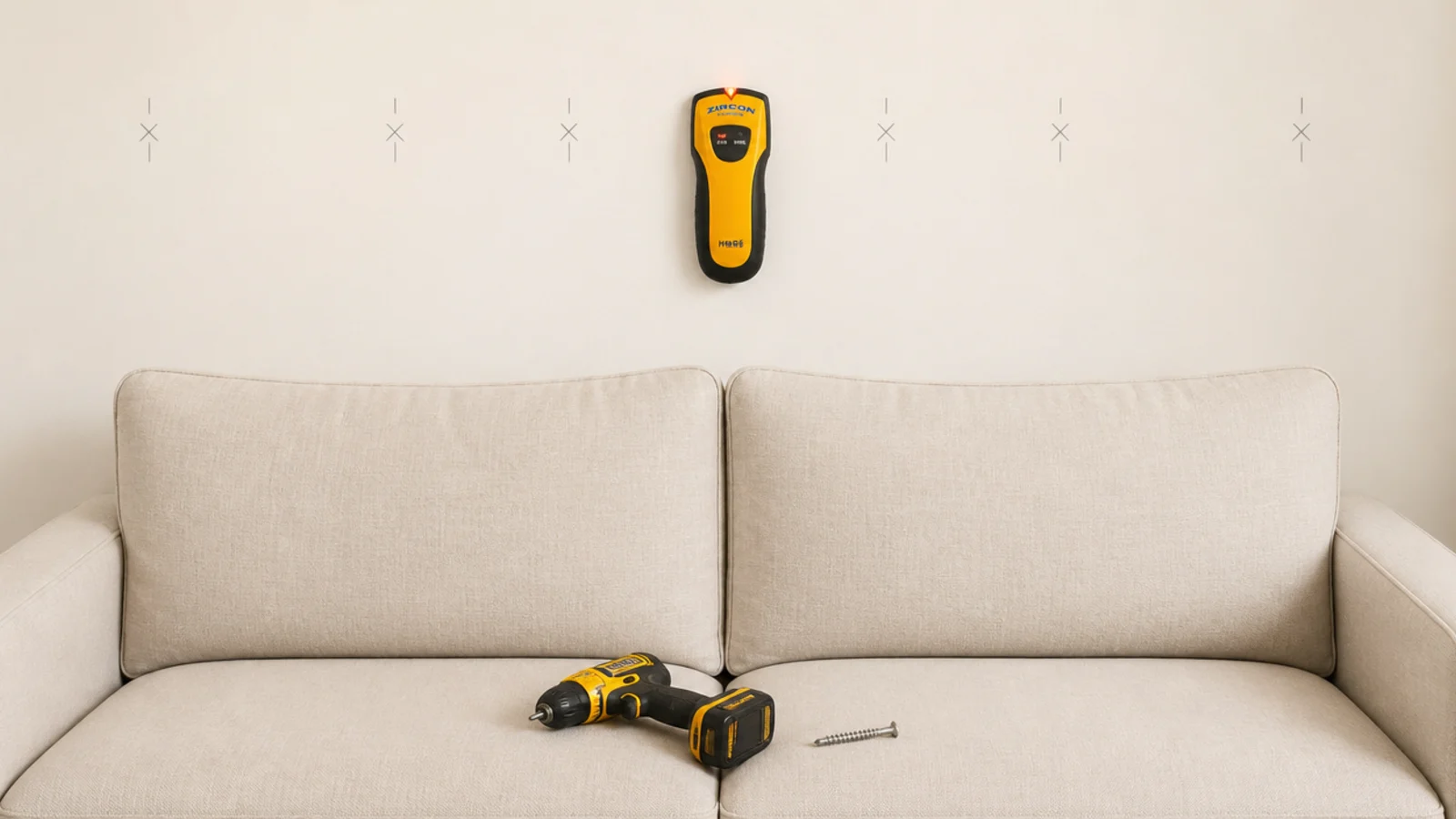
30. Mark the stud and hang from framing
Run a stud finder across the wall, mark both edges of the stud in pencil and aim for the middle. A number eight screw two inches long into framing carries an order of magnitude more than any clock weighs, and it is the difference between a fixing you check and one you forget about.
For arrangements built from several faces rather than one, the small room design ideas guide covers the tighter layouts.
Mistakes to Skip
- Hanging the clock at the height that suits standing when the room is used sitting down. Sit on the sofa opposite and check the sightline before the drill comes out.
- Buying a 16-inch clock for an 84-inch sofa because it was the one that was on offer. Diameter is the decision, and it cannot be corrected by styling around it afterwards.
- Relying on the supplied plug above seating. A plastic expansion plug in half-inch drywall is rated near 10 pounds new and loses grip with every door slam and every season of movement.
- Putting the clock above the television because the wall is already busy. That wall has one focal point already, and adding a second at head height helps neither.
Frequently asked questions
Where should a clock go in a living room?
Centred on the largest piece of furniture on that wall, usually the sofa, rather than centred on the wall itself. Those two points are rarely the same, and the eye reads the furniture line first, so a clock centred on the wall above an off-centre sofa always looks slightly wrong.
How big should a living room clock be?
Take roughly a third of the width of the furniture below. An 84-inch sofa suits 24 to 30 inches, a 60-inch console suits 18 to 22 inches, and a bare wall with nothing under it takes 30 to 36 inches before it stops looking underdressed.
Can a clock go above a television?
It can, but it rarely works. A screen already dominates that wall and a clock above it competes for the same sightline while sitting too high to read comfortably. Hanging it on the adjacent wall or beside the media unit gives both objects room to be seen.
What gap should there be above the sofa back?
Between 8 and 12 inches of clear wall from the top of the back cushions to the bottom of the clock rim. Less than 8 and the clock looks like it is resting on the sofa; more than 14 and the two objects stop reading as a group.
Do I need a stud for a living room clock?
For anything over about 8 pounds, and for anything hanging above where people sit, yes. A number eight screw into framing carries far more than a clock will ever weigh, while the plastic plug supplied in the box is rated near 10 pounds when new and weakens with age.
Want more like this? Browse all 15 wall clock guides — they all use the same measurements and budget tiers.
Pin it for later
Save this to your Wall Clock board
Pin it now so it is waiting for you when the tape measure comes out — and so the next person hunting for this idea can find it too.
Save this pinKeep going
More ideas worth saving while you have the tape measure out.