Wall Clock · Listicle
25 Wall Clock Design Ideas For Small Rooms

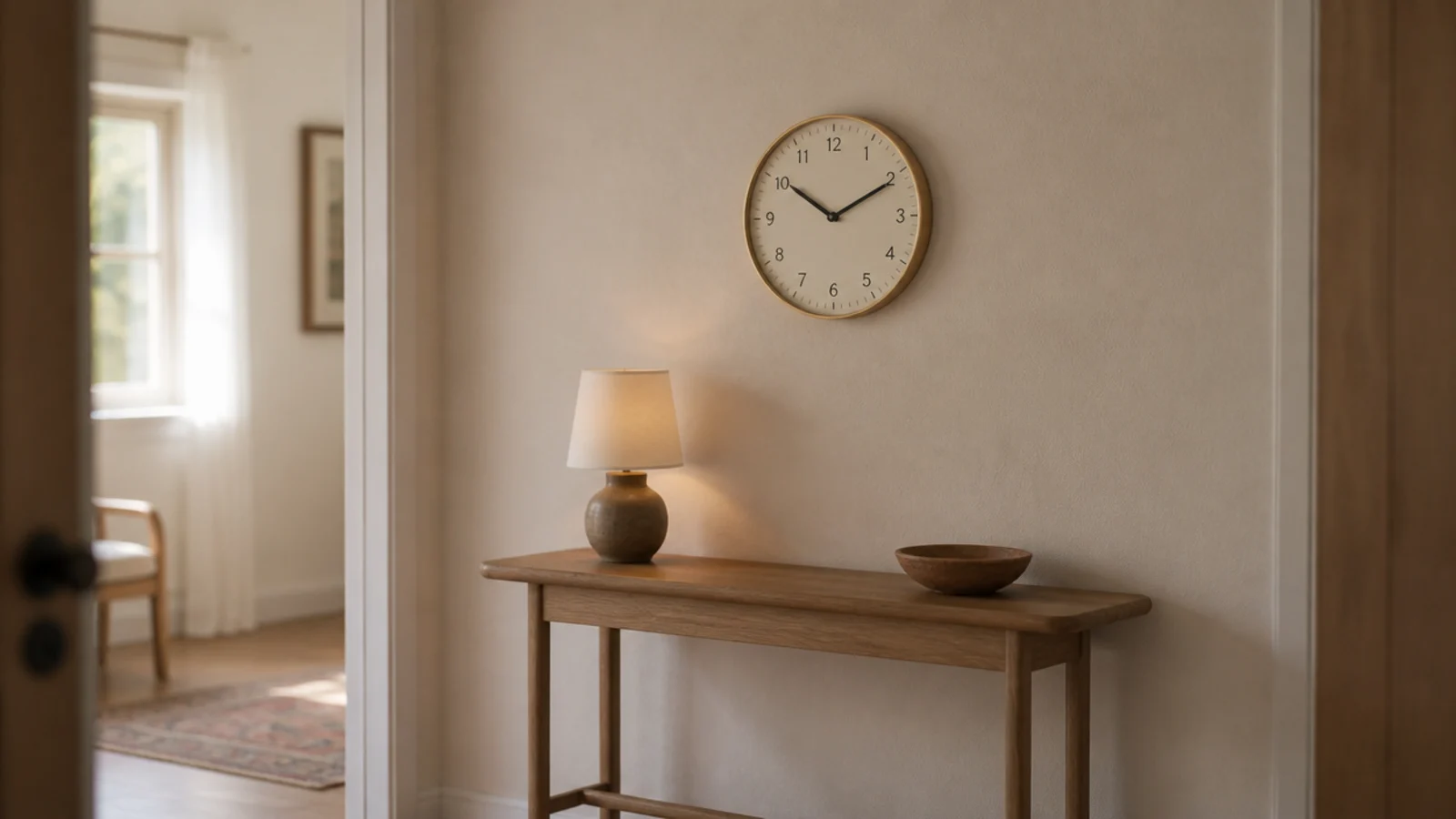
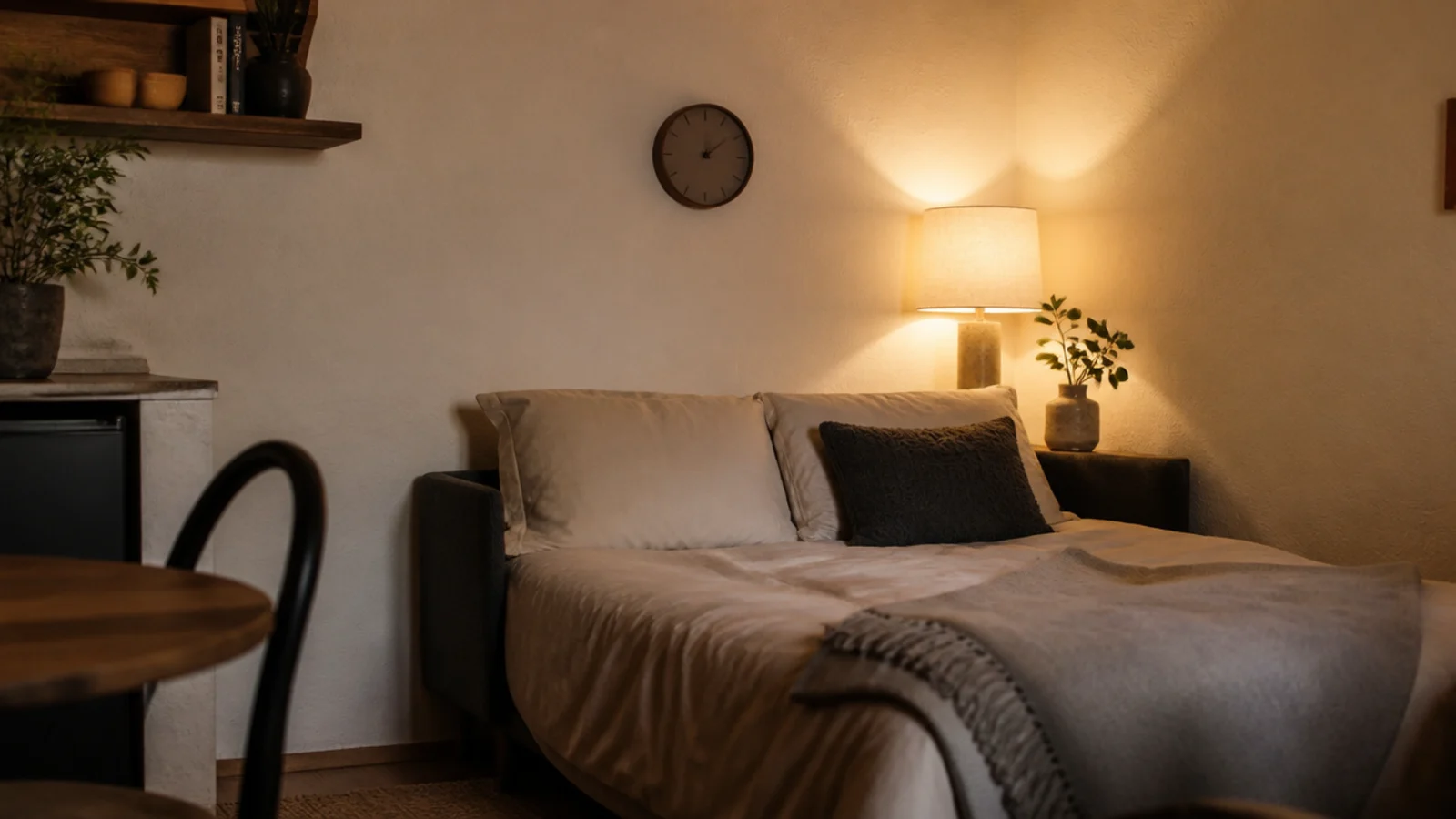
Small rooms punish the same mistake twice. A clock that is two sizes too large does not just look wrong, it makes the wall behind it feel closer, and in a room under about twelve feet square that is the last thing you want. Most wall clock design ideas are photographed in wide open spaces with nine-foot ceilings, which is why so many of them arrive and immediately dominate. The fix is not a smaller version of the same thinking — it is different placement, shallower cases and lower contrast. Here are twenty-five that work when the wall is short.
In this guide27 sections — tap to openHide
- 1.What wall clock design ideas overlook in a small room
- 2.Cap the diameter at fourteen to eighteen inches
- 3.Scale the clock to the door width, not the wall
- 4.Keep the case under one inch deep in a hallway
- 5.Paint the case the exact wall colour
- 6.A numberless dial to cut visual noise
- 7.A thin ring instead of a solid disc
- 8.Pale dial on a pale wall for a quiet room
- 9.Hang on the pier between two doors
- 10.Use the strip above a door head
- 11.Set a small clock inside a shelf bay
- 12.Corner-mount on an angled bracket
- 13.A mirror face in a windowless hall
- 14.Lean it on a four-inch picture ledge
- 15.Two small faces instead of one medium
- 16.Above the bed: the stud rule in a small bedroom
- 17.In a galley kitchen, above the doorway
- 18.Over a radiator shelf
- 19.Behind a desk in a box room
- 20.In an entryway above the hooks
- 21.A sealed case for a small bathroom
- 22.Stick-on numerals and no case at all
- 23.Keep eight inches above the tallest furniture
- 24.A sweep movement in a studio flat
- 25.Adhesive strips and the sixteen-pound ceiling
- 26.One clock only in a small room
- 27.Mistakes to Skip
What wall clock design ideas overlook in a small room
Three constraints change everything. The first is diameter. In a room under about 12 feet square, cap the face at 14 to 18 inches, and take no more than a third of the width of the furniture below it. A 60-inch console gives you 18 to 22 inches in a normal room; in a tight one, take the lower end.
The second is depth. A case standing 2 to 3 inches proud of the wall reads as an object projecting into the room, which is charming in a wide hallway and oppressive in a narrow one. Under an inch deep, a clock reads as surface rather than volume. In a corridor under 40 inches wide, that is not a style preference, it is the difference between brushing it with a shoulder and not.
The third is contrast. A high-contrast dial pulls the eye straight to the wall and stops it there. A pale dial on a pale wall, or a case painted the wall colour, keeps the room reading as continuous. You still get the function — the hands do the work — without the visual bulk.
Everything else is placement. In a small room every wall is door, window or furniture, so use the leftovers: the pier between two openings, the strip above a door head, the inside of a shelf bay, a corner bracket. And keep the fixings honest. Anything over 8 pounds, or anything above a bed, needs a number eight screw into a stud rather than the plug in the box. For renters, heavy-duty adhesive strips carry around 16 pounds per set on sound paint. The full sizing guide covers larger rooms.
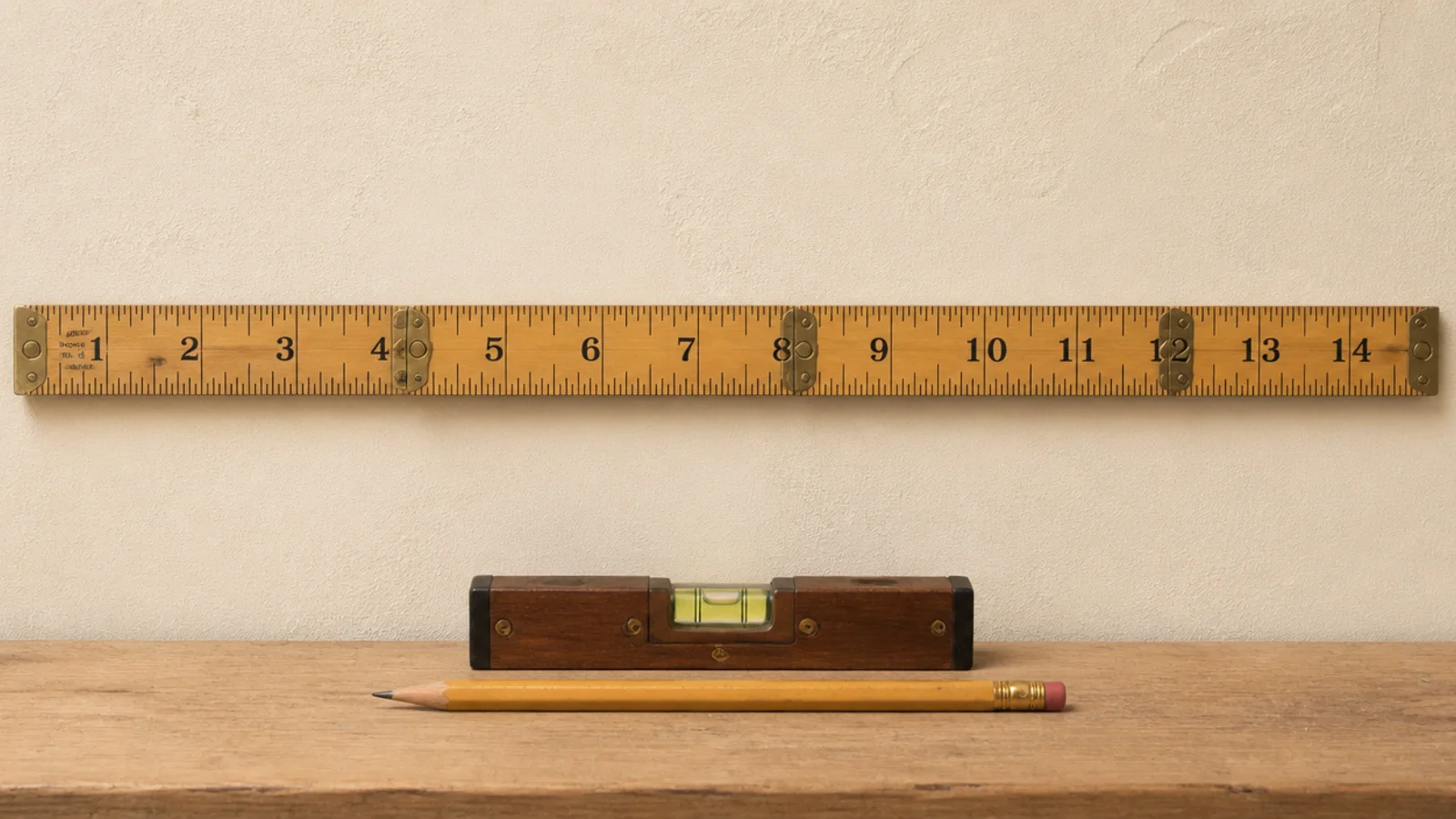
1. Cap the diameter at fourteen to eighteen inches
The single most useful rule here. In a small sitting room or bedroom, 14 to 18 inches gives you a readable dial at 10 to 12 feet without the face becoming the room's main event. Above 22 inches in a tight space, you stop seeing a clock and start seeing a large circle.
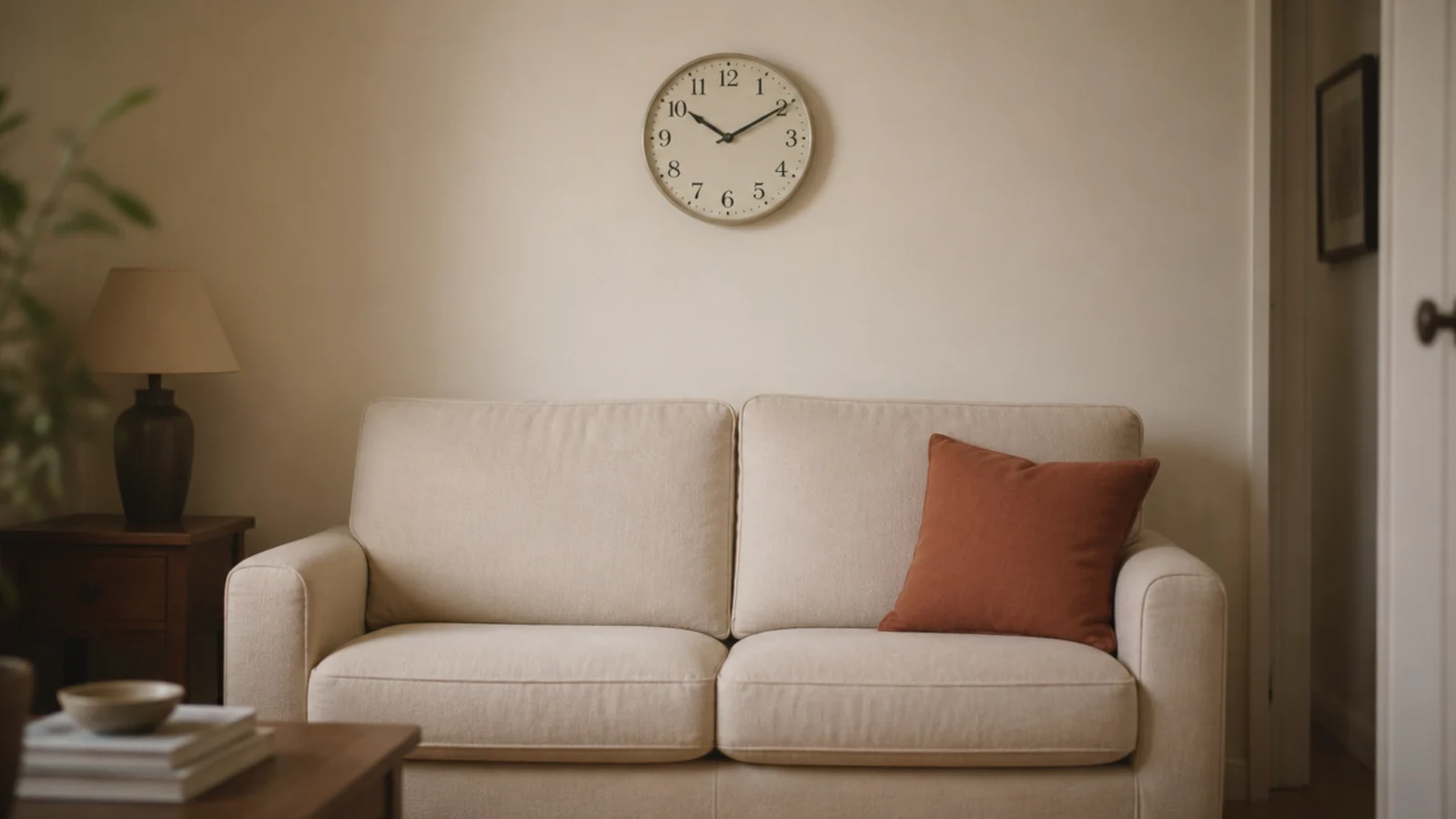
2. Scale the clock to the door width, not the wall
A standard internal door is 30 to 32 inches wide, and it is the most reliable scale reference in a small room because it is the one object your eye already knows the size of. A clock at roughly half a door width looks right; at full door width it looks like a mistake.
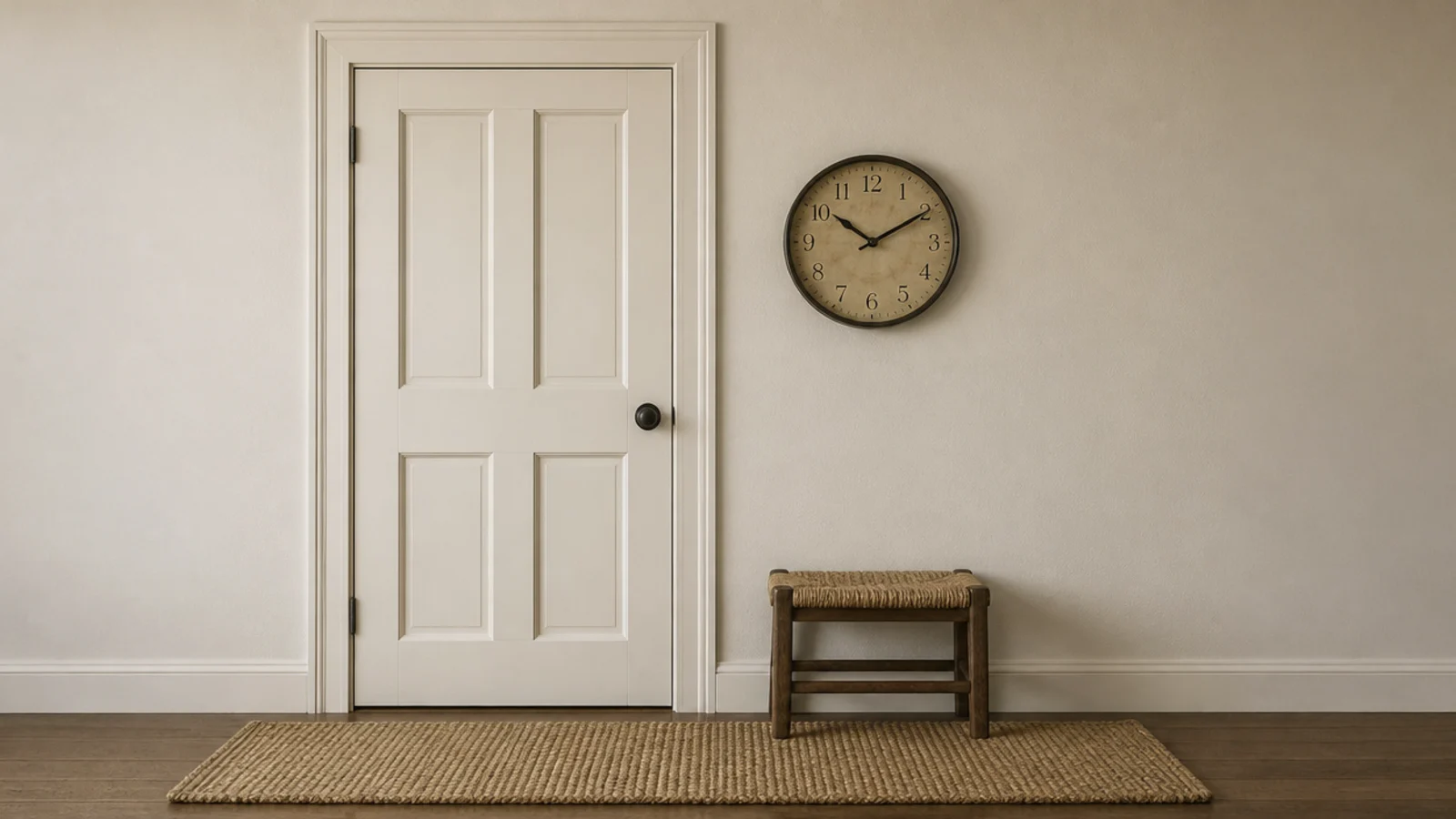
3. Keep the case under one inch deep in a hallway
In a corridor under 40 inches wide, depth is a practical measurement rather than an aesthetic one. A flat clock under an inch deep sits out of the way of shoulders and coat sleeves. Anything deeper wants to go on the end wall, not the run.
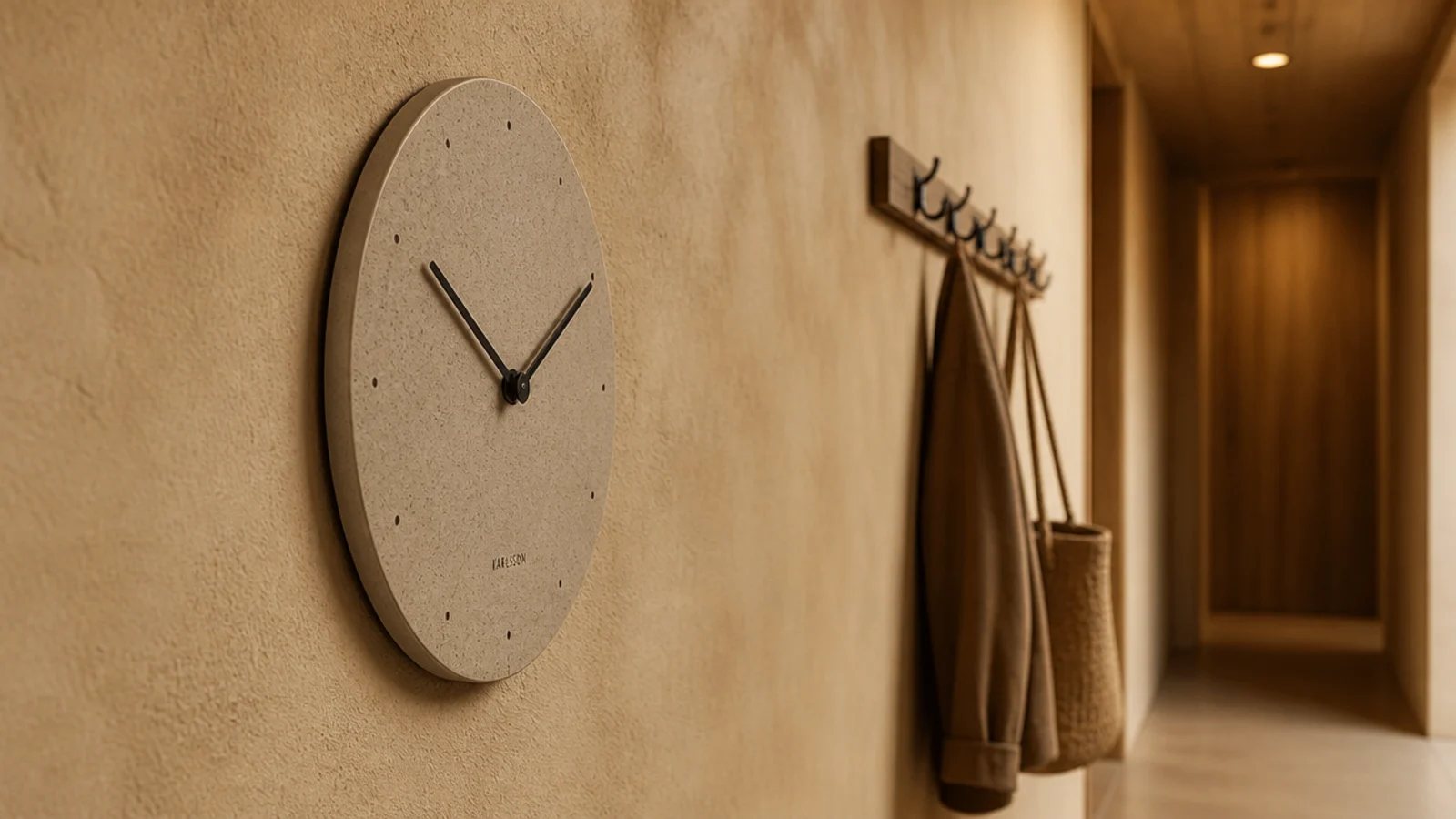
4. Paint the case the exact wall colour
Two thin coats of the wall colour in the same sheen and the case disappears, leaving only the hands and markers reading. It costs a tester pot, it is fully reversible, and it is the most effective small-room trick on this list. Mask the lens properly and sand lightly between coats.
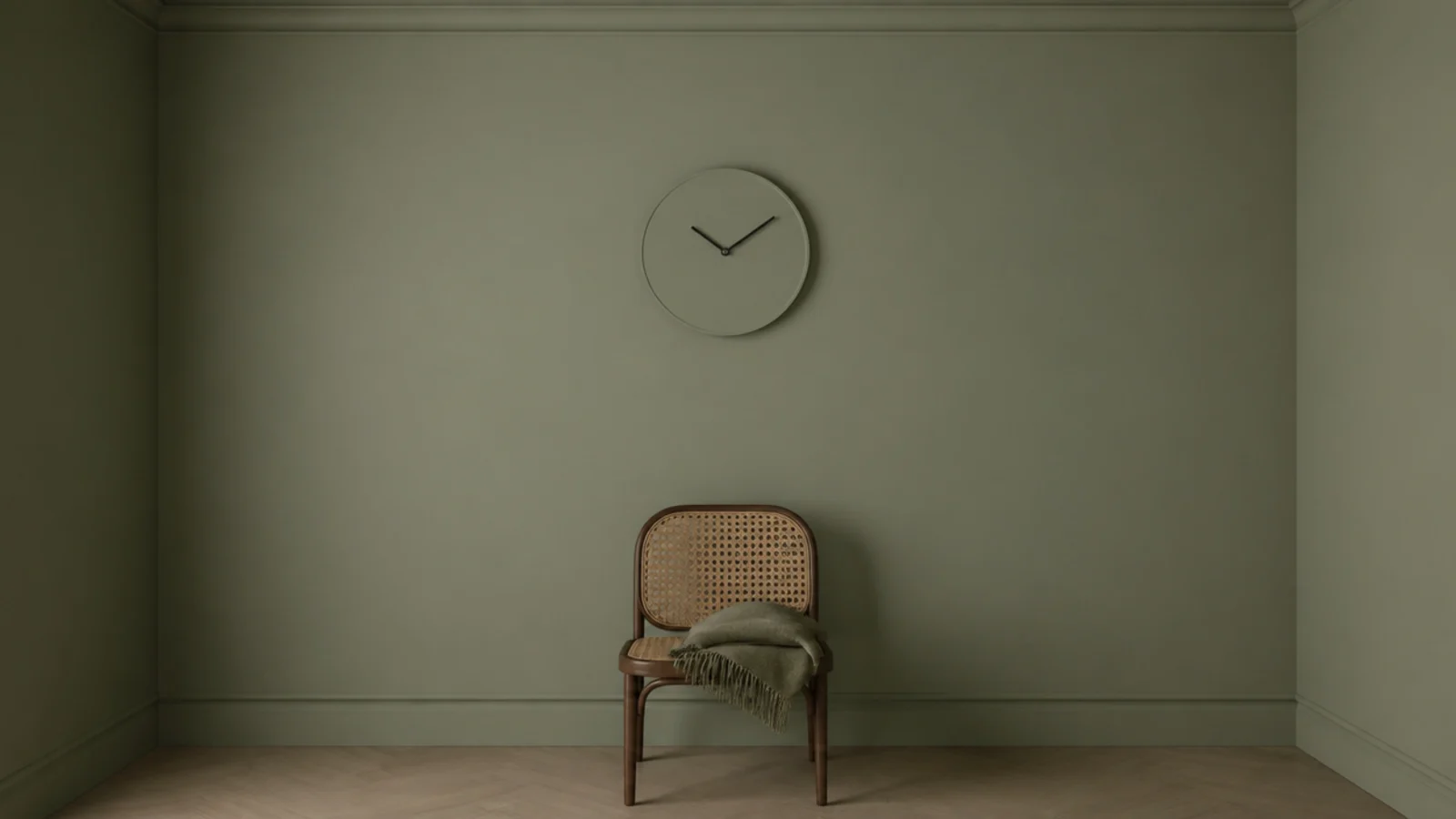
5. A numberless dial to cut visual noise
Twelve numerals is twelve pieces of information on a wall that has no room for them. Markers alone still give you the hour at a glance and leave the face much quieter. Give it size, though — under 14 inches a numberless dial starts to look like something is missing.
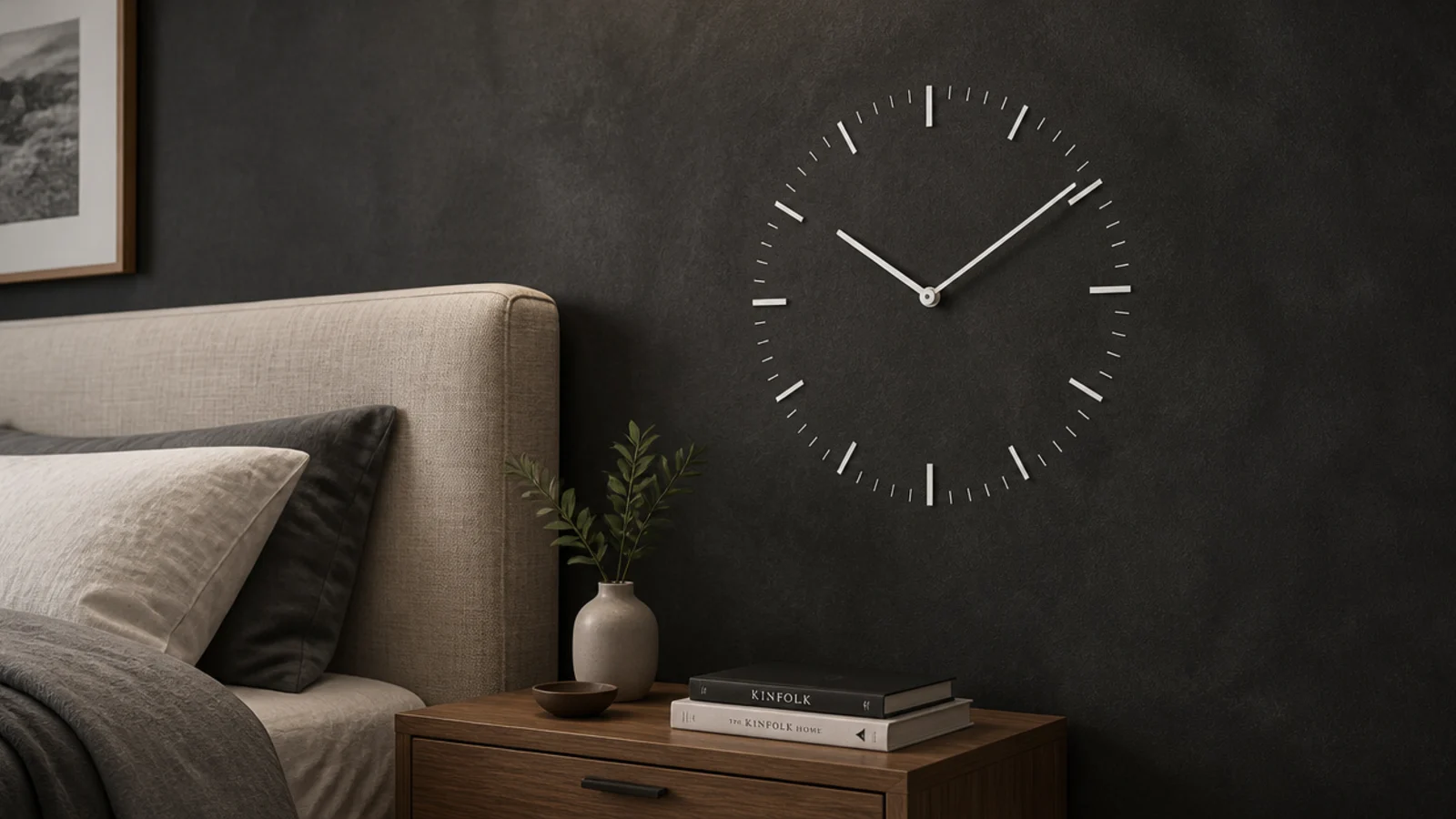
6. A thin ring instead of a solid disc
An open ring lets the wall colour read straight through the middle, so the clock occupies its diameter without filling it. On a short wall that difference is genuinely visible. It also weighs less than half what a solid face of the same size does, which widens your fixing options.
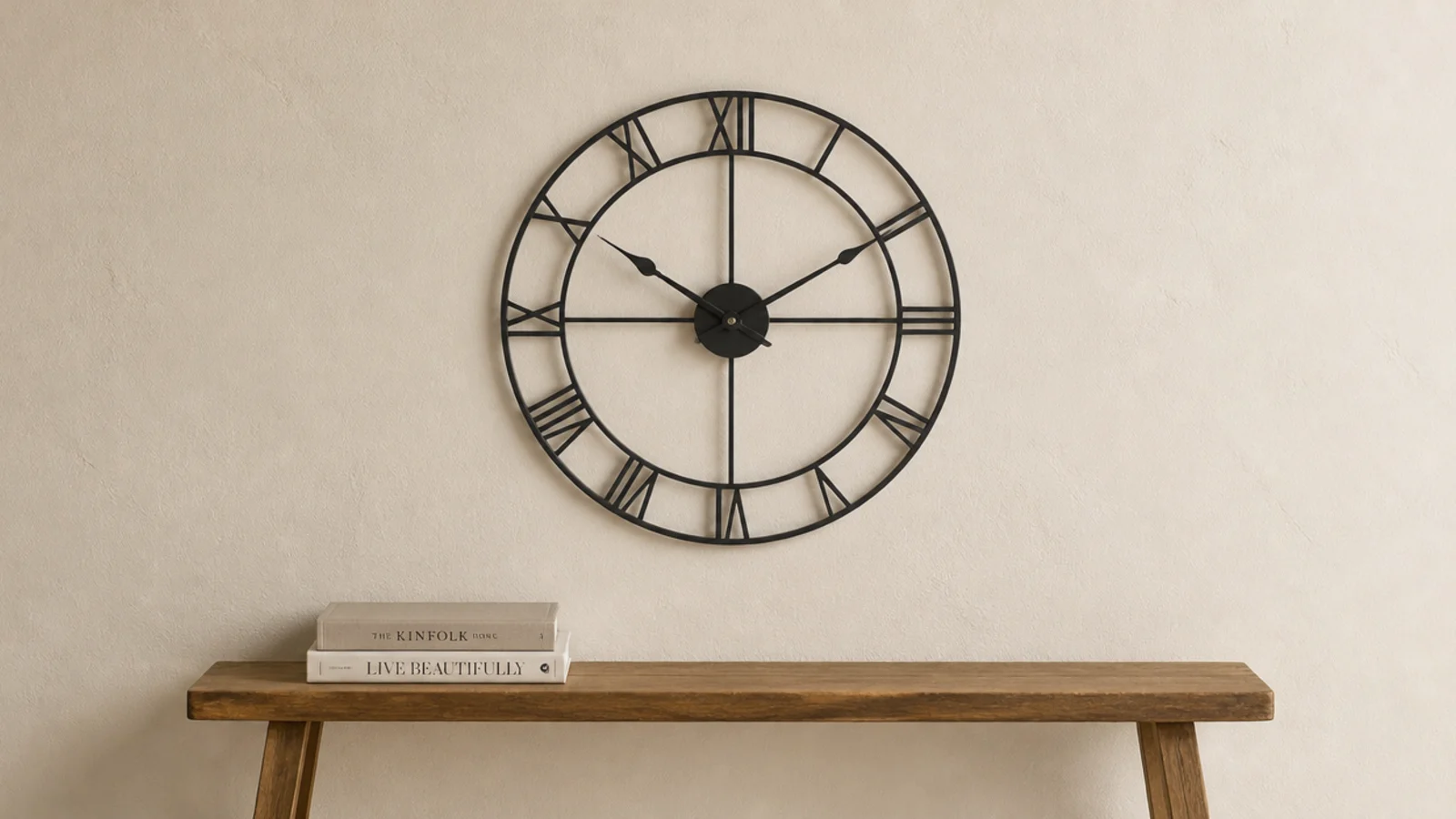
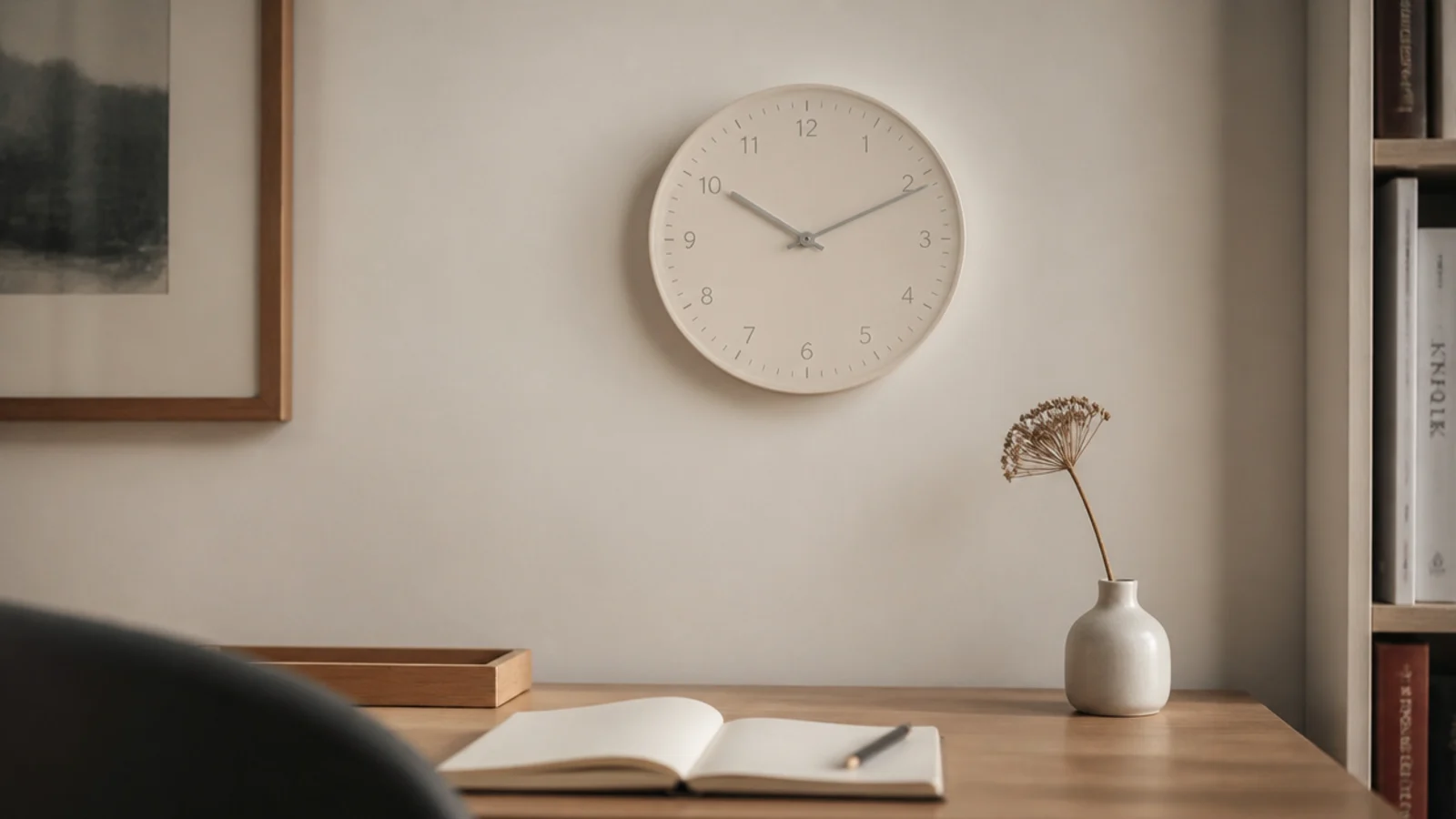
7. Pale dial on a pale wall for a quiet room
Low contrast is the opposite of the usual advice, and in a small bedroom or study it is right. You lose some legibility past 15 feet, which does not matter in a room that is 10 feet across, and you gain a wall that reads as one continuous surface.
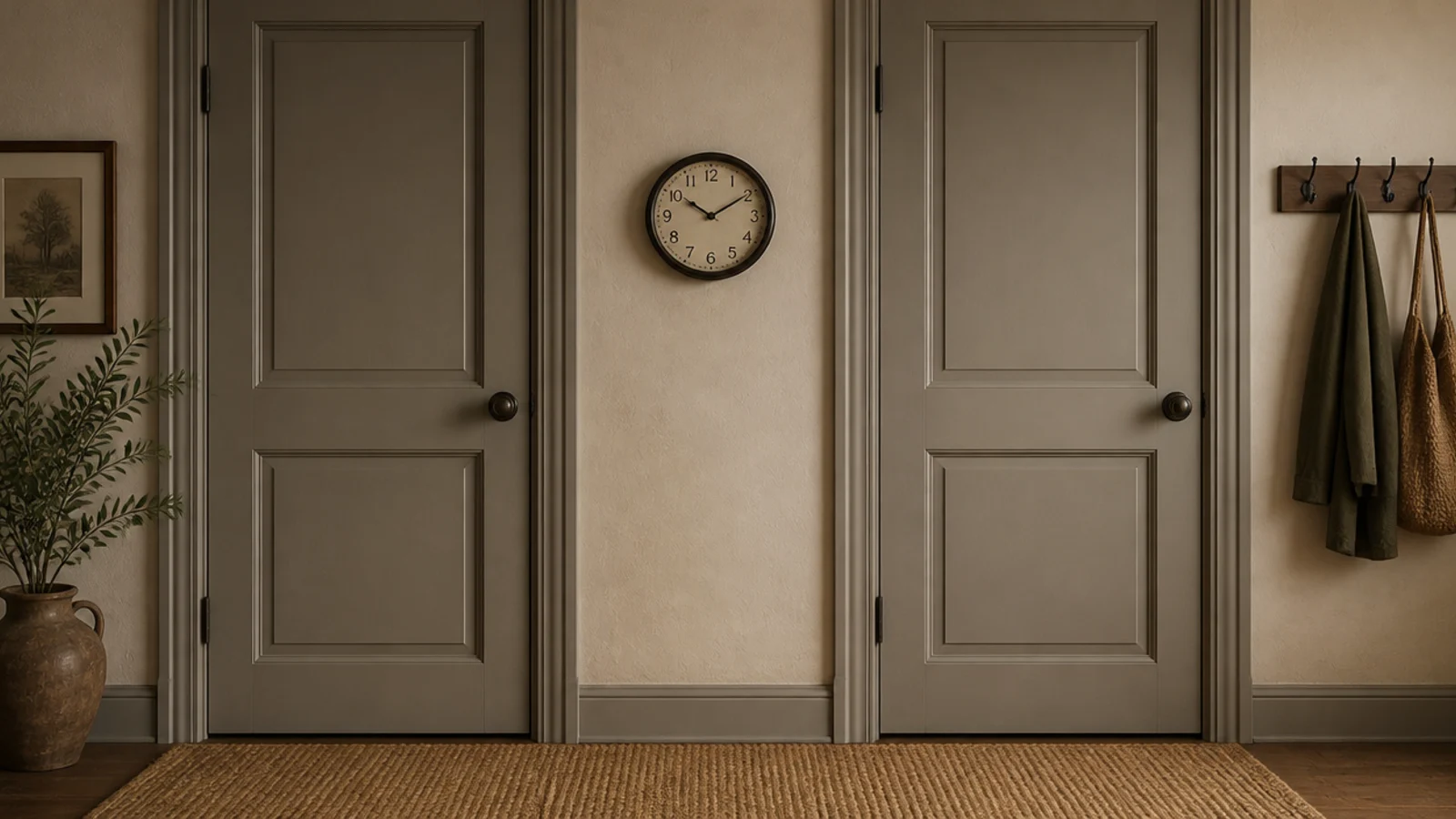
8. Hang on the pier between two doors
The strip of wall between two openings is dead space in almost every small hallway. A 10 to 14 inch face centred there at 57 inches uses wall nothing else wants, and it reads clearly because there is nothing either side to compete with it.
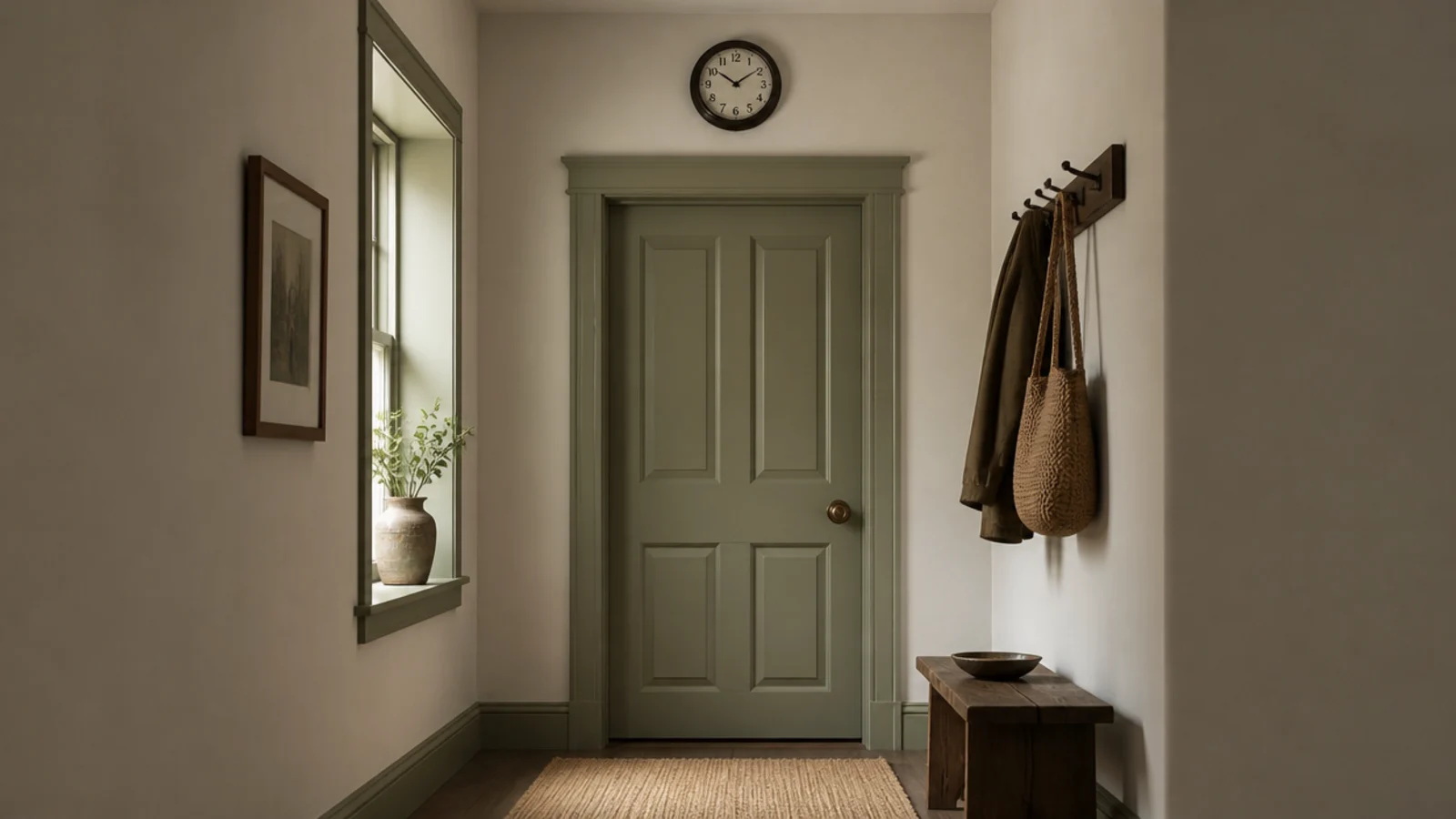
9. Use the strip above a door head
Above the architrave, a clock sits clear of furniture, coats, the door swing and everything else. Aim for 4 to 6 inches above the top of the trim, and accept that this is a glance-up position rather than an eye-level one. It suits kitchens and hallways best.
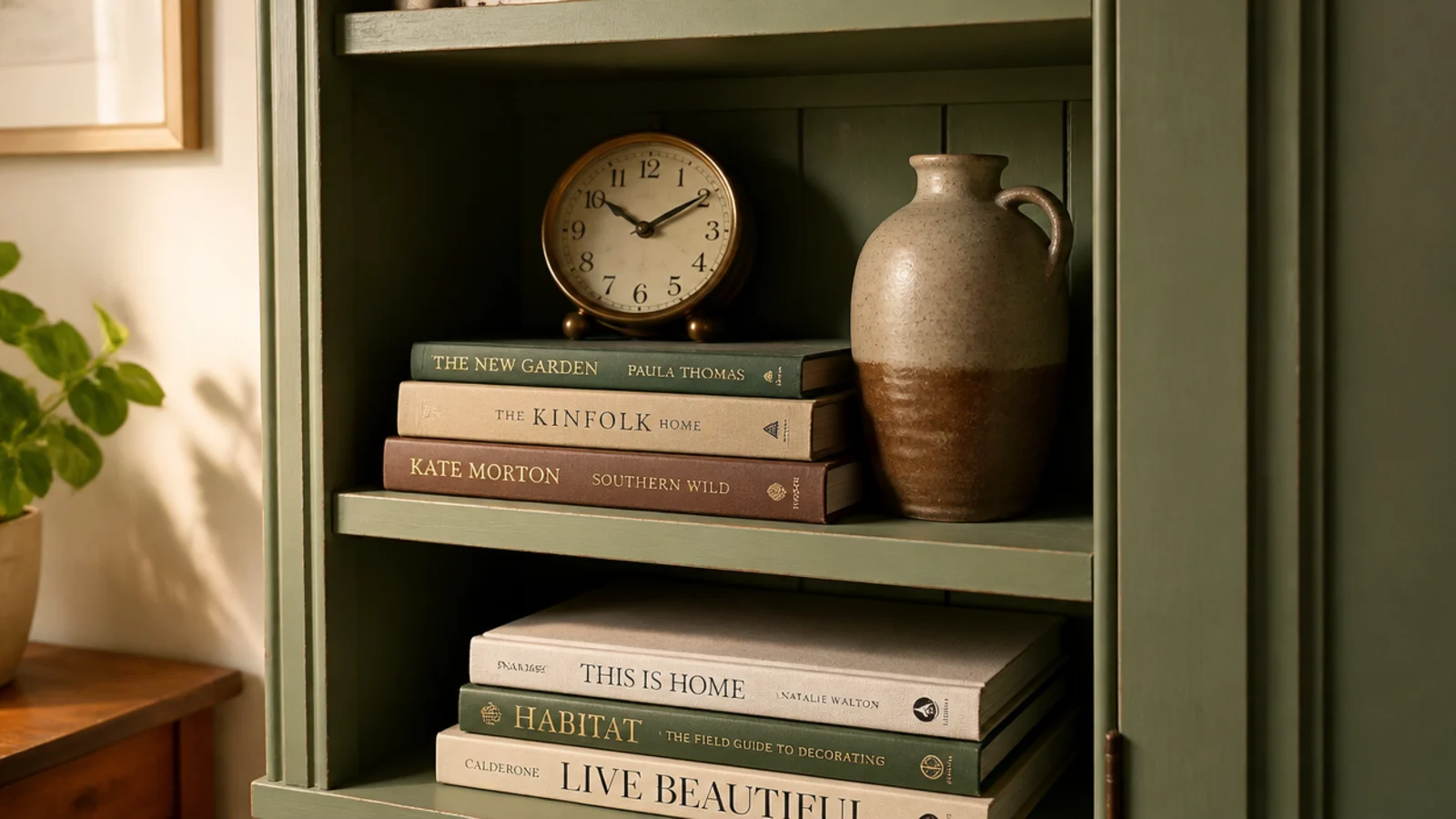
10. Set a small clock inside a shelf bay
A 6 to 8 inch face propped among books inside an existing shelf costs no wall at all and needs no fixing. It also stops the clock reading as another thing hung up in a room that already has plenty. Lean it back against the shelf's rear panel with putty under the rim.
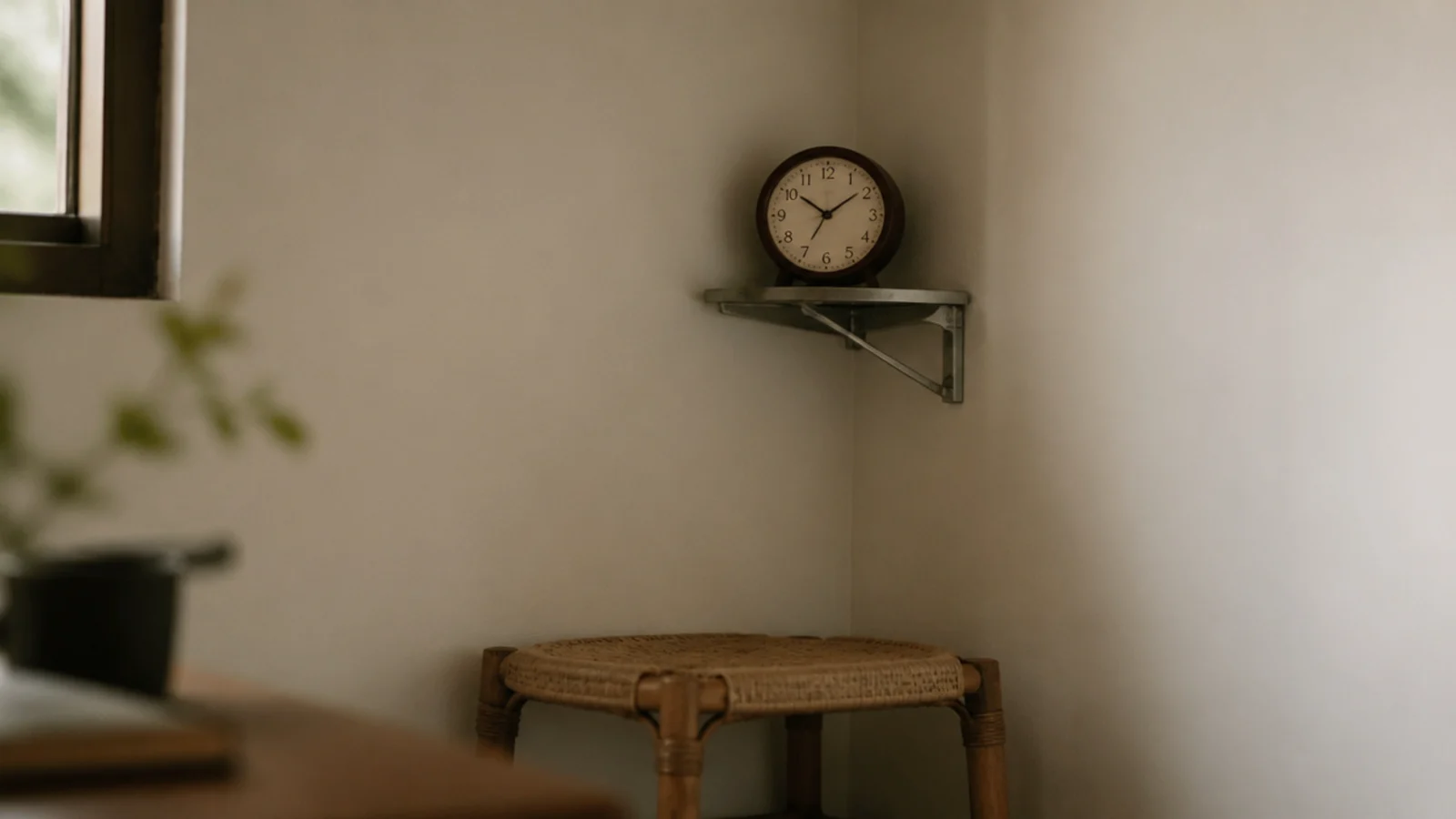
11. Corner-mount on an angled bracket
Internal corners are the last unclaimed wall in most small rooms. A small clock on a folded steel angle bracket faces into the space diagonally and is readable from both directions. Keep it under 3 pounds, because the bracket puts outward leverage on the fixing rather than straight shear. There is more on using corners in the corner shelf ideas.
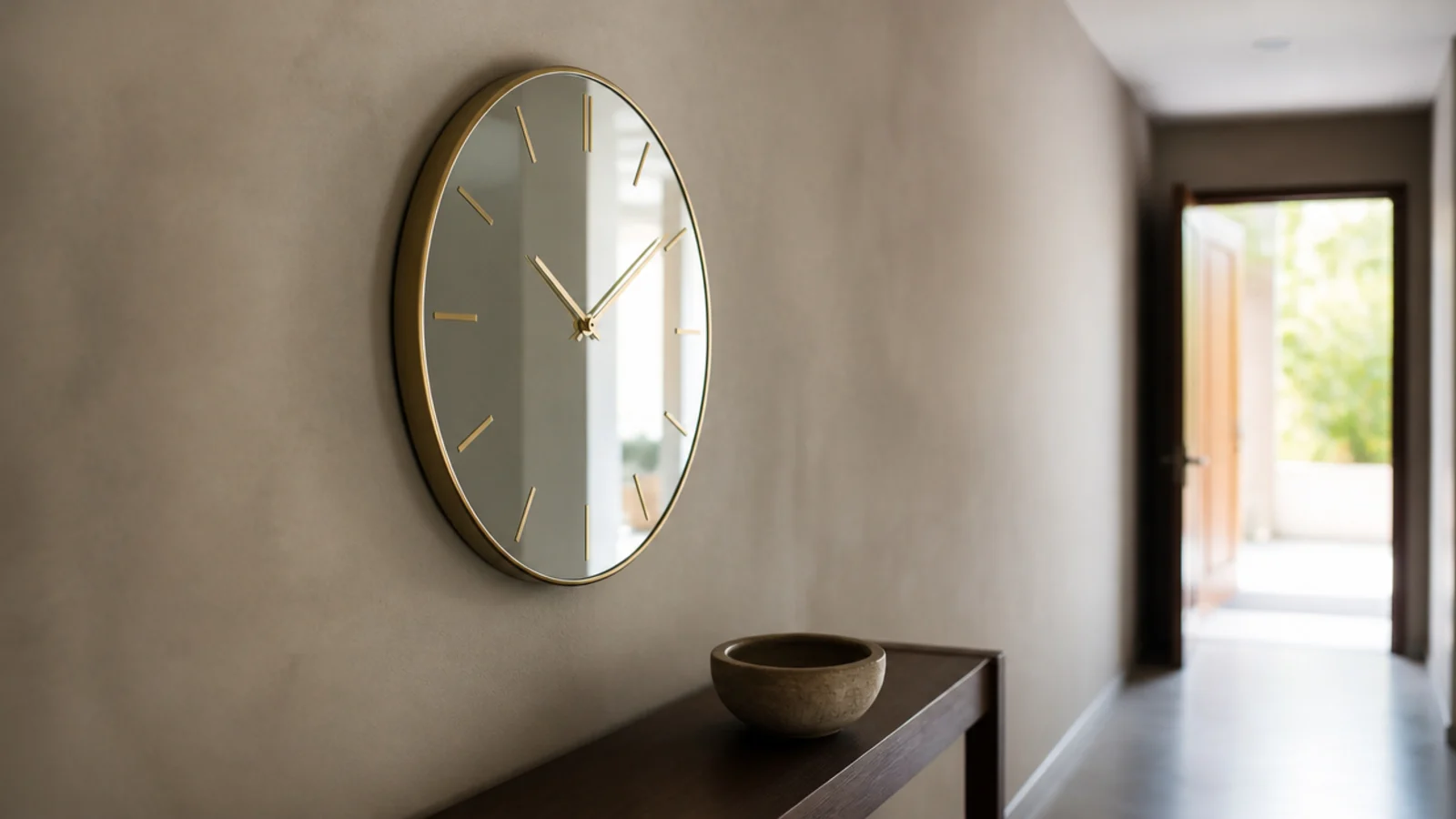
12. A mirror face in a windowless hall
In a hall borrowing all its daylight from an open door at one end, a mirrored dial pushes some of it back down the space. Keep the markers slim and metallic, and make it the only reflective object on that wall — mirror beside mirror simply confuses the eye.
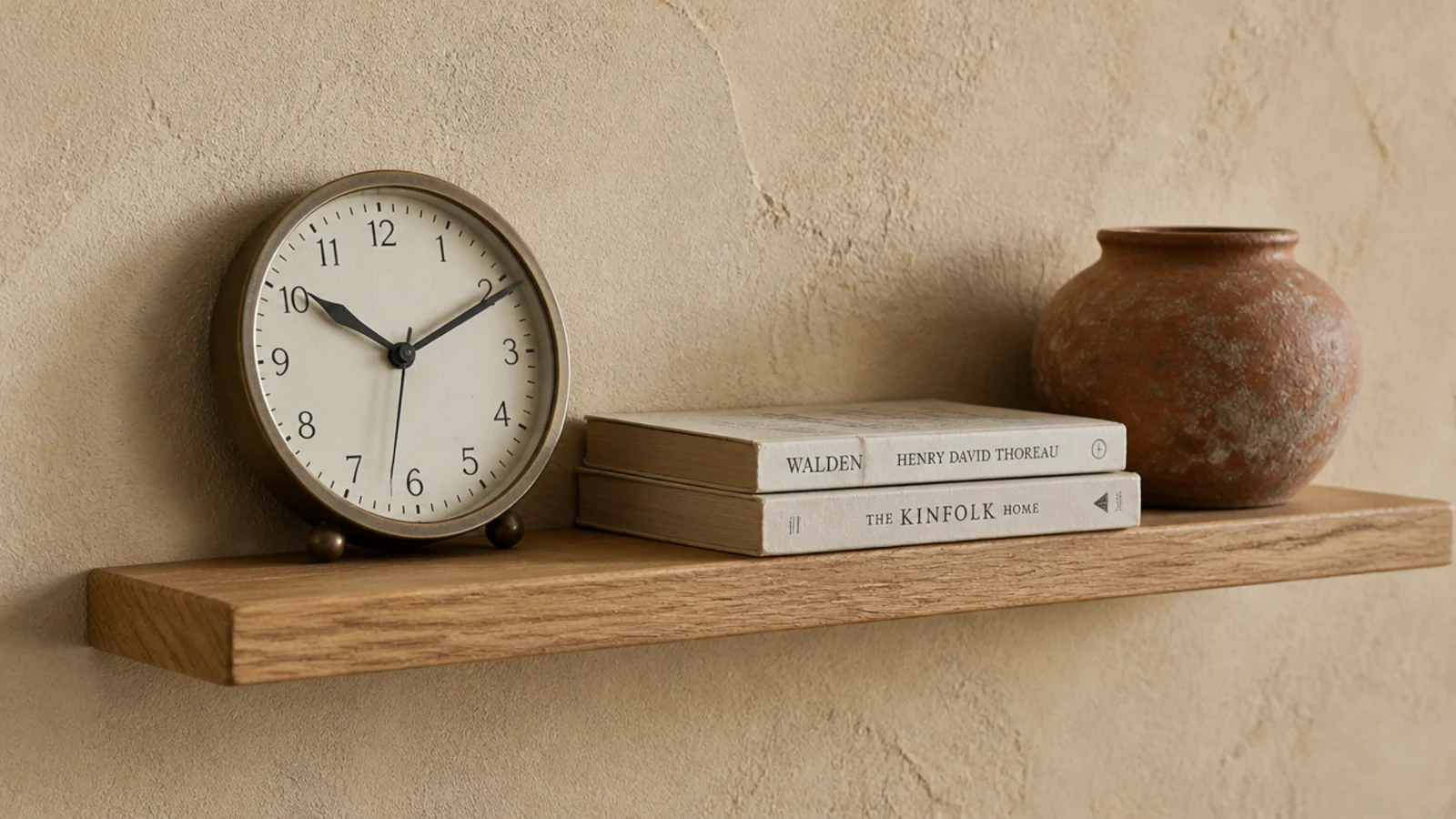
13. Lean it on a four-inch picture ledge
On a shelf 4 inches deep, a 10 to 14 inch clock leans back against the wall with no fixing behind it at all. It restyles in seconds, leaves no holes, and a small coin of museum putty under the rim stops it sliding forward when a door slams.
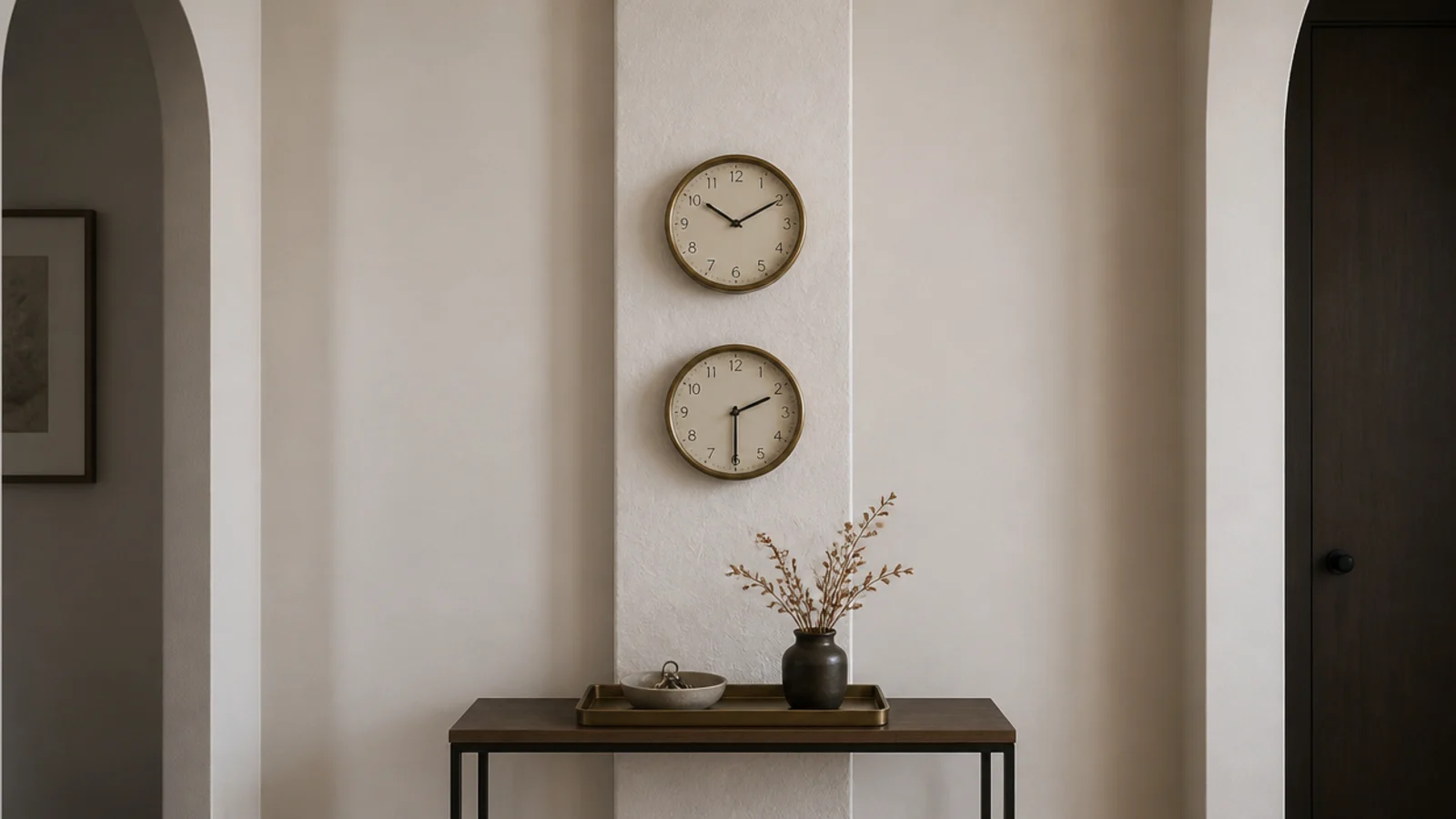
14. Two small faces instead of one medium
On a narrow pier, stacking two 8-inch clocks with a 3-inch vertical gap uses the height you have rather than the width you do not. Put the larger of the two on top so the pair does not read bottom-heavy, and keep both on the same plumb line.
15. Above the bed: the stud rule in a small bedroom
In a small bedroom the wall above the bed is often the only clear one, and it is the one that demands the most care. Find the studs, use number eight screws two inches long into framing, and keep it light. A plastic plug above a pillow is not a fixing worth trusting.
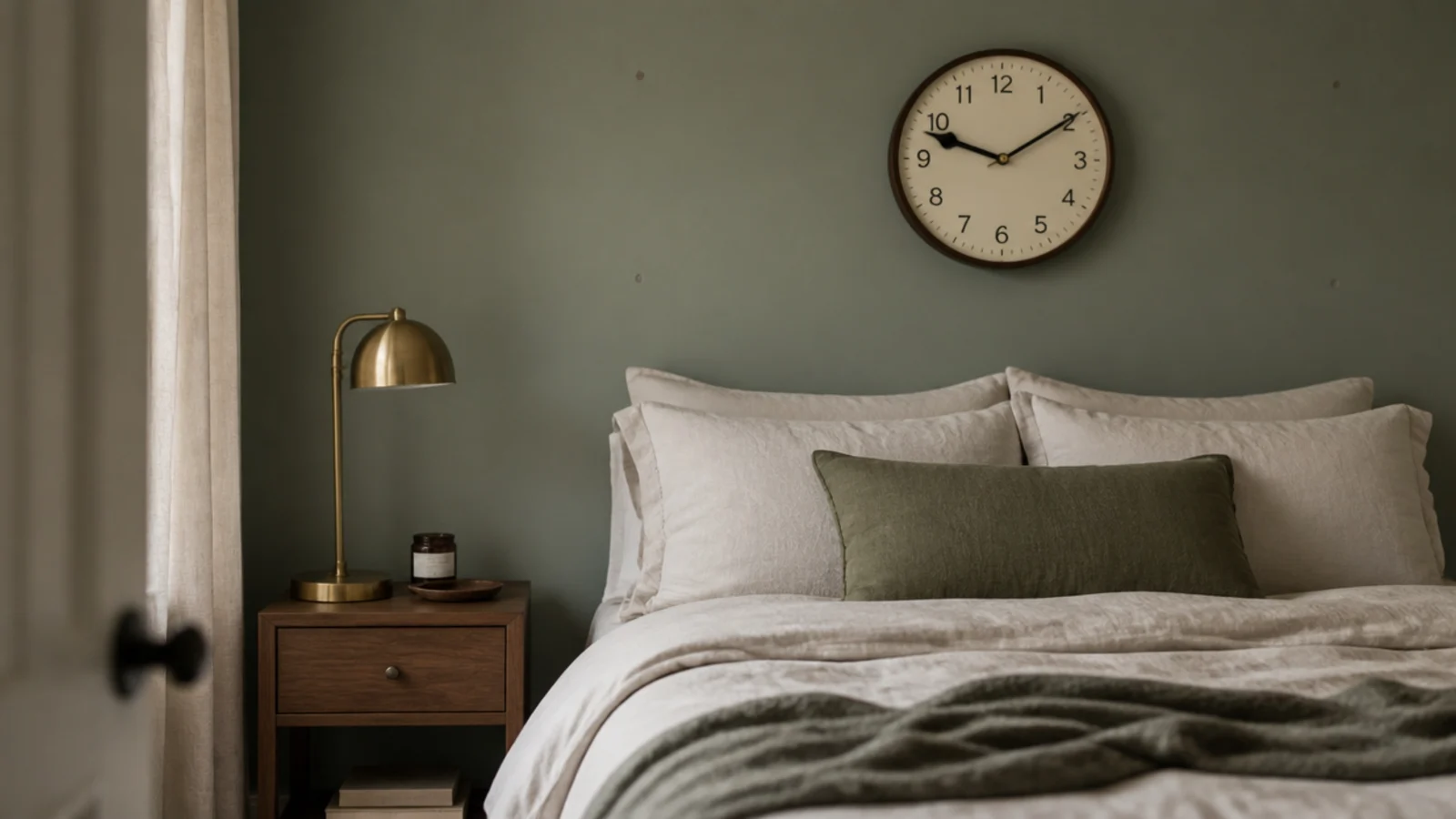
16. In a galley kitchen, above the doorway
A galley has no spare wall at worktop height and a grease film that builds on anything within a few feet of the hob. Above the far doorway solves both: clear of splash, readable down the length of the room, and no cabinet to compete with.
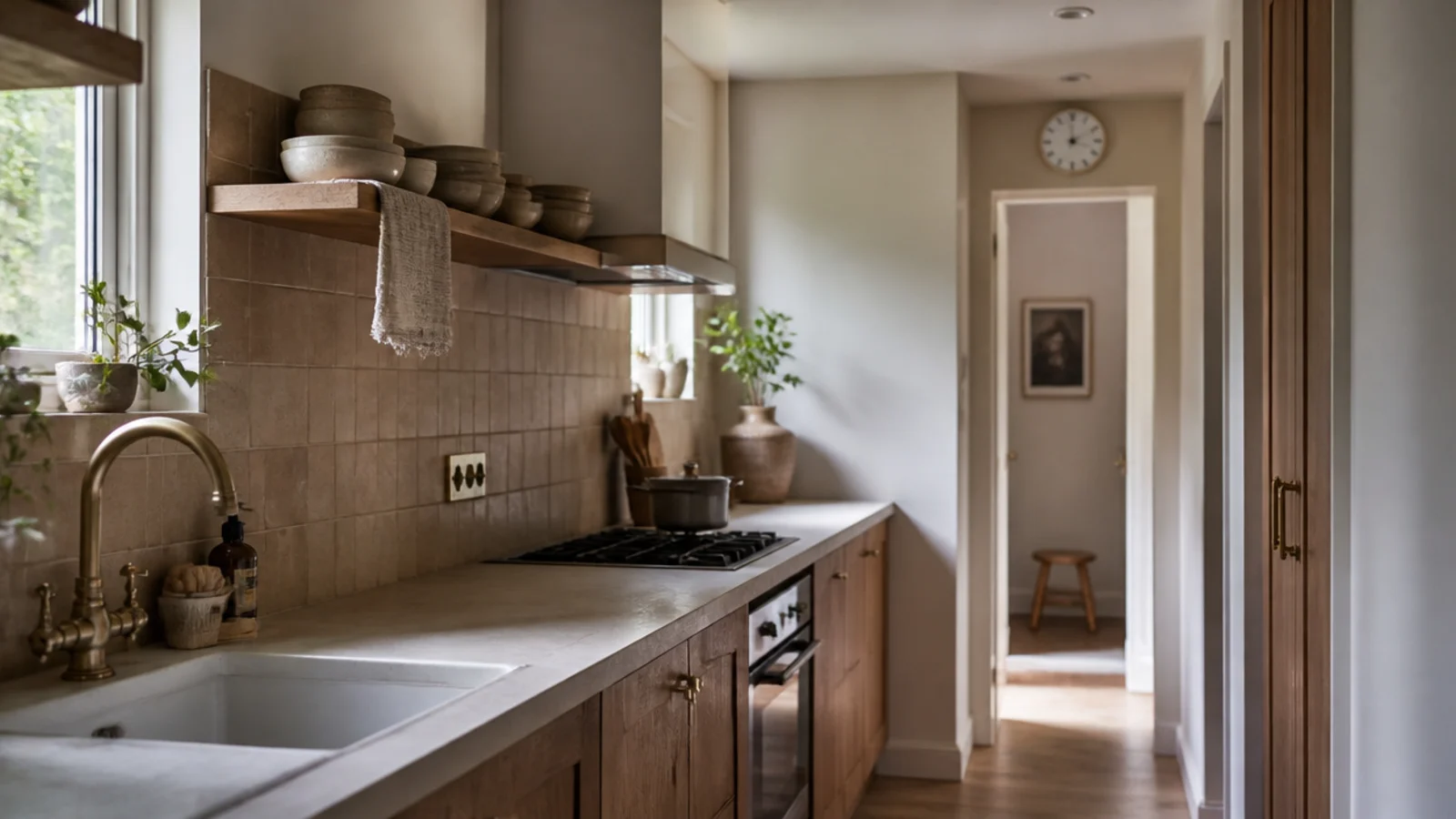
17. Over a radiator shelf
A slim radiator shelf gives a small clock a base and stops it floating on a bare wall. Leave 8 to 10 inches between the shelf and the rim, and check the rising heat — a timber case directly above a hot radiator dries out and can open at the joints over a few winters.
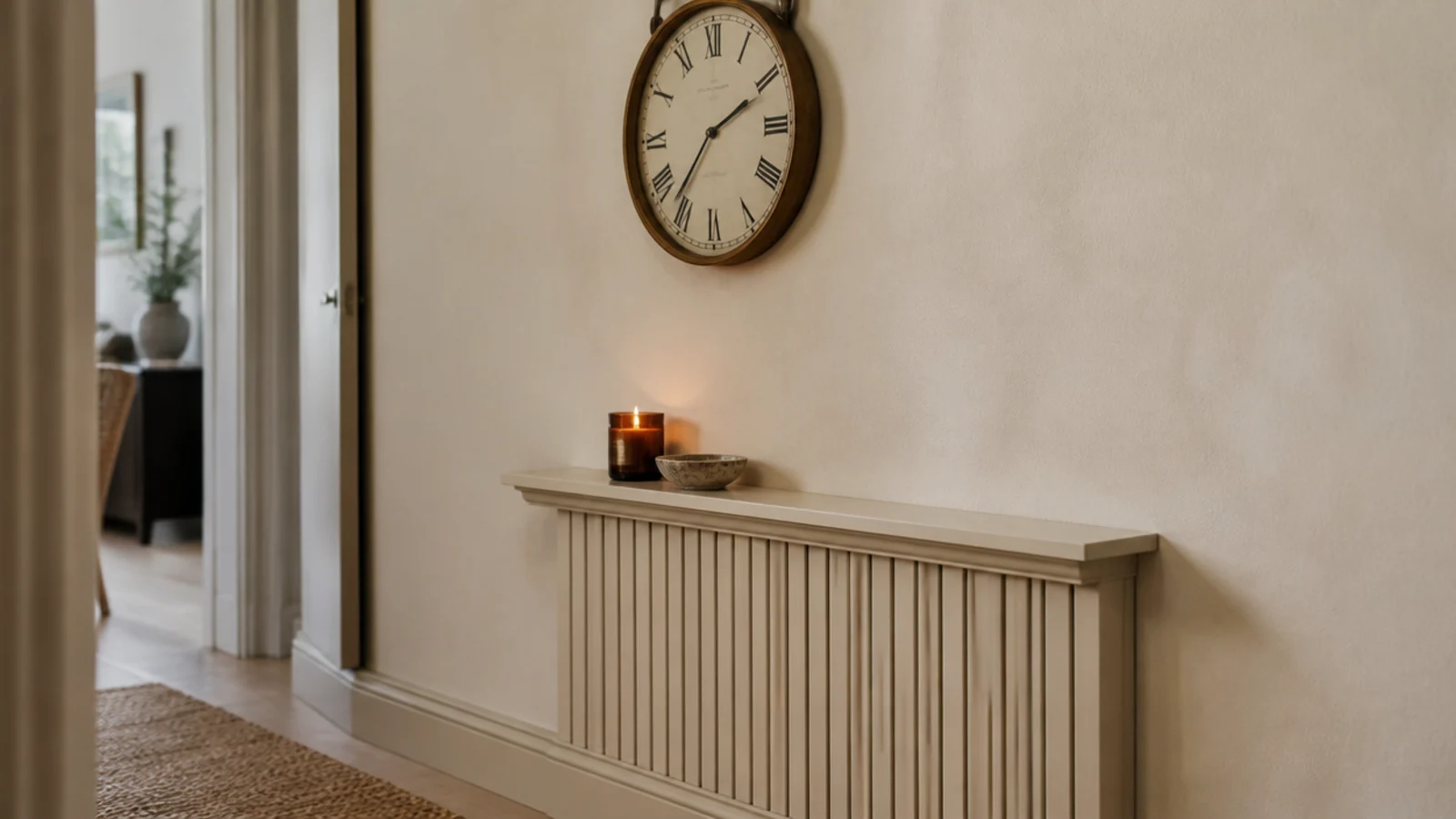
18. Behind a desk in a box room
Hang it on the wall behind you rather than the one you face. A clock in your sightline while you work becomes something you watch; a clock behind you is something you turn around to check, which is a much healthier relationship with a box room office.
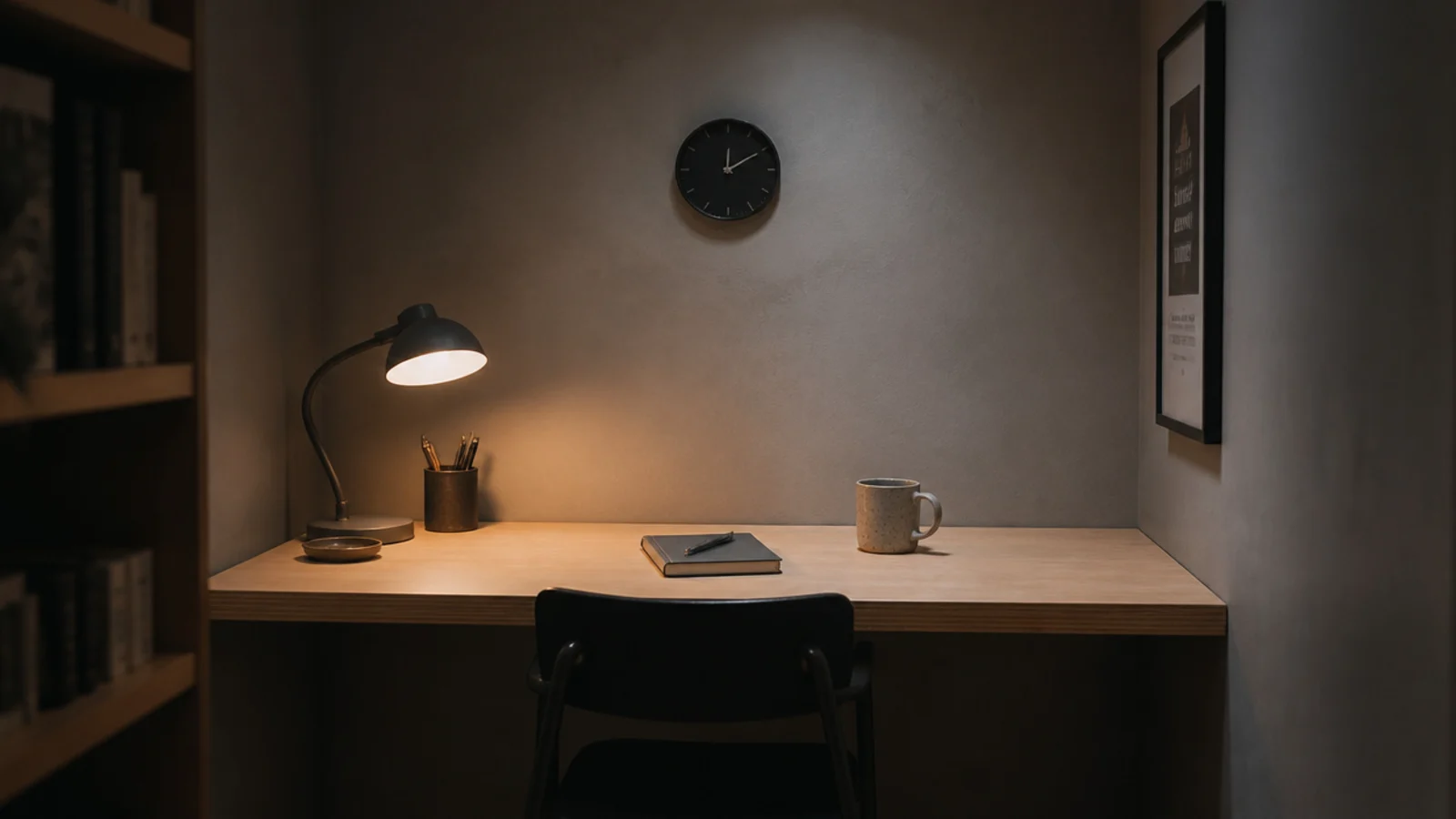
19. In an entryway above the hooks
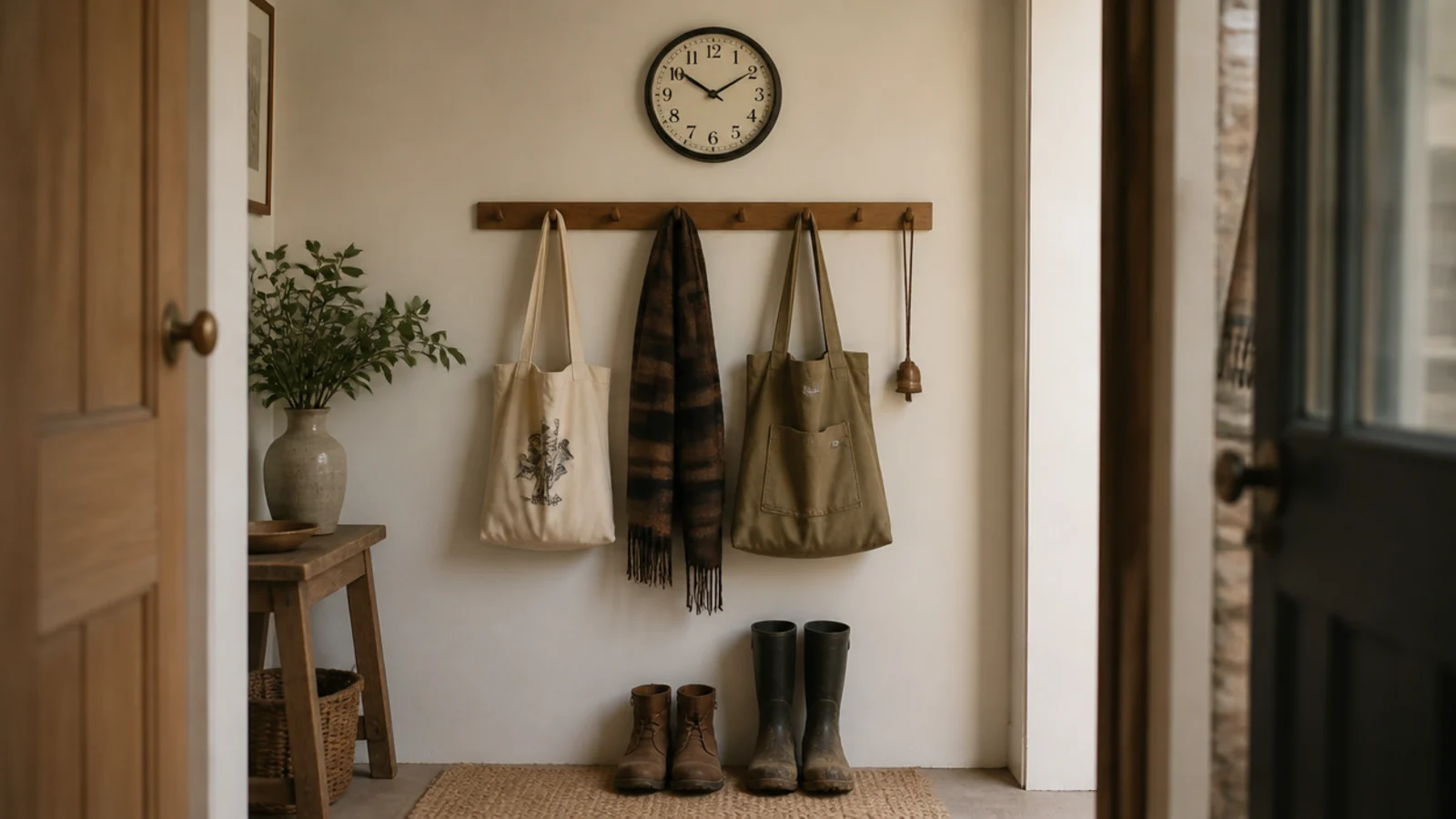
The strip above a coat rail is usually the only clear wall a small entry has. A 10 to 12 inch face centred over the hooks is readable while you are putting shoes on, and the rail below keeps it visually anchored rather than stranded.
20. A sealed case for a small bathroom
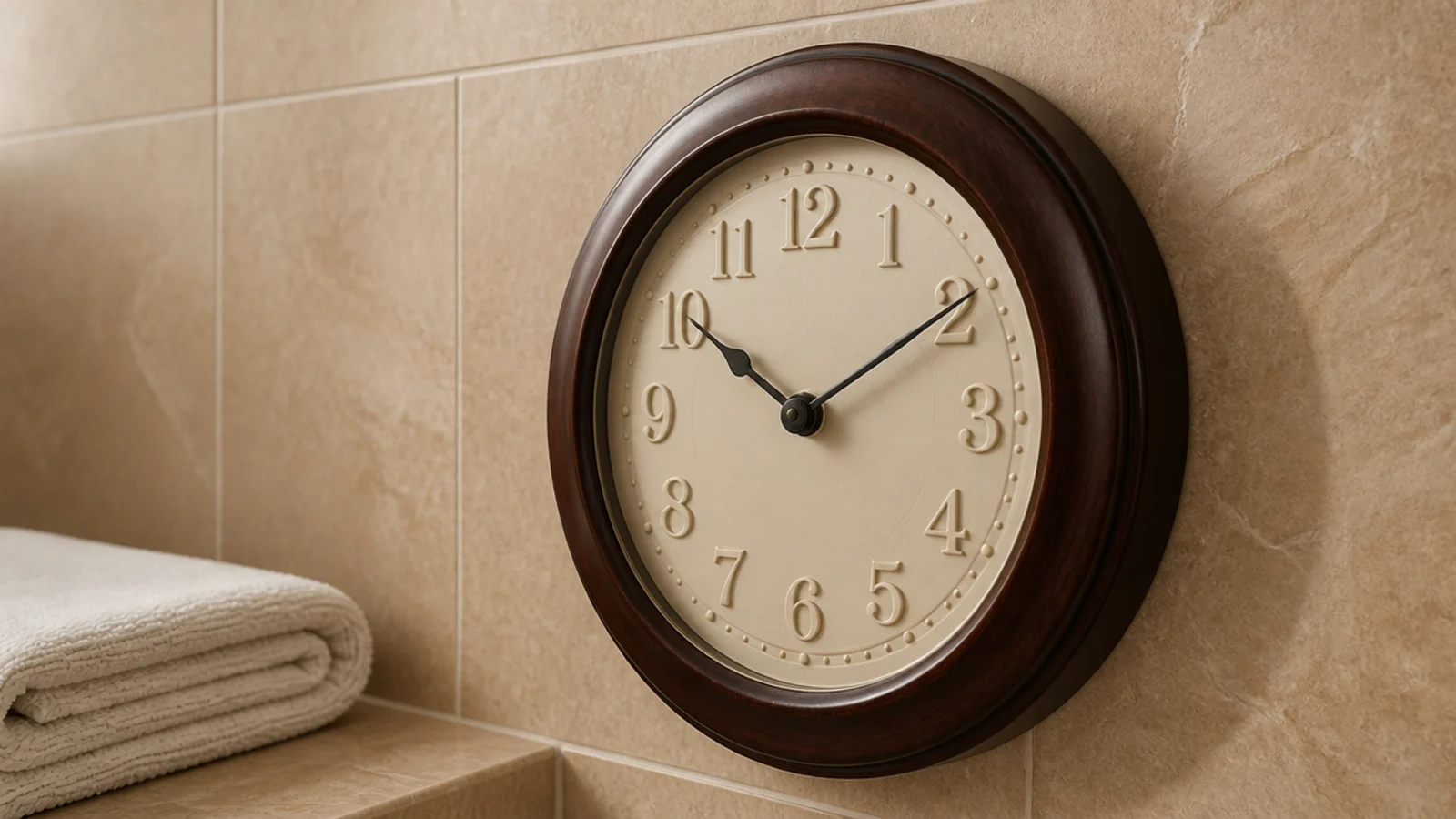
Bathrooms swell MDF and cardboard dials within a season. Choose sealed timber, powder-coated metal or moulded resin, and hang it away from the direct condensation zone opposite the shower head. A small 8 to 10 inch face beside the mirror is usually all a bathroom needs.
21. Stick-on numerals and no case at all
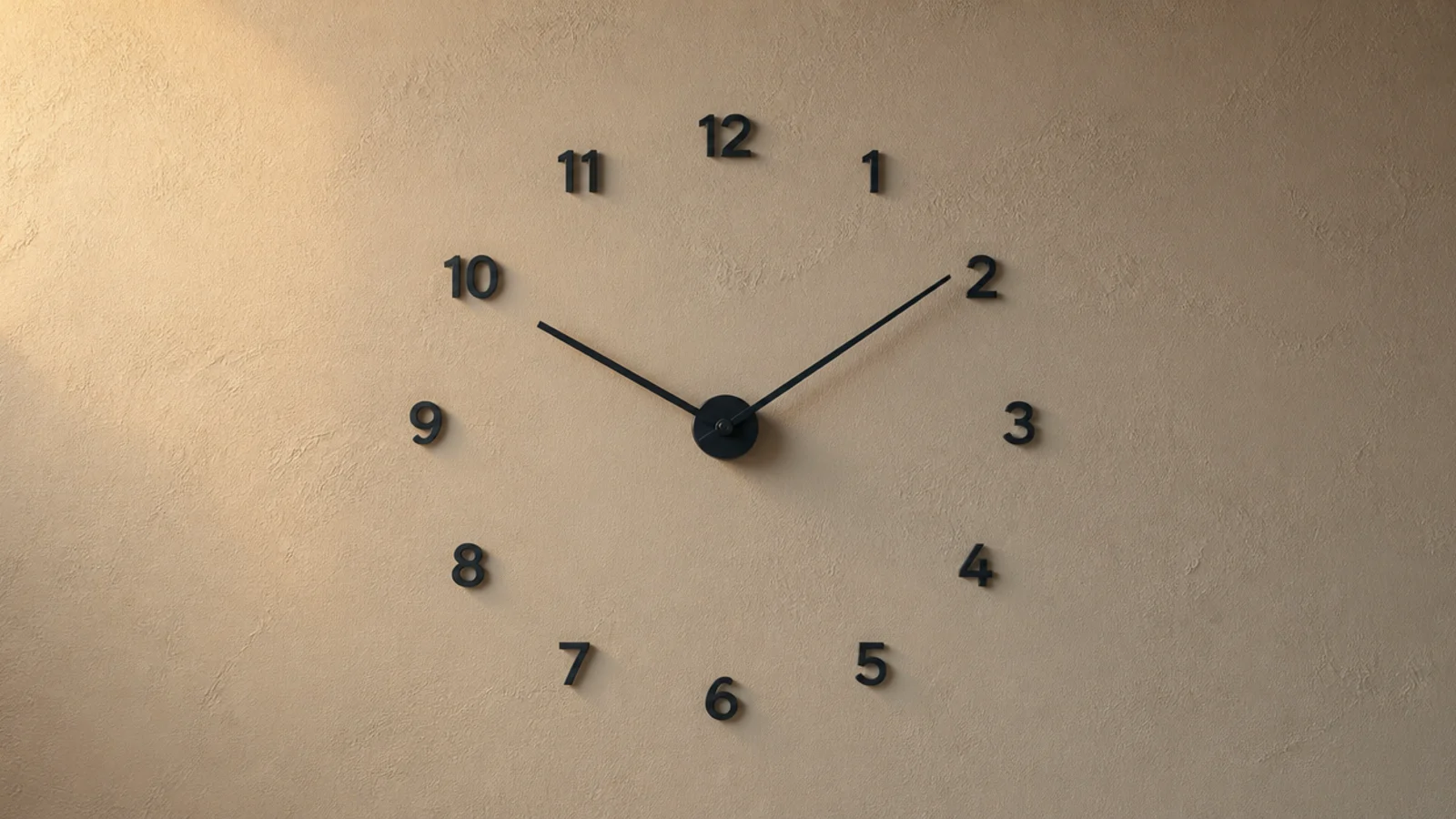
Twelve adhesive numerals fixed in a circle around a small central movement give you a 24 to 30 inch clock with no depth, no shadow and no case. In a small room that is a real advantage. Template it on the floor first, because twelve individually placed numerals go wrong quickly.
22. Keep eight inches above the tallest furniture
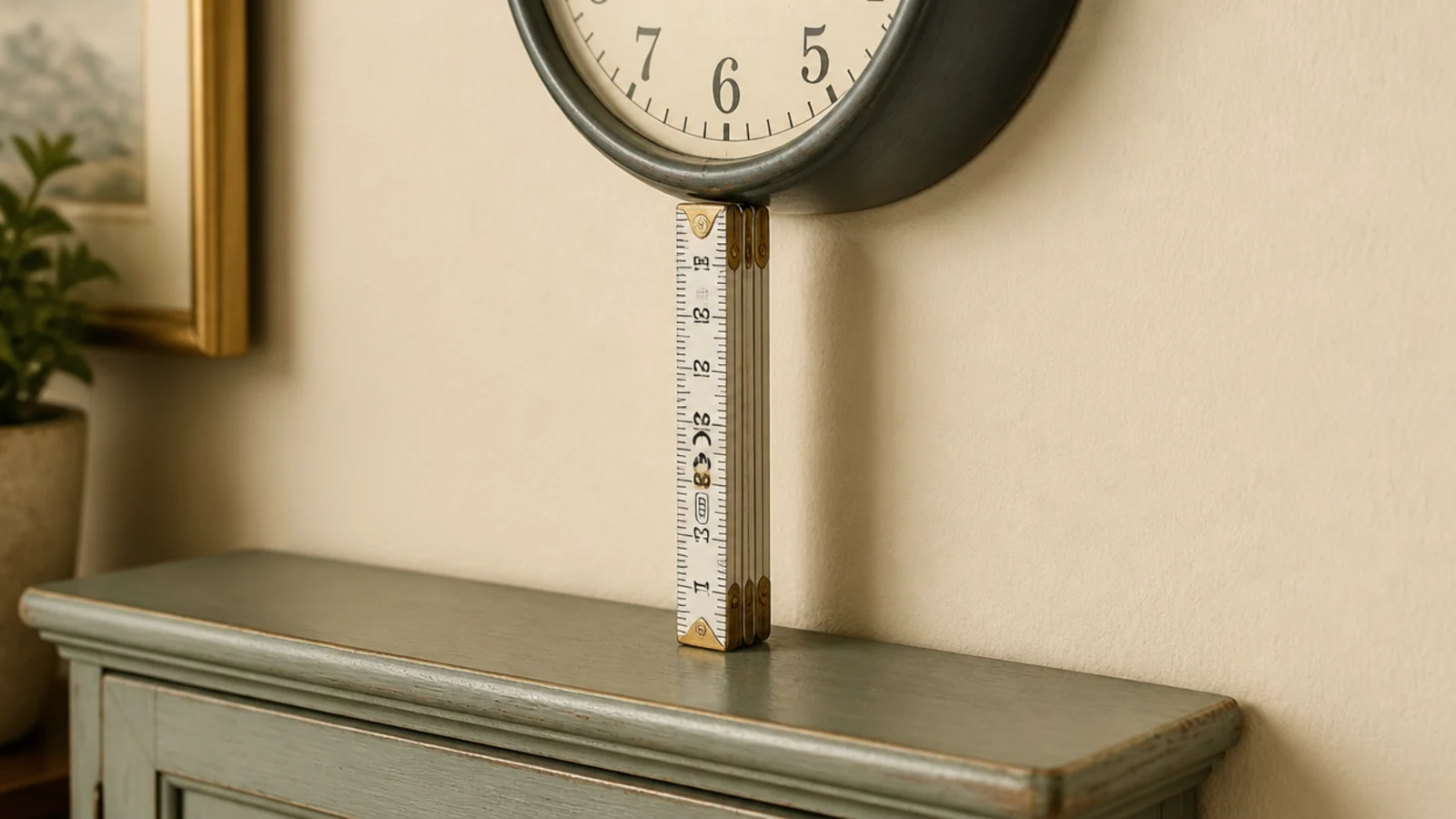
Whatever sits below — a cabinet, a radiator shelf, a headboard — leave at least 8 inches of clear plaster between its top and the bottom of the rim. Less than that and the two objects merge into one lump, which makes a small wall look more crowded than it is.
23. A sweep movement in a studio flat
In one room you cannot walk away from a tick. A step movement measures around 25 to 30 decibels at a metre, which is right at the threshold of a quiet room at night. A continuous-sweep movement costs $12 to $18 and removes the question permanently.
24. Adhesive strips and the sixteen-pound ceiling
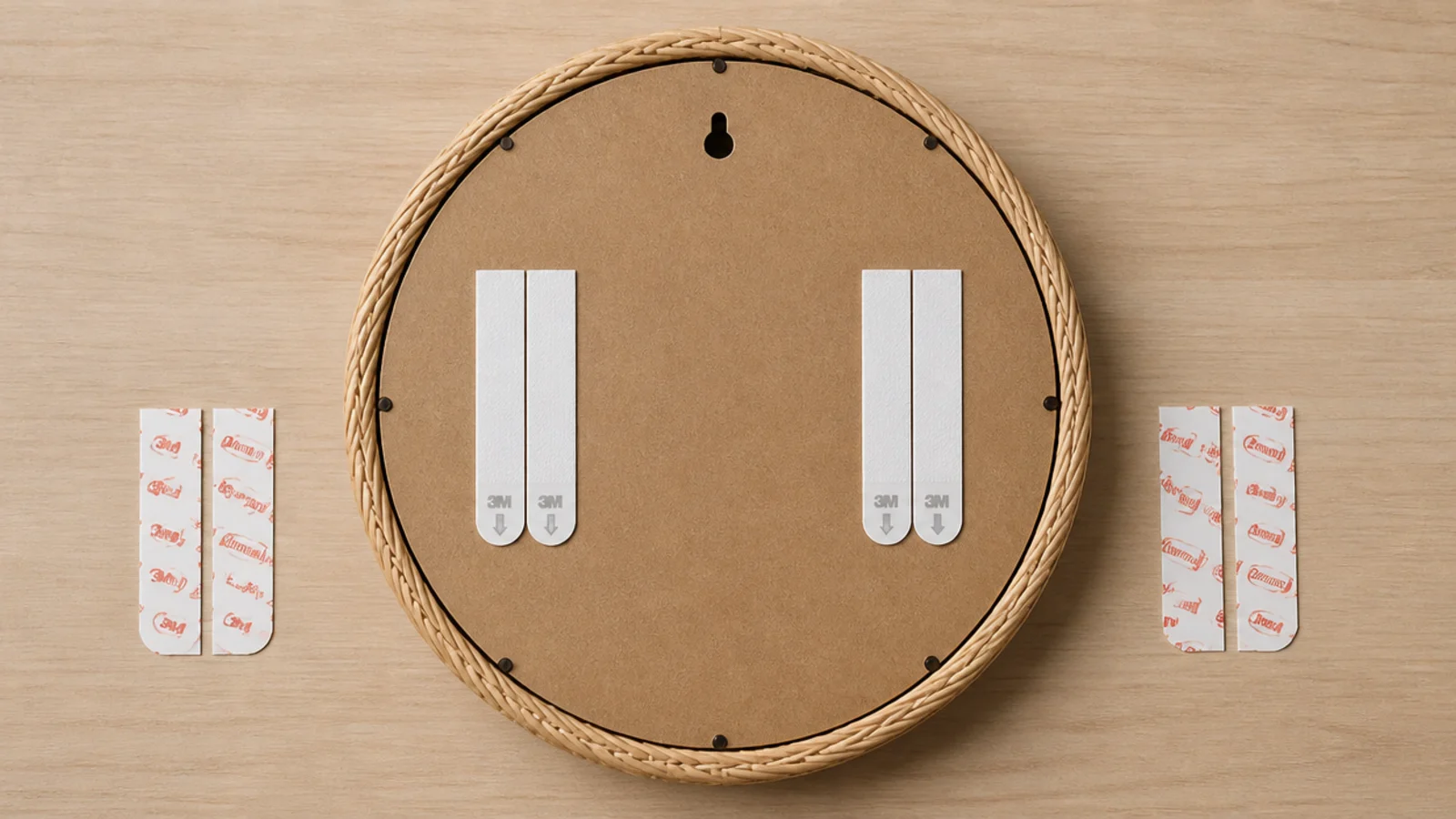
Heavy-duty adhesive picture strips carry around 16 pounds per set on sound paint, which covers most clocks up to about 20 inches. Test one strip on a hidden patch and pull it after a day — on flat builder-grade emulsion the adhesive holds and the paint comes away with it.
25. One clock only in a small room
A grouping needs room around it to read as a group. In a small space, one face on generous empty plaster does more than five faces crammed into the same square footage. If you want a cluster, save it for the largest wall in the house — the TV wall guide covers small-room feature walls that already carry a screen.
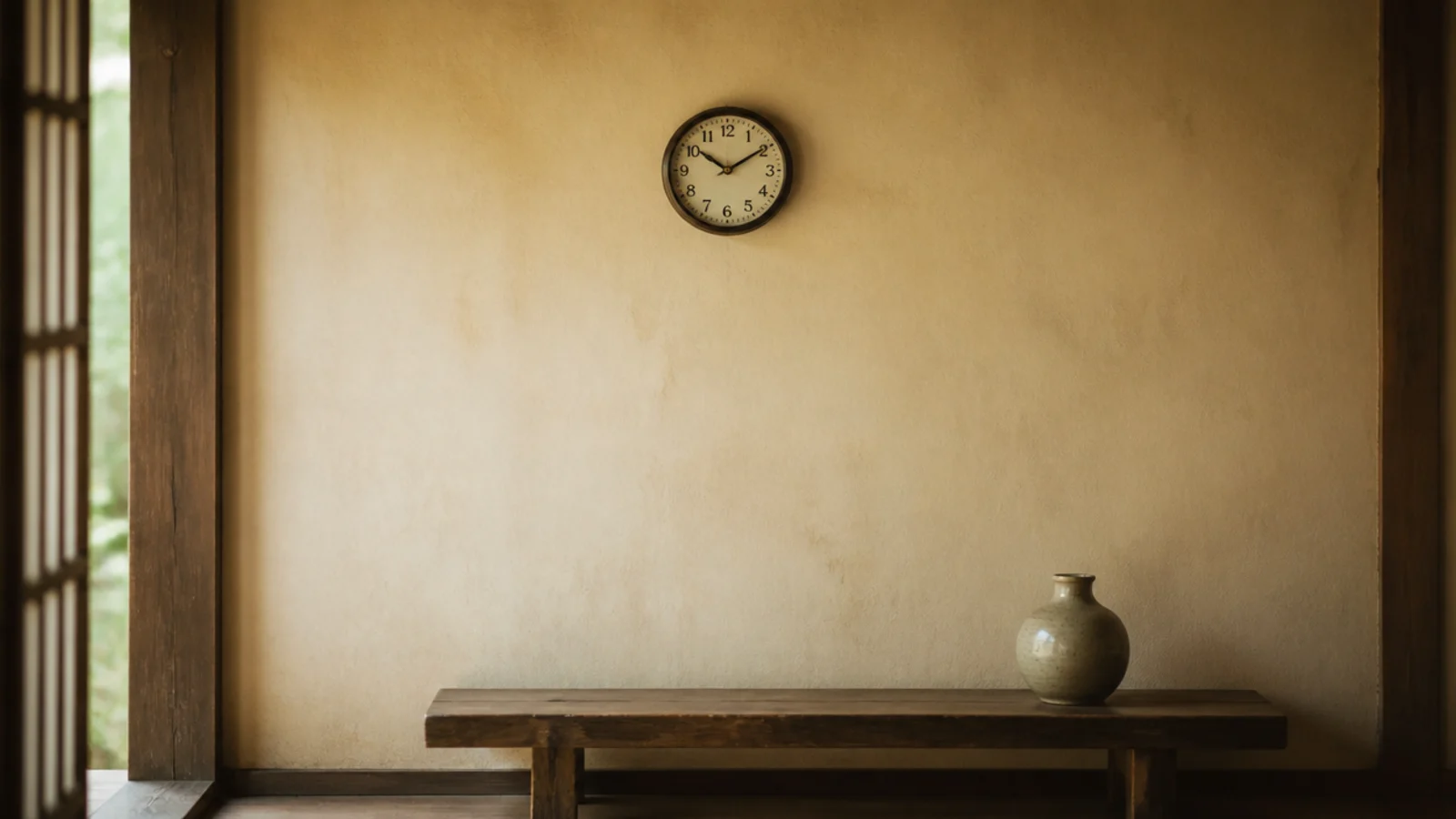
For the softer, more photographic end of the same problem, the aesthetic clock picks cover finishes that suit small neutral rooms.
Mistakes to Skip
- Buying the size you would buy for a big room and hoping it settles. It does not settle, and a 24-inch face in a 10-foot room is the first thing every visitor comments on.
- Hanging a deep-cased clock in a narrow corridor. Anything over about an inch and a half proud of the wall catches shoulders and coat sleeves, and it will be back on the floor within a month.
- Choosing a ticking movement for a studio or a one-room flat. There is nowhere to go to get away from it, and the noise is far more noticeable in a small volume than in a large one.
- Trusting adhesive strips above their honest limit. Sixteen pounds per set assumes sound paint and a clean surface, and a heavier clock above a bed still belongs on a screw into framing.
Frequently asked questions
What size clock suits a small room?
Between 14 and 18 inches in a room under about 12 feet square, and no more than a third of the width of whatever furniture sits below it. A large face in a tight room reads as pressure rather than presence, and it also pushes the eye to the wall rather than through the space.
Where do you hang a clock when every wall is a door or window?
Use the pier between two openings or the strip above a door head. A 10 to 14 inch face on a narrow pier at eye level uses wall nobody else wants, and above a door the clock sits clear of furniture, coats and the swing of the door itself.
Does a clock make a small room look smaller?
A deep contrasting case does, because it reads as a separate object projecting into the room. A slim ring, a flat dial in the wall colour, or a face under an inch deep all read as surface rather than volume, which leaves the room feeling the same size.
Can I hang a clock in a small bathroom?
Yes, with a sealed case and no paper dial. Humidity swells MDF and cardboard faces within a season, so choose sealed timber, metal or moulded resin, and hang it away from the direct spray zone rather than opposite the shower head where condensation lands hardest.
What fixing works in a rental?
Heavy-duty adhesive picture strips carry around 16 pounds per set on sound paint, which covers most clocks up to about 20 inches. Test one strip on a hidden patch first, because on flat builder-grade emulsion the adhesive holds and the paint lets go instead.
Want more like this? Browse all 15 wall clock guides — they all use the same measurements and budget tiers.
Pin it for later
Save this to your Wall Clock board
Pin it now so it is waiting for you when the tape measure comes out — and so the next person hunting for this idea can find it too.
Save this pinKeep going
More ideas worth saving while you have the tape measure out.