Wall Clock · Listicle
20 Unique Wall Clock Design Finds Worth Buying

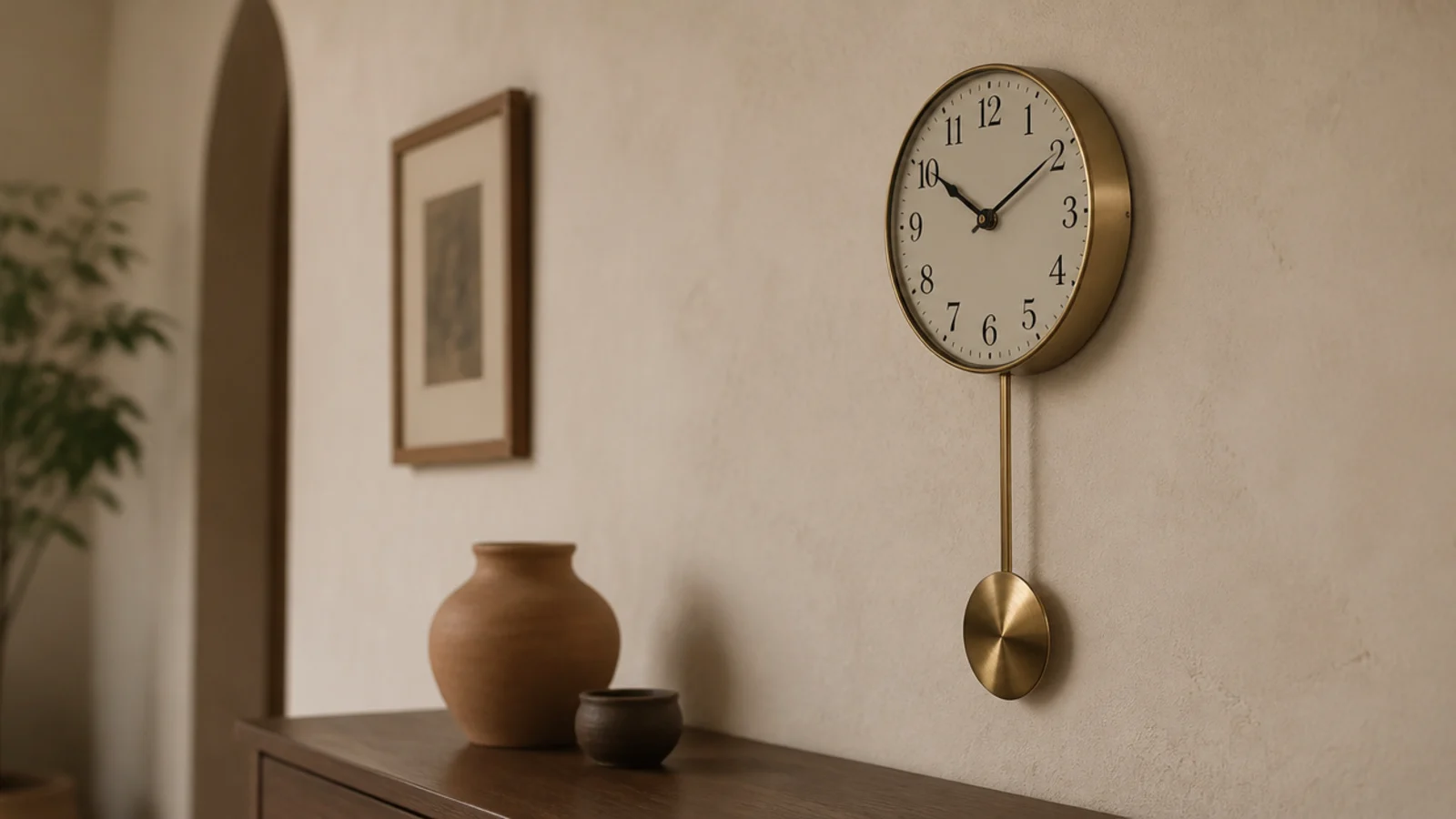
Novelty is easy and legibility is not, which is why so many unusual clocks end up as objects nobody reads. A unique wall clock design earns its wall only if you can still tell the time from the sofa, and the honest test is whether you check your phone instead within the first week. Some of the formats below are genuinely better than a plain dial for the room they suit; a couple are decoration with hands attached, and I have said which. Here are twenty worth the money, with what each one costs, weighs and demands from the wall.
In this guide22 sections — tap to openHide
- 1.What a unique wall clock design is actually worth
- 2.A double-sided clock on a bracket arm
- 3.A split-flap display that you hear change
- 4.A word clock that spells the hour
- 5.A rotating disc clock with no hands at all
- 6.A twenty-four hour dial for a home office
- 7.A tide clock for a coastal room
- 8.A moon-phase aperture above the dial
- 9.An exposed pendulum and visible escapement
- 10.A slate slab with cut numerals
- 11.A hand-thrown ceramic dial
- 12.A bicycle rim turned into a clock
- 13.A lit ring that reads as a glow at night
- 14.Interchangeable dial plates
- 15.An embroidered or woven textile face
- 16.An infinity-mirror clock for a dark hallway
- 17.Multiple time zones inside one case
- 18.A clock built into a shelf
- 19.A domed crystal lens over a bare movement
- 20.A weather trio with clock, temperature and humidity
- 21.A commissioned set of oversized numerals
- 22.Mistakes to Skip
What a unique wall clock design is actually worth
Start with legibility at your real viewing distance. In a living room that is usually 10 to 15 feet, and the working rule is roughly an inch of numeral height for every 10 feet. A format with no numerals at all — rotating discs, lit rings, binary dots — needs you to be genuinely happy reading it slowly, because it will never be a glance.
Then check the power. A single AA runs a quartz movement for 8 to 18 months. Split-flap, word and lit-ring displays run on mains or a low-voltage adaptor, so you need a socket within about 6 feet or a trunking run down the wall. That decision belongs before you choose the wall position, not after.
Weight decides the fixing. Slate, stoneware and cast metal faces at 14 to 16 inches run 10 to 18 pounds. Anything over 8 pounds — and everything hanging above a sofa or a bed — goes on a number eight screw into a stud, never the plastic plug supplied in the box, which is rated near 10 pounds new and weakens with age. A spring toggle carries 25 to 50 pounds in half-inch drywall where no stud lands.
Finally, noise. Mechanical escapements and split-flap mechanisms are audible by design — the sound is part of what you are buying. Expect $60 to $200 for most formats here, $200 to $600 for split-flap and word displays. If you want the look without the mechanism, the budget design guide covers the cheaper routes.
1. A double-sided clock on a bracket arm
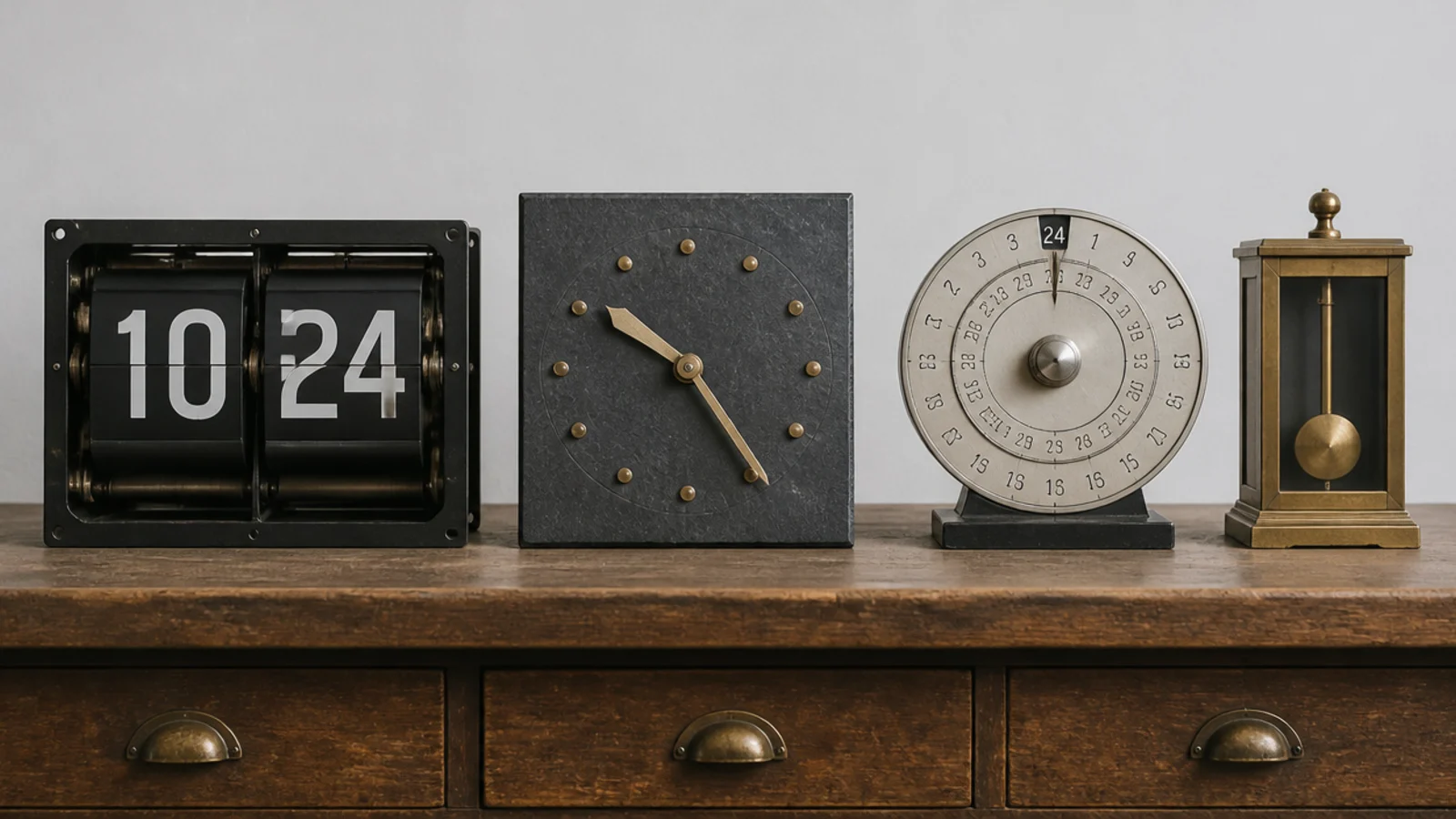
The only format that reads from both directions, which makes it the right answer in a corridor rather than a novelty. The arm projects 6 to 10 inches, and that leverage pulls outward on the fixing rather than downward, so it is a framing-only installation. Steel double-sided faces run $60 to $160, and the good ones let you set both dials from a single movement so they cannot drift apart.
2. A split-flap display that you hear change
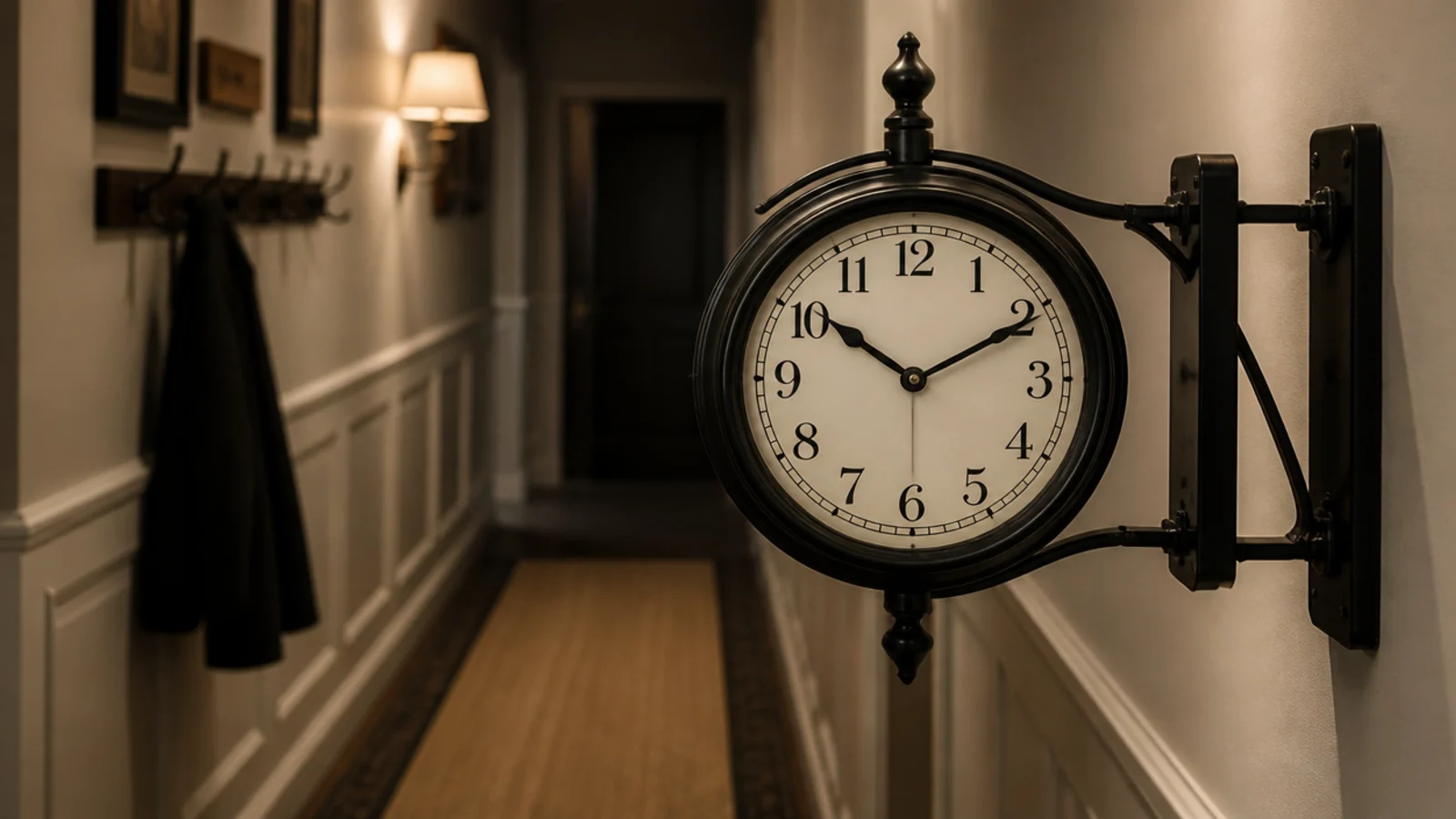
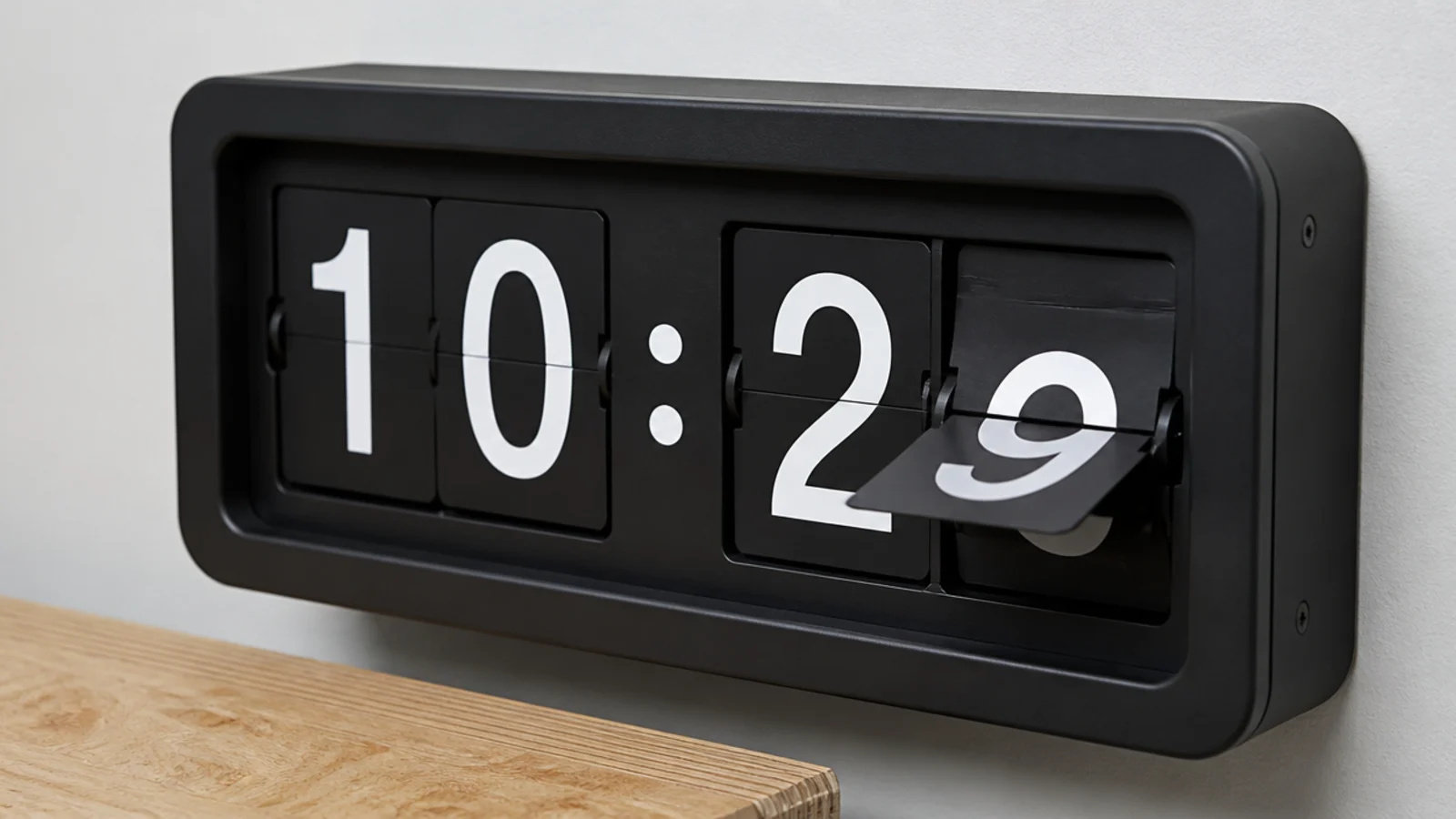
Mechanical split-flap units are the most tactile clock you can hang. Every minute turns with a soft clatter, which is charming in a hallway and intolerable in a bedroom. They need mains power, they weigh 4 to 9 pounds, and they cost $200 to $600 for a genuine mechanical unit. The digits are usually 2 to 4 inches tall, so legibility is excellent — often better than a 20-inch analogue dial.
3. A word clock that spells the hour
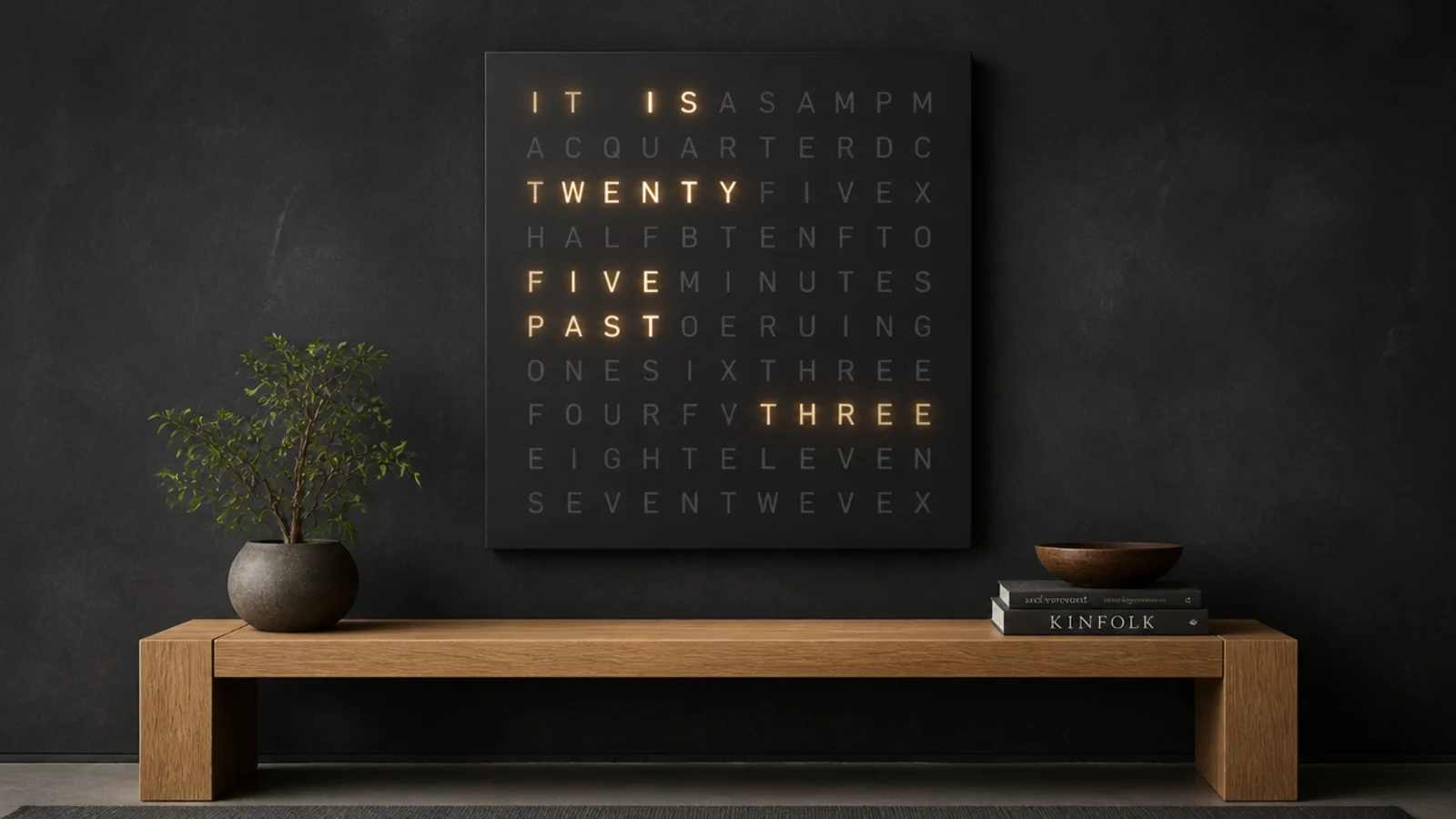
A grid of letters where only the relevant words light up. It reads as a graphic panel from across a room and resolves into a sentence when you look at it, which is genuinely pleasant in a study. The trade is precision: most only resolve to five-minute steps. Mains powered, usually 10 to 14 inches square, and $150 to $400.
4. A rotating disc clock with no hands at all
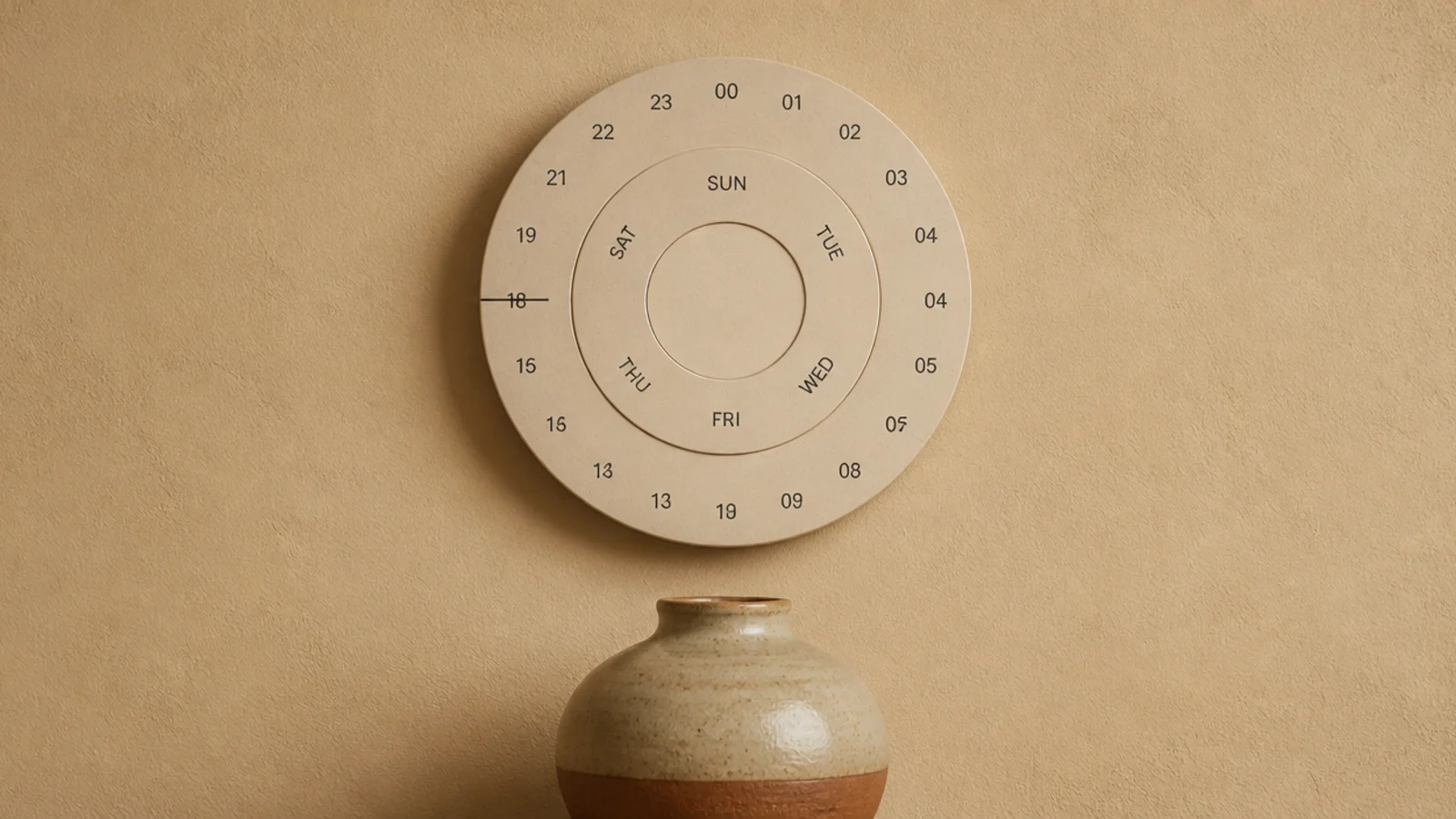
Two concentric printed discs turn behind a fixed marker. It is beautiful and it is slow to read — expect two or three seconds rather than a glance, permanently. Buy it for a hallway or a bedroom where nobody is timing anything, not for a kitchen. Usually 12 to 18 inches and $70 to $180.
5. A twenty-four hour dial for a home office
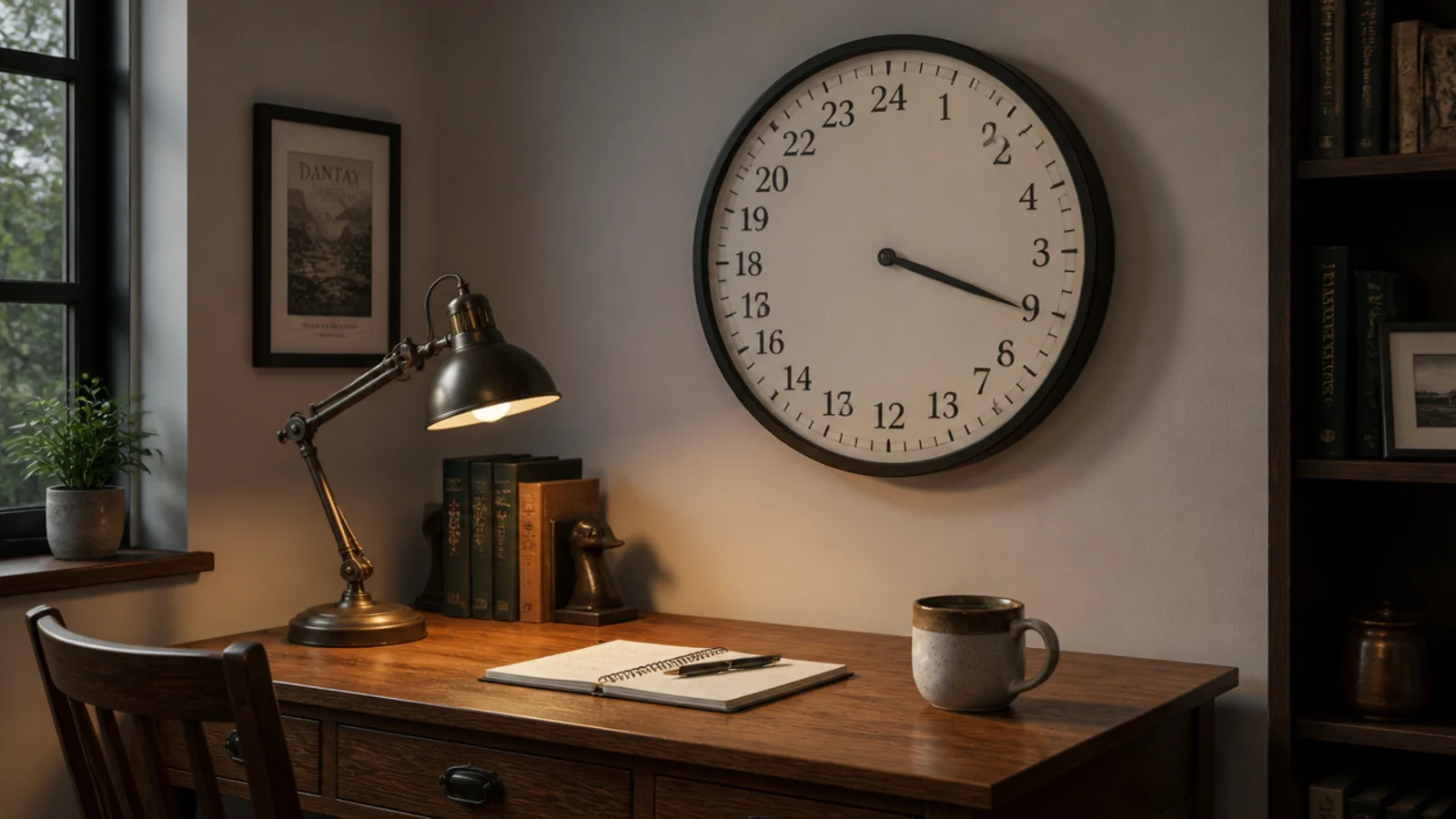
One hand, one rotation per day, and the whole day visible at once. It changes how you read time rather than just how it looks, which is the mark of a format worth owning. Legibility is fine because the numerals sit twice as far apart as on a twelve-hour dial. Expect $60 to $150 at 12 to 16 inches.
6. A tide clock for a coastal room
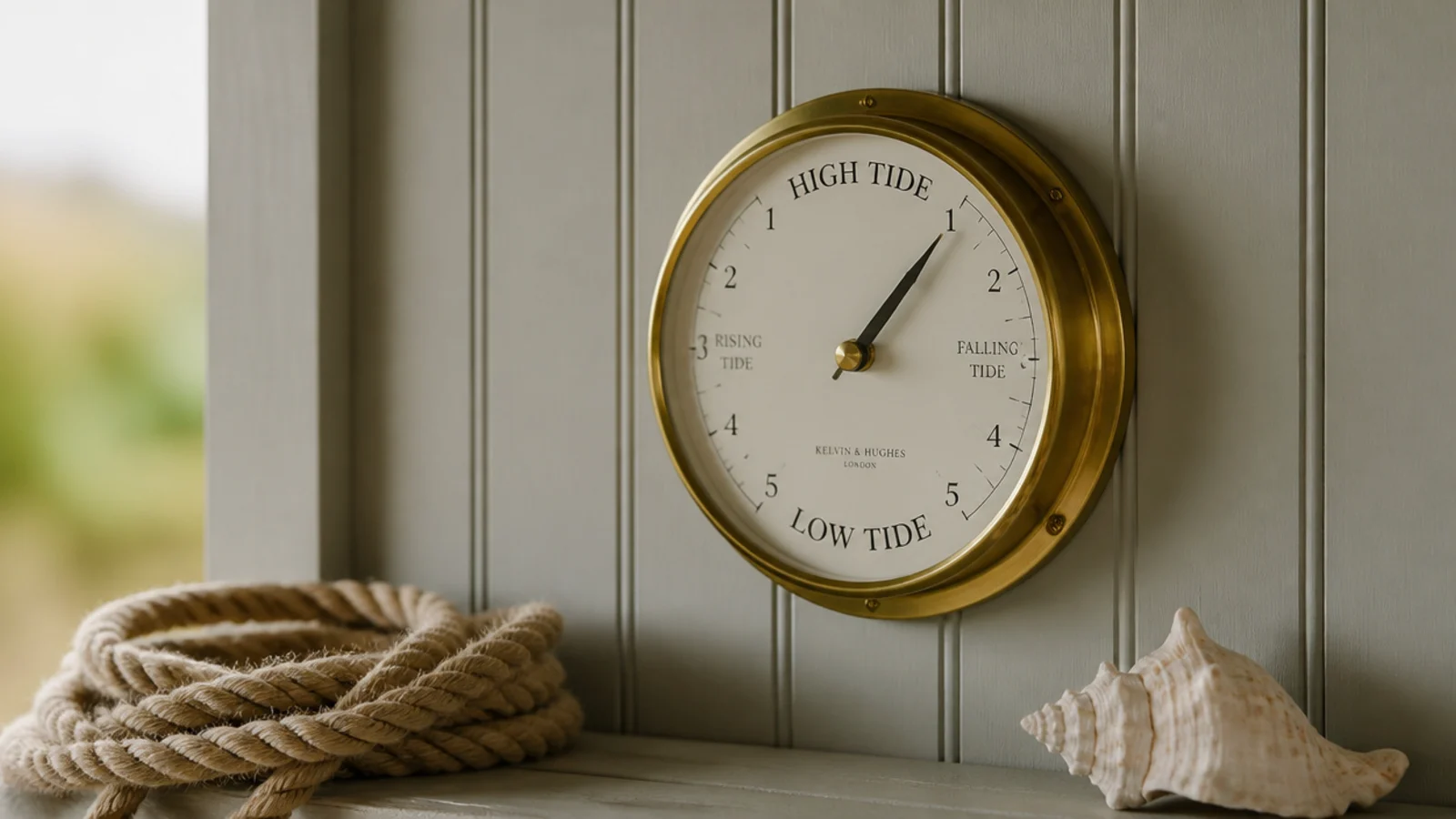
Tide clocks track the lunar cycle of about twelve hours and twenty-five minutes rather than the sun, so they show high and low water instead of hours. They need setting to a local port and only behave on coasts with a regular semi-diurnal tide. As decoration inland they are meaningless, which is exactly why they are lovely in a house that actually looks at water. $50 to $140.
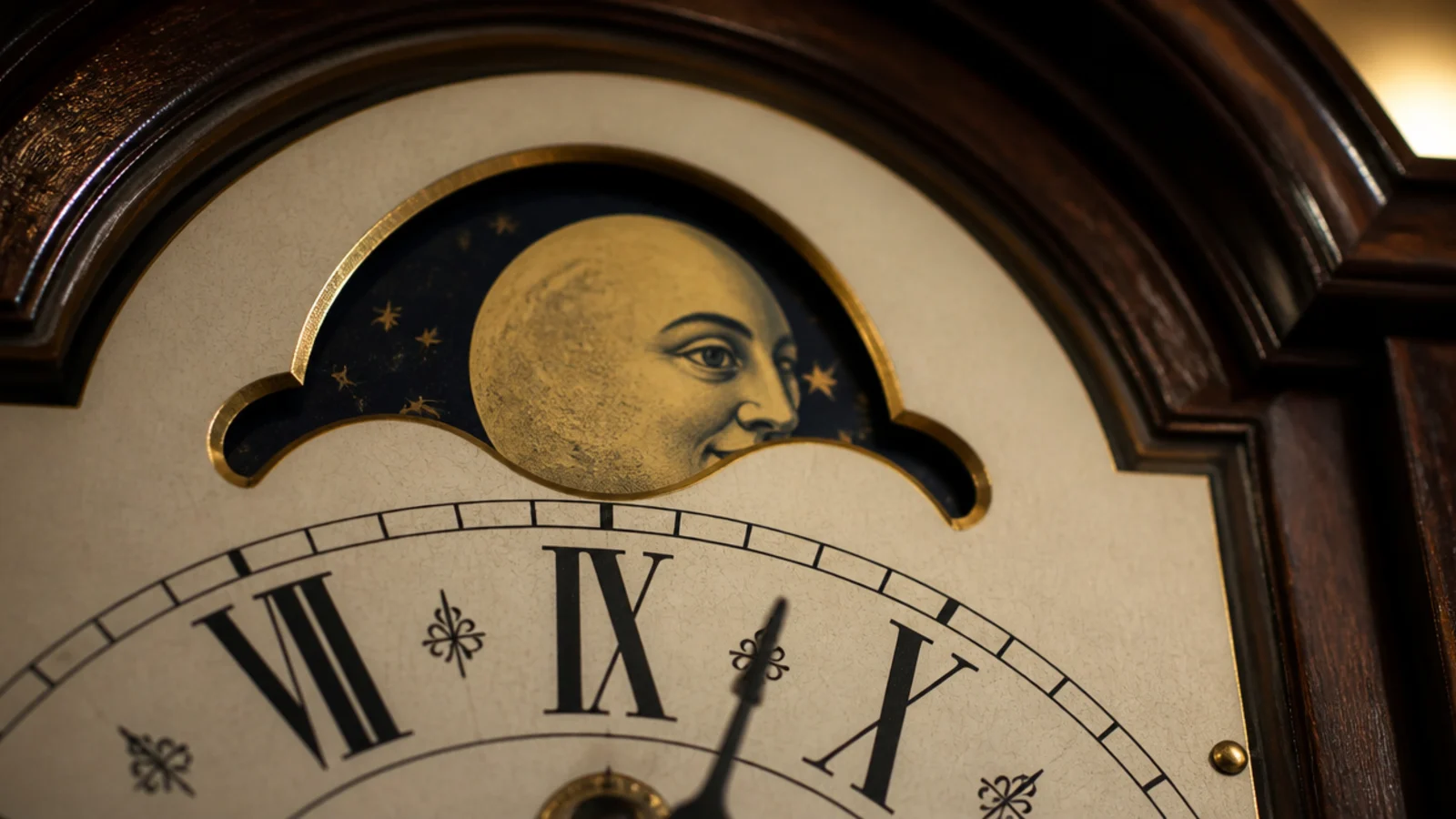
7. A moon-phase aperture above the dial
A small shaped window showing a painted moon disc that advances through the lunar month. It adds depth to an otherwise ordinary dial and costs $30 to $80 over the plain version. Check it is geared to the movement rather than manually set, because a moon phase you have to advance yourself will be wrong within a fortnight.
8. An exposed pendulum and visible escapement
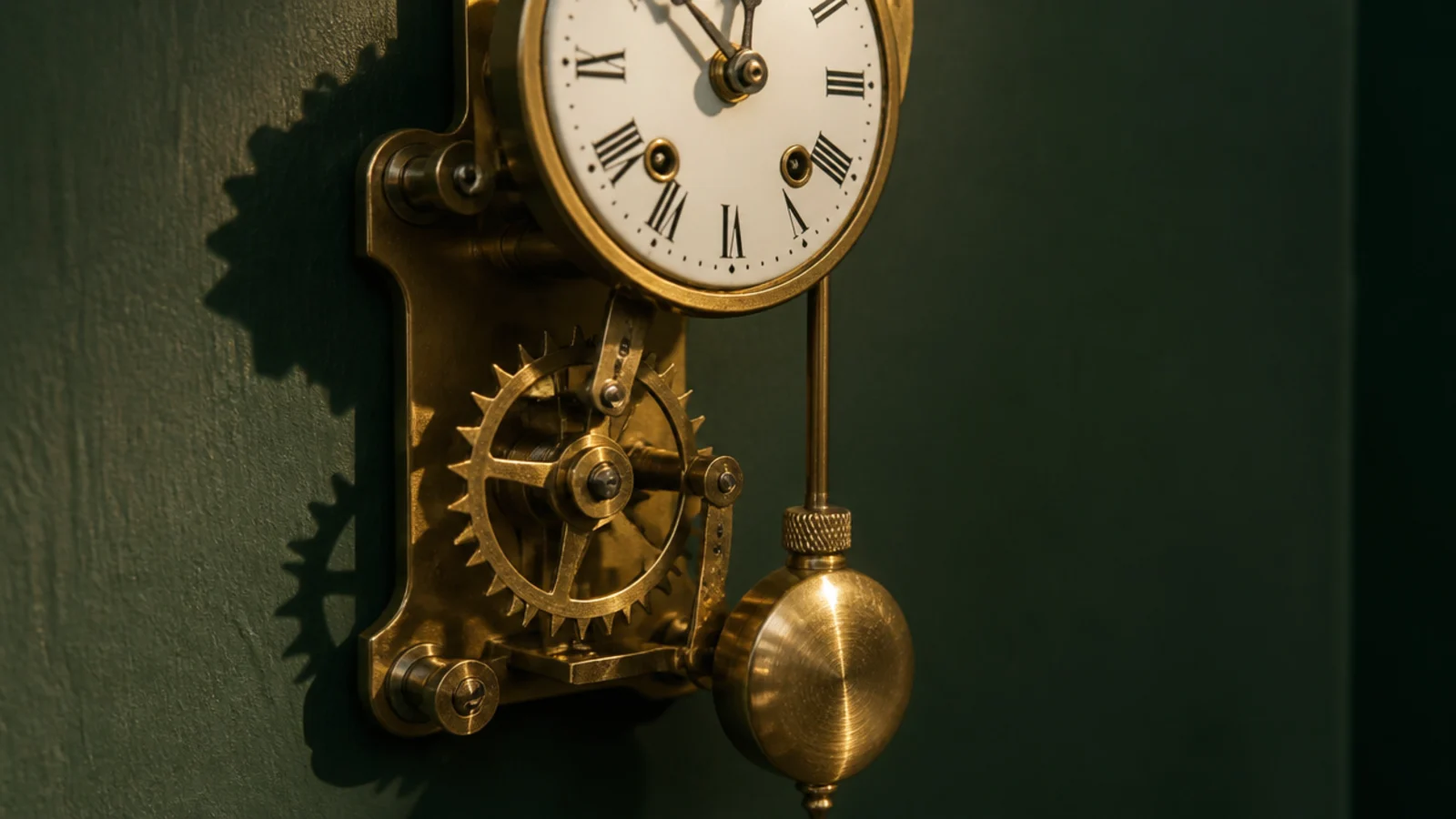
The most demanding clock here and the most rewarding. It must hang dead level — out by more than about a degree and the escapement loses its beat and stops inside a day — so fix it on two points and check with a spirit level across the case. Mechanical versions tick loudly and need winding weekly. Hallways and dining rooms, never bedrooms. $120 to $400.
9. A slate slab with cut numerals
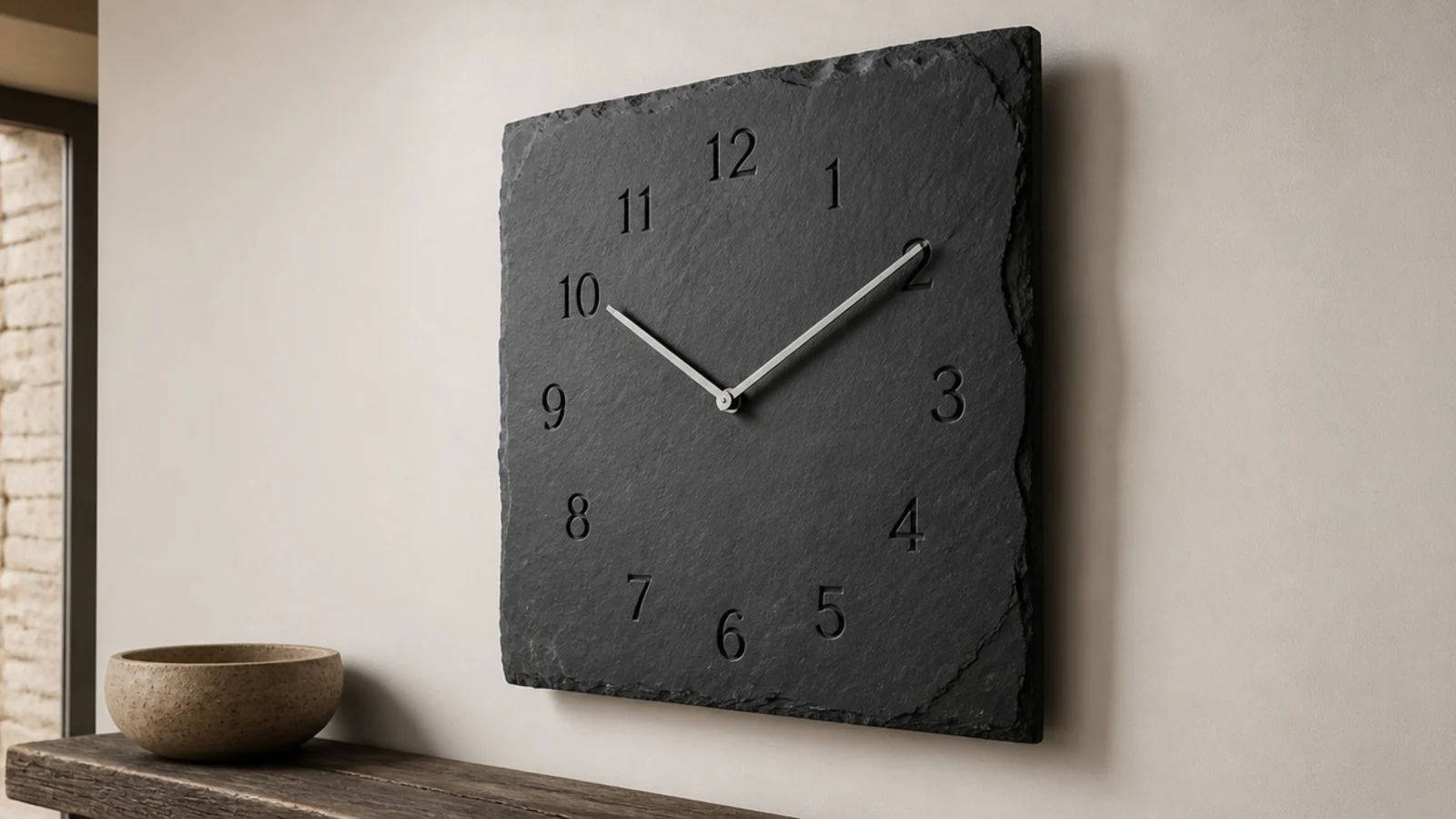
Riven slate with numerals cut into the stone gives you a face nothing printed can copy, because the numerals have real depth and catch light differently through the day. It is heavy: 10 to 18 pounds at 14 inches. Stud fixing only, and never directly above a bed. Around $90 to $220, and it suits a room with other natural materials in it.
10. A hand-thrown ceramic dial
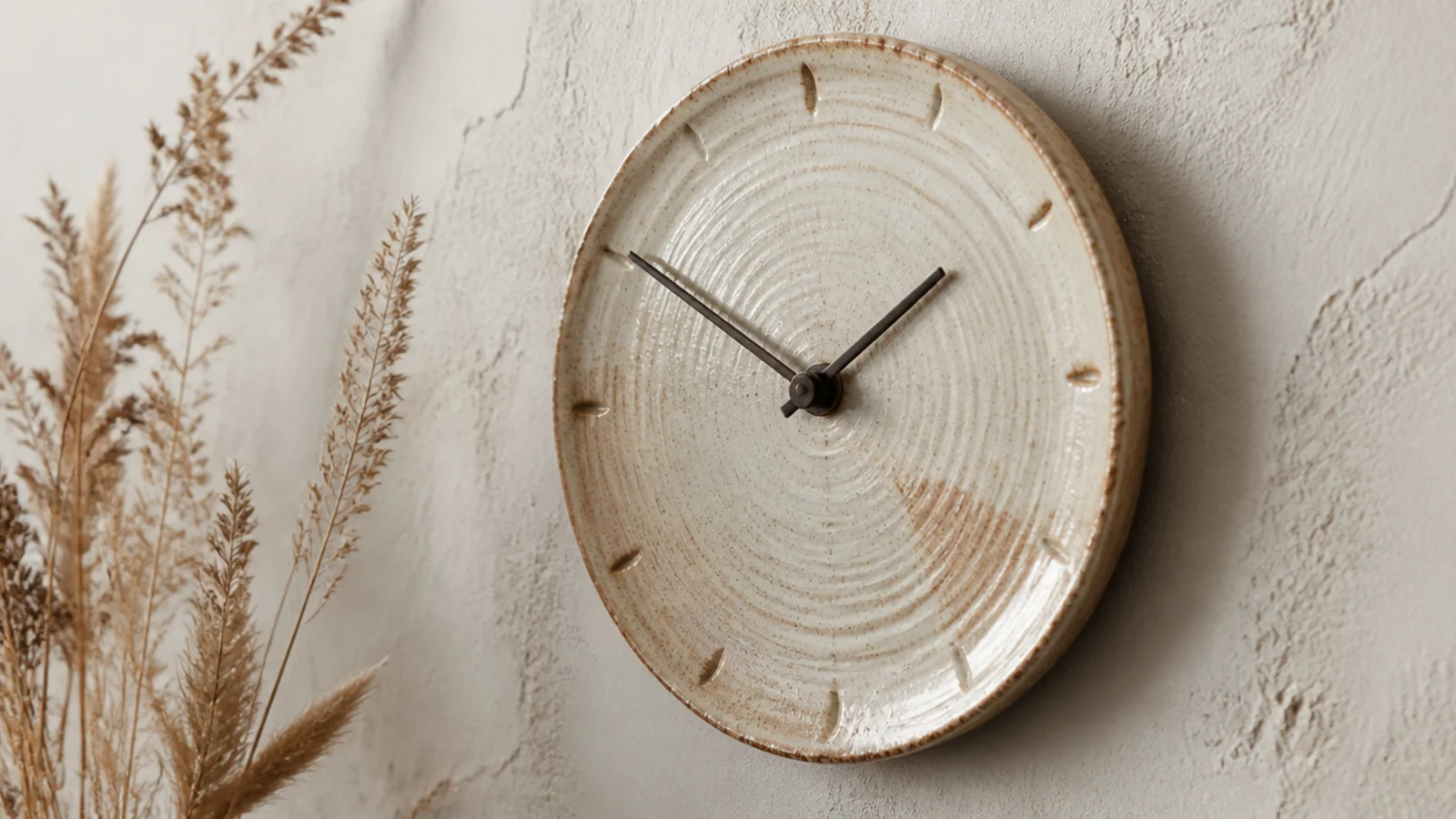
Visible throwing rings, an uneven rim and glaze that pools slightly at the bottom edge. No two are alike, and at 10 to 14 inches they weigh 3 to 6 pounds, which a good pair of drywall anchors will hold. Expect $80 to $200 from a maker. Check the movement is recessed properly, because a ceramic face with a boxy housing bulging behind it sits badly on the wall.
11. A bicycle rim turned into a clock
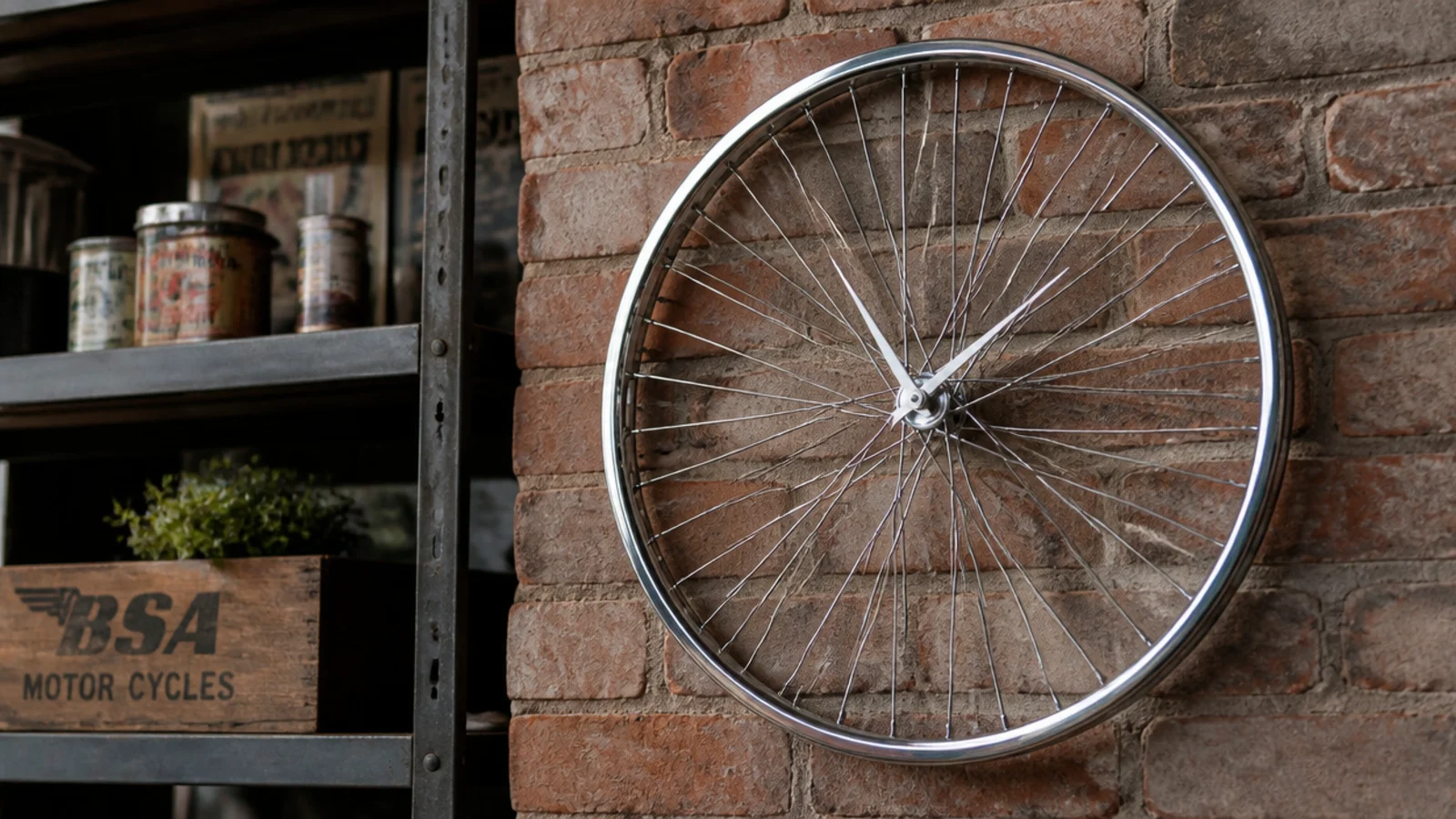
A spoked rim gives you a 26 to 29 inch diameter at 2 to 4 pounds, which is the best size-to-weight ratio of anything here. It suits brick, steel and workshop rooms, and it fails in a soft scheme where the spokes read as clutter. Ready-made versions run $50 to $130. Check the spokes are properly tensioned or the wheel goes slightly oval within a year.
12. A lit ring that reads as a glow at night
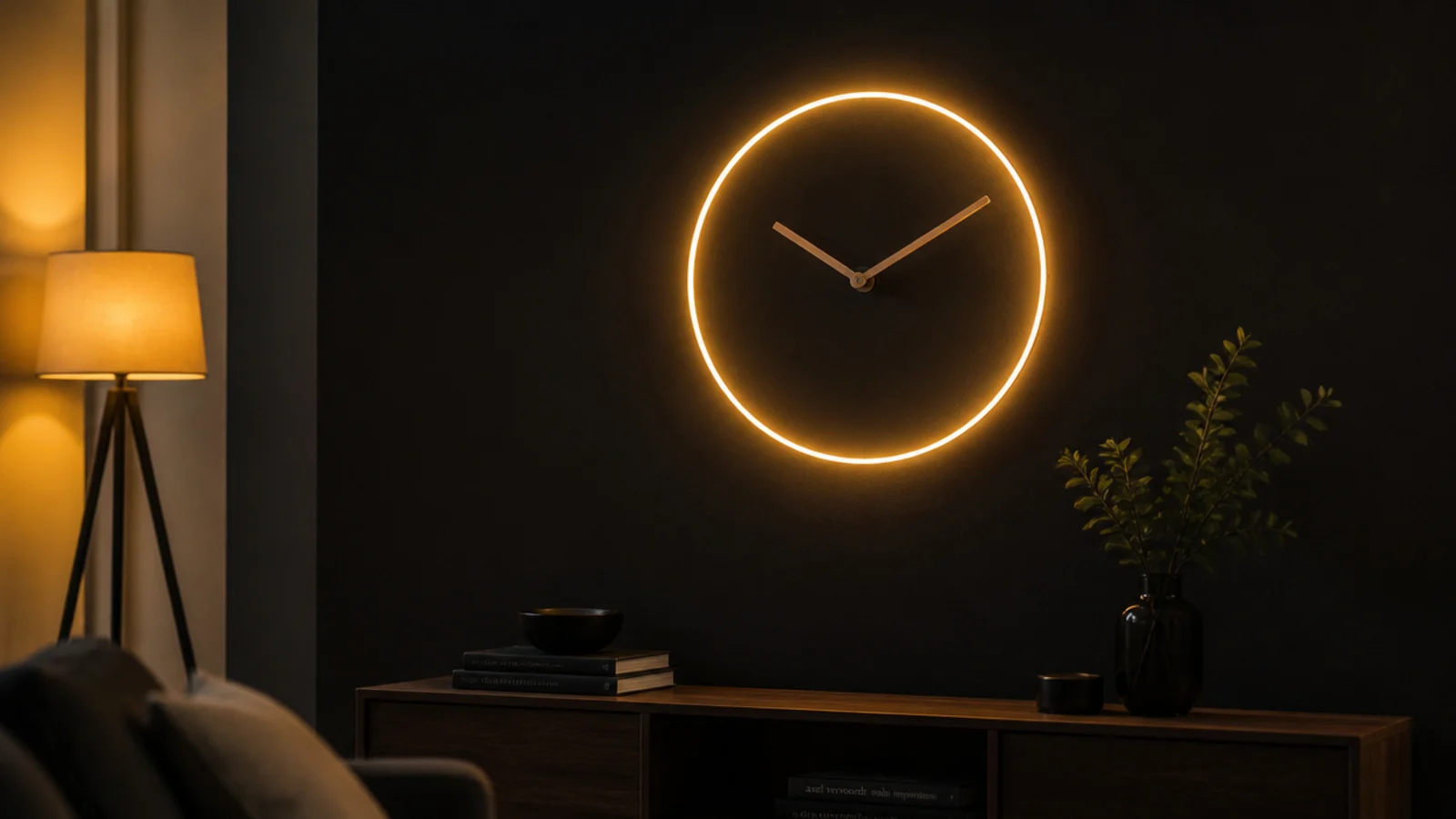
A slim illuminated ring is a plain circle by day and a genuine light source after dark, which earns it a place in a room with no wall lighting. Use a warm output, dimmable if possible, and run the cable behind the case rather than down the plaster. Mains or adaptor powered, $80 to $250. See the hanging lights guide for what to pair it with.
13. Interchangeable dial plates
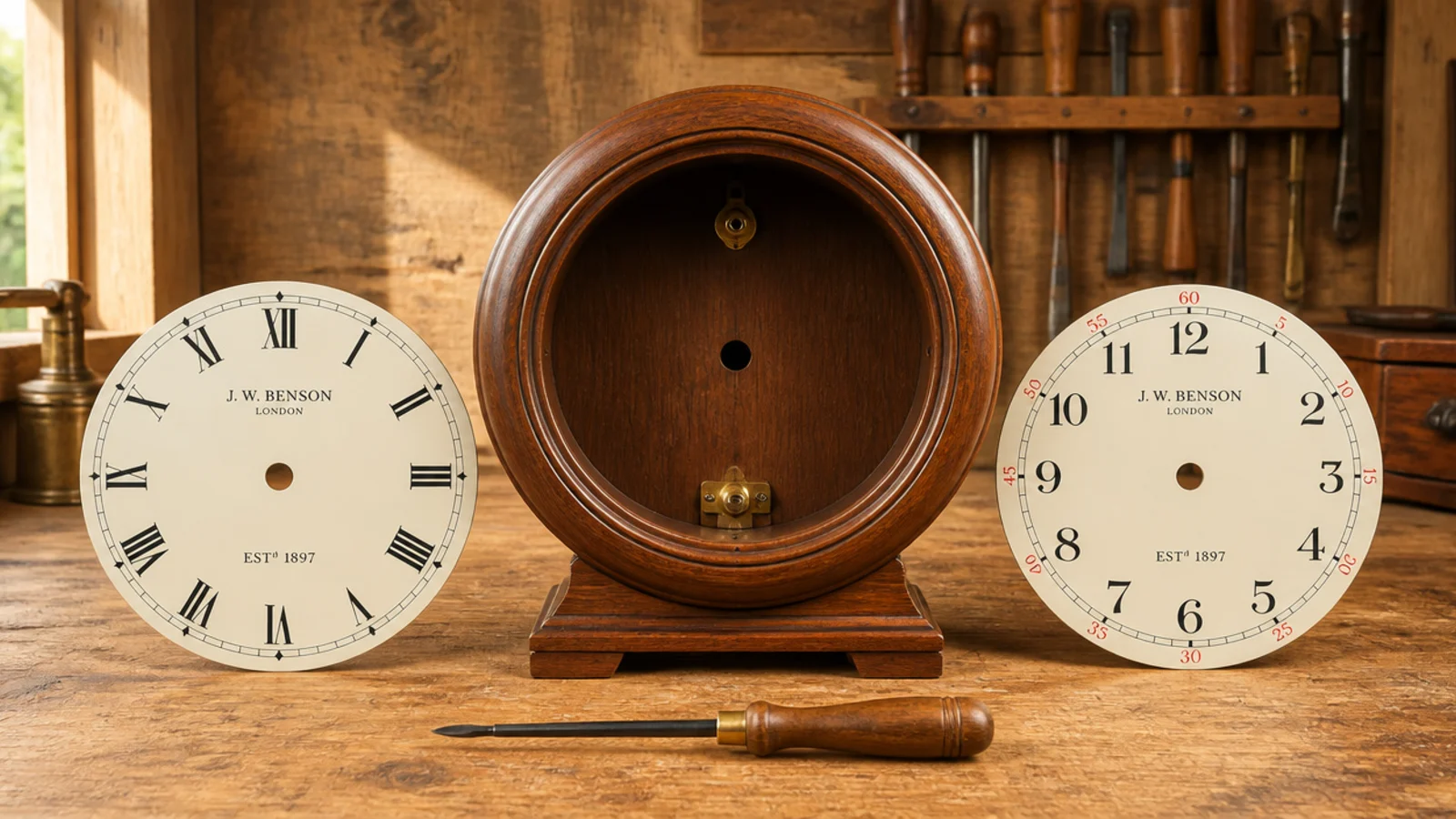
One case, several printed or painted faces that swap in minutes. It is the most practical unusual format here, because you get three looks from one set of holes and one fixing. Look for a case where the plate is held by a ring rather than adhesive. Sets run $70 to $160 with two or three plates included.
14. An embroidered or woven textile face
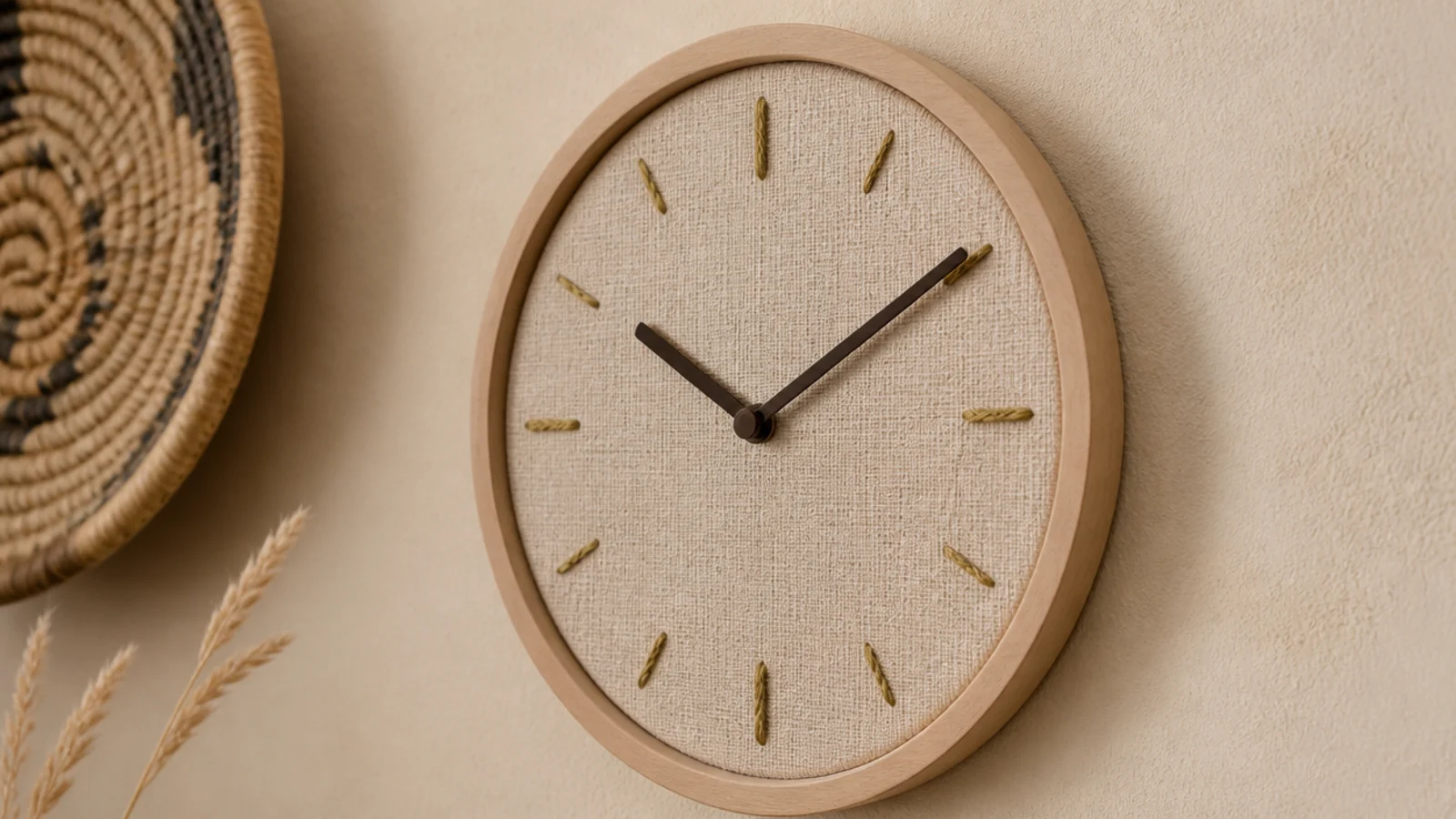
A stitched linen or wool face stretched inside a slim timber ring. It weighs almost nothing, absorbs a little sound rather than reflecting it, and brings a texture no printed dial has. Keep it out of kitchens and bathrooms, where fabric picks up grease and damp. Expect $60 to $180 from a maker, and check the markers are stitched rather than glued.
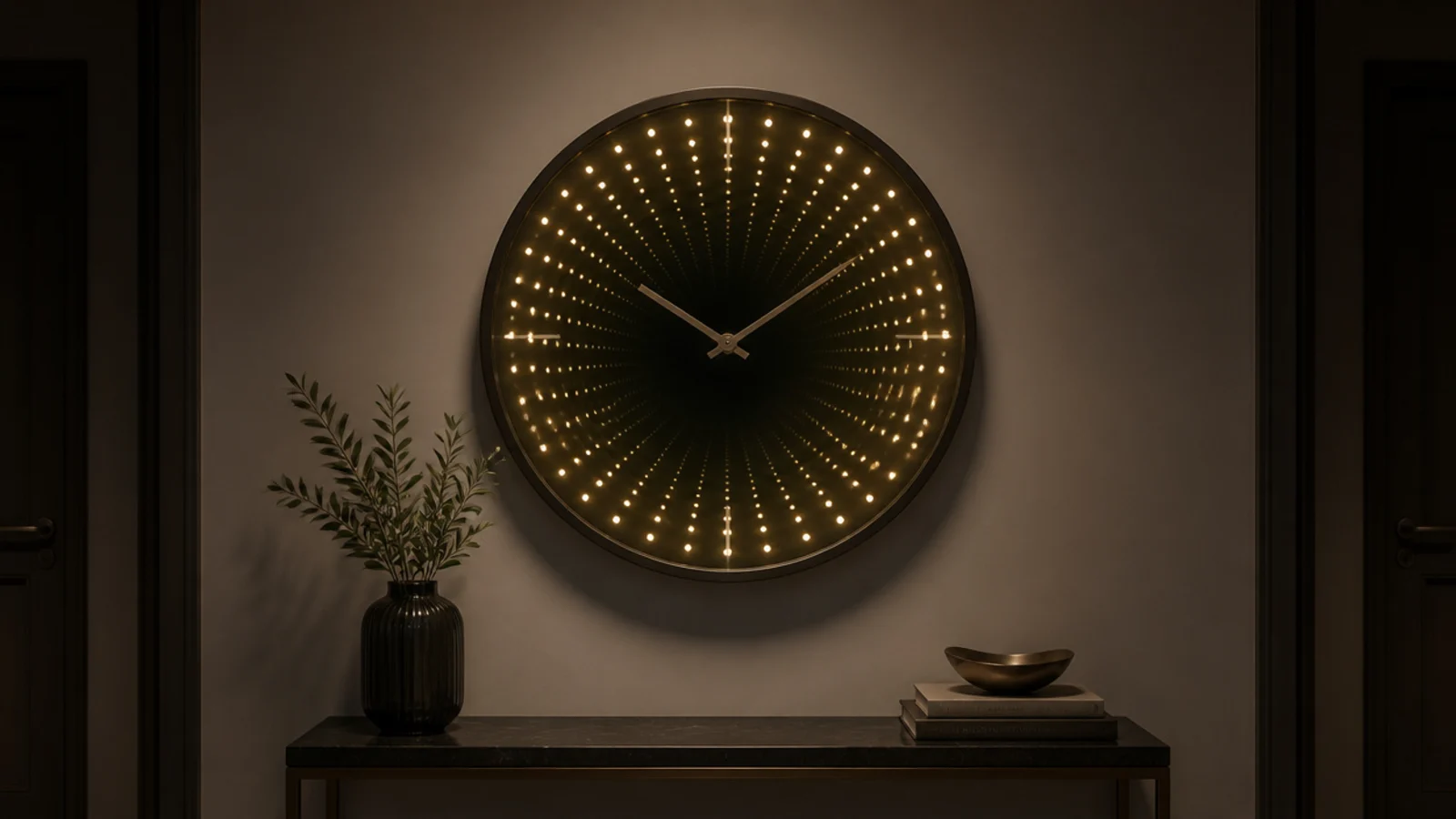
15. An infinity-mirror clock for a dark hallway
Half-silvered glass over a ring of small lights creates an apparent tunnel of receding markers. By day it is a plain mirrored disc; at night it has real depth. It is a one-note trick, so use it where people pass rather than sit. Mains powered, 12 to 20 inches, $90 to $250.
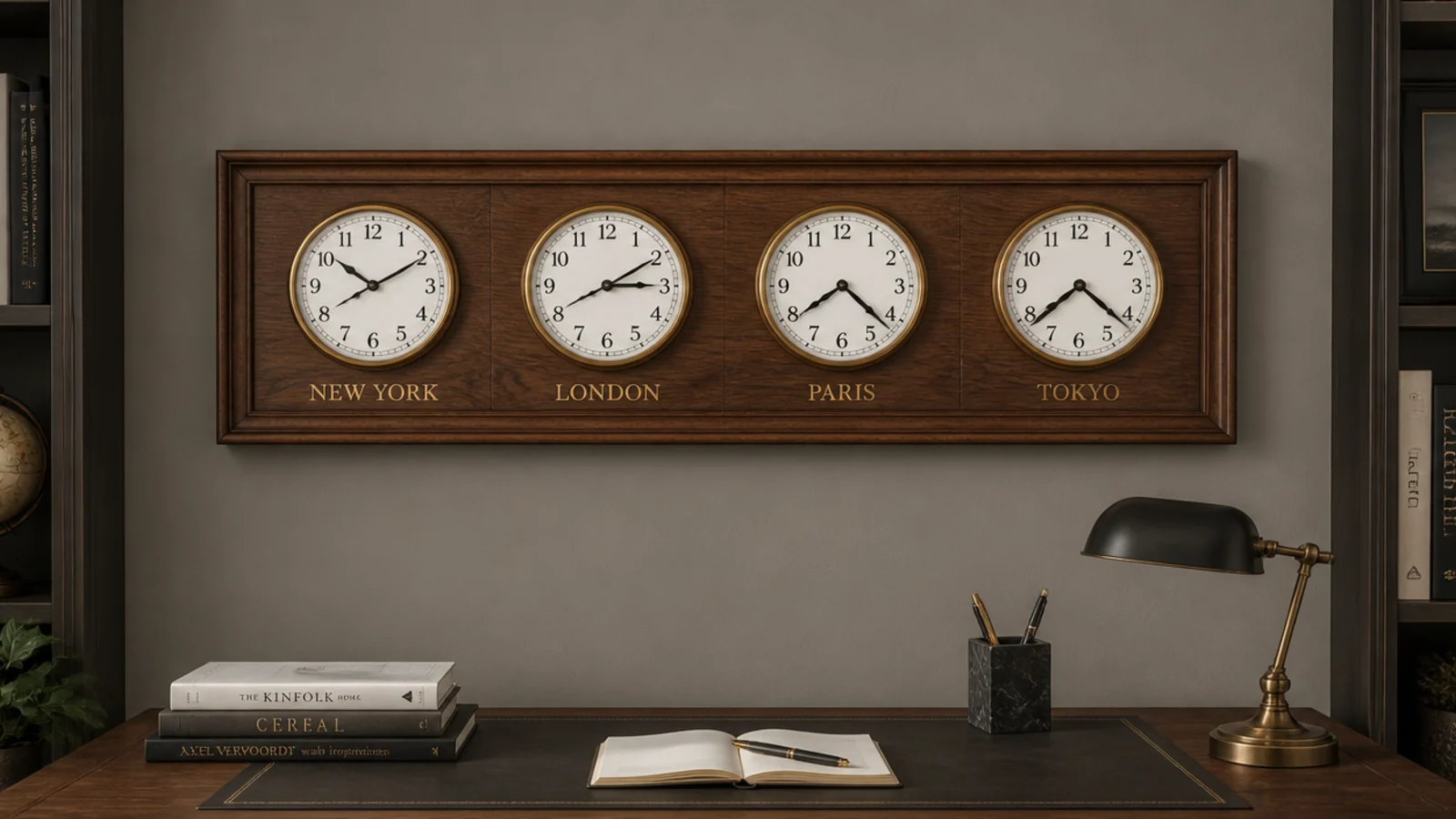
16. Multiple time zones inside one case
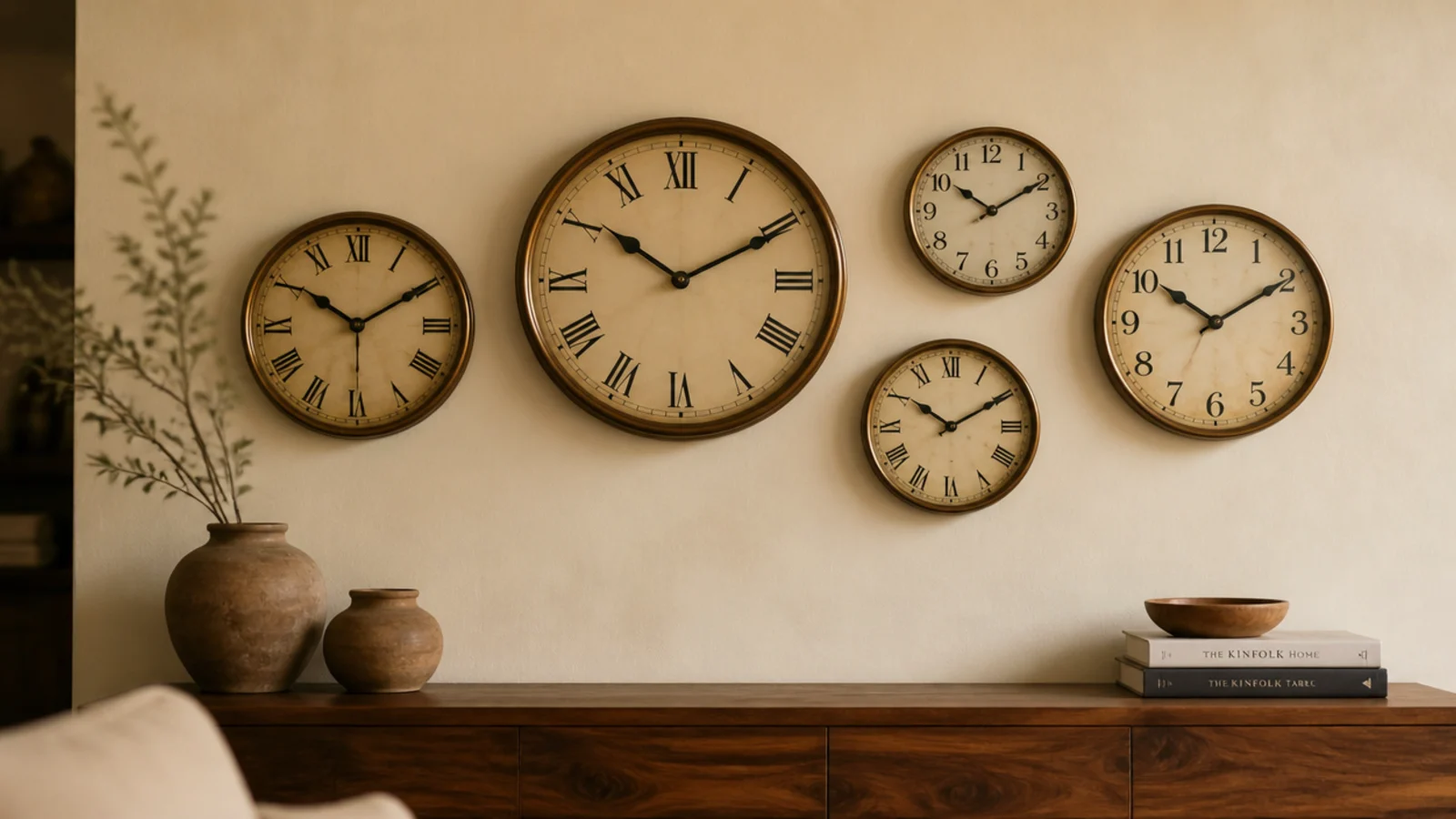
Four small dials in a single horizontal case beats four separate clocks in every practical way: one fixing, one alignment problem solved at the factory, and one battery compartment. It also stops the phase-drift stutter you get from four independent ticking movements. Usually 24 to 36 inches wide and $80 to $200.
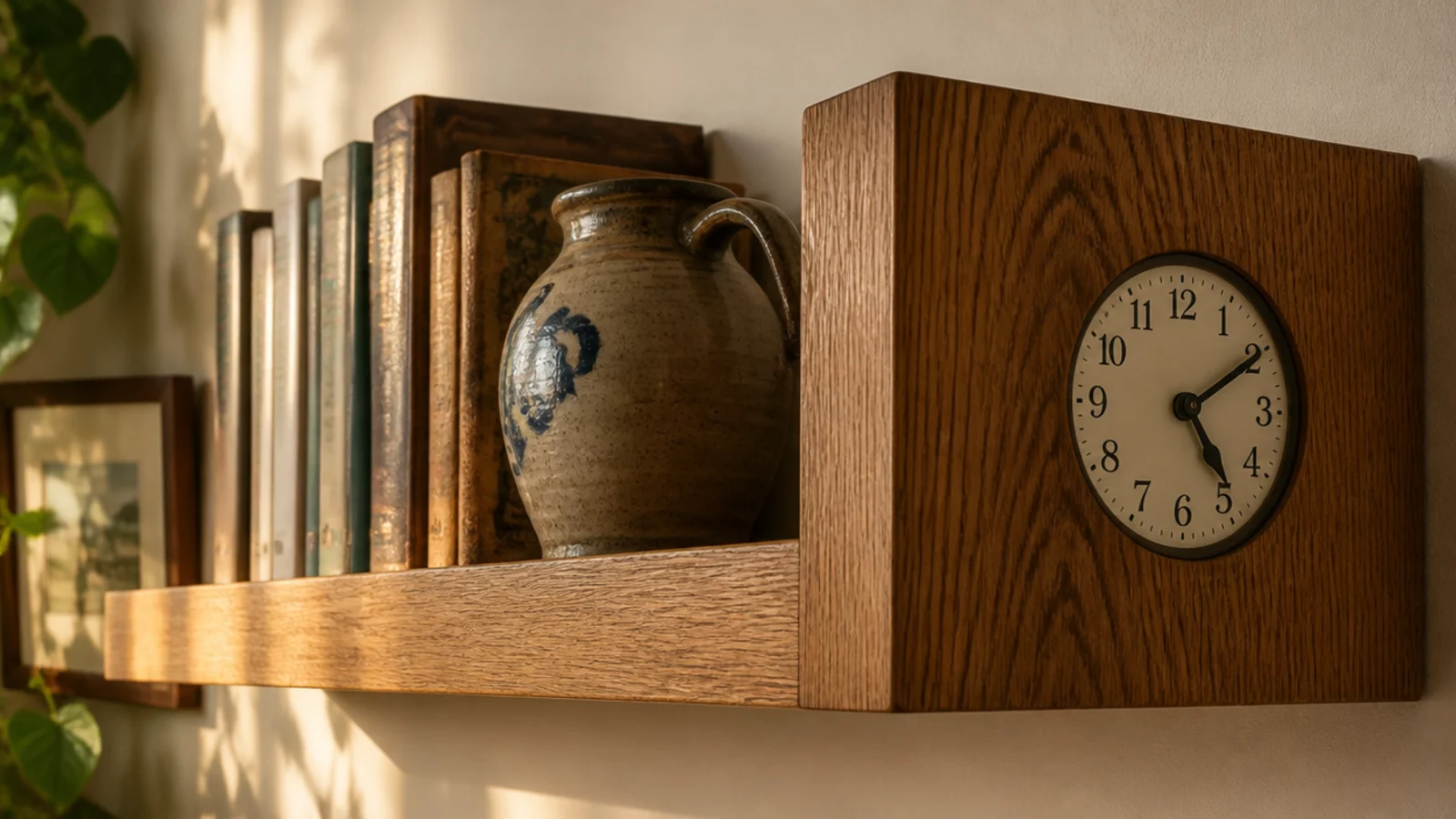
17. A clock built into a shelf
A face set flush into the thick end panel of a solid shelf removes the clock as a separate object entirely. It suits a room where every wall is already committed, and it works best in oak or ash at 1.5 inches thick or more so the movement can recess fully. There are more shelf-led arrangements in the bookshelf styling guide.
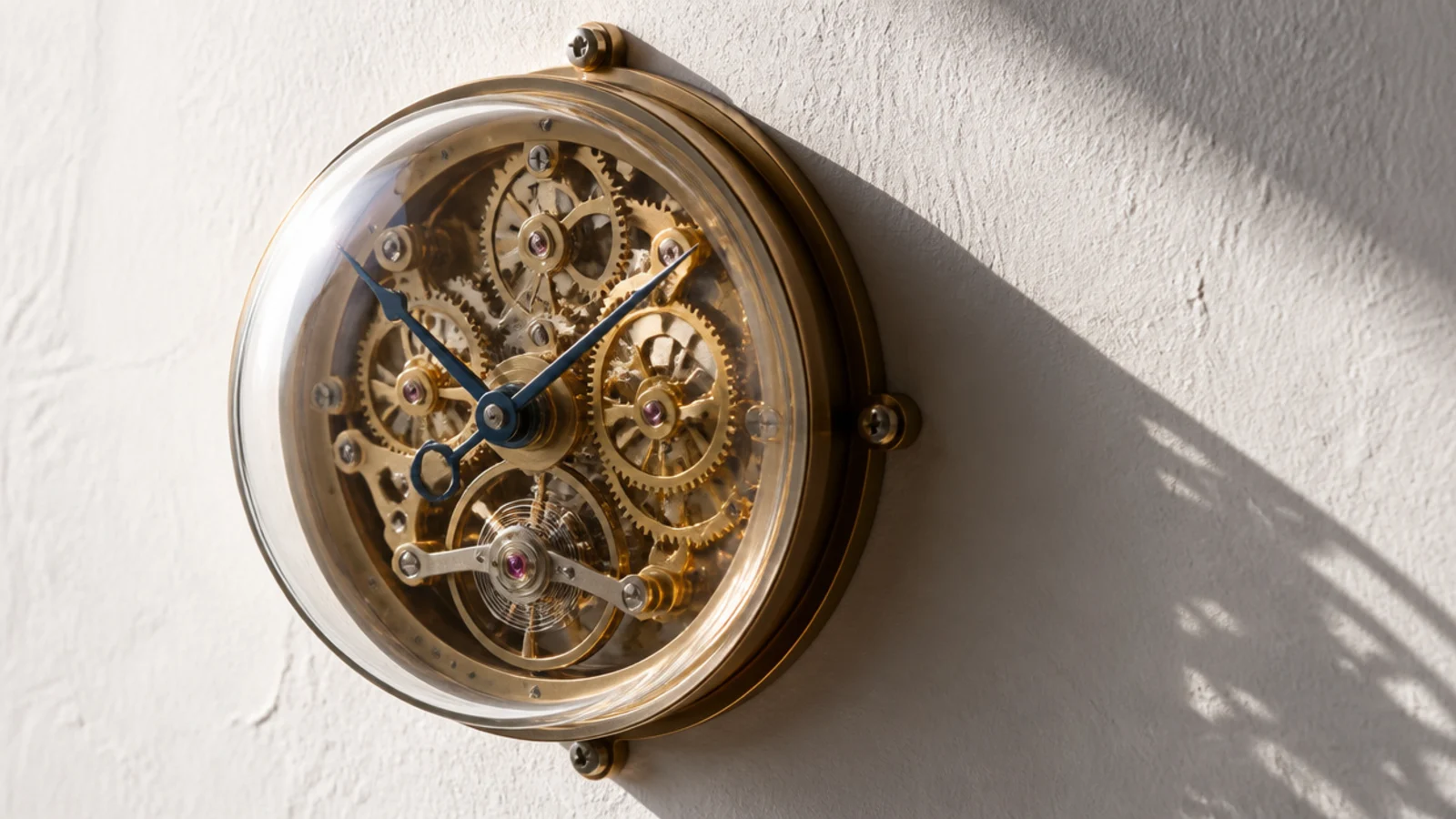
18. A domed crystal lens over a bare movement
Thick domed glass magnifies an exposed movement and slim hands with no dial plate at all, so the wall colour becomes the background. It only works on a pale, quiet wall, and it gathers reflections from every lamp — put it away from windows. Glass adds 2 to 4 pounds. Expect $90 to $240.
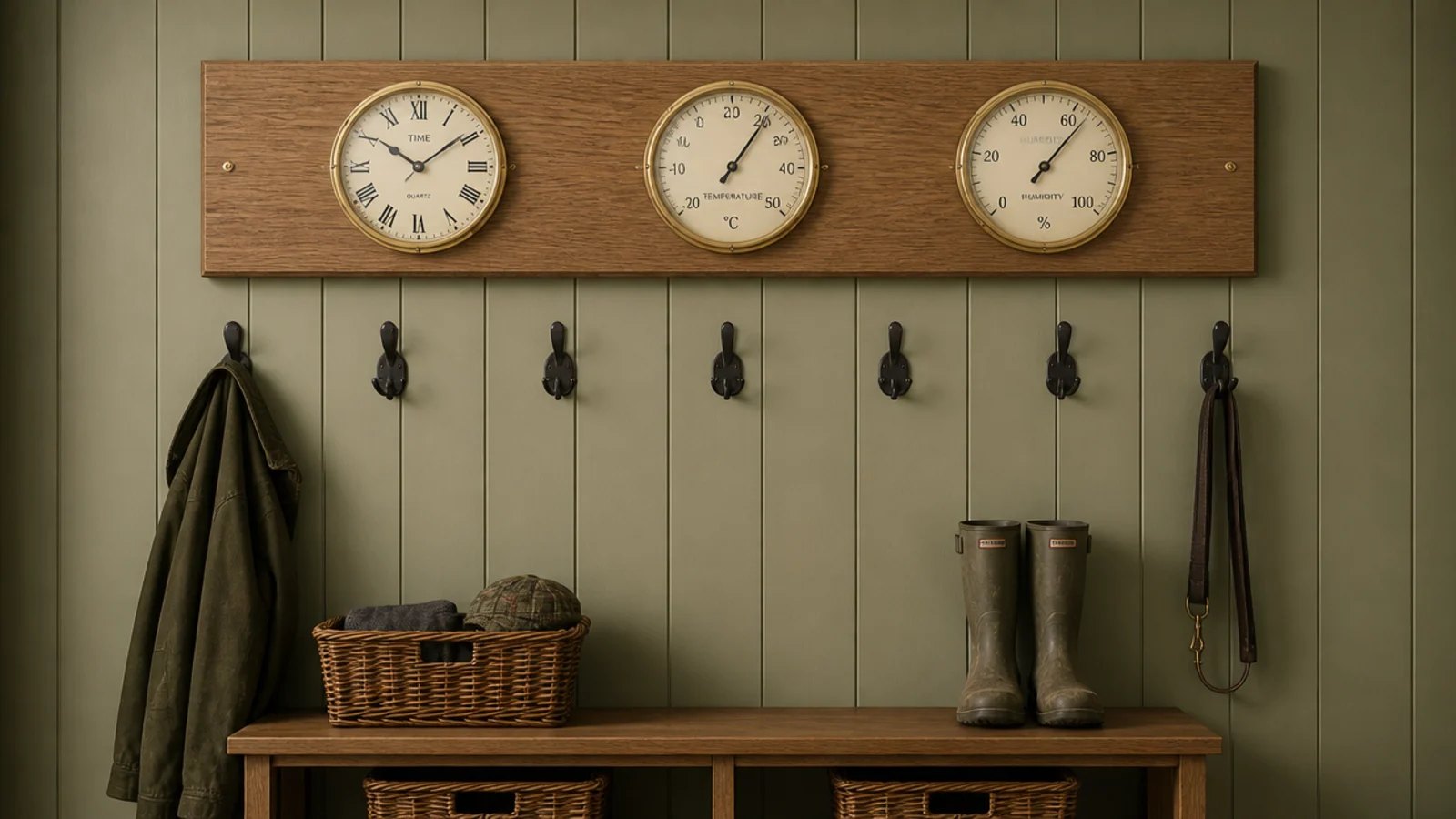
19. A weather trio with clock, temperature and humidity
Three dials on one board is a boot room and hallway classic for a reason: the readings are ones you actually use on the way out of the door. Check the hygrometer is adjustable, because most arrive several percent out and stay that way. Oak-mounted trios run $70 to $180 and span 20 to 30 inches.
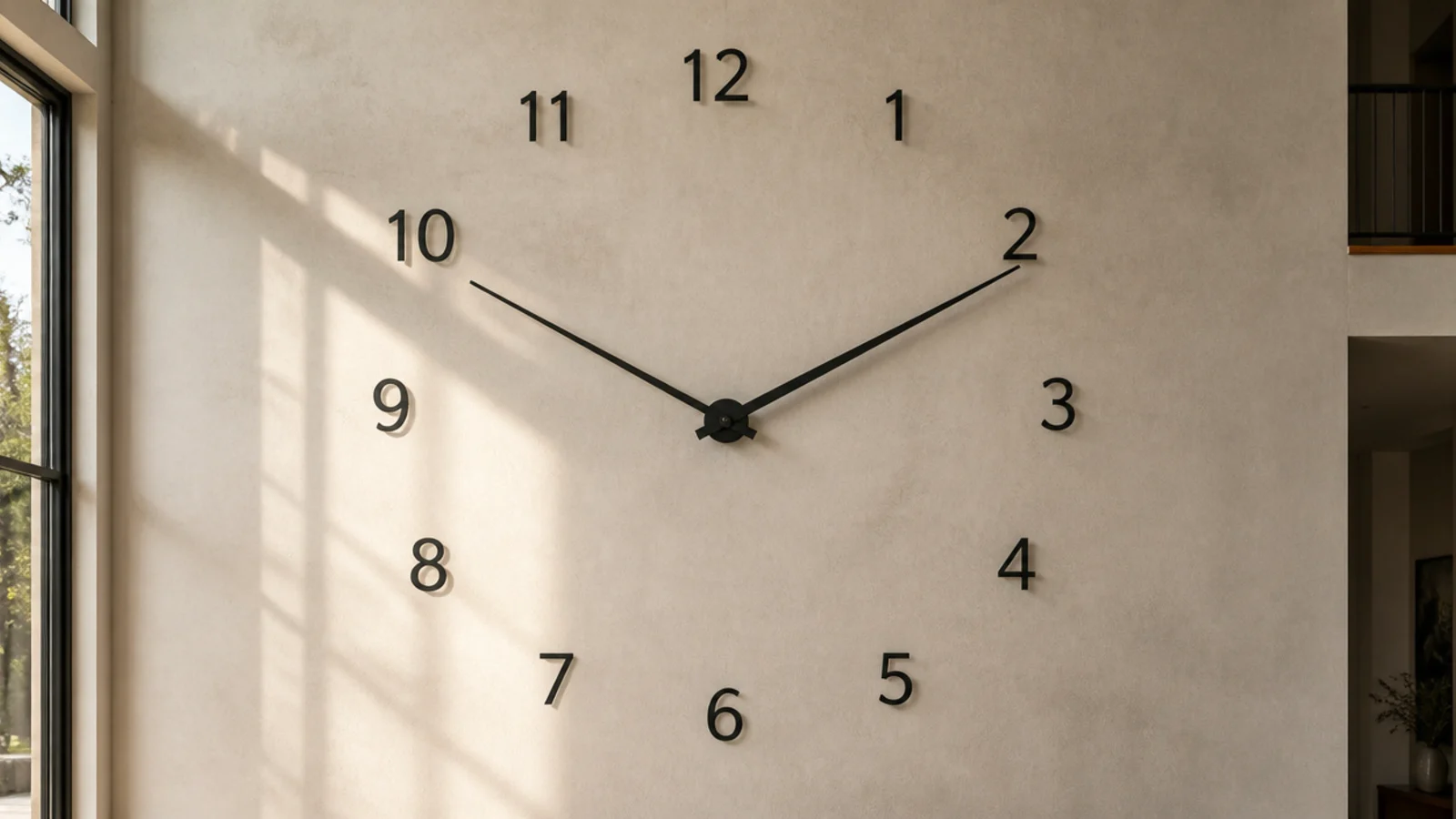
20. A commissioned set of oversized numerals
Individual numerals fixed in a circle 40 to 60 inches across with a central movement and long hands. It is the largest format available and the cheapest per inch of coverage, at $80 to $250 for a kit. Two conditions: a high-torque movement, because hands over about 6 inches from the centre stall on a standard unit, and a paper template on the floor before a single numeral goes up.
For the pieces that read expensive without the price attached, the luxury looks guide covers what actually signals cost on a wall.
Mistakes to Skip
- Buying an unreadable format for the room you use most. A rotating disc clock is a delight in a hallway and a daily irritation above a kitchen worktop where you are timing things.
- Hanging a stone or ceramic face on the anchors that came in the box. Ten to eighteen pounds of slate needs framing behind it, particularly anywhere someone sits or sleeps underneath.
- Ignoring the noise the mechanism makes. Split-flap units clatter, mechanical escapements tick hard, and both are charming in a hall and unbearable through a bedroom wall.
- Fitting long hands to a standard movement. Anything past about six inches from the centre needs a high-torque unit, or the minute hand stalls on the climb from the half hour and the clock quietly loses time.
Frequently asked questions
Are unusual clocks still readable?
Some are and some are decoration with hands attached. Test any unconventional format at the distance you will actually use it from, usually 10 to 15 feet in a living room. If you find yourself checking your phone instead within a week, the design has failed at its only job.
Do split-flap and word clocks need power?
Almost always, yes. Split-flap and LED word displays run on mains power or a low-voltage adaptor rather than a single AA cell, so factor in a socket within about six feet or the cost of a surface trunking run before you commit to a wall position.
What is a tide clock and does it work anywhere?
A tide clock tracks the roughly twelve hour and twenty-five minute lunar cycle rather than the sun, so it shows high and low water instead of hours. It needs setting to your local port and is only accurate on coasts with a regular semi-diurnal tide.
Are heavy stone or ceramic clock faces safe on drywall?
Only with the right fixing. A slate or stoneware face at 14 inches can weigh 10 to 18 pounds, which means a number eight screw into a stud, particularly above a sofa or a bed. The plastic plug in the box is rated near ten pounds when new and weakens over time.
Is an exposed pendulum clock difficult to live with?
It needs to hang dead level or the escapement loses its beat and stops within a day, and most run a genuine mechanical tick that is far louder than quartz. Wind or battery, they suit hallways and dining rooms rather than bedrooms and quiet studies.
Want more like this? Browse all 15 wall clock guides — they all use the same measurements and budget tiers.
Pin it for later
Save this to your Wall Clock board
Pin it now so it is waiting for you when the tape measure comes out — and so the next person hunting for this idea can find it too.
Save this pinKeep going
More ideas worth saving while you have the tape measure out.