Wall Clock · Listicle
20 Gorgeous Wall Clock Design Looks On A Budget

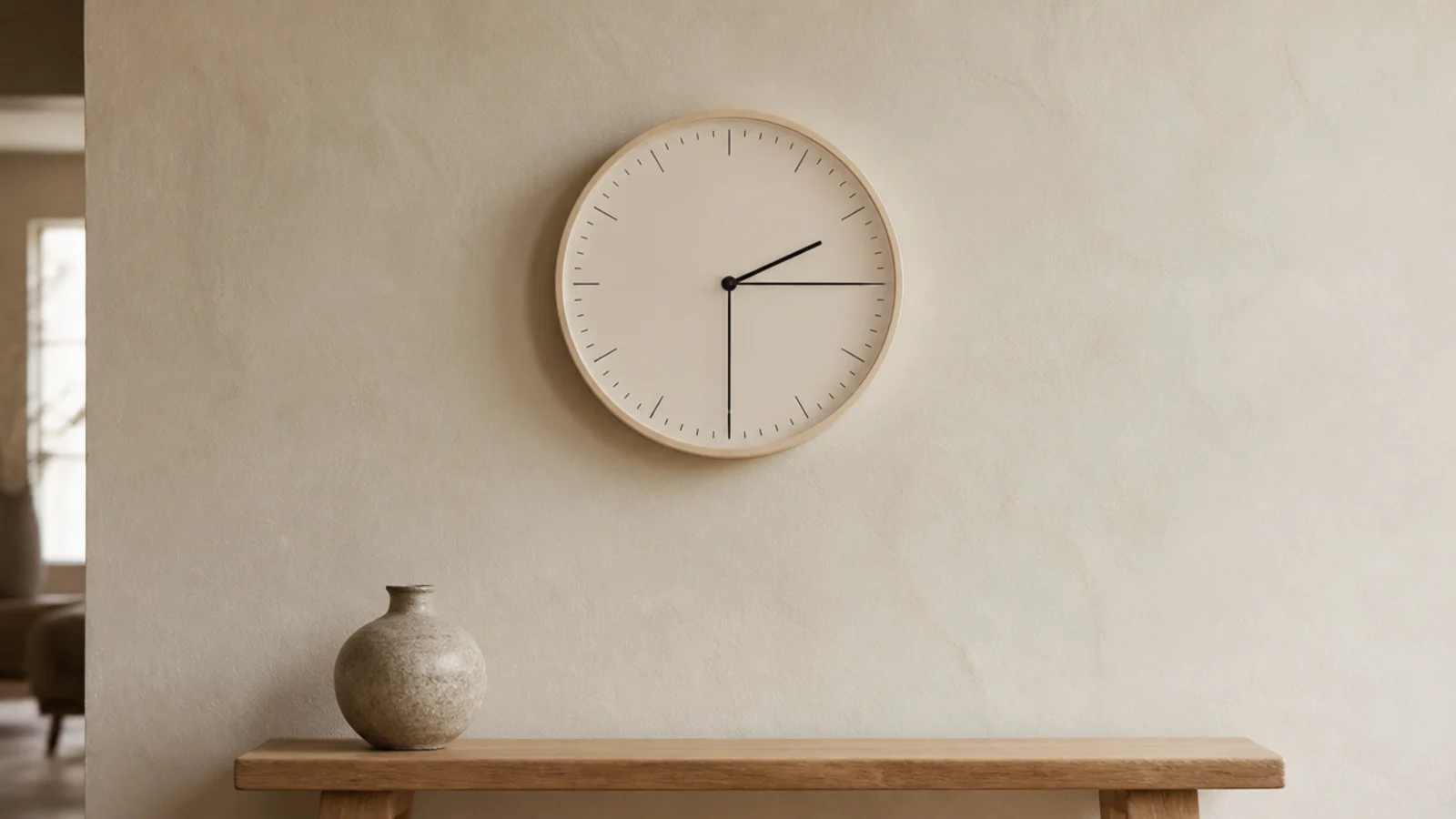
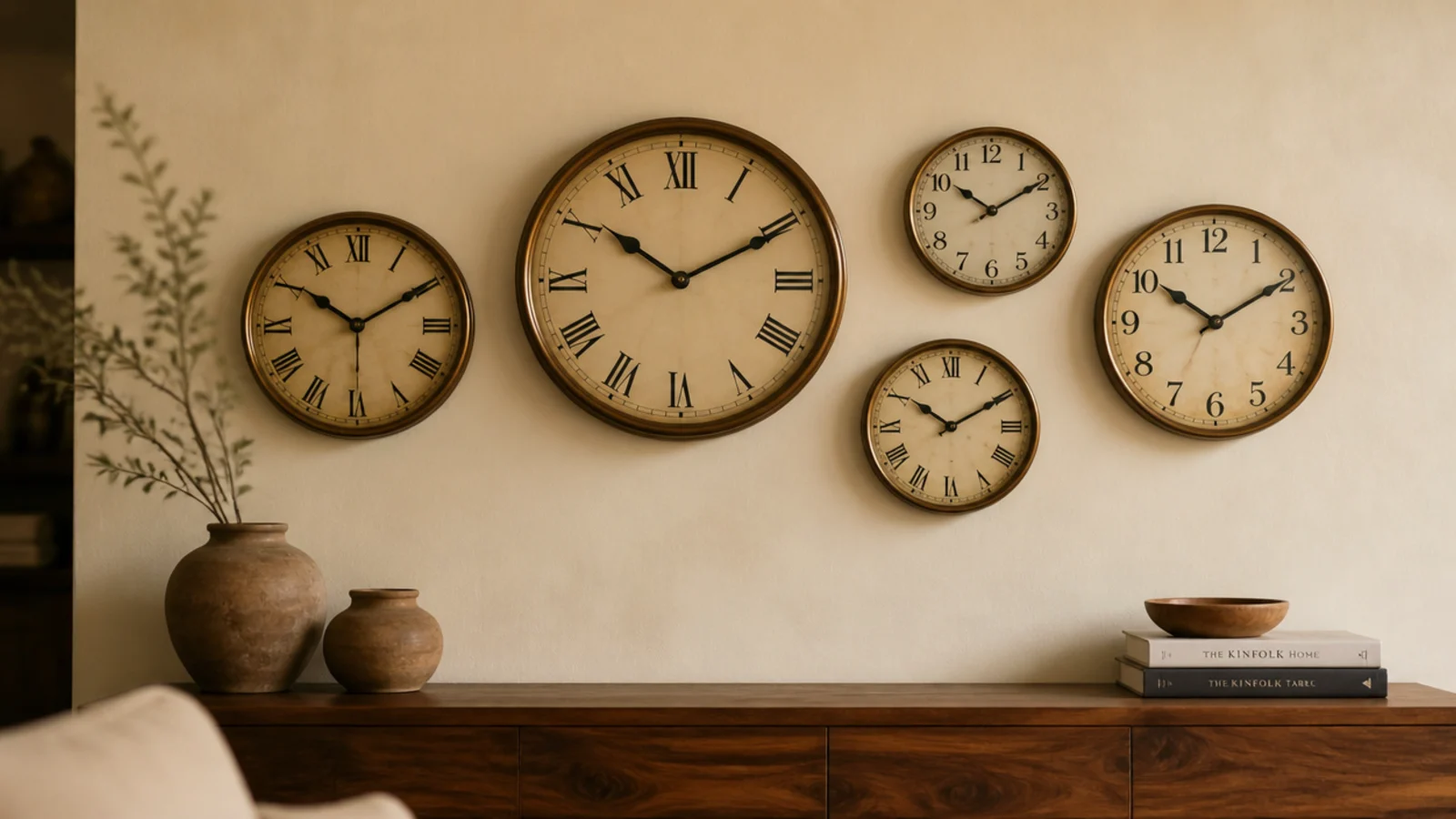
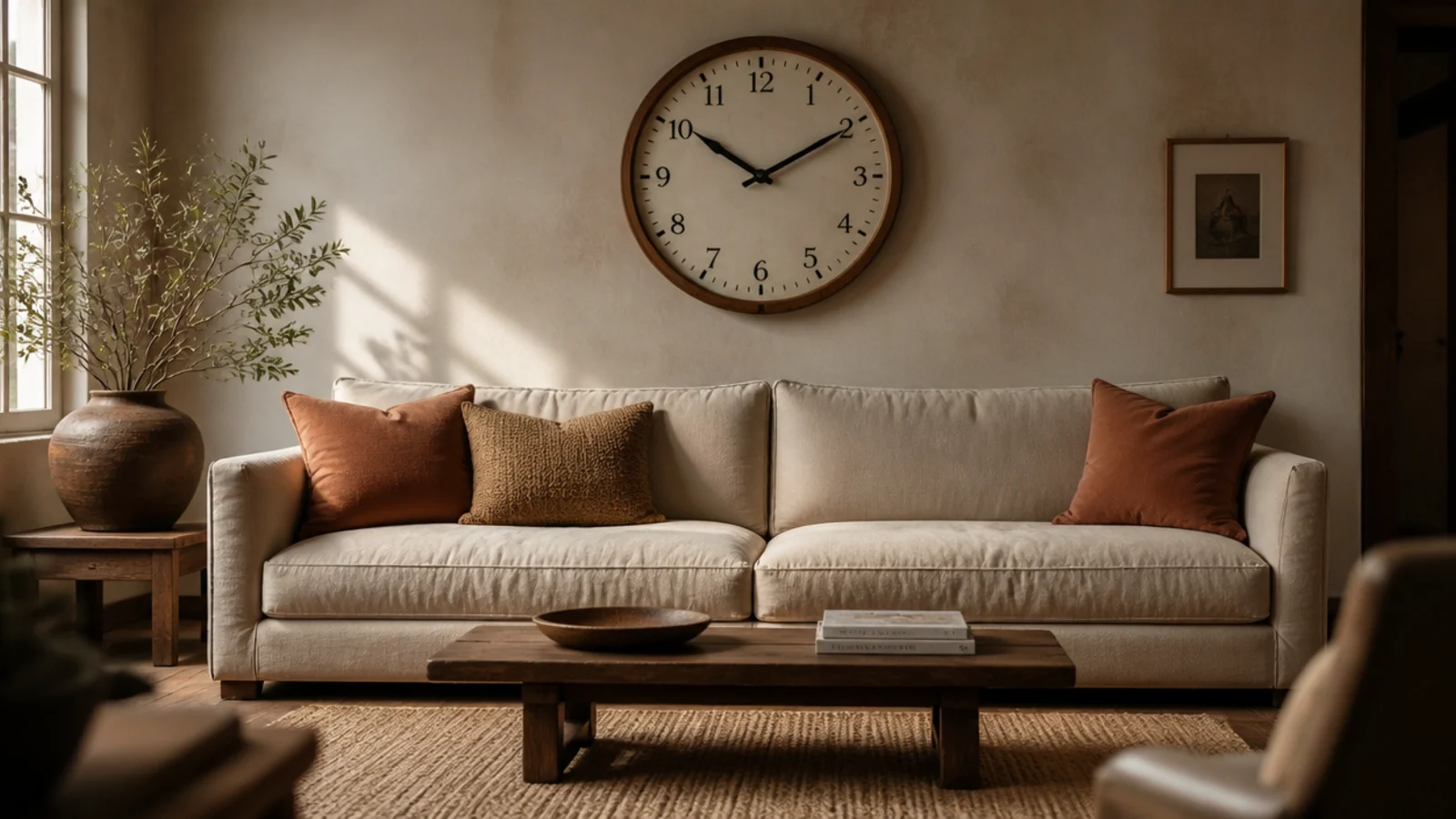
Style is the cheap part. Almost every wall clock design that reads as expensive is doing three specific things — standing proud of the wall so it throws a shadow, holding real contrast between dial and hands, and using a metal hand set rather than a stamped plastic one. All three are available under fifty dollars if you know what you are buying. What you cannot buy back later is diameter, so measure the furniture below before you fall for a look. Here are twenty styles, priced honestly, with the numbers that make each one work.
In this guide22 sections — tap to openHide
- 1.What good wall clock design costs, and where to save
- 2.Scandinavian minimal in pale birch
- 3.A mid-century sunburst without the auction price
- 4.Industrial factory dial with a bold minute track
- 5.Farmhouse enamel with a chipped edge
- 6.Japandi in dark stained oak and off-white
- 7.Art Deco stepped case in black and brass
- 8.Concrete look without the concrete weight
- 9.Coastal rope and weathered timber
- 10.Bauhaus markers in three flat colours
- 11.Station clock with a heavy second hand
- 12.Skeleton numerals fixed straight to the plaster
- 13.Quarter numerals only at twelve, three, six and nine
- 14.Visible gears for a workshop or study
- 15.Mirror and brass for a hallway
- 16.Rattan rim for a soft boho scheme
- 17.A monochrome graphic ring
- 18.The vintage schoolhouse octagon
- 19.A marble-effect dial for a fraction of stone
- 20.Colour-block the dial in two tester pots
- 21.Match the case to the wall and let the hands read
- 22.Mistakes to Skip
What good wall clock design costs, and where to save
There are three separate purchases inside every clock: the case, the dial and the movement. A well made 12-inch clock runs $20 to $50, a 24-inch $40 to $120, and anything past 30 inches starts near $120 and climbs. Above about $200 you are usually paying for a name rather than a heavier case or a better mechanism.
Spend on the movement. A step-tick quartz unit costs $8 to $12 and is accurate to within a minute a month, but it ticks at roughly 25 to 30 decibels at a metre — fine in a hallway, wearing in a bedroom. A continuous-sweep movement is silent for $12 to $18 and trades some battery life, 8 to 12 months against 12 to 18. If the hands are longer than about 6 inches from the centre, you need a high-torque unit or the minute hand stalls climbing from the half hour.
Save on the case. A metal hand set is $6 to $12 and instantly outclasses whatever came fitted. A tester pot repaints a dial. Half-round moulding glued around a rim adds depth for a few dollars.
Then size it. Take a third of the width of the furniture below — 24 to 30 inches over an 84-inch sofa, 18 to 22 over a 60-inch console. And weigh it: over 8 pounds, or anywhere above a sofa or a bed, the fixing is a number eight screw into a stud, not the plastic plug in the box. For the pieces worth spending real money on, see the luxury looks guide.
1. Scandinavian minimal in pale birch
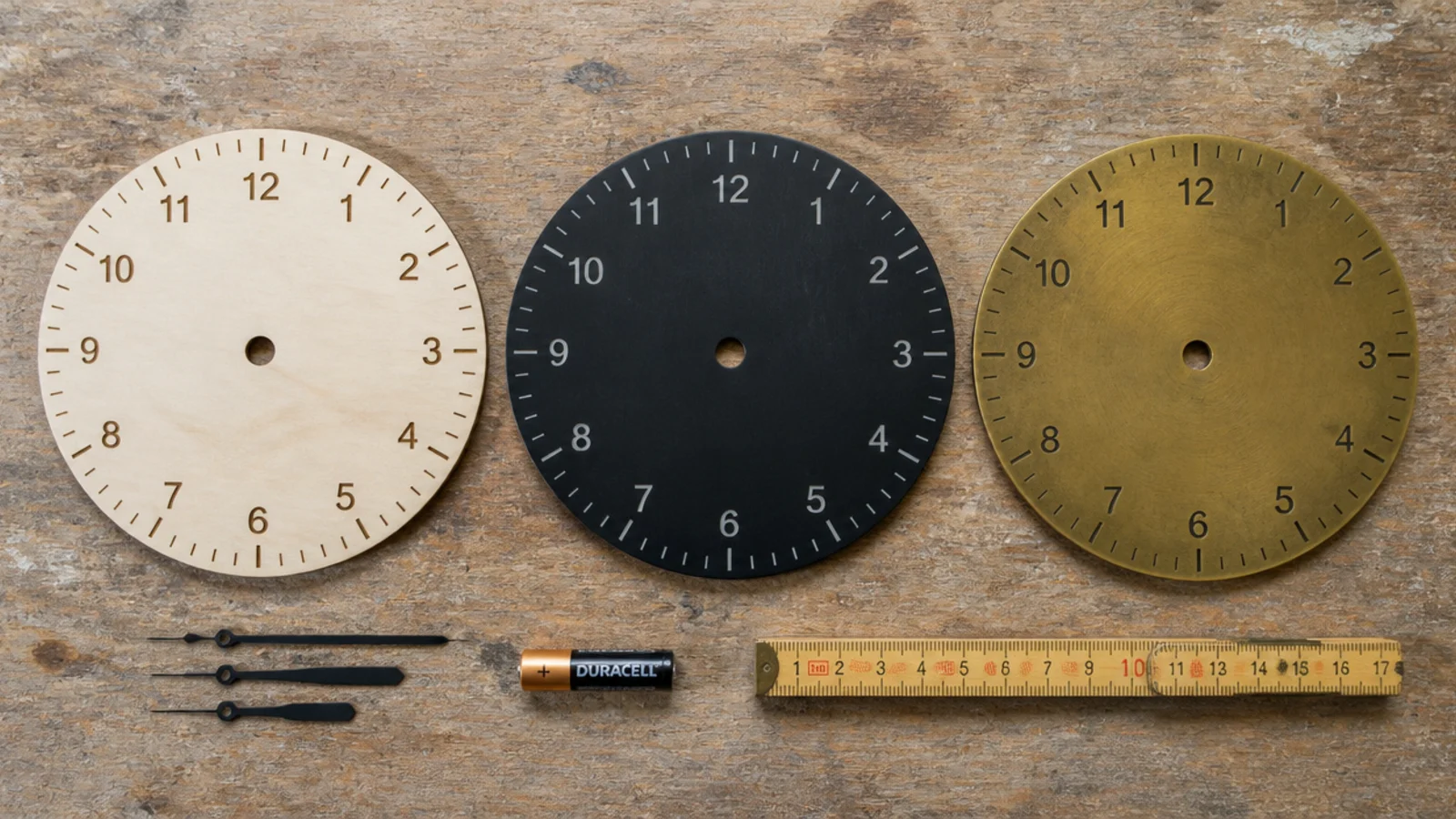
A pale birch or ash rim no more than an inch wide, a bone dial and thin black hands. It works because there is nothing to date. Keep it at 14 to 20 inches — this style loses its lightness above about 24 — and skip the glass lens, which adds weight and reflections a matte face does not have. Expect $30 to $70 new, and it is one of the easiest looks to fake by sanding and oiling a cheap veneered case.
2. A mid-century sunburst without the auction price
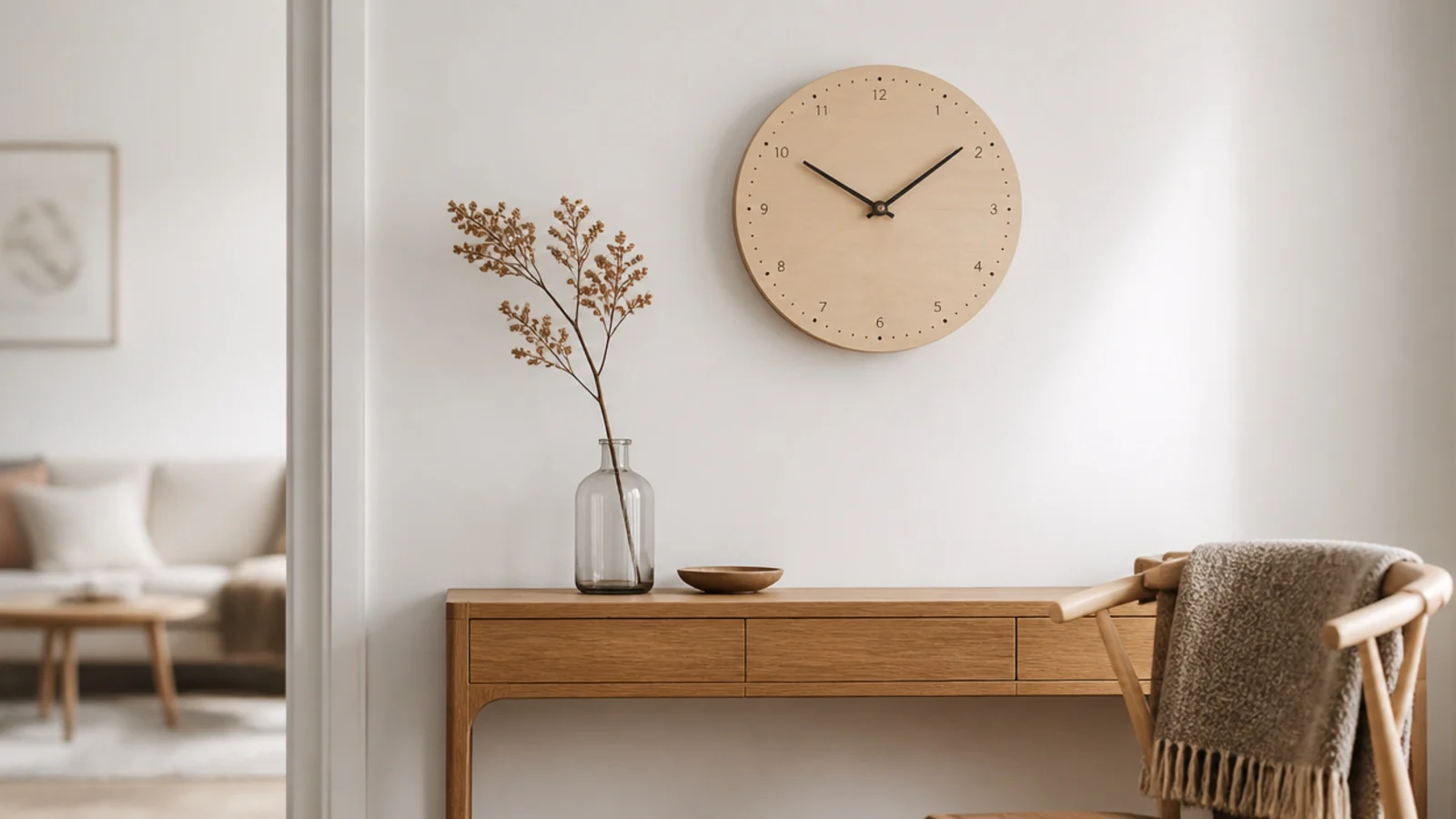
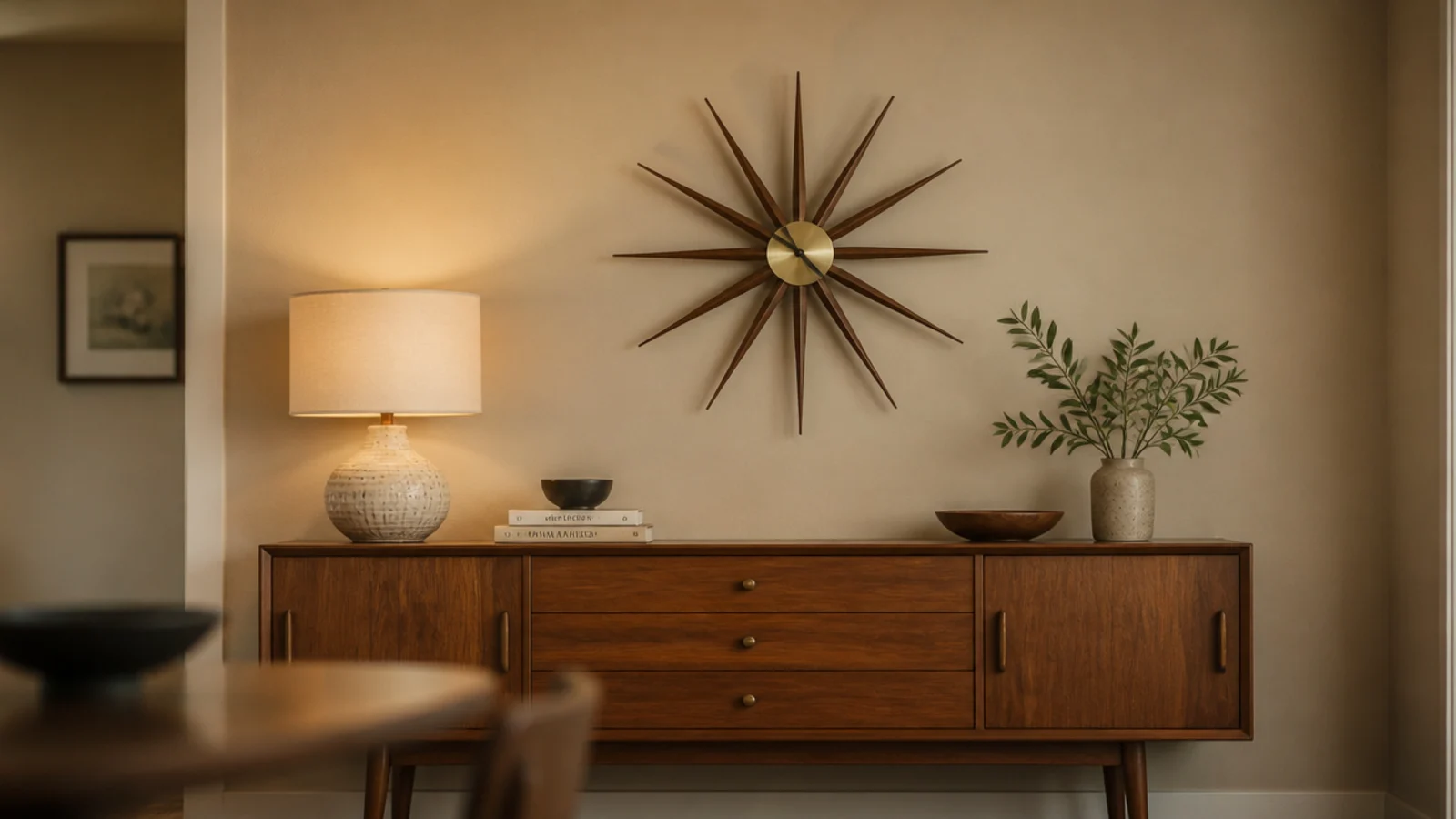
Original sunburst clocks are collector territory. A reproduction with slim walnut or brass rays gives you the same footprint for $45 to $110, and the rays mean a 10-inch dial occupies a 24 to 30 inch circle of wall. That ratio is the whole trick: it fills a sideboard wall for the price of a small clock. Check the rays are individually fixed rather than moulded as one piece, because a single moulded starburst reads plastic from across the room.
3. Industrial factory dial with a bold minute track
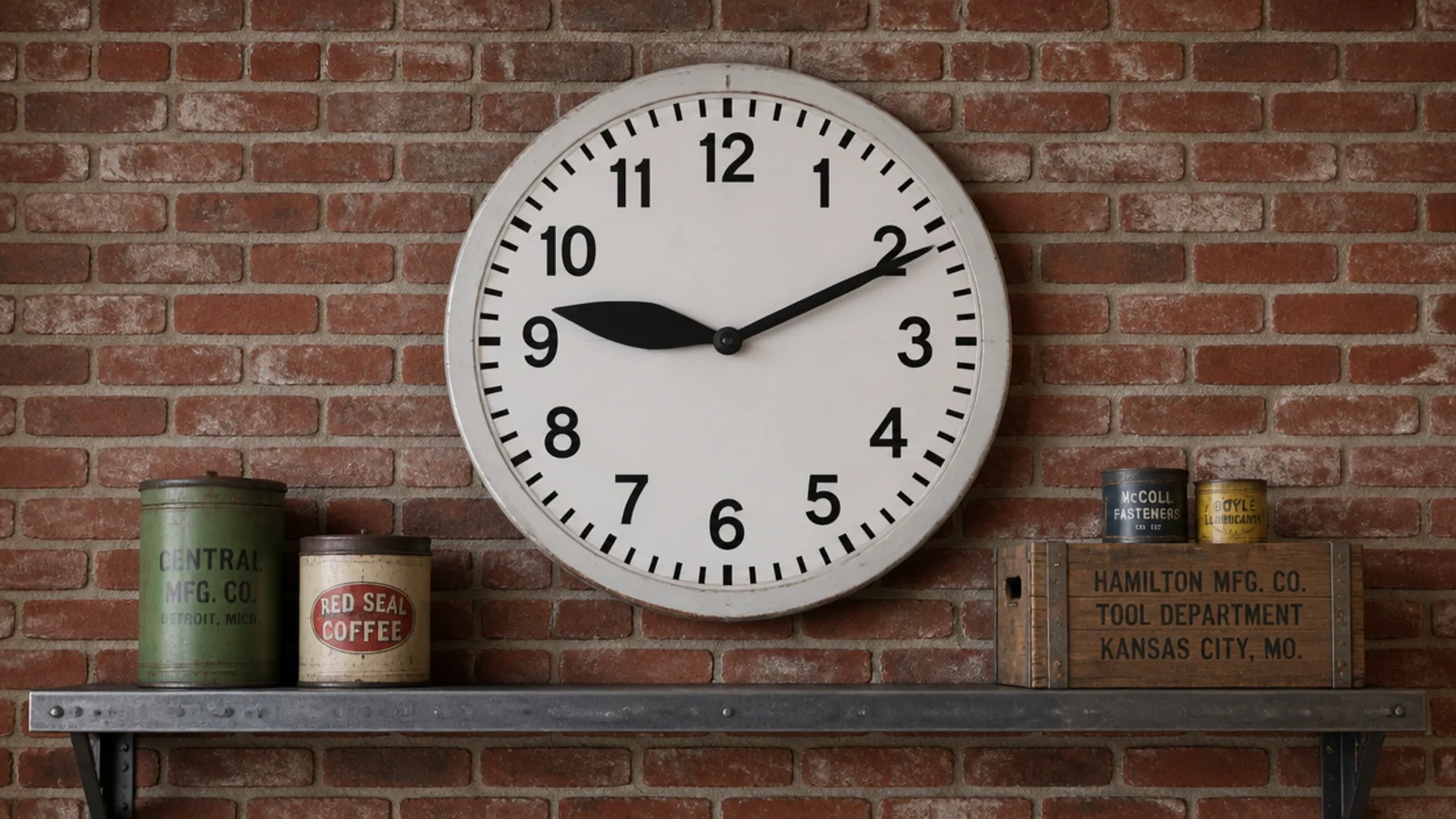
The heavy outer minute ring is what makes these readable at 30 feet, and it is the detail cheap versions leave off. Look for numerals at least a fifth of the dial diameter and a genuine black track rather than printed ticks. At 18 to 24 inches on brick or a dark wall it does more work than anything twice the price, for $35 to $85. The steel-cased versions run 8 to 14 pounds, which is stud territory.
4. Farmhouse enamel with a chipped edge
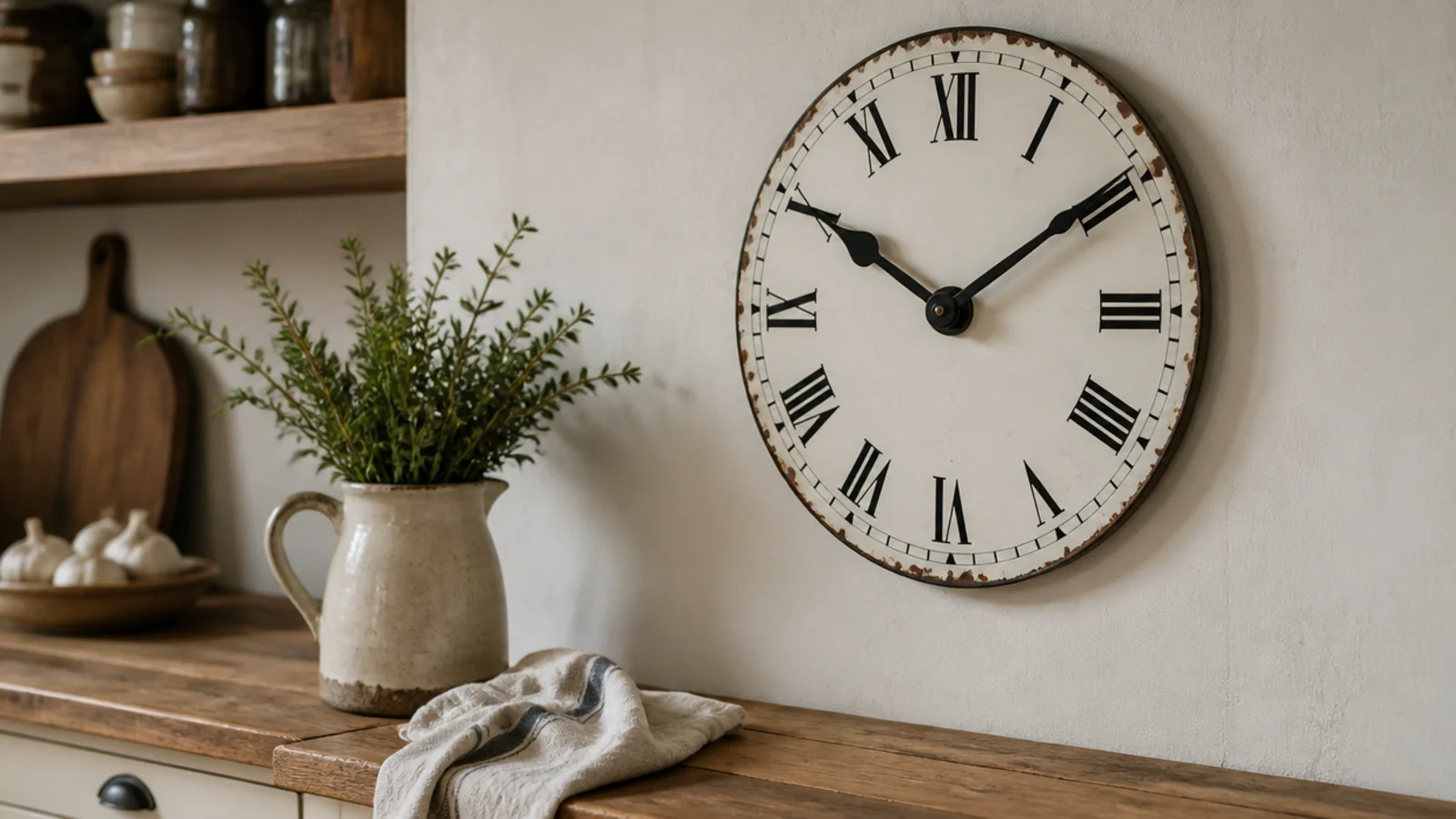
Genuine vitreous enamel chips to reveal dark metal underneath, and printed distressing never quite copies that. Secondhand enamel faces turn up at $25 to $60, usually with a dead movement — a $10 quartz kit fixes that in fifteen minutes. Hang it in a kitchen but not directly above a hob, where a grease film dulls the surface within a month and takes a solvent rather than a cloth to shift.
5. Japandi in dark stained oak and off-white
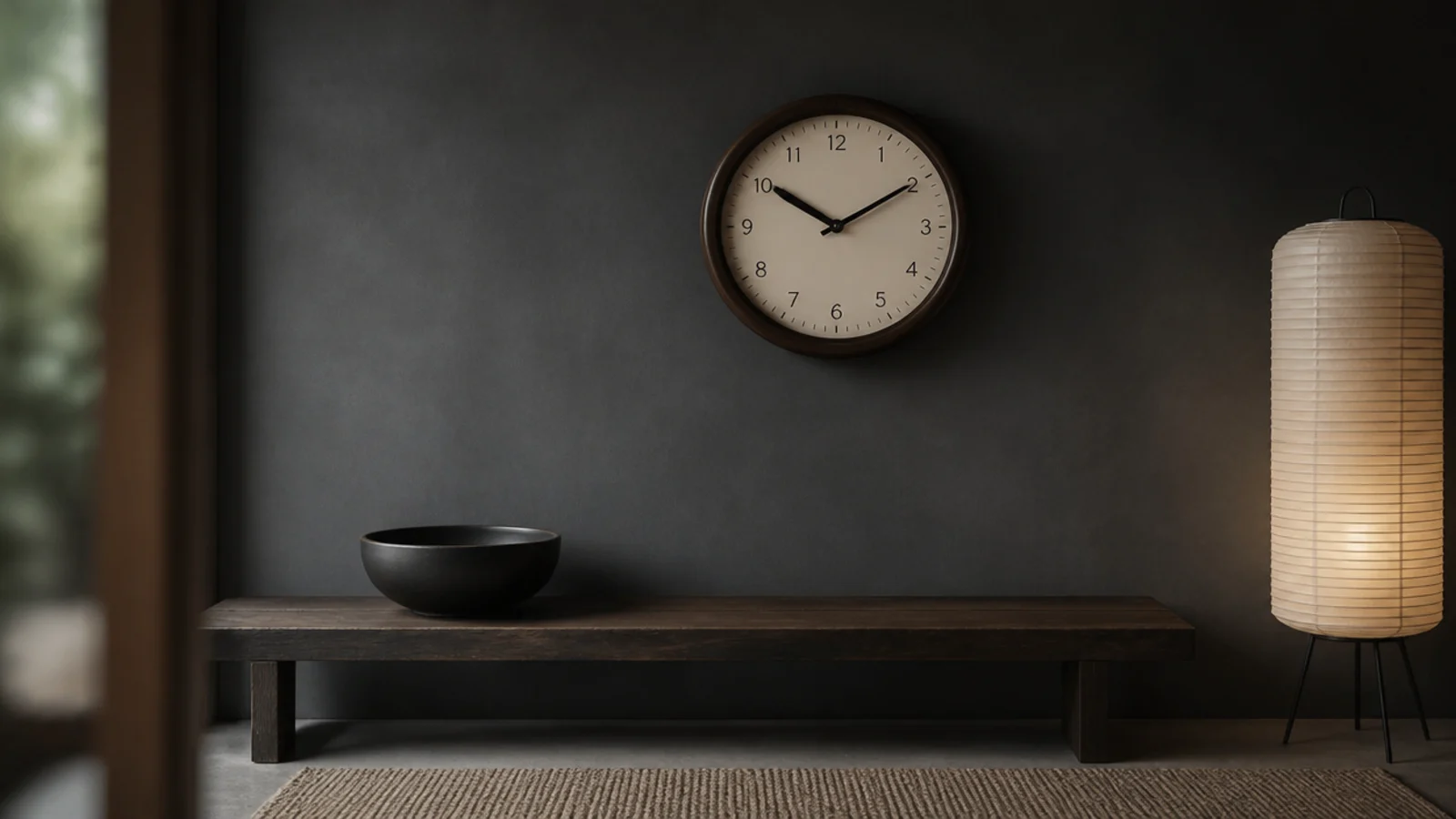
Two tones, no third. A dark stained oak or ebonised rim against a soft off-white dial, with hands in the same dark tone. The restraint is the design, so anything with a second hand, a brand mark or a printed logo breaks it. At 16 to 22 inches on a chalk wall it costs $40 to $90, and solid oak at that size weighs only 4 to 7 pounds.
6. Art Deco stepped case in black and brass
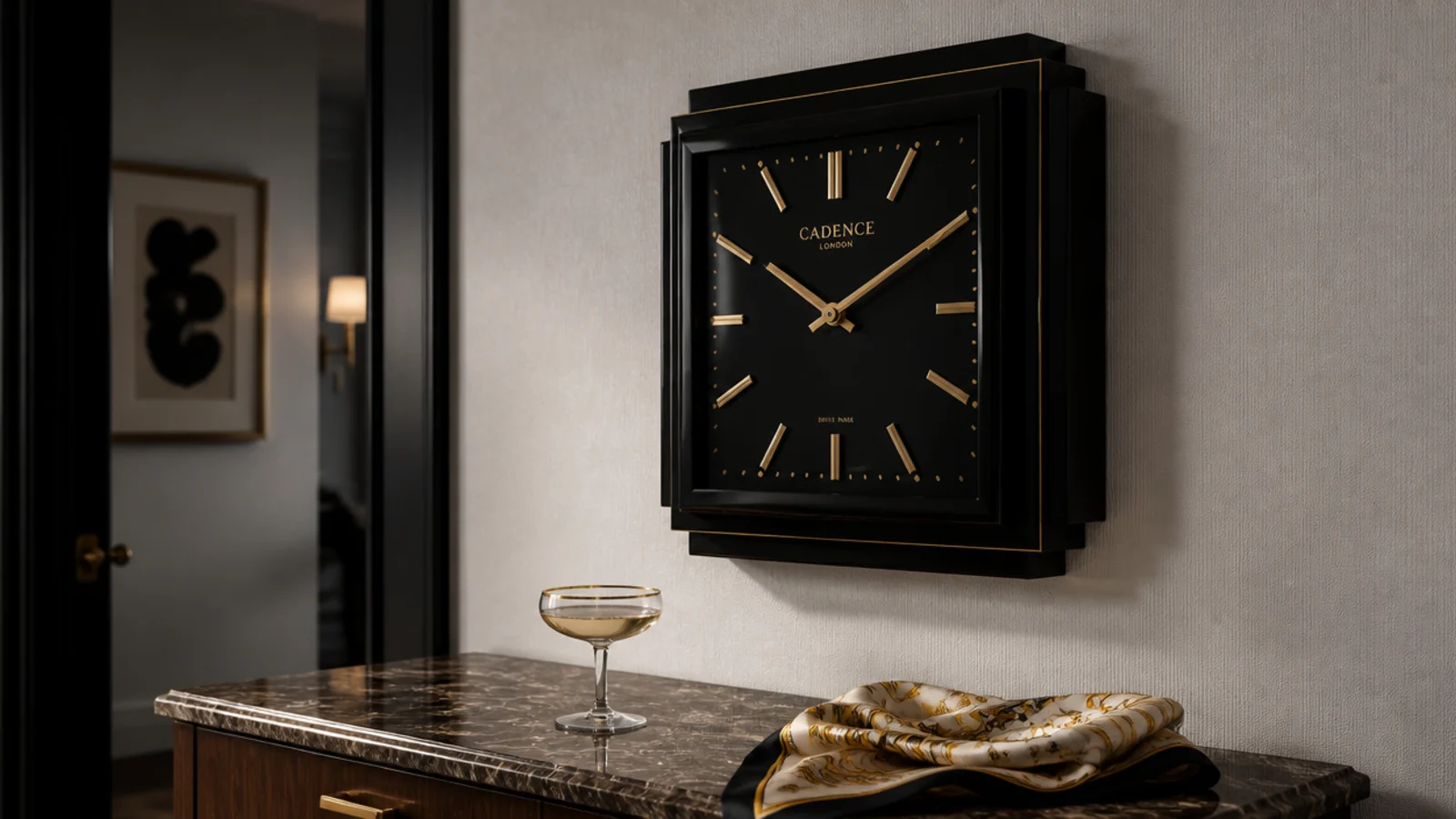
A stepped case throws two or three shadow lines instead of one, which is why these look far more expensive than they are. Look for a case at least 1.5 inches deep — anything shallower loses the effect entirely under flat daylight. Black lacquer with fine brass markers at 16 to 20 inches runs $50 to $120, and it wants a wall with nothing else on it.
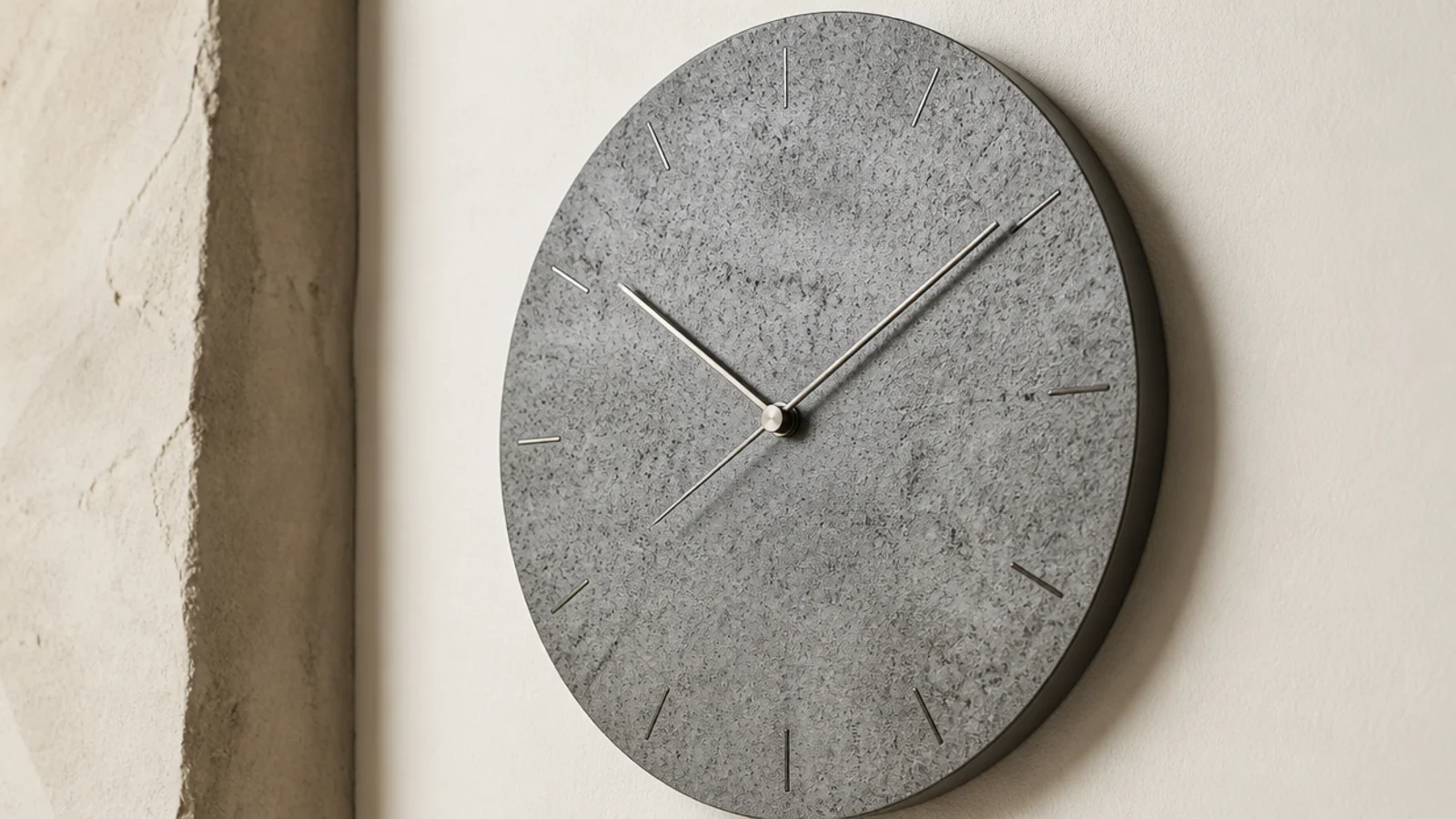
7. Concrete look without the concrete weight
A real cast concrete clock at 16 inches weighs 12 to 20 pounds and needs framing behind it. A mineral-finish or textured resin face gives the same grey speckle at 3 to 5 pounds, which a good self-drilling anchor will hold. Check the texture is three-dimensional rather than printed — run a thumb across it, and if it is smooth it will read as a photograph on the wall.
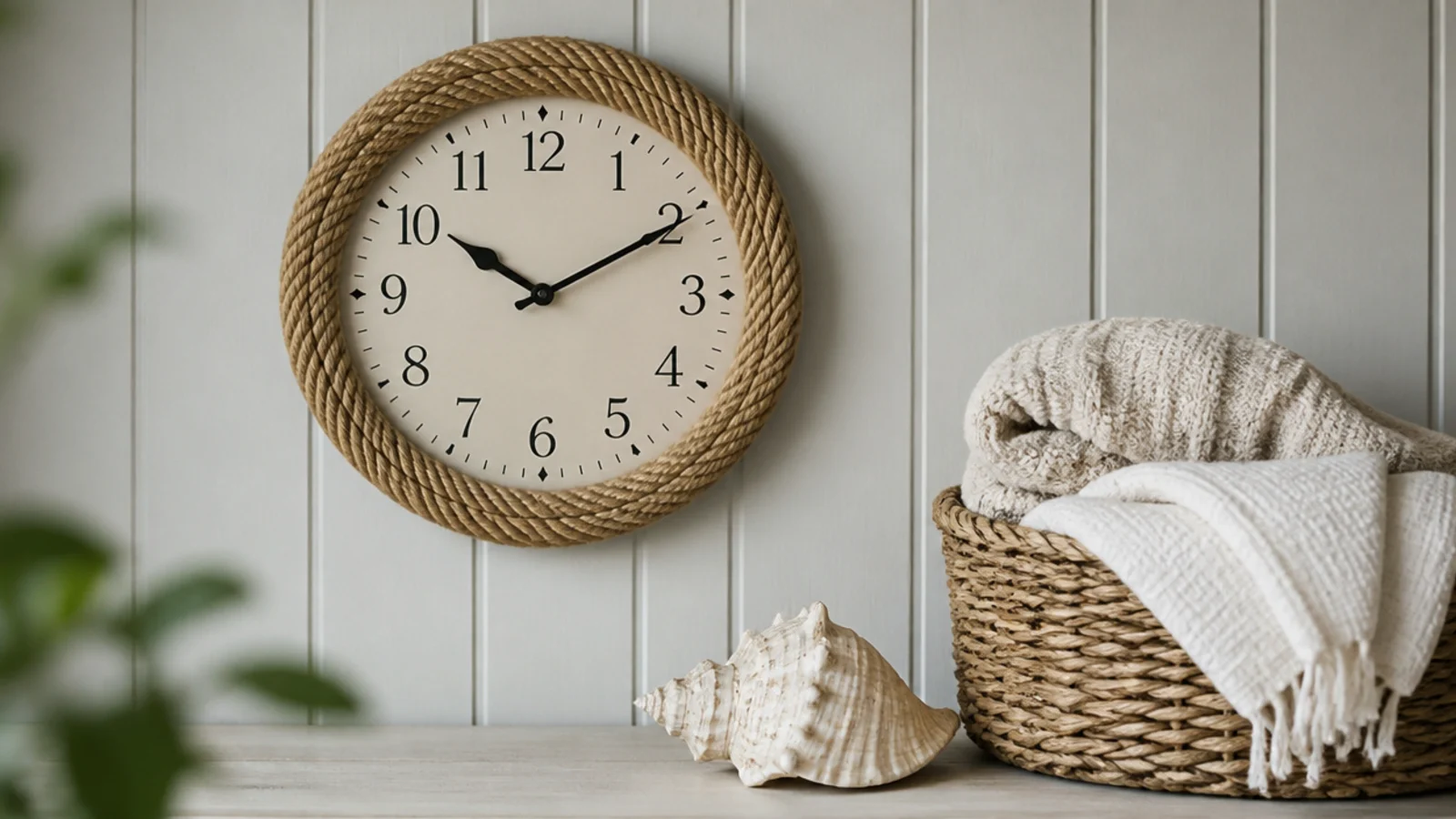
8. Coastal rope and weathered timber
Wrapping a rim in natural sisal or cotton rope adds an inch of diameter and a lot of texture for around $8 of rope and an hour with a glue gun. Weathered grey timber does the rest. Keep the dial simple — a bone face with black bar numerals — because rope plus numerals plus a nautical motif tips straight into theme.
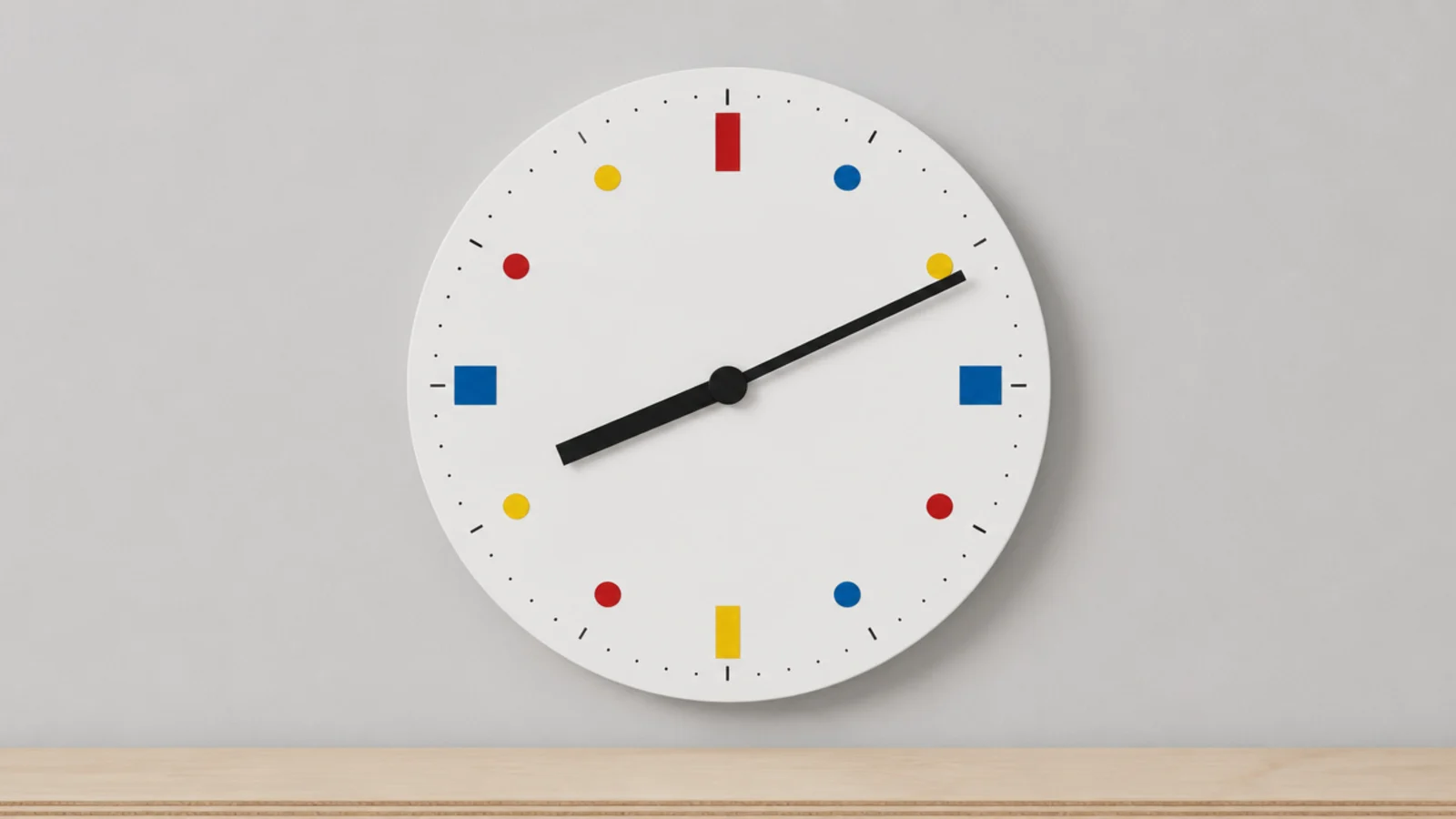
9. Bauhaus markers in three flat colours
Twelve markers, three flat colours, black bar hands, no numerals. It is the cheapest style to execute yourself and among the most expensive-looking on a plain wall. Contrast is everything: the markers need to sit at least three tones away from the dial or the whole face turns to mush at 10 feet. Ready-made versions run $30 to $75 at 12 to 16 inches.
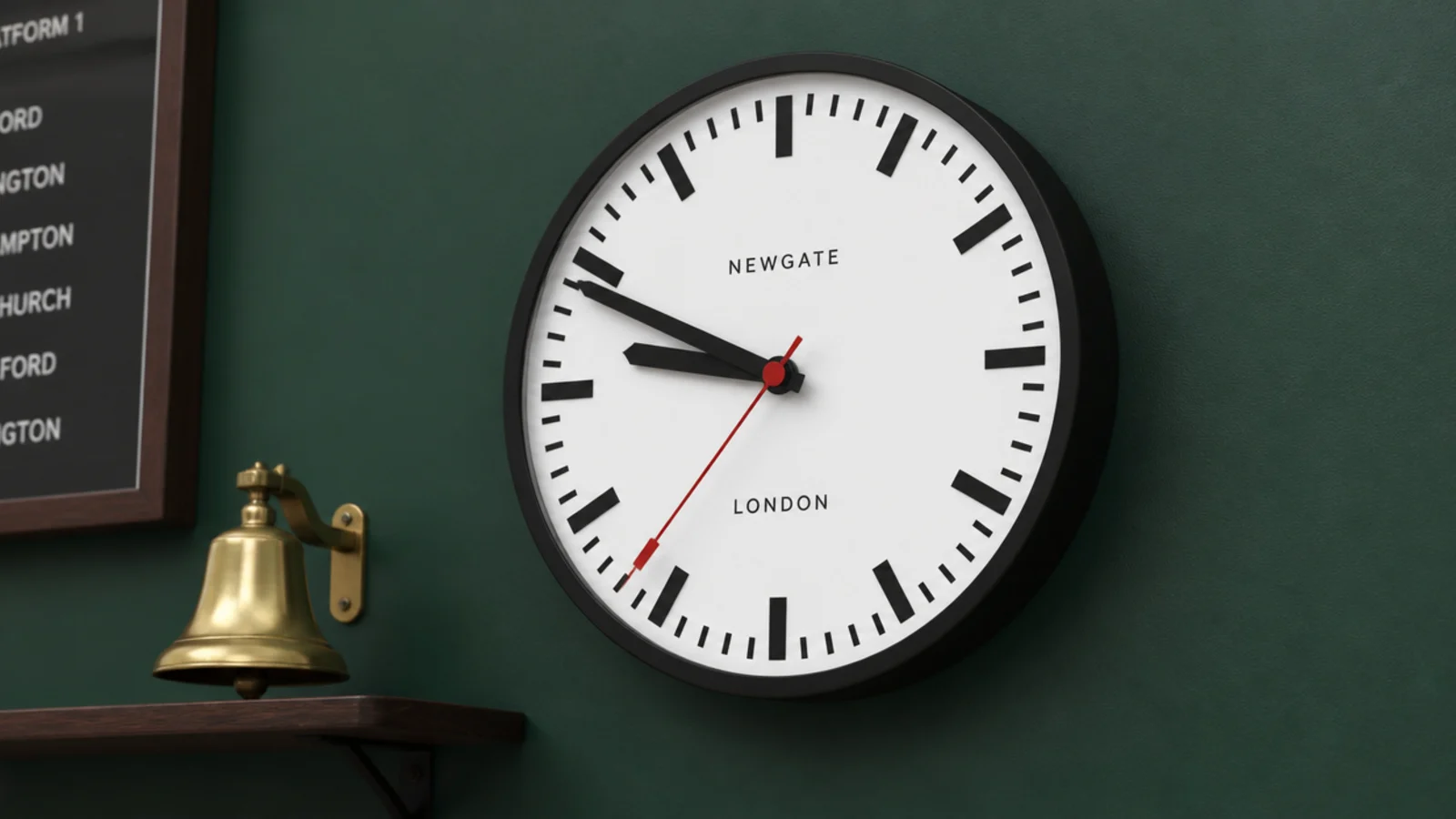
10. Station clock with a heavy second hand
A single bold second hand, usually red-tipped, is what separates a station clock from a plain white dial. It also gives a static wall visible movement, which matters in a hallway you walk past rather than sit in. Pair it with a sweep movement if it is anywhere near a bedroom door. Expect $35 to $90 at 14 to 20 inches.
11. Skeleton numerals fixed straight to the plaster
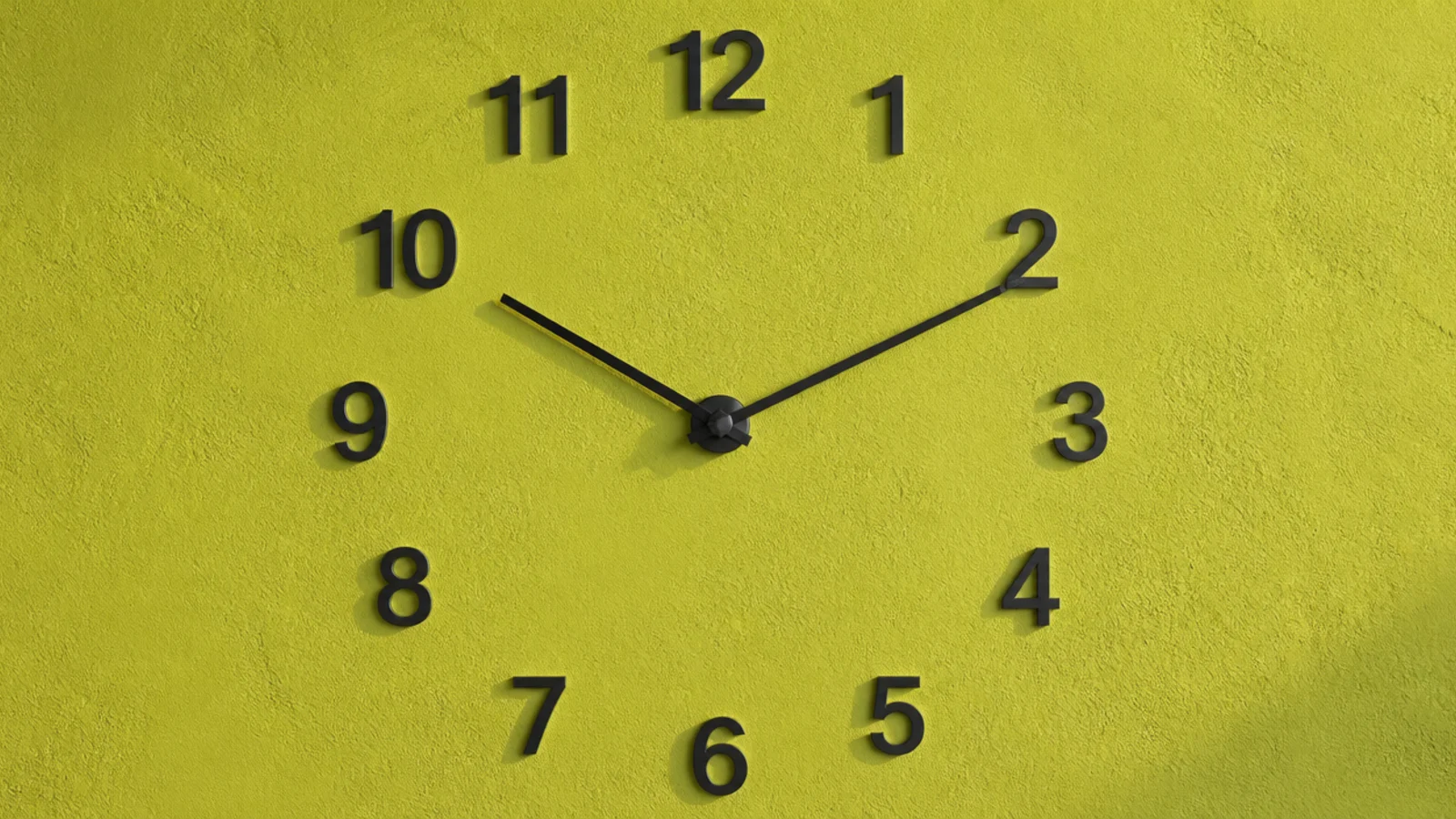
Twelve separate numerals fixed in a circle around a small central movement, with no dial plate at all. Kits run $25 to $60 and cover a 24 to 40 inch circle. Two things decide whether it works: a light wall, because the hands vanish on dark paint past 6 feet, and a paper template on the floor first, since twelve individually placed numerals go wrong very fast without one.
12. Quarter numerals only at twelve, three, six and nine
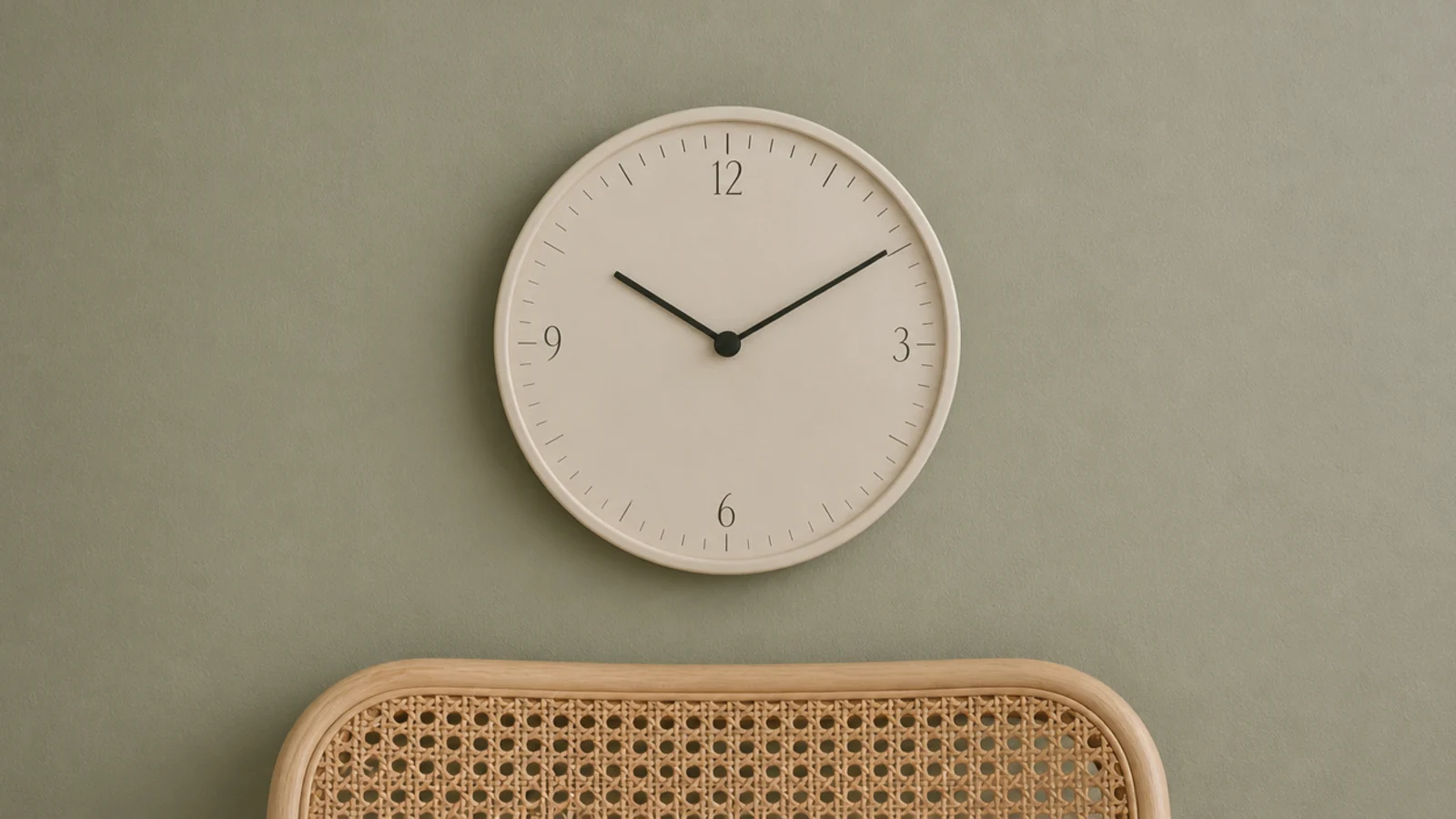
The middle ground between a full numeral dial and a numberless one. Four numerals give you enough anchor points to read the hour instantly while keeping the face quiet. It suits rooms that already carry pattern — a rug, a wallpaper, a gallery wall — where a full dial would be one more thing to look at. Usually $25 to $65.
13. Visible gears for a workshop or study
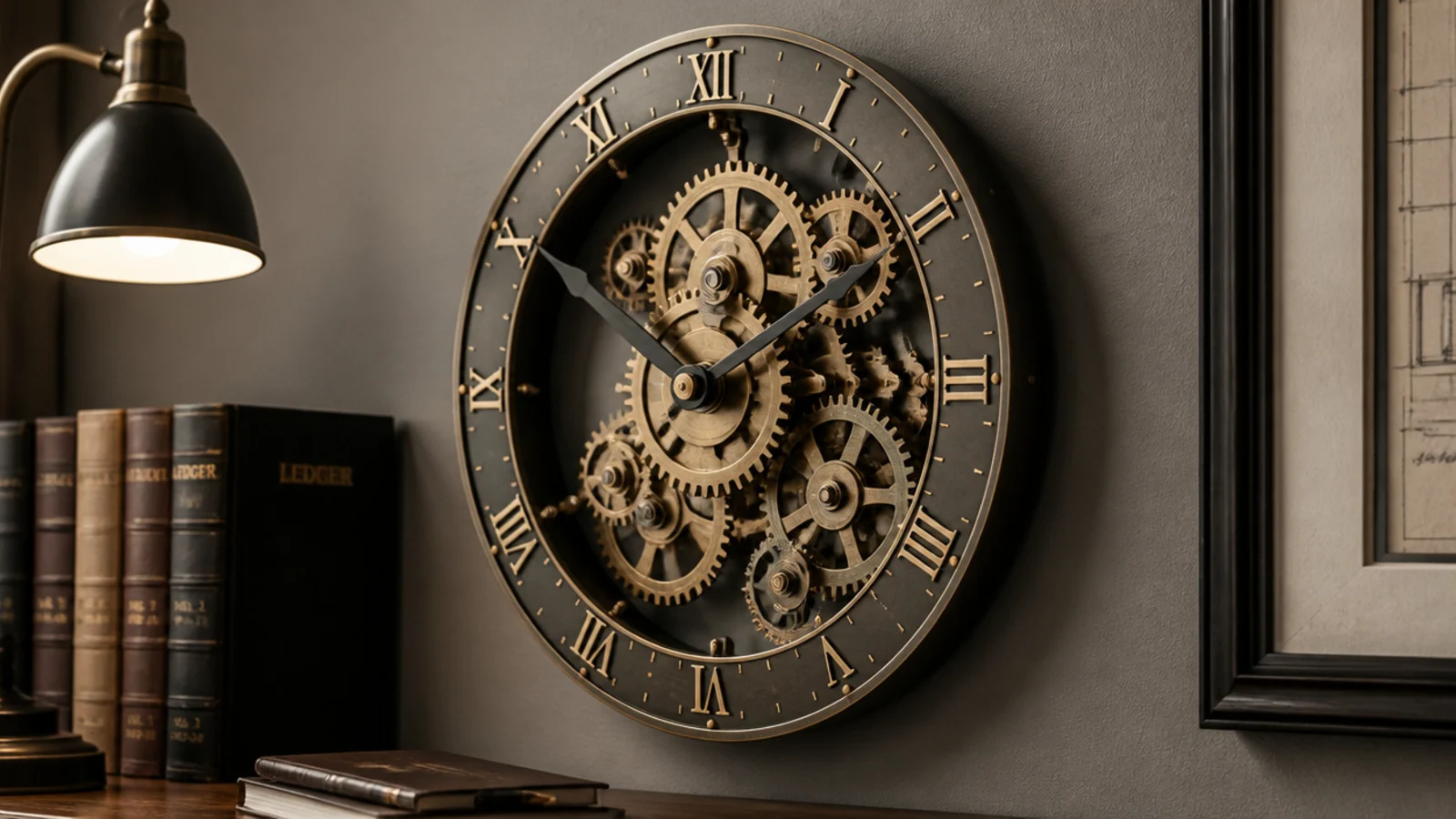
Moving parts hold attention that a flat dial never will, which makes this a good choice for a room you sit and think in. Most affordable versions show decorative gears driven by a standard quartz movement rather than a true mechanical train — that is fine, but it means the gear noise is the movement noise, so choose sweep if the room is quiet. $40 to $110 at 16 to 24 inches.
14. Mirror and brass for a hallway
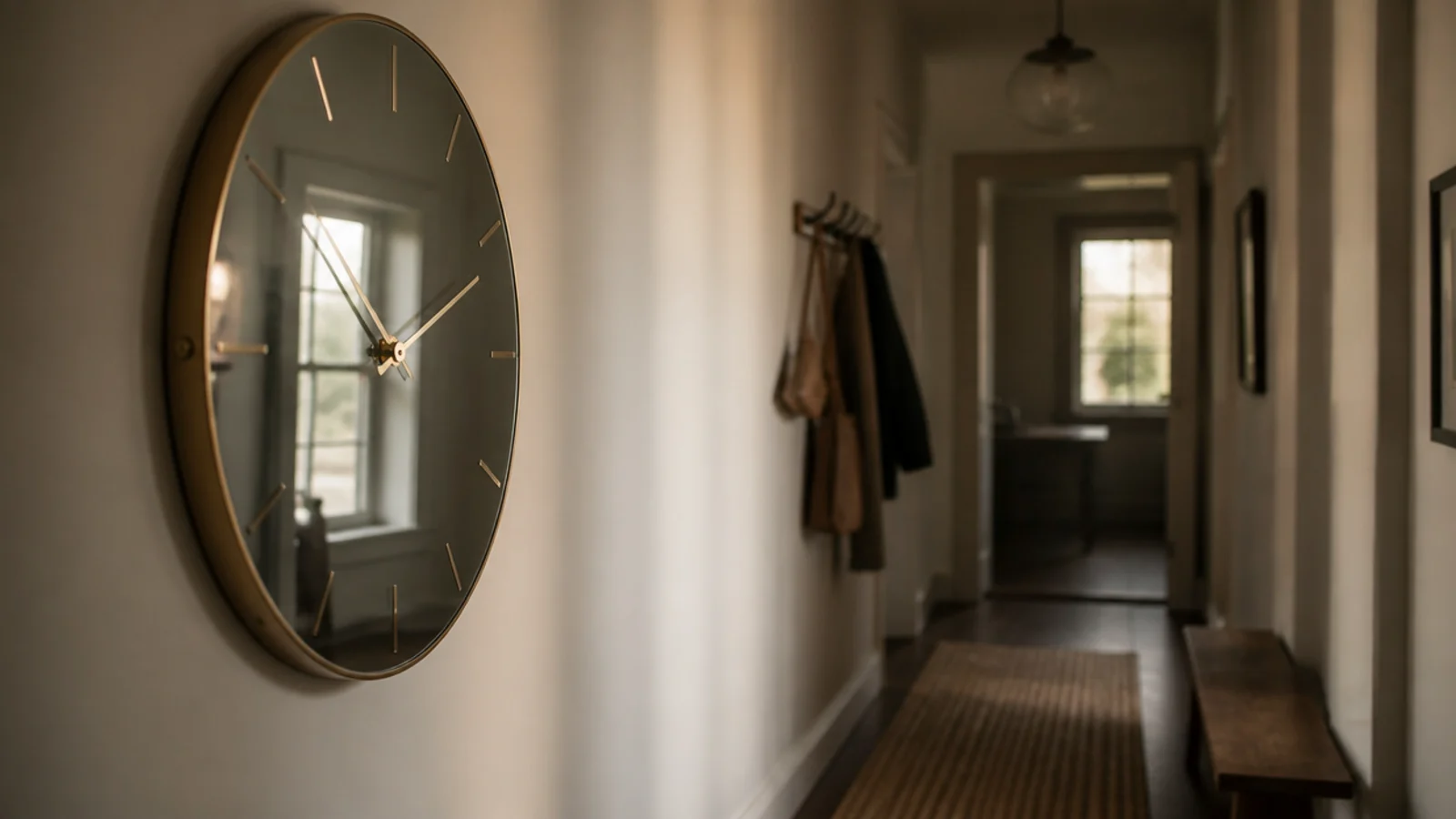
In a corridor borrowing daylight from one end, a mirrored dial bounces it back down the space. Keep the markers slim and metallic rather than printed, and make it the only reflective object on that wall. Mirror glass adds 2 to 4 pounds at 20 inches, so check the fixing. Around $45 to $120. Pair it with warm light — the hanging lights guide covers what to use nearby.
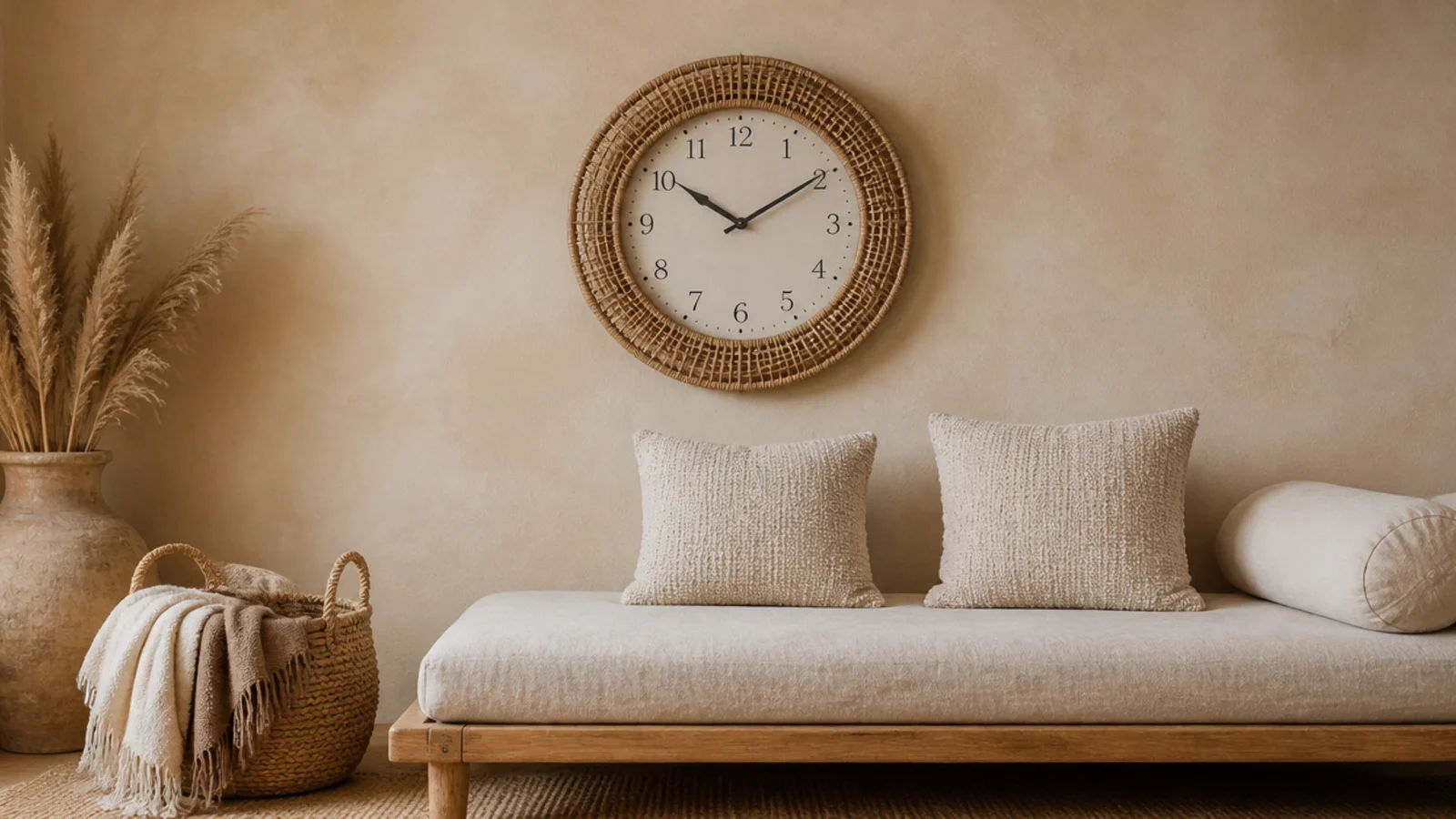
15. Rattan rim for a soft boho scheme
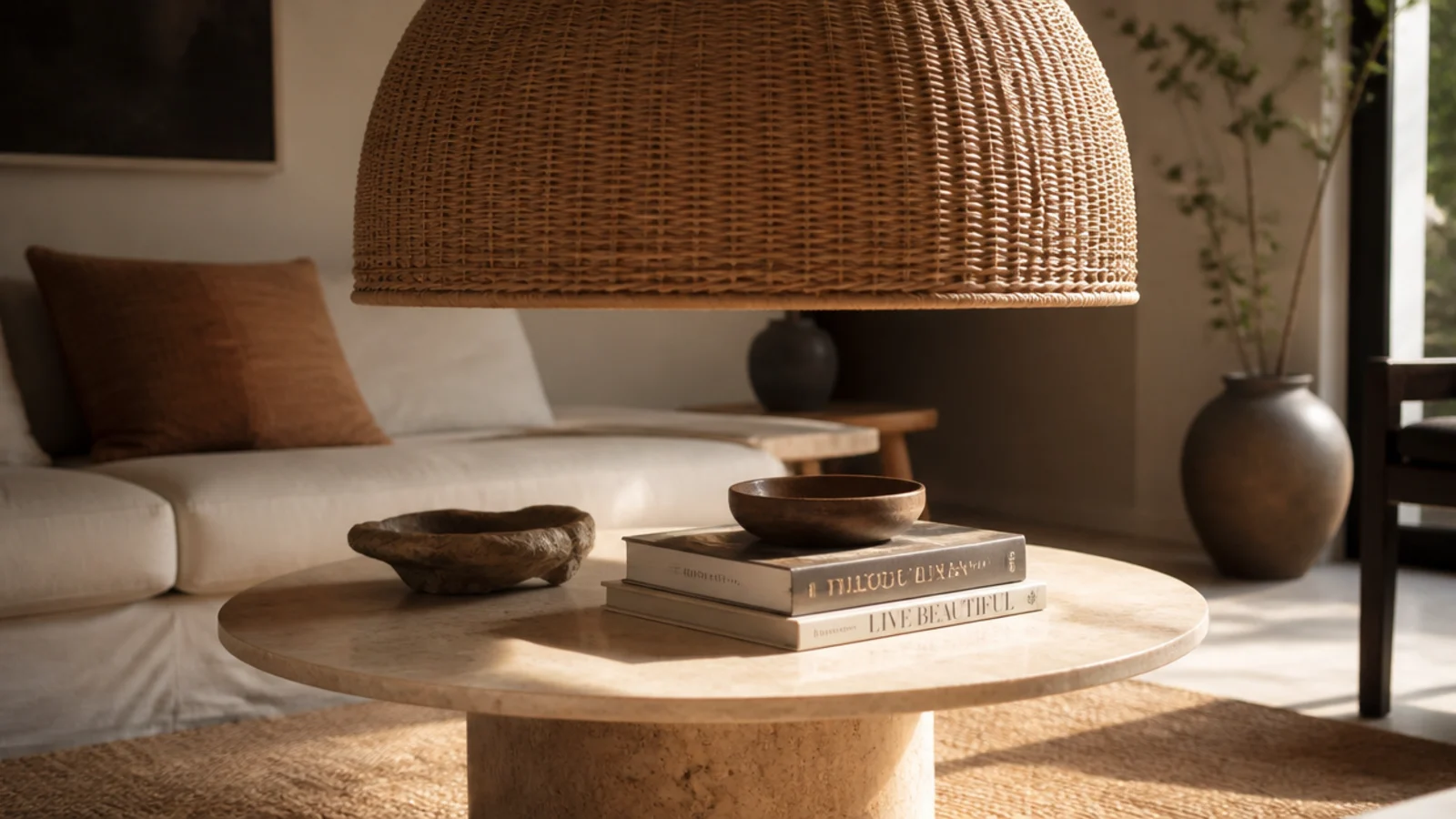
Woven rattan brings texture without adding a colour, and it is remarkably light — a 20-inch cane-rimmed clock is often under 3 pounds, one of the few large faces a heavy-duty adhesive strip set rated near 16 pounds can genuinely hold. Check the weave is glued to a solid backing ring, because unsupported cane goes oval within a year in a warm room. Expect $30 to $75.
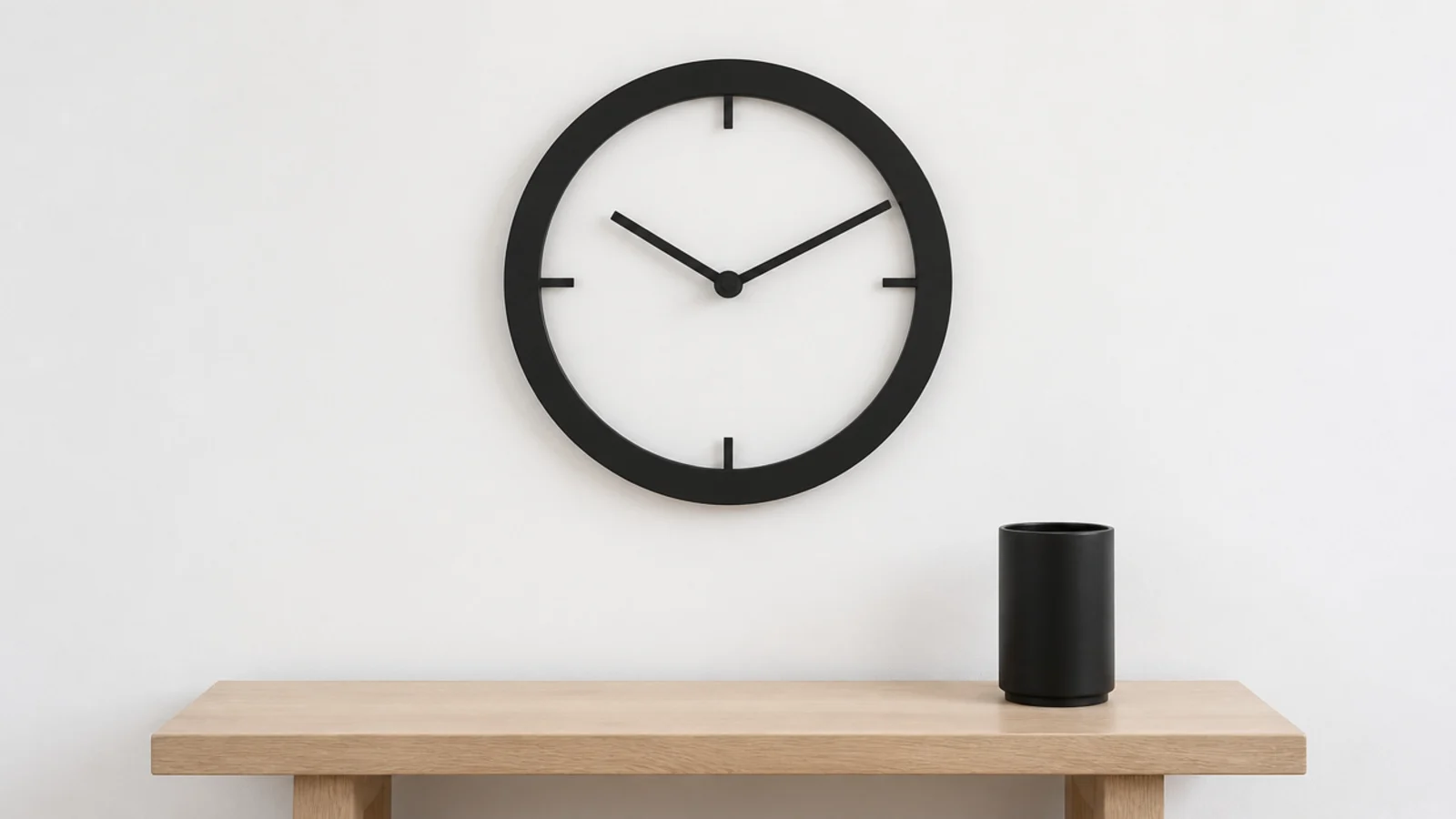
16. A monochrome graphic ring
A flat black or white ring with no visible case, sitting almost flush against the plaster. It reads as something drawn on the wall rather than hung on it, which suits a small room where a deep case would eat space. Depth under half an inch is the target. Ready-made at 14 to 22 inches for $25 to $70.
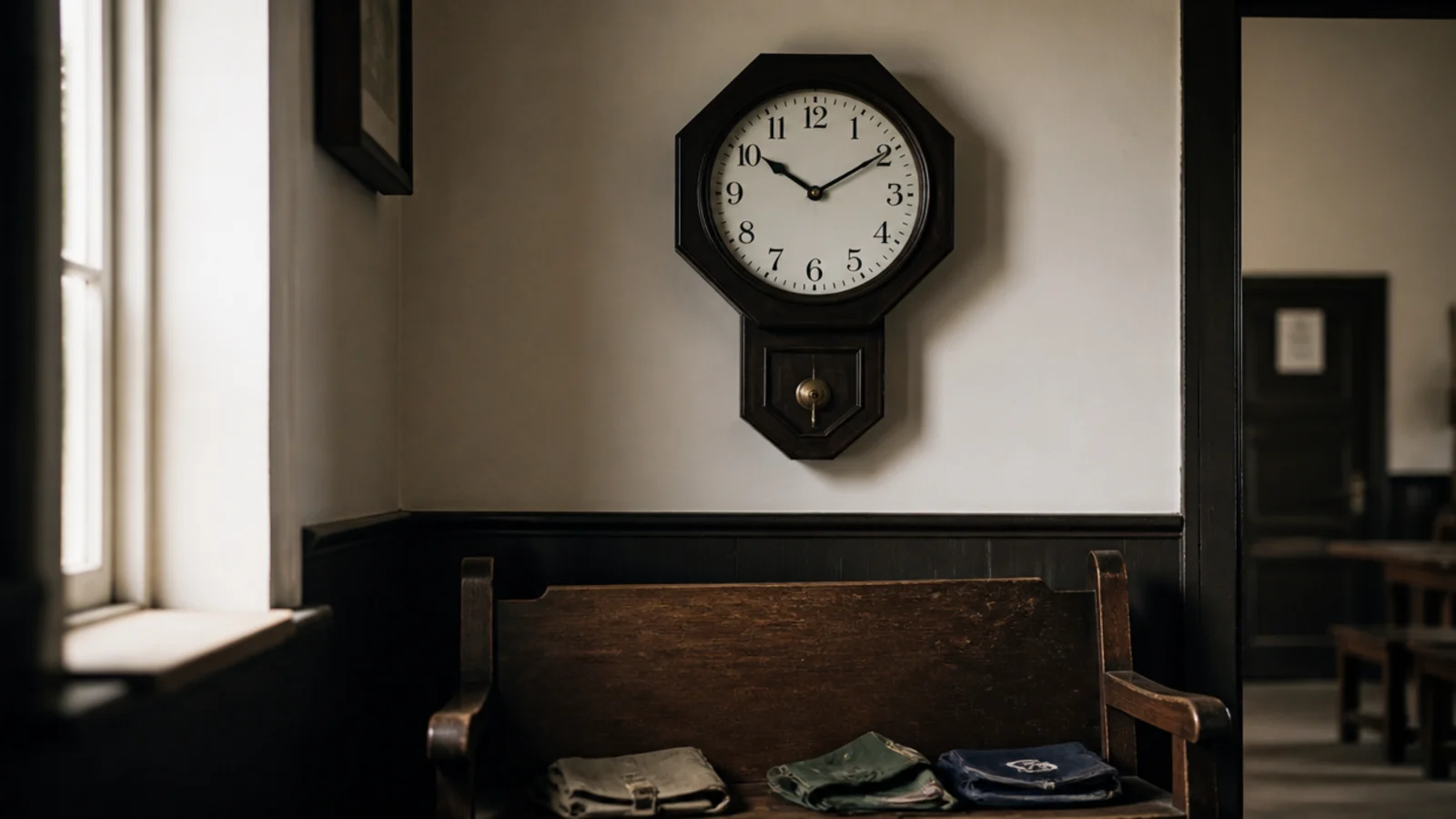
17. The vintage schoolhouse octagon
The octagonal drop-dial silhouette is instantly legible as old, and one genuinely old shape stops a new room feeling like a showroom. Secondhand at 16 to 20 inches runs $30 to $90, and a tired original movement swaps for a quartz kit at $10 to $15 without touching the case. Check the shaft length against the dial thickness before ordering.
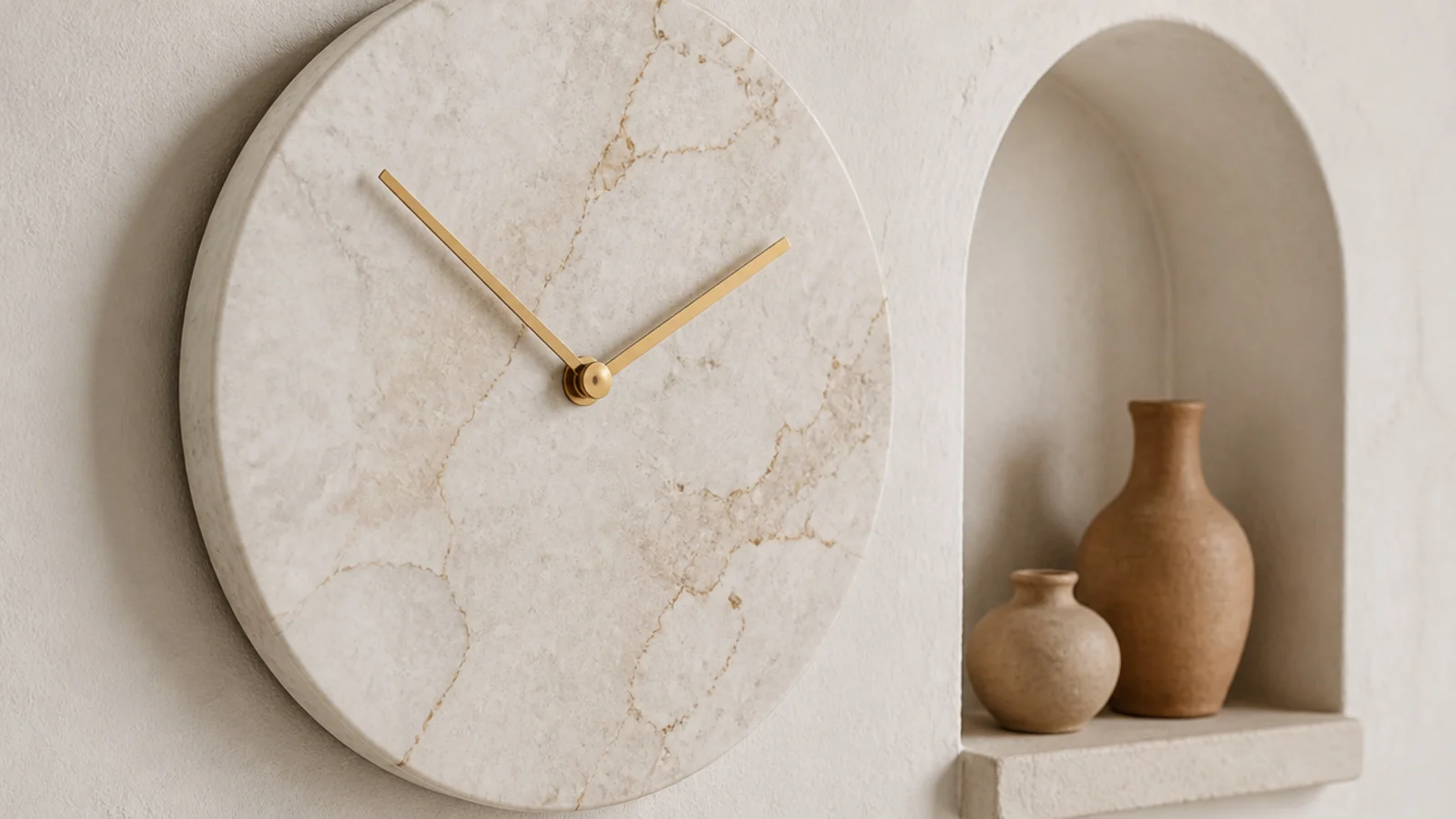
18. A marble-effect dial for a fraction of stone
Printed marble veining passes completely at 8 feet and above, which is every normal viewing distance for a clock. Real stone at 16 inches weighs 10 to 18 pounds and needs framing; a printed dial weighs 2 to 4 and does not. Pick a print with soft, irregular veining rather than a sharp repeating pattern, and pair it with slim gold or brass hands. $30 to $80.
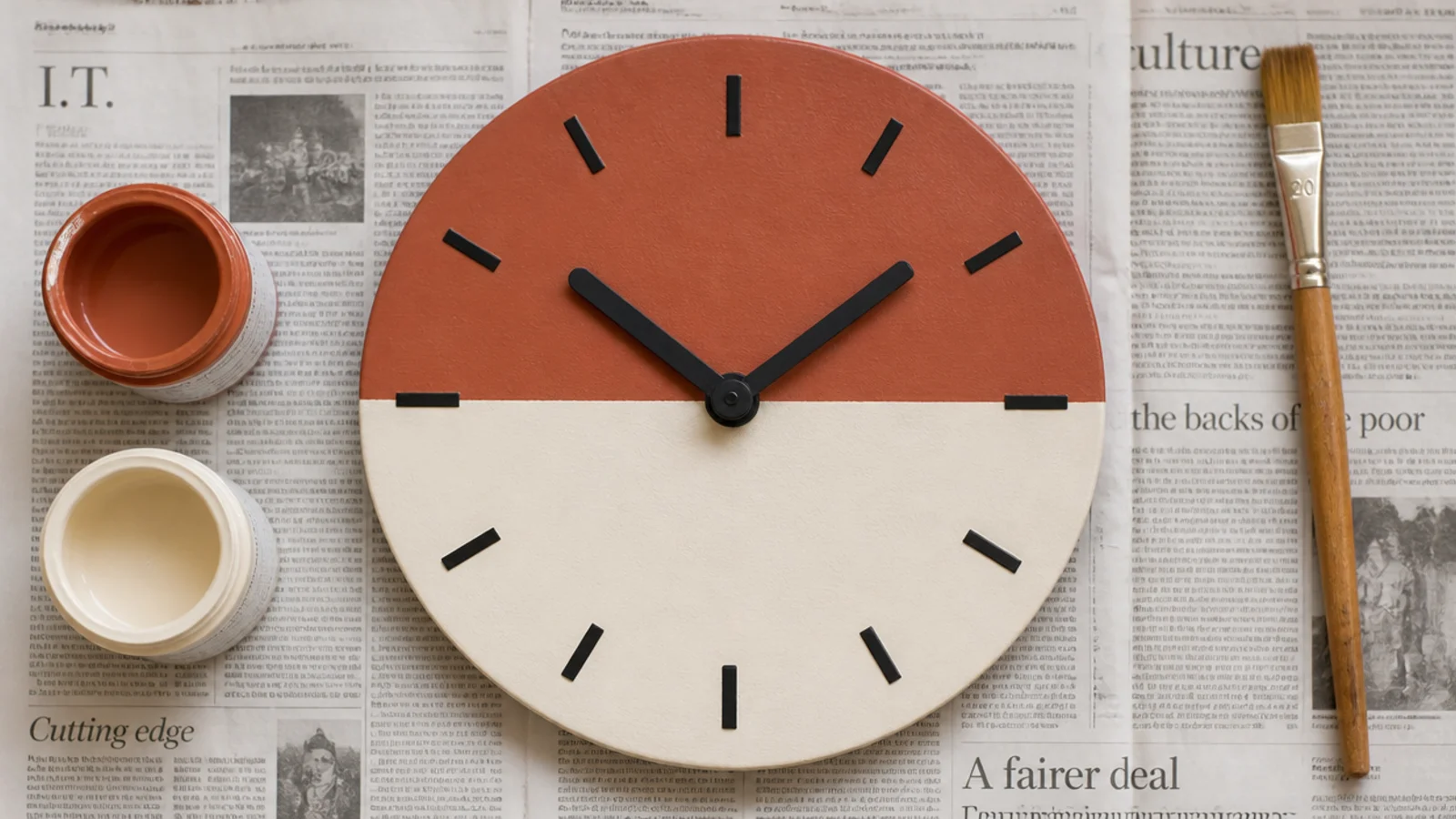
19. Colour-block the dial in two tester pots
Two tester pots, painter tape and an afternoon. Split the dial horizontally rather than through the centre, keep the two tones within two steps of each other on a paint fan, and leave the hands dark enough to read against both halves. Total cost under $15 on a clock you already own, and it is fully reversible with a third pot.
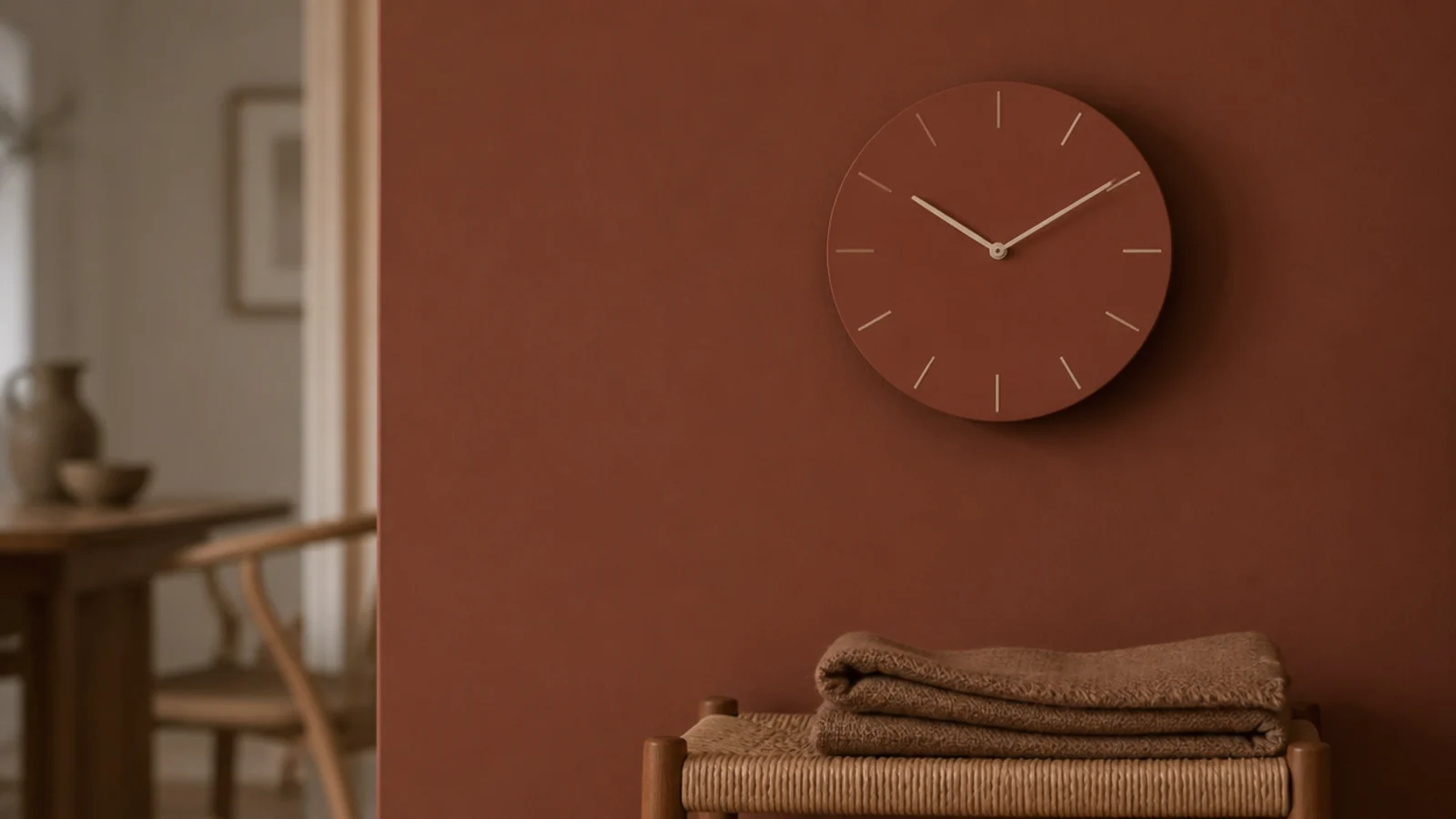
20. Match the case to the wall and let the hands read
Paint the case in the exact wall colour and sheen, and only the hands and markers register. It is the quietest option here and the most useful in a small room, because a contrasting circle takes up visual space a matched one does not. Two thin coats of eggshell with a light sand between them, and mask the lens properly. Works beautifully alongside soft lighting — see the candle decor notes for the evening version of the same idea.
For the faces that are genuinely one-off rather than restyled, the unique design finds guide covers what is worth hunting for.
Mistakes to Skip
- Paying for a designer case with a bargain movement inside it. The mechanism is what you interact with daily, and a silent sweep unit costs less than a takeaway coffee more than a ticking one.
- Choosing a dark dial for a dark wall because the photograph looked moody. Past about 8 feet it becomes an unreadable circle, and you will end up checking your phone instead.
- Assuming a heavy style is a heavy clock. Concrete, marble and mirror effects come in resin and print at a quarter of the weight, and the fixing you need changes completely between the two.
- Buying a large sunburst or skeleton design without templating it first. Both cover far more wall than the dial diameter suggests, and neither is easy to move once the holes are in.
Frequently asked questions
How much should a good wall clock cost?
A well made 12-inch clock sits between 20 and 50 dollars, a 24-inch one between 40 and 120, and anything over 30 inches starts around 120 and climbs quickly. Above roughly 200 dollars you are usually paying for a designer name rather than a better movement or a heavier case.
Which clock style suits a small room?
A slim-rimmed dial in the wall colour, or a marker-only face at 14 to 18 inches. Both read as flat graphics rather than objects, so they take up less visual space than a deep case or a heavy contrasting rim in a room under about 12 feet square.
Are cheap clock movements noticeably worse?
The movement matters more than the case at every price. A budget step-tick unit is accurate to within a minute a month but audible at night, while a sweep movement is silent and costs only a few dollars more. Torque matters too, since long hands need a high-torque unit.
What makes a clock look expensive?
Depth, dial contrast and hand quality, in that order. A case standing two inches proud of the wall throws its own shadow, a high-contrast dial stays readable across a room, and a metal hand set costs about eight dollars and instantly outclasses stamped plastic ones.
Can I change the style of a clock I already own?
Yes, and it is the cheapest route to a new look. A replacement hand set runs 6 to 12 dollars, a quartz movement 8 to 15, and repainting the dial costs a tester pot. Check the shaft length matches your dial thickness plus about an eighth of an inch before ordering.
Want more like this? Browse all 15 wall clock guides — they all use the same measurements and budget tiers.
Pin it for later
Save this to your Wall Clock board
Pin it now so it is waiting for you when the tape measure comes out — and so the next person hunting for this idea can find it too.
Save this pinKeep going
More ideas worth saving while you have the tape measure out.