Hanging Lights · Listicle
20 Hanging Bedside Lights That Free Up Table Space

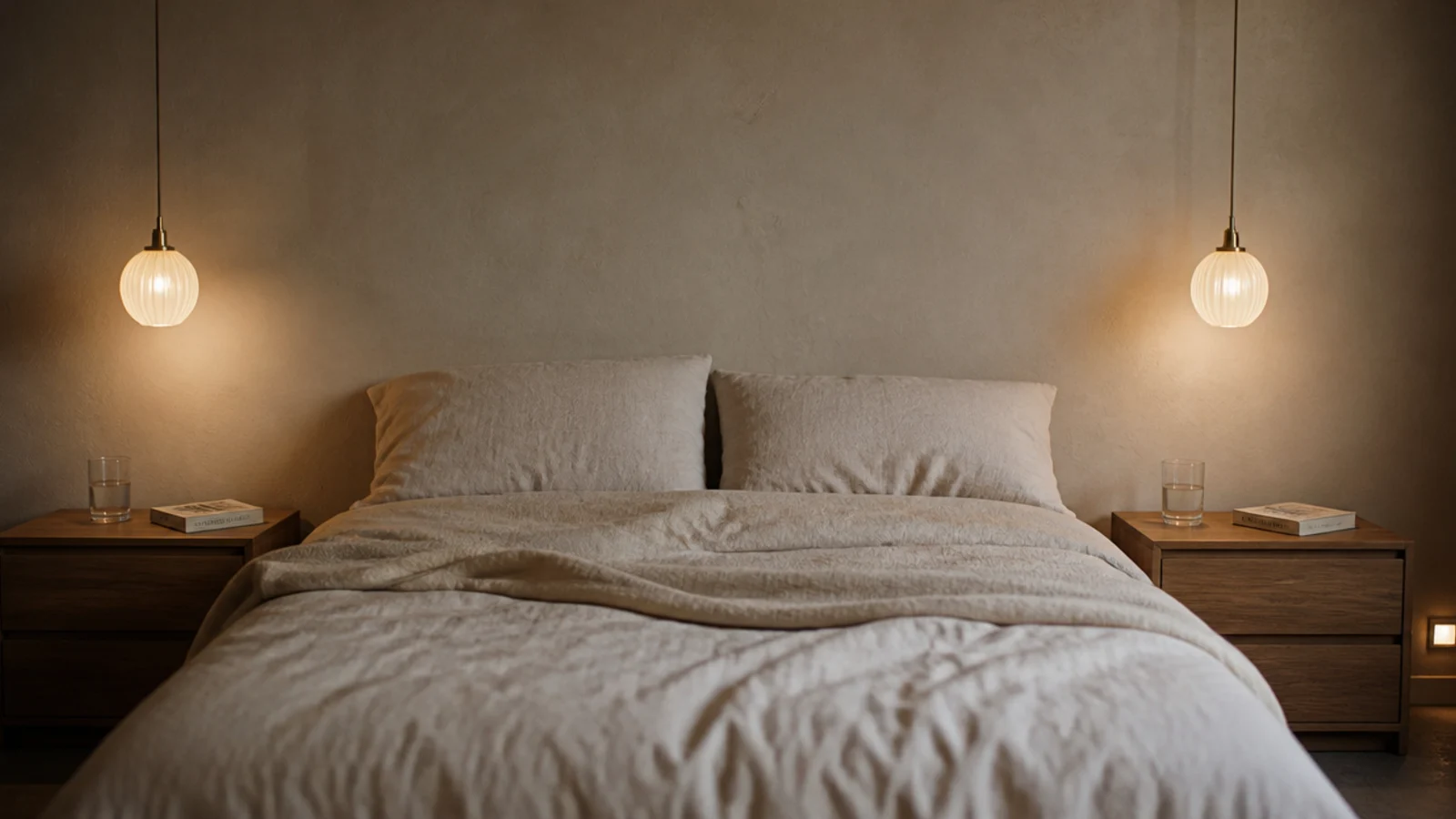
The nightstand is the smallest working surface in the house and we ask it to hold a lamp, a book, a glass, a phone, a charger and whatever came out of a pocket. Take the lamp off it and you get roughly a third of the surface back. Hanging bedside lights do that for around $30 a side, and they light the page better than a table lamp ever did because the source sits above the book rather than beside your ear. I have swapped lamps for pendants in three bedrooms now. Below are twenty arrangements with the drops, offsets and lumen counts that make them work.
In this guide22 sections — tap to openHide
- 1.What hanging bedside lights have to get right
- 2.Set the drop from the mattress, not the floor
- 3.Hang it six to ten inches off the wall
- 4.Pick a shade that hides the bulb lying down
- 5.Three hundred to four hundred and fifty lumens
- 6.An inline cord switch your hand can find
- 7.Two switches so one of you can sleep
- 8.A plug in swag pair for a rental
- 9.One pendant on the reading side only
- 10.Small shades under eight inches across
- 11.A cord routed behind the headboard
- 12.A rise and fall pulley beside the bed
- 13.A pendant above a floating shelf instead of a table
- 14.A pendant one side, a lamp the other
- 15.A swing arm where a pendant will not fit
- 16.A hanging light for a gap under fourteen inches
- 17.Warm bulbs at 2700K or lower
- 18.A dimmer that genuinely reaches ten per cent
- 19.Cords kept out of reach in a child bedroom
- 20.Finding the joist before the hook goes in
- 21.The ceiling box that carries a bedside fixture
- 22.Mistakes to Skip
What hanging bedside lights have to get right
Four numbers, and the first one is the one everybody skips.
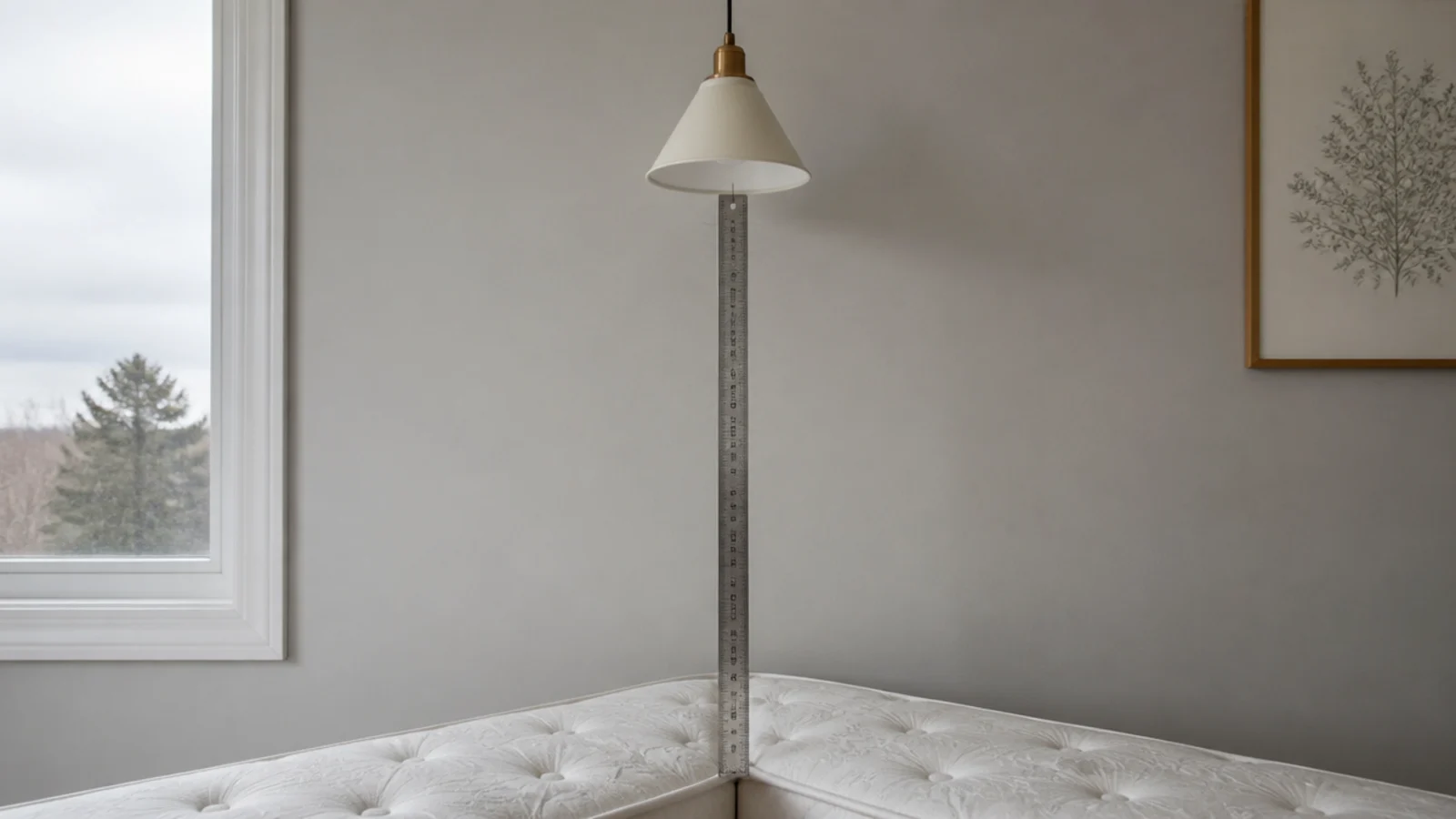
Drop from the mattress. The bottom of the shade sits 20 to 24 inches above the mattress top. On a standard bed that lands at 48 to 52 inches off the floor, but a low platform bed and a high divan differ by six inches, so measure the mattress, not the room.
Offset from the wall. 6 to 10 inches out from the wall face. That clears a headboard, puts light on the page instead of your shoulder, and keeps the shade out of the space where you swing your legs out.
Brightness. 300 to 450 lumens at 2700K. Above 450 you are lighting the room, and the person next to you will say so.
Fixing and wiring. A rated ceiling box carries the fixture weight, and a swag hook needs a joist or a toggle rated 30 pounds and up — never bare plasterboard. Hard-wiring a new ceiling point is an electrician's job in most jurisdictions; a plug-in swag kit is not, which is why renters can have this at all. Budget $20 to $45 for a swag kit, $25 to $90 for a good small shade, and $100 to $300 per point if it is being wired in.
1. Set the drop from the mattress, not the floor
Two beds of the same style can sit six inches apart at mattress height, and the light does not care what the floor is doing. Make the bed, measure to the top of the duvet, add 20 to 24 inches and mark the wall in pencil before anything is cut or hooked.
2. Hang it six to ten inches off the wall
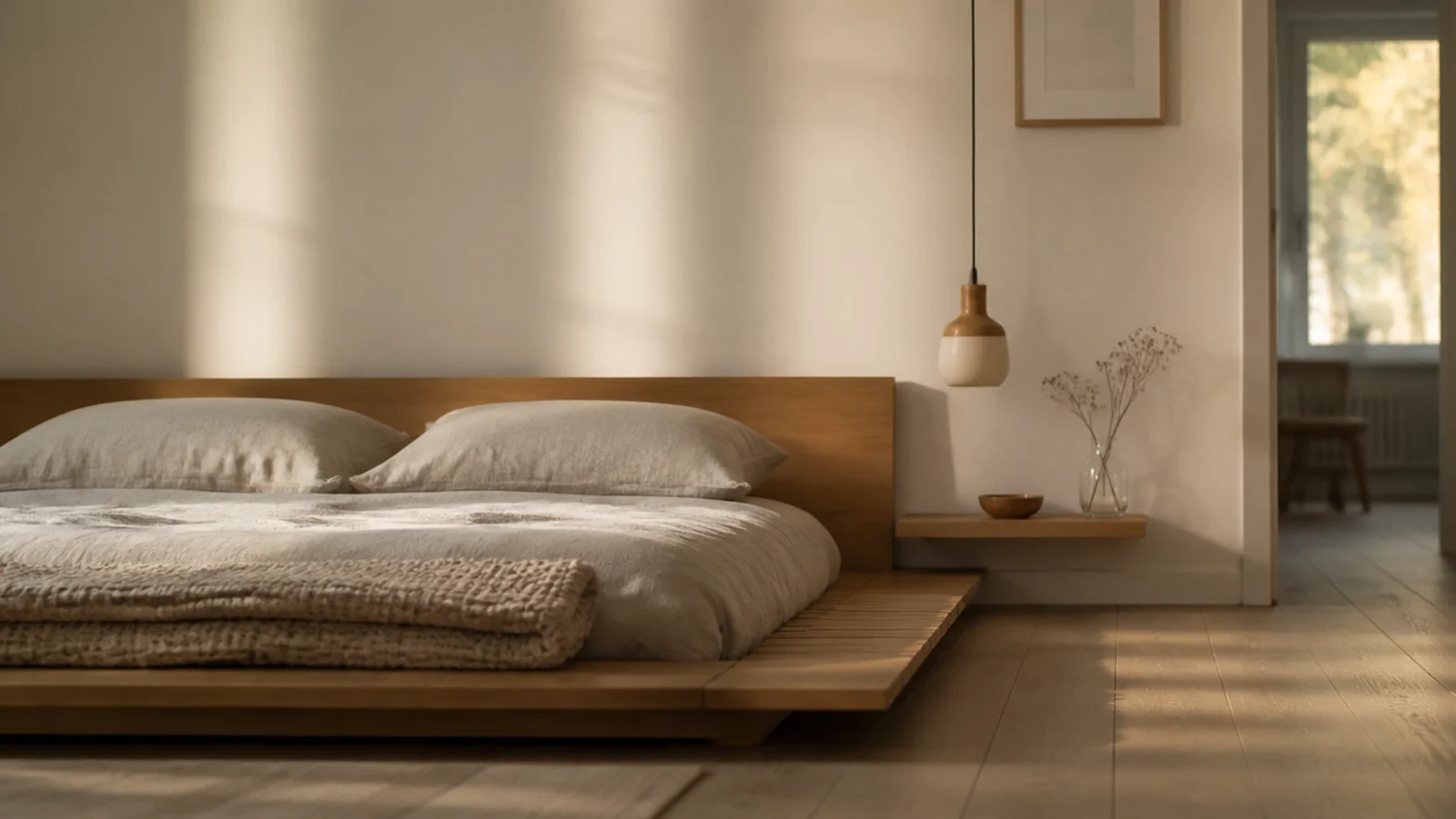
Directly against the wall, a pendant lights the wall. Out at 6 to 10 inches it lights the book. The exception is a deep upholstered headboard — measure from the front face of the headboard, not the plaster, and keep the same 6 to 10 inches clear of that.

3. Pick a shade that hides the bulb lying down
Bedside lighting is judged from horizontal. A shallow shade that looks discreet standing up puts a bare filament straight into your eye from the pillow. Opal glass, a deep metal cone or a fabric drum all pass this test; clear glass and open cages do not.
4. Three hundred to four hundred and fifty lumens
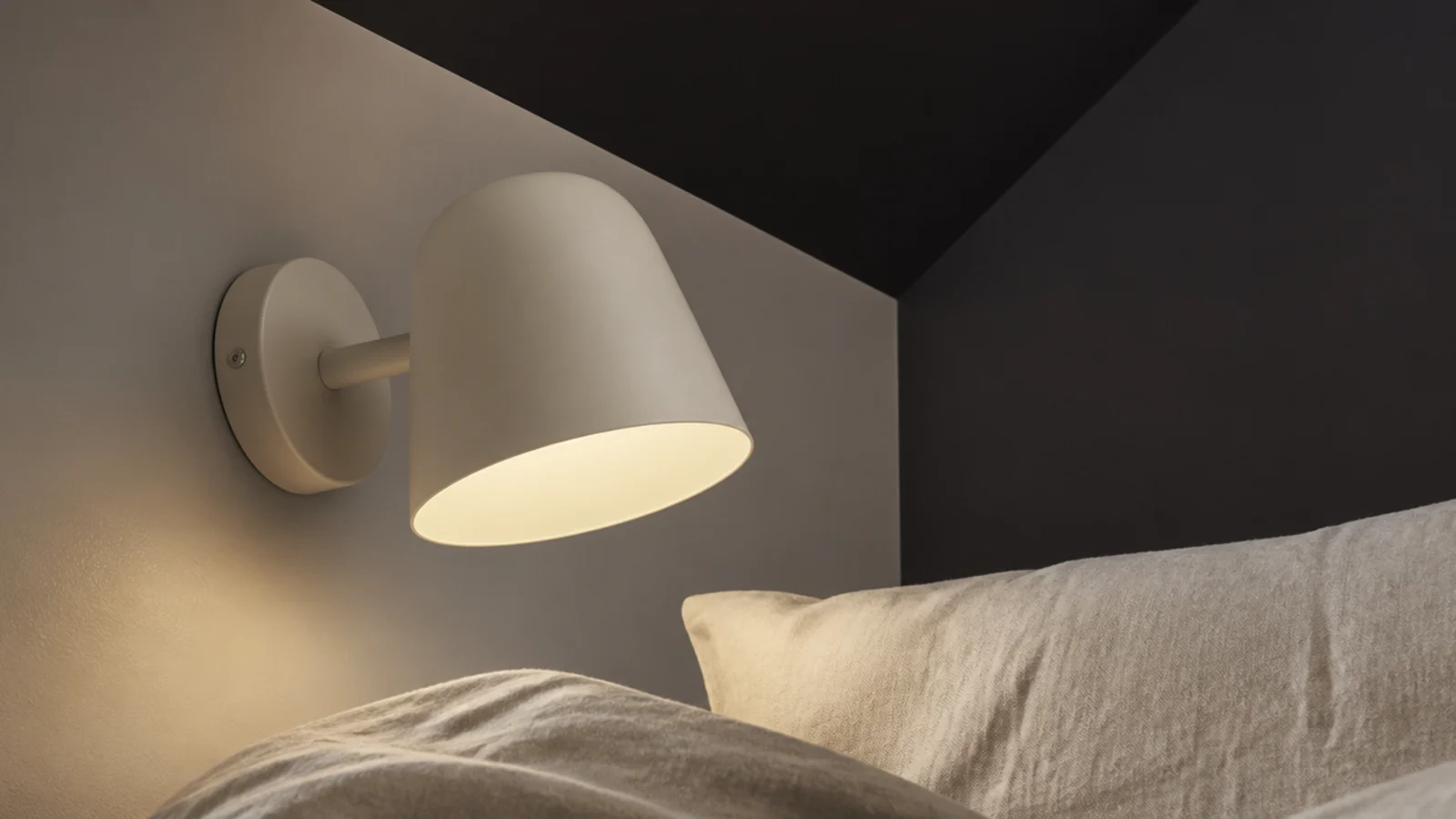
That is roughly a 4 to 6 watt LED. It lights a paperback and about 18 inches around it, which is exactly the intent. A 60 watt equivalent at 800 lumens over a bed is a reading light for two people and a floodlight for one.

5. An inline cord switch your hand can find
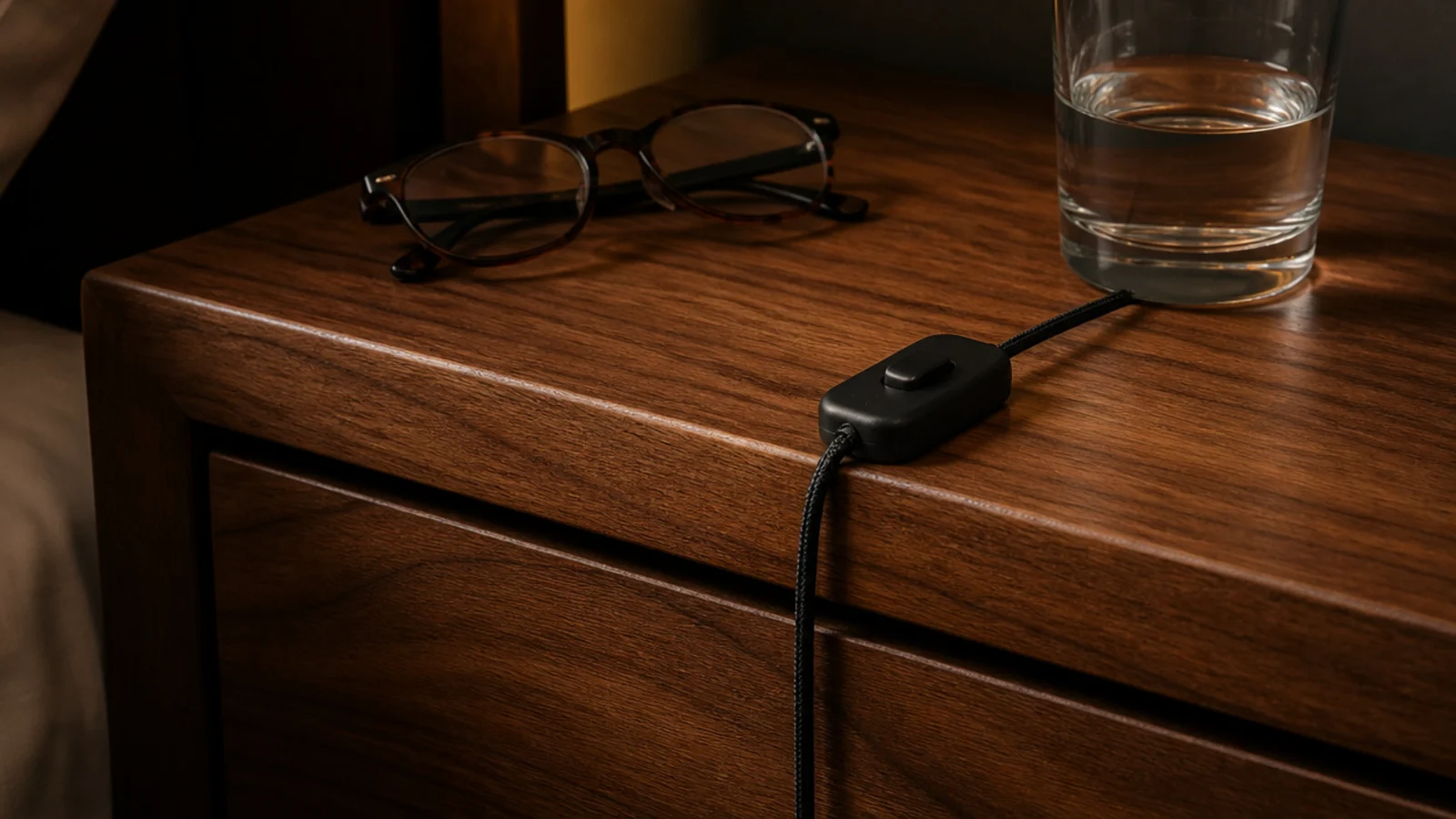
If the wall switch is by the door, the pendant will not get used. A plug-in fixture takes an inline cord switch for a few dollars; a hard-wired one can be spurred to a switch on the bedside wall at install. Set it at the height your hand lands from lying down.
6. Two switches so one of you can sleep
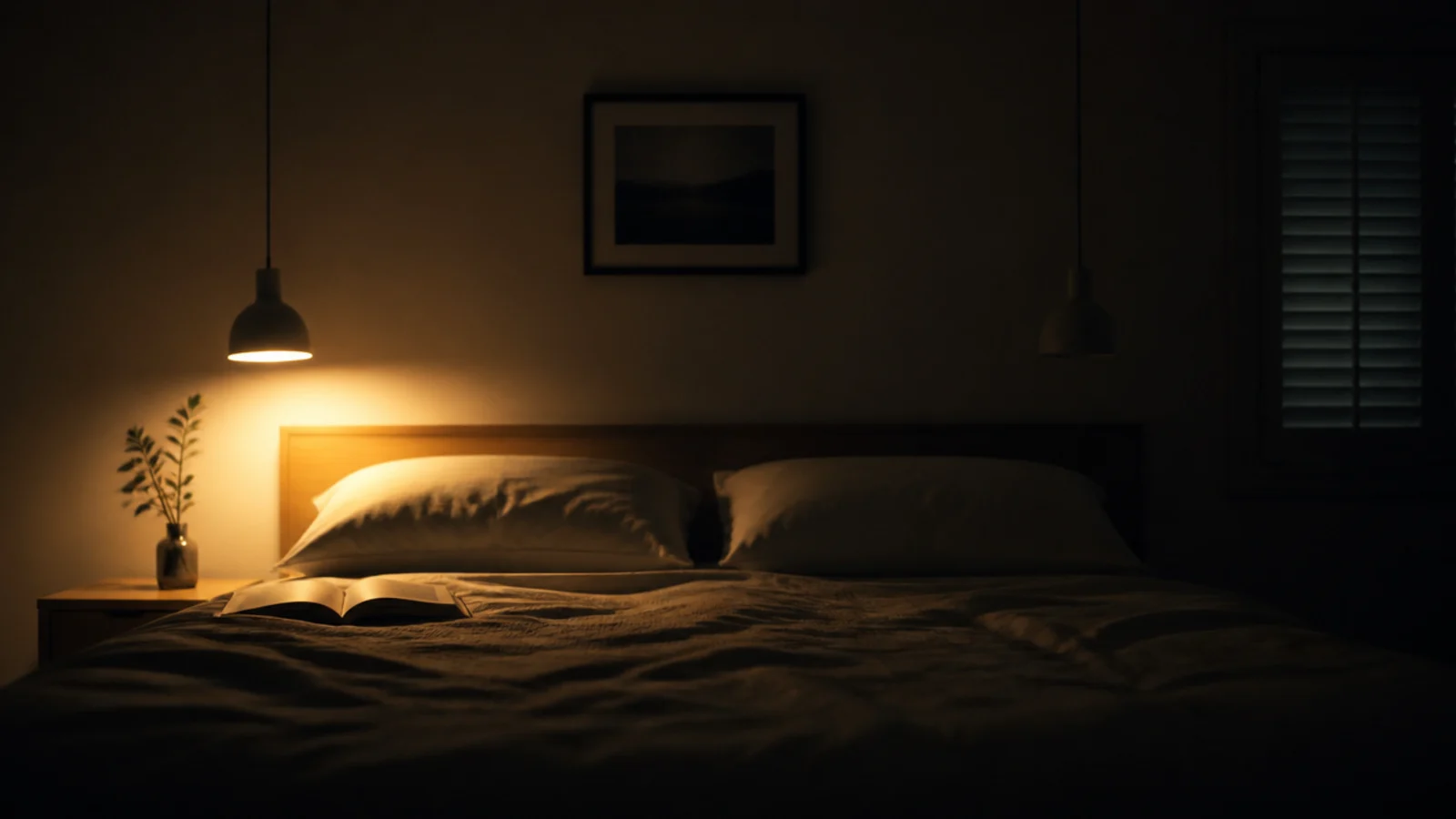
A pair on one switch works only if you both go to bed at the same time. Splitting the pair across two switches costs almost nothing at install and is close to impossible to add later without lifting floorboards, so ask for it up front.
7. A plug in swag pair for a rental
Two hooks per side, a 15 foot cord and a plug. Drive each hook into a joist, run the cord along the ceiling to the wall and drop it behind the headboard. Total $40 to $90 for the pair, and two small holes to fill on move-out. The bedroom guide has the full rental routine.
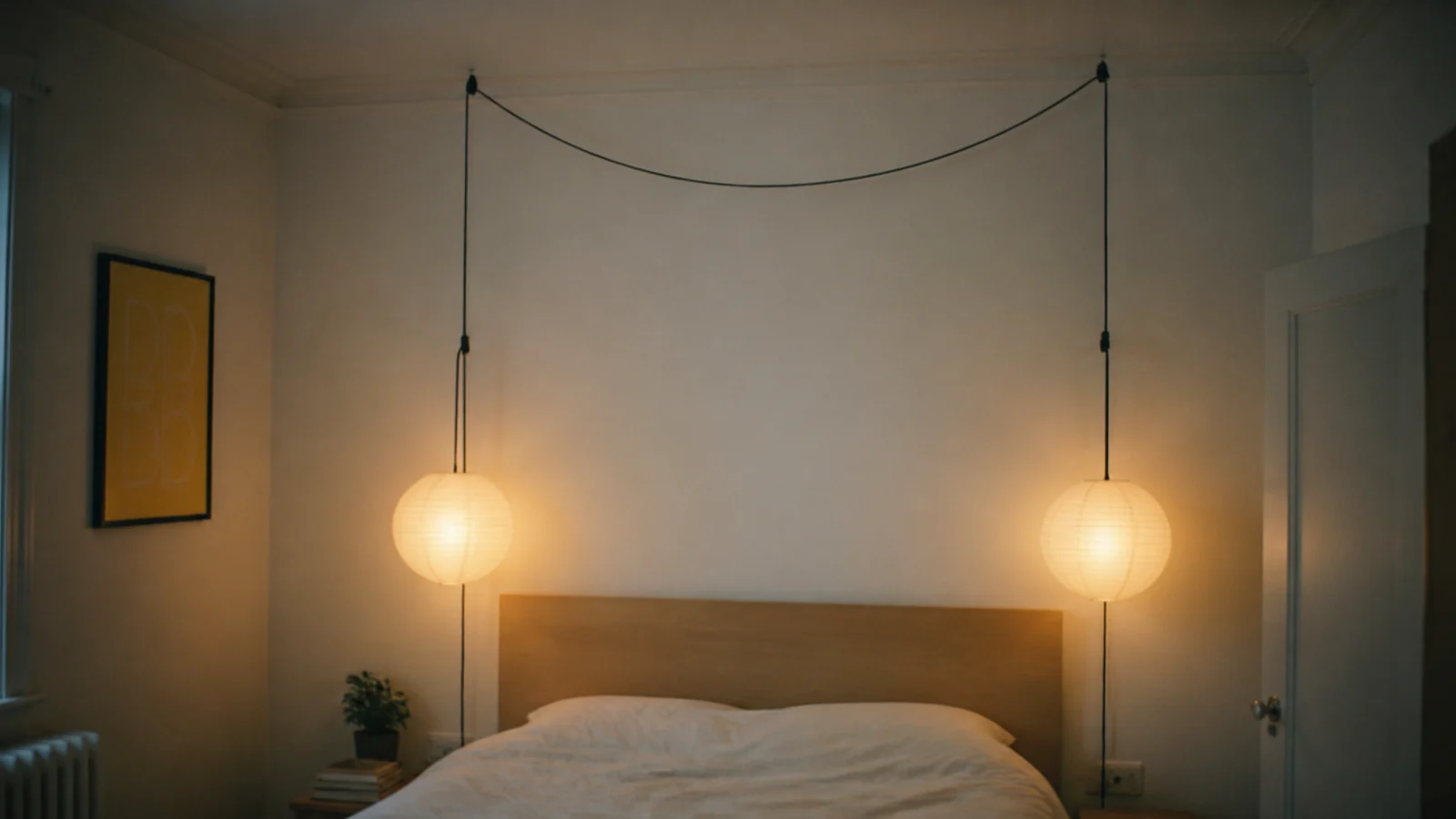
8. One pendant on the reading side only
If one of you reads and one does not, buy one fixture. It halves the cost, halves the install and leaves the other nightstand entirely clear. Asymmetry in a bedroom reads as considered far more often than people expect, and if only one side of the ceiling has a reachable joist, that decides the side for you.
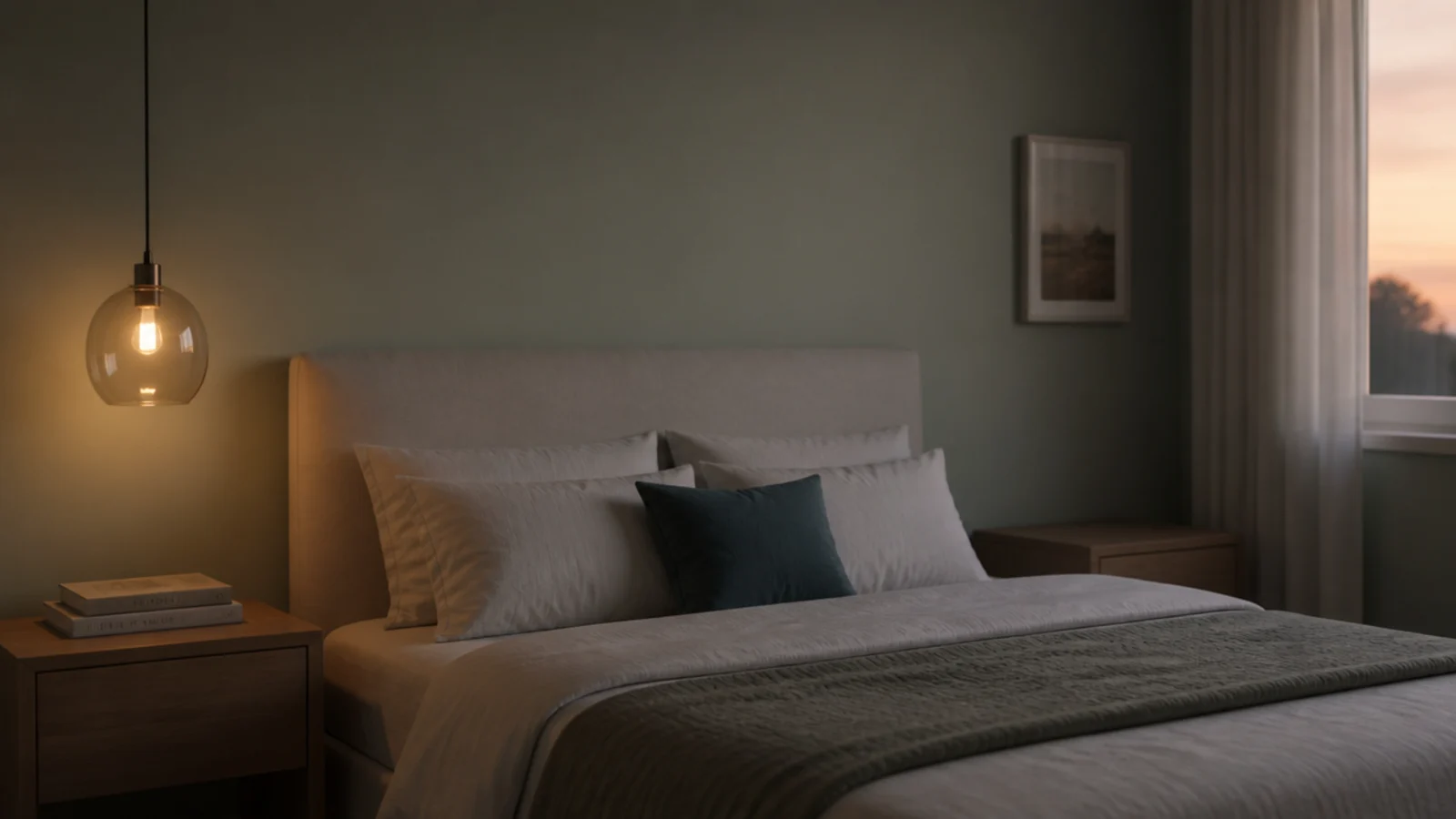
9. Small shades under eight inches across
A bedside pendant is a task light, not a feature. Under 8 inches across it sits comfortably beside a headboard without crowding it. Anything over 12 inches starts competing with the bed and casts a shadow across the pillow when you sit up.
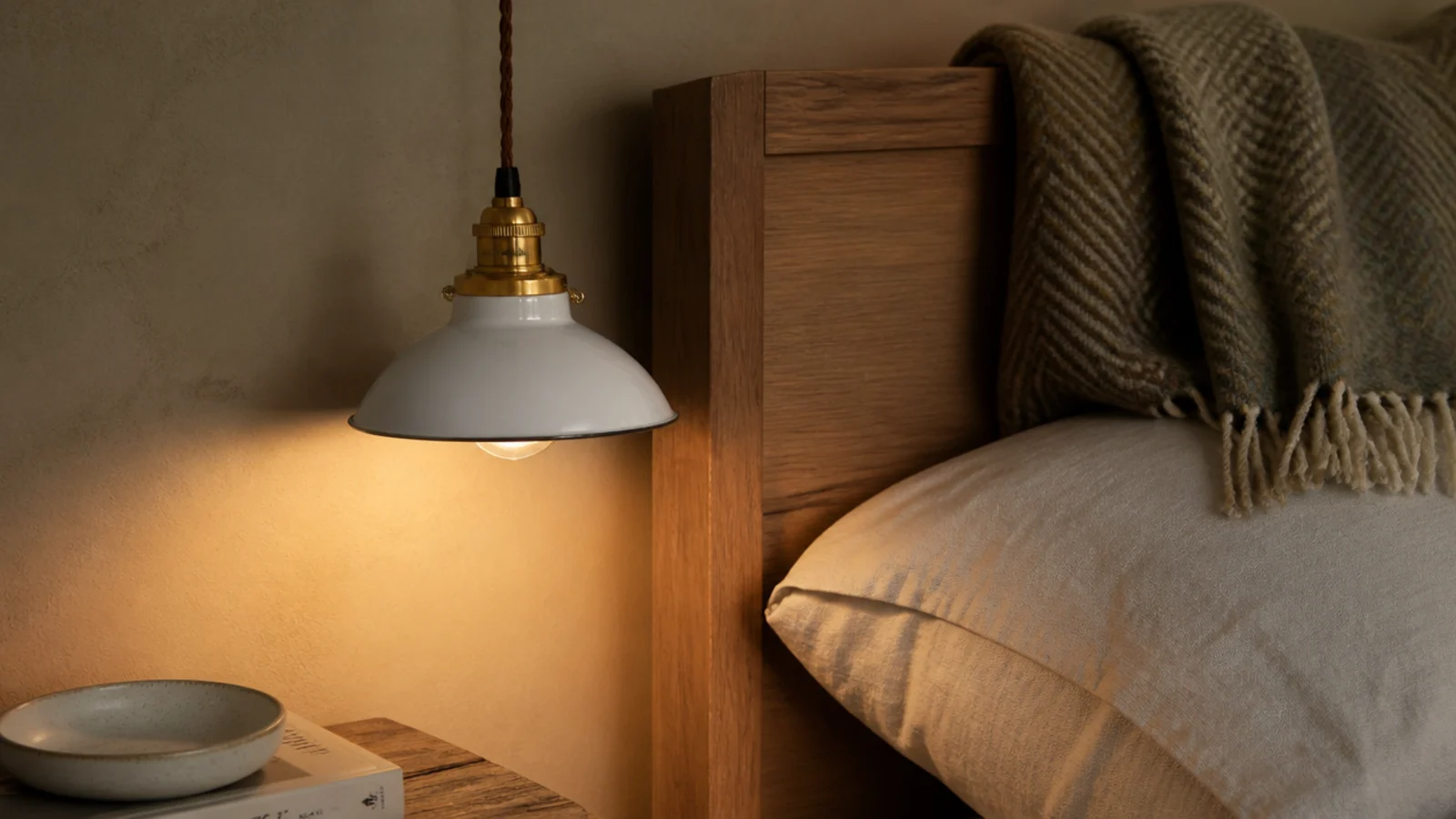
10. A cord routed behind the headboard
The cable is the difference between a pendant that looks installed and one that looks improvised. Run it down the same vertical as the headboard edge, a curtain return or a corner, and it disappears. A paintable cord channel is $8 to $20 if there is no line to follow.
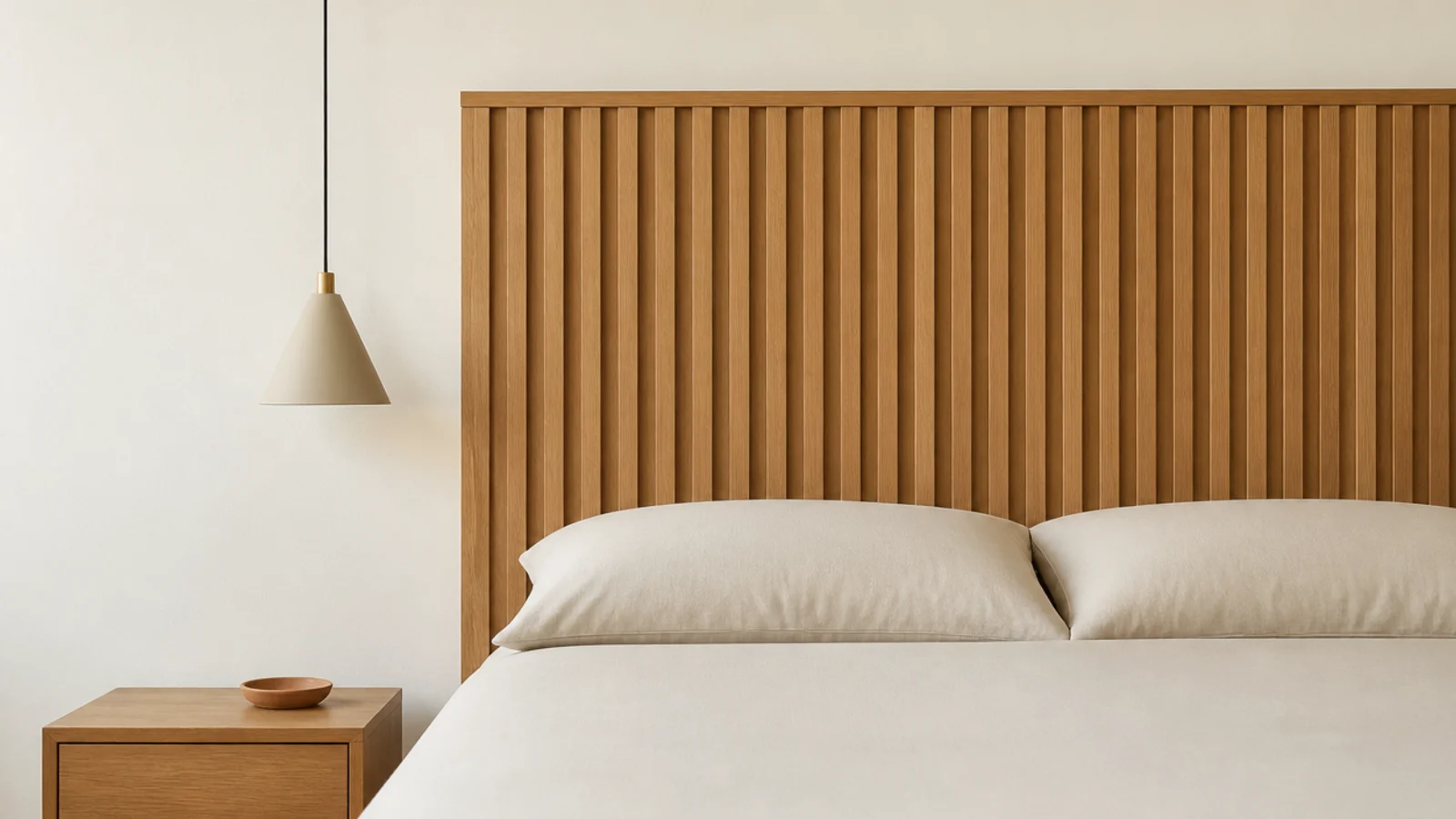
11. A rise and fall pulley beside the bed
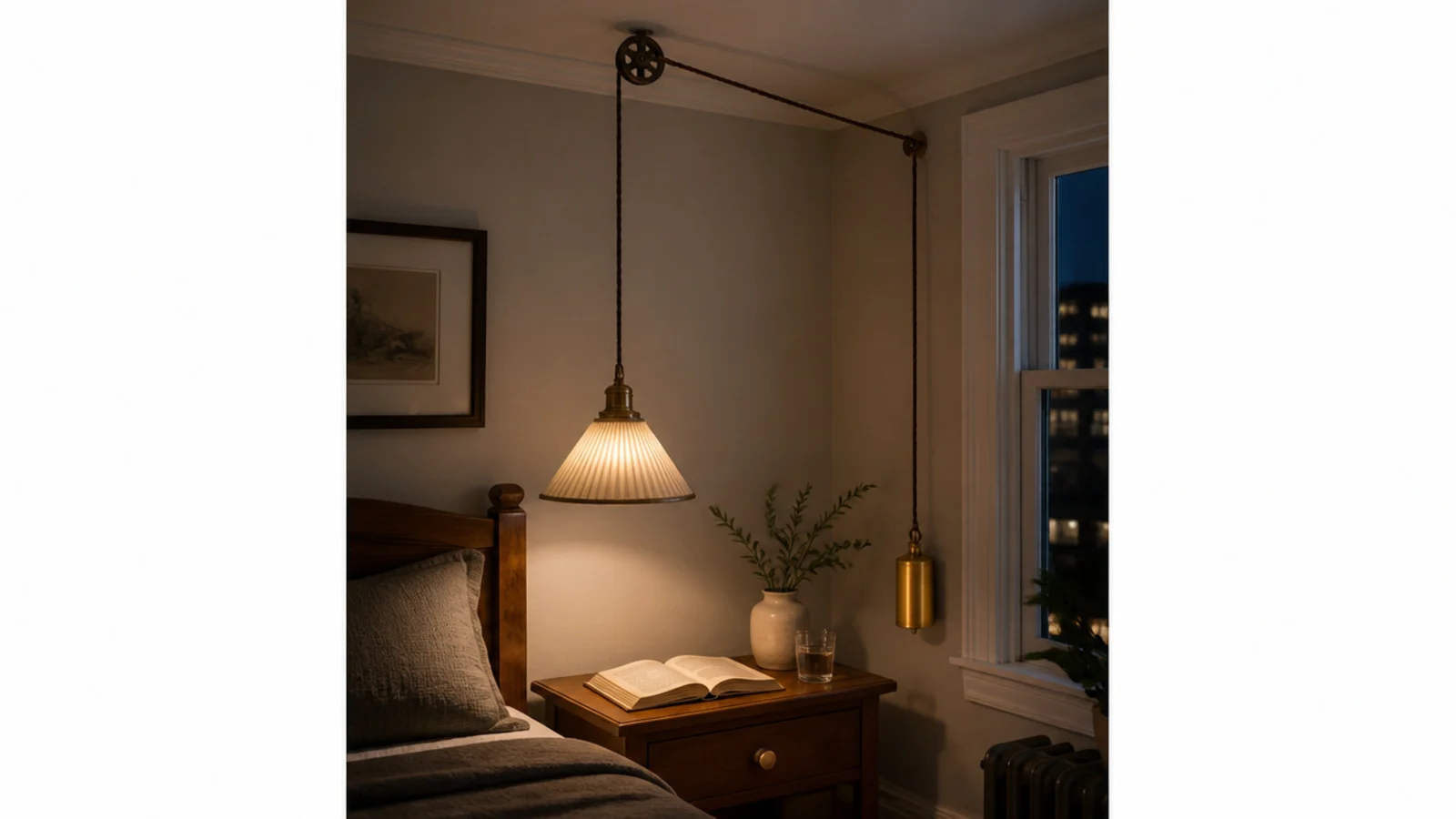
A counterweighted rise and fall fixture lets you pull the shade down to 20 inches above the mattress to read and push it back up to 40 inches during the day. They cost $80 to $200 and are the one bedside fixture that solves reading and daytime clearance at once.
12. A pendant above a floating shelf instead of a table
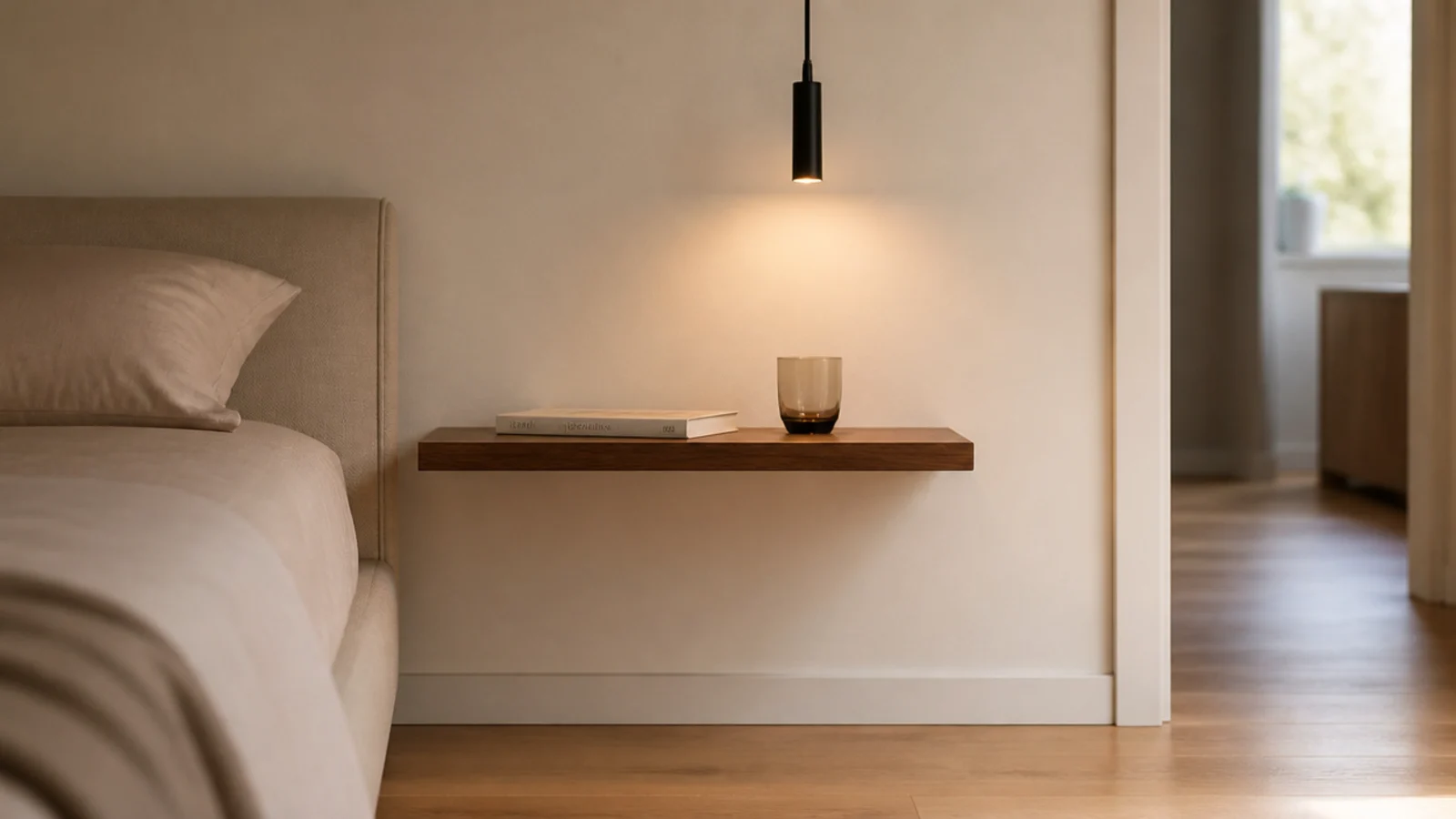
A 6 inch deep floating shelf at mattress height plus a pendant above it replaces a nightstand completely and keeps the floor clear for cleaning. Two brackets into studs, or toggles rated 25 to 35 pounds each. The floating shelf guide covers the fixings in detail.
13. A pendant one side, a lamp the other
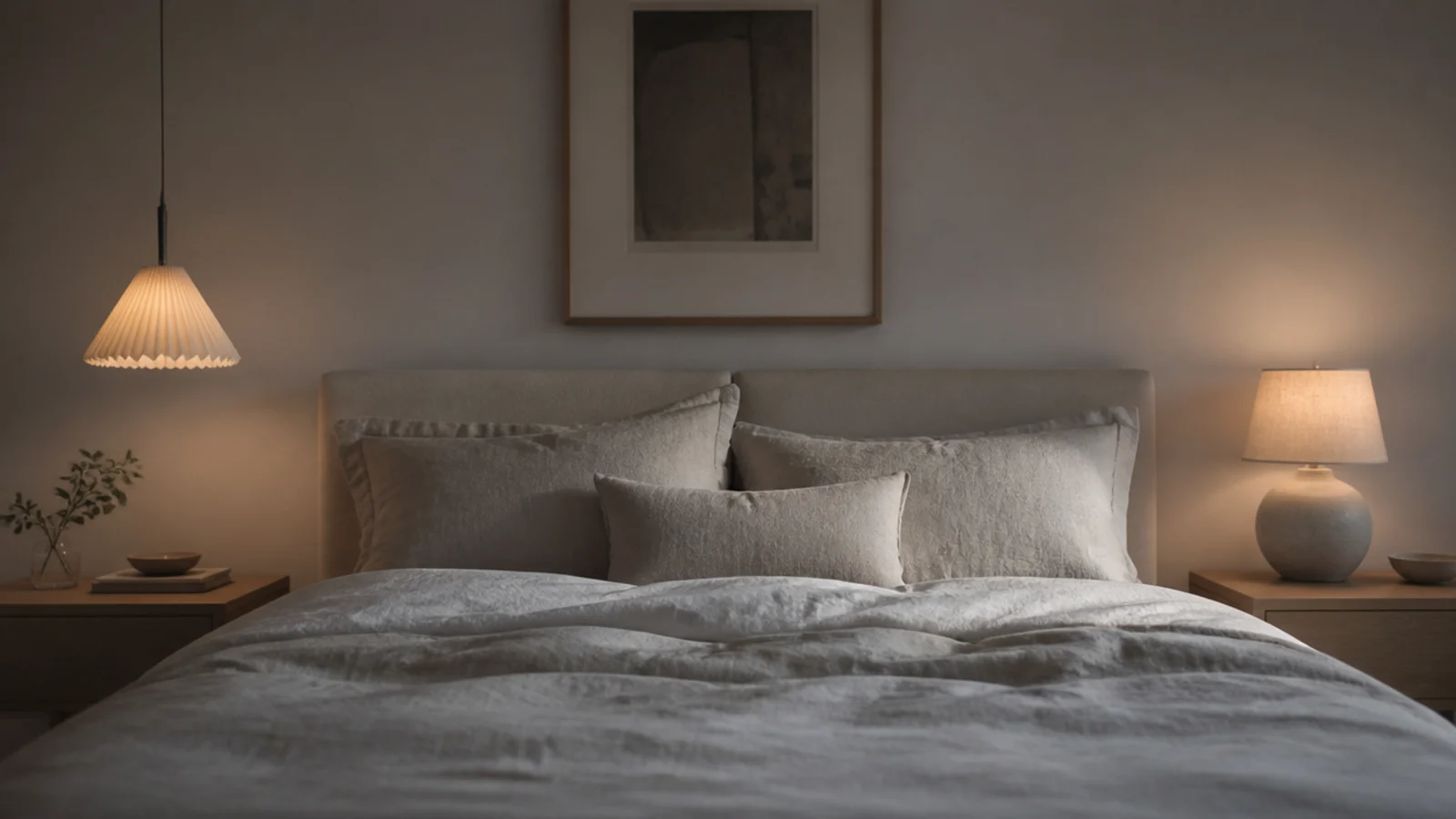
Mixing is fine as long as the lit heights match within a couple of inches. Repeat one material or metal across the two, and the pair reads as chosen rather than left over. This is the cheapest route when only one side has a ceiling joist you can reach.
14. A swing arm where a pendant will not fit
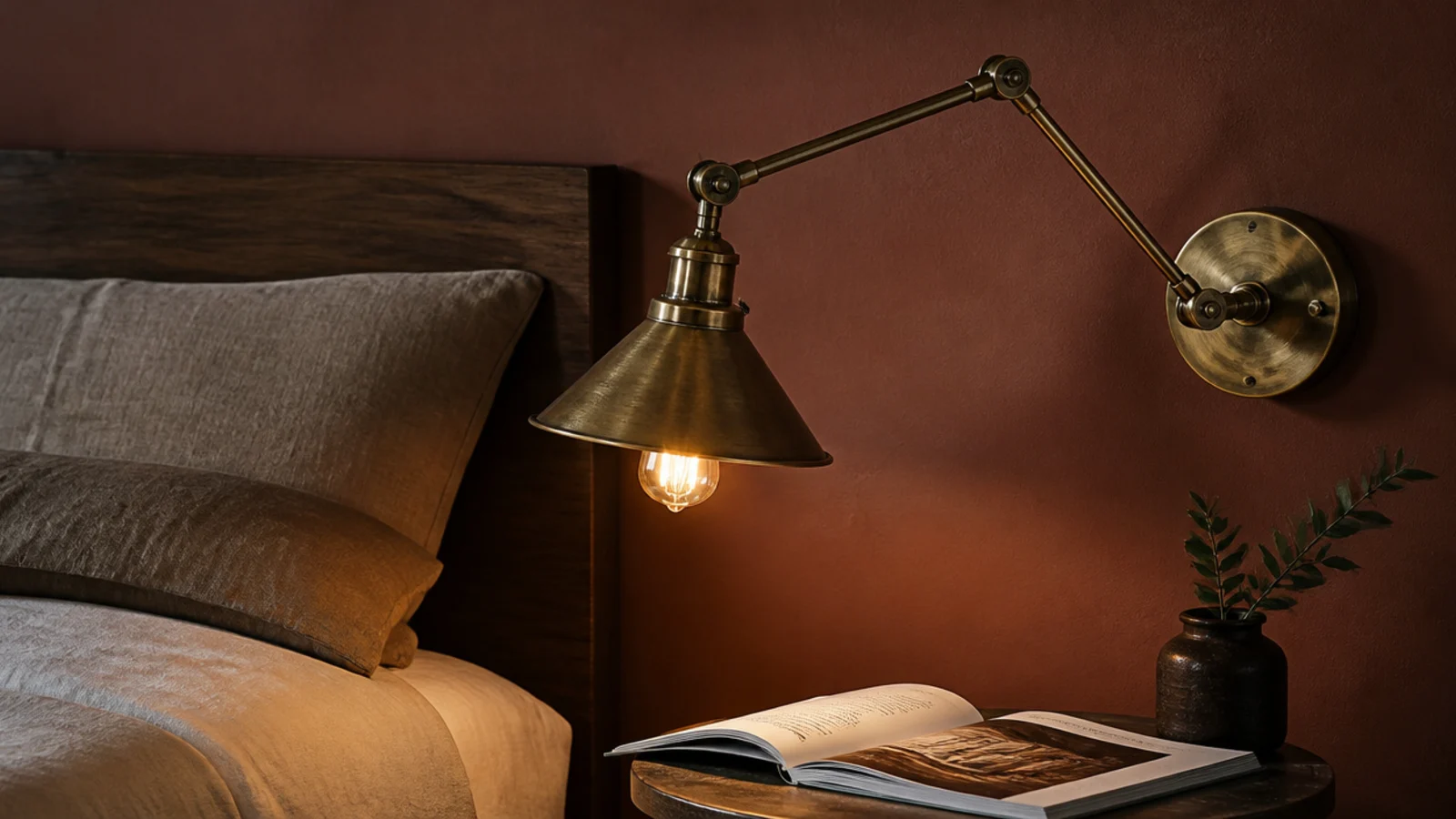
If the ceiling is concrete, the joists run the wrong way or the landlord says no hooks, a plug-in swing arm mounted 40 to 48 inches off the floor does the same job. The arm moves, which a fixed cord never will, and it takes one screw fixing instead of a ceiling hook.
15. A hanging light for a gap under fourteen inches
Where the gap beside the bed is under 14 inches, no nightstand fits and a floor lamp is out. A pendant occupies zero floor and a 4 inch ledge takes the phone and the glasses. This is the layout that makes a small second bedroom usable.
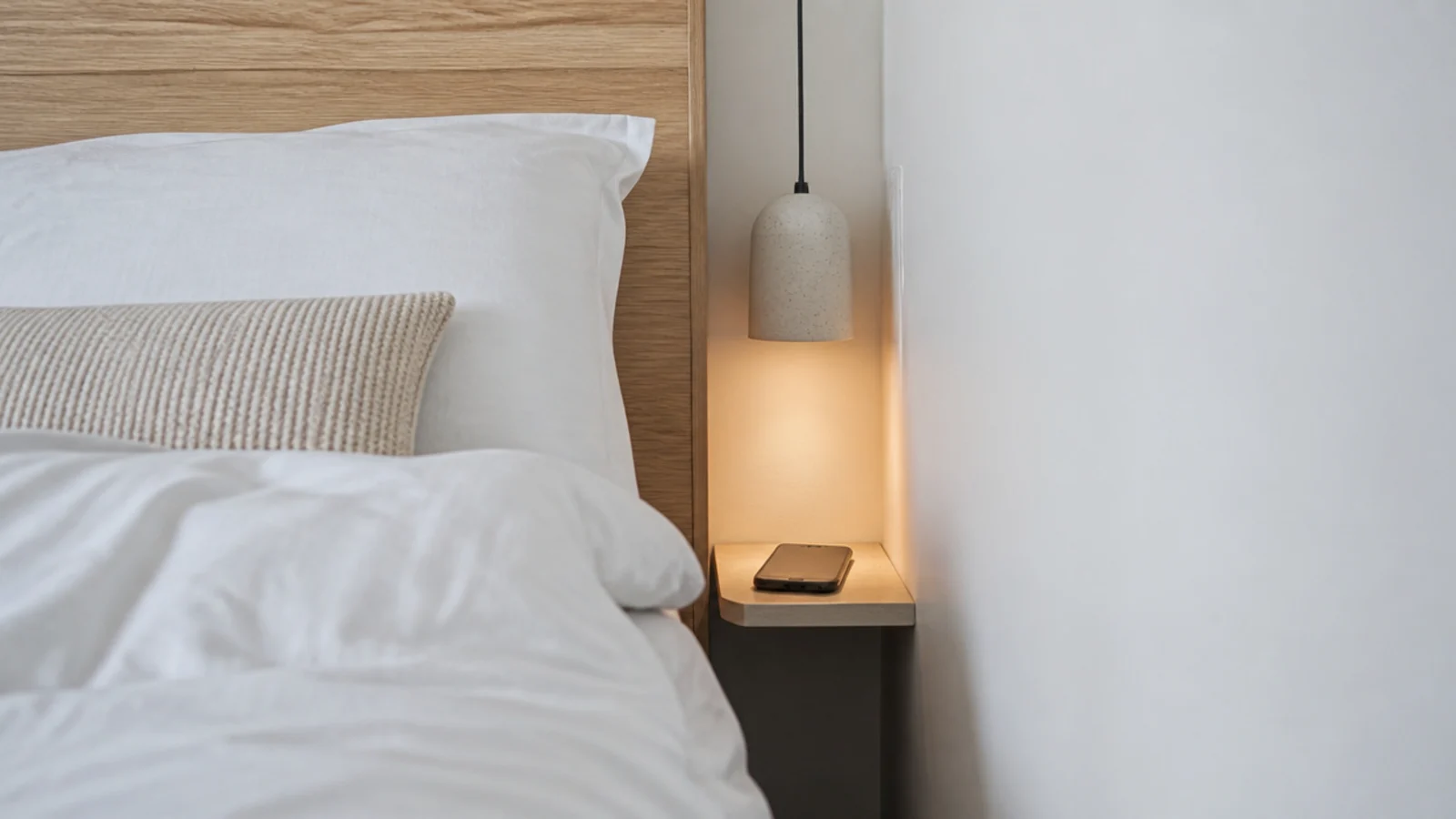
16. Warm bulbs at 2700K or lower
2700K is warm white; 2200K reads as candlelight. Either suits a bedside fixture, and both are worth the $8 to $15 for a dimmable version. Anything at 4000K or above belongs in a garage, not over a pillow, no matter how good the fixture is.
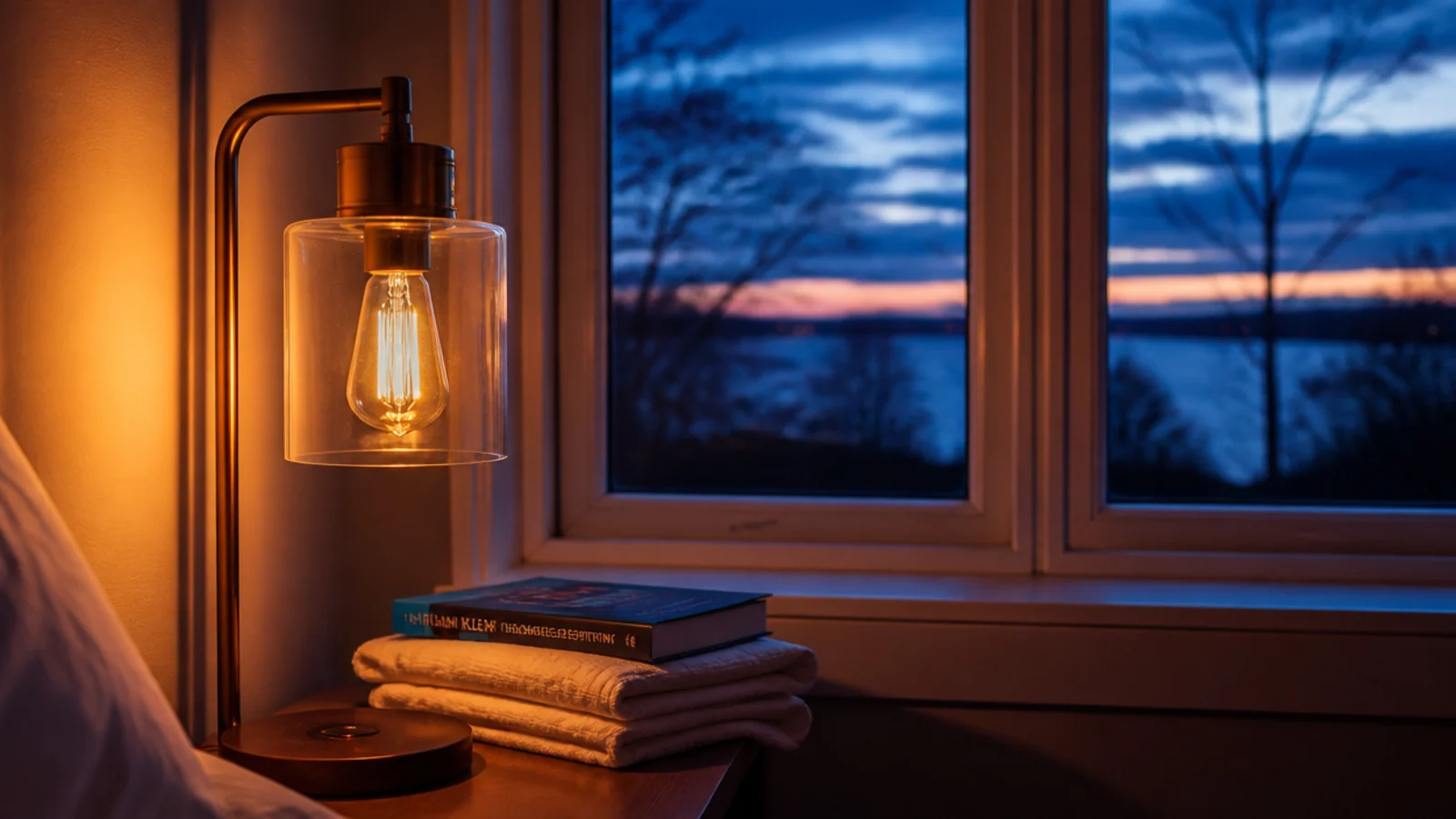
17. A dimmer that genuinely reaches ten per cent
Many LED dimmers cut out below 20 per cent, which is exactly where a bedside light is most useful. Check the dimming range on the driver label and pair it with a trailing-edge dimmer rated for LED, watching the minimum load — often 10 watts, more than two small pendants draw.
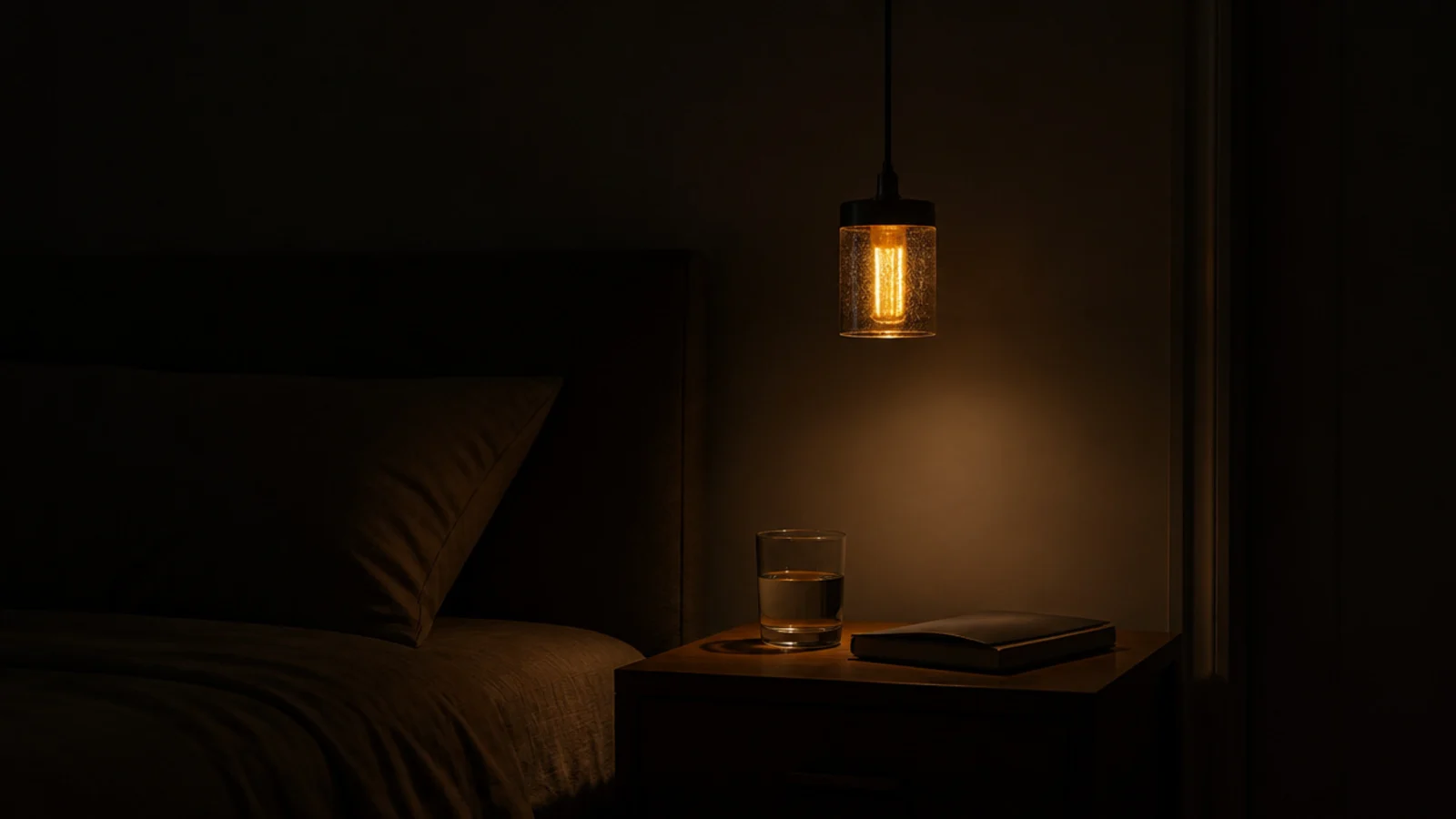
18. Cords kept out of reach in a child bedroom
In a child's room, keep the cord short, clipped tight to the ceiling and at least 3 feet from the bed, and use LED rather than anything that runs hot near bedding. A wall-mounted fixture with no hanging cable at all is the safer answer under about age six.
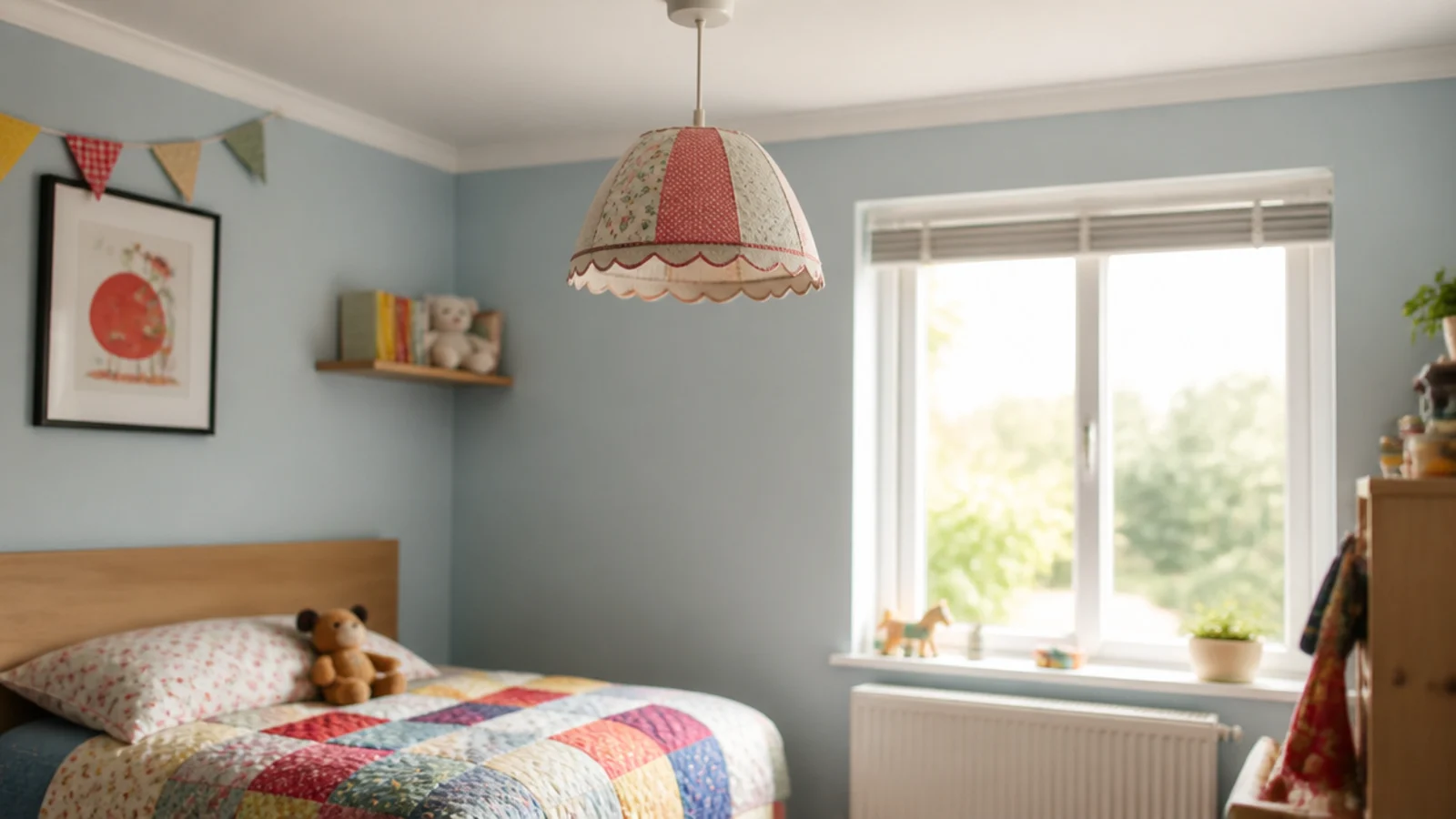
19. Finding the joist before the hook goes in
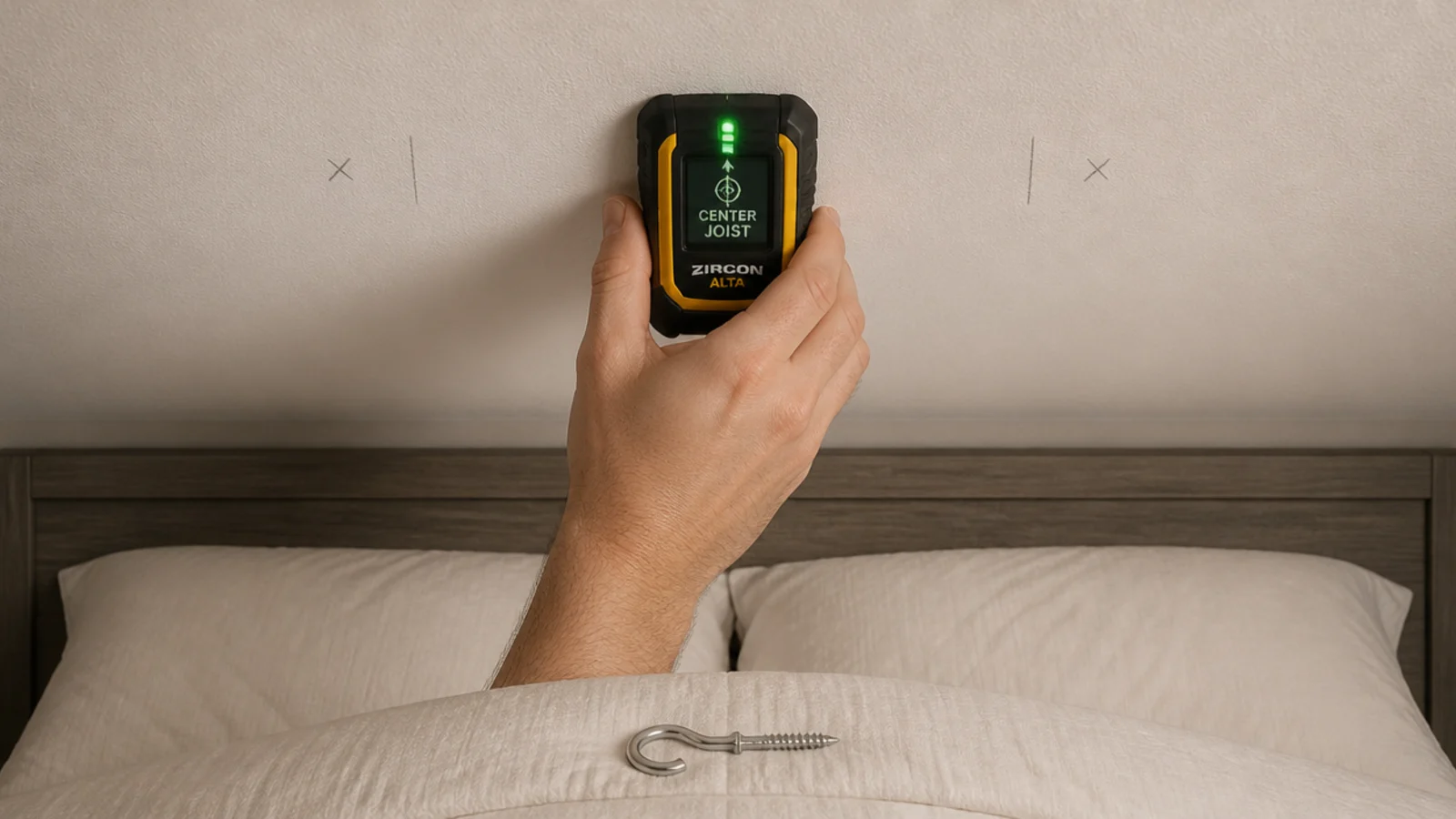
A swag hook belongs in timber. Sweep a stud finder across the ceiling, mark both edges of the joist and drive into the centre of it. If there is no joist where you need one, a toggle rated 30 pounds and up in half-inch board carries a lightweight shade safely.
20. The ceiling box that carries a bedside fixture
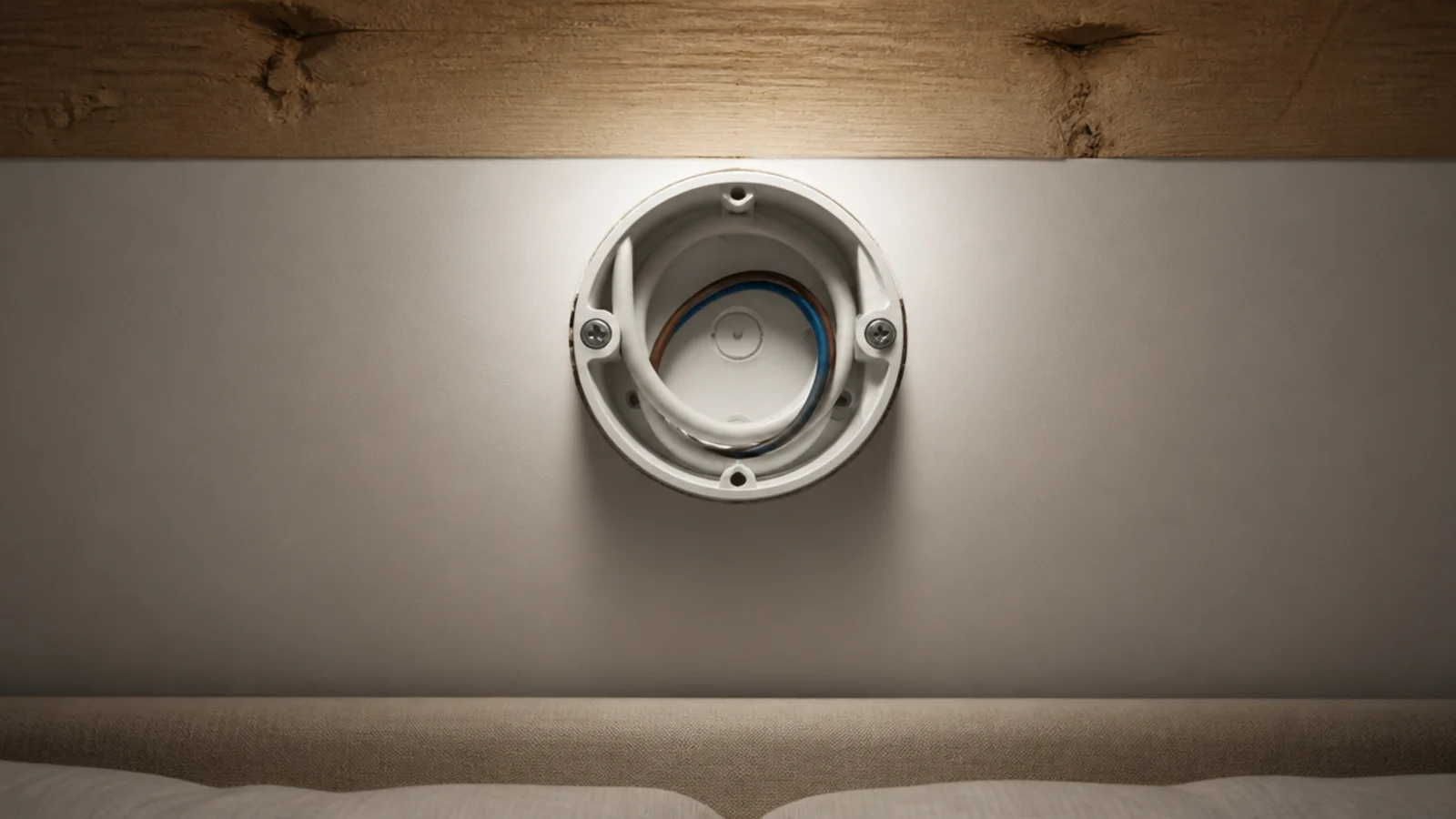
Where the fixture is wired in rather than swagged, the box does the holding. A rated ceiling box carries the fixture weight — standard lighting boxes are listed for 50 pounds — and older bedroom ceilings often have no stamp at all. A wall clock can hang on a hook and a prayer; a live fixture over a bed cannot.
Where the ceiling is out of bounds entirely, wall hanging lights covers the plug-in fixtures that mount at the same height and free the same surface.
Mistakes to Skip
- Measuring the drop from the floor. Mattress heights vary by six inches between bed types, and the mattress is the surface your eyes are level with.
- Choosing a clear glass shade. It looks beautiful standing in a shop and puts a naked filament in your eye the moment you lie down.
- Hanging the shade flat against the wall. At less than six inches out it lights the plaster, throws a shadow across the page and catches your shoulder getting up.
- Driving a swag hook into bare plasterboard. Find the joist, or use a toggle rated 30 pounds and up. A hook that pulls out over a bed is not a small failure.
Frequently asked questions
What height should a bedside pendant hang at?
The bottom of the shade wants to sit 20 to 24 inches above the top of the mattress, which lands around 48 to 52 inches off the floor on a standard bed. Measure from the mattress rather than the floor, because a platform bed and a divan can differ by six inches at that surface.
How far from the wall should a bedside pendant hang?
Between 6 and 10 inches out from the wall face, which clears a headboard and puts the light over the page rather than over your shoulder. Any closer and the shade lights the wall; any further and it hangs in the space where you swing your legs out of bed.
How bright should a hanging bedside light be?
Between 300 and 450 lumens in a 2700K warm white bulb. That is enough to read a paperback comfortably without lighting the whole room or waking the person beside you. If the fixture is your only bedside light, add a dimmer so it can drop to roughly ten per cent late at night.
Can renters hang bedside pendants?
Yes. A plug-in swag kit is a cord, a plug and two ceiling hooks for 20 to 45 dollars. Drive the hook into a joist or use a toggle rated 30 pounds and up, then run the cord along the ceiling and down behind the headboard so nothing crosses open wall. Two filler-sized holes on move out.
Do I need two bedside pendants or one?
One is plenty if only one person reads in bed, and it costs half as much to buy and install. Fit two only if both sides are used, and put them on separate switches. Two pendants on a single switch means both people are awake or neither of you is reading.
Want more like this? Browse all 15 hanging lights guides — they all use the same measurements and budget tiers.

Pin it for later
Save this to your Hanging Lights board
Pin it now so it is waiting for you when the tape measure comes out — and so the next person hunting for this idea can find it too.
Save this pinKeep going
More ideas worth saving while you have the tape measure out.