Wall Clock · UGC
20 Vintage Wall Clock Finds I Thrifted Cheap

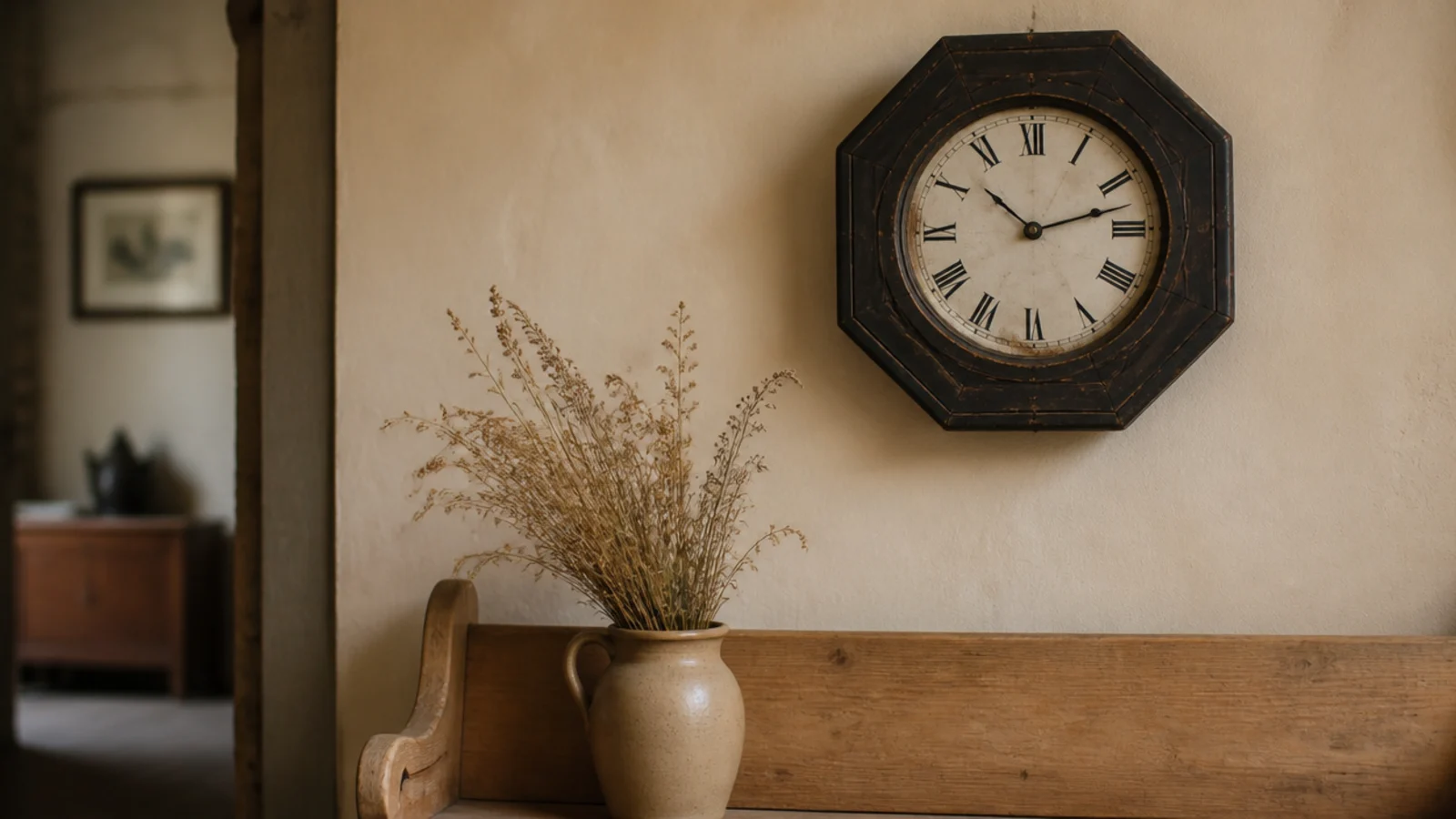
Every one of these came off a stall, out of a house clearance or from the back of a charity shop, and not one of them cost more than a decent dinner. A vintage wall clock is the rare secondhand buy where the broken ones are the bargains, because the case is what you are actually paying for and a replacement movement costs about twelve dollars. I have swapped more of those than I can count on my own kitchen table. Here are twenty I bought, what I paid, what each one needed and the two I should have left where they were.
In this guide22 sections — tap to openHide
- 1.What a vintage wall clock is really worth at a stall
- 2.The octagonal schoolhouse case
- 3.A 1950s starburst with timber rays
- 4.An enamel station dial
- 5.A cast iron gear face
- 6.A chipped white enamel kitchen face
- 7.A banjo case with a broken tablet
- 8.A weight-driven regulator with a pendulum
- 9.A timber case with the glass missing
- 10.A wire-guarded corridor clock
- 11.A brass bulkhead-style clock
- 12.A dead cuckoo case, converted
- 13.A 1960s laminate-faced kitchen clock
- 14.An oak plank clock and barometer set
- 15.A painted tin face from a farm sale
- 16.A bakelite ring clock
- 17.A twenty-four inch factory dial
- 18.A double-sided bracket clock
- 19.A mirrored 1930s clock
- 20.A brass ship-wheel rim
- 21.A blank case I rebuilt from nothing
- 22.Vintage Wall Clock Finds: What I'd Do Differently Now
What a vintage wall clock is really worth at a stall
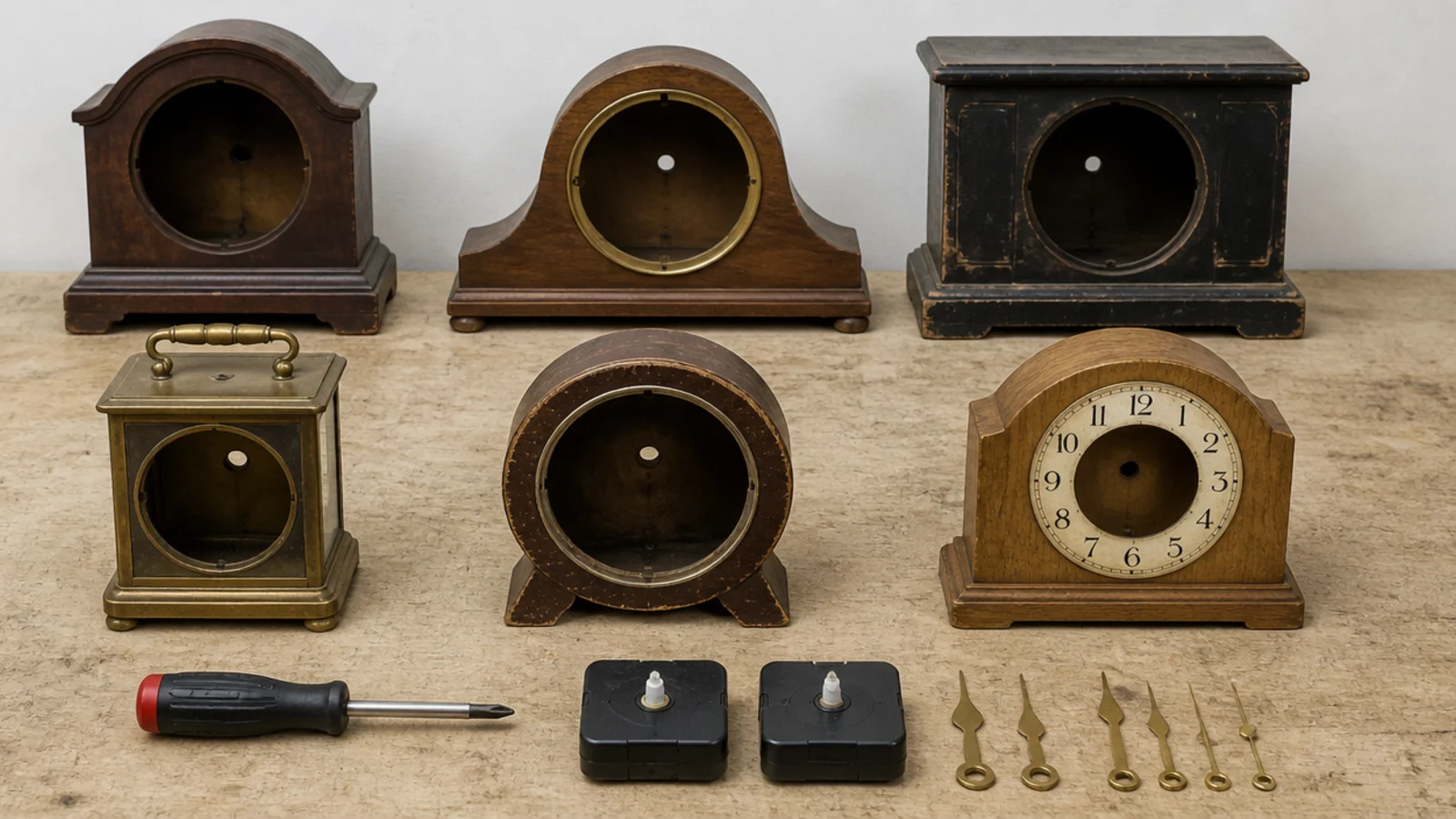
I buy the case and price the movement separately. A dead mechanism knocks a third off the asking price and costs $8 to $15 to replace with a quartz unit, which takes about fifteen minutes with a single nut and a screwdriver. What I will not buy is a split case, a spongy damp patch in the timber back, or a dial with brown water staining, because none of those come back cheaply.
The measurement that decides whether a swap will work is the shaft length. Measure the dial thickness at the centre hole and add roughly an eighth of an inch — that is the shaft you order, and the common sizes run from five sixteenths of an inch up to just over an inch. Check the centre hole is round rather than worn oval too, because an oval hole will never hold a new movement square and the hands will sit crooked forever.
Then weigh it. Old cases are far heavier than modern ones: cast iron and solid timber at 16 to 24 inches run 10 to 20 pounds where a new equivalent is 4 to 6. Anything over 8 pounds goes on a number eight screw into a stud, and anything hanging above a sofa or a bed goes into a stud regardless of what it weighs. The plastic plug in a modern fixings pack is rated near 10 pounds when new, which is not a margin I want above a pillow.
Prices at a stall run $10 to $60 for most cases, with large factory dials and bracket clocks higher. For the timber-cased pieces specifically, the wood clock guide covers what each species does over time.
1. The octagonal schoolhouse case
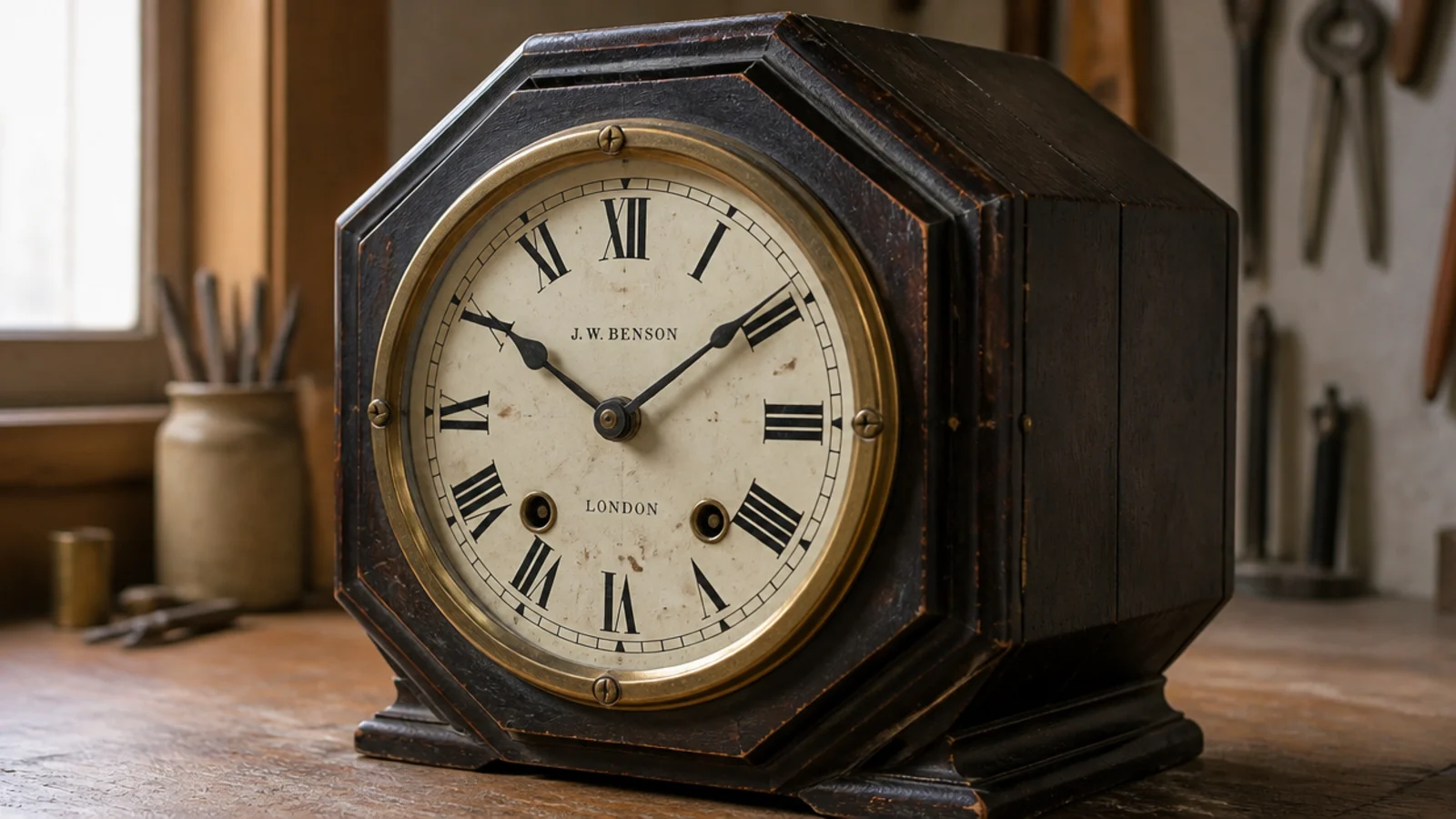
About $22, with a movement that turned once and stopped. The octagonal drop-dial silhouette is instantly readable as old, which is exactly why it settles a room full of new furniture. I kept the original hands, fitted a $10 quartz unit with a half-inch shaft, and left every mark on the case alone.
2. A 1950s starburst with timber rays
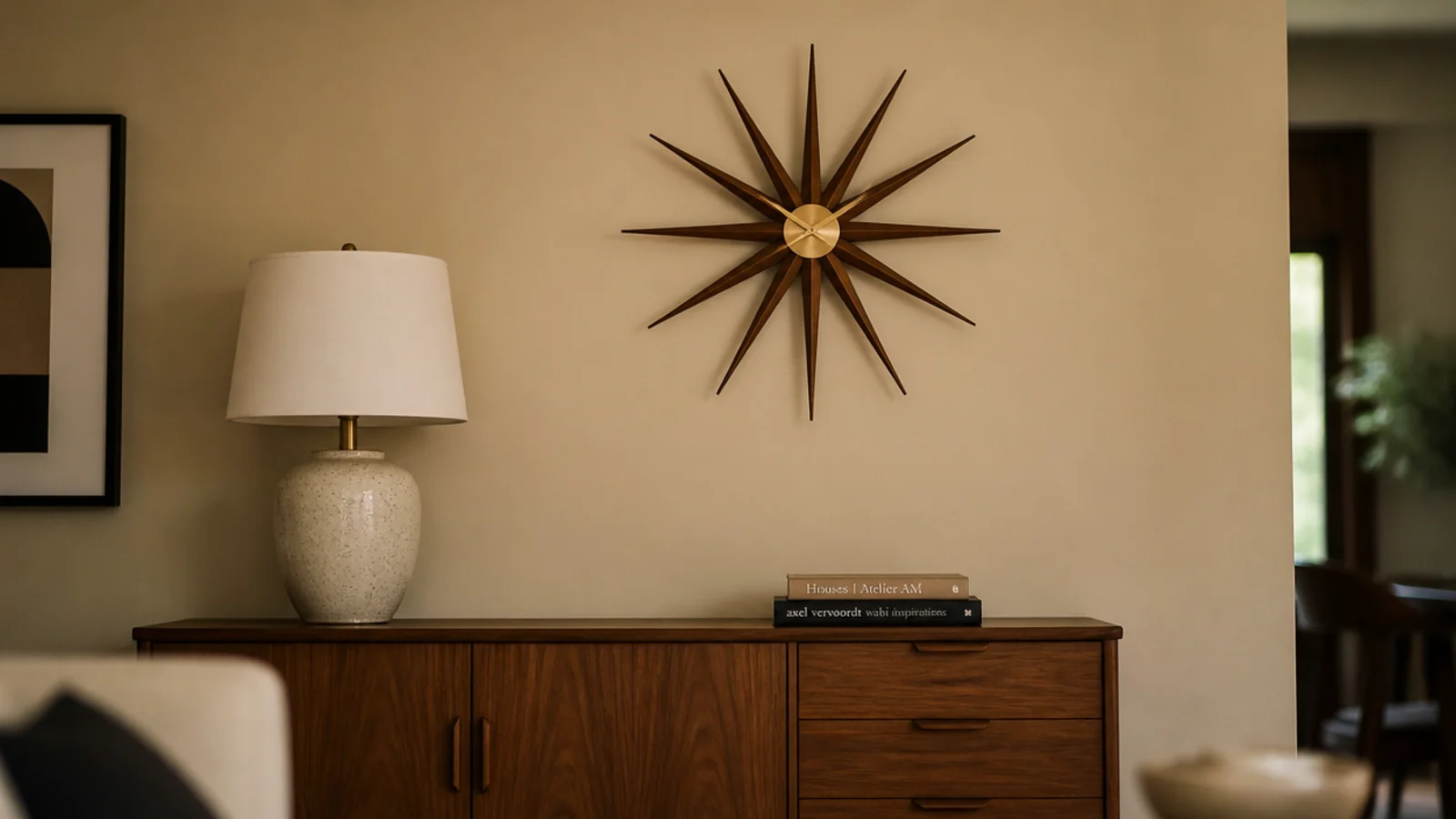
Around $35 at a clearance, with two rays missing. I turned two replacements from walnut dowel and stained them slightly darker so they read as repairs rather than pretending. The dial is only 10 inches but the rays cover a 30-inch circle, which is the best wall coverage per dollar I have ever bought.
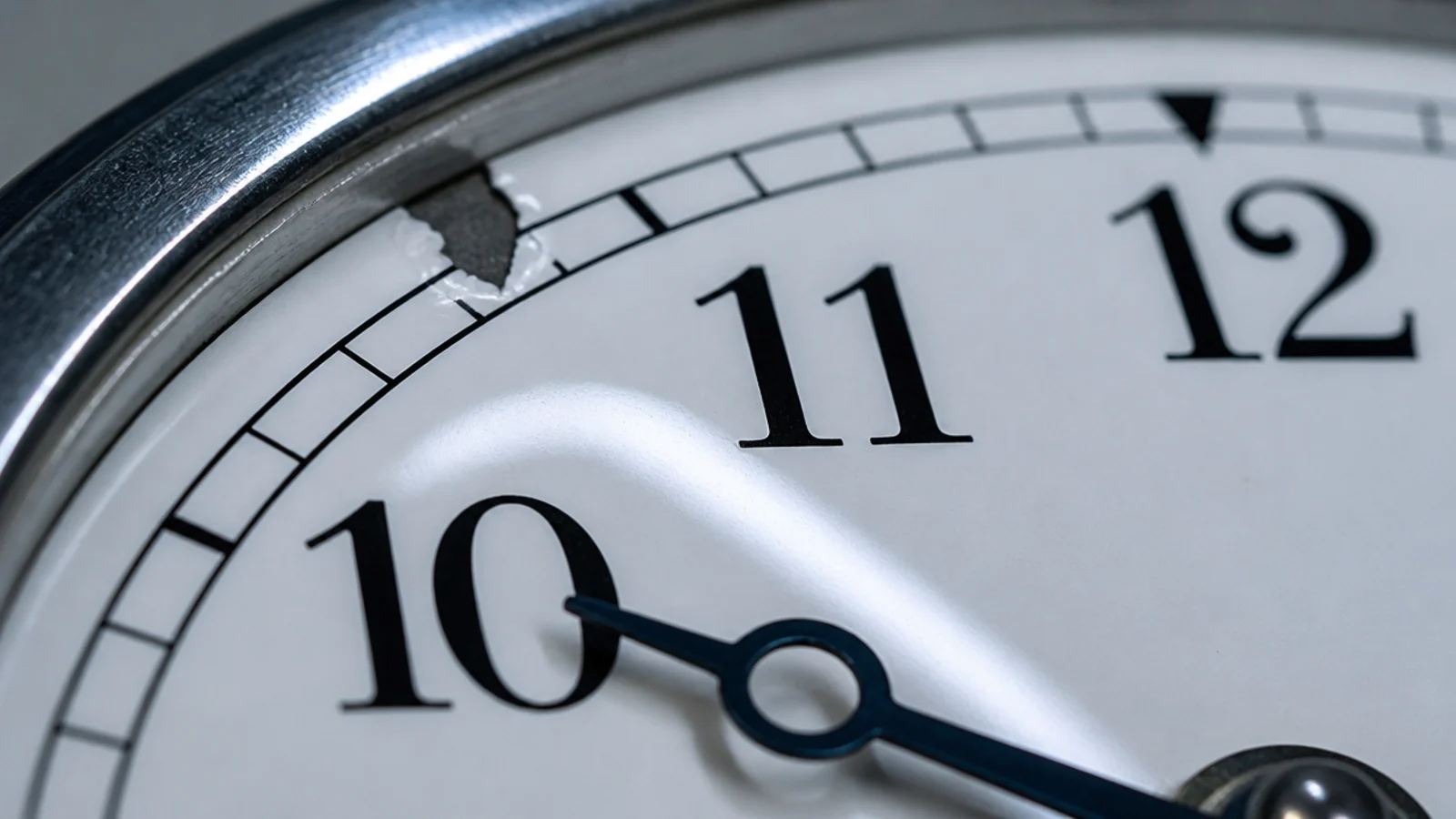
3. An enamel station dial
About $40, and the reason I paid it was the chip. Real vitreous enamel chips to dark steel underneath, and no printed distressing copies that edge. It cleaned with warm water and nothing else — solvents lift the enamel gloss and it never comes back.
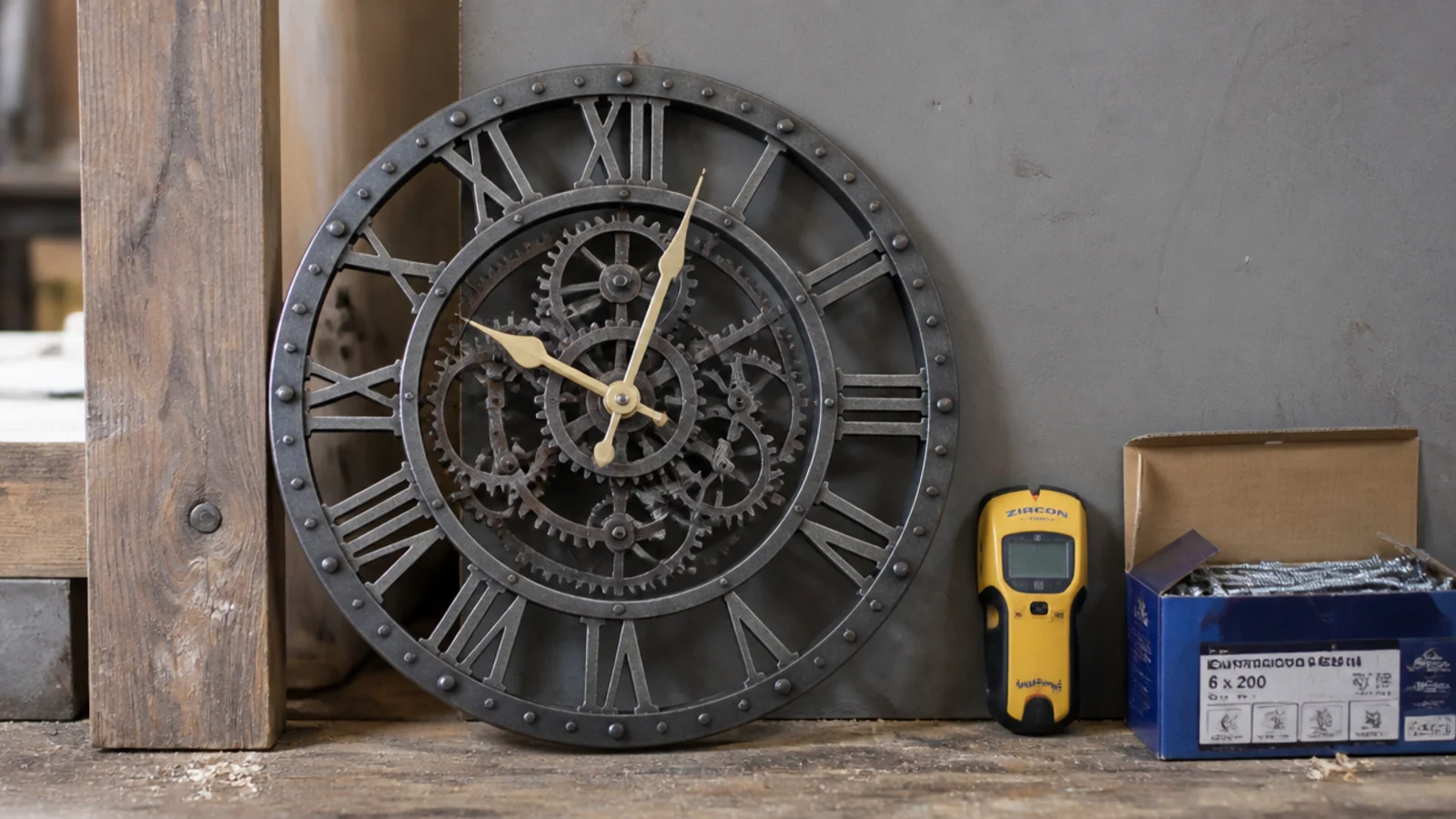
4. A cast iron gear face
Around $18 because it was filthy and nobody wanted to carry it. It weighs 14 pounds, which put it straight into stud territory. Two coats of wax over the cleaned iron, a number eight screw two inches long into framing, and it has not moved in three years.
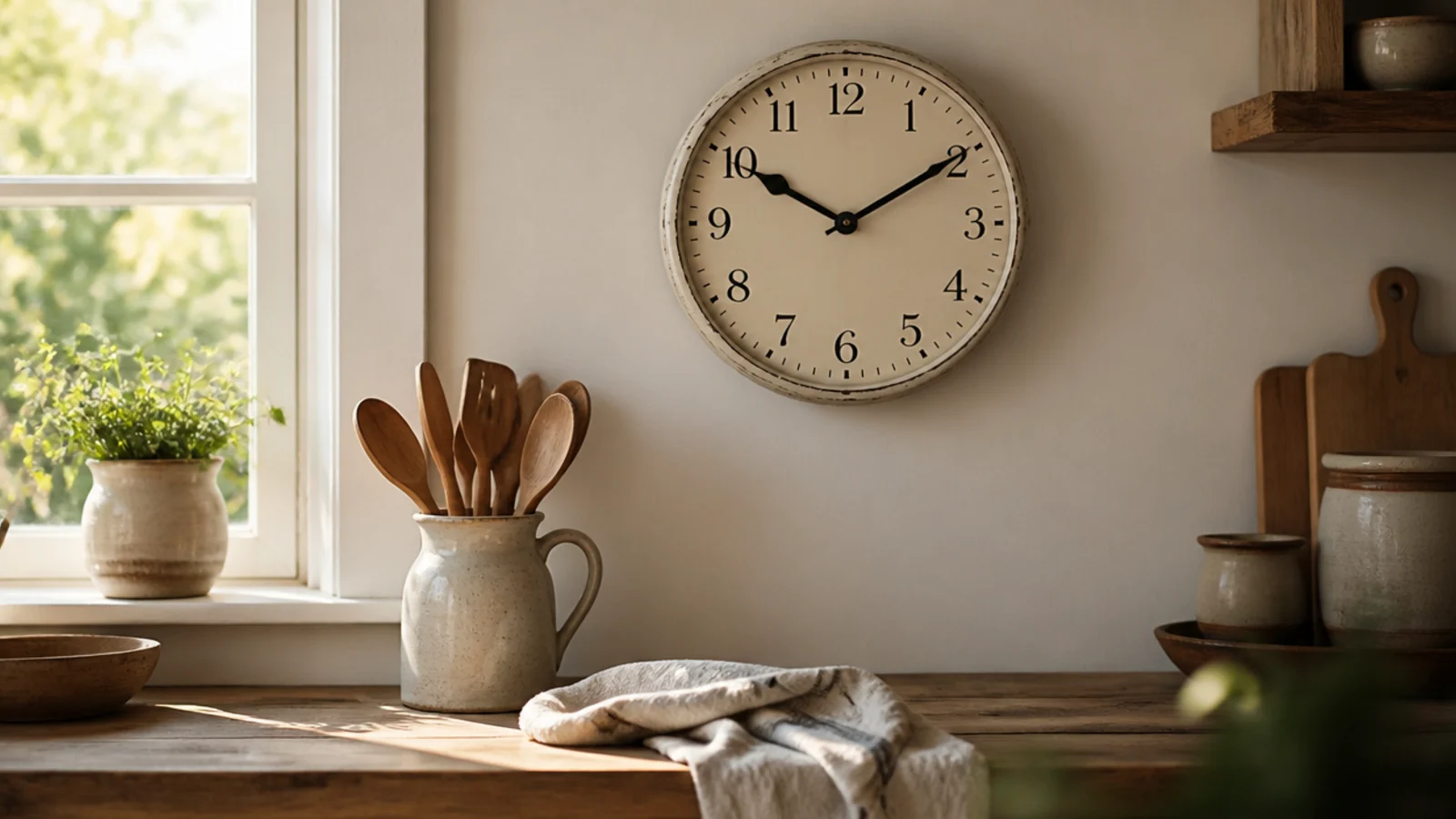
5. A chipped white enamel kitchen face
About $12, and it was already perfect. I hung it away from the hob, because a grease film builds on an enamel face within a month there and takes a solvent to shift rather than a cloth. Enamel is the one kitchen surface that survives being wiped weekly for decades.
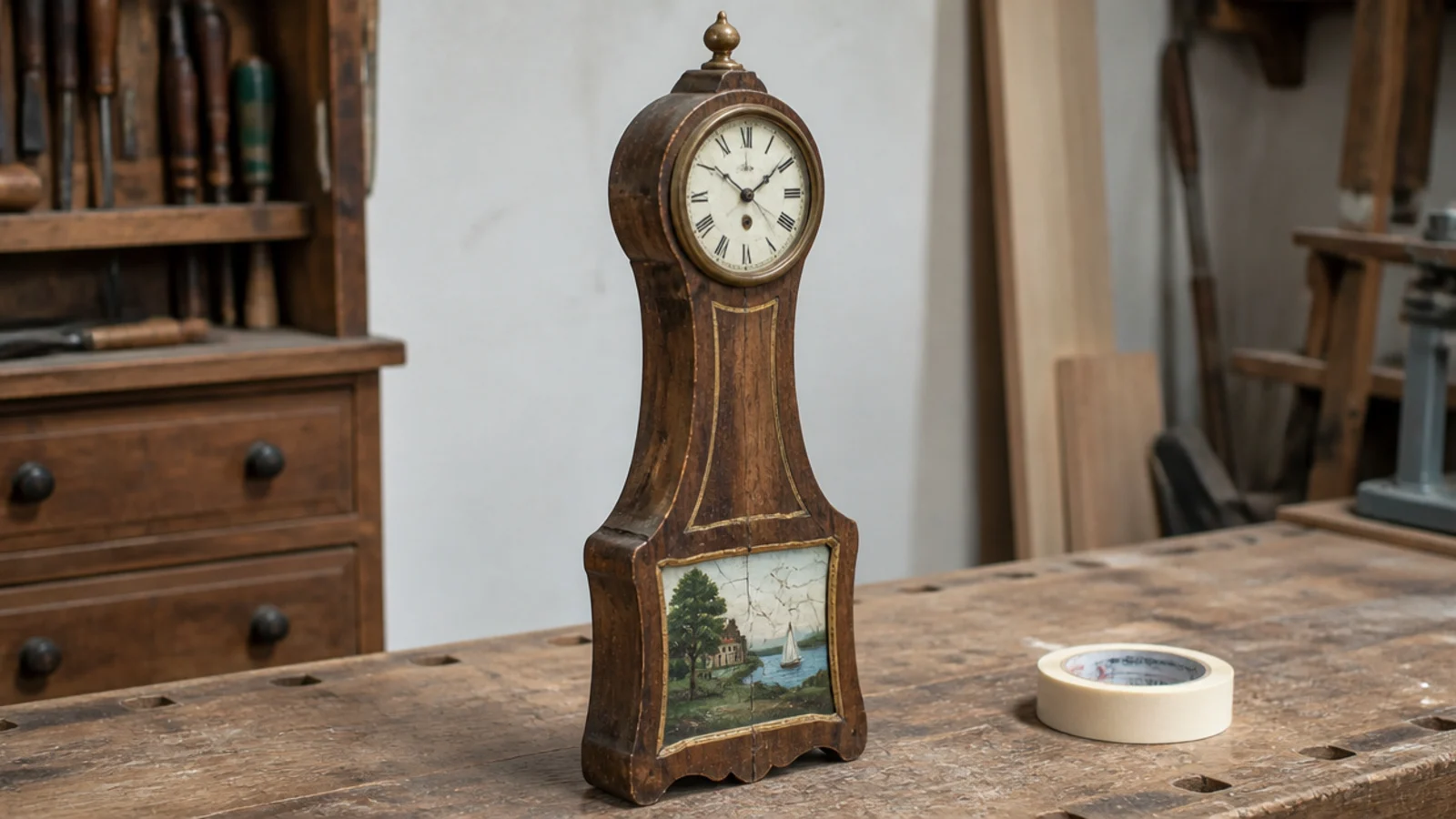
6. A banjo case with a broken tablet
Around $45, which was half what an intact one was going for on the next stall. The cracked reverse-painted glass panel below the dial is the expensive part to replace, so I left it cracked. It is a narrow case, 8 inches wide and 30 tall, and it suits a pier between two doors better than anything else I own.
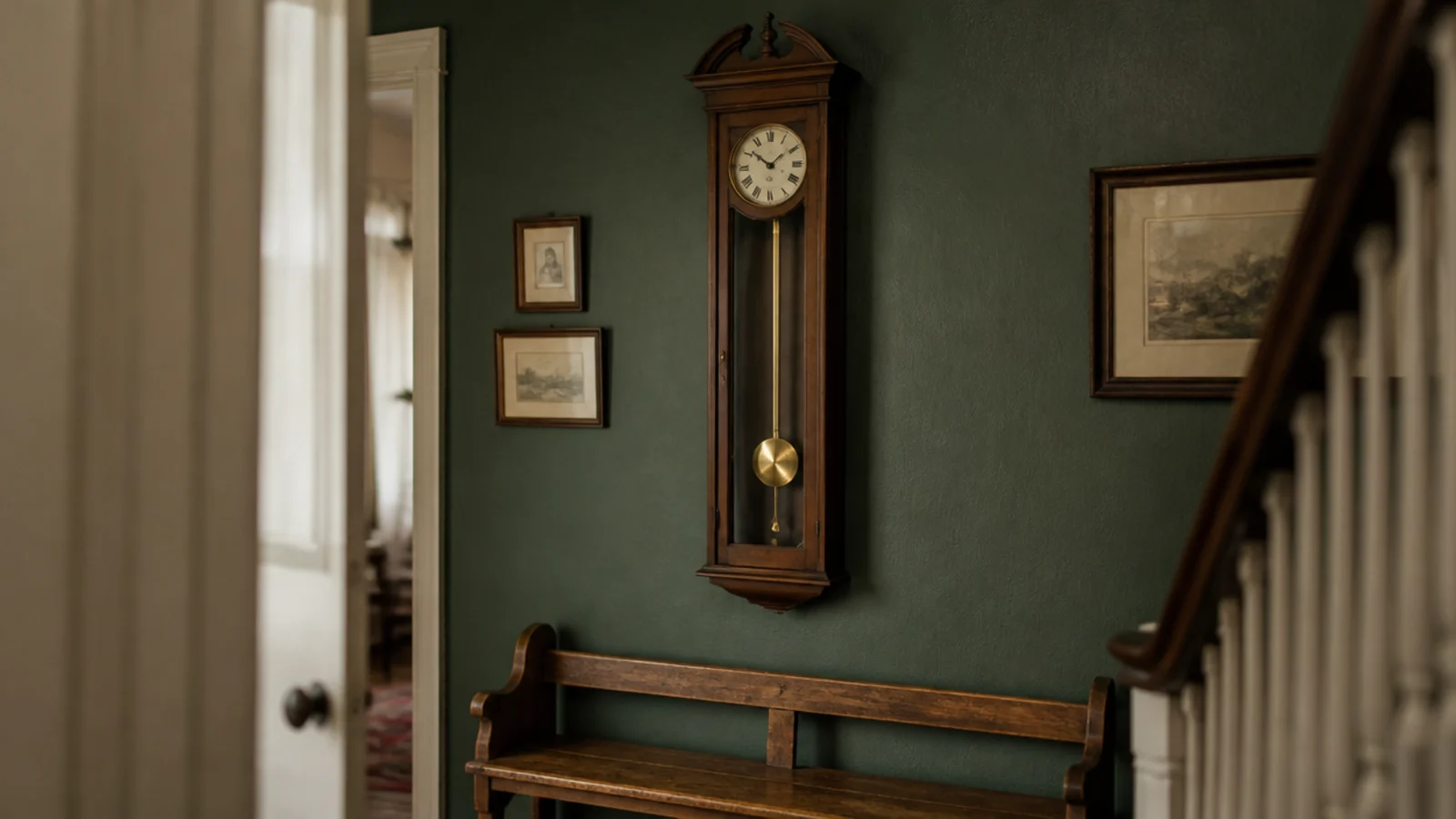
7. A weight-driven regulator with a pendulum
About $60 and my most demanding buy. It has to hang dead level or the escapement loses its beat and stops within a day, so it went up on two screws with a spirit level across the case, then got re-checked a week later once the fixings settled. It ticks hard. It lives in the hallway for that reason.
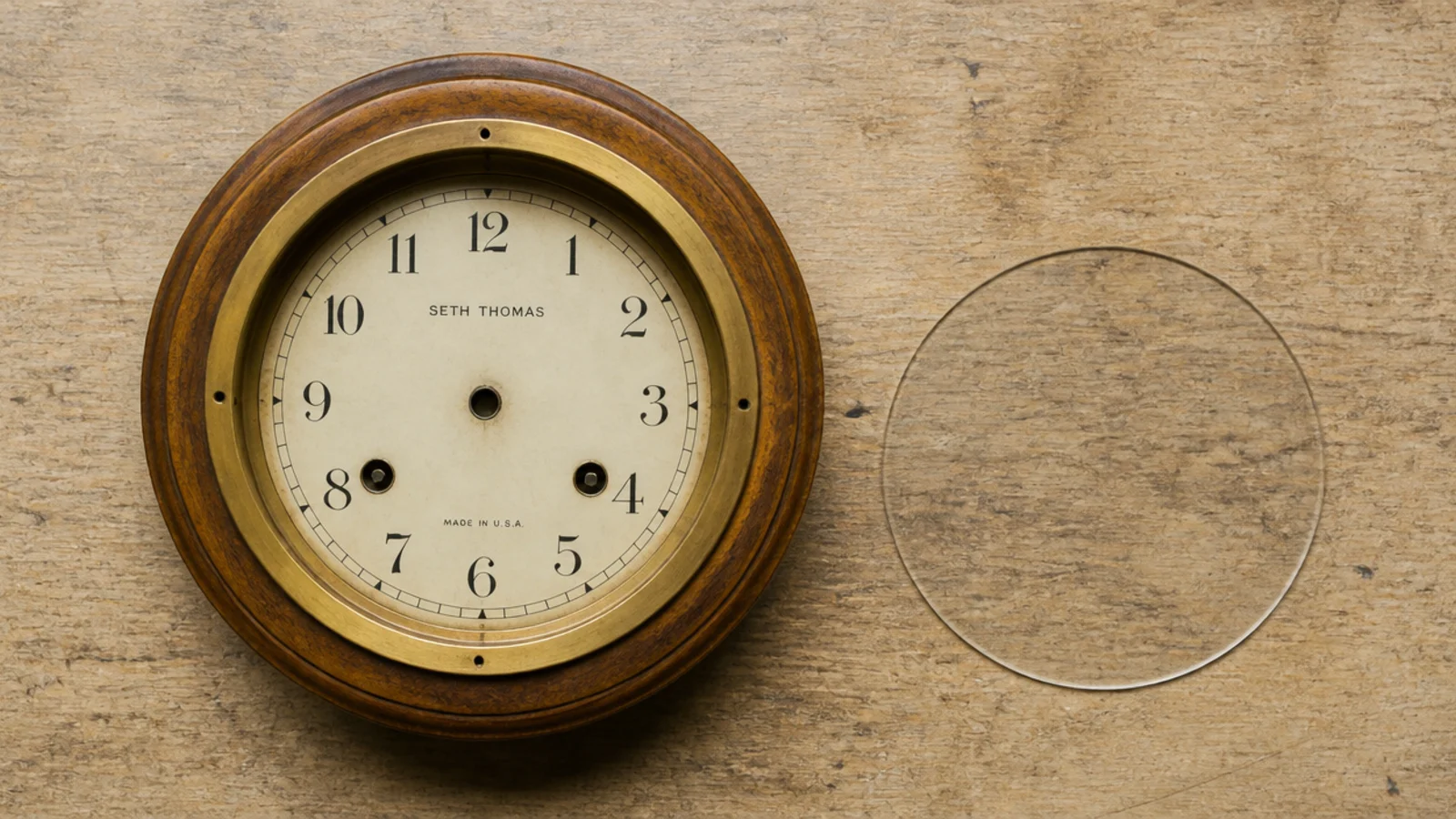
8. A timber case with the glass missing
Eight dollars, because an empty bezel puts everyone off. A circle of 2mm acrylic cut to size at a plastics merchant cost under $6 and dropped straight in. Acrylic is lighter than glass and does not gather reflections the way a domed lens does, so I would do it again by choice rather than necessity.
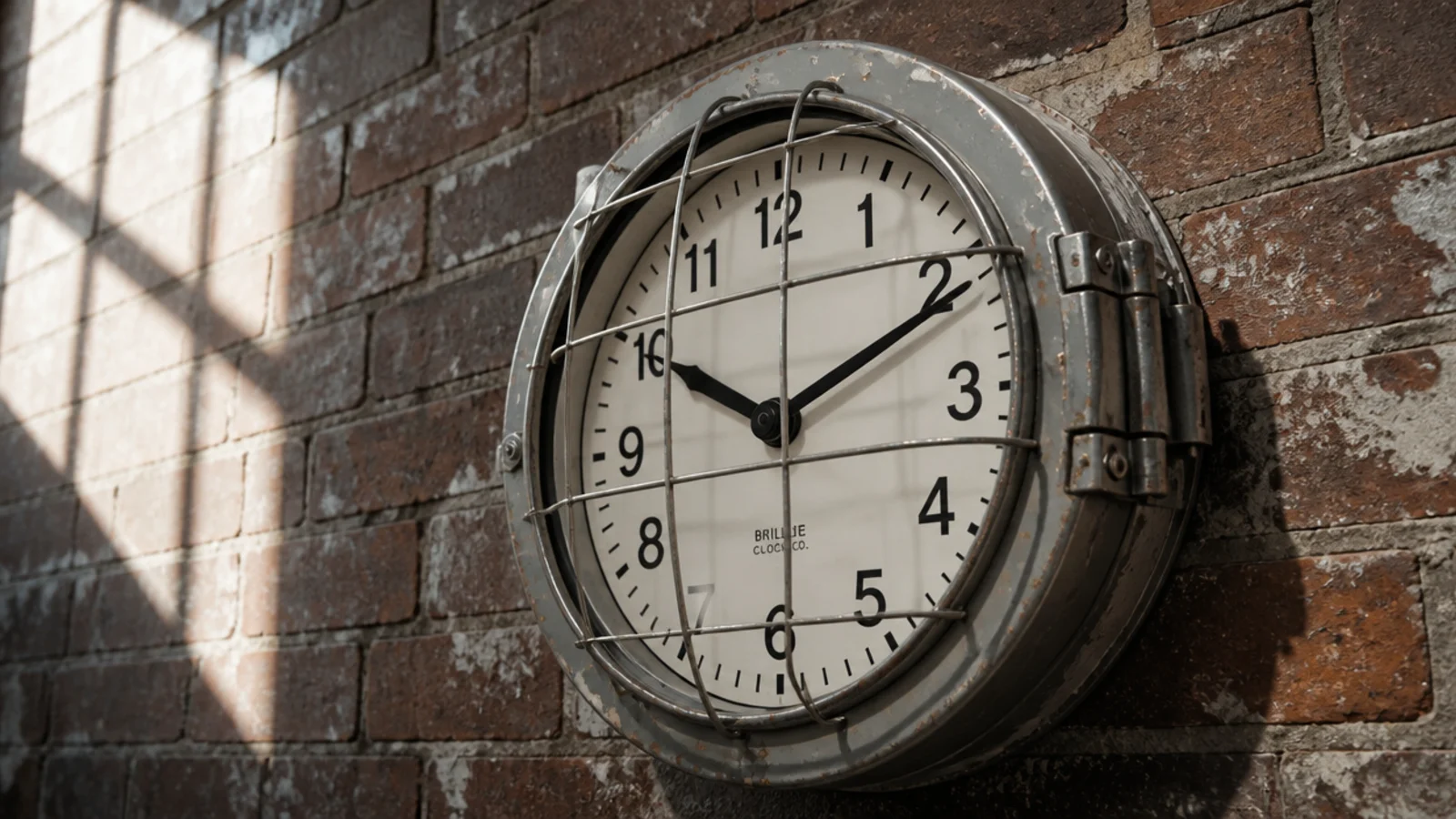
9. A wire-guarded corridor clock
About $28. The hinged steel cage over the dial is the entire reason to own it, and it is the part that gets removed and lost on most survivors. The chipped grey paint stayed. It hangs in the entryway, where the guard stops coats catching the hands — there is more on that wall in the entryway ideas guide.
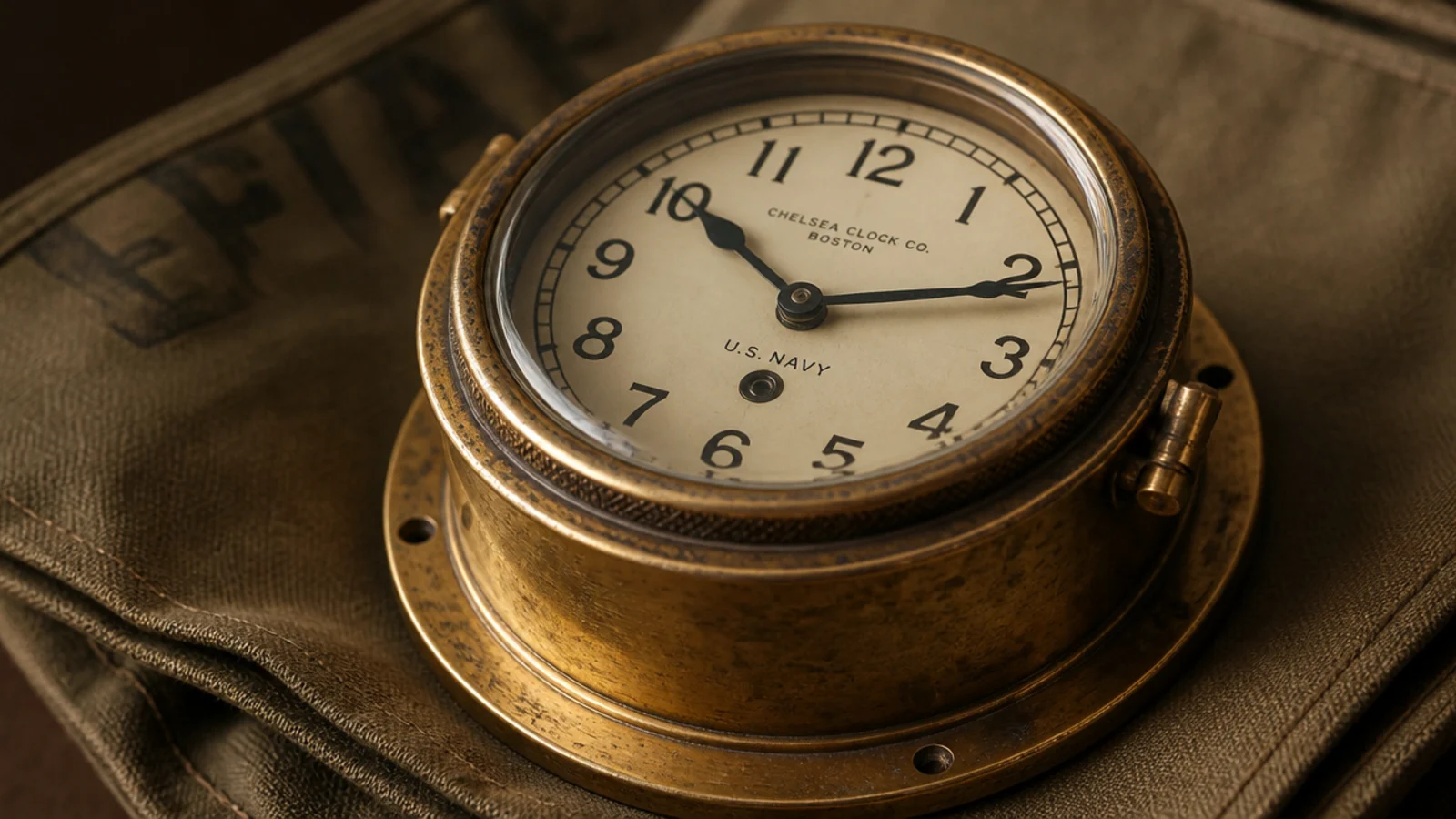
10. A brass bulkhead-style clock
Around $30 and much heavier than it looks — solid brass with a thick lens comes in near 7 pounds at only 8 inches across. I polished half of it and stopped, because a fully polished brass case loses every bit of its age in an afternoon and you cannot put patina back.
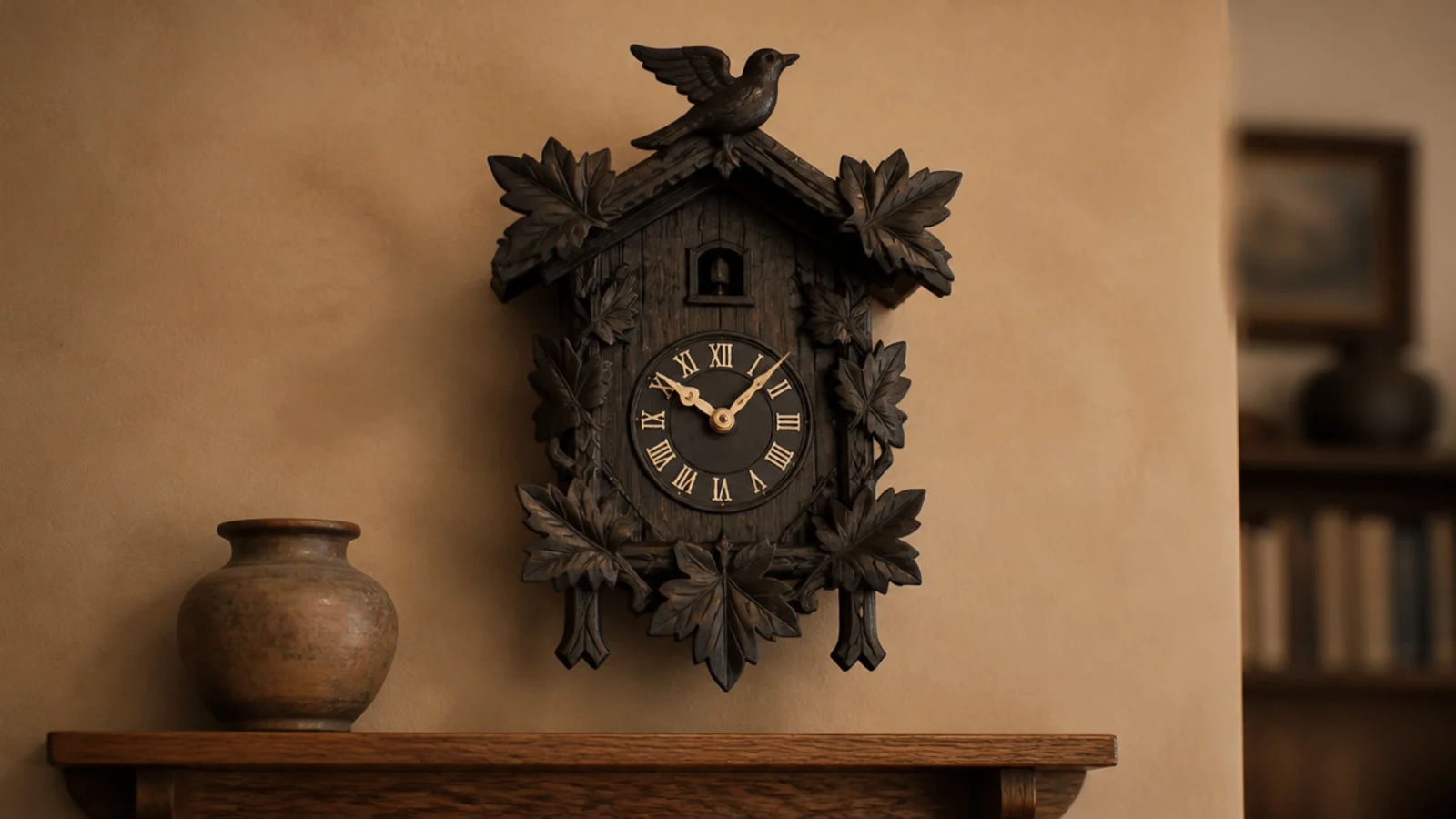
11. A dead cuckoo case, converted
About $25 for a carved case with a seized movement and one weight missing. I stripped the chains, fitted a quartz unit behind the original dial and kept the carving. It reads as a piece of woodwork now rather than a novelty, which is what I wanted, and nothing calls the hour any more.
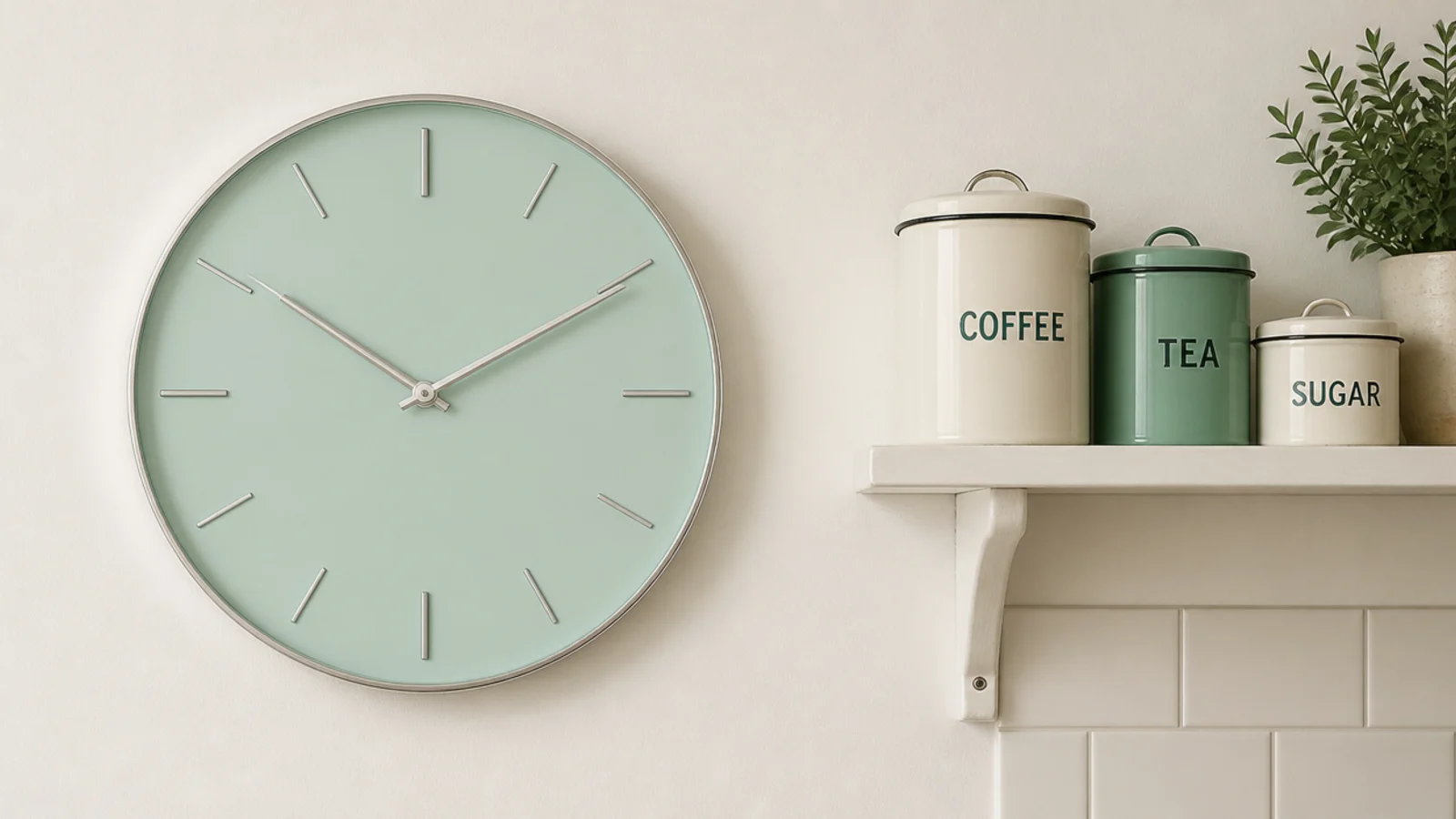
12. A 1960s laminate-faced kitchen clock
Ten dollars and it needed absolutely nothing. Pale laminate, slim chrome hands, bar markers. It is the only one on this list that arrived working and stayed working, and it is a reminder that the cheapest finds are often the ones nobody thinks are old enough to be interesting yet.
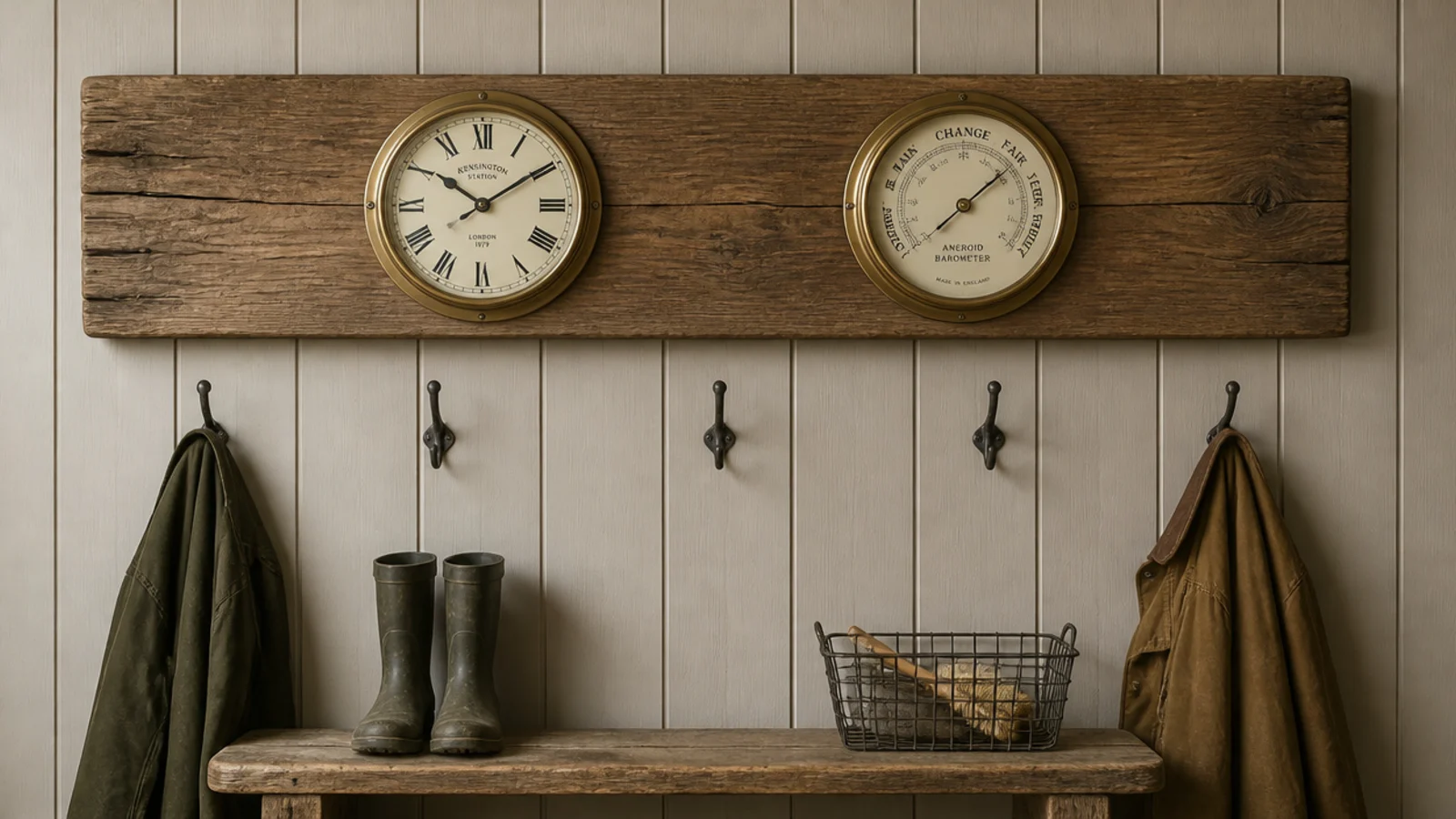
13. An oak plank clock and barometer set
About $30 for two dials on one board, 26 inches long. One fixing, one alignment problem already solved, and readings you actually use on the way out of the door. The hygrometer was several percent out, which they all are — most have a small adjustment screw on the back.
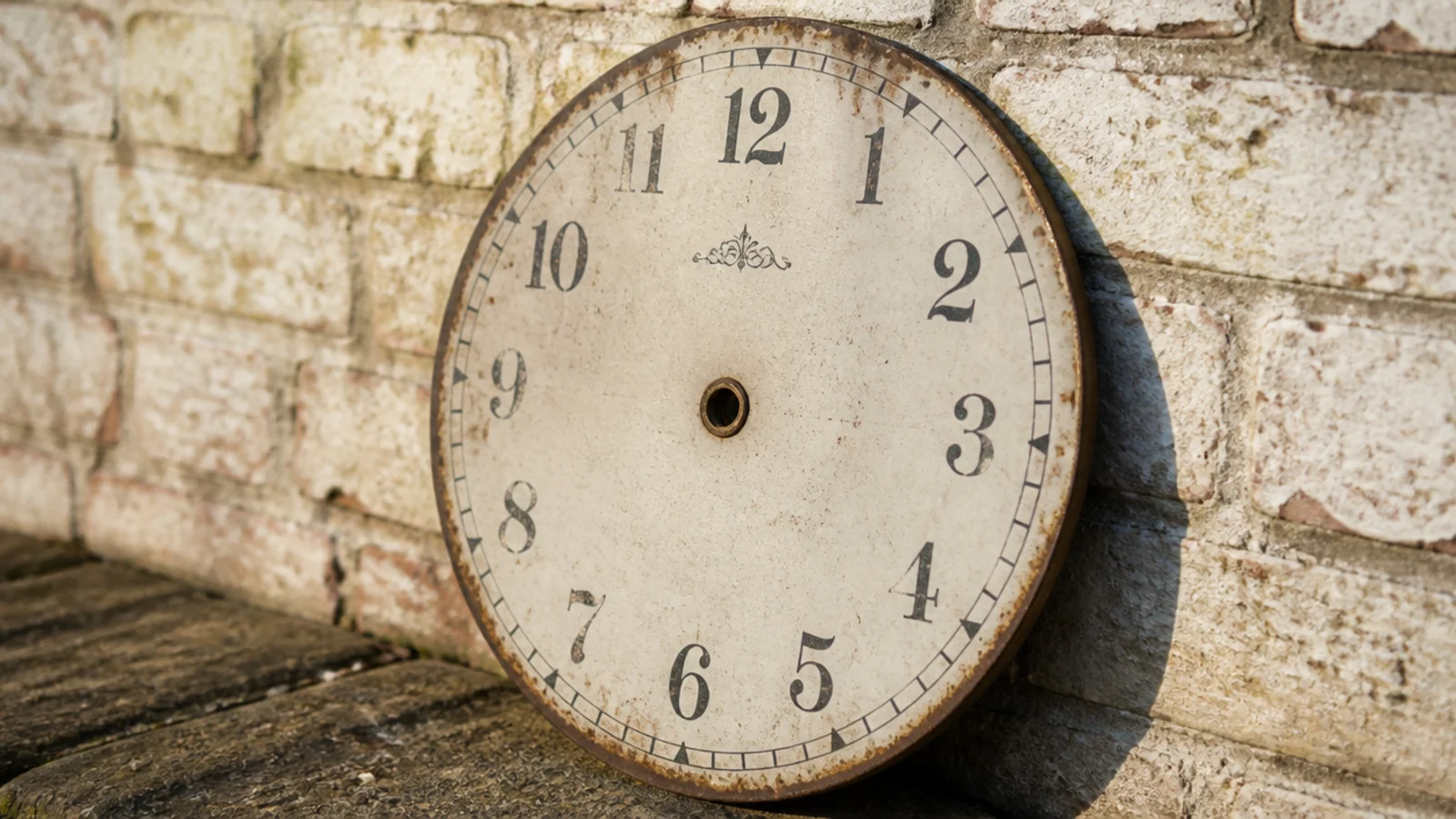
14. A painted tin face from a farm sale
Fifteen dollars, with light rust spotting round the rim that I sealed with a matte lacquer rather than removing. Rust that is stable reads as age; rust that is active eats the numerals within a couple of years, so the test is whether it flakes under a thumbnail.
15. A bakelite ring clock
About $18. Bakelite is warm to touch, lighter than it looks at around 2 pounds, and it polishes with a soft cloth and nothing else — solvents cloud it permanently. Check the ring for hairline cracks at the fixing holes before you pay, because that is where these always fail.
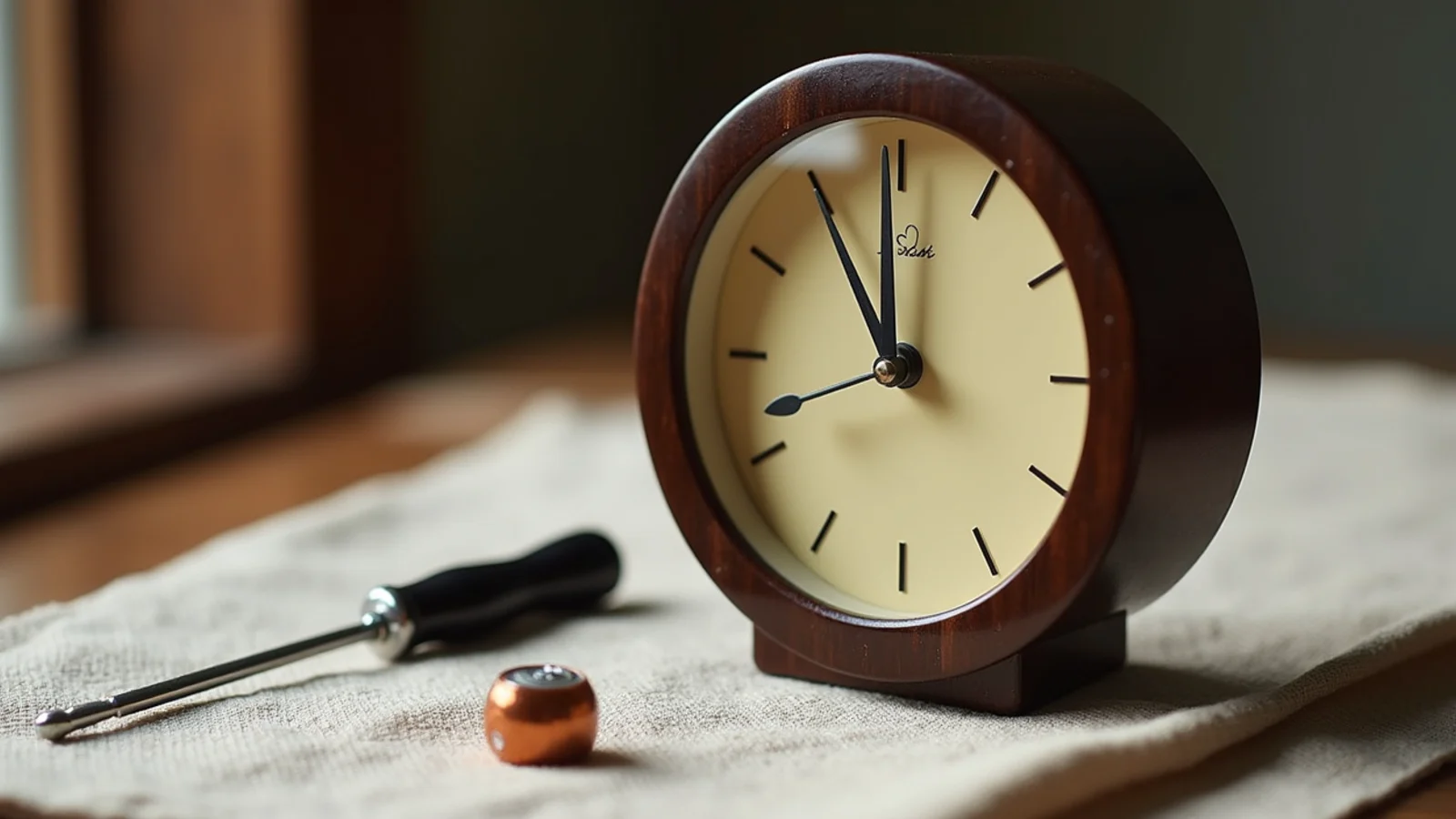
16. A twenty-four inch factory dial
Around $55, my biggest find and the one I hesitated over. Two feet across, 11 pounds, and the bold outer minute track means it reads clearly from 30 feet. It went on a stud with a two-inch screw, and I templated it in newspaper first because a 24-inch circle is much bigger on a wall than in a car boot.
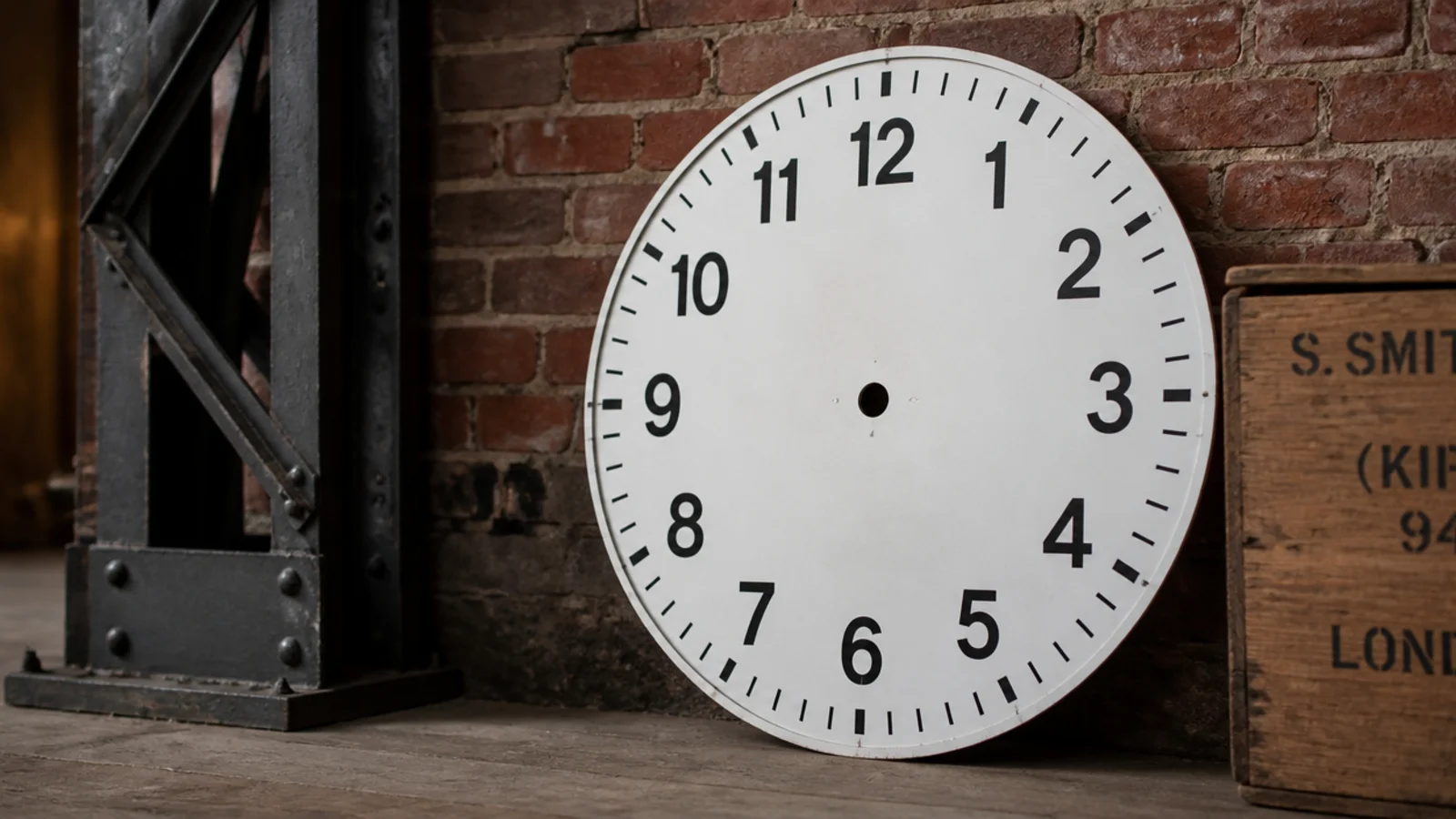
17. A double-sided bracket clock
About $75 and worth it because it came with the original steel bracket, which is the part that never survives. The arm projects 8 inches, so the load pulls outward rather than down — framing only, no exceptions. It reads from both ends of a corridor, which no flat clock does.
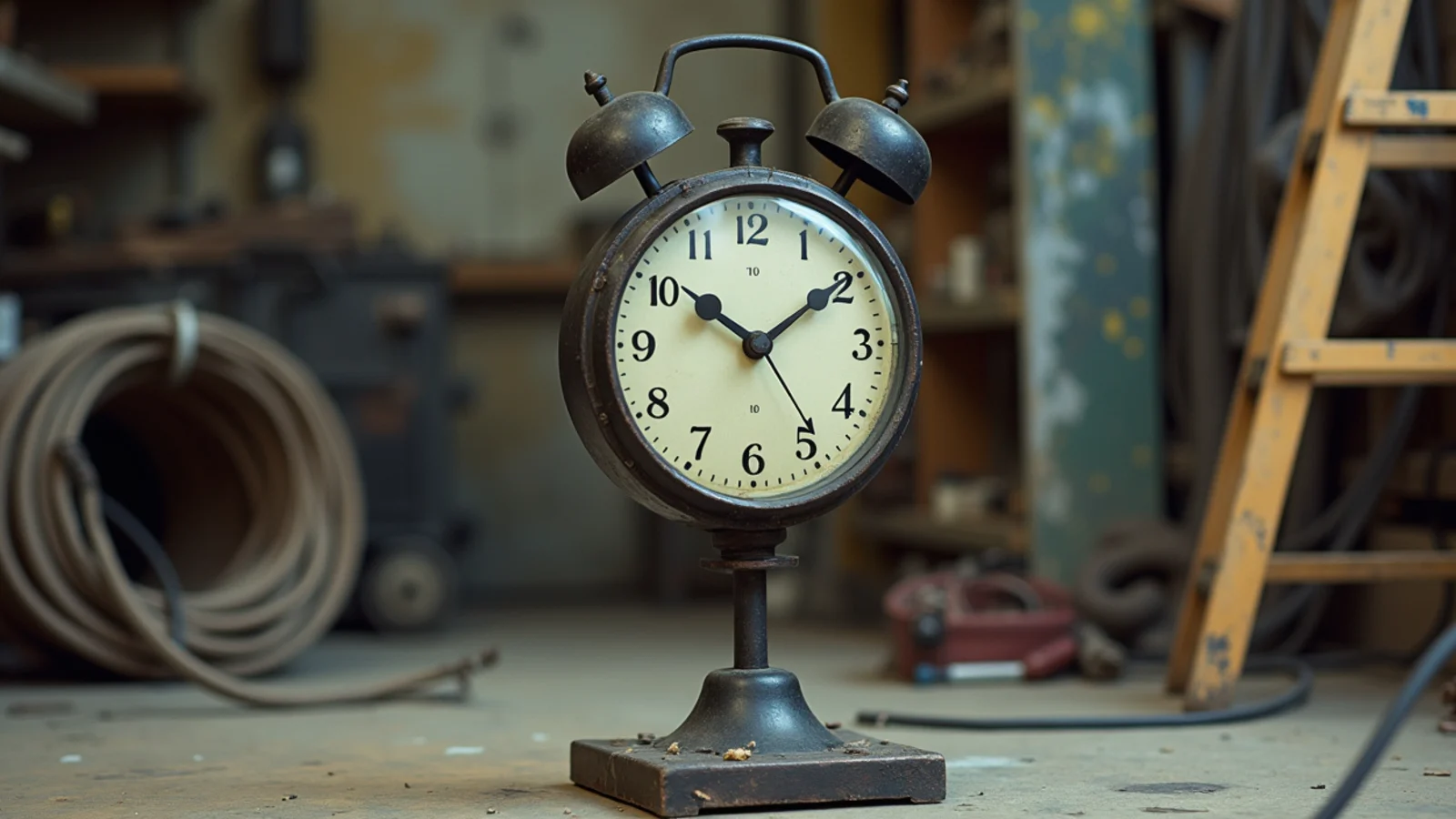
18. A mirrored 1930s clock
Around $22 with the silvering completely intact, which is unusual — most mirrored pieces of that age have black speckling creeping in from the edges. Check the back edge before you buy, because desilvering only ever spreads. It hangs in a dim hall and bounces daylight from the far door.
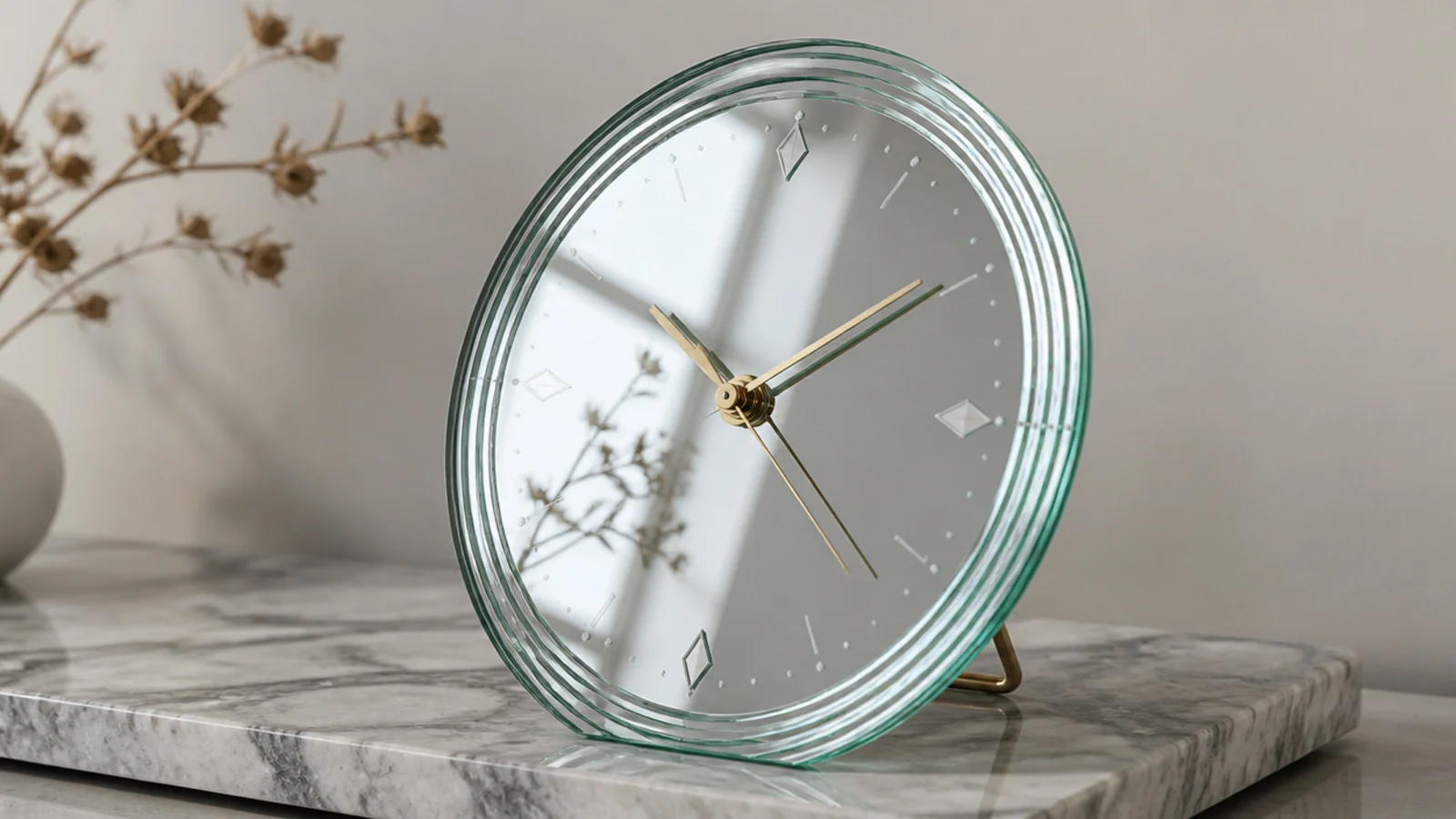
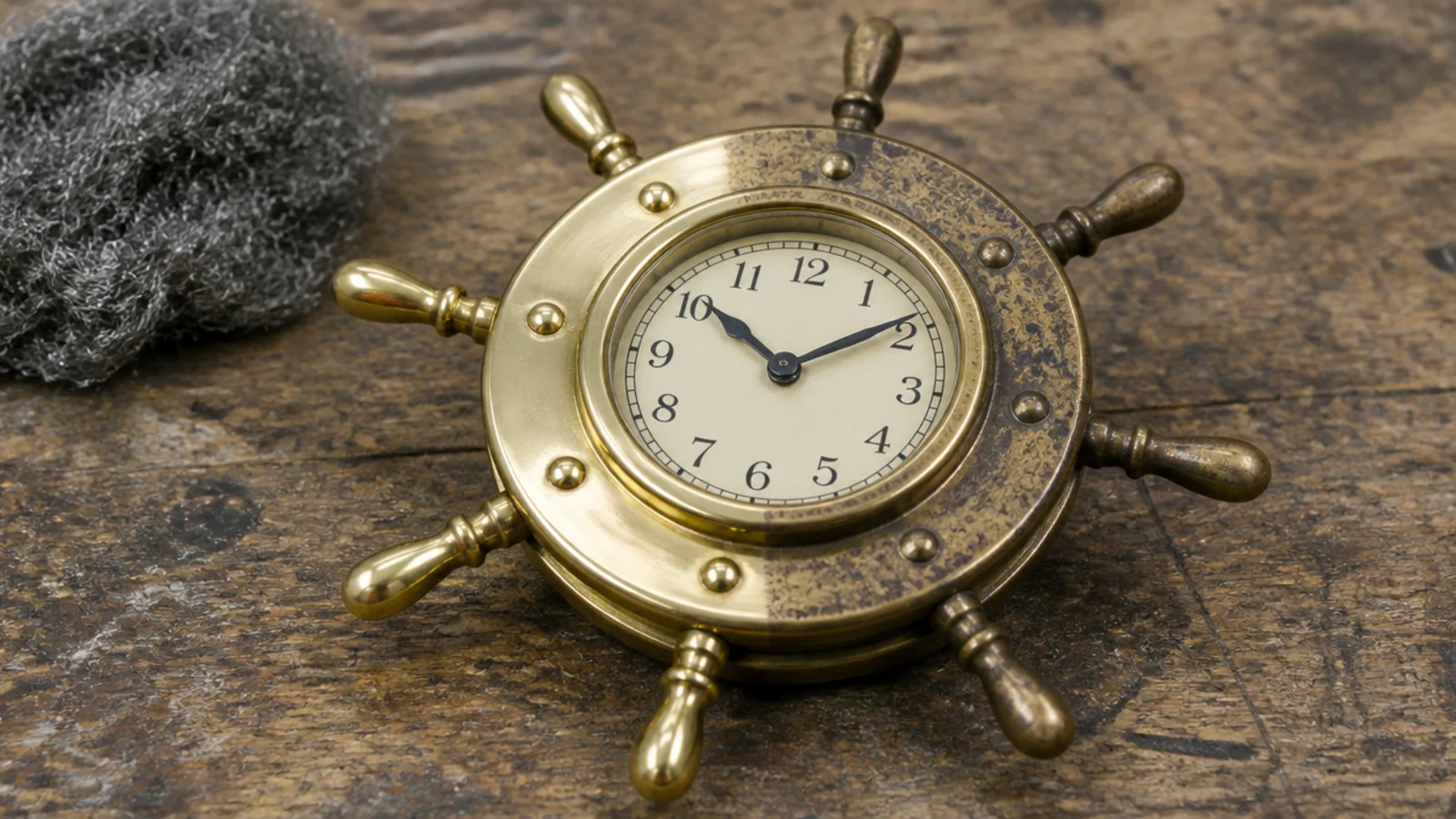
19. A brass ship-wheel rim
Sixteen dollars for something I nearly walked past. The turned spokes cleaned up with fine wire wool and a little oil in about twenty minutes. It is only 12 inches across, so it works as part of a group rather than alone — spacing notes are in the clock grouping guide.
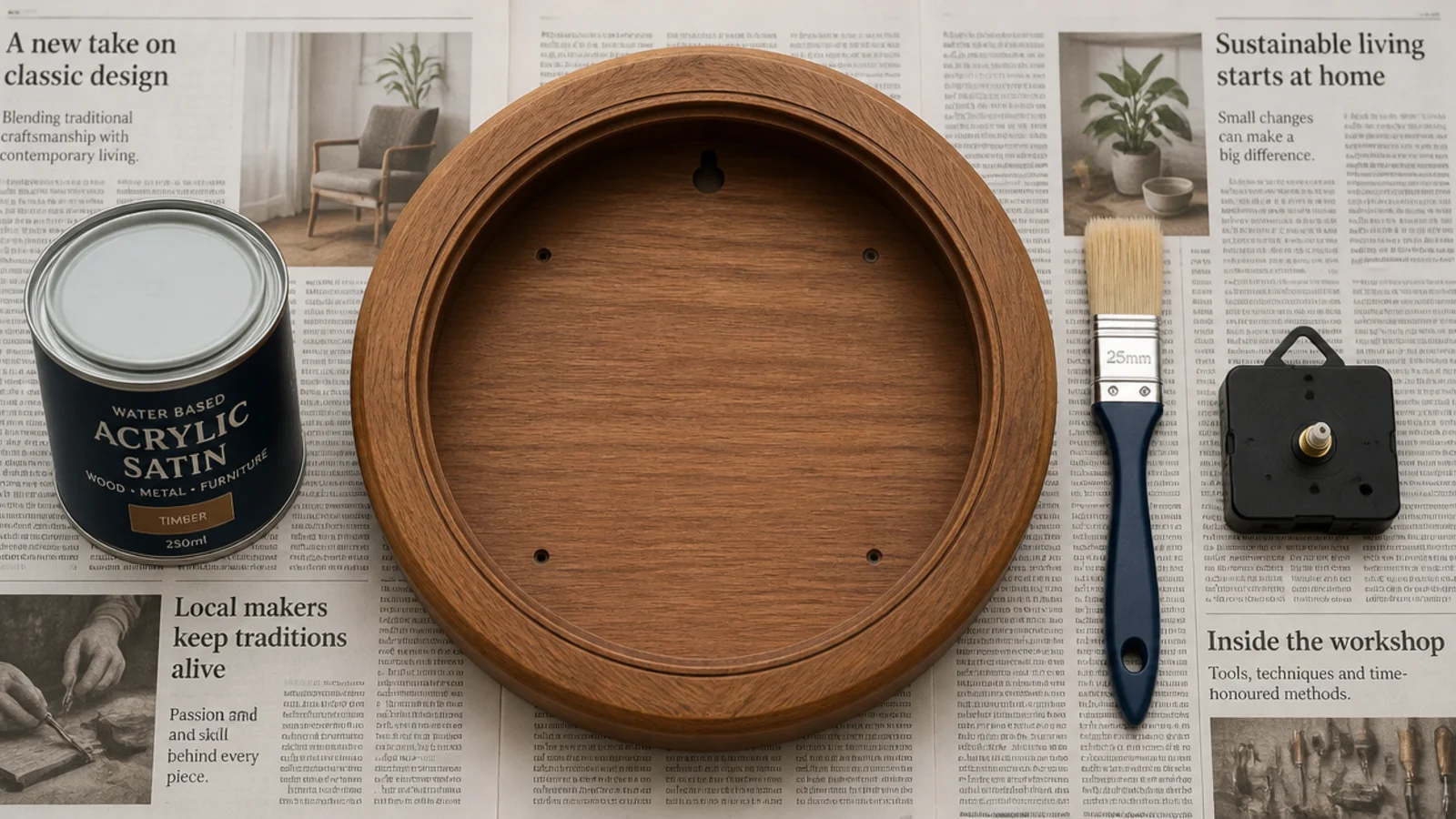
20. A blank case I rebuilt from nothing
Five dollars for a round timber case with no dial, no hands and no movement. A painted card dial, a $10 quartz unit and a $7 hand set later, it cost about $22 all in and looks like the most expensive clock in the room. It is the best value route into all of this.
Vintage Wall Clock Finds: What I'd Do Differently Now
I would stop buying cases with worn centre holes. Twice I have paid for something lovely and then spent an evening trying to make a new movement sit square in a hole that had been rattling for forty years. A brass bushing fixes it, but by the time you have bought and fitted one you have spent more than the clock cost.
I would also weigh things at the stall. I carried a 14-pound cast iron face home on a bus assuming it was hollow, then discovered the wall I wanted it on had no stud within 8 inches of the right position. That clock sat on the floor for two months while I worked out where it could actually go. Now I take a small luggage scale in my bag, and I know before I pay whether it is a stud job.
The mistake I regret most is polishing. That brass bulkhead clock had beautiful uneven patina and I took half of it off in twenty minutes because I wanted to see what was under there. Nothing was under there except new-looking brass. Age is the one thing on a secondhand clock you genuinely cannot buy, and it takes decades to come back.
Two things I would do again without hesitation. Buying broken, because a dead movement is a discount rather than a fault. And leaving the chips, dents and paint losses exactly as found — every attempt I have made to tidy one up has made it look newer and worth less.
For a wall built entirely from finds like these, the budget design guide covers how to make mismatched cases hang together, and the luxury looks piece explains why an old case reads more expensive than a new one at the same price.
Frequently asked questions
Is a dead movement worth buying?
Almost always, because the case is what you are really paying for. A replacement quartz movement costs 8 to 15 dollars and takes about fifteen minutes to fit. What is not worth buying is a cracked case, a warped timber back or a dial with water staining, because none of those can be reversed cheaply.
How do I choose a replacement movement?
Measure the dial thickness at the centre hole and add about an eighth of an inch. That total is your shaft length, and the common sizes run from five sixteenths to just over an inch. Also check the hand length, because anything over six inches from the centre needs a high-torque unit.
What should I check before buying a vintage clock?
Look at the back first. Check the hanging point is sound, the case is not split at the joints, and the timber has no soft or spongy patches from damp. Then check the centre hole is round rather than worn oval, because an oval hole will never hold a new movement square.
Are old clocks heavier than new ones?
Considerably. Cast iron and solid timber cases from the last century run 10 to 20 pounds where a modern equivalent is 4 to 6. Weigh anything before you hang it, and put anything over 8 pounds on a number eight screw into a stud rather than the plug that came in the box.
How much should a thrifted clock cost?
At a stall or a house clearance, most cases sit between 10 and 60 dollars depending on size and condition, with large factory dials and double-sided bracket clocks going higher. Anything over about 80 dollars is dealer pricing, and at that point condition needs to be genuinely excellent.
Want more like this? Browse all 15 wall clock guides — they all use the same measurements and budget tiers.
Pin it for later
Save this to your Wall Clock board
Pin it now so it is waiting for you when the tape measure comes out — and so the next person hunting for this idea can find it too.
Save this pinKeep going
More ideas worth saving while you have the tape measure out.