Shoe Storage Ideas · Listicle
25 Gorgeous Shoe Storage Ideas Worth Trying

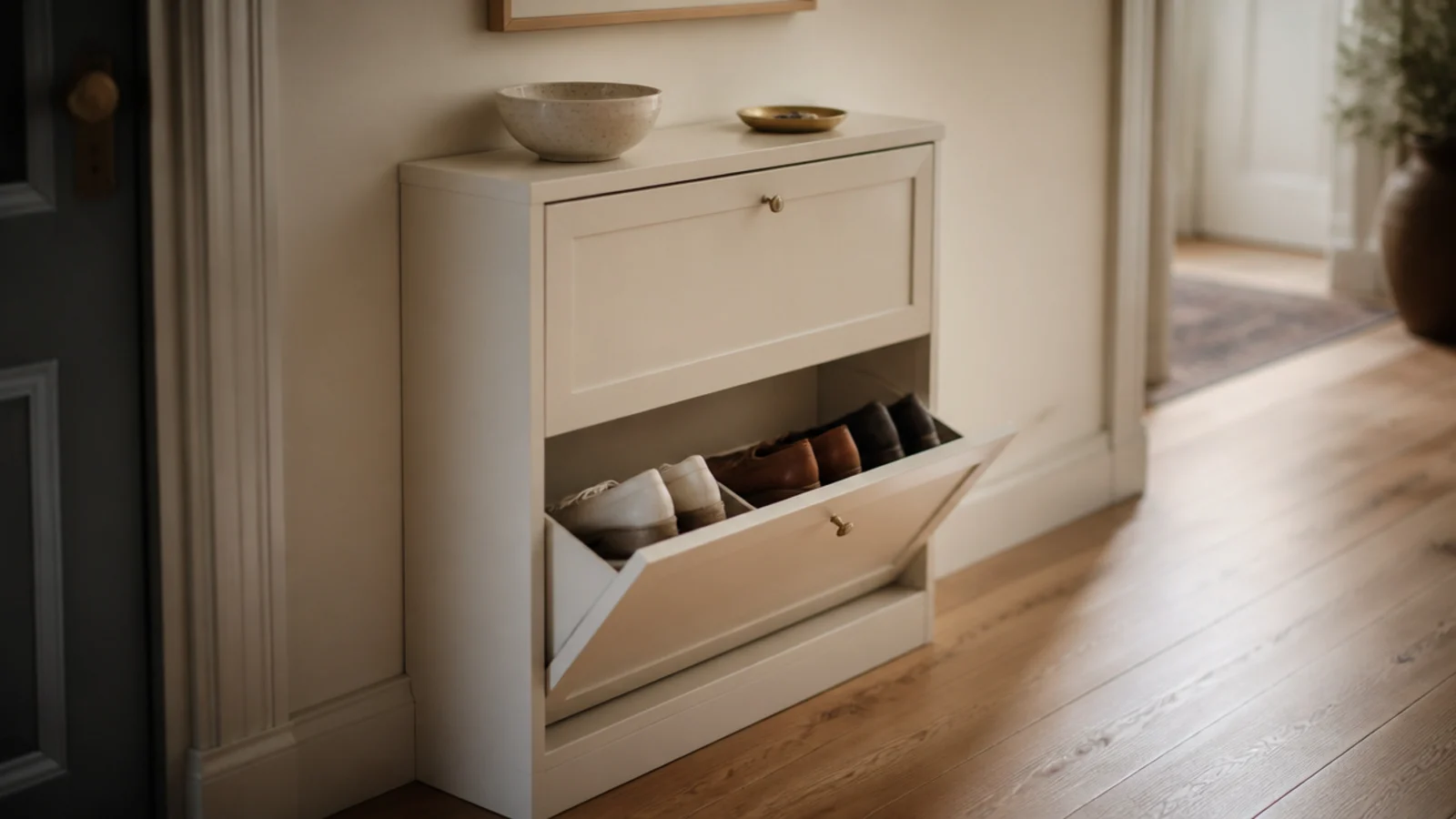
Shoe storage cabinet ideas get chosen from a photograph and regretted in a hallway. The cabinet arrives, the door swings into the walkway, three of the six pairs it promised turn out to be boots, and within a month the shoes are back on the floor beside a beautiful closed box. Doors and depth decide everything here, so these 25 start there.
In this guide27 sections — tap to openHide
- 1.What separates shoe storage cabinet ideas that actually close
- 2.The nine-inch tilt-out as the default choice
- 3.Count the drawers, never the number on the box
- 4.Hinged doors need a full swing arc
- 5.Sliding doors where the swing will not fit
- 6.Push-latch fronts with no handles at all
- 7.Leave the bottom bay open for daily pairs
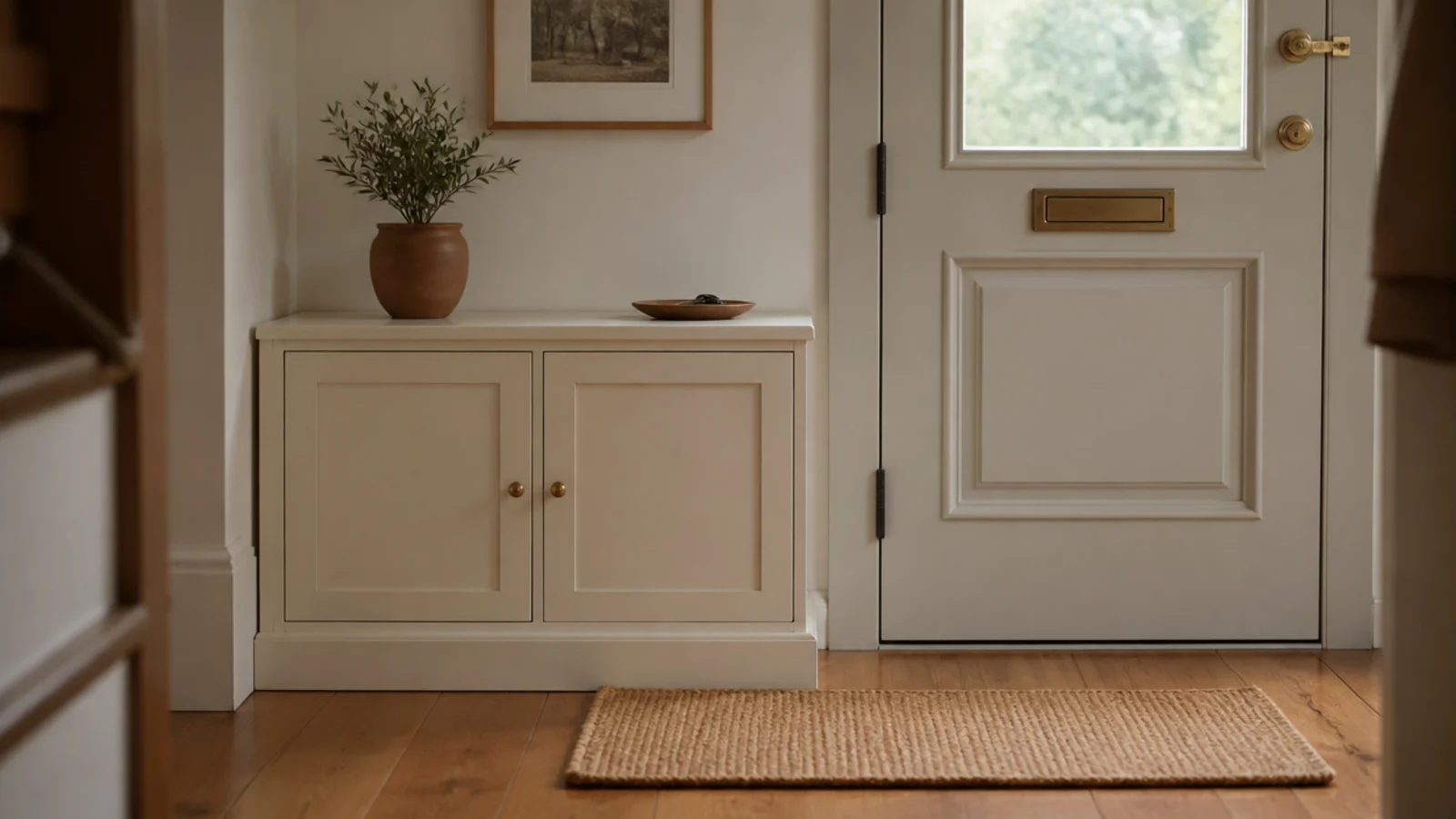
- 8.A cabinet top that stays a landing tray
- 9.Cane or rattan panels that let air move
- 10.Fluted fronts that hide the daily scuffs
- 11.Size the cabinet to the wall between doorframes
- 12.Soft-close hinges because feet close these doors
- 13.Adjustable shelves inside a tall cabinet
- 14.Build a 16-inch boot bay into the cabinet
- 15.A mirrored door that does two jobs
- 16.A toe-kick recess so you can stand close
- 17.A wall-hung cabinet floating off the floor
- 18.Drill the back and gap the shelves
- 19.A cabinet with a bench top at 18 inches
- 20.Paint the cabinet the exact wall color
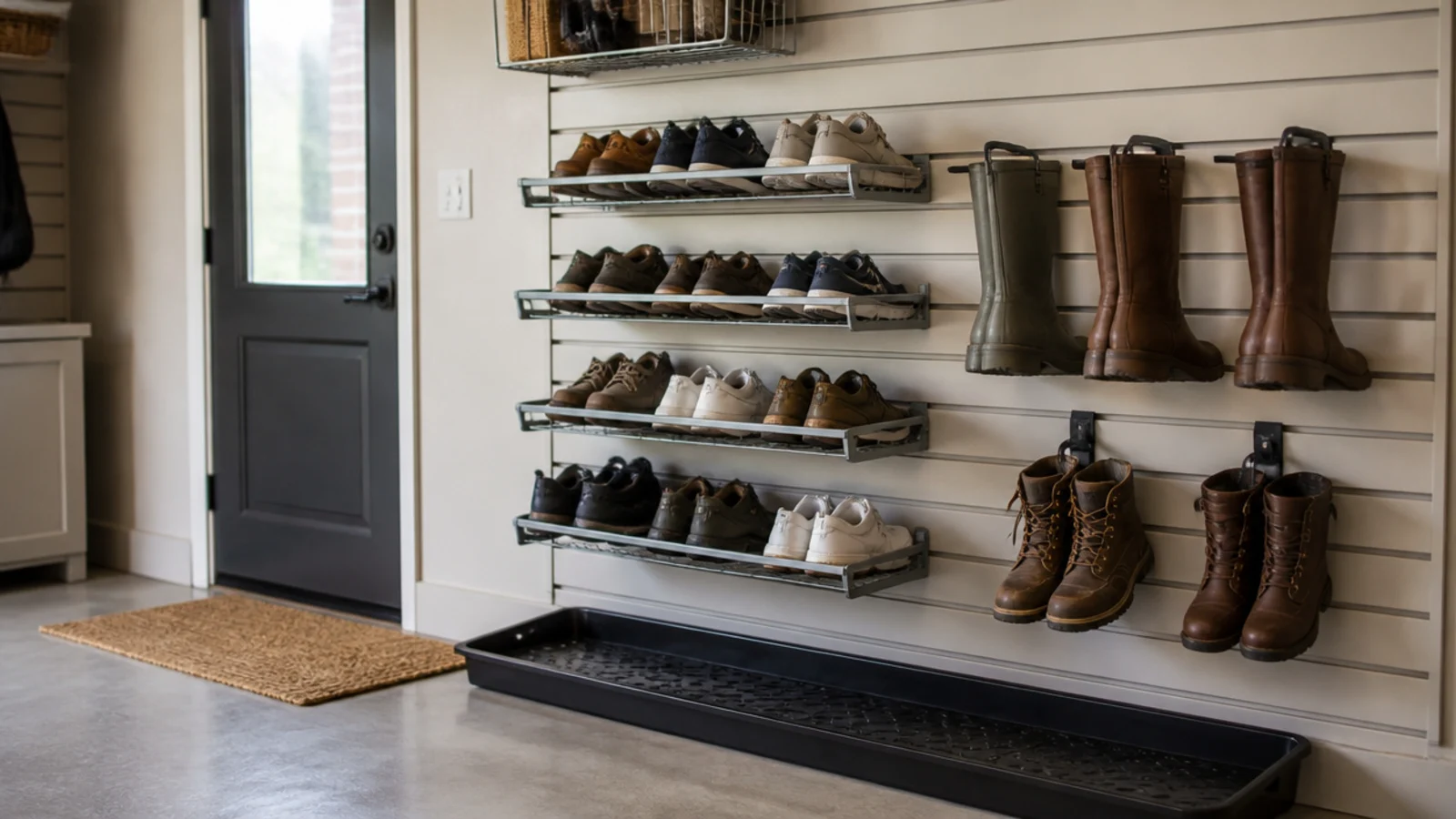
- 21.Add a plinth and new fronts to a flat-pack
- 22.Two slim cabinets flanking a doorway
- 23.A shallow drawer for laces, polish and shoehorns
- 24.Adjustable feet for a floor that is not level
- 25.A removable tray in the cabinet base
- 26.Match cabinet depth to the walkway you have
- 27.Mistakes to Skip
What separates shoe storage cabinet ideas that actually close
A cabinet is a shoe rack with two extra problems: a door that needs somewhere to go, and an interior with no airflow. Solve both and closed storage beats open storage on every measure except speed.
Depth. A men's size 12 sneaker is about 12.5 inches long. Flat storage needs 13 inches. Tilt the shoes to 45 degrees inside a tilt-out drawer and nine inches is enough — the four inches you save are what let a cabinet live in a hallway at all.
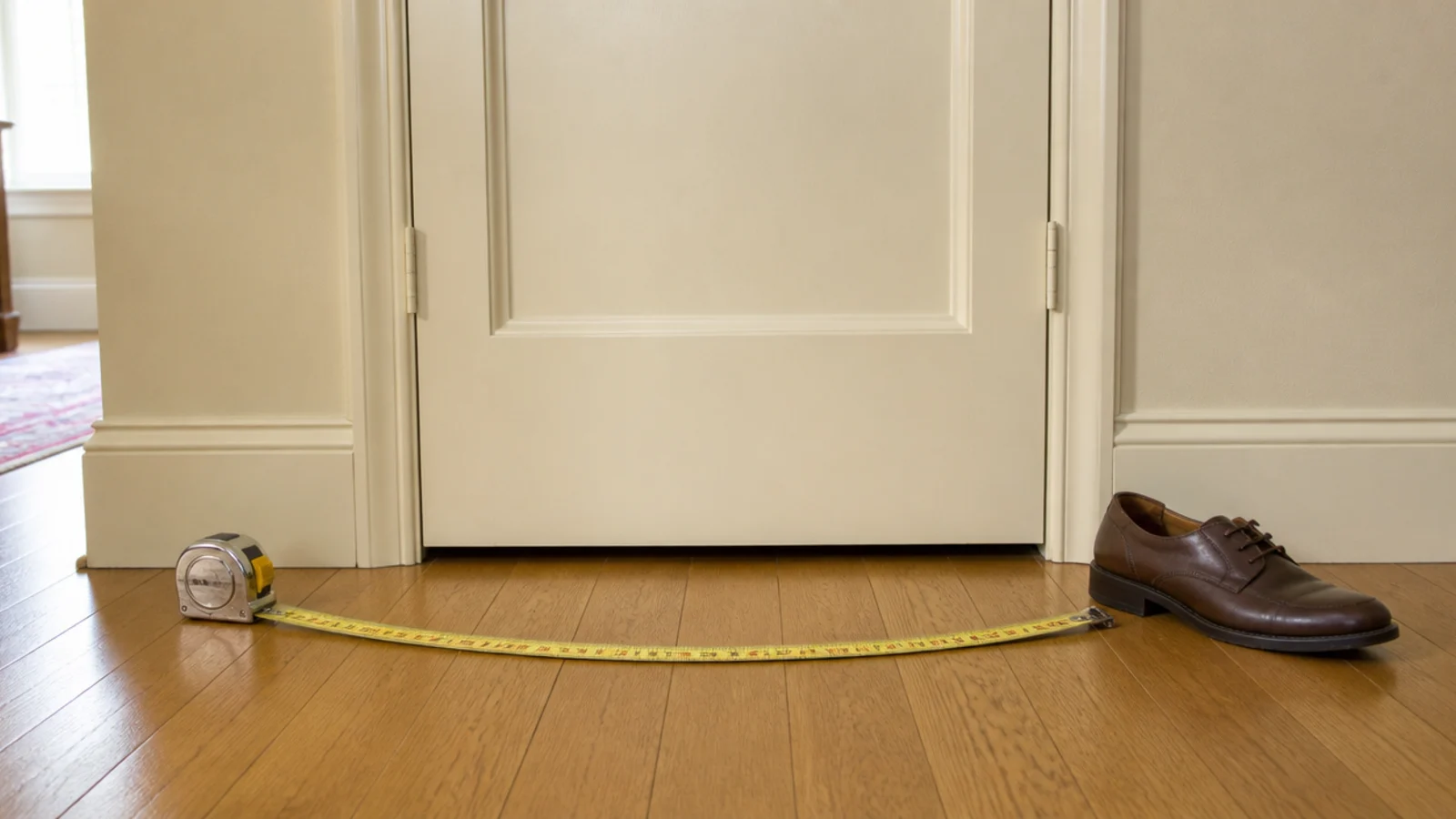
Swing. A hinged door needs its own width in clear floor, so a 20-inch door claims 20 inches plus standing room. A tilt-out front projects about seven inches at the top and nothing at the bottom. Sliding fronts claim nothing. Measure the walkway before you fall for a finish.
Height. Six inches of internal clearance covers flats and sneakers. Ankle boots need 14 to 16 inches, knee-highs 20. Almost every cabinet ships with evenly spaced shelves, which is why boots end up on the floor.
Load. Two to three pairs per person plus one seasonal set is what a hallway cabinet realistically holds. Size for that, not for the whole collection.
Budget tiers below: $ under $60, $$ $60–$150, $$$ $150 and up.
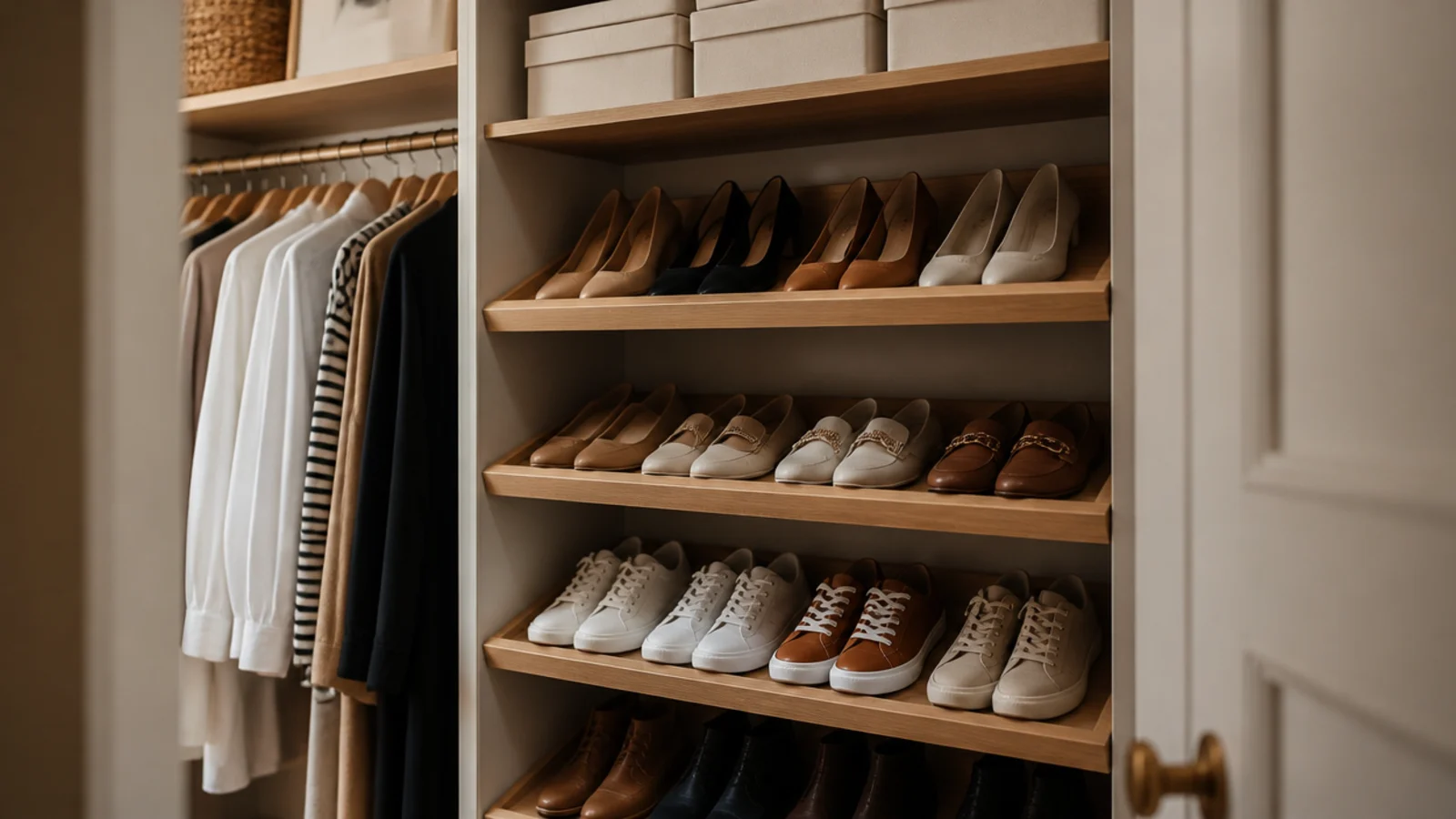
1. The nine-inch tilt-out as the default choice
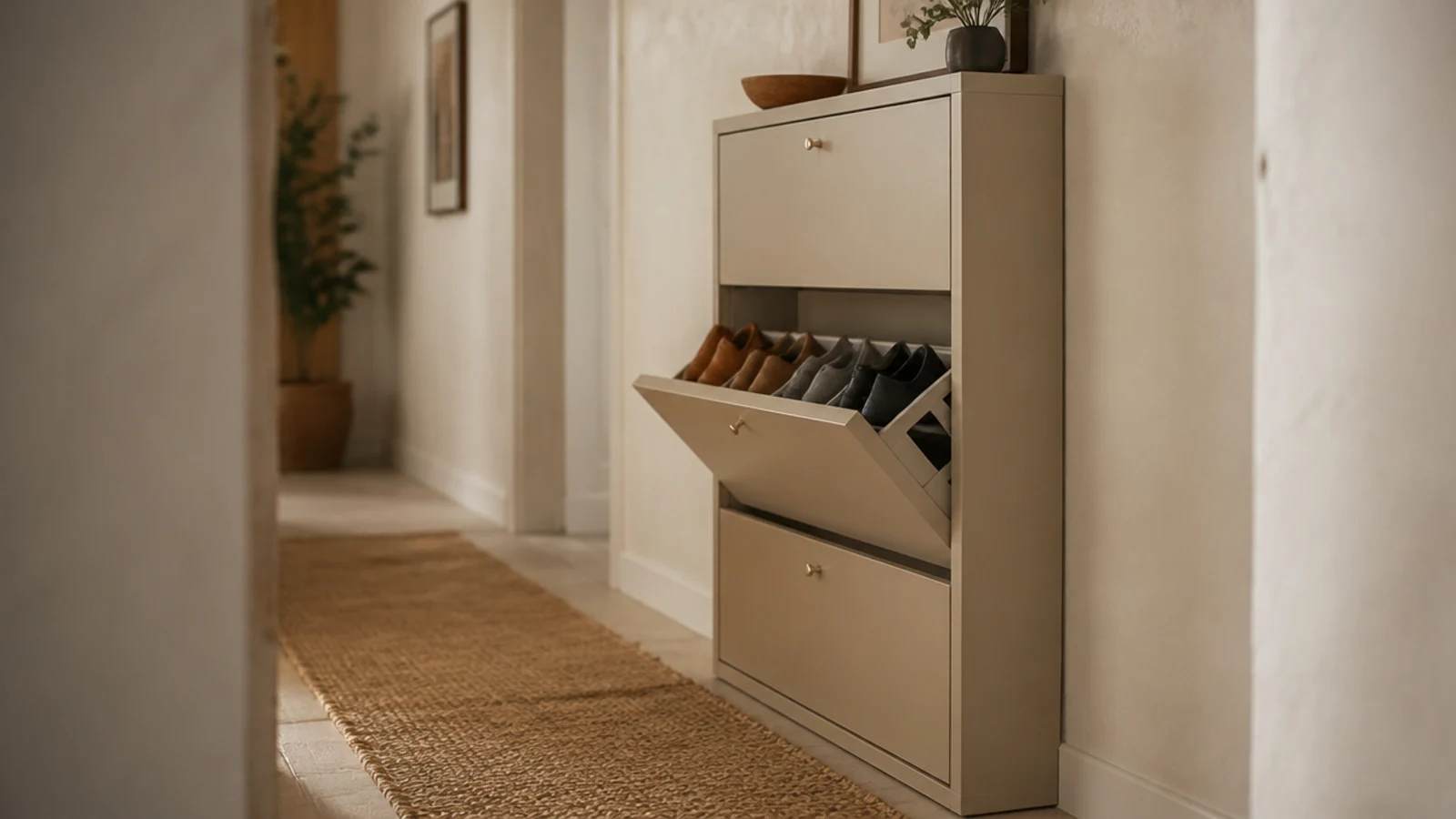
If the hallway is narrow, this is the answer before you consider anything else. Shoes sit at an angle inside a shallow drawer, so a nine-inch carcass holds a 12.5-inch shoe.
Two drawers cover six to eight pairs of flats and sneakers. They will not take boots, so plan those elsewhere from the start. $$
2. Count the drawers, never the number on the box
A cabinet advertised at eighteen pairs holds nine to twelve in a real house, because the rating assumes small flat shoes and perfect packing.
Count two pairs per tilt drawer and three per open shelf bay, then buy one size up from the number you calculated. That single adjustment prevents most cabinet disappointment. $$
3. Hinged doors need a full swing arc
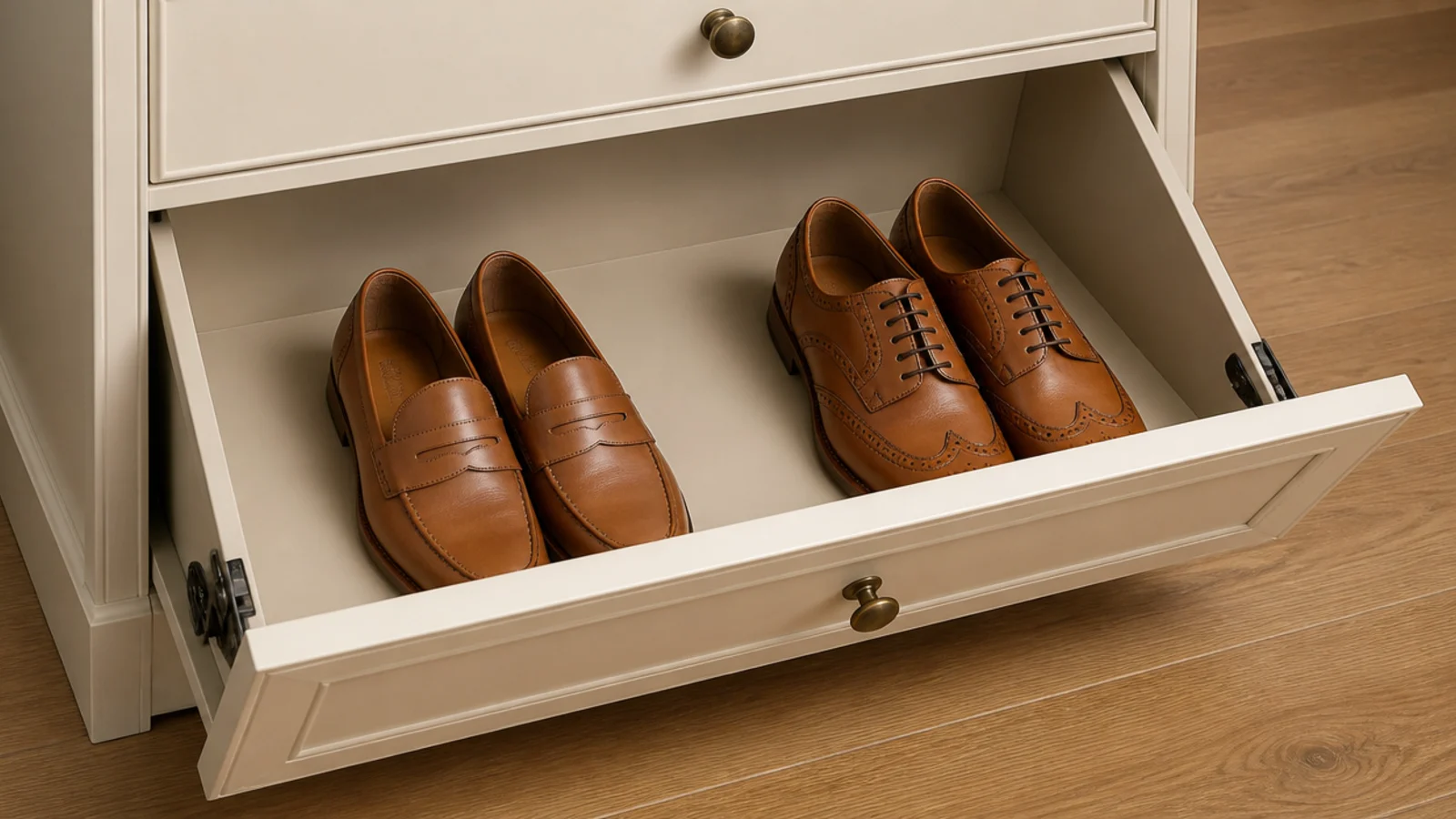
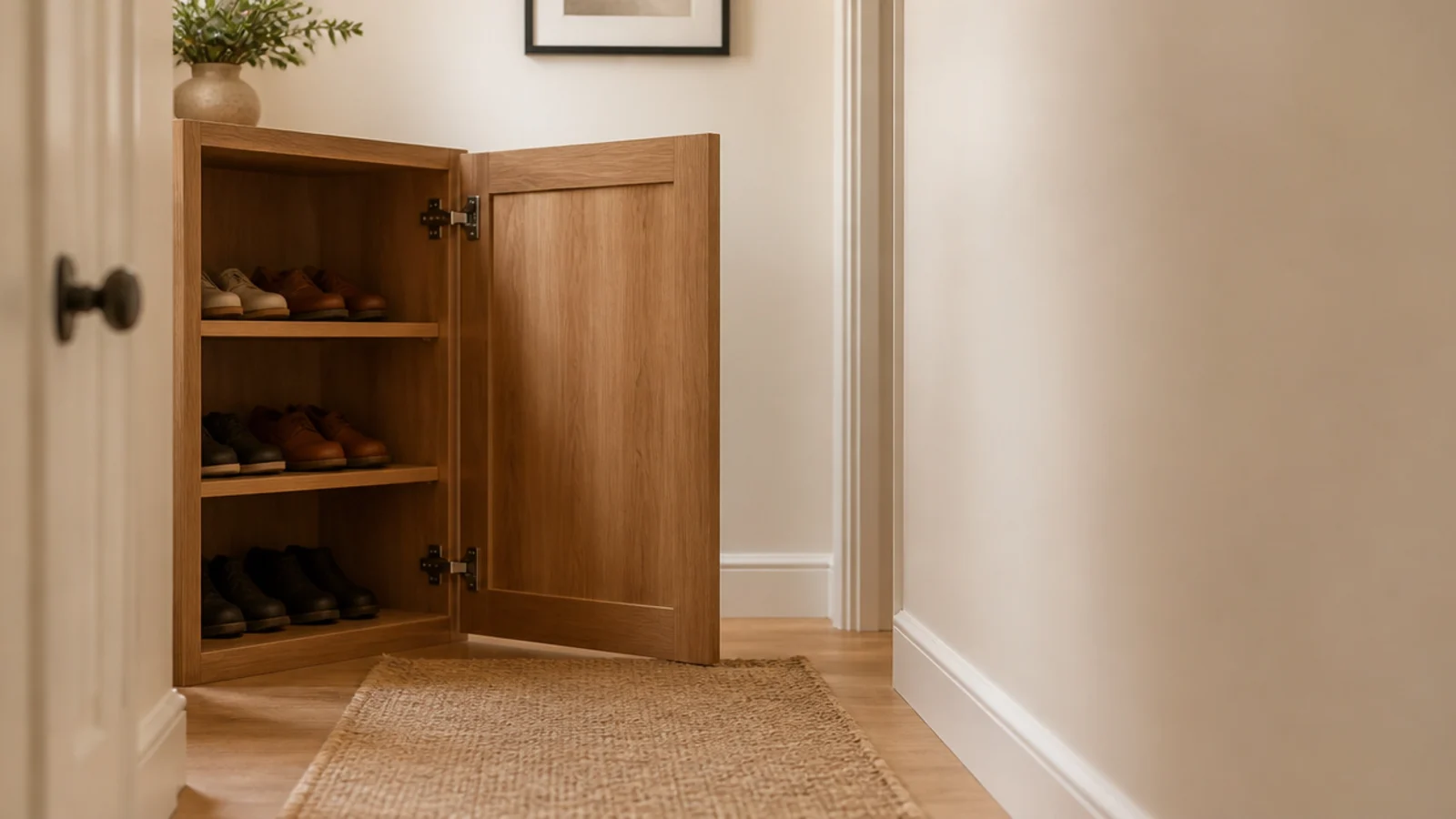
A hinged door is the cheapest to build and the most expensive in floor space. It needs its own width to open, plus about 18 inches for you to stand in front of it.
In a hall under 40 inches wide that arithmetic fails. Stand in the space and swing your arm through the arc before ordering. $$
4. Sliding doors where the swing will not fit
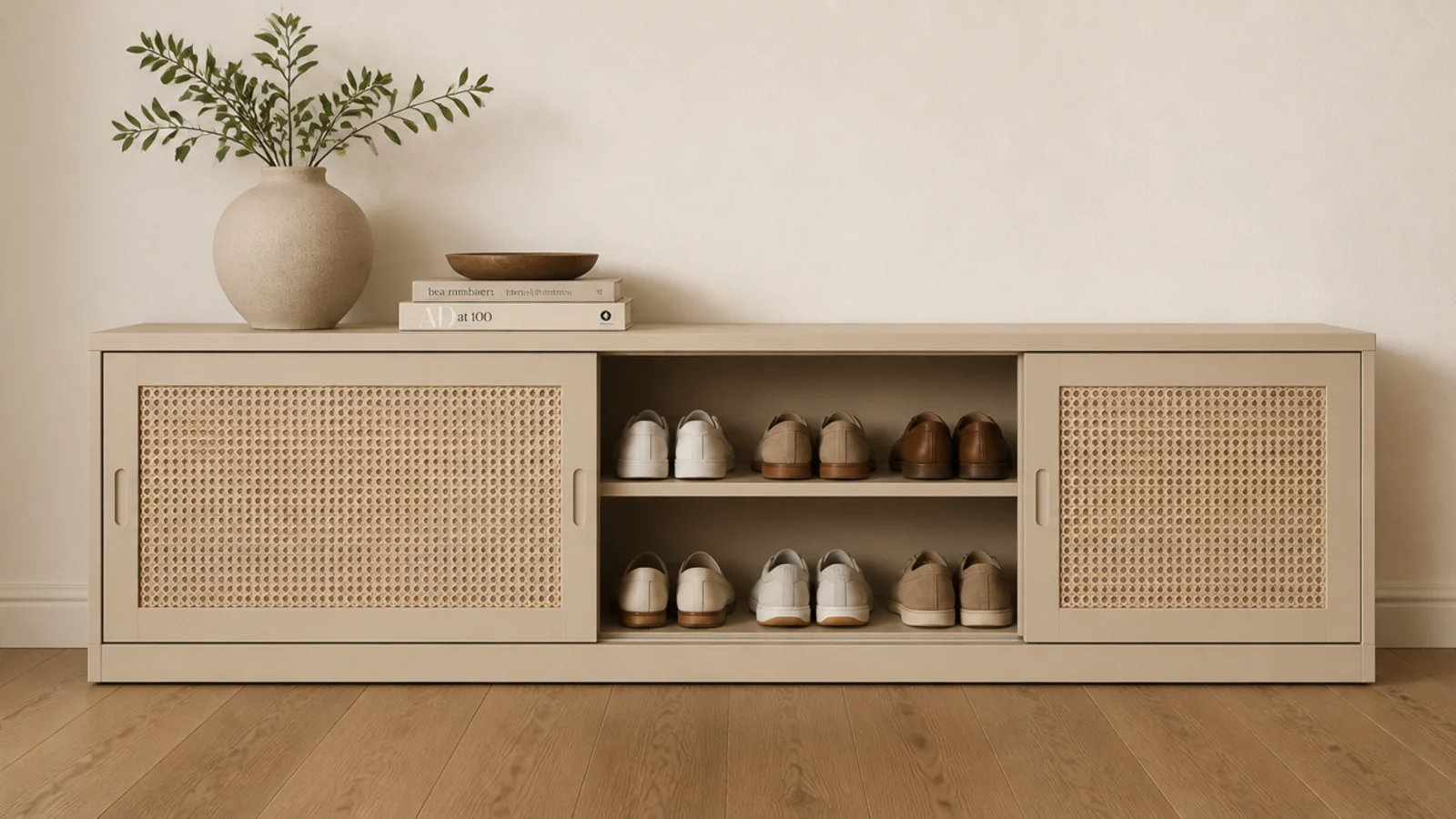
Two panels on a top track, one always overlapping the other, give you a closed cabinet that claims zero floor space when open.
The trade is access: you can only ever see half the interior at once. Keep daily pairs behind the panel that sits nearest the door and it stops mattering. $$–$$$
5. Push-latch fronts with no handles at all
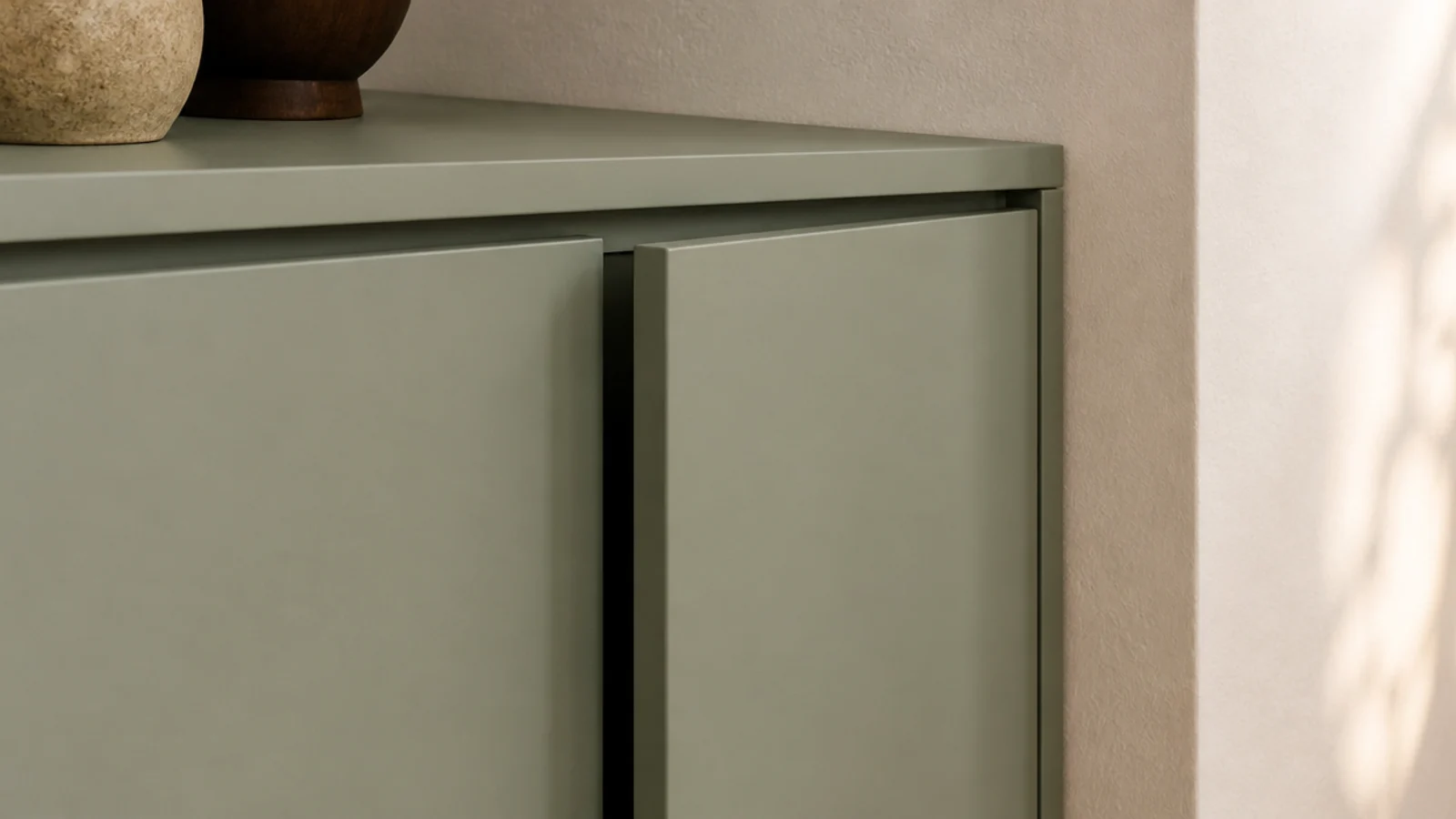
Handles catch sleeves and bags in a narrow entry, and they are what makes a cheap cabinet look cheap.
Push-latch hardware costs about $3 a door and turns a plain front into a clean plane. Choose the magnetic version rather than the sprung one — sprung latches lose their grip once a cabinet is loaded. $–$$
6. Leave the bottom bay open for daily pairs
Every closed door is a step somebody skips, and skipped steps become the pile.
Give the two or three pairs each person wears daily an open bay at the bottom, and close everything above it. The cabinet stays tidy because the fast option is already inside it. $$
7. A cabinet top that stays a landing tray
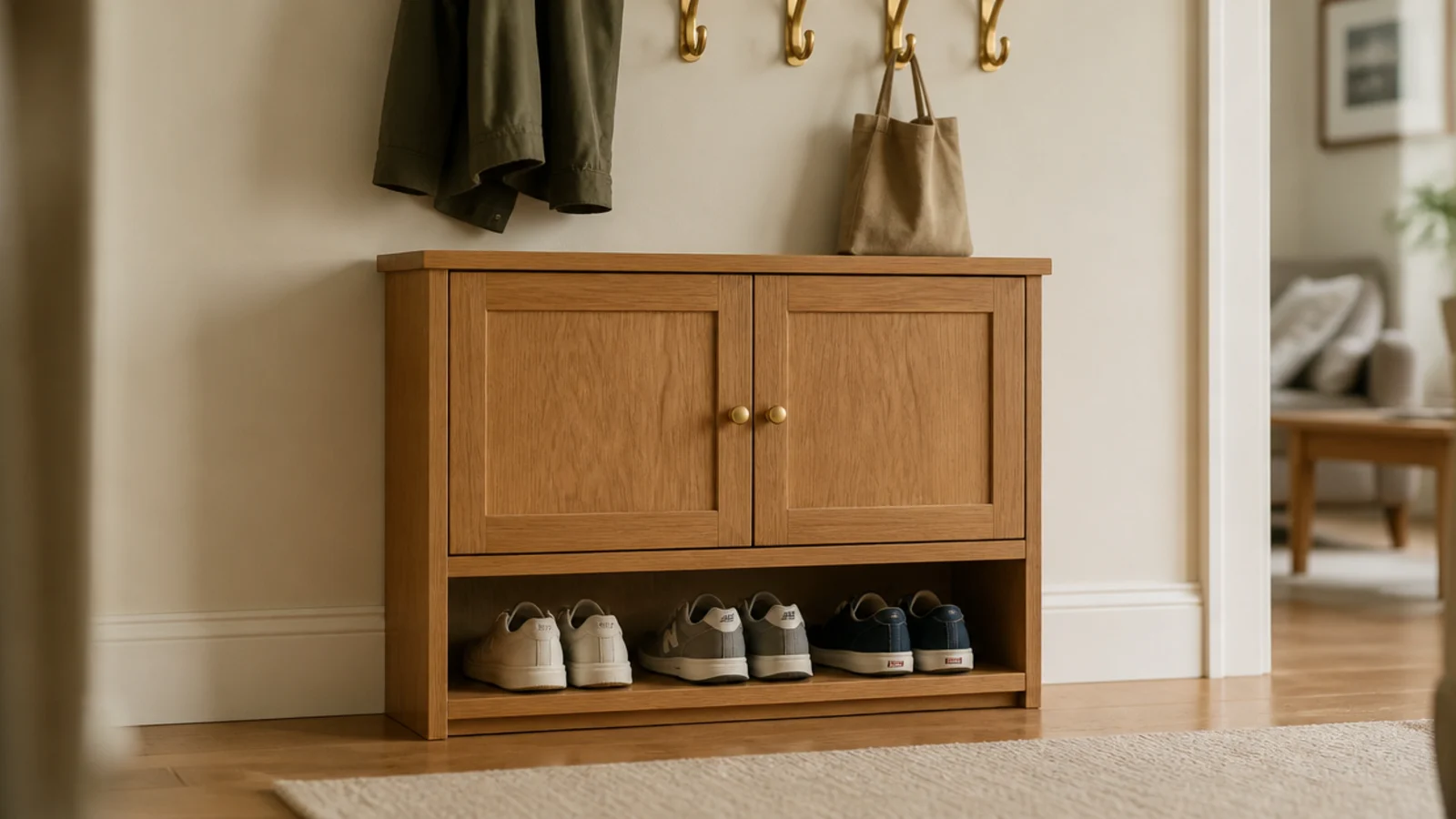
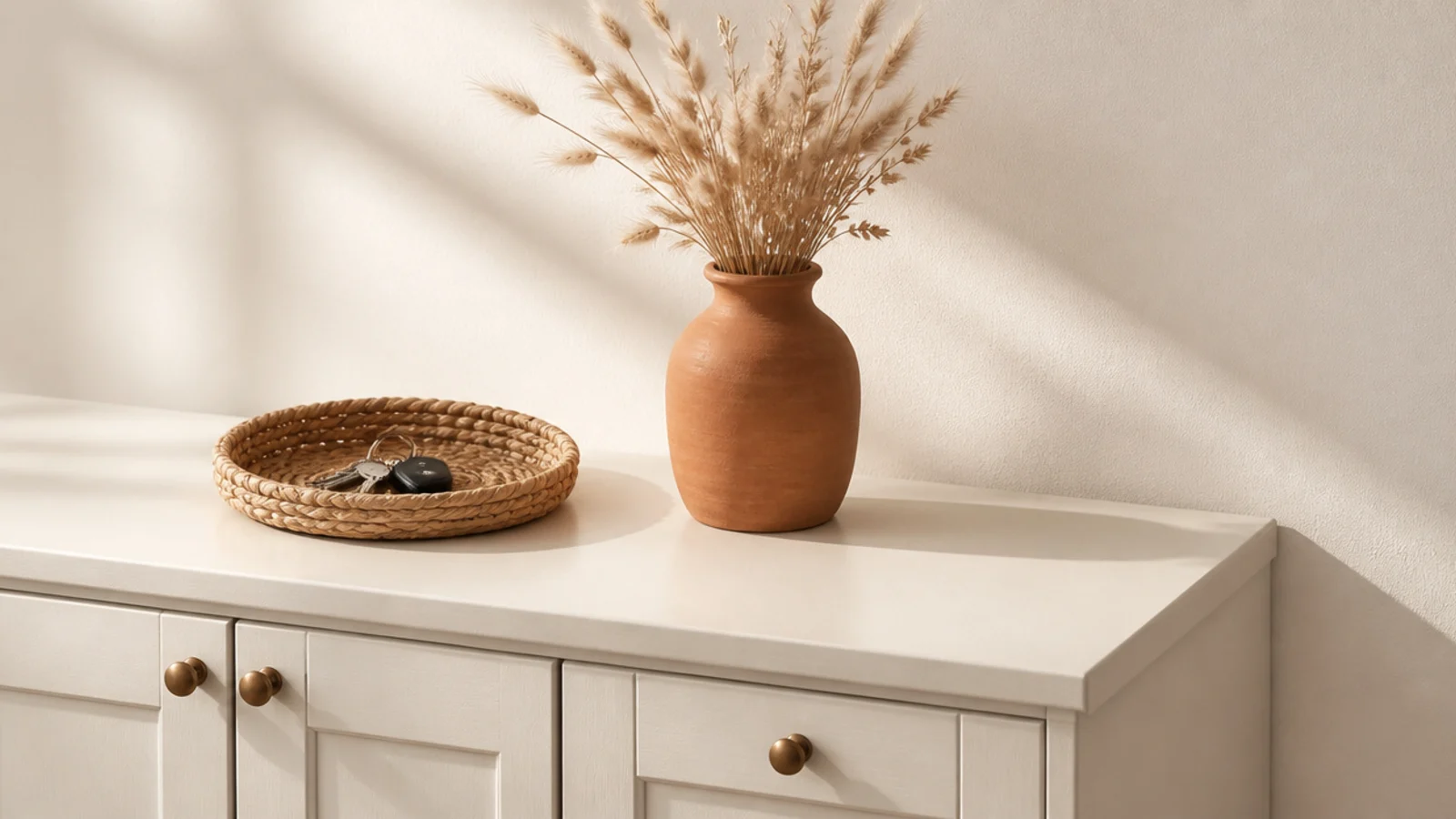
The top of a shoe cabinet is the most useful surface in the entry and the fastest one to lose.
One woven tray for keys and one small plant is the whole styling brief. Anything more and mail lands there within a week, then stays for a season. $
8. Cane or rattan panels that let air move
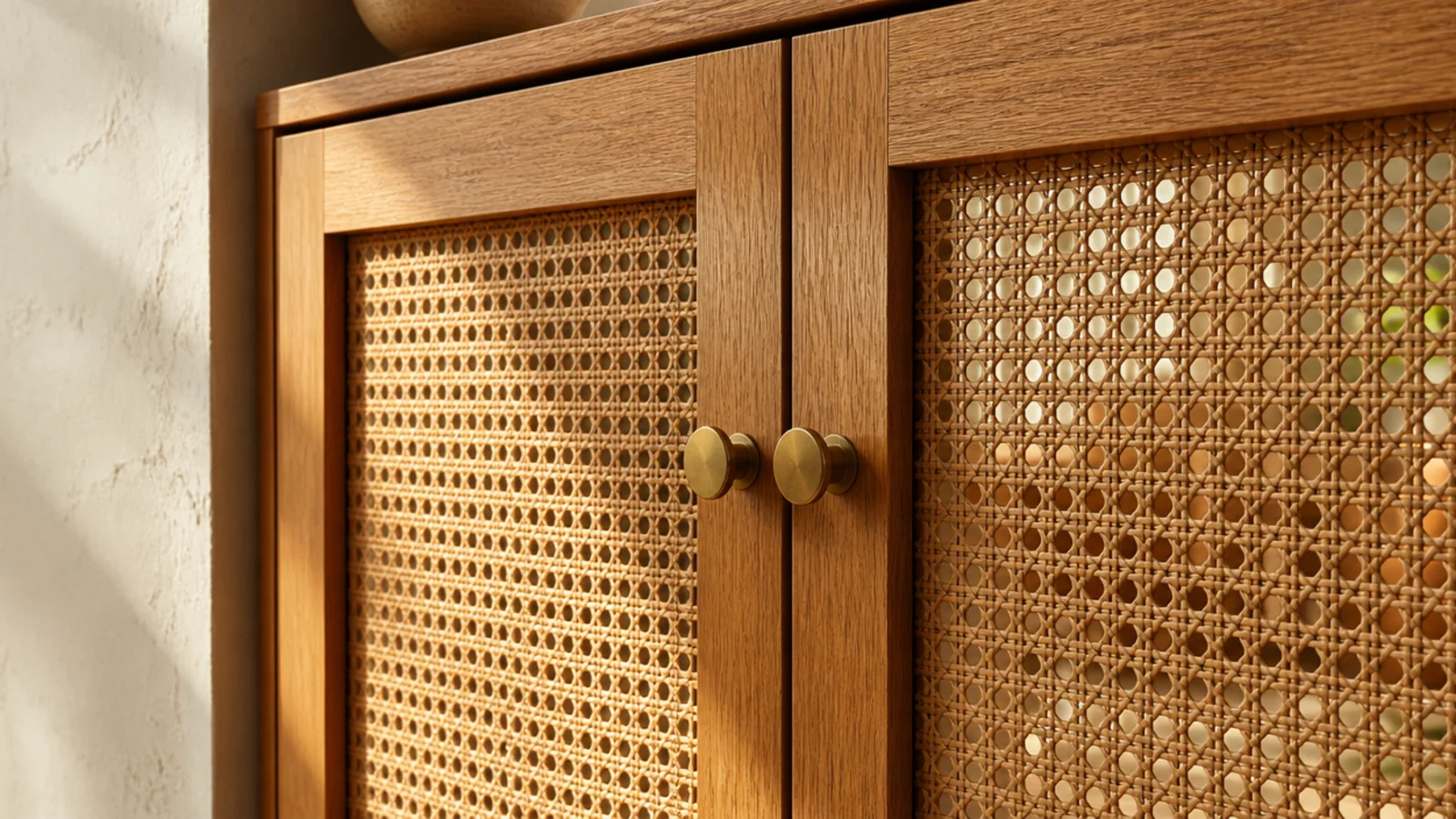
Woven door panels solve the ventilation problem visually rather than technically, which is why they suit closed shoe storage so well.
Cane webbing runs about $20 a yard and can be retrofitted into a routed door frame in an afternoon. Keep it out of direct sun, which dries and splits the weave. $$
9. Fluted fronts that hide the daily scuffs
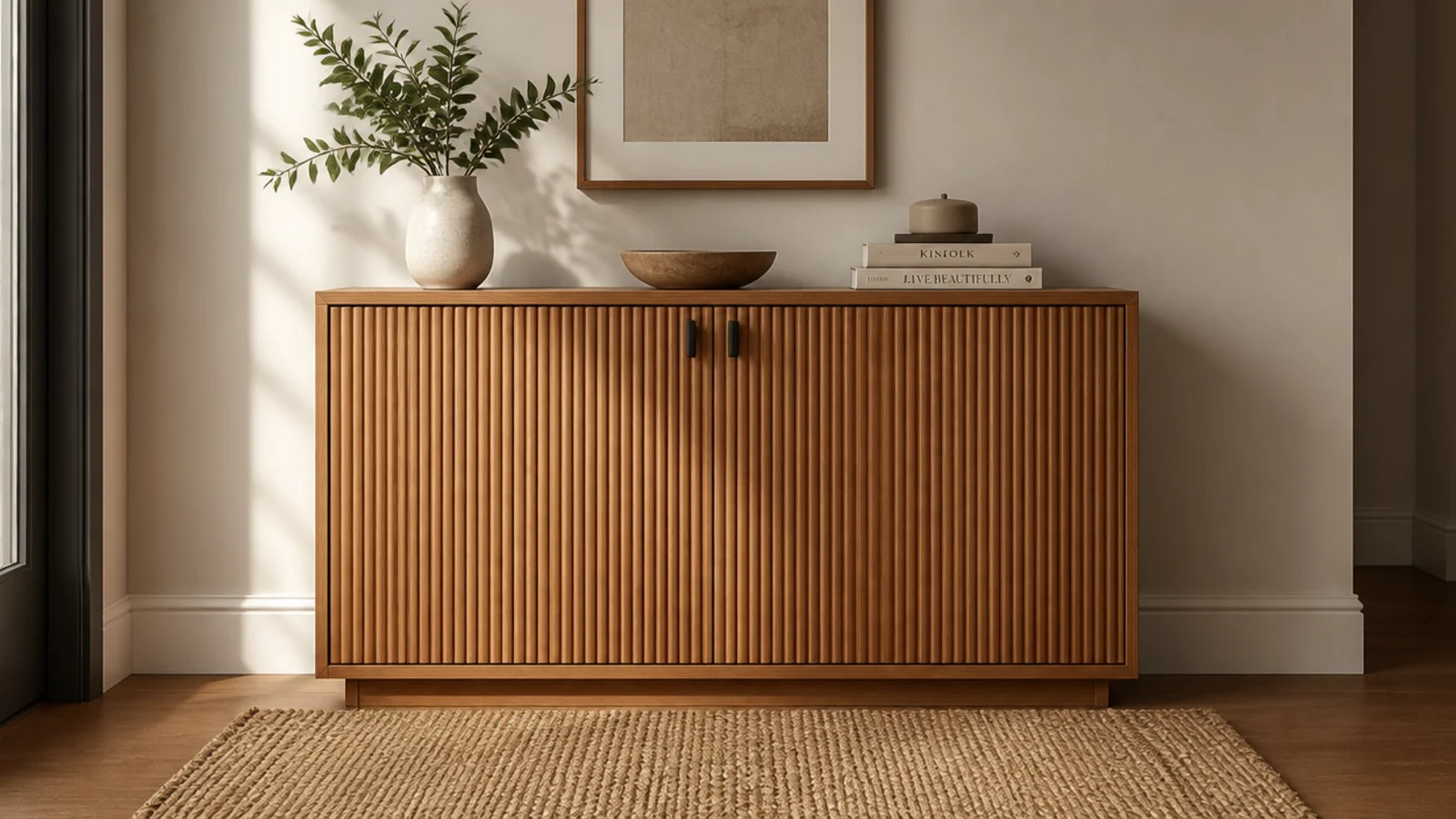
Entry cabinets take a scuff line at foot height within weeks. A flat painted door shows every mark; a fluted one hides them in its own shadows.
Reeded panels cost around $35 for a door-sized sheet and glue straight onto a flat front. Paint after fitting, and use two thin coats rather than one thick one. $$
10. Size the cabinet to the wall between doorframes
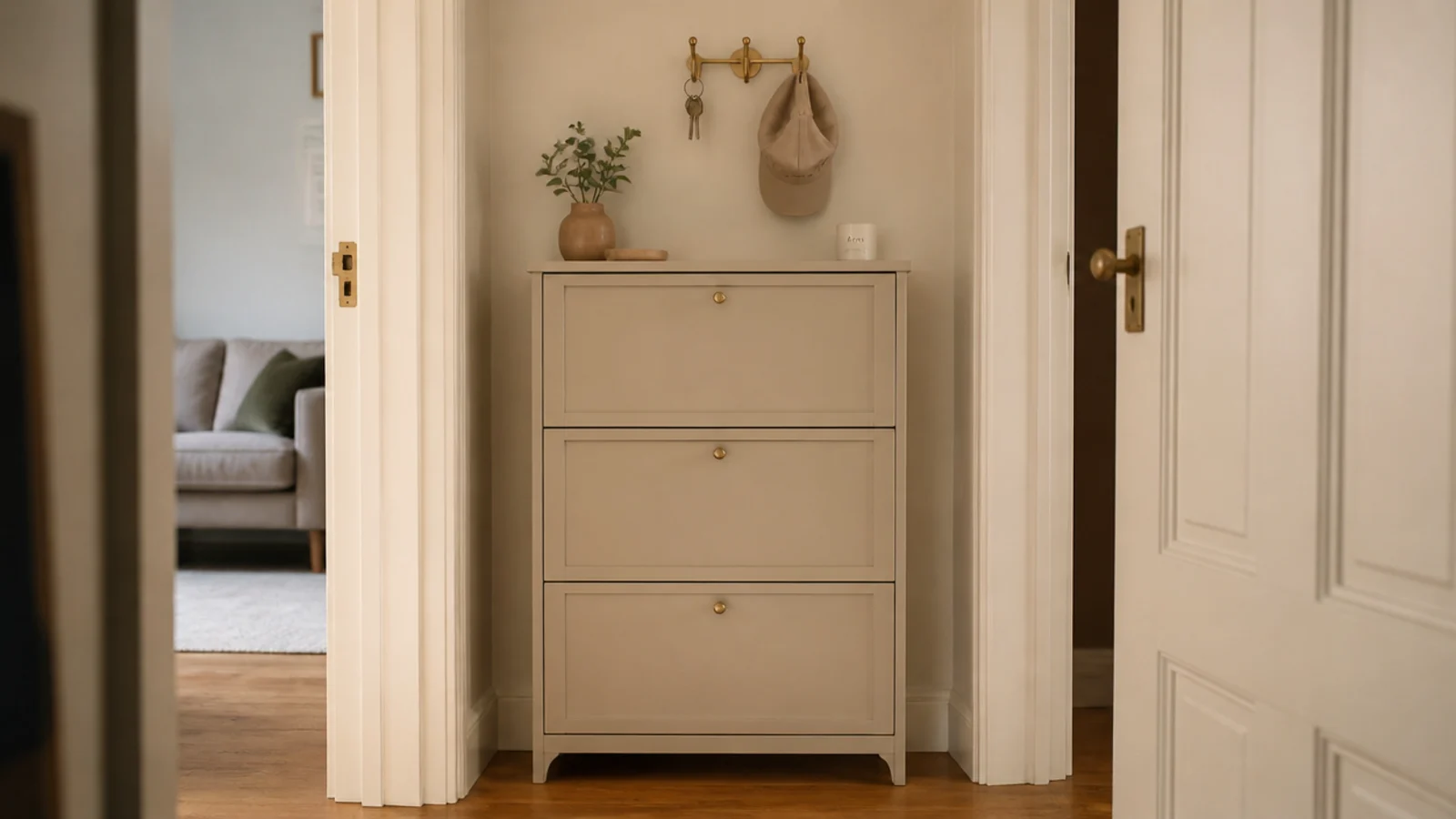
A cabinet that fills its wall bay reads as architecture. One with four inches spare on each side reads as furniture parked in a corridor.
Measure the clear bay, subtract half an inch, and buy or build to that. This one decision does more for how a cabinet looks than the finish does. $$
11. Soft-close hinges because feet close these doors
Nobody bends down to shut a shoe cabinet. They nudge it with a foot on the way past, forever.
Soft-close hinges cost about $6 a pair and take that abuse without loosening the screws in the carcass. On a tilt-out, check for a damped return rather than a bare spring. $
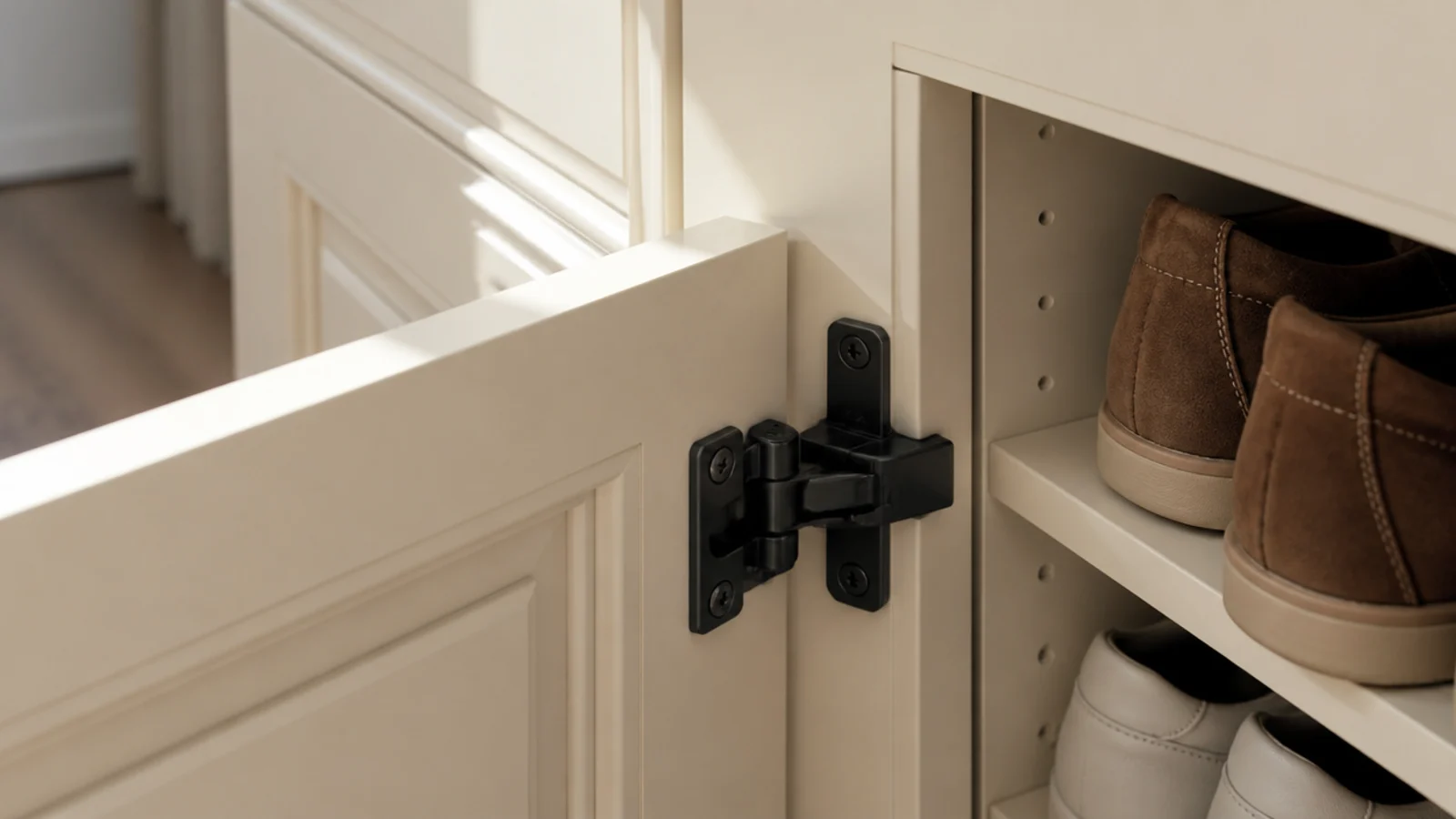
12. Adjustable shelves inside a tall cabinet
A tall cabinet with fixed shelves is four small cabinets stacked, and none of them fit a boot.
Drilled peg holes at one-inch intervals let you set six-inch gaps for flats and a 16-inch gap for boots in the same carcass. Retrofitting a shelf-pin jig costs about $30 and pays for itself immediately. $$
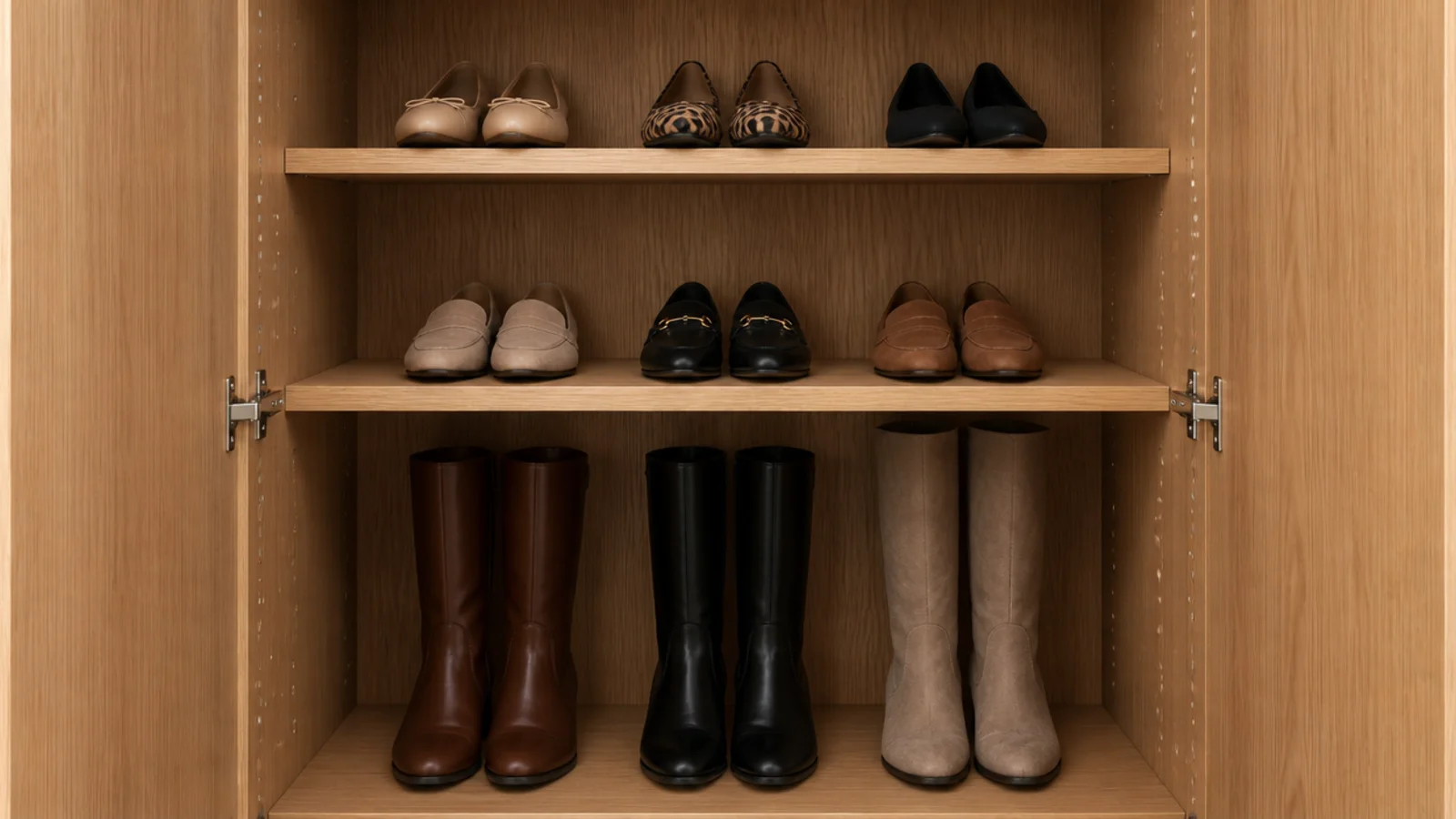
13. Build a 16-inch boot bay into the cabinet
Boots are the reason most closed shoe storage fails, and the fix is one tall bay rather than a bigger cabinet.
Sixteen inches of clear height at the bottom takes three pairs of ankle boots standing up. Put it low: that is where the weight belongs and where wet soles do least damage. $$
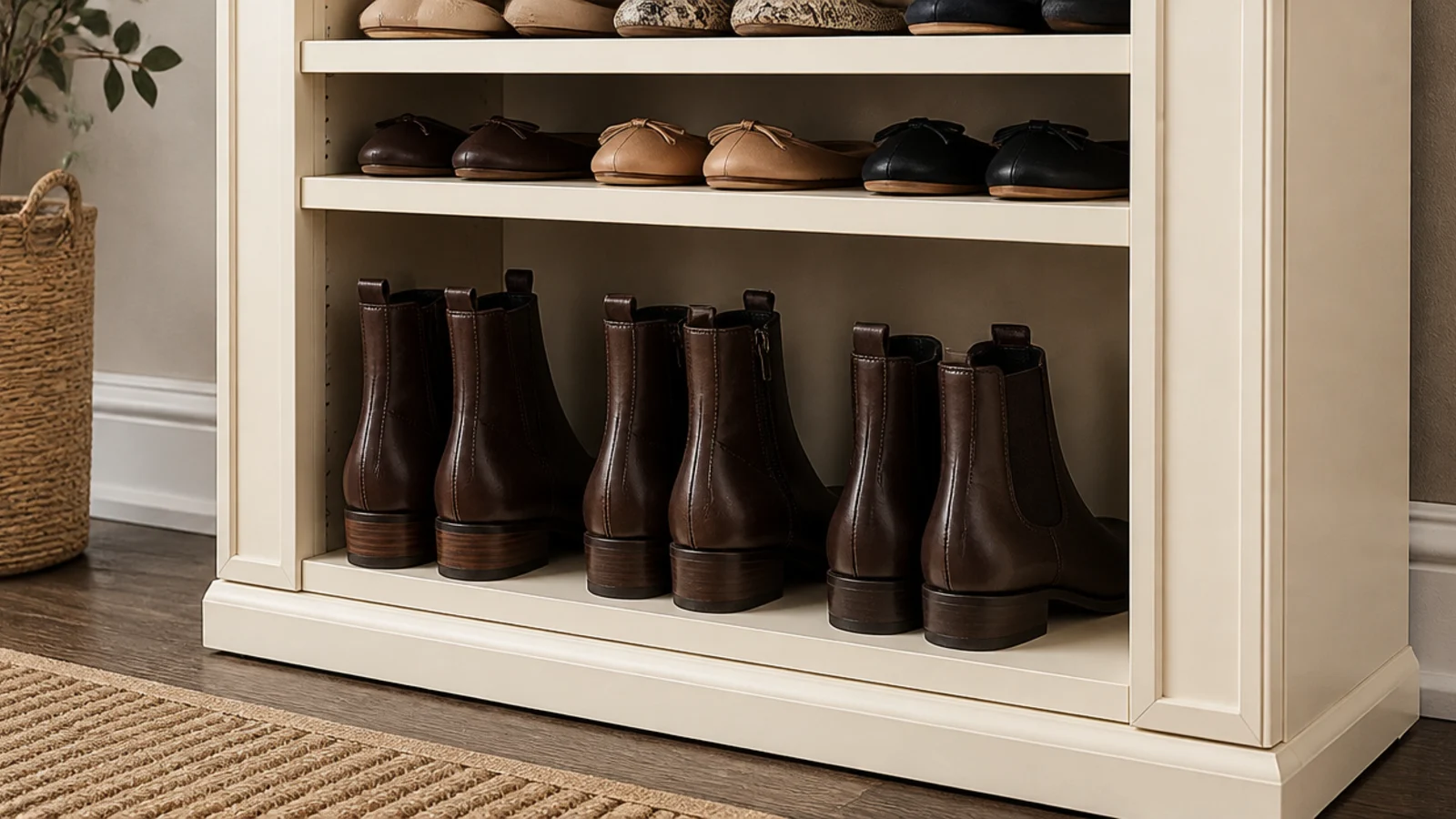
14. A mirrored door that does two jobs
A full-height mirror on the cabinet door gives a small entry depth and gives the household a reason to stop there.
Use a mirrored panel bonded to the door rather than a mirror hung on it, and add a bumper at the top corner so it never meets the wall. $$–$$$
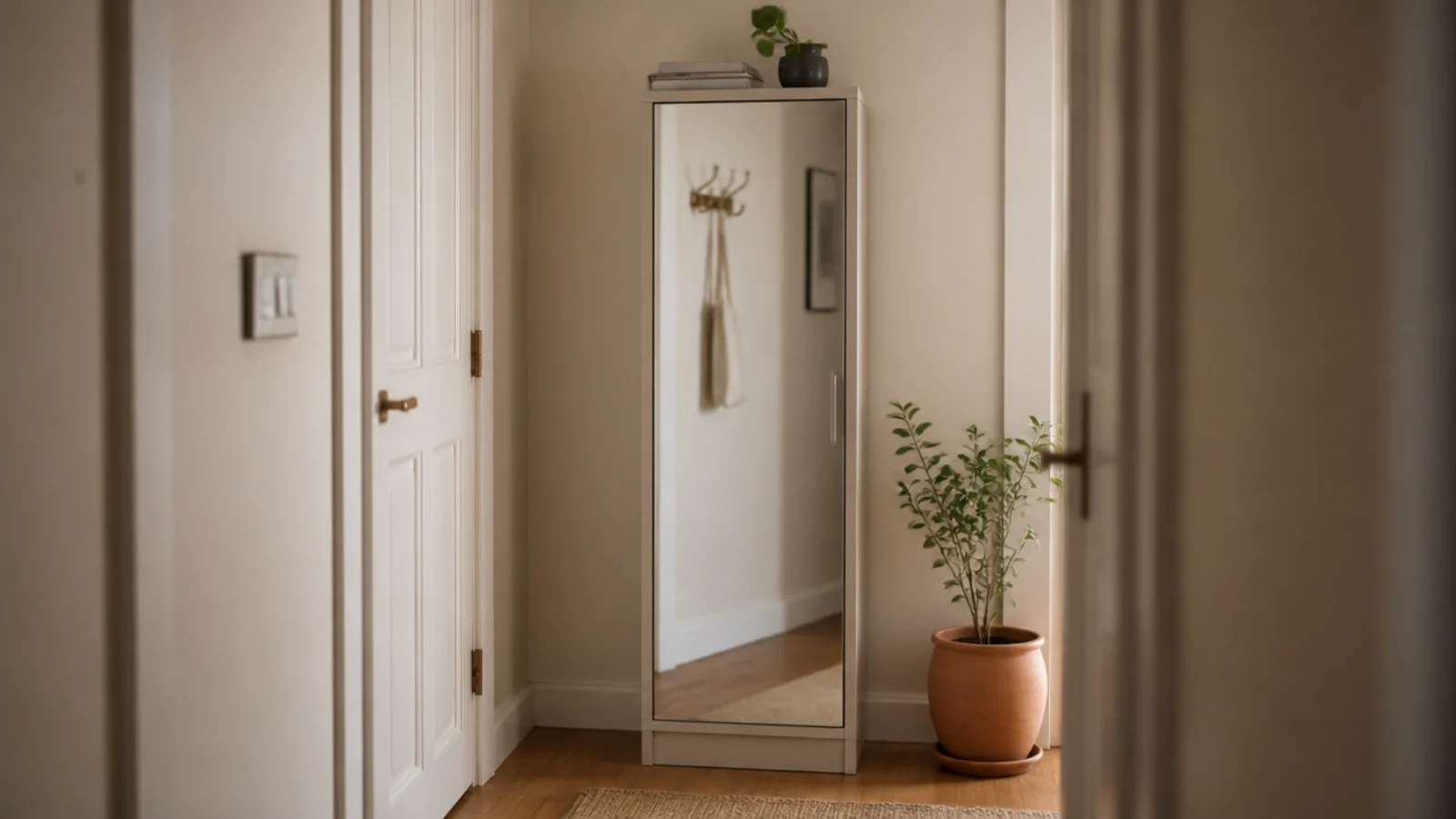
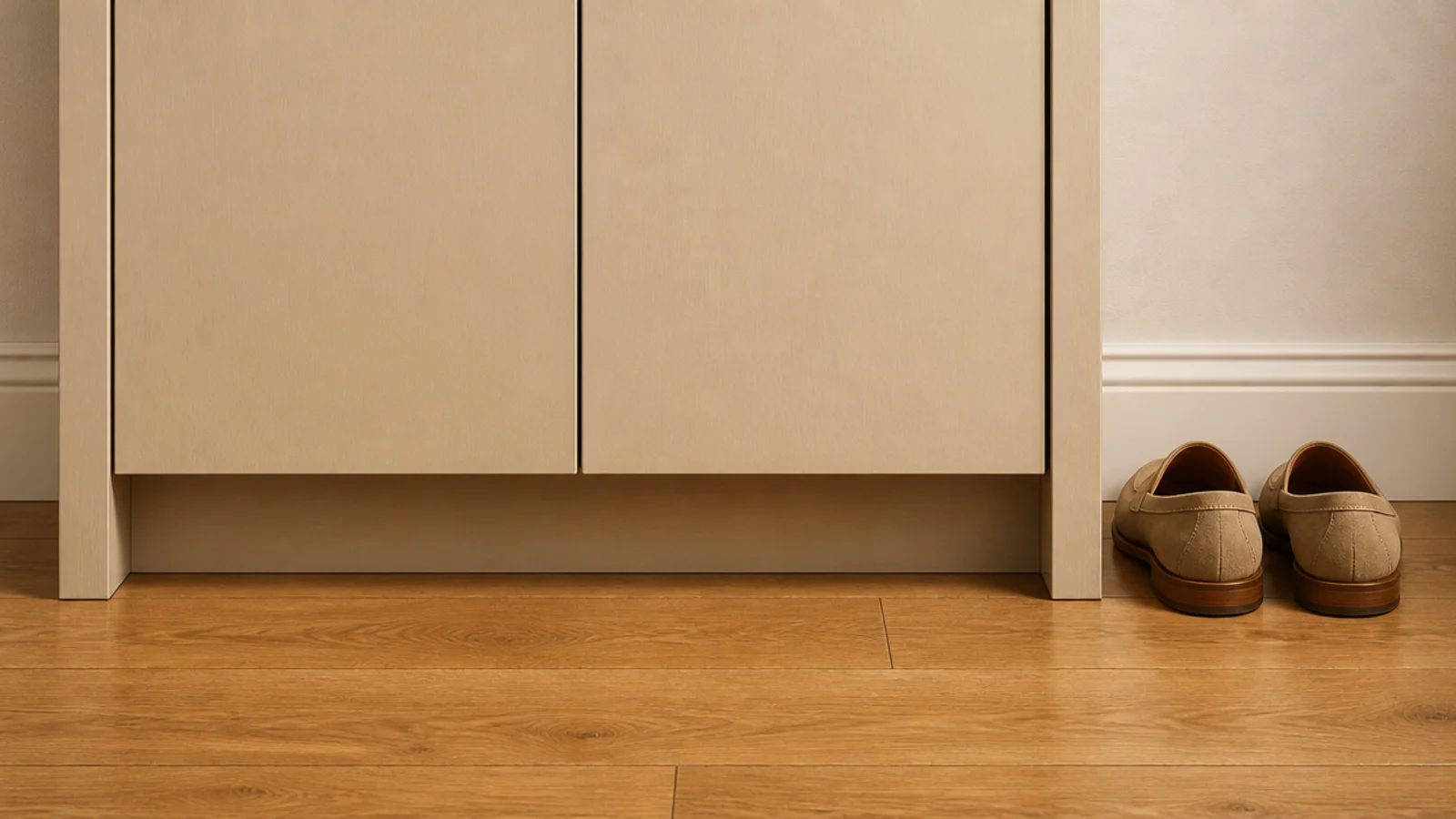
15. A toe-kick recess so you can stand close
A three-inch recess at the base lets you stand right against the cabinet, which is what makes a shallow one feel usable rather than cramped.
It also keeps the lowest board clear of the mop and the wet shoes. On a flat-pack, a site-built plinth set back three inches does the same job. $$
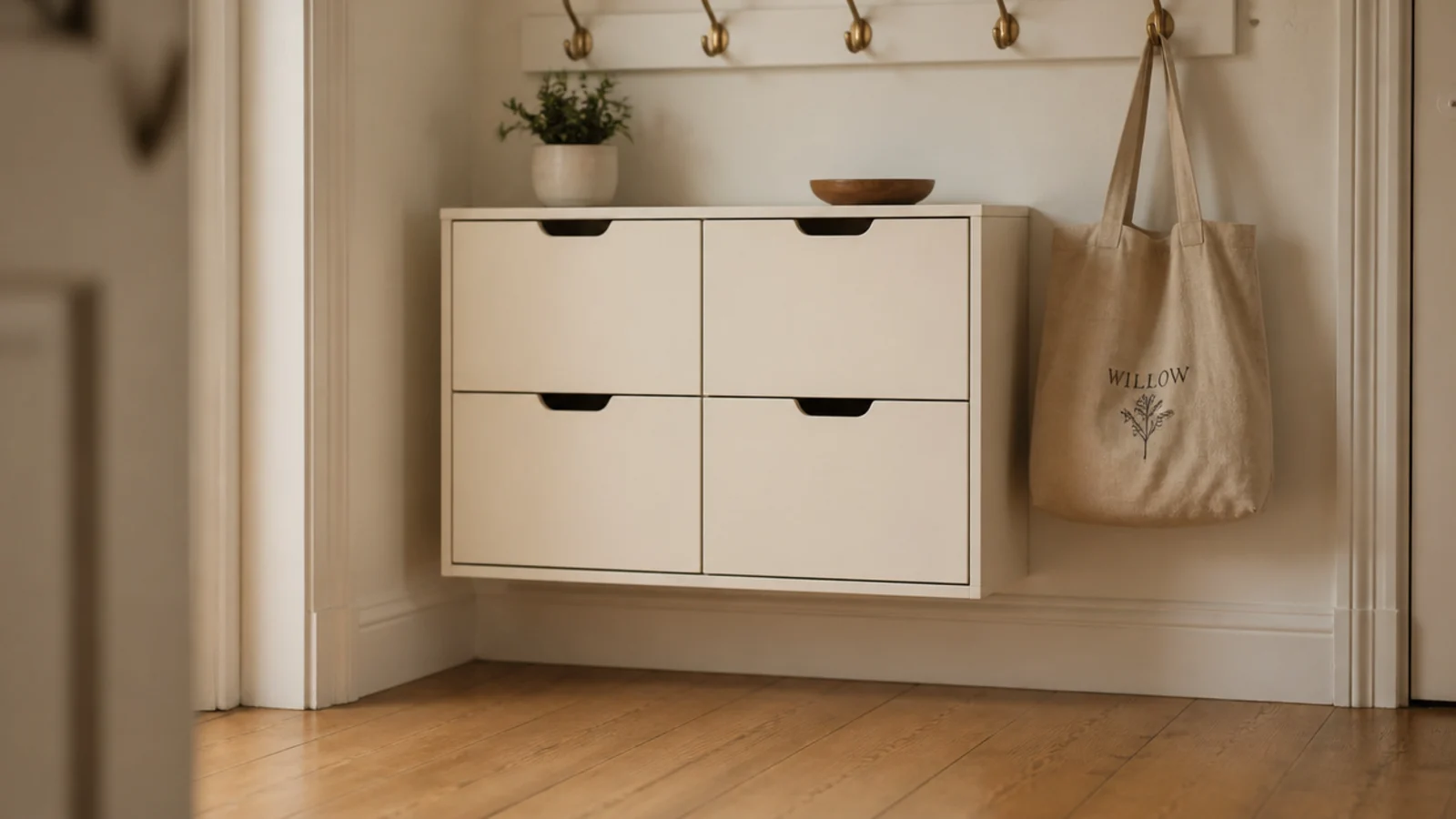
16. A wall-hung cabinet floating off the floor
Mount the carcass ten inches up and the entry keeps its clear floor line, which reads lighter and vacuums in one pass.
Fix into studs or use toggles rated well past the load — a full cabinet can carry 60 pounds. Not a rental move unless you are happy patching four holes. $$–$$$
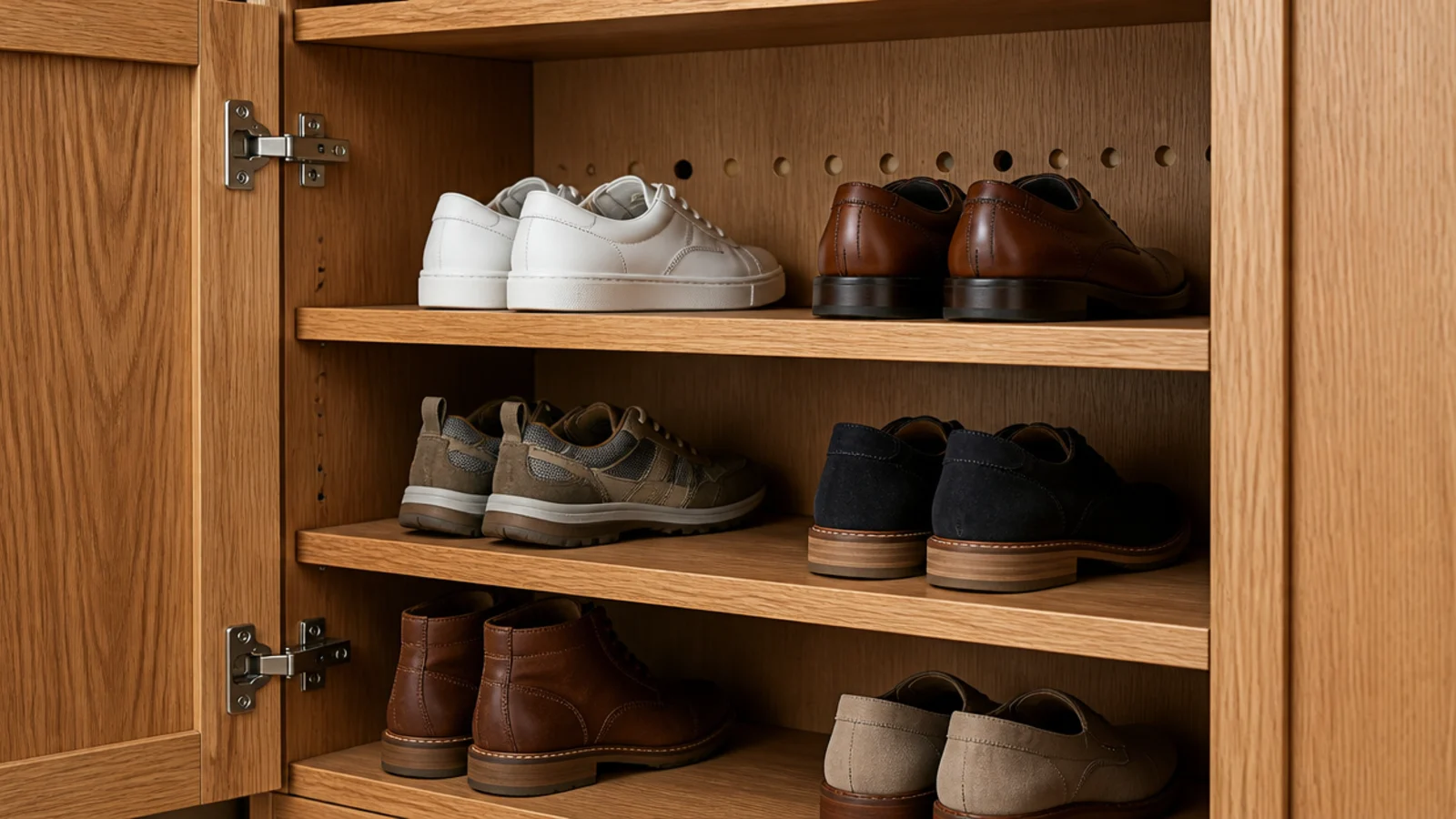
17. Drill the back and gap the shelves
The reason a closed cabinet smells is trapped moisture, and it is solved in construction rather than with a spray.
Drill a row of one-inch holes along the back panel and hold each shelf half an inch off the back so air can rise through the whole stack. Ten minutes of work, permanent result. $
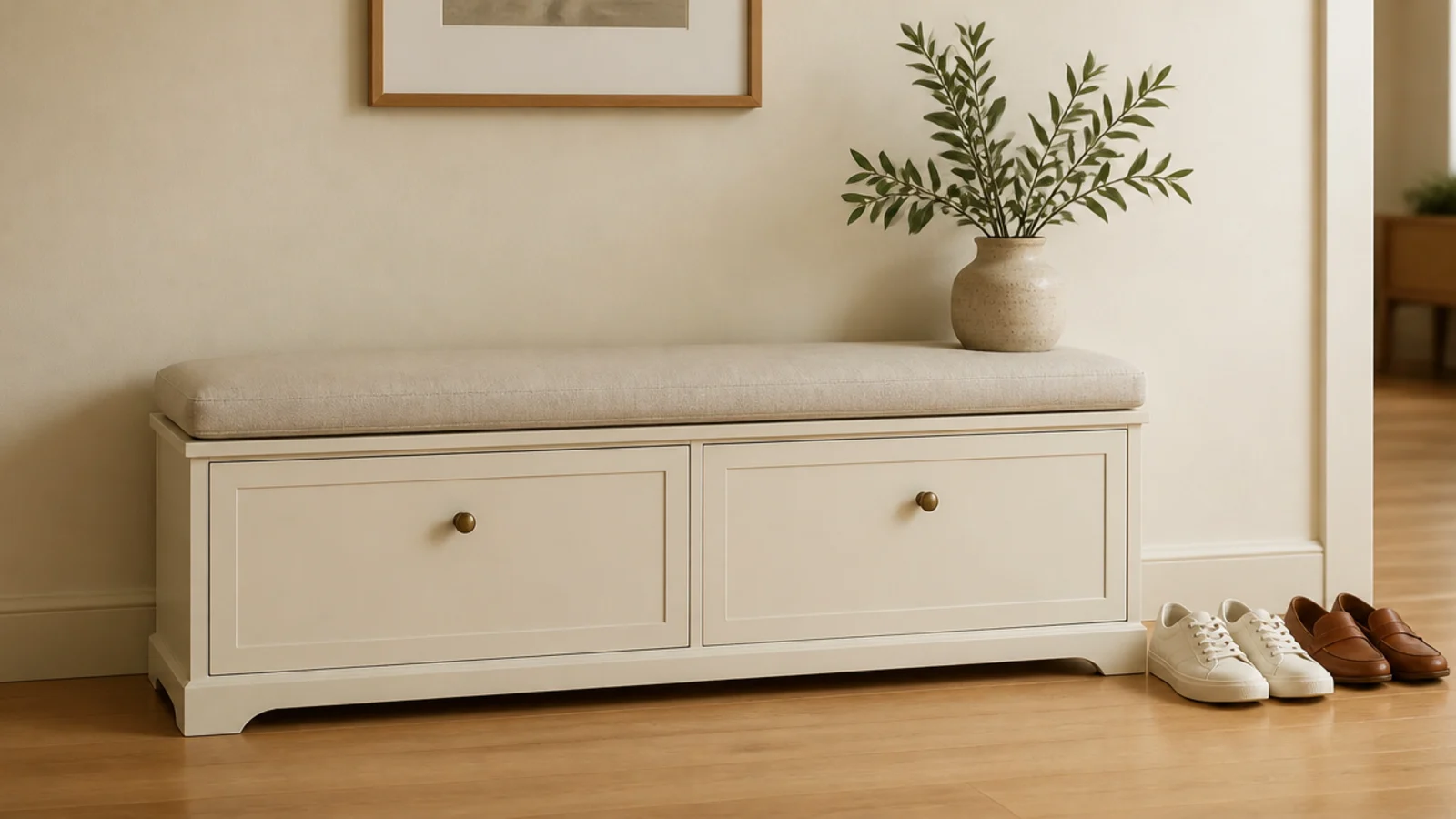
18. A cabinet with a bench top at 18 inches
Cap a low cabinet at 18 inches to the top of the cushion and it becomes the seat everyone uses to put shoes on properly.
That height is not negotiable — 16 inches feels like a step and 20 leaves feet dangling. There is more on seat depth and cushions in the shoe storage bench guide. $$
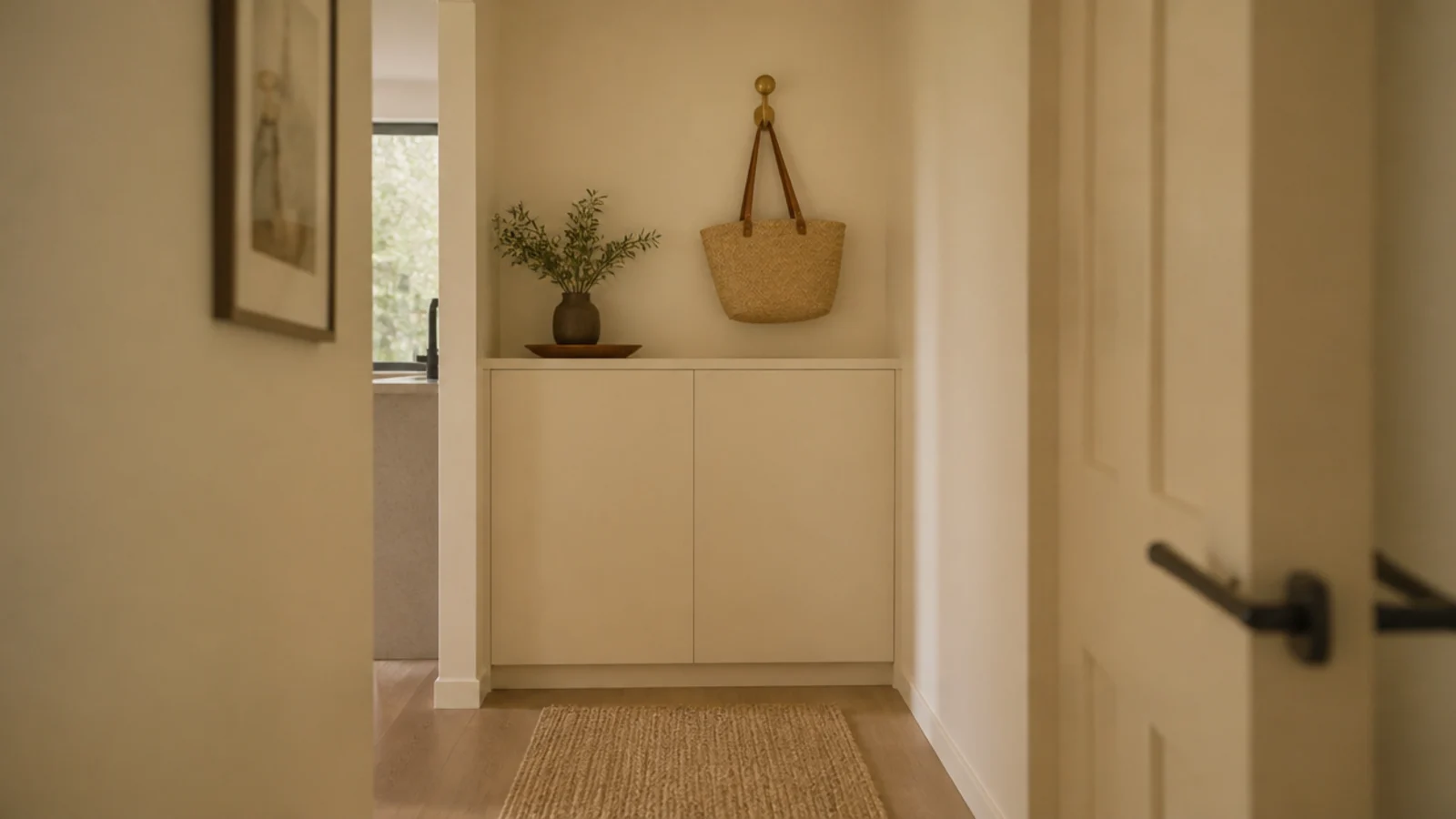
19. Paint the cabinet the exact wall color
Shoe storage sits low and reads as visual weight, which is what makes a small entry feel blocked.
Painting the cabinet the wall color rather than the floor color removes that weight entirely. Match the sheen too — a satin cabinet against a matte wall still reads as a separate object. $
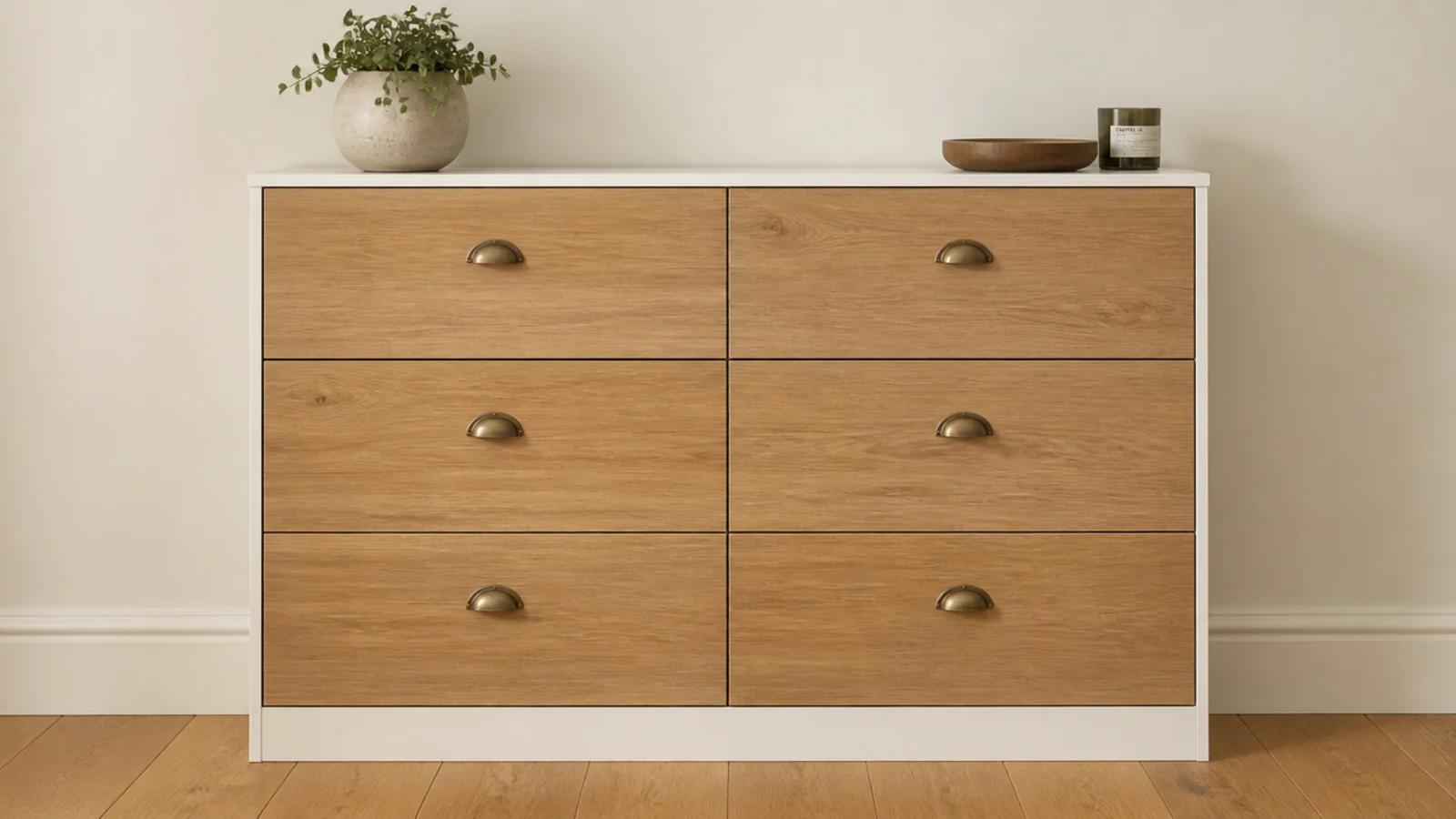
20. Add a plinth and new fronts to a flat-pack
The cheapest route to a cabinet that looks built in is a $60 carcass with $80 of upgrades on the outside.
Slab oak or painted MDF fronts, aged brass pulls and a solid plinth at the base do almost all of it. Leave the interior exactly as it came. $$
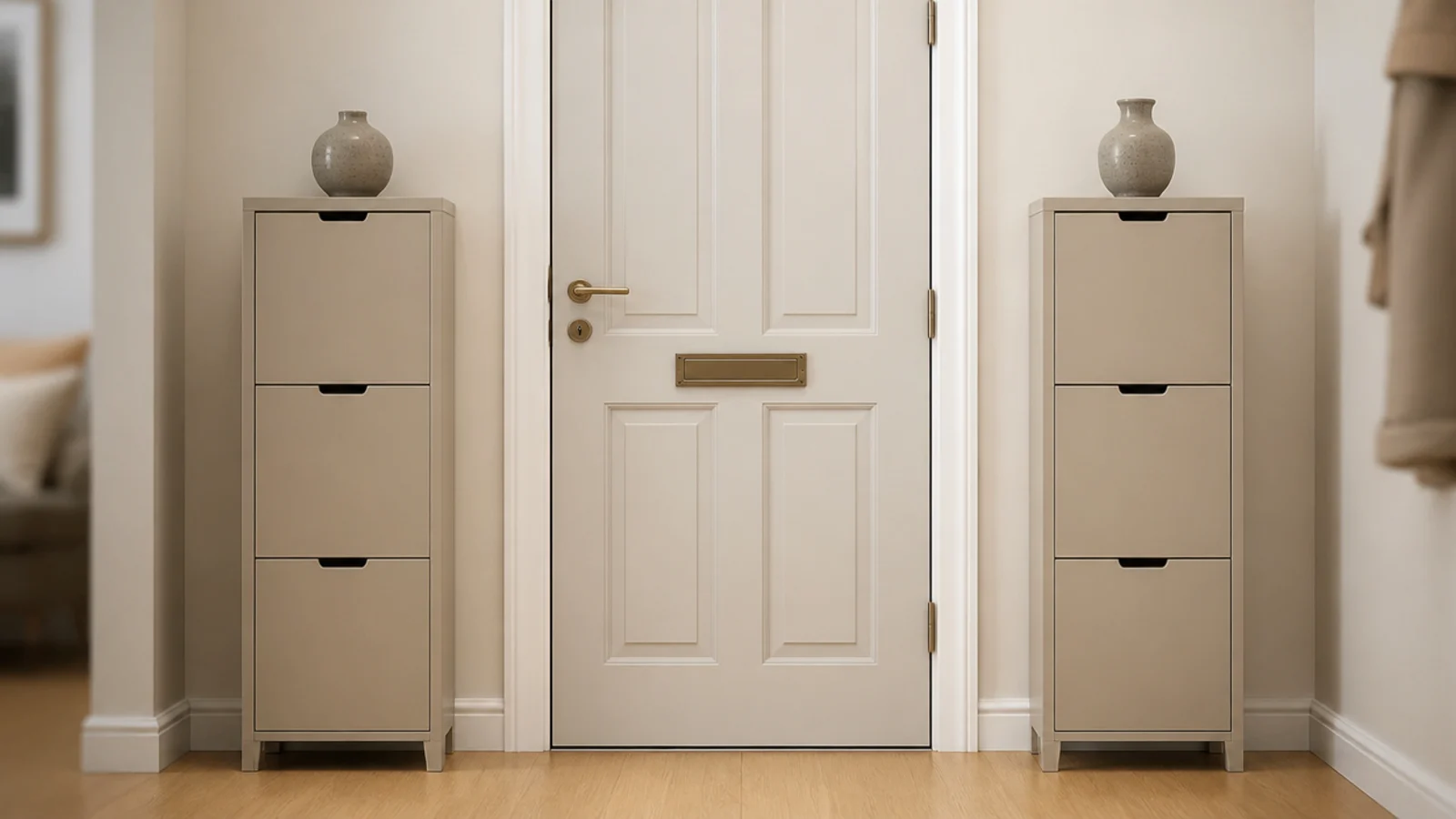
21. Two slim cabinets flanking a doorway
Two narrow cabinets of equal height either side of a door look planned in a way one wide cabinet never does.
Keep each under 14 inches wide so the doorway still breathes, and top both with the same object. Symmetry is doing the work, so do not break it with styling. $$–$$$
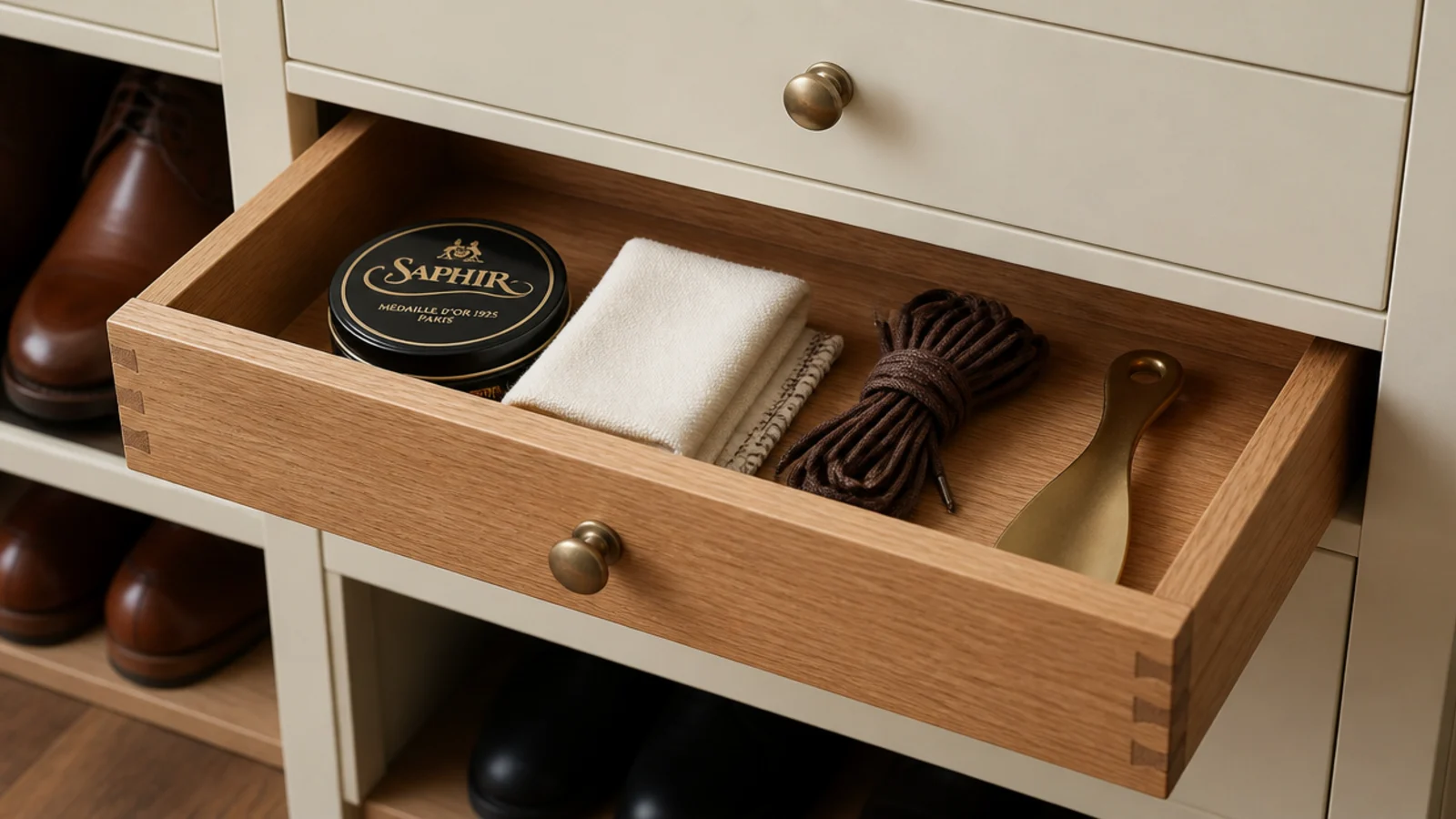
22. A shallow drawer for laces, polish and shoehorns
Shoe care lives in four places in most houses, which is why it never happens.
One shallow drawer inside the cabinet — three inches deep is plenty — holds polish, a cloth, spare laces and a shoehorn. Keeping it with the shoes is the entire trick. $
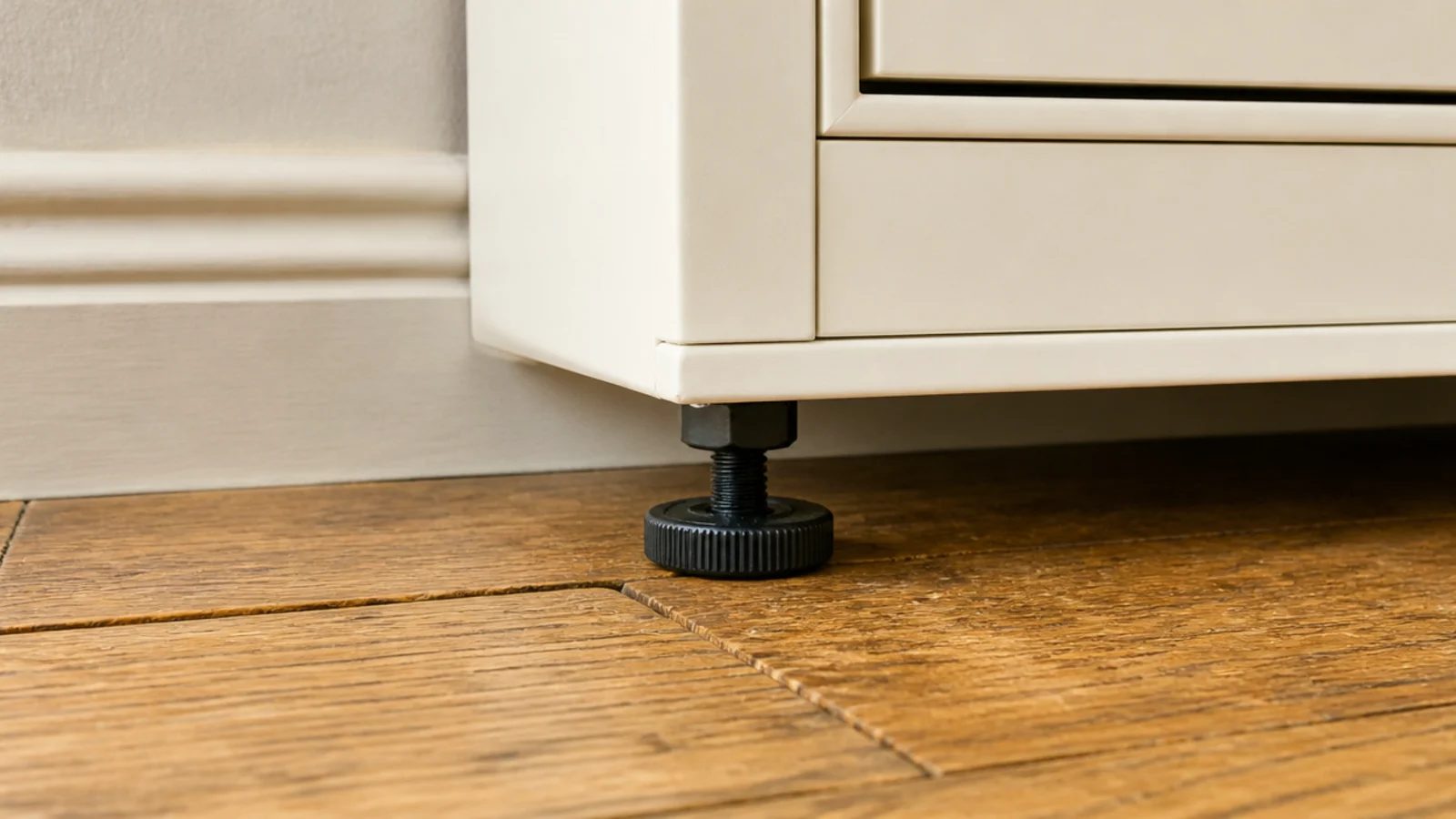
23. Adjustable feet for a floor that is not level
Entry floors are almost never flat, and a cabinet that rocks will loosen at the joints within a year.
Threaded adjustable feet cost about $8 for four and take five minutes to fit. Level side to side first, then front to back, then check the doors close on their own weight. $
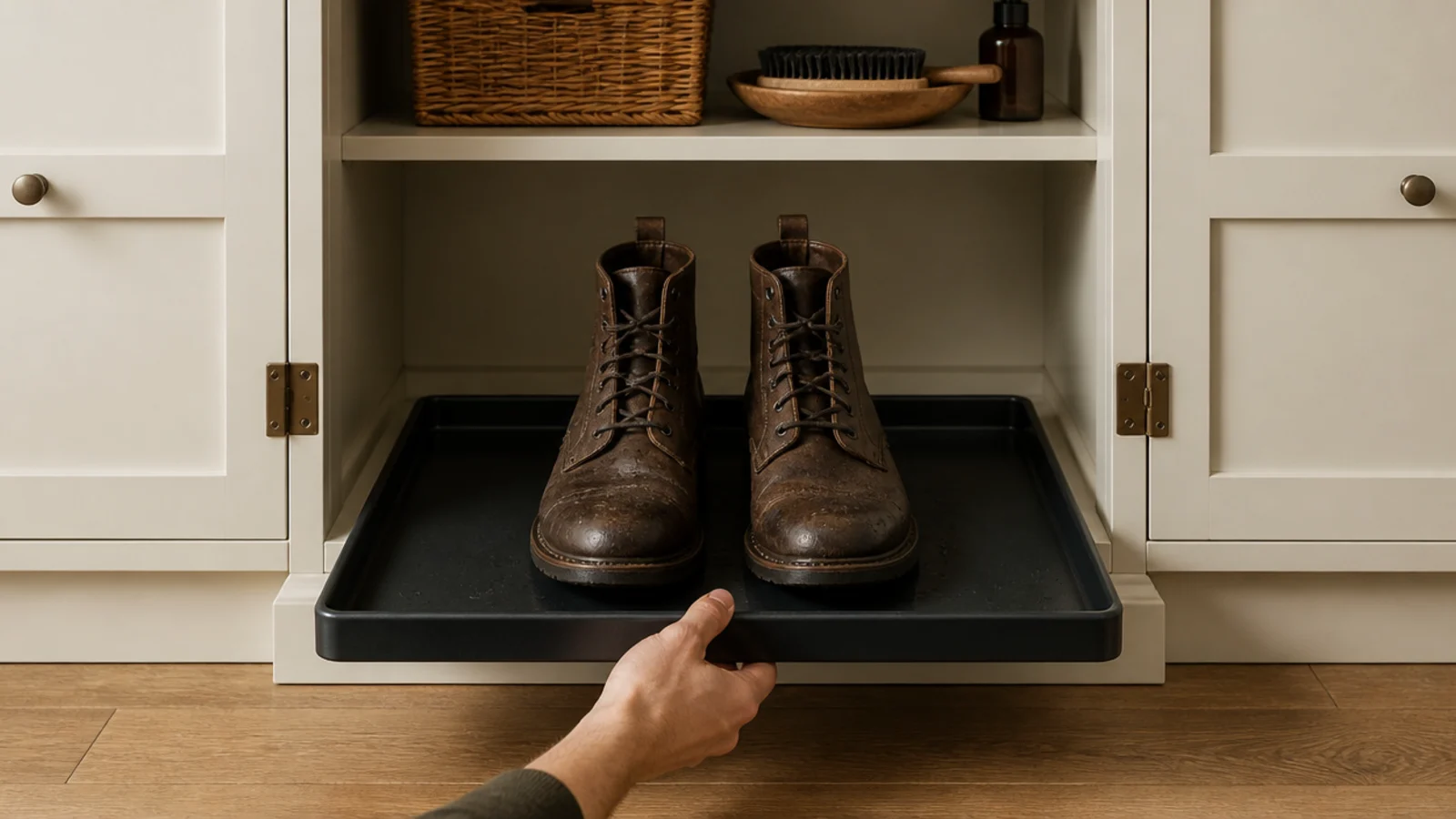
24. A removable tray in the cabinet base
Grit and damp collect in the bottom bay, and cleaning around shoes is why nobody does it.
A metal tray with a raised lip, cut to the internal width, lifts out to be rinsed at the sink. Give it to the boots and the rest of the cabinet stays dry, which is the same logic behind keeping shoes out of sight properly. $
25. Match cabinet depth to the walkway you have
The last rule, and the one that overrules every other preference on this list.
Measure the walkway, subtract the cabinet depth, and if less than 36 inches remains, buy shallower. A cabinet you edge past is a cabinet you resent, however many pairs it swallows. $$
Mistakes to Skip
- Choosing a hinged door in a hall under 40 inches wide. The door will be permanently in your way, and within a month it stops getting opened at all.
- Sealing shoes into a cabinet with no ventilation. Damp from a day of wear has nowhere to go, and the whole cabinet develops a smell that outlasts the shoes.
- Trusting the pair count printed on the box. It assumes small flat shoes packed perfectly, and every boot in the house immediately costs you two of those slots.
Frequently asked questions
How deep should a shoe storage cabinet be?
Nine inches if the shoes tilt, thirteen if they lie flat. A men's size 12 sneaker is about 12.5 inches long, so a tilt-out drawer angled at 45 degrees holds it in nine inches of wall depth. That four-inch saving is the whole reason tilt-out cabinets fit hallways where a standard cabinet blocks the walkway.
Do closed shoe cabinets make shoes smell?
They can, and it is always a moisture problem rather than a shoe problem. A pair worn all day goes in damp, the door traps it, and by March the whole cabinet smells. Drill a row of one-inch holes in the back panel, leave a half-inch gap at each shelf back, and never shut a wet pair inside.
How much clearance does a shoe cabinet door need?
A hinged door needs its own width in clear floor space, so a 20-inch door needs 20 inches of swing plus room for you to stand. A tilt-out front swings out roughly seven inches at the top and needs almost nothing else. In a hallway under 40 inches wide, choose tilt-out or sliding every time.
How many pairs does a shoe storage cabinet hold?
Far fewer than the box claims. A three-drawer tilt-out rated for eighteen pairs holds nine to twelve in real life, because the rating assumes flat womens shoes and no boots. Count two pairs per tilt drawer and three per open shelf bay, then add a separate tall bay if anyone in the house wears boots.
Should a shoe cabinet sit on the floor or hang on the wall?
Wall-hung looks lighter and lets you vacuum straight underneath, which matters in an entry that collects grit. It needs solid fixings though, because a loaded cabinet can carry 60 pounds. Floor-standing is the safer default in a rental or on plaster walls, and adjustable feet solve the uneven floors most entries have.
What finish survives a busy entryway cabinet?
A catalyzed or water-based polyurethane on solid wood, or a good melamine face on engineered board. Both wipe clean and shrug off the scuff line that appears at foot height within weeks. Avoid raw or oiled wood on the lower six inches, and avoid high-gloss white anywhere a wet boot might touch it.
Doors first, capacity second. Choose the way the front opens to suit your walkway, set one tall bay for boots, drill the back for air, and the cabinet will still be working in five years. For the open version of the same job see entryway shoe storage, and if the cabinet is going to be the main event in your hall, shoe cabinet ideas goes deeper on styles and finishes. Save the pin before you order.
Want more like this? Browse all 15 shoe storage ideas guides — they all use the same measurements and budget tiers.
Pin it for later
Save this to your Shoe Storage Ideas board
Pin it now so it is waiting for you when the tape measure comes out — and so the next person hunting for this idea can find it too.
Save this pinKeep going
More ideas worth saving while you have the tape measure out.