Shoe Storage Ideas · Listicle
15 Affordable Shoe Storage Ideas for Renters

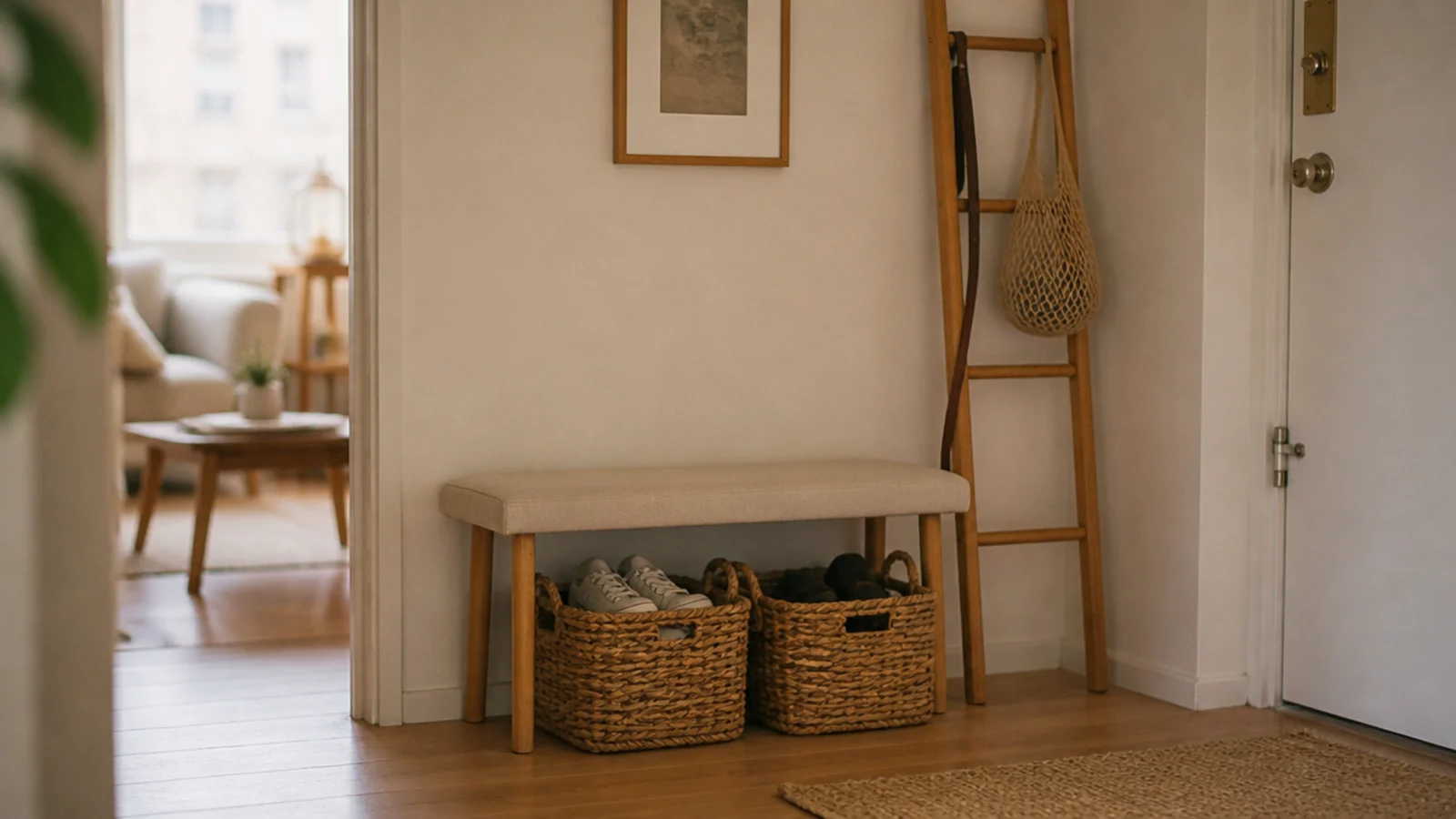
Shoe storage for small apartments has two constraints most guides skip past: you cannot make holes, and you do not have a spare wall. So the answer is never a bigger rack. It is the door faces, the six inches under the bed, the gap beside the fridge, and the vertical air above a closet floor. These 15 fixes all come apart on move-out day.
In this guide17 sections — tap to openHide
- 1.Renter rules for shoe storage in small apartments
- 2.An over-the-door rack that leaves zero holes
- 3.A nine-inch tilt-out cabinet against the entry wall
- 4.Under-bed rolling boxes on castors
- 5.A hanging fabric column on the closet rod
- 6.The wall behind the door nobody uses
- 7.Shoe slot stackers that halve the footprint
- 8.A storage ottoman that is also the seat
- 9.The narrow gap cart beside the fridge
- 10.Renter-safe adhesive rails with honest limits
- 11.Drop-front boxes stacked toward the ceiling
- 12.A leaning ladder rack with no fixings at all
- 13.A bench at eighteen inches with two baskets
- 14.Vacuum bags for the off-season pairs
- 15.A tension rod for boot clips in the closet
- 16.A capped two-pair landing mat
- 17.Mistakes to Skip
Renter rules for shoe storage in small apartments
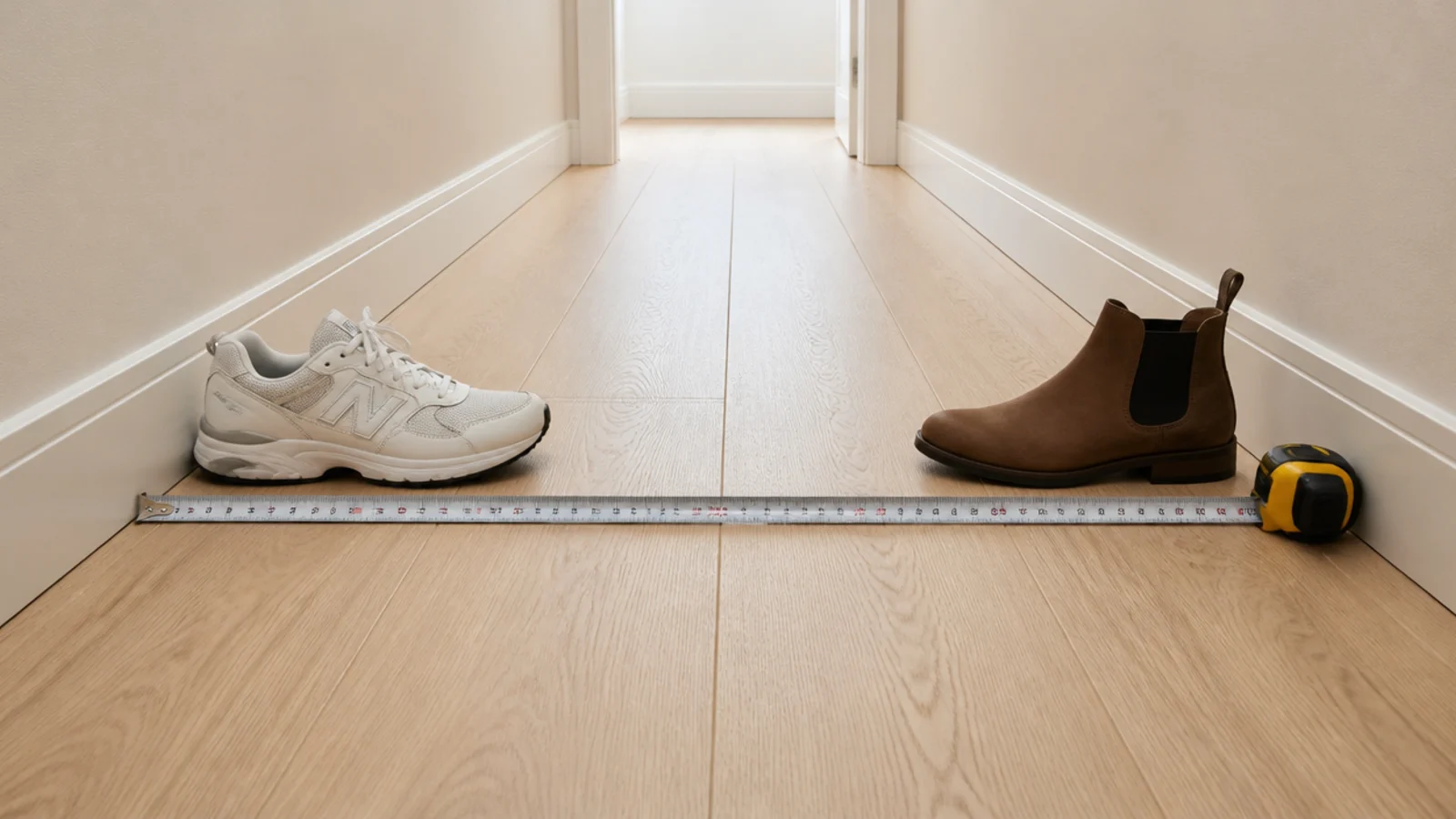
Three numbers do most of the work here, and none of them appear on a product page.
Depth. A men's size 12 sneaker is about 12.5 inches long. Stored flat it needs 13 inches. Tilted at 45 degrees, nine inches is enough. In an apartment hallway that four-inch saving is the difference between a cabinet you walk past and a cabinet you edge around.
Height. Six inches of clear tier height covers flats and sneakers. Ankle boots need 14 to 16 inches, knee-high boots 20. If a rack has evenly spaced six-inch tiers, it holds no boots at all, which is half of most collections between October and March.
Load. Two to three pairs per person plus one seasonal set is what the entry should hold. Everything else goes under the bed or into the closet. A studio that tries to keep the whole collection at the door will always feel cluttered, whatever you buy.
Then the renter constraint. Adhesive strips rated 15 pounds per pair will carry flats on a slim rail and nothing heavier — test them on hidden paint first, because flat builder-grade paint lifts with the strip. Tension rods, leaning racks, over-the-door hooks and freestanding units carry far more and leave nothing behind.
Budget tiers below: $ under $30, $$ $30–$80, $$$ $80 and up.
1. An over-the-door rack that leaves zero holes
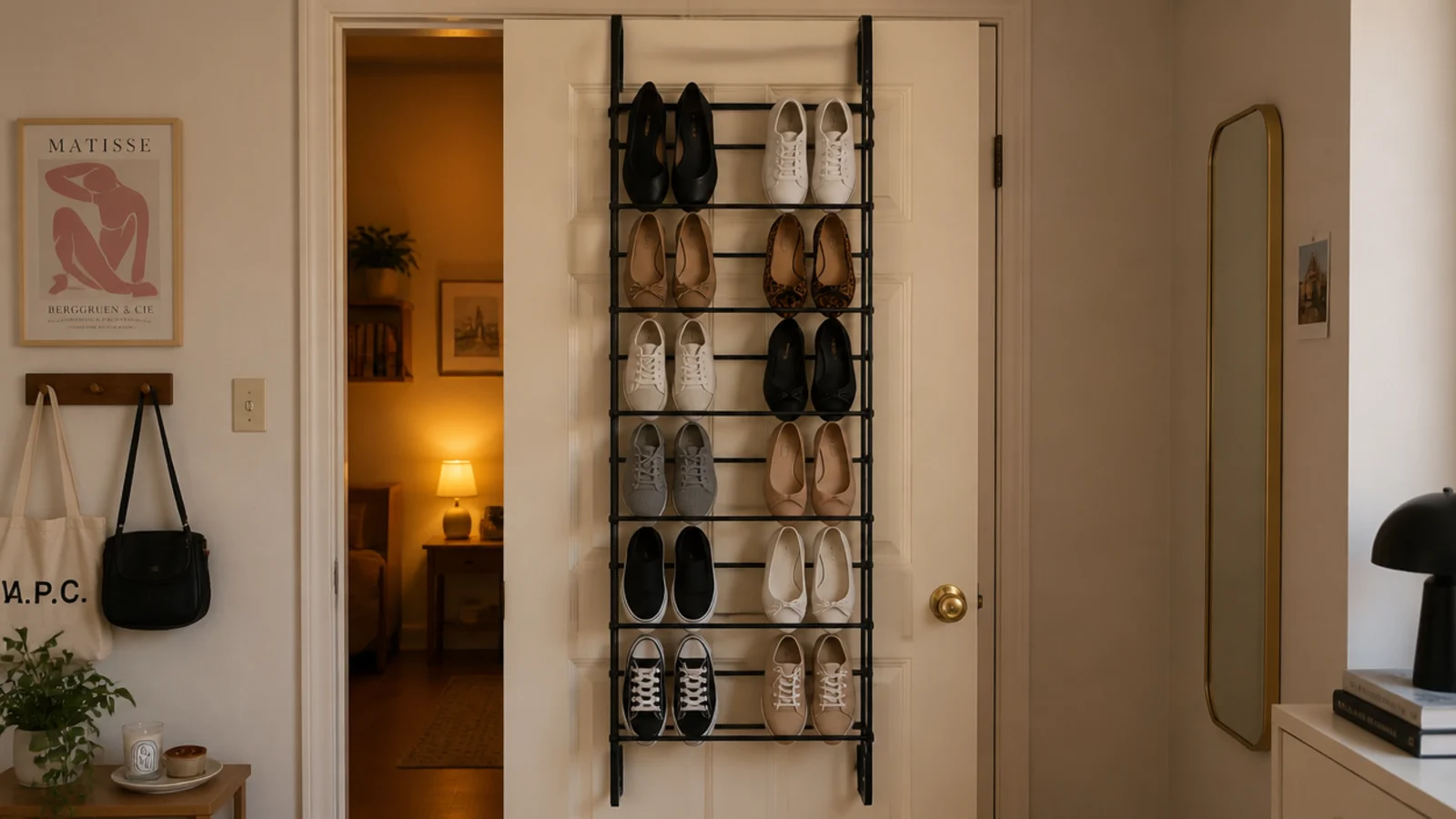
The highest capacity per dollar in any rental. A slim metal rack hooked over a closet door holds twelve pairs of flats and sneakers on a surface that was doing nothing at all.
Measure the door thickness before buying: most hangers fit a 1 3/8-inch hollow door, and a solid-core door at 1 3/4 needs the wider bracket. Then check the door still closes with the rack loaded, because in a shallow closet it often will not.
Canvas pocket versions cost less and suit flats; steel racks hold sneakers properly and do not sag. Either way, keep boots off it. $
2. A nine-inch tilt-out cabinet against the entry wall
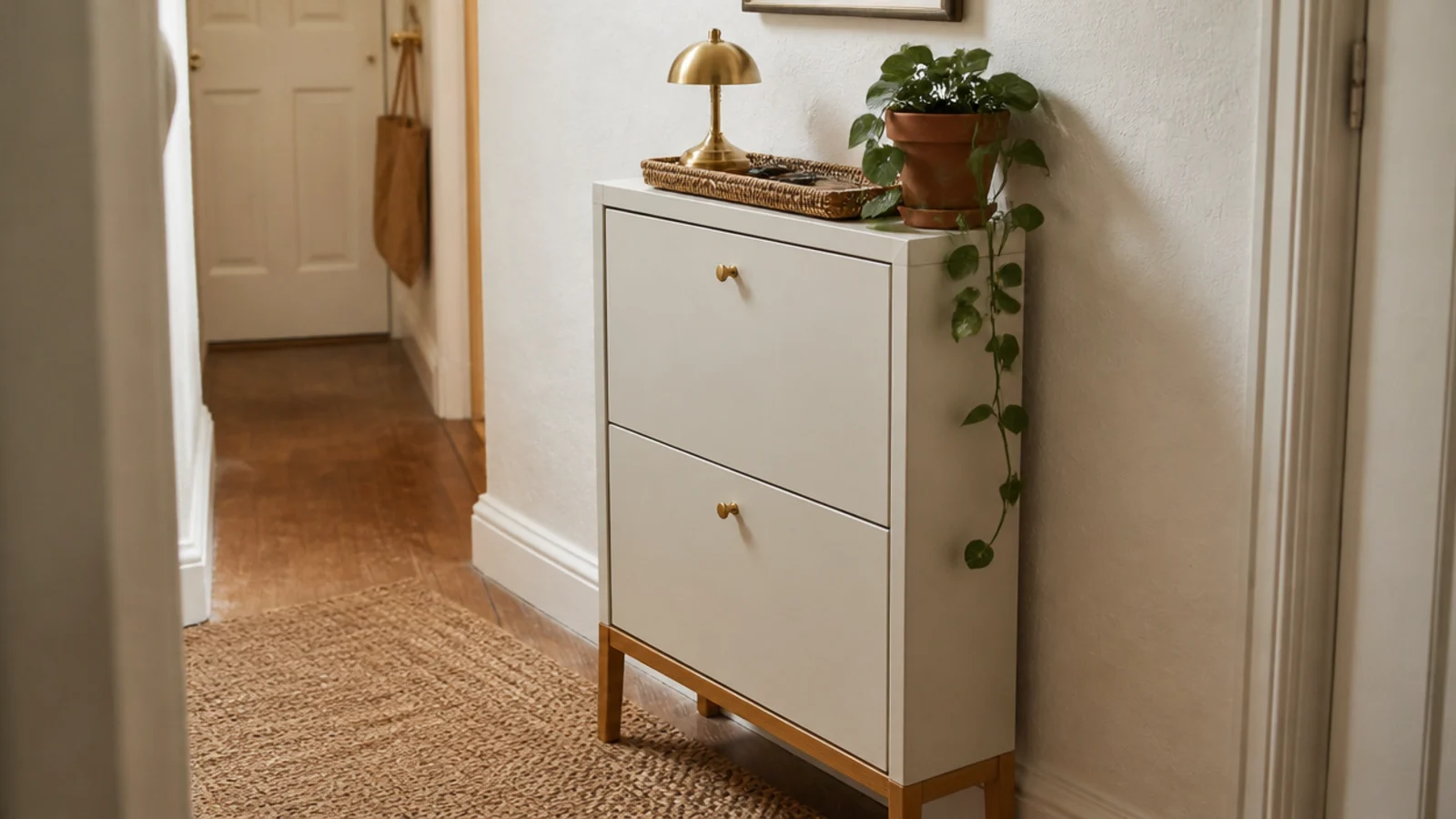
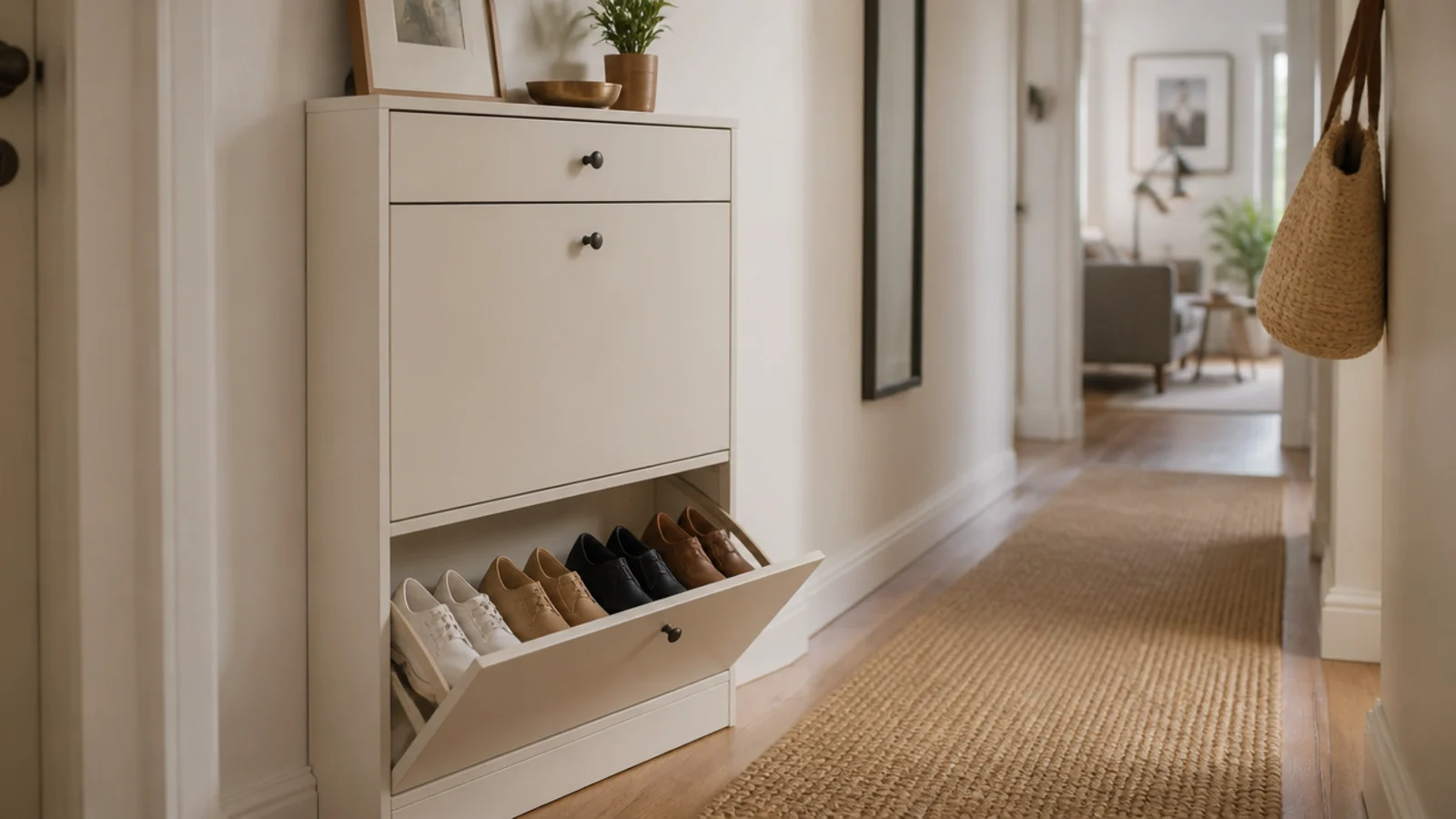
The one piece of real furniture worth buying for a small apartment entry. Shoes sit at an angle inside a shallow drawer, so a nine-inch carcass holds a 12.5-inch shoe and still leaves a hallway walkable.
Two drawers cover six to eight pairs. Look for a damped return rather than a bare spring, since these get shut with a foot every single morning.
The top becomes your key and mail surface, which saves buying a console as well. Keep that surface to one tray and one small plant, or it silently becomes a paperwork pile within a fortnight. $$–$$$
3. Under-bed rolling boxes on castors
The largest unused volume in a small apartment is the six or seven inches under the bed, and it is free.
Measure floor to frame rail, then subtract half an inch for the wheels. Most platform beds give six to seven inches of clear height, which takes flats, sneakers and low boots lying flat. Standard boxes run around 6 inches tall by 16 wide.
Choose fabric-sided boxes with a rigid base over hard plastic, which scrapes floorboards. Bed risers add another three to five inches if you need it, and cost about $15 a set. $
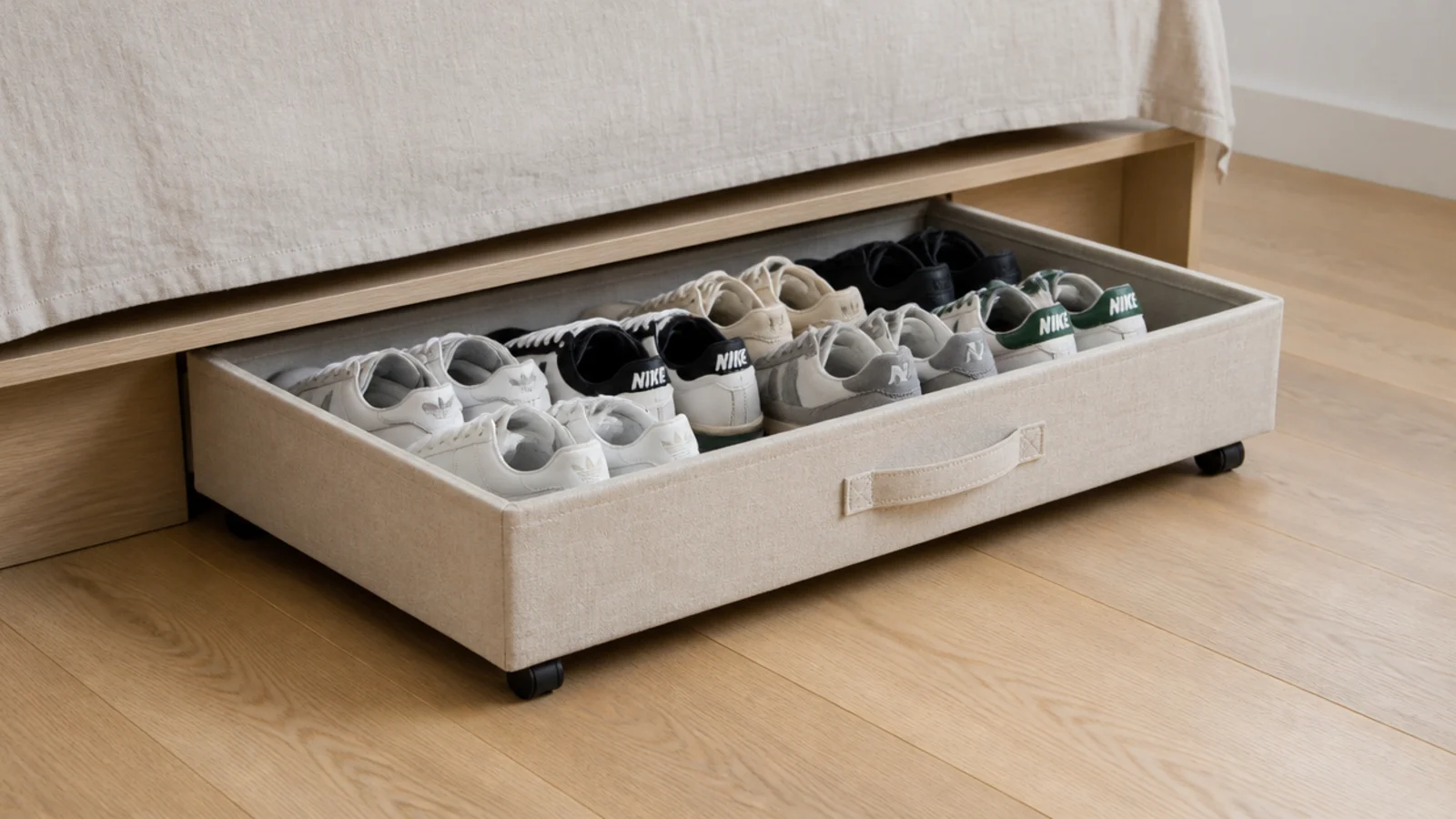
4. A hanging fabric column on the closet rod
A canvas column clipped onto the existing rod gives you eight or ten shelves for around $25 with no tools involved and nothing to patch later.
One pair per shelf is realistic, two only for flats. Choose a version with a stiff board inside each shelf and a hook-and-loop strap rather than a moulded plastic hook — the plastic ones split at the rod within a year of daily use.
Hang it at the end of the rod nearest the door so you are not pushing clothes aside every morning. Best for the pairs you wear weekly. $
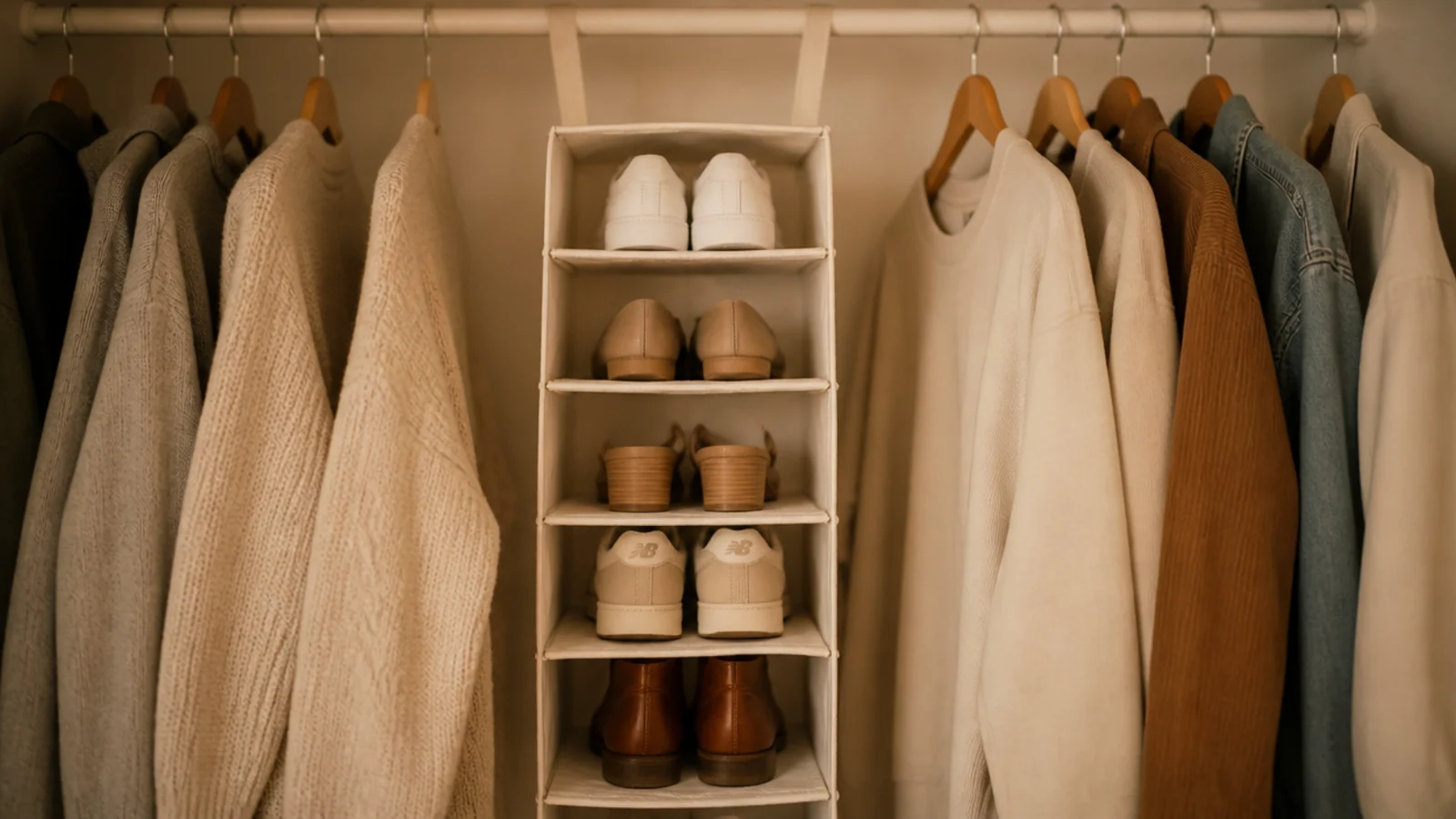
5. The wall behind the door nobody uses
Open your apartment door fully and look at the wall it swings toward. In most rentals that is 20 to 30 inches of completely unused wall.
Measure from the wall to the open door face and subtract two inches — usually you land on six to eight, which is enough for a tilted rack but not a flat one. A tall narrow rack there holds six pairs and never touches the walkway.
Freestanding is the renter version; anything wall-mounted here needs patching later. Put a felt pad under each foot on a wood floor. $
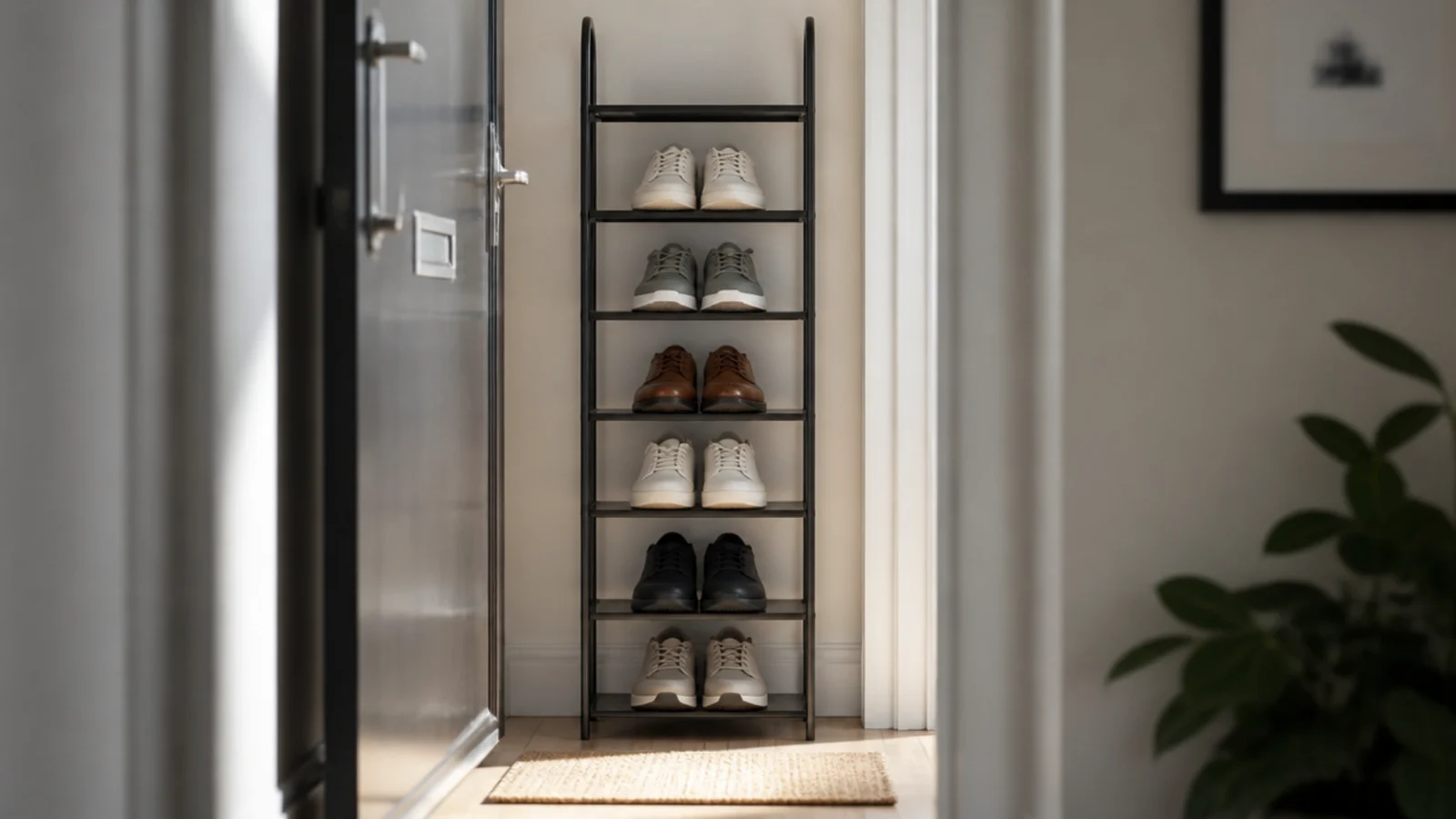
6. Shoe slot stackers that halve the footprint
The cheapest capacity gain on this list. Slot stackers hold one shoe above the other, heel to toe, so a pair takes roughly half the floor width it normally would.
A closet floor that held six pairs in a row holds ten or twelve with stackers, for about $2 a pair. They suit sneakers, flats and low heels; they do not suit boots or anything with a chunky sole.
Buy the adjustable-height version rather than the fixed one, which fits precisely one shoe profile and nothing else. $
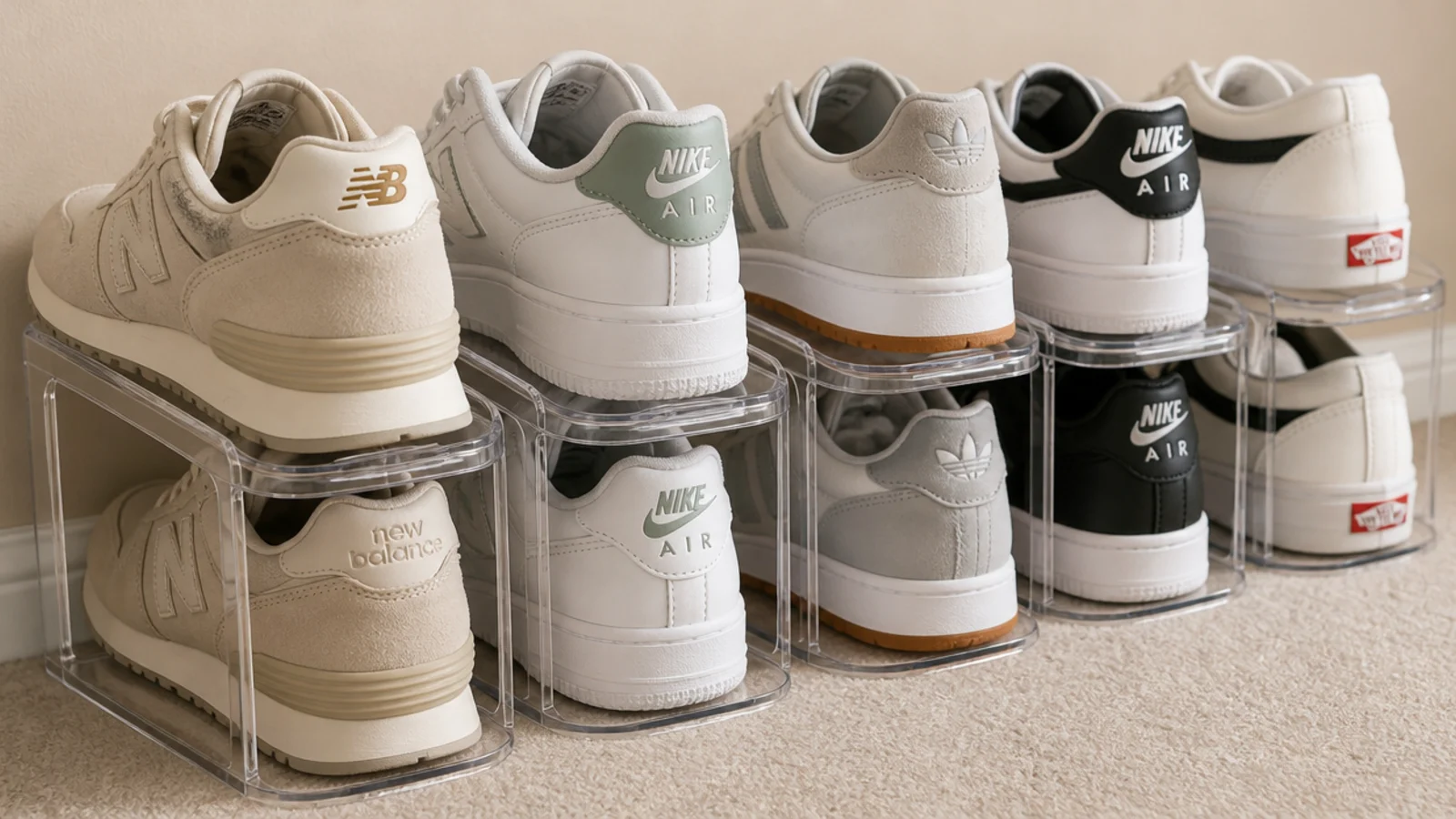
7. A storage ottoman that is also the seat
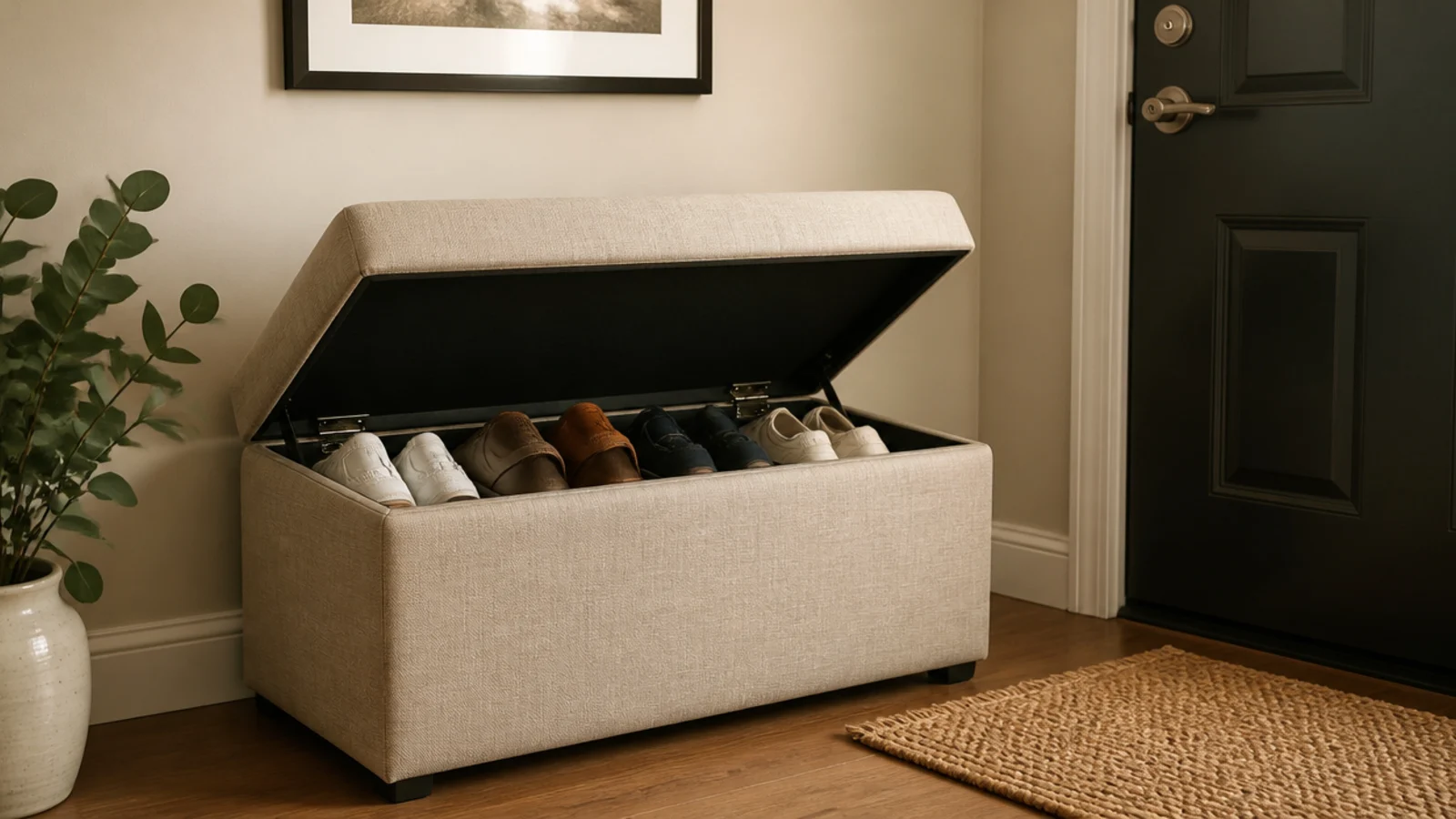
In a studio, every piece has to earn its footprint twice. A storage ottoman gives you somewhere to sit to put shoes on and swallows six pairs inside.
Look for 18 inches to the top of the lid, which is proper seat height, and a hinged lid with a soft stay rather than a lift-off top you have to put somewhere. Internal depth of 14 inches lets boots lie flat.
Linen or heavy cotton over faux leather, which cracks along the lid edge exactly where people sit. $$
8. The narrow gap cart beside the fridge
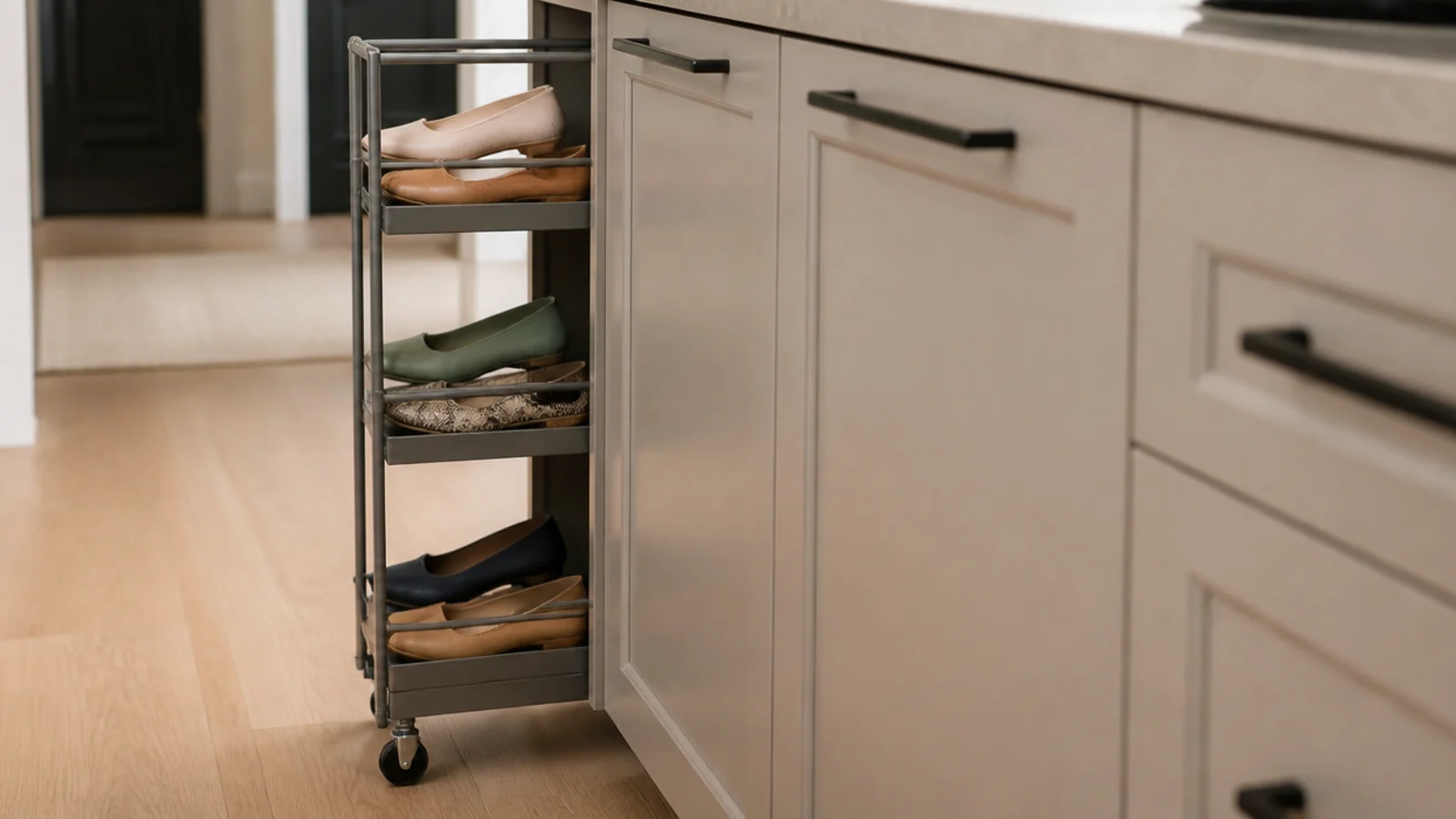
Almost every apartment kitchen has a dead gap of five to nine inches beside the fridge or at the end of a cabinet run, and it usually holds a mop.
A very slim rolling cart fills it exactly and pulls out to reach. Measure at the narrowest point, subtract half an inch, and buy to that number rather than the nominal one.
Powder-coated steel over chrome wire, which marks soft soles and rusts wherever a damp pair sits. It also rolls to the entry when you have guests. $$
9. Renter-safe adhesive rails with honest limits
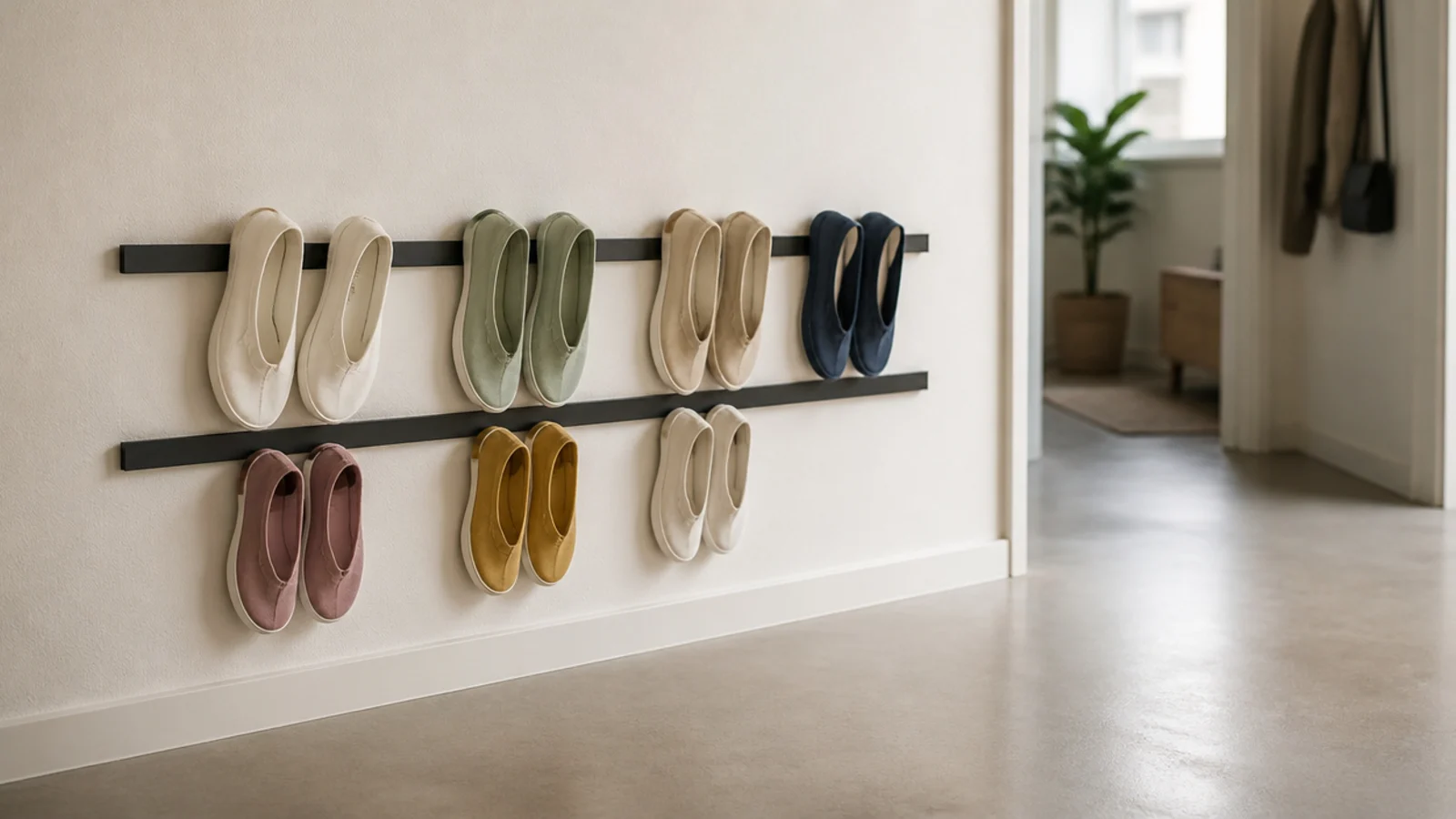
Slim rails that grip a shoe by the heel use four inches of depth and no floor at all, which is exactly what a narrow rental hallway needs.
The limits are real. Heavy-duty strips rated 15 pounds per pair hold flats, canvas shoes and light sneakers. They do not hold boots, and they do not hold anything on flat builder-grade paint, which peels off with the strip.
Test on a hidden patch first, mount the lowest rail 12 inches up so a vacuum passes underneath, and space rails 10 inches apart. $
10. Drop-front boxes stacked toward the ceiling
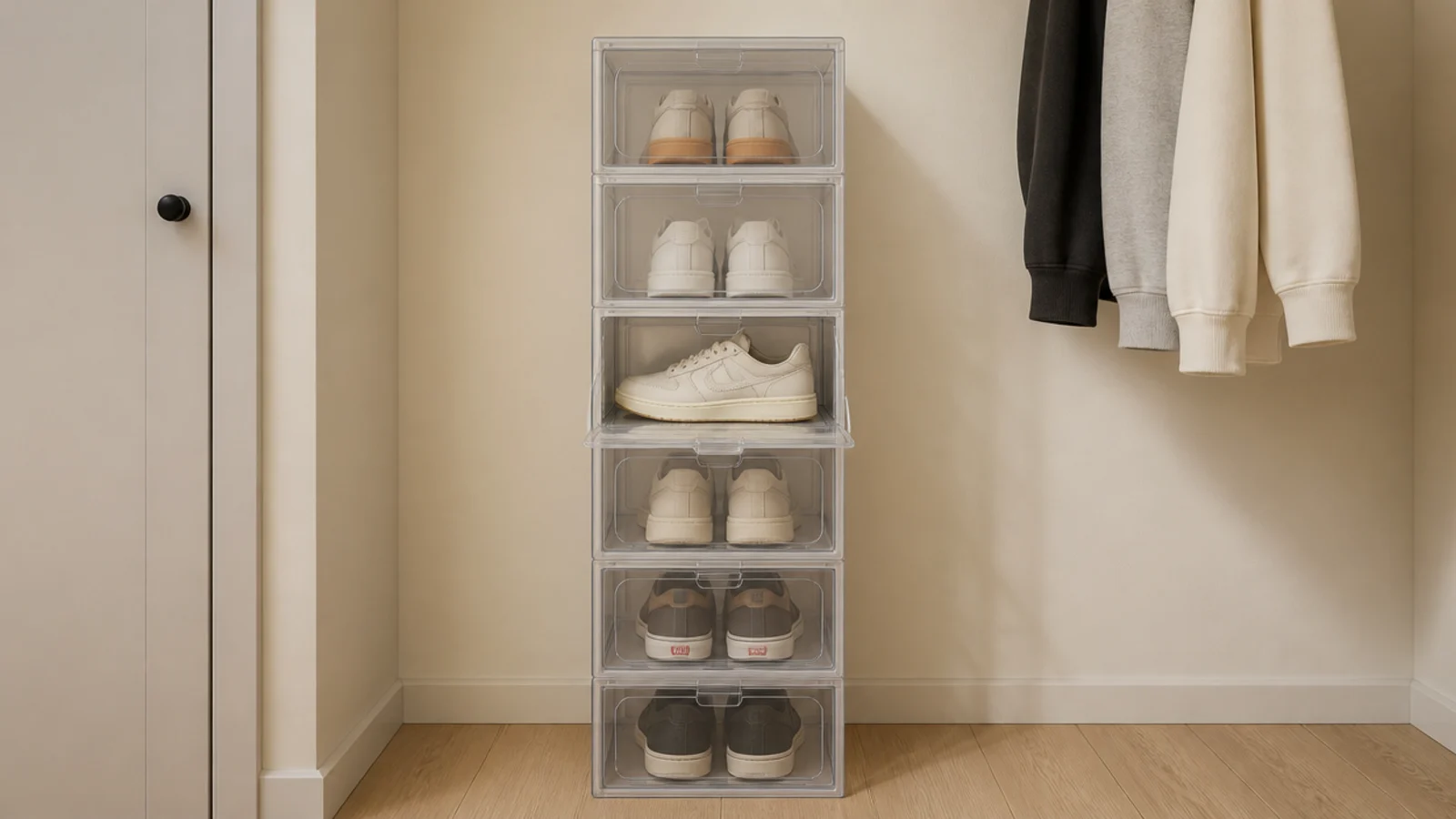
Stacking is the only free storage a small apartment has, and drop-front boxes are the version that stays usable when stacked.
The front panel opens rather than the lid, so the bottom box in a column of six is as reachable as the top one. Standard boxes run about 13 by 9 by 8 inches, which takes any sneaker up to size 12 but not a boot.
Around $4 each in a multipack. Stack them in the closet corner or beside a wardrobe, never above head height where a bump brings the column down. $
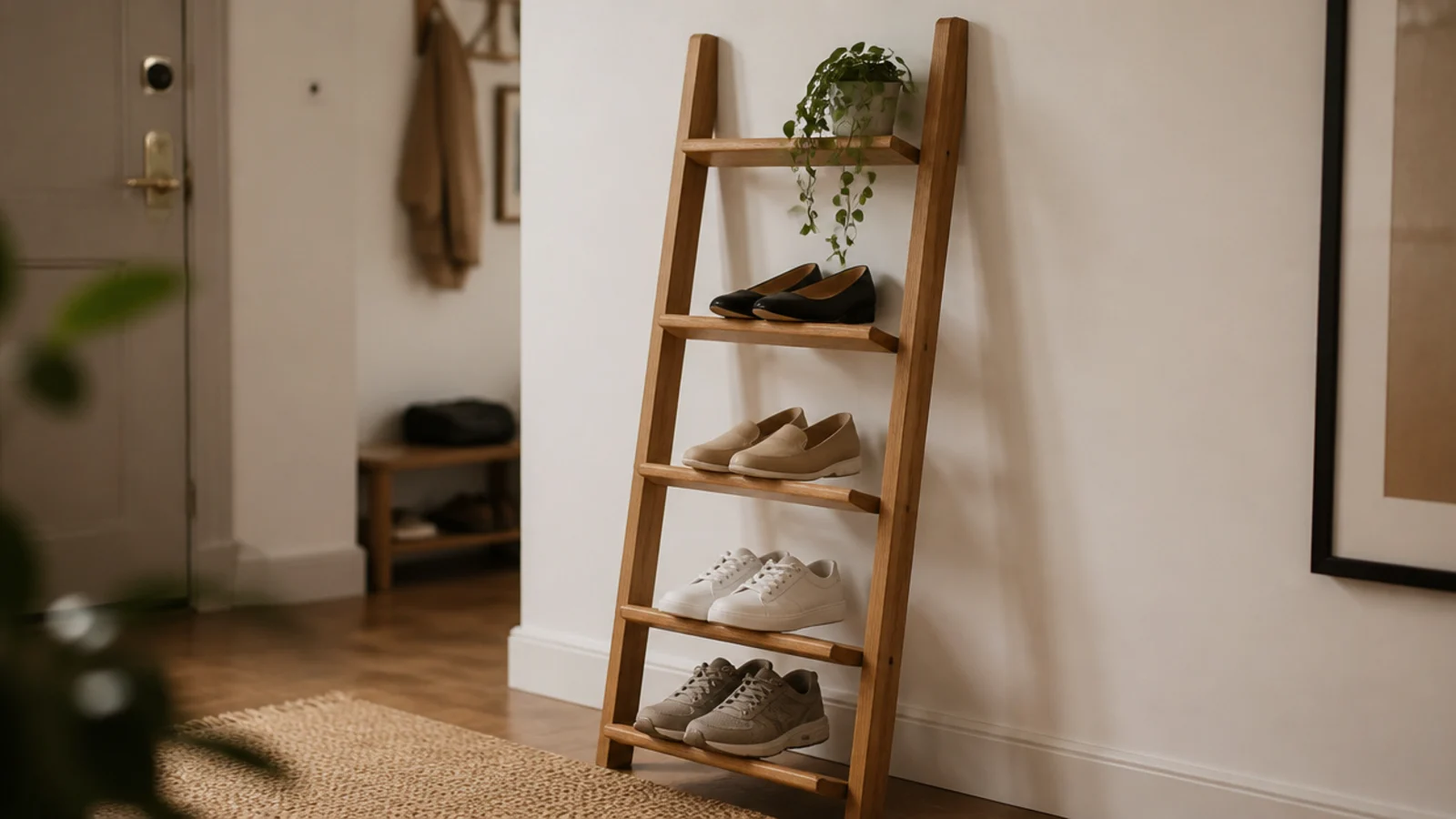
11. A leaning ladder rack with no fixings at all
Angled rungs hold flats and sneakers without a single fixing, which makes this the easiest yes in any rental.
Lean it at roughly 15 degrees, put felt pads under the feet so it does not walk across a wood floor, and keep the heaviest shoes on the lowest rung so the whole thing stays bottom-weighted.
It holds eight to ten pairs of flat shoes and no boots at all, so treat it as the summer answer rather than a year-round one. It also looks like furniture, which matters in a studio where storage is always on show. $–$$
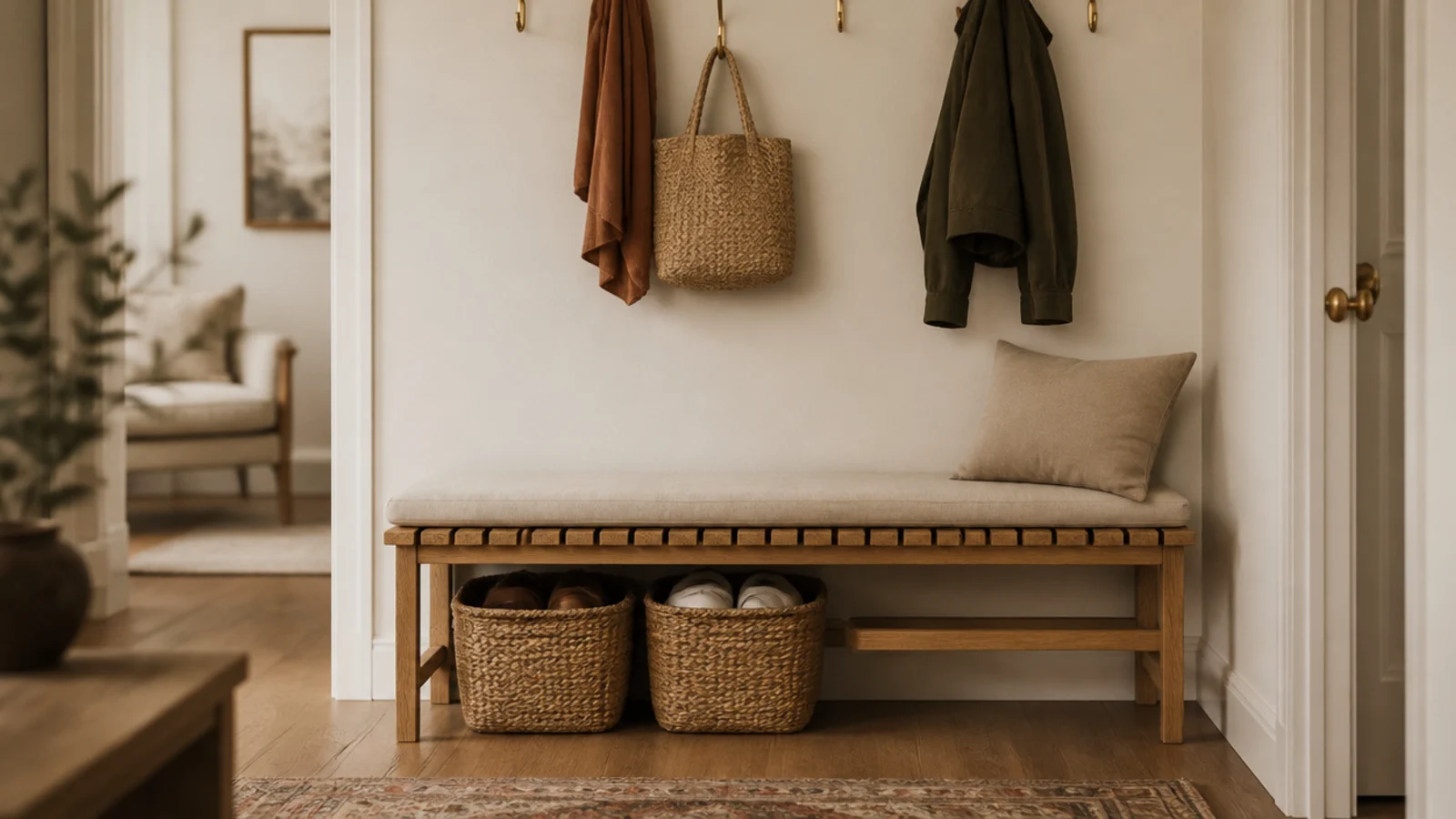
12. A bench at eighteen inches with two baskets
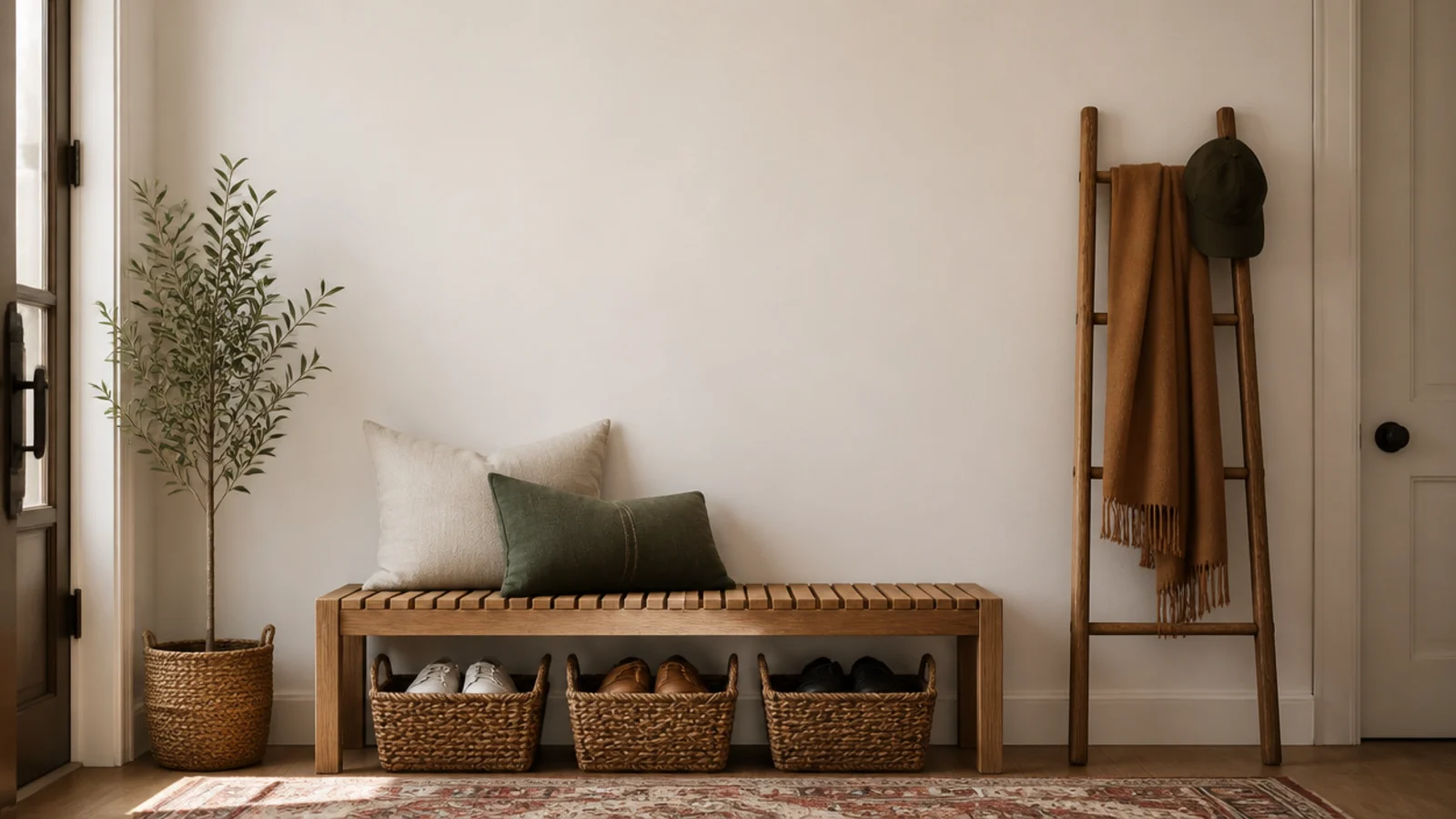
If there is room for one entry piece, make it this. Eighteen inches to the top of the cushion is the height that lets an adult sit properly to deal with laces.
Two woven baskets underneath, one per person, and the rule that when your basket is full the overflow goes under the bed. Named individual space is what stops the pile restarting.
A slim bench 12 inches deep works in a hallway where a 16-inch one does not. More on seat depth and cushions in the shoe storage bench guide. $$
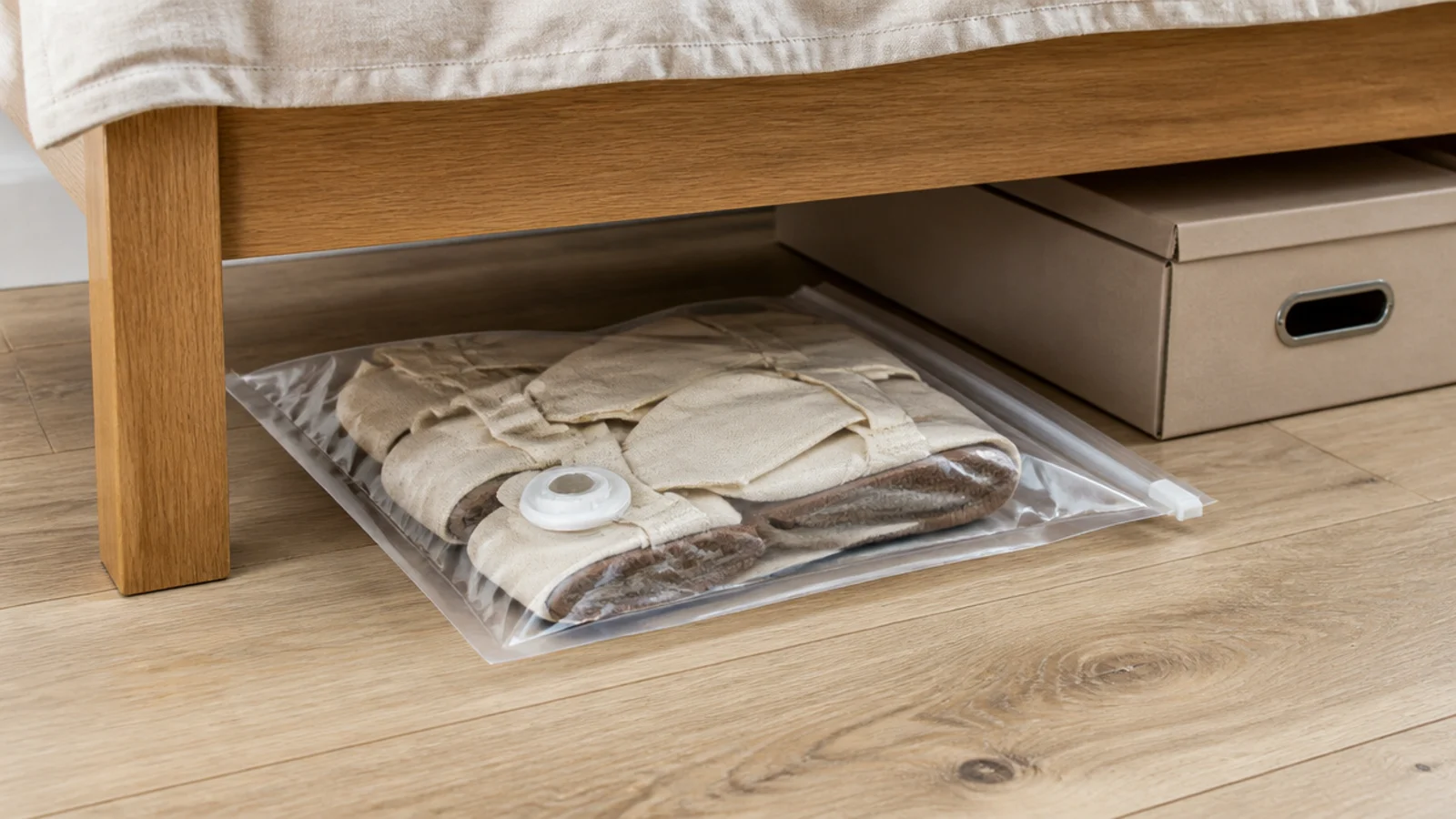
13. Vacuum bags for the off-season pairs
Half your shoes are irrelevant for six months of the year, and in a small apartment that is half your storage problem solved for $12.
Canvas sandals, espadrilles and soft flats compress to about a third of their volume in a vacuum bag and slide under the bed flat. Boots and structured shoes do not — compressing them creases the leather permanently.
Put a silica pack in each bag and never seal anything damp. Label the bag by season rather than by contents so the swap takes two minutes. $
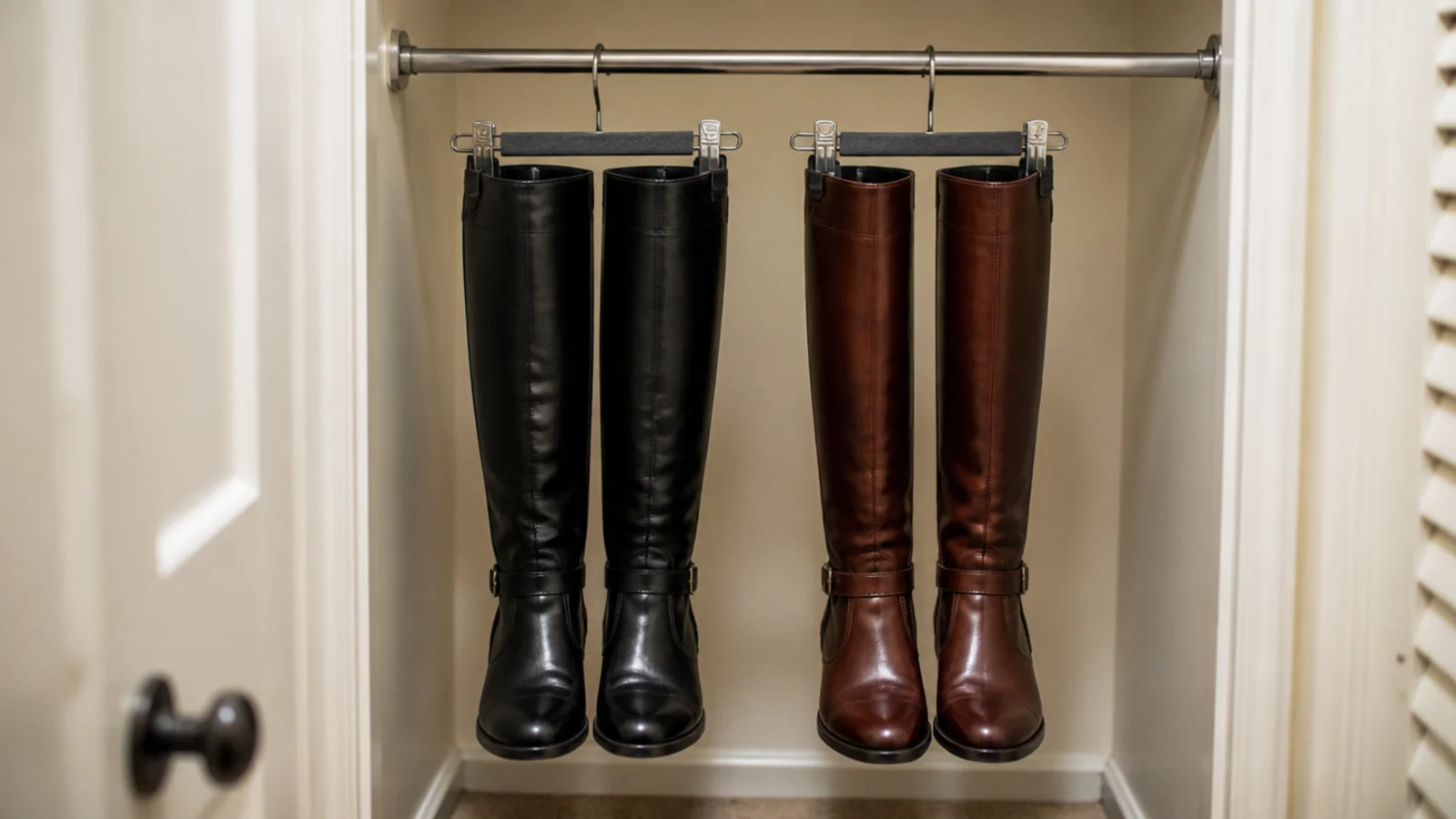
14. A tension rod for boot clips in the closet
Tall boots are the hardest thing to store in a rental, because they need 20 inches of height and they fall over.
A spring tension rod across the closet, with trouser-clip hangers gripping each boot by the shaft, hangs them straight and dries them from the inside. Three pairs fit on a 30-inch span, and the closet floor underneath stays clear.
Use felt-lined clips on soft leather; bare metal leaves a dent line across the shaft that never quite comes out. No fixings, no holes. $
15. A capped two-pair landing mat
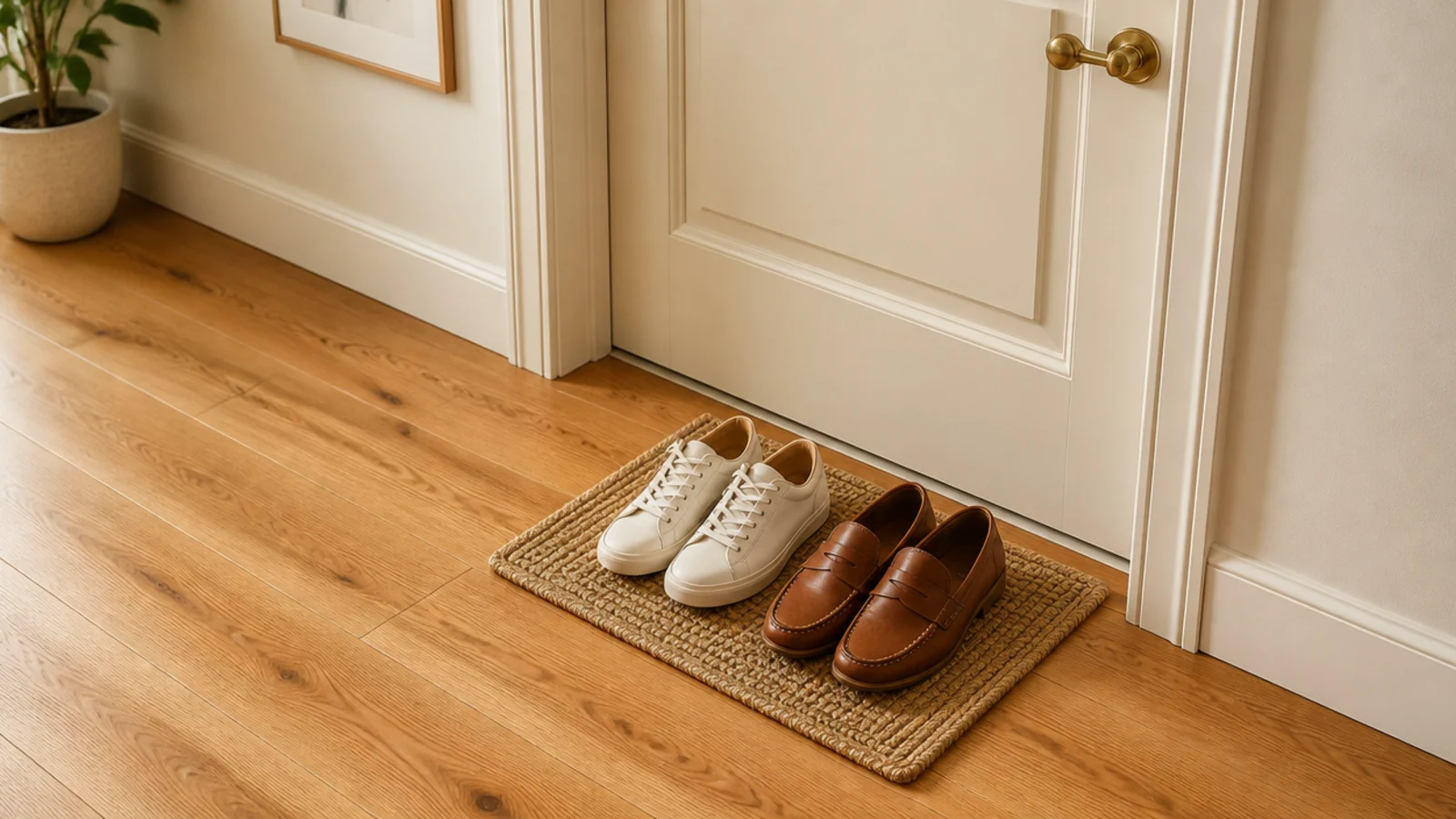
The idea that costs nothing and does the most. Put a small jute mat by the door sized for exactly two pairs and treat everything else as overflow that lives elsewhere.
Constraining the landing zone is what stops it growing. A mat with room for eight pairs will hold eight pairs by Thursday; a mat with room for two holds two, permanently.
It works because the limit is visible rather than a rule people have to remember. For the version scaled to a slightly larger hallway, shoe storage for small spaces has more. Free–$
Mistakes to Skip
- Trusting adhesive strips with boots. They release slowly, then all at once, and they usually take a patch of rental paint down with them when they go.
- Buying a rack with evenly spaced six-inch tiers. Nothing taller than a sneaker fits, so every boot in the apartment stays on the floor exactly where it was.
- Trying to keep every pair you own by the front door. A small entry holds daily shoes; sizing it for the whole collection guarantees it never looks tidy.
Frequently asked questions
How do I store shoes in a tiny apartment with no entryway?
Work vertically and use door faces. An over-the-door rack on the coat closet takes a dozen pairs, a nine-inch tilt-out cabinet fits against almost any wall without narrowing a hallway, and under-bed boxes absorb everything seasonal. Cap what lives by the door at two pairs per person and the lack of an entryway stops being the problem.
Do adhesive shoe racks actually hold in a rental?
Light ones do, within honest limits. Heavy-duty strips rated 15 pounds per pair will hold flats and sneakers on a slim rail, and nothing more. Test on a hidden patch of paint first, because flat builder-grade paint peels off with the strip. Never trust adhesive with boots, and never mount above anything breakable.
How much space do I need under the bed for shoe boxes?
Measure the gap from floor to frame rail, then subtract half an inch for the caster wheels. Most platform beds give six to seven inches, which takes flats, sneakers and low boots lying flat. Standard under-bed boxes run about 6 inches tall and 16 wide. Bed risers add three to five inches if you need more.
What is the slimmest shoe storage that still fits real shoes?
Nine inches deep, as long as the shoes tilt. A men's size 12 sneaker is about 12.5 inches long, so it only fits a nine-inch cabinet at a 45-degree angle. Flat storage needs the full 13 inches. That four-inch difference is what lets a tilt-out cabinet live in a hallway that a normal rack would block.
How many pairs should a small apartment keep by the door?
Two to three per person plus one seasonal set. For a couple that is four to six pairs at the door and everything else stored elsewhere. Small apartments fail when the entry tries to hold the whole collection. Give the door the daily pairs, give under the bed the off-season ones, and the floor stays clear.
How do I store boots when there is no closet space?
Hang them. Trouser-clip hangers on a tension rod hold knee-high boots by the shaft so they dry properly and use vertical air instead of floor. Ankle boots go under the bed in a box, soles bagged. Boot shapers or a rolled magazine inside each shaft stops the leather creasing while they hang.
Rentals reward storage that comes apart. Work the door faces first, then the space under the bed, then the narrow gaps you have been ignoring, and cap what lives at the door at two pairs per person. For the pairs you would rather not see at all, hidden shoe storage covers the closed options, and apartment entryway ideas pulls the whole small entry together. Save the pin before your next move.
Want more like this? Browse all 15 shoe storage ideas guides — they all use the same measurements and budget tiers.
Pin it for later
Save this to your Shoe Storage Ideas board
Pin it now so it is waiting for you when the tape measure comes out — and so the next person hunting for this idea can find it too.
Save this pinKeep going
More ideas worth saving while you have the tape measure out.