Shoe Storage Ideas · Listicle
20 Creative Shoe Storage Ideas Anyone Can Do

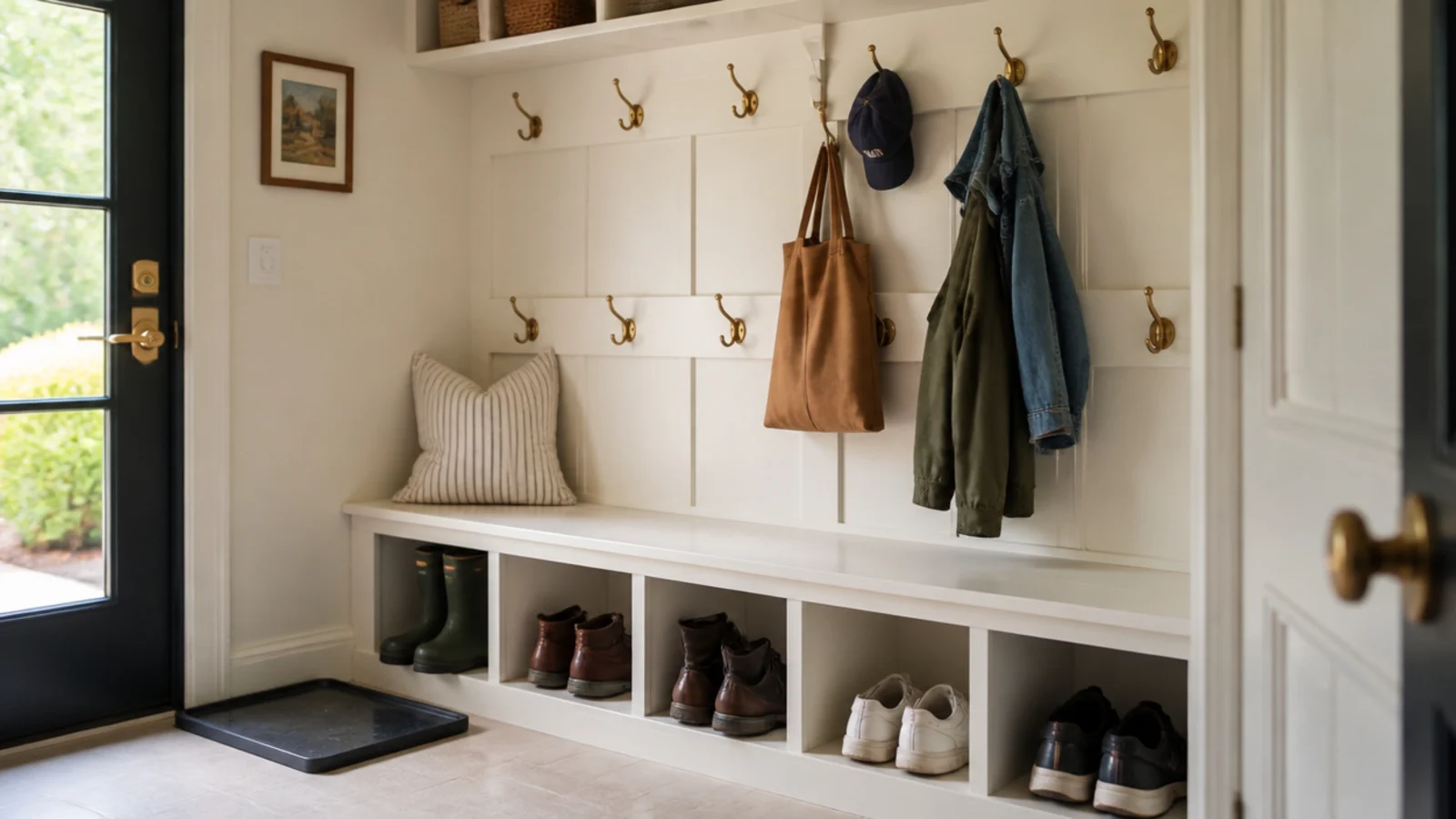
Mudroom shoe storage is the only storage in the house that has to work while four people are late. That is a different problem from a tidy entryway: it needs a seat, a place for water to go, a bay per person, and no doors anybody has to open. These 20 setups are built around the morning rather than the photograph.
In this guide22 sections — tap to openHide
- 1.What mudroom shoe storage has to do every single day
- 2.A bench at eighteen inches with open cubbies below
- 3.One locker bay per person
- 4.Two rows of hooks set by age
- 5.A drip tray that lives under the bench
- 6.A slatted bench seat that lets water through
- 7.Cubbies thirteen inches deep, one pair each
- 8.A tall boot bay at sixteen inches
- 9.A boot jack fixed beside the bench
- 10.Tile or vinyl with a real threshold
- 11.A sloped mat zone right at the door
- 12.Baskets in the upper cubbies for hats and gloves
- 13.A drying rail above the heat register
- 14.Wall pegs for the pairs that can hang
- 15.A tall slice of closet for knee-high boots
- 16.A landing counter at thirty-six inches
- 17.A second hook row for backpacks
- 18.An overhead shelf at sixty-eight inches
- 19.Fourteen inches of width per person
- 20.Keep a thirty-six inch walkway clear
- 21.A weekly reset that takes four minutes
- 22.Mistakes to Skip
What mudroom shoe storage has to do every single day
A mudroom is a transition, not a room. Everything that goes wrong in one comes down to the same five numbers.
Depth. A men's size 12 sneaker is about 12.5 inches long, so cubbies need 13 inches for the heel to sit fully inside. Anything shallower puts toes into the walkway, which is how they get kicked.
Height. Six inches of clear cubby height covers flats and sneakers. Ankle boots need 14 to 16, knee-highs 20. Set two tall bays low down and keep six-inch tiers above them.
Seat. Eighteen inches to the top of the cushion. Build the frame at 16 and let a two-inch pad make up the difference — that is the height an adult can reach laces from without folding forward.
Width. Fourteen inches per person for a hook, a cubby and a basket. Below that a family run stops functioning as individual space and becomes a shared shelf, which is where piles start.
Walkway. Thirty-six inches clear in front of the bench so somebody can pass while somebody else is sitting. In a mudroom that clearance matters more than capacity.
Load is the usual honest figure: two to three pairs per person plus one seasonal set, with the rest archived overhead.
Budget tiers below: $ under $60, $$ $60–$150, $$$ $150 and up.
1. A bench at eighteen inches with open cubbies below
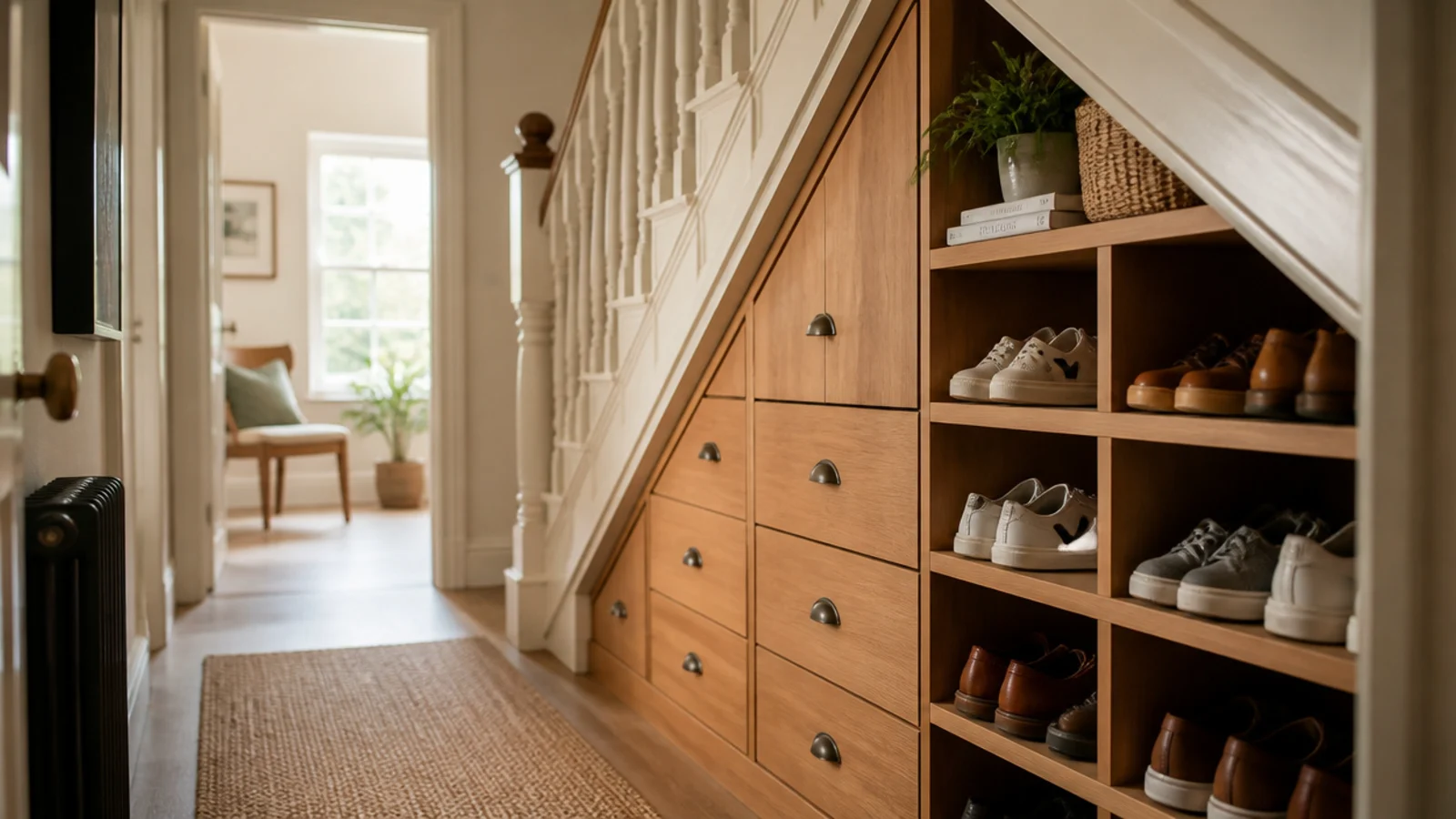
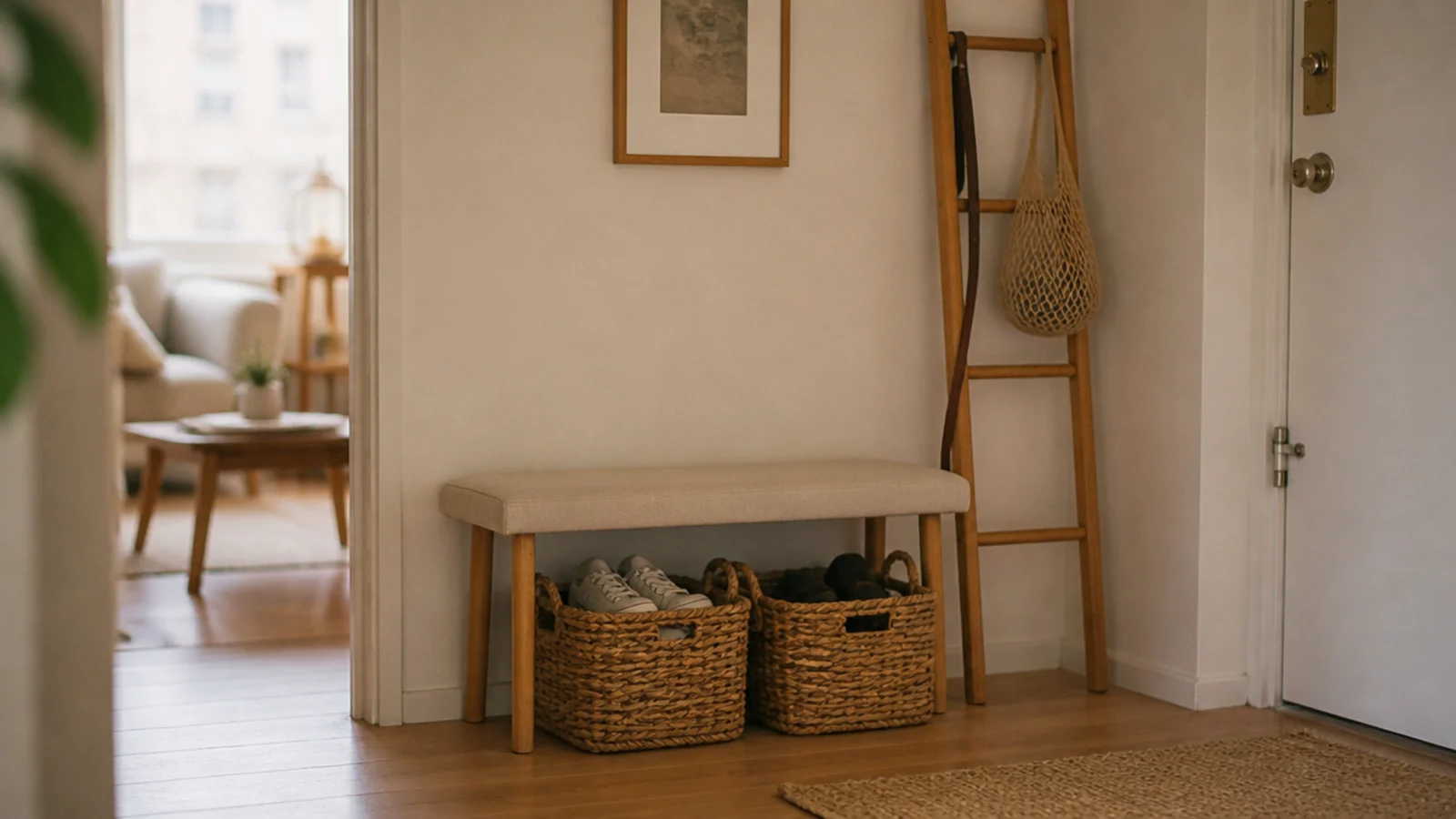
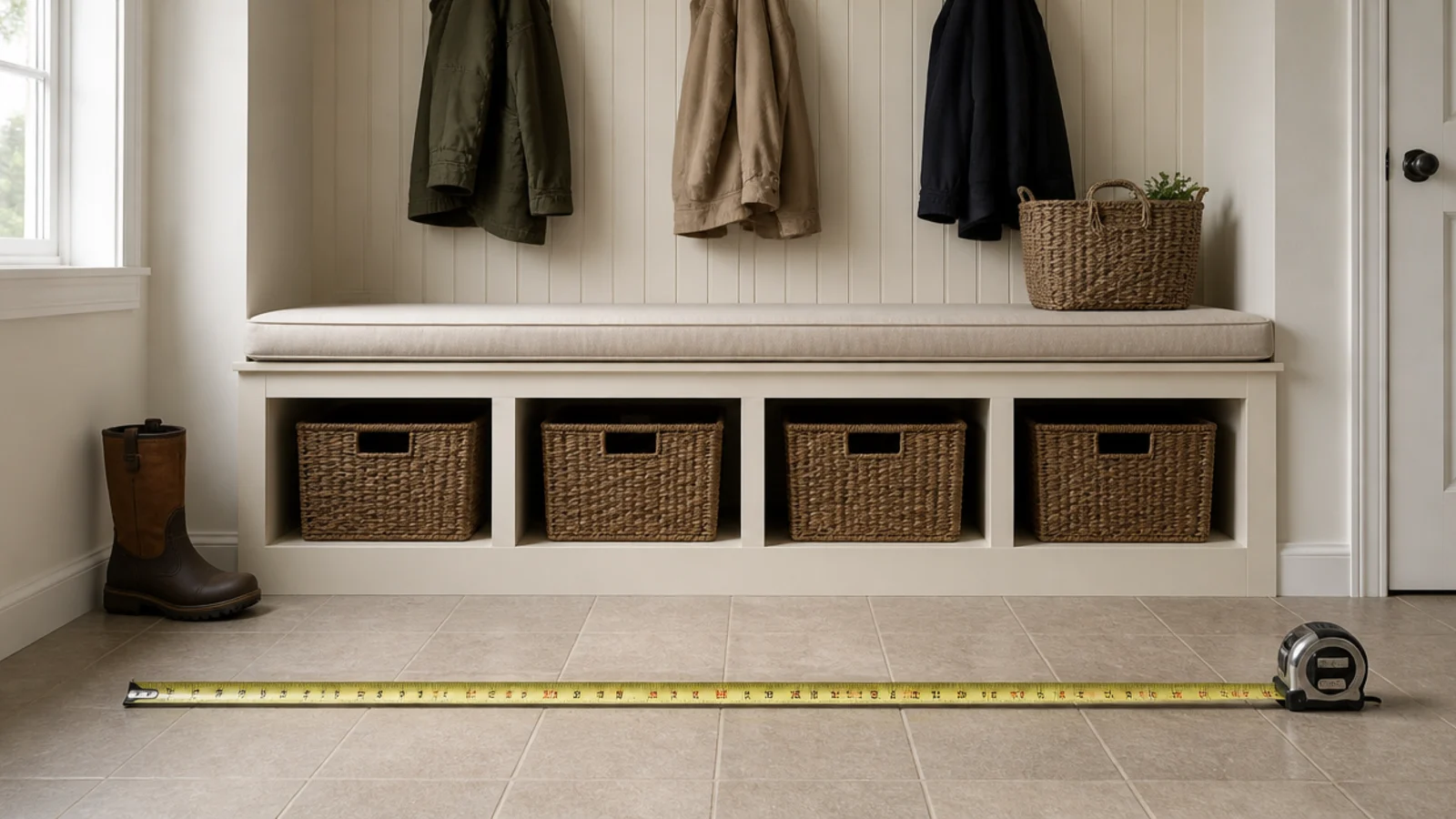
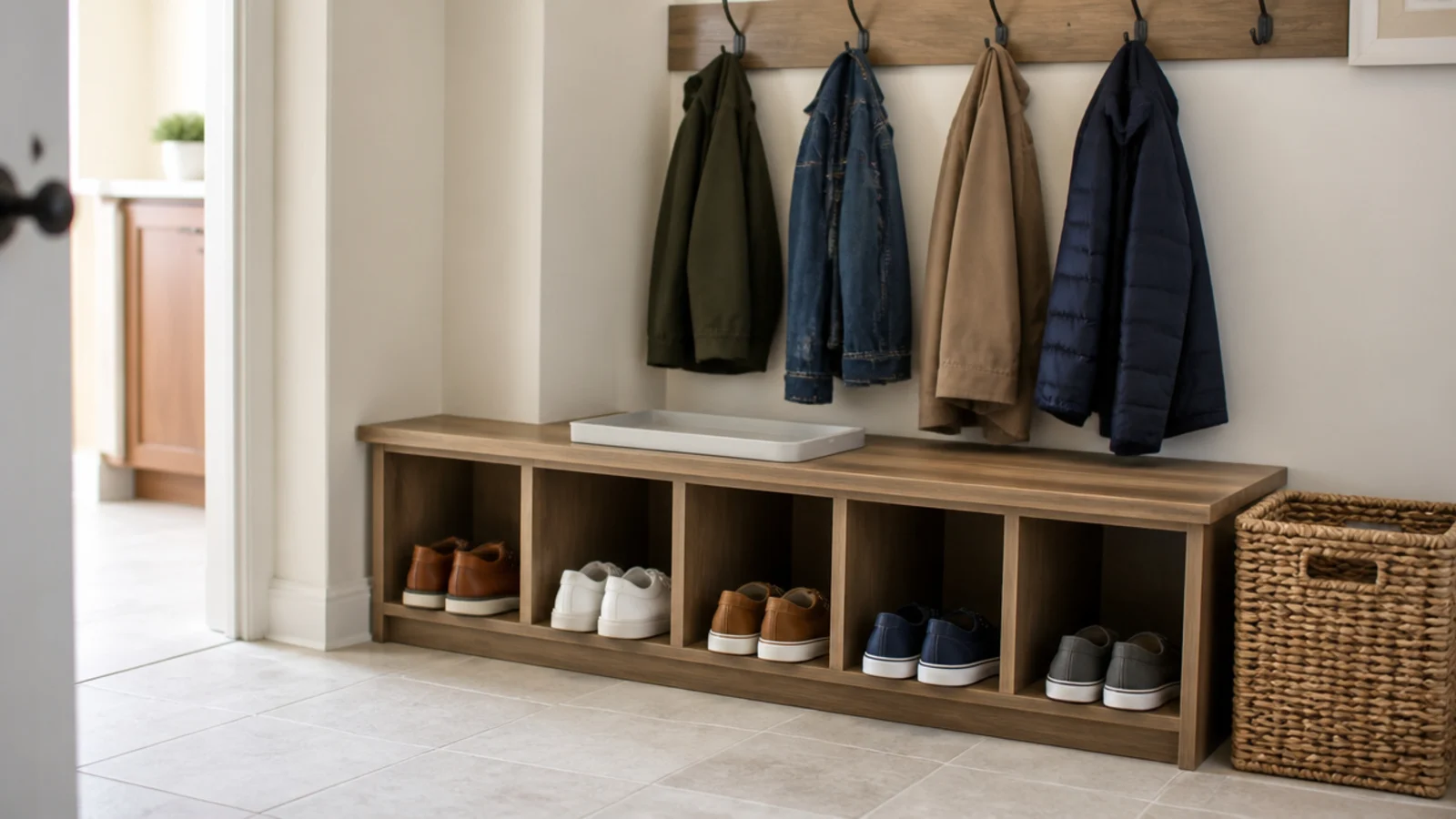
The core of almost every mudroom that works. A seat at 18 inches to the cushion top, with open cubbies underneath sized one pair each.
Open beats closed here because every door is a step somebody skips when they are late. Keep the cubby openings 13 inches deep and 12 wide, and put the two tall boot bays at the ends where the weight belongs. Cushion in a washable linen or heavy cotton, with a removable cover. $$–$$$
2. One locker bay per person
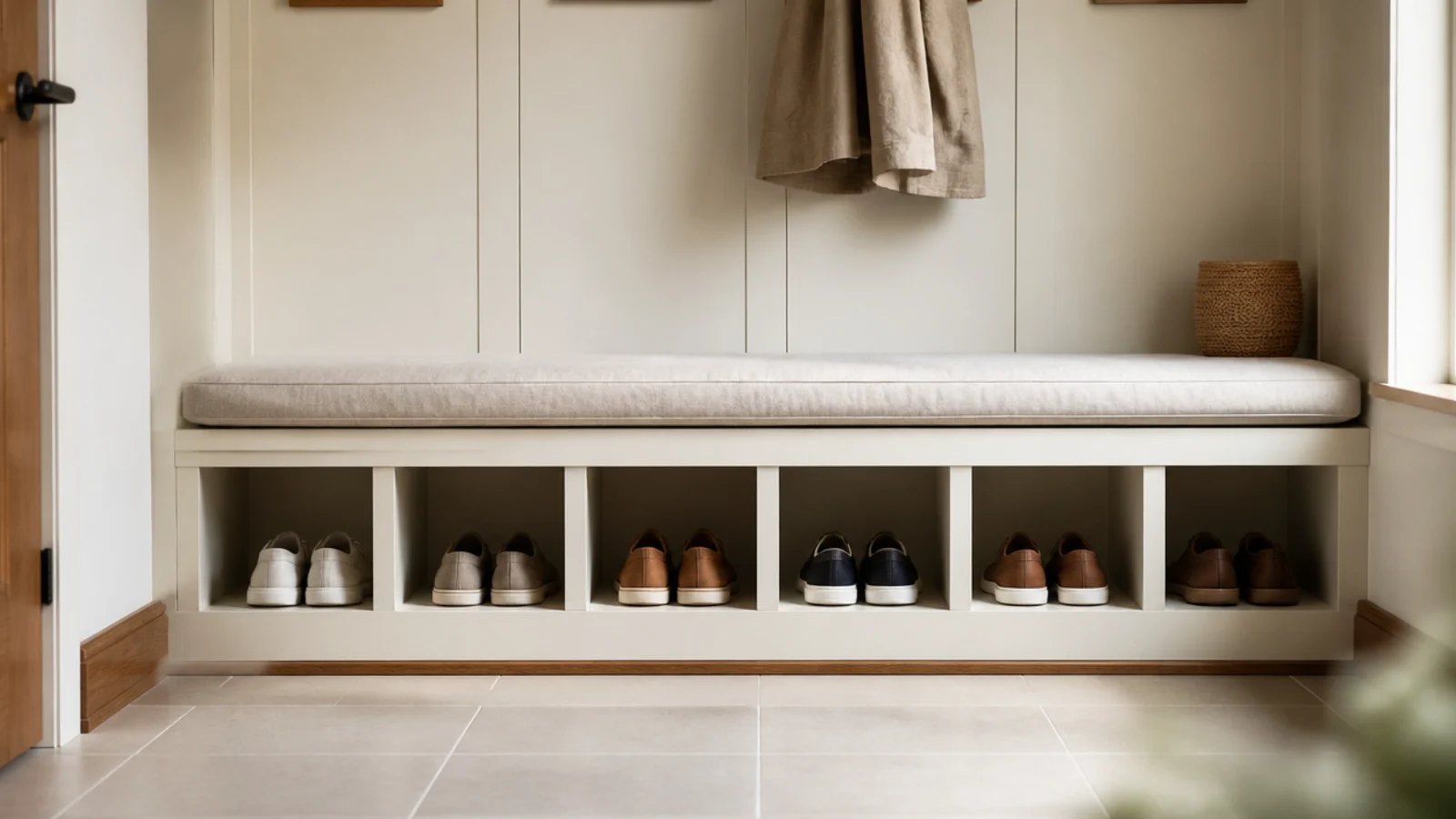
Shared storage fails because nobody owns the overflow. Vertical dividers turn one long run into individual bays and the whole dynamic changes.
Each bay gets one hook, one cubby and one basket. When your bay is full, the overflow is your problem rather than everyone's. This is the single change that makes a family mudroom stay tidy, and it works with children far better than any amount of asking. $$$
3. Two rows of hooks set by age
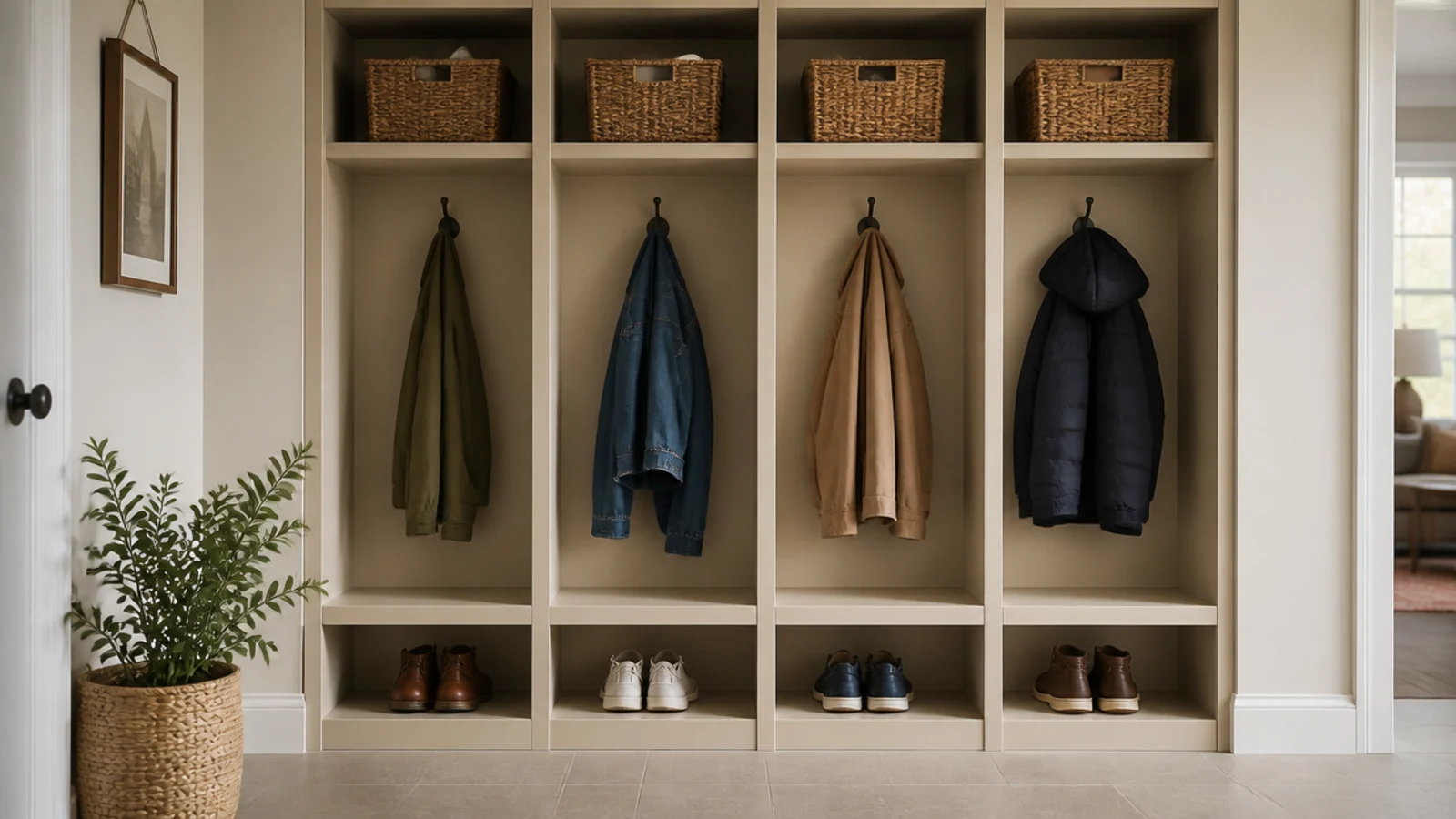
Coats end up on the floor for a simple reason: the hooks are out of reach for the people who wear them most.
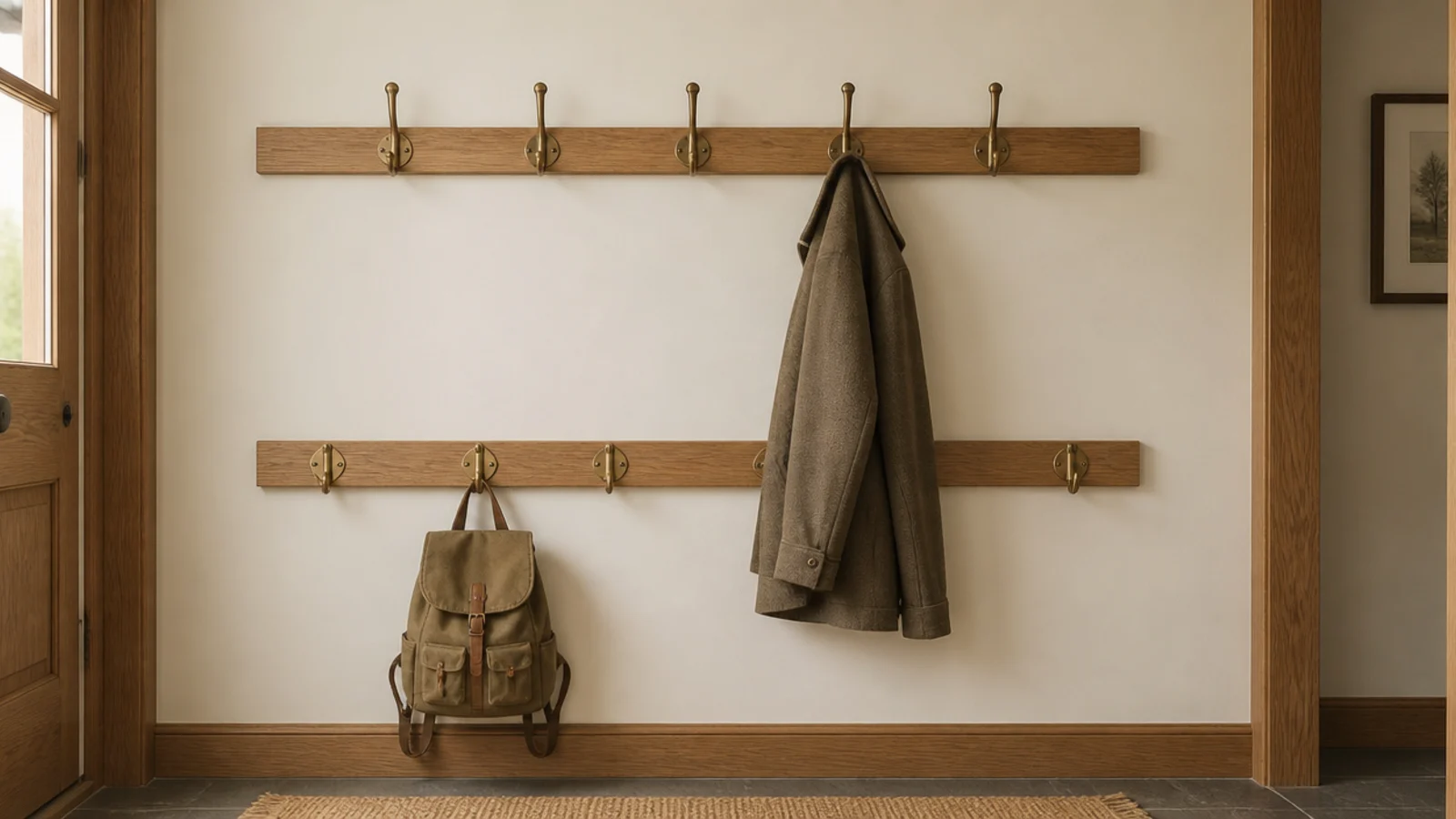
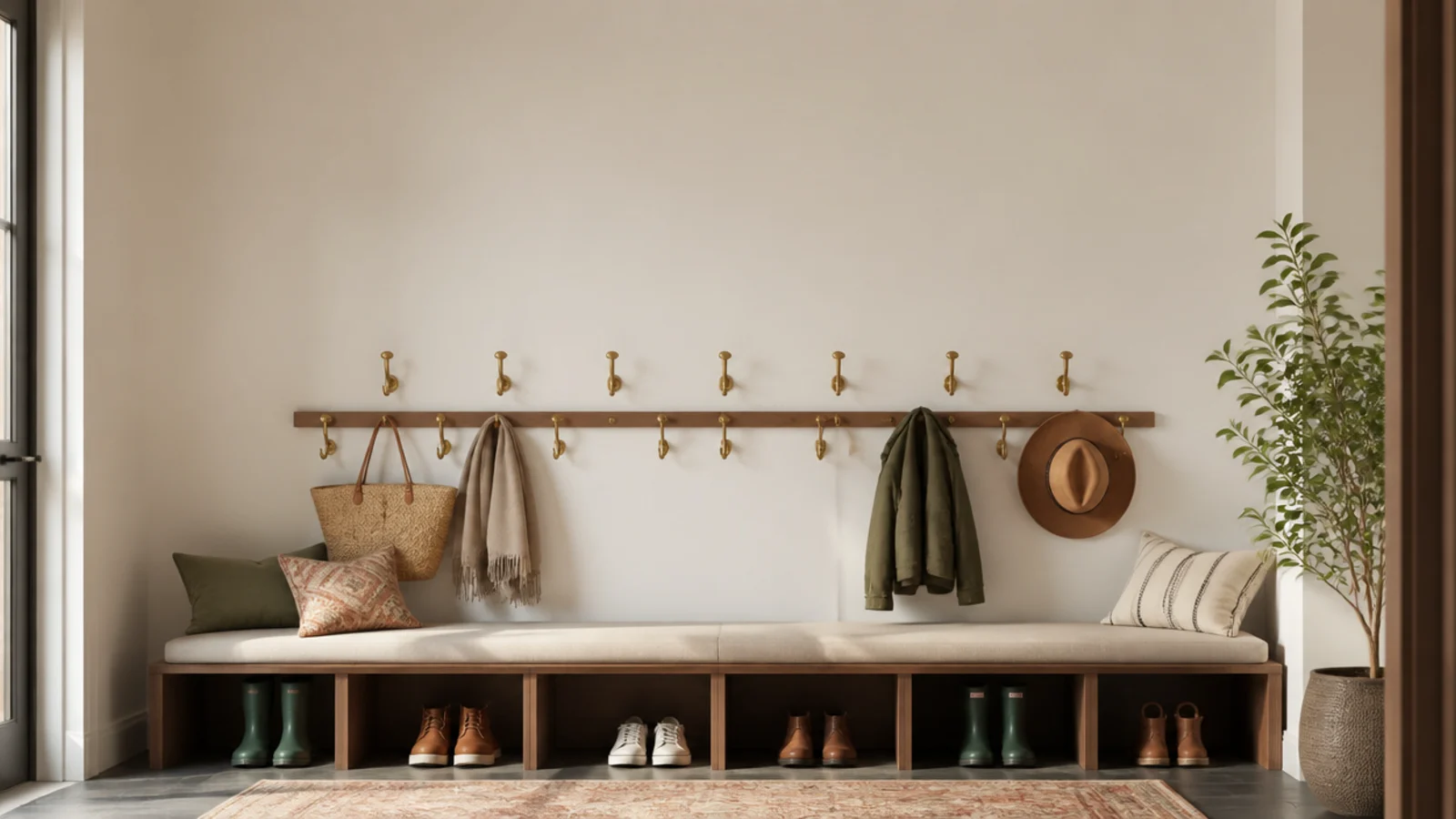
Mount one rail at 40 inches for children aged five to ten and a second at 60 to 66 for adults. Space the hooks 9 to 12 inches apart, because bulky winter coats overlap and slide off each other at anything tighter. Double hooks hold twice as much in the same run. $
4. A drip tray that lives under the bench
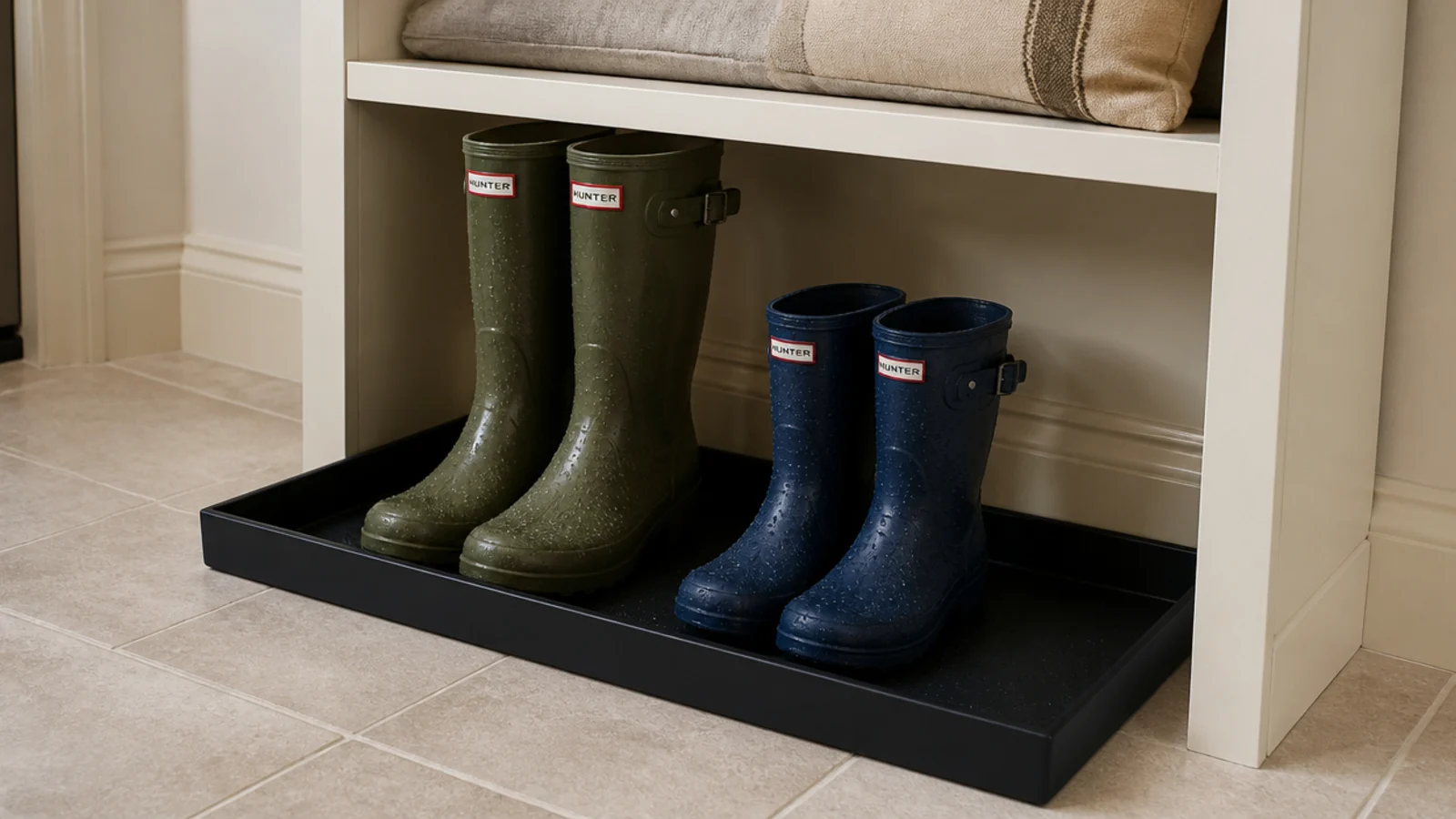
The highest-value item in the whole room, and it costs about $25.
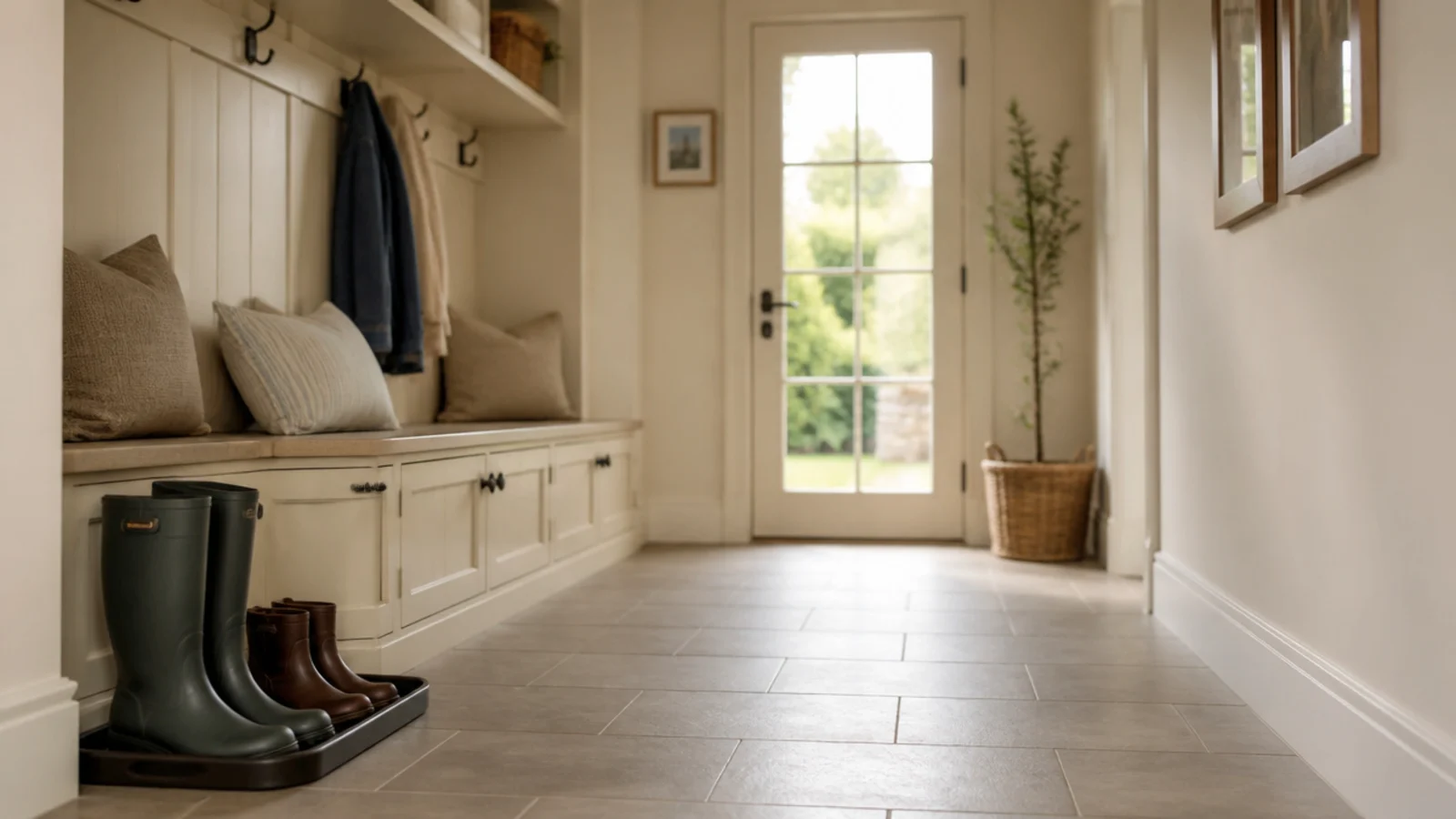
A tray with a raised lip, at least 15 inches deep, takes two adult pairs of wet boots and keeps the meltwater off the floor. Heavy rubber or metal, not thin plastic that cracks in cold. Wet boots put into a closed cubby stay wet and pass the damp to everything beside them. $
5. A slatted bench seat that lets water through
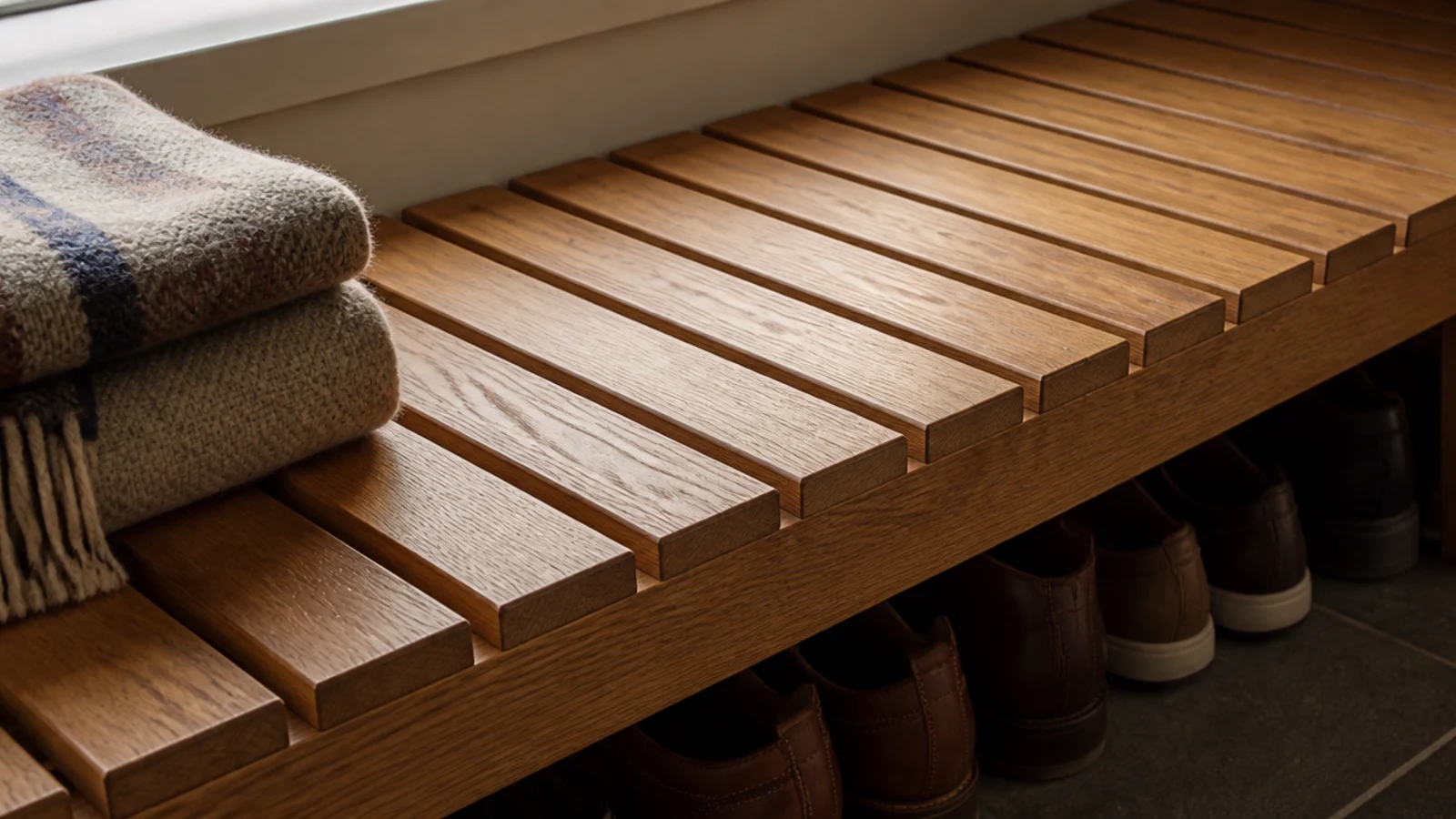
A solid bench top under a wet coat holds a puddle you find later. A slatted seat does not.
Half-inch gaps between 1x3 boards let water fall through to whatever is below and let air move around the shoes underneath. Round the top edges before finishing, and seal the whole thing including the undersides. It reads lighter than a solid bench too, which helps in a narrow room. $$
6. Cubbies thirteen inches deep, one pair each
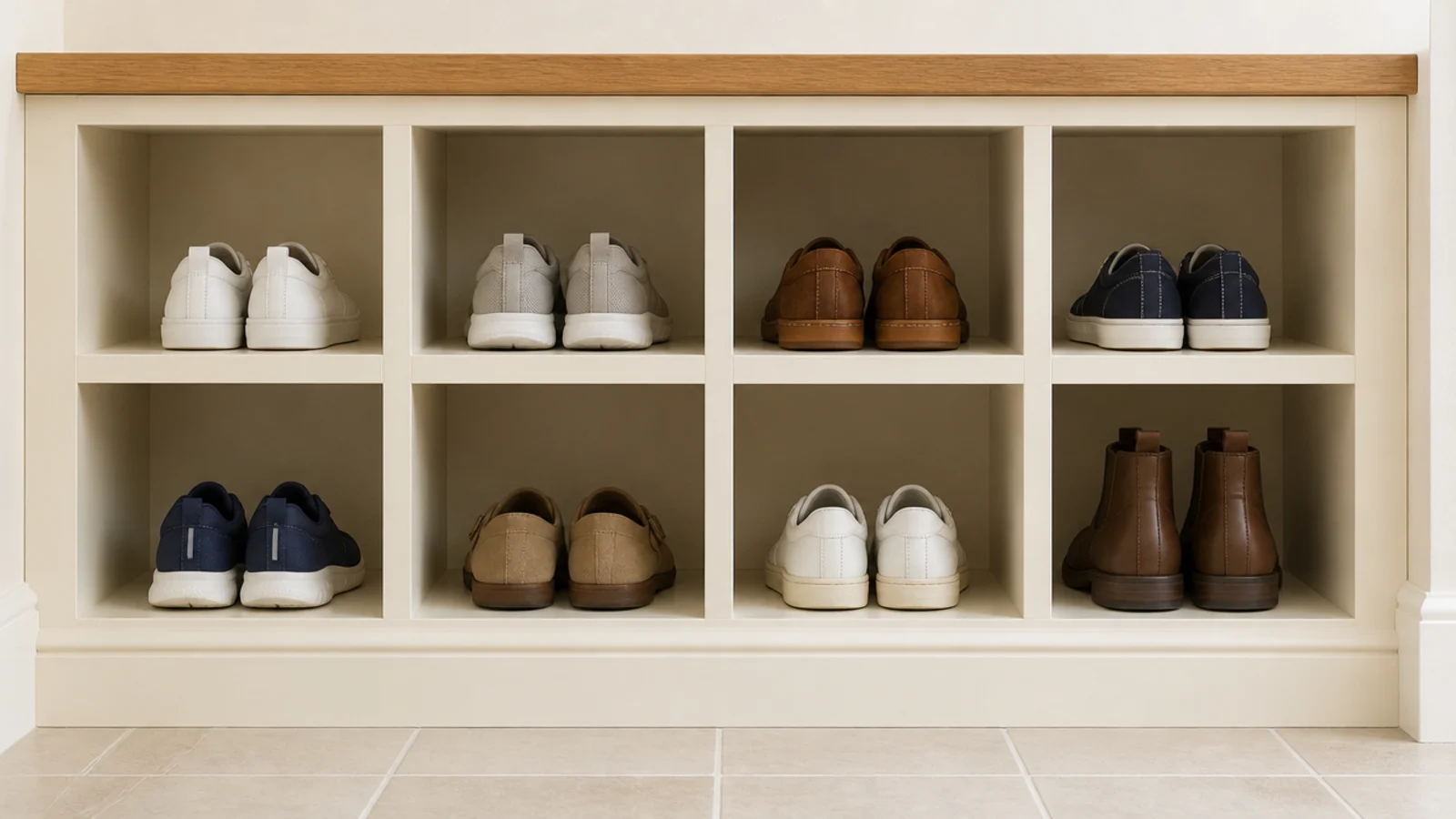
Thirteen inches is the number that lets a size 12 heel sit fully inside the opening.
One pair per cubby is the rule. The moment a cubby takes two pairs it stops being a cubby and becomes a shelf, and shelves become piles within a week. If capacity is short, add another row rather than doubling up in the row you have. $$
7. A tall boot bay at sixteen inches
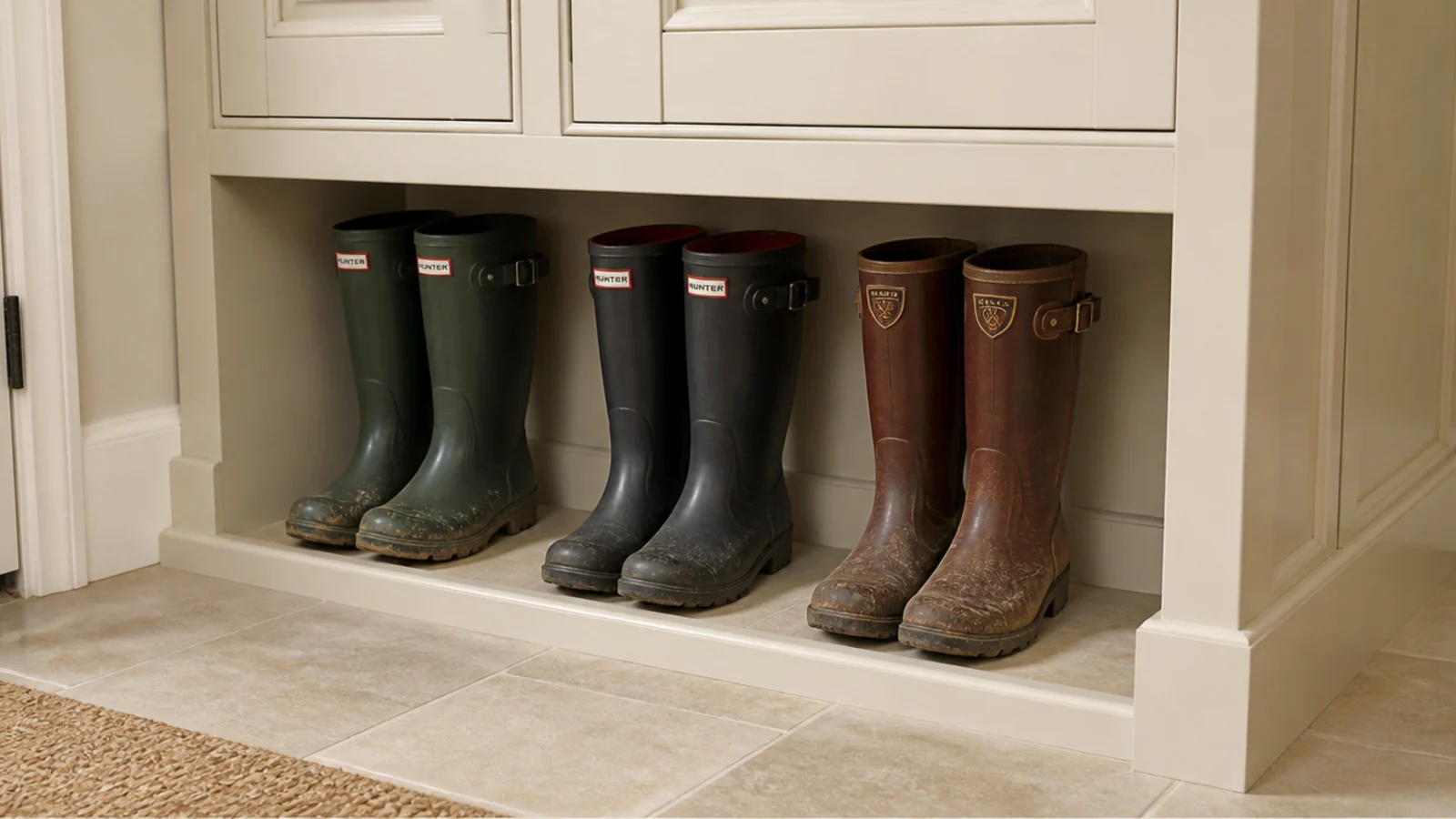
Every disappointing mudroom has evenly spaced six-inch cubbies and boots on the floor in front of them.
One bay at 16 inches of clear height takes three pairs of ankle boots standing upright. Put it at floor level where the weight and the wet soles do least damage. Knee-high boots need 20 inches, and if the run cannot spare that, hang them instead. $$
8. A boot jack fixed beside the bench
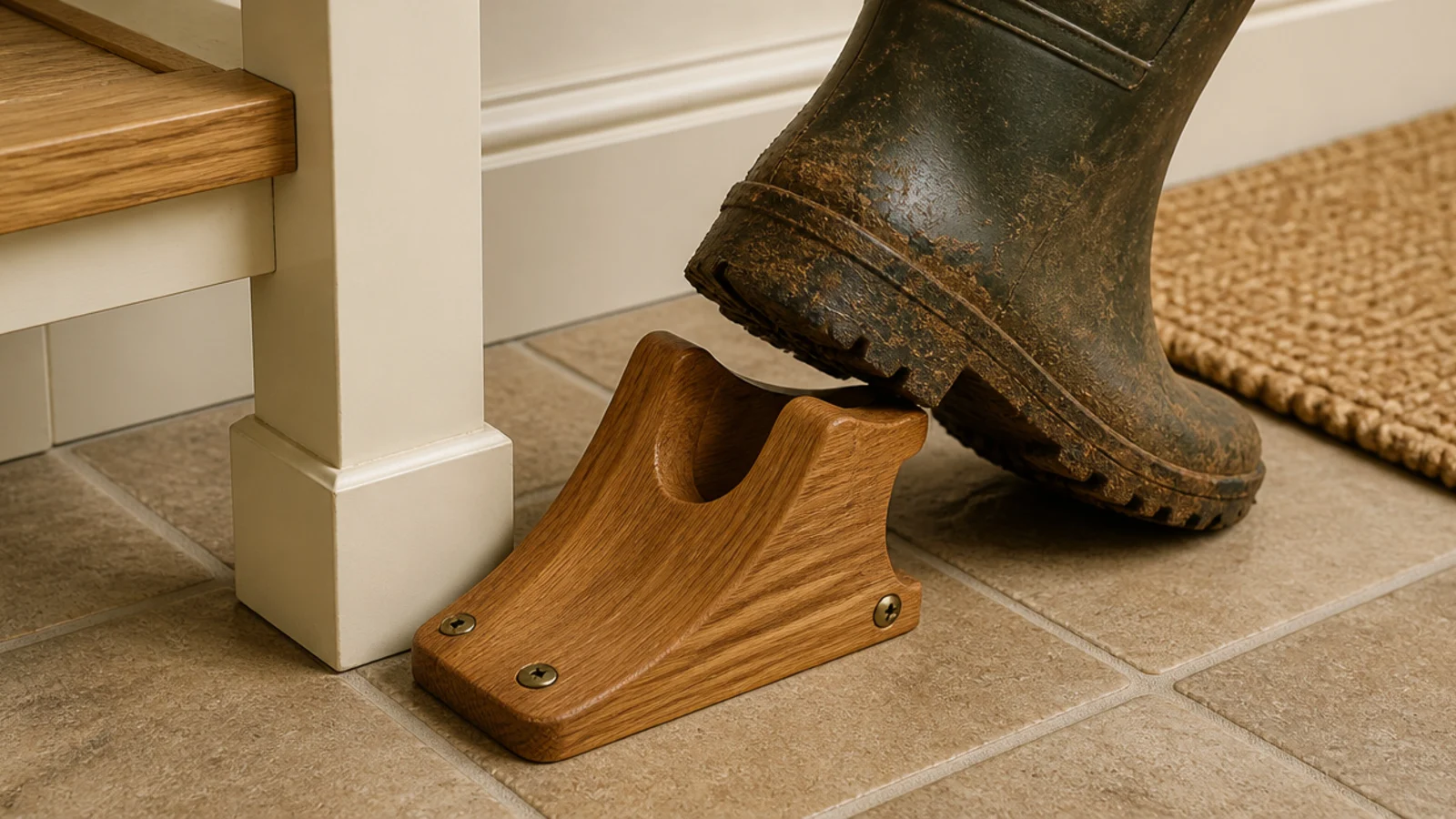
The small piece of hardware that saves the back of every boot in the house.
A wooden or cast boot jack screwed to the floor beside the bench leg lets boots come off standing rather than being trodden off with the other foot. About $15, and it stops the heel counters collapsing on the pairs you actually paid for. $
9. Tile or vinyl with a real threshold
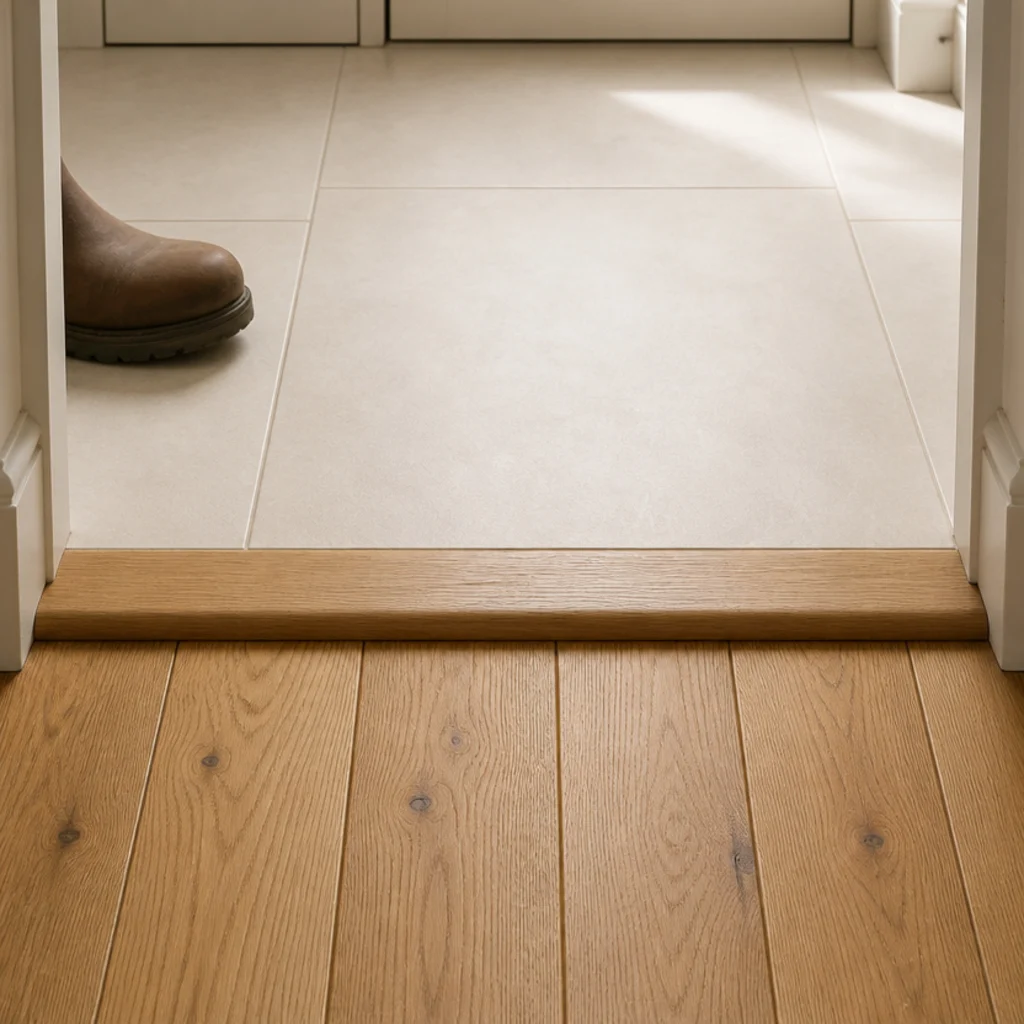
Mudroom flooring has one job, and carpet cannot do it.
Matte porcelain tile or good luxury vinyl plank both take grit, salt and standing water. What matters just as much is a raised threshold at the interior doorway, which stops water walking into the hallway on socks. Choose a matte or textured finish; polished tile plus wet boots is genuinely dangerous. $$–$$$
10. A sloped mat zone right at the door
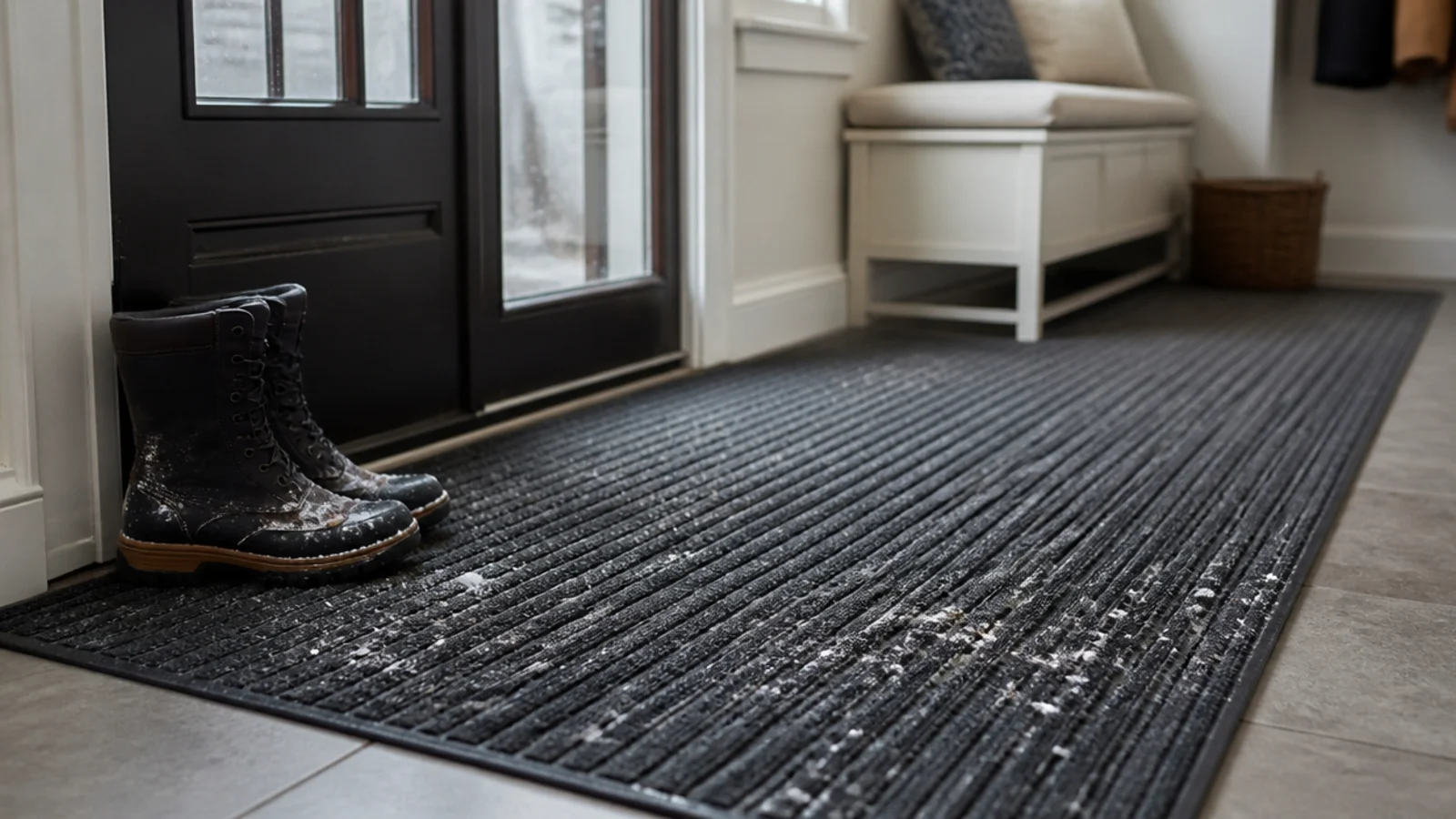
Grit does most of its damage in the first six feet, so give it those six feet.
A ribbed rubber mat immediately inside the exterior door catches snow, salt and mud before anyone reaches the bench. Ribbed rather than flat, because the grooves hold the debris below foot level. It lifts out and hoses off in two minutes. $
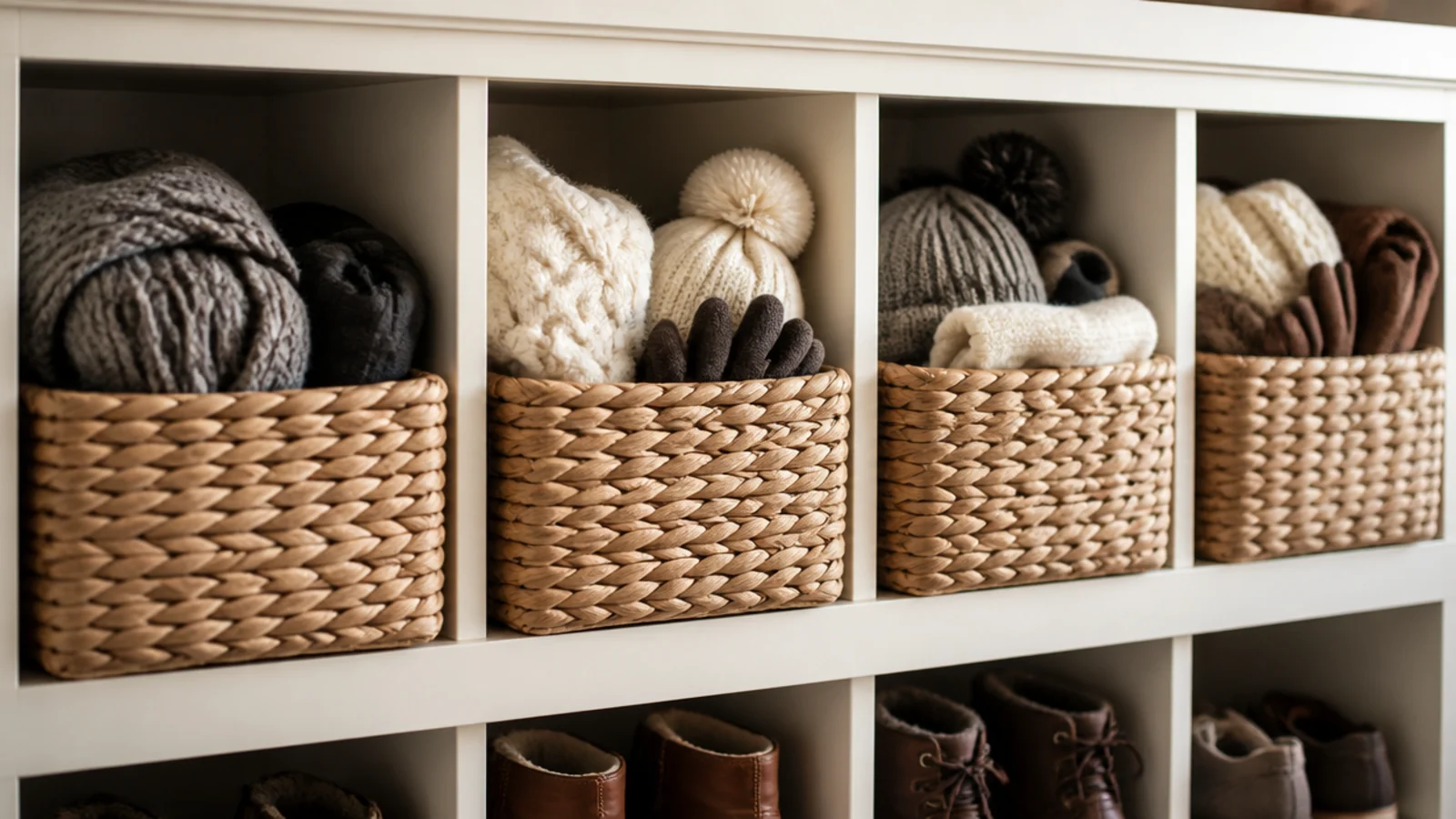
11. Baskets in the upper cubbies for hats and gloves
Small items migrate unless something contains them, and a mudroom generates a lot of small items.
One woven basket per person in the upper cubby row holds hats, gloves and scarves through the whole winter. Size the basket to the opening rather than the other way round, and leave two inches of clearance so it slides out one-handed. $
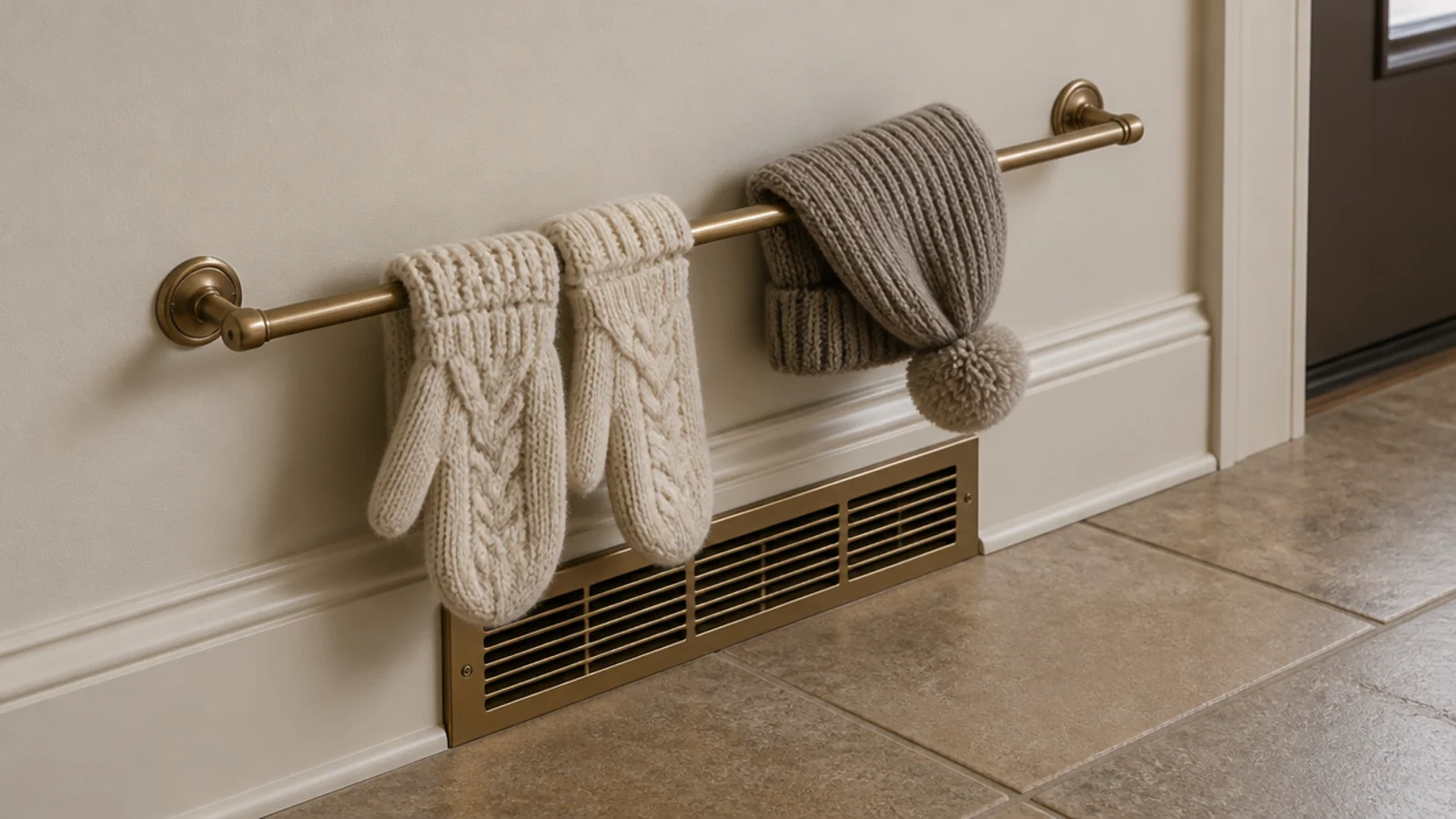
12. A drying rail above the heat register
Free drying, using warmth that is already in the room.
A slim rail mounted four inches above a floor register or a low radiator dries mittens and hats overnight in the rising air. Keep the four-inch gap for airflow and never drape anything directly over the grille. Brass or powder-coated steel; bare metal marks damp wool. $
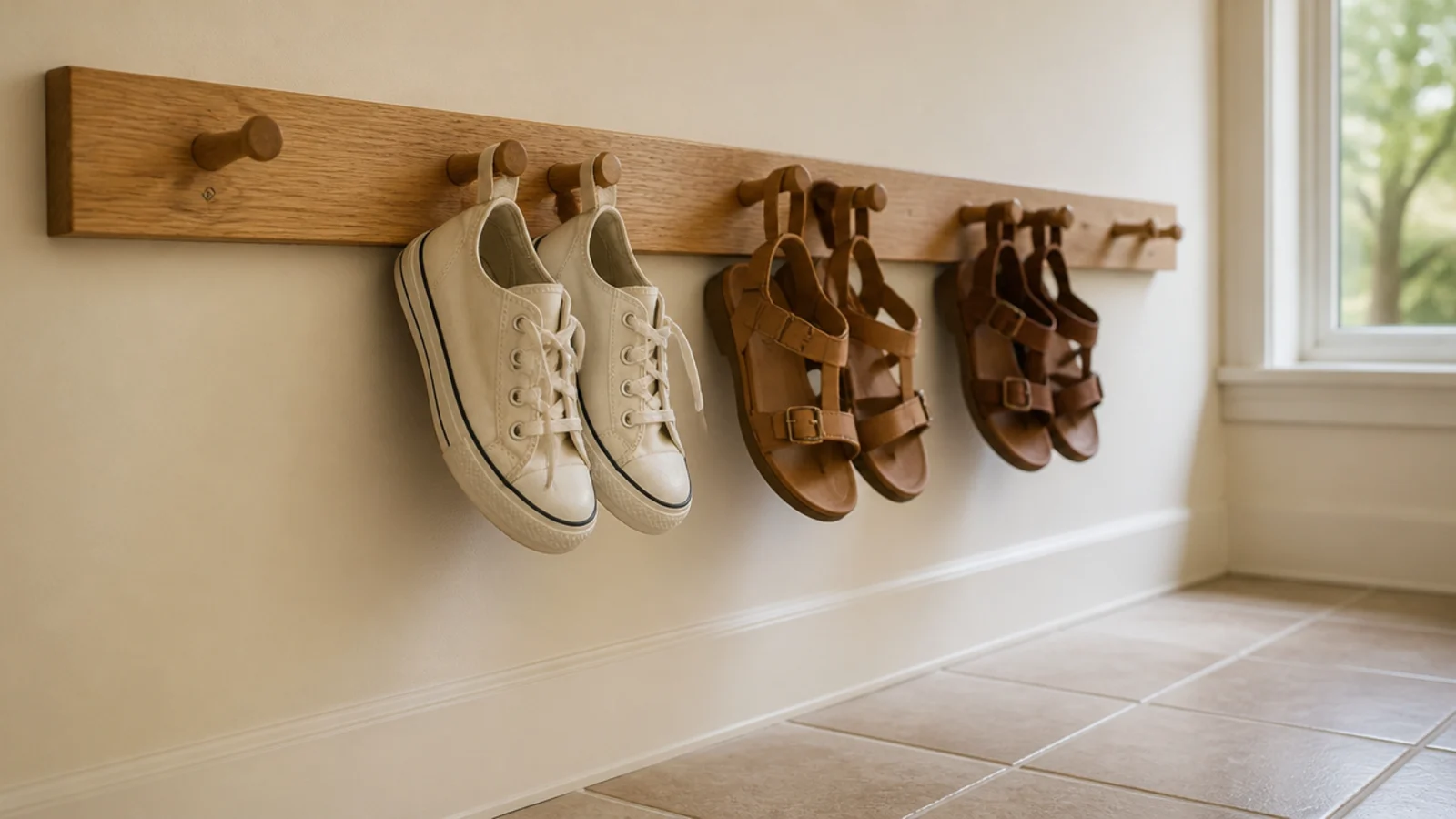
13. Wall pegs for the pairs that can hang
Anything with a strap can leave the floor entirely, which frees cubbies for the shoes that cannot.
A Shaker peg rail at 48 inches holds sandals, canvas slip-ons and clogs by their heel straps. It costs about $20 for a four-foot rail and takes ten minutes to fit. Summer footwear lives there from May and the cubbies go to sneakers. $
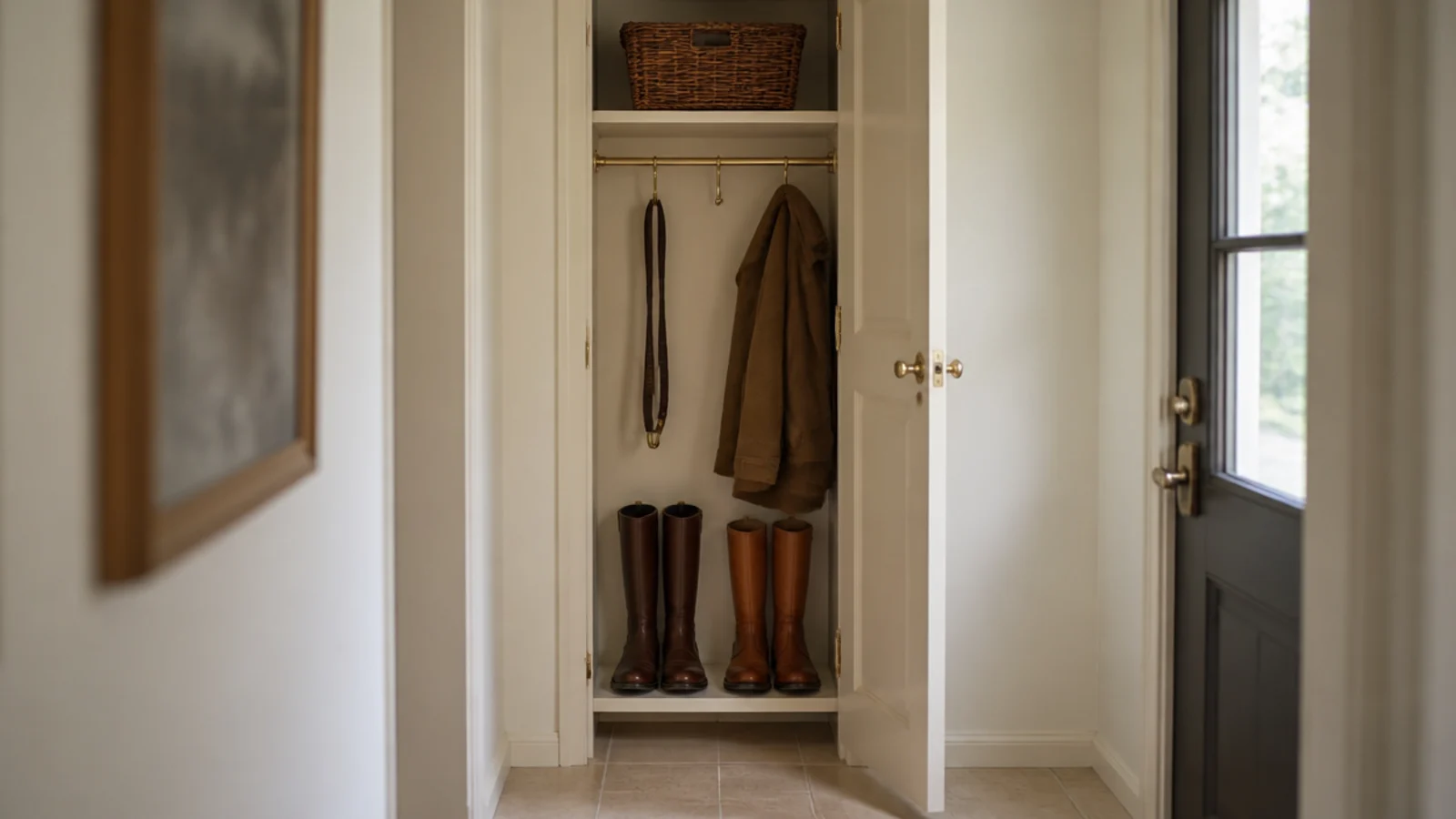
14. A tall slice of closet for knee-high boots
Knee-high boots need 20 inches of clear height or they fold at the ankle and crease permanently.
A narrow full-height bay, even 12 inches wide, gives them somewhere to stand. If there is no room for one, hang them from trouser-clip hangers instead, using felt-lined clips so the metal does not dent the shaft. Boot shapers do the same job for around $8 a pair. $$
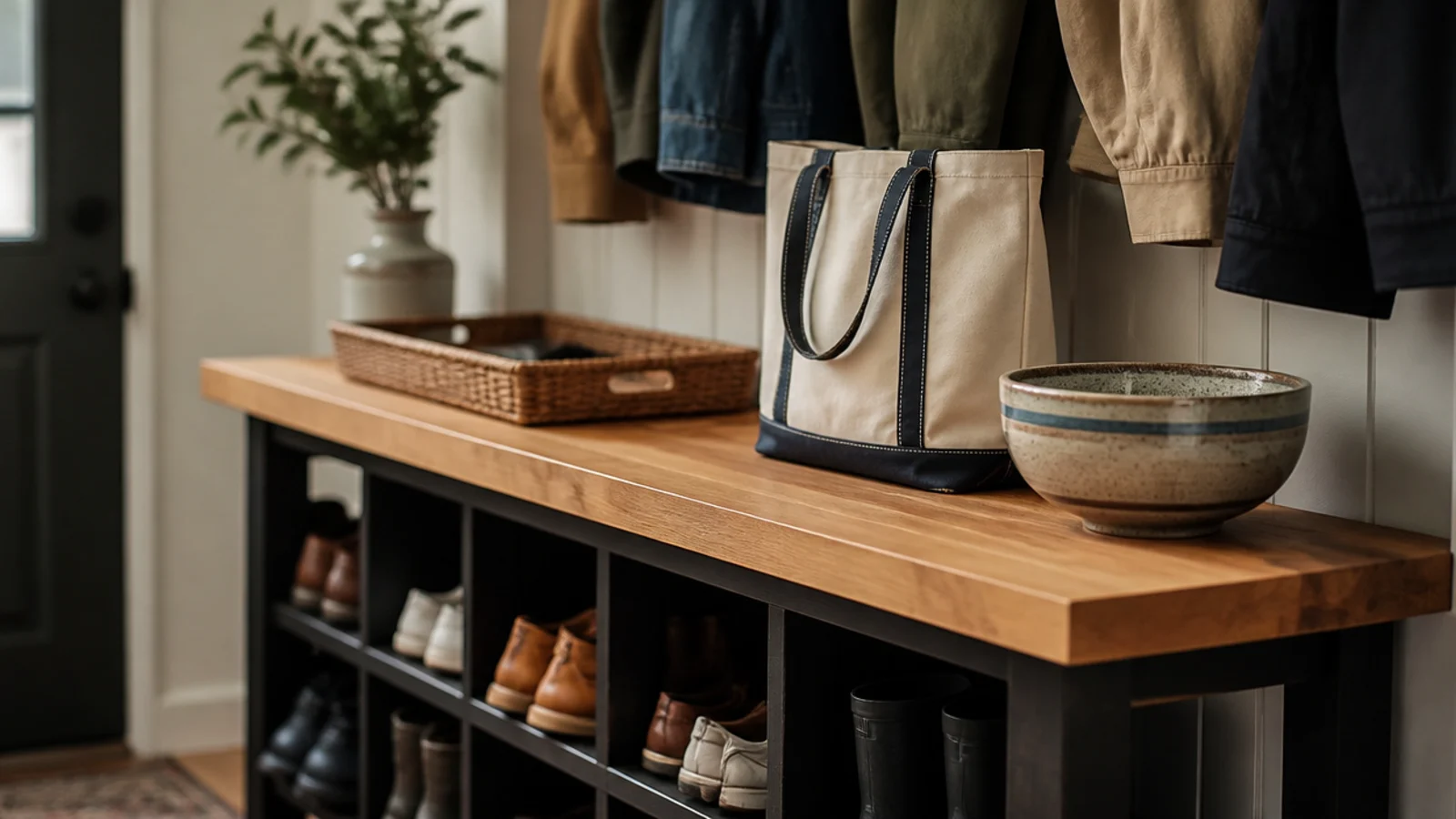
15. A landing counter at thirty-six inches
Bags on the bench are why nobody can sit down to deal with laces.
A narrow counter at standing height along the run gives bags, groceries and keys their own surface. Twelve inches deep is plenty and keeps the walkway clear. Butcher block or a solid painted top, with one tray on it and nothing else. $$
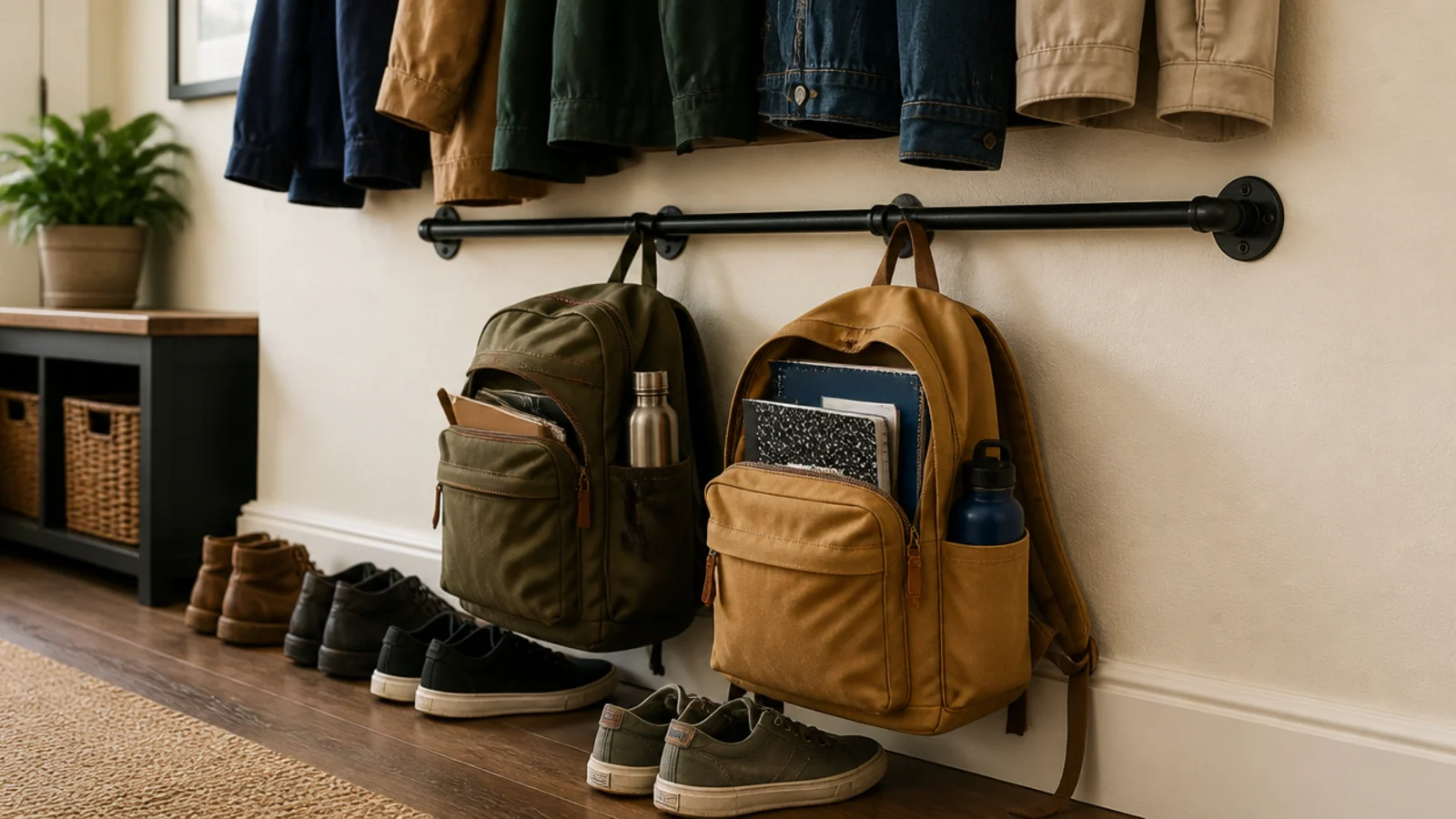
16. A second hook row for backpacks
School bags are heavy, and hanging them on the coat hooks means the coats end up underneath them on the floor.
A separate low rail on sturdier hooks, at 44 to 48 inches, takes loaded backpacks without pulling out of the wall. Fix into studs rather than drywall anchors for this one, since a full bag can hit 20 pounds. $
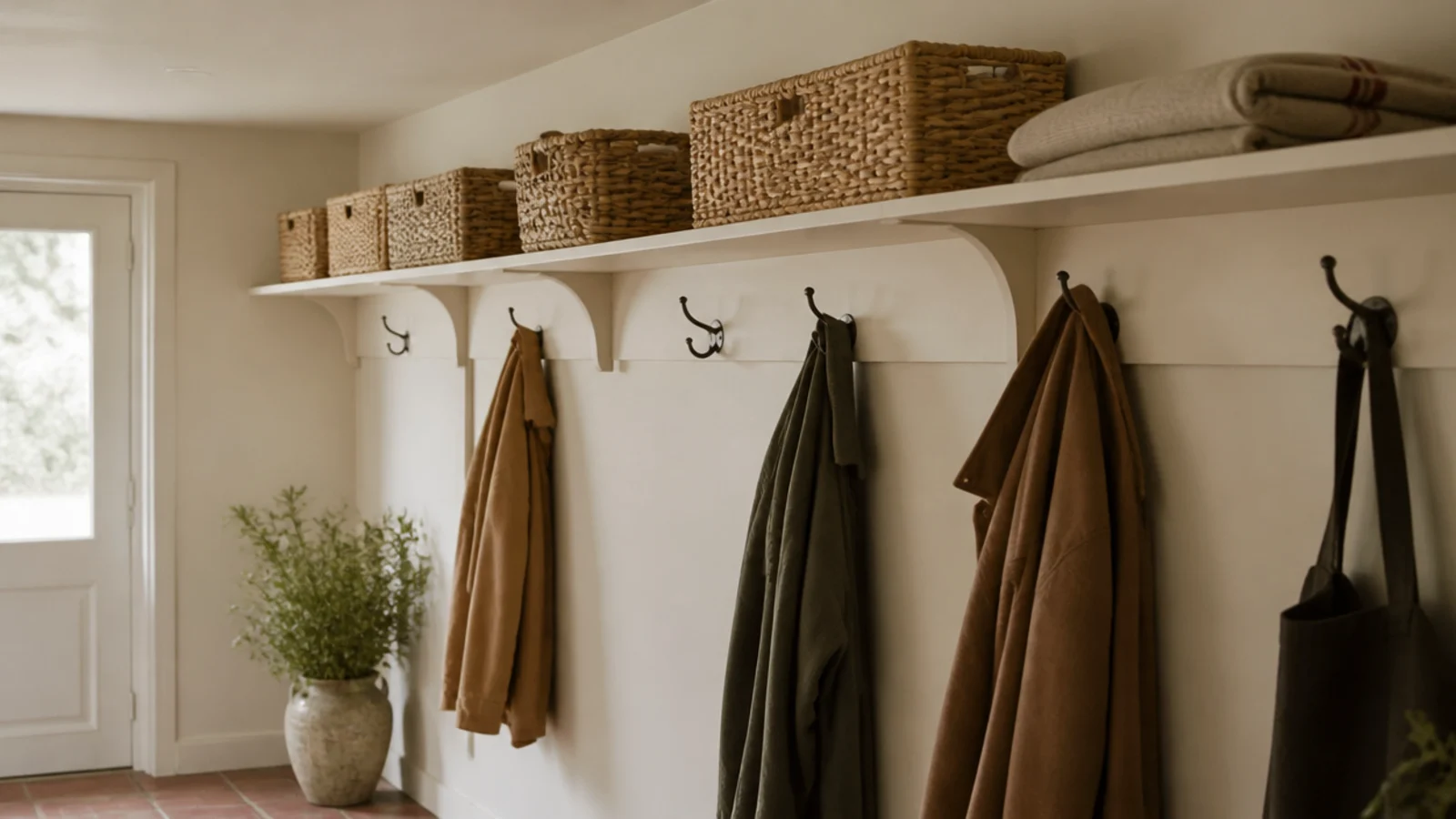
17. An overhead shelf at sixty-eight inches
The band above the hooks is dead space in nearly every mudroom.
A shelf at 68 inches holds bins of the pairs and gear you touch twice a year. Keep each bin under 12 pounds, since you are lifting at shoulder height. Rotate it at the same time you swap the garage bins over, as garage shoe storage covers in more depth. $$
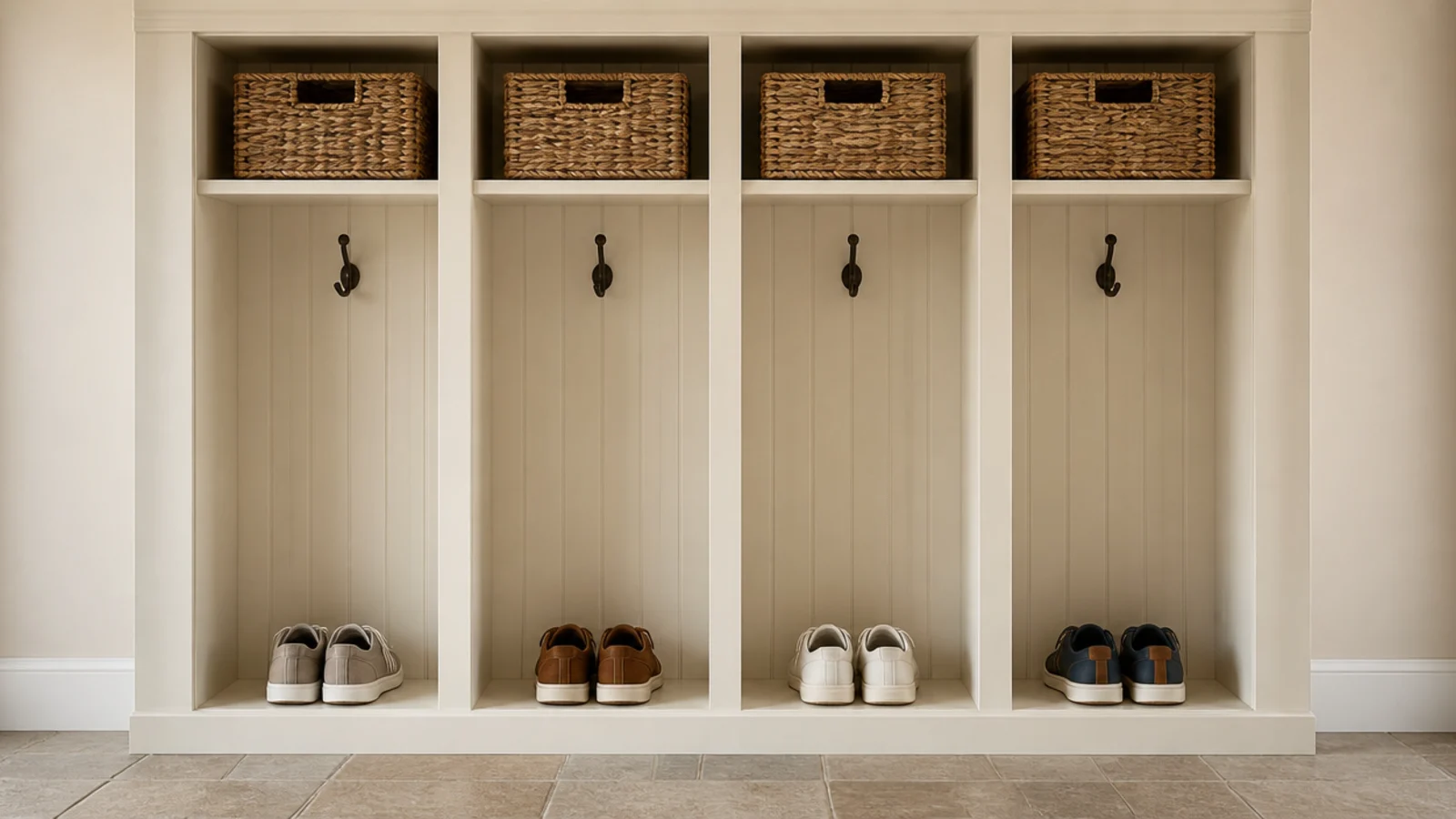
18. Fourteen inches of width per person
The number that decides whether a family run works or quietly fails.
Fourteen inches gives one person a hook, a cubby and a basket without their coat touching the next person's. Below that, bays start sharing and sharing means nobody owns the mess. If the wall is too short, hang coats elsewhere and keep the run for shoes only. $$
19. Keep a thirty-six inch walkway clear
In a mudroom, somebody is always sitting while somebody else is trying to get past.
Thirty-six inches of clear floor in front of the bench allows that. If the room cannot give you both a 16-inch bench run and a 36-inch path, take the shallower bench: a 12-inch seat that people can pass beats an 18-inch one that blocks the room. There is a full build sequence in the DIY shoe storage guide. Free
20. A weekly reset that takes four minutes
The habit that keeps the hardware honest.
Once a week, put every cubby back to one pair, wipe the tray, square up the baskets and take the strays to their bedrooms. Four minutes, same slot every week. No mudroom design survives without it, and every mudroom design works with it. Free
Mistakes to Skip
- Putting doors on the daily zone. Every door is a step people skip when they are late, and shoes end up on the floor beside a beautiful closed cabinet.
- Building every cubby the same height. Boots then have nowhere to stand, so they live in the walkway all winter and the run never looks tidy.
- Skipping the drip tray to save $25. Meltwater spreads across the floor, walks into the hallway on socks, and eventually lifts the finish on whatever it reaches.
Frequently asked questions
How deep should mudroom cubbies be?
Thirteen inches, because a men's size 12 sneaker is about 12.5 inches long and needs to sit fully inside without its heel sticking into the walkway. Make two of the lower bays 16 inches high for boots rather than sizing every opening the same. One pair per cubby is the rule that keeps the whole run tidy.
What is the right bench height for a mudroom?
Eighteen inches to the top of the cushion, not to the top of the frame. That is the height where an adult can sit and reach laces without folding forward. Build the frame at 16 inches and let a two-inch cushion make up the difference, or go to 17 with a one-inch pad if children use it most.
How high should mudroom hooks be for children?
Around 40 inches for a child aged five to ten, and 60 to 66 inches for adults. Two rows solve the whole problem: the lower row is the only one children can reach, so their coats actually get hung. Space hooks 9 to 12 inches apart or bulky winter coats overlap and slide off each other.
How do I keep meltwater off the mudroom floor?
Give it a designated landing surface before it can spread. A lipped tray at least 15 inches deep under the bench, on a tiled or vinyl floor with a threshold at the doorway, contains almost all of it. Wet boots put into a closed cubby stay wet and pass the damp to everything beside them.
How much space does a mudroom bench and cubby run need?
Allow 16 inches of depth for the bench and cubbies, plus a 36-inch clear walkway in front so two people can pass while one is sitting. Fourteen inches of width per person is the working minimum for a hook, a cubby and a basket. Below that, hang the coats elsewhere and keep the run for shoes.
Should mudroom shoe storage be open or closed?
Open, in almost every family house. Every door is a step somebody skips when they are late, and shoes end up on the floor beside a beautiful closed cabinet. Keep doors for the seasonal overflow on the top shelf, and leave the daily zone completely open so it takes no decisions at all.
Build for the worst morning, not the calmest one: a seat at 18 inches, cubbies at 13 deep, one named bay per person, and a tray for whatever comes in wet. Everything else is finish. For the seat itself in more detail see shoe storage benches, and if your mudroom is really a corner of the hall, a shoe cabinet with a bench top does the same job in less space. Save the pin before the next wet school run.
Want more like this? Browse all 15 shoe storage ideas guides — they all use the same measurements and budget tiers.
Pin it for later
Save this to your Shoe Storage Ideas board
Pin it now so it is waiting for you when the tape measure comes out — and so the next person hunting for this idea can find it too.
Save this pinKeep going
More ideas worth saving while you have the tape measure out.