Shoe Cabinet Ideas · Listicle
25 Dreamy Shoe Cabinet Ideas for Any Home

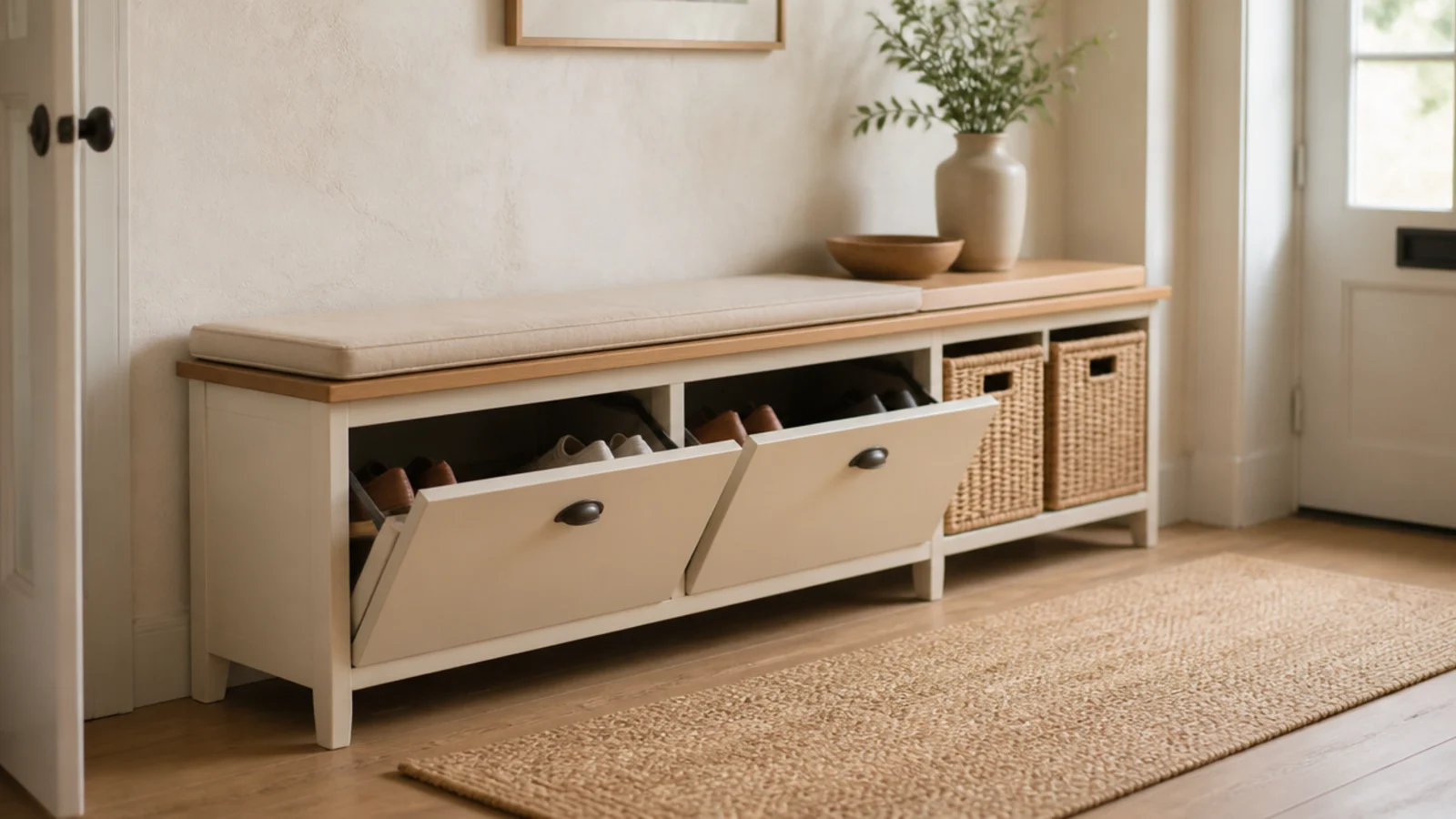
A shoe cabinet bench solves two problems with one footprint: it gives you somewhere to sit while you deal with laces, and it puts every pair behind a front instead of on the floor. The catch is that the two jobs want different dimensions, and most units get one of them wrong. Below are 25 versions that get both right, each with the height, depth or clearance that makes it work.
In this guide27 sections — tap to openHide
- 1.How a shoe cabinet bench earns its floor space
- 2.The eighteen-inch bench with tilt-outs underneath
- 3.A bench top laid over two stacked slim cabinets
- 4.A hinged lift-top bench with a vented base
- 5.A cushion strapped to a cabinet you already own
- 6.A window seat with cabinet fronts below
- 7.Open cubbies below, closed cabinet above
- 8.An L-shaped corner bench with cabinets on both legs
- 9.Bench below, mirror above, fronts flush
- 10.A twelve-inch-deep bench for a tight hall
- 11.A slatted seat over a ventilated cabinet
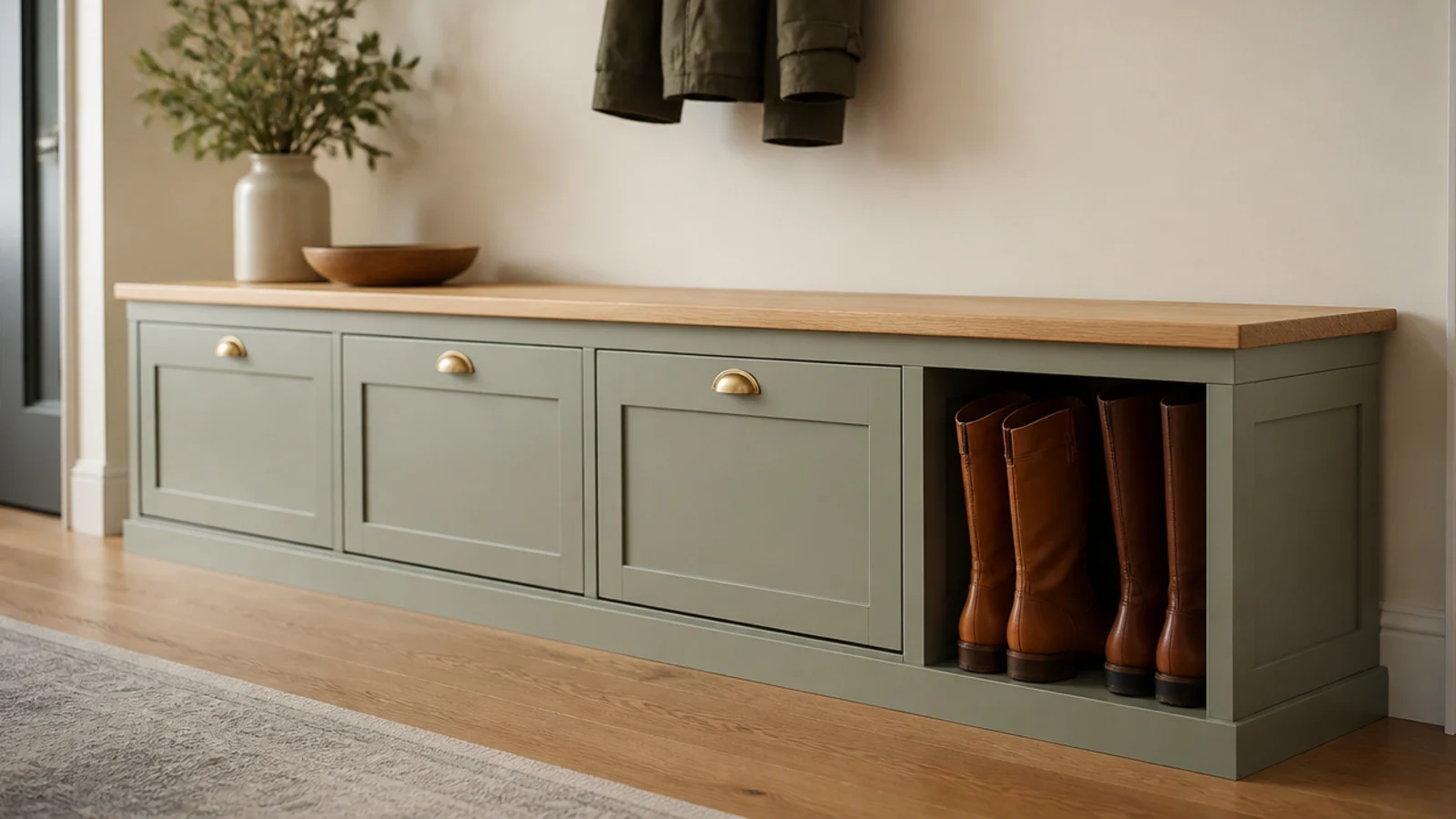
- 12.A bench with a boot bay at one end
- 13.Cane-fronted cabinet under a timber seat
- 14.Two-tone: painted base, oak seat
- 15.A pull-out tray at the base for wet days
- 16.Sliding drawers instead of tilt-outs
- 17.A radiator-cover bench with a vented cabinet
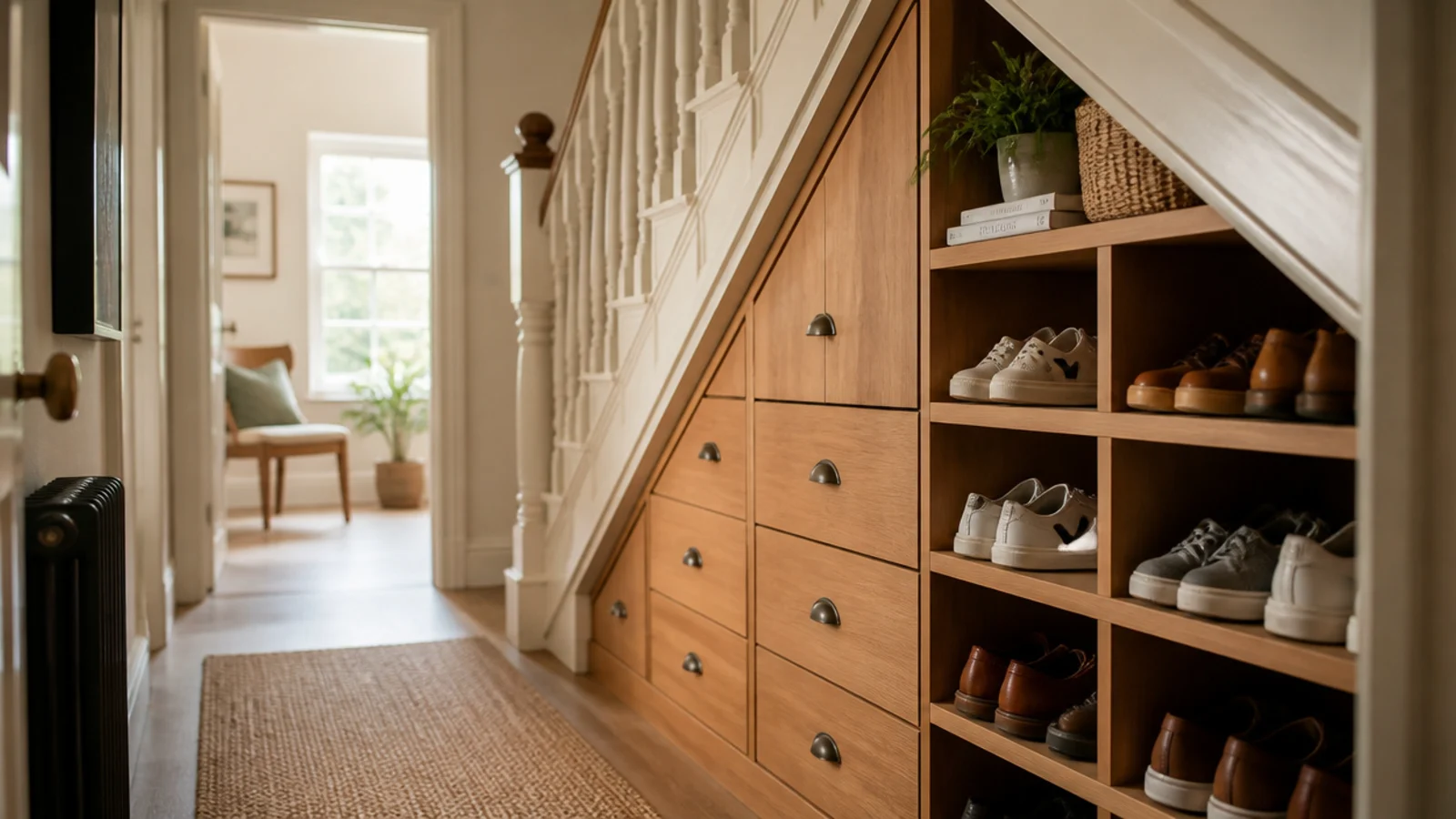
- 18.An under-stair bench with angled fronts
- 19.Baskets in the open lower tier
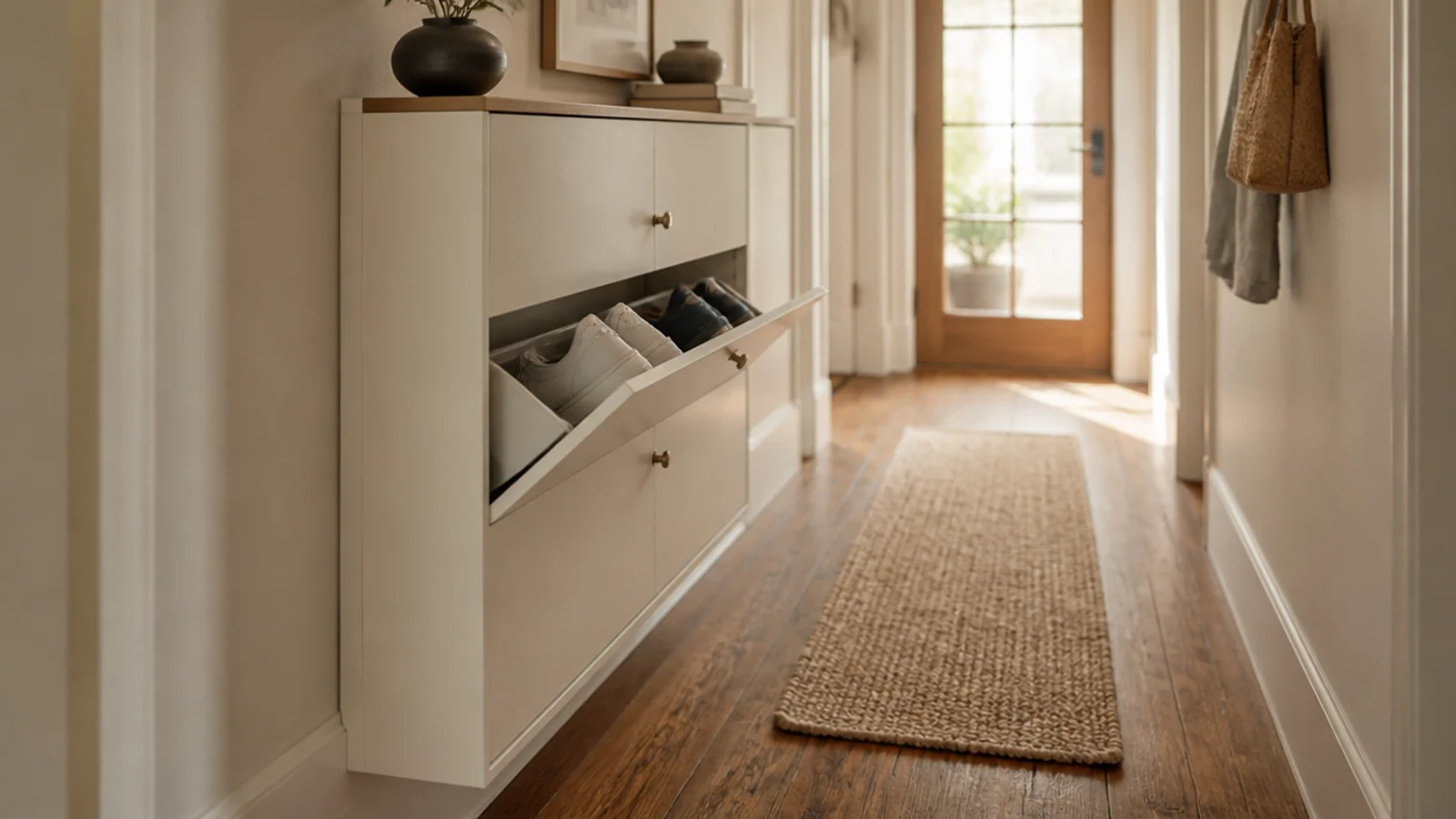
- 20.A wall-hung bench cabinet that floats
- 21.A hidden charging drawer in the seat
- 22.A lidded tray built into the seat top
- 23.A bench cabinet on castors
- 24.Drawer over open shelf for the daily pairs
- 25.A mudroom run with a cabinet per person
- 26.A perch bench at twenty-four inches
- 27.Mistakes to Skip
How a shoe cabinet bench earns its floor space
Three numbers decide whether one of these gets used or ignored.
Seat height. Eighteen inches to the top of the finished seat, cushion included. Under 16 and you are sitting on the floor; over 20 and it becomes a perch you lean against rather than sit on.
Depth. A seat wants 15 to 17 inches front to back. What goes on inside is a separate calculation: a men's size 12 sneaker is about 12.5 inches long, so flat internal shelves need 13 inches of depth, while a tilt-out drawer holding the same shoe at 45 degrees only needs 9. That gap is why tilt-outs fit halls that flat-shelf benches cannot.
Walkway. Keep 36 inches of clear floor in front, measured with a drawer open. Below that, nobody can pass while somebody is sitting, and the bench quietly stops being used.
Two more rules. Each tilt-out drawer takes six to eight pairs of flats and no boots at all, so give boots their own bay. And any unit over 40 inches tall goes to the wall with a strap.
Budget tiers: $ under $120, $$ $120–$350, $$$ $350 and up.
1. The eighteen-inch bench with tilt-outs underneath
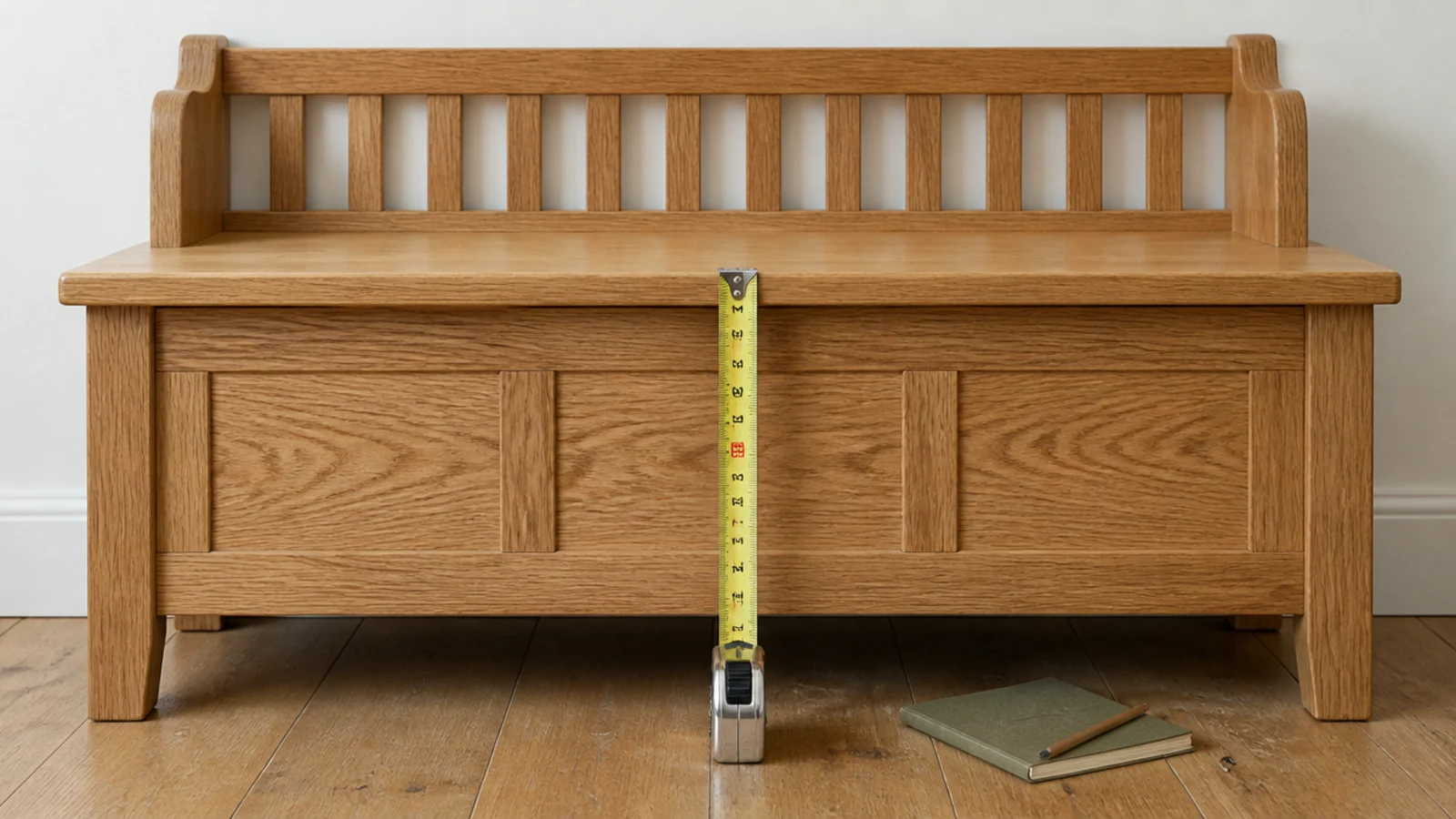
The pairing that works in the most houses. An 18-inch seat over two 9-inch-deep tilt-out drawers holds twelve to sixteen pairs of everyday shoes in about four feet of wall.
Look for soft-close hinges before anything else. These drawers get shut with a foot, daily, by everyone. $$
2. A bench top laid over two stacked slim cabinets
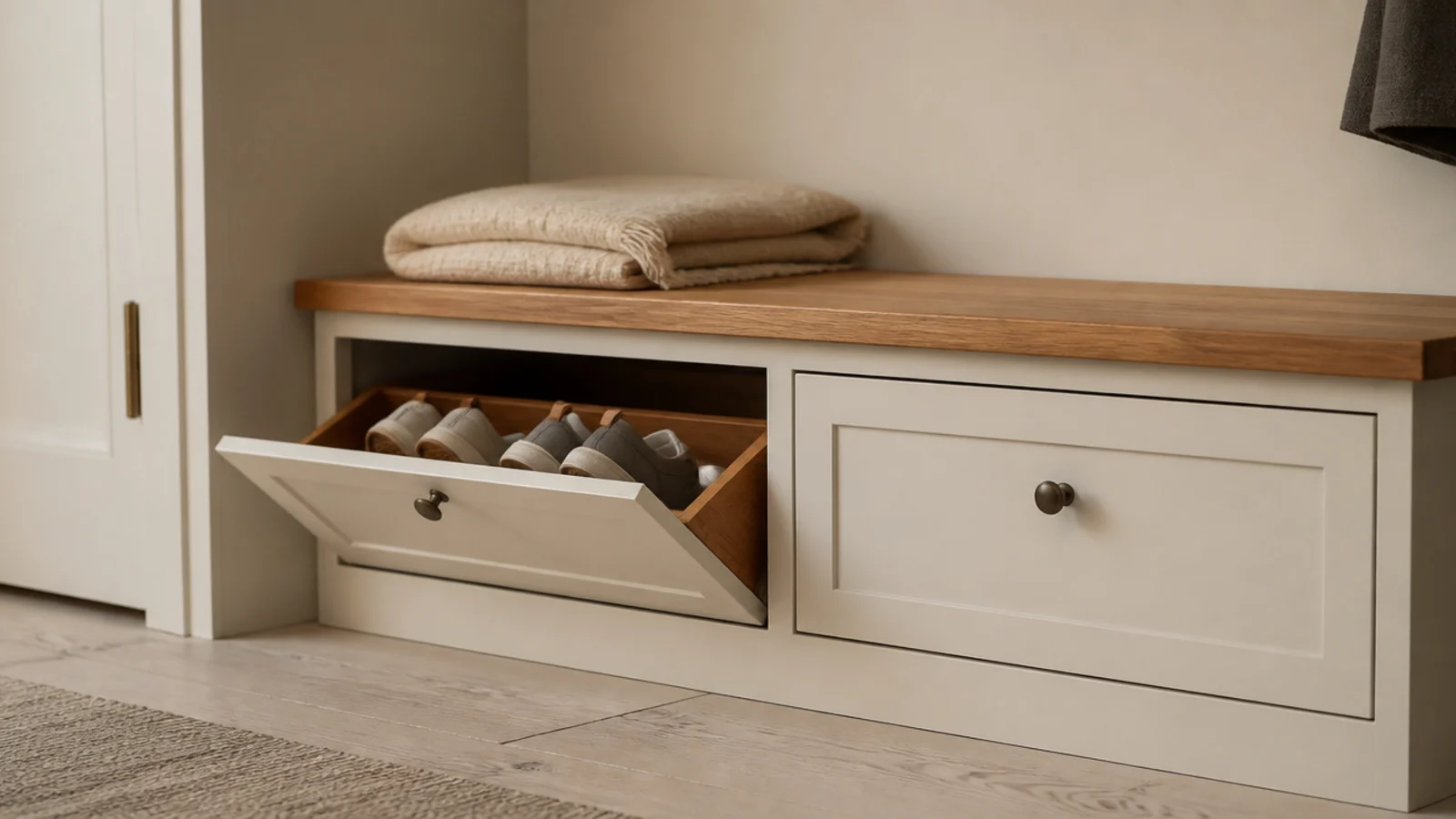
Two matching slim cabinets set 14 inches apart, capped with one solid board, become a single piece of furniture for the price of flat-pack.
Fix the board with screws up through both carcasses. The gap between them takes a basket of shoe-cleaning things or a pair of tall boots standing upright. $$
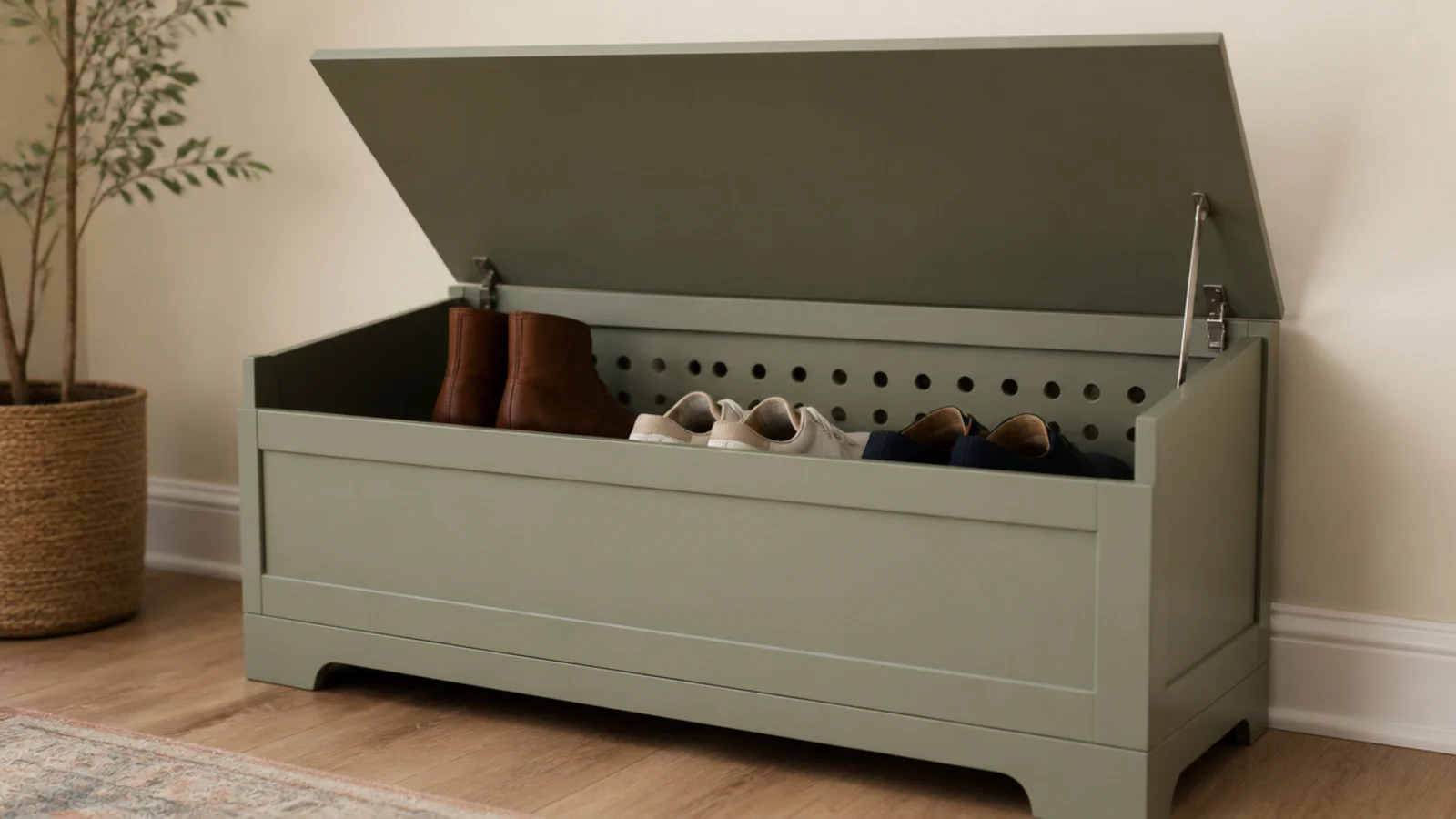
3. A hinged lift-top bench with a vented base
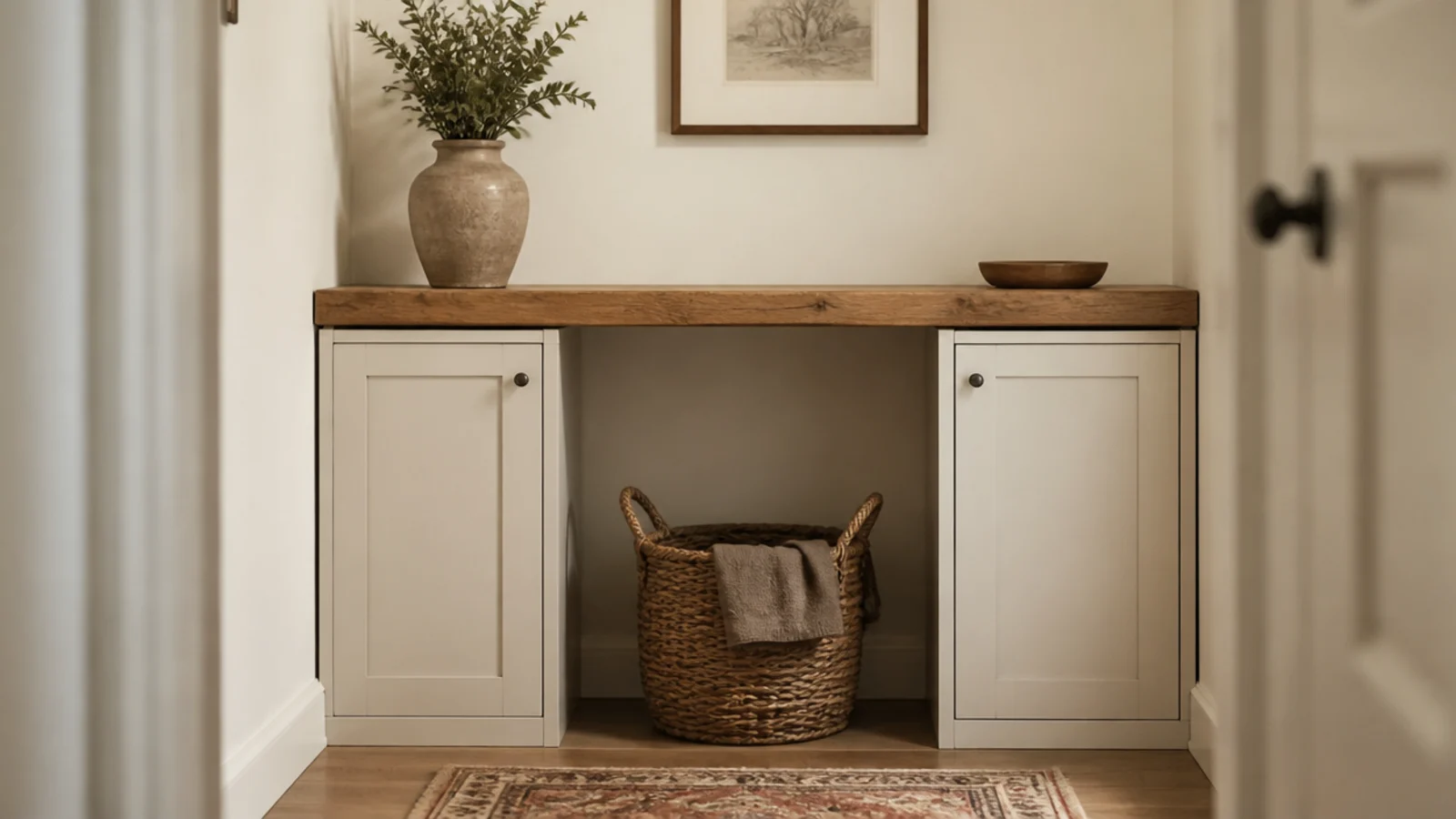
One movement opens the entire bay, which is why lift-tops suit households that never quite manage to open drawers.
Fit a soft-close lid stay so it cannot drop on fingers, and drill four one-inch vent holes through the back board. A sealed box under a solid lid holds humidity for days. $$
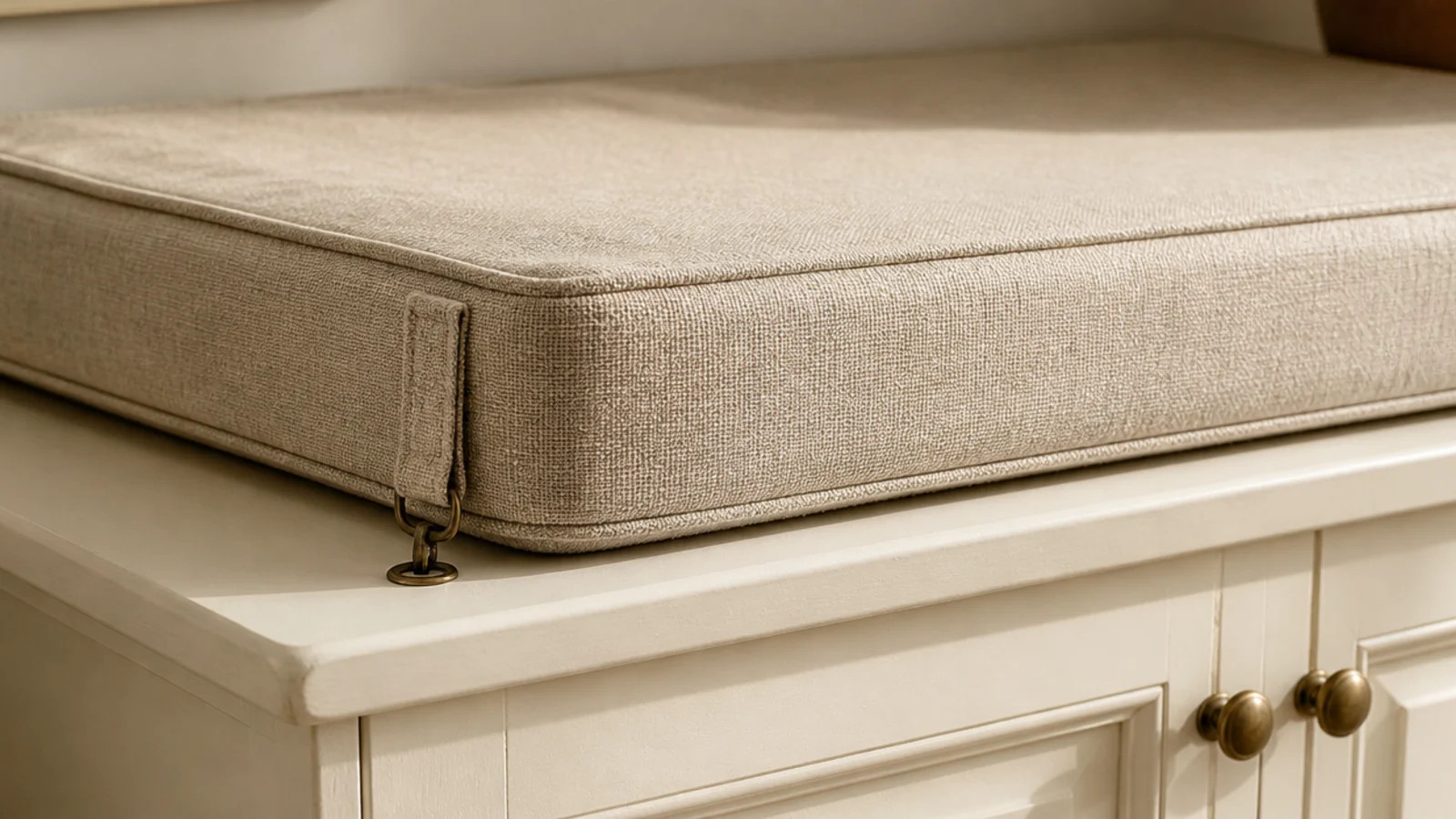
4. A cushion strapped to a cabinet you already own
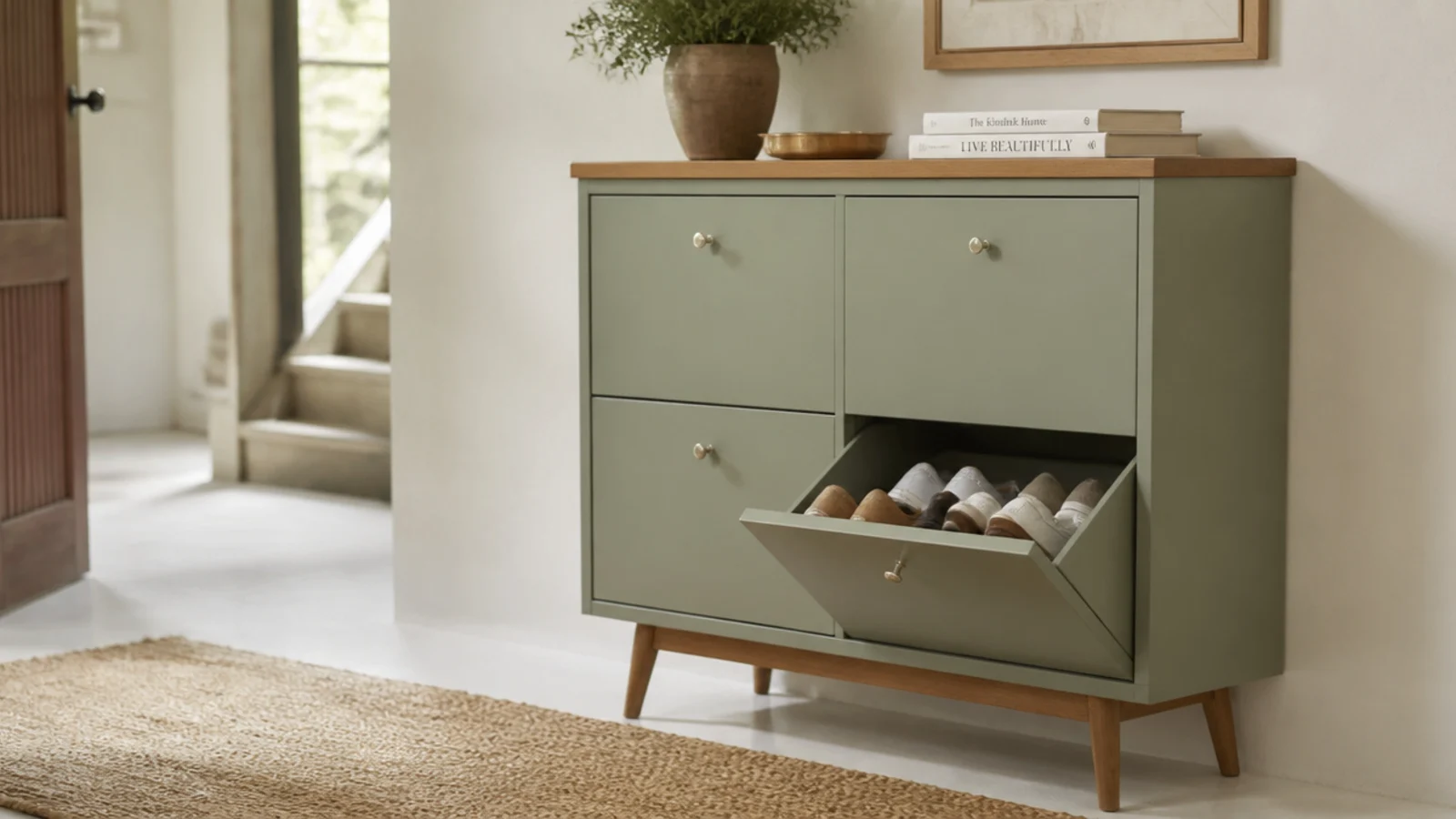
Most tilt-out cabinets land between 30 and 34 inches tall, too high for a real bench and perfect for a perch.
A firm foam cushion in linen or heavy cotton, held with two strips of hook-and-loop tape, costs $25 to $50 and turns a cabinet into somewhere to steady yourself. $
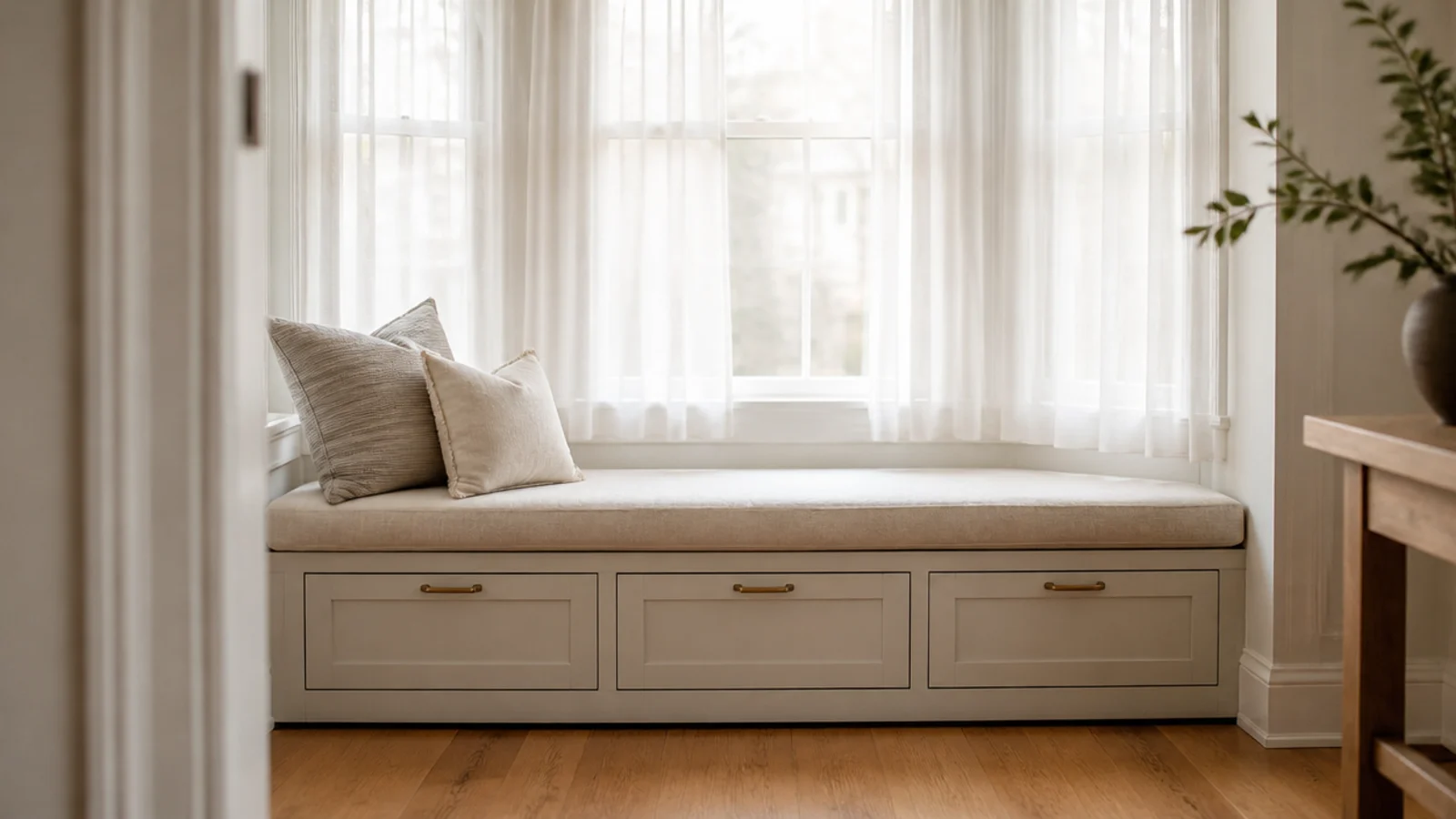
5. A window seat with cabinet fronts below
If your entry has a window low enough, the space beneath it is already the right height for a bench and the right depth for shoes.
Build the base as three tilt-out fronts rather than a single lift lid so the window still gets natural airflow, and keep the cushion firm. Soft cushions in an entry go flat within a season. $$$
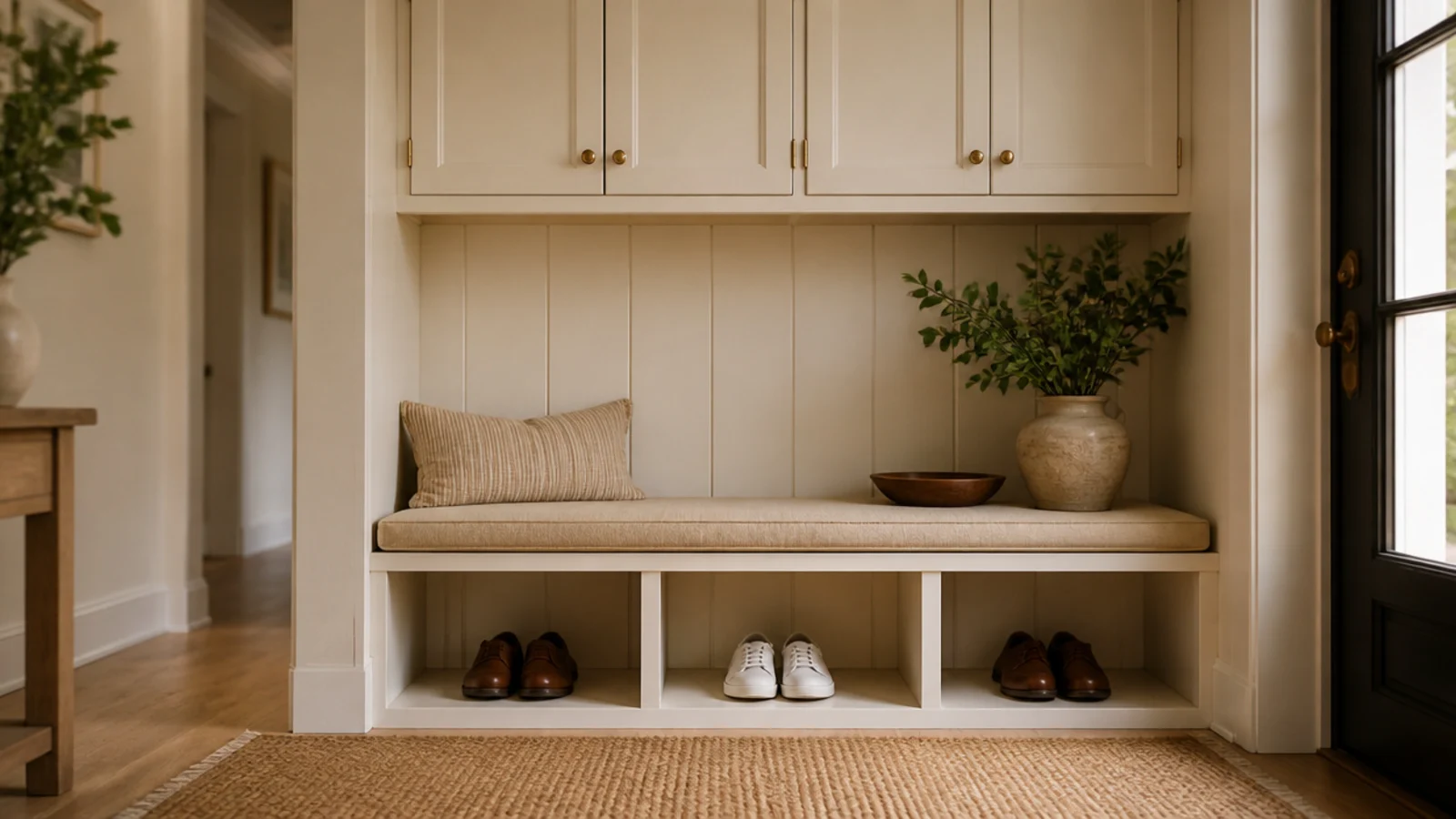
6. Open cubbies below, closed cabinet above
Split the storage by frequency. Today's shoes go in open cubbies at floor level where they need no hands; the collection lives behind doors above the seat.
Size each cubby at 13 inches deep, 12 wide and 8 tall. One pair per opening — the moment a cubby takes two, it becomes a shelf, and shelves become piles. $$$
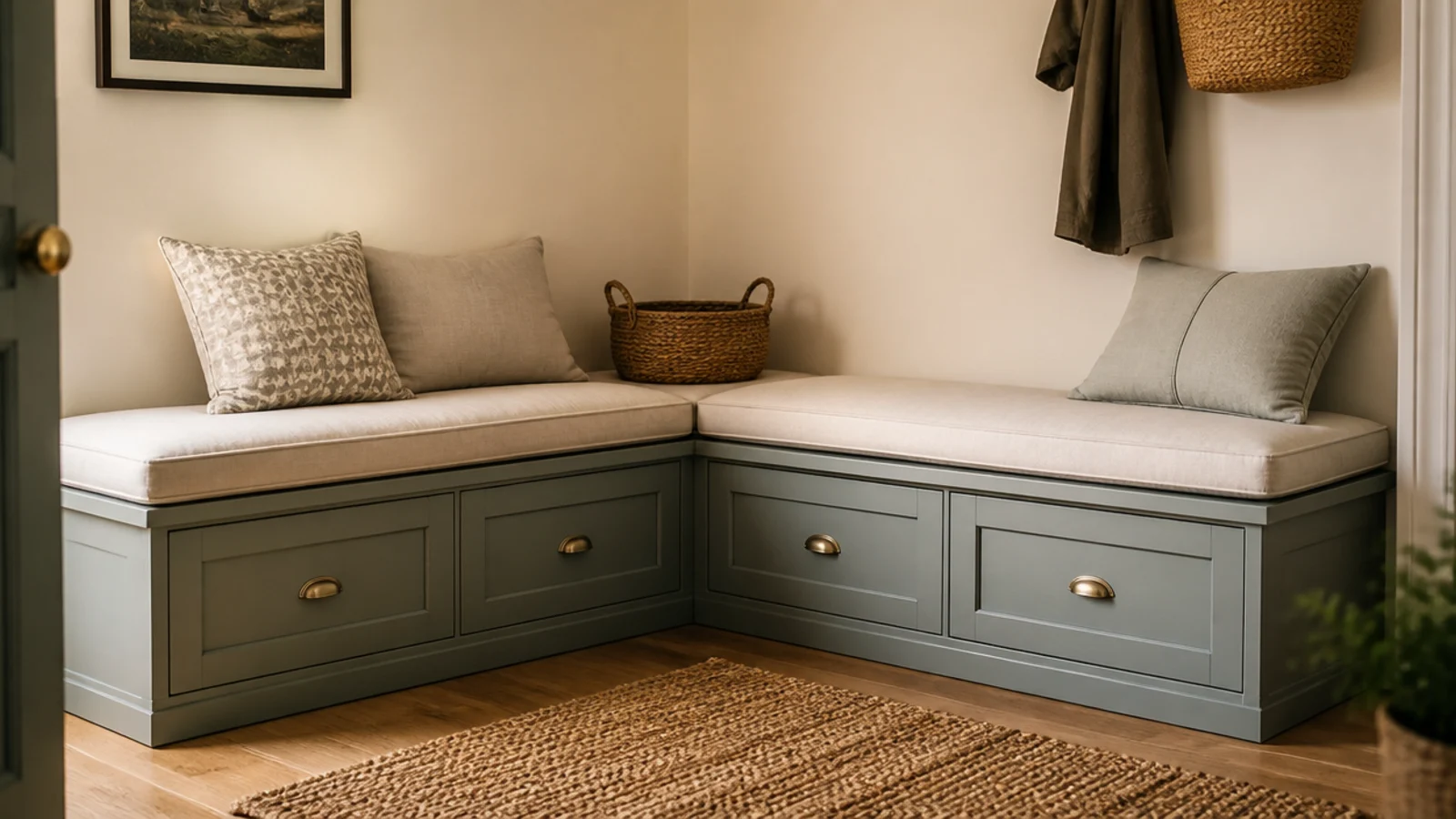
7. An L-shaped corner bench with cabinets on both legs
A corner entry gives you two walls, and an L-shaped bench uses both without narrowing the walkway on either side.
Run tilt-outs under the longer leg and leave the short one open for boots. Mitre the seat at the corner rather than butting two boards; the joint is the first thing anybody notices. $$$
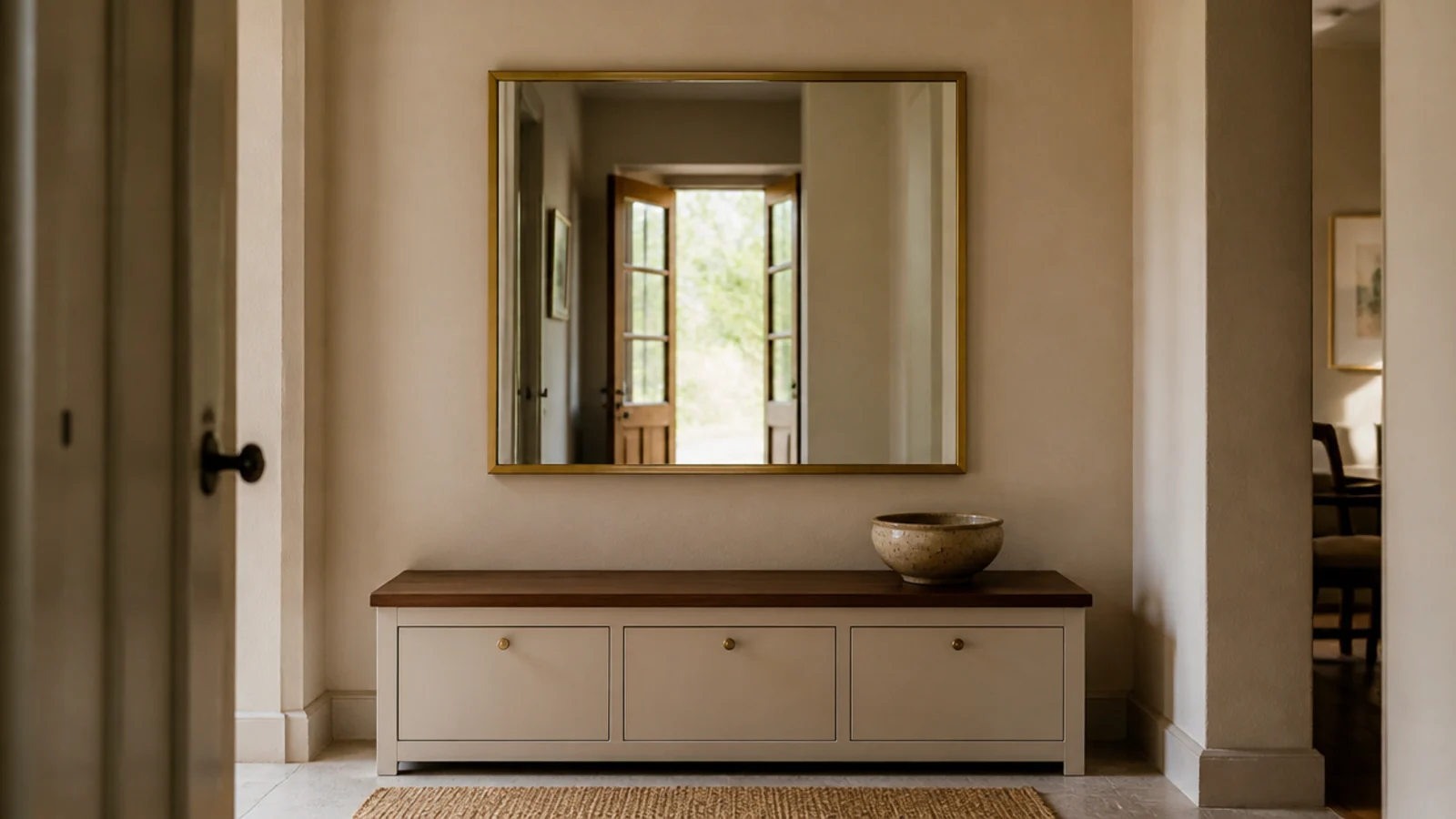
8. Bench below, mirror above, fronts flush
The single best-value pairing in a dark hall. A mirror above the seat bounces daylight back down the passage and gives you the last-look moment on the way out.
Hang the mirror 10 to 14 inches above the seat, and keep the cabinet fronts flush rather than proud so nothing catches a shin. More combinations live in shoe cabinets with mirrors. $$
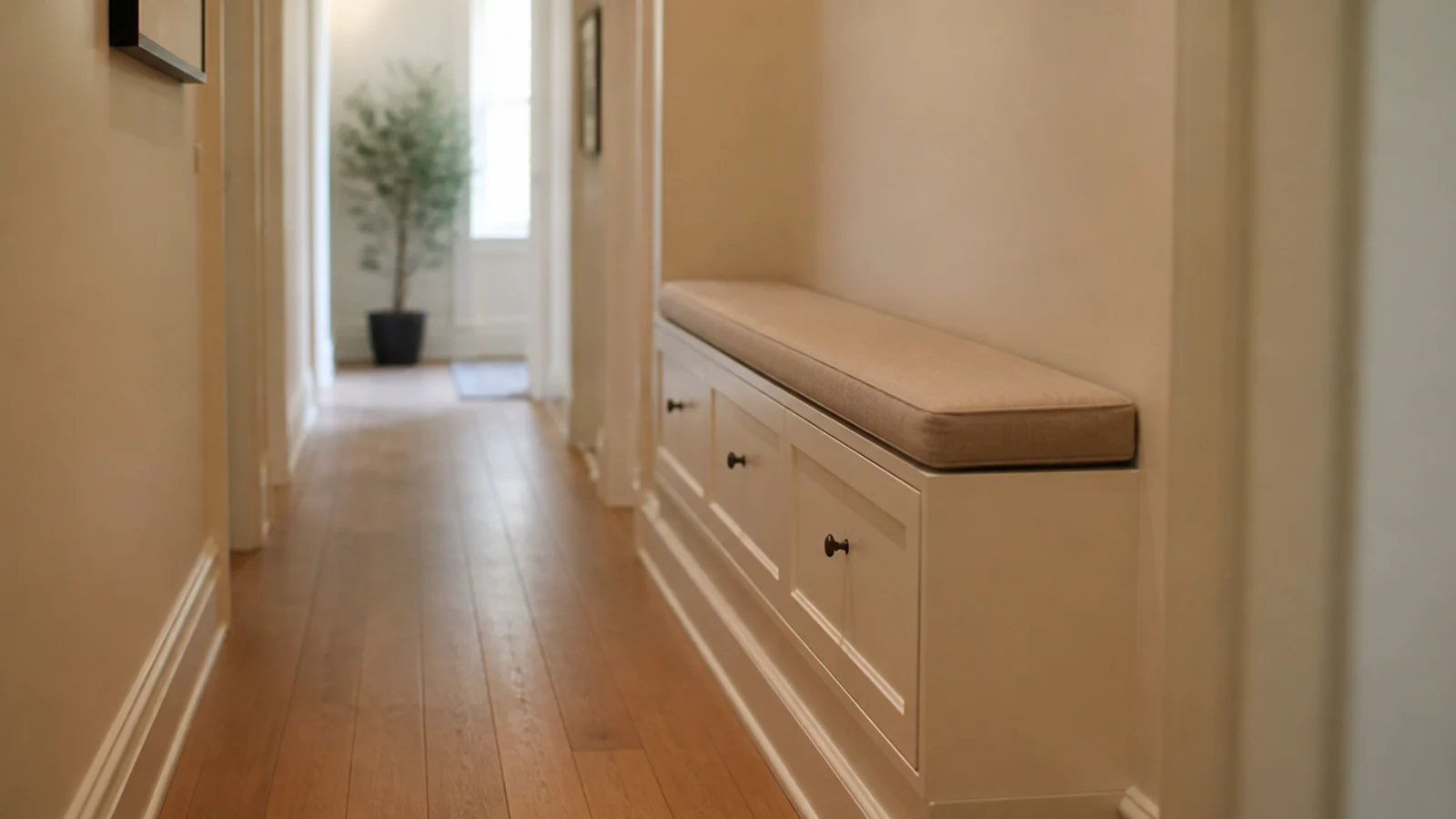
9. A twelve-inch-deep bench for a tight hall
When the corridor is under 40 inches wide, a full-depth bench is the wrong answer however much you want a seat.
Twelve inches deep still lets you perch to pull a boot on, and 9-inch tilt-outs fit within it. Keep the front edge rounded — shallow benches meet shins more often than deep ones. $$
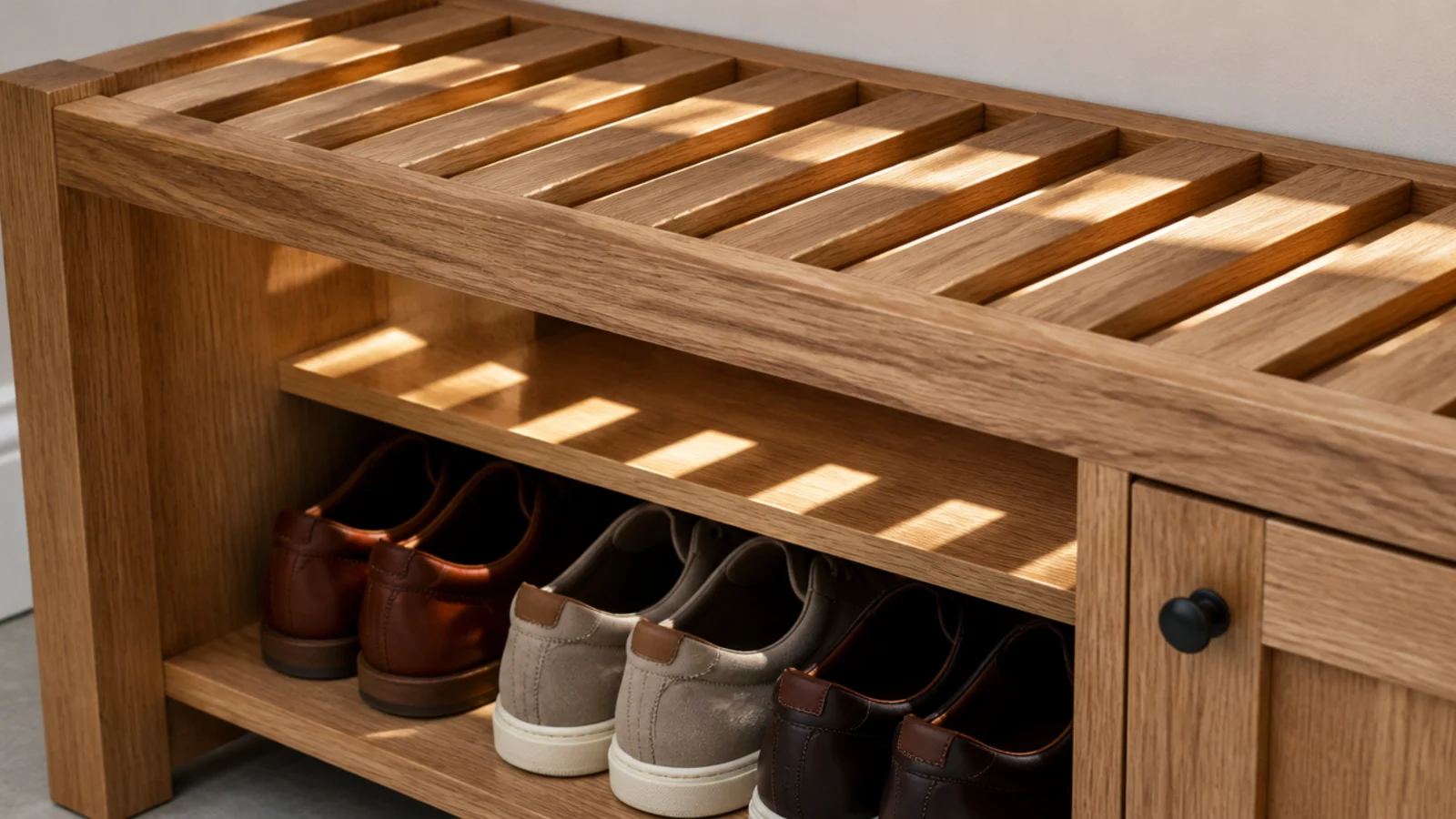
10. A slatted seat over a ventilated cabinet
Slats look considered and do real work. Spaced 3/8 of an inch apart across the seat, they let warm air move through the compartment below.
Use hardwood at least 3/4 inch thick for the slats and space the supporting rails no more than 12 inches apart, or the seat flexes underfoot. $$
11. A bench with a boot bay at one end
Boots are the reason most shoe furniture fails. Give up one compartment and the problem disappears.
An open bay 14 to 16 inches tall takes two pairs of ankle boots standing upright, or one pair of tall boots lying down. Line the base with a cut rubber mat, because this is the compartment wet soles meet first. $$
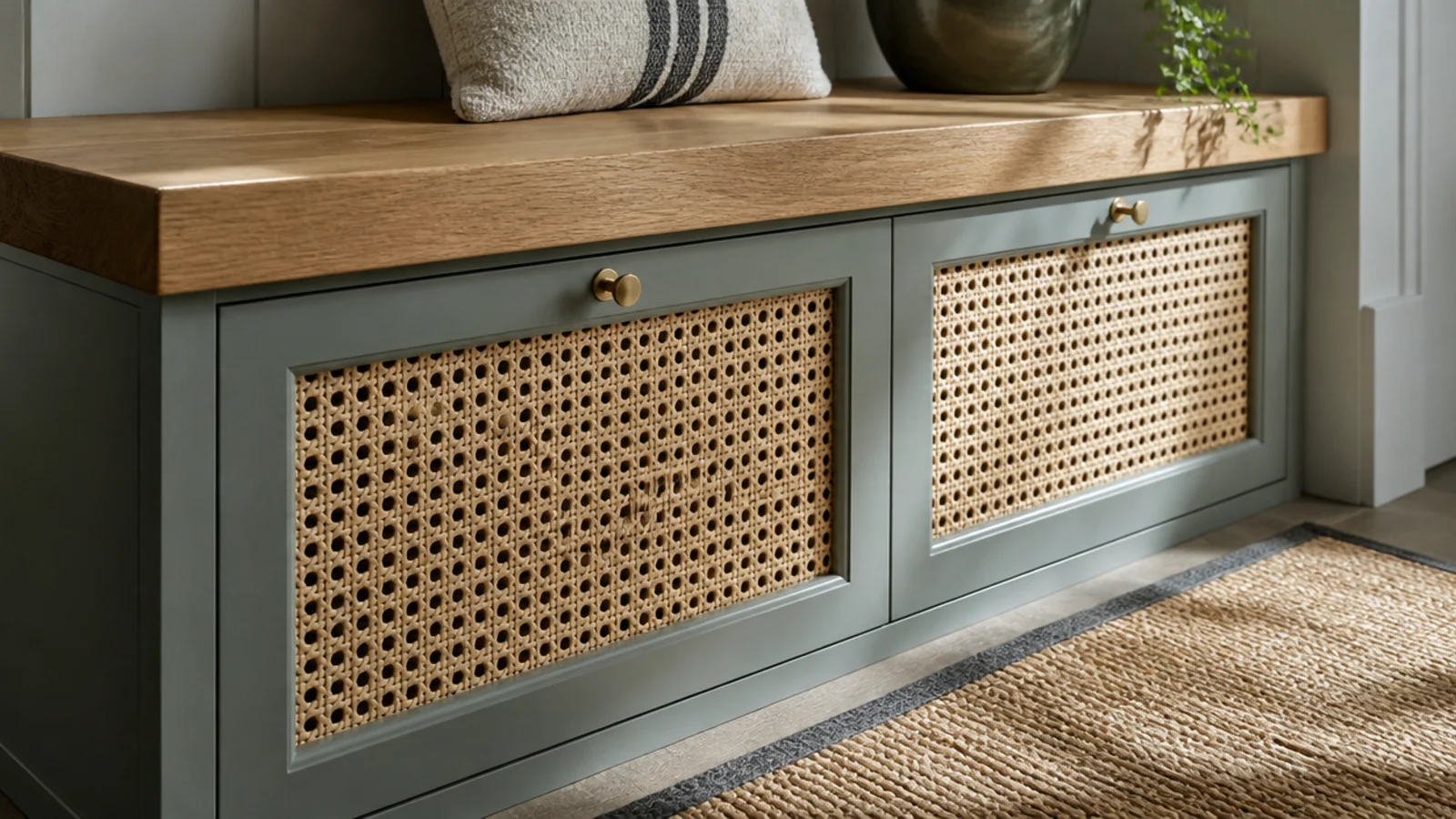
12. Cane-fronted cabinet under a timber seat
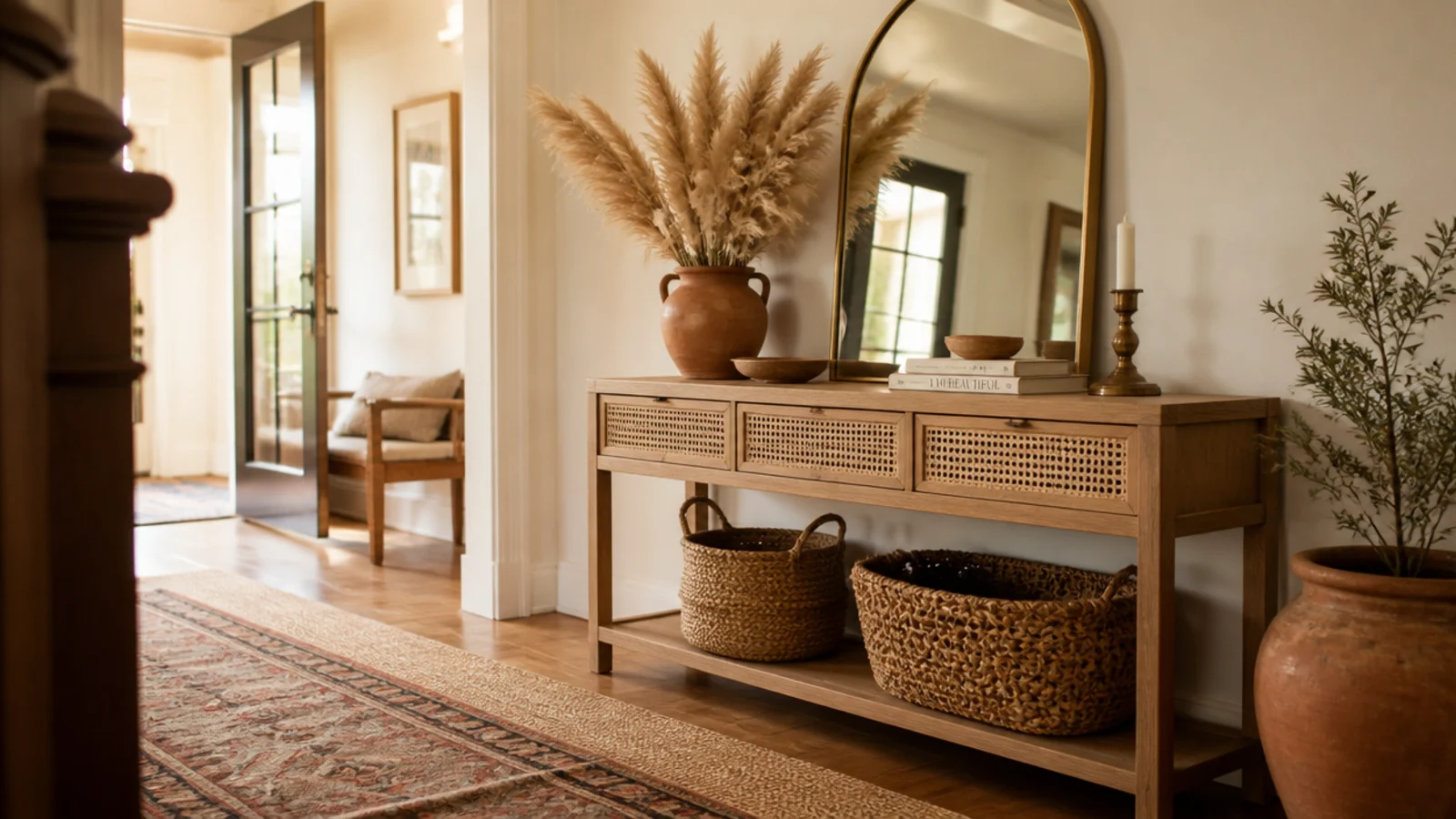
Cane webbing is the prettiest way to solve ventilation. Air moves straight through the weave, so nothing sits damp behind a solid panel.
Set the webbing into a rebated opening with a 2-inch frame all round, and staple it damp so it tightens as it dries. A roll runs $25 to $45 and covers two fronts. $$
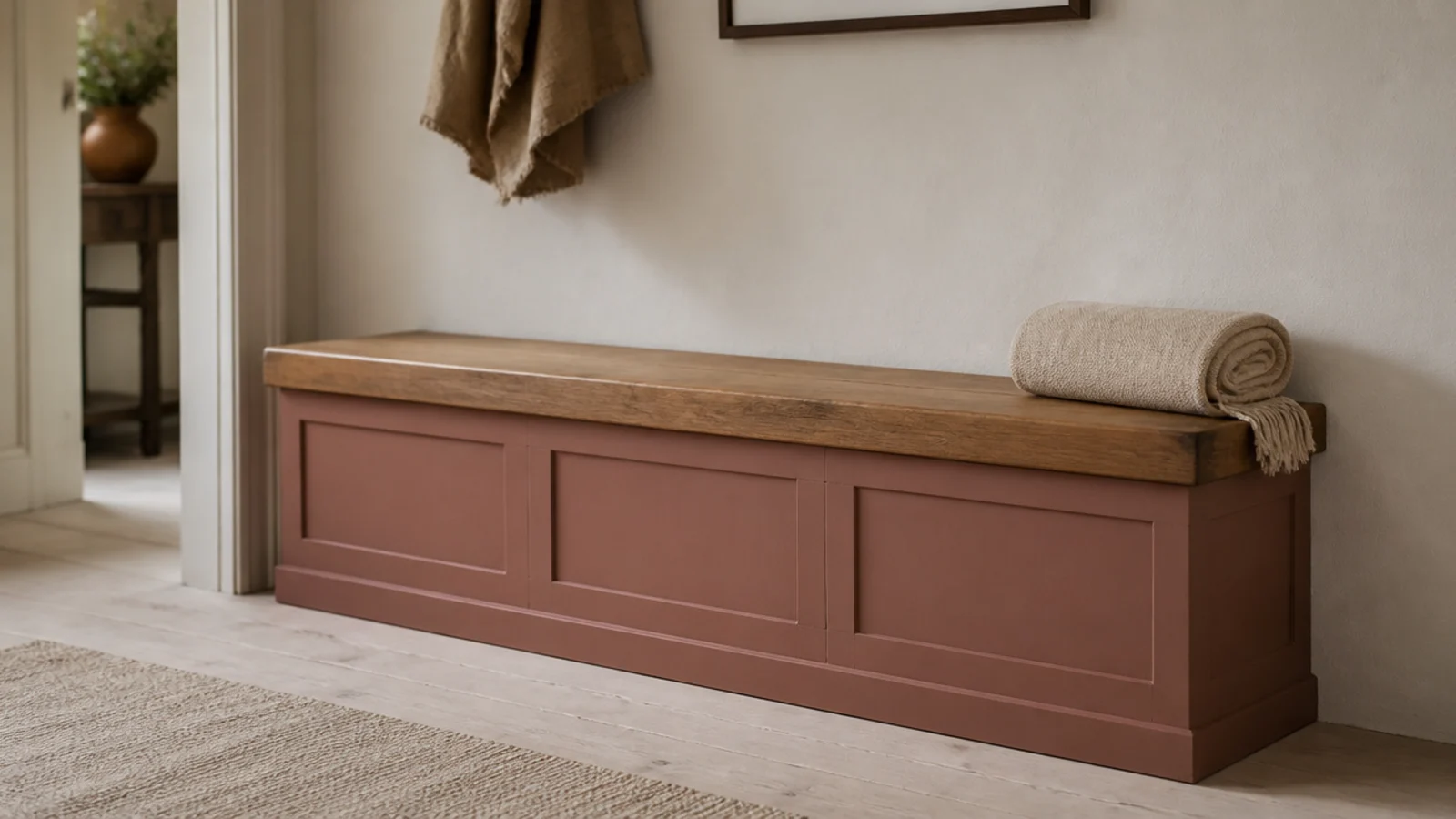
13. Two-tone: painted base, oak seat
A dark or clay-toned base with a warm timber seat makes a hallway read taller, because the eye stops at the light horizontal line rather than the heavy block below it.
Keep the seat at least 1 1/4 inches thick so the timber reads as substantial. A thin top on a painted base looks like a lid. $$
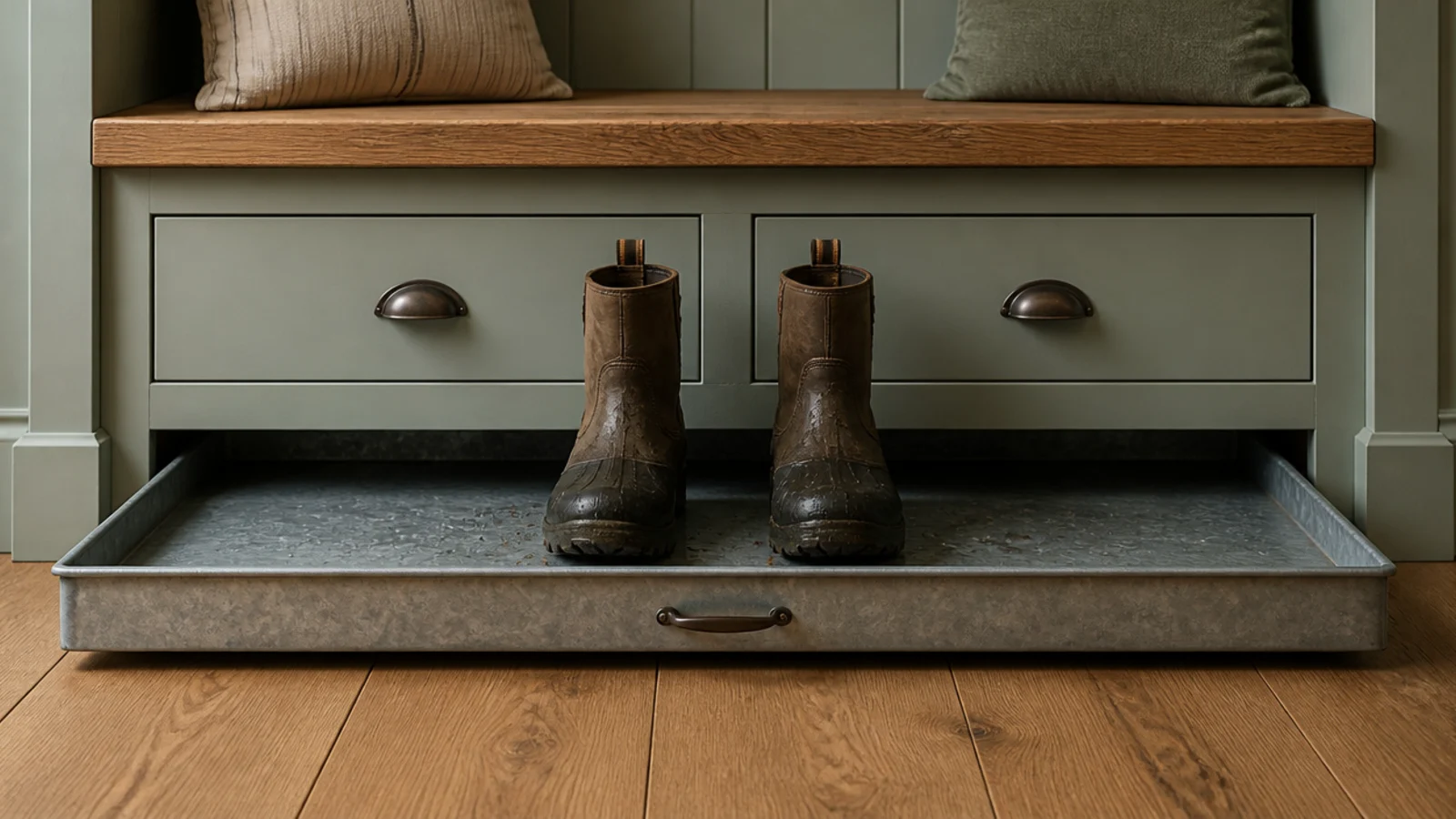
14. A pull-out tray at the base for wet days
Wet pairs must never go into a closed compartment. A shallow galvanised tray on runners in the plinth gives them a home that is still part of the furniture.
Fifteen inches deep with a raised lip holds two adult pairs. It slides out, gets rinsed, slides back. It is the fix that prevents most of the damp-hallway problems people blame on the cabinet. $
15. Sliding drawers instead of tilt-outs
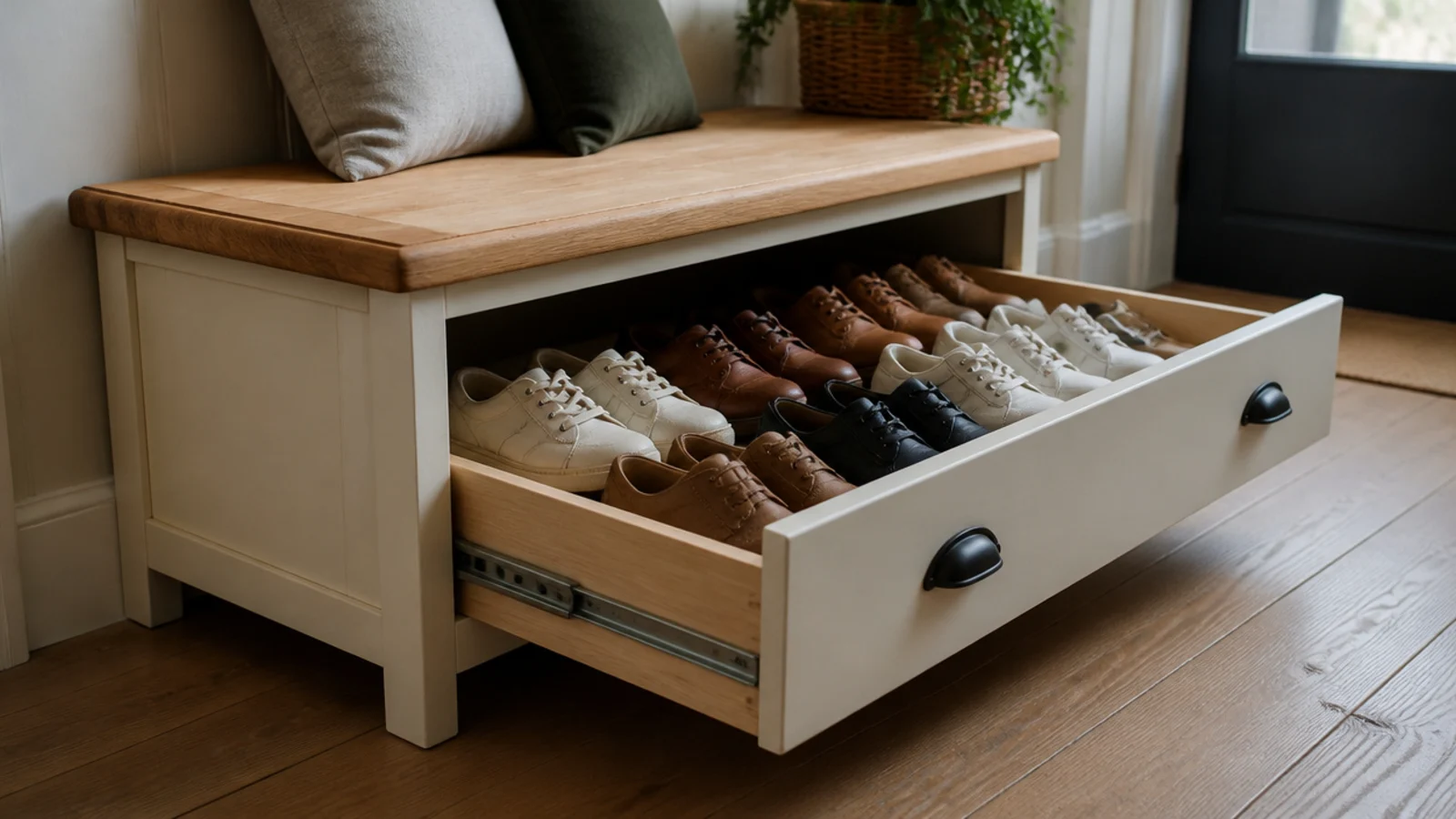
Tilt-outs are shallow and clever; sliding drawers are deep and honest. If you have 15 inches of depth to give, drawers hold more.
Specify full-extension runners. Half-extension drawers mean the back third is never used, which quietly costs you a third of the capacity you paid for. $$$
16. A radiator-cover bench with a vented cabinet
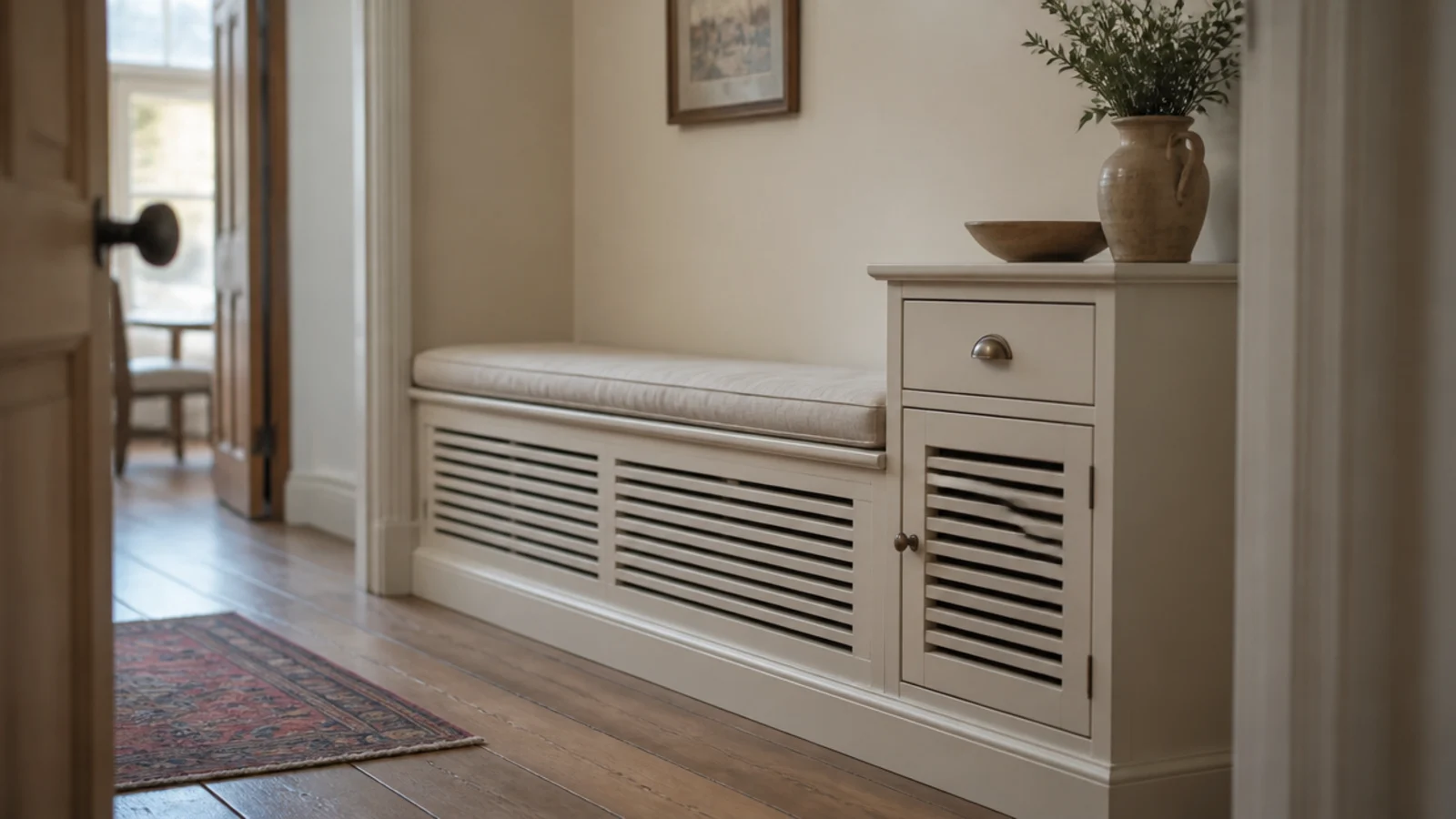
Halls often have a radiator exactly where the bench should go. A slatted cover turns it into a seat and a warm drying spot for gloves.
Leave 4 inches of clear air above the radiator top, use solid timber rather than laminate, and never enclose shoes directly above it — heat plus a closed box is how leather cracks. $$$
17. An under-stair bench with angled fronts
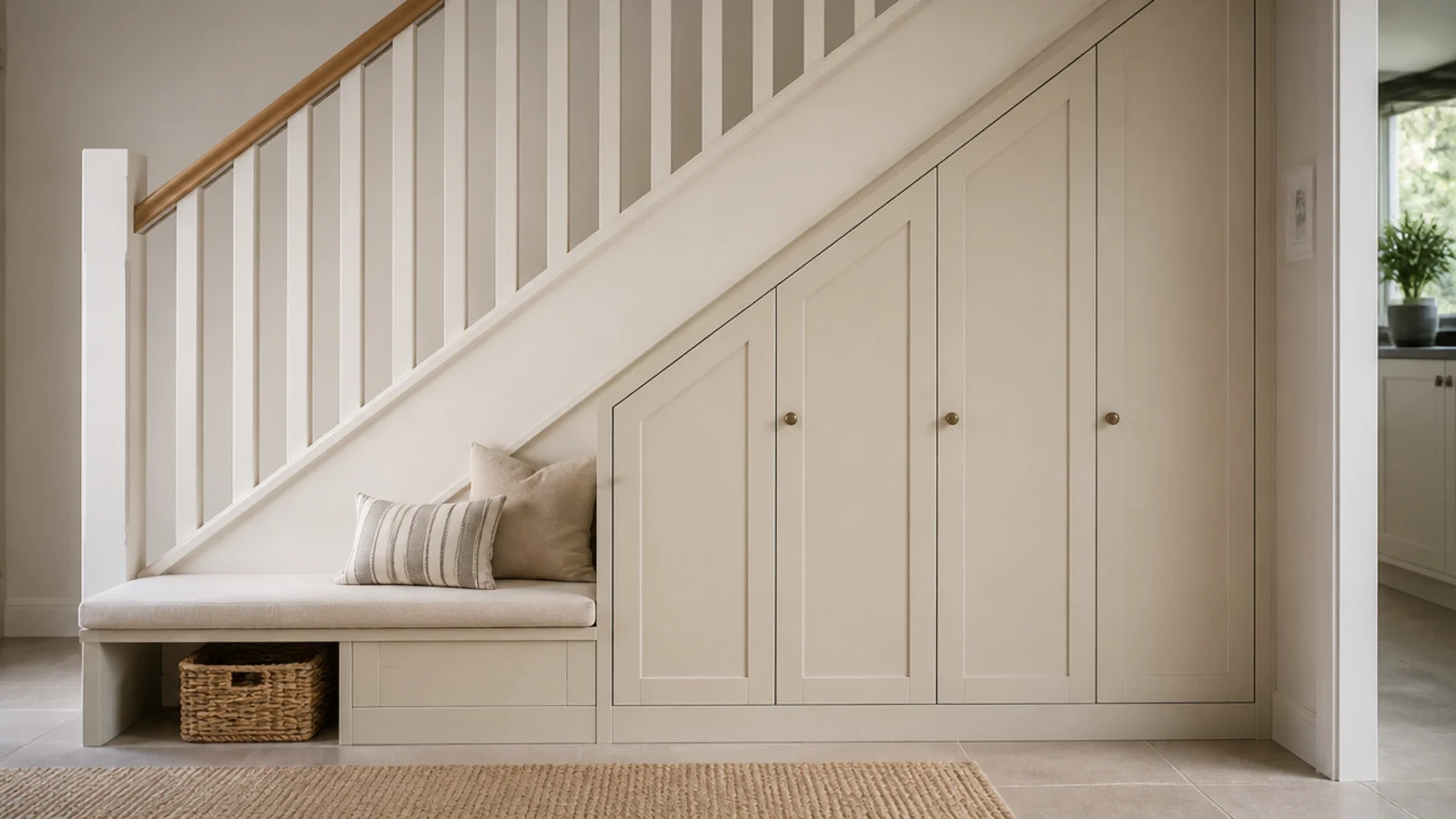
Under a staircase, cabinet fronts cut to follow the stringer let you use the low end that square boxes abandon.
Put the bench seat at the tall end and the shallow angled compartments at the low one. This is the highest-capacity option here and the one that needs the most carpentry. $$$
18. Baskets in the open lower tier
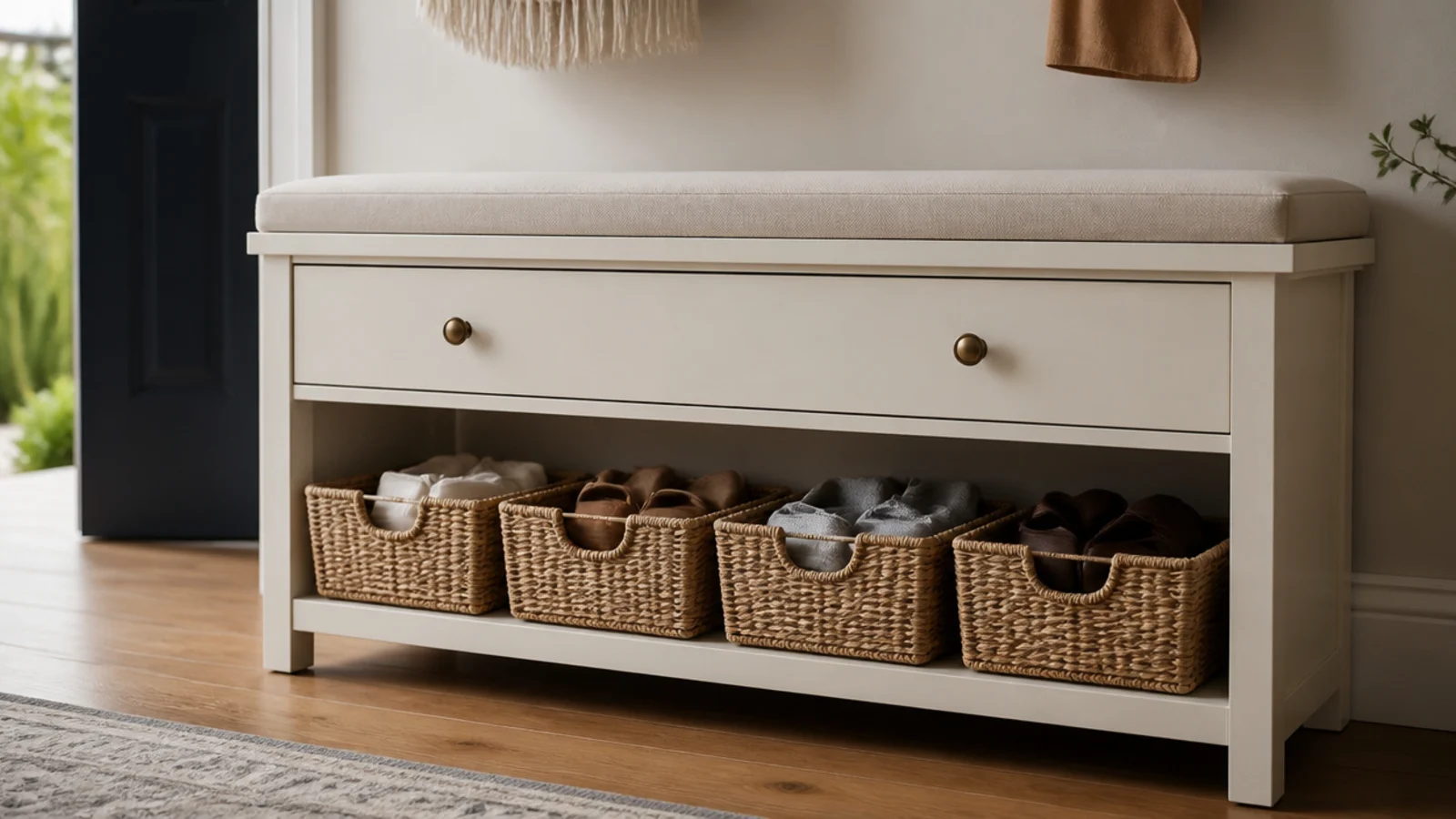
One basket per person, sitting in an open tier under the seat, with the rule that when your basket is full the overflow goes to a closet.
Named individual space is the change that makes shoe storage stick, and it works better with children than any amount of asking. Seagrass or felt, roughly 14 inches wide. $
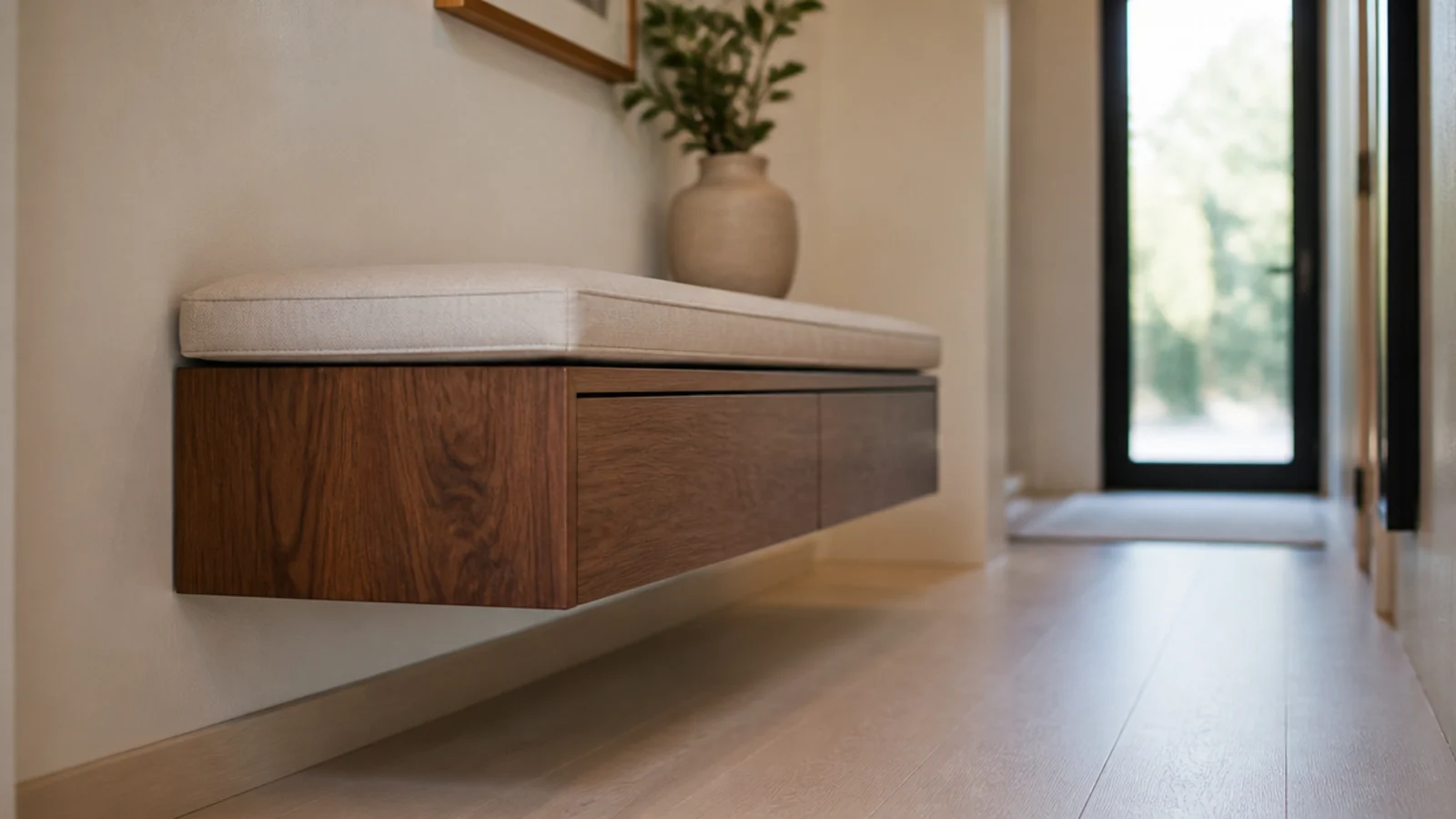
19. A wall-hung bench cabinet that floats
Lifting the whole unit 8 inches off the floor makes a small hall breathe, and it lets a vacuum run straight underneath.
This is the one configuration where you cannot avoid serious fixings: a loaded bench that people sit on needs bolts into studs, not drywall anchors. Not a rental option. $$$
20. A hidden charging drawer in the seat
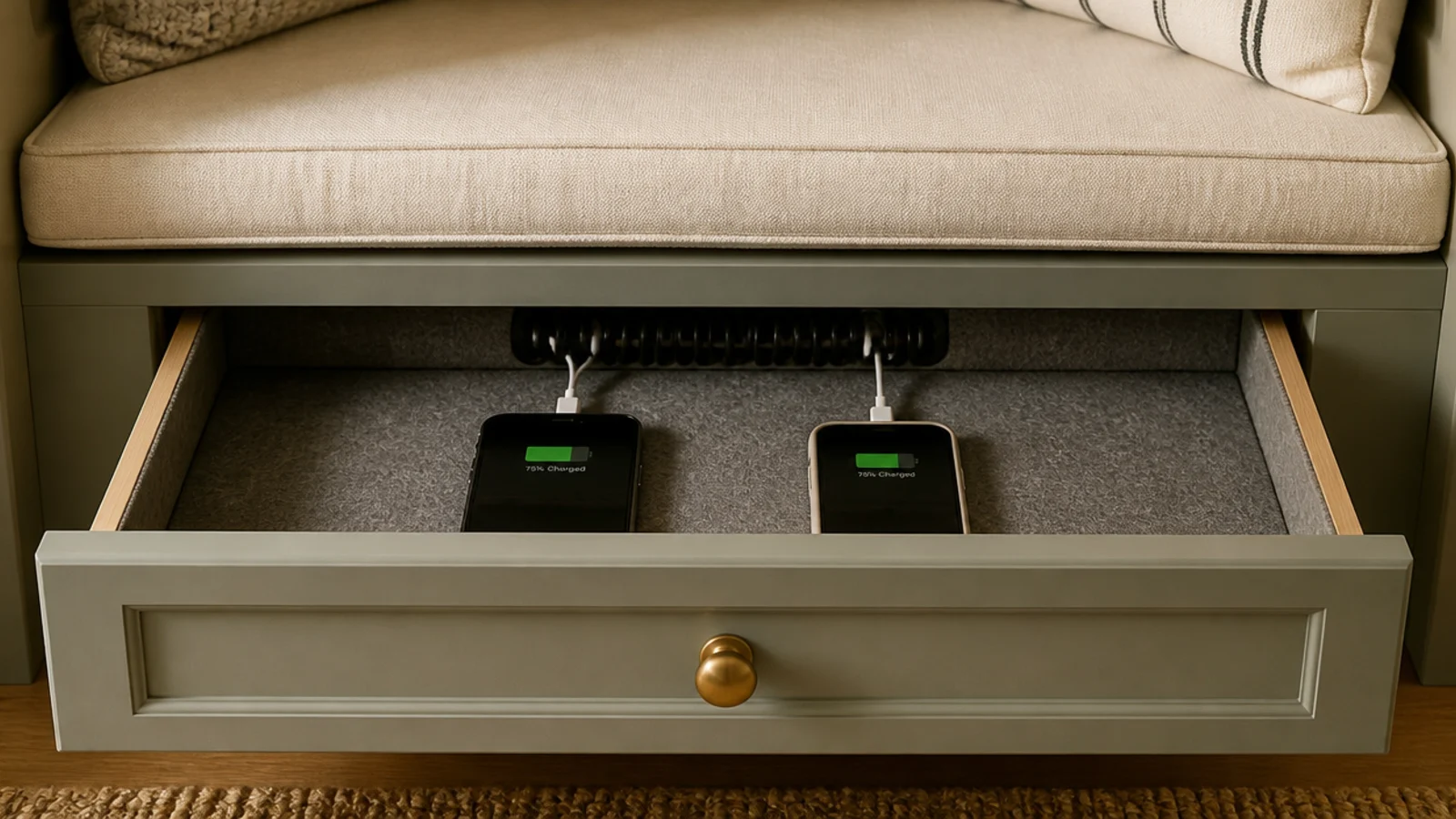
Phones, keys and a tangle of white cable undo every other decision in a hallway. Put them one inch lower.
A shallow felt-lined drawer just under the seat with a cable notch at the back keeps the charging out of sight and the surface clear. Drill the notch before you fit the drawer, not after. $$
21. A lidded tray built into the seat top
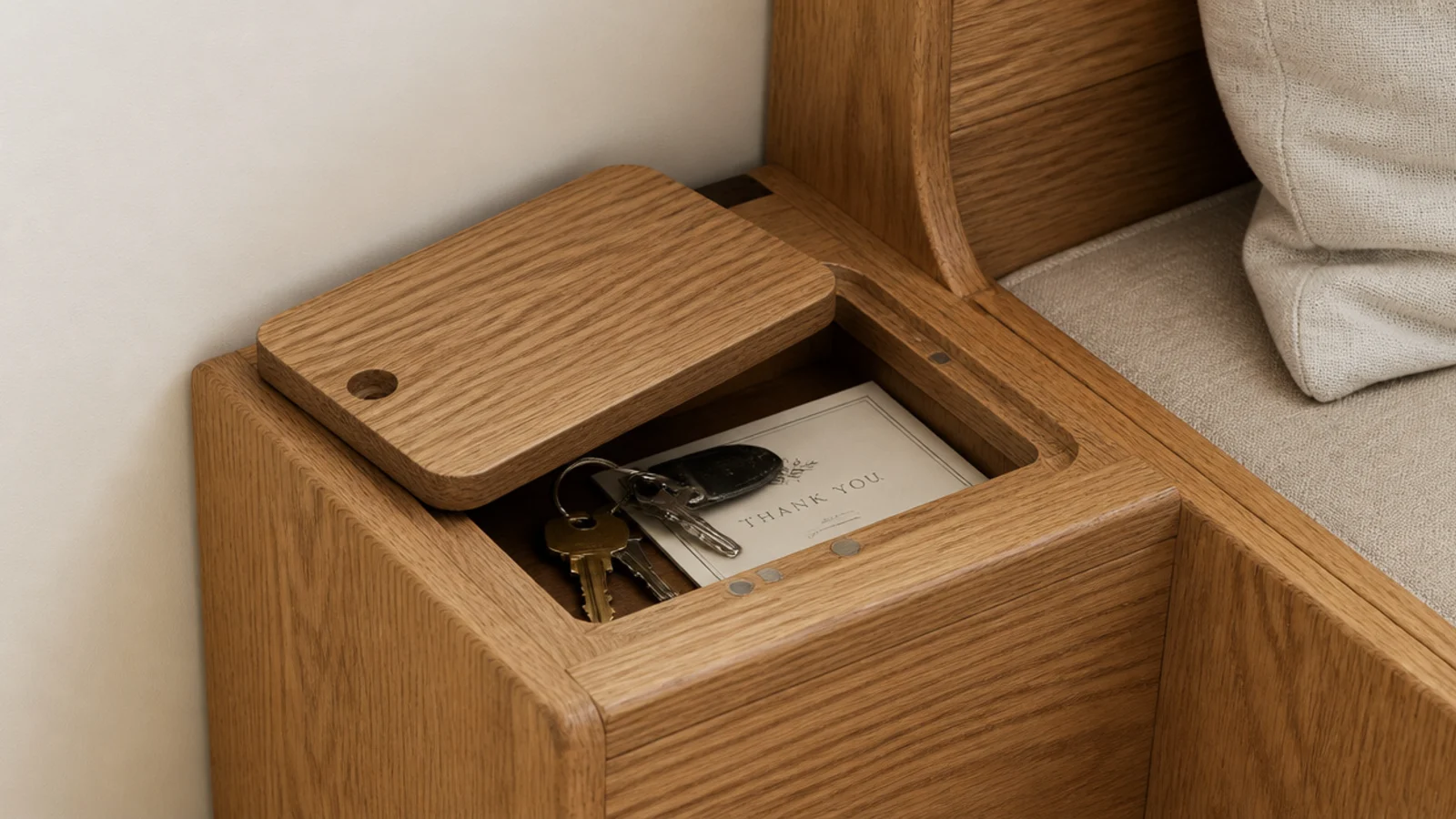
A small recessed compartment with a flush timber lid, set into one corner of the seat, catches keys without giving up any surface.
Keep it under 8 inches square so nobody tries to sit on the lid, and use a finger-pull rather than a knob so the seat stays flat. $$
22. A bench cabinet on castors
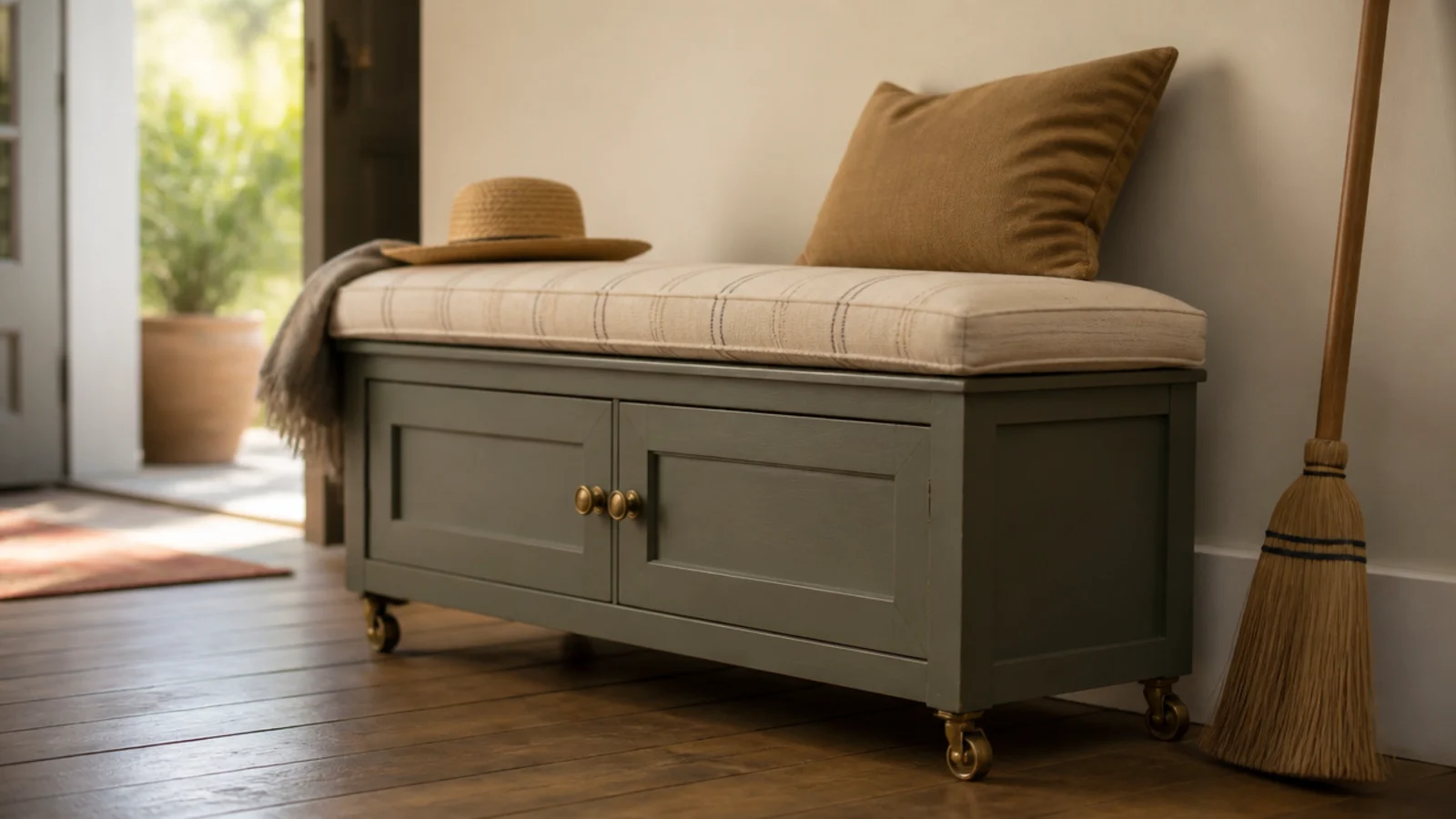
Entryway floors collect grit, and a fixed bench means the grit lives behind it permanently.
Slim brass or matte black castors, two locking, let the whole unit roll out for a sweep and roll back. Choose ones rated well above the loaded weight — cheap castors flat-spot under a bench somebody sits on daily. $$
23. Drawer over open shelf for the daily pairs
Hide the collection, leave out today only. One closed tilt-out under the seat, and an open shelf beneath it sized for exactly three pairs.
Constraining the open shelf is the point. A shelf with room for eight pairs holds eight pairs by Thursday; a shelf with room for three holds three. $$
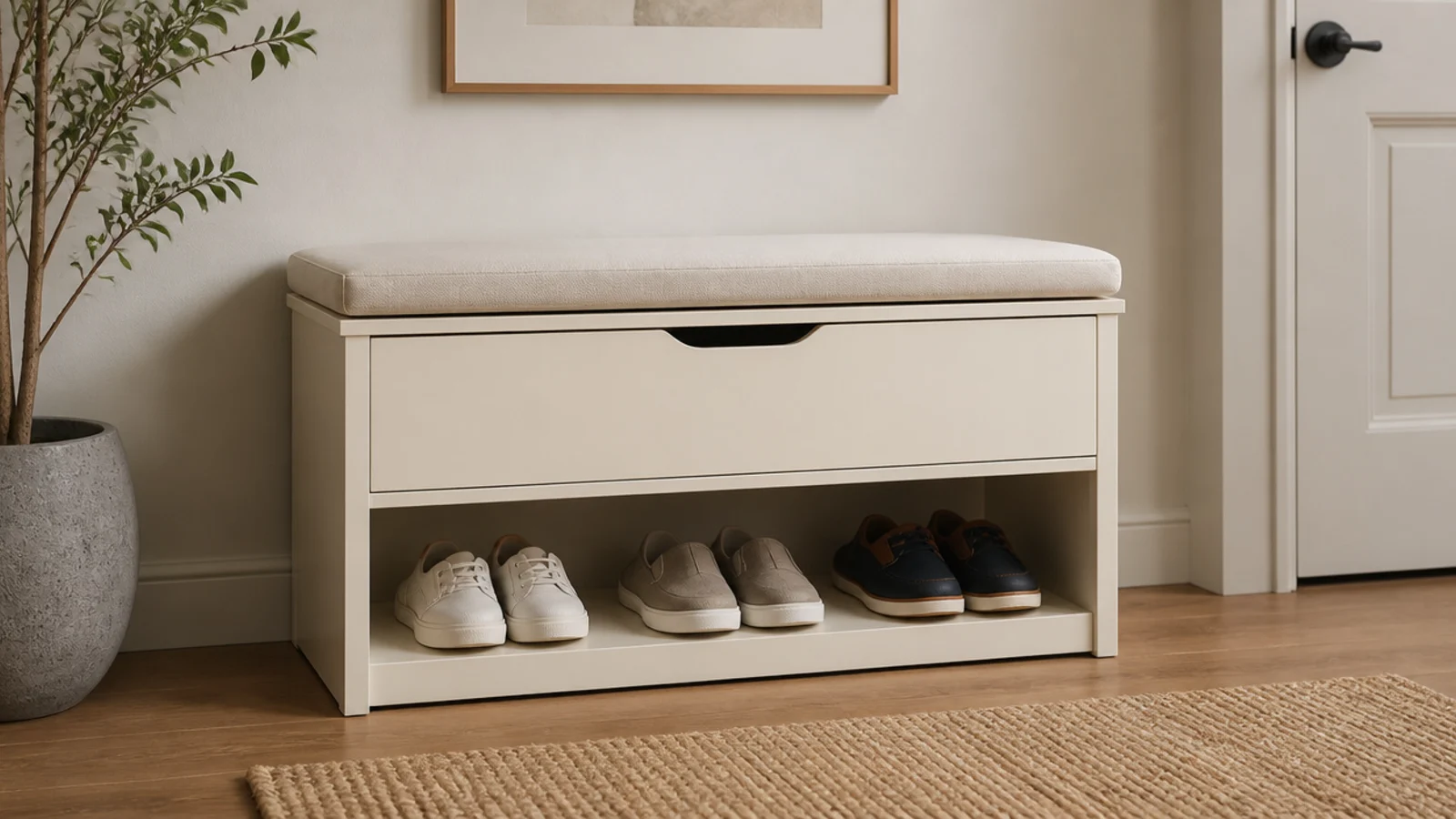
24. A mudroom run with a cabinet per person
The full version: one bay per household member, each with a cabinet below the bench and hooks above.
Allow 18 to 24 inches of width per person. Slate or sealed tile under it rather than timber, and a coir mat in front. There is a wider entry version in entryway shoe cabinet layouts. $$$
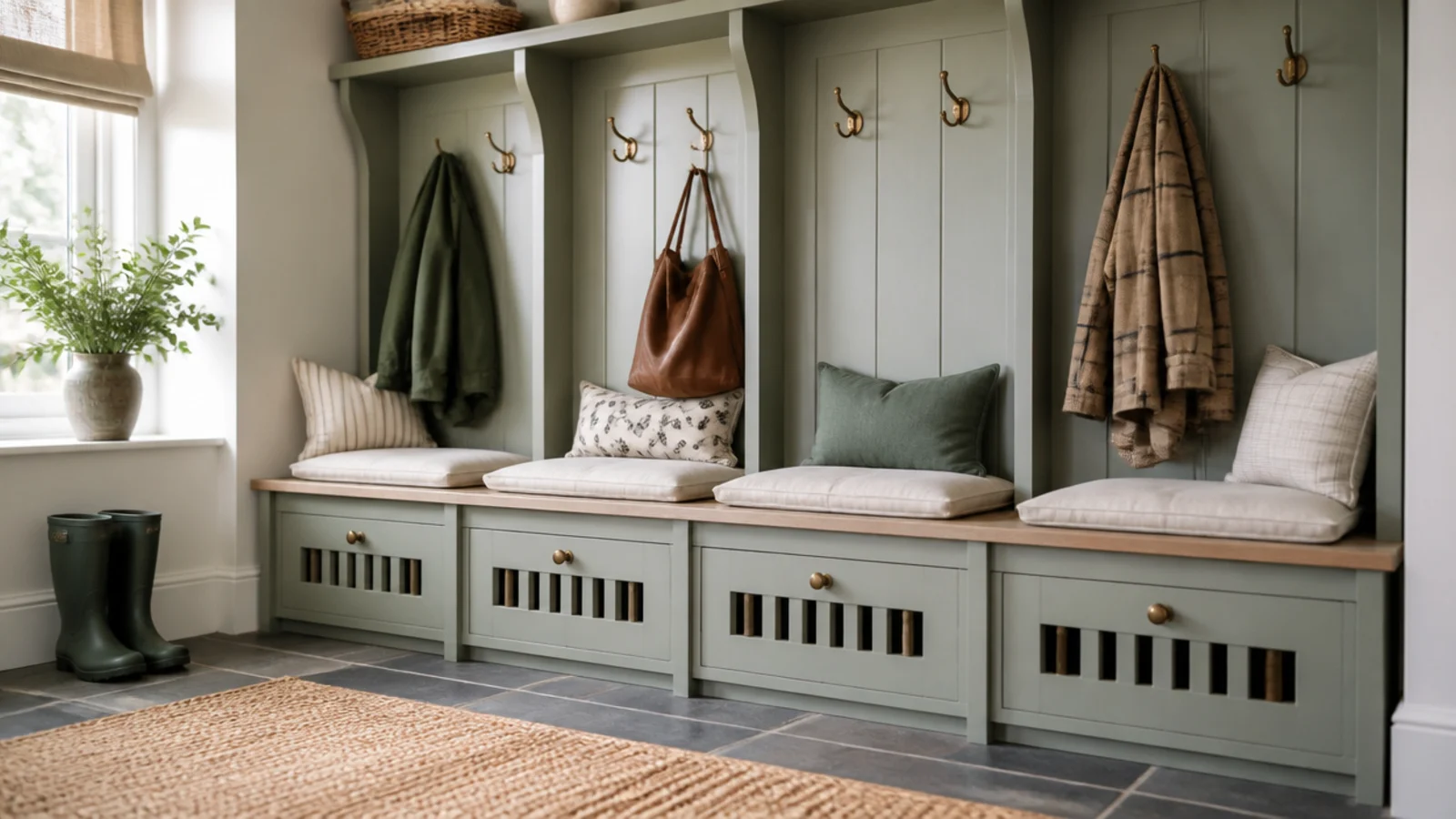
25. A perch bench at twenty-four inches
On a tiny apartment landing there is no room to sit properly, and pretending otherwise wastes the wall.
A 24-inch-high perch, 12 inches deep, with one shallow shoe compartment, gives you enough to lean on while a boot goes on. It is not comfortable and it is not meant to be. For more of these, see shoe cabinets for small spaces. $$
Mistakes to Skip
- Building the seat at 20 inches or higher because the cabinet inside needed the space. Nobody sits on it, and you have paid for a seat that became a shelf.
- Squeezing a full-depth bench into a hall with less than 36 inches of clearance in front. Two people cannot pass while one is sitting, so nobody sits.
- Enclosing wet boots inside the bench. Trapped moisture is what makes the whole unit smell, and it transfers to every dry pair beside it within a day.
Frequently asked questions
How tall should a shoe cabinet bench be?
Eighteen inches to the top of the seat, including any cushion, is the height most people can sit on comfortably to tie laces. Anything under 16 inches feels like sitting on the floor and anything over 20 becomes a perch you lean against rather than sit on. Measure from the finished floor, carpet included.
How deep does a shoe cabinet bench need to be?
Fifteen to 17 inches deep gives a seat you can actually use, which is deeper than a plain cabinet needs. If the shoes inside sit on flat shelves, the internal depth still has to reach 13 inches for a men's size 12 sneaker. Tilt them at 45 degrees and 9 inches of internal depth is enough.
Can a shoe cabinet bench hold boots?
Only if you plan for them. Tilt-out drawers hold six to eight pairs of flats each and no boots at all. Give up one compartment as an open bay 14 to 16 inches tall, or leave the space below the bench open for boots to stand upright. Wet boots always live on a tray outside the unit.
How much walkway do I need in front of a bench?
Thirty-six inches of clear floor measured from the front edge of the bench, and measured with a drawer open rather than closed. Below that, two people cannot pass while one is sitting, and the bench stops being used. In a hall narrower than 40 inches overall, a slim cabinet without a seat usually wins.
Should a shoe cabinet bench have doors or drawers?
Drawers or tilt-outs, almost always. Your hands are full when you come in, and a door needs a free hand plus clearance to swing. Tilt-outs also give you shallower depth for the same shoe. Keep doors for a mudroom run where the cabinets sit beside the bench rather than under it.
Measure the seat height and the walkway before you look at a single photograph, because those two numbers decide whether the bench gets used at all. For narrow halls, shoe cabinets for a small entryway has the shallow options mapped out, wooden shoe cabinet builds covers timber and finishes, and shoe storage benches has the open-front alternatives. Save the pin so the dimensions are with you when you shop.
Want more like this? Browse all 15 shoe cabinet ideas guides — they all use the same measurements and budget tiers.
Pin it for later
Save this to your Shoe Cabinet Ideas board
Pin it now so it is waiting for you when the tape measure comes out — and so the next person hunting for this idea can find it too.
Save this pinKeep going
More ideas worth saving while you have the tape measure out.