Shoe Cabinet Ideas · Listicle
20 Genius Shoe Cabinet Ideas for a Cozy Home

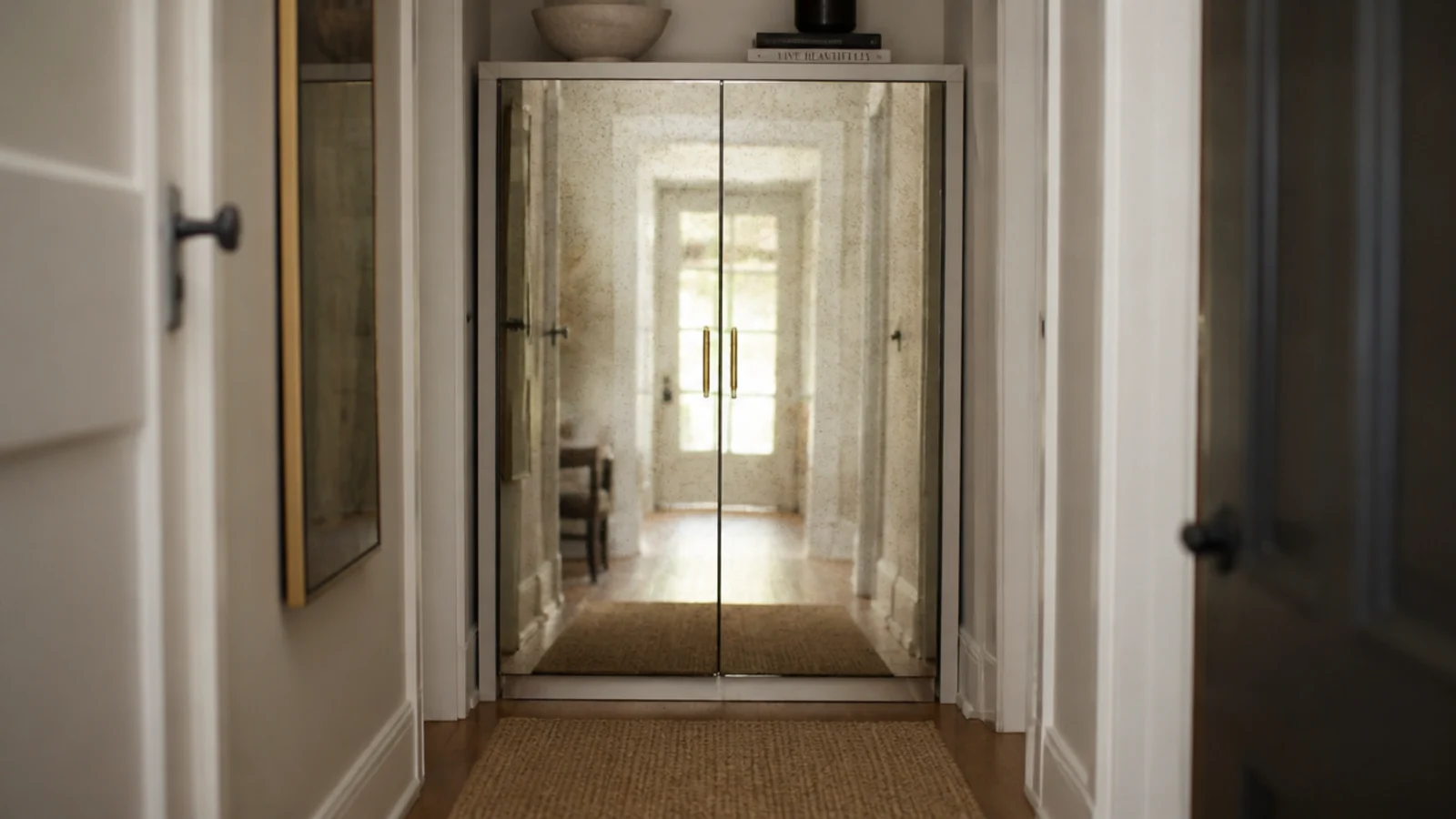
A shoe cabinet with mirror doors is the only piece of hallway furniture that gives back more than it takes. A closed cabinet costs you 9 to 15 inches of depth; a mirrored front hands the corridor its visual width straight back, and hides every pair while it does it. These 20 setups cover glass types, hinge counts, placement and the ventilation a sealed glass front makes non-negotiable.
In this guide22 sections — tap to openHide
- 1.Why a shoe cabinet with mirror earns its wall twice
- 2.A full-height mirror door on a slim tilt-out
- 3.Mirror the whole front, floor to top
- 4.Antiqued glass to hide fingerprints
- 5.A mirror above, cabinet below
- 6.Two mirror doors reading as one panel
- 7.A bevelled edge for a softer reflection
- 8.An arch-topped mirror on a flat front
- 9.Mirror on the side panel of a corner unit
- 10.A leaning full-length mirror beside the cabinet
- 11.Mirror and hooks sharing one wall
- 12.Reflect a light source, not a blank wall
- 13.Add the third hinge for the glass weight
- 14.Safety film on the back of the glass
- 15.A shallow ledge under the mirror
- 16.A mirror-fronted bench cabinet at 18 inches
- 17.A backlit mirror over a wall-hung cabinet
- 18.Fluted glass instead of clear mirror
- 19.Mirror front, slatted side
- 20.Keep glass clear of the bottom four inches
- 21.Dry microfibre, never spray
- 22.Mistakes to Skip
Why a shoe cabinet with mirror earns its wall twice
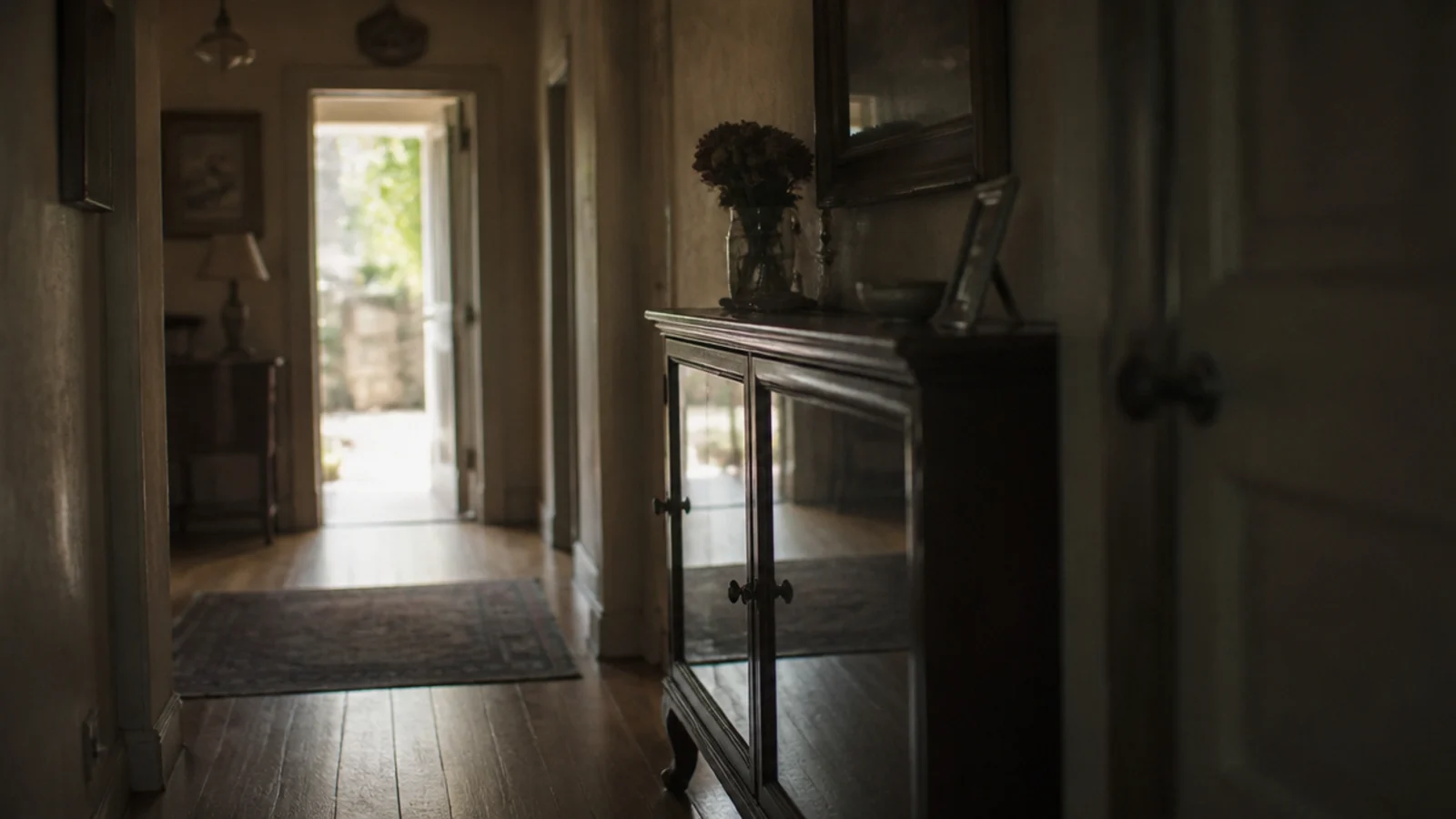
Hallways are usually the darkest and narrowest space in a home, which is exactly where closed storage feels most like a sacrifice. Glass fixes the visual half of that trade.
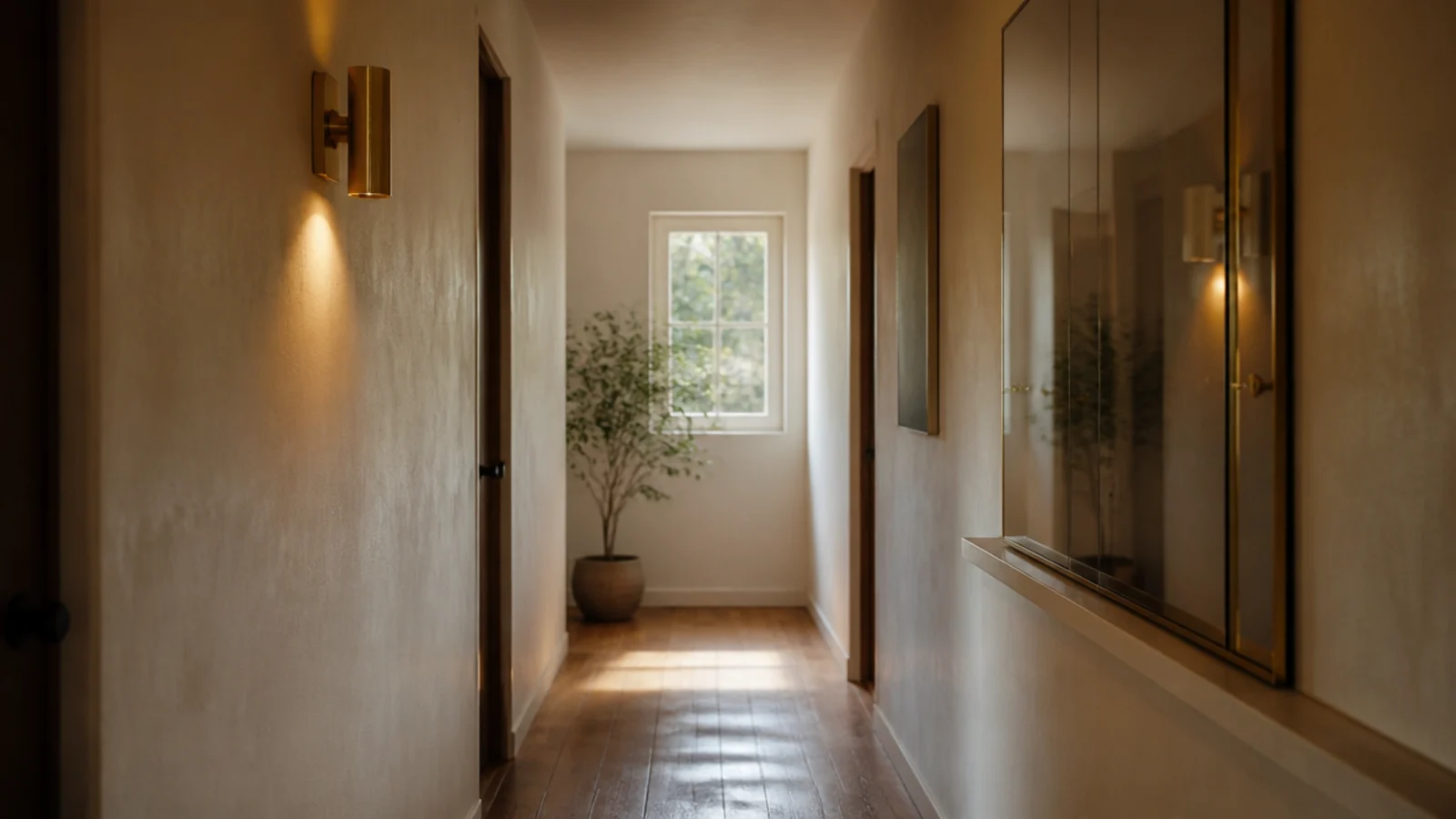
Placement decides whether it works. A mirror reflects whatever it faces. Position the cabinet so the glass returns a doorway, a window or a light fitting, and the corridor gains brightness. Face it at the blank wall opposite and you have doubled a blank wall.
Depth still rules. Mirror changes nothing structural. A hallway needs 36 inches of clear passage, so subtract that from your wall-to-walkway measurement and spend what remains. Under 12 inches means tilt-out drawers, which hold a 12.5-inch sneaker at 45 degrees inside 9 inches of depth, six to eight pairs of flats per drawer, and no boots at all.
Glass is heavy and doors get kicked. Three concealed soft-close hinges per mirrored door, and check the adjustment after a month.
And a glass front seals completely. Every scrap of air has to come from the back panel, a slatted side or an open toe kick, or the cabinet smells within a fortnight. Wet pairs still live on a tray outside it.
Budget tiers: $ under $60, $$ $60–$150, $$$ $150+.
1. A full-height mirror door on a slim tilt-out
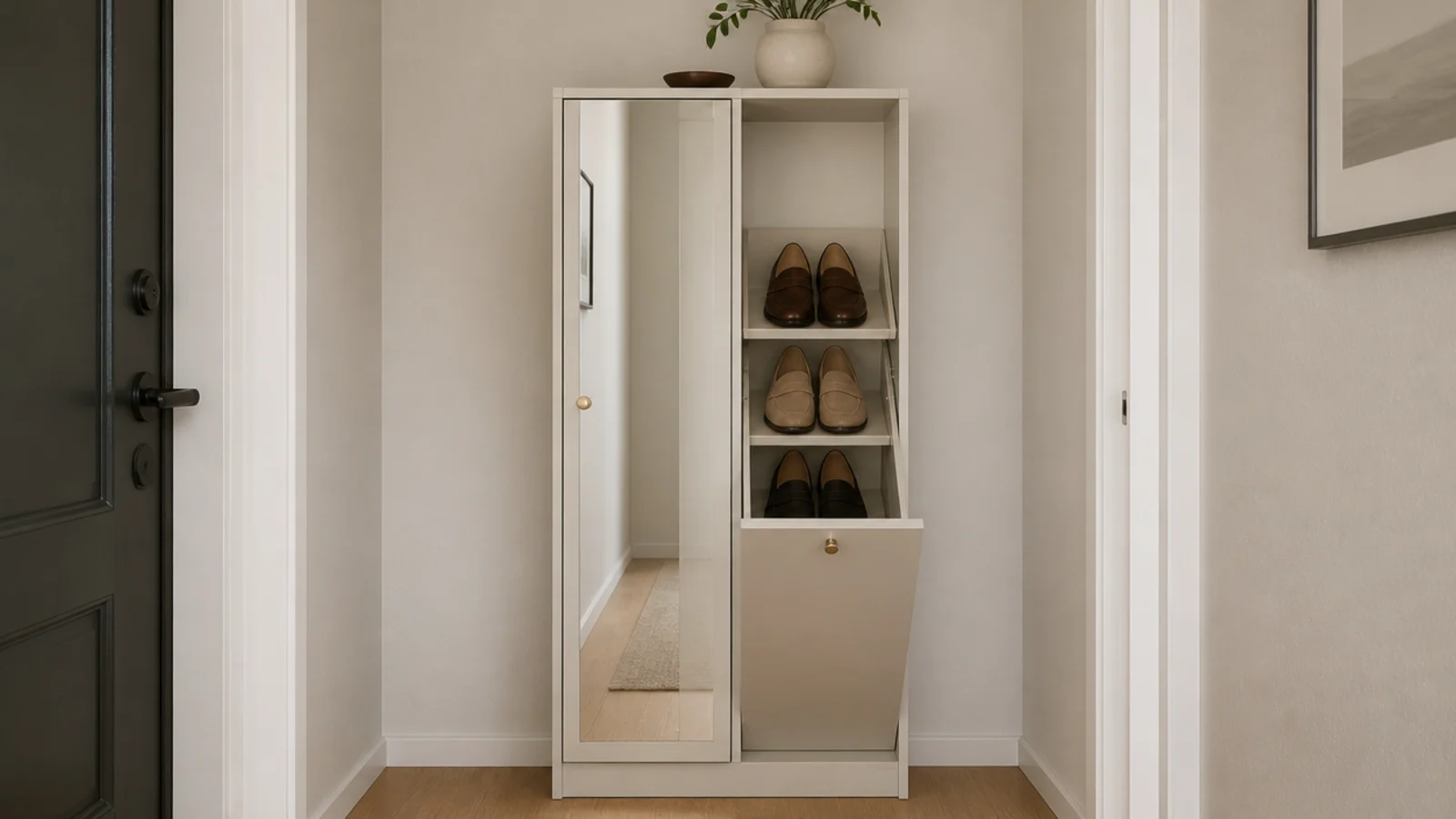
The combination that solves the most hallways at once: a 9-inch carcass with tilt-out cradles inside and a single tall mirror front.
You get twelve to sixteen pairs of flats hidden, a full-length check on the way out, and a walkway that stays legal. The mirror needs to run the full height of the front to be useful for anything below the shoulders.
Check the front is a door rather than a drop-down flap — glass on a flap catches its lower edge on the floor. $$$
2. Mirror the whole front, floor to top
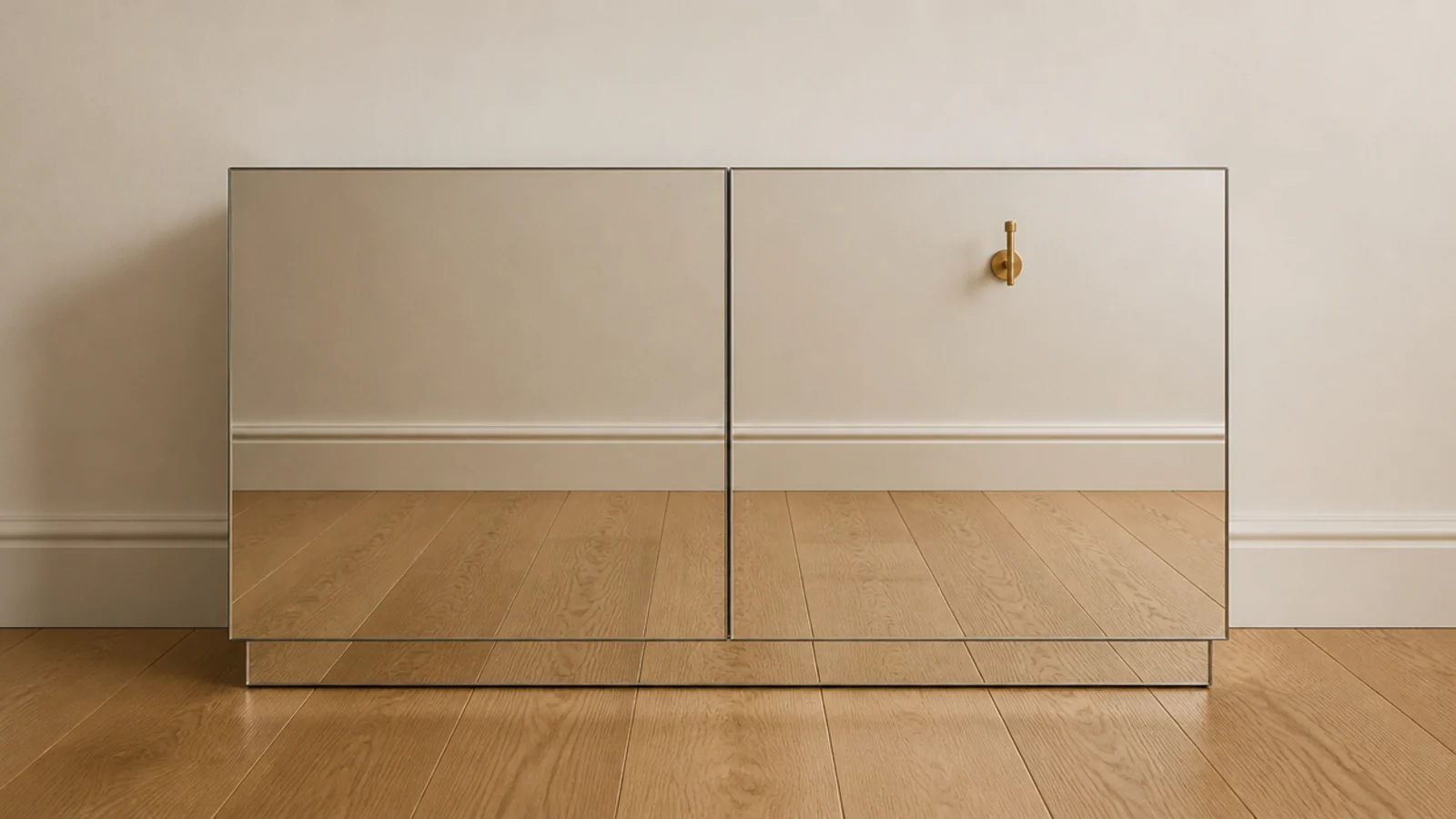
Running glass right across both doors, plinth to top edge, makes the carcass read as a reflection rather than an object. It is the version that most disguises bulk.
It also means the lowest few inches of glass sit where shoes, vacuum heads and mop handles live. Use toughened glass and accept some scuffing, or use idea 19 and stop the glass short.
Antiqued glass is far more forgiving here than clear. $$$
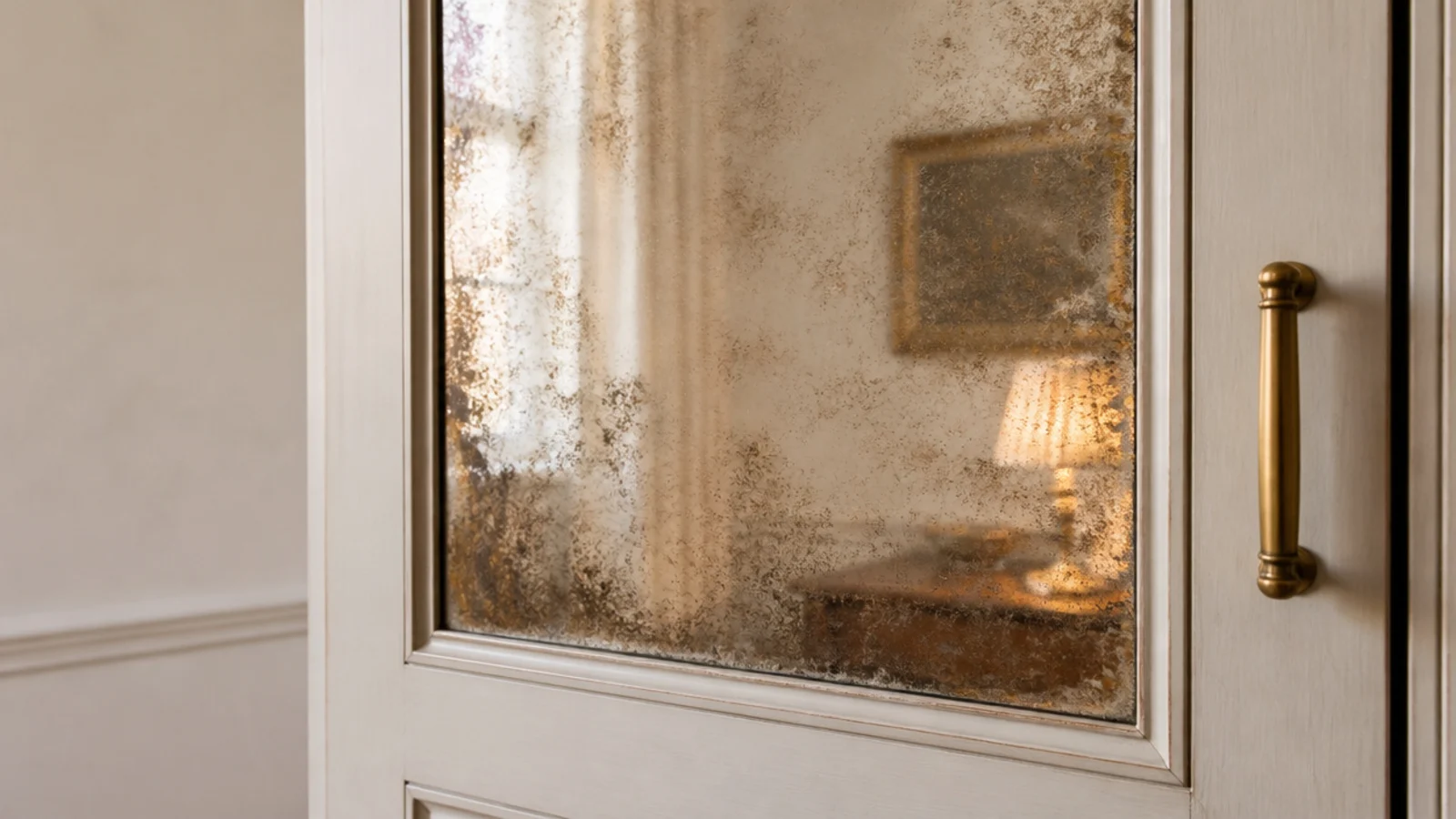
3. Antiqued glass to hide fingerprints
Clear mirror at knee height shows every fingerprint, every splash and every scuff by Tuesday. Foxed or antiqued glass hides all of it.
It reads warmer against timber, clay and brass than clear glass does, and it suits a cozy hallway far better than a sharp modern reflection.
Order it cut to size with polished edges. Expect to pay 30 to 50 percent more than plain mirror, which is worth it for the maintenance alone. $$
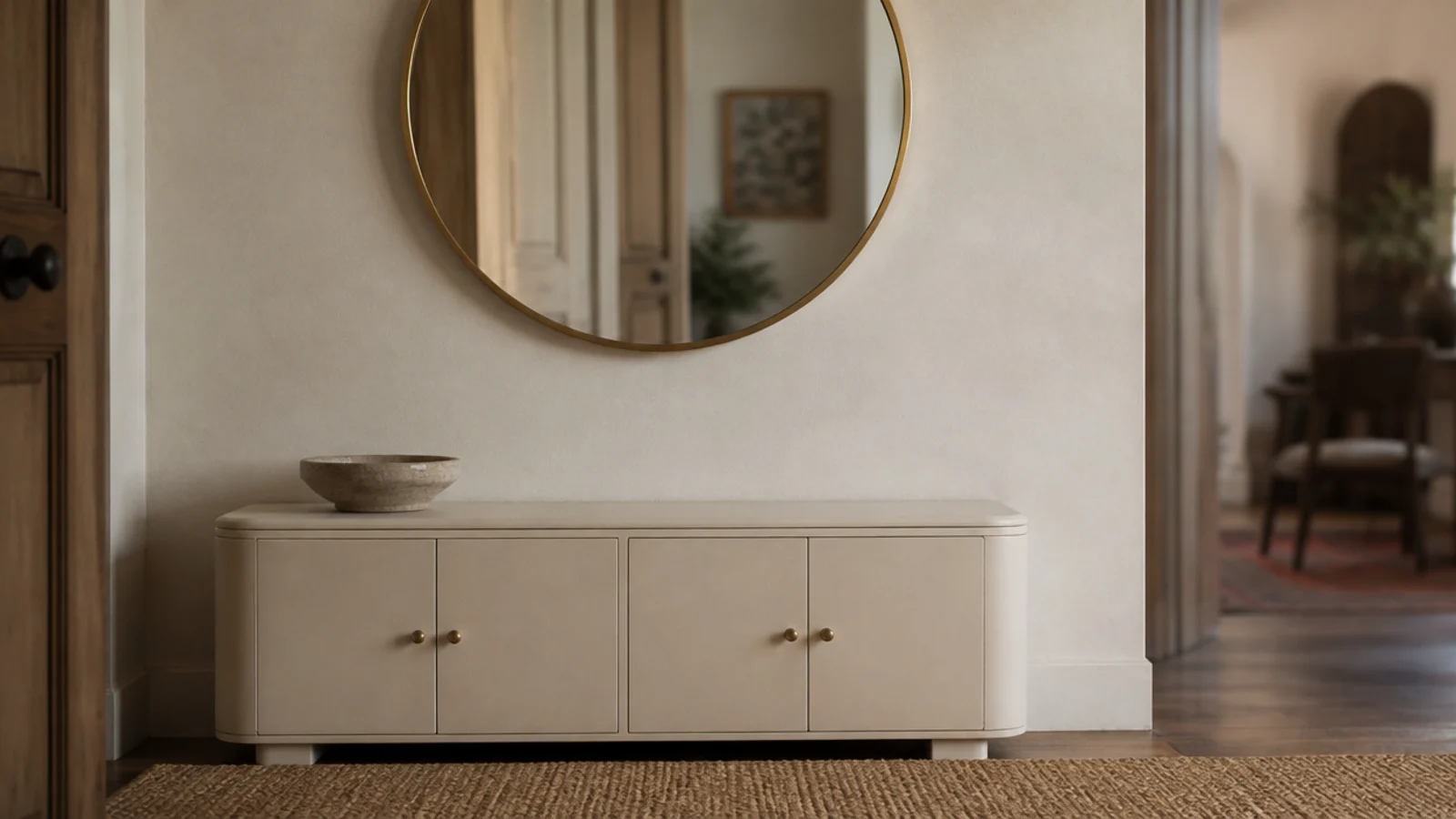
4. A mirror above, cabinet below
The simplest version, and the one renters should reach for first. Any closed cabinet, any mirror, hung so the mirror's lowest edge sits 10 to 12 inches above the cabinet top.
Closer than 10 and the wall reads crowded. Further than 12 and the two stop reading as one arrangement. Centre the glass at around 60 inches from the floor.
No glass on the doors means no hinge upgrade and no fingerprints at knee height. $–$$
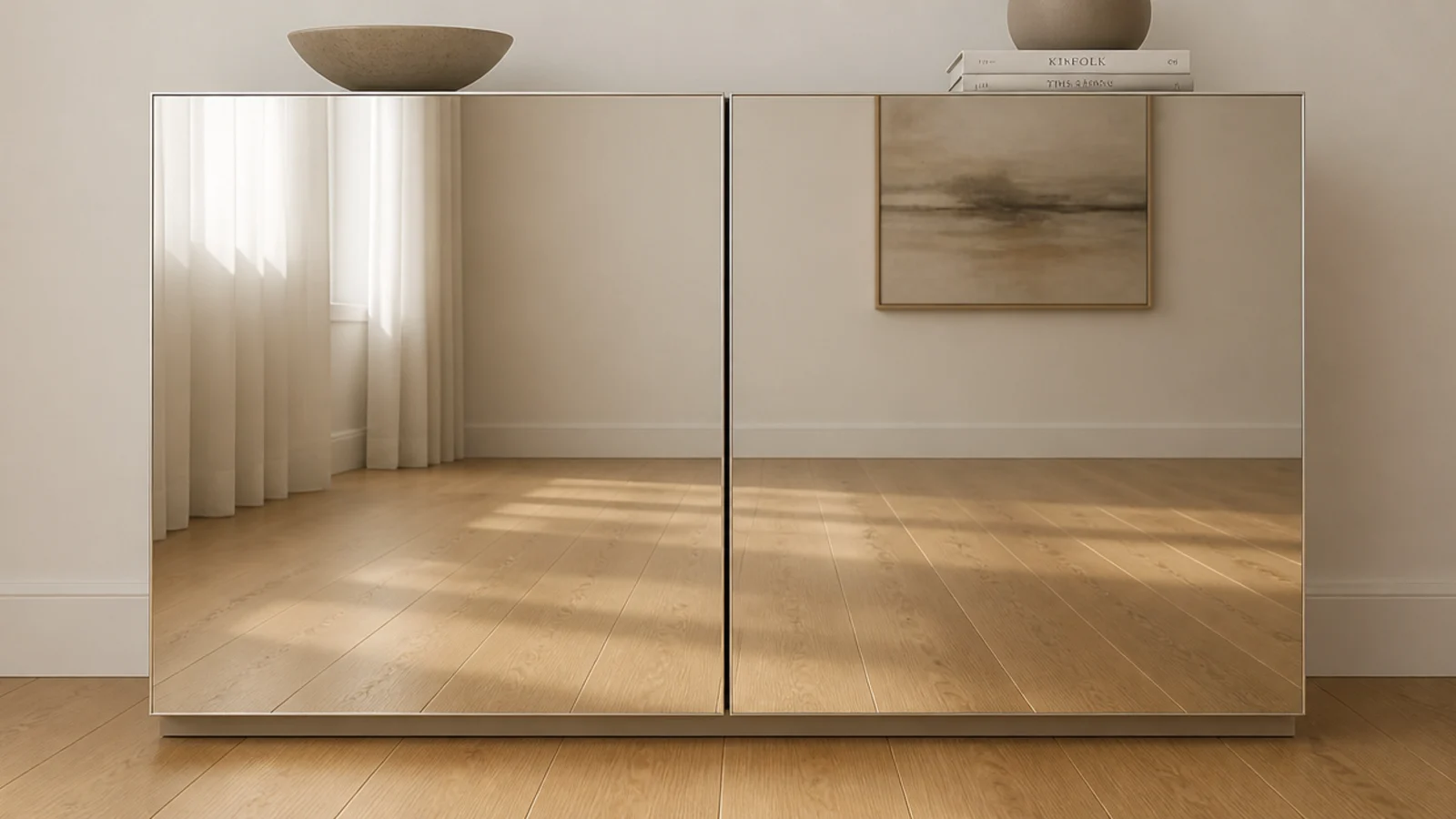
5. Two mirror doors reading as one panel
Two mirrored fronts meeting at a hairline gap carry the reflection almost unbroken across the pair, which reads far more expensive than two separate mirrors.
It only works with handleless fronts or a single pull on each outer edge — hardware in the middle breaks the illusion instantly.
Get the door gaps even before the glass goes on. A tapering gap is invisible on timber and glaringly obvious on a mirror. $$$
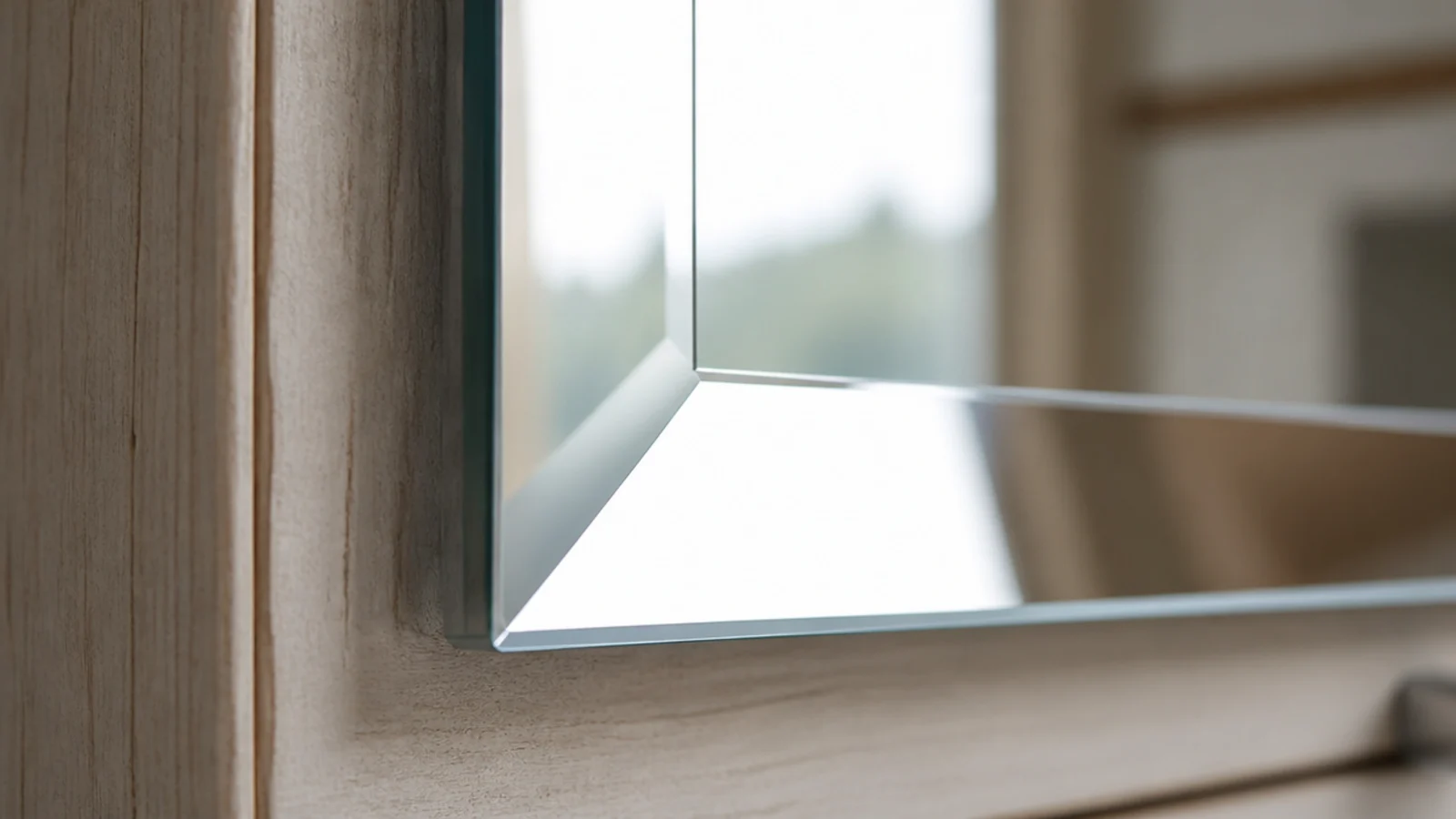
6. A bevelled edge for a softer reflection
A wide polished bevel around the edge of each mirror panel catches daylight as a bright line and stops the glass reading as a flat sheet.
Bevels cost about $15 extra per panel and they are the detail that makes a mirror look like a mirror rather than a mirrored surface.
Keep the bevel generous — half an inch or more. A hairline bevel reads as a manufacturing edge, not a feature. $$
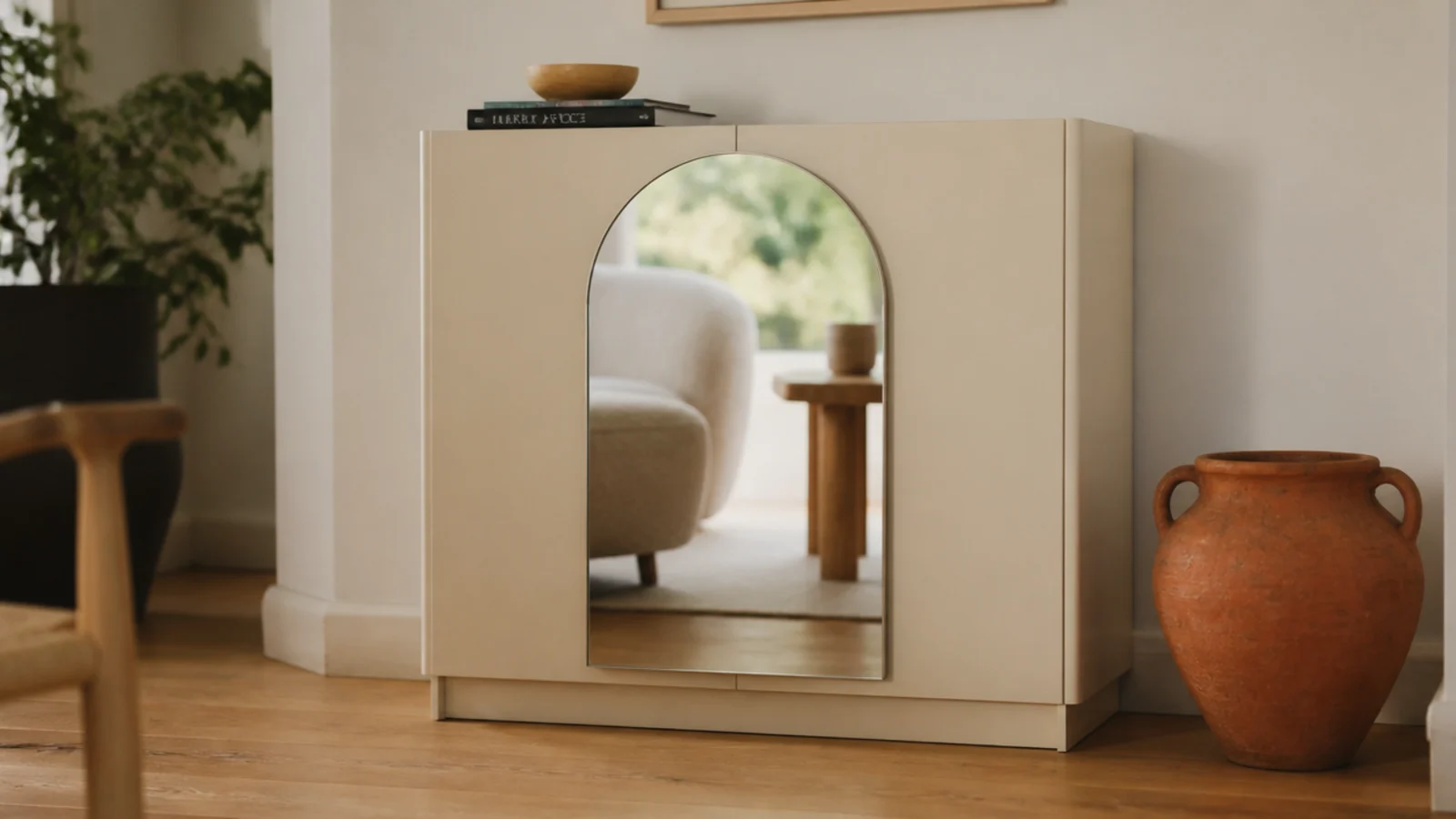
7. An arch-topped mirror on a flat front
Hallways are relentlessly rectangular: doorframes, baseboards, cabinet fronts. An arched mirror panel is often the only curve in the whole space.
Fix a pre-cut arched mirror to a plain flat door with mirror adhesive and a slim bottom lip. Centre it and leave an even margin of painted timber all round.
This is the cheapest way to make an existing cabinet look designed rather than bought. $–$$
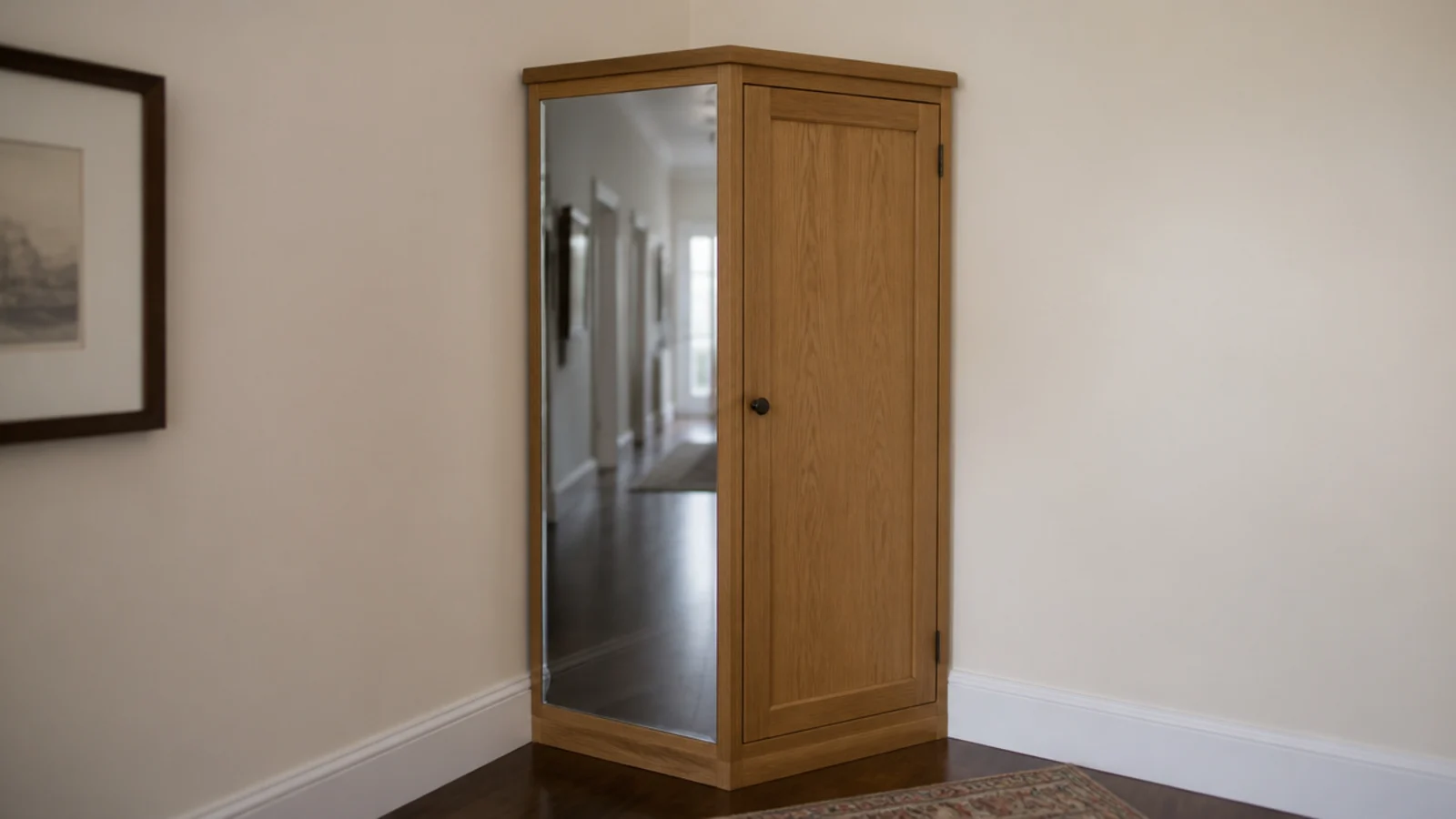
8. Mirror on the side panel of a corner unit
In a corner cabinet you approach the side panel, not the front, so that is the face doing the visual work.
Mirroring the exposed side reflects the length of the hallway and makes the corner recede. The doors themselves can stay plain timber, which keeps cost and hinge weight down.
Fix the glass with adhesive and a retaining lip; a side panel takes knocks from bags and vacuum cleaners. $$
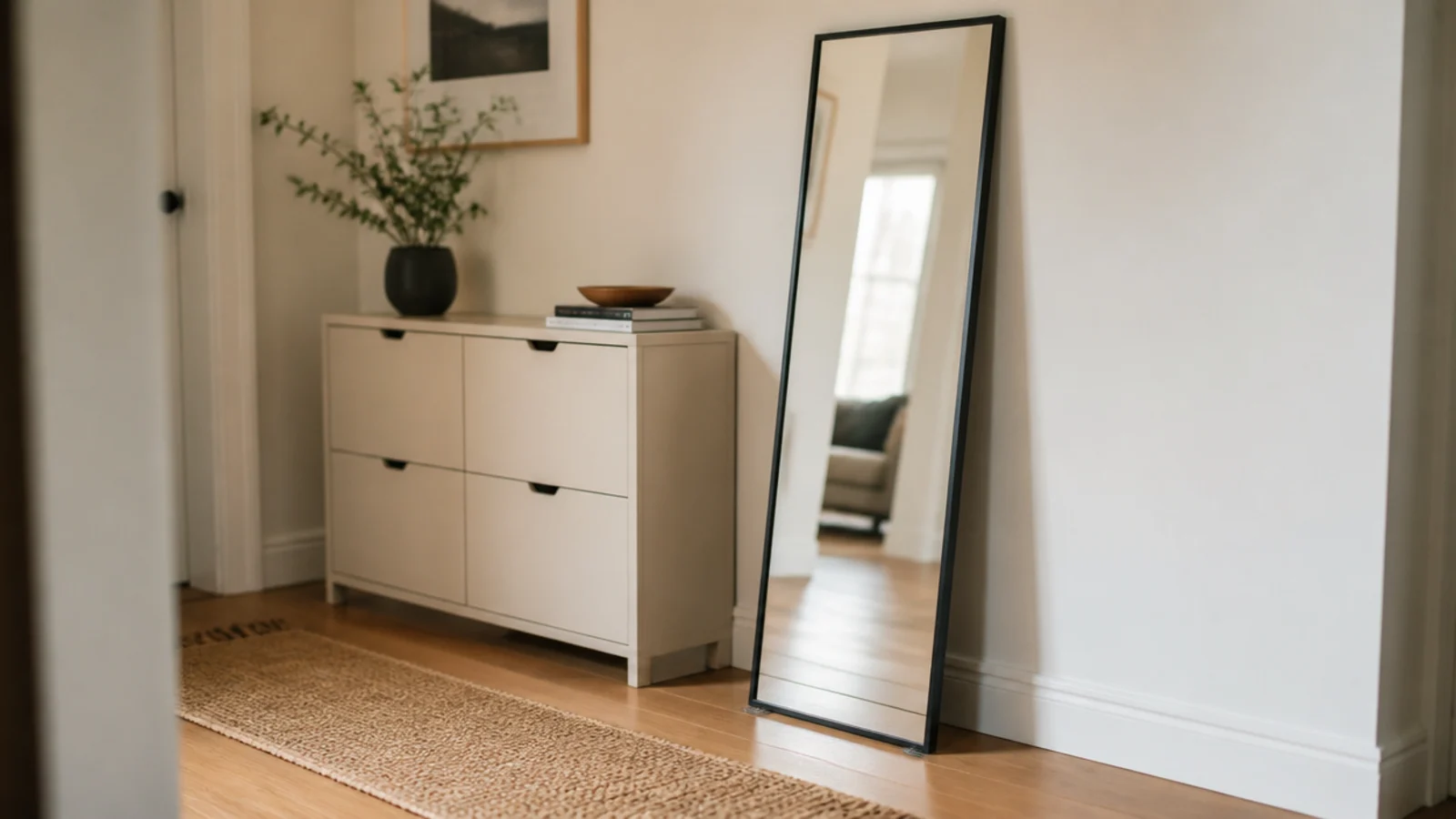
9. A leaning full-length mirror beside the cabinet
Zero drilling, zero commitment, and a full-length reflection the cabinet doors could never give you.
Lean at about 8 degrees, put felt pads under the frame feet so it does not walk on a wood floor, and secure the top with a single safety strap if there are children or a dog.
Pair it with a closed cabinet and the corner does both jobs without any joinery at all. $$
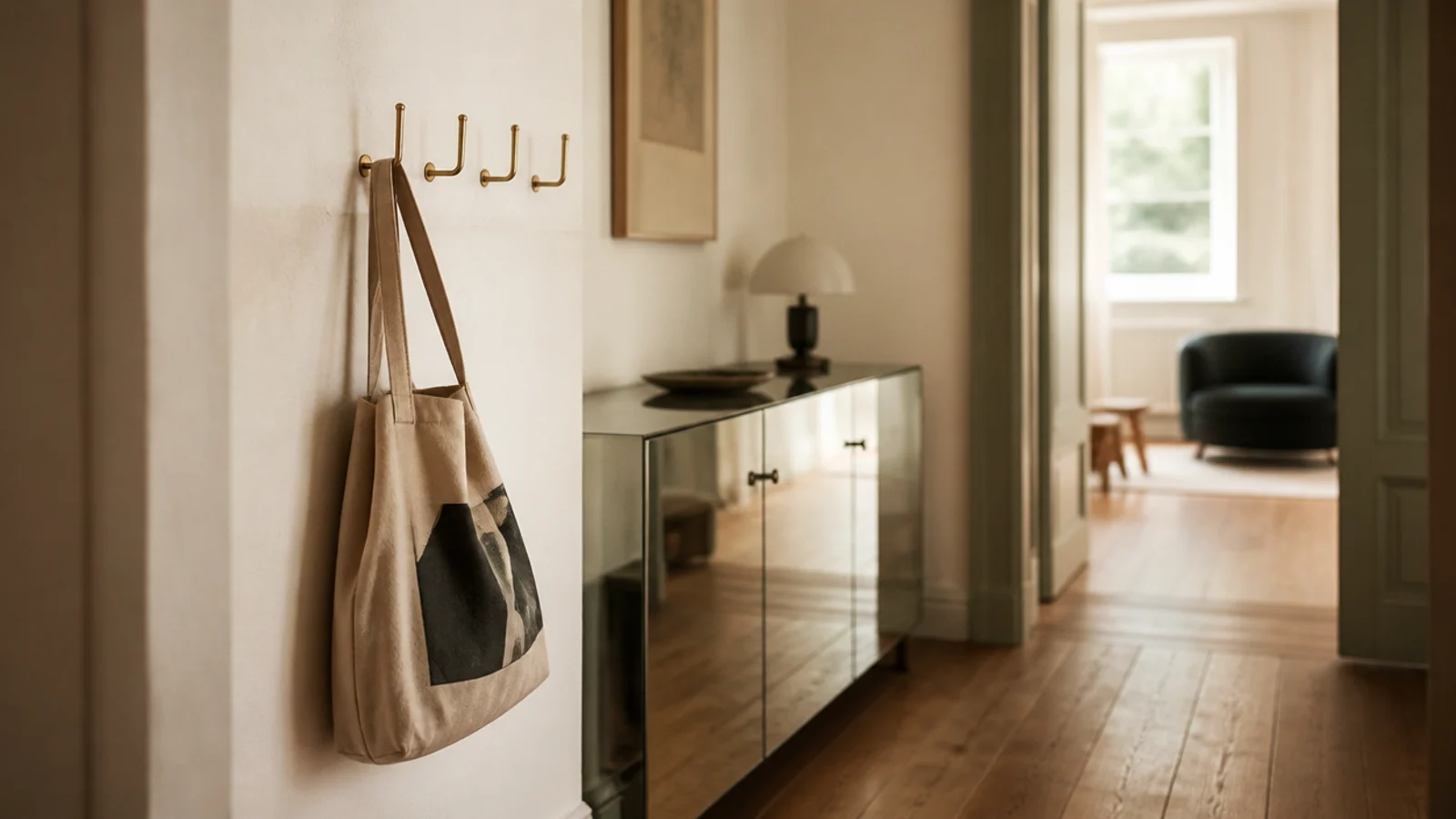
10. Mirror and hooks sharing one wall
Coats, keys, shoes and a reflection on roughly 4 linear feet of wall — this is the layout that makes small entries function.
Hooks at 60 inches, mirror centred at the same height beside them, cabinet below at 30. Keep the hooks at least 10 inches clear of the cabinet top or hanging coats brush your key bowl onto the floor.
Match the hook metal to the cabinet pulls. $$
11. Reflect a light source, not a blank wall
The single decision that determines whether the mirror does anything at all. Stand where the cabinet will go and look at what is opposite.
A doorway, a window or a lamp gives you brightness back down the corridor. A blank wall gives you a second blank wall, slightly dimmer than the first.
If the geometry is wrong, move the cabinet to the other wall before you spend anything on glass. Free
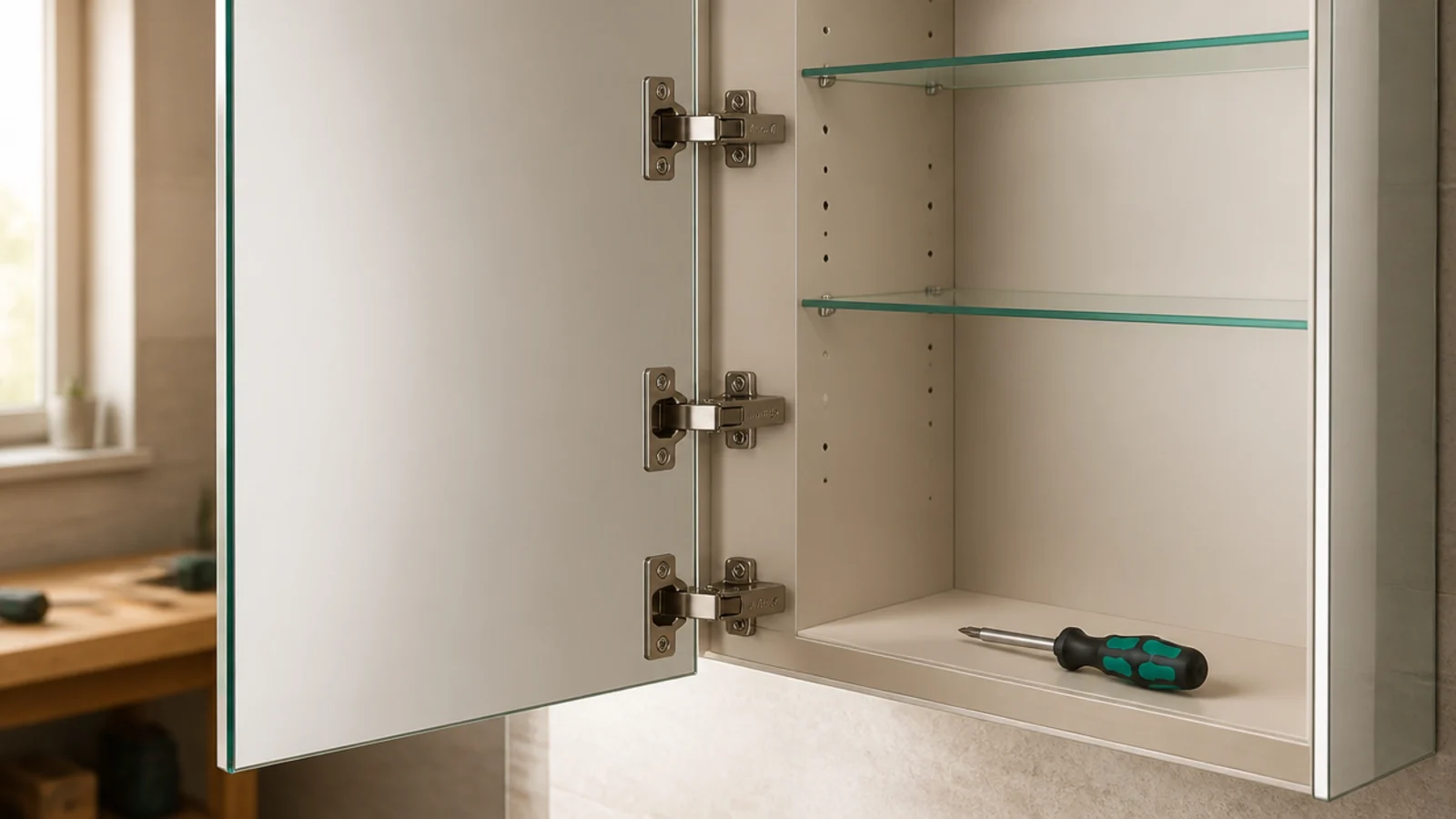
12. Add the third hinge for the glass weight
A mirrored door is several pounds heavier than a plain one, and this is a door that gets shut with a foot every day.
Three concealed soft-close hinges per door, spaced evenly, and never fewer than two even on a short front. Recheck the adjustment after a month — the extra weight settles the door on the first fifty closes.
Hinges are $8 a pair. A sagging mirrored door is not fixable by tightening. $
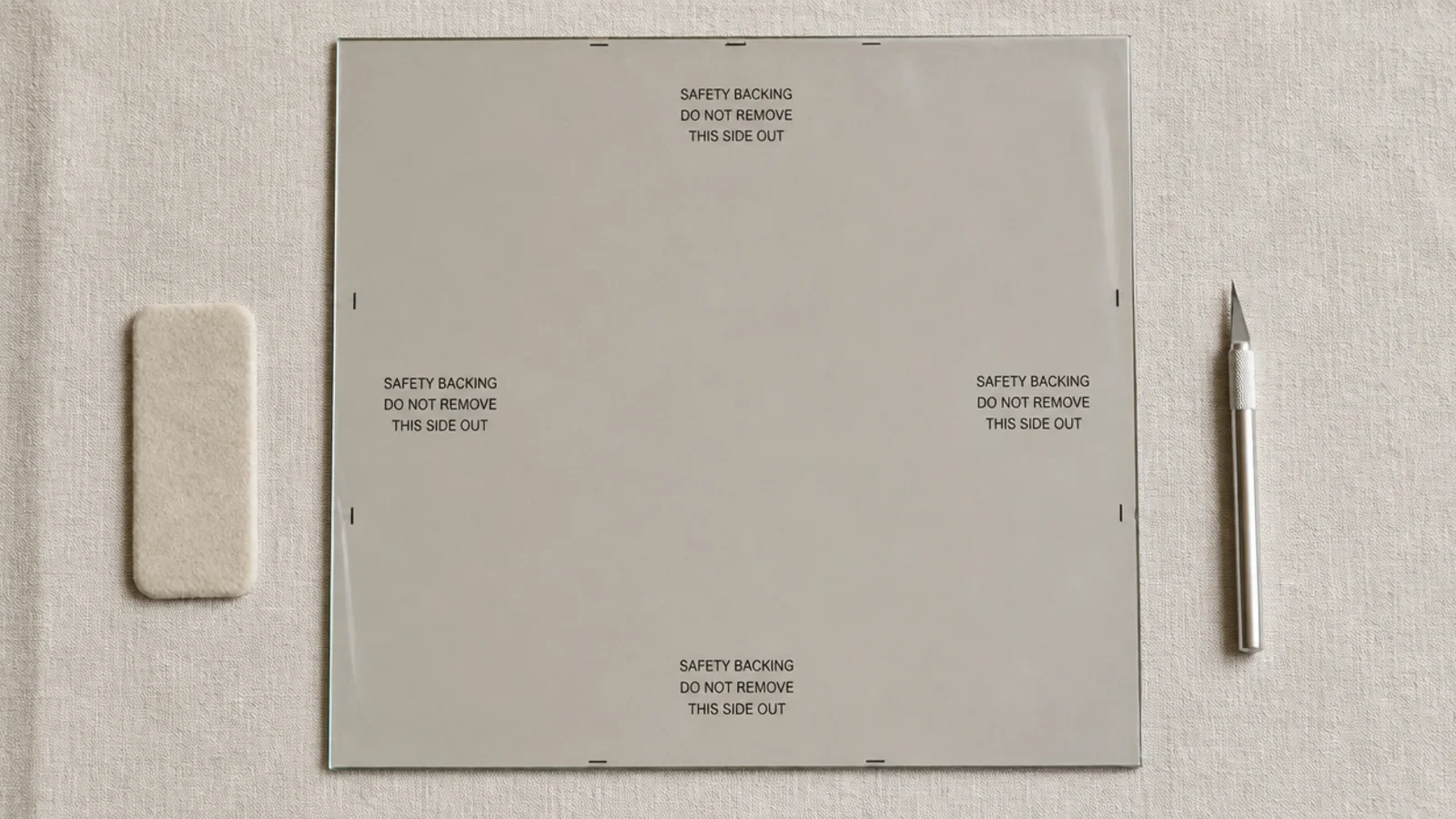
13. Safety film on the back of the glass
Any mirror at shoe height in a busy hallway should have a clear safety backing film. If the glass ever breaks, the film holds the pieces in the frame.
It costs about $12 for enough to do two doors and it goes on like screen protector — wet, squeegeed flat, trimmed with a fresh blade.
Non-negotiable if there are children or a dog in the house. $
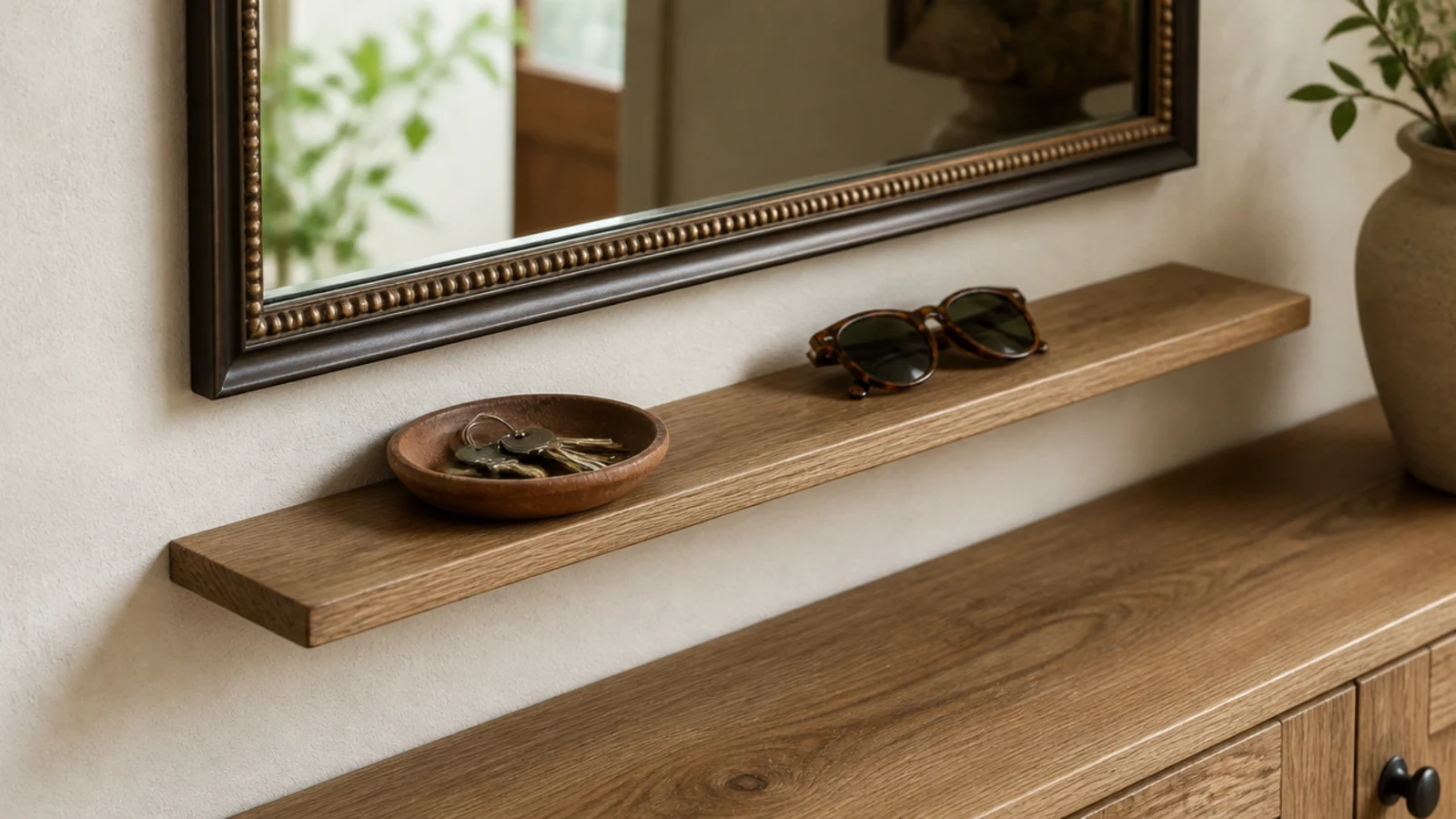
14. A shallow ledge under the mirror
Where the mirror hangs above rather than on the cabinet, a 3-inch ledge beneath it catches keys, sunglasses and post before they reach the cabinet top.
Mount it about 4 inches below the mirror so the two read as a pair. A shallow ledge stays tidy because there is physically no room to pile anything.
It also stops the mirror from being the only thing on that stretch of wall. $
15. A mirror-fronted bench cabinet at 18 inches
An 18-inch-high cabinet is the seat height adults stand up from easily, and mirroring the front means the piece works sitting and standing.
Check the top is a solid slab rather than a thin panel — storage-rated is not the same as sit-on-rated. Add a linen cushion.
Because the seat is low, the mirror sits at knee-to-hip height, so this one really does want antiqued glass. $$$
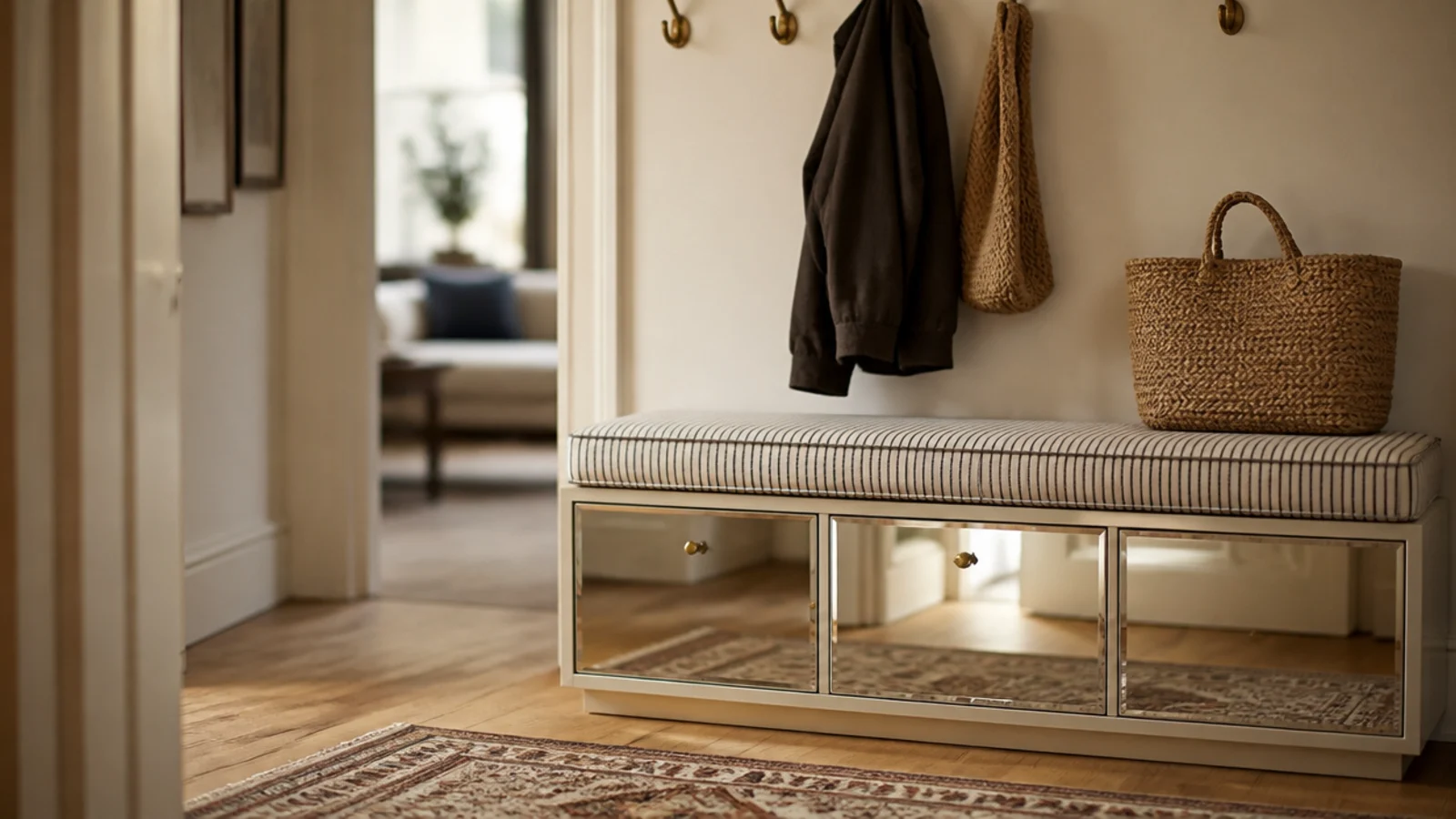
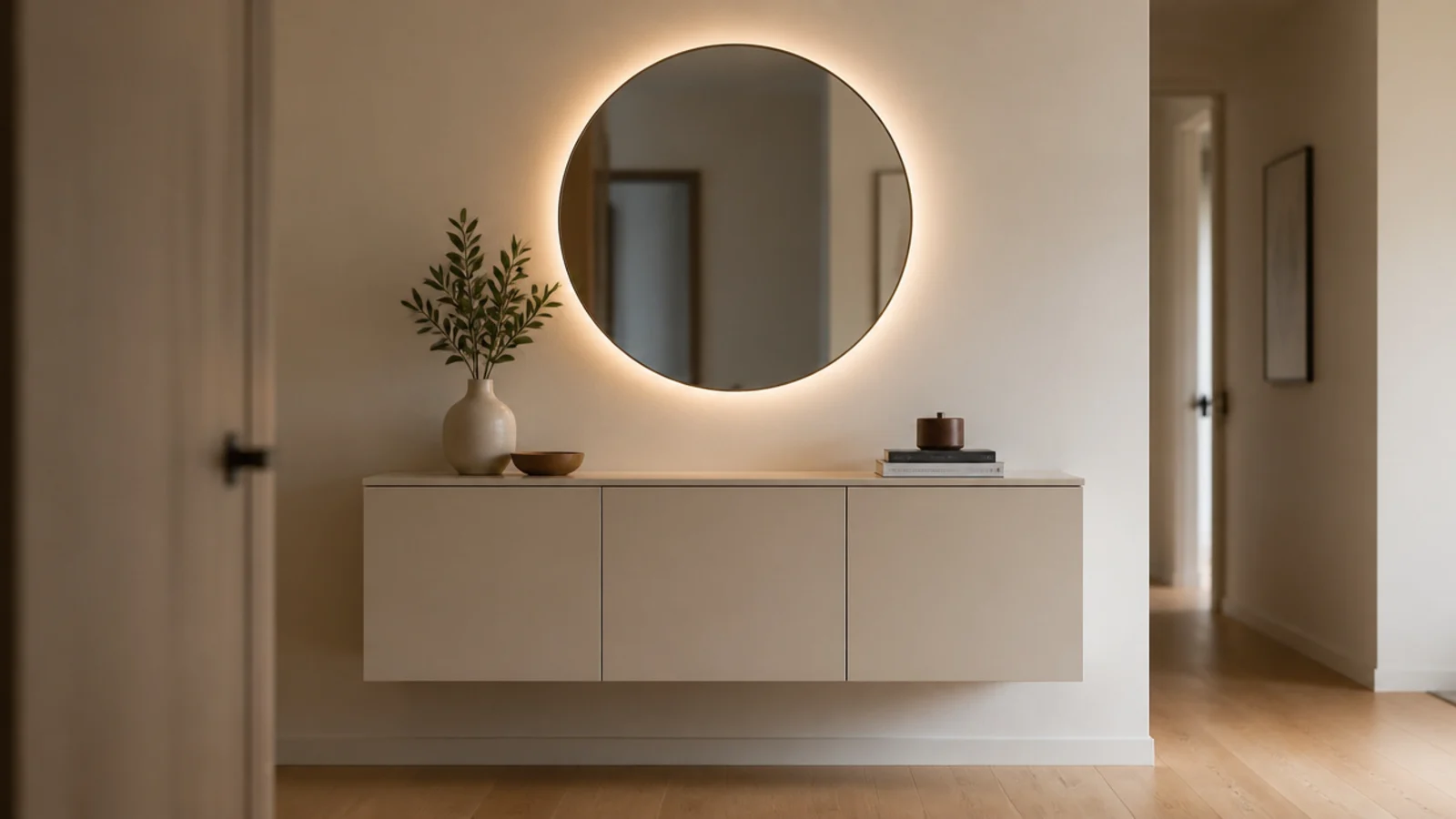
16. A backlit mirror over a wall-hung cabinet
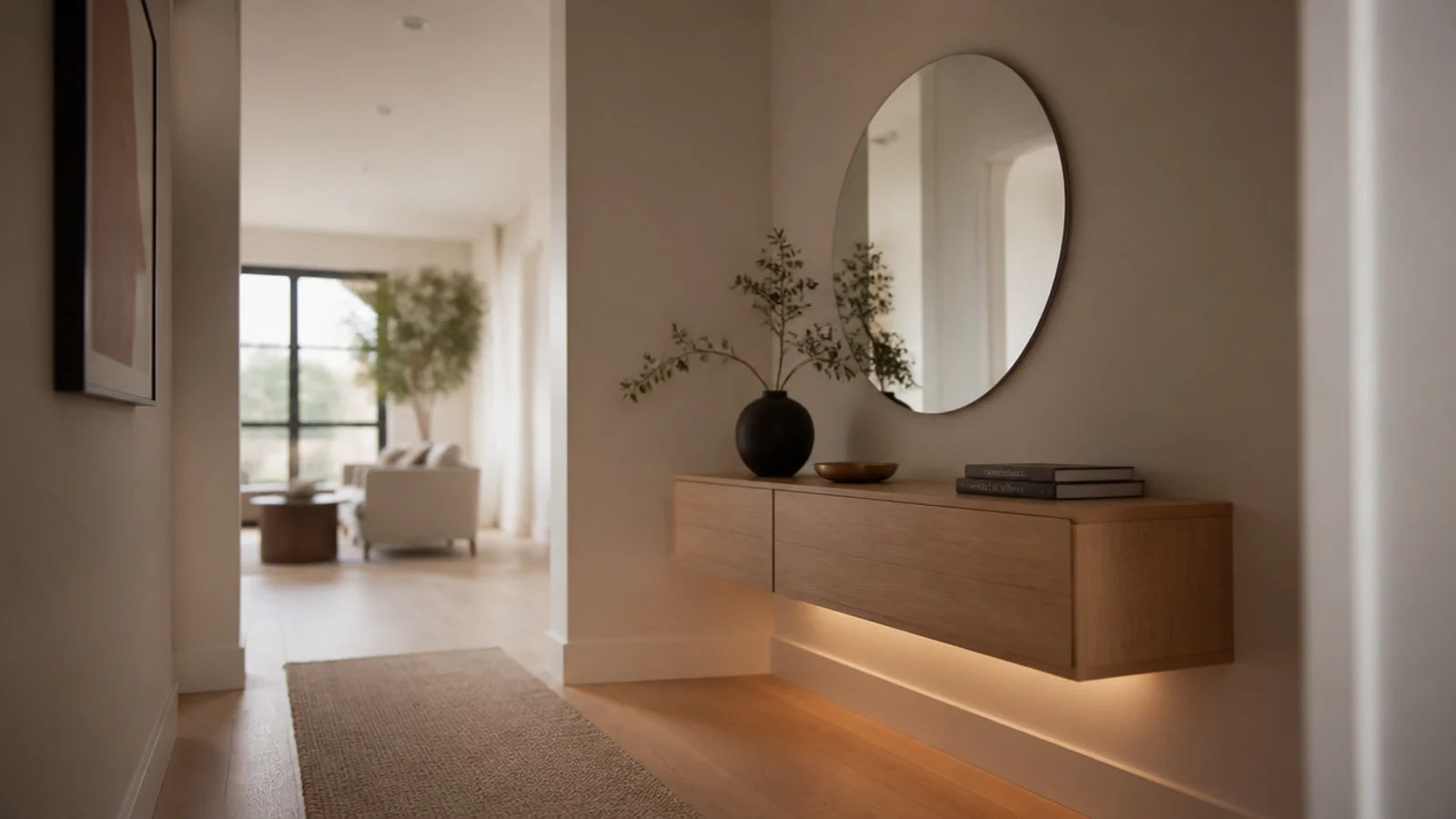
A wall-hung cabinet leaves the floor unbroken, which widens a corridor visually, and a softly backlit mirror above it gives the hallway a light source that is not the ceiling.
Warm white only. Cool backlighting turns a cozy entry into a lift lobby in one step.
Mount the cabinet on a continuous cleat into studs, base 8 inches up so a vacuum passes underneath. $$$
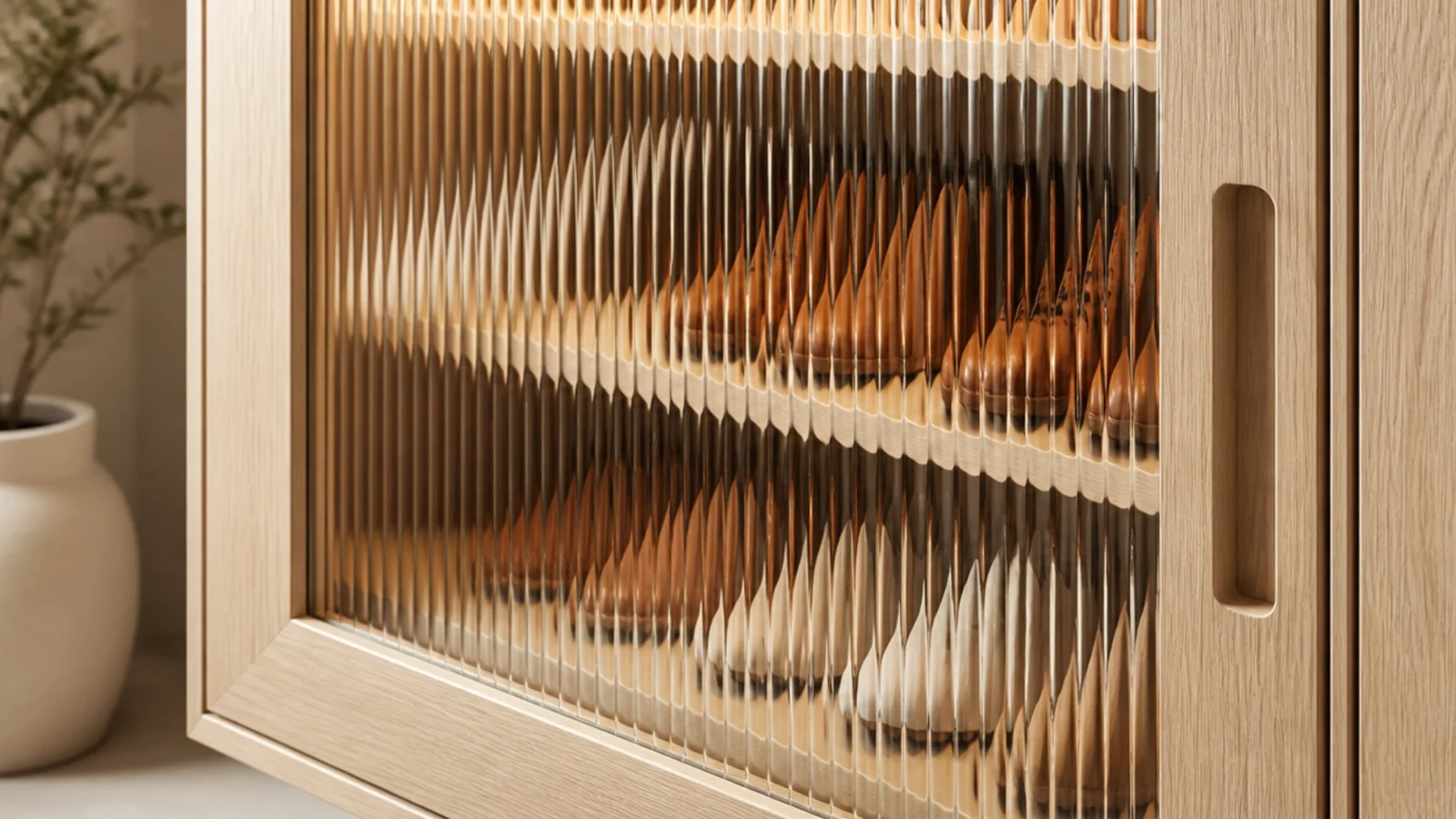
17. Fluted glass instead of clear mirror
Reeded or fluted glass passes light through while blurring whatever sits behind it, so the front glows without showing the shoes.
It is the softer cousin of a mirror: less reflection, more warmth, and no fingerprints at all because the surface is ribbed.
Fit it into a timber frame rather than gluing it flat, and back the shoes with a pale interior so the glow reads warm rather than murky. $$
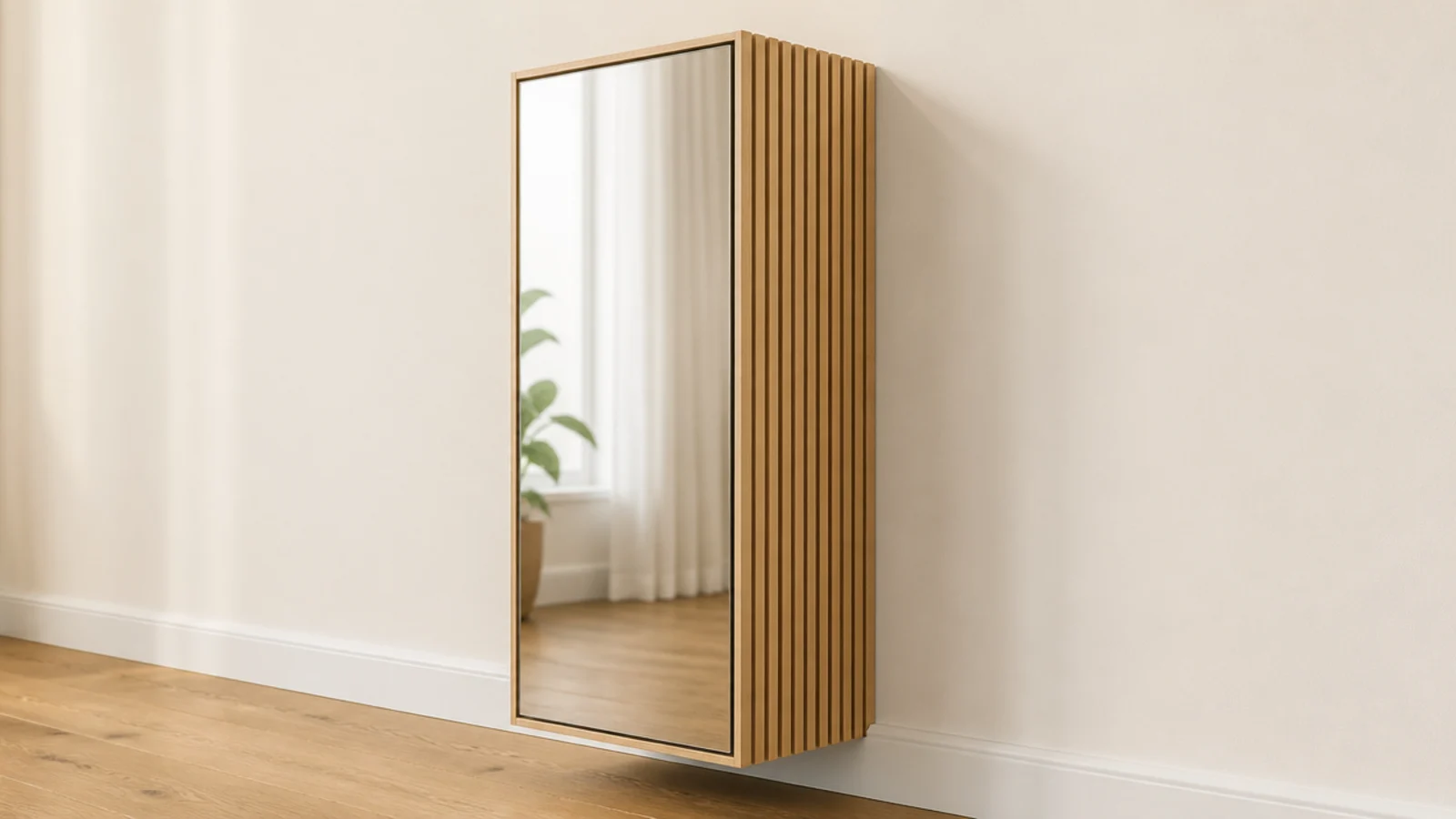
18. Mirror front, slatted side
A glass front seals absolutely, so the ventilation has to come from somewhere else. An oak slatted panel forming the exposed side solves it visibly and attractively.
Quarter-inch gaps between battens move plenty of air. If the side is against a wall, drill the back panel instead — a row of half-inch holes 4 inches apart.
Without one of these, the cabinet smells within a fortnight. $$
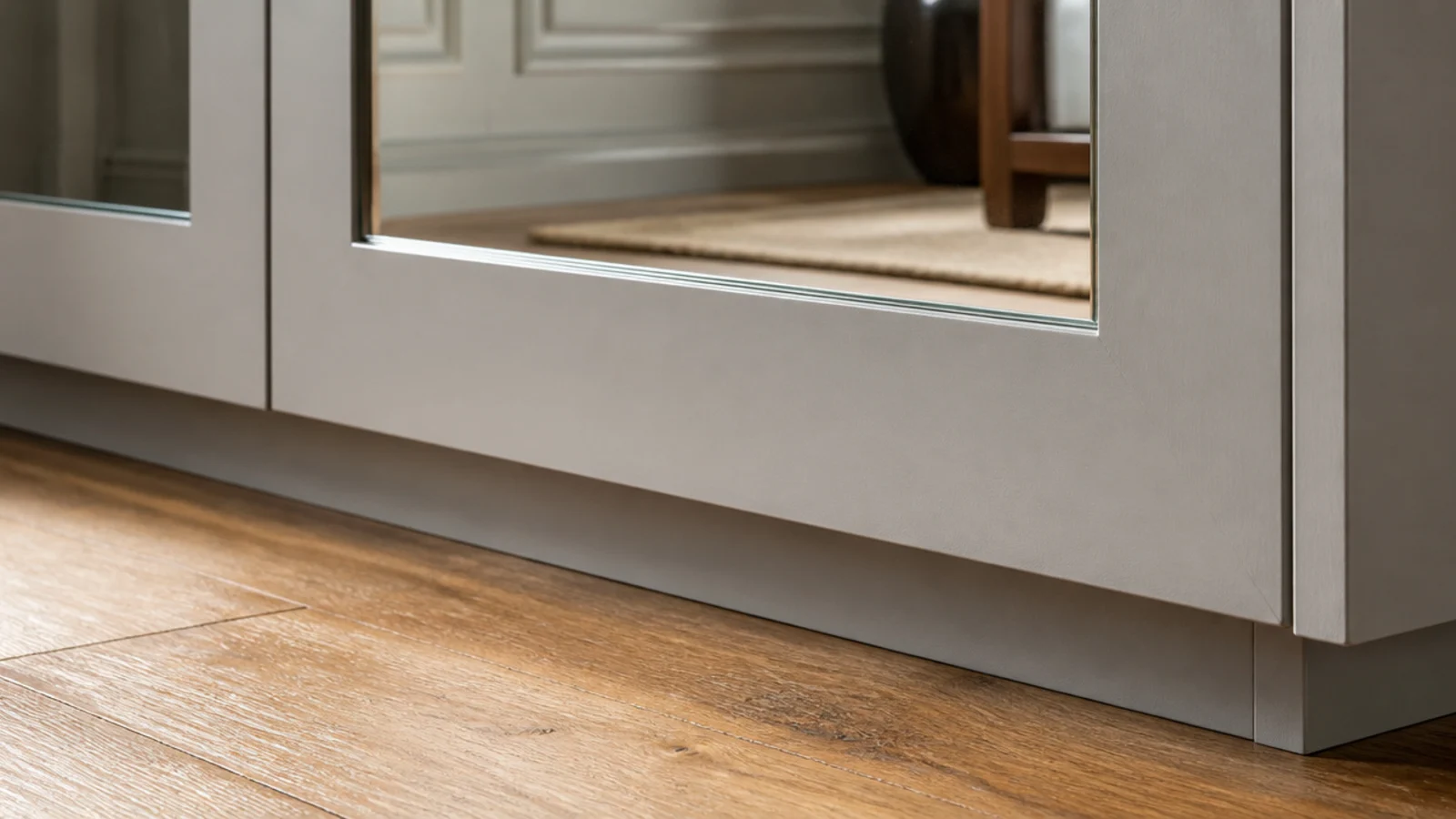
19. Keep glass clear of the bottom four inches
Stopping the mirror short and running a painted timber band along the base takes the glass out of the zone where shoes, mop handles and vacuum heads live.
It also gives you somewhere to put a discreet finger pull without drilling into glass.
Four inches is enough. It reads as a deliberate detail rather than a compromise, and it saves a chipped edge you cannot repair. $
20. Dry microfibre, never spray
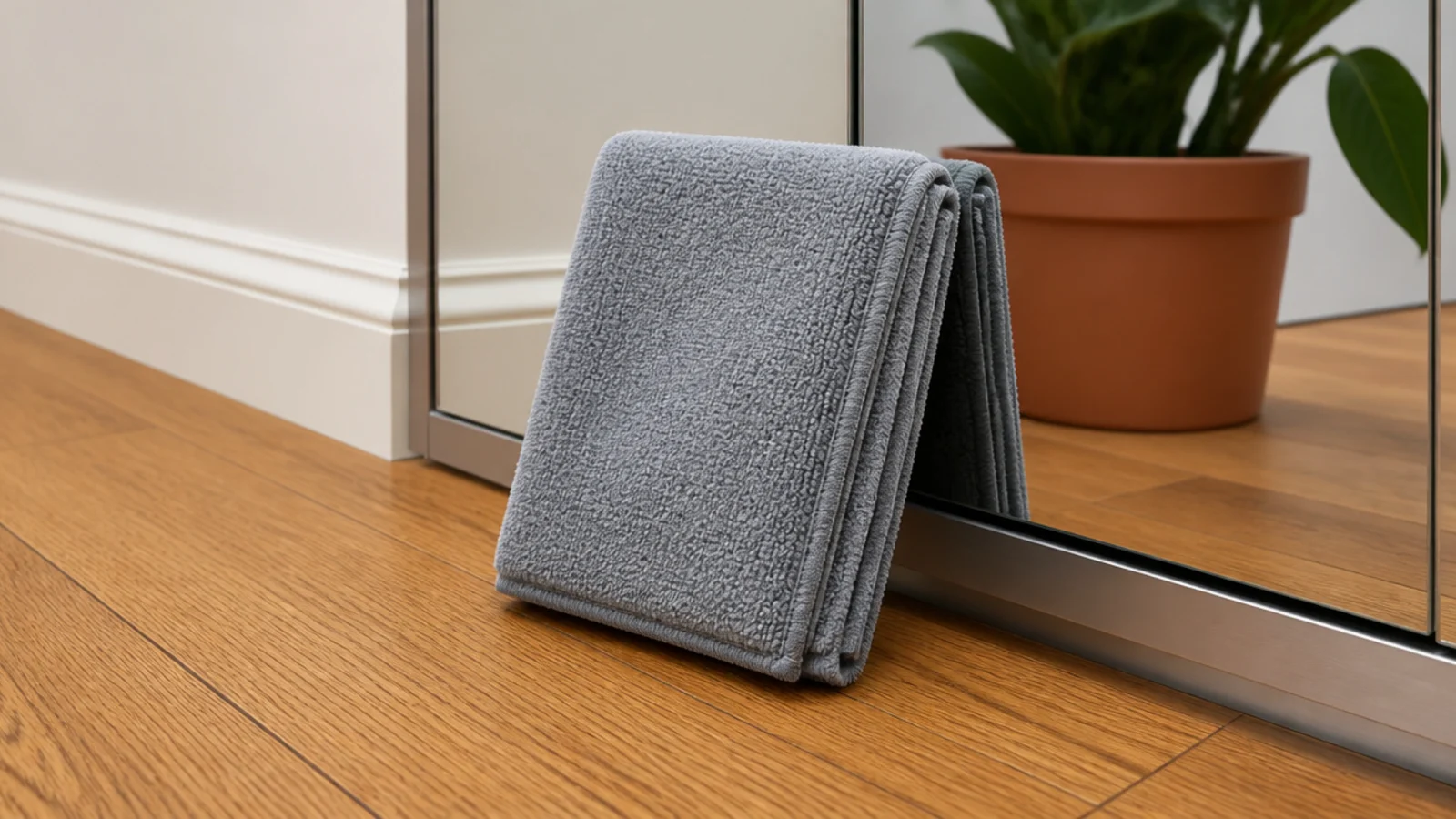
Glass cleaner sprayed onto a mirror runs down behind the panel, sits along the bottom edge and lifts the silvering permanently. Black tide marks along a mirror base are almost always this.
Use a dry microfibre cloth for daily marks, and a barely damp one wrung out hard for anything stubborn.
If you must use a spray, spray the cloth and not the glass, and never near the edges. Free
Mistakes to Skip
- Facing the mirror at a blank wall. Reflection is only useful if it returns light or depth, and a blank wall gives you neither.
- Hanging a mirrored door on two hinges. Glass adds real weight to a door that gets kicked shut daily, and a sagging front cannot be tightened back into line.
- Spraying cleaner directly onto the glass. It runs behind the panel and lifts the silvering along the bottom edge permanently.
Frequently asked questions
Is a mirrored shoe cabinet a good idea in a narrow hall?
It is the best use of a narrow wall there is, because the mirror gives back the visual width the cabinet takes in depth. Keep the carcass to nine inches with tilt-out drawers inside, and position the cabinet so the glass reflects a doorway or a light source rather than the blank wall opposite.
How many hinges does a mirrored cabinet door need?
Three per door as a rule, and never fewer than two even on a short door. Mirror glass adds several pounds to a front that already gets shut with a foot daily. Use concealed soft-close hinges and check the adjustment after a month, because the extra weight settles the door slightly on the first fifty closes.
Do mirrored shoe cabinets show fingerprints?
Clear glass at knee height shows every one of them. Antiqued, brushed or fluted glass hides marks far better and reads warmer against timber and clay tones. Whatever you choose, clean it with a dry microfibre cloth rather than a spray, because spray runs down behind the glass and lifts the silvering from the edges.
Can I add a mirror to a shoe cabinet I already own?
Yes, and it is the cheapest version of this idea. Order glass cut to size with polished edges, fix it with mirror adhesive plus a slim retaining lip along the bottom, and add a third hinge for the extra weight. Keep the glass four inches clear of the bottom edge so shoes and vacuum heads cannot chip it.
Does a mirrored cabinet still need ventilation?
More than most. A glass front is completely sealed, so all the air has to come from somewhere else — a row of half-inch holes drilled through the back panel, a slatted side, or an open toe kick. Without it a closed cabinet holding damp shoes smells within a fortnight, mirror or no mirror.
Where should the mirror sit relative to the cabinet?
Either as the door fronts themselves, or hung above with its lowest edge 10 to 12 inches above the cabinet top. Closer and the wall reads crowded; further and the two pieces stop relating to each other. Hung mirrors want their centre at about 60 inches, which suits most people standing in an entry.
Check what the wall opposite actually reflects before you spend anything on glass — placement decides this idea entirely. For the depths that fit a tight corridor see slim shoe cabinet options, for the finishes that make glass and timber sit well together see modern shoe cabinet upgrades, and for the rest of the hallway, entryway wall decor covers what goes around it. Save the pin before you brighten your dark hallway.
Want more like this? Browse all 15 shoe cabinet ideas guides — they all use the same measurements and budget tiers.
Pin it for later
Save this to your Shoe Cabinet Ideas board
Pin it now so it is waiting for you when the tape measure comes out — and so the next person hunting for this idea can find it too.
Save this pinKeep going
More ideas worth saving while you have the tape measure out.