Shoe Storage Ideas · Review
25 Best Shoe Storage Picks Worth Buying

Some links on this page may become affiliate links in future. I only recommend pieces I would put in my own home — see the affiliate disclosure.
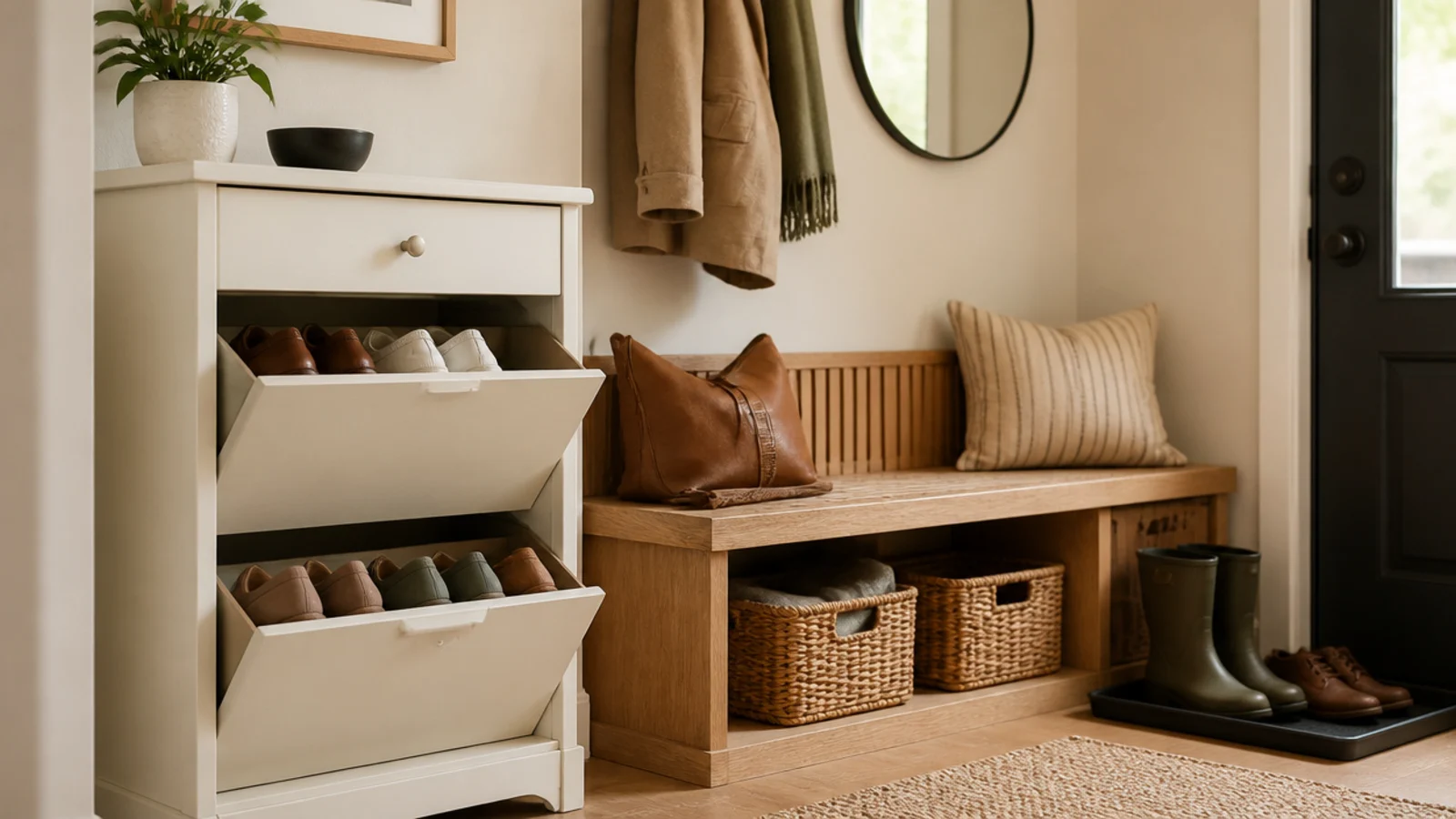
The best shoe storage solutions are not the ones with the nicest product photos — they are the ones whose depth suits your hallway and whose tier height suits your boots. I have bought, built and returned a lot of these across seven homes. Below is every type worth considering, compared on the numbers that decide whether a system survives a wet February, plus the eight I would buy again.
In this guide11 sections — tap to openHide
- 1.How I Chose the Best Shoe Storage Solutions
- 2.The Full Comparison: 25 Shoe Storage Types
- 3.The slim tilt-out cabinet
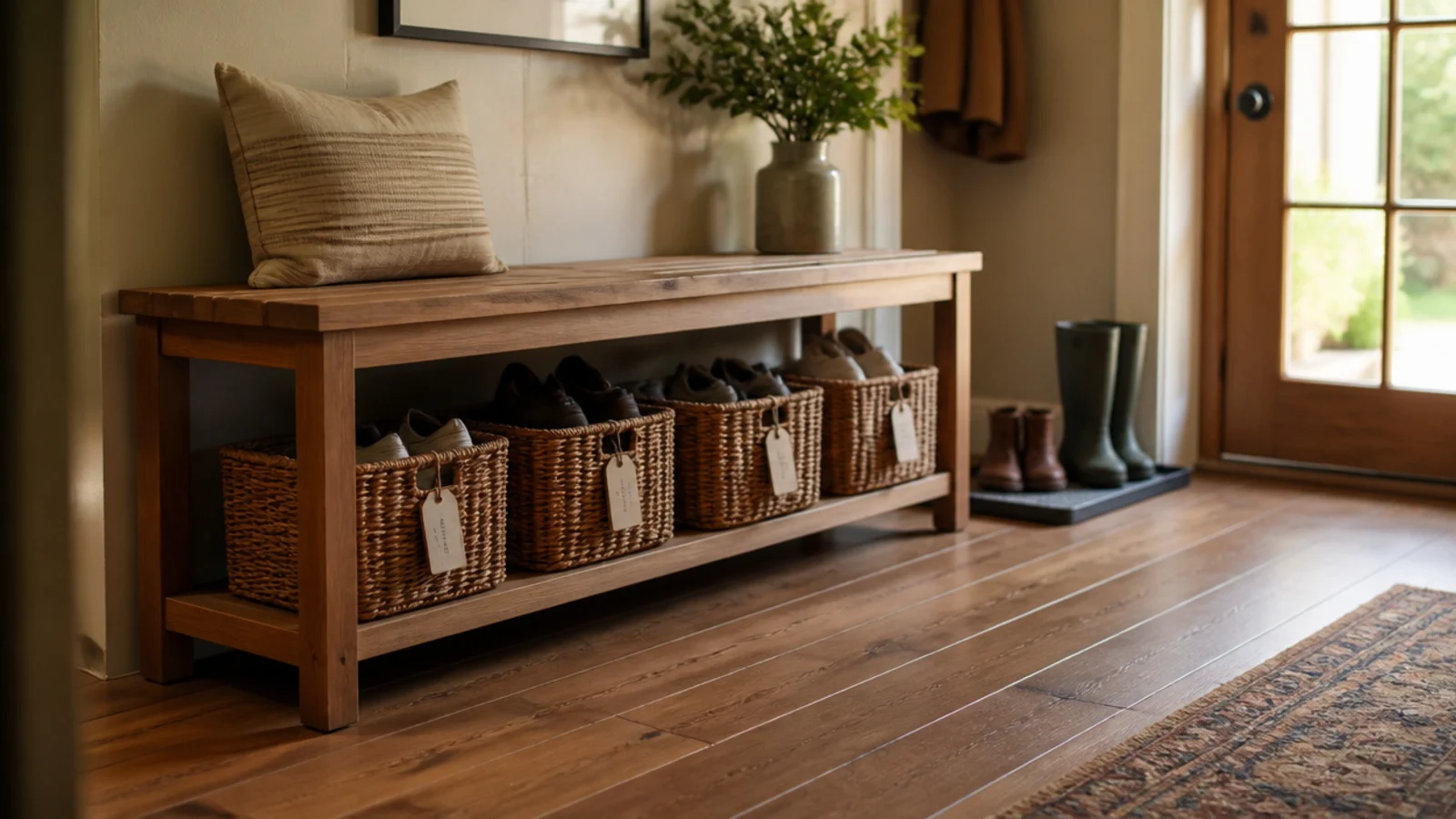
- 4.The slatted bench with a basket per person
- 5.The open cubby unit
- 6.The under-stairs pull-out tower
- 7.The freestanding shoe etagere
- 8.The cane-fronted closed cabinet
- 9.The raised-lip boot tray
- 10.The wall-mounted heel rail
- 11.What to Check Before You Buy
How I Chose the Best Shoe Storage Solutions
I judged every type on five things, in this order.
- Depth versus shoe length. A men's size 12 sneaker is about 12.5 inches long. Flat storage needs 13 inches of depth; storage that tilts shoes to 45 degrees needs nine. Anything sold as slim that does not tilt is quietly asking you to store smaller shoes than you own.
- Tier height, including the tall pairs. Six inches of clear height clears flats, loafers and sneakers. Boots want 14 to 16 inches and knee-highs need 20. A rack with every tier at six inches is the single most common reason a hallway pile survives a purchase.
- Airflow. Closed shoe storage without ventilation holes or slatted fronts smells within weeks, because damp soles sit in still air. This one factor moved several handsome cabinets down my list.
- Steps to put a shoe away. Every door, lid and lift is a step somebody skips on a bad morning. Open storage beats closed storage in any household with children, whatever the photographs suggest.
- Renter reversibility. How many holes, how big, how easily patched. Freestanding pieces that carry real weight scored highest here, because they move house in one trip.
I did not weight brand or finish trends. Everything below is described by type rather than product name, because the same construction appears under a dozen labels at Target, IKEA, Amazon, Wayfair, HomeGoods and any decent thrift store — and construction is what you are actually buying.
The Full Comparison: 25 Shoe Storage Types
Price tiers: $ under $60 · $$ $60–$150 · $$$ $150+. Pair counts assume two to three pairs per person at the door.
| Pick | Best for | Price | Why it wins |
|---|---|---|---|
| Slim tilt-out cabinet | Narrow hallways | $$ | Nine inches deep because shoes lean back inside |
| Slatted bench with baskets | Families at the front door | $$ | Seat and storage in one 18-inch-high footprint |
| Open cubby unit | Households with children | $$ | No door to skip, one pair per opening |
| Tall boot bay cabinet | Wet and cold climates | $$$ | Sixteen inches of clear height for tall pairs |
| Under-stairs pull-out tower | Staircase voids | $$$ | Reaches the deep corner fixed shelves abandon |
| Freestanding shoe etagere | Renters needing real weight | $$ | Carries a full household with zero wall holes |
| Over-the-door pocket organizer | Out-of-season flats | $ | Twelve pairs on a surface doing nothing |
| Wall-mounted heel rails | Very narrow entries | $ | Four inches of depth, no floor footprint |
| Rolling three-tier cart | Space under a console | $$ | Rolls out so you can actually sweep beneath |
| Raised-lip boot tray | Anywhere it rains | $ | A drip zone that keeps everything else dry |
| Cane-fronted shoe cabinet | Closed storage that breathes | $$$ | Airflow designed in rather than drilled later |
| Stacked sealed crates | Tight budgets | $ | Real cubbies for the price of a takeaway |
| Closet floor bins | Bedroom closets | $ | Sorted by type, so pairs are found first time |
| Closet shelf risers | Doubling a single shelf | $ | Two layers of shoes for about eight dollars |
| Under-bed rolling boxes | Overflow and seasonal pairs | $ | Six inches of dead clearance holds twelve pairs |
| Leaning ladder rack | Leases that forbid drilling | $ | Freestanding, flat-packs, holds flats beautifully |
| Mudroom locker run | Busy back doors | $$$ | One full-height slot per person, vented base |
| Wire cube modular grid | Odd-shaped nooks | $$ | Built to the exact footprint you actually have |
| Bench with a pull-out drawer | Hands-full entryways | $$$ | Drawers beat doors when your arms are loaded |
| Mirror-fronted shoe cabinet | Dark hallways | $$$ | Hides twenty pairs and gives back the light |
| Vented garage shelving | Sports and outdoor shoes | $$ | Gets soles off cold damp concrete floors |
| Clear boxes with photo labels | Collections and archives | $ | Read from across the room in one glance |
| Hanging closet shoe shelf | Rented bedroom closets | $ | Uses rail space and needs no fixings at all |
| Corner shoe shelf | Awkward entry corners | $ | Angled tiers hold twice the pairs per foot |
| Toe-kick or plinth drawer | Fitted joinery projects | $$$ | Turns four dead inches into flat shoe storage |
Eight of those are the ones I keep coming back to.
1. The slim tilt-out cabinet
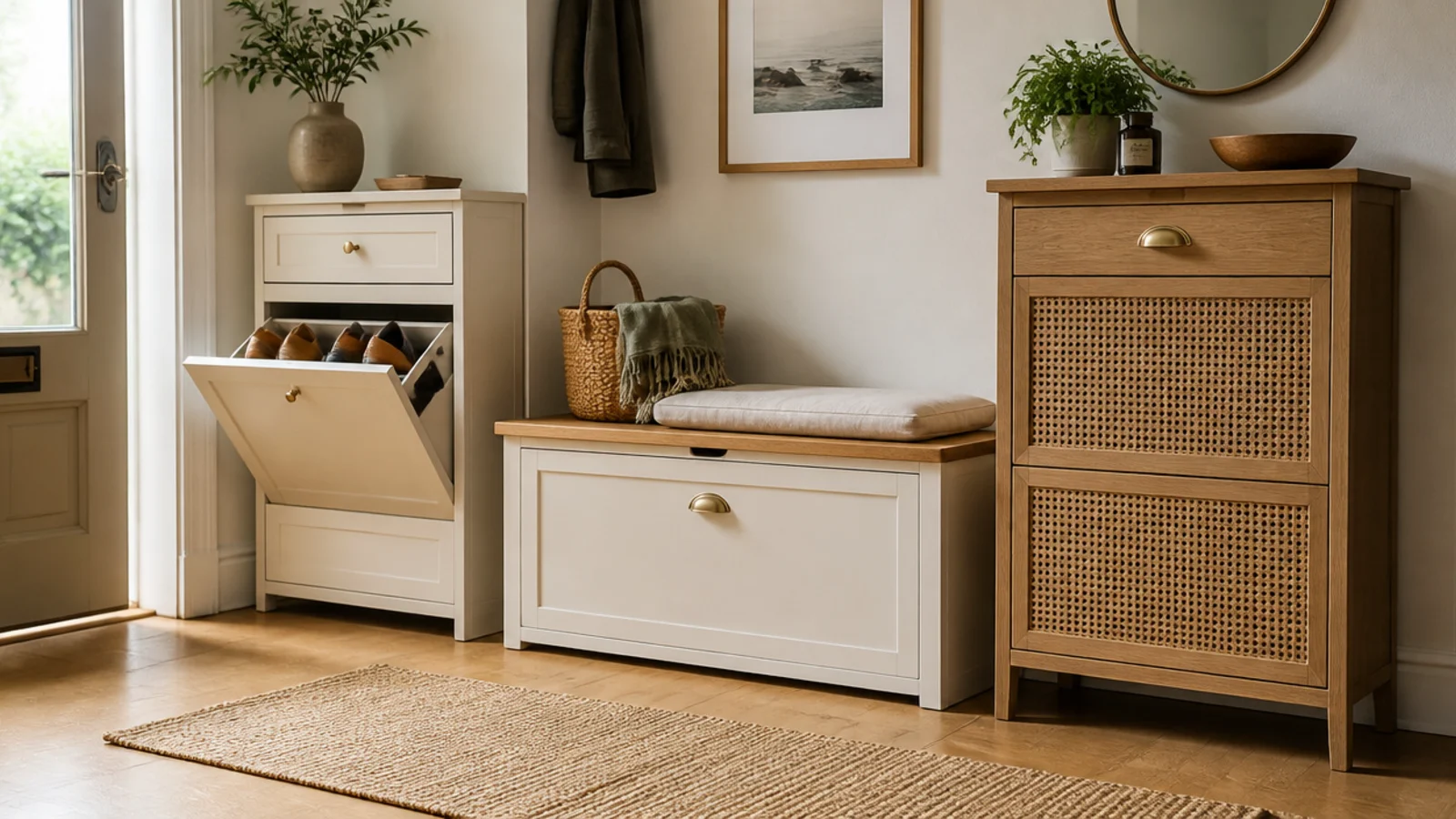
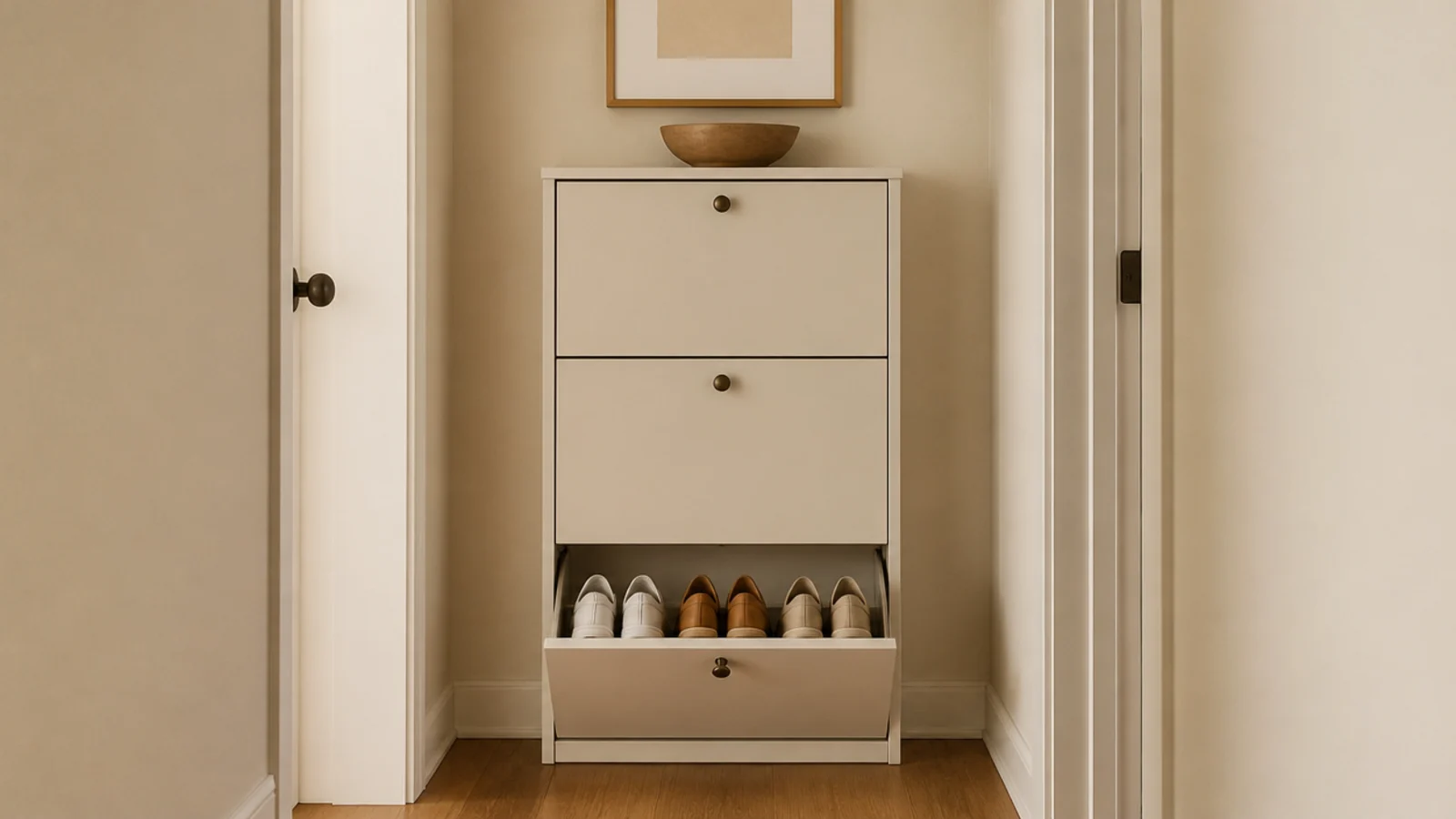
The default answer for any hallway under 40 inches wide, and it deserves to be. Shoes rest at roughly 45 degrees inside a shallow drawer, so nine inches of wall depth swallows a 12.5-inch shoe.
Two drawers hold six to eight pairs of flats and sneakers. They hold no boots at all, so plan a separate bay for those. Look for soft-close hinges, because these get shut with a foot daily, and drill ventilation holes in the back panel before loading it. Expect $70 to $130.
2. The slatted bench with a basket per person
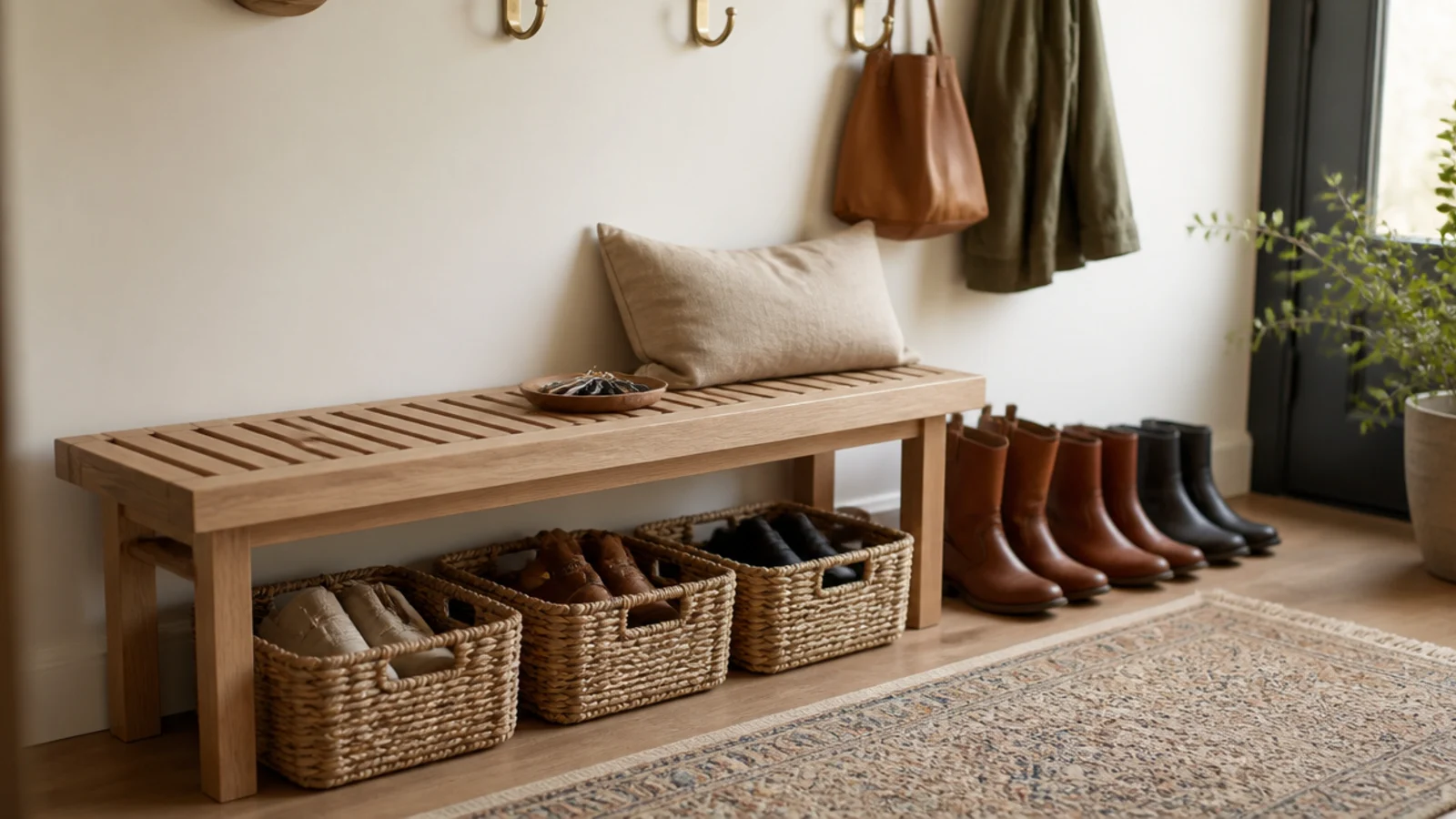
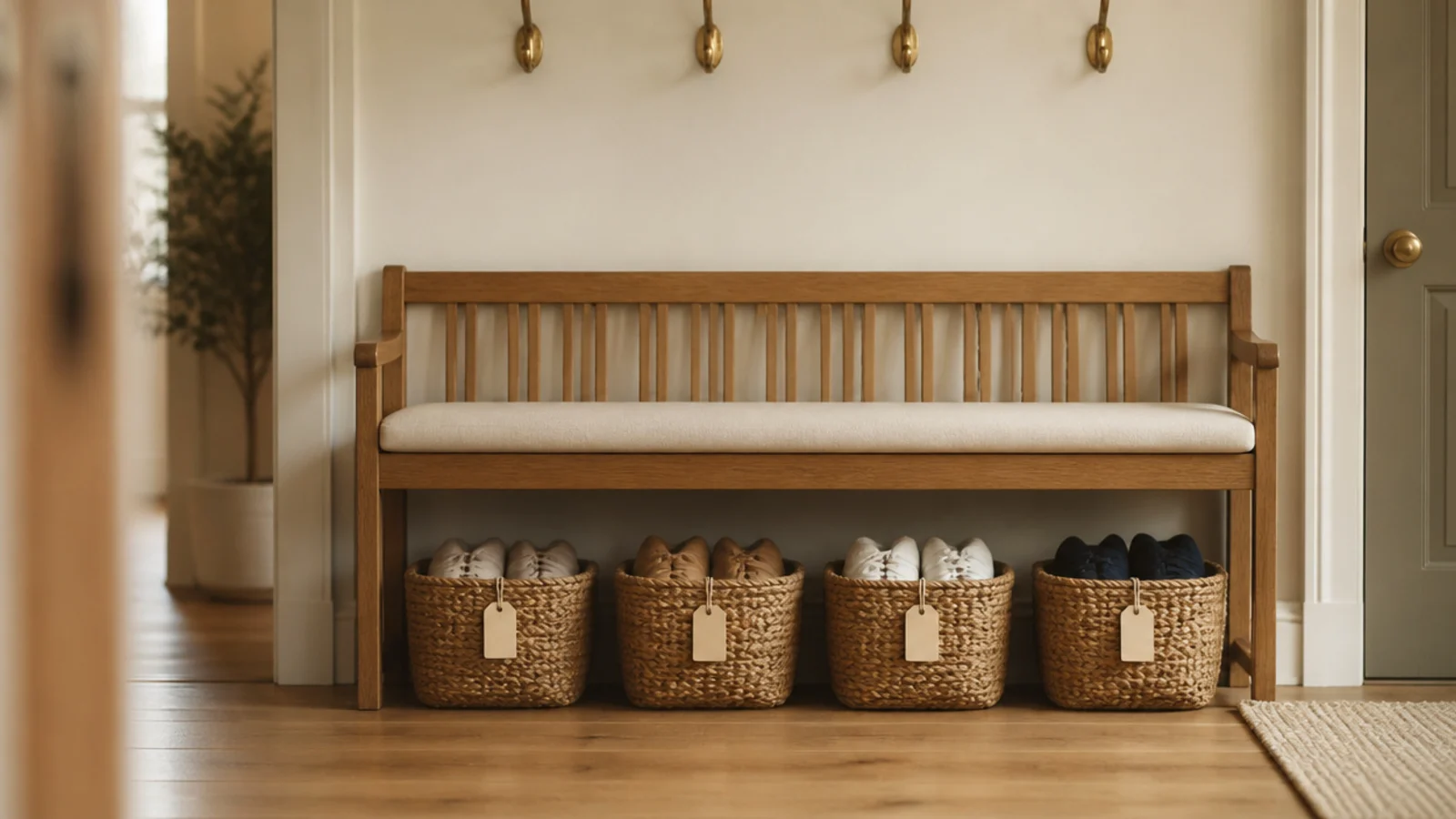
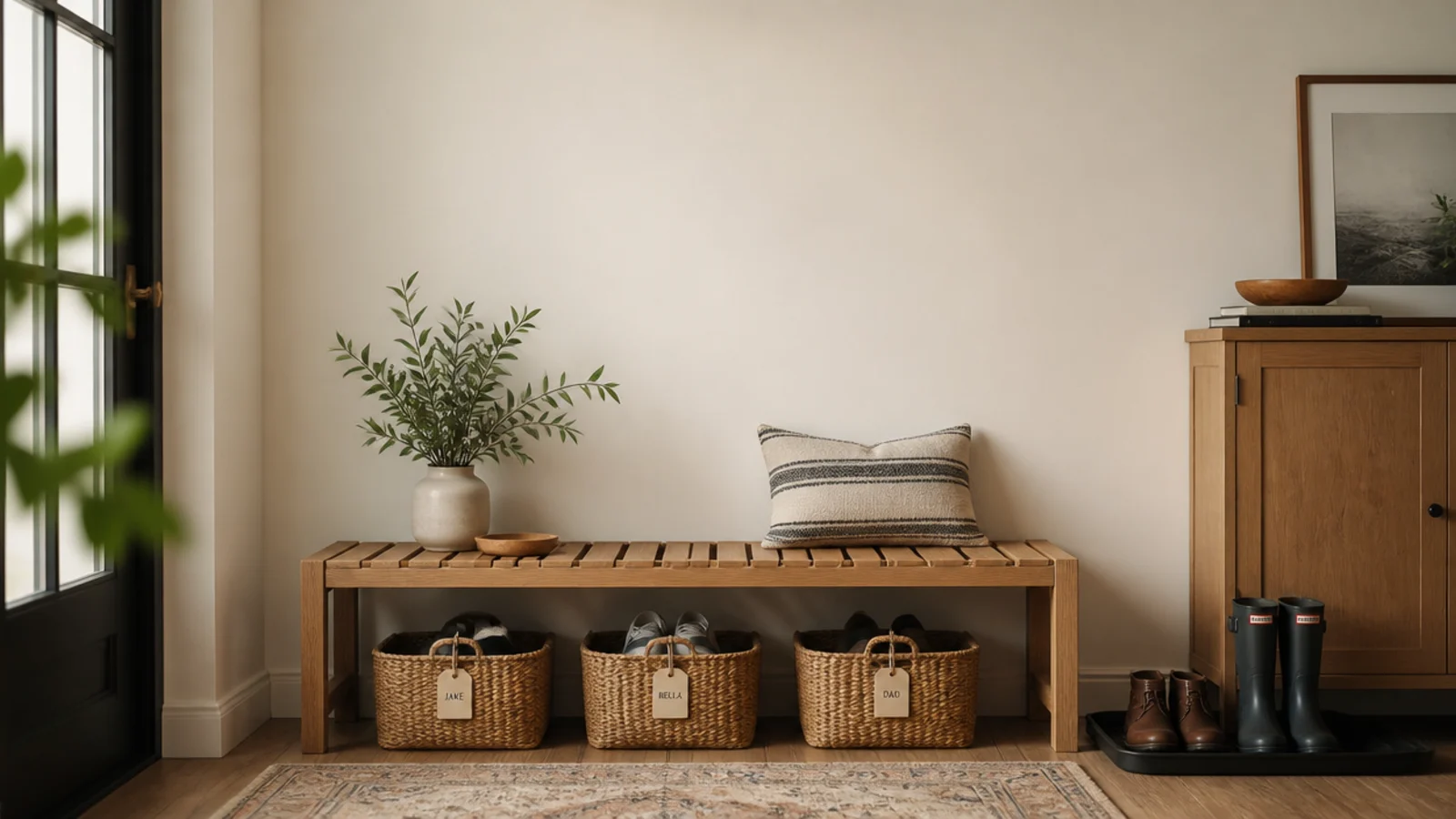
The setup that works in more households than anything else on this list, because it solves seating and storage in one 18-inch-high footprint.
Set the seat at 18 inches to the top of the cushion, leave 13 inches of clear depth beneath, and give each person one tagged basket. Named space is what stops the pile — shared storage means nobody owns the overflow. Slatted tops let damp escape rather than trapping it. Sizing detail sits in shoe storage benches. Budget $80 to $160.
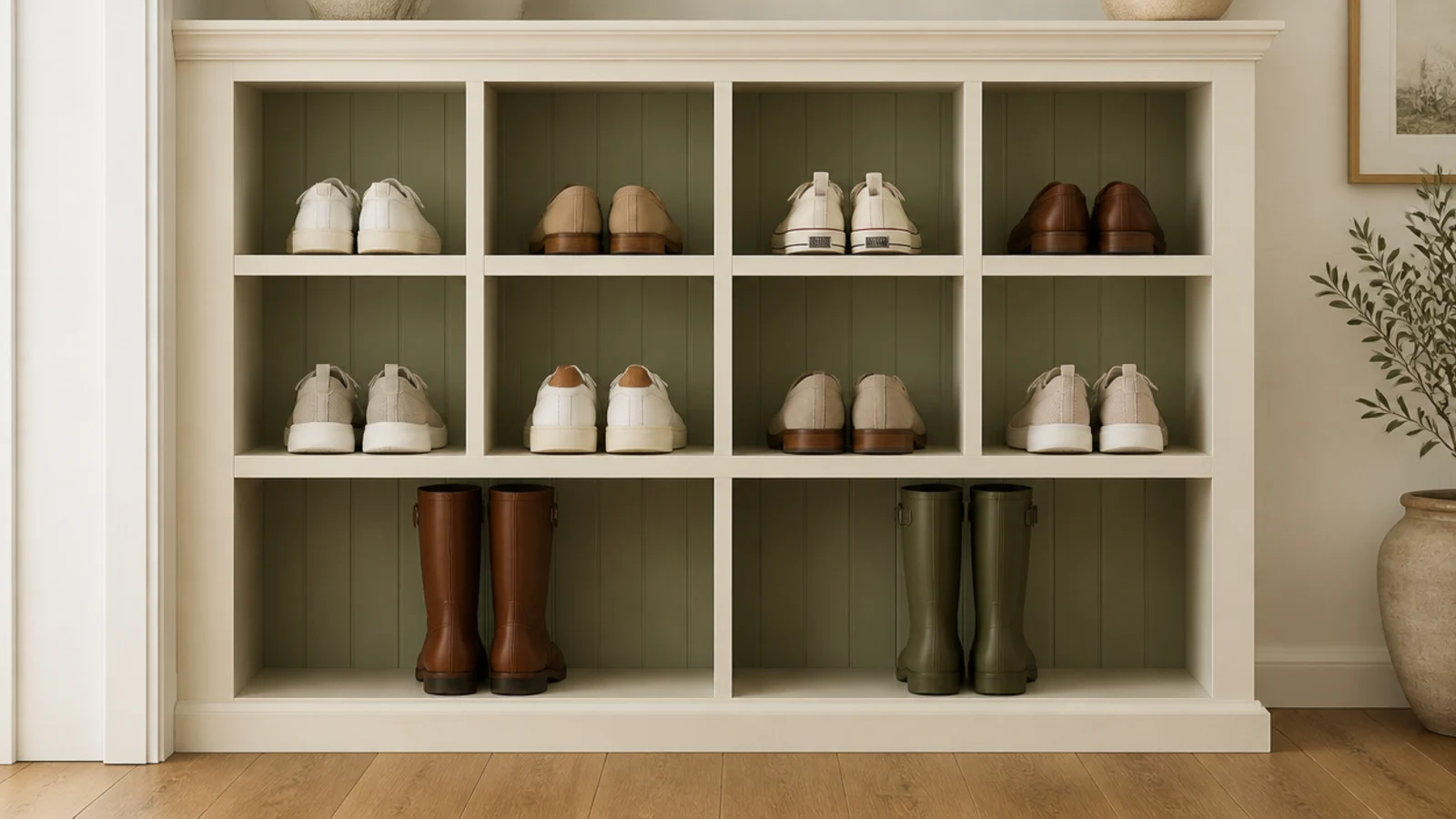
3. The open cubby unit
If there are children in the house, buy this instead of anything with doors. There is no lid to lift and no handle to pull, which removes the step people skip.
One pair per opening. The moment a cubby takes two pairs it becomes a shelf, and shelves become piles. Size the openings 13 inches deep, 12 wide and 8 high, with two taller bays at 16 inches for boots at the bottom where wet soles matter least. Around $90 to $180.
4. The under-stairs pull-out tower
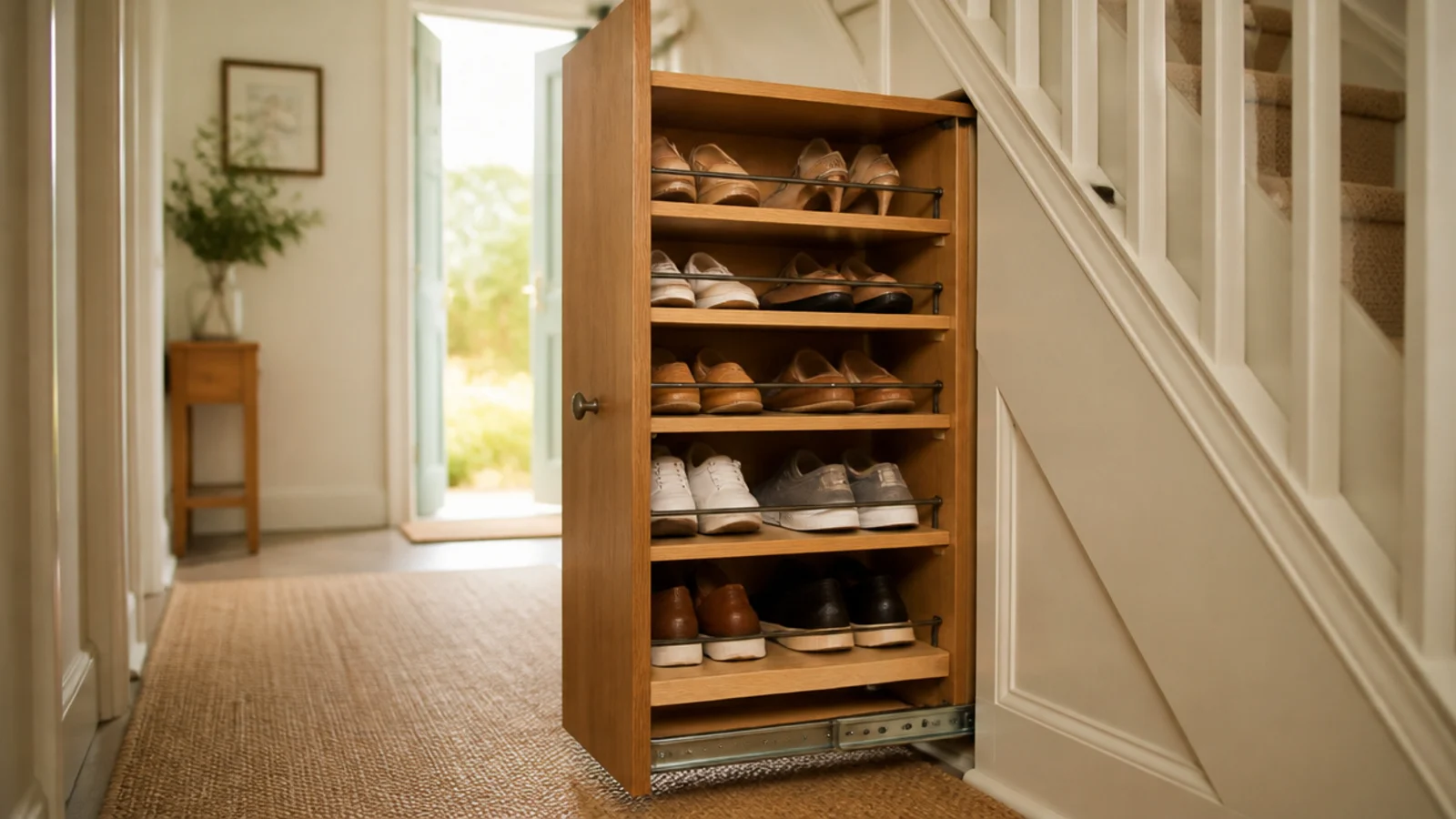
The highest-capacity option here by a wide margin, and the only one that uses the deep back corner of a staircase void.
Build or buy at 20 inches wide with full-extension runners rated to 100 pounds — loaded shoe towers get heavy fast. Storage on both faces takes 18 to 24 pairs in a footprint that was holding carrier bags. It needs carpentry and it is worth it. Materials from about $200.
5. The freestanding shoe etagere
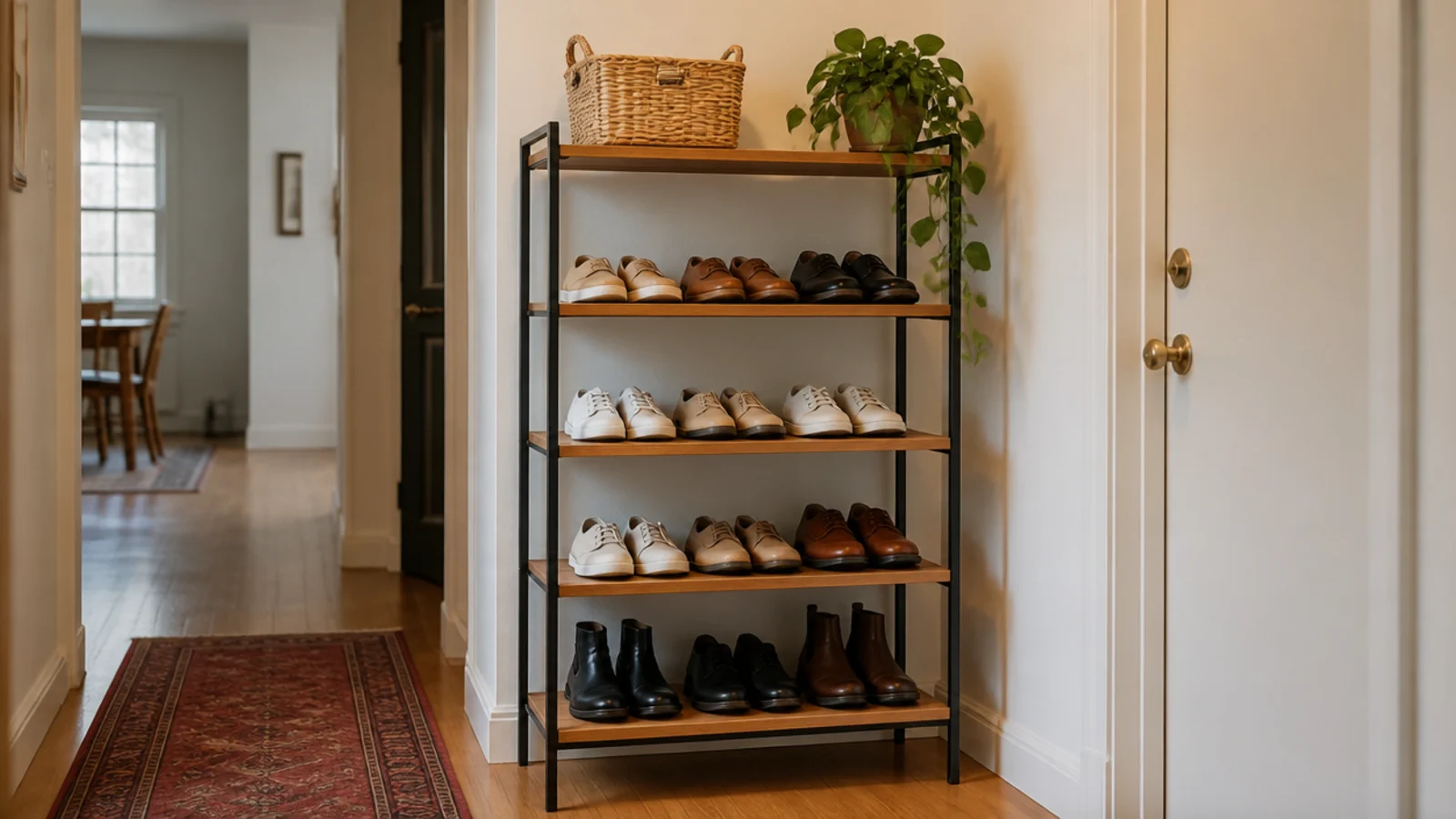
The honest renter answer when you need real capacity. Five open tiers, roughly 68 inches tall, in oak and slim black metal.
Set one tier at 15 inches for boots rather than spacing them all evenly, and load the bottom two tiers heaviest to keep the centre of gravity low. Run a single anti-tip strap into the wall if there are children — one small hole is not the same commitment as mounting a whole system. Expect $70 to $140.
6. The cane-fronted closed cabinet
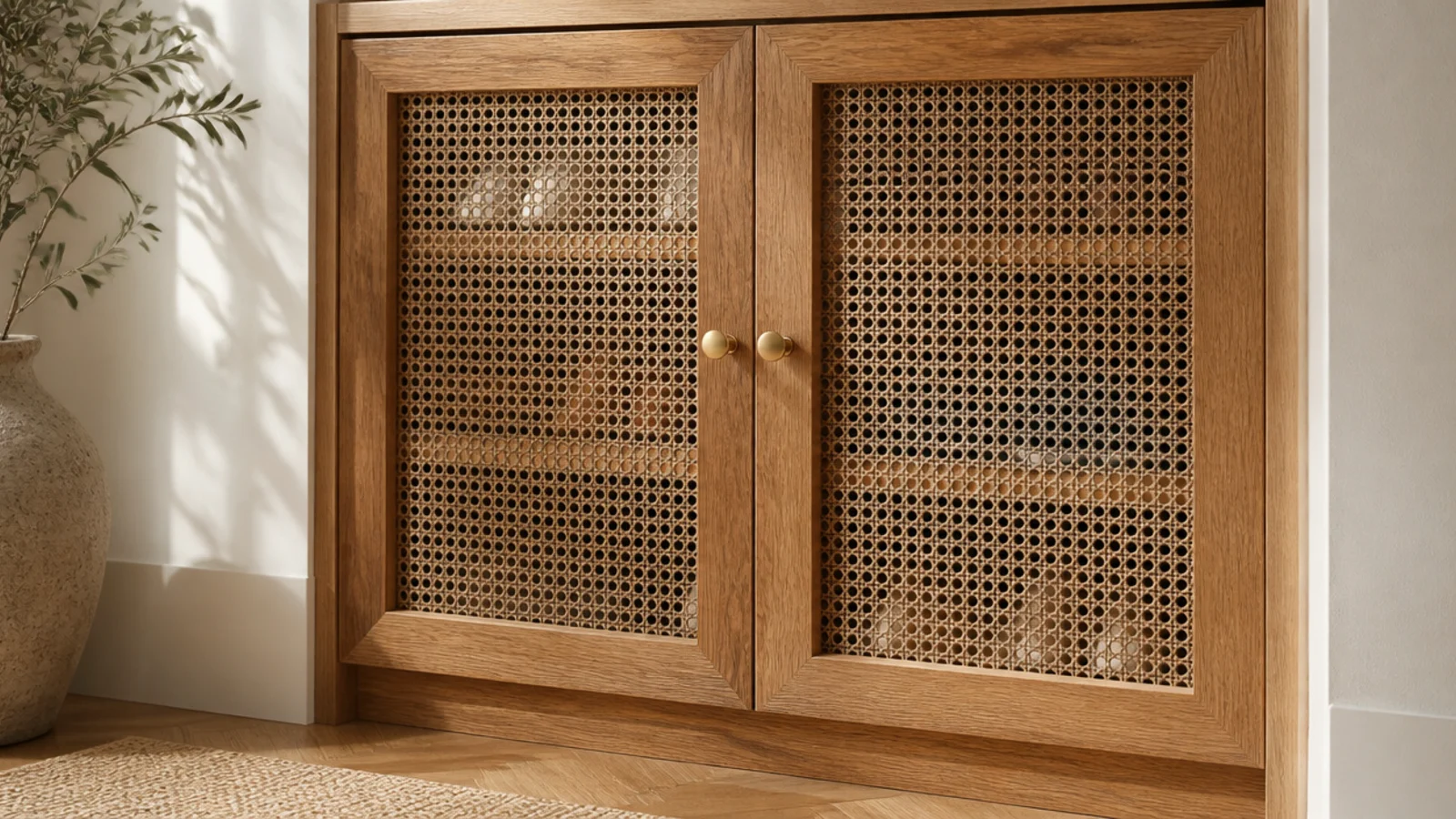
If you want shoes hidden, buy the version that breathes. Cane webbing, fluted timber and slatted fronts all move air, which is the difference between hidden storage and a smell.
Check the carcass has a vented or open back as well; a woven front on a sealed box only half works. Keep the internal depth at 13 inches for flat storage and give boots a separate tall bay. More of this approach in hidden shoe storage. Budget $150 to $300.
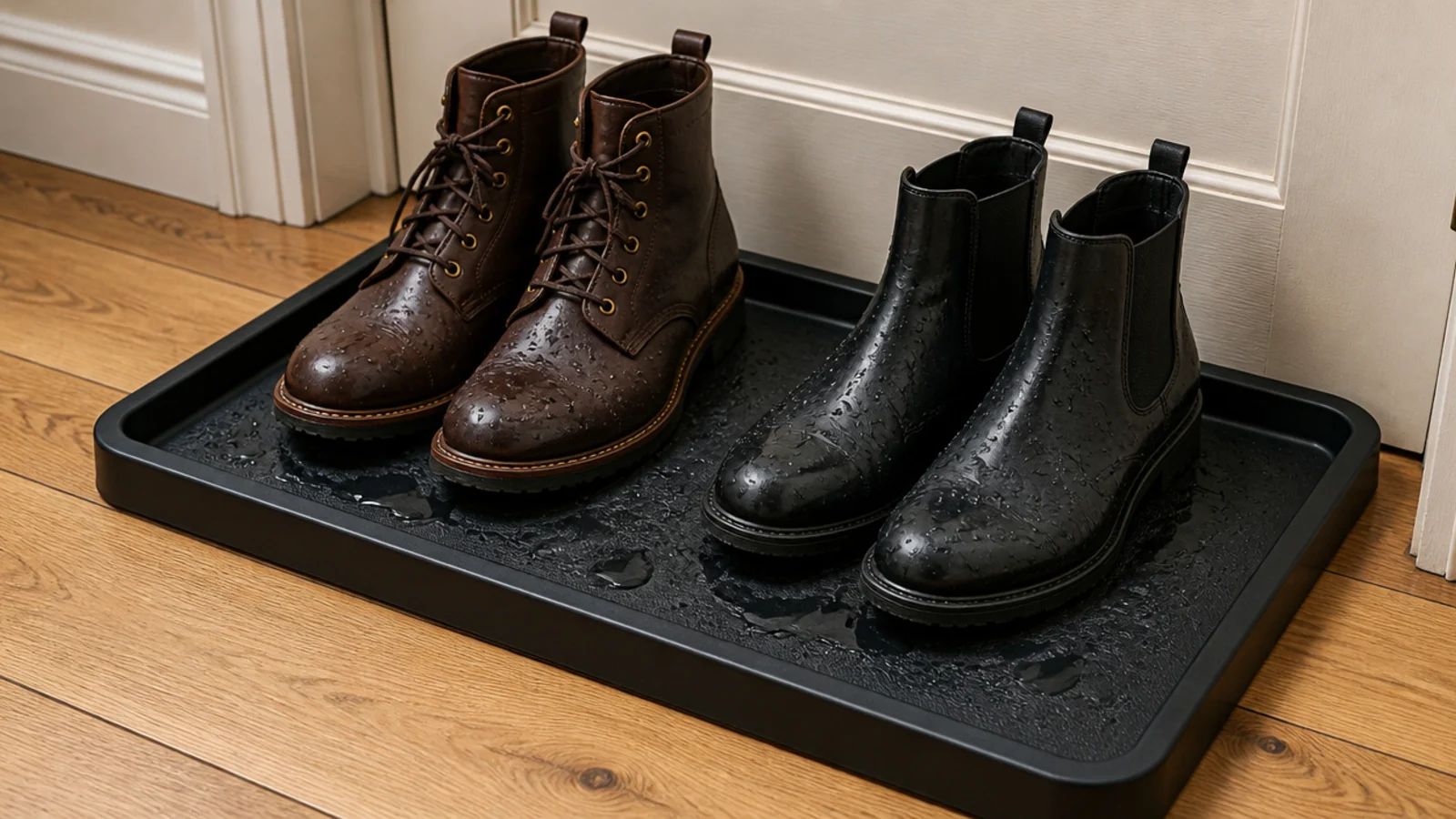
7. The raised-lip boot tray
The cheapest genuinely essential thing here. Wet boots put into any enclosed storage stay wet and transfer damp to whatever stands beside them.
Buy at least 15 inches deep with a raised lip, in heavy rubber or galvanised metal rather than thin plastic that cracks in the cold. One tray holds two adult pairs and prevents most of the grit, damp and floor marking that people blame on their storage. Around $18 to $35.
8. The wall-mounted heel rail
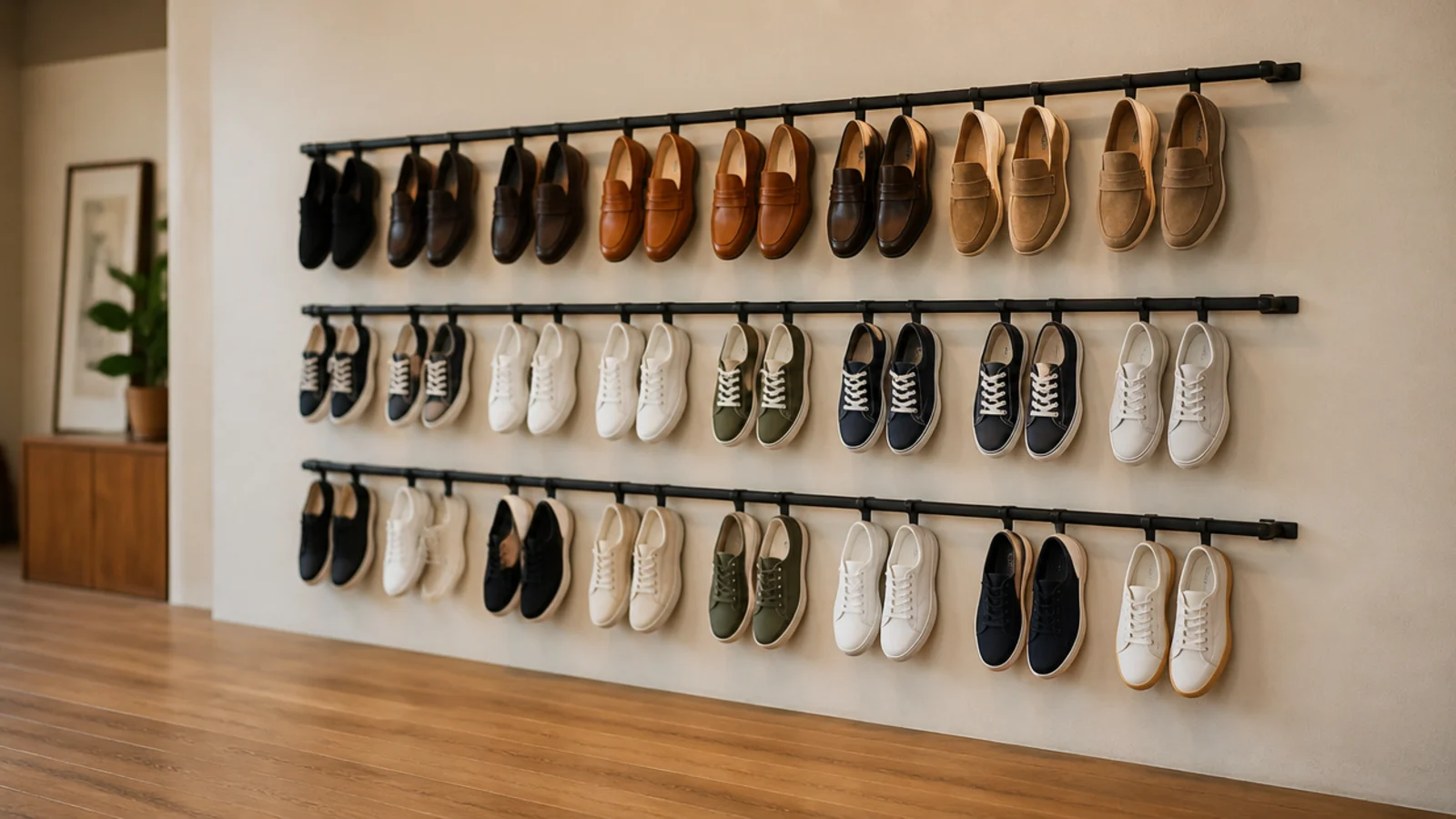
The slimmest thing that works. Rails grip a shoe by the back of the heel and use about four inches of depth with no floor footprint whatsoever.
Flats, loafers and sneakers only — boots pull rails out of drywall and unstructured heels slip off within a day. Mount the lowest rail at 12 inches so a vacuum passes underneath and space rails 10 inches apart vertically. Three rails across a 36-inch wall hold about nine pairs. Roughly $15 to $40.
What to Check Before You Buy
Measure your largest shoe, not an average one. Thirteen inches of depth for flat storage, nine for tilted. That single number rules out half the market before you start reading descriptions.
Count the boots separately. Boots need 14 to 16 inches of clear height and knee-highs want 20. If a product listing shows evenly spaced tiers, assume none of them takes a boot and plan a second solution.
Look for ventilation on anything closed. Cane, fluting, slats, or a vented back panel. If it is a sealed box, budget twenty minutes with a hole saw before you load it, or accept that the hallway will tell on you.
Count the steps to put one shoe away. Open the door, lift the lid, pull the drawer — every step is one somebody skips. In a household with children, open beats closed almost regardless of price.
Check the walkway, not just the wall. Keep at least 36 inches of clear passage in a hallway. A nine-inch cabinet in a 40-inch hall works; a 16-inch open rack in the same hall gets caught by a shoulder daily.
For freestanding pieces, check the footprint and the weight. Anything above 30 pounds loaded wants one anti-tip strap, and castors are the difference between a cart you sweep under and a cart you never move.
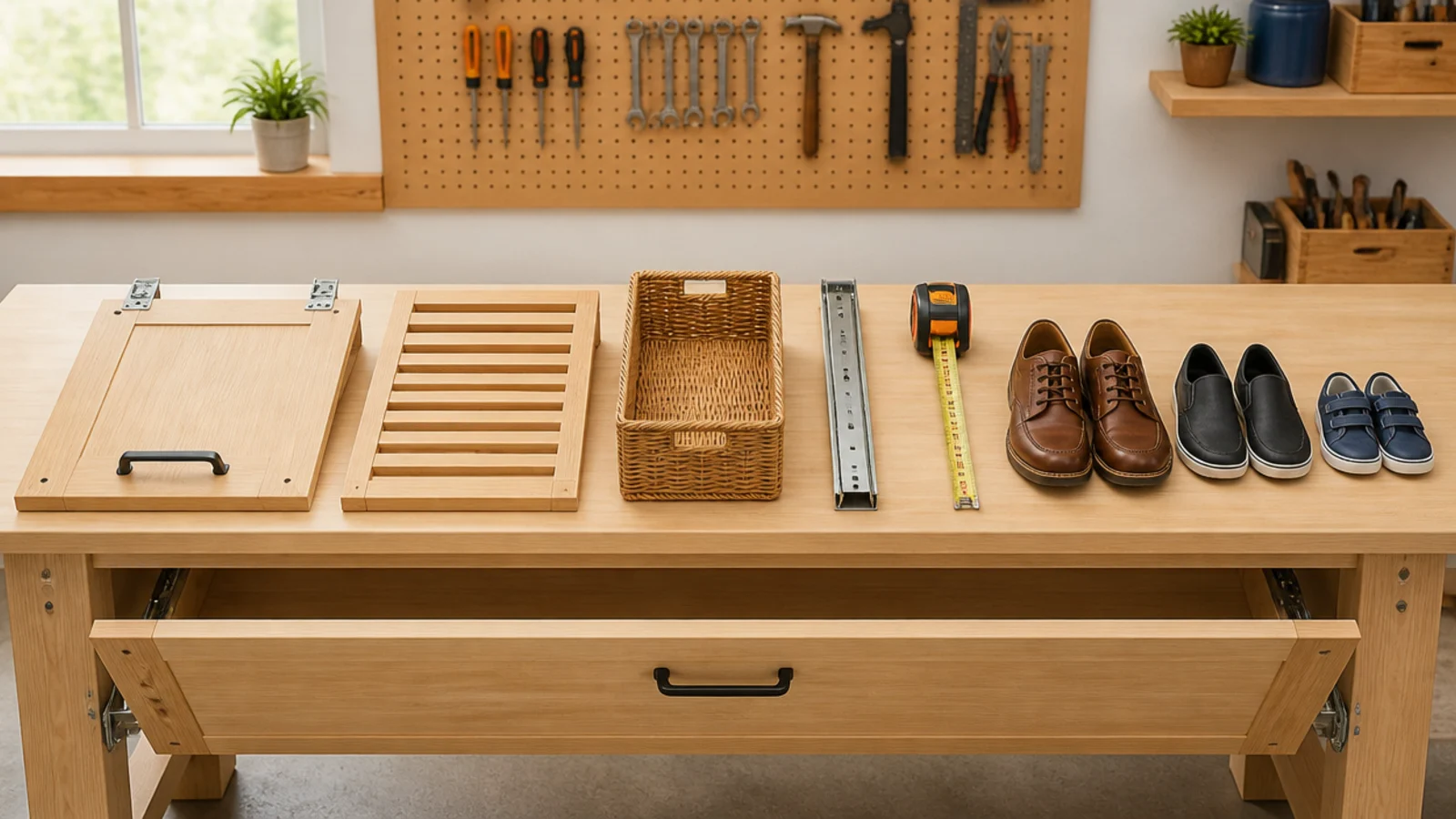
Buy the mechanism, build the box. Hinges, runners and castors are hard to make well and cheap to buy. Shelves, cubbies and benches are flat boards at right angles — that is where your money is best saved.
Frequently asked questions
What is the best shoe storage for a narrow hallway?
A tilt-out cabinet at nine inches deep, because the shoes lean back at roughly 45 degrees inside it. That geometry holds a 12.5-inch shoe in nine inches of wall depth, which keeps the walkway clear. Wall-mounted heel rails are the only slimmer option, and they carry flats and sneakers rather than boots.
How much should I spend on shoe storage?
A useful bench or open cubby unit runs $60 to $150, a slim tilt-out cabinet $70 to $130, and a fitted understairs run starts around $200 in materials. Under $60 buys crates, trays, rails and baskets that genuinely work. Above about $250 you are usually paying for finish rather than capacity or durability.
Which shoe storage is best for renters?
Freestanding pieces, in this order: a bench with baskets, an etagere, a leaning ladder rack. All three carry real weight, leave no holes and move house in one trip. Adhesive heel rails are the true zero-hole option but cap out near 15 pounds a pair, so treat them as a flats-only solution.
Is closed shoe storage better than open?
Only in adult households that reliably put things away. Every door is a step people skip, so with children the shoes end up on the floor beside a beautiful empty cabinet. If you do choose closed, insist on cane, fluted or slatted fronts, or drill ventilation holes before you load it.
How deep should a shoe cabinet be?
Thirteen inches for shoes lying flat, because a men's size 12 sneaker runs about 12.5 inches long. Nine inches works when the storage tilts shoes to 45 degrees. Boots need a separate bay with 14 to 16 inches of clear height, and knee-high boots want 20 inches to stand upright.
What should I buy first if I only buy one thing?
A raised-lip boot tray, if you live anywhere wet. It costs about $20 and prevents most of the damp, grit and floor damage people blame on their storage. If your climate is dry, buy one tagged basket per person instead — named space stops the pile far more reliably than extra capacity does.
Choose for the hallway you have rather than the entryway you are picturing: depth, tier height and airflow decide whether shoe storage lasts, and everything else is arrangement you can change on a Sunday. The full entryway guide covers placement, shoe storage for small spaces handles tight halls, and if you want a closed unit specifically, the best shoe cabinets reviewed goes deeper on those. Save the pin for the next shopping trip.
Want more like this? Browse all 15 shoe storage ideas guides — they all use the same measurements and budget tiers.
Pin it for later
Save this to your Shoe Storage Ideas board
Pin it now so it is waiting for you when the tape measure comes out — and so the next person hunting for this idea can find it too.
Save this pinKeep going
More ideas worth saving while you have the tape measure out.