Shoe Cabinet Ideas · Review
25 Best Shoe Cabinet Picks Worth Buying

Some links on this page may become affiliate links in future. I only recommend pieces I would put in my own home — see the affiliate disclosure.
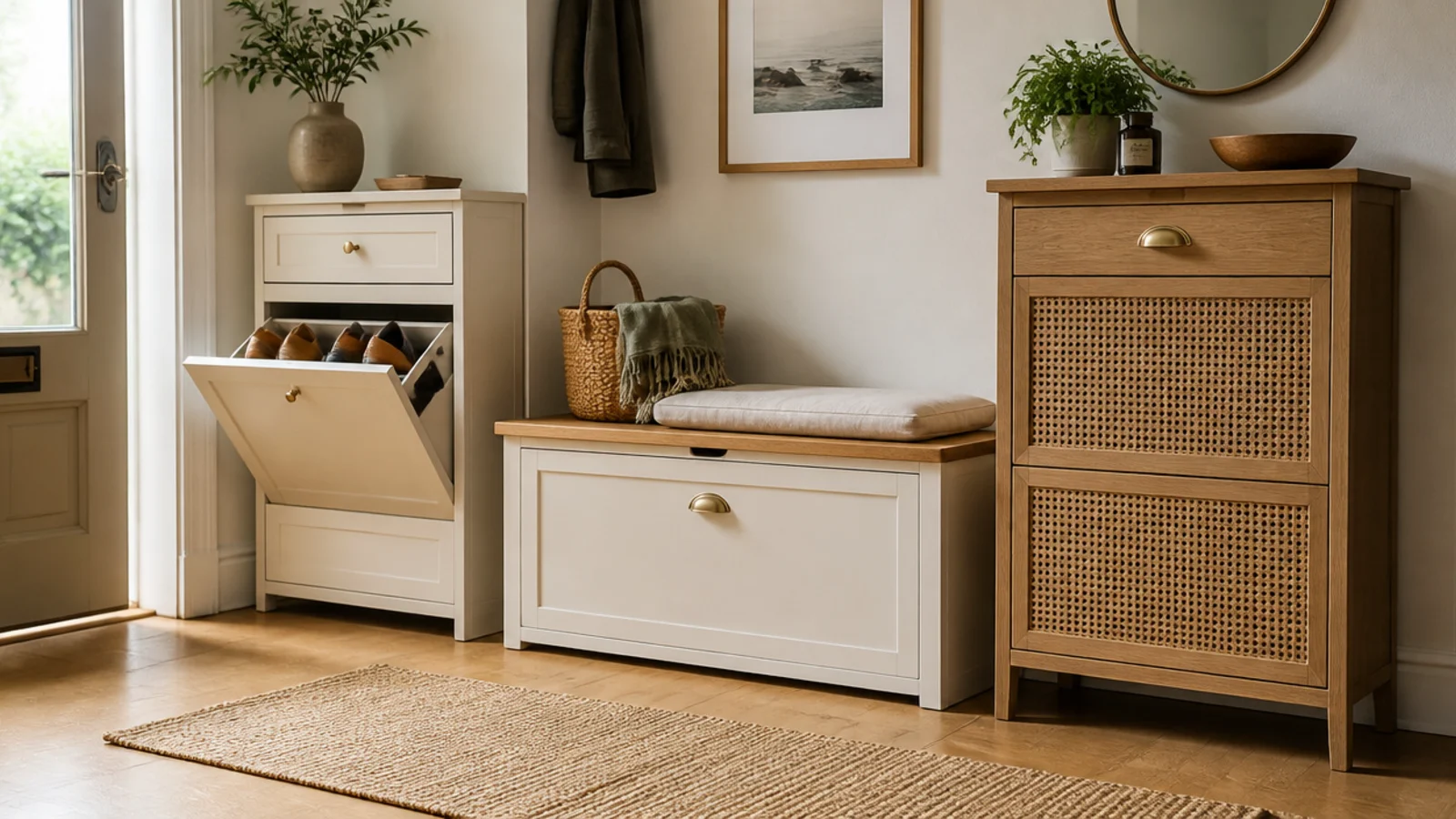
The best shoe cabinets reviewed below are sorted by construction rather than by label, because the same three or four carcasses appear under a dozen different names at Target, IKEA, Wayfair, Amazon and every furniture warehouse in between. What separates a cabinet that works from one that annoys you daily is depth, ventilation, hinge type and whether it has anywhere to put a boot.
In this guide11 sections — tap to openHide
- 1.How I Chose the Best Shoe Cabinets Reviewed Here
- 2.The Full Comparison: 25 Shoe Cabinet Types
- 3.The three-drawer tilt-out at nine inches deep
- 4.The two-door cabinet with adjustable flat shelves
- 5.The tilt-out bench cabinet at eighteen inches
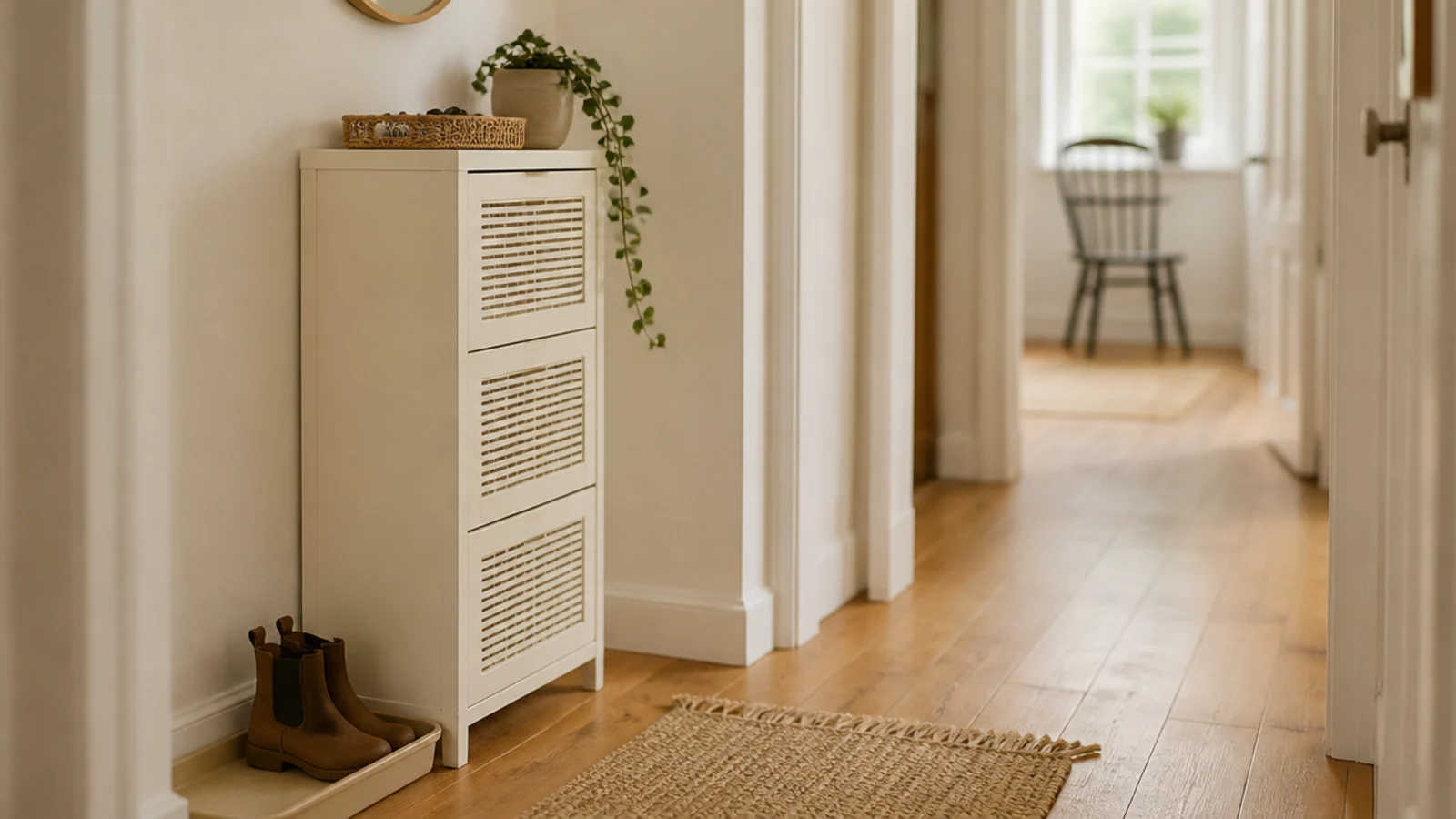
- 6.The cane-fronted cabinet that actually breathes
- 7.The wall-hung tilt-out that clears the floor
- 8.The boot-bay cabinet with one tall compartment
- 9.The mirrored-front cabinet for a dark hall
- 10.The rolling under-bed cabinet for studios
- 11.What to Check Before You Buy
How I Chose the Best Shoe Cabinets Reviewed Here
I judged every type on five things, in this order.
- Internal depth versus shoe length. A men's size 12 sneaker is about 12.5 inches long. A flat-shelf cabinet therefore needs 13 inches of internal depth, while a tilt-out holding the same shoe at 45 degrees needs only 9. Stated external depth is not the number that matters; internal clearance is.
- Honest pair count. Each tilt-out drawer takes six to eight pairs of flats, sneakers or loafers, and no boots at all. Listings routinely claim half again as much by assuming small shoes in perfect rows. I worked from what a household actually loads on a Tuesday morning.
- Ventilation. A sealed carcass with a solid front holds humidity for days, and that trapped damp is what people smell. A slatted door, a cane front or holes in the back panel are worth more than any finish. Wet pairs never go in a closed cabinet regardless — they get a tray outside it.
- Hinge quality. These get shut with a foot, daily, by everyone. Soft-close is not a luxury on this one piece of furniture; spring hinges slam until a front panel splits.
- Stability and reversibility. Anything over 40 inches tall needs an anti-tip strap, and any wall-hung unit needs studs or toggle bolts rather than the plugs in the box. Renters should know how many holes they are committing to before ordering.
I did not weight brand, trending finishes or how a cabinet photographs empty.
The Full Comparison: 25 Shoe Cabinet Types
Price tiers: $ under $150 · $$ $150–$400 · $$$ $400+. Depths are internal.
| Cabinet type | Best for | Depth | Price | Why it works |
|---|---|---|---|---|
| Three-drawer tilt-out | Narrow hallways | 9 in | $$ | Takes a 12.5 in sneaker in nine inches |
| Two-drawer tilt-out | Small entries | 9 in | $ | Same geometry, half the height |
| Two-door flat-shelf cabinet | Deeper halls | 13 in | $$ | Adjustable shelves take boots and bulk |
| Slim single-drawer console | Tight passages | 9 in | $ | Console height with one shoe drawer |
| Tilt-out bench cabinet | Entry seating | 9 in | $$ | Seat at 18 in over two drawers |
| Lift-top bench cabinet | Rushed households | 15 in | $$ | One movement opens the whole bay |
| Wall-hung tilt-out | Clear floor lines | 9 in | $$ | Vacuum passes straight underneath |
| Tall column cabinet | Short wall runs | 9 in | $$ | Five tiers in twelve inches of wall |
| Mirrored-front cabinet | Dark halls | 9 in | $$ | Returns the daylight a hall lacks |
| Cane-fronted cabinet | Damp entries | 11 in | $$ | Woven front lets moisture escape |
| Slatted-door cabinet | Ventilation first | 13 in | $$ | Airflow without losing a solid look |
| Basket-drawer cabinet | Children and chaos | 13 in | $ | Baskets pull out, nothing to latch |
| Sliding-door cabinet | No swing clearance | 13 in | $$ | Nothing swings into the walkway |
| Push-to-open handleless | Narrow passages | 9 in | $$ | No hardware to catch coat sleeves |
| Angled corner cabinet | Entry corners | 9–16 in | $$ | Uses the triangle a square box wastes |
| Under-stair angled run | Maximum capacity | Varies | $$$ | Fronts follow the stringer, nothing lost |
| Boot-bay cabinet | Boot households | 15 in | $$ | One tall bay ends the floor pile |
| Full-extension drawer unit | Deep halls | 15 in | $$$ | Drawers reach what tilt-outs cannot |
| Cabinet with hooks above | Drop zones | 9 in | $$ | Coats and shoes in one footprint |
| Rolling under-bed cabinet | Studio flats | 7 in | $ | The last free footprint in a small home |
| Toe-kick drawer unit | Existing built-ins | 4 in | $ | Free volume behind an existing plinth |
| Radiator-cover cabinet | Halls with radiators | 9 in | $$$ | Seat and storage over dead wall |
| Paintable MDF built-in kit | Fitted look, low budget | 9–13 in | $$ | Built-in appearance without joinery bills |
| Solid oak two-door | A long-term buy | 13 in | $$$ | Outlasts three flat-pack replacements |
| Stackable shallow pair | Growing households | 9 in | $$ | Add the second box when you need it |
Eight of those are the ones I keep recommending.
1. The three-drawer tilt-out at nine inches deep
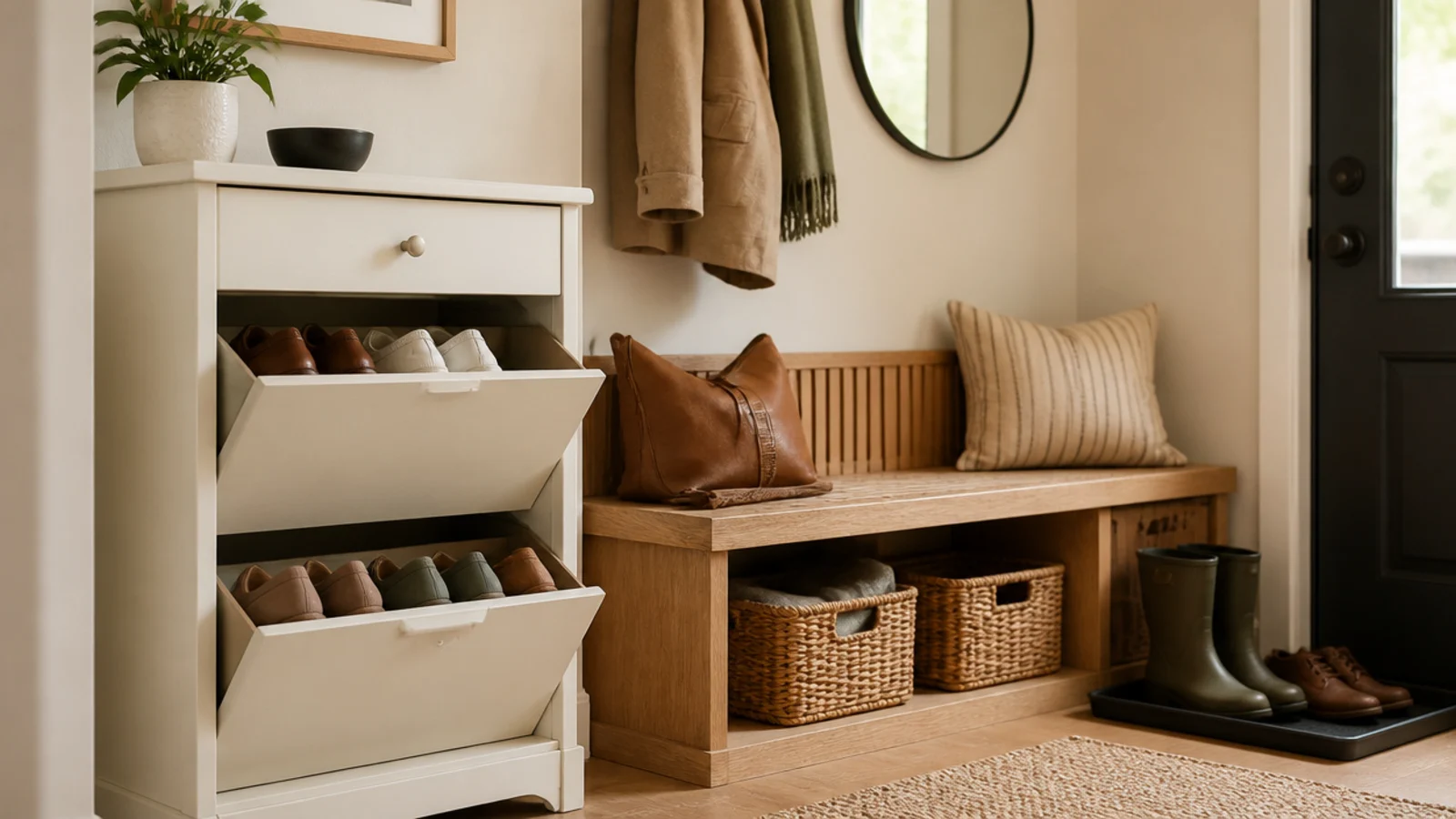
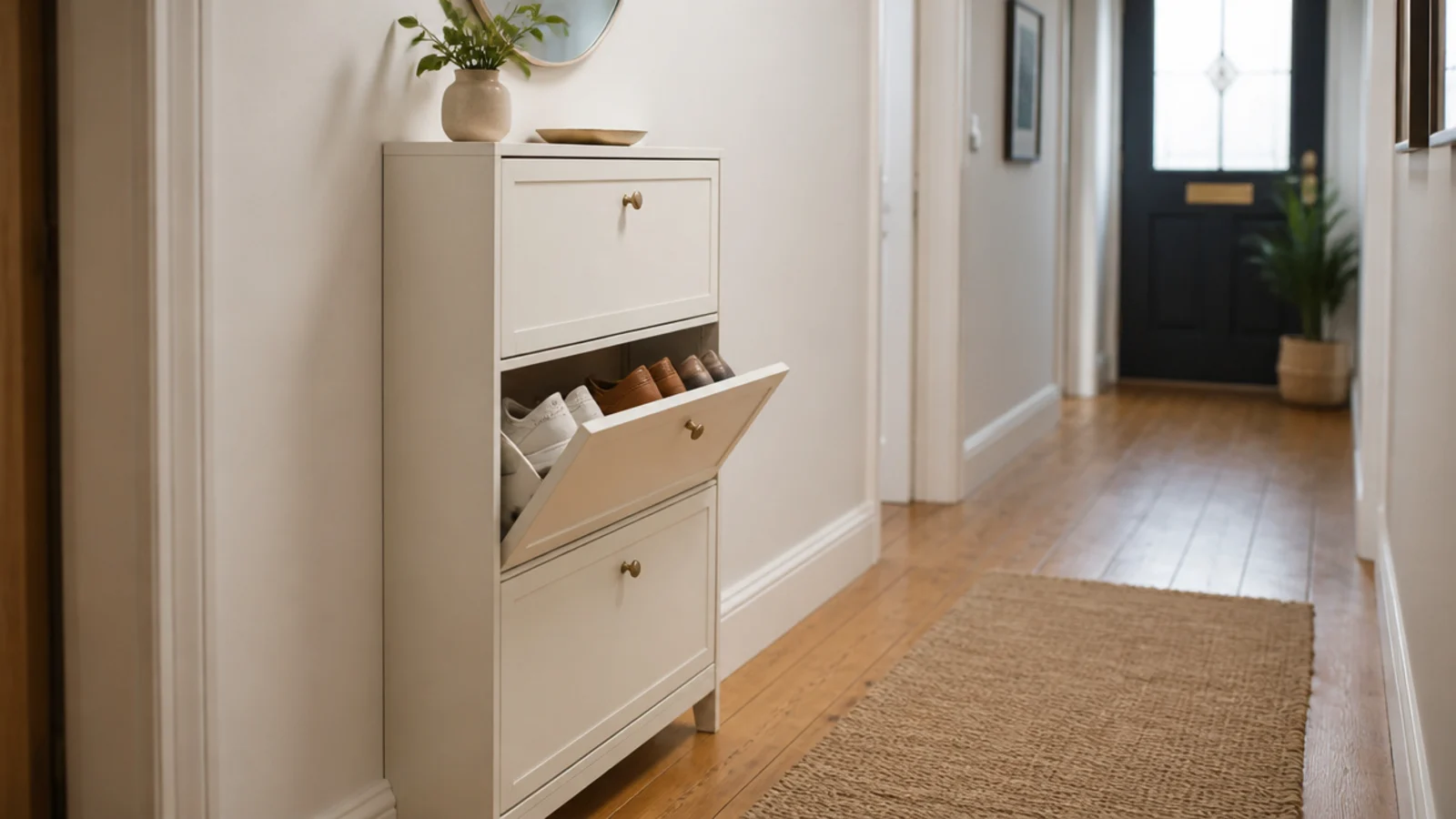
The default for a reason. Three drawers, 9 inches of internal depth, roughly 30 to 34 inches tall, holding eighteen to twenty-four pairs of flats and sneakers.
The geometry is the whole product: shoes lean at 45 degrees, so the carcass is four inches shallower than a flat-shelf cabinet doing the same work. That is often the difference between a walkable hall and a permanent shoulder-clip.
Check two things before buying. Soft-close hinges, because these get closed with a foot. And whether the back panel has any openings — if not, plan on drilling four one-inch holes. Expect $90 to $200.
2. The two-door cabinet with adjustable flat shelves
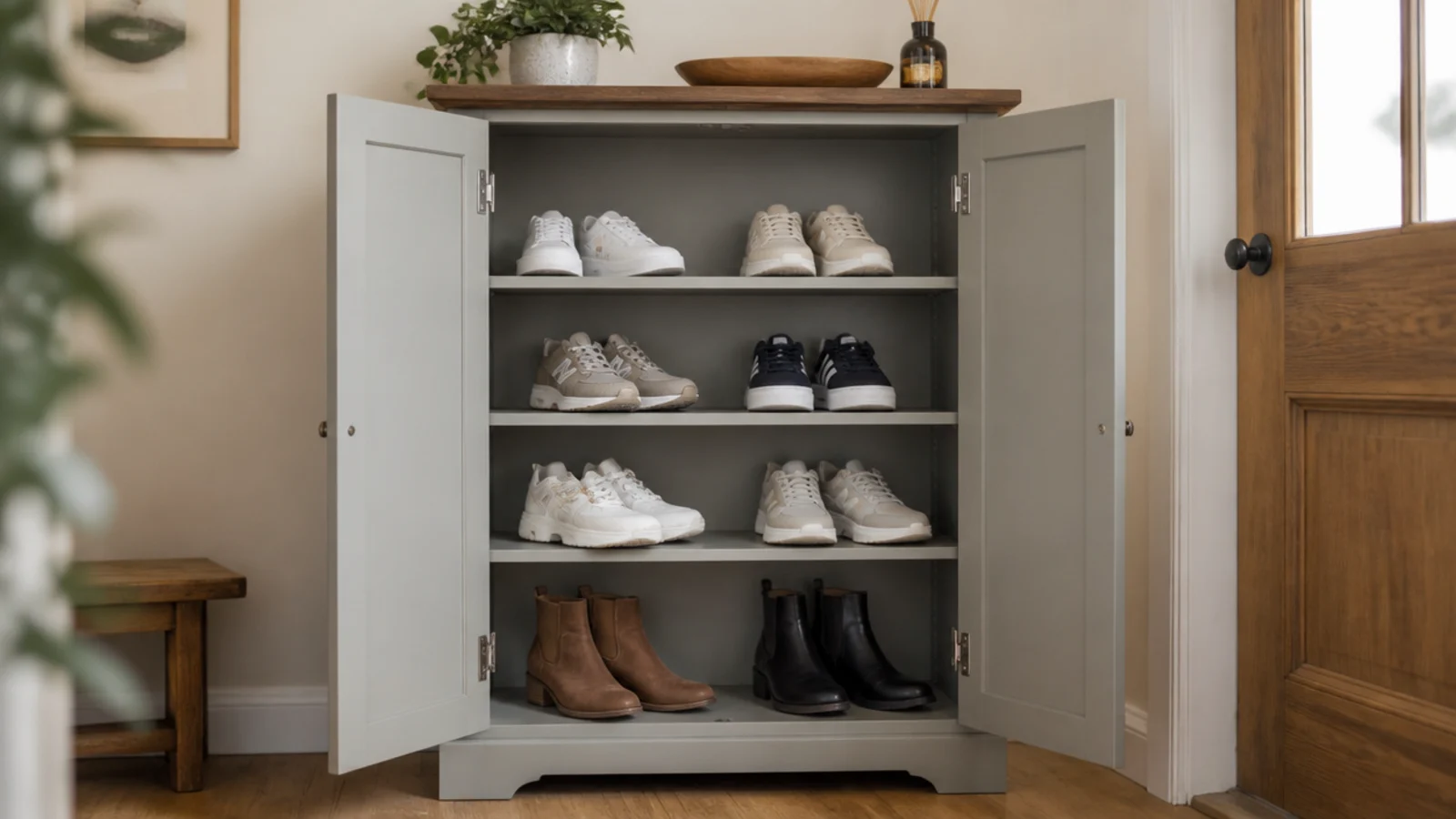
When boots matter more than depth, this is the honest choice. Two doors, 13 inches of internal depth, three or four shelves you can move.
Adjustability is the feature worth paying for. Set one gap at 6 inches for flats and sneakers, another at 15 inches for ankle boots, and you have solved the problem no tilt-out can. Look for shelf pins rather than fixed dados.
The trade is the doors: they need a free hand and swing clearance, and hands are full at a front door. Best where the hall is over 40 inches wide. Around $200 to $400.
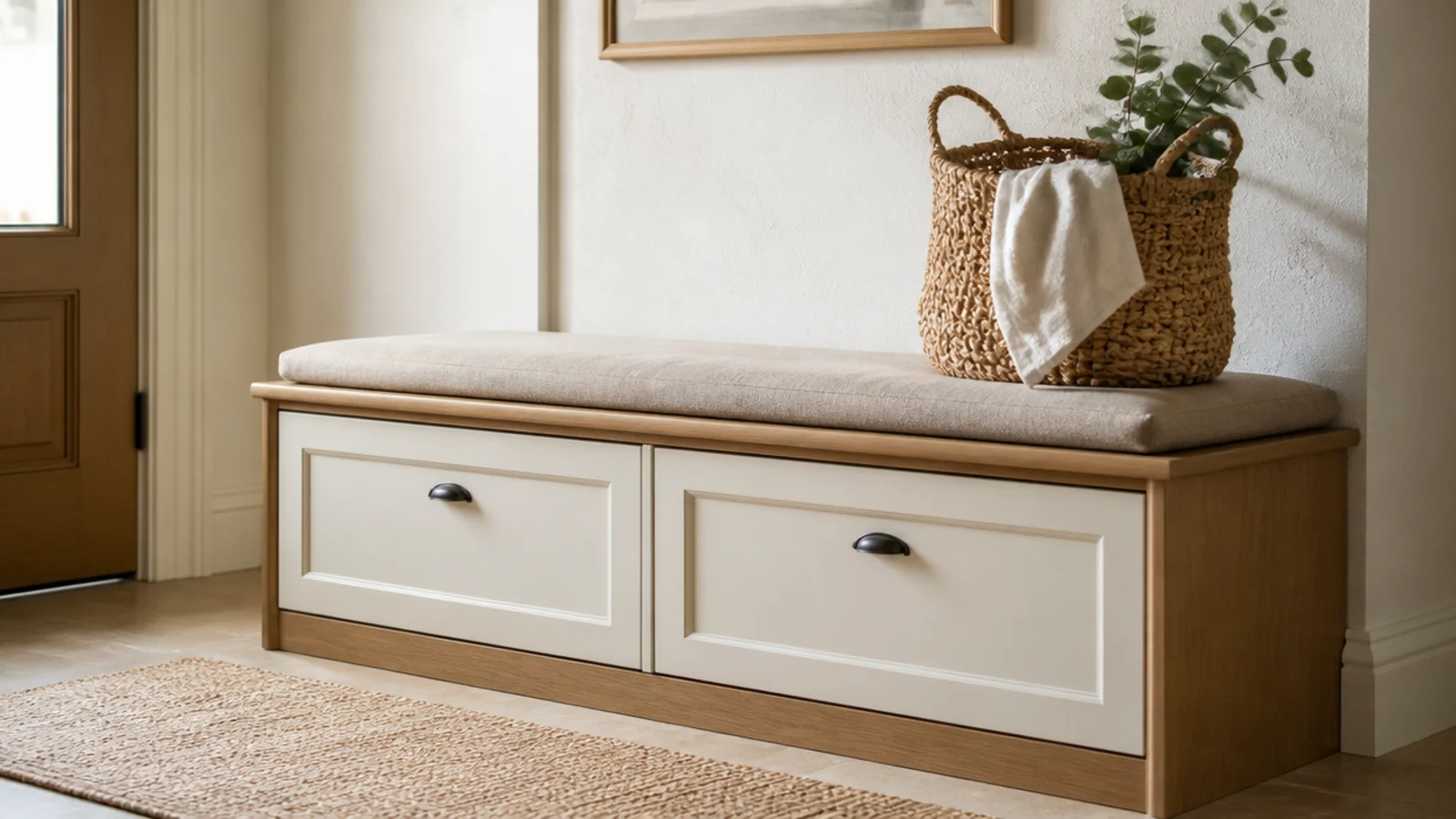
3. The tilt-out bench cabinet at eighteen inches
The most useful piece of furniture an entry can have, if the seat height is right. Eighteen inches to the top of the finished seat, cushion included, over two 9-inch tilt-outs.
Under 16 inches and you are sitting on the floor; over 20 and it becomes a perch you lean against. Measure from the finished floor, carpet included, and check the seat depth is at least 15 inches or nobody sits on it twice.
Keep 36 inches of walkway in front, measured with a drawer open. There are more configurations in shoe cabinet bench layouts. Expect $200 to $400.
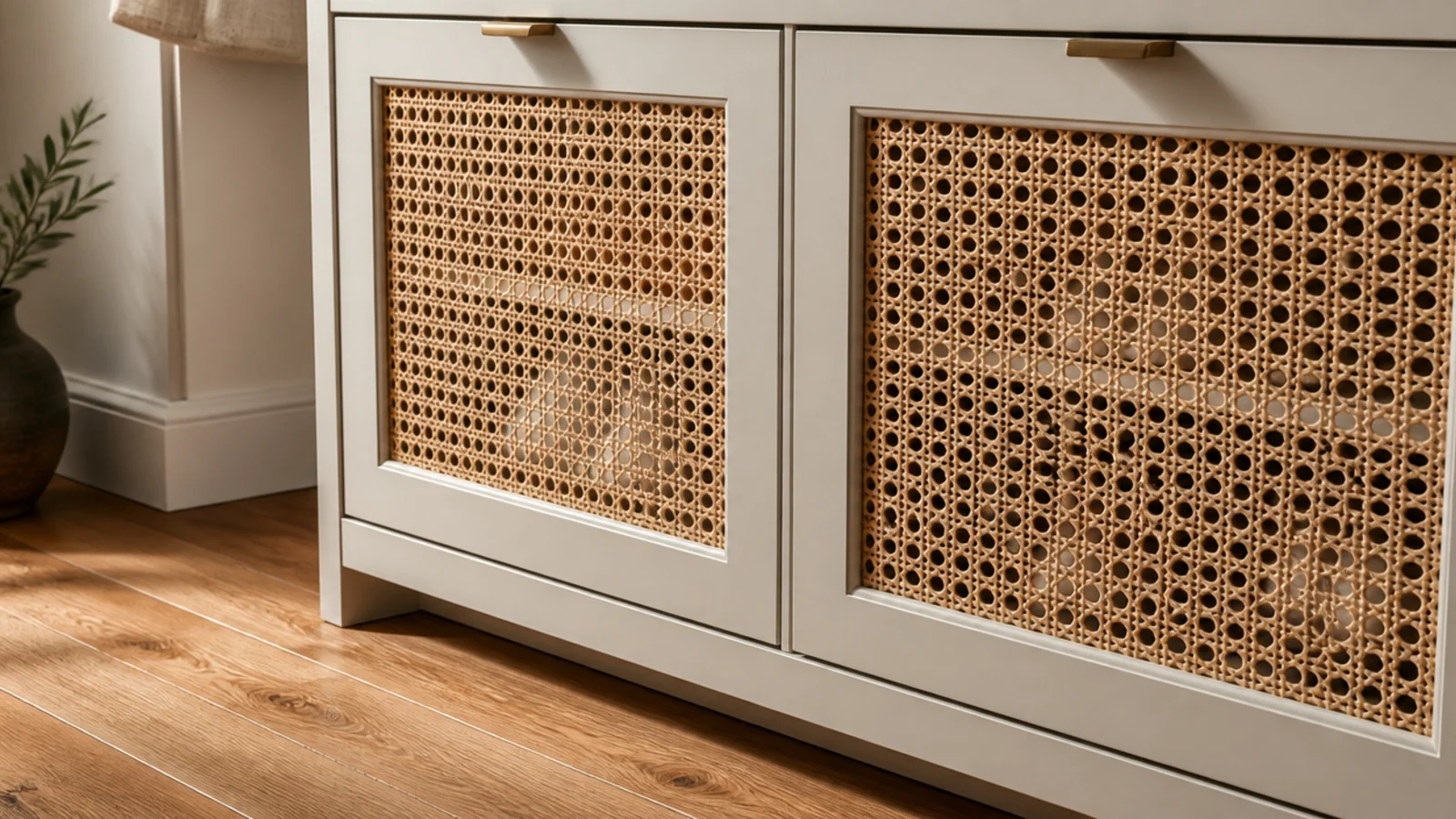
4. The cane-fronted cabinet that actually breathes
The prettiest solution to the problem most cabinets create. Woven cane panels set into the fronts let air move straight through, so nothing sits in a sealed box exhaling humidity.
It is not just decoration. In entries without a window, this style is the one I stop worrying about. Check the webbing is set into a rebate with a frame at least 2 inches wide, and that it is real rattan rather than a printed panel with a woven pattern.
Cane does not love direct sun or radiators, so keep it out of both. Around $180 to $350.
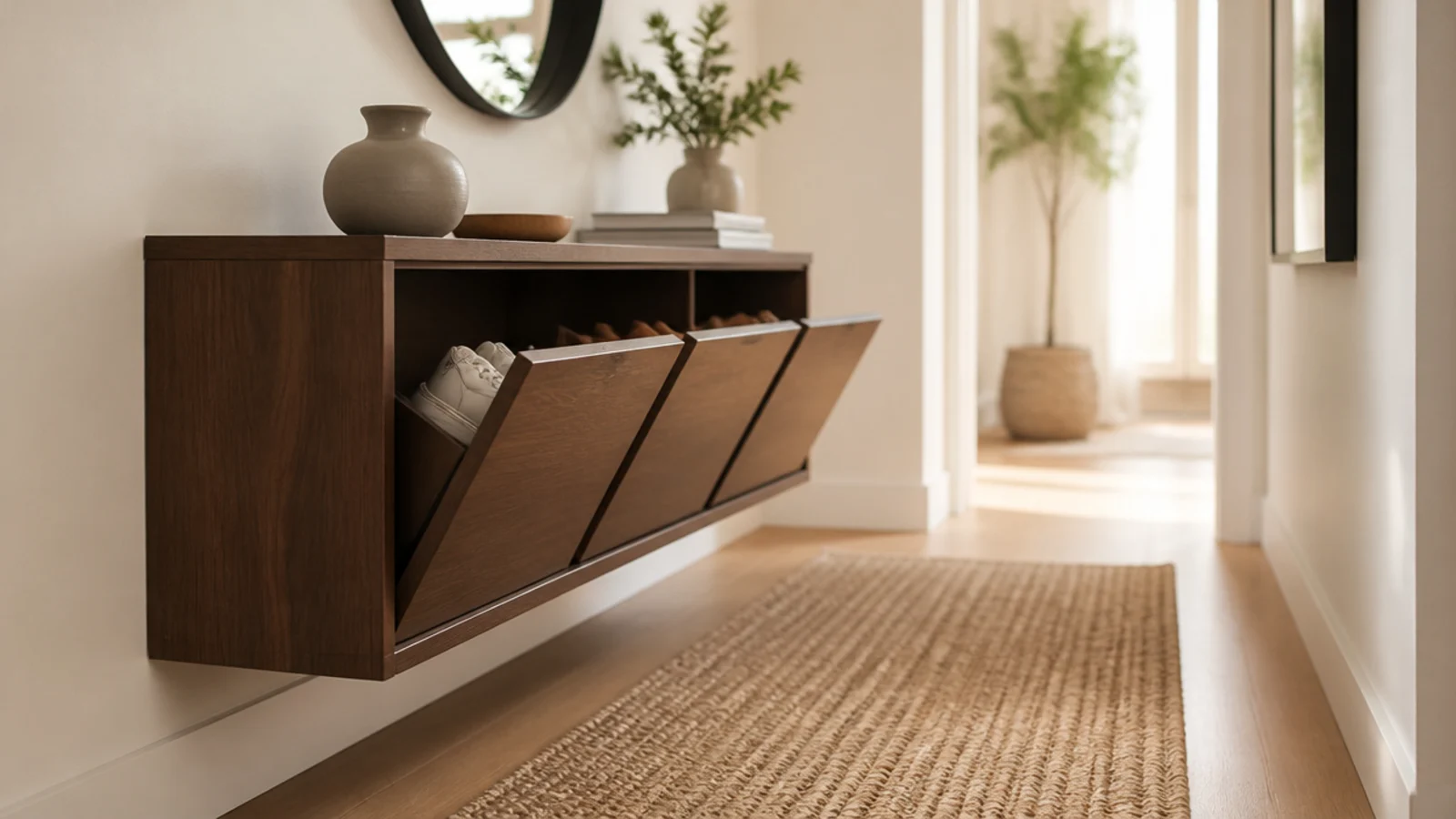
5. The wall-hung tilt-out that clears the floor
Lifting the cabinet off the ground makes a small hall read wider, because floor area is what your eye counts as space. It also lets a vacuum run straight underneath, which matters more in an entry than anywhere else.
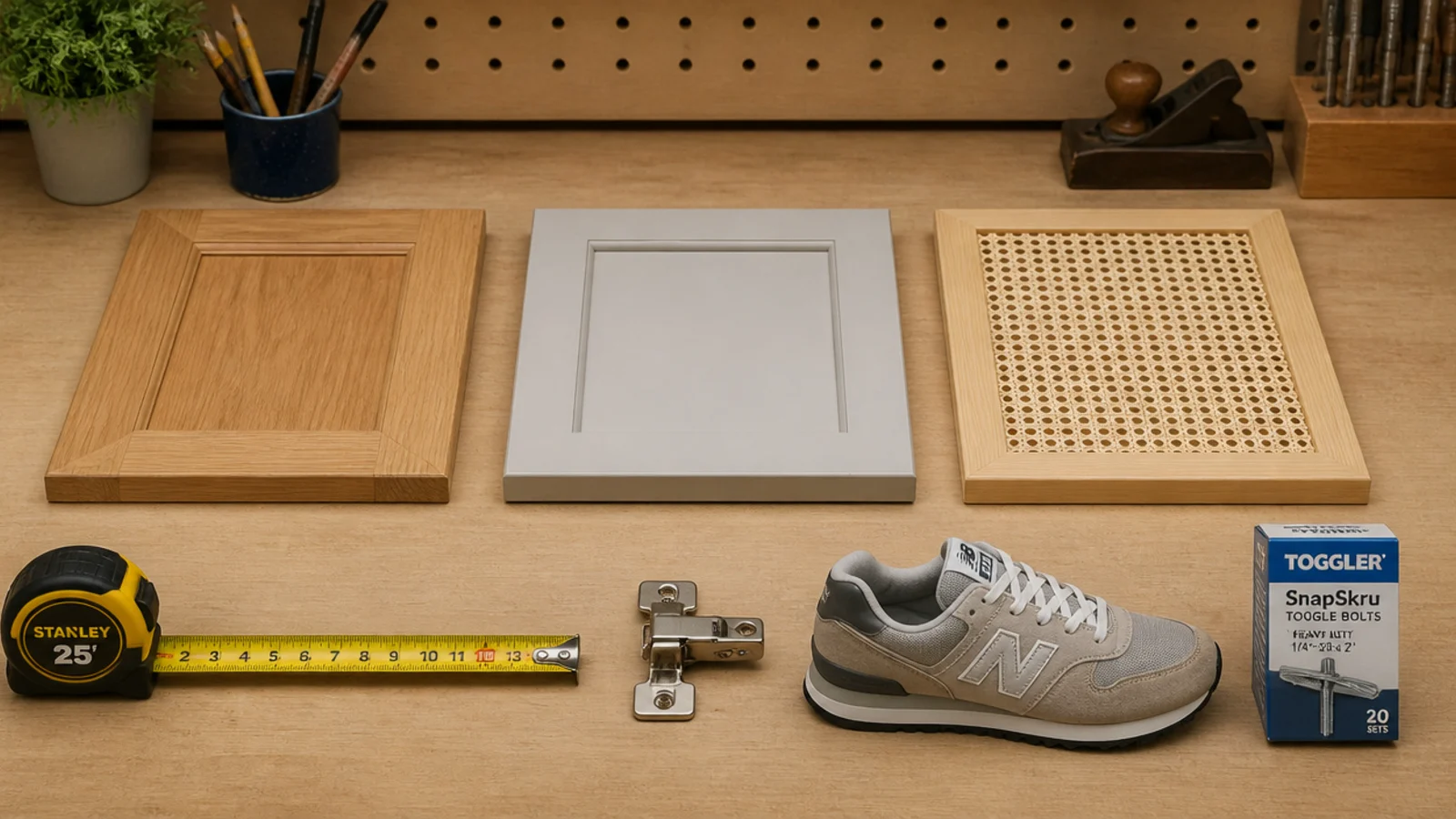
Mount the underside about 10 inches up. This is the one type where fixings are not negotiable: bolts into studs, or toggle bolts rated 25 to 35 pounds each in half-inch drywall. The plugs in the box are rated around 10 pounds and will creep out over months.
Not a renter-friendly option. Expect $150 to $320.
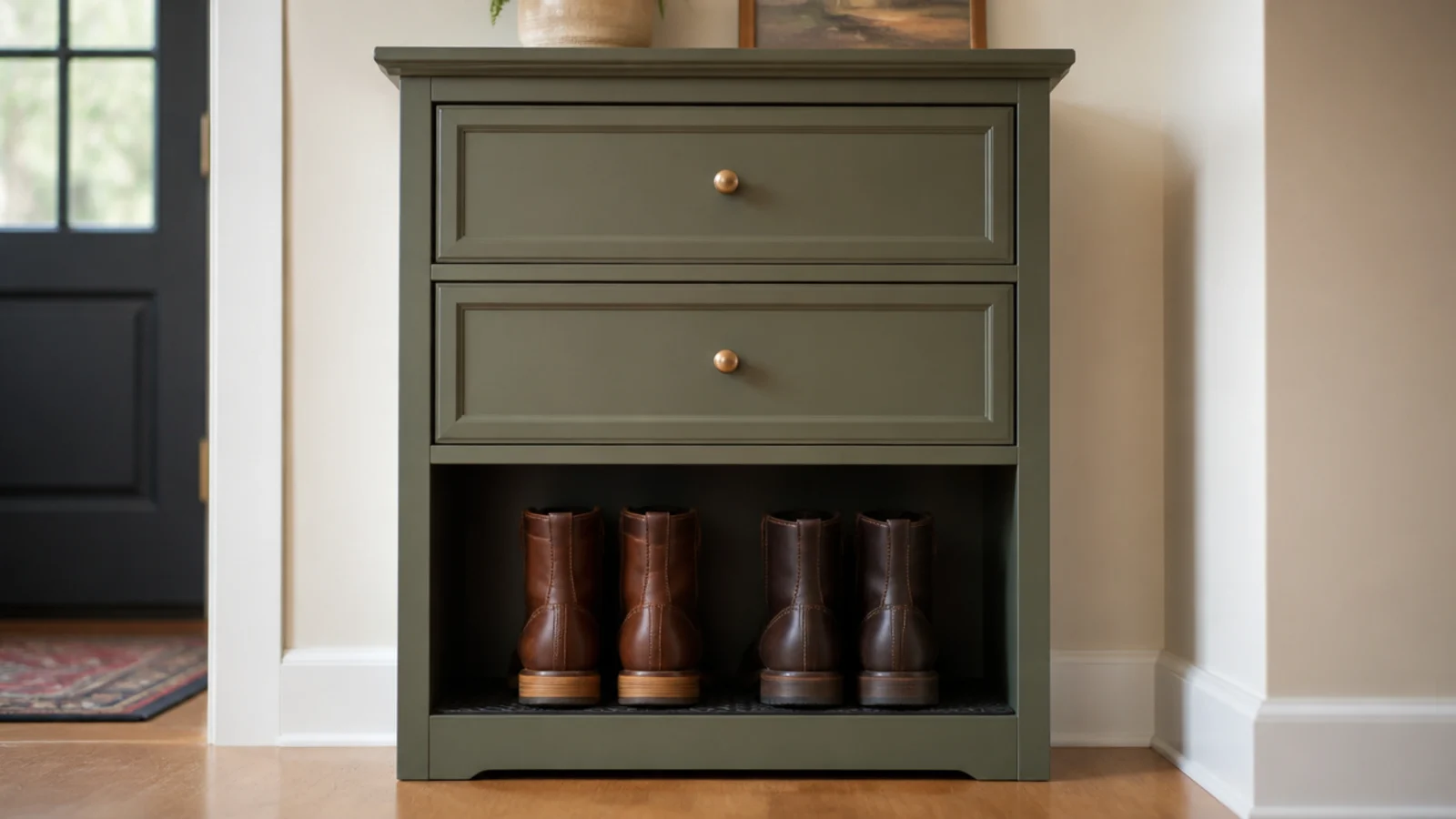
6. The boot-bay cabinet with one tall compartment
The type that fixes the complaint I hear most. Two tilt-out drawers above a single open bay 14 to 16 inches tall.
You lose about eight pairs of drawer capacity and you gain a hallway floor you can see, because boots are the reason most shoe furniture fails. Two pairs of ankle boots stand upright in that bay, or one pair of tall boots lying down.
Line the bay with a cut rubber mat: it is the compartment wet soles meet first. If a cabinet you already own has no bay, remove the lowest tilt insert and make one. Around $180 to $350.
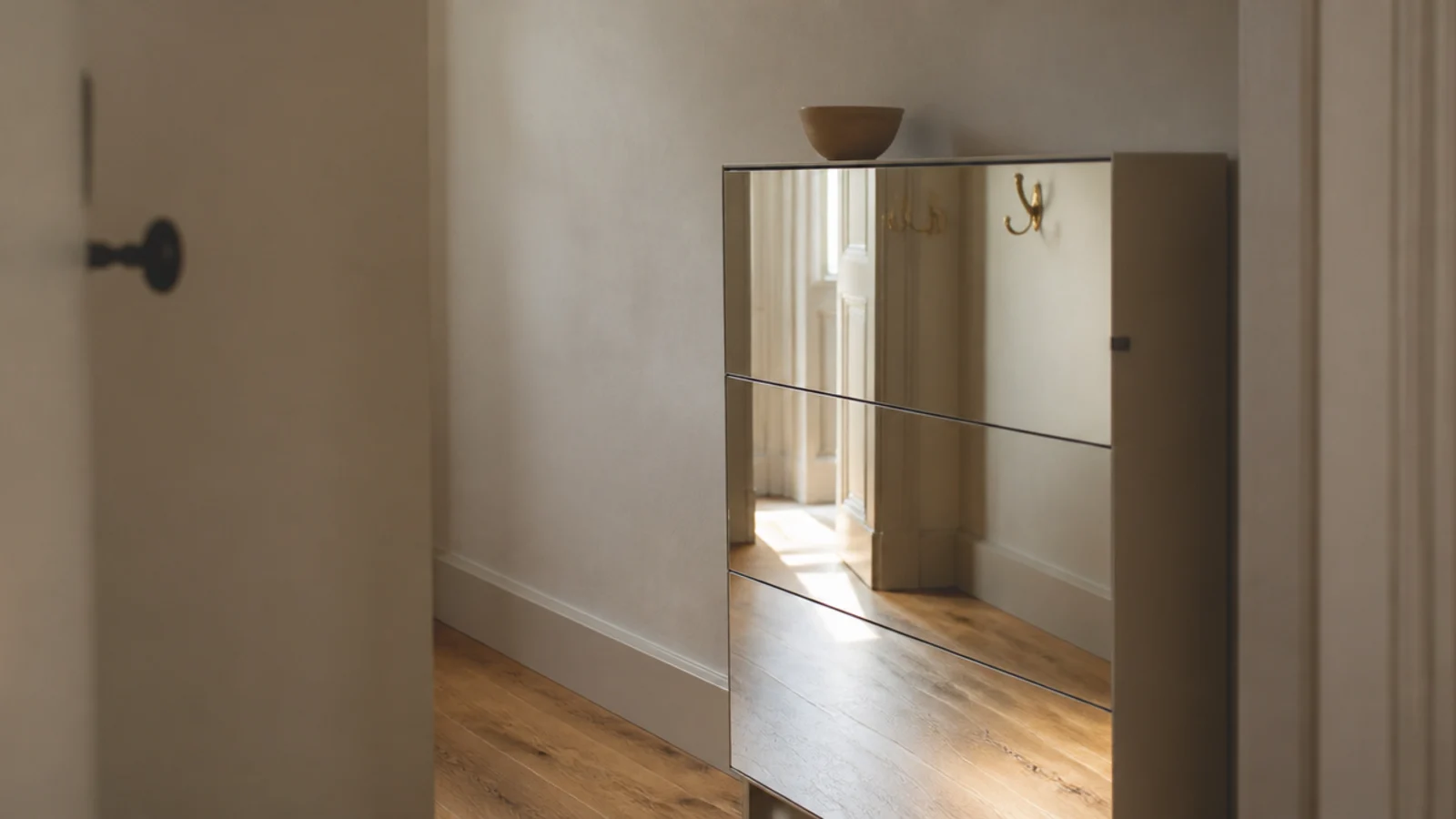
7. The mirrored-front cabinet for a dark hall
In a windowless entry, a mirrored front returns the daylight the room does not have and gives you the last-look moment before leaving. Two jobs, one footprint.
Keep it to a single mirrored panel rather than a full wall of them, and check the edges are polished rather than raw. The glass adds weight, so a mirrored unit over 40 inches genuinely needs its strap.
Fingerprints are the honest downside in a family hall — expect to wipe it weekly. More pairings in shoe cabinets with mirrors. Expect $200 to $380.
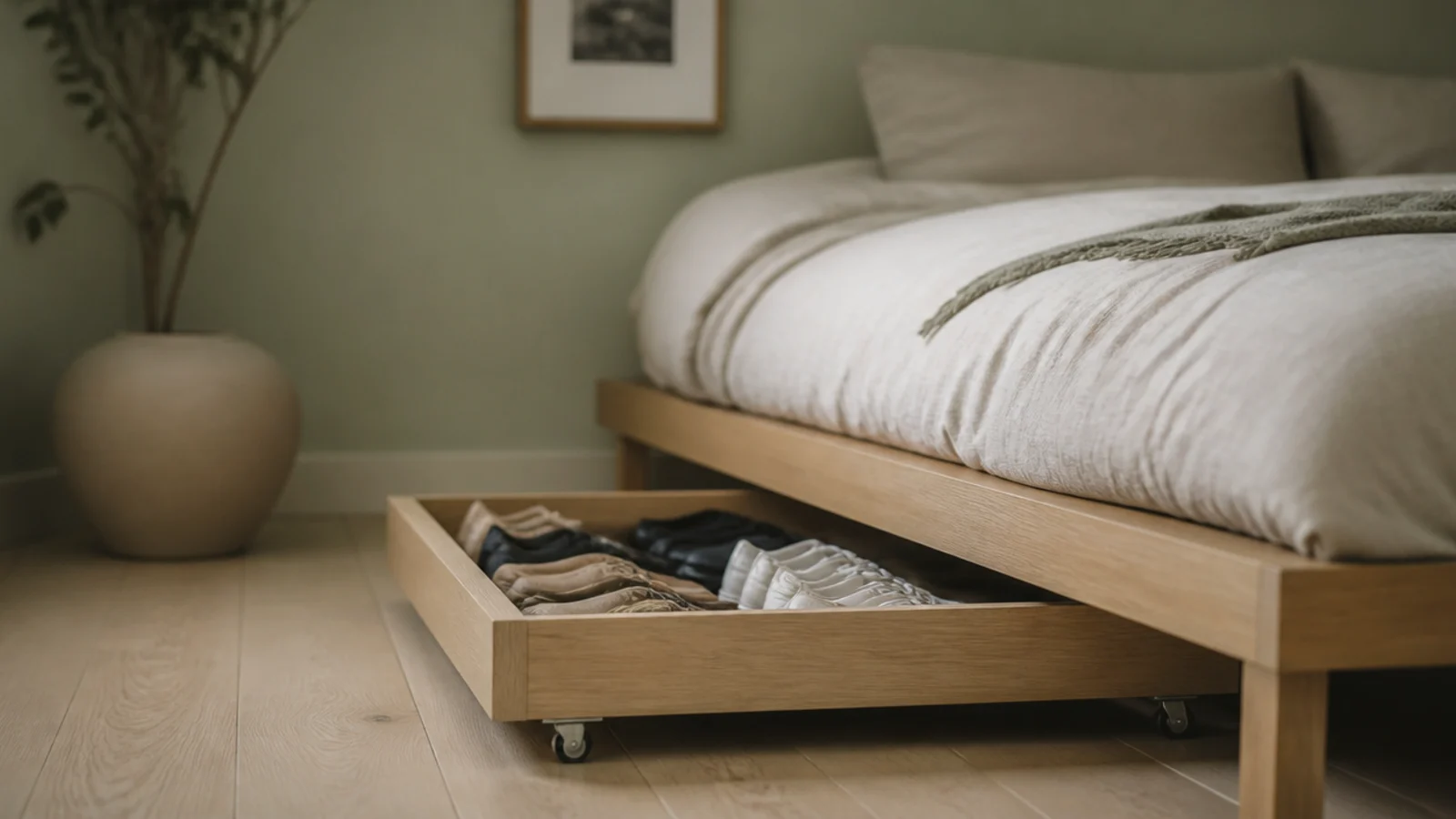
8. The rolling under-bed cabinet for studios
When the entry has genuinely nothing left, the last free footprint in a small flat is under the bed. A shallow cabinet on castors, about 7 inches tall, holds a dozen pairs lying flat.
Measure the clearance under the bed frame first and subtract an inch for the castors. Choose locking castors and a lid or a closed front, because open storage under a bed collects dust faster than anything else in a home.
Best for out-of-season pairs rather than daily ones. Around $60 to $140.
What to Check Before You Buy
Measure the walkway with a drawer open, not closed. A tilt-out swings forward 8 to 10 inches at the top. Aim to keep 36 inches of clear floor from the open front; below 30 inches people start stepping around the cabinet instead of using it.
Read the depth as external unless it says otherwise. A cabinet listed at 10 inches often gives 8.5 inside once the back panel and front thickness are subtracted. If 9 inches internal is your minimum, a listing at 9 inches is not enough.
Check the back panel for openings. No holes and a solid front means a sealed humidity box. It is a fifteen-minute fix with a spade bit, but you should know before it arrives rather than after the first damp week.
Ask where the boots go before anything else. No tilt-out drawer holds boots. If your household wears them, you need an open bay 14 to 16 inches tall or a 15-inch drawer, and that decision changes which cabinet you are shopping for.
Look for soft-close in the specification, not the photographs. Retrofit dampers cost $15 to $30 a pair if the cabinet you want does not include them, which is worth budgeting for rather than discovering later.
Count the fixings you are committing to. A freestanding unit under 40 inches needs none. Over that, one anti-tip strap. Wall-hung means four bolts into framing. For renters that difference matters more than the price.
Check the front edge and the hardware projection. In a hall under 40 inches wide, a handle sticking out 2 inches will catch sleeves and bag straps daily. Small knobs or push-to-open catches are worth choosing deliberately.
Frequently asked questions
What is the best type of shoe cabinet for a narrow hallway?
A tilt-out at 9 inches deep. The shoes sit at 45 degrees inside the drawer, so a men's size 12 sneaker fits in a carcass four inches shallower than a flat-shelf cabinet needs. Measure the walkway with a drawer open rather than closed, because a tilt-out swings forward 8 to 10 inches at the top.
How much should I spend on a shoe cabinet?
A two or three-drawer slim tilt-out runs $90 to $200, a bench cabinet or a two-door flat-shelf unit runs $200 to $400, and a fitted under-stair or joinery run starts around $500 in materials. Above roughly $450 for a freestanding cabinet you are mostly paying for solid timber rather than extra function.
Which shoe cabinet actually holds boots?
Only one with an open bay 14 to 16 inches tall, or a full-depth drawer at 15 inches where boots lie down. No tilt-out drawer holds boots of any kind, whatever the listing says. If boots matter, give up one compartment for them before you compare anything else about a cabinet.
Do shoe cabinets need ventilation?
Yes, and it is the specification most often missed. A sealed carcass with a solid front holds humidity for days, and damp air is what smells rather than the shoes. Look for a slatted door, a cane front or holes in the back panel — or drill four one-inch holes yourself once it arrives.
Are soft-close hinges worth paying extra for?
On this piece of furniture, yes. Shoe cabinets get shut with a foot, by everybody, several times a day. Spring hinges slam, and the repeated impact loosens the fixings and eventually splits the front panel. Retrofit dampers cost $15 to $30 a pair if a cabinet you like does not include them.
Is a wall-hung shoe cabinet safe on drywall?
Only into studs or on toggle bolts. The plastic plugs supplied in the box are rated around 10 pounds each, and a loaded cabinet reaches 40. They fail slowly rather than suddenly, creeping out over months until the unit sits visibly out of level. Buy toggle bolts on the same trip.
Buy for the hallway you have rather than the entry you would like — depth, ventilation and a plan for boots decide whether a cabinet gets used, and everything else is a finish you can change later. The slim shoe cabinet guide compares the shallow options in detail, wooden shoe cabinet builds covers timber and joinery, and the best shoe storage solutions has the open-front alternatives. Save the pin for the next shopping trip.
Want more like this? Browse all 15 shoe cabinet ideas guides — they all use the same measurements and budget tiers.
Pin it for later
Save this to your Shoe Cabinet Ideas board
Pin it now so it is waiting for you when the tape measure comes out — and so the next person hunting for this idea can find it too.
Save this pinKeep going
More ideas worth saving while you have the tape measure out.