Under Stairs Storage · Listicle
30 Clever Under Stairs Storage Solutions To Copy

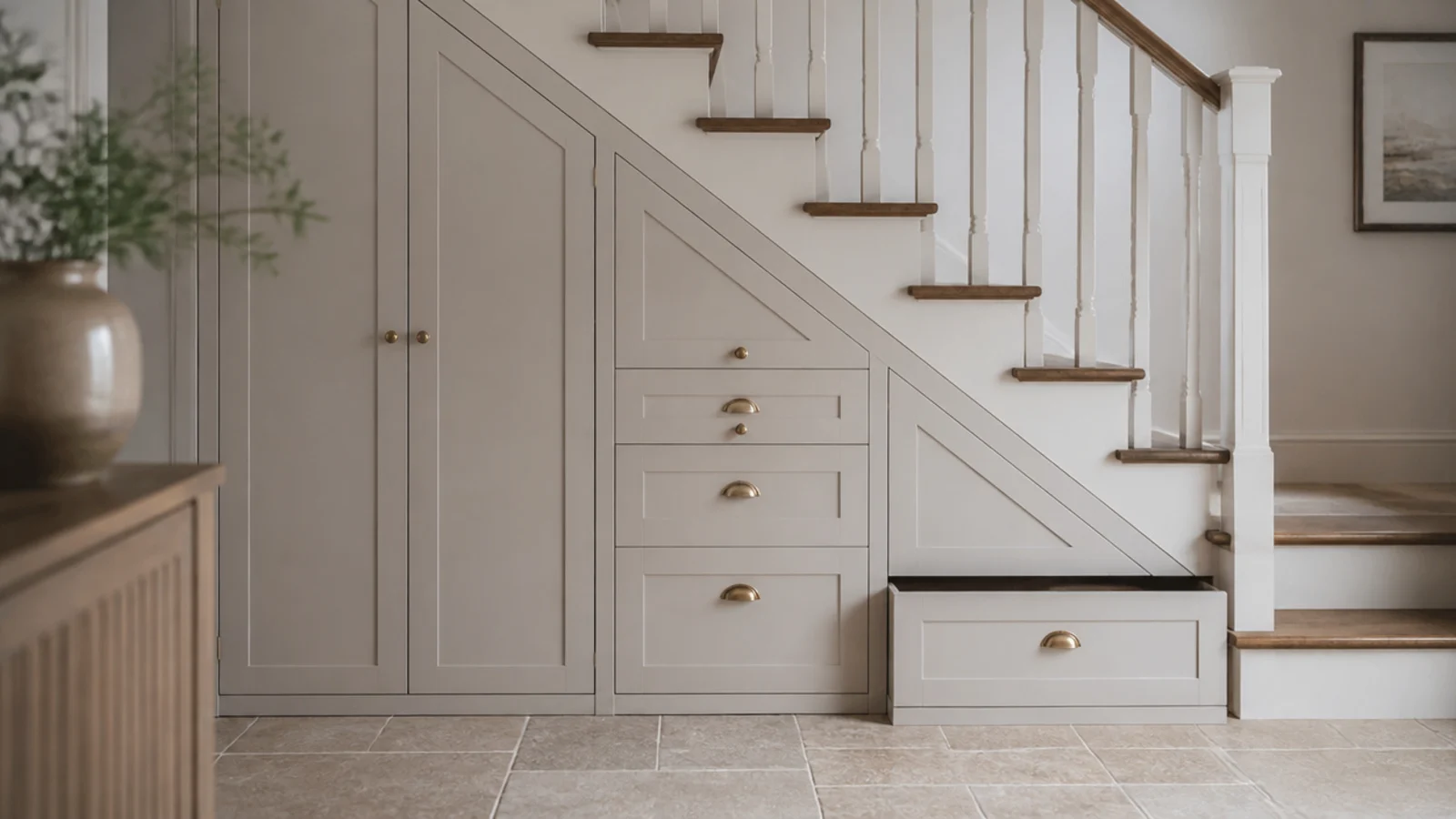
Most of the wedge under a staircase stays empty for one reason: people plan it as a single space. It is three spaces stacked in a line. Good under stairs storage solutions start by splitting the run by headroom, because what works at 80 inches is useless at 24, and the fix for the crawl end has to travel out to you. I have built or specified all three bands, and the band boundaries are the only rule that has never let me down. Here are thirty ideas grouped by where they belong.
In this guide32 sections — tap to openHide
- 1.How under stairs storage solutions divide by headroom
- 2.A full-height broom cupboard at the top of the run
- 3.A stacked washer and dryer where the pipes already run
- 4.A cloakroom, but only where you can stand at the pan
- 5.A drinks cabinet with a real worktop
- 6.A desk nook under the highest five feet
- 7.A pram and buggy park by the front door
- 8.A bike hung off the tall back wall
- 9.A pull-out pantry tower beside the kitchen wall
- 10.An appliance garage with a roll-up front
- 11.A boot bench with hooks above it
- 12.Deep drawers on hundred-pound runners
- 13.A wire basket tower for dry goods
- 14.Angled shoe tiers where the ceiling drops
- 15.A dog crate whose lid becomes a shelf
- 16.A recycling pull-out with a vented door
- 17.A record and hi-fi niche at seated height
- 18.Flanking cupboards either side of a radiator
- 19.A litter tray cabinet with a side entrance
- 20.Wine cubbies cut into the mid band
- 21.Toy drawers that roll out onto the rug
- 22.Flat pull-out trays for the shallow end
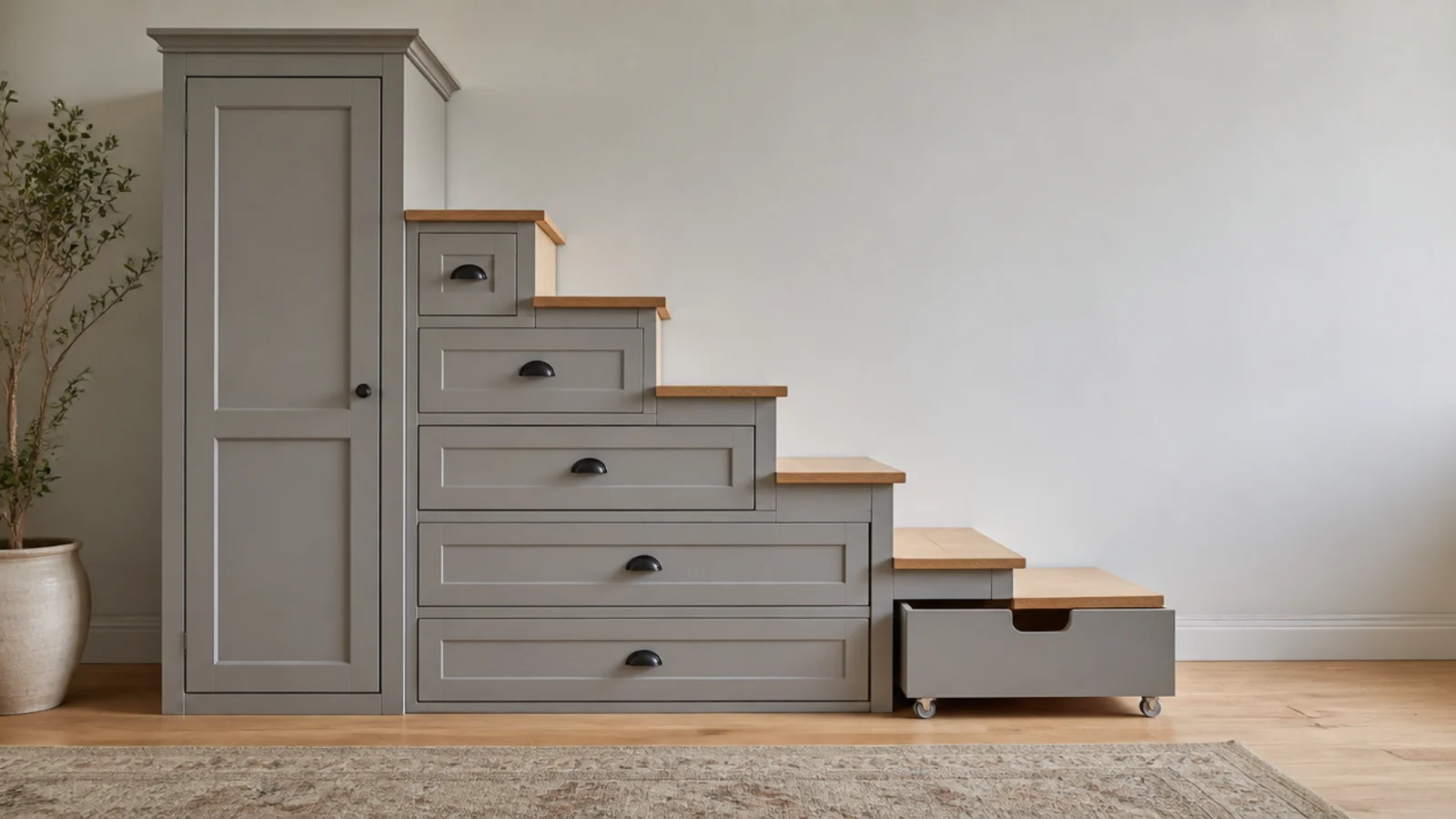
- 23.One big drawer on castors instead of a cupboard
- 24.Compression bags for spare bedding
- 25.A sports kit sled for the crawl zone
- 26.A cable and tool tray at the very front
- 27.Store flat things on edge in slots
- 28.Christmas boxes at the deepest point
- 29.A tube rack for gift wrap and posters
- 30.Slot the folding table beside the string
- 31.Cut a hatch you can genuinely get through
- 32.Mistakes to Skip
How under stairs storage solutions divide by headroom
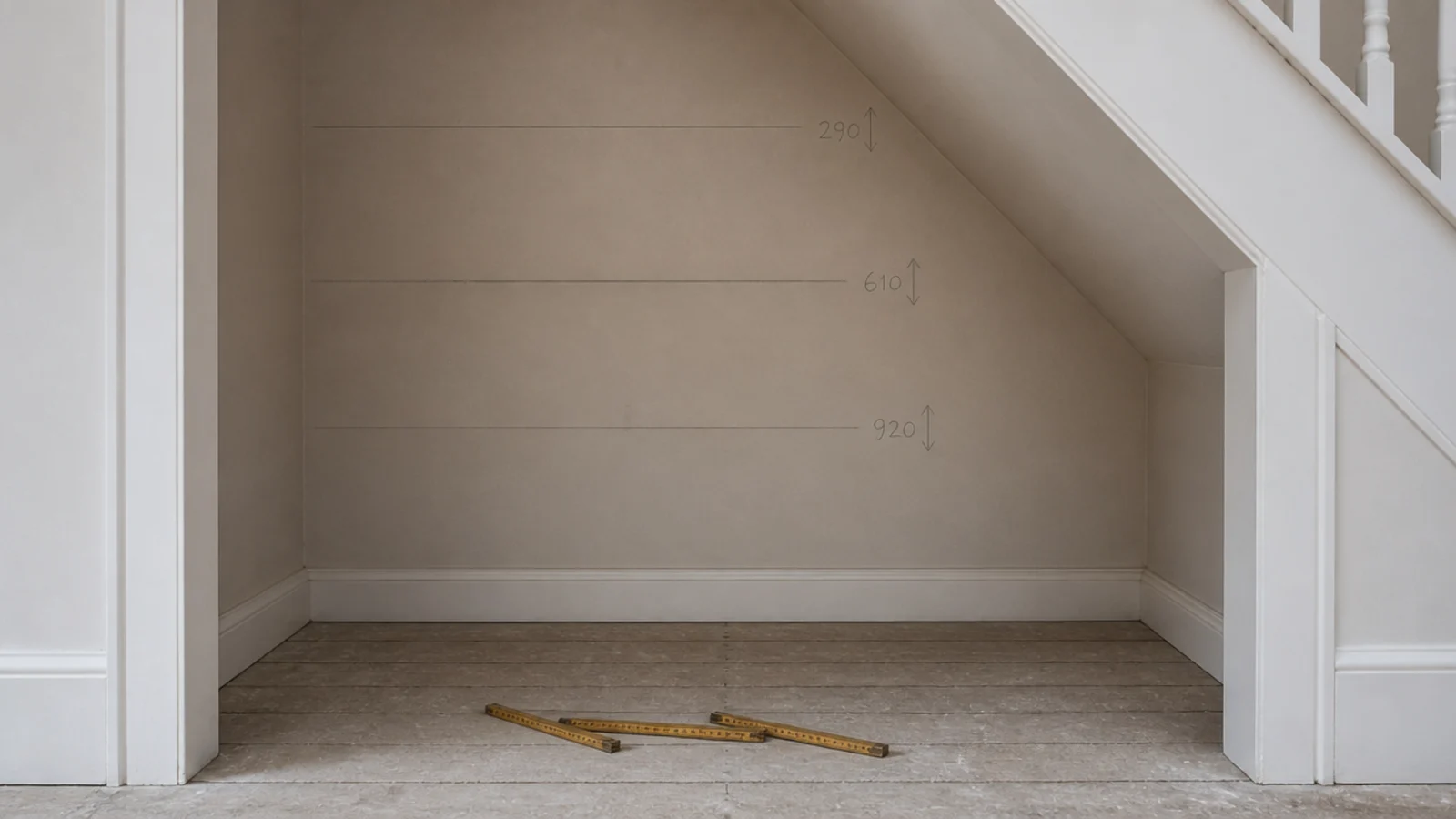
Chalk three lines on the soffit. The first where the height drops below 60 inches, the second at 30, and the third where the slope meets the floor. A typical flight loses nine to ten inches of height for every foot travelled toward the bottom step, so those lines land closer together than people expect.
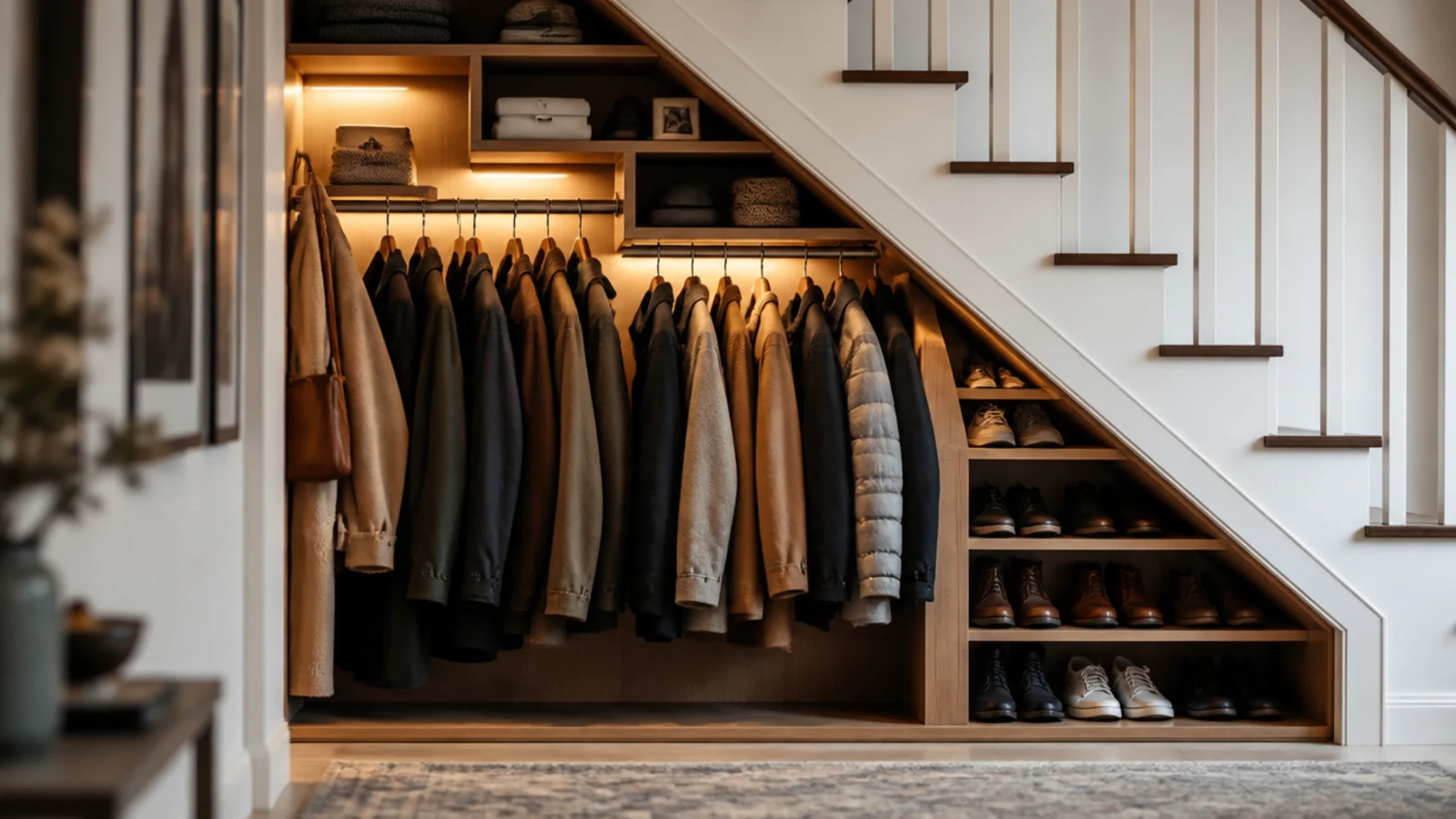
Above 60 inches you can step in and stand. That band takes hanging clothes, a laundry stack, a broom cupboard, a desk or a cloakroom. Between 30 and 60 you get base units, drawers, benches and pull-outs. Below 30 nothing with a door works, because you cannot see or reach the back of it.
Two constraints sit above the plan. Anything with a boiler, gas meter or consumer unit in it stays an open void with a removable panel — none may be enclosed, and a consumer unit also has to sit in a non-combustible enclosure. And in a house of three storeys or more the door onto a protected stairway generally needs to be FD30 rated.
Cost splits the same way: a batten-and-ply fit-out is about £150, flat-pack carcasses with one raking end panel land at £400 to £900, and bespoke pull-outs start near £1,800. The storage under stairs guide covers the cheapest end in detail.
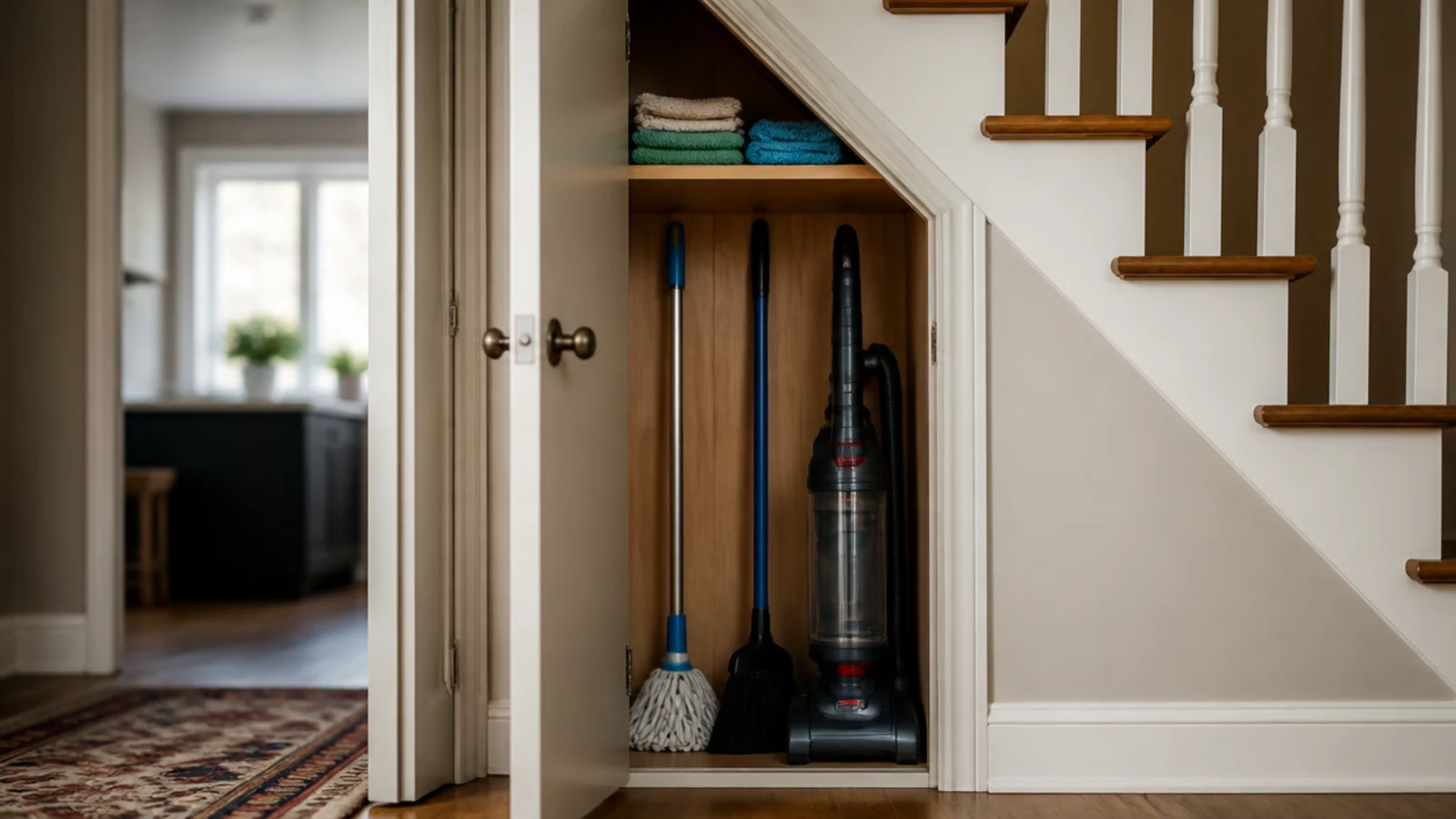
1. A full-height broom cupboard at the top of the run
Mops and brooms are 55 to 60 inches long and only stand in the tallest bay. A 12 inch wide slot with a peg rail at 48 inches keeps them upright rather than falling out at the ankles. Add a shelf above for cloths and refills.
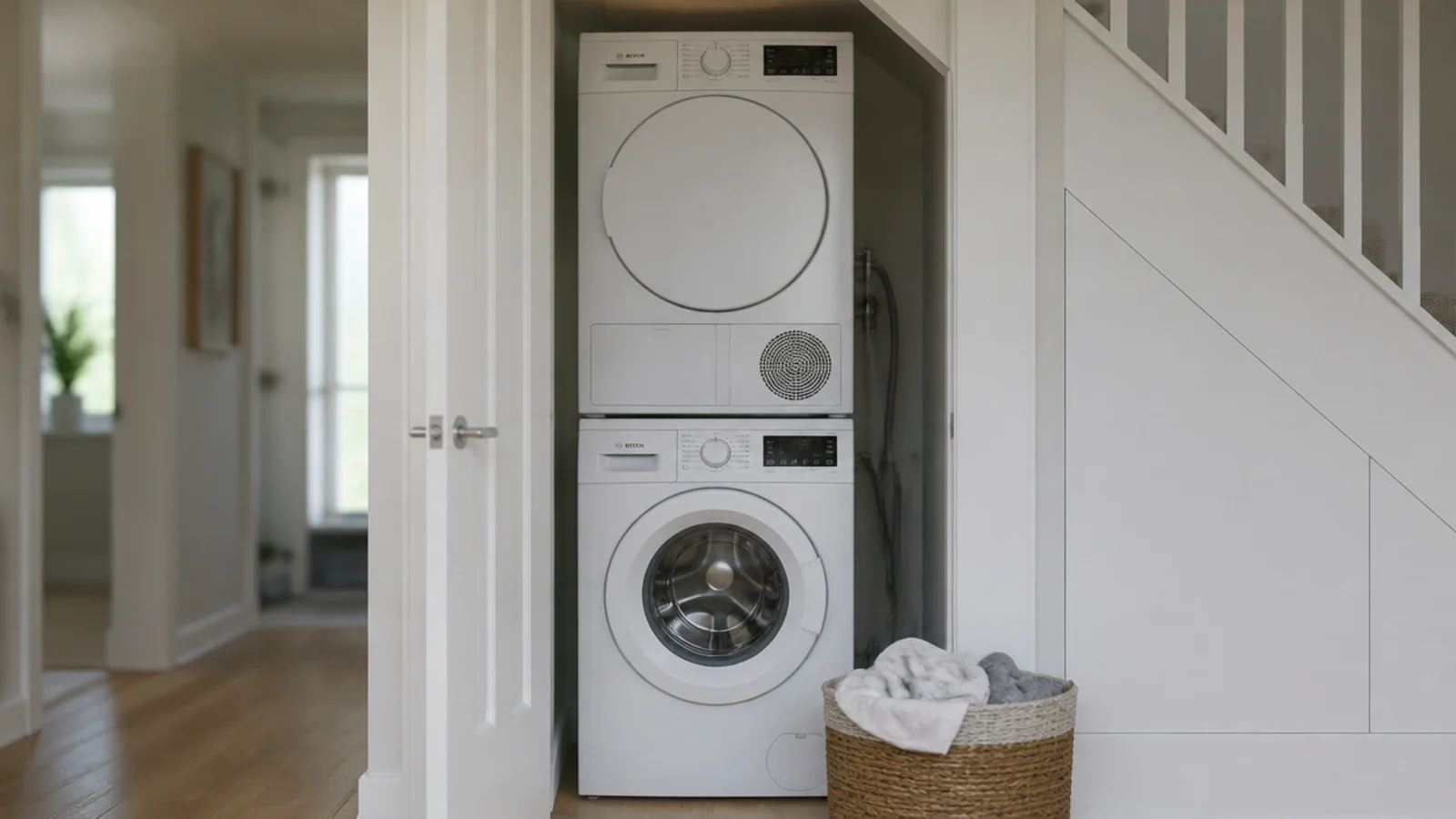
2. A stacked washer and dryer where the pipes already run
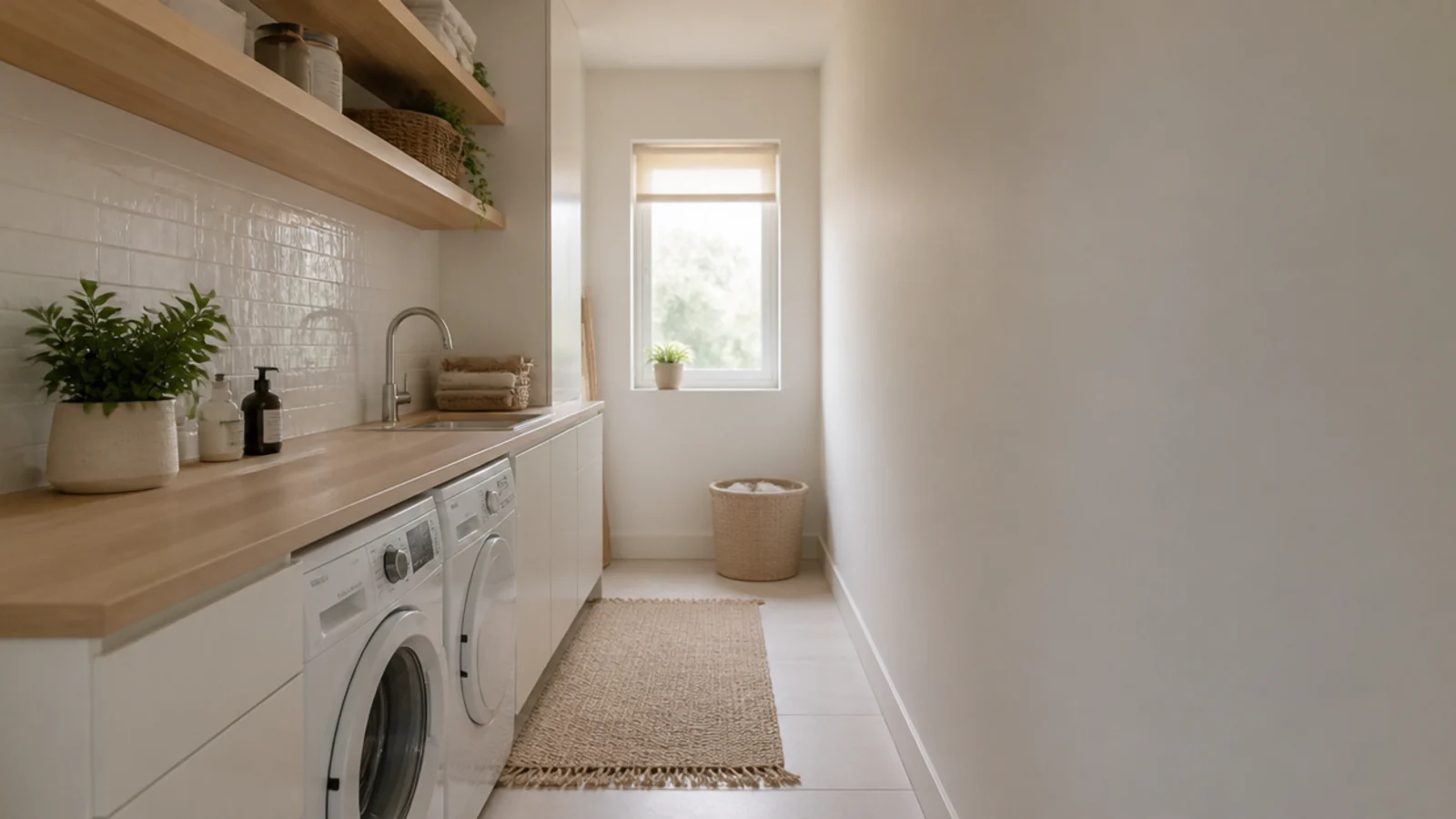
A stacked pair needs about 26 inches of width, 25 of depth and 68 of height, plus 2 inches behind for hoses. Only the tall band takes it, and only if the plumbing is close. Never share that cupboard with the consumer unit.
3. A cloakroom, but only where you can stand at the pan
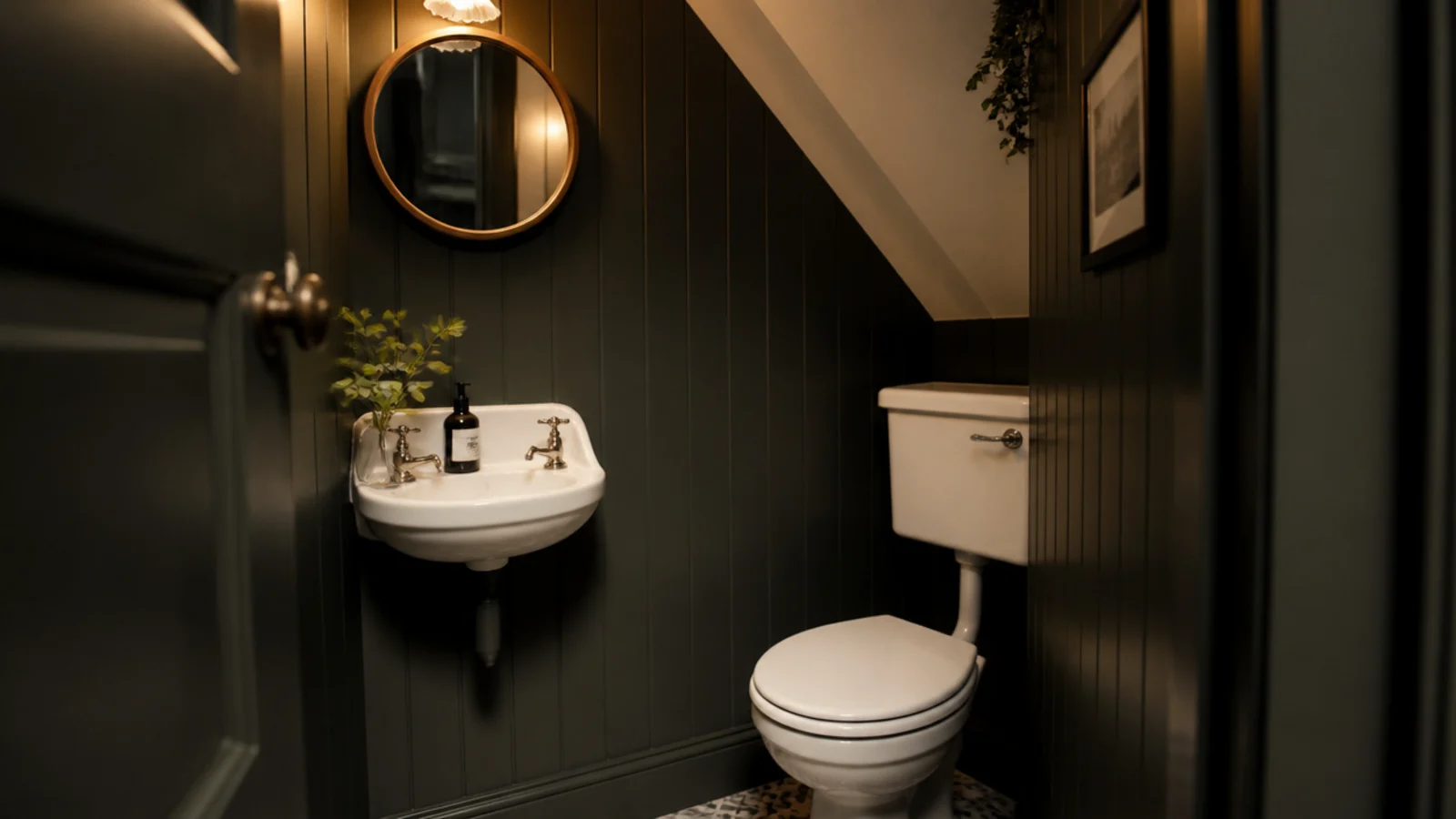
Allow roughly 78 inches of headroom over the pan and 30 by 47 inches of clear floor in front of it, plus a 30 inch clear door opening. Below that you are building something people stoop in. Drainage distance is what drives the cost past £3,000.
4. A drinks cabinet with a real worktop
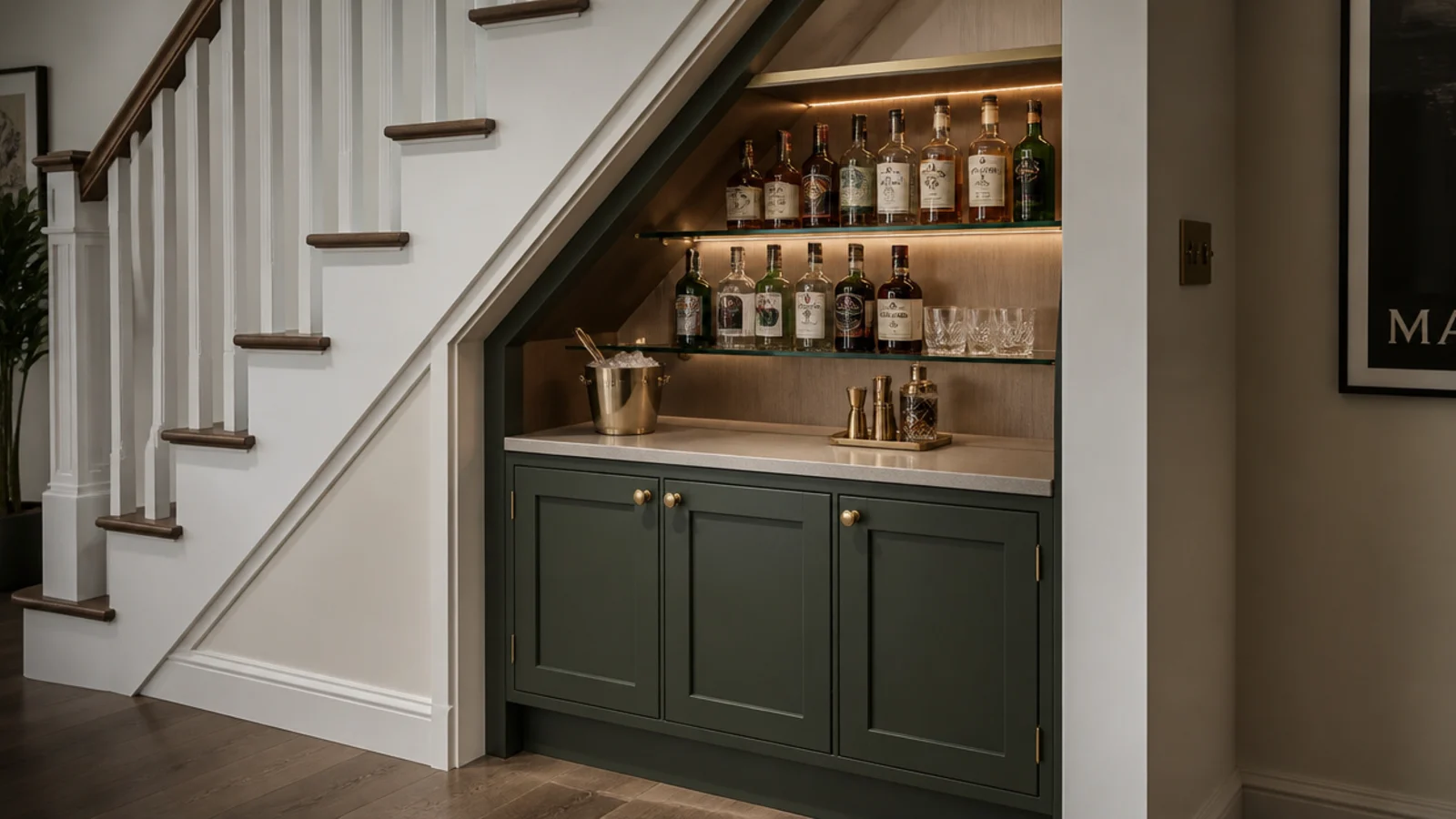
A 15 inch deep worktop at 36 inches gives you somewhere to pour, which is what separates a bar from a shelf of bottles. Light the shelves from behind at 3000K rather than from a ceiling spot, and use toughened glass so light travels down the stack.
5. A desk nook under the highest five feet
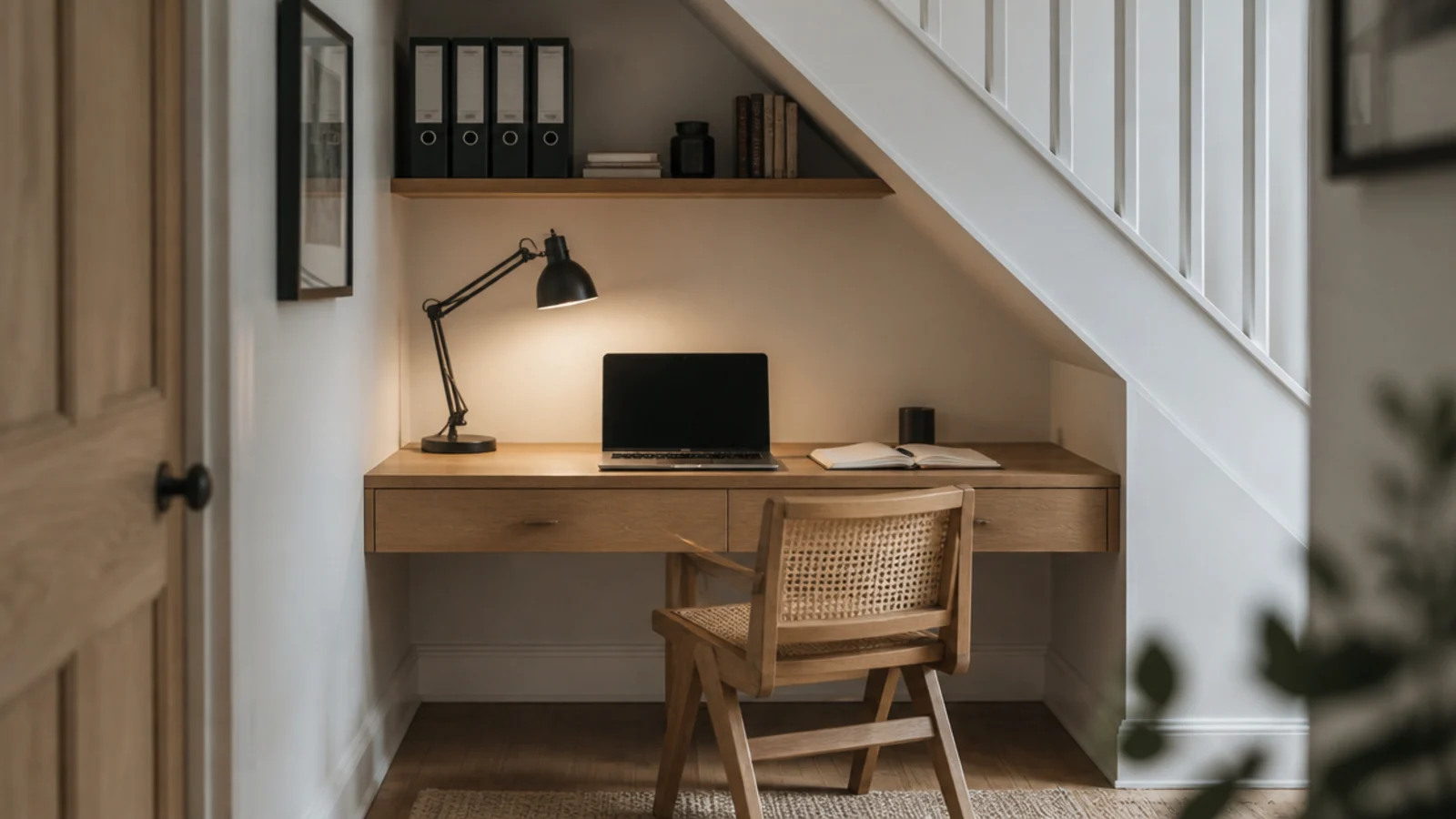
Set the worktop at 29 to 30 inches, allow 25 inches of knee width and 24 inches of leg depth, and place the chair where the soffit is at least 59 inches so standing up is safe. A socket at worktop height beats a lead trailing across the hall.
6. A pram and buggy park by the front door
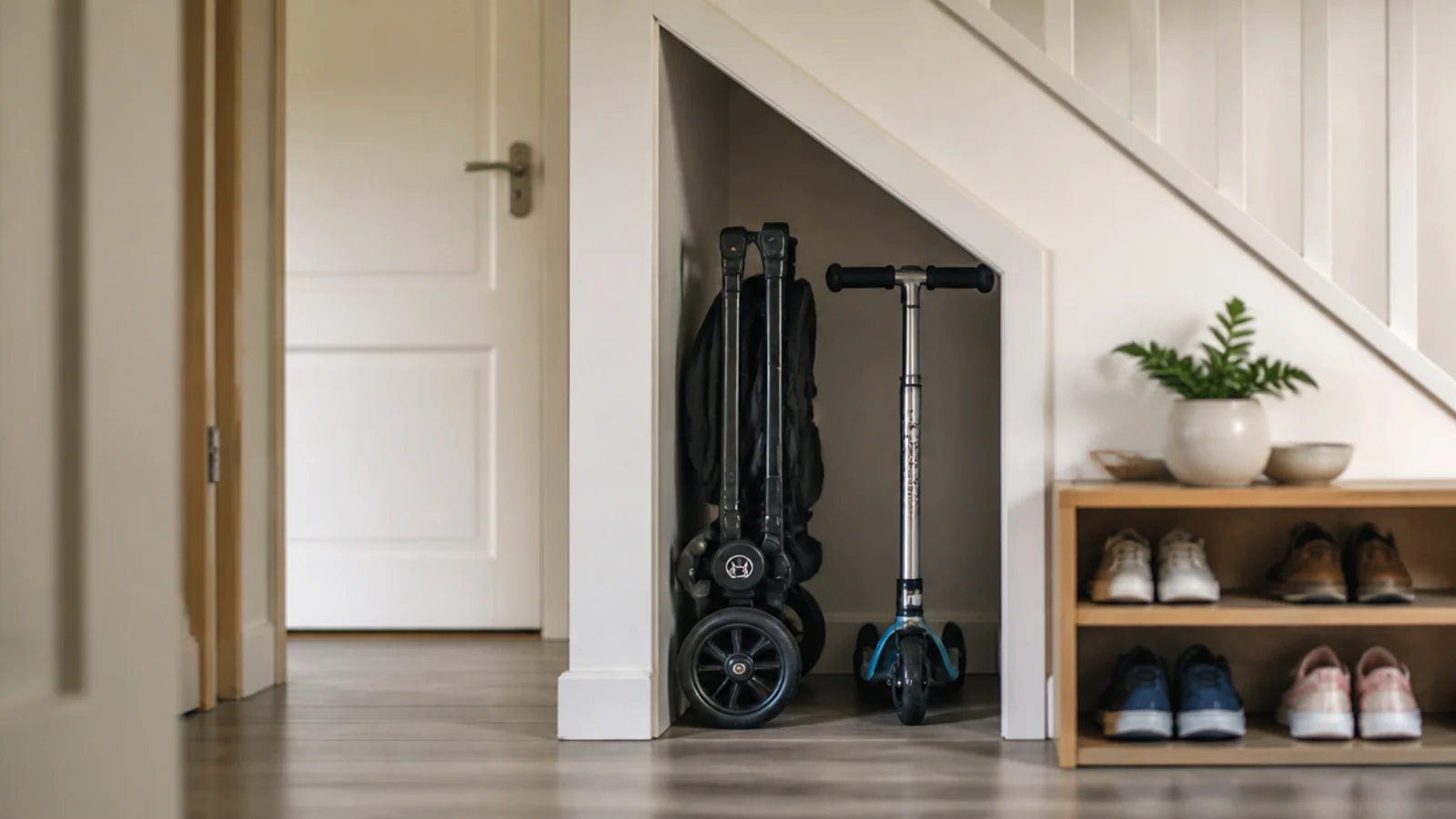
A folded pushchair is roughly 30 by 20 by 40 inches and lives by the door or it lives in the hall. Leave the bay open rather than doored, lay a wipeable floor, and keep it clear of the bottom tread so the escape route stays free.
7. A bike hung off the tall back wall
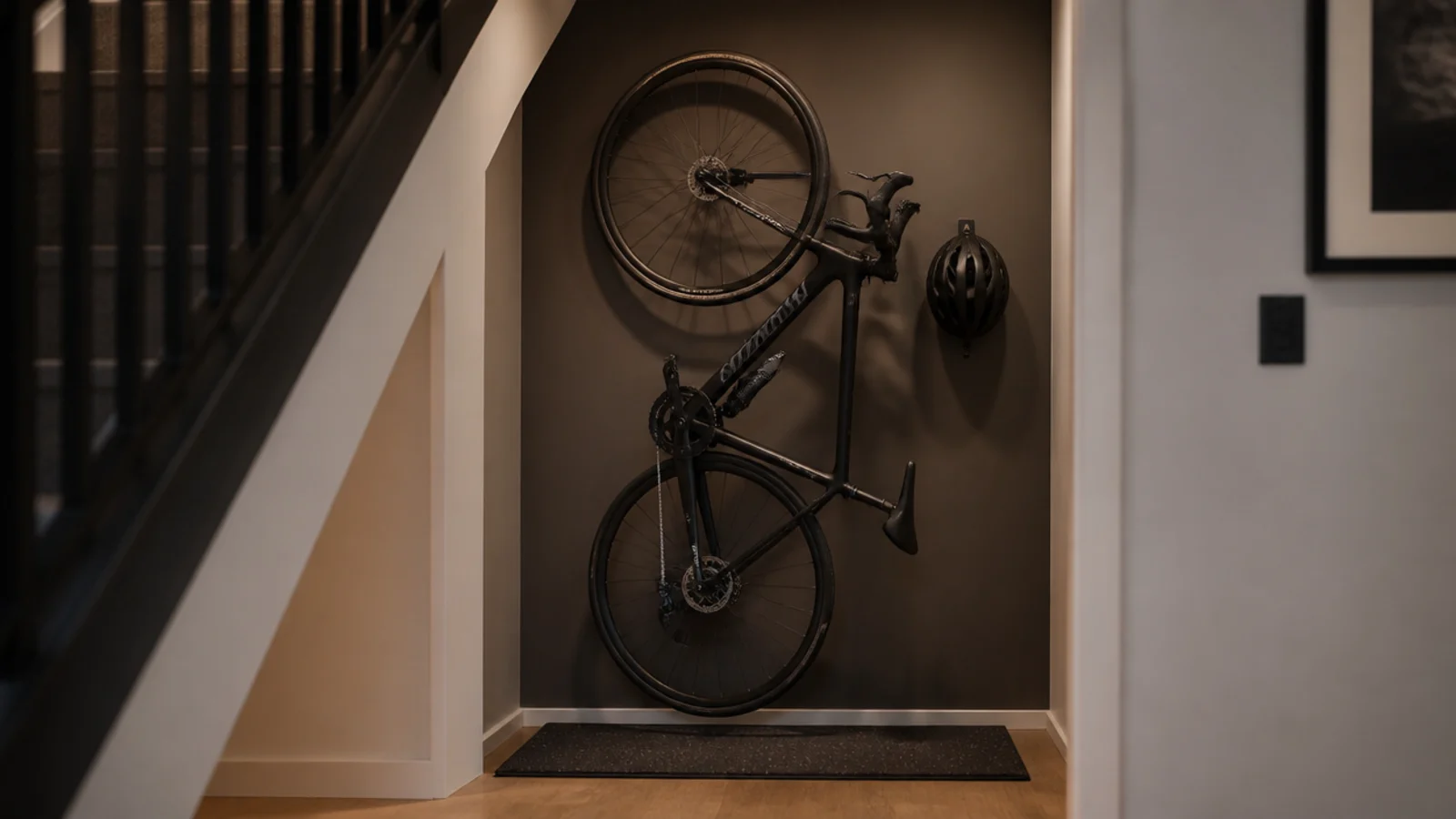
Hung vertically by the front wheel a bike takes about 18 inches of width against a 70 inch height. Fix the hook into a stud or a batten spanning two, and expect a hybrid to weigh 25 to 30 pounds — plasterboard plugs will not hold it.
8. A pull-out pantry tower beside the kitchen wall
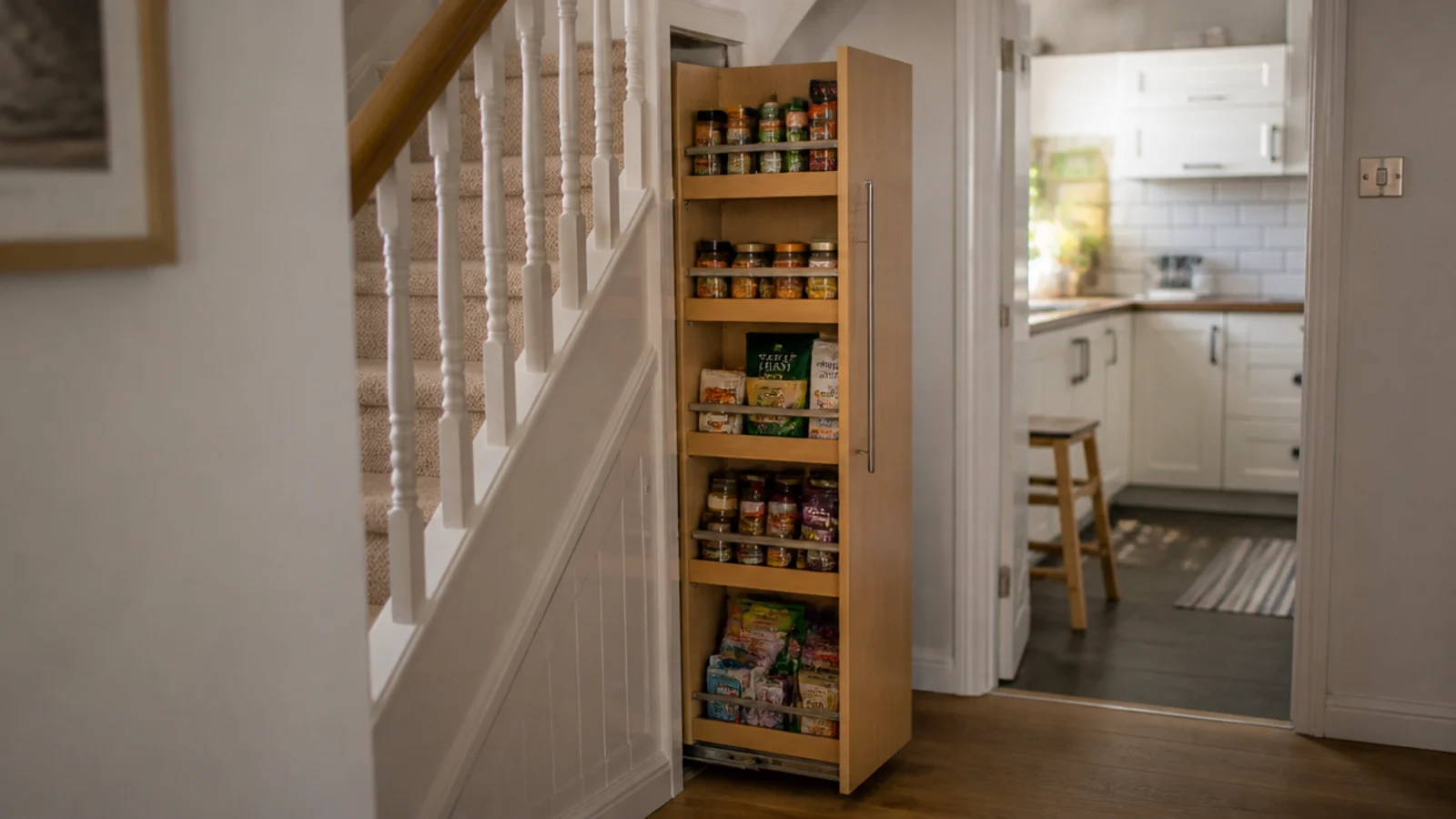
A tower on heavy runners gives you two storage faces instead of one shelf front. Keep it under 16 inches wide and specify runners rated to at least 120 pounds, because a loaded tower is heavier than any drawer in the house.
9. An appliance garage with a roll-up front
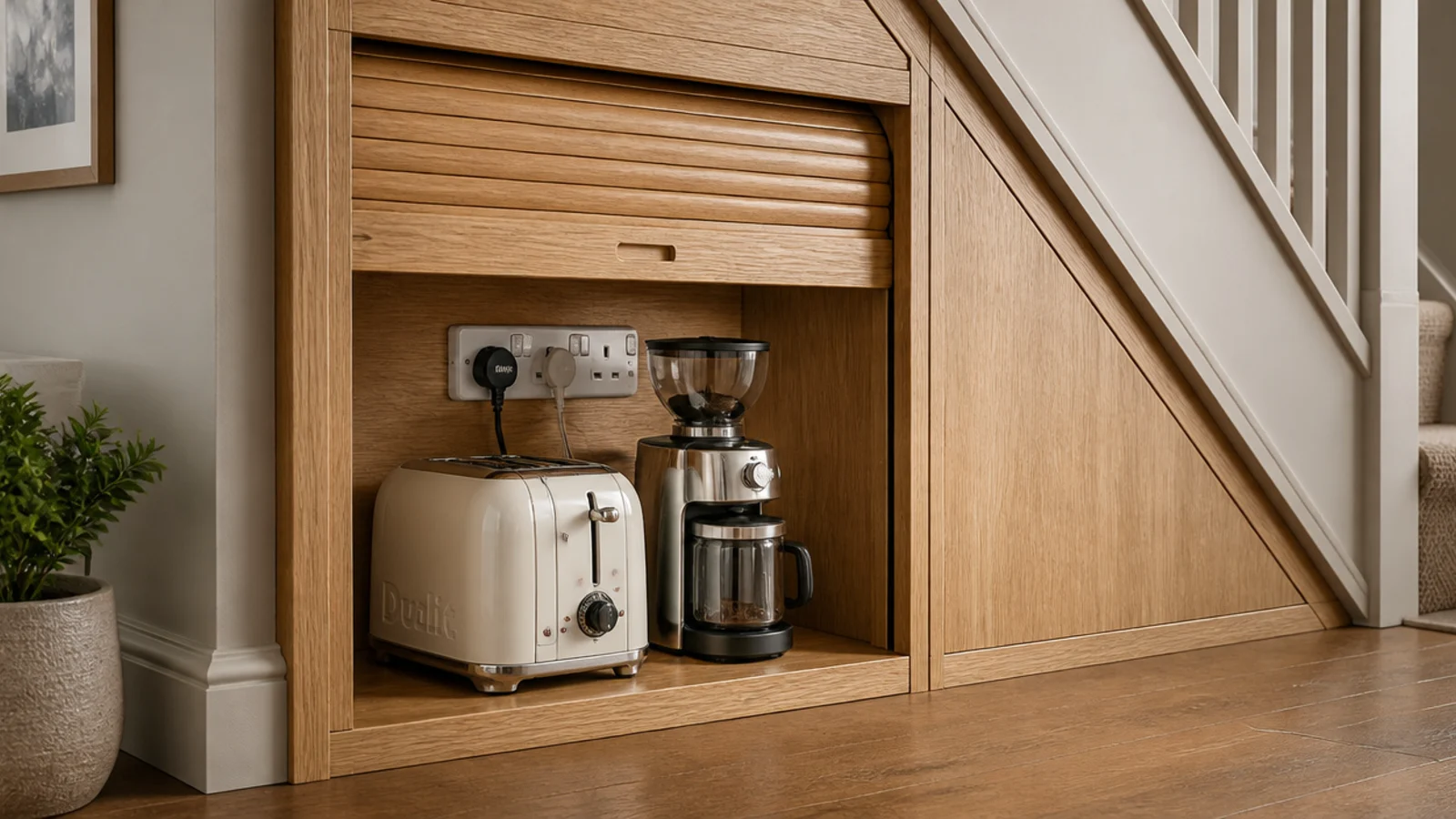
A tambour door needs no swing space at all, which suits a hallway under 40 inches wide. Allow 4 inches behind the shelf for the roll to sit, fit a socket strip at the back, and never shut a hot appliance inside a closed box.
10. A boot bench with hooks above it
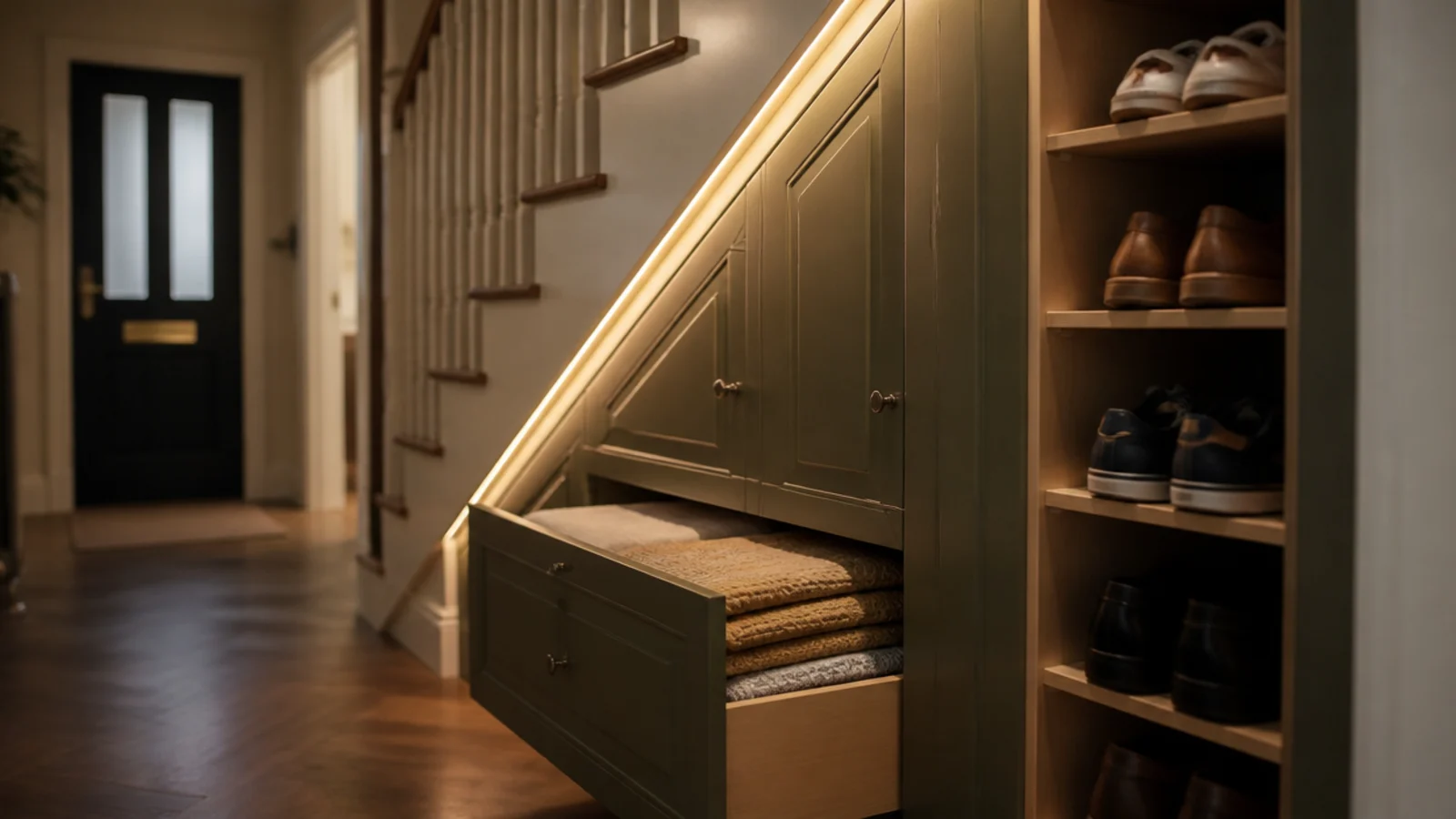
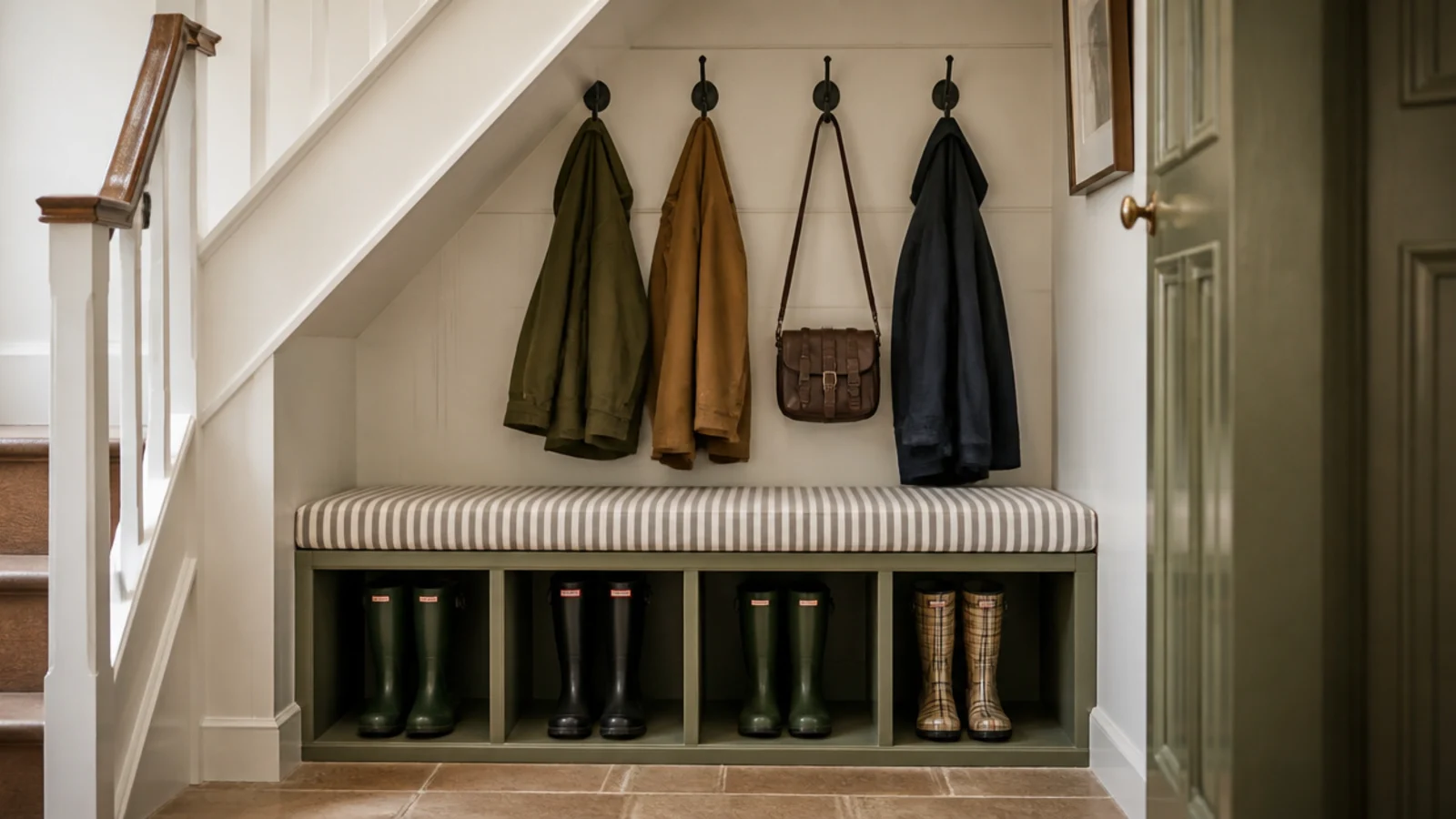
Eighteen inches to the finished cushion, cubbies 13 inches deep beneath, and hooks at 63 inches for adults with a lower rail at 43 for children. That combination absorbs the entire school-morning pile-up in about 40 inches of width.
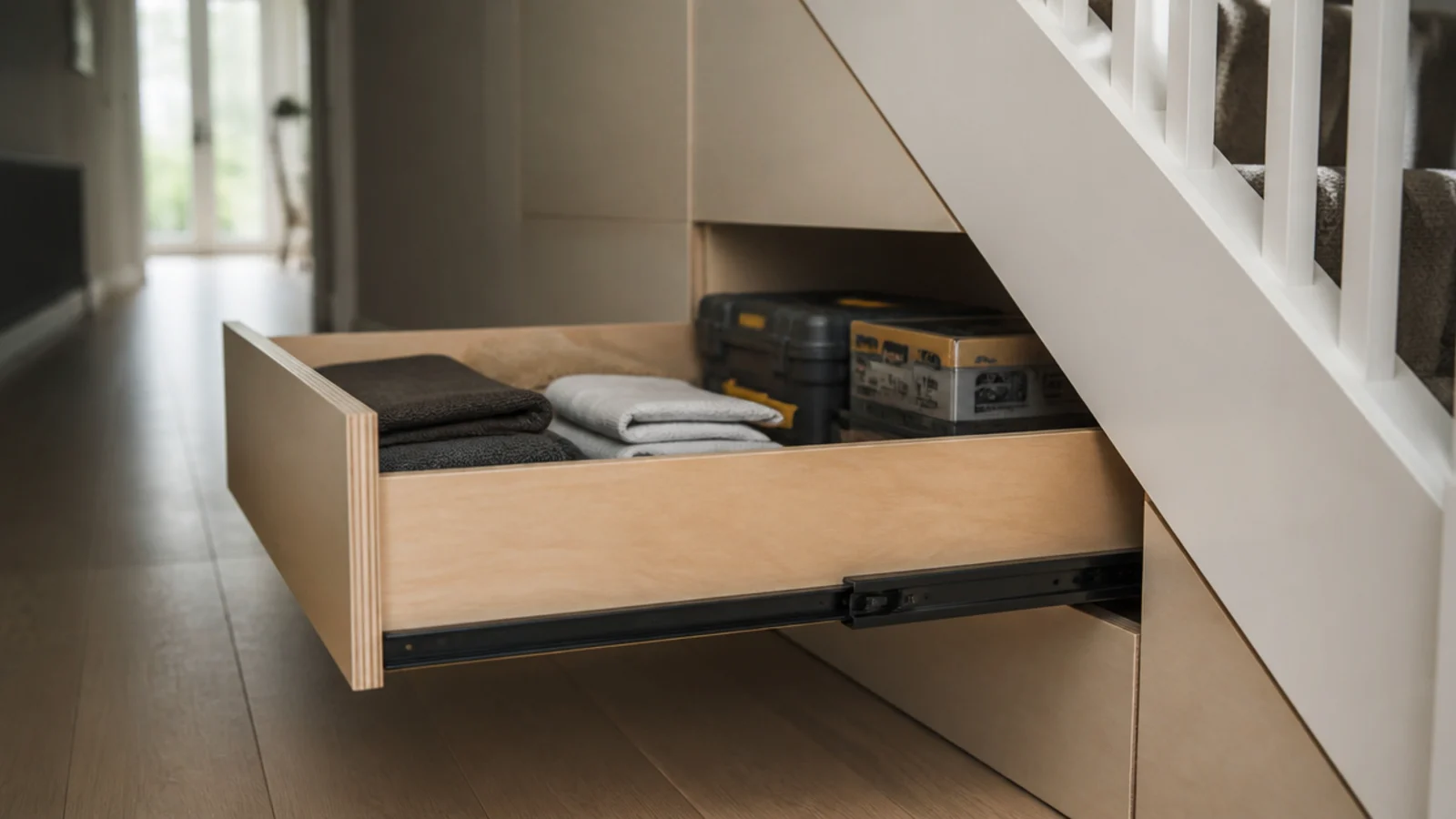
11. Deep drawers on hundred-pound runners
Full-extension ball-bearing runners come in fixed lengths to 24 inches. Rate them at 100 pounds per pair for household loads and never build a drawer box longer than the runner travel, or the front end drops as soon as it is loaded and open.
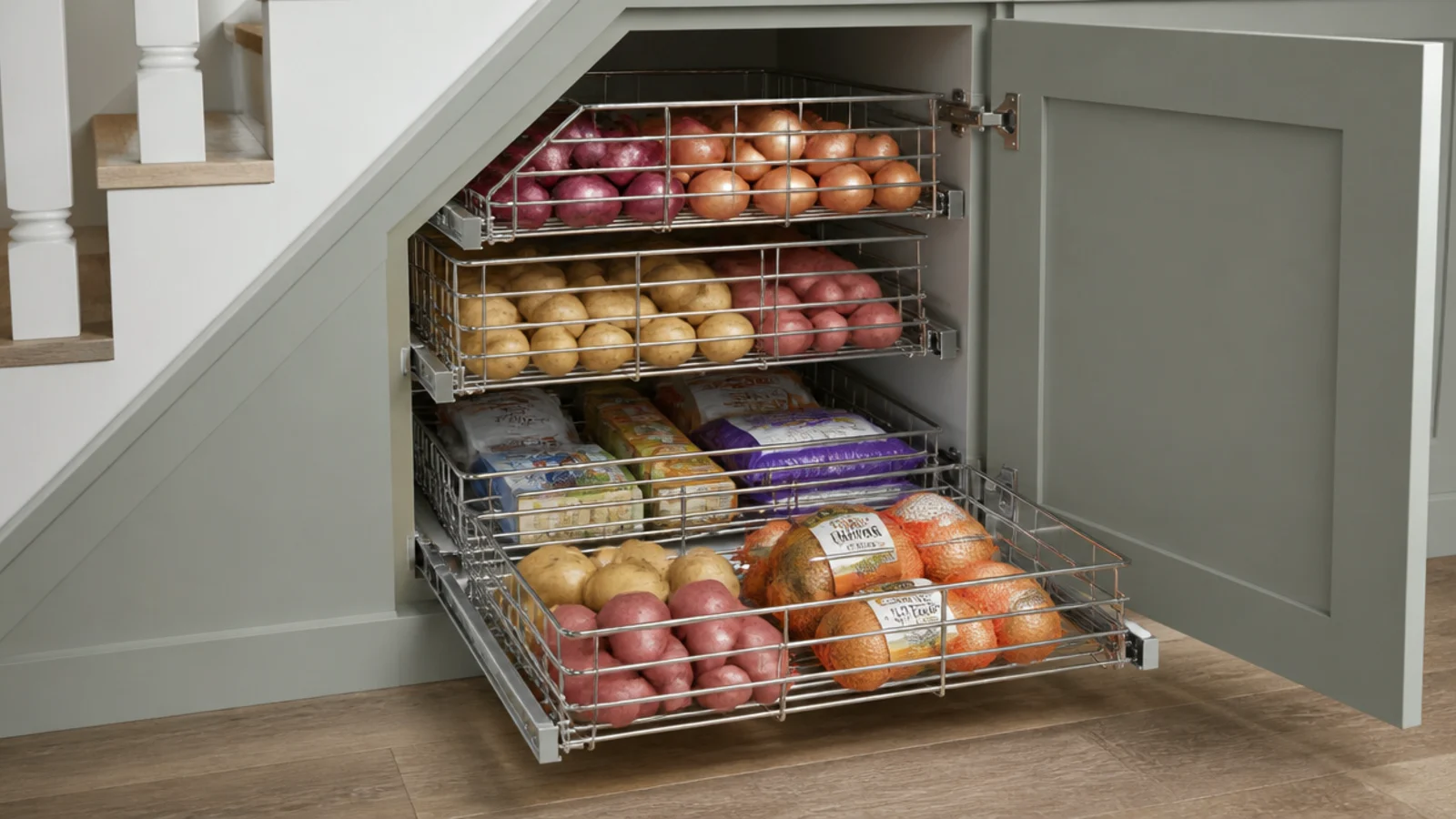
12. A wire basket tower for dry goods
Wire baskets on runners show their contents from the side, which fixed shelves under a rake never do. Space them 9 inches apart for packets and 7 for tins, and line the base of the lowest one so nothing small drops through.
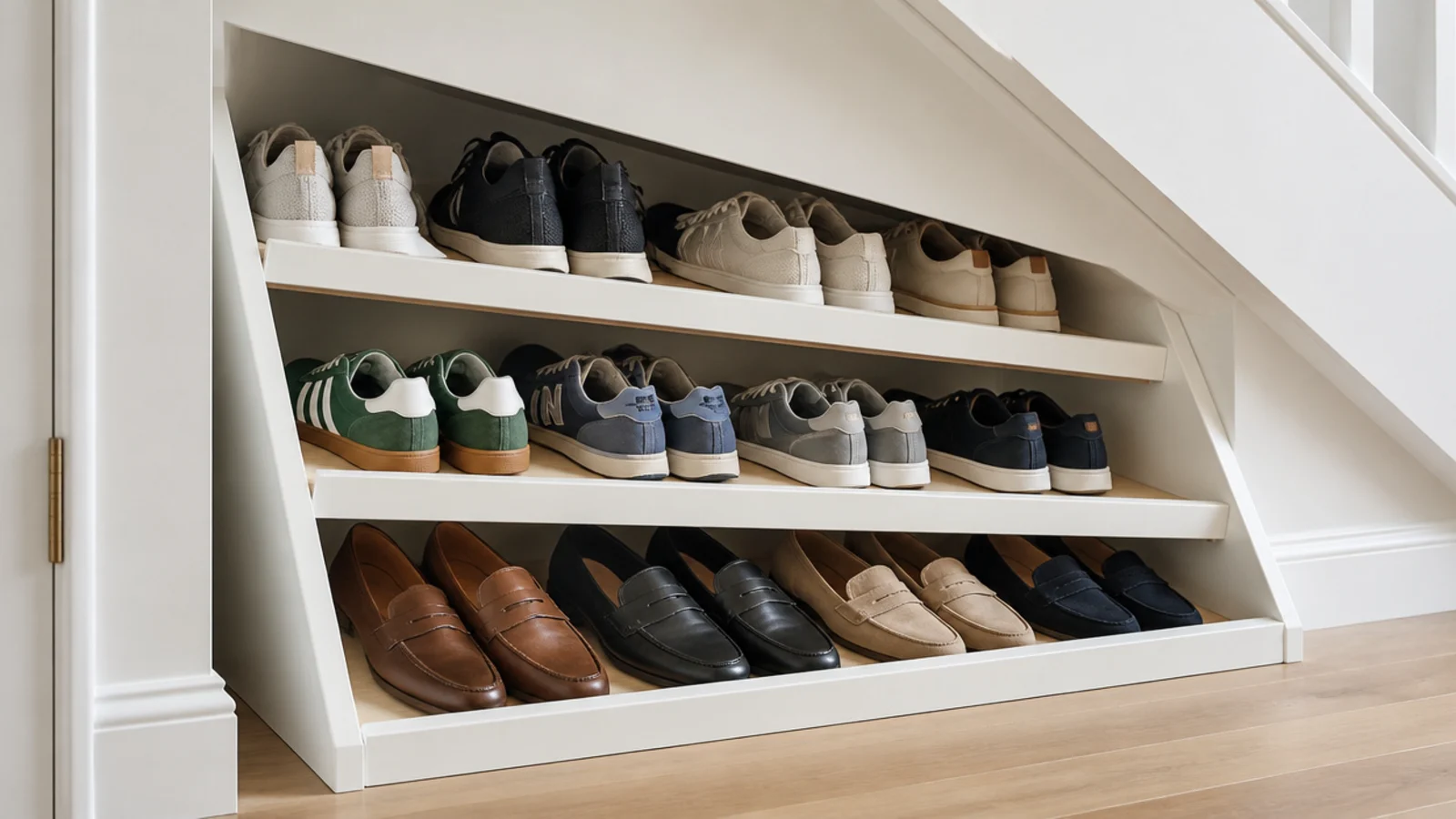
13. Angled shoe tiers where the ceiling drops
A 15 degree tilt with a 1 inch lip fits roughly twice the pairs of a flat shelf in the same height. Space tiers 7 inches apart for flats, 9 for trainers and 15 for ankle boots. It is the best use of a 30 inch ceiling there is.
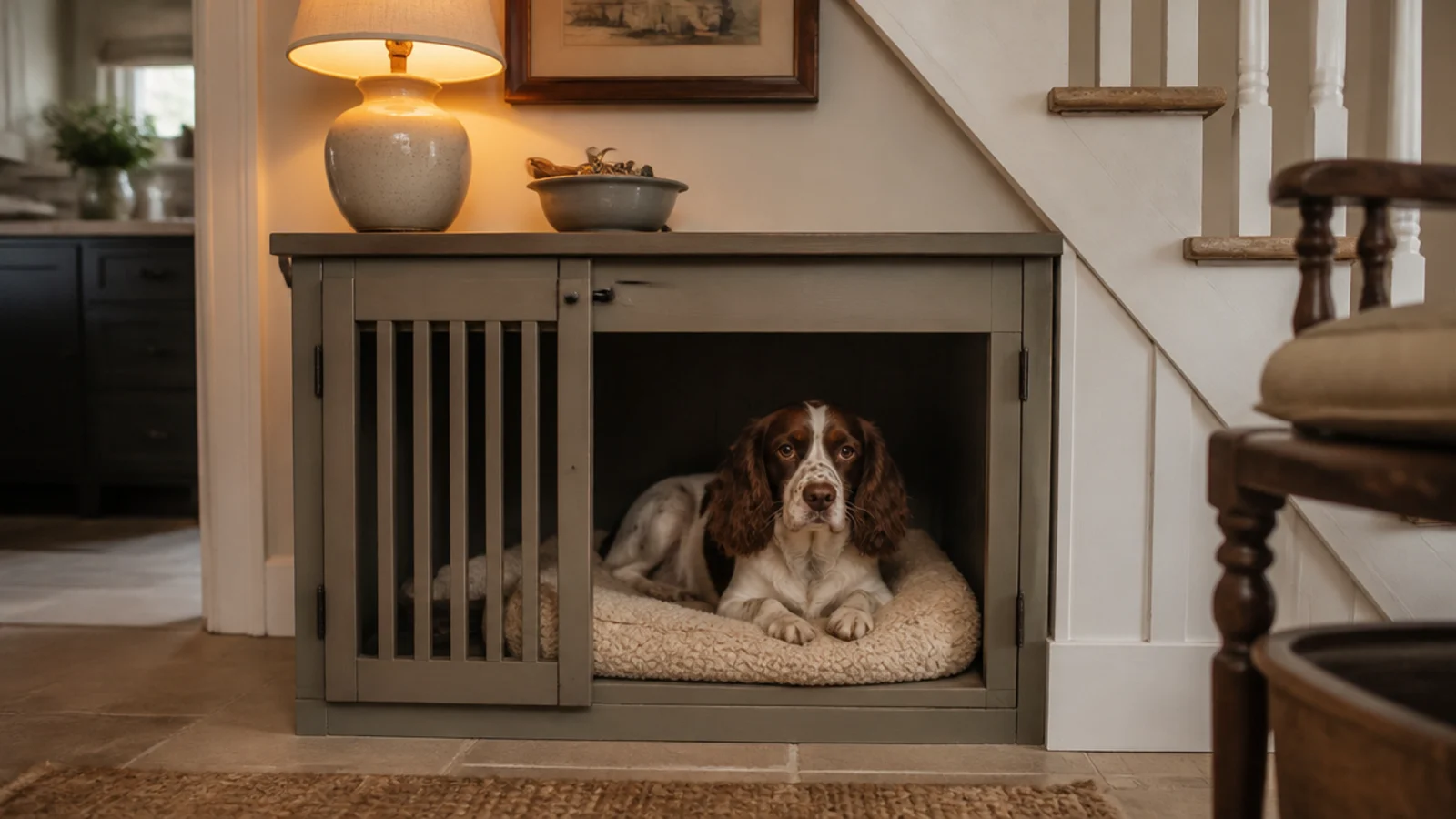
14. A dog crate whose lid becomes a shelf
A medium dog needs about 30 by 22 inches of floor and 24 inches of height. Cap the crate with a flat oak top and it becomes hall surface for keys and a lamp. Leave the front slatted and cut a rear vent — a sealed box gets stuffy quickly.
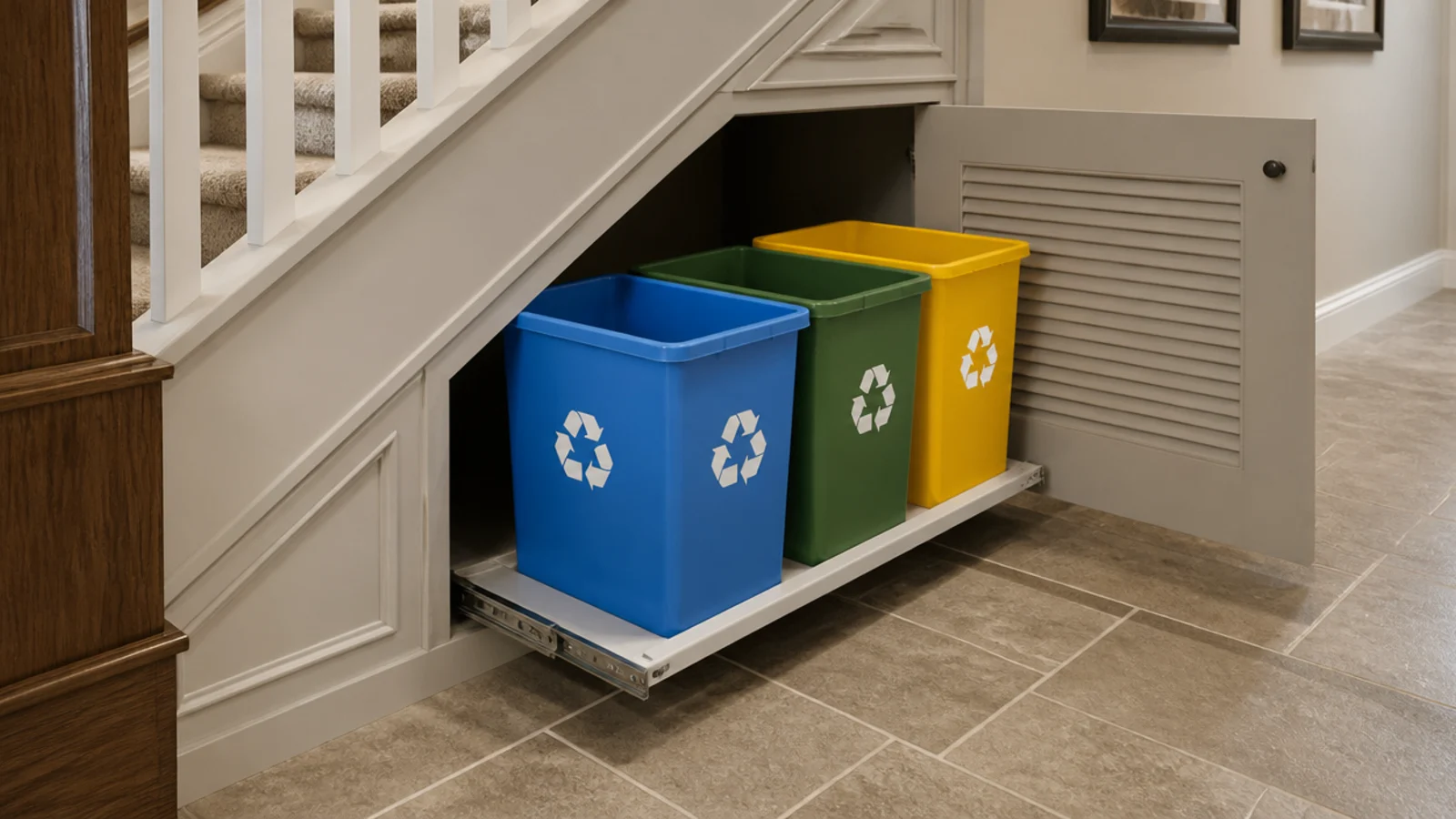
15. A recycling pull-out with a vented door
Three sorting bins on a sliding frame need roughly 24 inches of width in the middle band. Line the base with a removable tray and vent the door, because a closed cupboard of recycling makes itself known within a week.
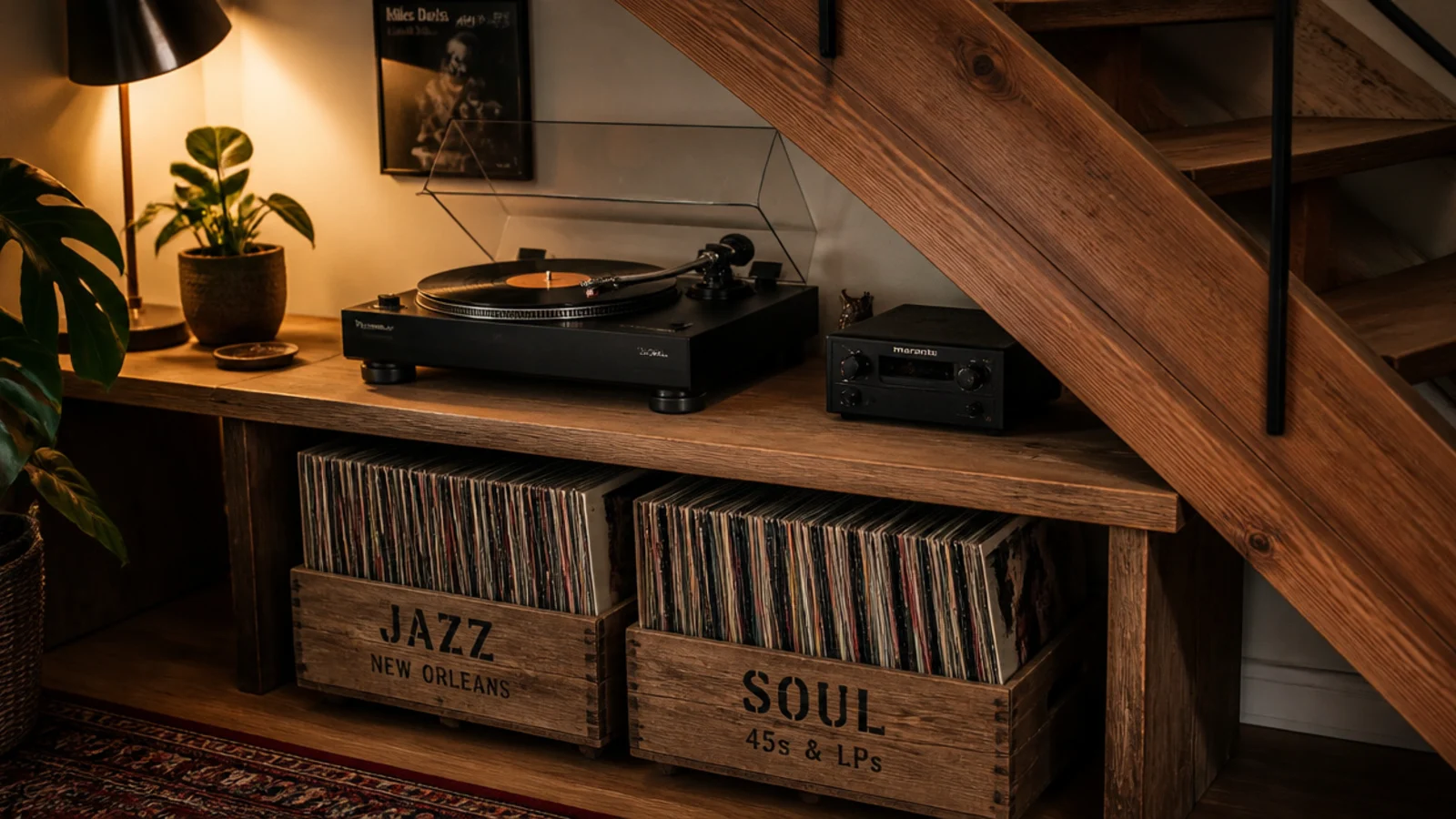
16. A record and hi-fi niche at seated height
A vinyl sleeve is 12.4 inches square, so allow 13 inches of shelf depth and height. Keep records upright and packed lightly. Set the deck at 30 to 36 inches so it is level with a seated ear, not down at ankle height.
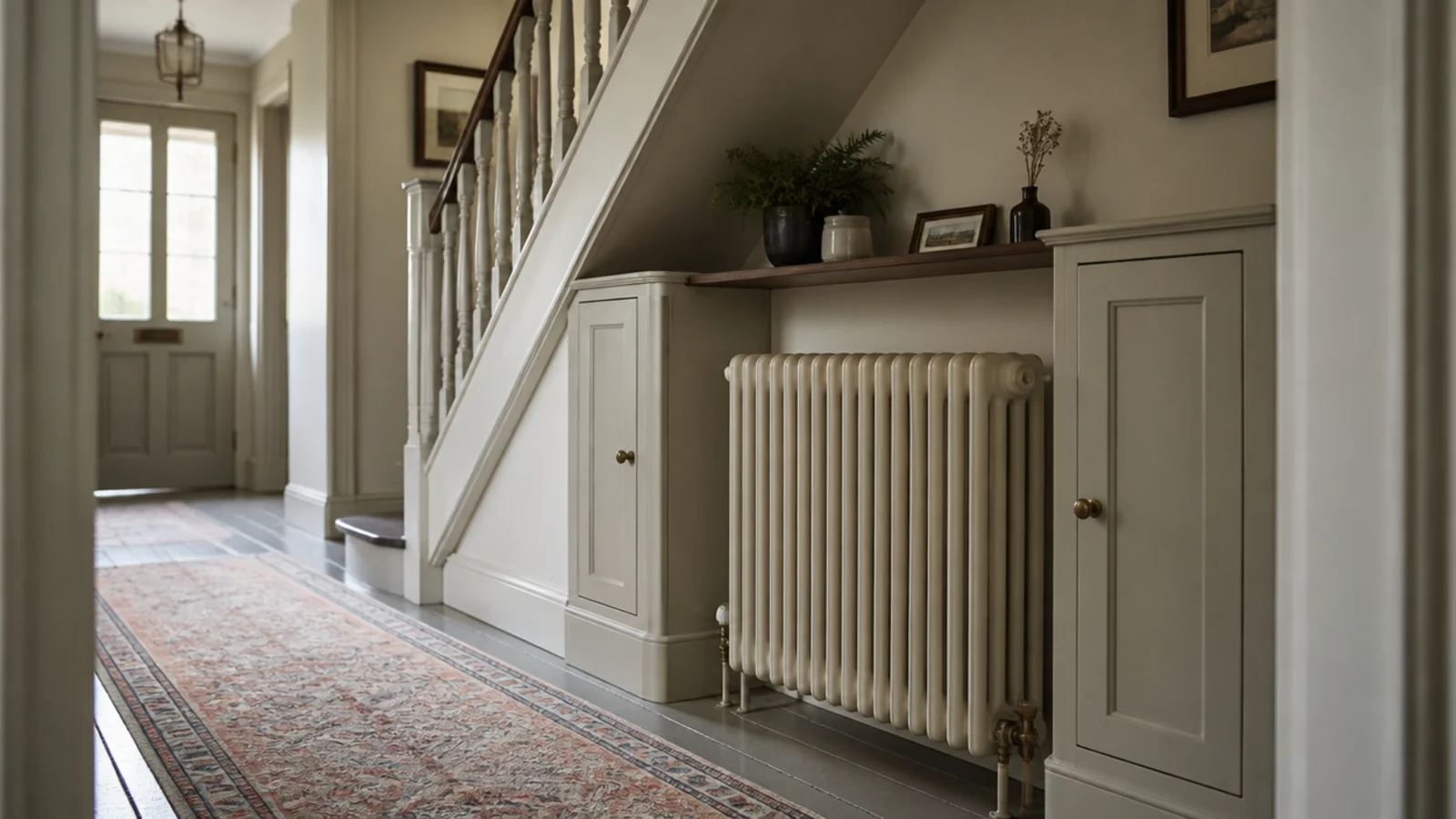
17. Flanking cupboards either side of a radiator
Halls often have the radiator under the stairs. Do not box it in — an enclosed radiator loses a noticeable share of its output. Build slim cupboards either side and run a shelf above with a 4 inch gap, so the convection path stays open.
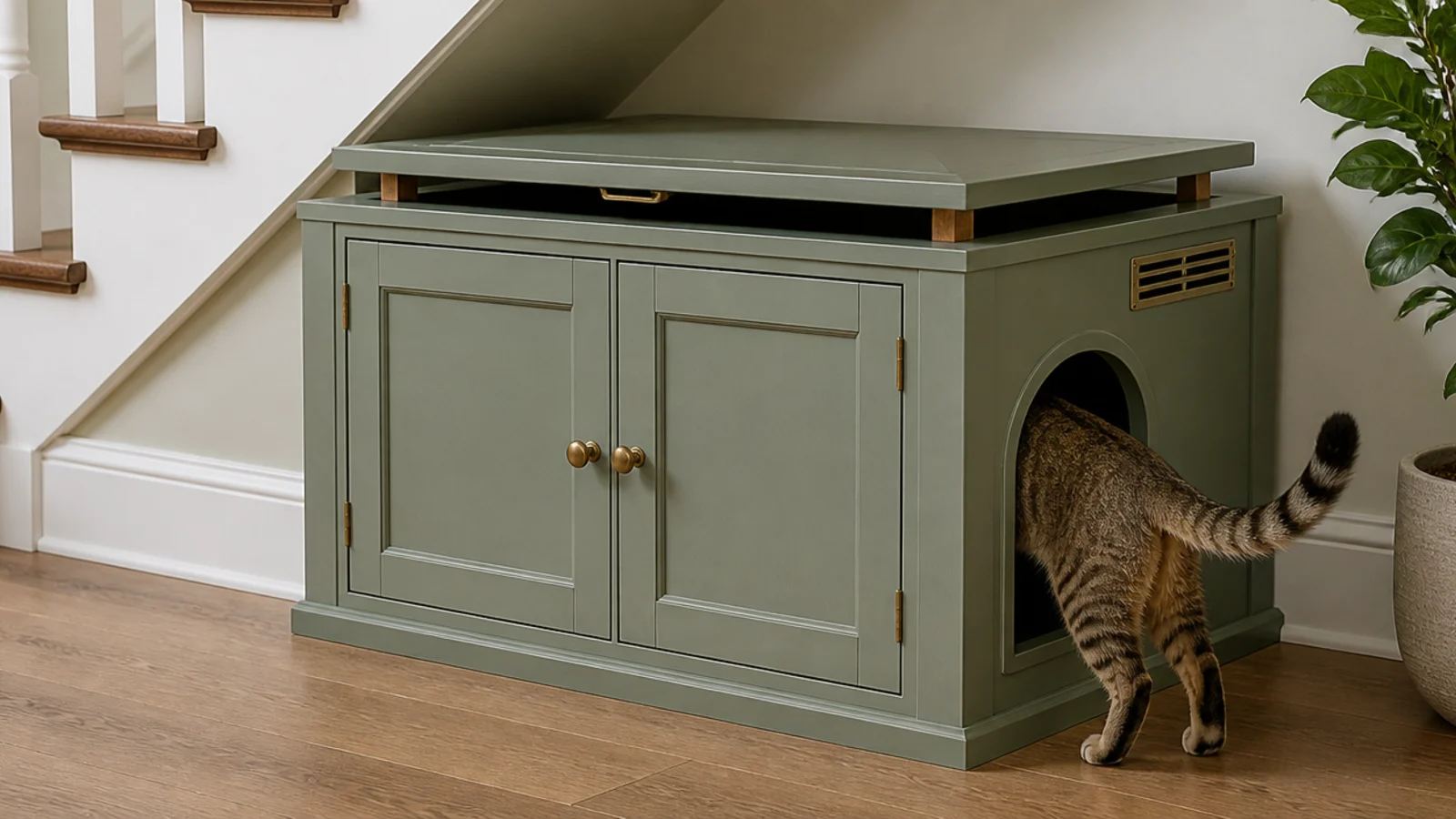
18. A litter tray cabinet with a side entrance
Allow 24 by 18 inches of floor and a 7 inch opening set 4 inches up. Make the top lift off for cleaning and cut a vent at the far end. Wipeable vinyl on the base saves the timber, and an enclosed tray without airflow simply concentrates odour.
19. Wine cubbies cut into the mid band
Bottles lie flat at 3 inch centres, and a standard bottle is 12 inches long by 3 across. Cubbies 13 inches deep swallow them completely; 9 inch cubbies leave the necks proud, which is easier to read. The under stairs wine storage guide covers temperature.
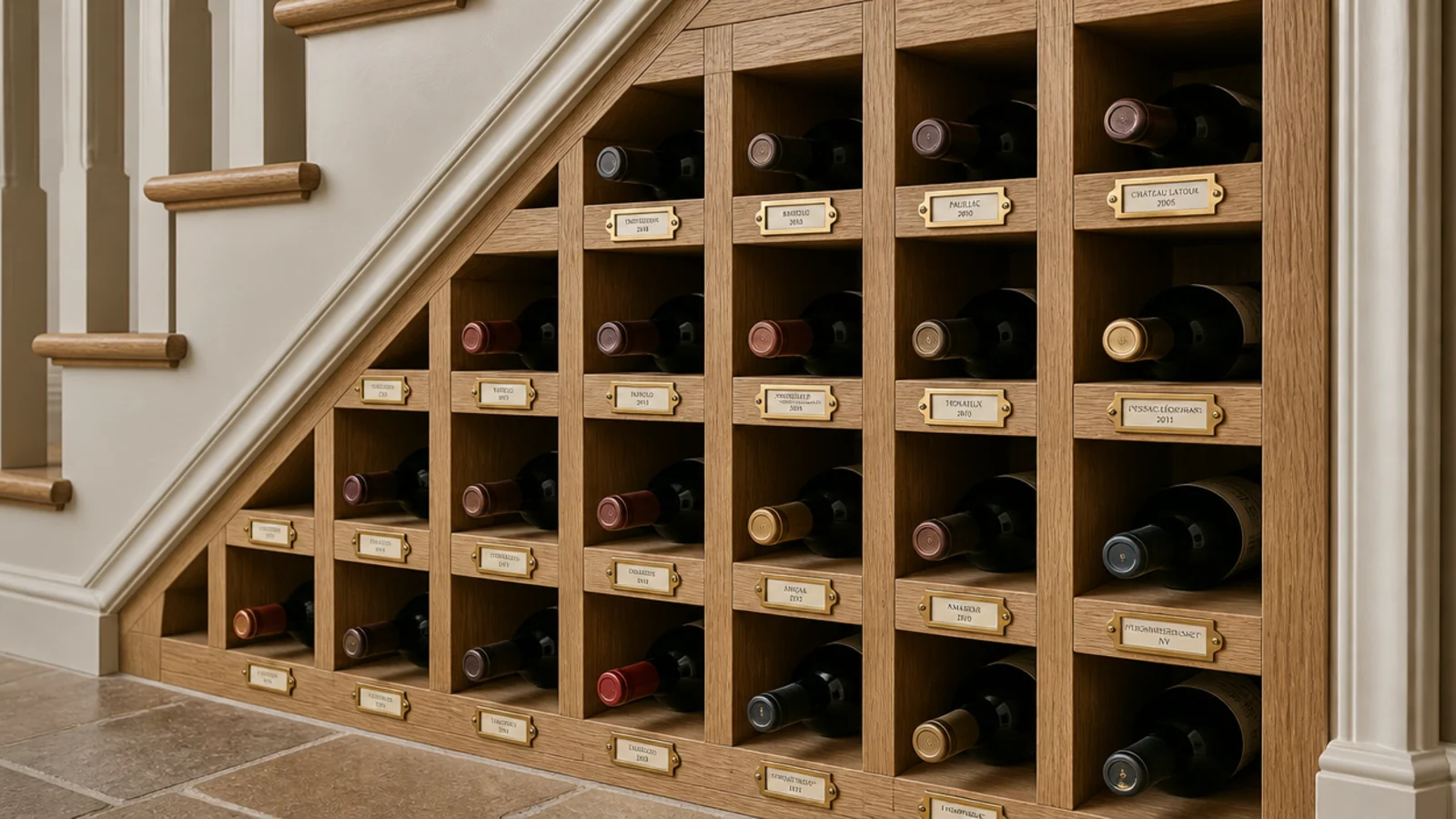
20. Toy drawers that roll out onto the rug
Keep toy drawers 12 inches deep so a small child can see the bottom, and put them on 2 inch castors so they come to the room. A plywood strip on the floor stops castors sinking into a hall runner and jamming.
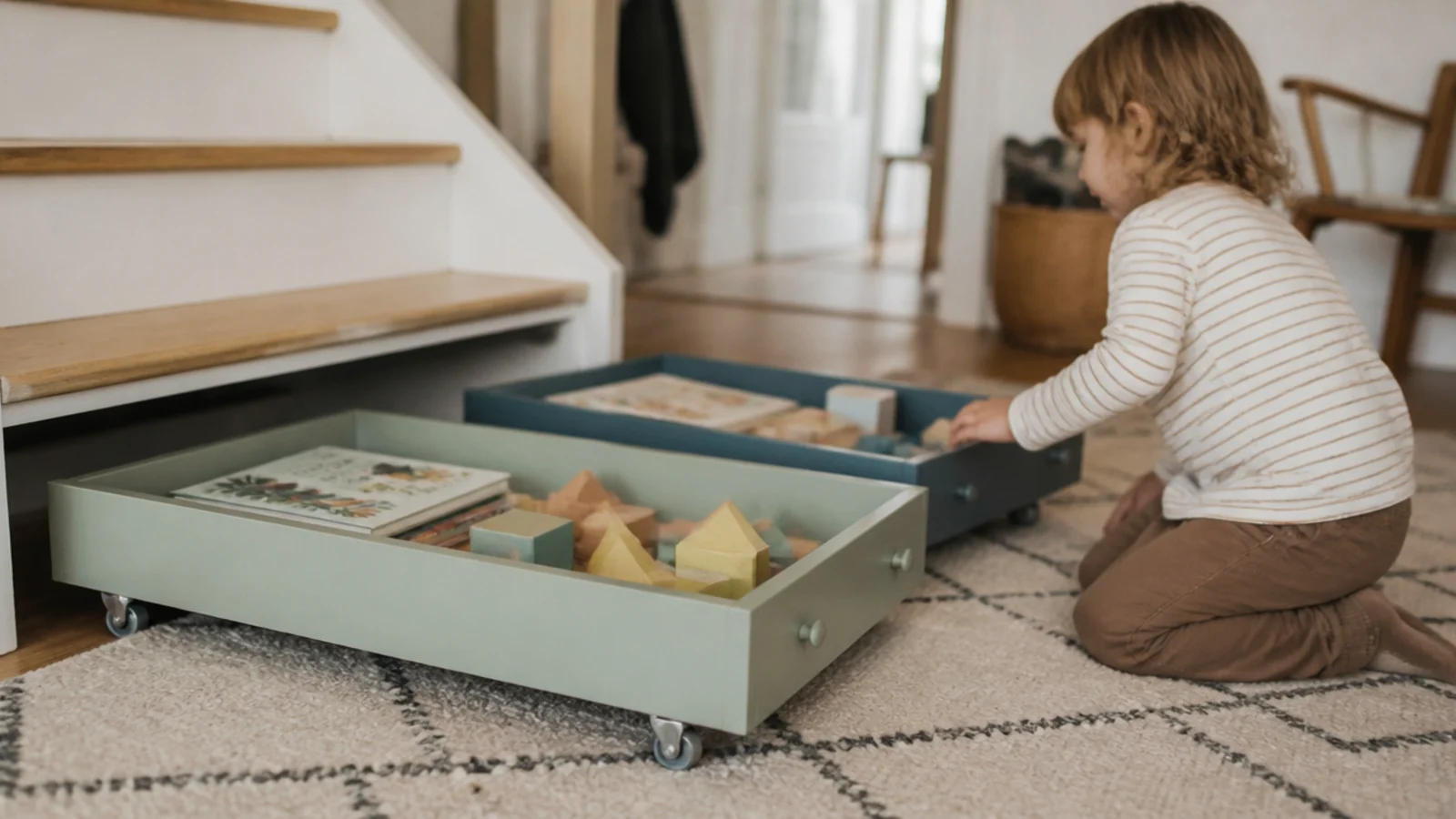
21. Flat pull-out trays for the shallow end
Where the ceiling is 12 to 18 inches, a tray 4 inches tall on short runners still holds shoe care kit, spare bulbs and batteries. It costs about £30 in ply and hardware and turns the least useful part of the wedge into the tidiest drawer in the house.
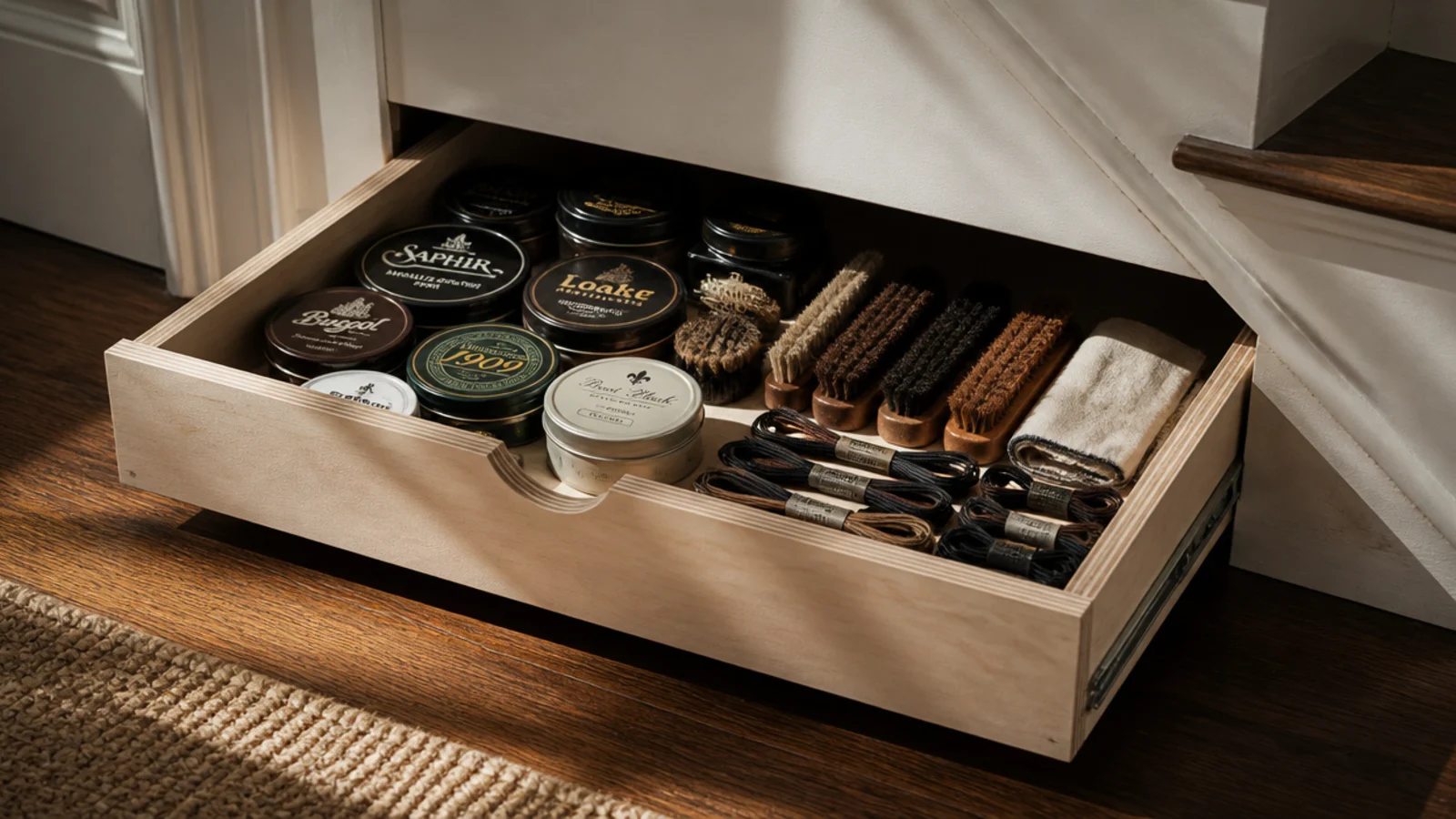
22. One big drawer on castors instead of a cupboard
Old hall floors are rarely flat enough for long runners. A plywood box on four 2 inch castors, pulled by a rope handle, does the same job for a third of the price and tolerates a floor that runs out of level by half an inch.
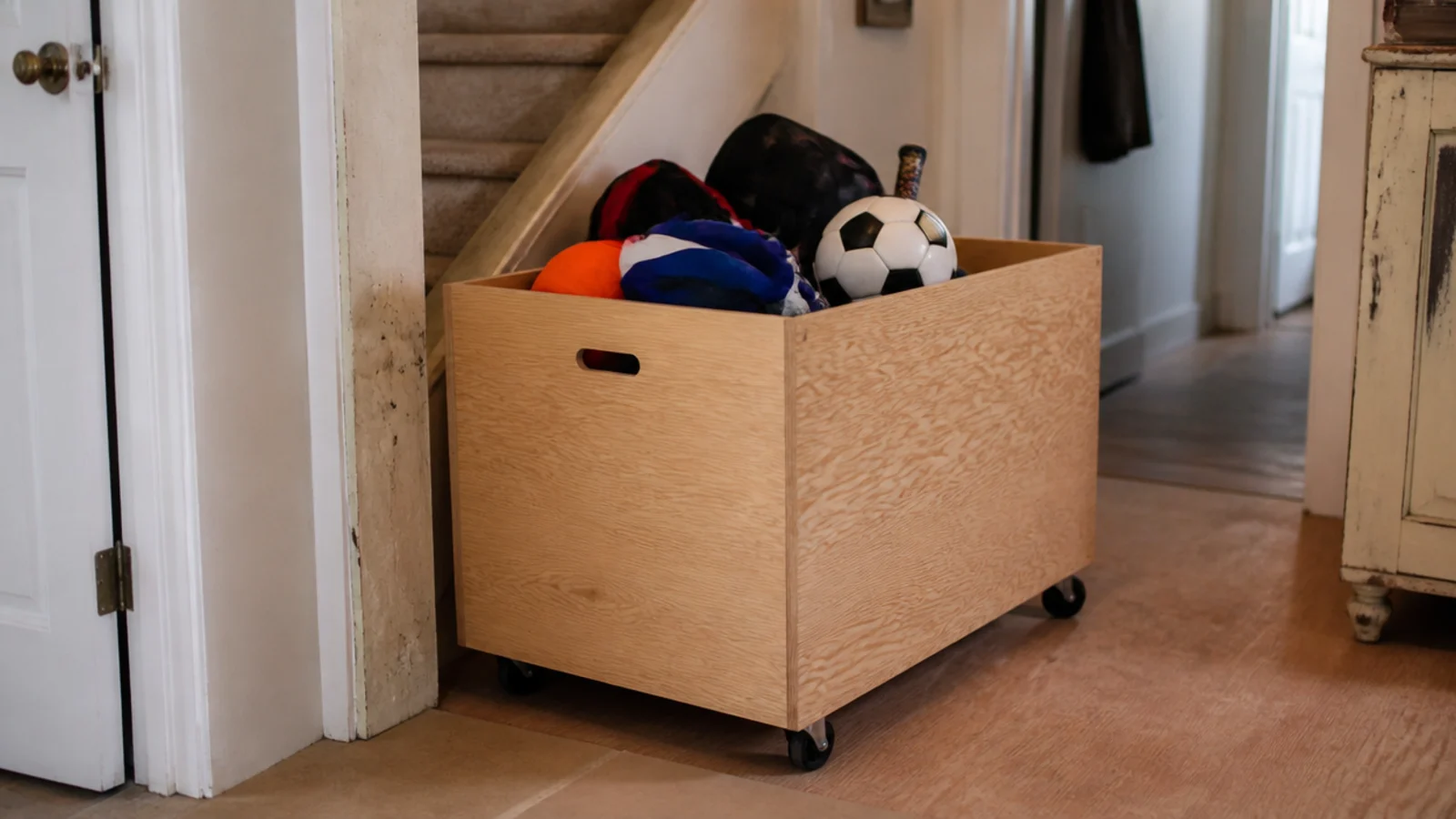
23. Compression bags for spare bedding
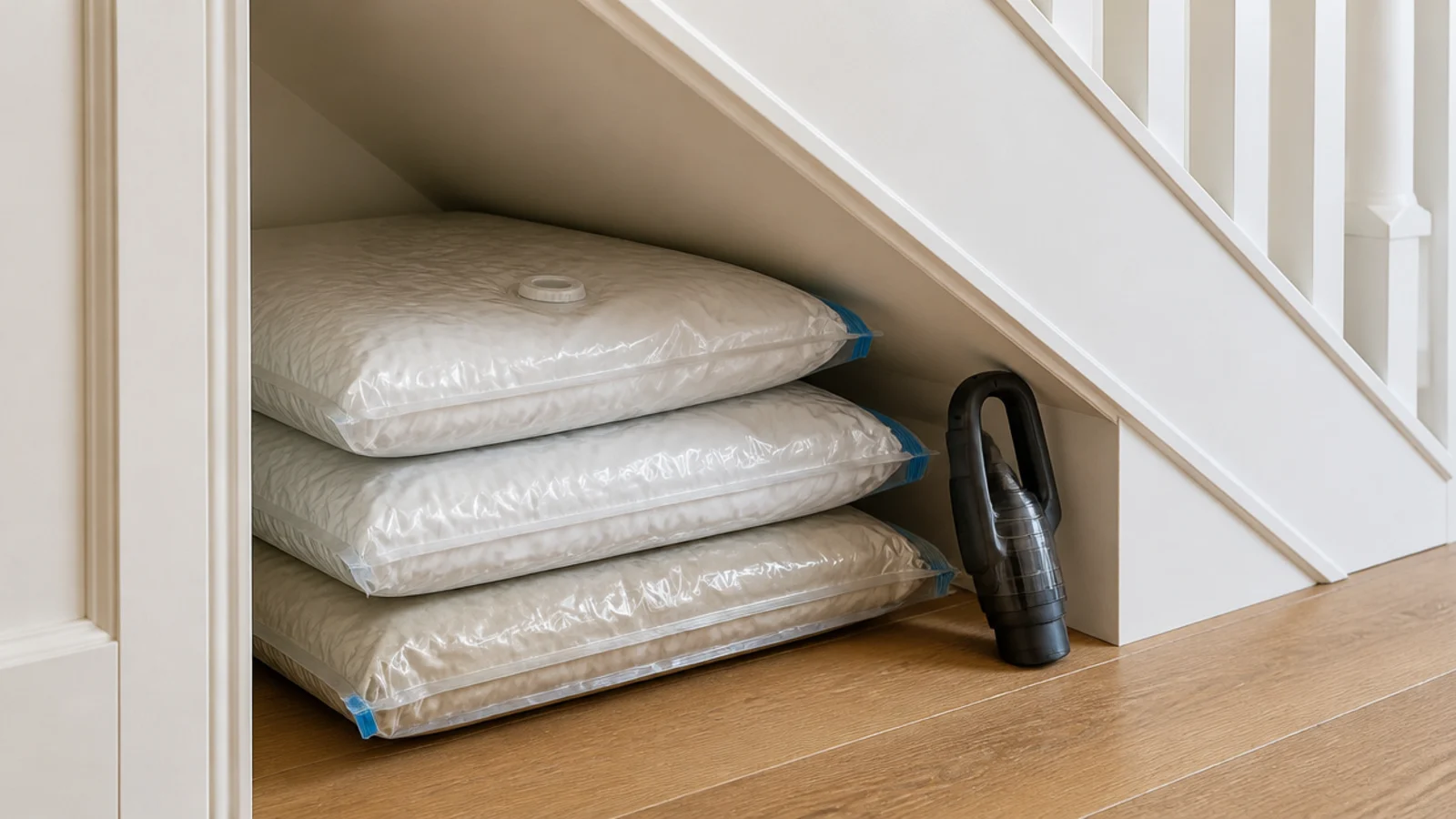
A vacuum bag cuts a duvet's volume by roughly half and turns it into a flat slab that slides into the tightest triangle. Keep them off a cold external wall and open them once a year to air the contents, or they come out smelling of the cupboard.
24. A sports kit sled for the crawl zone
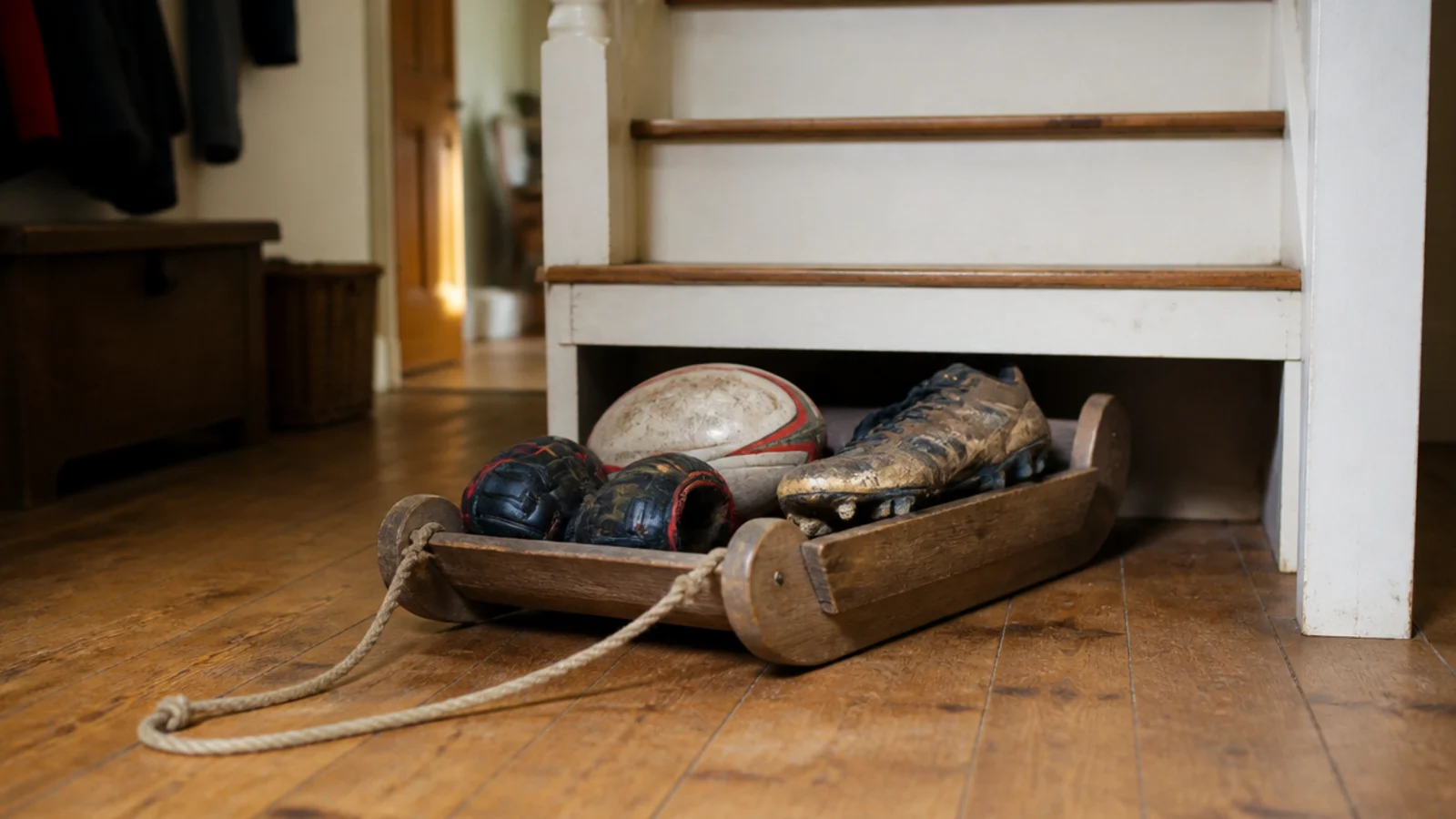
A low timber sled with a rope handle drags out onto the hall floor loaded with boots and pads. Fit felt or plastic glides underneath rather than castors if the floor is boards, and keep the load under about 40 pounds so a teenager can move it.
25. A cable and tool tray at the very front
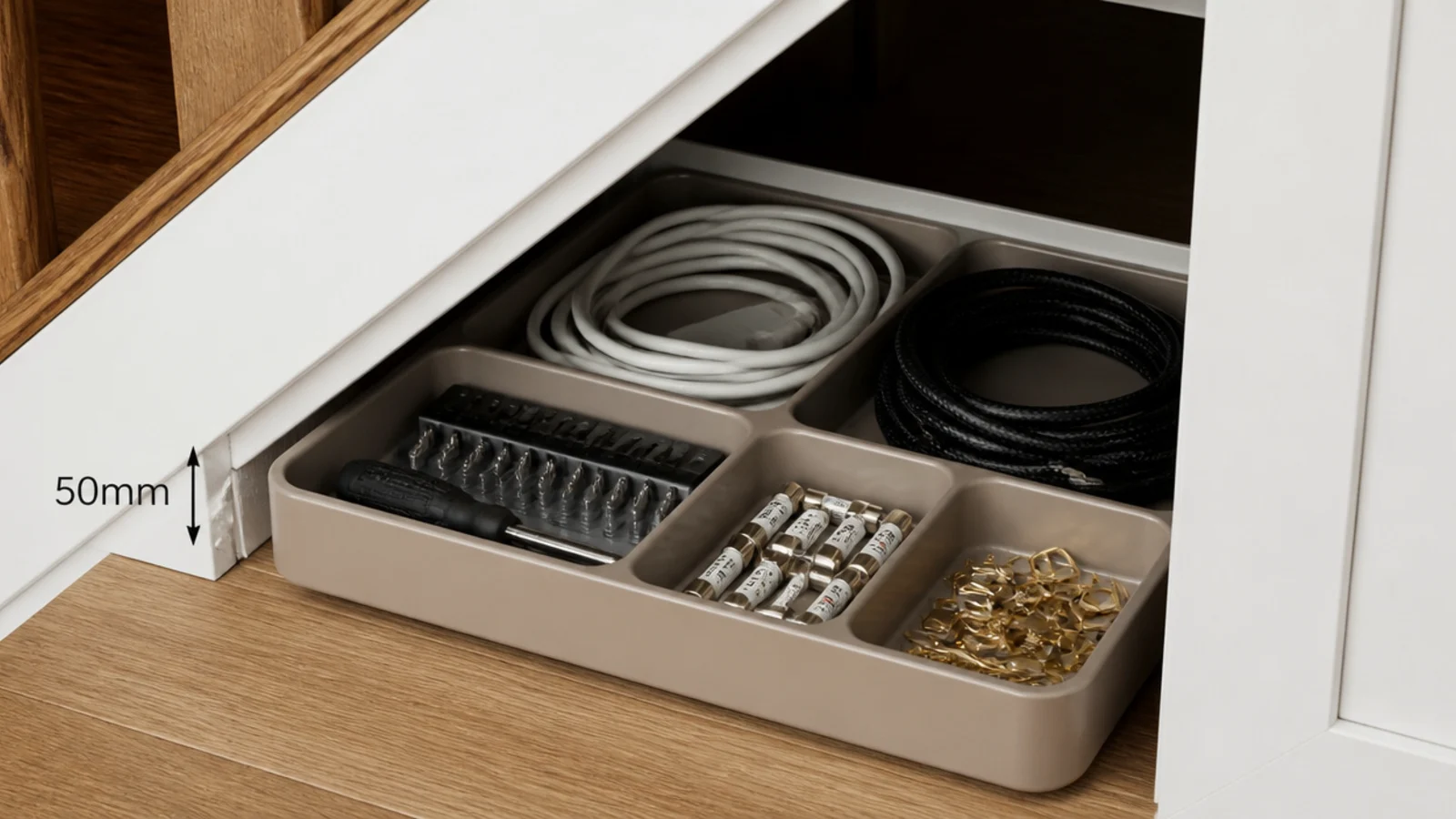
Small things need to be nearest the opening, not deepest in the wedge. A divided tray 3 inches deep just inside the door holds fuses, picture hooks, cables and a screwdriver set, and stops the whole lot being tipped out on the floor to find one item.
26. Store flat things on edge in slots
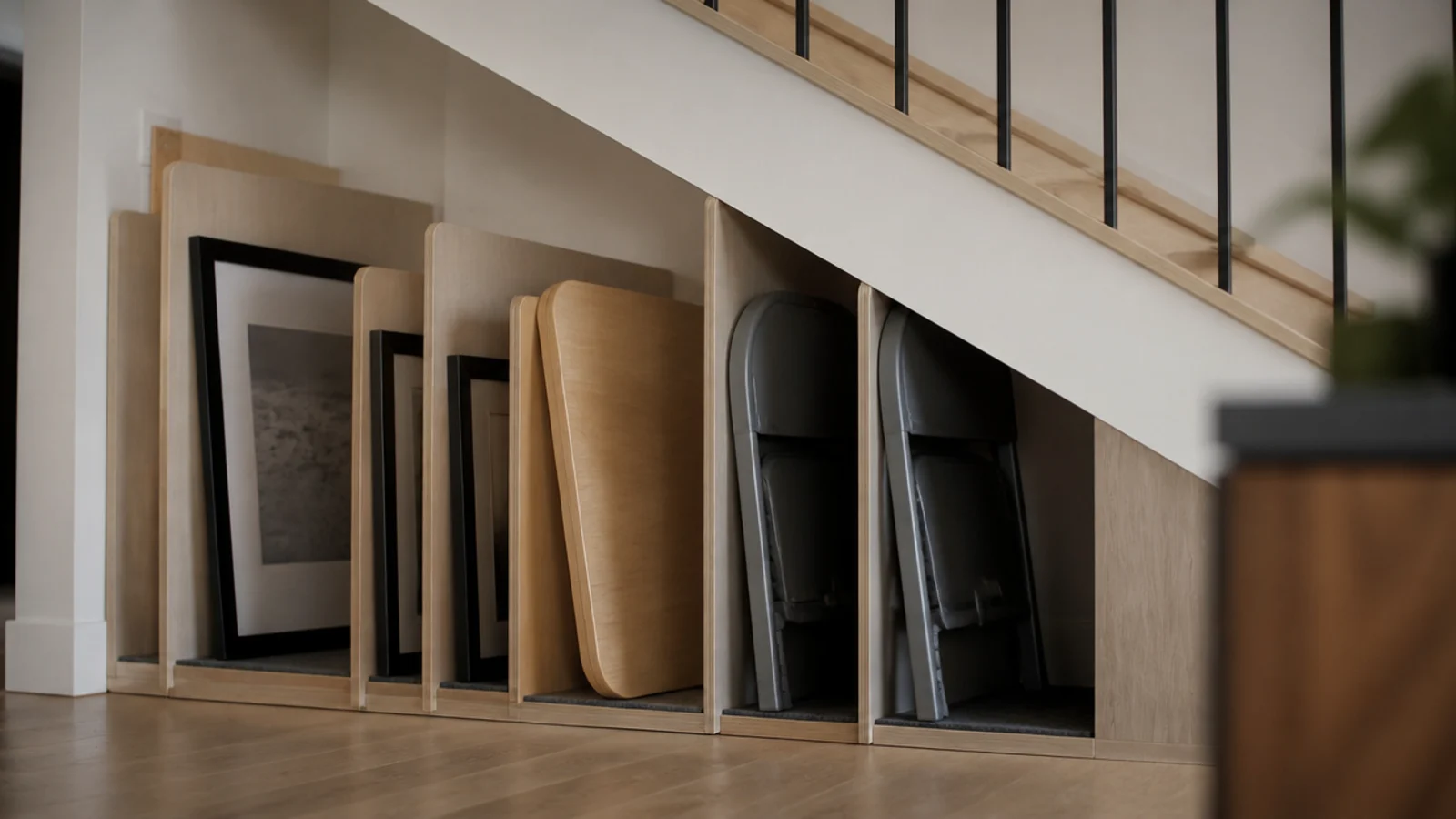
Framed art, a folding table top and spare shelves all store upright in plywood fins spaced at 2, 3 and 4 inches. Felt strips along the base stop edges chipping. Flat items stacked horizontally always become a pile nobody wants to dig through.
27. Christmas boxes at the deepest point
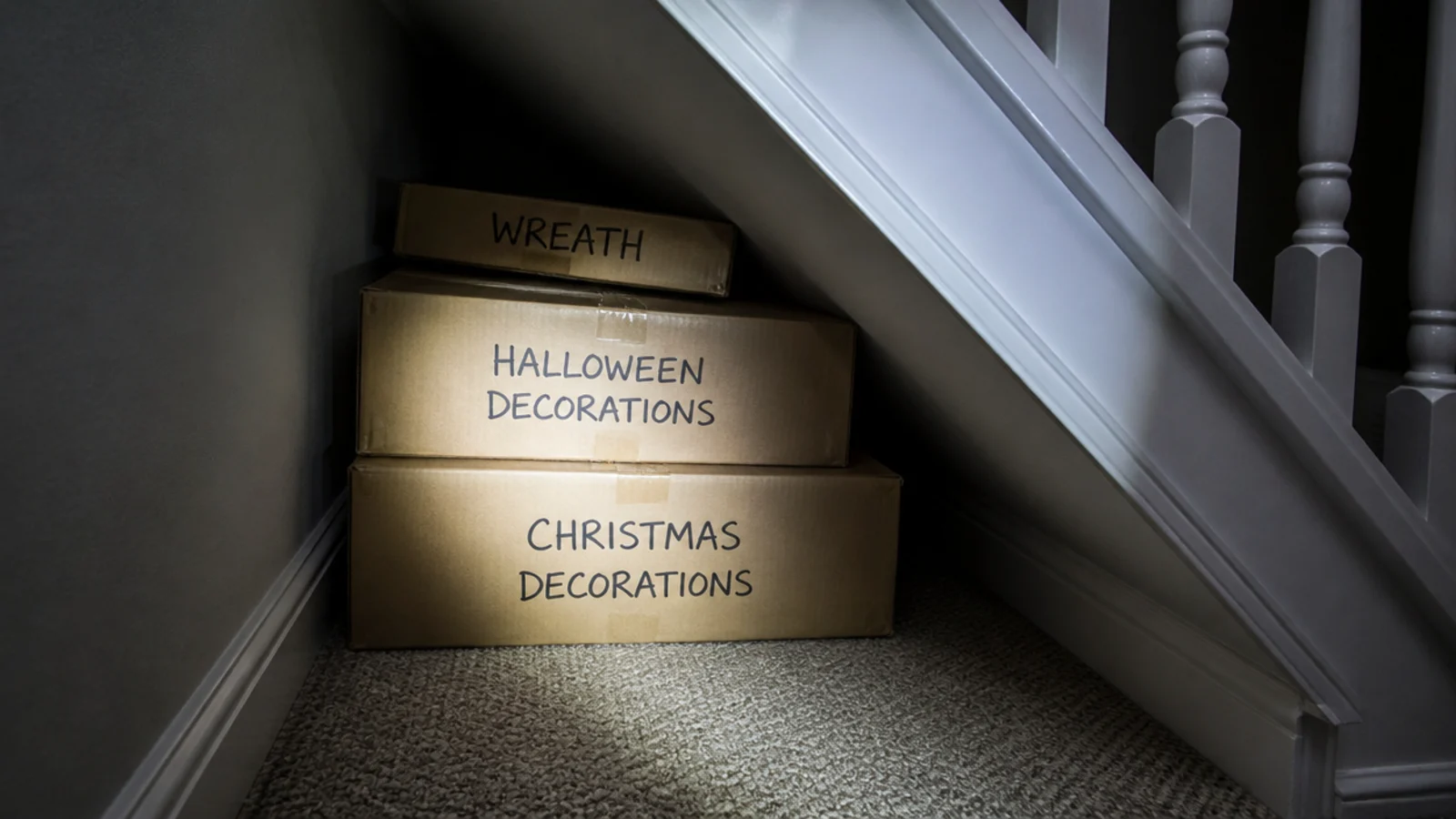
The last 24 inches of the triangle are worth almost nothing weekly and everything annually. Label the boxes on two faces so you can read them at an angle by torchlight. Never store paint, aerosols or fuel there — the stair is an escape route.
28. A tube rack for gift wrap and posters
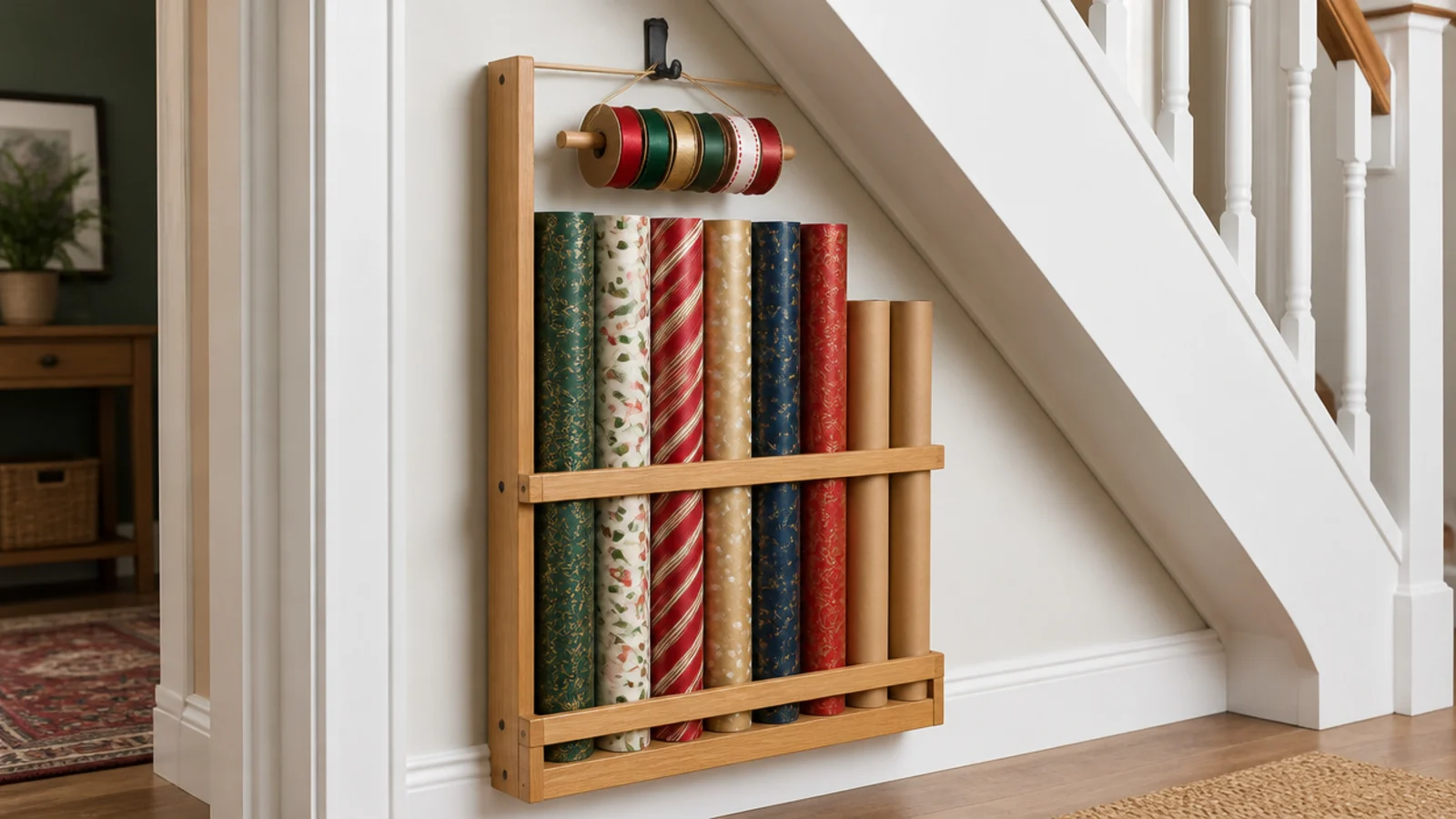
Rolls of paper are 30 to 33 inches long and stand where nothing else does. A narrow rack against the side wall with a 6 inch deep base tray holds six rolls upright, with ribbon on a hook above. It costs about £15 in offcuts.
29. Slot the folding table beside the string
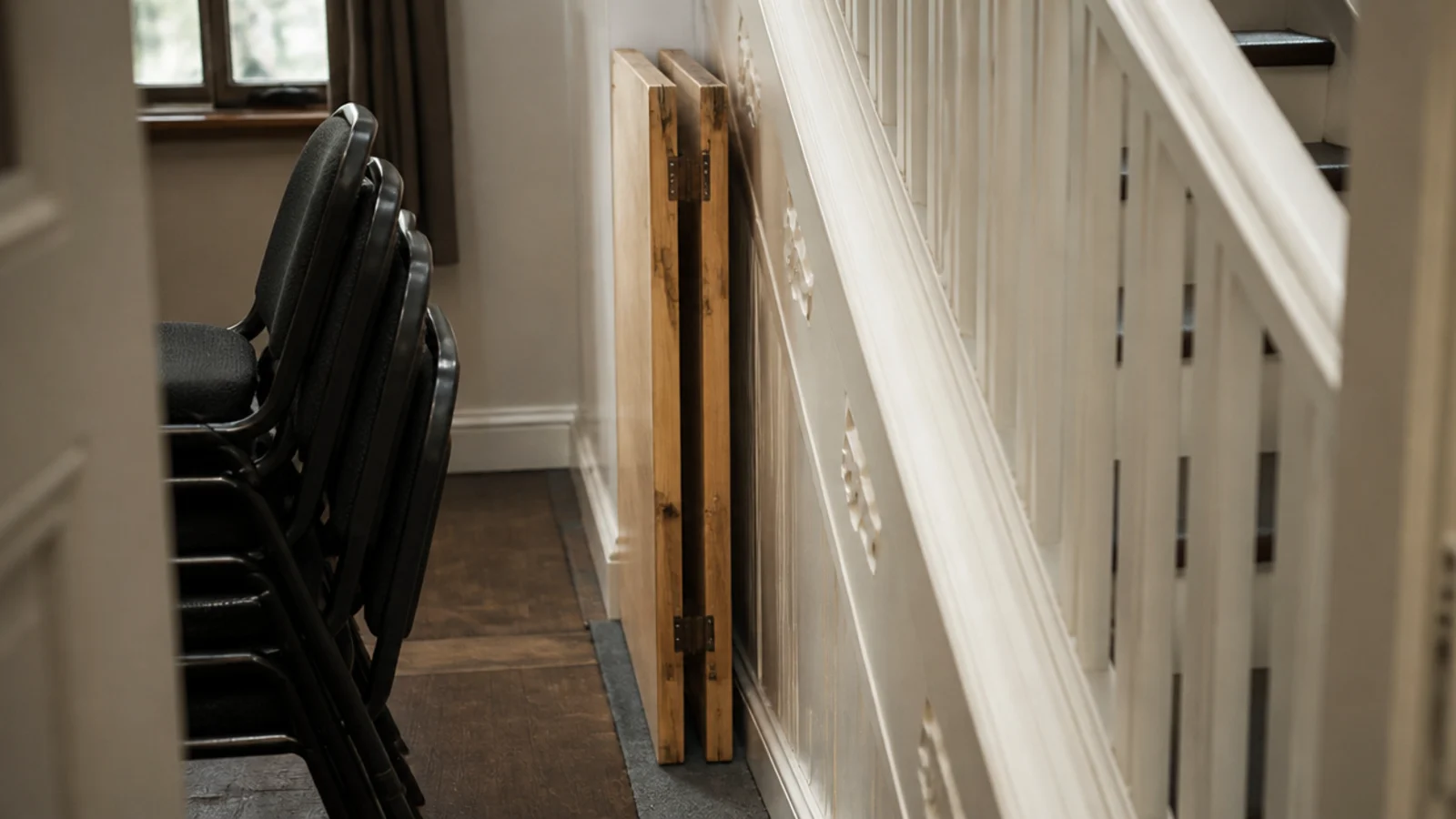
A folded trestle is 2 to 3 inches thick and disappears into a slim slot beside the stair string with a felt pad under it. That gap is dead space in every hallway, and it will also take folding chairs, a spare shelf and a bed board.
30. Cut a hatch you can genuinely get through
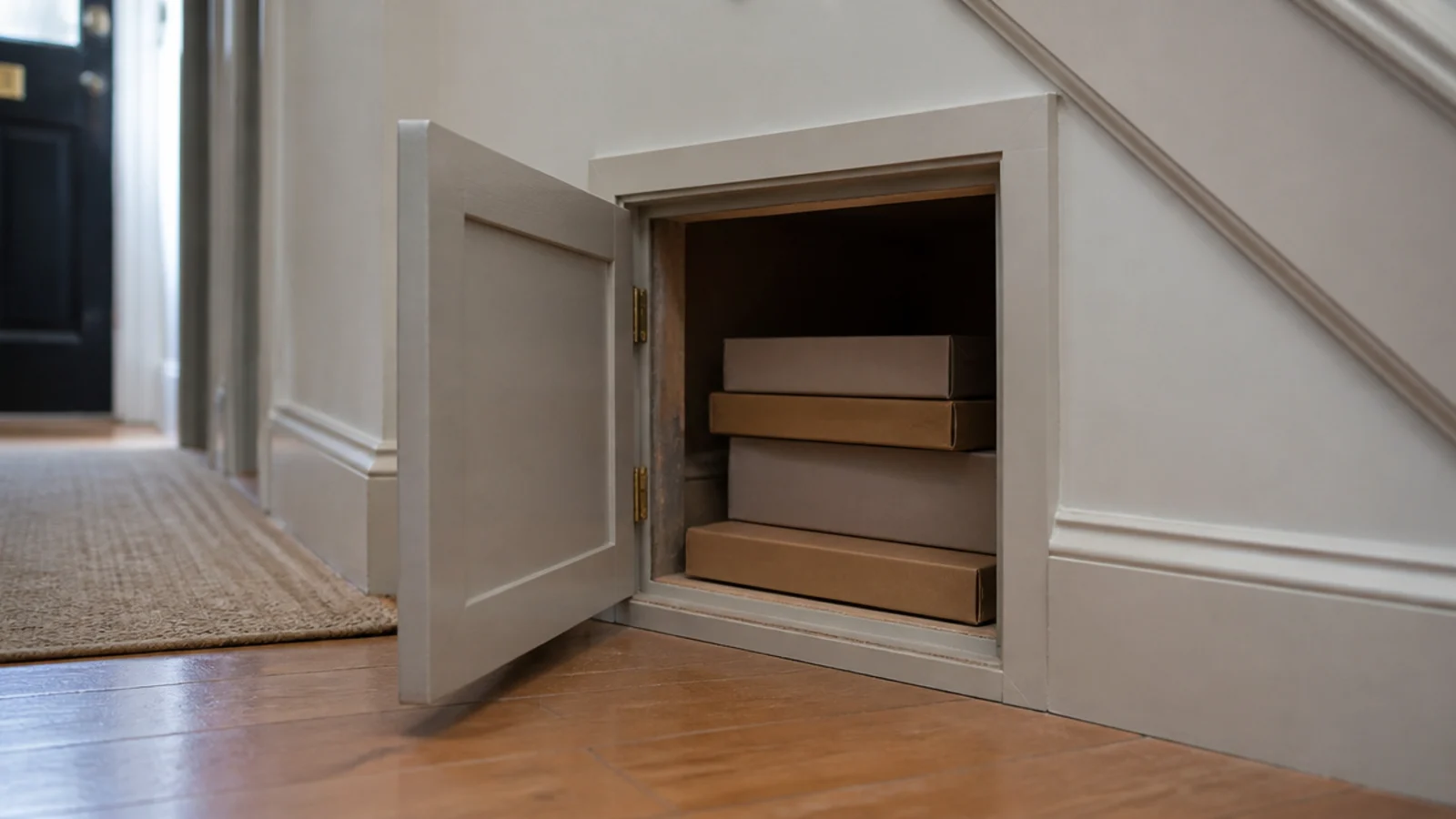
If the low end gets a hatch rather than a pull-out, make it at least 21 inches wide so an arm and shoulder pass, and hinge it at the side so it stays open without a stay. A 14 inch hatch looks neat and is functionally a sealed void.
For the pantry version of the middle band, the under stairs storage pantry guide has shelf spacings for tins and boxes. If the hall floor is being replaced at the same time, wooden flooring covers what survives wet boots, and floating shelf ideas covers the wall above the run.
Mistakes to Skip
- Enclosing the boiler, gas meter or consumer unit. All three must stay accessible, and a consumer unit additionally has to be housed in a non-combustible enclosure rather than a timber cupboard.
- Putting fixed shelves in the crawl band. Below thirty inches of headroom you cannot see the back, and within a year that shelf holds only things you have forgotten about.
- Boxing in a hallway radiator to make the run look neat. An enclosed radiator loses a noticeable share of its output and the hall it was sized for gets colder every winter.
- Fitting a standard door in a three-storey home. A cupboard opening onto a protected stairway normally needs FD30 rating, and swapping it later costs more than specifying it correctly.
Frequently asked questions
How do I decide what goes where under my stairs?
Split the run into three bands by headroom. Above sixty inches you can walk in, so that band takes hanging clothes, a laundry stack, a pantry or a desk. Between thirty and sixty inches you get drawers, benches and base cabinets. Below thirty inches nothing works unless it rolls or slides out to you.
What weight rating do under stairs drawer runners need?
A hundred pounds per pair for anything you load with shoes, tools or tinned food, and heavier if the drawer is over thirty inches wide. Full extension matters more than the rating, because a partial extension runner hides the back third of the drawer, which is the part of the wedge you were trying to reach.
Is it cheaper to build or to buy under stairs storage?
Buying flat-pack carcasses and cutting one raking end panel usually lands between four hundred and nine hundred pounds. Bespoke joinery starts near eighteen hundred and climbs past four thousand once pull-outs are involved. A batten-and-plywood fit-out you do yourself comes in around a hundred and fifty.
Can I run power into an under stairs storage area?
Yes, and a socket is worth having for a vacuum dock, a router or a desk. It must be installed to the wiring regulations and certified, and it must not be a reason to enclose the consumer unit, gas meter or boiler, all of which have to stay accessible. Keep sockets off the floor where anything wet might stand.
Which under stairs storage solution adds the most usable space?
A bank of deep pull-out drawers in the low and middle bands, because it converts the part of the wedge nobody can otherwise reach. A run of three drawers on twenty-two inch runners recovers roughly fifteen cubic feet that a door and fixed shelves would leave permanently empty.
Want more like this? Browse all 14 under stairs storage guides — they all use the same measurements and budget tiers.
Pin it for later
Save this to your Under Stairs Storage board
Pin it now so it is waiting for you when the tape measure comes out — and so the next person hunting for this idea can find it too.
Save this pinKeep going
More ideas worth saving while you have the tape measure out.