Under Stairs Storage · UGC
20 Staircase Storage Under Stairs Ideas I Tried

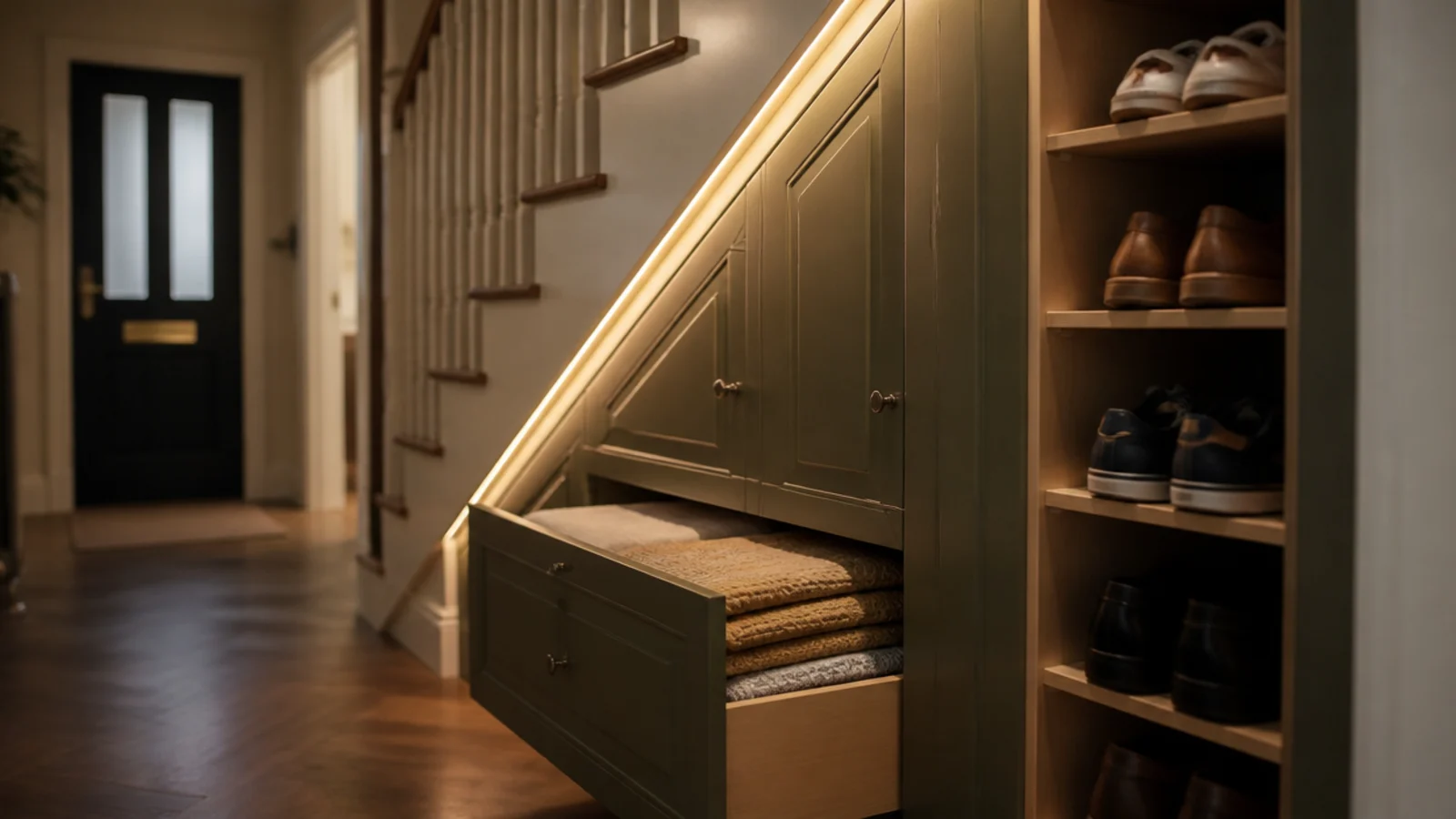
Two years ago I emptied the wedge under my own staircase onto the hall floor and started again. Some of the staircase storage under stairs ideas I tried are still there and earn their space every day. Four came out within a year, one within a fortnight. What follows is the honest version, with the numbers I wish somebody had given me before I bought a single runner, and the four failures explained properly rather than quietly left out.
In this guide22 sections — tap to openHide
- 1.How I judge staircase storage under stairs now
- 2.The deep pull-out drawer that changed everything
- 3.Baskets first, before I built anything
- 4.The curtain I eventually replaced with a door
- 5.Riser drawers I abandoned after two treads
- 6.The shoe tower that pulls out sideways
- 7.Open shelves that collected stair dust
- 8.Painting the inside pale, which I should have done first
- 9.A motion light I now fit everywhere
- 10.The desk that lost to footsteps overhead
- 11.A wine rack that ran too warm to keep
- 12.The dog bed the dog actually uses
- 13.Toy crates on castors that come to the room
- 14.A vacuum dock that freed a whole cupboard
- 15.Hooks along the slope for bags
- 16.Clear boxes at the back, labelled twice
- 17.Rehanging the door to swing outward
- 18.The litter tray cabinet I gave up on
- 19.A bracket that got the ironing board off the floor
- 20.Recycling bins that needed a vented door
- 21.Leaving the last bay open on purpose
- 22.What I'd Do Differently Now
How I judge staircase storage under stairs now
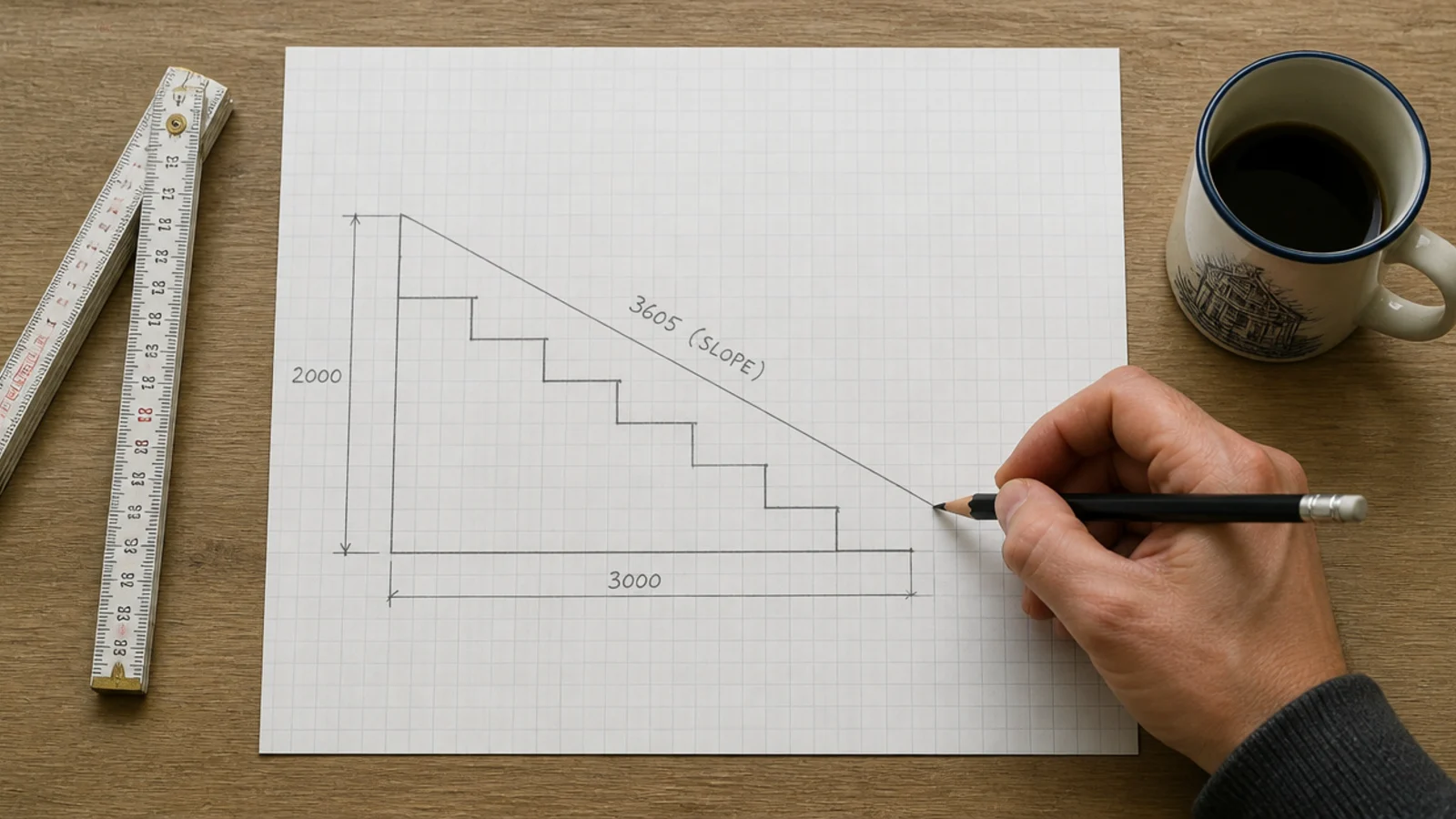
I draw the slope to scale on graph paper first. My flight loses about ten inches of height for every foot travelled toward the bottom step, which means the useful part of a nine-foot run is nowhere near nine feet. Above 60 inches I can stand. Between 30 and 60 I can kneel and reach. Below 30 I can only pull things out.
The second thing I check is what is already in there. My consumer unit sits at the tall end and the gas meter is next to it, so that bay had to stay an open void with a removable panel. Neither may be boxed in, and a consumer unit has to sit in a non-combustible enclosure — which ruled out the run of tall cupboards I had sketched.
The third is honesty about what I actually own. I counted eleven pairs of shoes at the door, four coats in daily use, one vacuum, one ironing board and roughly six cubic feet of things I touch twice a year. That list, not a photograph, is what the joinery should serve. There is a proper measuring sequence in the under stairs storage ideas guide if you are starting from scratch.
1. The deep pull-out drawer that changed everything
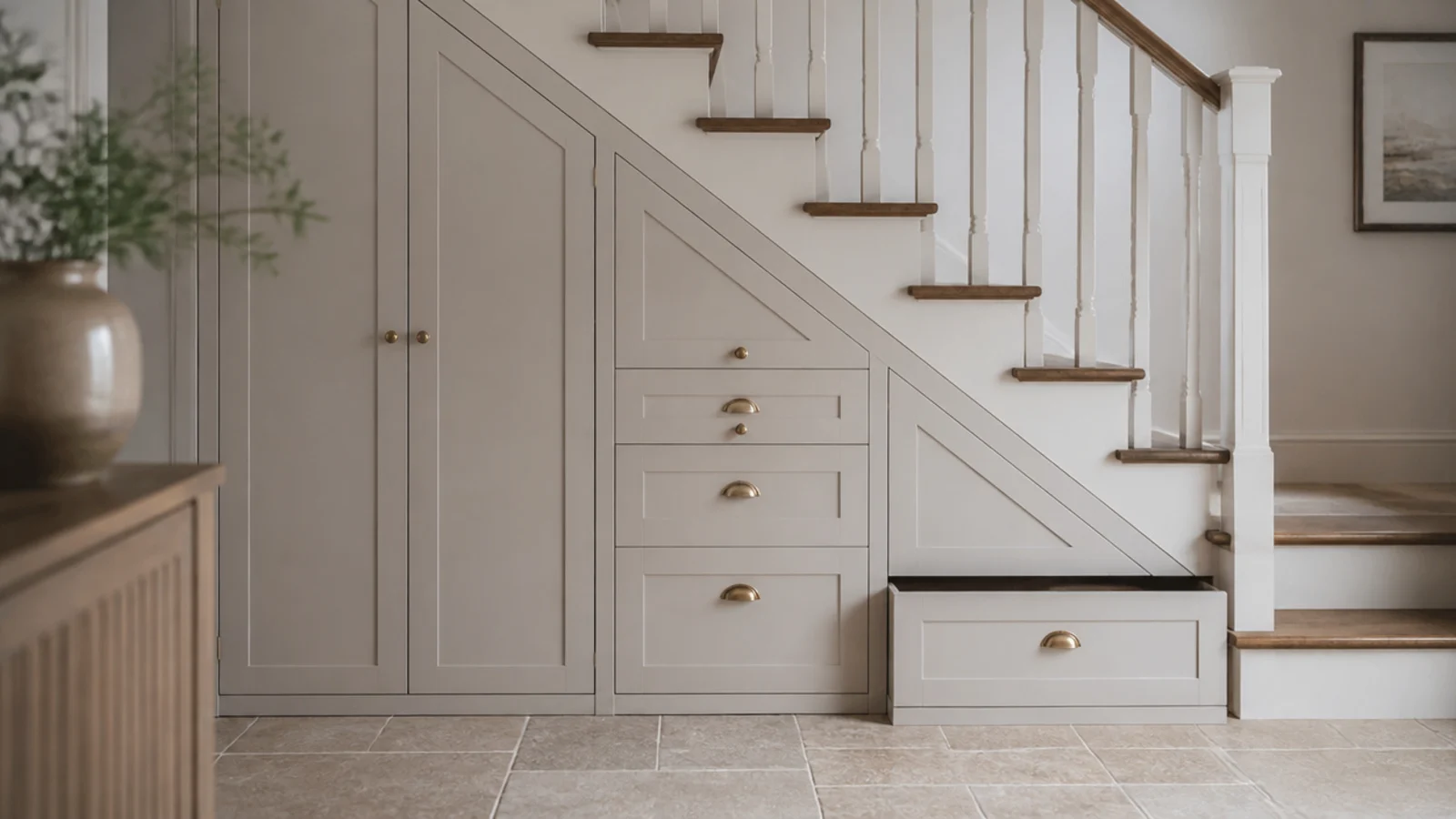
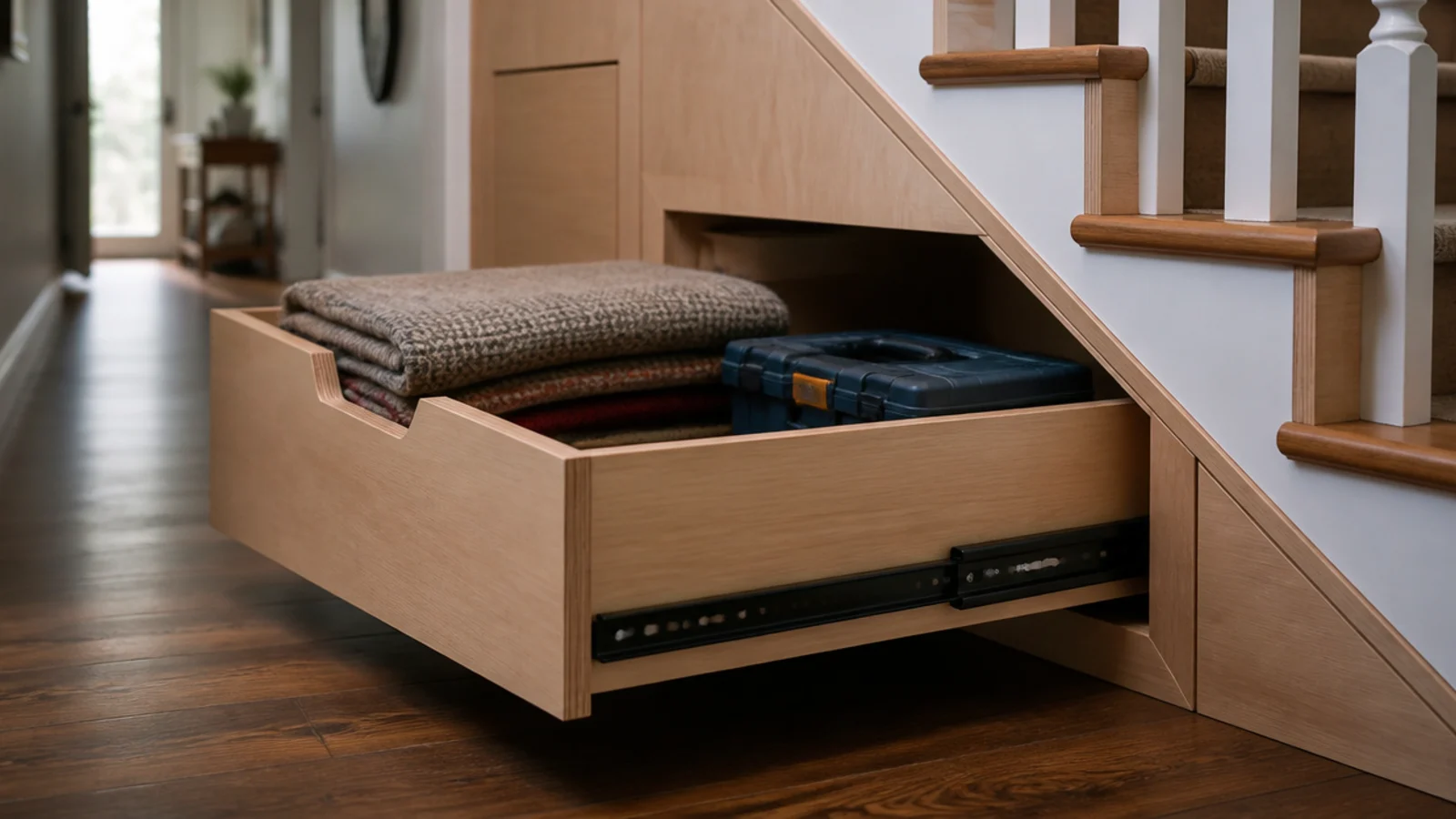
The single best thing I did. A plywood box on 22 inch full-extension runners rated to 100 pounds, about £35 for the pair. It reaches into the part of the wedge I had never once used, and because the drawer travels out fully, nothing hides at the back. If you do one thing, do this.
2. Baskets first, before I built anything
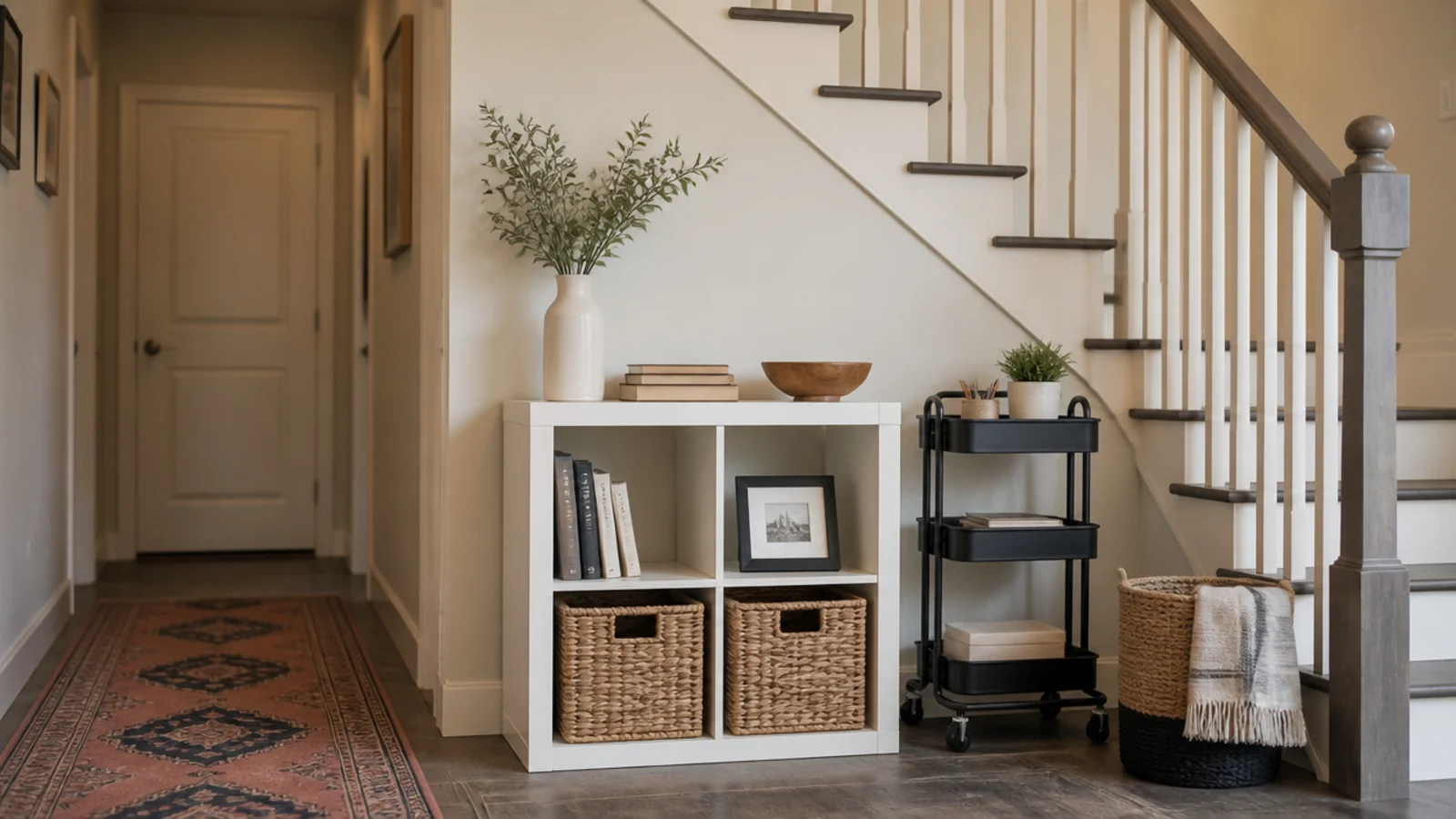
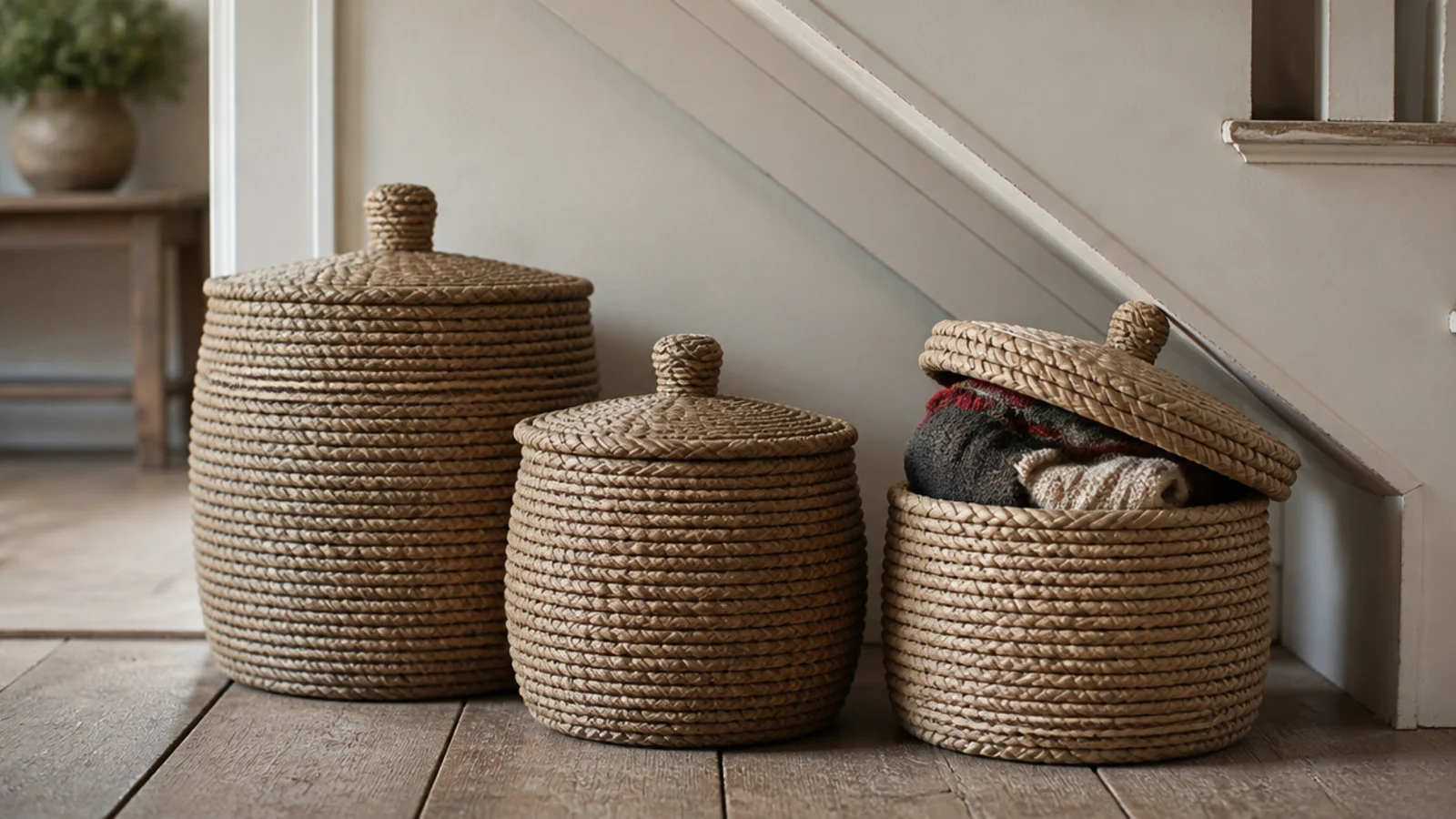
Three lidded seagrass baskets, roughly £60, bought me a year of watching what actually collected there before I committed to joinery. Lids mattered more than I expected — an open basket under treads is grey with grit within a fortnight. I still use two of them inside the finished cupboard.
3. The curtain I eventually replaced with a door
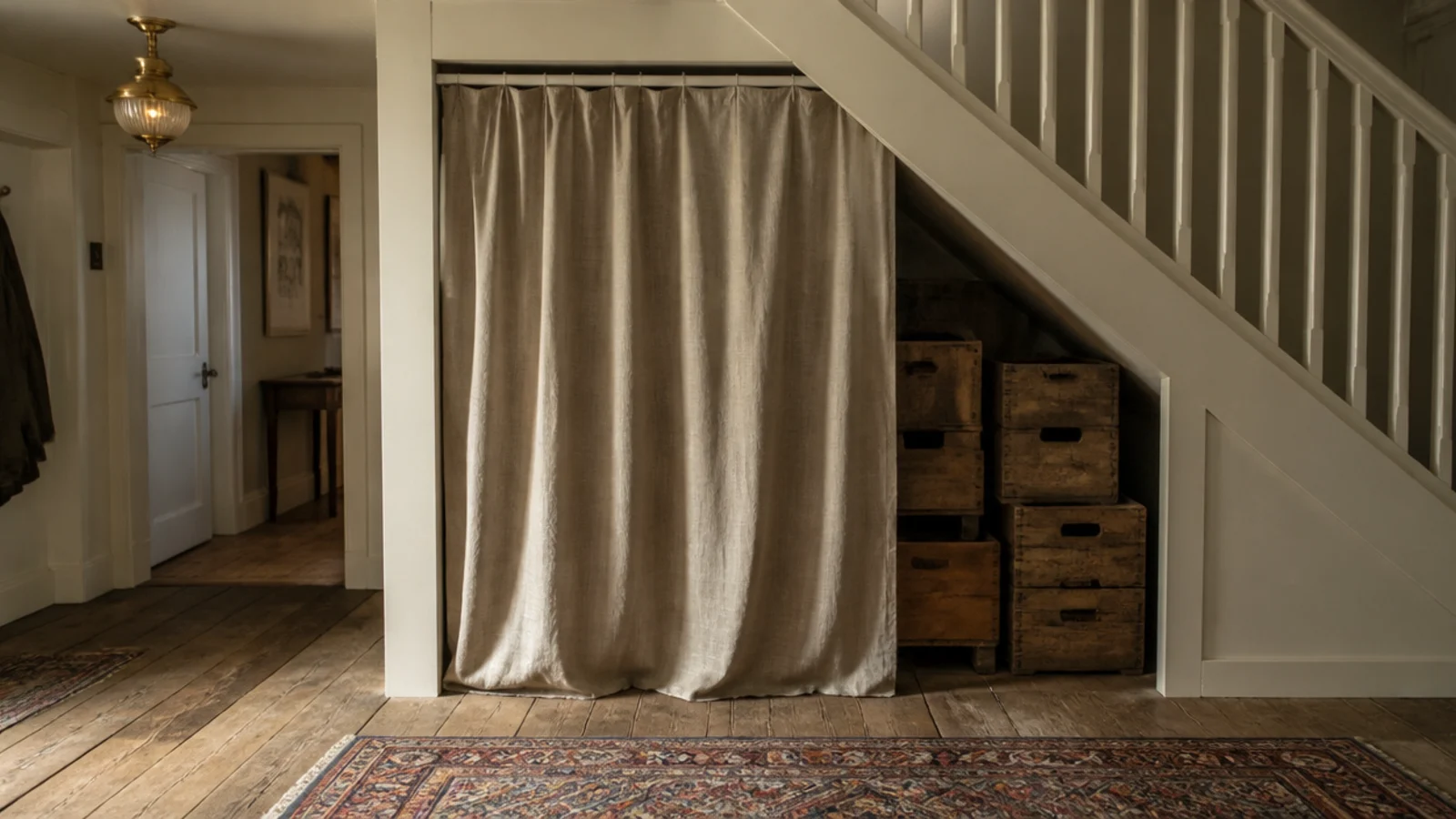
A lined linen curtain on a ceiling track cost about £45 and needed no swing space, which suited a hall 36 inches wide. It looked good for one season. Dust from the treads travelled straight through it, and I replaced it with a painted door at around £220 fitted.
4. Riser drawers I abandoned after two treads
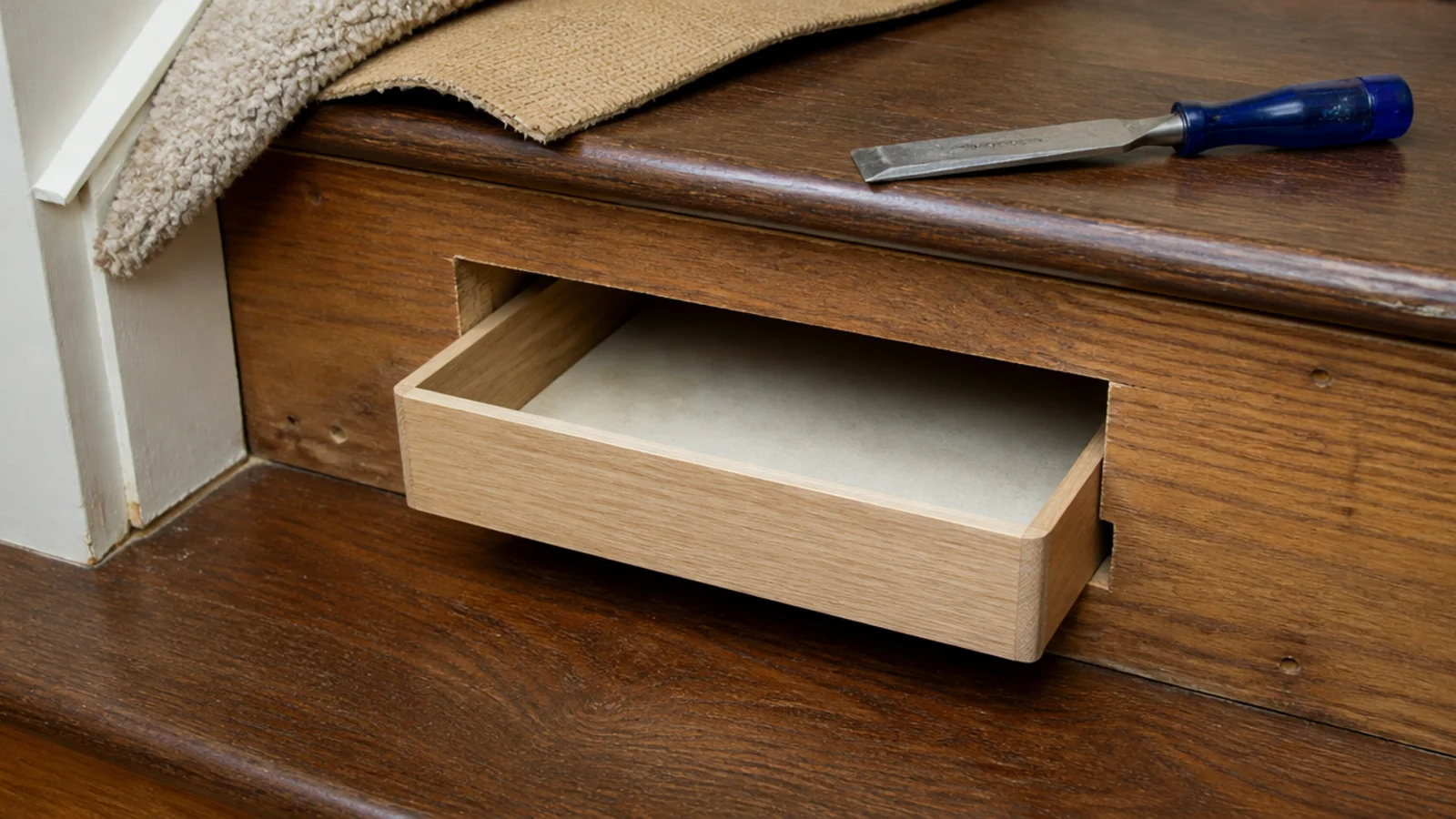
The idea is beautiful and the numbers are tight. A 7.5 inch riser leaves about six inches of usable drawer height once the framing is in, and the going gives you 9 to 10 inches of depth. I gave up because my treads are carpeted, and cutting a fitted stair carpet around drawer fronts is a job I could not do well.
5. The shoe tower that pulls out sideways
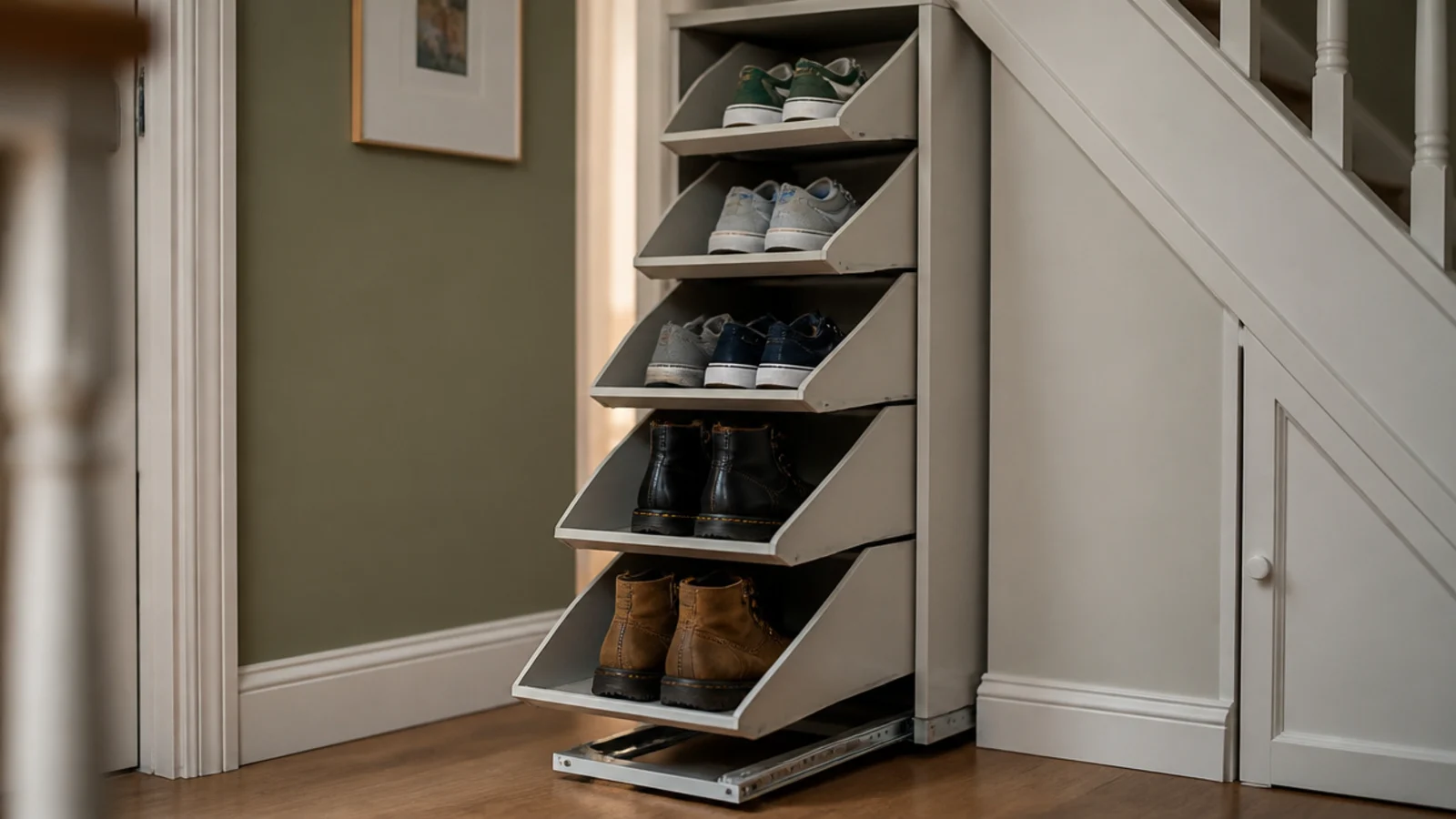
Fourteen inches of width, six tiers angled at about 15 degrees with a lip on each, and it holds fifteen pairs. Tiers 7 inches apart take flats, 9 takes trainers. It cost me roughly £110 in ply and runners. It is the piece visitors always comment on and the one my family uses most.
6. Open shelves that collected stair dust
I built three open shelves and loved them for a month. Anything directly beneath treads gets a fine layer of grit weekly, especially with a carpeted stair. They now hold books that get handled often, which hides the problem. If I built them again I would put them on the flank wall, not under the rake.

7. Painting the inside pale, which I should have done first
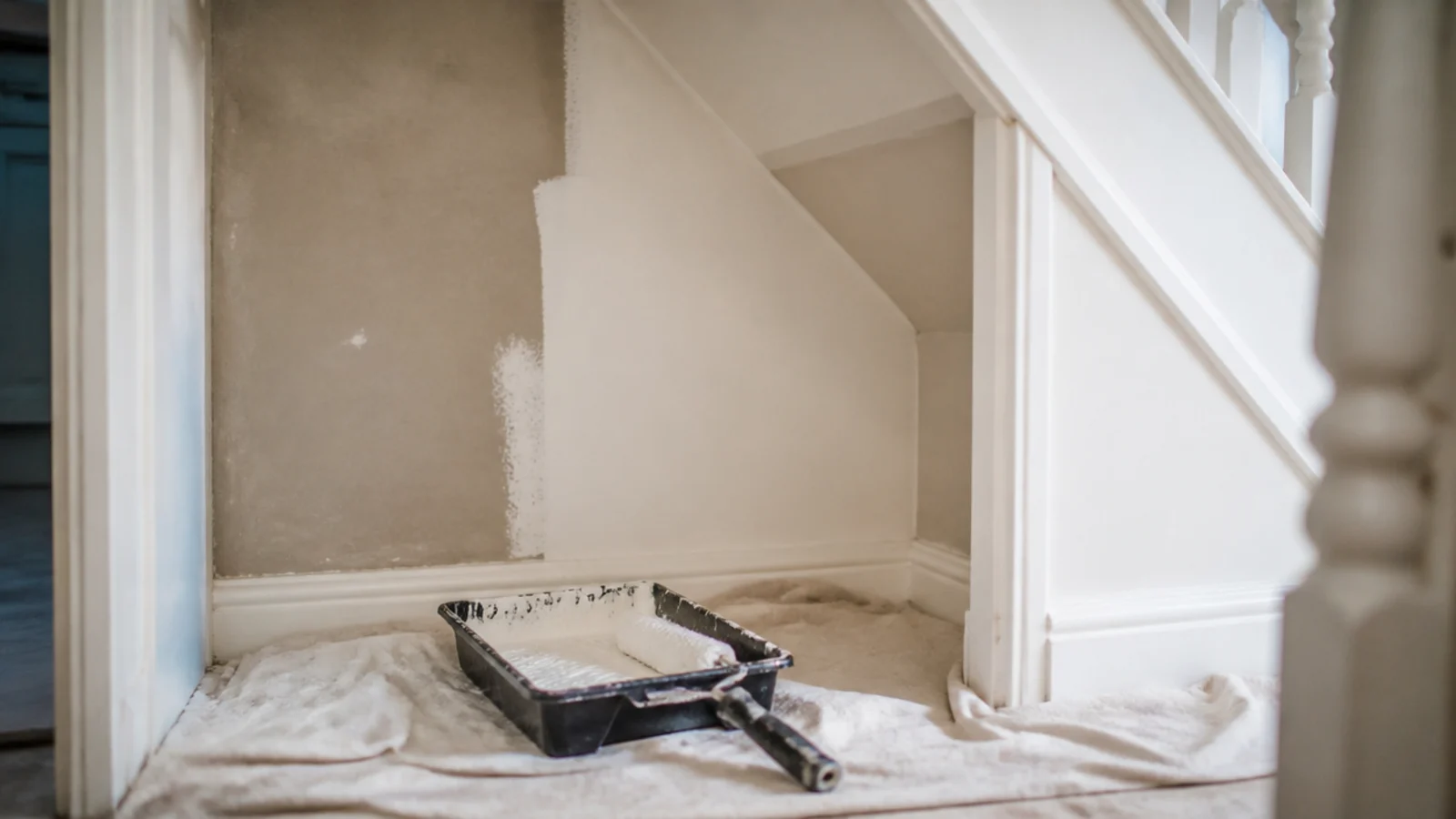
One litre of chalky white eggshell, about £25, and the recess became visibly usable. Eggshell wipes; matt emulsion marks the first time a boot brushes it. I did this after the shelves went in, which meant cutting in around every batten. Do it before anything is fixed.
8. A motion light I now fit everywhere
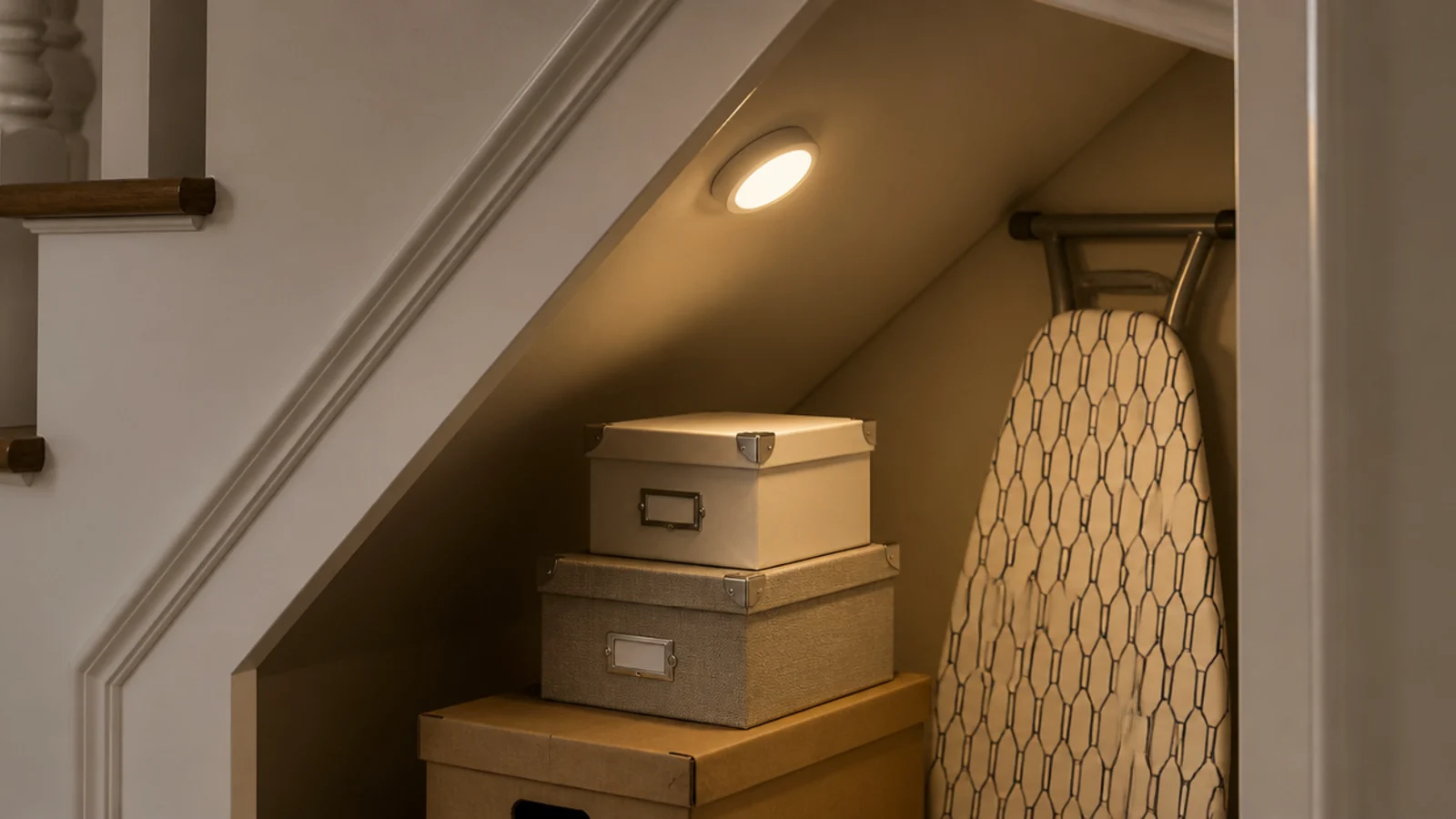
A battery puck at around 150 lumens, roughly £15, stuck high and toward the front. Before it went in, I opened the cupboard, saw a dark triangle and shut it again. Afterwards I actually put things away. It is the cheapest behaviour change in the house.
9. The desk that lost to footsteps overhead
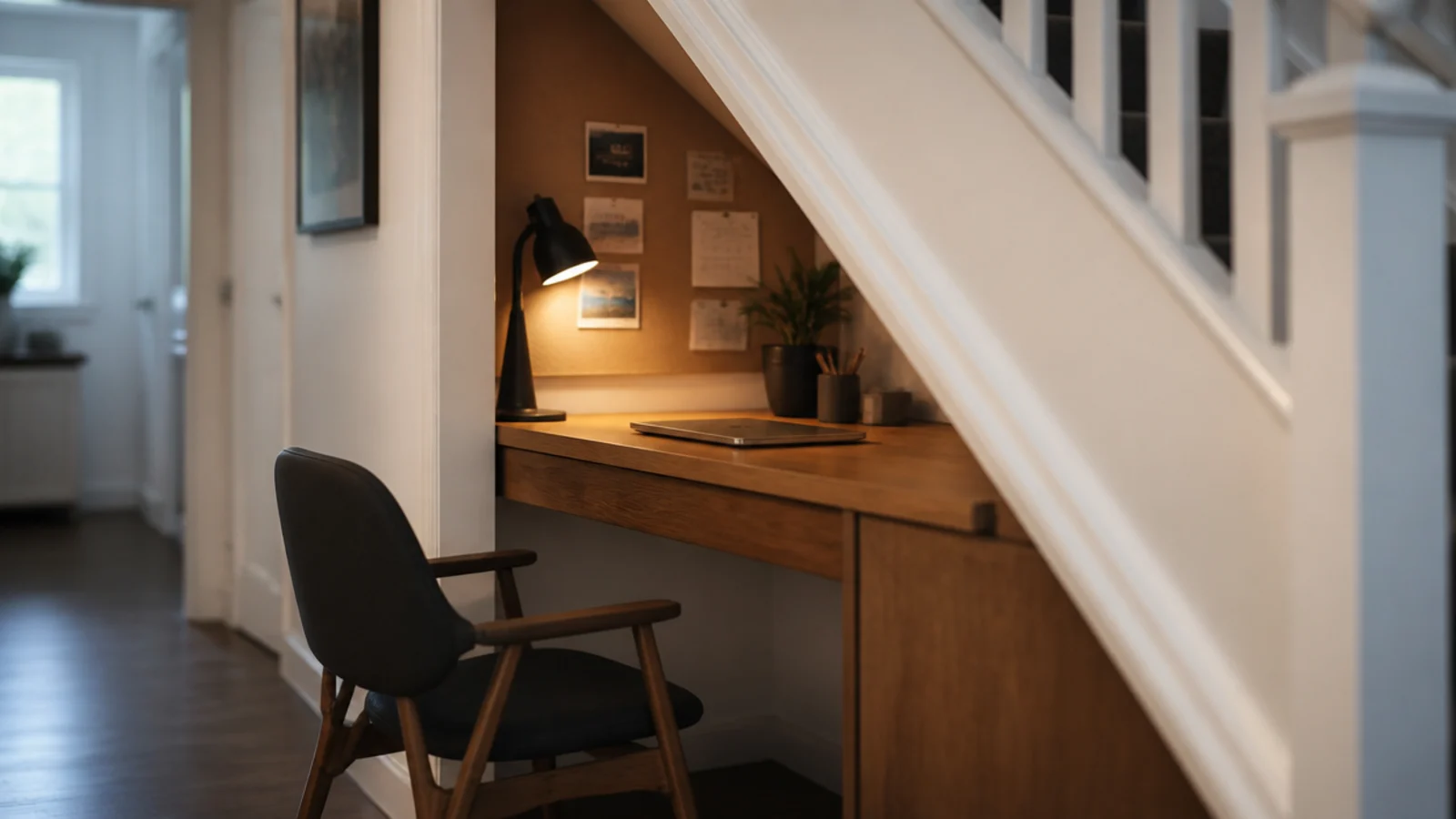
The measurements worked: worktop at 29 inches, 25 inches of knee width, soffit at 62 inches over the chair. What I had not thought about was sound. Every footstep on the treads lands directly over your head, and in a family house that is constant. It lasted four months.
10. A wine rack that ran too warm to keep
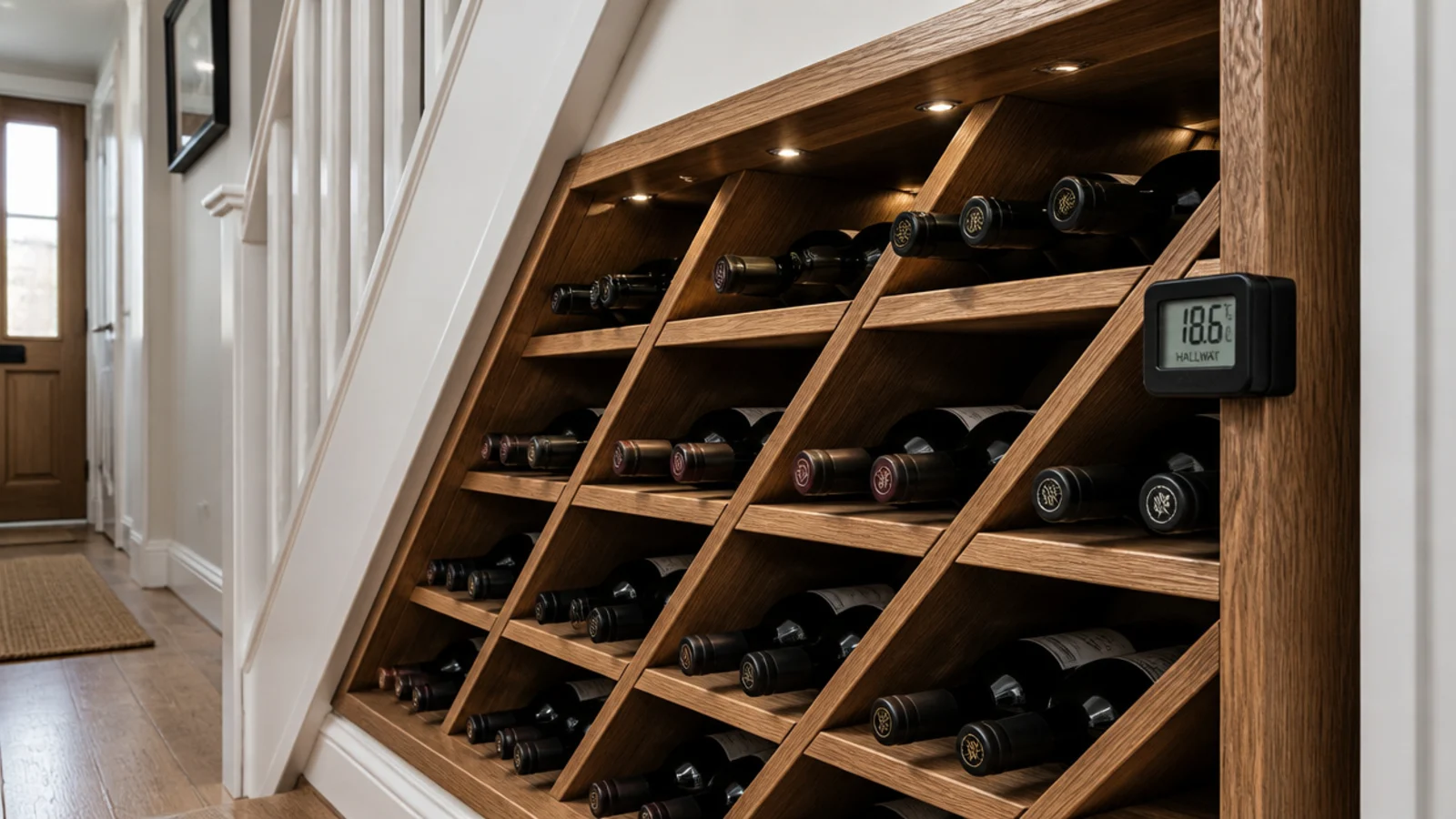
I clipped a thermometer to the rack for a year. The hallway sat around 64 degrees in winter and touched 70 in July, with a daily swing of several degrees. That is acceptable for bottles I drink within six months and wrong for anything I wanted to keep, so the rack now holds everyday reds only.
11. The dog bed the dog actually uses
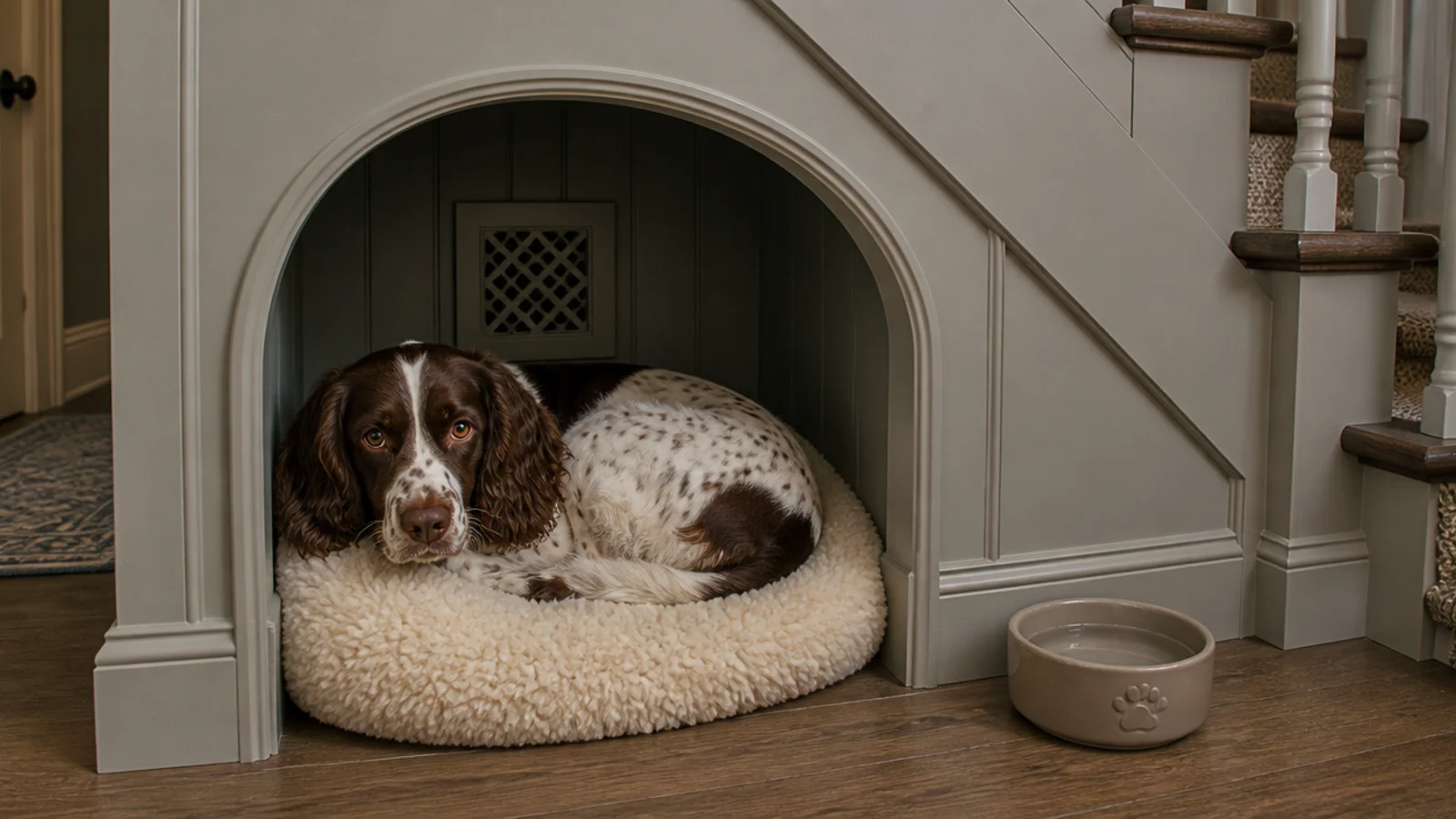
About 30 by 22 inches of floor, 24 inches of height, an arched opening and a 4 inch vent at the back. The vent is the part people skip. A sealed timber box warms up fast with a dog in it. Wipeable vinyl on the base has survived two years of wet paws.
12. Toy crates on castors that come to the room
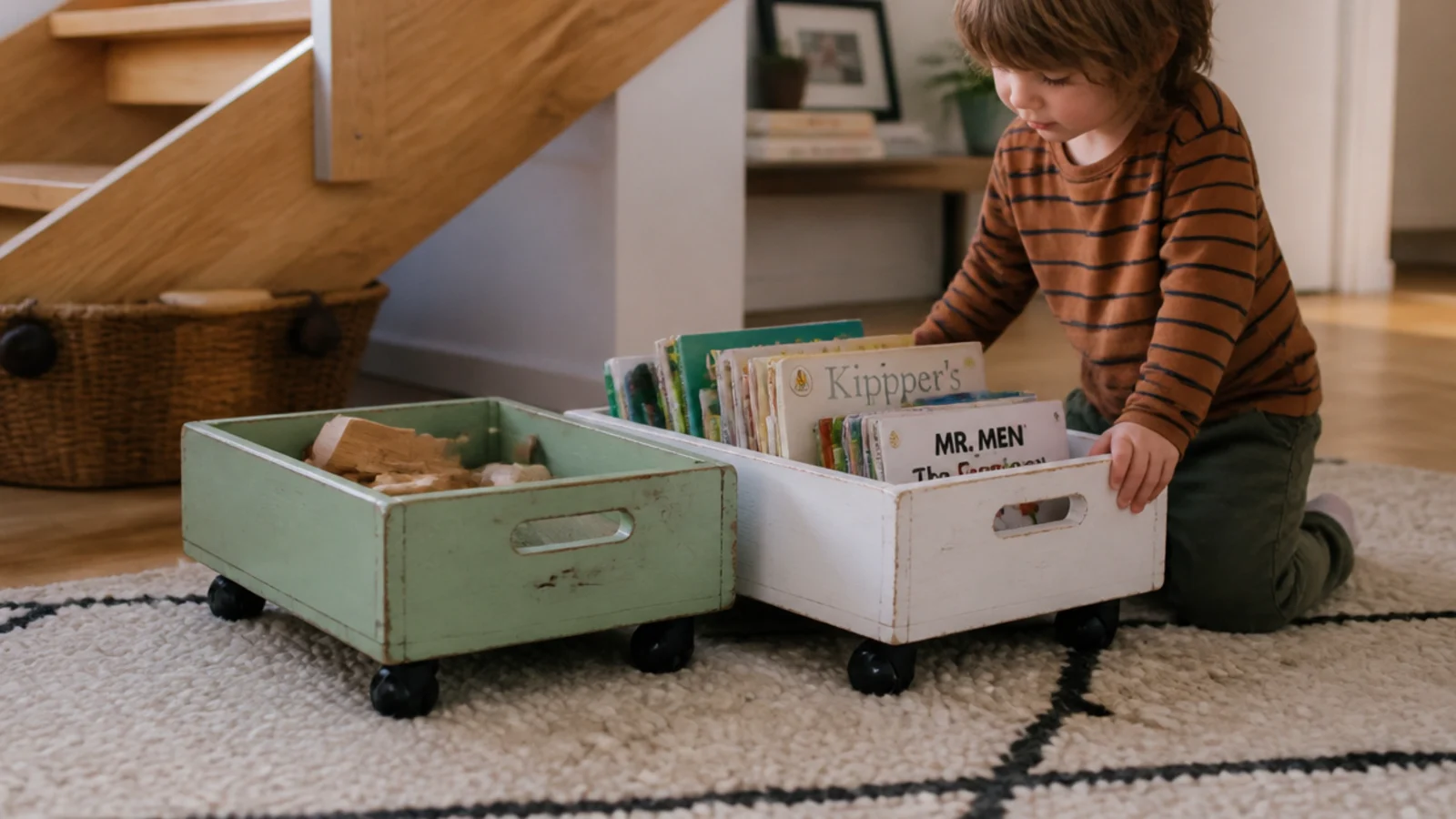
Two shallow crates, 12 inches deep, on 2 inch castors. Depth is the trick — any deeper and a four-year-old cannot see the bottom, so nothing gets put away. I laid a strip of plywood across the hall boards because the castors kept catching on a board joint.
13. A vacuum dock that freed a whole cupboard
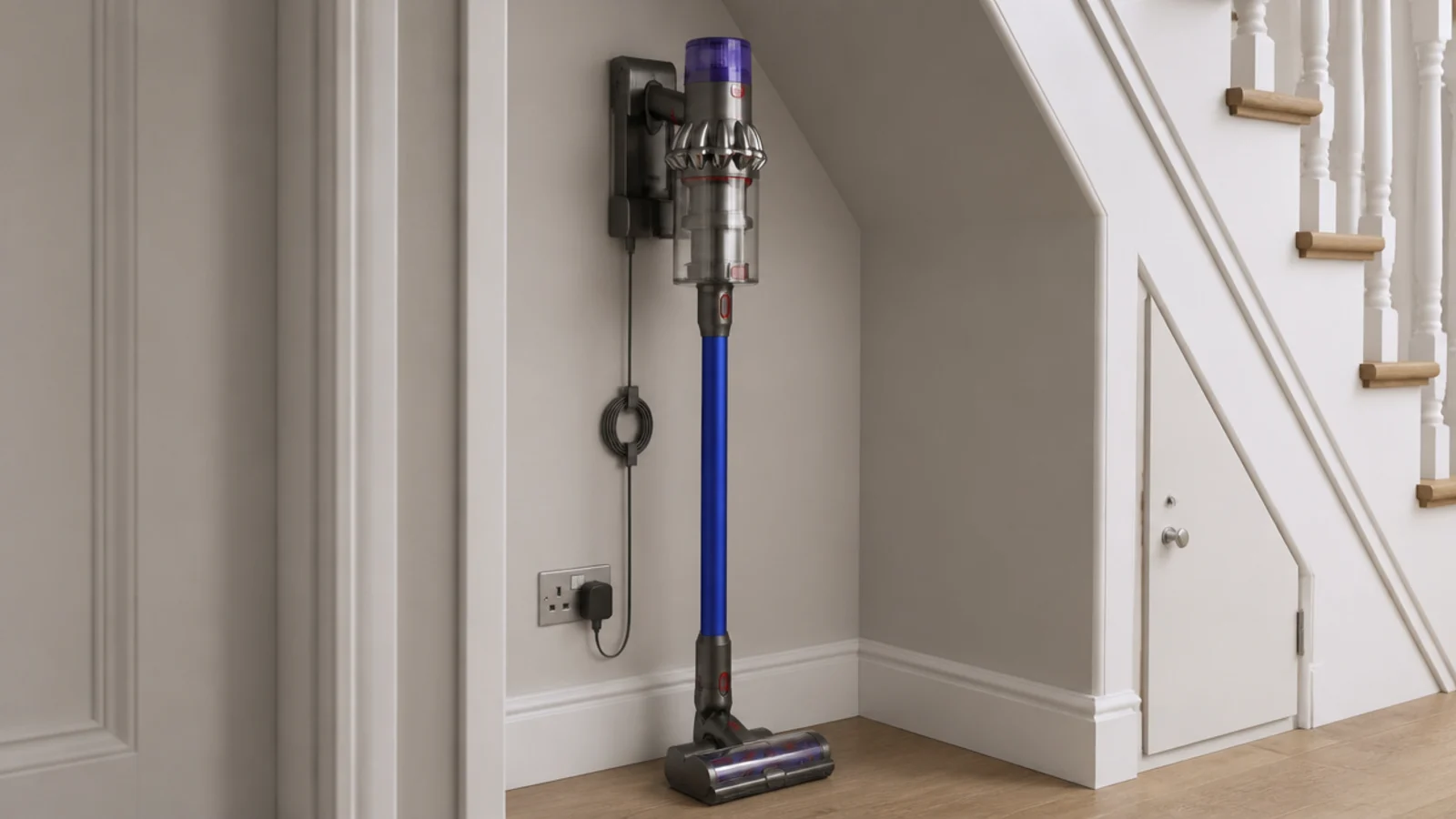
The dock takes a patch about 10 by 8 inches on the tall wall with a socket beneath it. Moving the vacuum here emptied an entire upstairs cupboard, which was a better result than anything else on this list per pound spent. The head sits about 45 inches up, so it only fits the tall band.
14. Hooks along the slope for bags
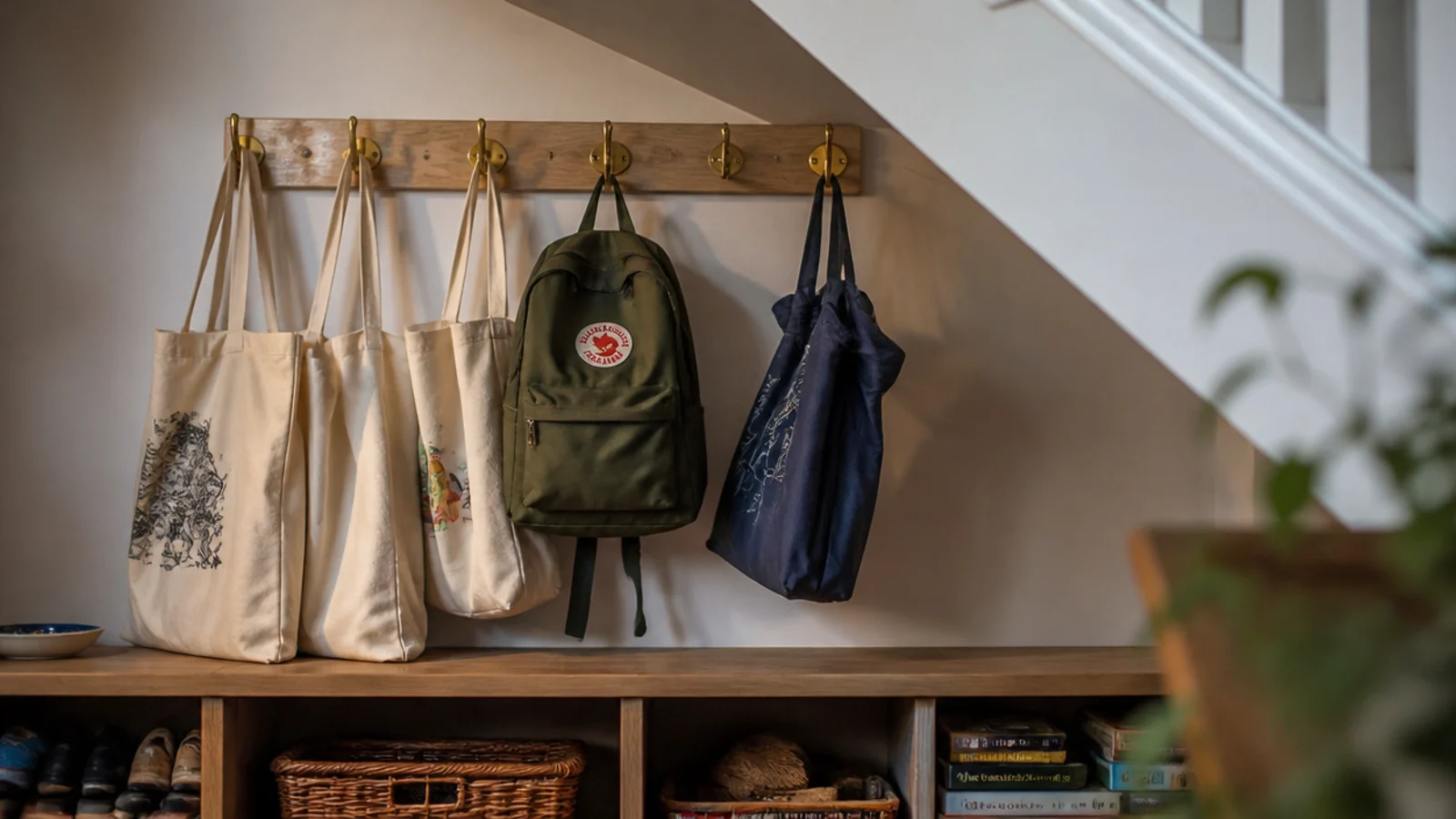
Six hooks on a batten screwed along the rake. The sloping soffit is the surface nothing stands against, so hanging is the only way to use it. Totes and rucksacks hang flat. Space the hooks at least 16 inches apart or the bags tangle every time you take one down.
15. Clear boxes at the back, labelled twice
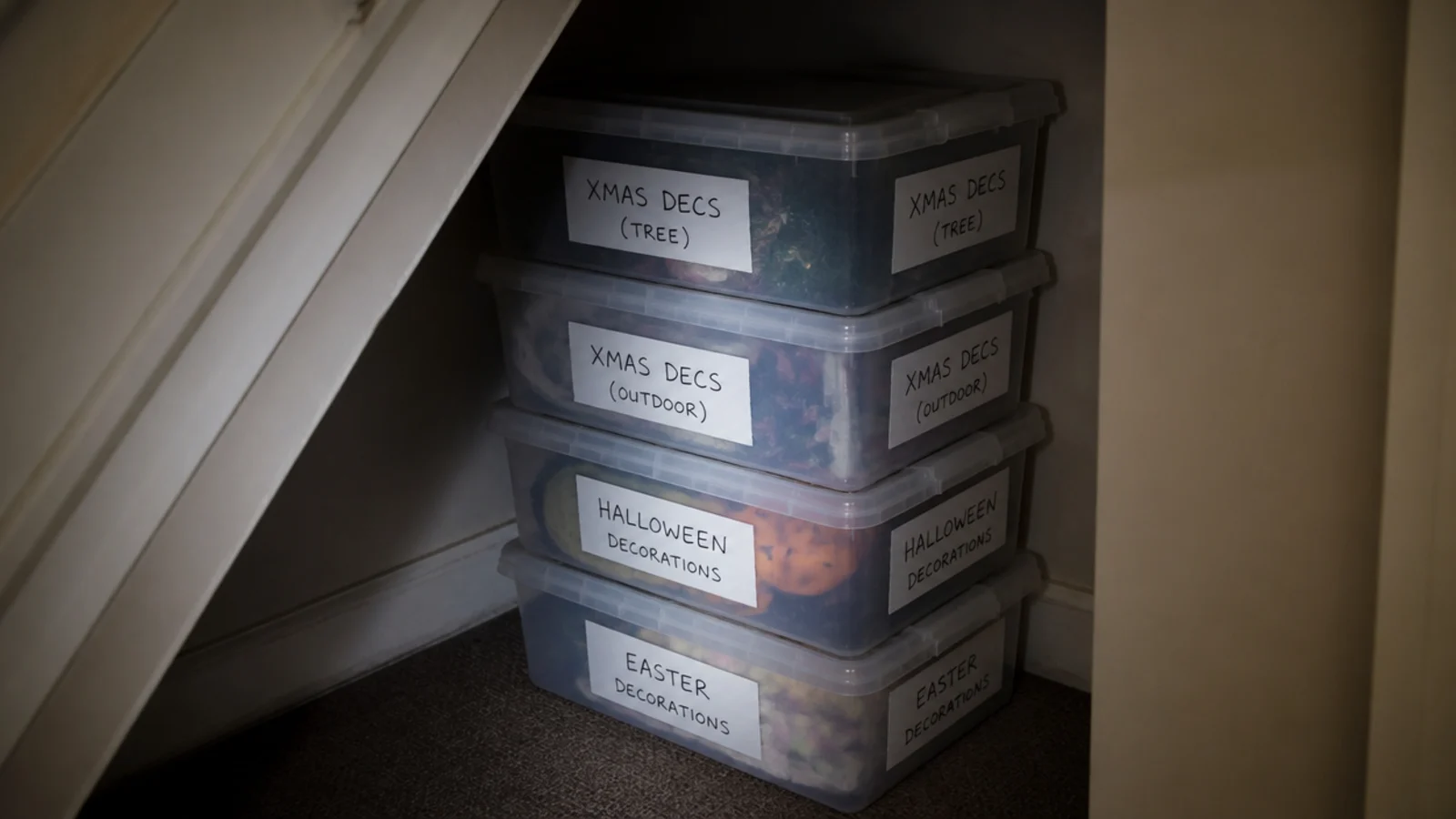
Clear lidded boxes in the deepest corner, labelled on the front and the side. Under a rake you almost always read a box at an angle, and a lid label is invisible. Three boxes high is the limit before the top one meets the slope.
16. Rehanging the door to swing outward
My original door opened inward and swept the front 30 inches of the recess, which meant nothing could sit there. Rehanging it took an hour and two new hinge mortices, and recovered a genuinely useful strip. Check the swing does not cross the walking line at the foot of the stairs first.
17. The litter tray cabinet I gave up on
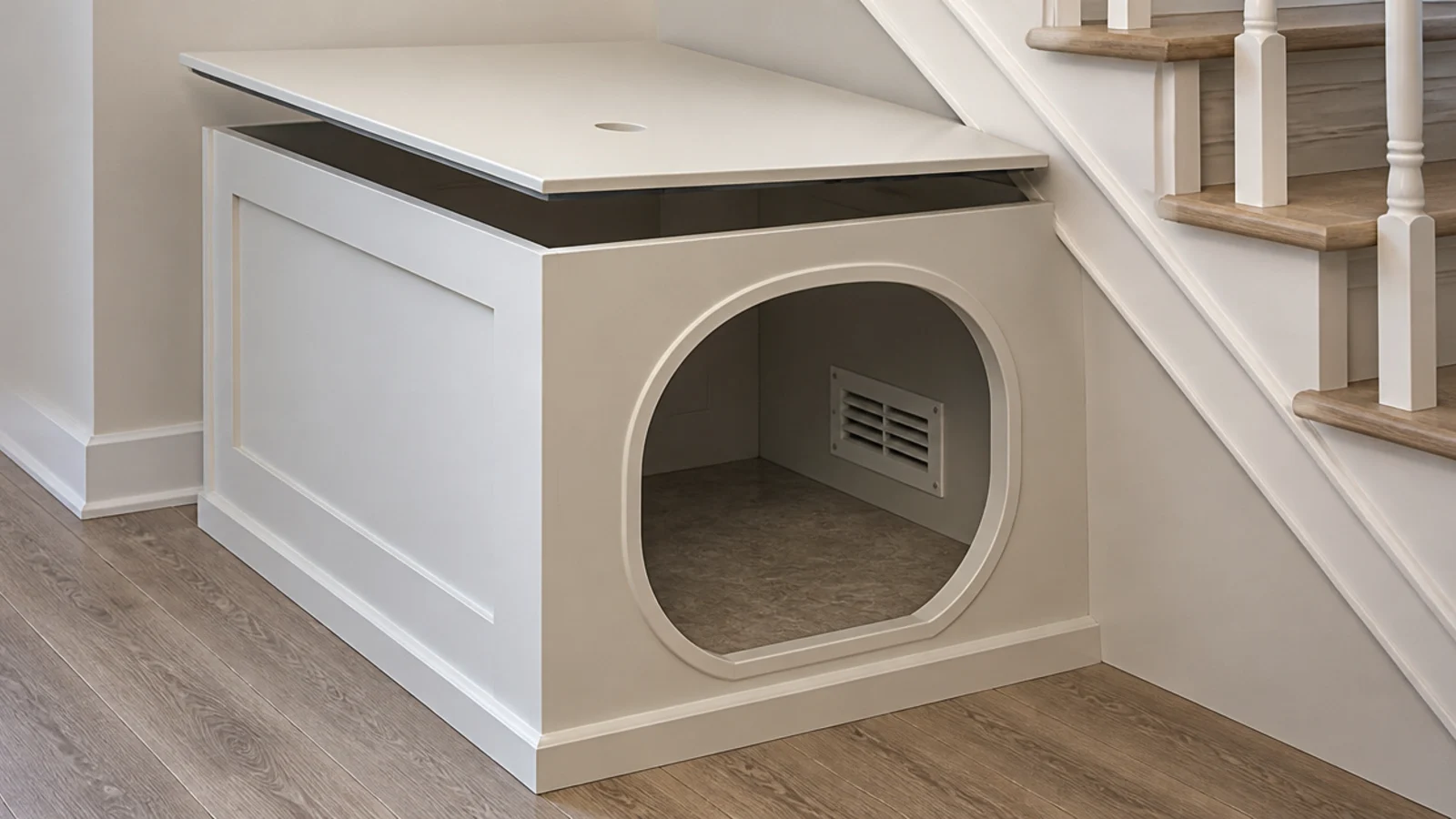
I built it properly — 24 by 18 inches of floor, a 7 inch side opening, a lift-off top and a rear vent. It still concentrated odour rather than hiding it, because enclosing a tray reduces air movement over it. The cat also disliked the dark. It is now a shoe cupboard.
18. A bracket that got the ironing board off the floor
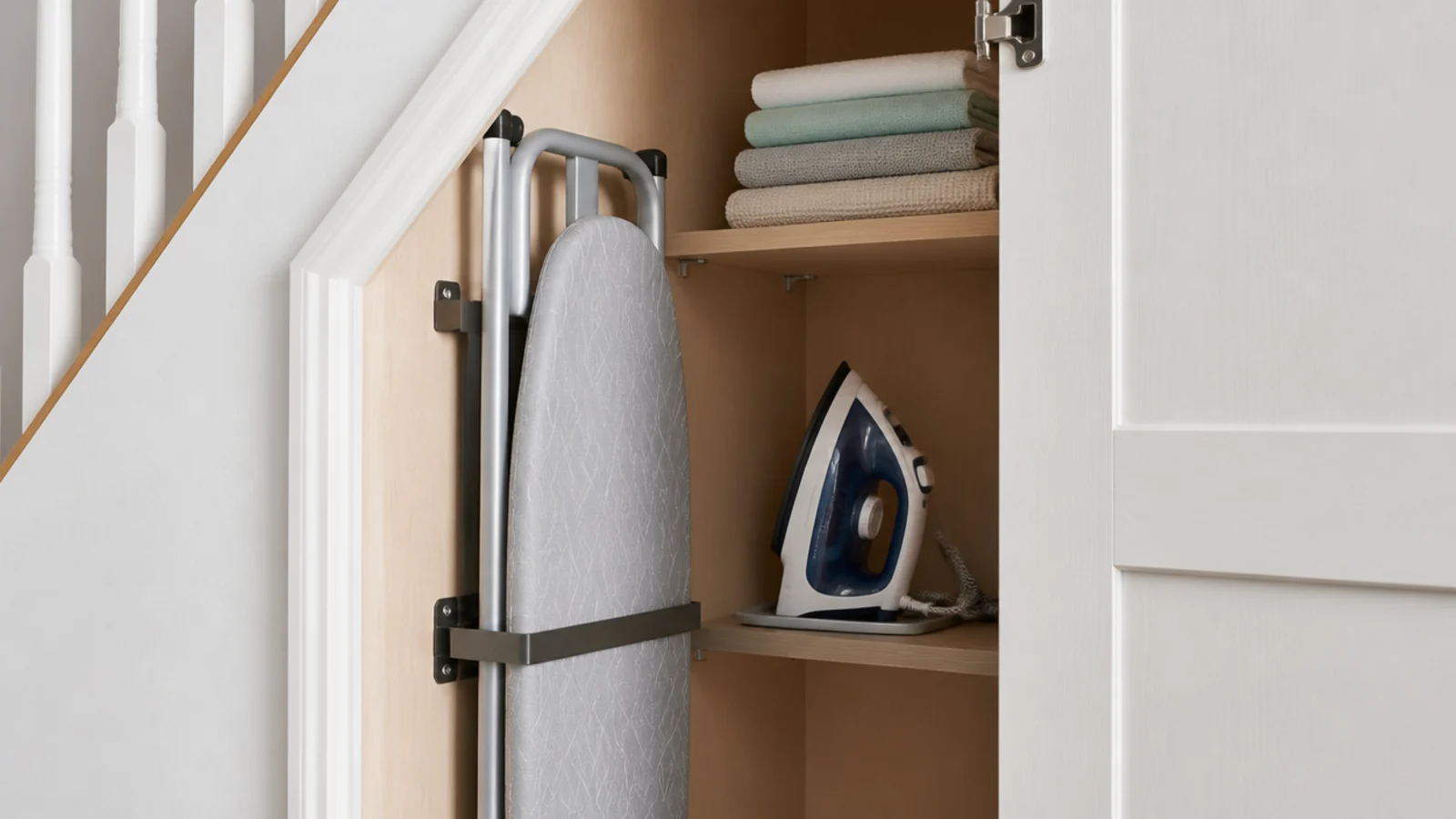
Ten pounds for a wall bracket, and the board stopped falling out of the cupboard every time the door opened. It clears about 18 by 6 inches of floor. The iron sits on a small shelf beside it, and I let it cool fully before it goes back into an enclosed space.
19. Recycling bins that needed a vented door
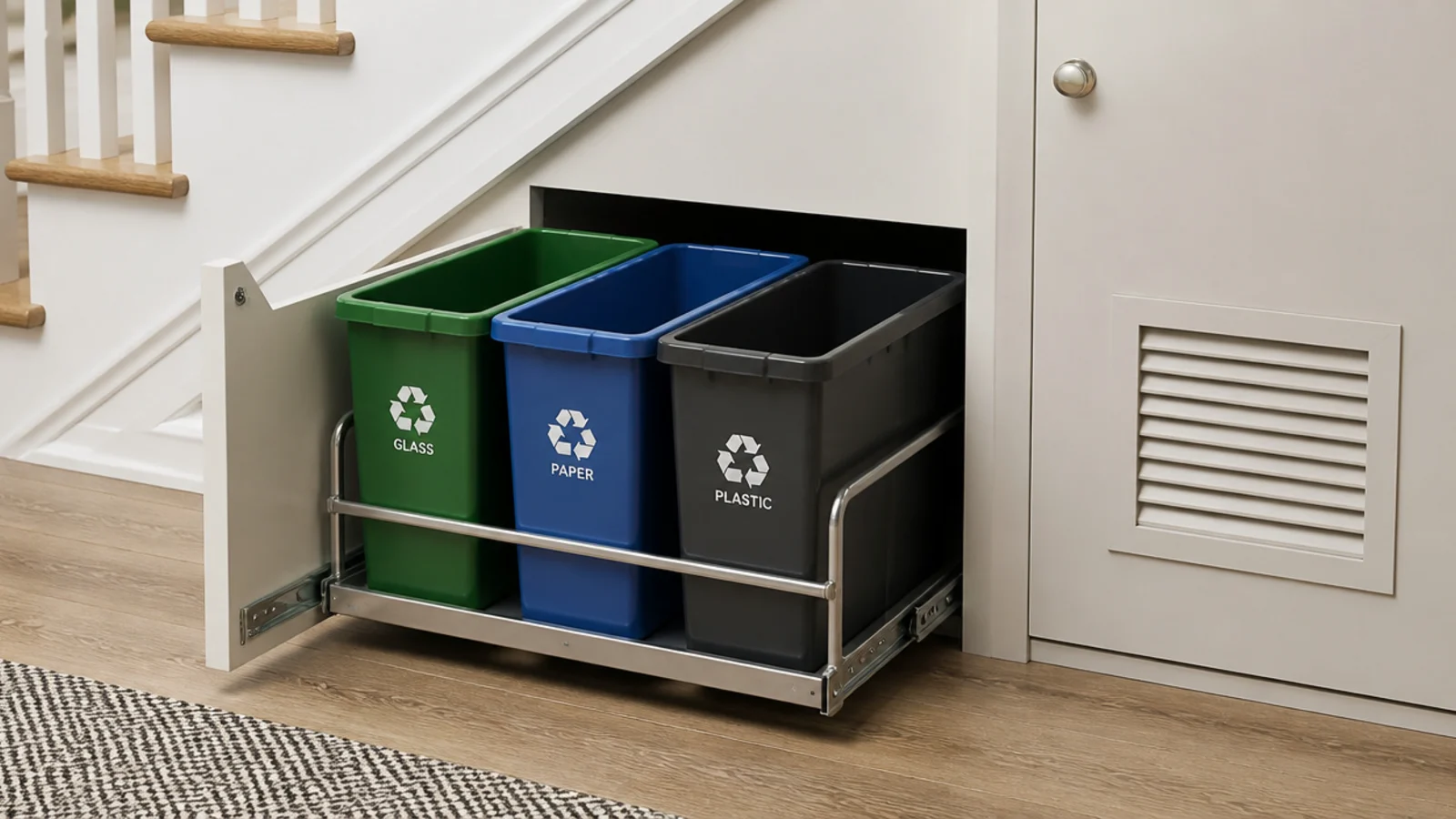
Three bins on a pull-out frame in about 24 inches of width. The frame worked immediately; the smell did not. A £8 louvred grille in the door and a removable tray under the bins fixed it within a day. Rinse anything that held food before it goes in and the problem mostly disappears.
20. Leaving the last bay open on purpose
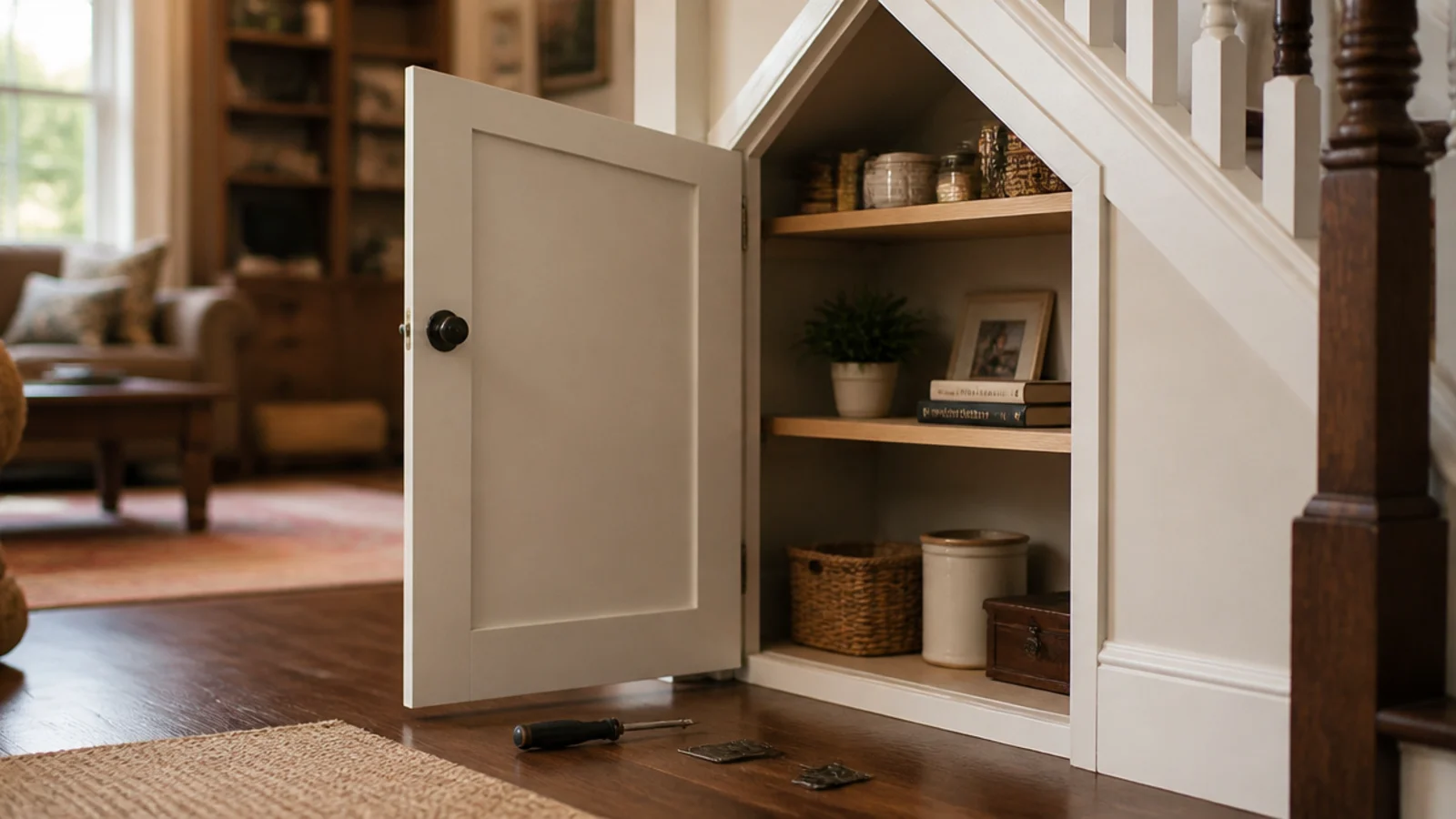
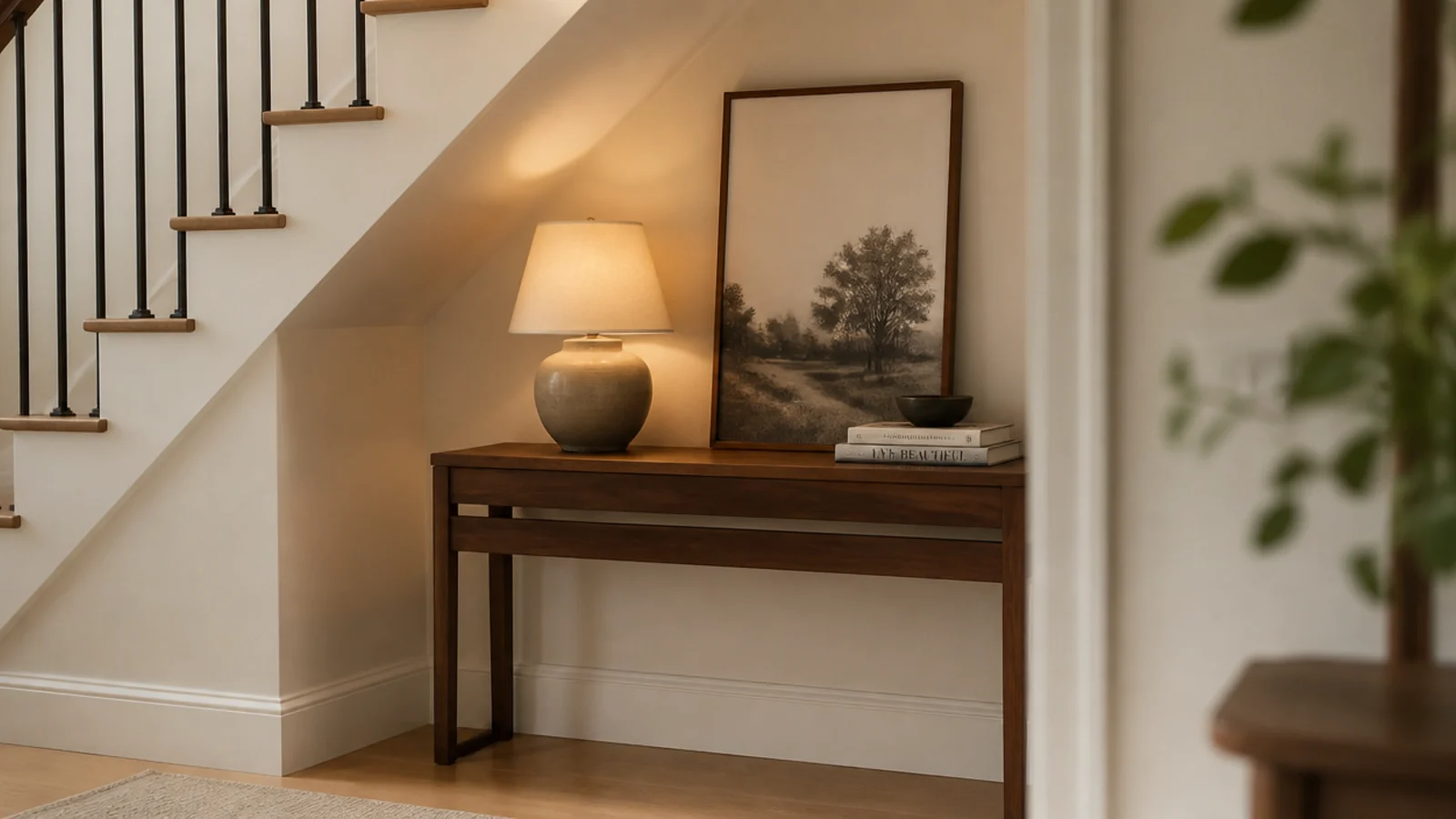
I had drawn joinery across the whole run and stopped one bay short. A slim console 12 inches deep, a lamp and a leaning print keep the sightline through the hall. Filling every inch of a narrow hallway with cabinet fronts makes it read as a corridor of doors.
What I'd Do Differently Now
I would draw the slope to scale before spending anything. Almost every failure on this list came from treating the wedge as a rectangle and discovering the ceiling halfway through a build.
I would check the services on day one. My consumer unit and gas meter both had to stay accessible and open, which killed a design I had already priced. Finding that out at the sketch stage rather than the quote stage would have saved a fortnight.
I would put the money into pull-outs and skip the fixed shelving in the low band entirely. Every fixed shelf below about 30 inches has quietly filled with things I no longer own, and every drawer gets used weekly.
I would test the noise before building a desk, and the temperature before building a wine rack — a £10 thermometer left in place for a month would have told me everything. And I would paint the interior pale before a single batten went up, because cutting in around fixings afterwards took longer than the painting itself.
For the build sequence I now follow, see the DIY under stairs storage guide. If books are what the shelves will hold, bookshelf styling ideas covers spacing and grouping, and wooden flooring texture is worth reading before you choose what goes on the hall floor underneath it all.
Frequently asked questions
What under stairs storage did you keep and what did you remove?
I kept the deep pull-out drawer, the shoe tower, the motion light, the vacuum dock and the crates on castors. I removed the riser drawers, the desk, the wine rack and the litter tray cabinet. Everything I removed failed for a reason I could have predicted with a tape measure or a thermometer first.
Was the deep pull-out drawer worth the money?
Easily the best thing I spent money on. A pair of twenty-two inch full extension runners rated to a hundred pounds cost me about thirty-five pounds, and the drawer they carry recovered a section of the wedge I had genuinely never used in three years of living there.
Why did the under stairs desk not work for you?
Sound, not space. The worktop height and knee room were fine, but every footstep on the treads above lands directly over your head, and in a family house that is constant. I moved the desk to a bedroom corner and put a drinks cabinet in the alcove instead, which cared far less about noise.
Would you store wine under the stairs again?
Only what I plan to drink within six months. My hallway ran between sixty-four and seventy degrees through the summer, which is fine for everyday bottles and too warm and too variable for anything I wanted to age. Anything I care about now lives in a cabinet with a compressor.
What would you do first if you started again?
Measure the headroom at three points and draw the slope to scale before buying anything. Almost every mistake I made came from treating the space as a rectangle. Second, I would check where the consumer unit and the meter sat before designing anything around them, because both had to stay accessible.
Want more like this? Browse all 14 under stairs storage guides — they all use the same measurements and budget tiers.
Pin it for later
Save this to your Under Stairs Storage board
Pin it now so it is waiting for you when the tape measure comes out — and so the next person hunting for this idea can find it too.
Save this pinKeep going
More ideas worth saving while you have the tape measure out.