Utility Room Ideas · Listicle
25 Genius Utility Room Storage Ideas On A Budget

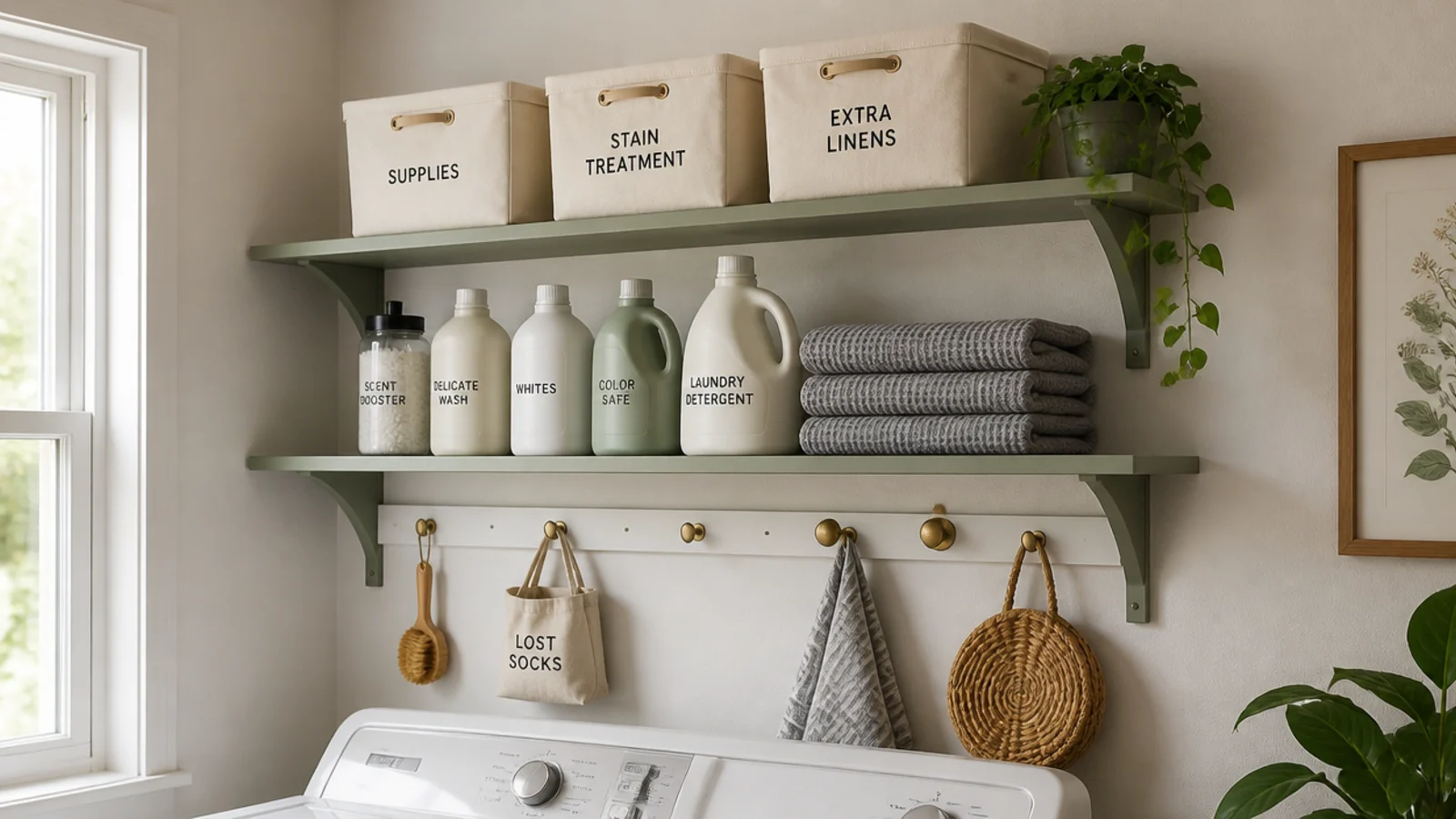
Storage is the whole job in a utility room. It is the only room in the house where the objects are genuinely unattractive — bleach bottles, a mop, a basket with something damp in it — and where every square foot is already spoken for by two machines. Good utility room storage ideas do not have to cost much, but they do have to be measured, because a shelf at the wrong depth is worse than no shelf at all. Everything below is priced in bands, from a peg rail and two boards under $120 up to a three-cabinet run at $600 to $1,200.
In this guide27 sections — tap to openHide
- 1.Where utility room storage ideas earn their money
- 2.A peg rail and two open shelves for under $120
- 3.Keep the open shelves 12 in deep
- 4.Space the shelves 16 in apart
- 5.Land the brackets on studs at 16 in centres
- 6.Toggle bolts where there is no stud
- 7.A French cleat for the shelf that carries weight
- 8.The 3 in gap beside the machines takes a pull-out
- 9.An over-door rack on the back of the door
- 10.Labelled bins so nobody opens three to find one
- 11.A shallow tip-out tray for pods and pegs
- 12.Two wall clips solve the ironing board
- 13.A 30 x 30 in leak tray that earns its keep
- 14.A wall-hung wire basket system with no floor legs
- 15.Hooks at 60-66 in for adults, 40-48 in for children
- 16.A pull-out under the sink for cleaning bottles
- 17.A hinged drying rail under the wall cabinet
- 18.Stack the pair and buy back 27 in of floor
- 19.Wall cabinets 18 in above the worktop
- 20.A three-bag sorter instead of one big basket
- 21.A toe-kick drawer for the flat things
- 22.A magnetic strip on the machine's steel side
- 23.A 12 in deep tall cupboard for the mop and vacuum
- 24.One deep drawer for what has no category
- 25.Open slatted shelves for anything still damp
- 26.The three-cabinet run at $600 to $1,200
- 27.Mistakes to Skip
Where utility room storage ideas earn their money
Storage here fails for a dull reason. The room is small, the objects are ugly, and most of them are bottles between 8 and 12 in tall. Anything that will not hold a bottle upright at a height you can reach with wet hands is decoration.
So the first decision is depth. Twelve inches holds everything a laundry room stores in a single front row. Sixteen inches hides a second row you will forget about, and in a walkway under 36 in it starts clipping your shoulder as you pass. The second decision is the fixing, because a shelf is only as strong as what sits behind the drywall. A bracket landed in a stud at 16 in centres carries more than any plug, toggle bolts hold 25 to 35 lb each in half-inch board, and a French cleat beats both.
The third decision is what stays visible. Open shelving is cheap and quick, and it puts every plastic bottle in the room on display. Closed cabinets cost more and solve that in one move. Almost every room I have planned wants a mix: open where you reach twenty times a week, closed where the ugly things live.
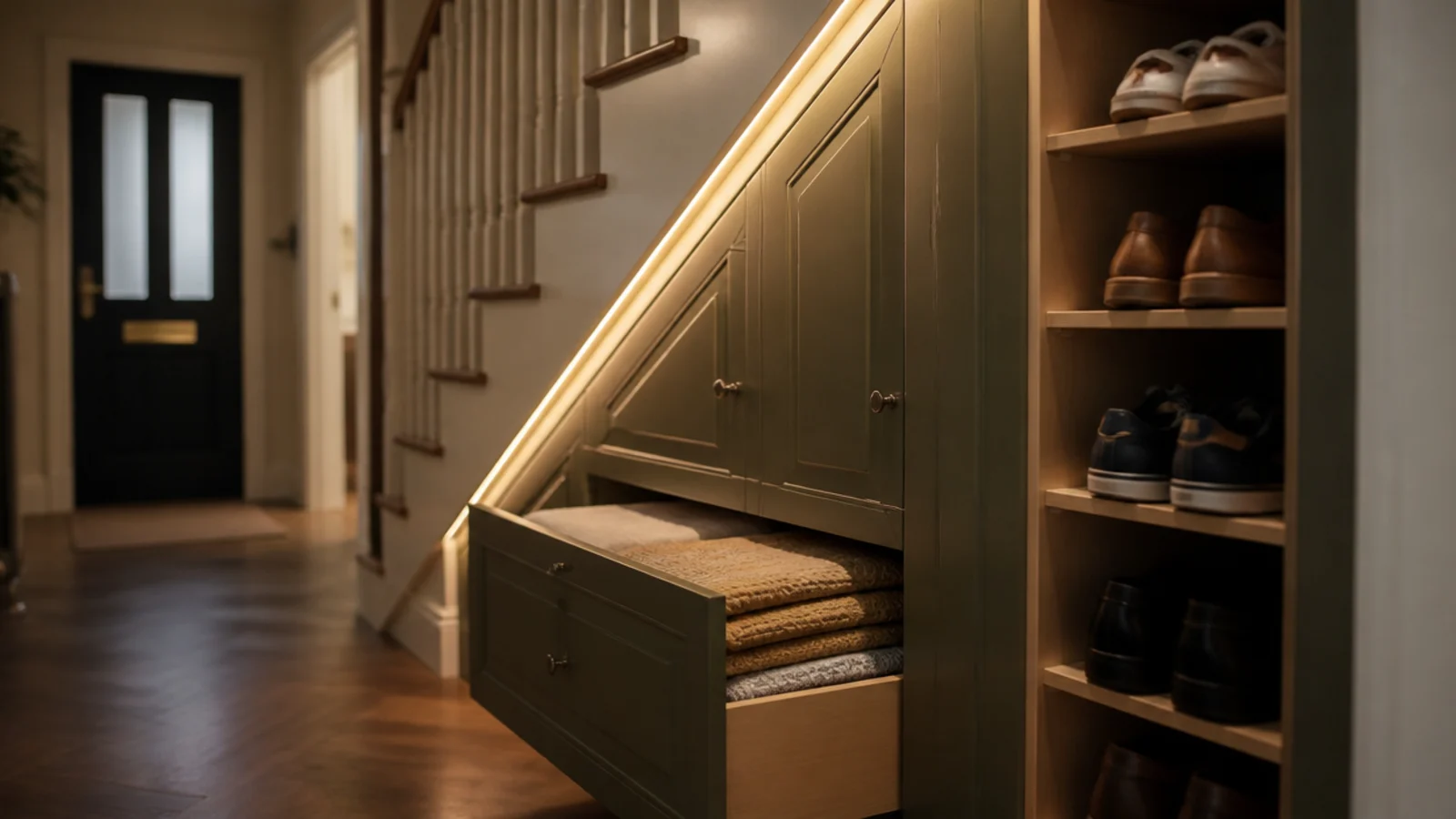
Everything here assumes you are storing bottles, baskets and boot brushes rather than styling a shelf. If the laundry spills into a hallway cupboard, under-stairs storage covers that awkward triangle, and the same depth-and-spacing logic runs through kitchen shelf ideas.
1. A peg rail and two open shelves for under $120
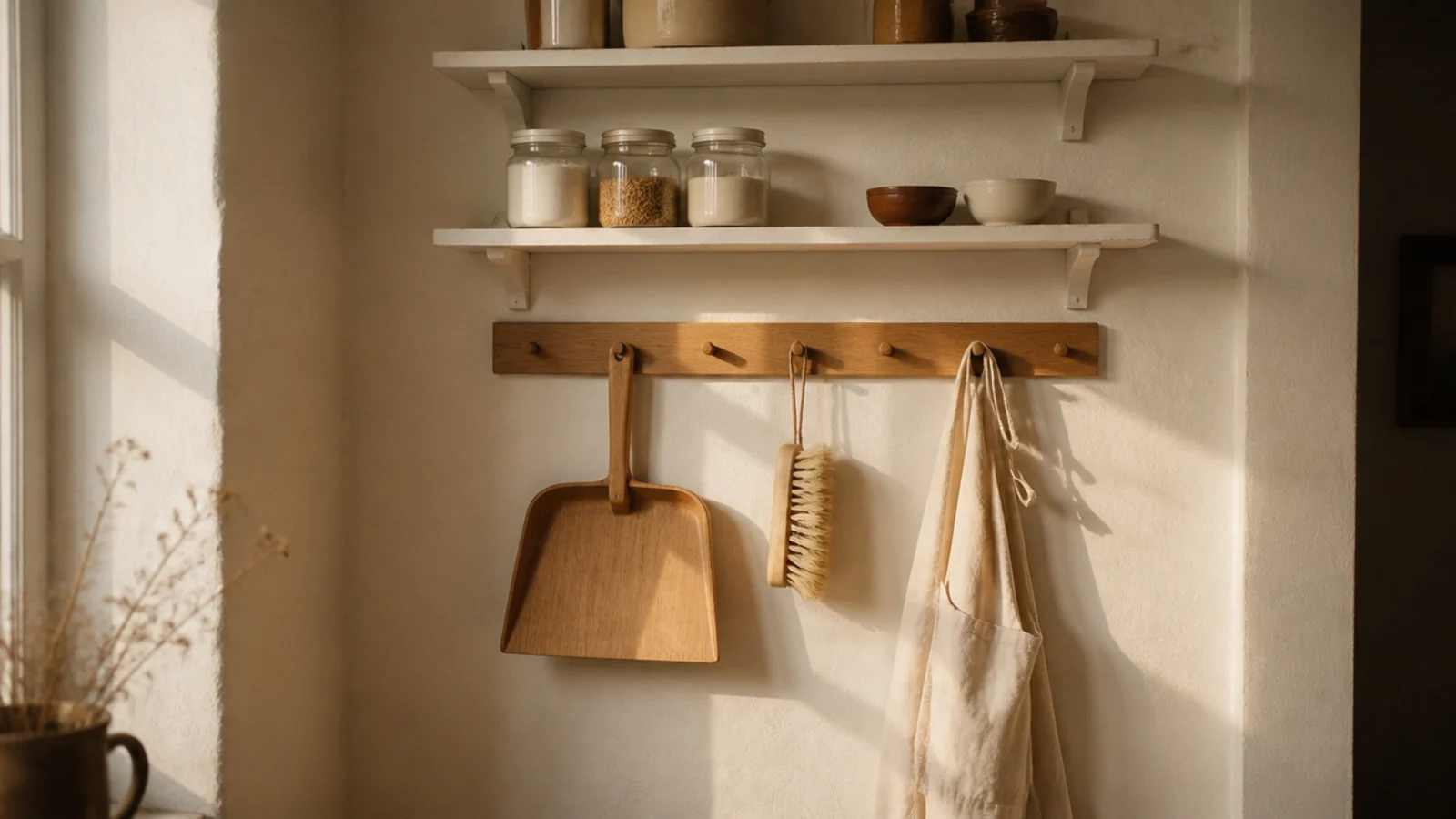
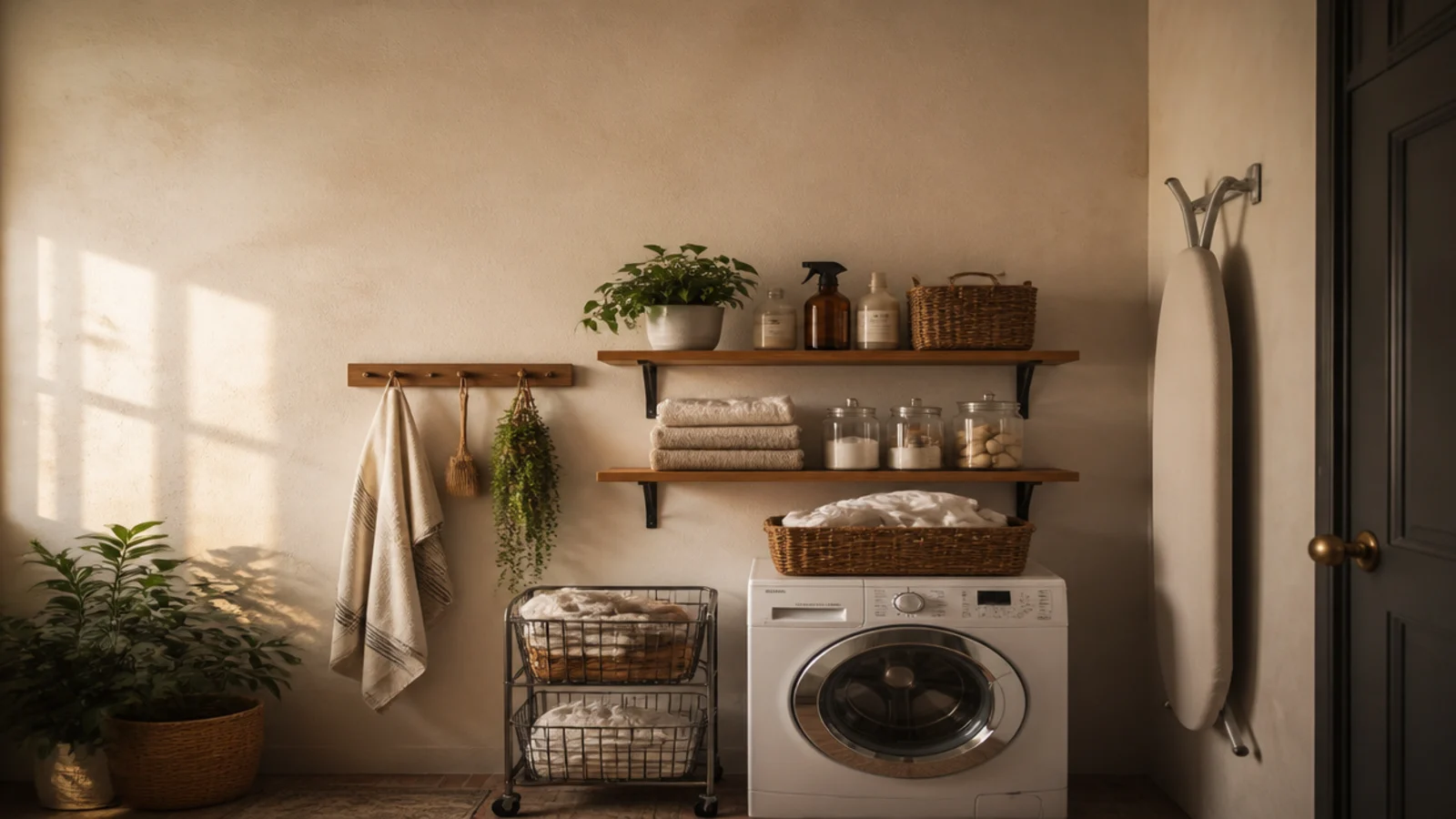
The cheapest storage that genuinely works: a hardwood peg rail screwed into studs, two 12 in deep shelves above the machines, and a handful of hooks. Materials come in under $120 including brackets and paint. It holds the ironing board, the airer, the brushes and the bottles, which is most of what a utility room ever stores.
2. Keep the open shelves 12 in deep
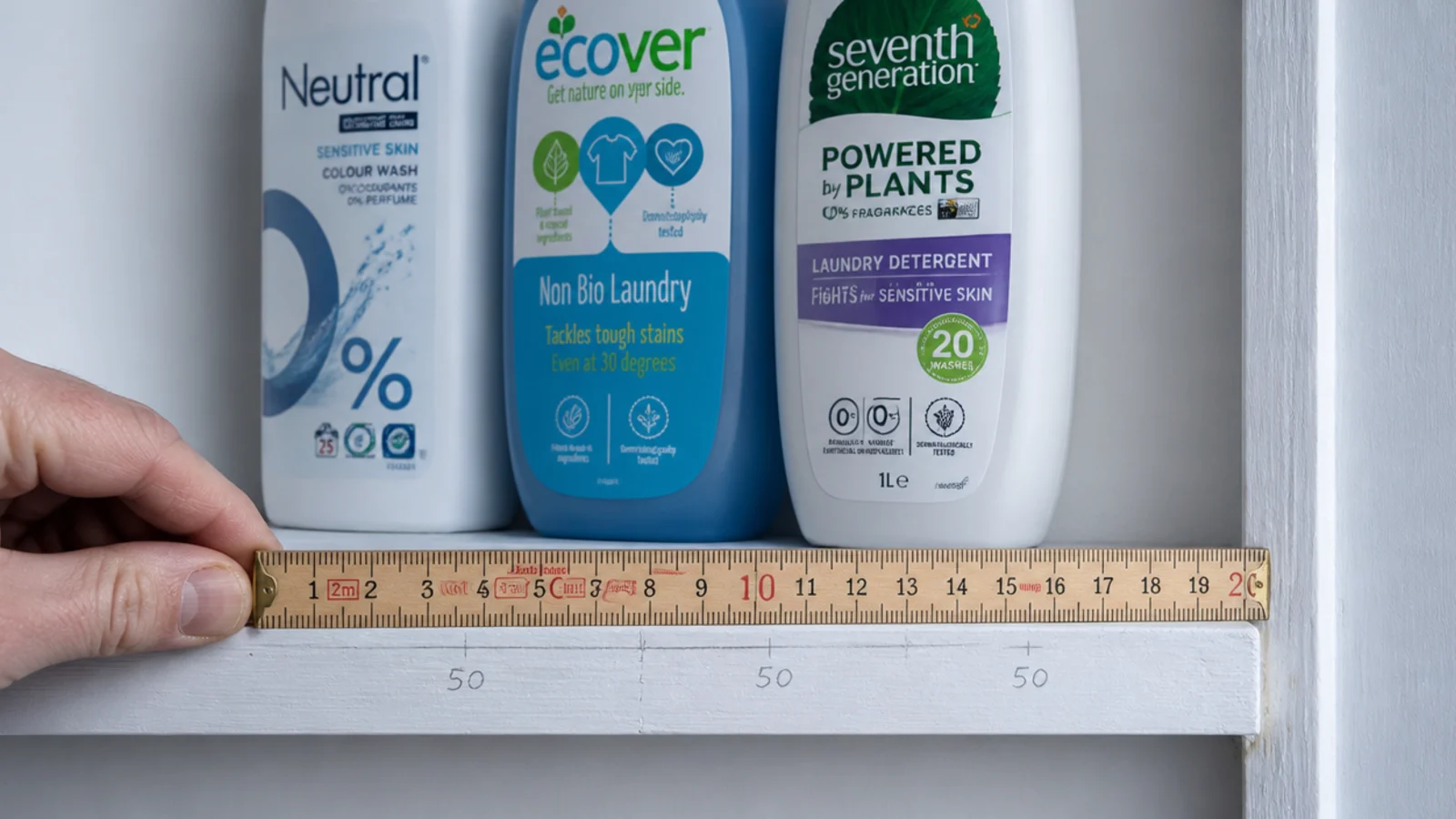
Twelve inches is the number. It takes a detergent bottle, a spray bottle and a folded stack of cloths front to back with nothing hiding behind anything. Sixteen inches looks generous and becomes a place things go to be forgotten, and in a walkway under 36 in it starts catching your shoulder every time you pass.

3. Space the shelves 16 in apart
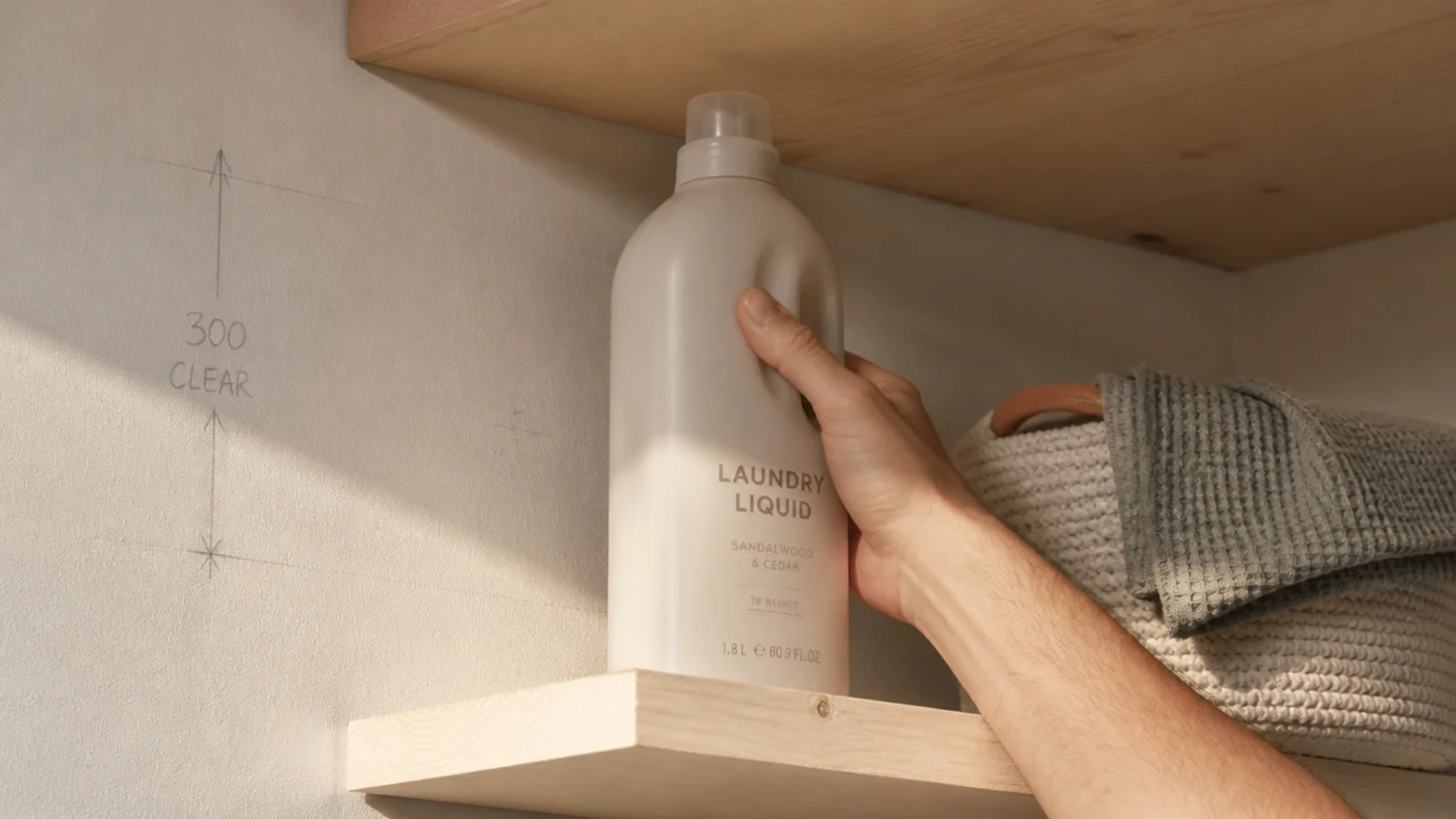
Sixteen inches of clear vertical height lets a 12 in bottle stand up with a hand above it. Below 13 in you are lifting bottles out sideways and knocking their neighbours over. Fewer, taller gaps beat more, tighter ones — three shelves you can use beat five you cannot. Mark the spacing on the wall before you drill anything.
4. Land the brackets on studs at 16 in centres
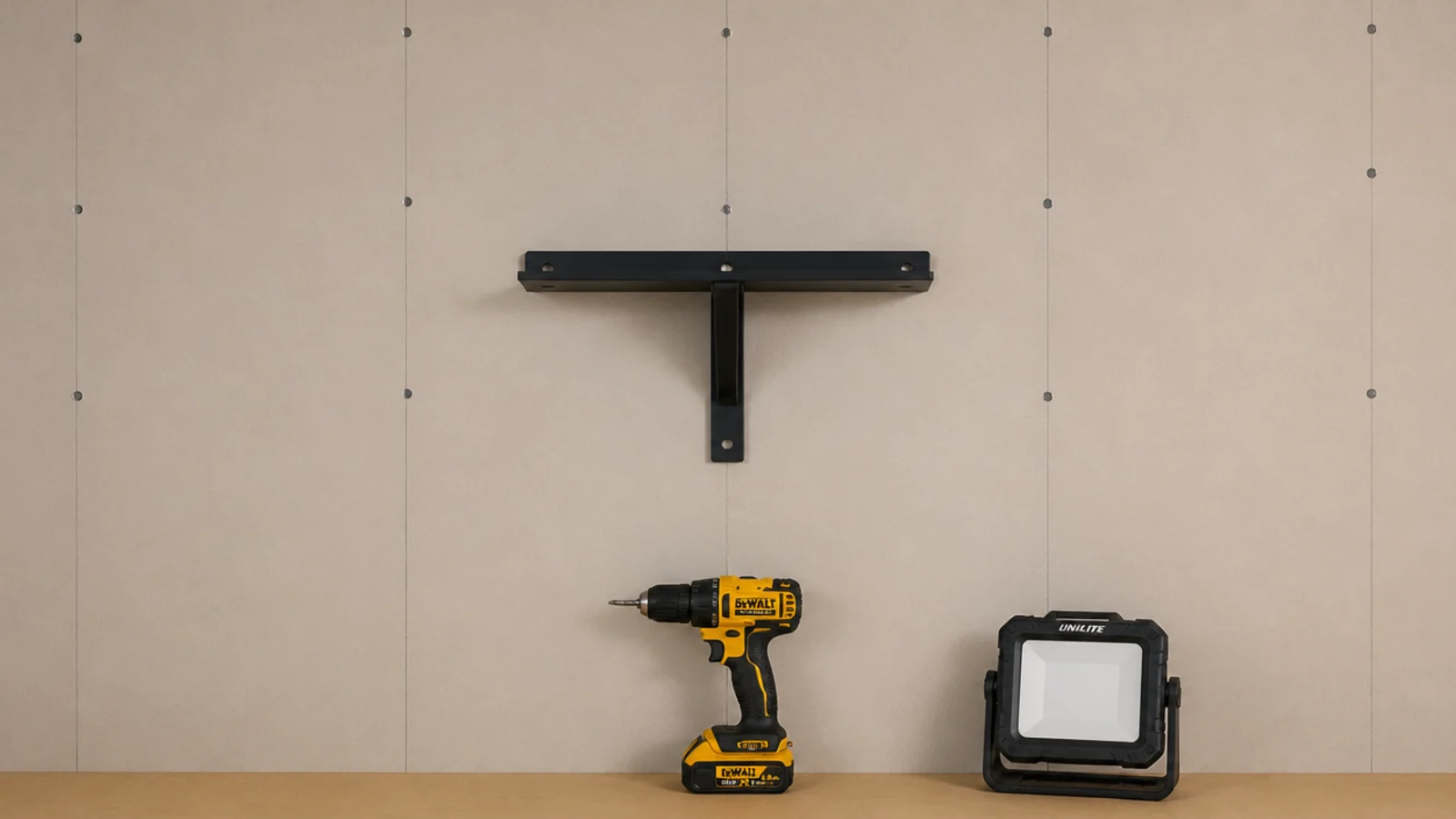
Studs run at 16 in centres in most stud walls, so a shelf longer than 32 in can catch two or three of them. Find them with a magnet on the drywall screws rather than trusting a cheap detector. A bracket in solid timber carries far more than any plug, and it costs nothing extra.
5. Toggle bolts where there is no stud
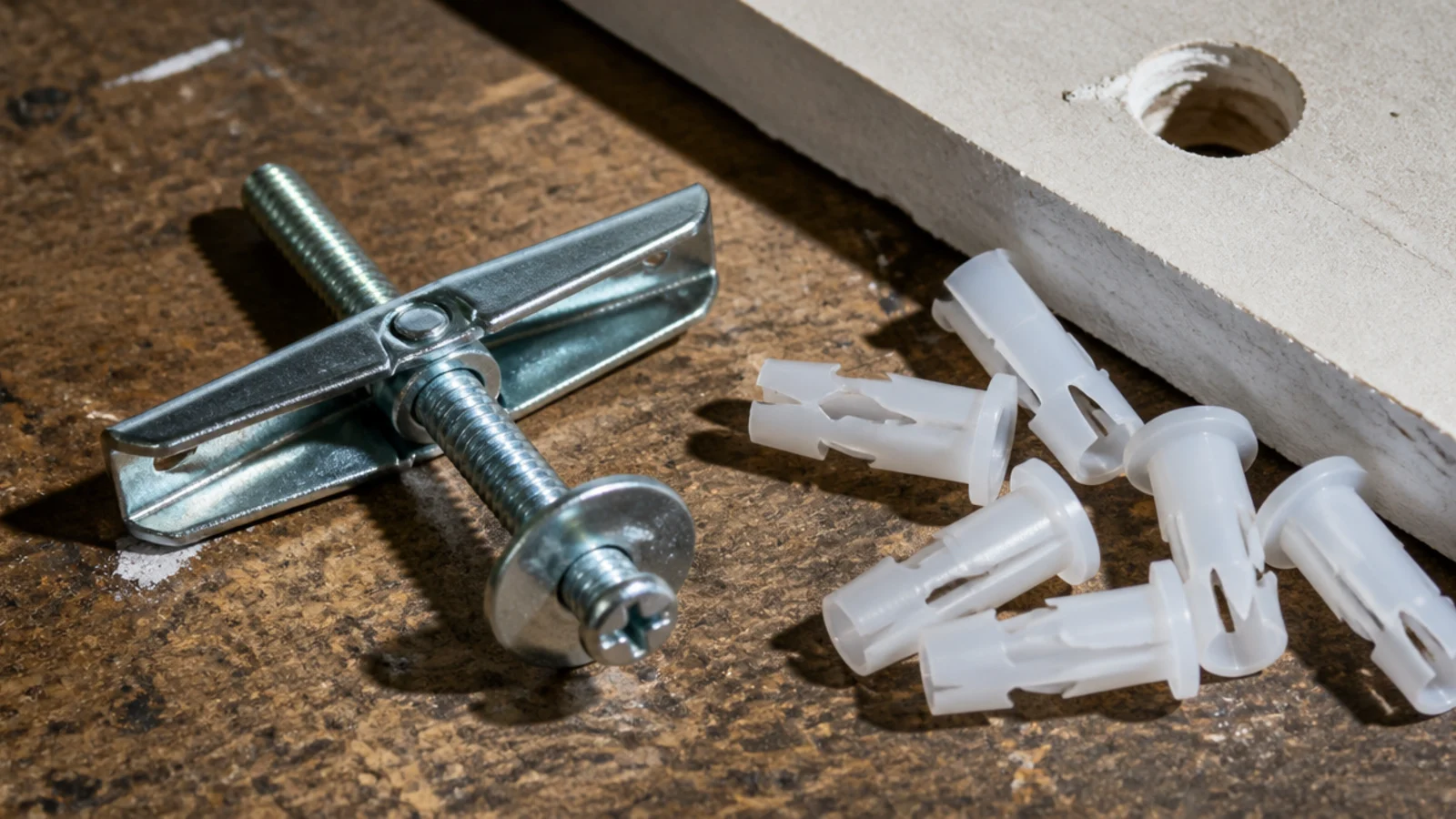
Half-inch drywall with nothing behind it still works if you use the right fixing. Toggle bolts carry 25 to 35 lb each and cost about a dollar, against roughly 10 lb for the plastic plugs in the shelf box. Throw those away on sight. Two toggles per bracket holds detergent for years, and load the heavy things low.
6. A French cleat for the shelf that carries weight
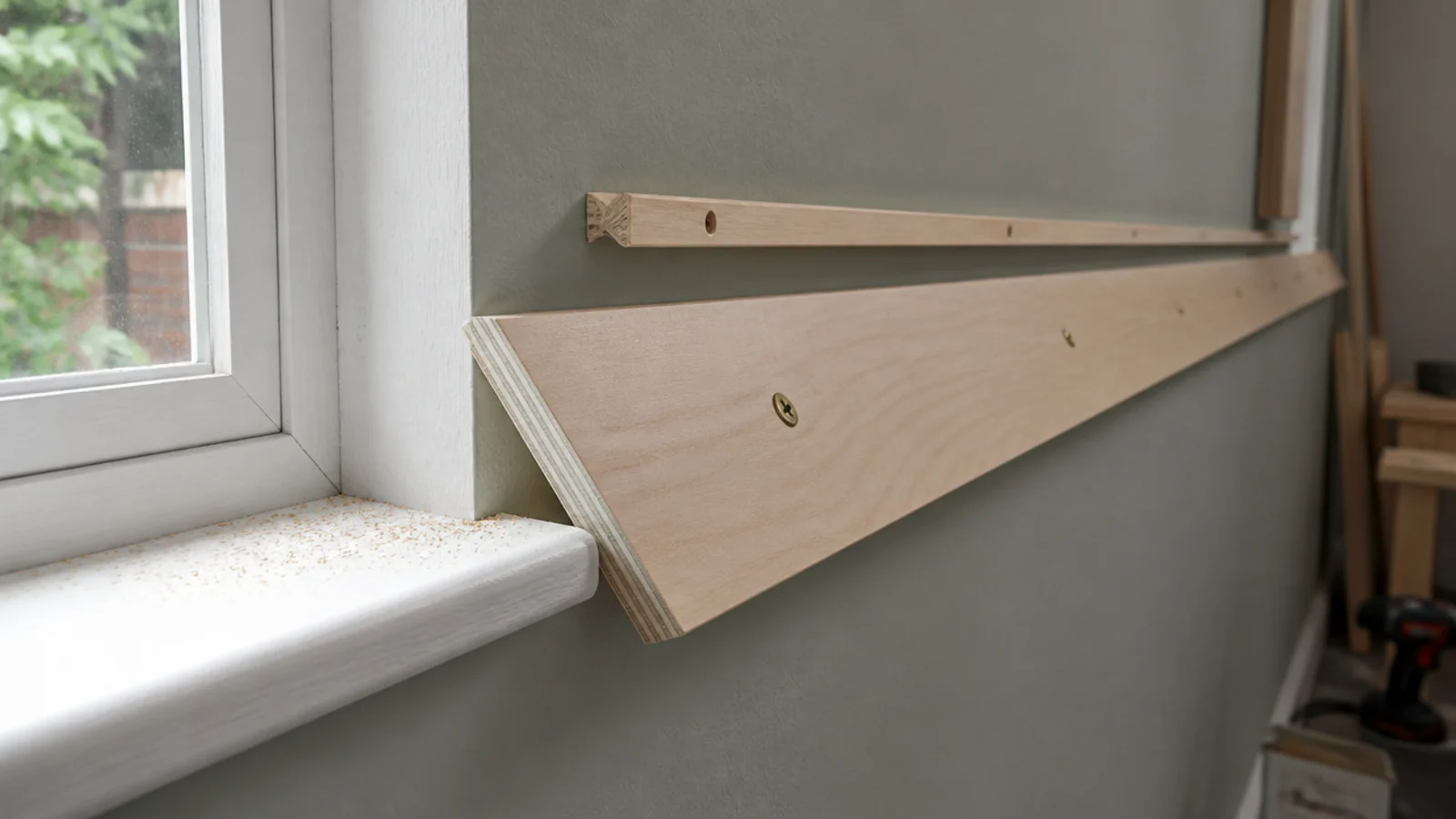
A French cleat is two strips of plywood cut at 45 degrees, one on the wall and one on the shelf. It spreads the load along the whole strip instead of into two screw holes, so it carries more than any anchor. About $15 of ply makes a 4 ft cleat, and you can lift the shelf off to paint behind it.
7. The 3 in gap beside the machines takes a pull-out
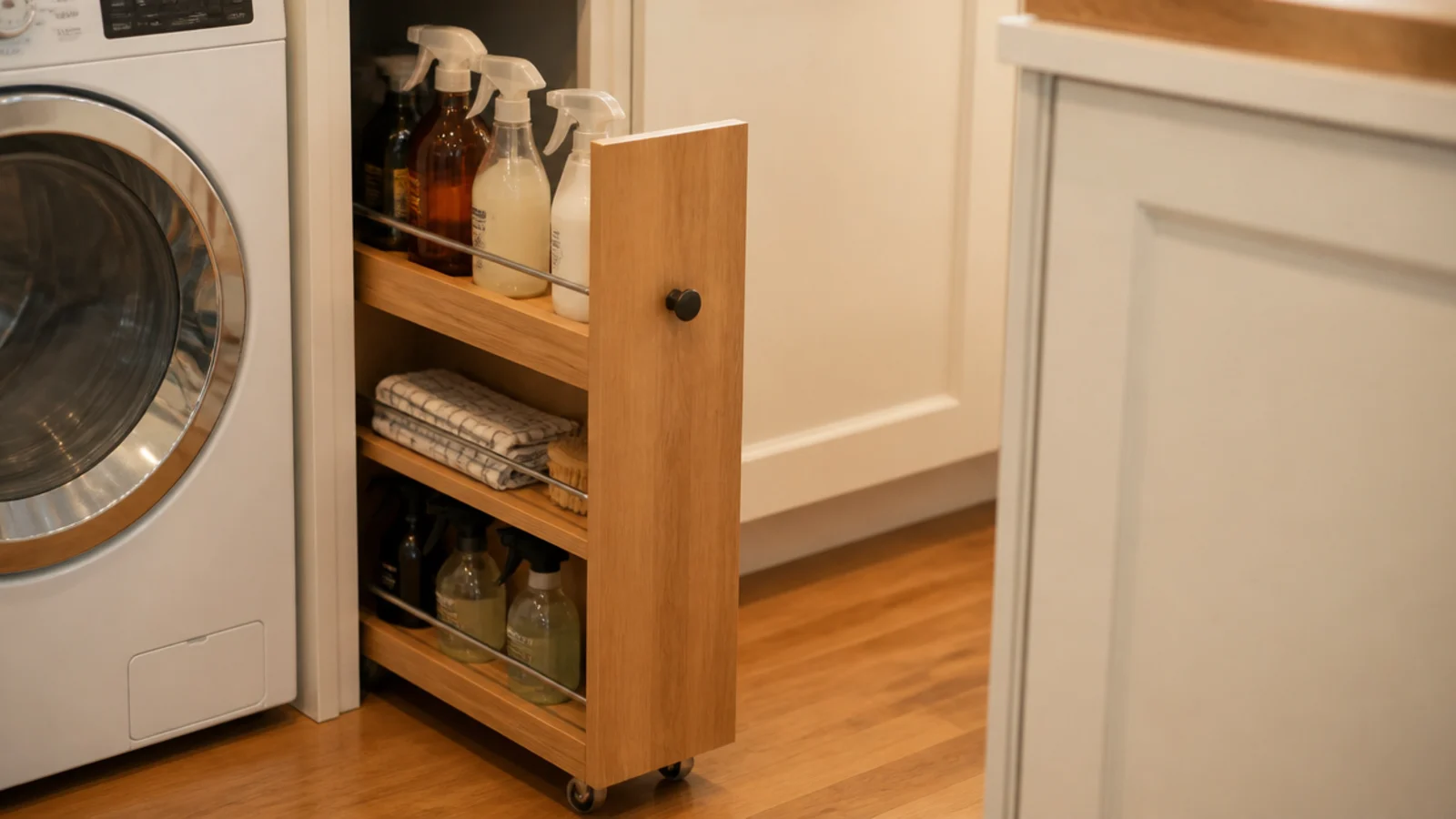
There is almost always a gap beside the washer once you allow the inch of service clearance each side. A slim pull-out tower on castors fills 3 to 6 in of it, runs the full 24 in depth, and holds a surprising number of bottles. Buy one at $40 to $80, or build a plywood box on drawer runners for less.
8. An over-door rack on the back of the door
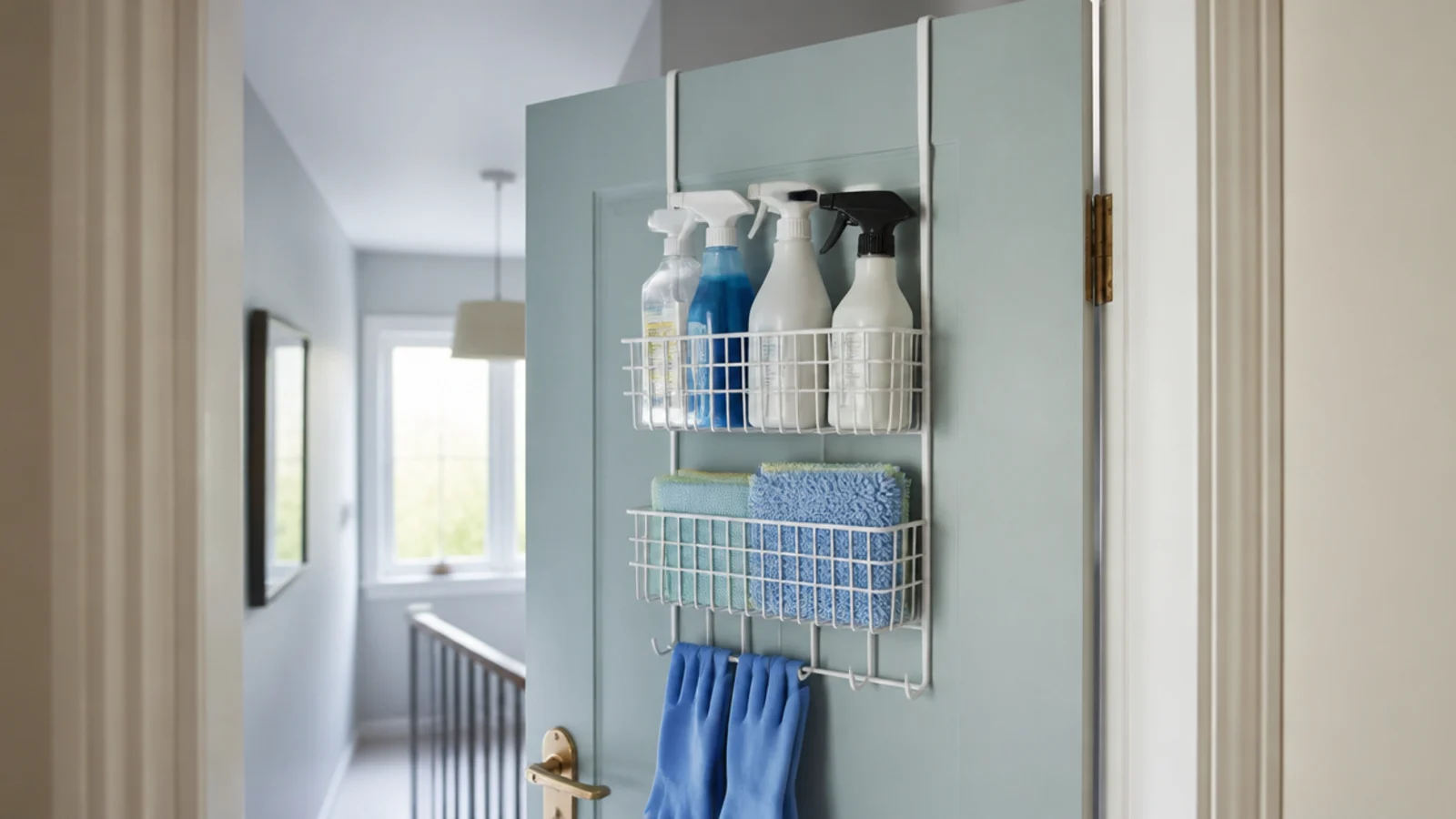
The back of a swing door is free storage nobody uses. A wire over-door rack takes about 4 in of depth and holds sprays, cloths and gloves for $20 to $35. Check the door still closes with the rack loaded, and keep it off any door under 24 in wide.
9. Labelled bins so nobody opens three to find one
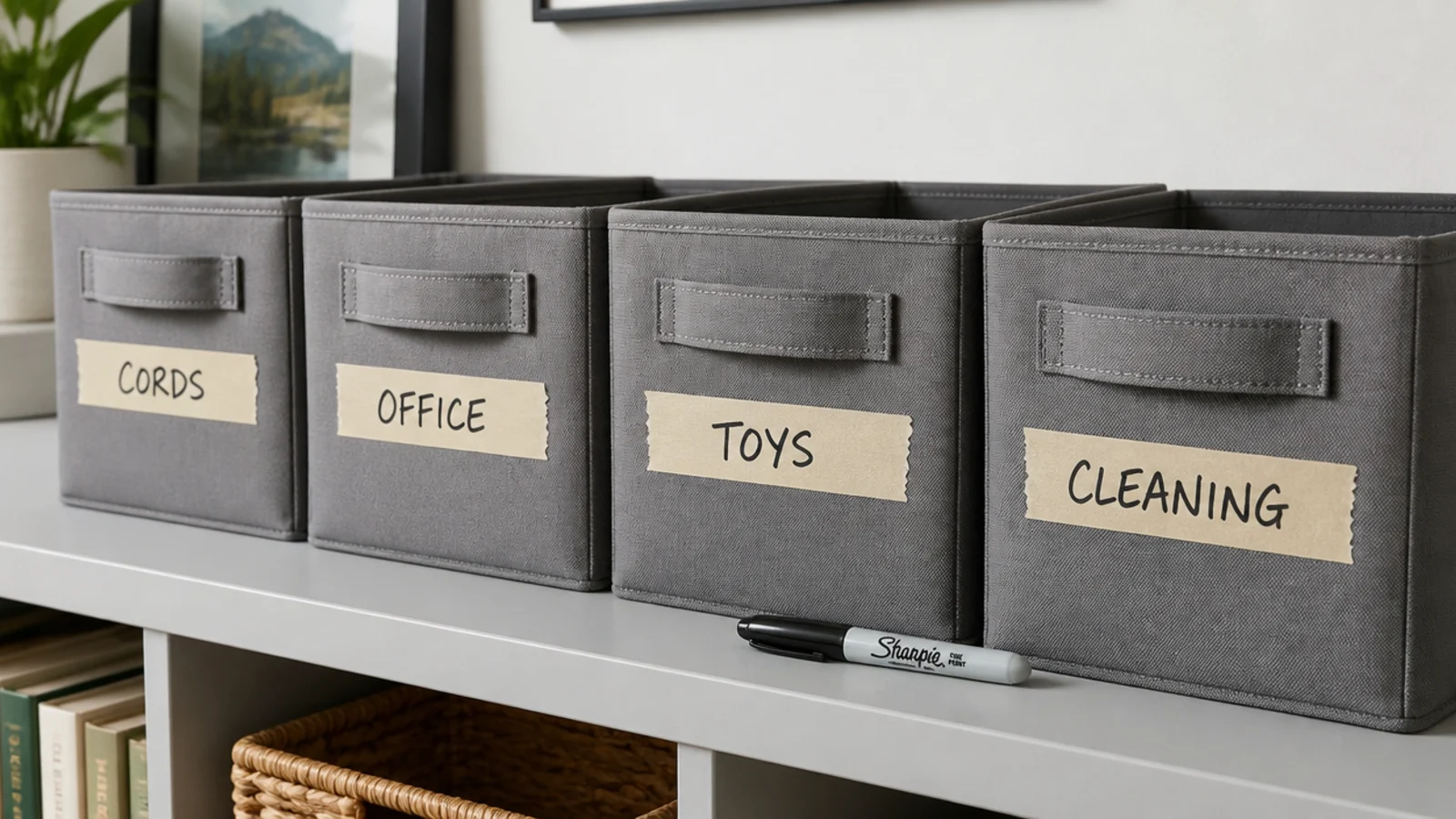
Bins only work when they are labelled, and the label has to be readable at shelf height rather than sitting on the lid. I use a strip of tape and a marker so it changes when the contents do. Fabric bins run $6 to $12 each; sturdy stackable plastic boxes with lids sit around $10 to $20.
10. A shallow tip-out tray for pods and pegs
The small things are what make shelves look chaotic. A shallow 3 in tray holding pods, pegs, stain sticks and dryer balls keeps them corralled and lets you carry the whole lot to the machine in one trip. Ceramic, enamel or a plain wooden box all work; depth matters more than material.

11. Two wall clips solve the ironing board
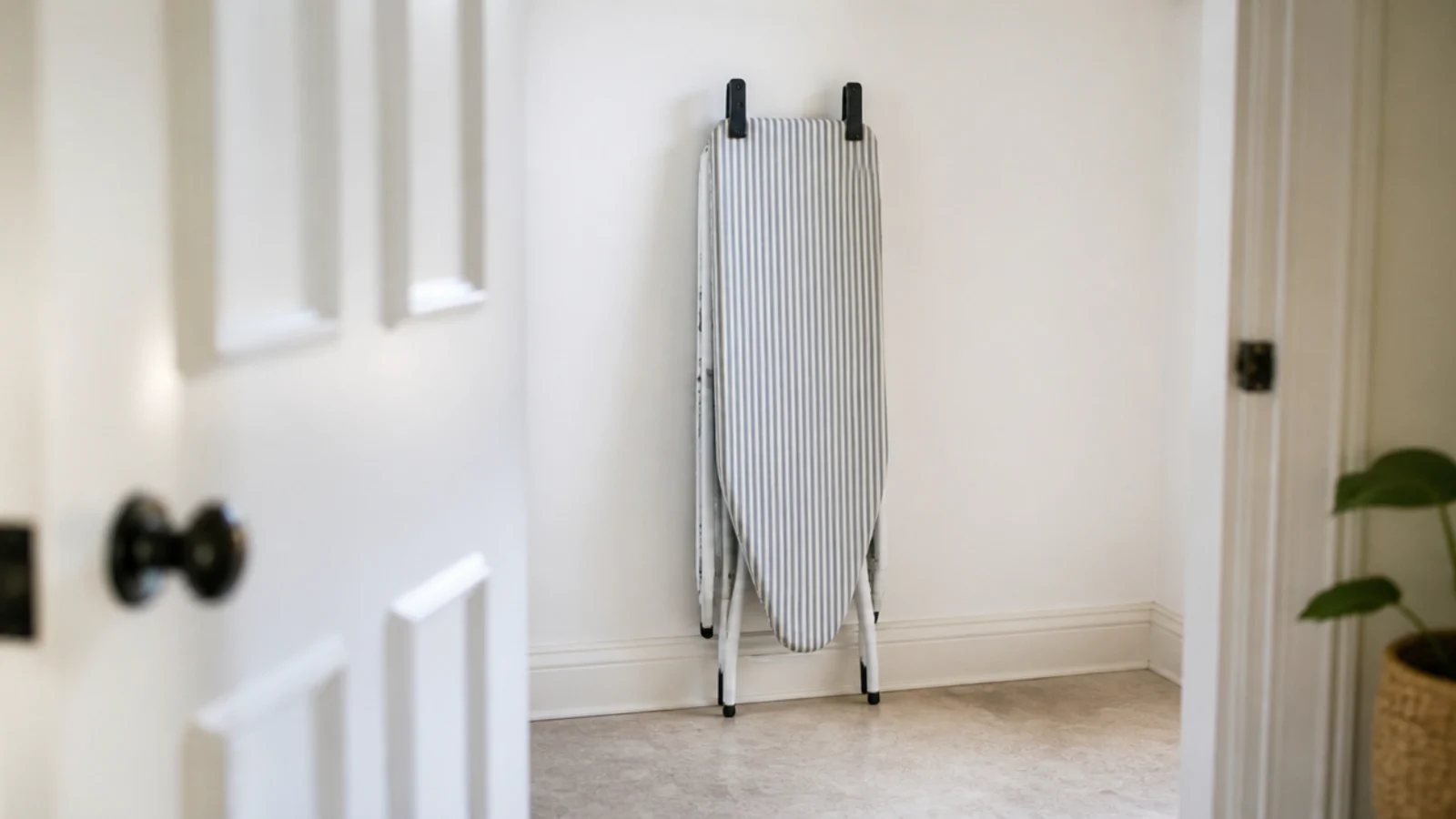
An ironing board is around 14 in wide, 5 ft long and never has a home. Two spring clips or a moulded wall bracket screwed into studs at about 48 in hold it flat against the wall for under $20, taking no floor at all. Put it behind the door so the board lives in dead space.
12. A 30 x 30 in leak tray that earns its keep
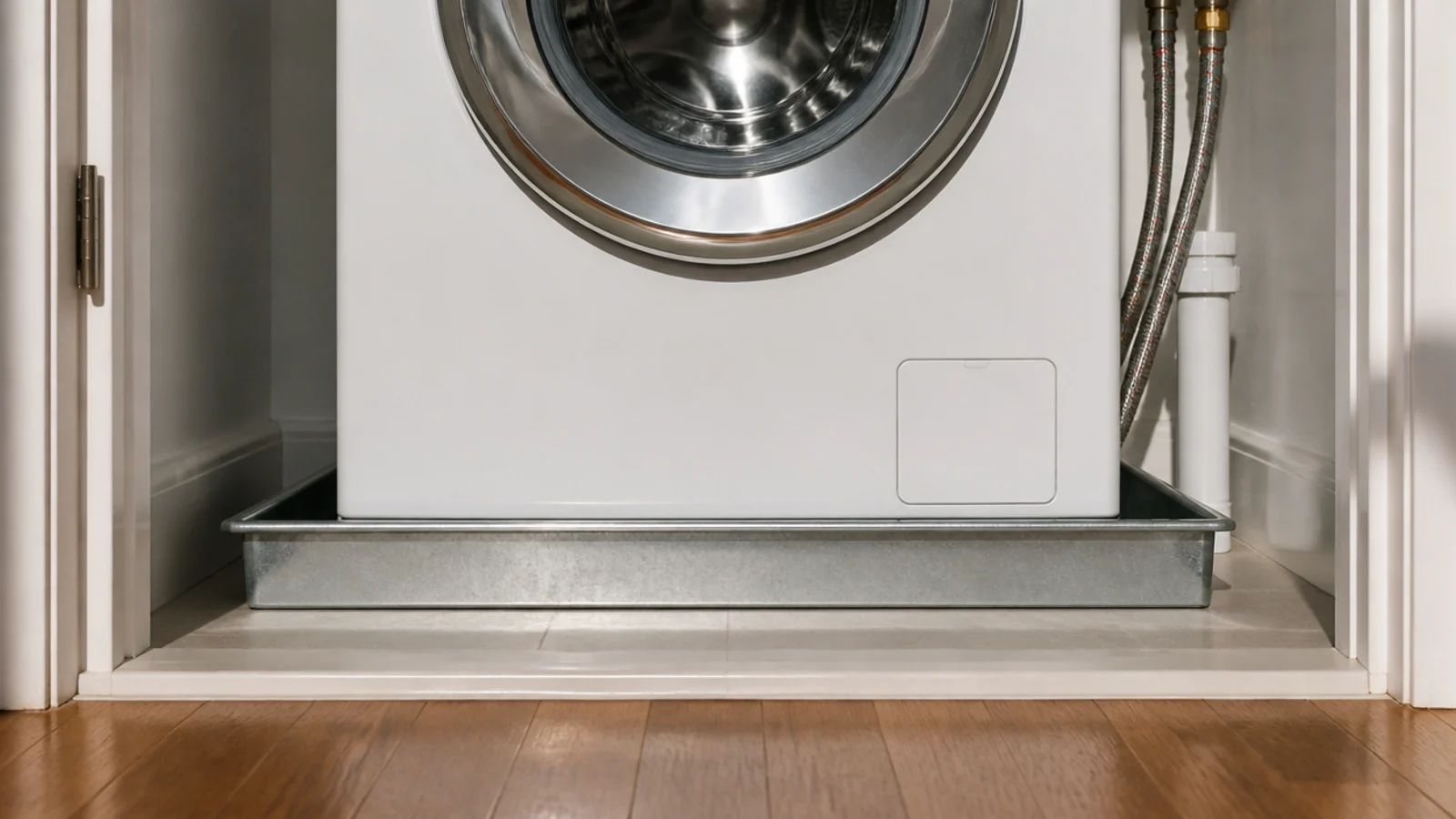
A 30 x 30 in leak tray under the washer catches a split hose before it reaches the hall, and it costs $30 to $60. It also takes the drips from a filter clean, which is the other way utility floors get ruined. On a timber floor, that tray plus a 3/8 in expansion gap is the difference between a wipe and a replacement.
13. A wall-hung wire basket system with no floor legs
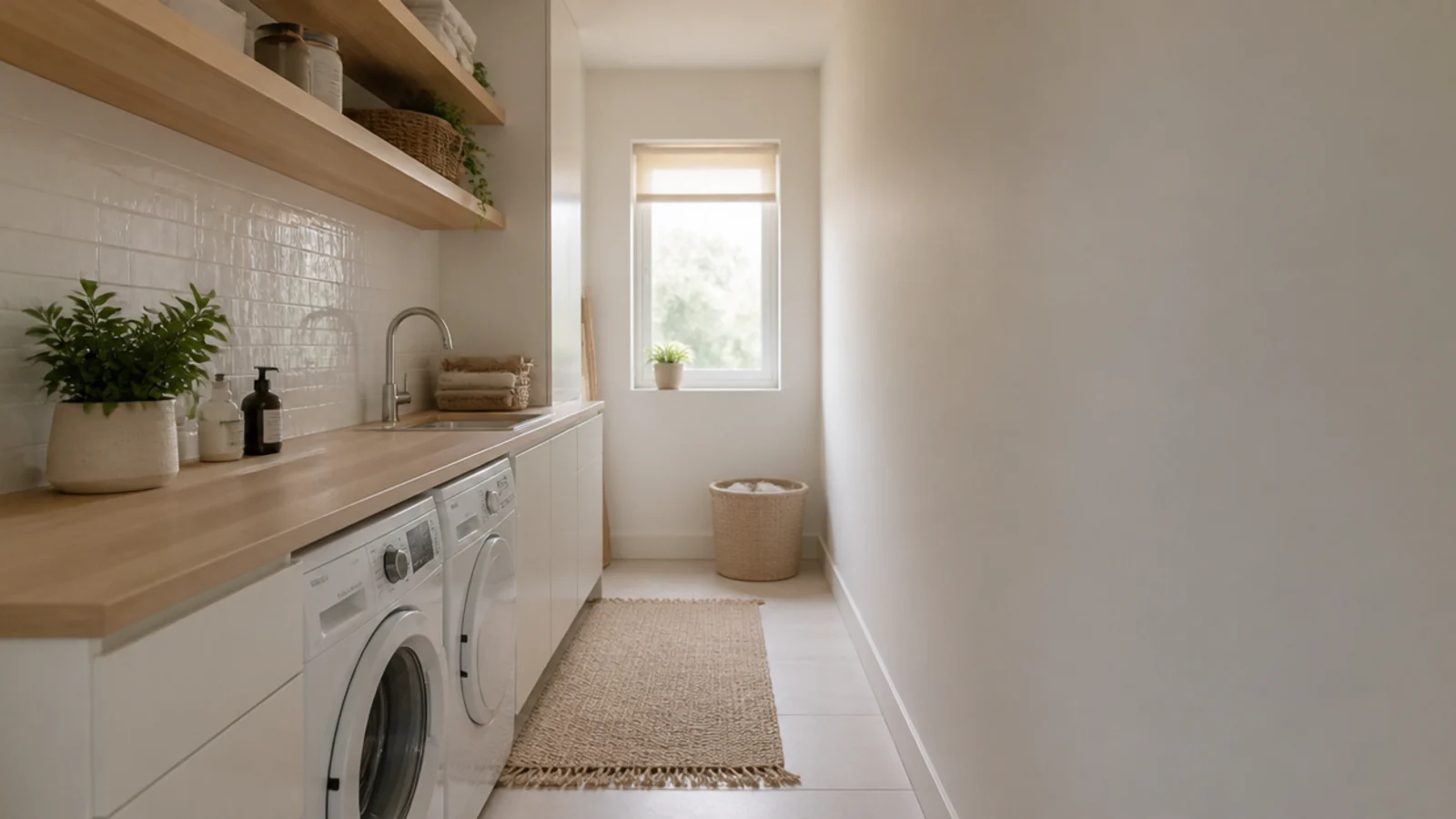
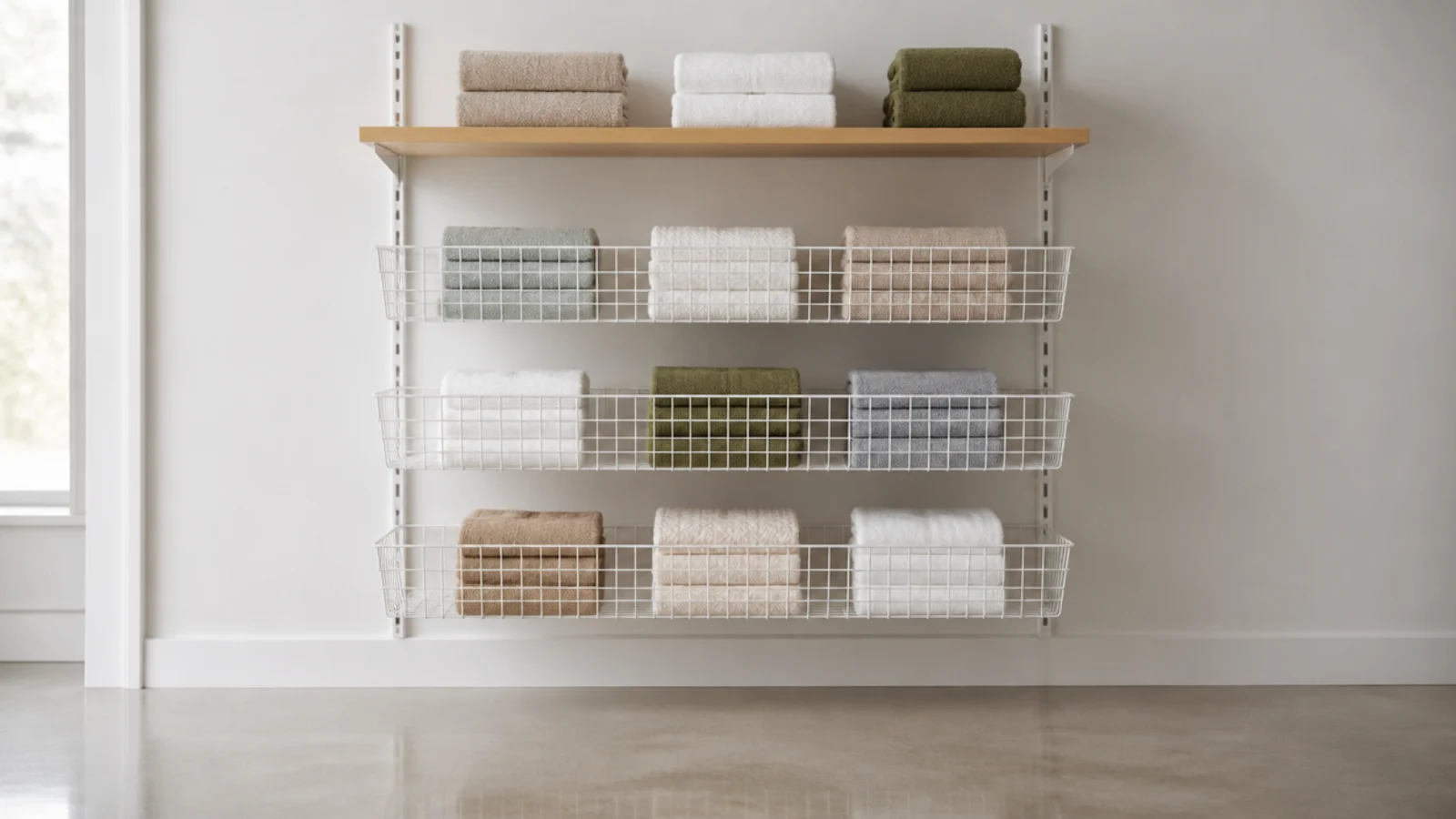
Wall-mounted rail systems such as BOAXEL or IVAR hang shelves and wire baskets from two uprights, so the floor stays clear and one mop pass cleans the room. A two-upright bay with three baskets lands around $70 to $130. Fix the top rail into studs, because everything below hangs off it.
14. Hooks at 60-66 in for adults, 40-48 in for children
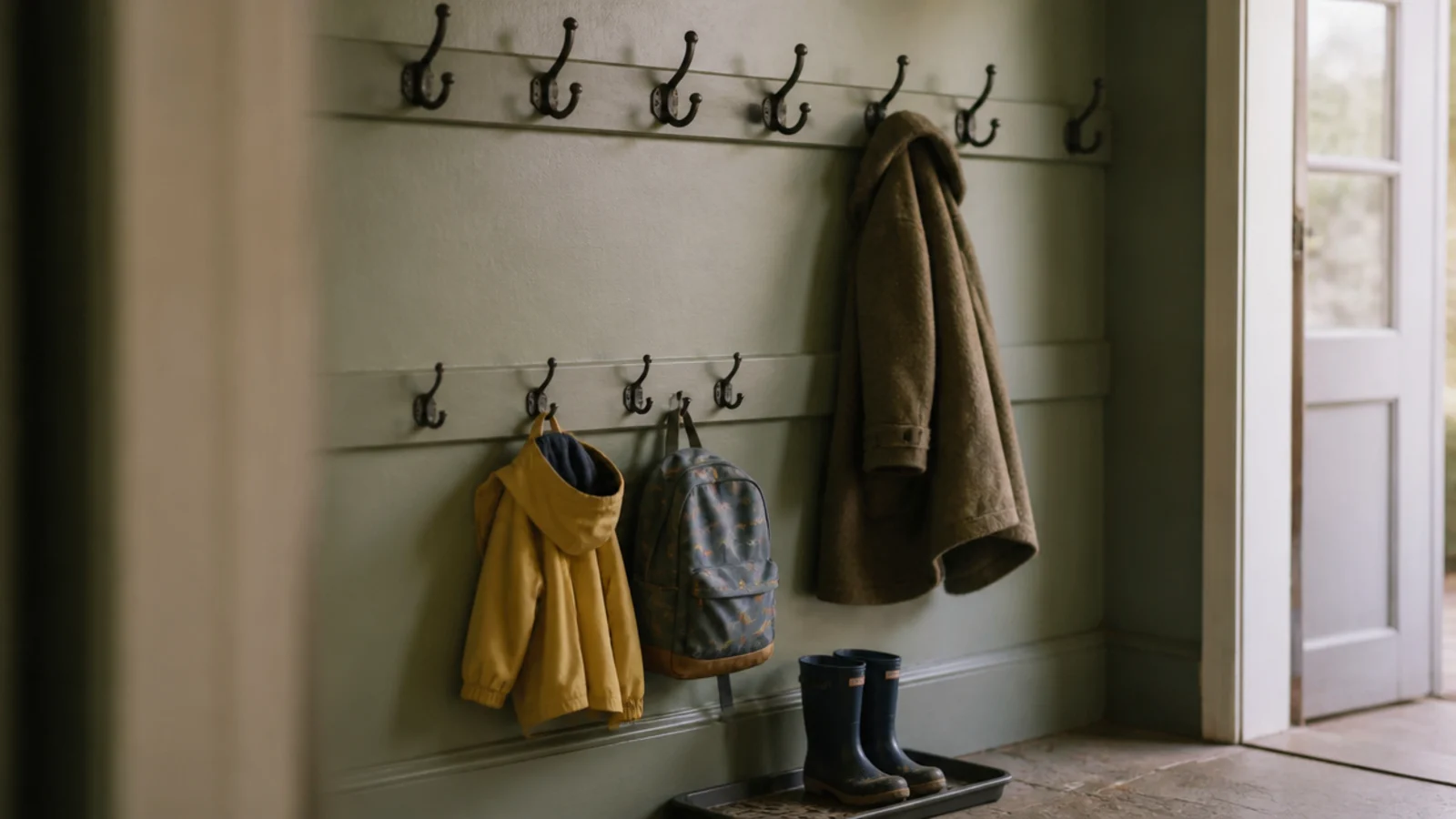
Hook height decides whether coats get hung or dropped. Sixty to 66 in suits adults, and 40 to 48 in works for children so they can reach without dragging a chair over. Space hooks 8 to 10 in apart or a bulky coat covers its neighbour completely. A rail of five iron hooks costs $15 to $30.
15. A pull-out under the sink for cleaning bottles
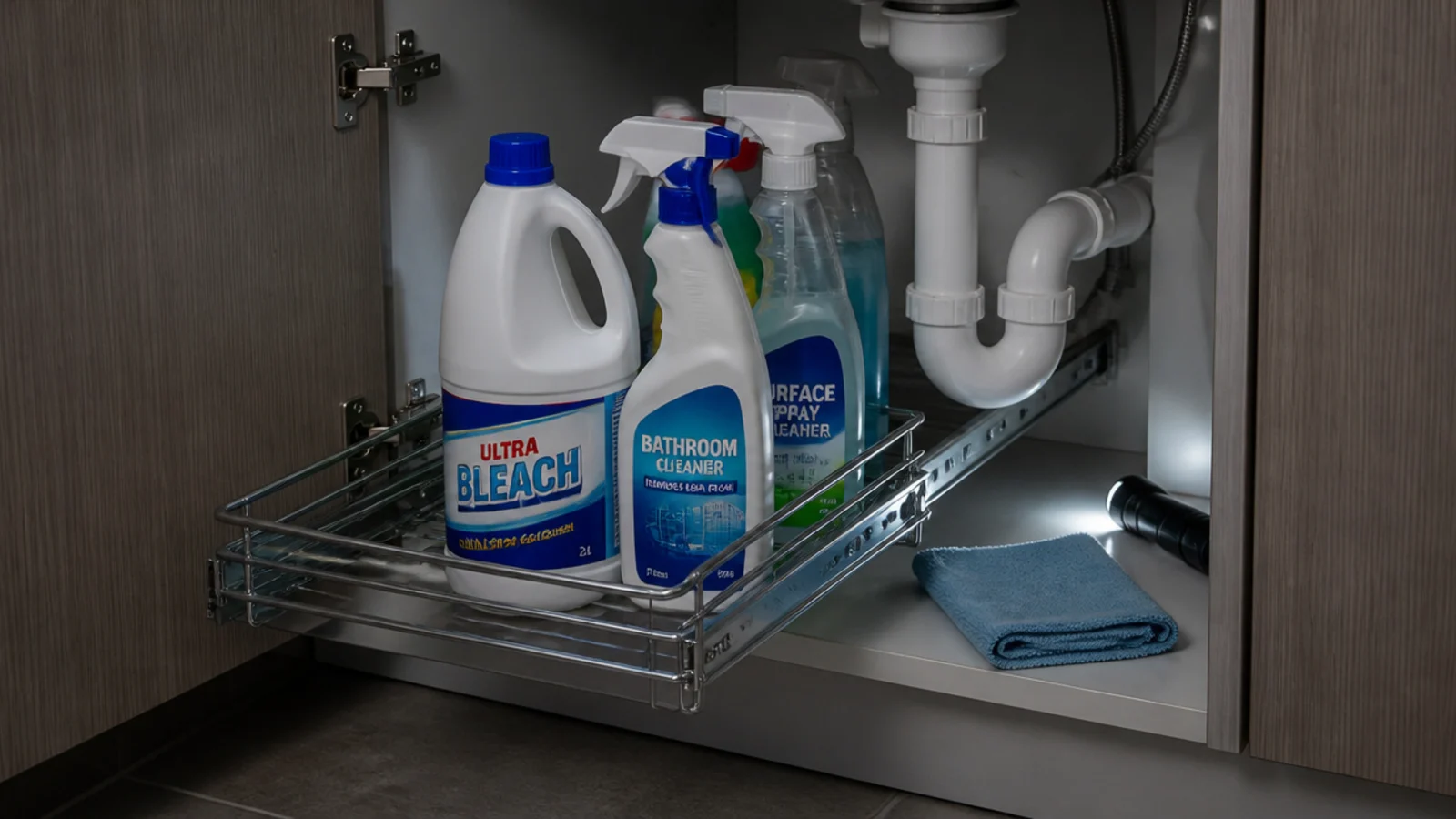
The cupboard under a utility sink is the worst storage in the house, because the waste trap eats the middle of it. A pair of shallow pull-out trays either side of the trap turns it back into usable space for $25 to $50, and every bottle comes out to you rather than you crawling in after it.
16. A hinged drying rail under the wall cabinet
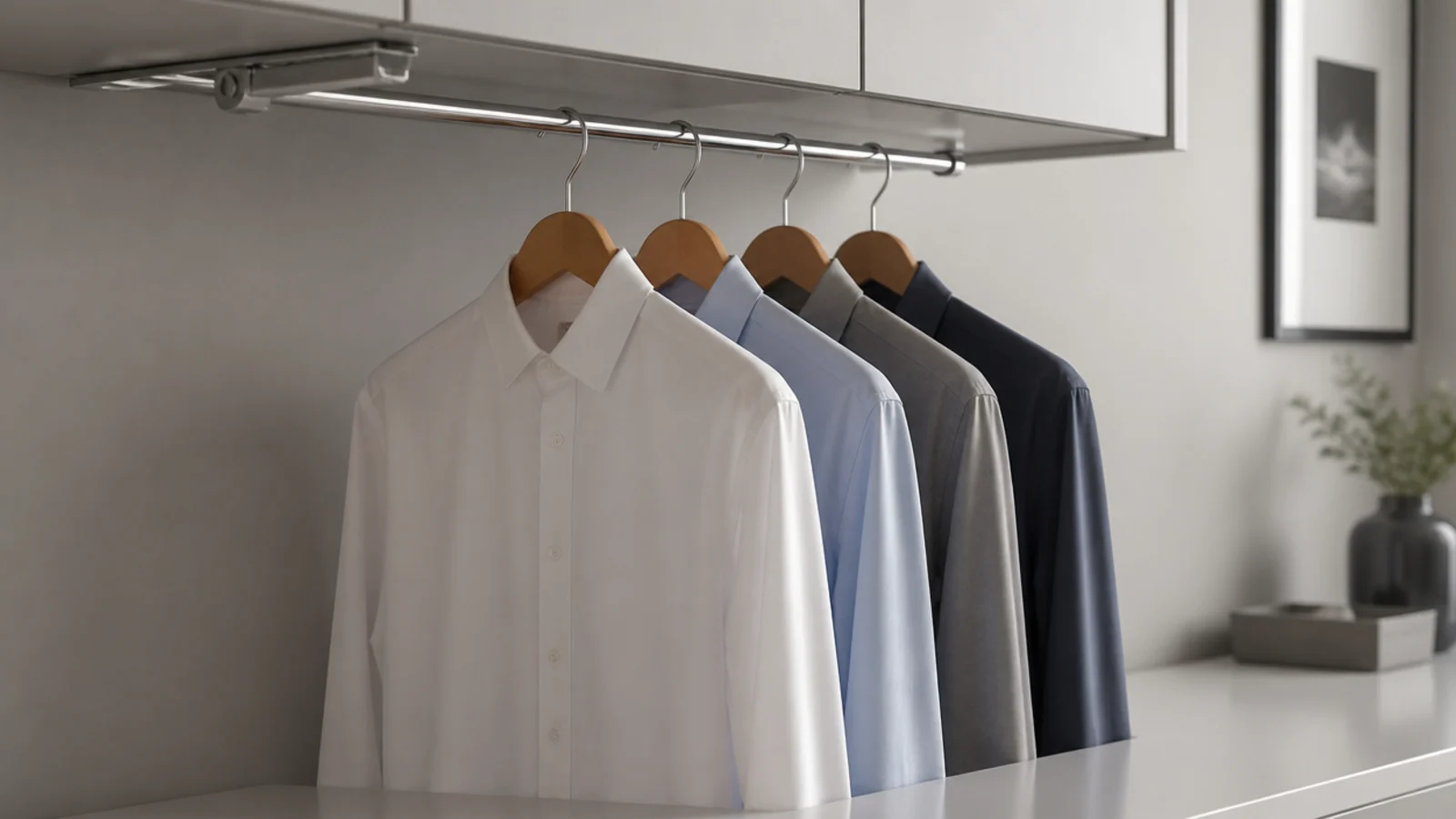
A drop-down rail fixed to the underside of a wall cabinet gives you 6 to 10 ft of line for hangers, then folds back to about 2 in. It suits shirts and anything that dries on a hanger. One load needs 20 to 25 ft of line in total, so treat this as a supplement to an airer rather than a replacement.
17. Stack the pair and buy back 27 in of floor
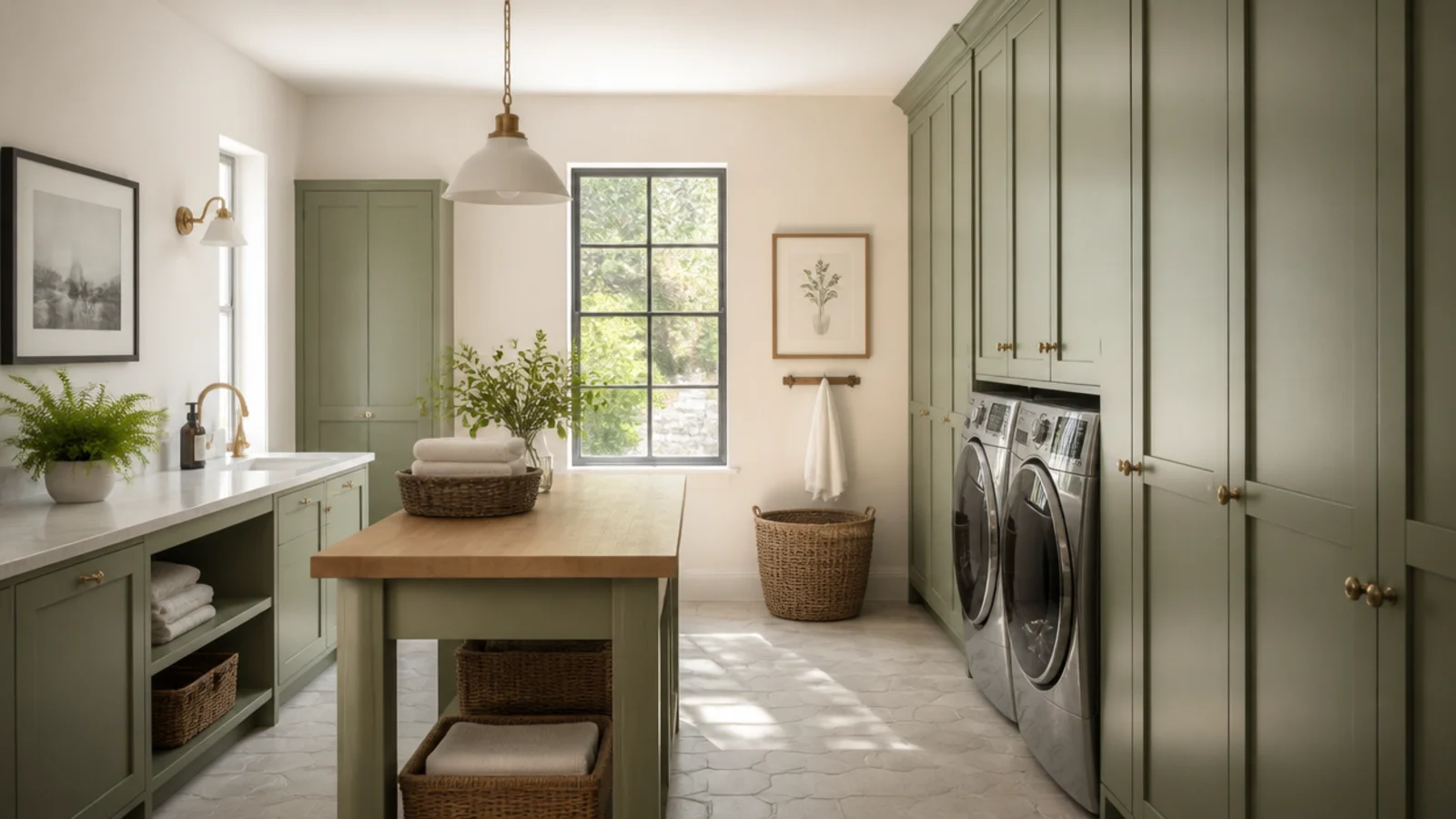
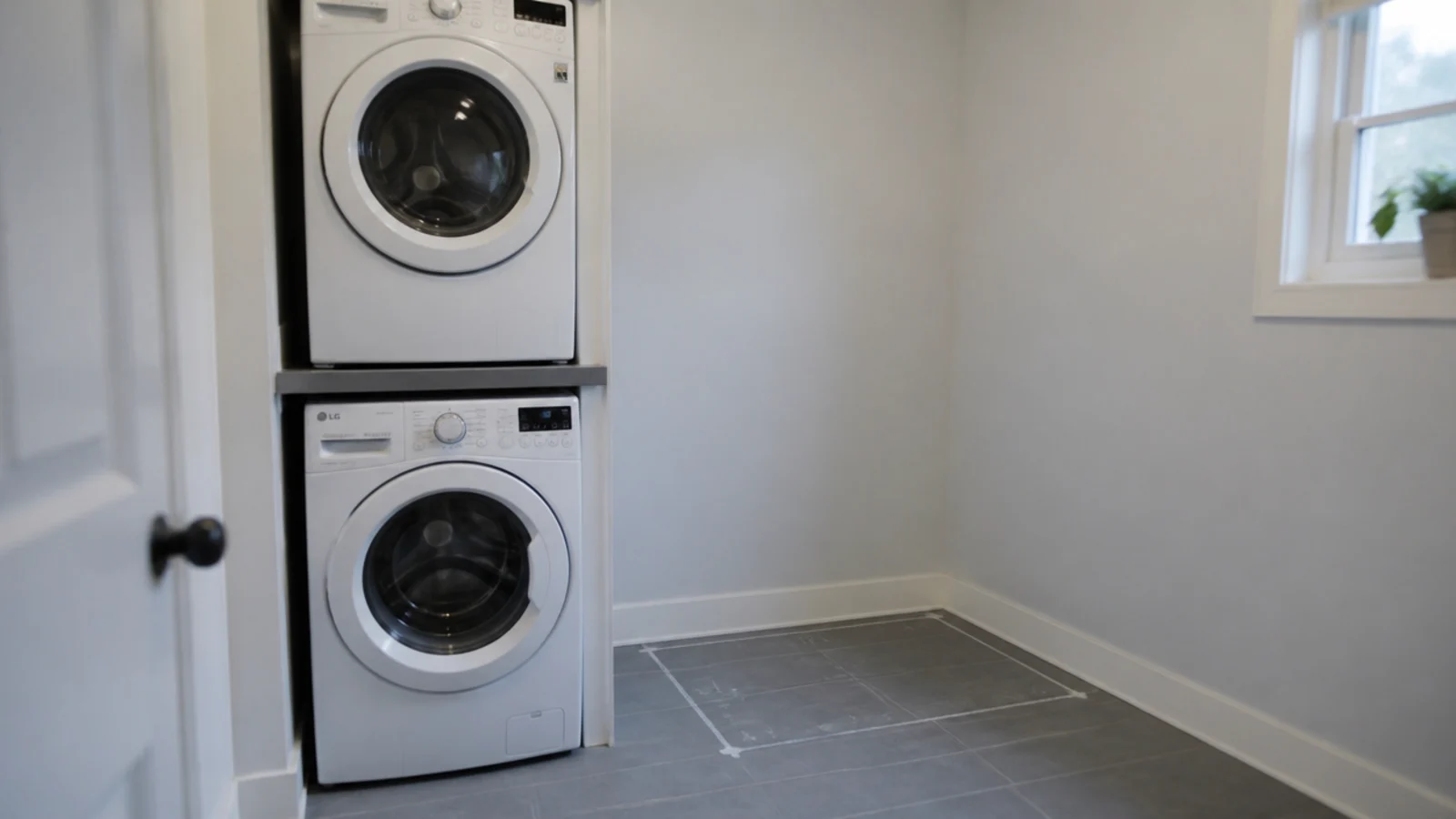
Stacking a front-loading pair returns a 27 in wide slab of floor, which is usually the difference between a room with storage and a room with two machines in it. Only front-loaders, only with the manufacturer stacking kit at $30 to $60, never a top-loader. Put a tall 12 in deep cupboard in the space you win.
18. Wall cabinets 18 in above the worktop
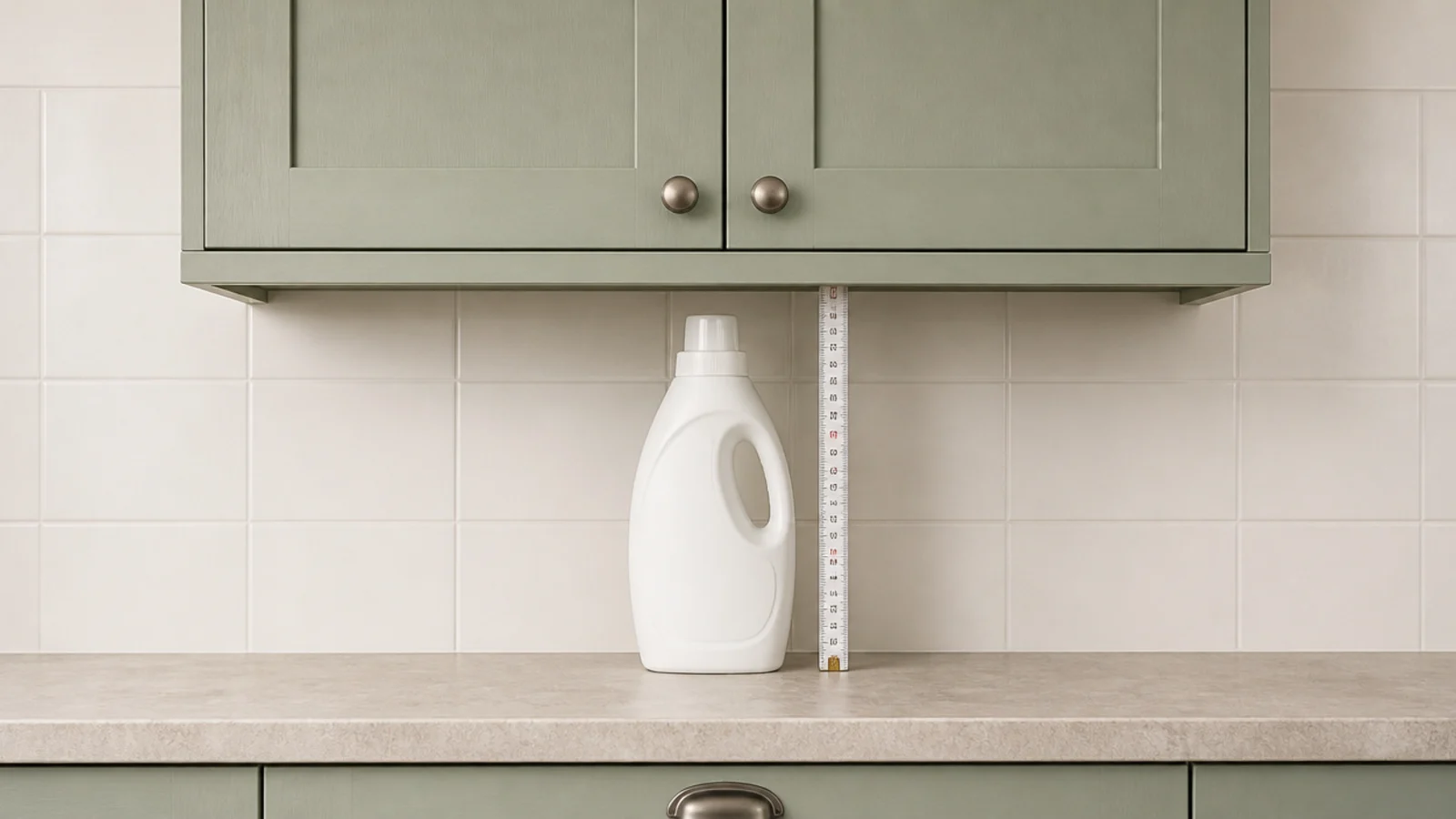
Leave 18 in of clearance between worktop and wall cabinet, which puts the cabinet bottom at 54 in above a 36 in counter. Any less and you cannot stand a detergent bottle underneath or work comfortably. Closed doors hide the plastic that open shelves display. Budget $80 to $200 a unit.
19. A three-bag sorter instead of one big basket
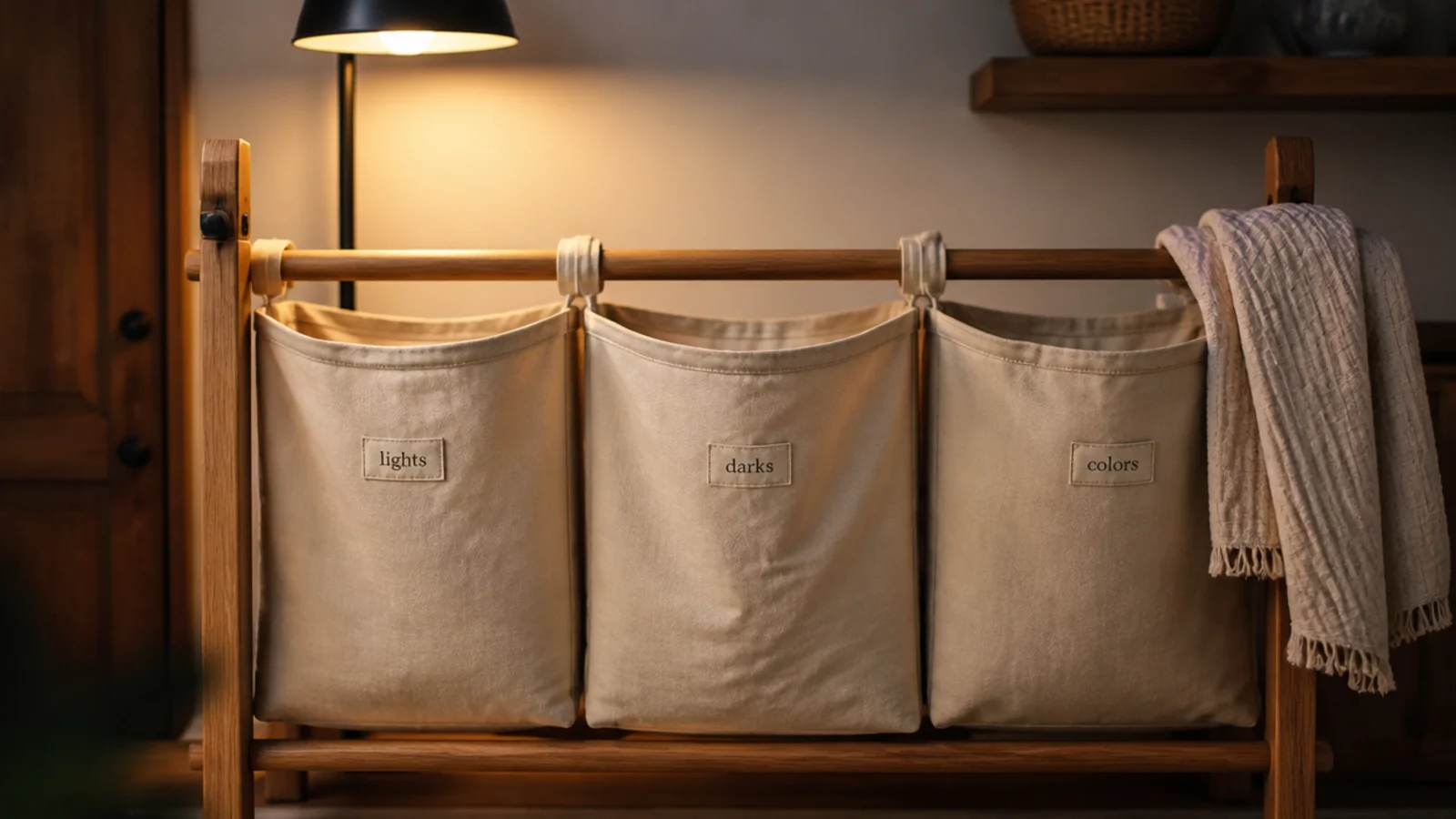
One overflowing basket means sorting on the floor every wash day. A three-bag sorter — whites, colours, towels — sorts as you go and costs $40 to $90 on a frame, or nothing at all if you hang three canvas bags from the peg rail. A bag roughly 14 in wide holds one load, which is the useful size.
20. A toe-kick drawer for the flat things
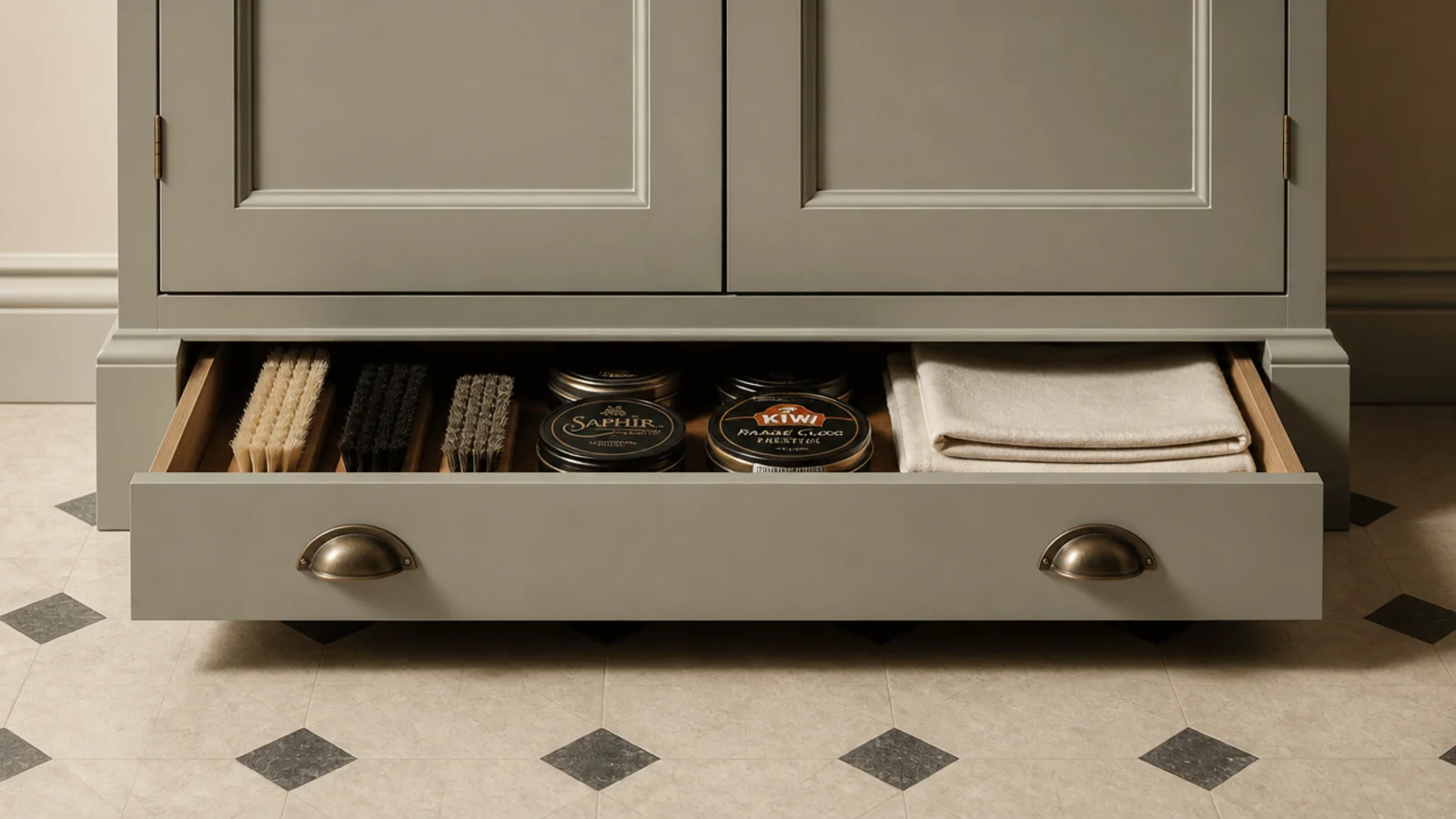
The 4 in void under a base cabinet plinth is dead space. A toe-kick drawer turns it into a home for shoe brushes, spare cloths and flat tools that never stack anywhere else. It is a $30 to $70 addition to a fitted run and the only storage in the room that costs neither floor nor wall.
21. A magnetic strip on the machine's steel side
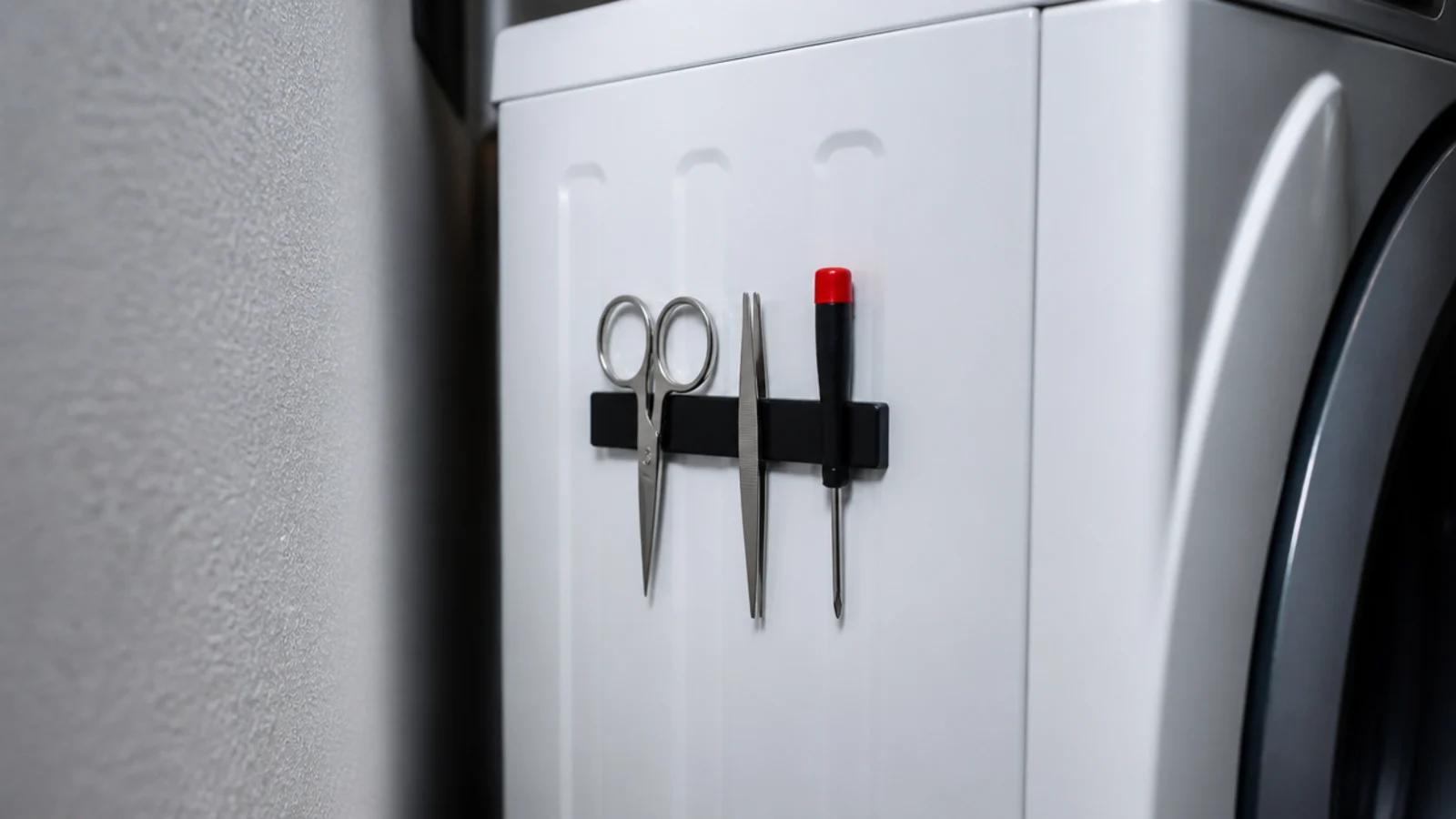
The side panel of a washer is steel, so it takes magnets. A knife-rack magnetic strip stuck along it holds scissors, tweezers, small tools and the keys that migrate into this room, for $10 to $20. Keep it clear of the control panel and above a child's reach, and expect it to shift if the machine ever runs unbalanced.
22. A 12 in deep tall cupboard for the mop and vacuum
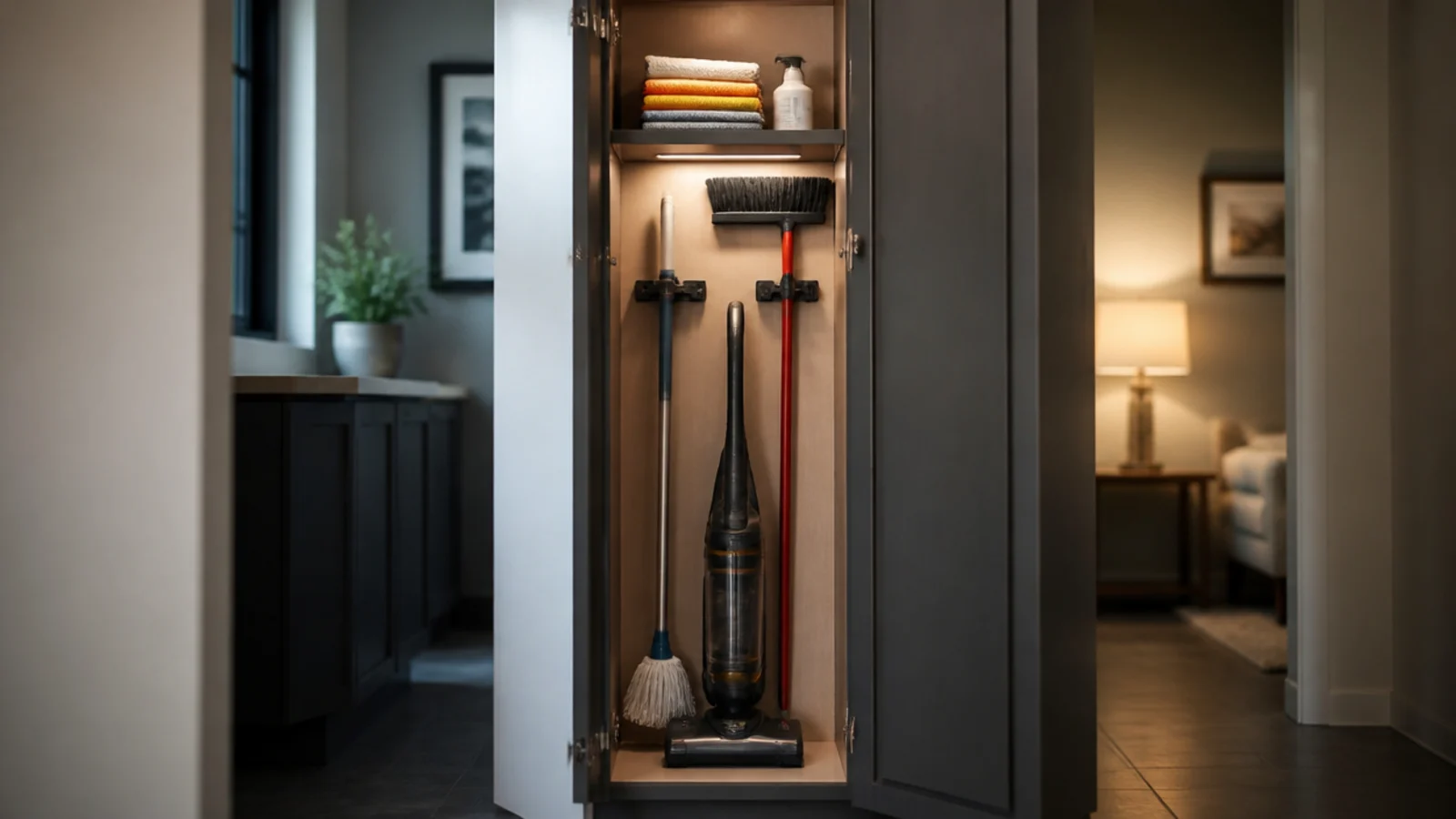
A broom cupboard only needs 12 in of depth and 16 to 20 in of width. Fit two spring clips at 60 in for the mop and broom handles, and a shelf at 48 in above a floor-standing vacuum. Everything vertical, nothing leaning. A flat-pack tall unit runs $90 to $200; a cleat and a door front costs less.
23. One deep drawer for what has no category
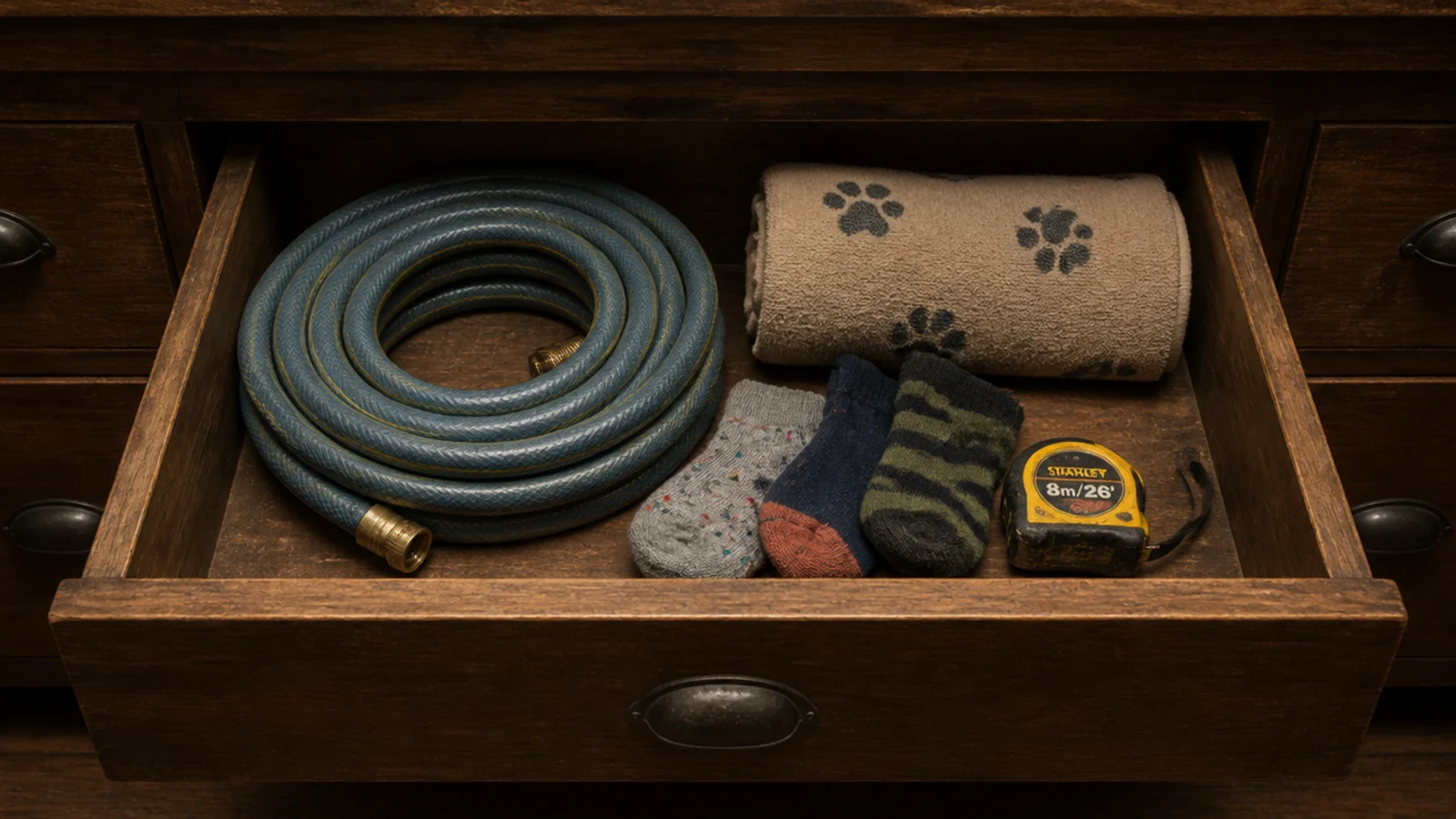
Every utility room holds objects with no home: the spare hose, the sock without a partner, the dog towel. Give them one deep drawer around 10 in high and stop trying to file them properly. Open shelving rarely fails because of the shelving — it is the ten things that were never going to look good on it.
24. Open slatted shelves for anything still damp
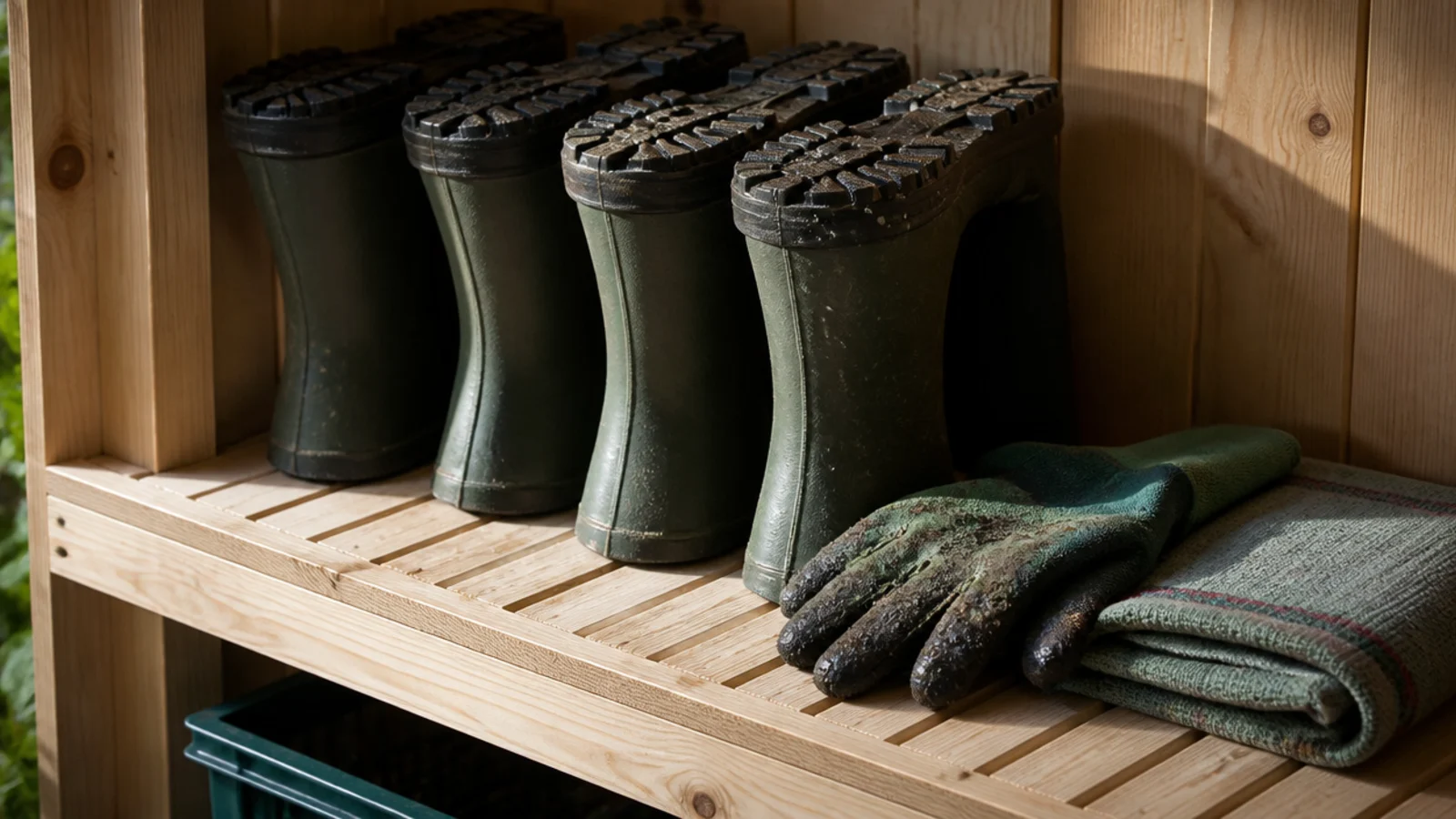
Slatted shelves 8 to 12 in deep let air pass through, so boots, gloves and damp cloths dry rather than souring. A closed cupboard does the opposite and smells within a week. Softwood battens with a 3/4 in gap between them make one for $25 to $40 in materials, and they take a wipe better than mesh.
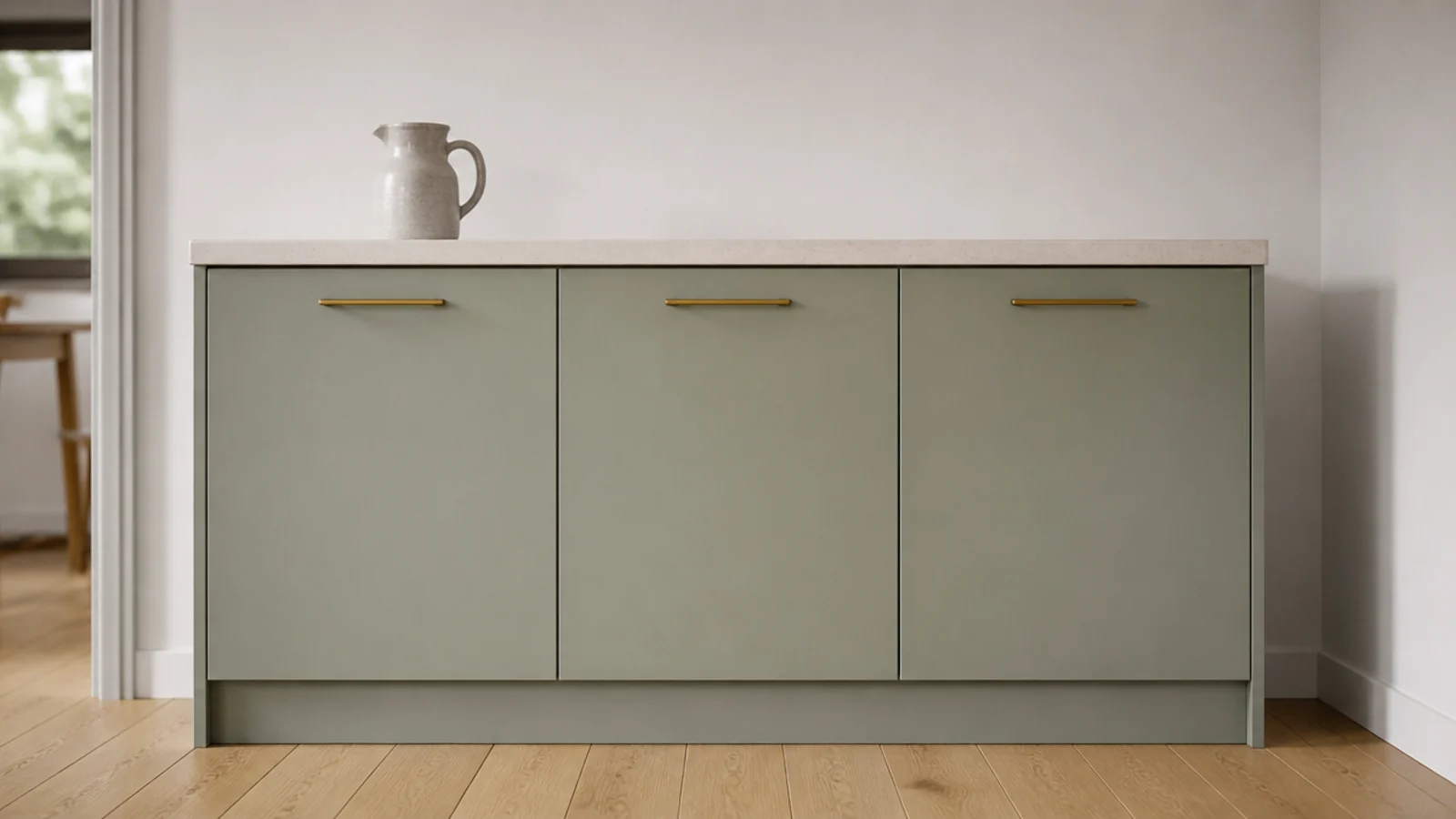
25. The three-cabinet run at $600 to $1,200
When the budget arrives, three base cabinets with a laminate worktop is $600 to $1,200 fitted, and it does what no amount of open shelving can: it hides everything at once. Keep the run 24 to 25 in deep with the worktop at 36 in. A full fitted utility with tall units runs $2,500 to $6,000.
If the shelving itself is the project rather than the boxes on it, the utility room shelving guide covers spans, brackets and rental-safe fixings in more detail. For rooms where even a peg rail has to be argued for, tiny utility room ideas works through the smallest footprints one decision at a time.
Mistakes to Skip
- Using the plastic plugs that come in the shelf box. They are rated around 10 pounds and creep out of drywall slowly, so the shelf looks perfectly fine right up until the morning it does not.
- Running shelving or a cabinet across the consumer unit, a gas meter or a boiler flue. A meter needs ventilation and its emergency control valve has to stay reachable without tools, and a boiler needs its service clearances and a removable panel.
- Buying deep boxes for a 12 in shelf. A 16 in box overhangs the front edge, catches sleeves as you pass and turns a tidy row into something you knock at head height.
- Putting damp cloths into a closed cupboard. Anything stored wet needs a slatted shelf 8 to 12 in deep with air moving past it, or the whole room smells sour within a week.
Frequently asked questions
How deep should utility room shelves be?
Twelve inches suits almost everything a laundry room stores, because it holds a detergent bottle, a spray and a folded stack of cloths in one front row. Deeper shelves hide a second row you will forget and start catching your shoulder in a tight walkway.
What is the cheapest storage that actually works?
A hardwood peg rail screwed into studs plus two 12 in deep shelves above the machines, which comes in under $120 in materials. It holds the ironing board, the airer, the brushes and the bottles, which covers most of what the room needs to store.
How much weight will a shelf hold in drywall?
Toggle bolts carry 25 to 35 pounds each in half-inch drywall, so two per bracket handles detergent and cleaning bottles comfortably. The plastic plugs supplied with most shelf kits manage roughly 10 pounds and creep out slowly. A bracket landed in a stud beats both by a distance.
Where do you store an ironing board?
Flat against a wall behind the door, held by two spring clips or a moulded bracket screwed into studs at about 48 inches. It costs under $20, takes no floor at all, and puts a 5 ft board into dead space nothing else can use.
How much does fitted utility room storage cost?
Three base cabinets with a laminate worktop run $600 to $1,200 fitted, and a full fitted utility with tall units and a sink lands between $2,500 and $6,000. Starting with three cabinets and adding tall storage later spreads the cost sensibly.
Want more like this? Browse all 15 utility room ideas guides — they all use the same measurements and budget tiers.
Pin it for later
Save this to your Utility Room Ideas board
Pin it now so it is waiting for you when the tape measure comes out — and so the next person hunting for this idea can find it too.
Save this pinKeep going
More ideas worth saving while you have the tape measure out.