Under Stairs Storage · Listicle
25 Beautiful Under Stairs Storage Ideas For Renters

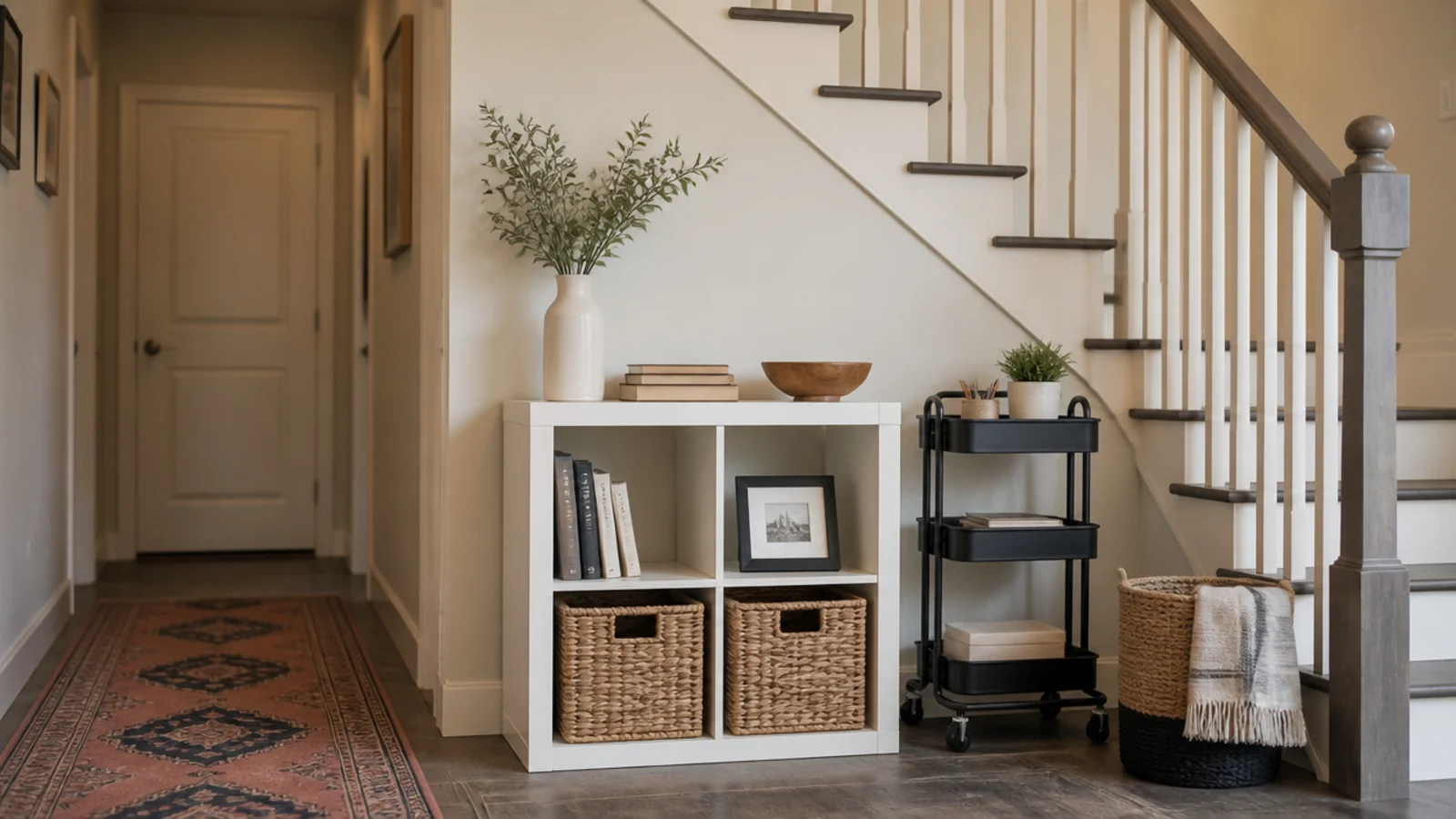
Renting removes the two things most staircase projects rely on: drilling into walls and building things you cannot take with you. The good news is that under stairs storage ideas which need no fixings often work better anyway, because the wedge is awkward and freestanding pieces can be moved when you discover the slope is lower than you thought. Every idea below either needs no holes or reverses in an afternoon. I have used most of them across two rented flats. Here are twenty-five that look deliberate rather than temporary.
In this guide27 sections — tap to openHide
- 1.What under stairs storage ideas have to respect in a rental
- 2.Stand a cube unit in the tall band
- 3.Roll a three-tier cart into the middle
- 4.Span a tension rod for a light rail
- 5.Wheel in a freestanding garment rack
- 6.Hang a curtain from a tension rod
- 7.Use adhesive hooks, honestly rated
- 8.Stack clear boxes at the shallow end
- 9.Reuse wheeled under-bed boxes
- 10.Set a console across the whole opening
- 11.Slide a seven-inch shoe cabinet against the flank
- 12.Turn a bookcase on its side
- 13.Screen the wedge with a folding panel
- 14.Make it a reading corner instead
- 15.Stick battery lights to the soffit
- 16.Stand a coat tree in the tall corner
- 17.Paper the back wall with peel and stick
- 18.Park a bar cart where the ceiling is high
- 19.Use canvas drawer units for soft storage
- 20.Add freestanding metal shelving for bulk
- 21.Lean a ladder shelf against the slope
- 22.Try an adhesive ledge for keys and post
- 23.Stack vintage suitcases as a side table
- 24.Fill the tall corner with one large plant
- 25.Screen a litter tray with an open bench
- 26.Plan the reversal before the tenancy ends
- 27.Mistakes to Skip
What under stairs storage ideas have to respect in a rental
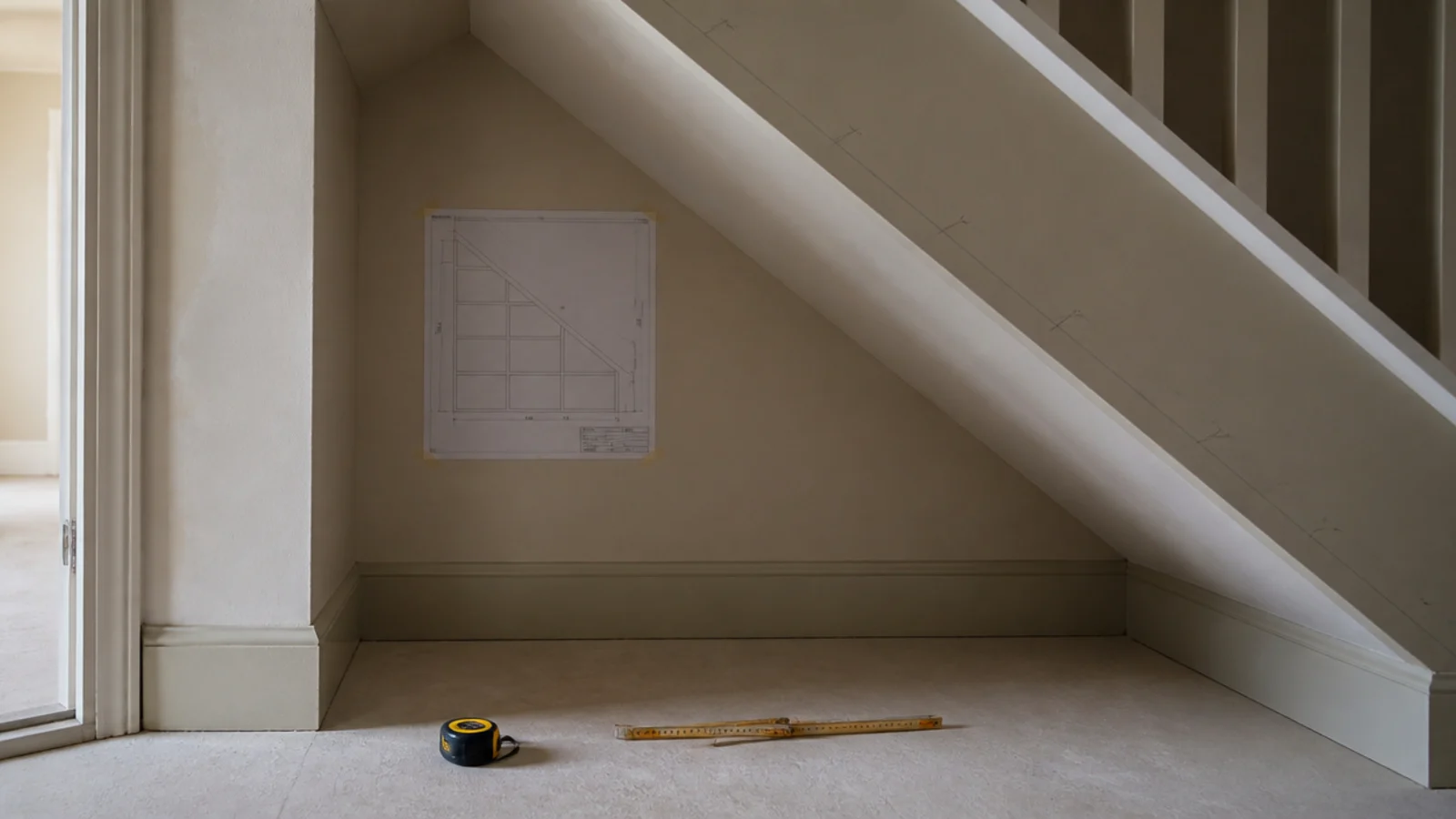
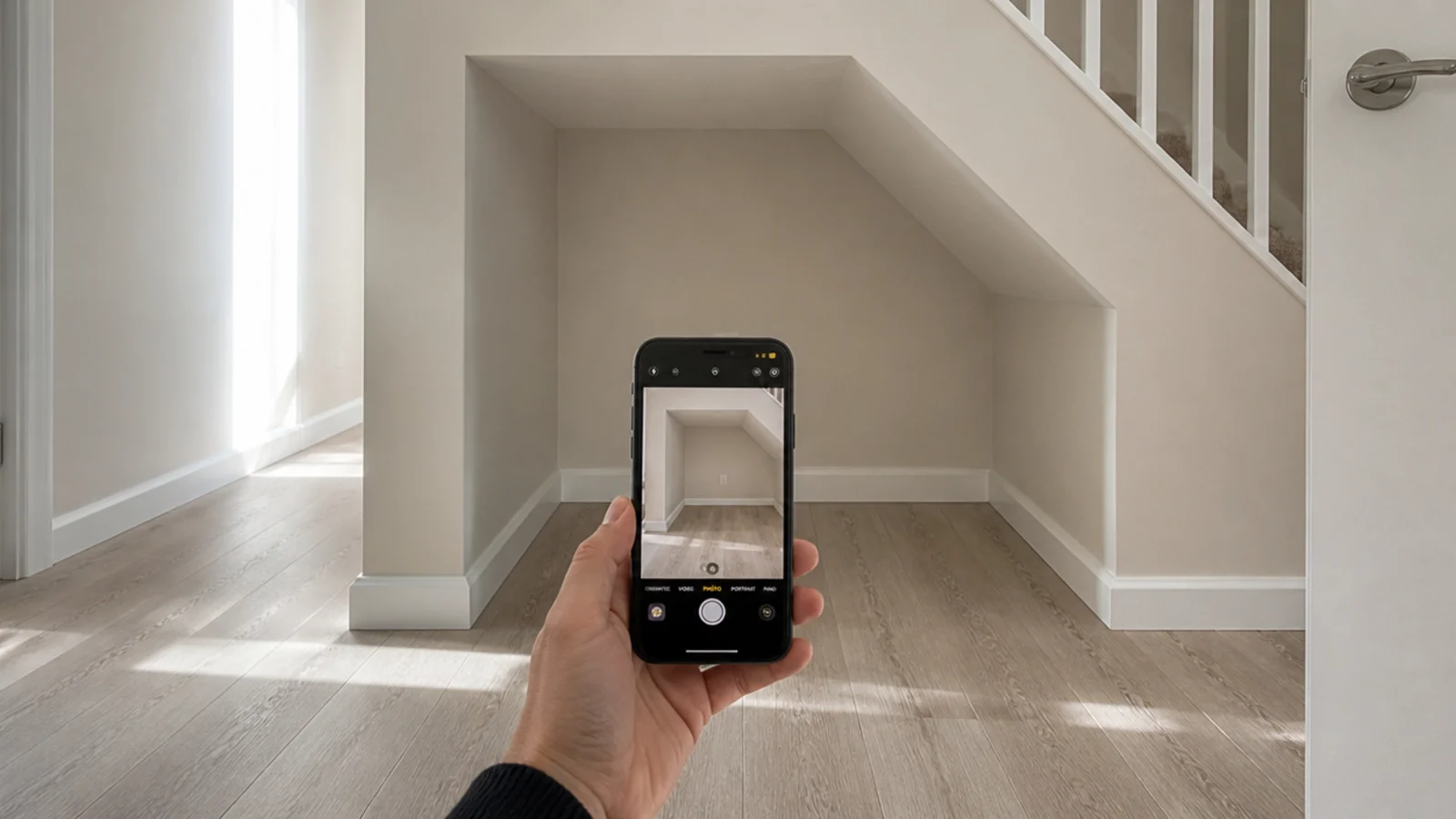
Photograph the recess before anything goes in. It takes a minute and it is what protects your deposit two years later, especially where paint is patchy or the skirting is already chipped.
Then measure the height at three points — at the tall end, in the middle, and where the slope meets the floor. A staircase sheds nine to ten inches of headroom for every foot travelled toward the bottom step, so a piece of furniture that fits at the front will not clear at the back. Above 60 inches you can stand and hang; between 30 and 60 you get shelving and carts; below 30 only boxes that slide out.
Know the honest limits of renter fixings. Heavy-duty adhesive strips are rated around 15 pounds a pair and that figure is real, not conservative. A spring tension rod between two solid walls carries a light rail if the span is under 36 inches. Neither will hold a loaded shelf, and a fixing that fails takes a patch of paint with it.
Two things are not yours to change. A boiler, gas meter or consumer unit must never be enclosed or blocked — your landlord and any engineer need access, and a consumer unit has to sit in a non-combustible enclosure. And the staircase is the escape route for the whole upper floor, so the foot of it stays clear. If the flat is on three storeys, the under-stair cupboard door may also be a required fire door, which means it is not something to prop open or replace. The storage under stairs guide covers the low-cost basics in more depth.
1. Stand a cube unit in the tall band
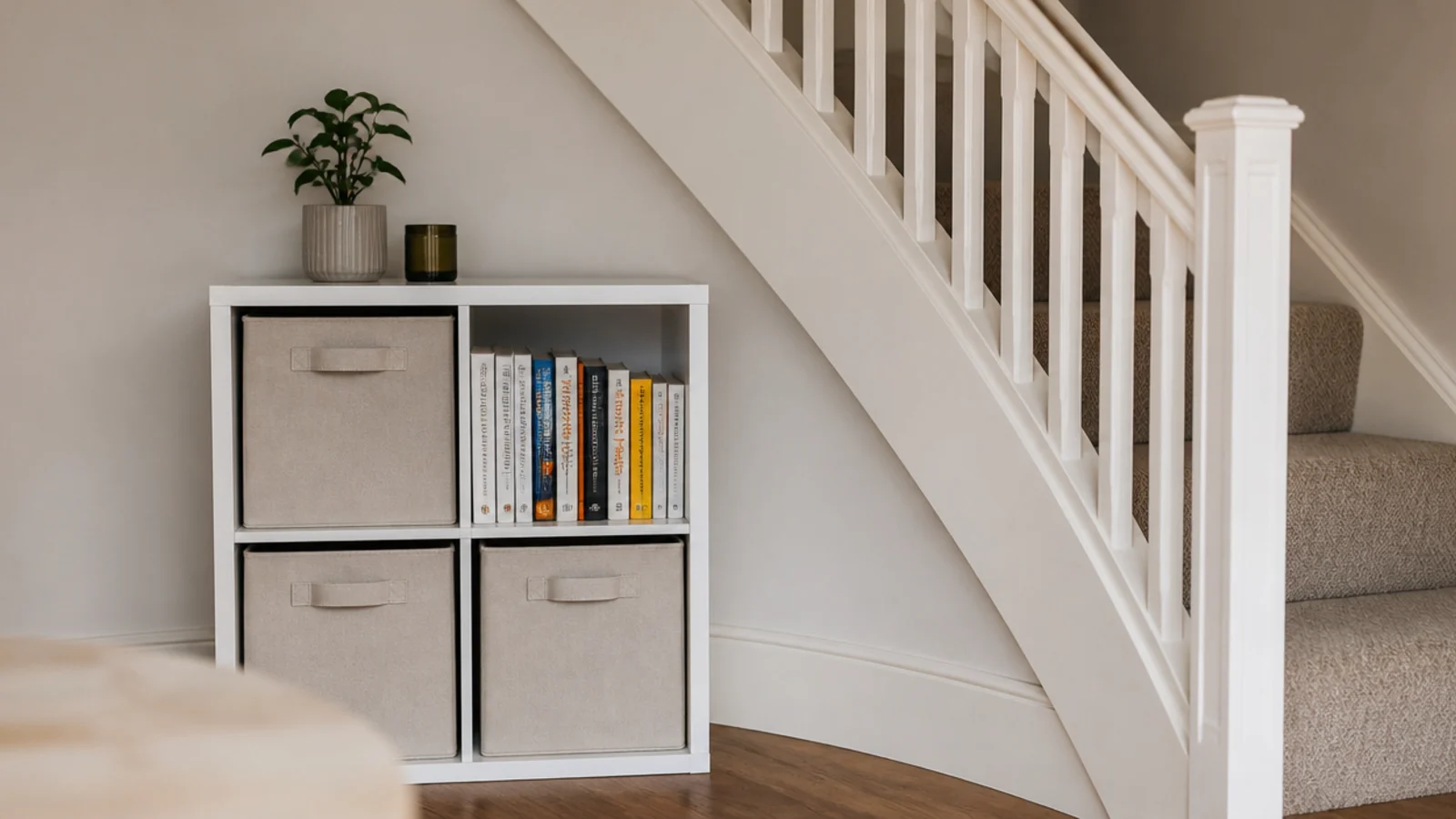
A four-cube unit is roughly 30 inches square and 15 deep, which slots neatly under the tall end without touching a wall. Cubes take fabric drawers, books, shoes or bags, and the whole thing costs £35 to £70. Strap it to the wall with a single anti-tip fixing if there are children — one small hole is worth it.
2. Roll a three-tier cart into the middle
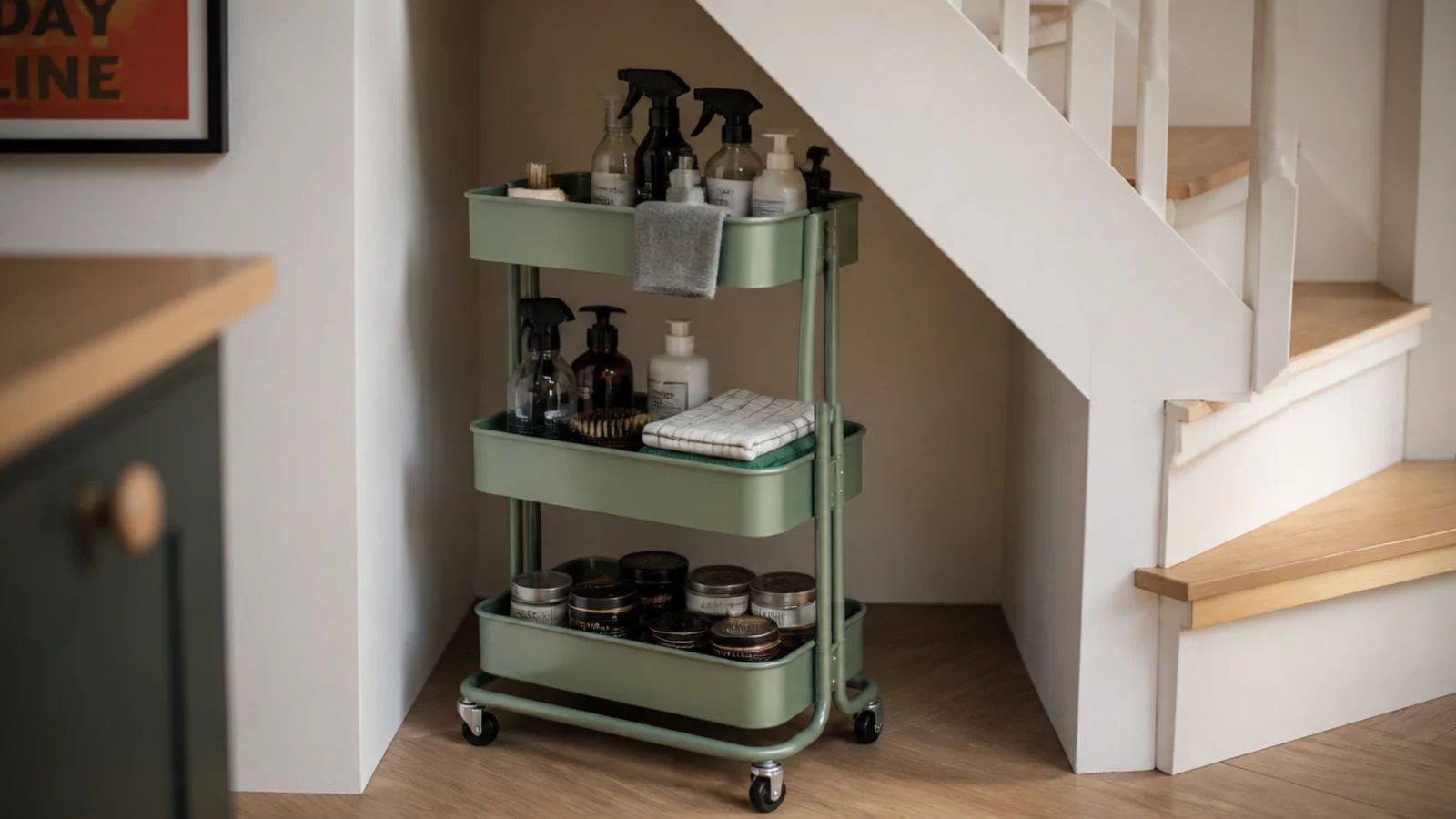
A cart 14 by 18 inches on castors reaches into the middle band, comes out to be loaded, and rolls back. It suits cleaning supplies, shoe care or craft materials and costs £25 to £45. On laminate or boards it glides; on a thick hall runner it sinks, so run it over a strip of hardboard instead.
3. Span a tension rod for a light rail
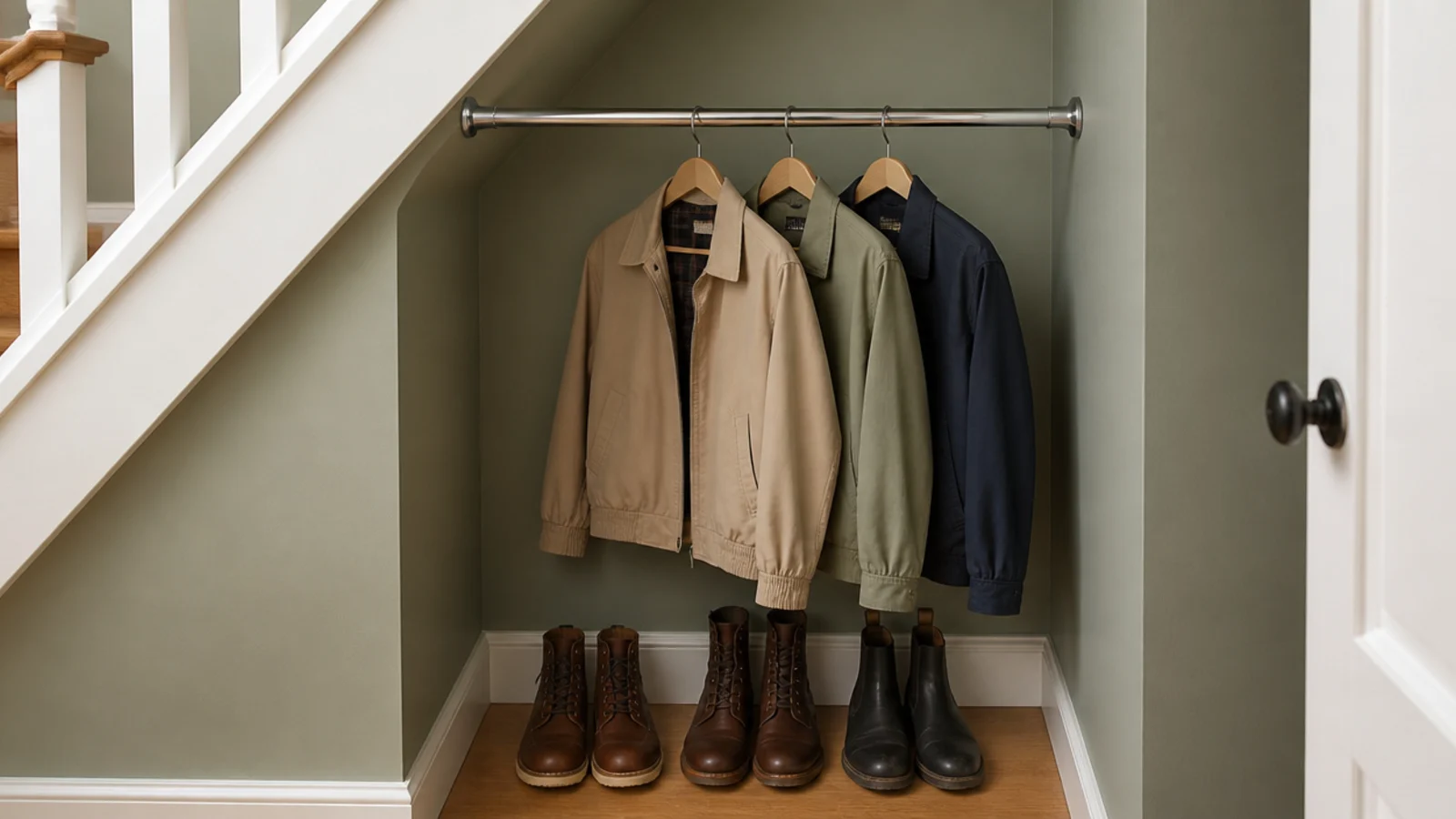
A spring rod between two solid walls holds a handful of jackets with no fixings at all. Keep the span under 36 inches and the load under about 20 pounds, and check the walls are masonry or timber rather than a thin partition. Set the rod so there is at least 39 inches of clear drop below it.
4. Wheel in a freestanding garment rack
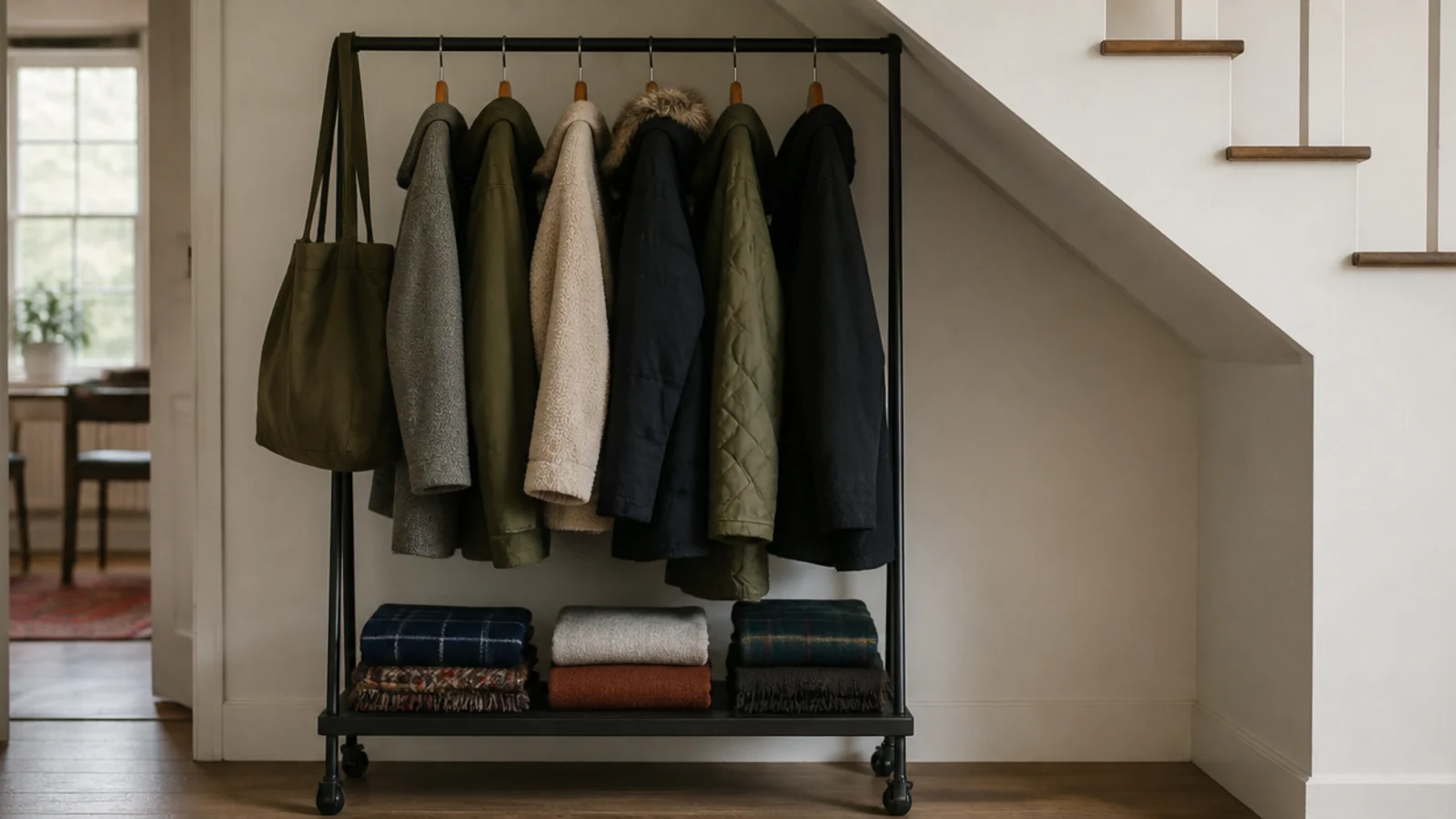
Where a tension rod would sag, a rack on castors carries a full winter's worth of coats and needs nothing from the wall. Racks with a lower shelf give you boot storage in the same footprint. Look for one under 20 inches deep so it clears the slope, and load the shelf heaviest to keep it stable.
5. Hang a curtain from a tension rod
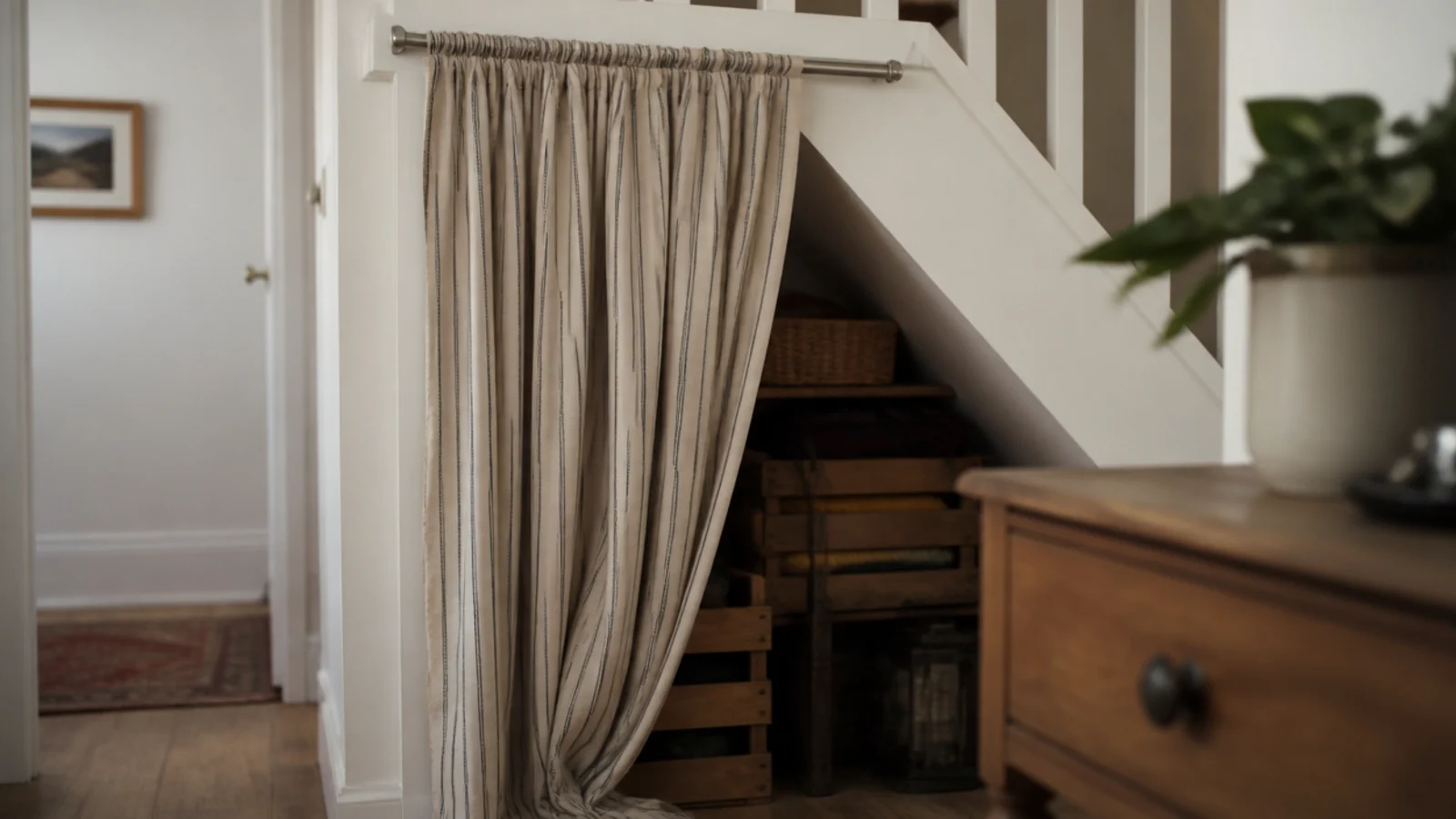
The cheapest way to make a cluttered wedge disappear. A lined cotton or heavy linen curtain hangs straight; anything thin shows every box behind it. Rods sized 28 to 48 inches cost under £15. Expect dust from the treads to pass through fabric far more than through a door, so keep the contents boxed.
6. Use adhesive hooks, honestly rated
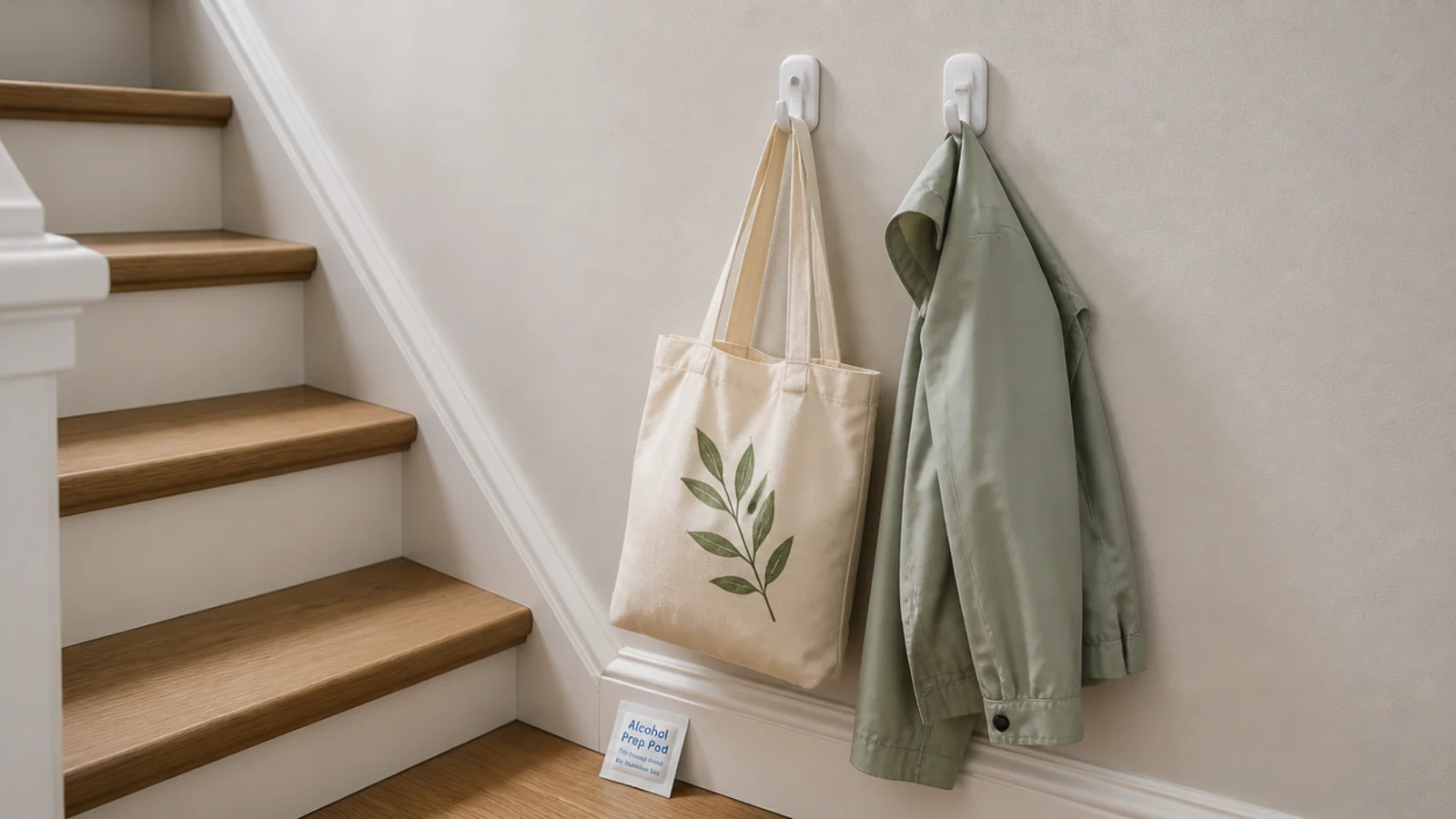
Heavy-duty strips carry about 15 pounds per pair — a tote, a light coat, a dog lead. Clean the wall with rubbing alcohol, press for 30 seconds and wait an hour before loading. Test on hidden paint first: flat builder-grade emulsion sometimes peels away with the strip, which is a bigger repair than a screw hole.
7. Stack clear boxes at the shallow end
Clear lidded boxes in the 20 to 45 litre range let you read the contents from the opening instead of crawling in. Three high is usually where the slope stops you. Label the front and the side, because under a rake you almost always see a box at an angle rather than from above.
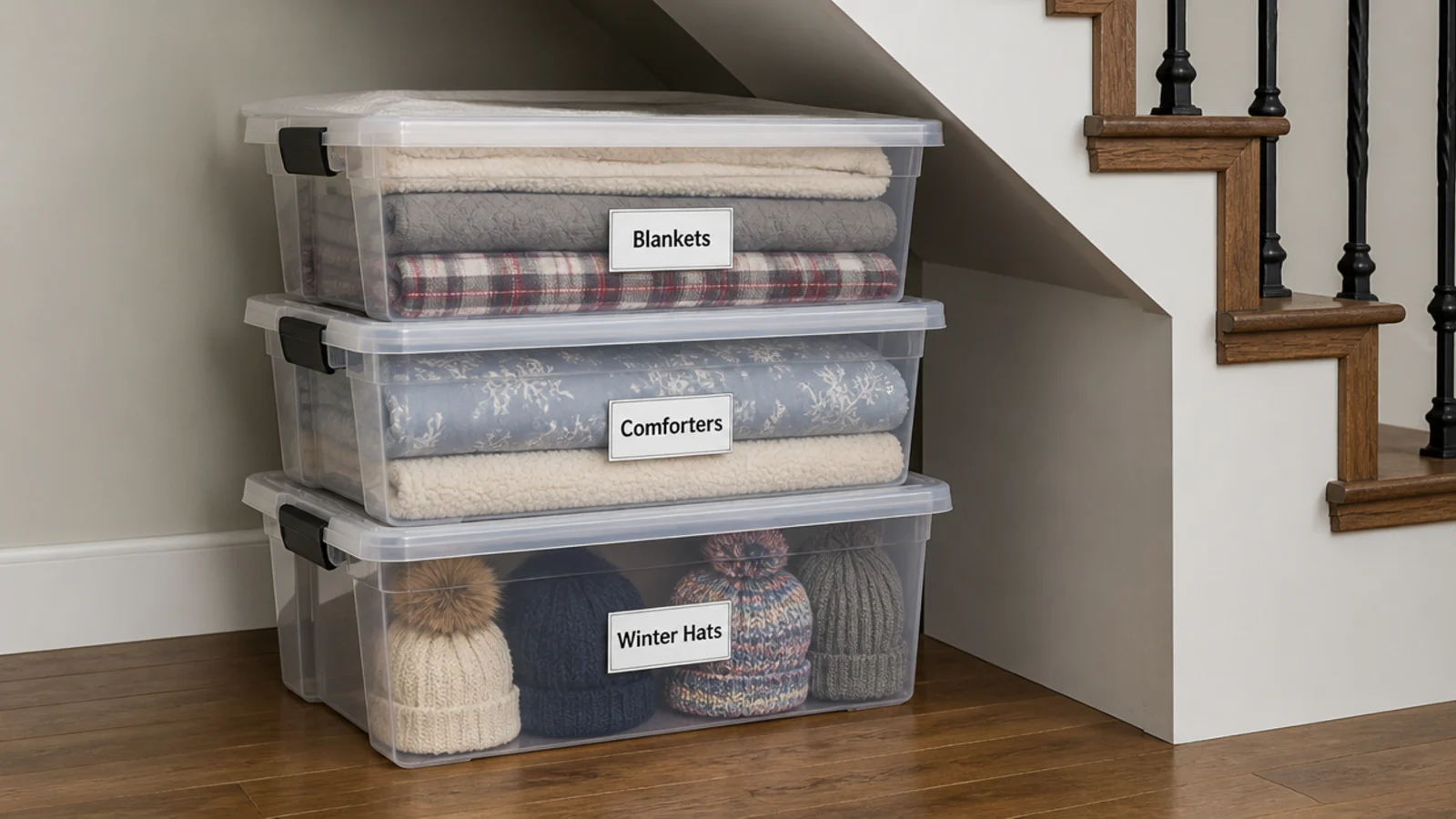
8. Reuse wheeled under-bed boxes
Under-bed boxes are already the right shape for a crawl space: about 6 inches tall, 32 long, and on castors. Two of them fill the last stretch of the wedge and slide out with one hand. They cost £12 to £20 each and stack nowhere else in a small flat, so this is a genuinely good second home for them.
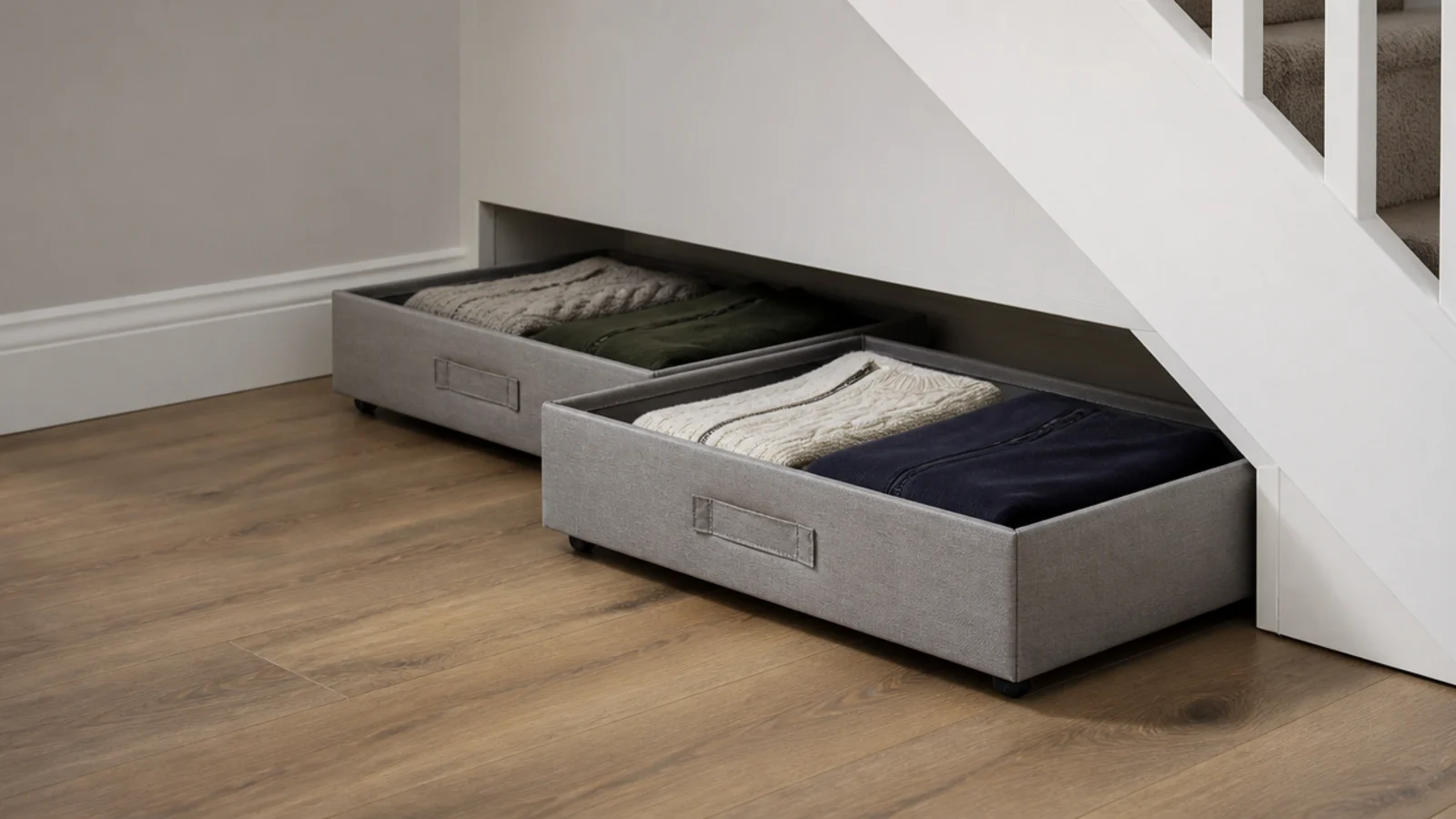
9. Set a console across the whole opening
A console 12 inches deep standing across the front of the recess gives you a hallway surface and hides everything behind it. It reads as furniture rather than storage, which is what makes a rented hallway look finished. Baskets underneath take the shoes, and the whole arrangement moves house intact.
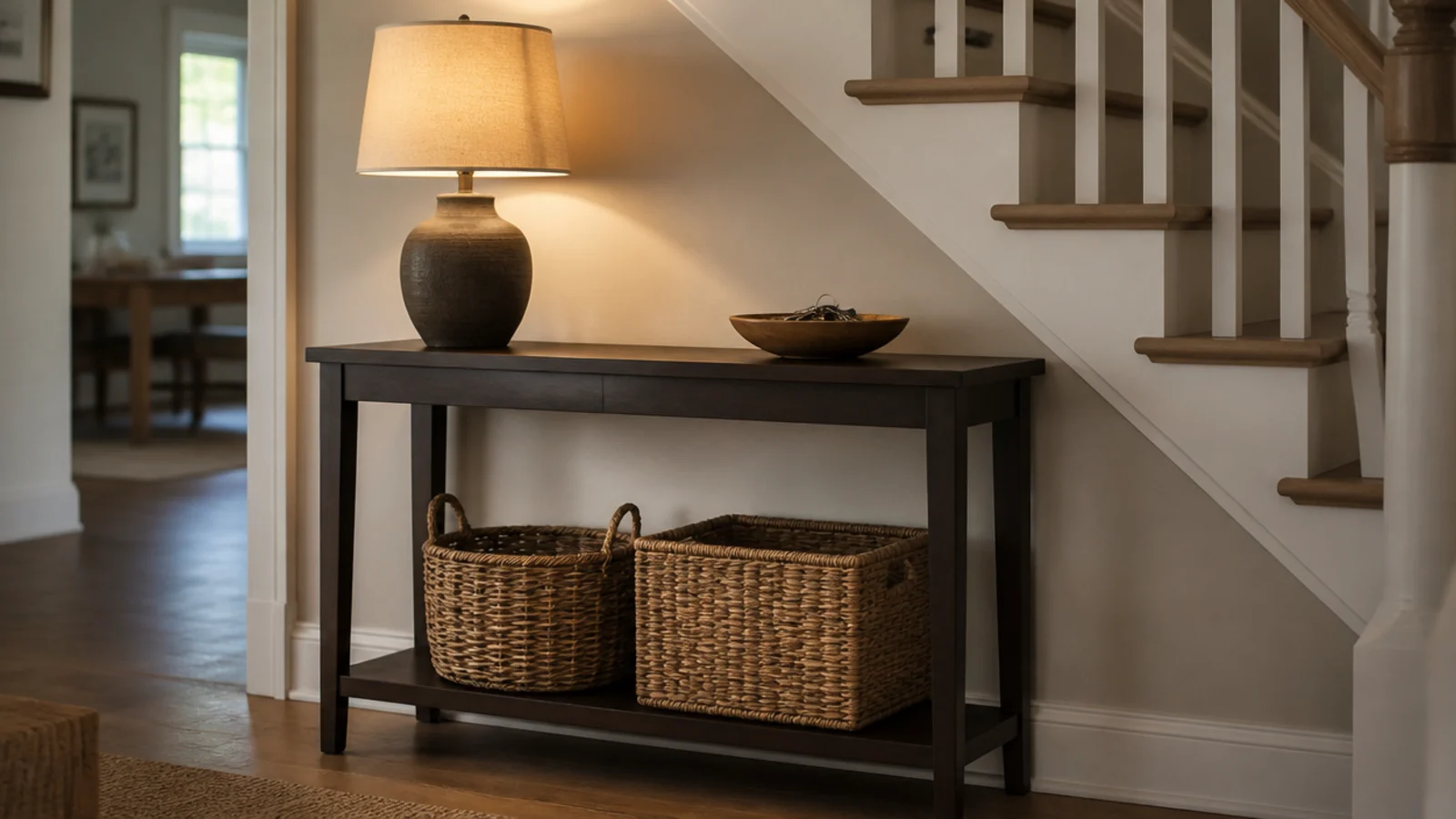
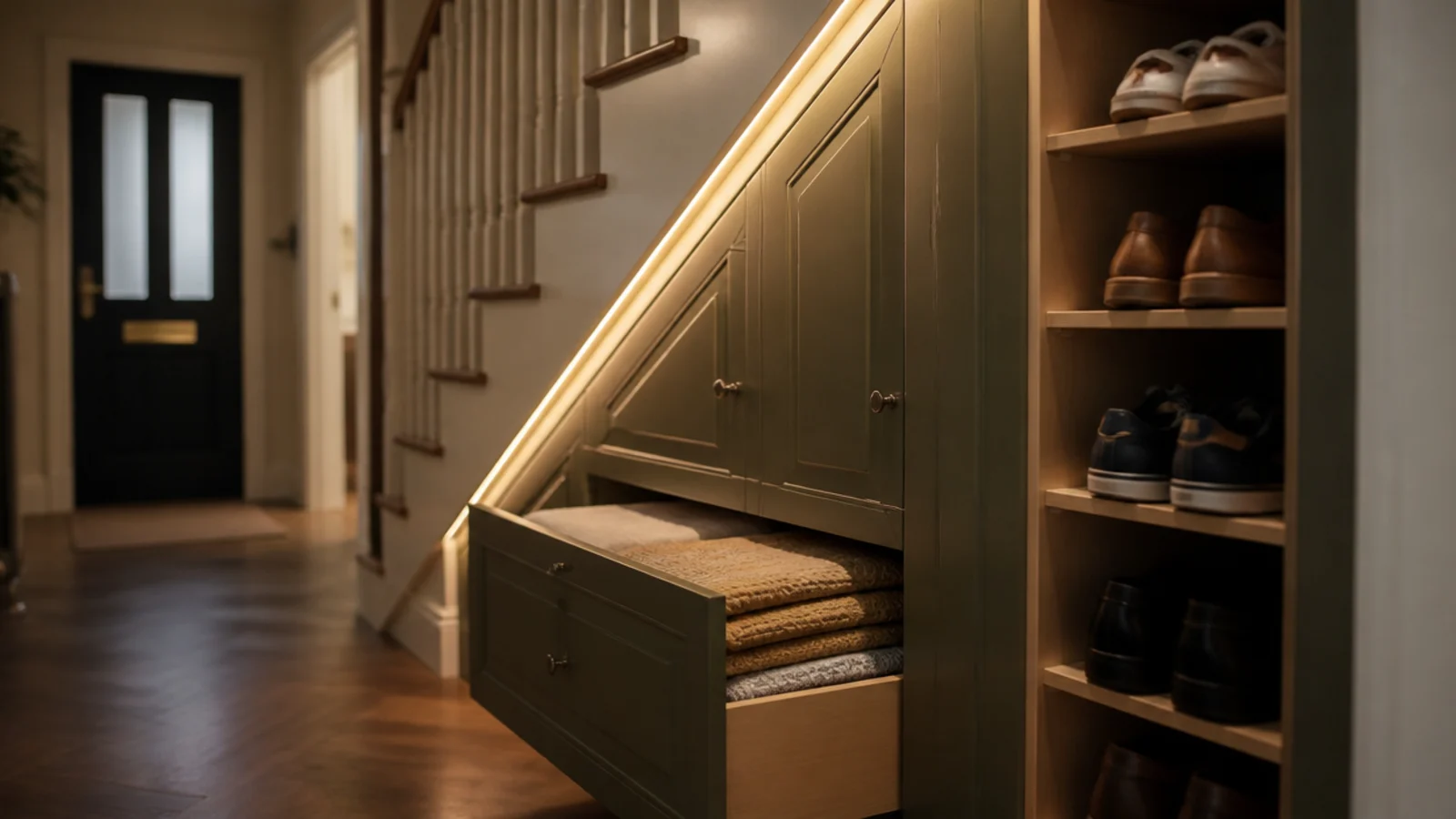
10. Slide a seven-inch shoe cabinet against the flank
Tilt-out shoe cabinets are only 7 inches deep and hold shoes on edge — around twelve pairs in three tiers. That depth still leaves a 29 inch walkway in a 36 inch hall. They are top-heavy with every drawer open, so use the supplied strap or keep the top drawer for light items.
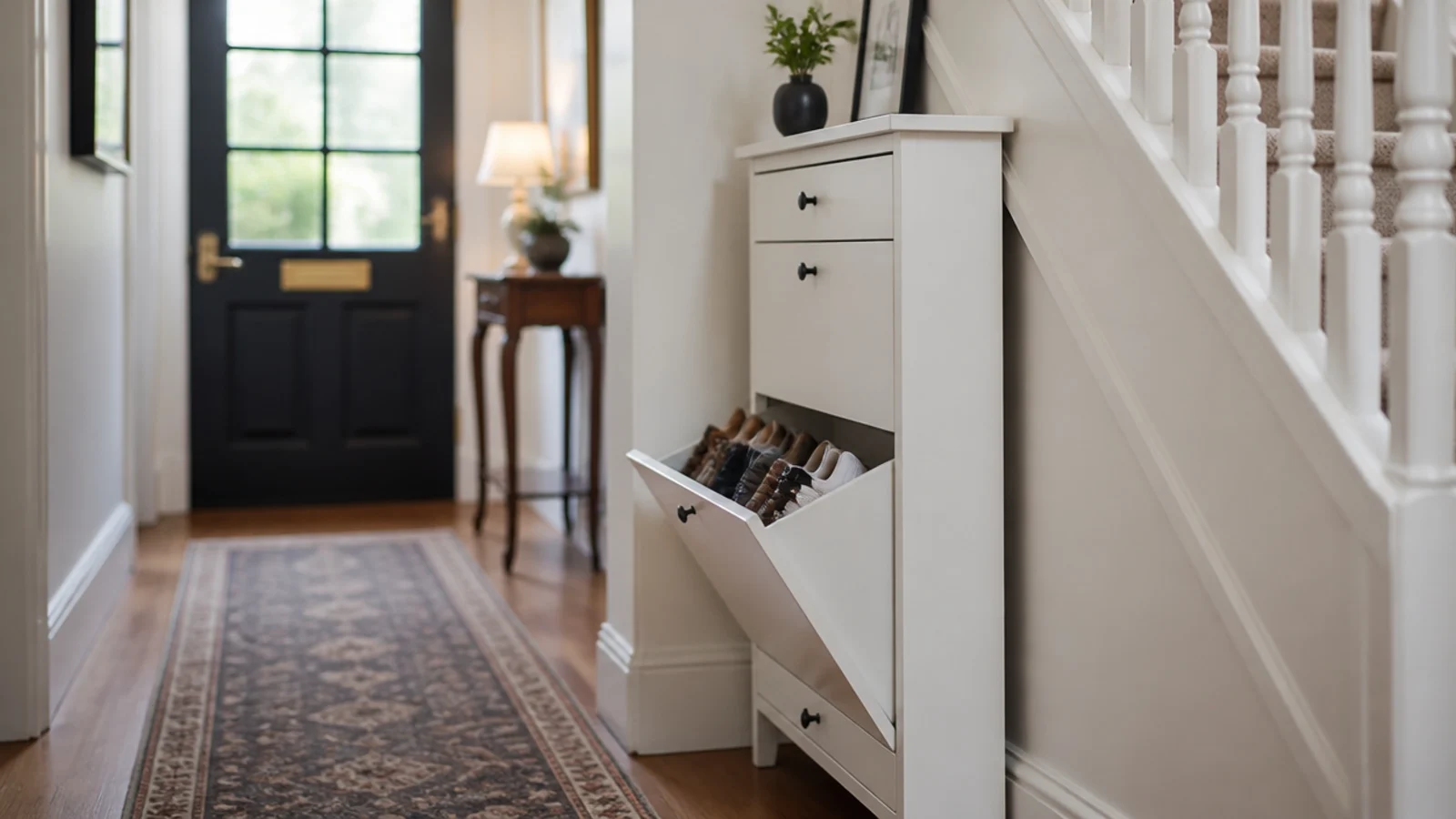
11. Turn a bookcase on its side
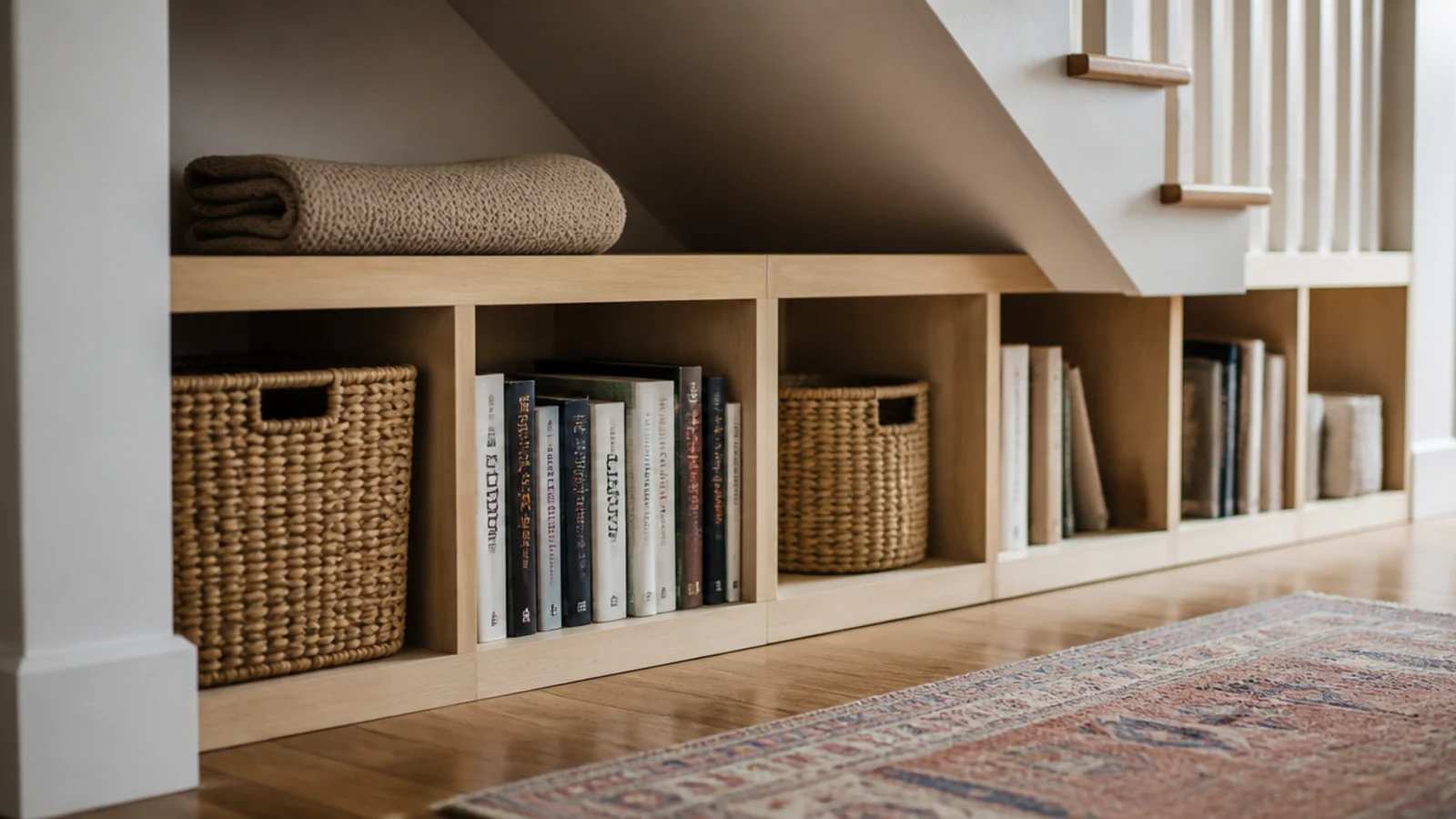
A tall bookcase laid horizontally becomes a low run of cubbies that fits under a soffit no upright unit would clear. Check the shelves are fixed rather than adjustable, since adjustable pins are not designed to take load sideways. The top surface then works as a bench or a drop zone.
12. Screen the wedge with a folding panel
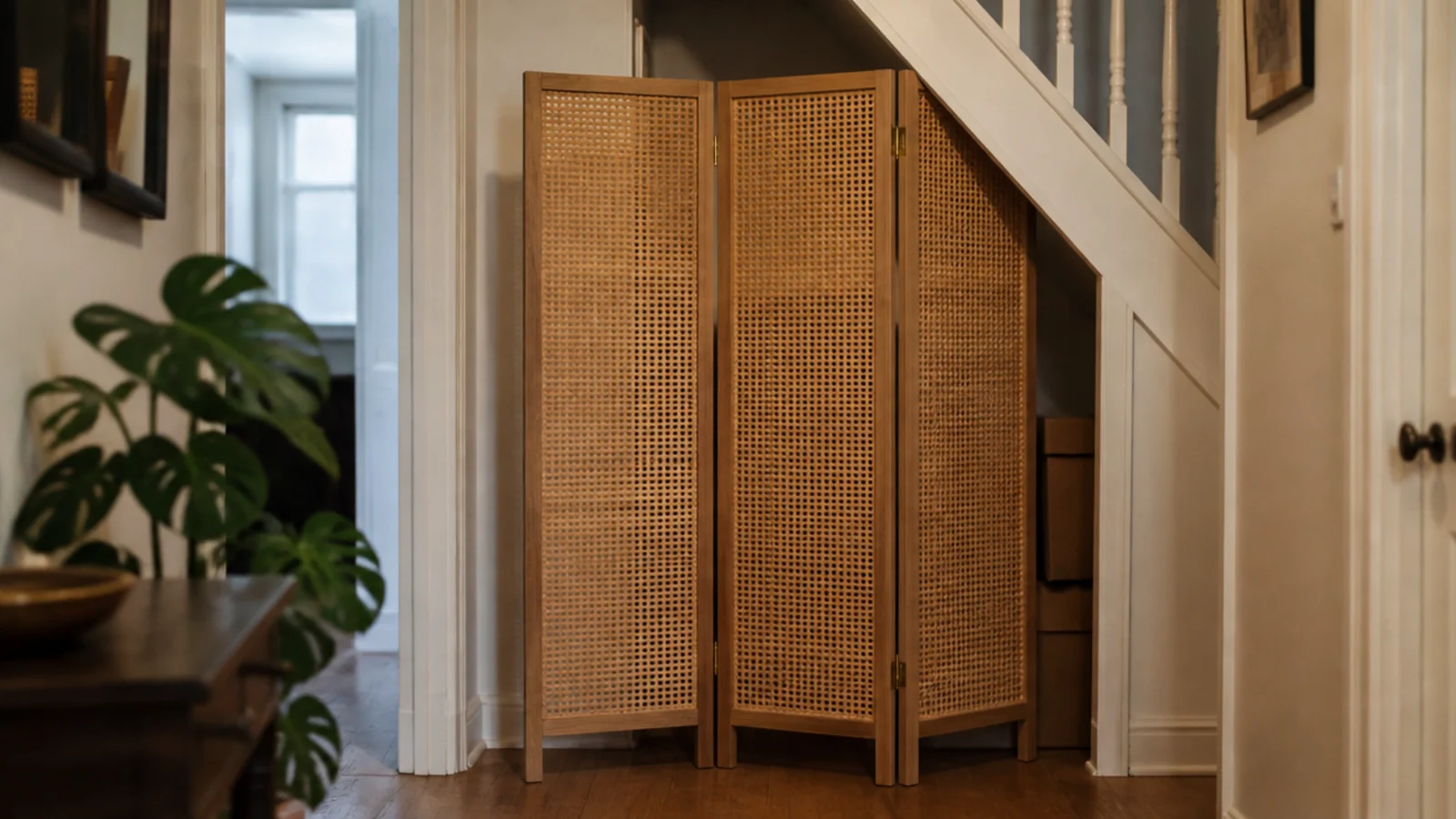
A three-panel screen stands in front of the recess with no fixings, folds flat when you move, and costs £60 to £150. Cane and slatted panels let air move, which matters if anything damp goes behind them. Keep the screen out of the walking line at the foot of the stairs.
13. Make it a reading corner instead
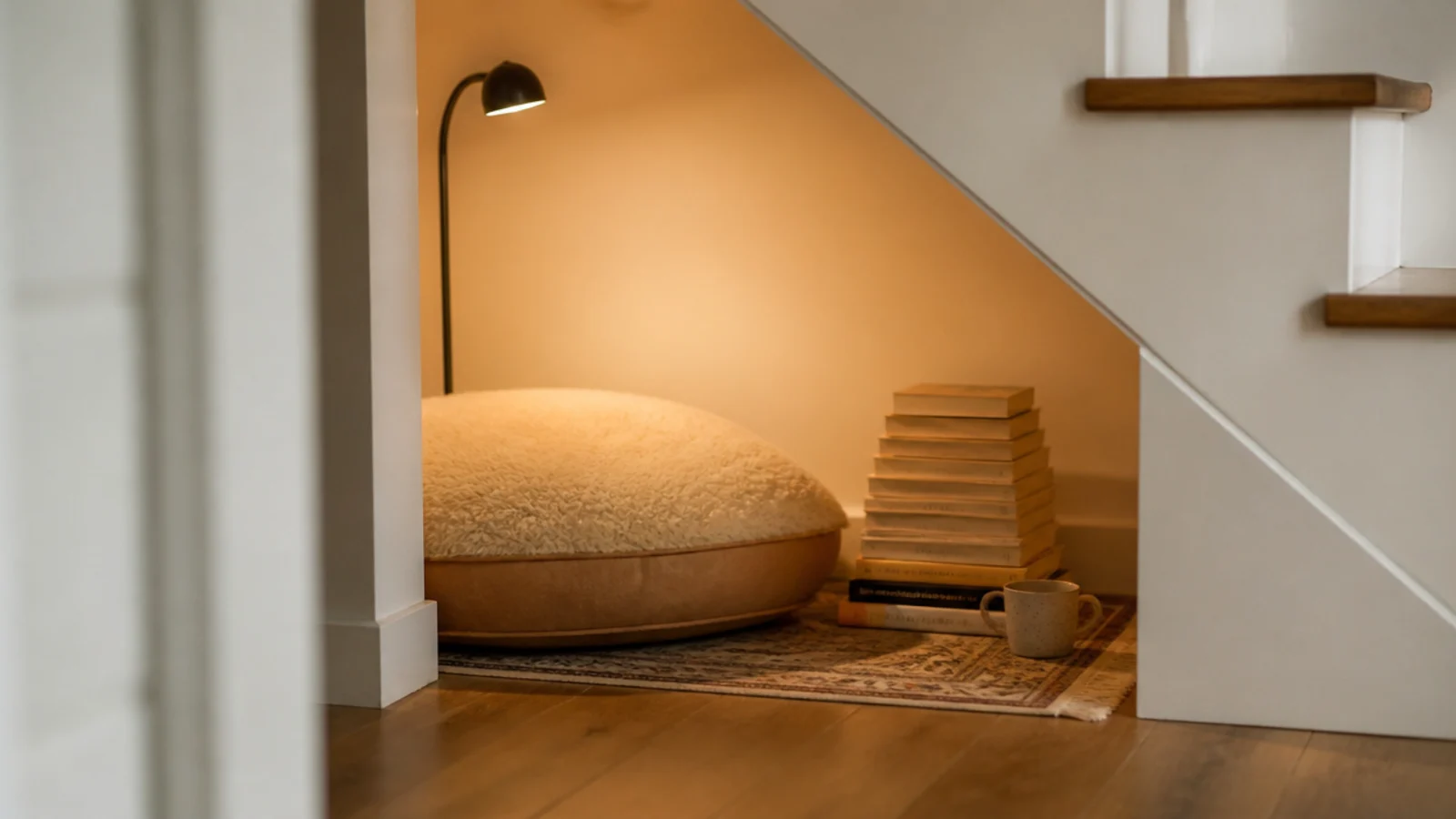
If the flat has enough storage elsewhere, a rug, a floor cushion and a slim lamp turn the tall end into the only quiet corner in the place. It costs under £100 and gives a small rental something no cupboard does. A lamp on a 2 metre lead avoids trailing a cable across the hall.
14. Stick battery lights to the soffit
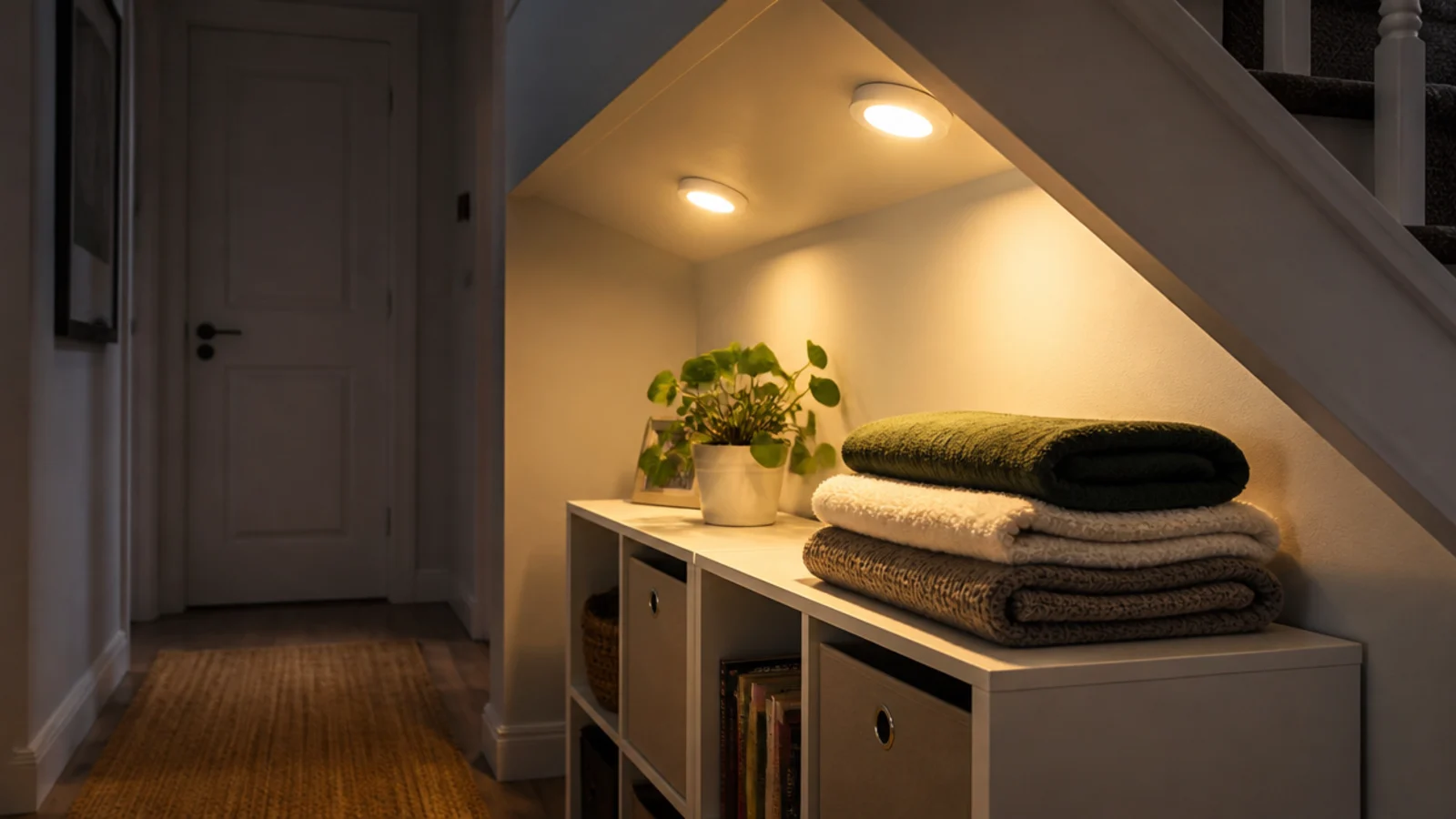
Battery pucks at 100 to 200 lumens with adhesive pads need no wiring and no landlord conversation. Fit two rather than one so the light does not throw your own shadow into the space. Rechargeable versions with a magnetic base come off for charging without disturbing the pad.
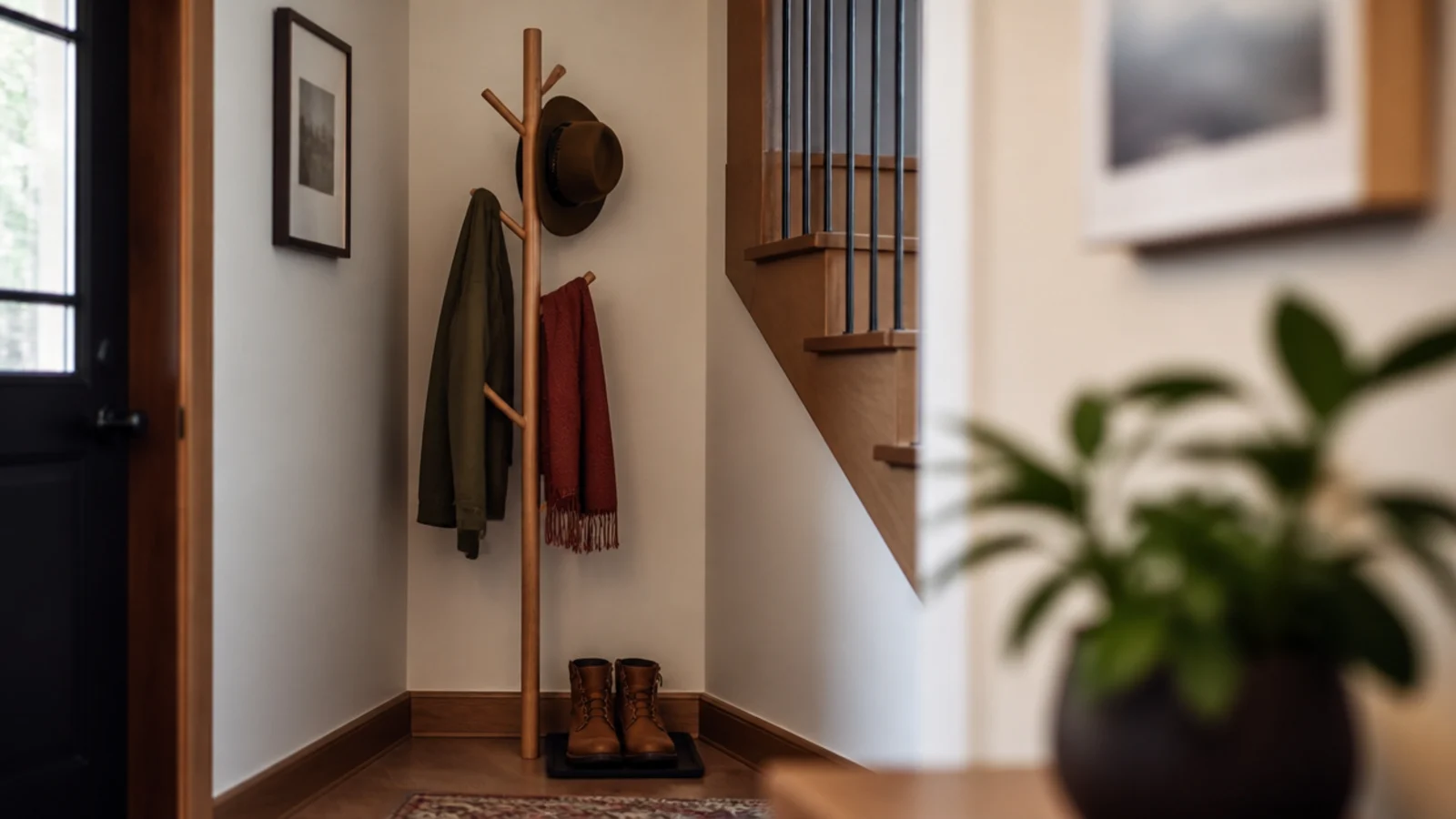
15. Stand a coat tree in the tall corner
A coat tree takes about 18 inches of floor and holds five or six coats without a single fixing. It suits the tall corner where a rail would not fit. Weighted or wide-footed bases are worth paying for — a light tree tips the moment somebody hangs two wet parkas on one side.
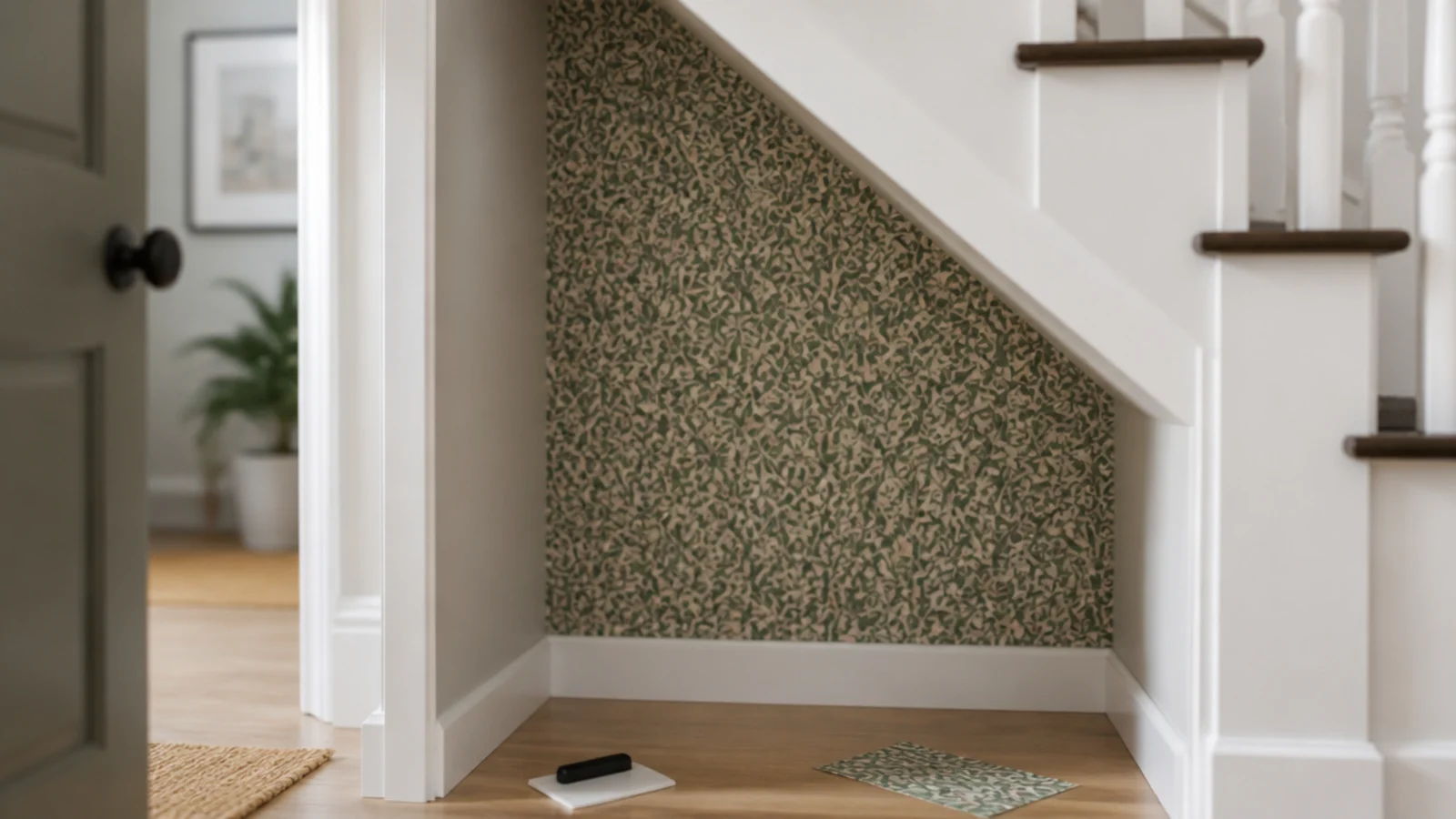
16. Paper the back wall with peel and stick
The back wall of the recess is the one surface nobody sees from the rest of the hall, which makes it the safest place to try a pattern. Removable paper costs £25 to £45 a roll and lifts cleanly from sound modern paint. Test a corner first, and never apply it over flaking distemper.
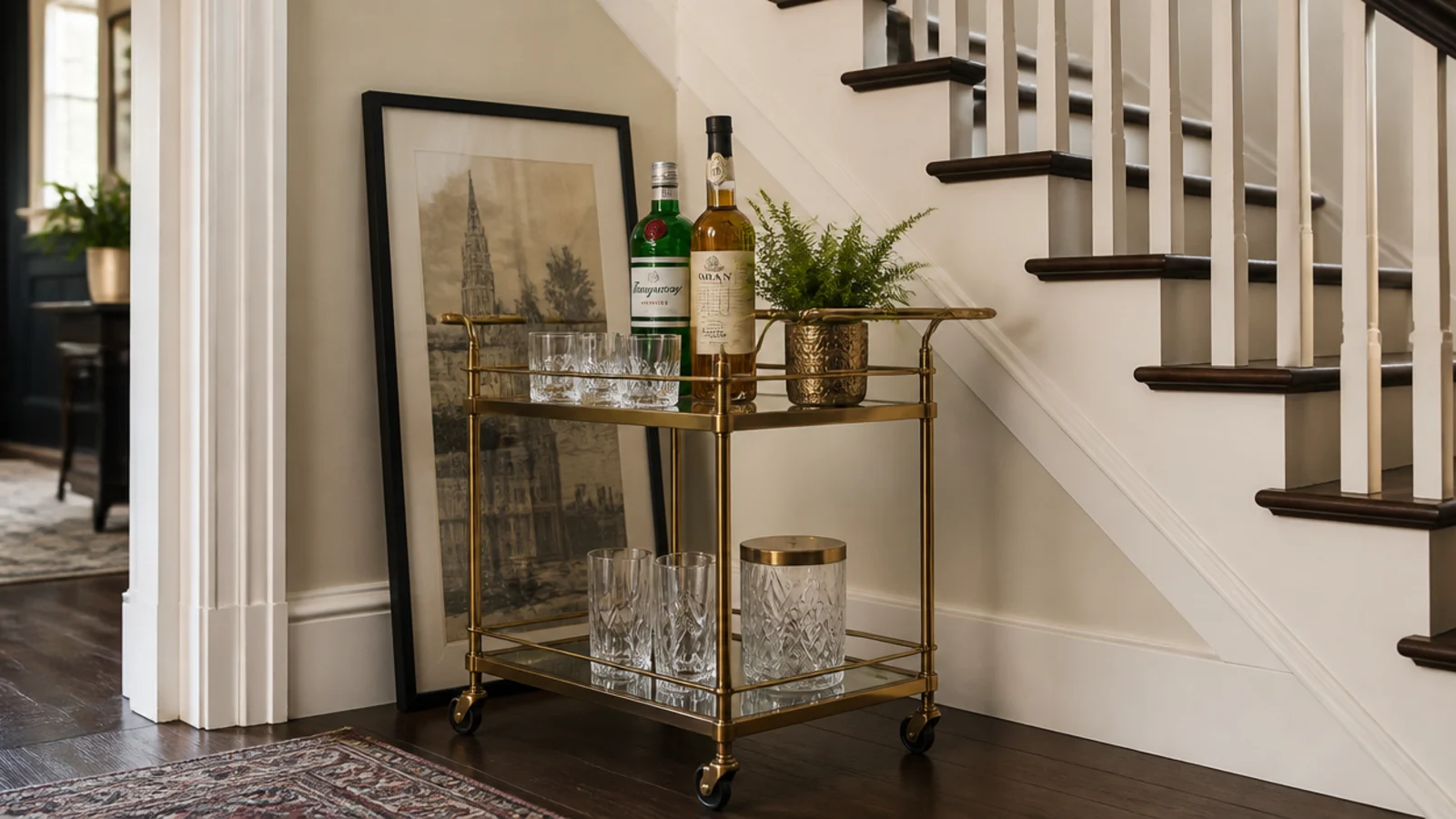
17. Park a bar cart where the ceiling is high
A bar cart is storage that looks like a decision. Glasses, two bottles and a plant on a 30 inch cart fill the tall end without touching the walls, and it wheels into the living room when people come round. Keep the top shelf under about 30 pounds so it stays easy to move.
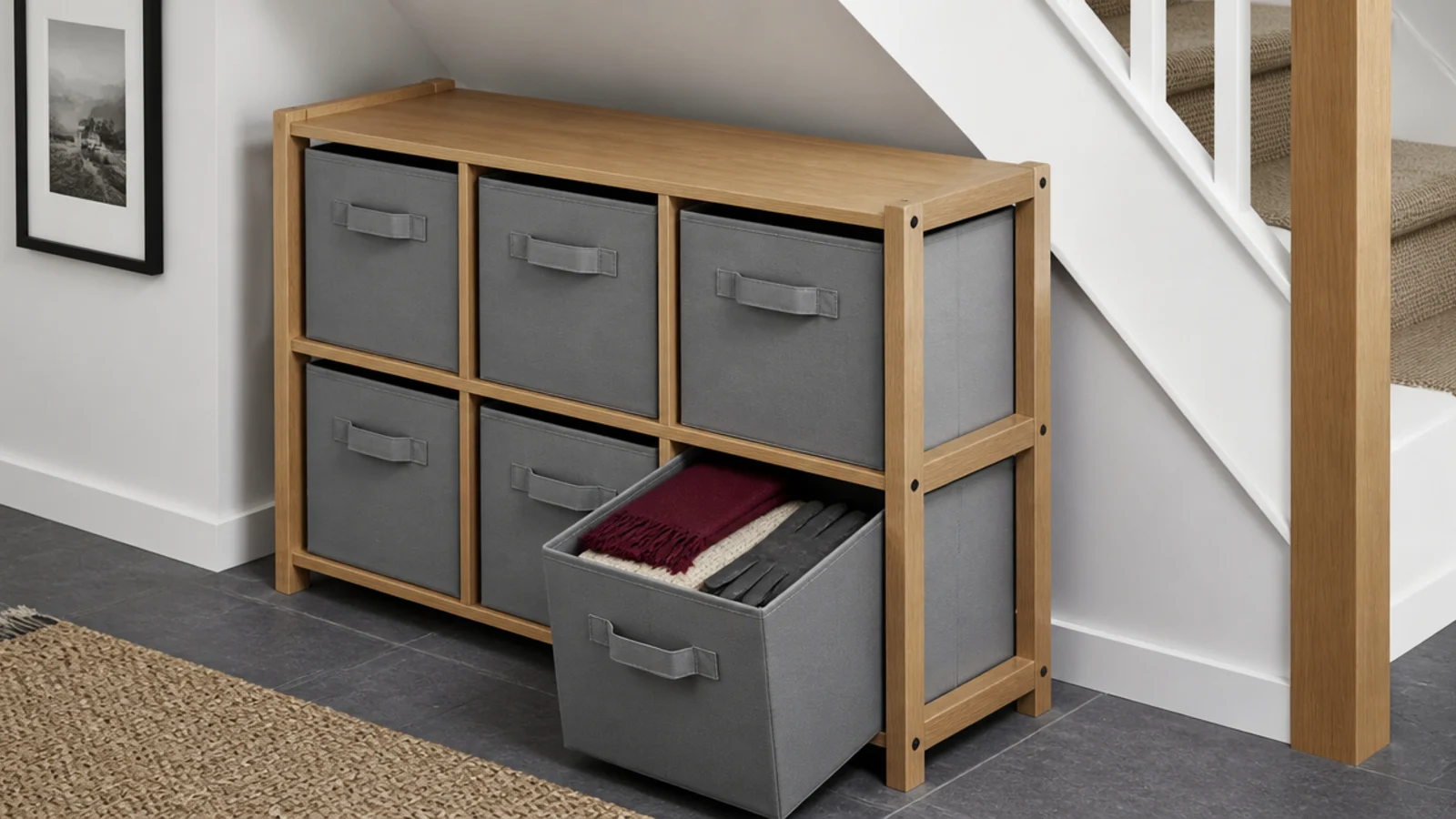
18. Use canvas drawer units for soft storage
A timber frame with canvas bins holds scarves, hats, gloves and swimwear, weighs almost nothing and folds flat when you move. Bins around 12 inches square are the useful size. Avoid them for anything heavy — the fabric stretches and the drawer fronts start to sag within a year.
19. Add freestanding metal shelving for bulk
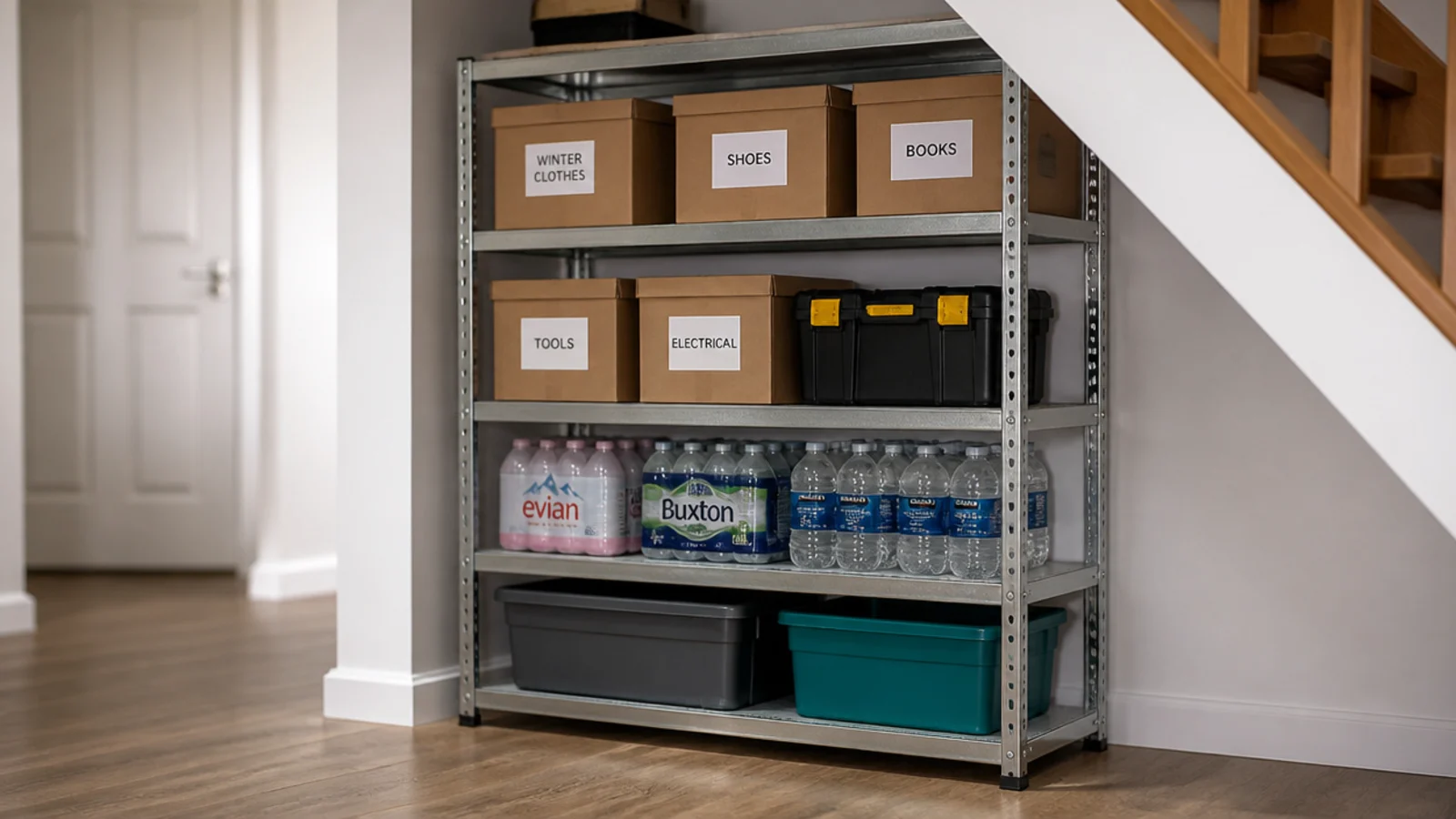
Galvanised four-tier shelving carries real weight — often 80 pounds a shelf — with no fixings at all, and comes in widths from 24 to 36 inches. It is the honest answer for bottled water, tools and boxes. Put it at the tall end where the full height is usable and face the open side outward.
20. Lean a ladder shelf against the slope
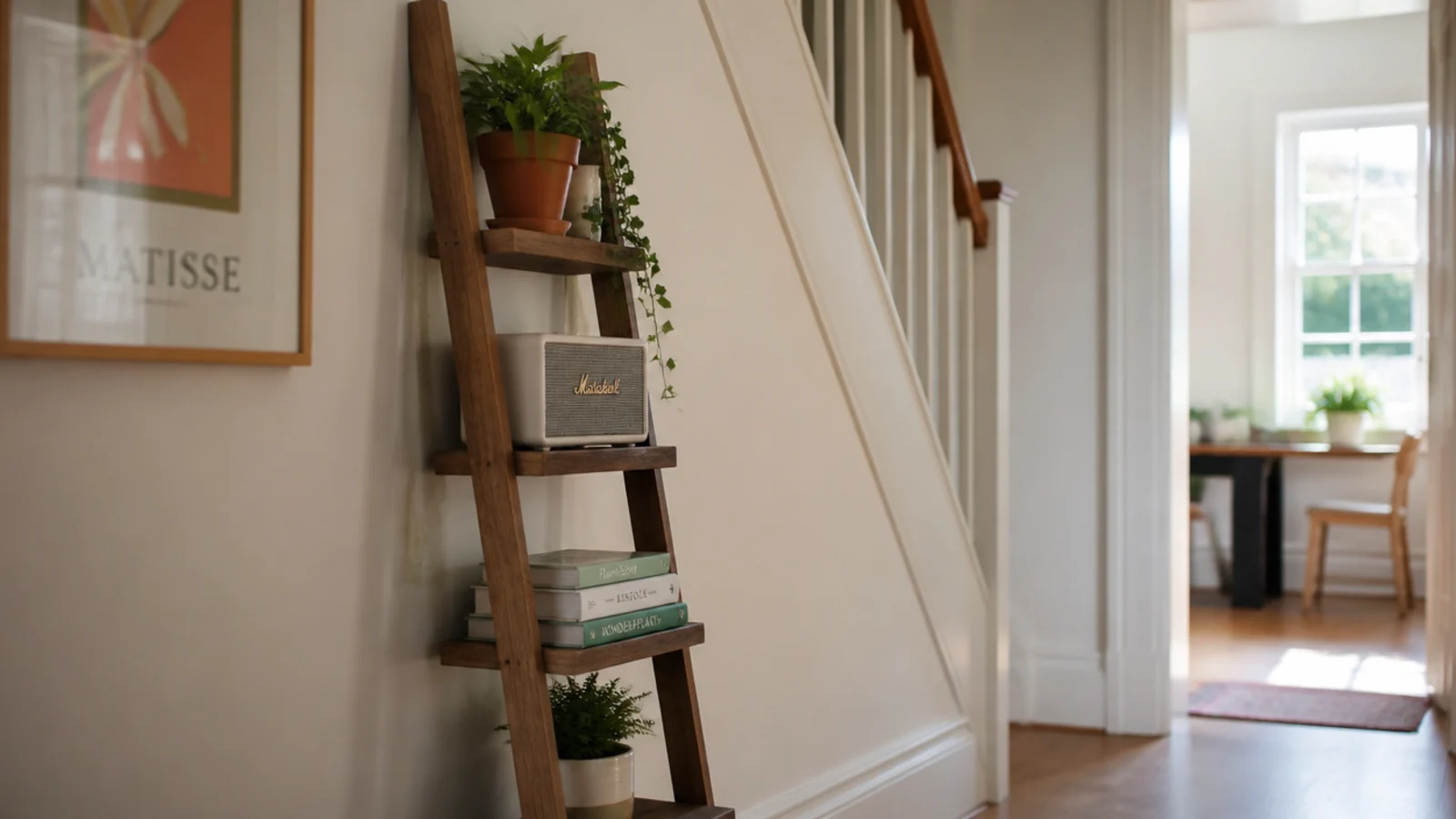
A ladder shelf leans rather than anchors, which suits a sloping soffit better than a square unit. Load the bottom shelves heaviest so it stays put, and check the feet sit flat — on an uneven hall floor a leaning shelf rocks every time you take something off it.
21. Try an adhesive ledge for keys and post
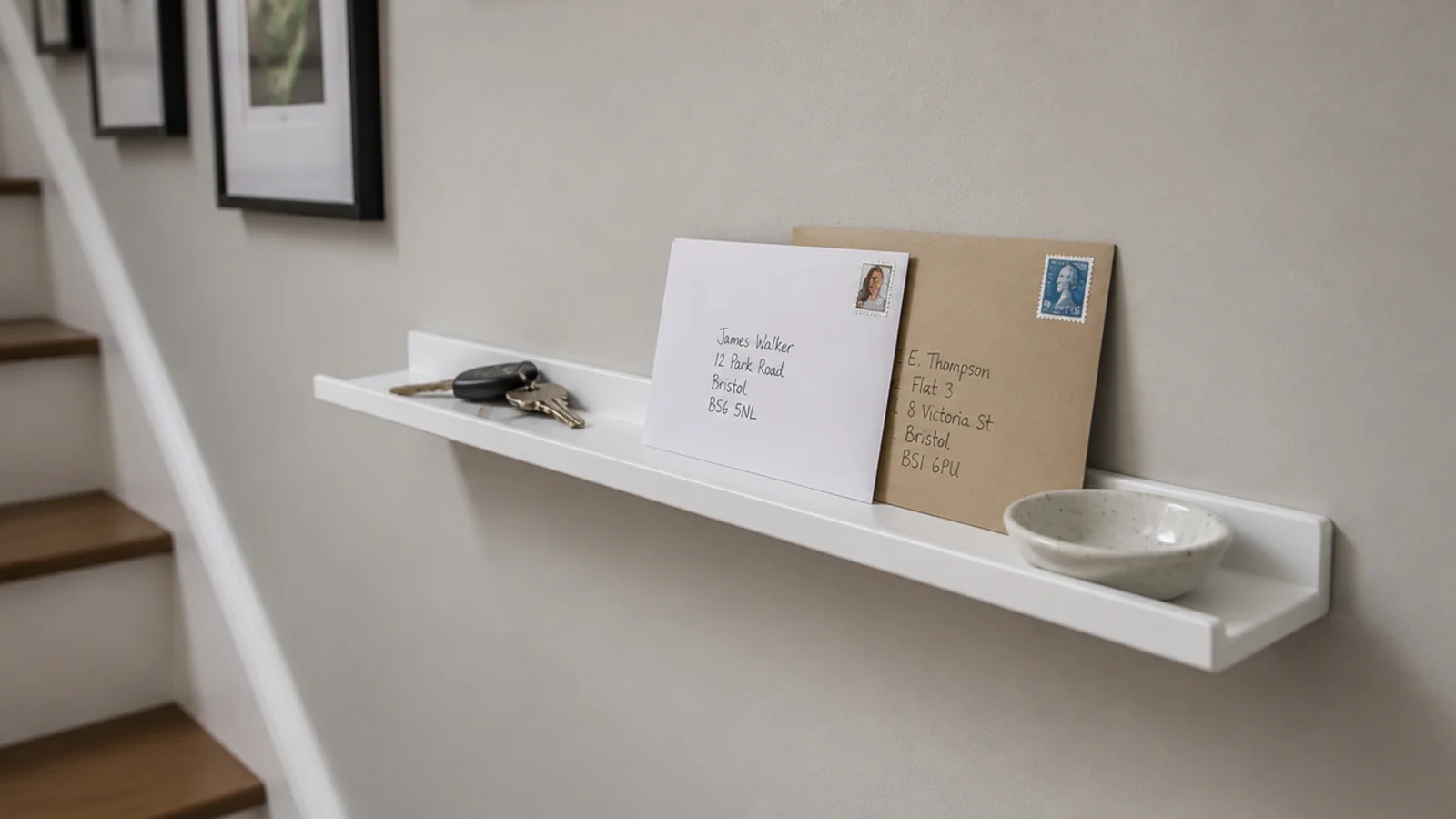
A slim ledge stuck at about 42 inches catches keys, post and sunglasses at the height your hand naturally lands. Stay well inside the 15 pound adhesive limit — this is a ledge for small things, not a shelf for books. A small ceramic dish on it stops keys sliding off the front.
22. Stack vintage suitcases as a side table
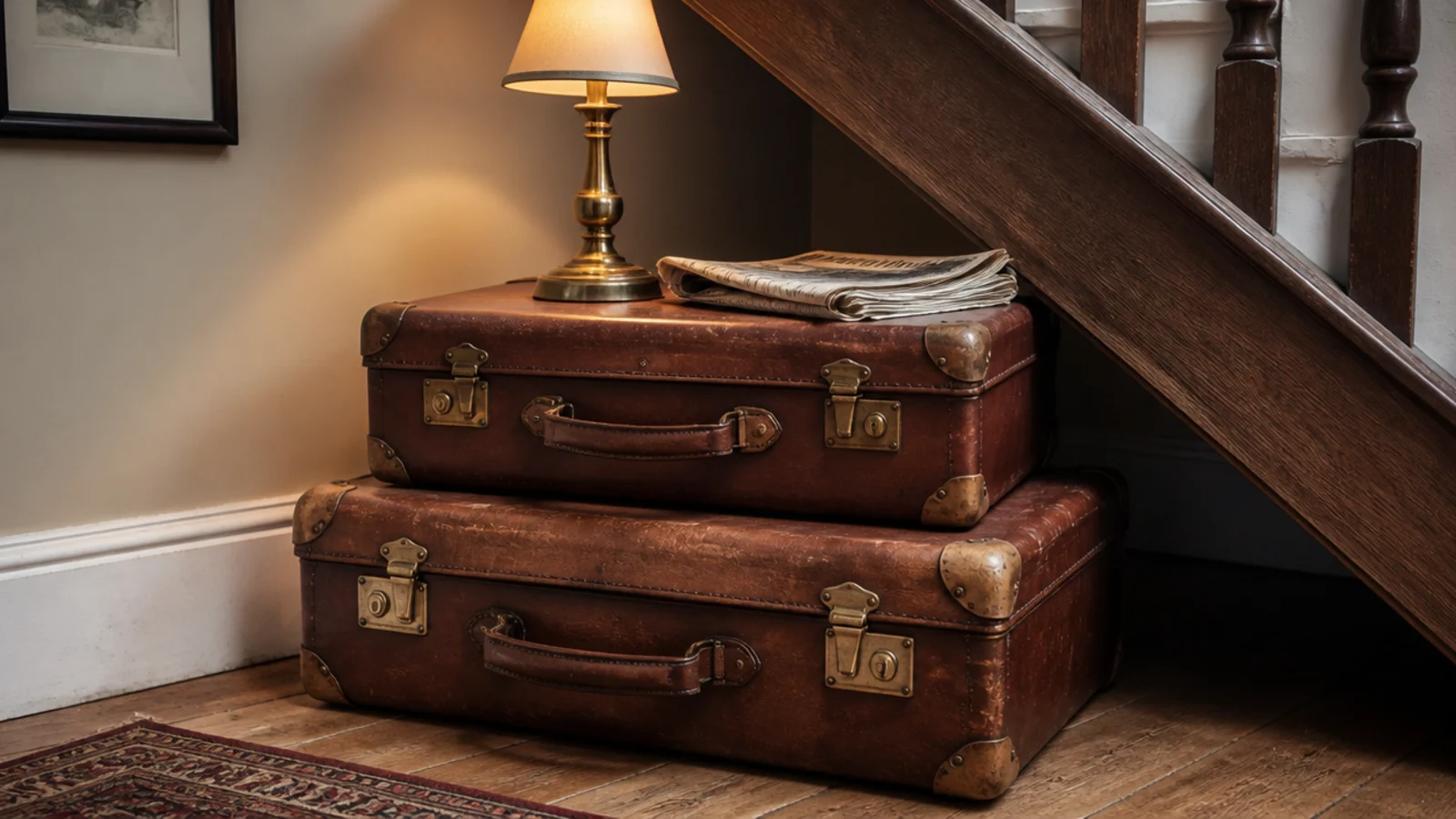
Two stacked cases give you a surface at roughly 24 inches and dry storage inside for spare bedding. They cost £20 to £60 secondhand and look considered in a way that plastic boxes never will. Keep the contents to things you need rarely, since getting into the lower case means unstacking.
23. Fill the tall corner with one large plant
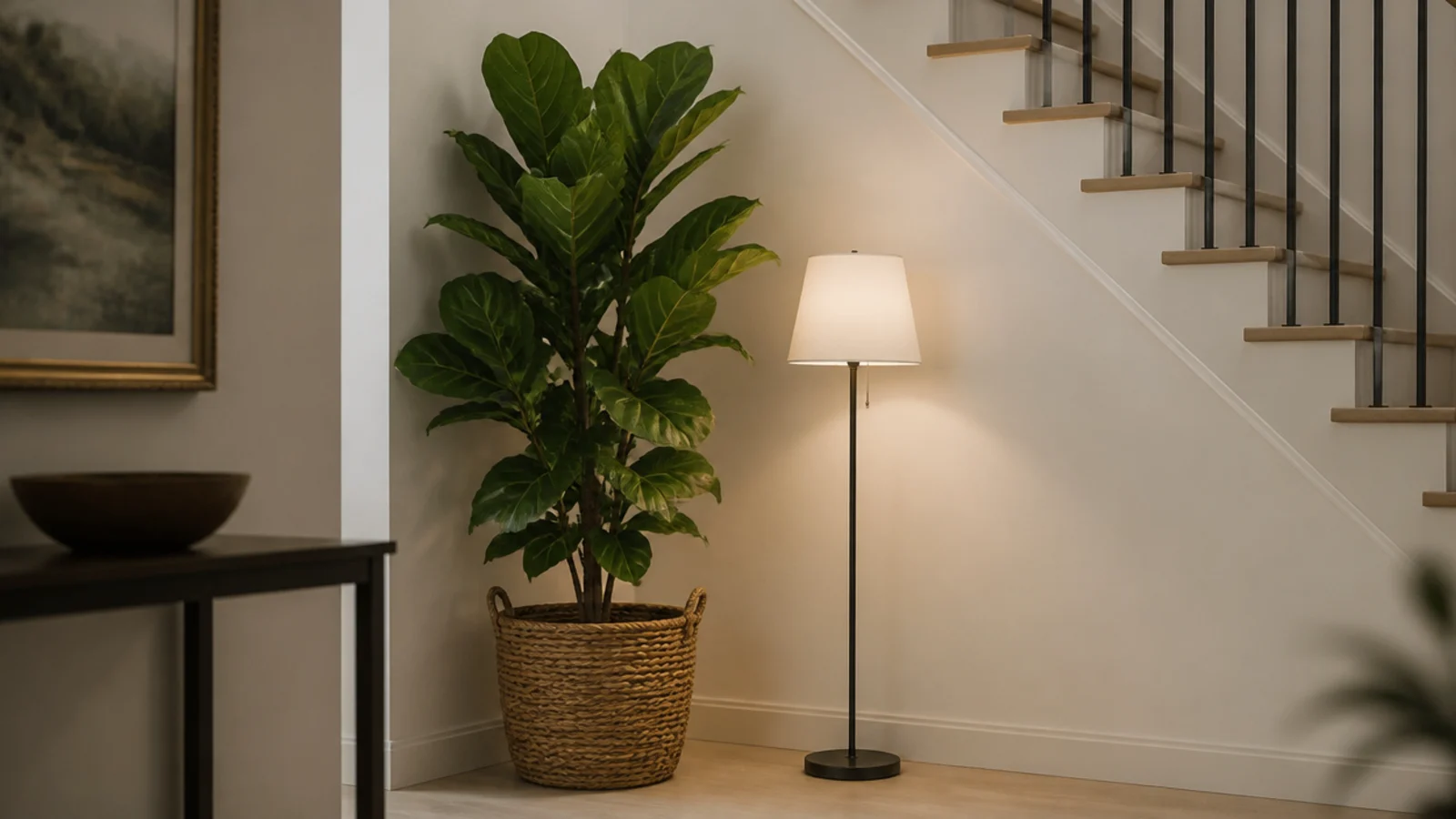
Where the ceiling is highest, a single large plant in a woven basket does more than any shelving. Choose something that copes with the low light most hallways have — a cast iron plant or a kentia palm will, a fiddle leaf fig usually will not. Use a saucer, since hallway floors are rarely sealed well.
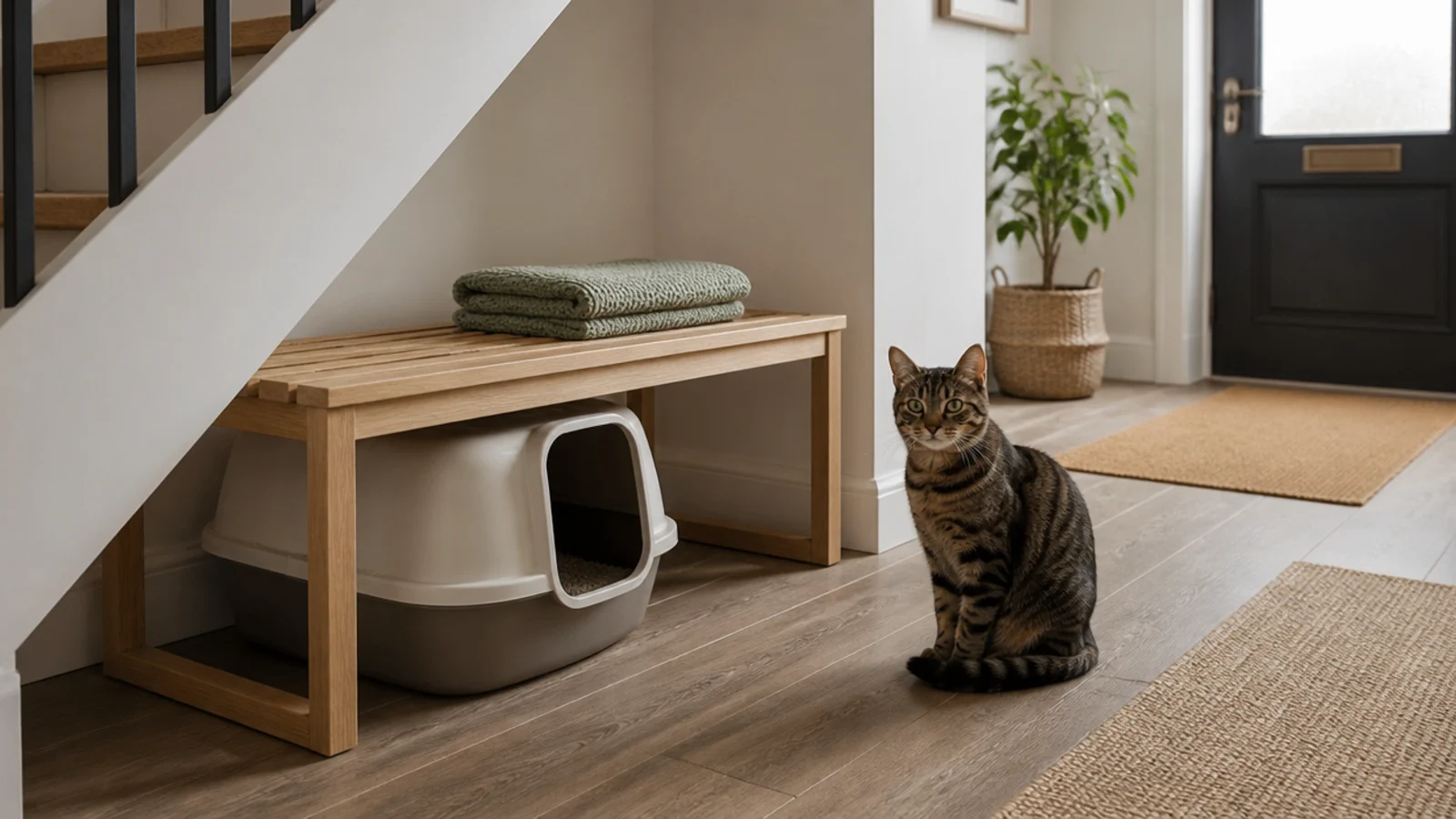
24. Screen a litter tray with an open bench
A slatted bench standing over a covered tray hides it while letting air move around it. A fully enclosed cabinet concentrates odour instead of removing it. Allow 24 by 18 inches of floor, keep the tray on a wipeable mat, and site it away from where anyone eats.
25. Plan the reversal before the tenancy ends
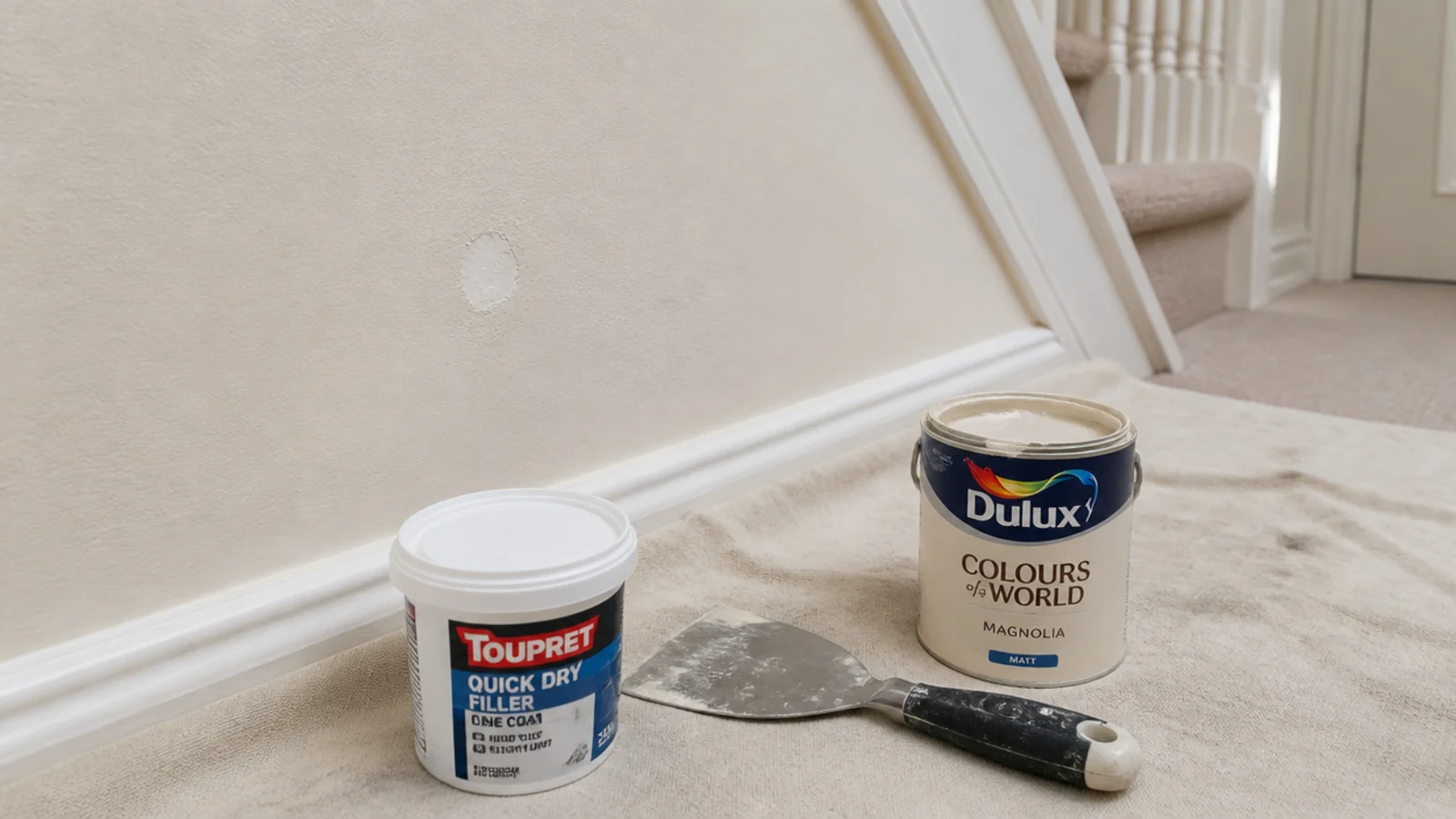
Keep the packaging for anything freestanding, note where the adhesive strips are, and buy a tester pot of the wall colour when you move in rather than at the end. Remove strips with a hairdryer on low, pulling slowly at a 45 degree angle. Filler, a putty knife and paint come to under £15.
If you later get permission to fit something permanent, the under stairs storage closet guide covers rail heights and hanging drops. For a laundry-heavy flat, the tiny utility room ideas guide has layouts under 20 square feet, and corner shelf ideas covers the awkward return wall most hallways have beside the stairs.
Mistakes to Skip
- Trusting adhesive strips beyond their rating. Fifteen pounds per pair is the honest ceiling, and a failed strip usually takes a patch of paint with it, which costs more than the hook saved.
- Blocking the gas meter, boiler or consumer unit with furniture. Access has to stay clear for your landlord and any engineer, and moving a loaded shelving unit at short notice is nobody's idea of a good evening.
- Buying furniture before measuring the height where it will actually stand. A unit that clears at the front of the recess may be two inches too tall eighteen inches further back.
- Leaving bags and boxes at the foot of the stairs because the recess is full. That is the escape route for every room above, and it is the worst possible place for an obstacle in the dark.
Frequently asked questions
How can I use the space under my stairs without drilling?
Freestanding units, tension rods and adhesive fixings cover almost everything. A cube shelf in the tall band, a rolling cart in the middle and stacking boxes at the shallow end need no fixings at all, and a tension rod carries a light rail of coats between two solid walls without a single screw.
How much weight do adhesive hooks actually hold?
Heavy-duty strips are rated around fifteen pounds per pair and that figure is honest rather than optimistic. It suits a tote bag, a light coat or a small ledge, not a loaded shelf or a winter parka. Clean the wall with rubbing alcohol first, press for thirty seconds and wait an hour before loading.
Can I put a clothes rail under the stairs in a rental?
A spring tension rod between two solid walls holds a light rail of jackets if the span is under about thirty-six inches and the load stays under twenty pounds. For anything heavier use a freestanding garment rack, which needs no fixings and moves house with you when the tenancy ends.
What should I avoid storing under rented stairs?
Anything flammable, anything blocking a meter or a consumer unit, and anything that stops you walking freely at the foot of the stairs. That run is the escape route for the whole upper floor, and a boiler, gas meter or consumer unit has to stay accessible to your landlord and to any engineer.
How do I leave the space as I found it?
Photograph the recess before you touch it, keep every fixing reversible, and remove adhesive strips with a hairdryer on low while pulling slowly at a forty-five degree angle. Filler and a tester pot of the original colour cost under fifteen pounds and cover the handful of holes you do make.
Want more like this? Browse all 14 under stairs storage guides — they all use the same measurements and budget tiers.

Pin it for later
Save this to your Under Stairs Storage board
Pin it now so it is waiting for you when the tape measure comes out — and so the next person hunting for this idea can find it too.
Save this pinKeep going
More ideas worth saving while you have the tape measure out.