Under Stairs Storage · Listicle
25 Stunning Under Stairs Wine Storage Ideas To Steal

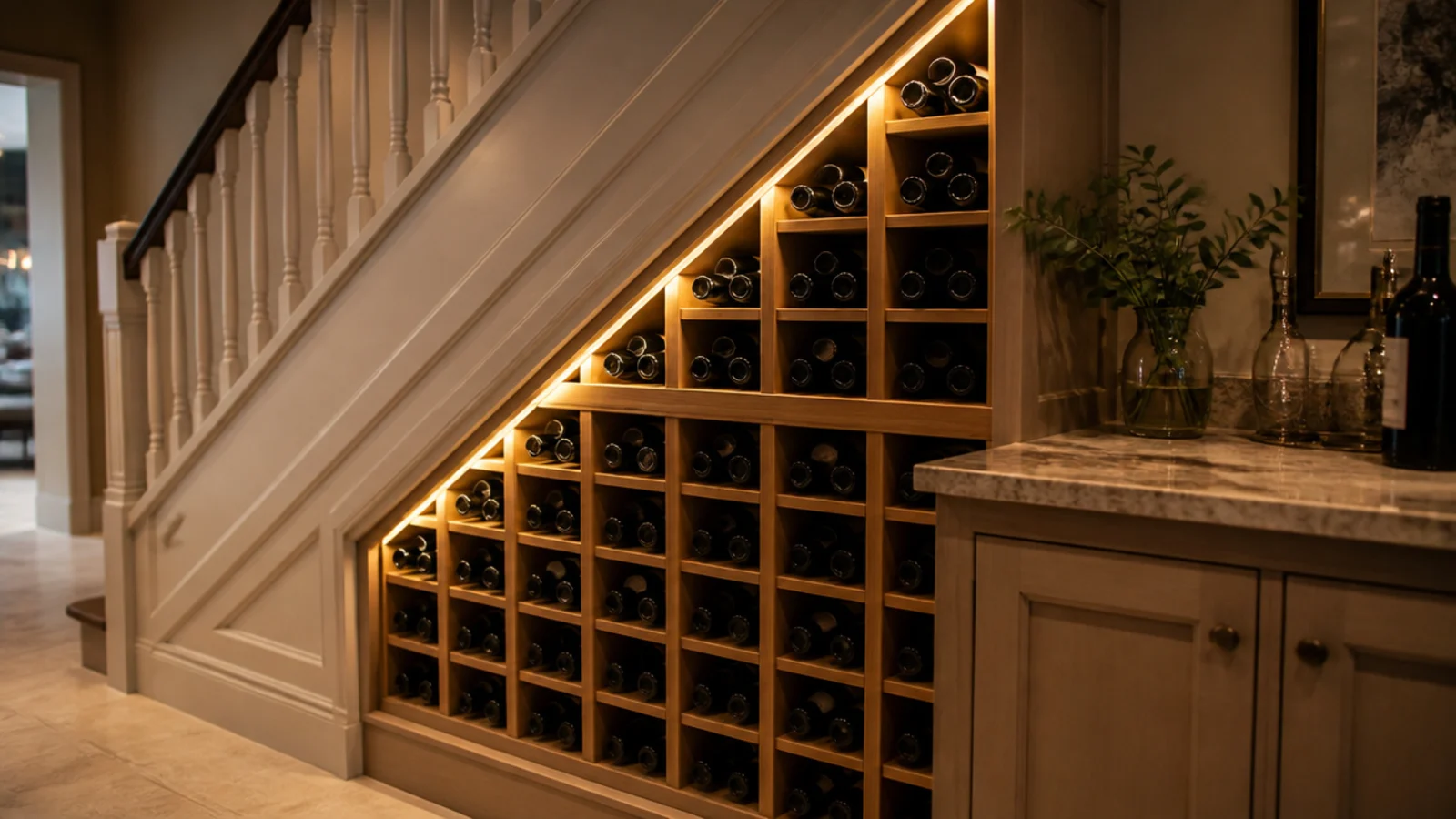
Wine and staircases have an obvious appeal and a less obvious problem. Under stairs wine storage looks like a cellar and behaves like a hallway: warmer than a cellar, more variable than a cellar, and with people walking overhead all day. None of that rules it out — it just decides what you should keep there. I racked my own hall wedge after logging the temperature for a year, and the answer was everyday bottles, not the ones I wanted to age. Here are twenty-five ideas with the numbers that matter.
In this guide27 sections — tap to openHide
- 1.What under stairs wine storage has to survive
- 2.Log the temperature for a month before racking
- 3.Store drinking stock only above sixty degrees
- 4.Build diamond bins for bulk storage
- 5.Use scalloped racks and let the necks show
- 6.Cut double-depth cubbies for full bottles
- 7.Fix a metal peg rack to the flank wall
- 8.Slot bottles into the tread ends
- 9.Build a pull-out bottle drawer
- 10.Fit a wine cabinet in the tall band
- 11.Specify glazing that blocks ultraviolet
- 12.Add a pouring shelf at thirty-six inches
- 13.Hang the stemware overhead
- 14.Light it from behind, in warm white
- 15.Keep one label-forward display row
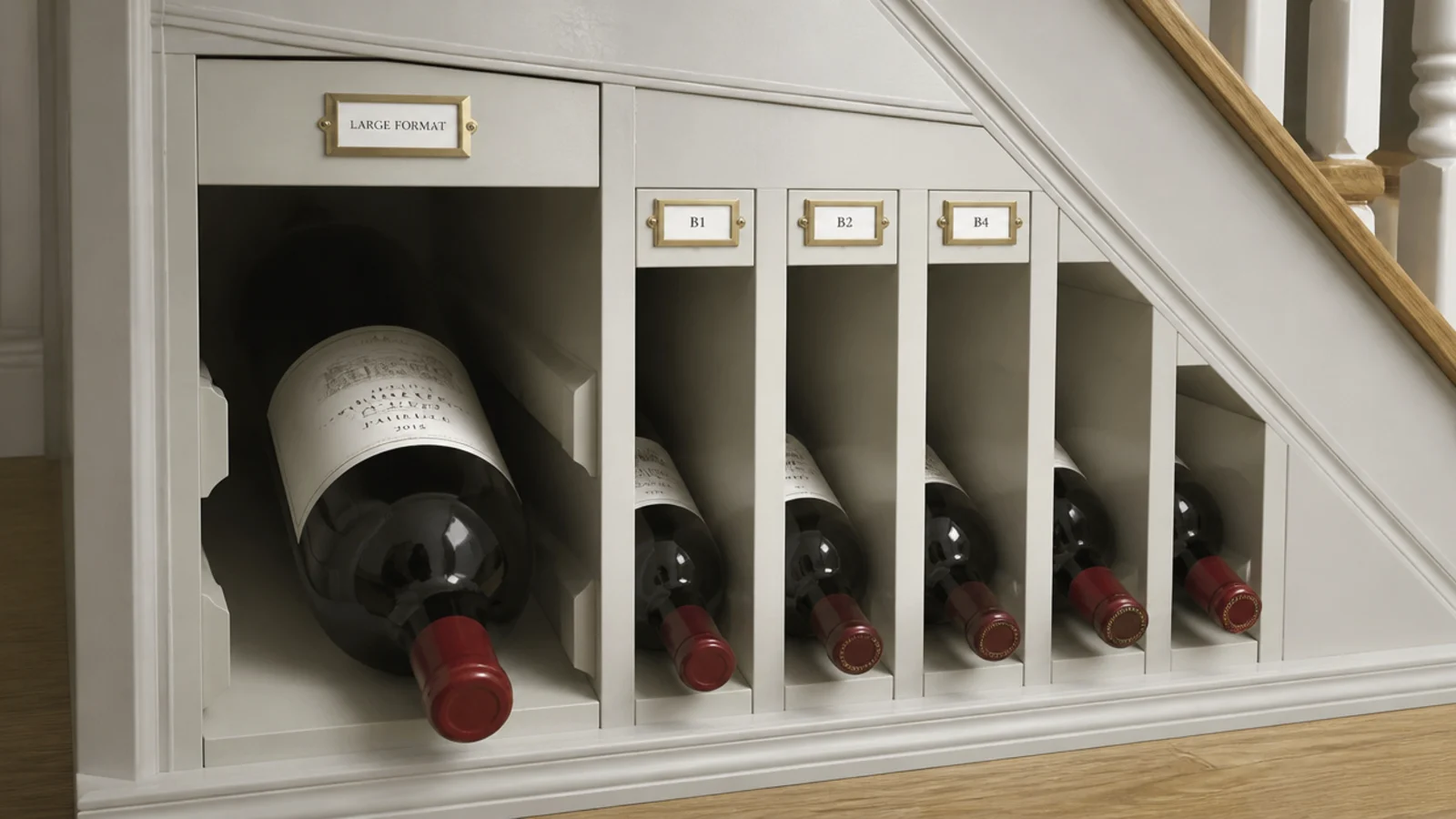
- 16.Leave a wider bay for magnums
- 17.Give the corkscrew and foils a drawer
- 18.Carve a niche for the decanter
- 19.Spread the load across several joists
- 20.Isolate the racks from footfall
- 21.Keep the racking off the radiator wall
- 22.Chalk the inventory on the inside of the door
- 23.Gate it if there are children in the house
- 24.Stack unopened cases on the floor
- 25.Angle a rack where the ceiling drops
- 26.Reserve the deep corner for the long keepers
- 27.Mistakes to Skip
What under stairs wine storage has to survive
Temperature first. A proper cellar sits at 50 to 59 degrees Fahrenheit with humidity between 55 and 75 percent. A hallway typically runs 64 to 70 with a daily swing of several degrees, and the swing does more damage than the average. At those temperatures, wine matures faster and less predictably, so treat the space as a six to twelve month store rather than a cellar.
Geometry second. A Bordeaux bottle is about 12 inches long and 3 inches across; a Burgundy or Champagne bottle is nearer 3.5. Build racks at 3.5 inch centres and everything fits. Allow 12 to 13 inches of depth for a bottle to sit fully inside, or 9 inches if you want necks and labels showing.
Weight third. A full bottle is around 2.6 pounds, so a hundred bottles plus racking passes 300 pounds in a few square feet. On a ground floor slab this is irrelevant. On a suspended timber floor, spread the load across several joists with a bearer rather than concentrating it in one bay.
Then the stair-specific things. Footfall transmits straight through the strings and soffit, so stand racks on the floor with rubber pads rather than hanging them off the stair structure. Keep bottles at least three feet from a hallway radiator. And if a boiler, gas meter or consumer unit shares the recess, that zone stays open and accessible — none of them may be enclosed, whatever the design drawing shows. The under stairs cupboard storage guide covers the fit-out basics.
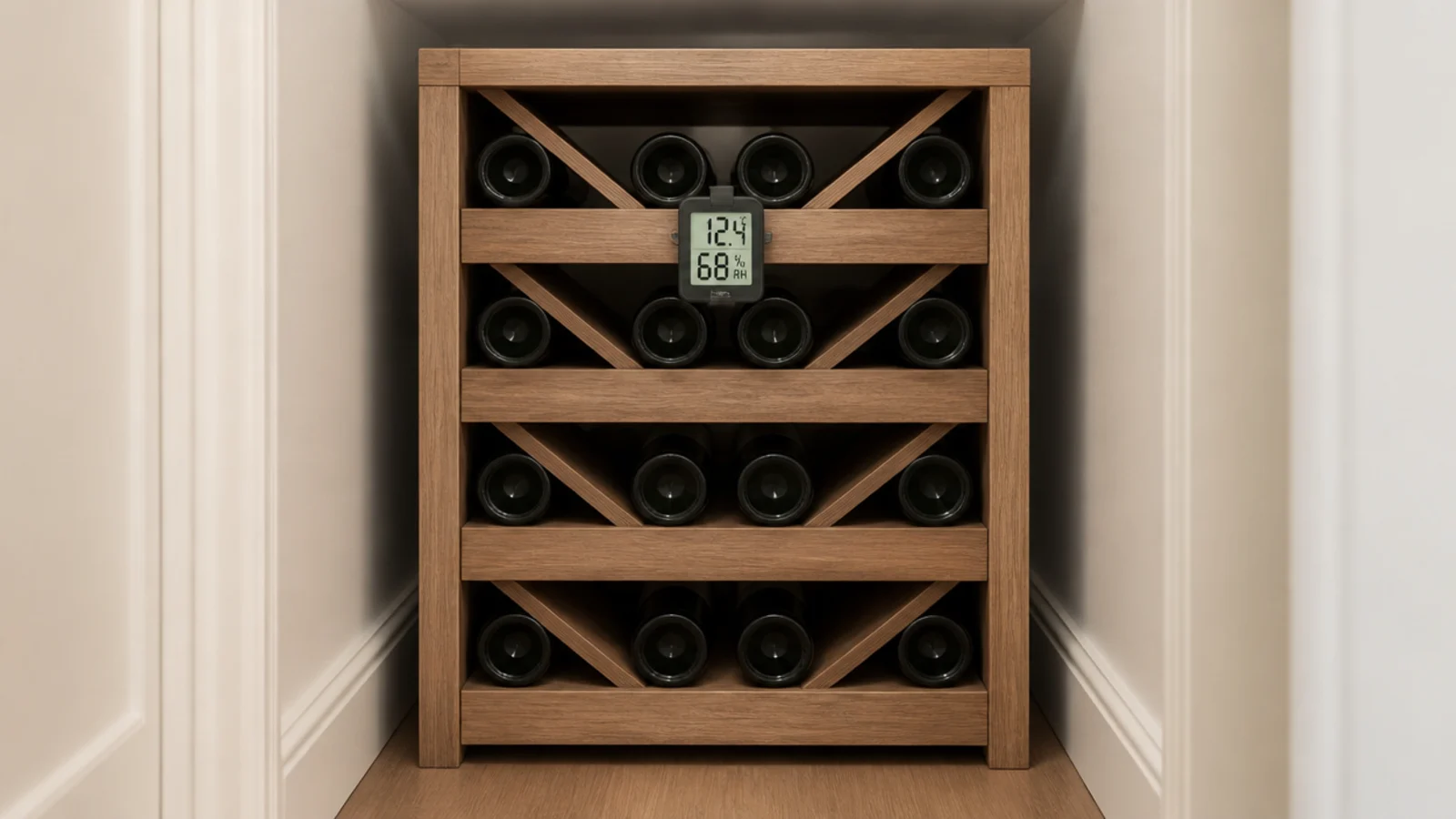
1. Log the temperature for a month before racking
A £10 thermometer with a min-max memory, clipped where the rack will go, tells you more than any amount of planning. Record the daily high and low for a month. If the swing is over about five degrees, you are looking at a drinking store, and it is better to know that before you build cubbies for eighty bottles.
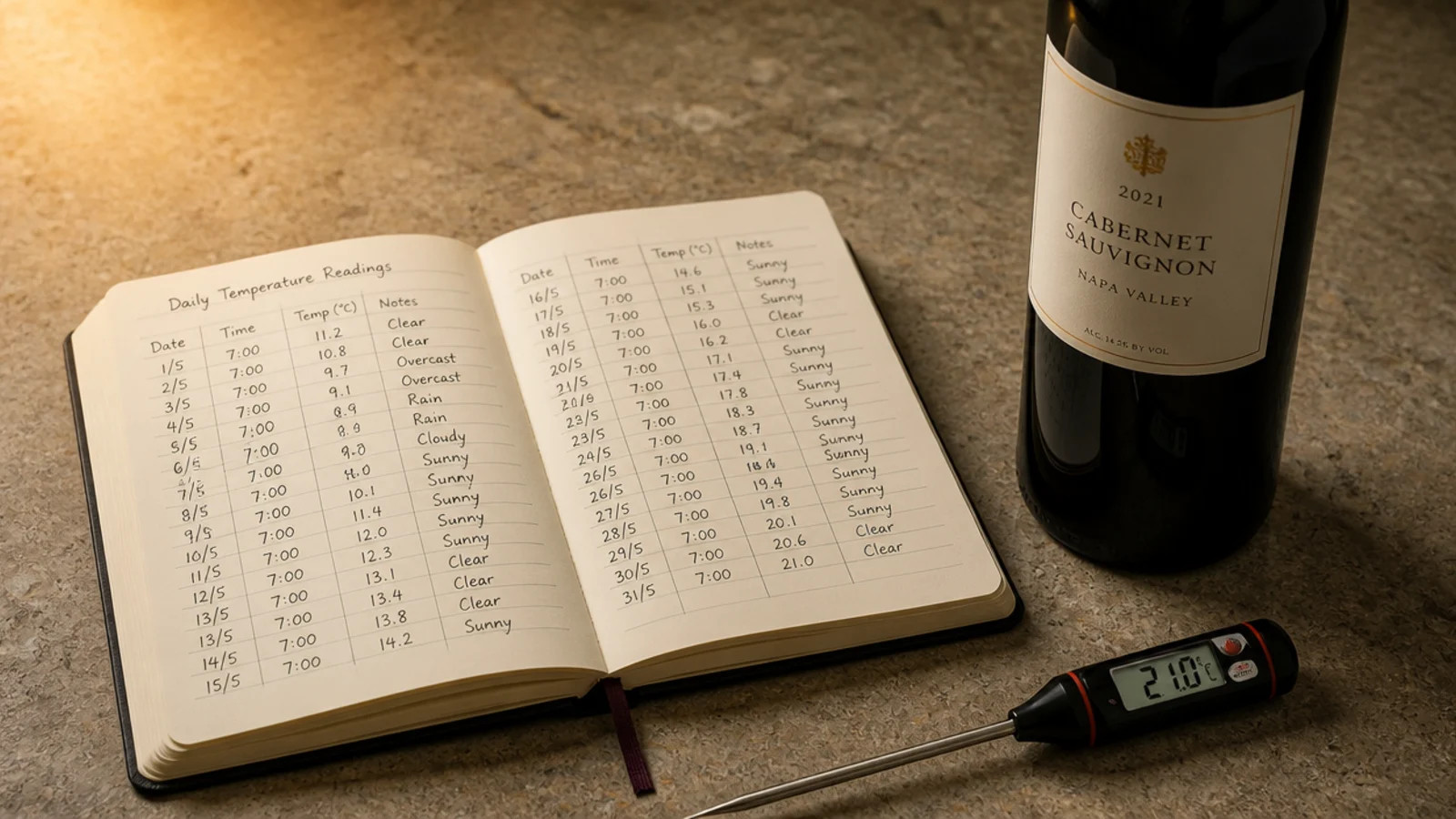
2. Store drinking stock only above sixty degrees
Above 60 degrees, plan on six to twelve months rather than years. That is not a failure — most households drink what they buy within that window anyway. Keep anything genuinely worth ageing somewhere colder, or in a cabinet that controls its own temperature.
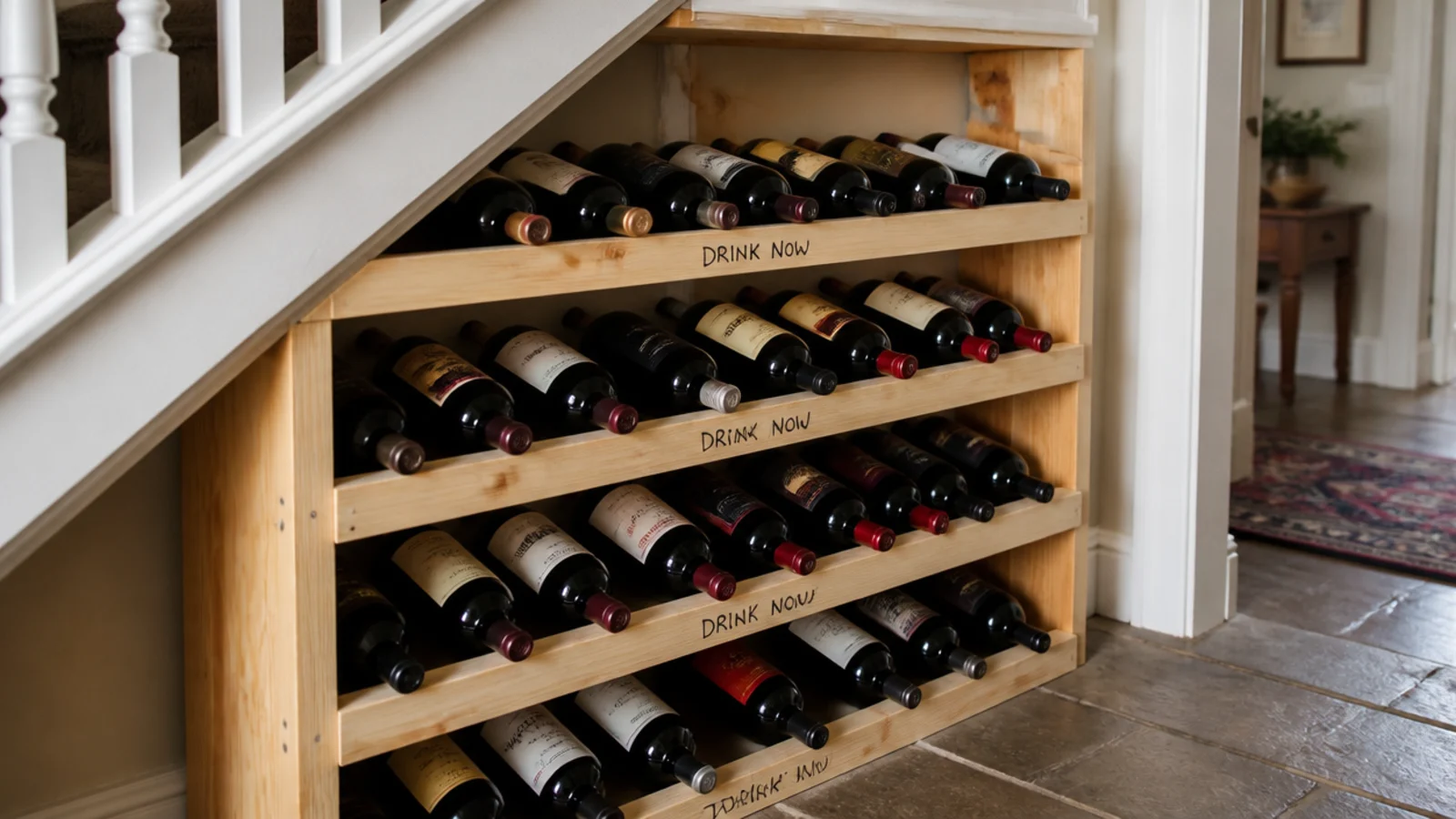
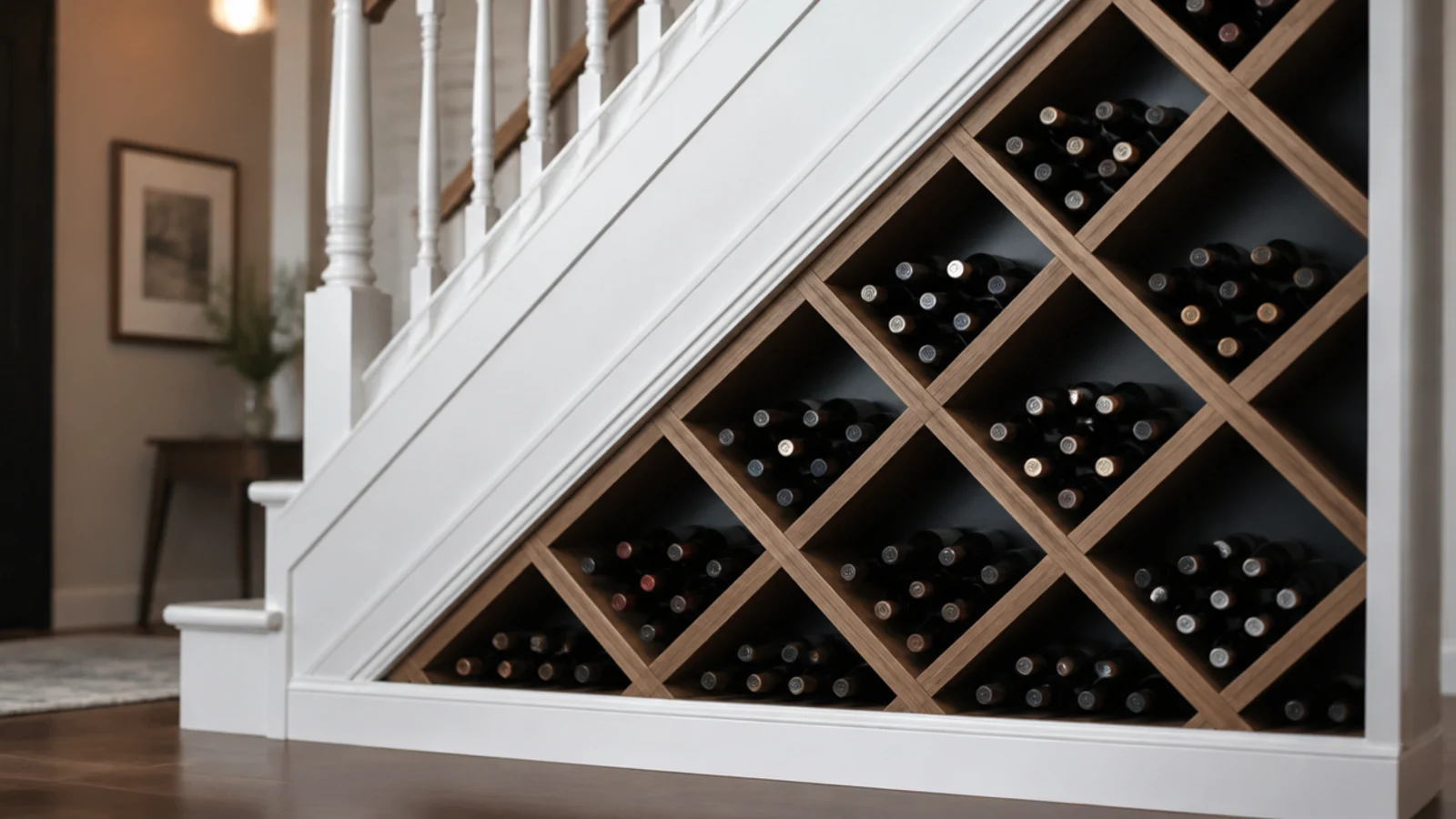
3. Build diamond bins for bulk storage
A diamond bin roughly 24 inches square holds about thirty bottles of the same shape and costs very little in timber. Bins suit case buying, where you want a dozen of one wine accessible without labelling. Line the base of each bin with felt so the bottom bottle does not chip.
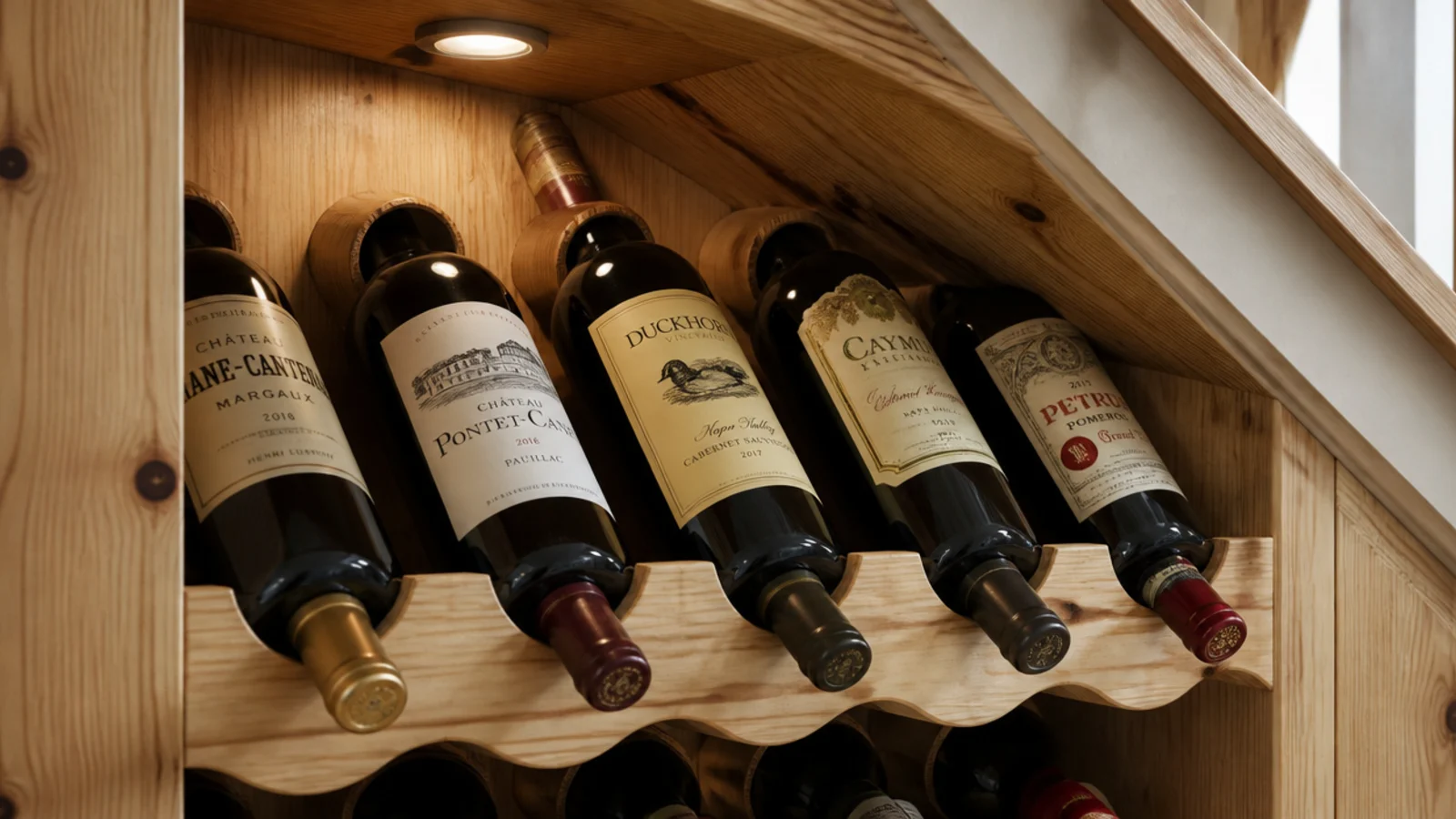
4. Use scalloped racks and let the necks show
A rack 9 inches deep leaves about 3 inches of neck projecting, which means you can read labels without pulling bottles out. Scalloped timber racks cost £30 to £120 depending on capacity. The projecting necks are a genuine hazard in a narrow hall, so keep them out of the walking line.
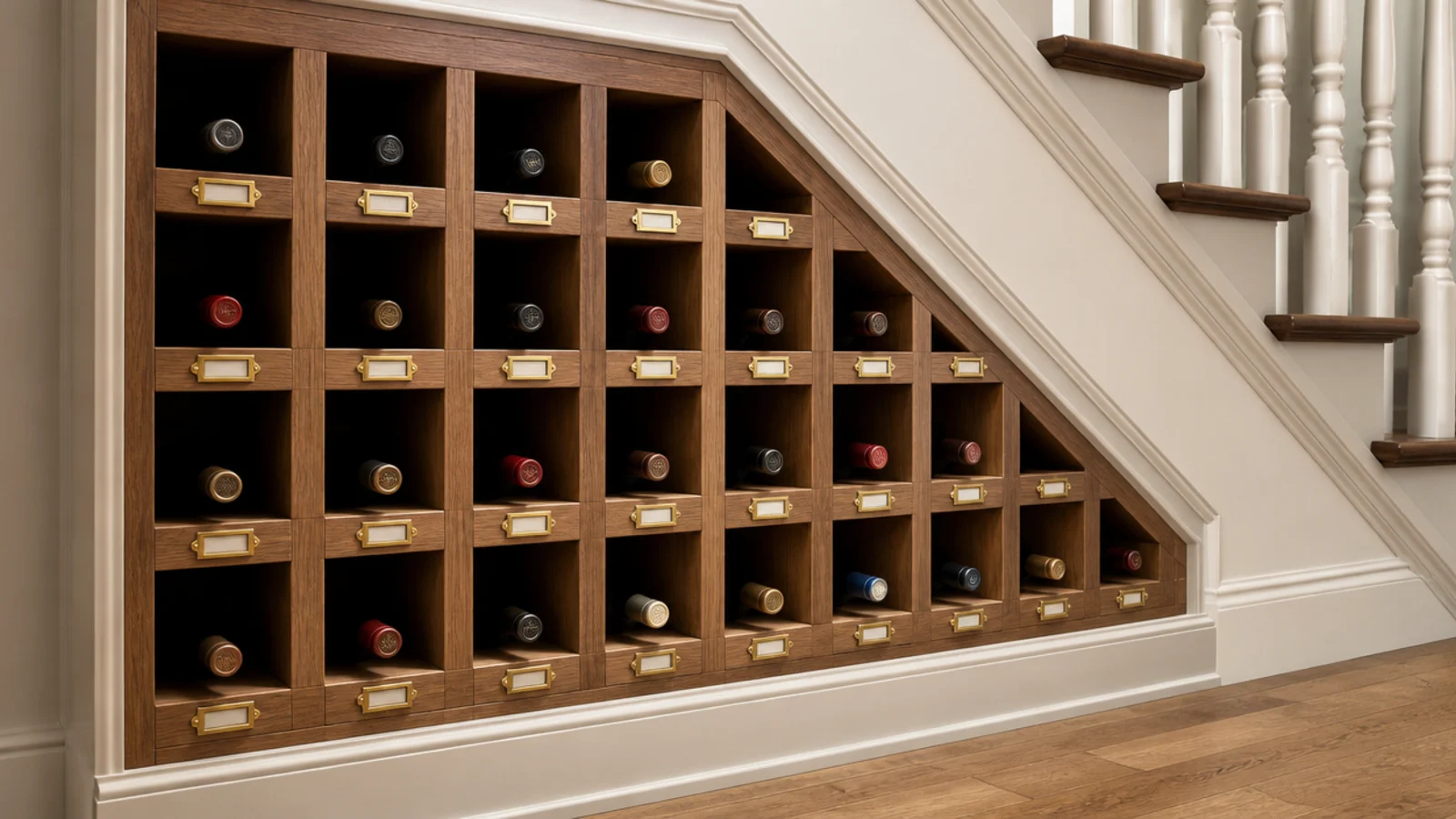
5. Cut double-depth cubbies for full bottles
Cubbies 13 inches deep swallow the bottle completely and give a much calmer look, at the cost of readability. Label the front edge of each cube instead. Square cubbies of about 4 inches take any bottle shape, including the wider Burgundy and Champagne bottles that a 3 inch slot rejects.
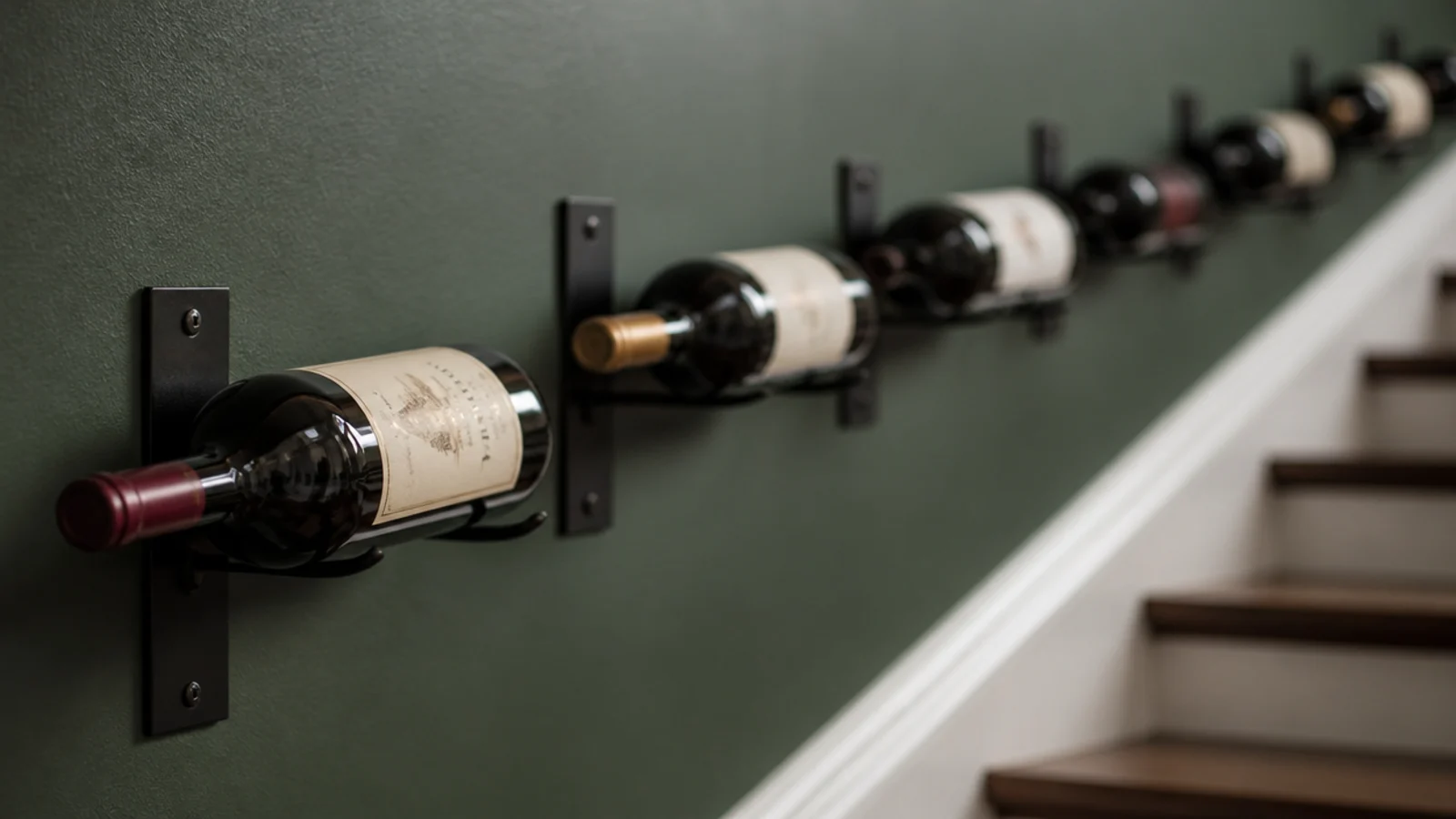
6. Fix a metal peg rack to the flank wall
Peg racks cradle each bottle horizontally on two pins and read as display rather than storage. They cost £8 to £15 per bottle position. Fix them into studs or a batten — each loaded position is holding nearly three pounds at leverage, and plasterboard plugs will not do it for long.
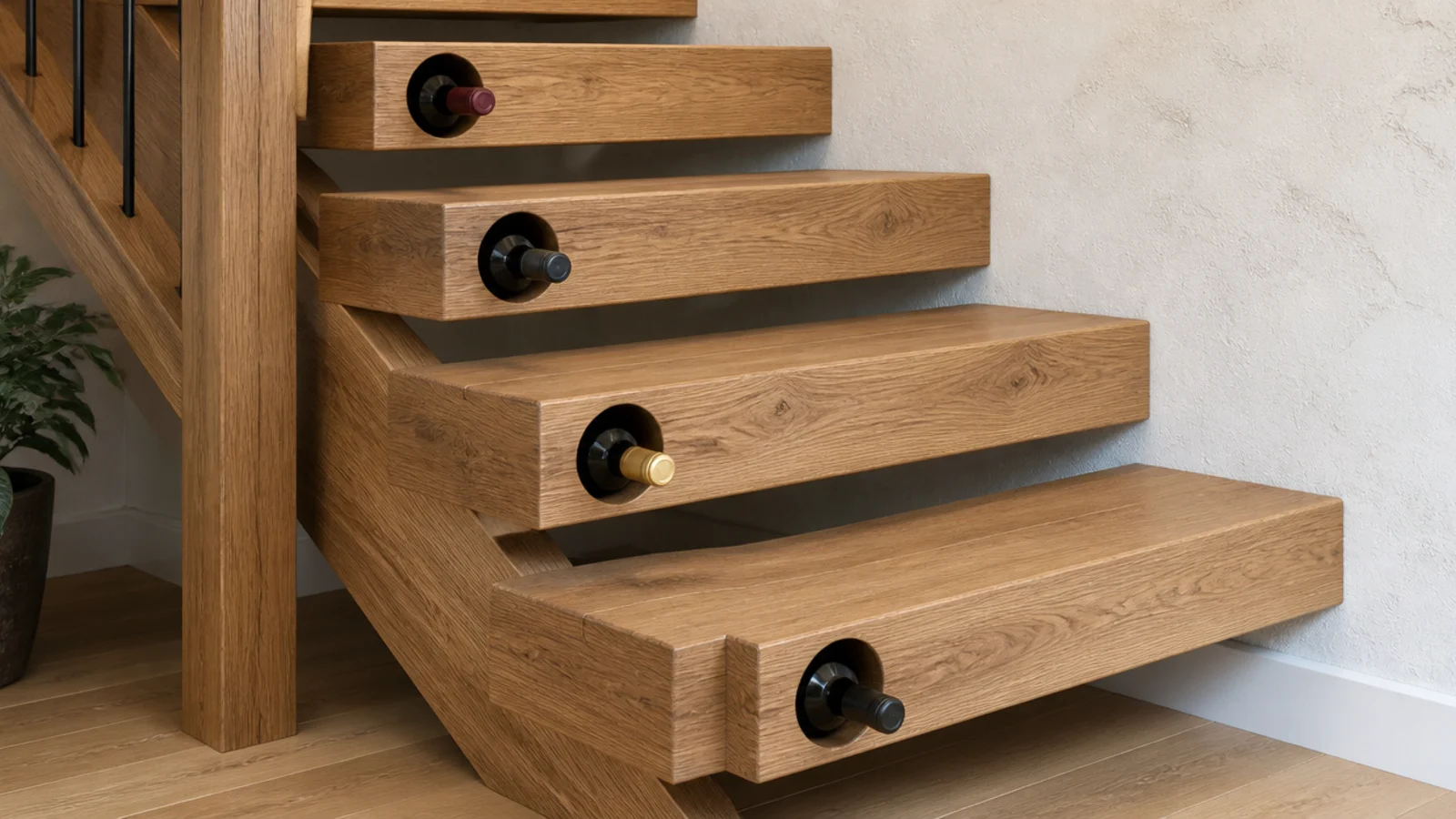
7. Slot bottles into the tread ends
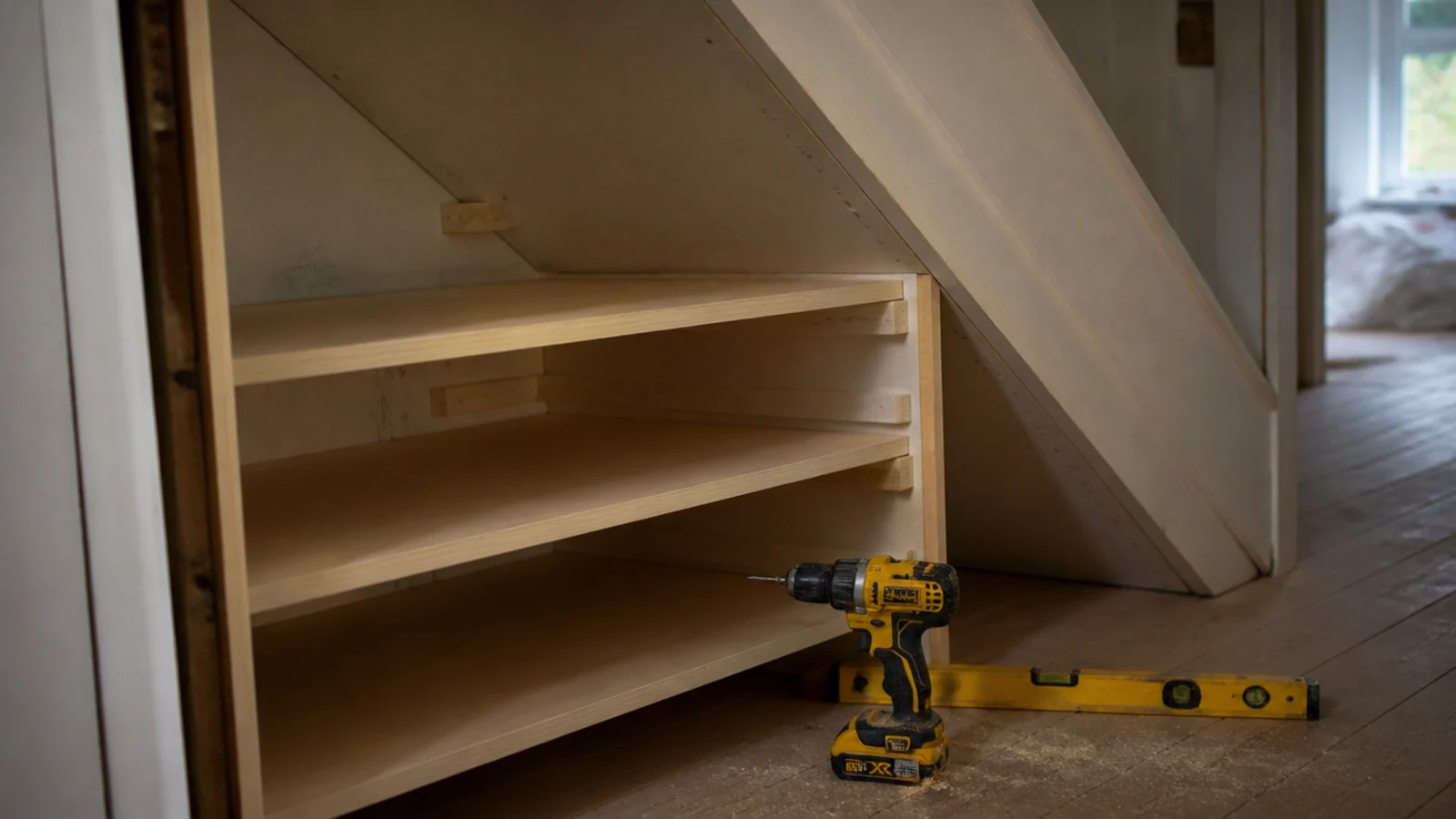
On an open staircase with exposed tread ends, a 3.5 inch hole bored into the end grain holds a bottle neck outward. It is a striking detail and a small structural decision, so ask a joiner before cutting into anything load bearing. Keep it to the treads above head height in a walkway.
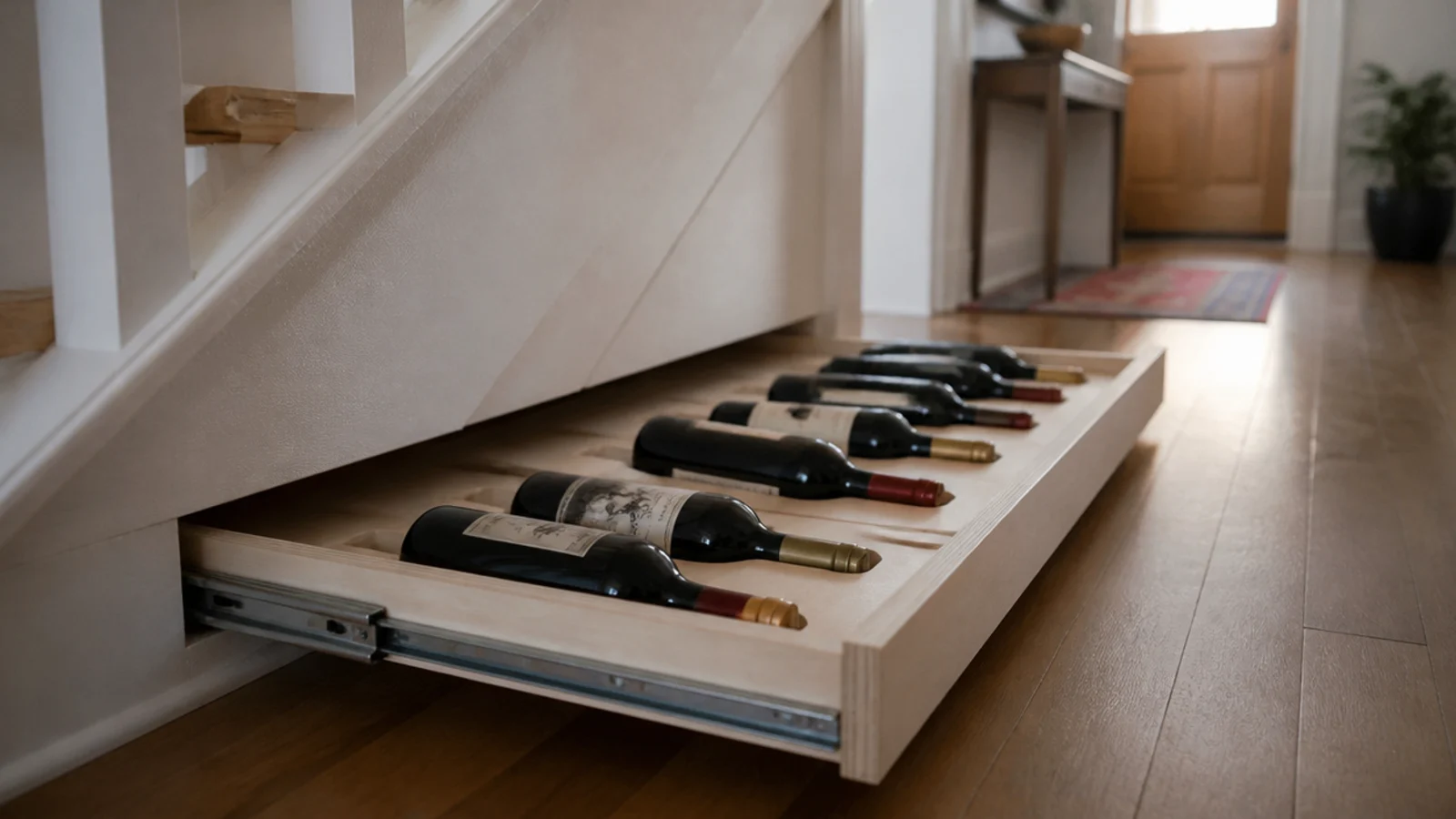
8. Build a pull-out bottle drawer
Below 30 inches of headroom, a drawer with routed channels brings the bottles out to you. Use full-extension runners rated to at least 100 pounds — a drawer of twenty bottles is over 50 pounds before you count the box. Line the channels with felt to stop glass on timber noise.
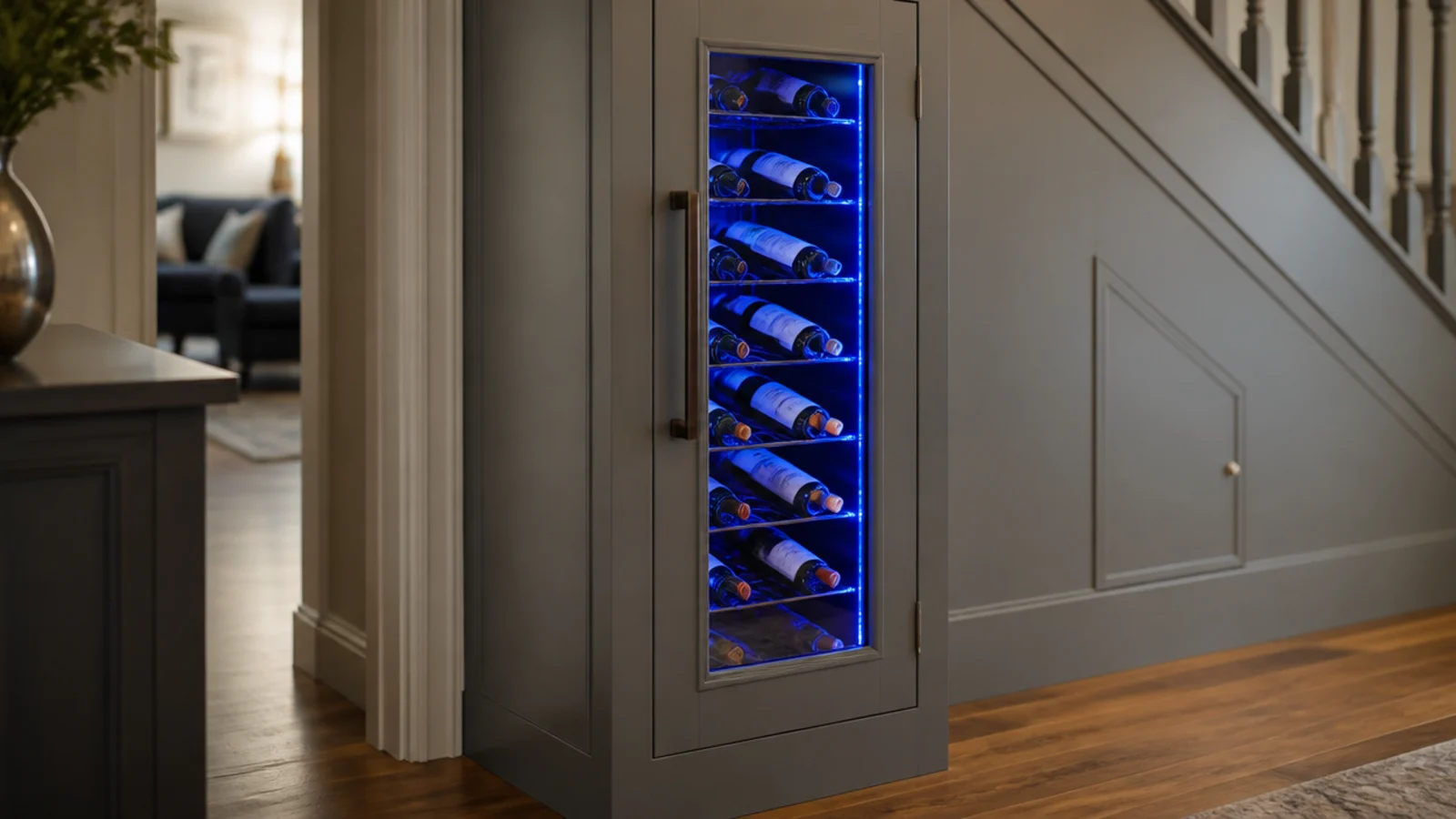
9. Fit a wine cabinet in the tall band
A 20 to 50 bottle compressor cabinet costs £300 to £600 and holds a genuine cellar temperature regardless of the hallway. Ventilation is the constraint: front-vented models can be fully built in, rear-vented ones need 2 to 4 inches of clear air behind and above. Never box one into a sealed cupboard.
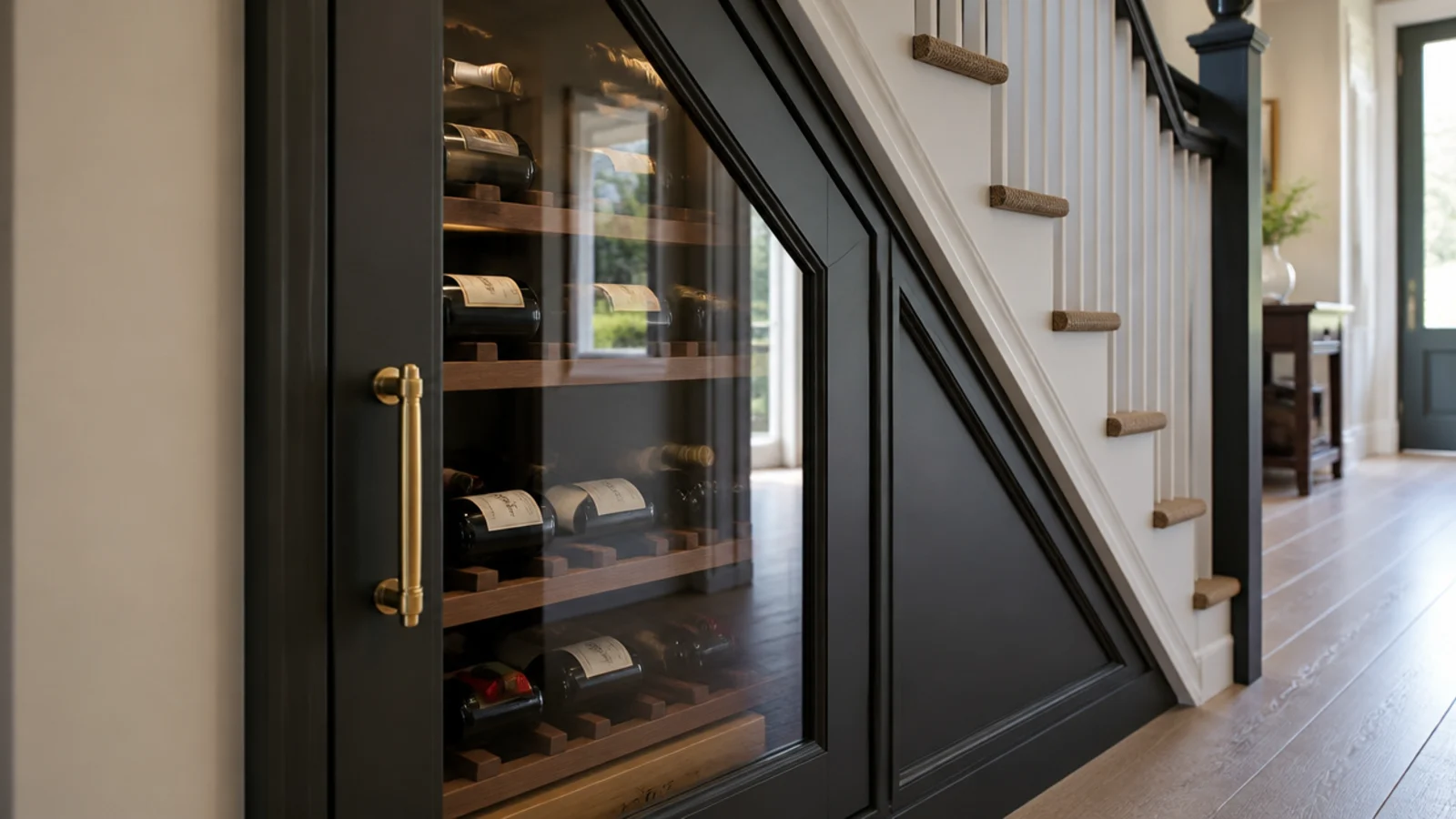
10. Specify glazing that blocks ultraviolet
Light degrades wine faster than moderate warmth does, and clear glass in a hallway with a front door glazed panel is a real exposure. Use UV-filtering glass in any display door, and avoid fluorescent tubes entirely. Warm LED runs cool and emits almost no ultraviolet.
11. Add a pouring shelf at thirty-six inches
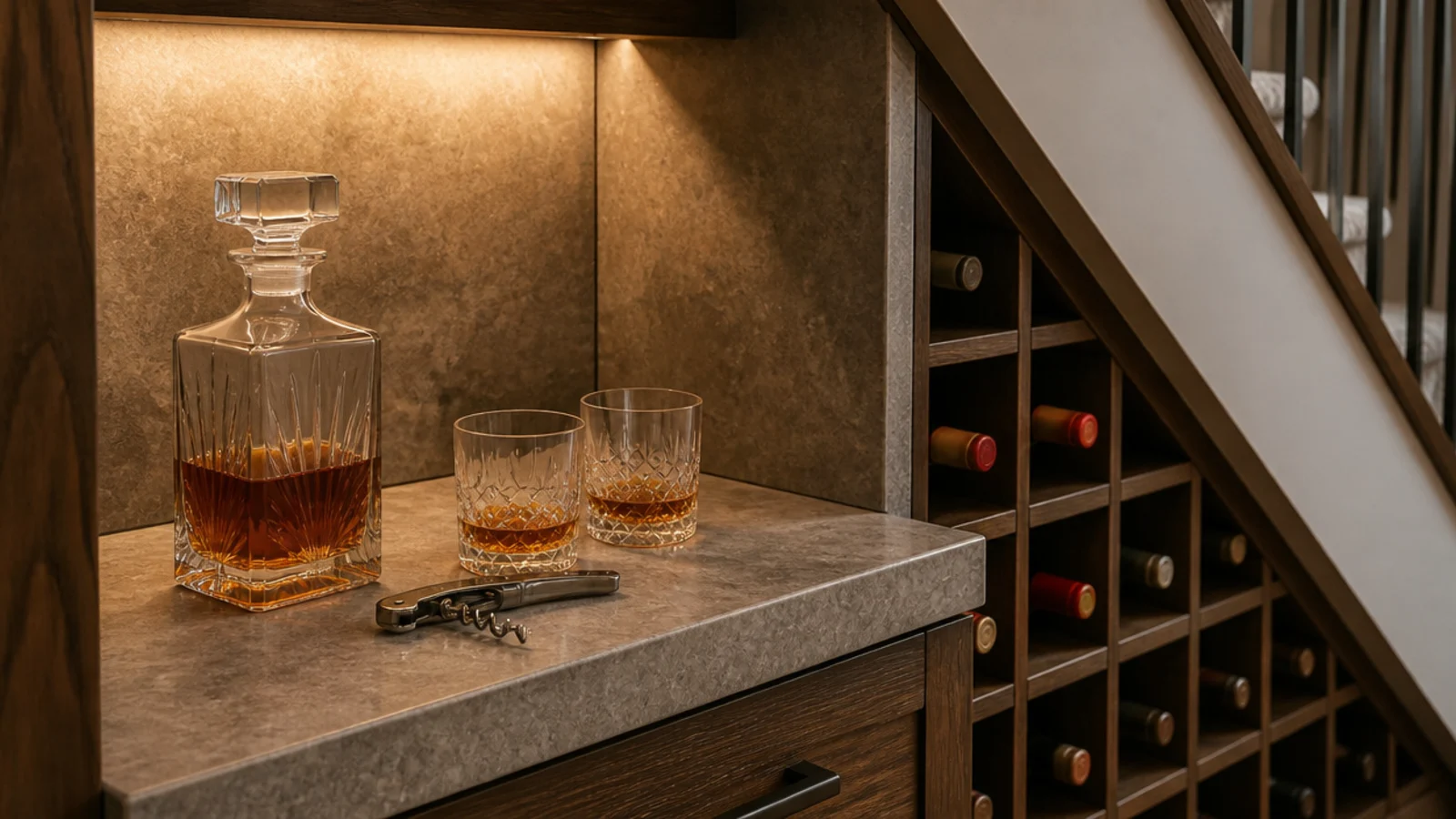
A shelf 15 inches deep at counter height turns racking into a bar. It gives you somewhere to stand a decanter, open a bottle and set glasses down. Stone or a sealed hardwood copes with drips; unsealed timber will stain permanently the first time a red bottle is opened carelessly.
12. Hang the stemware overhead
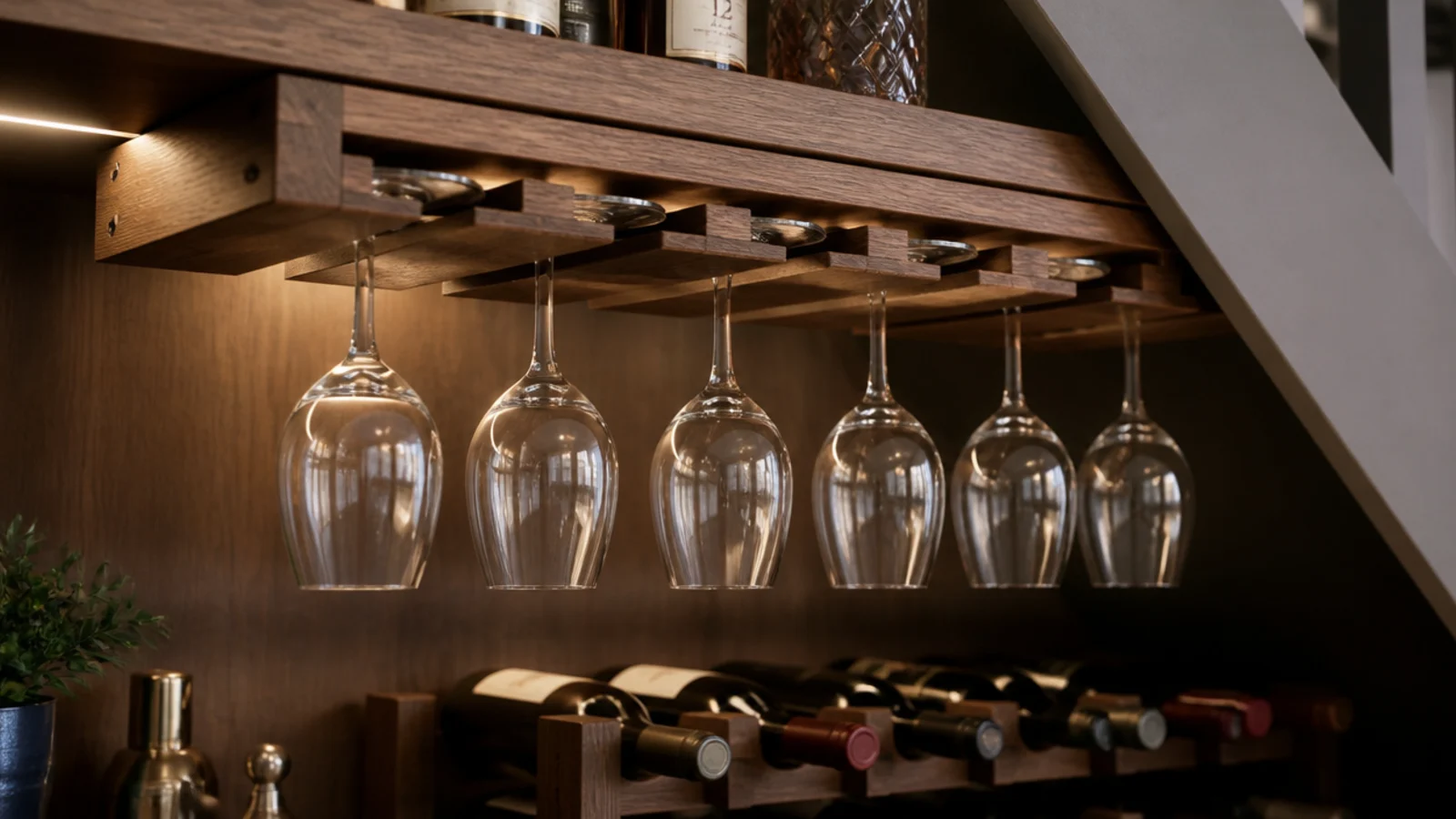
A stemware rack under a shelf holds six to twelve glasses by their bases and frees the whole surface beneath. Allow 9 inches of clearance for a large red glass. Hanging glasses upside down keeps dust out of the bowl, which matters more in a hallway than anywhere else in the house.
13. Light it from behind, in warm white
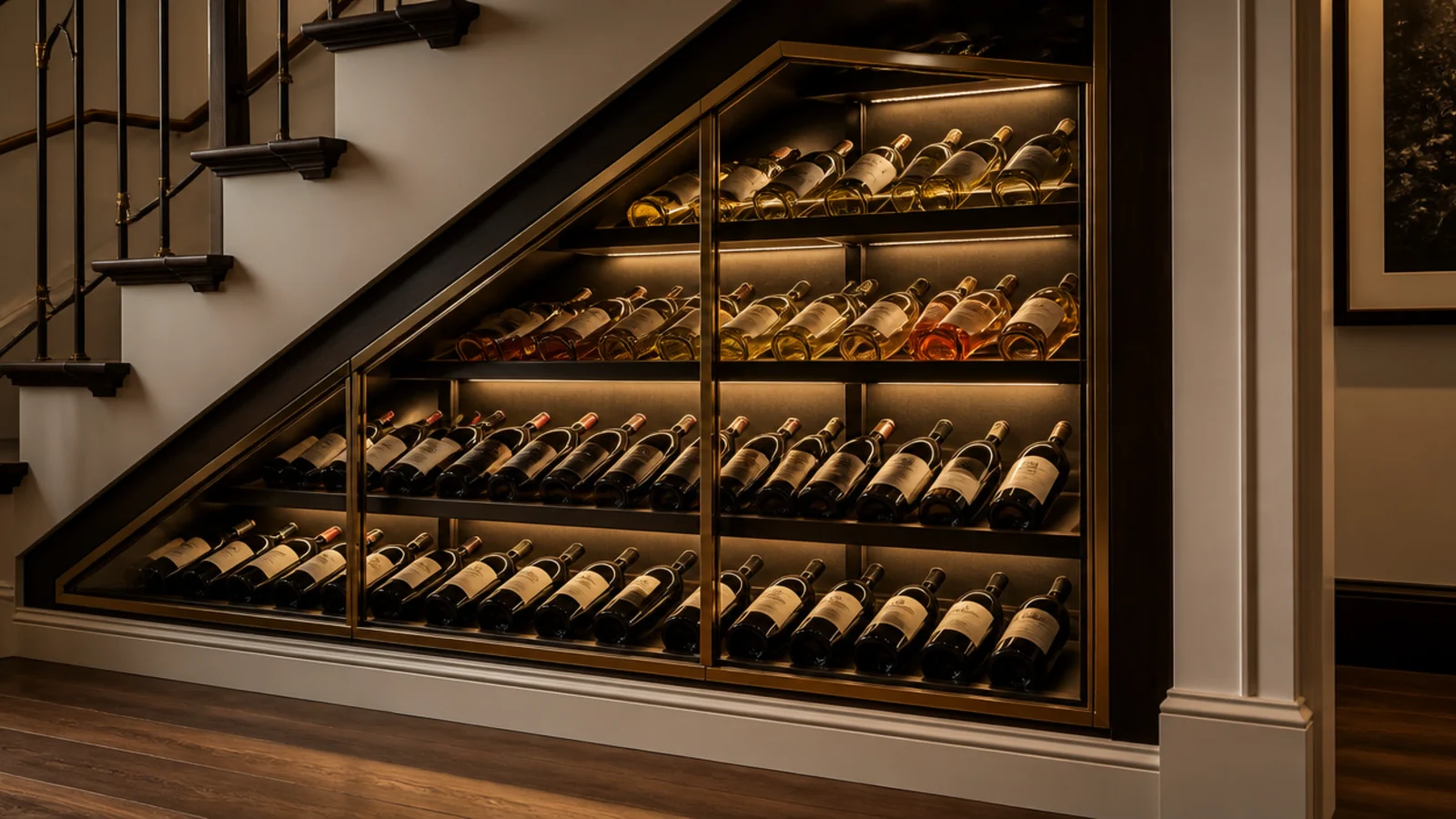
A concealed 3000K strip behind the bottles shows the glass colour and the label edges without heating them. Keep the strip out of contact with the bottles and use a driver rated for the run length. Downlights above a rack put every label in shadow, which is the opposite of what you want.
14. Keep one label-forward display row
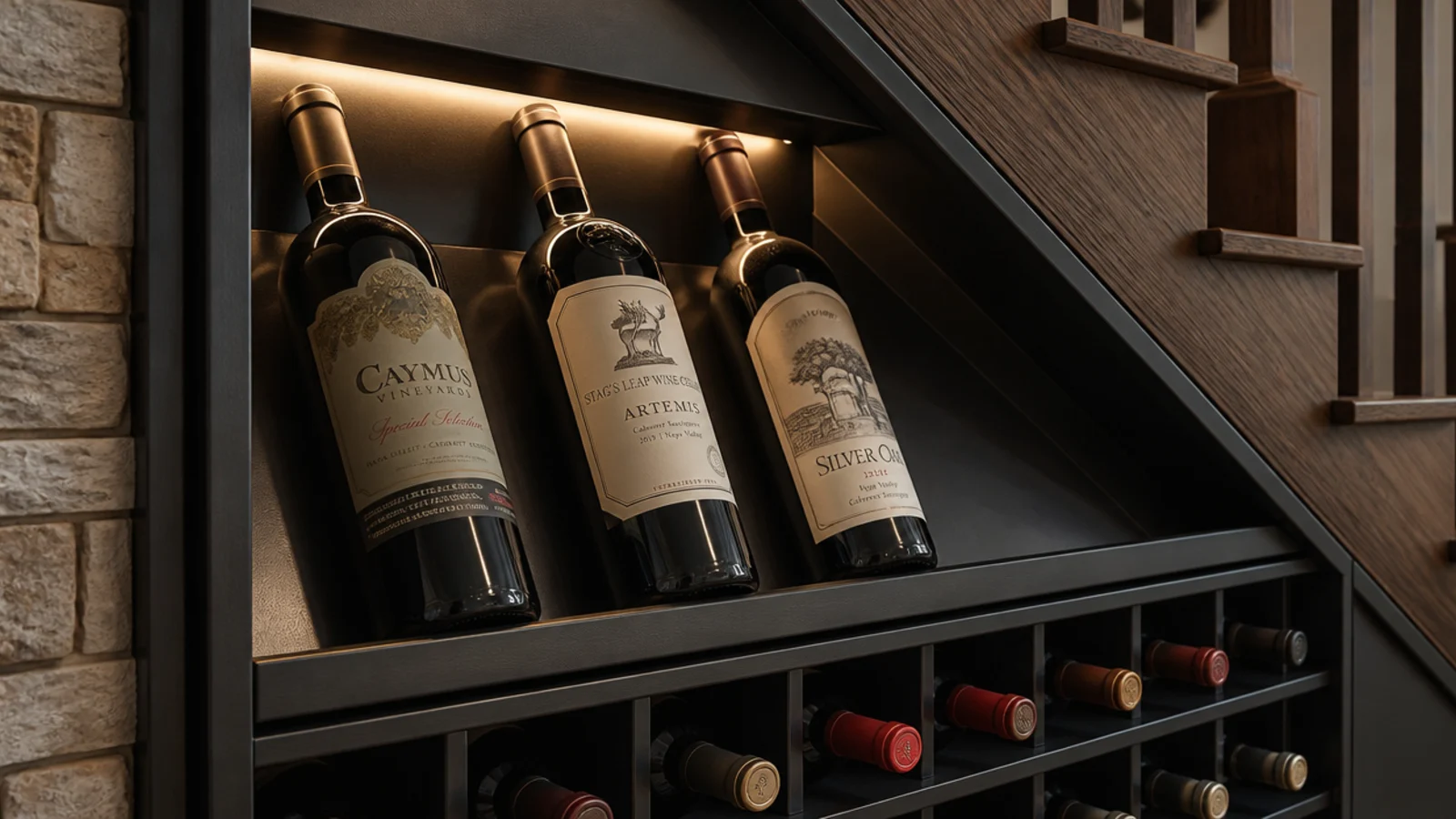
A single angled row above the horizontal racking shows three or four labels properly. It is the row you restock with whatever is open this month. Everything else can lie flat and anonymous, which keeps the wall calm rather than looking like a shop shelf.
15. Leave a wider bay for magnums
A magnum is roughly 4.5 inches across and 14 inches long, so it will not go anywhere near a standard slot. One wider bay at the base of the rack takes large formats, sparkling bottles and the occasional oddity. Put it low — a magnum weighs over five pounds full.
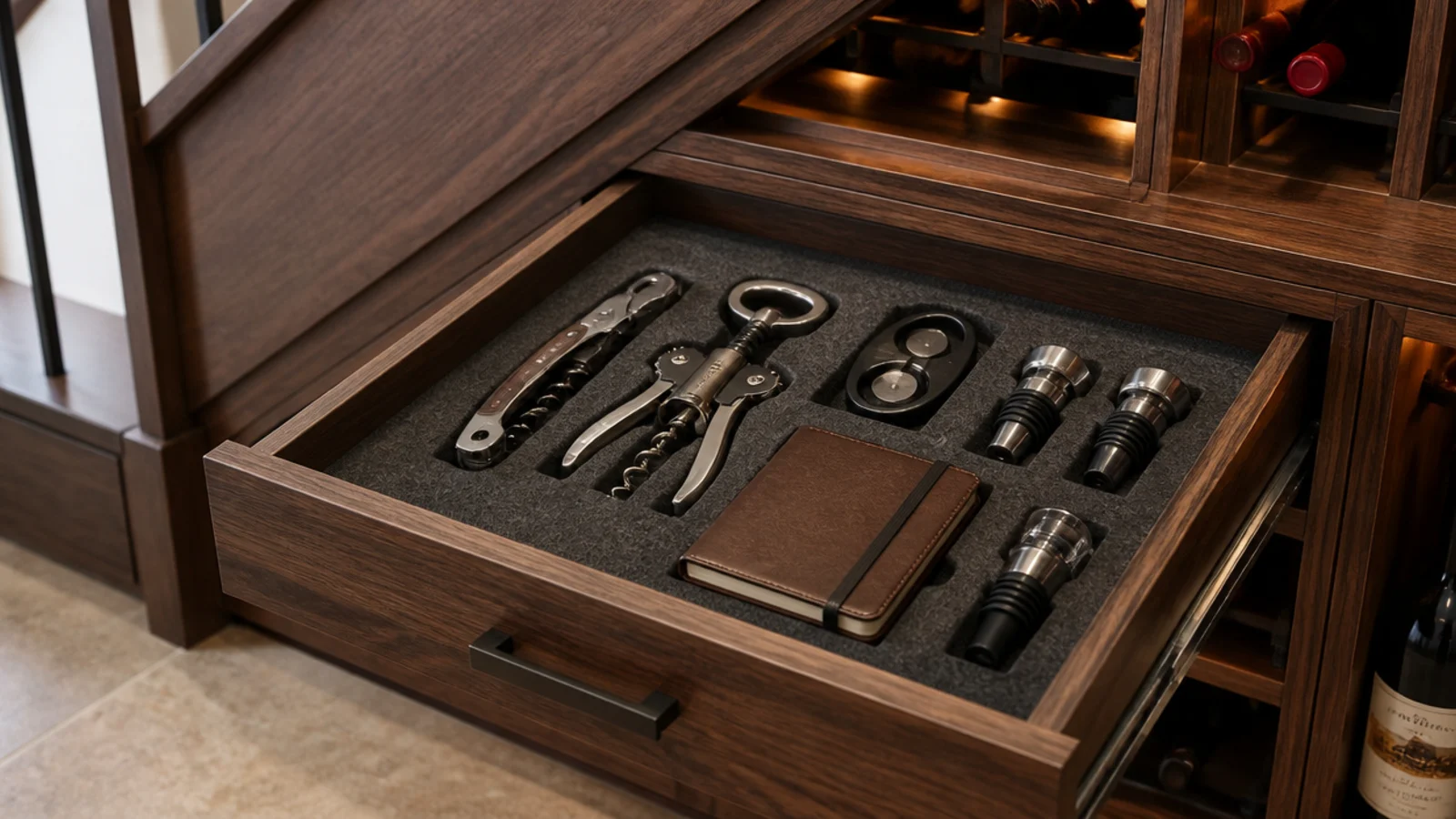
16. Give the corkscrew and foils a drawer
A shallow felt-lined drawer for corkscrews, foil cutters, stoppers and a pen keeps the tools where the bottles are. It is a small thing that decides whether the space gets used properly. Twelve by 15 inches is plenty, and the felt stops metal rattling every time somebody walks upstairs.
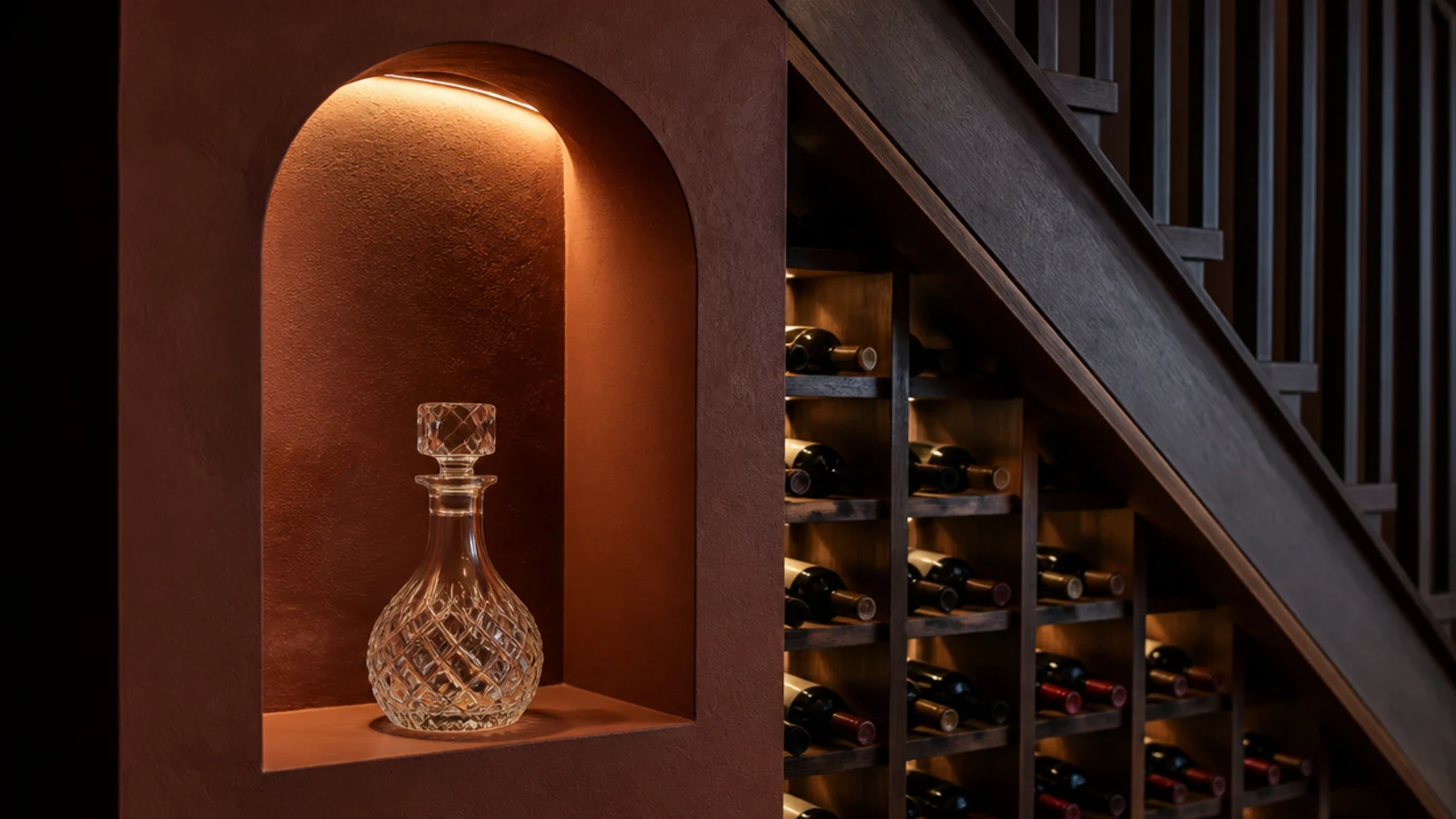
17. Carve a niche for the decanter
A plastered recess 12 inches deep with a warm strip along its top edge gives a decanter somewhere to live that is not a shelf edge in a corridor. One object, properly lit, does more for the look of an under-stair bar than a crowded display. Check for services before cutting into any wall.
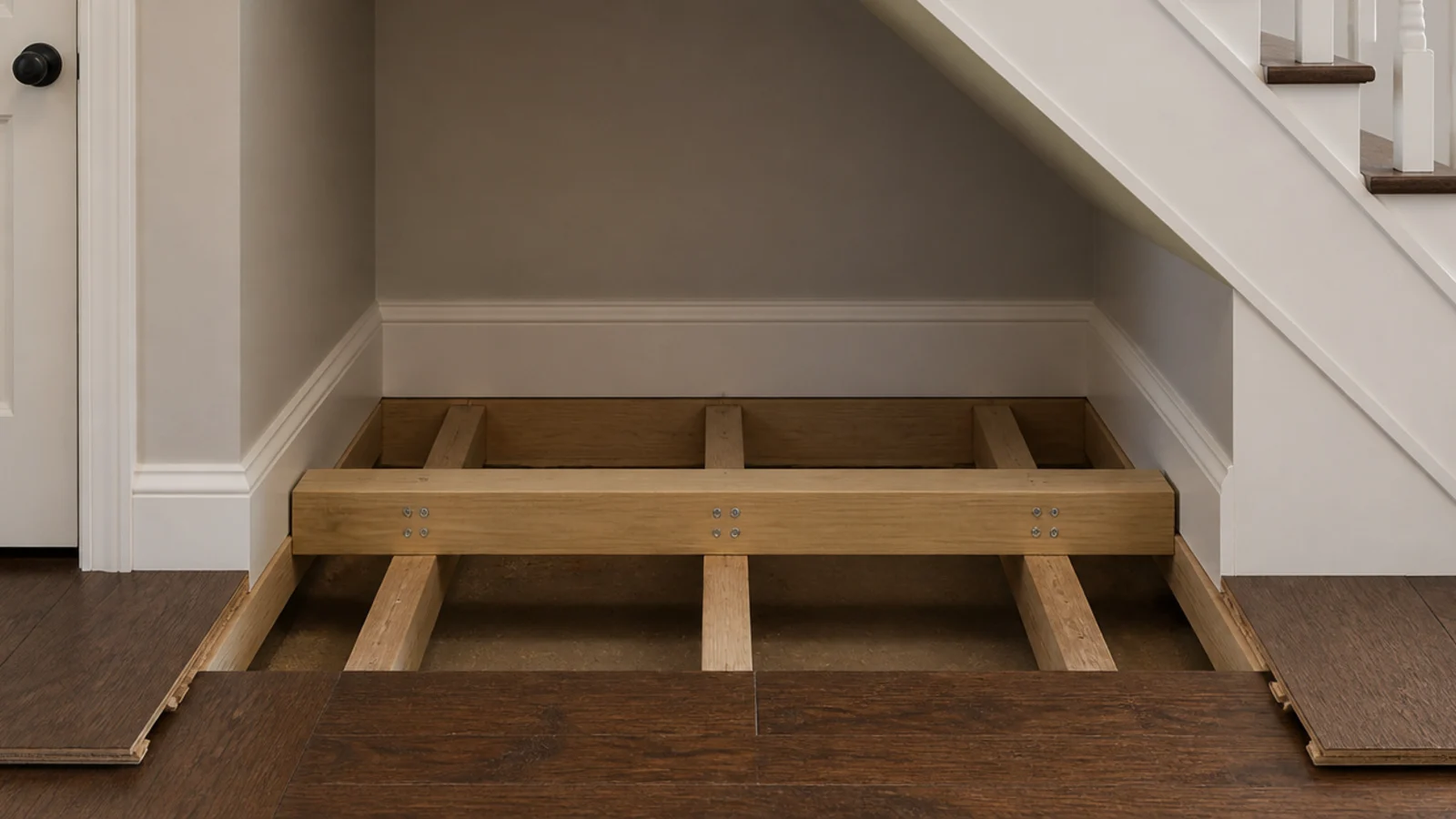
18. Spread the load across several joists
If the racking will hold more than about sixty bottles on a suspended timber floor, lift a board and look. A timber bearer laid across three or more joists distributes the weight instead of loading one bay. On a ground floor slab you can ignore this entirely.
19. Isolate the racks from footfall
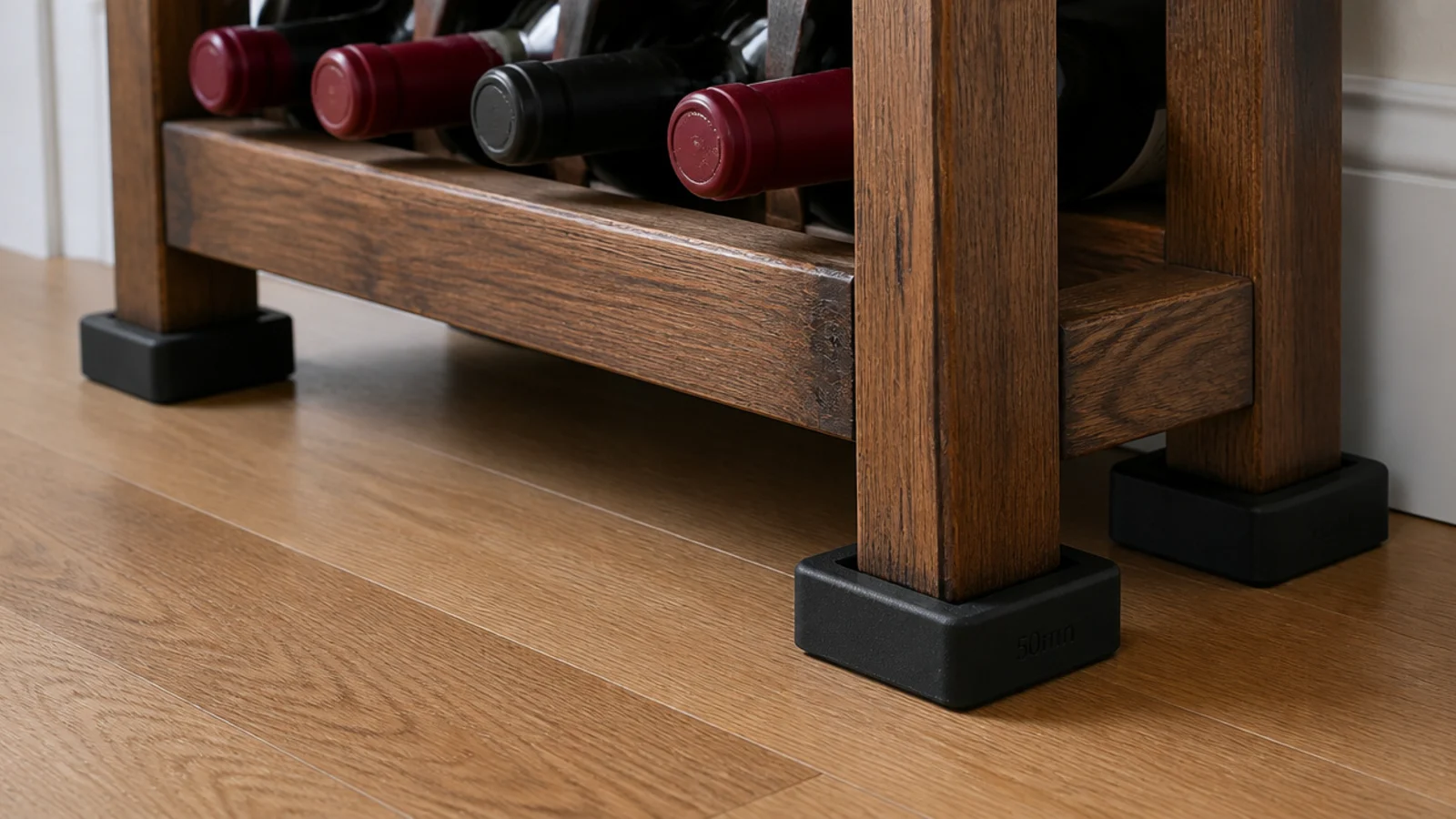
Every step on the treads above sends a small shock through the structure. Standing racks on the floor rather than fixing them to the strings removes most of it, and thick rubber pads under the feet take out more. It costs a few pounds and is the one stair-specific fix nobody mentions.
20. Keep the racking off the radiator wall
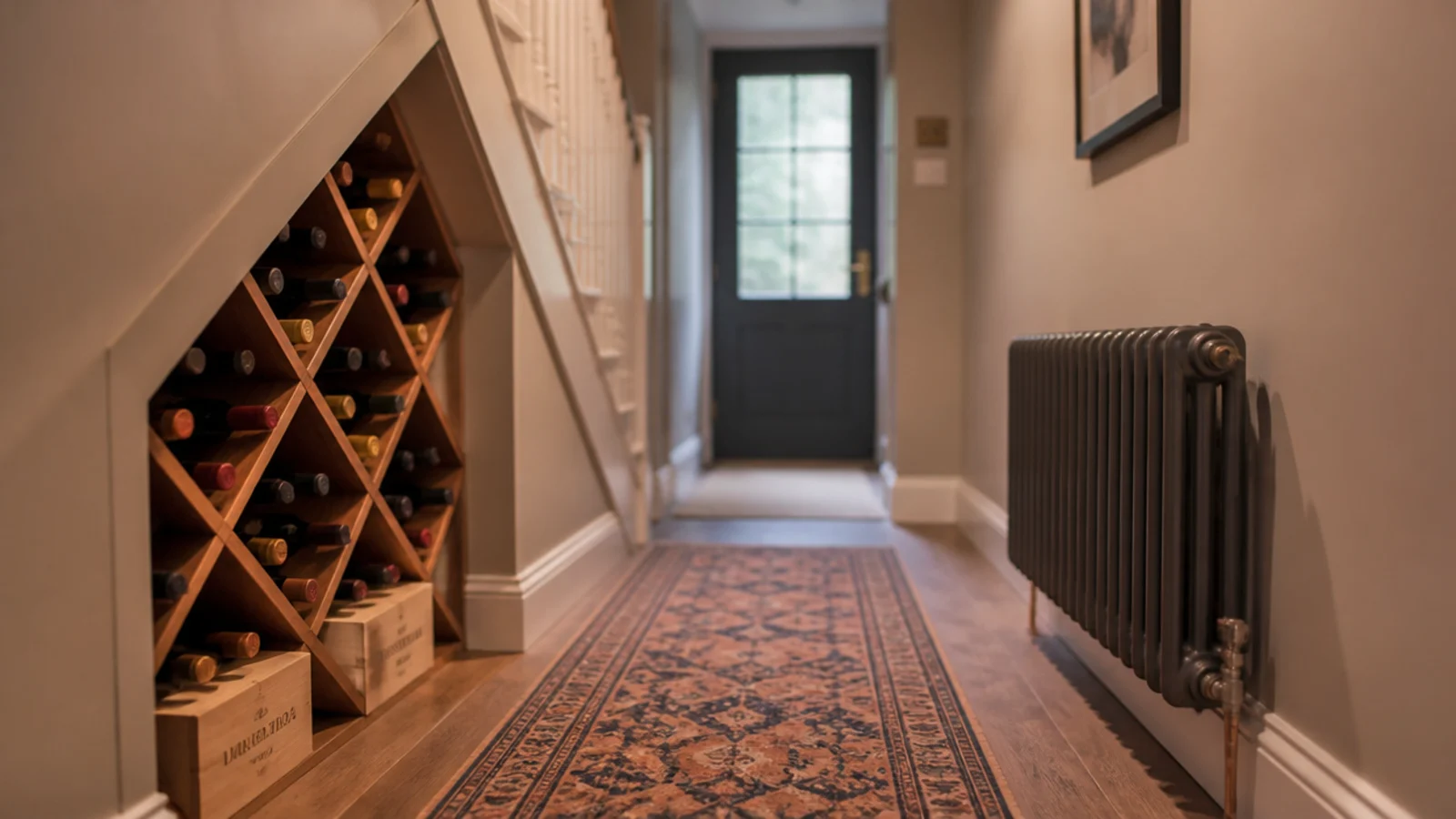
Halls often have the radiator tucked under the stairs, and a rack within three feet of it will sit several degrees warmer than the rest of the space. Rack the far side instead, and never box the radiator in to make the run look neat — an enclosed radiator loses a noticeable share of its output.
21. Chalk the inventory on the inside of the door
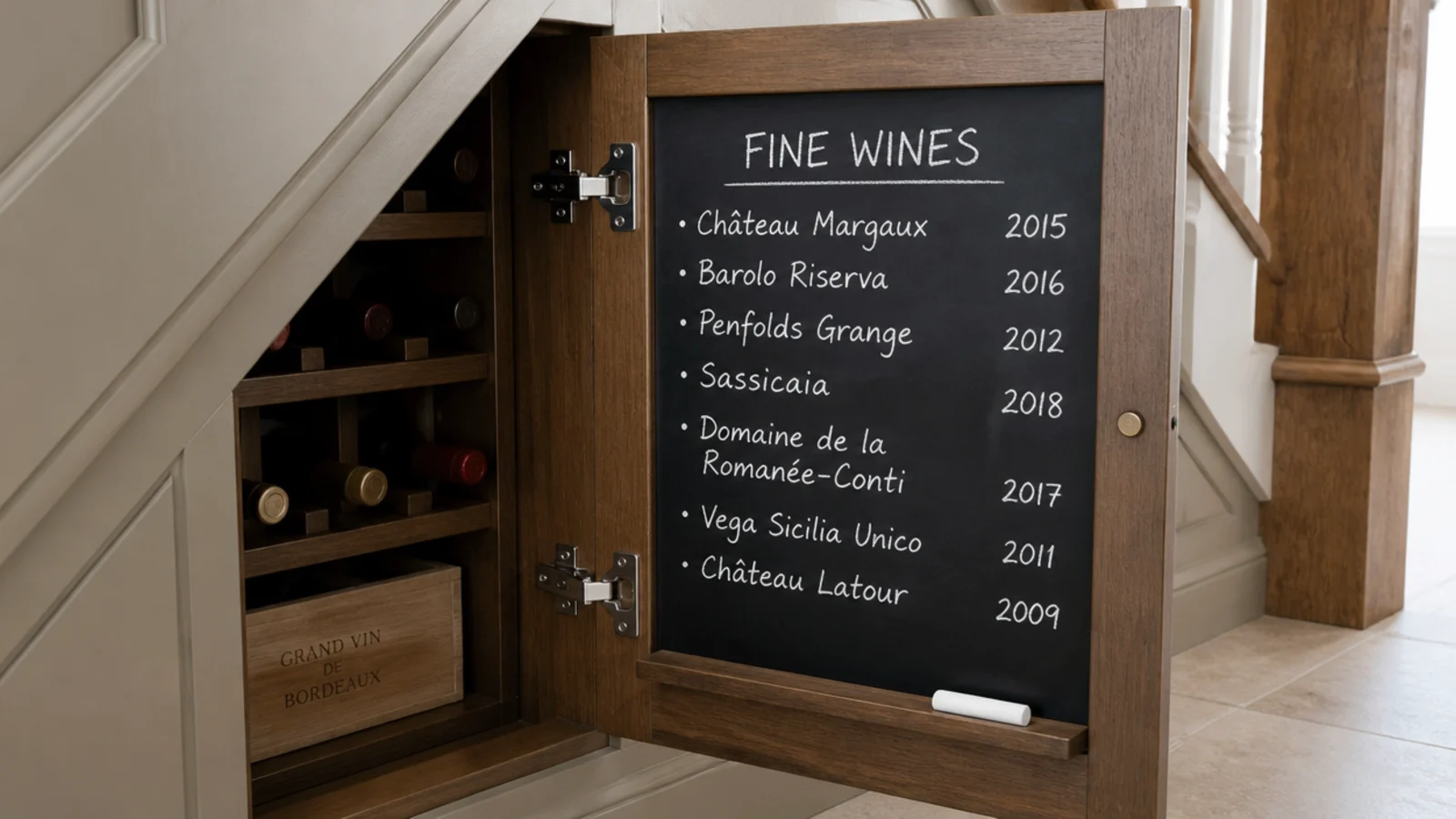
Chalkboard paint on the inside face of the cupboard door costs about £12 and stops you buying the same bottle three times. Write the wine, the year and the month it went in. It is also the fastest way to notice a bottle that has been sitting too long for a hallway store.
22. Gate it if there are children in the house
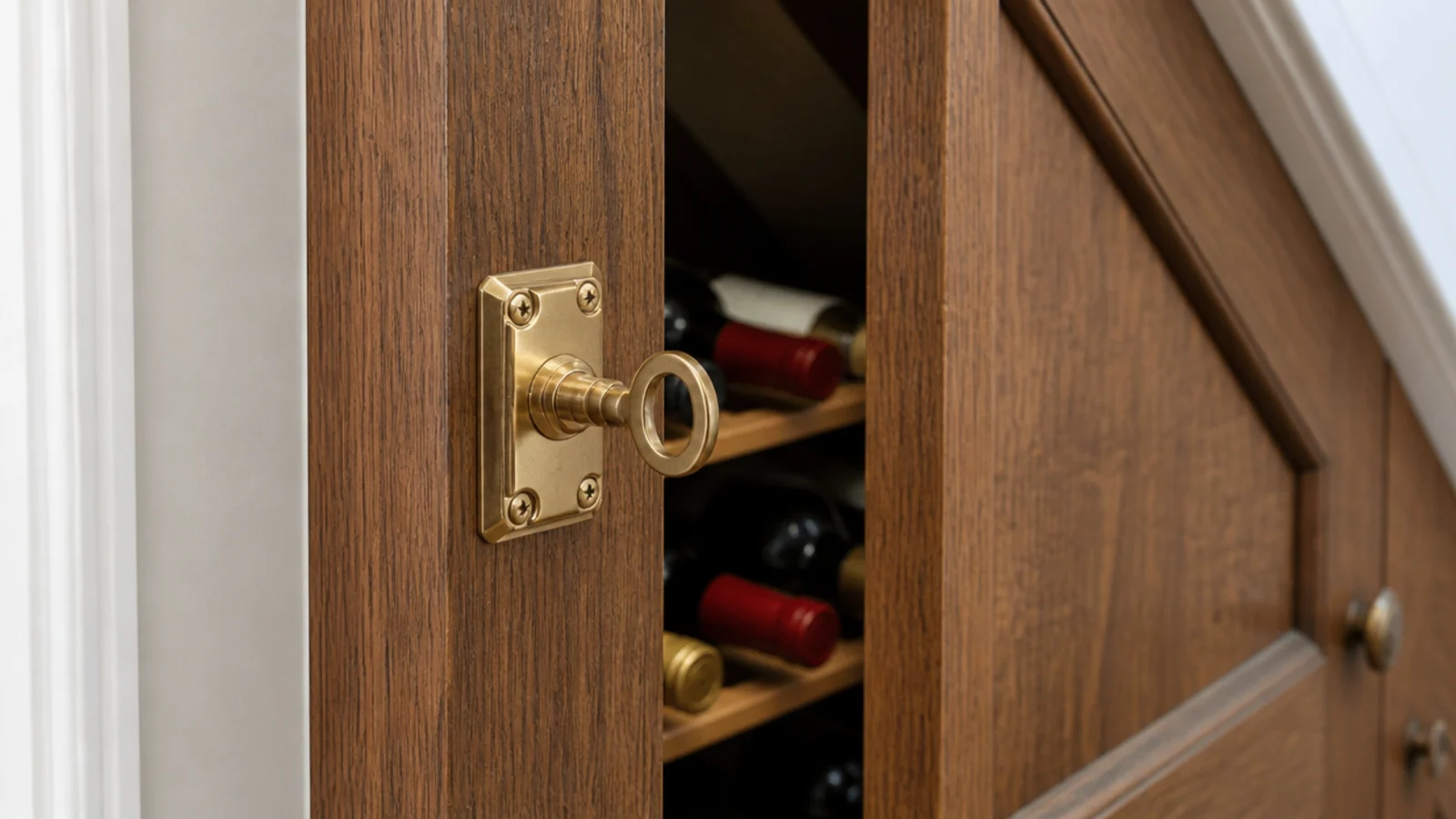
A small brass cupboard lock costs under £15 and is worth fitting where a rack sits at toddler height in a busy corridor. Bottles at floor level in a hallway get knocked, and broken glass on an escape route is a genuinely bad outcome rather than an inconvenience.
23. Stack unopened cases on the floor
Sealed cases stack flat in the low band where racking cannot reach, and a timber case is already designed to protect its contents. Keep them off a cold external wall and off bare concrete, which draws damp into cardboard. Write the contents and date on the end you can see.
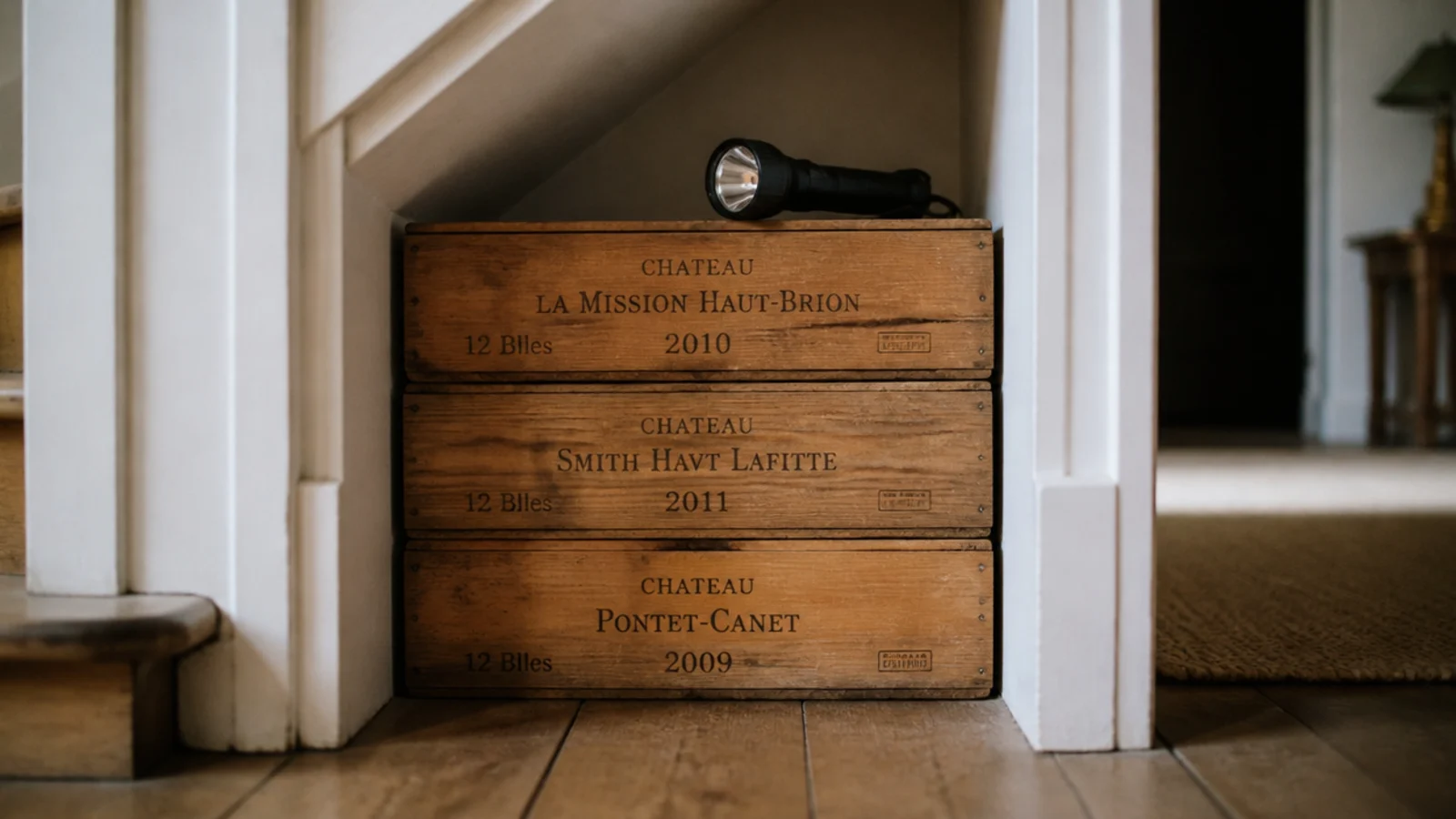
24. Angle a rack where the ceiling drops
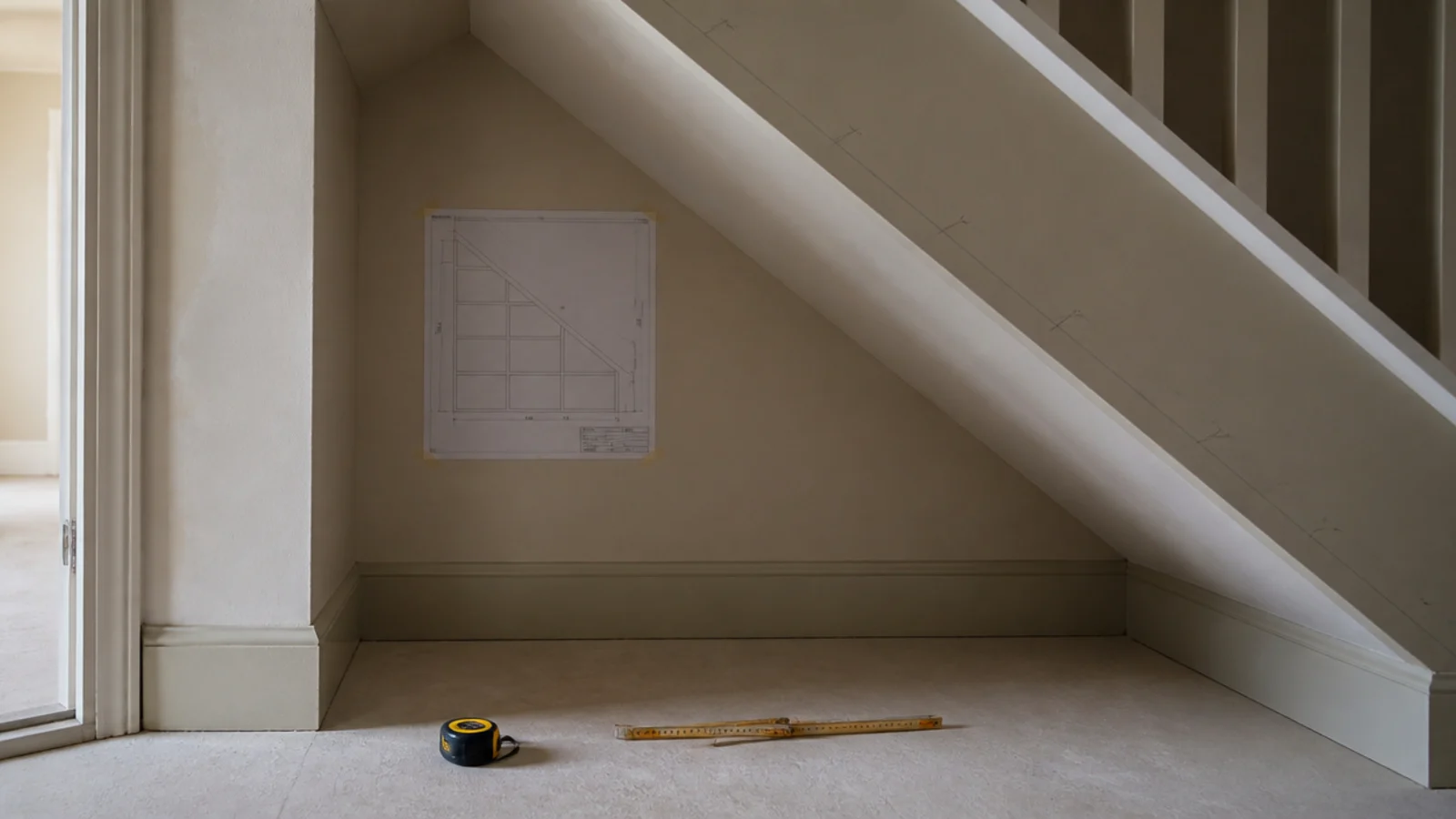
Step the top edge of the racking to follow the rake and you lose nothing to the slope. Each descending section holds one or two rows fewer than the last. It is more cutting than a square rack and it is the difference between filling the wedge and filling half of it.
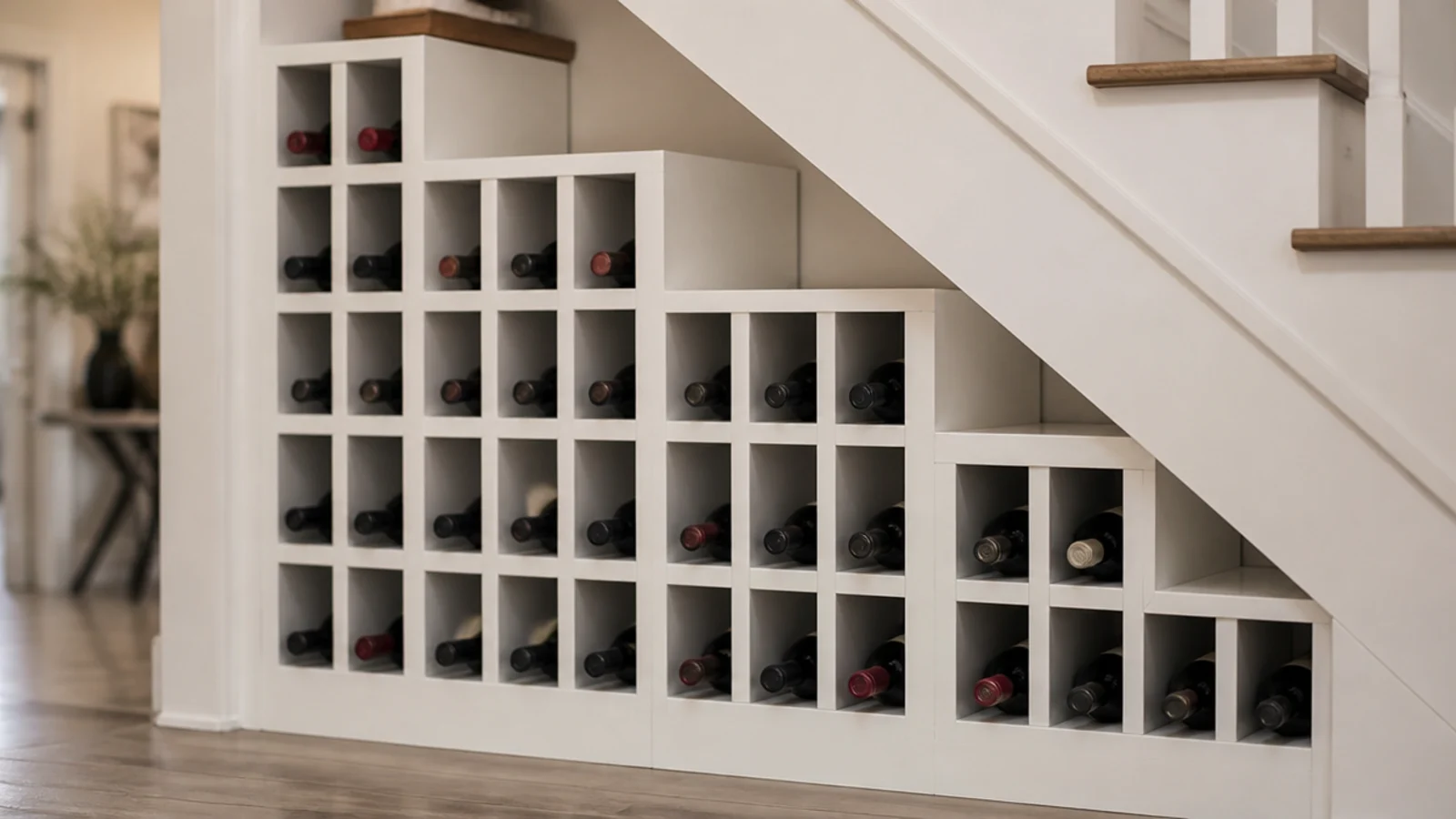
25. Reserve the deep corner for the long keepers
The last two feet of the triangle are awkward to reach, which makes them ideal for the bottles you have decided not to touch for a year. Label the case ends on two faces so you can read them at an angle, and keep a note of what is back there on the door chalkboard.
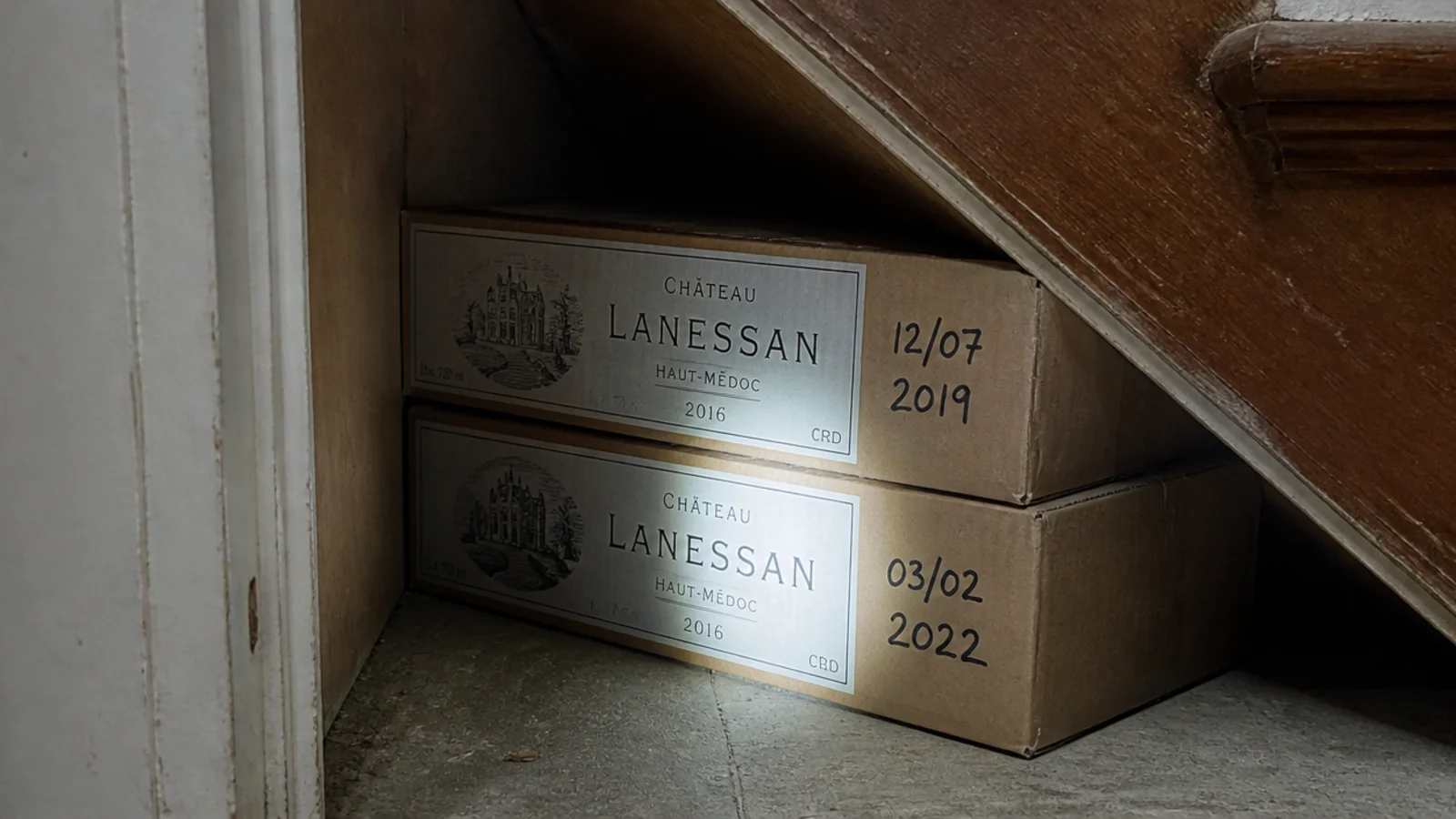
If the wedge is doing more than wine, the under stairs storage solutions guide sorts thirty options by the height each needs. For the joinery language that makes a bar read as architecture, built-in shelves for the living room covers proportion and paint, and the utility room ideas guide helps if the same run also has to take appliances.
Mistakes to Skip
- Racking bottles you intend to age in a space you have never measured. A hallway at sixty-eight degrees with a five degree daily swing will mature a wine far faster than the label assumes.
- Building slots at exactly three inch centres. Burgundy and Champagne bottles are wider, and a rack that rejects half your purchases is a rack you will rebuild within a year.
- Hanging heavy racking off the stair strings. Every footstep transmits into the bottles, and the fixings are carrying a load they were never intended to hold at leverage.
- Boxing in a boiler, meter or consumer unit to make room for more bottles. All three must stay accessible, and a consumer unit also has to sit in a non-combustible enclosure.
Frequently asked questions
Is under stairs wine storage cool enough for ageing?
Usually not. Proper ageing wants a steady fifty to fifty-nine degrees Fahrenheit at fifty-five to seventy-five percent humidity, and most hallways sit between sixty-four and seventy with a daily swing. That is fine for bottles you will drink within six to twelve months, and wrong for anything you intend to keep for years.
How far apart should wine rack slots be?
Three and a half inches centre to centre handles a mixed collection. A Bordeaux bottle is about three inches across and a Burgundy or Champagne bottle nearer three and a half, so racks built at exactly three inches will not take half of what you buy. Allow twelve to thirteen inches of depth for the bottle length.
Can my floor take a hundred bottles under the stairs?
A full bottle weighs about two point six pounds, so a hundred bottles plus racking is over three hundred pounds concentrated in a few square feet. On a ground floor slab that is irrelevant. On a suspended timber floor it is worth spreading the load across several joists rather than sitting it all on one bay.
Does footfall on the stairs damage stored wine?
Constant vibration is not good for wine, and a staircase transmits every step directly into anything fixed to its strings or soffit. Stand racks on the floor rather than hanging them from the stair structure, and put rubber isolating pads under the feet. It costs a few pounds and removes most of the transmitted movement.
Should I fit a wine fridge under the stairs instead?
If you care about the wine, yes. A compressor unit holds a genuine cellar temperature where a hallway cannot, and a twenty to fifty bottle cabinet runs three hundred to six hundred pounds. It needs ventilation clearance — front-vented models can be built in, rear-vented ones need two to four inches of air behind.
Want more like this? Browse all 14 under stairs storage guides — they all use the same measurements and budget tiers.
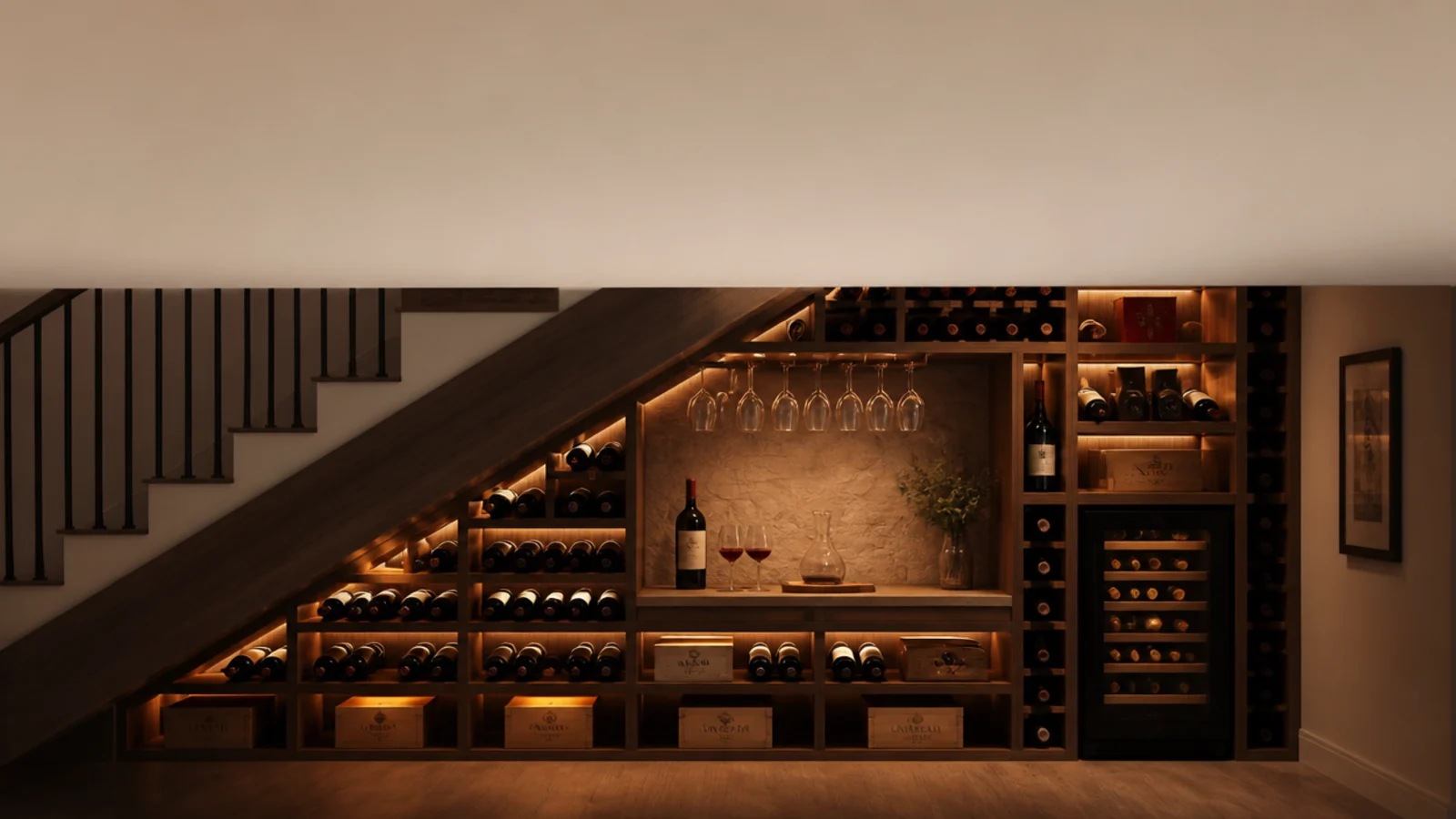
Pin it for later
Save this to your Under Stairs Storage board
Pin it now so it is waiting for you when the tape measure comes out — and so the next person hunting for this idea can find it too.
Save this pinKeep going
More ideas worth saving while you have the tape measure out.