Under Stairs Storage · Listicle
20 Cozy Under Stairs Storage Pantry Ideas That Fit

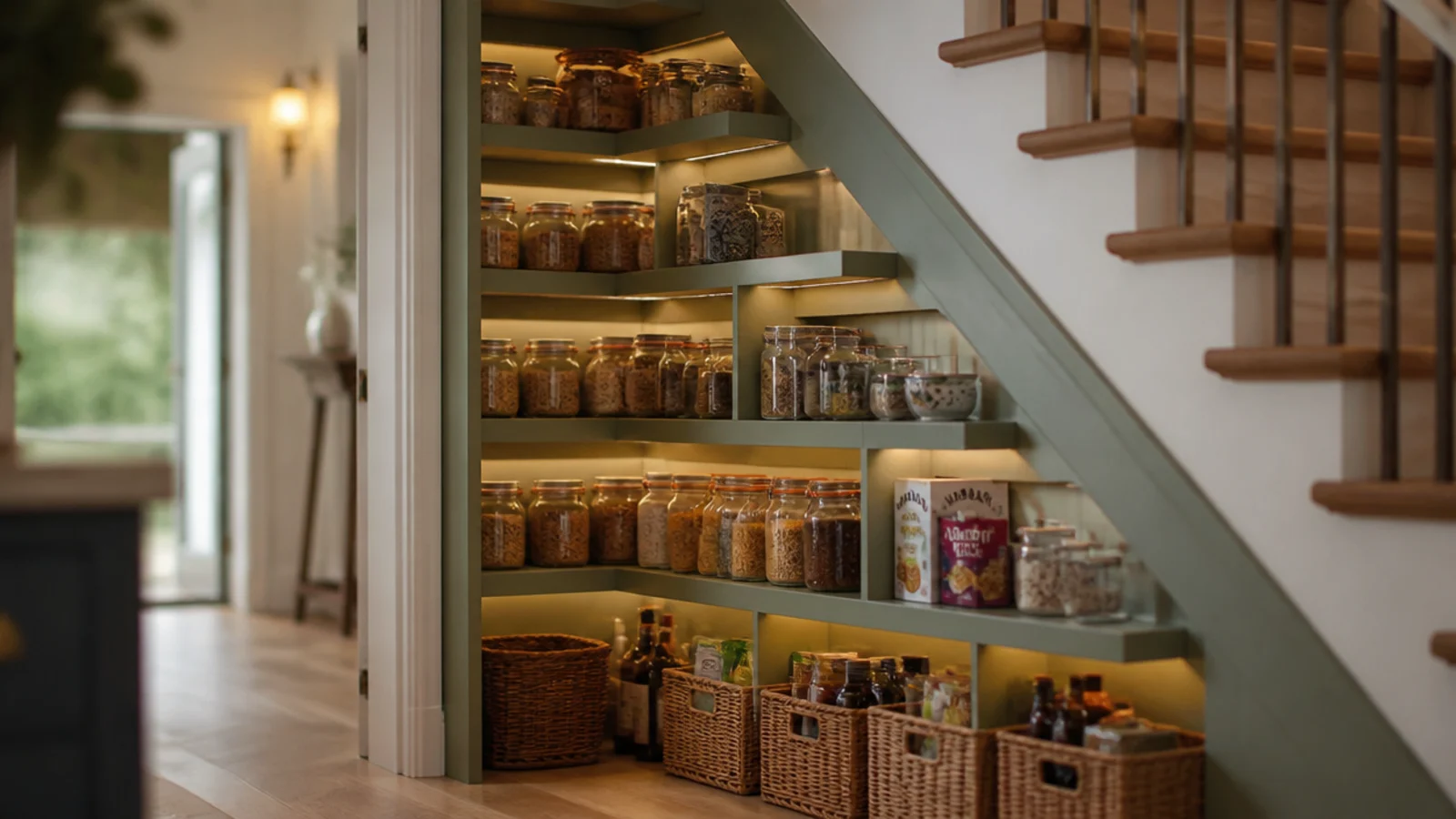
A pantry is the best possible use of a staircase wedge that happens to share a wall with a kitchen, and the worst possible use of one that does not. An under stairs storage pantry lives or dies on distance: past about ten steps from the hob, people stop walking to it mid-cooking and it becomes bulk storage, then a junk cupboard. Get the distance and the shelf depth right and the rest is spacing. Here are twenty ideas with the measurements that keep food visible and usable.
In this guide22 sections — tap to openHide
- 1.What an under stairs storage pantry has to get right
- 2.Only build it within ten steps of the hob
- 3.Keep working shelves between eight and twelve inches
- 4.Vary the shelf spacing by what sits on it
- 5.Fit a pull-out larder tower
- 6.Rack the back of the door
- 7.Give roots a ventilated floor crate
- 8.Decant dry goods into matching jars
- 9.Label the shelf edge, not the container
- 10.Add a worktop shelf at thirty-six inches
- 11.Vent the door and never enclose the boiler
- 12.Keep the shelves off the radiator wall
- 13.Cut a deeper bay for oils and bottles
- 14.Basket the deep corner for backup stock
- 15.Use wire drawers in the middle band
- 16.Set a toe kick and a wipeable floor
- 17.Light it from the front edge
- 18.Keep chemicals in a different cupboard
- 19.Rotate front to back every month
- 20.Chalk the running list on the door
- 21.Anchor the shelving and keep the hall clear
- 22.Mistakes to Skip
What an under stairs storage pantry has to get right
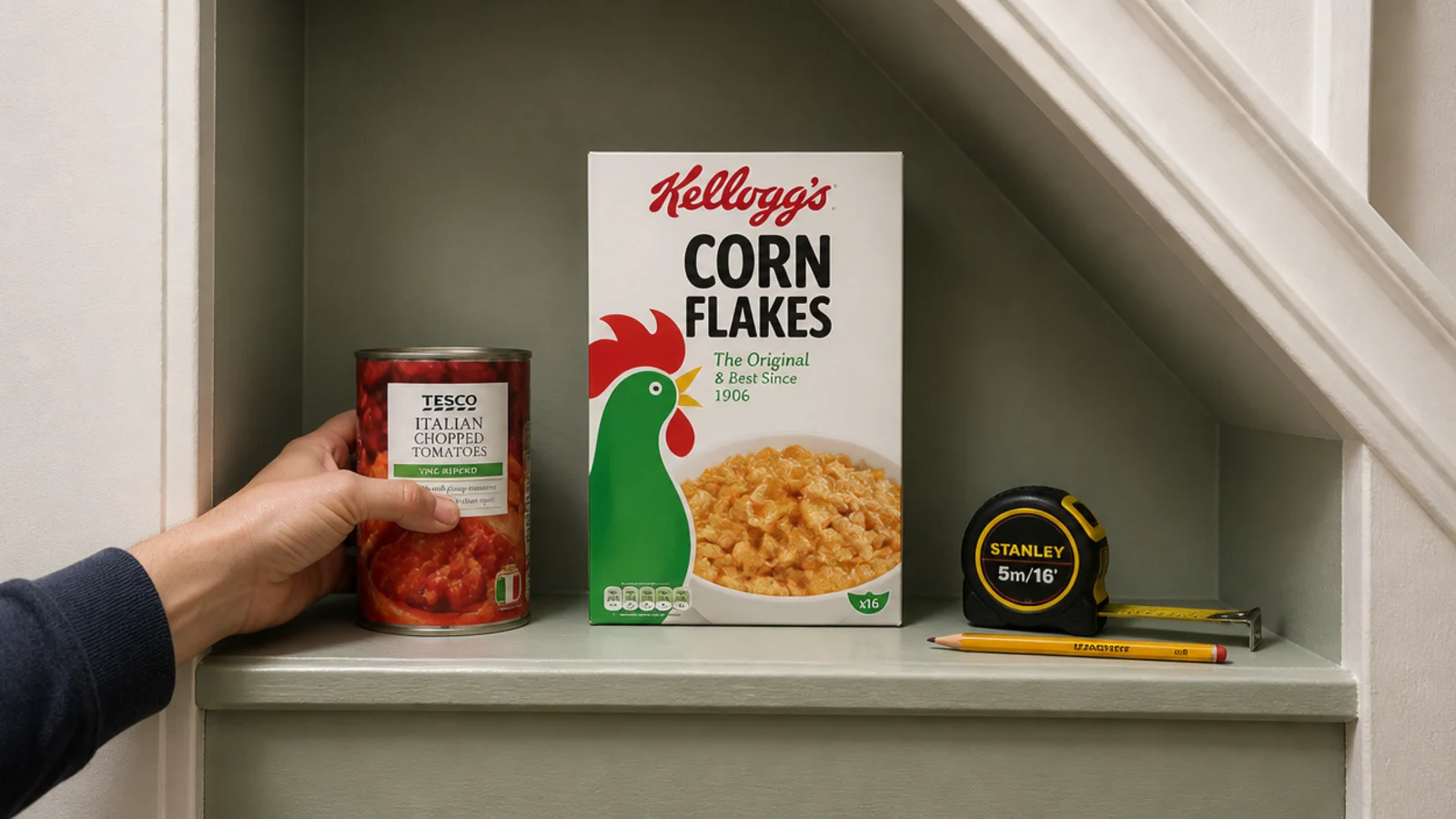
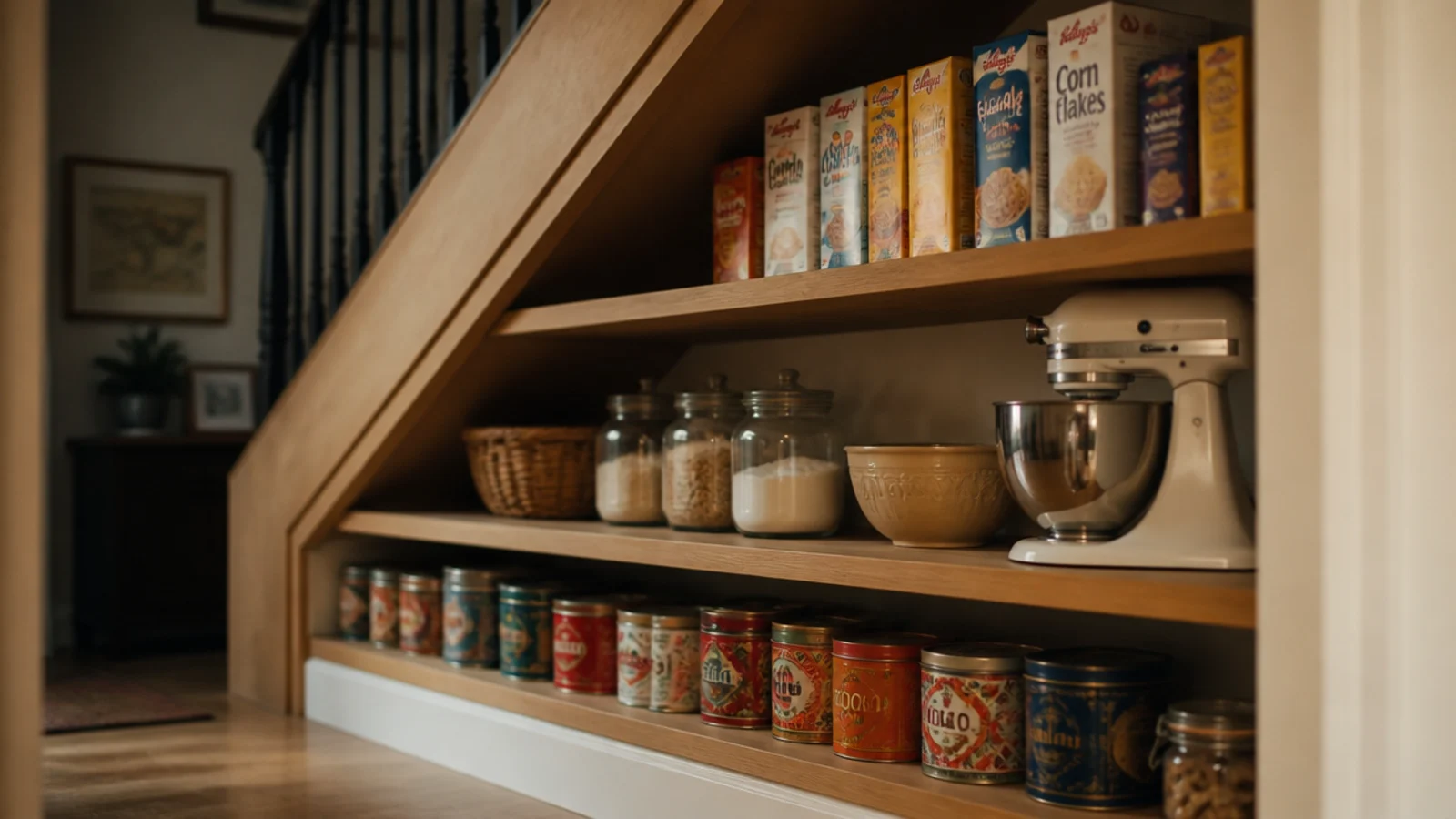
Take a tin and a cereal box to the recess before you draw anything. A tin is about 3 inches across and 4.5 tall; a cereal box is roughly 8 by 12 by 2.5. Those two objects set almost every dimension in a pantry.
Working shelves want to be 8 to 12 inches deep. Twelve takes two rows of tins or one box turned sideways, and everything stays visible. Deeper shelves under a rake become caves — the back row goes unseen and unused, and no amount of labelling fixes an arm that cannot reach past the front row.
Spacing should vary. Seven inches suits tins and jars, twelve suits packets and cereal boxes, fifteen suits a small appliance. A run of identical gaps wastes the height above every short item on every shelf.
Then the environment. Dry goods keep best below about 70 degrees Fahrenheit in moving air, which is why traditional larders were vented. Keep the shelving three feet clear of any radiator, and never put food in the bay with the boiler — a boiler must keep its manufacturer service clearances free anyway, as must a gas meter and a consumer unit, which also needs a non-combustible enclosure. There is more on the fit-out itself in the under stairs cupboard storage guide.
1. Only build it within ten steps of the hob
Count the steps from where you cook to where the pantry door would be. Ten or fewer and you will use it every day; fifteen and you will use it weekly. Beyond that, keep bulk and backup here and hold a small working shelf inside the kitchen itself, otherwise the pantry silently becomes storage for things you have forgotten.
2. Keep working shelves between eight and twelve inches
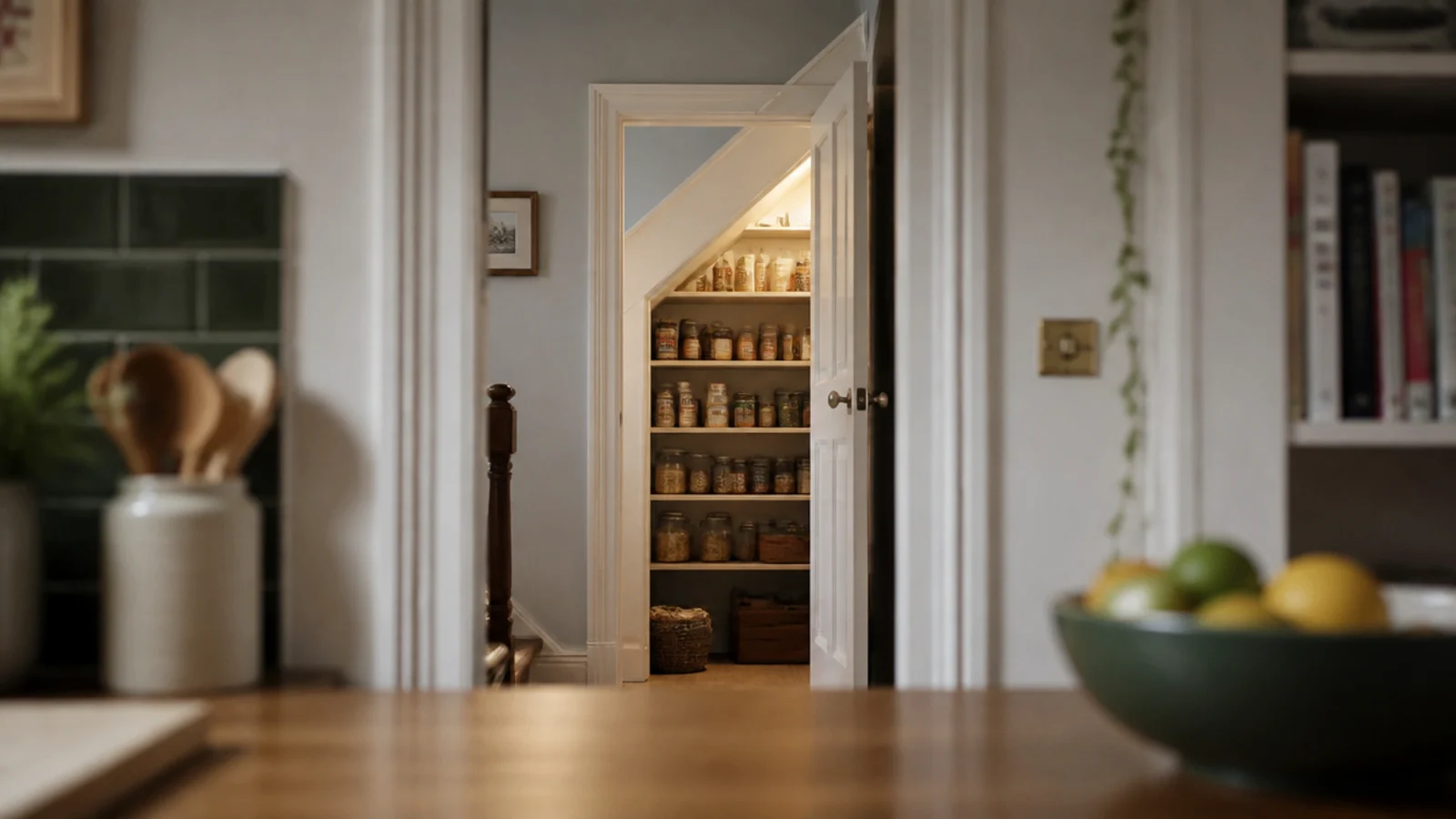
Twelve inches is the practical maximum for anything you reach for mid-cooking. It takes two rows of tins, one row of jars with space in front, or a cereal box turned sideways. Eight inches suits spices, small jars and tins in a single row, and it keeps the walkway generous in a narrow hall.
3. Vary the shelf spacing by what sits on it
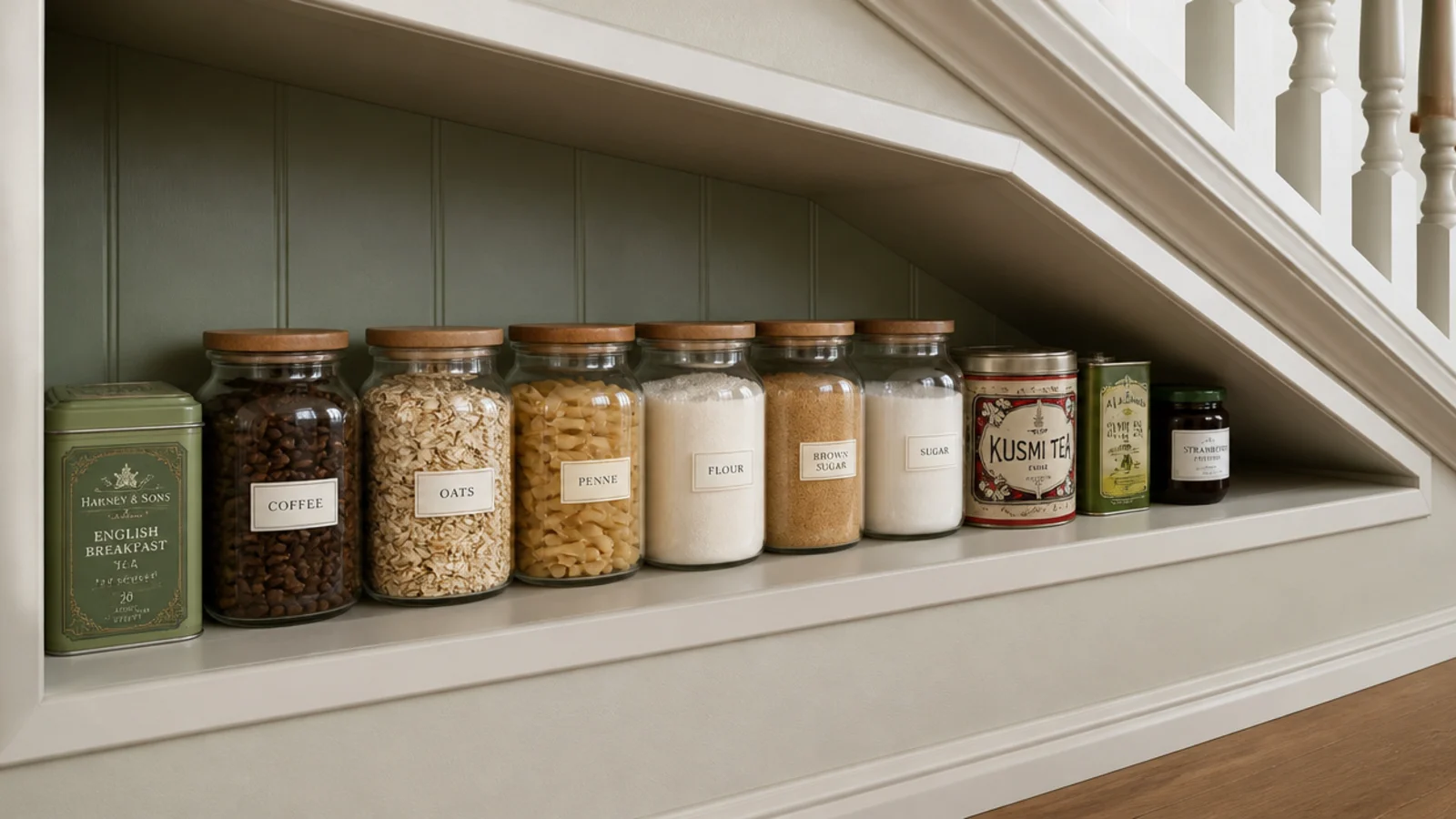
Set the lowest shelves at 15 inches for a stand mixer or a slow cooker, the middle band at 12 for boxes and packets, and the top at 7 for tins and small jars. Adjustable twin-slot uprights make this changeable later, which matters because what a household stores shifts every couple of years.
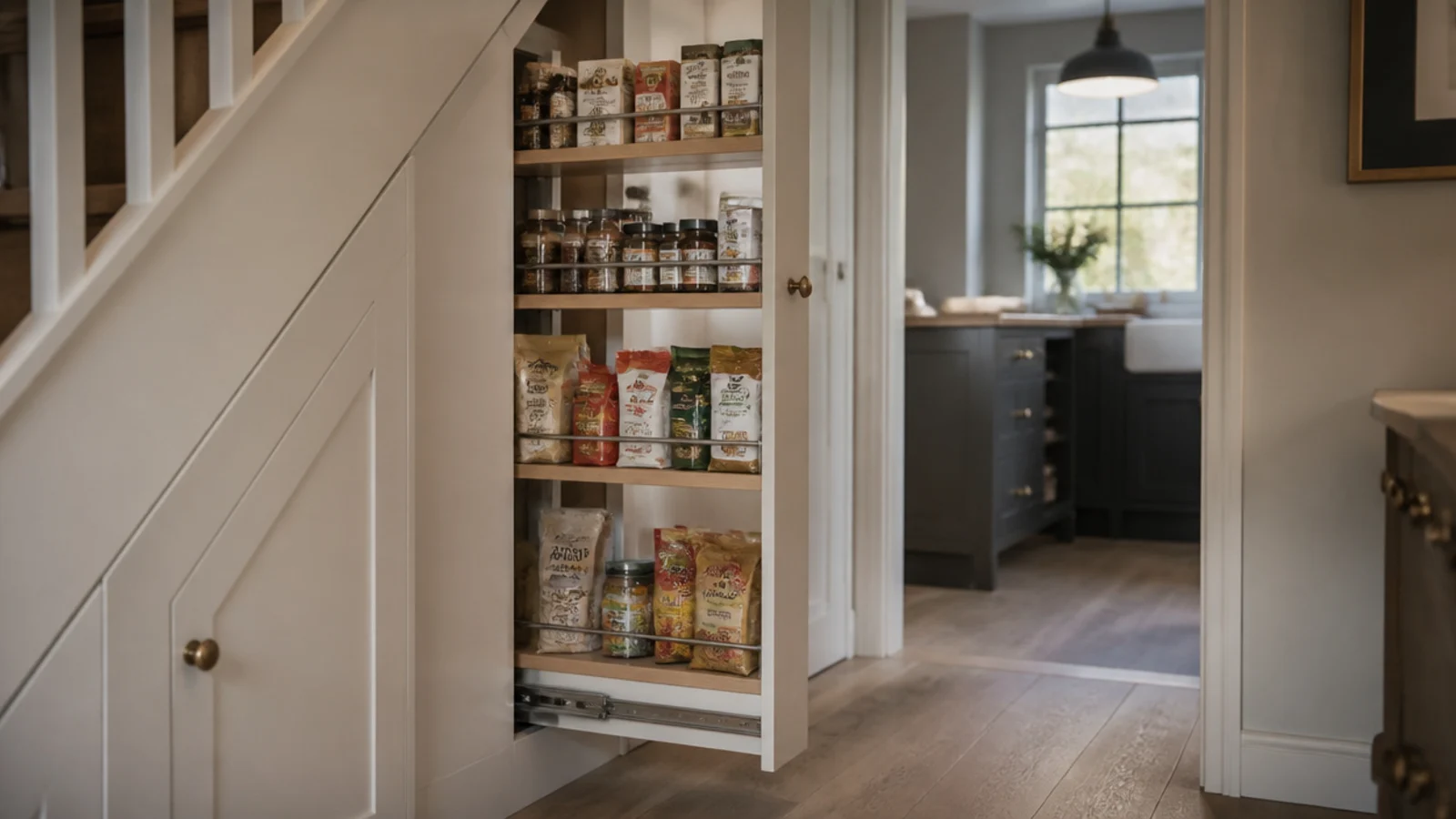
4. Fit a pull-out larder tower
A tower on heavy runners gives you two storage faces where a shelf gives one, and it brings the contents out into the light. Keep it under 16 inches wide and specify runners rated to at least 120 pounds — a loaded larder tower is the heaviest moving thing in the house after a full drawer of tools.
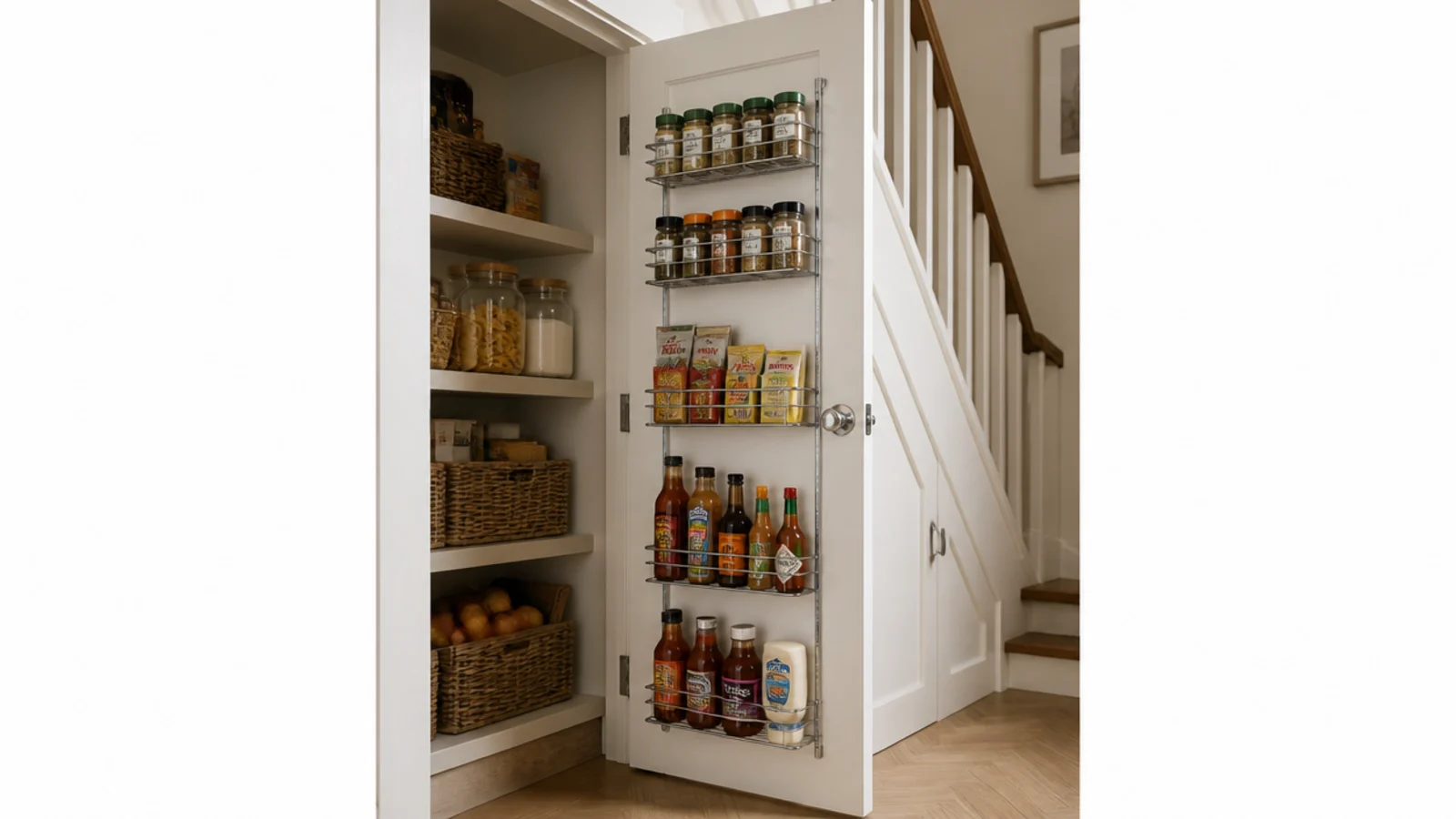
5. Rack the back of the door
Four inches of door depth holds forty small jars, and it is the part of a pantry nobody plans. Screw the rack into the door rails rather than the thin centre panel, keep it under 4 inches deep so it clears the shelf edges, and put the things you reach for daily there rather than the backups.
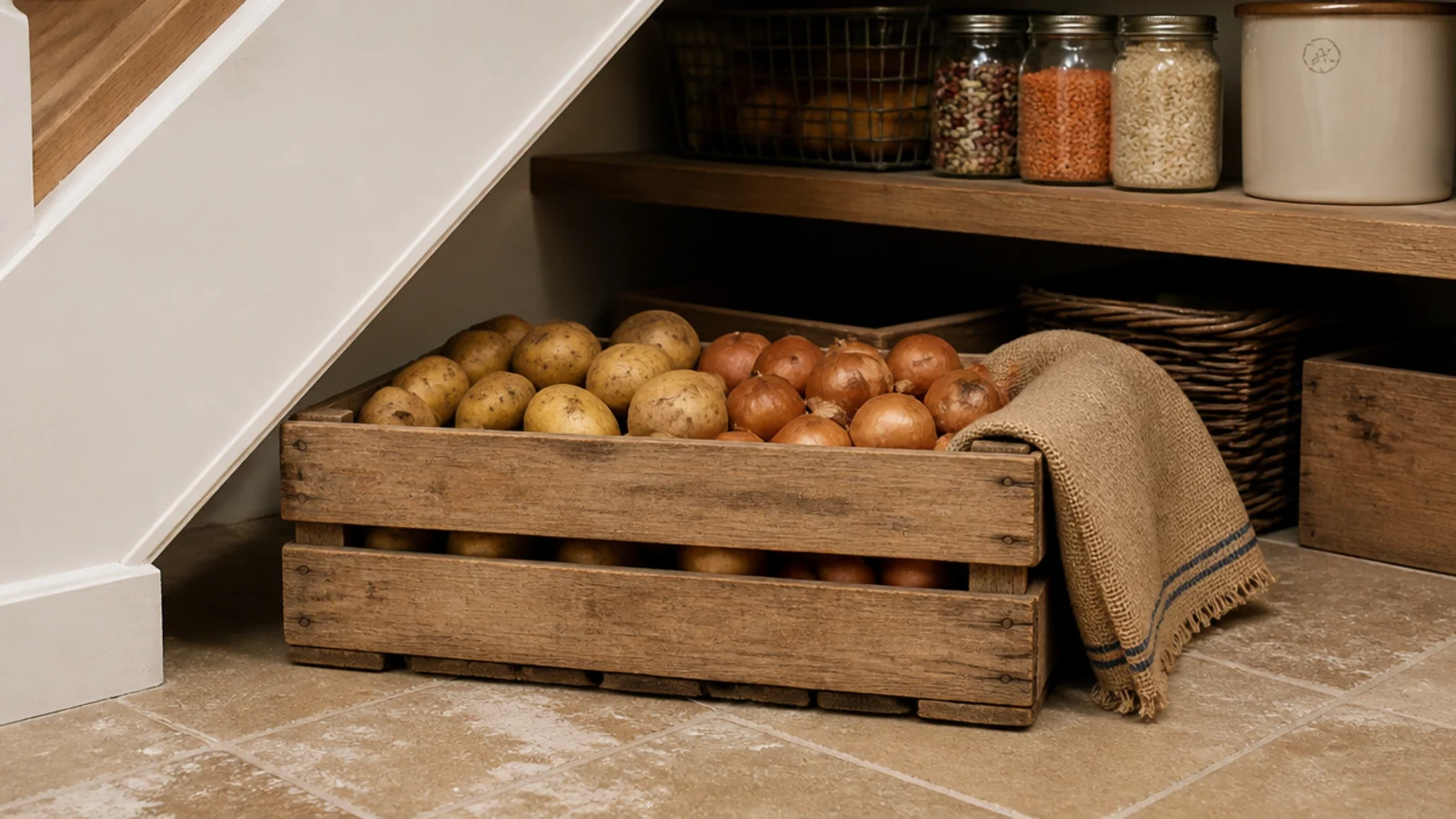
6. Give roots a ventilated floor crate
Potatoes, onions and squash want dark, cool and moving air, which is exactly what a floor-level slatted crate in a vented recess gives them. Keep onions and potatoes in separate crates — stored together they spoil each other faster. A hessian cloth over the top keeps the light off without sealing them in.
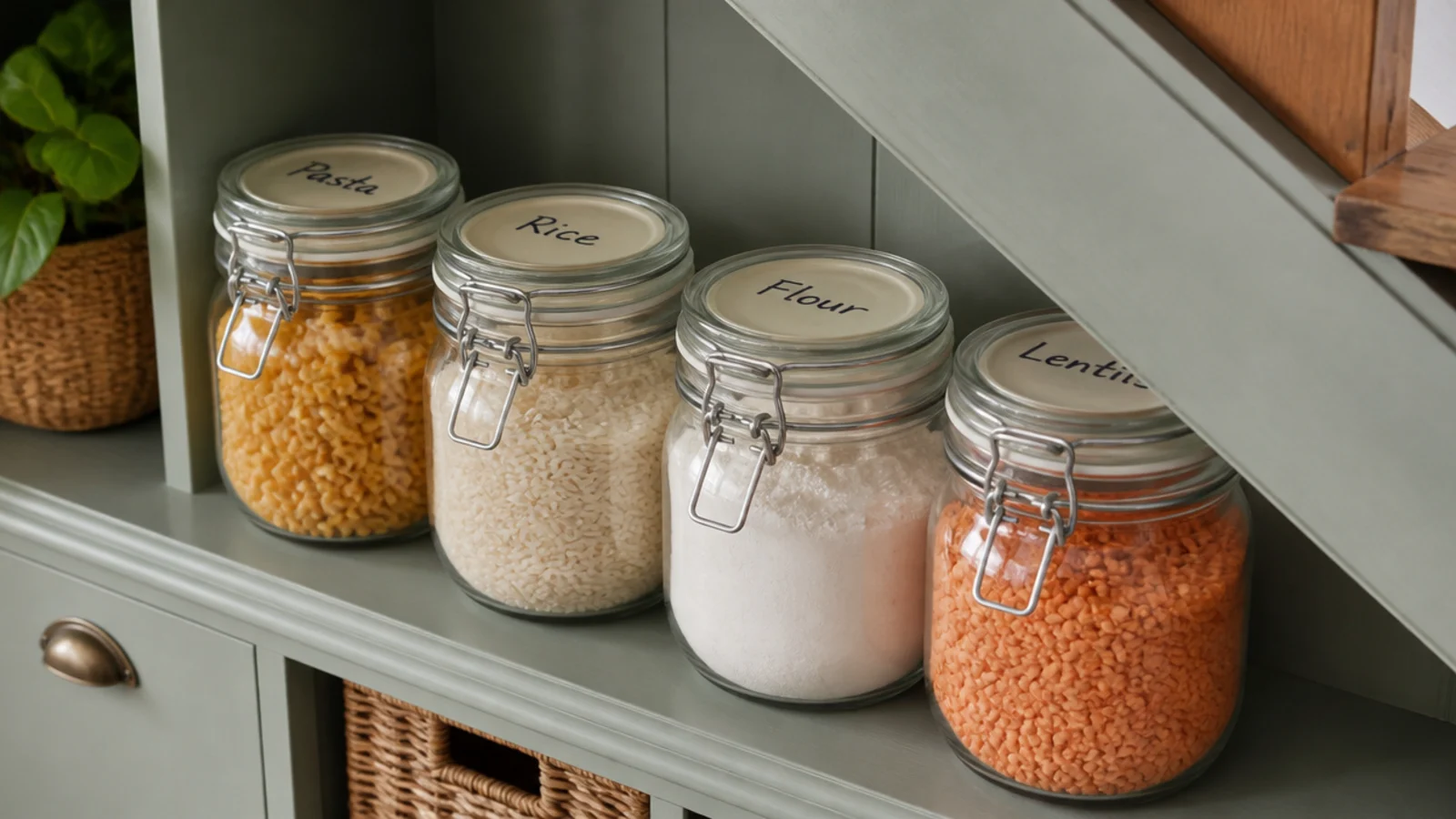
7. Decant dry goods into matching jars
Matching clip-top jars show the level at a glance, which is the actual point rather than the look. Pasta, rice, flour, sugar and lentils all keep better sealed than in opened packets. Write the date on the lid, and keep flour below 70 degrees or it turns much faster than the packet suggests.
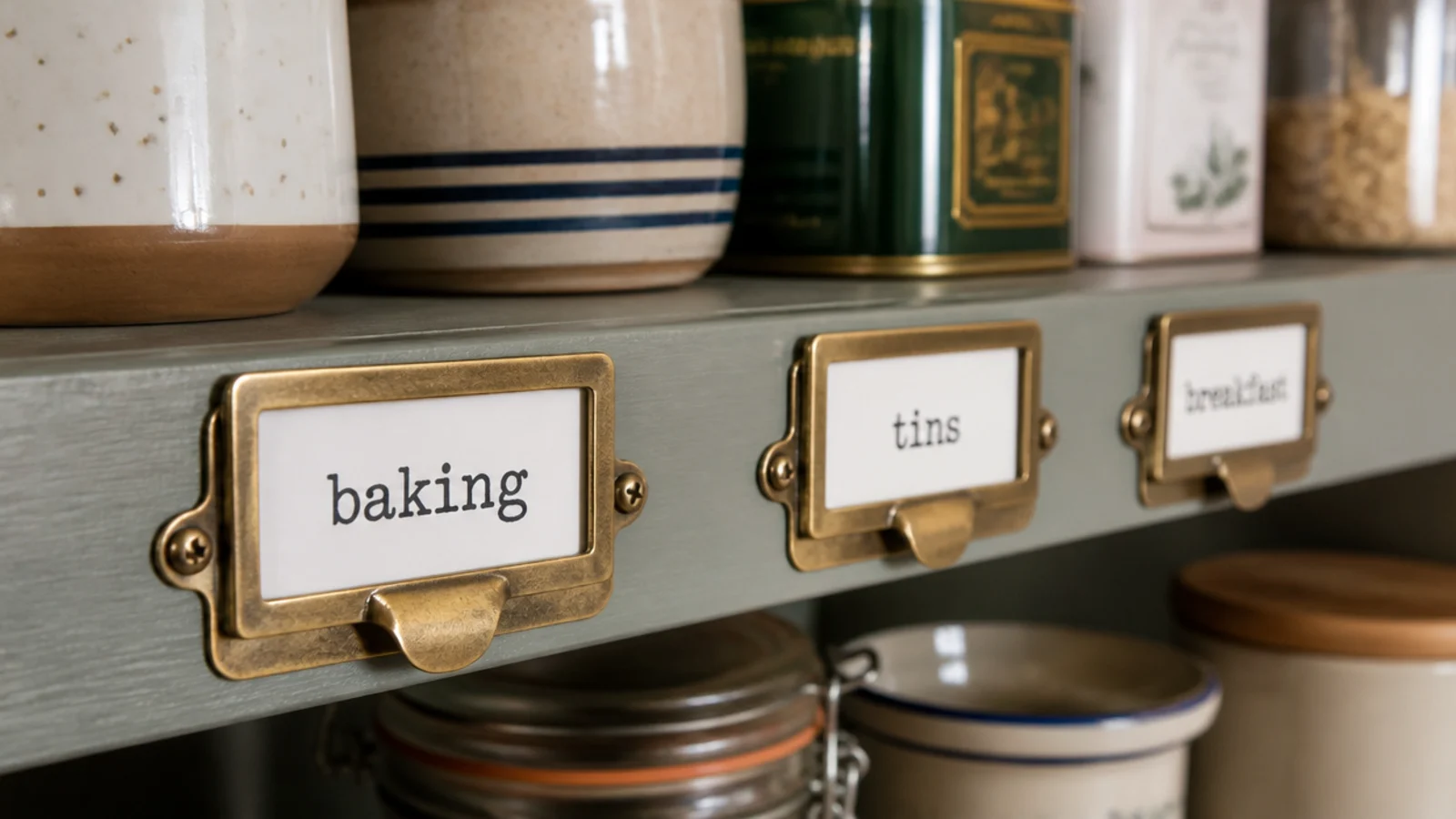
8. Label the shelf edge, not the container
Jars and boxes get swapped constantly; shelves do not. Small card labels along the front edge survive every change of container and cost about £1 each. It also means anyone in the house can put shopping away correctly, which is the difference between a pantry that stays organised and one that lasts a fortnight.
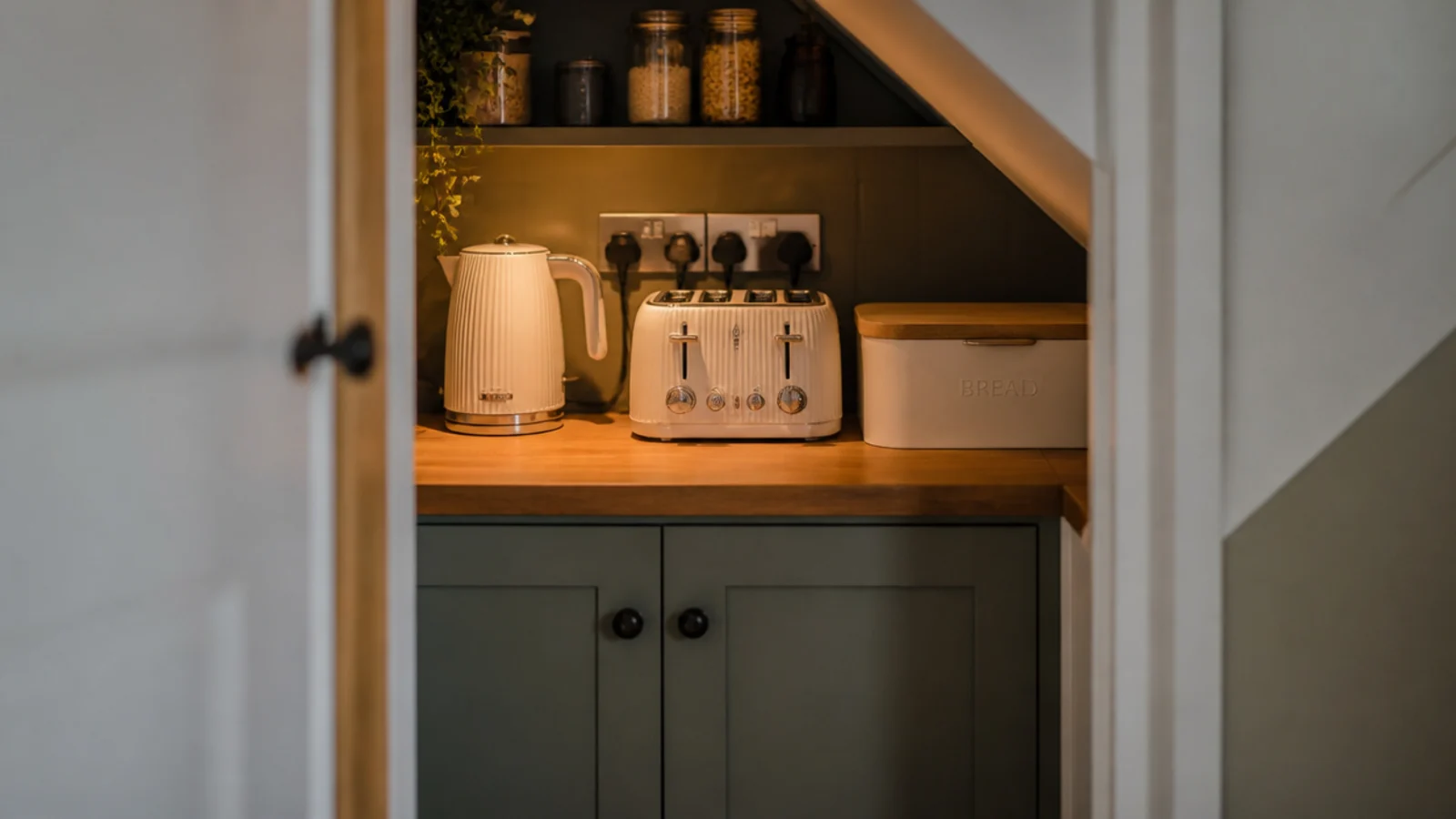
9. Add a worktop shelf at thirty-six inches
A short worktop at counter height turns a pantry into an appliance garage as well. The kettle, toaster and bread bin move off the kitchen counter entirely. Fit a socket strip at the back, allow 15 inches of clear height above, and never shut a hot appliance behind a closed door.
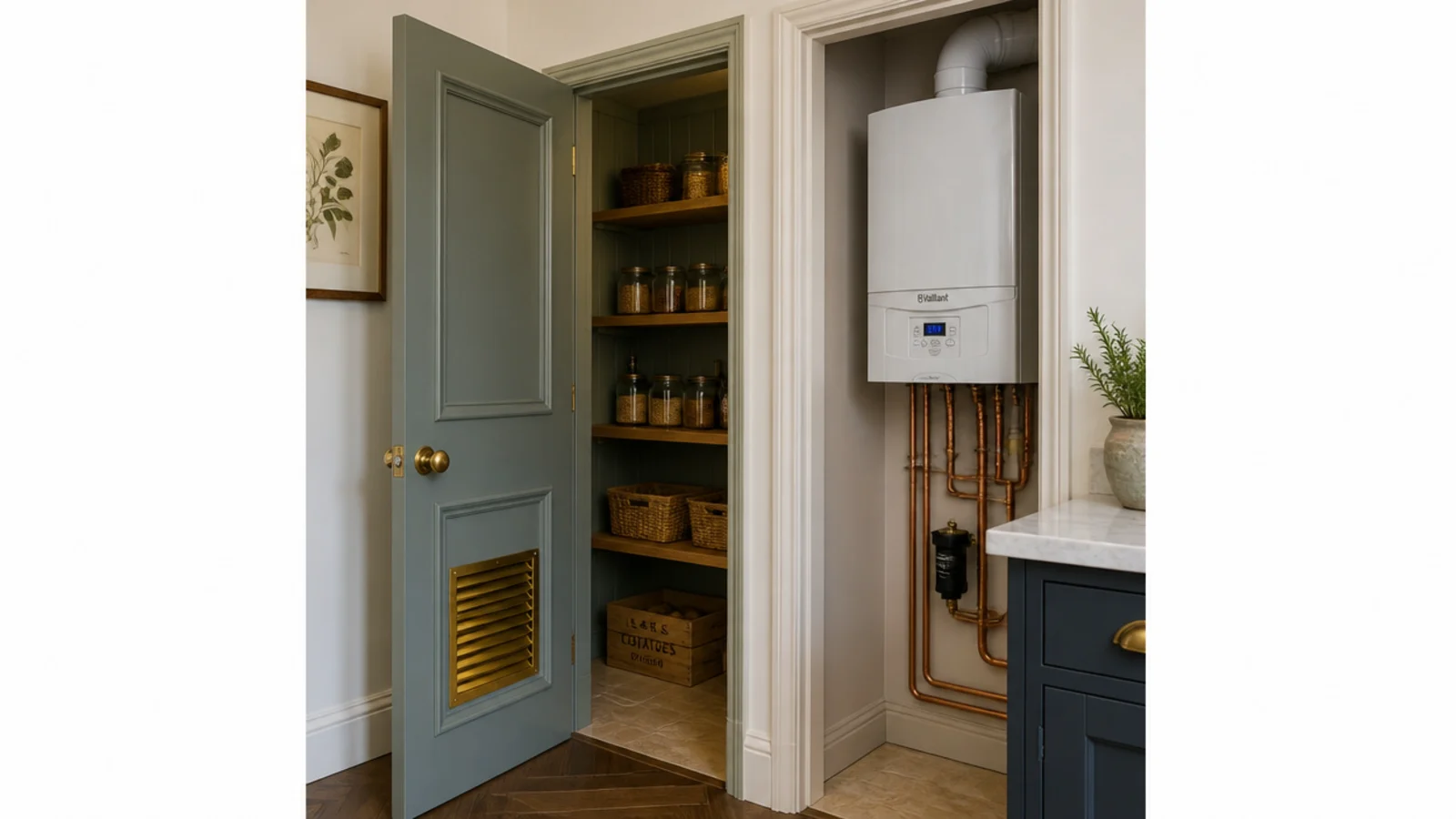
10. Vent the door and never enclose the boiler
A louvred grille of roughly 30 square inches of free area in the lower door panel keeps air moving over dry goods and stops condensation on a cold back wall. And keep the boiler in its own open bay with its service clearances clear — heat spoils food, and the clearances are not optional in any case.
11. Keep the shelves off the radiator wall
Halls often have the radiator tucked under the stairs, and shelving within three feet of it will run several degrees warmer. That is enough to shorten the life of oils, chocolate and flour noticeably. Rack the far side instead, and resist boxing the radiator in to tidy the run — an enclosed radiator loses output.
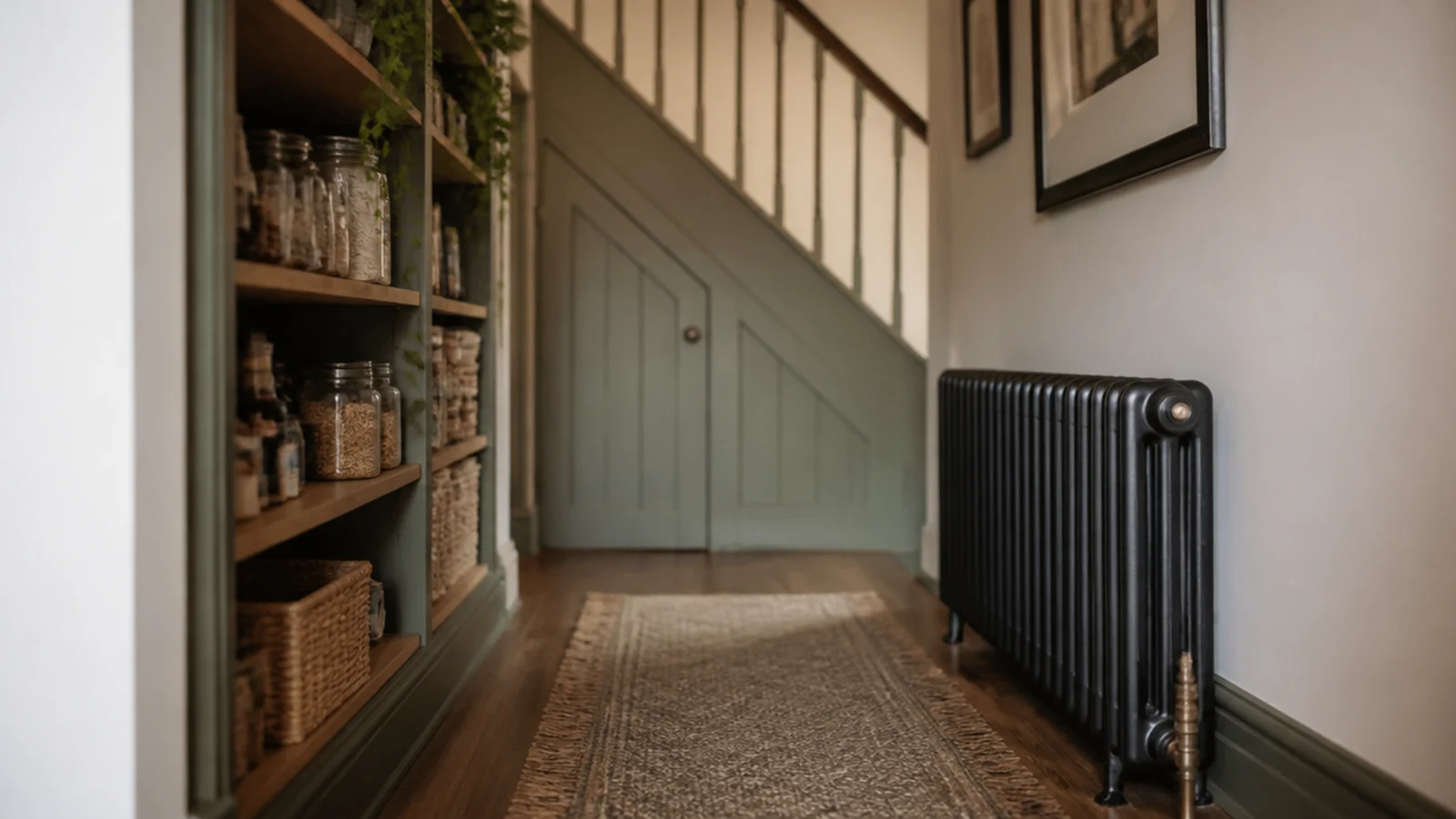
12. Cut a deeper bay for oils and bottles
Oil, vinegar and sauce bottles are 10 to 13 inches tall and fall over on a shallow shelf. One taller bay with a wipeable tray beneath catches drips and keeps them upright. Put it at eye level rather than low down, since a dripping bottle at floor level is discovered weeks later.
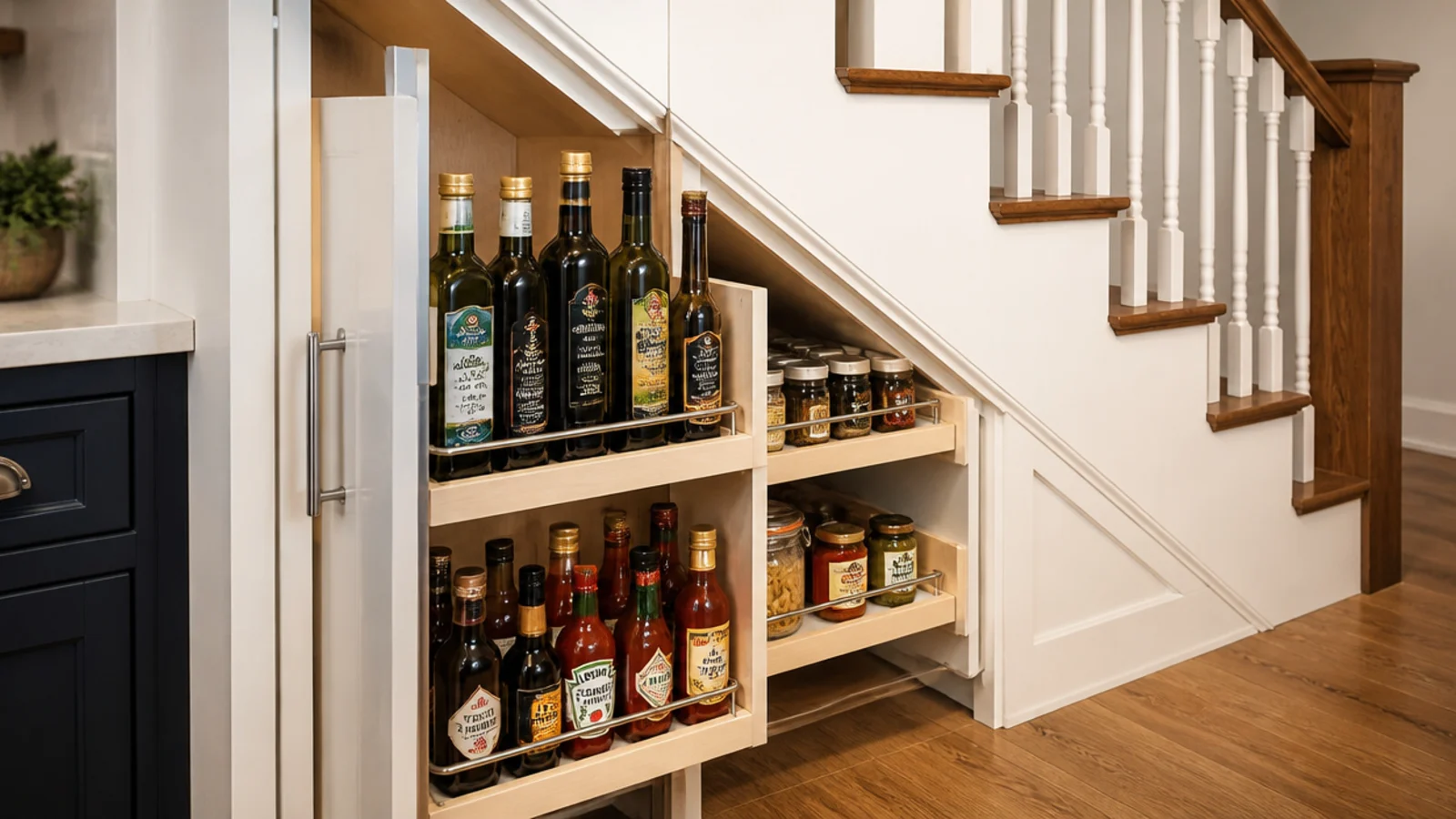
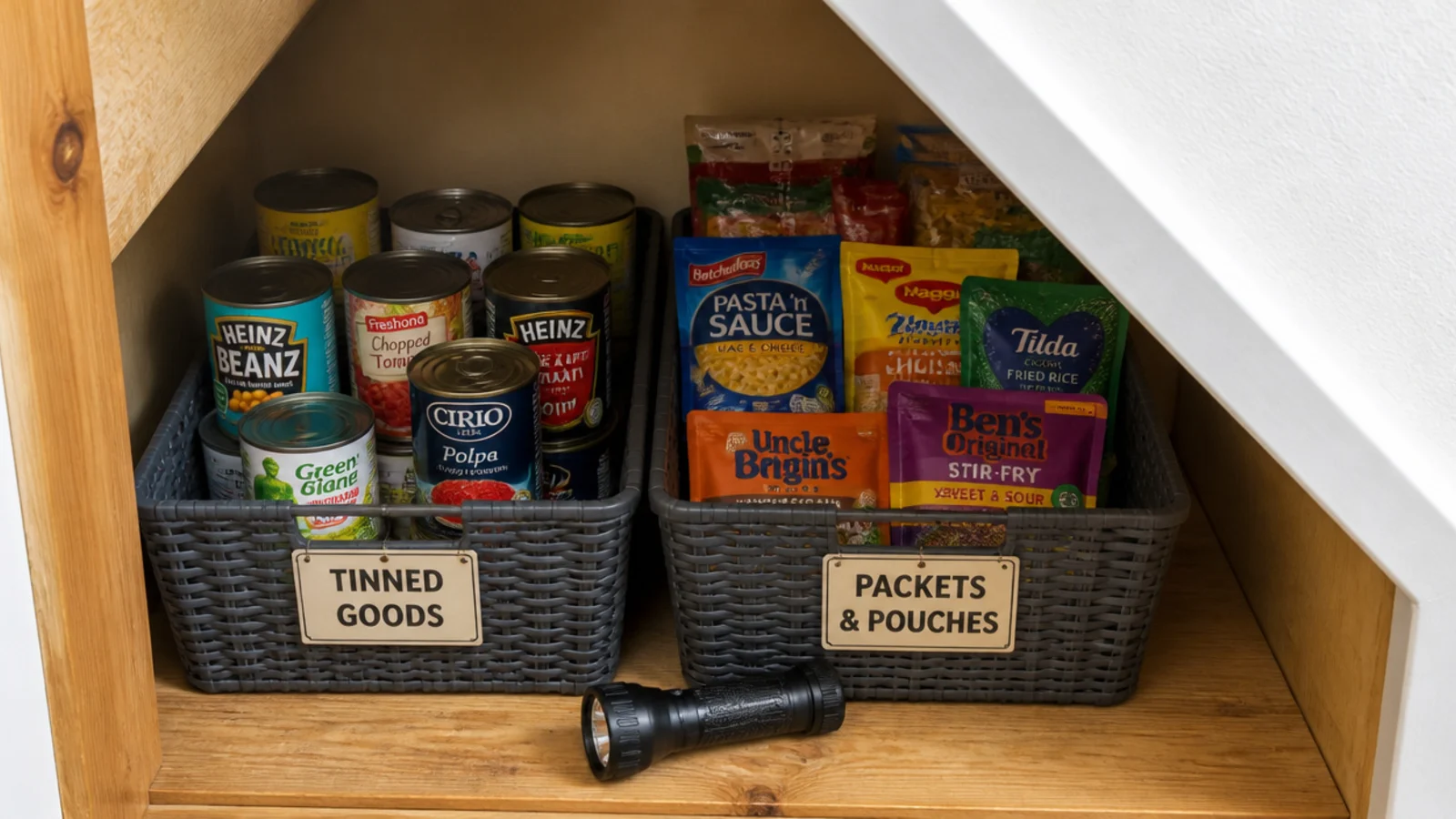
13. Basket the deep corner for backup stock
The last two feet of the wedge are awkward, which makes them right for tins and packets you are holding in reserve rather than using. Two large labelled baskets pull out to the light. Write the contents on two faces so you can read them at an angle by torchlight.
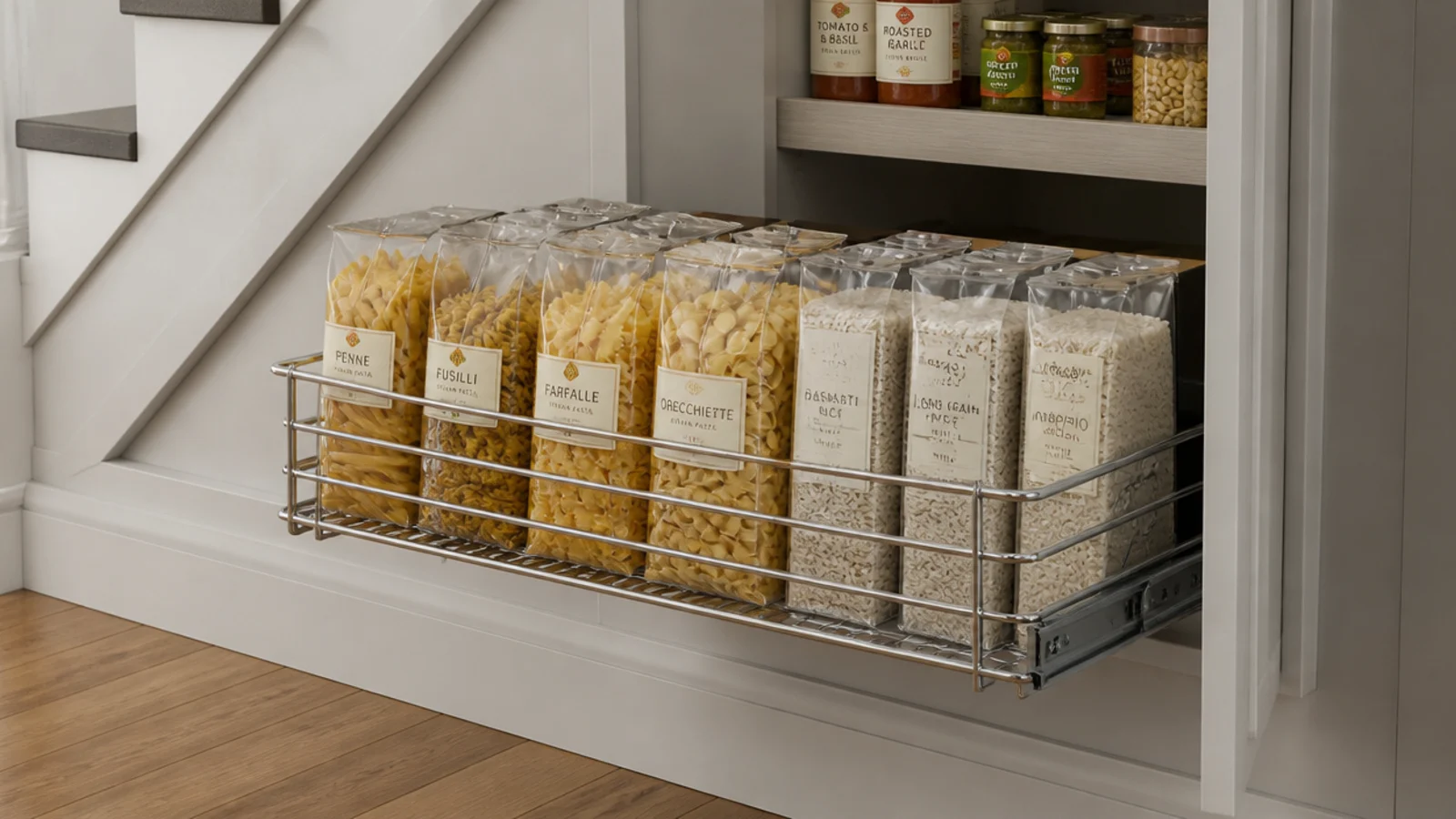
14. Use wire drawers in the middle band
Wire drawers show their contents from the side, which fixed shelves under a rake never do. Store packets upright rather than stacked so you can read the labels down the row. Line the base of the lowest drawer so nothing small drops through, and leave 2 inches of clearance above each one.
15. Set a toe kick and a wipeable floor
A 4 inch recessed toe kick lets you stand close enough to reach the back of a 12 inch shelf. Vinyl or sealed board on the floor takes the spills that a pantry inevitably produces. Do the floor before the shelving goes in, while you can still get a knife into the corners.
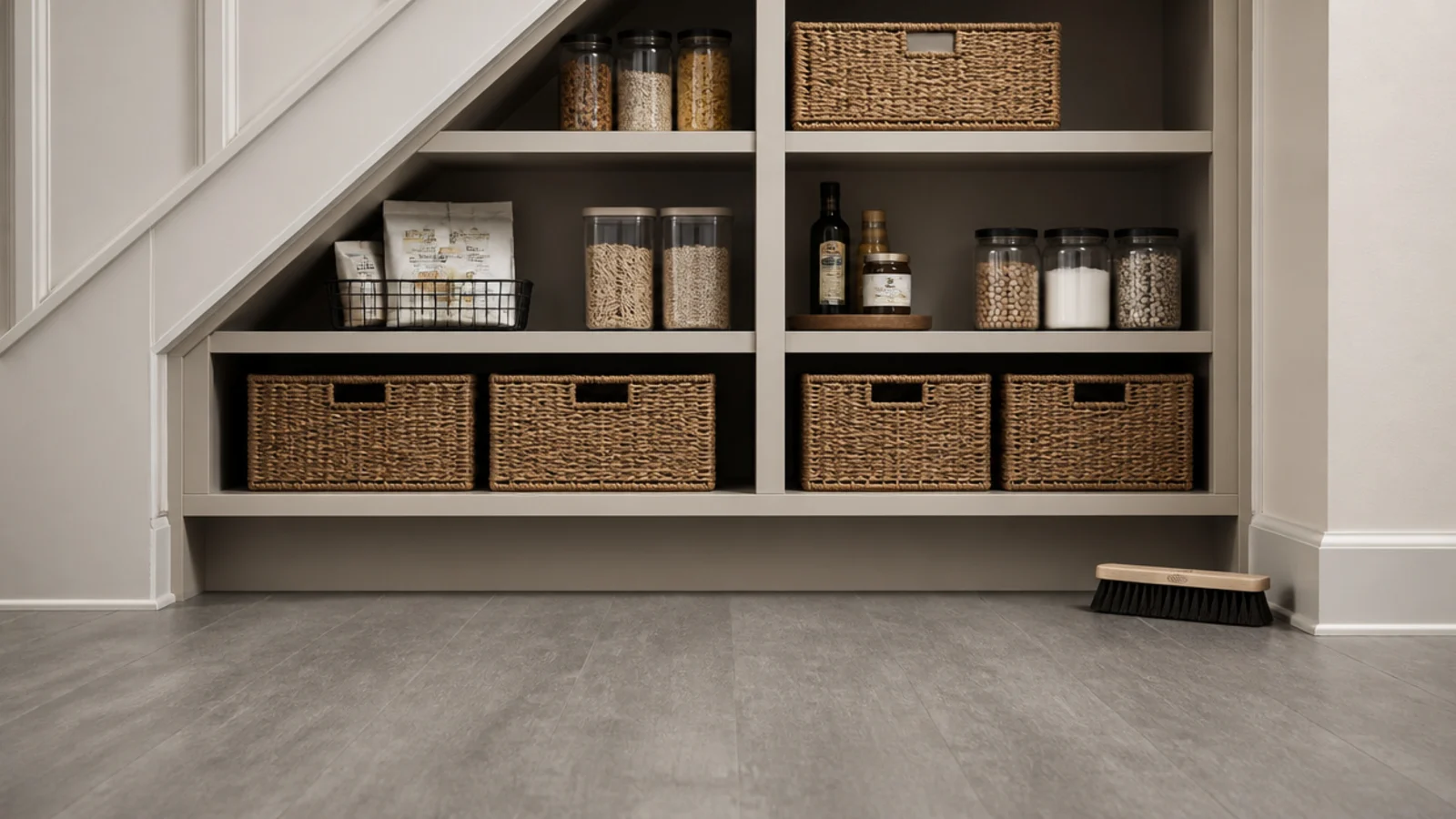
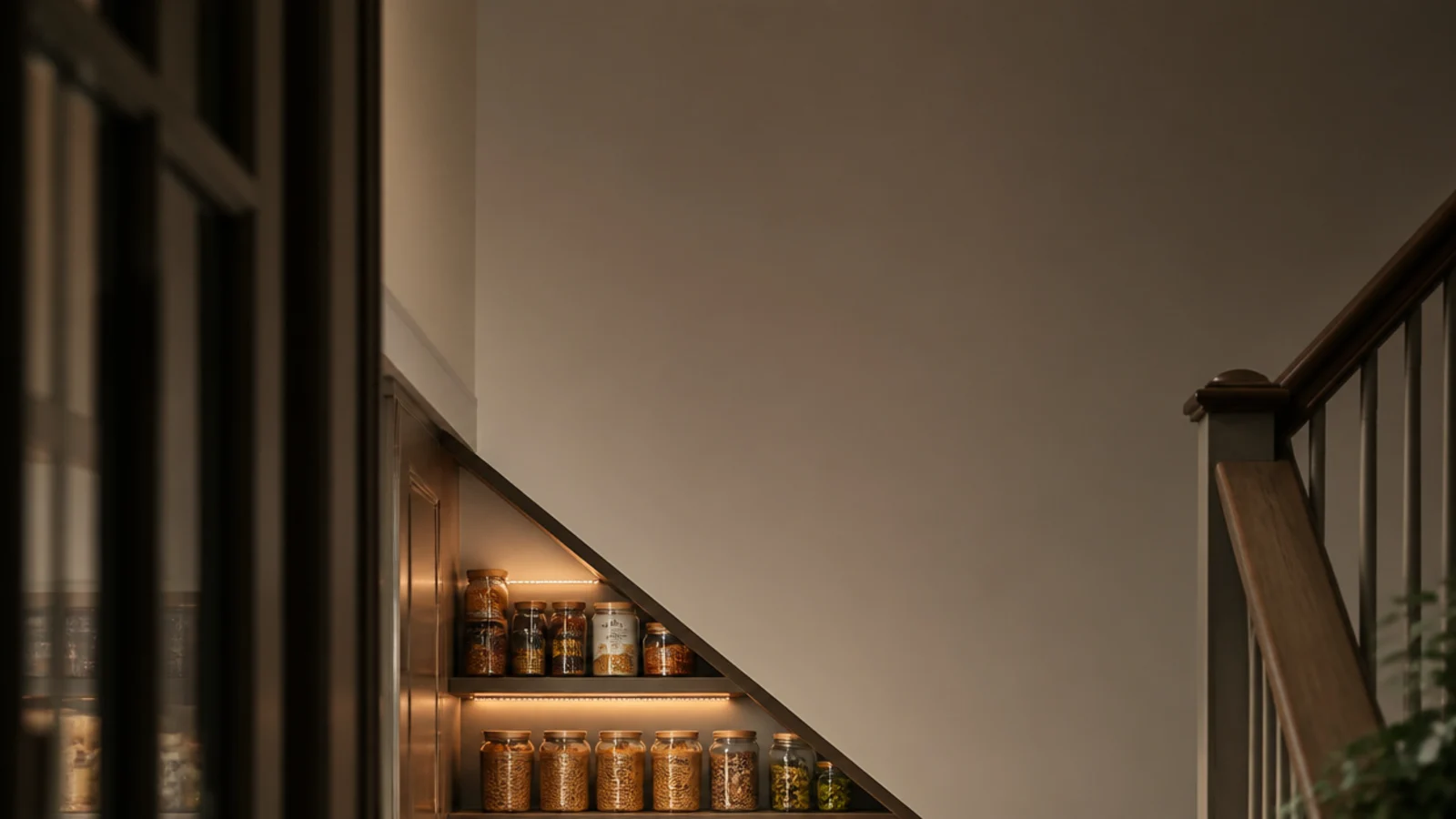
16. Light it from the front edge
A warm 3000K strip at 300 to 500 lumens per metre behind the front edge of the opening lights the shelves rather than throwing your own shadow across them. Wire it to a door switch if you can. An unlit pantry is one where you buy a third jar of something you already have twice.
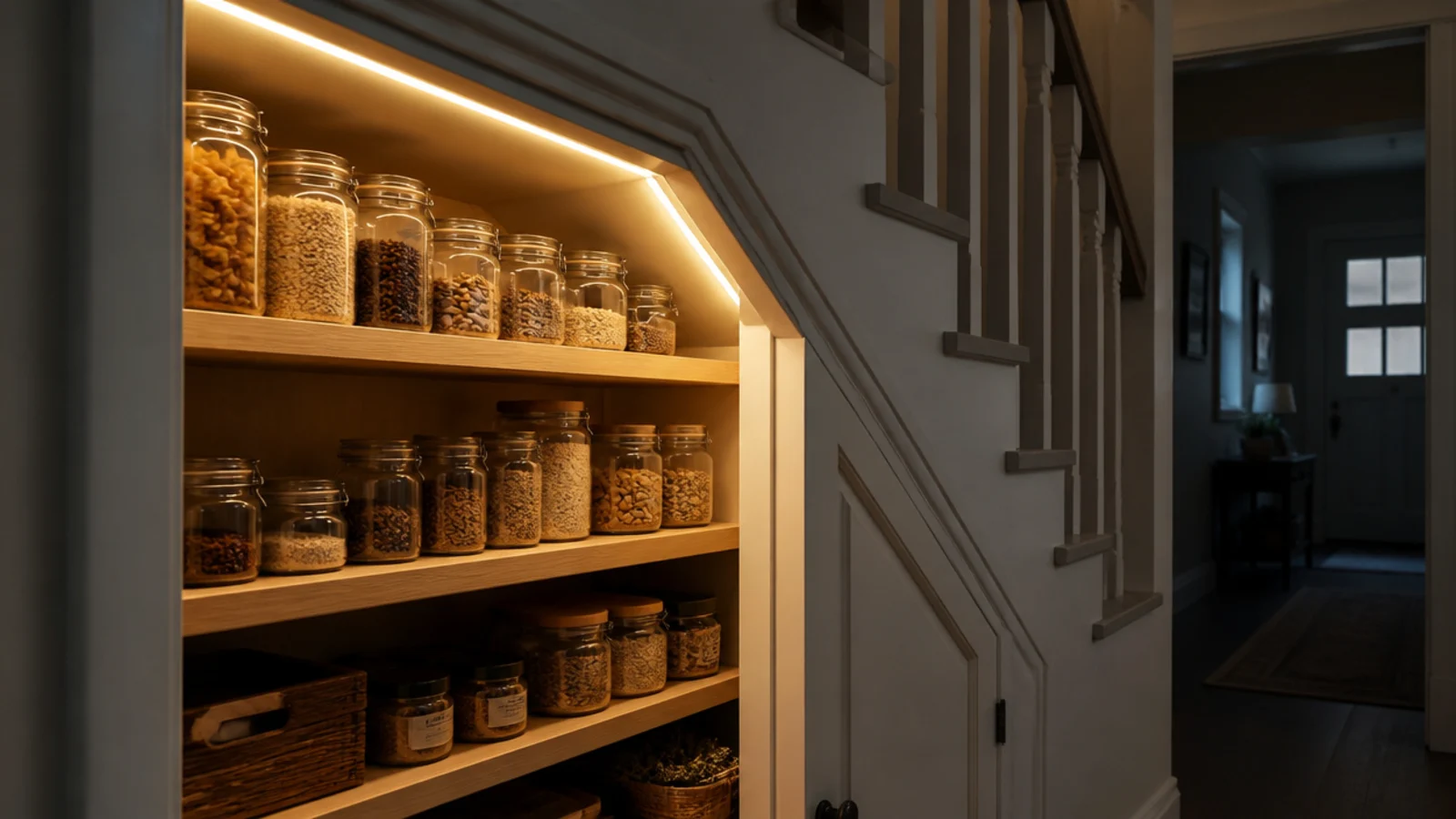
17. Keep chemicals in a different cupboard
Bleach, oven cleaner and laundry products belong somewhere other than a food store, and a hallway usually has a second bay for exactly this. Keeping them separate also removes any question about a leaking bottle above open packets, which is the kind of thing you only discover afterwards.
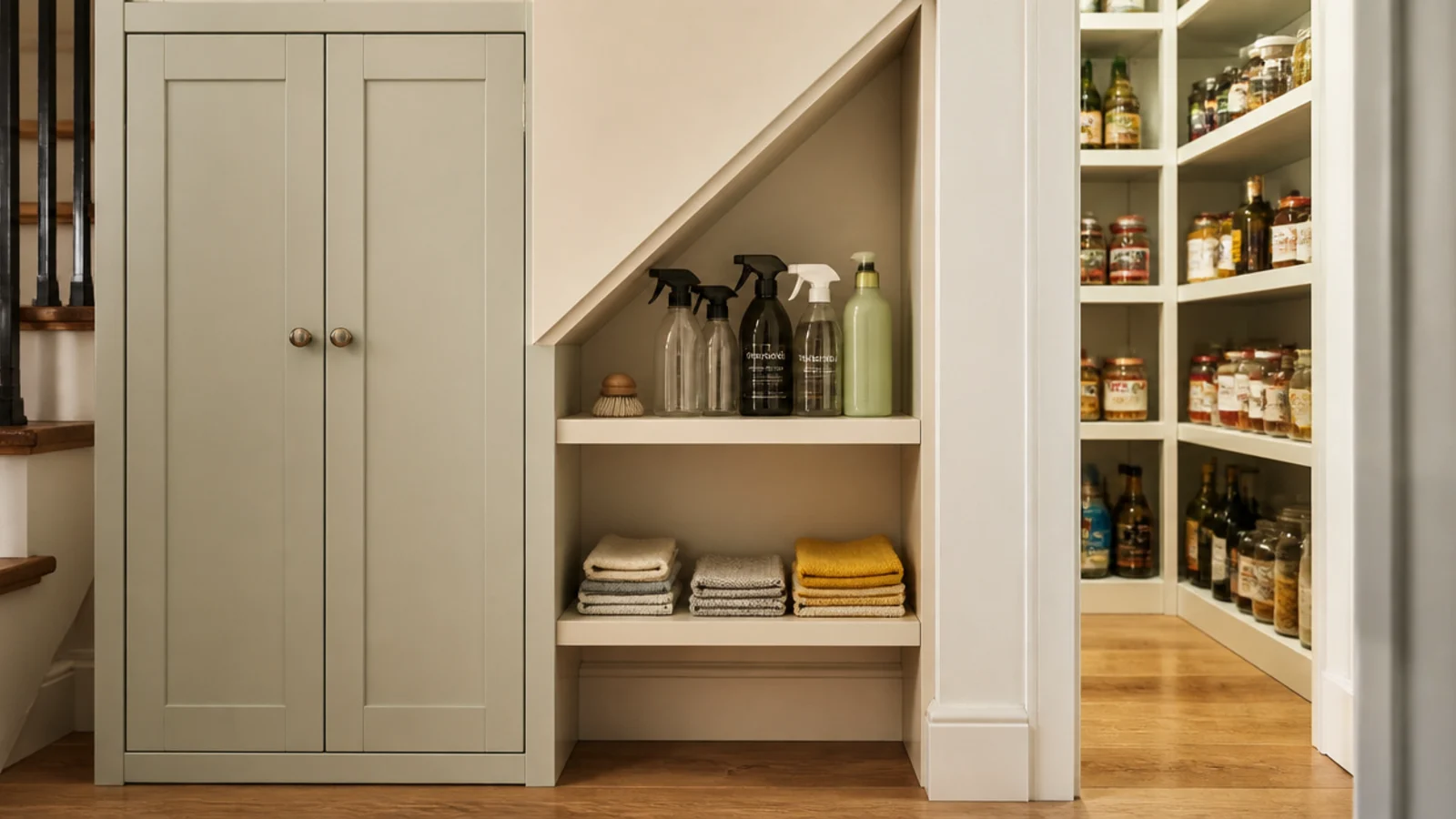
18. Rotate front to back every month
New stock goes behind old stock, every time. Ten minutes a month with the tins moved forward is what stops a pantry accumulating three-year-old chickpeas at the back of the deepest shelf. Under a rake this matters more than in a kitchen cupboard, because the back is genuinely hard to see.
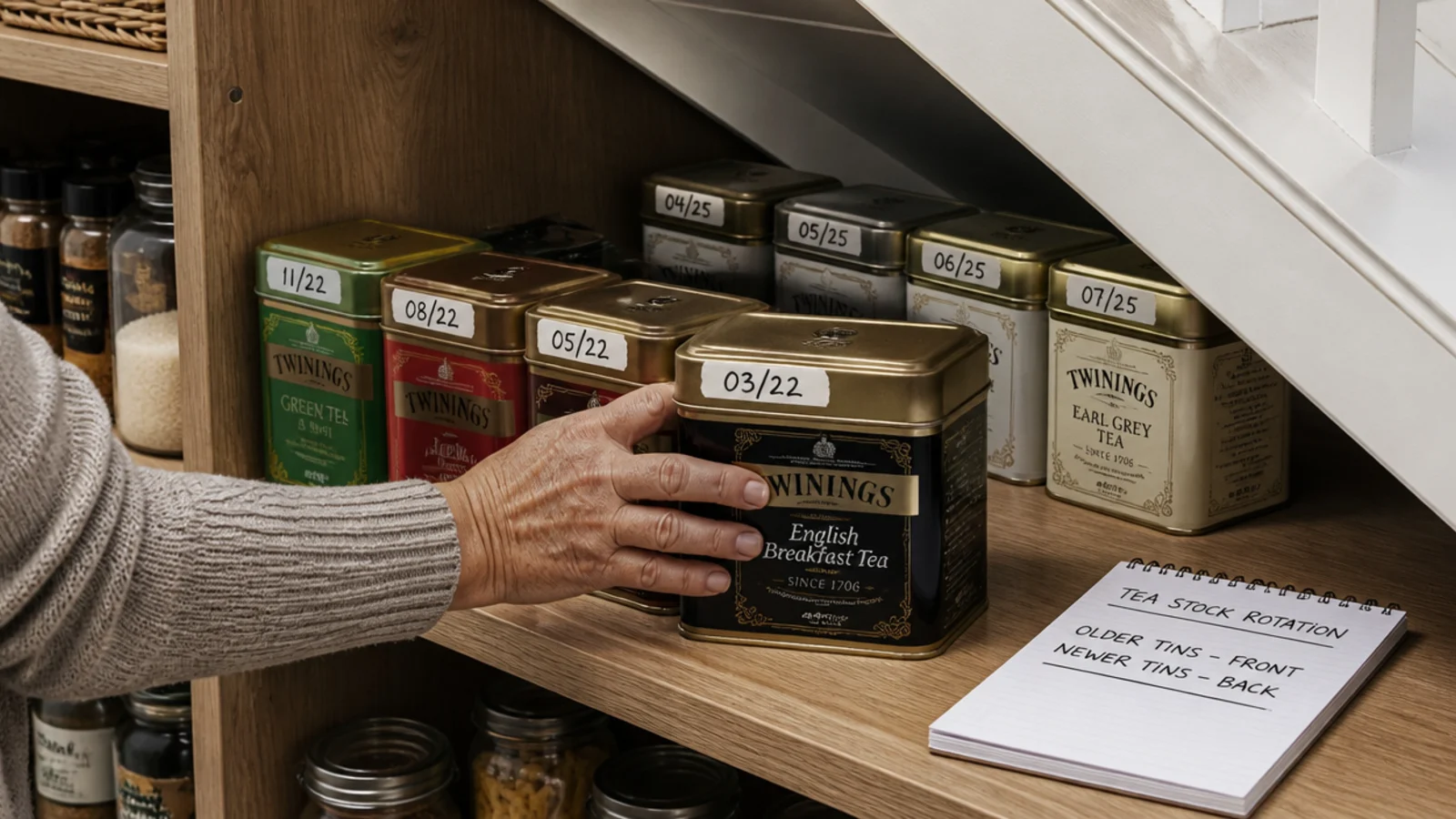
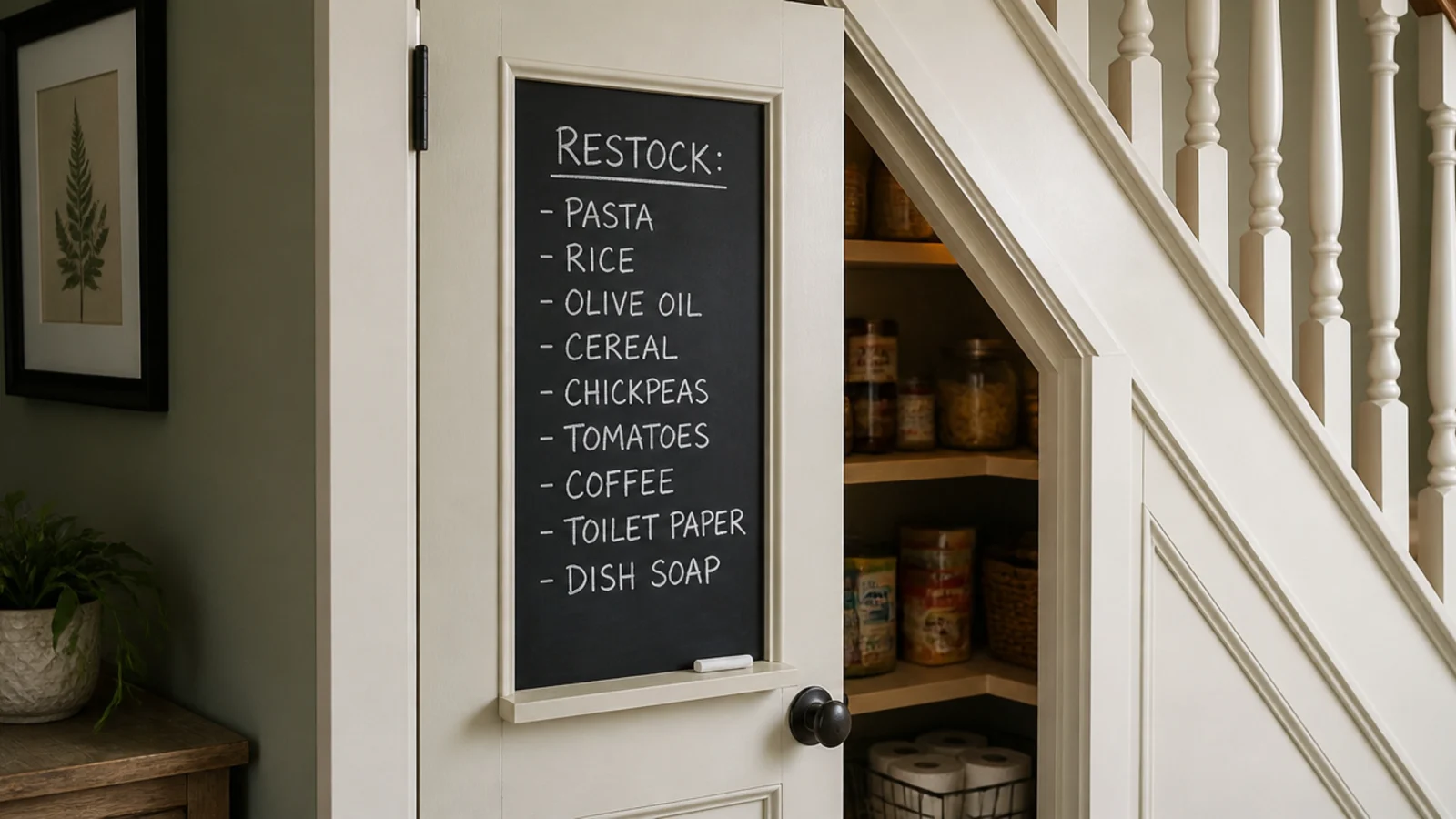
19. Chalk the running list on the door
Chalkboard paint on the inside of the door costs about £12, and the list gets written the moment the gap appears rather than on the way to the shop. It is also the fastest way to spot that something has been on the shelf since last winter.
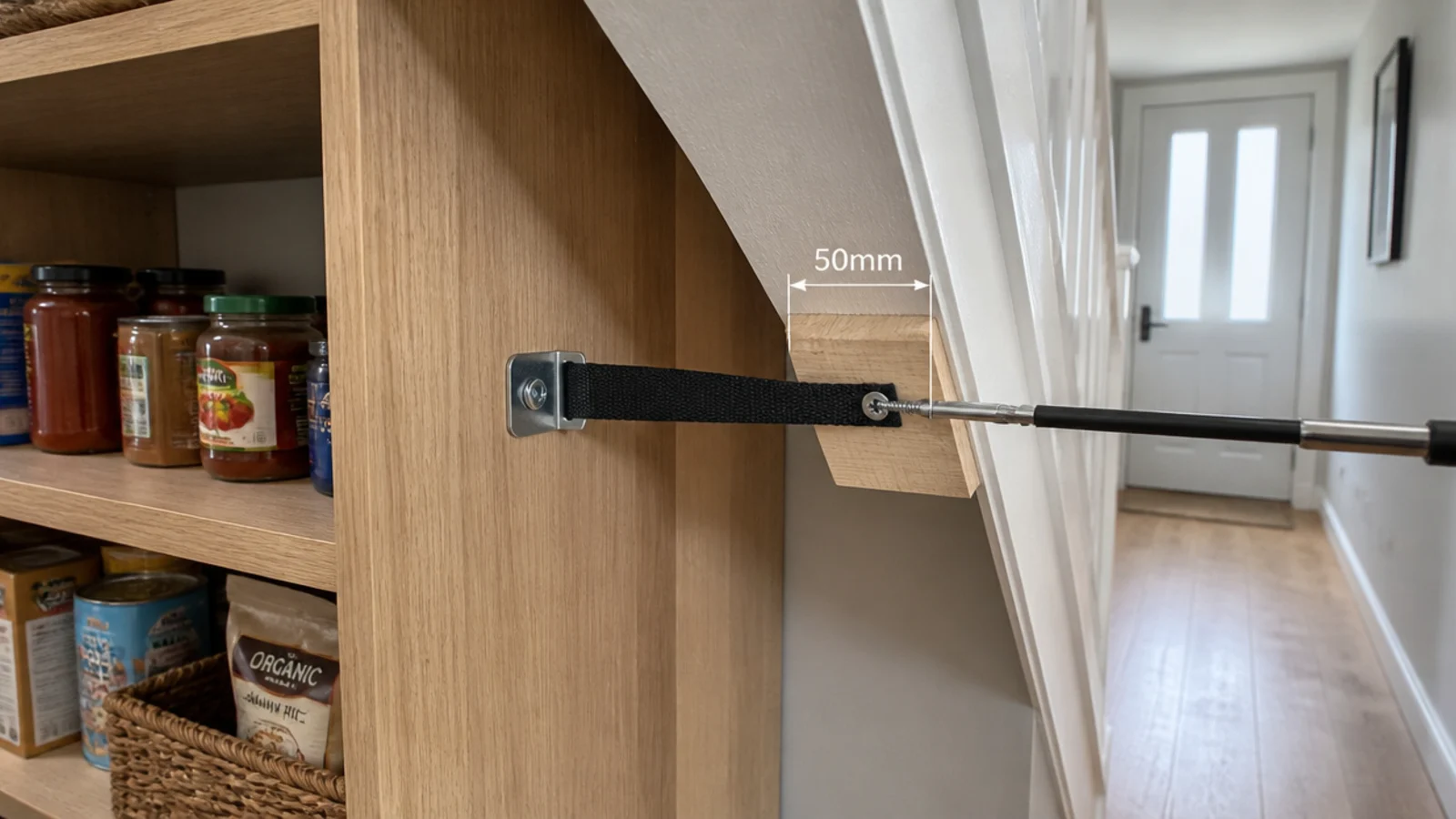
20. Anchor the shelving and keep the hall clear
Loaded pantry shelving is heavy — a shelf of tins can easily pass 40 pounds — so fix uprights into the stair strings or a batten spanning them. And keep the floor at the foot of the stairs completely clear of crates and boxes, because that run is the escape route from every room above.
If the wedge has to do several jobs at once, the under stairs storage solutions guide sorts thirty options by the height each needs. For the shelving language that carries through into the kitchen, see kitchen shelf ideas, and the utility room ideas guide covers the laundry side if the same recess is doing both.
Mistakes to Skip
- Building shelves deeper than twelve inches for daily food. The back row goes unseen within a week, and by the second year it holds only tins nobody remembers buying.
- Putting the pantry in the same bay as the boiler. Heat shortens the life of flour, oils and chocolate noticeably, and the boiler needs its service clearances kept clear regardless.
- Sealing the cupboard with no undercut or grille. Dry goods keep best in moving air, and a sealed recess on a cold external wall grows mould on the plaster within a winter.
- Storing cleaning products above open food. A slow leak from a bottle at head height is discovered by smell rather than by sight, and by then the shelf below is a write-off.
Frequently asked questions
How deep should pantry shelves under the stairs be?
Eight to twelve inches for everything you use weekly. A tin is about three inches across and a cereal box eight, so twelve inches takes two rows of tins or one box turned sideways. Anything deeper turns into a cave where the back row is invisible and everything migrates there and stays.
How far apart should pantry shelves be spaced?
Seven inches for tins and jars, twelve for cereal boxes and packets, and fifteen if a small appliance lives on a shelf. Mixing spacings within one cupboard is what makes a pantry work, because a run of identical gaps wastes the height above every short item on the shelf.
Is it safe to store food in a cupboard with the boiler?
No, and not because of any rule — heat spoils dry goods and shortens shelf life considerably. A boiler cupboard also has to keep its manufacturer service clearances clear, which means no shelving in front of it anyway. Put the pantry in a different part of the wedge, well away from the boiler and any radiator.
Does an under stairs pantry need ventilation?
Yes. Traditional larders were vented for a reason, and dry goods keep best below about seventy degrees Fahrenheit in moving air. A ten millimetre undercut below the door or a small louvred grille is enough, and it also stops condensation forming if the recess backs onto a cold external wall.
How far can a pantry be from the kitchen and still get used?
About ten steps. Beyond that it stops being where you reach for things mid-cooking and quietly becomes bulk storage, then a junk cupboard. If the wedge is further than that from the hob, store bulk and backup there and keep a small working shelf inside the kitchen itself.
Want more like this? Browse all 14 under stairs storage guides — they all use the same measurements and budget tiers.
Pin it for later
Save this to your Under Stairs Storage board
Pin it now so it is waiting for you when the tape measure comes out — and so the next person hunting for this idea can find it too.
Save this pinKeep going
More ideas worth saving while you have the tape measure out.