Small Walk-In Closet Ideas · Listicle
25 Budget-Friendly Small Walk-In Closet Ideas for Small Spaces

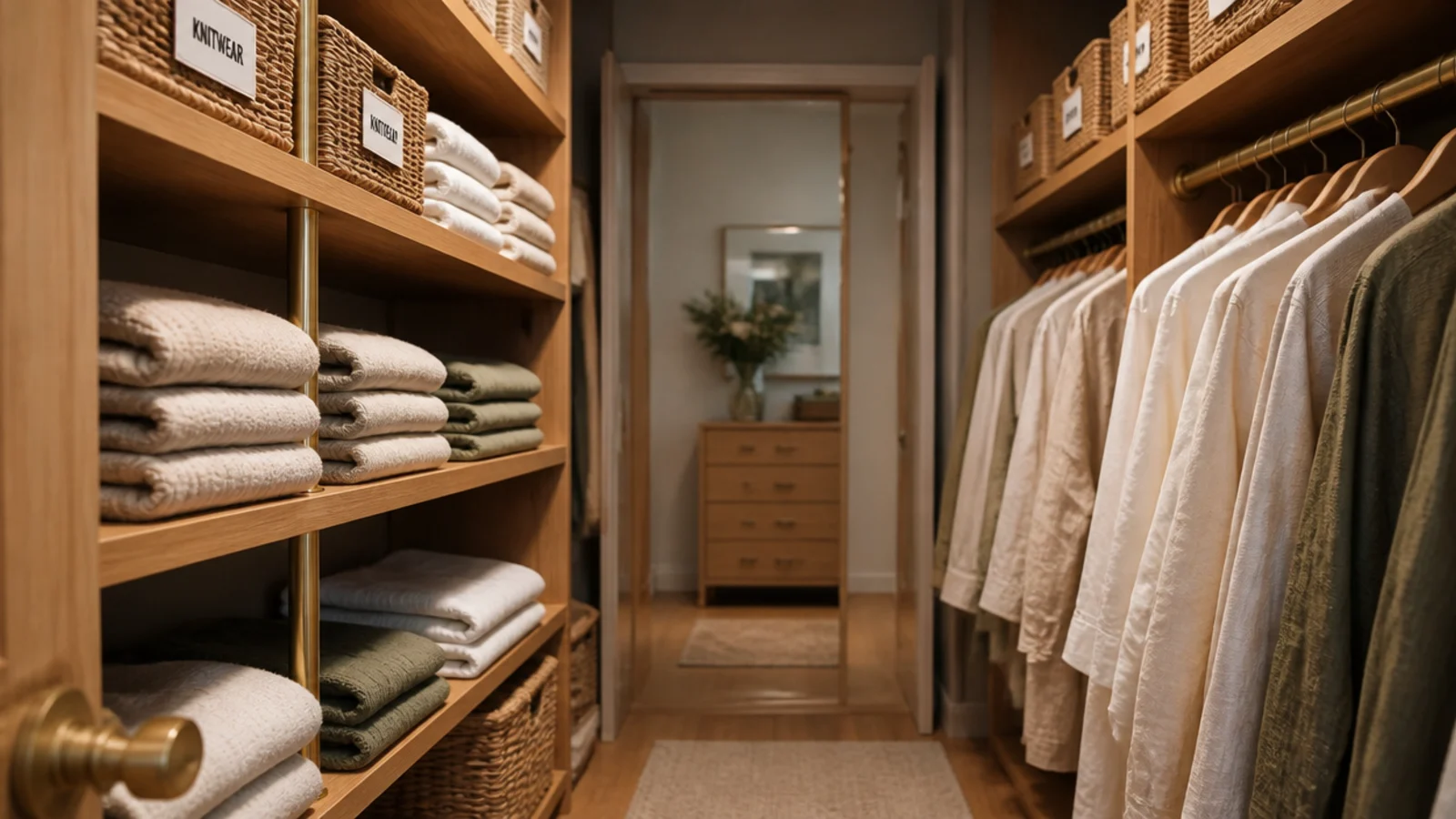
Small walk in closet organization is not a container problem. I have bought the bins, and I have watched them fill with the same chaos in three weeks. What actually holds is a small set of rules about where things live and how wide you fold them — and then about $80 of very boring hardware. Here are the twenty-five that survived four closets of mine.
In this guide27 sections — tap to openHide
- 1.The rules behind small walk-in closet organization that lasts
- 2.Sort by type first, color second
- 3.Zone by frequency, not by category
- 4.Give every single item one home
- 5.Double-hang the shirt wall
- 6.Cap long-hang at a single bay
- 7.Add a shelf divider every 12 inches
- 8.Fold knits to a 12-inch template
- 9.File-fold tees on edge in drawers
- 10.Use baskets for anything that will not stack
- 11.Label anything you cannot see into
- 12.Put clear bins on the top shelf
- 13.Sort shoes by heel height on angled shelves
- 14.Hang anything with a strap
- 15.Add a hanging fabric shelf tower
- 16.Switch to slim matching hangers
- 17.Keep a donation bag on a hook
- 18.Vacuum-bag off-season bulk
- 19.Give jewelry a shallow tray, not a box
- 20.Corral watches and sunglasses in a catch tray
- 21.Move belts and scarves to the door back
- 22.Fit a laundry basket inside the footprint
- 23.Leave a 6-inch gap above the floor
- 24.Light the back, not the middle
- 25.Hang a full-length mirror inside
- 26.Run a ten-minute weekly reset
- 27.Mistakes to Skip
The rules behind small walk-in closet organization that lasts
Zones before containers. Always. Decide what belongs at eye level, roughly 54 to 66 inches, and give that band to the things you touch daily. Above 84 inches and below 24 inches is where seasonal storage goes, because reaching there is a decision rather than a reflex.
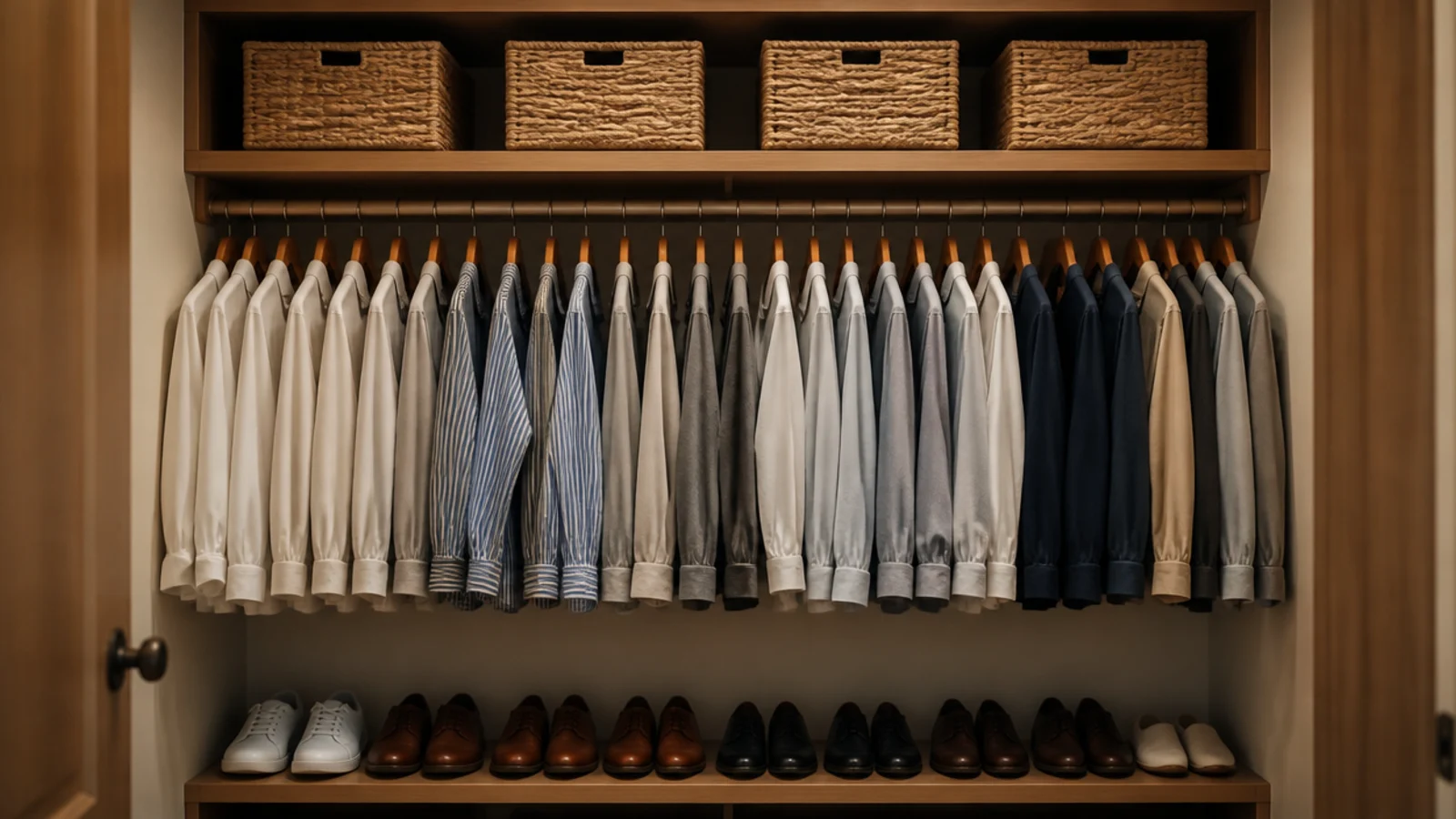
Then sort by garment type first and color second. Color-sorting across the whole closet looks wonderful for a week and collapses the moment you get dressed in a hurry. Shirts with shirts, trousers with trousers, shaded within each group — that survives real life.
The structural numbers do not change. A hanging rod needs 24 inches of clear depth, a walkway needs 36 inches, and shelves want 12 to 14 inches for folded knits. Double-hang at 42 and 84 inches roughly doubles what a wall holds; long-hang for dresses and coats needs 66 to 70 inches of drop and deserves exactly one bay.
Budget tiers for what follows: shelf dividers, hangers and labels sit under $80 total ($), a hanging tower or drawer unit runs $90 to $250 ($$), and a modular system with drawers runs $400 to $900 ($$$).
1. Sort by type first, color second
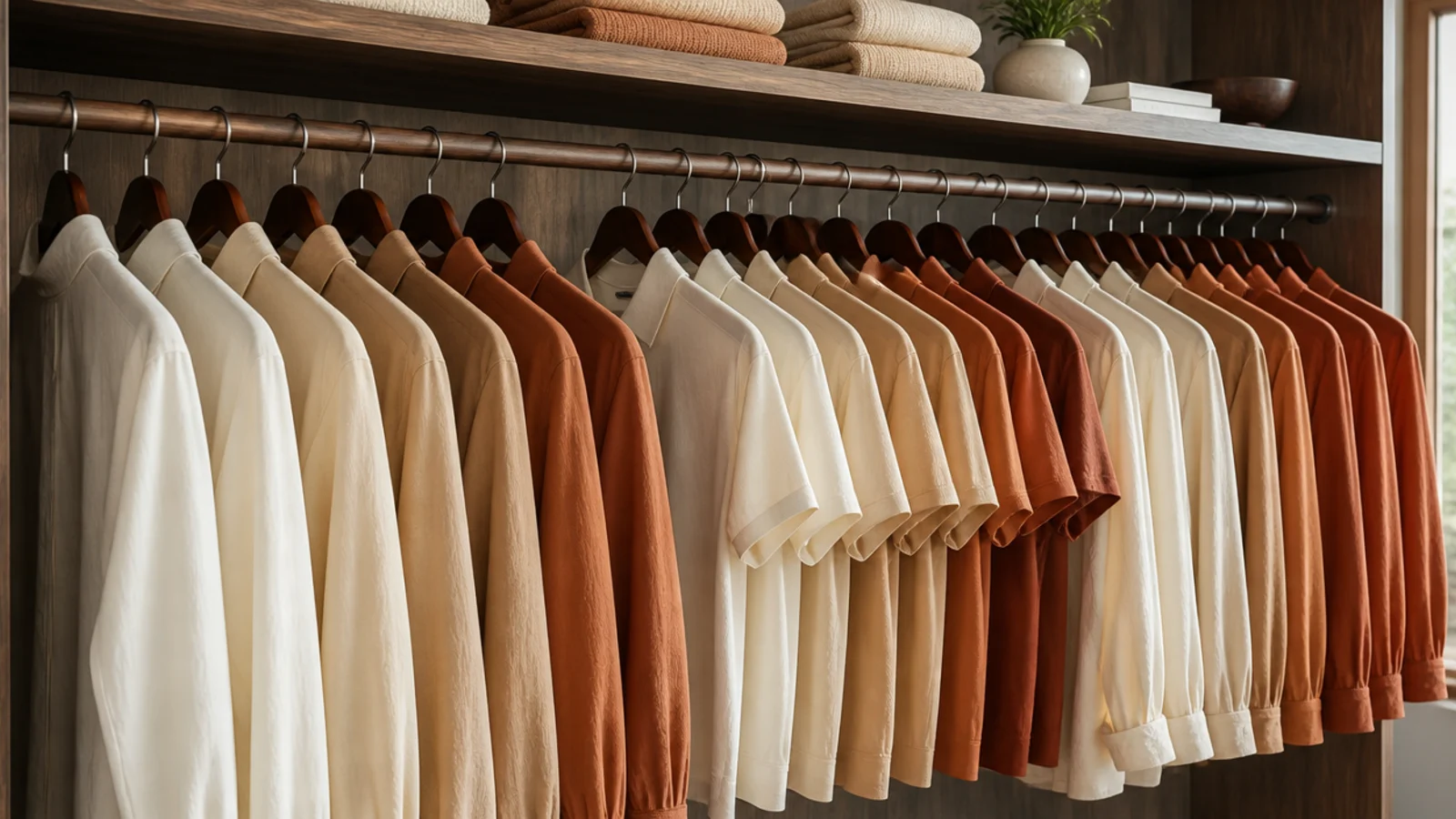
Group every garment by what it is, then grade each group light to dark. Shirts together, trousers together, jackets together.
This is the single change that makes the rest hold. When you hang a shirt back up, there is one obvious place it goes, and you find it without thinking. Rainbow-sorting the whole rail looks better in photographs and falls apart by Thursday.
2. Zone by frequency, not by category
Draw three bands on the wall in your head: daily at 54 to 66 inches, weekly just above and below, seasonal above 84 or under 24.
Most closets are organized by what things are rather than how often you need them, which is why the sweater you wear twice a year sits at eye level. Reassigning the bands takes twenty minutes and costs nothing.
3. Give every single item one home
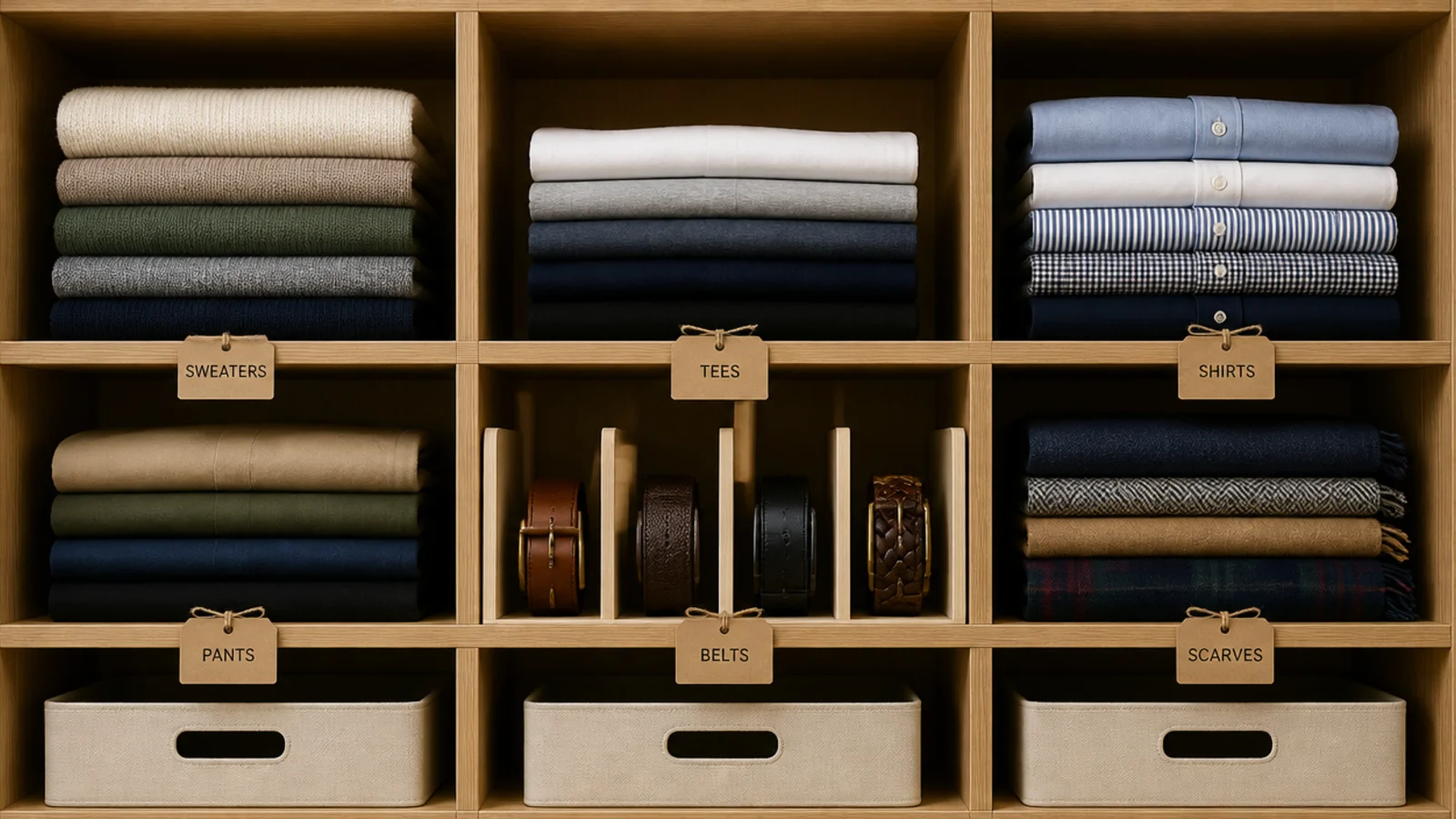
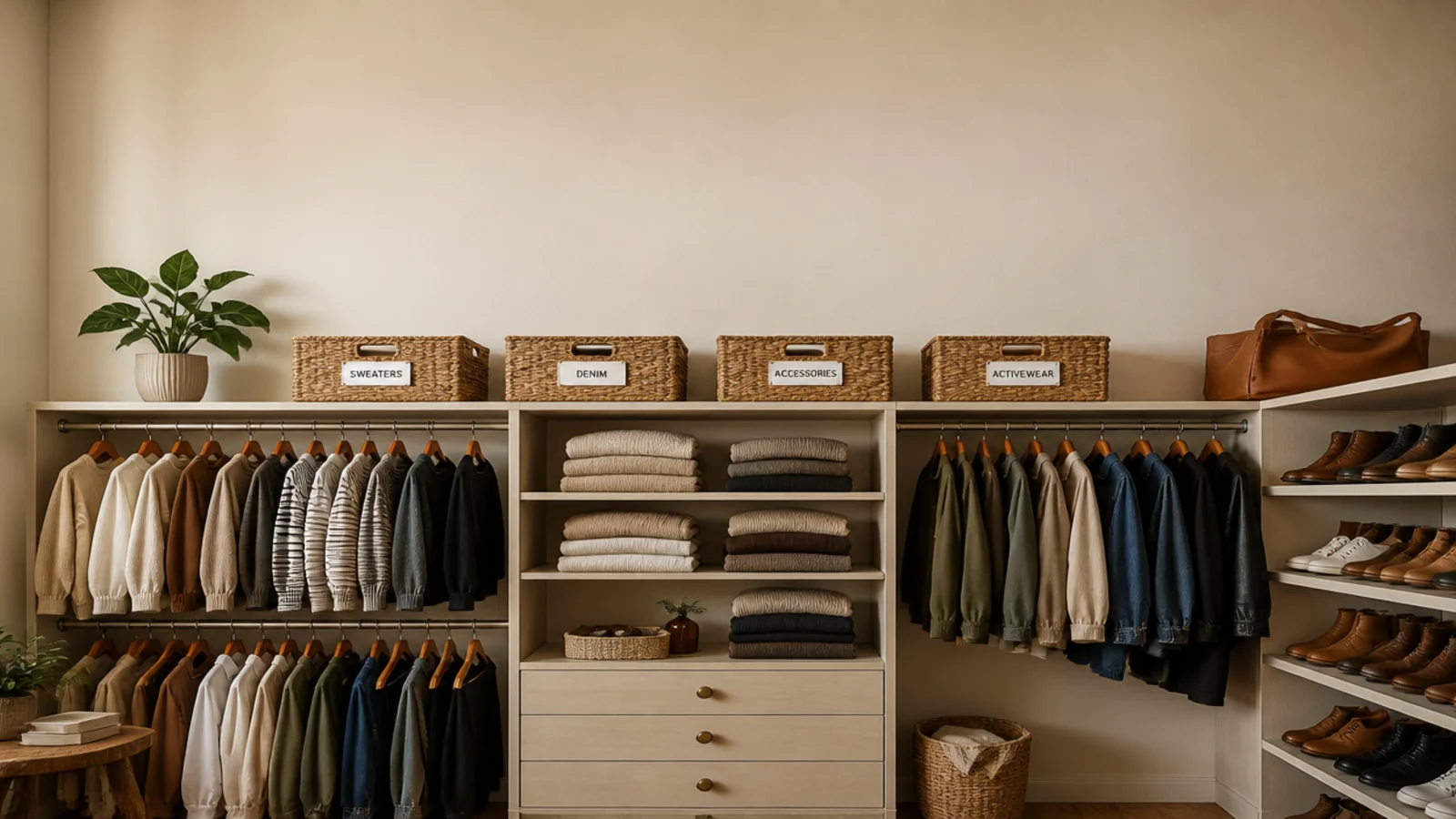
Every object needs one named place — not a general area, a specific slot. Watches in the leather tray, belts on the door rack, gym kit in the second basket.
Things without a home migrate to a chair. That is the whole mechanism behind a closet that unravels, and it is fixed by making a decision once rather than every evening.
4. Double-hang the shirt wall
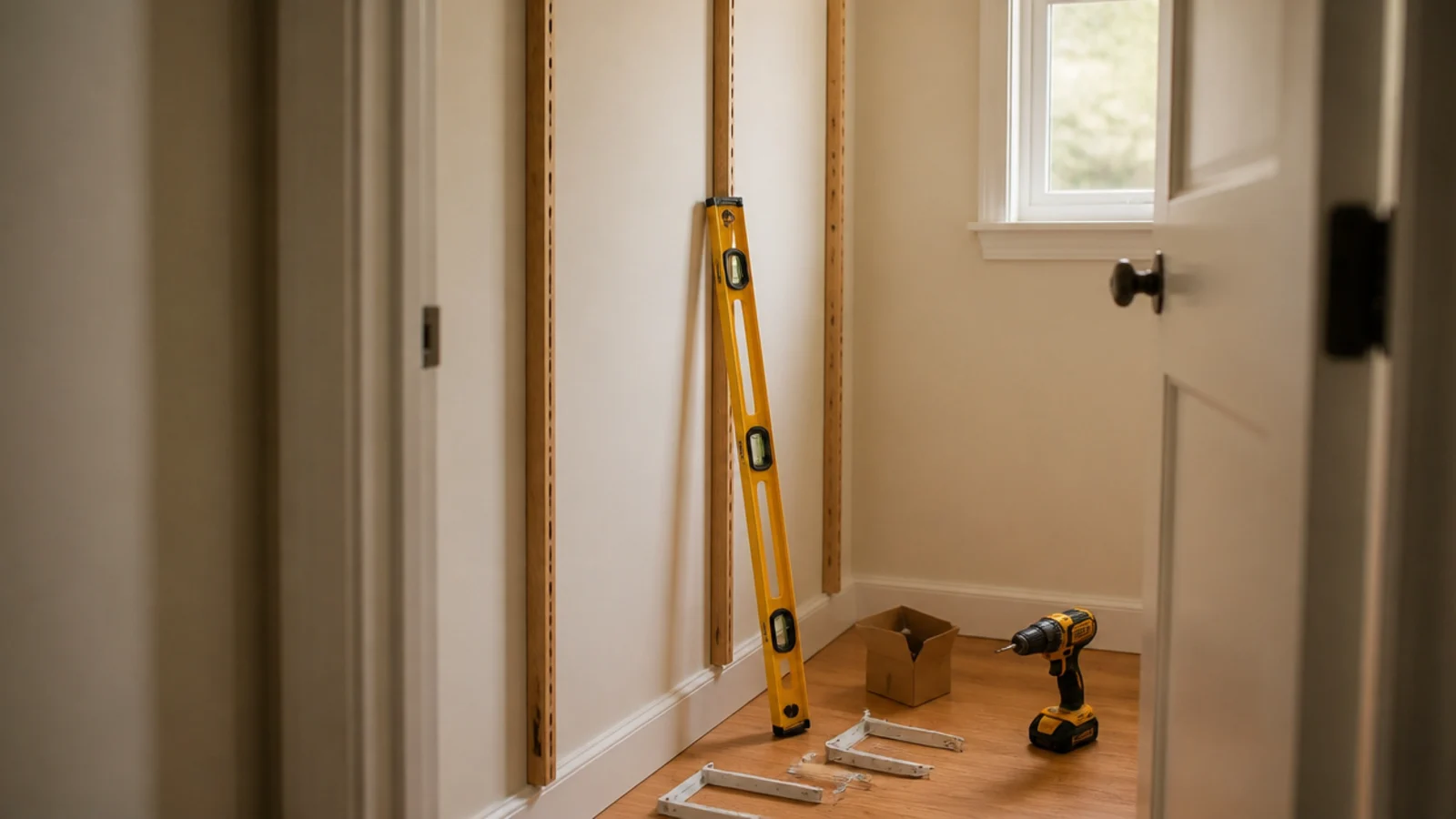
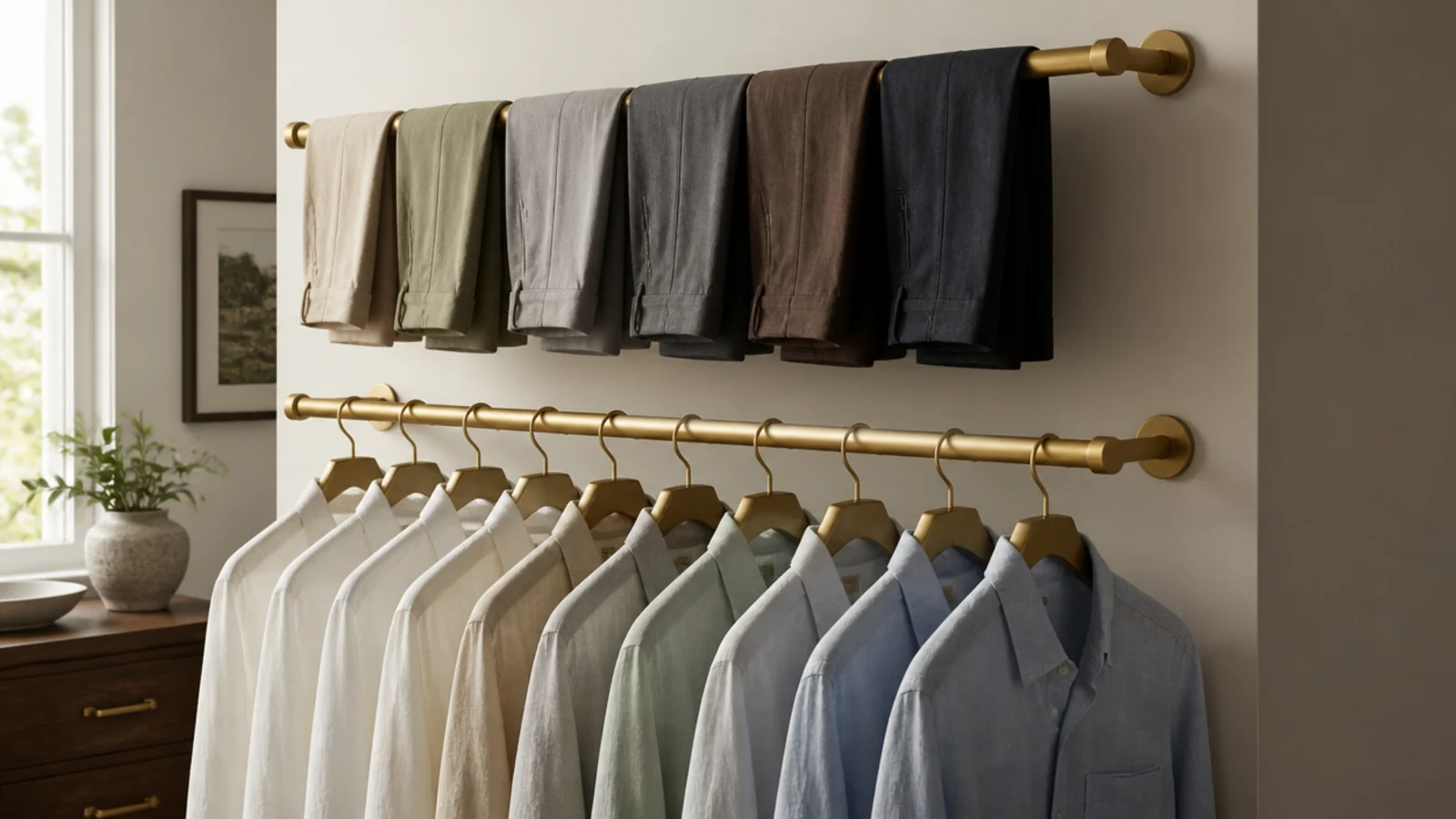
A rod at 42 inches and a second at 84 inches holds roughly twice what one rod at 66 to 72 inches manages. Shirts and blouses below, jackets and trousers folded over the bar above.
Check your longest shirt first — most sit at 36 to 40 inches on the hanger and clear the lower rod fine. A double-hang kit runs $35 to $70 ($).
5. Cap long-hang at a single bay
Dresses, robes and full coats need 66 to 70 inches of clear drop. Give them 24 to 30 inches of rail and no more.
Count what you own before deciding. Four long pieces fit a 24-inch bay comfortably. Everything else you claw back becomes the 42 inches of double-hang underneath, which is where the volume actually lives.
6. Add a shelf divider every 12 inches
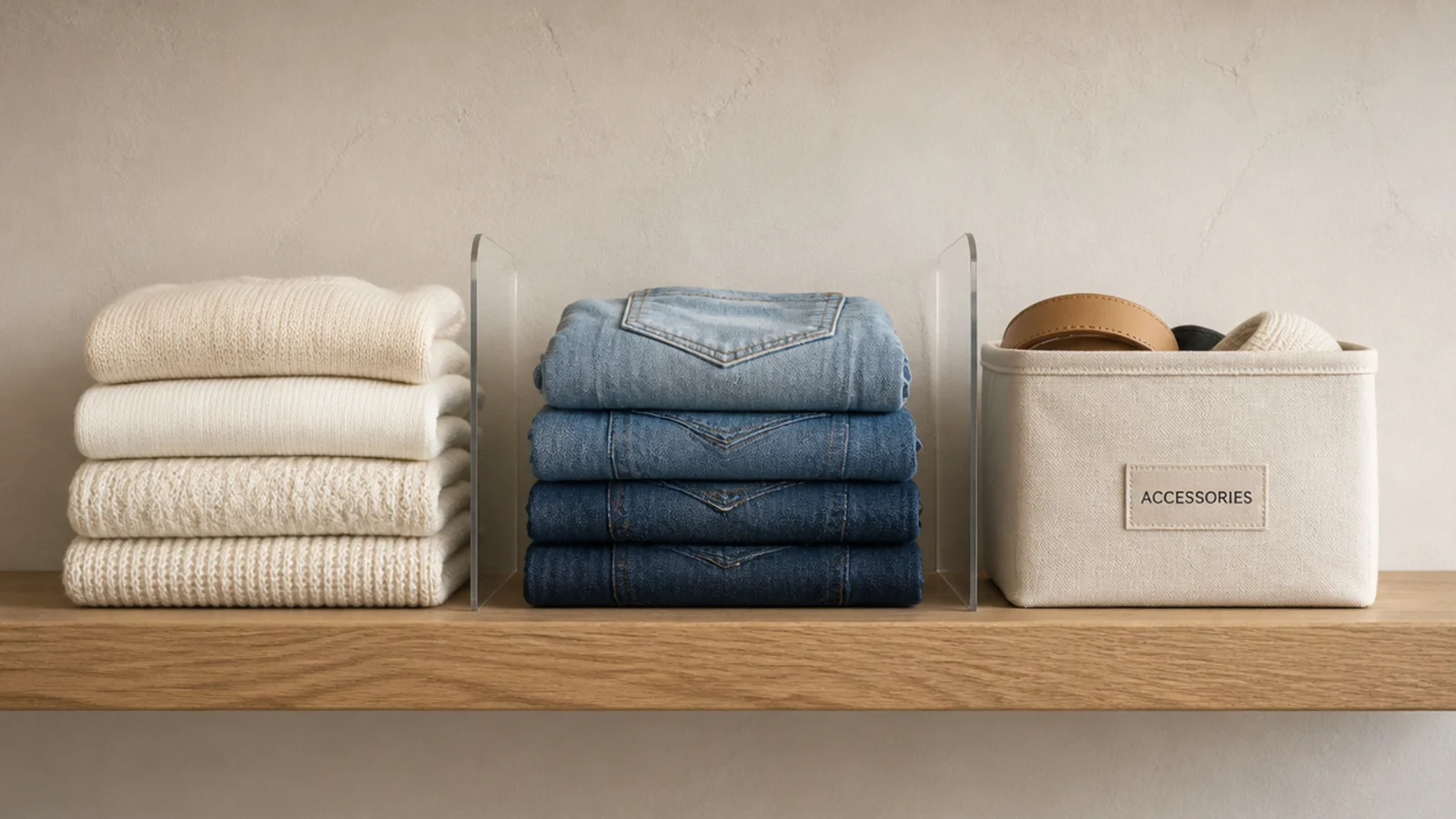
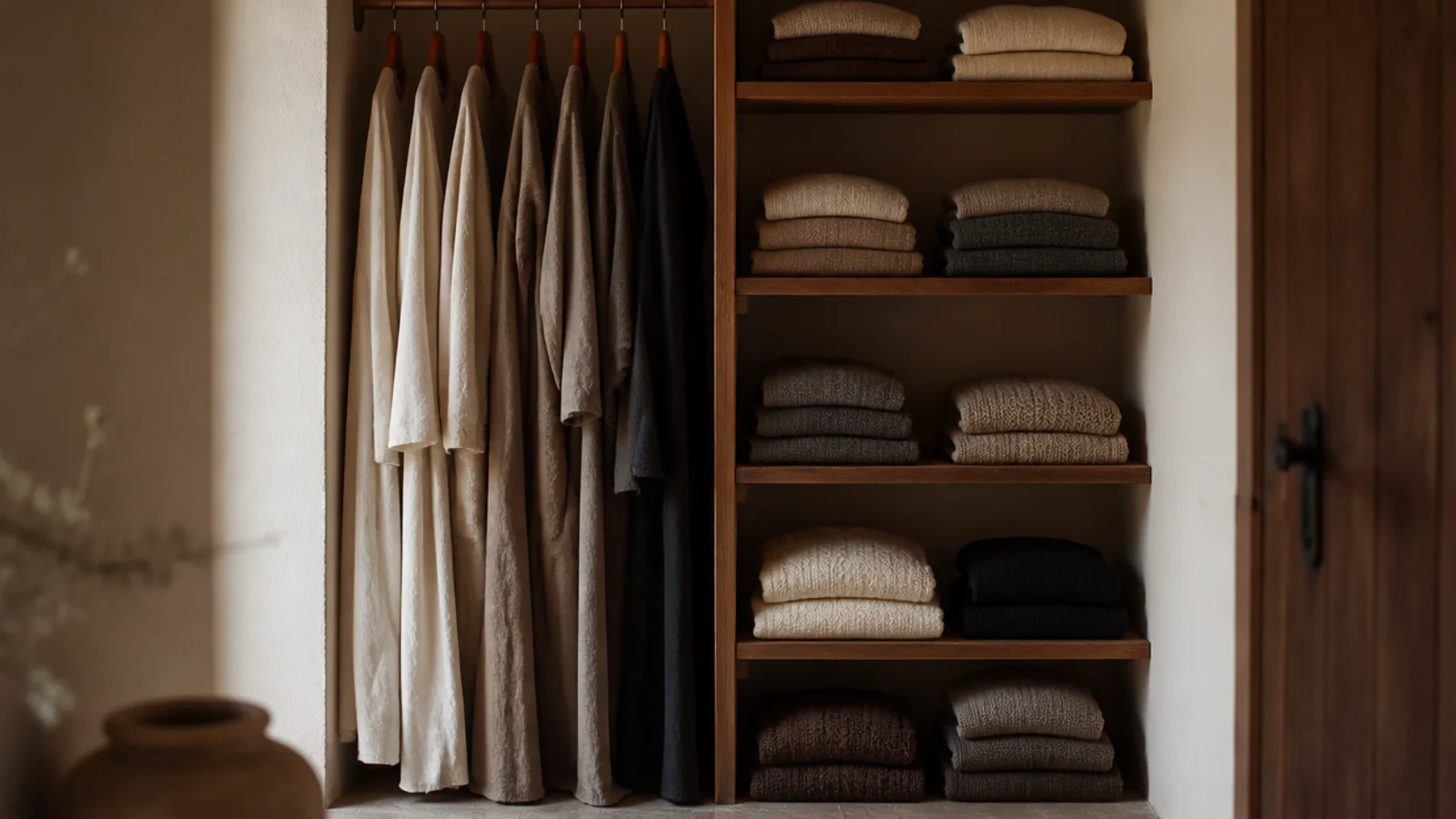
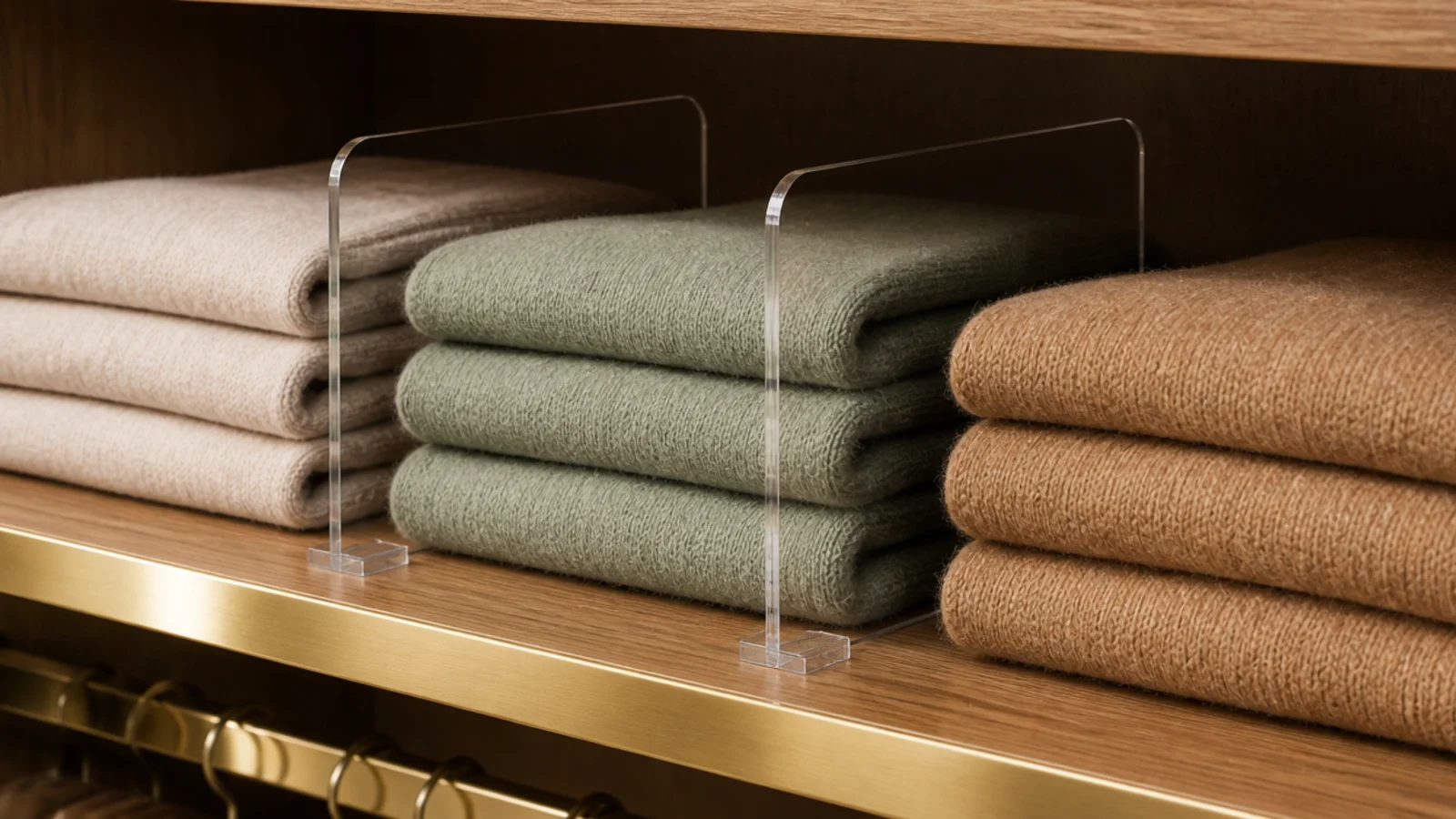
A divider every 12 inches turns an open shelf into slots. Pull one sweater and the neighboring stack stays exactly where it was.
Acrylic dividers clip onto most shelves for about $4 each; wood ones screw in for $8. This is the cheapest fix on the list and the one people notice most, because slumping stacks are the thing that makes an organized closet look untidy within days.
7. Fold knits to a 12-inch template
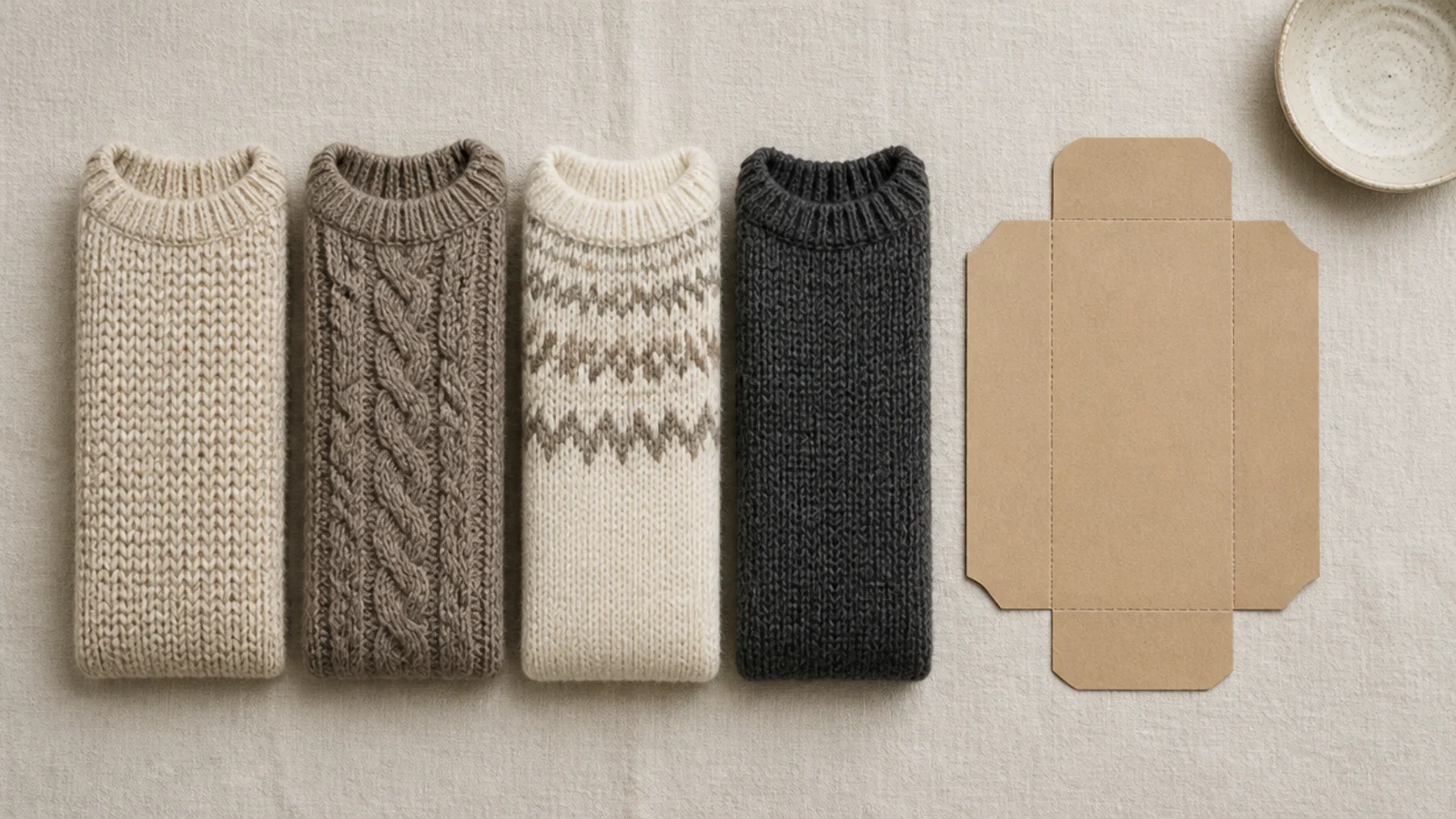
Cut a piece of cardboard 12 inches wide and fold your first ten sweaters around it. After that your hands do it automatically.
Uniform width is what makes a shelf read as styled rather than stored. It also means a 14-inch shelf holds a stack that sits fully supported, with the folded edge facing you so you can see what each one is.
8. File-fold tees on edge in drawers
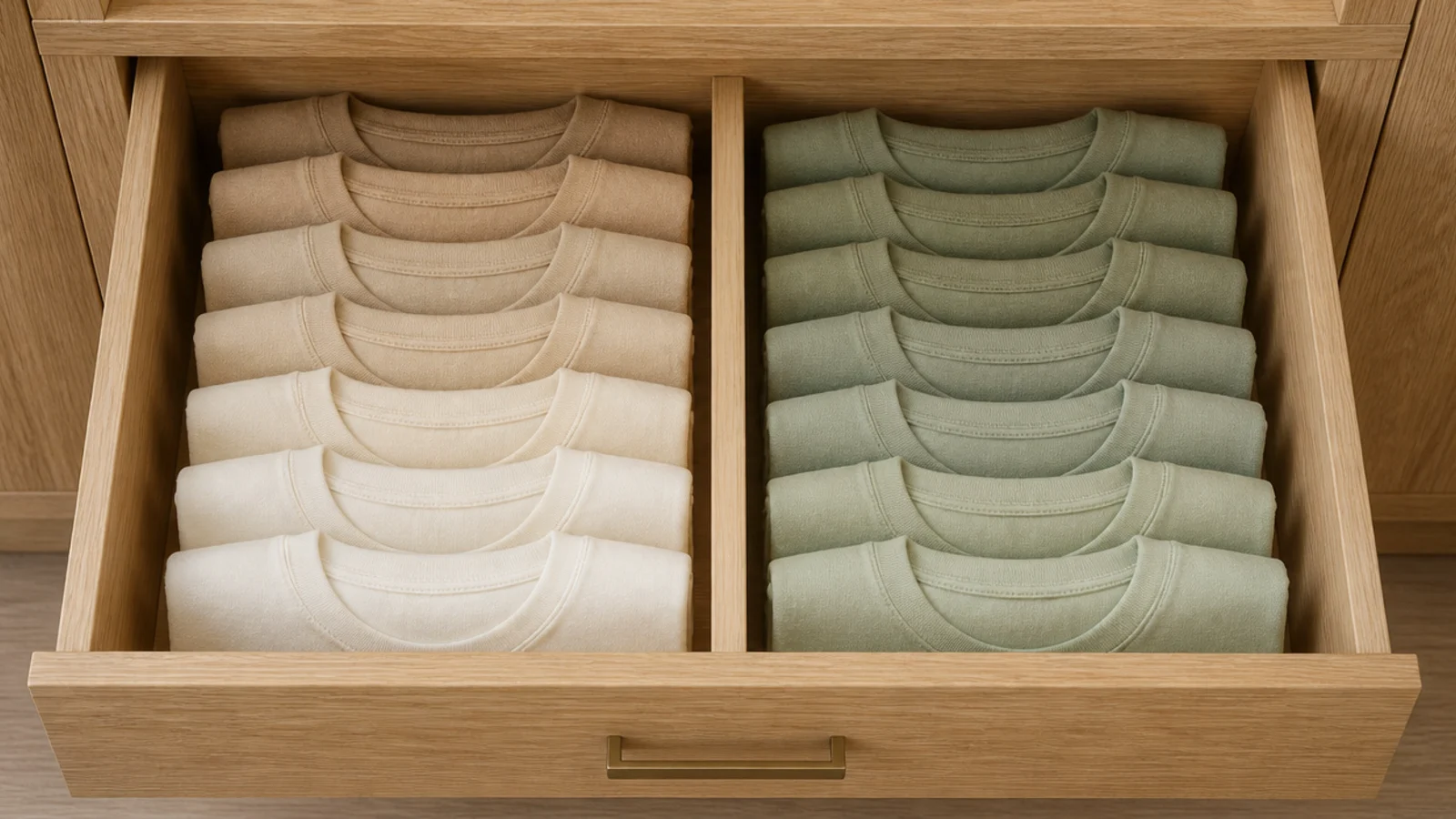
Stacked tees mean you wear the top three forever. Folded to a third and filed upright, every shirt shows its edge.
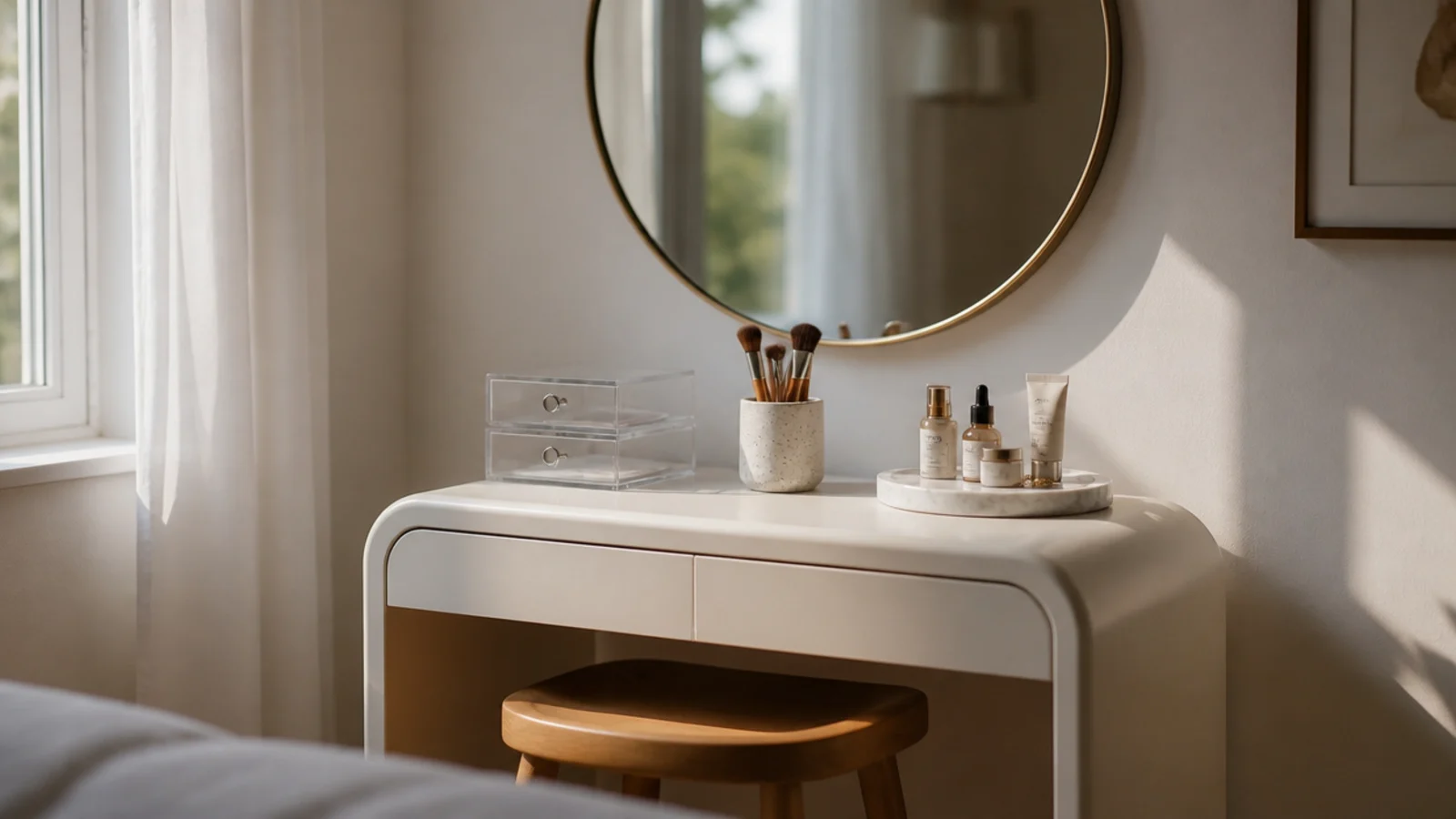
A 6-inch drawer holds tees on edge; 8 to 10 inches suits jeans rolled the same way. Add two dividers per drawer so a row does not collapse sideways when you take one out of the middle. The technique is identical to drawer organization at a vanity.
9. Use baskets for anything that will not stack
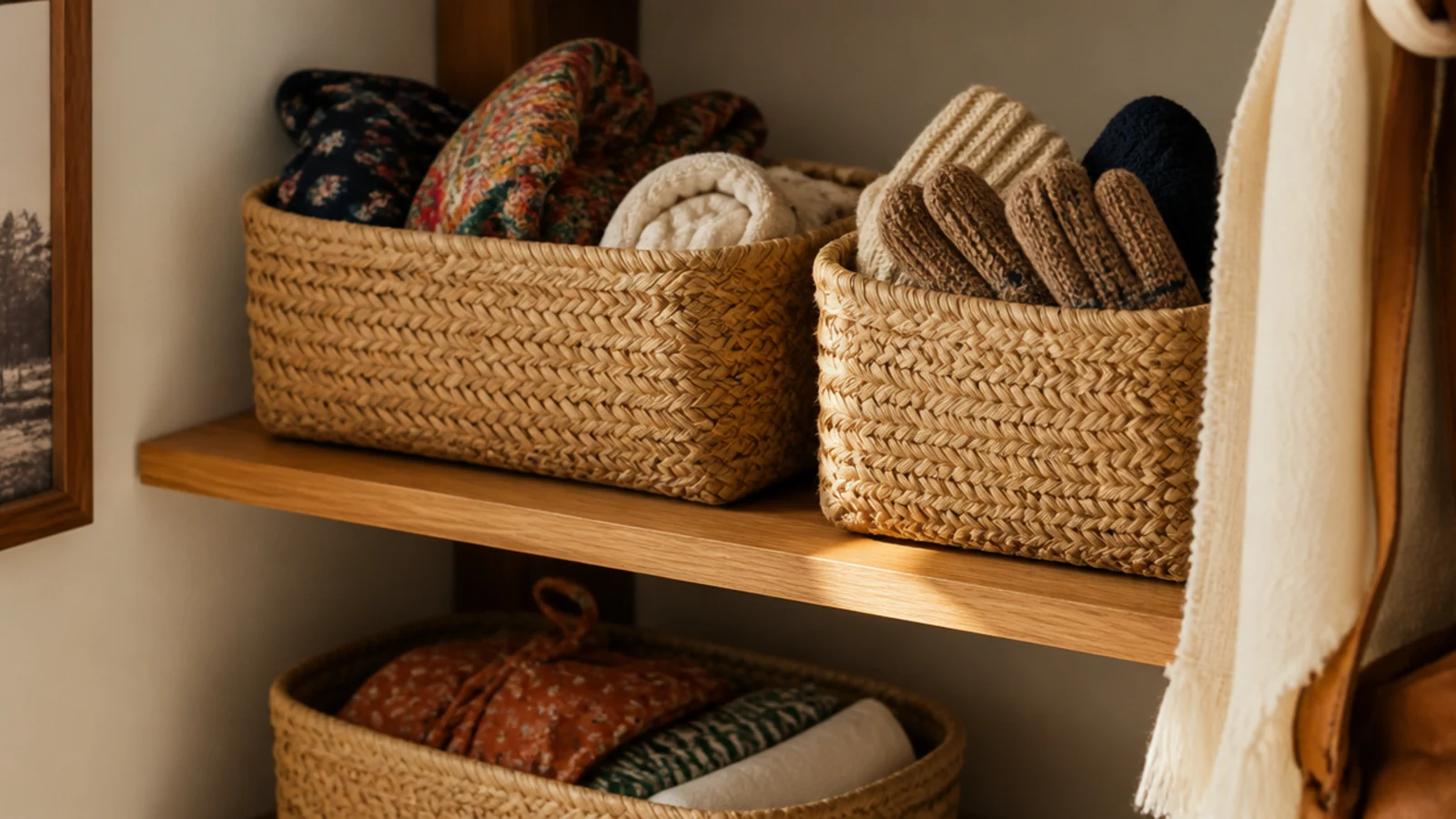
Scarves, gloves, swimwear and workout kit do not fold into neat towers, and fighting that wastes an evening every month.
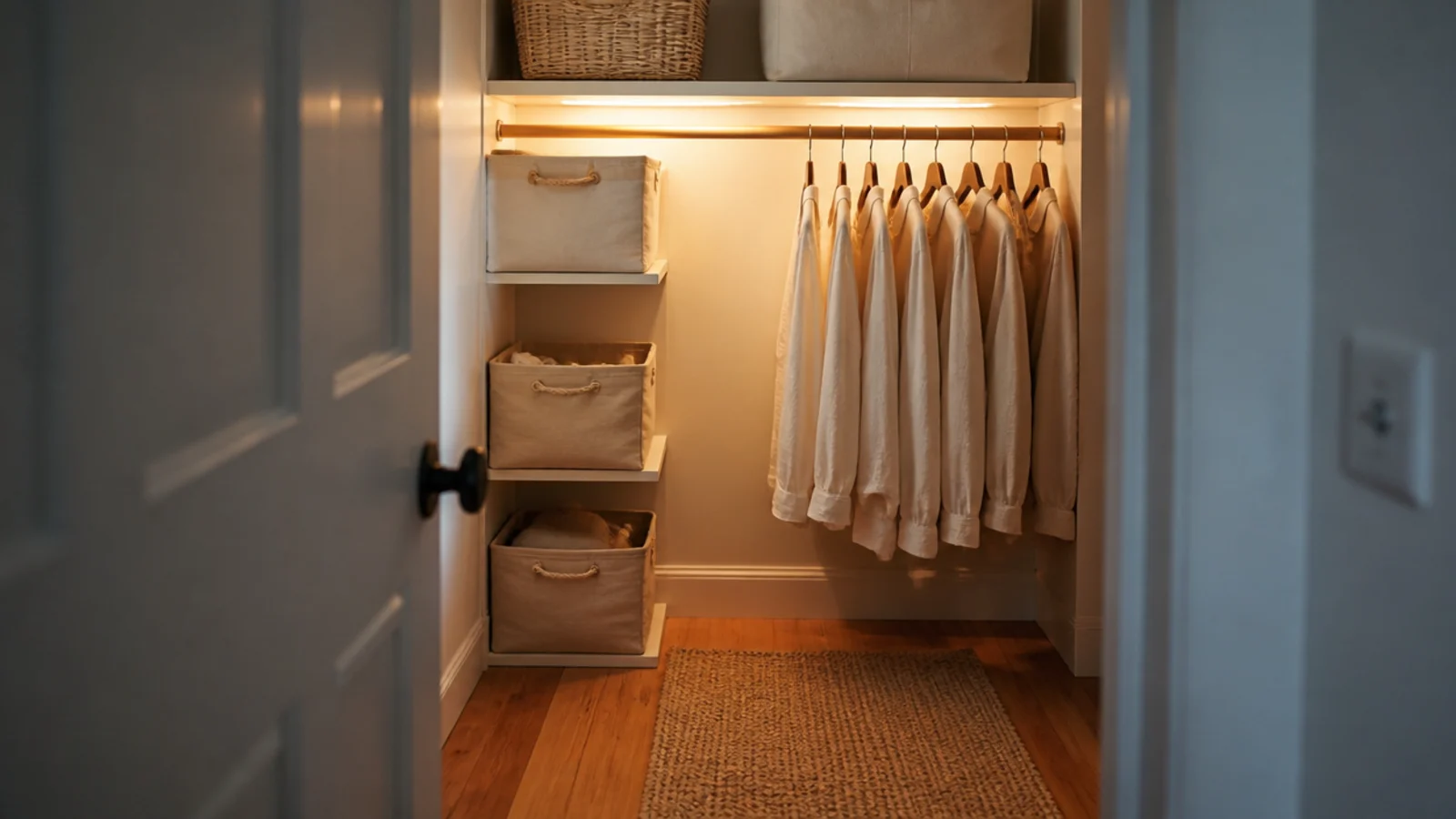
Give each category a basket sized to the shelf — a 14-inch shelf wants baskets 12 to 13 inches deep so nothing overhangs. Seagrass, cotton rope or canvas, $12 to $25 each ($). Soft things in soft containers, and the shelf stays quiet.
10. Label anything you cannot see into
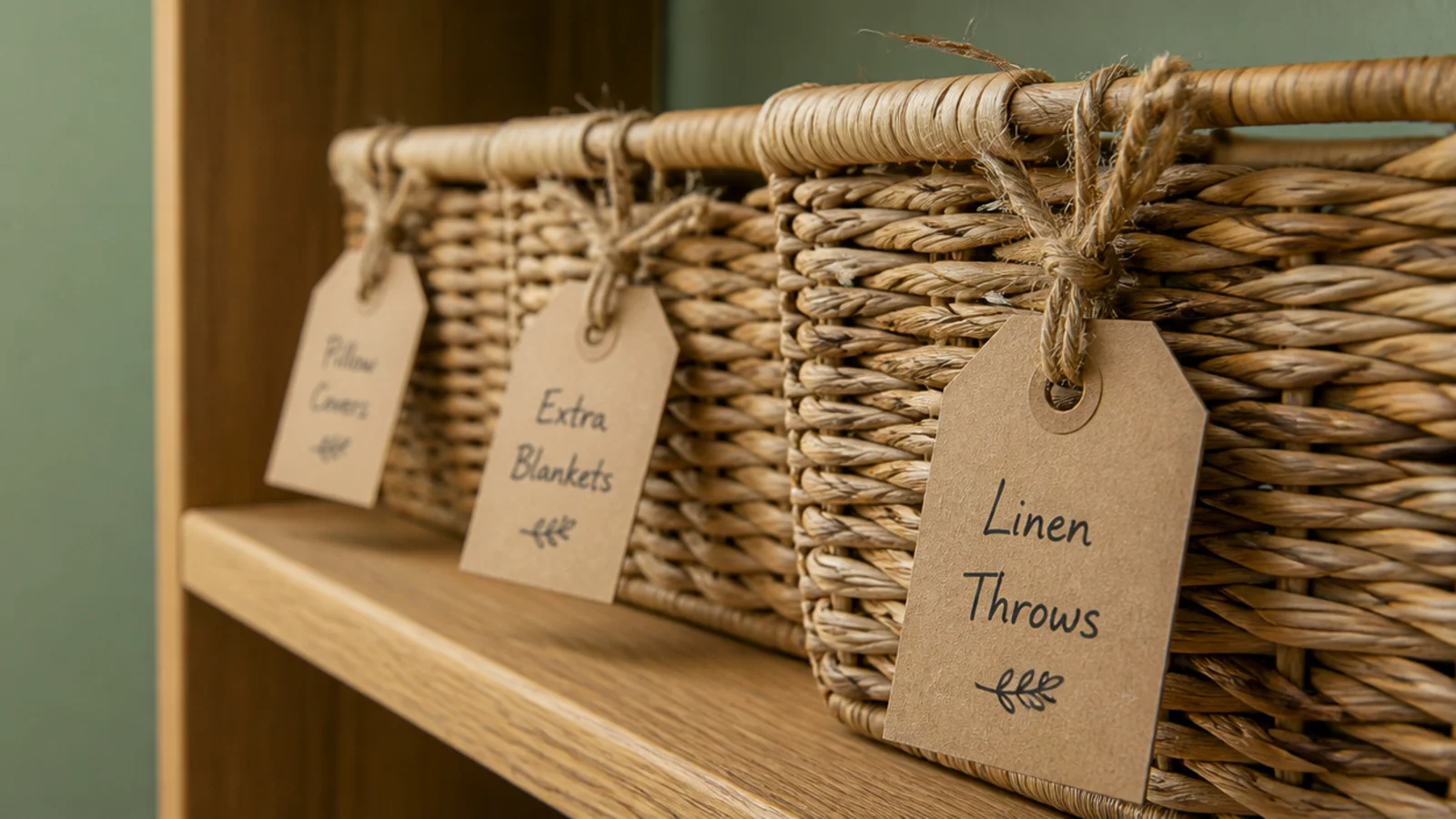
An opaque basket without a label becomes the mystery basket within a month, and then it becomes the place things go to disappear.
Kraft tags on jute twine cost pennies and look better than printed labels in a warm-toned closet. Write the category broadly — winter knits, spare bedding, gym — rather than listing contents you will inevitably change.
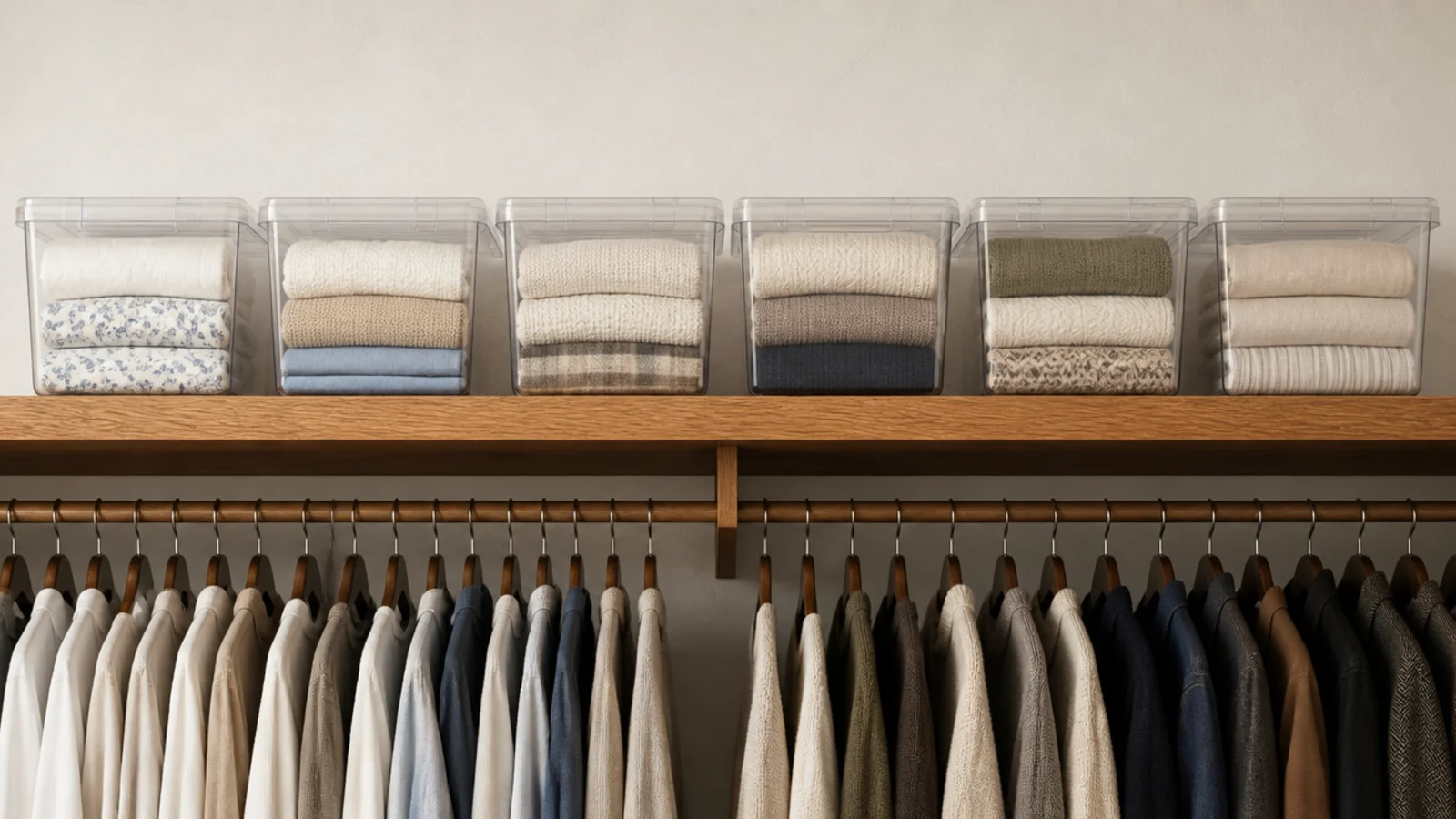
11. Put clear bins on the top shelf
Above 84 inches you are looking up at a row of boxes from below, so opacity is the enemy. Clear lidded bins let you scan the shelf from the doorway.
Keep them uniform in size and stop at two per shelf section, because a wall of mismatched plastic undoes every warm material below it. Lids matter here — open bins collect dust at that height.
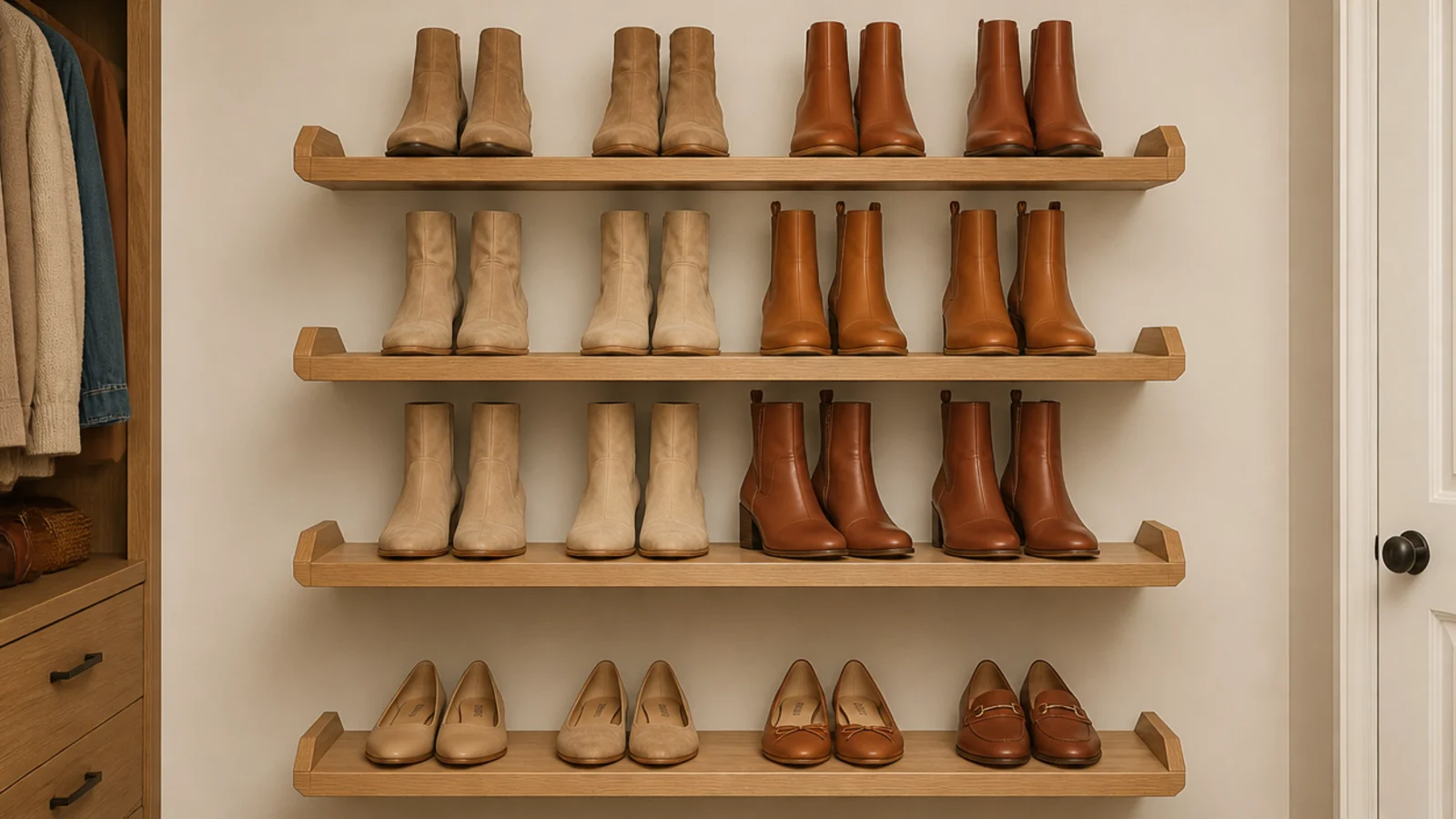
12. Sort shoes by heel height on angled shelves
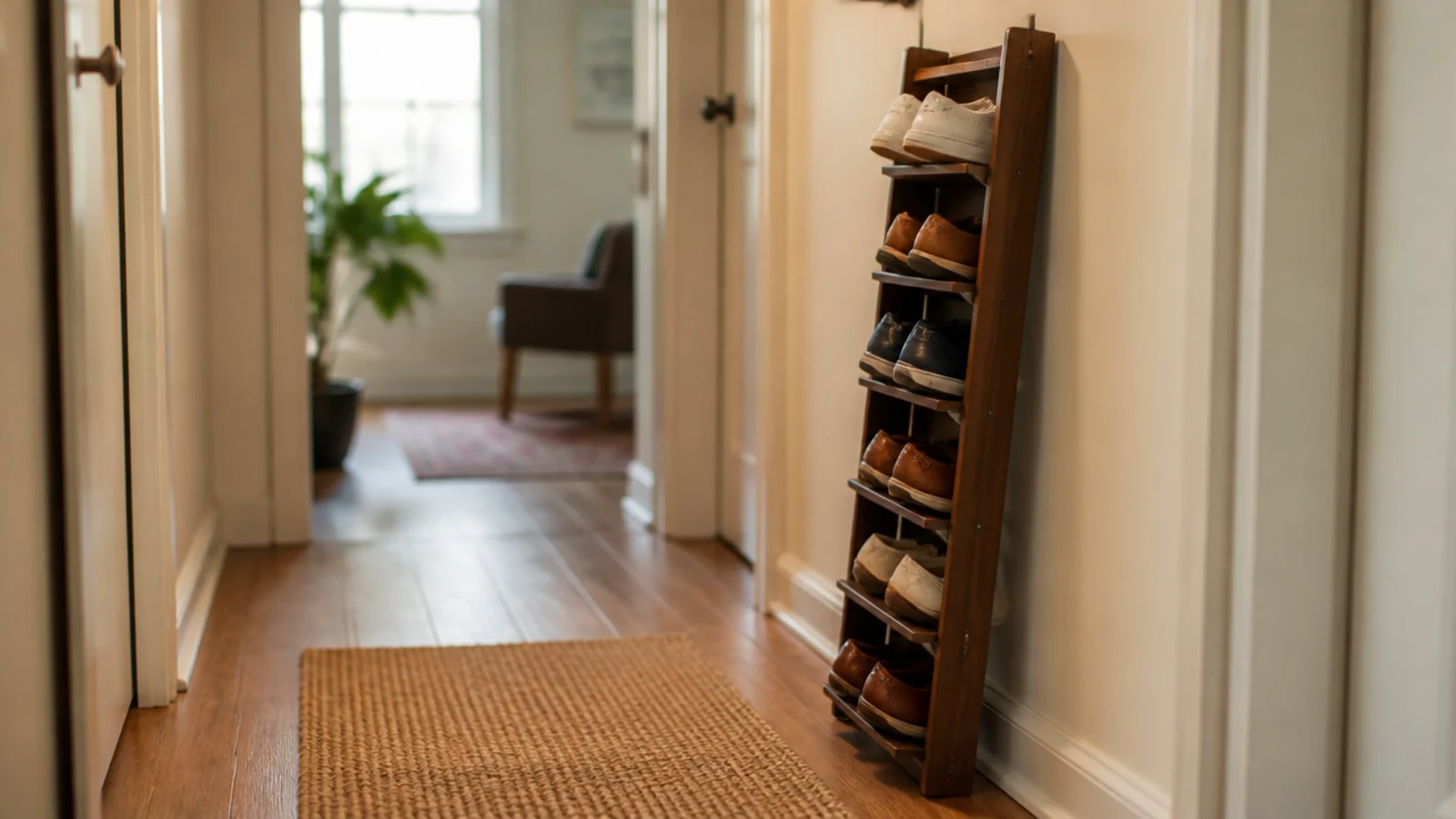
Group flats with flats and heels with heels, then set shelf gaps to match: 7 inches for flats and sneakers, 9 for heels, 13 for boots.
A 10-degree tilt with a slim front lip shows the whole shoe rather than a row of toes. Four shelves on a 40-inch end wall hold about 16 pairs. The full method lives in closet shoe storage.
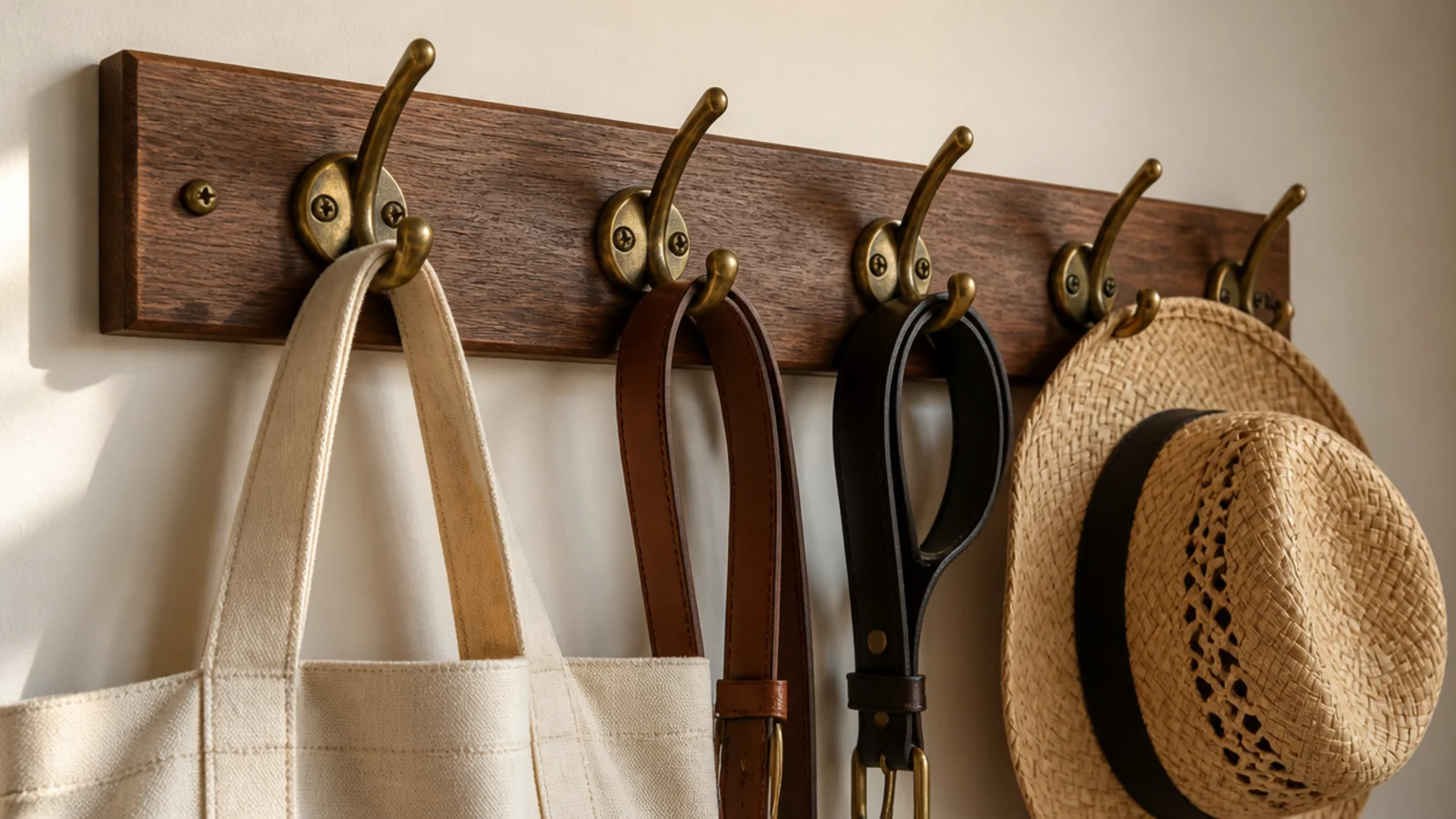
13. Hang anything with a strap
Totes, belts, scarves and hats all belong on hooks, where they take vertical space instead of shelf depth.
Five brass hooks on a 30-inch rail at 60 inches high, spaced 6 inches apart, handle a surprising load. In a rental, peel-and-stick hooks rated to 5 pounds hold a canvas tote fine — just be honest about the leather weekender.
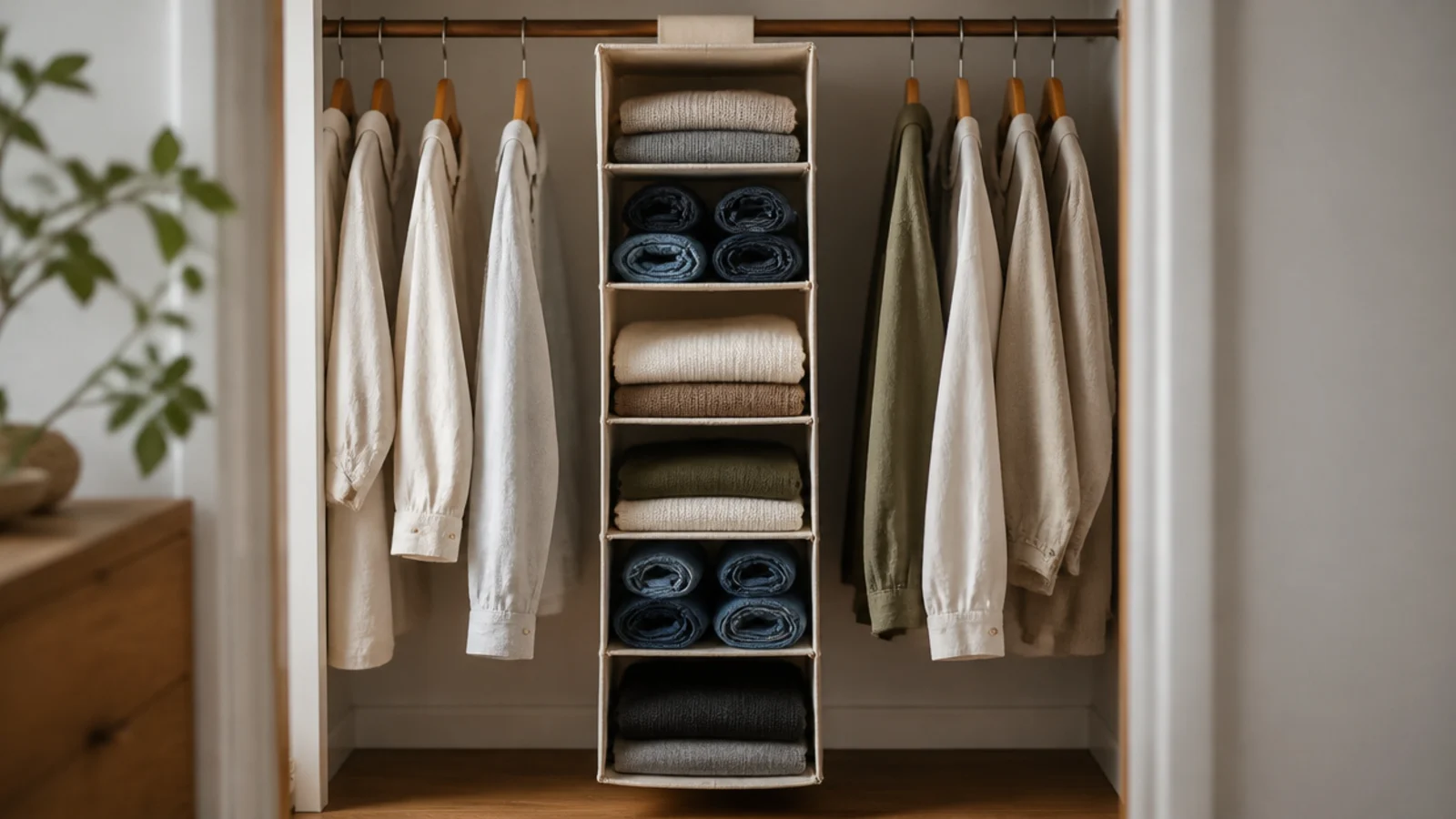
14. Add a hanging fabric shelf tower
If you cannot drill, a canvas tower that hangs from the rod gives you six shelves for $20 to $35 ($) and comes down in seconds.
Hang it at the end of a rail rather than the middle so it does not split your hanging into two awkward halves. Use it for knits and jeans, not for anything heavy — the rod is carrying all of it.
15. Switch to slim matching hangers
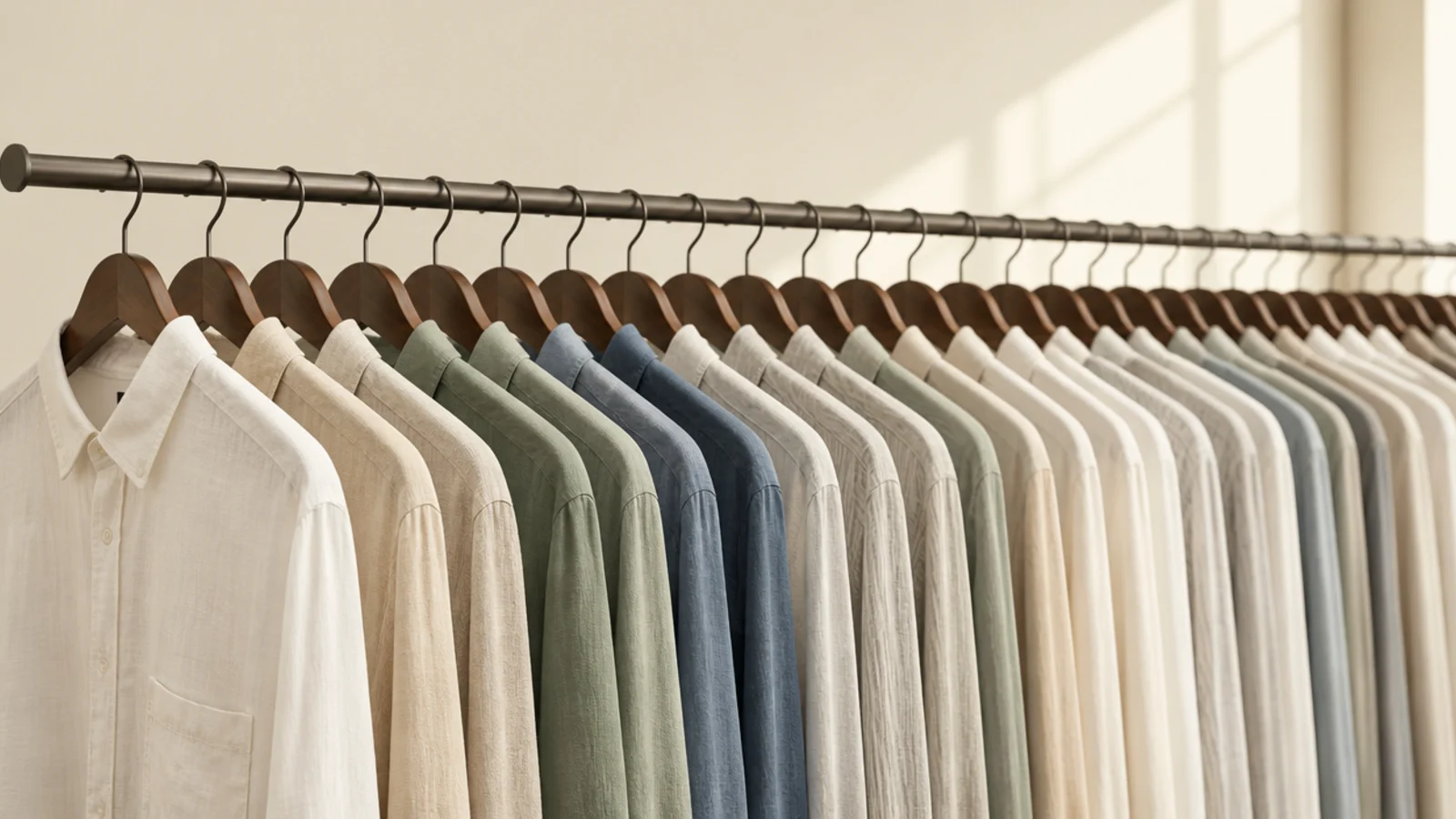
Mixed hangers sit at different depths, so garments fan out instead of lining up and you lose rail to nothing.
One profile — velvet at about $0.60 each, walnut at $2 to $4 — turns a 48-inch rail that held 30 shirts into one that holds 36. It also removes an enormous amount of visual noise, which is most of why photographed closets look calm.
16. Keep a donation bag on a hook
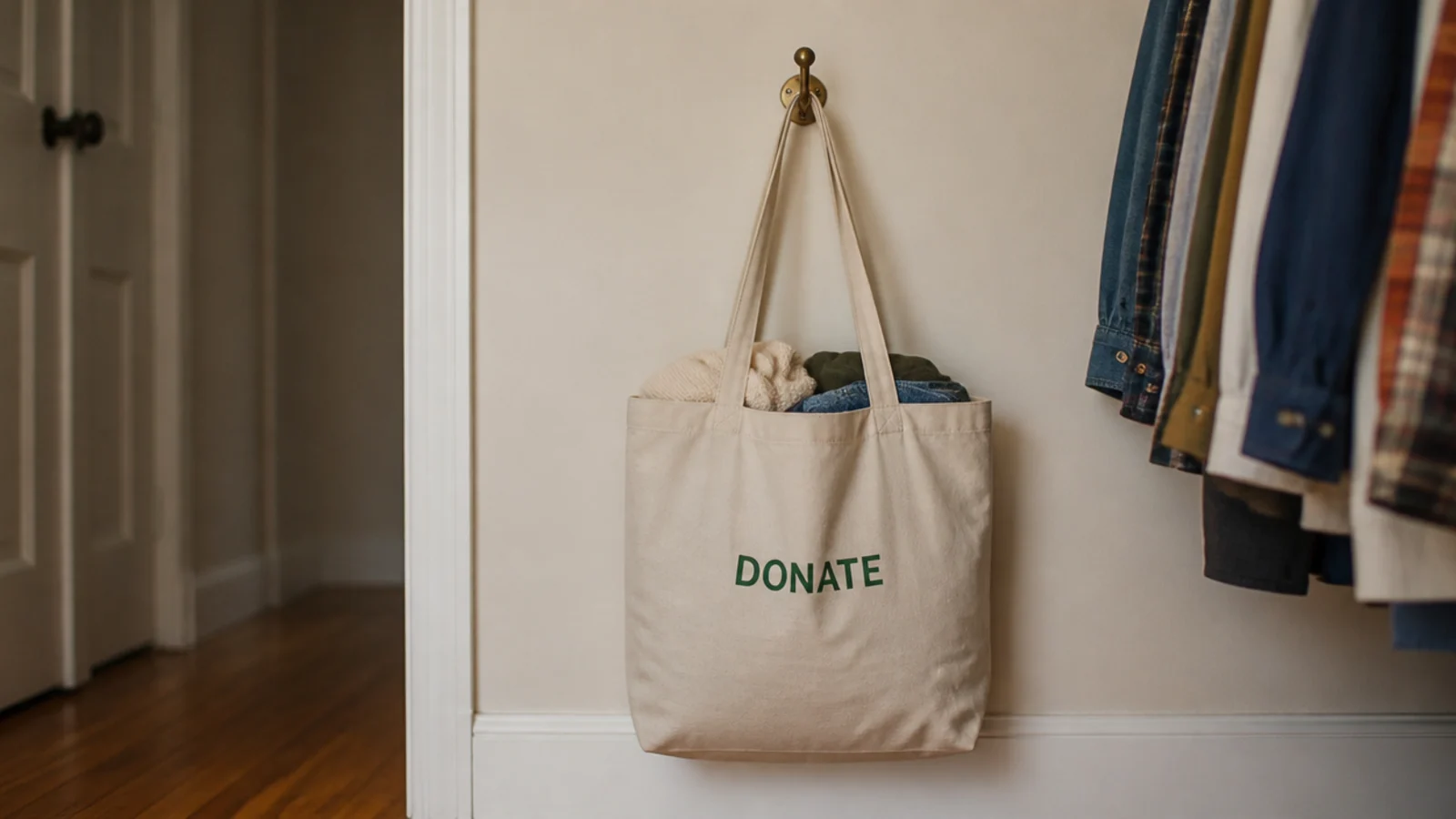
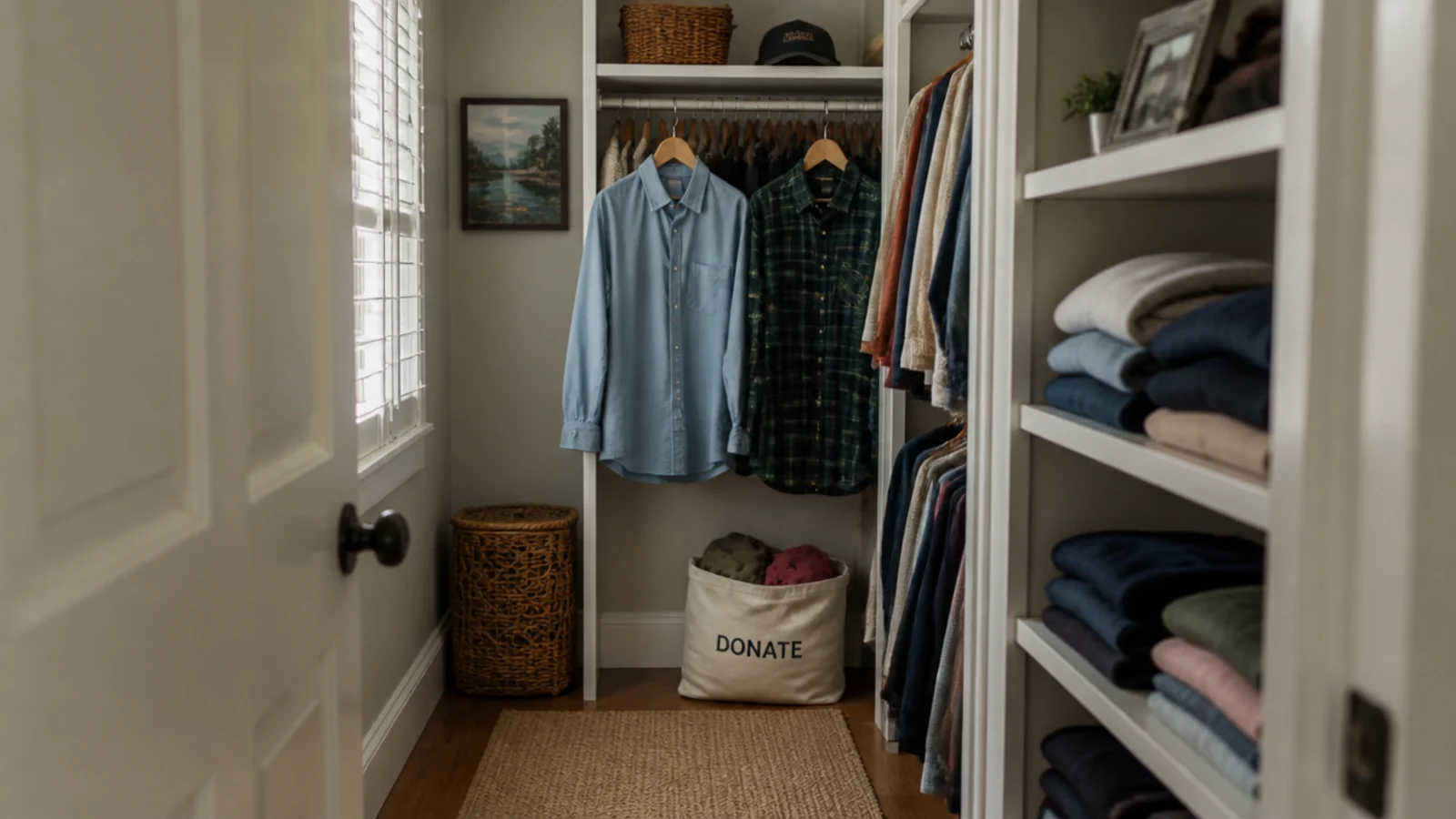
Hang a canvas tote on a spare hook and put things in it the moment you decide against them. No pile, no staging area, no seasonal purge.
When it is full, it goes. That single hook has removed more clothes from my closets than any weekend of sorting, because the decision happens while you are already standing there.
17. Vacuum-bag off-season bulk
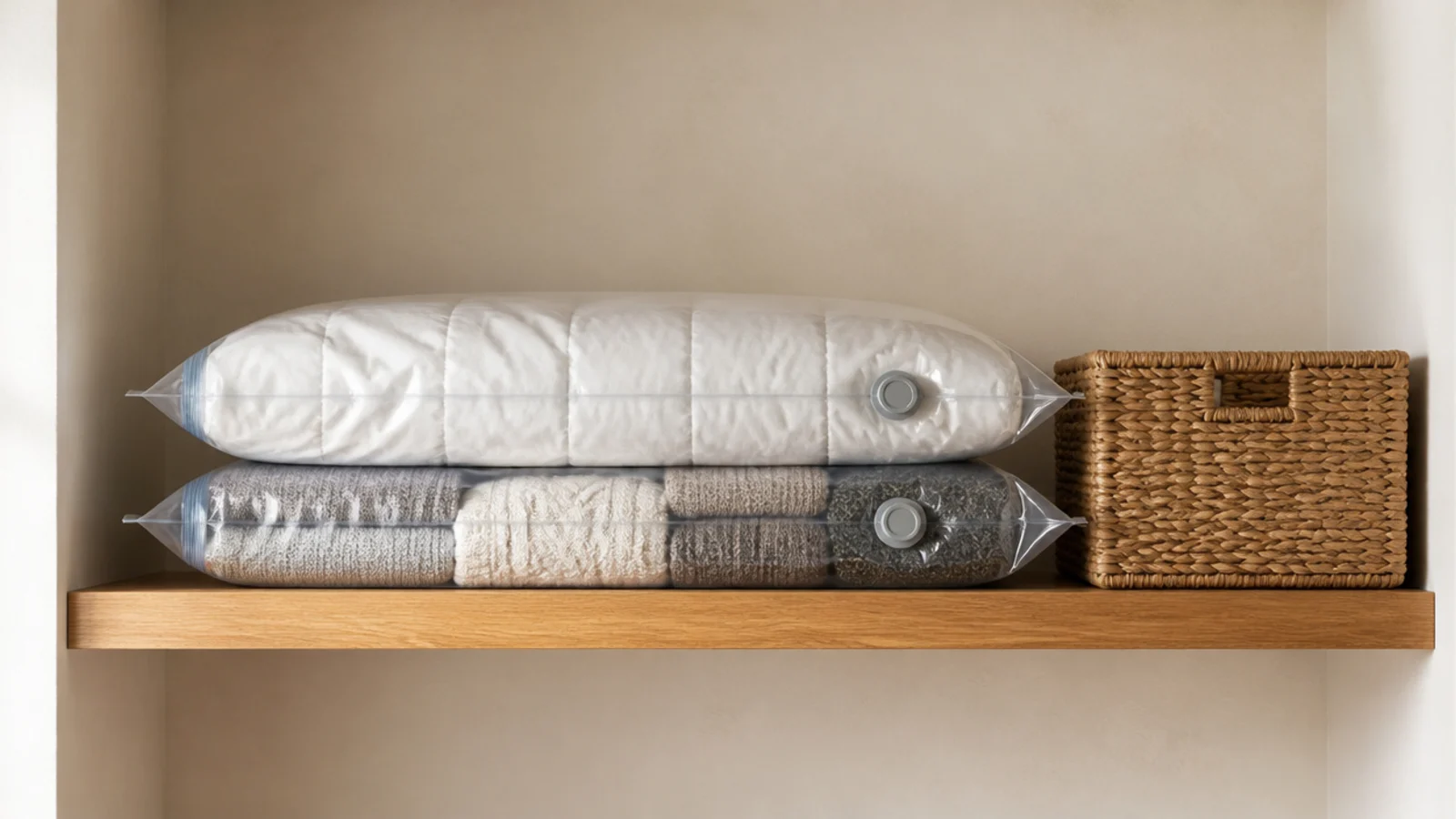
Duvets, winter coats and heavy knits compress to about half their volume in a vacuum bag, which is the difference between a top shelf that works and one that is jammed.
Store them flat above 84 inches, and add a cedar block rather than mothballs. Do not vacuum-bag anything with down long term — it needs to loft again, so give it a shake and a day out each season.
18. Give jewelry a shallow tray, not a box
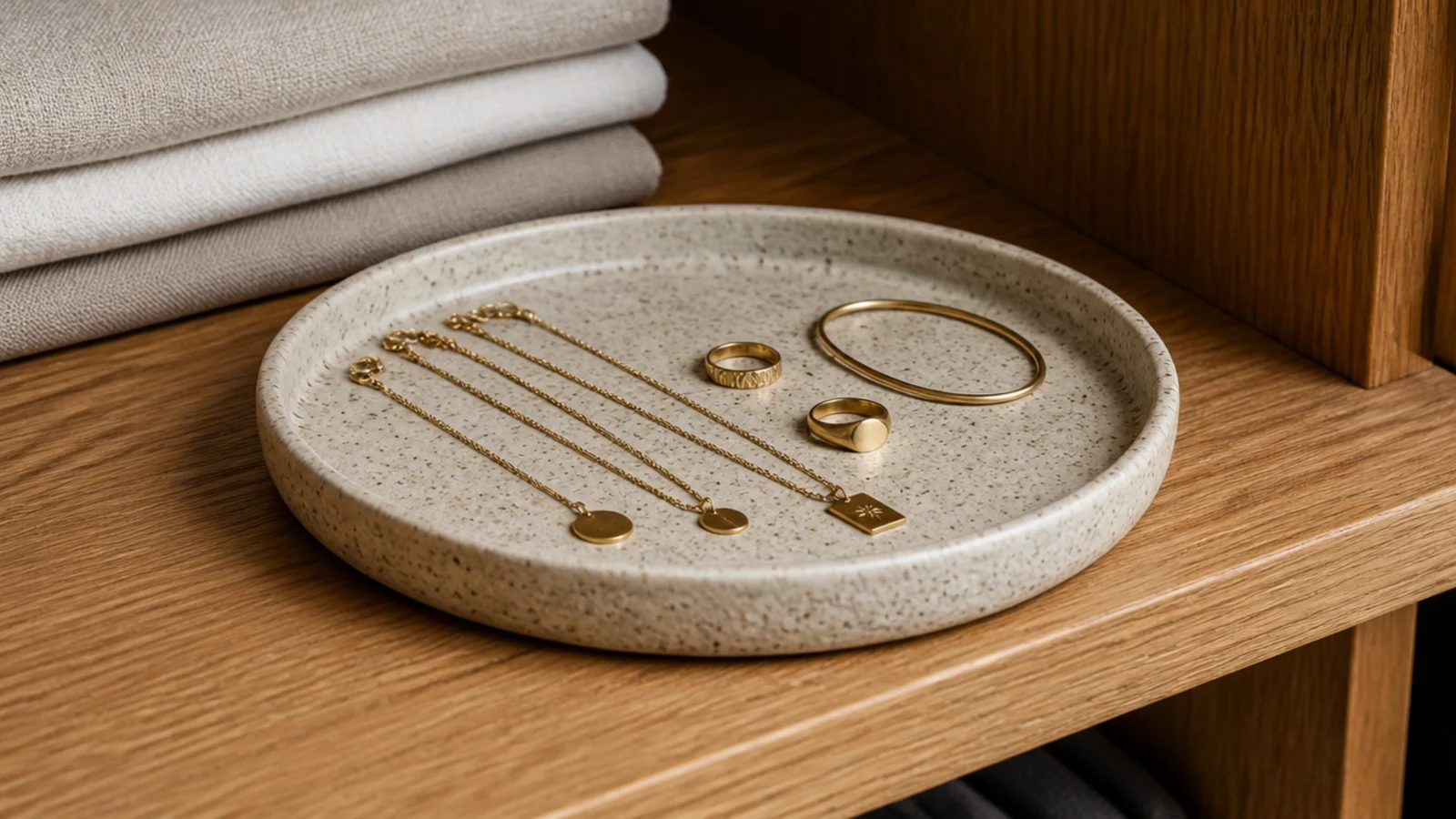
A deep jewelry box turns into a tangle you stop opening. A shallow stoneware or leather tray, about 2 inches deep, keeps everything visible in one layer.
Lay necklaces flat rather than coiled, and use a second small dish for rings. If you own a lot, a peg board on the inside wall at 60 inches hangs chains without knots for under $25.
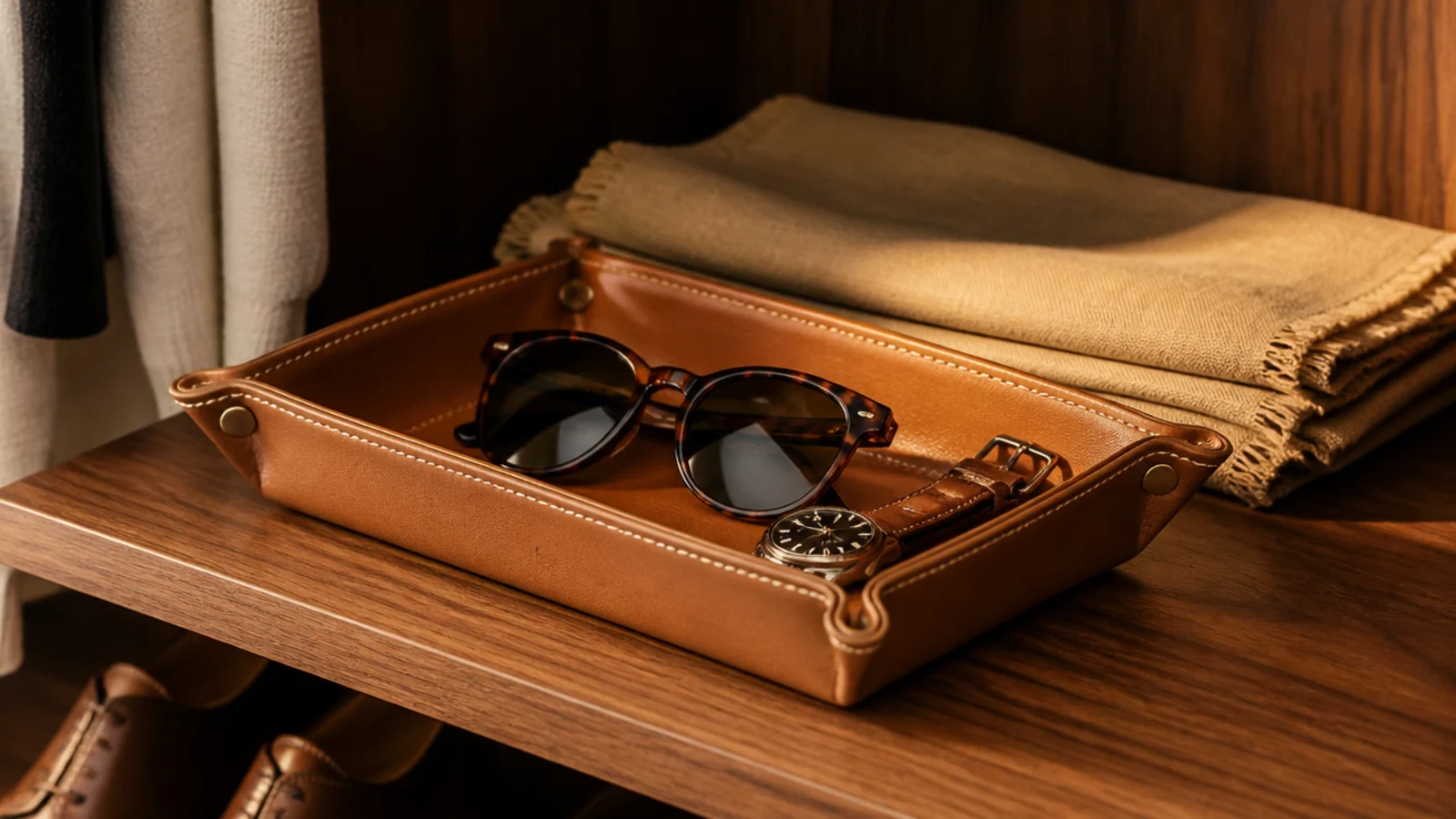
19. Corral watches and sunglasses in a catch tray
Sunglasses, watches and the contents of yesterday's pockets need one landing spot near the door or they colonize every flat surface.
One tray, 6 by 9 inches, on the shelf at chest height. Empty it during the weekly reset. This is a ten-dollar fix for the mess that makes an otherwise tidy closet look neglected.
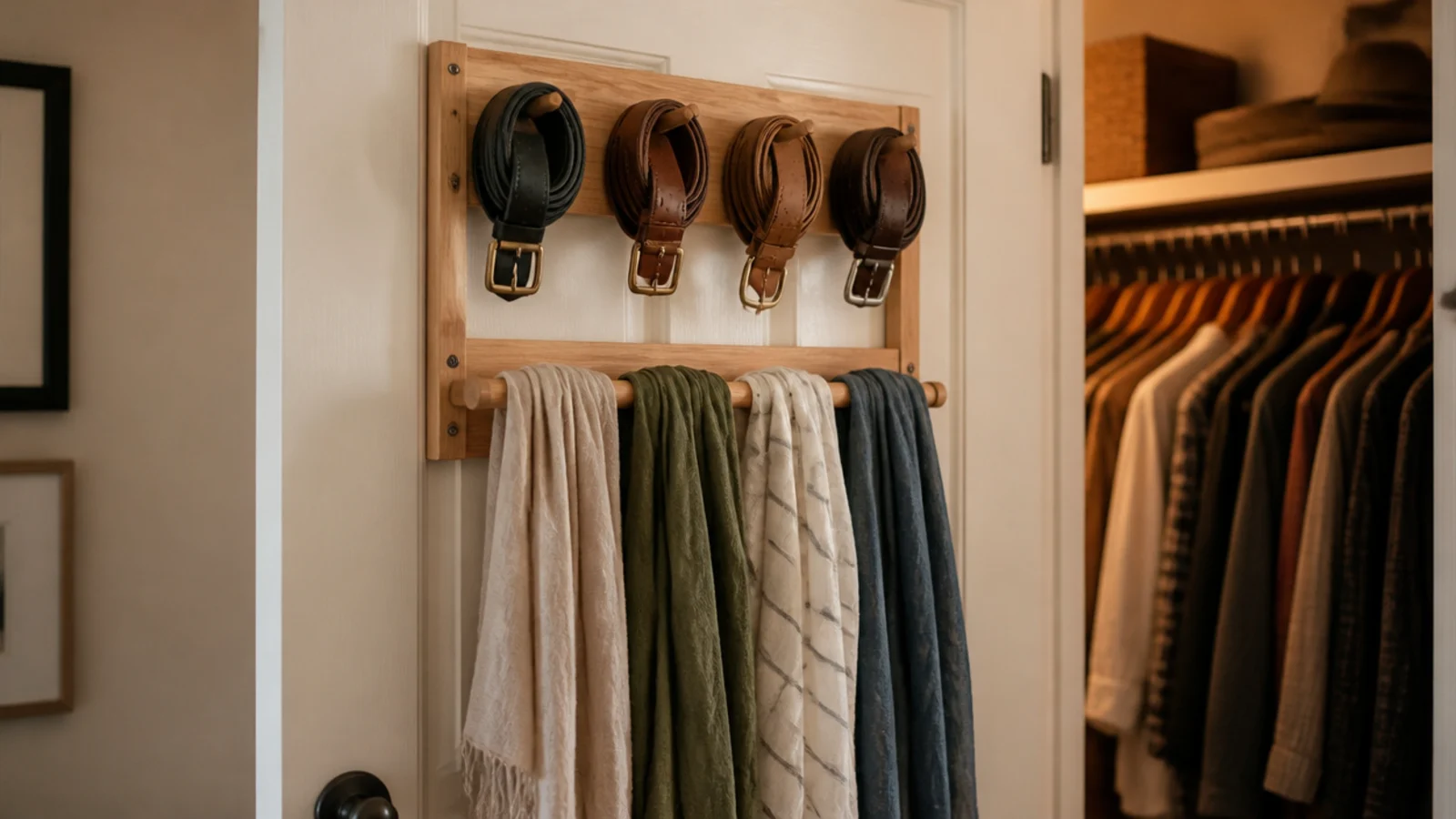
20. Move belts and scarves to the door back
The back of the closet door is the last free wall in the room, and it is perfect for flat, light things.
A slim rack holds coiled belts on one row and draped scarves on another in about 4 inches of depth. Use an over-door frame rather than screws on a hollow-core door, which will not hold them for long anyway.
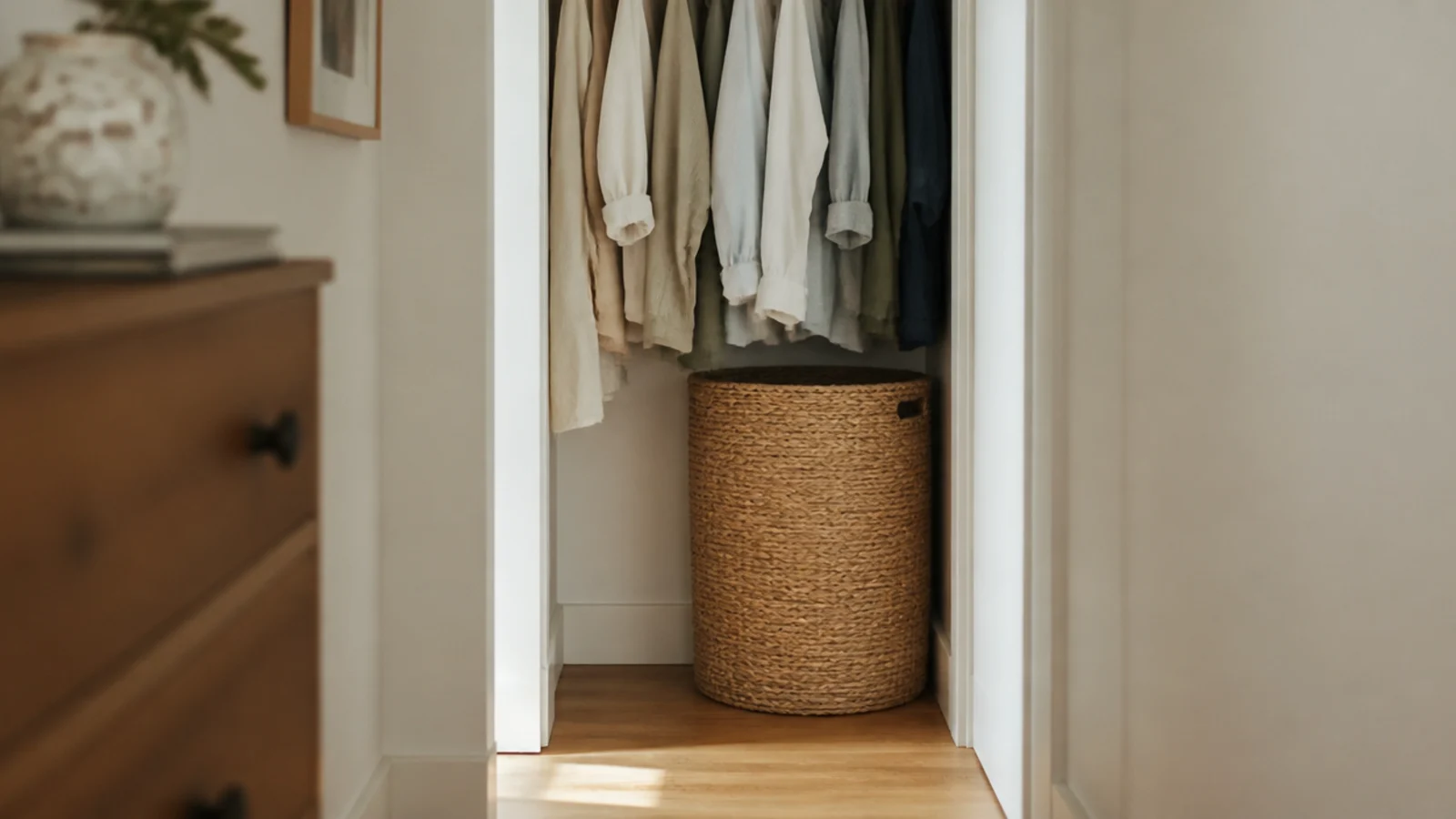
21. Fit a laundry basket inside the footprint
Laundry has to live somewhere, and left loose it eats the walkway you measured so carefully.
Put a tall narrow basket under a short hanging bay, inside the 24-inch hanging depth, so it never crosses the 36-inch corridor. Two compartments if you separate darks — sorting at the point of undressing saves the whole job later.
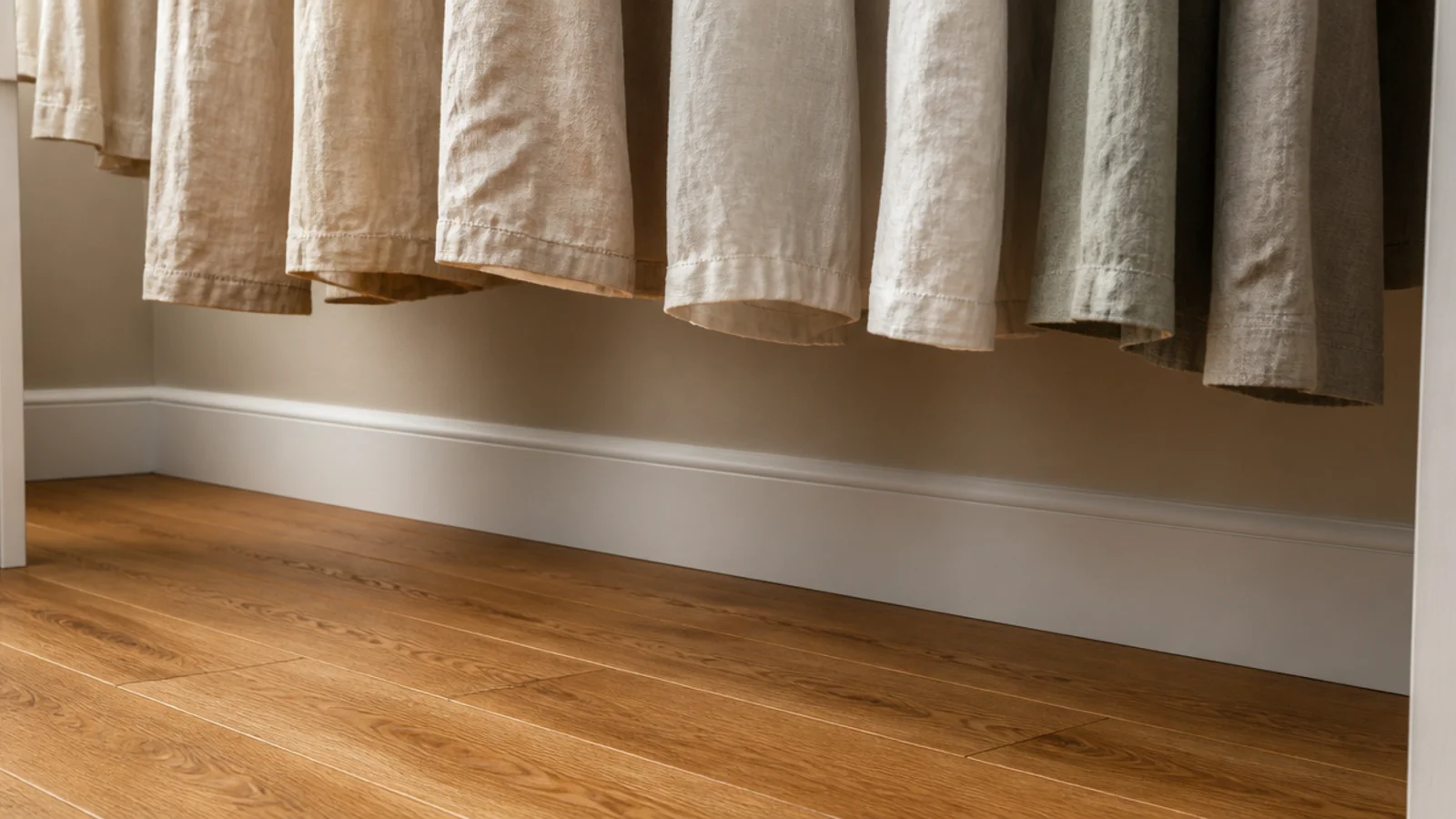
22. Leave a 6-inch gap above the floor
Set the lowest hanging hems to stop 6 inches above the floor, and keep that strip empty.
You will vacuum a closet you can reach into and you will not vacuum one packed to the baseboards. Dust settling on hems is what makes clothes smell stale, and it is the difference between a closet that feels fresh and one that does not.
23. Light the back, not the middle
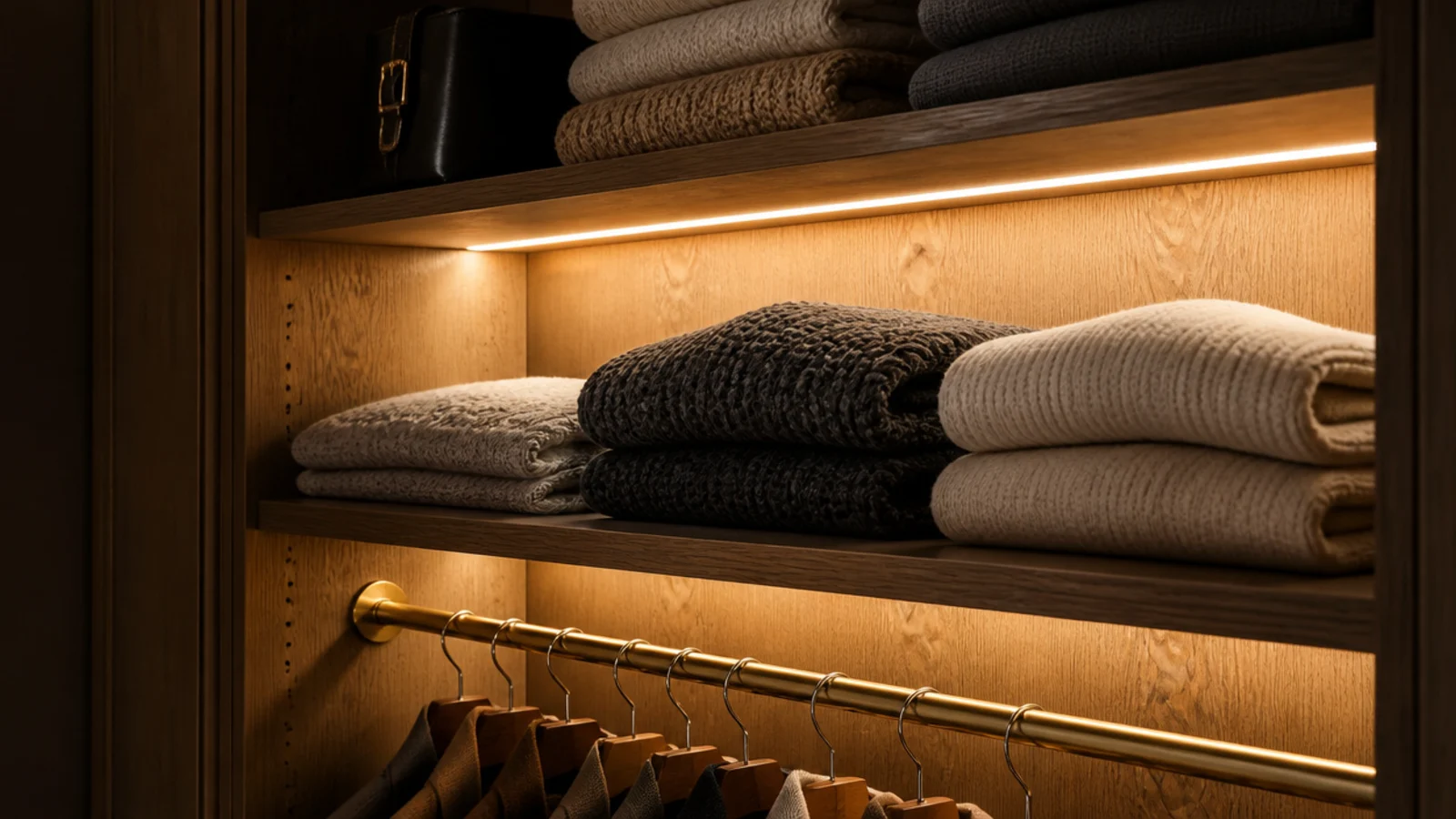
A single ceiling bulb in the center throws your own shadow onto whatever you are looking at. Strips under the shelf fronts light the faces of the clothes instead.
Use 3000K or warmer at CRI 90 or above — cool light reads navy as black. A rechargeable motion strip is $18 to $30 ($) per bay and needs no wiring at all.
24. Hang a full-length mirror inside
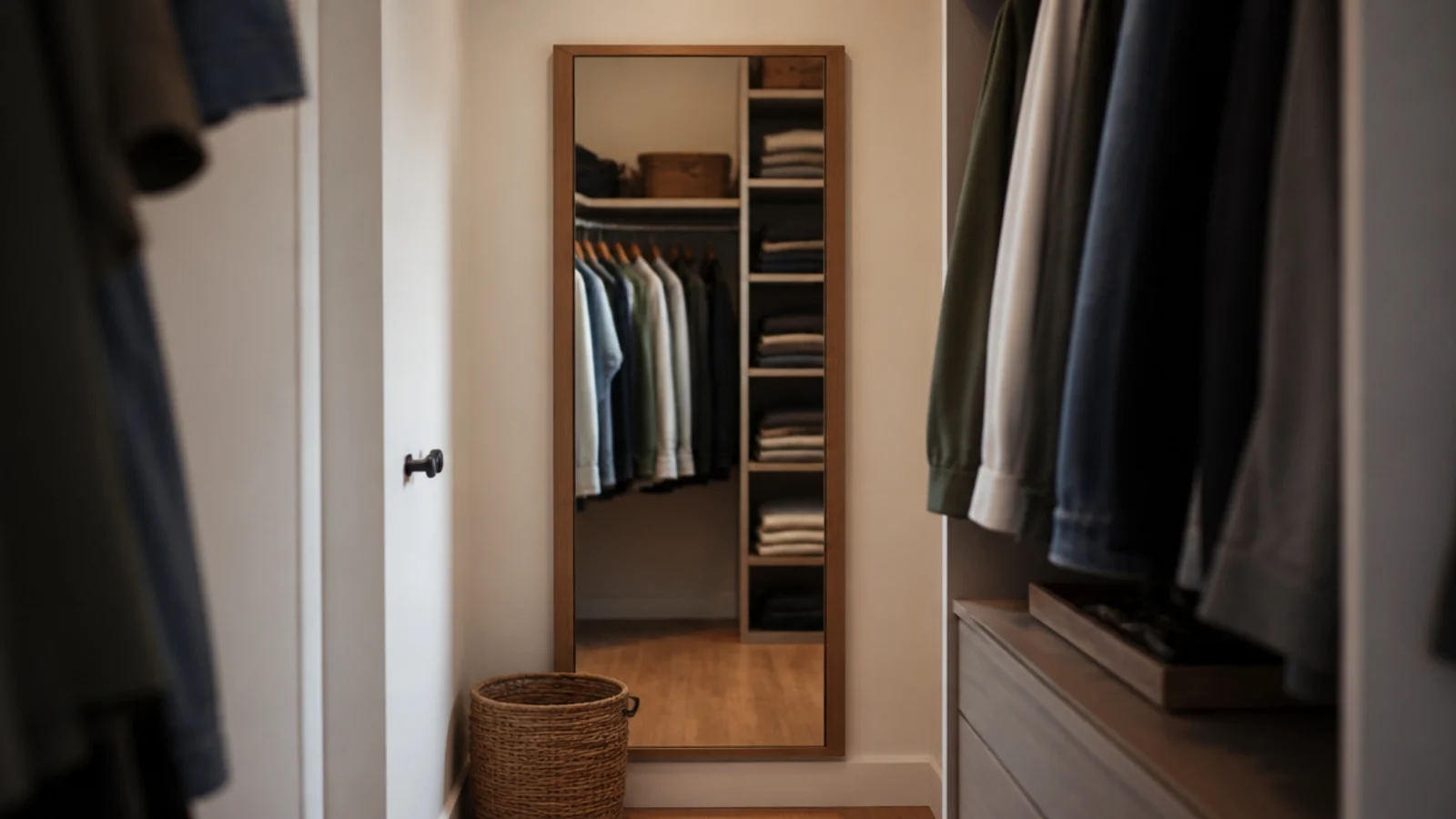
A mirror on the end wall or door back means you dress, check and adjust without leaving the room, which is the whole point of a walk-in.
Fix it at 60 inches to center. It also bounces the warm shelf light back across the space, so a 6-foot room stops reading as a cupboard with a bulb in it.
25. Run a ten-minute weekly reset
Every system decays. Ten minutes on a Sunday — rehang strays, square one slumped stack, empty the donation bag — keeps it permanently in the state you built it.
Then one proper edit each season, swapping what lives above 84 inches with what sits at eye level. Neglect is what kills closets, not bad design. Walk-in closet mistakes covers the rest of the ways it goes wrong.
Mistakes to Skip
- Buying containers before measuring the shelf. A 14-inch shelf needs baskets 12 to 13 inches deep, and anything that overhangs the front edge will be knocked off within a week.
- Organizing by color across the whole closet. It photographs beautifully and it collapses the first busy morning, because there is no obvious home for anything.
- Filling the closet to the baseboards. Without a clear 6-inch gap under the hanging you will never vacuum it, and stale is the fastest way to stop wearing clothes.
Frequently asked questions
What is the best way to organize a small walk-in closet?
Sort by garment type first and color second, then zone by how often you reach for something. Daily items live at eye level between 54 and 66 inches, weekly items sit above or below that, and seasonal storage goes above 84 inches or below 24. Type before color is what makes the system survive a busy week.
How do I stop folded clothes falling over on a shelf?
Two things fix it. Fold to a consistent 12-inch width using a piece of cardboard as a template, and add an acrylic or wood shelf divider every 12 inches. Dividers cost about $4 each and turn a shelf into slots, so pulling one sweater out no longer takes the whole stack with it.
Should clothes be folded or hung in a small closet?
Hang anything that creases and anything you own a lot of, because a rod holds more per inch than a shelf. Fold heavy knits, which stretch on hangers, and denim, which does not crease. In a tight closet the split usually lands around 70 percent hanging and 30 percent folded once you double-hang.
How often should I reset a small closet?
Ten minutes a week and one proper edit each season. The weekly reset is just rehanging strays, refolding one slumped stack and emptying the donation bag. The seasonal edit swaps what sits above 84 inches with what sits at eye level. Systems fail from neglect, not from bad design.
What are the cheapest closet organizers that actually help?
Shelf dividers at about $4 each, slim matching hangers at $0.60 to $2, a set of drawer dividers around $15 and a $20 warm LED strip. Those four cost under $80 together and change a small closet more than any $400 tower system, because they fix the three real problems: slumping, spacing and seeing.
Start with dividers, matching hangers and a warm light strip before you spend anything on a system — under $80 of hardware fixes most of what feels wrong in a small closet. Once it is sorted, small closet shelving ideas covers the spacing that keeps it that way, and a minimalist walk-in closet shows how far the editing can go. Save the pin below so the measurements are with you when you shop.
Want more like this? Browse all 15 small walk-in closet ideas guides — they all use the same measurements and budget tiers.
Pin it for later
Save this to your Small Walk-In Closet Ideas board
Pin it now so it is waiting for you when the tape measure comes out — and so the next person hunting for this idea can find it too.
Save this pinKeep going
More ideas worth saving while you have the tape measure out.