Attic Bedroom Ideas · Listicle
25 Attic Bedroom Ideas For Teens They Will Not Hate

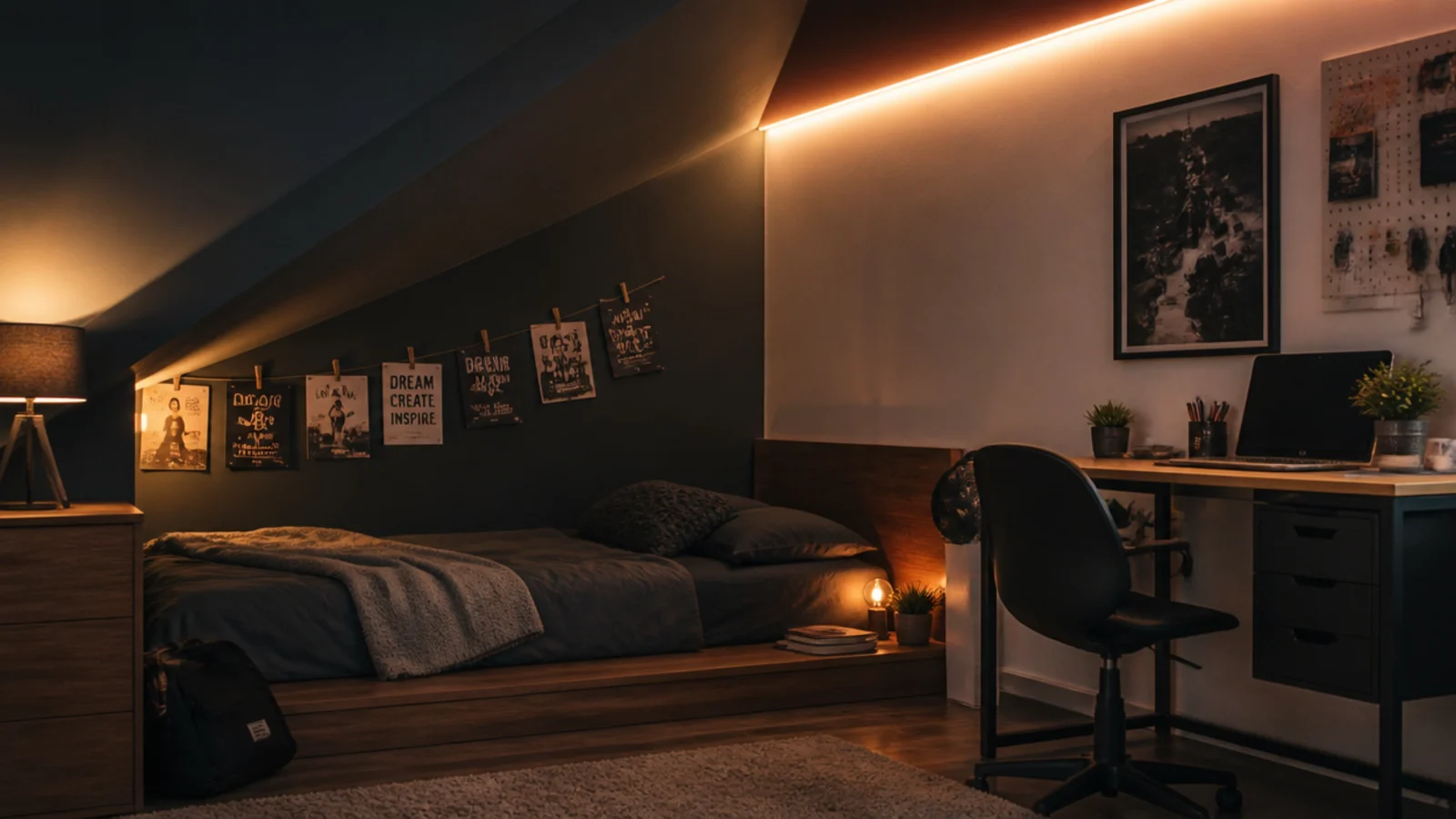
The loft is usually the room a teenager gets, and it is usually the room that gets the least planning. Six years is a long time in a person's life, and the layout that suits twelve is rarely the one that suits eighteen. These attic bedroom ideas for teens are built to survive that stretch, with the measurements that stop the room needing a rebuild halfway through.
The two things that dated fastest in the loft I redid for my brother's eldest were the desk height and the paint. Both were fixable. The bed we bought first was not.
In this guide27 sections — tap to openHide
- 1.What attic bedroom ideas for teens have to survive
- 2.Give the desk 60 inches of headroom above the seat
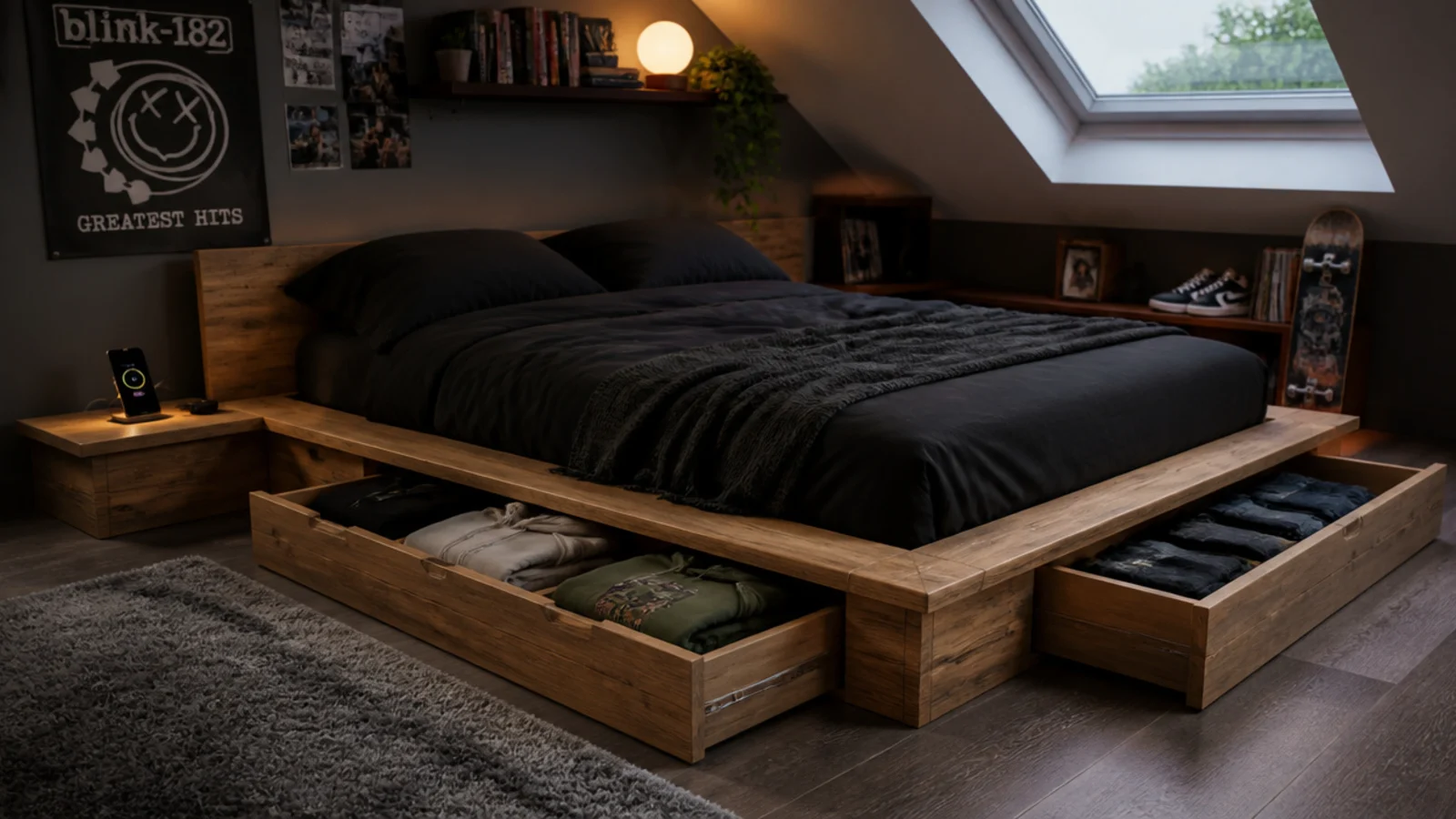
- 3.Use a low platform bed with drawers underneath
- 4.Let them choose the wall colour
- 5.Run a warm LED strip along the ridge
- 6.Hang posters on a wire, not with tape
- 7.Fit a full-length mirror on the straight wall
- 8.Put clothes storage inside the knee wall
- 9.Plan sockets at the desk, the bed and the floor
- 10.Add a floor cushion instead of a second chair
- 11.Fit a blackout blind on the roof window
- 12.Keep the walkway 24 inches and defend it
- 13.Soundproof the floor before it is boarded
- 14.Use a rail on the wall for tomorrow clothes
- 15.Recess the screen into the knee wall
- 16.Give homework a dimmable task light
- 17.Anchor every tall piece to the framing
- 18.Add a pinboard for the things that change
- 19.Use a rug with underlay over bare boards
- 20.Build a shelf for the things on display
- 21.Keep the escape window permanently clear
- 22.Choose bedding they picked, in a washable weave
- 23.Hide the laundry in an eaves basket
- 24.Insulate and seal behind the storage doors
- 25.Leave one wall for them to change
- 26.Redo the paint at fifteen, not the layout
- 27.Mistakes to Skip
What attic bedroom ideas for teens have to survive
Plan for the adult, not the child. A twelve-year-old can gain six inches in two years, so the desk needs 60 inches of clear headroom above where their head sits, not where it sits today. Measure at the chair position rather than the desk edge — under a slope those are two very different numbers.
The room also has to hold more than a child's does: clothes that no longer fold small, a laptop, a console, sports gear, and friends who sit on the floor. That means storage volume rather than storage cuteness. Knee wall drawers at 14 to 16 inches deep take a folded hoodie; a low platform bed with drawers underneath replaces a chest entirely.
Safety does not relax with age. A sleeping room needs its emergency escape and rescue opening — commonly 5.7 square feet net clear, 24 inches minimum height, 20 minimum width, sill within 44 inches of the floor — kept permanently clear, habitable ceiling height is a regulated minimum enforced by your local building department, and tall furniture still gets an anti-tip fixing into framing. Behind the knee wall, insulate, air-seal and keep a clear 1 to 2 inch soffit-to-ridge air path.
Budget: paint $60 to $120, a low platform bed with drawers $250 to $600, eaves drawers $300 to $700 in materials, LED strip and driver $25 to $60.
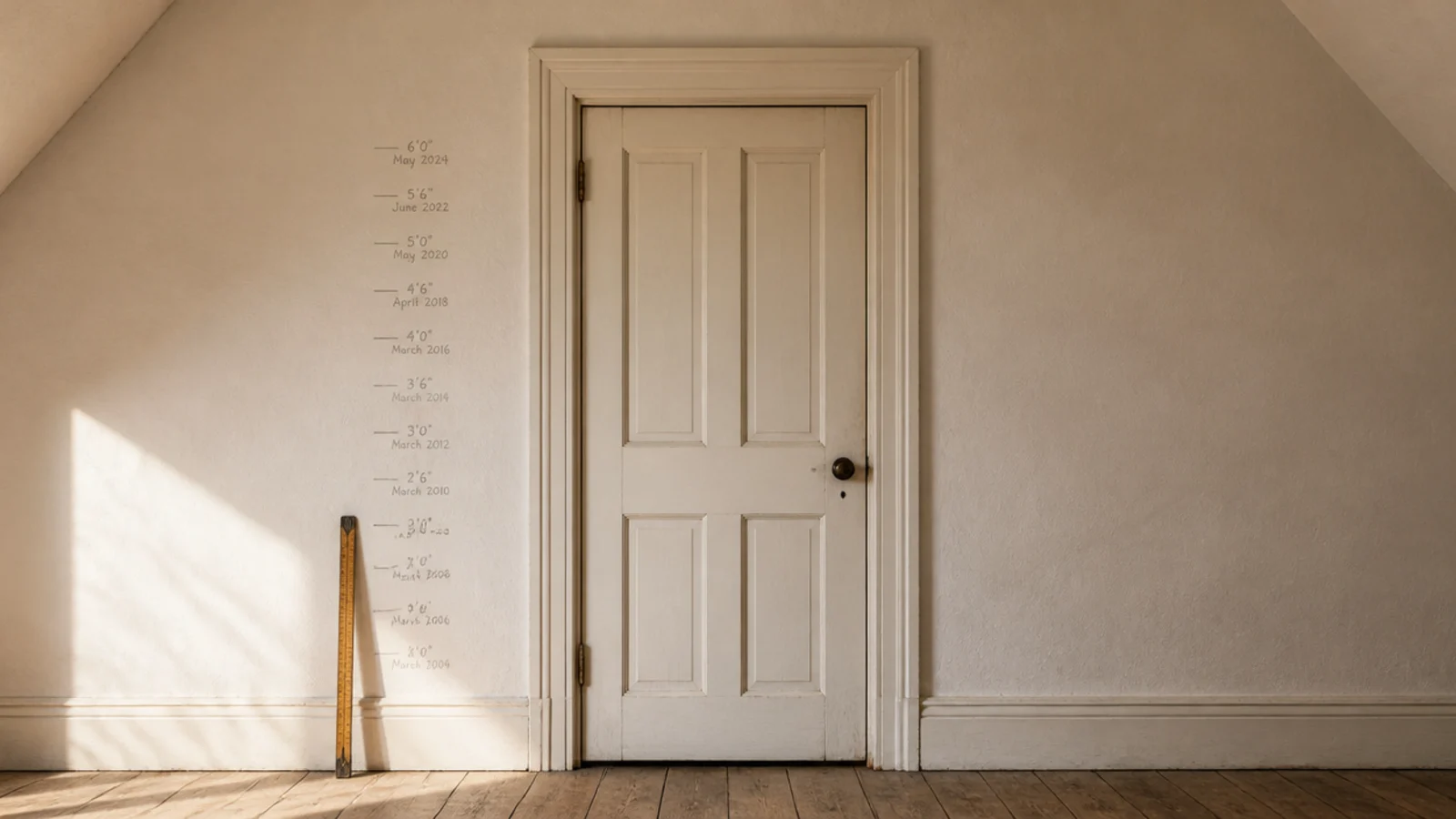
1. Give the desk 60 inches of headroom above the seat
Desk height is 29 inches whatever the roof does, but the number that decides where it goes is the clearance above the chair. Sixty inches lets a tall teenager sit up straight and lean back. Put the desk on the straight wall and let the wardrobe take the slope.
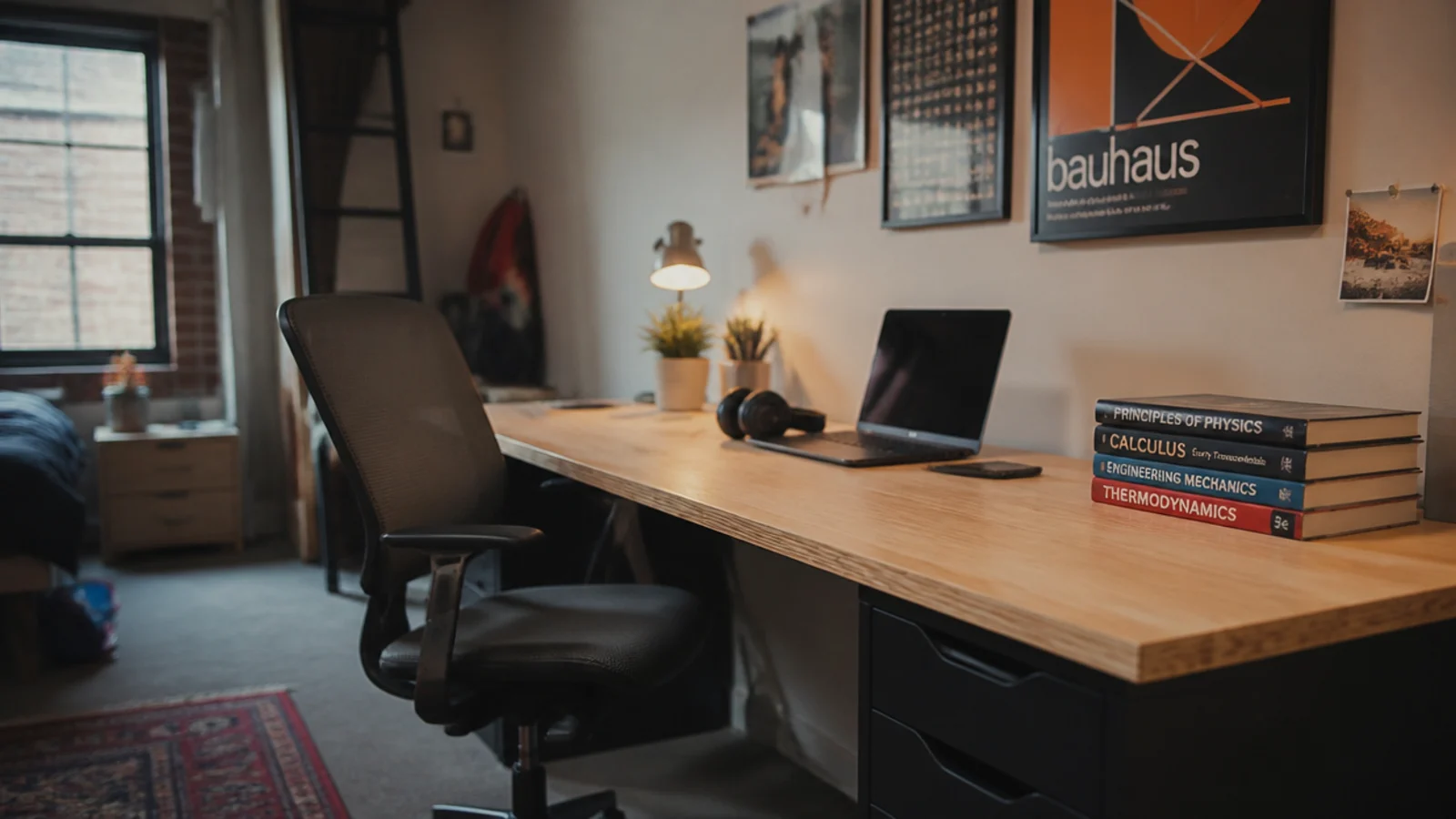
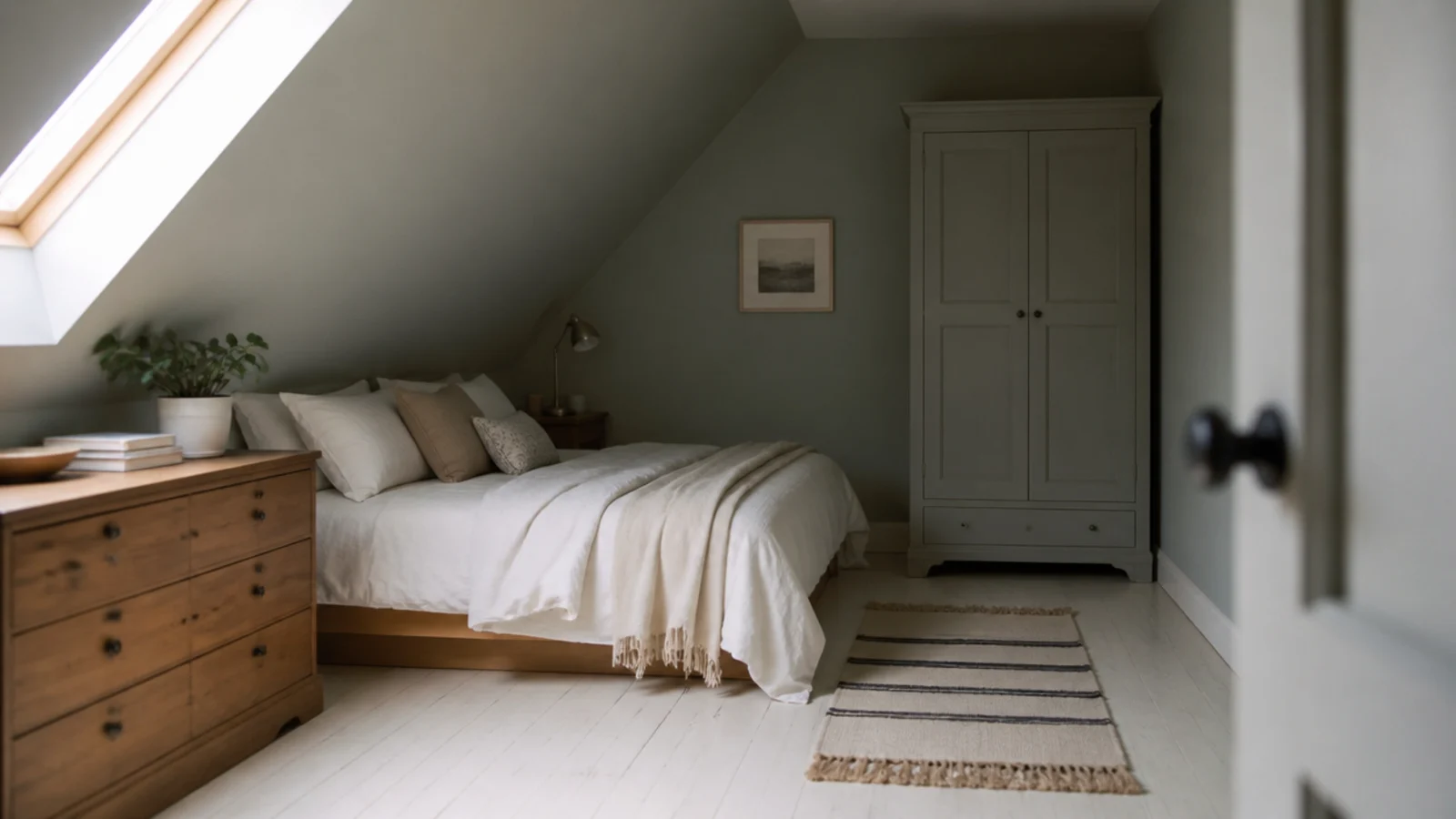
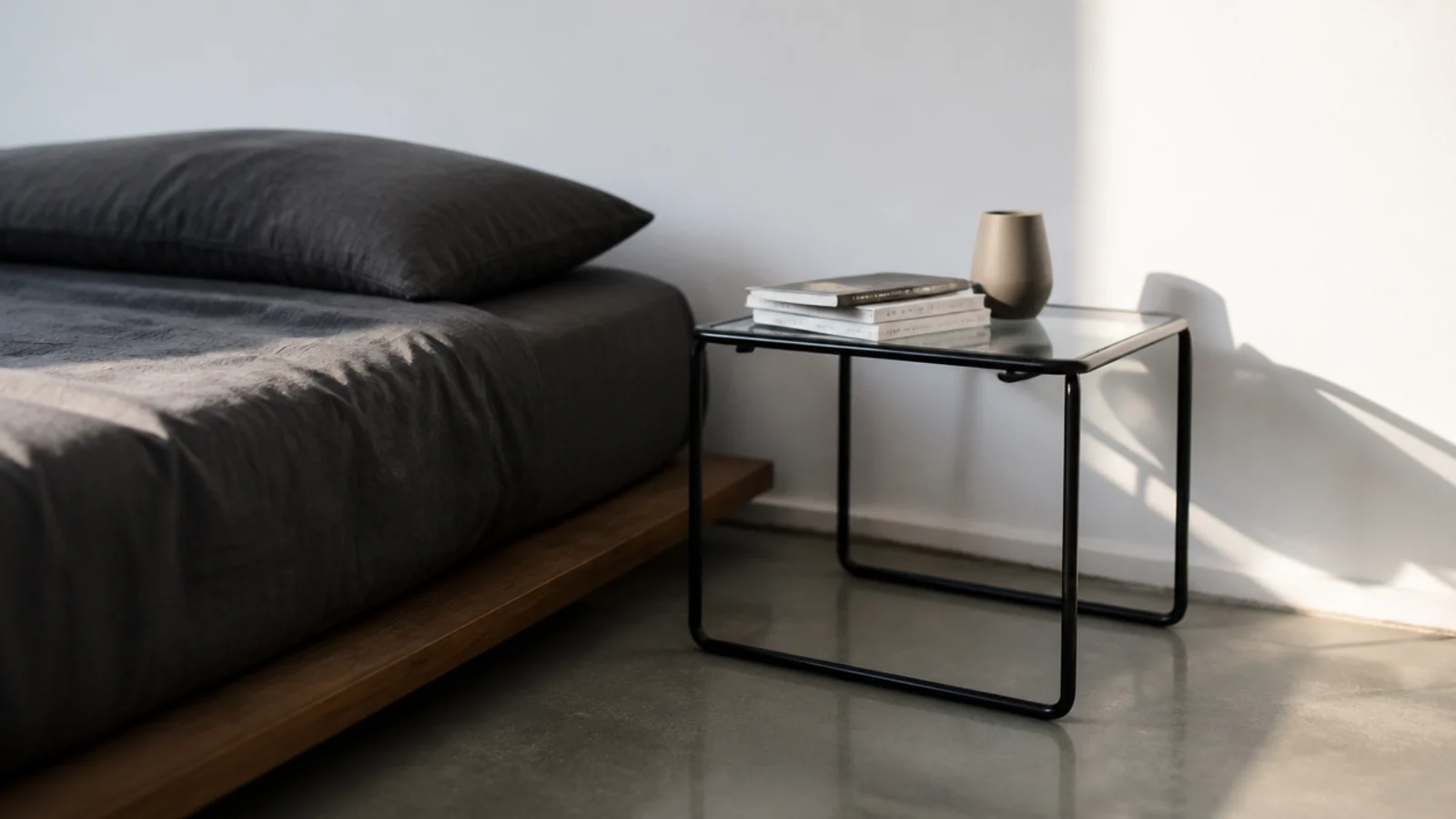
2. Use a low platform bed with drawers underneath
At 12 to 14 inches to the mattress top you gain a foot of headroom over a divan and can push the bed further under the pitch. Two drawers underneath hold what a chest would, which in a loft is often the only place that volume can go.
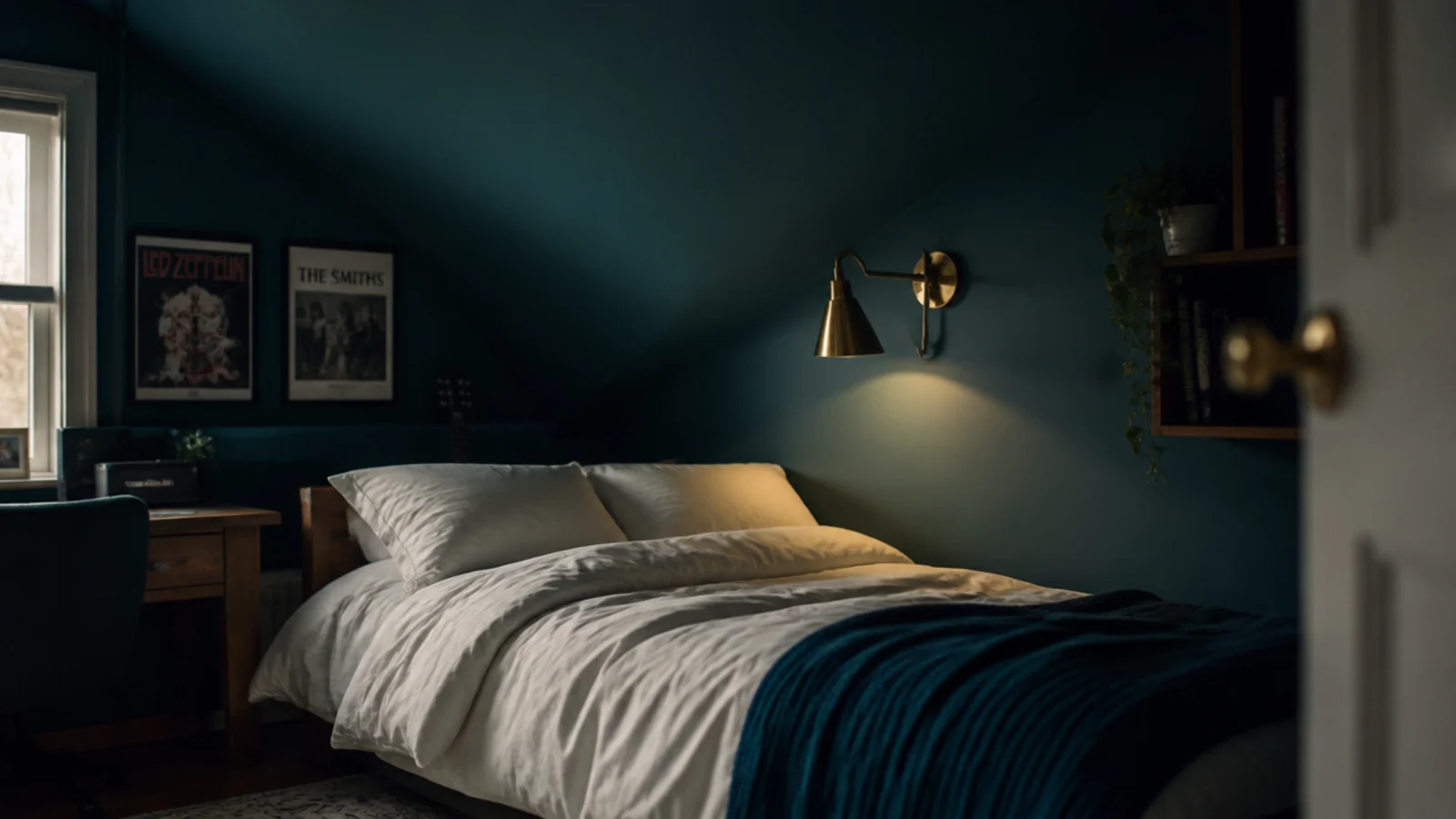
3. Let them choose the wall colour
A colour they chose survives about twice as long as one you chose, and repainting a loft is $60 to $120 rather than a renovation. Carry whatever they pick across the wall and the slope together in a scrubbable matte — the continuous surface is what keeps a strong colour from closing the room in.
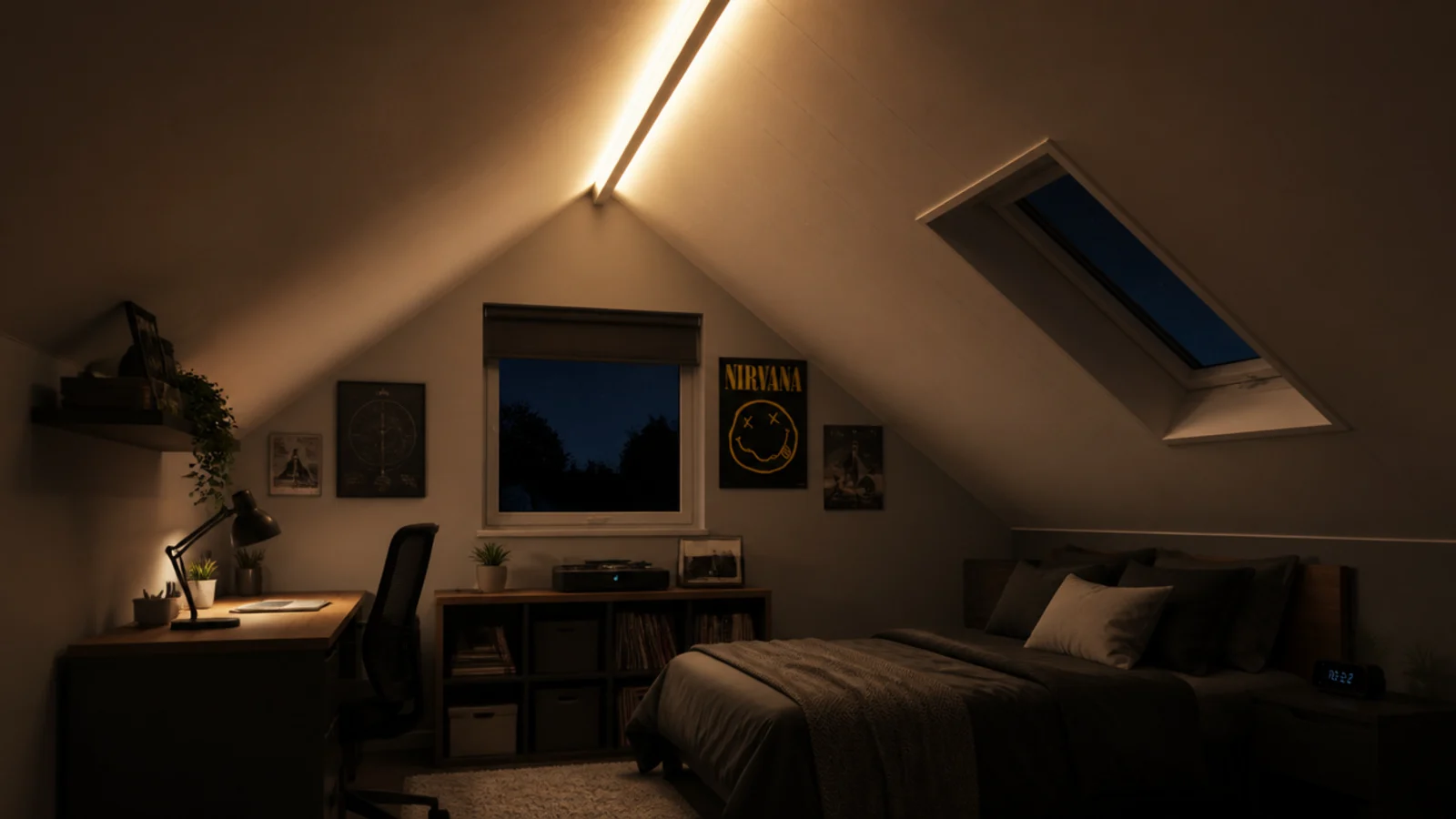
4. Run a warm LED strip along the ridge
Concealed tape behind a slim batten at the ridge washes light down both slopes and gives the room an evening setting that no ceiling bulb matches. Four hundred to 600 lumens per metre at 2700K, on a dimmer, wired to its own switch.
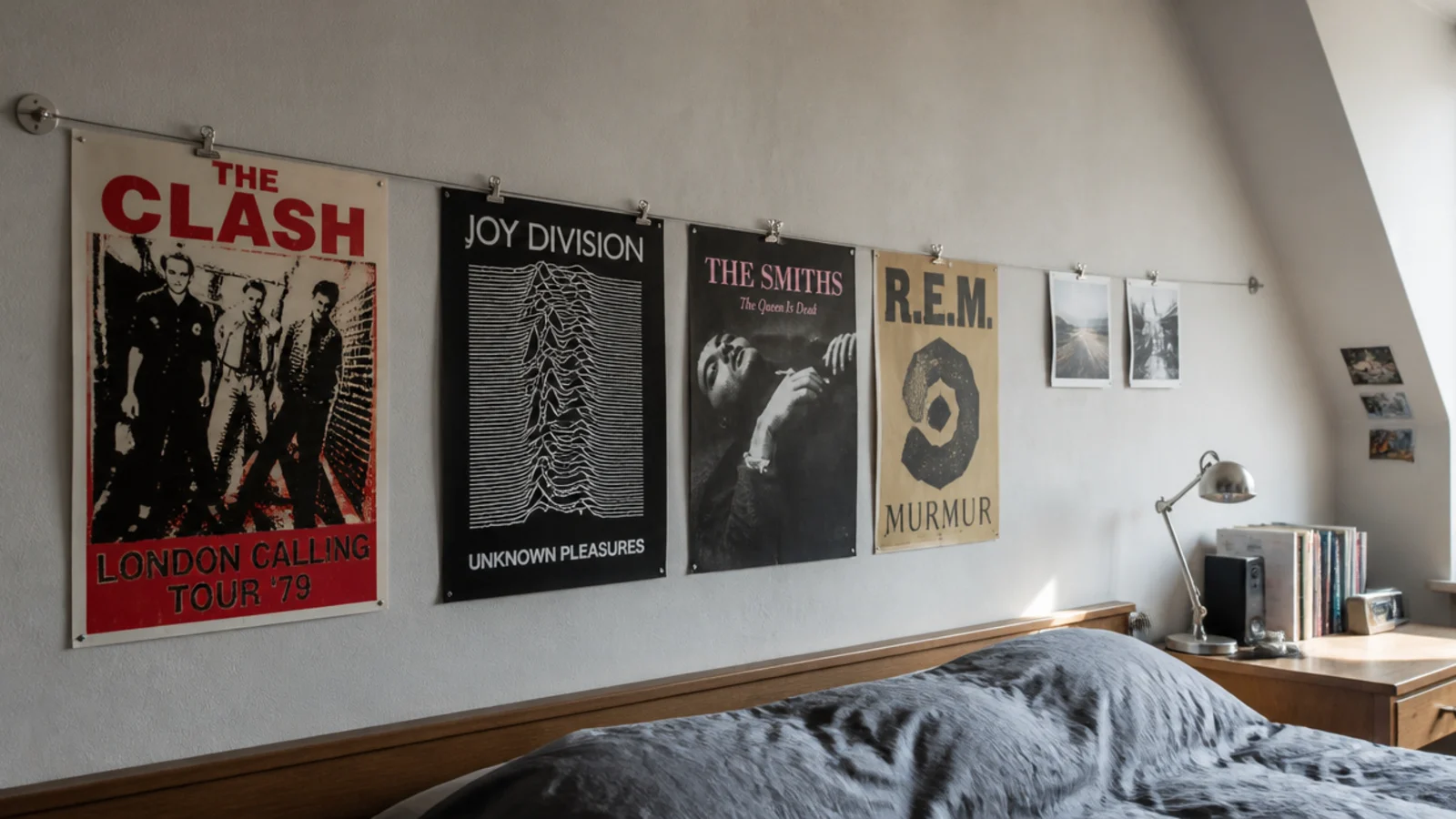
5. Hang posters on a wire, not with tape
Tape pulls paint off attic plaster, which is usually thinner and softer than downstairs walls. A taut wire with small clips lets the display change weekly and leaves two small holes instead of forty patches. It costs about $15.
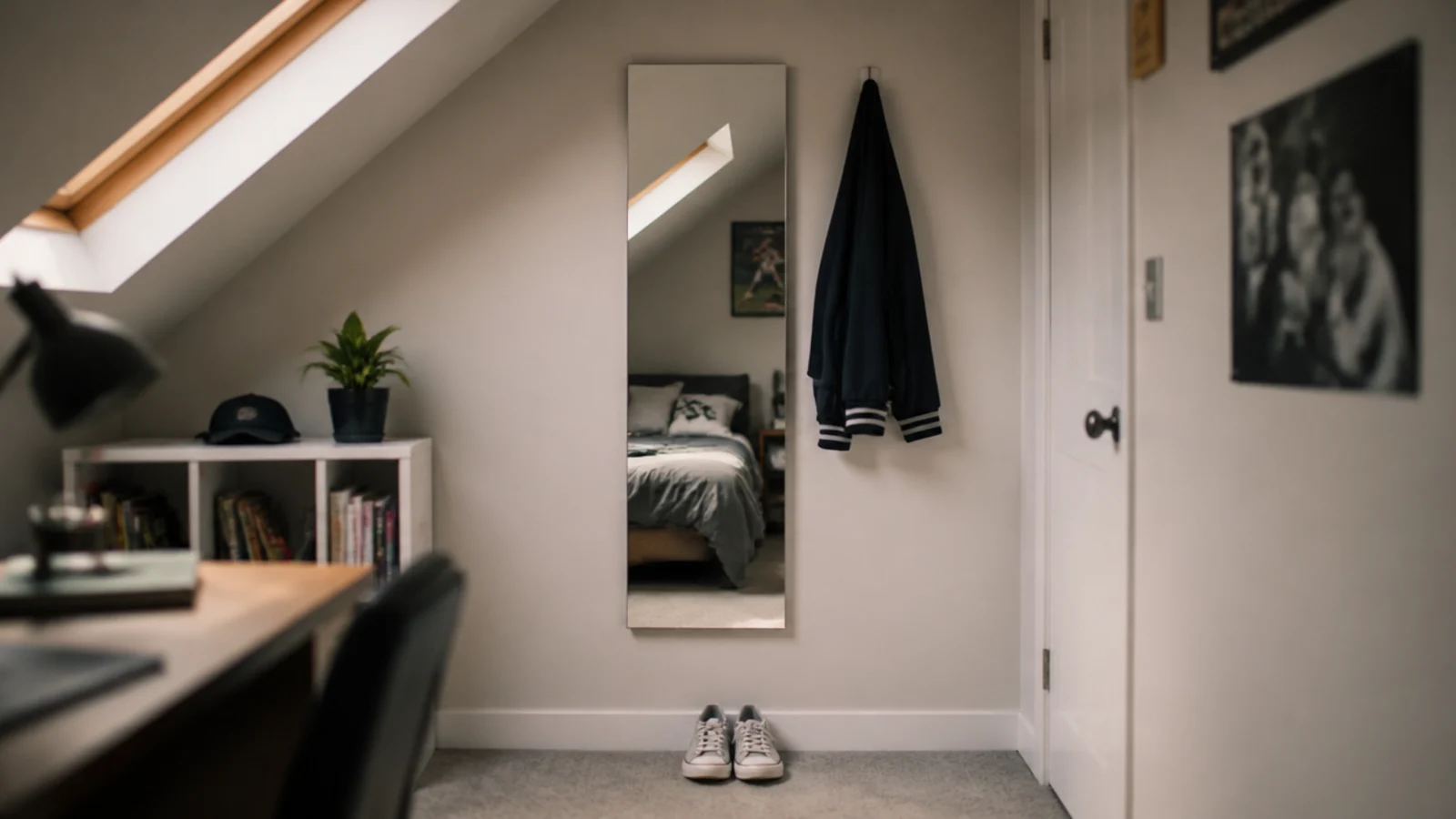
6. Fit a full-length mirror on the straight wall
The gable is the only wall tall enough. Fix it into studs rather than leaning it — a full-length mirror in a room where people get changed in a hurry needs a proper fixing. The mirror wall guide covers hanging weight and placement.
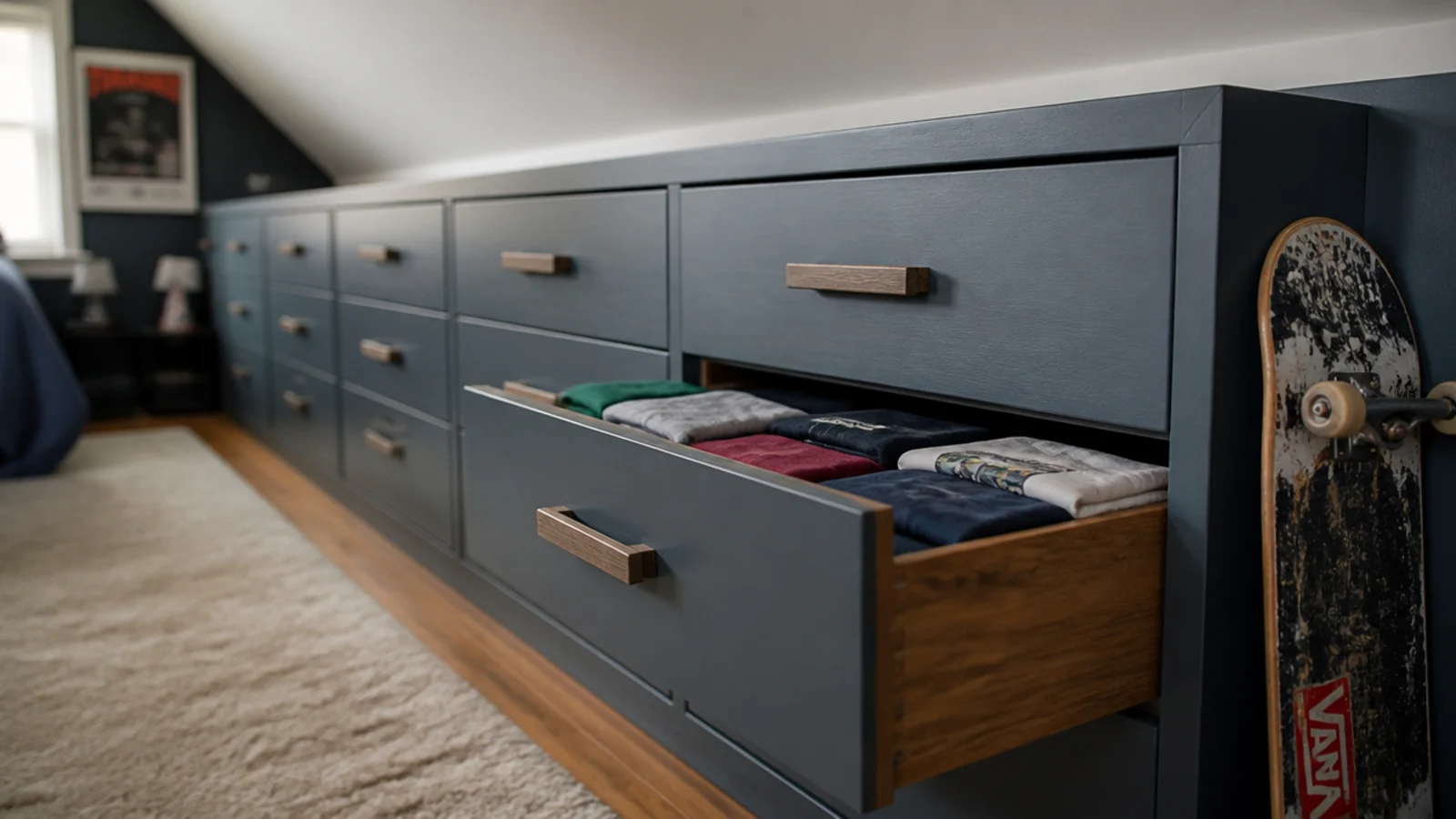
7. Put clothes storage inside the knee wall
Teenage clothes take volume, not hanging space. Flush drawers built into the knee wall at 14 to 16 inches deep take folded jumpers and jeans, and they use the wedge of dead space no freestanding unit can reach. Full-extension runners rated to 75 pounds are worth the extra.
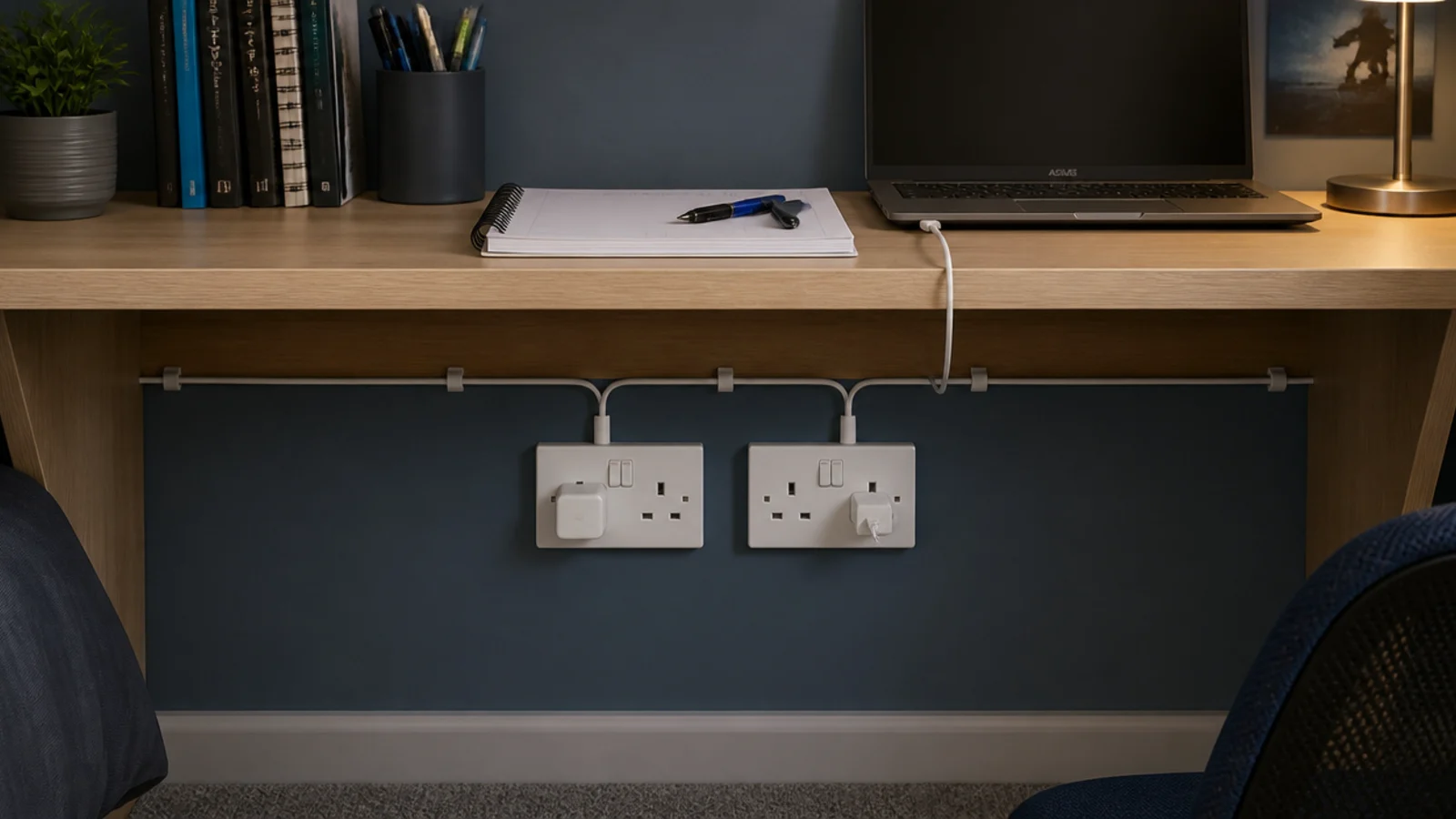
8. Plan sockets at the desk, the bed and the floor
Three positions, twin sockets at each. Charging happens wherever the sockets are, and an extension lead trailing across a loft floor is both ugly and a trip hazard on the route to the escape window. Wire it properly at first fix if the room is being converted.
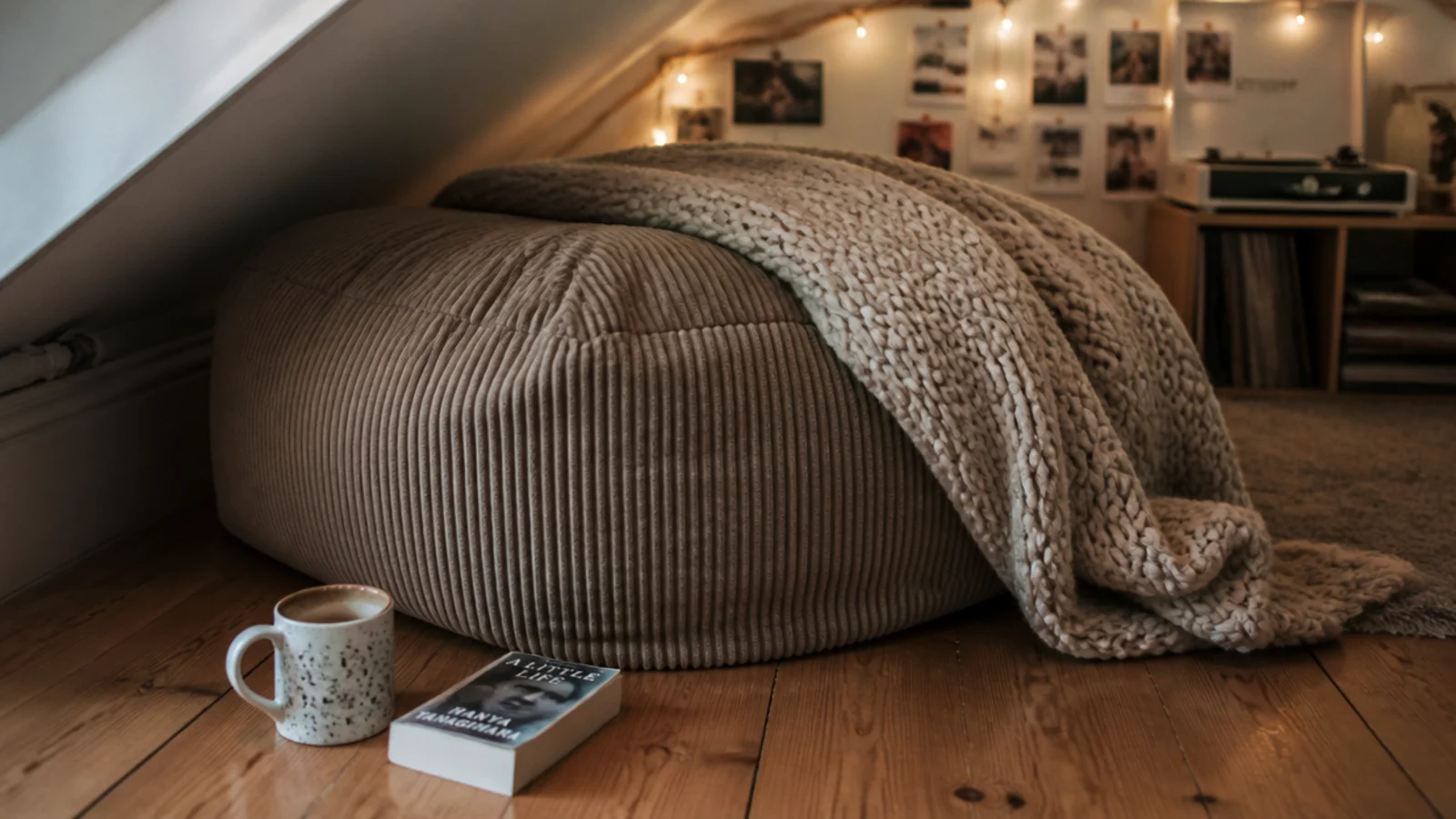
9. Add a floor cushion instead of a second chair
The eaves are 40 inches high and useless for furniture — which is exactly the height for sitting on the floor. A large floor cushion and a throw give friends somewhere to sit without adding a chair to a room with no spare floor.
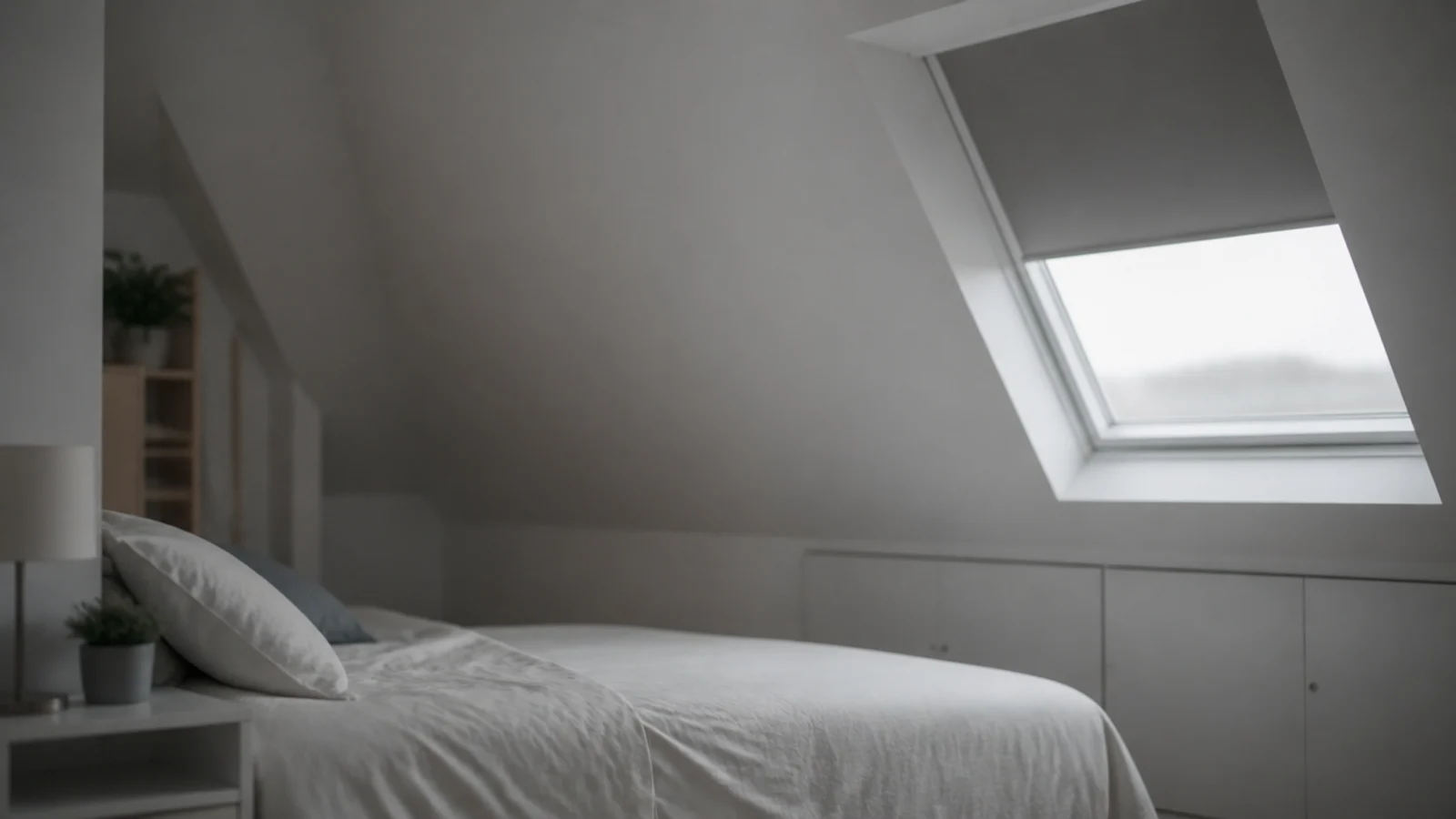
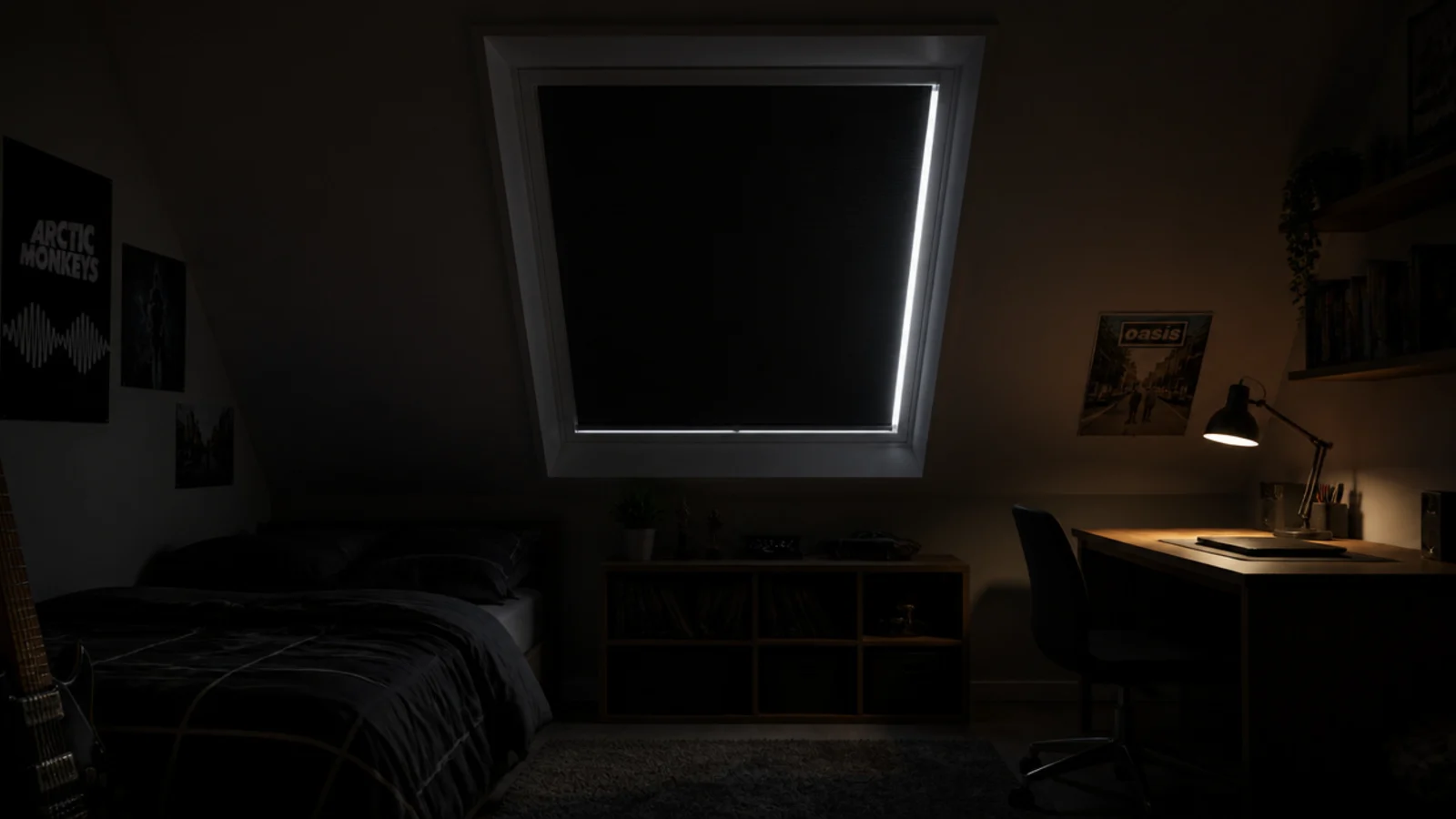
10. Fit a blackout blind on the roof window
A rooflight faces open sky and is bright by four in the morning in June. A frame-channel blackout blind at $60 to $150 is the difference between a teenager who sleeps and one who complains about the room all summer.
11. Keep the walkway 24 inches and defend it
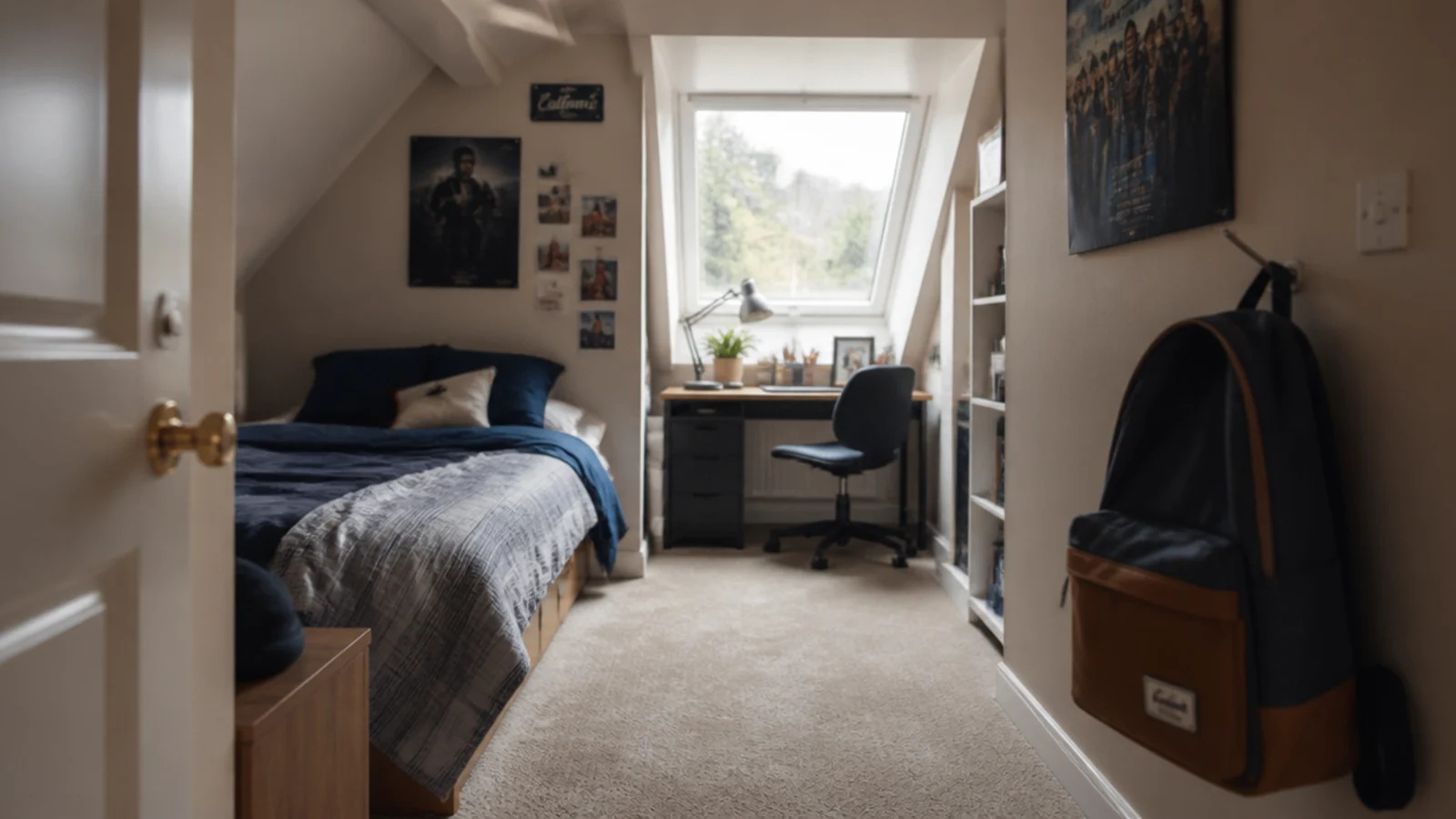
Twenty-four inches of clear floor between the bed and anything else, measured where the ceiling is above 6 feet. A hook on the wall for the school bag and a basket in the eaves are what keep that walkway from silently disappearing over a term.
12. Soundproof the floor before it is boarded
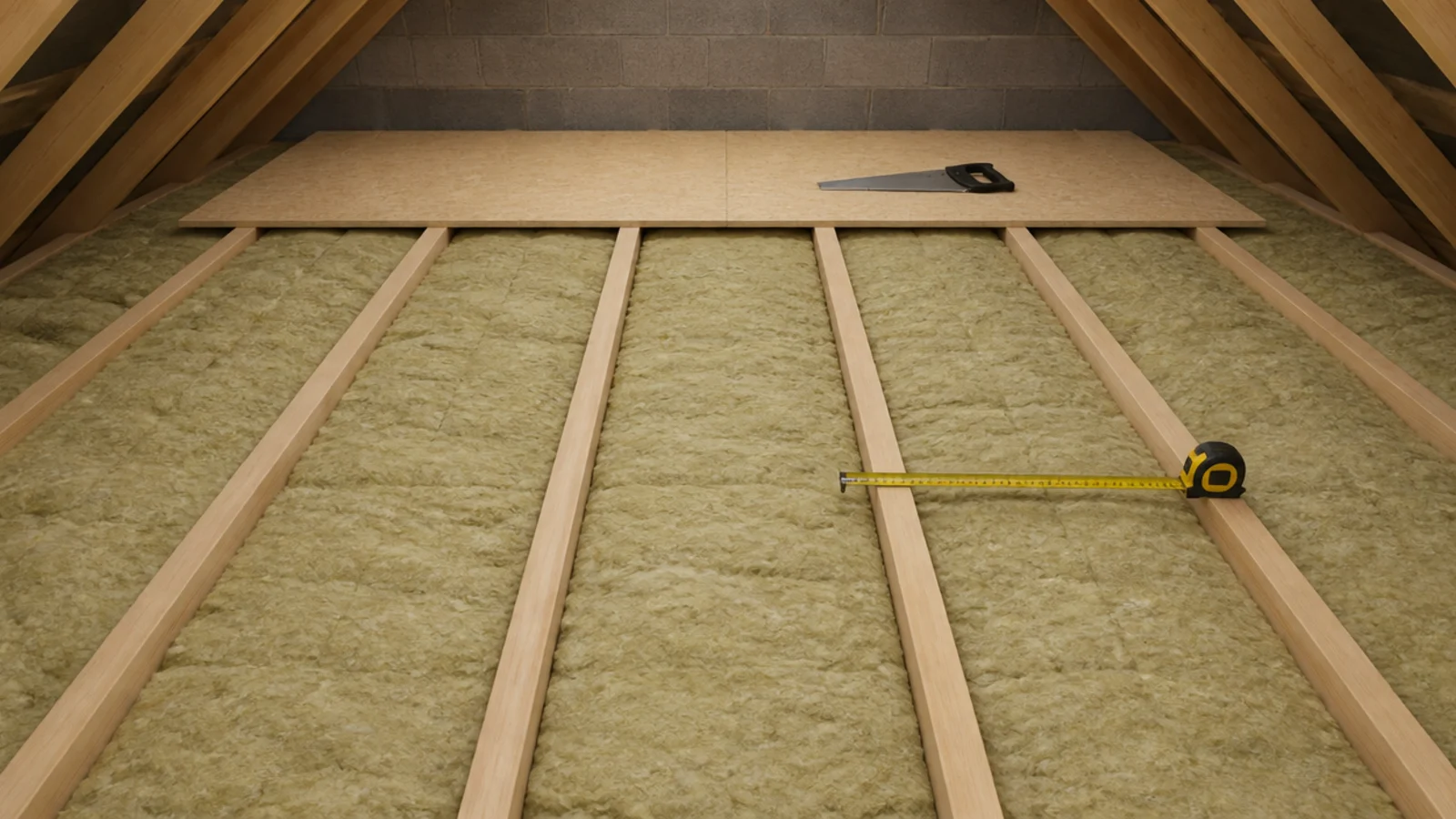
Mineral wool between the joists at $2 to $4 per square foot is the one acoustic step that genuinely works, and the only one that becomes impossible once the floor is down. In a loft above a living room it is the difference between music being audible and being a problem.
13. Use a rail on the wall for tomorrow clothes
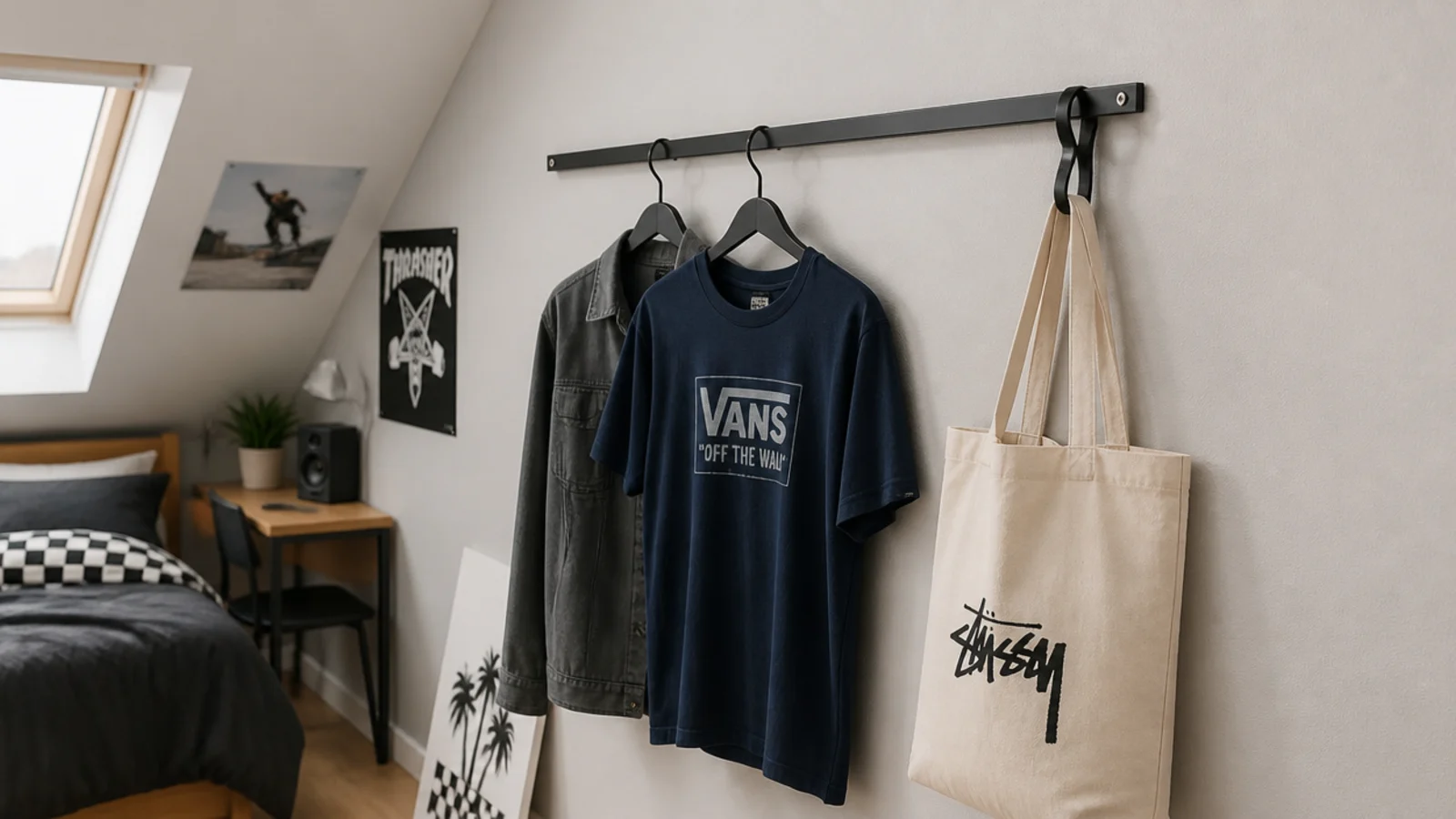
Every teenage bedroom has a chair carrying four days of clothes. A slim wall rail at 55 to 60 inches takes two hangers and a bag and gives that pile somewhere legitimate. It costs $20 to $40 and it works better than another basket.
14. Recess the screen into the knee wall
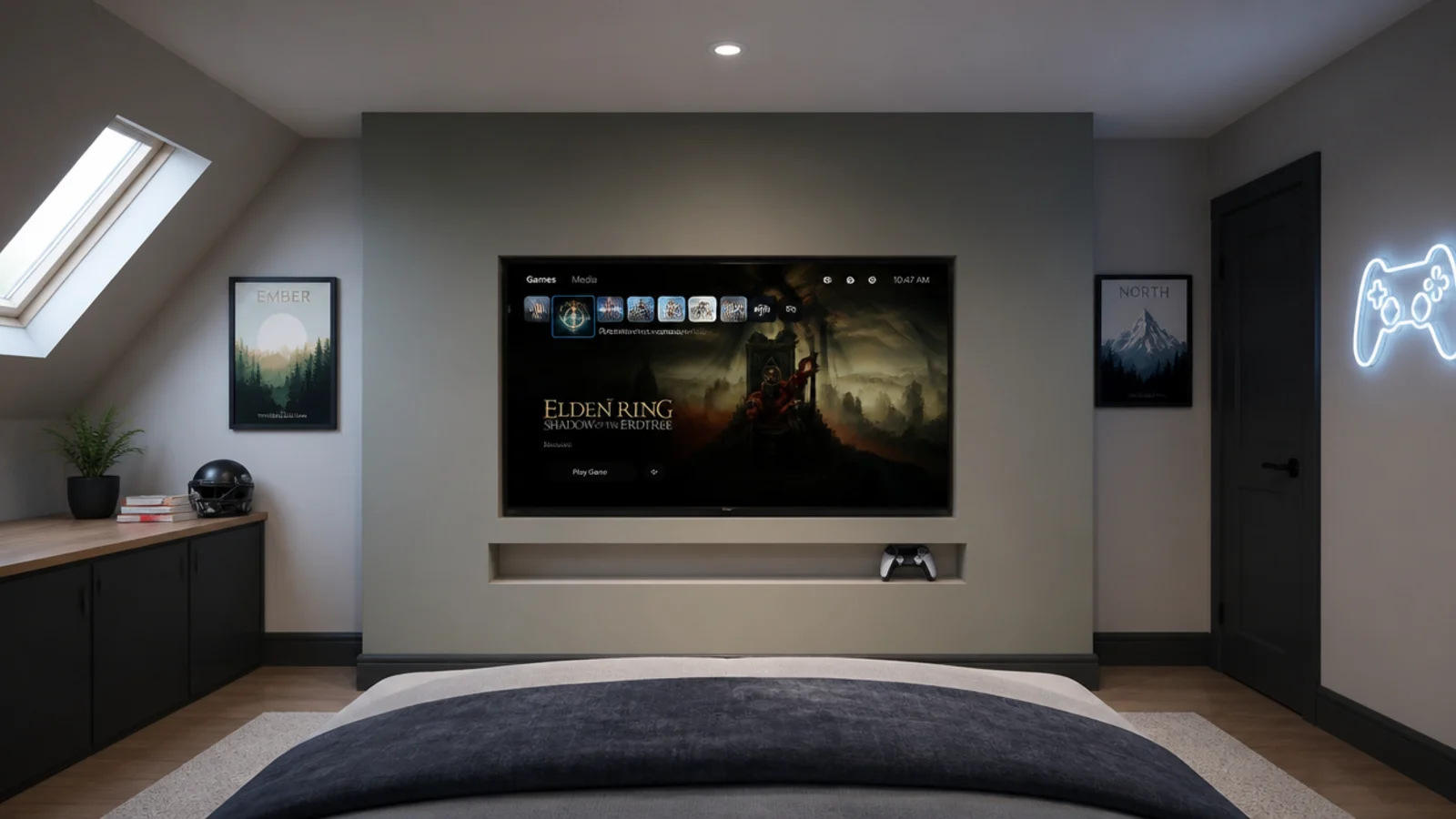
A television on a chest under a slope is at the wrong height and in the way. Recessed between knee wall studs, with a socket and cable route behind it, the screen disappears when it is off and frees a whole surface.
15. Give homework a dimmable task light
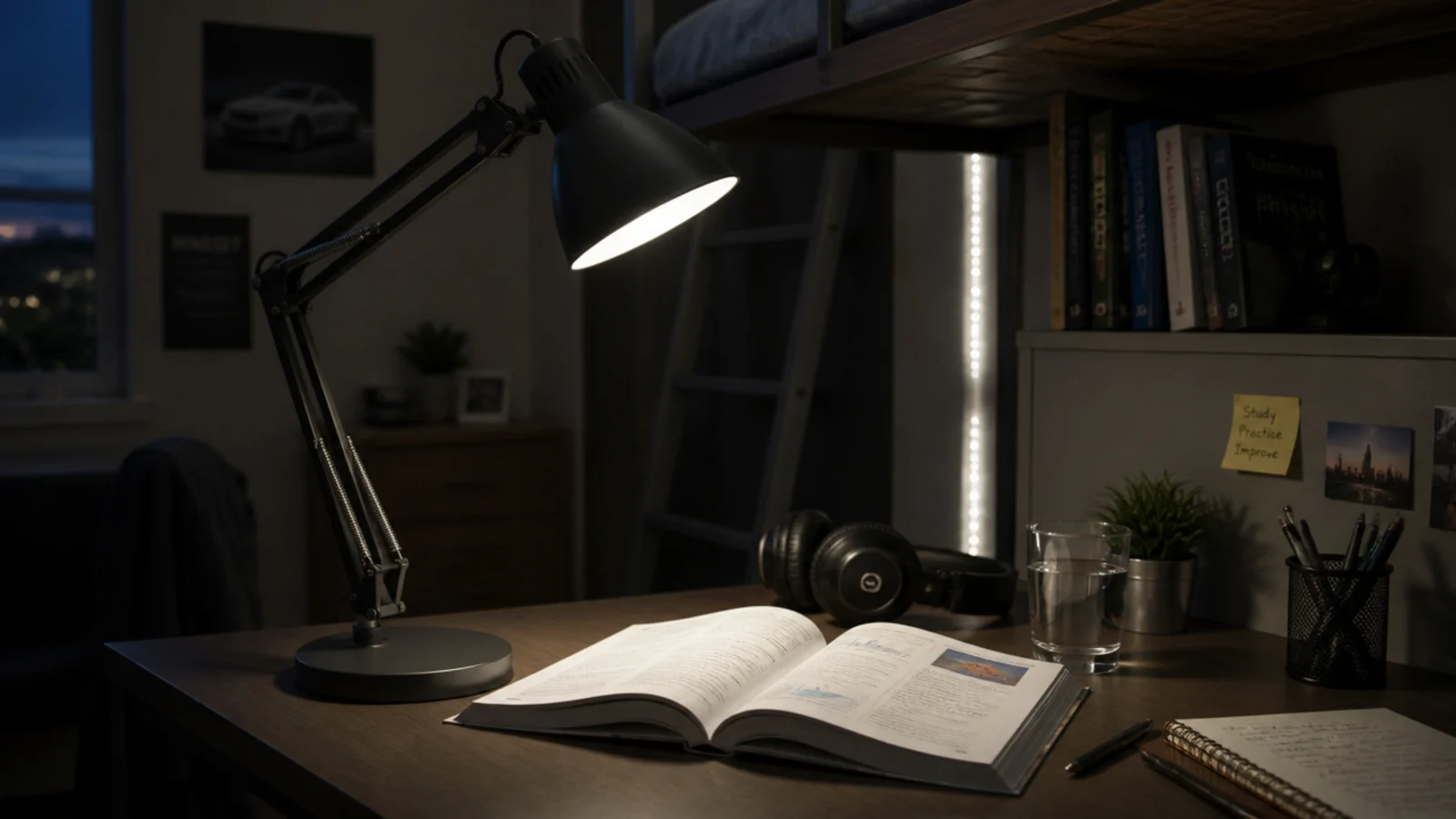
Overhead light in a sloped room throws shadows across a desk. An adjustable task lamp at 400 to 600 lumens, warm, on the desk itself is what makes late homework possible without lighting the whole loft. The vanity organisation guide has the same lighting logic for a mirror.
16. Anchor every tall piece to the framing
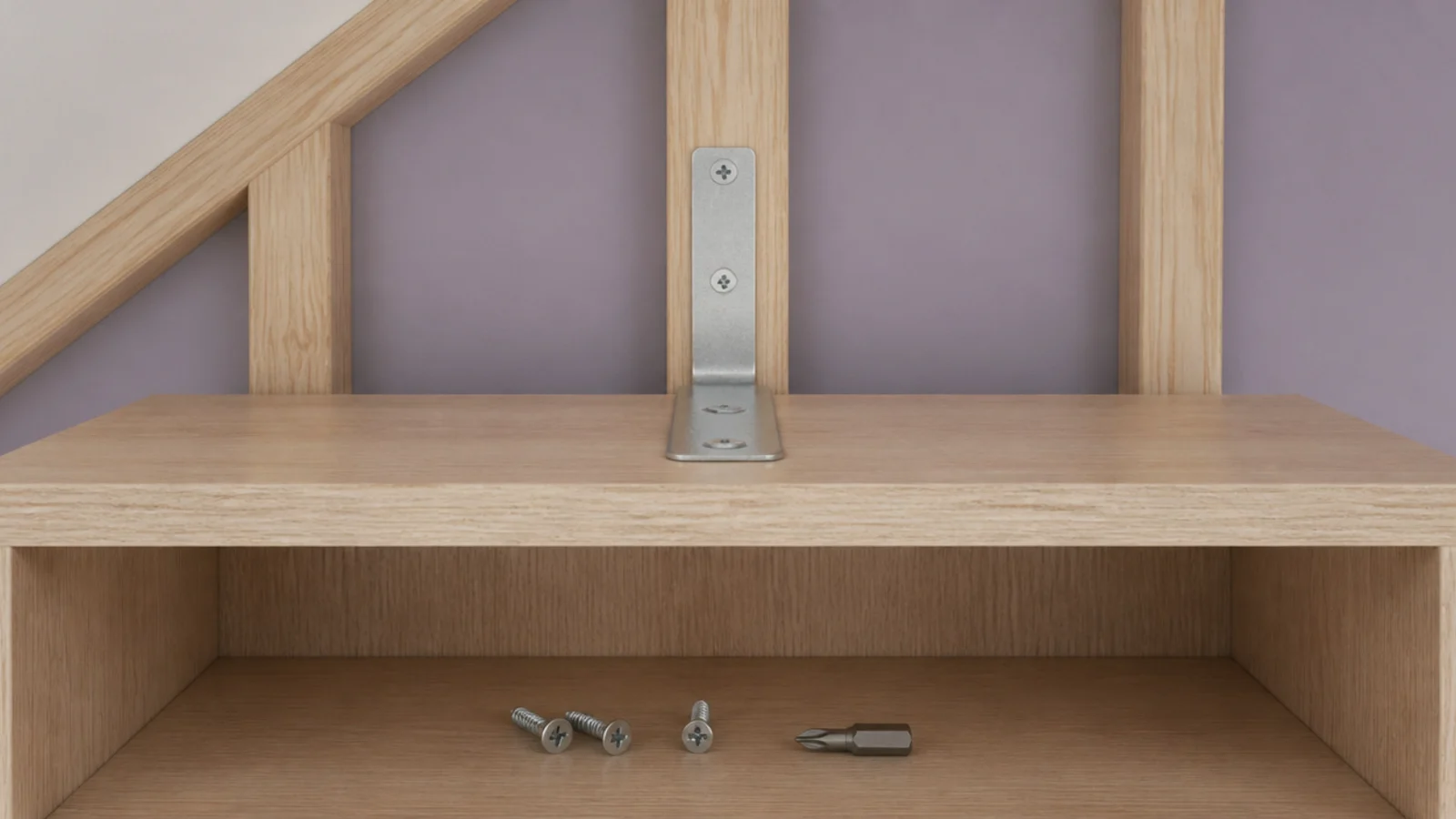
Shelving, wardrobes, anything above about 40 inches. Attic partitions are often thin studwork, so find framing rather than trusting a plasterboard plug. Straps and brackets cost under $10 each and take ten minutes.
17. Add a pinboard for the things that change
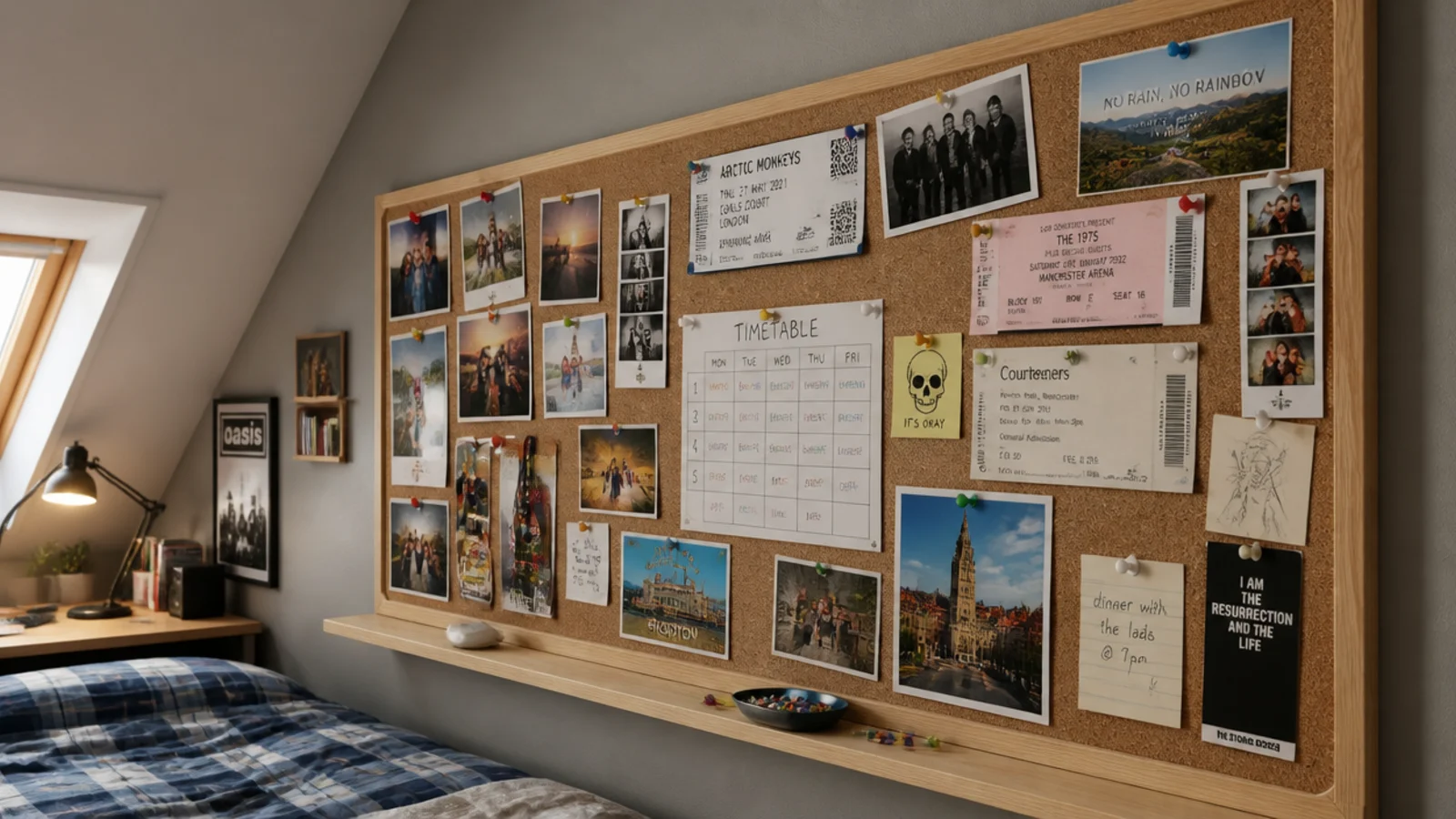
A large cork board absorbs tickets, photographs, timetables and everything else that would otherwise be taped to the plaster. One board contains the churn and keeps the rest of the room calm.
18. Use a rug with underlay over bare boards
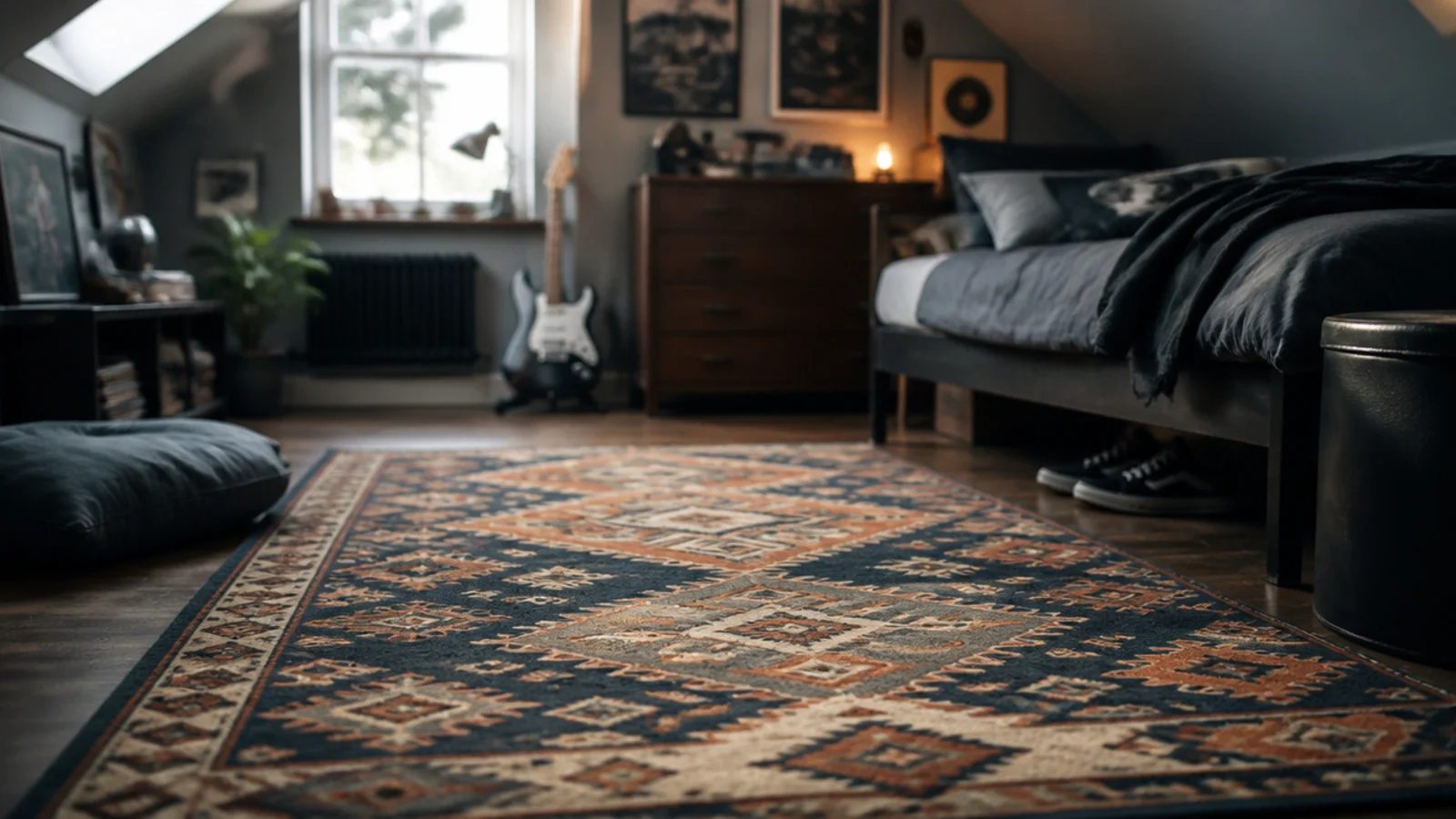
A big rug with a grip underlay warms bare attic boards, stops the slide and takes the edge off footfall for whoever is underneath. Budget $120 to $300 for something large enough to matter, plus $20 to $50 for the underlay.
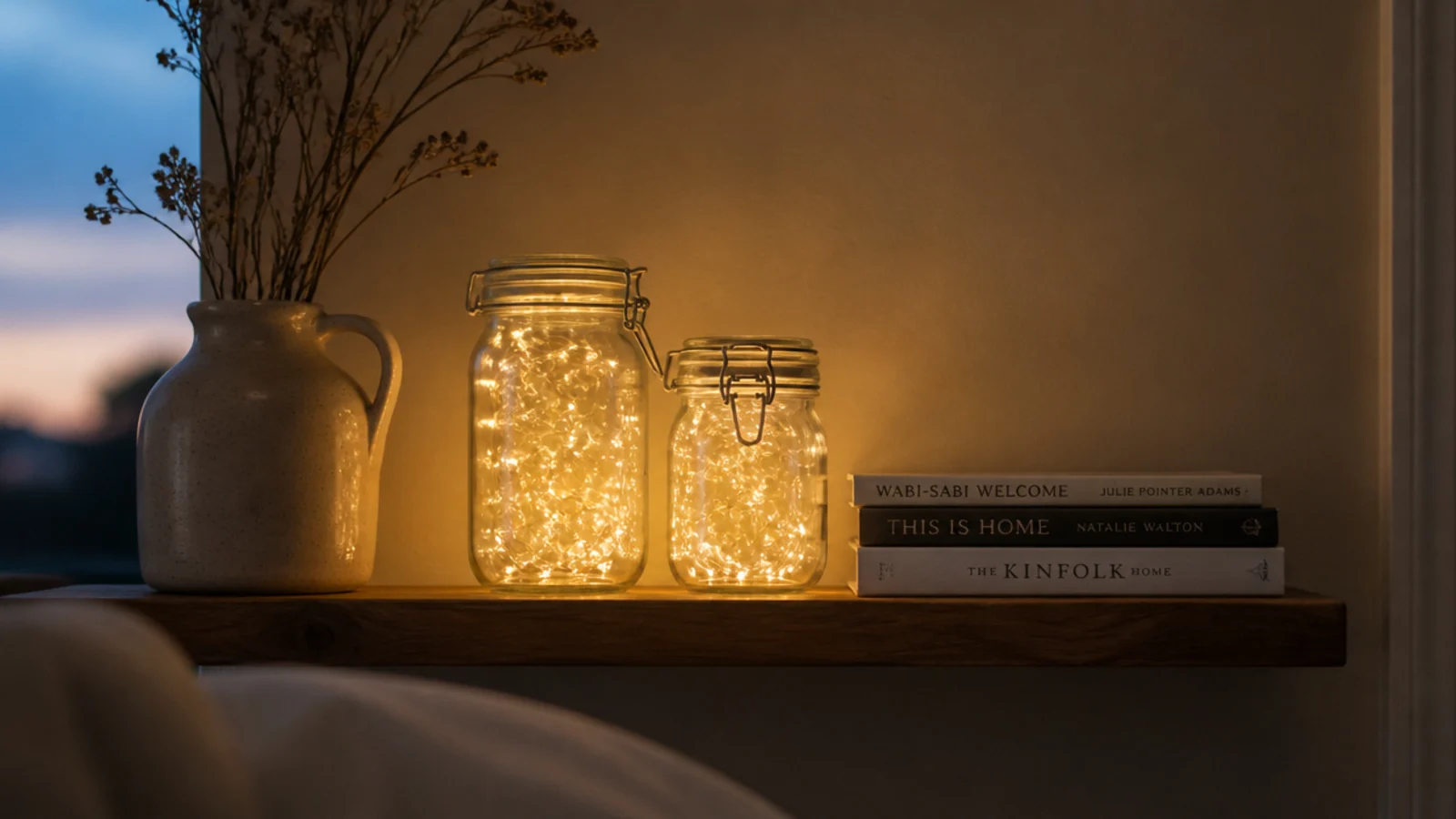
19. Build a shelf for the things on display
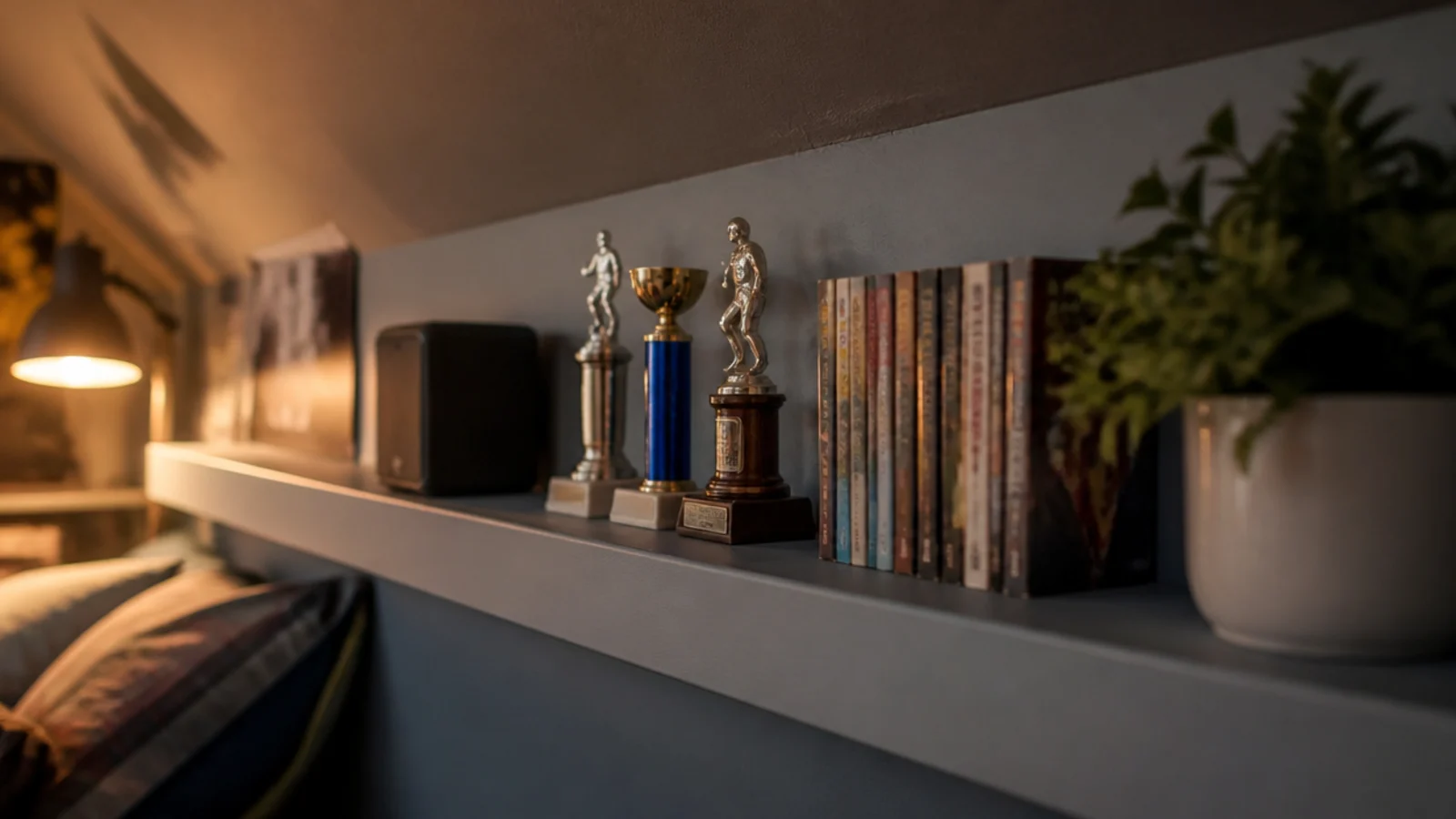
One long shelf at 60 inches on the straight wall holds the speaker, the trophies and the books, and keeps them off the desk. A single generous shelf reads as deliberate where three small ones read as clutter.
20. Keep the escape window permanently clear
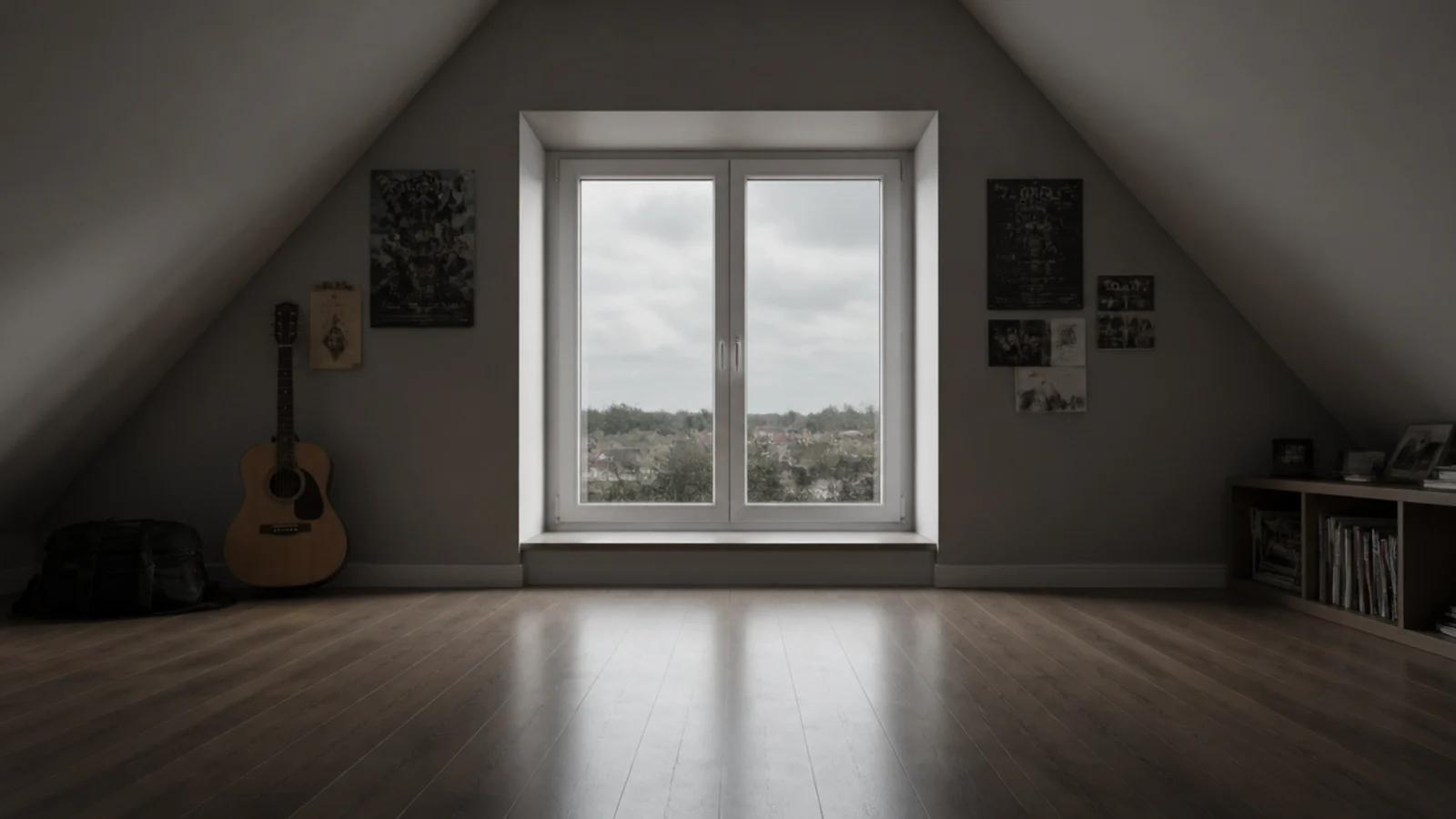
Guitars, bags, drying racks and boxes all migrate. The escape opening and the floor in front of it stay clear, and the window has to open fully without moving anything. This is a regulated minimum, not a preference.
21. Choose bedding they picked, in a washable weave
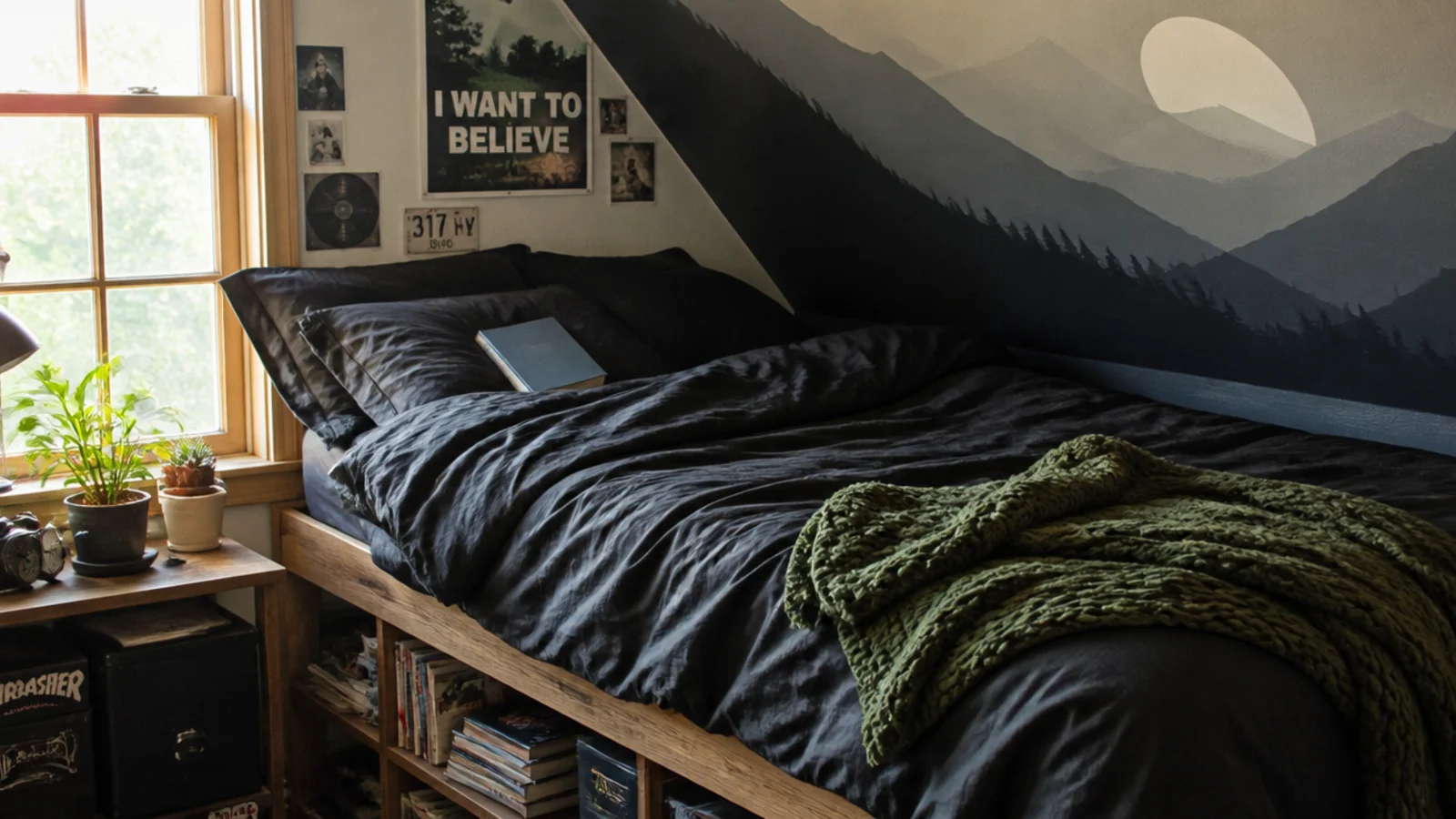
Bedding is the biggest block of colour in the room and the cheapest thing to change. Buy two sets in cotton that survives a hot wash, in whatever they chose. It costs $60 to $150 and refreshes the room without touching a wall.
22. Hide the laundry in an eaves basket
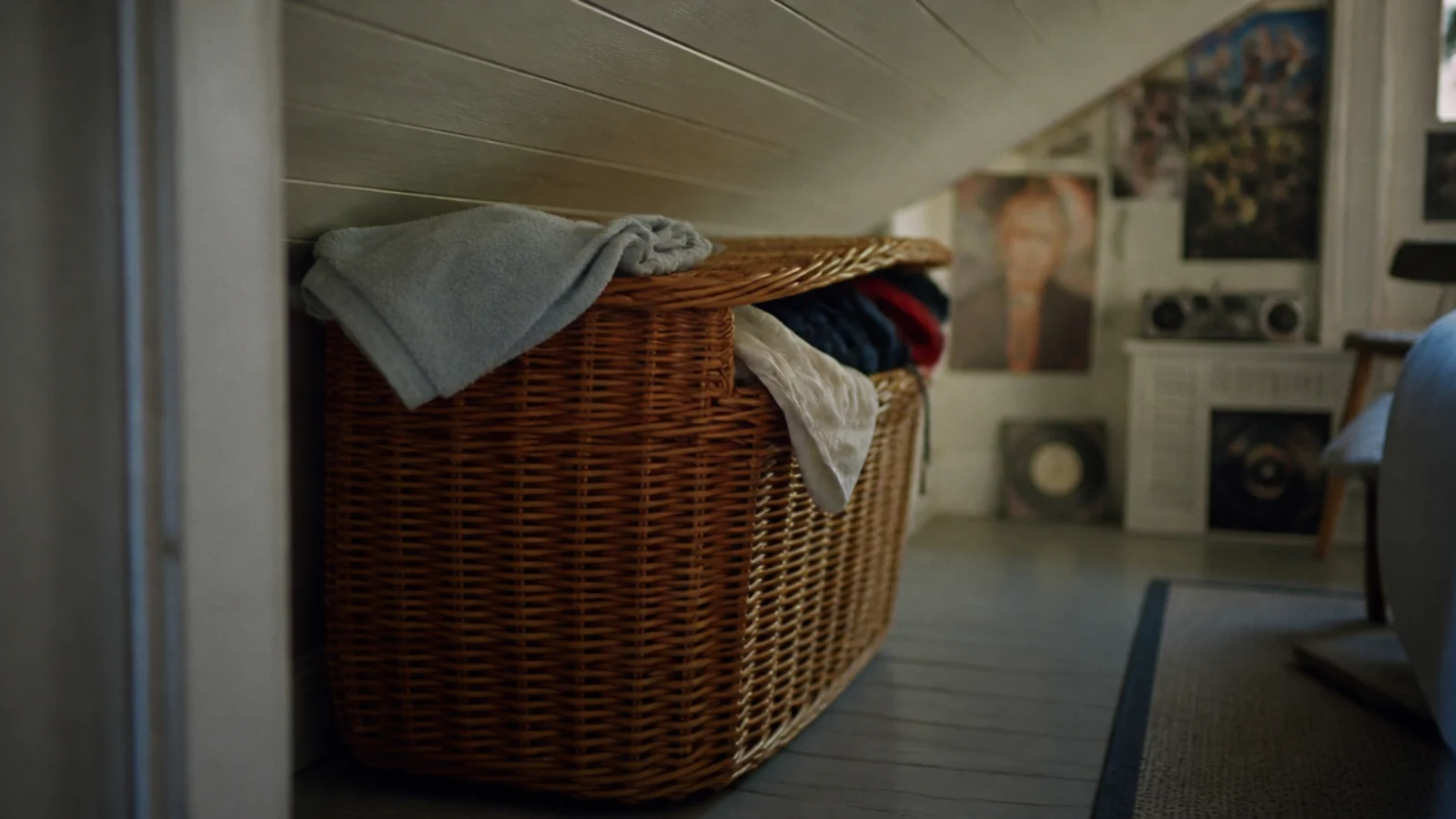
The eaves are the right height for a basket and the wrong height for anything else. A large woven basket tucked under the slope keeps the floor clear and costs $30 to $70. It also stops laundry ending up in the walkway.
23. Insulate and seal behind the storage doors
Knee wall cupboards open into roof space. Insulate the back face, air-seal the joints, insulate the void floor and keep the soffit-to-ridge path clear, or the room stays cold and the stored clothes smell of dust.
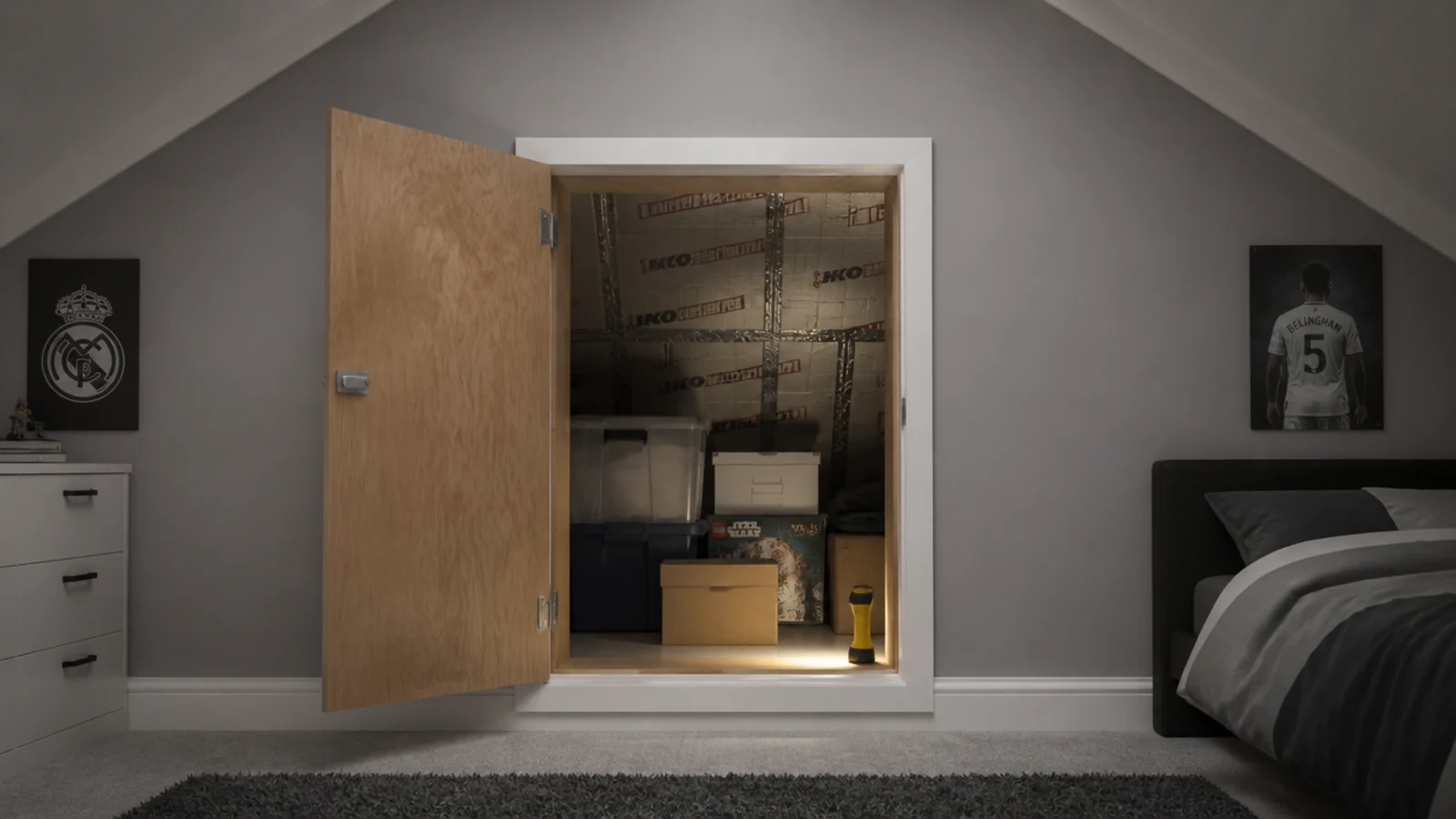
24. Leave one wall for them to change
Fix nothing to one wall and let it be theirs. It sounds like doing nothing and it is the reason the room keeps working — a teenager with a wall to rearrange rarely asks to redecorate the whole thing.
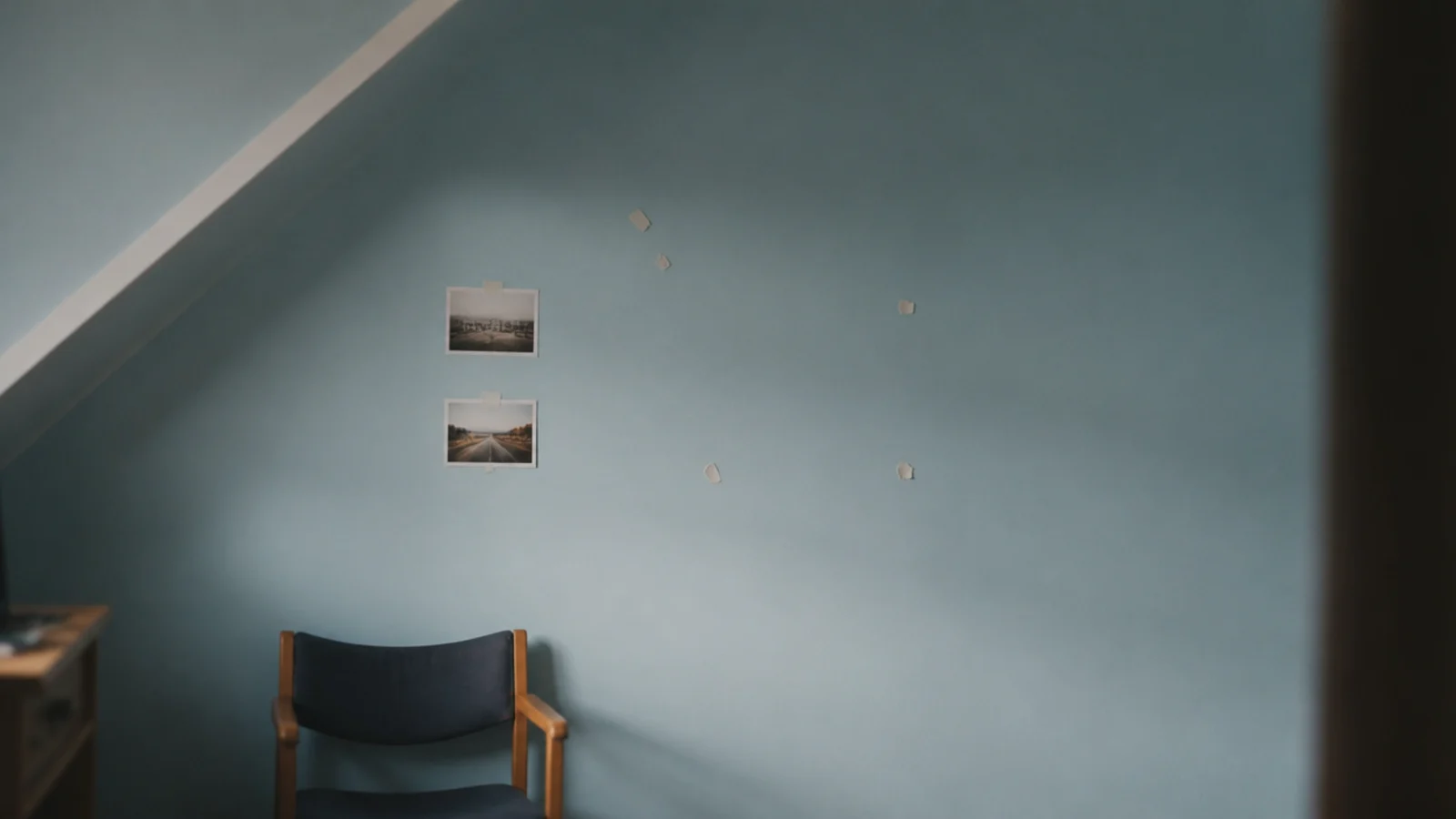
25. Redo the paint at fifteen, not the layout
Plan on repainting once in the six years and changing nothing structural. If the desk headroom, the bed height and the storage depths were right at twelve, they will still be right at eighteen. For the lighting refresh that comes with it, fairy light ideas is the cheapest change available.
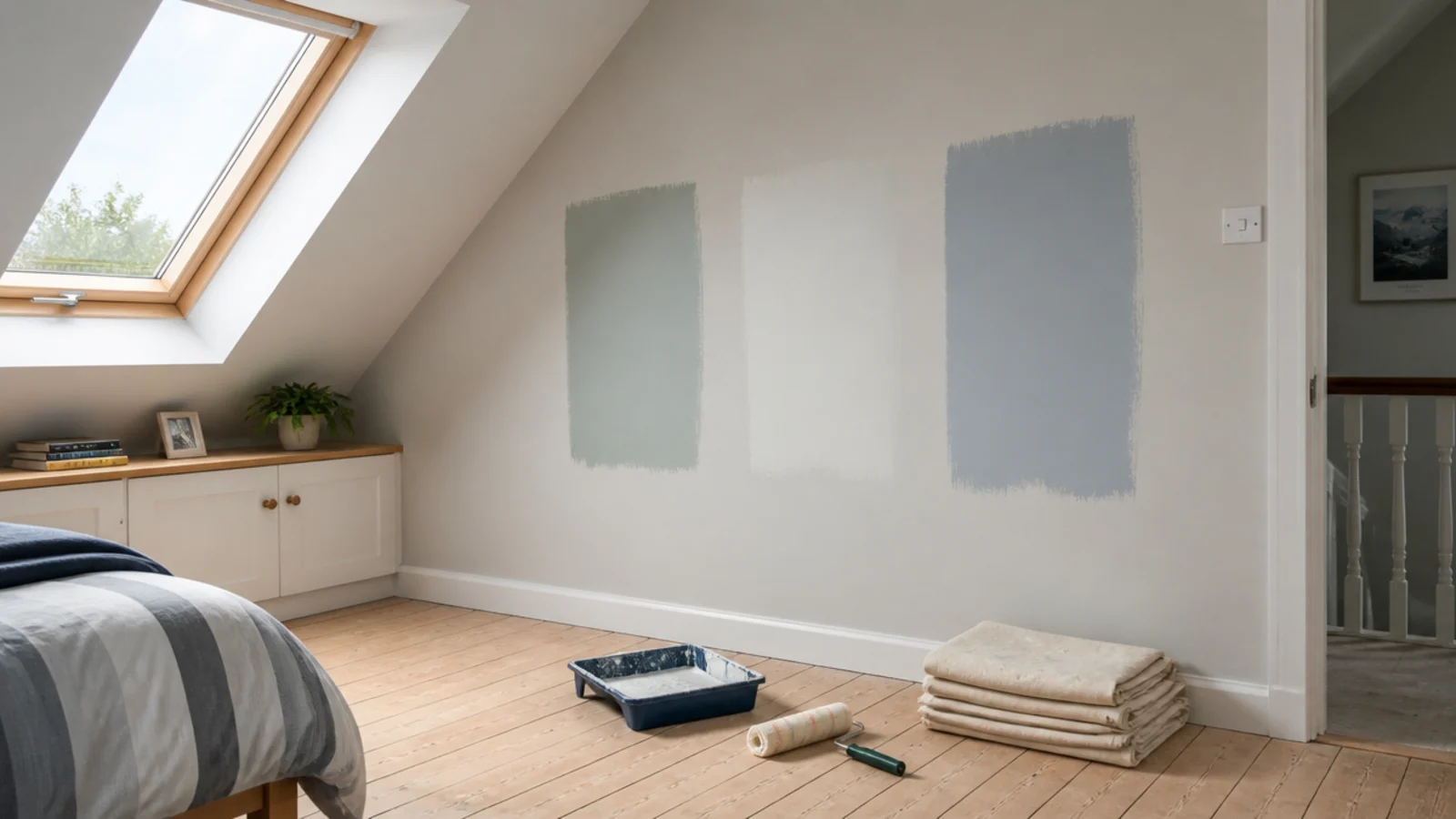
For the younger version of the same room, the kids attic bedroom guide covers reach heights and bunk clearances, and the budget boys attic projects work through the same list for less money.
Mistakes to Skip
- Putting the desk under the slope because the tall wall looked better empty. Sixty inches above the seat is the number, and a teenager who cannot sit up straight stops using the desk.
- Choosing the paint colour yourself. A room a teenager did not choose gets treated like a room they are borrowing, and it shows within a month.
- Buying a standard height bed frame. Twenty-six inches to the mattress top wastes the headroom the room needed and blocks the storage the room needed too.
- Leaving the acoustic insulation out of the floor build. It is cheap during the work and effectively impossible afterwards, and music in a loft carries straight down.
- Letting the escape window become the place bags and boxes land. Egress openings are regulated, checked and must never be blocked at any age.
Frequently asked questions
How much desk headroom does a teenager need in an attic?
Around sixty inches of clear height above the seat, measured where their head actually sits rather than at the desk edge. A teenager gains height fast, so plan for the adult they will be within two years rather than the height they are when the desk goes in.
What is the best bed for a teenager in a loft room?
A low platform at twelve to fourteen inches to the mattress top with drawers underneath. It gives back a foot of headroom over a standard divan, lets the bed sit further under the slope, and replaces the chest of drawers that a loft usually has nowhere to put.
How do you soundproof a teenage attic bedroom?
Mineral wool between the floor joists before boarding is the only genuinely effective step, and it costs two to four dollars a square foot. After the floor is down, a thick rug with underlay, heavy curtains and a full bookcase on the party wall all help at the margins.
Can a teenager have a TV or console in an attic bedroom?
Yes, with the screen recessed or wall mounted on the knee wall rather than perched on a chest under a slope. Plan a socket and a cable route at the same position, and keep every cable and power block off soft furnishings and away from the escape route.
What paint should I use in a teenage attic bedroom?
A scrubbable matte in a colour they chose, on the walls and slope together. Matte hides the ripples in attic plaster and a colour they picked survives far longer than one you picked. Budget around sixty to a hundred and twenty dollars, and expect to repaint within four years.
Want more like this? Browse all 15 attic bedroom ideas guides — they all use the same measurements and budget tiers.
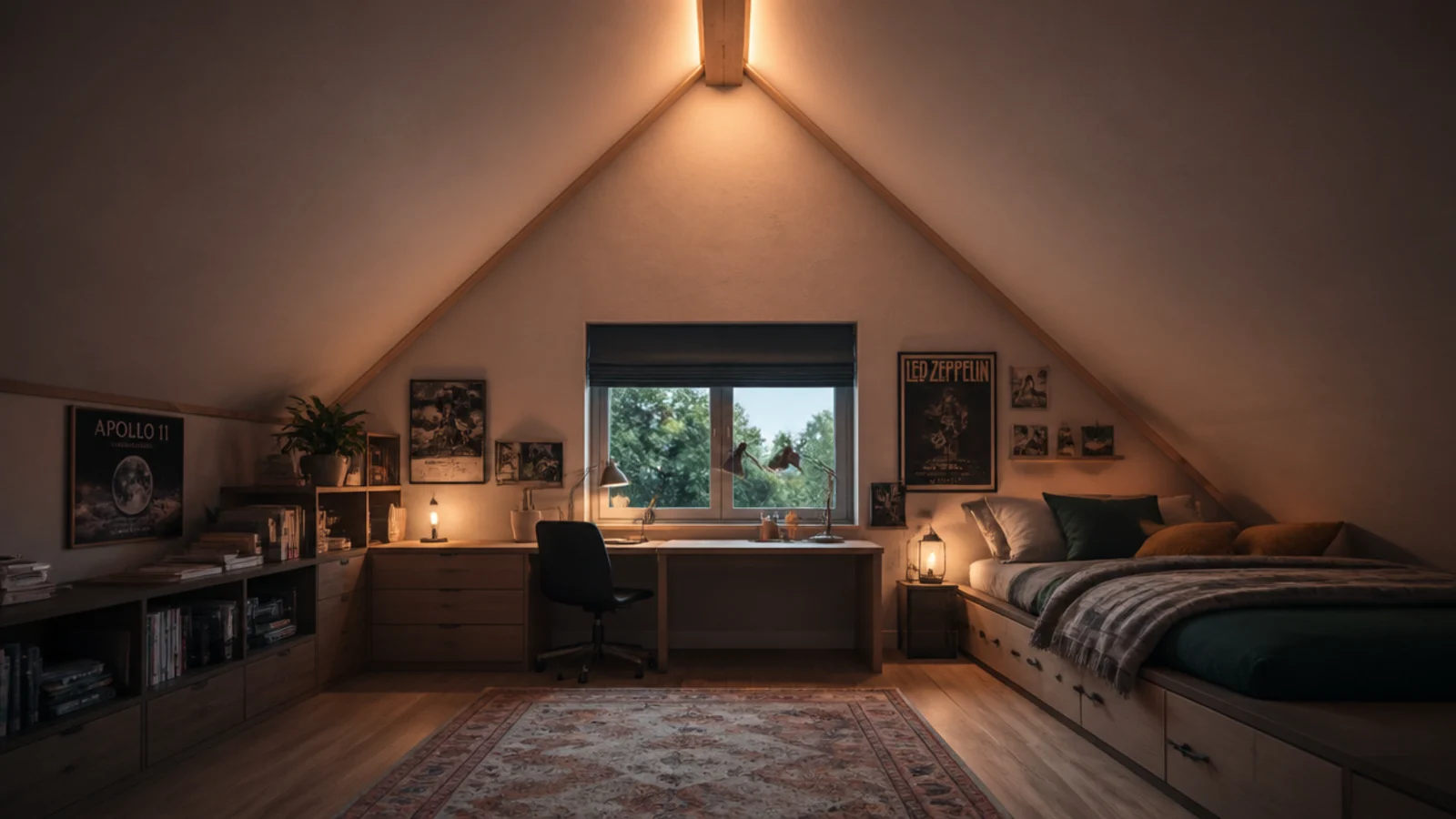
Pin it for later
Save this to your Attic Bedroom Ideas board
Pin it now so it is waiting for you when the tape measure comes out — and so the next person hunting for this idea can find it too.
Save this pinKeep going
More ideas worth saving while you have the tape measure out.