Fairy Lights Bedroom · Listicle
25 Creative Fairy Lights Decor Bedroom Setups

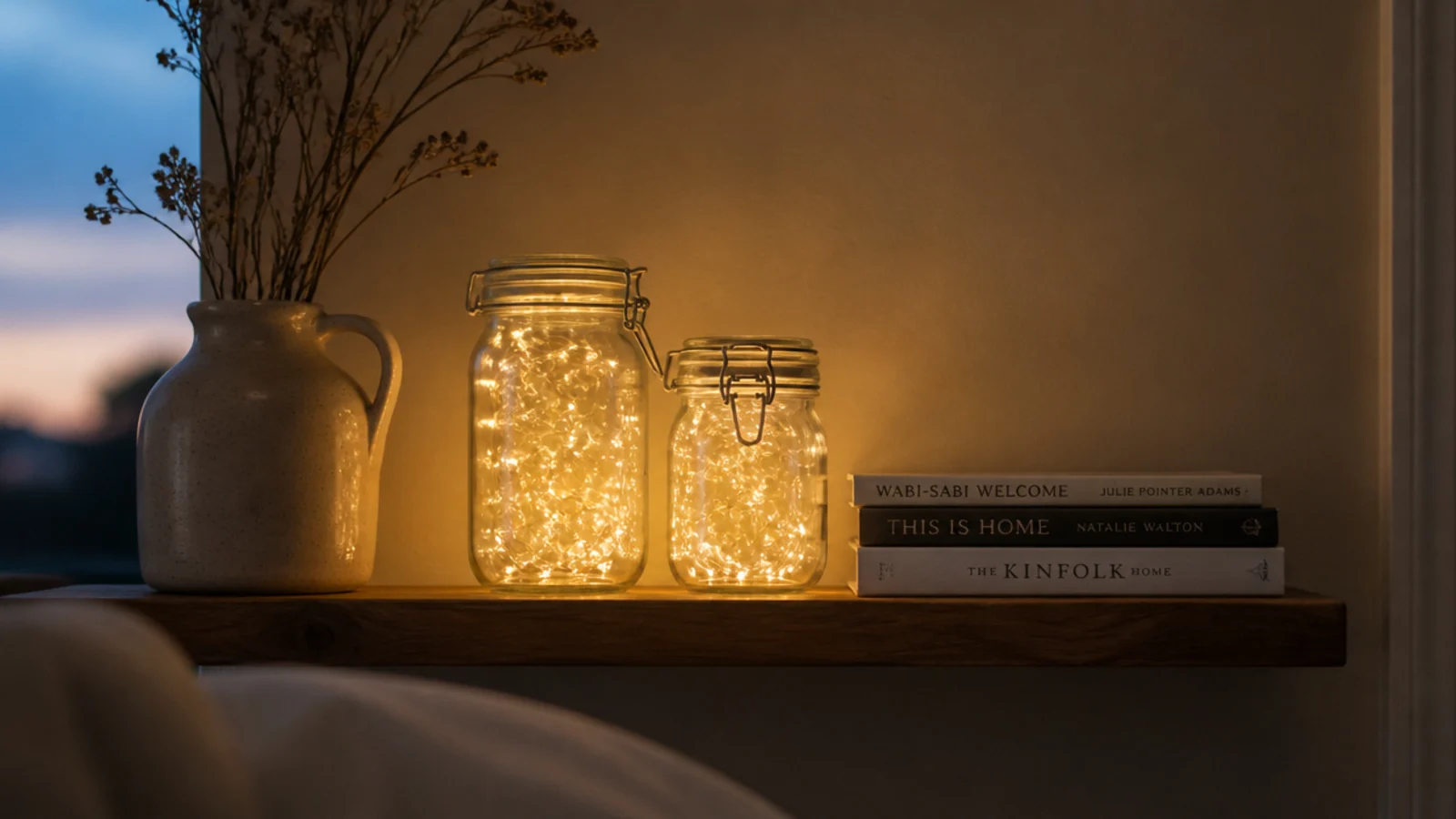
Most string lighting goes on a wall. The setups that hold my attention longest go inside things instead — a jar, a cloche, a lantern, a shadow box — so the light reads as an object you own rather than a strand you hung. Fairy lights decor bedroom arrangements live or die on two details: the number of bulbs matched to the size of the vessel, and where the battery pack sits. Both are easy to get right and almost always got wrong. Here are twenty-five that work, with the counts and sizes I use.
In this guide27 sections — tap to openHide
- 1.What fairy lights decor bedroom setups usually get wrong
- 2.A glass cloche over a bulb cluster
- 3.Three jars in graduated sizes
- 4.A woven lantern with a light cluster
- 5.A cork insert in a wine bottle
- 6.A terrarium lit from below
- 7.A wire marquee letter
- 8.A photo garland on wooden pegs
- 9.A dreamcatcher hoop with a strand
- 10.A shadow box of dried stems
- 11.A lit shelf vignette in threes
- 12.A lit tray on the dresser
- 13.A strand around a stack of books
- 14.A macrame hanging with lights behind
- 15.A hat wall with lights between
- 16.A wire grid of postcards
- 17.A floor vase of lit branches
- 18.Paper star and moon lanterns
- 19.Decorative cage bulbs
- 20.A mirrored tray under a light cluster
- 21.Seasonal stems swapped through the year
- 22.A lit basket of blankets
- 23.A paper cut silhouette panel
- 24.Fabric bunting with a strand behind
- 25.A lit shelf of trailing plants
- 26.Take one lit object away
- 27.Mistakes to Skip
What fairy lights decor bedroom setups usually get wrong
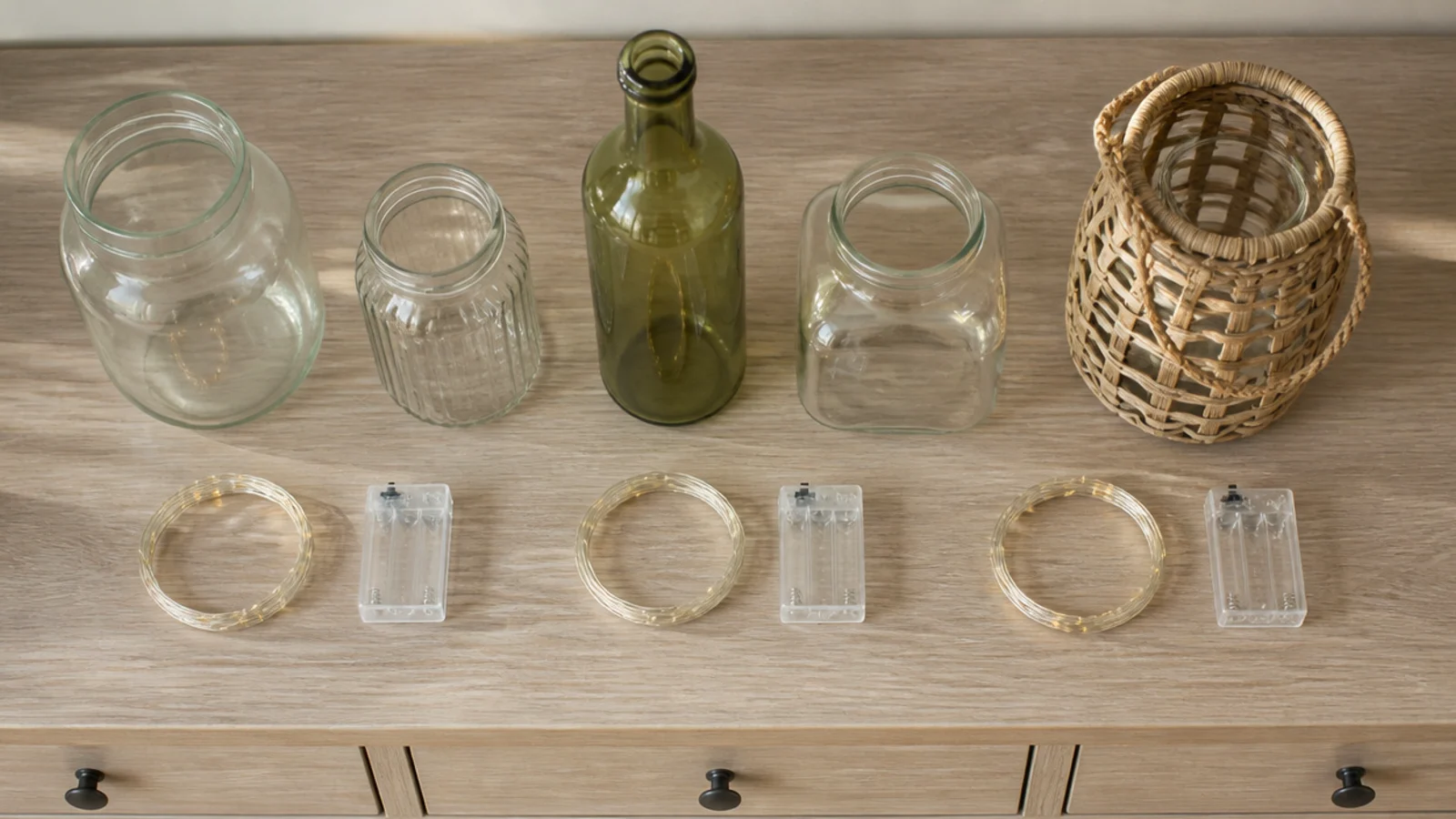
Match the bulb count to the volume. A 1 litre jar wants a 20 LED micro strand at about 6.5 feet, a 2 litre jar wants 50 LEDs at 16 feet, and a 5 litre demijohn takes 100 LEDs at 33 feet. Coil loosely rather than packing tight, so light spreads and air moves.
Then power. Three AA cells run a 100 LED strand for roughly 18 to 24 hours, which is under a week at six hours a night. Sets with a built-in six hour timer stretch a set of rechargeables to about a month, and they cost the same as the ones without.
Then placement of the pack. It goes outside the object or in open air behind it, never buried in wadding, fabric or a dense bundle of stems. Packs need air around them and they need reaching when the cells die. In a jar, sit the pack behind on the shelf and run the lead over the rim.
The rest is safety inside the choices. LED only in anything paper, glass or dried, because LED bulbs sit near body temperature where incandescent minis reach 60°C and up. Nothing runs under a rug or inside bedding, nothing gets stapled or pinned through the cable, adhesive clips do the fixing, and no more sets get chained end to end than the tag allows. For the corners these objects usually sit in, aesthetic corners has the layouts.
1. A glass cloche over a bulb cluster
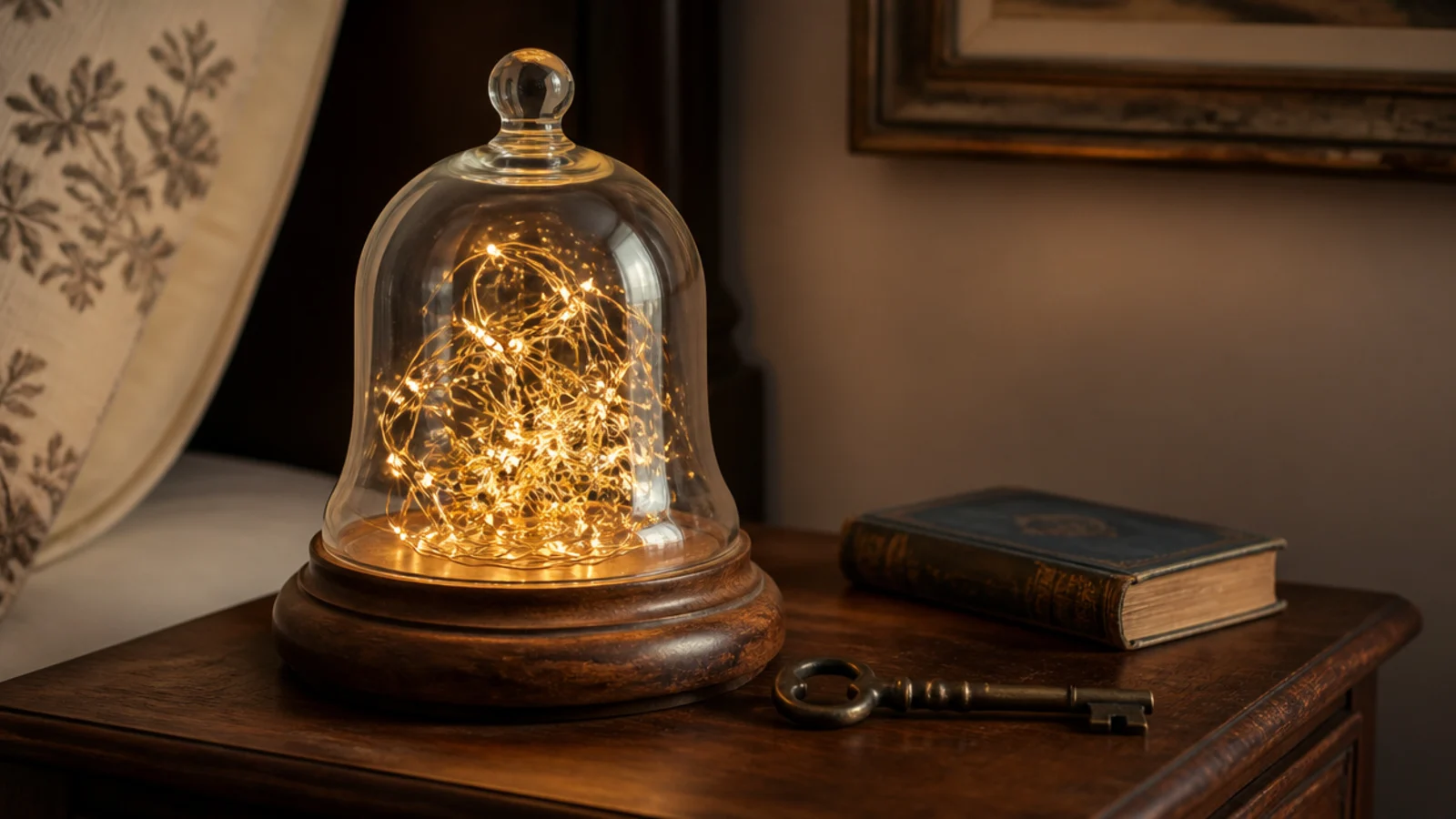
A bell cloche on a timber base with 20 to 30 LEDs gathered underneath turns a strand into a small lamp. It gives roughly 15 lumens, which is exactly right on a bedside table at midnight. Expect $12 to $25 for a cloche, and choose one at least 8 inches tall so the cluster sits loose.
2. Three jars in graduated sizes
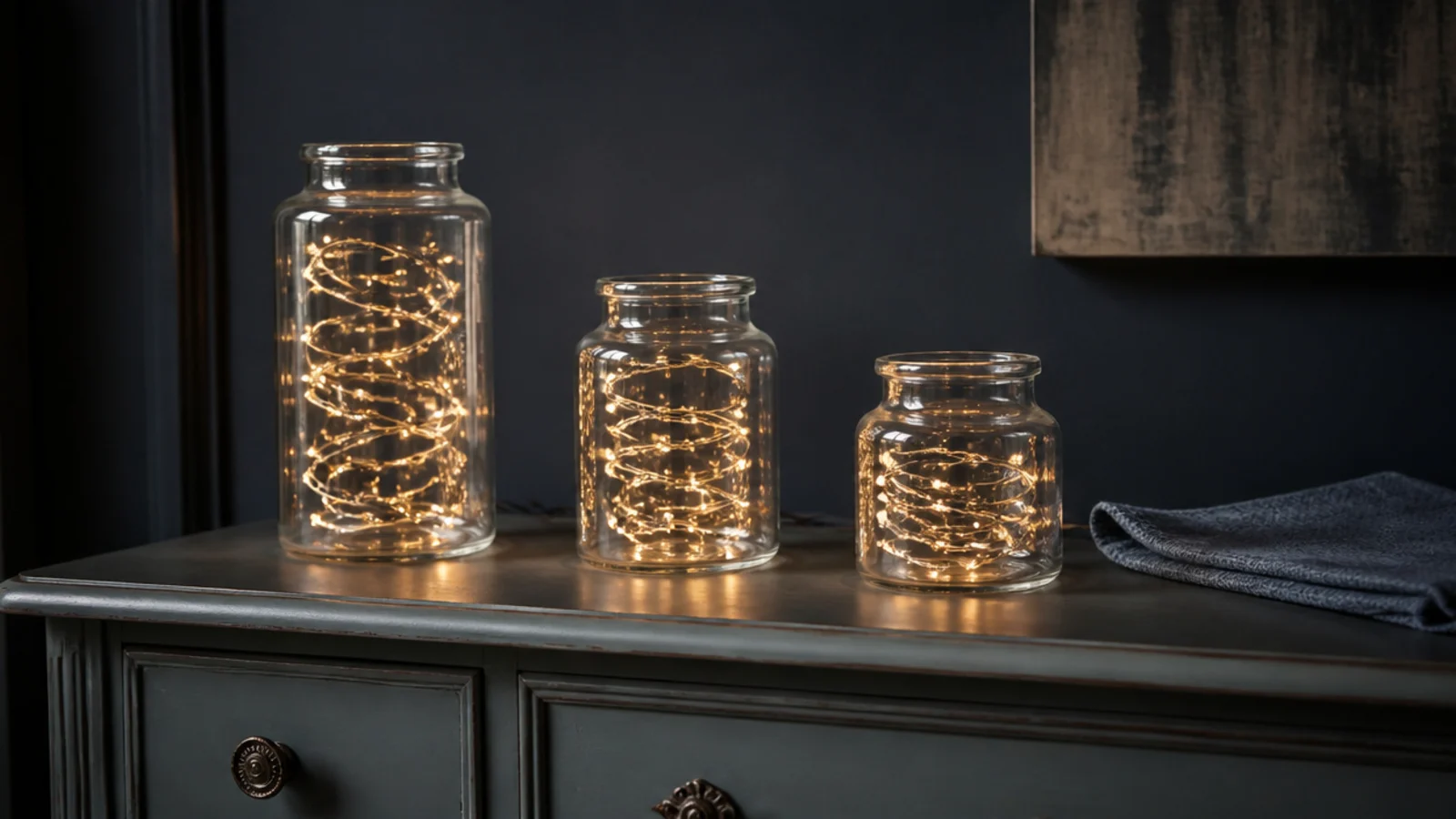
Three jars at 6, 9 and 12 inches tall, each with a micro strand sized to its volume, reads as an arrangement rather than a row. Keep every strand the same colour temperature — mixed warmth in a group of three is the mistake that shows most. Run the leads behind and out of sight.
3. A woven lantern with a light cluster
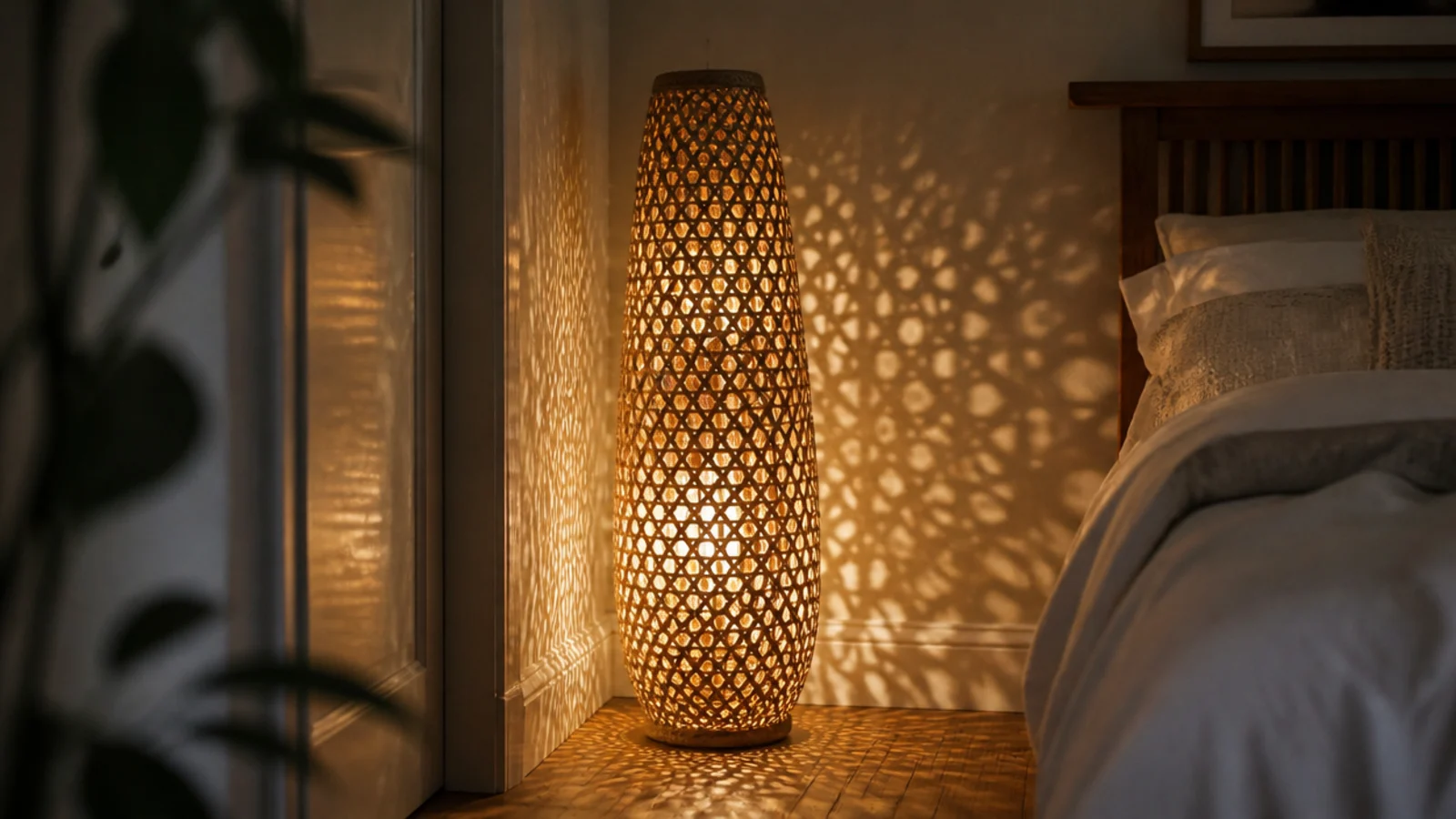
Rattan and seagrass lanterns break light into a pattern the way a plain glass vessel cannot. A 16 foot 50 LED battery set inside a 14 inch floor lantern throws dotted shadows across the floorboards. It also solves a corner with no socket, and it costs $20 to $40 including the lantern.
4. A cork insert in a wine bottle
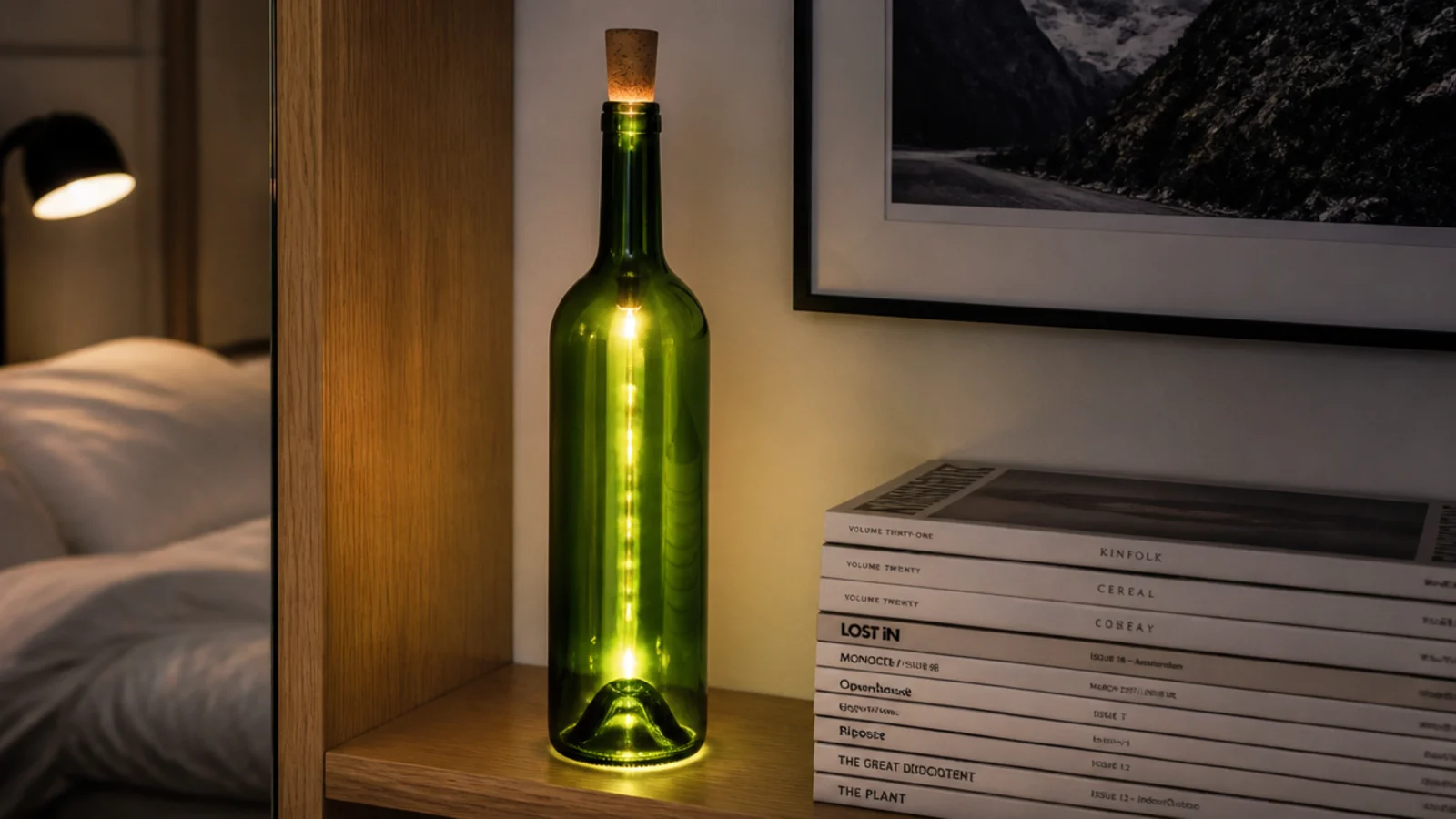
Cork-mounted micro strands cost about $4 and carry 20 LEDs on roughly 6.5 feet of wire. Green and amber glass glows richly; clear glass shows the wire and looks unfinished. Use bottles you have rinsed and dried thoroughly, and keep the little battery cap accessible for the cell change.
5. A terrarium lit from below
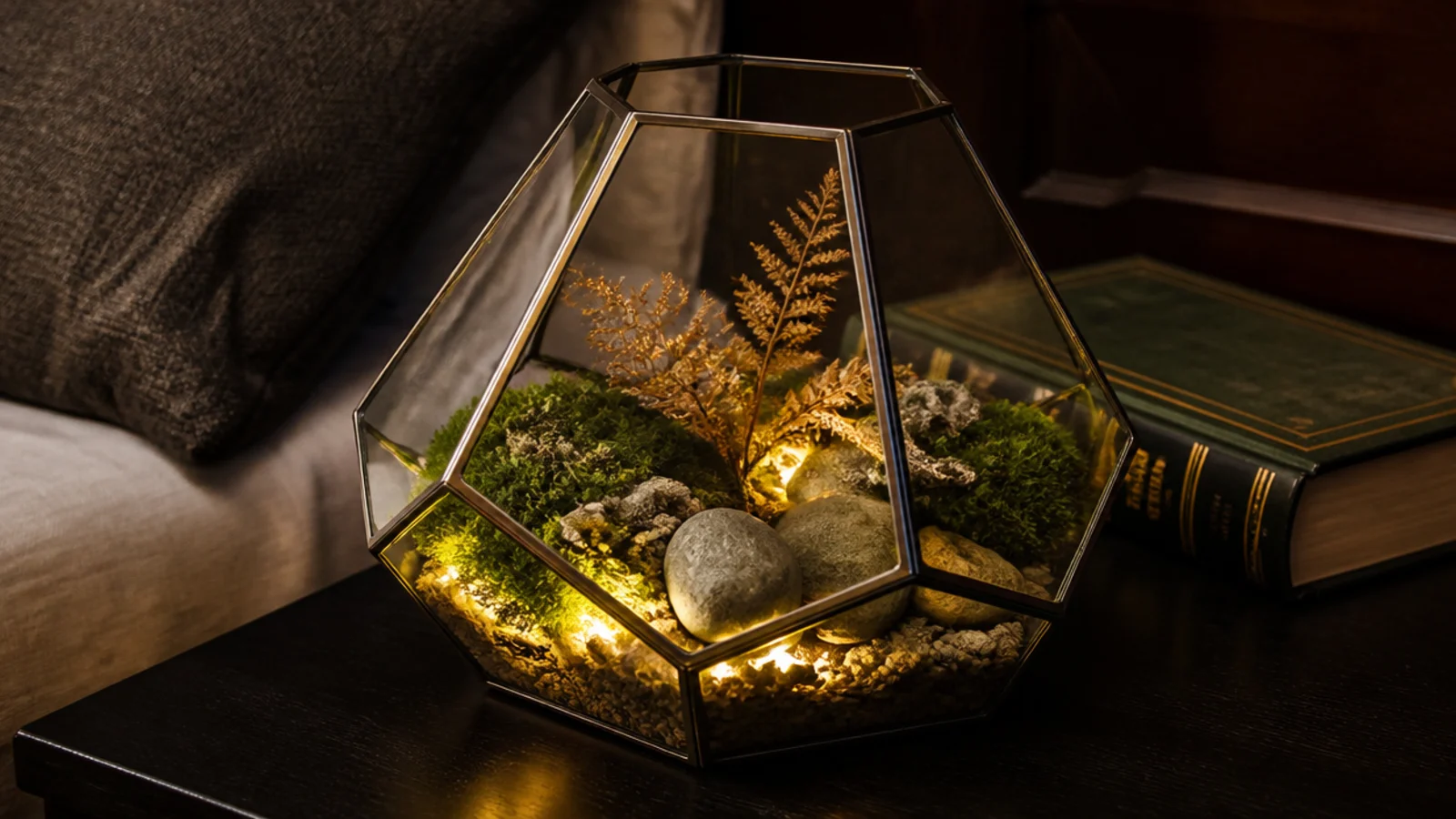
Tuck a hair-fine strand under the gravel or moss layer rather than draping it over the top. The light comes up through the planting and the wire disappears completely. Use only artificial moss and dried elements if the strand is inside — anything you mist regularly should have its light source outside the glass.
6. A wire marquee letter
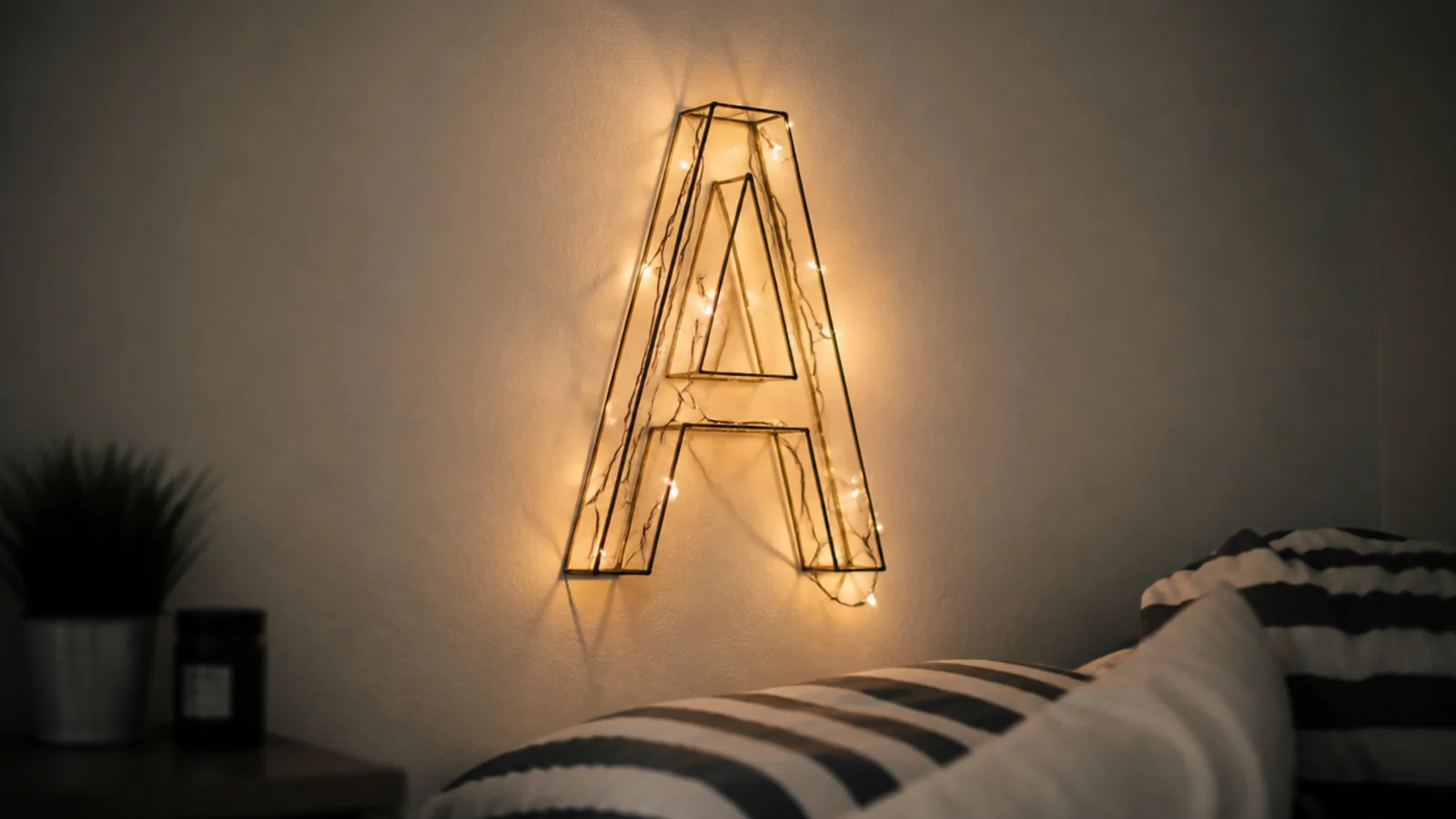
An open wire frame letter at 12 to 18 inches tall takes about 10 feet of micro strand wound around the outline. Keep the wire slack rather than tight to the frame, and hang the letter from its own hook so the strand carries nothing. It is the one lit object that reads as deliberate at a distance.
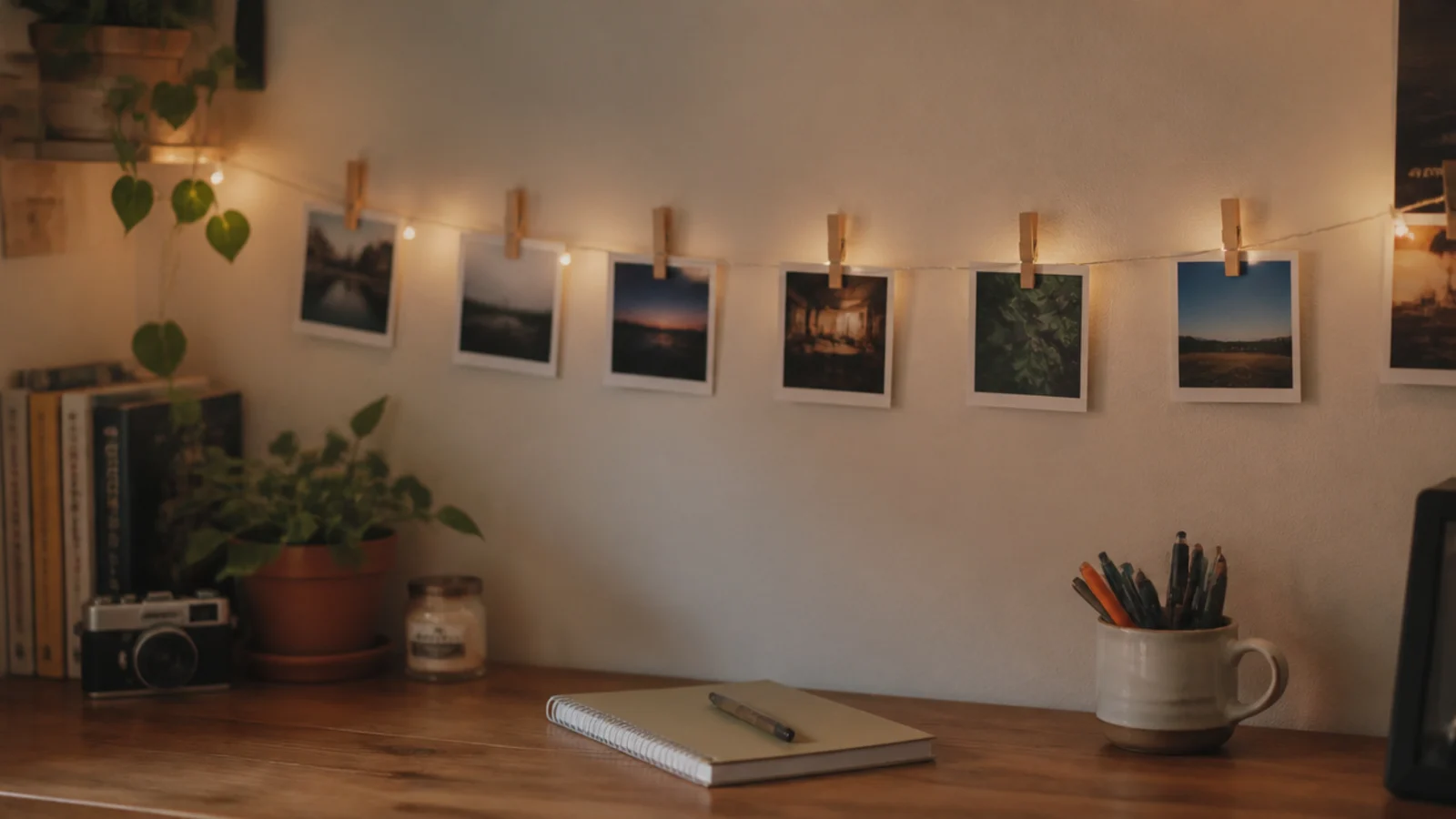
7. A photo garland on wooden pegs
Small wooden clips carry a 4 by 6 print easily and nothing heavier. Twenty prints at about 20 cents each turns a $8 clip strand into a wall display for under $15. Change them seasonally — this is the only lit decor here that gives you something to do rather than something to look at.
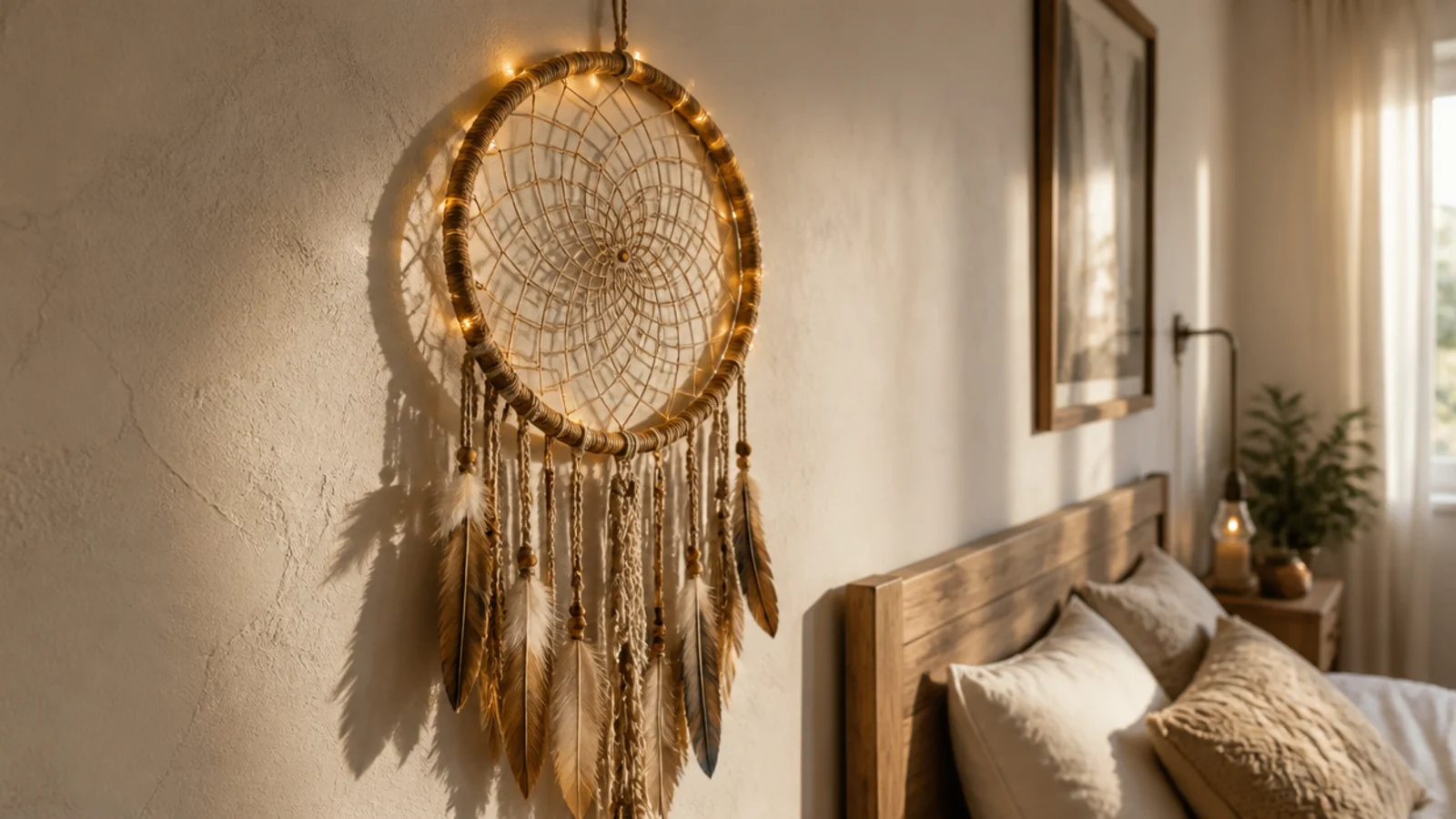
8. A dreamcatcher hoop with a strand
A 12 to 18 inch hoop traced with a fine strand becomes a lit object without losing the weave. Hang the hoop from its own hook and clip the strand to the hoop, so the cable never carries the weight. Keep the feathers and threads away from the bulbs so nothing rests against a wire.
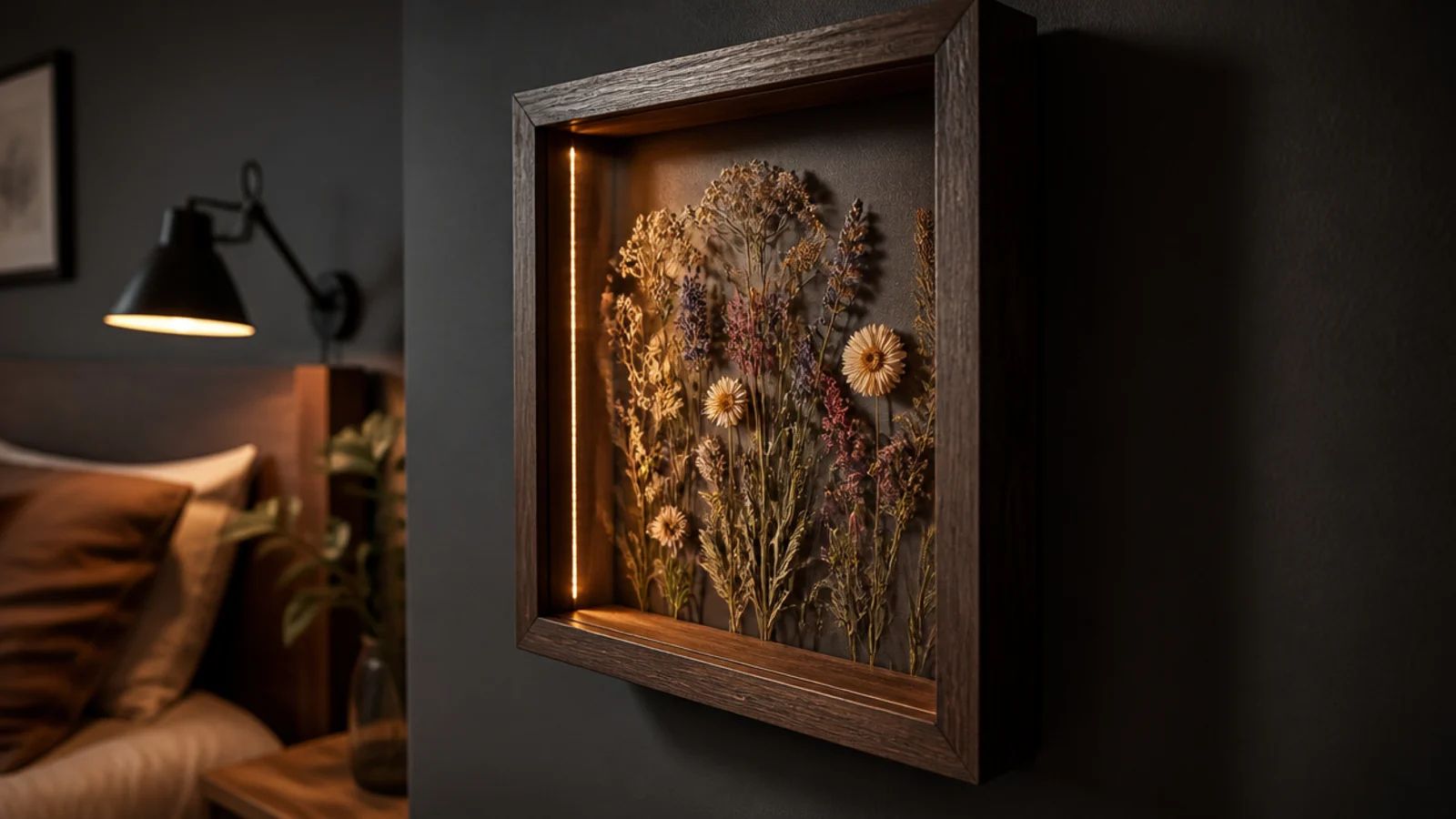
9. A shadow box of dried stems
A deep frame of pressed flowers is flat and slightly lifeless in daylight. A hair-fine strand tucked along the inside edge lights it from the side and gives the contents depth. Use LED only against dried material, and keep the strand against the frame rather than among the stems.
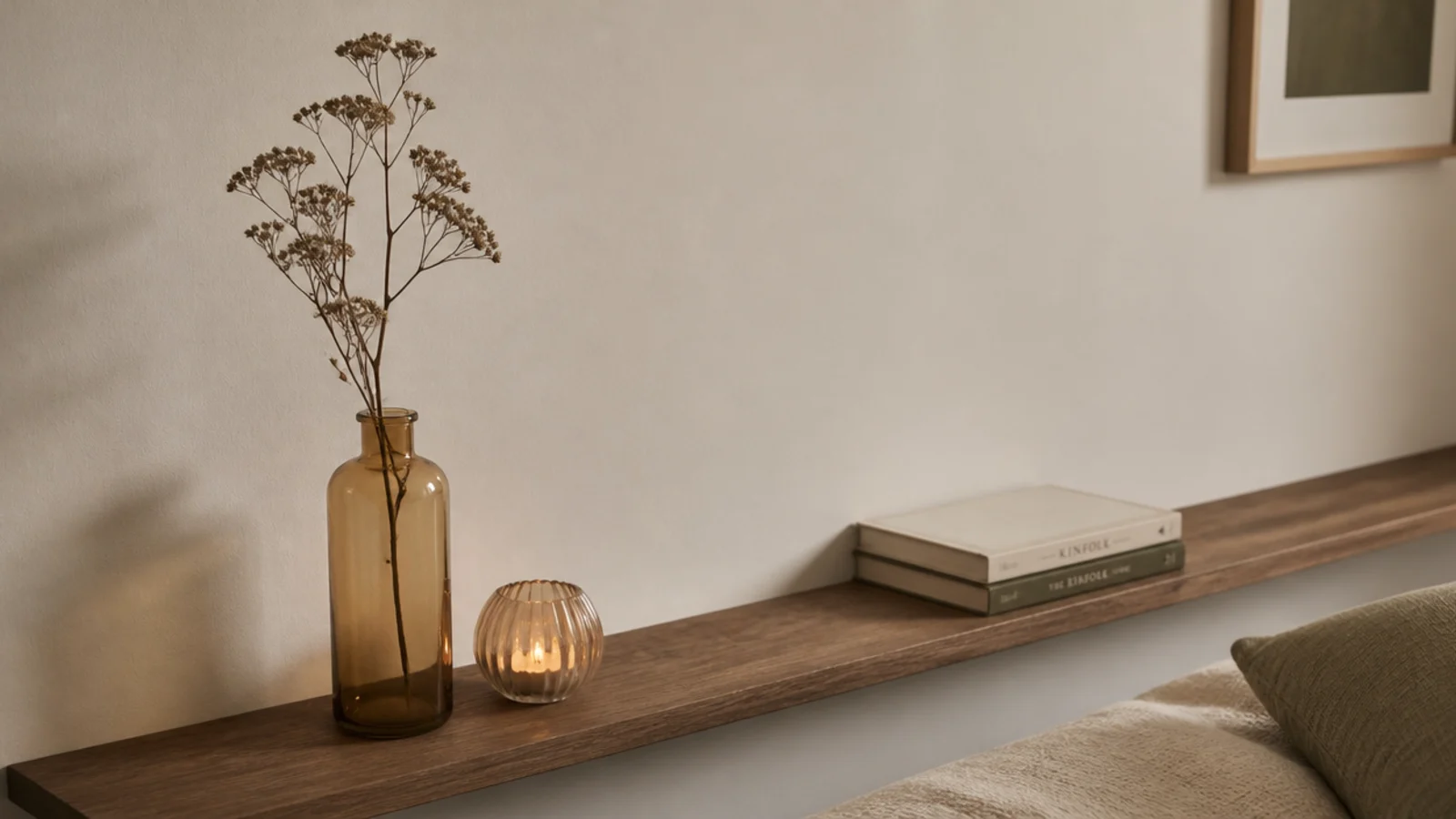
10. A lit shelf vignette in threes
One lit object among two unlit ones is the ratio that reads as styled. Three heights — something tall and thin, something low and wide, something small and lit — with a hand's width of clear surface around the group. Five lit objects on one shelf reads as a display stand.
11. A lit tray on the dresser
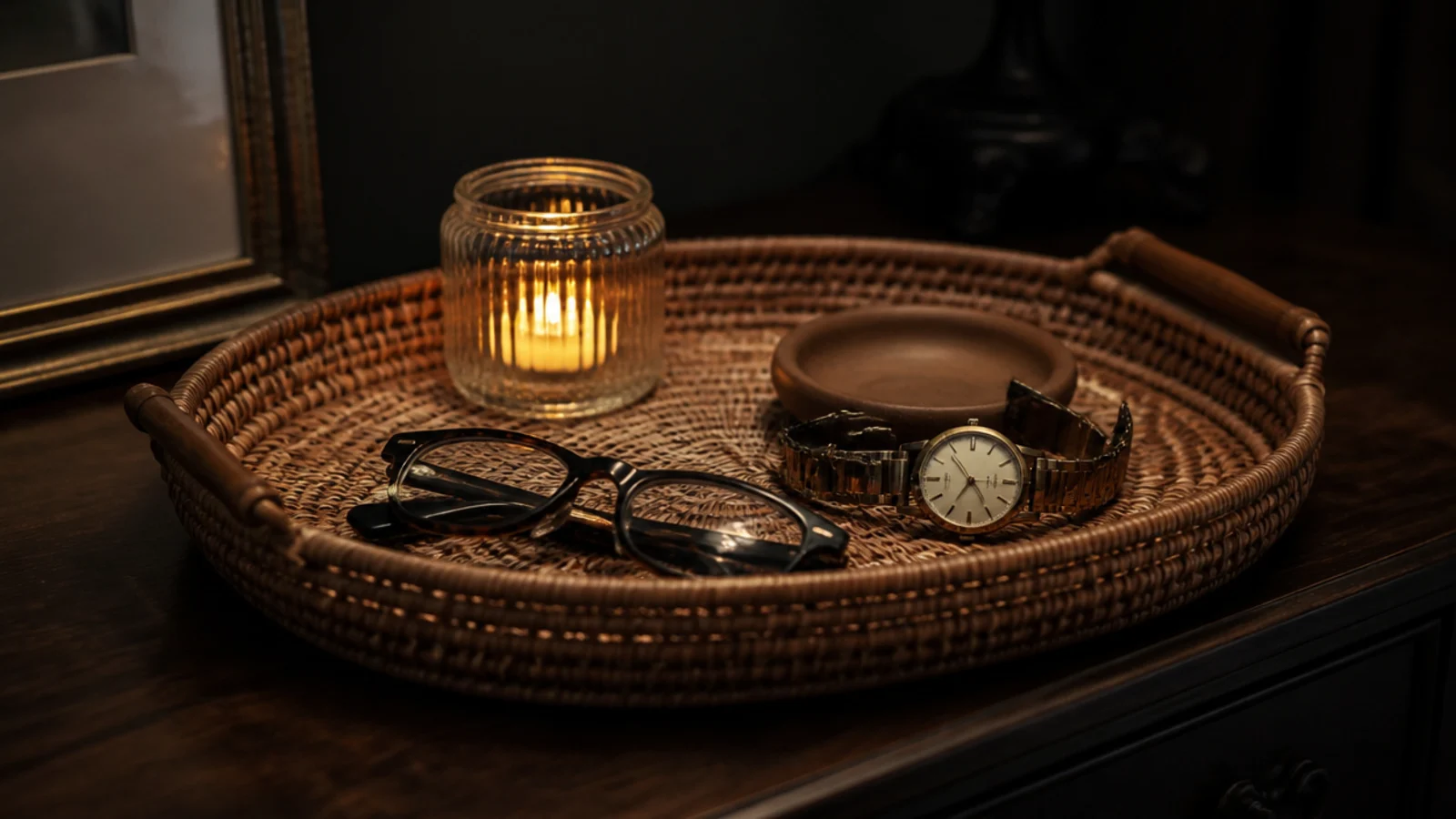
A shallow tray 10 to 12 inches across corrals the loose things and gives a small lit vessel a home. Rings, a watch and glasses inside the tray read as arranged; outside it they read as mess. Rattan, clay and brass all work, and the tray costs $8 to $20.
12. A strand around a stack of books
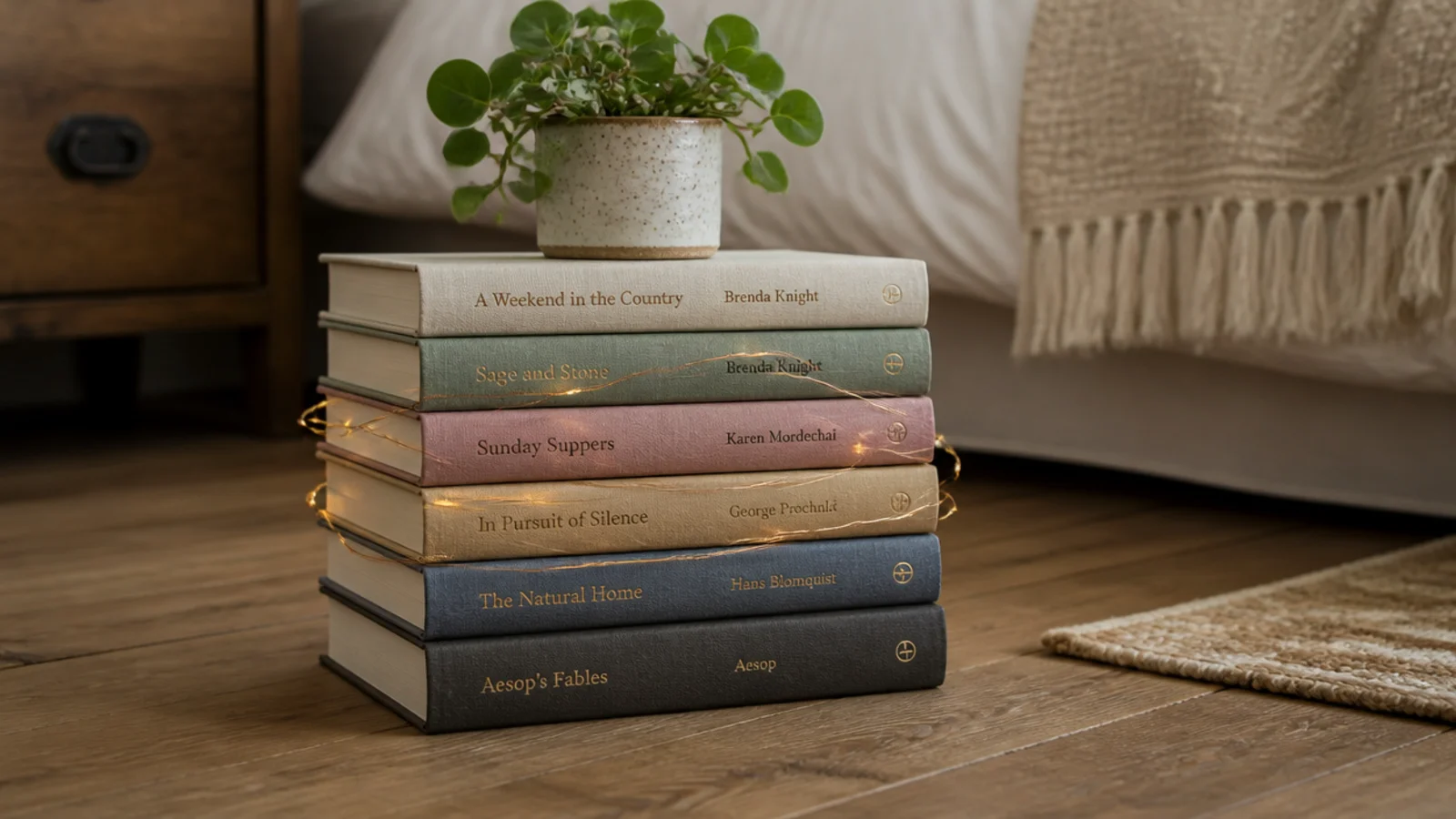
Six hardbacks make a 5 inch plinth that costs nothing and already looks styled. A fine strand wound loosely around the middle of the stack lights the spines and the surface beside them. Keep the wire loose so the books can be pulled out without dragging the strand off.
13. A macrame hanging with lights behind
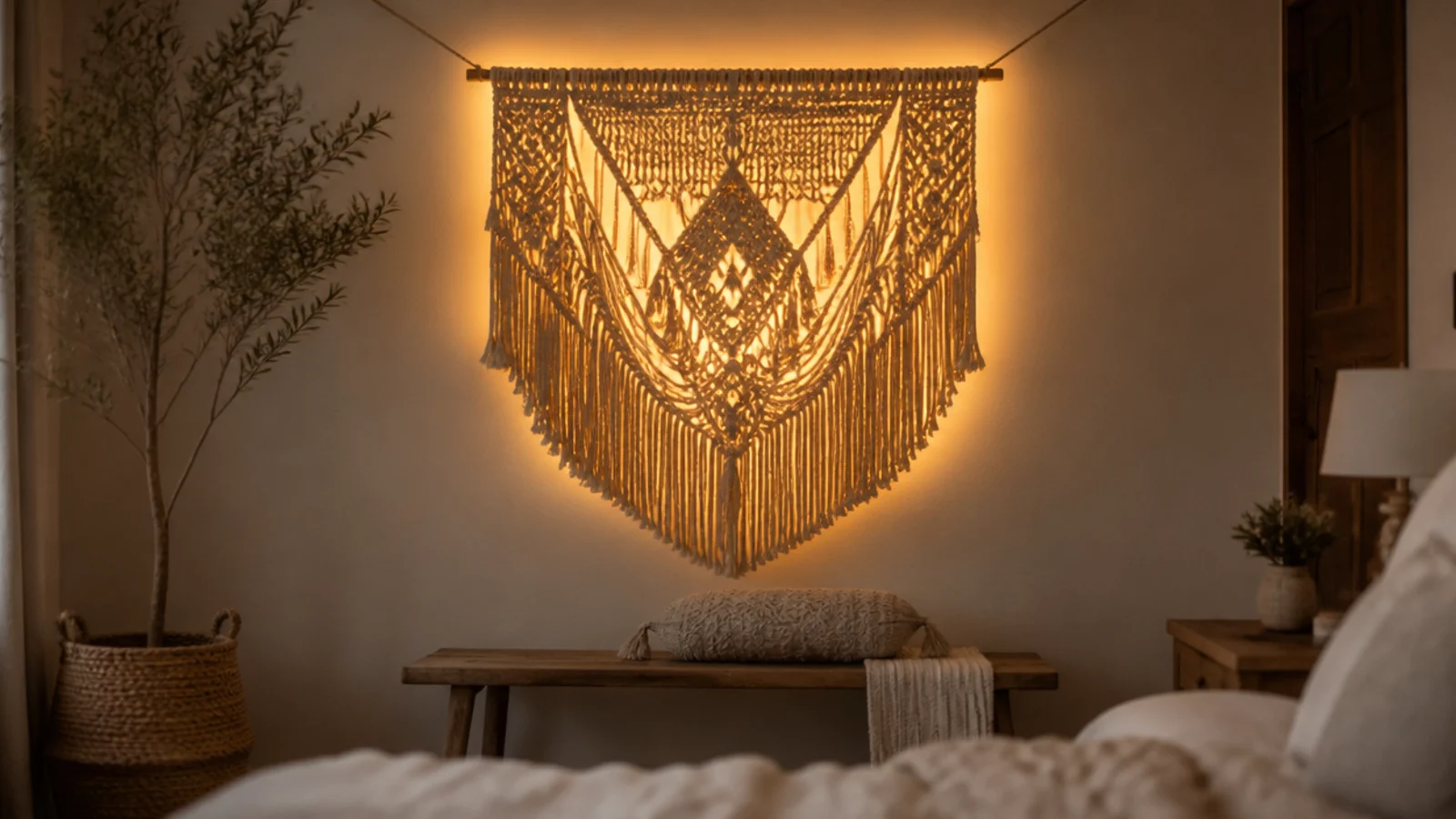
Backlighting a knotted hanging from 3 to 4 inches behind puts every knot and fringe into silhouette. The strand goes on the wall, not through the cotton, which keeps the fibres away from the wire entirely and lets you take the hanging down to wash.
14. A hat wall with lights between
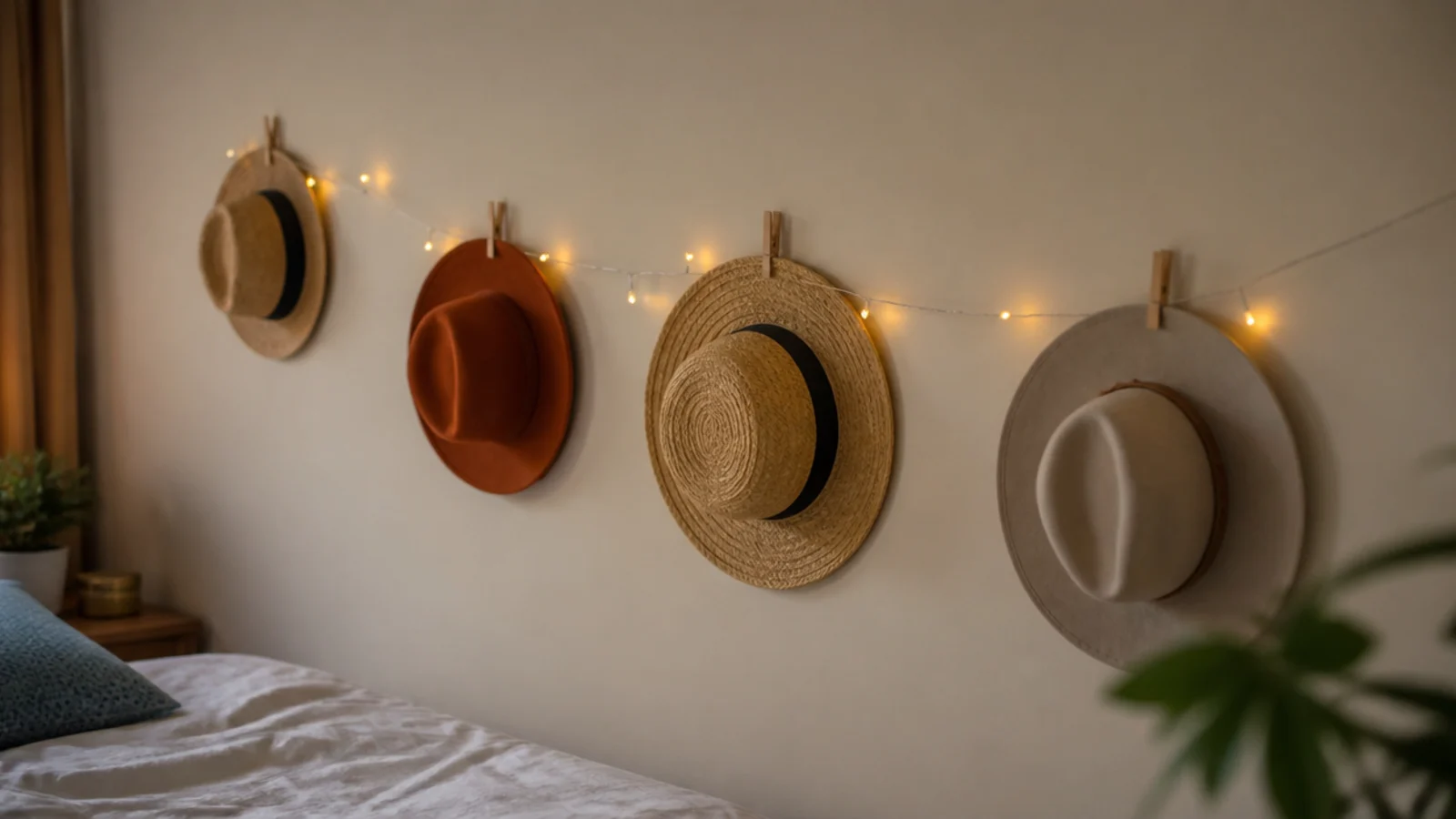
Straw and felt hats hung at different heights make a good group, and a fine strand threaded between them adds the light the arrangement is usually missing. Hats hang on their own hooks, strand goes on its own clips. Nothing shares a fixing, so nothing sags into anything else.
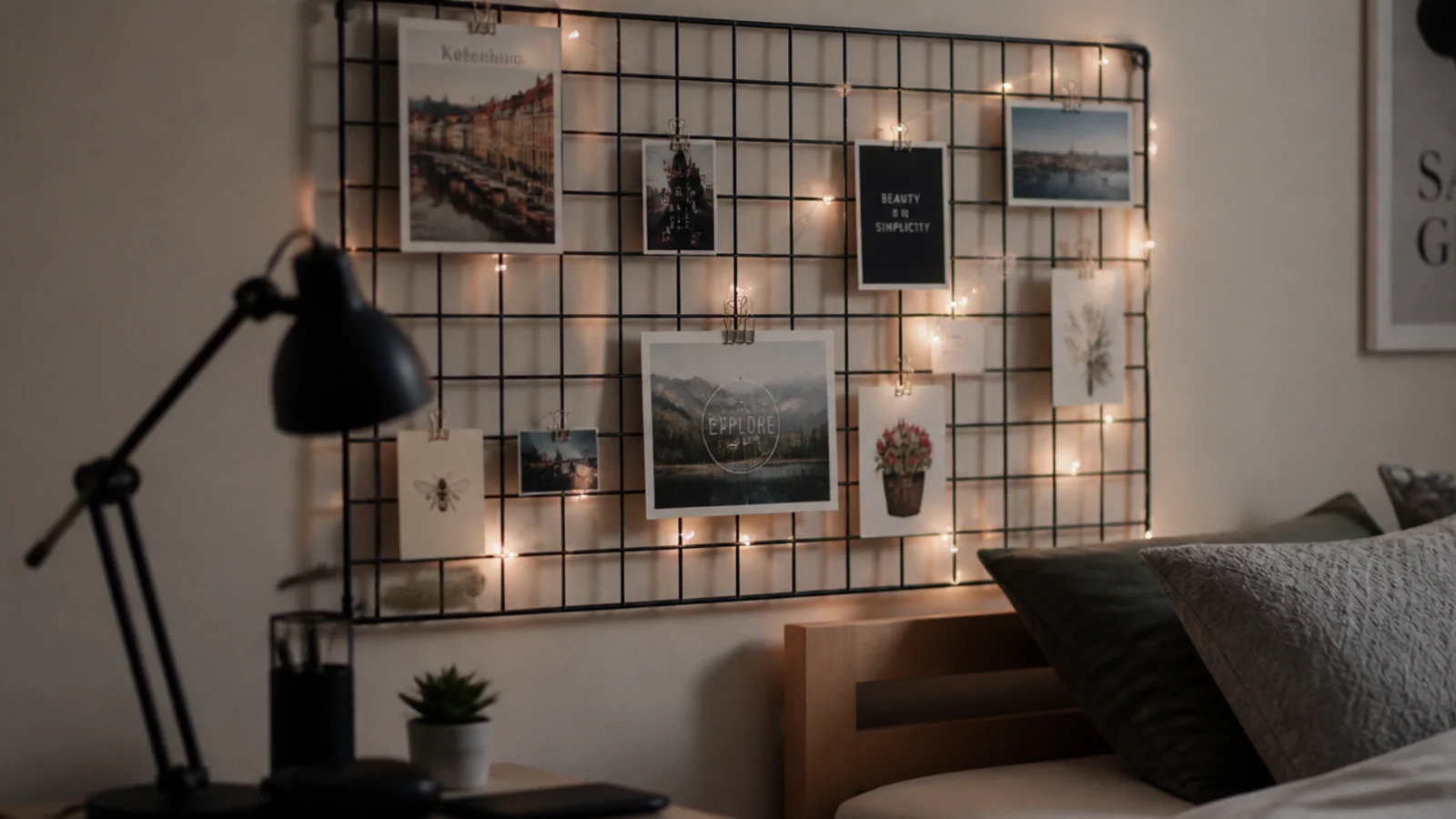
15. A wire grid of postcards
A grid panel holds cards and cable at once with no adhesive at all. Weave the strand through the mesh so it sits behind the cards rather than in front. One panel at $12 to $20 replaces a dozen picture hooks and comes off the wall in a minute.
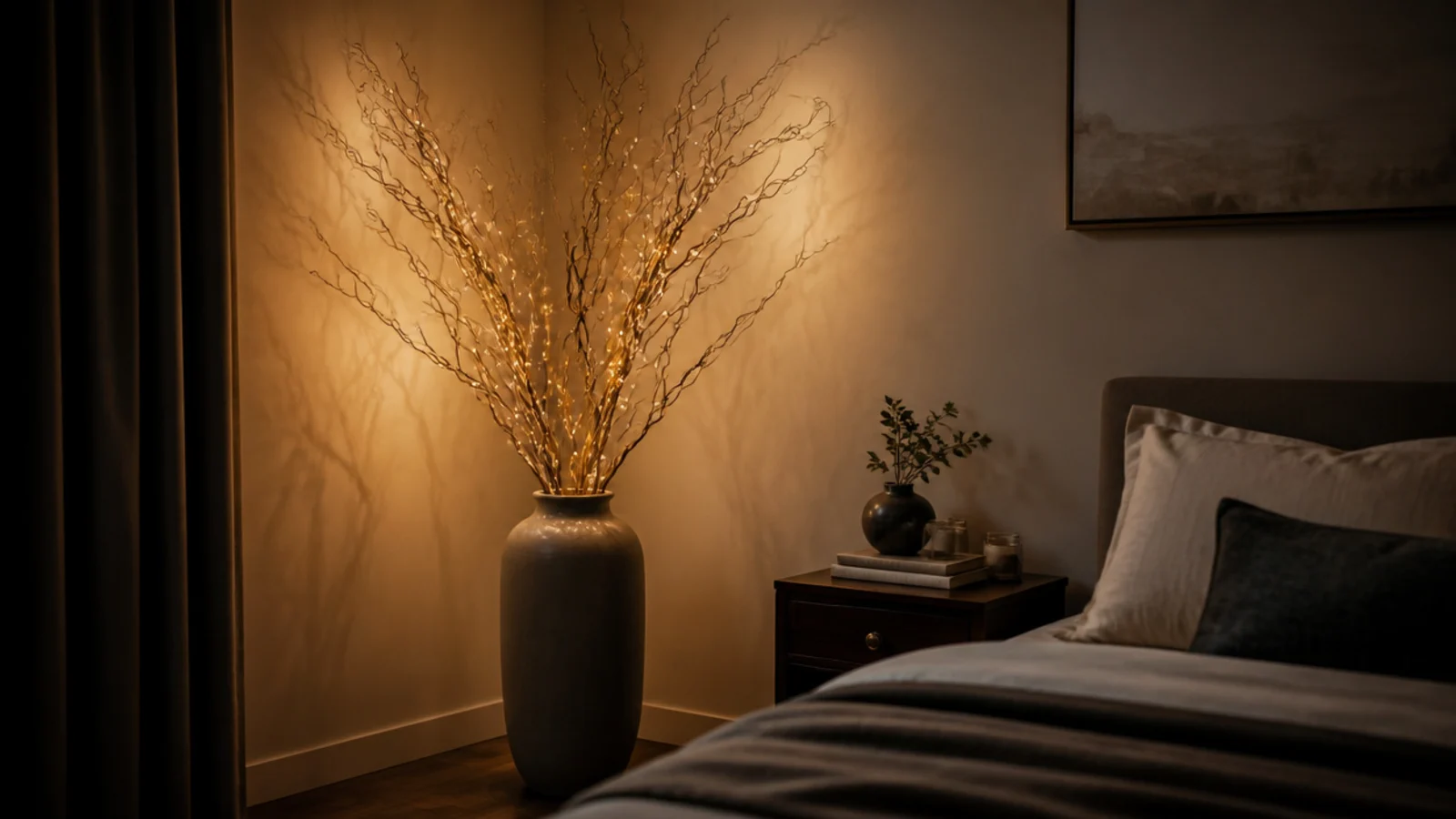
16. A floor vase of lit branches
Bare curling branches take a fine strand better than any foliage because you can see the light through the structure. A 3 foot vase with 4 foot branches uses about 16 feet of strand. Weight the base with stones so the whole thing cannot tip, especially in a room a door opens into.
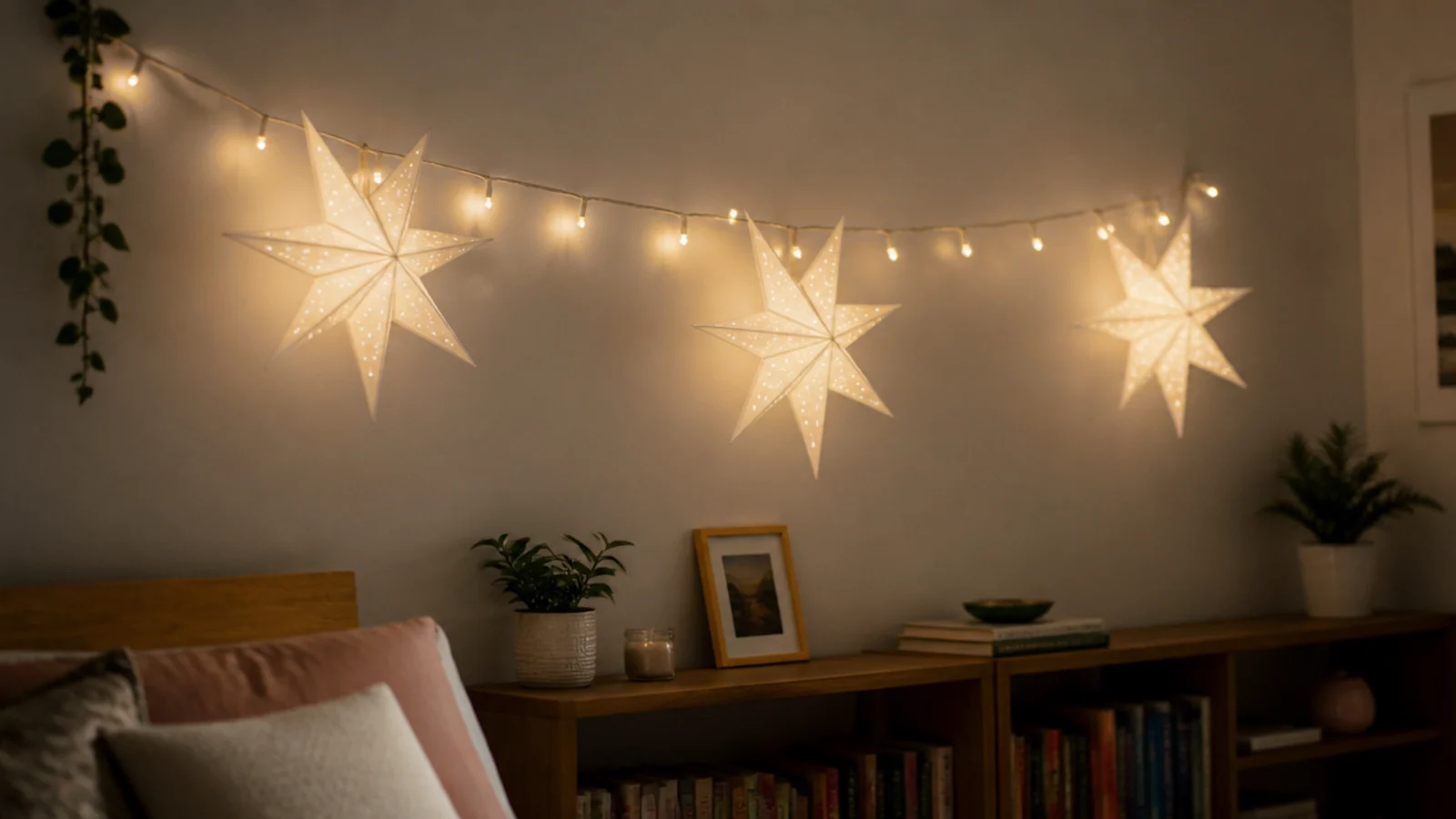
17. Paper star and moon lanterns
Paper shades threaded onto a strand cover the bulbs that sit in your eyeline between 40 and 65 inches, which is exactly where a bare bulb is least comfortable. They cost about 50 cents each folded flat, and LED bulbs are the only sensible thing to put inside paper.
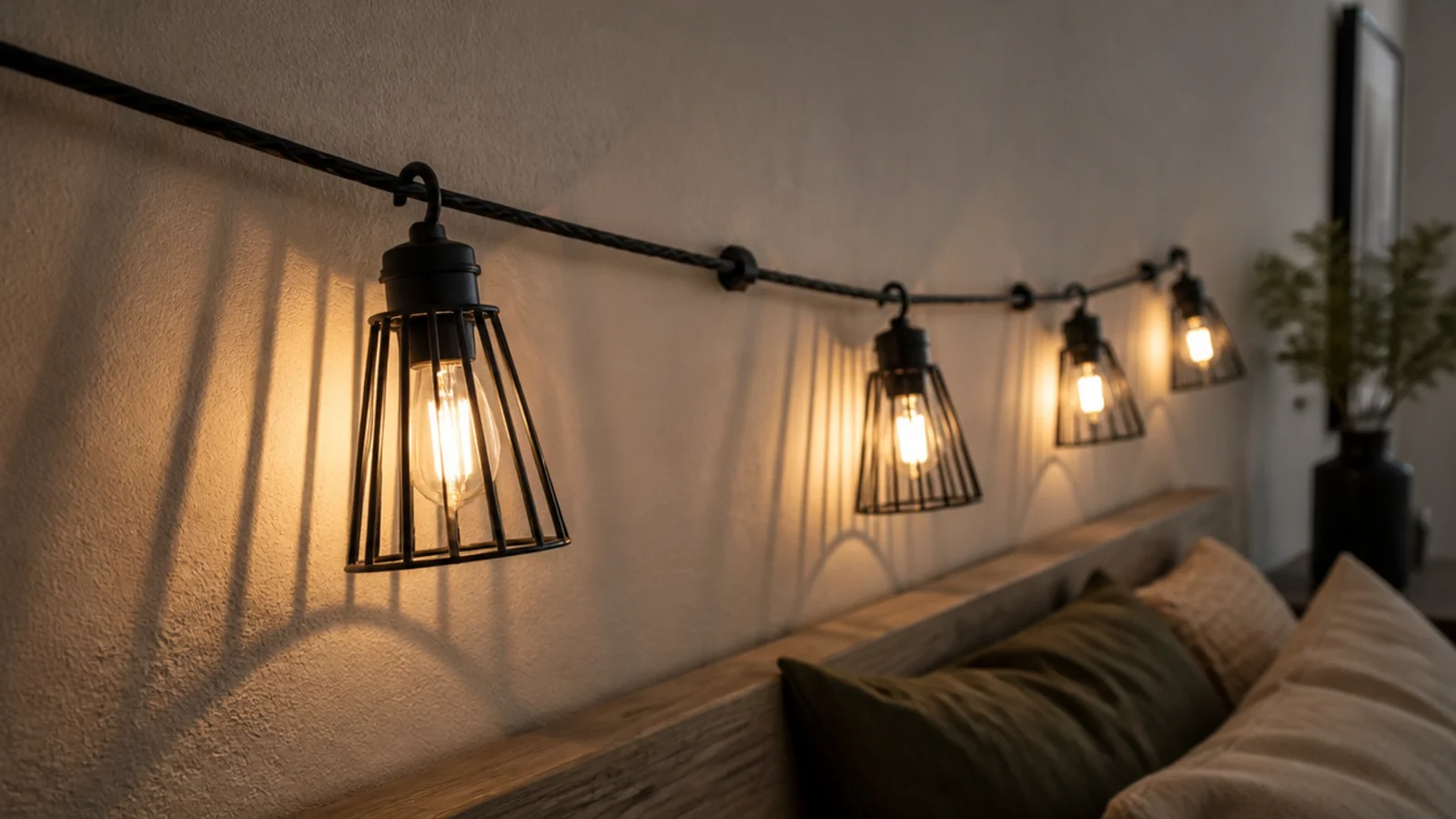
18. Decorative cage bulbs
Small metal cage shades clip over individual bulbs and throw a striped shadow onto the wall behind. They add shape at eye level without cutting much light. A pack of ten costs $8 to $15, and they suit a plain painted wall that needs a pattern rather than more brightness.
19. A mirrored tray under a light cluster
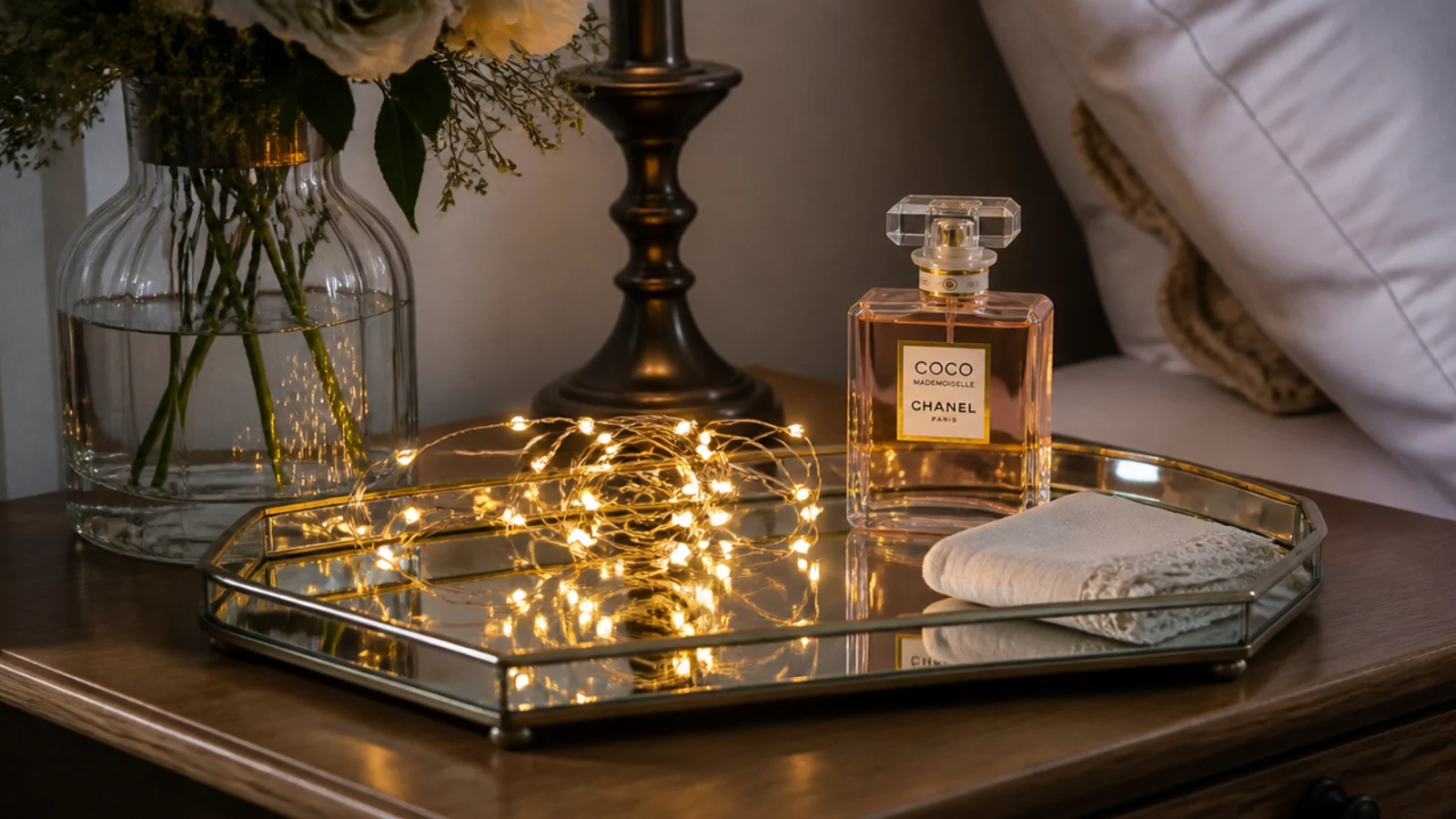
A mirrored base doubles the apparent number of bulbs for nothing. It is the oldest trick in decorating and it still works, particularly on a dresser in a dark corner. Keep the cluster loose on the surface rather than pressed against the mirror, and wipe the glass every couple of weeks.
20. Seasonal stems swapped through the year
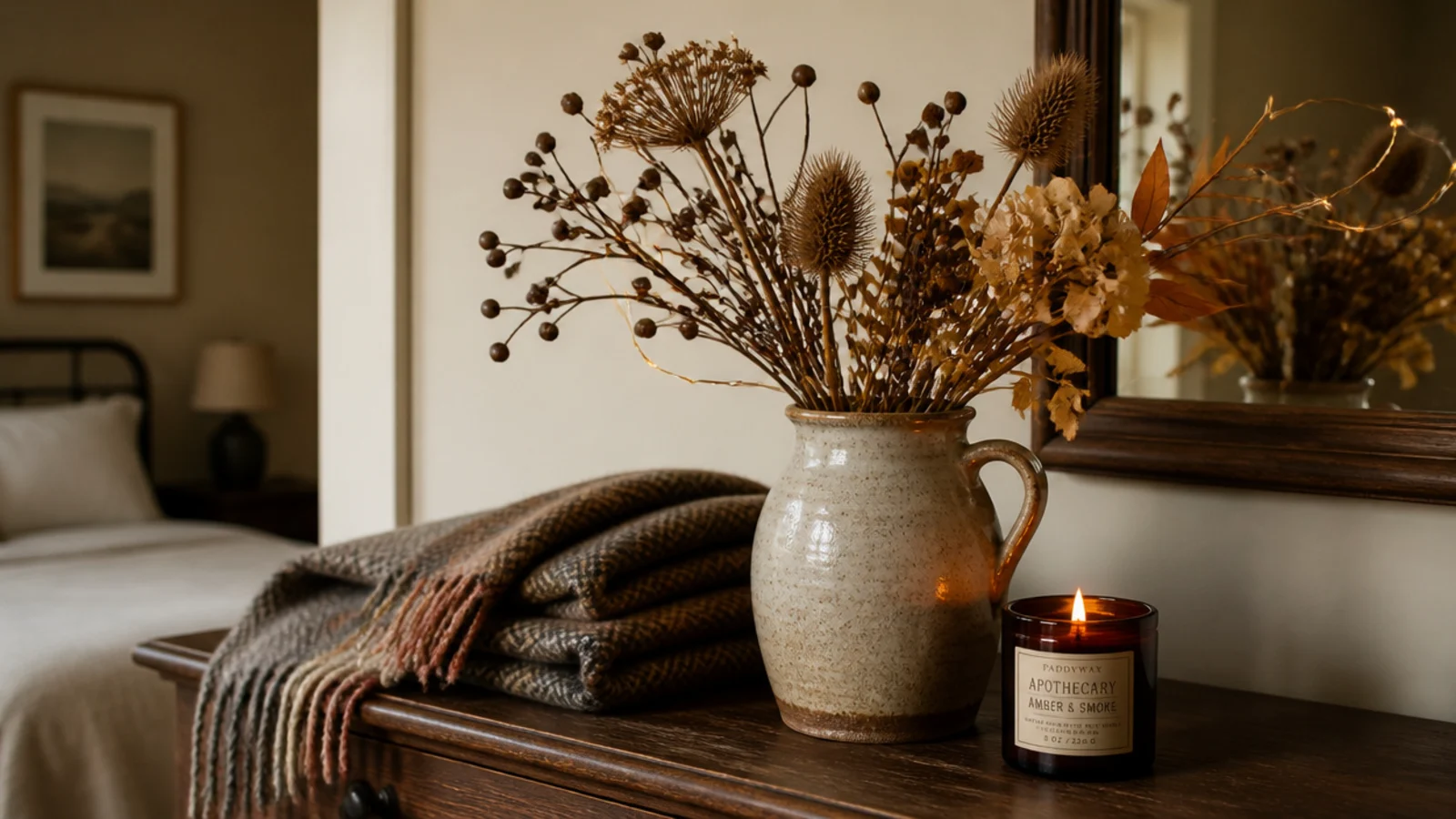
Keep one jug and one fine strand permanently, and change what goes in it. Dried grasses and seed heads in autumn, bare branches in winter, something green in spring. The lit element stays constant while the arrangement changes, which is a far cheaper habit than buying new decor.
21. A lit basket of blankets
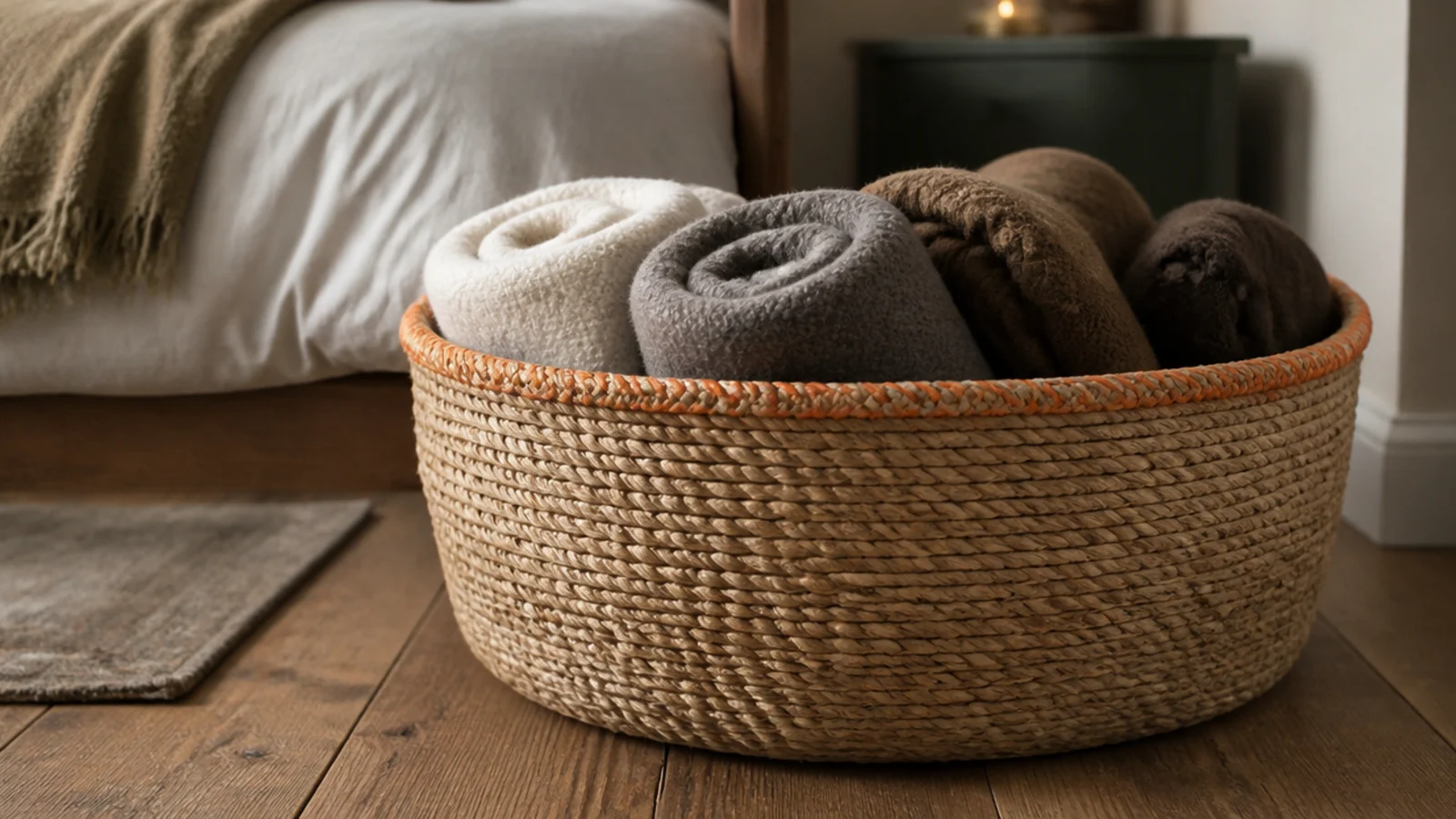
A strand run along the outer rim of a blanket basket lights the corner and stays entirely clear of the textiles inside. Nothing goes in among the blankets, ever — a strand buried in folded wool has no airflow and no reason to be there.
22. A paper cut silhouette panel
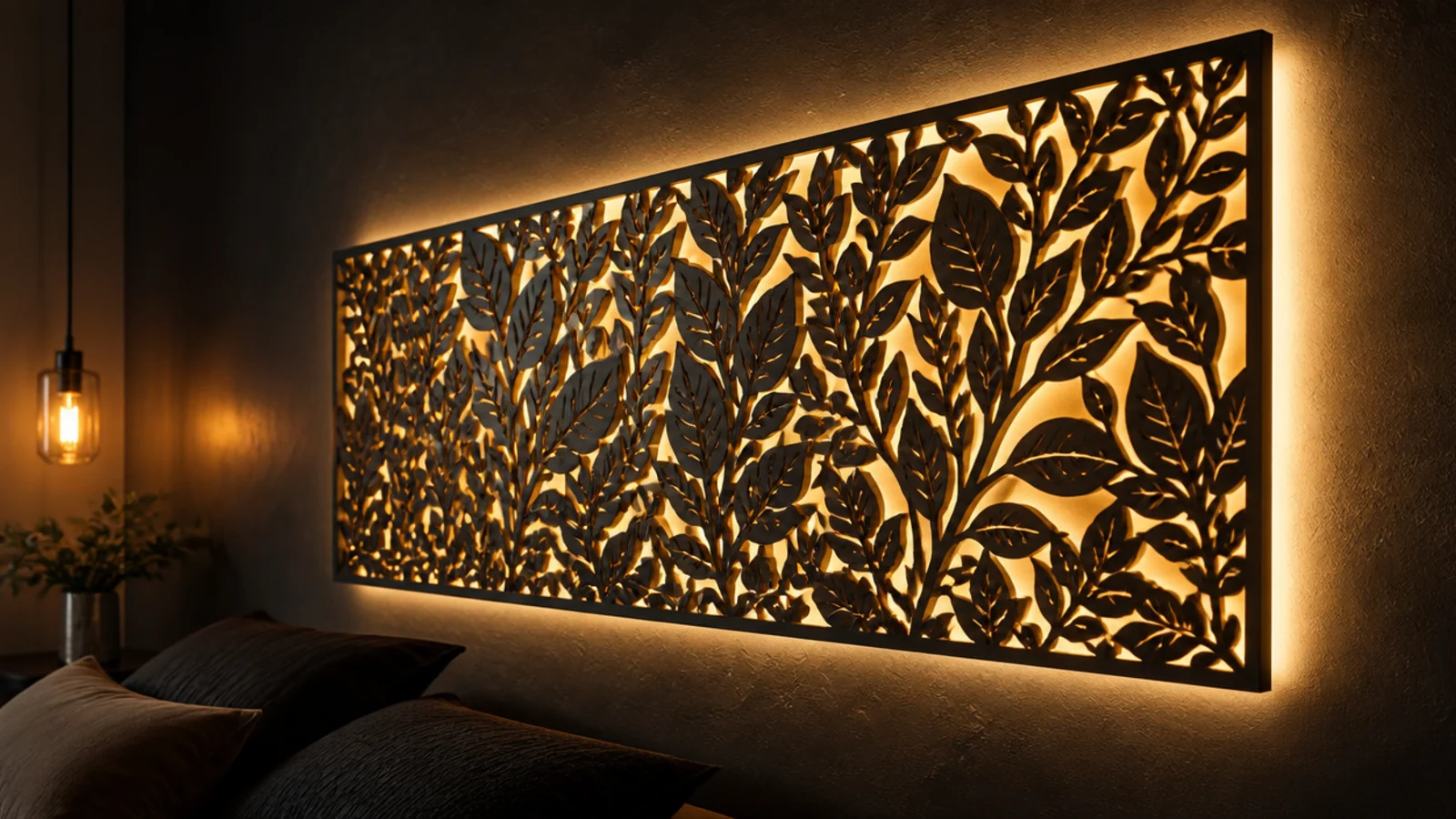
Cut paper panels are flat and slightly disappointing until something lights them from behind. A strand 3 to 4 inches back makes every cut shape glow. Mount the paper on its own fixings and keep the strand on the wall so nothing rests against the cable.
23. Fabric bunting with a strand behind
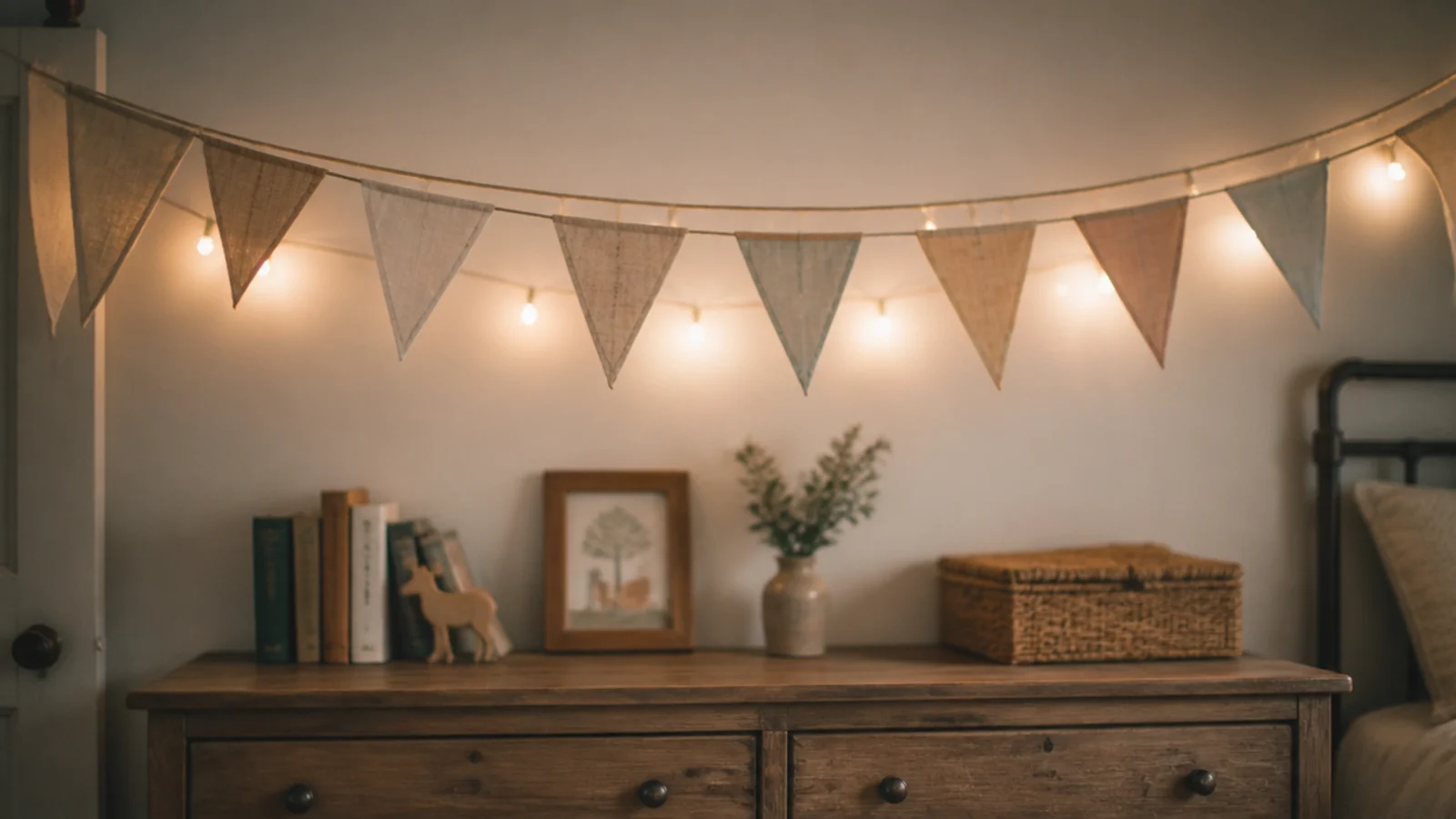
Bunting on one line, lights on a separate line 2 inches behind. Sharing one line puts fabric directly against the wire, which stresses the cable and traps warmth. Separated, the triangles catch light on their front faces and the whole thing reads far softer.
24. A lit shelf of trailing plants
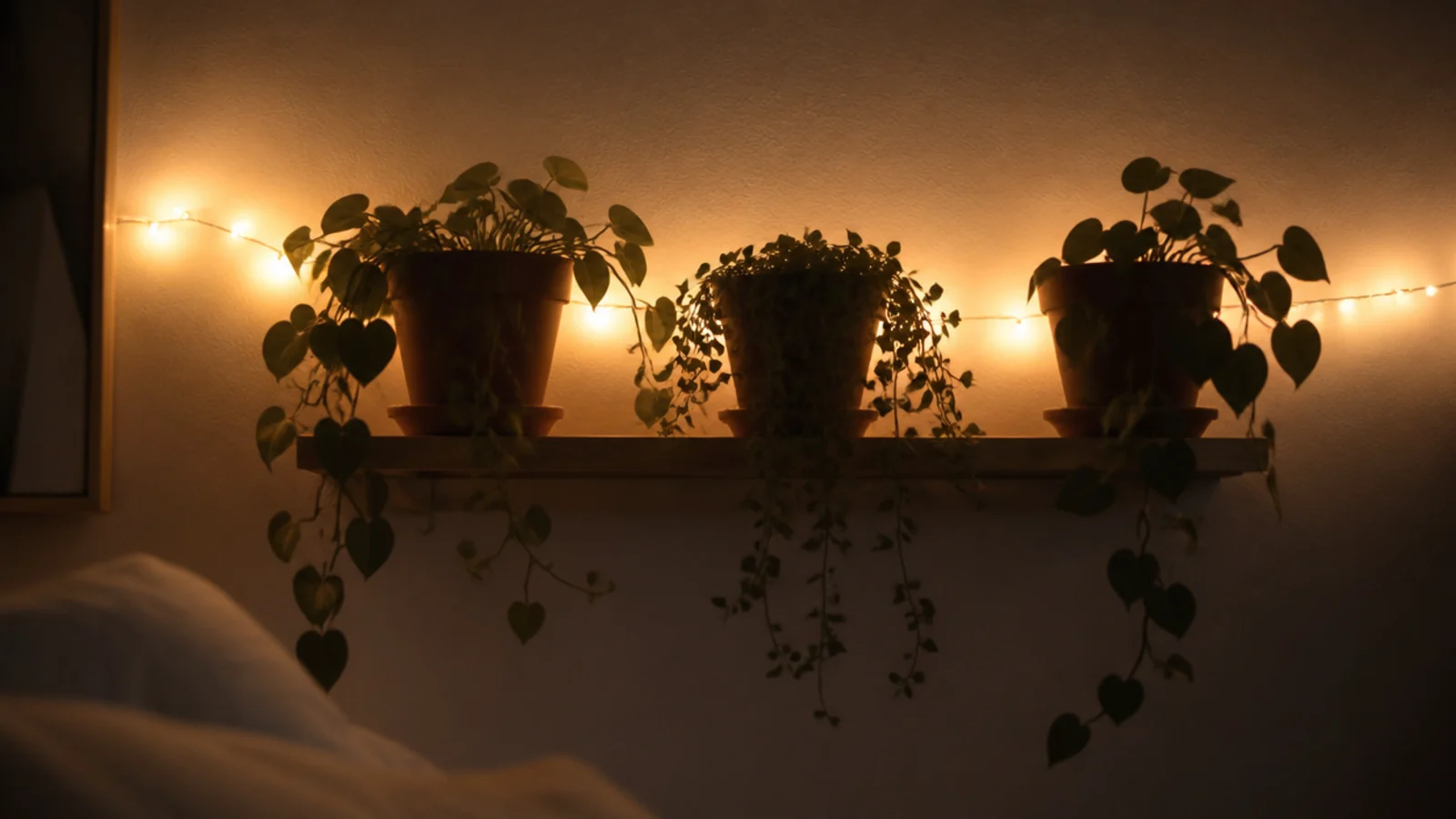
Fix the strand to the wall behind the pots rather than threading it through the stems, because watering and cable joints do not belong together. Pothos and heartleaf philodendron trail 6 to 10 feet and tolerate the low light of a bedroom, and lit from behind their leaves read almost translucent.
25. Take one lit object away
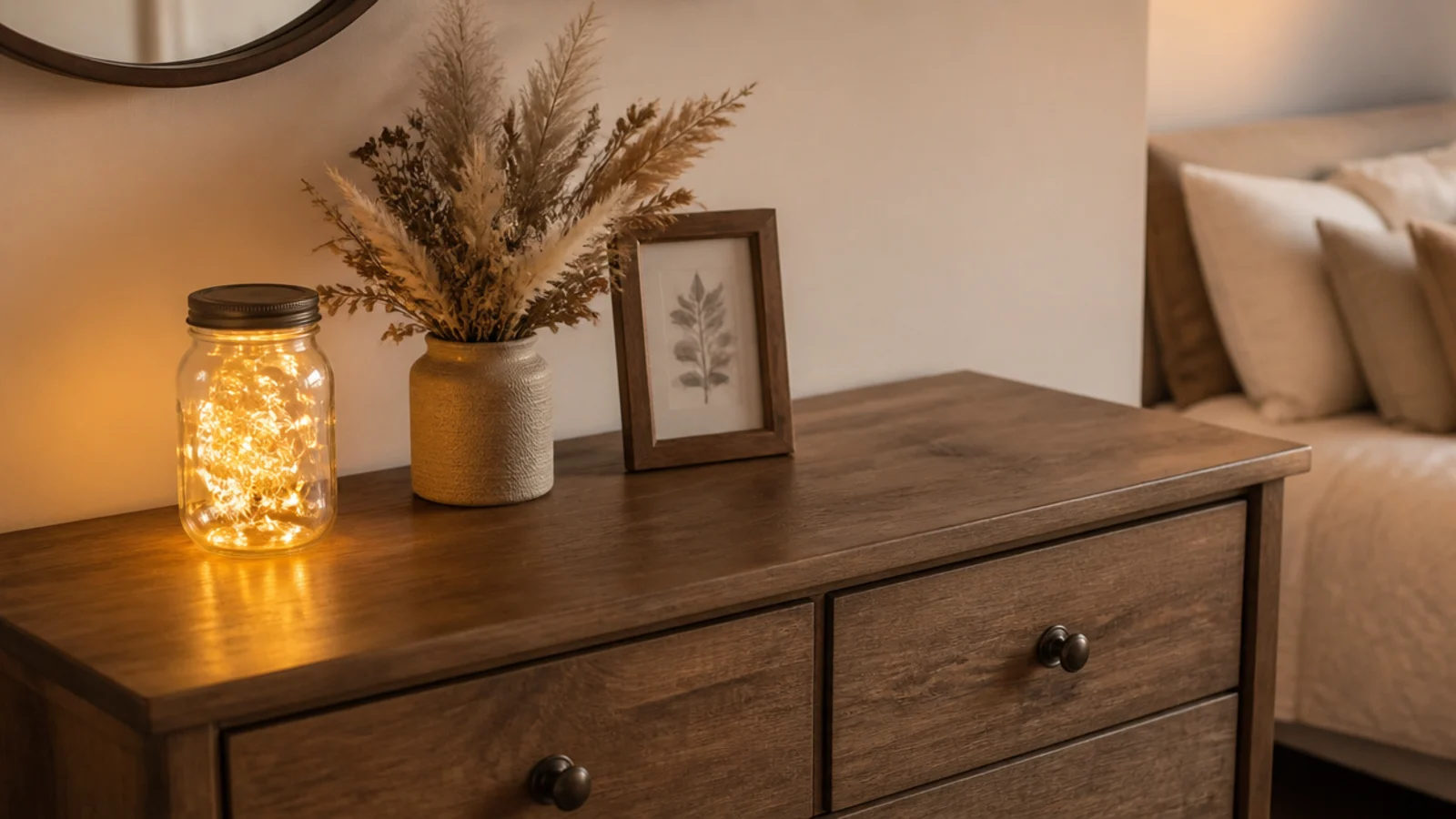
The last step of styling any lit surface is subtraction. Three lit objects on one dresser compete; one lit object with two unlit ones has a focal point. Photograph the surface on a phone, then remove whichever object you notice second. It is the only editing rule I use every time.
For the greenery versions of these arrangements, vines and lights covers garland ratios, and ceiling layouts handles everything overhead. Vanity organization ideas has the tray systems that keep a lit dresser tidy, and bedside table ideas covers the surface heights underneath.
Mistakes to Skip
- Sealing a battery pack inside a jar or a fabric object. It needs air and it needs reaching, and buried packs are how a nice piece of decor becomes landfill.
- Packing a strand tightly to fill a vessel. Loose coils spread light and let air move; a dense wad gives you one bright spot and a lot of wire.
- Threading lights through a plant you water. Fix the strand to the wall behind and let the leaves fall in front — cables and watering cans never mix.
- Lighting every object on a shelf. Three glowing things at once cancel each other out, and the surface stops having a focal point at all.
Frequently asked questions
How many fairy lights fit in a jar?
A 1 litre jar takes a 20 LED micro strand of about 6.5 feet, a 2 litre jar takes 50 LEDs at around 16 feet, and a 5 litre demijohn comfortably holds 100 LEDs at 33 feet. Coil the strand loosely rather than packing it, so the light spreads and air can still move inside the glass.
How long do battery fairy lights last inside decor?
Three AA cells give roughly 18 to 24 hours of continuous light on a 100 LED strand, which is under a week at six hours a night. With the built-in six hour timer most sets include, one set of rechargeable cells runs about a month. Choose sets with the timer, not just the switch.
Where should the battery pack go in a lit decor piece?
Outside the object or in open air behind it, never buried in fabric, wadding or a dense bundle. Packs need air around them and they need to be reachable when the cells go. In a jar, sit the pack behind on the shelf and feed the lead over the rim rather than sealing it inside.
Are fairy lights safe inside glass and paper decor?
With LED strands, yes. LED bulbs sit close to body temperature while incandescent minis reach 60°C and up, which is why nothing but LED belongs inside paper, glass or near dried stems. Keep the strand loose rather than packed, and stay inside the maximum number of sets the tag says you may chain.
How do you make lit decor look styled rather than cluttered?
Group in odd numbers at three different heights and leave a hand-width of clear surface around the group. One lit object among two unlit ones reads as considered, while five lit objects on one shelf read as a display. Repeat the same warm 2200K temperature across everything on the surface.
Want more like this? Browse all 15 fairy lights bedroom guides — they all use the same measurements and budget tiers.

Pin it for later
Save this to your Fairy Lights Bedroom board
Pin it now so it is waiting for you when the tape measure comes out — and so the next person hunting for this idea can find it too.
Save this pinKeep going
More ideas worth saving while you have the tape measure out.