Fairy Lights Bedroom · Listicle
20 Gorgeous Fairy Lights Bedroom Aesthetic Corners

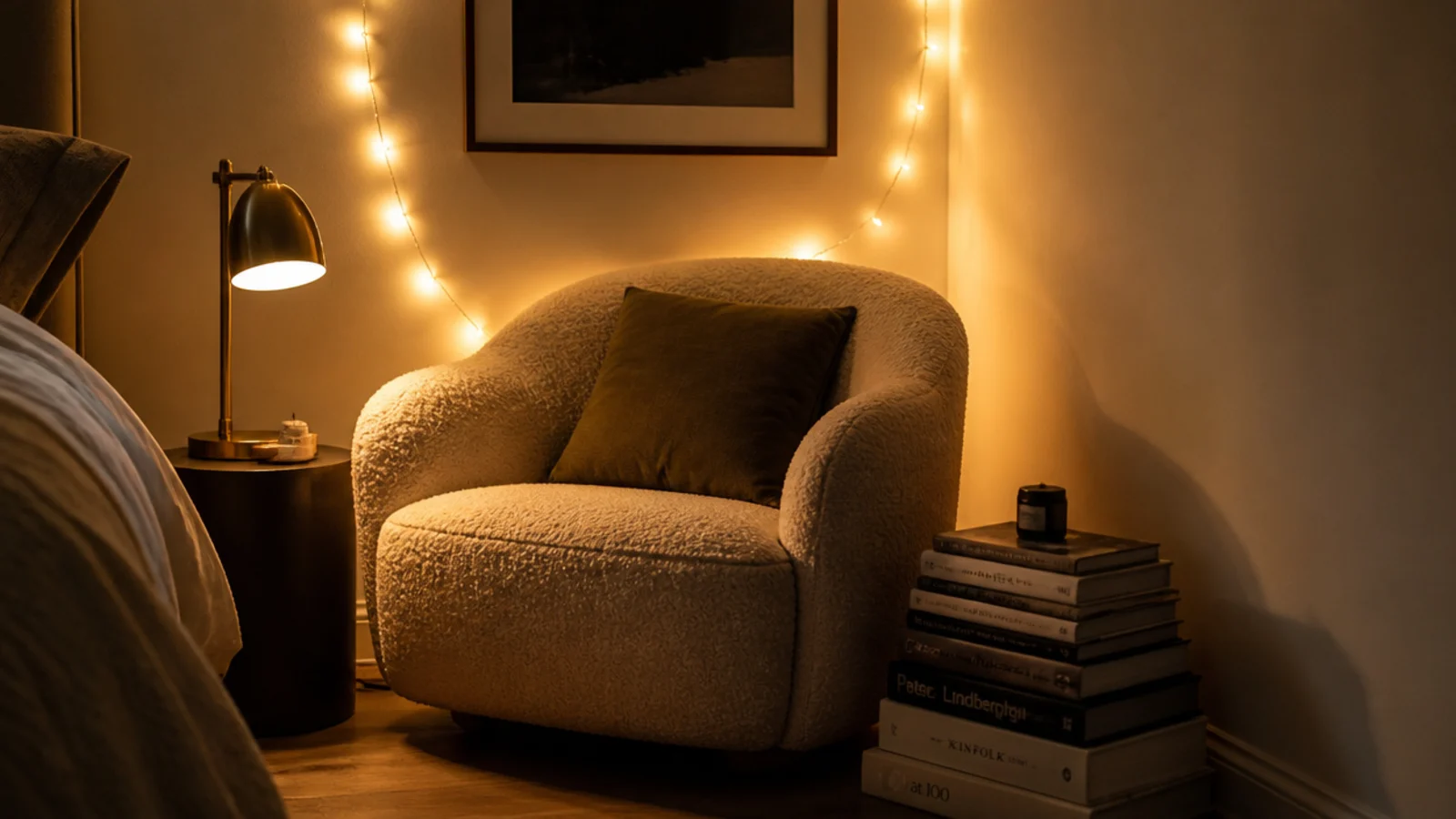
Corners are where a bedroom either gets interesting or gets ignored. Most rooms have four and use one. A fairy lights bedroom aesthetic only really works when a corner has a reason to exist first — a chair, a rail, a shelf, a plant — and the light is aimed at that thing rather than at bare plaster. I have styled twenty-odd of these in my own flats and for other people, and the ones that hold up are the ones with two light heights and something worth looking at. Here are twenty, each with the measurements it wants.
In this guide22 sections — tap to openHide
- 1.What a fairy lights bedroom aesthetic corner actually needs
- 2.The reading chair corner
- 3.The floor cushion nook
- 4.The window seat
- 5.The vanity corner
- 6.The desk corner
- 7.The plant corner
- 8.The gallery corner
- 9.The record player corner
- 10.The open clothes rail corner
- 11.The bookshelf corner
- 12.The tea corner
- 13.The leaning mirror corner
- 14.The quiet floor corner
- 15.The canopy edge corner
- 16.The under-window shelf
- 17.The attic eave corner
- 18.The bay window corner
- 19.The awkward radiator corner
- 20.The doorway corner
- 21.The corner you leave dark
- 22.Mistakes to Skip
What a fairy lights bedroom aesthetic corner actually needs
Space first. A chair-and-table corner needs about 40 by 40 inches, a floor cushion setup about 30 by 30, and either way you want 24 inches of clear walkway past it. Below those numbers, light a shelf or a plant and keep the floor free — a cramped nook reads as clutter however well it is lit.
Then two light levels. String lighting gives you roughly 40 to 60 lumens across a whole 33 foot strand, which is atmosphere. Anything you actually do in the corner — reading, makeup, writing — needs 300 to 450 lumens aimed at it from a lamp or a clip-on light. One source doing both jobs is why so many corners look good in a photograph and get used twice.
Then eyeline. Sitting down, your eyes are 40 to 45 inches off the floor. Bare bulbs in the 40 to 65 inch band become glare, so at that height they need a diffuser, a shelf overhang or something to sit behind. Above 70 inches or below 30, they can be bare.
Safety stays inside the choices. LED strands only anywhere near a canopy, a curtain or a cushion pile, the driver or battery pack in open air rather than under a throw, no cable under a rug or across the walkway, adhesive clips instead of pins or staples through the sheath, and no more sets chained than the tag states. For the whole-room version of this thinking, cozy layered setups covers the layering.
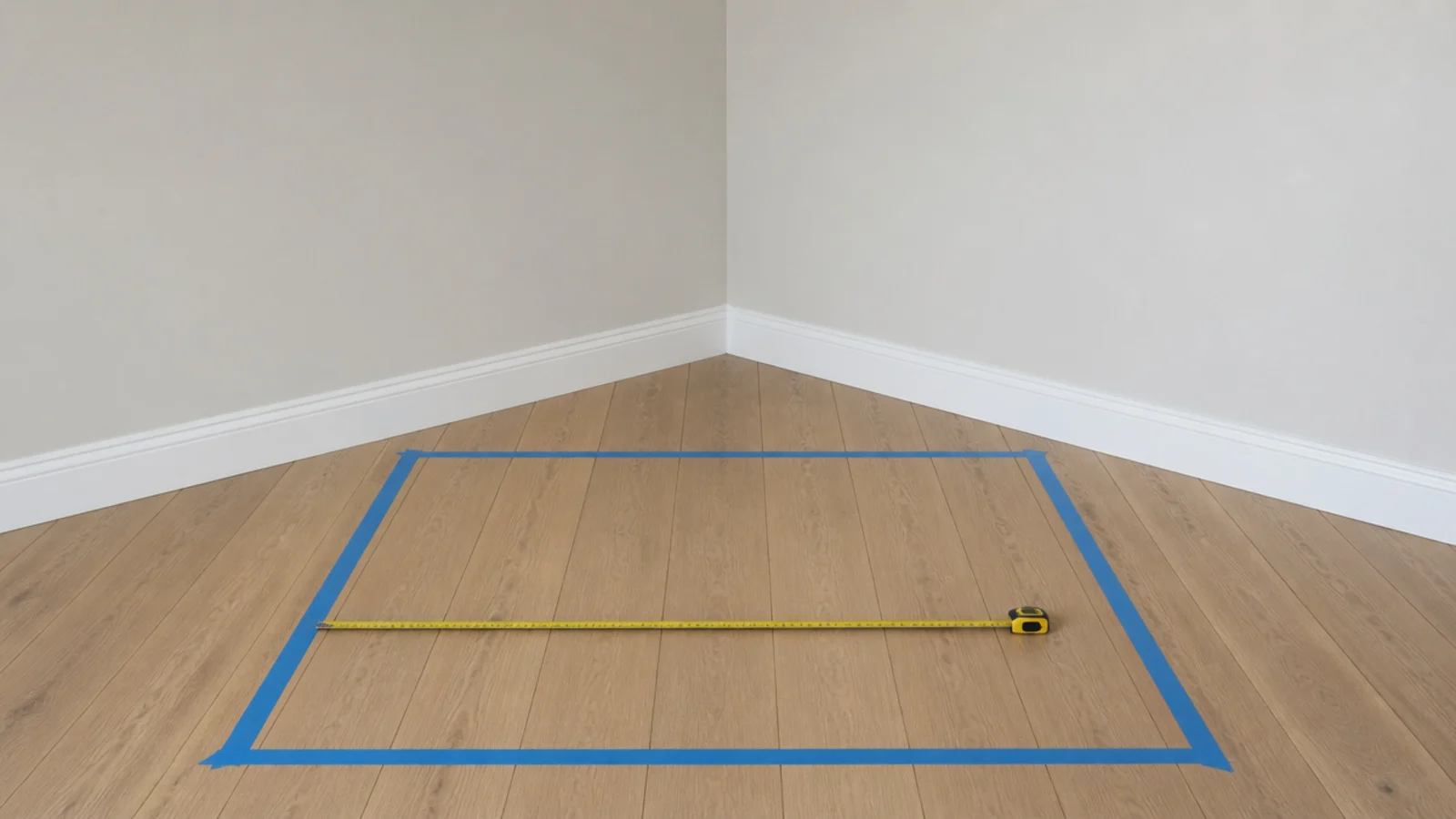
1. The reading chair corner
The corner everybody wants and most people under-light. A strand looped on the wall behind the chair at about 60 inches gives the glow, and a small adjustable lamp at your shoulder gives the 300 to 450 lumens you need for a page. A chair with a 17 to 19 inch seat height and a side surface at 24 inches makes it usable rather than decorative, and the whole corner wants about 40 inches square.
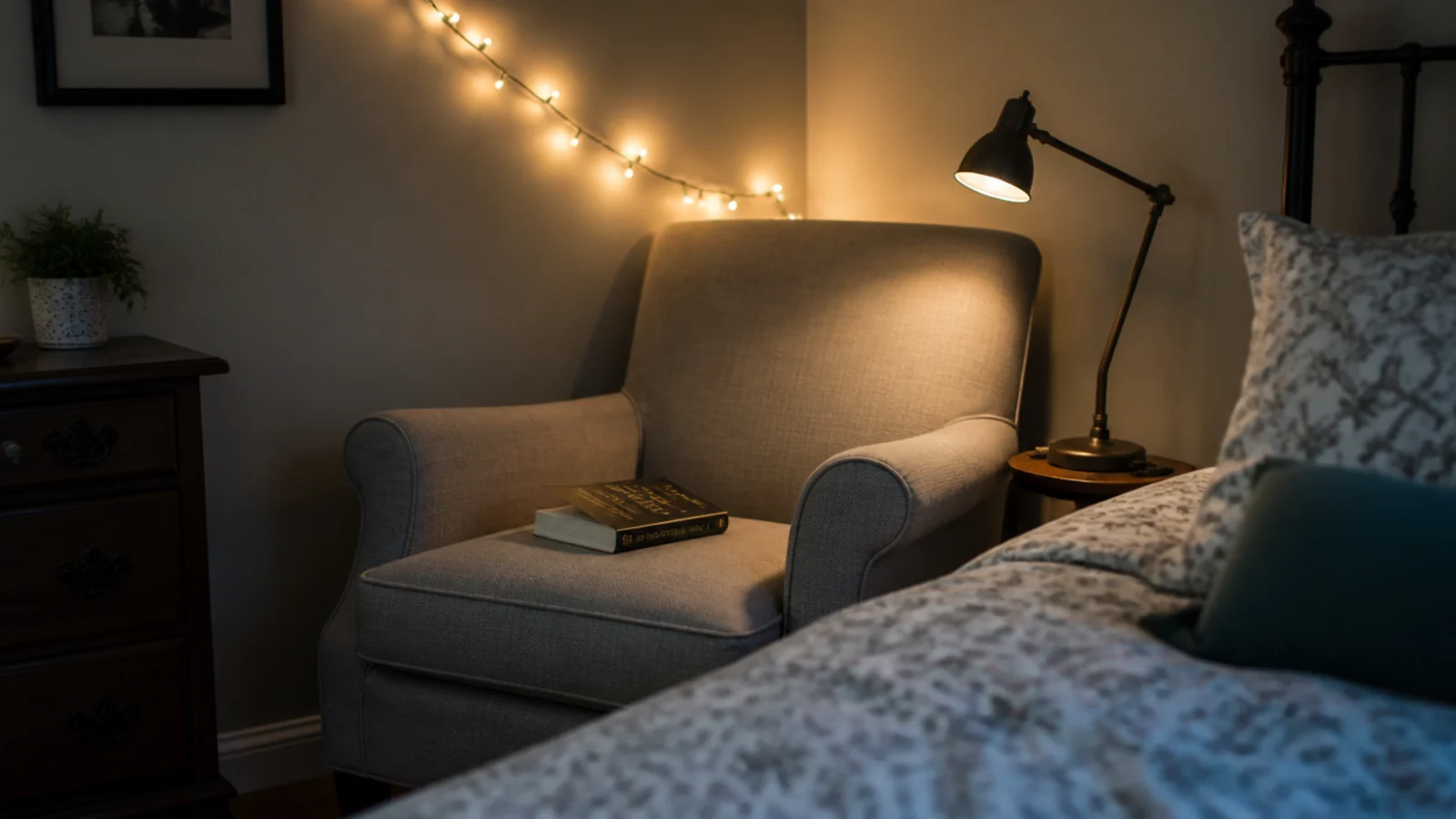
2. The floor cushion nook
If the seating is at 8 to 12 inches, the light has to come down with it. A strand along the skirting behind the cushions puts the glow at the right height and keeps every bulb out of your eyeline. Two 24 inch floor cushions, a sheepskin and a low tray is the whole build, and it needs no fixings above 30 inches. It suits a small room because it takes no visual height at all.
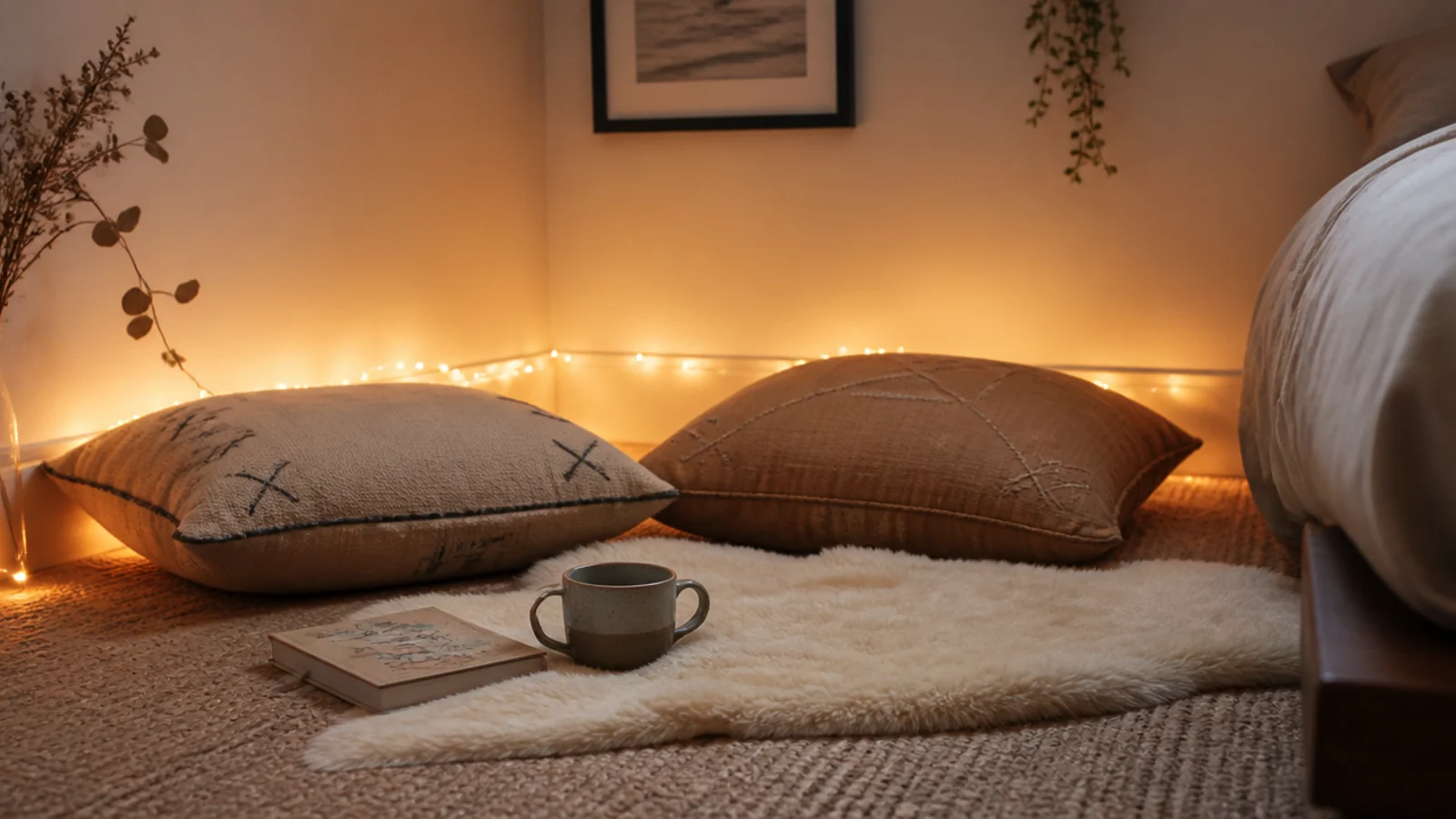
3. The window seat
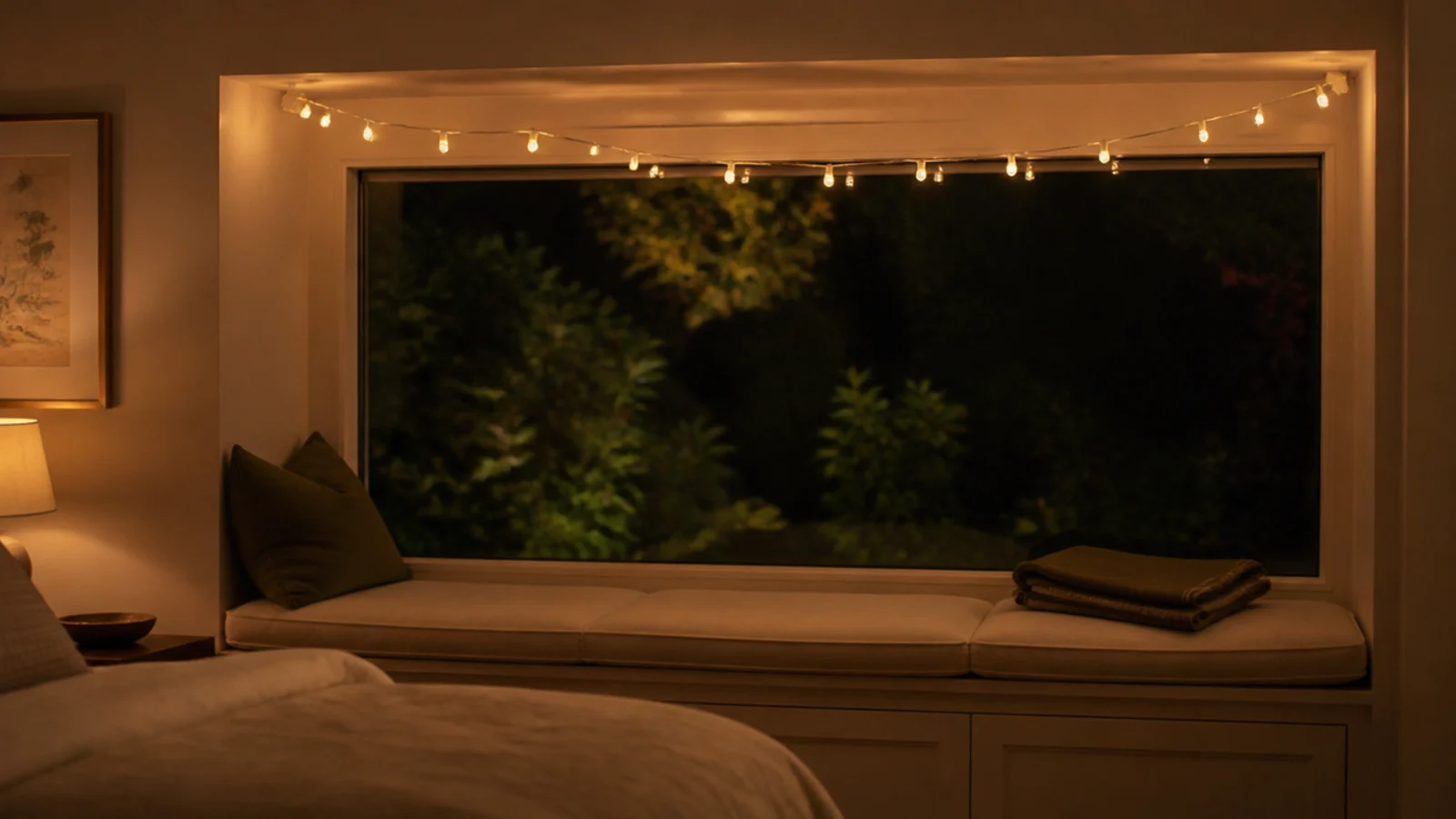
A sill deep enough to sit on is usually 15 to 18 inches, which is exactly right with a 3 inch cushion on top. Clip the strand inside the window reveal above rather than around the outer frame, so the light stays with you when the curtains are drawn. Keep the bulbs 3 inches clear of any fabric and let the glass reflect the run back into the room after dark.
4. The vanity corner
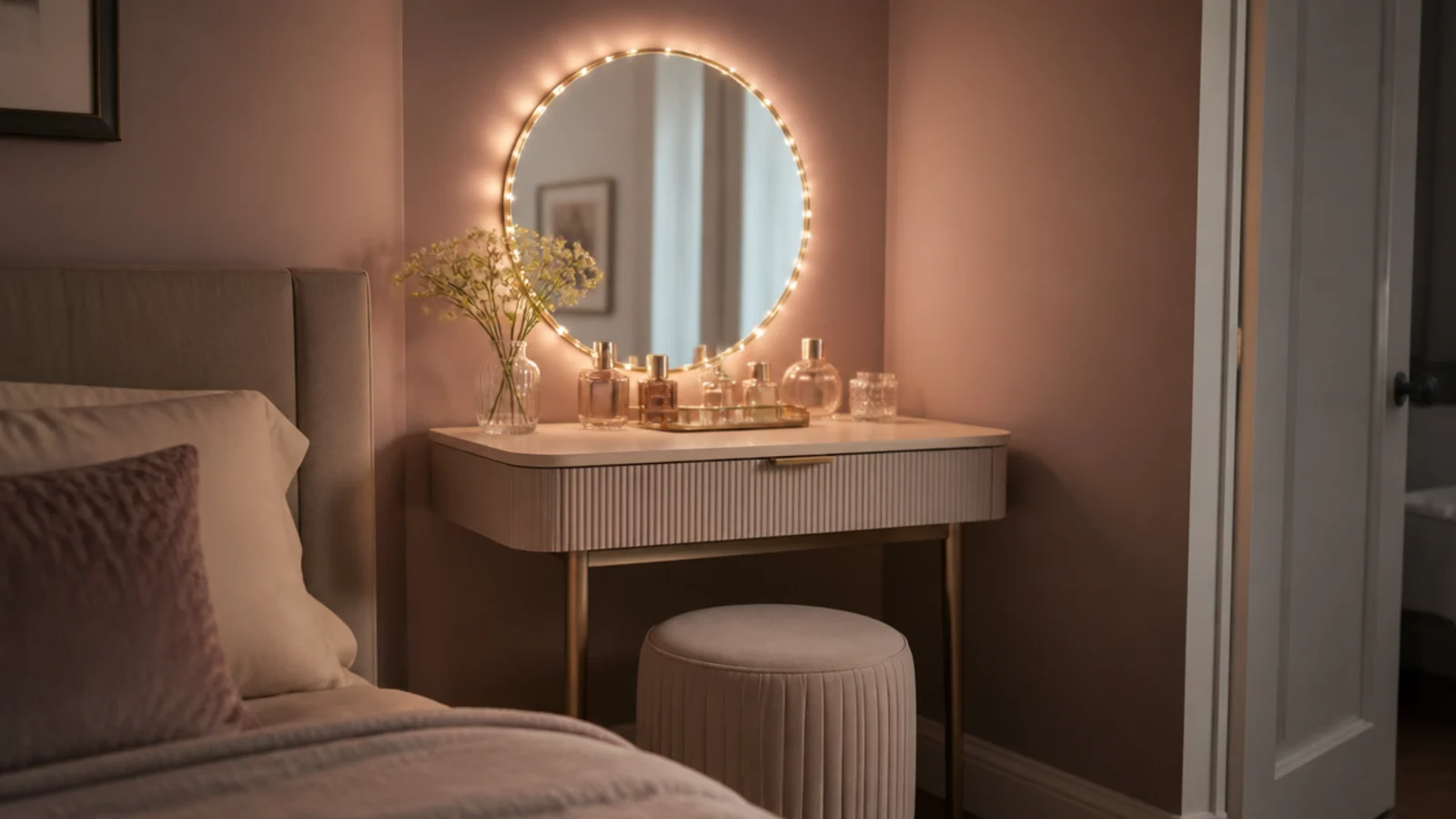
Light has to arrive at your face from the front, which means around the mirror rather than behind your head. A 24 inch mirror takes about 7 feet of fine strand fixed to the frame, never the glass, because adhesive against a mirror back works at the silvering. Add a 400 lumen lamp at one side for anything detailed. A 30 inch wide surface at 29 to 30 inches high fits most corners.
5. The desk corner
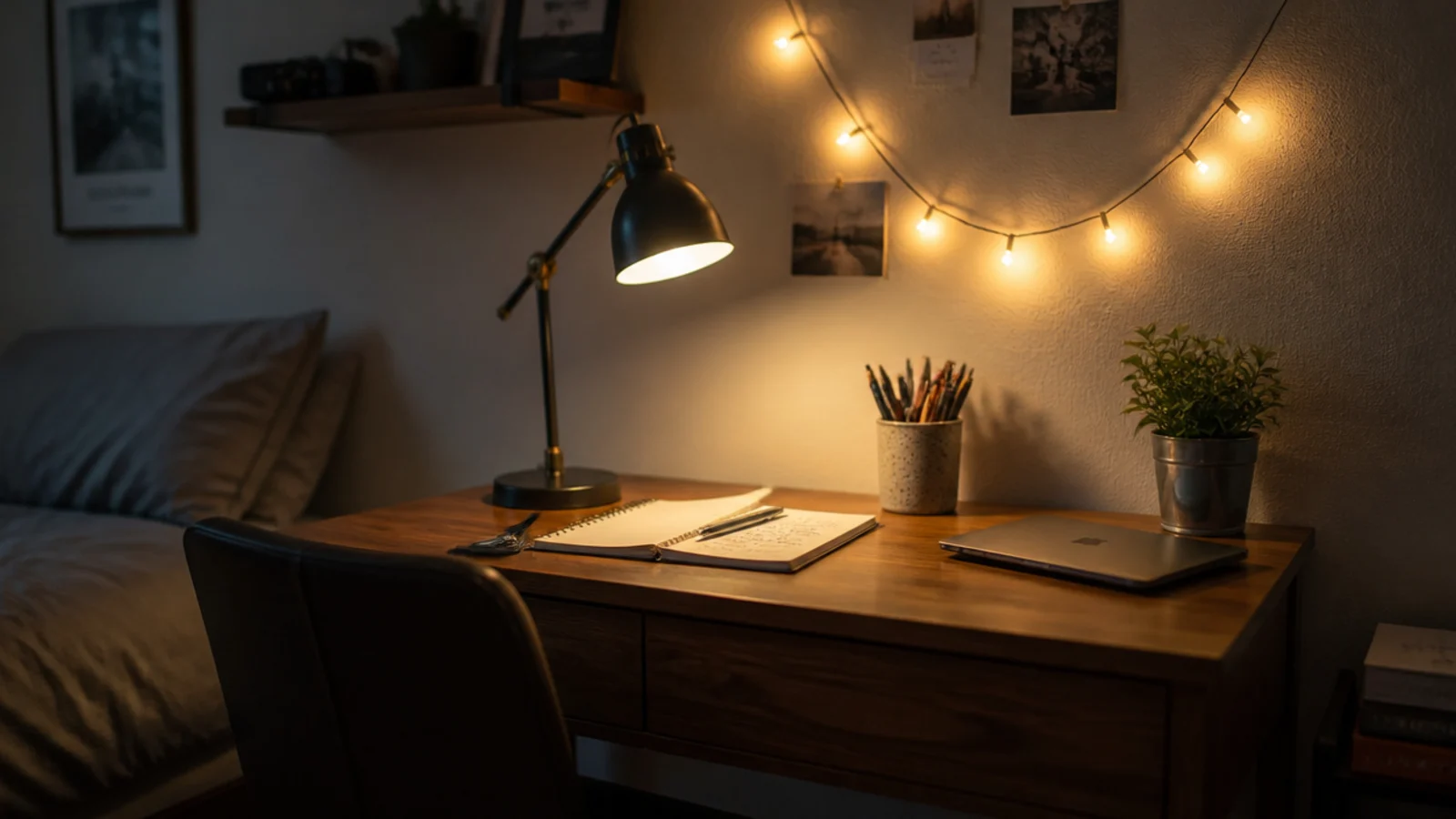
A strand along the wall above the desk acts as bias lighting and cuts the harsh contrast between a bright screen and a dark room at eleven at night. Keep it above 65 inches so it never sits in your eyeline, and put a proper task lamp on the desk itself. A 40 by 20 inch top is enough for a laptop, a notebook and a mug without anything balancing on the edge.
6. The plant corner
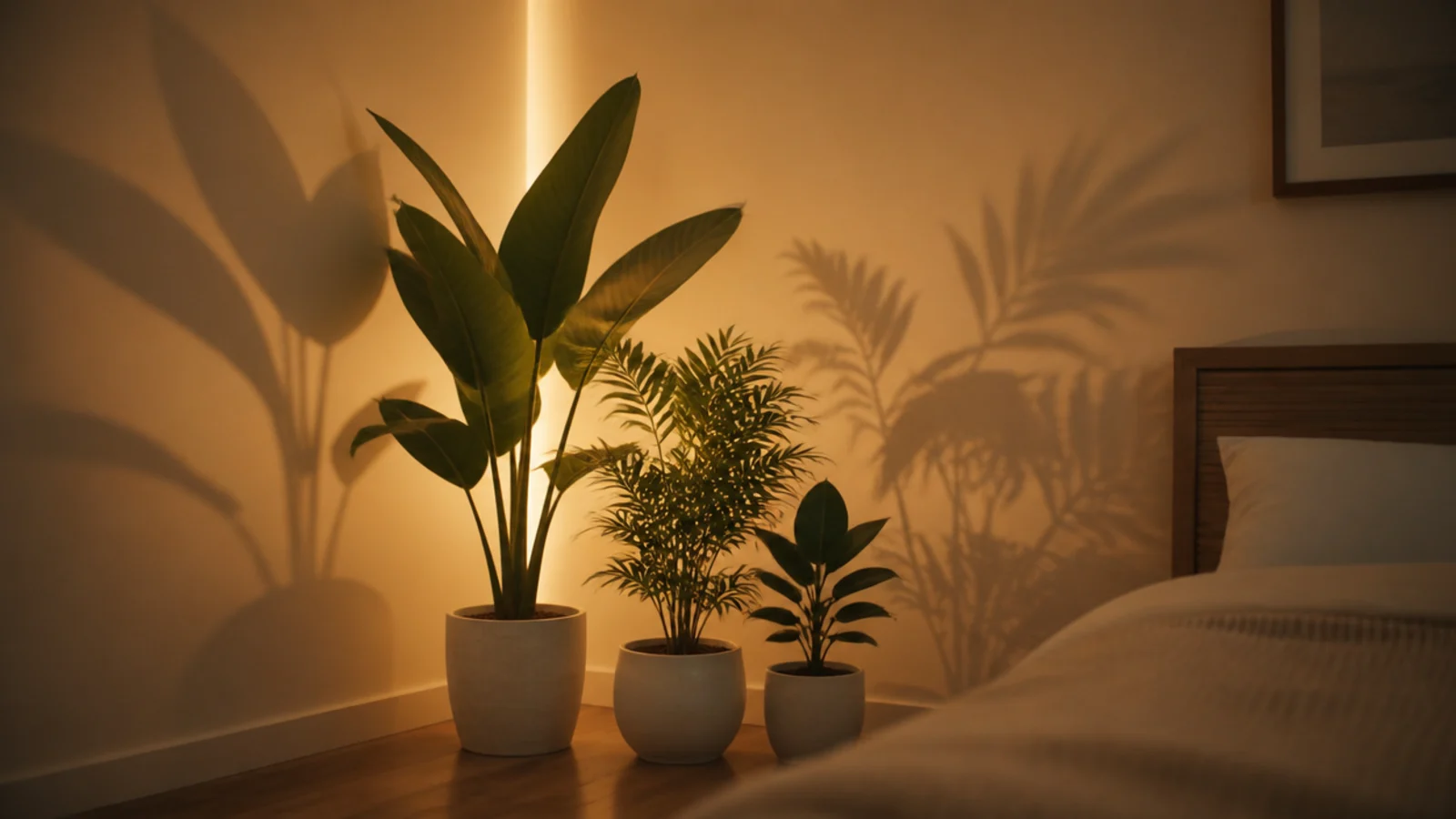
Group three plants at different heights — something at 5 feet, something at 2, something trailing — and light them from a strand fixed to the wall 4 to 6 inches behind. The leaves throw shadows across both walls and the corner stops being a corner. Keep the wire out of the foliage of anything you water, and choose low-light species like pothos, sansevieria or heartleaf philodendron for a bedroom.
7. The gallery corner
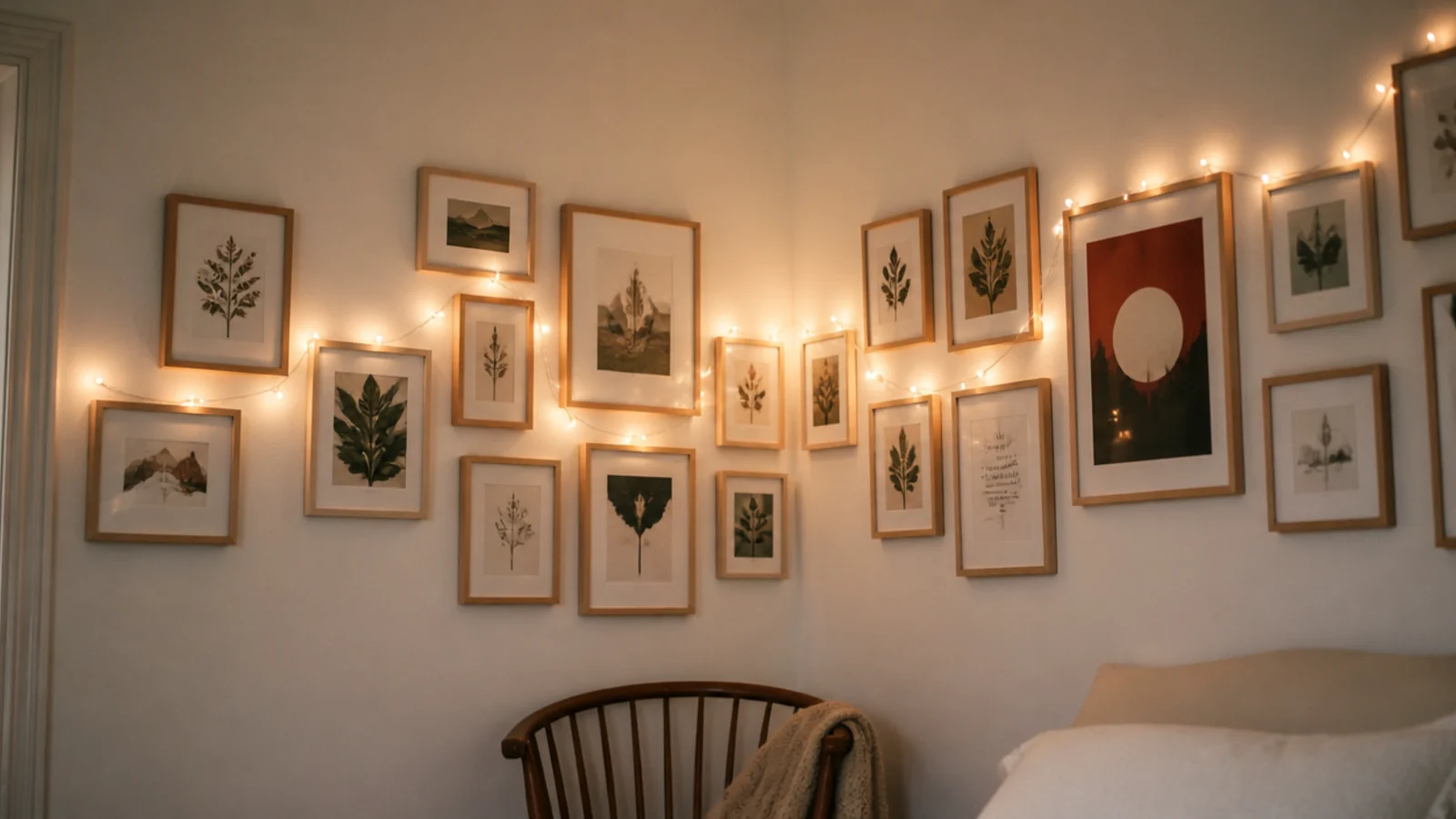
Most gallery walls stop at the angle. Carrying six or eight small frames around onto the second wall and threading a fine strand through the gaps makes the corner read as one composition instead of two halves. Hang the frames on their own hooks and let the strand rest on those, so the wire carries nothing but itself. Keep 2 to 3 inches between frames for the light to show through.
8. The record player corner
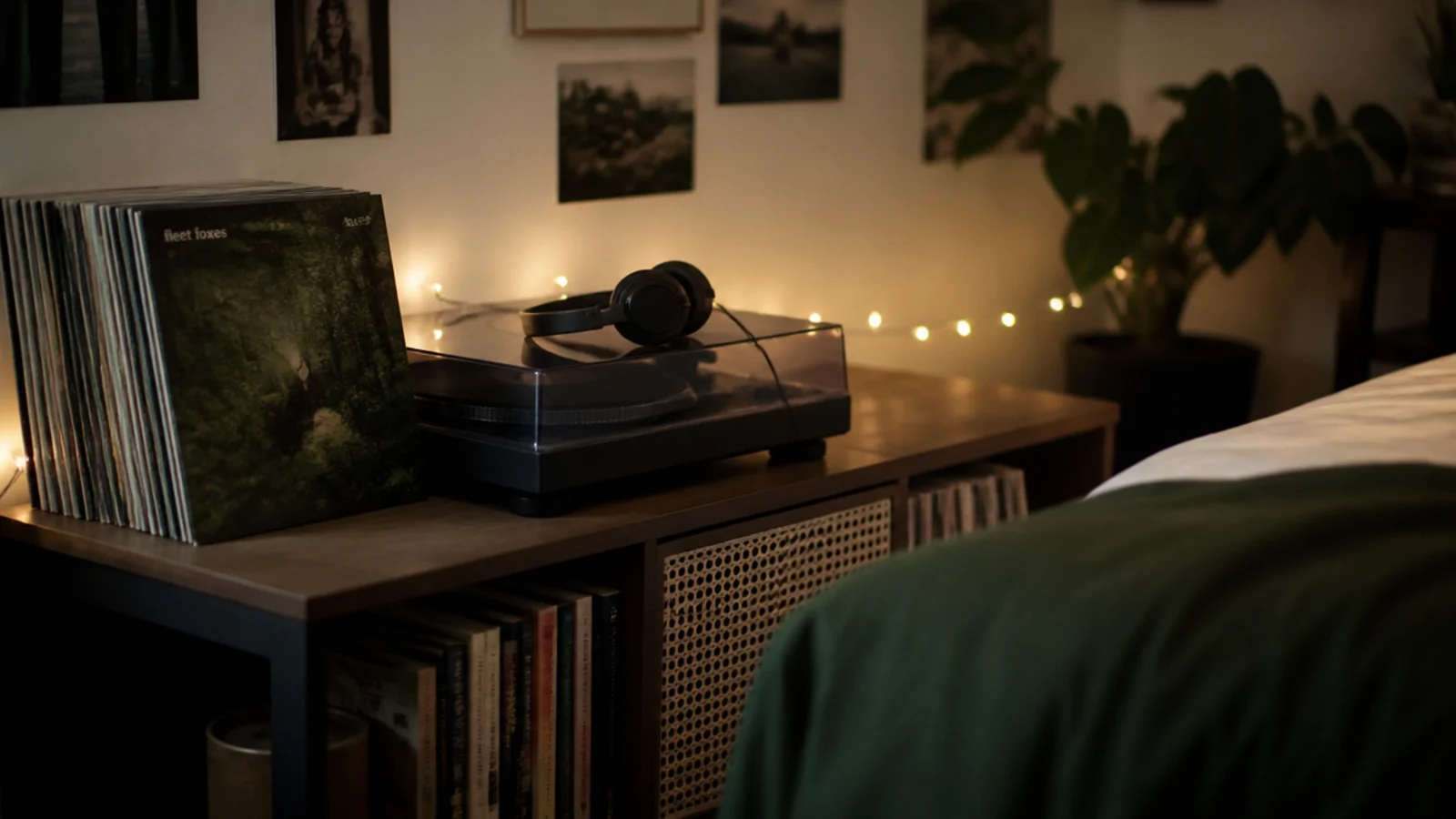
Record sleeves are 12 inches of printed card and they catch warm light far better than plaster does. A low cabinet at 24 to 28 inches puts the turntable at a comfortable working height, and a strand on the wall behind at about 50 inches lights the sleeves without shining into the room. Keep the strand clear of the deck itself so nothing vibrates against a cable.
9. The open clothes rail corner
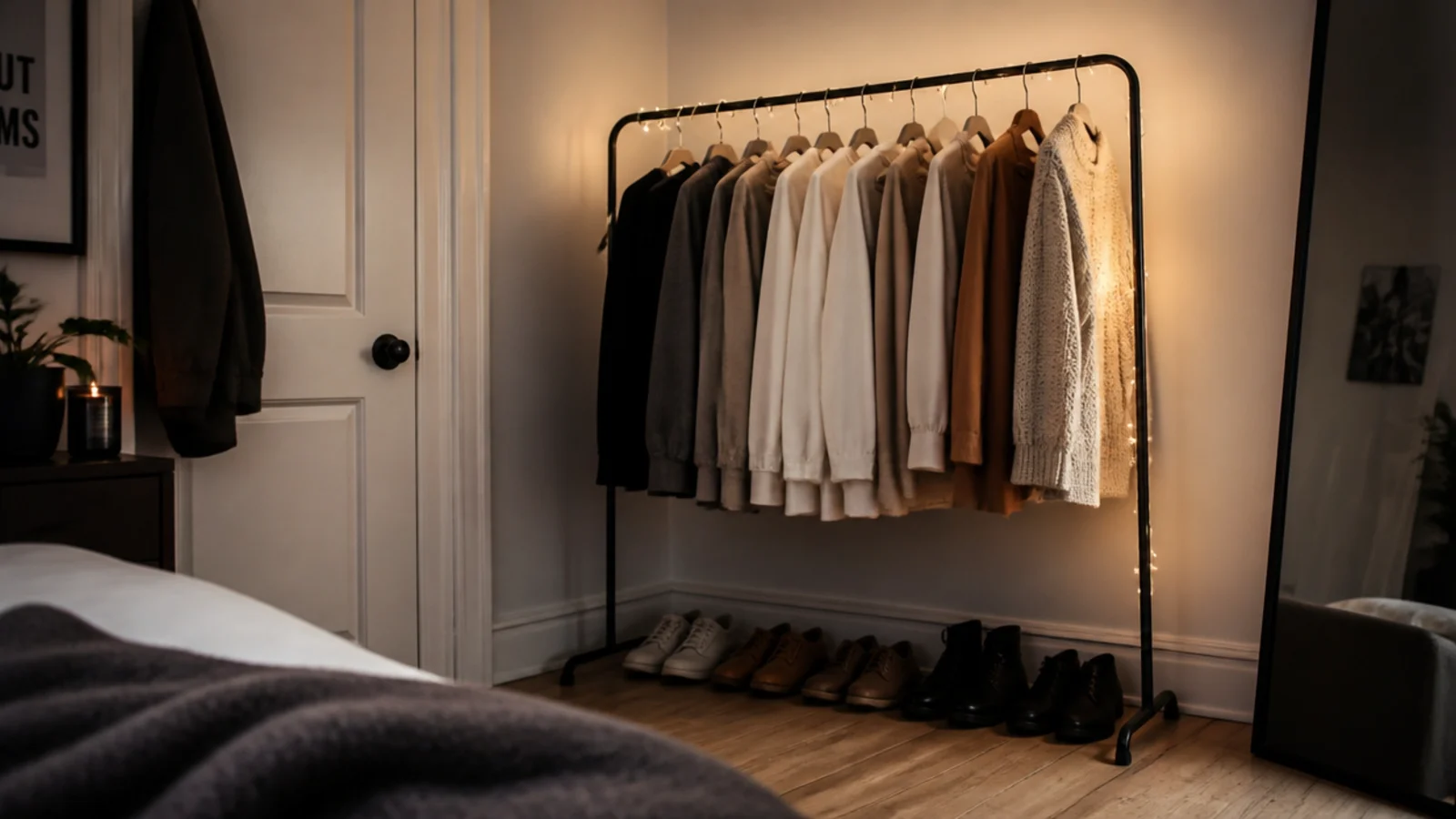
A freestanding rail in a corner is storage and structure at once. Weaving a strand along the top bar lights what is hanging, which is genuinely useful in winter, and needs no wall fixing at all. Allow 40 inches of width for a usable rail and keep 24 inches of clearance in front so you can actually see through the clothes rather than shuffling past them.
10. The bookshelf corner
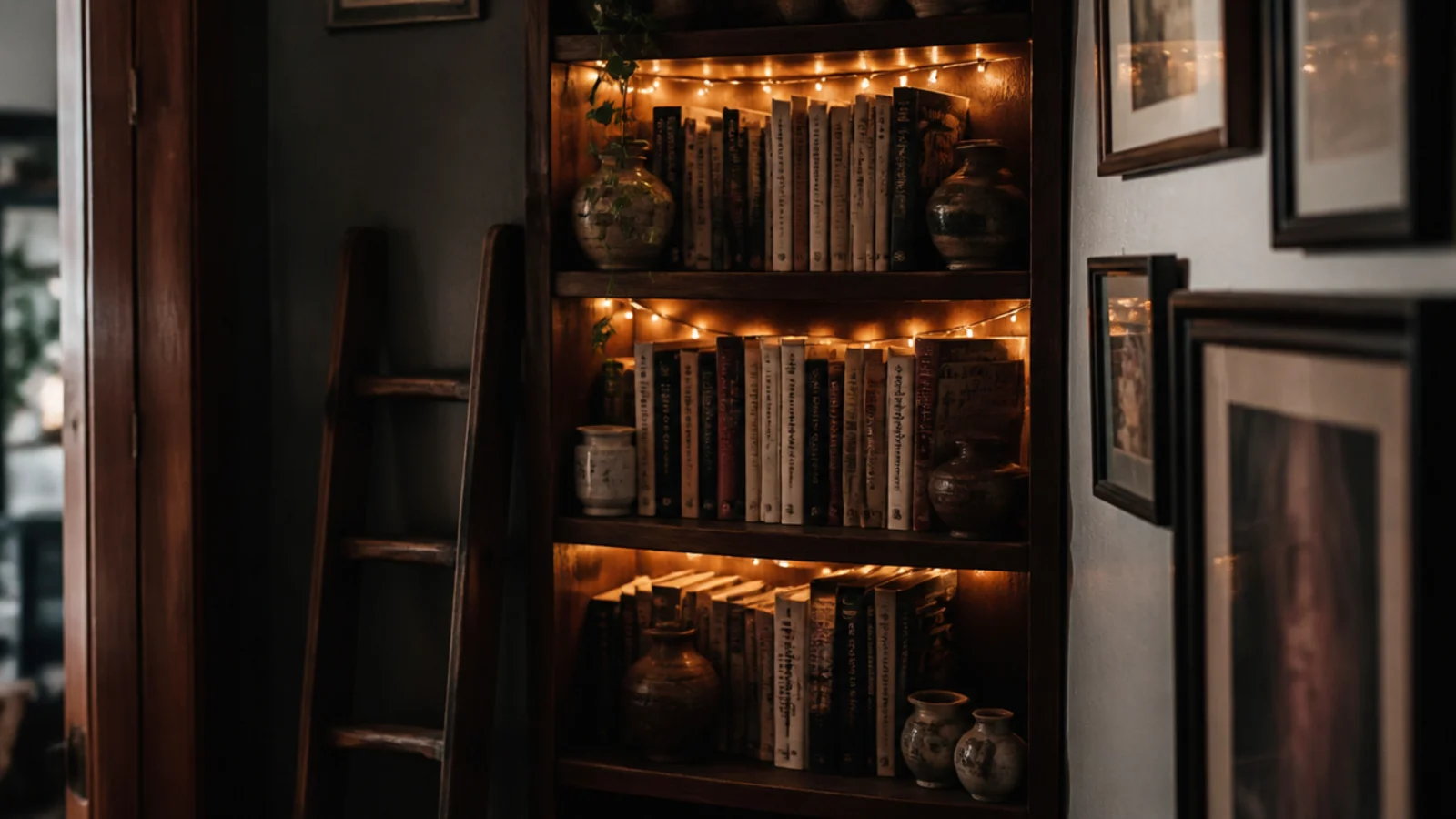
Thread a strand behind the books on three shelves and the spines hide the wire completely. There is no fixing, no damage and the light lands on paper and pottery rather than paint. A corner unit 12 inches deep holds paperbacks comfortably and takes about 5 feet of strand per 3 foot shelf, so one 16 foot set covers three shelves with the drops between them.
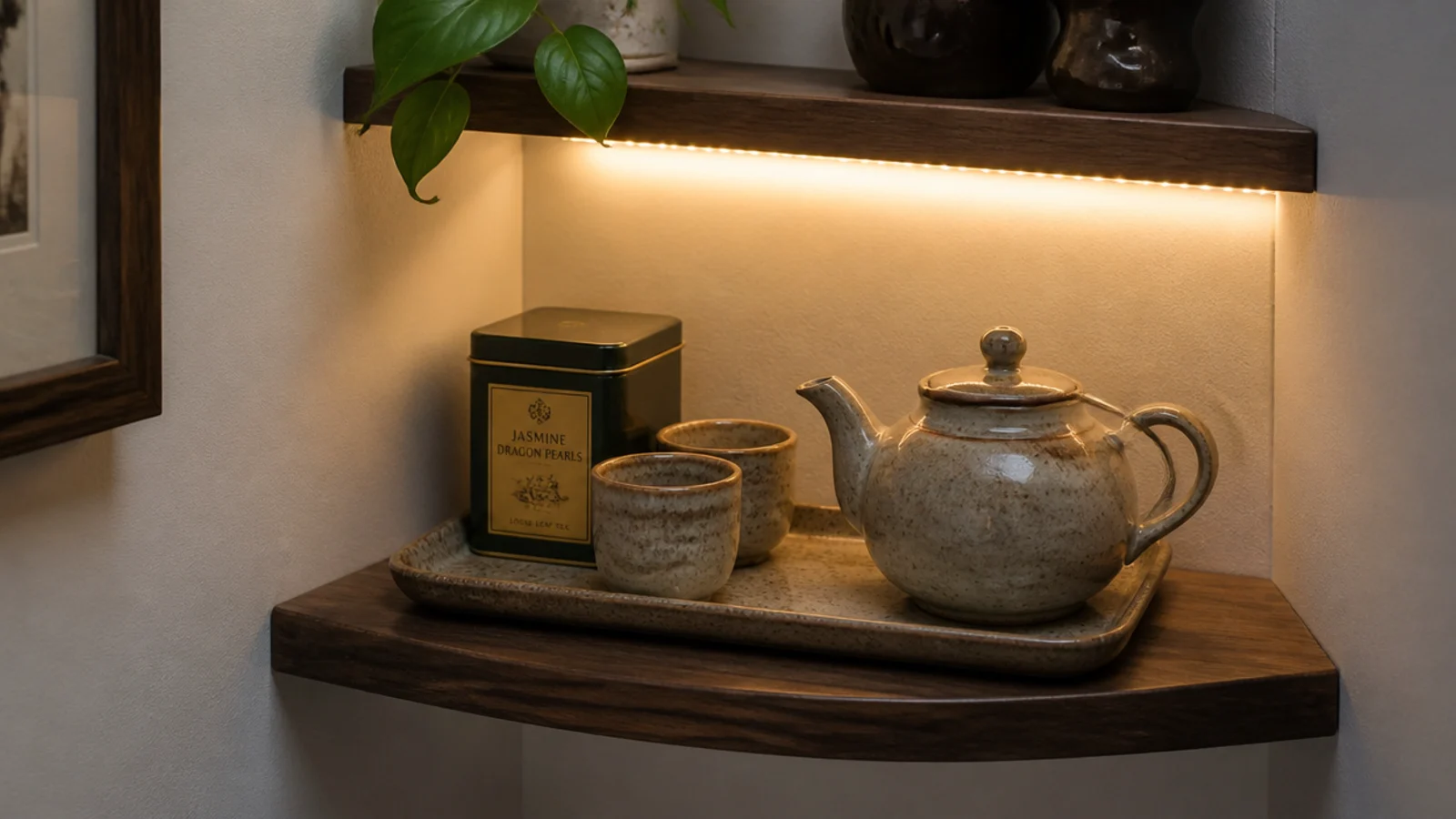
11. The tea corner
A tray, a small kettle, two cups and a tin turns a corner shelf into somewhere you go rather than somewhere you look at. Light it from under the shelf above at a 4 inch setback so no bulb shows. Keep the kettle's cable and the light lead on separate routes, and give the tray a 16 inch square of clear surface so nothing has to move to pour.
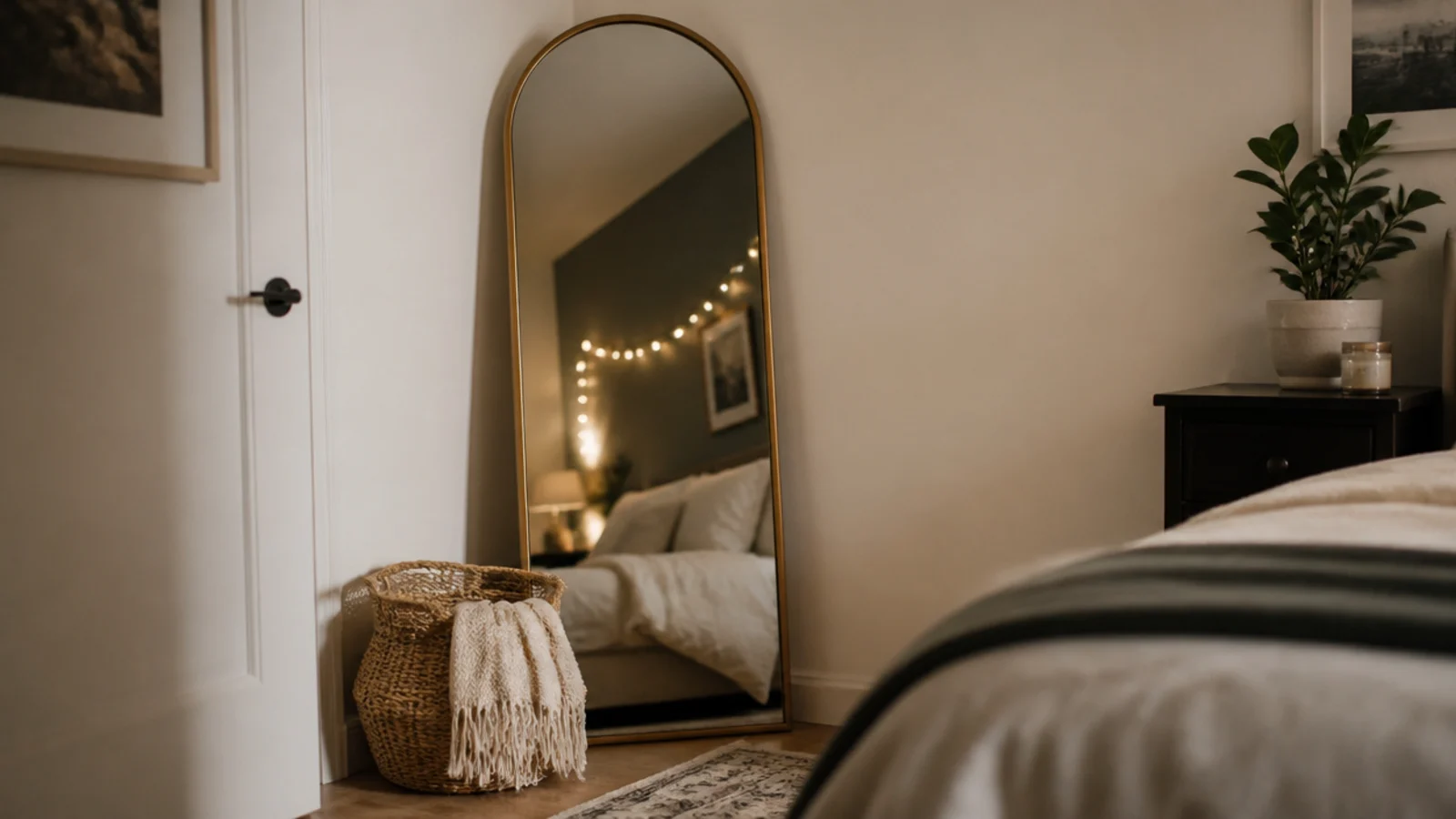
12. The leaning mirror corner
A tall mirror leaned into an angle needs no fixing and doubles whatever you light beside it. Put the strand on the adjacent wall rather than around the mirror so what you see reflected is the glow, not the bulbs. Check the base is on a rug or a felt pad so it cannot slide, and keep it out of a walkway where anything could knock it.
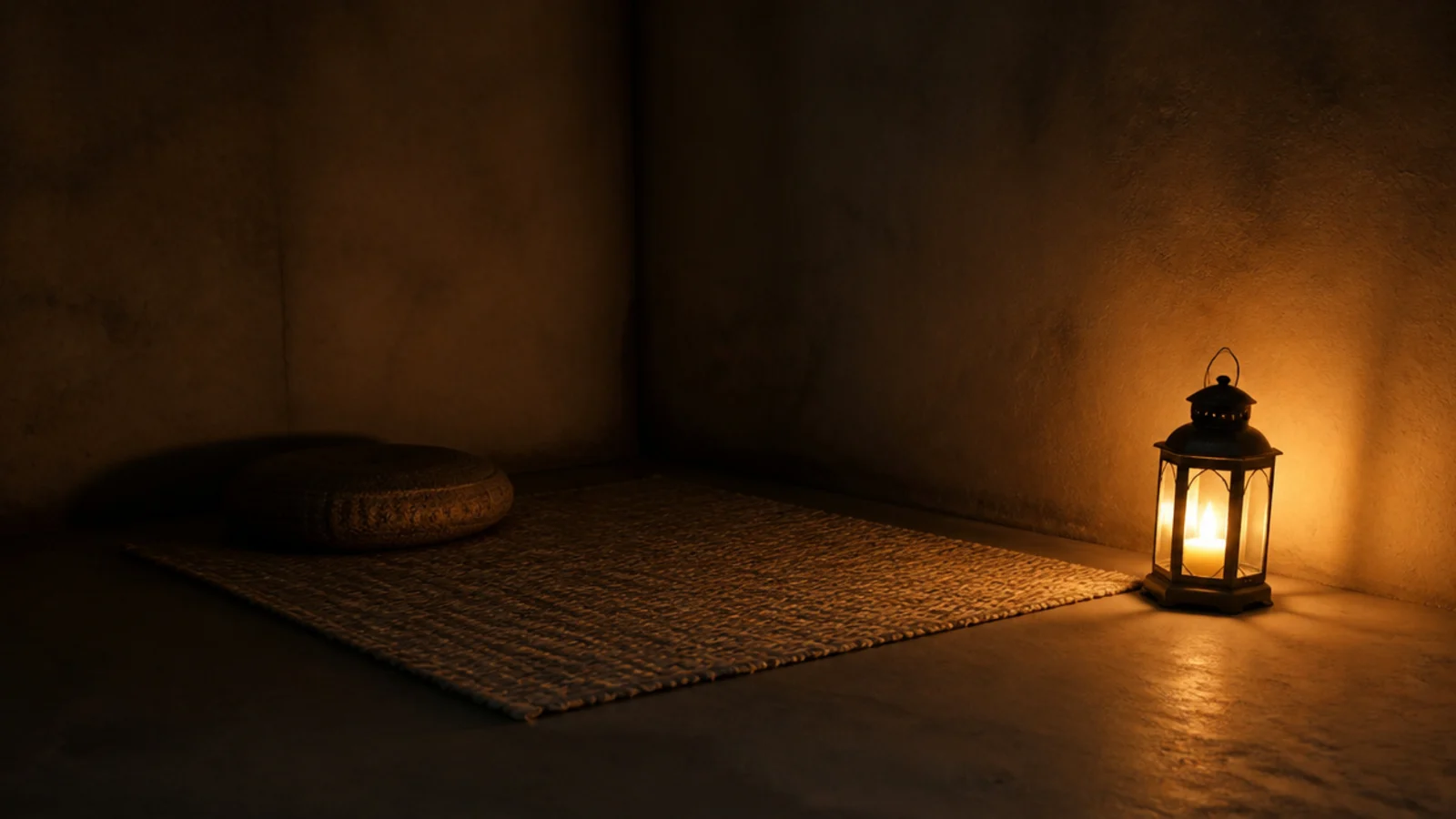
13. The quiet floor corner
The most restrained corner here: a woven mat, one round cushion and a single lantern on the floor. Nothing above 18 inches, nothing on the walls. It suits a small bedroom where every other surface is already busy, and it costs about $25 in total. A 50 LED battery set inside a woven lantern gives roughly 20 lumens, which is exactly enough.
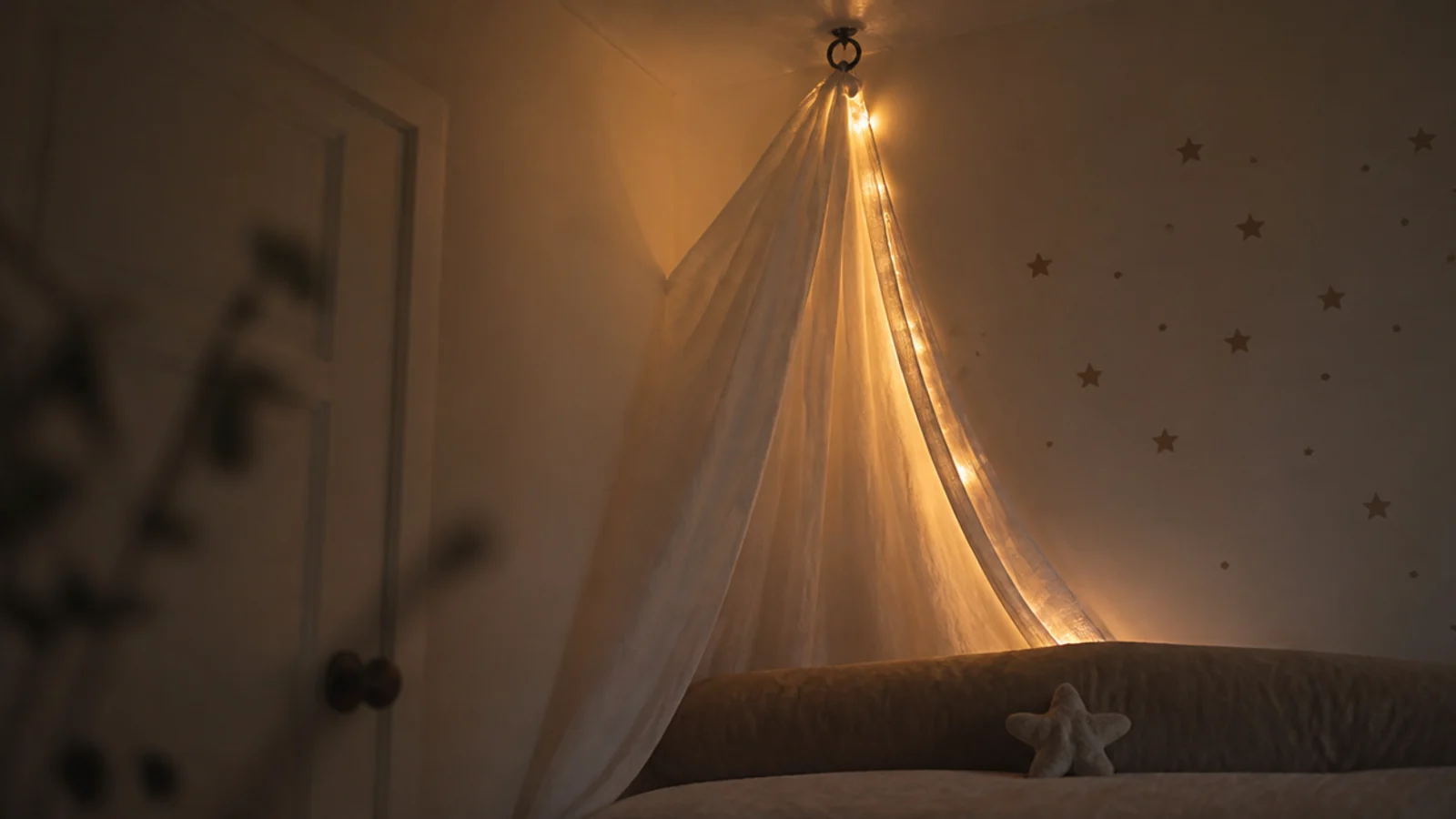
14. The canopy edge corner
Where a canopy is gathered to a hook and falls toward the wall, there is a natural fold worth lighting. Run the strand along the fold rather than inside the fabric, keep the cloth draped over rather than wrapped around, and use LED only — this is the arrangement that sits closest to material. Four ceiling hooks rated at a pound each carry a muslin canopy easily.
15. The under-window shelf
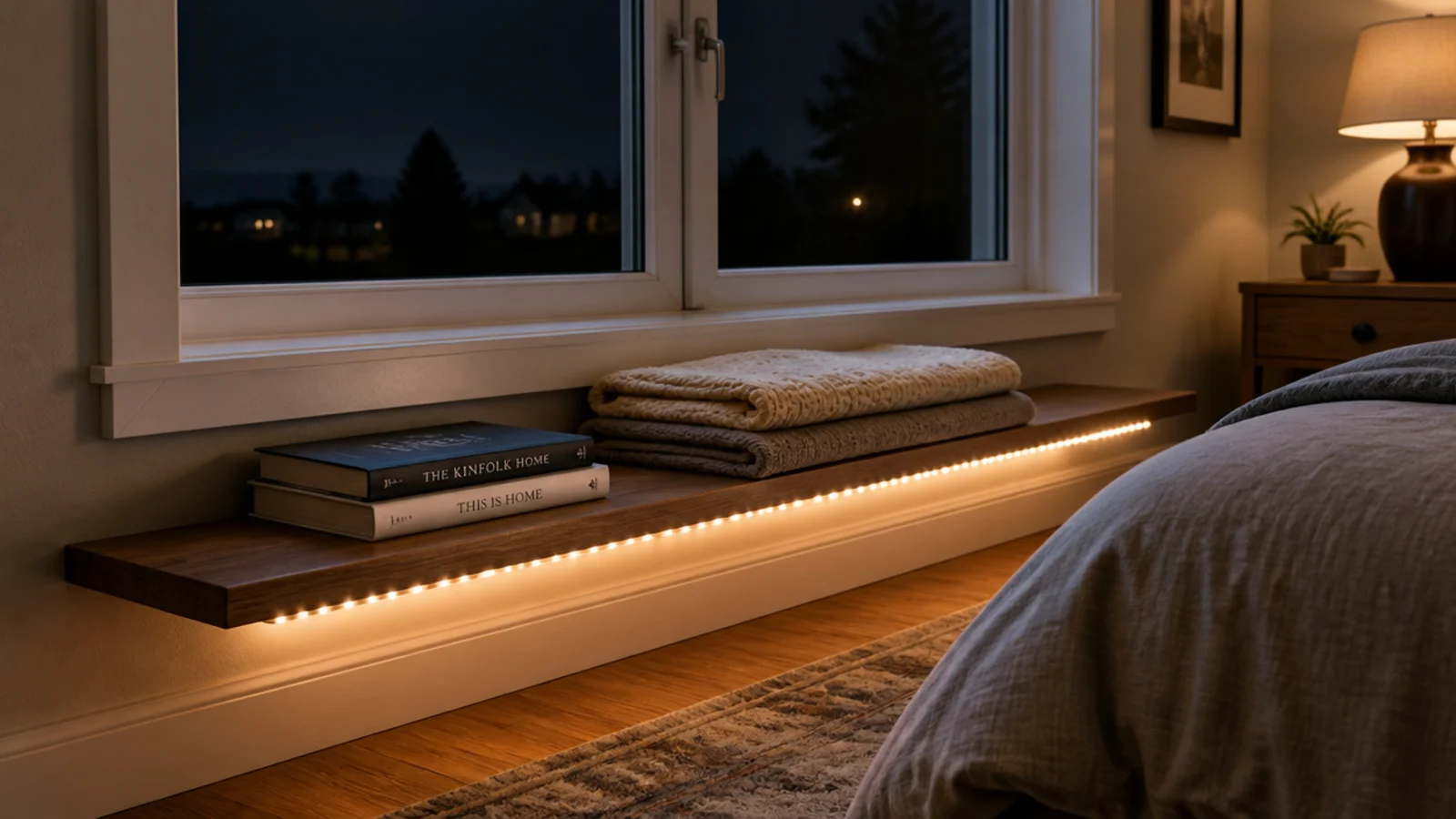
A shelf at 24 to 28 inches under a window gives you a surface where a radiator or a low sill leaves dead space. Under-lighting it with a strand fixed 4 inches back from the front edge lifts the whole thing off the wall visually. Keep folded textiles on it rather than anything that needs reaching over, and keep the run clear of the curtain drop.
16. The attic eave corner
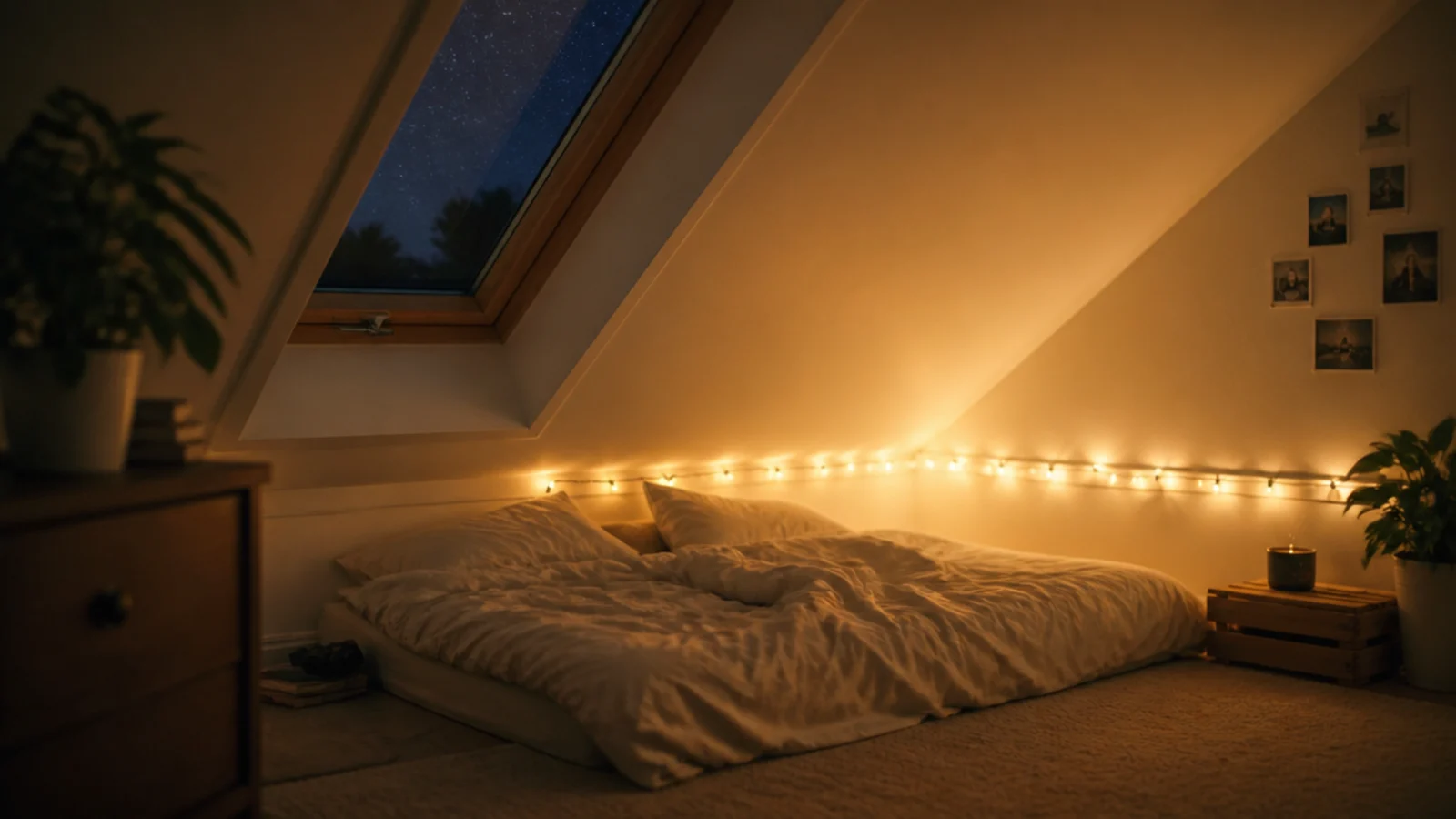
In a sloped room the interesting line is where the ceiling meets the low wall, usually between 30 and 45 inches from the floor. A strand along that line follows the architecture instead of fighting it. Keep the run clear of the walkway side and never block the route to the window, because an attic bedroom's escape route matters more than any layout decision.
17. The bay window corner
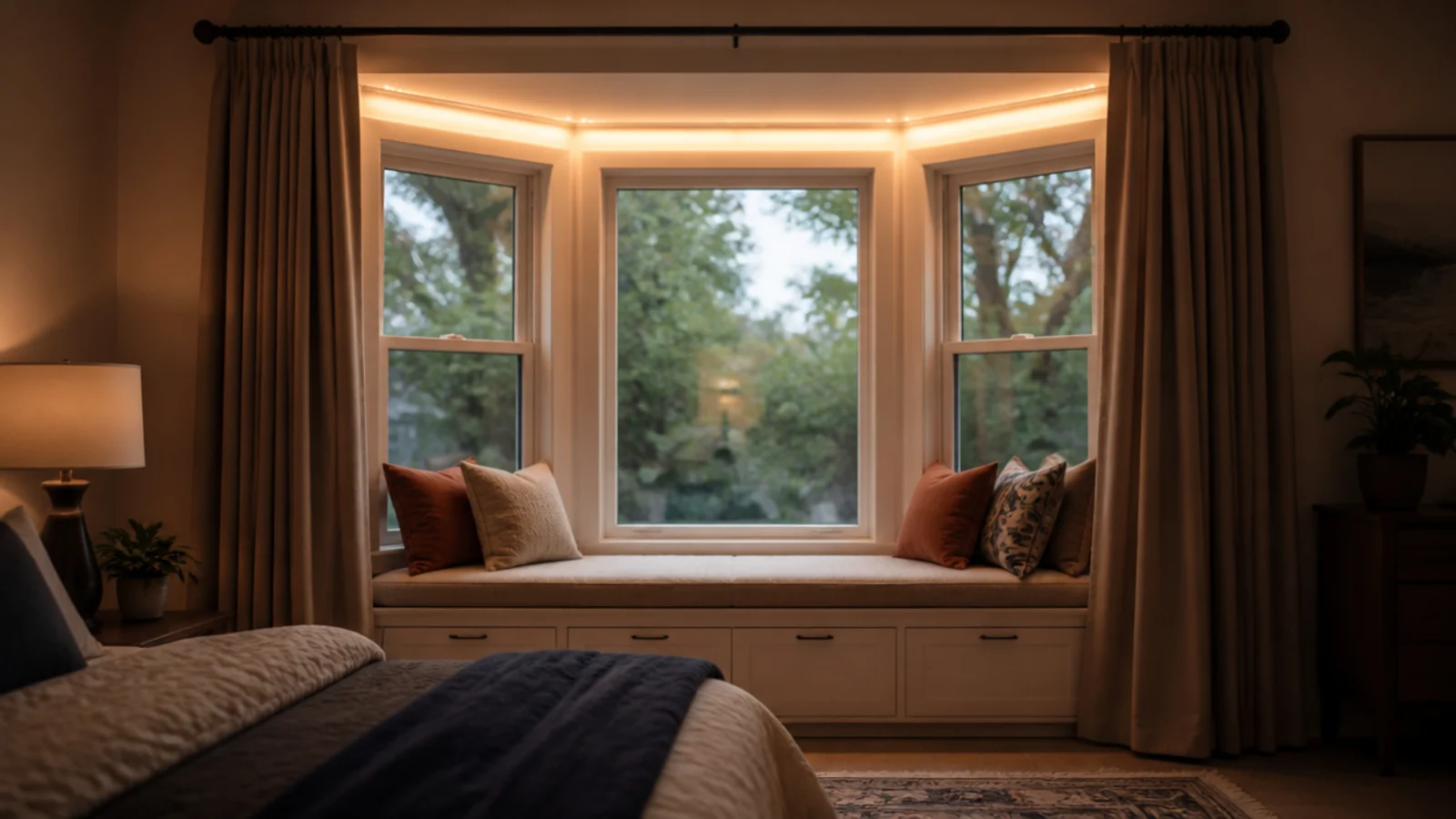
A bay gives you three angled reveals and two internal corners already built in. Following them with one strand costs about 20 feet and turns the bay into a lit frame. Clip inside the reveals rather than on the face, keep every bulb 3 inches clear of the curtain, and let the returns in the angles do the work of making it look brighter than it is.
18. The awkward radiator corner
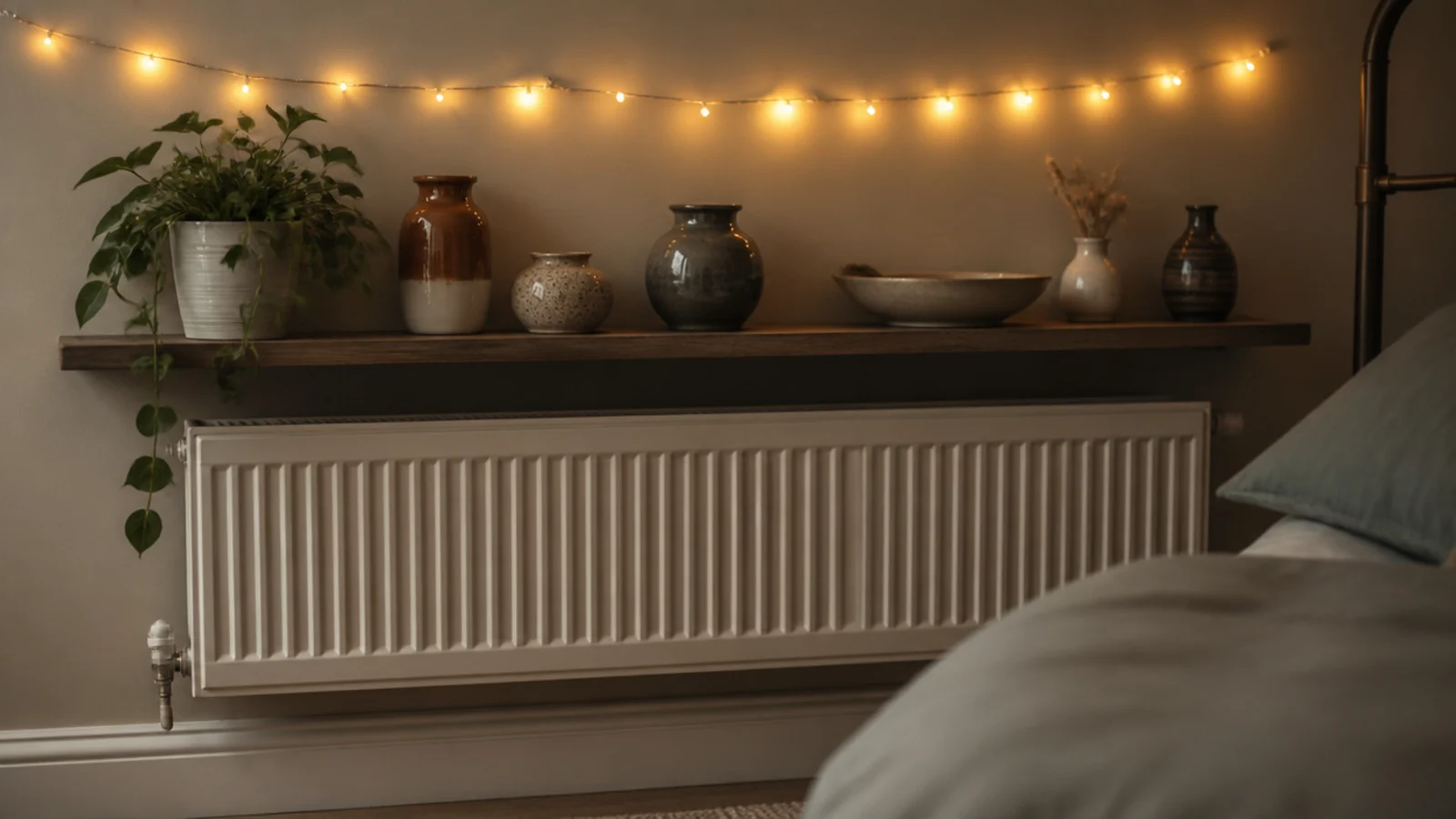
Nothing goes on a radiator, and a strand draped over one is a genuinely bad idea. A narrow shelf fixed 4 to 6 inches above it gives you a surface that clears the heat, and a strand on the wall above that keeps the wire well away. Keep the shelf shallow at 6 inches so it does not trap warmth against the wall, and skip anything wax that would slump.
19. The doorway corner
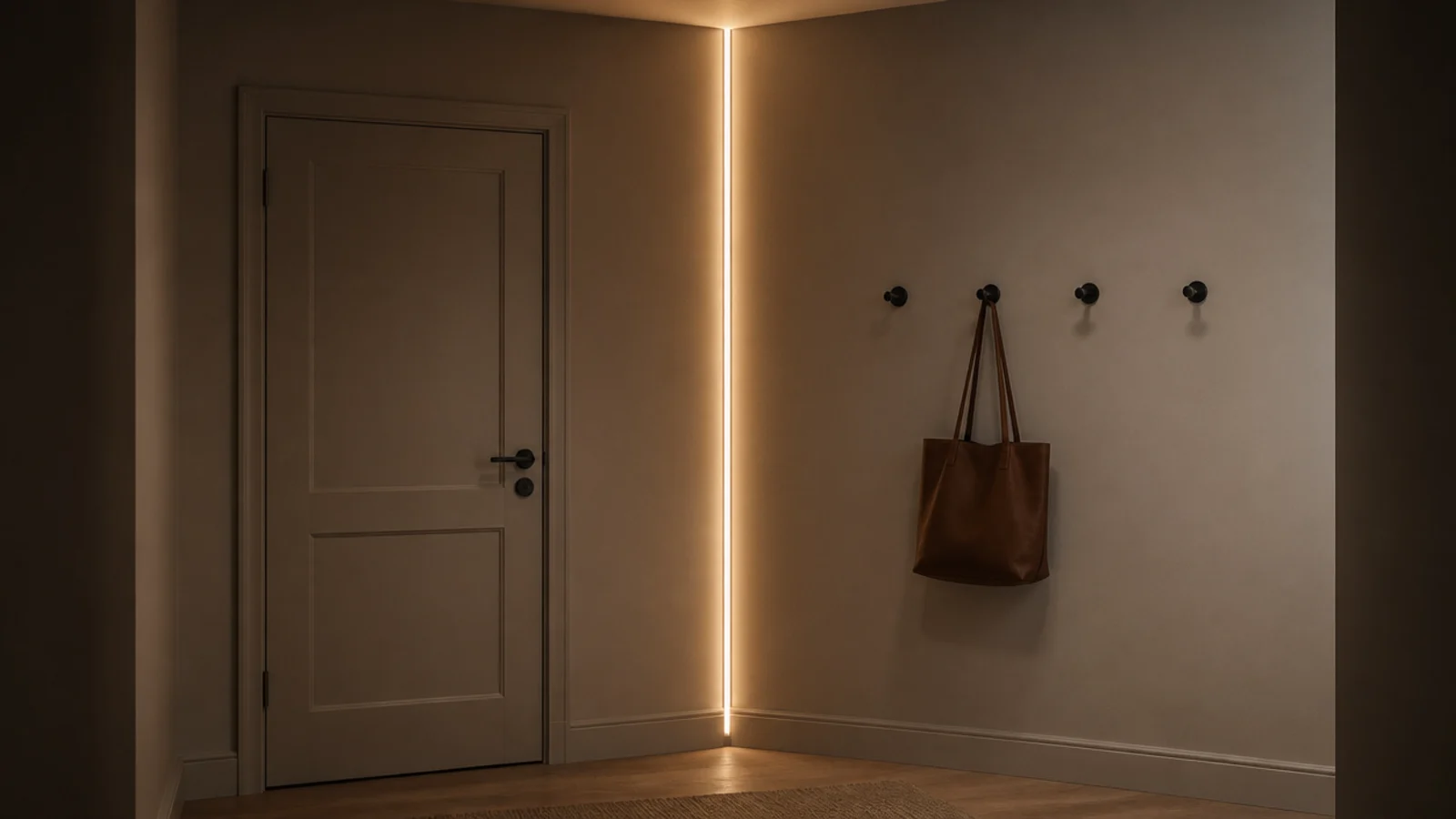
The corner beside a door is dead space in most bedrooms. A single vertical drop from ceiling to skirting turns it into a frame you walk past, and it takes about 8 feet of strand and two clips. Keep it clear of the door's swing arc, and put the coat hooks on the adjacent wall so the corner earns its keep twice.
20. The corner you leave dark
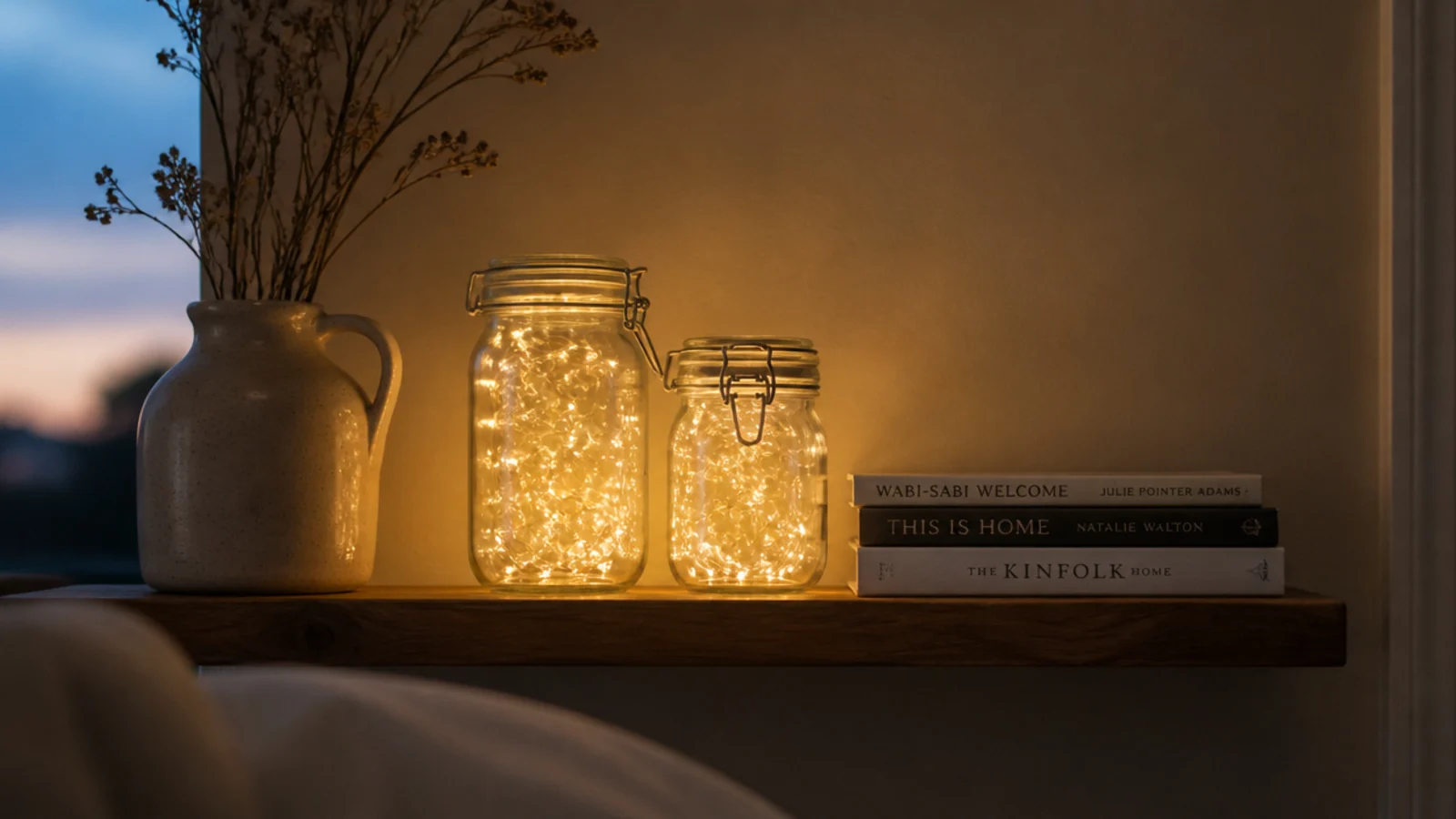
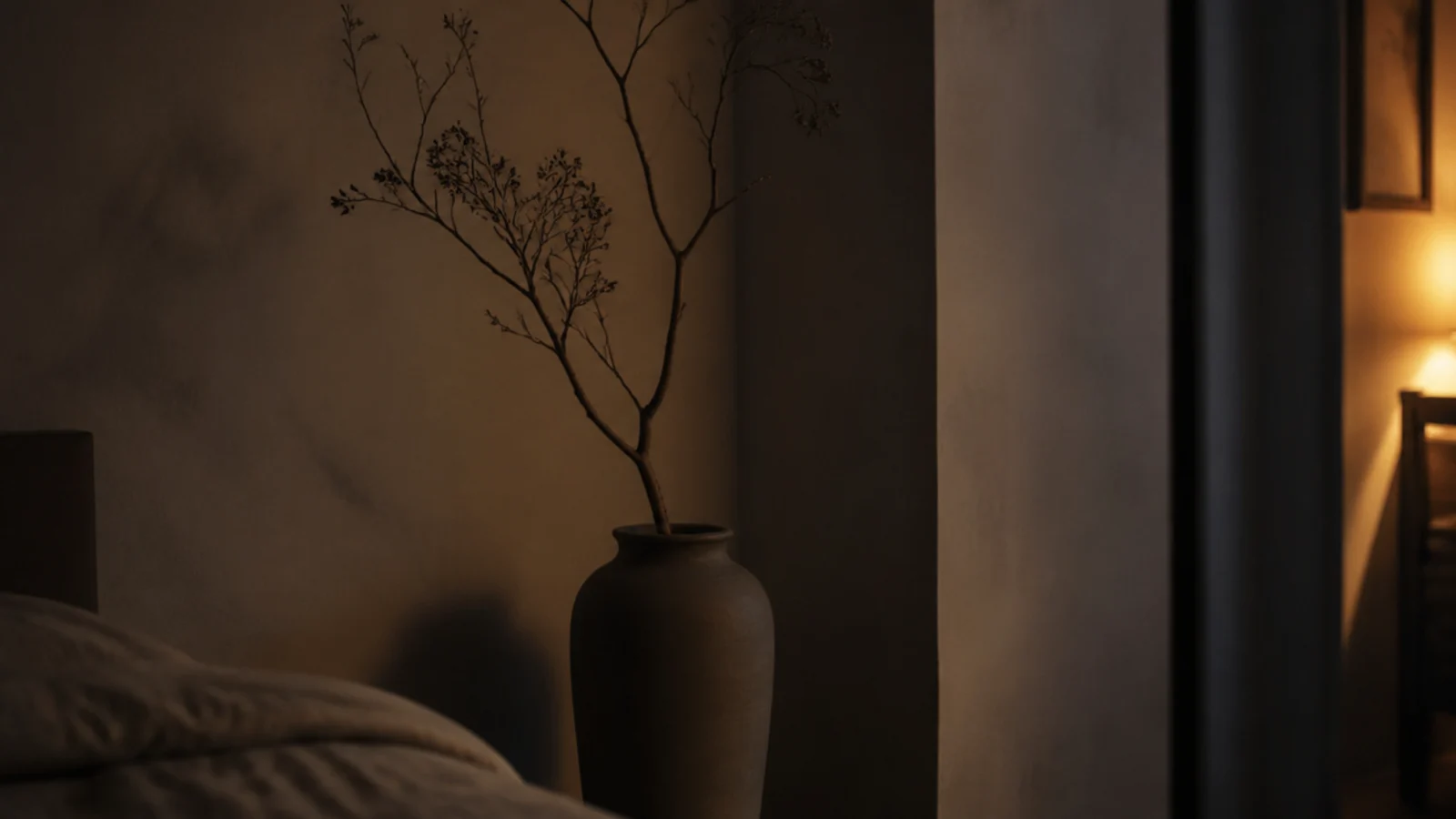
Light all four corners and the room flattens completely. Choose the one furthest from the bed, leave it unlit, and put something tall and matte in it — a dried branch in a floor vase, a stack of books, a leaning canvas. The shadow gives everything else contrast to work against, and it is the cheapest decision on this list.
For the objects that fill these corners — jars, lanterns, shelf arrangements — decor setups covers them in detail. Coffee corner ideas has the tray and kettle layout worked out properly, and floating bedside table ideas covers the surfaces that free up corner floor.
Mistakes to Skip
- Lighting a corner that has nothing in it. Add the chair, the shelf or the plant first — a strand on bare plaster is decoration, not a corner.
- Using the string as the reading light. Forty lumens spread over 33 feet will not light a page, and squinting at a book is how a beautiful nook goes unused.
- Putting bare bulbs at seated eye level. Between 40 and 65 inches they glare straight into your face, which is exactly where most people clip them.
- Filling all four corners. One left deliberately dark is what gives the other three any depth, and it costs nothing at all to do.
Frequently asked questions
How do you make a bedroom corner look aesthetic with fairy lights?
Give the corner a reason to exist first — a chair, a shelf, a plant — then light that object rather than the bare walls. A strand behind something reads as depth, while the same strand on empty plaster reads as decoration. Two light heights in one corner is usually the difference.
How bright should a reading corner be?
Between 300 and 450 lumens aimed at the page, from a lamp or a clip-on light. String lights add roughly 40 to 60 lumens across a whole 33 foot strand, which is atmosphere rather than task light. Use both: the strand sets the mood and the lamp does the work.
What size corner do you need for a reading nook?
About 40 by 40 inches for a chair and a small table, or 30 by 30 inches for a floor cushion setup. Leave 24 inches of clear walkway past it. If the corner is smaller than that, light a shelf or a plant instead and keep the floor free.
Where should the lights go in a corner?
Behind or above the object, never facing the seat. Anything between 40 and 65 inches off the floor is in your eyeline when you are sitting, so bulbs at that height need a diffuser or something to hide behind. Above 70 inches or below 30 they can sit bare.
Can you light a corner without any wall fixings?
Yes. A leaning ladder, a tall plant, a floor lantern, a bookcase or a stack of trunks all give you structure to wind a strand around with nothing touching the walls. Battery or USB sets remove the cable route as well, which is usually the other half of the problem.
Want more like this? Browse all 15 fairy lights bedroom guides — they all use the same measurements and budget tiers.

Pin it for later
Save this to your Fairy Lights Bedroom board
Pin it now so it is waiting for you when the tape measure comes out — and so the next person hunting for this idea can find it too.
Save this pinKeep going
More ideas worth saving while you have the tape measure out.