Fairy Lights Bedroom · Listicle
20 Cozy Bedroom Aesthetic Fairy Lights Setups

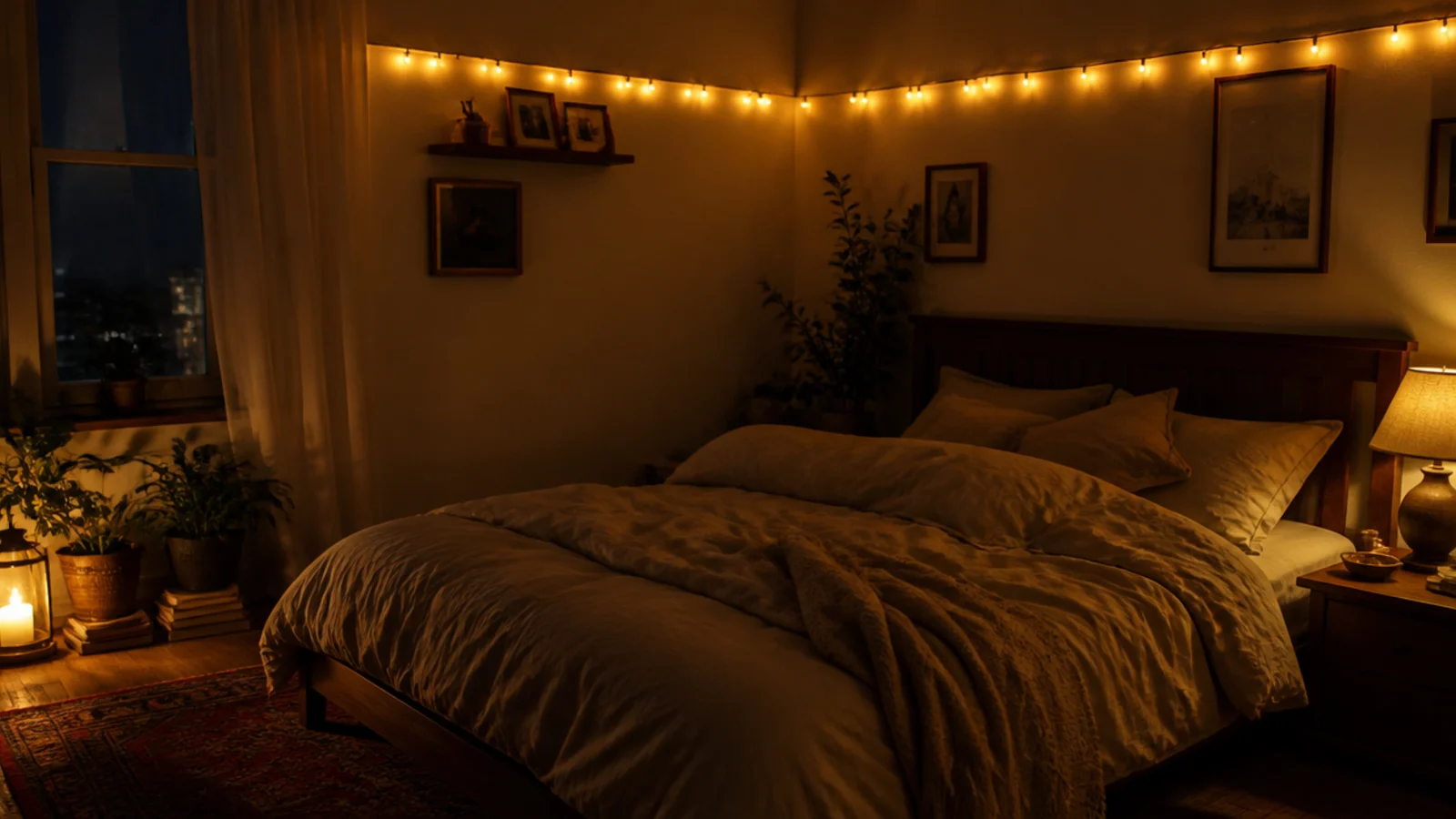
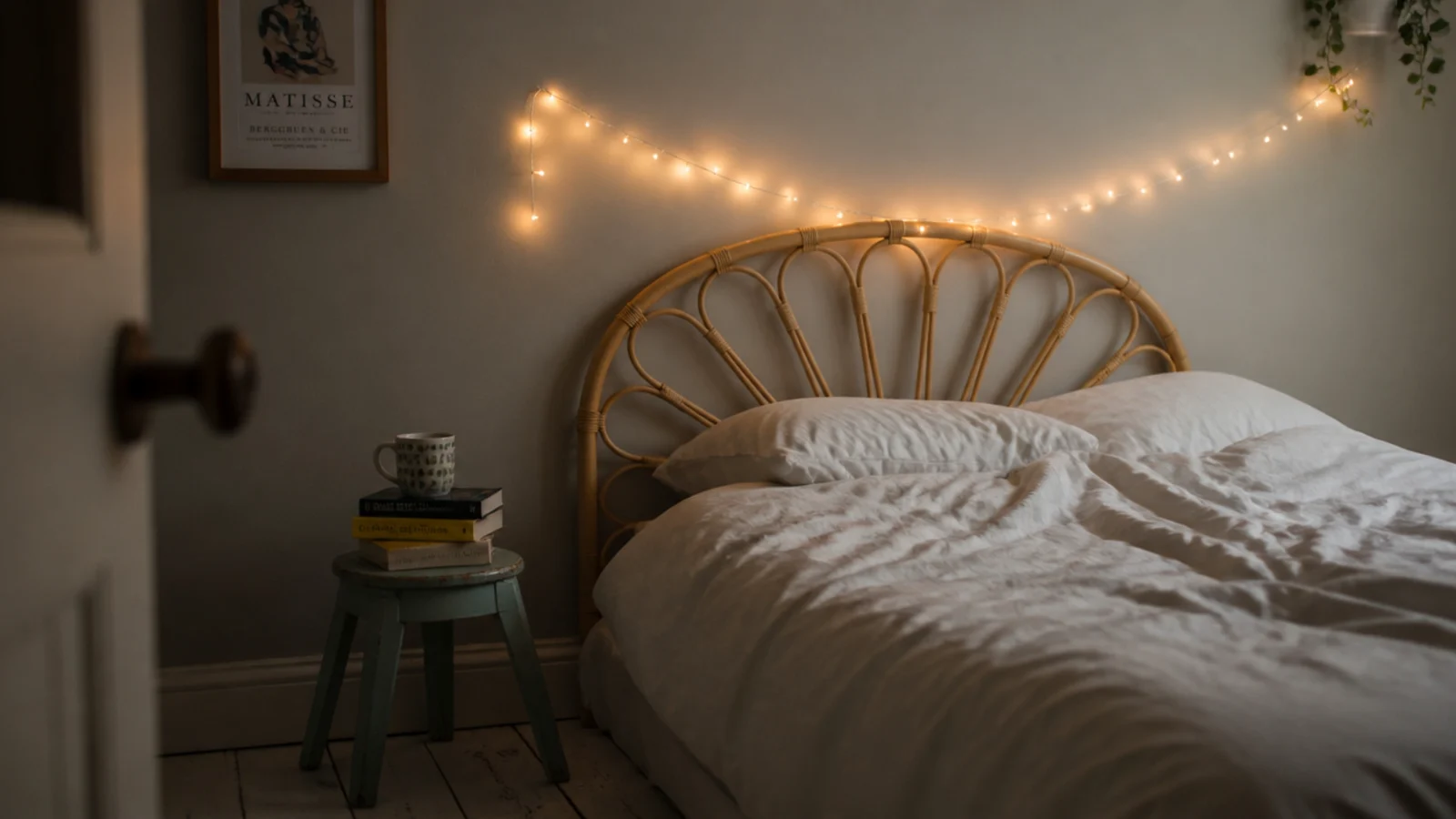
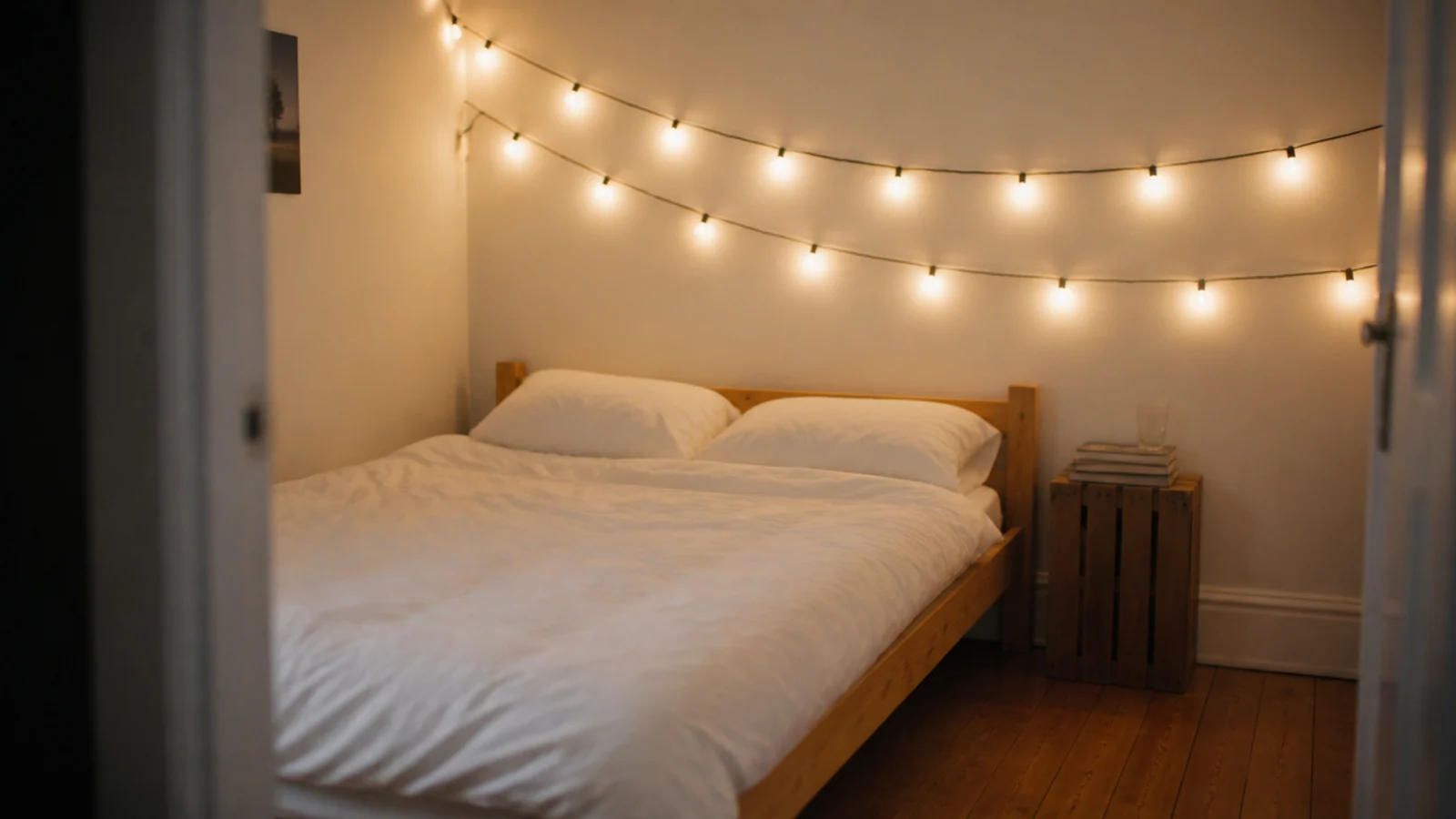
Warmth in a bedroom is not a quantity of light, it is an arrangement of it. Cozy bedroom aesthetic fairy lights work when the room has three light heights and nothing at all coming from the middle of the ceiling, and they fail when a single strand is asked to do everything from a picture rail. I spent a winter moving the same two strands around one small room until it finally read right at eleven at night. Here are the twenty arrangements that came out of it.
In this guide22 sections — tap to openHide
- 1.What cozy bedroom aesthetic fairy lights need to get right
- 2.Set the whole room at 2000K to 2200K
- 3.Three light heights instead of one
- 4.Wash a textured wall, never a flat one
- 5.Bounce off timber rather than aiming at plaster
- 6.Hide the source behind an object
- 7.Light textiles so the weave reads
- 8.Dim to about thirty percent after ten
- 9.One warm pool beats a lit perimeter
- 10.Dense in the corner, thinning toward the door
- 11.Mix globe bulbs with micro LEDs
- 12.Match the metals in the room to the light
- 13.A fabric filter over the canopy strand
- 14.Rice paper diffusers at eye level
- 15.Floor-level lanterns for a low centre of gravity
- 16.Repeat the same amber three times
- 17.Switch the ceiling fixture off completely
- 18.Blackout curtains give the glow something to work against
- 19.Change the density by season
- 20.Flame-effect LED instead of a real candle
- 21.Photograph the room and remove one source
- 22.Mistakes to Skip
What cozy bedroom aesthetic fairy lights need to get right
Three numbers do most of the work. Colour temperature first: 2000K to 2200K for the strings themselves, and no higher than 2700K on any lamp in the same room. Mixed Kelvin on one wall reads as a fault rather than a choice.
Brightness second. A 100 LED string throws roughly 40 to 60 lumens across its whole 33 foot length, which is atmosphere. A lamp you read by needs 300 to 450 lumens aimed at the page. Those are different jobs and one fitting cannot cover both.
Height third. Aim for a light source near the floor, one at seated eye level between 40 and 65 inches, and one near the ceiling. Two of the three is enough in a small room; one of the three is why so many bedrooms look flat however many bulbs are in them.
Materials matter more here than in any other room. LED strings only anywhere near a canopy, curtain or duvet, because the bulbs sit close to body temperature while incandescent minis run hot enough to mark cloth. Keep the driver or battery pack in open air, never under a pillow. Nothing goes under a rug and nothing goes inside bedding. Fix with adhesive clips at 12 to 16 inch spacing rather than pins, and stay inside the daisy-chain limit printed on the tag. If you want the corner-by-corner version of this, aesthetic corner setups works through them one at a time.
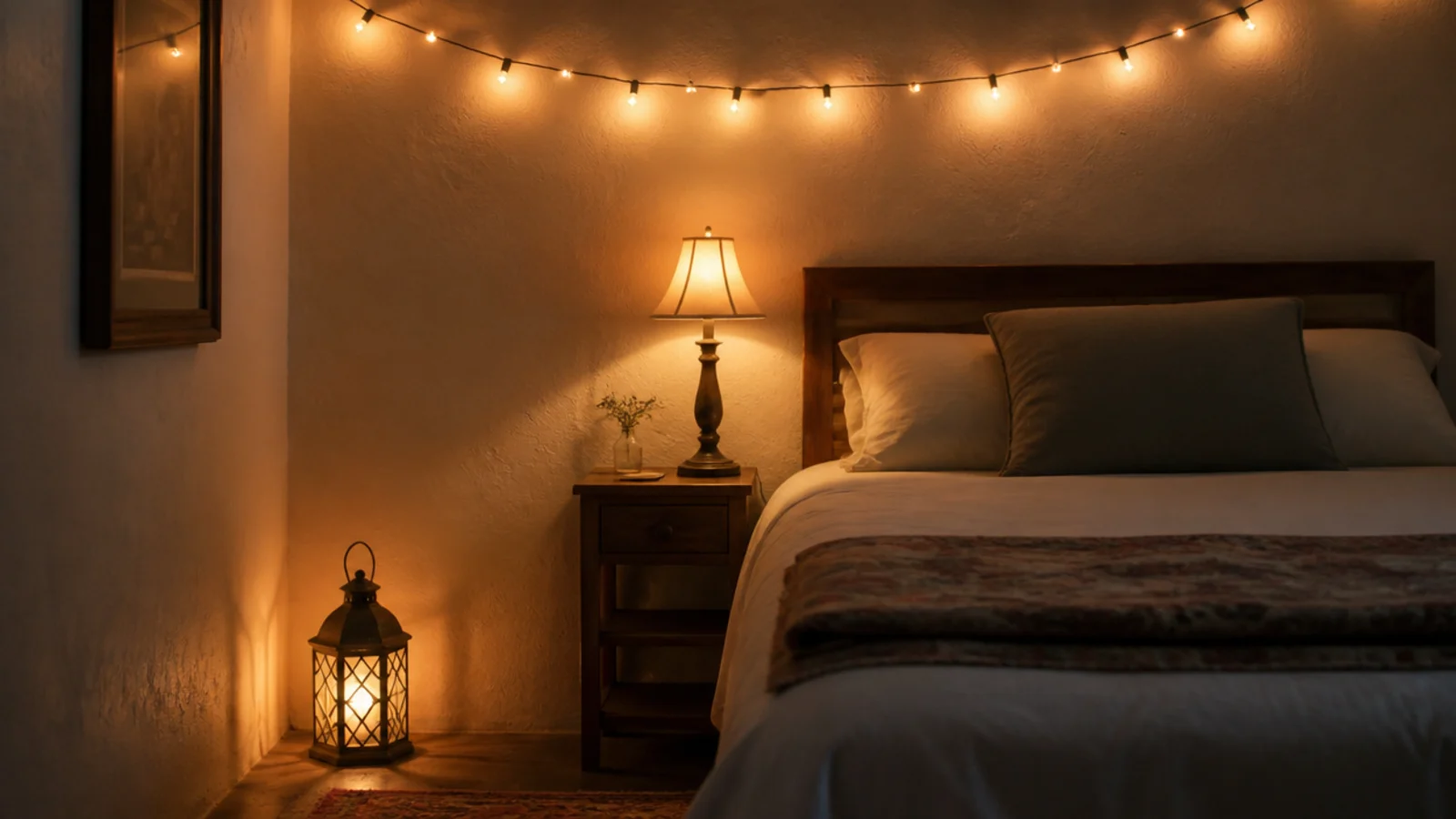
1. Set the whole room at 2000K to 2200K
Buy one strand, live with it for a night, then match everything else to it. At 2000K the light is close to a candle flame; at 2700K it is a warm bulb; at 3000K it has gone cold enough to look like a landing light. The Kelvin figure is printed on the box and it is the only reliable guide, because warm white as a phrase covers all three.
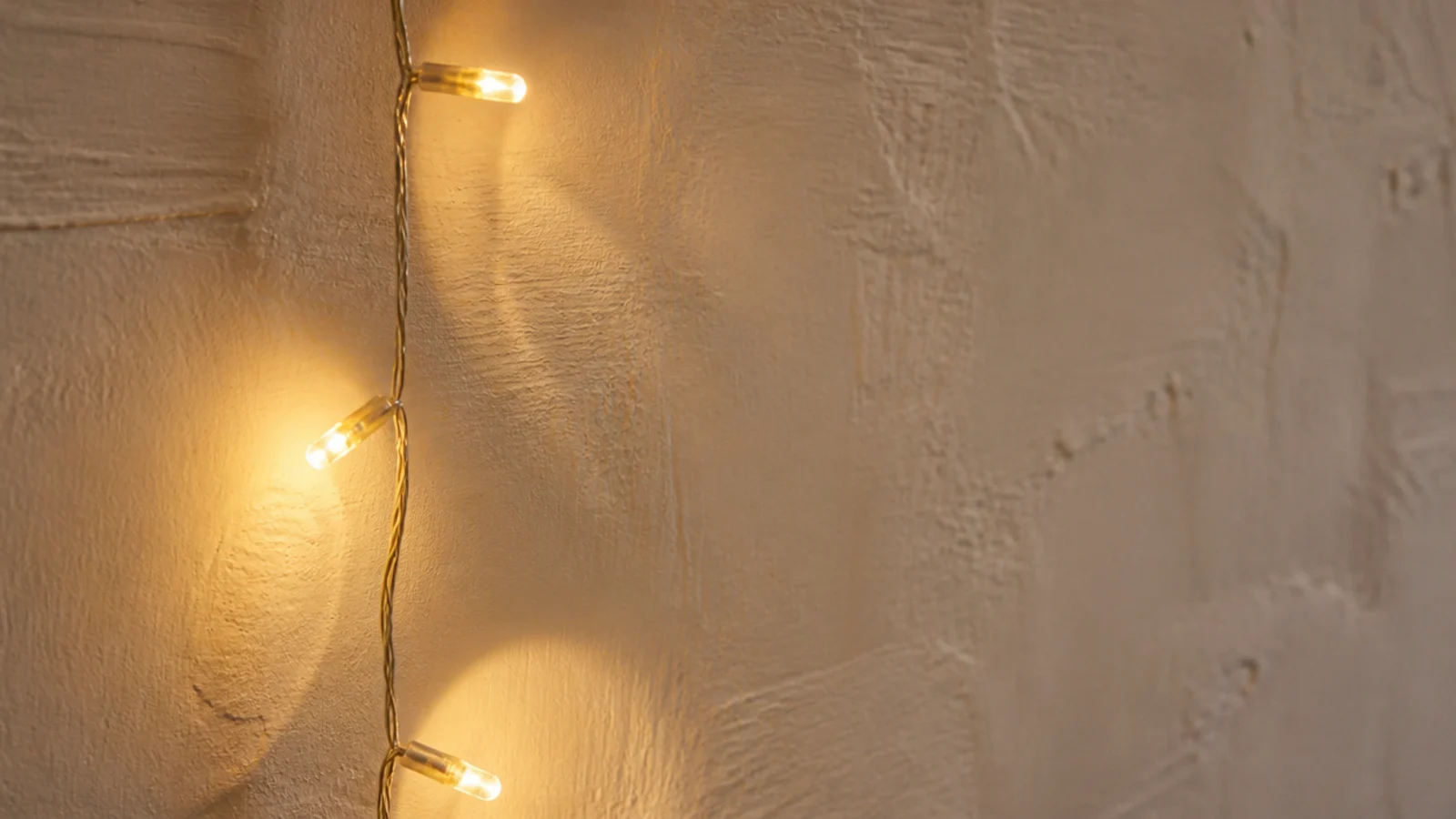
2. Three light heights instead of one
Put a lantern or a lit vessel on the floor, a lamp at 24 to 28 inches on a bedside surface, and a strand near the ceiling. Each can be modest — under 200 lumens is plenty — because three low sources build depth that one bright source destroys. This single change does more than any styling decision on the list.
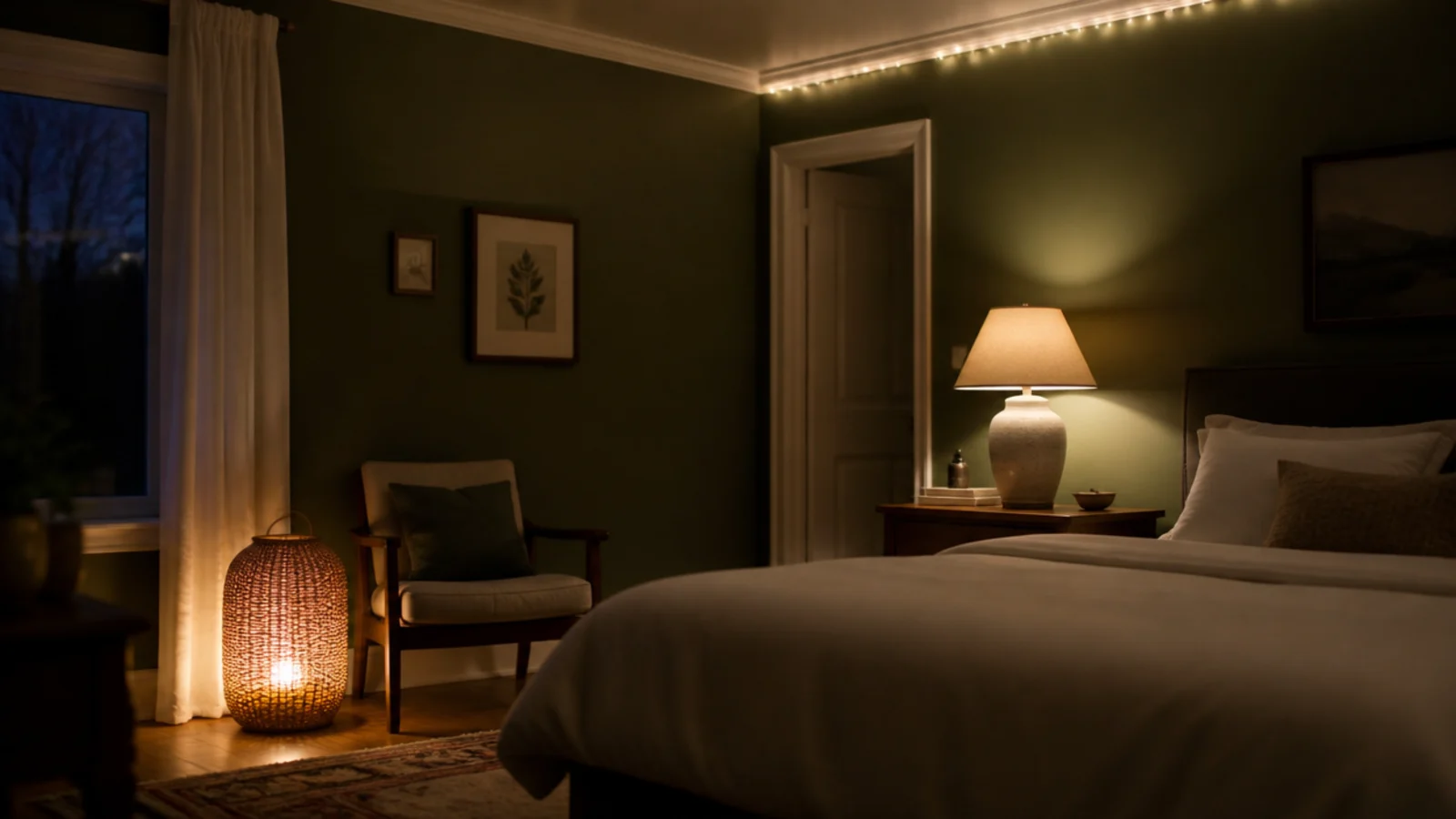
3. Wash a textured wall, never a flat one
Light raking across limewash, rough plaster, brick or a slat panel picks up every ridge and turns the wall into a surface rather than a backdrop. Keep the strand within about 2 inches of the wall so the angle stays shallow. On smooth painted plaster the same strand reads as bare bulbs on a blank sheet.
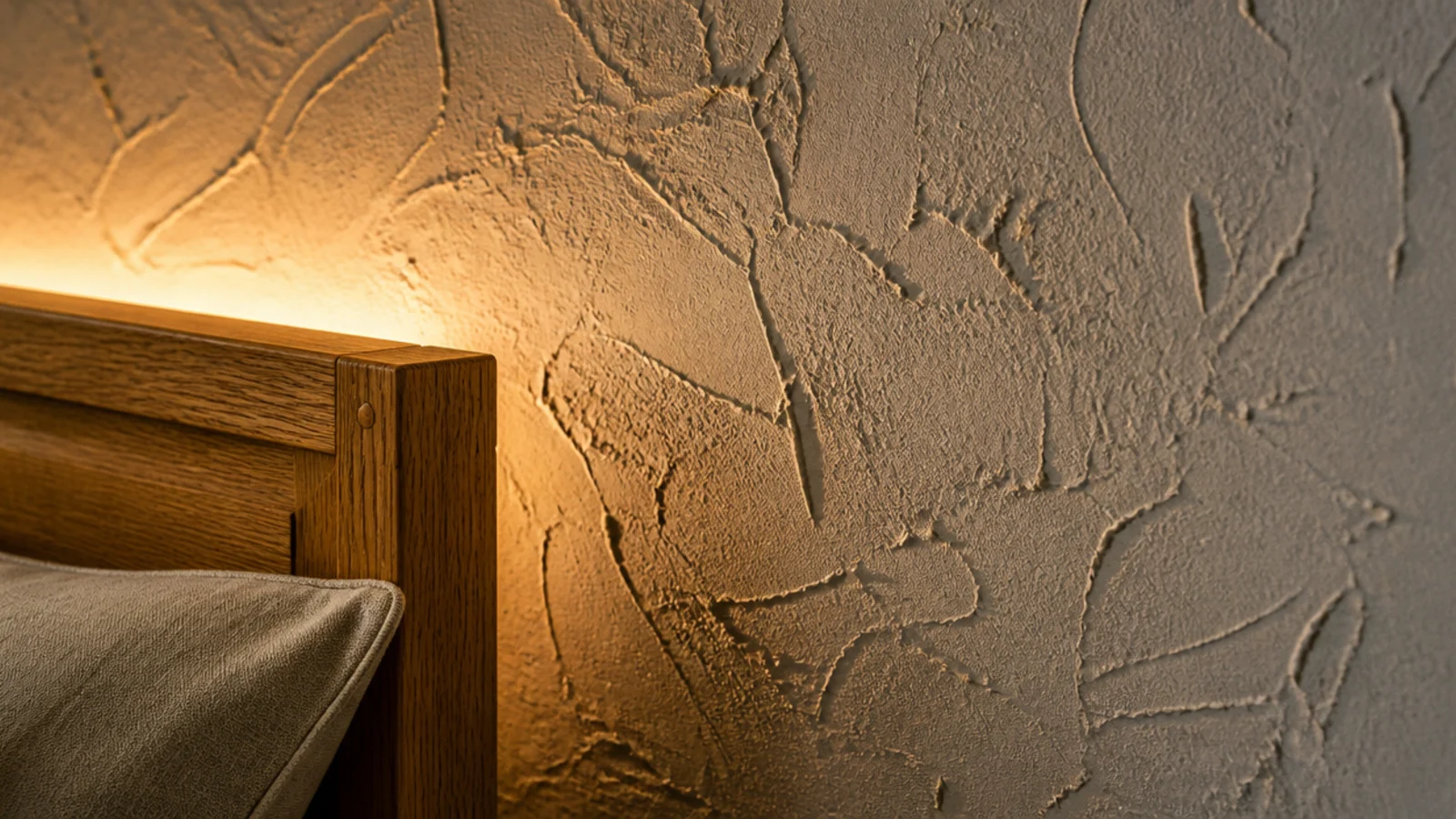
4. Bounce off timber rather than aiming at plaster
Lay a strand along the back of an oak or walnut surface and let the grain return the light. Timber reflects warmer than white paint does, which pushes an already amber source further into gold. A dresser top, a shelf or the top rail of a headboard all work, and none of them need a fixing.
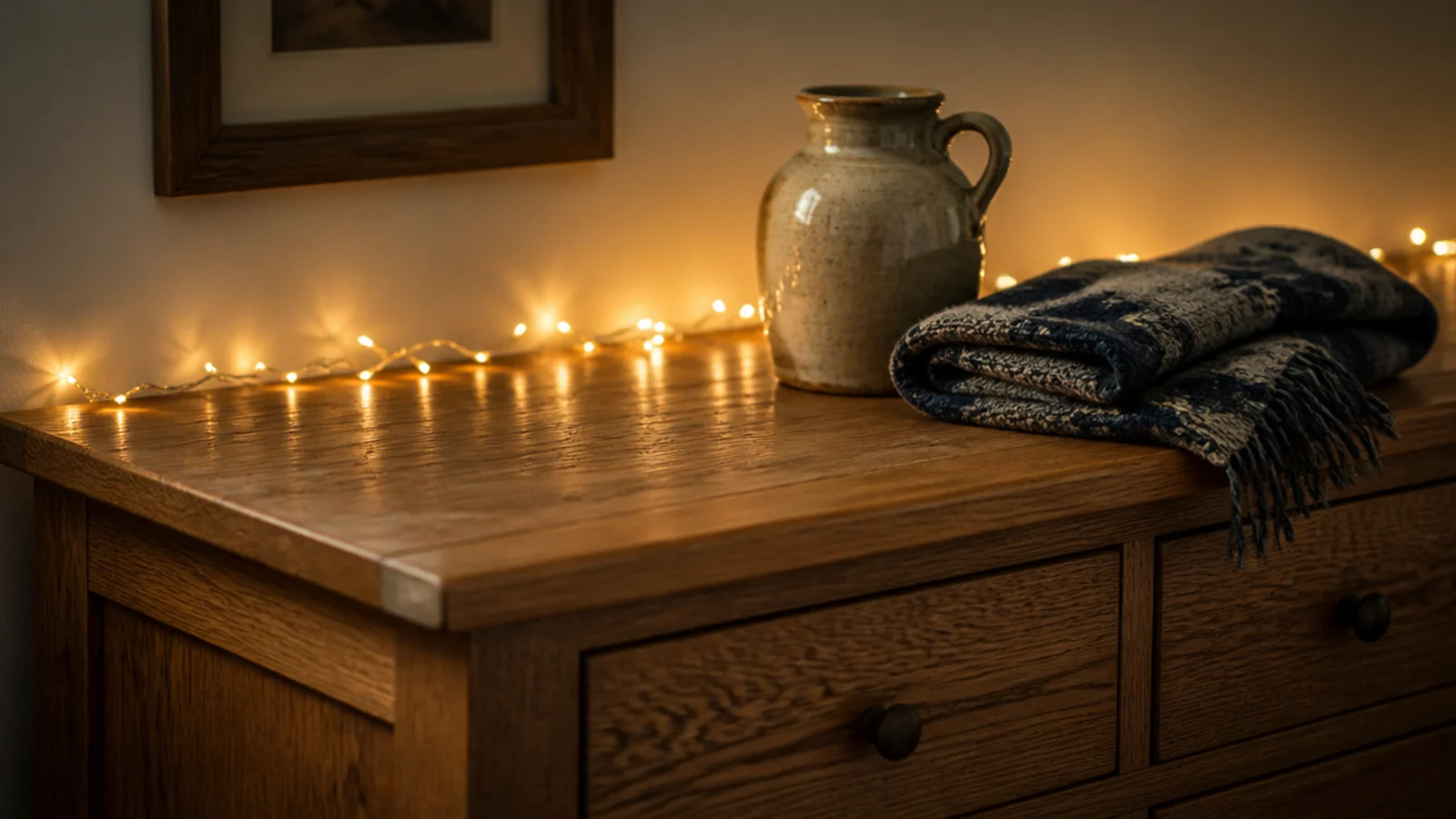
5. Hide the source behind an object
A strand behind a tall plant, a chair back or a stack of books throws shape onto the wall instead of showing you forty bright dots. Leave 4 to 6 inches between the light and the object so the shadow has room to spread. Concealed sources are the fastest way to make a cheap set look deliberate.
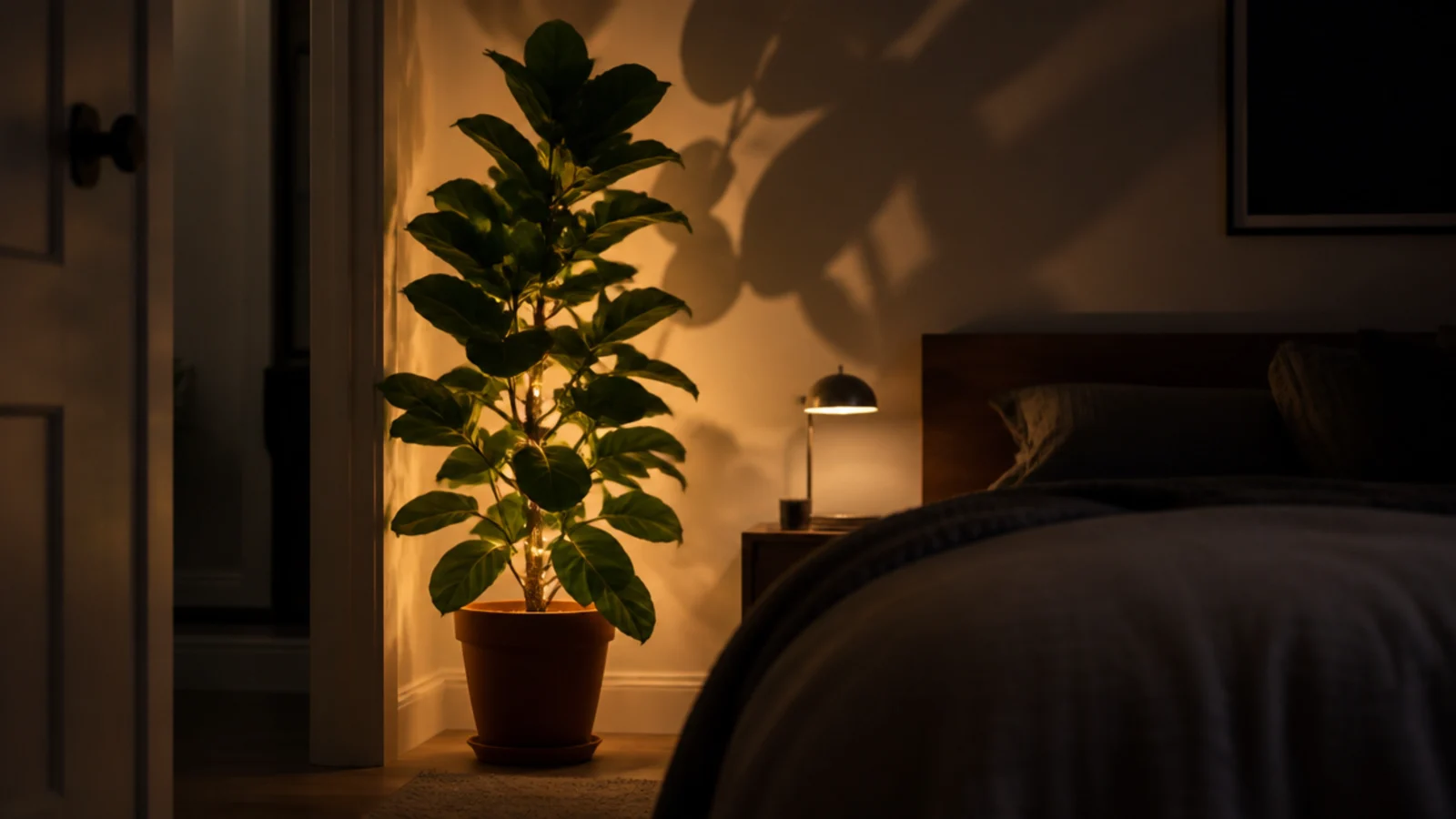
6. Light textiles so the weave reads
Wool, linen and boucle only look expensive when light crosses them at a shallow angle. A strand at mattress height, roughly 24 to 28 inches off the floor, grazes across a folded throw and turns a flat beige into visible texture. Point the same light straight down and the fabric goes back to looking printed.
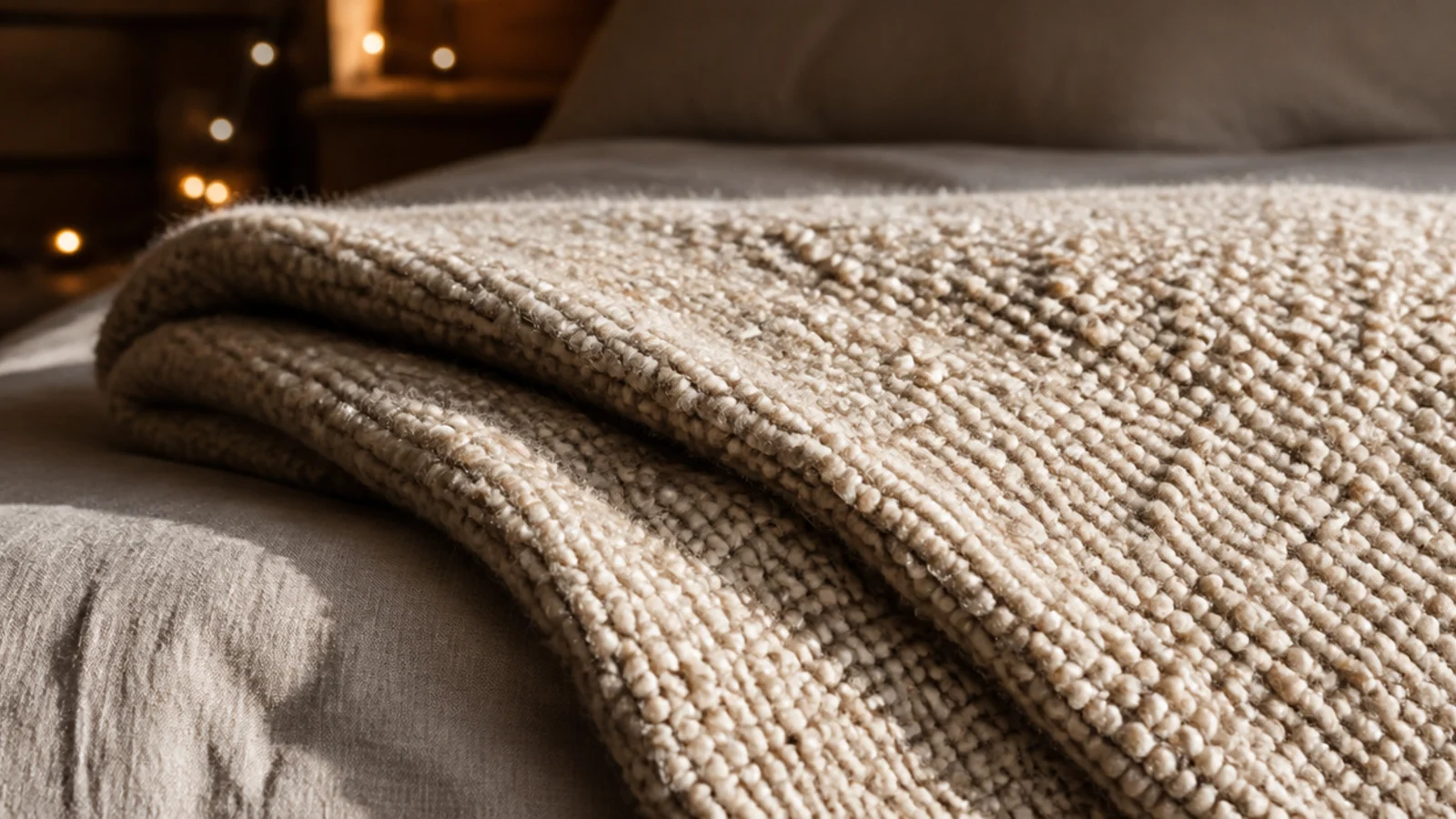
7. Dim to about thirty percent after ten
An inline LED-rated dimmer at $8 to $12 turns one strand into two settings. Full brightness while the room is still in use, roughly a third after ten. The drop is what signals the end of the evening, and it matters more than any individual fitting you could buy instead.
8. One warm pool beats a lit perimeter
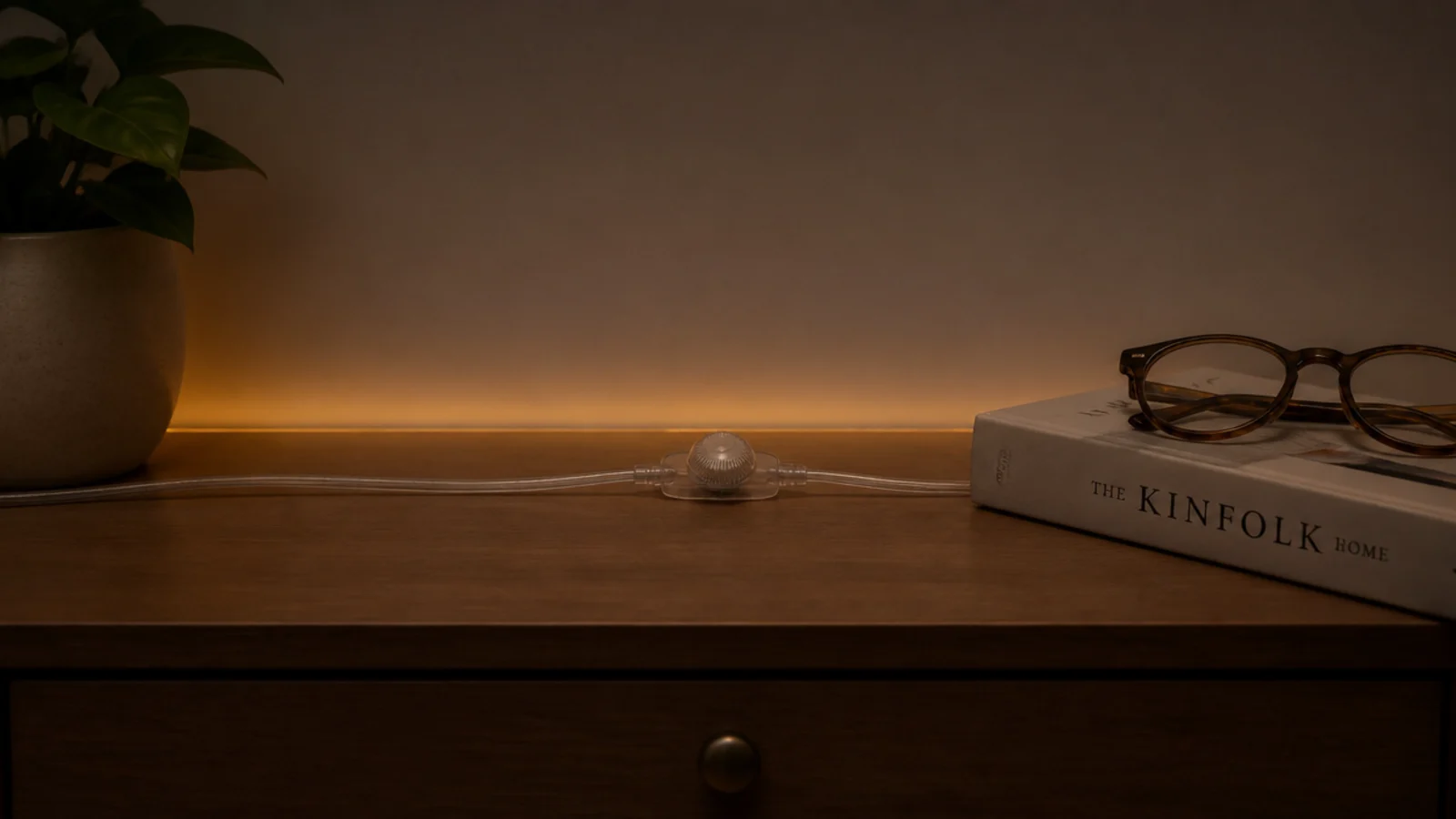
Lighting every wall gives you an evenly grey room. Gathering the same length into one dense pool beside the bed gives you somewhere to be. I would rather have 60 lumens concentrated in a 4 foot circle than the same 60 lumens smeared across 30 feet of skirting.
9. Dense in the corner, thinning toward the door
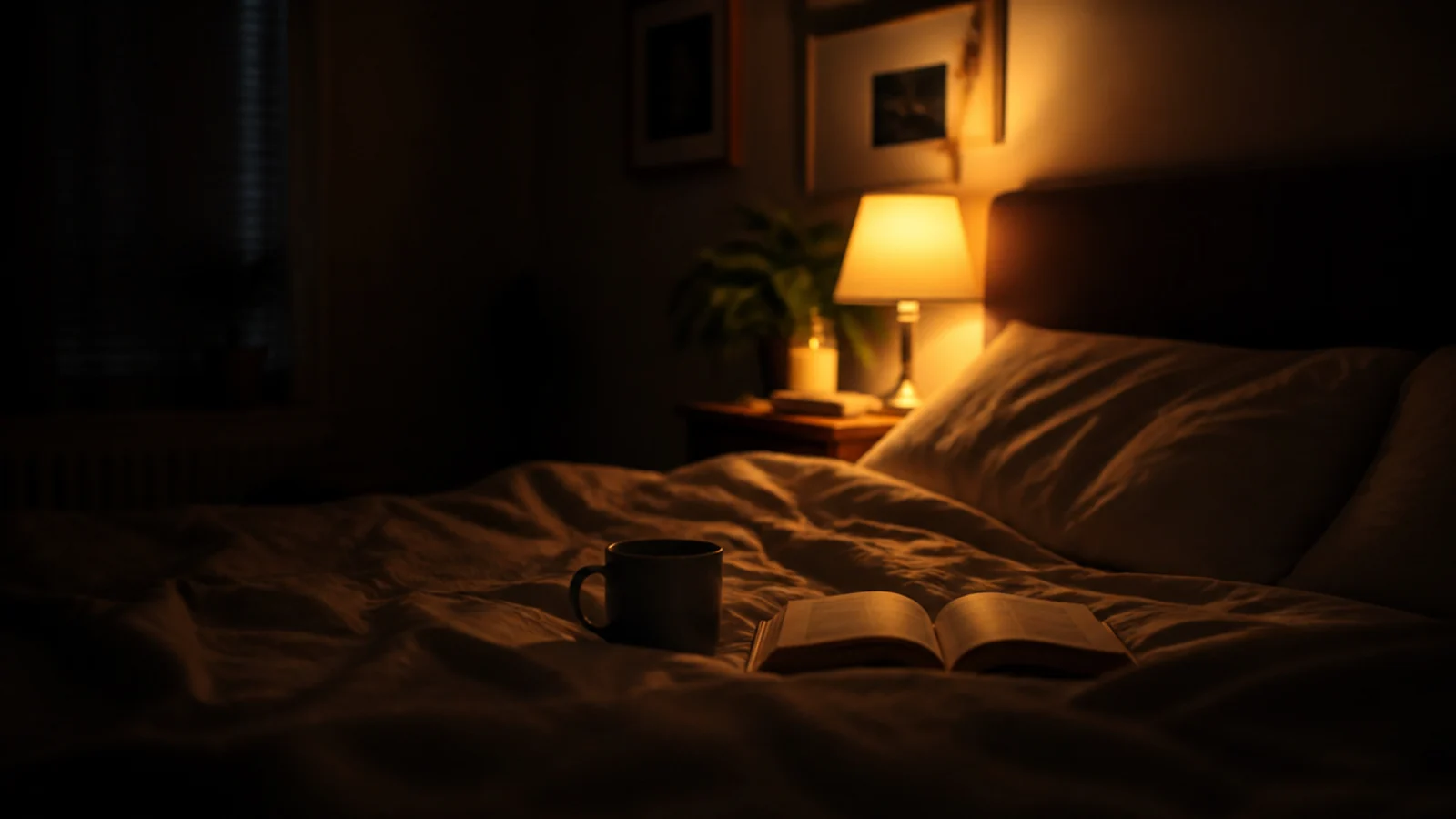
Bunch the bulbs at 2 inch spacing in the far corner and let them widen to 8 or 10 inches by the doorway. The gradient reads as distance and makes a 10 by 10 foot room feel longer. It costs nothing beyond the way you clip the same strand.
10. Mix globe bulbs with micro LEDs
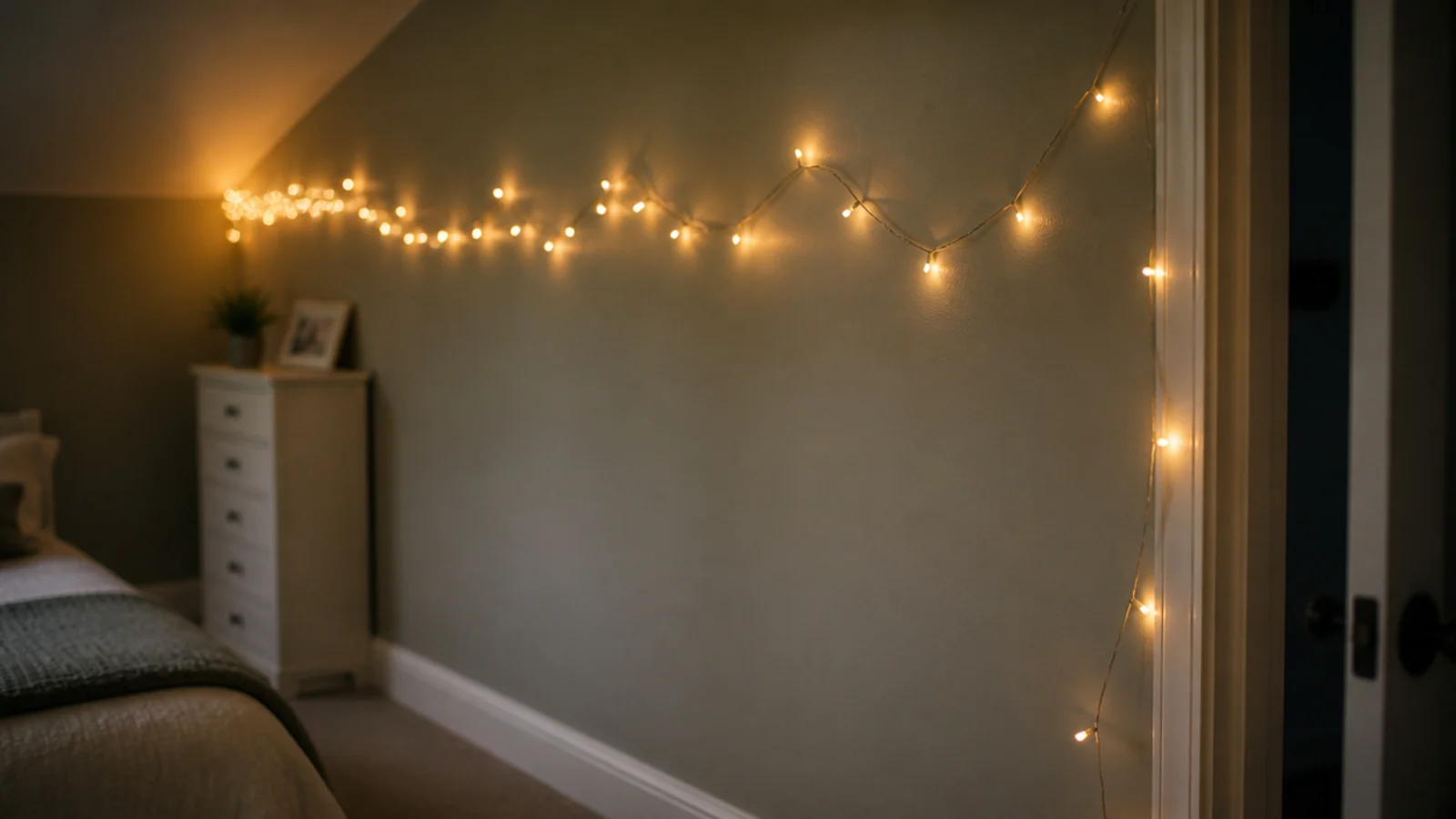
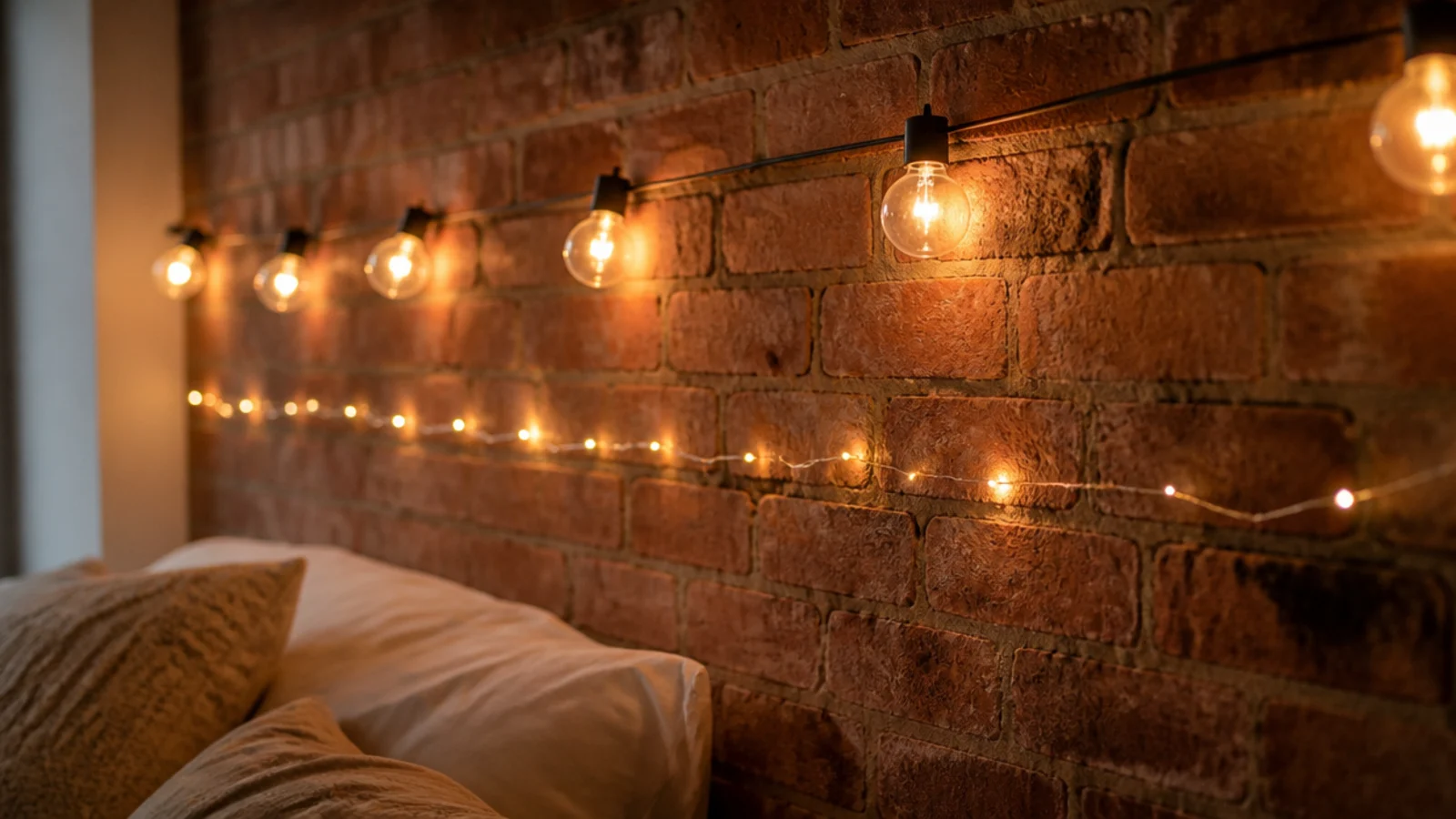
Two bulb scales on one wall stop the flat repeating look. A 25 foot G40 globe strand at 12 inch spacing gives you fifteen or so real light points, and a fine micro strand beneath adds a second finer layer. Keep both at the same Kelvin or the mix reads as an accident.
11. Match the metals in the room to the light
Brass, aged bronze and unlacquered copper all glow under 2200K light in a way that chrome and matte black do not. If the room already has warm metal in the door handles or a lamp base, the string light will pick it up for free. One repeated metal ties a scheme together faster than a matching furniture set.
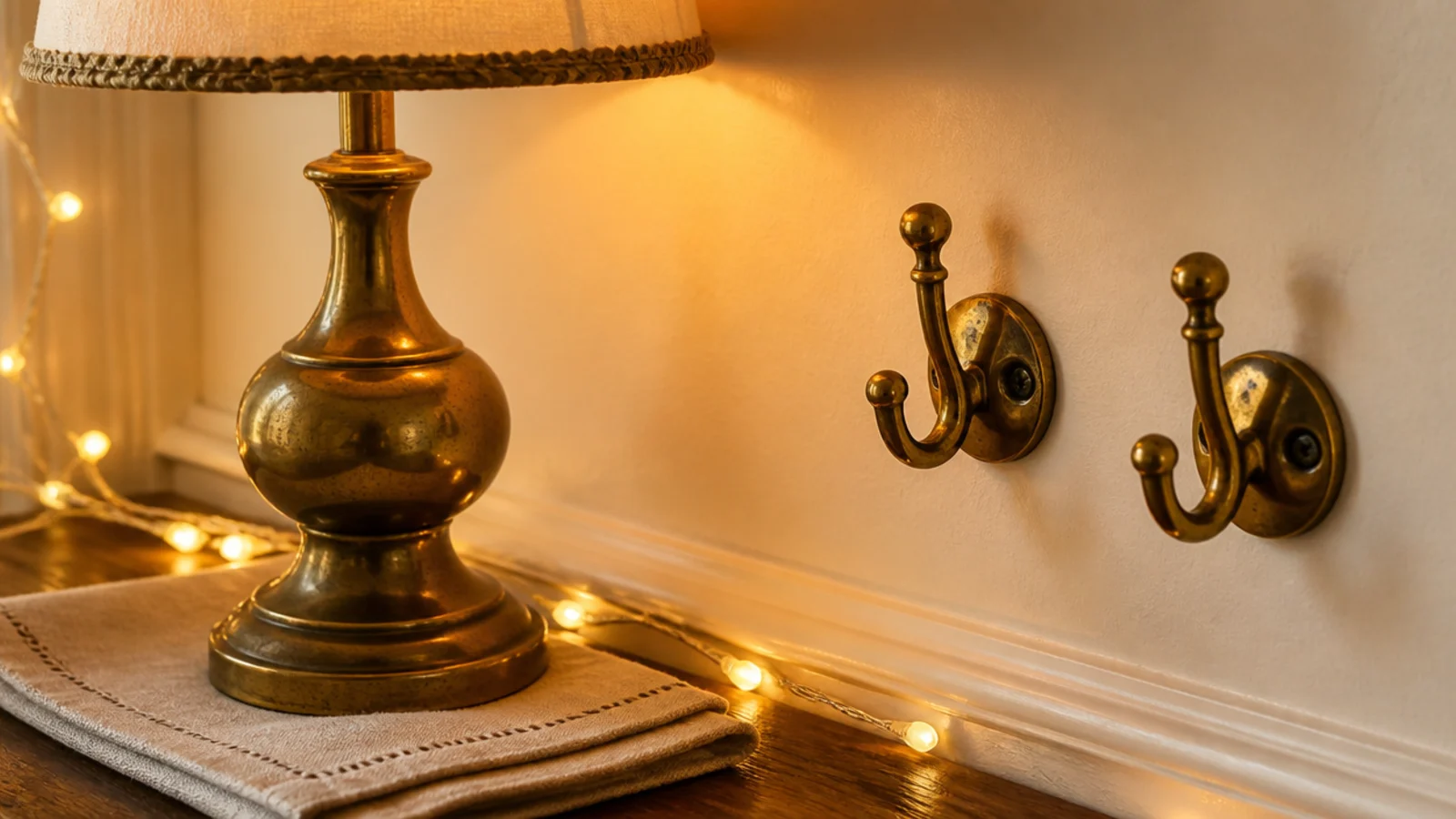
12. A fabric filter over the canopy strand
Drape muslin or fine cotton over the strand rather than wrapping cloth around the wire. Loose fabric above the lights diffuses them and still lets air move; fabric bound tightly onto a strand traps heat and stresses the cable. LED sets only for anything this close to cloth, and check the drape has not slipped before you sleep.
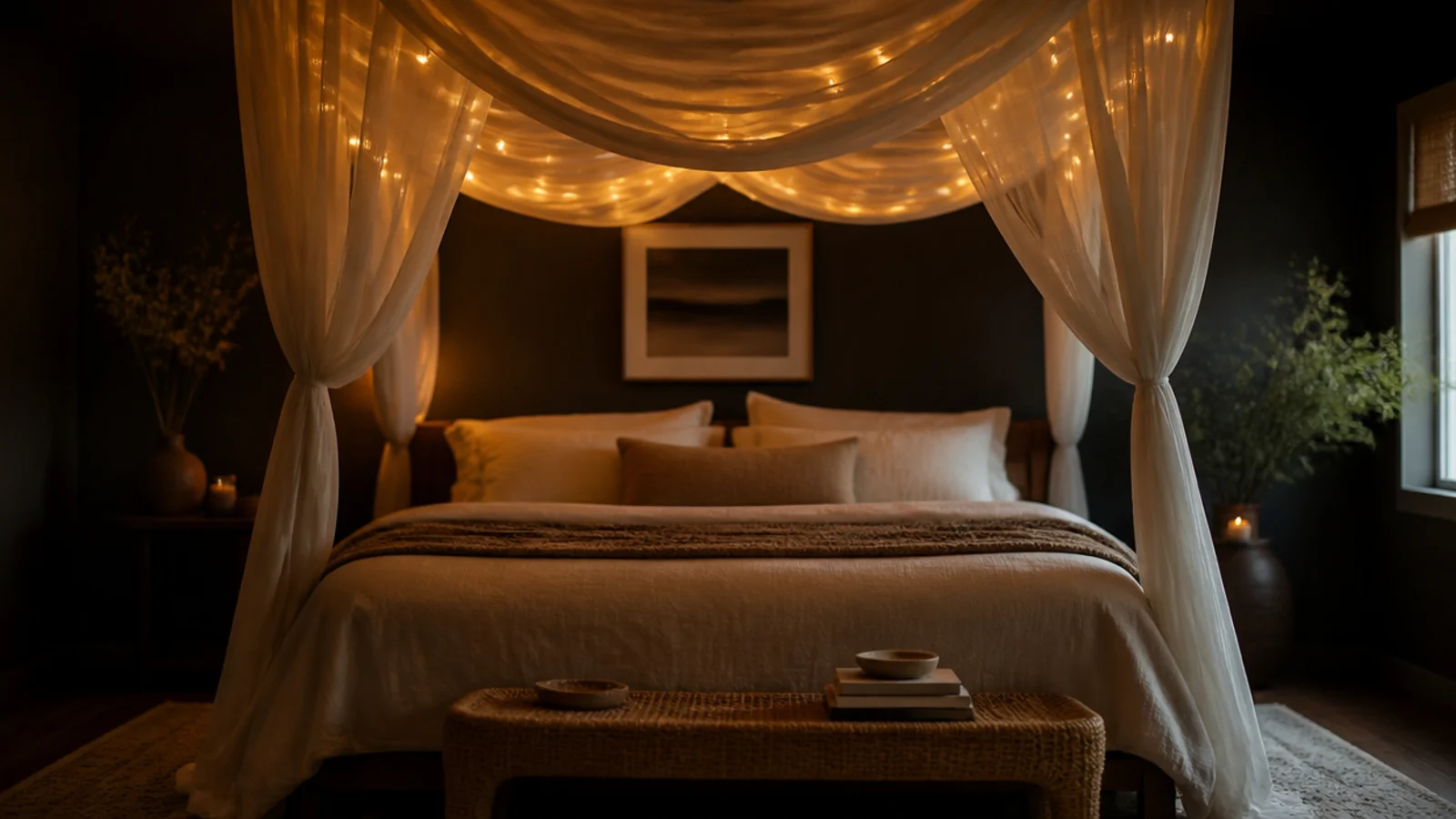
13. Rice paper diffusers at eye level
Any bulb between about 40 and 65 inches off the floor is in your eyeline when you are sitting up in bed. Slip small rice paper shades over those bulbs and the point source becomes a soft plane. A pack of ten costs about $8 and it is the cheapest comfort upgrade here.
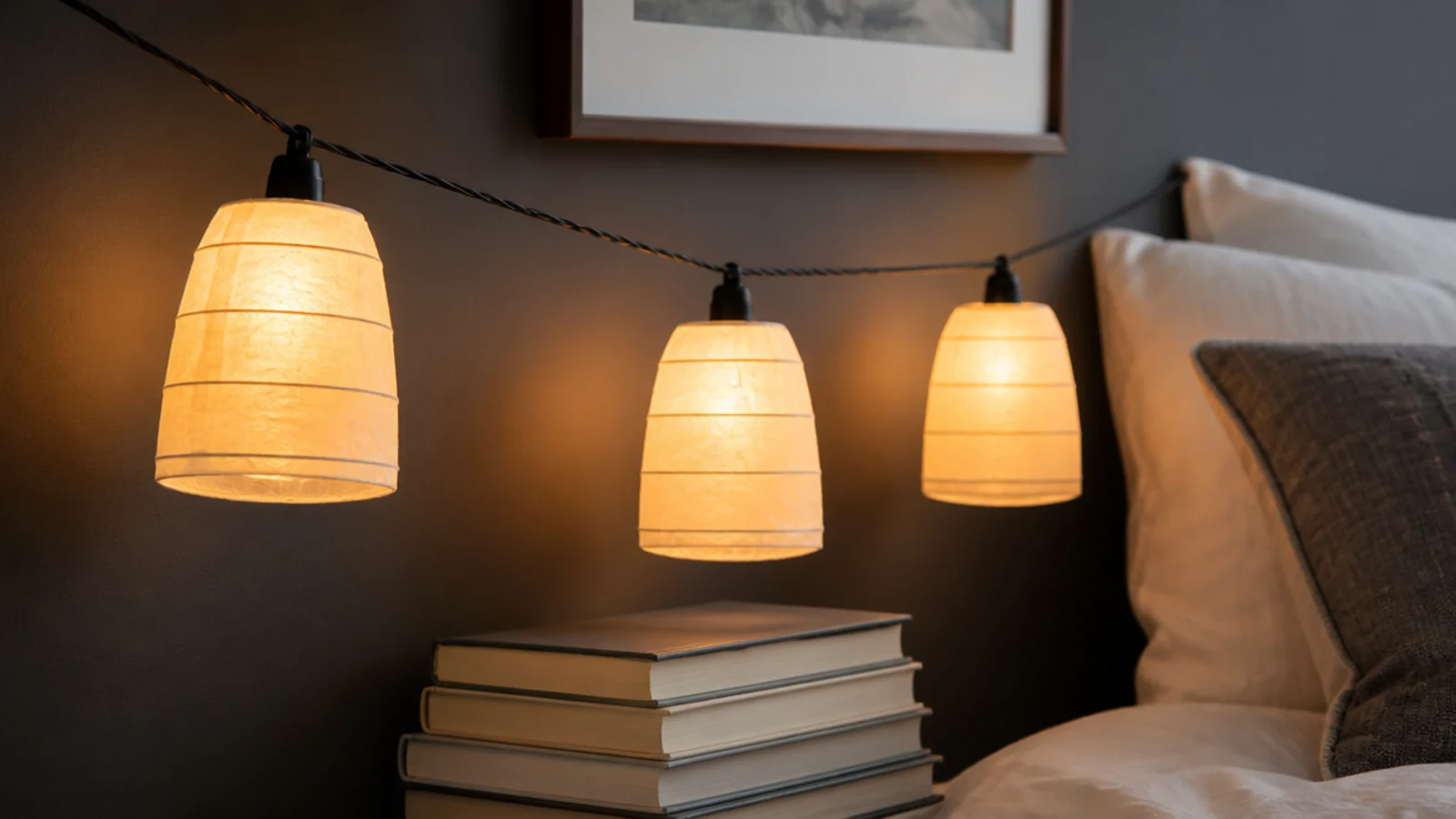
14. Floor-level lanterns for a low centre of gravity
A woven lantern with a 50 LED battery set inside sits at 12 to 18 inches and pulls the whole room down toward the floor, which is exactly where you want the visual weight in a bedroom. Two of them either side of a low bed do more than a ceiling fixture ever will.
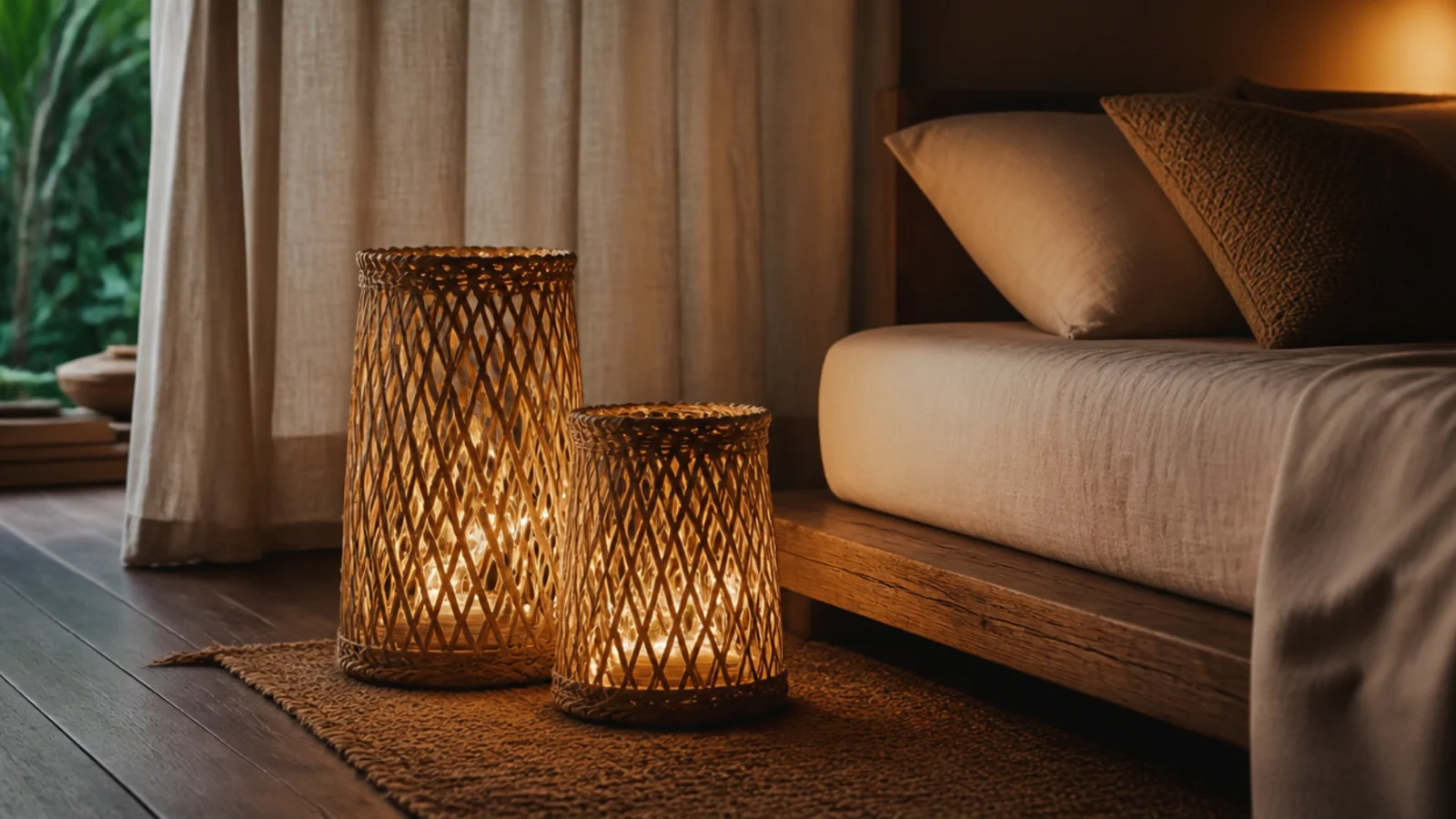
15. Repeat the same amber three times
Pick three points spread across the room — the window, above the bed, a shelf — and put the same colour light at each. The eye reads repetition as intention. Three matching sources in a triangle look designed; five different ones scattered around look like things you happened to own.
16. Switch the ceiling fixture off completely
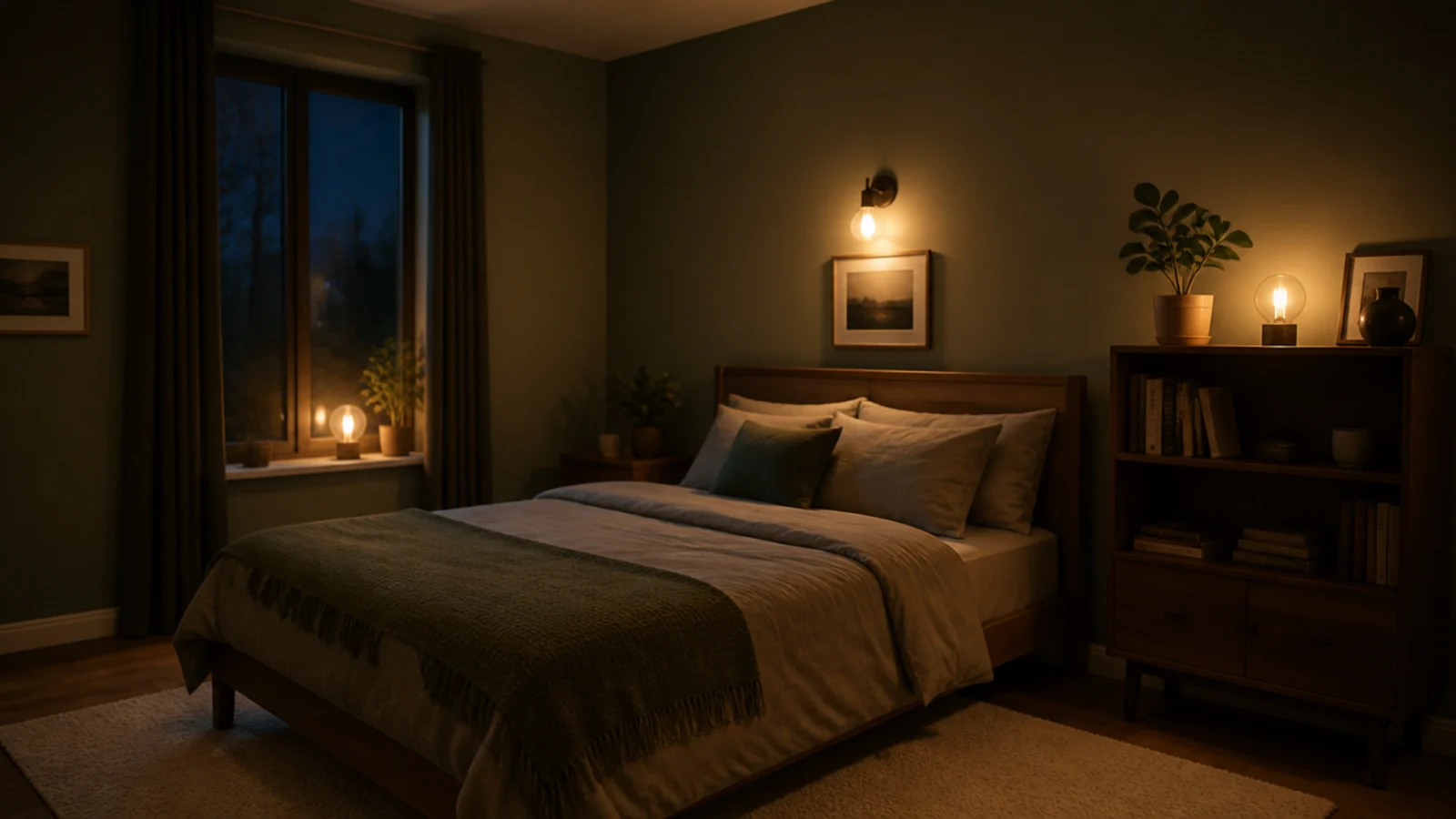
Overhead light at 3000K flattens a room and cancels everything else you have arranged. Take the bulb out for a week if the switch is by the door and habit keeps winning. Every setup here assumes the central fixture is dark, and none of them work with it on.
17. Blackout curtains give the glow something to work against
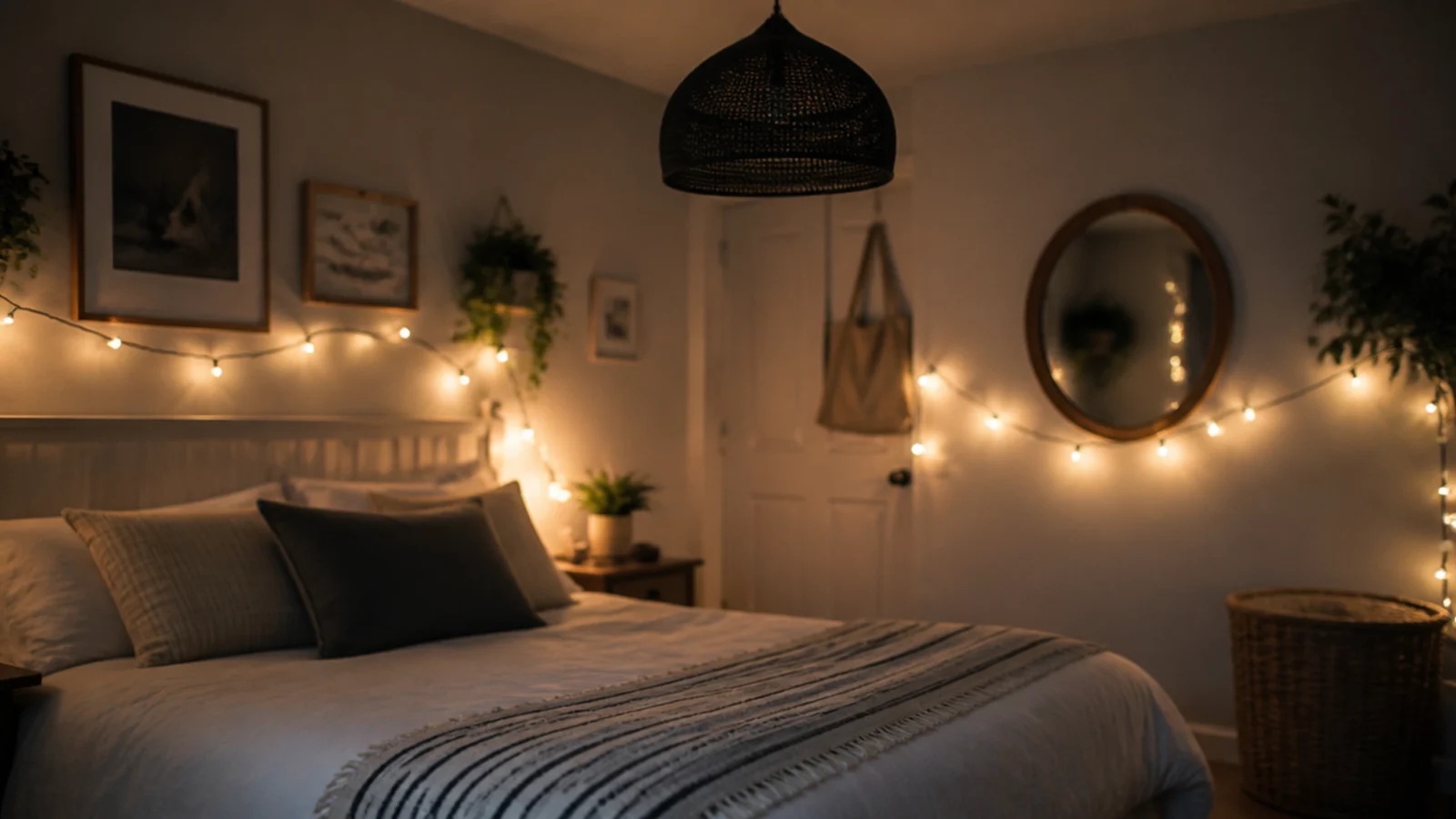
Warm light only reads warm against darkness. A lined curtain that actually blocks the street lamp costs $25 to $60 a panel and makes a 50 lumen strand look generous. Without it you are competing with sodium orange from outside, and the string always loses that argument.
18. Change the density by season
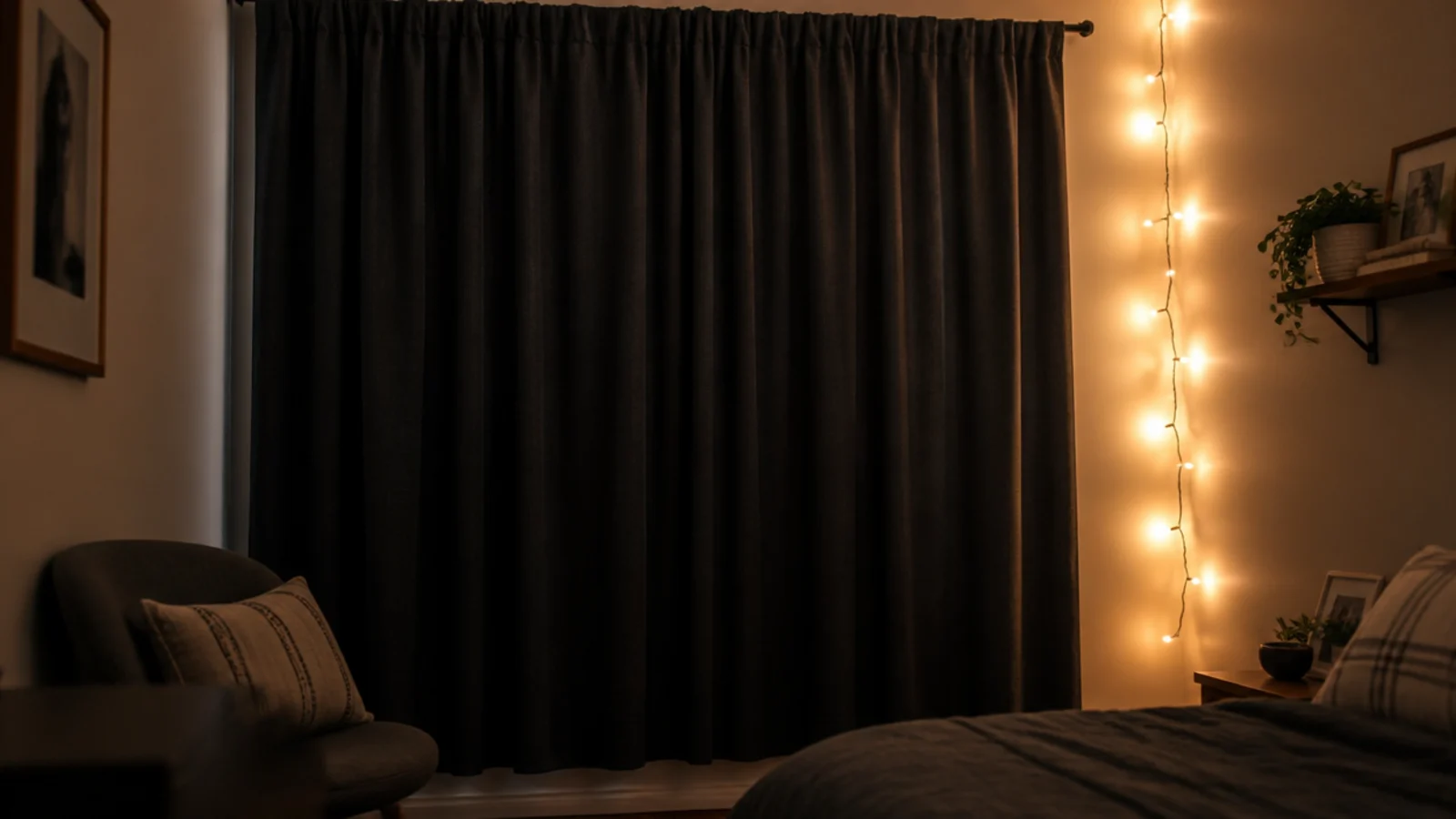
I run one 33 foot strand in summer and three in December in the same room. The bulbs are identical; the density is not. Adding a second and third strand to the same wall takes ten minutes, which is why buying matching sets in the first place pays off later.
19. Flame-effect LED instead of a real candle
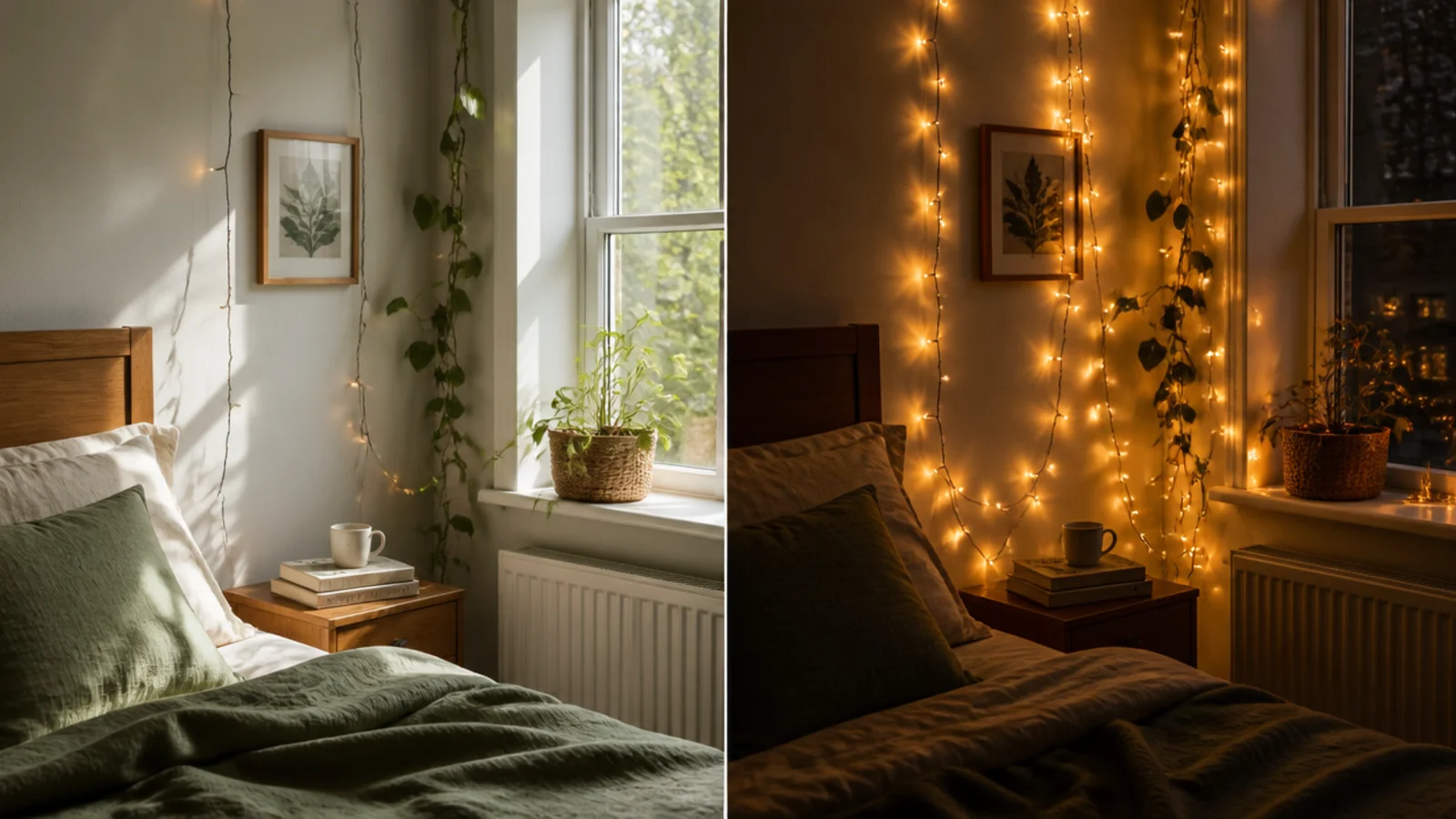
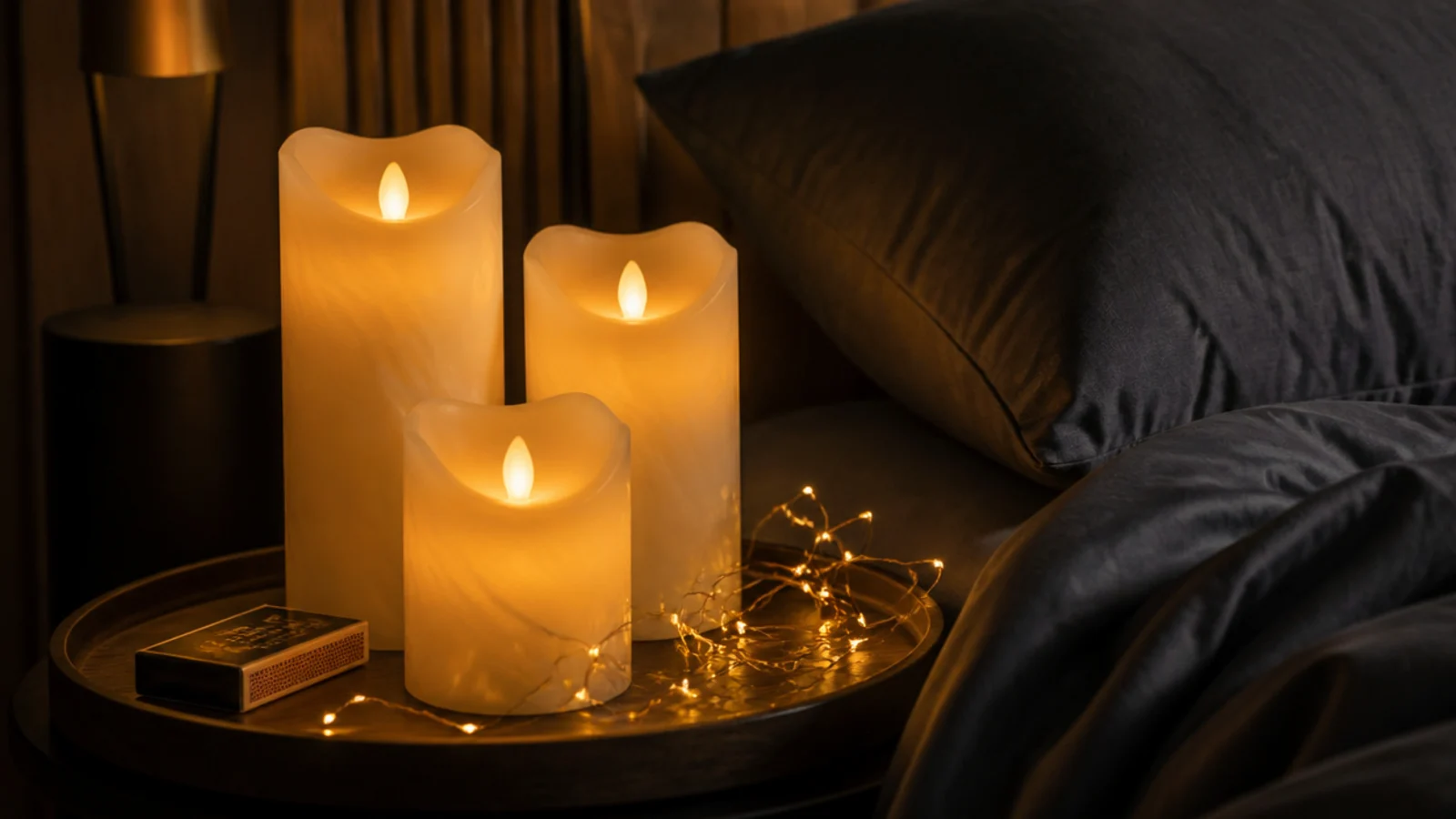
A group of three wax-shelled flame-effect LED pillars gives you movement that a static string cannot, with nothing burning next to a duvet. Expect $10 to $20 for a set of three, choose the ones with an irregular flicker, and use a timer so they stop with the strings.
20. Photograph the room and remove one source
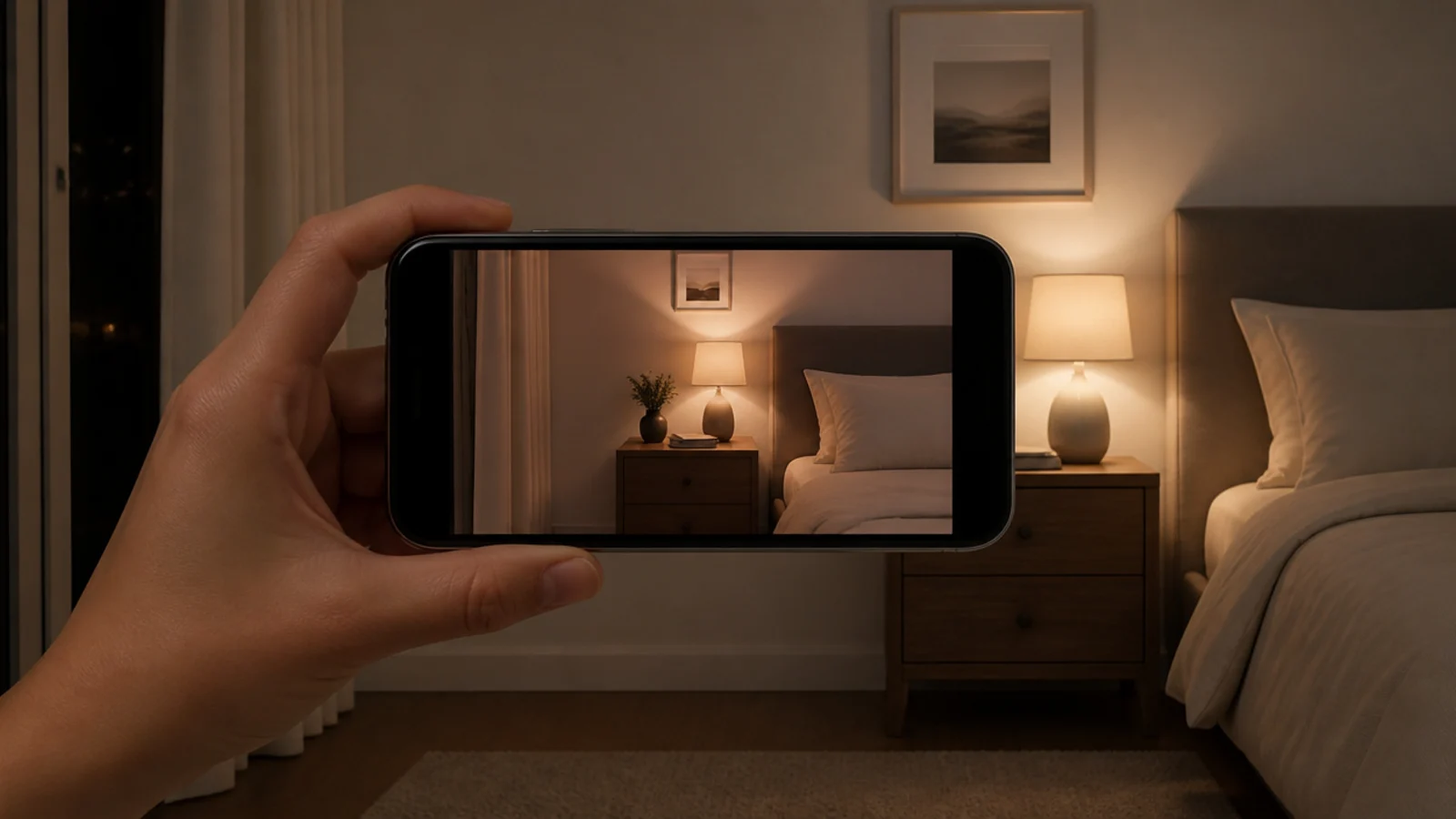
Take a phone photo in the dark and look at it flat. A camera compresses the range and shows you immediately which source is too bright, too cold or in the wrong place. In my own room the answer was almost always to take one thing away rather than add another.
If you want the same warmth applied to specific corners rather than the whole room, a year of tested looks has the honest verdicts. Aesthetic bedside styling covers the surface under the lamp, and aesthetic candle decor has flameless groupings that sit at the same colour temperature.
Mistakes to Skip
- Mixing 2200K and 3000K strands on the same wall. One reads amber, the other reads grey-white, and the eye picks up the difference instantly after dark.
- Wrapping fabric tightly around a light strand for a softer effect. Drape it above instead, so air moves and the cable is never under tension against cloth.
- Leaving the ceiling light on and blaming the string lights. No decorative set can compete with a 900 lumen fitting two feet above your head.
- Adding a fourth and fifth source instead of dimming the first three. Cozy is a contrast problem, not a quantity problem, and more bulbs usually make it worse.
Frequently asked questions
What makes a bedroom feel cozy rather than just lit?
Light at more than one height and nothing overhead. A room with a floor lantern, a bedside pool at 2700K and a string near the ceiling reads layered, while a single central fixture flattens everything. Three modest sources under 200 lumens each beat one bright source every time after dark.
What Kelvin is best for a cozy bedroom?
Between 2000K and 2200K for string lighting and up to 2700K for lamps you read by. That range sits close to candlelight and to the colour of a low sun, which is why it feels restful. Above 3000K the same fitting starts to read like a corridor light rather than a bedroom one.
Should fairy lights be the only light in a bedroom?
No. String lights give roughly 40 to 60 lumens across a 33 foot run, which is atmosphere and nothing more. Keep one lamp at 300 to 450 lumens for reading and getting dressed, then switch to the strings alone in the last hour before sleep so the room dims gradually.
How do I stop fairy lights looking harsh at eye level?
Put something between the bulb and your eye. A voile panel, a paper lantern, a linen shade or four inches of shelf overhang all diffuse the point source into a wash. Any bulb sitting between about 40 and 65 inches from the floor is at eye level and needs that treatment.
Do warm fairy lights help you sleep?
Warmer light interferes less than cool light, so a 2000K string is a better late evening choice than a 4000K ceiling fixture. Keep the level at the pillow low, put the strings on a timer so they go off after you do, and treat them as a wind-down cue rather than a sleep aid.
Want more like this? Browse all 15 fairy lights bedroom guides — they all use the same measurements and budget tiers.
Pin it for later
Save this to your Fairy Lights Bedroom board
Pin it now so it is waiting for you when the tape measure comes out — and so the next person hunting for this idea can find it too.
Save this pinKeep going
More ideas worth saving while you have the tape measure out.