Fairy Lights Bedroom · Listicle
30 Dreamy Fairy Lights Bedroom Ideas On A Budget

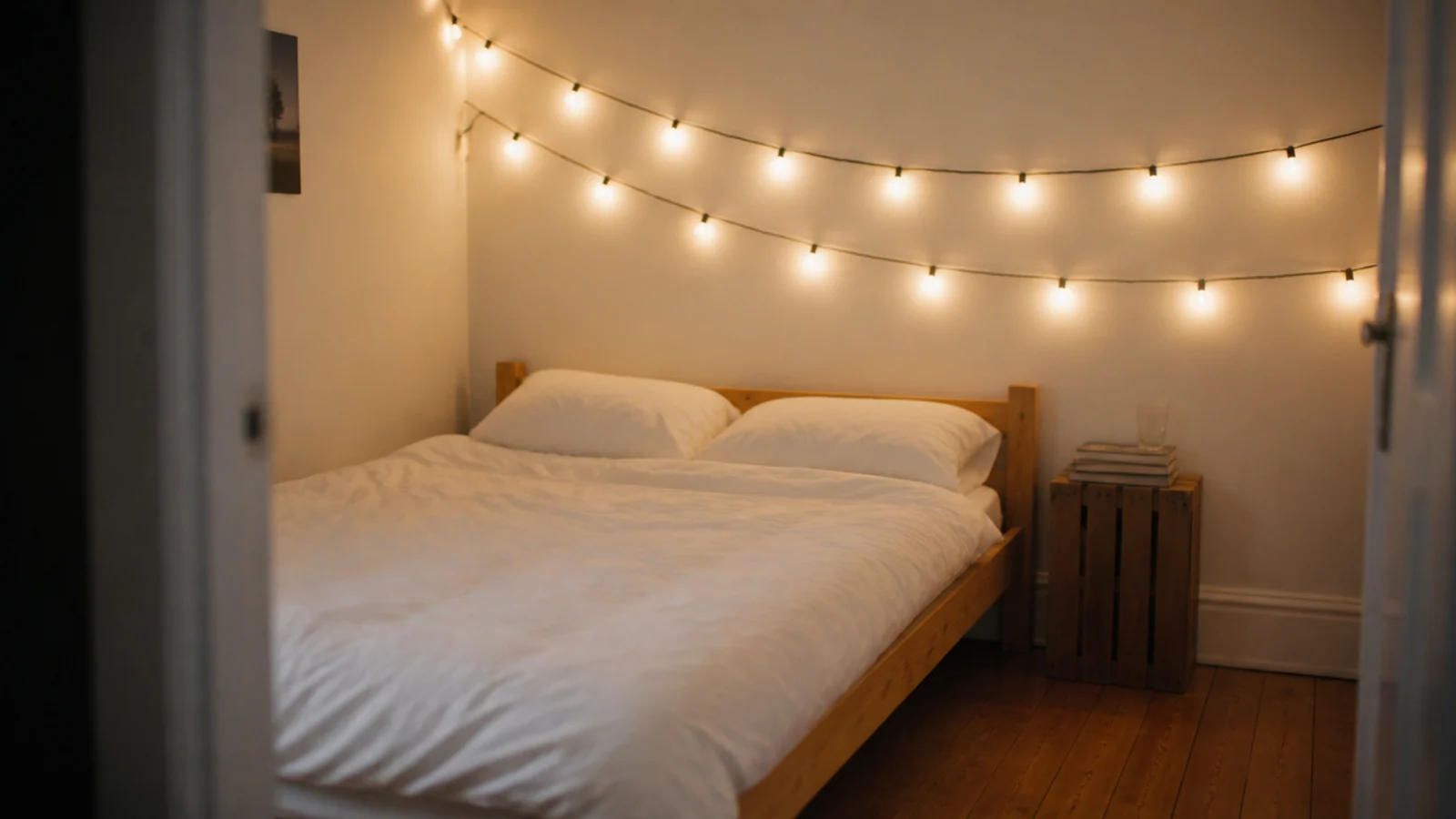
Cheap string lighting is not the same as lighting a bedroom cheaply. Most of the fairy lights bedroom ideas that look expensive online are two $10 strands and a $2 pack of clips, and most of the ones that look bad are a single long run stretched thin across a whole room. I have bought a lot of both. Below are thirty layouts that hold up on a small budget, each costed honestly, with the running cost of batteries included rather than quietly ignored.
In this guide32 sections — tap to openHide
- 1.Where fairy lights bedroom ideas quietly waste money
- 2.Price by the foot before you compare boxes
- 3.Battery sets for the corner with no socket
- 4.USB sets run off a charger you already own
- 5.Two thirty-three foot strands, not one sixty-six
- 6.A five dollar mechanical timer plug
- 7.Rechargeable cells pay back in ten weeks
- 8.An eight dollar voile panel turns one strand into a curtain
- 9.Photo-clip strands as a free gallery wall
- 10.Wrap a plain mirror instead of buying a lit one
- 11.A two dollar clip pack instead of a hanging kit
- 12.Reuse a Christmas set once you check the Kelvin
- 13.Buy secondhand, but test every foot first
- 14.A paper lantern over a bulb cluster
- 15.Fill a thrifted decanter on the dresser
- 16.Split the run and light two walls
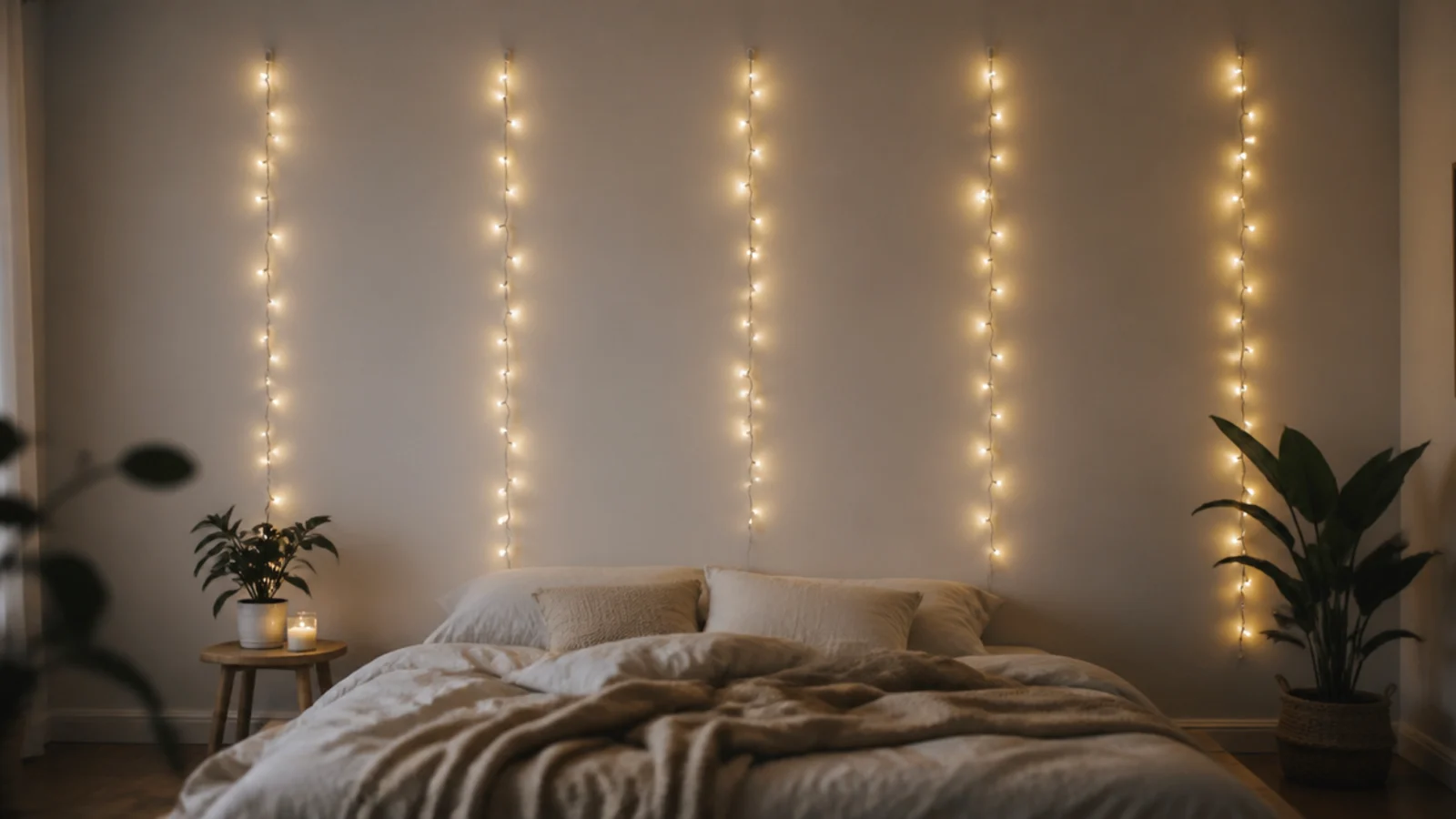
- 17.Skip the curtain kit and hang five drops
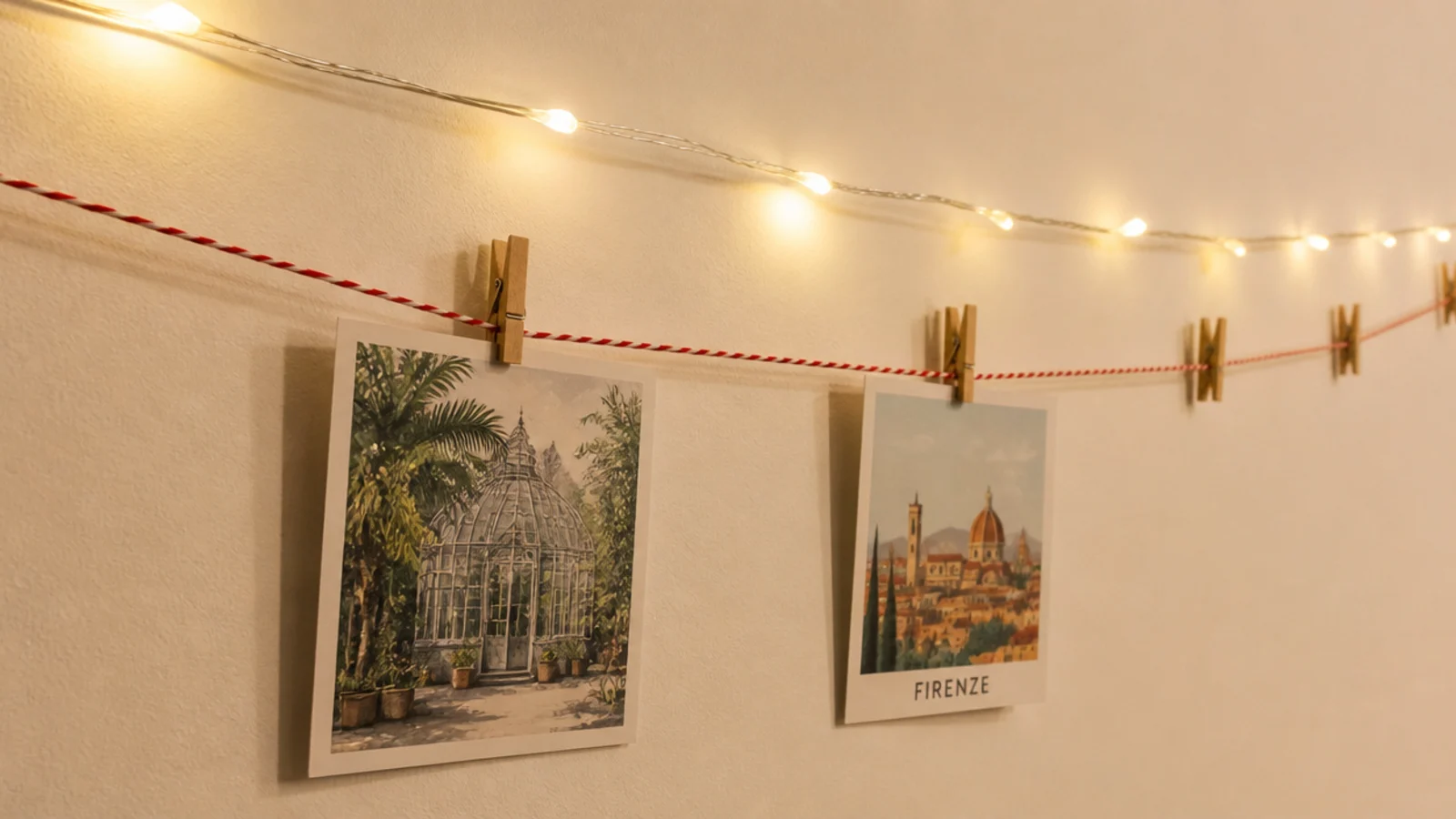
- 18.Baker's twine and pegs for a photo line
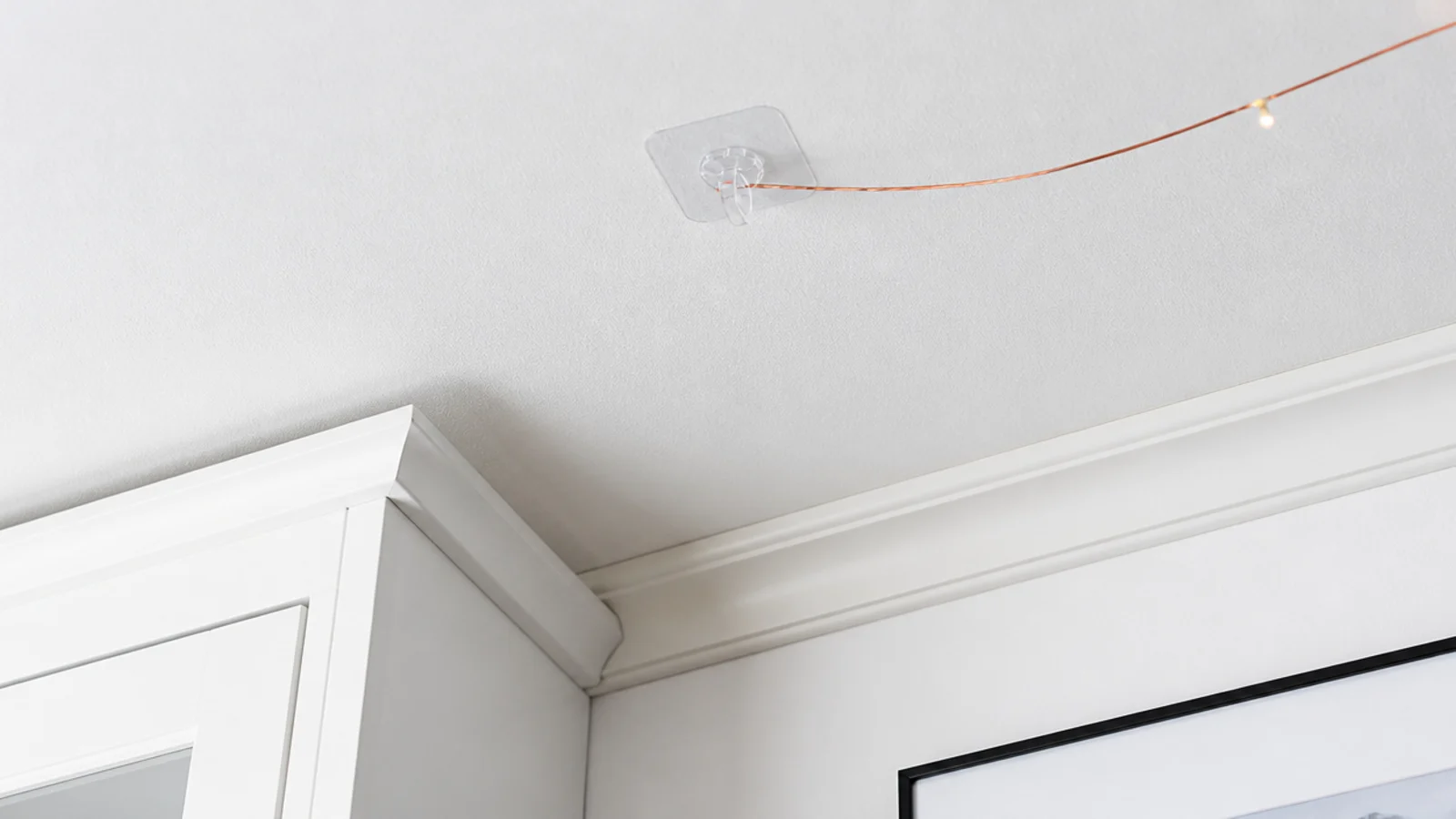
- 19.Clear tape hooks for the ceiling line
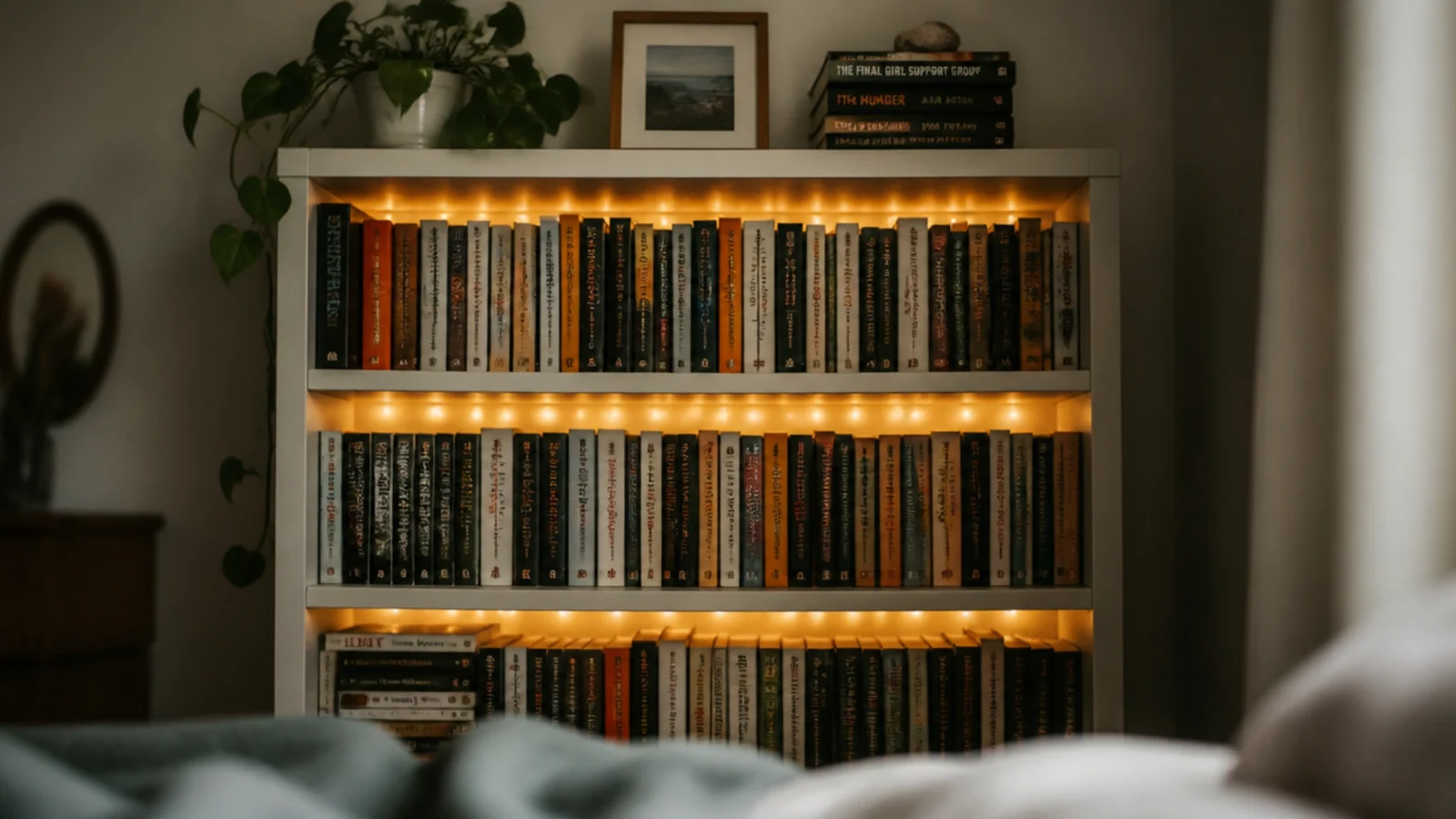
- 20.Use the bookshelf you already own
- 21.One warm strand plus one thrifted shade
- 22.Light the wardrobe instead of buying a closet lamp
- 23.A plug-in dimmer rated for LED
- 24.An extension lead instead of a longer strand
- 25.A row of paper star lanterns on one strand
- 26.Group three strands in one corner
- 27.Buy warm white once and stop buying colour
- 28.A charity shop ladder as a light frame
- 29.Move the bed to the socket wall
- 30.A dollar of cable clips hides the lead
- 31.Wait for the January clearance
- 32.Mistakes to Skip
Where fairy lights bedroom ideas quietly waste money
Work in cost per foot. A plain warm white LED copper wire string should land between 25 and 40 cents a foot, which puts a 33 foot, 100 LED set at $8 to $14. Anything past 60 cents a foot is paying for a remote or a colour-changing chip you will set to warm white and never touch again.
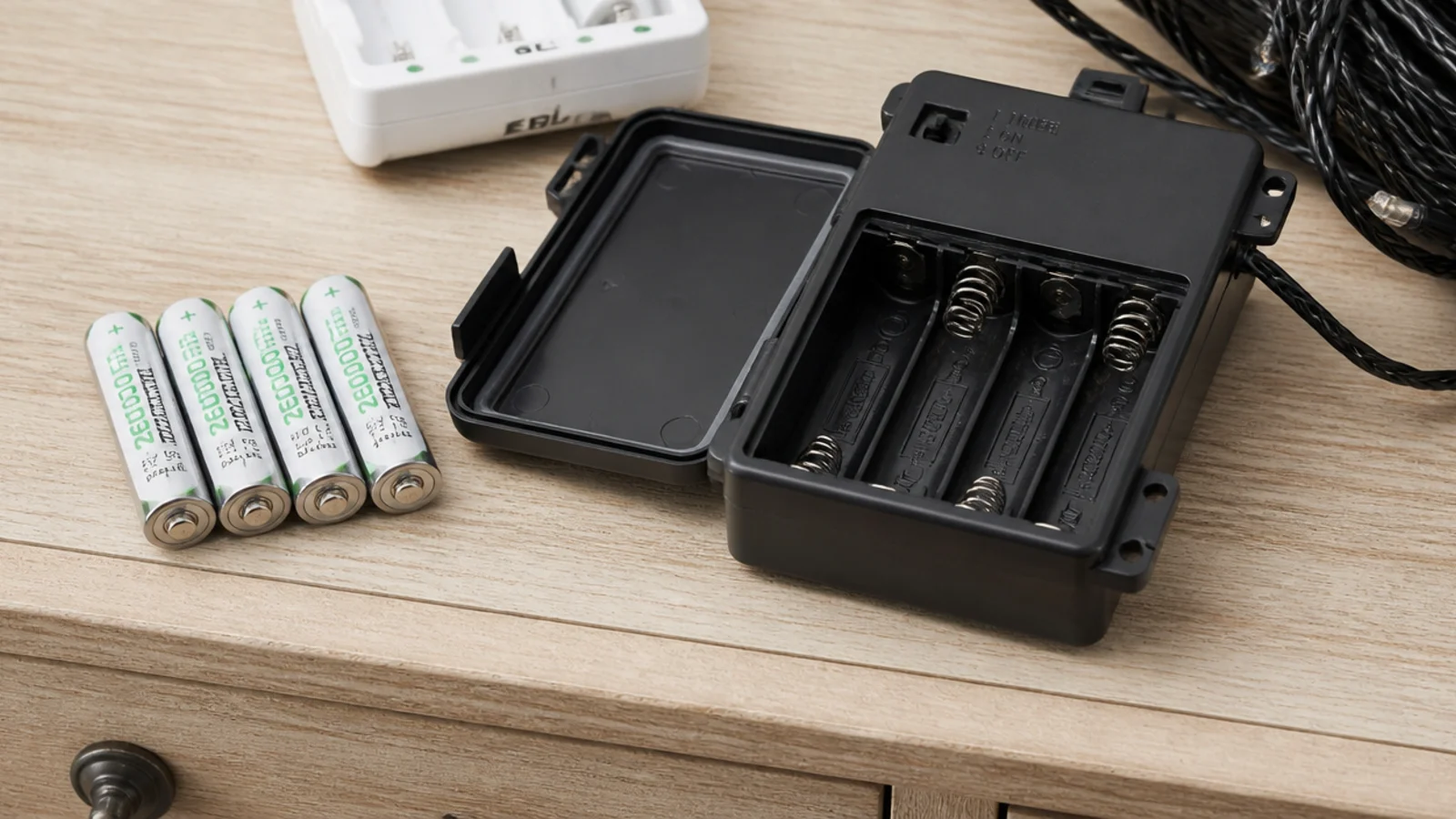
Batteries are the hidden cost. Three alkaline AA cells run a 100 LED string for roughly 18 to 24 hours, so six hours a night empties them inside a week. A four-pack of rechargeables and a charger costs around $15 and pays for itself in about ten weeks.
Buy warm. Look for 2000K to 2200K on the box, and treat anything above 2700K as a garage light. Holiday sets are frequently 4000K and up, which is why a reused Christmas strand so often looks wrong against bedding.
The safety rules cost nothing and are not negotiable: LED only anywhere near curtains, canopies or a duvet, no cable under a rug or inside bedding ever, the battery pack or driver in open air, and no more strands chained end to end than the tag states. Fix with adhesive clips, not staples or drawing pins through the cable — a pierced sheath is a fault you will not see until it fails. For the very simplest zero-tool versions of all of this, simple renter setups strips it back further.
1. Price by the foot before you compare boxes
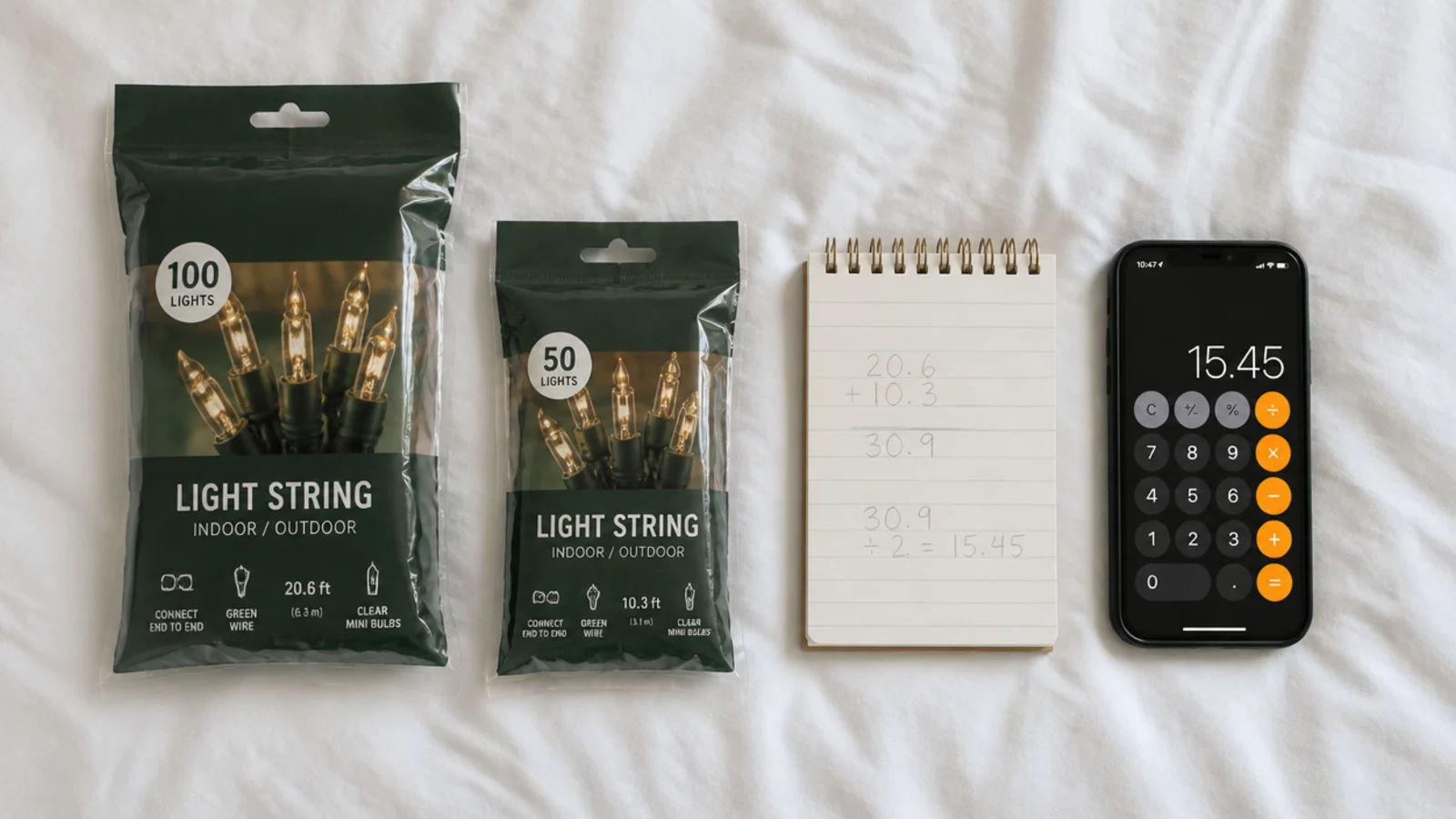
Two boxes at $12 are not the same purchase if one holds 16 feet and the other 33. Divide price by length on your phone in the aisle. It takes ten seconds and it is the difference between lighting one wall and lighting two for the same money.
2. Battery sets for the corner with no socket
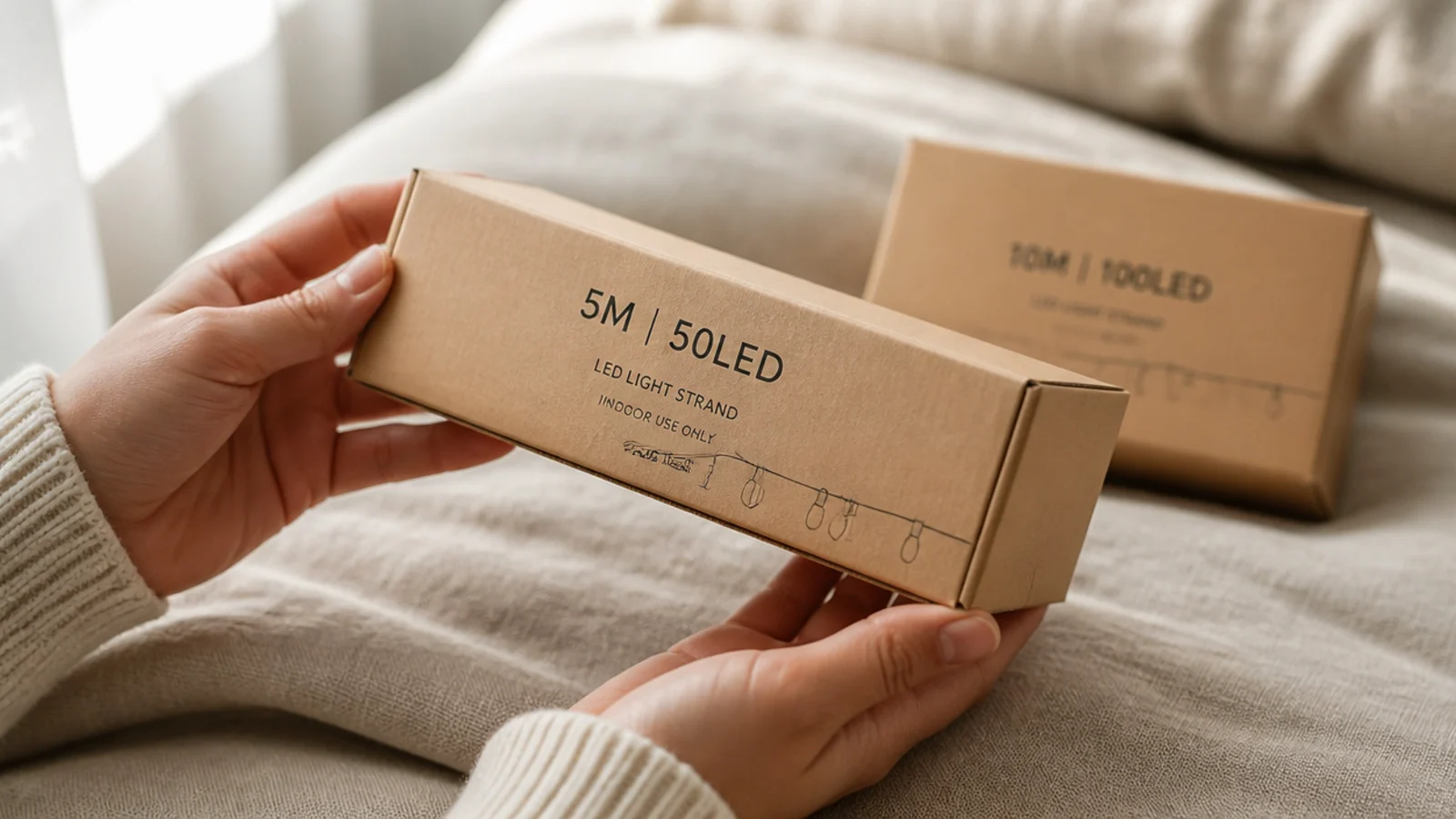
Every bedroom has one corner three metres from the nearest outlet. A battery set at $6 to $9 solves it without an extension lead crossing the floor. Choose one with a built-in timer, because that single feature roughly quadruples how long a set of cells lasts.
3. USB sets run off a charger you already own
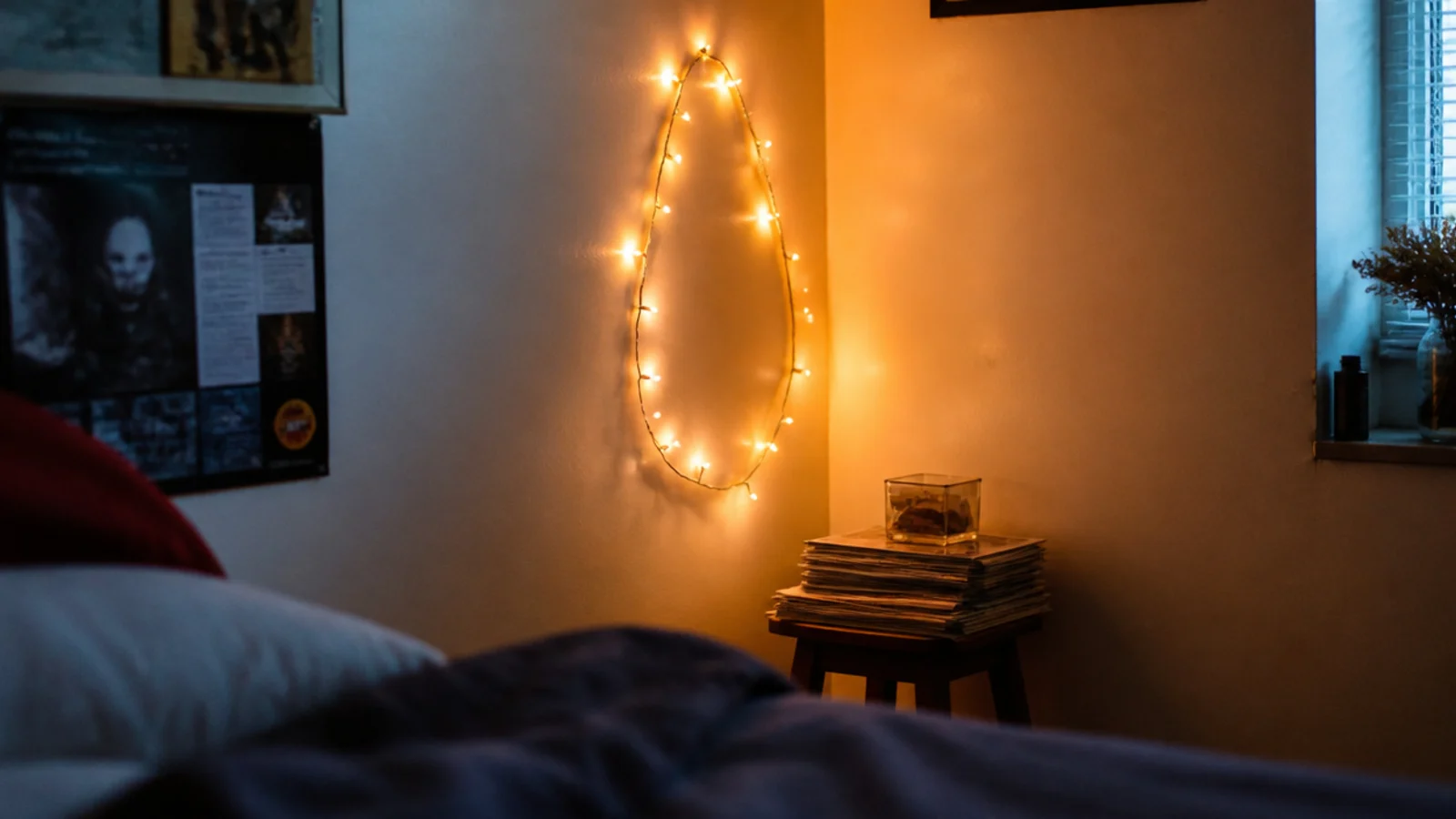
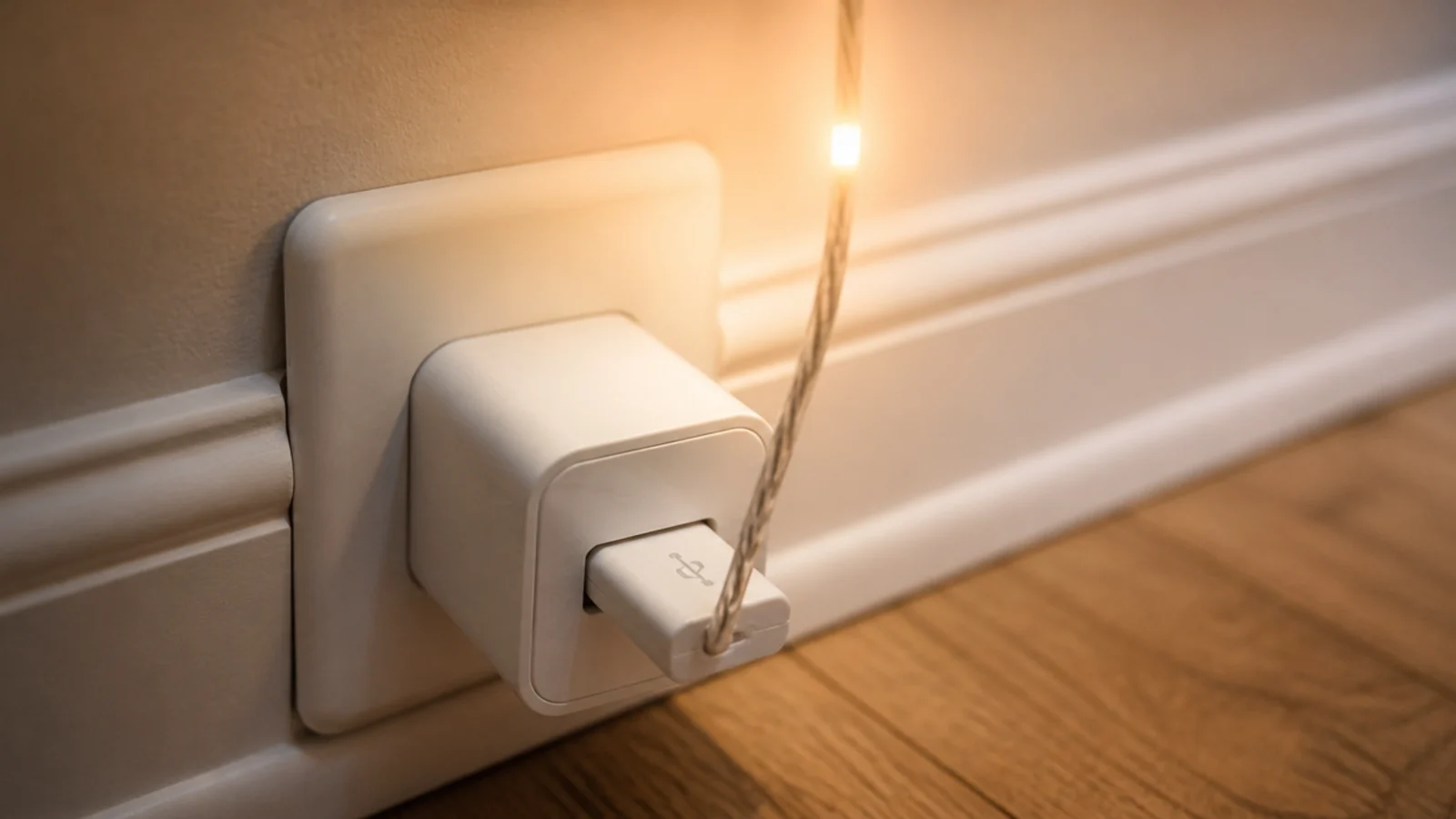
USB strands cost the same as battery ones and have no running cost at all. A 5V phone brick you already own becomes the power supply, and a 100 LED string pulls under 5 watts, which is less than the charger delivers to a phone.
4. Two thirty-three foot strands, not one sixty-six
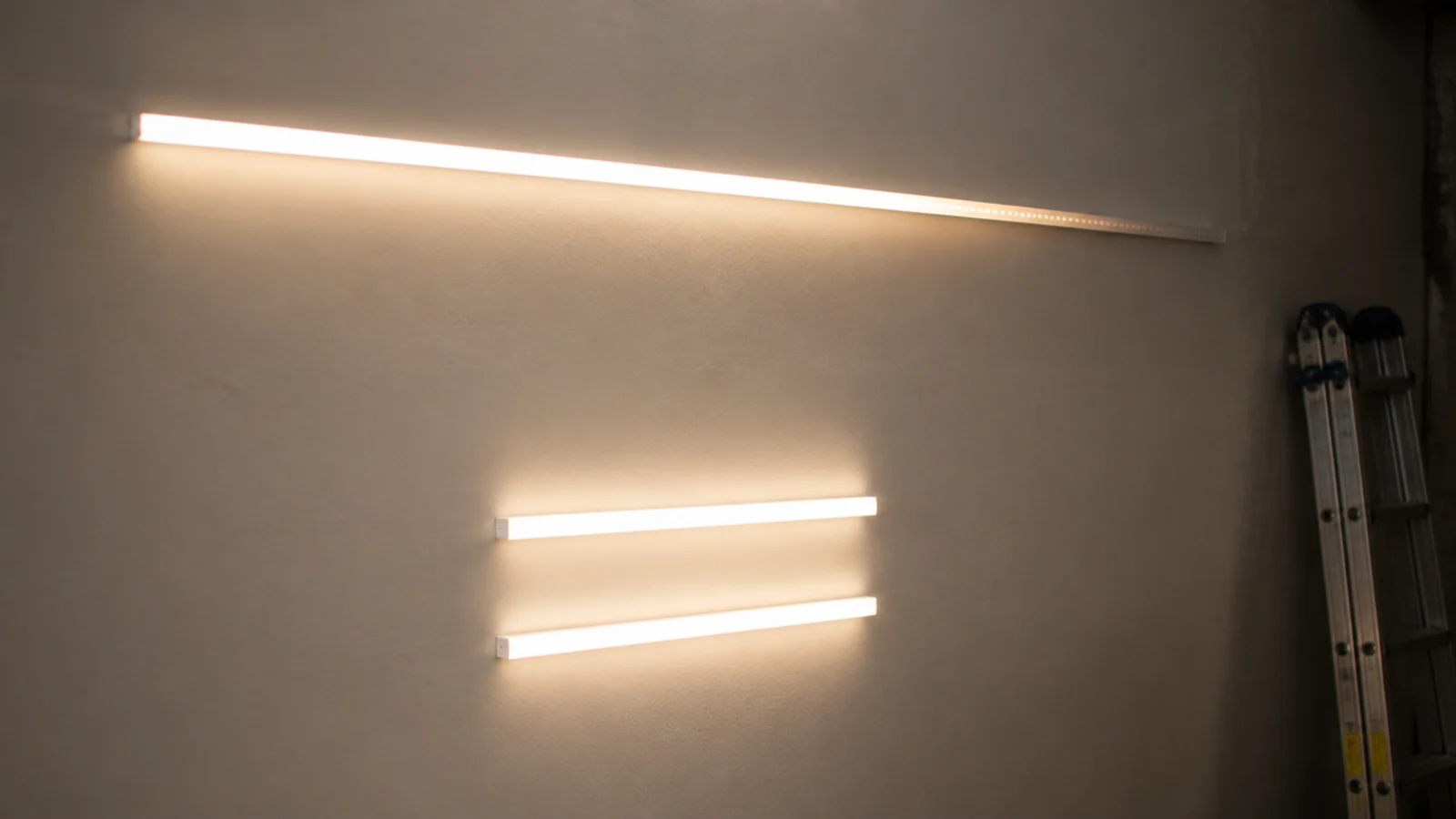
The longer strand looks like better value per foot until you switch it on. Low-voltage runs lose brightness along their length and the last few feet of a 66 foot set read visibly dimmer. Two shorter sets fed from two points give an even glow for roughly the same money.
5. A five dollar mechanical timer plug
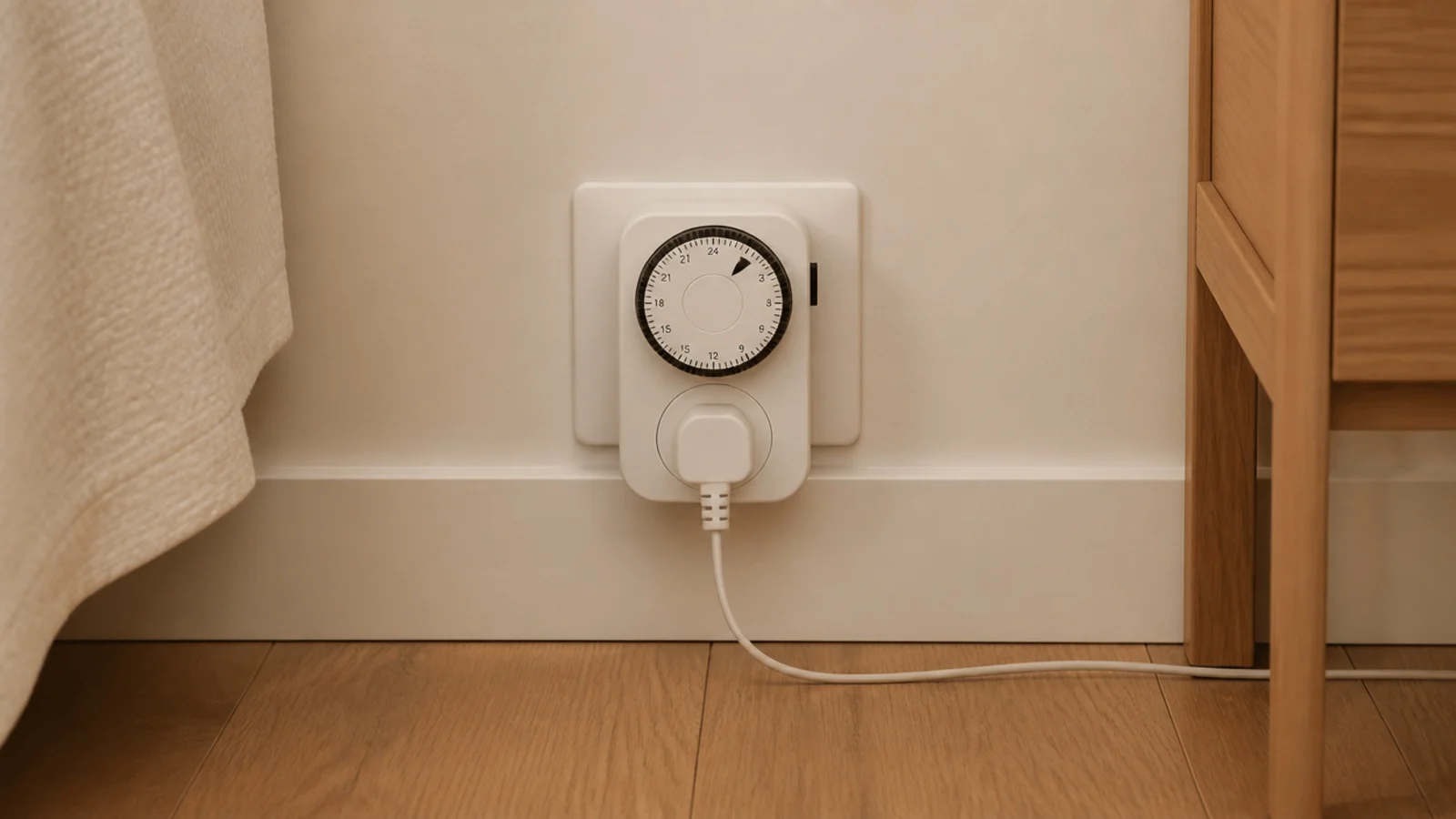
A segmented dial timer costs about $5 and does the same job as a smart plug without an app or a wifi setup. Set it for six hours from dusk. Every plug-in strand in the room can share one if you run them from a single extension.
6. Rechargeable cells pay back in ten weeks
At roughly $2 per set of alkaline AAs per week, a battery strand costs more to run in two months than it cost to buy. Four rechargeable cells and a basic charger run about $15 and last several hundred cycles. It is the least glamorous saving here and the biggest.
7. An eight dollar voile panel turns one strand into a curtain
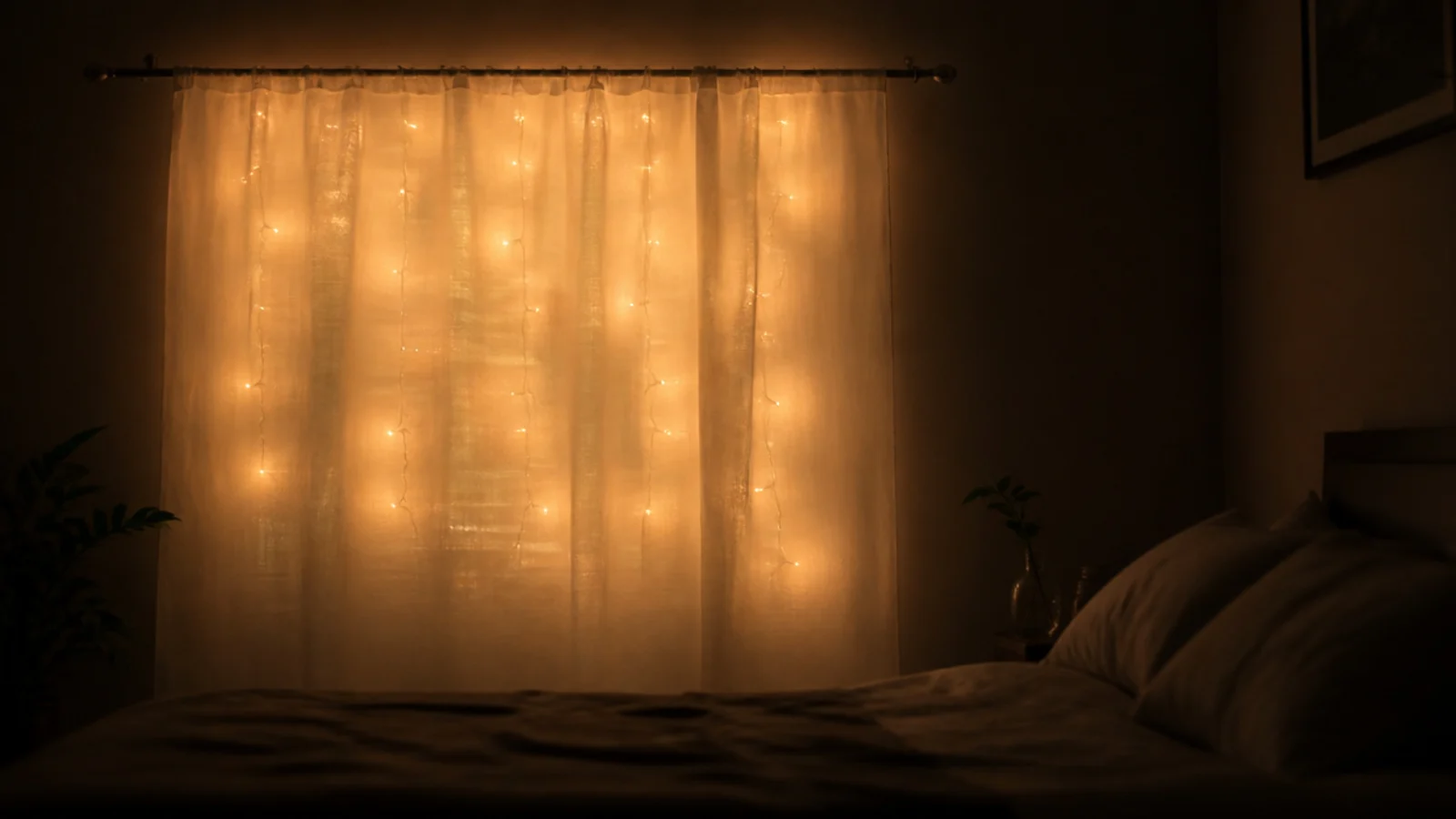
Hang a cheap voile panel on a tension rod, clip one strand to the wall 3 to 4 inches behind it, and forty visible bulbs become one soft sheet of light. It costs a fraction of a purpose-made curtain light and you can wash the fabric.
8. Photo-clip strands as a free gallery wall
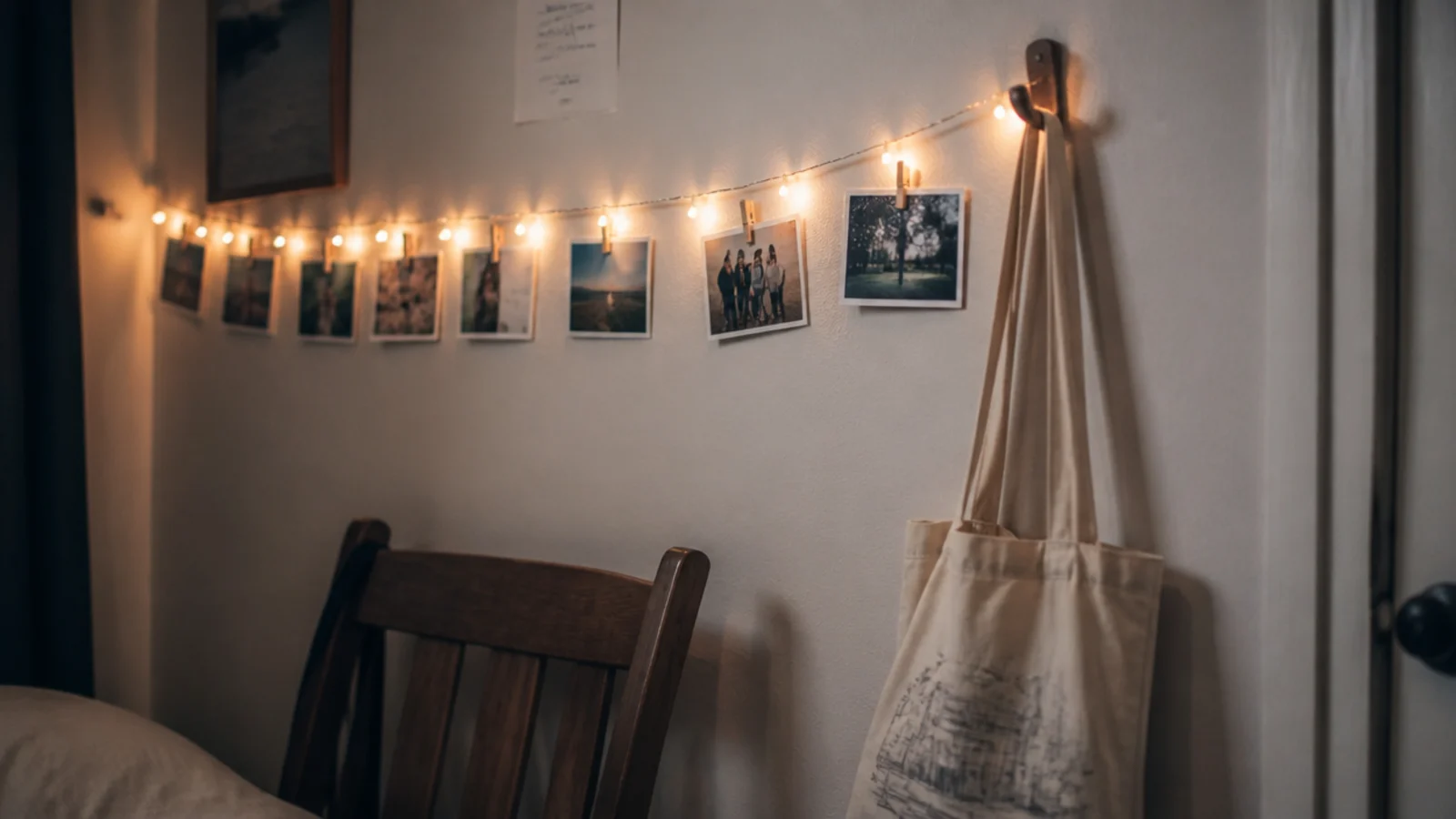
A 10 foot strand with 20 wooden clips costs about $8 and turns phone prints into a wall display. Prints at drugstore sizes run about 20 cents each, so a full wall costs under $15 against $60 or more in frames.
9. Wrap a plain mirror instead of buying a lit one
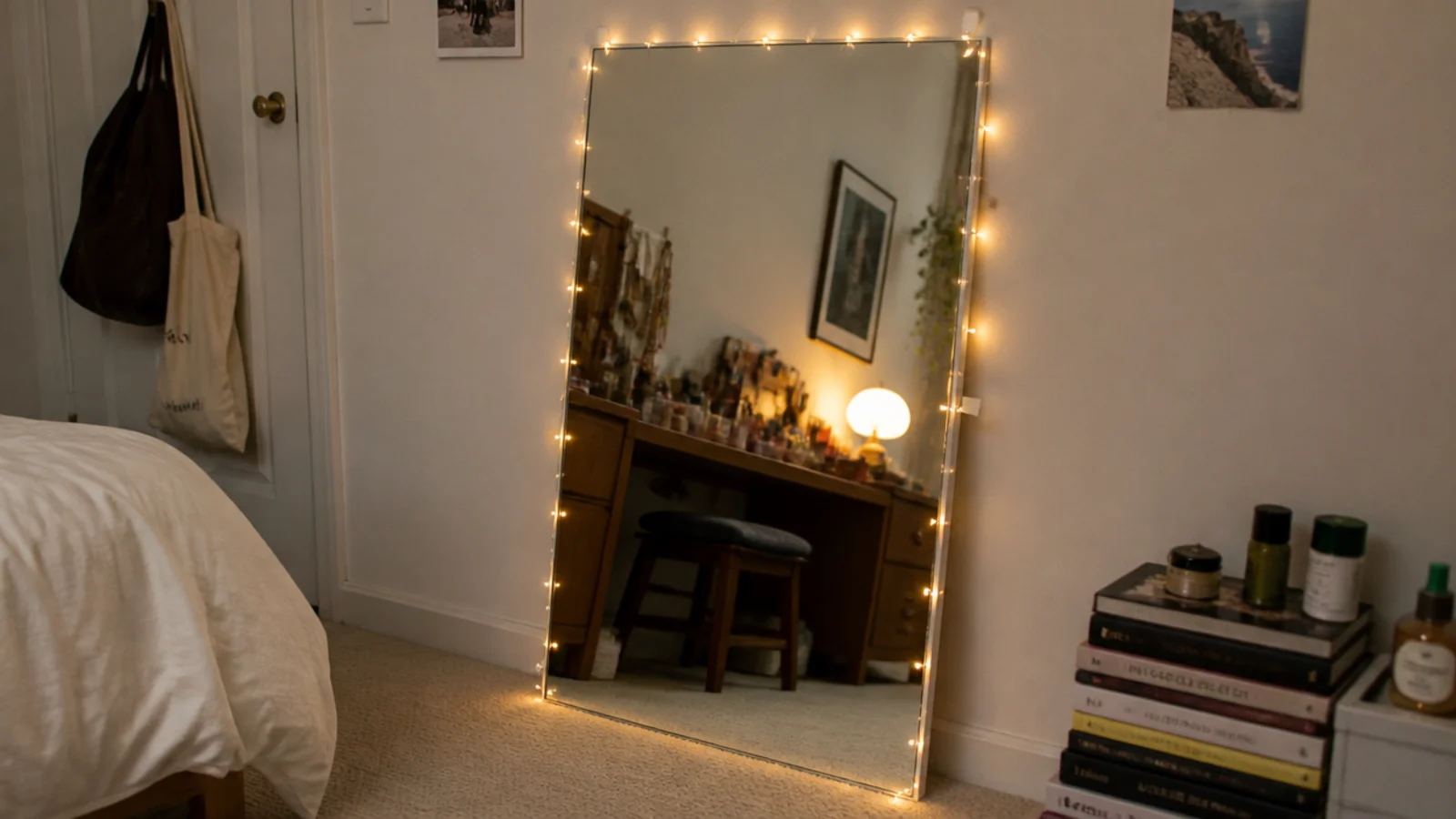
A vanity mirror with integrated bulbs starts around $50. A secondhand mirror at $10 with a fine strand taped to the frame behind gives the same halo. Fix the strand to the frame, not the glass, because adhesive on a mirror back lifts the silvering over time.
10. A two dollar clip pack instead of a hanging kit
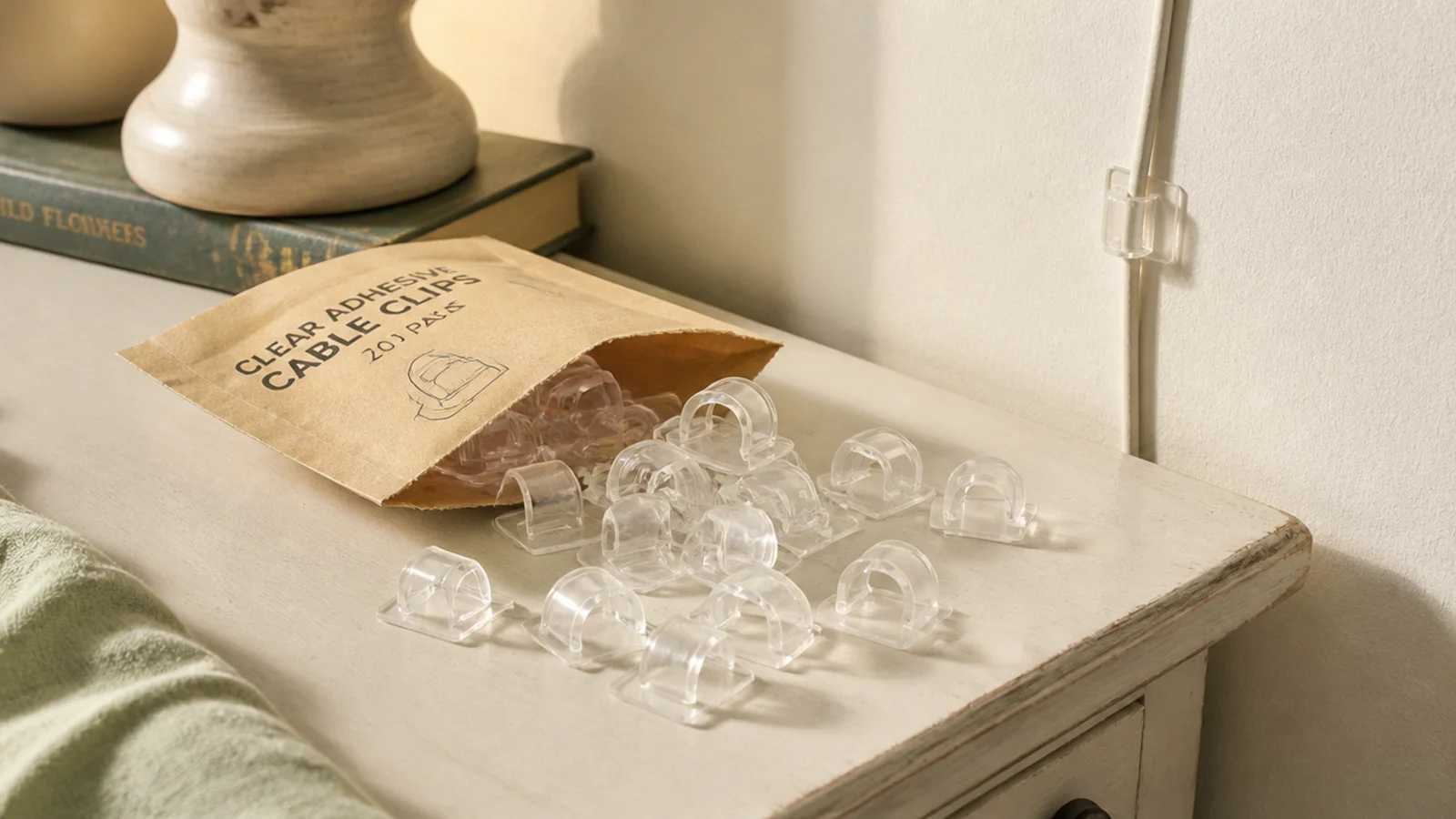
Branded hanging kits sell the same clear plastic clip at four times the price. A 20 clip pack covers a 20 foot run at 12 inch spacing. Buy the half pound rated version rather than the tiny ones, because the extra adhesive area is what survives a warm room.
11. Reuse a Christmas set once you check the Kelvin
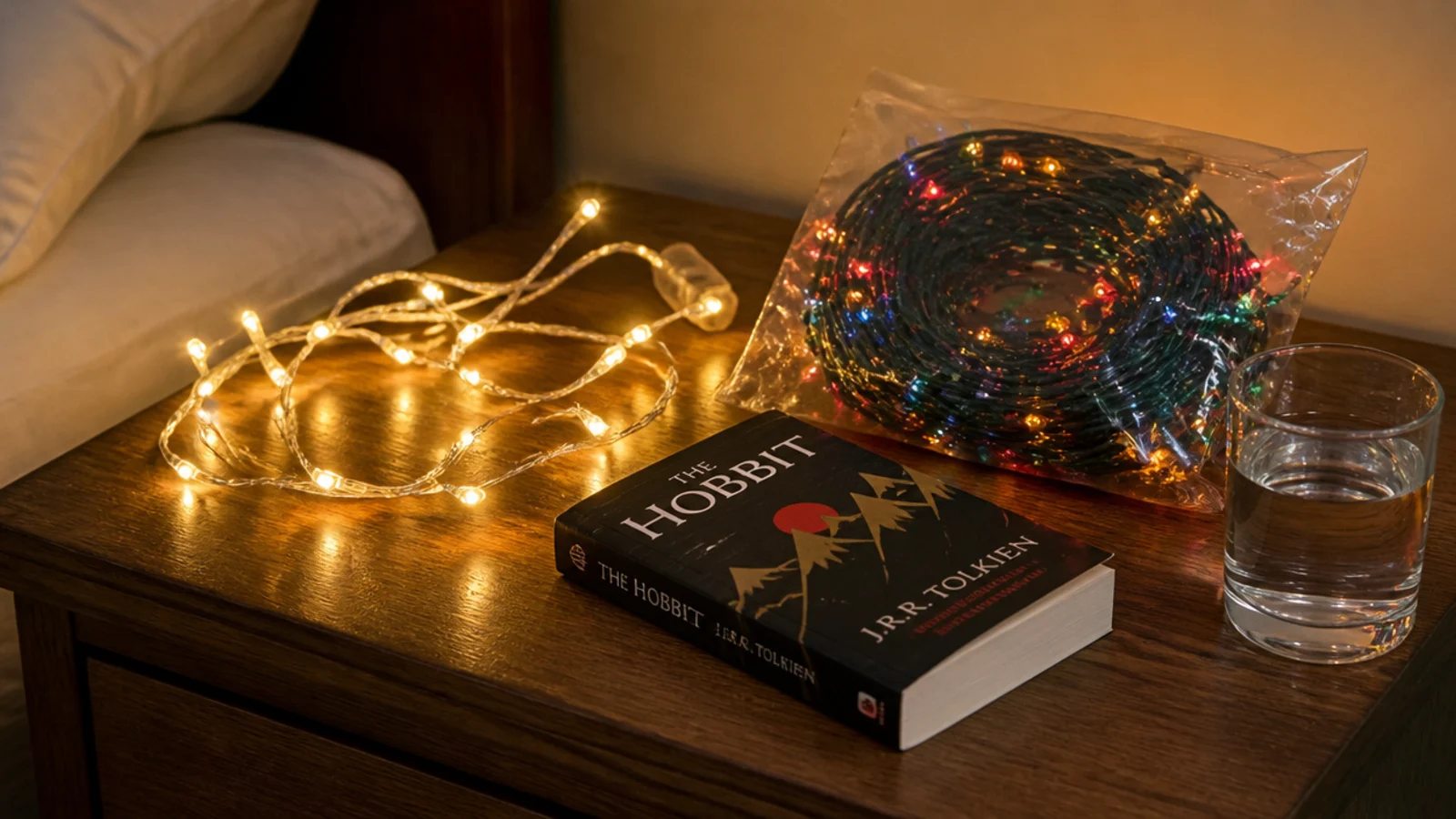
A stored holiday strand is free, but only if it is LED and no cooler than 2700K. Cool white sets look clinical against linen and no styling fixes that. Check the insulation along its whole length too, and retire anything cracked rather than taping over it.
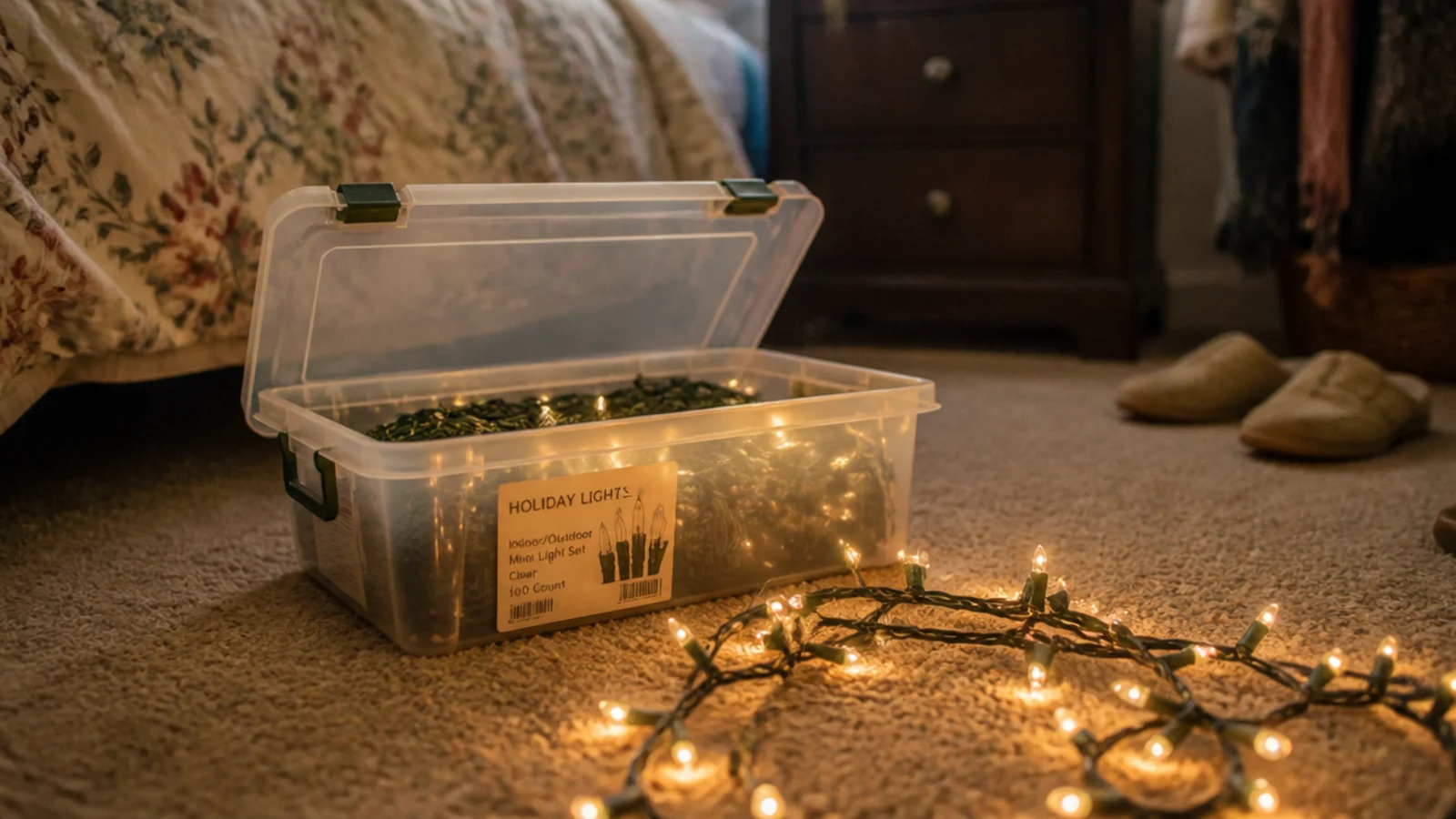
12. Buy secondhand, but test every foot first
Used strands turn up at $2 to $4 at car boot sales and in charity shops. Plug the set in, lay it out flat on the floor and walk its whole length before you pay. Dead sections are common, and they never repair economically on a sealed copper wire set.
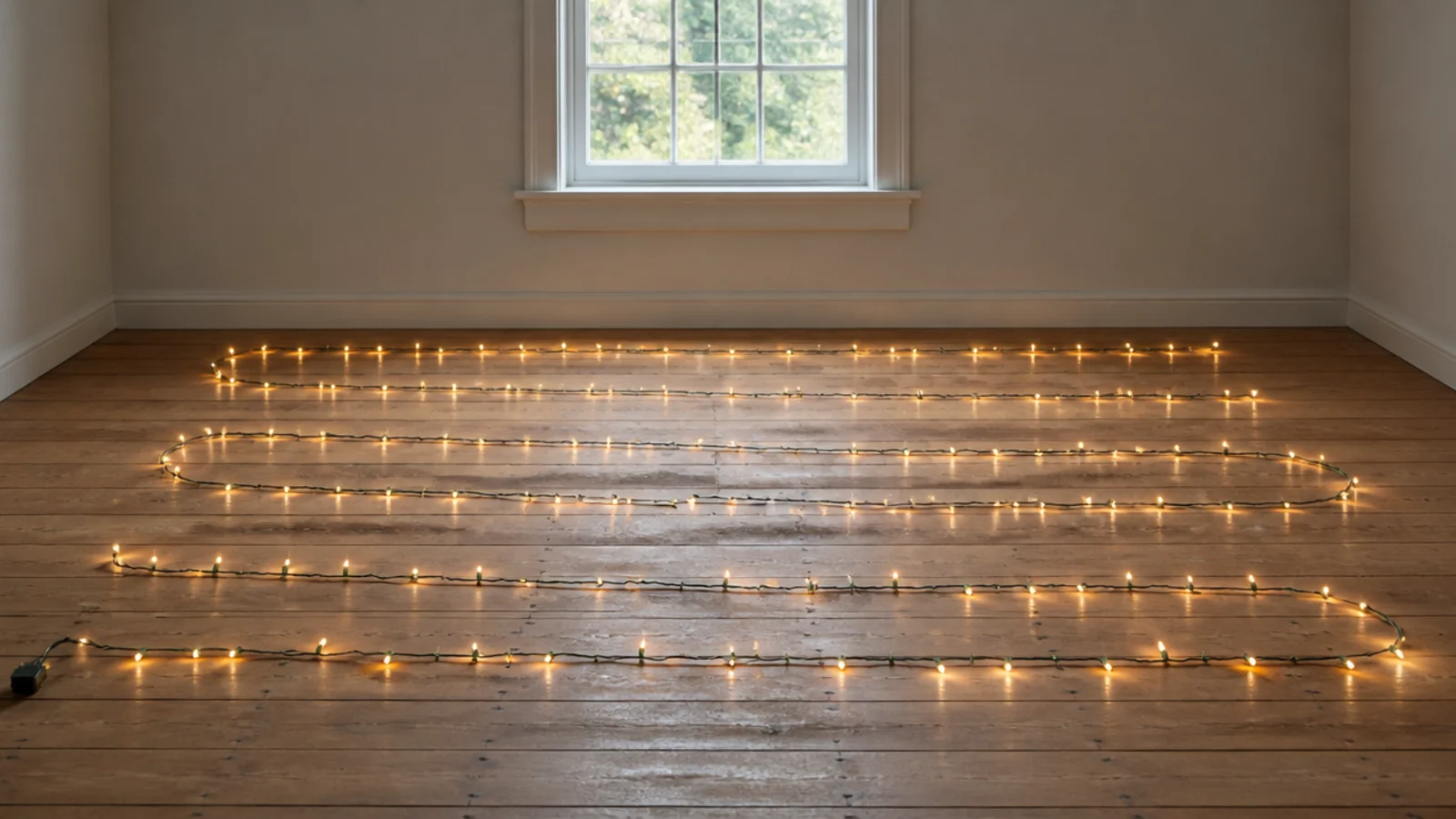
13. A paper lantern over a bulb cluster
A $3 paper lantern hung over a gathered bunch of 30 or so LEDs turns a string into a soft globe. Keep the cluster loose in the middle rather than packed against the paper, and use LED only so the shade never sees real heat.
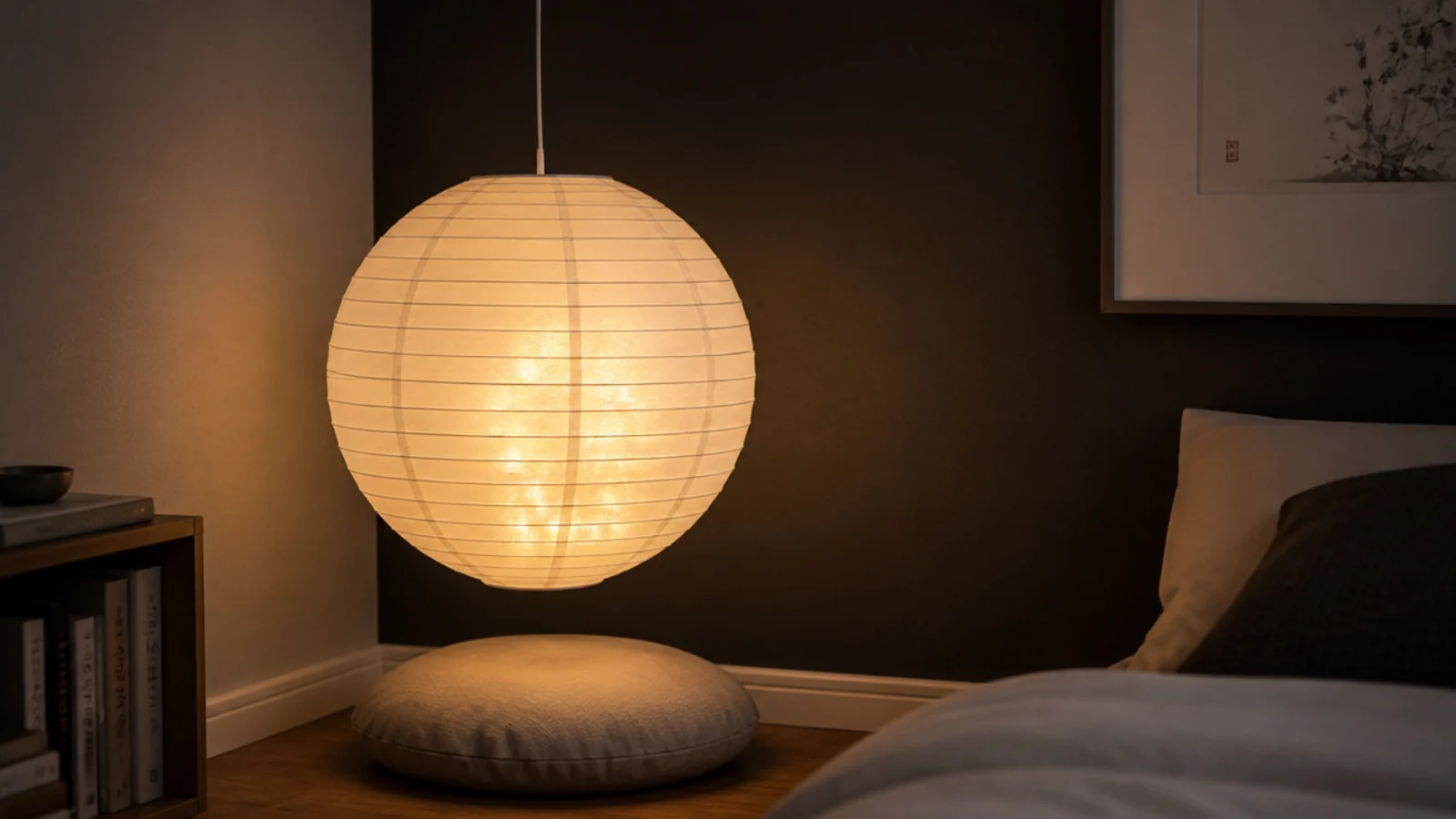
14. Fill a thrifted decanter on the dresser
Cut glass costs almost nothing secondhand and it does something a plain jar cannot: every facet splits the light and throws patterns onto the wall behind. A 50 LED battery set fits a standard decanter with the pack tucked behind, and the whole thing lands under $10.

15. Split the run and light two walls
One 33 foot strand run around a corner lights two walls instead of one. The corner itself does the work, because the returned light in the angle reads brighter than either flat run. It costs nothing extra and it makes a small room feel wrapped rather than striped.
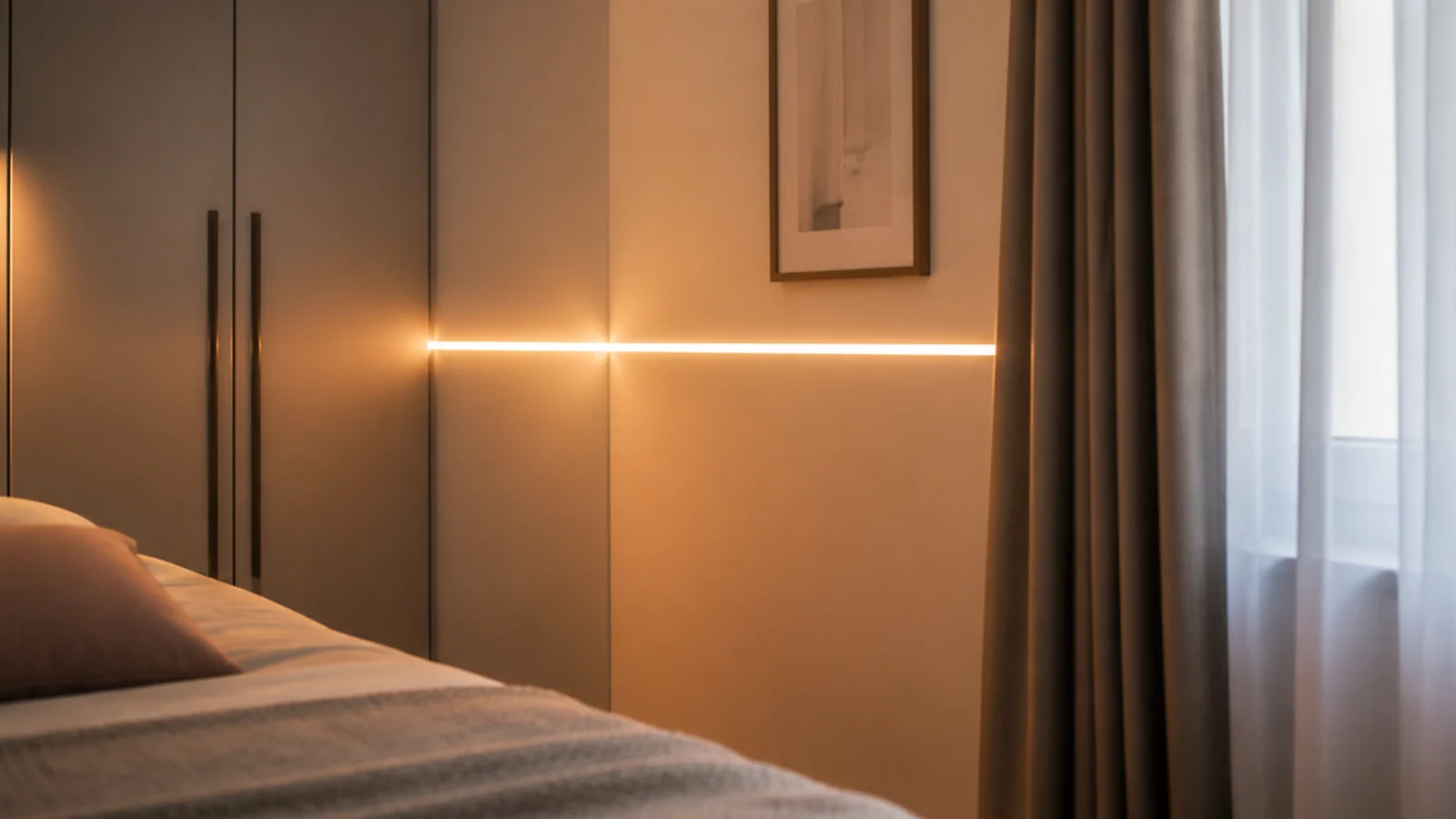
16. Skip the curtain kit and hang five drops
Curtain light kits fix your drop spacing at whatever the factory chose. Five separate strands hung as drops let you set the spacing to the wall you actually have, cost about the same, and can be re-hung as a horizontal run when you move.
17. Baker's twine and pegs for a photo line
Twine takes weight that a fine copper wire should never carry. Run a line of twine parallel to the strand, peg the prints and postcards to the twine, and let the lights do nothing but glow. A roll of twine and a bag of pegs is about $4.
18. Clear tape hooks for the ceiling line
Ceiling fixings fail more than wall ones because gravity pulls straight down on the adhesive. Small clear hooks at $3 for ten, spaced every 10 to 12 inches rather than the 16 you would use on a wall, spread the load enough that a light strand stays put.
19. Use the bookshelf you already own
Thread a strand along the back edge of three shelves and the books hide the wire completely. There is no fixing, no damage and no cost beyond the strand, and the light lands on spines and objects rather than on bare plaster. Lit shelving reads far more expensive than it is.
20. One warm strand plus one thrifted shade
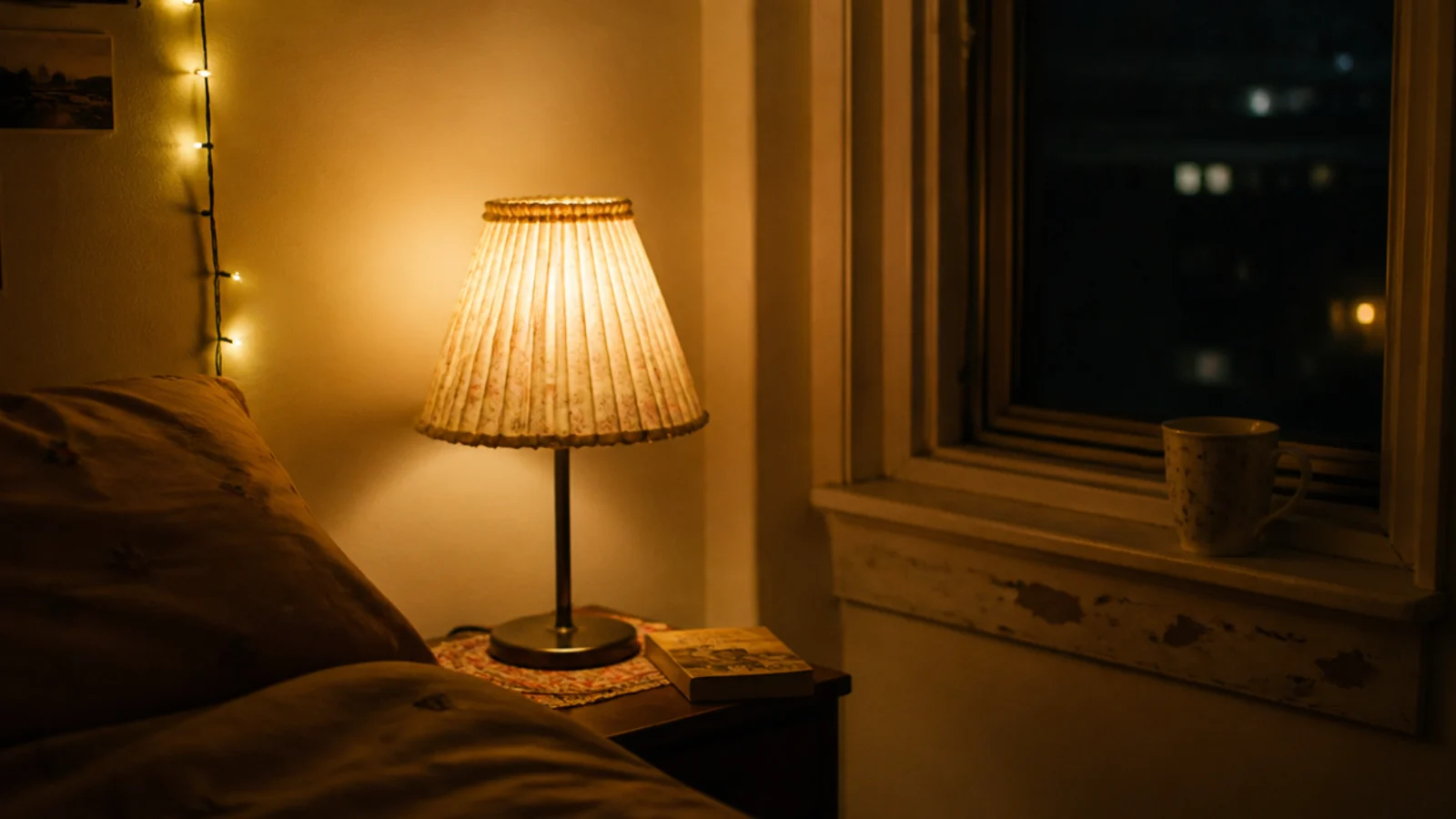
A string alone leaves a room short of a real light source. A $5 secondhand lampshade on a cheap base gives you a second warm pool at eye level. Match the bulb to the strand at 2700K or below and the two read as one scheme.
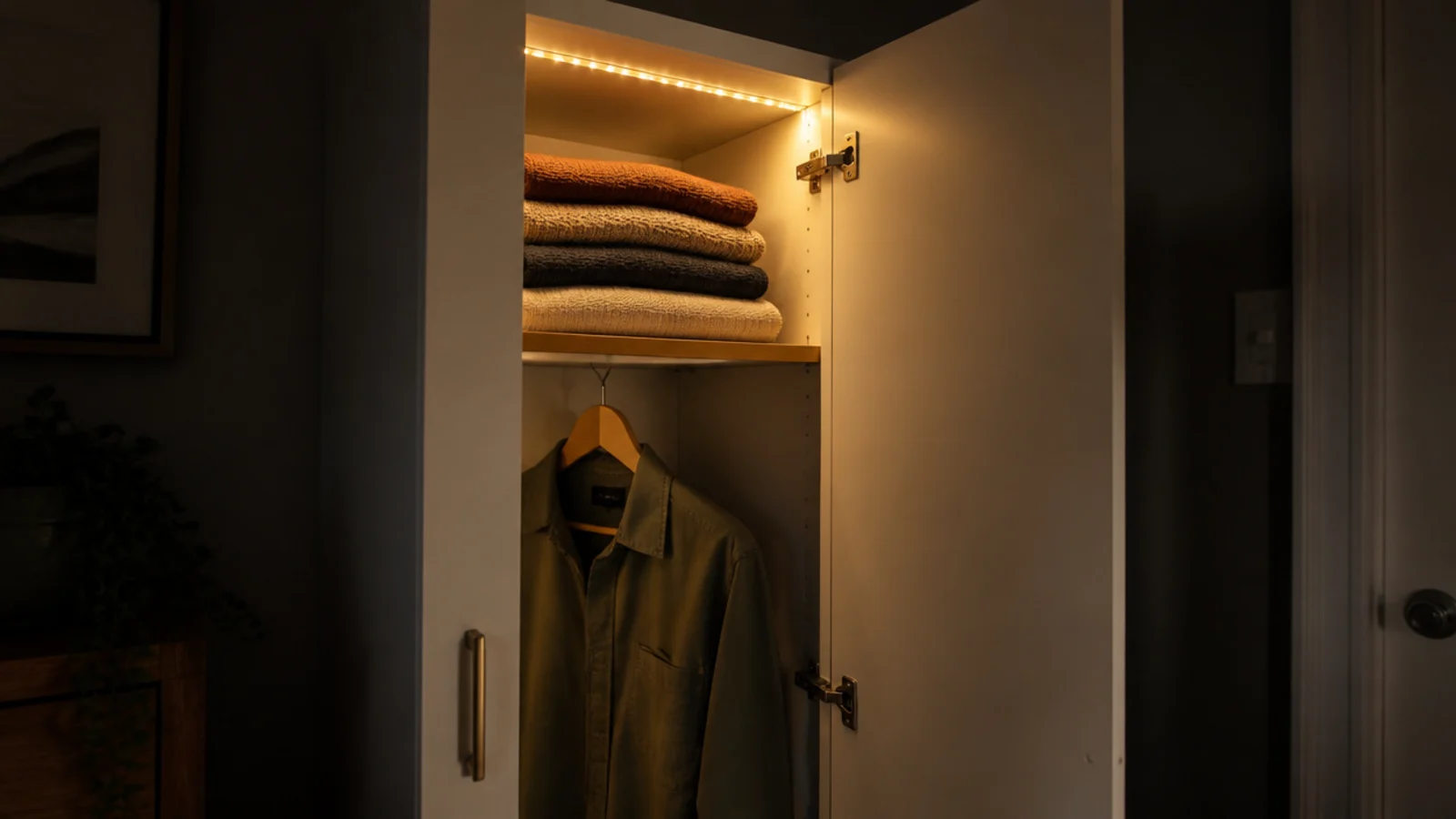
21. Light the wardrobe instead of buying a closet lamp
Battery closet lights cost $12 to $20 and die constantly. A $7 USB strand taped along the underside of the top shelf lights the whole rail, runs off a power bank if there is no socket, and never needs a new cell in the middle of getting dressed.
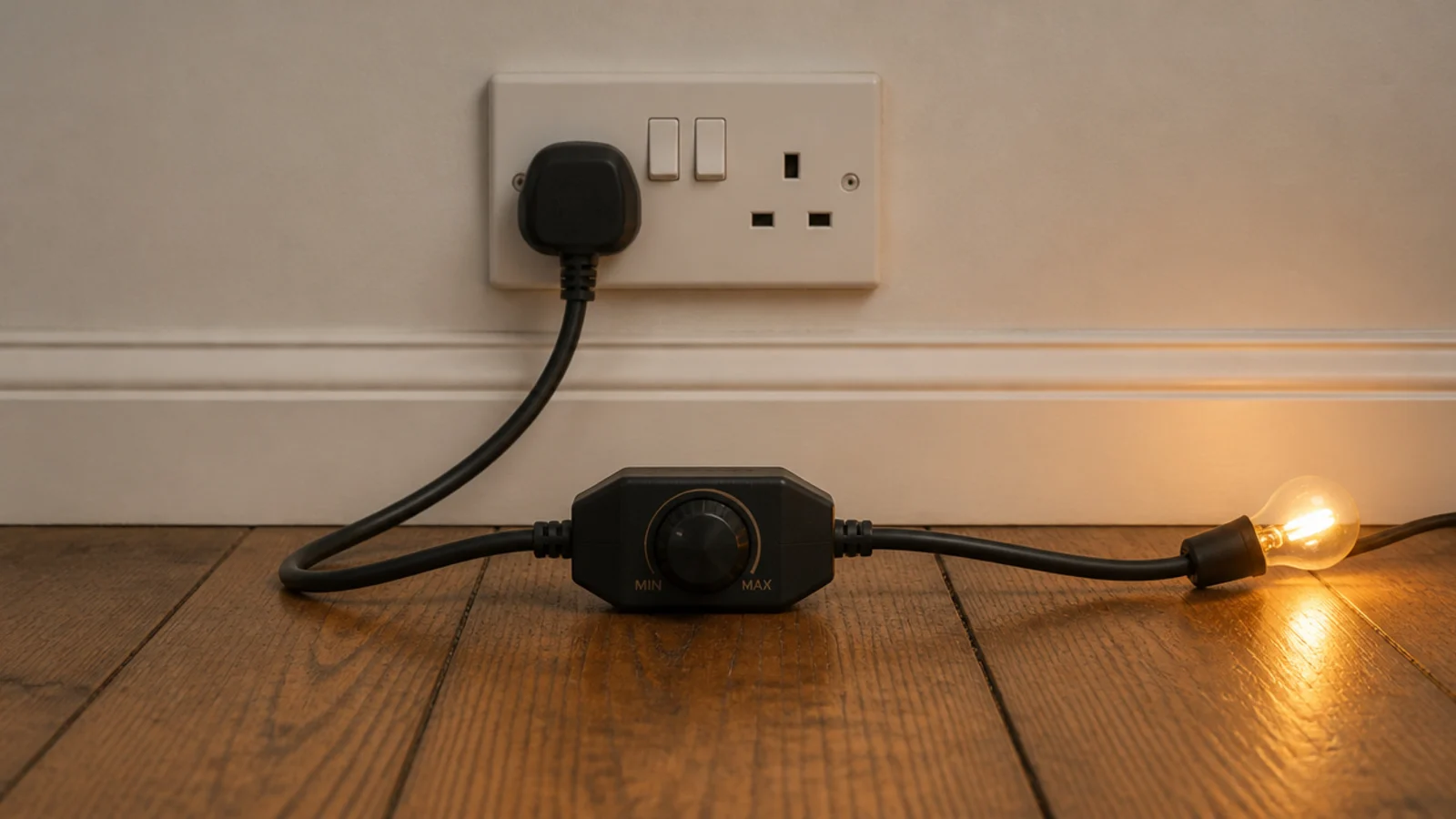
22. A plug-in dimmer rated for LED
Most cheap strands are not dimmable and flicker or buzz on a standard dimmer. An inline plug dimmer explicitly rated for LED costs $8 to $12 and lets one set do both evening reading light and a low late glow. Check the rating on the packaging, not the listing photo.
23. An extension lead instead of a longer strand
If the socket is on the wrong wall, extend the power rather than buying a longer light run. A flat 6 foot lead costs $6, clips along the skirting and keeps the strand itself at the length that lights evenly. Route it along the wall face, never beneath a rug.
24. A row of paper star lanterns on one strand
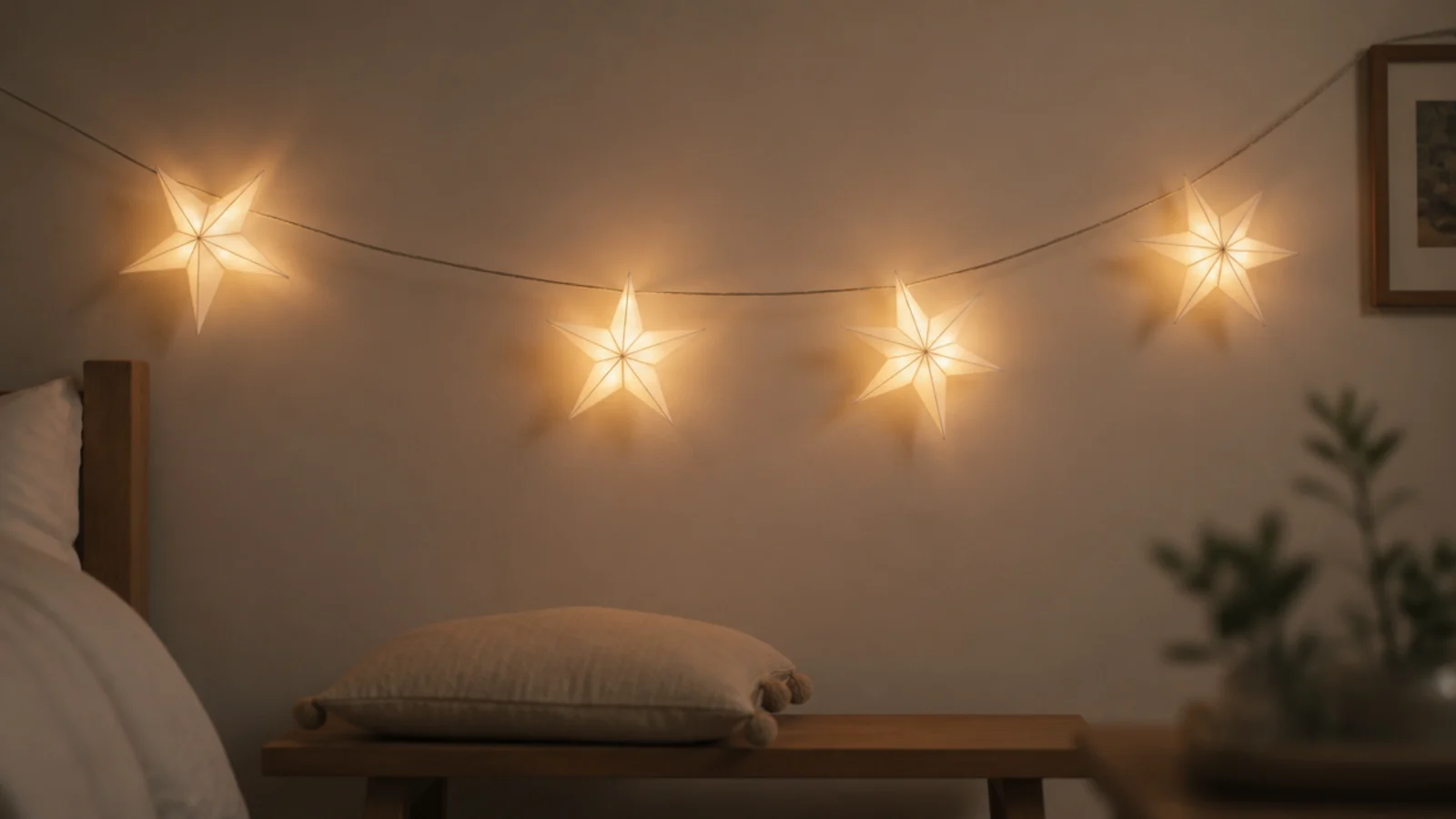
Folded paper stars cost about 50 cents each and thread onto a strand you already have. Four along a 10 foot run gives you rhythm without buying a second set. They also cover the bulbs at eye level, which softens the only harsh part of a cheap string.
25. Group three strands in one corner
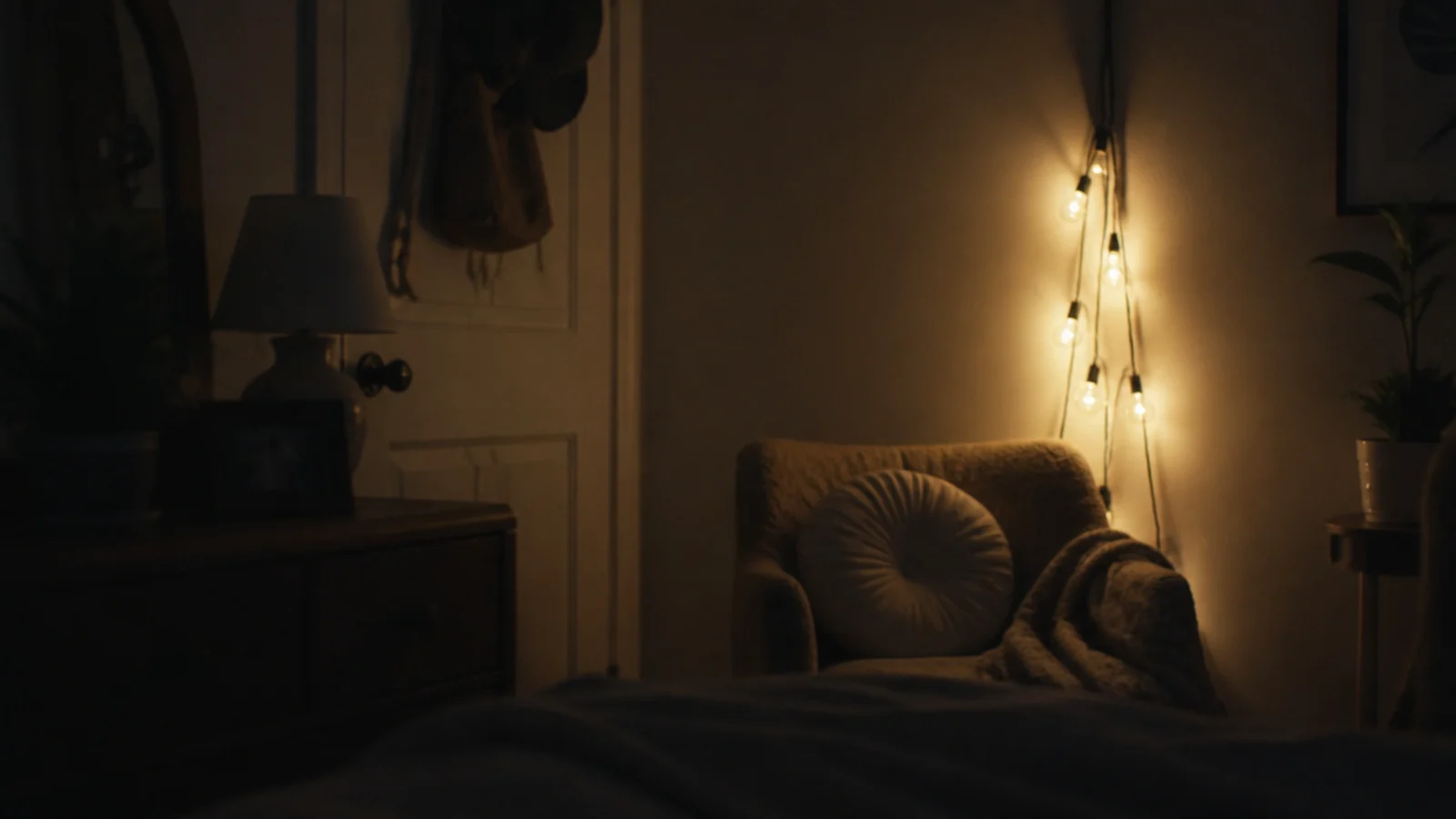
Spreading two strands across four walls gives you a thin, disappointing line everywhere. Bunching three in one corner gives you a genuine pool of light and a reason for the eye to land there. Density is free — it is only a decision about where the same length goes.
26. Buy warm white once and stop buying colour
Colour-changing sets cost $6 to $10 more, and almost everyone settles on the warm setting within a fortnight. Buying plain warm white once means the next set matches, which matters when you add a second strand to the same wall six months later.
27. A charity shop ladder as a light frame
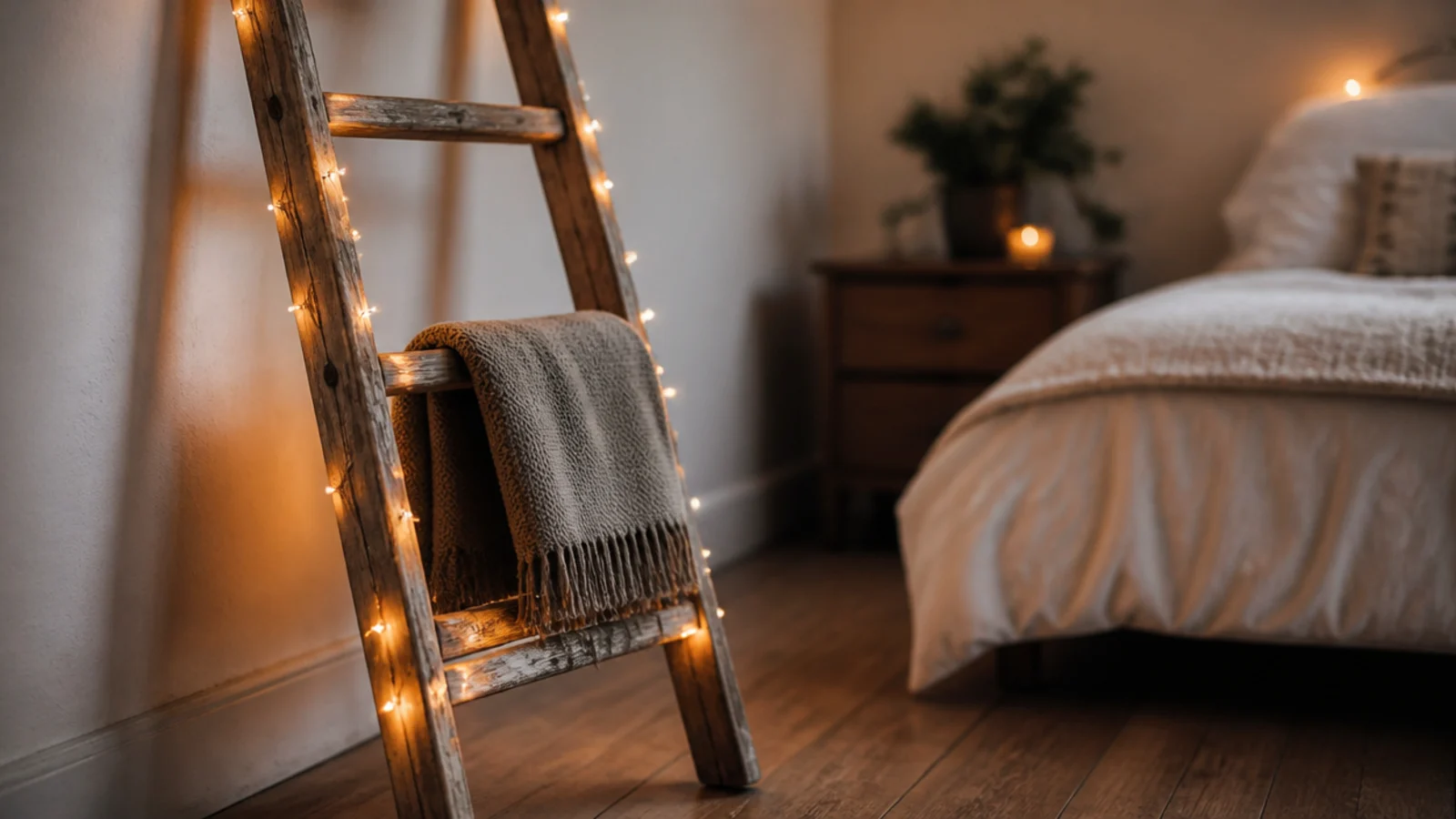
A wooden step ladder at $4 to $10 gives you a structure to wind a strand around and a place to drape a blanket. Leaned rather than opened, it takes about 14 inches of floor. Check the treads are sound before it carries anything heavier than cloth.
28. Move the bed to the socket wall
The cheapest fix in this article costs nothing. If the only double socket is on the far wall, moving the bed removes the extension lead, the trailing cable and the temptation to run it somewhere it should not go. Rearranging a room is free and reversible.
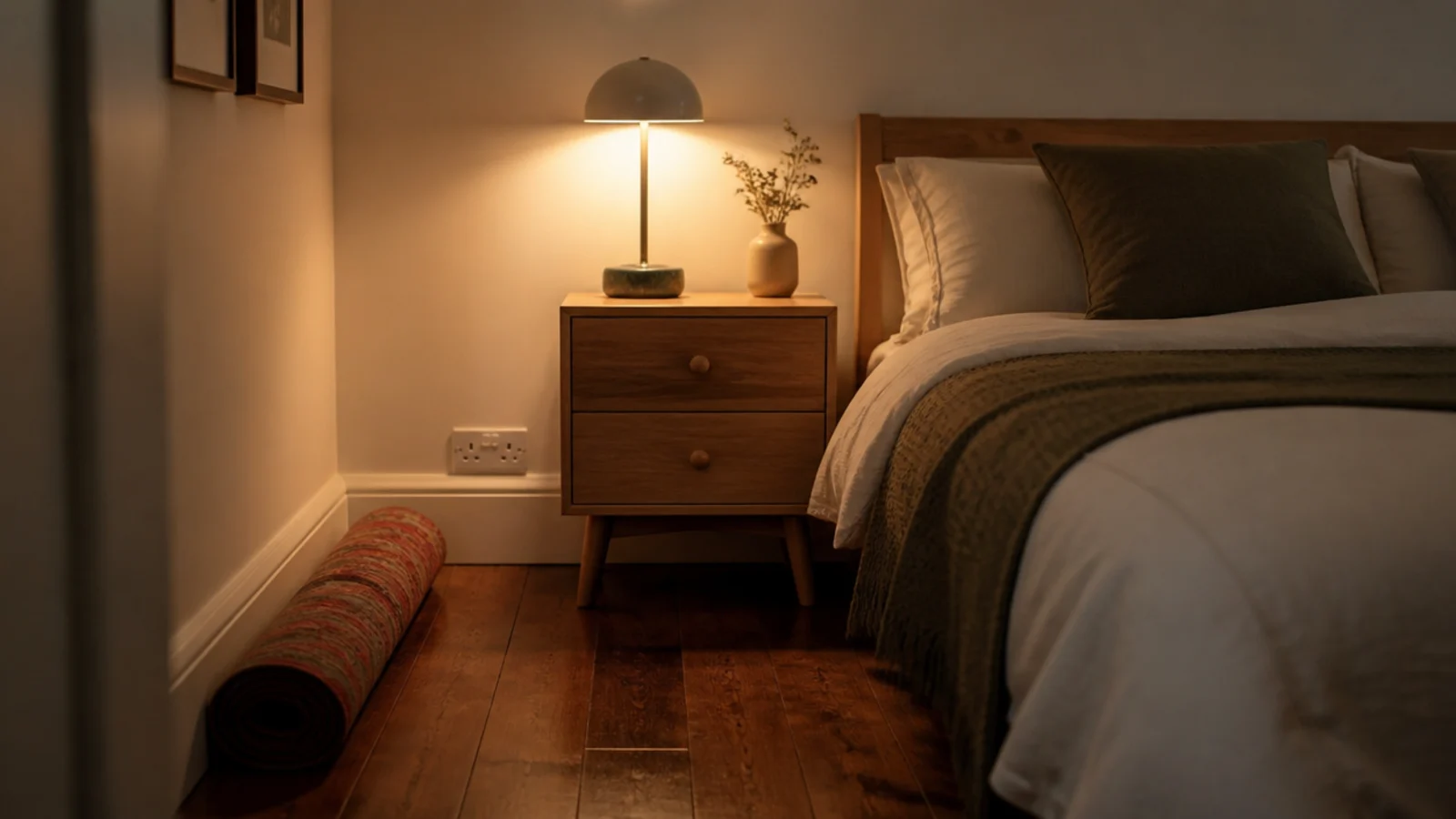
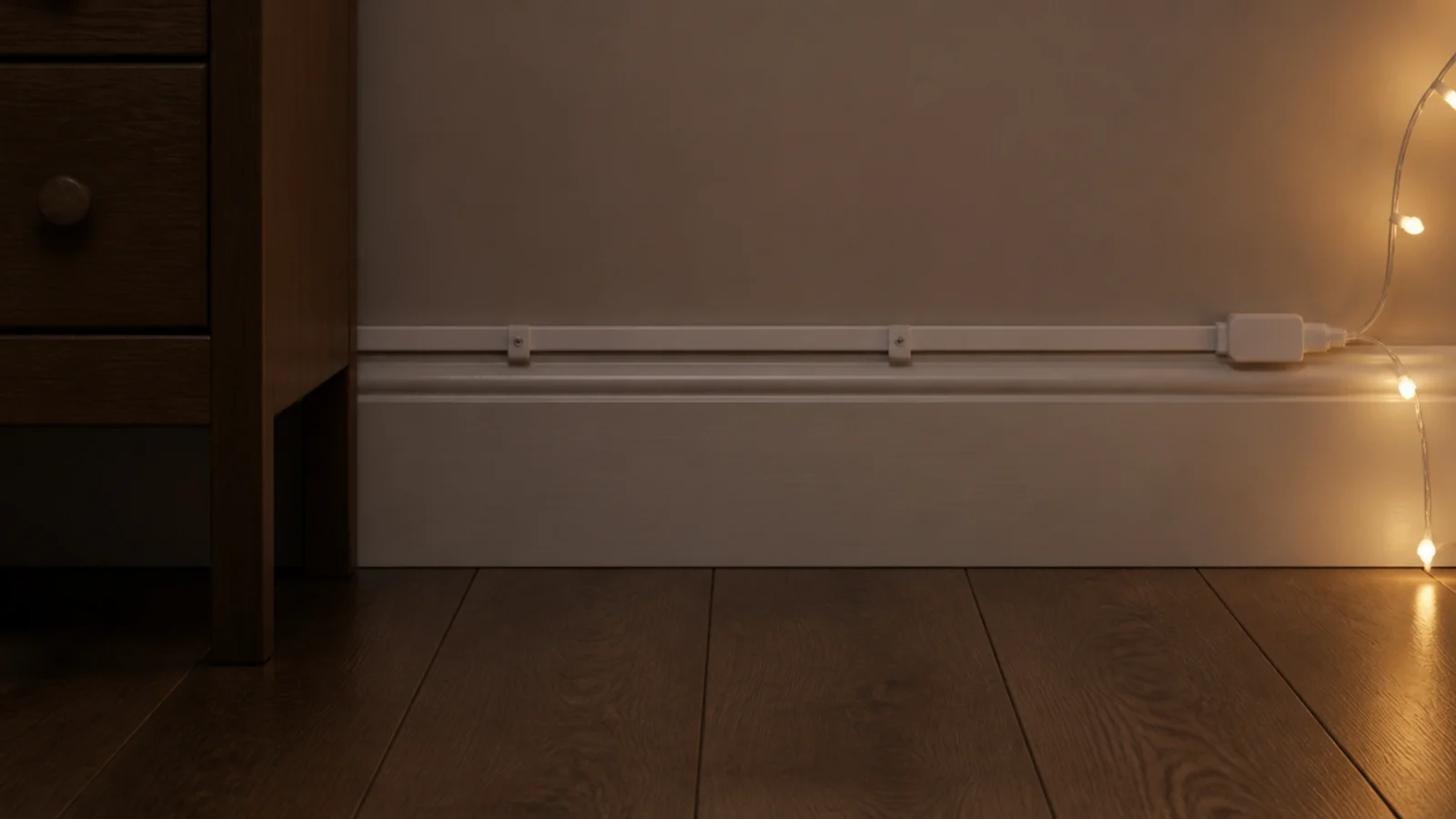
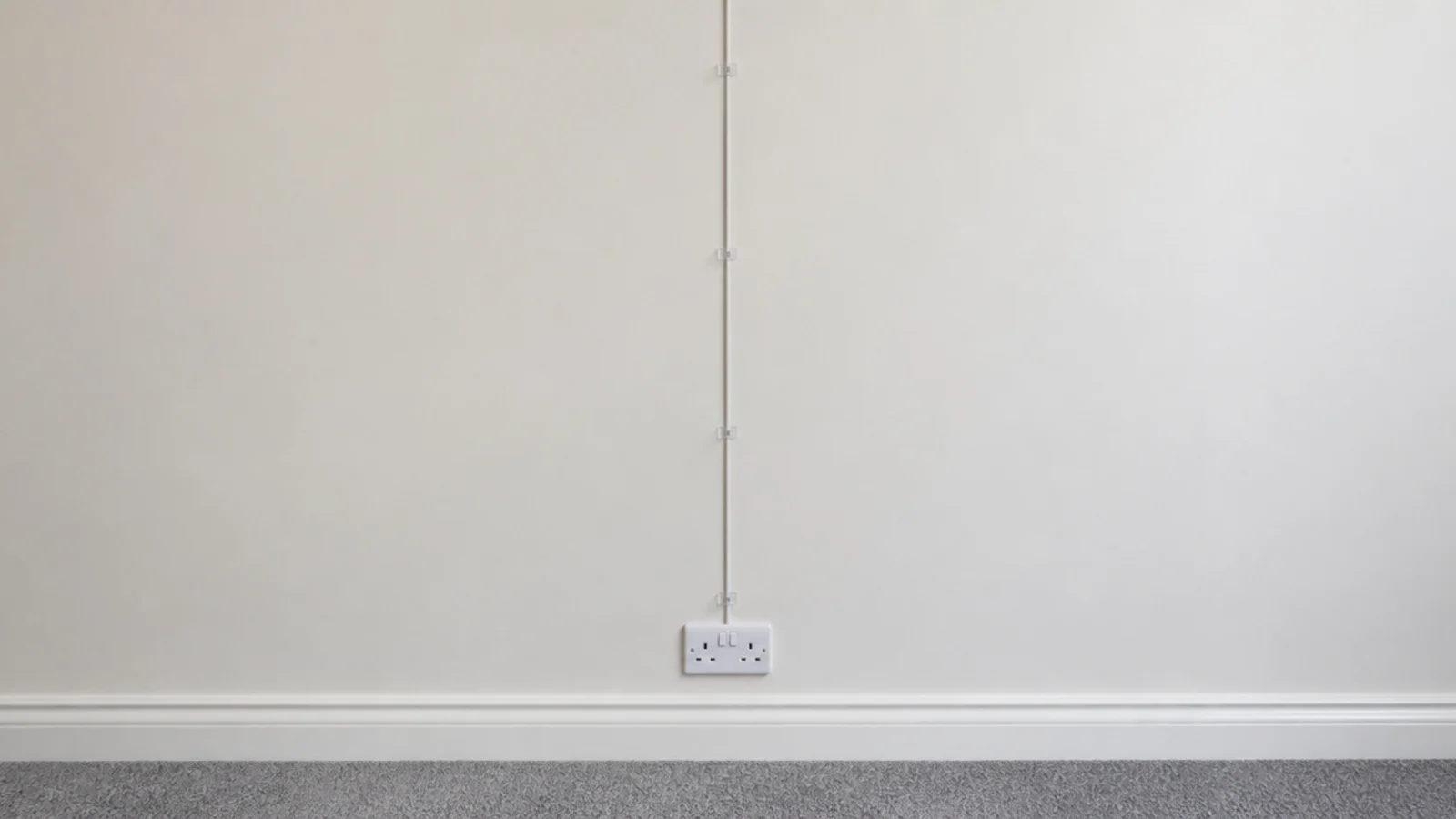
29. A dollar of cable clips hides the lead
The drop from the strand to the socket is what makes a cheap setup look cheap. Four clips in a dead straight vertical line, spaced about 12 inches, cost pennies and turn a dangling wire into something that reads as installed.
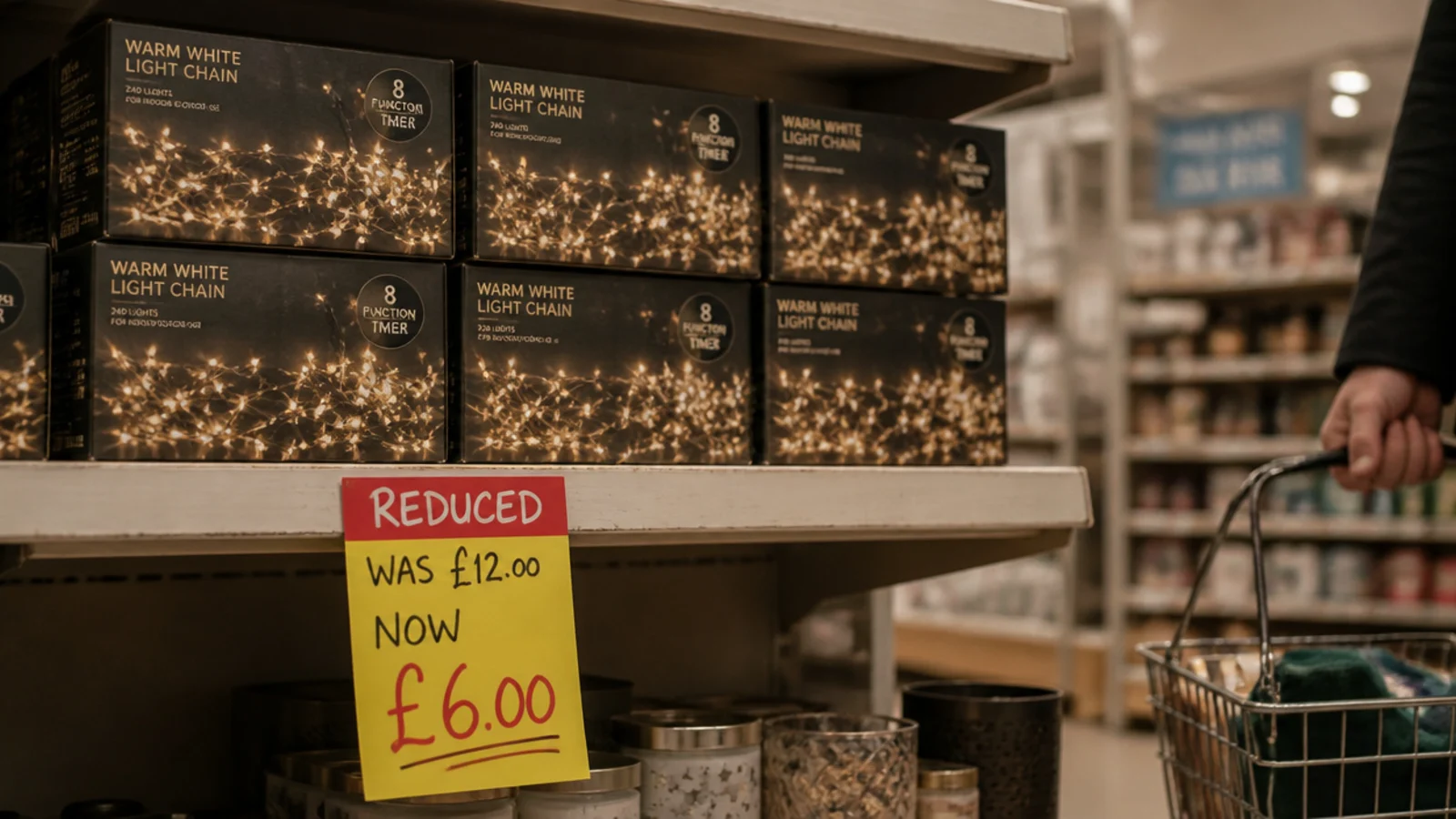
30. Wait for the January clearance
Holiday stock drops 50 to 70 percent in the first two weeks of January. That is the moment to buy the warm white 33 foot sets you will use all year. Test each one before it goes into storage, and keep the box so the daisy chain limit stays readable.
For the same thinking applied to a single feature wall, the bedroom wall styling steps work through layout and clip spacing in order. If the budget is going on the whole corner rather than just the lights, bookshelf styling ideas covers what to put on the lit shelves, and hanging lights in a bedroom has the pendant options for when you want one proper fixture.
Mistakes to Skip
- Buying the cheapest set with a remote. The remote adds $5 to the price and a receiver box to the cable, and it is the part most likely to stop working.
- Running alkaline cells continuously with no timer. It is roughly $8 a month per strand, which is more than the set cost in the first place.
- Taping a cable rather than clipping it. Tape lifts paint on removal and leaves adhesive that yellows, where a proper clip peels off cleanly with a downward stretch.
- Chaining three bargain sets end to end without reading the tag. The permitted number is printed for a reason, and the first plug in the chain carries the whole load.
Frequently asked questions
How much should fairy lights cost per foot?
Around 25 to 40 cents a foot for a plain warm white LED copper wire string, which puts a 33 foot set at roughly $8 to $14. Anything above 60 cents a foot is paying for a remote, a colour-changing chip or packaging. Work the number out before you compare two boxes, because strand lengths are rarely the same.
Are battery fairy lights cheaper than plug-in ones?
The set is cheaper, the running is not. Three alkaline AA cells cost about $2 and give roughly 18 to 24 hours of continuous light on a 100 LED string, so a nightly six hour run empties them in under a week. Rechargeable cells and a six hour timer bring that back to sensible.
Can I reuse Christmas lights in a bedroom?
Yes, if they are LED and warm rather than cool white. Check the box for a Kelvin figure and reject anything over 2700K, because holiday sets are often 4000K or higher and read cold against bedding. Replace any set with cracked insulation rather than taping it, and never staple through the cable.
What is the cheapest way to light a whole bedroom wall?
Two 33 foot warm white strands and a $2 pack of adhesive clips, which lands at roughly $20 for a 10 by 8 foot wall. A branded curtain kit covering the same area costs $25 to $40 and gives you fixed drop spacing you cannot change once it is out of the packet.
When are fairy lights cheapest to buy?
The first two weeks of January, when holiday stock is cleared at 50 to 70 percent off. Buy warm white in strand lengths of 33 feet, check each set works before storing it, and keep the boxes so the maximum daisy chain number printed on the tag is still readable next winter.
Want more like this? Browse all 15 fairy lights bedroom guides — they all use the same measurements and budget tiers.
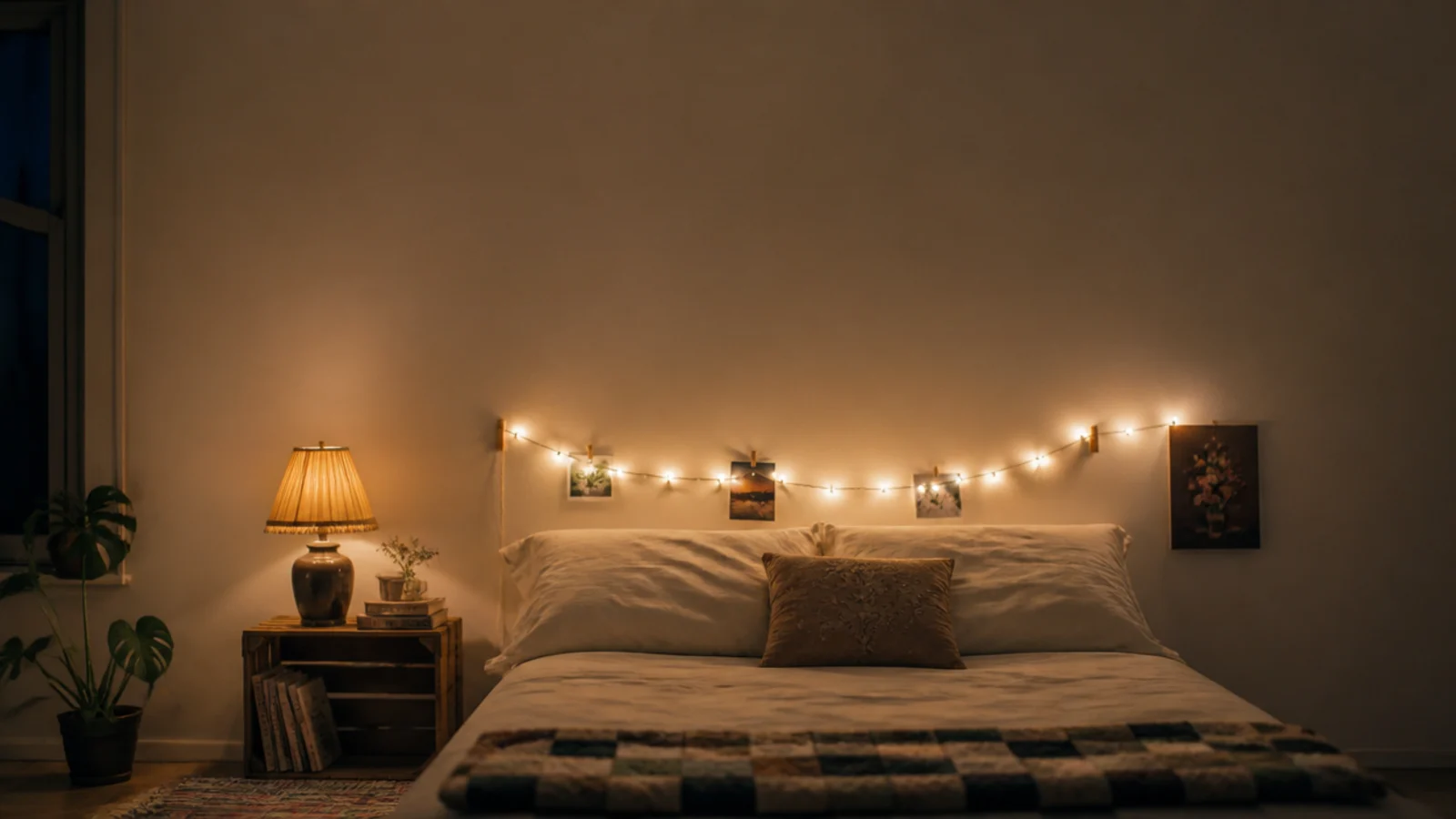
Pin it for later
Save this to your Fairy Lights Bedroom board
Pin it now so it is waiting for you when the tape measure comes out — and so the next person hunting for this idea can find it too.
Save this pinKeep going
More ideas worth saving while you have the tape measure out.