Bedside Table Ideas · Listicle
30 Small Bedside Table Ideas For Tight Bedrooms

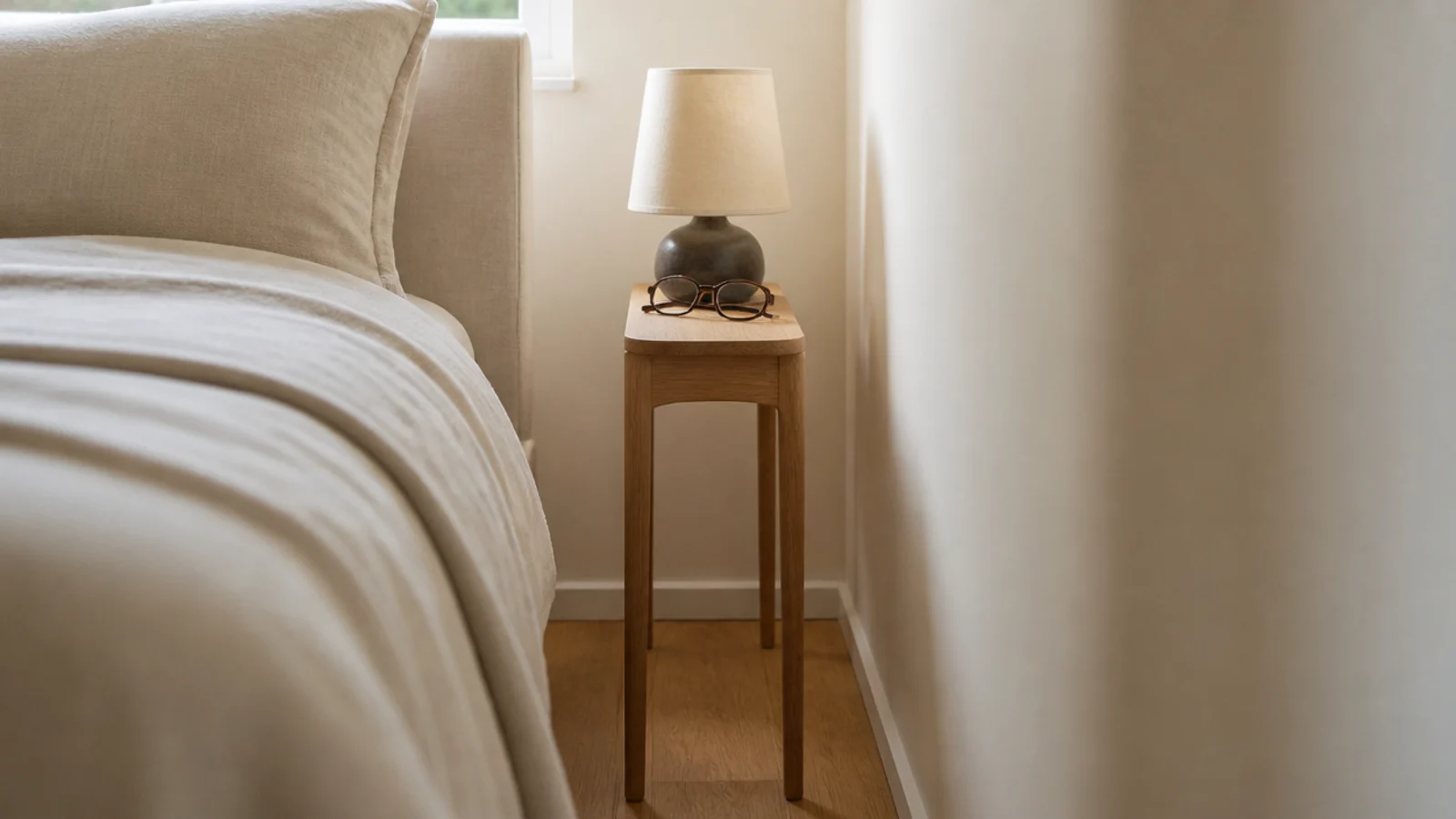
Small bedside table ideas start with a number most people never take: the width of the gap between the bed frame and whatever is next to it. In three of the bedrooms I have lived in that gap was under 16 inches, which quietly rules out most of what comes up when you search. Here are thirty that fit the room you actually have.
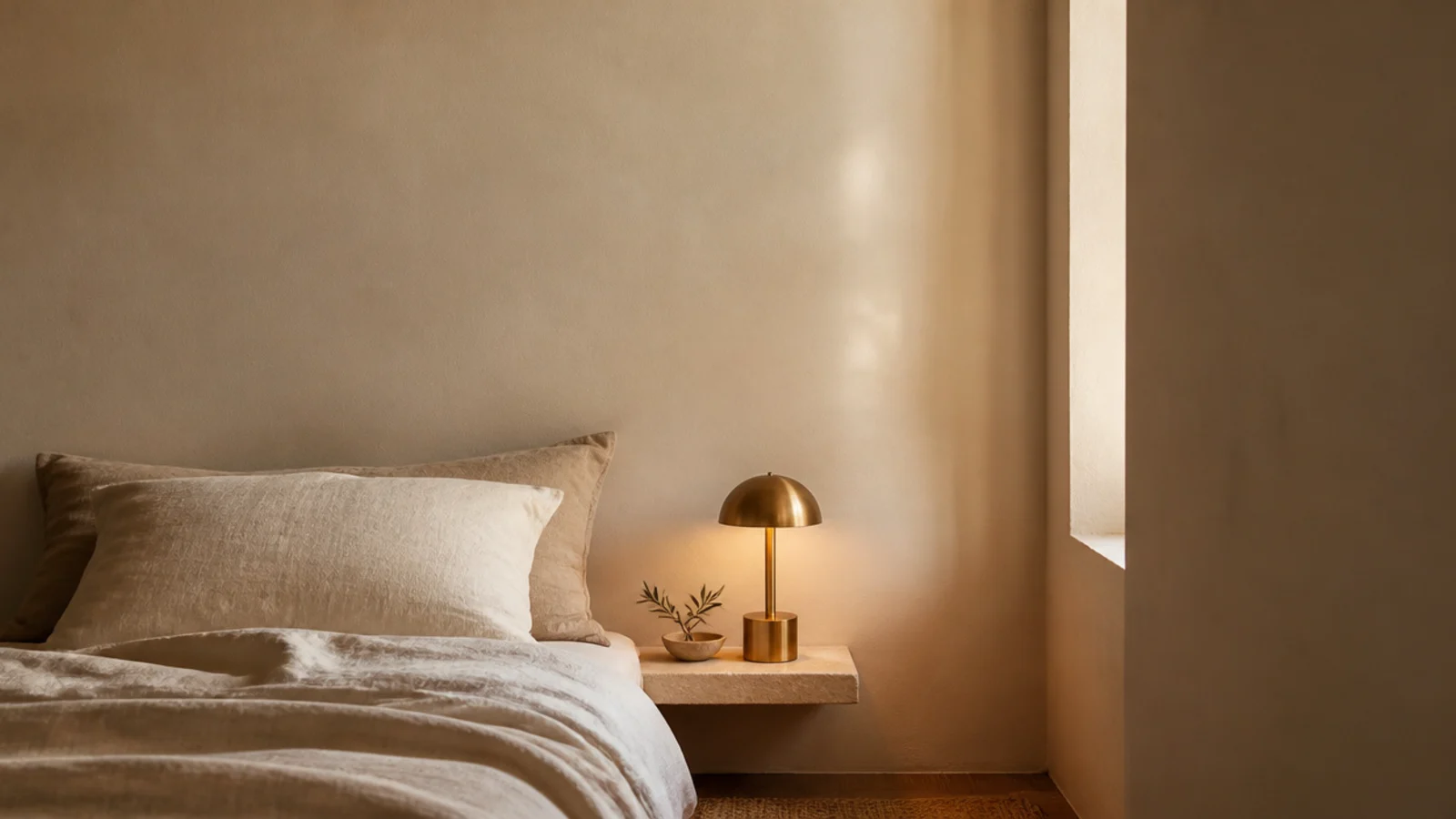
In this guide32 sections — tap to openHide
- 1.What small bedside table ideas have to solve first
- 2.Measure the walkway before you shop for anything
- 3.A ten-inch wall ledge instead of a table
- 4.A triangular table that fits the corner
- 5.A drop-leaf bracket that folds flat to the wall
- 6.A caddy that hangs off the bed rail
- 7.A slim rolling cart that tucks under the bed
- 8.Two crates stacked on end
- 9.An under-bed drawer instead of a table
- 10.A magnetic strip for keys and glasses
- 11.A peg rail with one small shelf
- 12.A single floating cube
- 13.A table that doubles as a step stool
- 14.A wall pocket for books and a phone
- 15.A C-table that slides over the mattress
- 16.The radiator shelf you already have
- 17.Push the bed to the window and use the sill
- 18.A skinny eight-inch plant stand
- 19.A sconce plus a tiny ledge
- 20.A fold-down desk bracket at bed height
- 21.A bar stool with a twelve-inch seat
- 22.A shelf that clips onto the headboard
- 23.A spice rack turned book ledge
- 24.One hook and a hanging basket
- 25.A caddy that slips under the mattress
- 26.A corner shelf set above the bed line
- 27.A narrow tower with four small shelves
- 28.An ottoman with a hard tray top
- 29.A mirrored ledge to double the room
- 30.Keep the lamp base under five inches
- 31.One in, one out, every single week
- 32.Mistakes to Skip
What small bedside table ideas have to solve first
There are two measurements and they compete. The first is the walkway — the clear floor you need to get past the bed without turning sideways. Twenty-four inches is comfortable, 30 if a door or a wardrobe swings into it. The second is the table depth. Whatever is left after the walkway is your ceiling, and in a tight room that is often 12 to 16 inches.
The mistake is buying the table first and discovering the walkway afterwards. Measure the gap, subtract 24, and shop to that number. If the answer comes out under 10 inches, stop looking at tables entirely — the wall and the bed frame are better hosts, and half this list lives there.
The second thing to settle is what has to be within reach. A glass, a phone, a book and a lamp is four objects, and four objects need about 200 square inches. If your surface is smaller than that, move the lamp to the wall. That single change frees more usable space than any table upgrade, and it costs less than most lamps.
Budget-wise a wall ledge runs $15 to $40 in materials, a slim rolling cart $30 to $70, and a purpose-made narrow table $60 to $140. For gaps under 12 inches the narrow bedside table guide goes further into the very tight end.
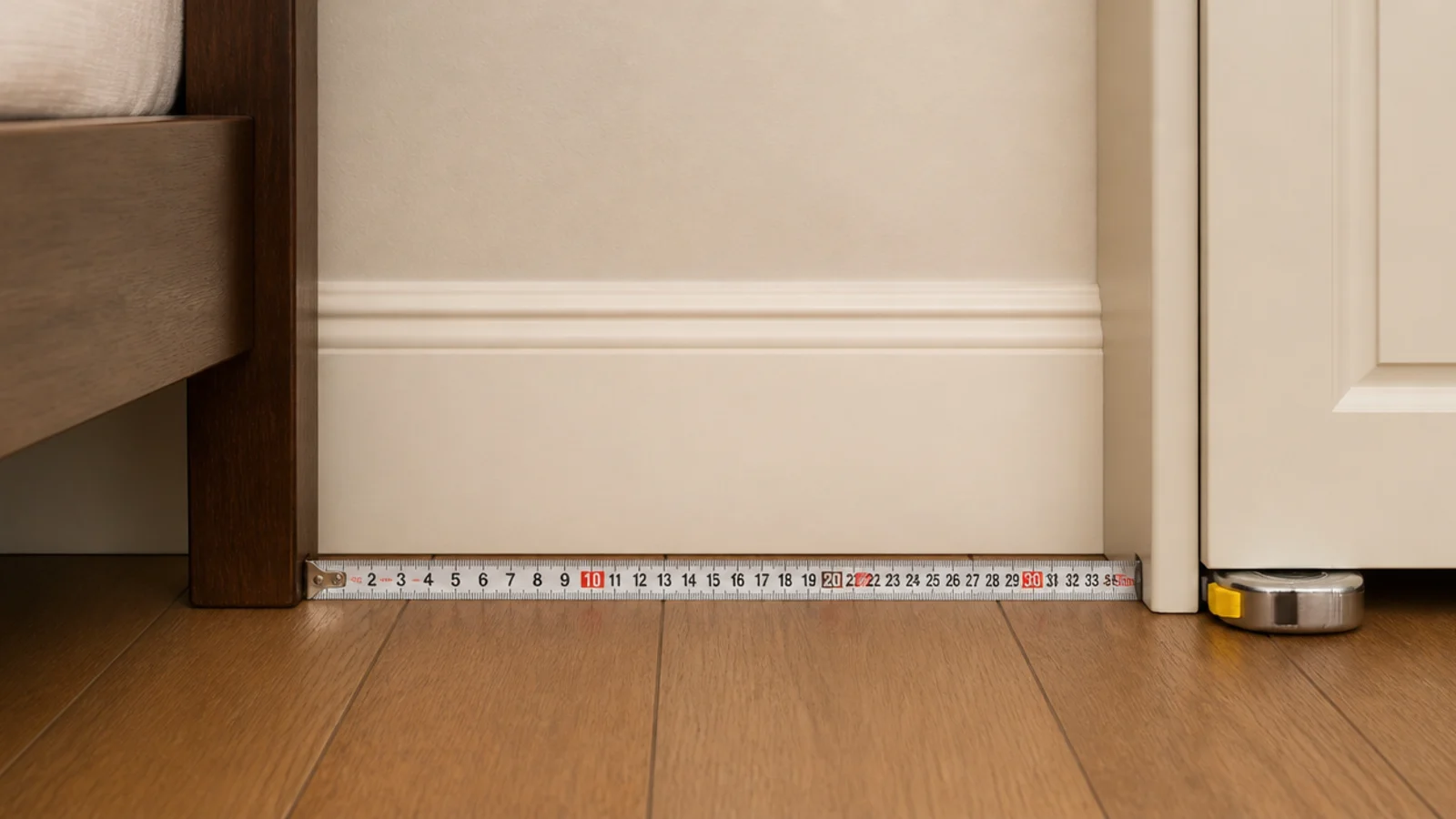
1. Measure the walkway before you shop for anything
Stand where you get out of bed and measure to the nearest obstruction. Under 24 inches of clear floor and you will squeeze past that table every night for years. This one measurement decides which half of this list is even available to you.
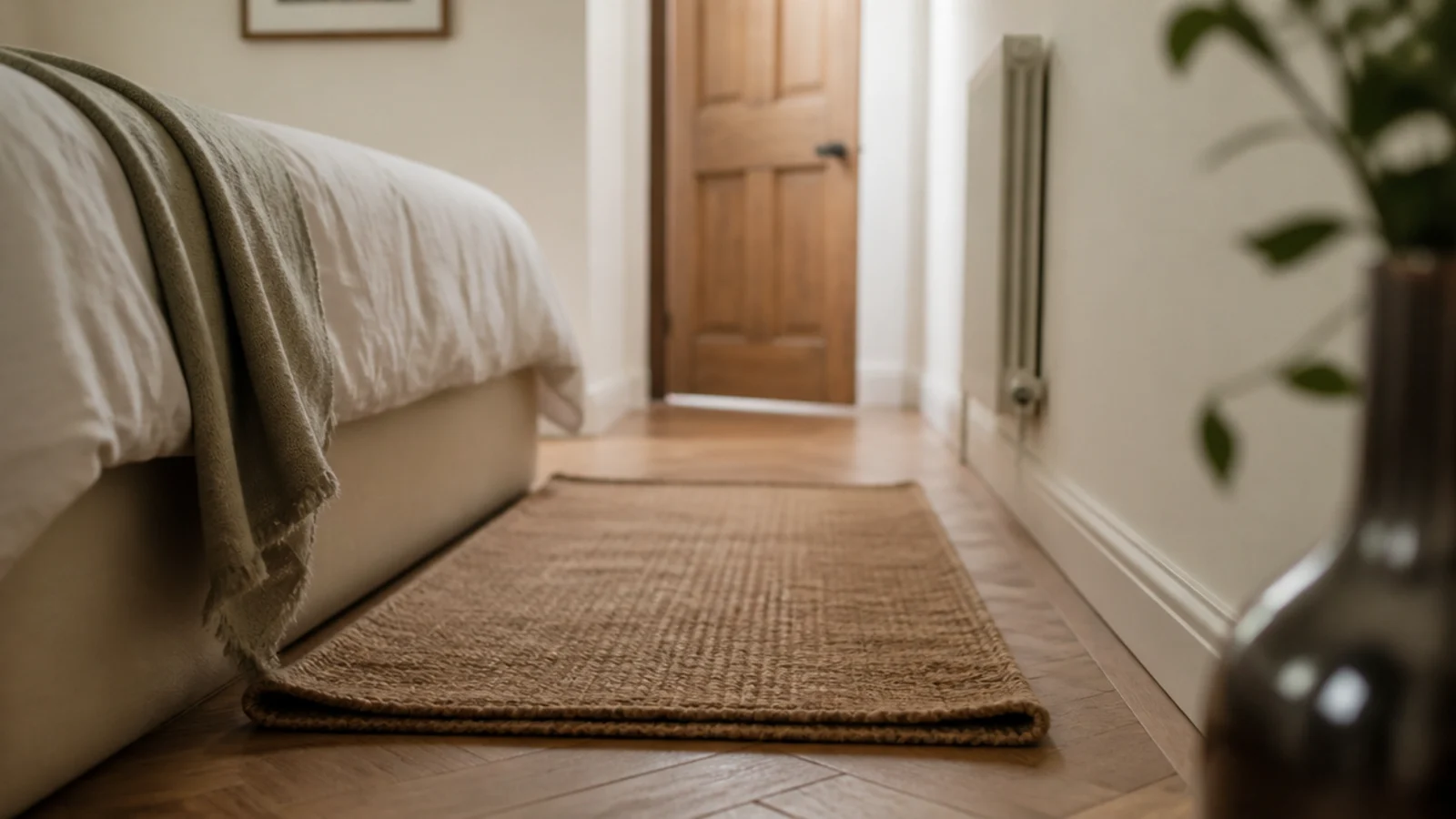
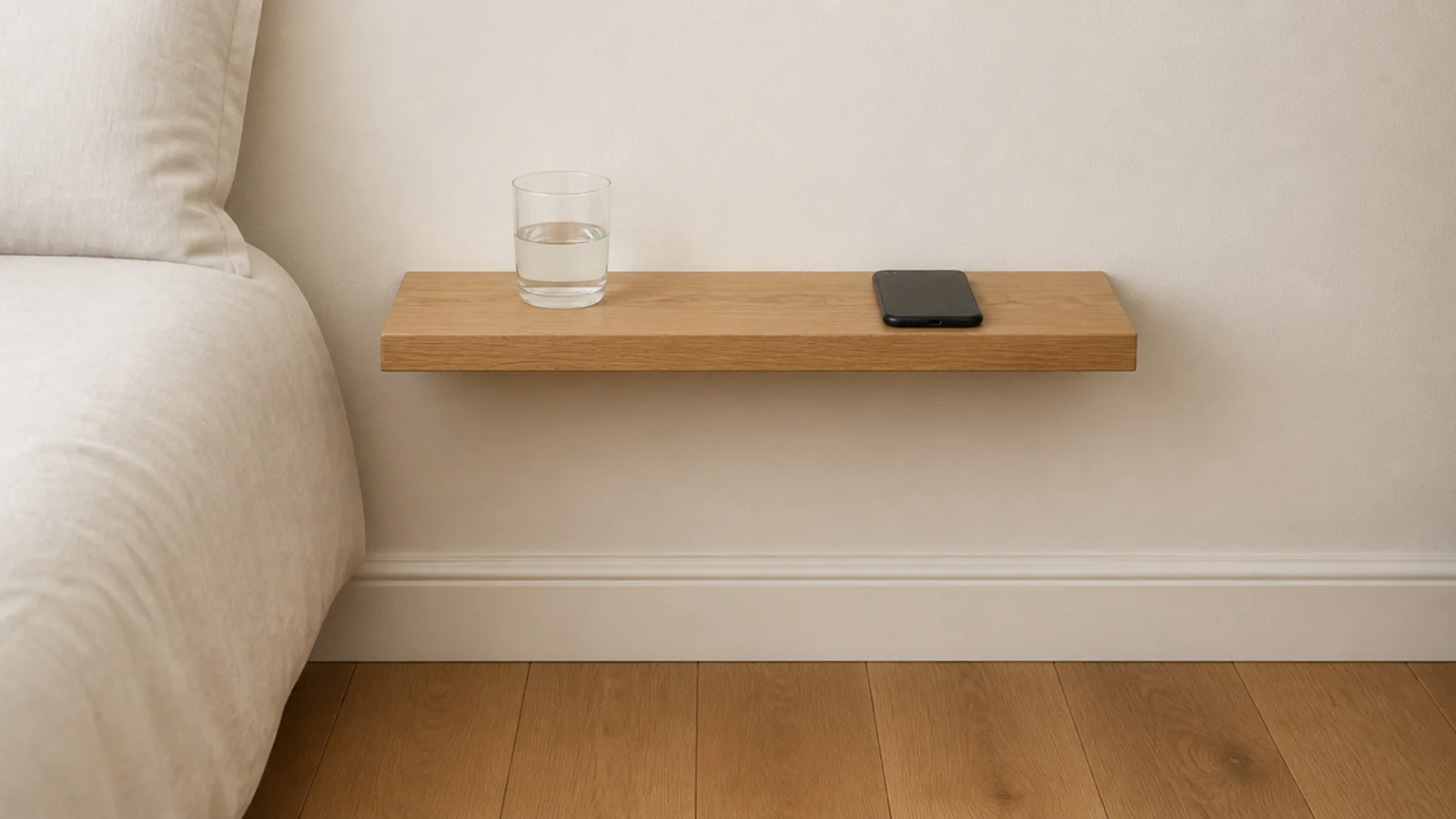
2. A ten-inch wall ledge instead of a table
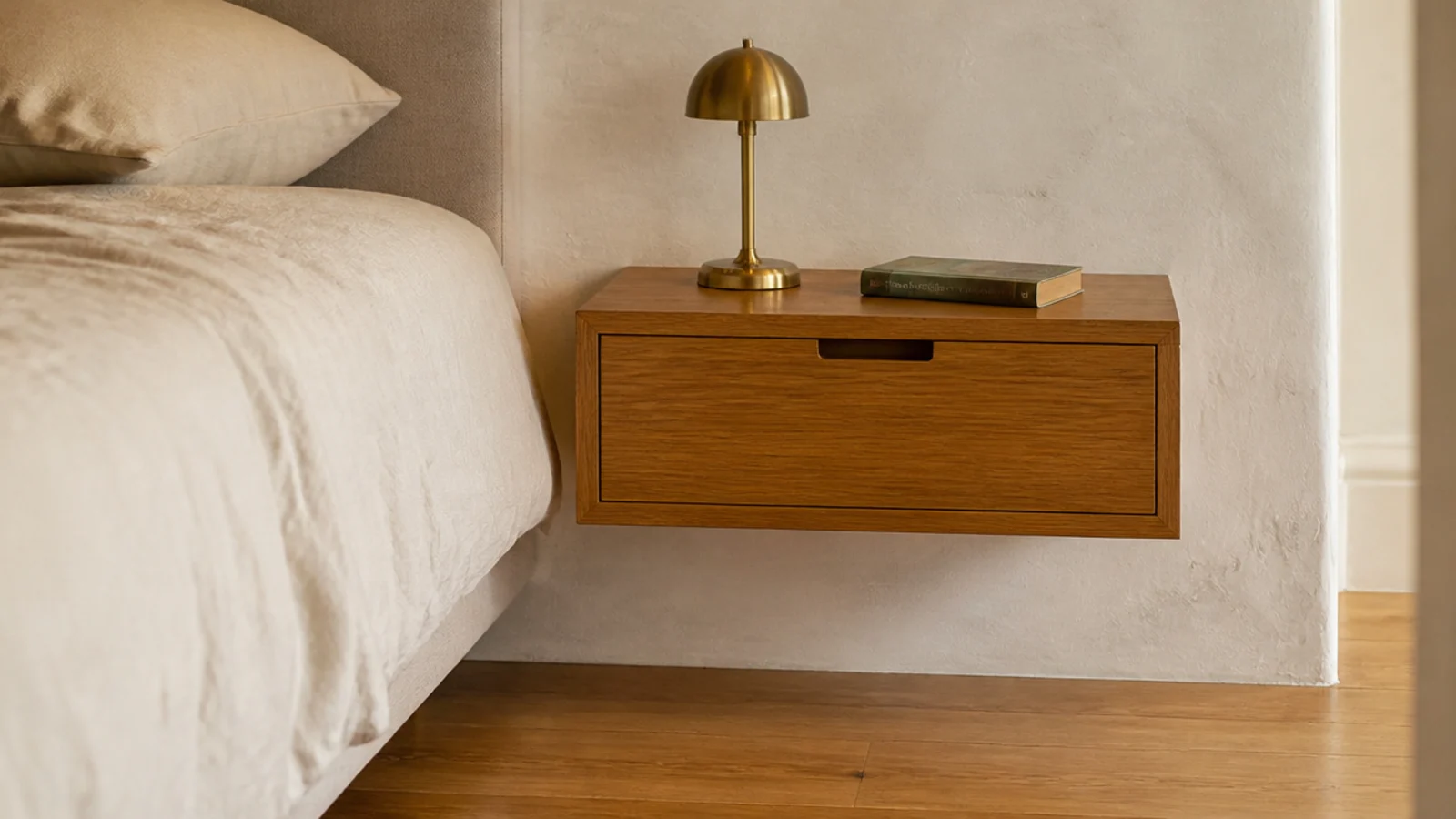
Ten inches deep is enough for a glass, a phone and a paperback, and it uses no floor whatsoever. Fix it level with the mattress top. Under about five pounds of load, heavy-duty adhesive strips hold it without a single screw.
3. A triangular table that fits the corner
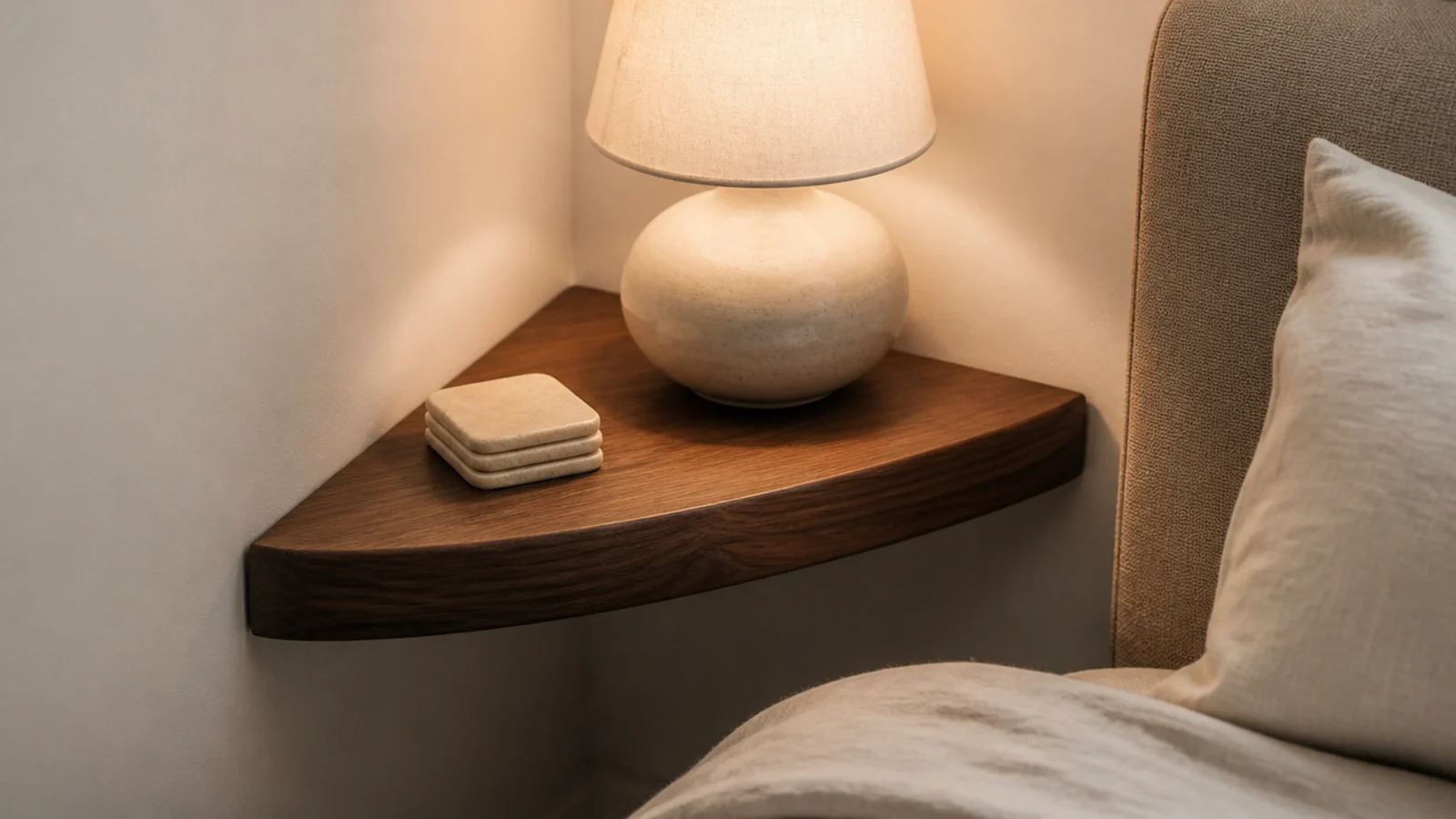
Where the bed head meets a side wall there is usually a triangle of dead floor. A three-sided table fills it exactly and steals nothing from the walkway, because the walkway runs past the long edge rather than across it.
4. A drop-leaf bracket that folds flat to the wall
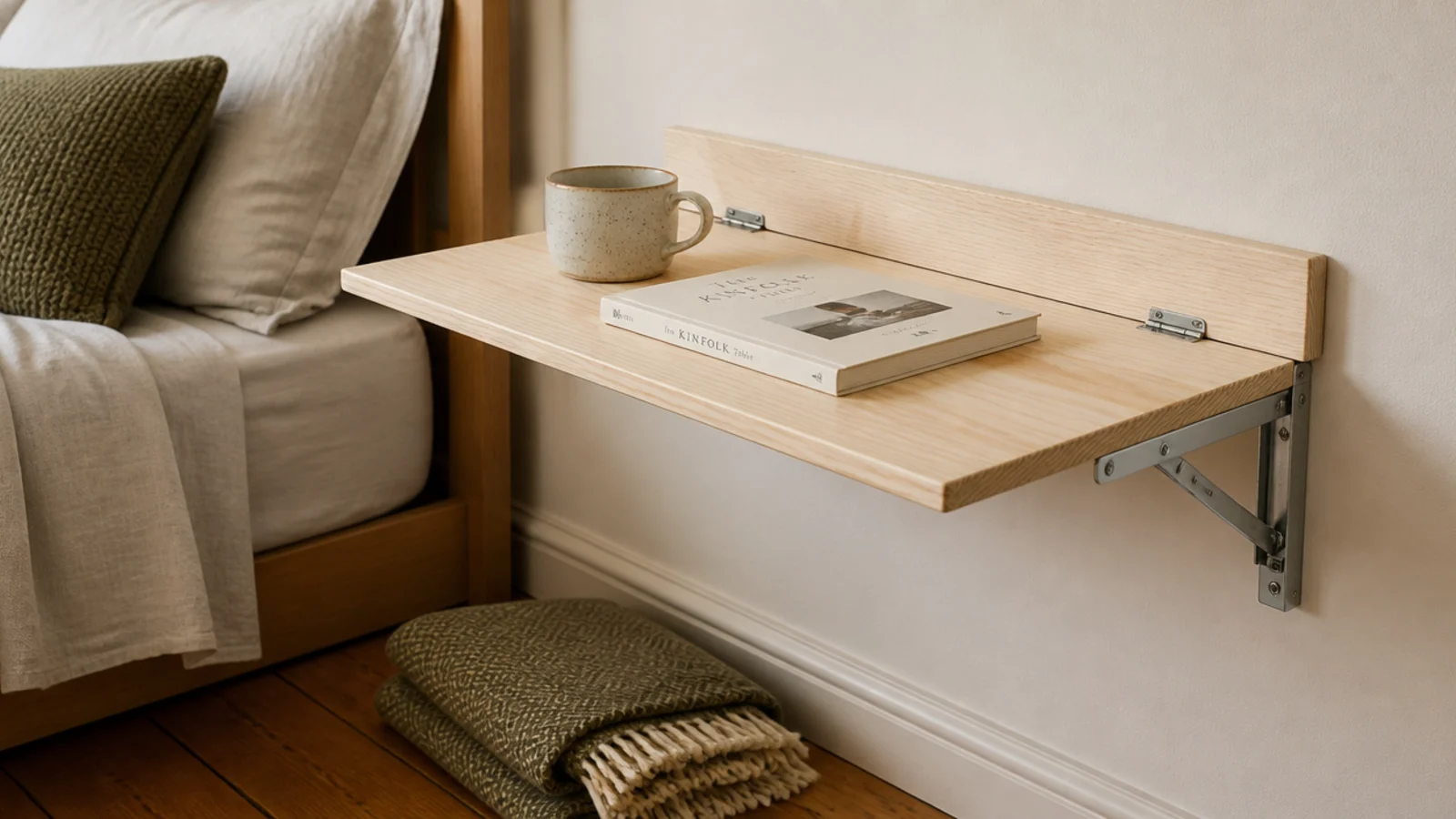
Down it is a 10-inch surface, up it is a two-inch profile against the wall. Worth it in a room where the walkway is genuinely marginal and you only need the surface at night.
5. A caddy that hangs off the bed rail
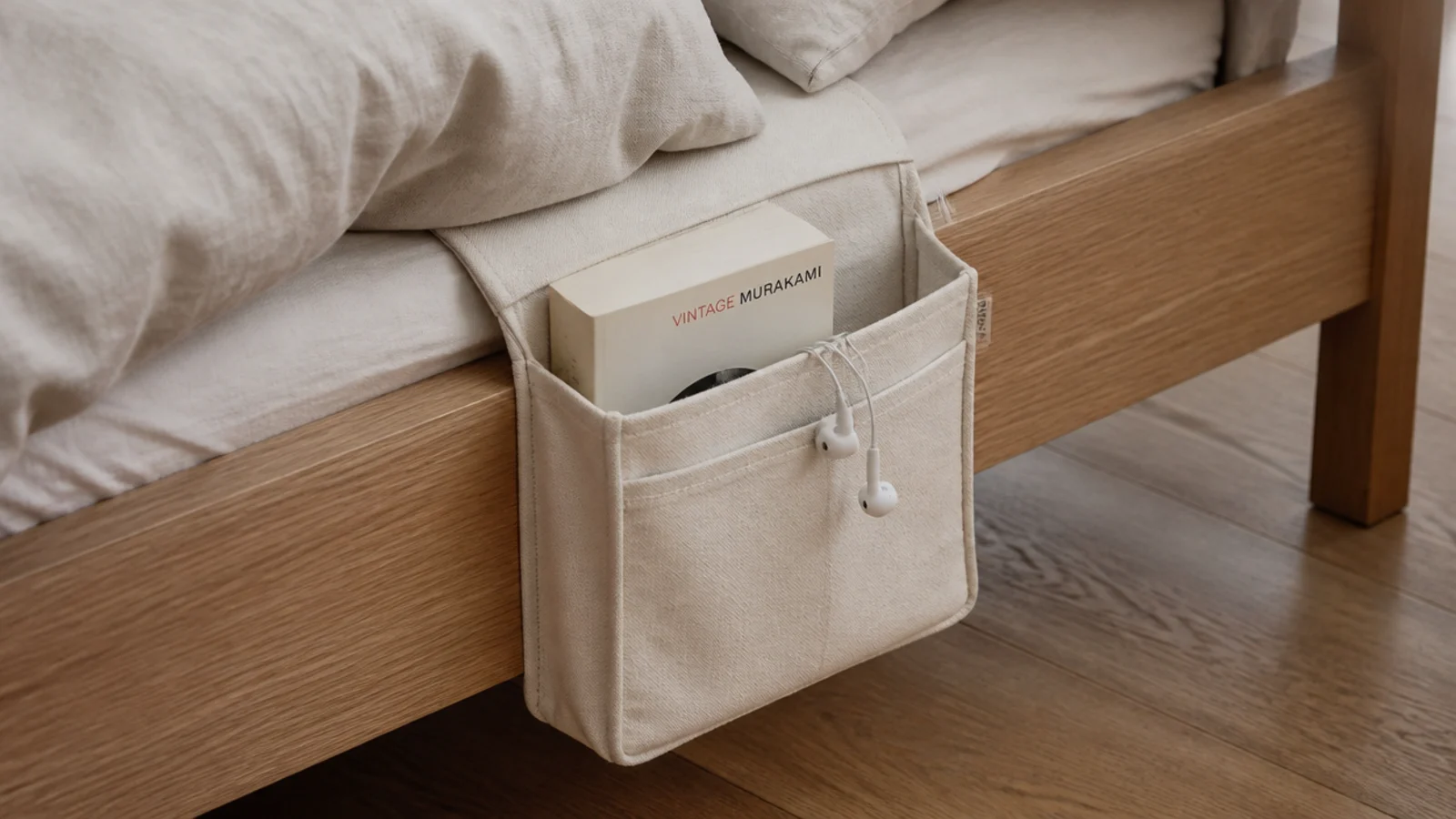
Slides over the side rail and holds a book, a phone and a pair of glasses. No floor, no fixings, and it comes with you when you move — which makes it the easiest option in this list for a rental.
6. A slim rolling cart that tucks under the bed
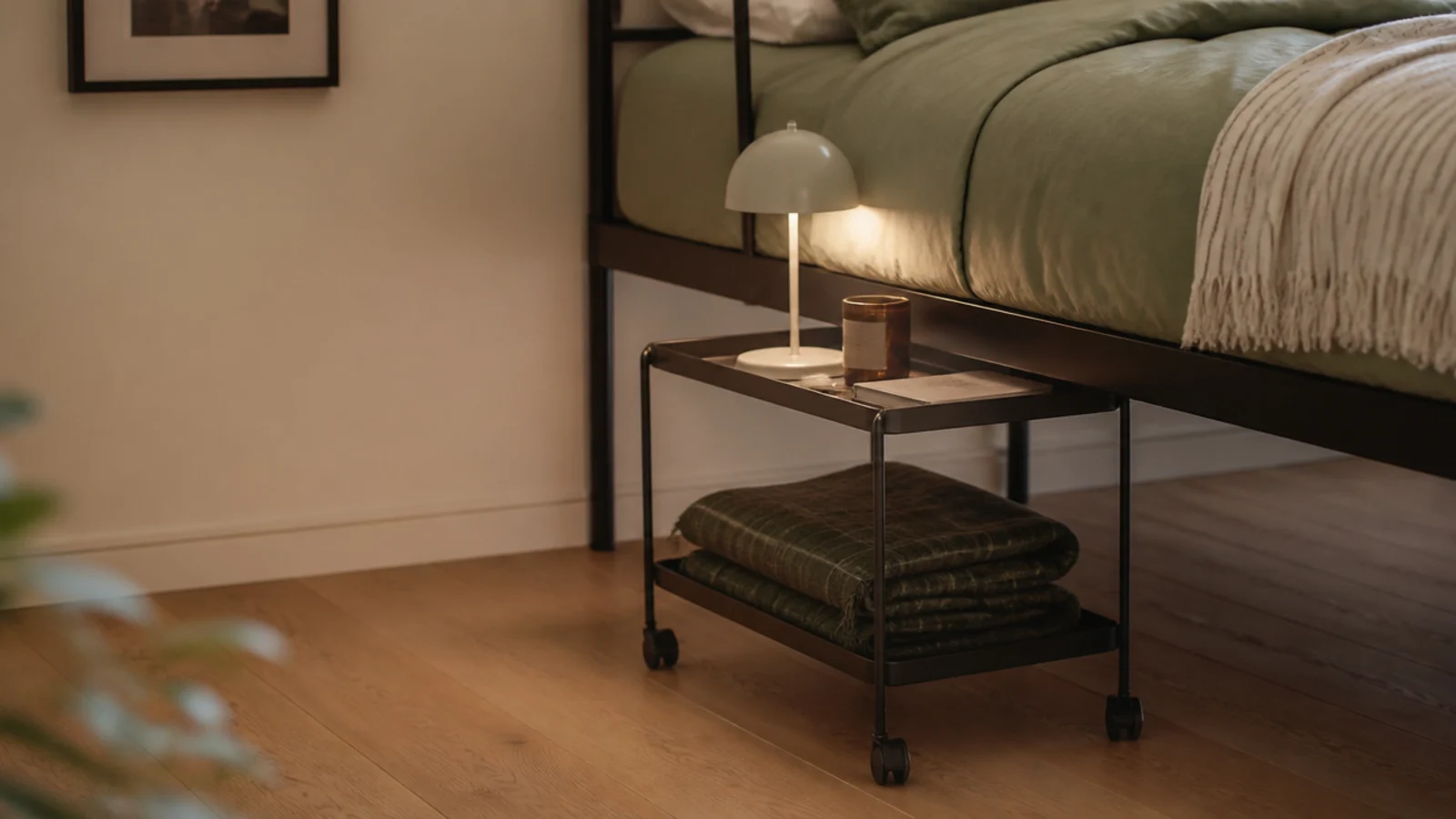
An 11 to 13-inch cart on castors rolls out at night and pushes back under a raised frame in the morning. Check your bed's underside clearance first — most platform beds give 7 to 11 inches, and the cart has to clear it by an inch.
7. Two crates stacked on end
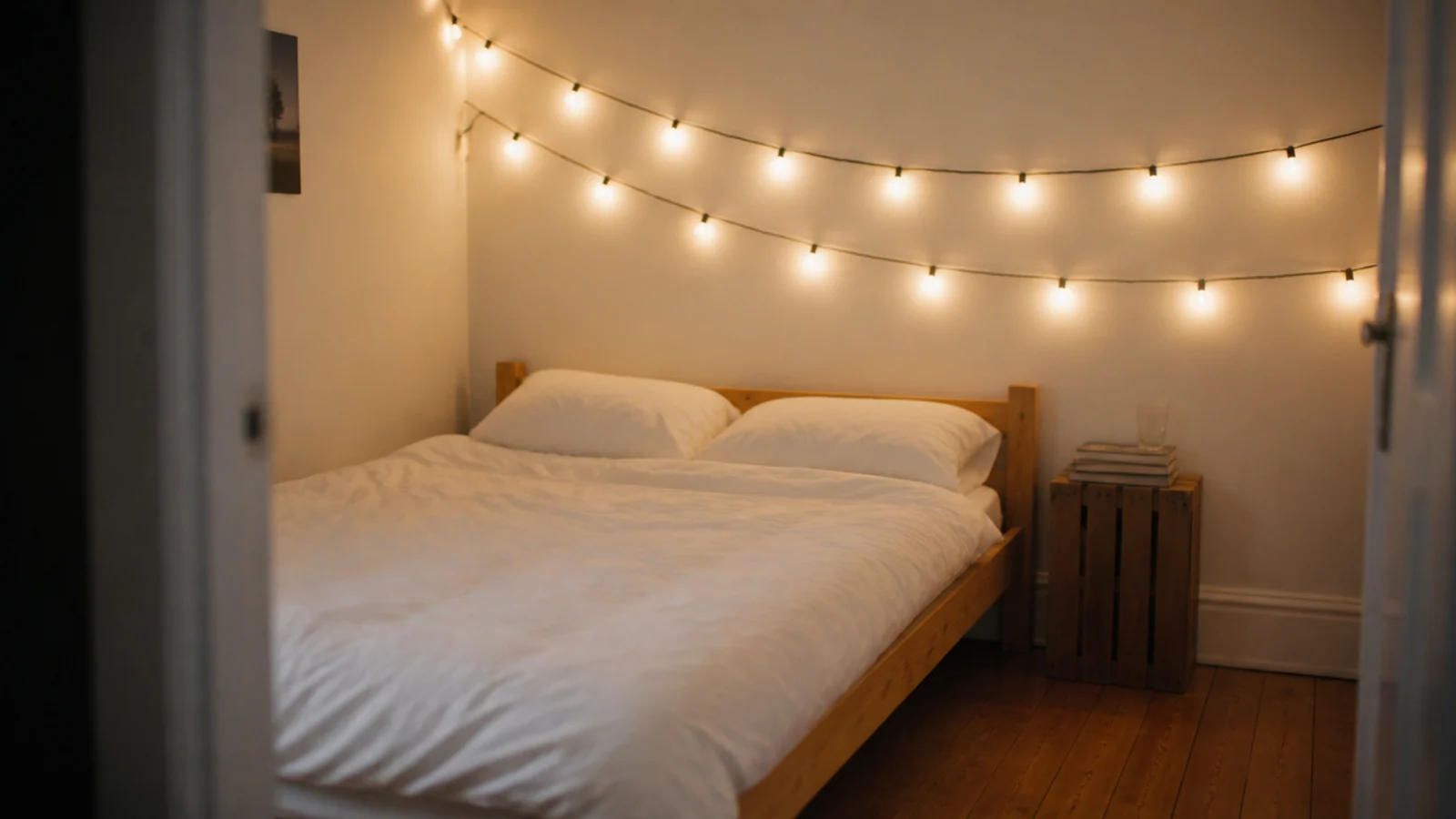
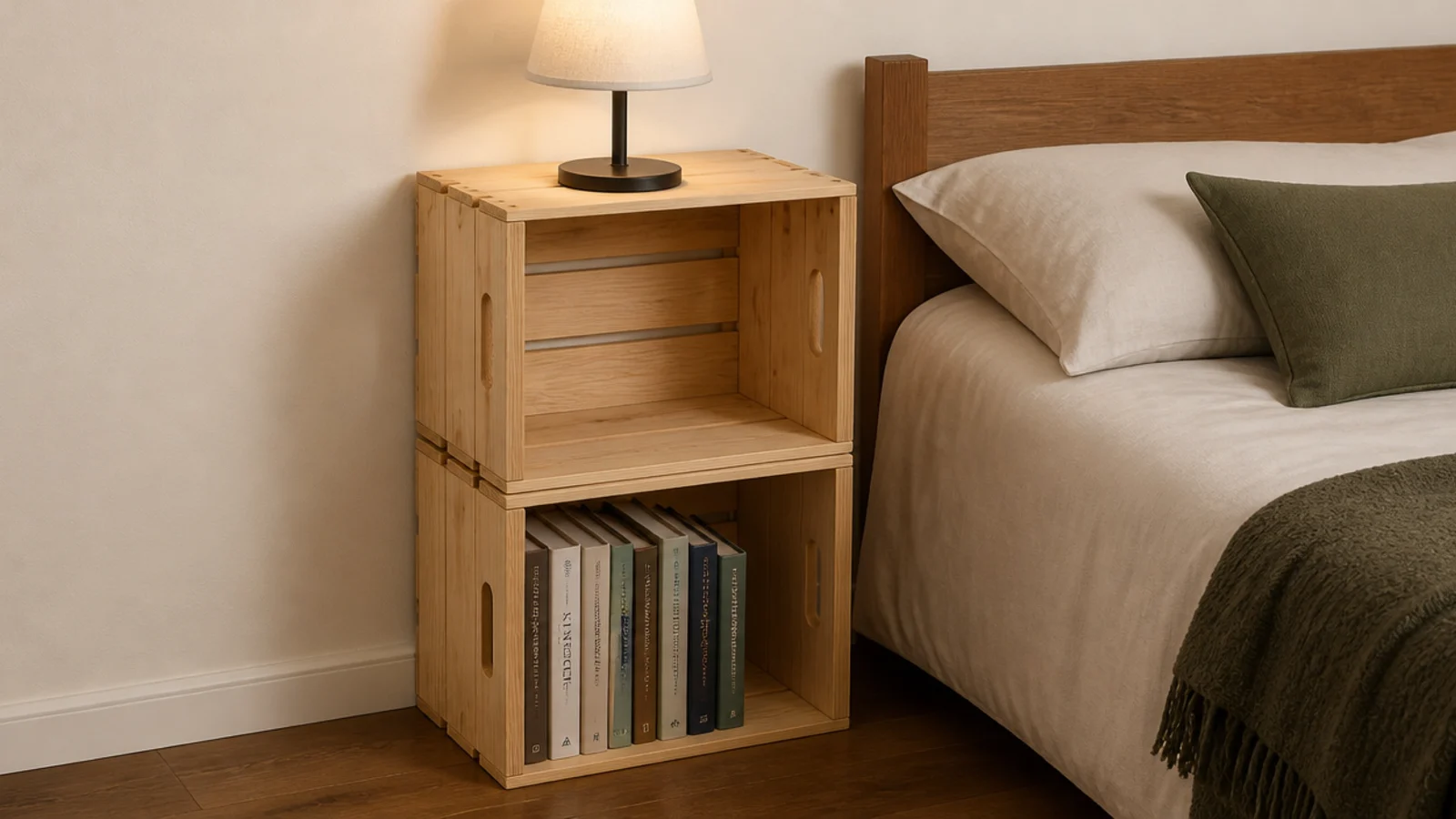
Two pine crates turned open-side-out give you a flat top and two cubbies for about $20 the pair. Screw them together through the touching faces or they will shift every time you lean on the top.
8. An under-bed drawer instead of a table
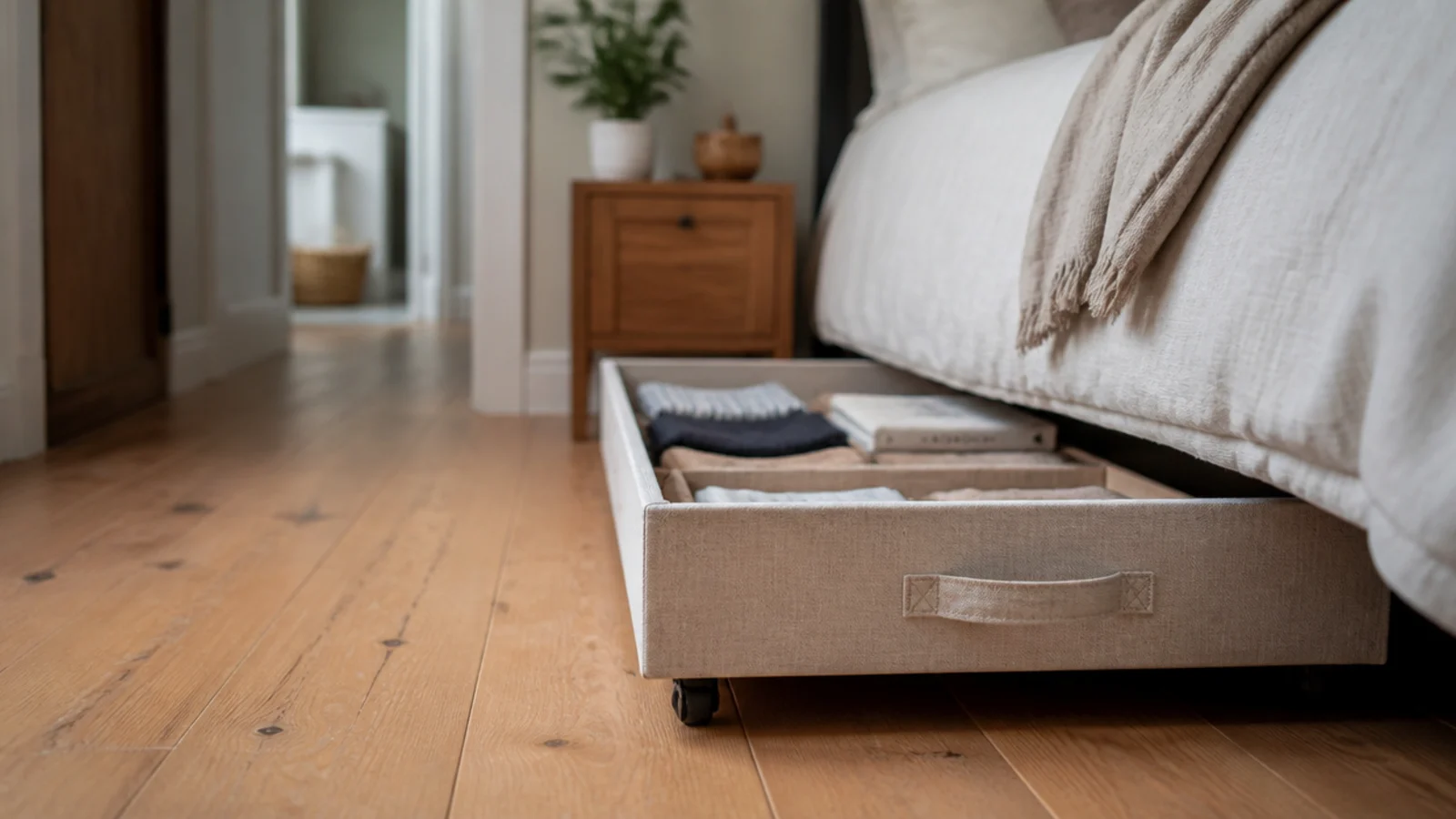
If the gap cannot take a table, the storage moves under the bed and only a glass stays out. A rolling drawer holds far more than any small table and leaves the walkway completely clear.
9. A magnetic strip for keys and glasses
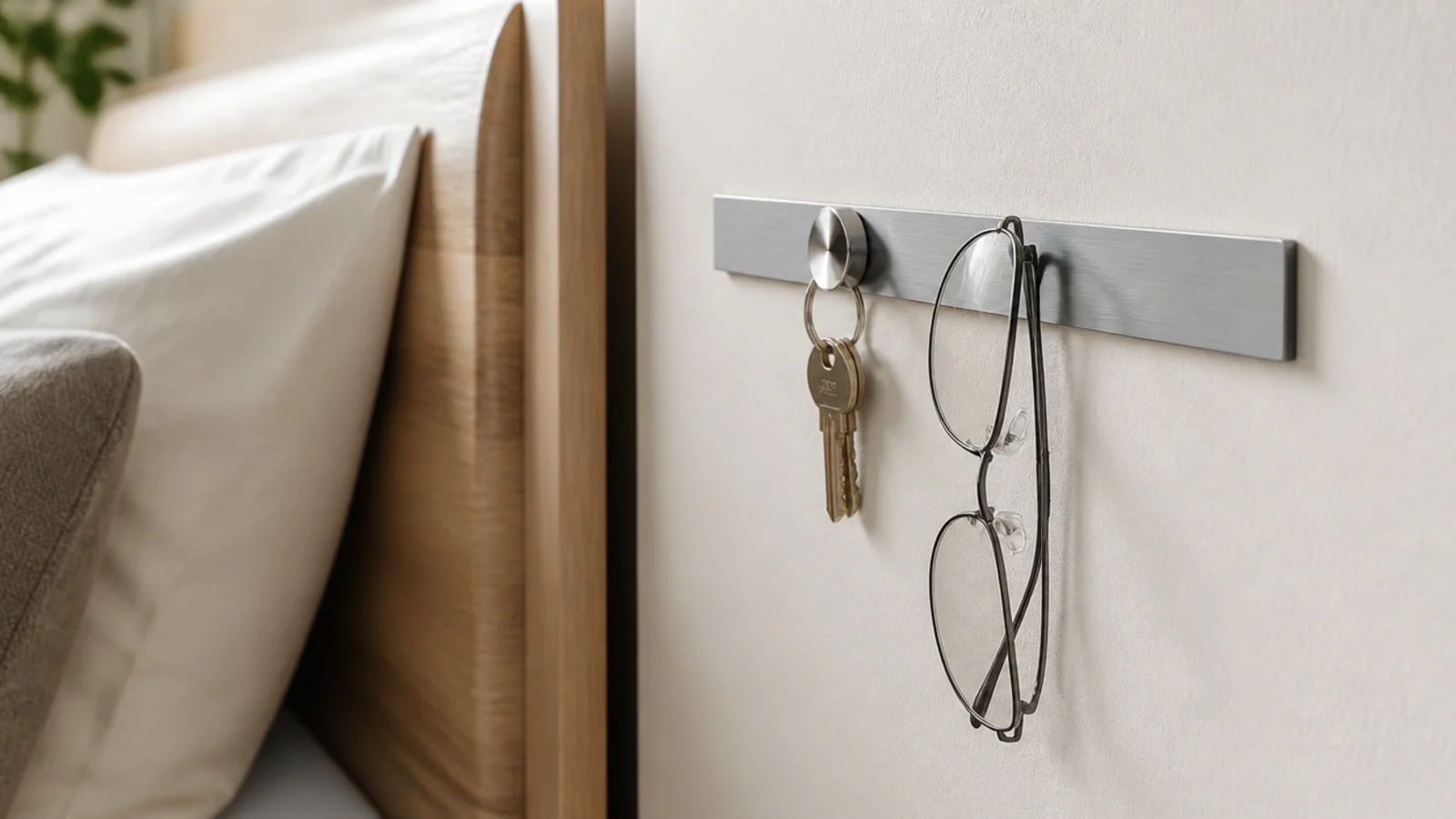
Wire-framed glasses, keys and nail scissors all stick to a $12 magnetic strip. It takes zero depth, which makes it the only storage that works when the gap is under six inches.
10. A peg rail with one small shelf
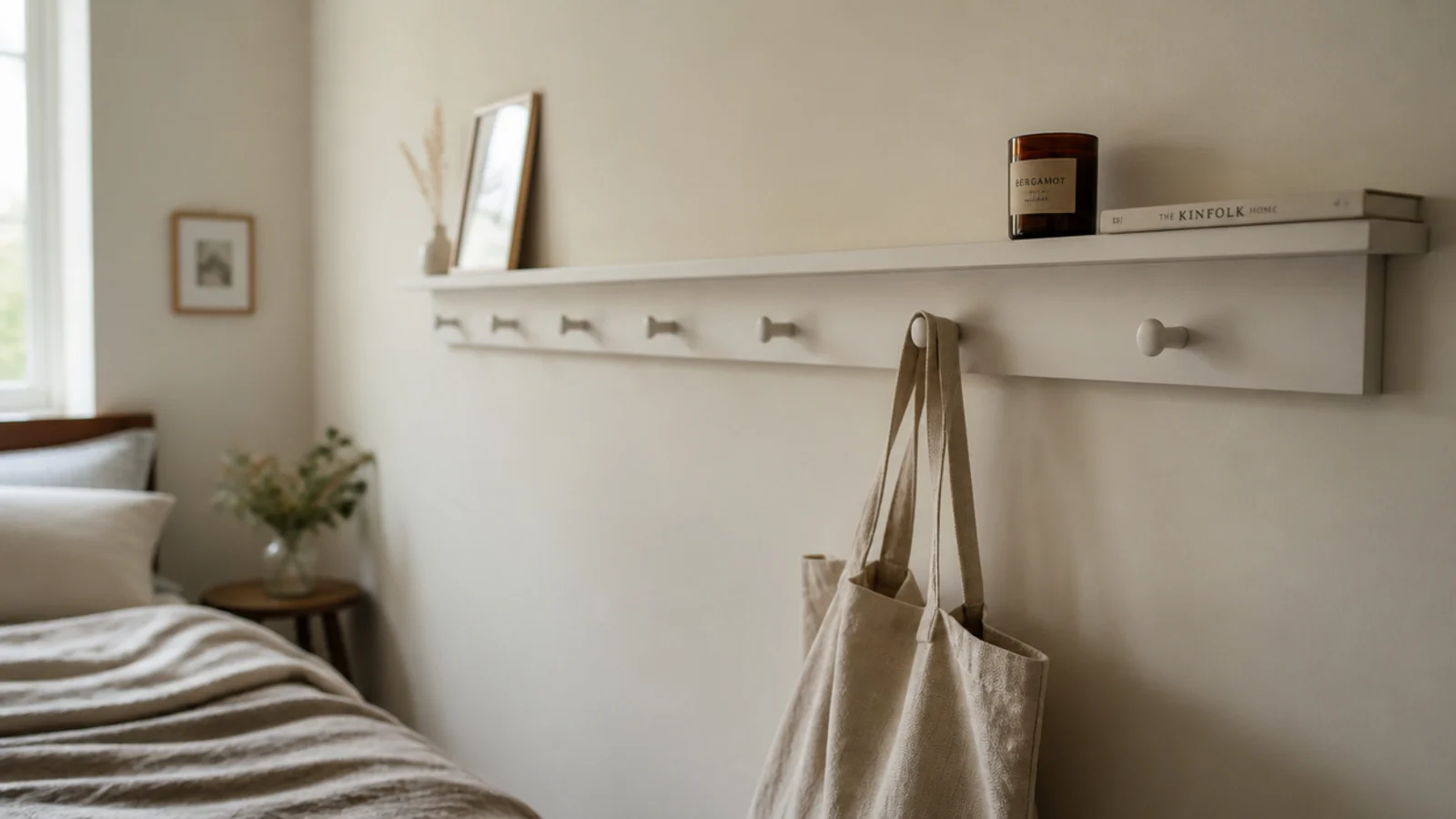
A peg rail with an integrated ledge gives you hanging space and a narrow surface in one fixing run. Mount it 8 to 12 inches above the mattress so nothing on the pegs brushes the pillow.
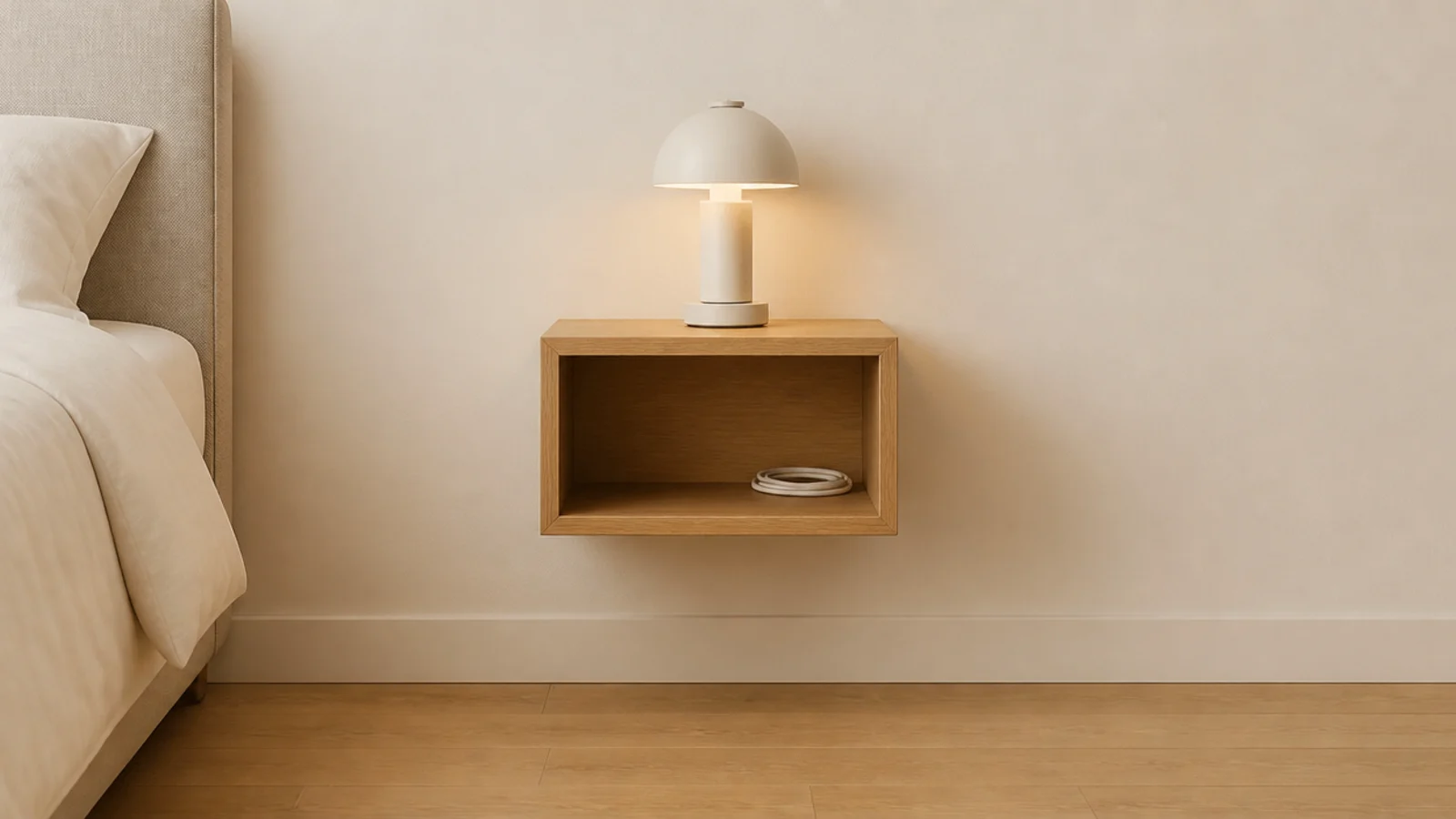
11. A single floating cube
An open cube roughly 10 inches square holds a lamp on top and swallows the cable inside. It reads as deliberate rather than makeshift, which most small-space fixes do not.
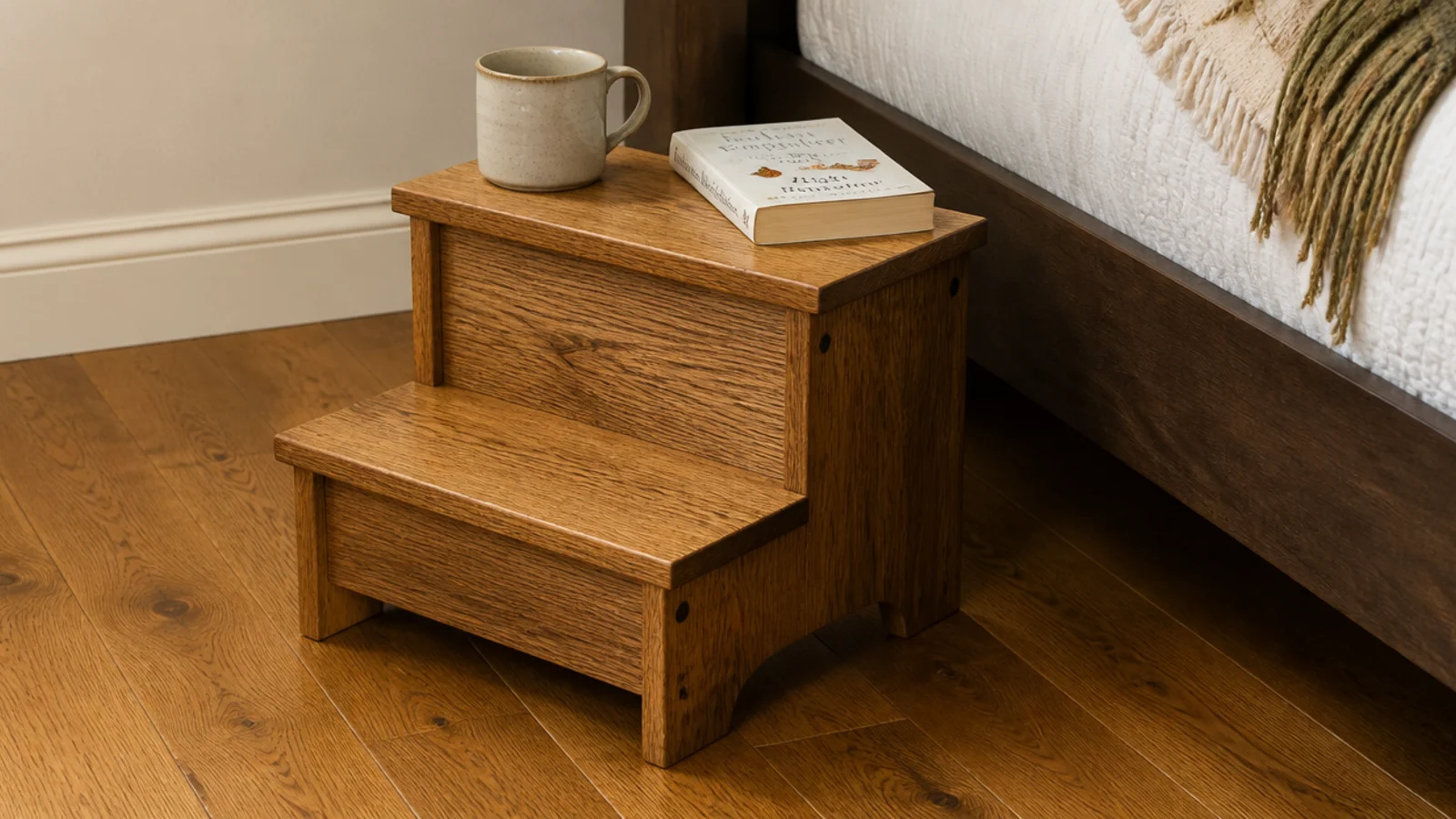
12. A table that doubles as a step stool
Beside a tall bed or a loft frame, a two-tread stool is both the way up and the surface. Choose one rated to at least 220 pounds, since it is genuinely being stood on.
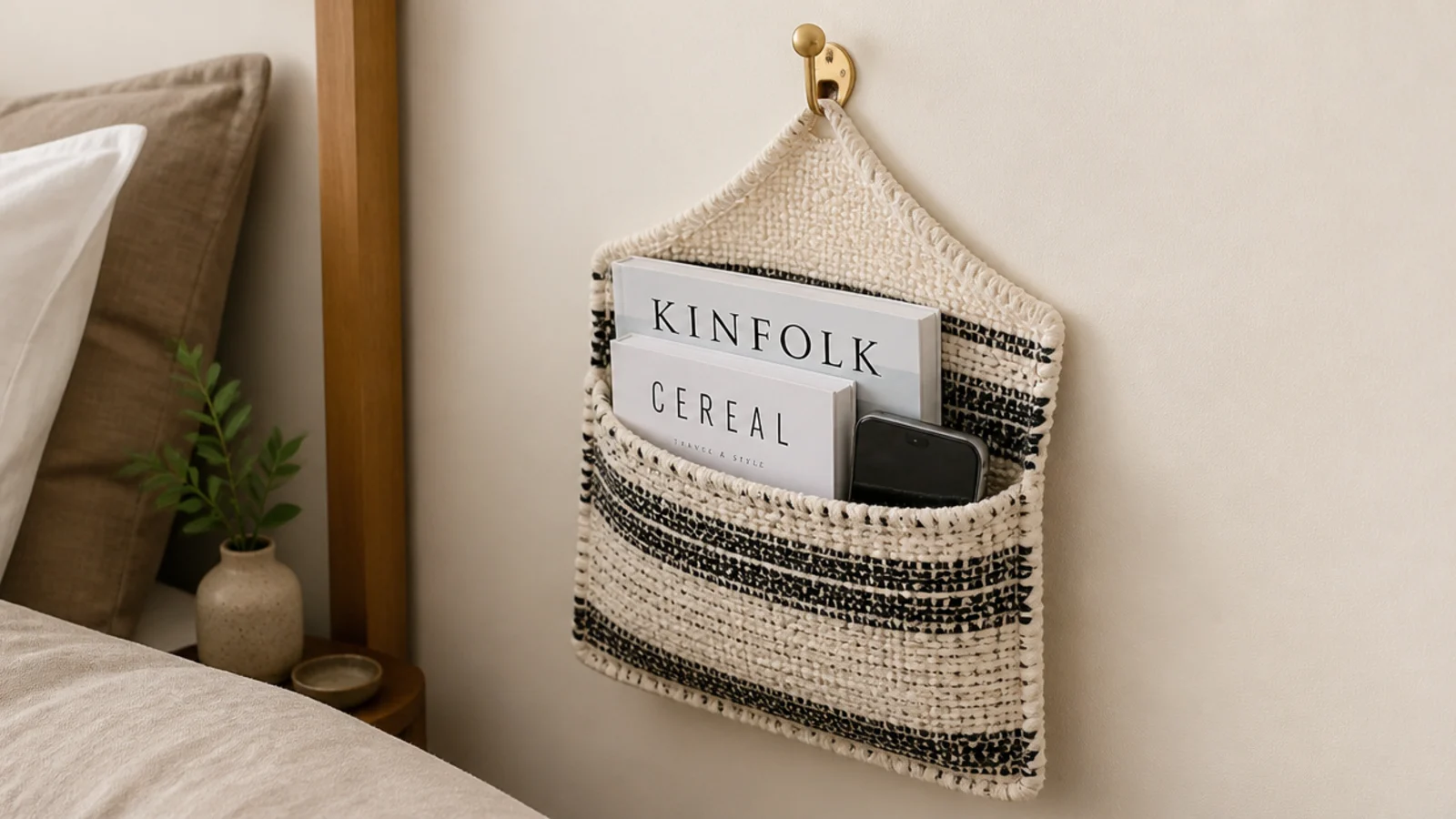
13. A wall pocket for books and a phone
A fabric pocket on one hook holds what usually stacks on a table. It costs under $20, takes about two inches of depth, and it is the softest-looking option in a room that is already full of hard edges.
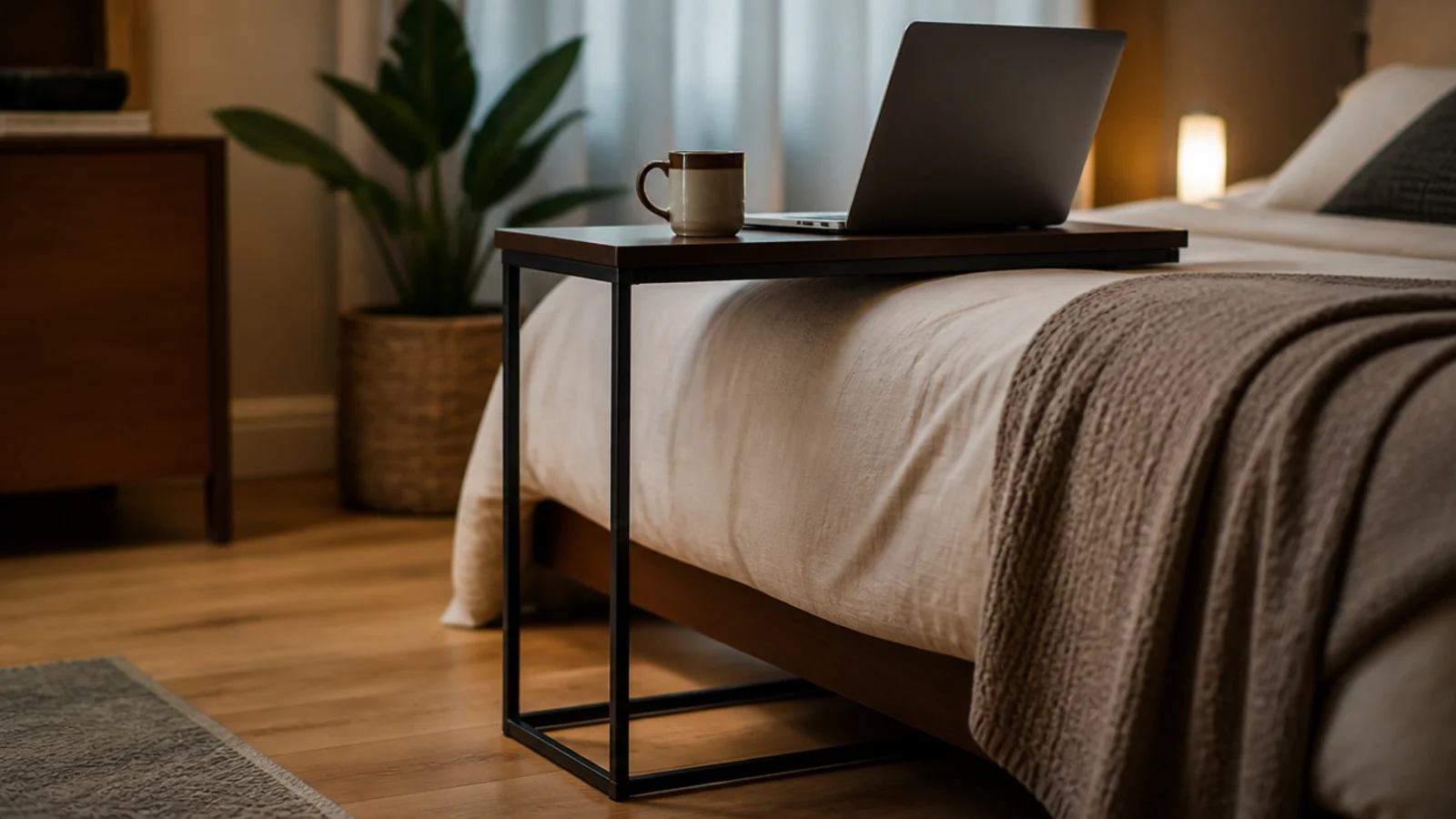
14. A C-table that slides over the mattress
The flat base goes under the bed and the top hovers over the mattress edge. It is the only surface here that reaches you when you are lying down, which makes it the pick for anyone who reads or works in bed.
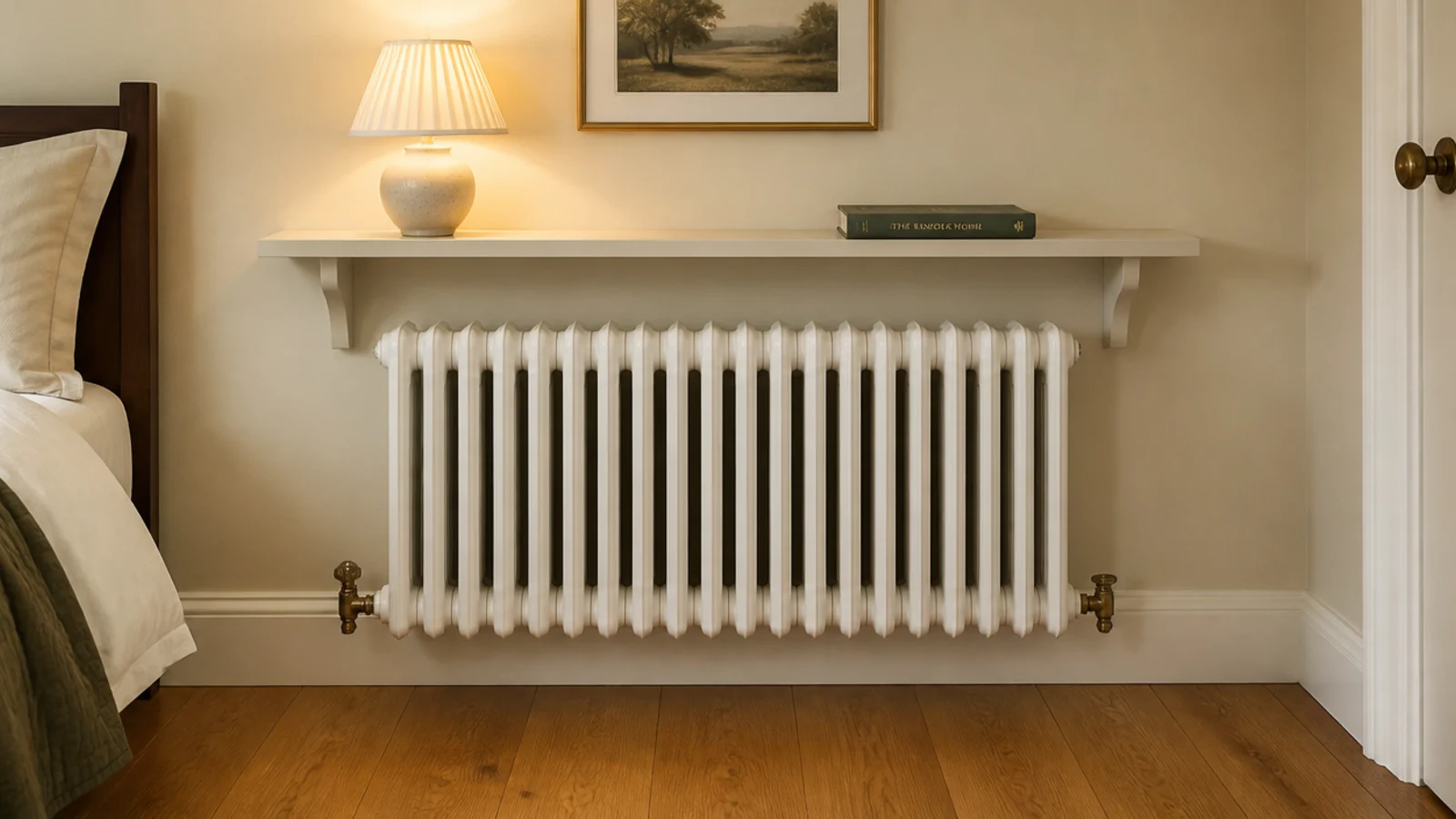
15. The radiator shelf you already have
A shelf fitted above a radiator gives you a surface and stops heat running straight up the wall. Keep anything heat-sensitive off it — candles and electronics both dislike sitting directly above a hot column.
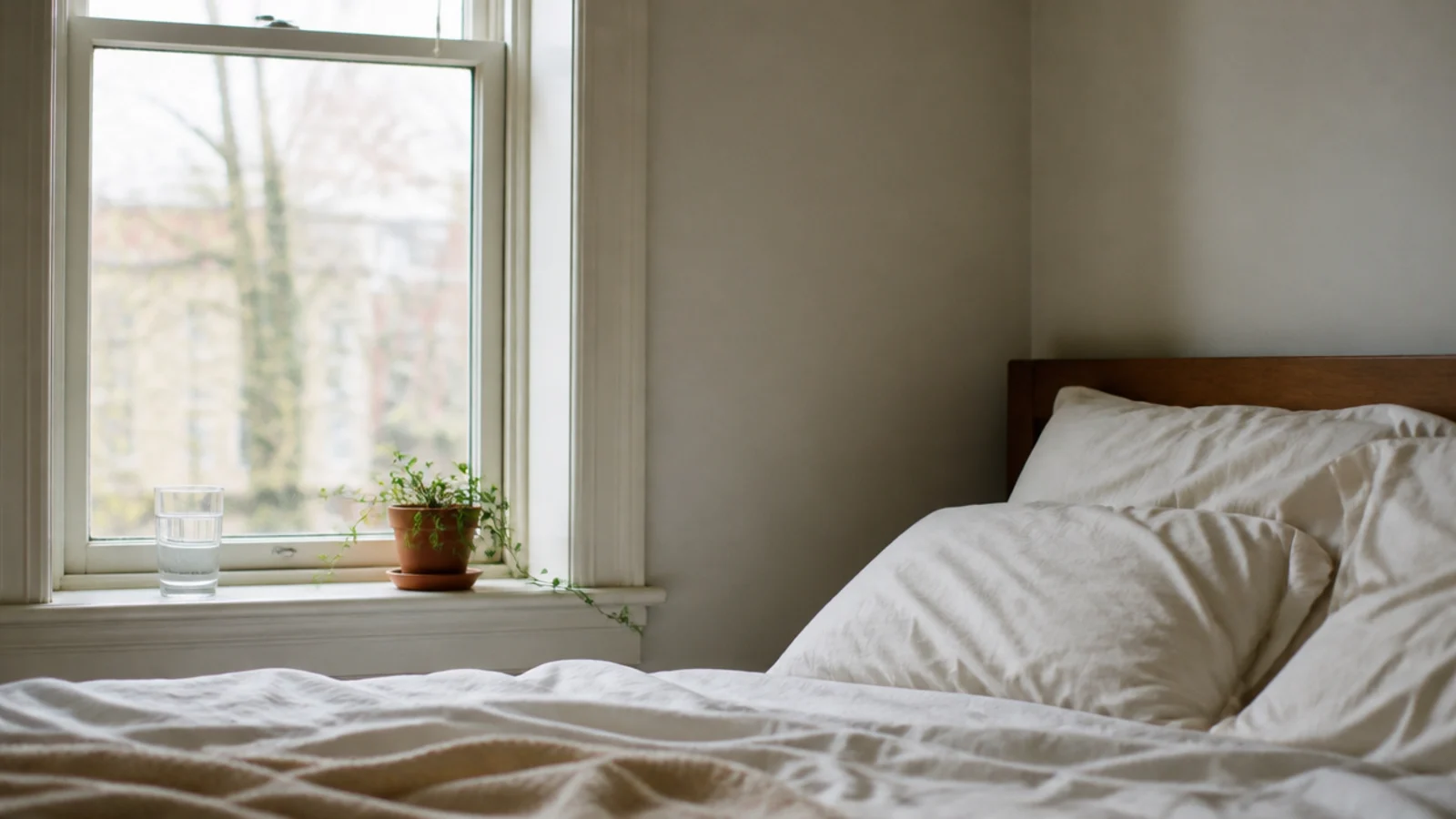
16. Push the bed to the window and use the sill
A deep sill is a bedside table with no footprint at all. It works best on the side you sleep on, and it costs nothing. Just check the window still opens with a glass standing there.
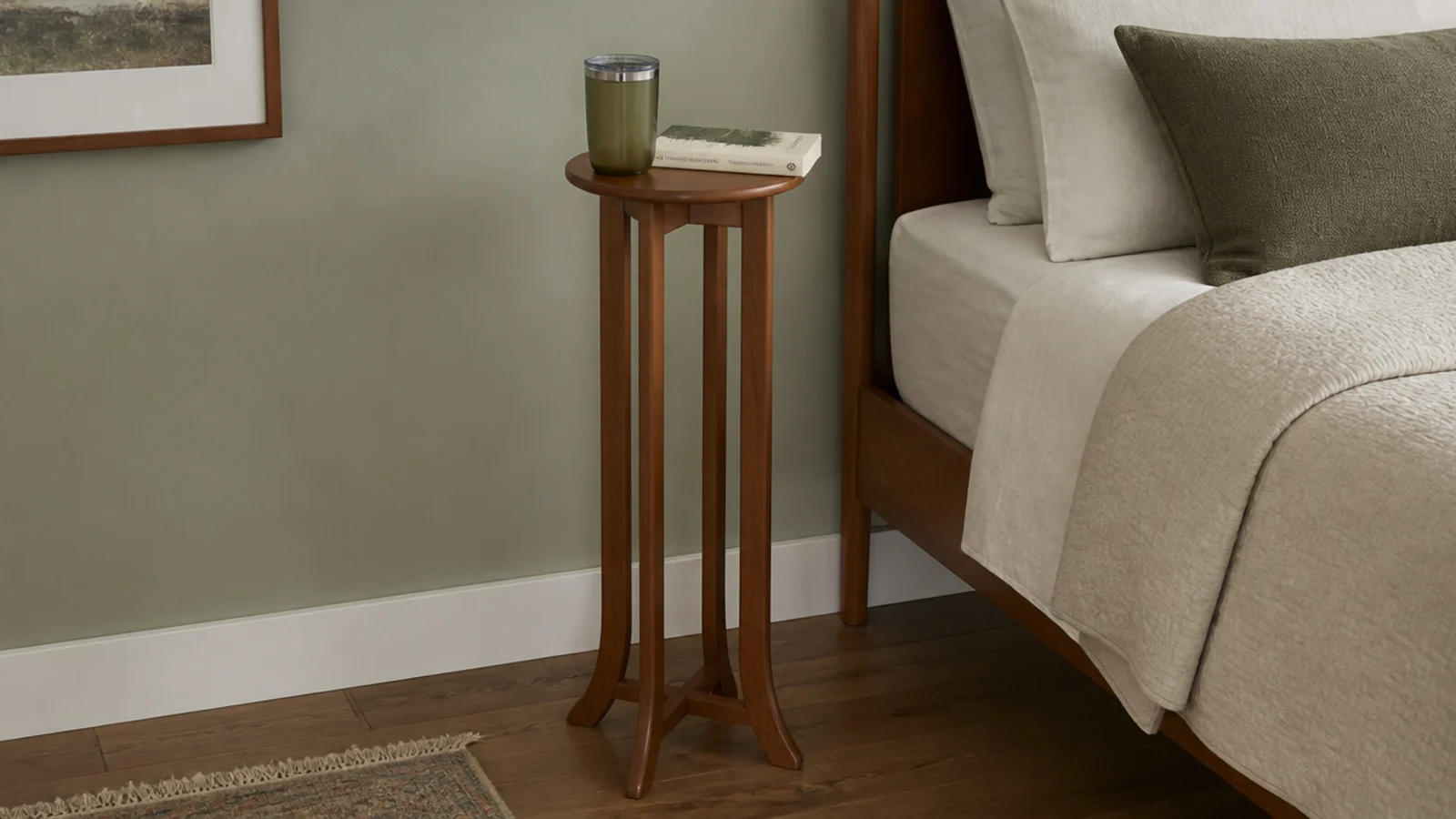
17. A skinny eight-inch plant stand
Plant stands are narrower than side tables and usually cheaper. Eight inches across holds a tumbler and a paperback, and the tall thin profile keeps the floor visually open in a room that needs it.
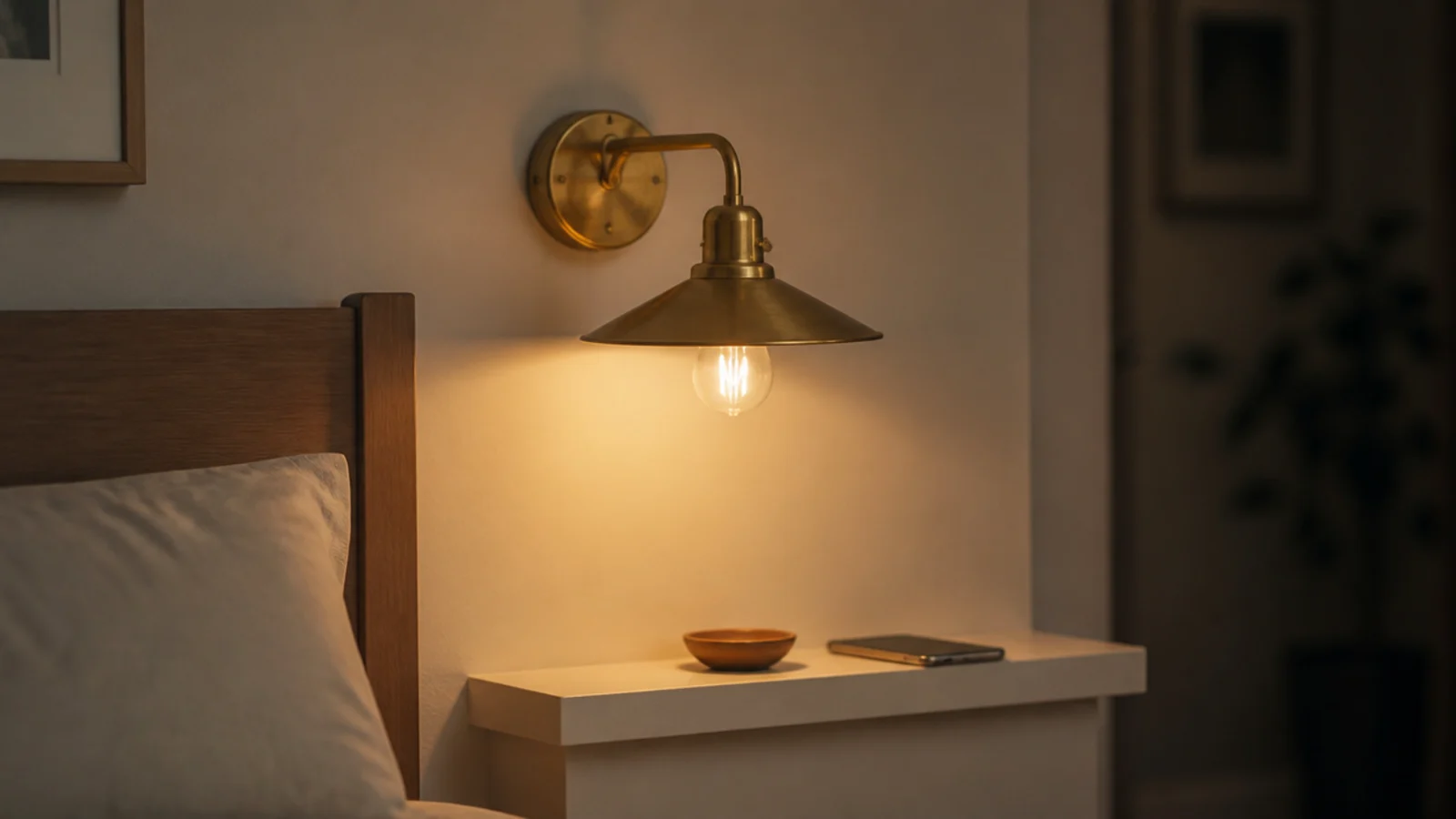
18. A sconce plus a tiny ledge
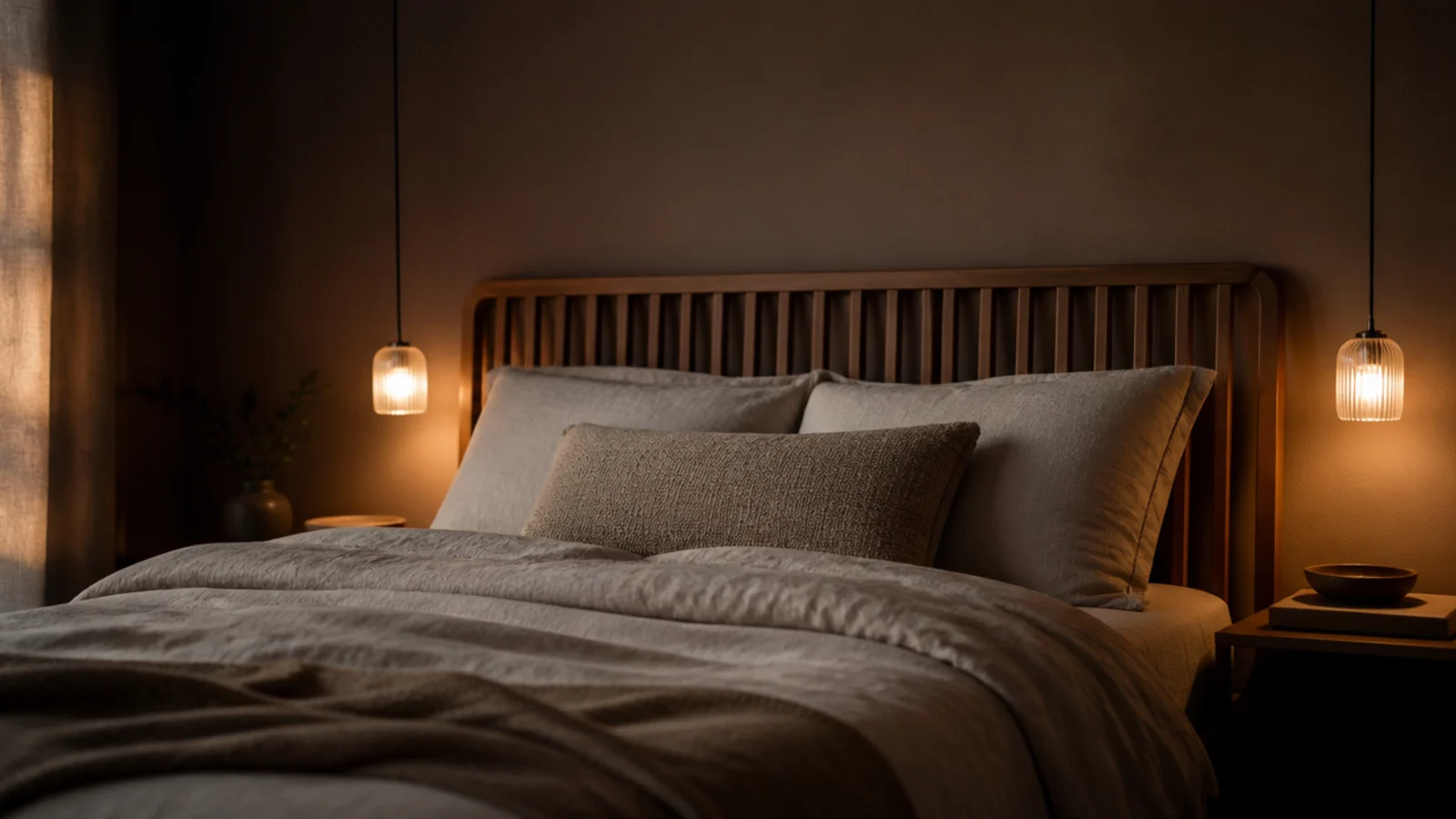
Once the lamp is on the wall, the ledge only has to hold small things — so six inches is plenty. This pairing is the single most effective small-bedroom move on the list.
19. A fold-down desk bracket at bed height
Two folding brackets and a short offcut make a bedside surface for under $25. The brackets are usually rated well past what a lamp and a book will ever weigh, so the board is the limiting factor, not the hardware.
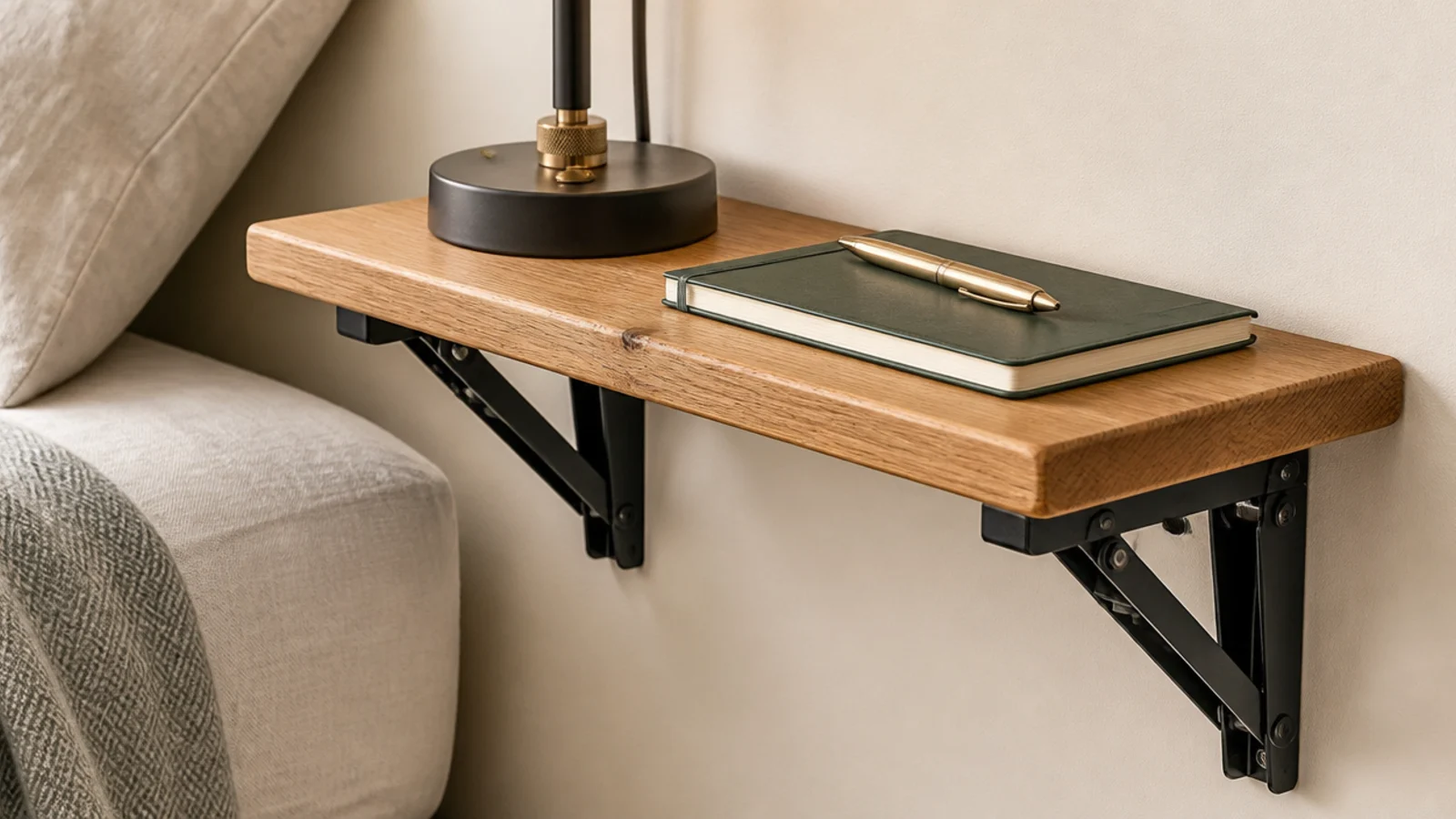
20. A bar stool with a twelve-inch seat
Beside a high platform bed a standard table sits too low. A stool with a 12-inch seat at 24 to 26 inches tall lands where the mattress does and takes barely any floor.
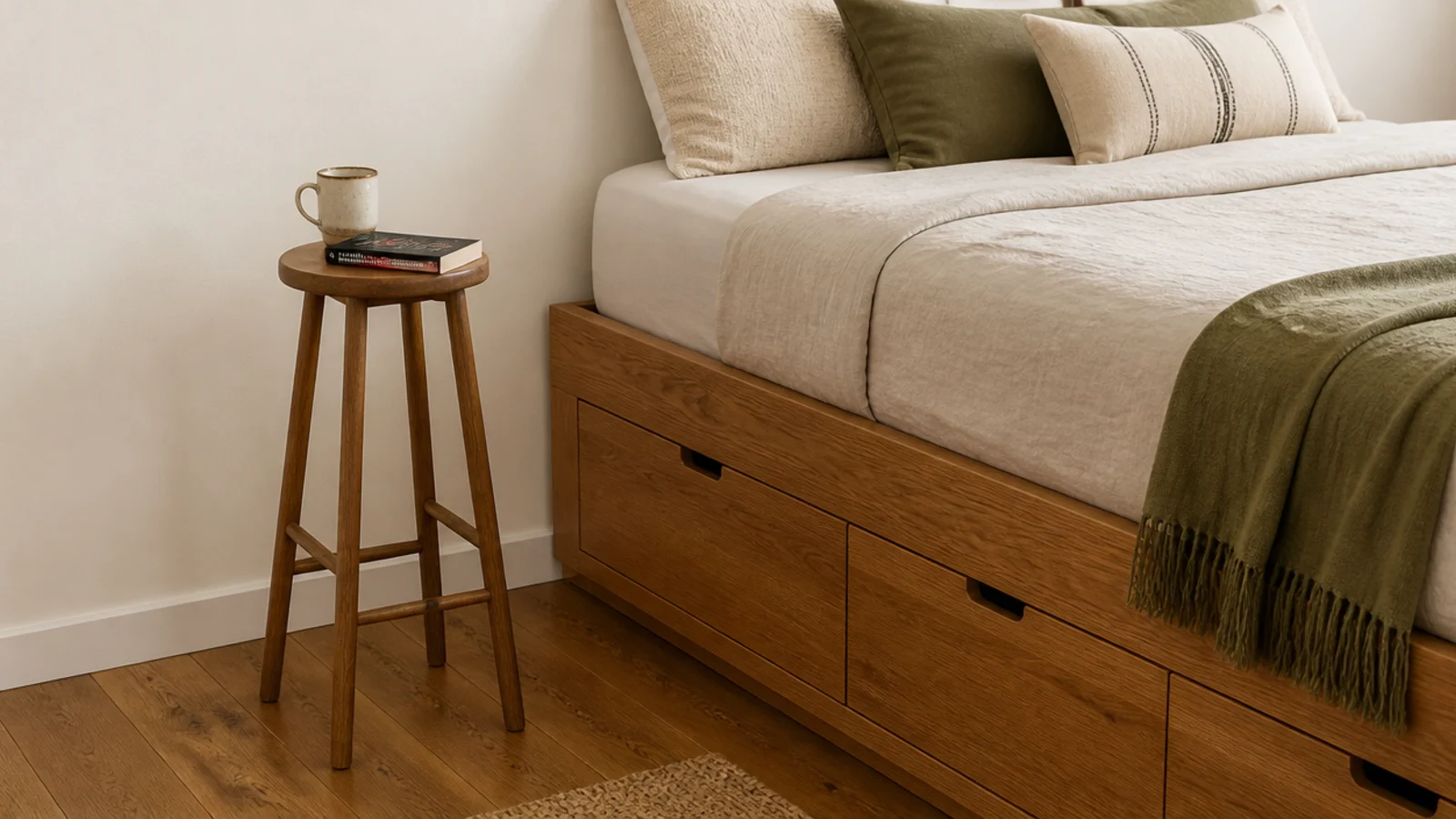
21. A shelf that clips onto the headboard
Clips over the top rail of a slatted or panel headboard and holds a phone, glasses and a small light. Nothing is fixed, nothing is drilled, and it lifts everything off a surface you do not have.
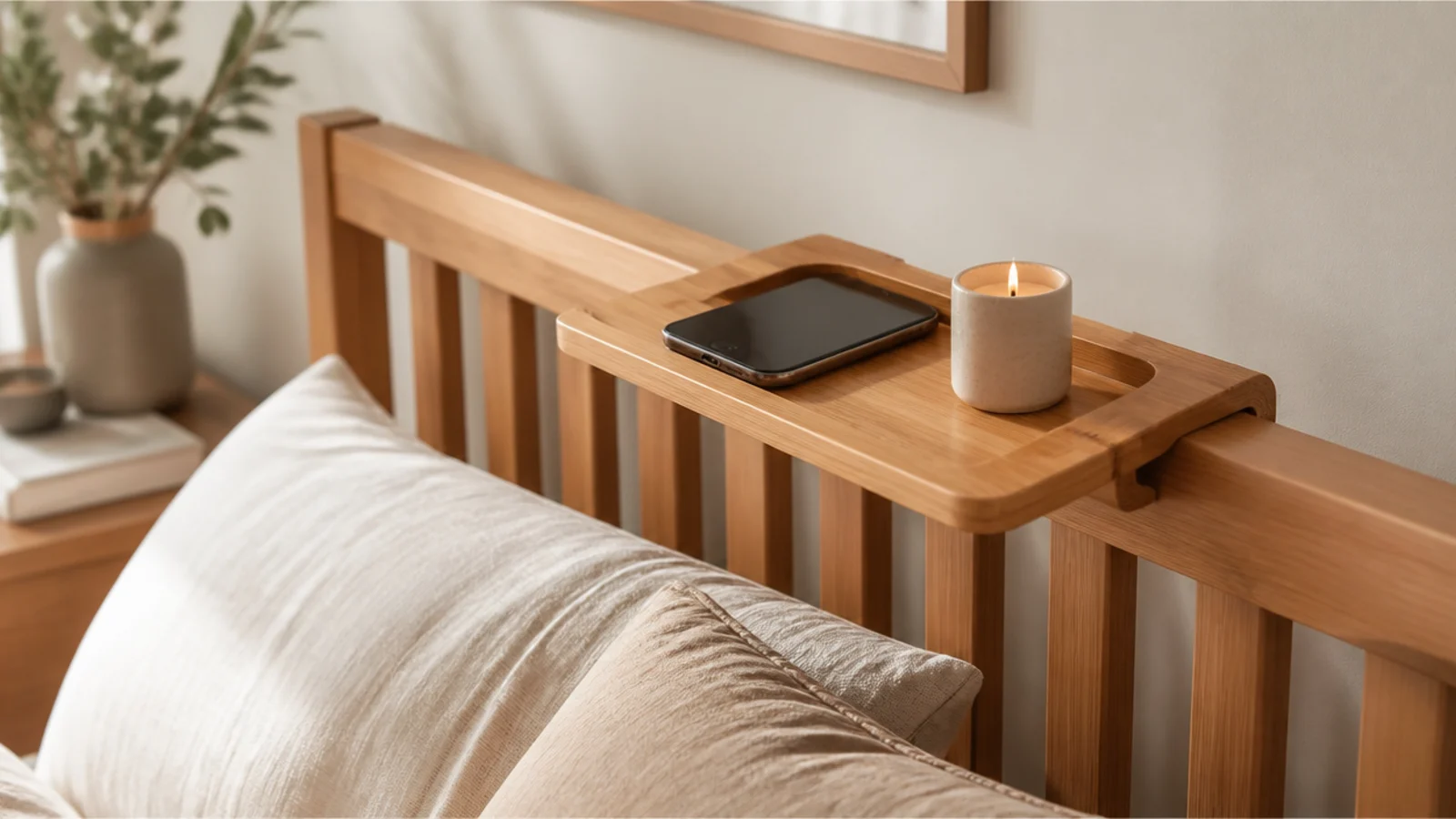
22. A spice rack turned book ledge
A small spice rack fixed to the wall holds four or five paperbacks spine-out for about $3. It keeps the reading pile off the floor without needing a table to stand it on.
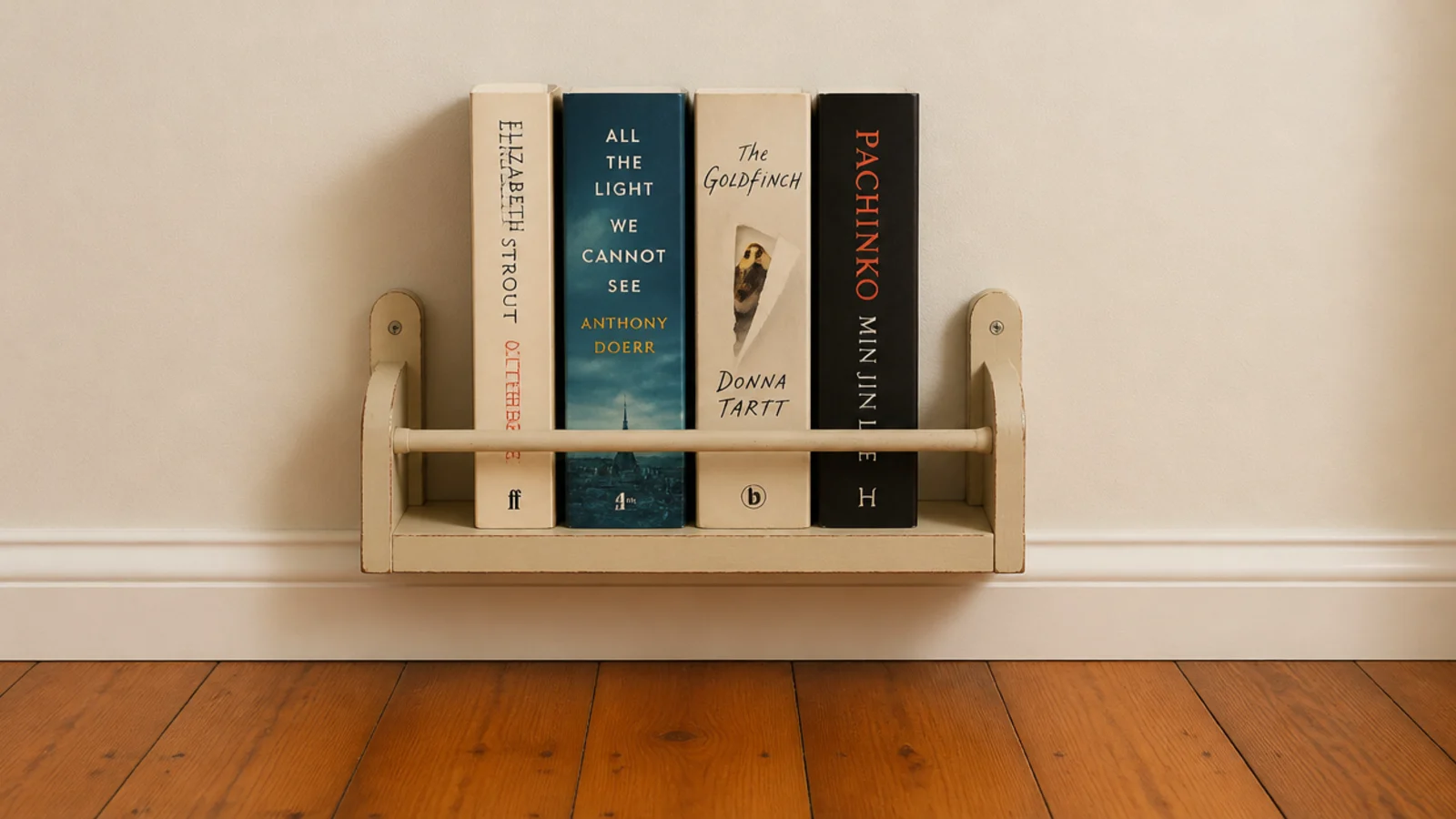
23. One hook and a hanging basket
A basket on a single hook holds a magazine, a torch and a charger. It takes one fixing, costs under $15, and swings out of the way when you make the bed.
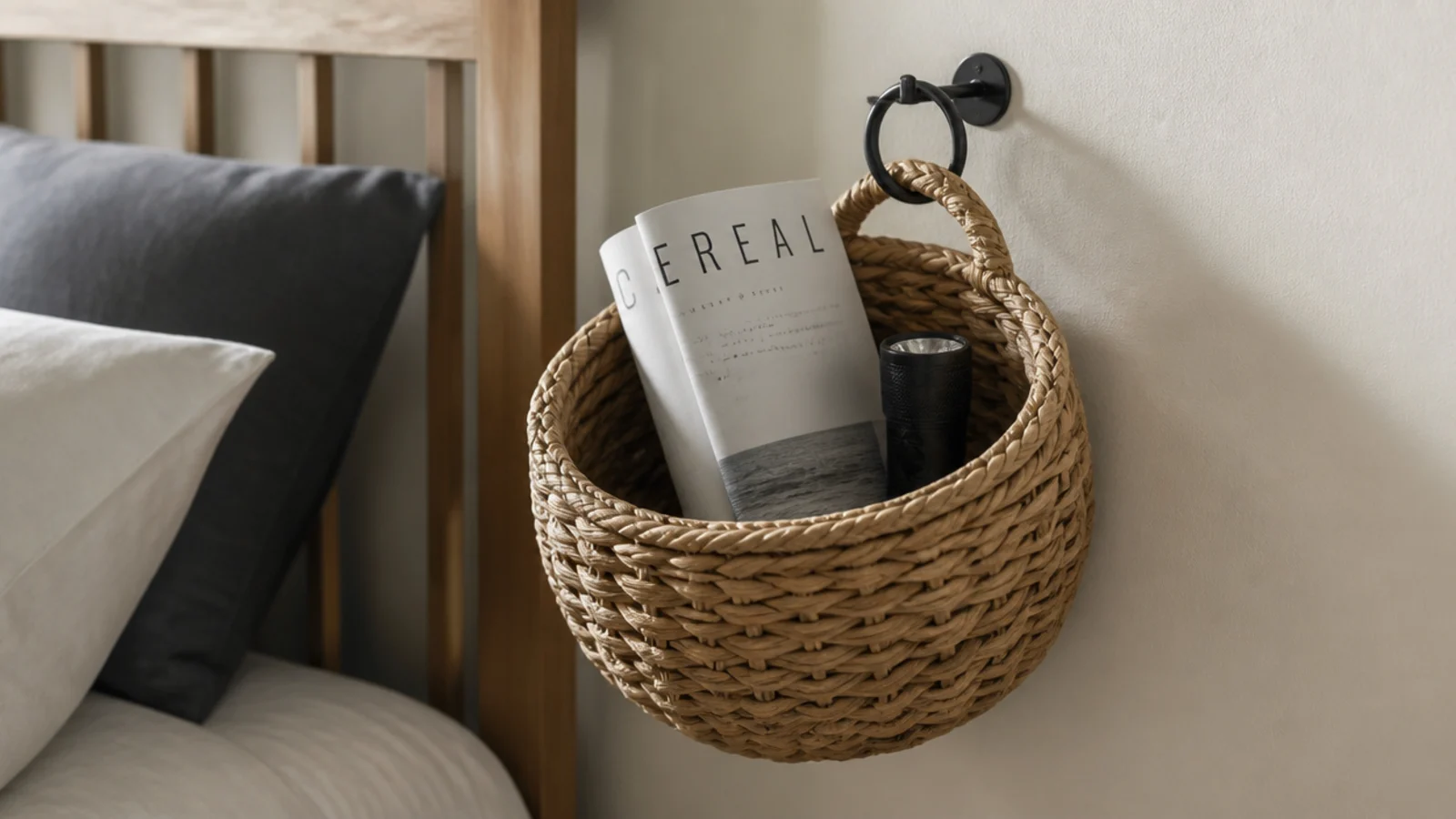
24. A caddy that slips under the mattress
A flat panel goes between mattress and base, and the pocketed side hangs down where you can reach it. The mattress weight holds it, so there is nothing to fit and nothing to damage.
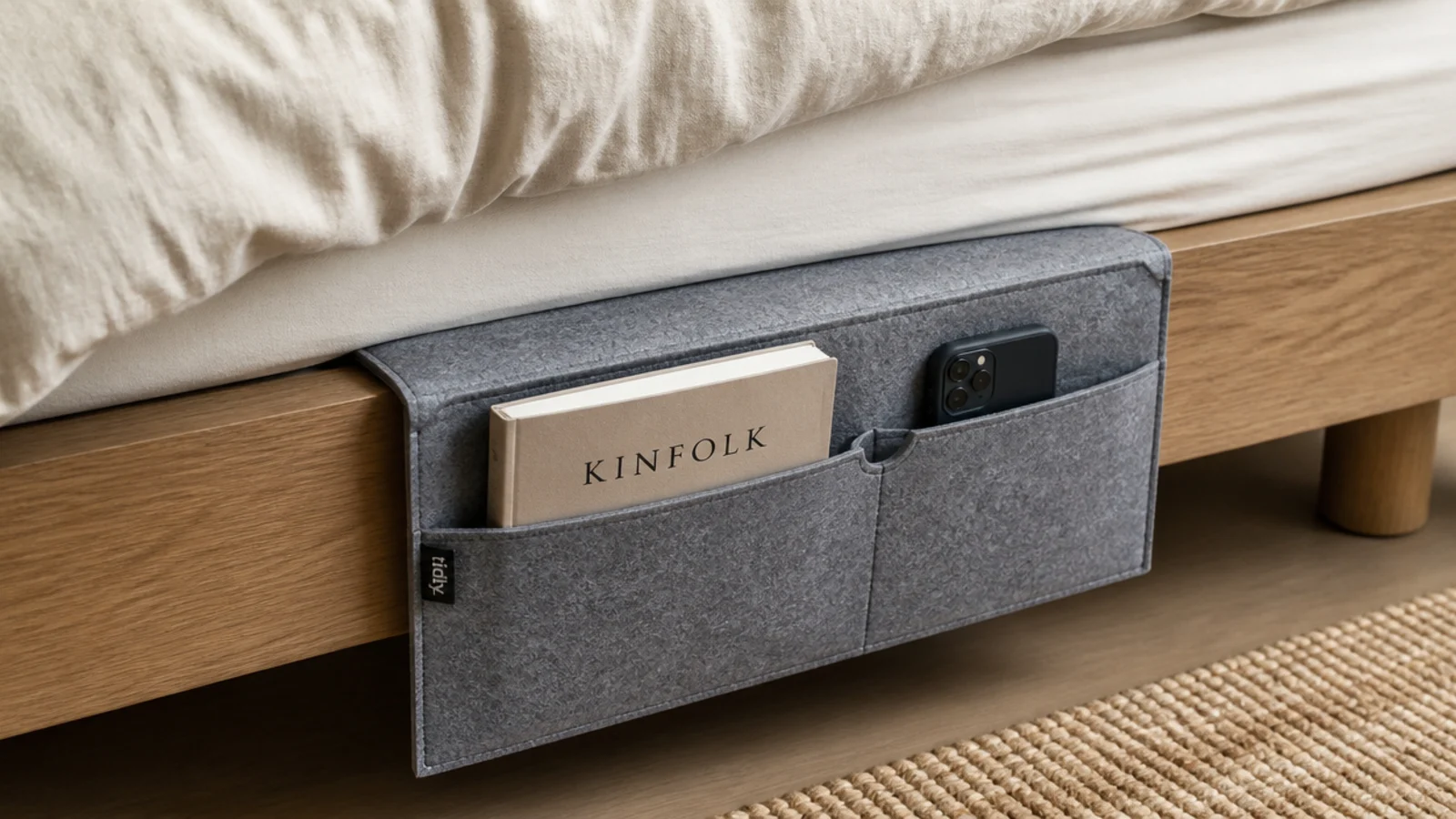
25. A corner shelf set above the bed line
The wall above the bed corner is almost always empty. A small triangular shelf up there takes a plant and a candle and frees the surface below for the things you actually reach for.
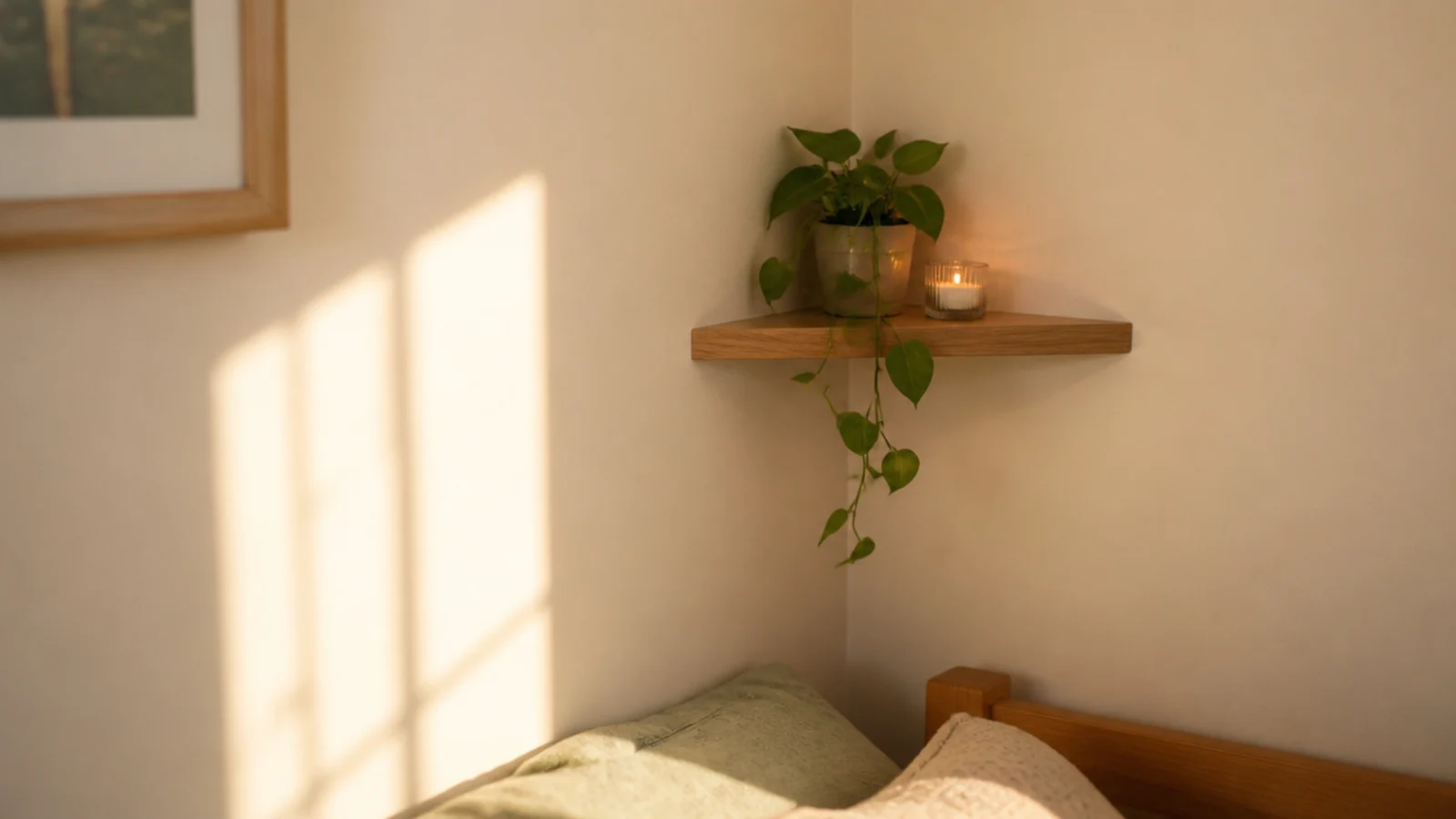
26. A narrow tower with four small shelves
When the floor is 10 inches wide but the ceiling is 8 feet up, build vertically. Four small tiers hold more than one table top and the footprint stays tiny. Strap it to the wall — a tall narrow unit tips easily.
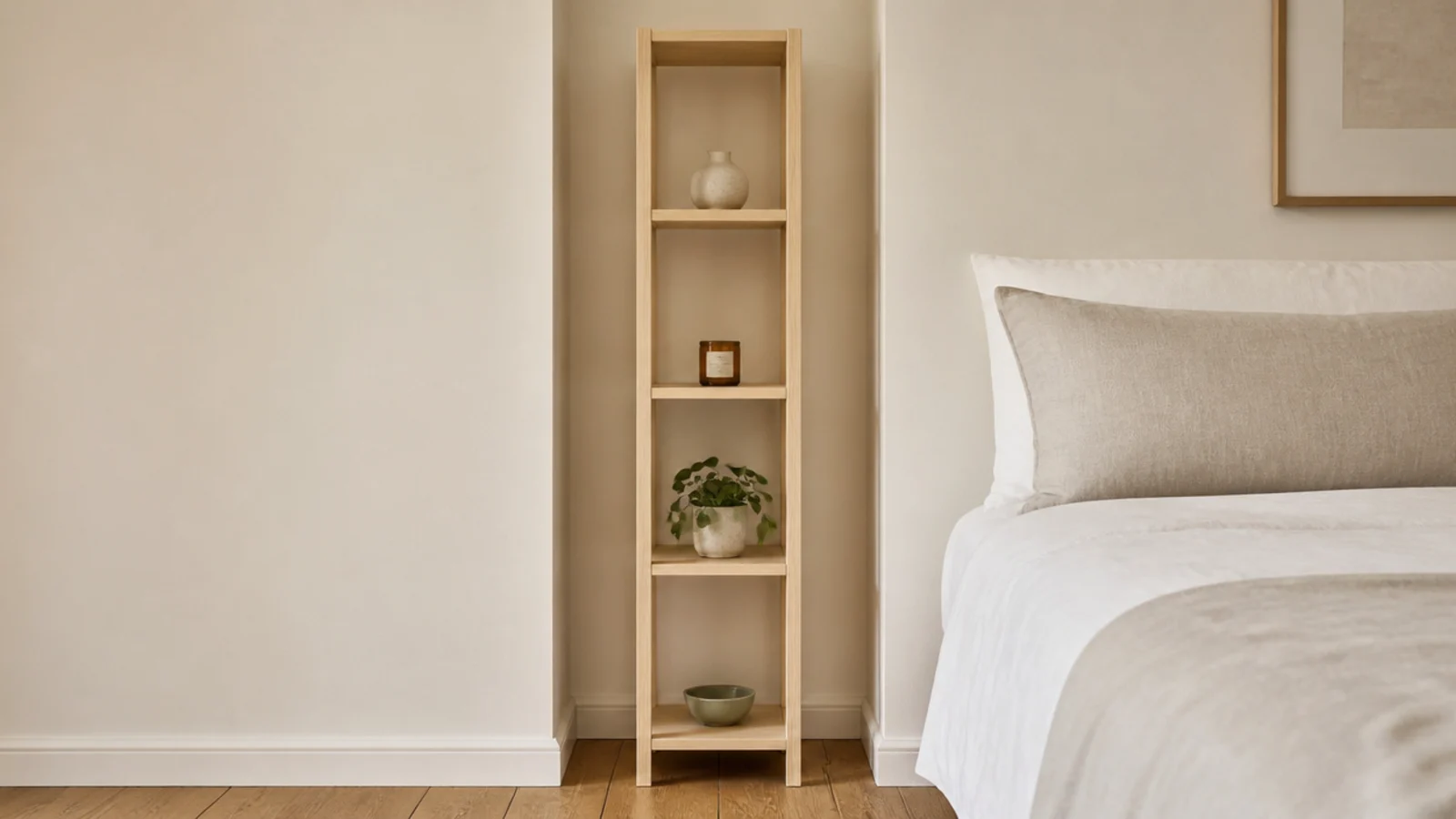
27. An ottoman with a hard tray top
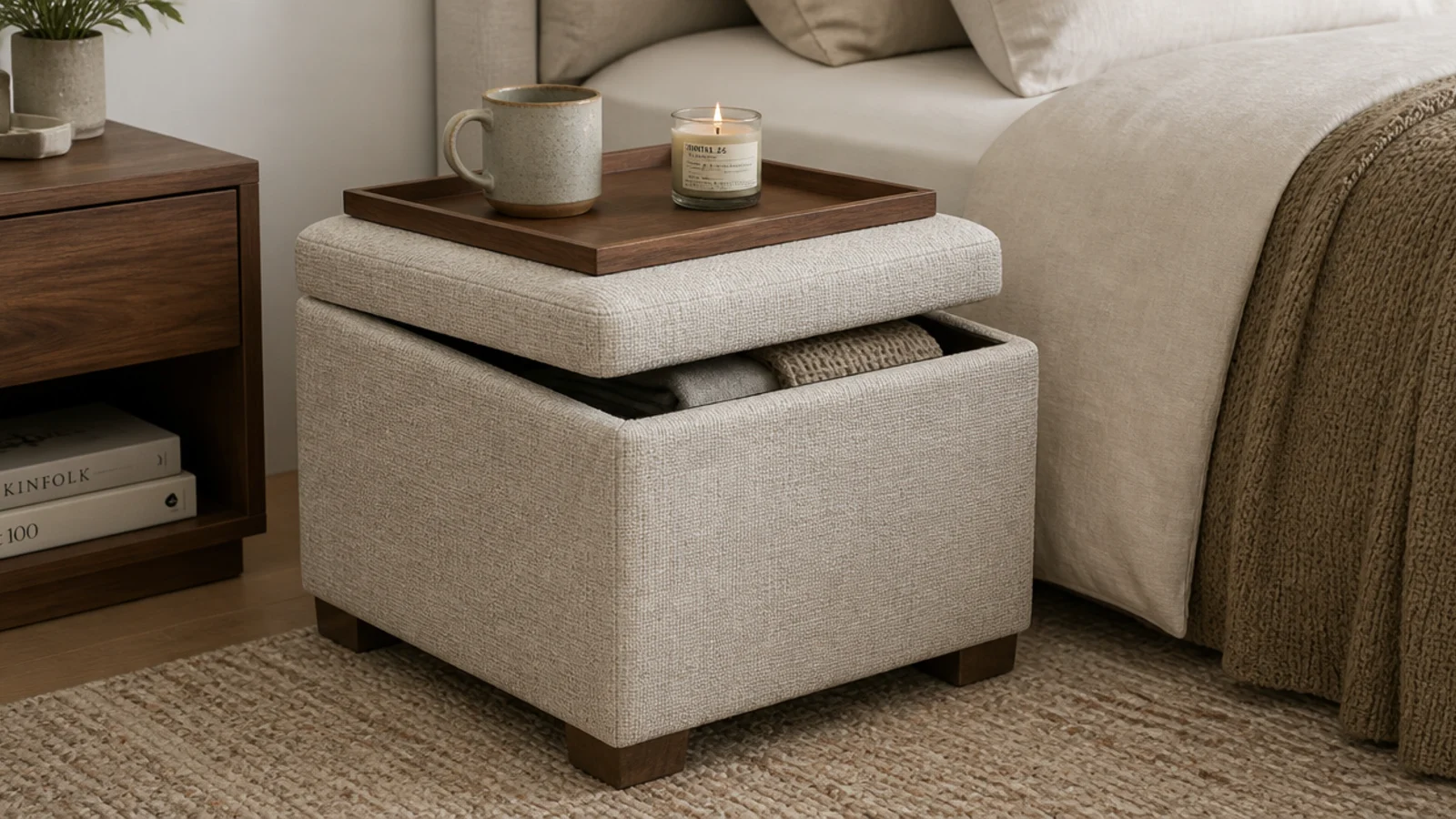
A small ottoman gives you storage inside, a seat for putting shoes on, and a surface once a rigid tray sits on the cushion. Three jobs in about 16 inches square.
28. A mirrored ledge to double the room
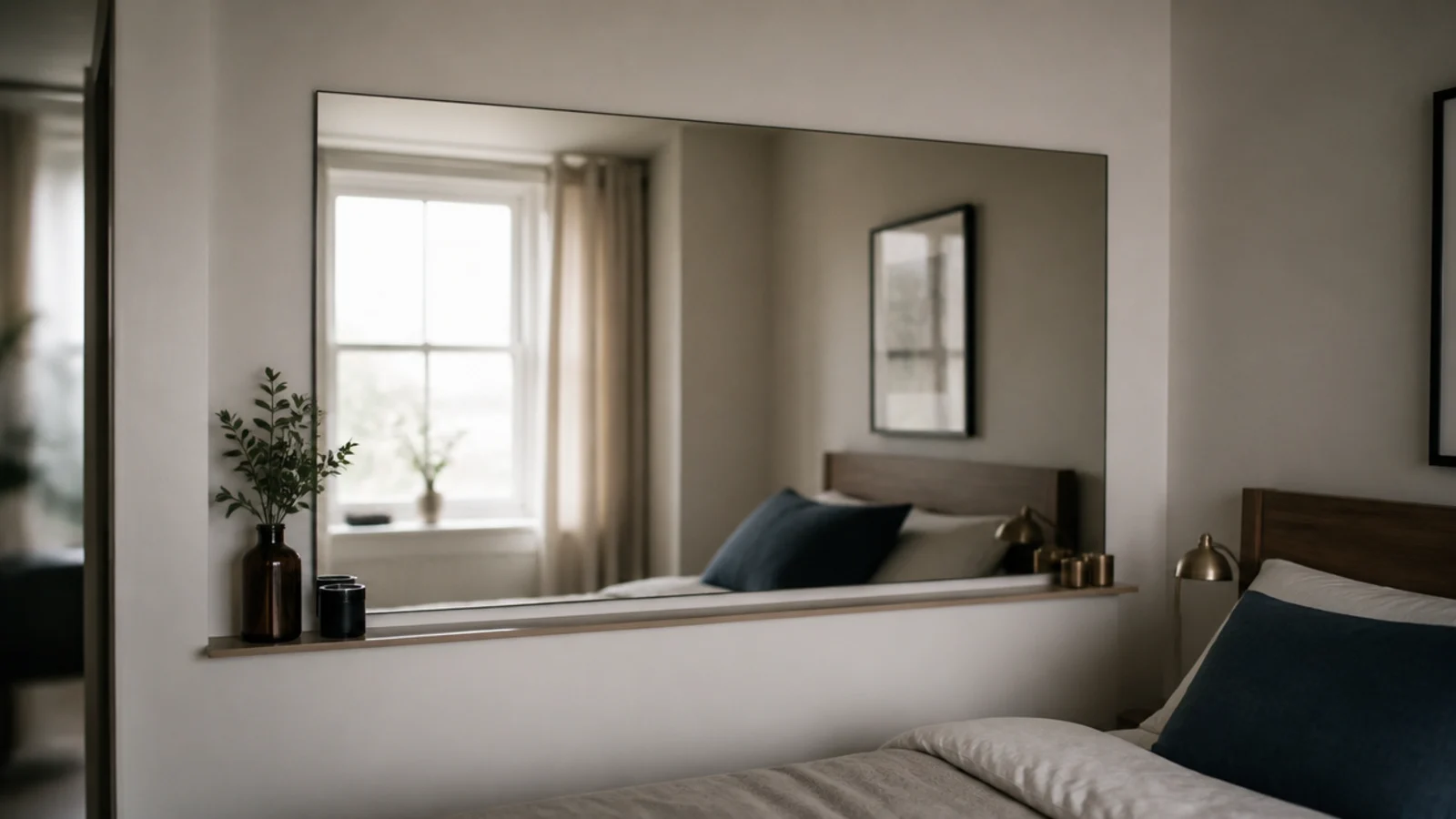
A mirror above a slim ledge reflects the opposite wall and makes a tight corner read considerably wider. Keep the ledge itself nearly bare or the reflection doubles the clutter too.
29. Keep the lamp base under five inches
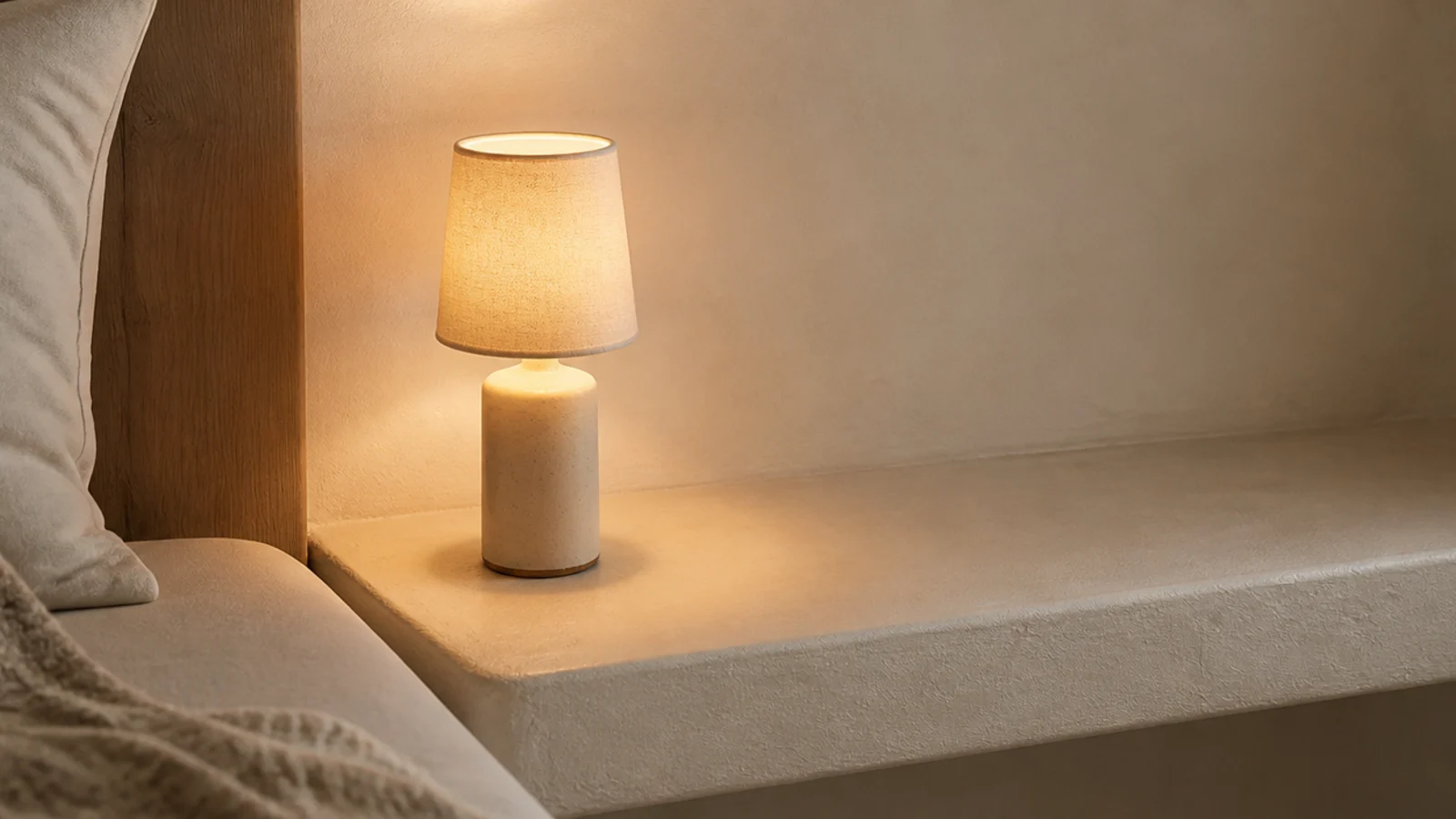
On a 10 or 12-inch surface a wide lamp base leaves nowhere to set a glass. Under five inches across, or move to the wall entirely. This is the detail that decides whether a small table is usable at 2am.
30. One in, one out, every single week
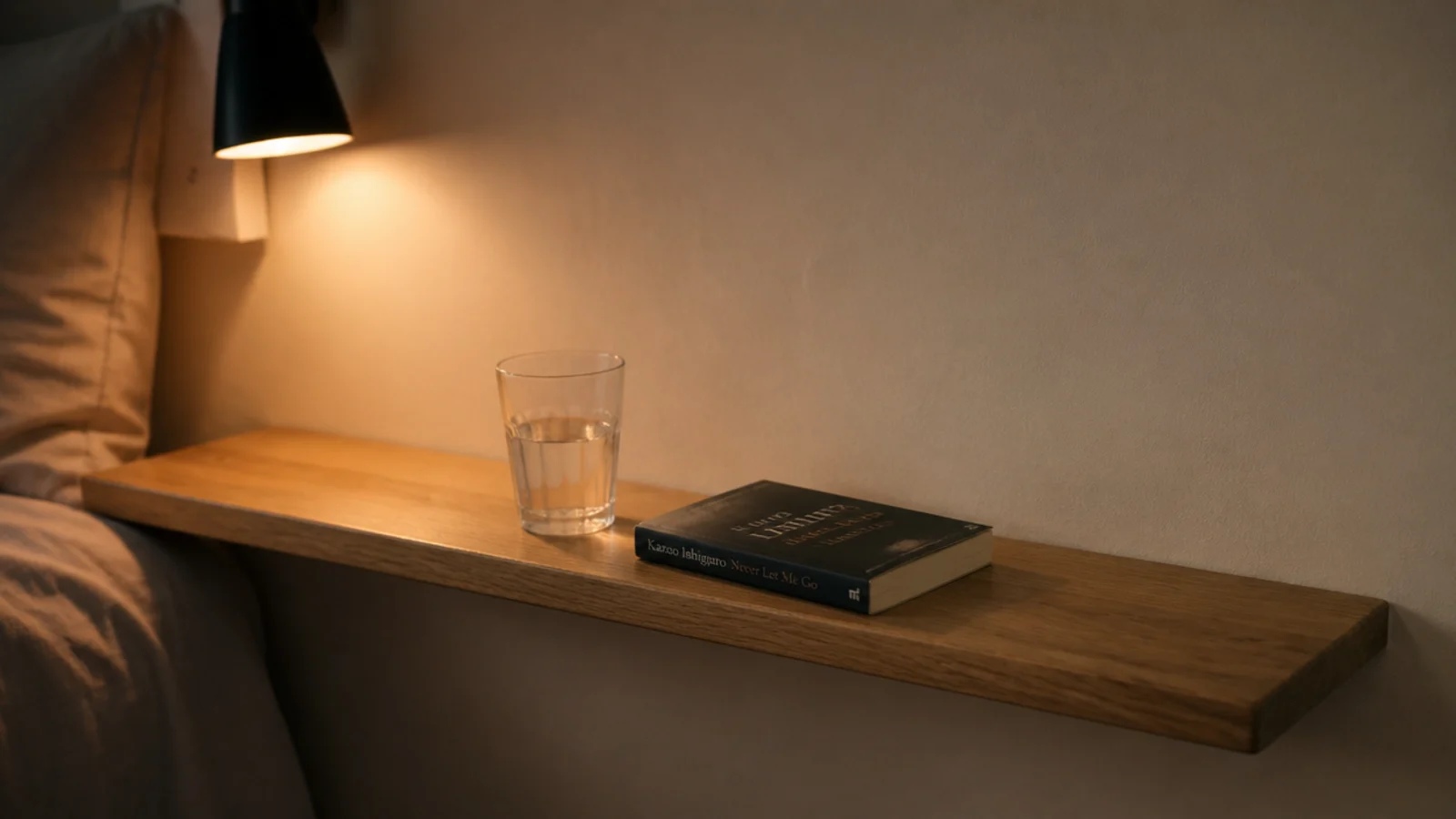
A small surface only stays useful if something leaves when something arrives. Any small table will fill in a fortnight otherwise, and then the room reads cramped for a reason that has nothing to do with its size.
If the room is dark as well as tight, layered low lighting does more than another surface — the aesthetic candle guide covers safe placement near bedding. For a floor-free build, the floating bedside table guide has the bracket and fixing detail.
Mistakes to Skip
- Buying a table that fits the gap exactly. You need clearance to get your hand behind it for the plug, and a table wedged wall-to-frame is impossible to clean around.
- Mounting a wall ledge on plastic plugs in plasterboard. They are rated around 10 pounds and a lamp plus a book plus a lean is more than that. Use two small screws into a stud, or adhesive rated for the weight.
- Choosing a tall narrow tower without strapping it to the wall. A four-tier unit 10 inches deep tips at a nudge, which matters most in exactly the tight rooms it suits.
- Putting the lamp on a 10-inch surface at all. Once the base and shade are on there is no room left for the glass, and the glass is the thing you reach for at night.
Frequently asked questions
What is the smallest a bedside table can be?
Around 10 inches deep and 12 inches wide is the practical floor. That holds a compact lamp base and a phone, or a glass and a paperback, but not all four at once. Below 10 inches a surface stops being useful and a wall-mounted ledge or a bed-frame caddy will serve you better.
How much walkway do I need beside a bed?
Twenty-four inches of clear floor to pass comfortably, and 30 inches if a door or a wardrobe swings into that space. Measure from the bed frame to the nearest obstruction, subtract your walkway, and whatever remains is the deepest table the room can actually take.
What works if there is no floor space at all?
Go vertical or go under. A wall-mounted ledge at mattress height takes zero floor, a bed-frame caddy hangs off the side rail, and an under-bed drawer holds far more than any small table. All three leave the walkway completely clear, which matters more in a tight room than the surface itself.
Can renters use wall-mounted bedside tables?
Often yes. A ledge under about five pounds hangs on heavy-duty adhesive strips rated for the weight, and a bed-frame caddy needs no fixings at all. For anything holding a lamp, use two small screws into a stud and fill the holes on the way out — two filled holes cost far less than a damaged deposit.
Should a small bedroom have matching bedside tables?
Not necessarily. In a tight room one side often has more space than the other, and forcing a matching pair usually means both are too small. Use the larger table where the gap allows and a wall ledge on the tight side, keeping both surfaces within two inches of the same height.
Want more like this? Browse all 15 bedside table ideas guides — they all use the same measurements and budget tiers.
Pin it for later
Save this to your Bedside Table Ideas board
Pin it now so it is waiting for you when the tape measure comes out — and so the next person hunting for this idea can find it too.
Save this pinKeep going
More ideas worth saving while you have the tape measure out.