Bedside Table Ideas · Listicle
25 Narrow Bedside Table Ideas That Still Fit

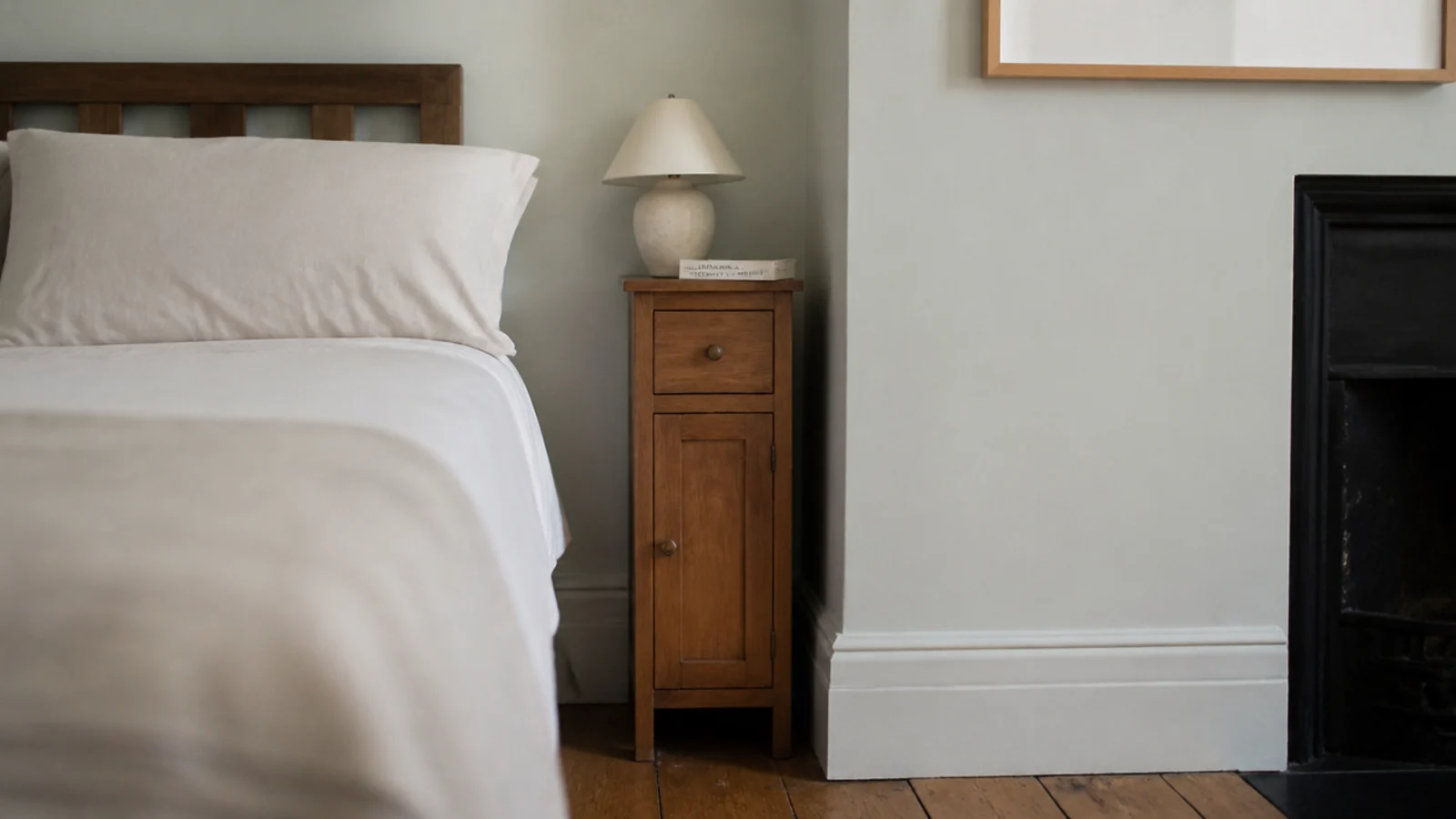
Narrow bedside table ideas start with a number nobody publishes: the gap you actually have. Furniture is sold at 16, 18 and 20 inches deep because those are the sizes that photograph well in a showroom, and a real bedroom with a radiator, a chimney breast or a door swing frequently leaves nine. I have fitted tables into gaps of eight, eleven and thirteen inches across three flats, and the ones that worked were chosen depth-first. Here are twenty-five that fit where the standard sizes will not.
In this guide27 sections — tap to openHide
- 1.The three measurements narrow bedside table ideas depend on
- 2.Measure the gap at three heights before you buy
- 3.Set the depth from the lamp base outward
- 4.A fourteen-inch demilune flat against the wall
- 5.A ten-inch square column plinth
- 6.A vintage telephone table at eleven inches deep
- 7.Turn a small chest ninety degrees to face the bed
- 8.A castored drawer unit that rolls out when you need it
- 9.One long console running the full side of the bed
- 10.A fold-down wall tray that closes to two inches
- 11.A single nine-inch drawer hung on a cleat
- 12.A swing-arm sconce buys back six inches of depth
- 13.Round tops delete the corner your hip finds
- 14.A slim trolley you can wheel out to clean behind
- 15.Mount a shelf on the wardrobe side panel
- 16.Two shallow shelves instead of one deep one
- 17.A two-inch lip so nothing rolls into the gap
- 18.Line the front edge up with the skirting, not the wall
- 19.Anti-tip strap anything over thirty inches tall
- 20.Ease the corner that meets the walkway
- 21.A narrow bench turned end-on
- 22.Wall-mount the clock and the phone dock
- 23.A niche cut between the studs
- 24.Run the cable inside the leg with adhesive clips
- 25.A folding stool that stores flat behind the door
- 26.The one-hand reach test at 2am
- 27.Mistakes to Skip
The three measurements narrow bedside table ideas depend on
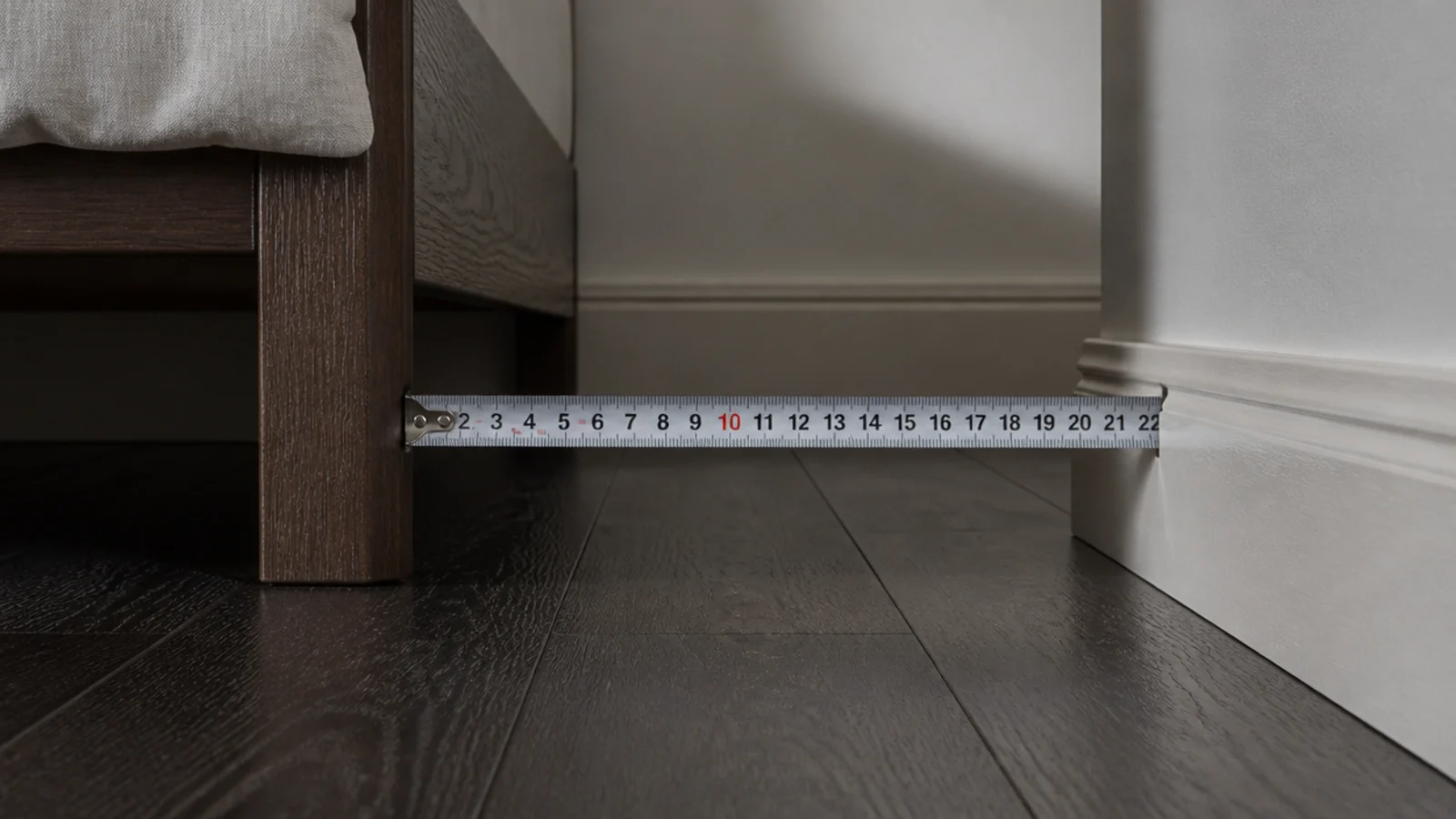
Measure the gap at three heights, because it is rarely a rectangle. Take a reading at the skirting board, one at mattress height, and one level with the top of the headboard. A skirting board steals half an inch to an inch, a window board or a radiator can steal four, and an architrave can steal two at the top. The smallest of the three readings is the number you shop with.
Then subtract the walkway. Twenty-four inches of clear floor is comfortable to pass through, twenty is tight but liveable at the foot of a bed, and thirty is needed where a door swings. Whatever remains after the walkway is your maximum depth.
Now set the minimum. A small ceramic lamp base measures six to seven inches across its foot, so eight inches of depth is the practical floor for a table meant to carry a lamp. Below eight, you are choosing between the lamp and the water glass, which is the point at which a wall-mounted light stops being an upgrade and becomes the only sensible answer.
One more number: height. Keep the top within two inches of the dressed mattress. In a narrow gap that matters more, not less, because you cannot see the surface without leaning forward over the edge. If none of this leaves anything usable, the small bedroom layouts cover the substitutes.
1. Measure the gap at three heights before you buy
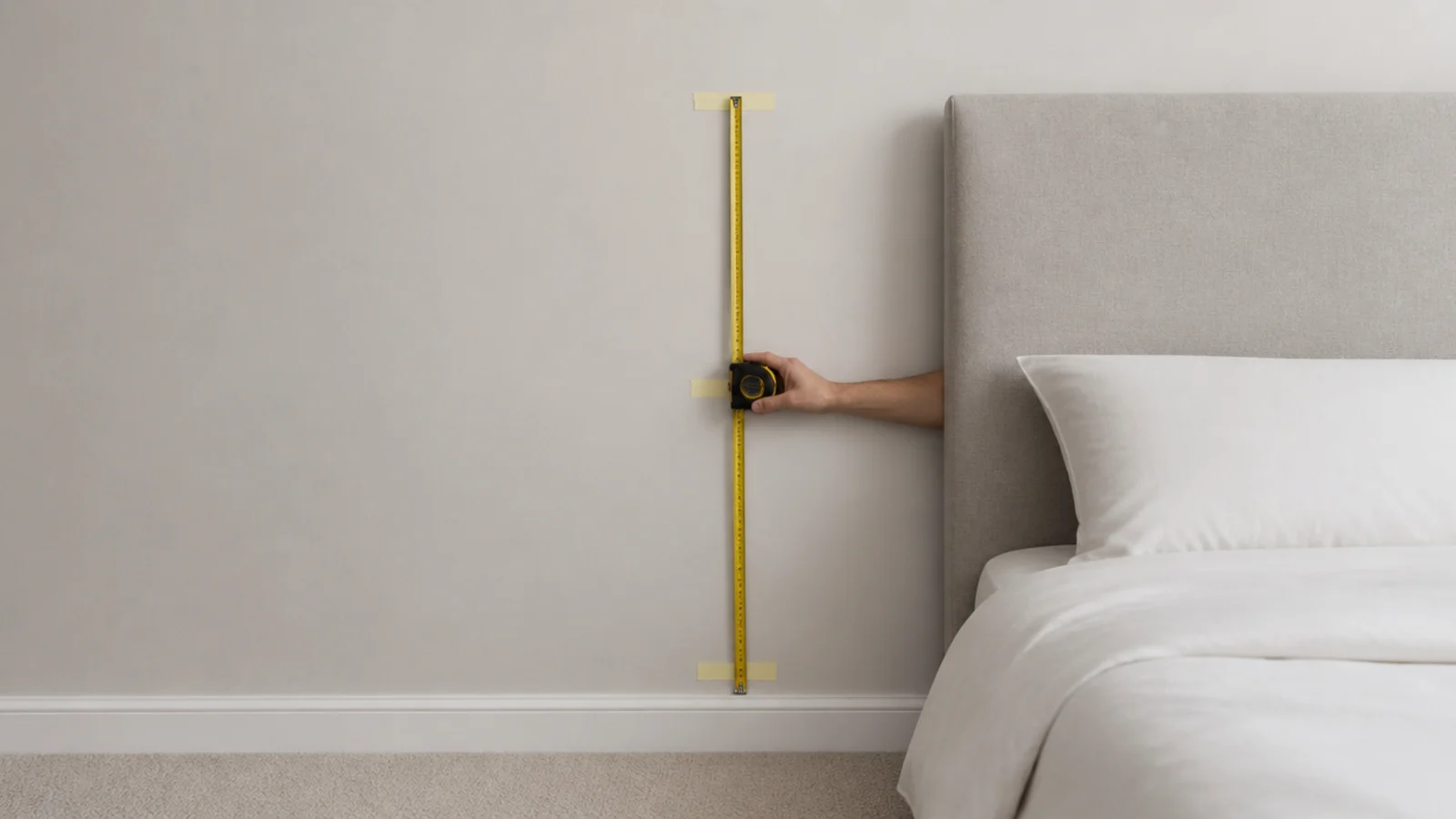
Tape three strips of low-tack tape to the wall at floor, mattress and headboard level, then measure across at each. Write all three down. Most returns happen because someone measured at mattress height, where the gap is widest, and discovered the skirting board and the radiator pipe at delivery. The smallest reading governs, and it is usually an inch or more tighter than you expected.
2. Set the depth from the lamp base outward
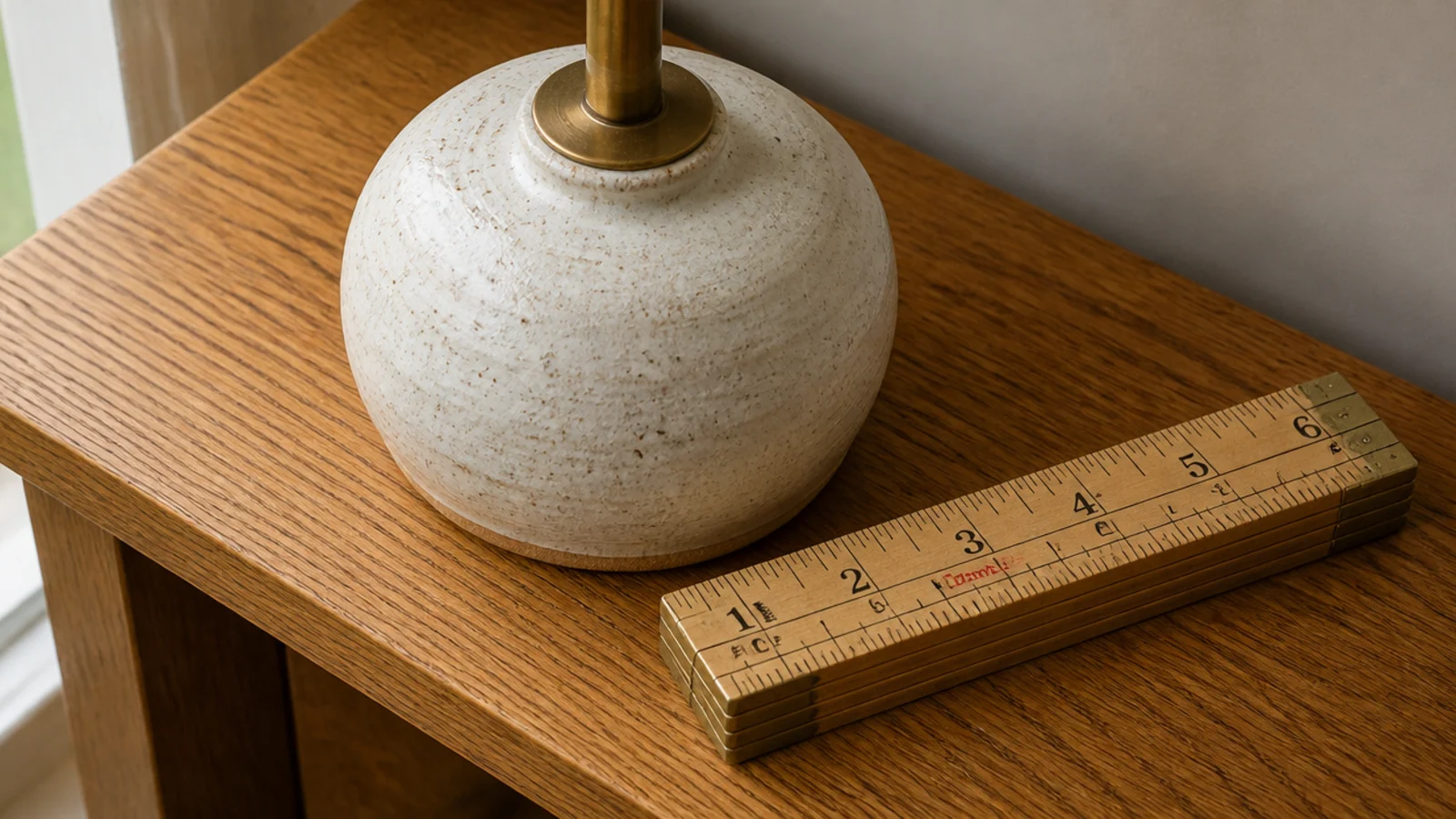
Work outward from the object with the largest footprint rather than inward from the wall. Measure your lamp foot — most small ceramic bases are six to seven inches across, most brass column bases four to five. Add two inches of clear surface in front and you have your true minimum depth. A four-inch lamp foot legitimately opens up depths that a seven-inch one rules out entirely.
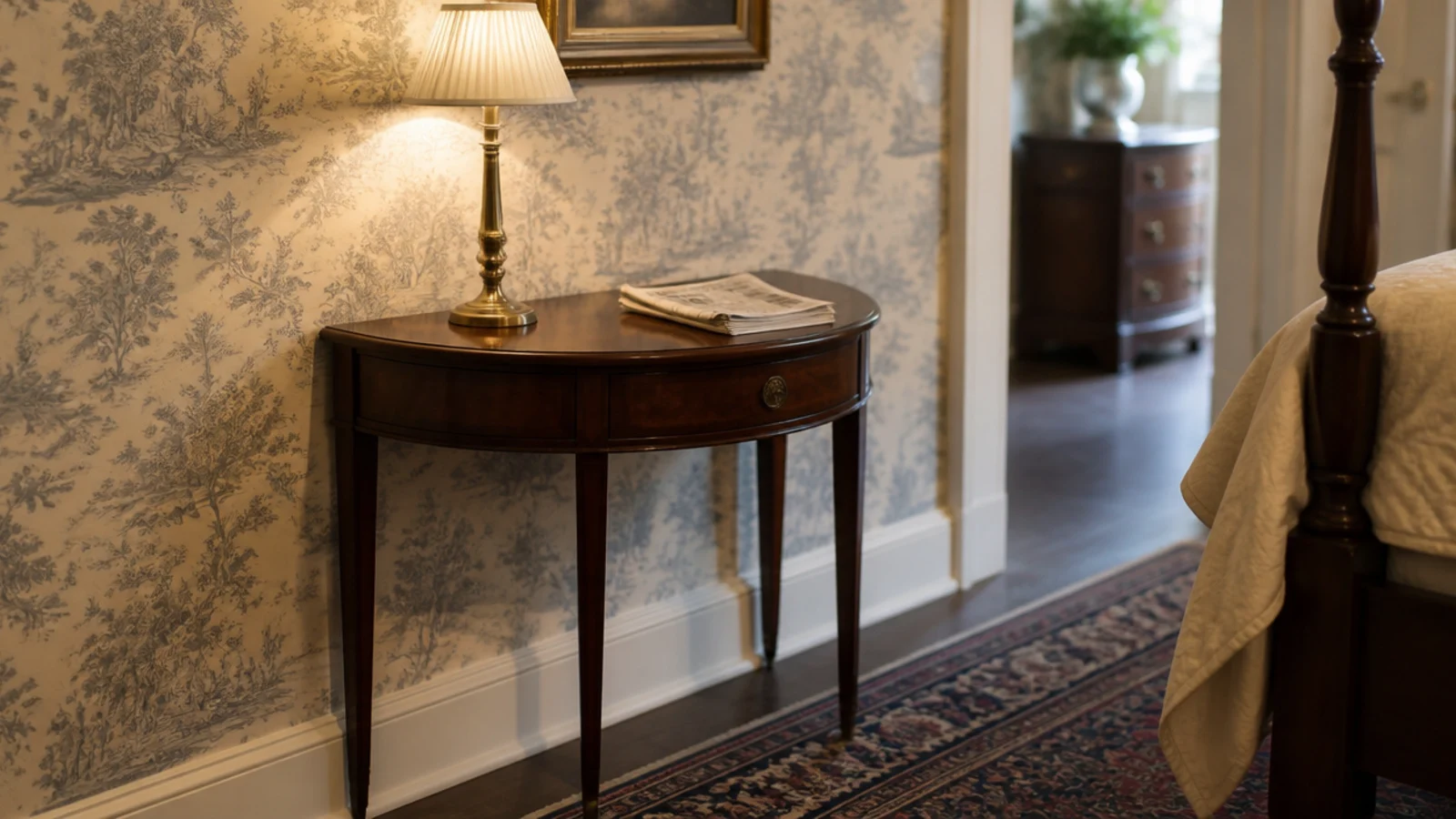
3. A fourteen-inch demilune flat against the wall
A demilune is a half-round table with a straight back edge. It sits flush to the wall at its widest point and curves away from the walkway, so a fourteen-inch table only projects fourteen inches at the very centre and far less at either side. Secondhand demilunes are common and cheap because they suit almost no modern room except this one.
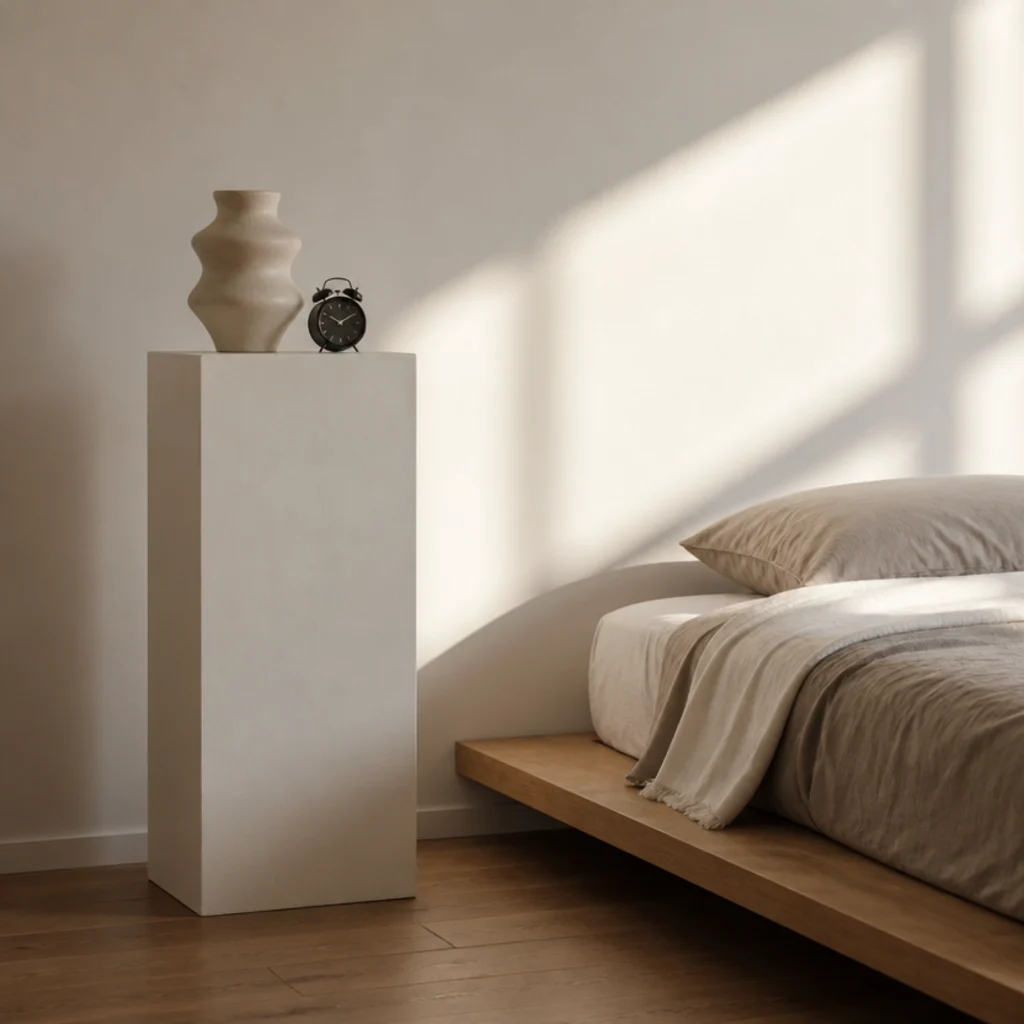
4. A ten-inch square column plinth
A display plinth or pedestal column takes a ten-inch square of floor and gives you a surface at whatever height you specify. Because it is a single vertical volume with no legs and no overhang, it reads as sculpture rather than furniture in a tight gap. Paint it the wall colour and it disappears; leave it dark and it anchors the corner.
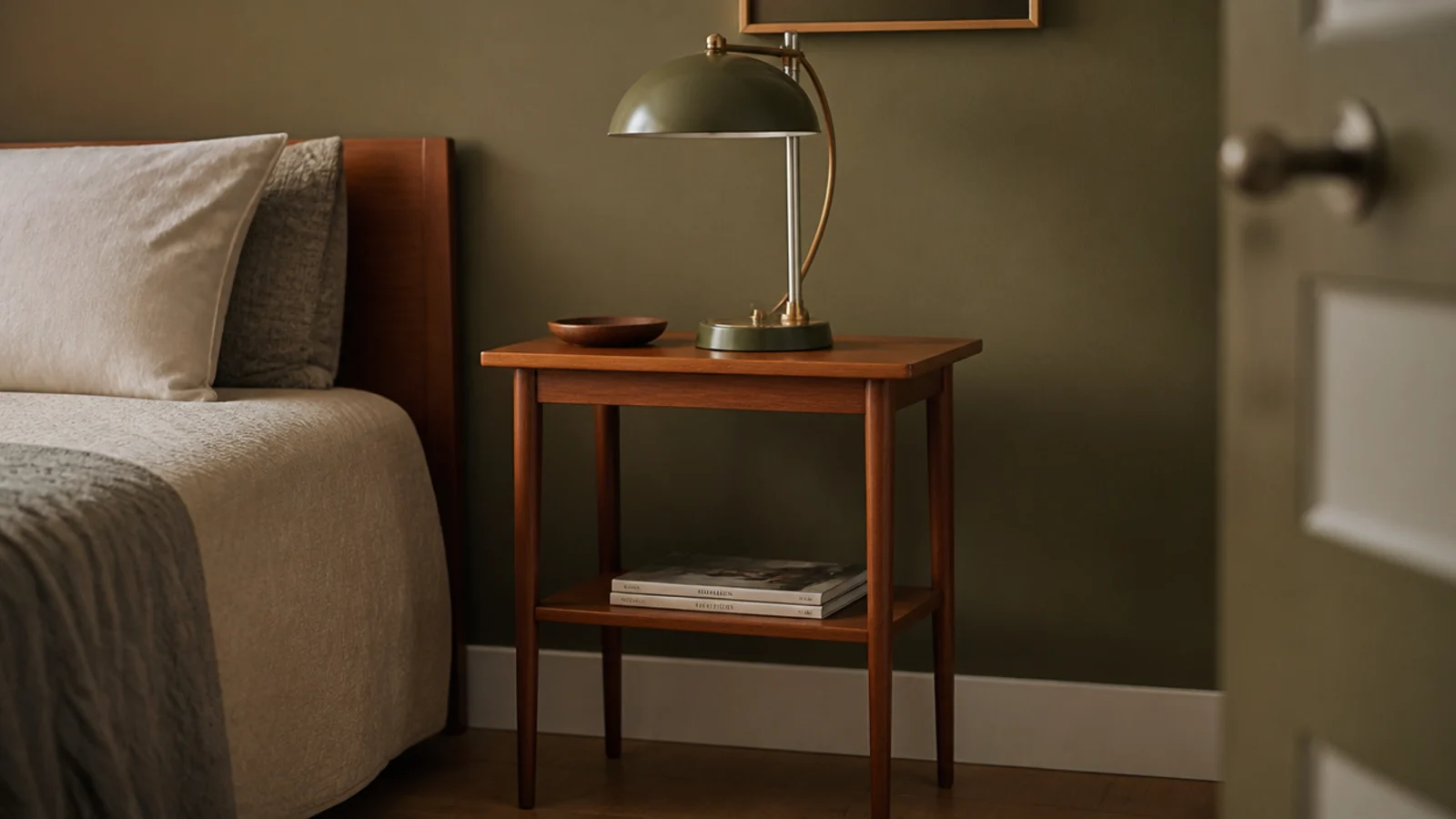
5. A vintage telephone table at eleven inches deep
Telephone tables were built between roughly 1935 and 1970 to sit in hallways, which is why they run nine to twelve inches deep with a shelf below — a proportion no one manufactures now. They turn up in charity shops at 20 to 60 dollars, usually in teak or oak, and the lower shelf takes books so the top stays clear.
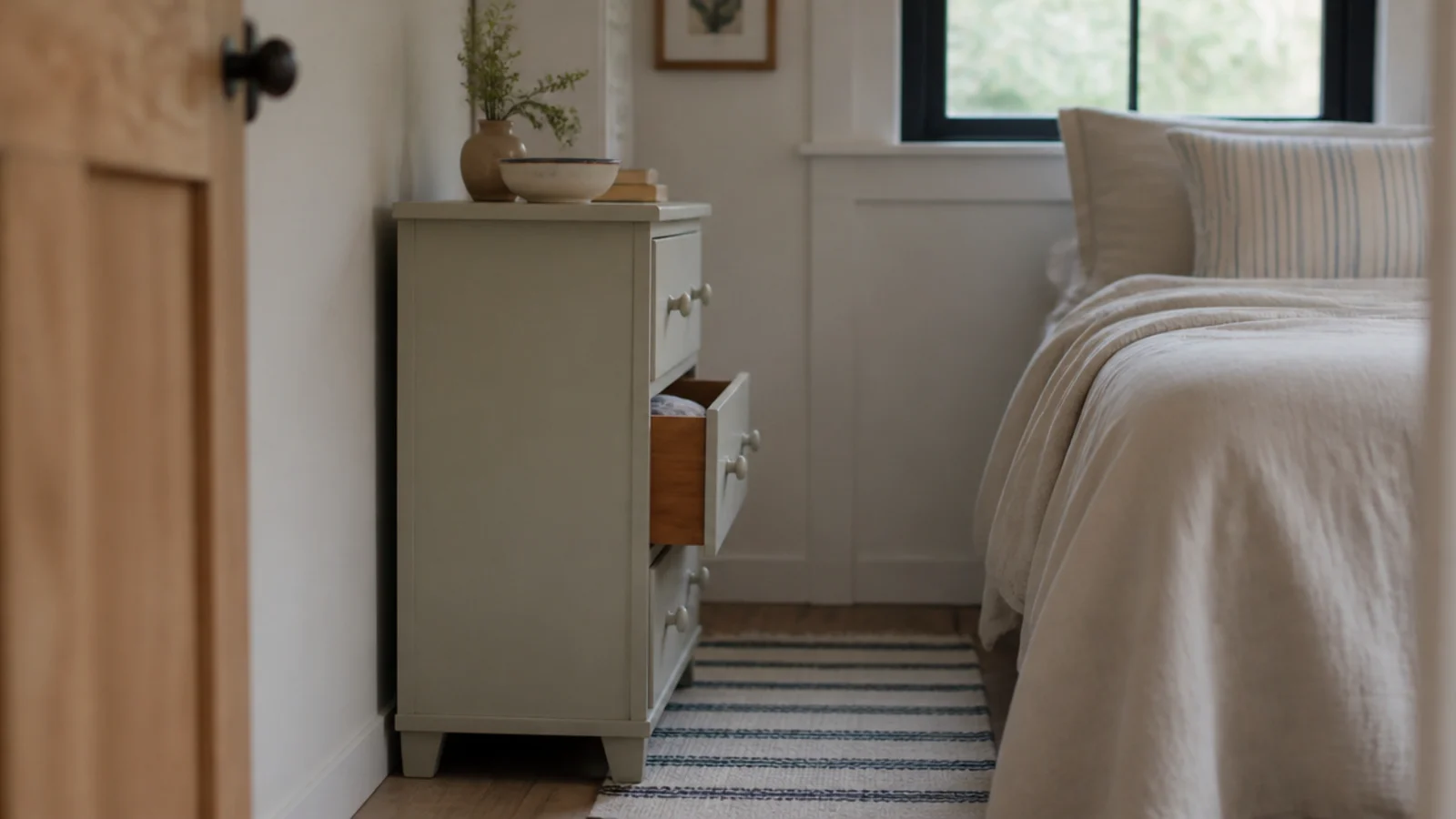
6. Turn a small chest ninety degrees to face the bed
If the gap is narrow but long, rotate a small chest so its short end faces the room and the drawer fronts face the bed. You reach the drawers from where you sleep rather than from the walkway, which means the drawer extension no longer needs to happen in the passing space. Check the chest is finished on the side that now faces out.
7. A castored drawer unit that rolls out when you need it
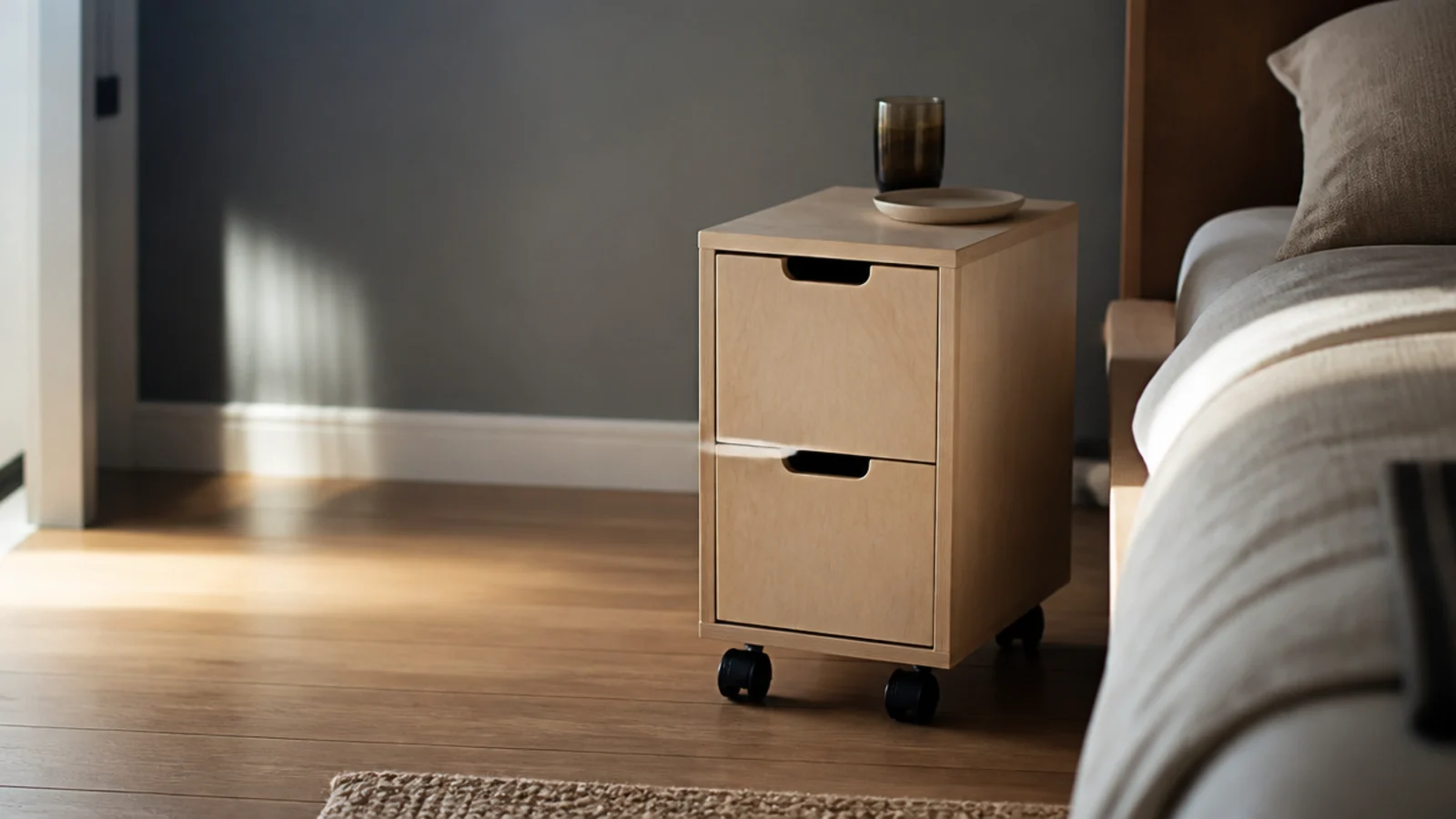
Fit two-inch castors to a slim drawer unit and the whole thing rolls forward for access, then parks back against the wall. This lets you use a unit that is deeper than the gap technically allows, because it only occupies that depth when it is in use. It also makes cleaning behind the bed a ten-second job rather than a furniture-moving exercise.
8. One long console running the full side of the bed
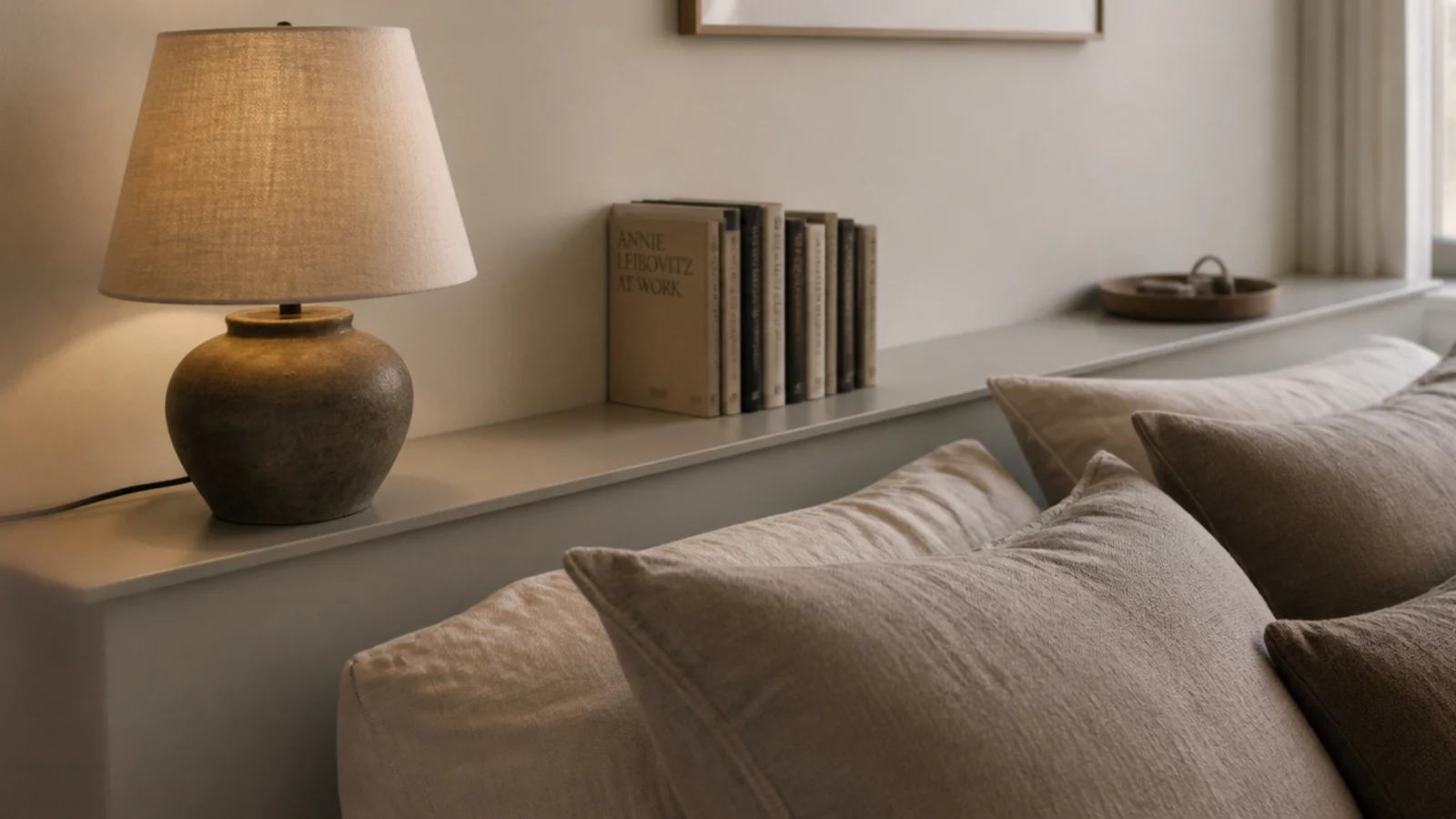
Trade depth for length. A console eight inches deep and five feet long gives you more usable surface than a sixteen-inch square table, and it keeps everything within reach along the whole bed. It also creates one continuous horizontal line beside the bed, which visually widens a narrow room. Anchor it to the wall if the legs are slim.
9. A fold-down wall tray that closes to two inches
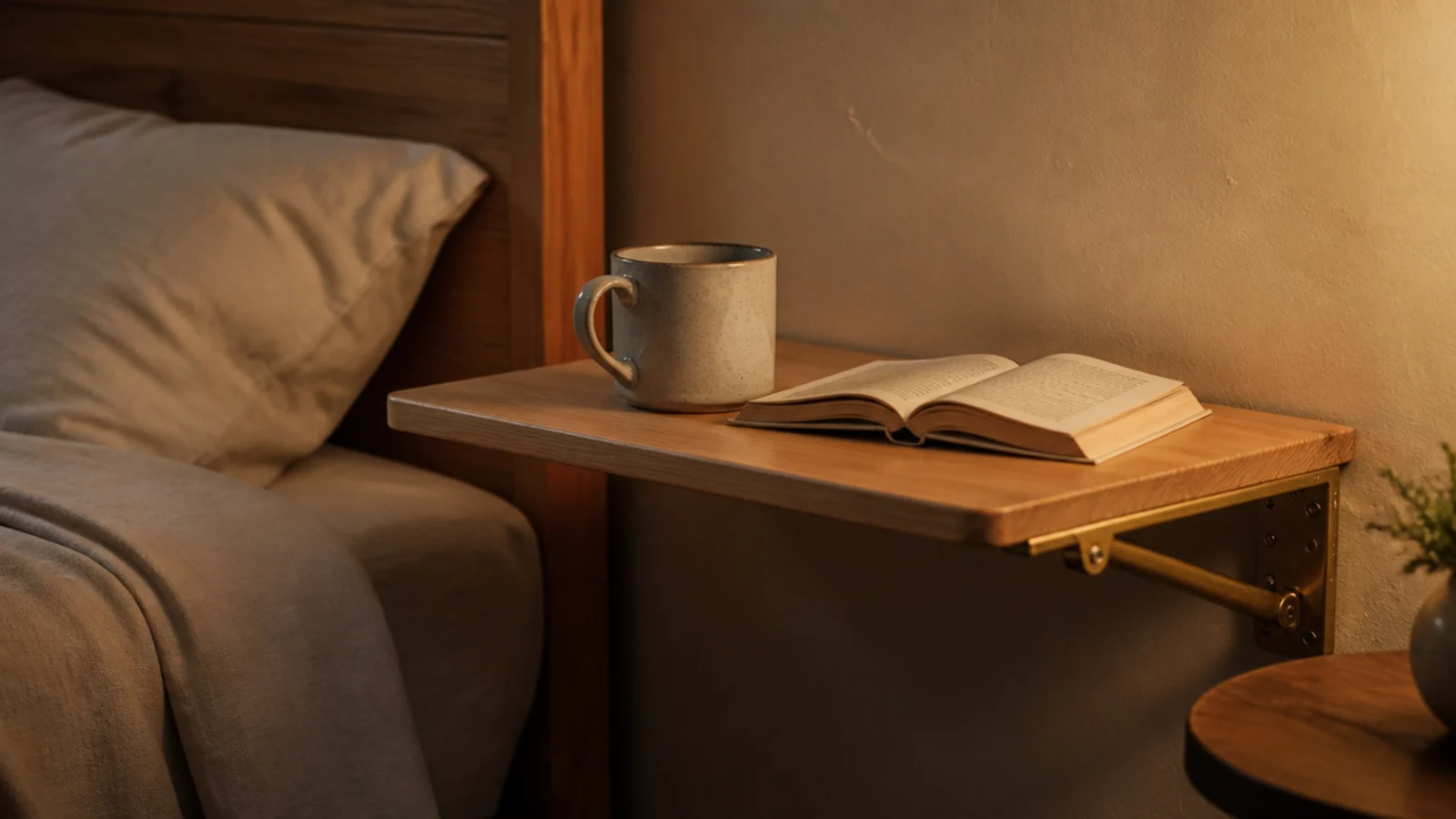
A hinged tray on a folding bracket sits flat against the wall in the daytime and drops to horizontal at night. Closed depth is around two inches. Use a bracket rated for at least 25 pounds, mount into a stud, and keep the tray under 12 inches deep so the leverage on the hinge stays sensible. Great in a room you also work in.
10. A single nine-inch drawer hung on a cleat
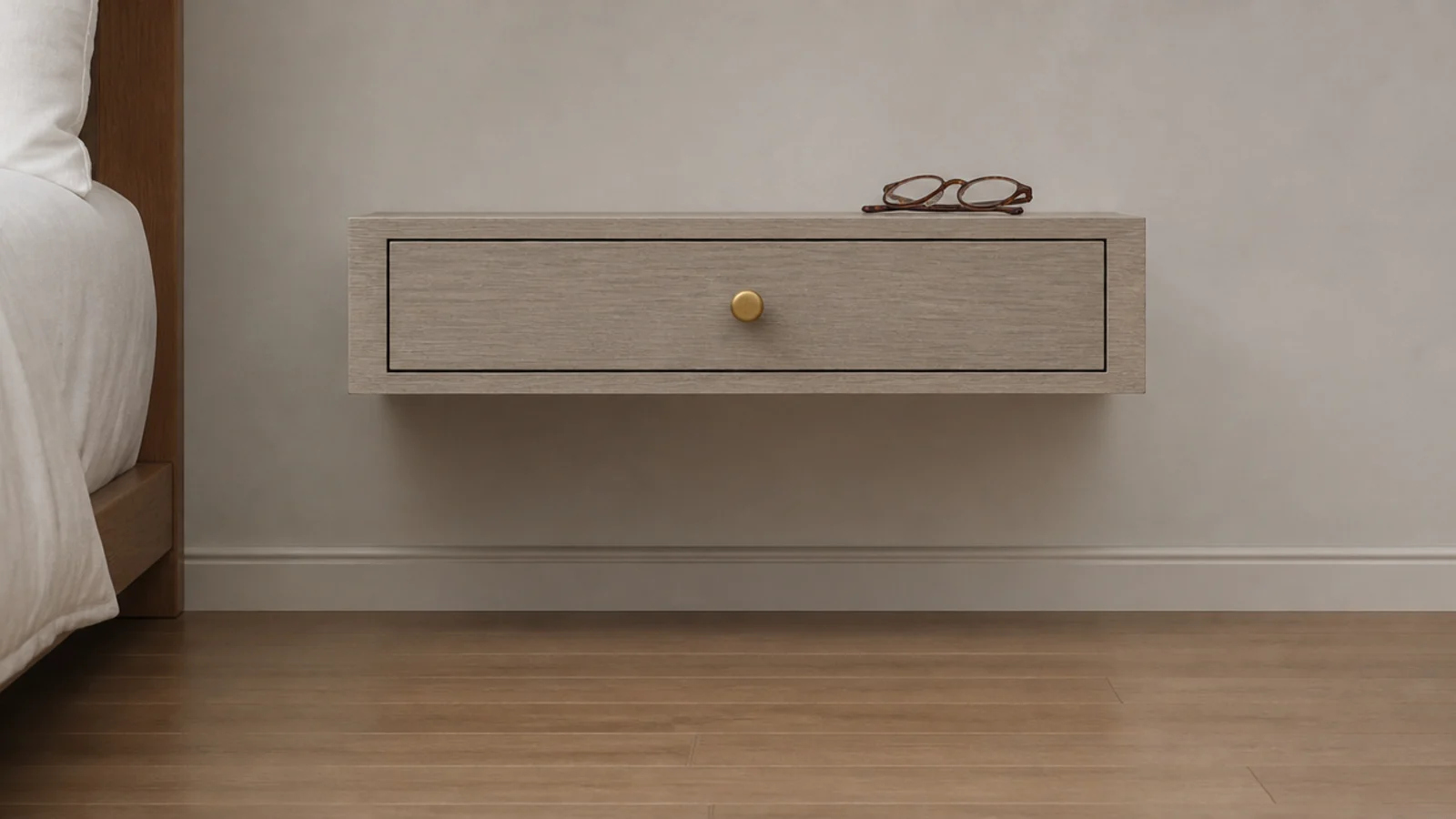
A shallow drawer box screwed to a wall cleat gives you closed storage with no floor contact at all. Nine inches deep holds cables, hand cream, a book and earplugs. Two screws into studs carry it easily. The gain is not just the drawer — it is that the floor beneath stays clear, which makes a narrow gap look and clean far wider.
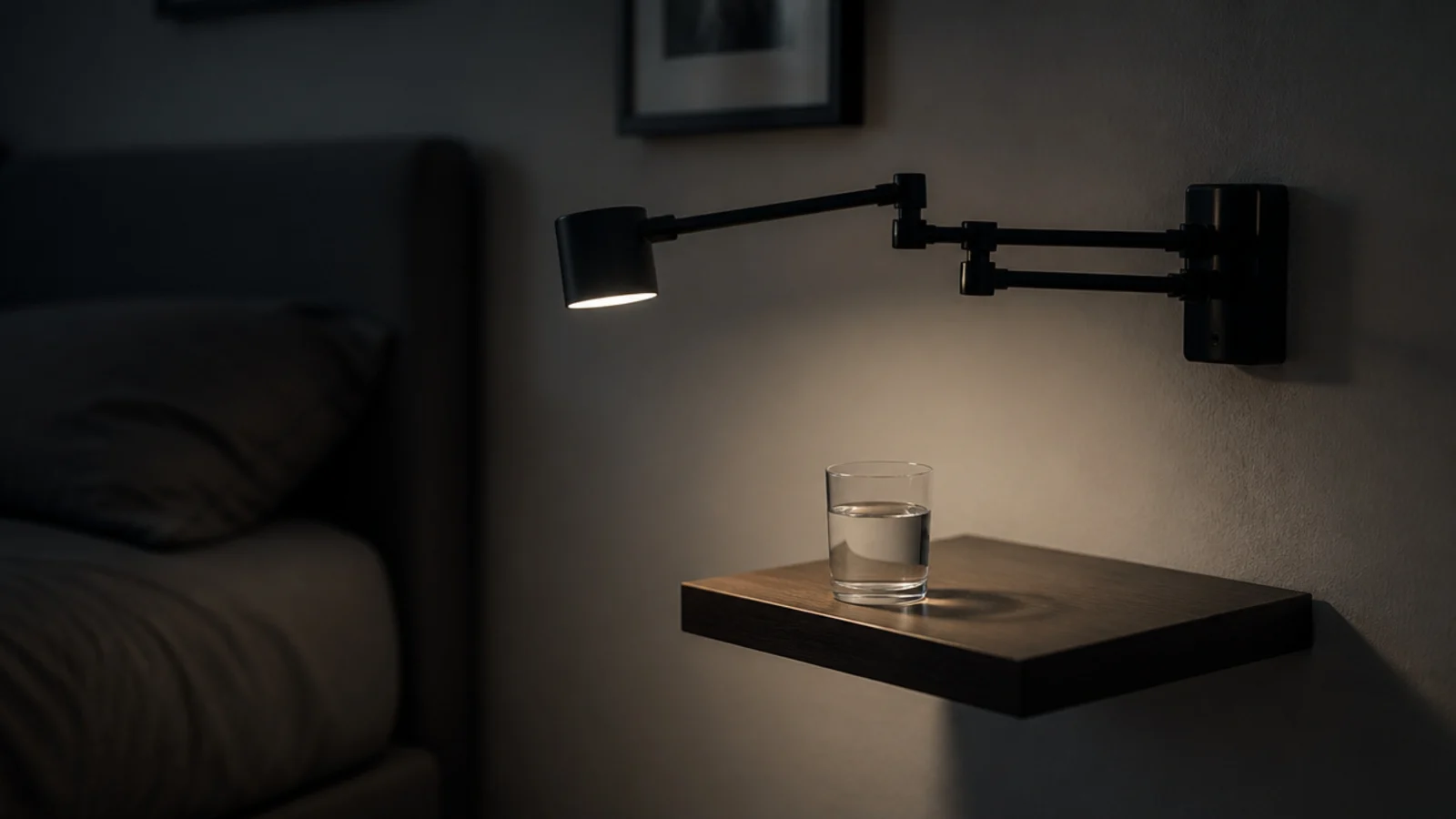
11. A swing-arm sconce buys back six inches of depth
Remove the lamp and the entire depth calculation changes. A swing-arm sconce mounted 40 to 48 inches above the floor throws light onto the page, folds back flat when not in use, and returns the full table surface for a glass, a book and a phone. Plug-in versions with a cord cover suit renters. It is the highest-leverage change on this list.
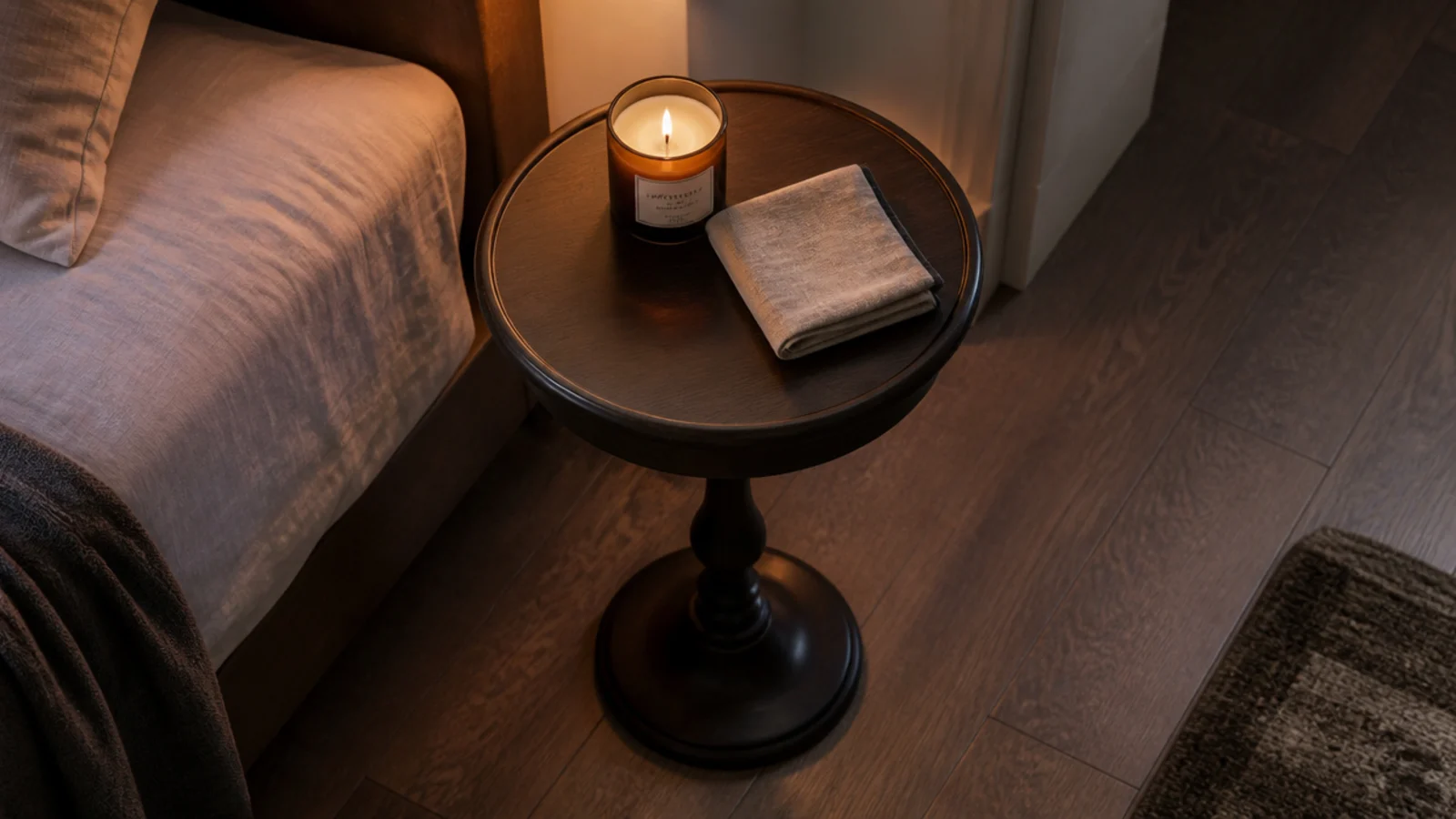
12. Round tops delete the corner your hip finds
In a gap under 26 inches you will walk into the table, and the part you walk into is a corner. A round or oval top removes that corner entirely, and it also reads as less bulky because the eye follows a curve past it. A 14-inch round gives roughly 154 square inches of surface, which holds a lamp, a book and a glass.
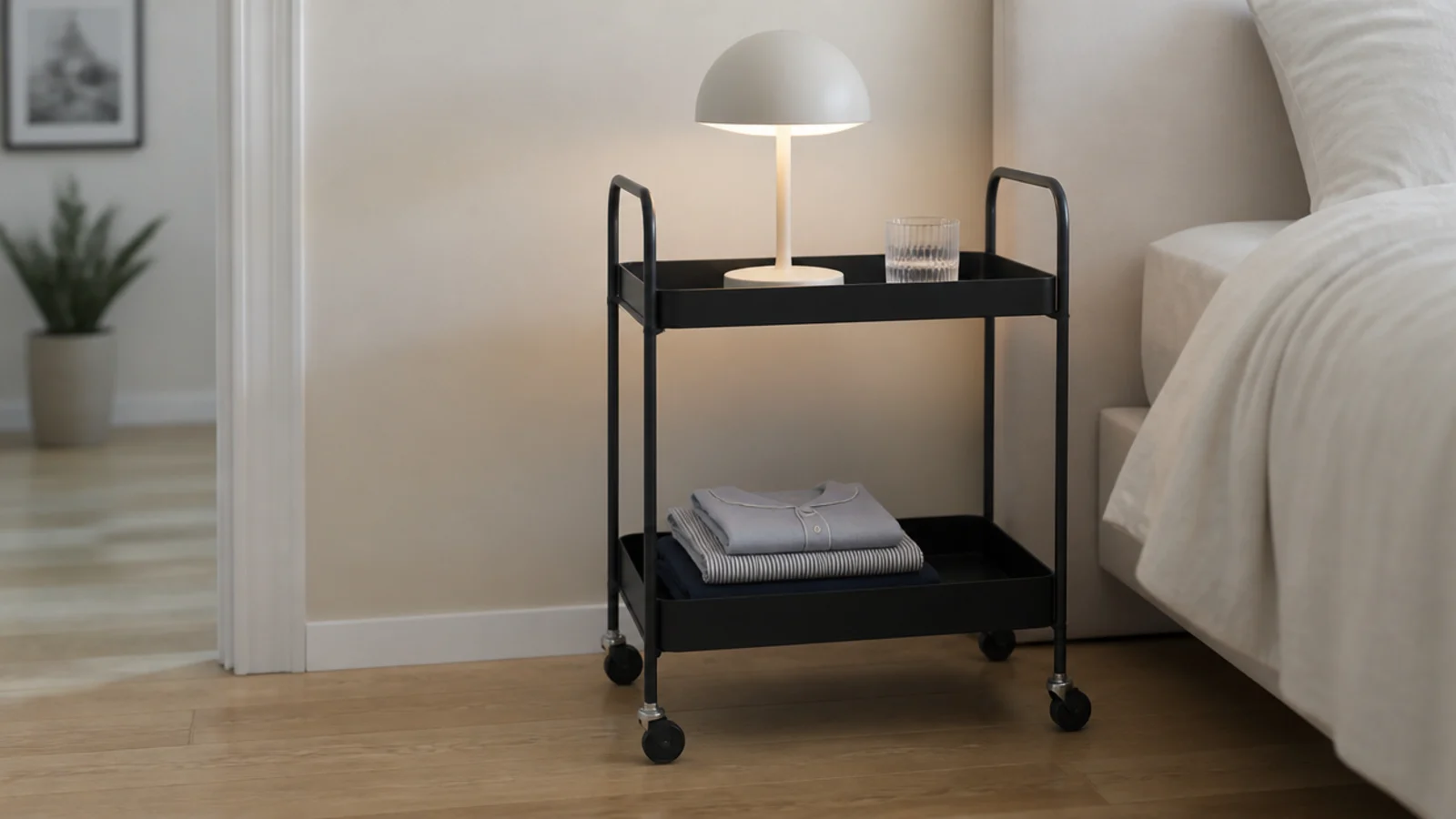
13. A slim trolley you can wheel out to clean behind
A two-tier trolley twelve inches deep gives you double the surface of a table of the same footprint, and the lower shelf keeps books off the top. Choose one with locking castors so it does not drift when you lean on it. The dust that gathers behind a bed is the argument for wheels more than the flexibility is.
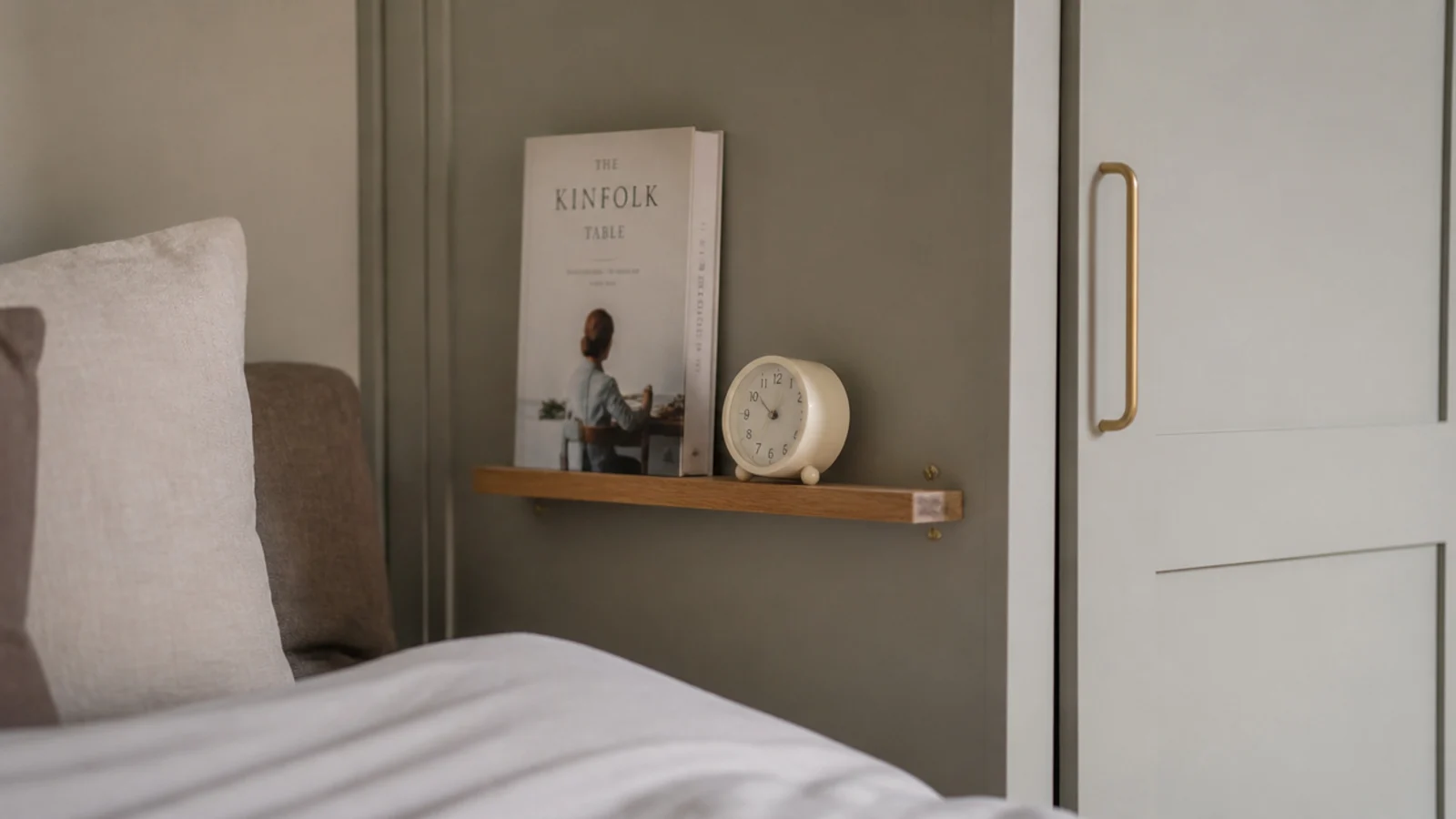
14. Mount a shelf on the wardrobe side panel
If a wardrobe stands beside the bed, its side panel is a wall you are not using. Screw a small shelf to it at mattress height with two brackets, checking the panel thickness first — 18mm board takes a screw well, 8mm backing board does not. Use short screws that will not break through the inside face where clothes hang.
15. Two shallow shelves instead of one deep one
Depth is not the only axis. Two shelves six inches deep, spaced twelve inches apart vertically, give the same surface as one twelve-inch shelf while projecting half as far. Nothing gets buried behind anything else, which is the real failure of a deep narrow table. Put the lamp and glass above, books and papers below.
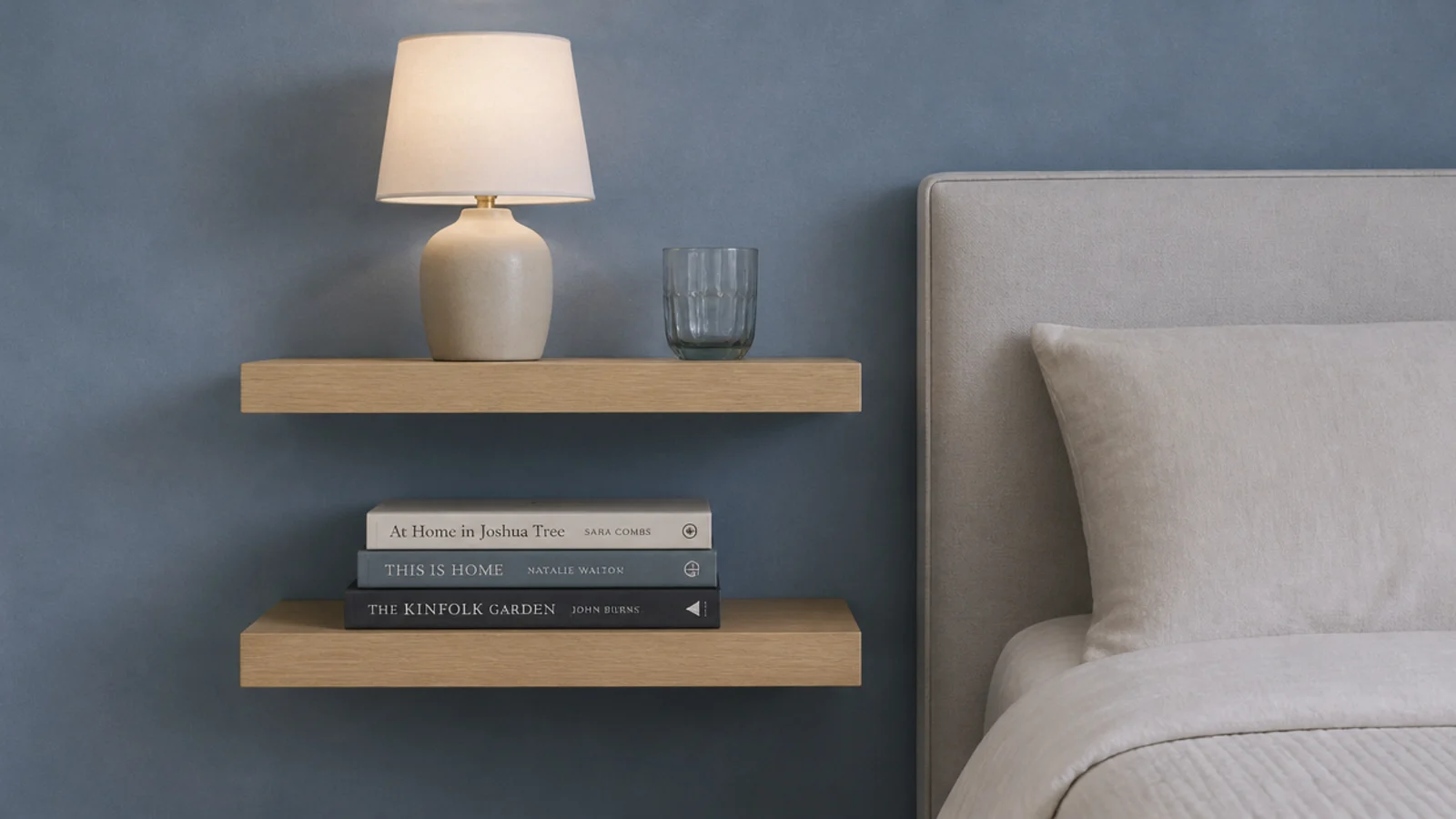
16. A two-inch lip so nothing rolls into the gap
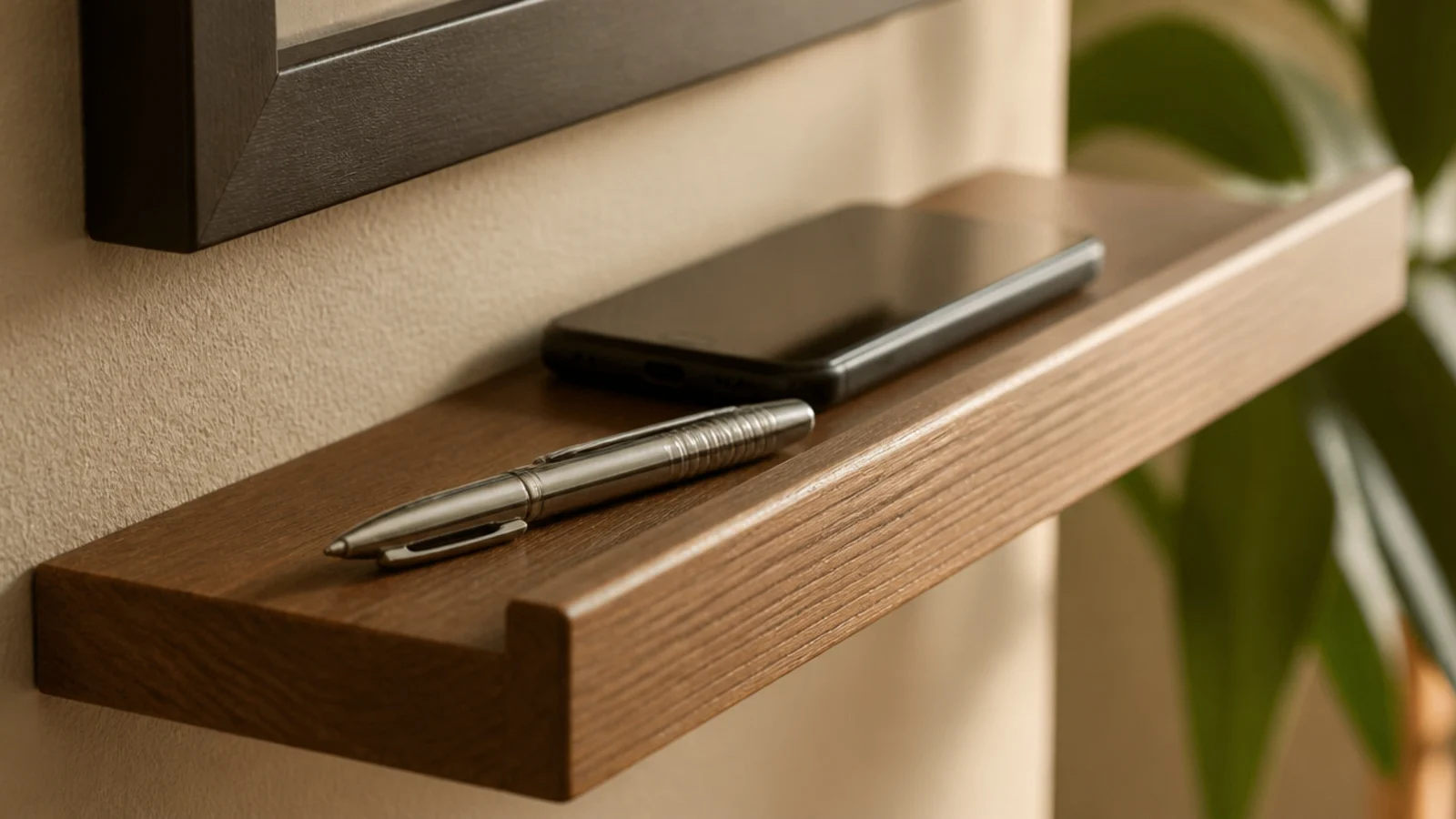
Anything shallower than eight inches needs an edge. A timber or brass lip standing 15 to 20mm proud along the front stops a pen, a phone or a pair of glasses sliding off in the dark. Retrieving a dropped item from behind a bed at 2am is the specific misery this fixes, and it costs about four dollars of moulding.
17. Line the front edge up with the skirting, not the wall
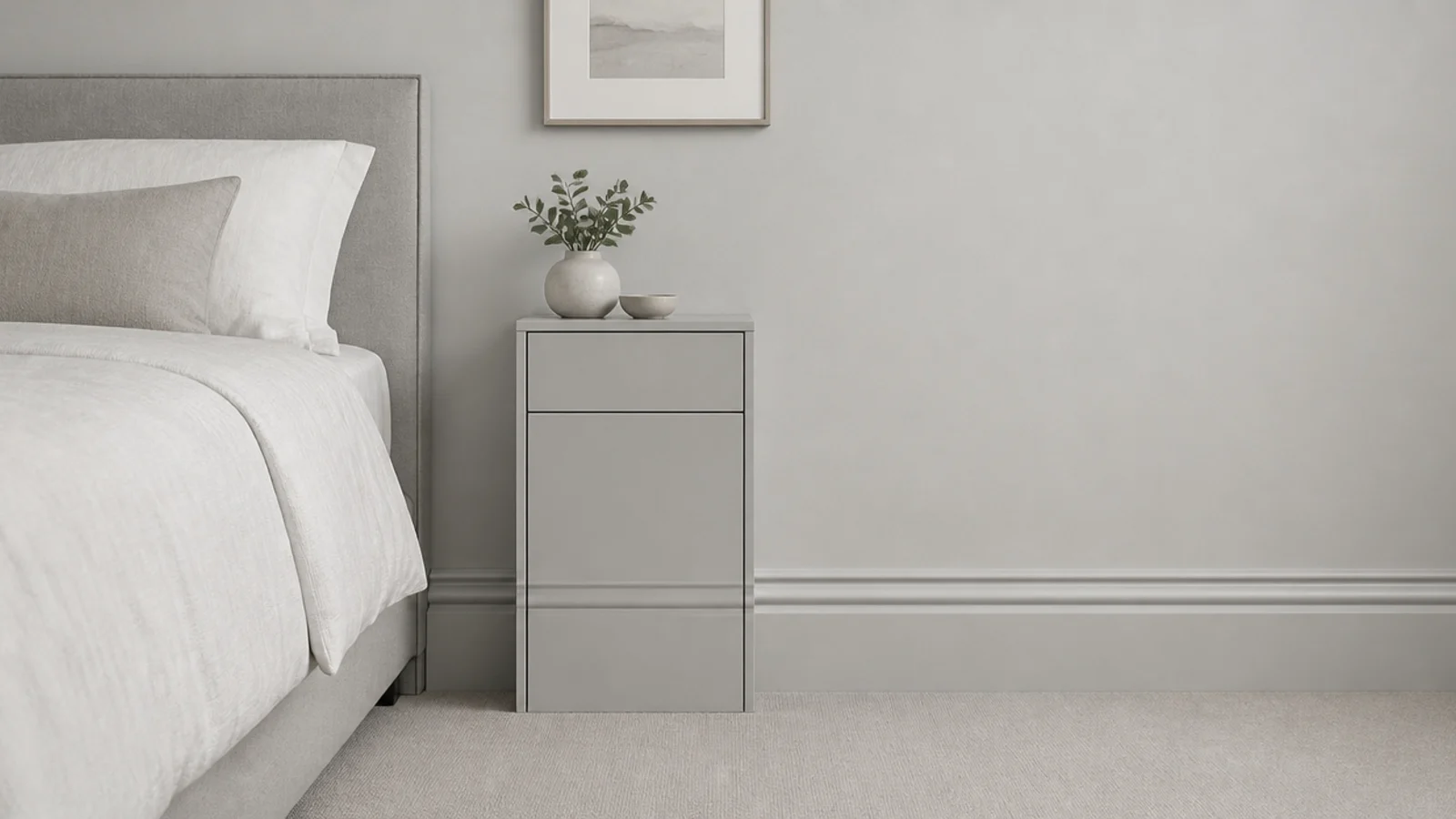
Set the table so its front face aligns with the front face of the skirting board rather than sitting proud of it. The eye reads one continuous vertical line from floor to tabletop, and the table stops looking like an object jammed into a gap. It costs you the half inch you were losing to the skirting anyway.
18. Anti-tip strap anything over thirty inches tall
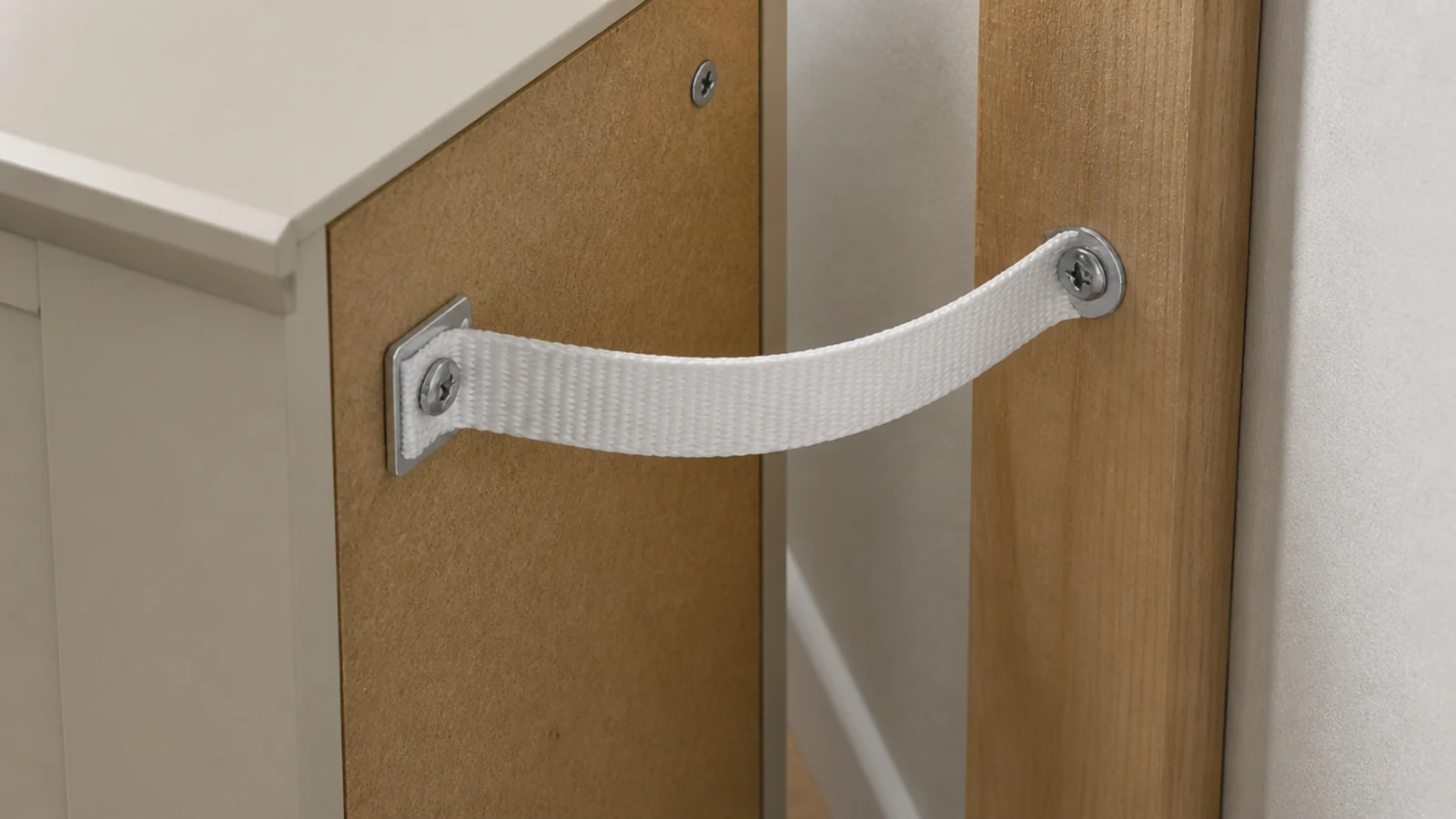
Narrow and tall is an unstable combination. A cabinet 30 inches tall on a footprint under twelve inches deep will tip forward if a top drawer is opened and leaned on, and in a child's room that is a genuine hazard rather than a theoretical one. A strap kit costs under ten dollars, screws into a stud, and takes ten minutes.
19. Ease the corner that meets the walkway
If the table has to keep its corners, soften the one on the walkway side. A 10 to 15mm radius sanded onto the vertical edge and refinished takes twenty minutes and stops the sharp arris that catches clothing and shins. On a painted piece it is invisible once repainted. On oak it looks like a deliberate detail.
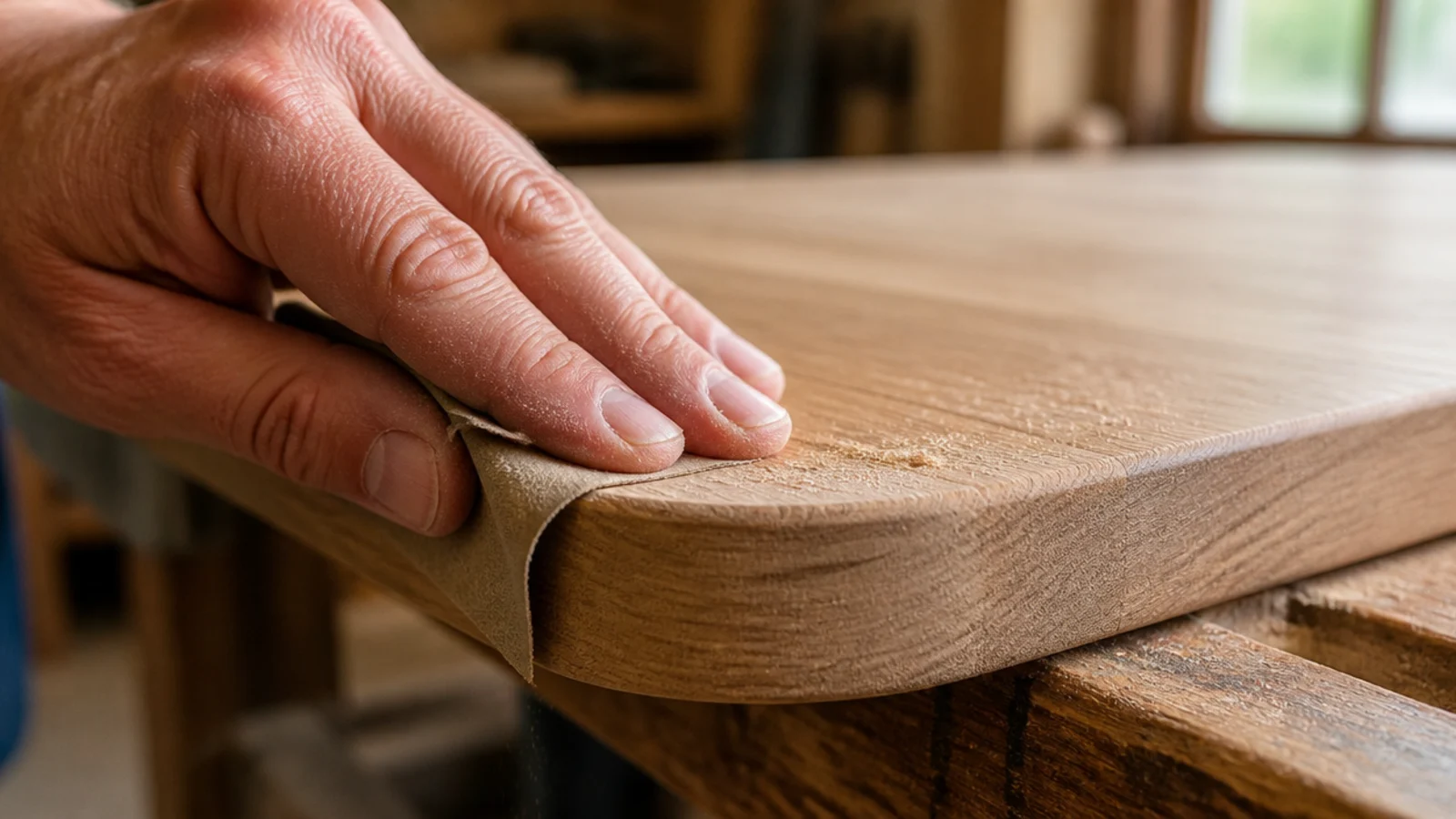
20. A narrow bench turned end-on
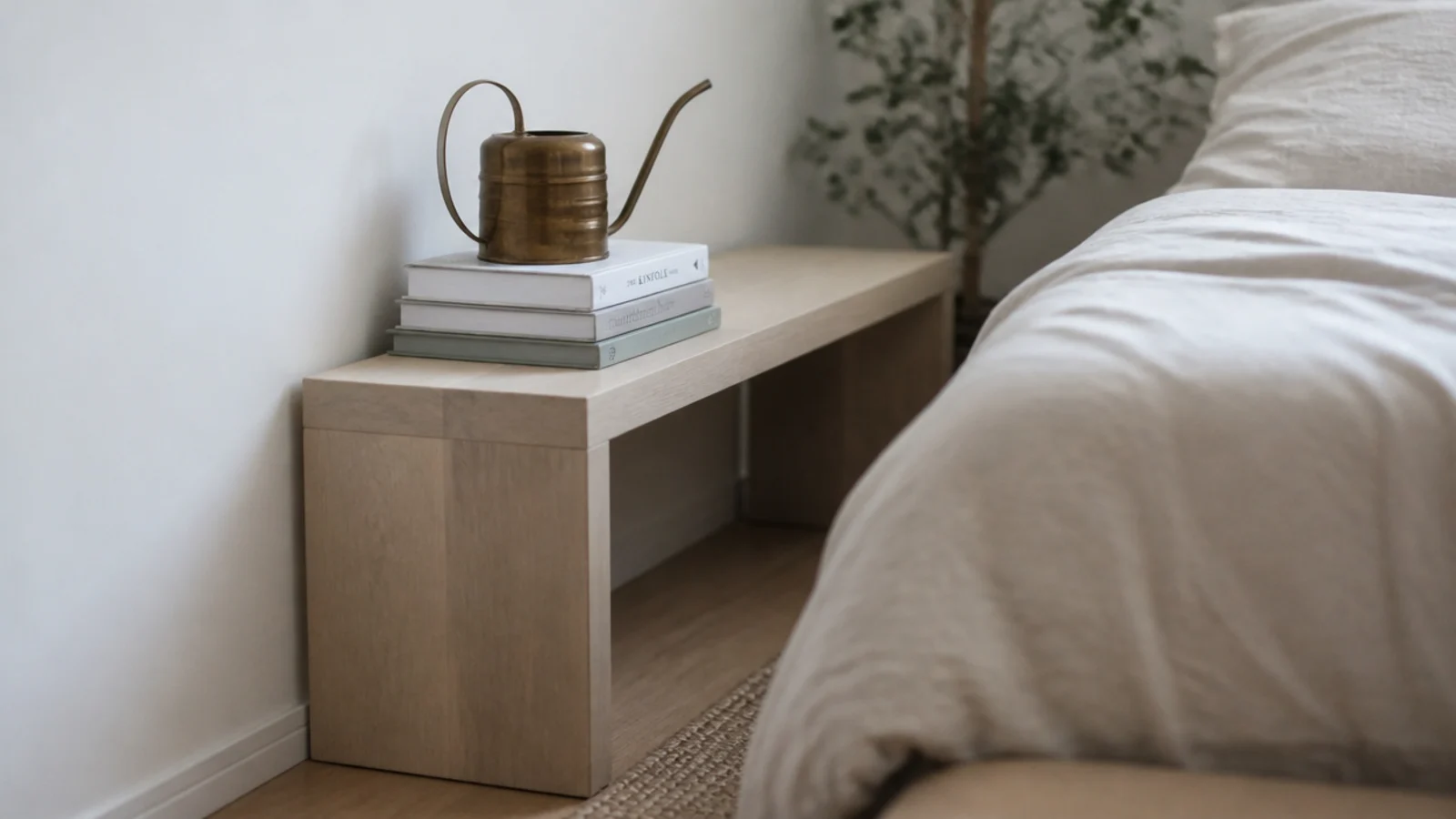
A small bench 10 to 12 inches deep and 30 inches long becomes a long shallow bedside surface with a flat top and no drawers to project. Benches are made to be sat on, so the build is usually solid and the height sits at 17 to 19 inches — right for a low platform bed, too low for a divan.
21. Wall-mount the clock and the phone dock
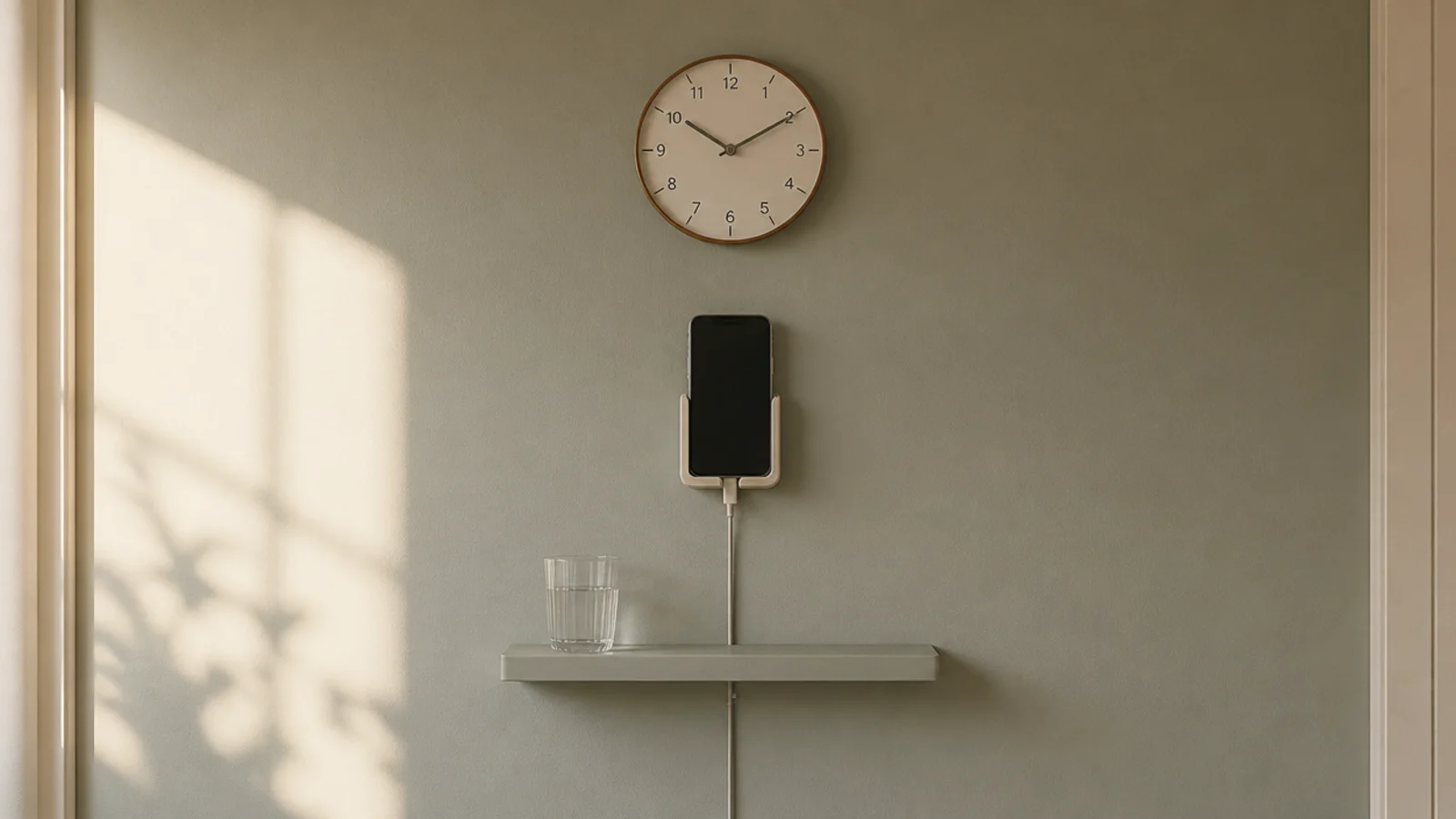
Every object you move onto the wall is depth you get back. A small wall clock and a wall-mounted phone cradle at 40 inches remove two of the most common surface hogs. Run the charging cable down the wall inside a paintable cable channel and the whole arrangement reads as intentional rather than improvised.
22. A niche cut between the studs
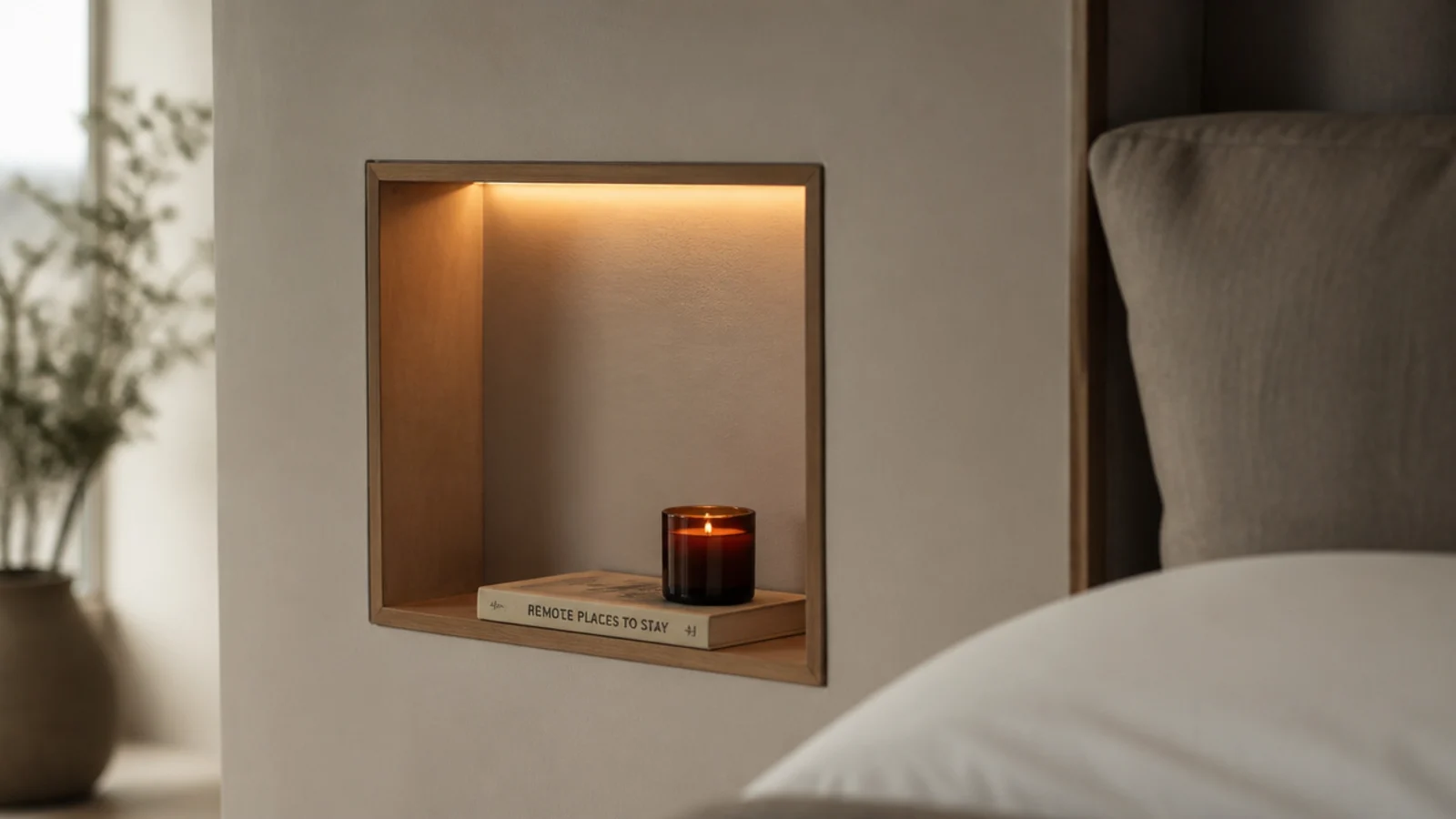
A stud wall gives you three and a half inches of usable depth inside it. A niche framed between two studs, plaster-lined and fitted with a timber shelf, holds a book, a glass and a candle without projecting into the room at all. Confirm there are no cables or pipes in the bay first, and never cut a load-bearing member.
23. Run the cable inside the leg with adhesive clips
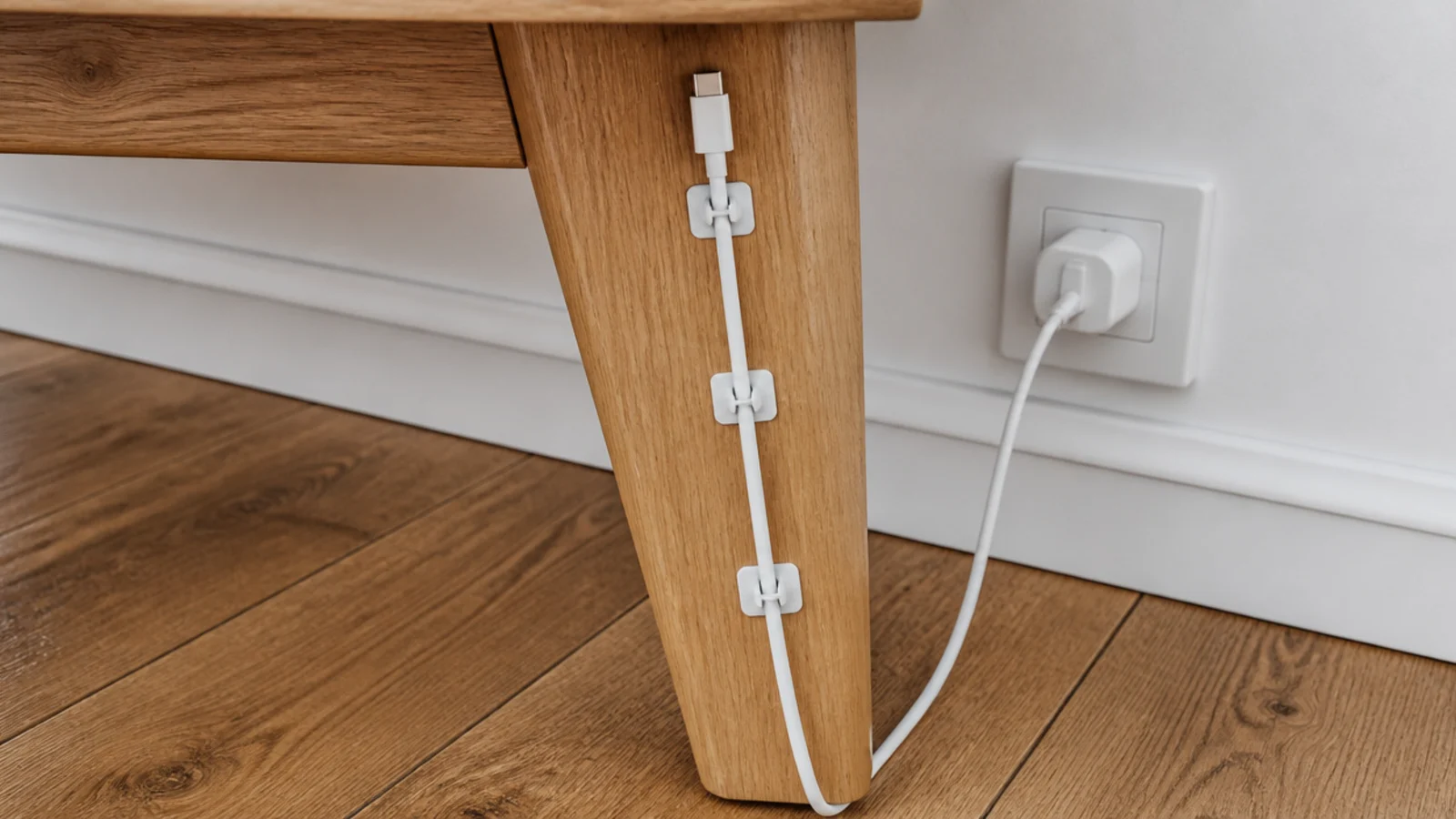
Three small adhesive clips down the inner face of a table leg take a charging cable from the top surface to the floor invisibly. Clean the timber with alcohol first or the clips fail within a month. The visible cable loop is what makes a narrow table look cluttered, because there is no spare surface to disguise it.
24. A folding stool that stores flat behind the door
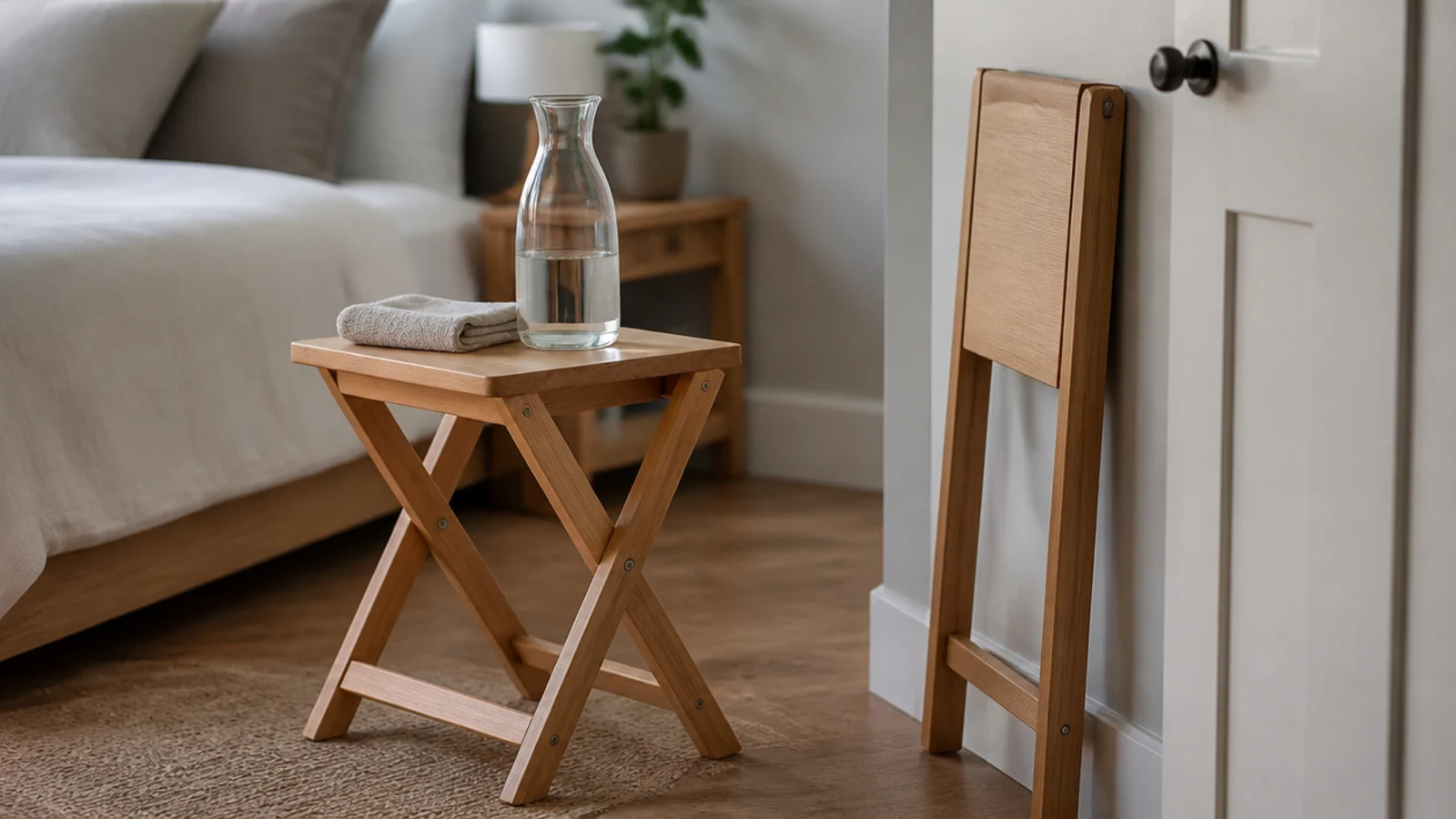
In a guest room used twice a year, a folding beech stool at 18 inches tall works as a bedside table and then folds to two inches and lives behind the door. Check the top is genuinely flat rather than dished, and put a small tray on it so a glass has a level base to stand on.
25. The one-hand reach test at 2am
Before you fix anything permanently, lie in the bed with the lights off and reach sideways for a glass placed where you plan to put it. If you have to sit up, lean out or open your eyes, the surface is too low, too far back or too shallow. Five minutes of this beats any measurement on paper.

For gaps that leave no floor at all, the wall-mounted options cover fixings and load ratings in detail. A corner shelf can pick up the storage a narrow table cannot, and bedroom fairy lights give you low-level light without a lamp base taking surface at all.
Mistakes to Skip
- Measuring only at mattress height. The gap narrows at the skirting board and often at the architrave, and the delivery driver will find that out before you do.
- Buying depth you cannot walk past. A table that fits the gap but leaves eighteen inches of walkway will be bruising your hip within a week.
- Putting a wide-based lamp on a shallow top. The base overhangs, the shade sits off-centre, and the whole thing looks unstable even when it is not.
- Leaving a tall narrow cabinet unstrapped. Height plus a shallow footprint plus an open drawer is exactly the geometry that tips furniture forward.
- Forgetting the socket position. A narrow table pushed against the wall in front of a socket means the plug is now the deepest thing in the gap.
Frequently asked questions
How narrow can a bedside table be and still work?
Eight inches deep is the practical floor, because a small lamp base measures six to seven inches across and needs the surface underneath it. Below eight inches you are choosing between a lamp and a glass of water. Width matters far less than depth, so a table twenty inches wide and nine deep still functions properly.
What do I do if the gap beside my bed is under ten inches?
Go vertical instead of horizontal. A wall-hung shelf, a cleat-mounted drawer box or a swing-arm sconce with a small lipped ledge underneath all take zero floor. Wall mounting also removes the legs, which are what actually catch your foot in a gap that tight, and it makes the floor beneath easy to clean.
Where exactly should I measure a narrow bedside gap?
At three heights: at the skirting board, at mattress height, and at the top of the headboard. Skirting boards steal half an inch to an inch, radiators and window boards steal more, and the narrowest of the three is your real working dimension. Measuring only at mattress height is why tables get returned.
Does a narrow bedside table need to be secured to the wall?
Anything taller than thirty inches with a footprint under twelve inches deep should be strapped, and it is essential in a child or shared room. A tall narrow cabinet tips forward when a top drawer is pulled out and leaned on. An anti-tip strap kit costs under ten dollars and takes ten minutes.
How do I stop things rolling off a shallow shelf?
Add a lip. A strip of timber or metal fifteen to twenty millimetres proud along the front edge stops a phone, a pen or a pair of glasses sliding off a six-inch ledge. It also gives the shelf a finished front edge, which makes a plain plank read as a made piece rather than an offcut.
Want more like this? Browse all 15 bedside table ideas guides — they all use the same measurements and budget tiers.

Pin it for later
Save this to your Bedside Table Ideas board
Pin it now so it is waiting for you when the tape measure comes out — and so the next person hunting for this idea can find it too.
Save this pinKeep going
More ideas worth saving while you have the tape measure out.