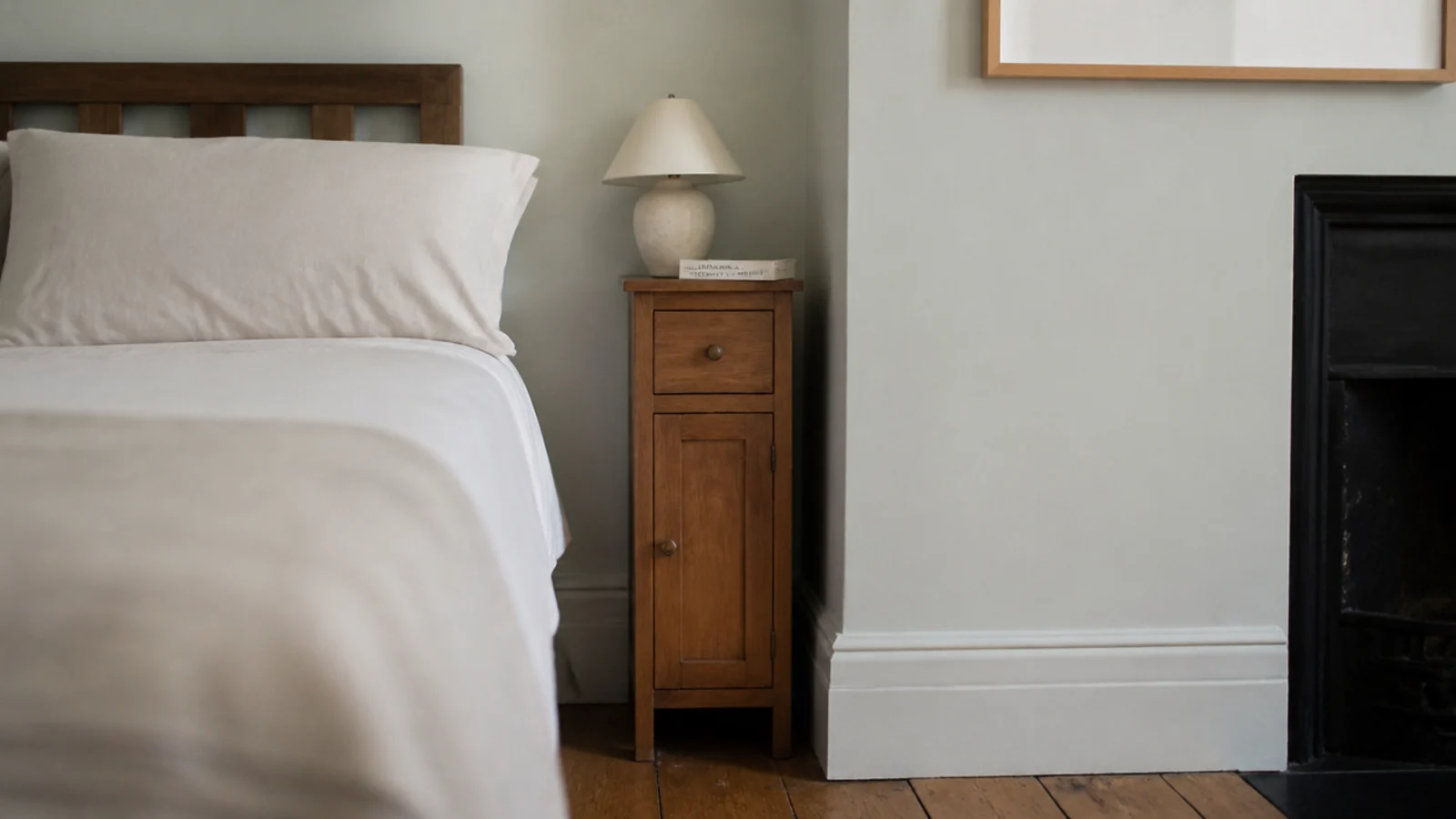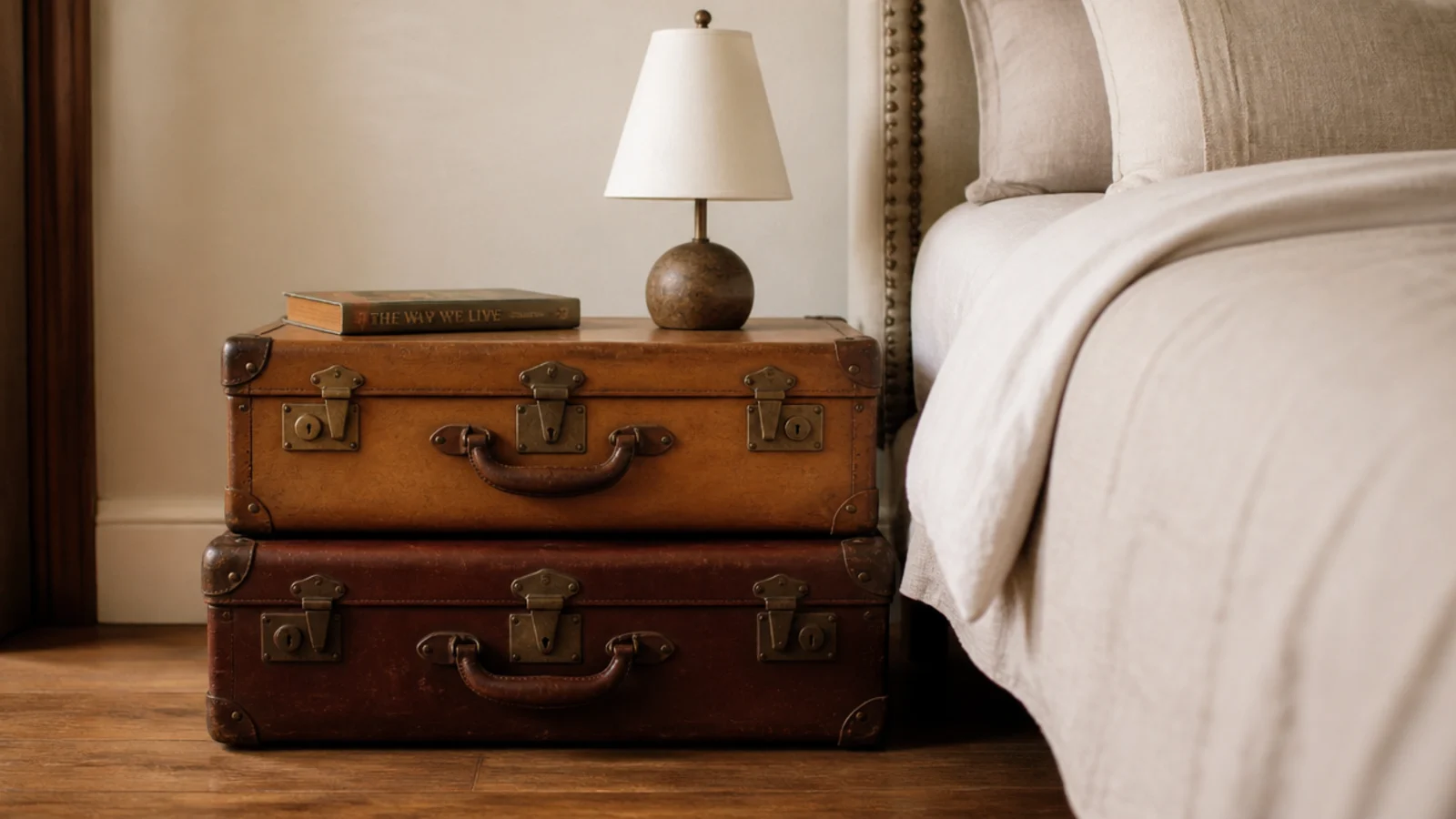
Bedside Table Ideas · Listicle
20 Luxury Bedside Table Ideas Worth Copying

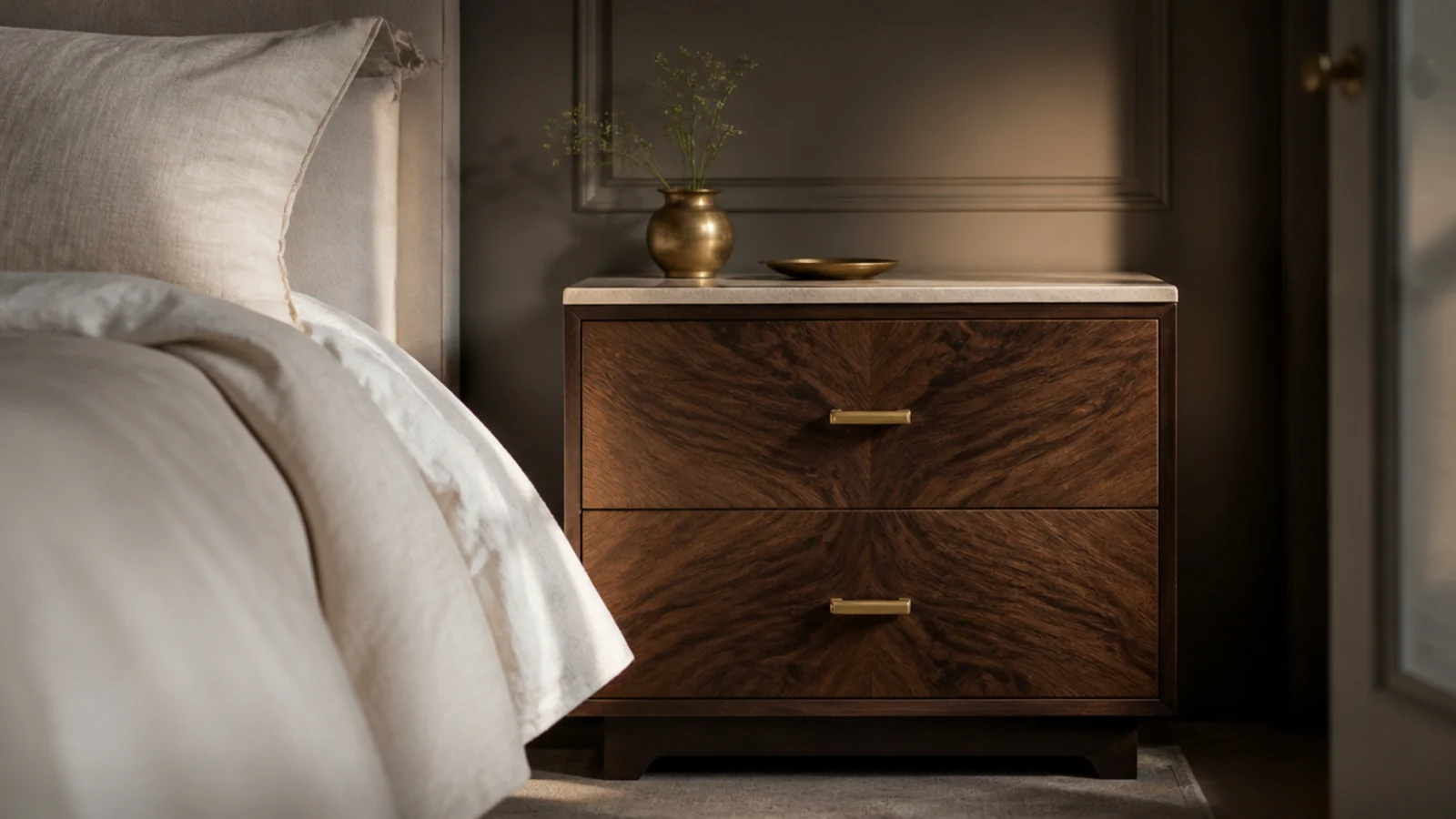
Luxury bedside table ideas rarely announce themselves from across the room. The difference shows up at arm reach, in the six inches you actually touch: how a drawer glides and stops, whether the corner joint is cut or stapled, how warm the brass reads under a lamp at midnight. I have specified nightstands at 180 dollars and at 2,400 dollars, and almost all of that gap is construction rather than styling. Below are twenty details worth copying, and roughly half of them can be added to a cabinet you already own for less than the cost of replacing it.
In this guide22 sections — tap to openHide
- 1.What luxury bedside table ideas are actually paying for
- 2.Pull the drawer out and look for dovetails
- 3.Undermount soft-close runners rated seventy-five pounds
- 4.A twenty-millimetre stone top with a mitred edge
- 5.Book-matched veneer across a pair of fronts
- 6.Solid brass pulls, tested with a magnet
- 7.Reeded fronts cut at twelve millimetre spacing
- 8.A burl panel used once and nowhere else
- 9.Leather wrapped over the top surface
- 10.Hand-rubbed lacquer in eight to twelve coats
- 11.A plinth base instead of four legs
- 12.A slim brass gallery rail around the top
- 13.Embossed shagreen texture on the drawer fronts
- 14.Scale the cabinet up for a king bed
- 15.Wire a dimmer and a USB outlet inside the drawer
- 16.Felt-lined interior trays cut to the drawer
- 17.An antique pair of bedside cupboards
- 18.A silk or parchment shade with a rolled edge
- 19.An alabaster lamp base that glows when lit
- 20.The hotel pair: identical everything, centred art
- 21.Bespoke joinery built into the wall recess
- 22.Mistakes to Skip
What luxury bedside table ideas are actually paying for
Four measurable things separate an expensive nightstand from a cheap one, and none of them are visible in a photograph.
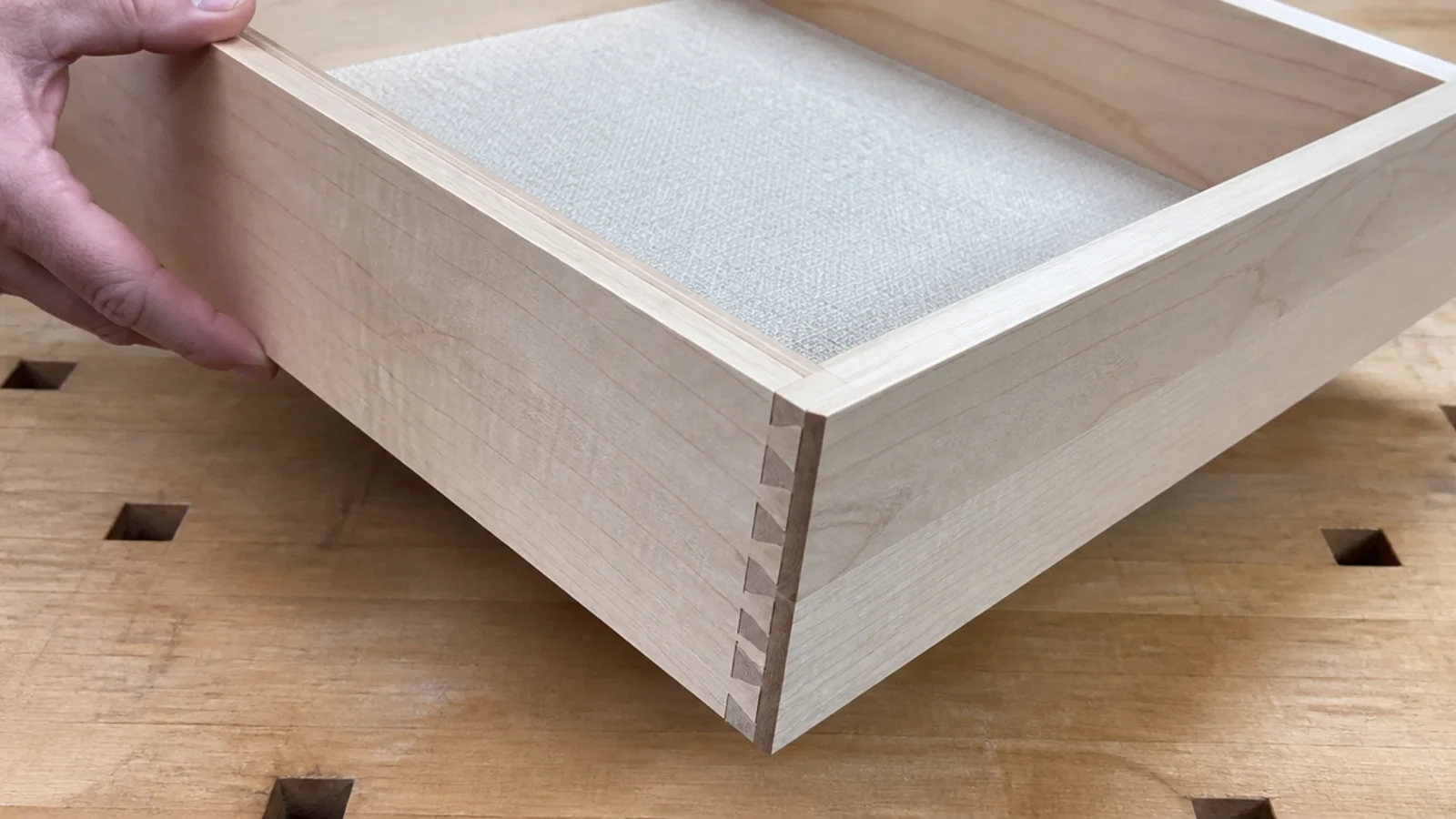
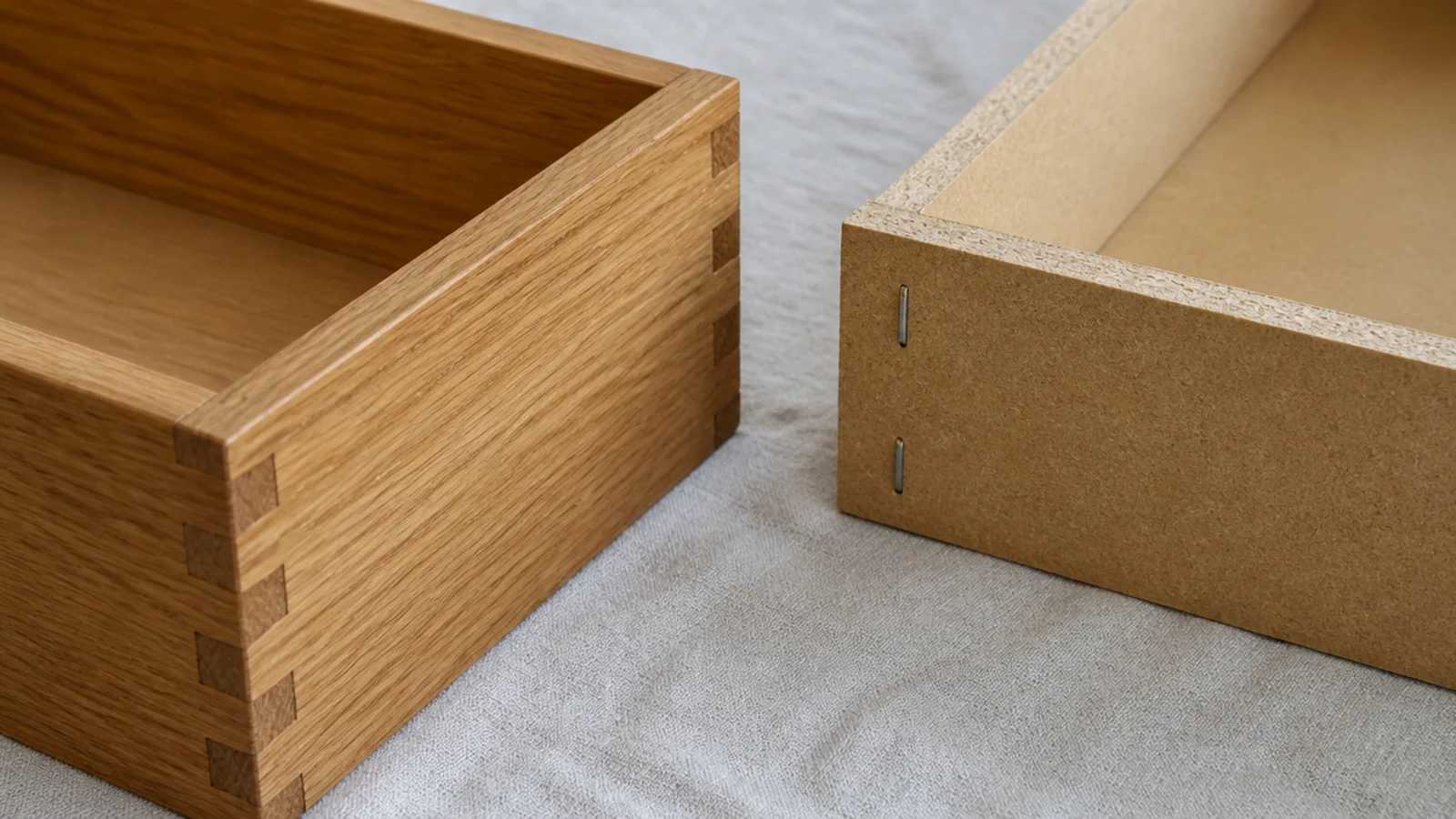
The drawer box comes first. A dovetailed box in solid maple, poplar or beech with a bottom panel captured in a routed groove will outlive the house. A stapled butt-jointed box with a bottom pinned on underneath will rack within two years of daily use. Pull the drawer fully out in the shop — if it will not come out, that tells you something too.
Second is the substrate. Solid hardwood runs 350 to 900 dollars a cabinet. Real wood veneer over plywood or MDF is a legitimate luxury material and often the more stable choice at width, typically 250 to 600 dollars. Printed foil over particleboard, common under 200 dollars, has no wood in the face at all and shows a white core at the first chip.
Third is hardware. Solid brass, bronze or stainless costs 12 to 40 dollars per pull. Plated zinc costs two, and wears through at the thumb within a couple of years.
Fourth is scale. A sixteen-inch cabinet beside an eighty-inch king bed reads undersized from the doorway. Go 24 to 30 inches wide for a king, 20 to 24 for a queen, and keep the top within two inches of the dressed mattress height. The aesthetic styling guide covers what goes on top once the cabinet itself is right.
1. Pull the drawer out and look for dovetails
This is the single fastest quality test there is, and it takes four seconds. Slide the drawer all the way out and look at the front corner. Interlocking wedge-shaped fingers mean the joint is mechanically locked and will survive being yanked open half-asleep for thirty years. Staples driven through a butt joint mean the front will loosen from the sides once the glue line fatigues. Machine-cut dovetails are fine — hand-cut is a romance, not a requirement.
2. Undermount soft-close runners rated seventy-five pounds
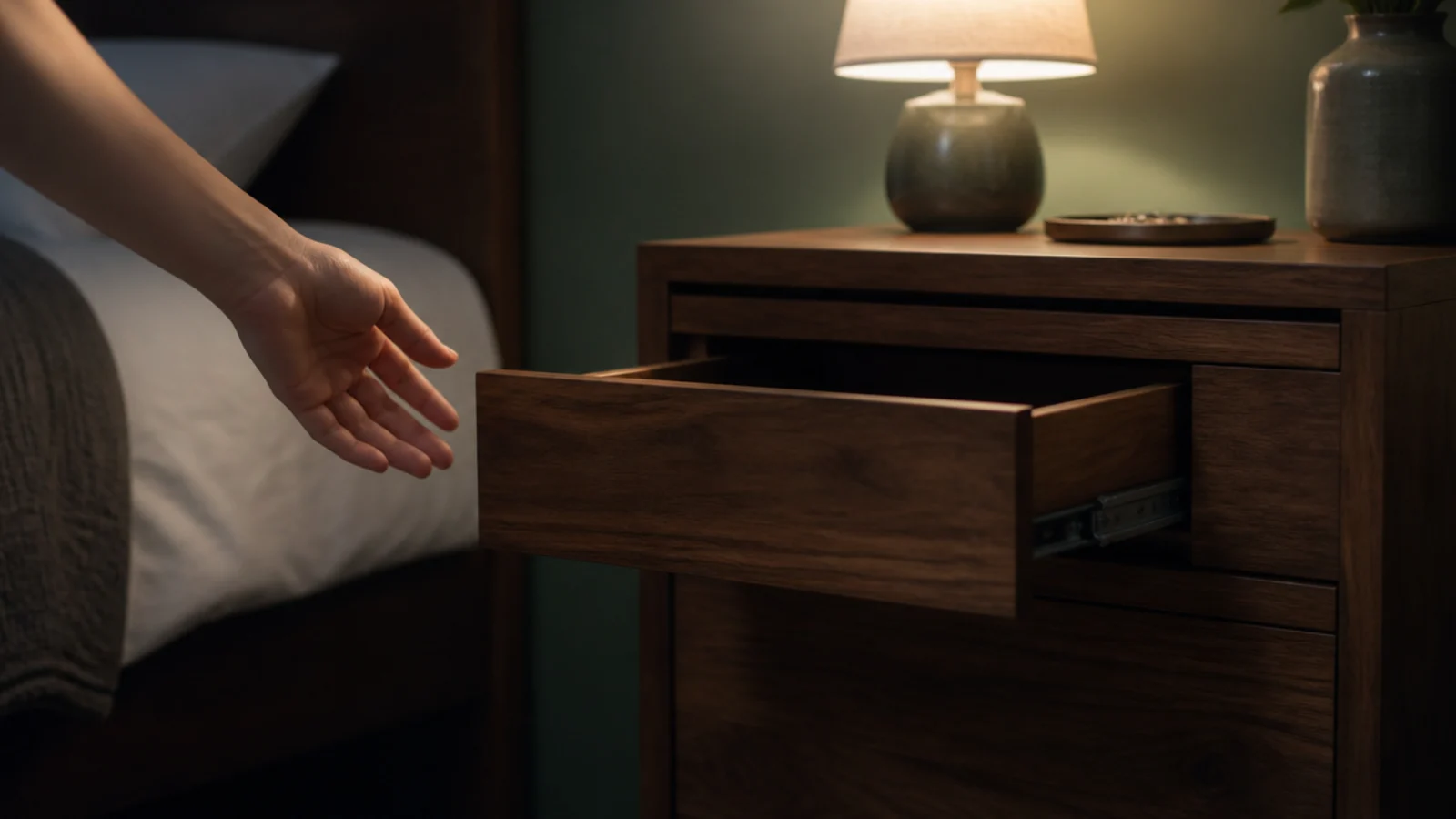
Side-mounted ball-bearing slides show a steel track down each side of the drawer opening. Undermount runners hide underneath, so you see only wood when the drawer is open, and the good ones carry a 75 to 100 pound load with full extension. Push the drawer briskly: it should catch in the last inch and close itself without a bang. Retrofit kits run 25 to 60 dollars a pair and are the highest-value upgrade on this list.
3. A twenty-millimetre stone top with a mitred edge
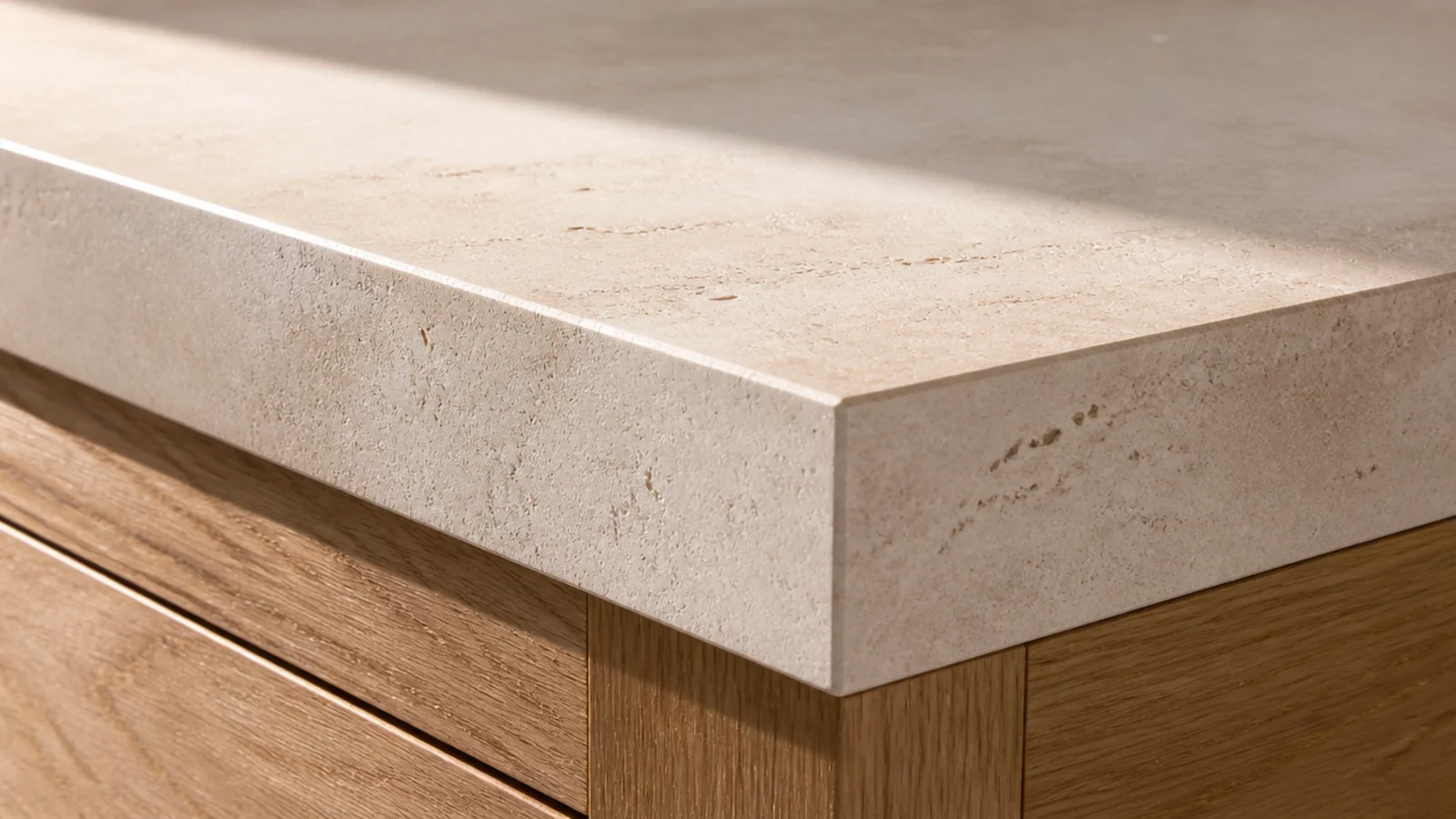
Stone thickness is quoted in millimetres — 20mm and 30mm are the standard slabs. A mitred edge takes a 20mm slab and folds it down a deeper apron so the stone reads as a solid two-inch block, with the seam hidden in the corner. It costs 80 to 200 dollars more than a square edge and it is the detail that separates a fabricated top from a slab. Seal a porous limestone or marble annually.
4. Book-matched veneer across a pair of fronts
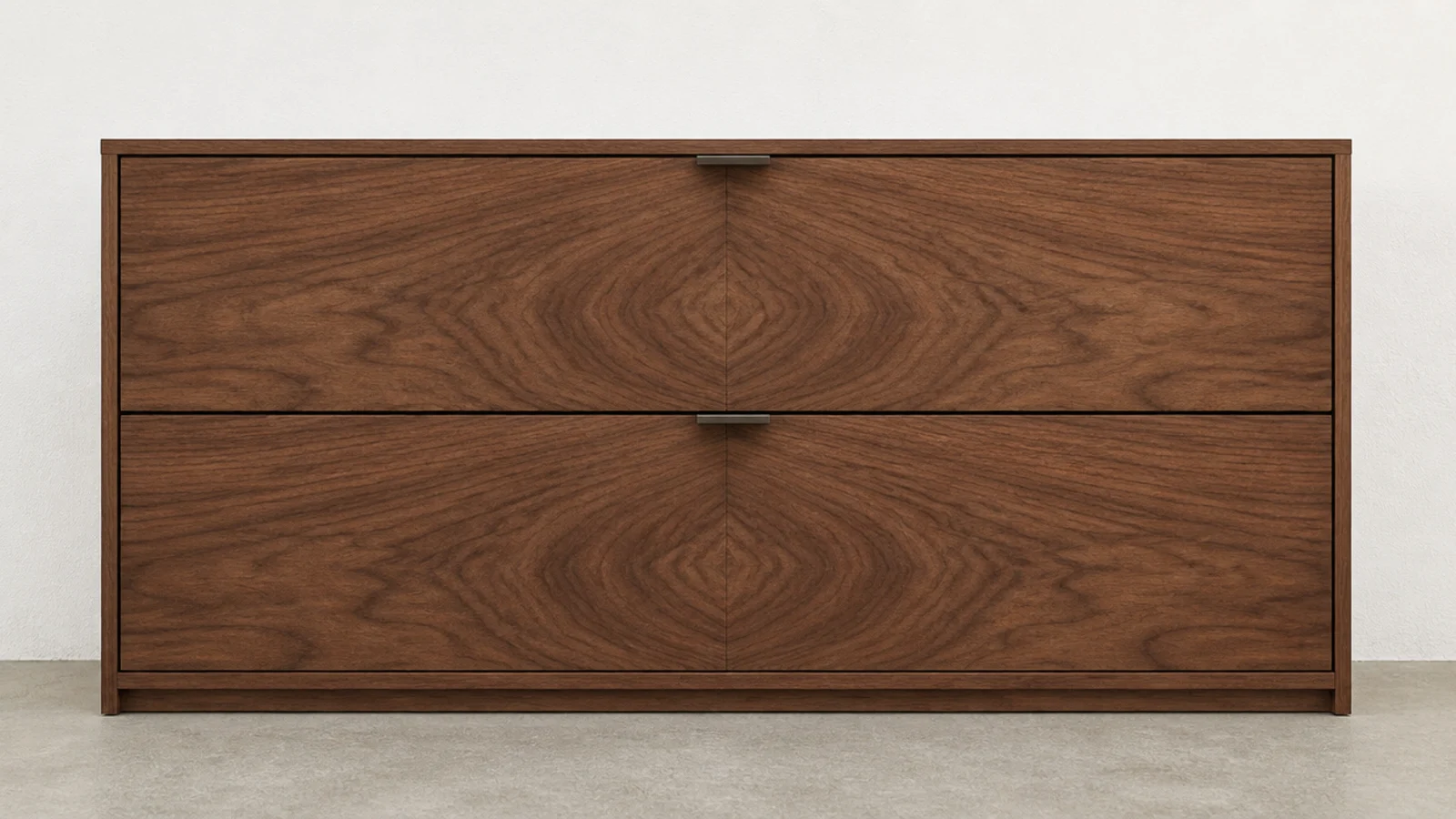
Veneer is sliced from a log in consecutive leaves, so two adjacent leaves opened like a book mirror each other exactly. Run that mirrored figure across two drawer fronts and the cabinet reads as one carved panel rather than two boards. Ask for the veneer thickness — 0.6mm is standard, and anything advertised as paper-backed at 0.2mm cannot be sanded or repaired. This is a case where veneer genuinely beats solid.
5. Solid brass pulls, tested with a magnet
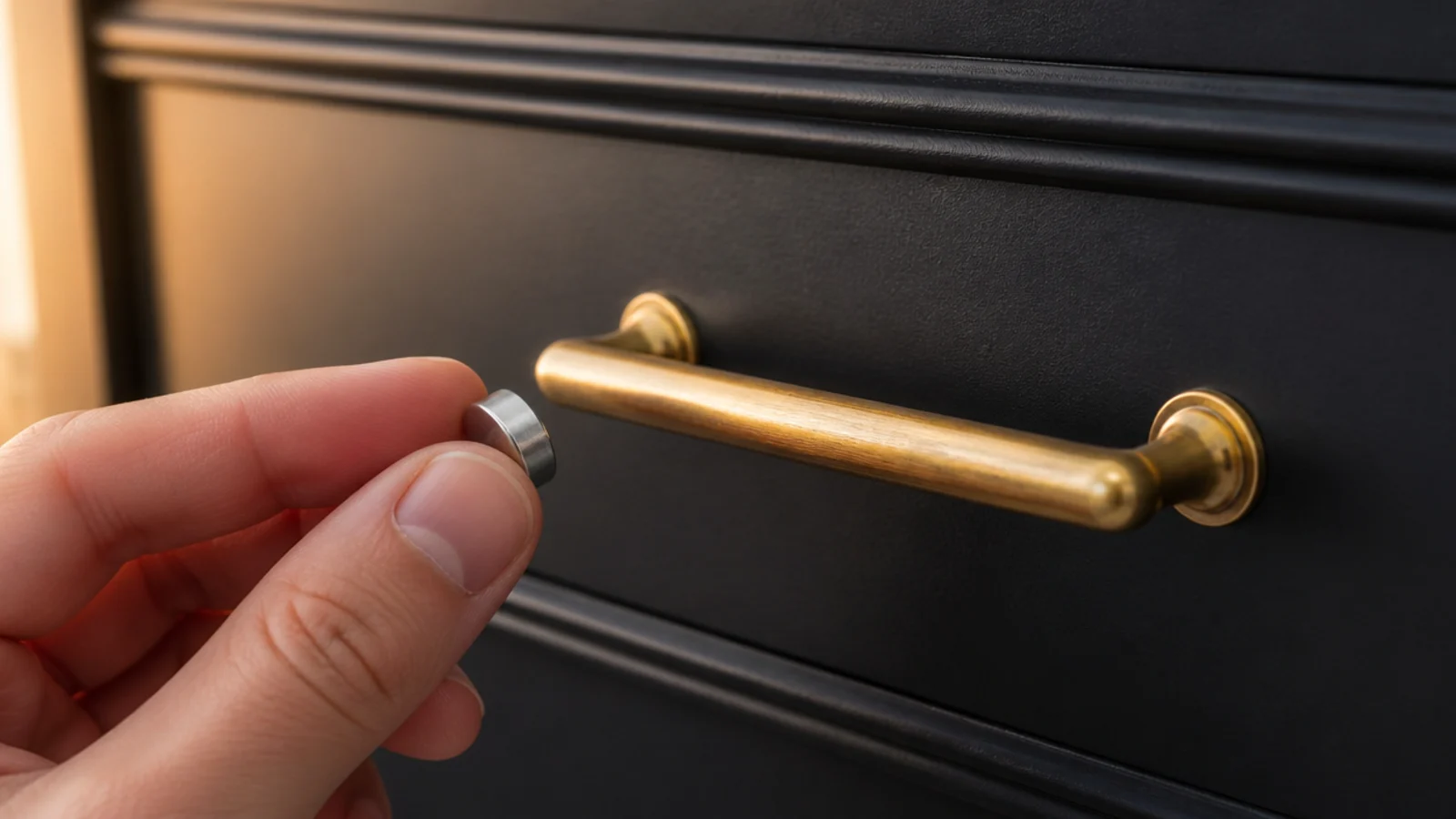
Carry a fridge magnet to the shop. Solid brass and bronze are non-magnetic, so the magnet falls straight off; brass-plated steel grabs it hard. Solid metal also warms in your palm in about five seconds where plated zinc stays cold. Unlacquered brass will darken unevenly at the thumb contact point, which is the point — that wear pattern is not a flaw you can buy. Budget 12 to 40 dollars per pull.
6. Reeded fronts cut at twelve millimetre spacing
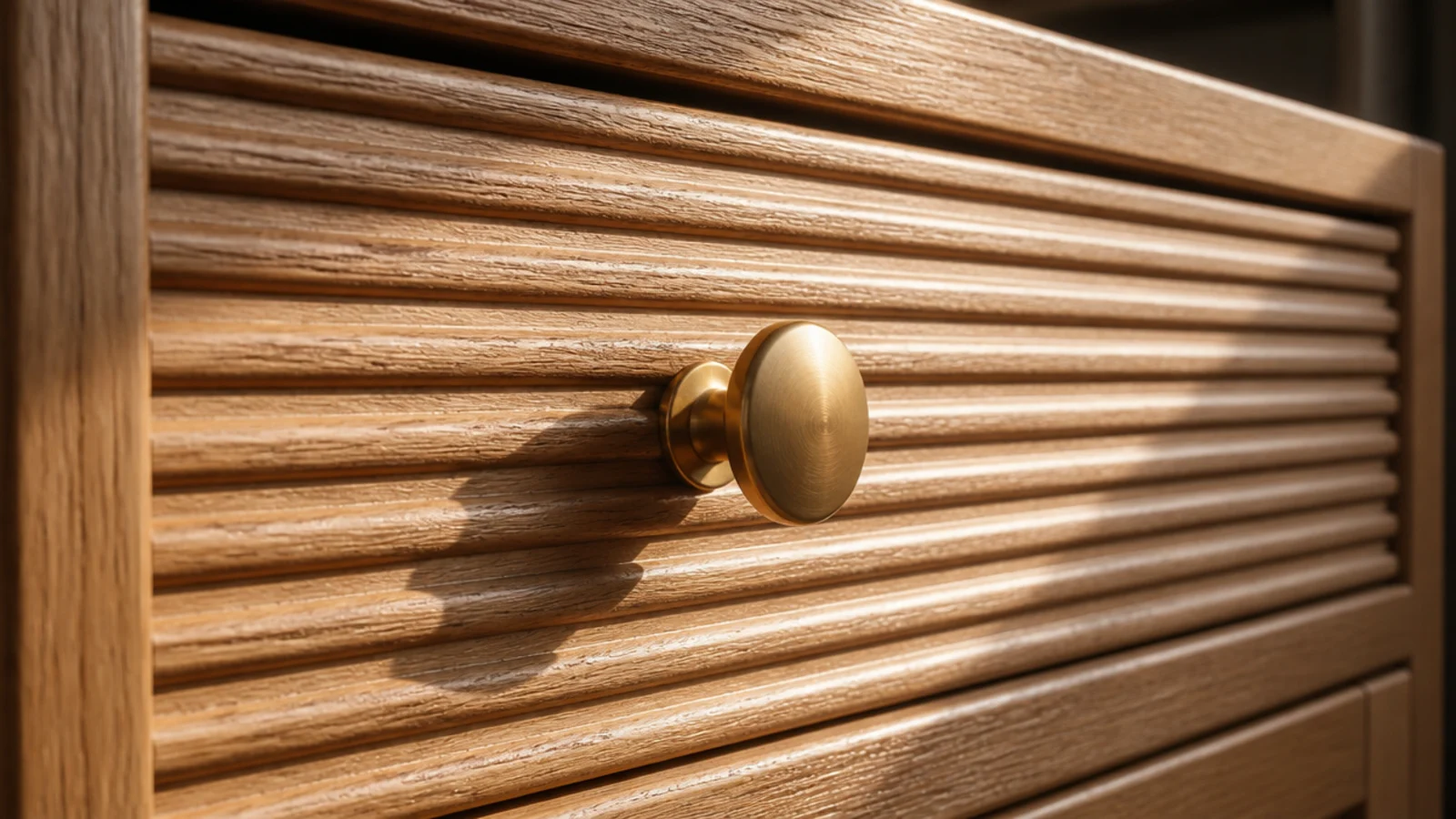
Reeding is a row of half-round convex ridges machined into a flat front, and it works because it manufactures shadow in a room with no natural contrast. Twelve millimetre reeds suit a small bedside cabinet; the 25mm spacing sold for kitchen islands looks coarse at this scale. You can retrofit it — half-round pine moulding glued to an existing flat front and painted out costs about 20 dollars a drawer.
7. A burl panel used once and nowhere else
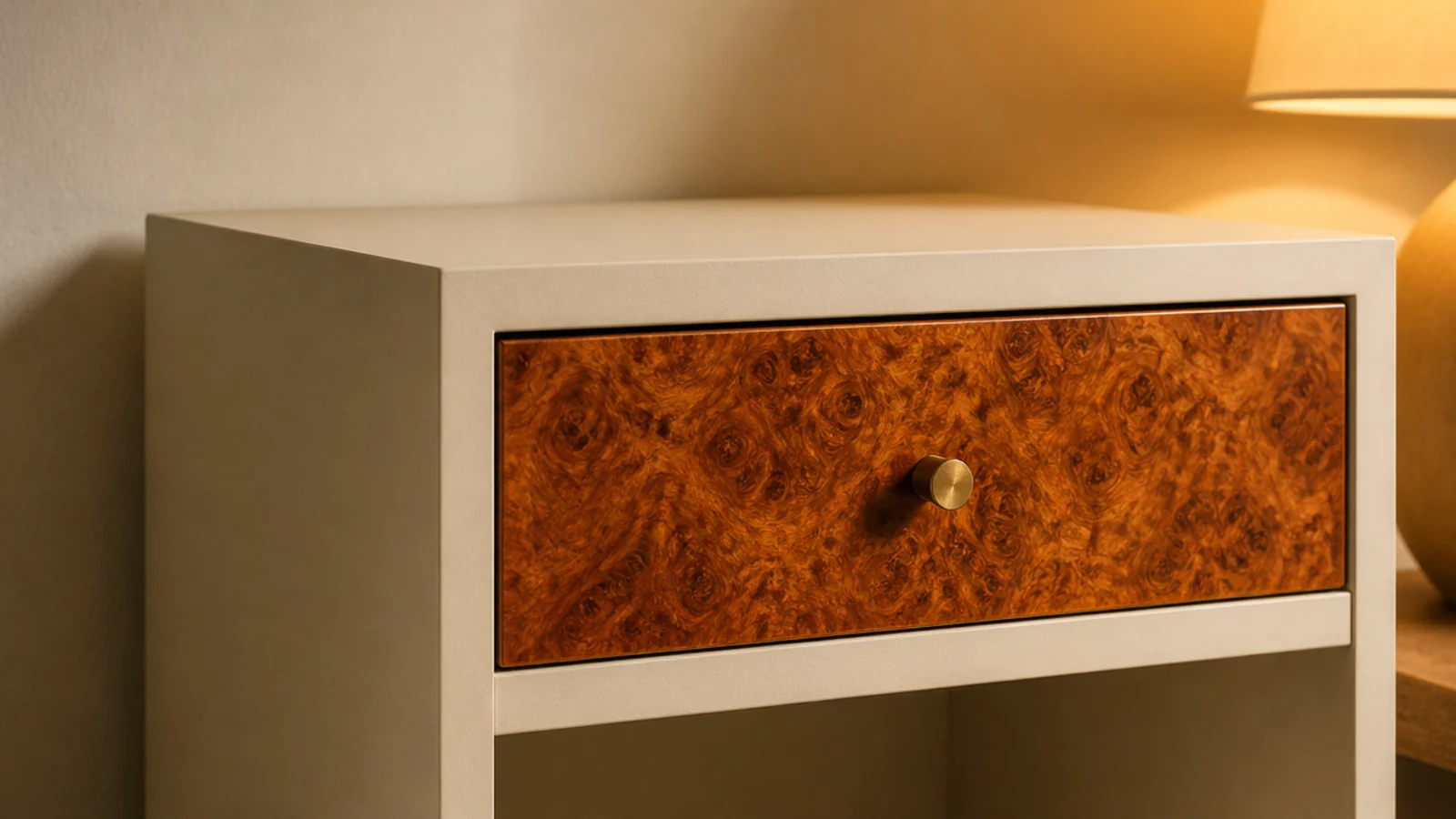
Burl is the swirling grain from a growth on a trunk, and it is expensive, unstable in solid form and almost always used as veneer. The rule is one burl surface per room. A single burl drawer front inside a plain painted carcass reads as a deliberate act. Two burl cabinets, a burl mirror and a burl lamp base read as a showroom. Restraint is the luxury here, not the material.
8. Leather wrapped over the top surface
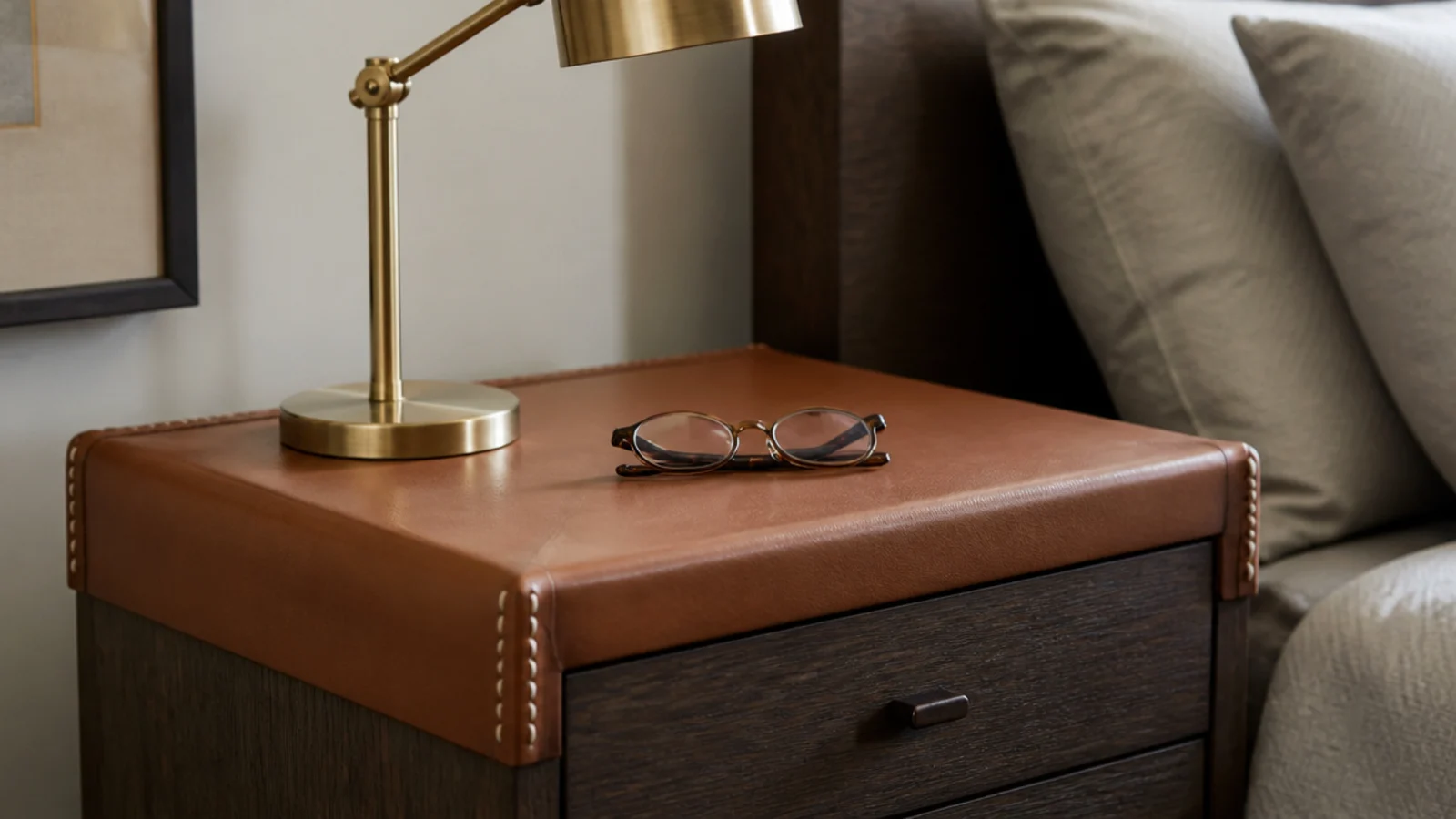
A leather-topped nightstand is quiet, warm to touch and silent when you set a glass down at 3am. Look for vegetable-tanned hide at 1.6 to 2mm thick, wrapped over the edge and stitched at the corners rather than glued flat and trimmed. It will scratch, and within a year those scratches read as patina. Keep it away from a west-facing window, since strong sun fades tan leather noticeably inside two summers.
9. Hand-rubbed lacquer in eight to twelve coats
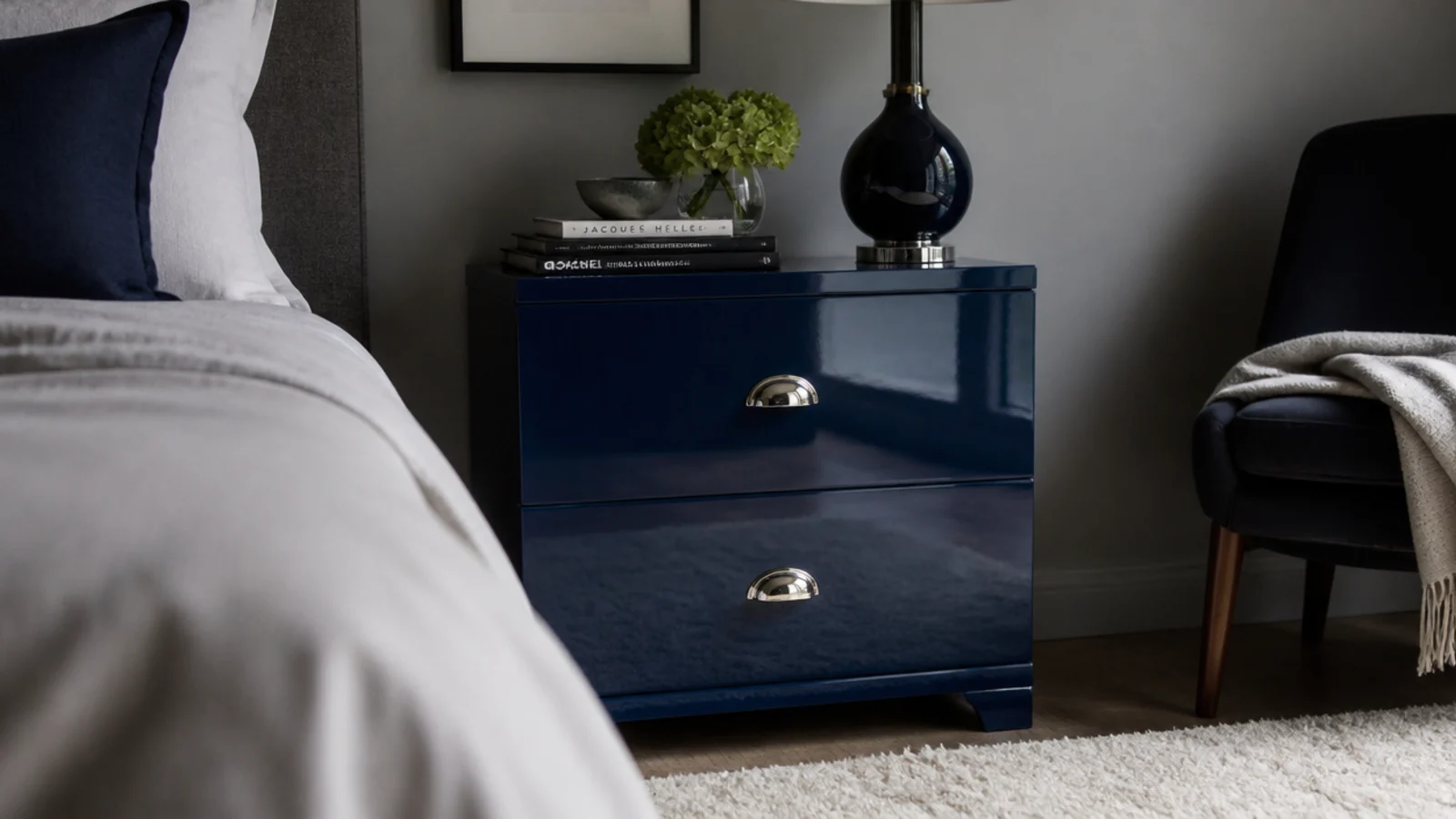
A sprayed single-coat finish sits on the surface and reflects a window as a hard bright glare. Eight to twelve thin coats, each sanded back before the next, build optical depth so the same window reads as a soft rectangle floating below the surface. Expect 400 dollars and up for a genuinely lacquered piece. In a bedroom, choose a deep colour — ink, oxblood, forest — because gloss on white shows every fingerprint.
10. A plinth base instead of four legs
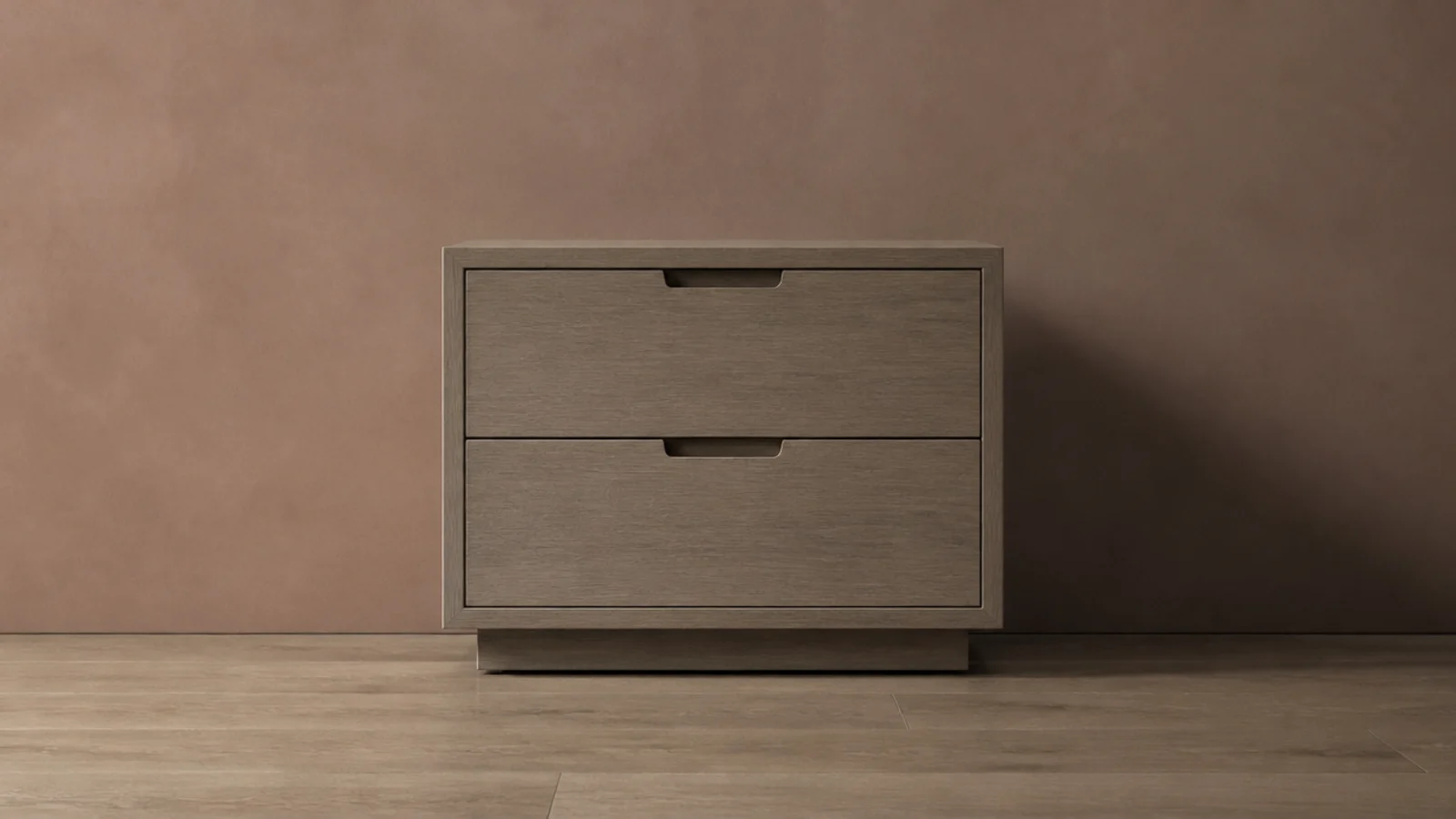
Legs read as furniture; a plinth reads as architecture. Set the base back 40 to 50mm from the front face and the shadow line makes the whole box appear to hover. It also removes four dust traps and gives the cabinet visual weight, which matters beside a heavy upholstered headboard. The tradeoff is that a plinth needs a flat floor — on an uneven boarded floor, add adjustable feet inside the plinth.
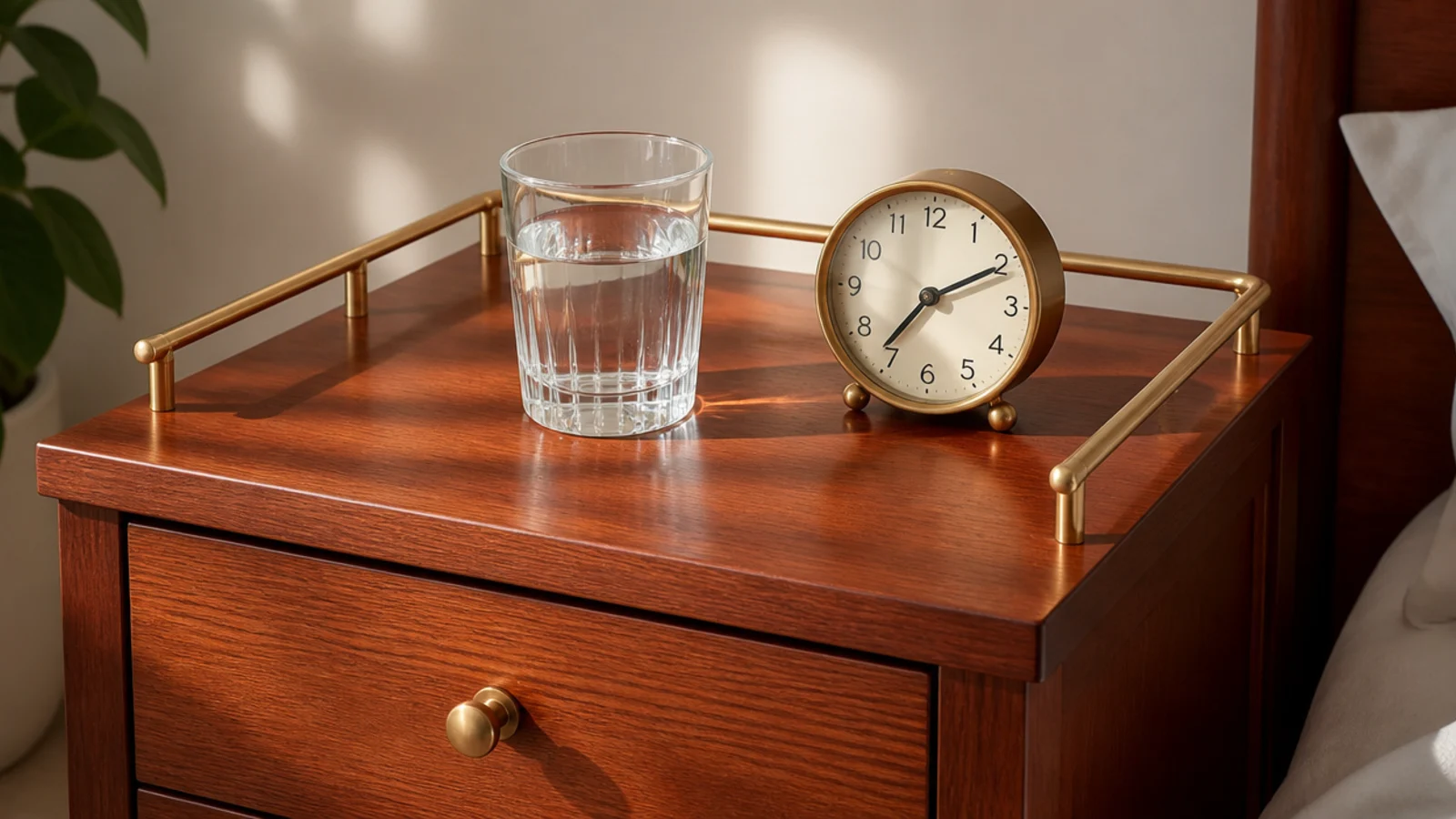
11. A slim brass gallery rail around the top
A gallery rail is a low metal rail on short posts running around the back and sides of a top. It stops a phone sliding off, contains a rolling pen, and finishes the edge with a line of real metal. Antique writing tables have used them for two centuries. A rail 25 to 40mm high is right for a bedside — taller starts to look like a trolley.
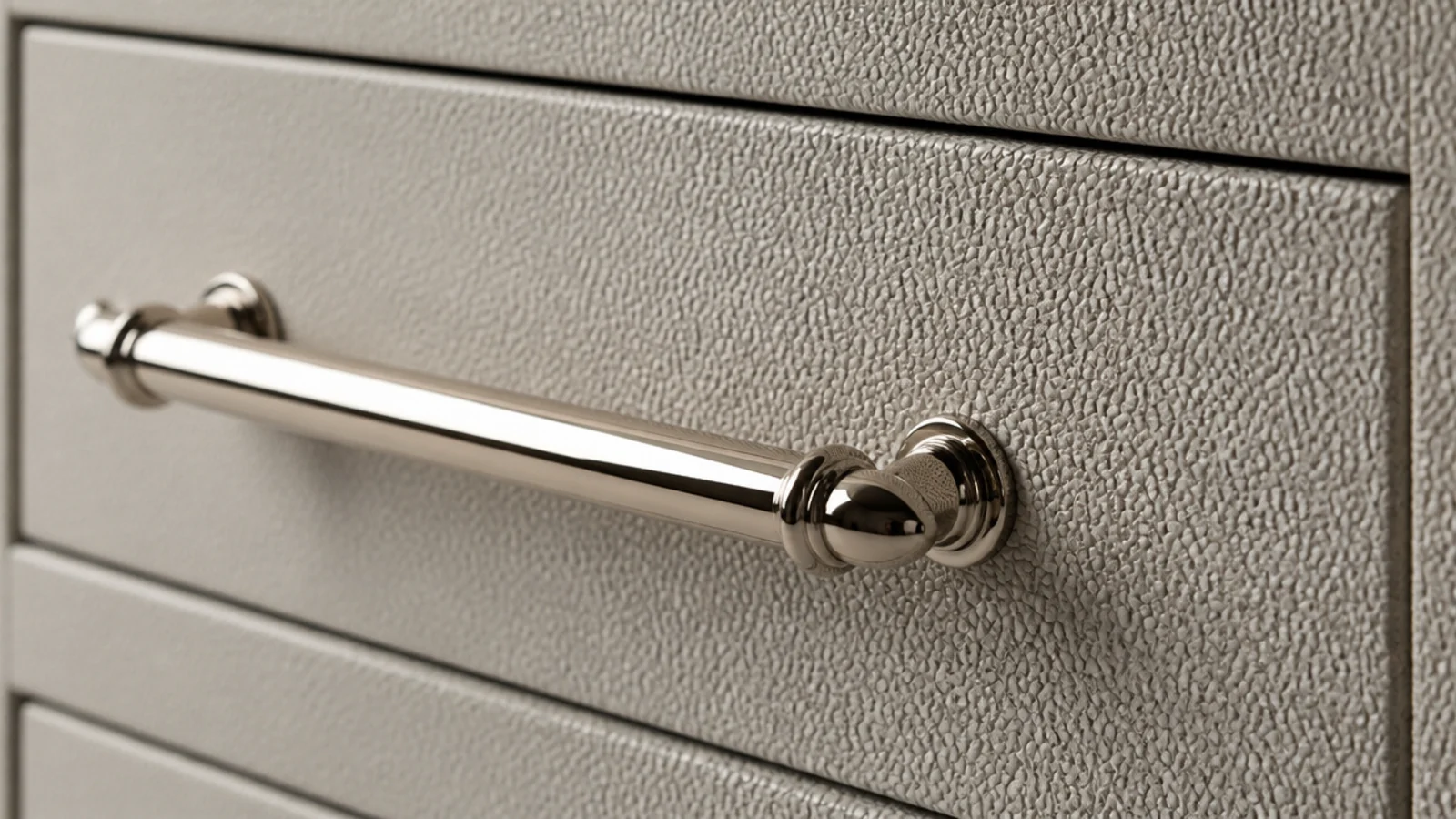
12. Embossed shagreen texture on the drawer fronts
Shagreen is the fine pebbled grain associated with 1930s French cabinetmaking, and modern embossed versions in leather or resin give the same texture for a fraction of the cost. It reads as pale grey or celadon from three feet and only reveals itself when you touch it, which is exactly the right behaviour for a surface beside a pillow. Pair it with polished nickel rather than brass.
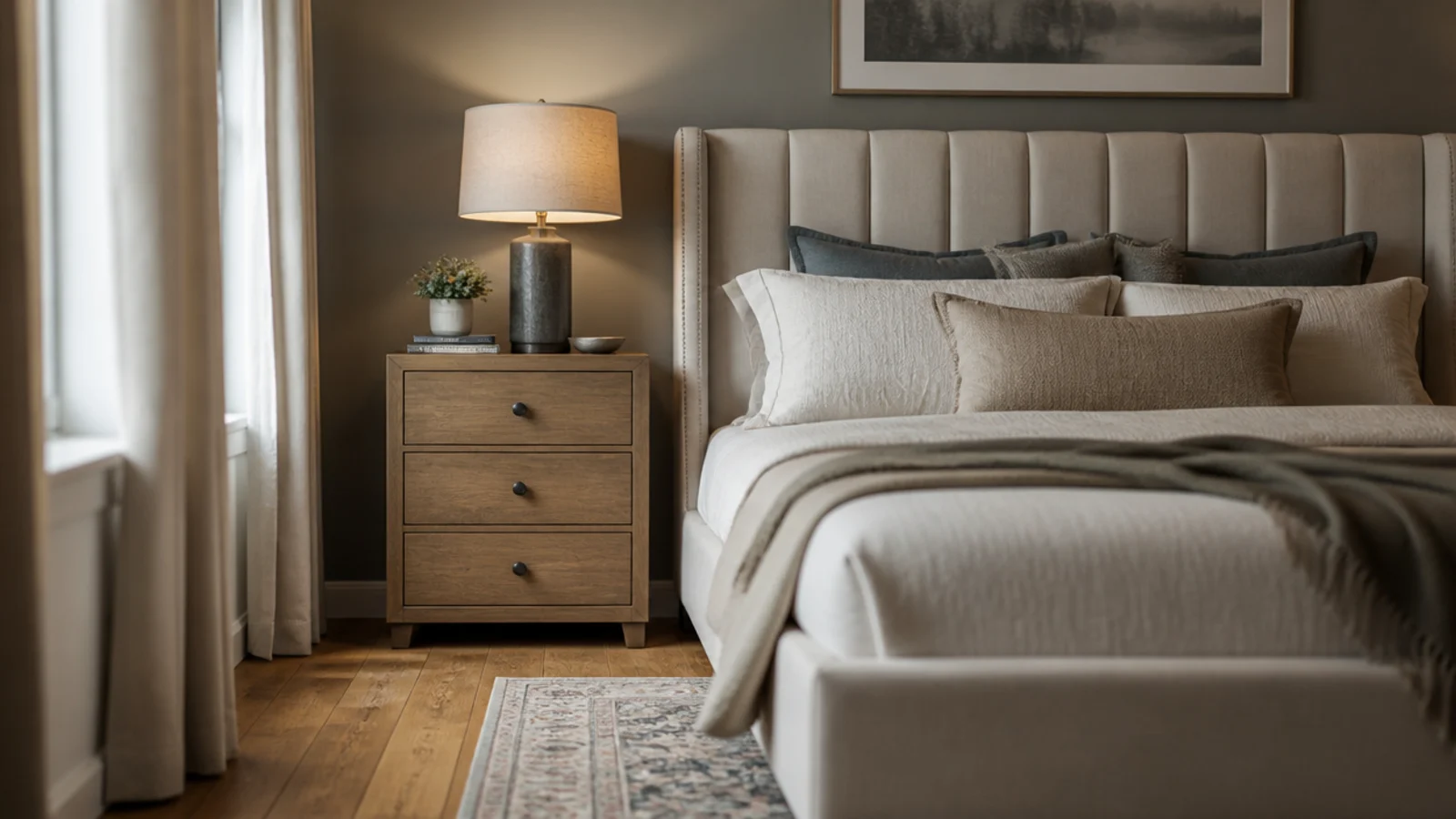
13. Scale the cabinet up for a king bed
Undersized nightstands are the most common proportion error in an expensively furnished bedroom. A king bed is 76 to 80 inches wide with a headboard often 50 inches tall — a 16-inch cabinet beside it disappears. Go 24 to 30 inches wide and at least 18 deep, provided you keep a 24-inch walkway. If the room cannot take that width, the narrow table guide has the alternative proportions.
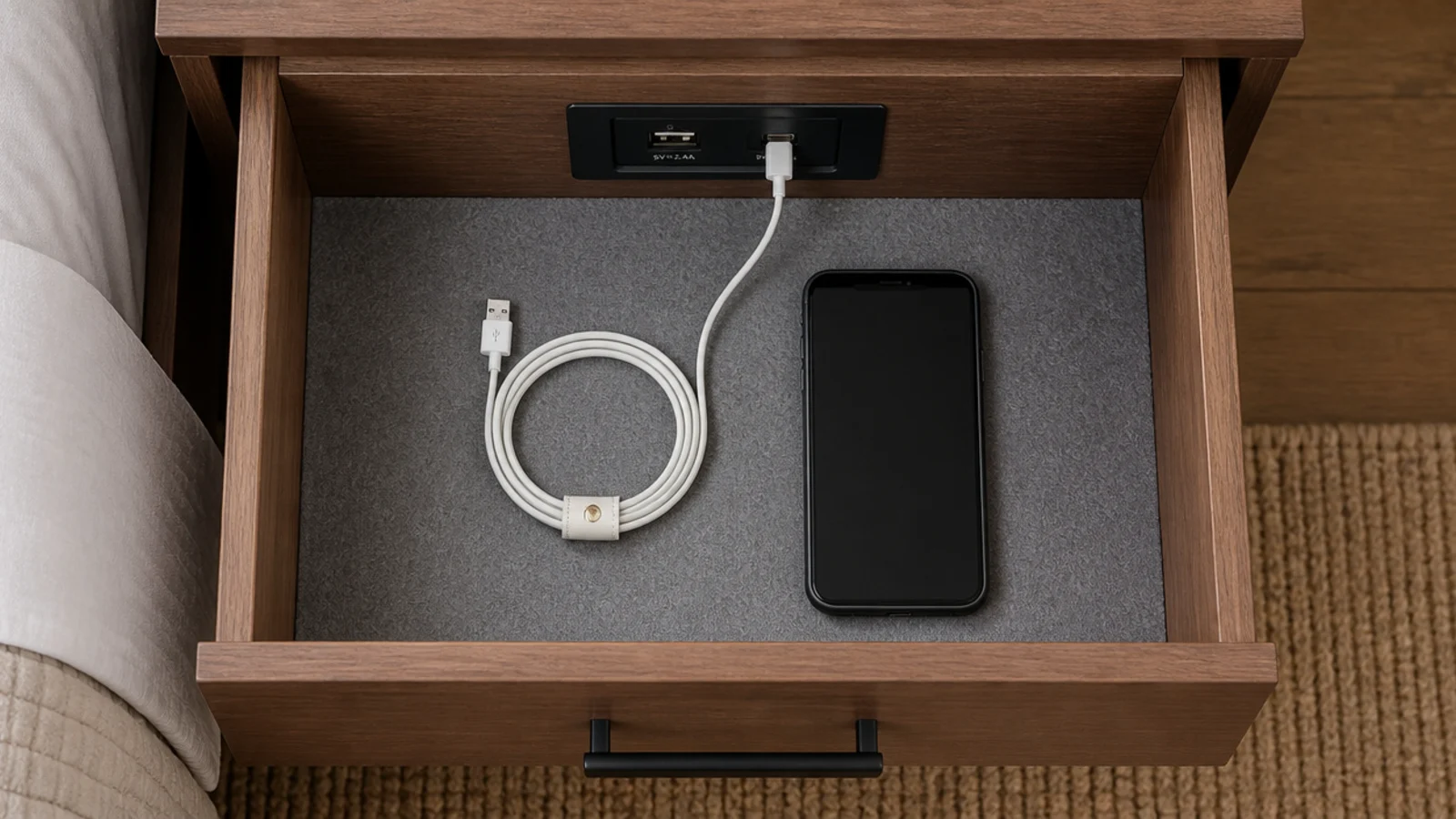
14. Wire a dimmer and a USB outlet inside the drawer
Nothing undoes an expensive cabinet faster than a white charging brick hanging off the wall beside it. A recessed power module with two USB-C ports mounted inside the top drawer costs 30 to 60 dollars and takes an hour with an existing socket nearby. Add an in-line dimmer on the lamp cord, or a smart bulb, so the light drops to 10 percent rather than switching off hard.
15. Felt-lined interior trays cut to the drawer
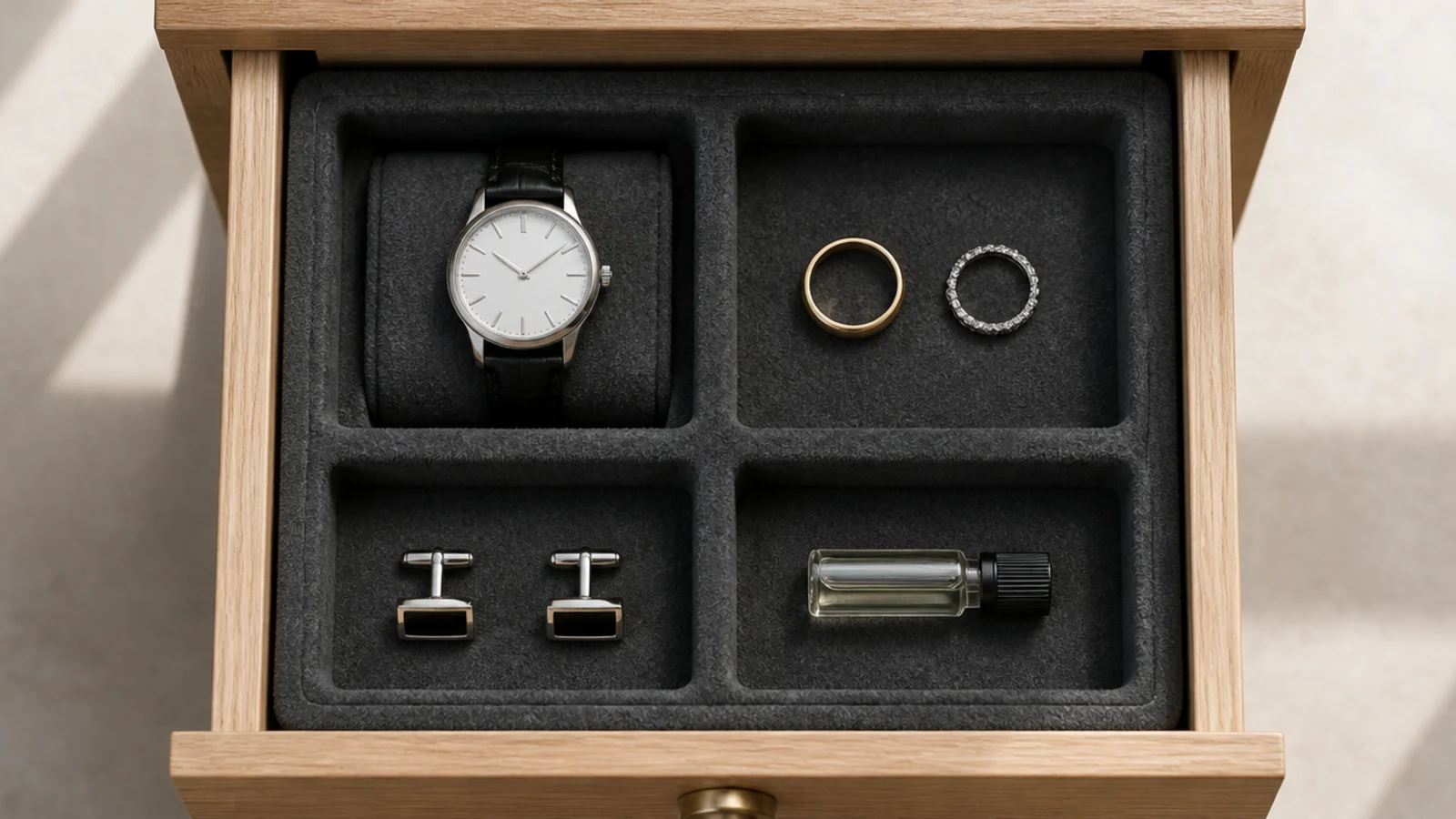
An empty drawer becomes a junk drawer within a fortnight. A felt or velvet insert cut to the exact internal width — not a plastic organiser floating with an inch of slack — holds a watch, rings and reading glasses in fixed positions. Measure the internal opening, not the external cabinet width; the difference is usually 30 to 40mm once you allow for the runners and drawer sides.
16. An antique pair of bedside cupboards
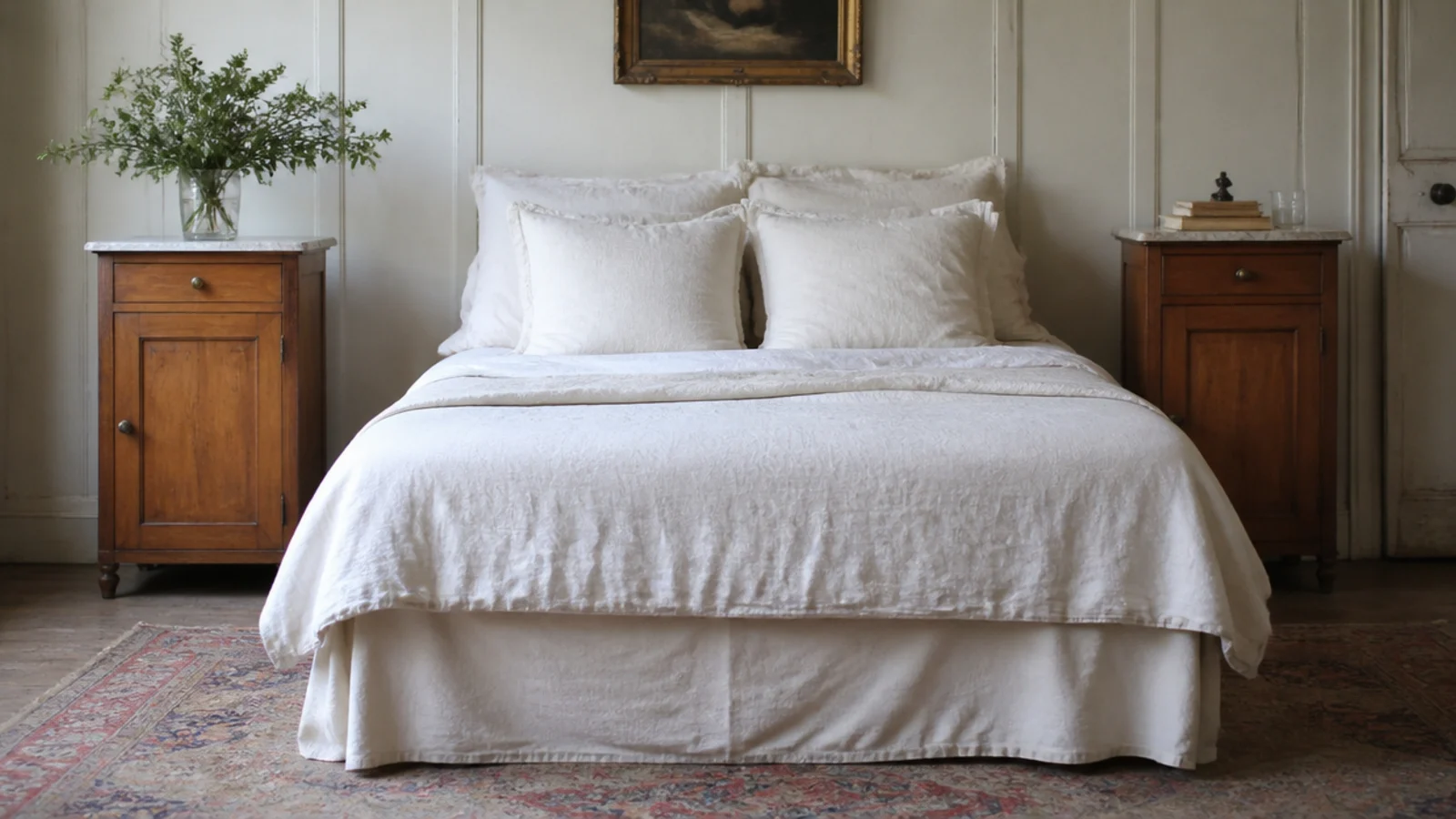
A matched pair of nineteenth-century bedside cupboards typically runs 300 to 800 dollars at a provincial auction, which undercuts most new furniture of comparable construction. They tend to be small — 14 to 16 inches wide and around 30 inches tall — so they suit a high bed better than a low platform. Check the back boards and the door hinge screws, since those are where old repairs hide.
17. A silk or parchment shade with a rolled edge
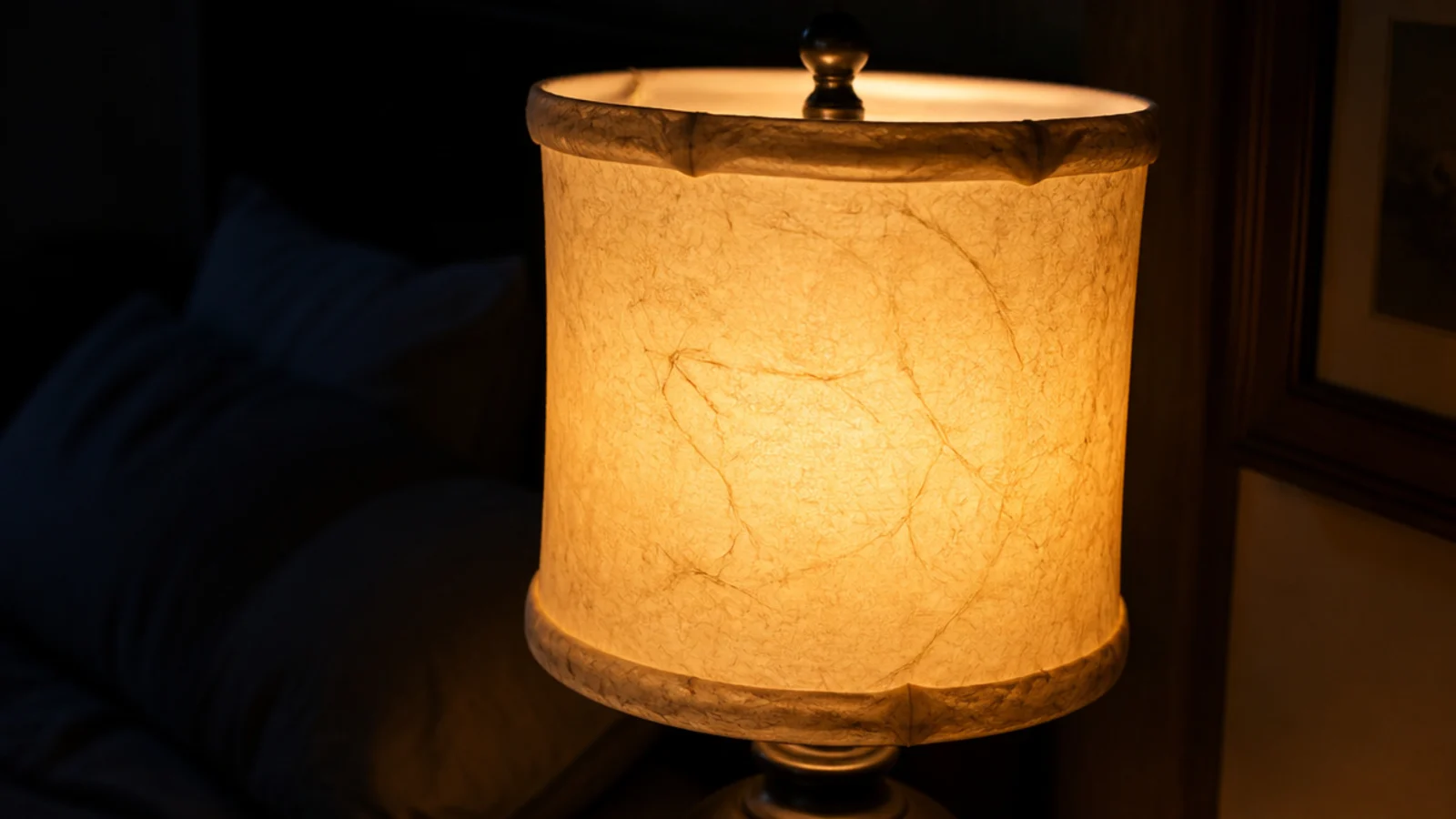
Shade material changes the quality of light more than the bulb does. A paper-backed parchment or silk shade with hand-rolled top and bottom edges glows warm through the material and throws a soft-edged pool downward. A machine-stitched cotton shade with a visible plastic trim strip does neither. Expect 60 to 180 dollars for a rolled-edge shade, and reuse it on a base you already own.
18. An alabaster lamp base that glows when lit
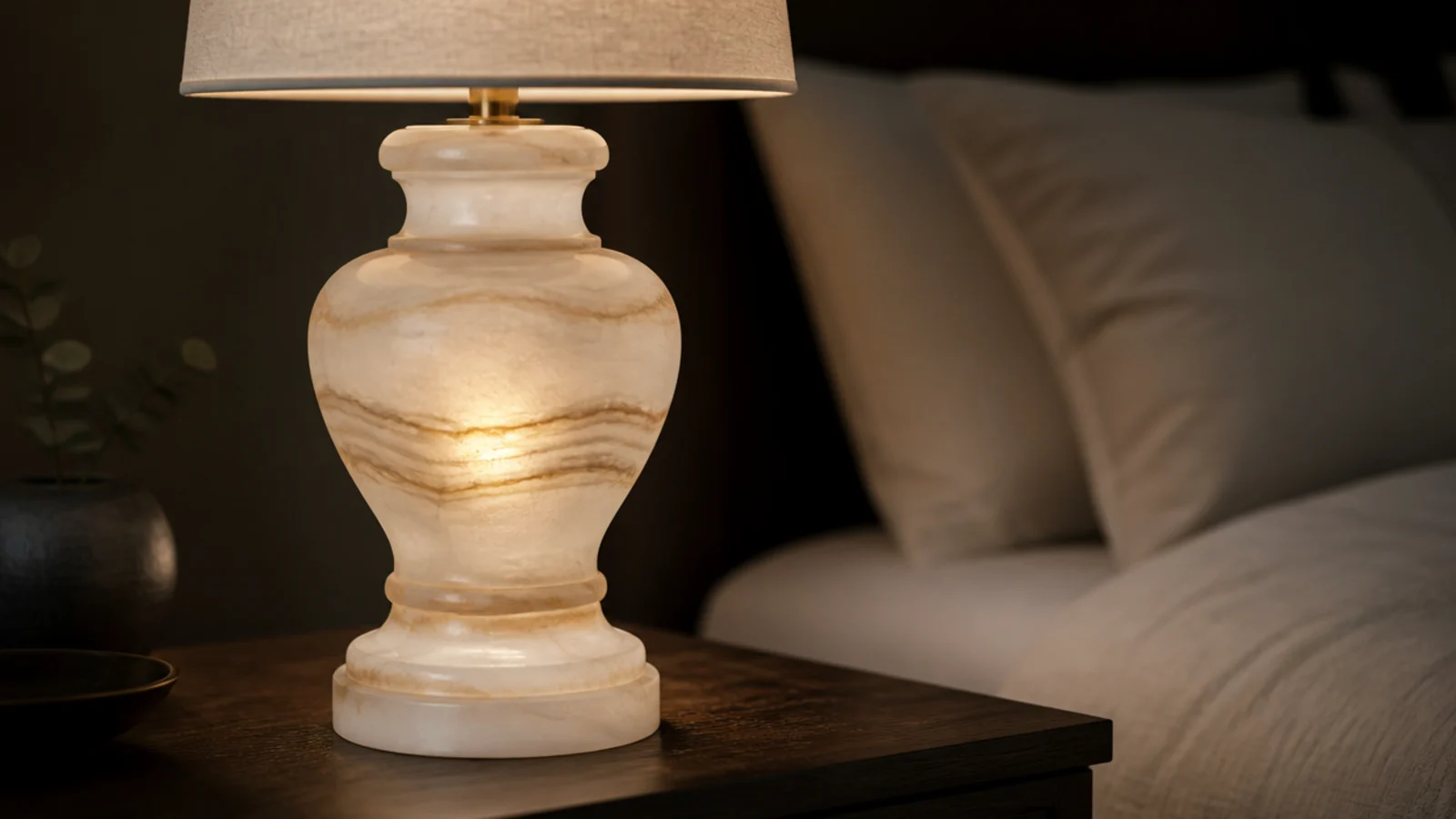
Alabaster is translucent, so the base itself lights up from within and gives you a second, lower source of glow at mattress level. Each block has different mineral banding, which means a pair will never match exactly. Use a low-wattage LED — alabaster is soft stone and heat-sensitive — and keep it out of a bathroom, since it is porous enough to stain from standing water.
19. The hotel pair: identical everything, centred art
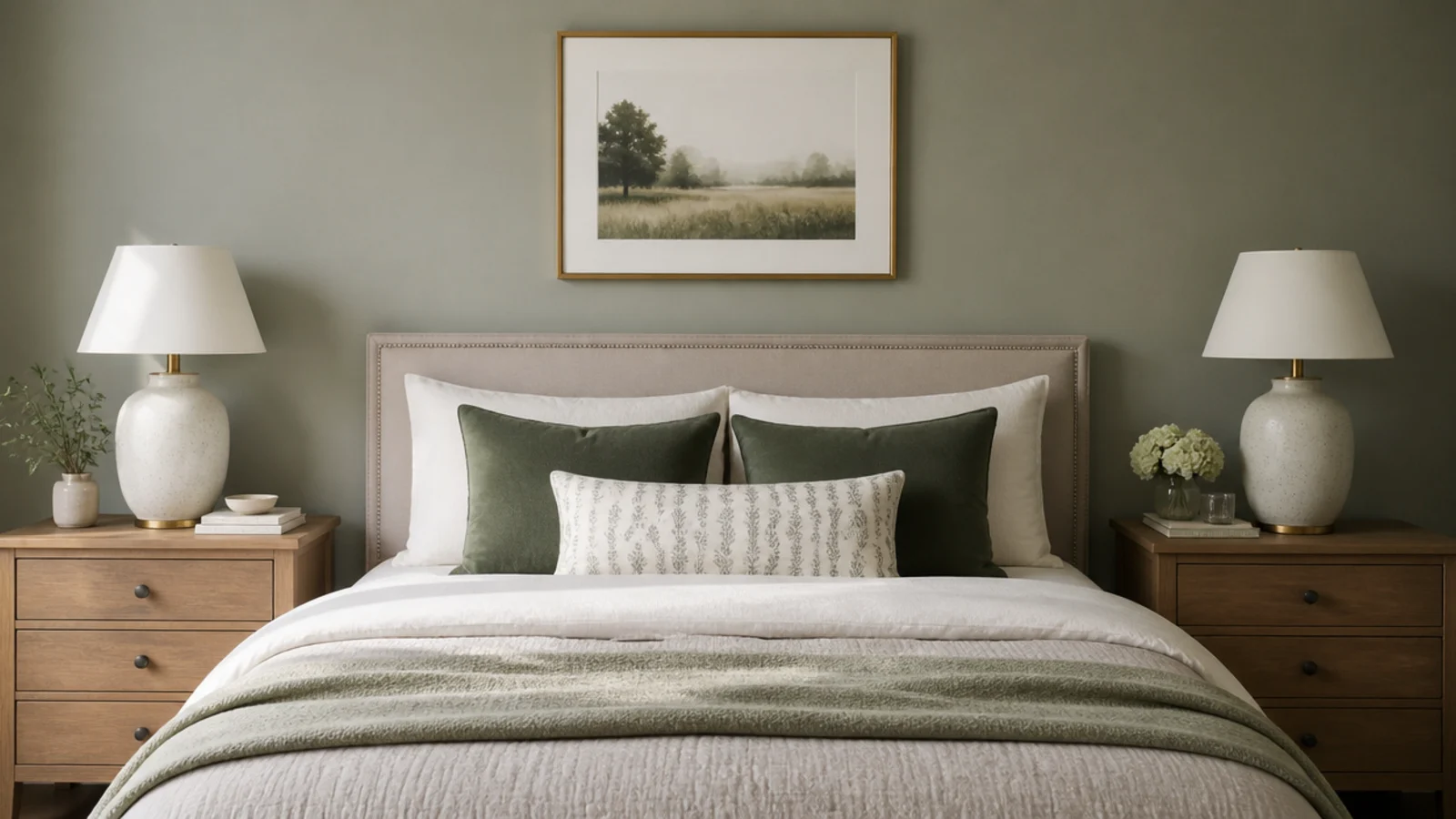
Hotels use rigid symmetry because it photographs as calm and reads as expensive with no effort. Identical cabinets, identical lamps at identical heights, one framed piece centred above the headboard. It is the least creative arrangement available and it works almost every time in a room where you want the eye to stop moving. Reserve asymmetry for rooms with an actual architectural reason for it.
20. Bespoke joinery built into the wall recess
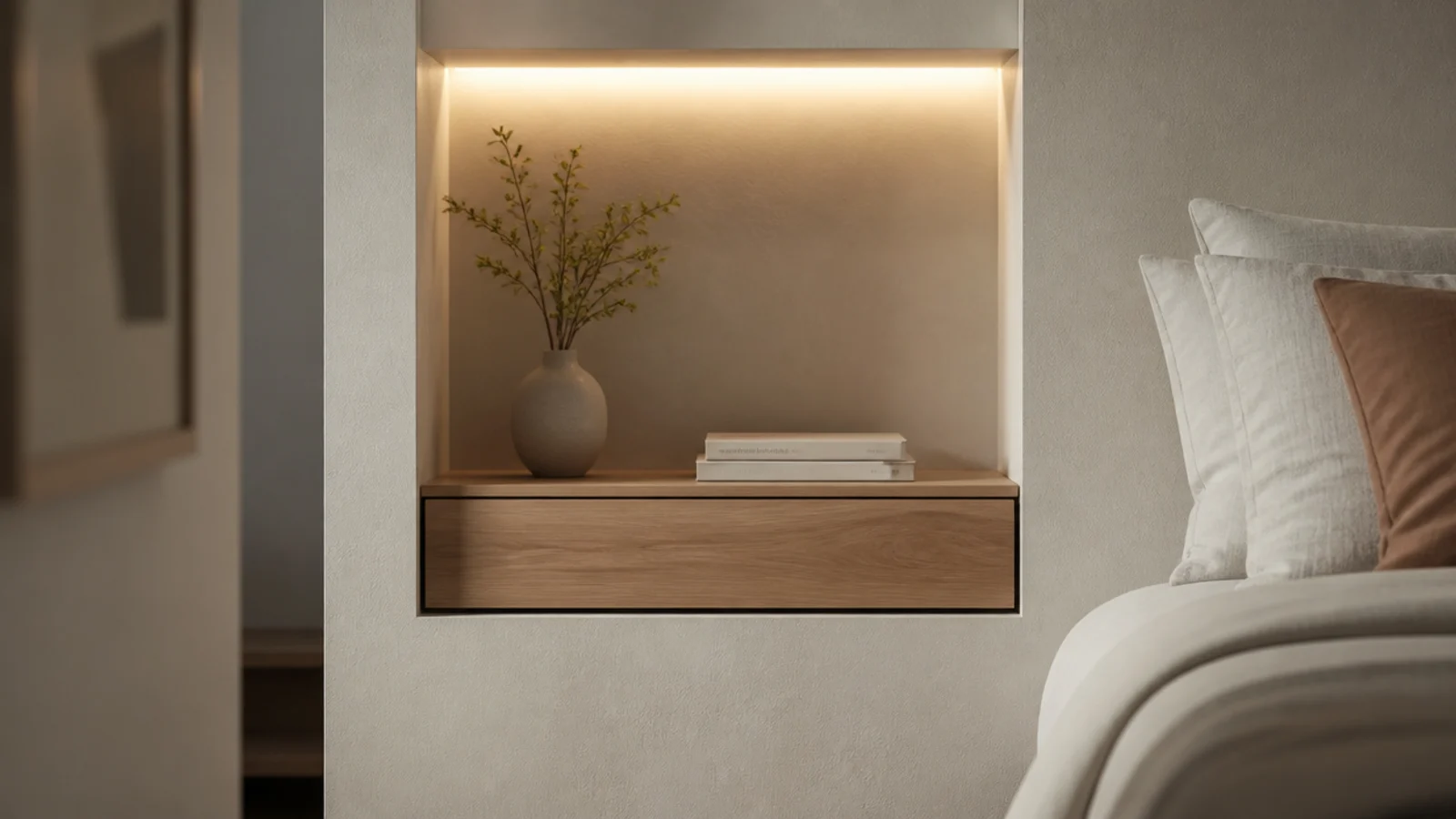
If the bed sits in an alcove, the highest-end answer is no freestanding table at all — a flush shelf and a push-open drawer built into the wall thickness, with a recessed strip light above. A joiner will quote 600 to 1,400 dollars a side. It buys back four to six inches of floor, cannot be knocked over, and it is the one option that genuinely cannot be replicated with a purchase.
If a reflective surface would open up a dark corner beside the bed, the mirror wall decor guide covers placement and sizing. For lighting the room rather than the table, bedroom pendant lighting explains drop heights over a nightstand.
Mistakes to Skip
- Buying a cabinet without opening the drawer. Every meaningful quality signal is inside the drawer box, and none of it appears in a product photograph.
- Mixing three metals on one small surface. A brass pull, a chrome lamp and a nickel frame within two feet of each other cancel each other out.
- Choosing high gloss in a bedroom with a window opposite. Gloss reflects the window as a bright rectangle straight at the pillow every morning.
- Sealing a marble or limestone top once and forgetting it. Water rings become permanent, and a bedside table sees a glass of water every single night.
- Scaling down because the shop floor looked crowded. Showrooms are far larger than bedrooms, and cabinets that look big there read small at home.
Frequently asked questions
What makes a bedside table look expensive?
Three things, in order: the drawer, the edge and the hardware. A dovetailed drawer box on undermount runners, a top edge that is mitred or shaped rather than square and raw, and pulls made of solid metal. Those details sit within arm reach of a pillow, which is exactly where a bedroom gets judged.
How much should a good bedside table cost?
A solid hardwood cabinet with dovetailed drawers and soft-close runners generally runs 350 to 900 dollars each, and a stone-topped or veneered designer piece climbs past 1,200. Below about 200 dollars you are almost always buying particleboard with a printed foil face, which chips at the edge and cannot be repaired.
Is solid wood always better than veneer?
No. A quality veneer over a stable core stays flat where a wide solid panel can cup or split with seasonal humidity, and book-matched veneer produces a mirrored grain pattern that solid boards cannot. What you want to avoid is printed paper foil, which has no wood in it at all and shows white at every chipped edge.
How do I tell solid brass from brass plating?
Hold a magnet against the pull. Solid brass is non-magnetic, so the magnet drops straight off; plated steel grabs it. Solid brass also warms in the hand within seconds and develops a patina you can polish back, while plating wears through at the thumb contact point within a couple of years and cannot be restored.
What size bedside table suits a king bed?
Twenty-four to thirty inches wide, and at least eighteen inches deep. A standard sixteen-inch nightstand beside an eighty-inch king reads undersized from the doorway, which is the single most common proportion mistake in an otherwise well-furnished bedroom. Keep the top within two inches of the mattress height as always.
Want more like this? Browse all 15 bedside table ideas guides — they all use the same measurements and budget tiers.

Pin it for later
Save this to your Bedside Table Ideas board
Pin it now so it is waiting for you when the tape measure comes out — and so the next person hunting for this idea can find it too.
Save this pinKeep going
More ideas worth saving while you have the tape measure out.