Bedside Table Ideas · Listicle
25 Dreamy Bedside Table Ideas Aesthetic Fans Love
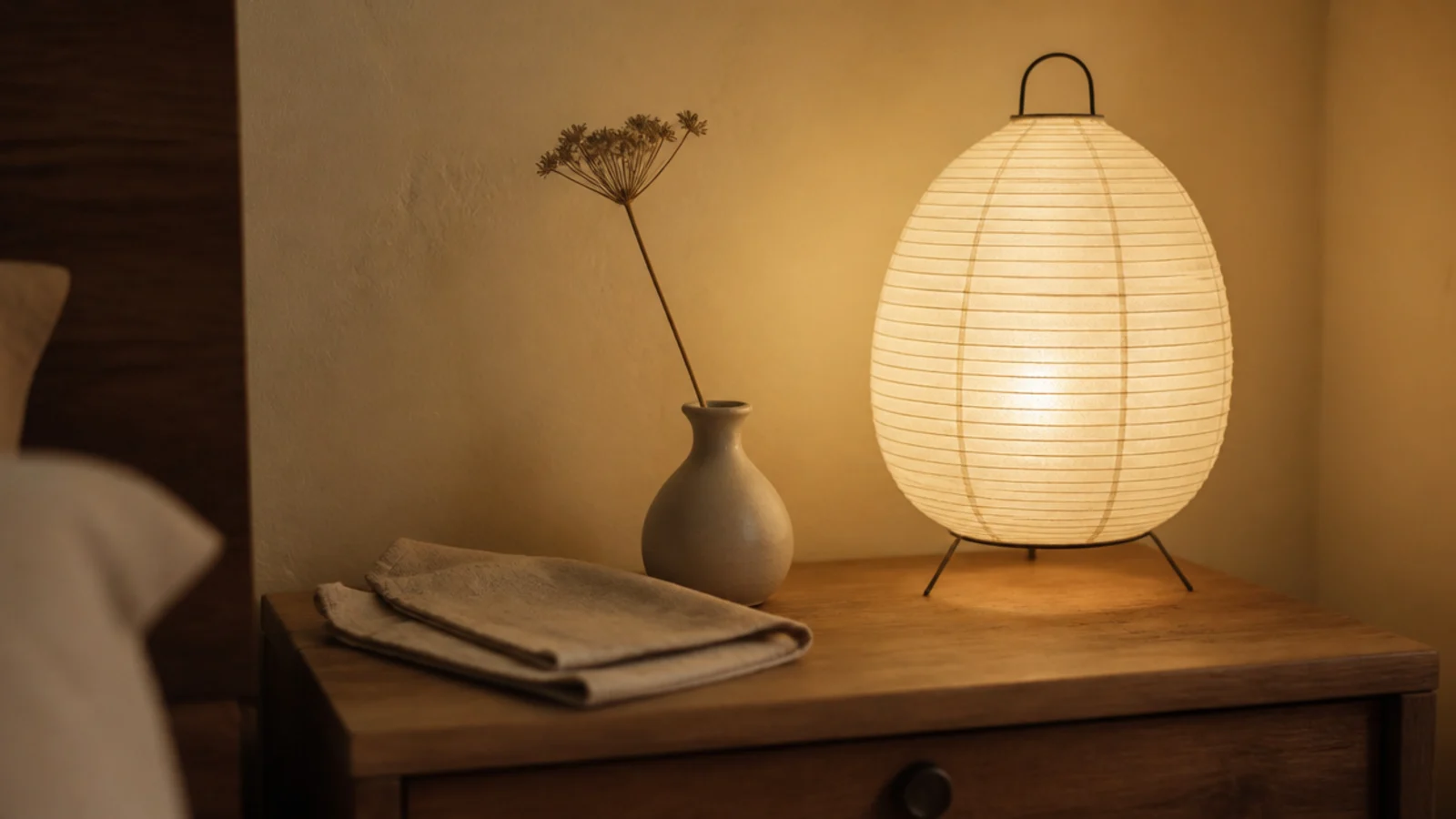
Bedside table ideas aesthetic enough to photograph almost never involve more things. They involve fewer, arranged with more care. I spent a year adding objects to mine before I worked out that every good version I had ever saved was doing the same four quiet things. Here are twenty-five, starting with those four.
In this guide27 sections — tap to openHide
- 1.What bedside table ideas aesthetic fans get right
- 2.Choose one wood tone and repeat it
- 3.A paper shade for genuinely diffused light
- 4.Stack books with the spines turned in
- 5.A single dried stem in a bud vase
- 6.A linen runner under everything
- 7.Amber glass for warm reflected light
- 8.A small artwork leaning at the back
- 9.Matte ceramic over anything glossy
- 10.Brass you allow to patinate
- 11.A candle you actually burn
- 12.Layer three shades of one colour
- 13.An old book used as a riser
- 14.Rattan or cane for warmth
- 15.A vintage dish for rings
- 16.Repeat one curve across the group
- 17.Keep the metals to two
- 18.A low bowl instead of a tall vase
- 19.A textured linen lampshade
- 20.One handmade, imperfect thing
- 21.Angle the light to cast one good shadow
- 22.Group in threes at three heights
- 23.Neutral base, one saturated accent
- 24.Let one thing overhang very slightly
- 25.A worn surface beats a perfect one
- 26.Photograph it before you decide it is finished
- 27.Mistakes to Skip
What bedside table ideas aesthetic fans get right
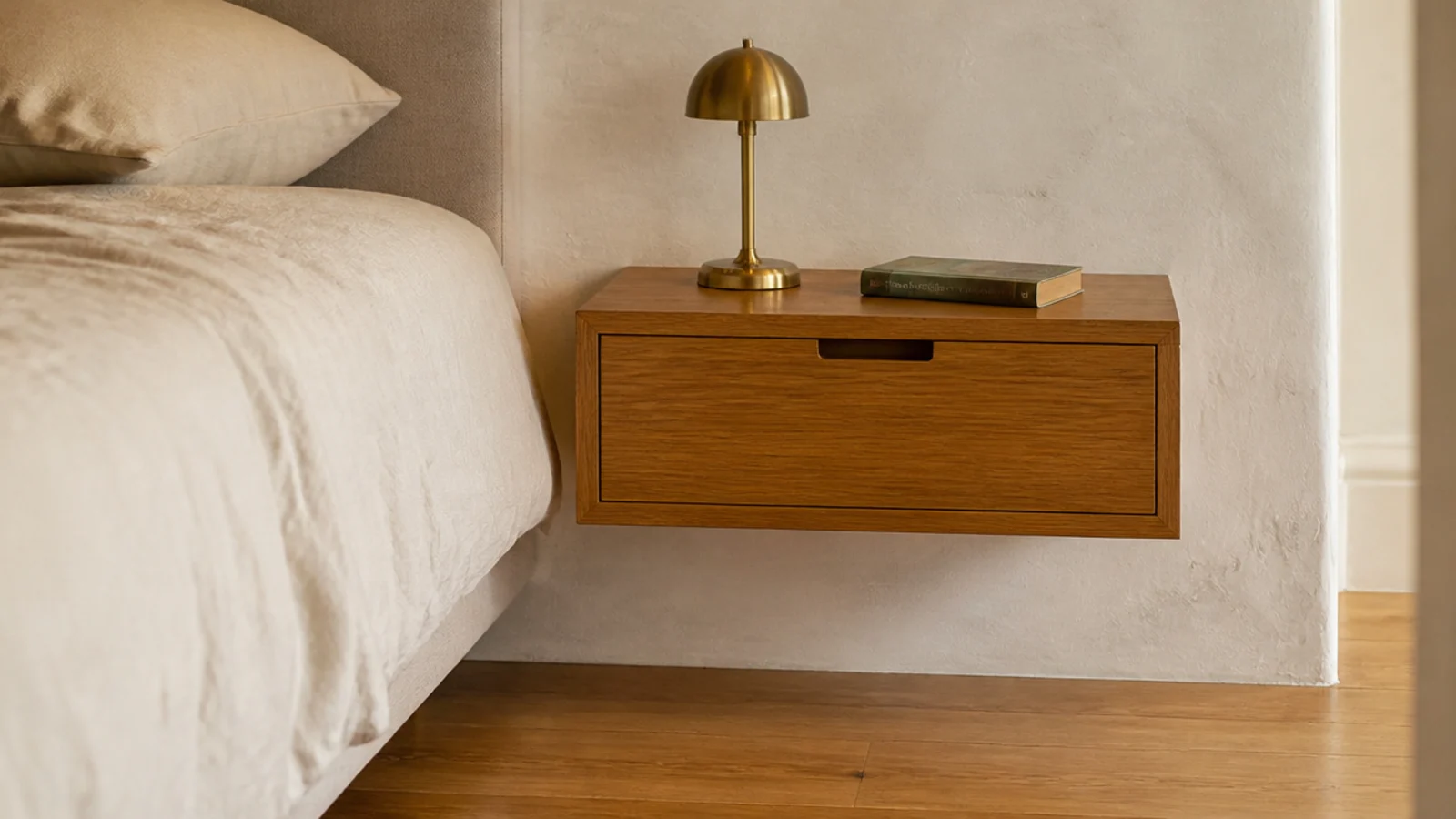
Restraint. Three objects on a surface up to 18 inches across, four if one is flat. Past that the eye stops reading an arrangement and starts reading storage. This is the rule everything else sits underneath.
Repetition. One wood tone repeated, one curve repeated, no more than two metals and each of those appearing at least twice. A third metal showing up once is what makes an otherwise careful group look accidental.
Warm light. A bulb at 2700K or lower, behind paper or linen. Anything from 3000K up pushes blue, reads clinical, and undoes soft styling instantly. This one change costs about $4 and does more than any object you could add.
Texture over shine. Matte ceramic, unlacquered brass, coarse linen, worn timber. Texture is what the eye prices — it is why a $40 table with a linen runner and one real stoneware piece reads better than a $300 table with three glossy ornaments.
Budget-wise most of this list is under $20 an item, and several cost nothing. For the practical side of what the table itself should be, start with the main bedside table guide.
1. Choose one wood tone and repeat it
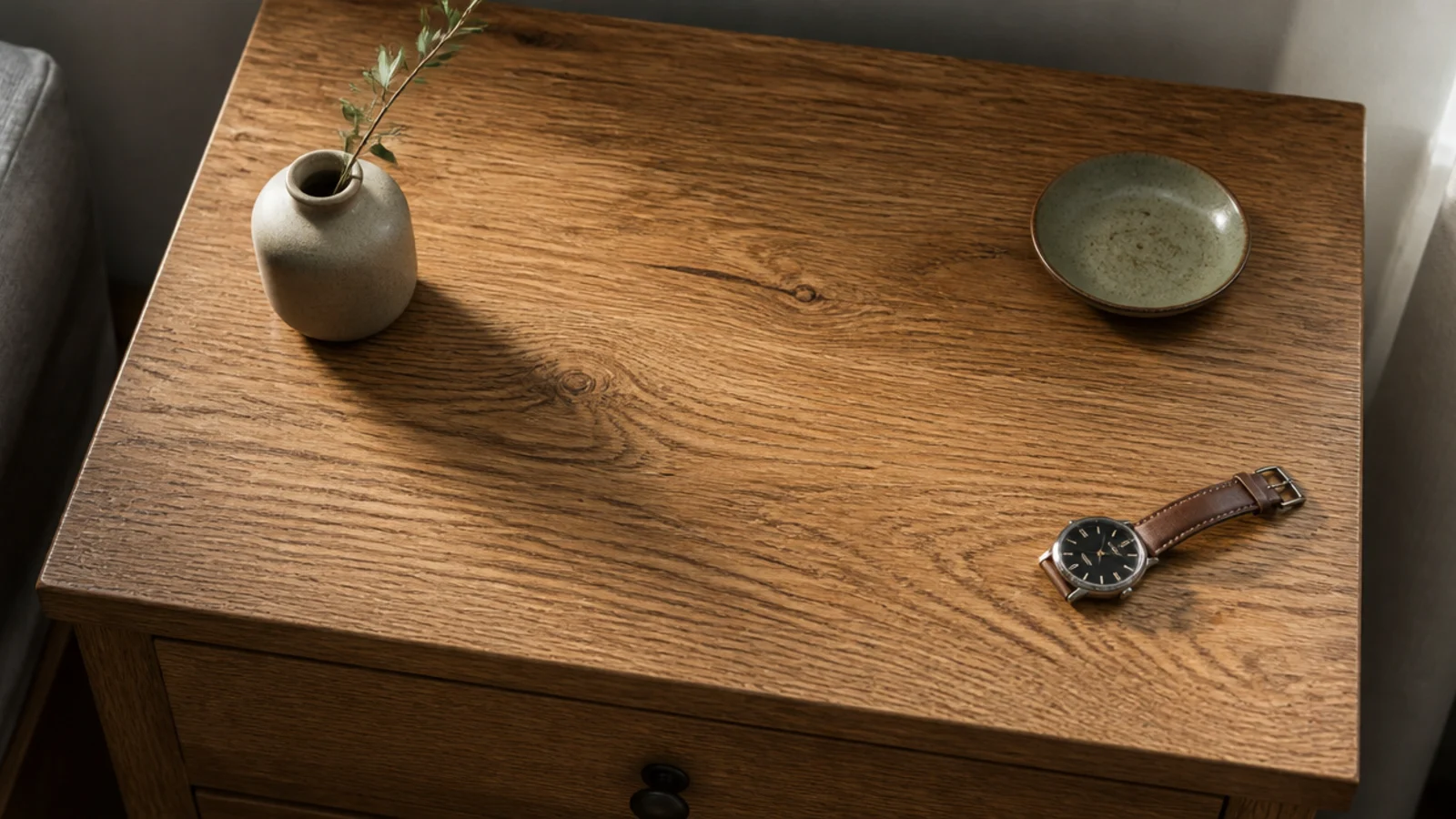
Pick the timber already dominant in the room — the floor, the bed frame, a door — and echo it in one small object on the table. A frame, a tray, a box. Two matching tones read as considered; four different woods read as whatever was to hand. It is the cheapest coherence you can buy.
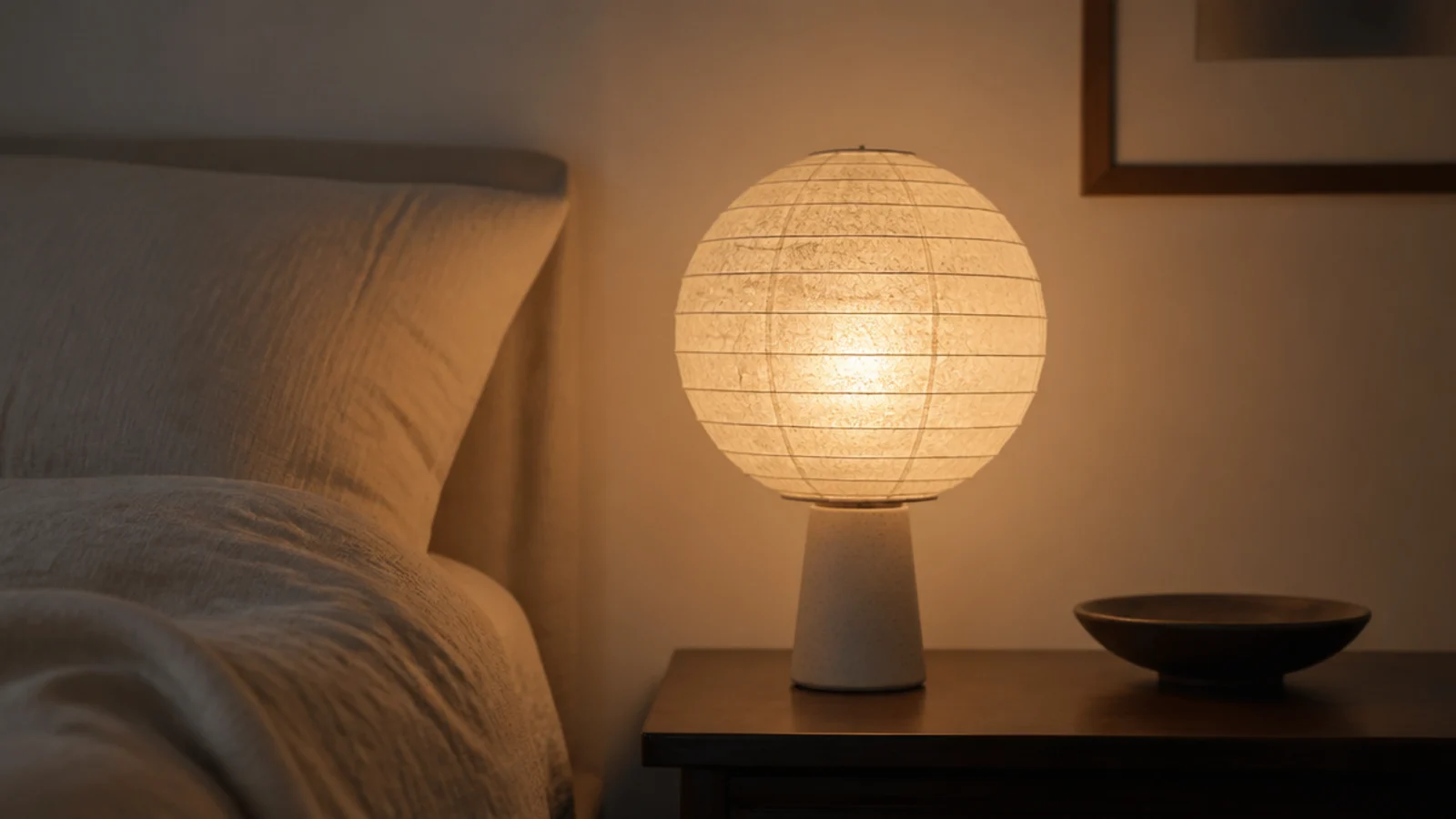
2. A paper shade for genuinely diffused light
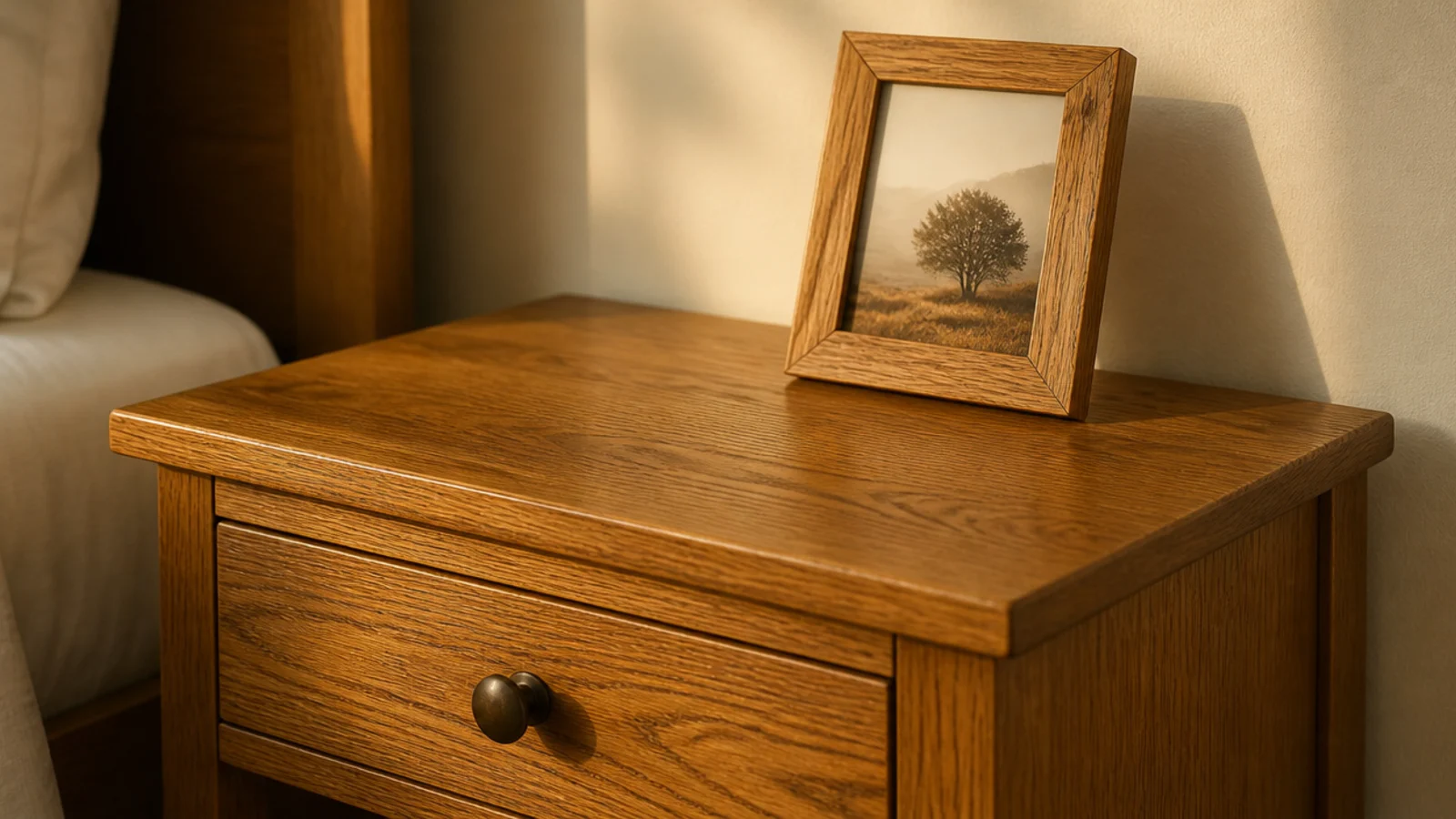
Rice paper spreads a bulb across its whole surface instead of throwing it in one direction. The lamp becomes a soft glowing shape rather than a bright point, which is exactly what you want at 10pm. Expect $20 to $45, and keep the bulb at 40W equivalent or the paper discolours over time.
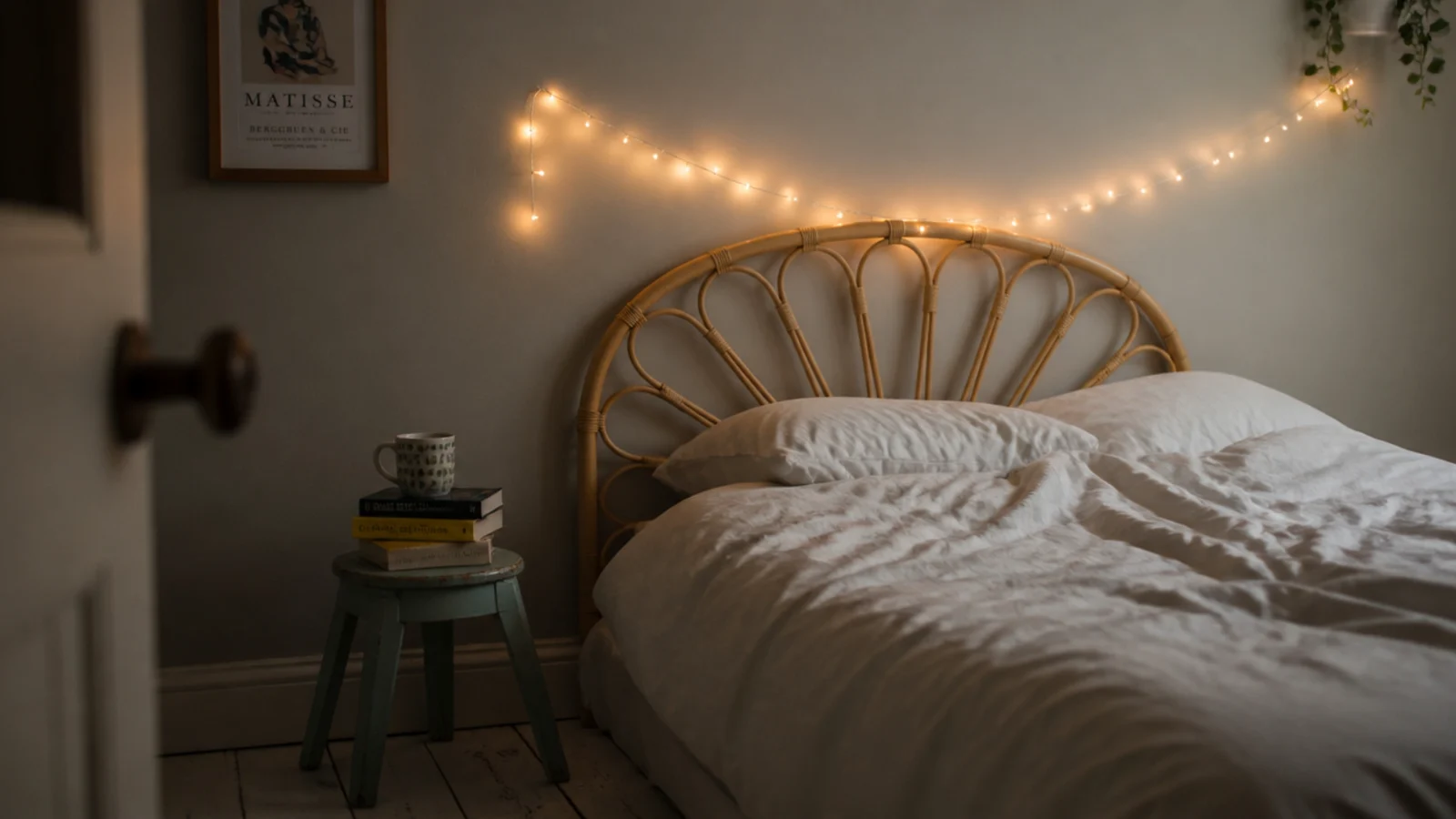
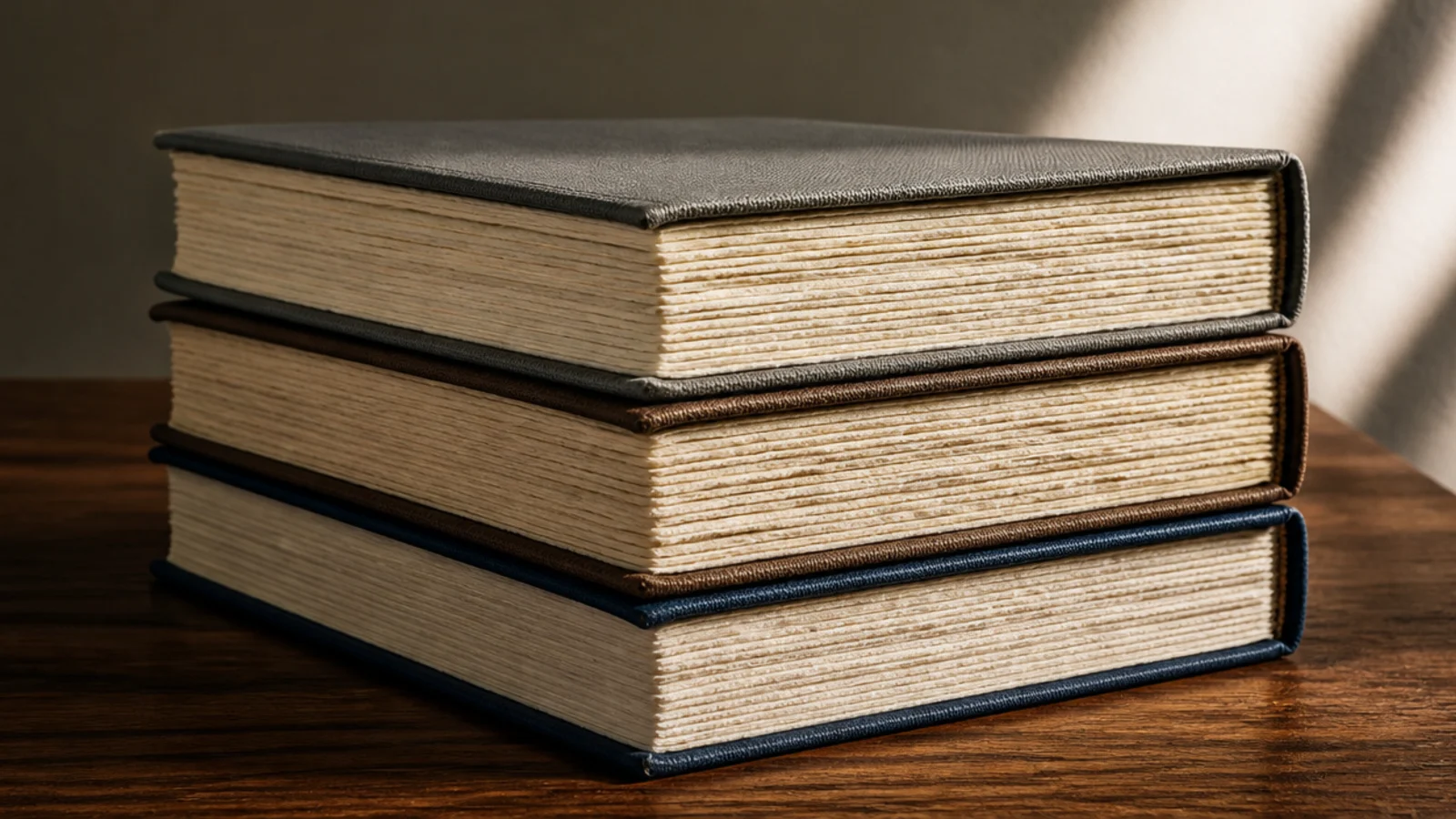
3. Stack books with the spines turned in
Turning the page edges outward gives you a block of soft cream texture instead of competing publisher typography. Purists object and they are not wrong, but on a bedside table where the books are decorative rather than in use, it is the single fastest visual improvement available.
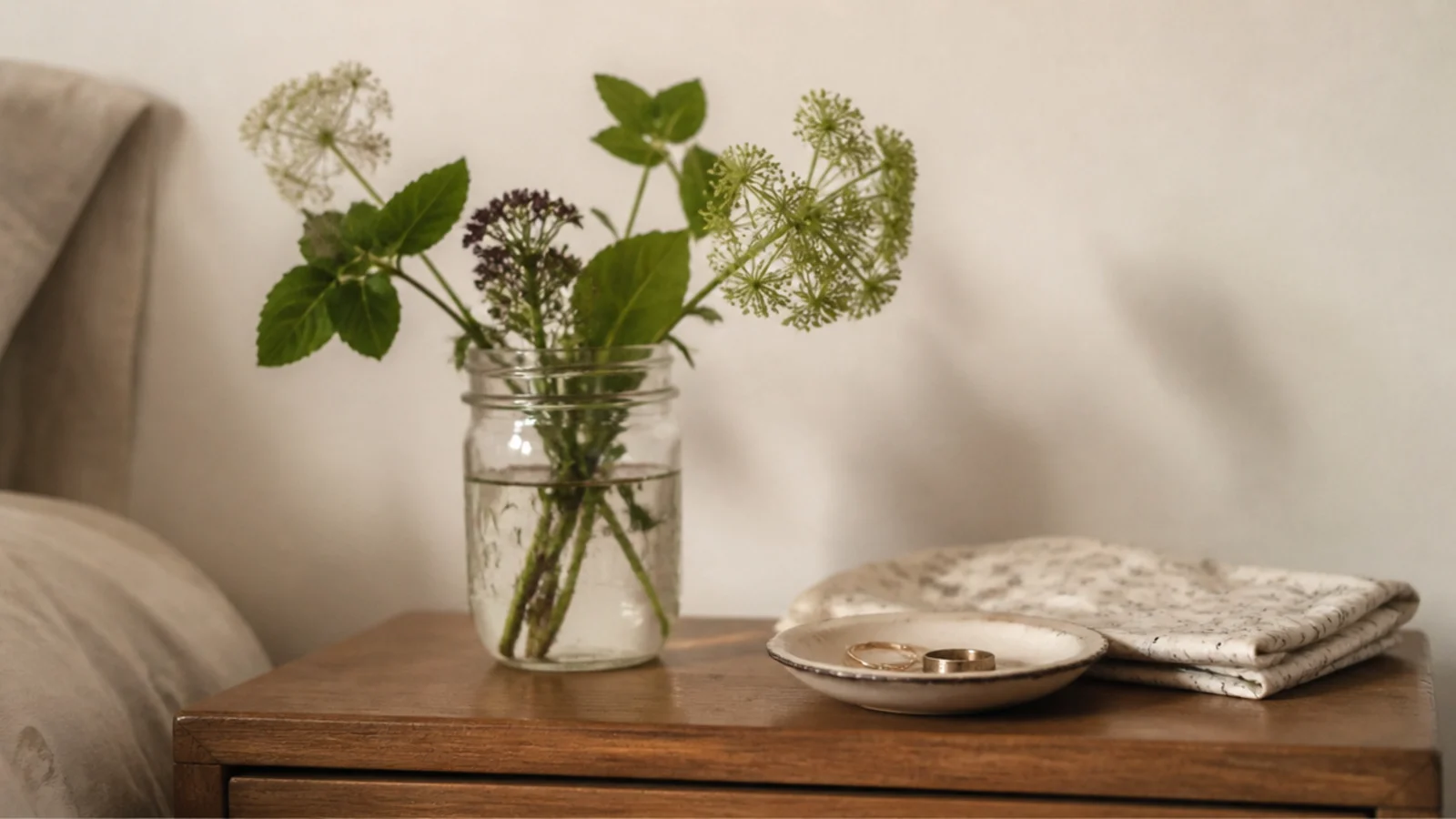
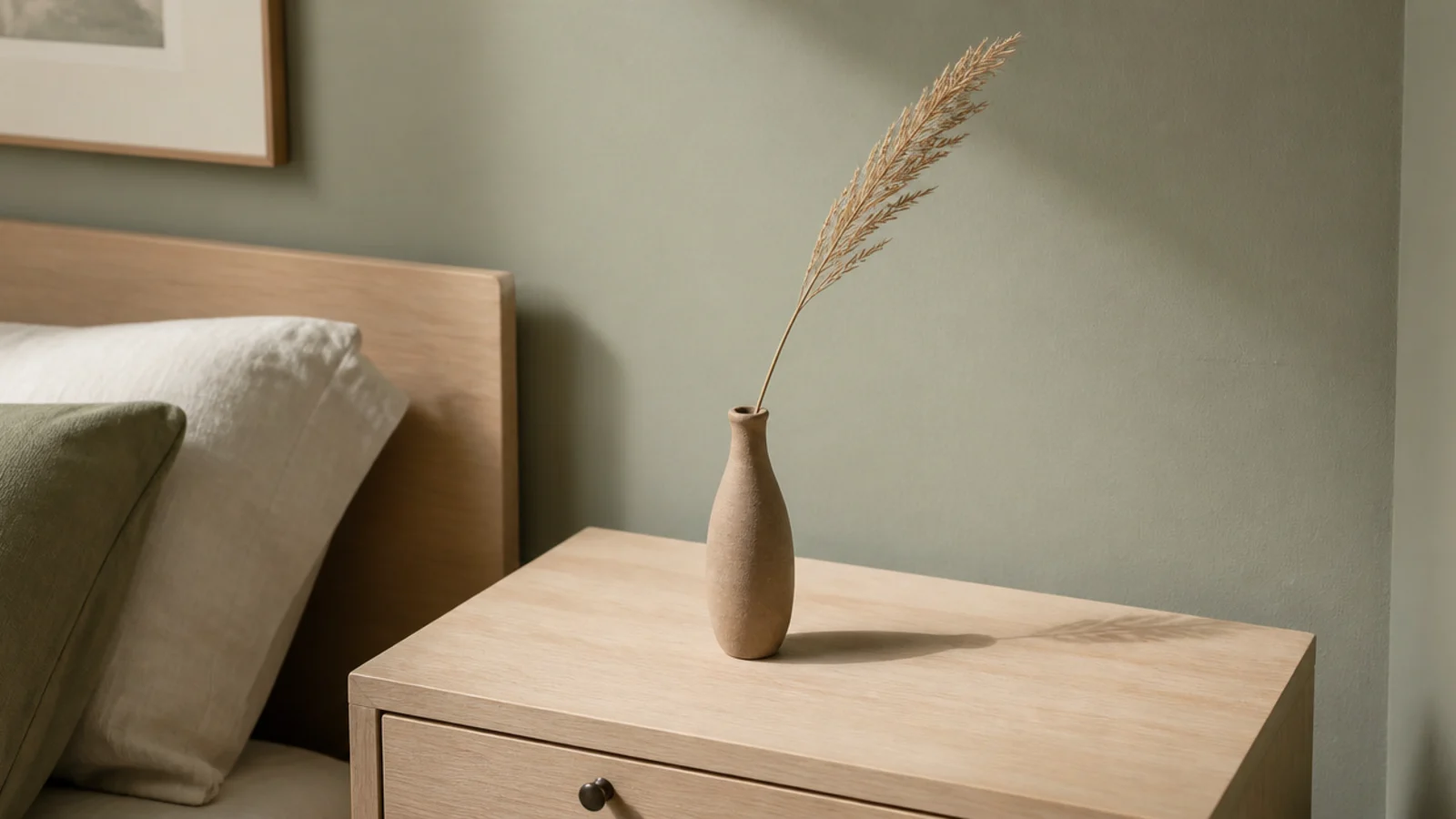
4. A single dried stem in a bud vase
One stem in a narrow vase reads deliberate where a small bunch reads leftover. Dried grasses, seed heads and preserved eucalyptus all hold for a year or more. Keep the stem roughly one and a half times the vase height and it will look right without measuring.
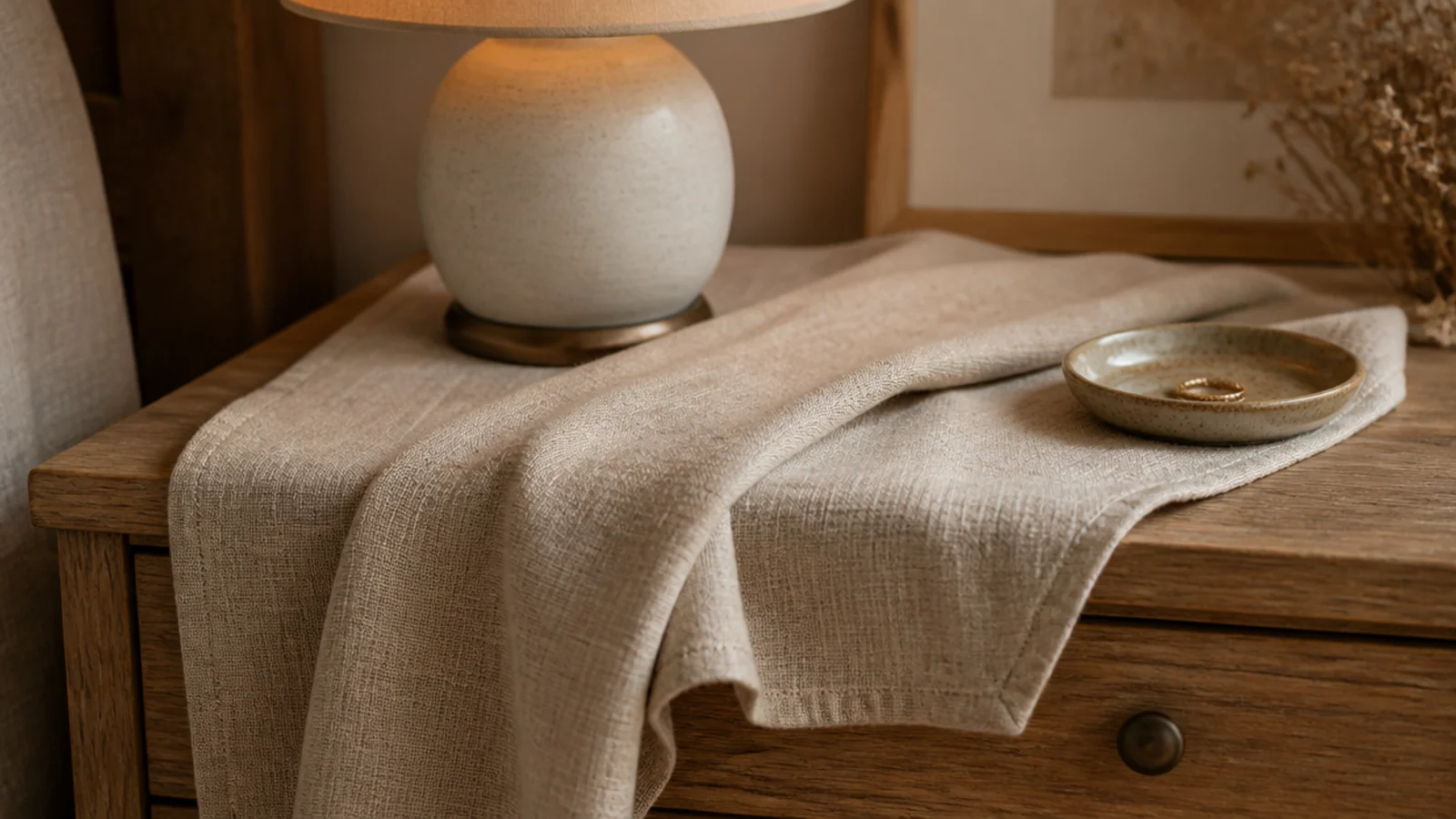
5. A linen runner under everything
A crumpled strip of washed linen under the lamp and dish softens the hard rectangle of the table and hides ring marks. Half a metre of remnant costs $8 to $15. Do not iron it — the creases are the reason it works.
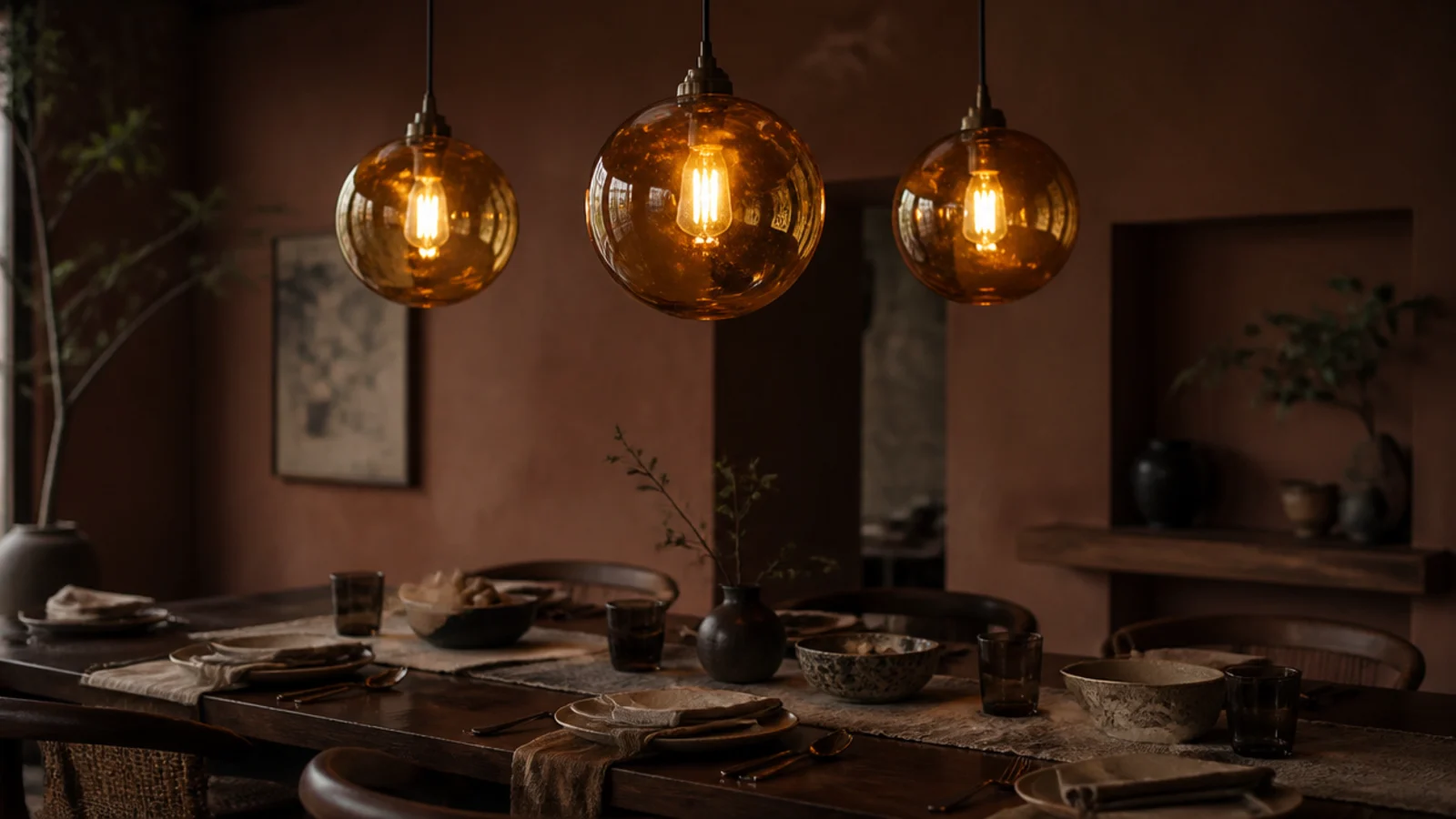
6. Amber glass for warm reflected light
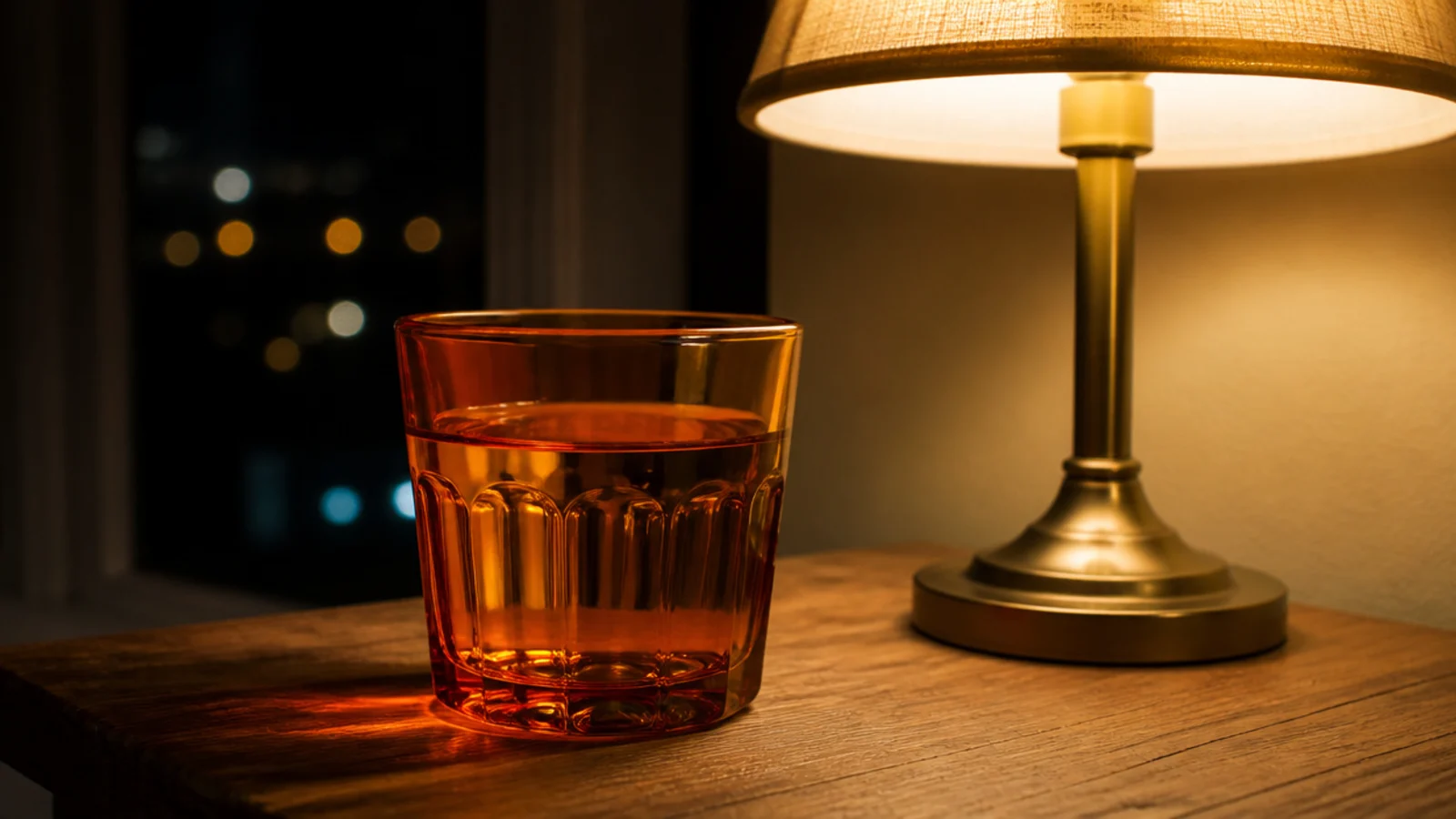
An amber tumbler beside a lit lamp throws a warm coloured glow onto the surface and turns ordinary bulb light into something closer to candlelight. It is a $6 object doing lighting-design work, and it holds your water at the same time.
7. A small artwork leaning at the back
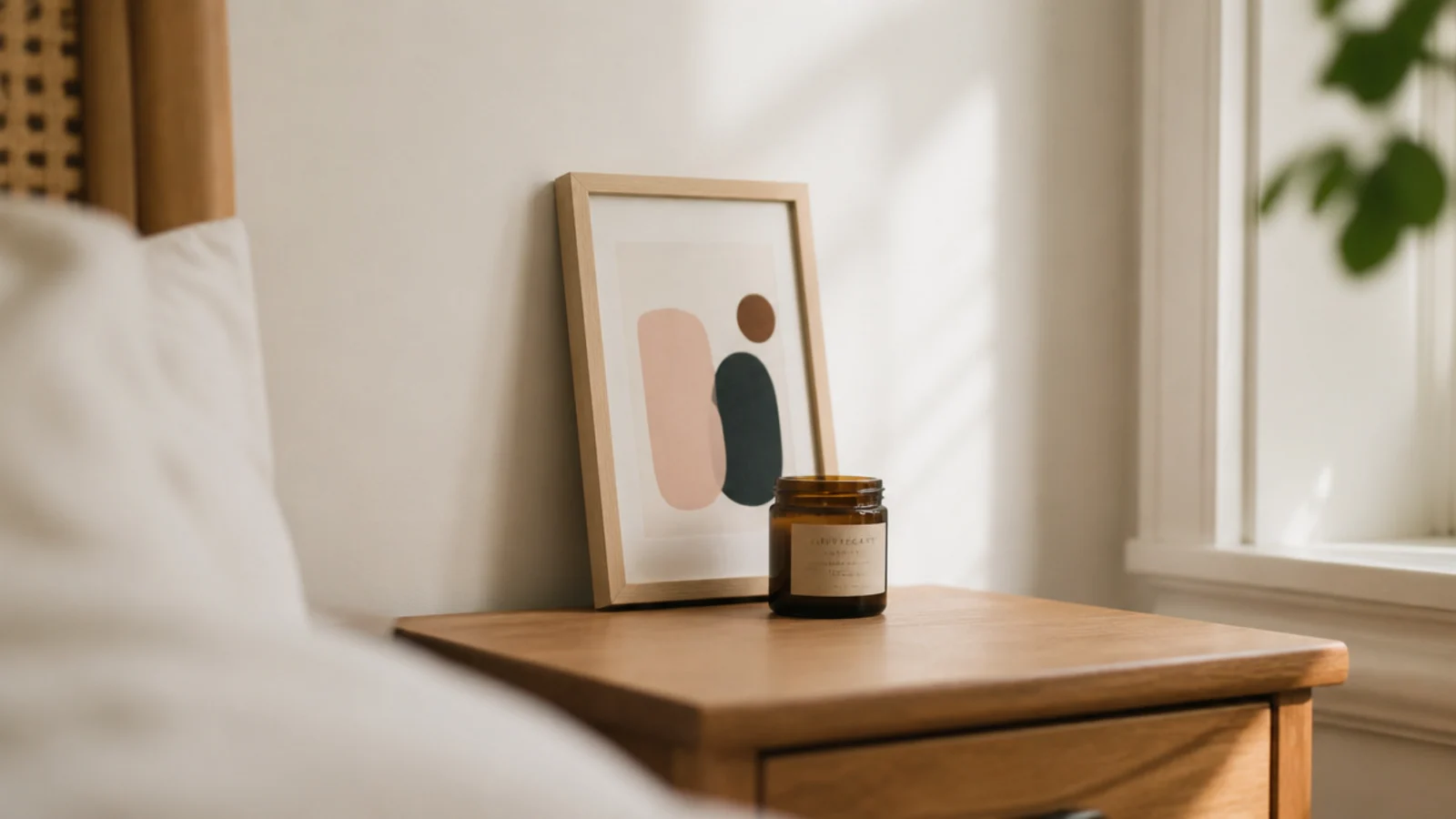
A postcard-sized print leaning against the wall gives the arrangement a backdrop and adds height without adding footprint. Leaning reads relaxed where hanging reads formal, and it costs nothing to move when you get bored of it.
8. Matte ceramic over anything glossy
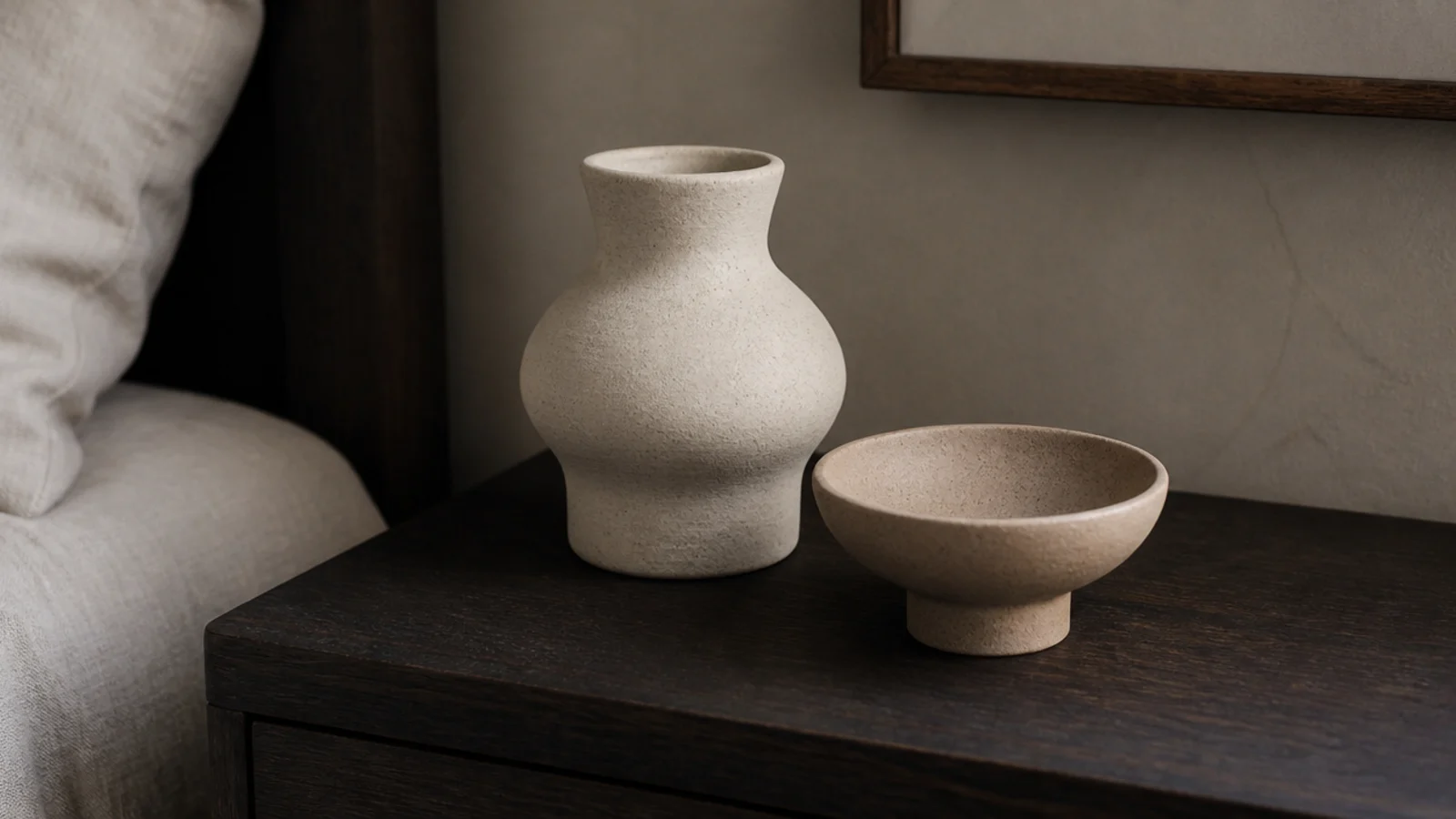
Matte absorbs light and shows form; gloss bounces the room back at you in small bright highlights. On a surface lit by one warm lamp, matte pieces hold their shape and glossy ones dissolve into reflections. Unglazed stoneware is the easiest place to start.
9. Brass you allow to patinate
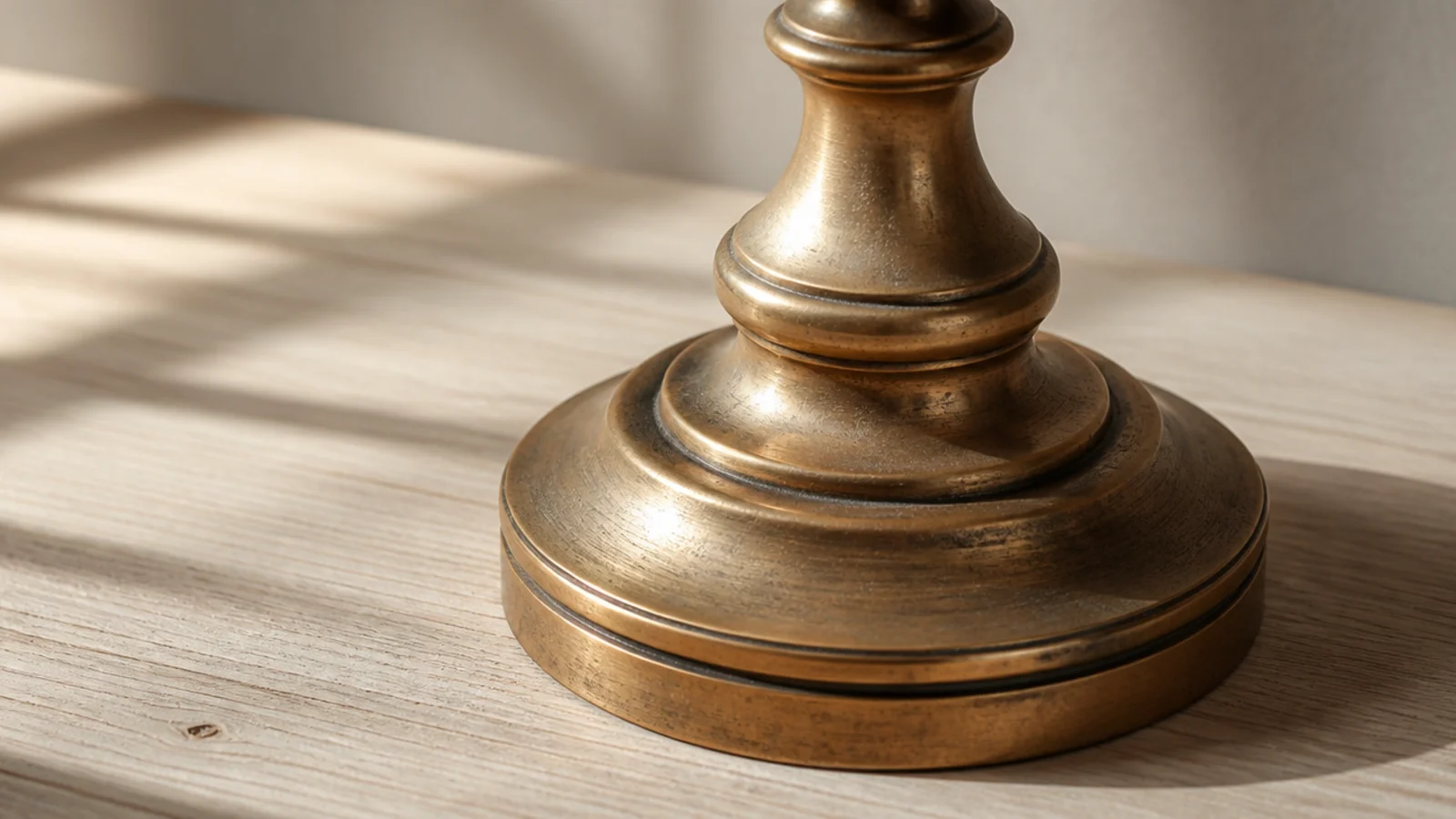
Unlacquered brass darkens in its recesses and stays bright where hands touch it, which is exactly the wear pattern that makes a piece look old and expensive. Lacquered brass stays uniformly shiny and then chips. Pay the difference once and stop polishing.
10. A candle you actually burn
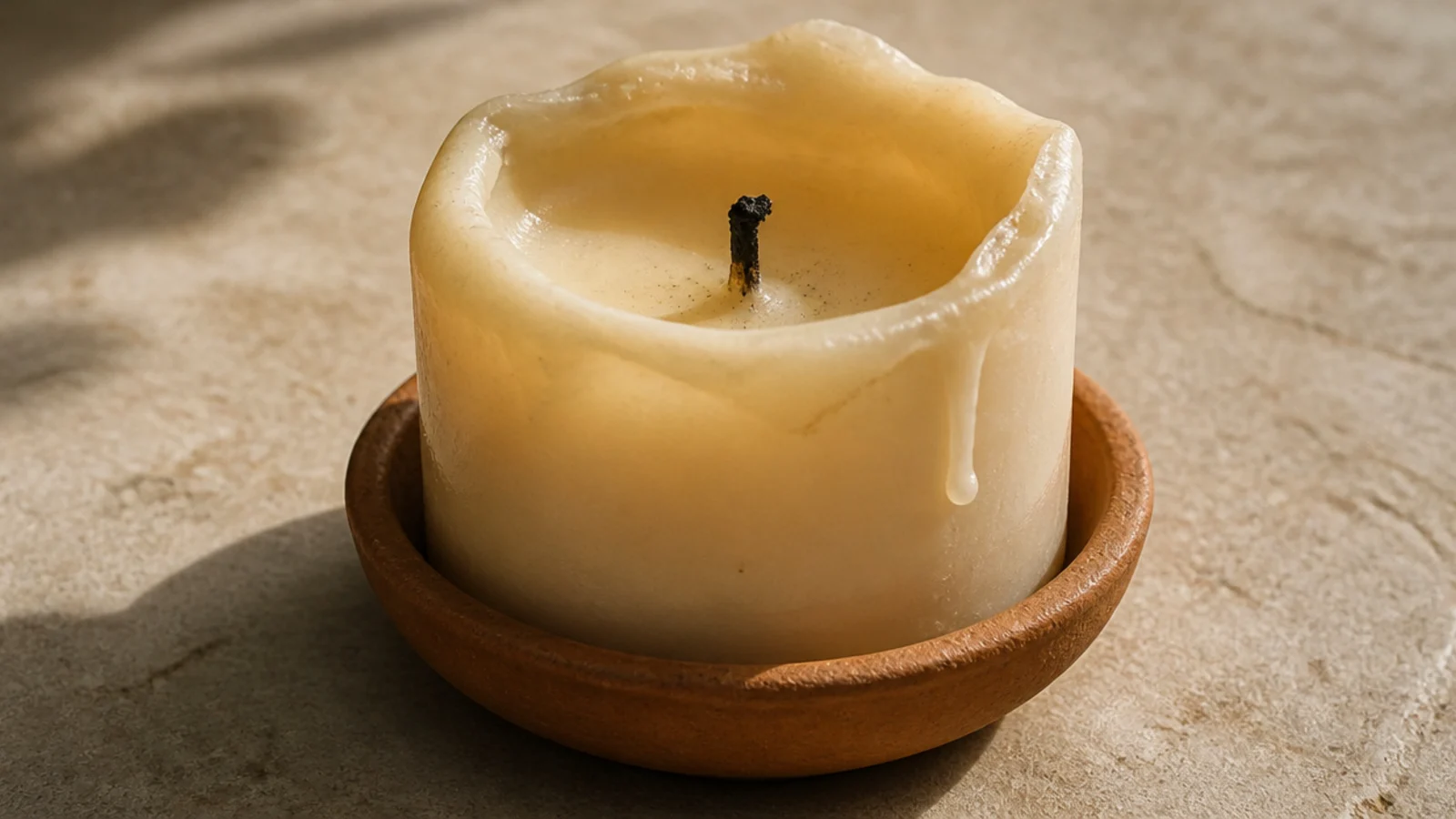
An unburnt candle with a white wick reads as a prop. One with a melted rim and a blackened wick reads as a room somebody lives in. Burn it for twenty minutes before you decide it looks wrong — and never leave one lit beside bedding.
11. Layer three shades of one colour
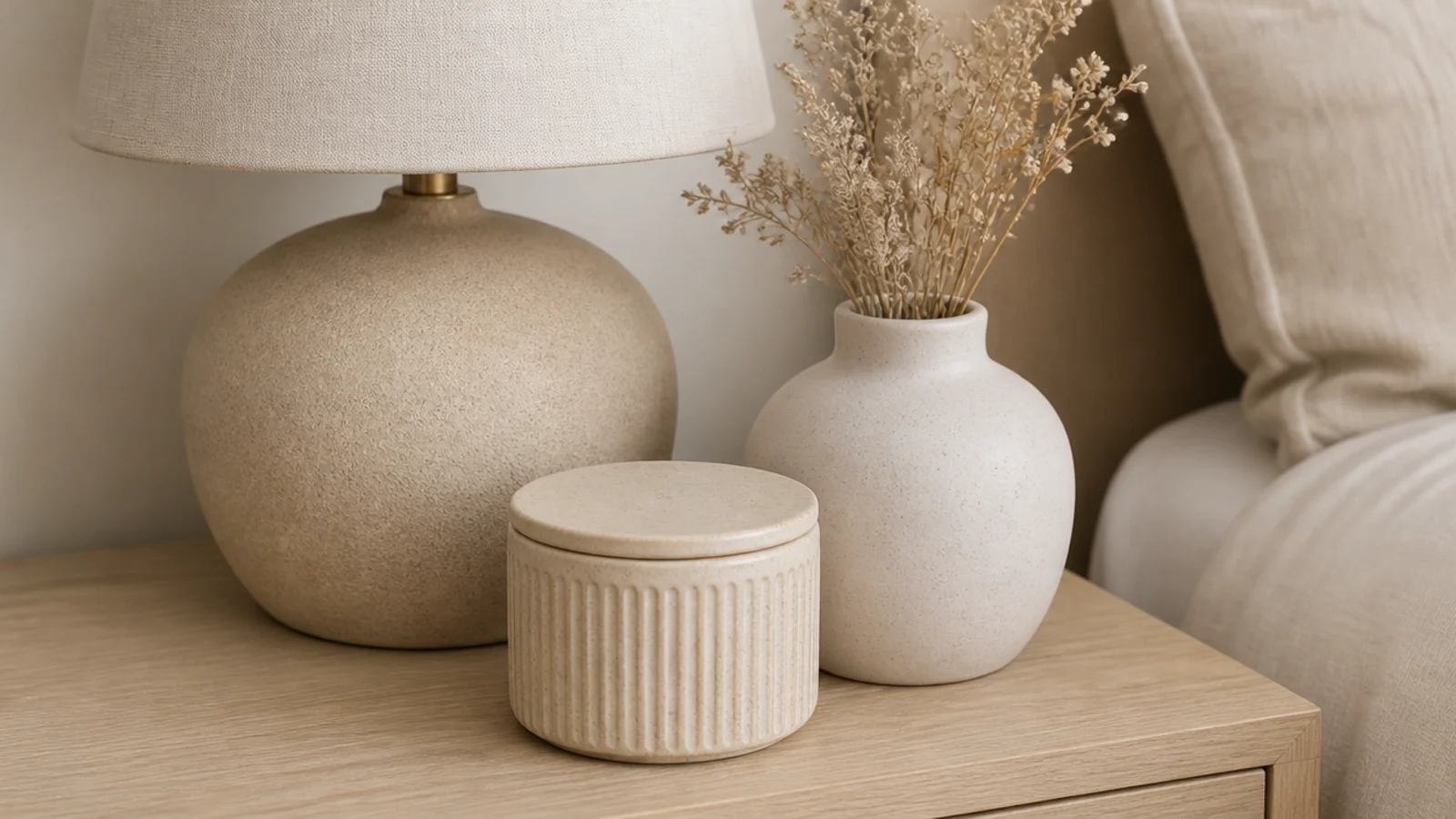
Sand, oatmeal, pale clay. Tonal groups look considerably richer in low light than high-contrast ones, because contrast needs bright light to work and a bedside table almost never has it. Step the tones gently and let texture do the separating.
12. An old book used as a riser
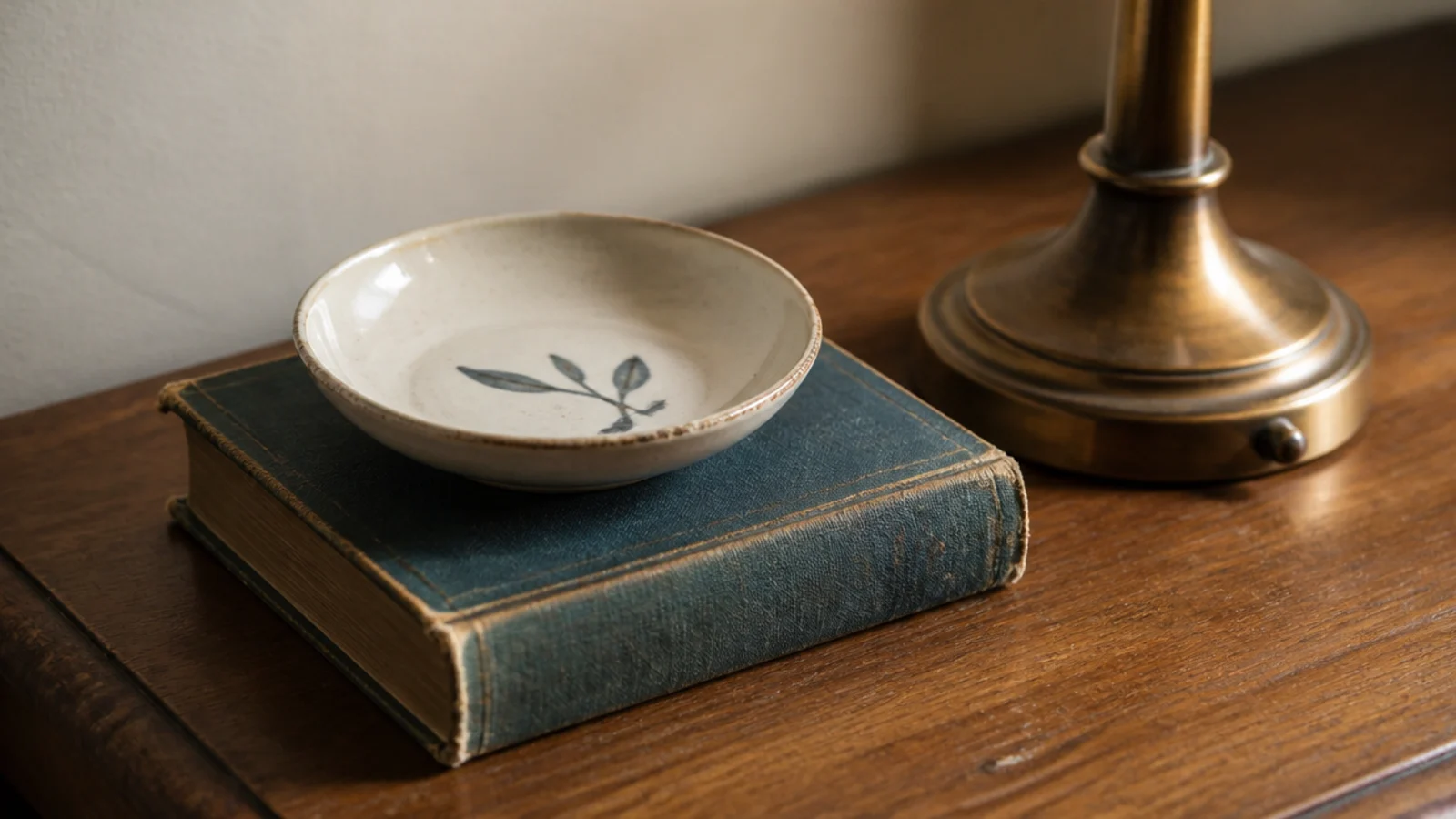
Lifting a small dish two inches on a cloth-bound hardback creates the height variation that stops three objects reading as a row. It costs nothing, it is reversible, and secondhand cloth bindings come in colours modern books simply do not.
13. Rattan or cane for warmth
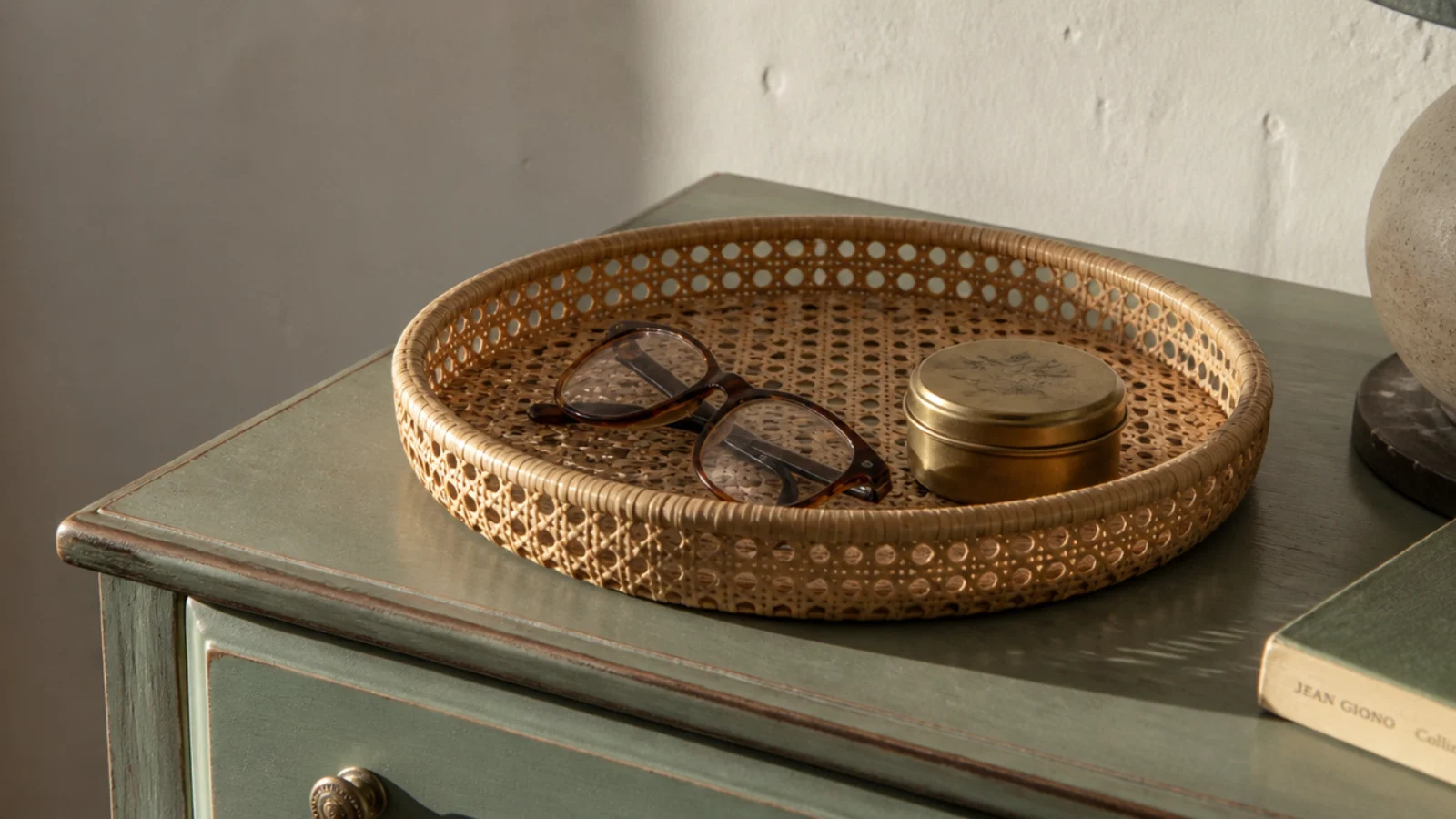
A woven tray or a cane box breaks up a surface otherwise made of hard flat planes. Woven texture reads warm in photographs and in person, and it is one of the few materials that suits both a very plain room and a very layered one.
14. A vintage dish for rings
Secondhand ceramics carry glaze colours and crazing that new pieces cannot fake, and a small saucer costs $2 to $5. A chipped edge is a feature here rather than a fault — it is doing the same job the worn brass is.
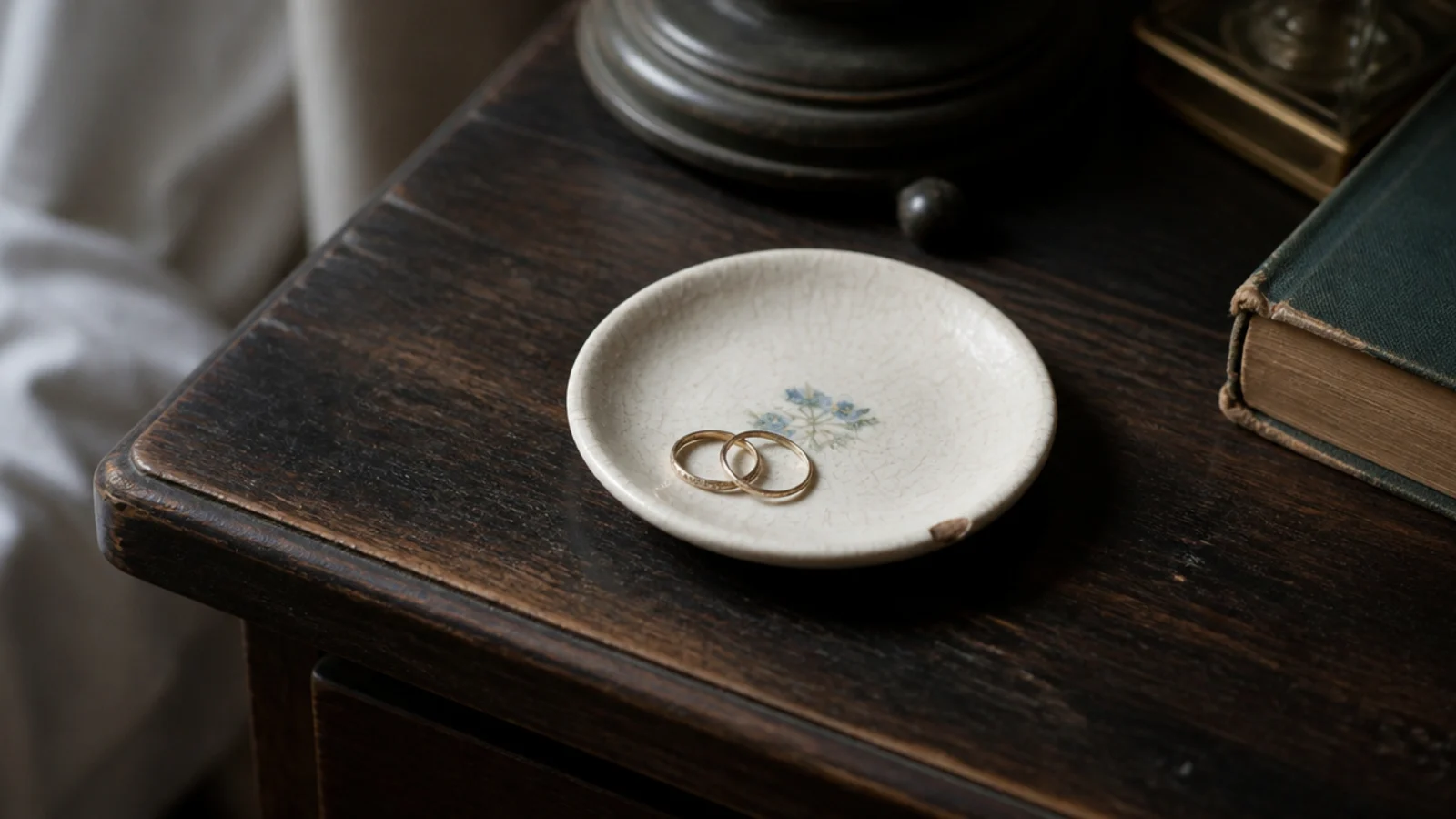
15. Repeat one curve across the group
A round table, a cylindrical lamp base and a circular dish give the eye the same shape three times. Repetition of form is what makes an arrangement feel resolved, and it works even when the materials and colours are all different.
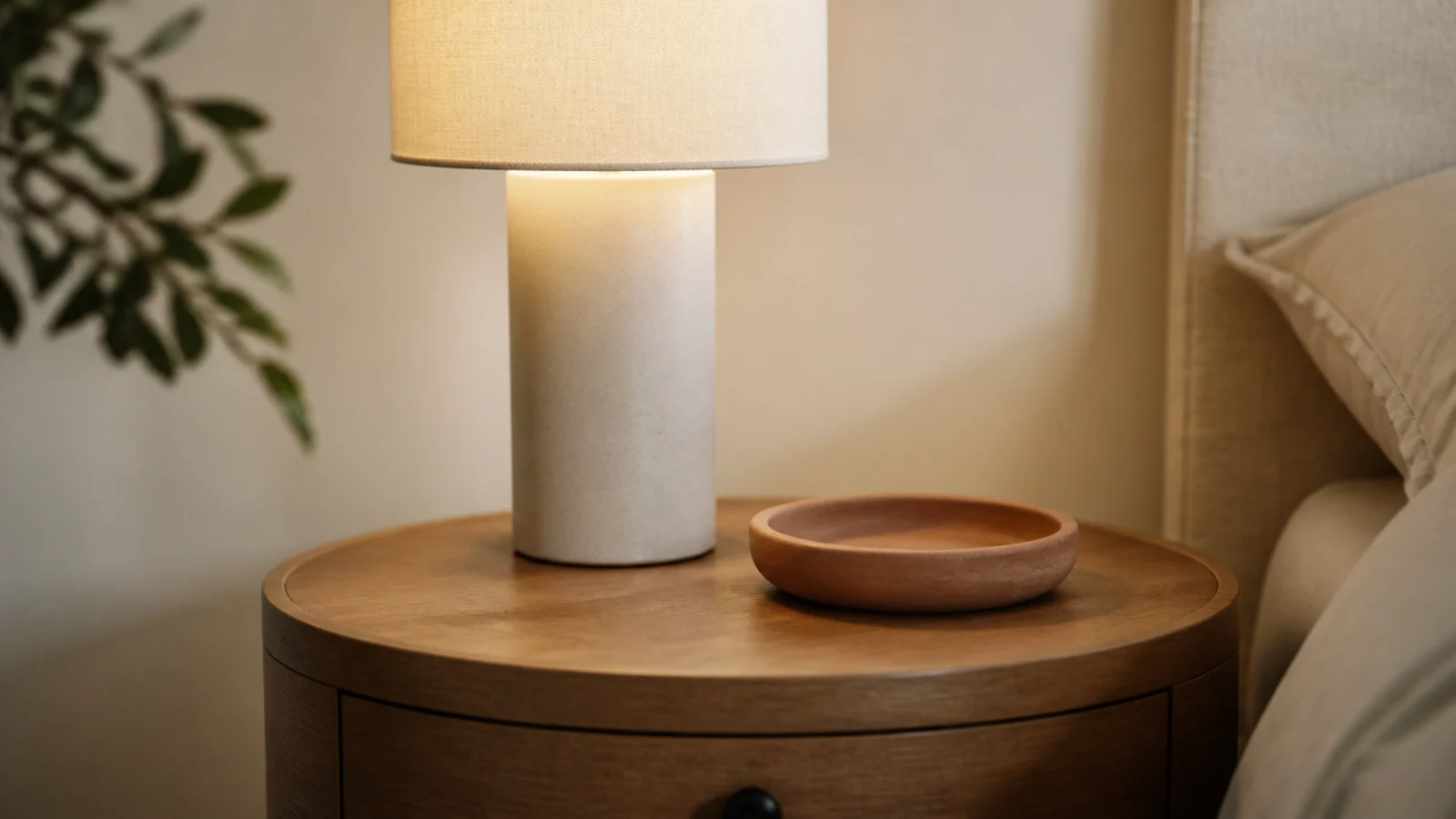
16. Keep the metals to two
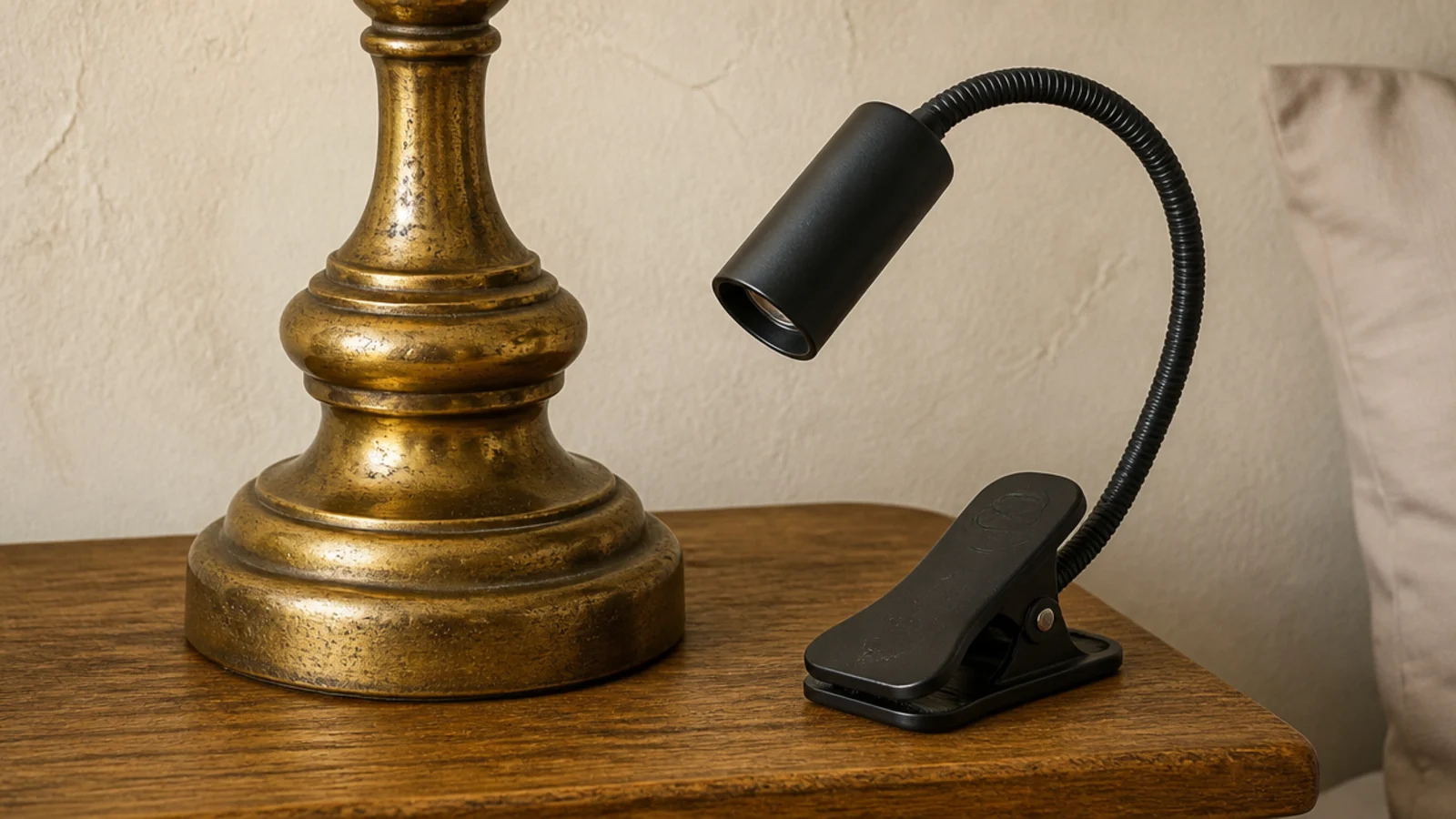
Brass and black is the most forgiving pairing in a warm room; chrome and brass is the hardest. Whichever two you choose, make each appear at least twice — once is an accident, twice is a decision.
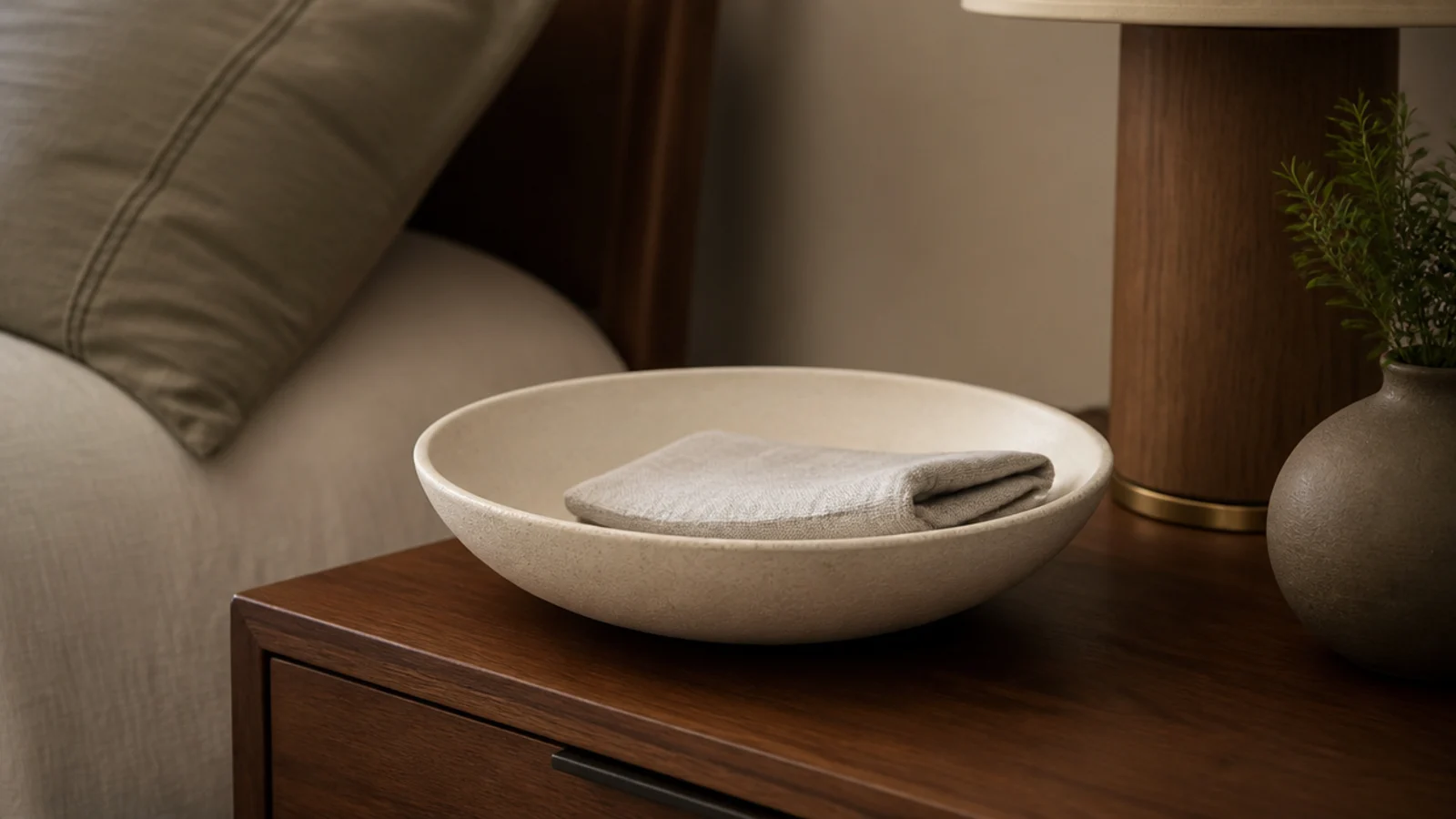
17. A low bowl instead of a tall vase
Beside a bed you view the table from a low seated angle, so a tall vase blocks the sightline and a low wide bowl does not. A shallow bowl also holds the things that actually accumulate — coins, a hair tie, a spare key.
18. A textured linen lampshade
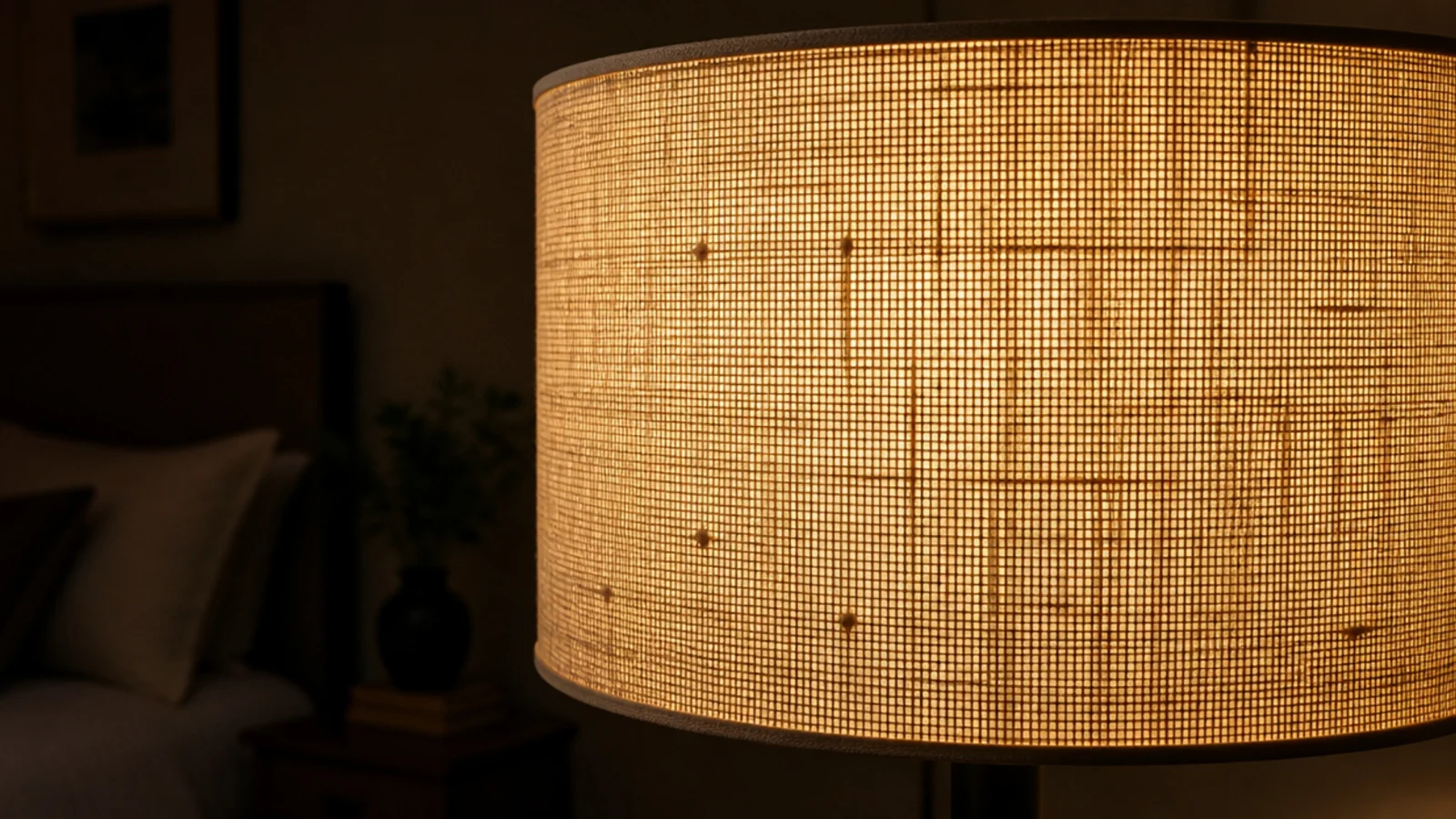
Lit from within, a coarse linen shade shows its weave and slubs as a fine irregular pattern. Smooth shades give you a plain glow; textured ones give you something to look at. The difference is most visible at low brightness, which is when the lamp is actually on.
19. One handmade, imperfect thing
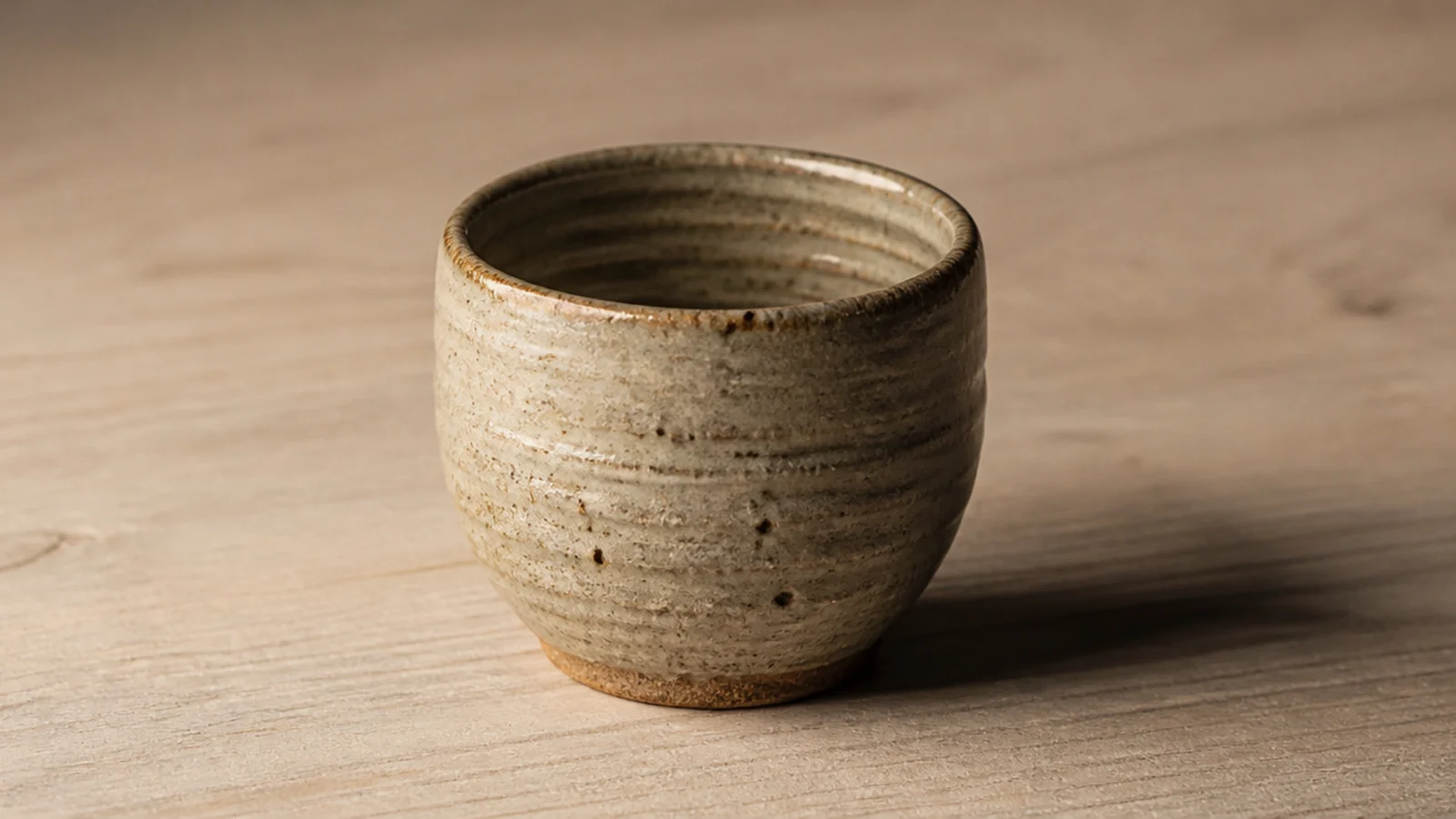
A hand-thrown cup with visible throwing rings and an uneven rim stops the group looking bought as a set. One handmade object among five manufactured ones changes how the whole arrangement reads, and small seconds from a local potter often cost under $15.
20. Angle the light to cast one good shadow
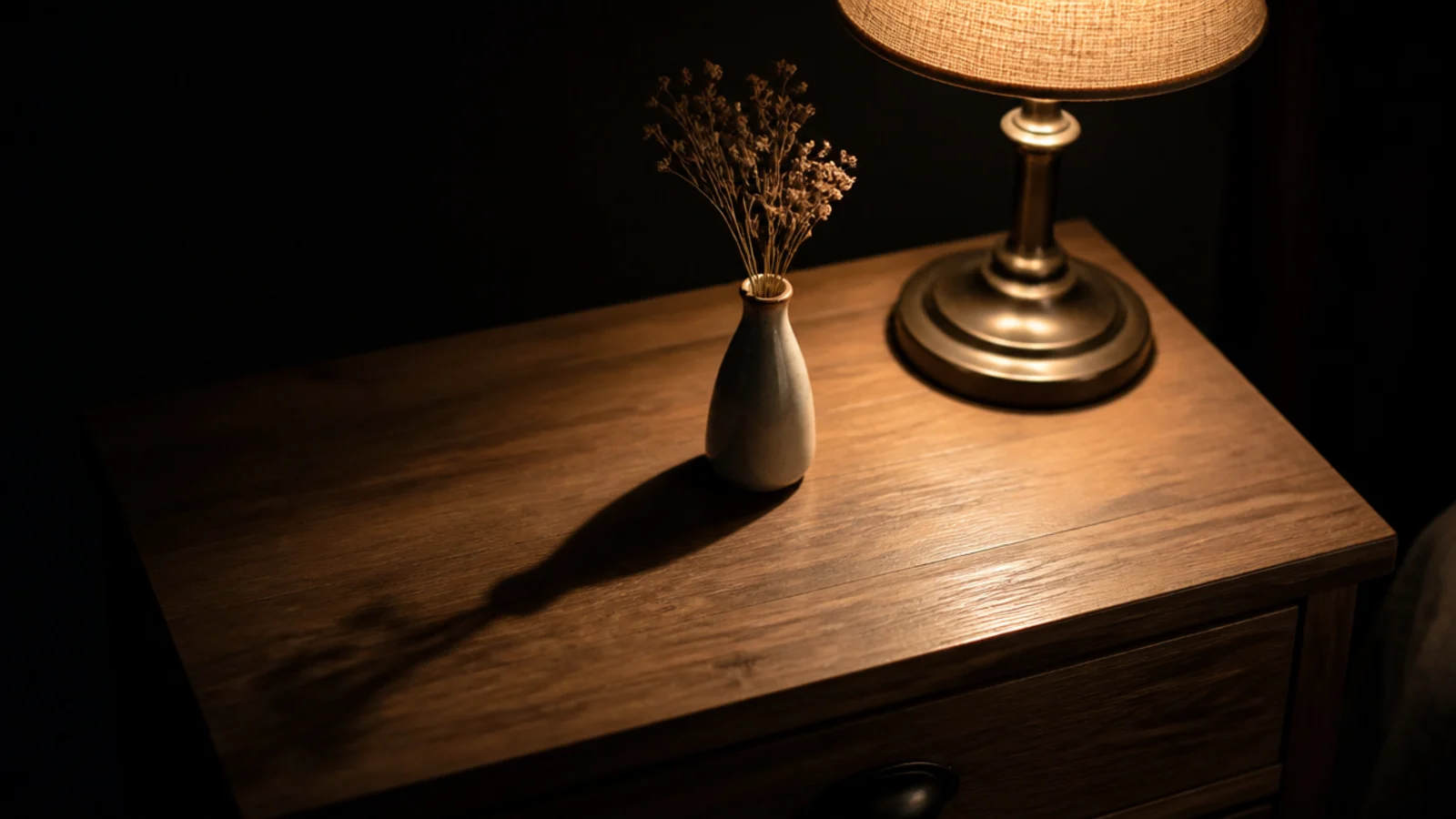
Move the lamp so a stem or a vase throws a single long shadow across the surface. The shadow becomes another element without occupying any space, and it is free. Shift the lamp two inches and watch how much the arrangement changes.
21. Group in threes at three heights
Tall, medium, low — and placed within a hand span of each other so they read as one group. Objects spaced evenly across a surface look like a shop display; objects clustered with empty space around them look styled.
22. Neutral base, one saturated accent
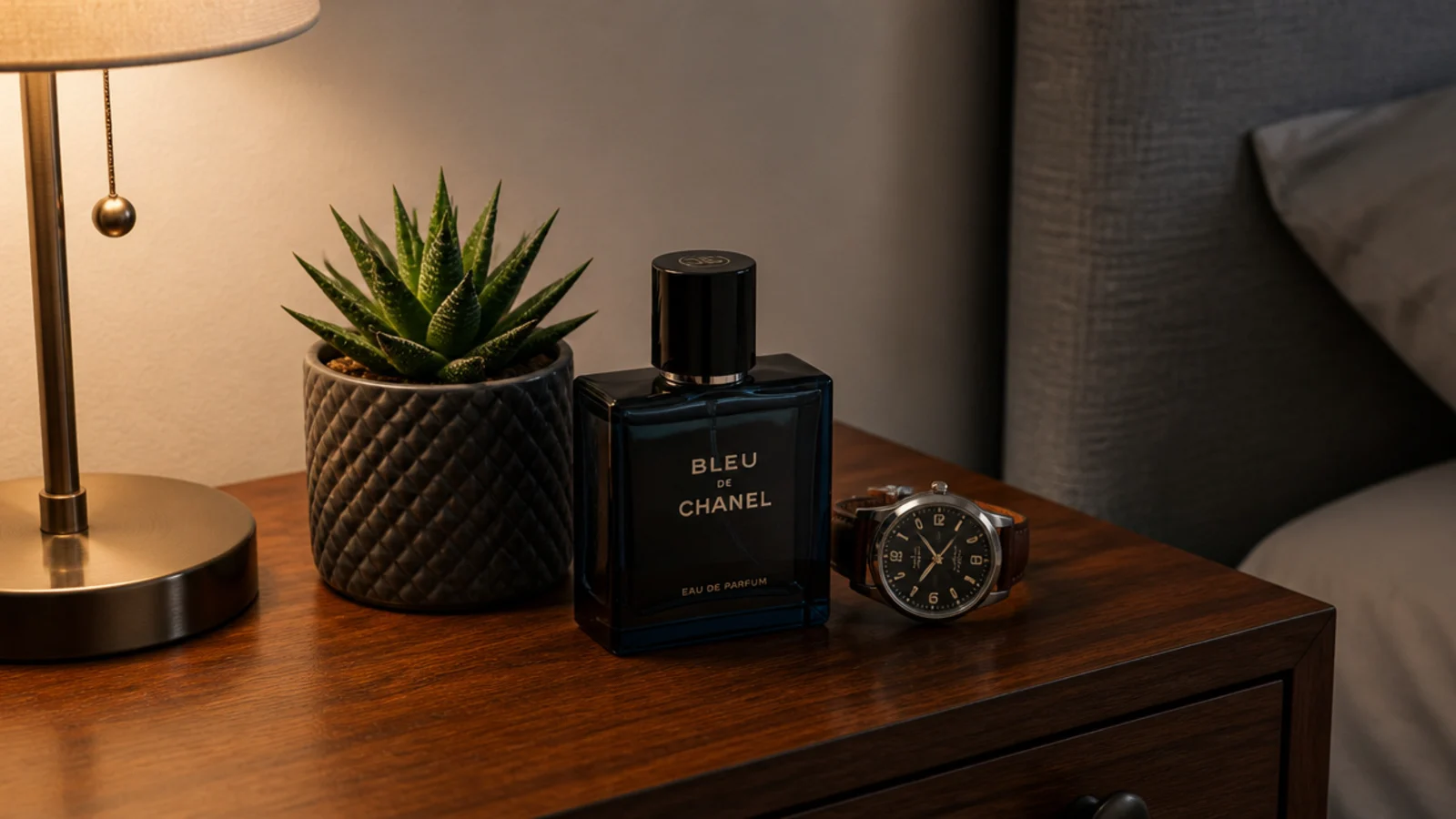
Keep everything in the sand-to-cream range except one thing: a deep green book, a rust-coloured dish, a black clip light. A single saturated note in a quiet field carries much further than three competing colours.
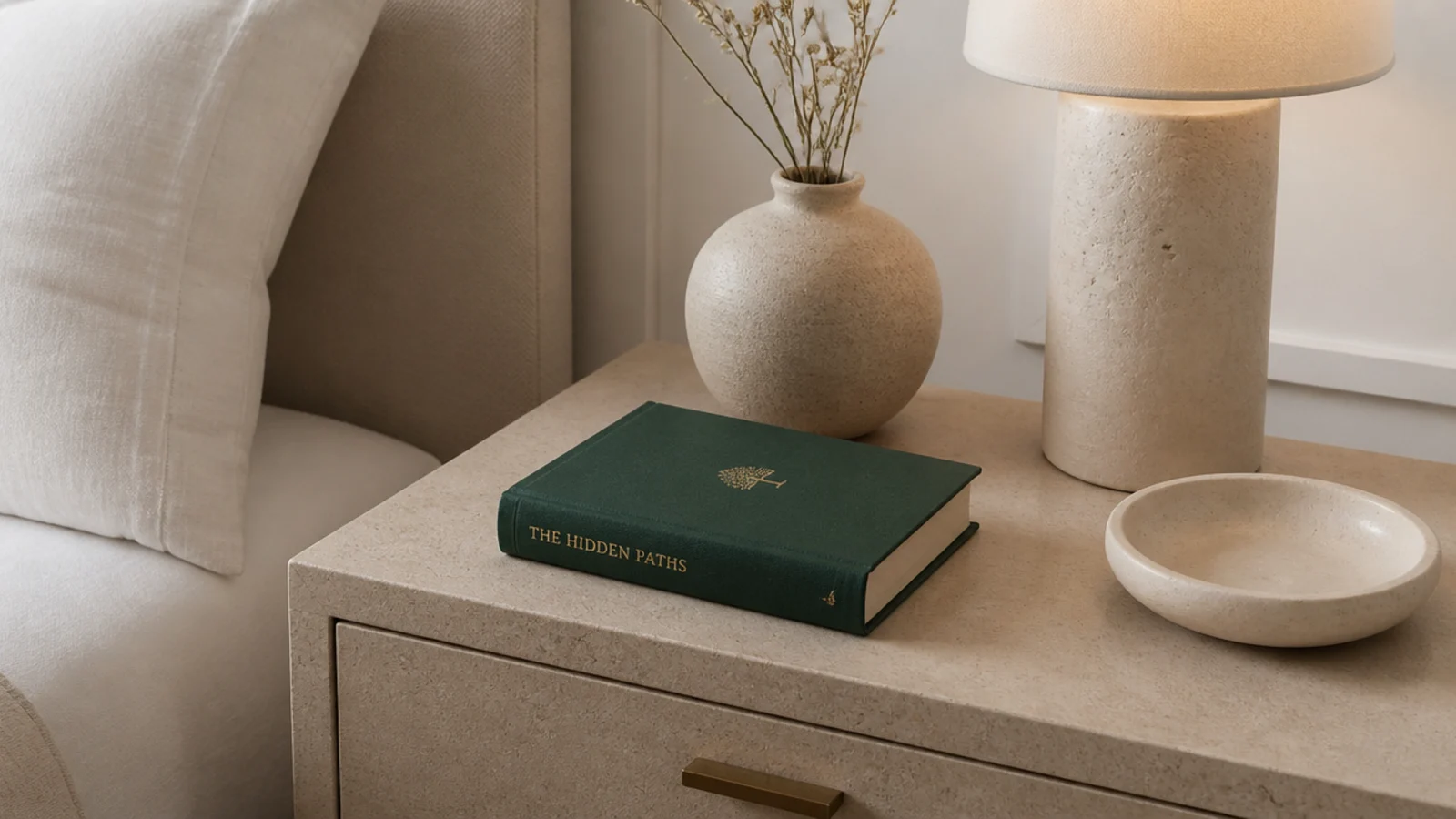
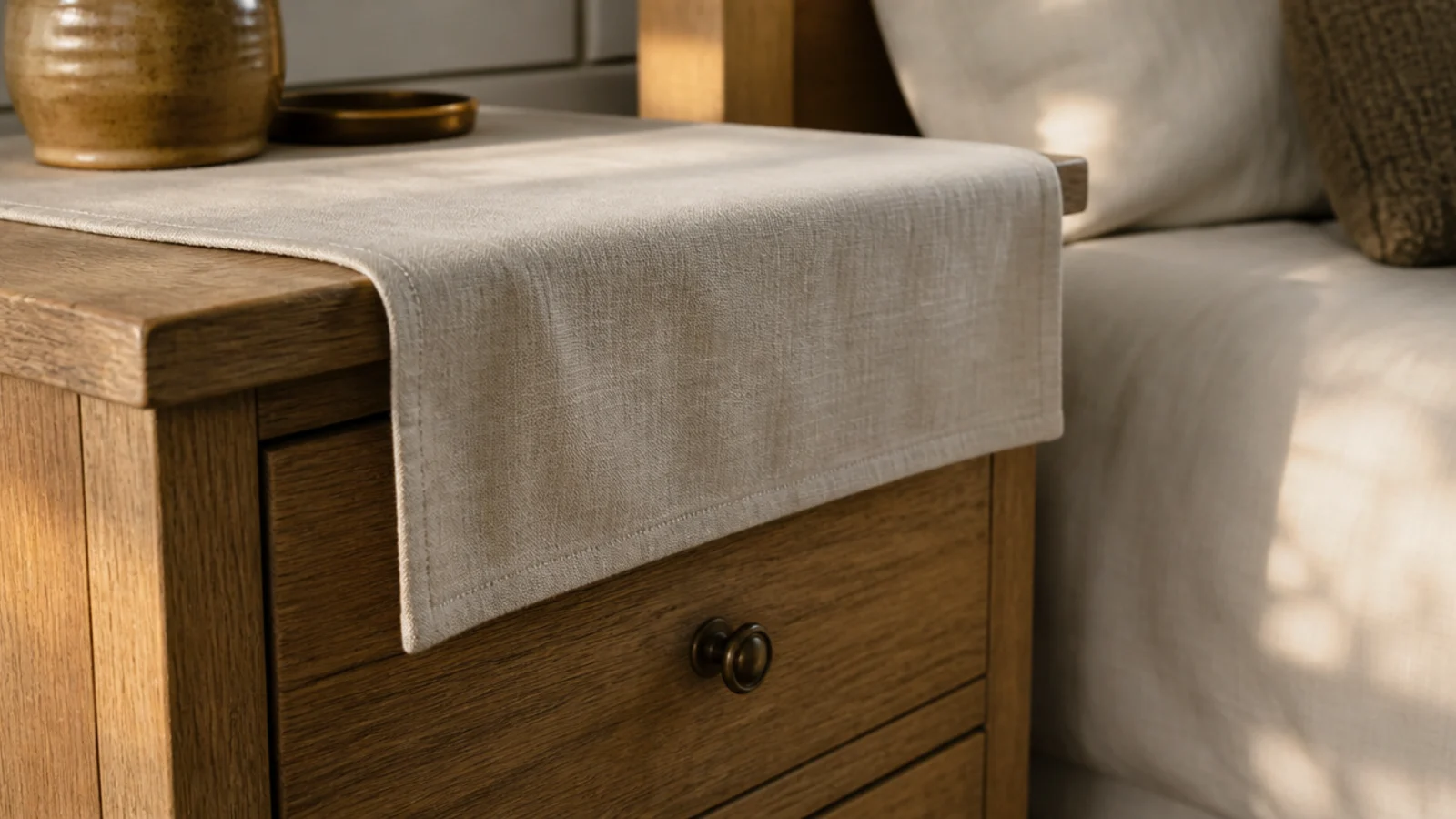
23. Let one thing overhang very slightly
A runner falling two inches over the corner, or a book edge just past the table edge. Perfect alignment reads as arranged; one deliberate break reads as lived in. This is a small move and it is the one stylists use most.
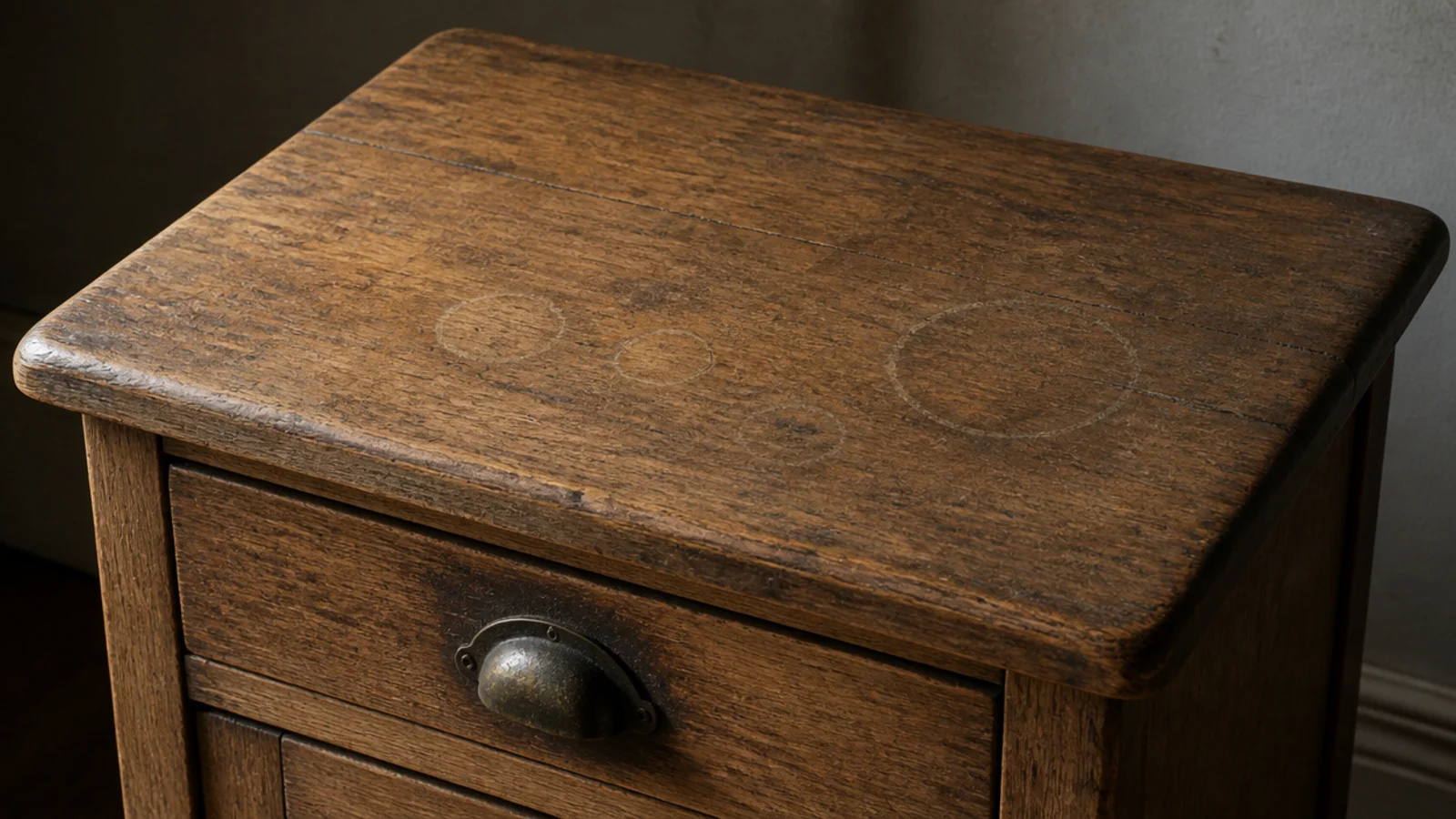
24. A worn surface beats a perfect one
Old ring marks, softened edges, darkened wear around a drawer pull. A secondhand table at $30 to $80 arrives with all of that already done, and none of it can be bought new. If the table must be new, put worn objects on it.
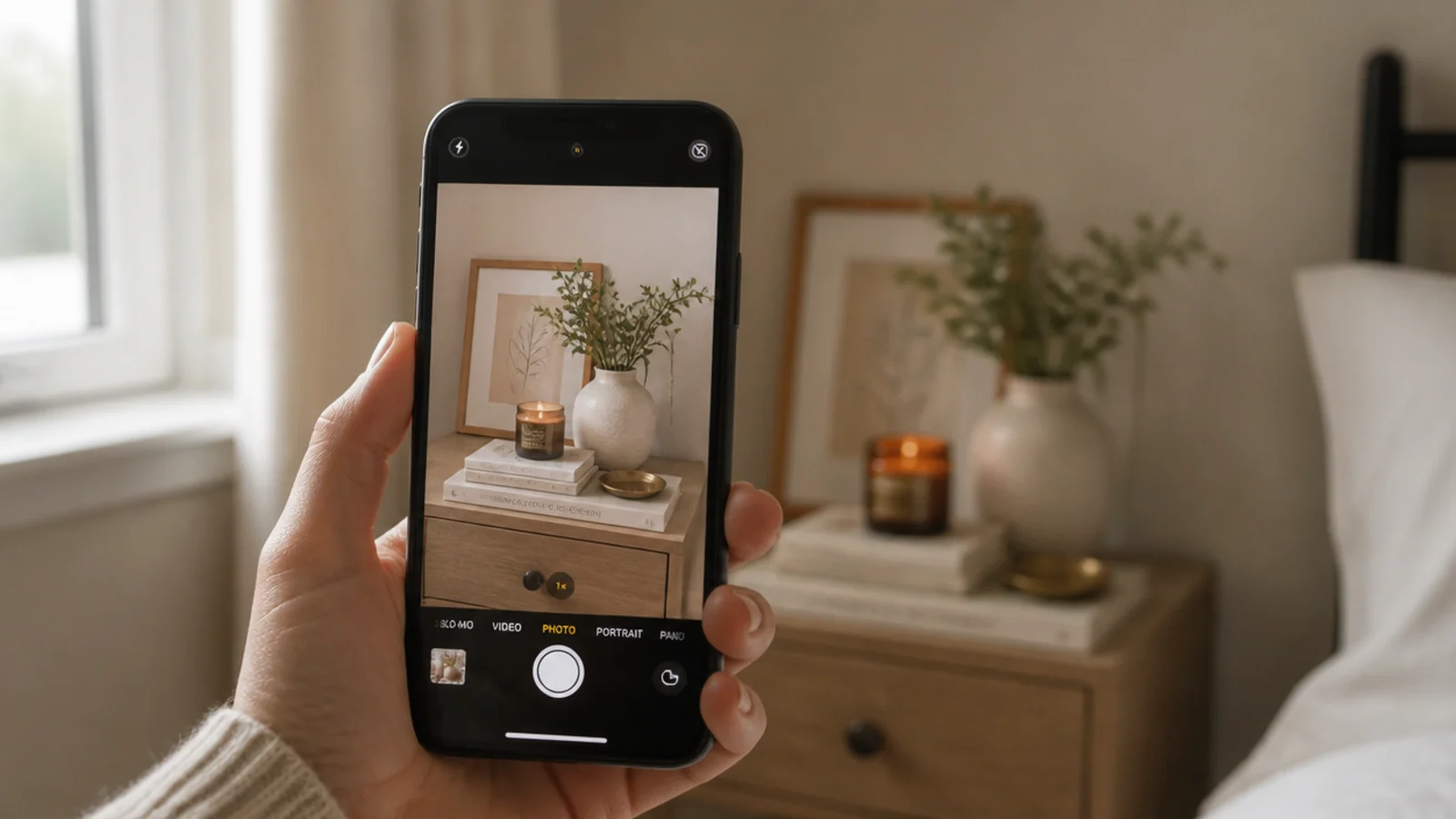
25. Photograph it before you decide it is finished
A phone flattens the scene into two dimensions and shows you what your eye had stopped noticing — the cable, the third metal, the gap that is slightly wrong. Thirty seconds of looking at the photo fixes things an hour of rearranging will not.
Candles do a lot of the work in this look, and there are real clearances to respect near bedding — the candle styling guide covers both. For decorating on a tighter budget, the bedside table decor guide keeps every idea under $20.
Mistakes to Skip
- Adding a fourth and fifth object because the surface looks empty. Empty is the effect you are chasing — a styled nightstand is mostly clear surface with three things standing on it.
- Using a cool white bulb because it came with the lamp. At 4000K the warmest ceramics and timbers turn grey, and no amount of styling recovers it.
- Buying a matching decor set. Sets read as bought together, which is the opposite of the collected-over-time look every one of these images is imitating.
- Leaving the charging cable across the front of the arrangement. It is the first thing the eye finds, and it undoes everything else on this list in one line.
Frequently asked questions
What makes a bedside table look aesthetic?
Restraint and repetition, not more objects. Three items at three different heights, one repeated shape, no more than two metal finishes, and a warm bulb under 2700K. Almost every nightstand that photographs well is doing those four things and nothing else clever.
How many objects should be on a bedside table?
Three is the working number on a surface up to about 18 inches across, four if one of them is flat like a tray or a book. Beyond that the eye stops reading it as an arrangement and starts reading it as storage, no matter how nice the individual pieces are.
What colour bulb suits a bedside lamp?
Warm white at 2700K or lower. Anything at 3000K and above pushes blue, which reads clinical in a bedroom and suppresses melatonin at exactly the wrong time of day. Pair the warm bulb with a paper or linen shade and the light softens further.
Can I mix metals on a bedside table?
Two finishes, no more, and repeat each of them at least twice so it reads as deliberate. Brass with black is the most forgiving pairing in a warm room. A third metal appearing once is the detail that makes an otherwise careful arrangement look accidental.
How do I make a cheap bedside table look expensive?
Change what sits on it before you change the table. A linen runner, one real ceramic piece, a warm bulb and a book with the jacket removed cost under $40 together and shift the whole impression. Texture is what the eye prices, far more than the furniture underneath it.
Want more like this? Browse all 15 bedside table ideas guides — they all use the same measurements and budget tiers.
Pin it for later
Save this to your Bedside Table Ideas board
Pin it now so it is waiting for you when the tape measure comes out — and so the next person hunting for this idea can find it too.
Save this pinKeep going
More ideas worth saving while you have the tape measure out.