Bedside Table Ideas · Listicle
20 Cozy Bedside Table Decor Ideas On A Budget

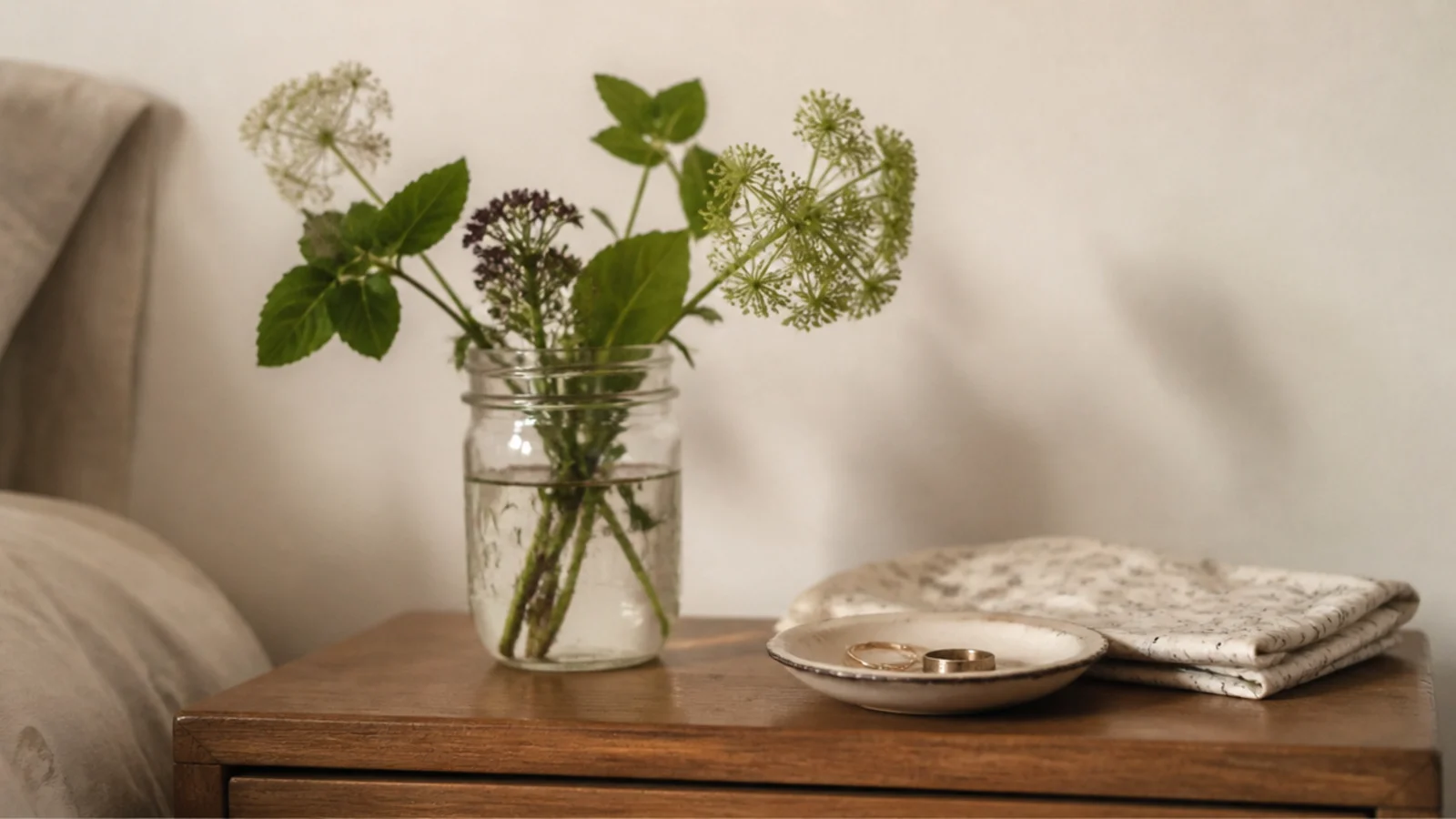
Bedside table decor ideas get expensive fast if you shop where the decor is. Almost everything on my own nightstand came from a charity shop, a garden, or another room in the house, and the total is under twenty dollars. Here are twenty that cost close to nothing and still look considered.
In this guide22 sections — tap to openHide
- 1.What bedside table decor ideas cost when you shop properly
- 2.A thrifted saucer as the catch-all
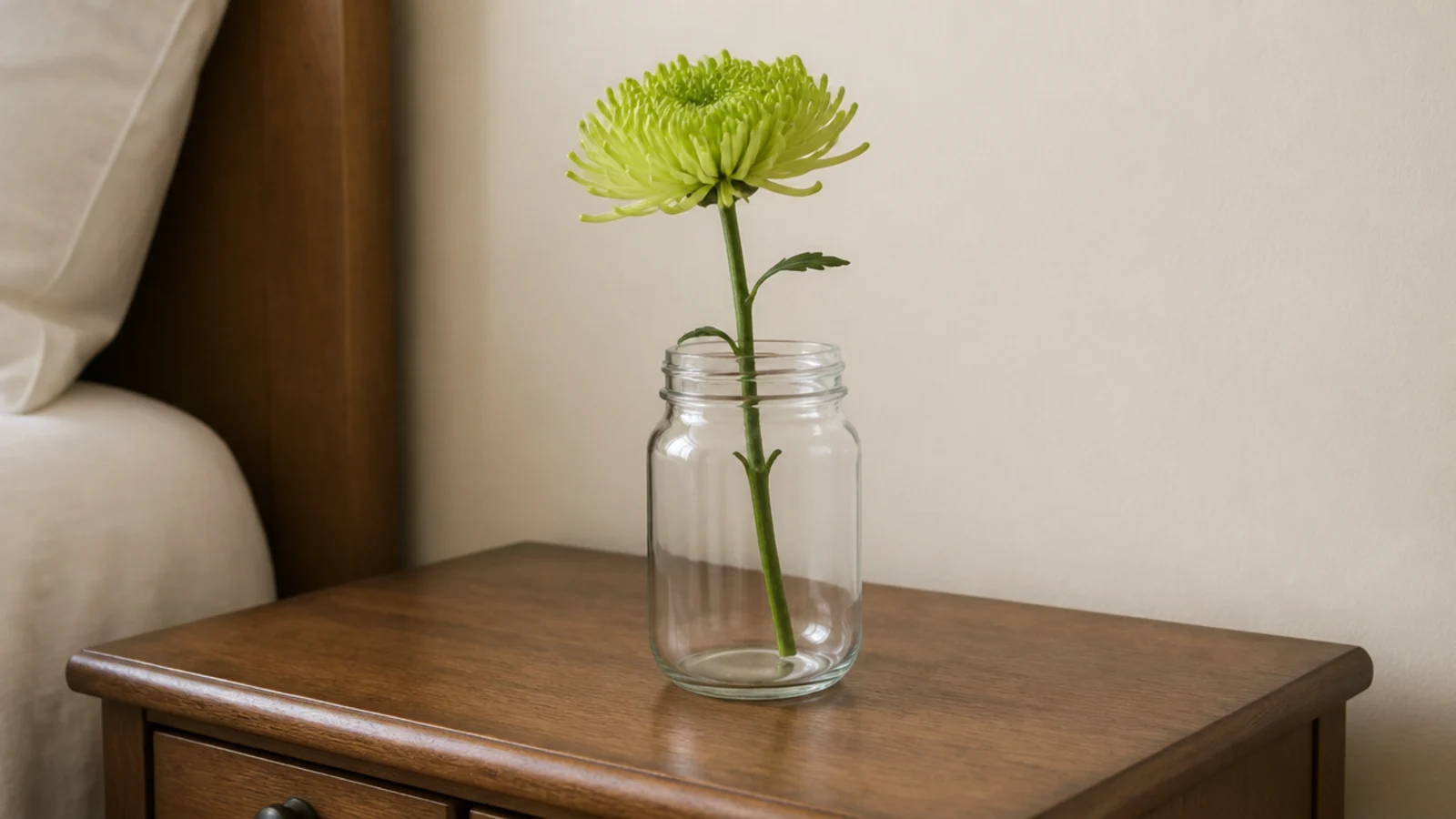
- 3.Cut stems from the garden in a plain jar
- 4.A tealight in a small glass
- 5.A fabric offcut as a runner
- 6.One pebble or shell you actually picked up
- 7.Charity shop hardbacks for height
- 8.A jam jar with the label soaked off
- 9.A terracotta pot painted in one coat
- 10.A wooden coaster that stays out
- 11.Free postcards in a cheap frame
- 12.A tin for pens, pills and hair ties
- 13.A secondhand brass candlestick
- 14.A eucalyptus sprig swapped monthly
- 15.A tile offcut as a trivet
- 16.A folded tea towel under the lamp
- 17.Repaint a charity shop lamp base
- 18.Swap only the shade, keep the lamp
- 19.Tie a cord around a plain jar
- 20.Shop your own house before you buy
- 21.Set a twenty dollar ceiling and stop
- 22.Mistakes to Skip
What bedside table decor ideas cost when you shop properly
Three rules make the difference between cheap-looking and inexpensive.
Buy secondhand for anything ceramic, glass or cloth-bound. A charity shop saucer is $1 to $3 and arrives with crazing and a glaze colour that no current production piece has. New decor in the same price bracket is thin, glossy and obviously new. This is the single biggest lever.
Fix the light before you buy an object. A warm 2700K bulb is about $4 and a secondhand shade about $5. Cold light makes every careful thing on the table look clinical, and no ornament recovers it. If your budget is ten dollars, spend it here.
Use what the house already has. Jars, tins, fabric offcuts, books, a pebble from a trip. The pieces with a history attached always read better than the ones with a barcode, and they cost nothing at all.
Set a ceiling of twenty dollars for the whole surface and you will make better choices than with fifty. For the principles underneath all of this — grouping, tone, repetition — the aesthetic bedside table guide goes deeper.
1. A thrifted saucer as the catch-all
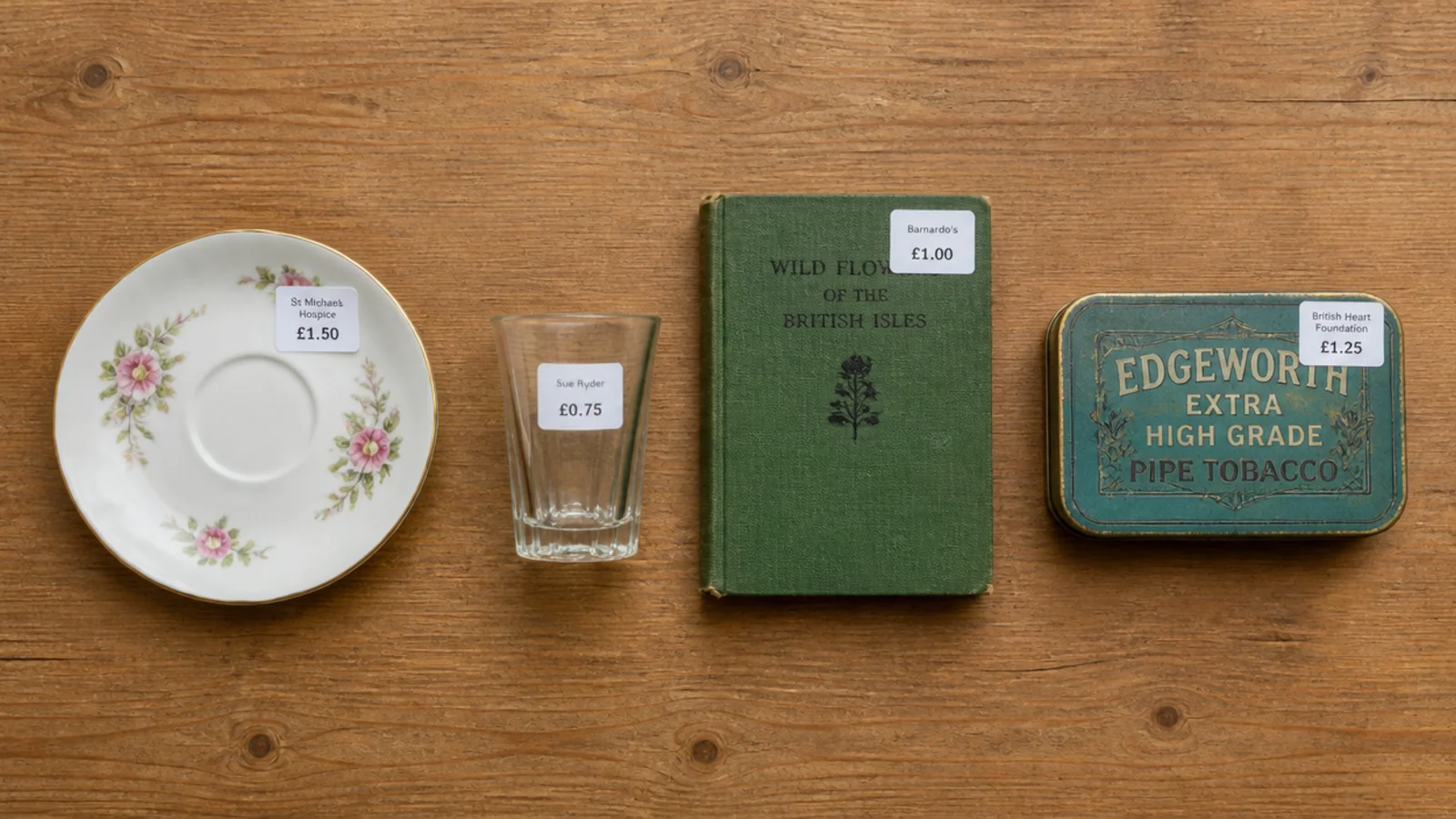
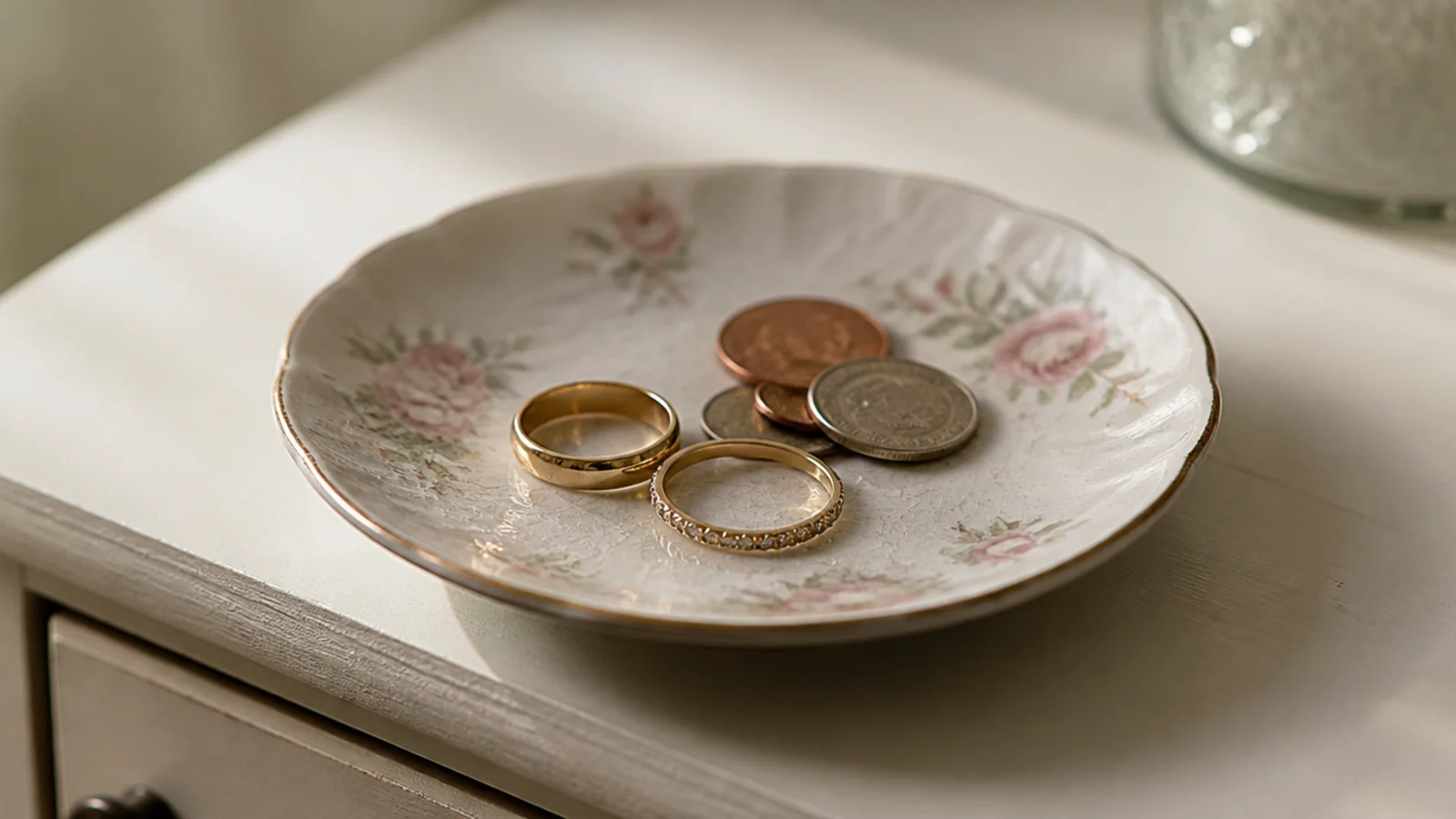
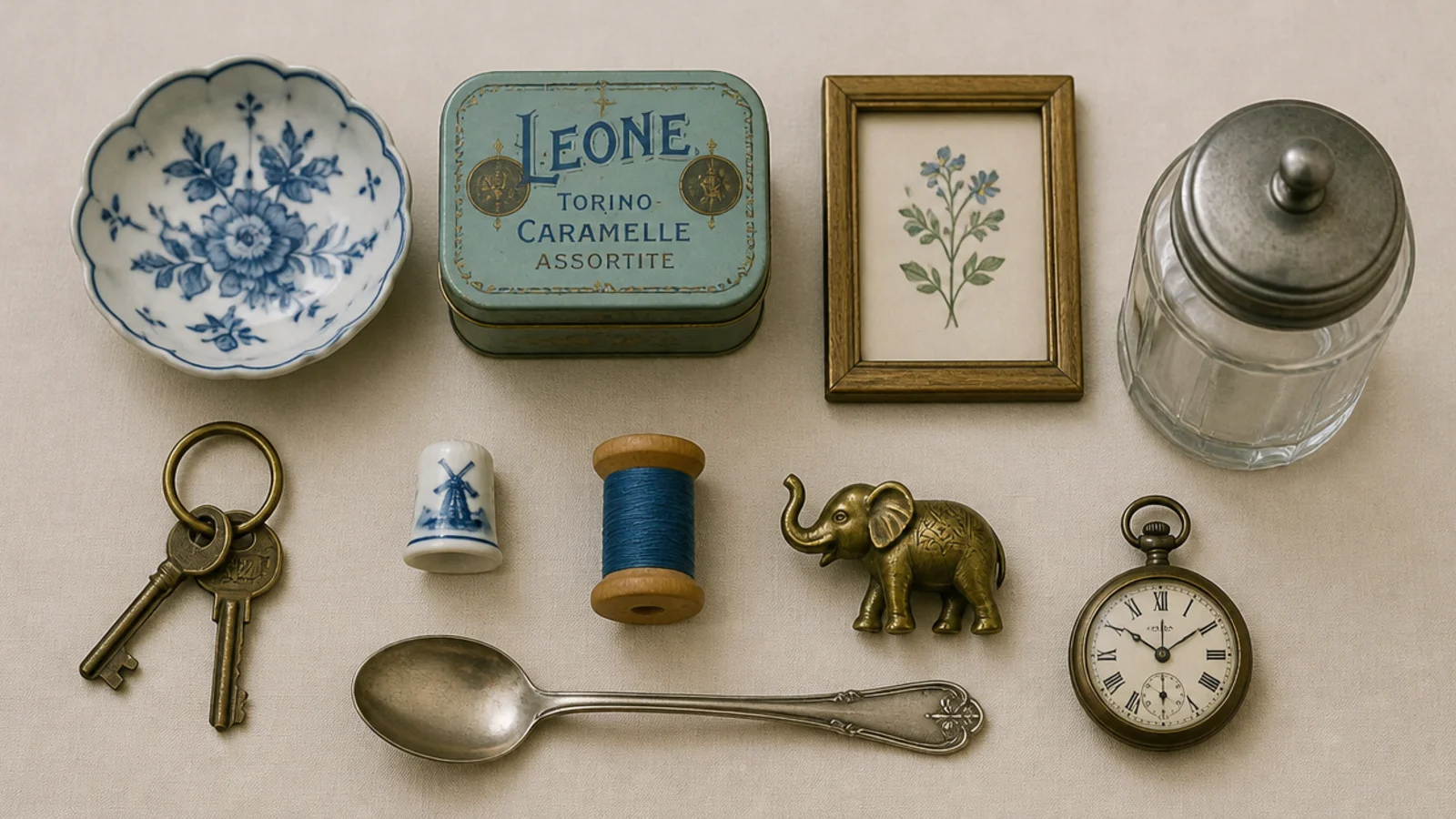
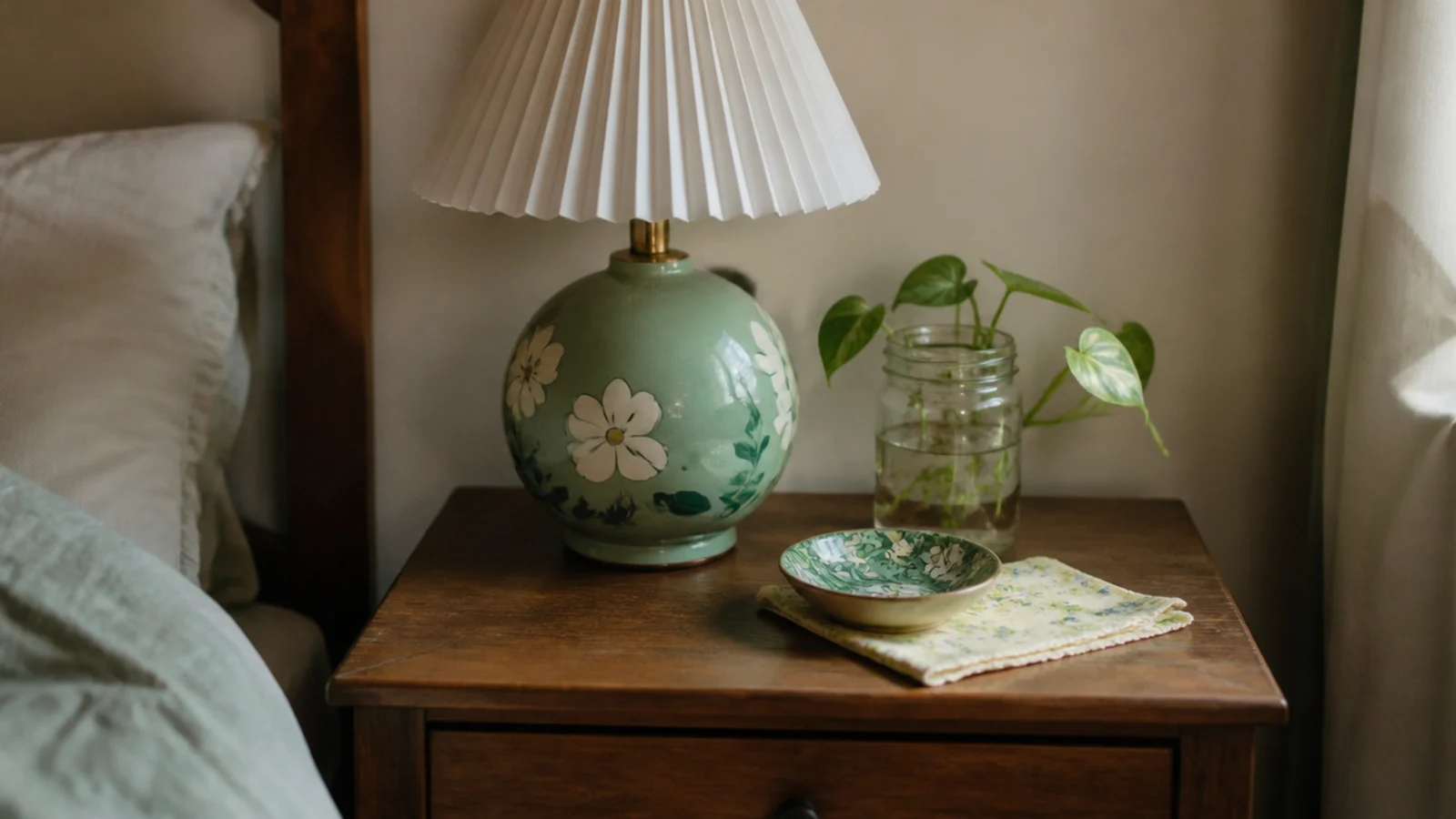
One small dish stops rings, coins, hair ties and earplugs spreading across the whole surface. A single orphaned saucer costs $1 to $3 and the faded pattern does more visually than a new matte tray at ten times the price. Look in the crockery section rather than the homeware shelf — orphaned saucers separated from their cups are the cheapest thing in most charity shops, and the older glazes have a depth of colour that current production simply does not attempt.
2. Cut stems from the garden in a plain jar
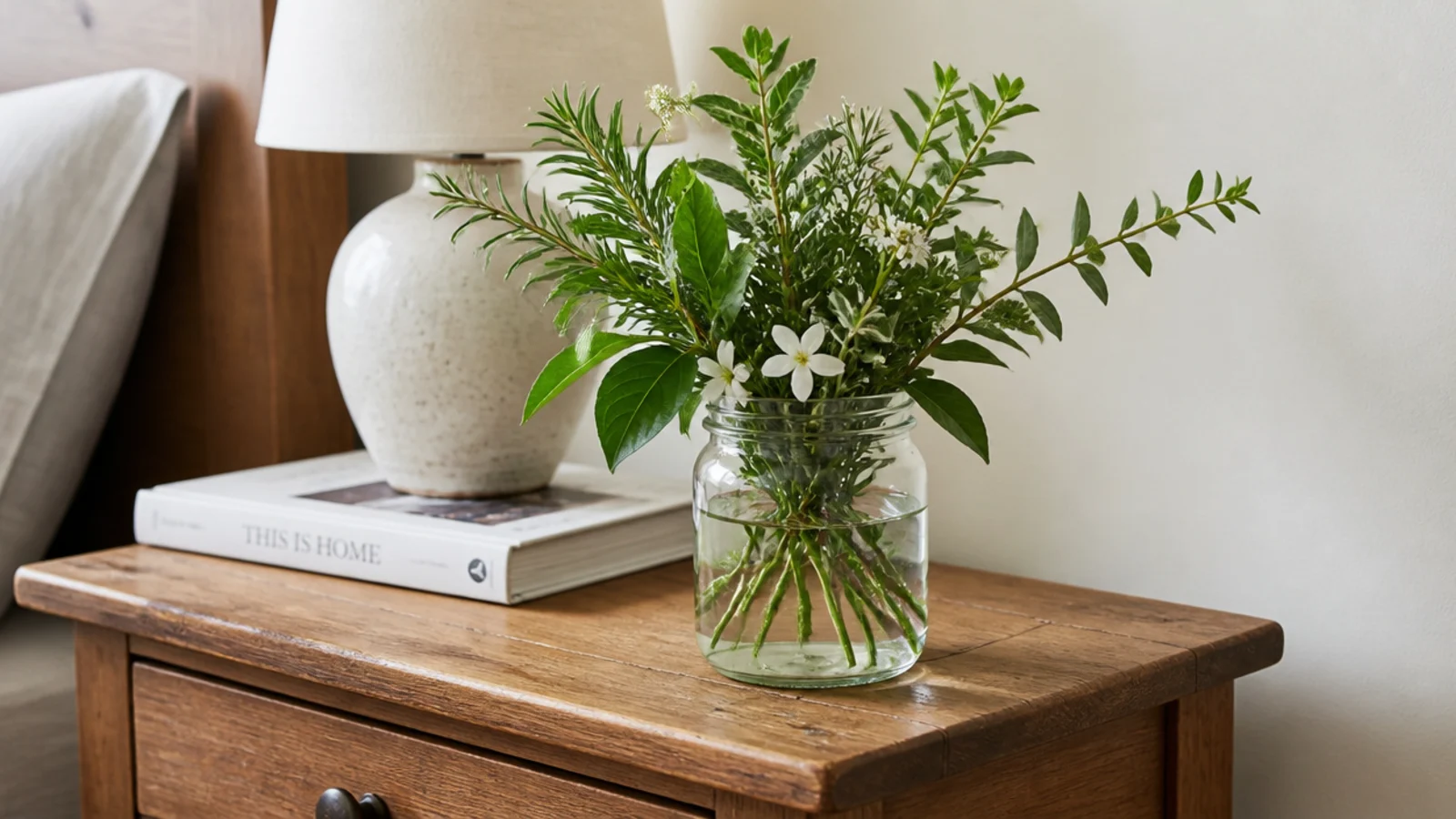
Whatever is growing outside, cut short, in a clear jar. It lasts about a week and costs nothing, and a loose handful reads far better than a tight arrangement. Even plain green foliage with no flowers works — it is texture and life rather than a bouquet. Cut the stems at an angle and strip anything that would sit below the waterline, or the water clouds within two days and the whole thing starts to smell in a warm bedroom.
3. A tealight in a small glass
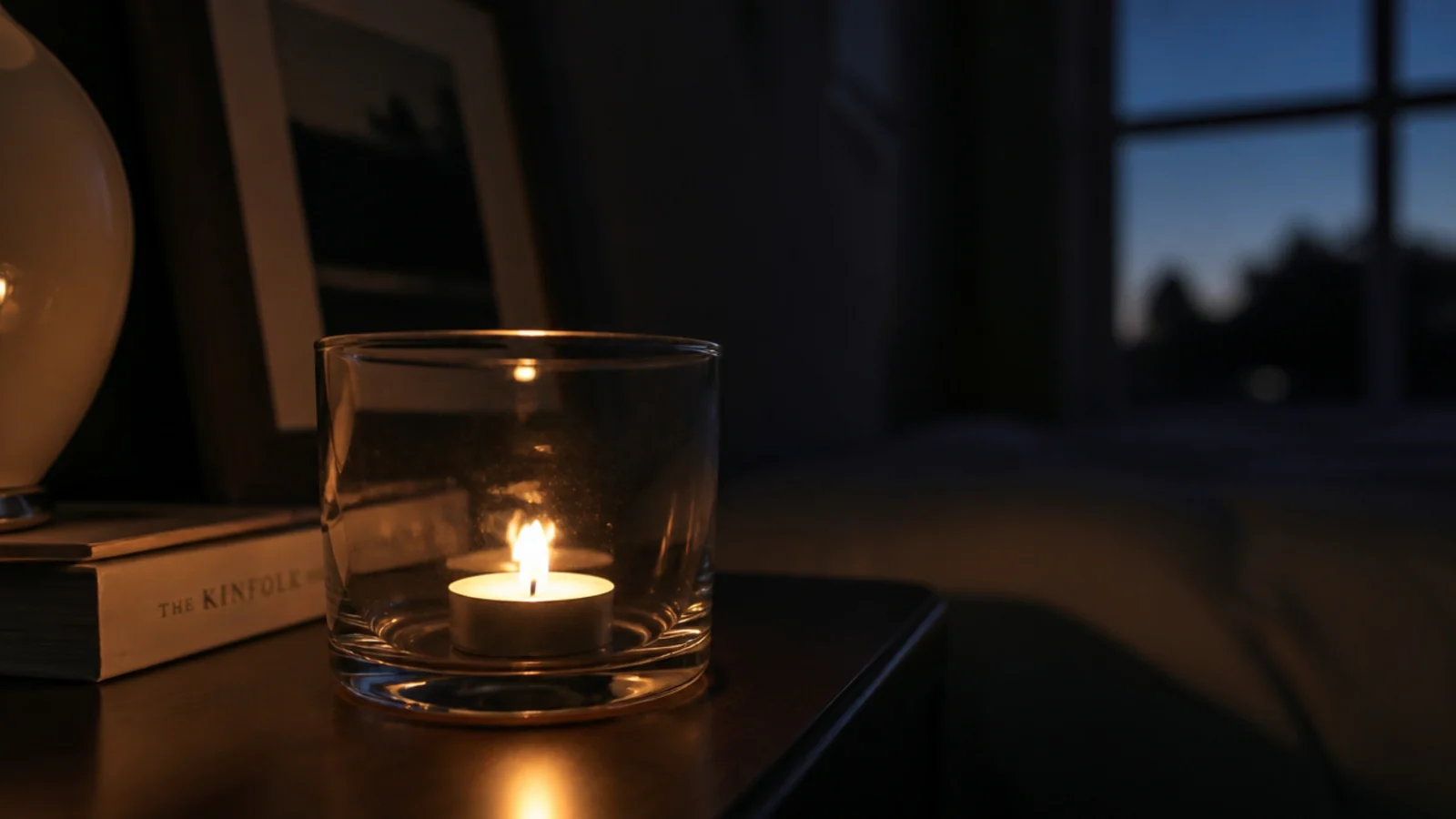
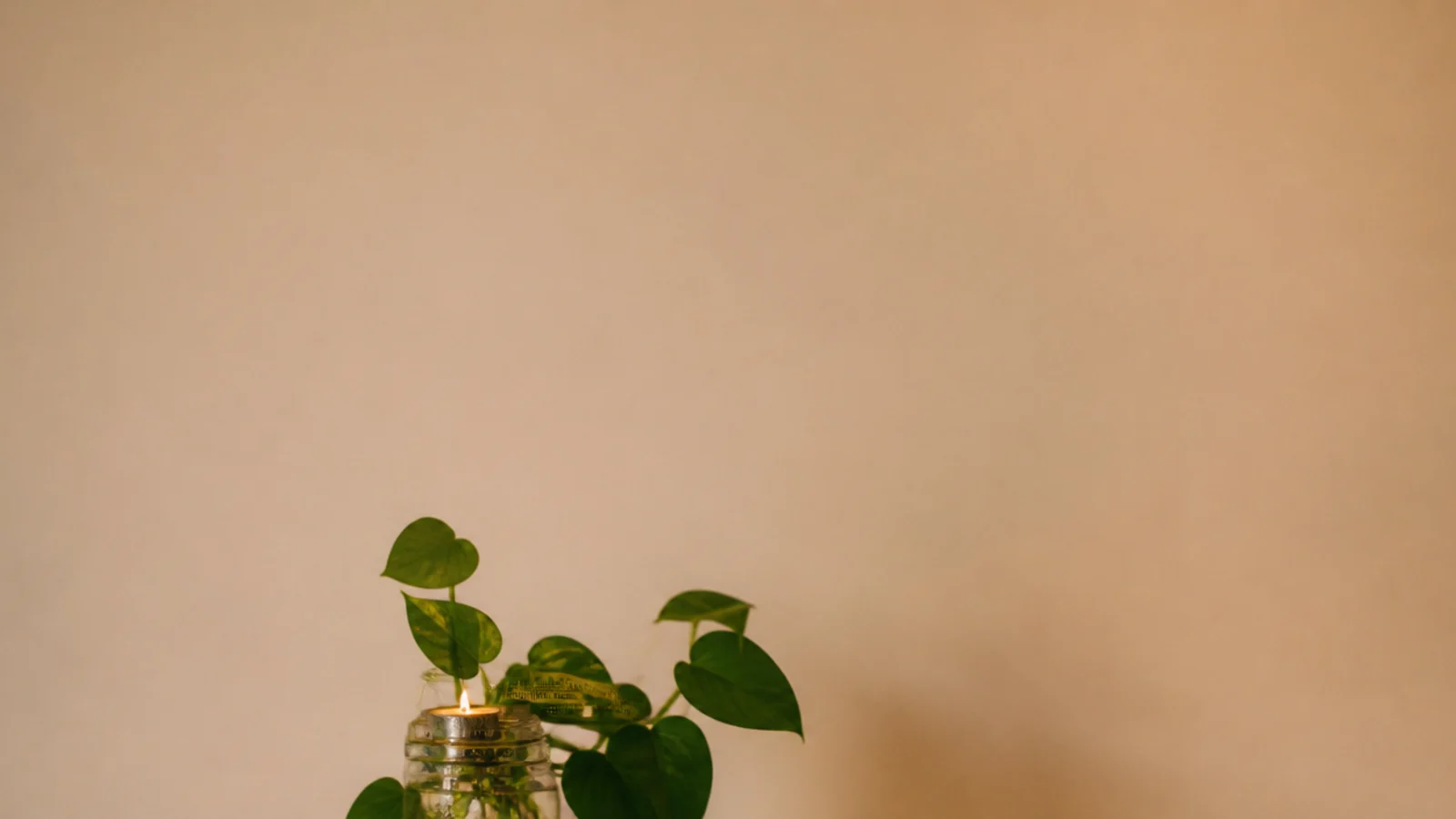
A tealight dropped into a short tumbler contains the flame and spreads the glow through the glass. Tealights run about eight cents each. Never leave one burning unattended, never within a foot of bedding, and use an LED tealight instead if you read until you fall asleep.
4. A fabric offcut as a runner
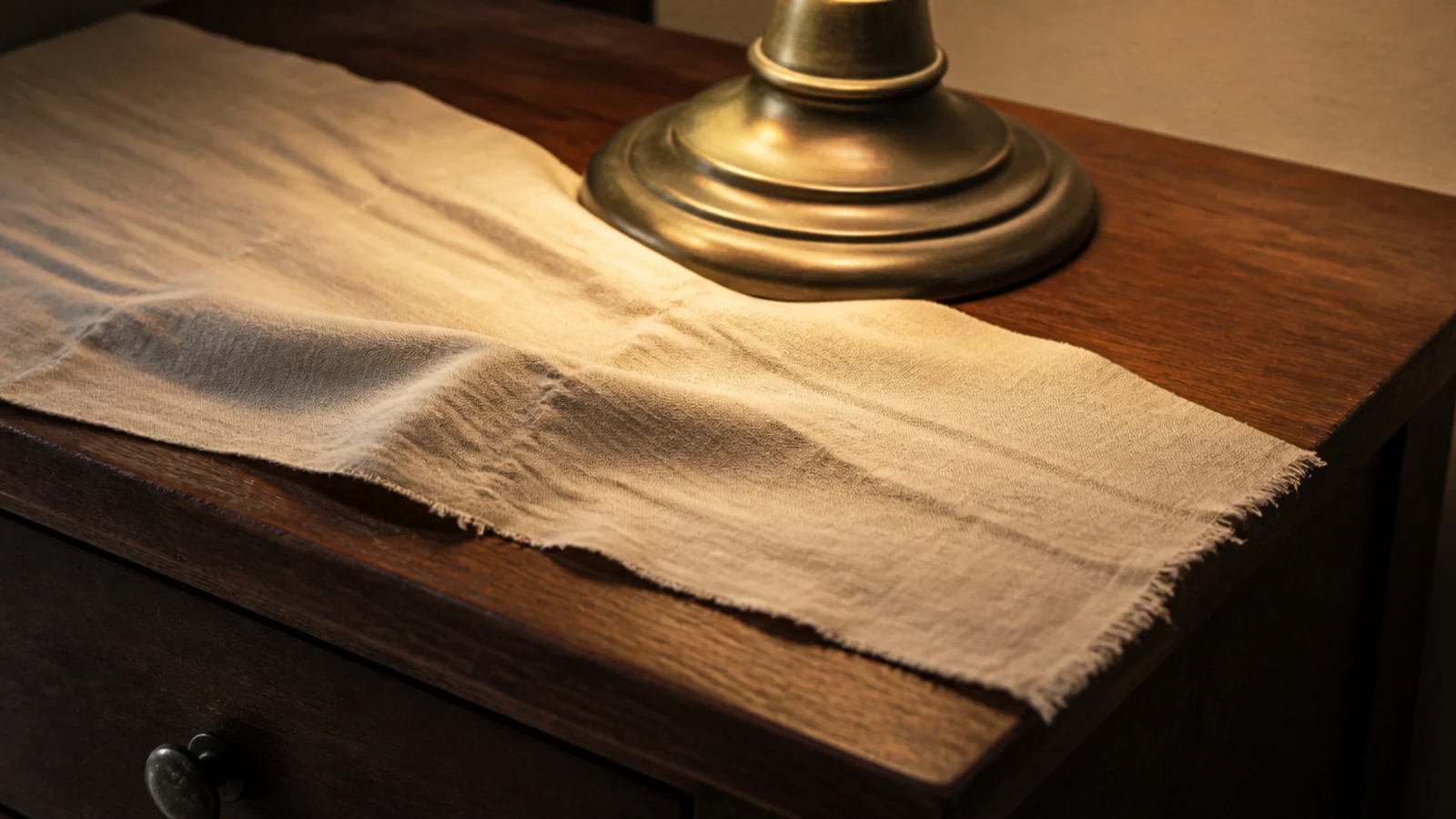
Half a metre of remnant cotton or linen is $5 to $10 from a fabric shop's end bin, and it does not need hemming. A raw edge and a few creases are the point — a crisply pressed and hemmed runner reads formal, which is the opposite of what a bedside table wants. Wash it once before it goes down so it softens and shrinks first. It hides ring marks, it costs almost nothing, and it goes in with the sheets when it needs to.
5. One pebble or shell you actually picked up
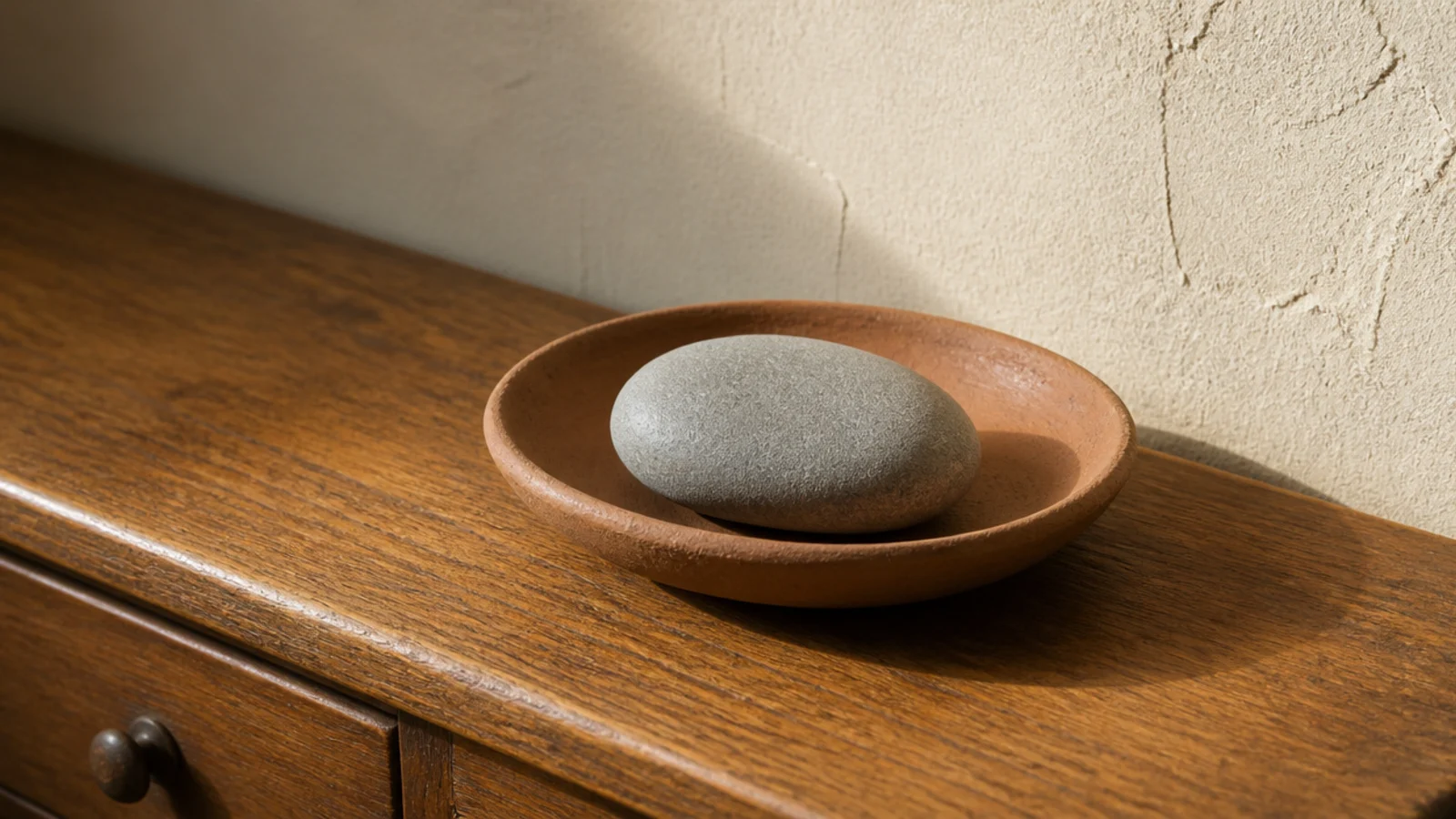
A single stone from a beach you remember beats a bought decorative object every time, because it carries something. One is enough — a bowl of holiday pebbles reads as a collection nobody looks at, while one placed deliberately reads as a choice.
6. Charity shop hardbacks for height
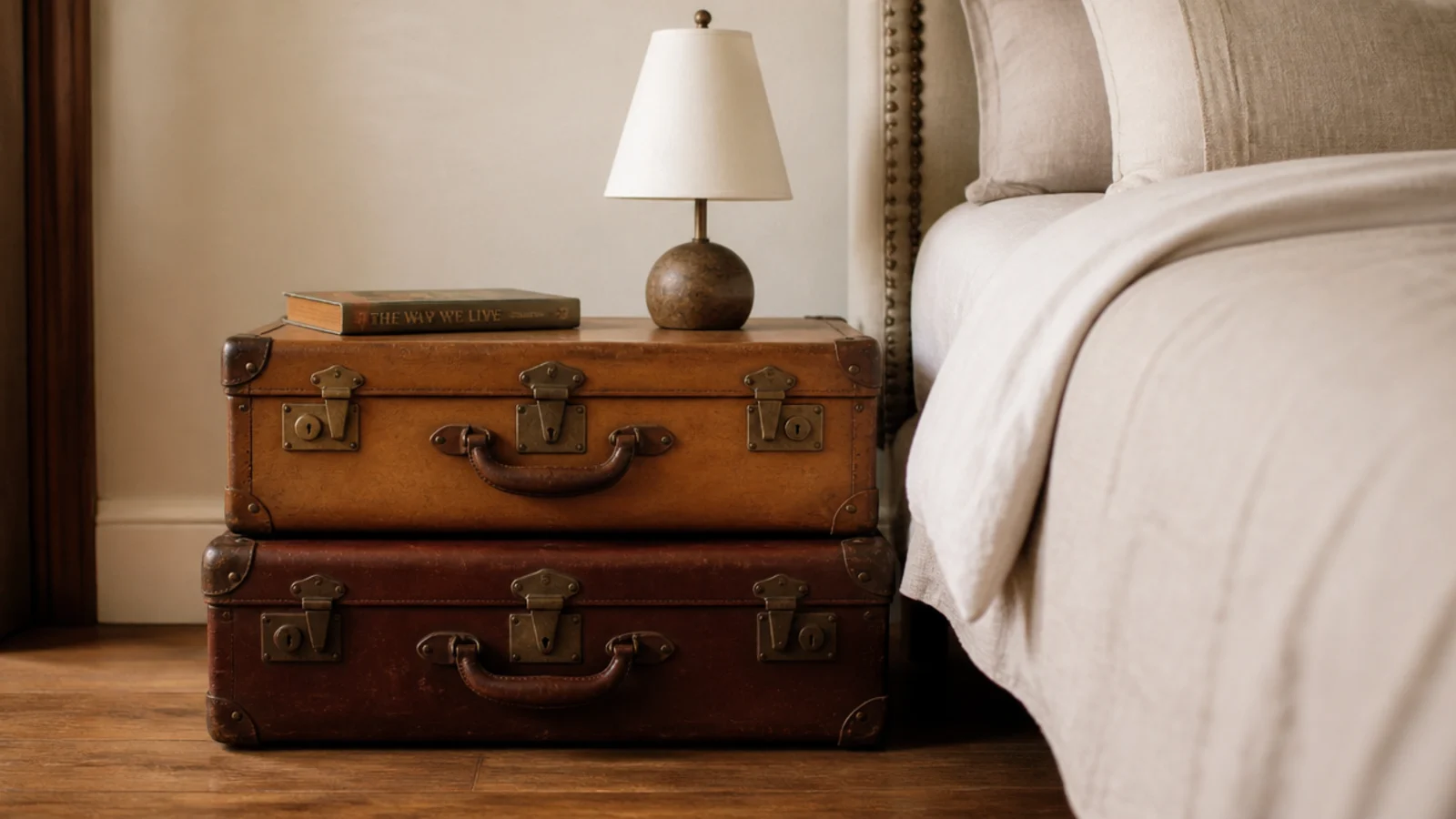
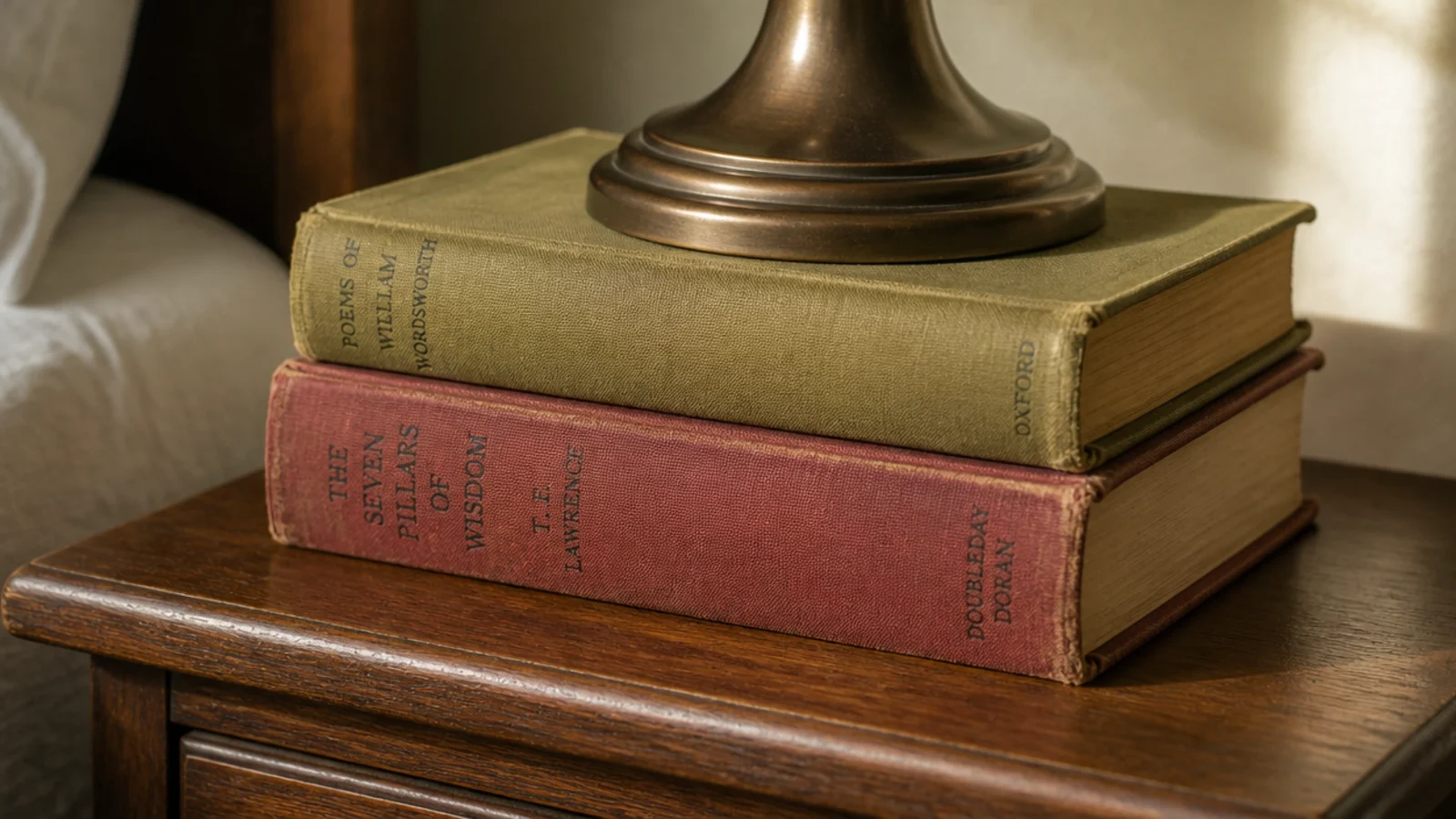
Cloth-bound hardbacks at $1 each give you height under a lamp and colours that modern printing does not produce — faded olive, dark red, dusty blue. Take the dust jackets off; the binding underneath is almost always better than the printed jacket over it. Two or three stacked is plenty, and stacking them largest at the bottom keeps the pile stable enough to stand a lamp on. Check the spines are intact if anything heavy is going on top.
7. A jam jar with the label soaked off
Twenty minutes in warm soapy water and most labels lift cleanly; a little oil shifts the rest of the glue. What is left is a heavy clear vase with slightly irregular glass, which is exactly what people pay $15 for in a homeware shop.
8. A terracotta pot painted in one coat
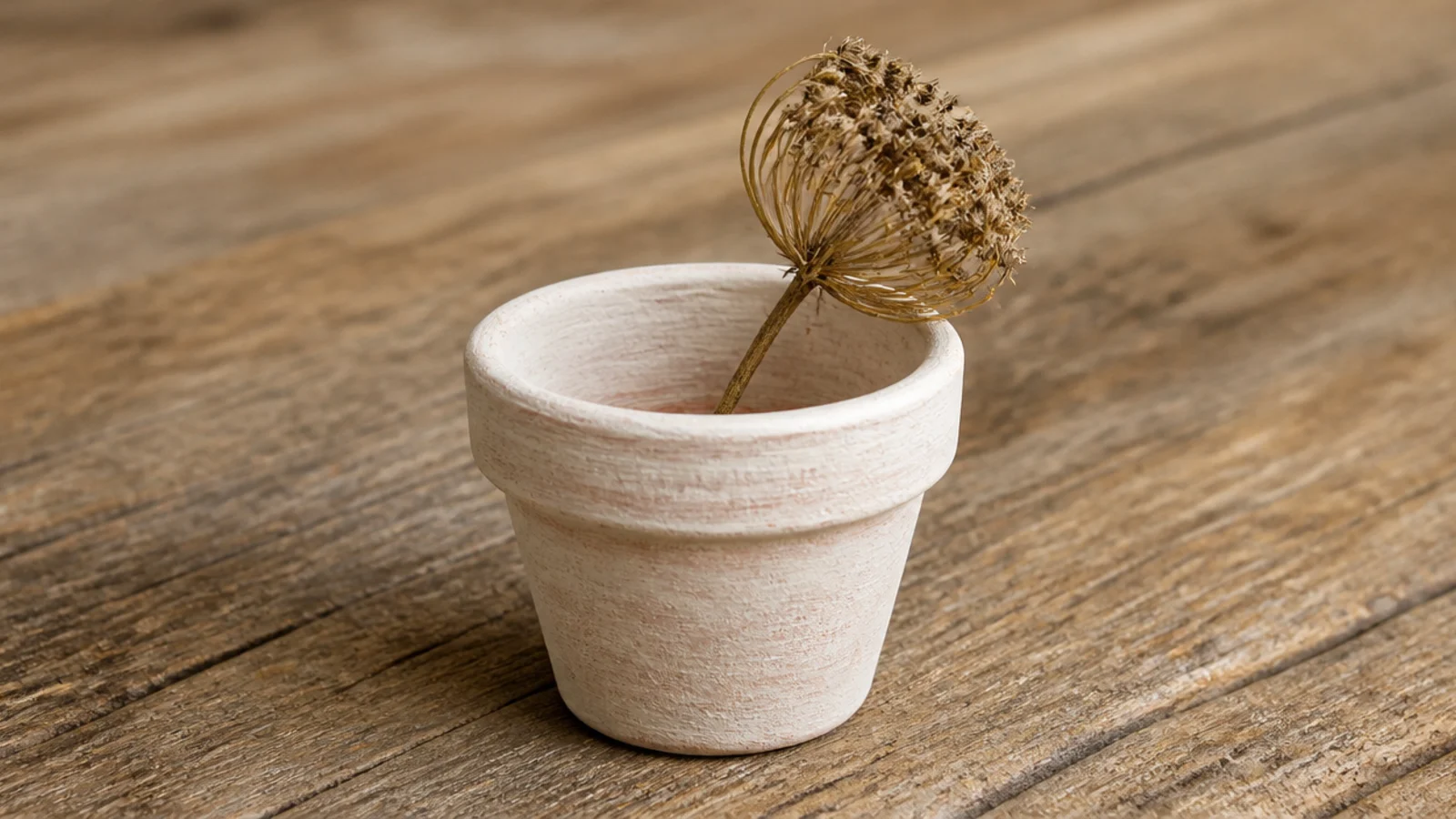
A plain terracotta pot is around $2 and one thin coat of leftover wall paint lets the clay show faintly through. That patchiness is the finish you want — two solid coats makes it look like plastic. Water it and the paint will lift, so use it for a dried stem rather than a live plant, or drop a small glass inside it as a liner if you want cuttings. Chalk and emulsion both work; gloss does not.
9. A wooden coaster that stays out
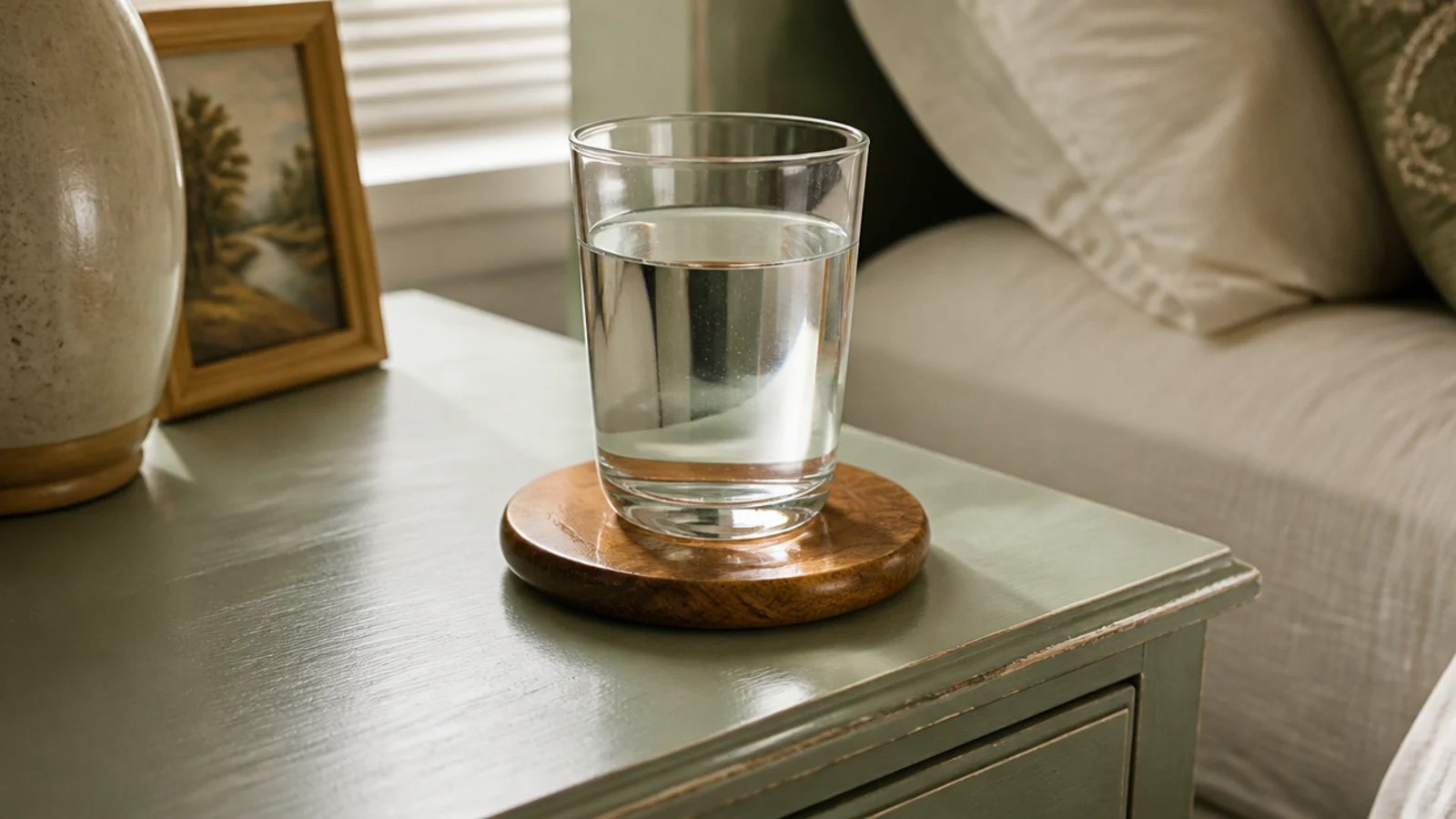
An oiled wood coaster protects the top from the water glass and adds a small repeated circle to the arrangement. A set of four is $6 to $12 and one lives permanently on the table rather than in a drawer.
10. Free postcards in a cheap frame
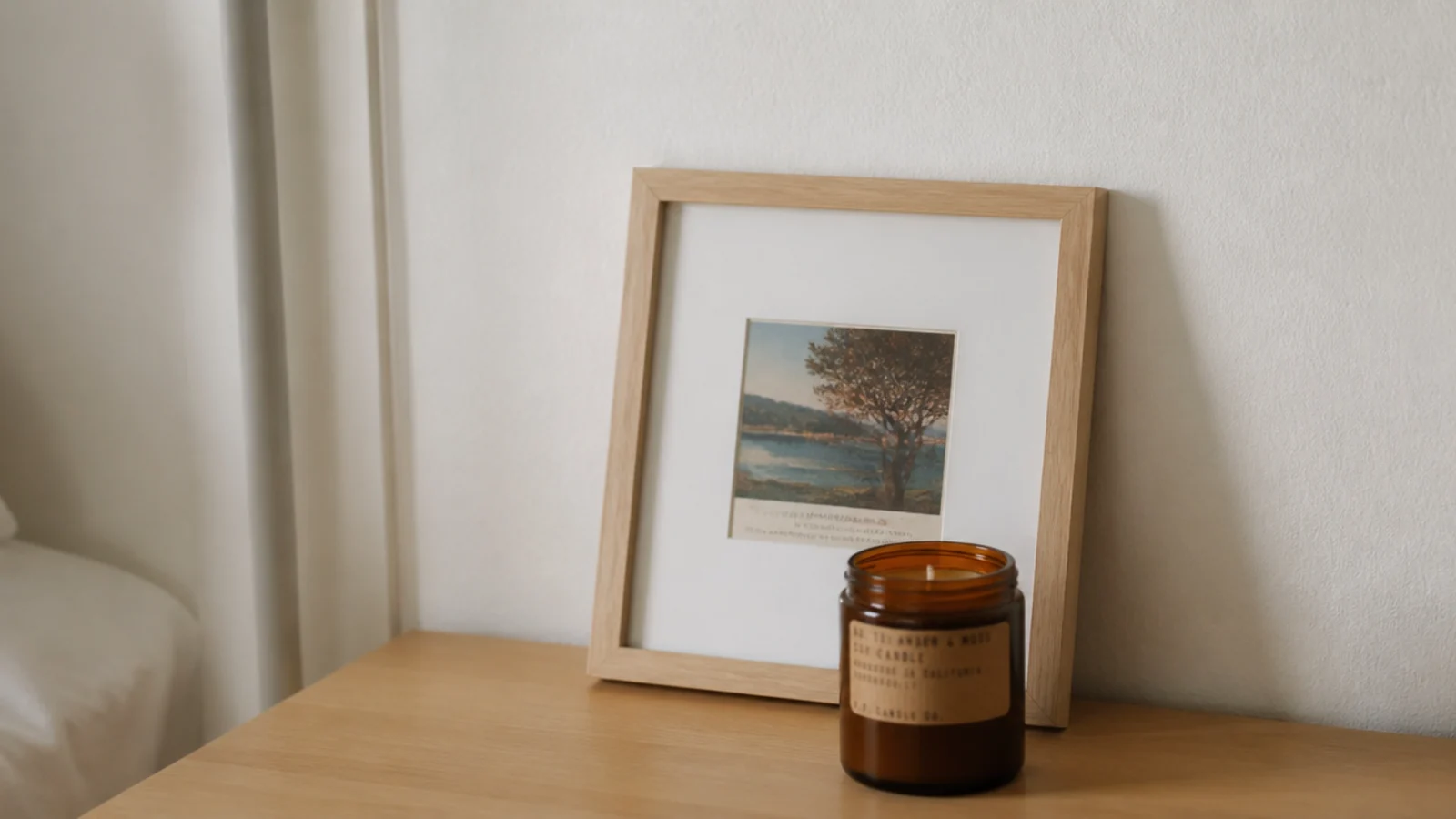
Gallery and museum postcards are usually free or under a dollar, and a plain frame is $3 to $6 secondhand. Leaned rather than hung, it gives the arrangement a backdrop and it is trivially cheap to change your mind about.
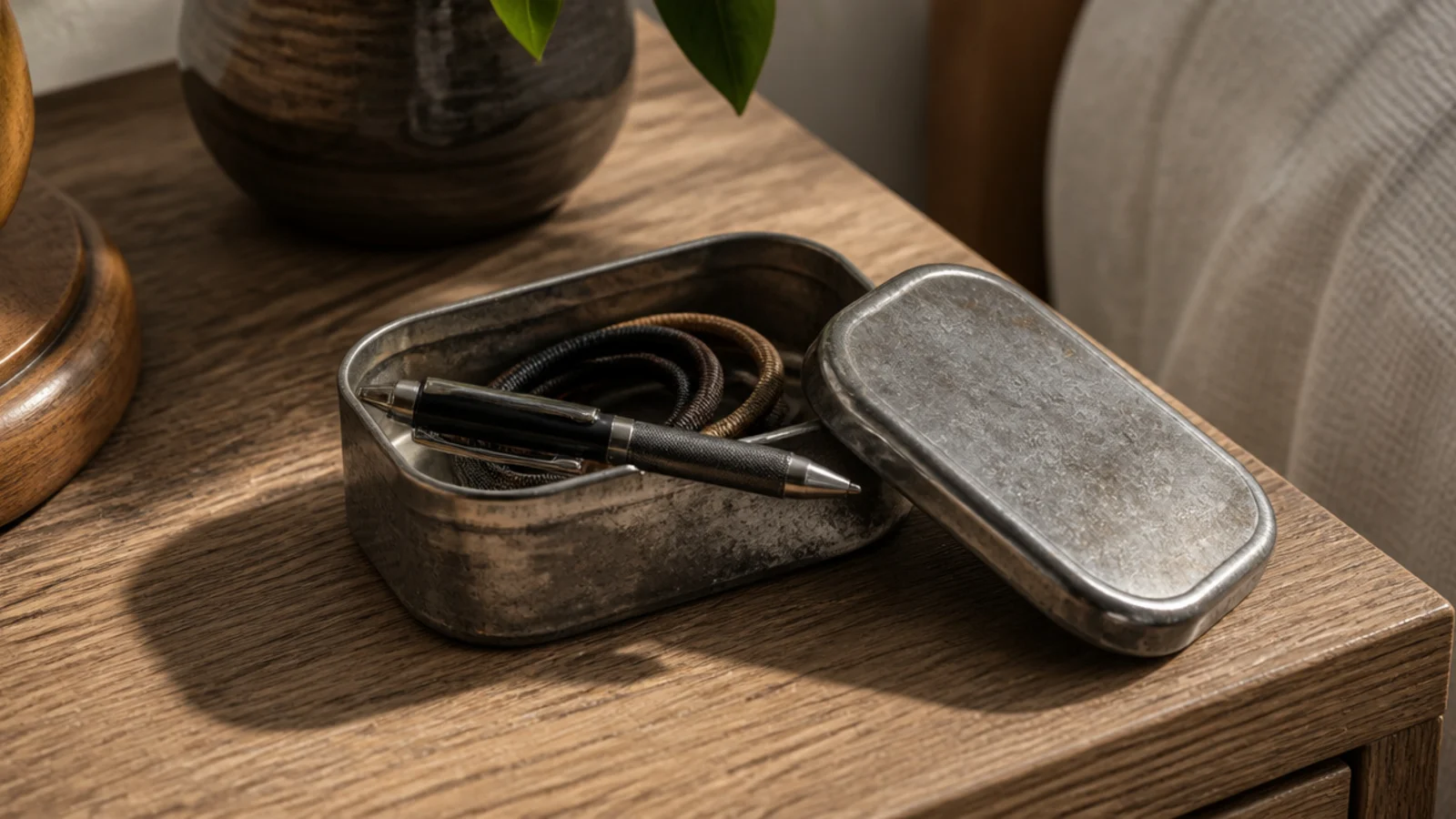
11. A tin for pens, pills and hair ties
An old tin with a lid hides the things a tray leaves on display. Blister packs, chargers, a pen, the receipt you meant to keep. Lidded storage is what stops a small surface reading as cluttered — an open tray shows everything in it, and most of what accumulates beside a bed is not decorative. A decent vintage tin costs $1 to $4, and the printed ones from the 1970s onward have colours worth having out.
12. A secondhand brass candlestick
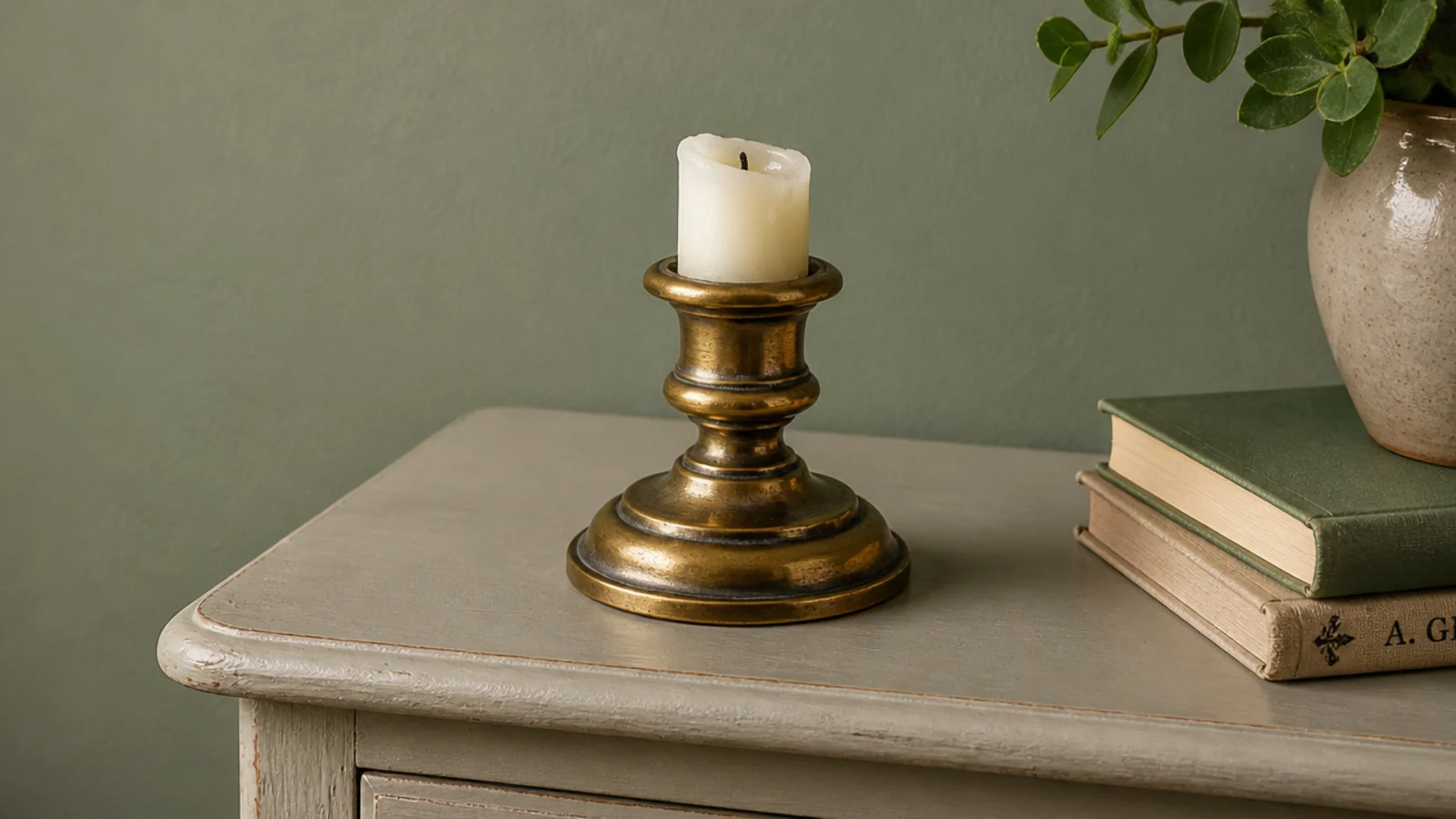
Tarnished brass is $3 to $8 secondhand and the darkened recesses are exactly the finish that unlacquered brass develops over years. Do not polish it. If you buy one thing new in this list, do not let it be this.
13. A eucalyptus sprig swapped monthly
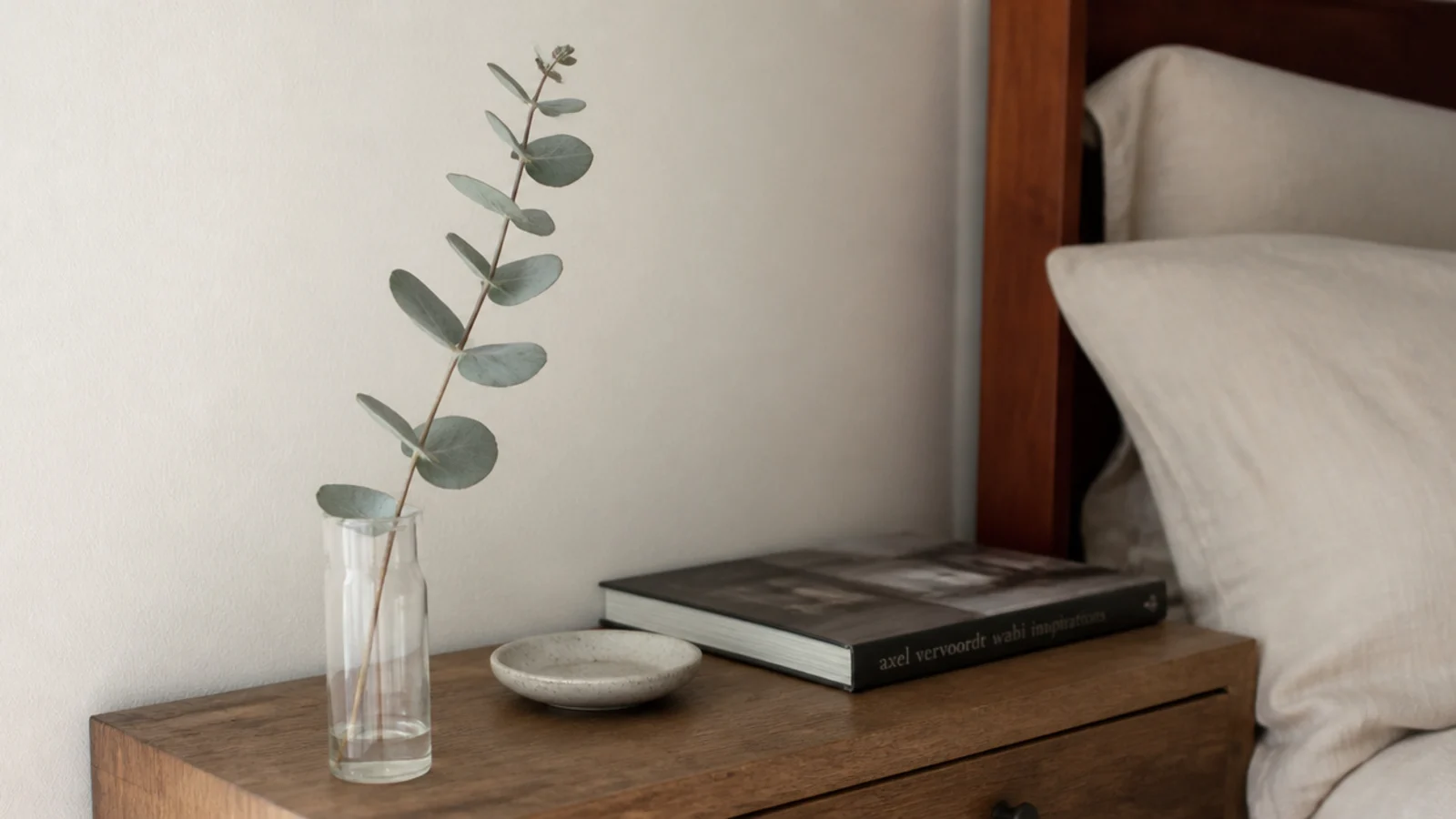
A single supermarket eucalyptus stem is $2 to $4 and holds its shape for weeks, drying gradually rather than wilting. Swapping it monthly is the cheapest way to keep a corner feeling current without accumulating anything.
14. A tile offcut as a trivet
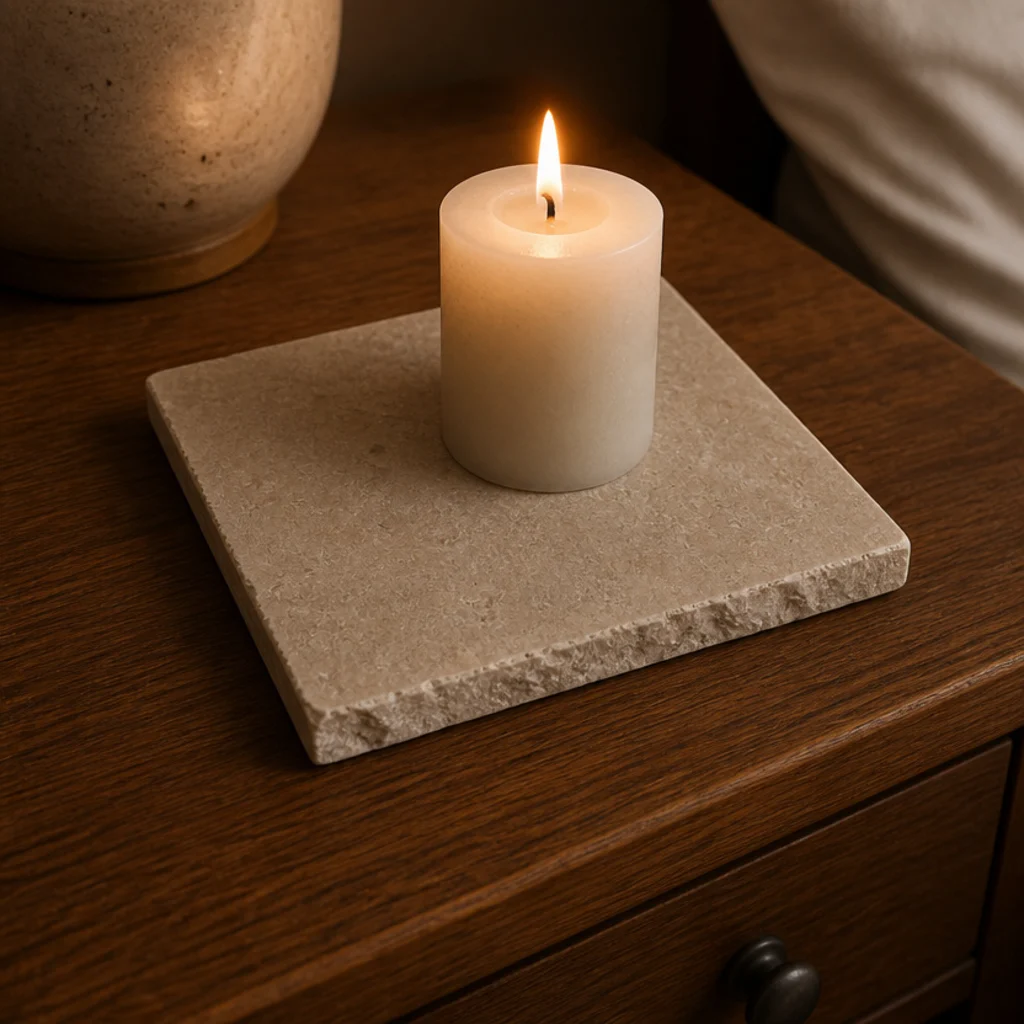
Tile shops give away remnants, and a single square of honed stone makes a heatproof mat for a candle or a mug. It brings a material into the room that furniture rarely does, and the slightly rough cut edge looks better than a finished one.
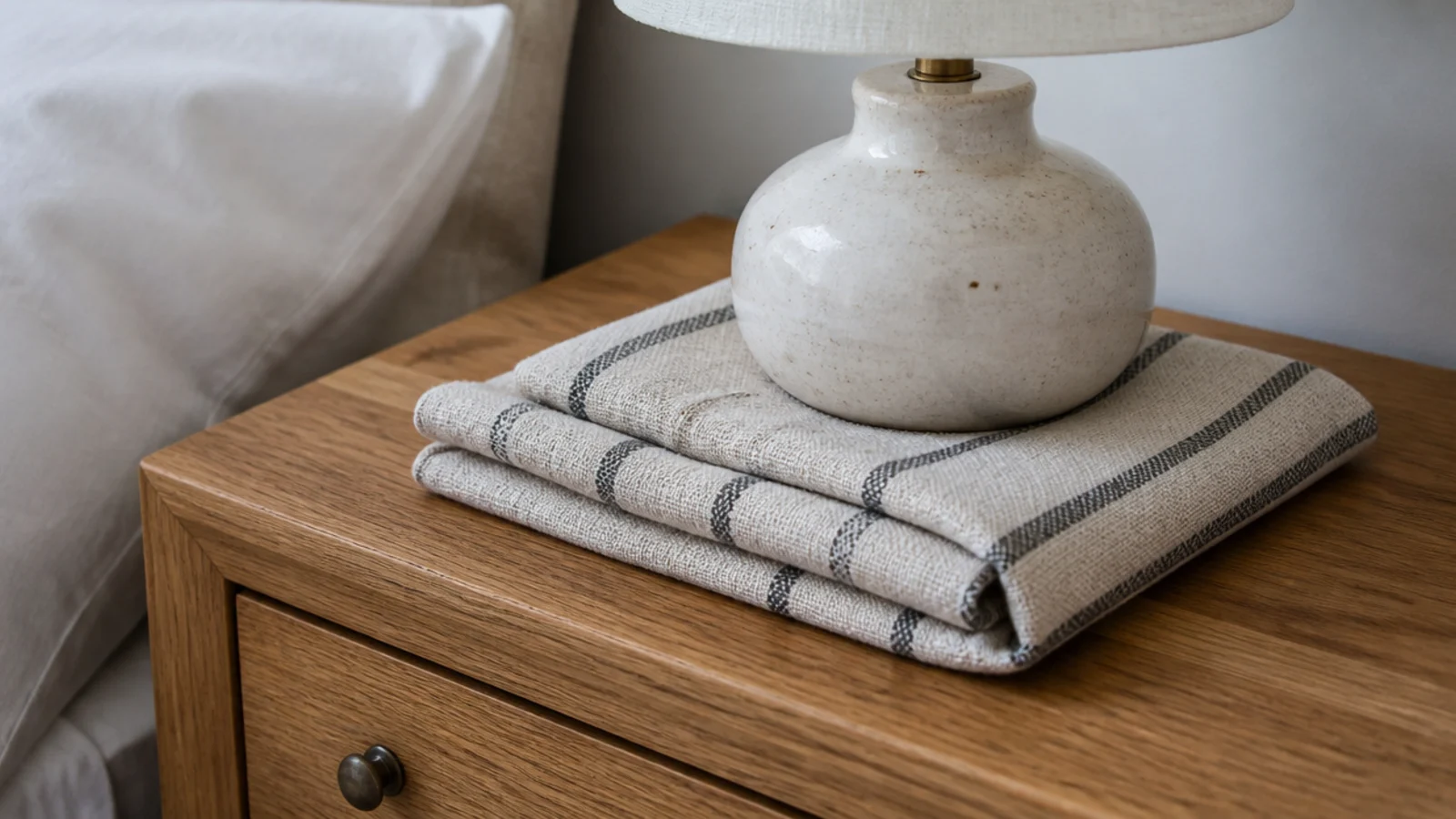
15. A folded tea towel under the lamp
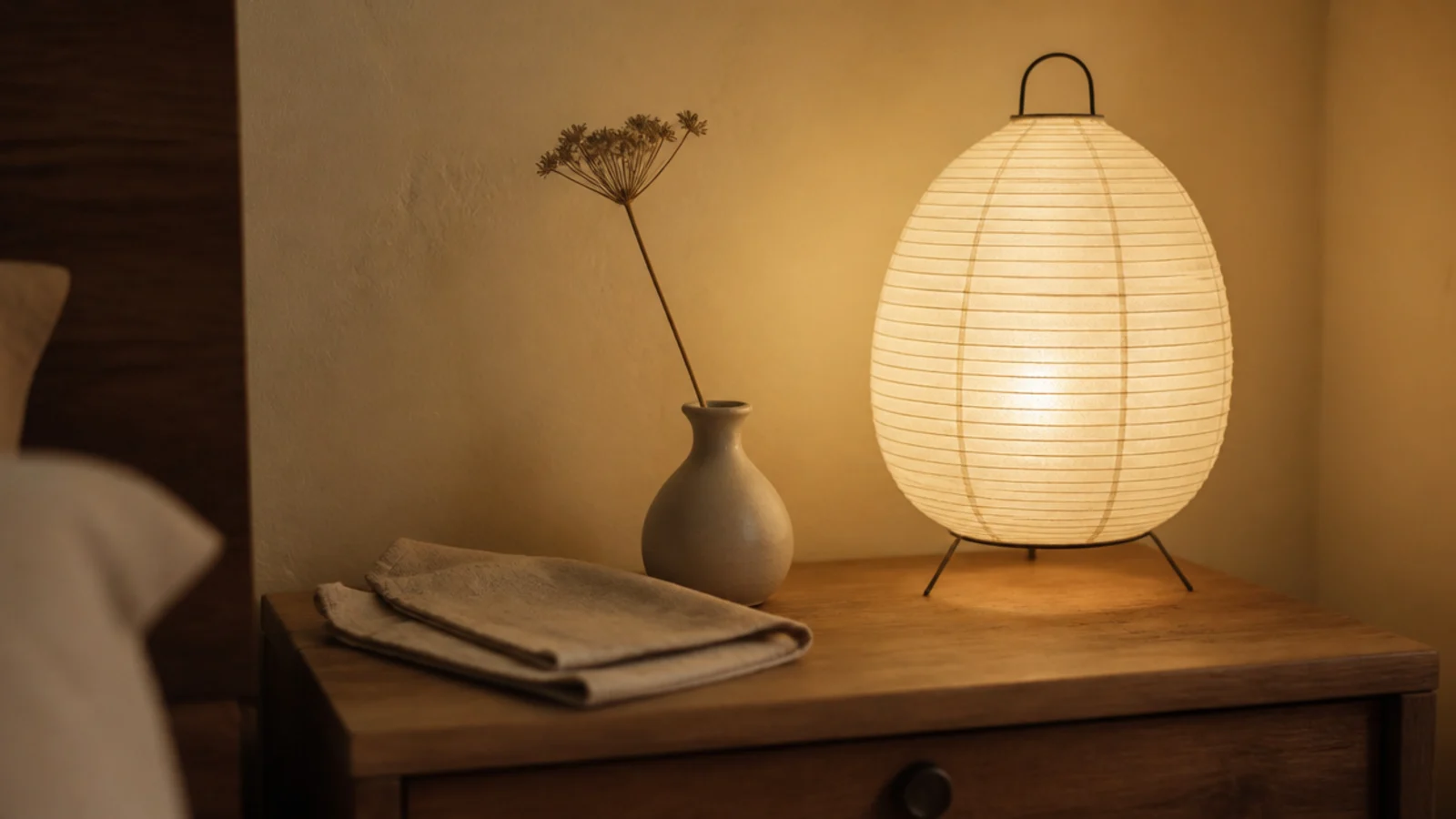
If a fabric remnant is not to hand, a linen tea towel folded into a neat rectangle does the same job for free. Striped and checked weaves work better than printed ones, because the pattern is in the cloth rather than on it.
16. Repaint a charity shop lamp base
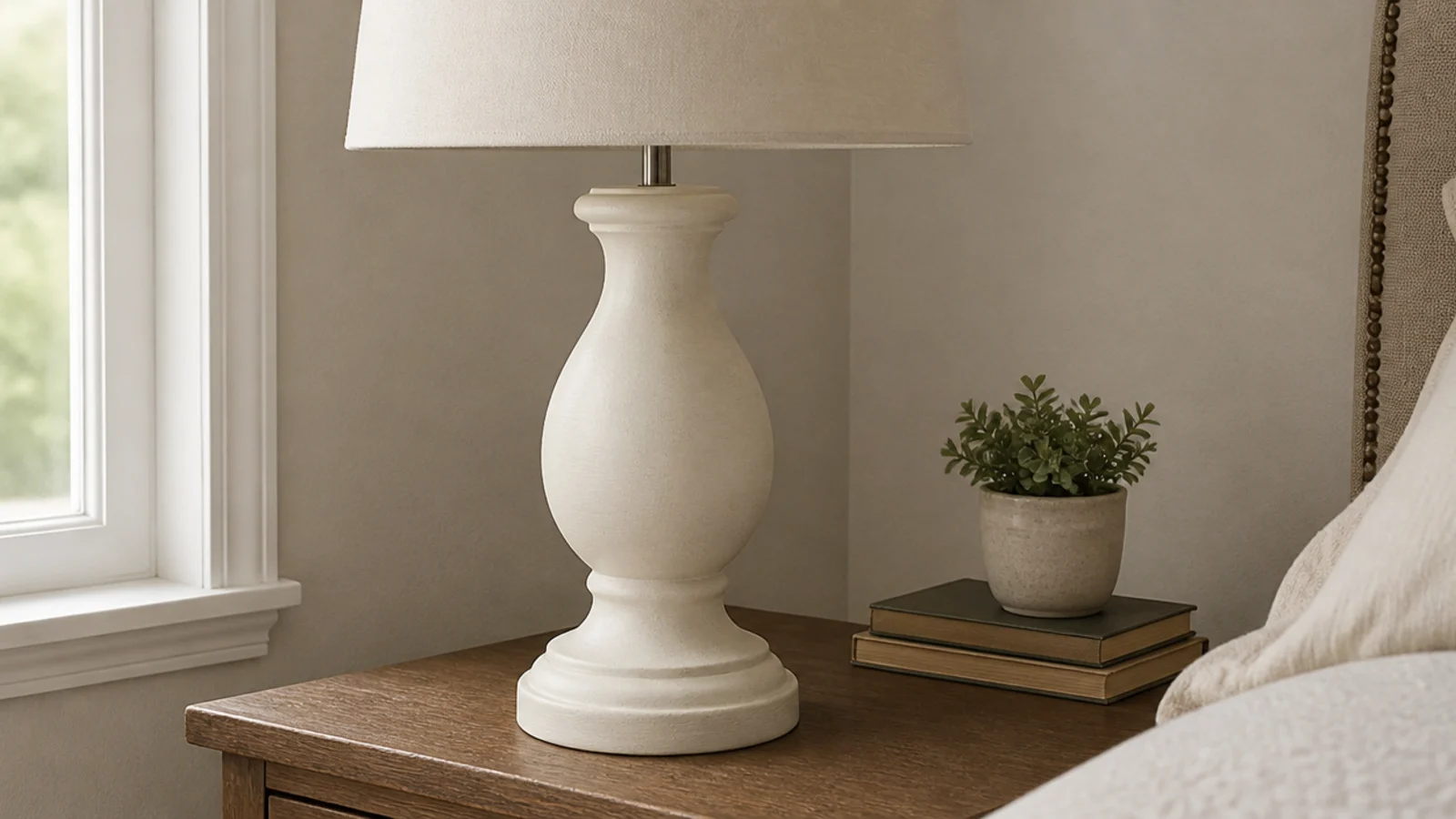
A dated ceramic lamp is $4 to $10 and one coat of primer plus one of chalky flat paint transforms it. Leave the brush texture visible rather than sanding it flat — it reads as hand-finished rather than sprayed. Mask the fitting and the flex properly first, because paint on a lamp holder is genuinely difficult to remove afterwards. Rewire only if the flex is perished, and if you are at all unsure about the wiring, have it checked rather than guessed at.
17. Swap only the shade, keep the lamp
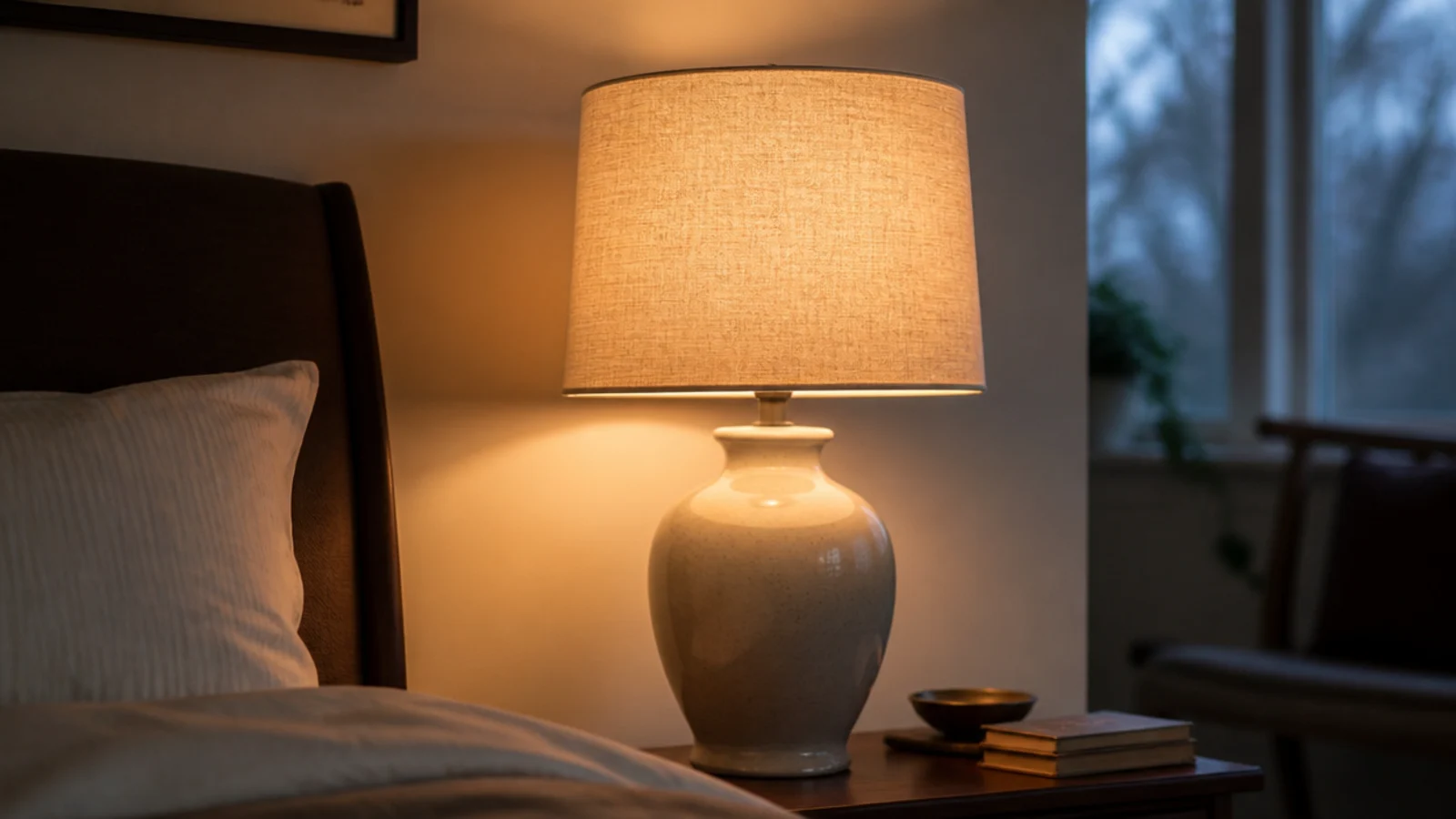
The shade is the part you actually look at when the lamp is lit, so it is the part worth replacing. A plain linen drum is $12 to $25 and it makes an old base irrelevant. Nobody notices a mismatched base under a good shade.
18. Tie a cord around a plain jar
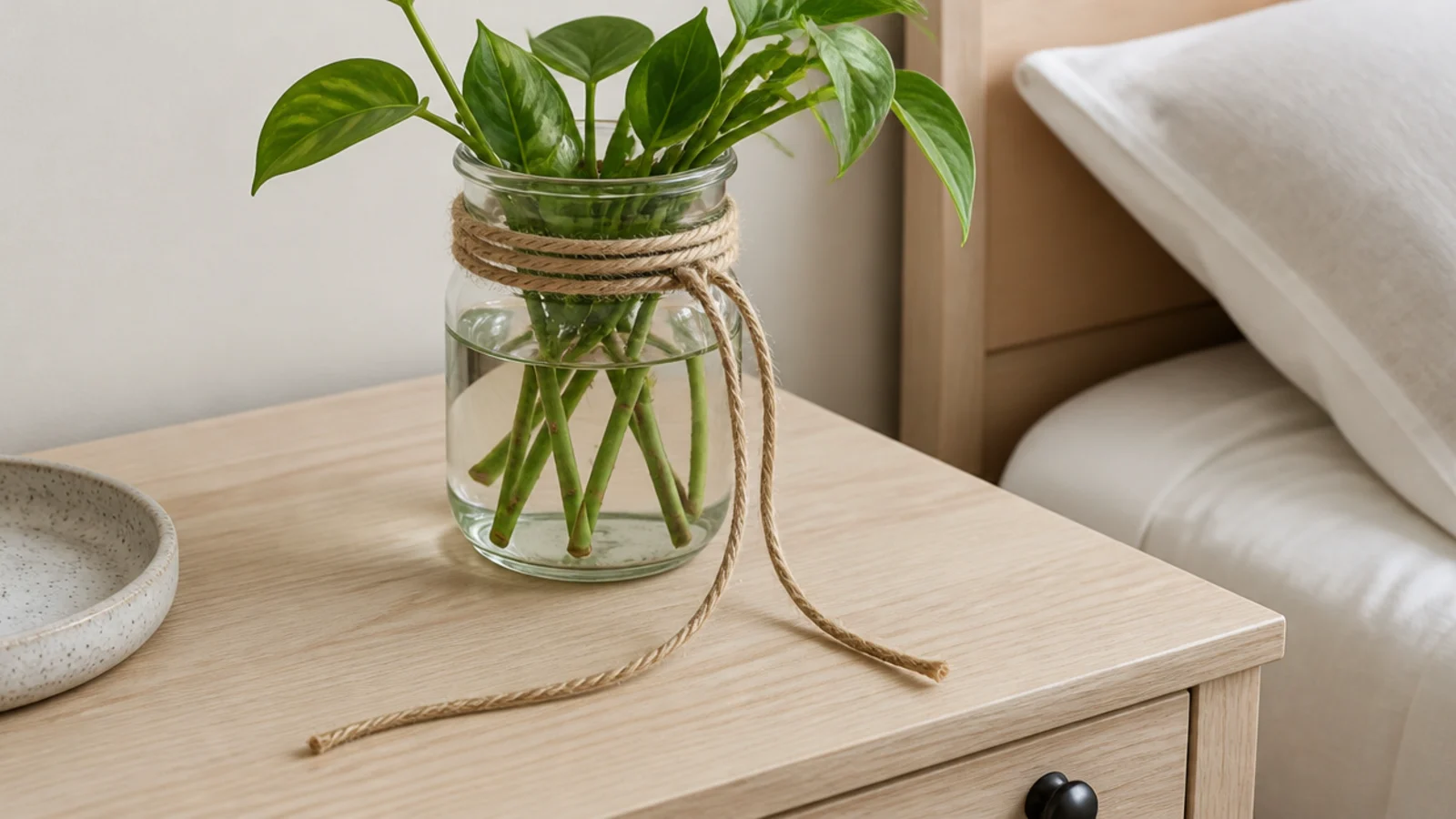
Three turns of jute twine around a jar neck, ends left long. It costs pennies and turns a container into something that looks chosen. Works equally on a painted tin or a plain glass.
19. Shop your own house before you buy
Walk through every room and collect small objects onto a tray — dishes, tins, frames, jars, a wooden box. Almost everyone finds three usable things. Buying is the last step, not the first, and this one costs nothing at all.
20. Set a twenty dollar ceiling and stop
A hard limit forces better decisions than an open budget. Twenty dollars buys a warm bulb, a secondhand shade, two thrifted ceramics and a remnant of cloth — which is a complete, coherent nightstand with nothing missing. Beyond that you are buying more objects rather than a better corner, and the surface only holds three or four things anyway. If you find something you want past the ceiling, take something else off first.
For the same approach applied to candlelight and safe placement, see the candle decor guide. If you would rather build the table itself cheaply too, the DIY bedside table guide keeps every project under fifty dollars.
Mistakes to Skip
- Buying a matching decor set to solve it in one go. Sets look bought together, which is precisely the look that makes an inexpensive corner read as cheap rather than collected.
- Skipping the bulb and buying ornaments instead. Cold light at 4000K makes thrifted ceramics look grey and tired, and no object on the table can compensate for it.
- Filling the surface because everything was cheap. Twelve inexpensive things read worse than three, and low price is not a reason to keep adding.
- Leaving a real candle burning beside bedding. A tealight is eight cents and a mattress fire is not — use an LED one if you read until you fall asleep.
Frequently asked questions
How much should bedside table decor cost?
You can style a nightstand properly for under twenty dollars in total, and most of the best pieces are secondhand. A thrifted saucer, a jam jar with the label removed and a fabric offcut runner come to about six dollars together and do more than any matched decor set at five times the price.
What is the cheapest way to make a bedside table cozy?
Change the light before you change anything else. A warm 2700K bulb costs around four dollars and a secondhand shade another five, and together they shift the whole feel of the corner. Cold light makes even careful styling look clinical, and no object on the table can compensate for it.
Where do you find cheap bedside decor?
Charity shops for ceramics, glass and cloth-bound books, garden centres for terracotta at a couple of dollars a pot, and your own house for jars, tins and fabric offcuts. Skip decor aisles entirely — matched sets are the most expensive way to buy the least interesting objects.
Do I need real plants on a bedside table?
No, and in a dim bedroom a living plant usually struggles. Cut stems from the garden in a jar last a week for nothing, dried grasses hold for a year, and both look better than a struggling pot plant dropping leaves onto the surface every morning.
How often should I change bedside table decor?
Swap one small thing seasonally and leave the rest alone. A different stem, a different cloth, a different book. Rotating one element keeps the corner feeling current without spending anything, and it stops you accumulating objects you then have to store.
Want more like this? Browse all 15 bedside table ideas guides — they all use the same measurements and budget tiers.
Pin it for later
Save this to your Bedside Table Ideas board
Pin it now so it is waiting for you when the tape measure comes out — and so the next person hunting for this idea can find it too.
Save this pinKeep going
More ideas worth saving while you have the tape measure out.