Bedside Table Ideas · UGC
25 Alternative Bedside Table Ideas I Actually Use

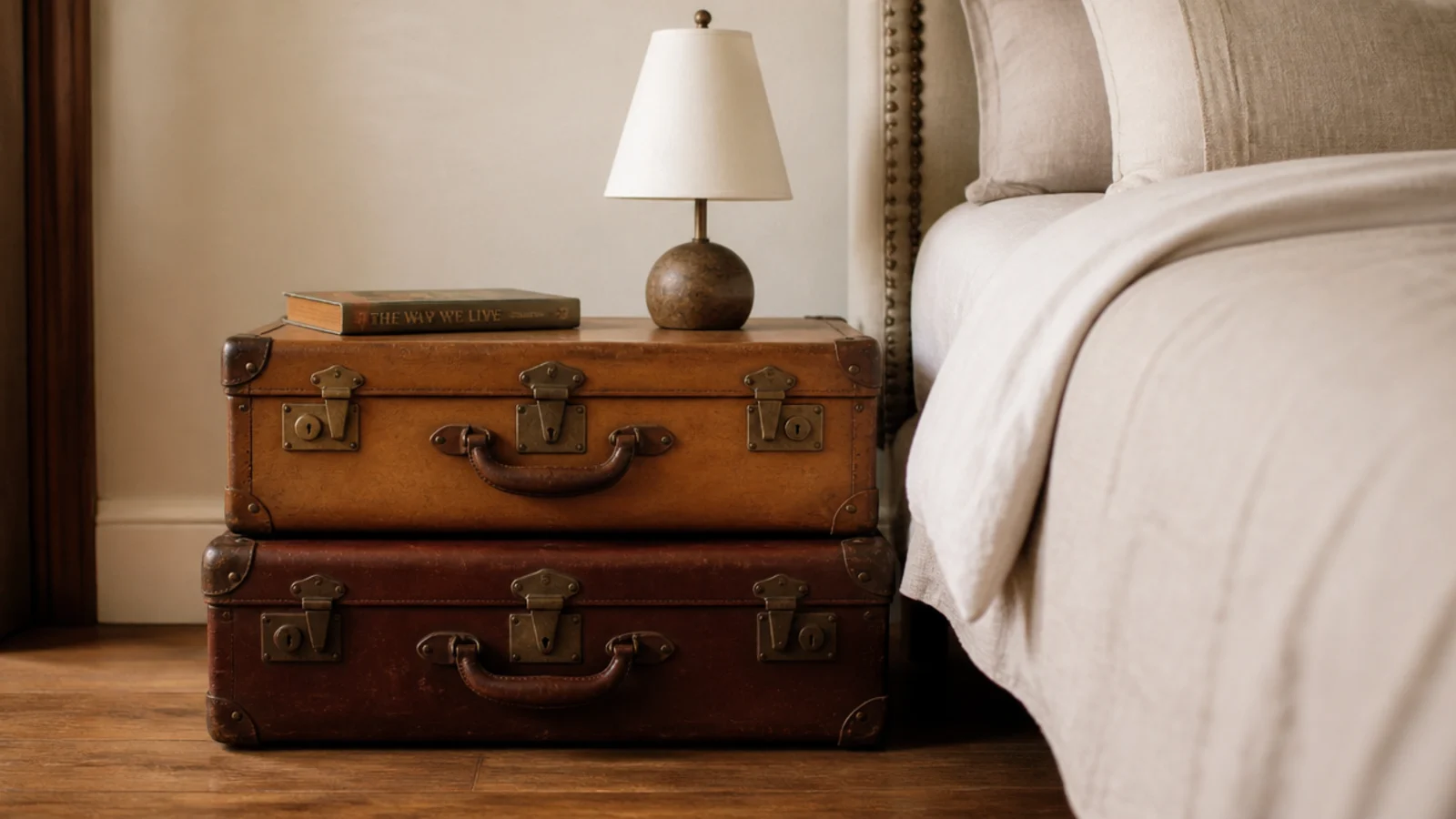
Alternative bedside table ideas started for me as a money problem and turned into a preference. Across three homes I have used a stump, a sewing machine base, a filing cabinet and a stack of suitcases, and I have gone back to a proper nightstand exactly once. Here are twenty-five substitutes and an honest note on which ones I kept.
In this guide27 sections — tap to openHide
- 1.How I judge alternative bedside table ideas now
- 2.Two vintage suitcases stacked
- 3.A section of tree stump
- 4.A piano stool with a lift-up lid
- 5.An old wooden toolbox
- 6.A treadle sewing machine base
- 7.A painted two-drawer filing cabinet
- 8.A galvanised bucket turned upside down
- 9.A record crate stood on its end
- 10.A folding camp table
- 11.A tiled Victorian washstand
- 12.A vintage school desk
- 13.A floor tom drum
- 14.A radiator cover with a flat top
- 15.A garden bistro table brought indoors
- 16.A butcher block offcut on hairpin legs
- 17.A stack of hatboxes
- 18.A chair with a flat seat
- 19.A ceramic garden stool
- 20.A stepladder used as tiers
- 21.A large candle lantern with a flat top
- 22.A wall-mounted magazine rack
- 23.A pouffe with a rigid tray
- 24.An upturned wastepaper basket
- 25.A tiered cake stand for small things
- 26.Nothing at all, and a wall hook instead
- 27.What I'd Do Differently Now
How I judge alternative bedside table ideas now
I have narrowed it to three questions, and I ask them in this order.
Is it the right height? Between 22 and 28 inches, within two inches of the mattress top. This kills more good-looking objects than anything else. A ceramic garden stool at 17 inches is beautiful and I reached down for it every night for a month before admitting it did not work.
Does a full glass sit level on it? Press one corner. If it moves, it will spill something eventually. Felt pads under the low foot fixed three of mine; a rigid tray fixed the soft-topped ones.
Do I need to open it daily? If yes, it fails. Anything with a lid means lifting the lamp, the book and the glass off before you can reach inside. My suitcases hold things I want twice a year, and that is the honest limit of stacked storage beside a bed.
Everything below passed at least two of those. Where something failed I have said so. If you want conventional options measured the same way, the main bedside table guide covers those.
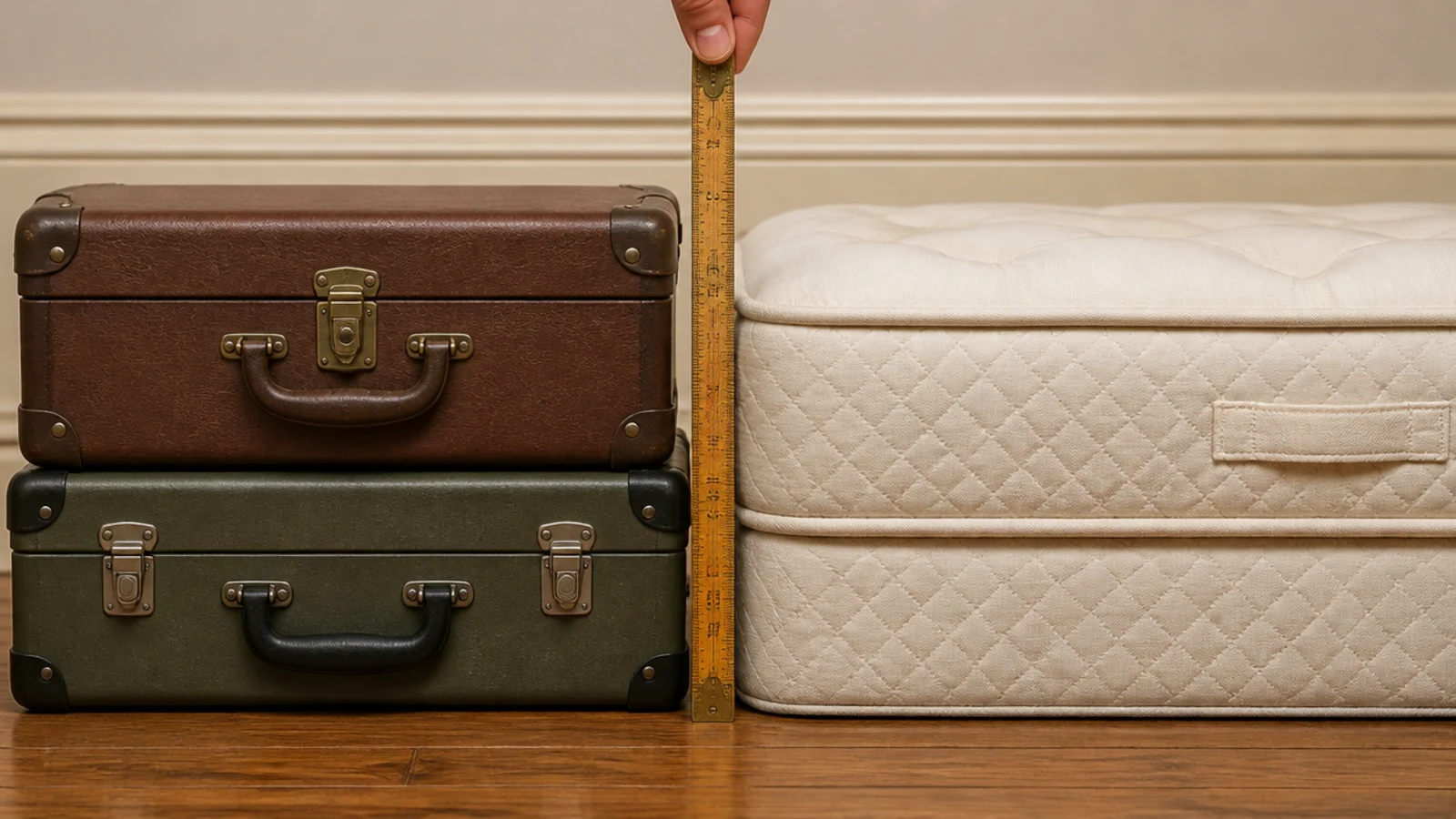
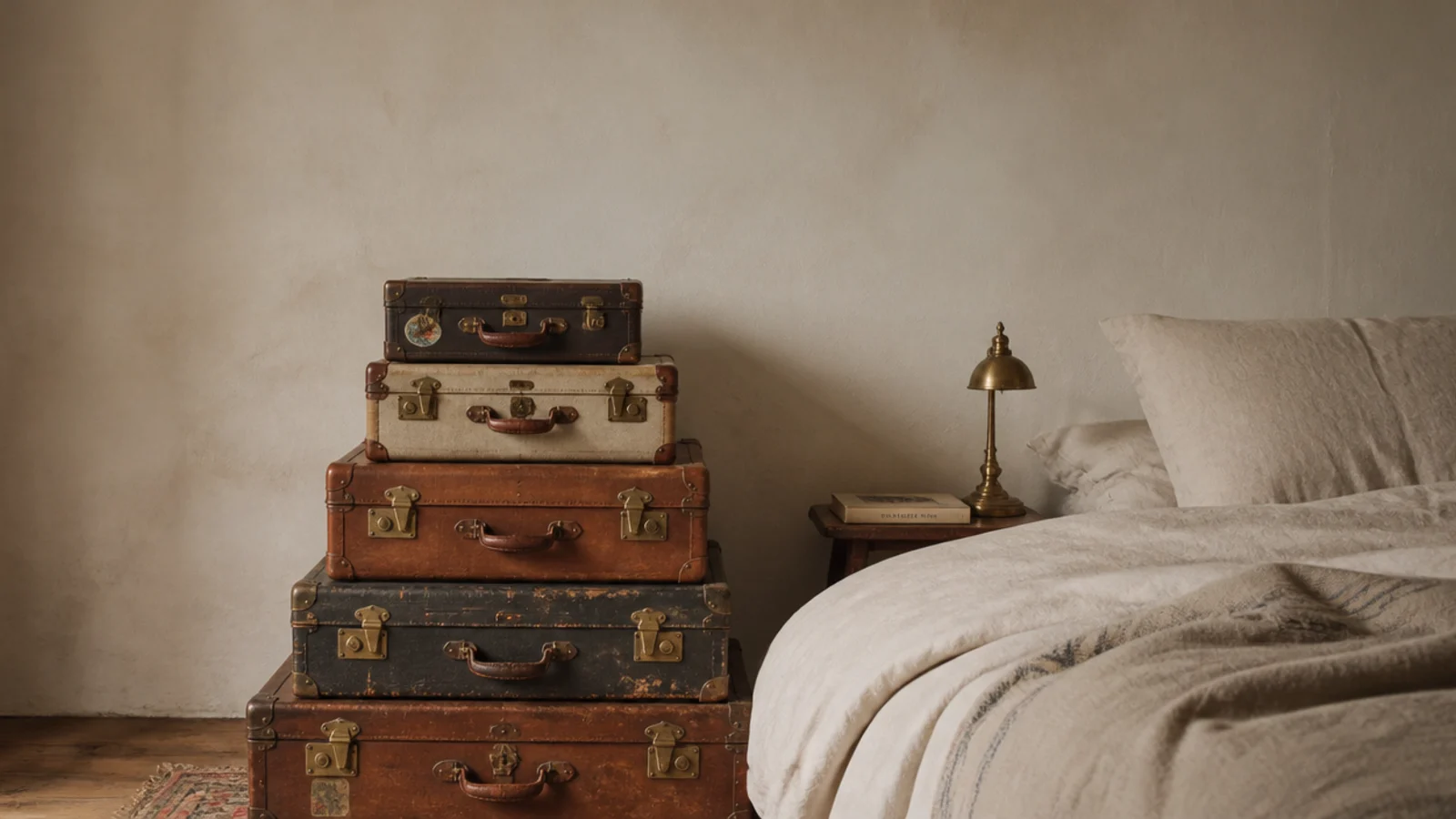
1. Two vintage suitcases stacked
Two medium cases stack to roughly 24 inches, which lands beside most beds almost exactly. They cost me $12 the pair. Storage inside is real but awkward, so treat it as off-season rather than everyday. Put the larger case at the bottom or the stack racks when you lean on it.
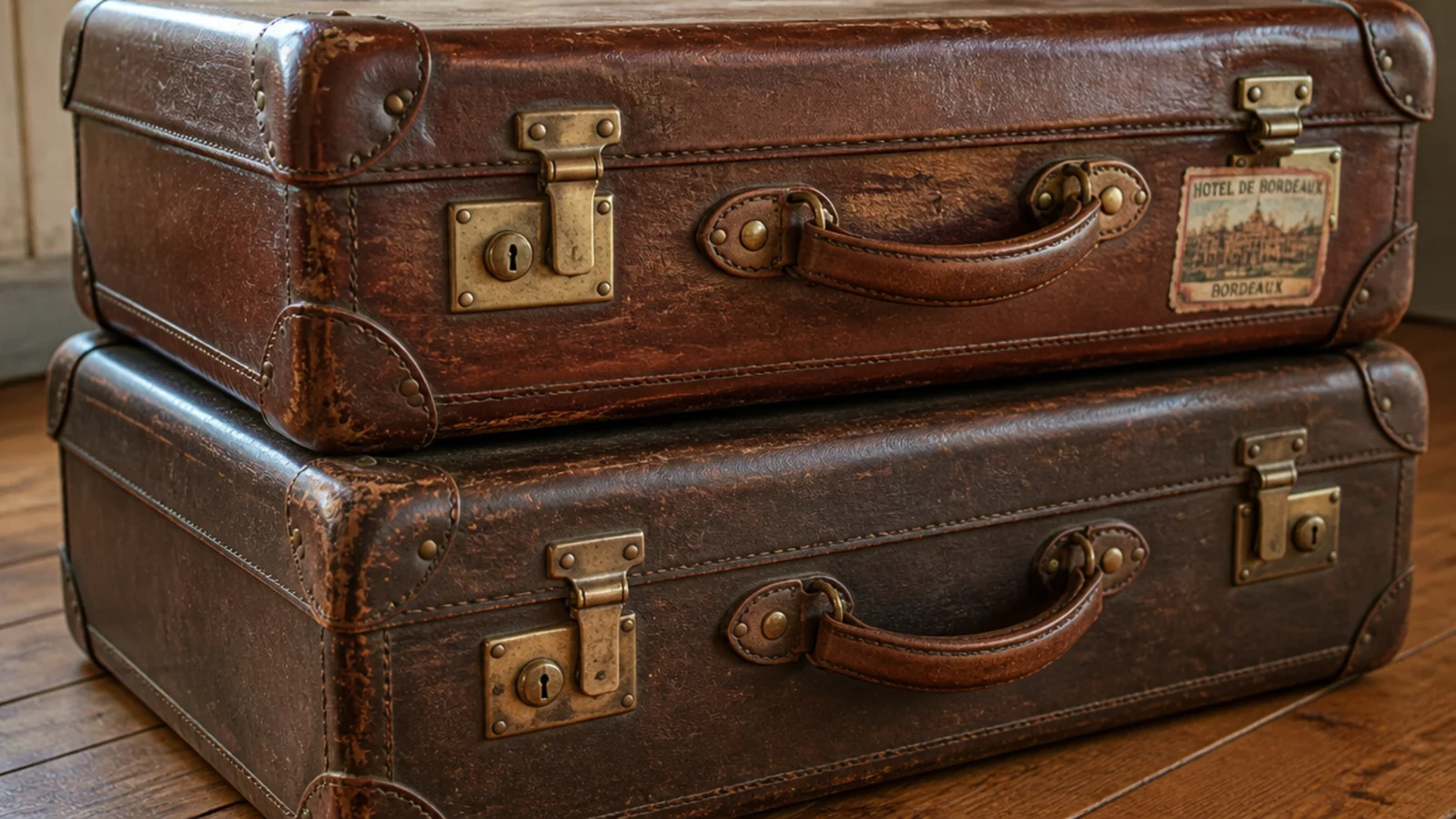
2. A section of tree stump
A sanded section of trunk about 14 inches across and 24 tall is the most stable thing I have ever put beside a bed. Let it dry properly first — a green section splits along a radial crack within a few months, which is either character or a wobble depending on where it lands.
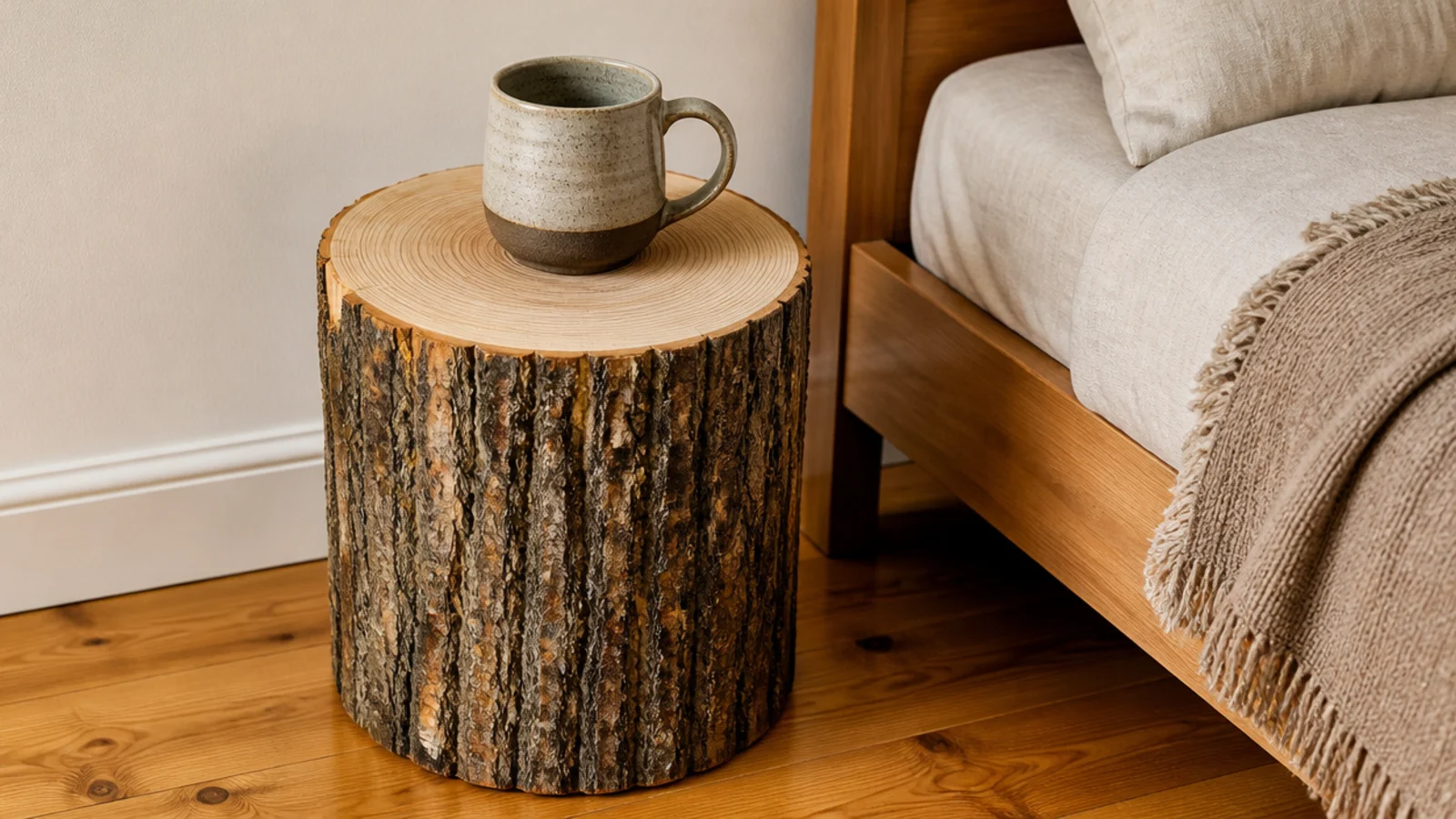
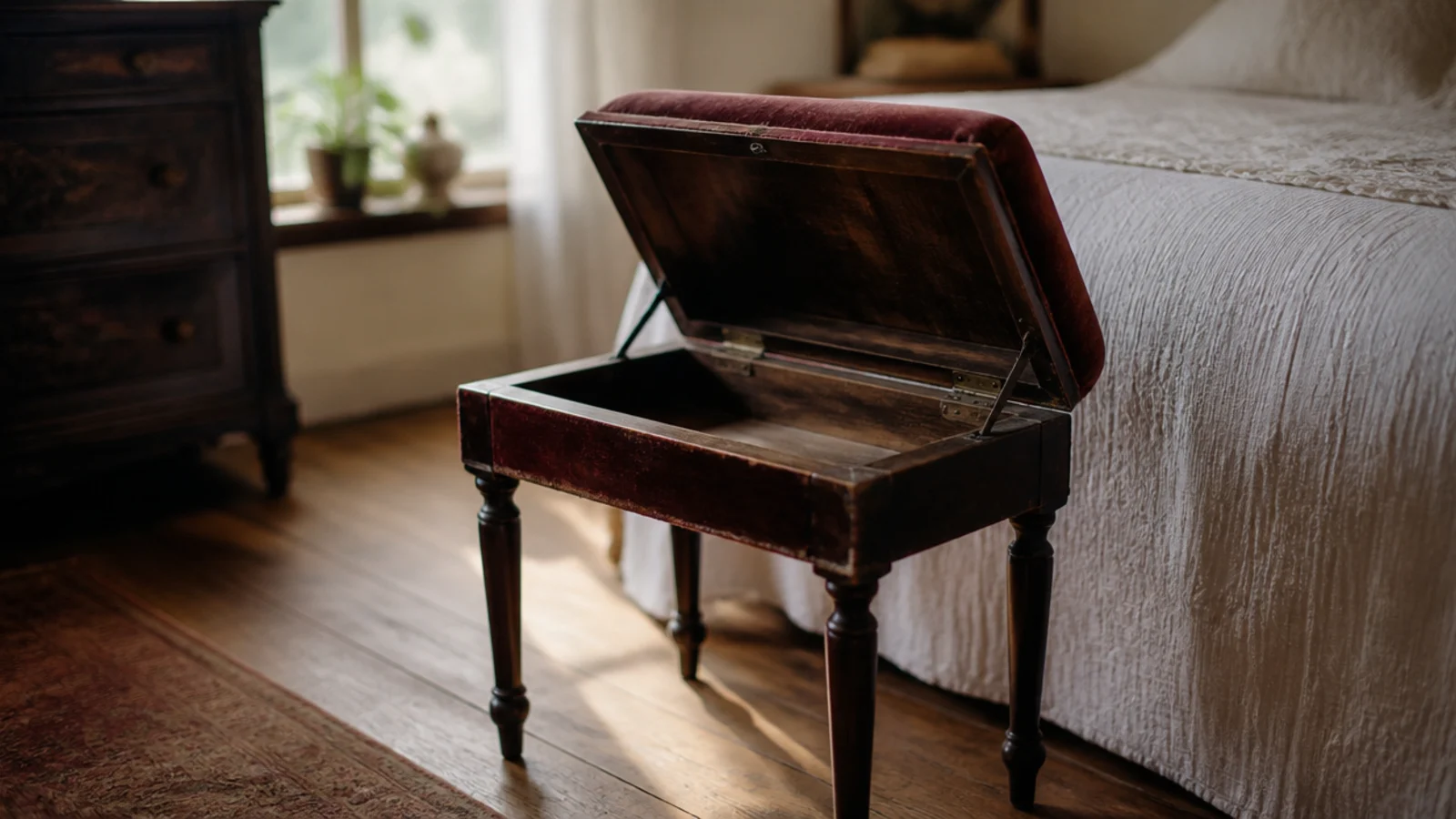
3. A piano stool with a lift-up lid
Piano stools sit around 20 to 22 inches, which is slightly low but workable with a taller lamp. The lid storage is shallow and genuinely useful. Mine cost $25 and it is the one alternative that most people assume is a proper piece of furniture.
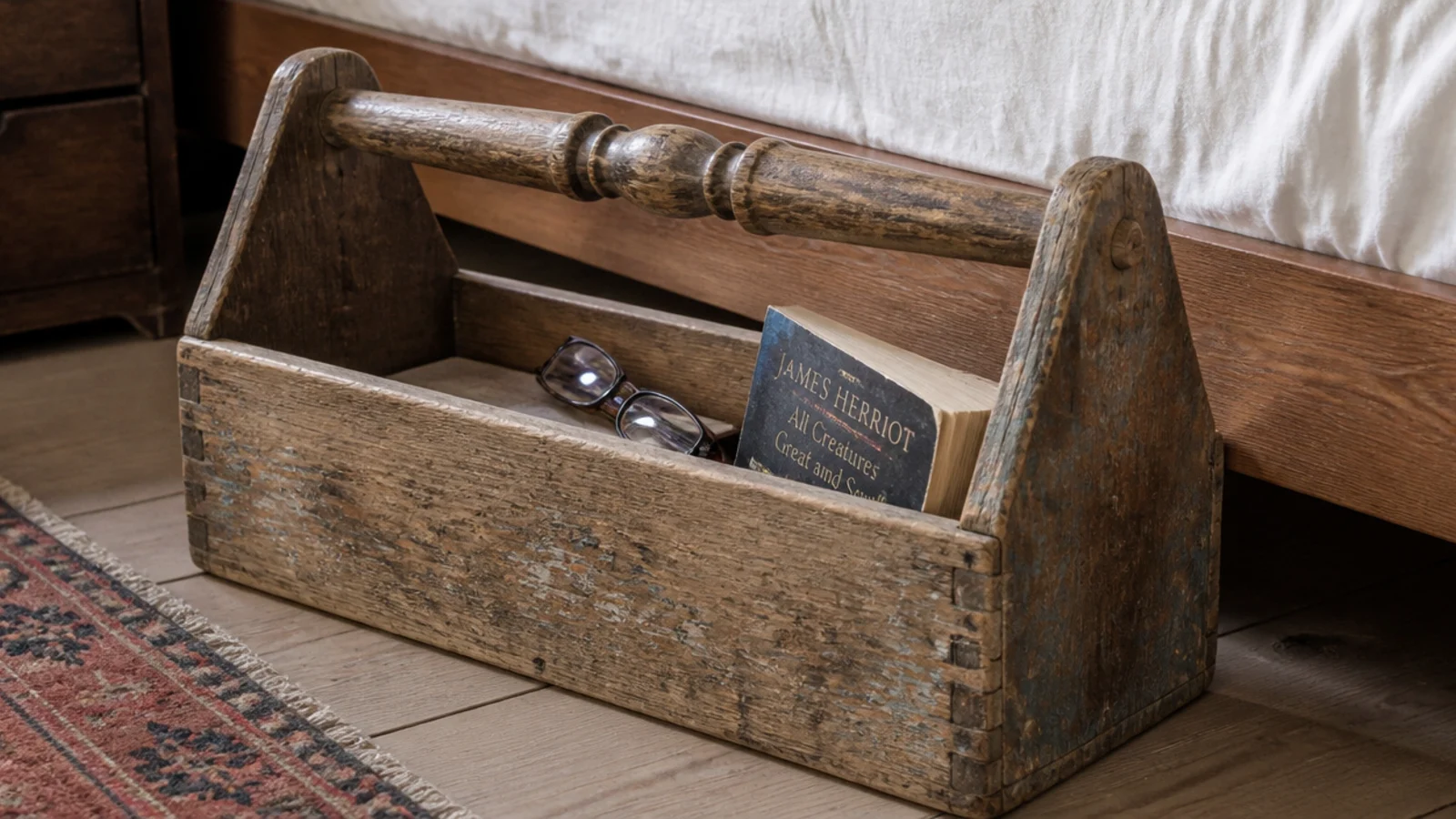
4. An old wooden toolbox
The centre handle divides the top into two, which sounds like a drawback and works out as a natural book stop. Around $8 to $20 secondhand. Check the base is sound before you trust a full glass to it, because old toolboxes have usually taken a beating underneath.
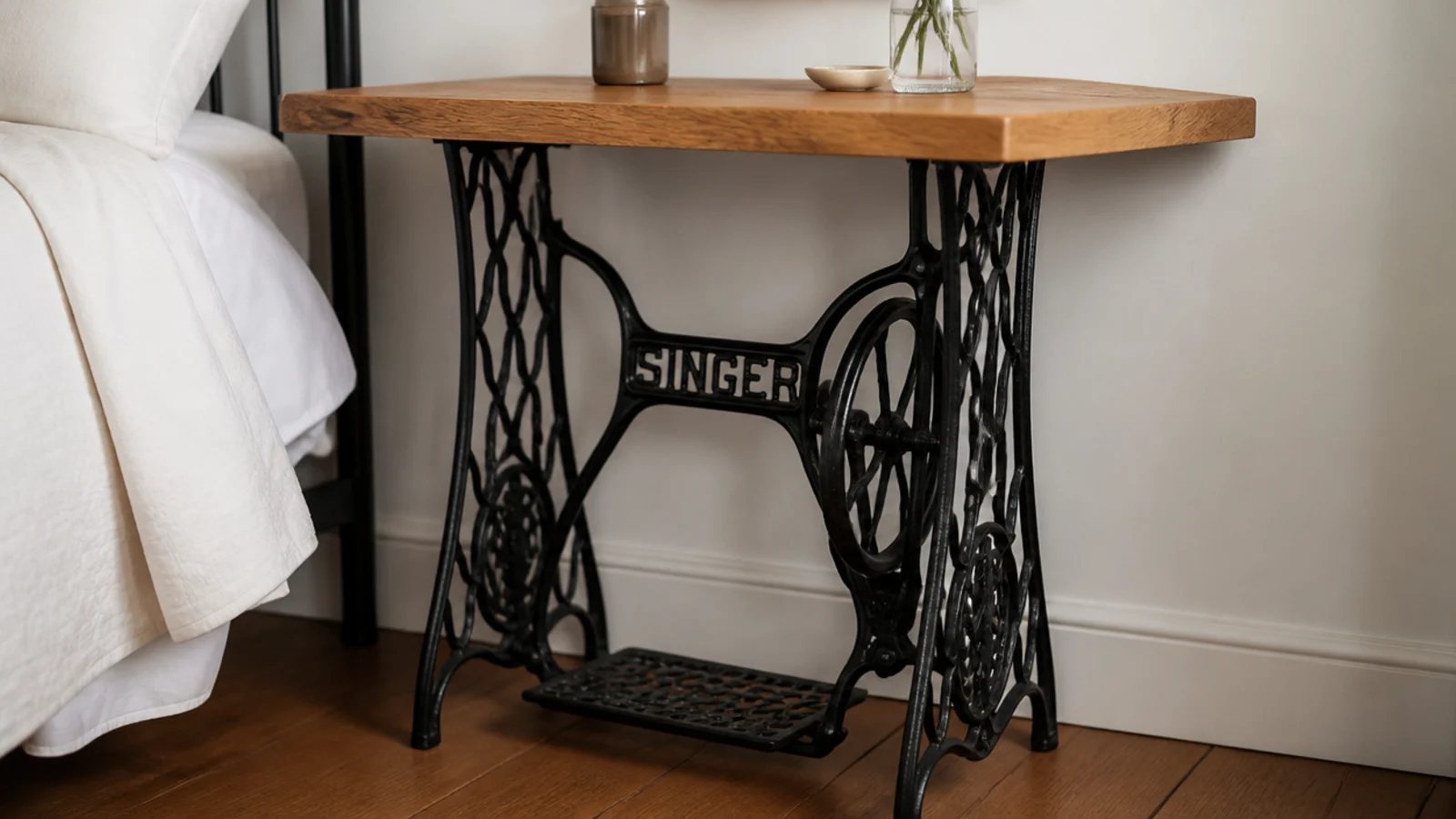
5. A treadle sewing machine base
Cast iron bases turn up for $20 to $50 without their machines, and an offcut of timber screwed to the top makes an extremely solid table. It is heavy enough that it never shifts, and the ironwork does something no flat-pack piece can.
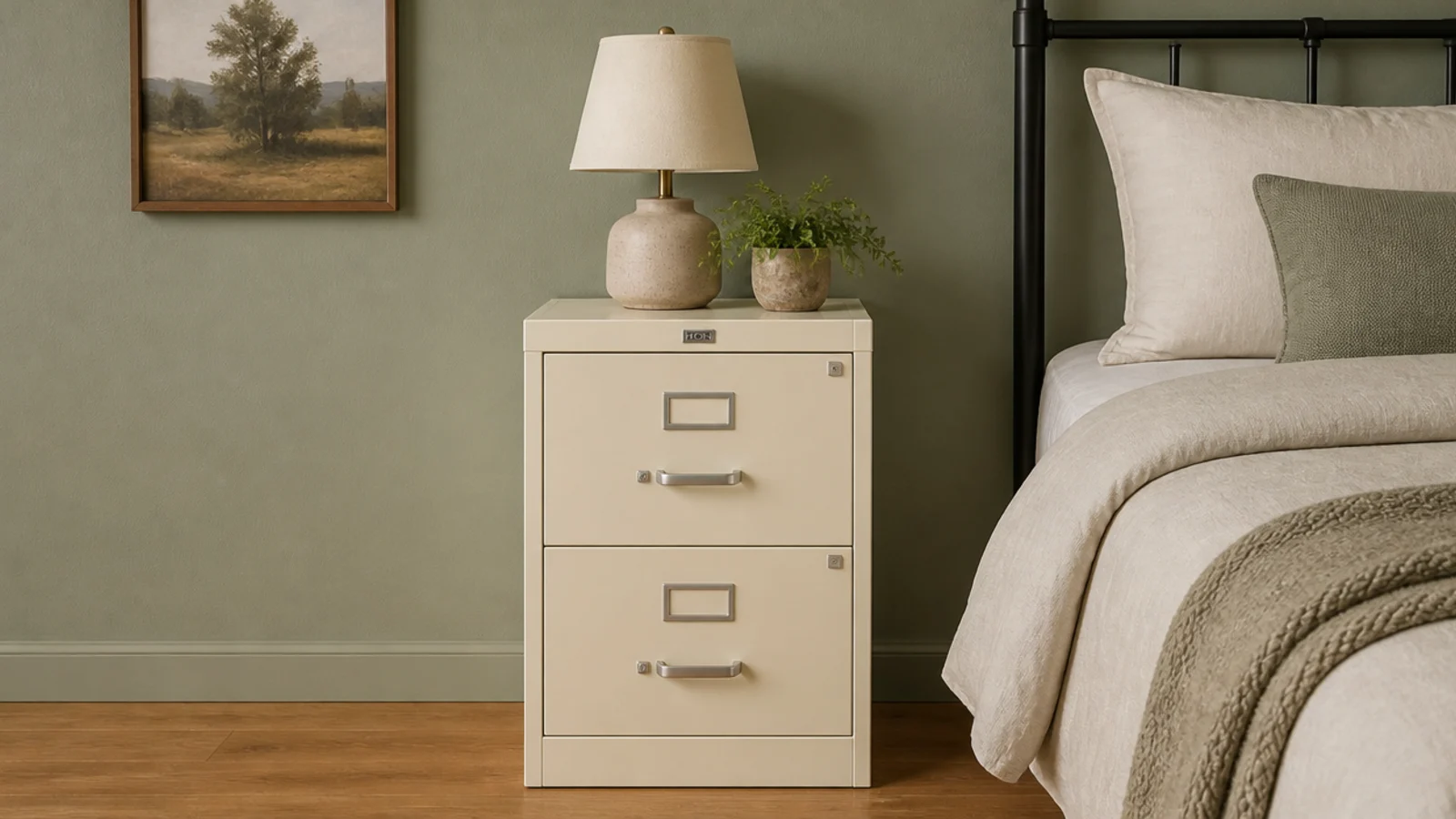
6. A painted two-drawer filing cabinet
Two deep drawers, roughly 26 inches tall, and completely immovable. Mine was free from an office clear-out and took one coat of primer and two of chalky paint. Swap the pull handles if you want it to stop reading as office furniture — that detail does most of the work.
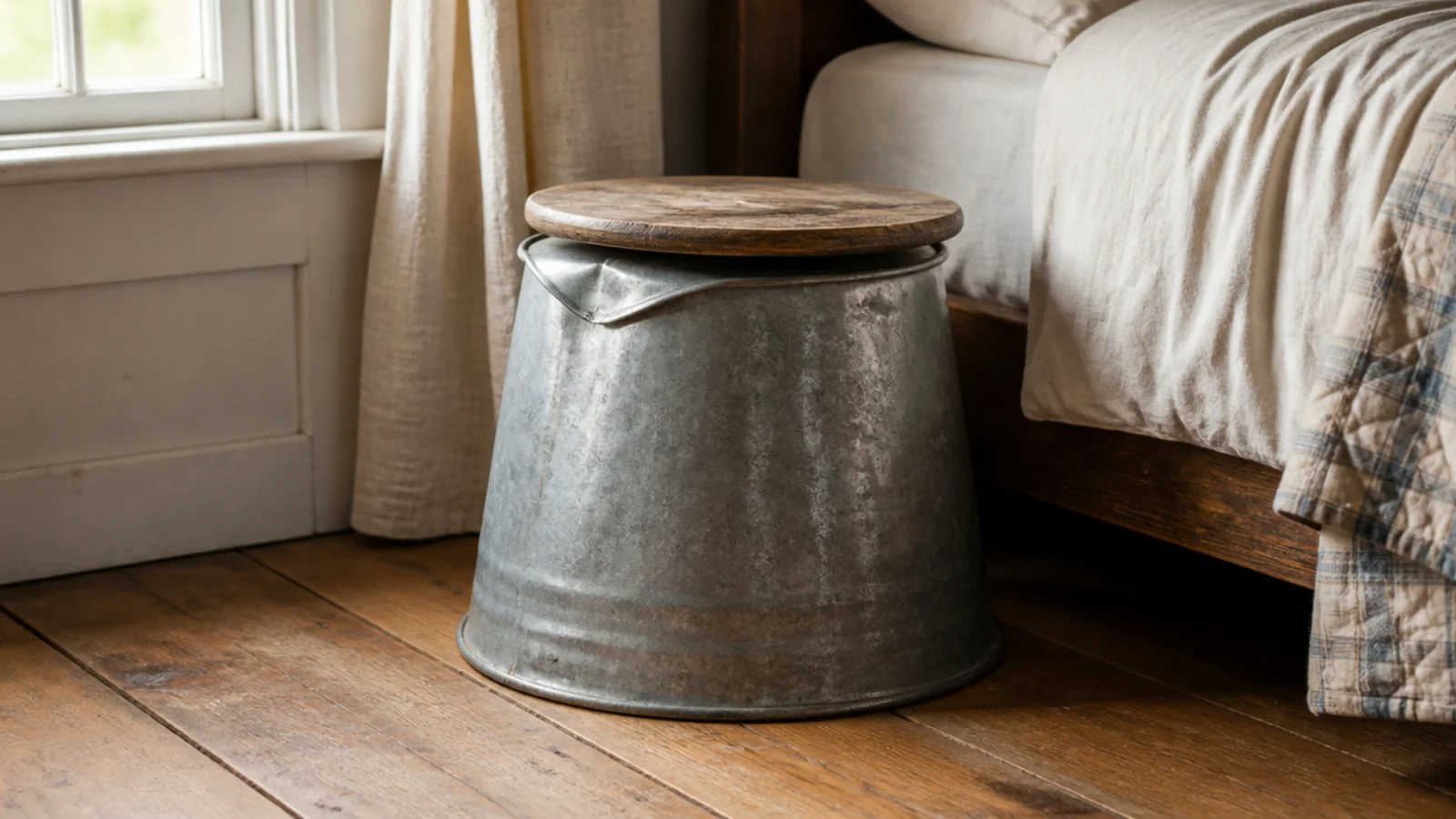
7. A galvanised bucket turned upside down
Sturdy and about $10, but a bucket alone lands near 14 inches, so it needs a round board on top and something under it to gain height. It survived a rental year and I would use it again as a plant stand rather than a nightstand.
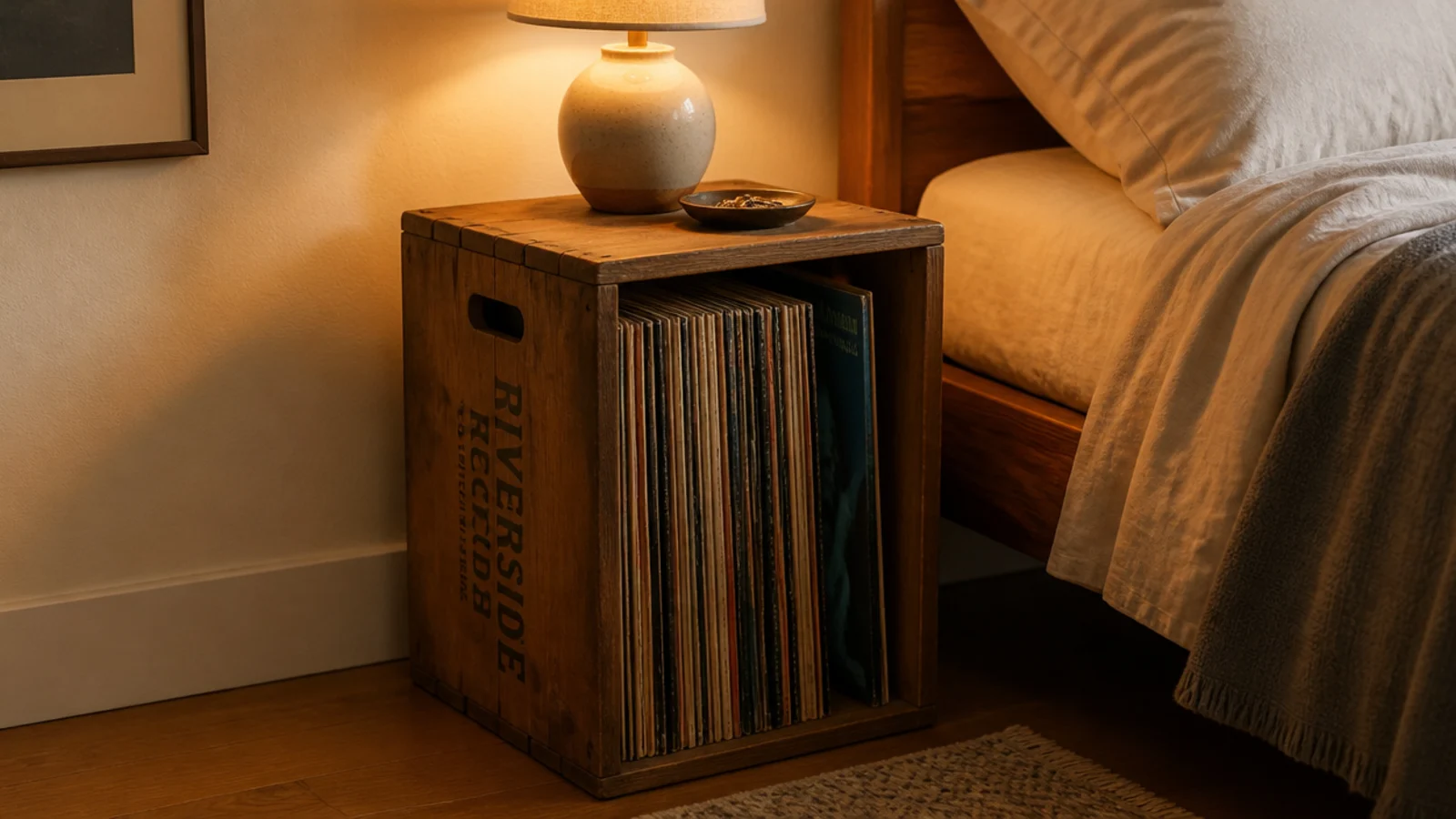
8. A record crate stood on its end
Albums stay accessible in the opening and the flat upper face takes a lamp. A wooden crate is $15 to $30. Screw a base board on if the crate is thin, because the weight of a full row of records will bow the bottom slats over time.
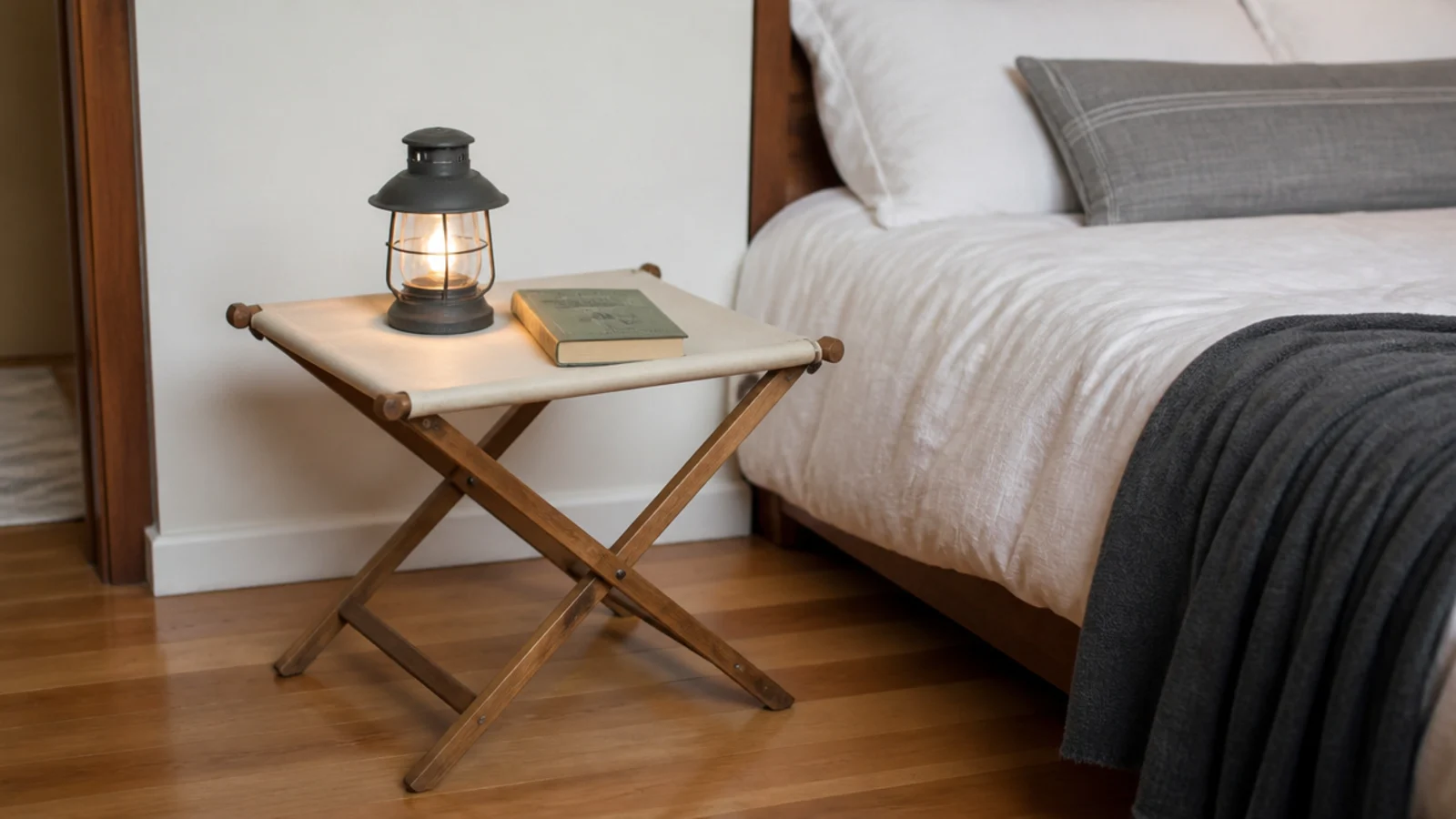
9. A folding camp table
Around $25, sits at 22 to 24 inches, and folds to two inches when someone needs the floor space. The canvas types flex more than they look like they will, so keep the glass near a leg rather than in the middle of the span.
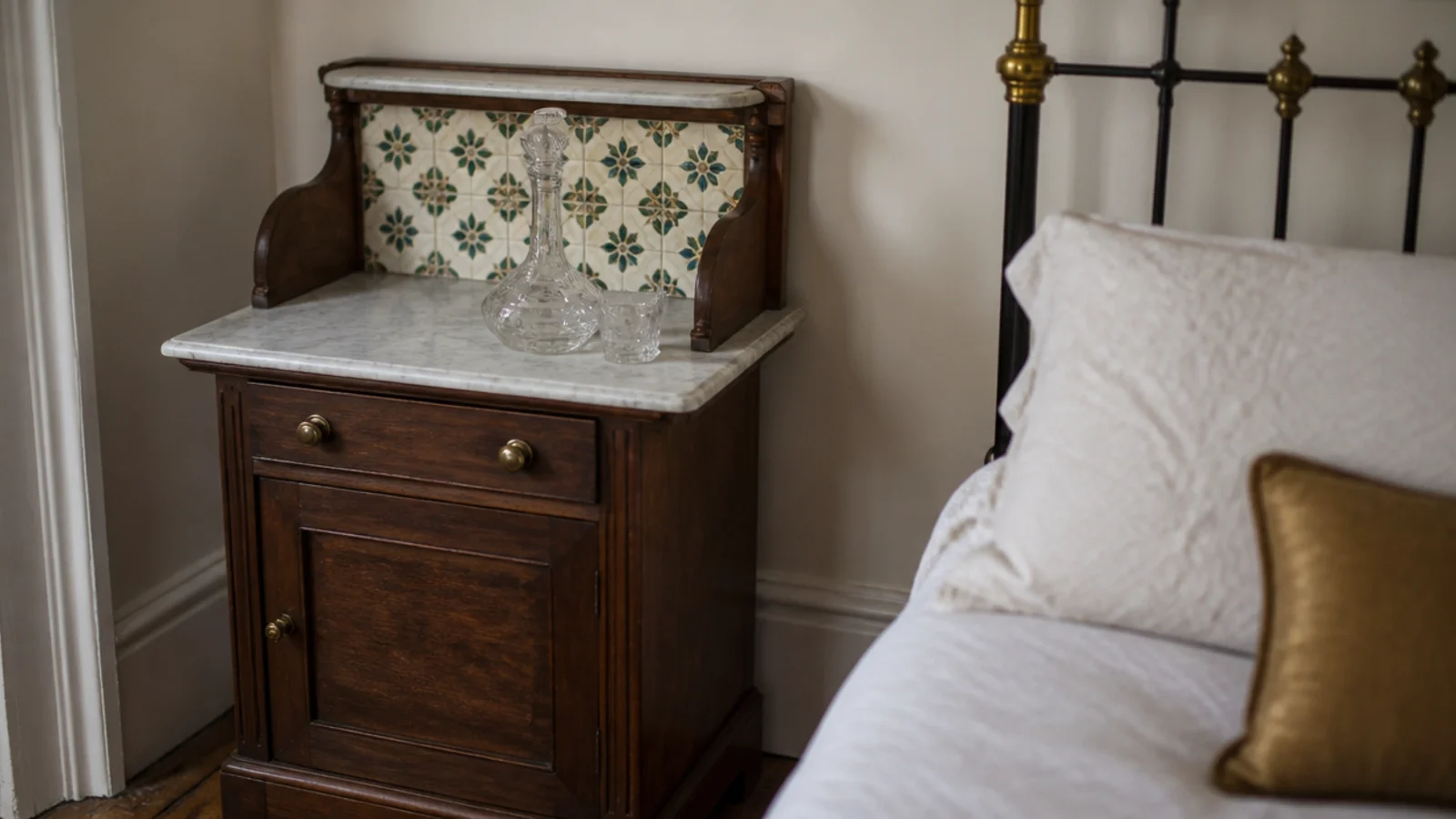
10. A tiled Victorian washstand
Built to have water spilled on it, which beside a bed is exactly right. They are usually 28 to 30 inches, so slightly tall unless your bed is high. Prices vary wildly — I paid $40 at a house clearance and have seen the same thing at $300 in a shop.
11. A vintage school desk
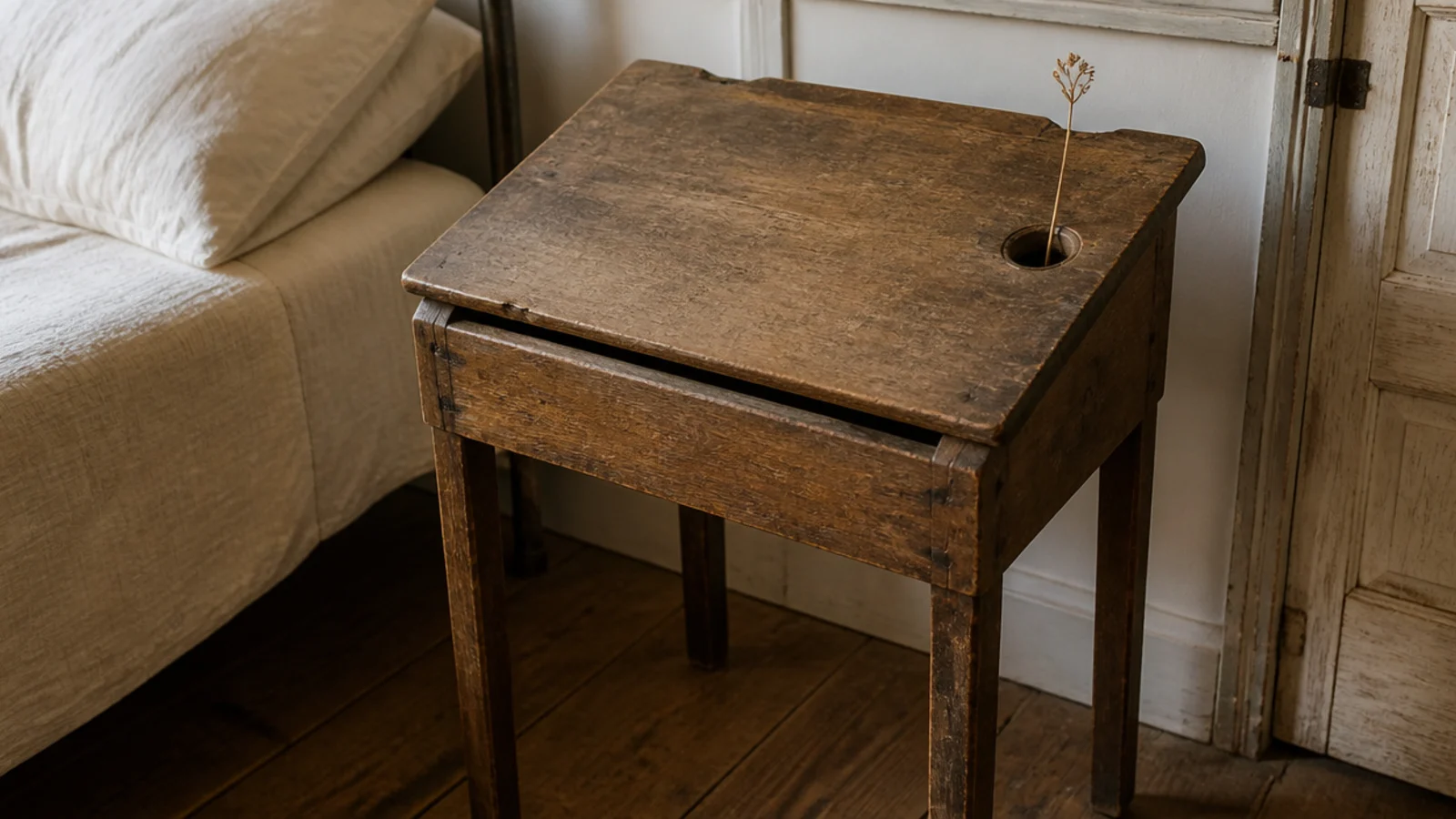
The lifting lid gives shallow storage and the inkwell recess holds a single stem perfectly. Most sit at 24 to 26 inches. The sloped lid is the catch — anything round rolls, so it wants a small flat tray or a book laid on top.
12. A floor tom drum
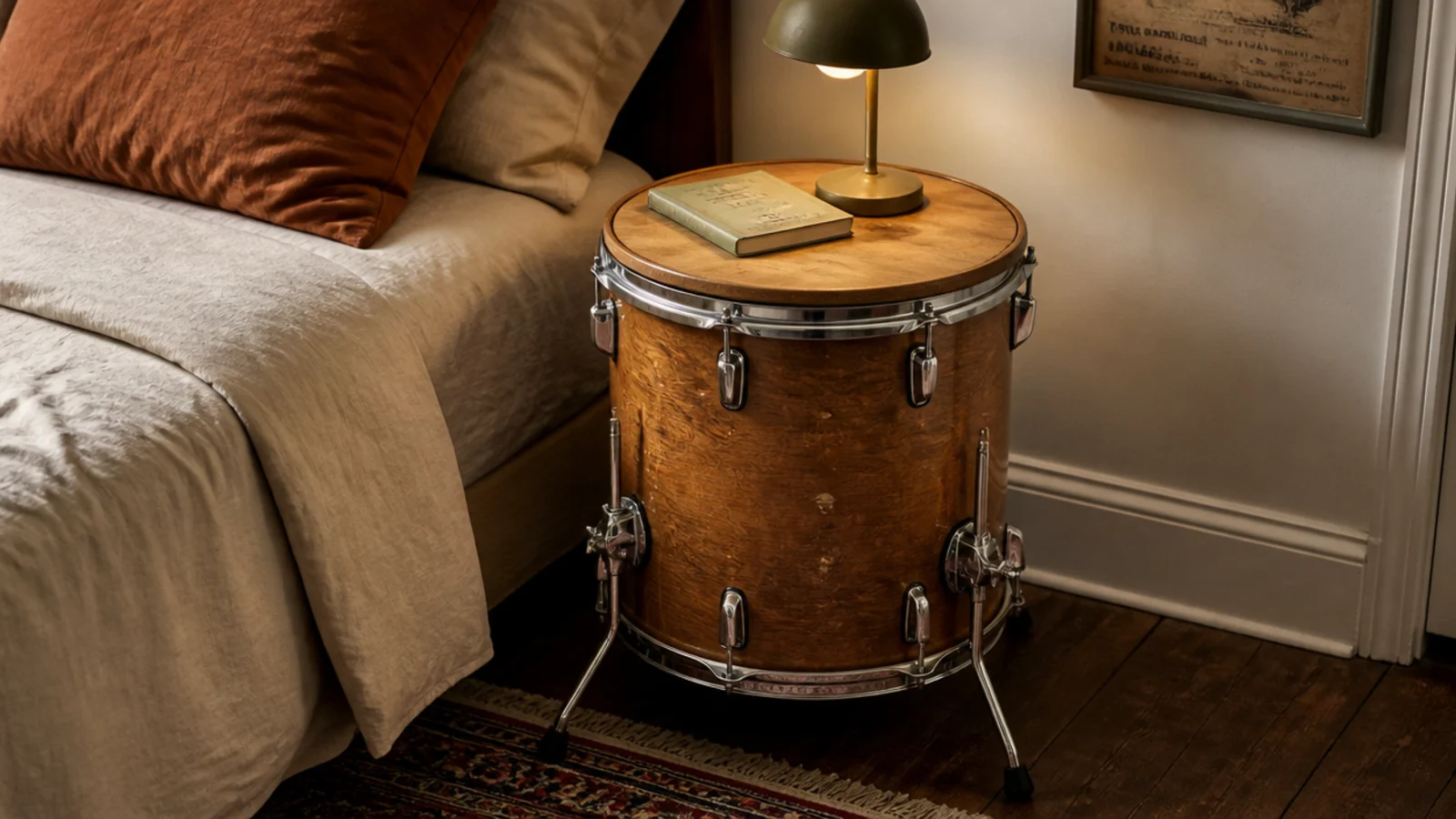
A drum on its legs sits at about 20 inches and a circular board across the head makes it a surface. It is loud if you knock it in the dark, which is genuinely worth knowing before you commit. Visually it is superb.
13. A radiator cover with a flat top
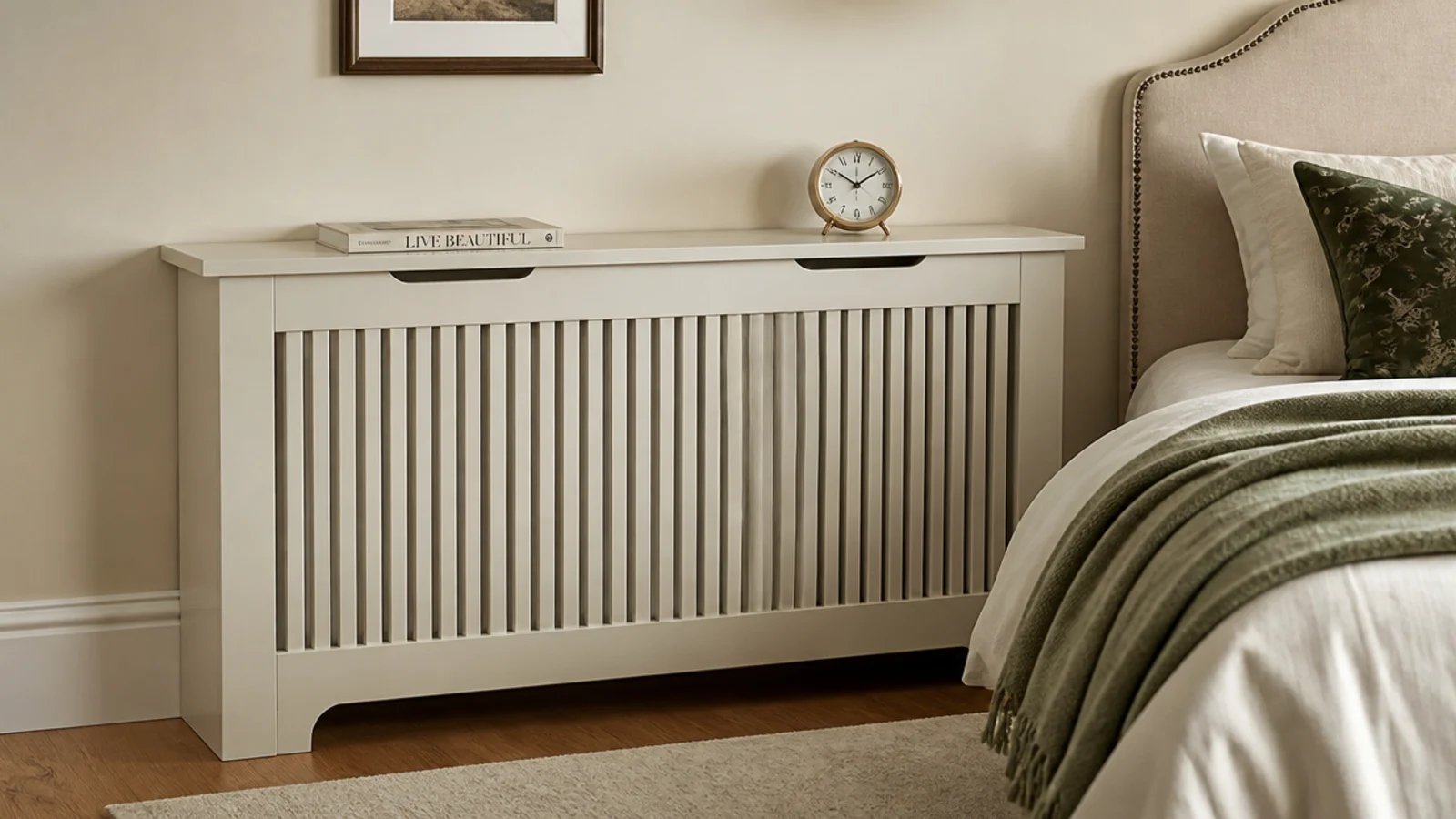
If there is a radiator beside the bed, a cover with a solid top gives you a surface and directs the heat forward rather than up into whatever you have put there. Keep candles and anything waxy off it entirely.
14. A garden bistro table brought indoors
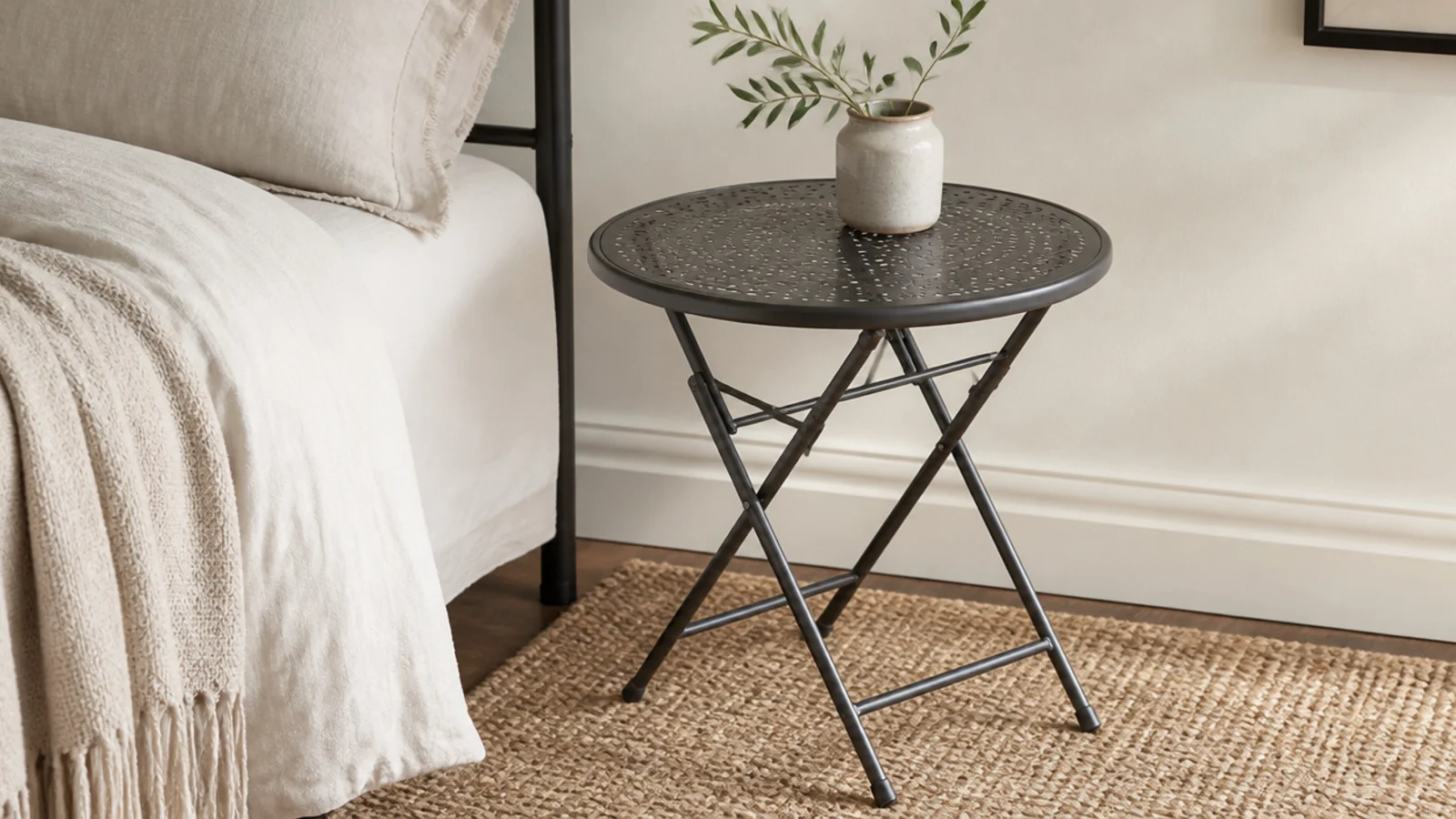
Metal bistro tables are cheap secondhand and usually 27 to 29 inches, which suits a tall bed and not a low one. Perforated tops let small things fall through, so a tray or a cloth is not optional here.
15. A butcher block offcut on hairpin legs
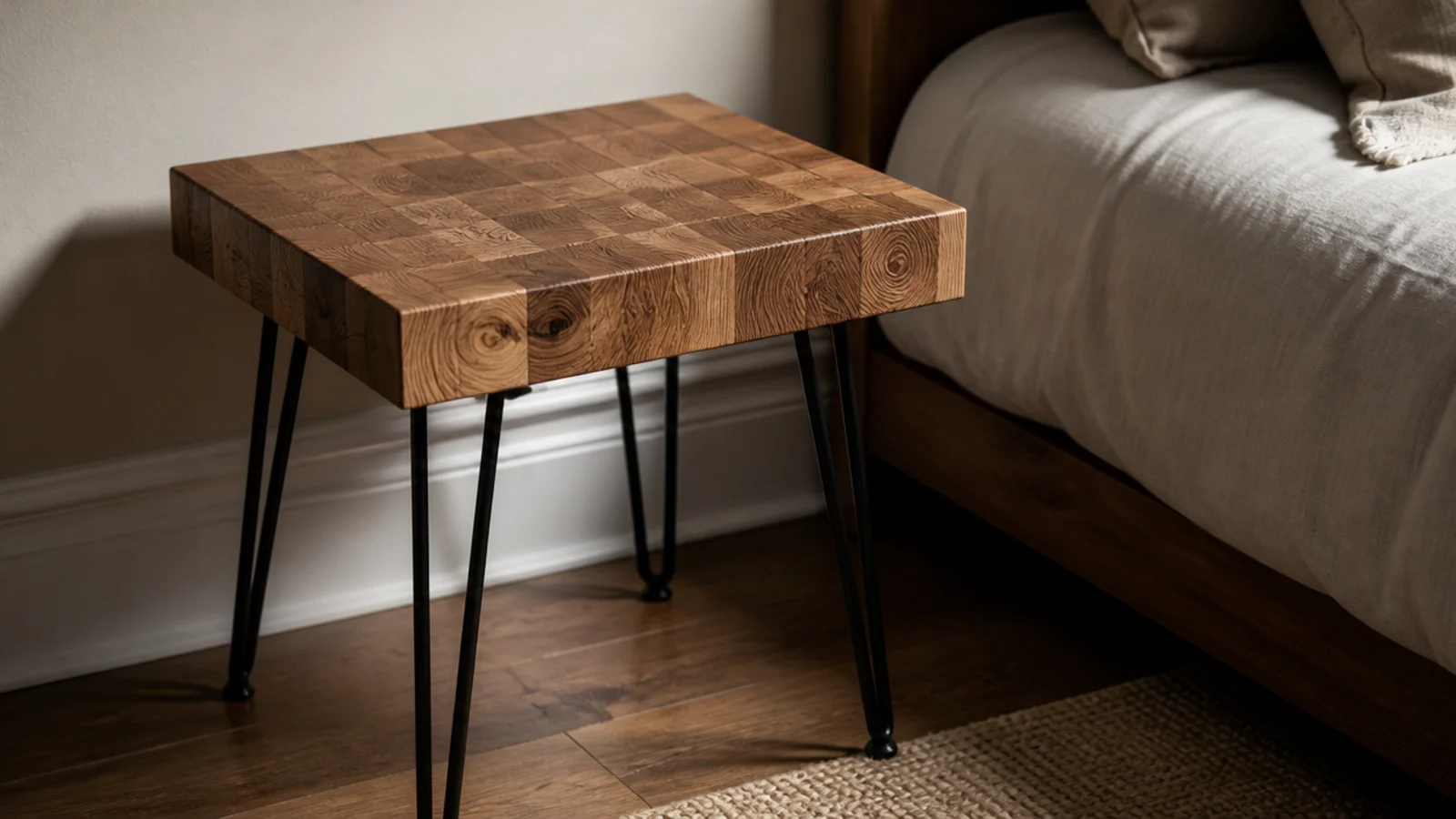
A thick offcut is often free from a worktop fitter, and three hairpin legs are about $20 the set. It comes out looking like a bought designer piece for almost nothing, and the mass of the block keeps it rock solid.
16. A stack of hatboxes
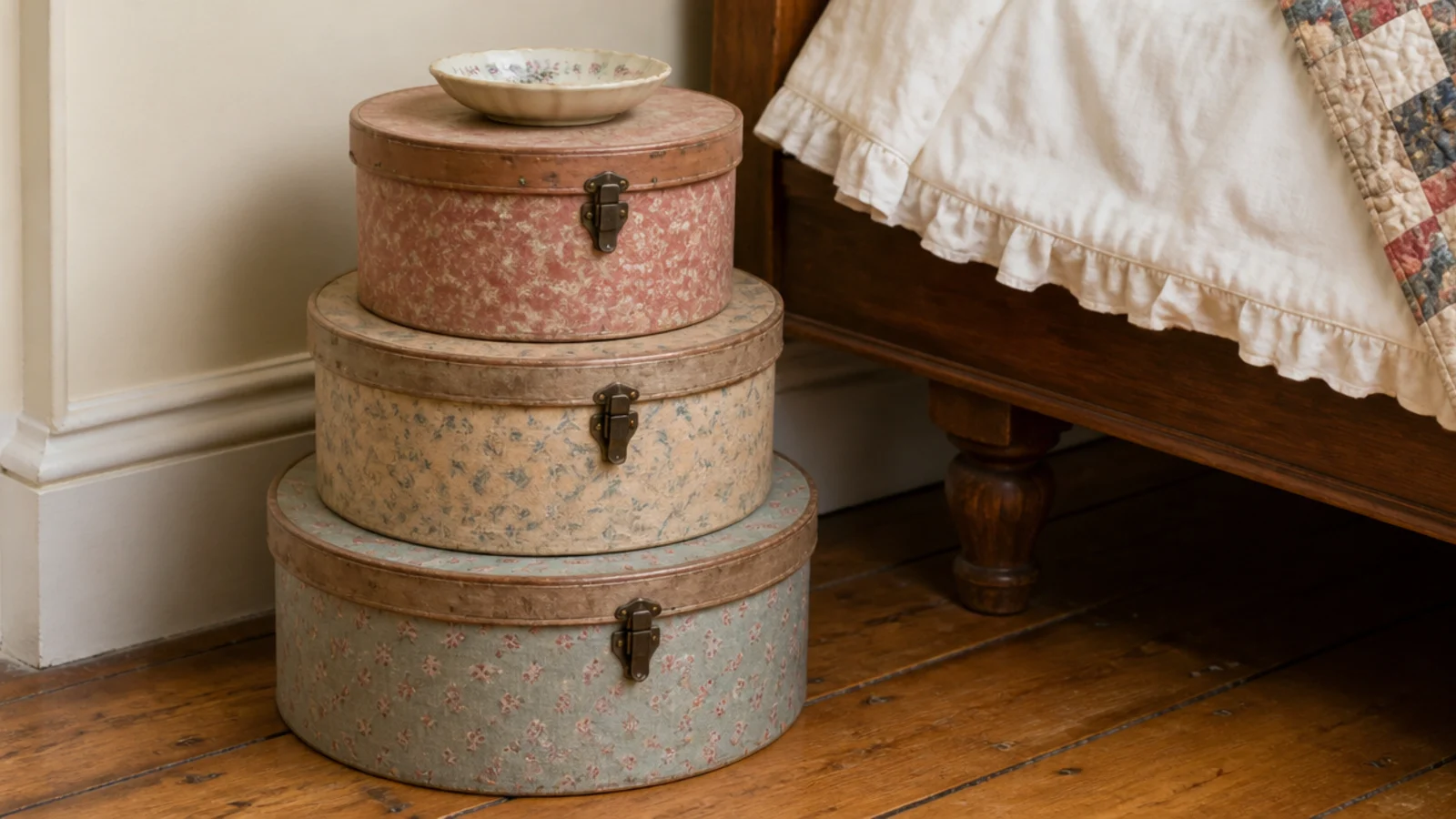
Light, pretty, about $5 each, and only good for a phone and a book. A full glass on card boxes is asking for a wet floor. I used these in a spare room where nobody drinks tea in bed, and there they were fine.
17. A chair with a flat seat
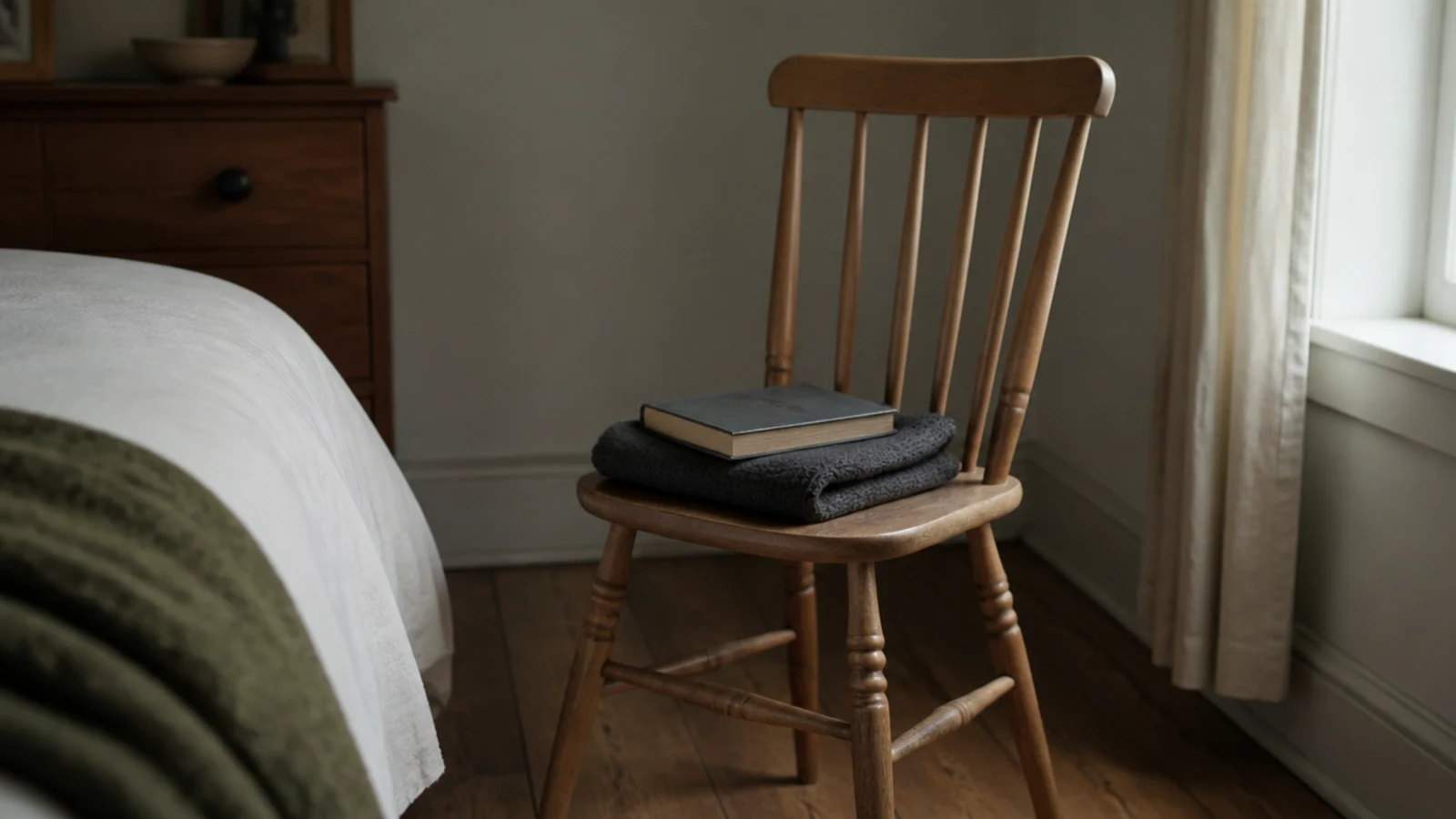
The oldest trick here and still one of the best. A spindle-back chair at 18 inches is too low beside a standard bed, but beside a low platform bed it is perfect, and the back edge stops a book sliding off.
18. A ceramic garden stool
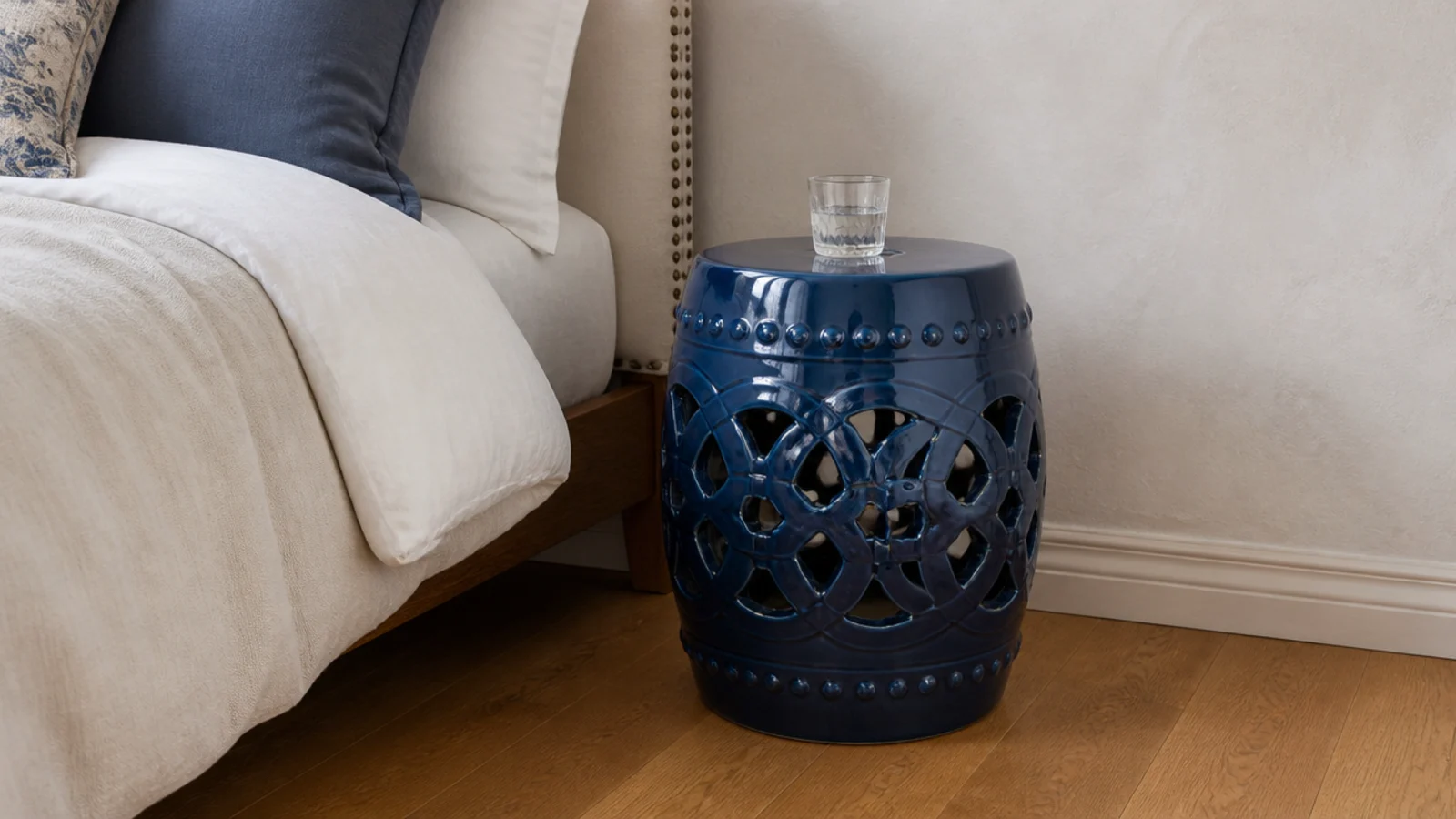
This is the one I gave up on. Wipeable, heavy, lovely to look at, and at 17 to 18 inches it sat far enough below the mattress that I reached down for the glass every night. Beautiful object, wrong job.
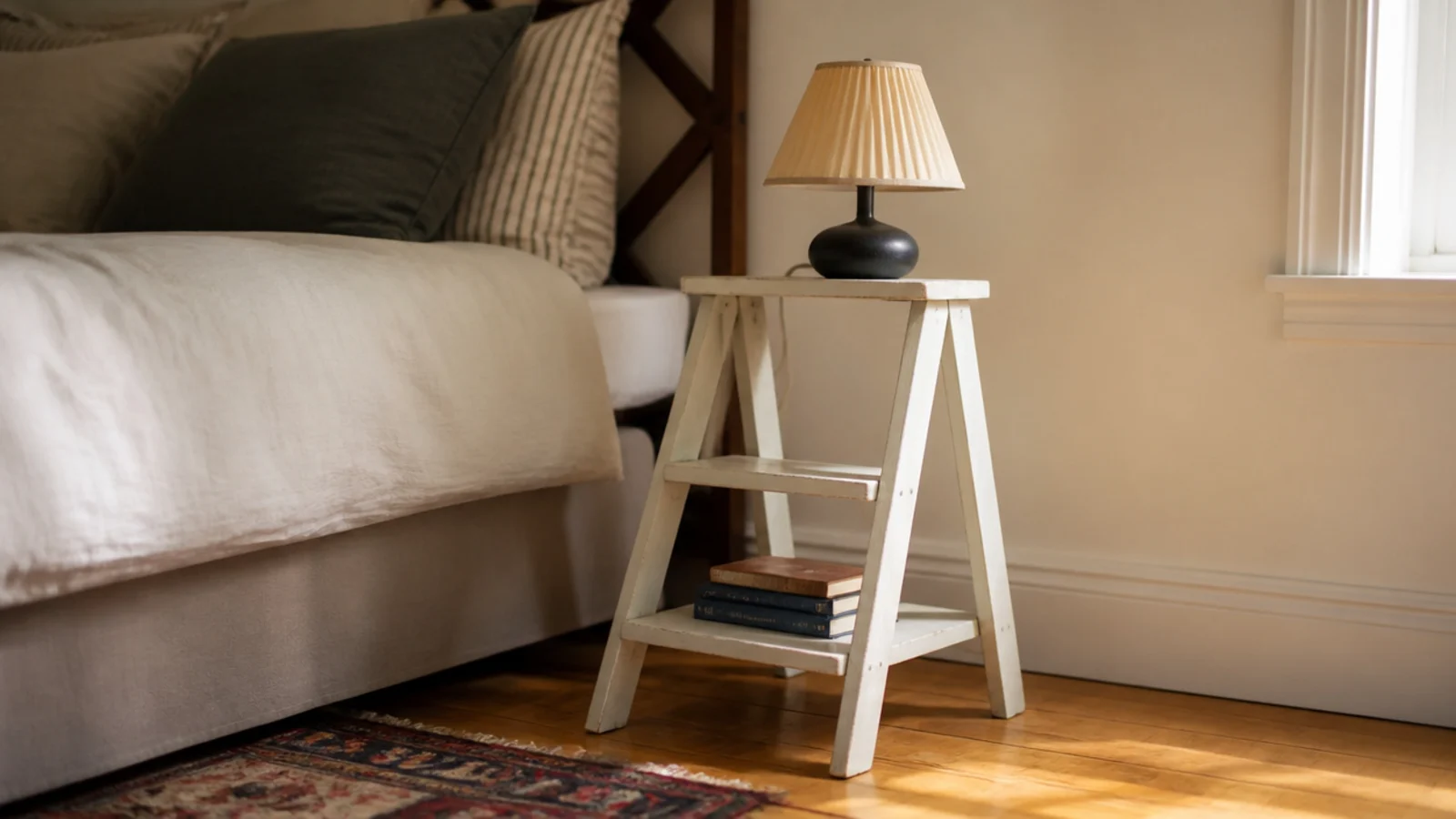
19. A stepladder used as tiers
Two treads at two heights in one small footprint, and it folds away. Around $20 secondhand. Make sure it locks open properly — a ladder that can fold with a lamp on it is a genuinely bad idea beside a bed.
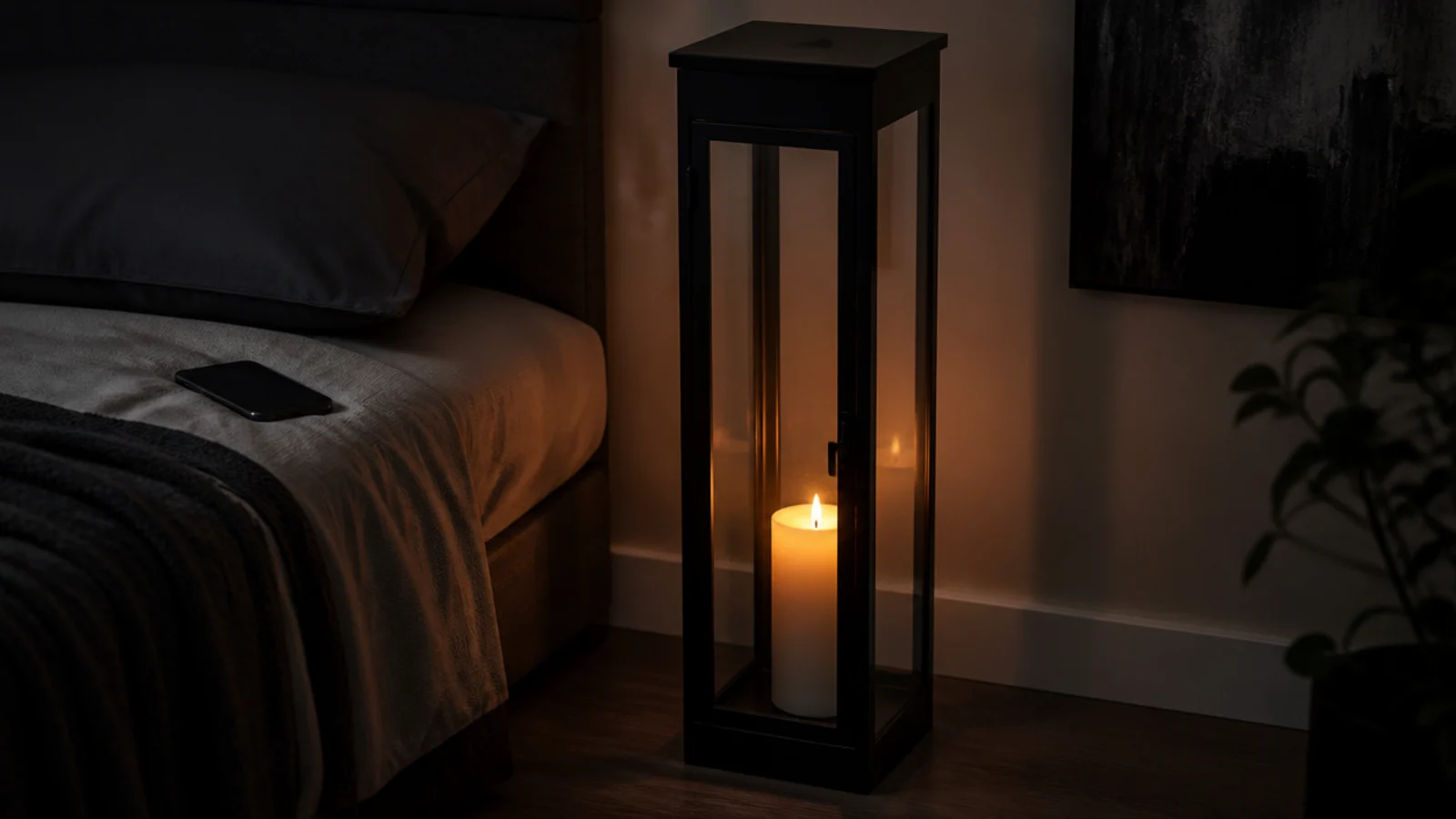
20. A large candle lantern with a flat top
A tall lantern gives you light and a small flat surface in one object, which suits a very tight gap. Use an LED pillar inside rather than a real flame if it is anywhere near bedding or a curtain.
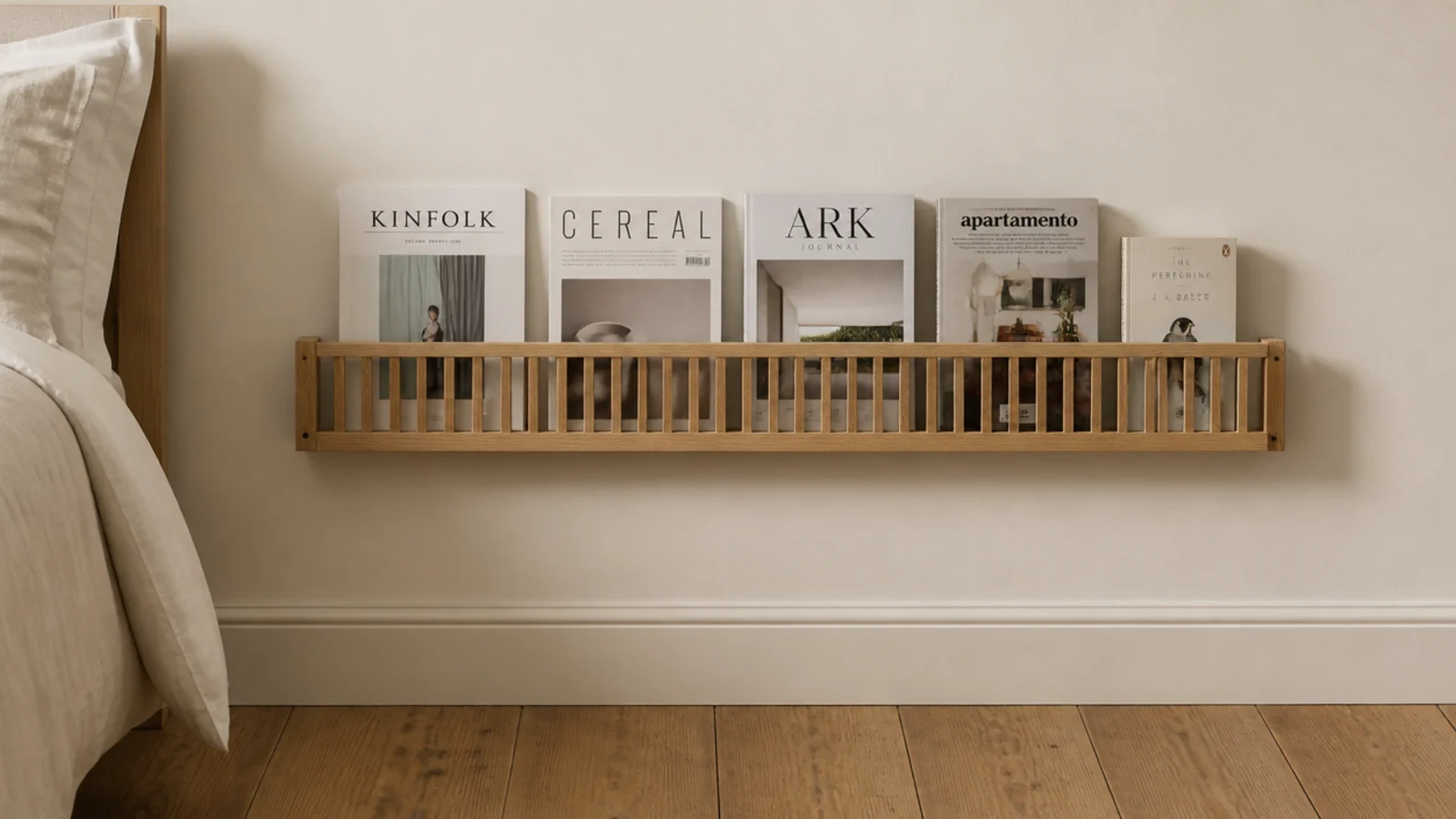
21. A wall-mounted magazine rack
Not a table at all, but it absorbed the reading pile that used to live on the floor. It takes one fixing, costs about $15, and it is the fix I recommend most often to people in very small rooms.
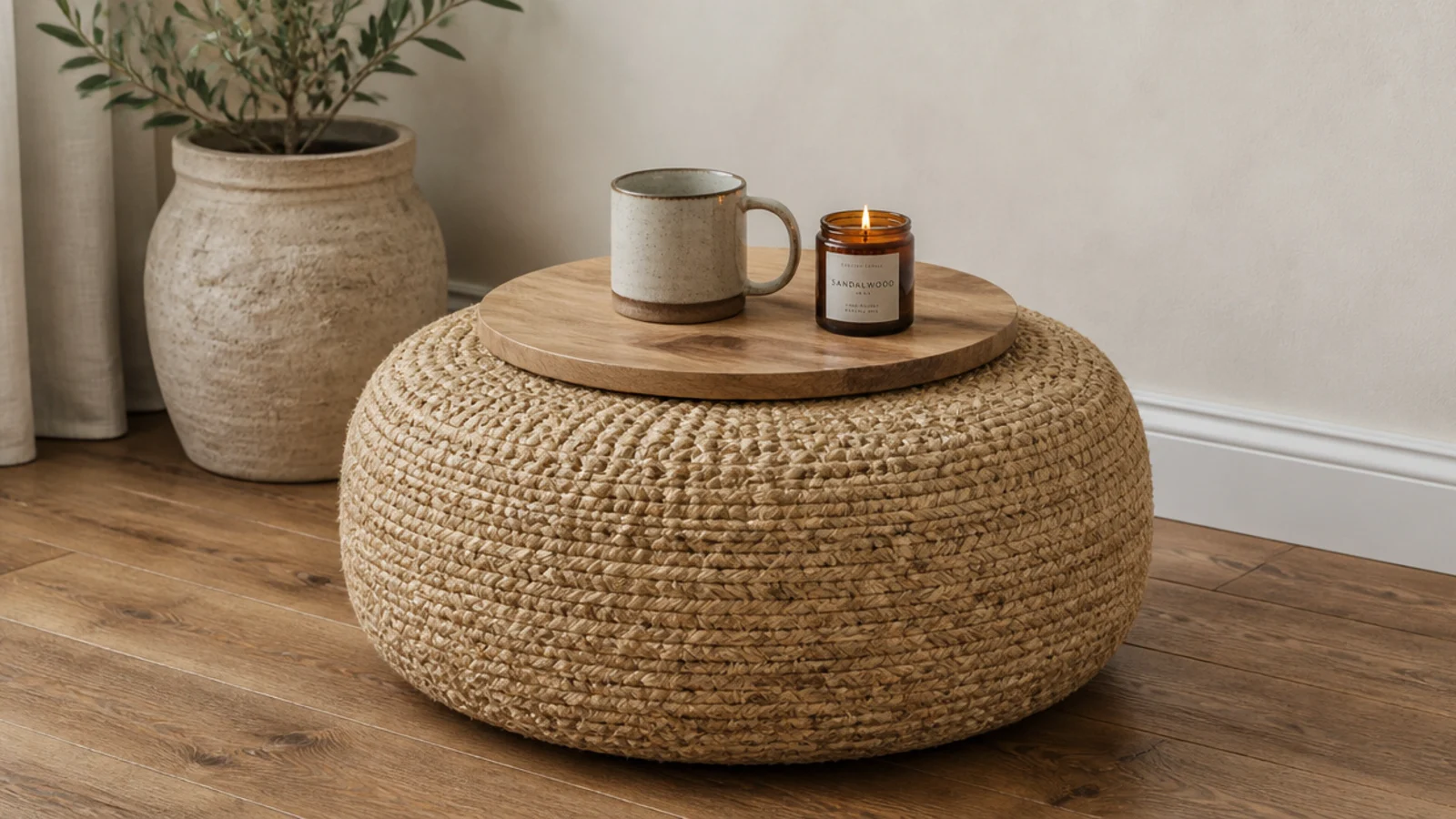
22. A pouffe with a rigid tray
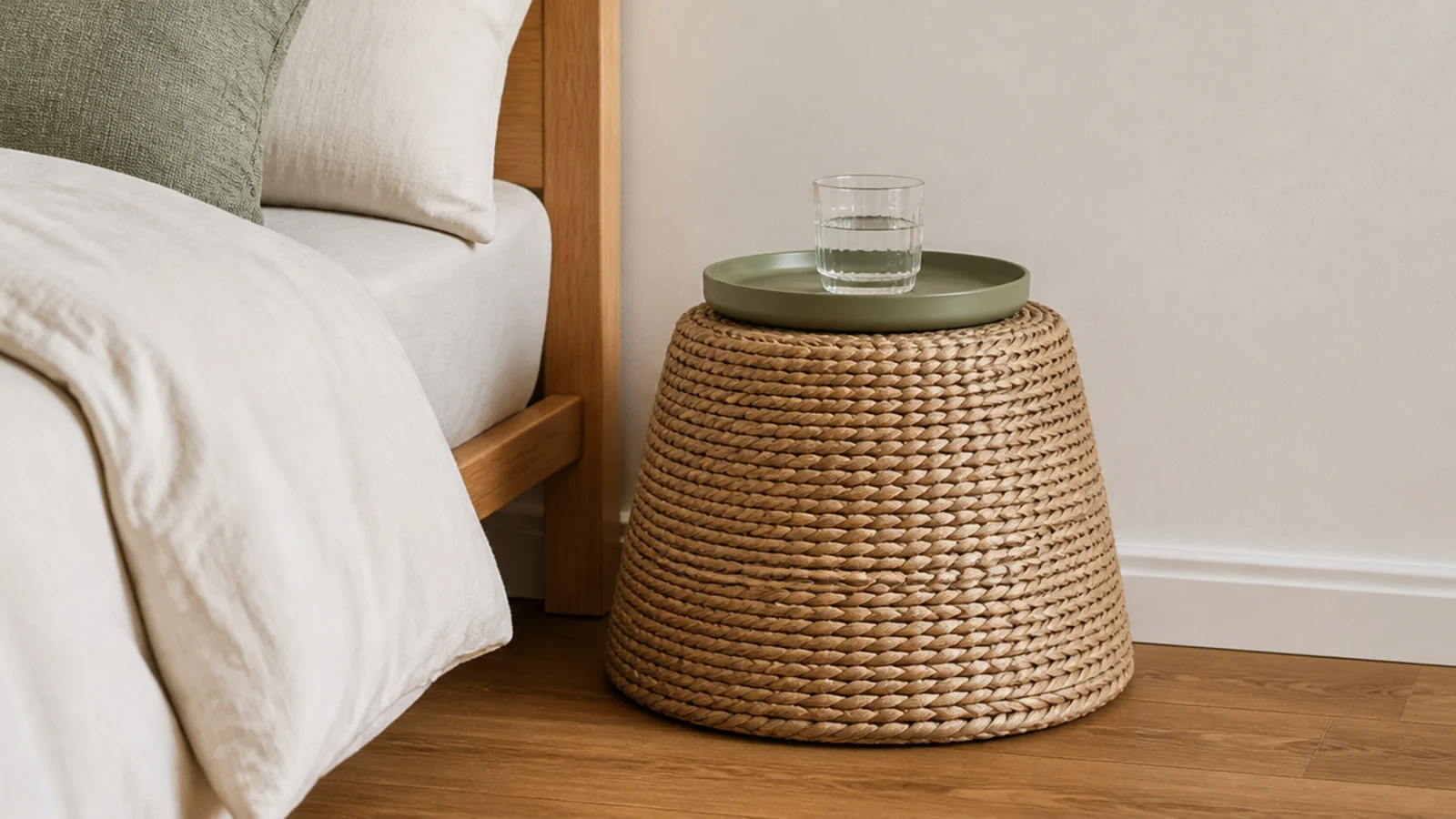
A pouffe alone is useless beside a bed — everything sinks and tips. With a flat tray on top it becomes a workable low surface plus a footstool. The tray is doing all the work, so make it a rigid one, not woven.
23. An upturned wastepaper basket
Genuinely a stopgap, and it lasted eight months. A sturdy woven basket turned over gives a flat base at around 14 inches, which needs a tray and suits a low bed only. Free, and better than a pile of books.
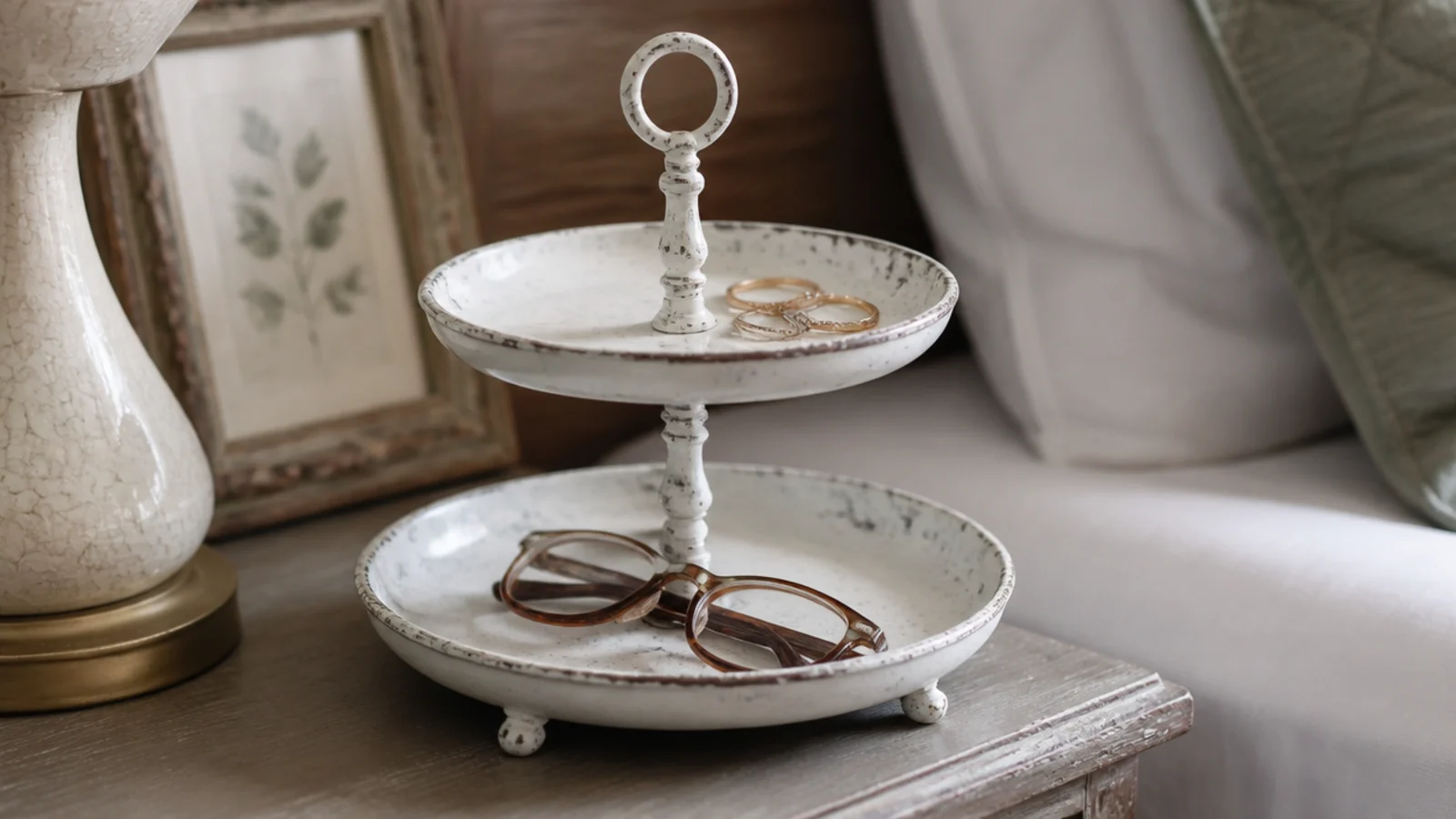
24. A tiered cake stand for small things
This sits on a surface rather than replacing one, but it doubled the usable area of a very small table. Rings and glasses on the top plate, everything else below. Around $8 secondhand.
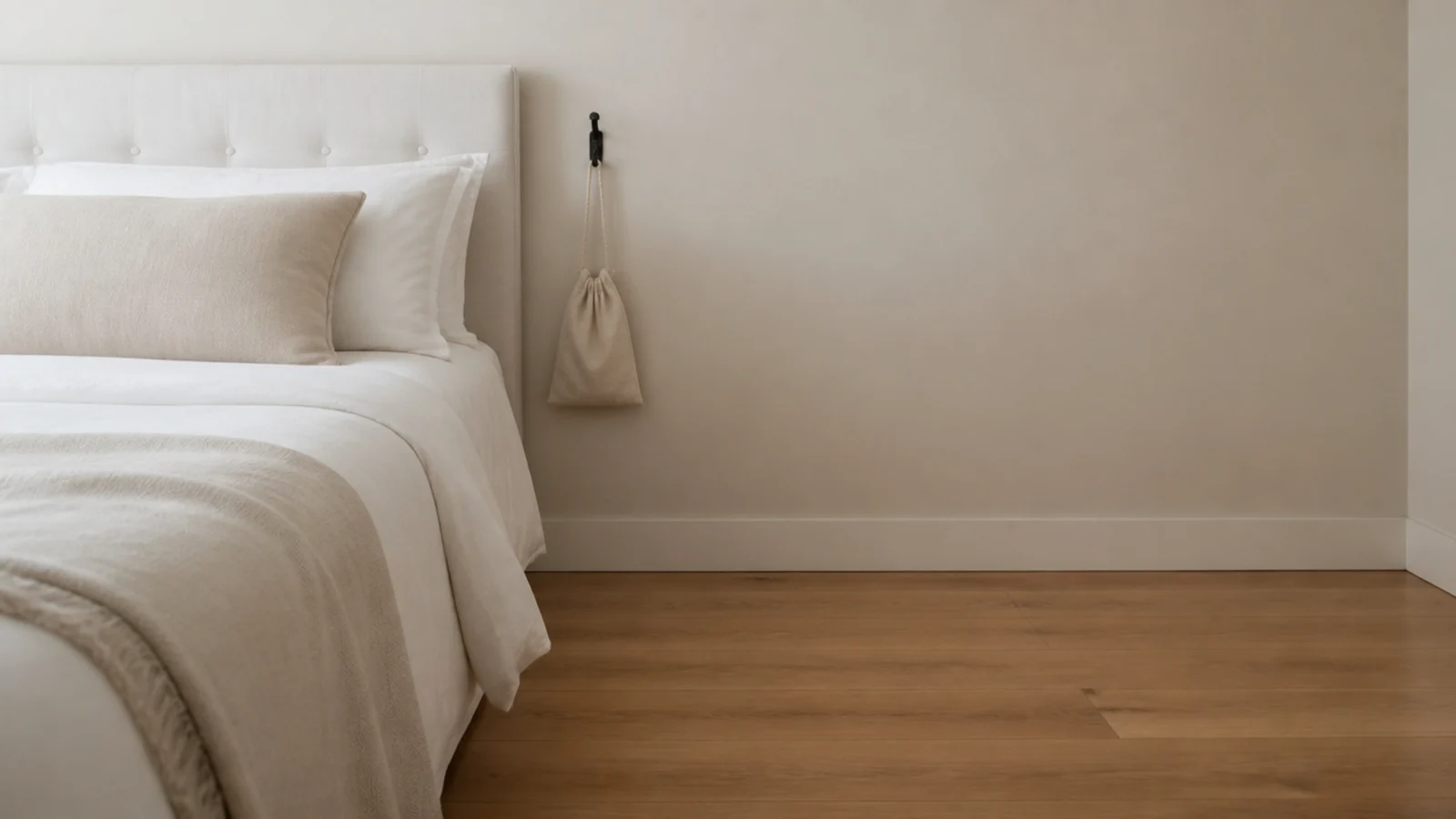
25. Nothing at all, and a wall hook instead
In the smallest room I have lived in I removed the table entirely, put a hook on the wall for a small pouch, and kept a glass on the windowsill. The floor stayed clear and the clutter never came back. It is still the version I think about most.
What I'd Do Differently Now
I would measure before falling in love, every single time. The garden stool and the pouffe both failed on height and stability, and both failures were visible with a tape measure and thirty seconds of thought before I bought them.
I would also stop treating storage as a bonus. Every lidded option I have used — the suitcases, the piano stool, the school desk — ended up holding things I never take out, because reaching inside means clearing the top first. If I were choosing again I would take an open shelf under a solid top over any amount of hidden space.
The stump and the sewing machine base are the two I would repeat without hesitation. Both are heavy, both are the right height, and neither has moved an inch in years. Weight turns out to matter far more than I expected beside a bed, because everything gets leaned on in the dark.
If you want the same thinking applied to conventional narrow pieces, the narrow bedside table guide has the measurements. And for salvage finishes generally, the wooden headboard guide covers sealing and sanding reclaimed timber properly.
Frequently asked questions
What can I use instead of a bedside table?
Almost anything with a flat top between 22 and 28 inches high and a footprint under about 18 inches square. Suitcase stacks, stump sections, piano stools, toolboxes and painted filing cabinets have all worked for me. The height matters far more than what the object was originally built for.
What height should an alternative bedside table be?
Within two inches of your mattress top, which usually means 22 to 28 inches depending on the bed. This is the one measurement that decides whether a substitute works, and it is why so many attractive objects fail — a garden stool at 17 inches looks lovely and is unusable beside a standard bed.
Do alternative bedside tables wobble?
Anything with three points of contact or a soft top will move. I fixed most of mine with felt pads to level the feet or a rigid tray to spread the load. If a filled glass moves when you press one corner, it will spill something eventually, so level it before you live with it.
Are suitcase stacks practical as bedside tables?
As a surface yes, as storage no. Getting to the contents means lifting everything off the top, so mine hold things I need twice a year rather than nightly. Two medium cases stacked land at roughly 24 inches, which is exactly right beside most beds.
What alternatives should I avoid beside a bed?
Anything soft-topped without a rigid tray, anything under 20 inches tall, and anything you need to open daily. I tried a pouffe and a low garden stool and gave up on both inside a month — one because a glass never sat level, the other because I reached down for it every night.
Want more like this? Browse all 15 bedside table ideas guides — they all use the same measurements and budget tiers.
Pin it for later
Save this to your Bedside Table Ideas board
Pin it now so it is waiting for you when the tape measure comes out — and so the next person hunting for this idea can find it too.
Save this pinKeep going
More ideas worth saving while you have the tape measure out.