Fairy Lights Bedroom · Listicle
25 Vines And Fairy Lights Bedroom Ideas To Copy

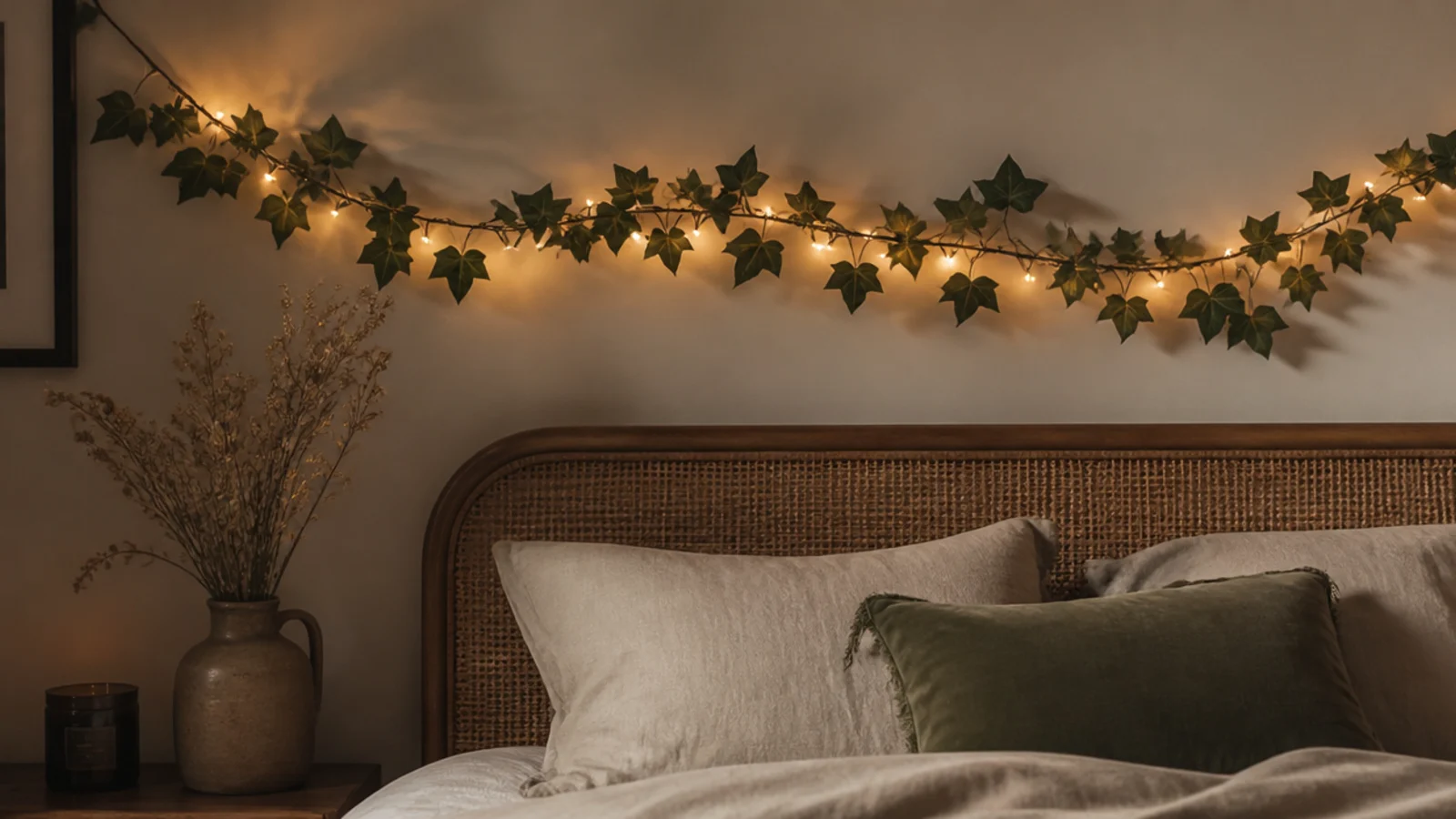
Greenery and string lighting go together because they solve each other's problems. Foliage hides a wire that would otherwise read as a cable taped to plaster, and light gives flat plastic leaves the shadows they badly need. Vines and fairy lights bedroom setups fail on two numbers, though: too few bulbs for the amount of leaf, and ties pulled so tight that the cable is pinched against a stem. I have built five of these across two flats. Here are the twenty-five arrangements worth copying, with the measurements that make them look grown rather than glued on.
In this guide27 sections — tap to openHide
- 1.What vines and fairy lights bedroom setups need to look real
- 2.Work out the garland to light ratio first
- 3.Tie every ten inches, never tighter
- 4.Run the wire behind the stem
- 5.A single vine swag over the headboard
- 6.Frame the window in eucalyptus
- 7.Wisteria drops from the ceiling
- 8.A vine and light canopy over the bed
- 9.Wrap the bed posts in ivy
- 10.Trail greenery down a bookshelf edge
- 11.Circle a mirror with a leafy ring
- 12.A vine hoop above the bed
- 13.Cascade over the wardrobe top
- 14.A floor to ceiling corner column
- 15.Along the picture rail with real drape
- 16.Keep real trailing plants beside the wire
- 17.A ladder trellis in the corner
- 18.Mix three leaf shapes, not one
- 19.Match the green to 2200K light
- 20.Add dried stems for texture
- 21.Lights behind the garland, not inside it
- 22.A vine curtain across the doorway
- 23.Keep the battery pack out of the bundle
- 24.Fluff every leaf to forty-five degrees
- 25.Anchor the weight every twenty inches
- 26.Dust the leaves every couple of months
- 27.Mistakes to Skip
What vines and fairy lights bedroom setups need to look real
Start with the ratio. One 33 foot, 100 LED strand carries about three 6.5 foot garlands at a natural density, which works out near five bulbs per foot of foliage. Denser than that and it reads as a lit rope; sparser and the bulbs vanish once you fluff the leaves out.
Then the length. Measure the run and add 20 percent for drape, because a garland that follows the wall dead straight looks like trim. A 10 foot wall with gentle swags wants about 12 feet of garland, and every joint between two strands eats roughly 4 inches in overlap.
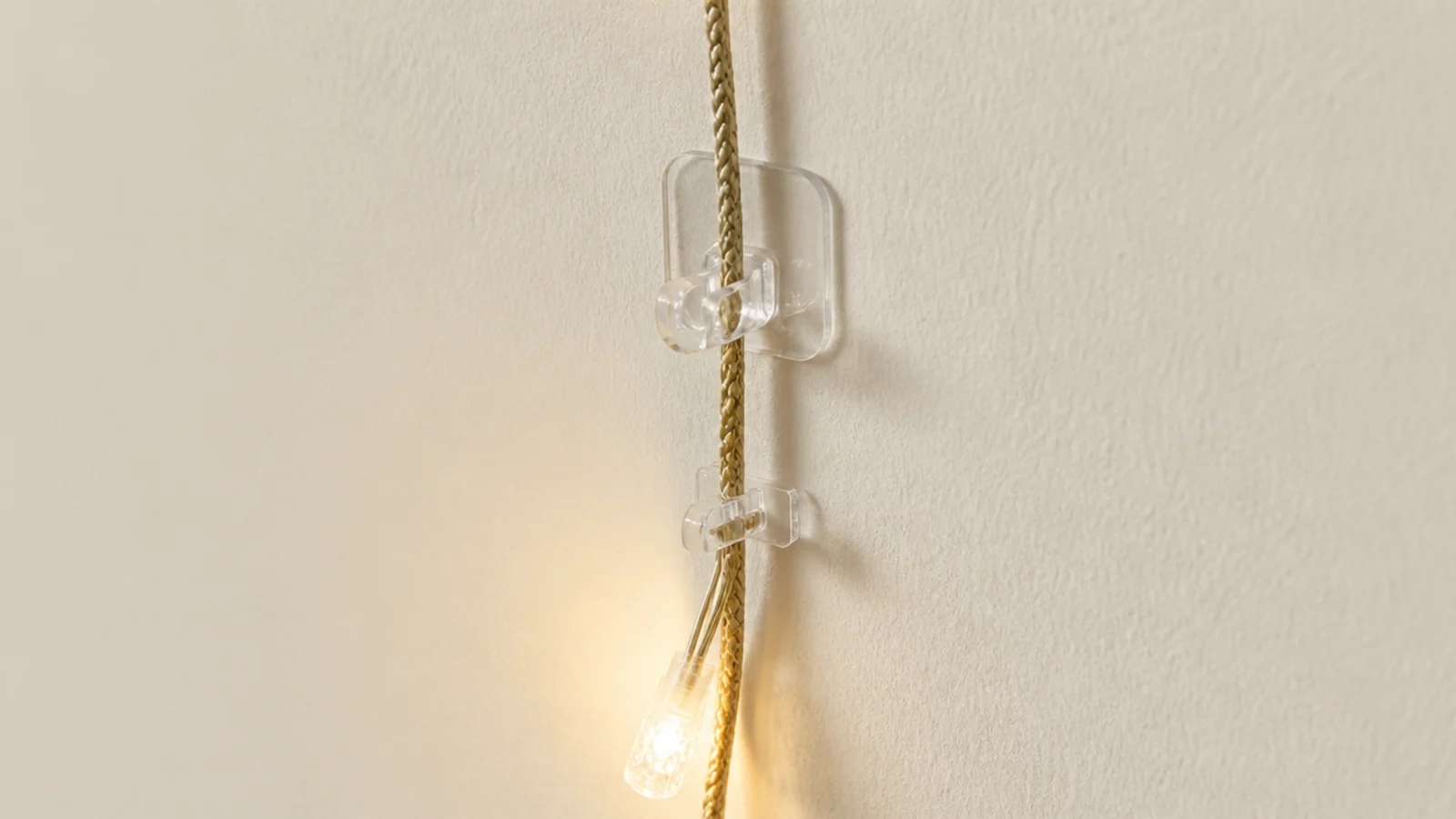
Then the fixing, which is two jobs rather than one. Adhesive hooks rated at half a pound to a pound every 16 to 24 inches carry the weight of the garland — a 6.5 foot artificial strand weighs 3 to 5 ounces. Separate clear clips carry the light cable, so the wire never hangs from the leaves.
Safety sits inside the build. Use LED strands only, because LED bulbs sit close to body temperature while incandescent minis reach 60°C and up, which is far too hot to bury in polyethylene foliage. Keep the driver or battery pack outside the leaf bundle with air around it, never staple or pin through the cable, tie loosely enough that the sheath is not pinched, and stay inside the daisy-chain limit printed on the tag. Nothing runs under a rug or inside bedding to reach a socket. For the wall layout underneath all this, the bedroom wall steps set out the marking and clip spacing.
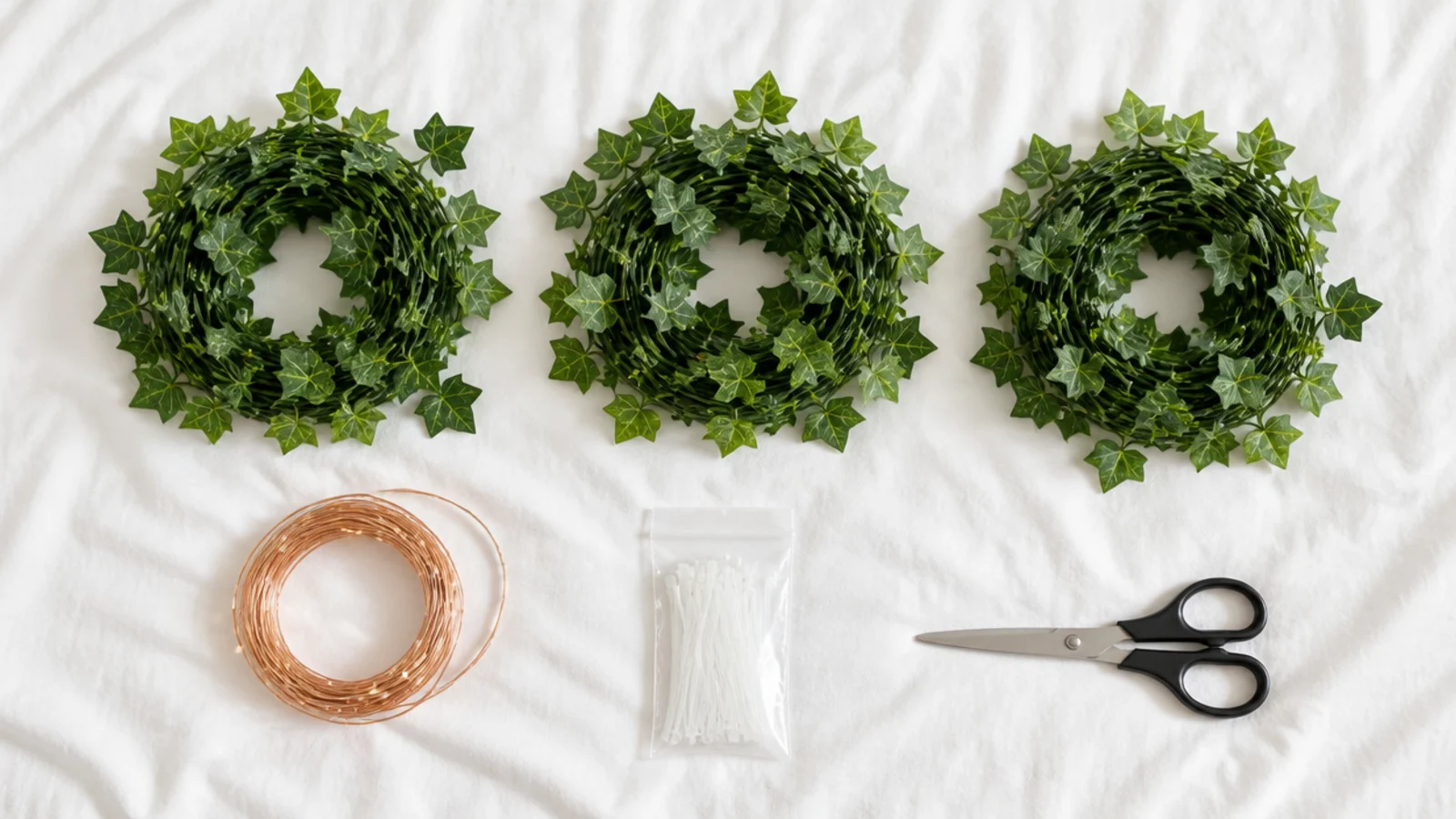
1. Work out the garland to light ratio first
Lay the garland flat on the bed and lay the strand alongside it before anything goes on the wall. At five bulbs per foot the light reads as caught in the leaves. Buying a 66 foot strand for the same three garlands doubles the density and turns a soft green wall into something that looks like a florist's shop front at Christmas.
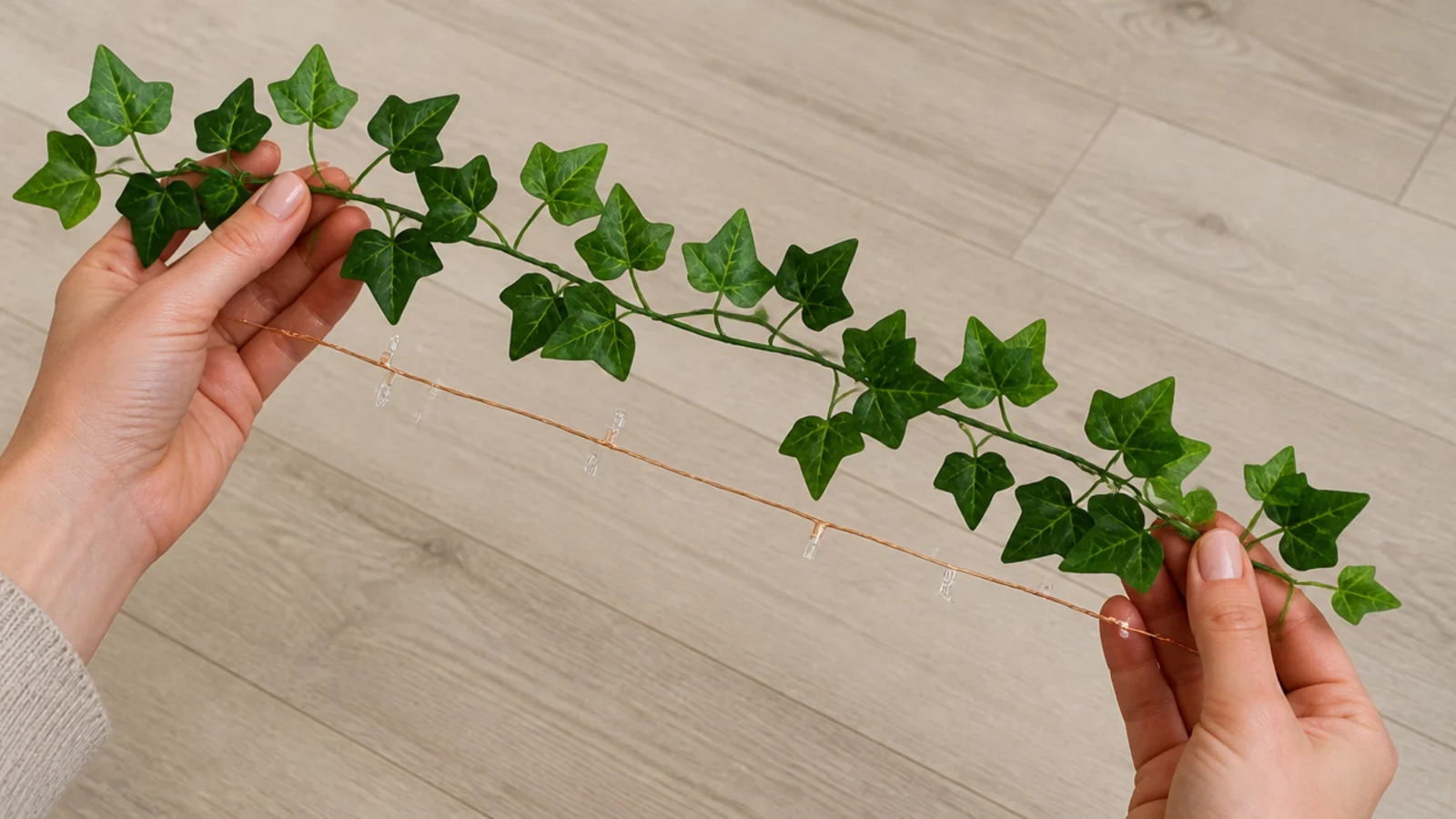
2. Tie every ten inches, never tighter
Small clear zip ties or green floral wire at 10 inch spacing hold the cable in place without carrying its weight. Leave enough slack in each loop that you can slide the tie along by an inch. A tie pulled hard against a fine copper wire is exactly where a strand dies six months later.
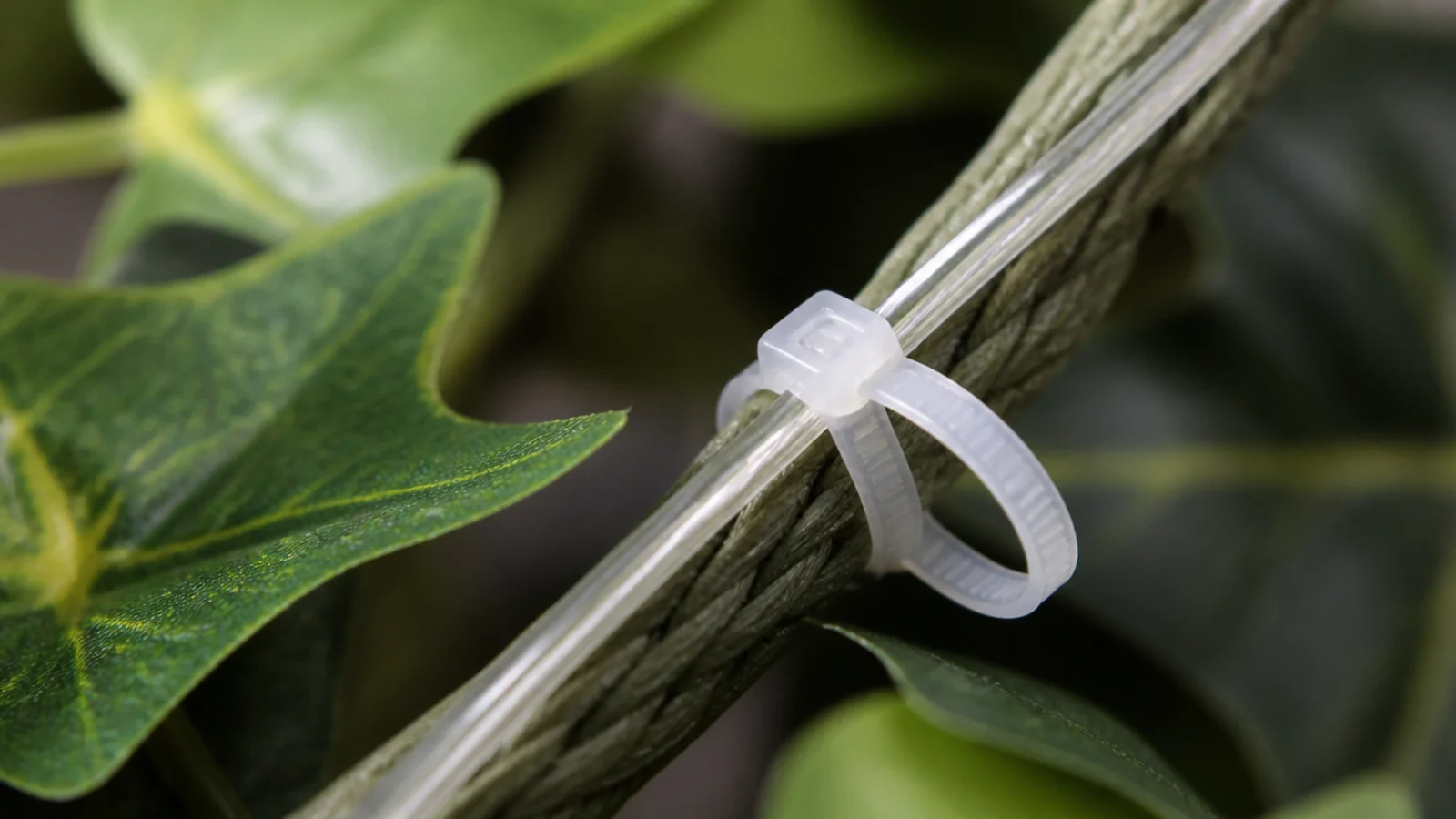
3. Run the wire behind the stem
The braided stem of an artificial garland is thicker than the light cable, so tucking the wire behind it hides the run completely and leaves the leaves in front. It takes an extra five minutes per garland and it is the single difference between a setup that looks intentional and one that looks assembled in a hurry.
4. A single vine swag over the headboard
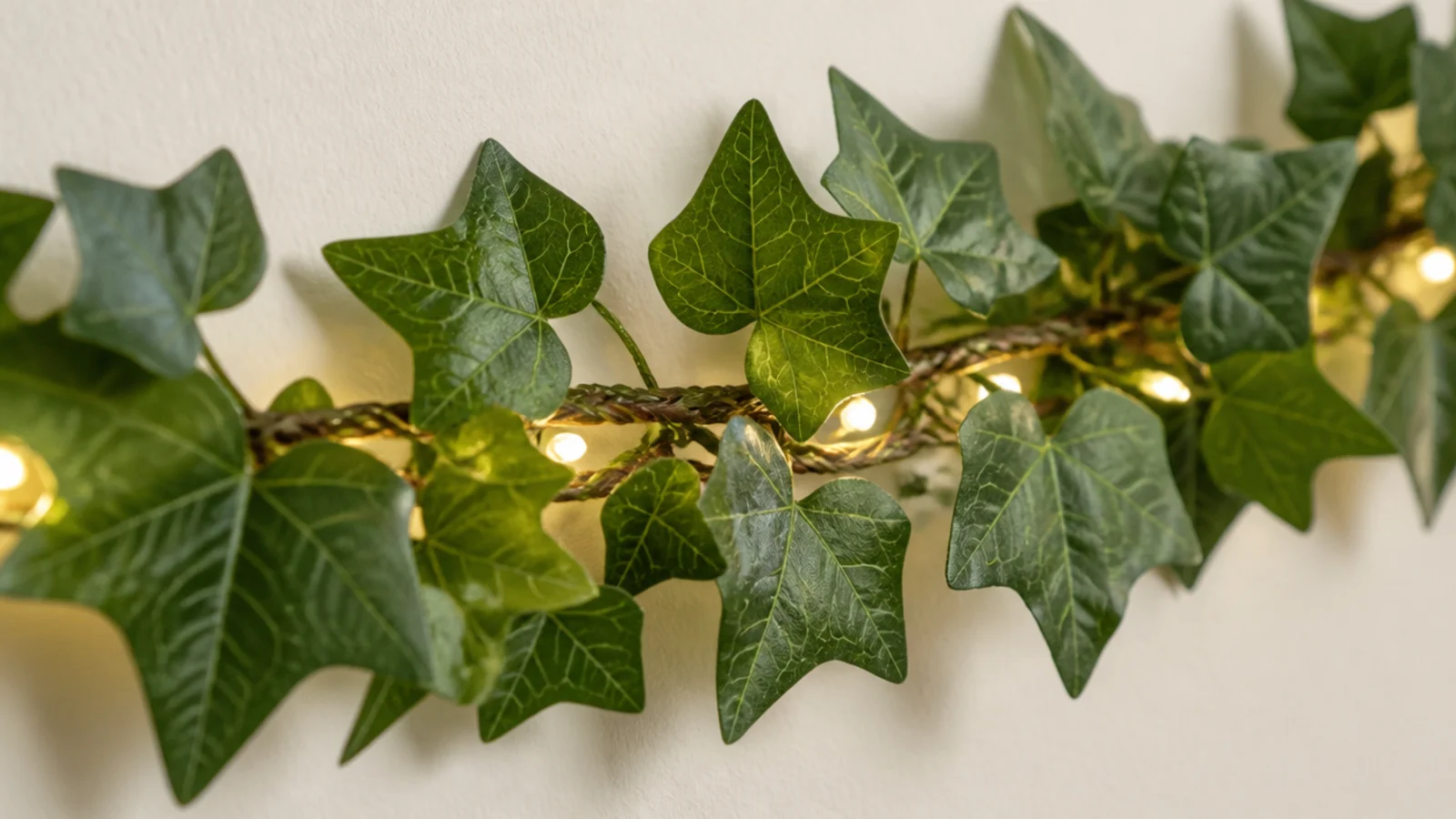
One shallow curve above the bed, dipping about 8 inches at the centre with the ends falling loose at each side, does more than three tight rows. It takes two garlands and one 33 foot strand, and the whole thing hangs from three adhesive hooks. Keep the lowest point above 70 inches so nothing sits in your eyeline.
5. Frame the window in eucalyptus
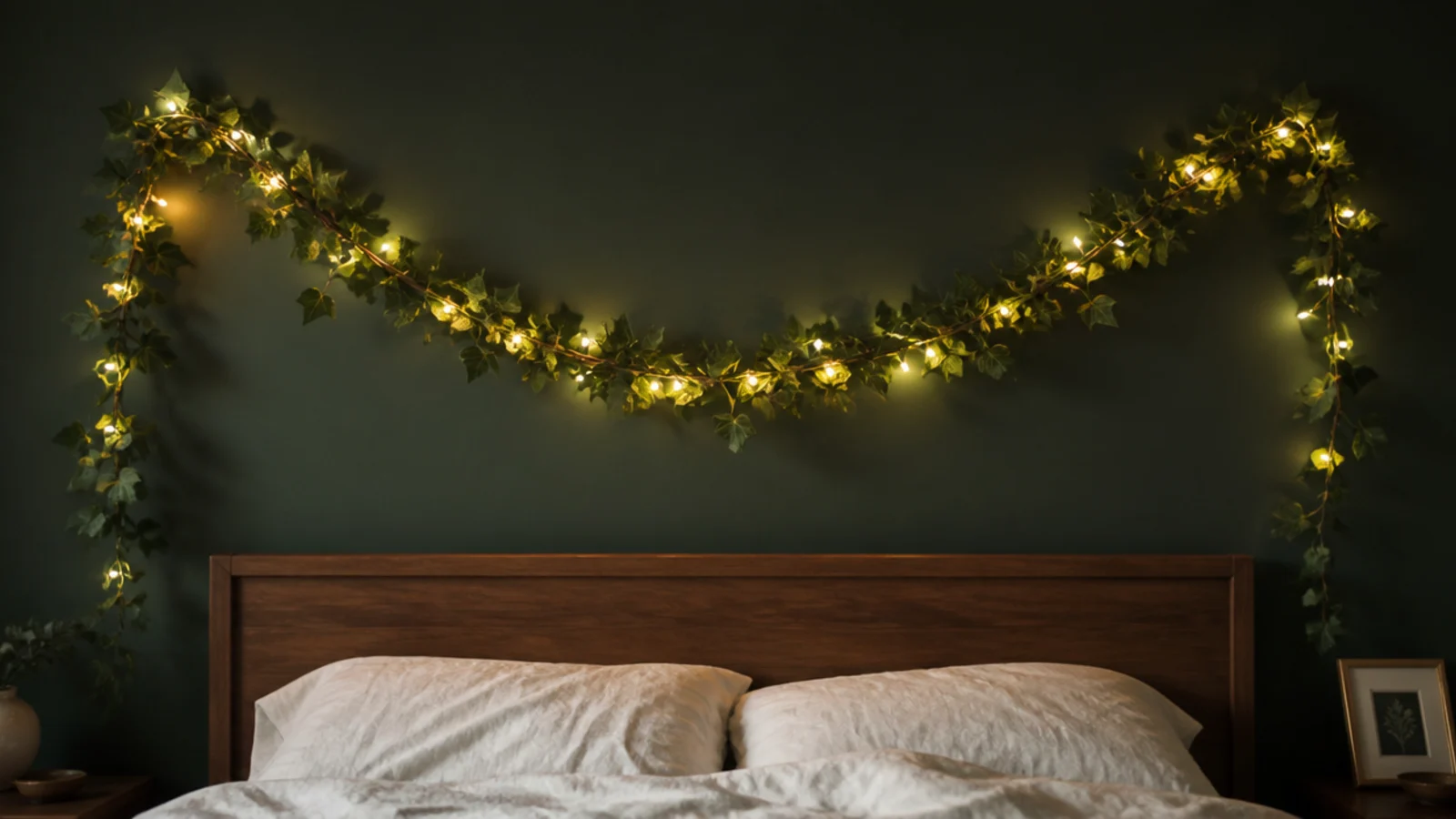
Eucalyptus reads cooler and more silver than ivy, which stops a very warm 2200K strand from turning the whole corner orange. A standard bedroom window has about 18 feet of perimeter, so three 6.5 foot garlands and one 33 foot strand cover it with a little to spare at the sill.
6. Wisteria drops from the ceiling
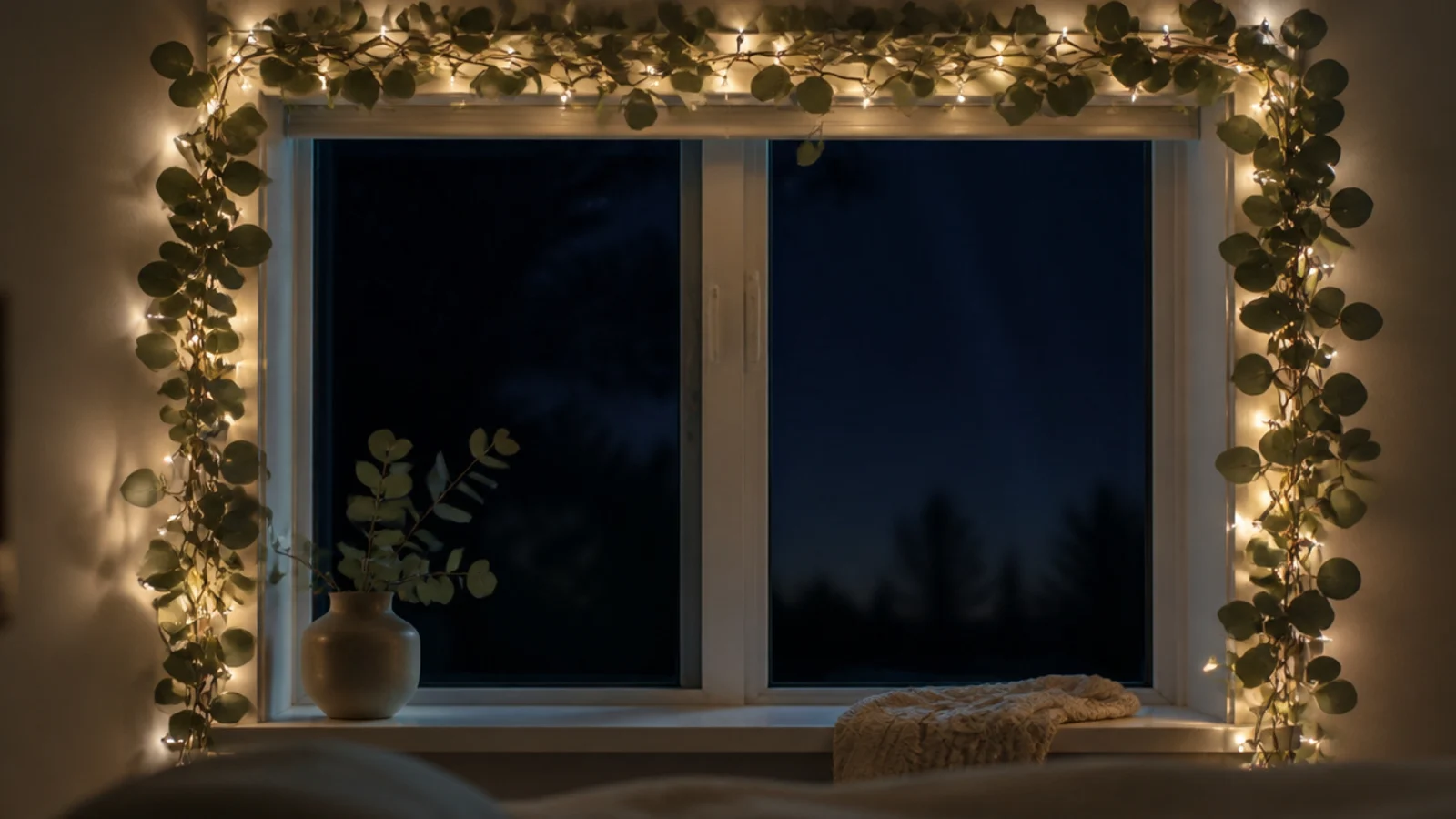
Hanging wisteria vines come in roughly 3.6 foot lengths. Hung at staggered heights from ceiling hooks with a fine strand threaded through, they give you movement that a flat wall garland never has. Five or six drops across a 4 foot span is enough, and each one weighs only a few ounces.
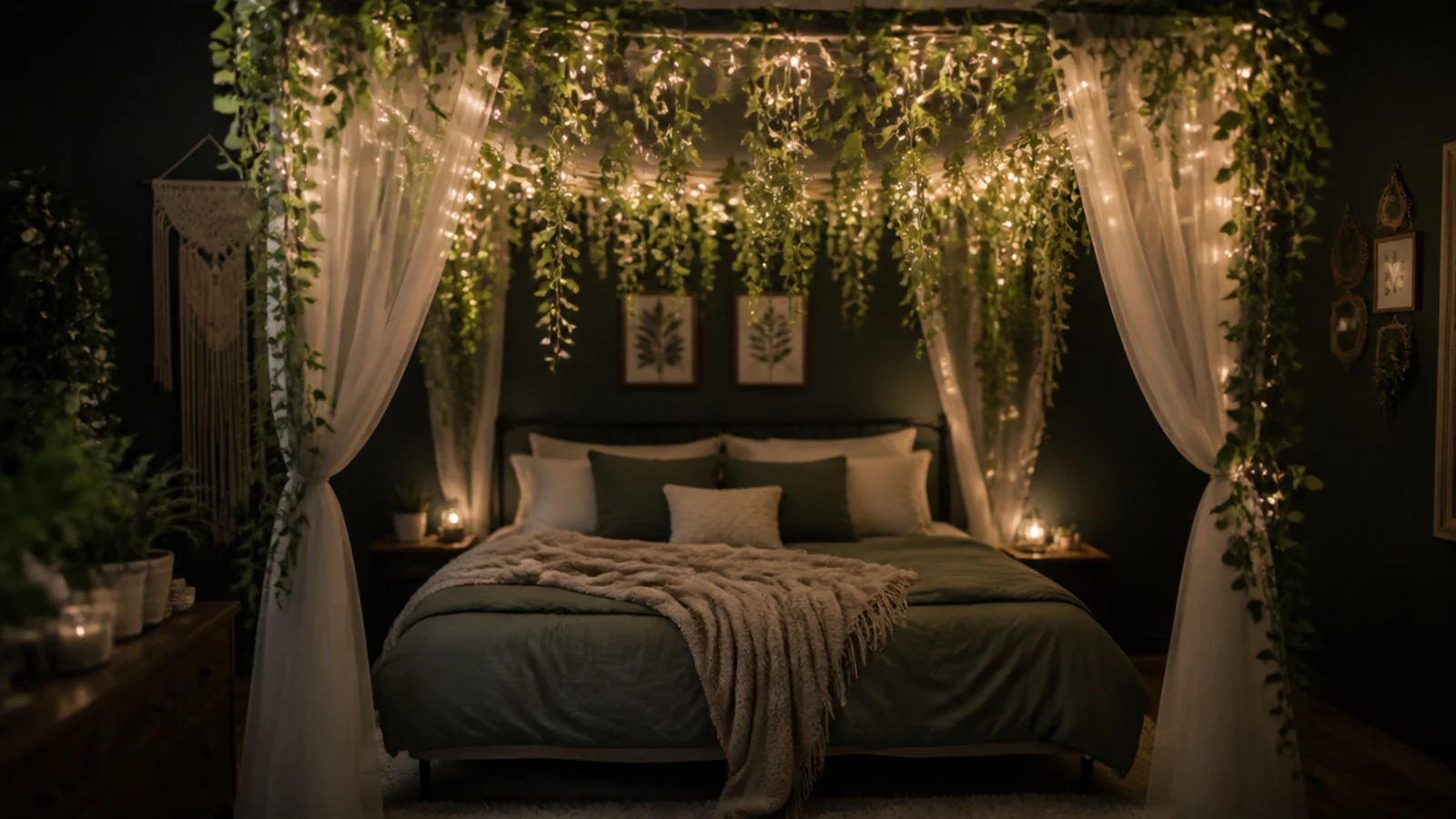
7. A vine and light canopy over the bed
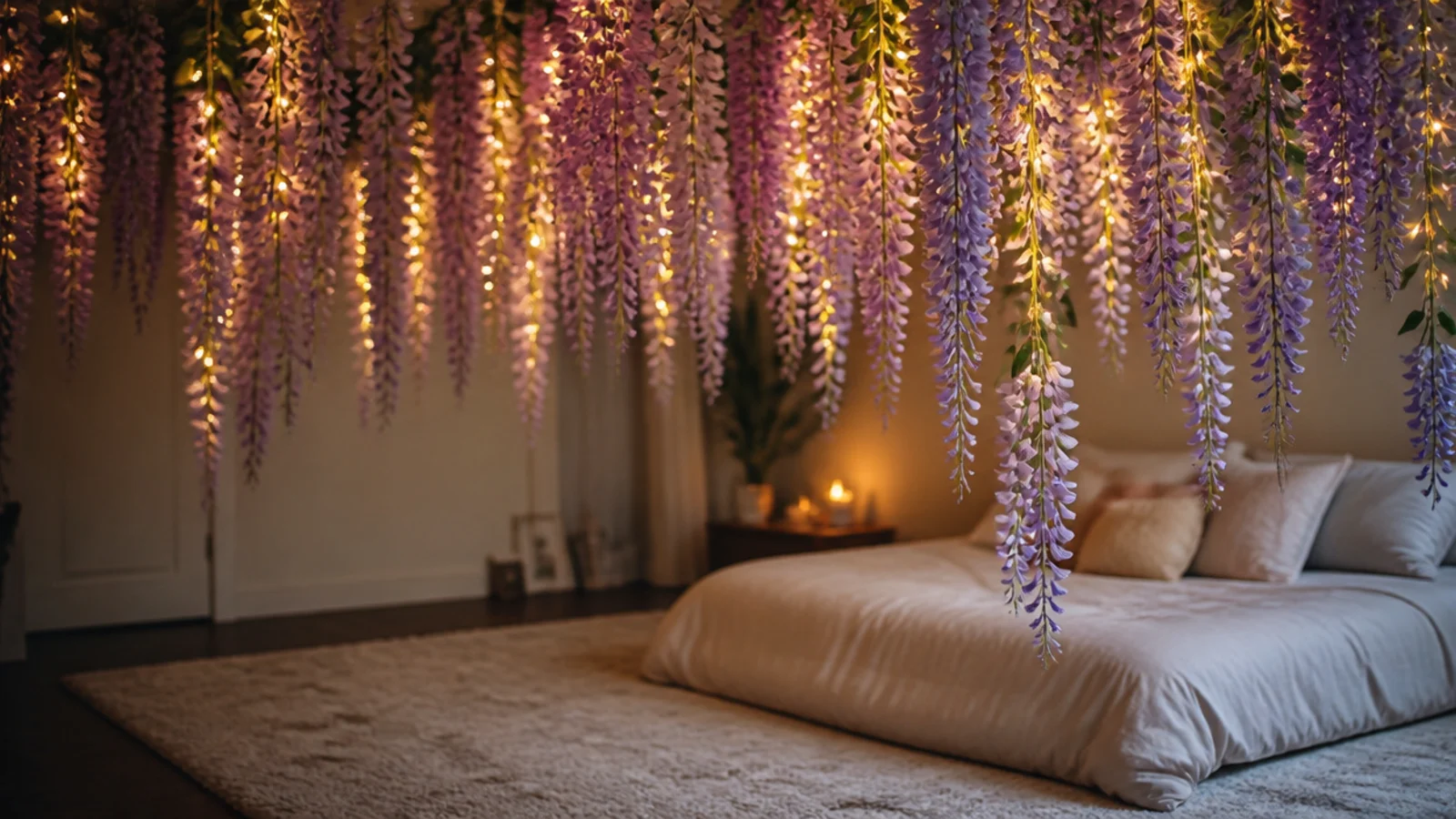
Four ceiling hooks set in a rectangle 4 inches wider than the bed each side, trailing greenery gathered between them, and one LED strand woven through the top. Keep the foliage above head height when you sit up, and check each hook is rated for at least a pound before you load it.
8. Wrap the bed posts in ivy
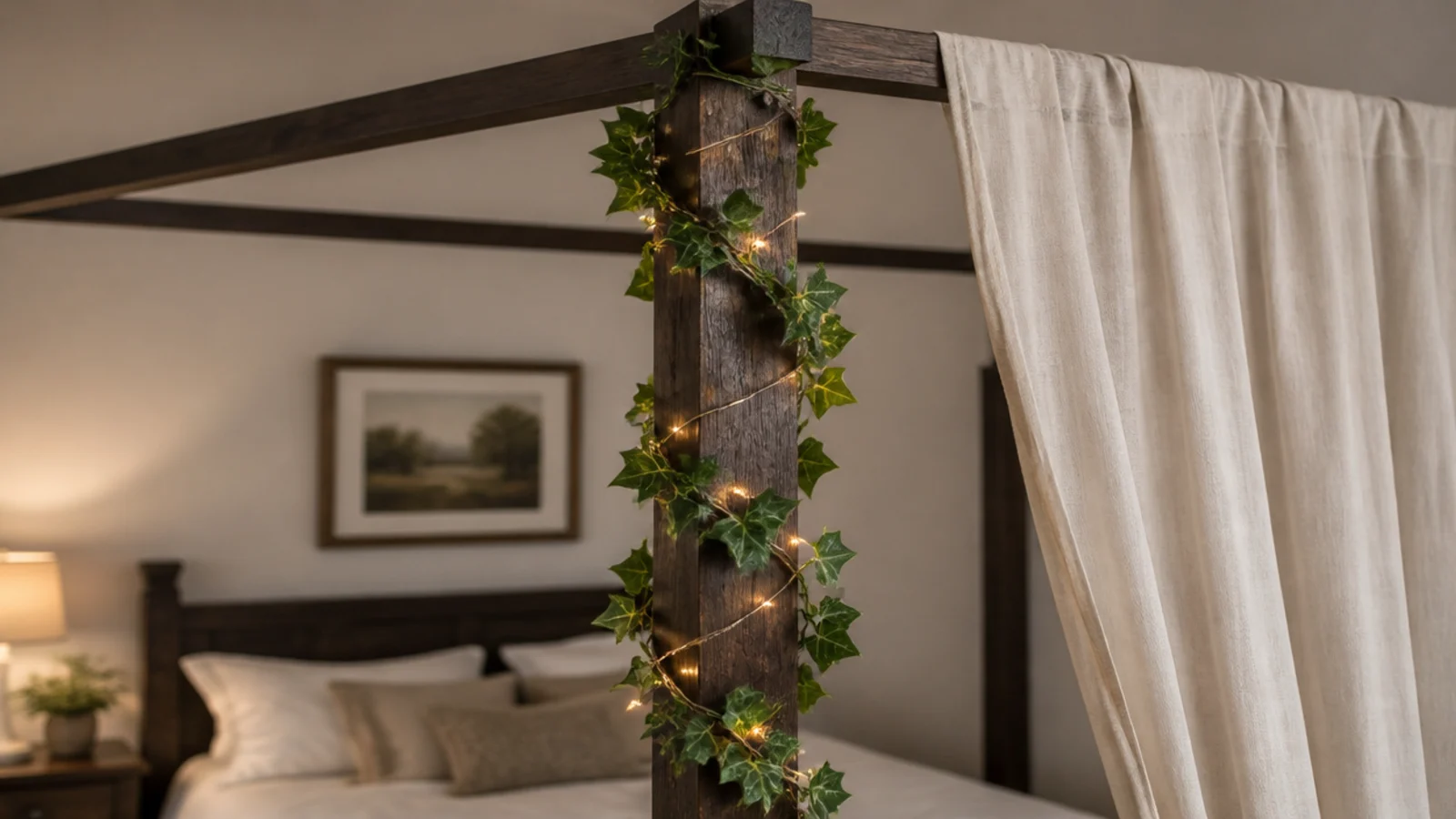
Spiral garland and strand together up the post at about six turns per foot. A 7 foot upright takes roughly 12 feet of both, so two garlands and one strand cover a pair of posts. Wind them as one bundle rather than in two passes and the wire stays hidden the whole way up.
9. Trail greenery down a bookshelf edge
A shelf edge gives you a straight line to break. Let two or three lengths spill over at different depths, thread the strand behind the books, and the hard horizontal softens without losing any storage. There is no fixing involved at all, which makes it the easiest one here to undo.

10. Circle a mirror with a leafy ring
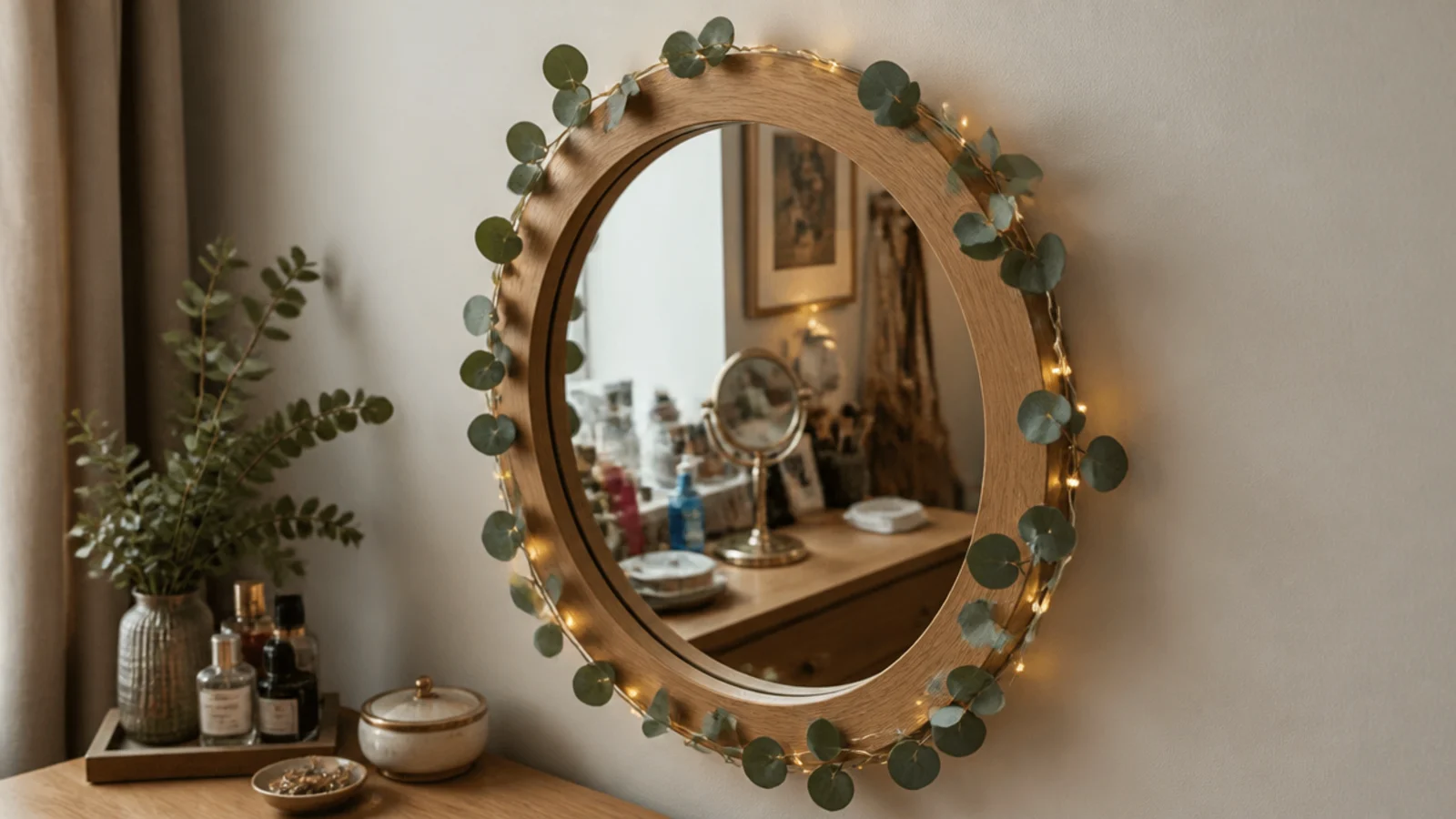
Short 12 inch lengths of eucalyptus wired around a 24 inch mirror frame, with about 7 feet of fine strand behind them. Everything fixes to the frame and nothing touches the glass, because adhesive against a mirror back lifts the silvering over time and the mark never comes out.
11. A vine hoop above the bed
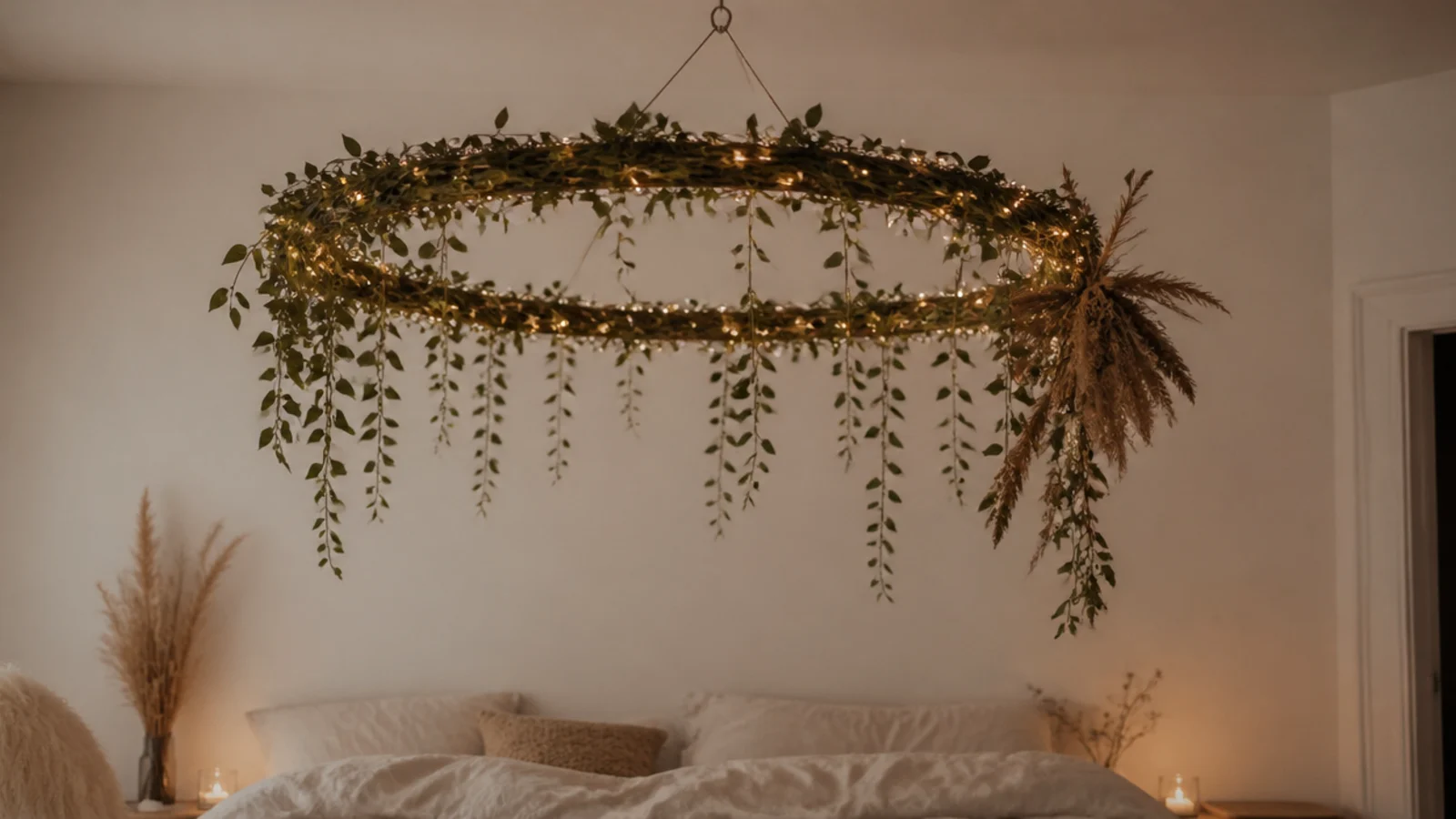
An 18 inch willow or metal hoop wrapped with trailing greenery and a fine strand hangs from one hook and reads as a proper object rather than a decoration. Weight it slightly at the bottom with a heavier stem so it hangs straight instead of rotating every time the door opens.
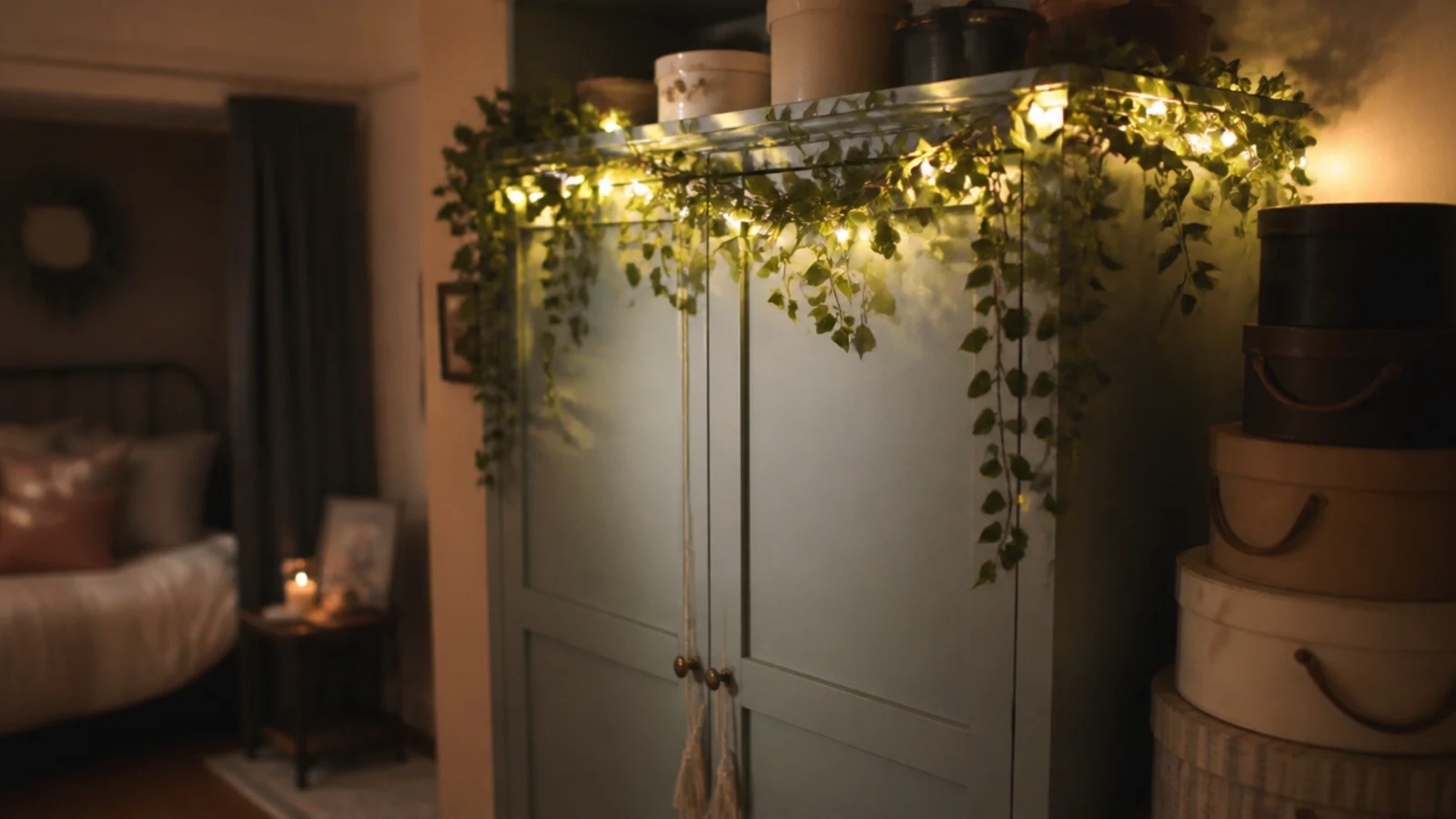
12. Cascade over the wardrobe top
The gap above a wardrobe is dead space that needs no fixings. Lay the garland along the top with a foot or so spilling over the front edge and the strand behind it. You get height, a soft top line, and a light source that is completely invisible from the bed.
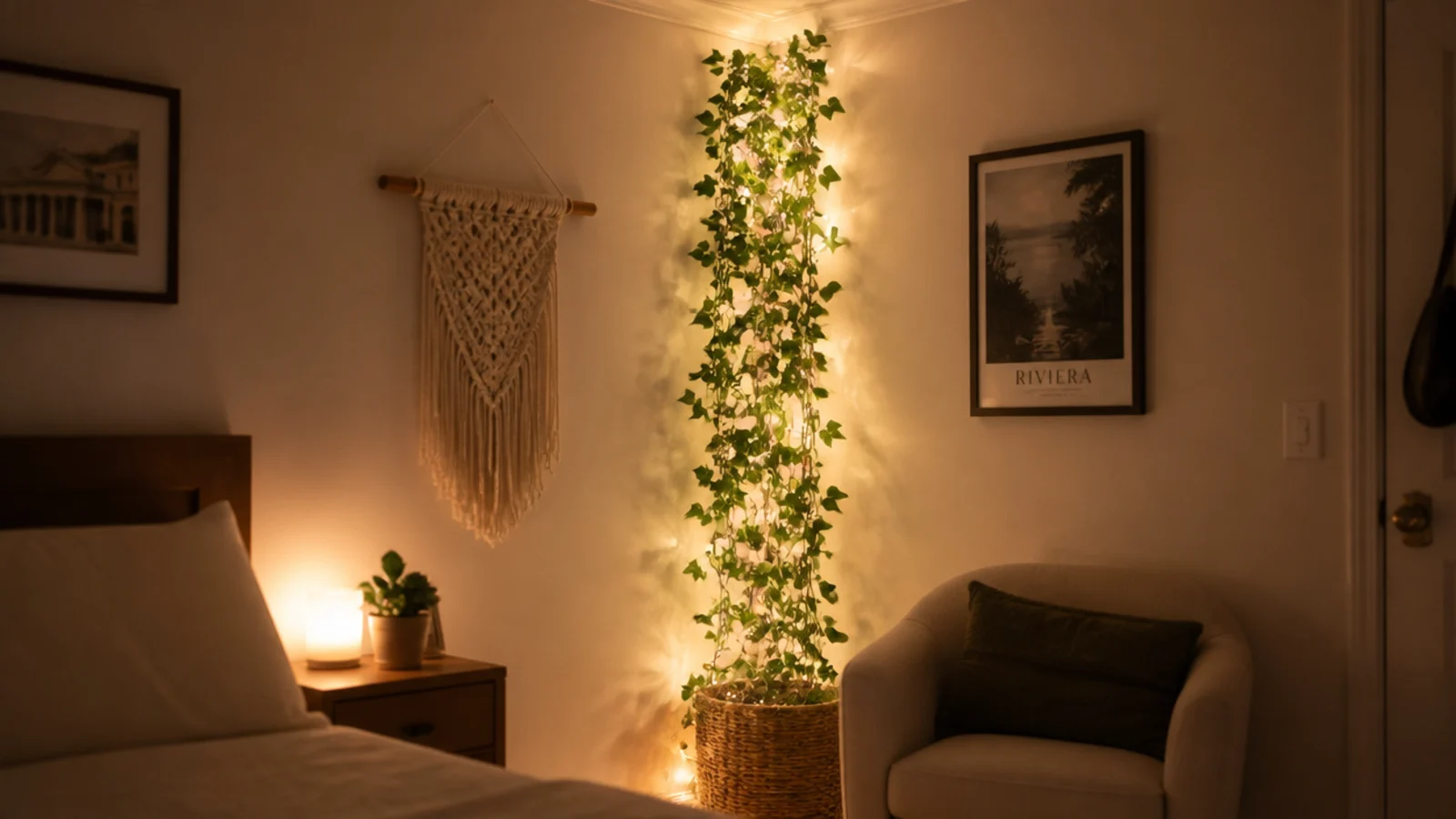
13. A floor to ceiling corner column
Run vines from a basket on the floor to a ceiling hook and light them from behind. An 8 foot ceiling needs about 10 feet of garland with the slack. It turns the emptiest part of a bedroom into the part your eye lands on, and it takes exactly one fixing.
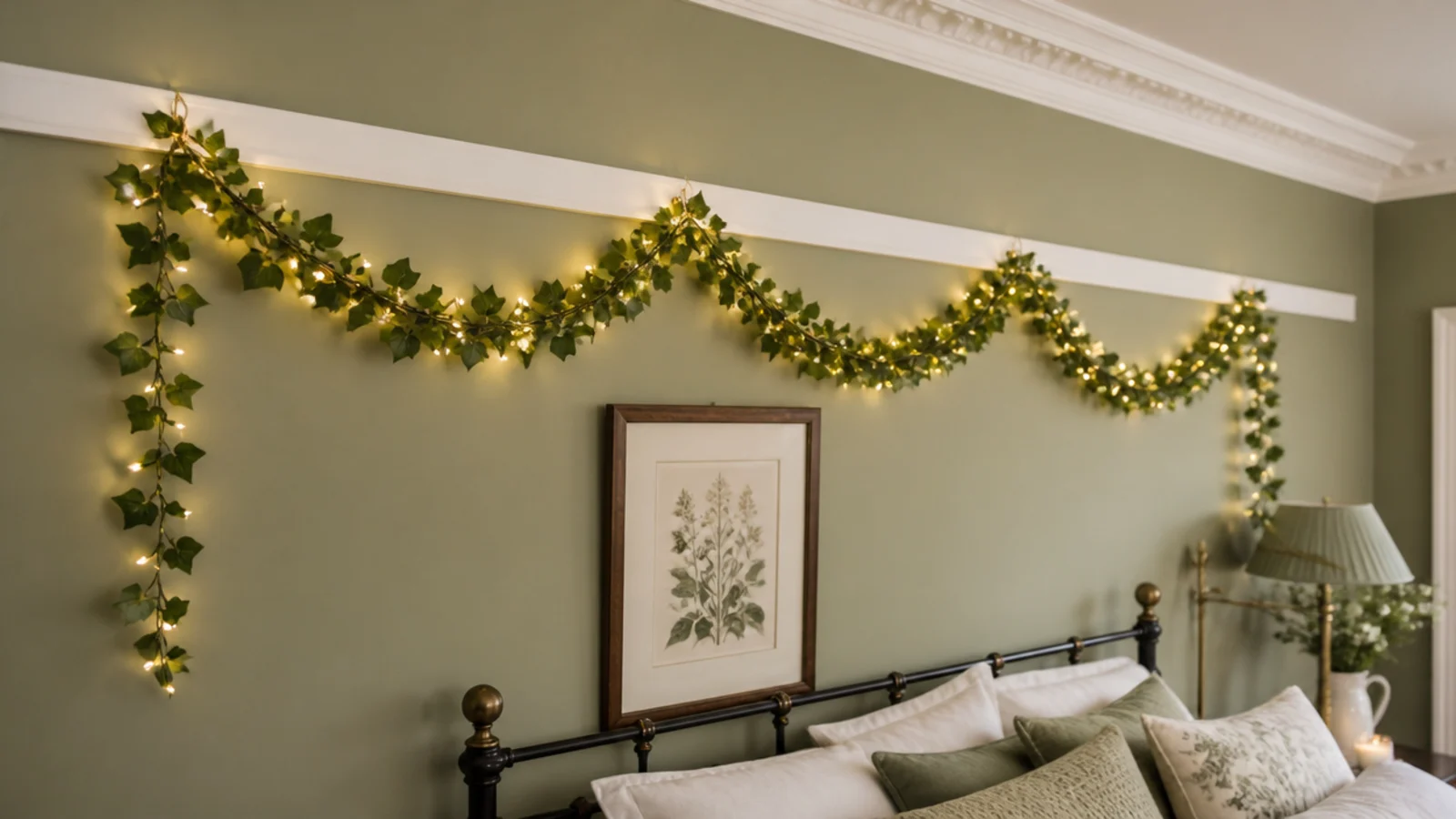
14. Along the picture rail with real drape
Swag the garland from the rail in identical dips of about 6 inches every 3 feet. Consistency is what separates a drape from a droop. The rail carries the weight, the clips carry the cable, and the run sits at around 84 inches where it is well clear of anyone's eyeline.
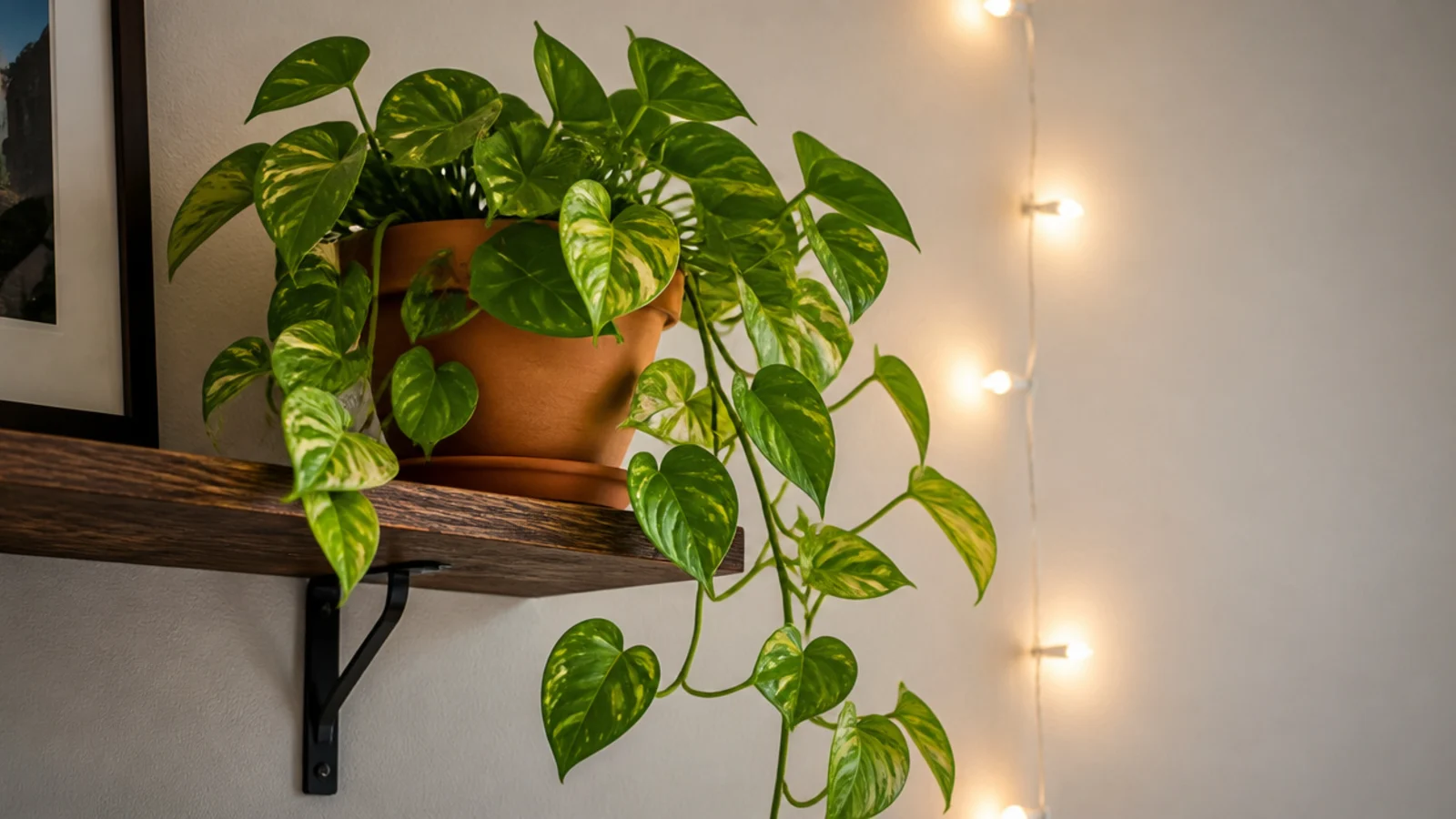
15. Keep real trailing plants beside the wire
Pothos and heartleaf philodendron trail 6 to 10 feet and tolerate a low-light bedroom, but they get watered every week or two. Fix the strand to the wall behind the plant rather than threading it through the stems, and let the leaves fall in front of the light. Water and cable connections stay apart.
16. A ladder trellis in the corner
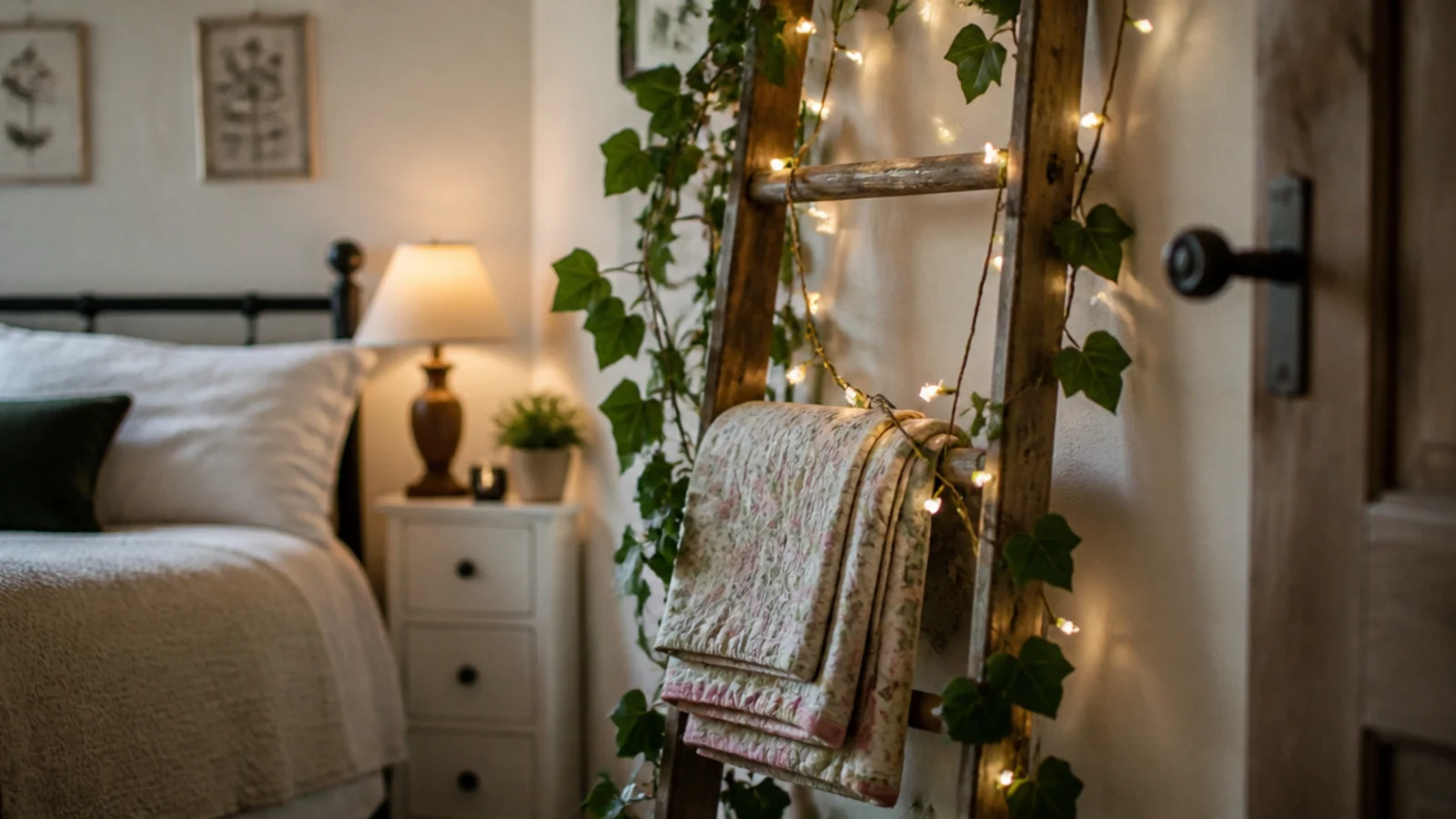
A secondhand step ladder at $4 to $10 gives vines something to climb and takes about 14 inches of floor when leaned rather than opened. Weave the garland through the treads and the strand behind them. Check the ladder is stable before it carries anything, and keep it out of the walkway.
17. Mix three leaf shapes, not one
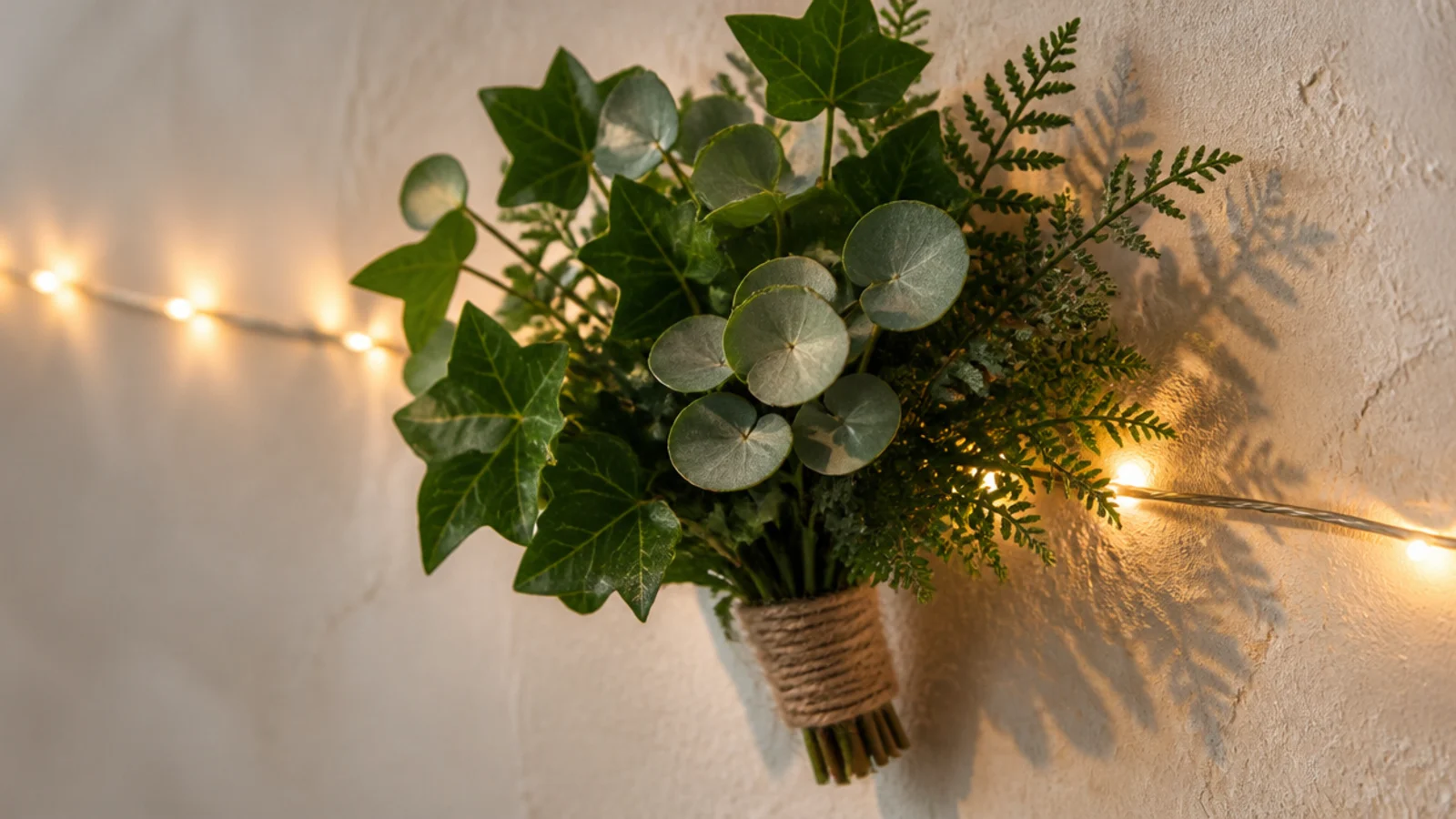
A single garland type repeats the same leaf every 3 inches and the eye reads the pattern instantly. Adding a second and third shape — small ivy, rounded eucalyptus, a fine fern — breaks the repeat. Buy one pack of each rather than three of the same and the result stops looking like a product.
18. Match the green to 2200K light
Very warm amber light strips blue out of everything it touches, so blue-greens and grey-greens go flat and dull. Yellow-greens and mid greens hold their colour. Hold two lengths against a lit strand in the shop or at home before committing to twelve feet of the wrong tone.
19. Add dried stems for texture
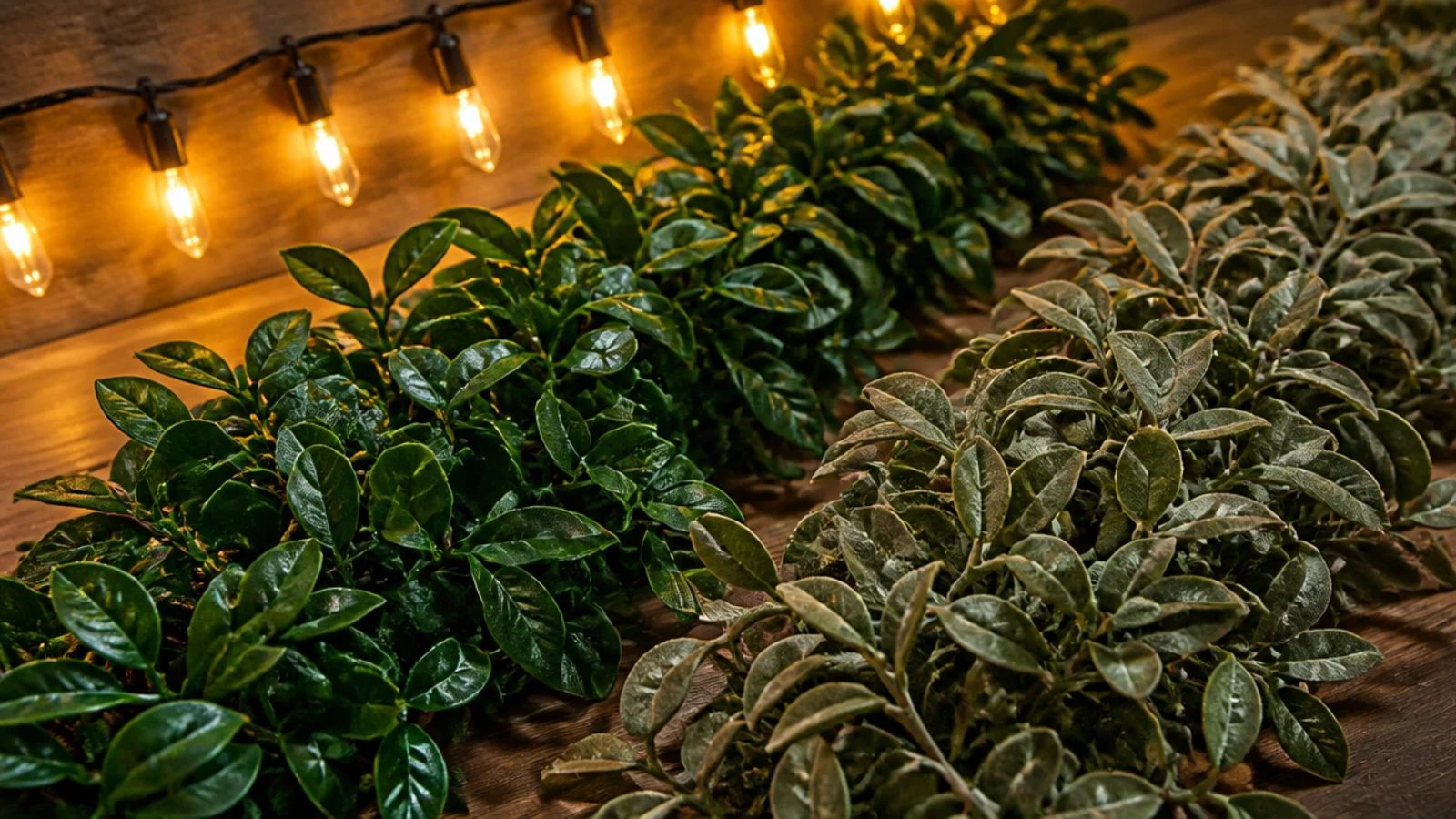
Dried pampas, bleached eucalyptus or a few seed heads tucked into an artificial garland introduce a texture no moulded leaf has. Three or four insertions along a 10 foot run is plenty. They also catch warm light differently from plastic, which is exactly the variation the setup needs.
20. Lights behind the garland, not inside it
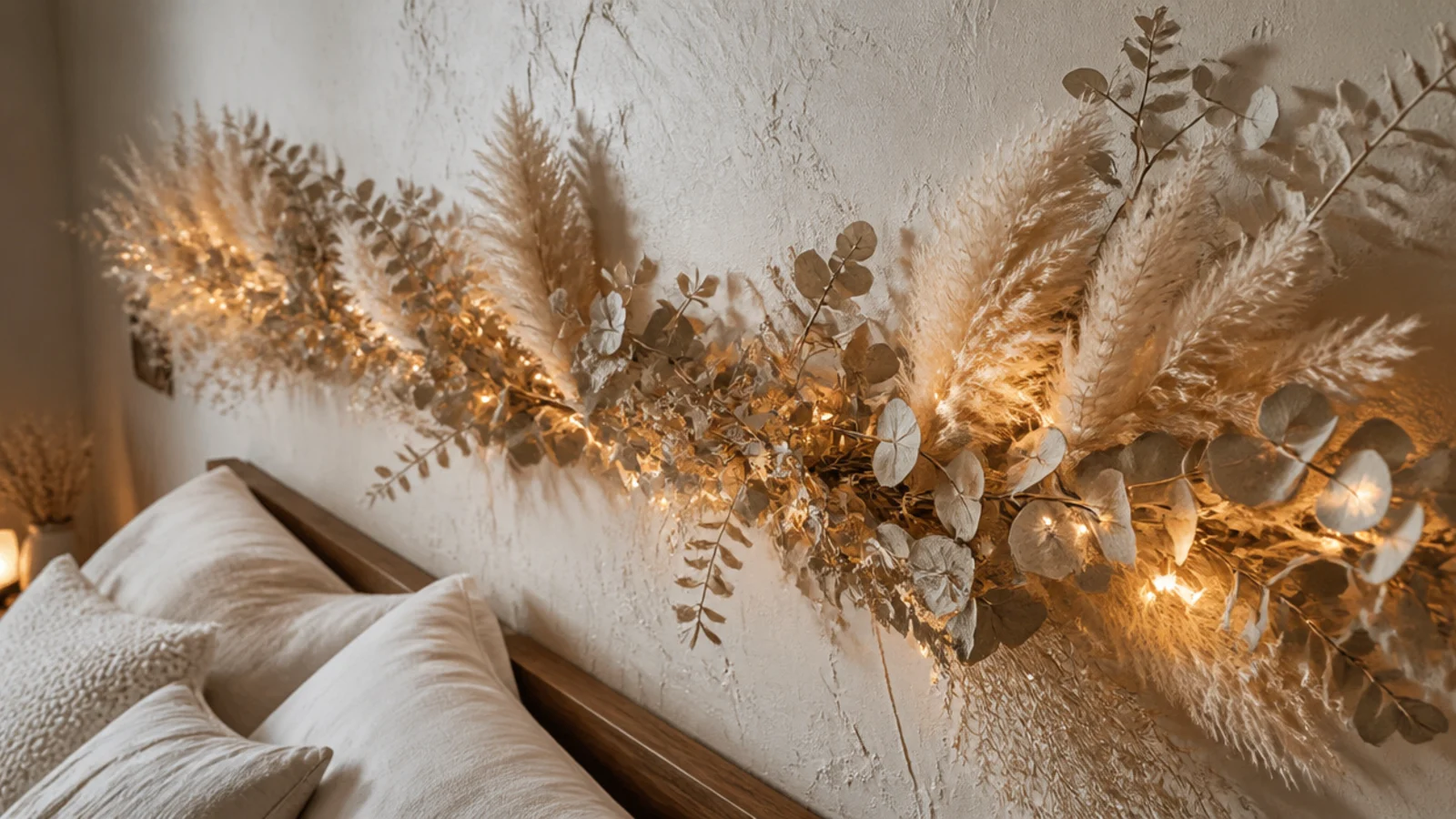
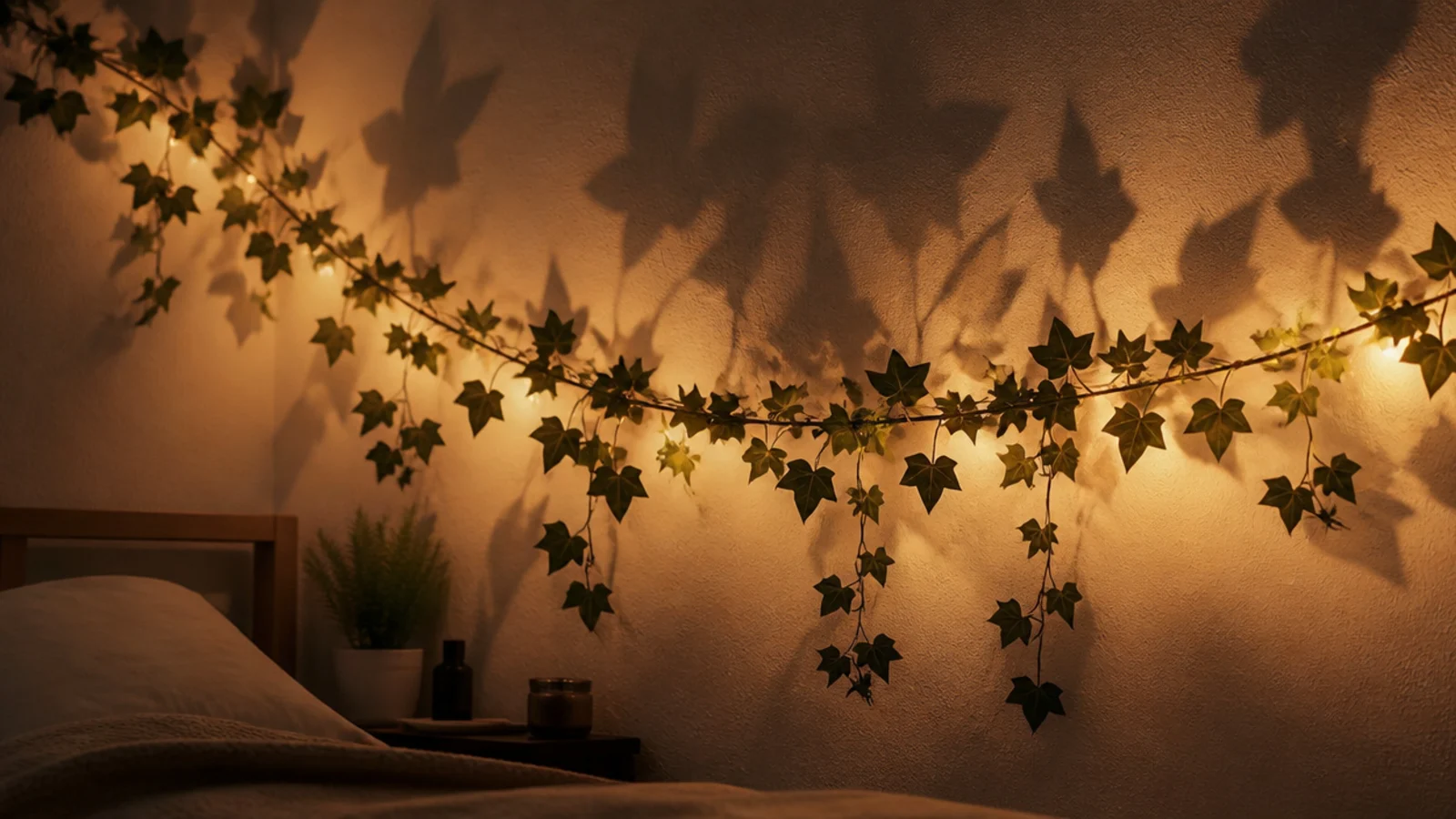
Fixing the strand 3 to 4 inches behind the foliage silhouettes the leaves and throws large soft shadows onto the wall. It uses less strand than threading, hides the wire completely, and gives you an effect that reads as depth rather than decoration. It is my favourite version of this whole idea.
21. A vine curtain across the doorway
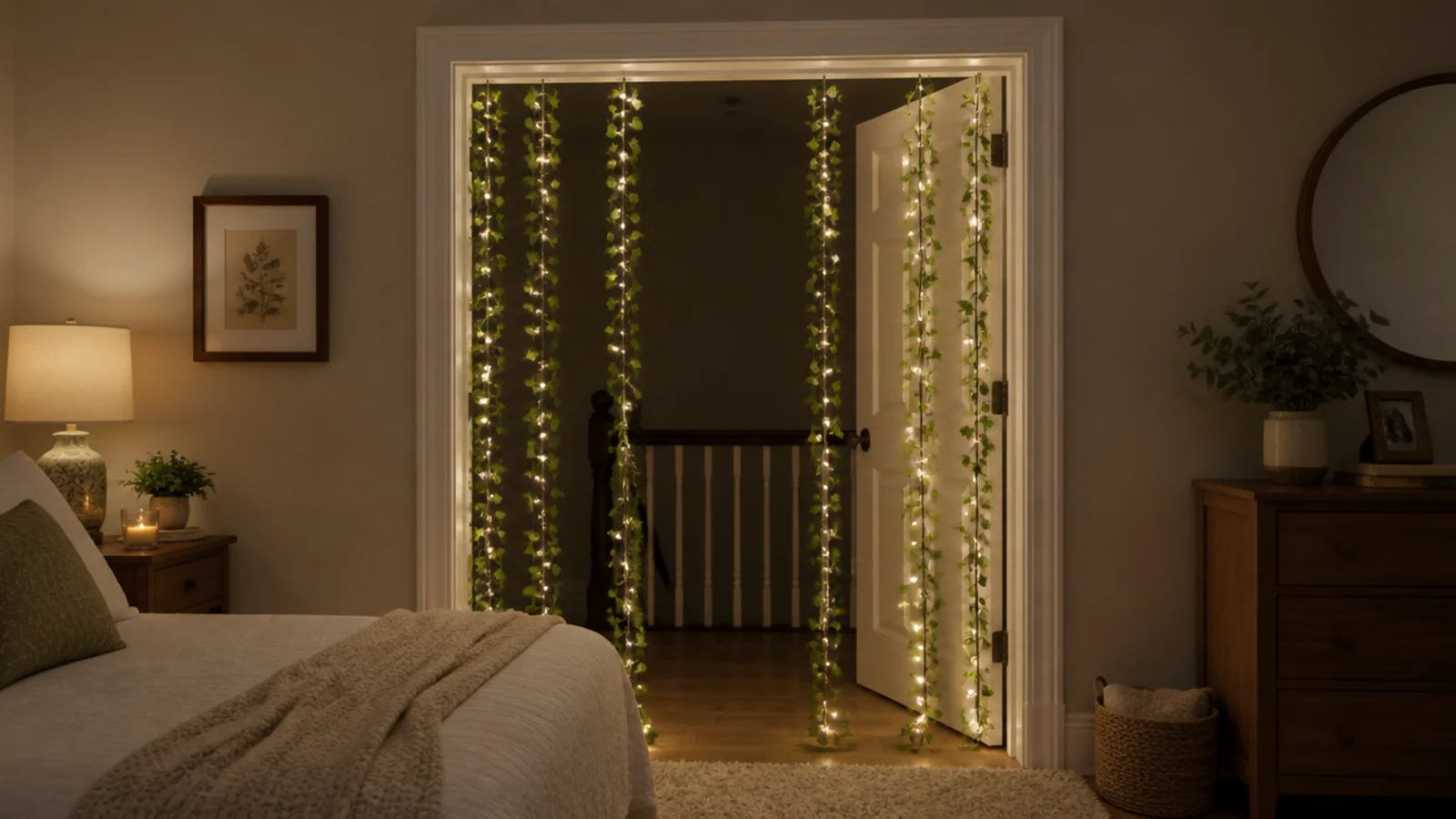
Vertical vine strands hung across an opening with a fine strand woven through them frames the door without blocking it. Set the whole thing back from the swing arc so nothing catches, keep the lowest leaves above head height, and use a tension rod if you cannot fix into the frame.
22. Keep the battery pack out of the bundle
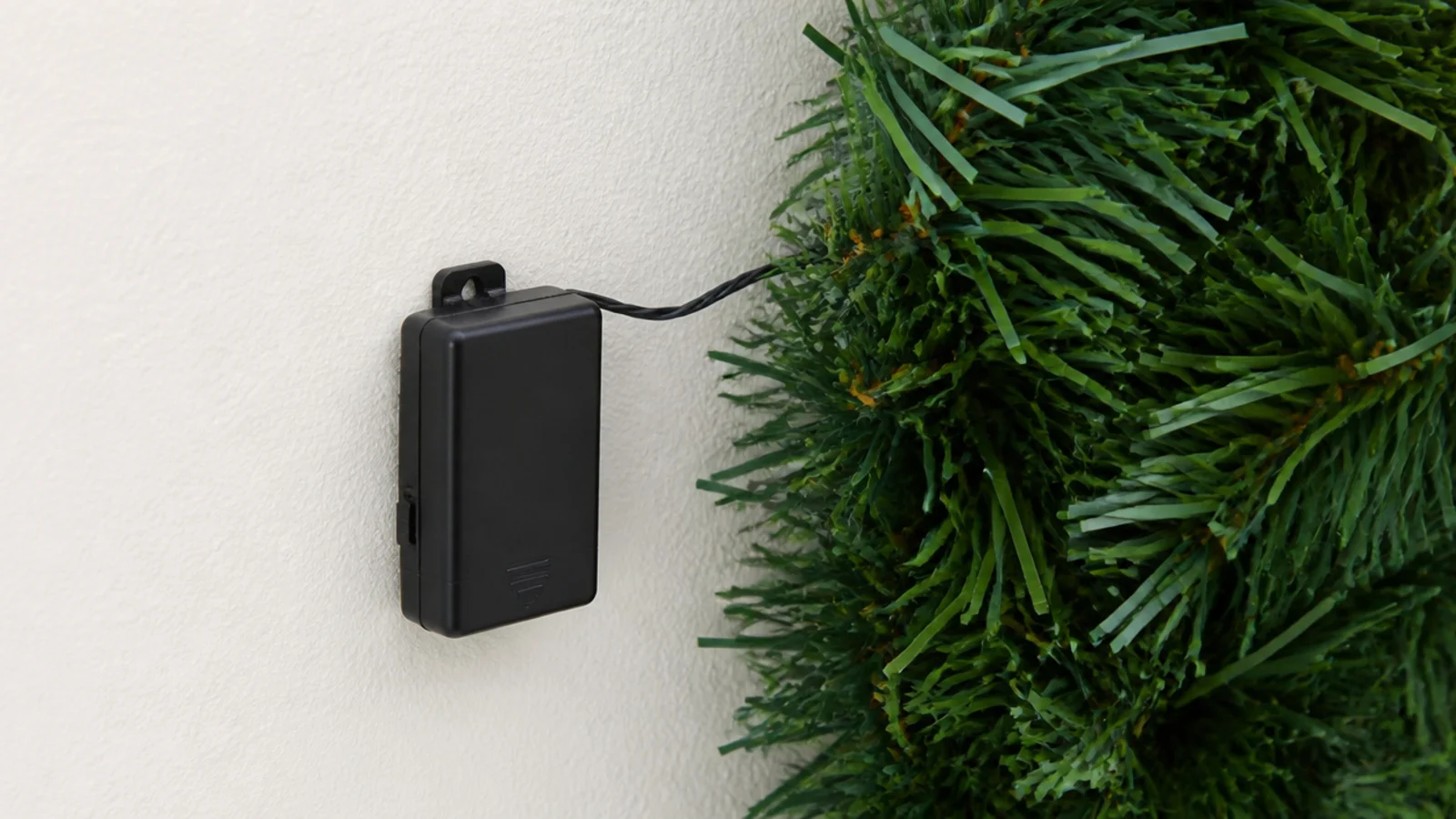
A pack buried inside dense foliage has no airflow around it and is impossible to reach when the cells go. Clip it to the wall just outside the garland edge with the lead running in. Same rule for a plug-in driver: it lives in open air, not wrapped in leaves.
23. Fluff every leaf to forty-five degrees
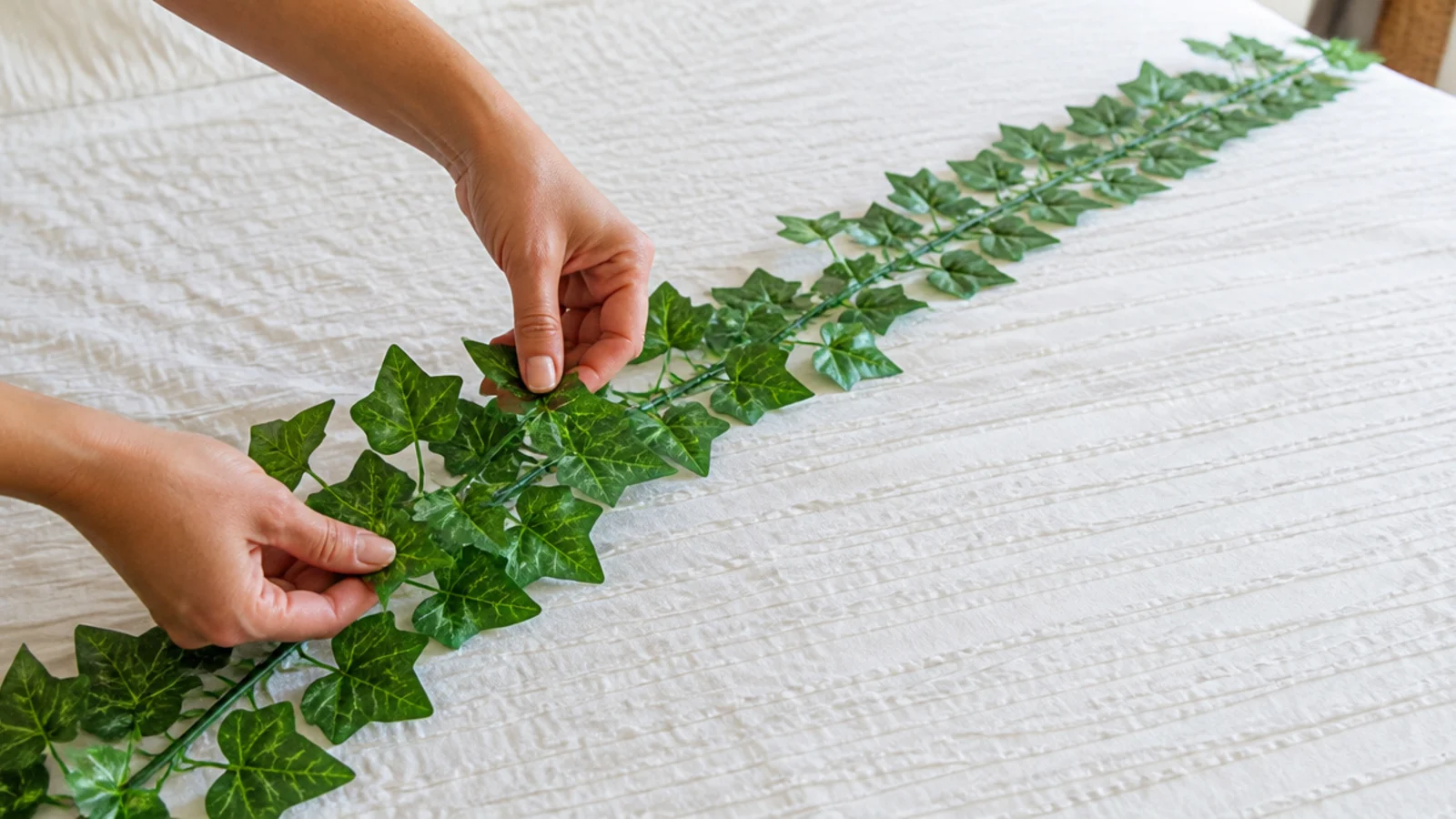
Artificial garland arrives flat-packed and every leaf lies against the stem. Bending each one out to roughly 45 degrees takes about twenty minutes per garland and it is the difference between foliage and a green rope. Do it before the strand goes on, while the garland is still loose on the bed.
24. Anchor the weight every twenty inches
Garland weight and cable weight are two separate problems. Adhesive hooks rated half a pound to a pound every 16 to 24 inches take the stem; small clear clips between them take the cable. If the wire is carrying leaves, the run will sag within a week and pull at the strand joints.
25. Dust the leaves every couple of months
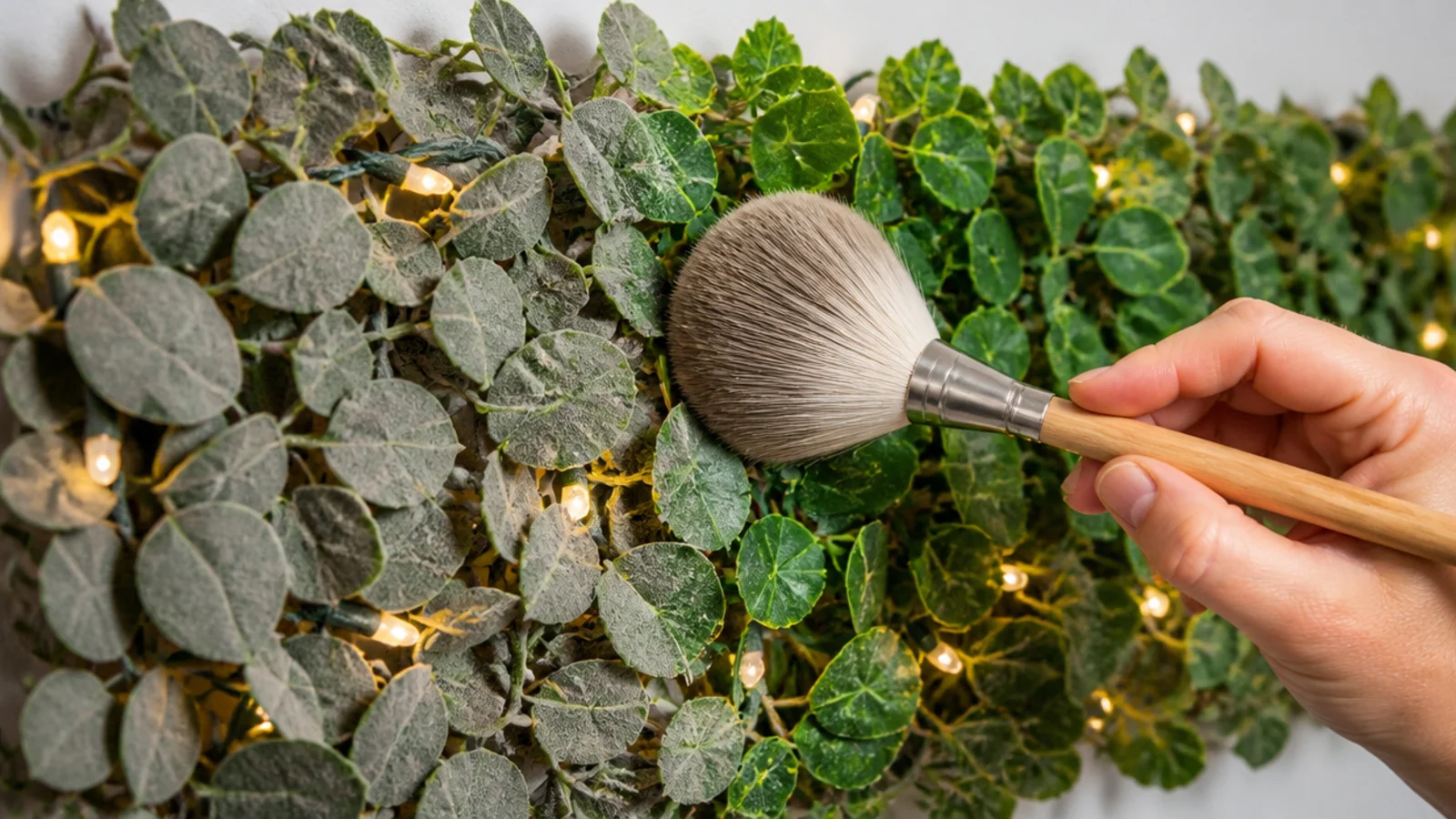
Artificial foliage collects a grey film that reads as fake from across the room, and lit from behind it shows even more. A soft brush or a hairdryer on cool every six to eight weeks takes it off. It is two minutes of work that keeps a $30 setup looking deliberate for years.
For the objects that sit under a lit garland — jars, lanterns and shelf styling — decor setups covers them in detail. Floating shelf ideas has the bracket loads if the greenery is spilling off a shelf, and ceiling hanging lights covers the fixture side if you want a real pendant among the vines.
Mistakes to Skip
- Threading the strand through a real, watered plant. Keep the wire on the wall behind and let the foliage hang in front of it — watering and cable joints do not mix.
- Pulling ties tight around the cable. A pinched sheath is the most common cause of a dead section, and it always appears weeks after you have finished the job.
- Hanging the whole run from the light wire. Copper wire strands are designed to carry themselves and nothing else — the garland needs its own hooks.
- Buying one garland type in bulk because it was on offer. A single repeated leaf shape reads as plastic from the doorway, whatever the light does to it.
Frequently asked questions
How many fairy lights do I need for a vine garland?
One 33 foot, 100 LED strand covers about three 6.5 foot garlands at a natural density. That works out near five bulbs per foot of garland, which reads as light caught in foliage rather than a lit rope. Doubling that looks like a shop display, and halving it disappears once the leaves are fluffed.
How do you attach fairy lights to vines?
Small clear zip ties or green floral wire every 10 inches, threading the light cable behind the main stem so the leaves sit in front of it. Never staple through the cable and never pull the wire tight around a stem, because a pinched sheath is the most common cause of a dead section later.
Are artificial vines and fairy lights safe together?
With LED strands, yes. LED bulbs run close to body temperature while incandescent minis reach 60°C and up, which is far too hot to bury in plastic foliage. Keep the battery pack or driver outside the leaf bundle where air moves around it, and never run the cable under a rug to reach a socket.
What length of vine garland do I need for a bedroom wall?
Measure the run and add 20 percent for the drape. A 10 foot wall with gentle swags needs about 12 feet of garland, which is two 6.5 foot strands overlapped. Buy one pack more than the calculation says, because the overlap at each joint eats about 4 inches every time.
Can I use real trailing plants instead of artificial vines?
Yes, with the lights near them rather than threaded through them. Pothos and heartleaf philodendron trail 6 to 10 feet and tolerate low light, but they get watered, and water and cable connections do not belong together. Light them from a strand fixed to the wall behind and let the plant stay a plant.
Want more like this? Browse all 15 fairy lights bedroom guides — they all use the same measurements and budget tiers.
Pin it for later
Save this to your Fairy Lights Bedroom board
Pin it now so it is waiting for you when the tape measure comes out — and so the next person hunting for this idea can find it too.
Save this pinKeep going
More ideas worth saving while you have the tape measure out.