Fairy Lights Bedroom · UGC
25 Bedroom Fairy Lights Looks I Tried For A Year

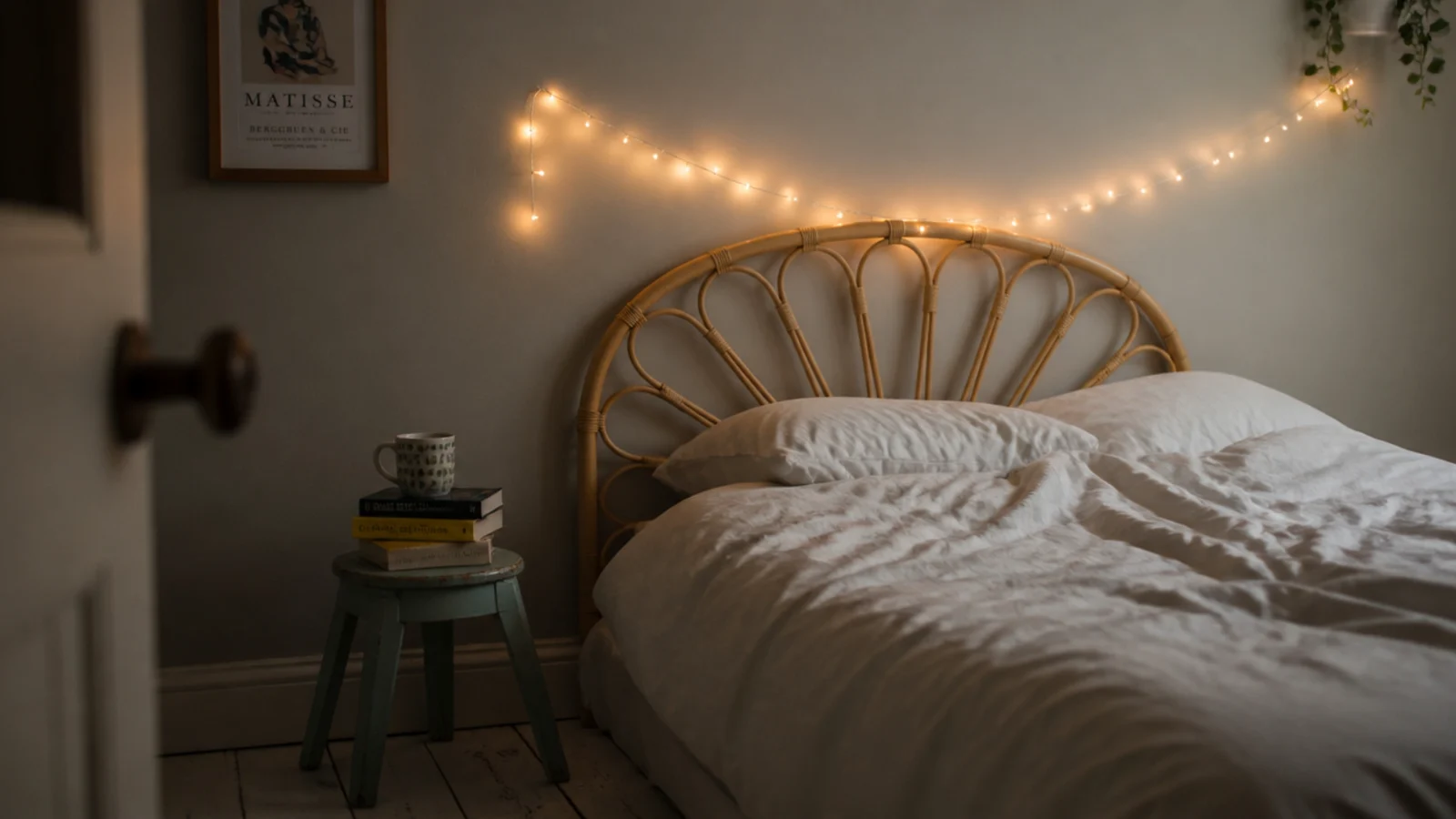
Twelve months, one small rented room, and roughly forty metres of copper wire. I started with bedroom fairy lights because the ceiling fixture was a bare 3000K bulb I was not allowed to change, and I kept going because the difference between a strand hung well and a strand hung anywhere was much bigger than I expected. Some of these have been up since the first week. Two came down within a fortnight and one lasted nine days. Here is the whole list, with what I actually learned from each.
In this guide27 sections — tap to openHide
- 1.How I judge bedroom fairy lights after a year
- 2.The headboard halo I never took down
- 3.A full curtain wall behind the bed
- 4.A star field across the ceiling
- 5.Lights threaded into a muslin canopy
- 6.Wrapped around the dressing mirror
- 7.Hidden behind a slat headboard
- 8.Under the bed frame, which I abandoned
- 9.A photo clip wall that changed monthly
- 10.A single strand around the door frame
- 11.The window outline that fought the curtains
- 12.Fifty bulbs coiled in a storage jar
- 13.A diagonal globe strand across the room
- 14.A vine garland along the picture rail
- 15.The wadding cloud I took straight back down
- 16.A lit ladder in the corner
- 17.A battery strand inside the wardrobe
- 18.The colour-changing set I stopped using
- 19.A net light that lasted nine days
- 20.Curtain lights layered over blackout linings
- 21.A strand along the skirting board
- 22.Two strands doubled over the picture rail
- 23.Lights threaded into the bookshelf
- 24.A bedside jar on a six hour timer
- 25.A peg rail with a looped strand
- 26.Everything on one smart plug
- 27.What I'd Do Differently Now
How I judge bedroom fairy lights after a year
Four things decide whether a look survives, and none of them are how it photographs on day one.
Does it stay up? A 33 foot copper strand weighs about 3.5 ounces, so weight is never the problem — adhesion is. Clips at 12 to 16 inch spacing on an internal wall have not moved in a year. On the cold outside wall I reset one a month all winter until I started warming the spot with a hairdryer for ten seconds first.
Is it in your eyeline? Anything between 40 and 65 inches off the floor is at seated eye level and needs a diffuser or a hiding place. This is the single biggest difference between the looks I kept and the ones that irritated me by week three.
Does it need thinking about? Battery sets ate three AA cells a week until I moved everything onto timers. Six hours on, eighteen off, and a set of rechargeables now lasts about a month.
And is it safe without effort? LED only anywhere near the canopy, the curtains or the duvet, packs and drivers left in open air rather than tucked under a pillow, nothing run beneath the rug, no staples or pins through a cable, and never more sets chained end to end than the tag allows. If you want the fixings worked through properly, my hanging mistakes covers what went wrong first.
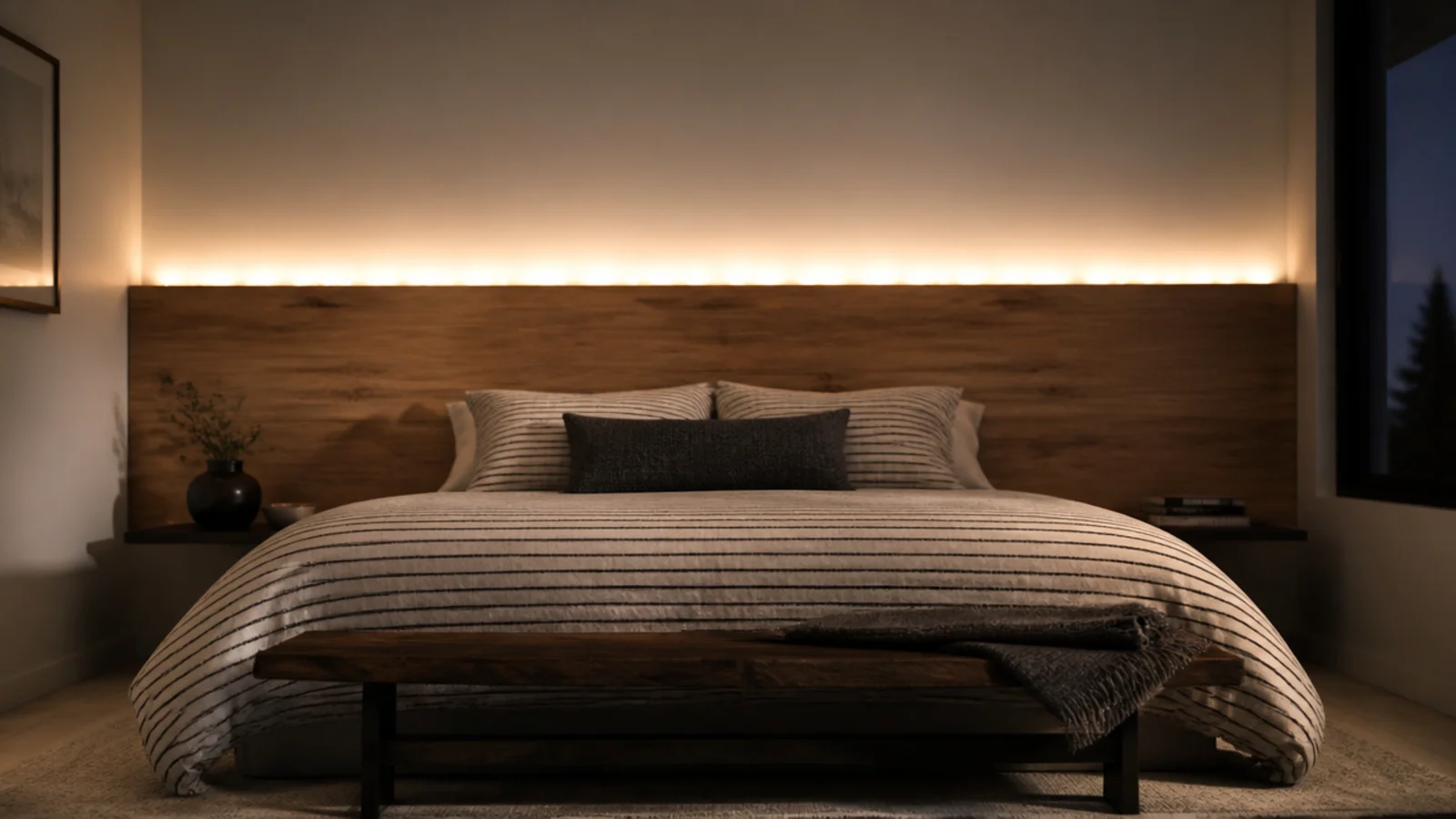
1. The headboard halo I never took down
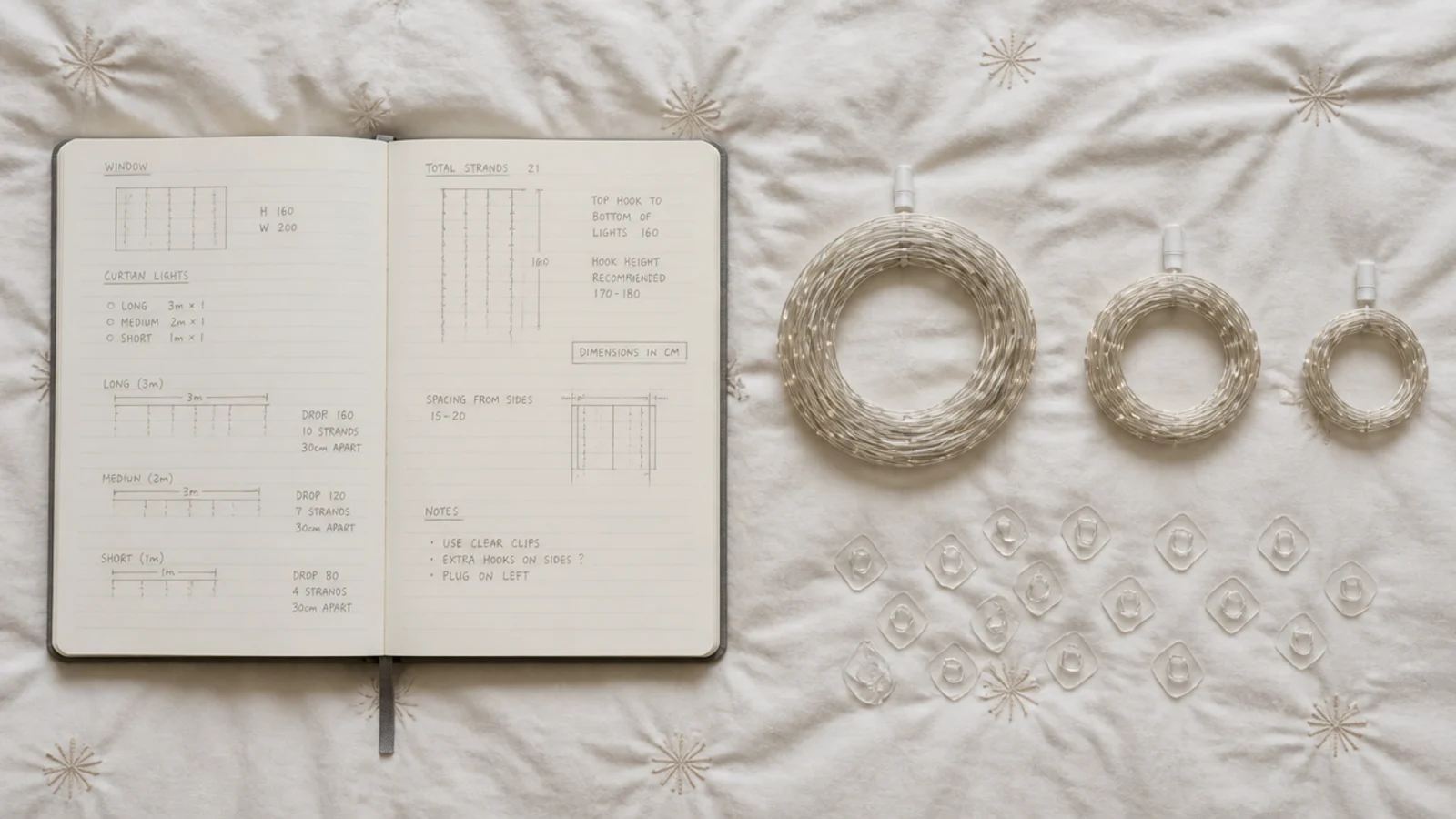
One 33 foot strand, 12 inches above the headboard, rising about 8 inches at the centre. Nothing shines into your eyes because the whole run sits behind and above you. Twelve months in, six clips and no adjustment.
2. A full curtain wall behind the bed
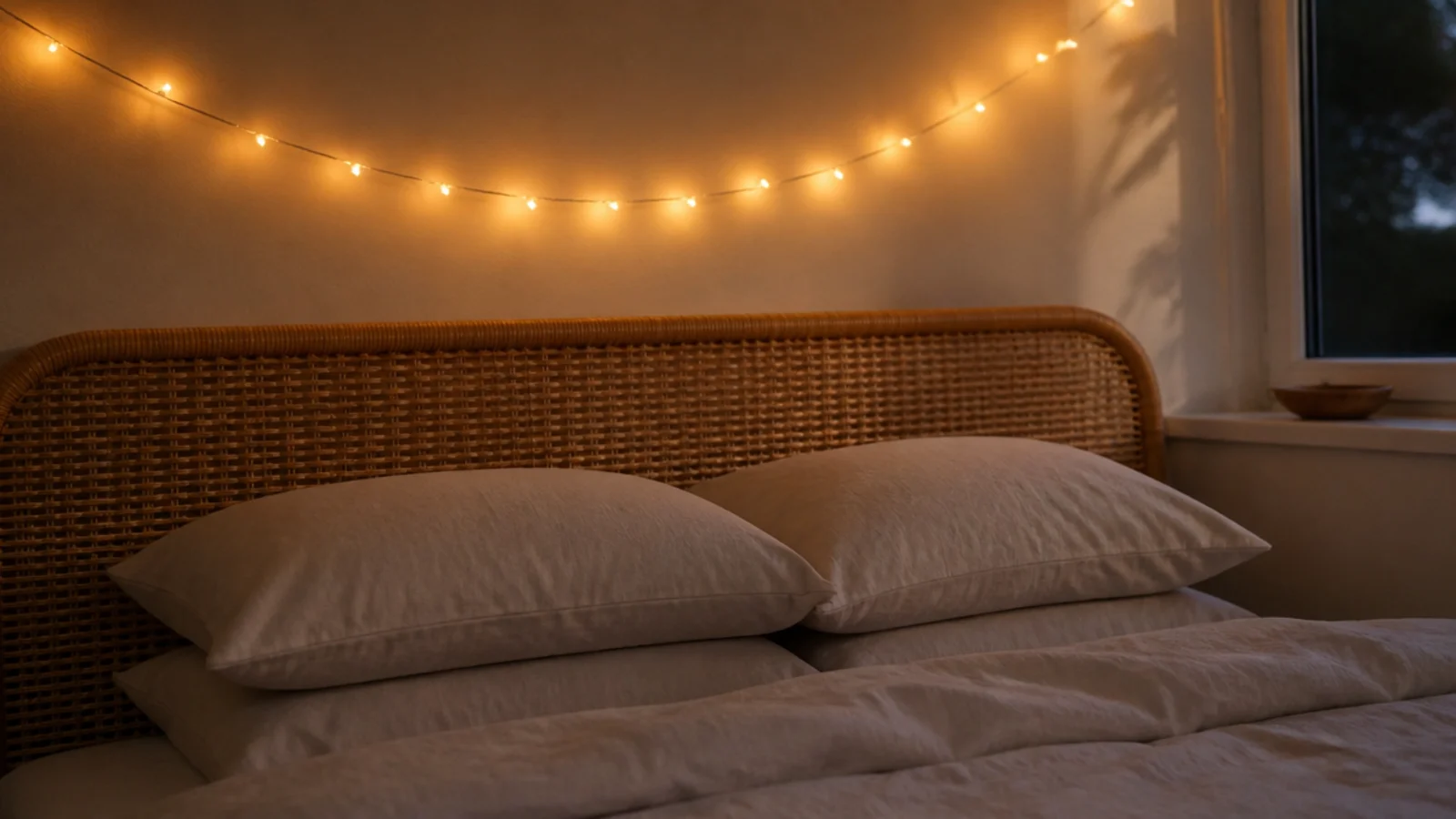
Three 33 foot strands hung as ten drops across an 8 foot wall. Genuinely dramatic for about a month, then far too much for a room I sleep in. I cut it to four drops and liked it more.
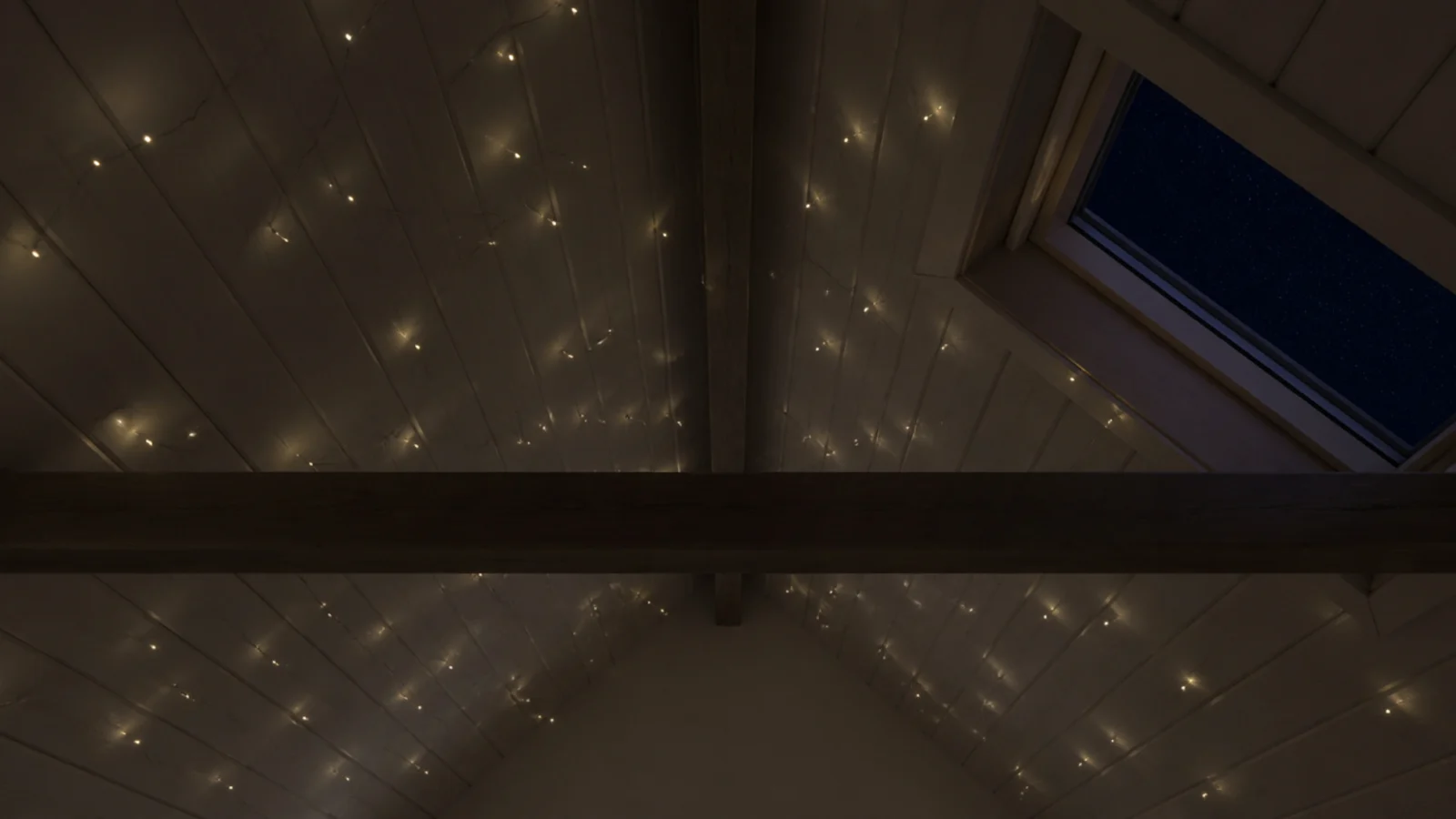
3. A star field across the ceiling
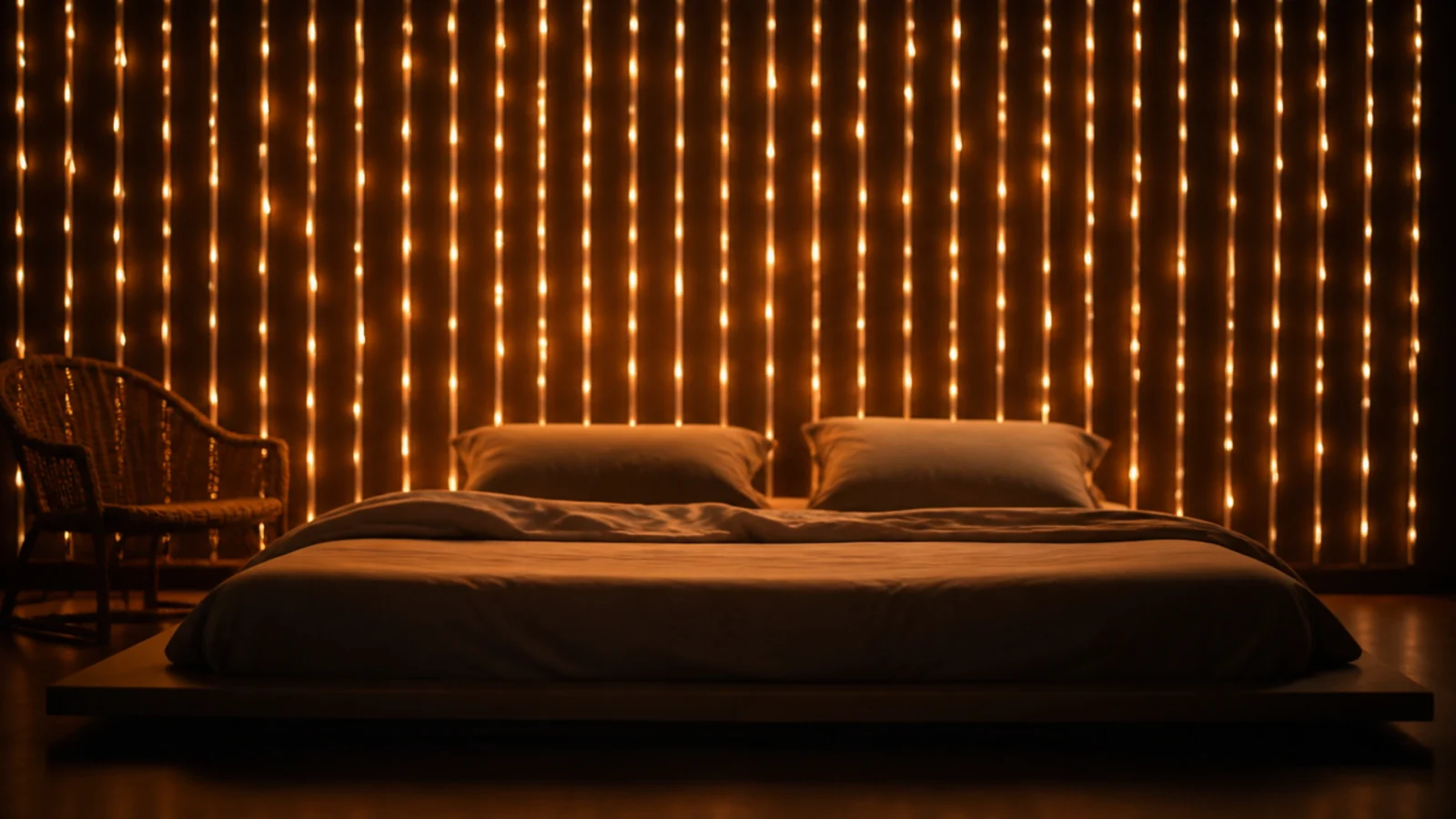
About 120 bulbs on clear wire, spaced irregularly, roughly one per square foot near the centre and thinner at the edges. It took an evening with clear adhesive dots and it is the only look anyone comments on.
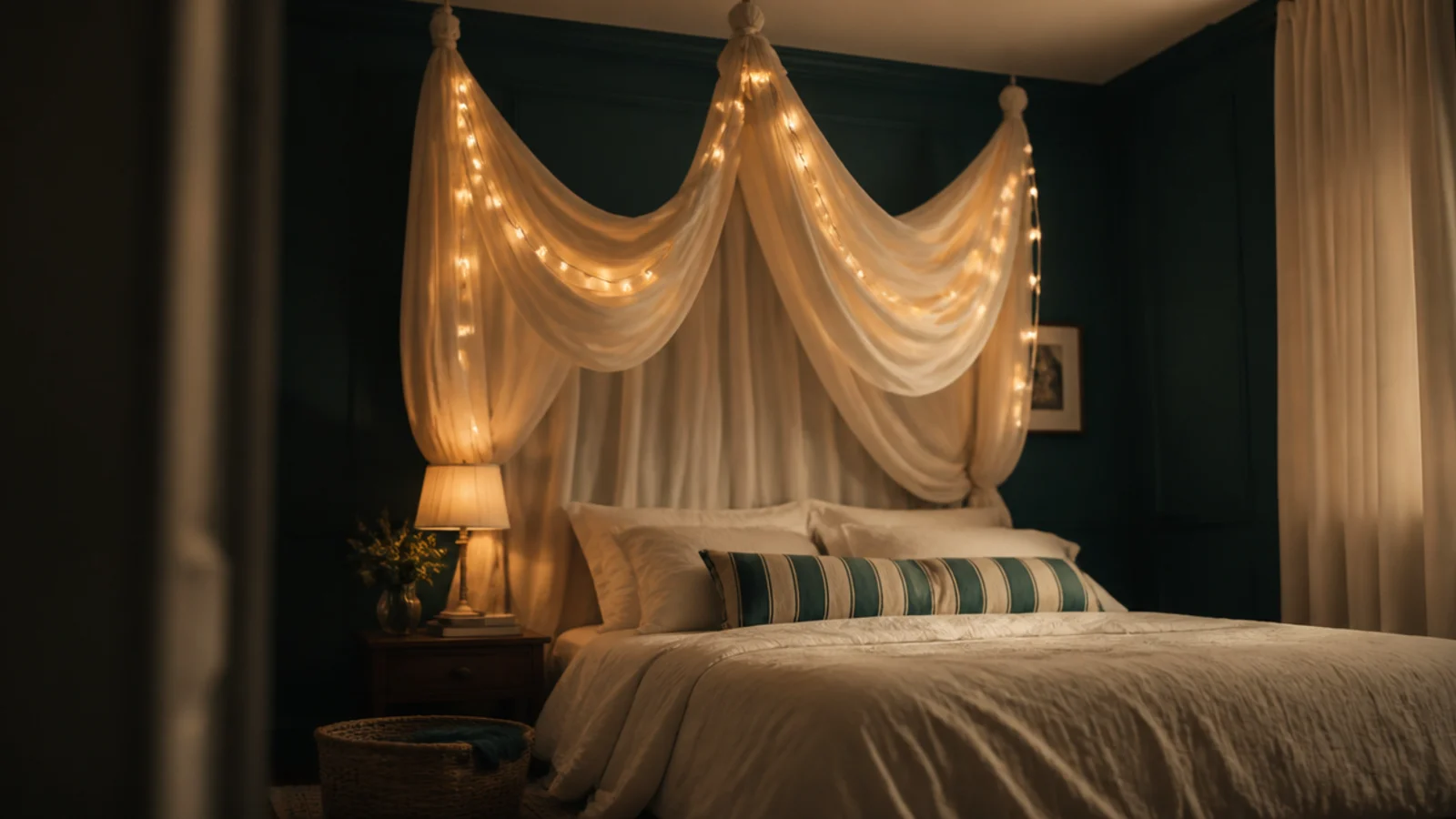
4. Lights threaded into a muslin canopy
Four ceiling hooks in a rectangle 4 inches wider than the bed each side, muslin gathered between them, one LED strand laid over the top folds. Never wrapped inside the cloth, because a strand bound in fabric has nowhere to lose heat.
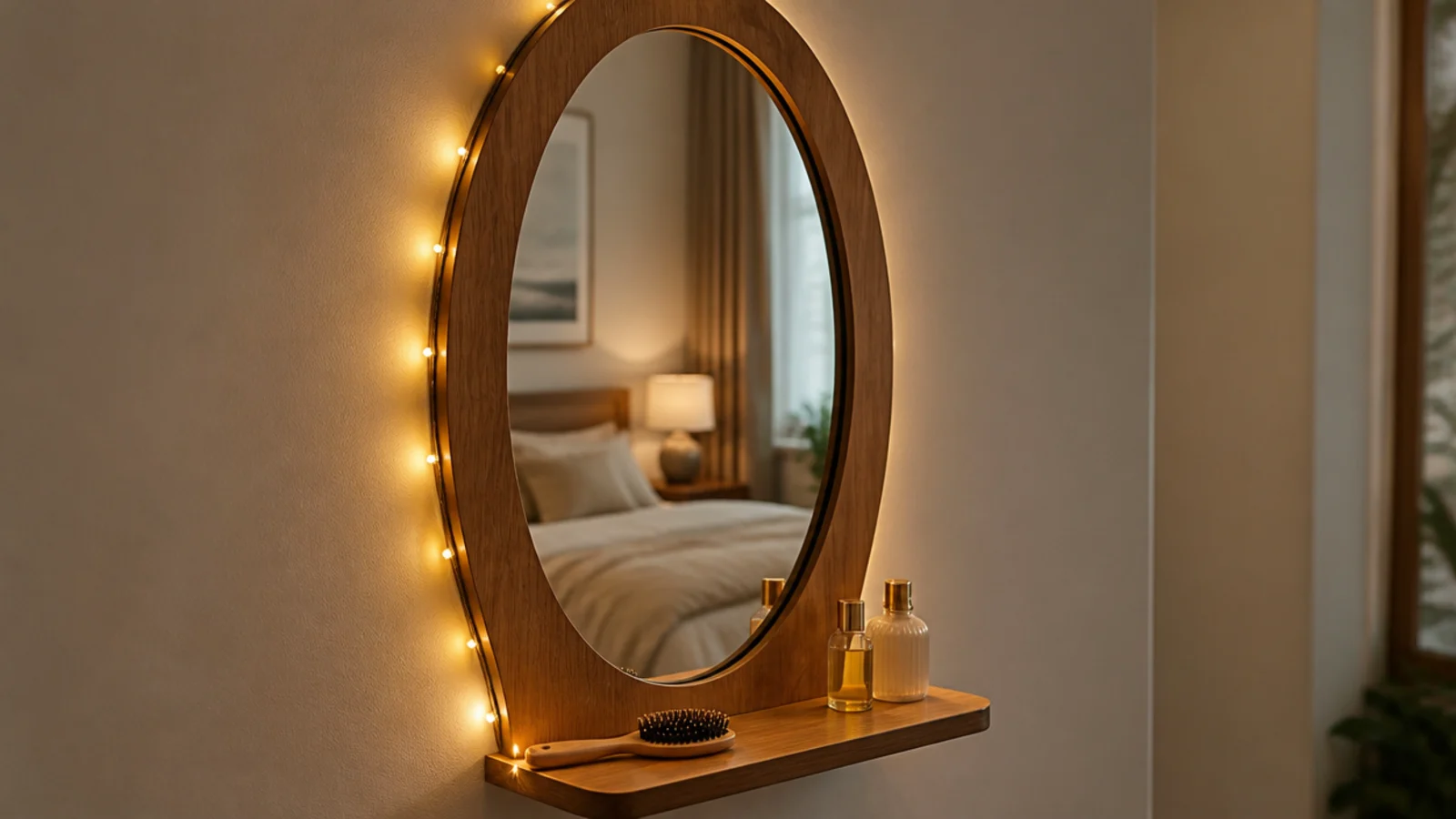
5. Wrapped around the dressing mirror
About 7 feet of fine strand around a 24 inch mirror, fixed to the frame rather than the glass. Adhesive on a mirror back lifts the silvering over time. Face-on light is the only useful direction for makeup.
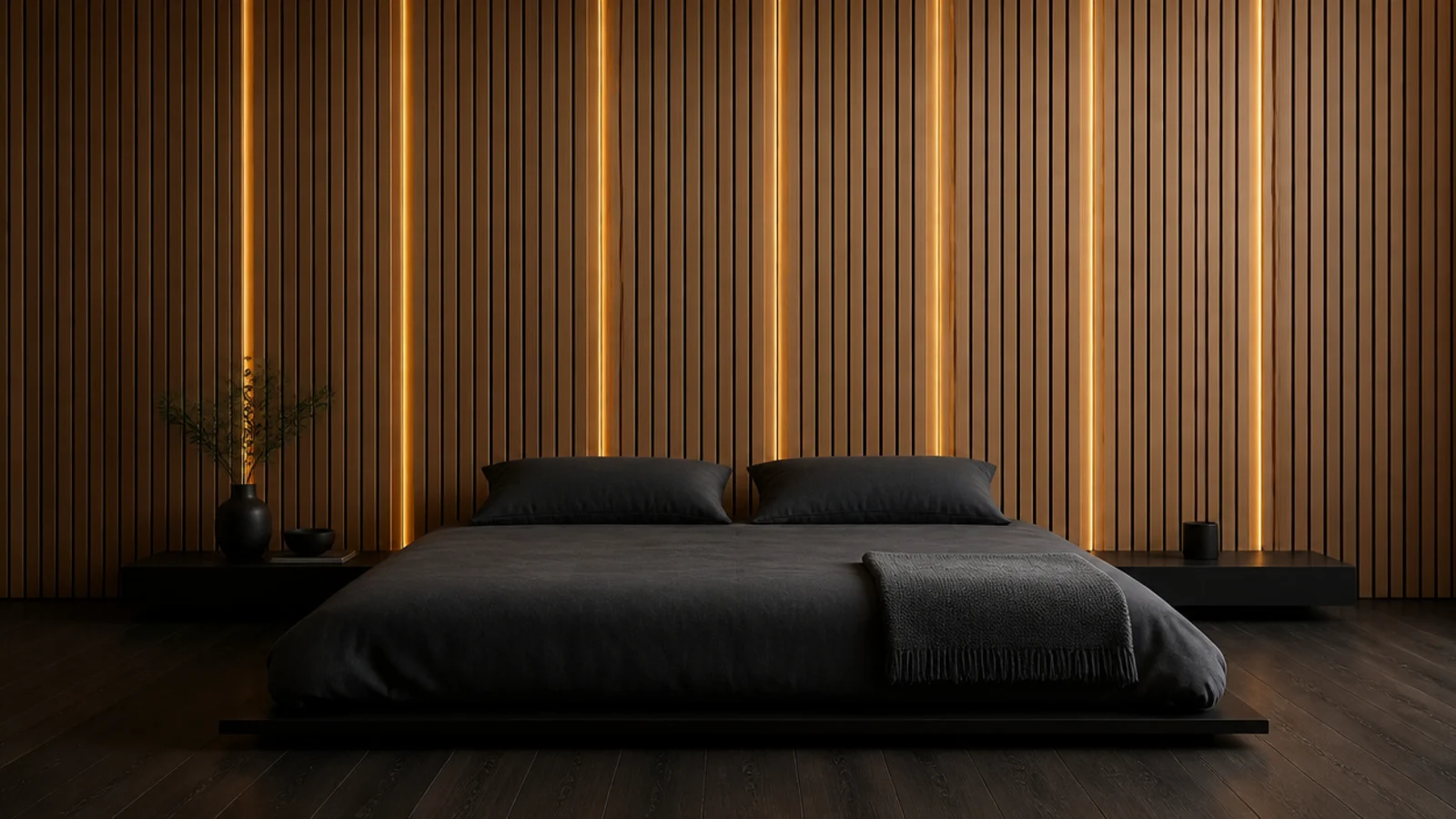
6. Hidden behind a slat headboard
The strand fixed to the wall, not the slats, with 2 inch gaps between battens. You see bands of light, never a bulb. It cost about $30 in timber and it looks like the most expensive thing in the room.
7. Under the bed frame, which I abandoned
It looked good for a week and then collected every piece of dust in the room. Worse, the cable ran across the floor to reach a socket. I would only revisit it with a channel clipped to the frame itself.
8. A photo clip wall that changed monthly
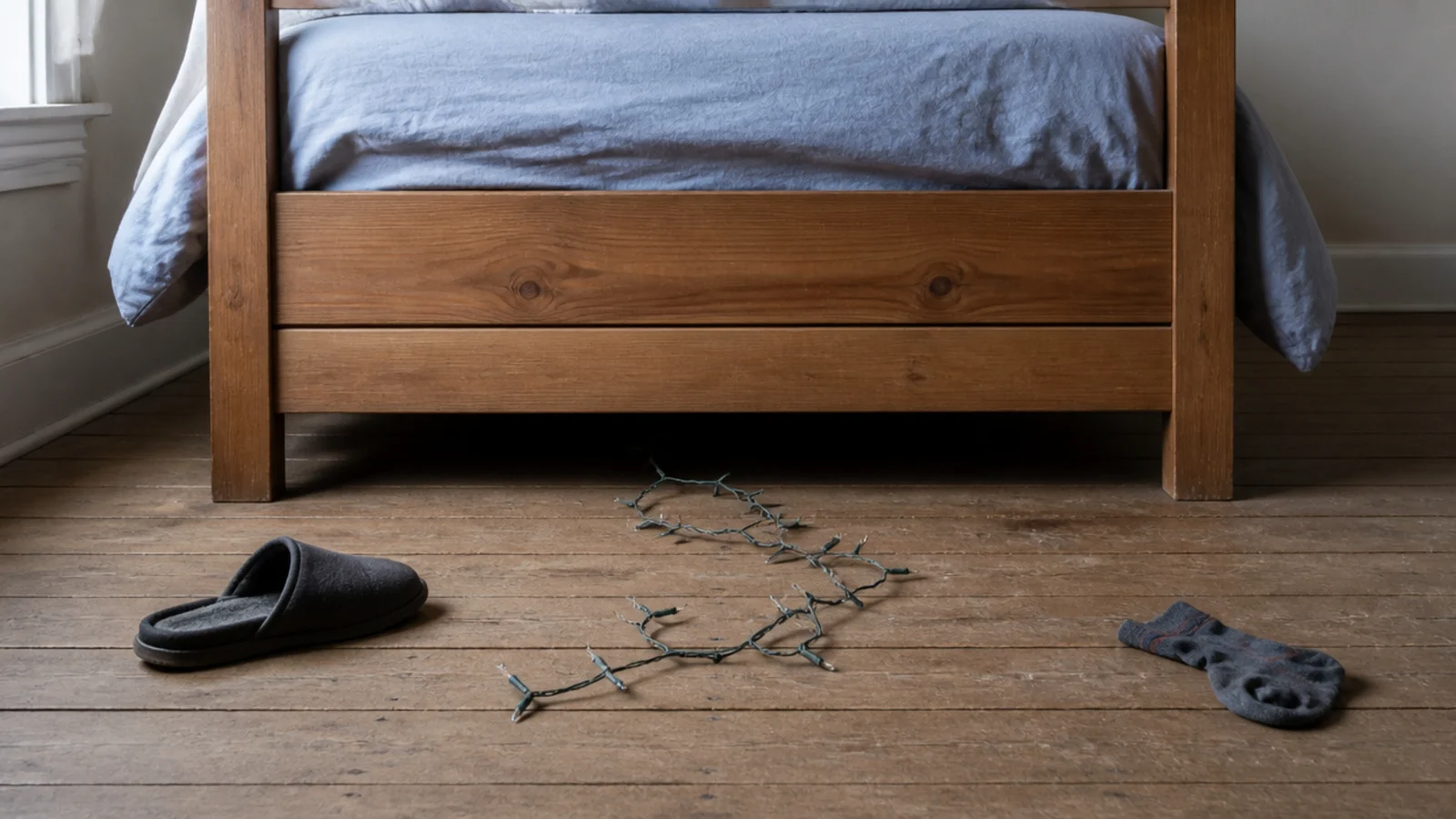
Two 10 foot clip strands, twenty prints at about 20 cents each. The clips take a 4 by 6 print comfortably and nothing heavier. It is the only look here that gave me something to do rather than something to look at.
9. A single strand around the door frame
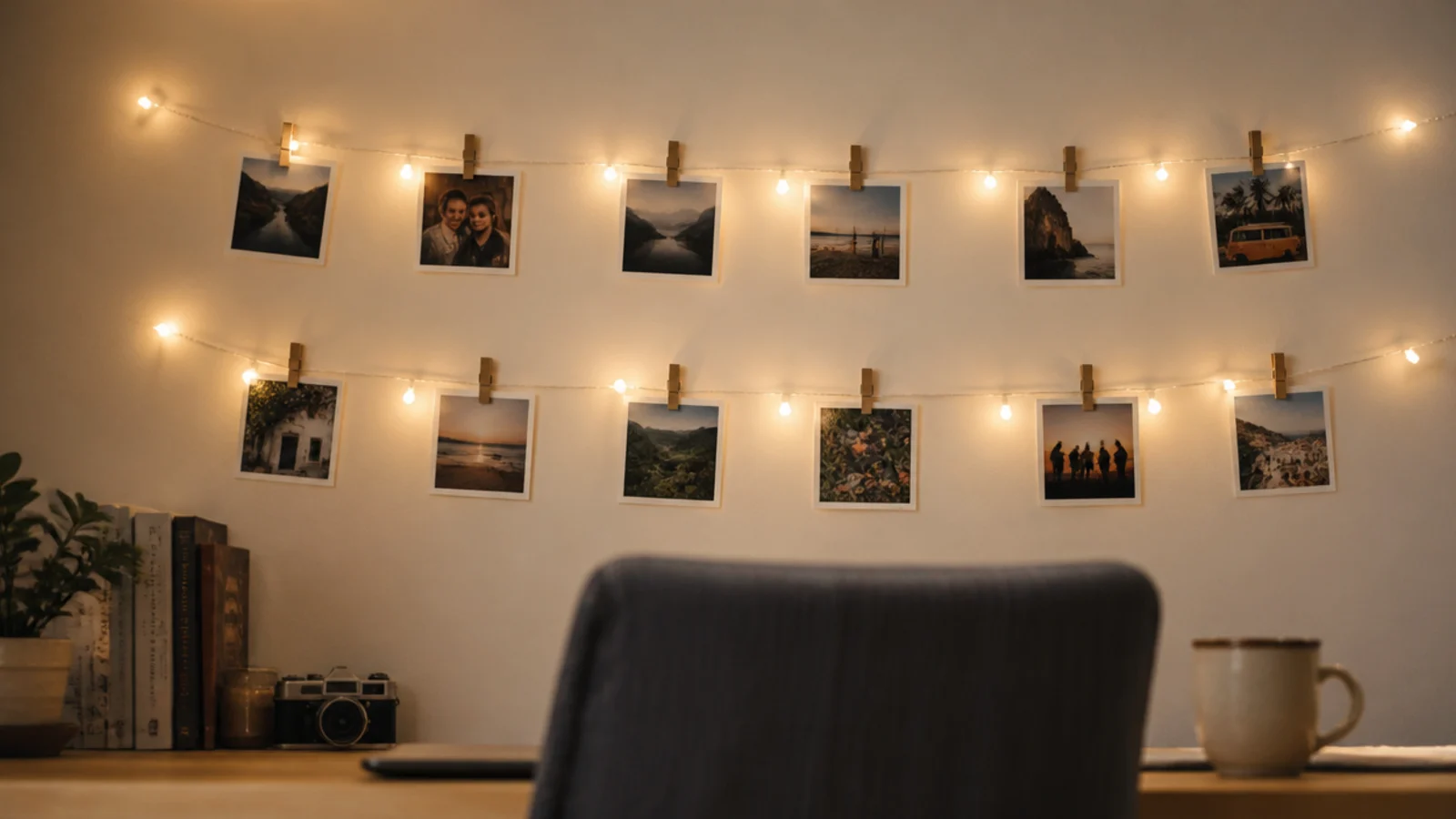
A standard door frame is roughly 14 feet around three sides, so one 16 foot set covers it. It reads better than it sounds, especially from the landing, and the architrave gives you a clean line to clip against.
10. The window outline that fought the curtains
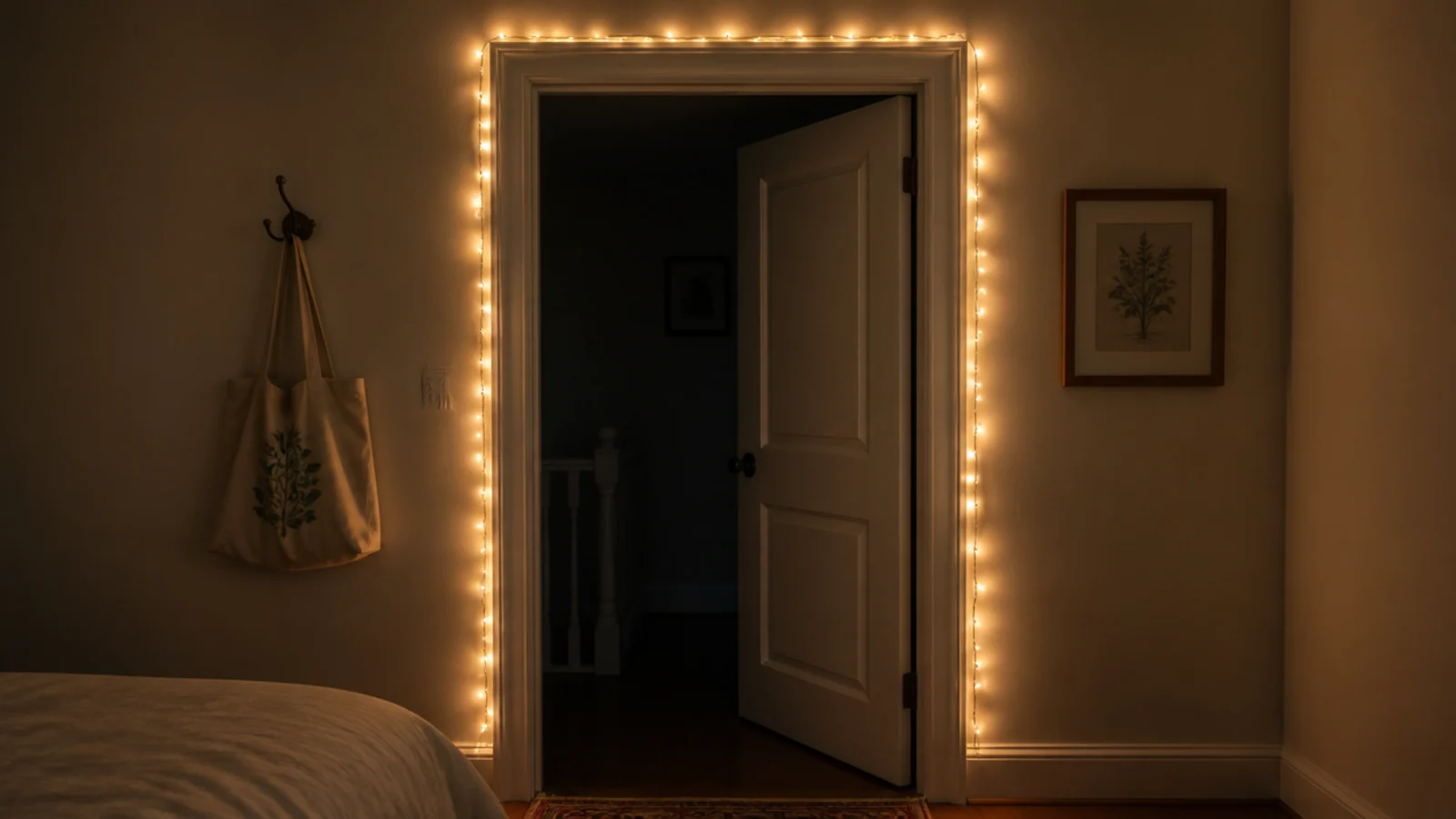
Beautiful with the curtains open, invisible with them drawn — which is most of the time in a bedroom. If your curtains sit outside the reveal, run the lights inside it instead and you keep the effect all evening.
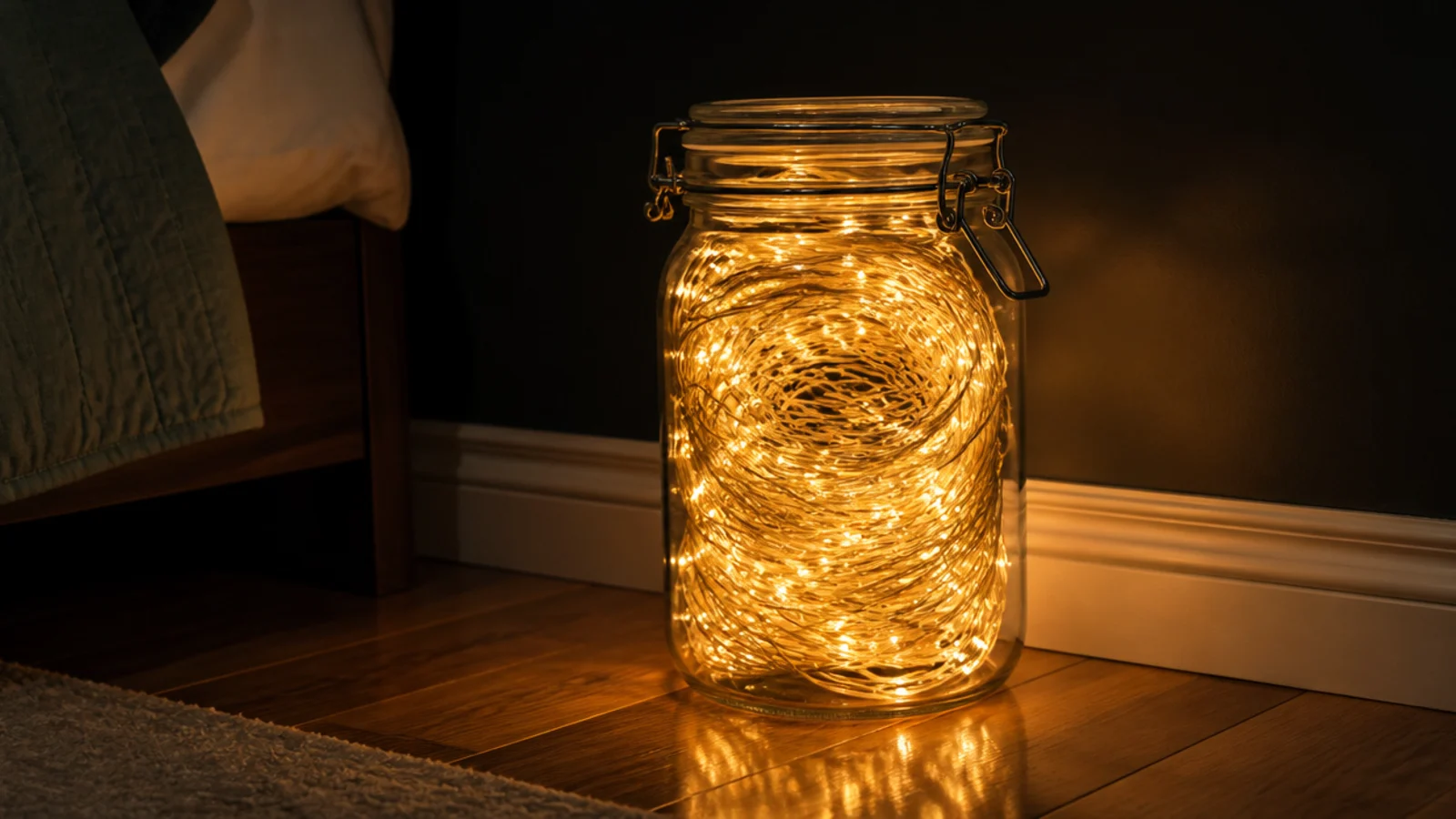
11. Fifty bulbs coiled in a storage jar
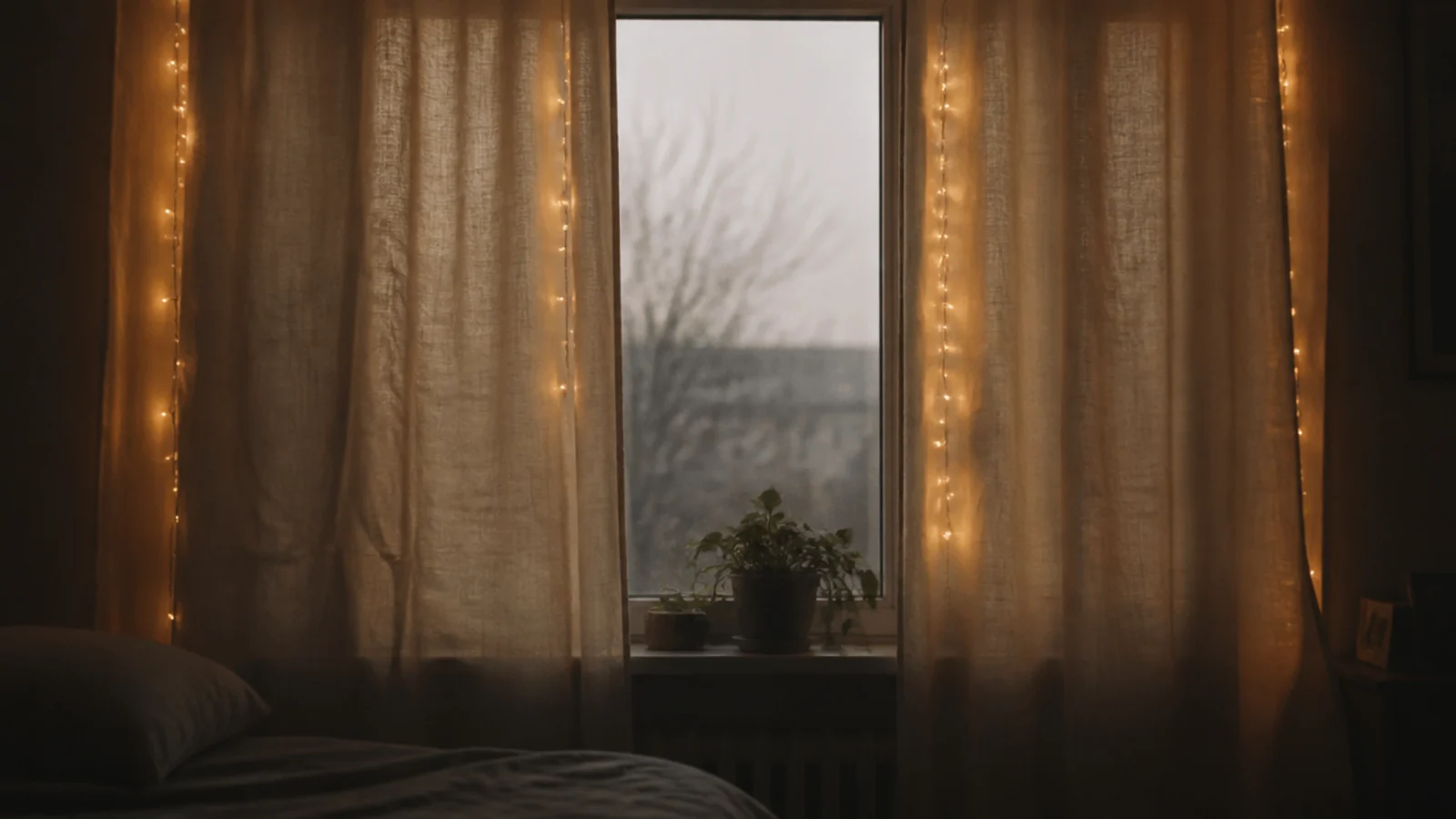
A 16 foot battery set coiled inside a 3 litre kitchen jar makes fifty separate points read as one soft mass. Total cost about $10 plus a jar I already had, and it lights a corner with no socket.
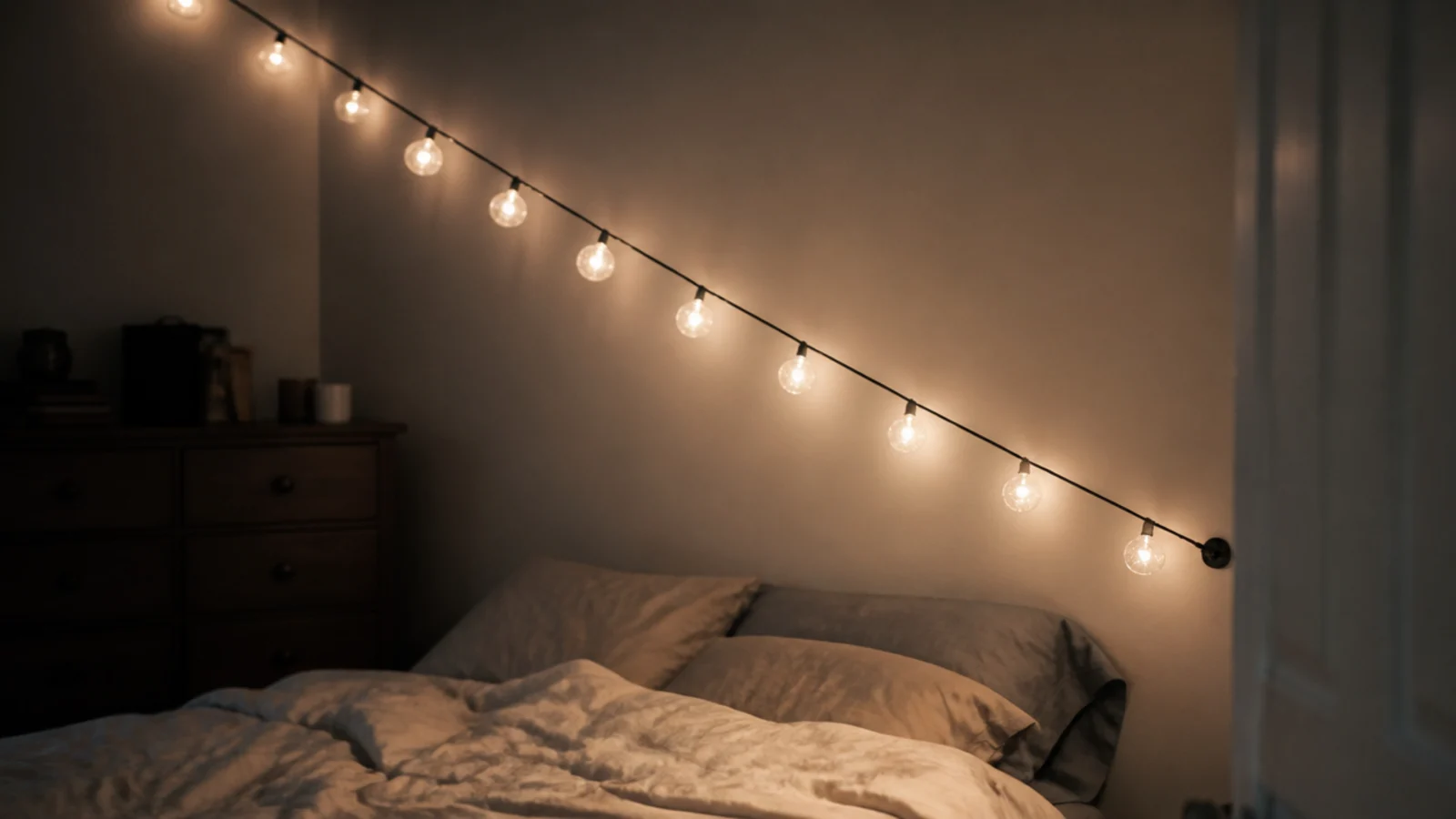
12. A diagonal globe strand across the room
Twelve G40 globes at 12 inch spacing running corner to corner. The diagonal breaks the boxiness of a small room in a way a wall-hugging run never does. Two ceiling hooks, both into joists, because a globe strand is heavy.
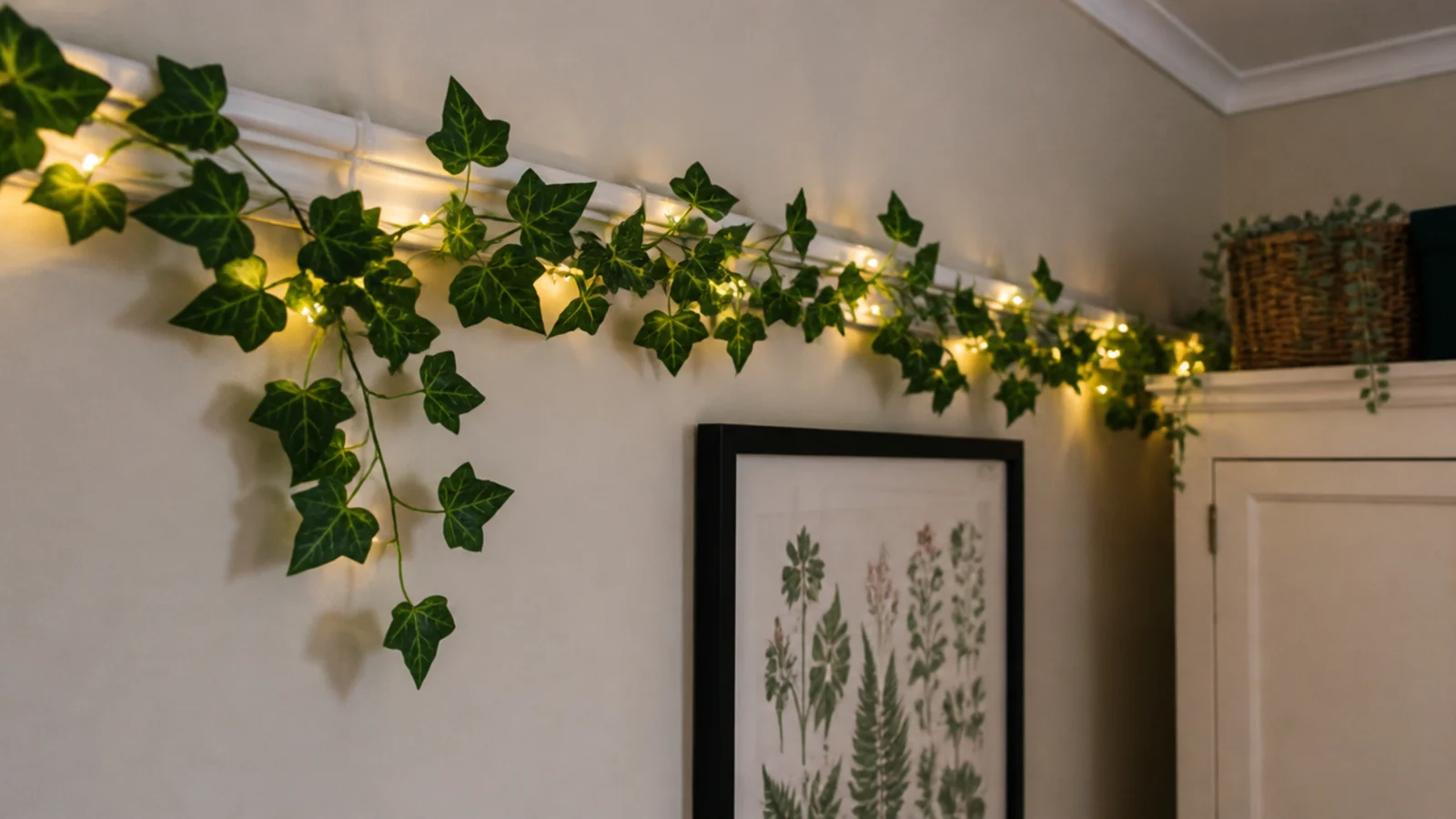
13. A vine garland along the picture rail
Two 6.5 foot ivy garlands zip tied every 10 inches with a fine strand woven through. The foliage swallows the wire completely, which is the entire reason to do it. There is more on this in vines and lights.
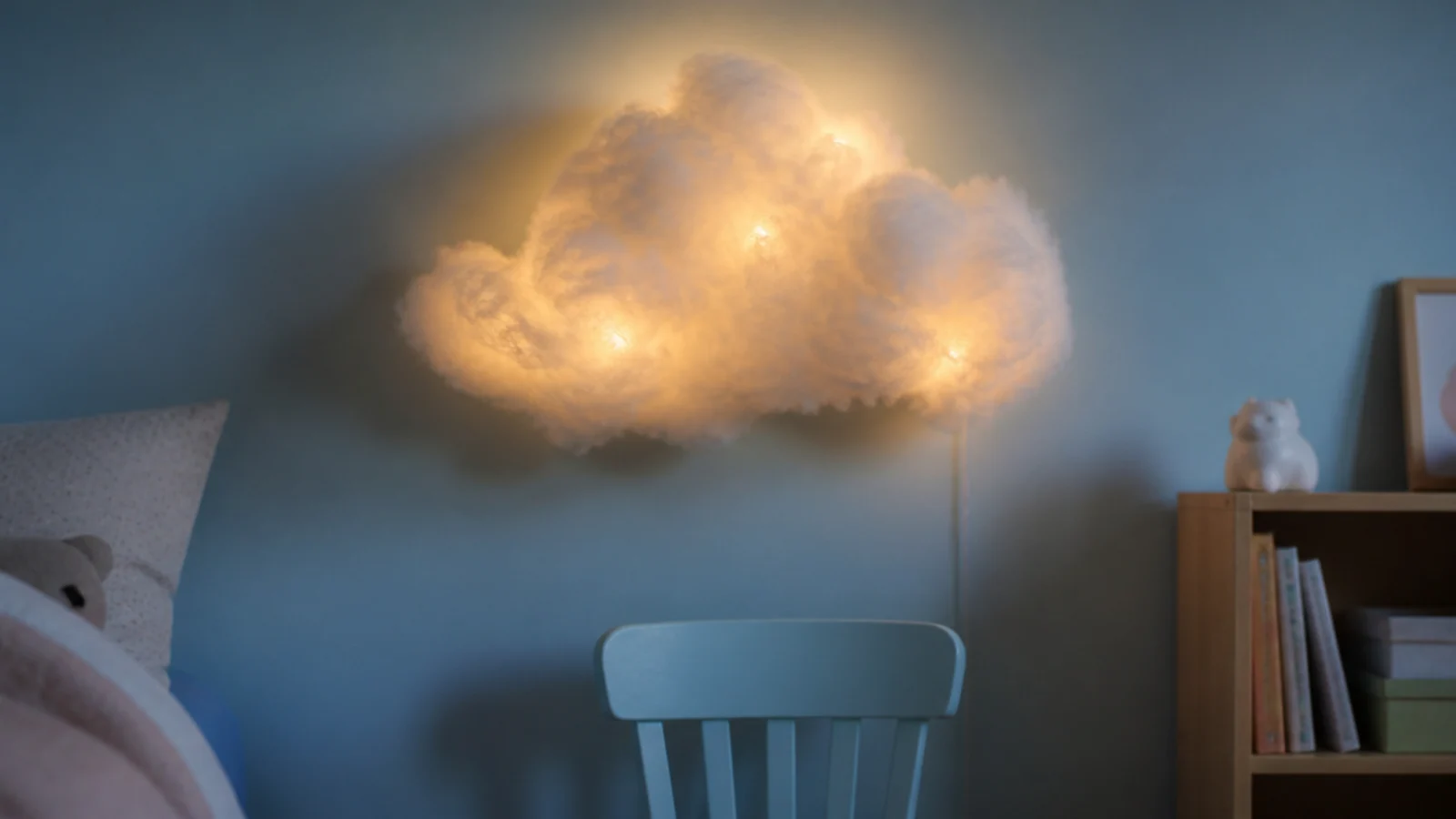
14. The wadding cloud I took straight back down
Cotton wadding on the wall with a strand behind it. It sagged within days, collected dust, and packing loose fibre around any light source is a bad instinct even with cool LEDs. Down in under a week.
15. A lit ladder in the corner
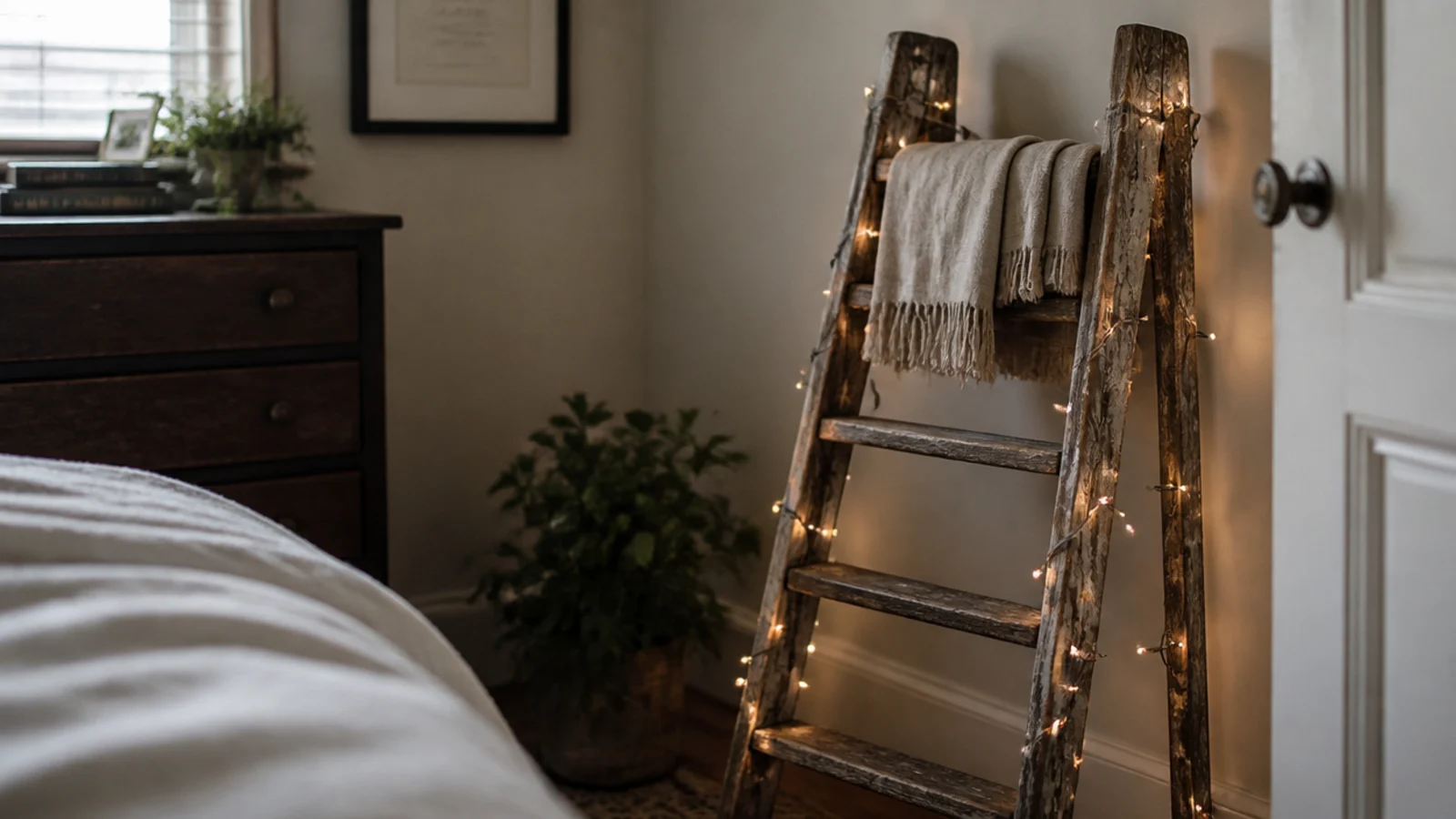
A $6 secondhand step ladder, leaned rather than opened, using about 14 inches of floor. A strand wound up both rails gives you height in a corner with no fixings at all. It has been there ever since.
16. A battery strand inside the wardrobe
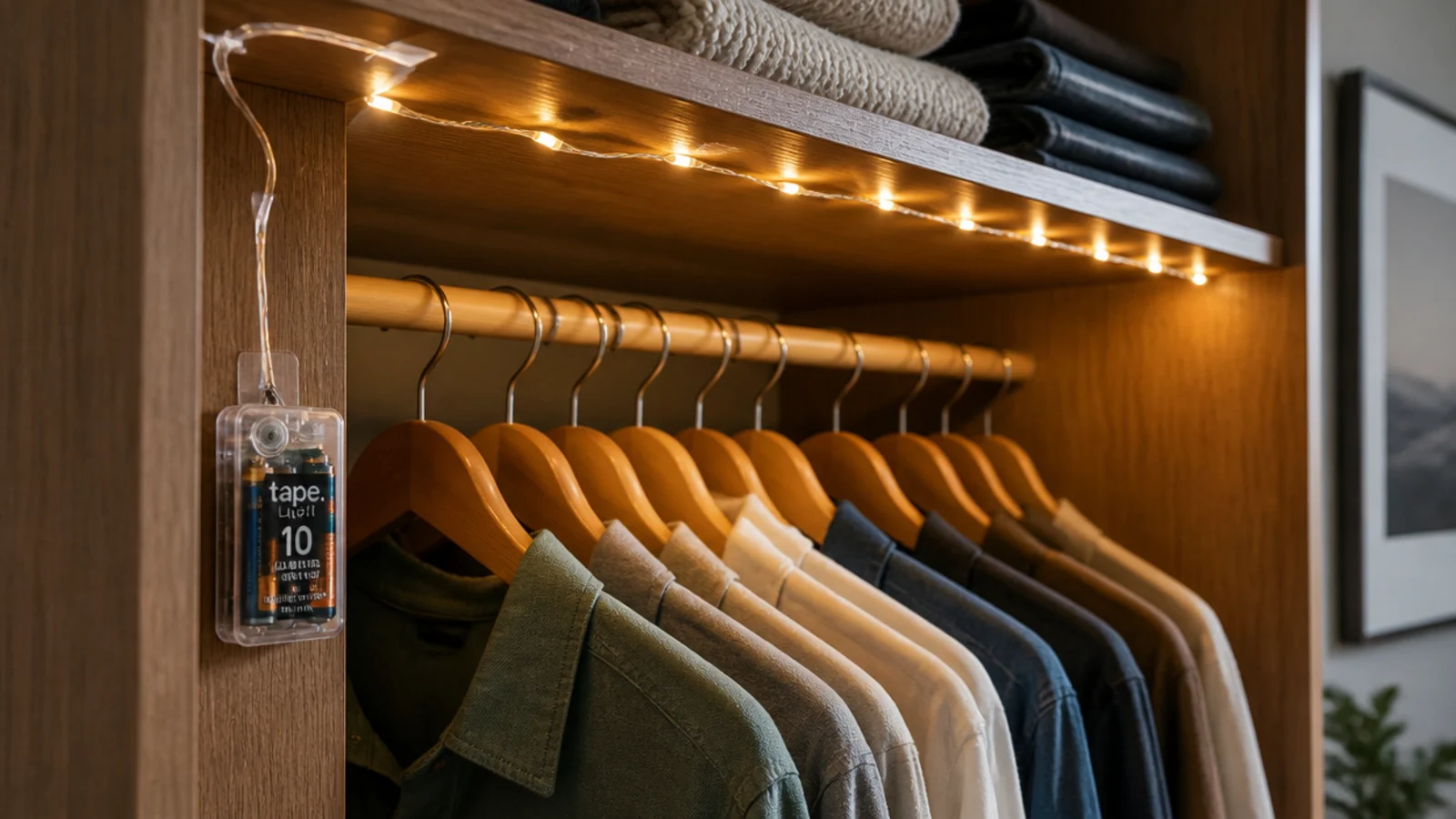
Taped along the underside of the top shelf, an inch back from the lip. With the six hour timer on, one set of rechargeable cells lasts about a month. The pack is clipped upright to the side panel where air moves around it.
17. The colour-changing set I stopped using
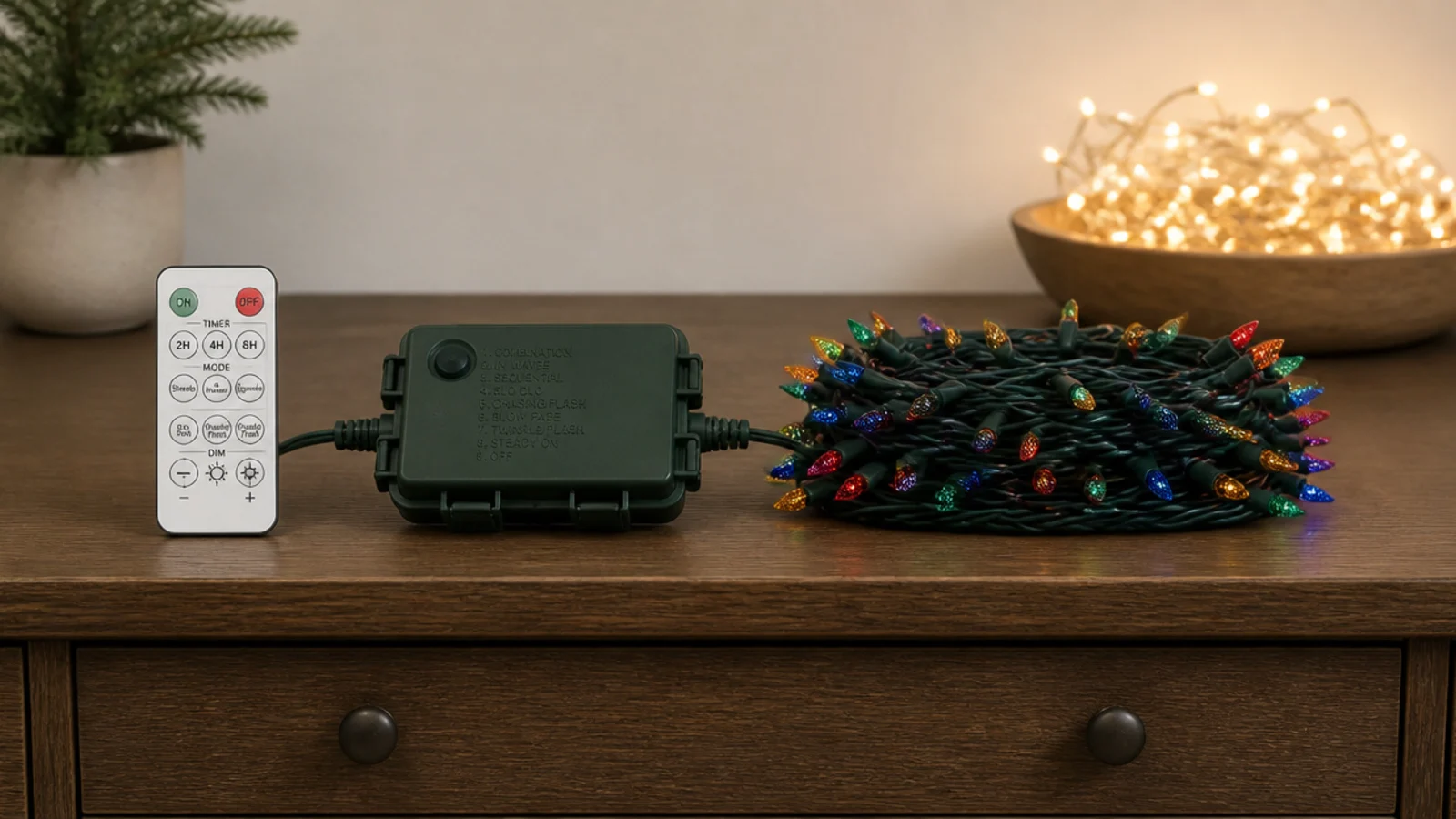
Five dollars more than the plain warm white version, plus a receiver box moulded into the cable that you can see from the doorway. I used the colour settings twice. Warm white at 2200K did everything I wanted from the start.
18. A net light that lasted nine days
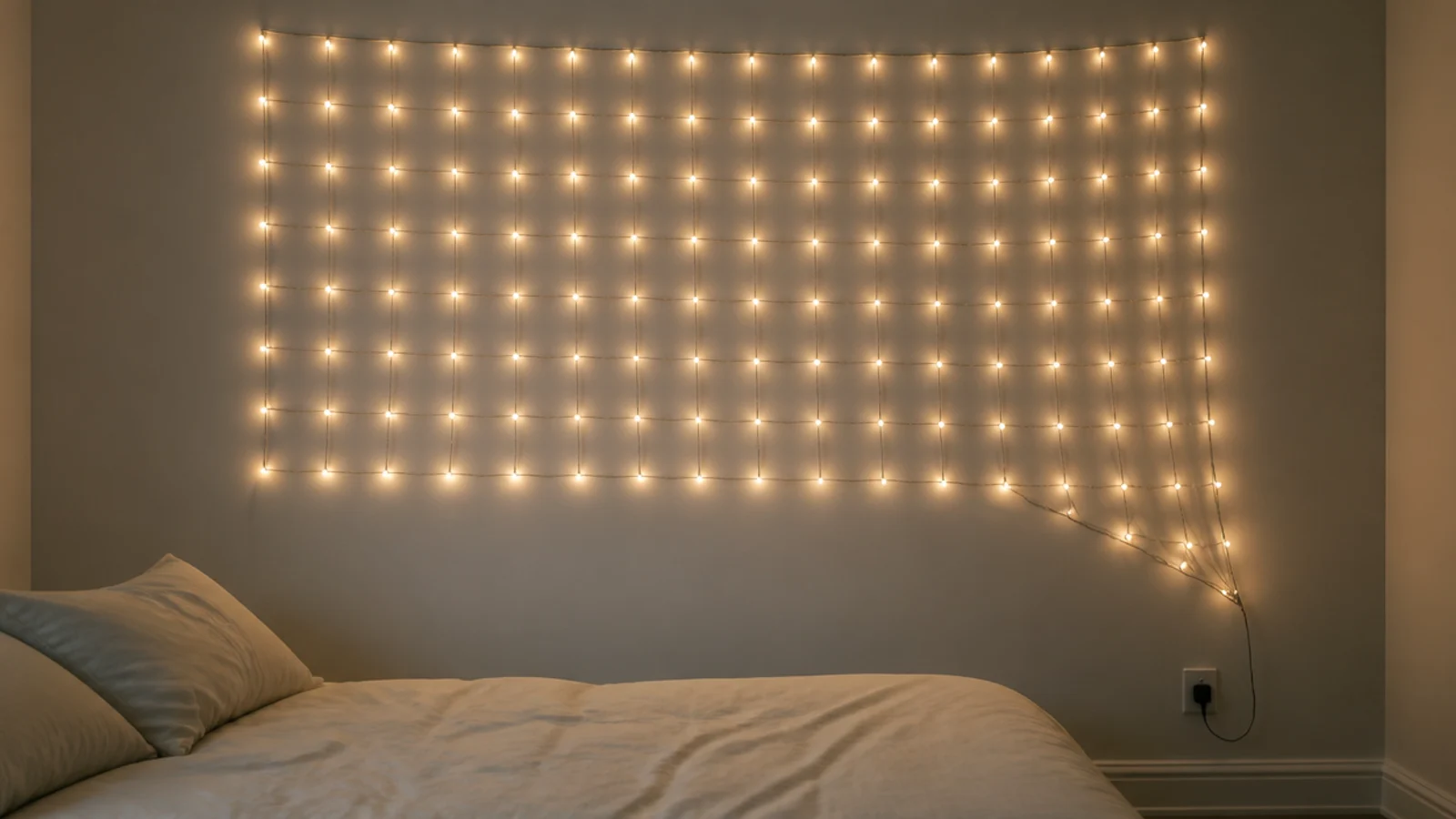
The grid is fixed, so it never matched the wall, and one corner always sagged. It reads as shop display rather than bedroom. Five separate strands cost roughly the same and let you set your own spacing.
19. Curtain lights layered over blackout linings
This one surprised me. Warm drops hung in front of a heavy blackout panel look twice as bright as the same drops on a pale wall, because the dark backing gives them something to work against.
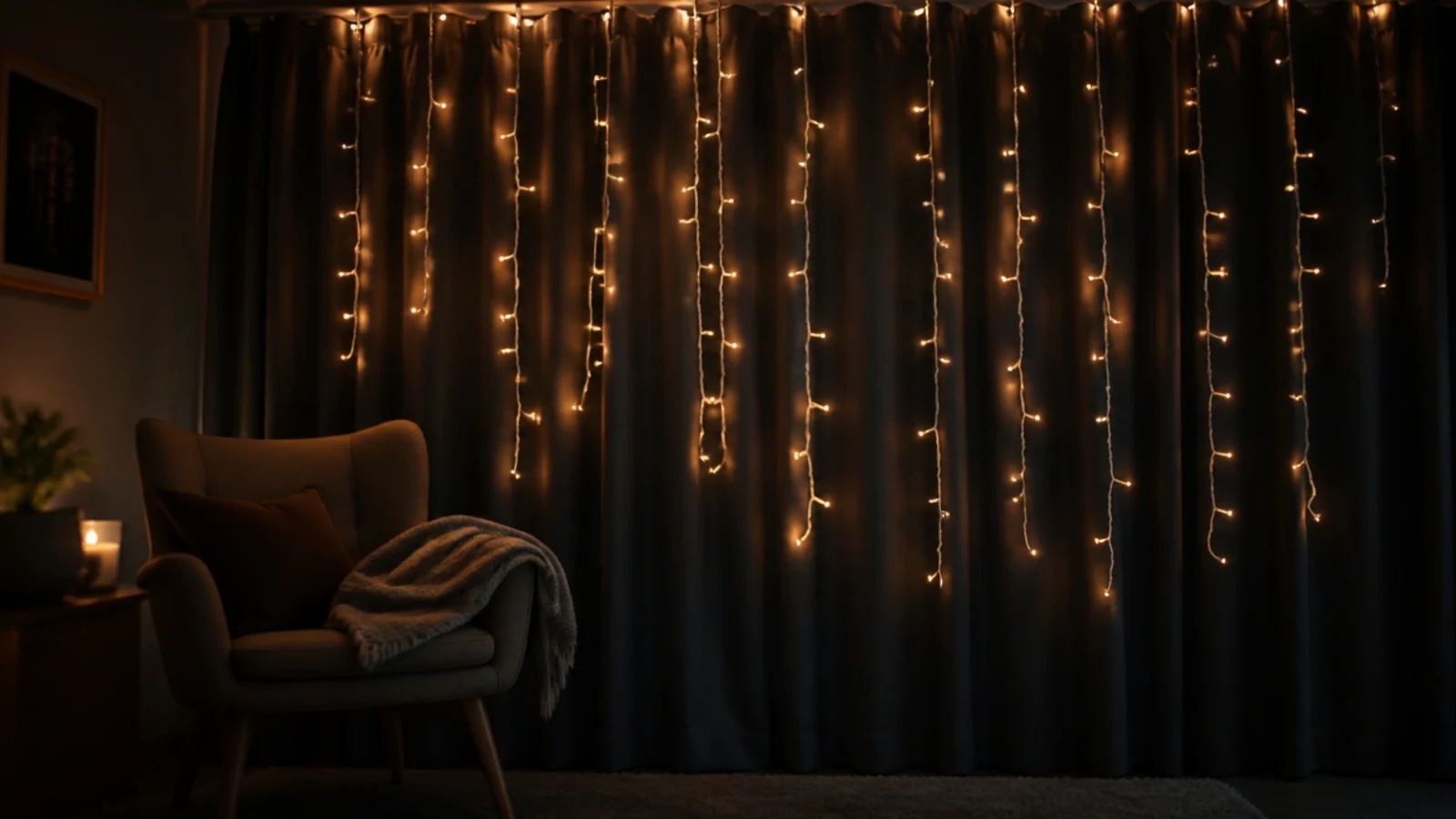
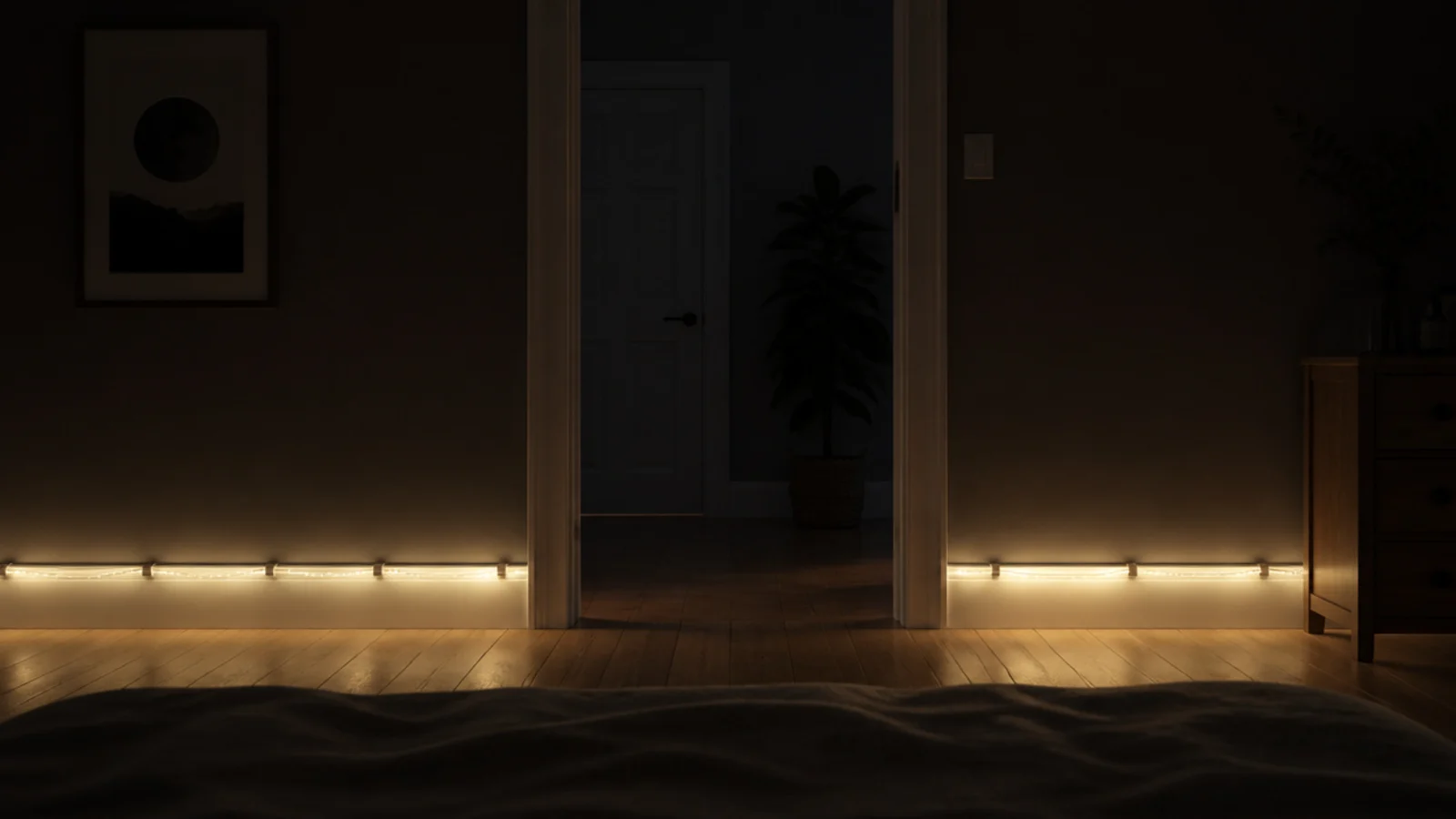
20. A strand along the skirting board
Ankle-height light for the two in the morning trip to the kitchen, and it never wakes anyone. Clipped to the wall face, never lying loose, and kept well clear of the rug edge.
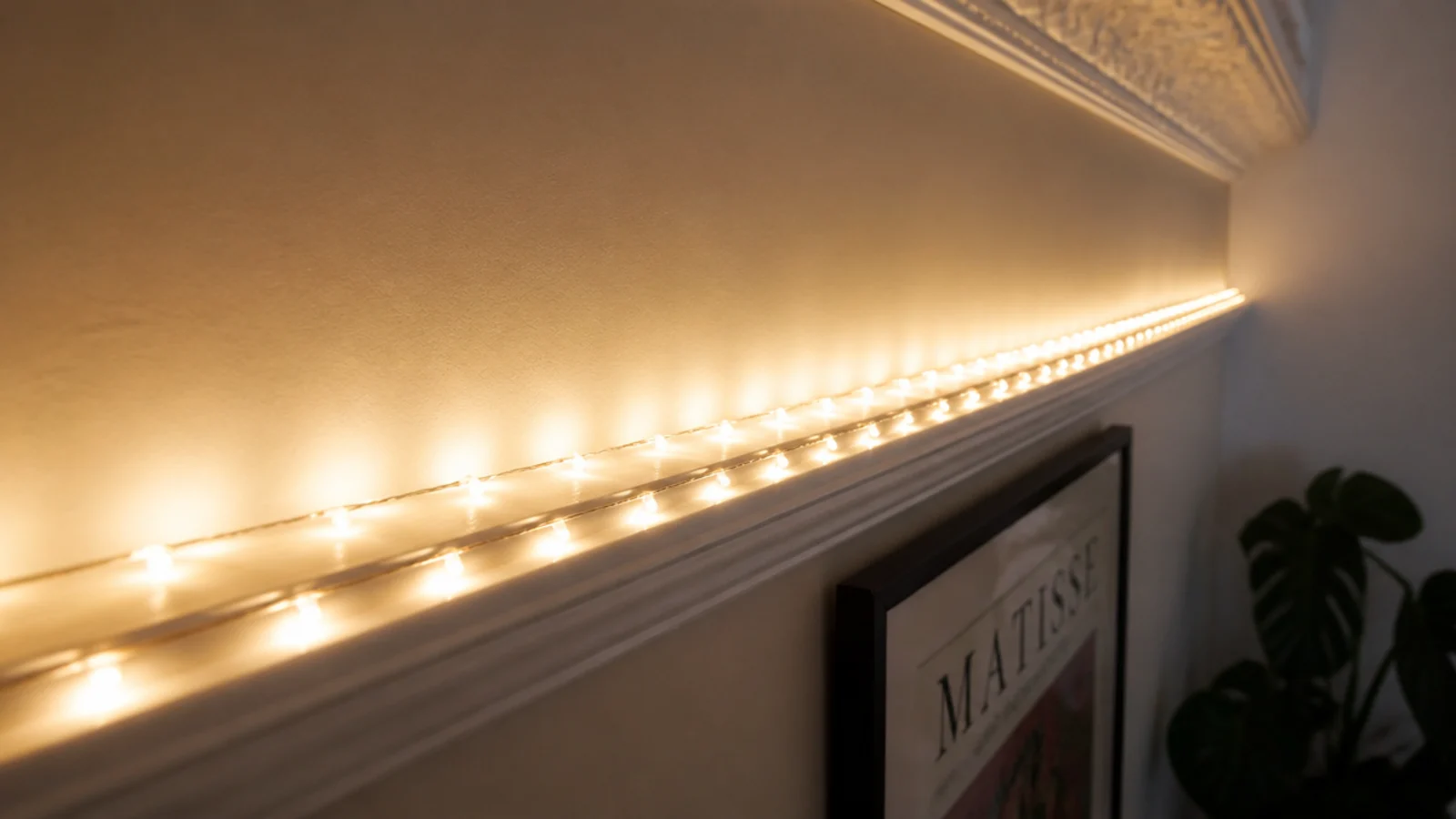
21. Two strands doubled over the picture rail
One strand along a picture rail reads thin. Two run parallel an inch apart doubles the light and reads as a deliberate band. It is the cheapest upgrade on this list at the cost of a second $10 set.
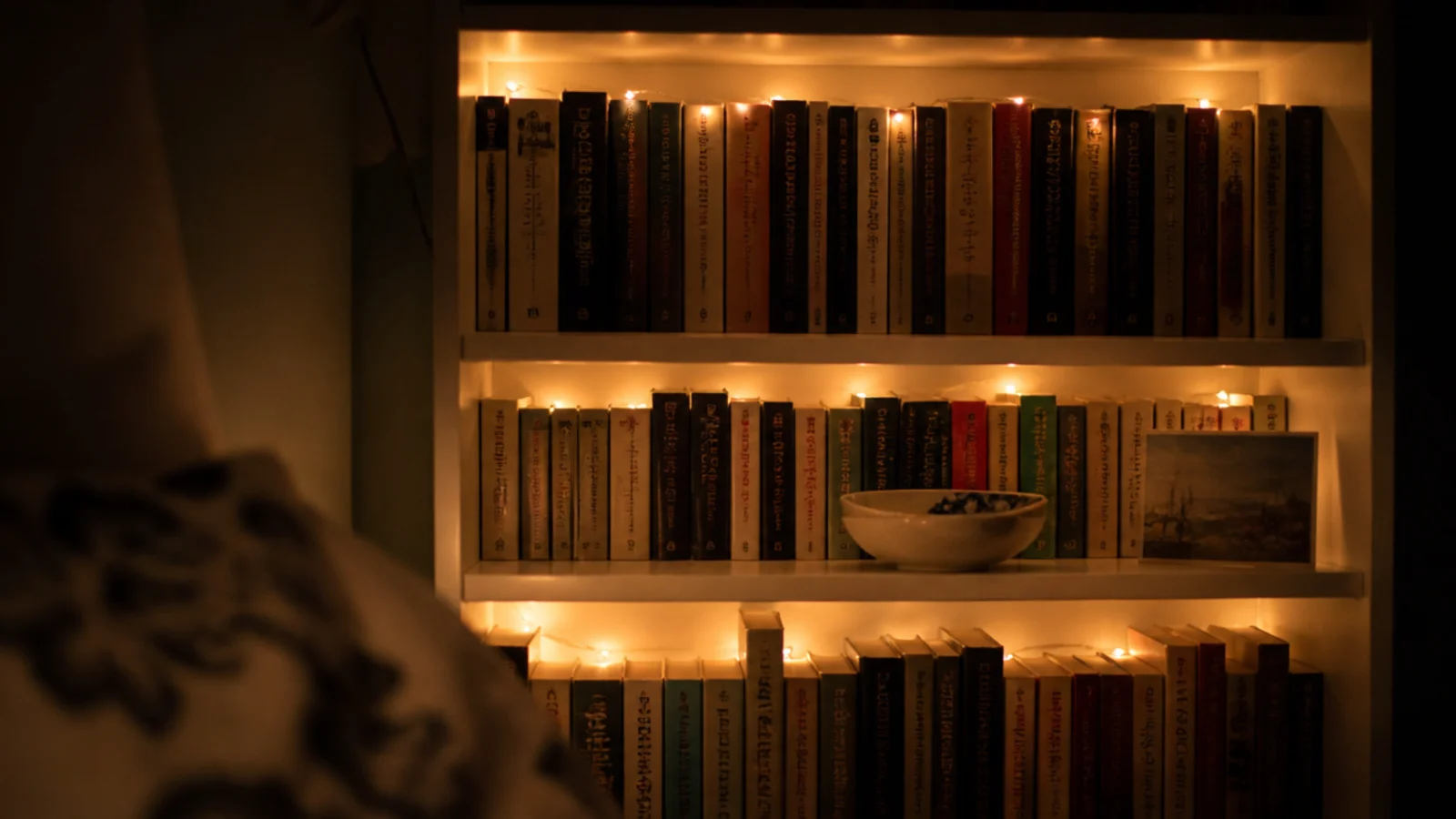
22. Lights threaded into the bookshelf
Threaded along the back edge of three shelves behind the books. No fixings, no visible wire, and the light lands on spines and pottery rather than bare plaster. Lit shelving is the trick I recommend most to people who rent.
23. A bedside jar on a six hour timer
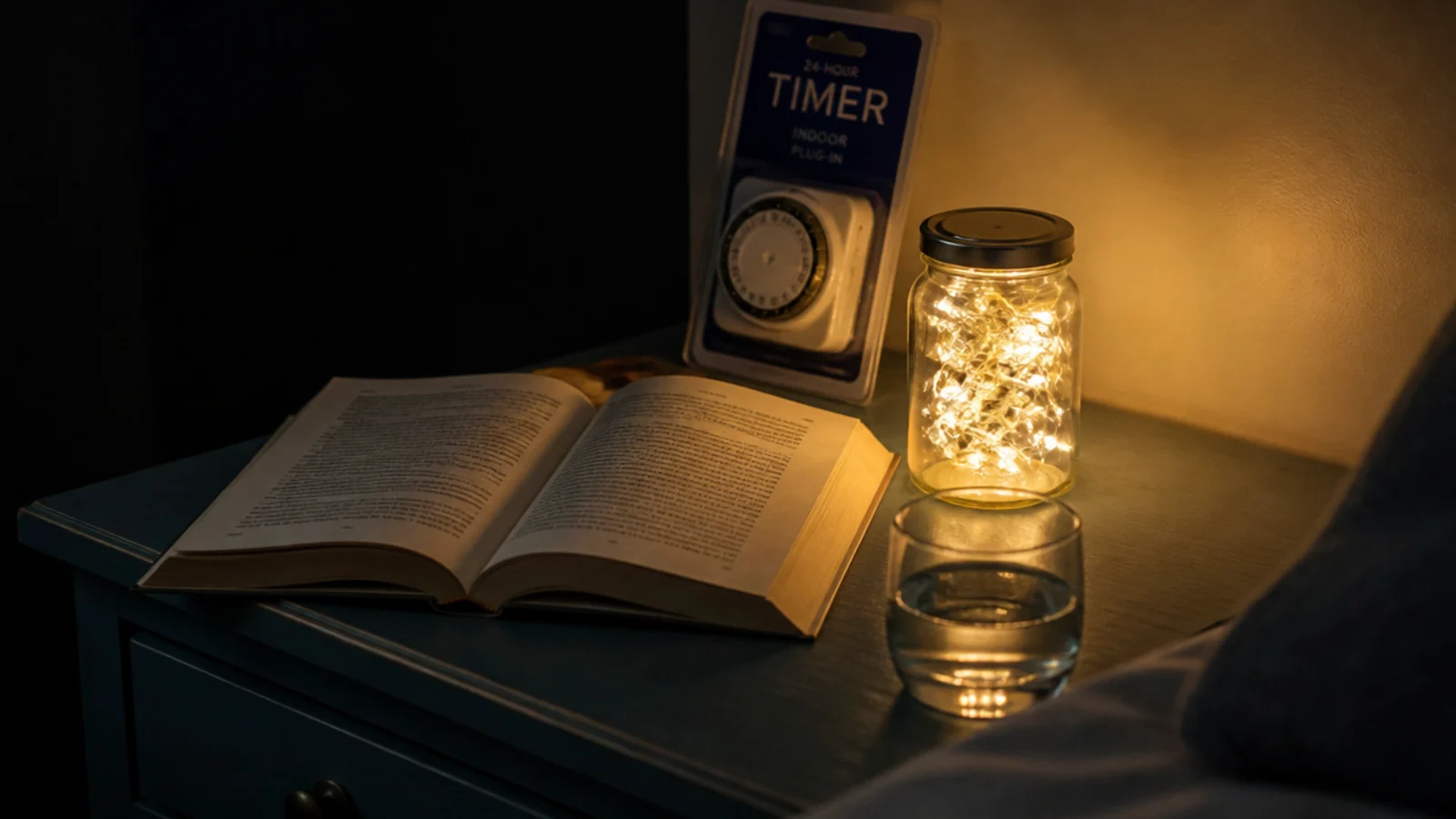
A small jar of lights that comes on at eight and goes off at two, with no switch to reach for. It replaced a bedside lamp for late reading, which was a mistake — 40 lumens is not a reading light.
24. A peg rail with a looped strand
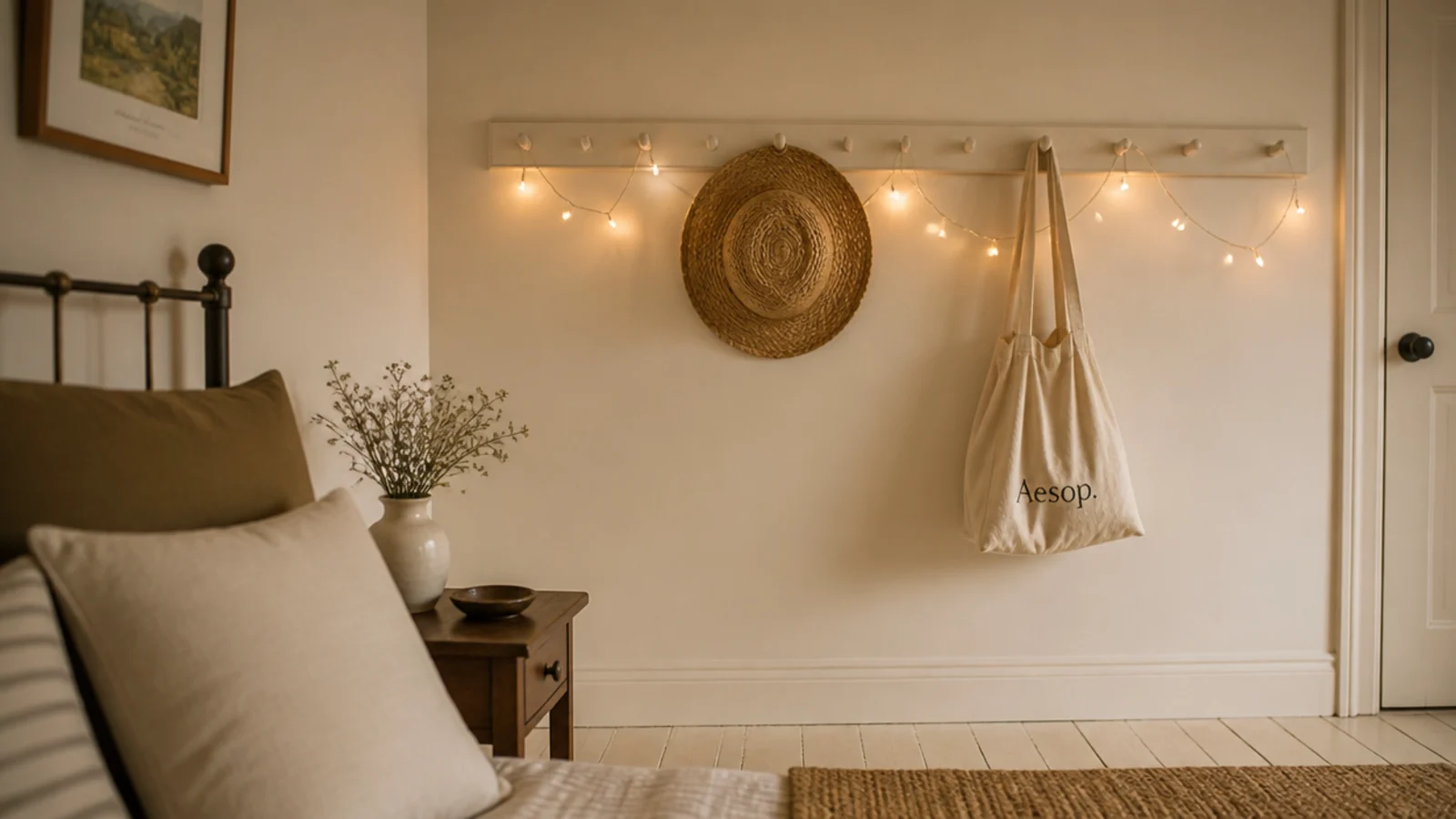
The strand loops between pegs in shallow curves, hats and bags hang from the pegs themselves. The rail carries the weight and the wire carries only itself, which is the right division of labour.
25. Everything on one smart plug
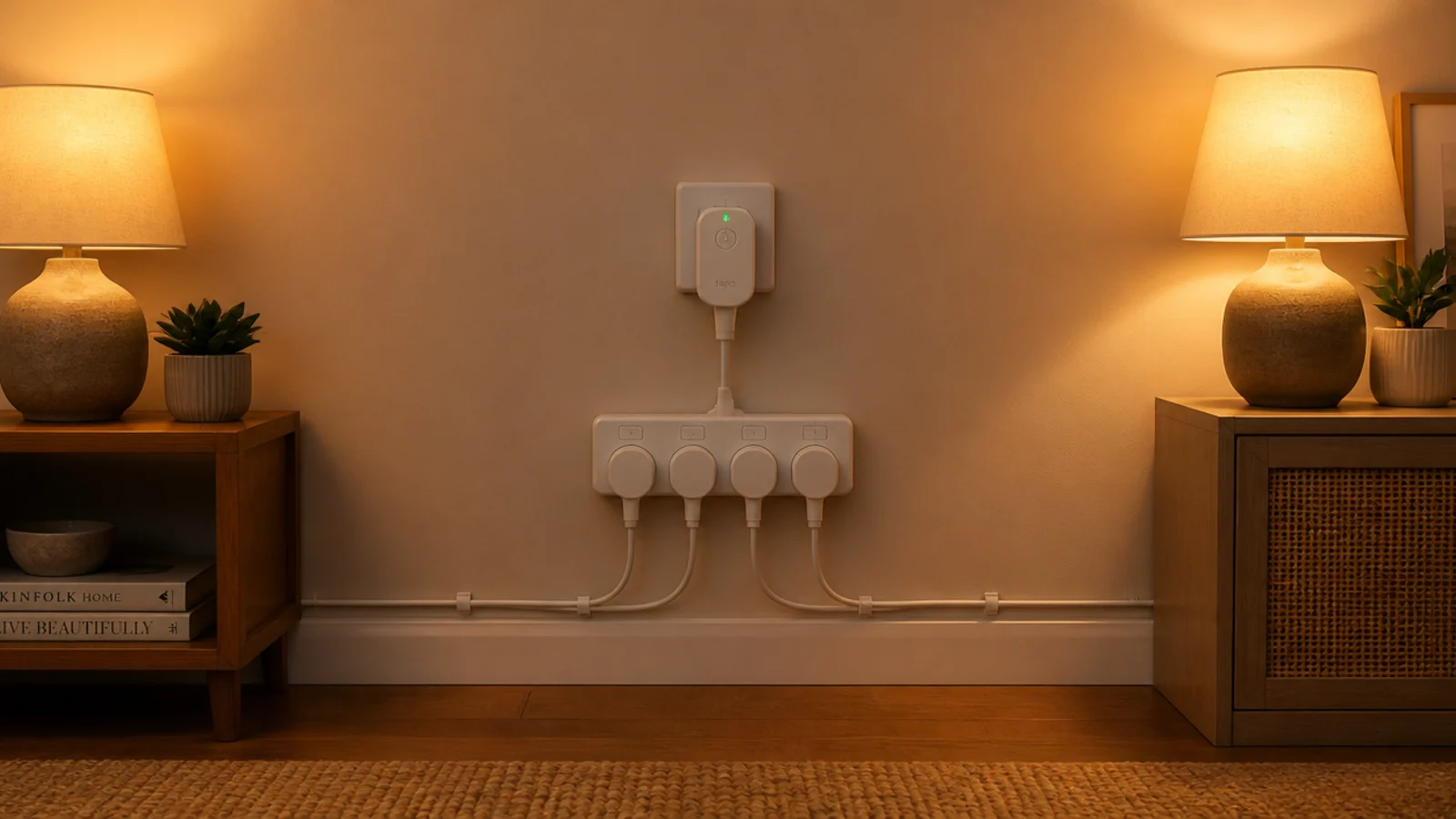
The last change I made and the best. Four strands into one extension, one $12 smart plug, on at sunset and off at midnight. I stopped thinking about any of it, which is the point.
What I'd Do Differently Now
I would buy fewer, longer-lasting strands and stop chasing formats. Of the four sets I bought in the first month, the plain warm white 33 foot copper strands are still working and the two with remotes are in a drawer. Nothing about a receiver box improved a bedroom.
I would put everything on a schedule from day one. Timers and a smart plug changed my battery costs from roughly $8 a month to almost nothing, and they removed the low-level nag of remembering to switch four things off.
I would take the eyeline seriously much earlier. Every look I disliked by week three had bare bulbs sitting between 40 and 65 inches from the floor, which is exactly where you look when you sit up in bed. Diffuse them, hide them behind something, or move the run above 70 inches.
And I would fix the cable properly the first time. My one genuine failure was a strand that died at a pinch point behind a clip I had pressed too hard, which is the same reason you never staple or pin through a cable. Clip loosely, support the lead near the pack, and leave 18 inches of slack at the socket. If you want the whole method in order, the step-by-step hanging guide has it, and mirror wall decor covers the reflective side of a lit wall.
Frequently asked questions
How long do fairy lights last in a bedroom?
The LEDs outlive everything else. In a year I replaced no bulbs but lost two strands to broken solder joints at the battery pack and one to a cable I had pinched behind a clip. Buy sets with a moulded joint at the pack, and support the cable rather than letting it hang from the connection.
Do fairy lights make a small bedroom look smaller?
Only if you outline the whole room. Running a strand around all four walls draws a hard box and shrinks the space, while lighting one wall or one corner pushes the rest into shadow and makes the room read deeper. I tried both in a 10 by 11 foot room and the single wall won easily.
Which fairy lights did you regret buying?
The colour-changing set with a remote and the net light. The remote receiver added a visible box to the cable and the colour settings were used twice, while the net imposed a rigid grid that looked like shop display fittings. Both were down inside a fortnight and neither was cheap.
How often do you have to re-stick the clips?
I reset about one clip a month in the first winter, almost all of them on cold outside walls. Adhesive struggles under about 60°F, so warming the spot with a hairdryer for ten seconds and pressing for a full 30 improved it. On the internal walls I have not touched a clip in a year.
Is it safe to leave bedroom fairy lights on all night?
I do not leave them on, and not because of the LEDs. A six hour timer or smart plug means the driver and any battery pack spend most of the day cold, which is simply less to think about. Keep the pack in open air, nothing under a rug, nothing inside bedding, and stay inside the daisy chain limit on the tag.
Want more like this? Browse all 15 fairy lights bedroom guides — they all use the same measurements and budget tiers.
Pin it for later
Save this to your Fairy Lights Bedroom board
Pin it now so it is waiting for you when the tape measure comes out — and so the next person hunting for this idea can find it too.
Save this pinKeep going
More ideas worth saving while you have the tape measure out.