Vanity Organization · Listicle
15 Easy Vanity Organization Ideas for Any Home

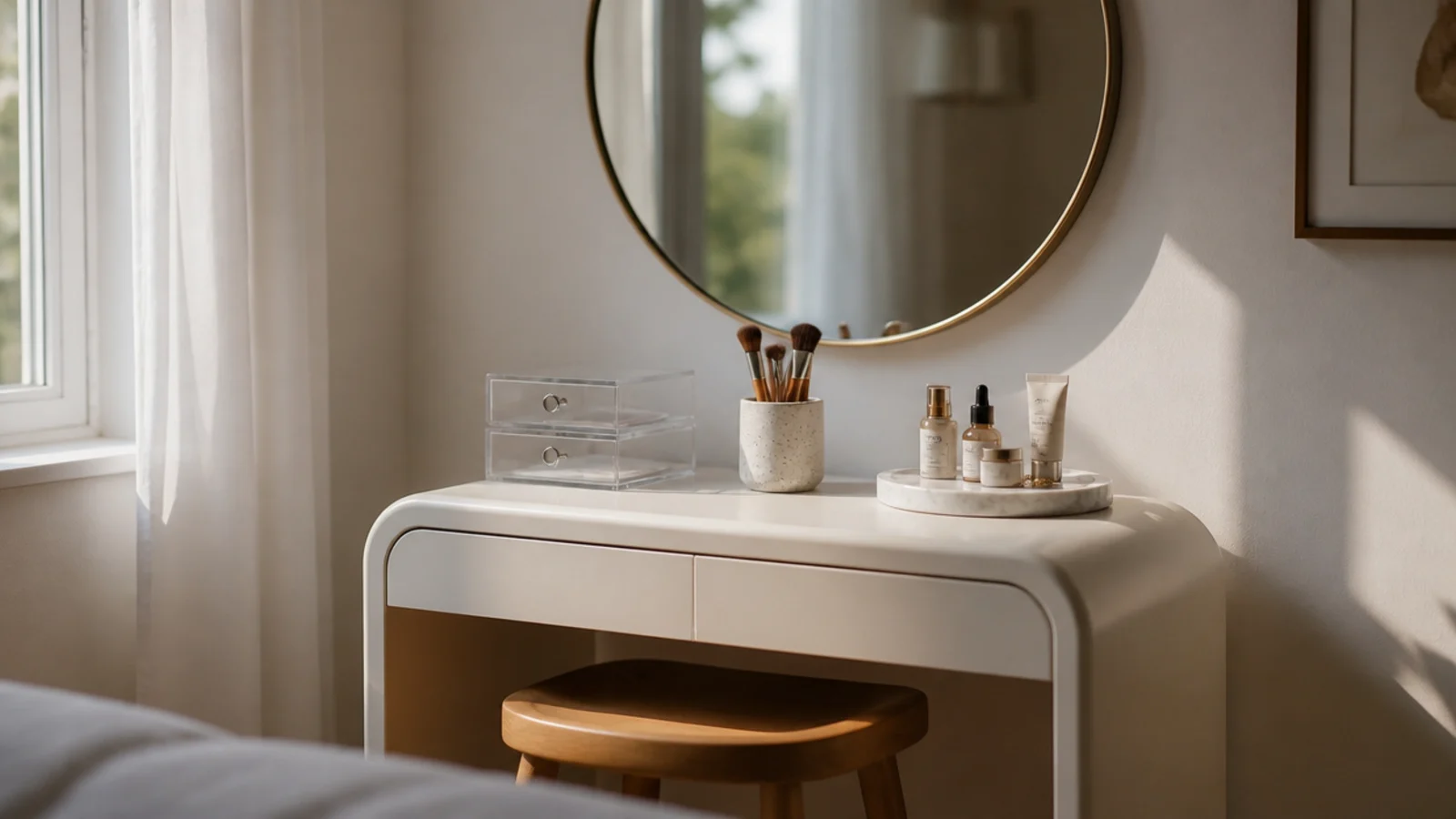
Vanity organization ideas usually fail for one reason: they store products the way a shop shelves them, not the way your hands move at seven in the morning. I have reset my own vanity four times and rebuilt a dozen for clients, and the version that finally stuck was built around a routine instead of a category. These fifteen fixes are that system, with the measurements that make it hold.
In this guide17 sections — tap to openHide
- 1.Where vanity organization ideas actually save you time
- 2.Sort the whole surface in routine order
- 3.Cap the countertop at a daily five
- 4.Put every group on a tray
- 5.Stand brushes bristles-up in a weighted cup
- 6.Measure the drawer, not the organizer
- 7.Match insert depth to what it holds
- 8.Keep pumps and droppers standing upright
- 9.Light your face from both sides
- 10.Move actives out of the sunny window
- 11.File palettes upright like records
- 12.Give the unphotogenic things a lidded box
- 13.Park hair tools in a heat-safe metal bin
- 14.Cap the backstock at one spare
- 15.Write the open date on the base
- 16.Book the twice-yearly cull
- 17.Mistakes to Skip
Where vanity organization ideas actually save you time
Time disappears in two places at a vanity: hunting for something stored out of sequence, and moving five things to reach the sixth. Both are layout problems, not storage problems, which is why a new organizer rarely fixes either one.
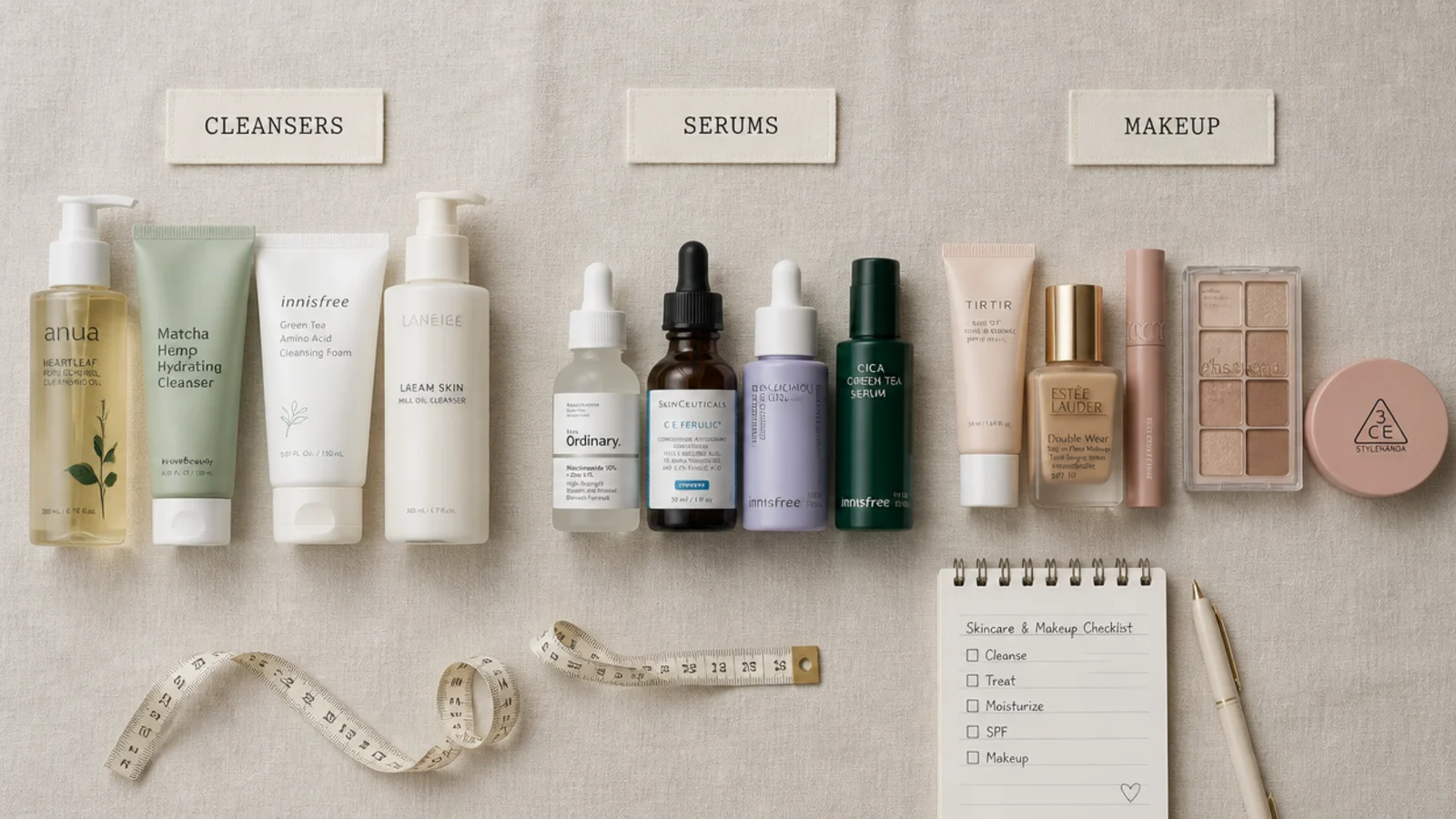
Sort by routine order — cleanse, treat, colour. That is the sequence a hand actually moves in, so cleanser and toner sit nearest the tap, serums and moisturizer in the middle, makeup last. Grouping by category instead, all bottles together and all tubes together, photographs beautifully and adds a step to every single morning.
Then decide what earns the countertop. Only daily items stay out; anything weekly, seasonal or aspirational goes in a drawer. The honest test is whether you touched it in the last seven days.
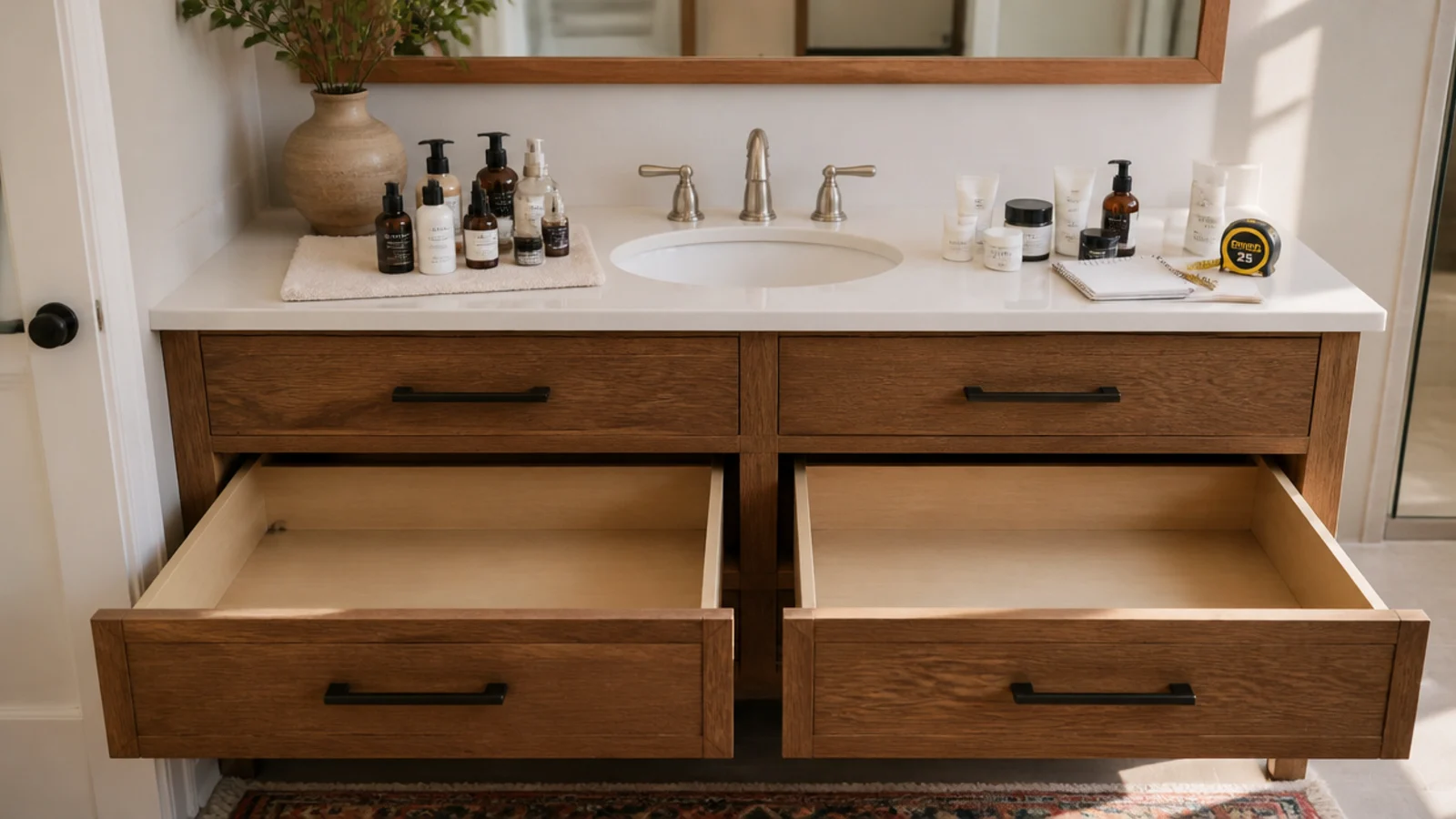
Before buying a single organizer, measure. Inserts get sized to the drawer's internal dimensions minus about 1/8 inch of clearance, and depth matters as much as footprint: 2 to 3 inches suits flat palettes and compacts, 4 to 5 inches suits bottles and pumps that have to stand upright.
Budget tiers below: $ under $10, $$ $10 to $25, $$$ $25 to $60. Most of this list sits in the first two tiers, and the single most effective idea costs nothing at all.
1. Sort the whole surface in routine order
Clear the counter completely, then put things back in the order you use them, left to right if you are right-handed. Cleanser and toner nearest the tap, treatment serums in the middle, moisturizer and sunscreen at the end, colour last.
It feels arbitrary for two days and then you stop thinking about the vanity at all, because your hand already knows where the next step lives. Keep about 4 inches of clear counter between zones so the groups stay legible.
Free, reversible, and the one change that makes every other idea on this list work harder. Free

2. Cap the countertop at a daily five
Pick the five to eight things you genuinely touch every day and let those live out. Everything else goes behind a drawer front, including the beautiful bottle you keep out because it is beautiful.
A crowded counter is not a storage failure, it is a decision you have not made yet. Run the seven-day test: anything untouched in a week goes in the drawer for a month, and if you never retrieve it, it leaves the room.
In a rental with one shallow drawer, a lidded 12 by 8 inch box on a shelf does the same job. Free–$$
3. Put every group on a tray
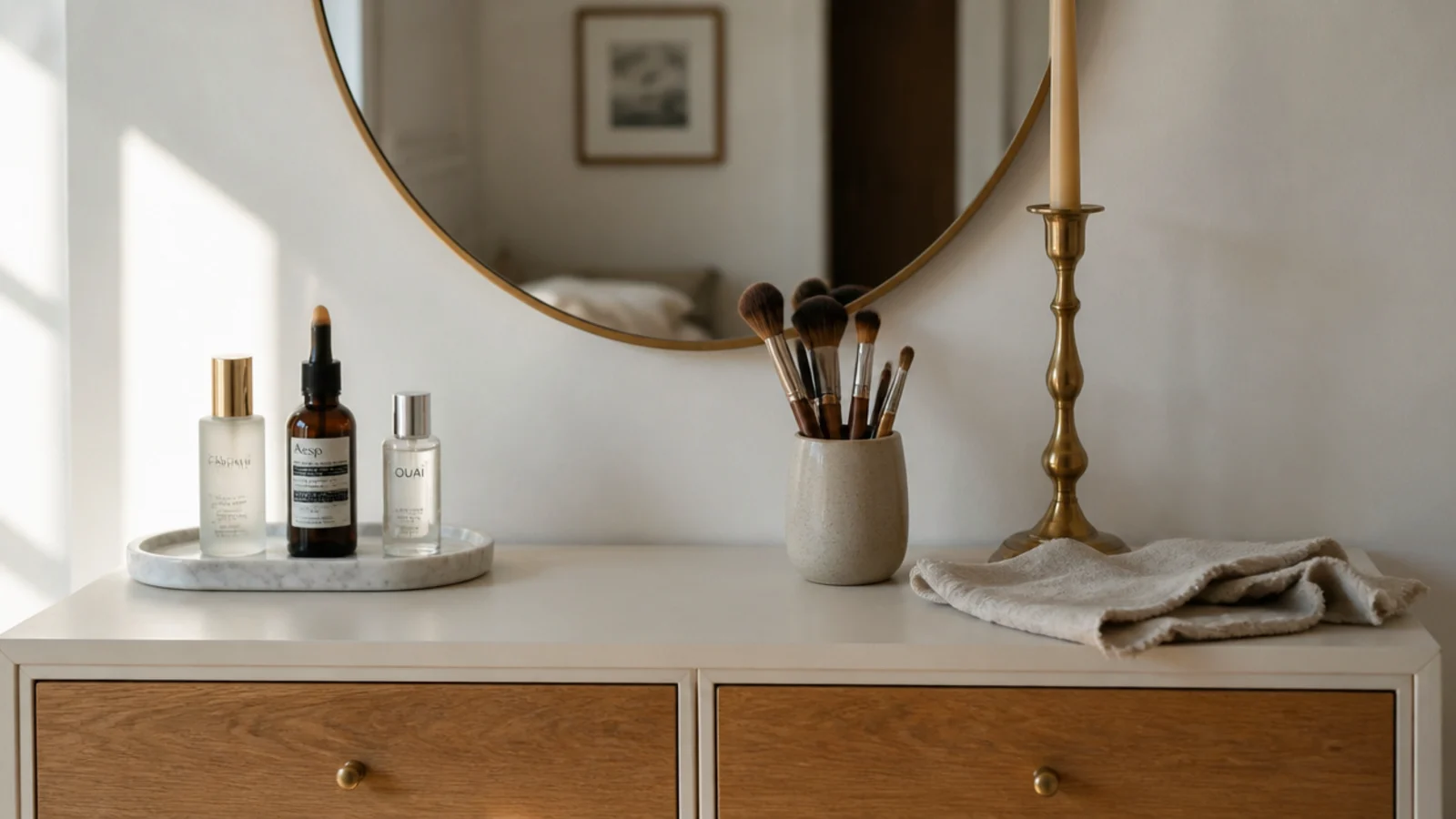
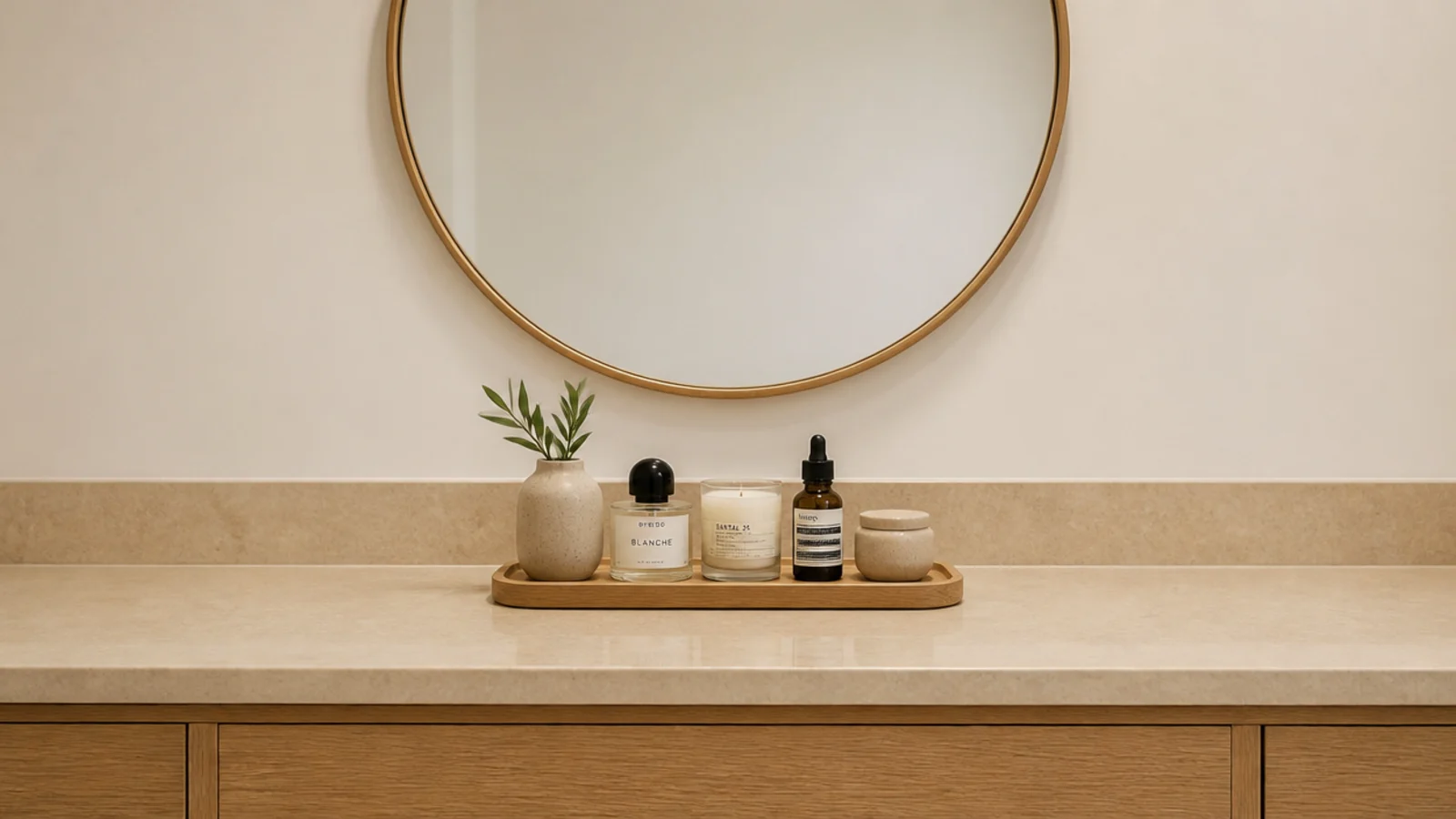
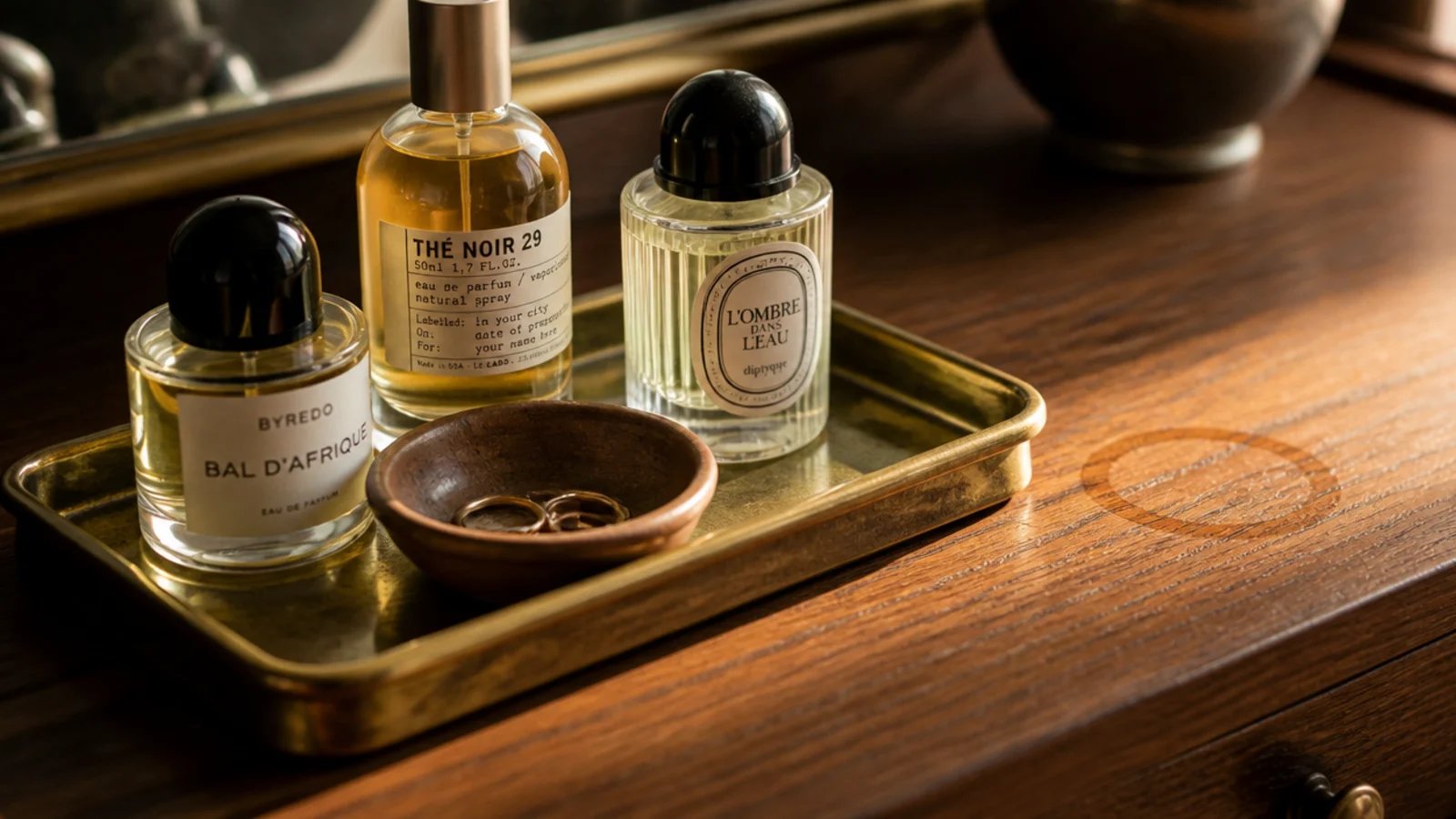
A tray does two things at once. It catches the ring a pump bottle leaves on wood or stone, and it turns six loose objects into one composition your eye reads as a single item.
Size it to the group with an inch of margin, and leave the front 6 inches of the counter clear so you still have working space. Marble, brass and stoneware all work; a $6 terracotta plant saucer works nearly as well.
I use three small trays rather than one big one, split by routine step. $–$$
4. Stand brushes bristles-up in a weighted cup
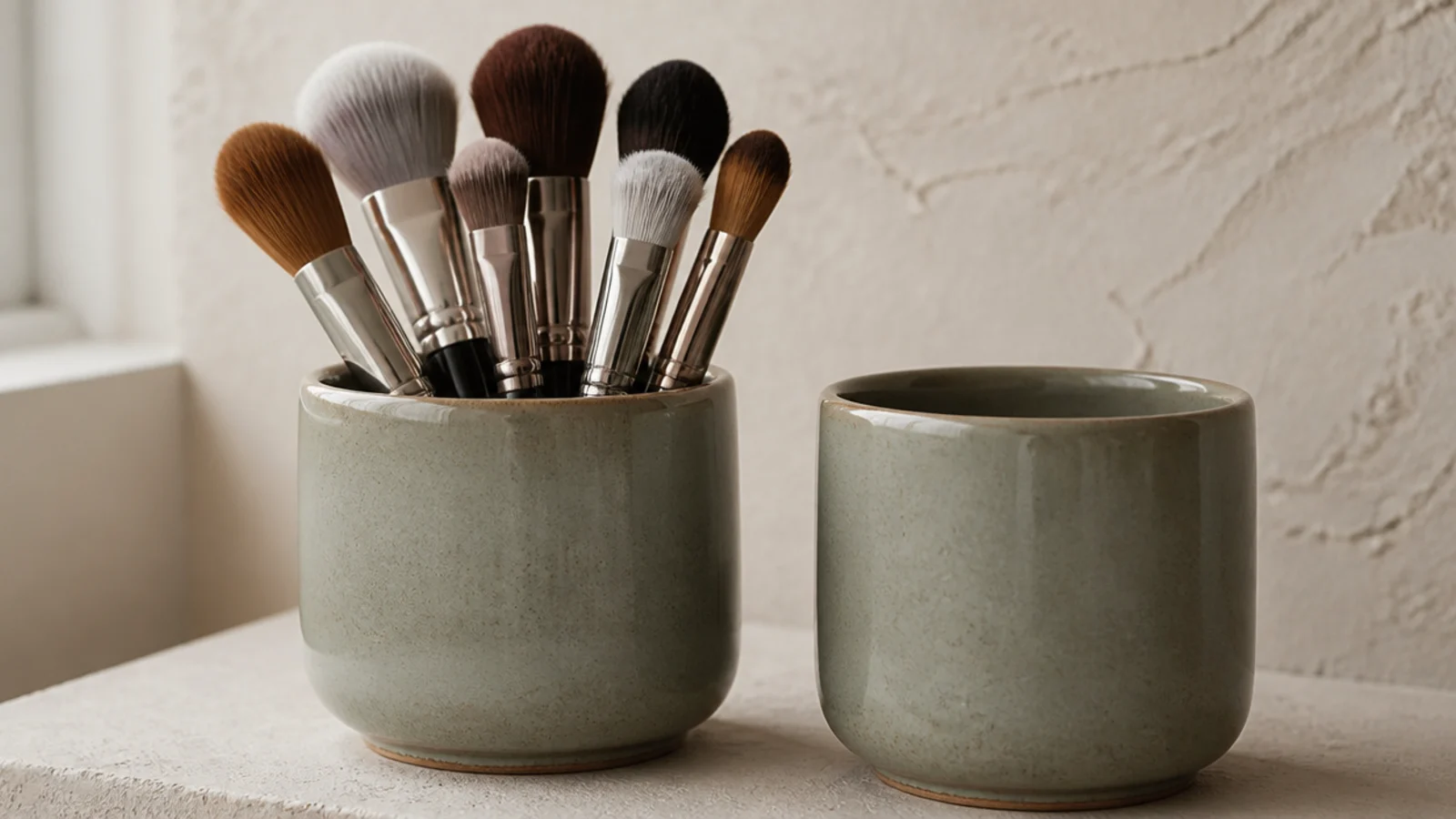
Brushes stored bristles-down splay within weeks and never fully recover, and a loose brush rolling in a drawer picks up every crumb of powder in there.
Use a heavy-based cup, roughly 3 to 4 inches tall with a wide mouth. Weight is the specification that matters — a light cup tips the moment you pull one brush out. A squat stoneware tumbler, a small crock or a thrifted glass with thick walls all qualify for a few dollars.
Add a handful of glass beads to the base if your cup is too light. $
5. Measure the drawer, not the organizer
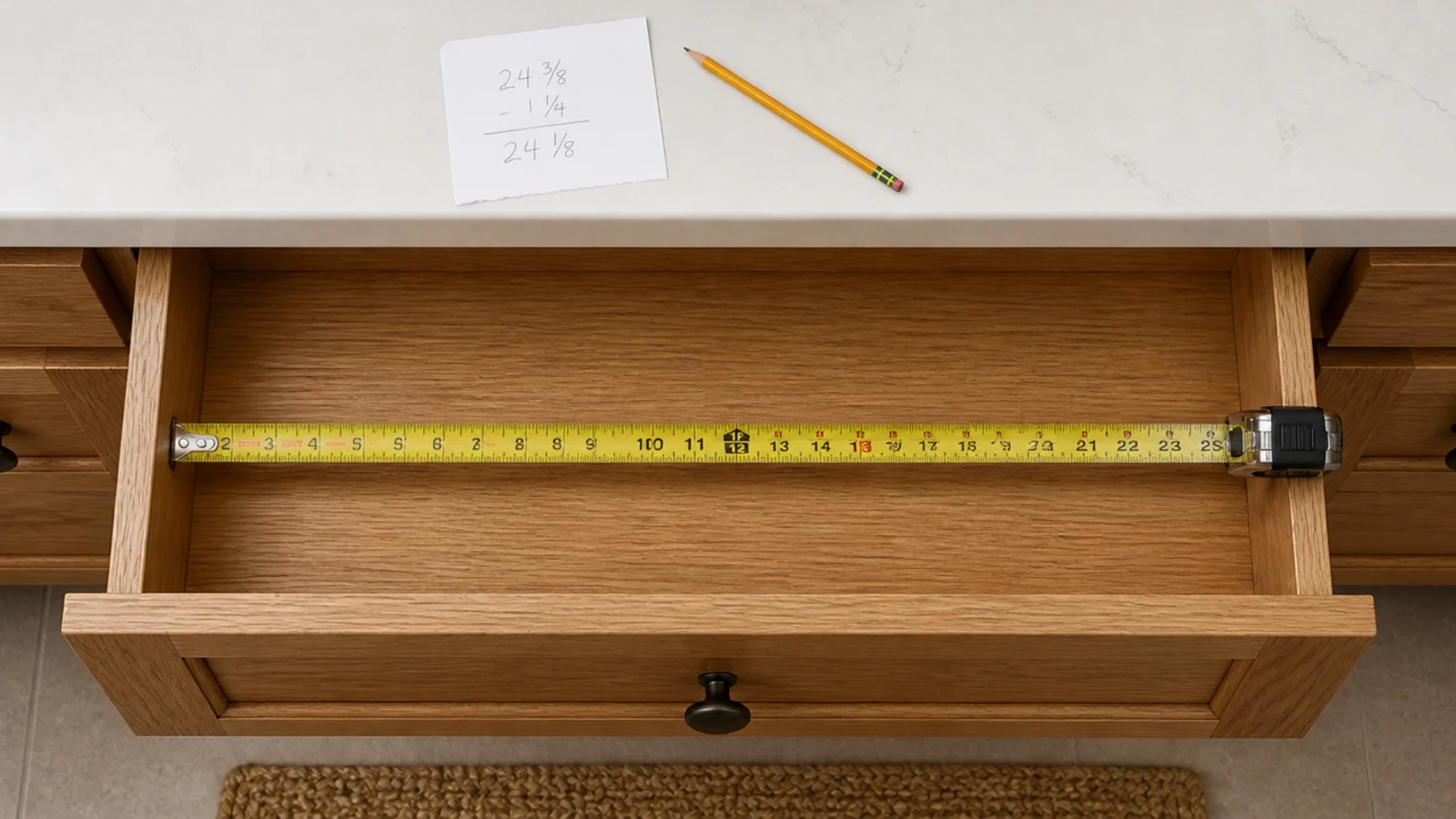
Take the drawer's internal width, depth and height with a tape measure, write the three numbers on your phone, and subtract about 1/8 inch of clearance from the width and depth before you shop.
Outside dimensions are what most people measure, and it is exactly why so many inserts arrive an inch too wide and end up in a closet. Check the drawer slide hardware too, since side-mount runners can steal half an inch of usable width.
Ten minutes with a tape measure saves two return trips. Free
6. Match insert depth to what it holds
Depth is the specification nobody checks and the one that decides whether a drawer works. Two to three inches suits flat palettes, compacts, pencils and brushes laid down. Four to five inches suits bottles, primers, tall pumps and anything that needs to stand.
If you only have deep drawers, stack a shallow tray on risers over the back half and leave the front for tall items. If your drawers are all shallow, bottles go in a cabinet bin instead of being laid on their sides.
Acrylic sets run $12 to $25; solid oak dividers reach $50. $$–$$$
7. Keep pumps and droppers standing upright
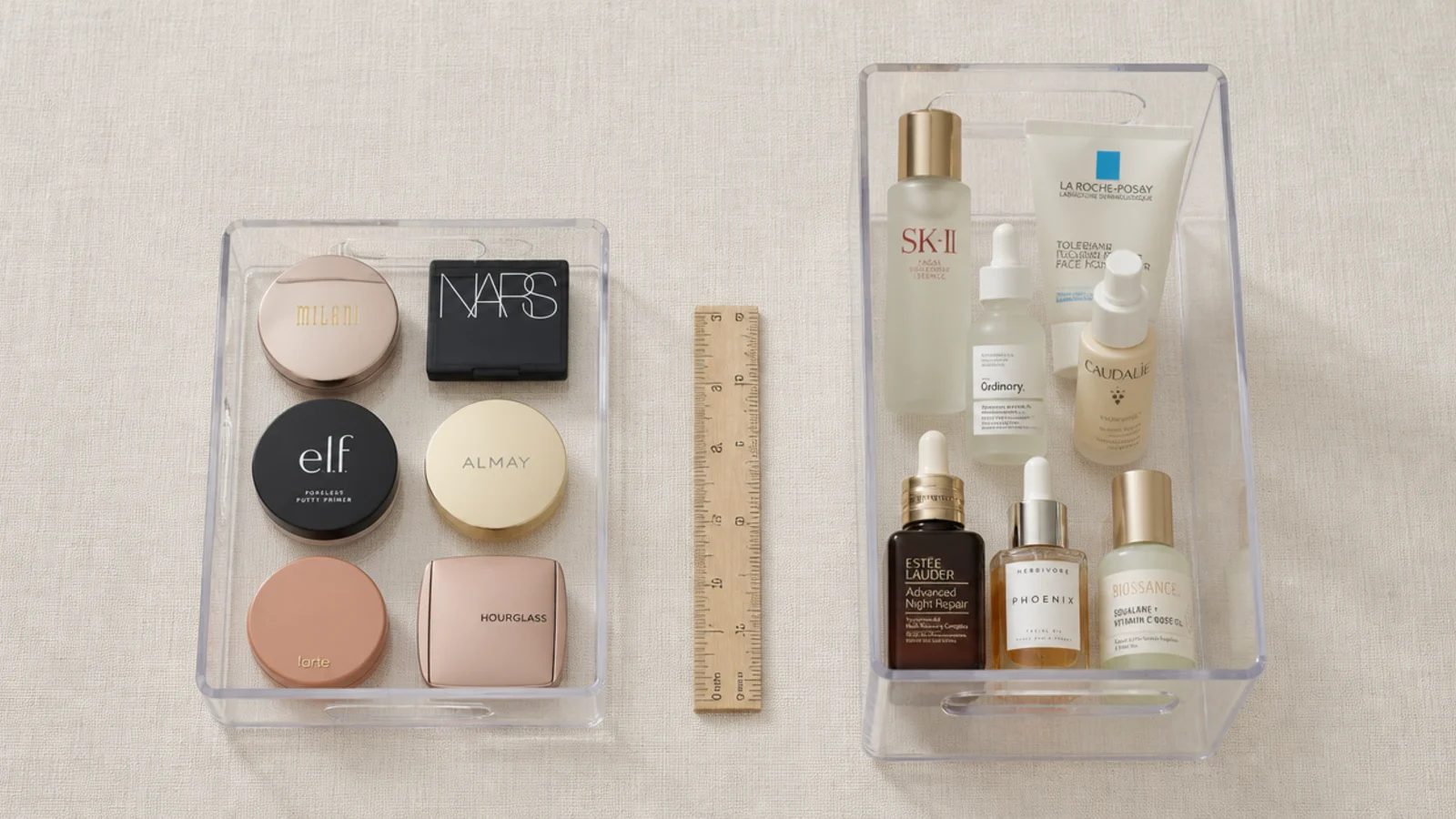
Anything with a pump or a dropper stores upright, always. On its side, a pump seeps into the drawer liner and a dropper eventually stains the felt, and you find out weeks later.
Give them a 4 to 5 inch deep bin with a footprint tight enough that bottles hold each other vertical — about 4 by 6 inches keeps six bottles standing. A small ceramic crock or an open-topped acrylic bin both work.
Line the base with a scrap of felt or a folded cloth so any drip has somewhere to go. $–$$

8. Light your face from both sides
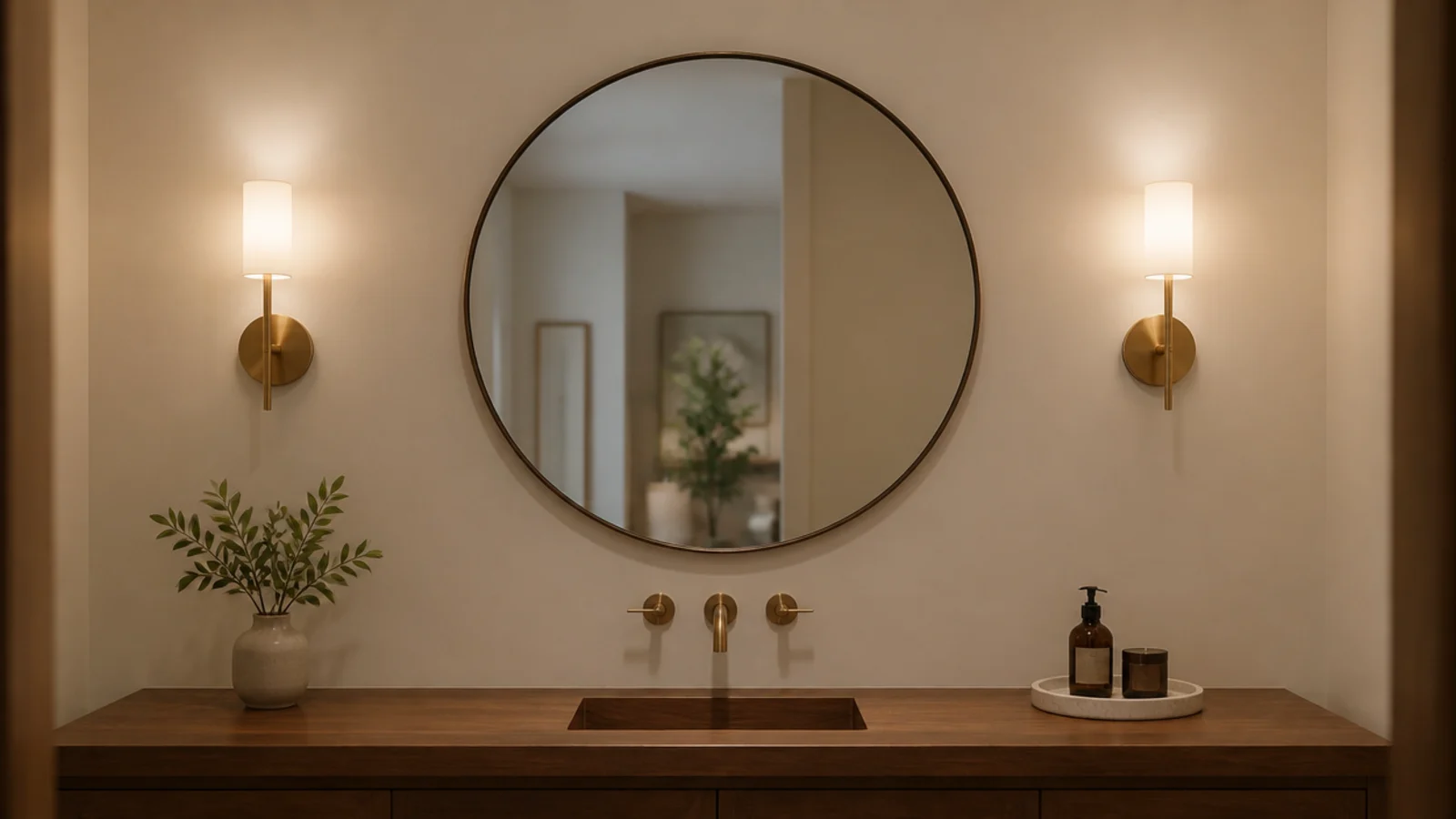
Mirror lighting should sit between 3000K and 4000K with a high CRI bulb, and it should light your face from both sides rather than from overhead. An overhead fixture drops shadows straight into your eye sockets and under your jaw, which is precisely where you need to see.
Two sconces flanking the mirror is the ideal, mounted at roughly eye level. Renting? A pair of plug-in sconces with adhesive cord channels, or a clamp-on ring light at eye height, fixes it without a single hole.
Cool 5000K bulbs make clay, brass and skin all look grey. $$–$$$
9. Move actives out of the sunny window
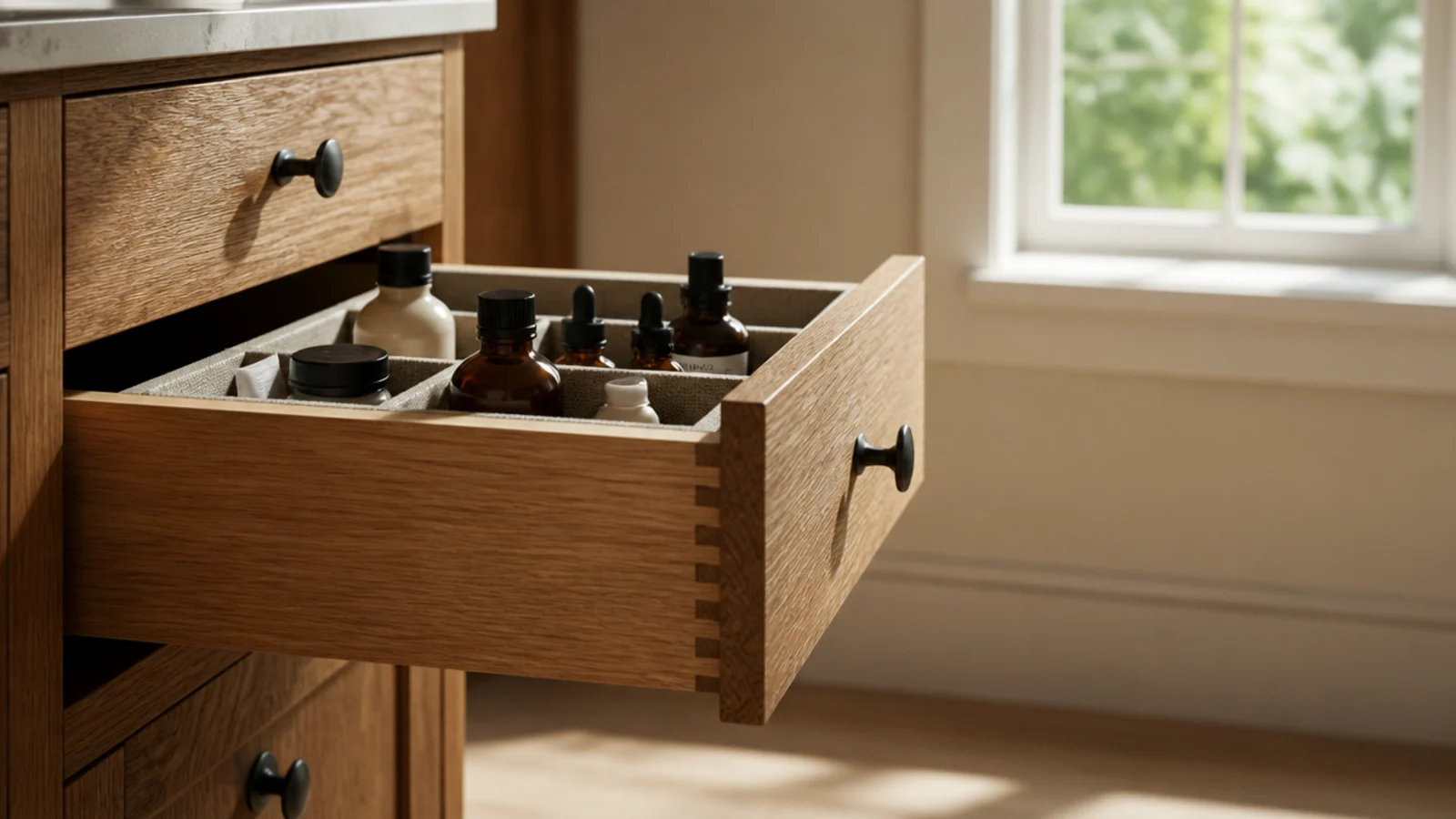
Retinol, vitamin C and most acids degrade in sunlight, so a pretty row of bottles on a sunlit sill is quietly wasting money. Heat from a radiator or a hot shower does the same thing more slowly.
Move anything active into a drawer or an opaque box and keep the display bottles — scent, a jar of moisturizer, bath salts — out on the counter instead.
If a windowsill is your only surface, a small lidded stoneware box costs about $15 and solves it permanently. Free–$$
10. File palettes upright like records
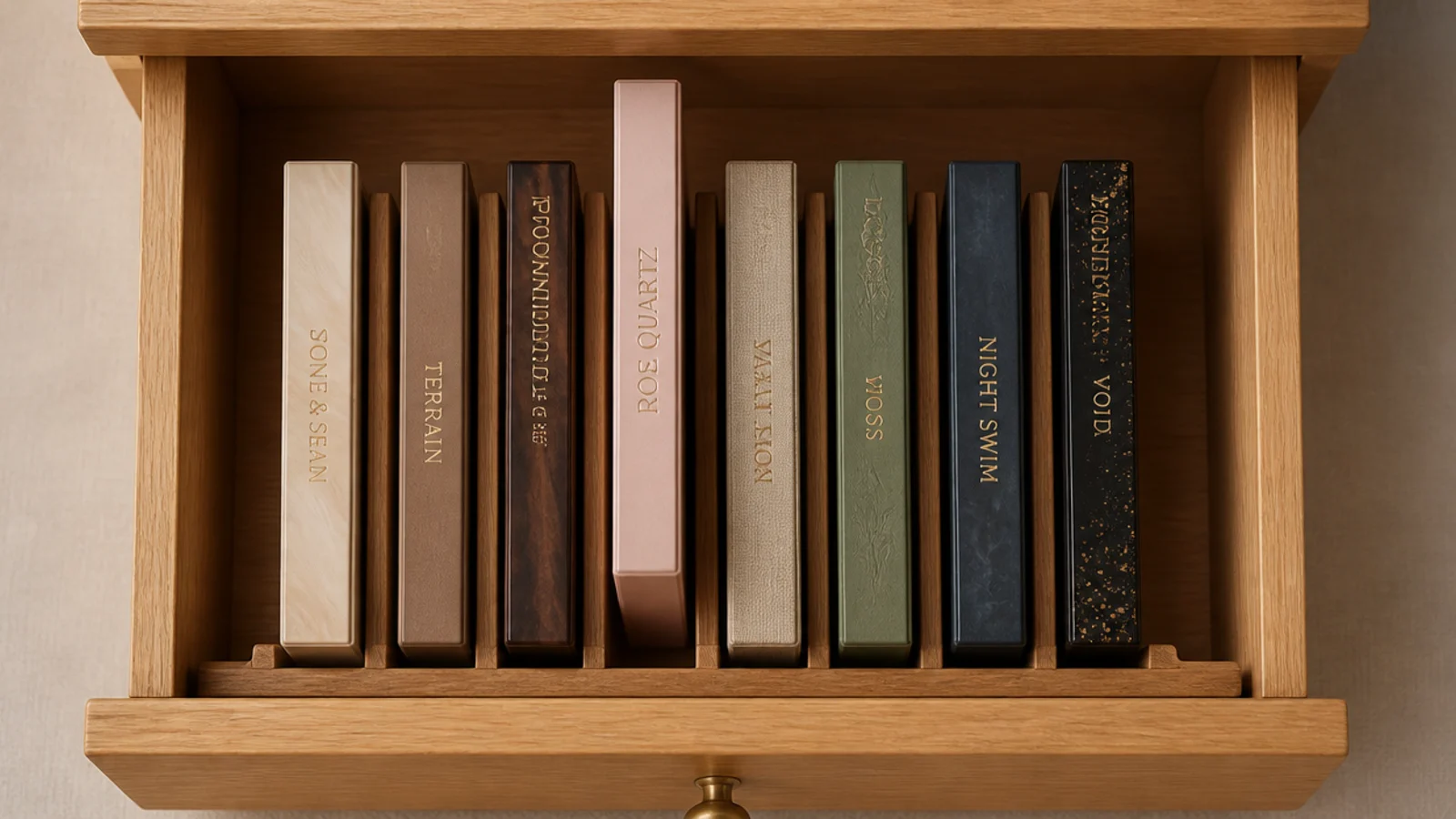
Palettes stacked flat mean lifting four to reach the fifth, and the bottom one never gets used. Stood on edge in a slim divider, every palette is readable and reachable in one motion.
A 2 to 3 inch deep drawer with dividers spaced about 1 1/4 inches apart holds most palettes upright without them toppling. Two cut-down cardboard strips wrapped in kraft paper do the same job for free while you decide.
The same trick works for compacts, powder pans and even flat brush sets. Free–$$
11. Give the unphotogenic things a lidded box
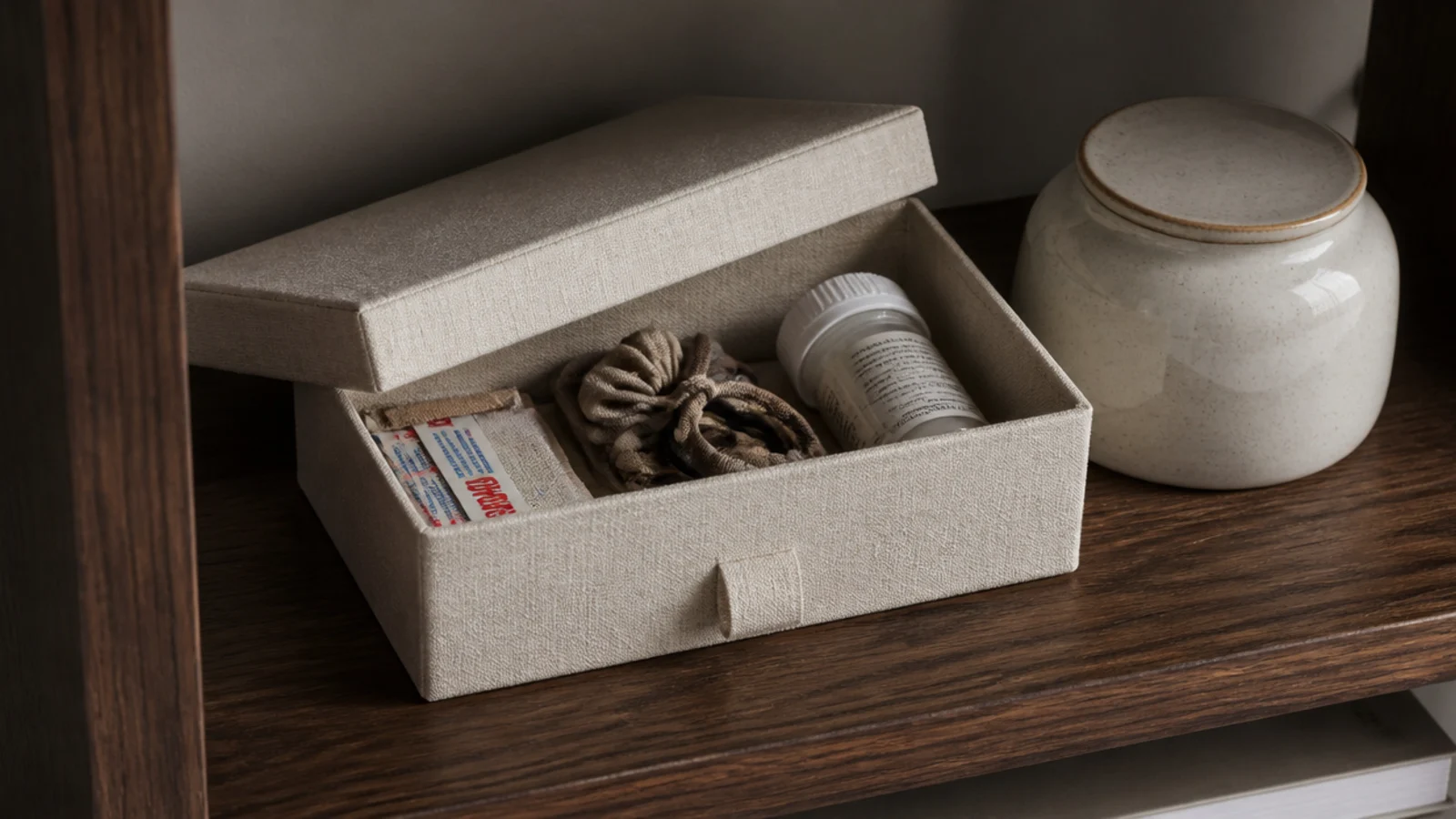
Every vanity has a category that resists styling: hair ties, plasters, prescription bottles, batteries, nail clippers. They are not going away, so give them one closed container instead of scattering them.
A fabric or stoneware box about 8 by 6 inches with a fitted lid absorbs the lot and reads as texture rather than clutter. Keep it on the shelf nearest the mirror so it is genuinely convenient.
Medications last longer outside a steamy bathroom, so a bedroom vanity is the better home for them. $–$$
12. Park hair tools in a heat-safe metal bin
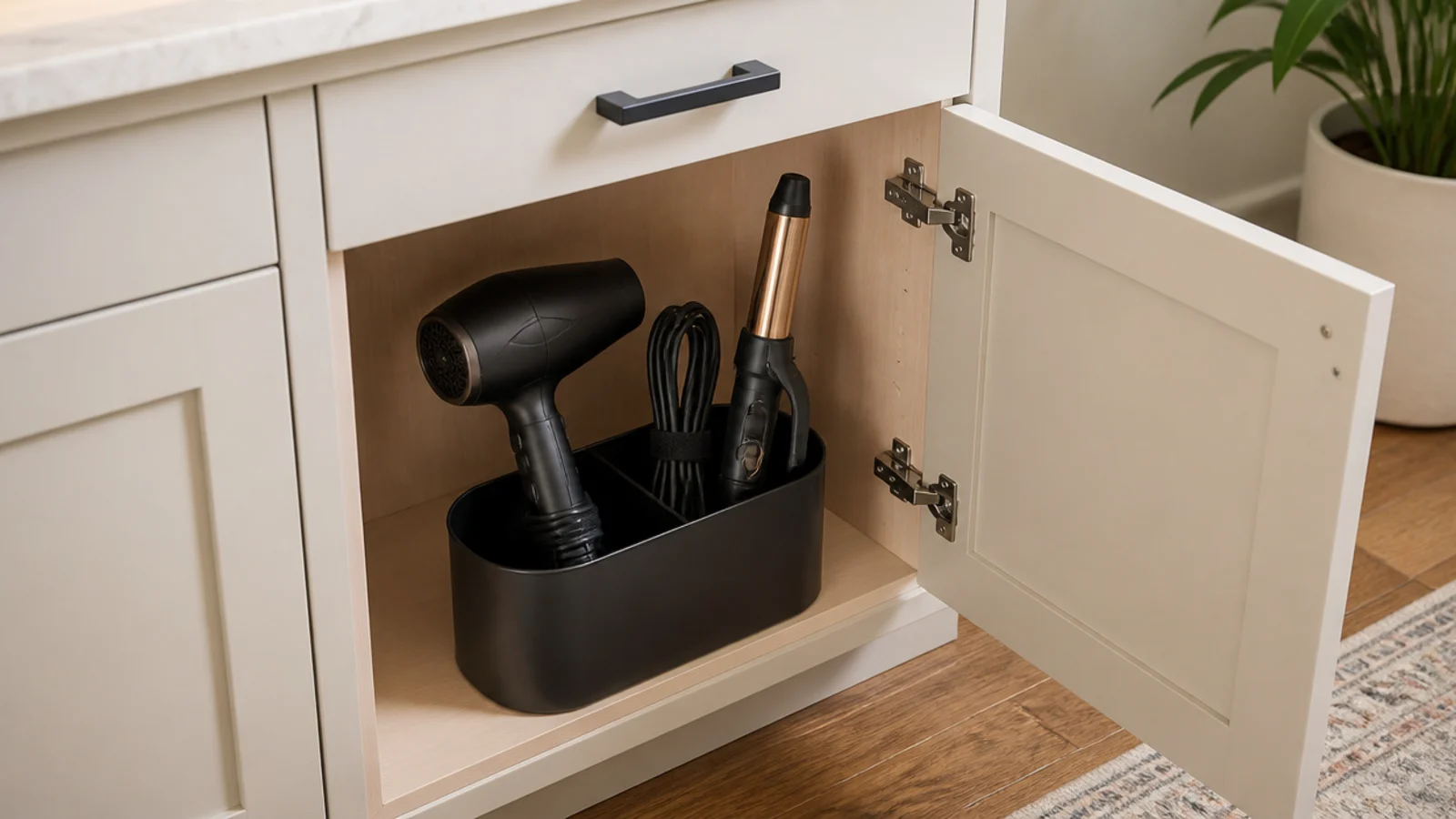
A warm curling iron needs somewhere it cannot melt or scorch. A metal bin roughly 6 by 10 inches inside the cabinet takes a dryer and an iron standing upright, and a heat-resistant mat lets you put a hot tool down safely.
Coil cords loosely and hold them with velcro ties; a tightly wrapped cord fails at the base within a year. Over-the-door metal holders work if your cabinet has no floor space.
Metal, upright, ventilated — those three details matter more than the price. $$
13. Cap the backstock at one spare
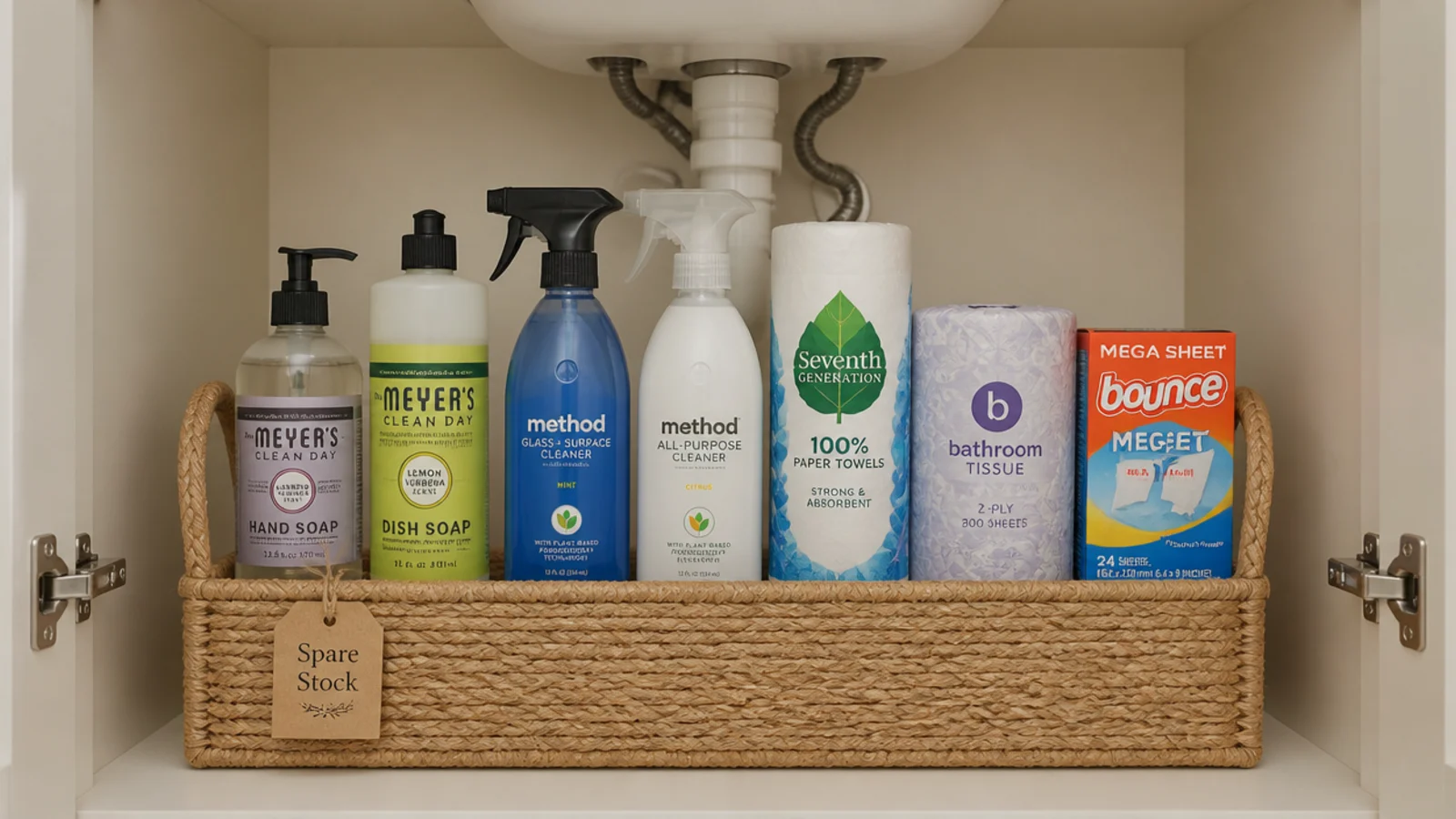
Duplicates are the reason a vanity overflows six months after a perfect reset. Set one rule: one spare of each product, stored together, and nothing enters until its predecessor is finished.
Keep the spares in a single labelled basket under the sink rather than mixed in with the daily lineup, so a glance tells you what you own. Mine is a 12 inch jute basket, and it stopped me rebuying the same sunscreen twice.
There is more on zoning bulk storage in makeup vanity organization. $–$$
14. Write the open date on the base
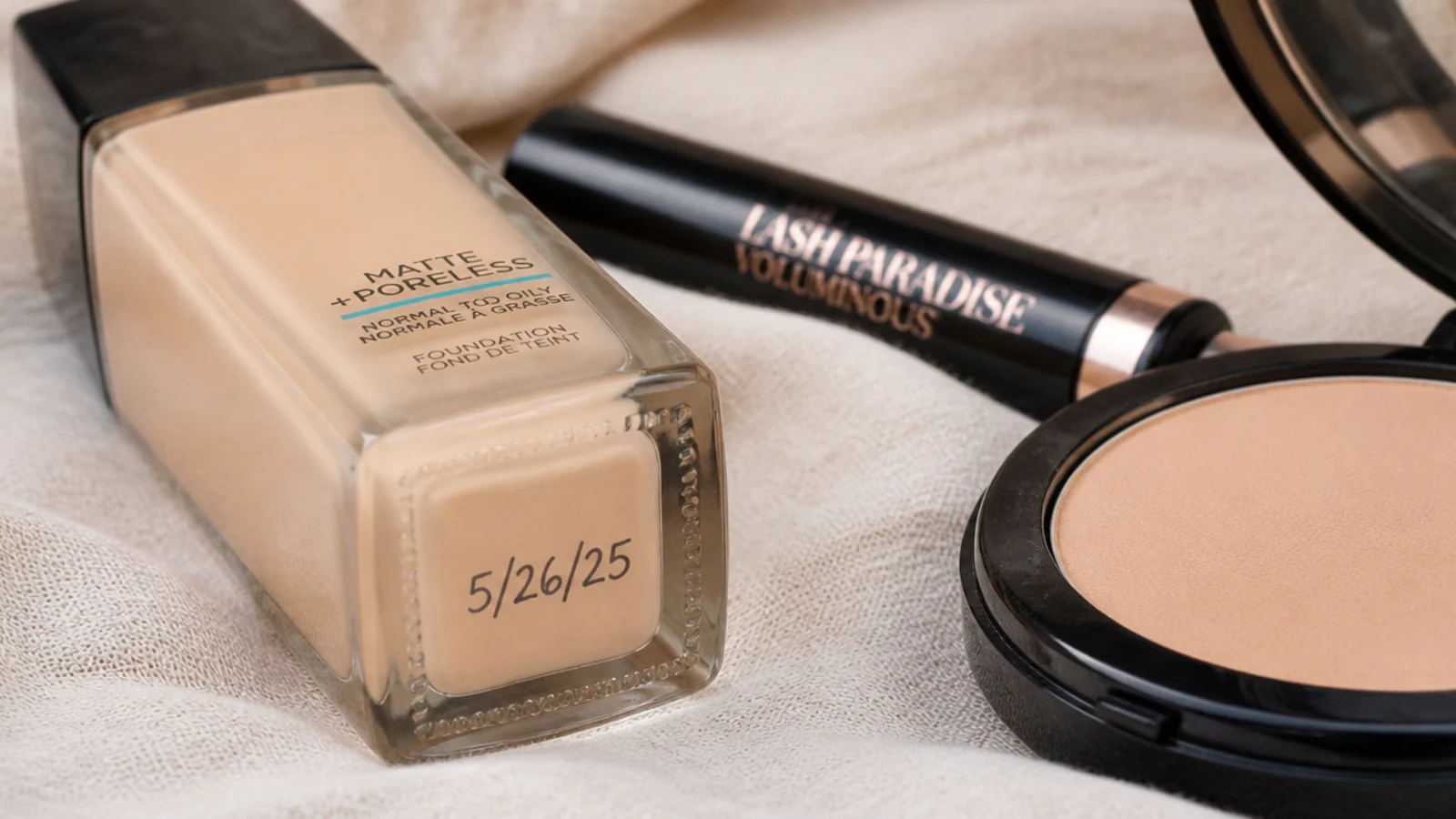
Take a fine marker and write the month you opened it on the base of the bottle. Mascara is finished at three months, liquid foundation at six to twelve, and powders at roughly two years.
It takes ten seconds per product and removes all guesswork at cull time. Sunscreen and eye products are the two worth being strict about, since both fail quietly rather than obviously.
Do this as things come home from the shop and it never becomes a project. Free
15. Book the twice-yearly cull
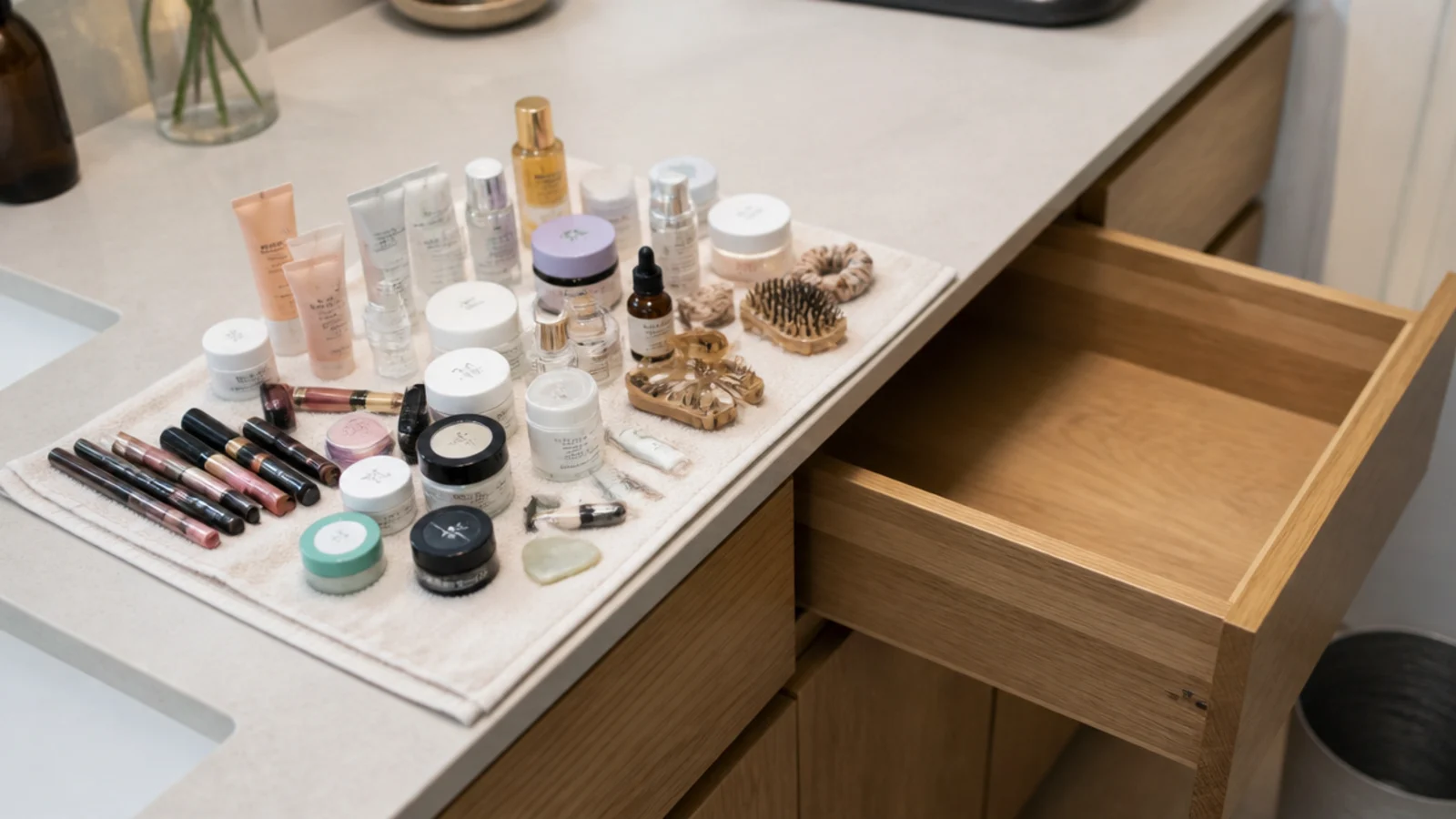
Put two dates in the calendar, spring and autumn. Empty everything onto a towel, bin what has expired, wipe the drawer out, and put back only what you actually reached for since the last round.
A twice-yearly cull does more for a vanity than any organizer you can buy, because containers manage volume and a cull removes it. Mine takes about 45 minutes and I always fill a small bin bag.
Order the survivors straight back into routine zones, and the reset is done. Free
Mistakes to Skip
- Buying organizers before measuring the drawer. Inserts sized from outside dimensions arrive too wide, and the 1/8 inch clearance is what makes a set actually drop in.
- Putting everything in clear acrylic on the counter. Transparent boxes multiply visual noise rather than reducing it; one tray plus one closed box does far more.
- Lighting the mirror from overhead alone. It shadows your eye sockets and jawline at exactly the moment you need to see, whatever the bulb costs.
Frequently asked questions
How do I organize my vanity so it actually stays organized?
Sort by routine order rather than product type. Cleanse, treat, colour is the sequence your hand moves in every morning, so anything stored out of that sequence gets pulled and never goes back. Give each step one container, keep only daily items on the counter, and leave a fifth of one drawer empty so new purchases have somewhere to land.
What should you keep on a vanity countertop?
Only what you touch daily, which is usually five to eight things: cleanser, moisturizer, sunscreen, one scent, a brush cup and whatever you reach for without thinking. Everything weekly, seasonal or aspirational belongs in a drawer. Put the survivors on one tray so spills stay contained and the group reads as a single composition instead of clutter.
How deep should vanity drawer organizers be?
Two to three inches suits flat palettes, compacts, pencils and brushes laid down. Four to five inches is what bottles, primers and pump dispensers need to stand upright without tipping. Measure the drawer's internal width and depth, then subtract about an eighth of an inch for clearance, because outside measurements are why so many inserts arrive an inch too wide.
What is the best lighting for a vanity mirror?
Aim for 3000K to 4000K with a high CRI bulb, positioned to light your face from both sides. Two sconces flanking the mirror or a ring at eye level give even coverage. Overhead fixtures are the common mistake — they drop shadows straight into your eye sockets and under your jaw, exactly where you need to see what you are doing.
How often should I clean out my vanity?
Twice a year, with a hard eye on dates. Mascara is finished at three months, liquid foundation at six to twelve, and powders at roughly two years. Empty everything onto a towel, bin what has expired, wipe the drawer, and put back only what you reached for since the last cull. That hour beats any organizer you can buy.
Start with the two free moves: sort the surface into routine order, then remove anything you have not touched in a week. Live with that for a few days before buying a single insert, because the shopping list gets much shorter. When you are ready to go further, vanity drawer organization covers inserts in detail, the twenty-step vanity reset walks the whole project end to end, and small walk-in closet organization applies the same zoning to clothes. Save the pin so the measurements are with you in the store.
Want more like this? Browse all 15 vanity organization guides — they all use the same measurements and budget tiers.

Pin it for later
Save this to your Vanity Organization board
Pin it now so it is waiting for you when the tape measure comes out — and so the next person hunting for this idea can find it too.
Save this pinKeep going
More ideas worth saving while you have the tape measure out.