Vanity Organization · Listicle
25 Dreamy Vanity Organization Ideas for Any Home

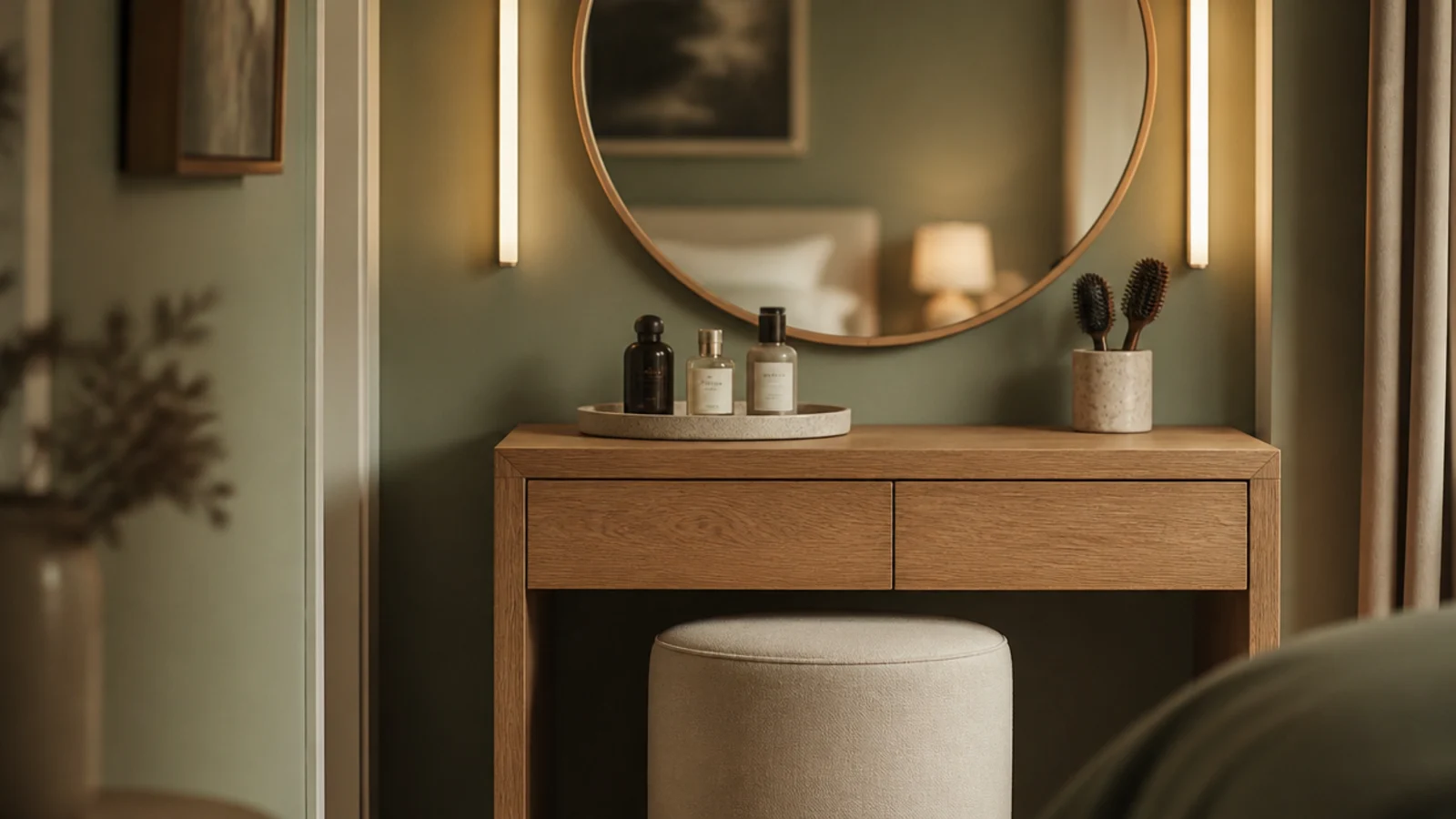
Vanity organization bedroom setups fail for a different reason than bathroom ones do. There is no extractor fan, no tile, and nobody ever wipes the surface down — so the enemy is dust and drift rather than steam. A dressing table also has to look good from the bed, which a bathroom counter never does. These twenty-five ideas cover both jobs: a routine that runs quickly, and a surface you are happy to look at.
In this guide27 sections — tap to openHide
- 1.What vanity organization bedroom setups have to solve
- 2.Put the table where the daylight already is
- 3.Light the face from both sides
- 4.Sort by routine order, not by category
- 5.Daily items out, everything else in a drawer
- 6.One tray to hold the morning five
- 7.A weighted cup so brushes stand bristles-up
- 8.Measure the drawer interior before buying inserts
- 9.Two inches deep for flat things
- 10.Four inches deep for bottles and pumps
- 11.Jewelry in a slotted tray, inside the drawer
- 12.Hooks for necklaces that tangle in trays
- 13.Perfume away from the window
- 14.Actives stored in the dark
- 15.A stool that tucks fully underneath
- 16.A heat mat and a coiled cord
- 17.A lidded box for the backstock
- 18.A shallow mirror cabinet that actually stores
- 19.A narrow console when the room is tight
- 20.A nightstand that lifts into a mirror
- 21.A floating shelf above for decor only
- 22.A basket for the laundry the vanity creates
- 23.Cables run down the back leg
- 24.A seasonal swap box under the bed
- 25.A twice-yearly cull by date
- 26.One plant, one candle, one piece of art
- 27.Mistakes to Skip
What vanity organization bedroom setups have to solve
Three things decide whether a dressing table gets used: the light, the height and the drawer.
Light first. Overhead bedroom lighting throws shadow down your face, so makeup done there looks different in daylight. You want light arriving from both sides at roughly eye level, at 3000K to 4000K with a high CRI rating — colour rendering is the number that decides whether foundation matches once you leave the room.
Height second. Thirty inches to the surface, an eighteen-to-nineteen-inch stool, and at least twenty-four inches of knee clearance. Any centre drawer deeper than four inches puts your legs at war with the furniture.
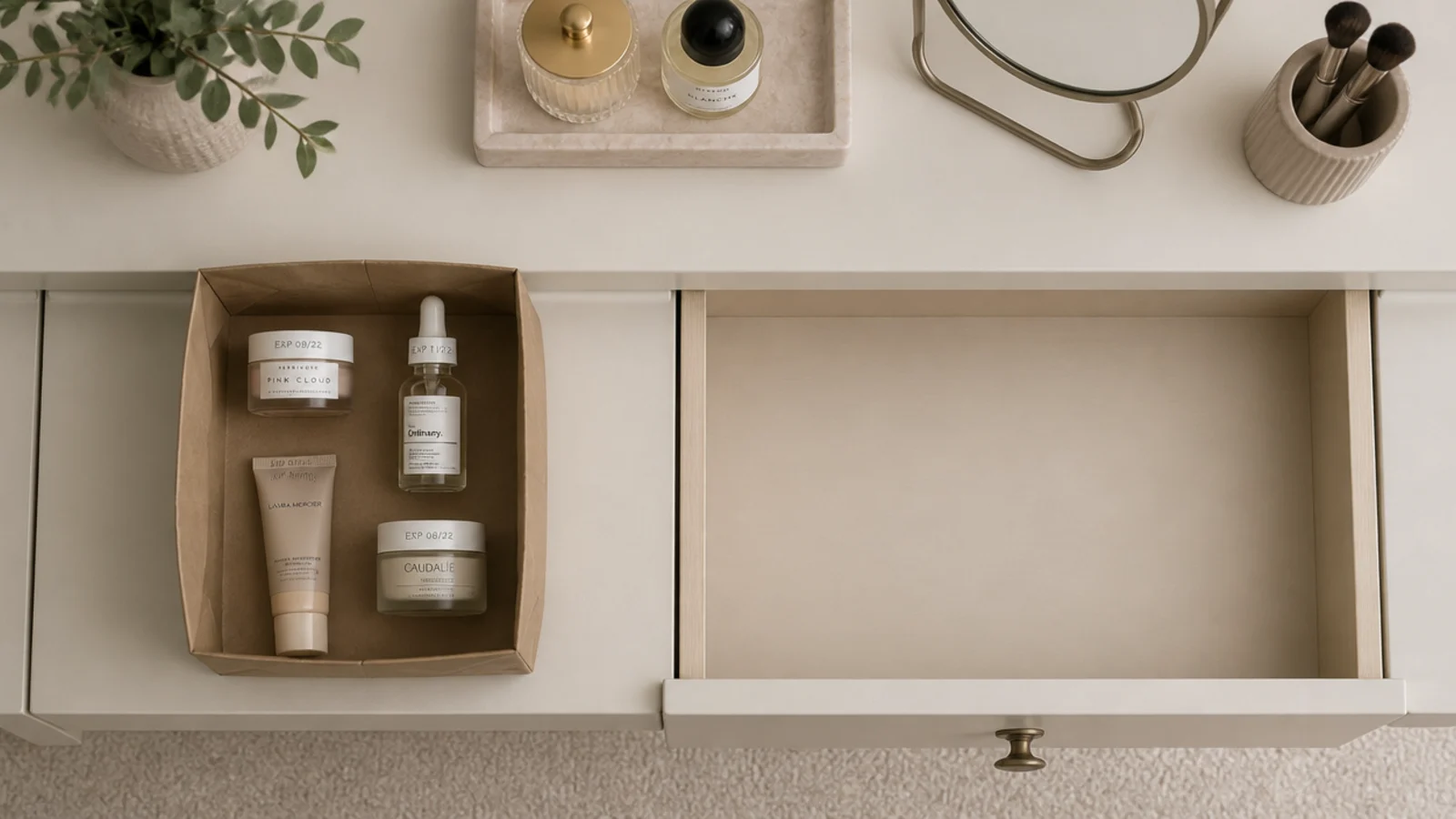
The drawer third. Anything you touch daily stays on the surface; everything else goes in. Measure the drawer interior and subtract an eighth of an inch of clearance before you buy inserts. Two to three inches of insert depth suits flat palettes and compacts, four to five suits bottles and pumps standing upright.
Then load in routine order — cleanse, treat, colour, left to right — rather than by category. Categories look neat and make you open three containers to finish one step.
Budget tiers: $ is under $30 for trays, cups and inserts. $$ is $30 to $120 for a mirror, lighting or a stool. $$$ is $120 and up, usually the table itself.
1. Put the table where the daylight already is
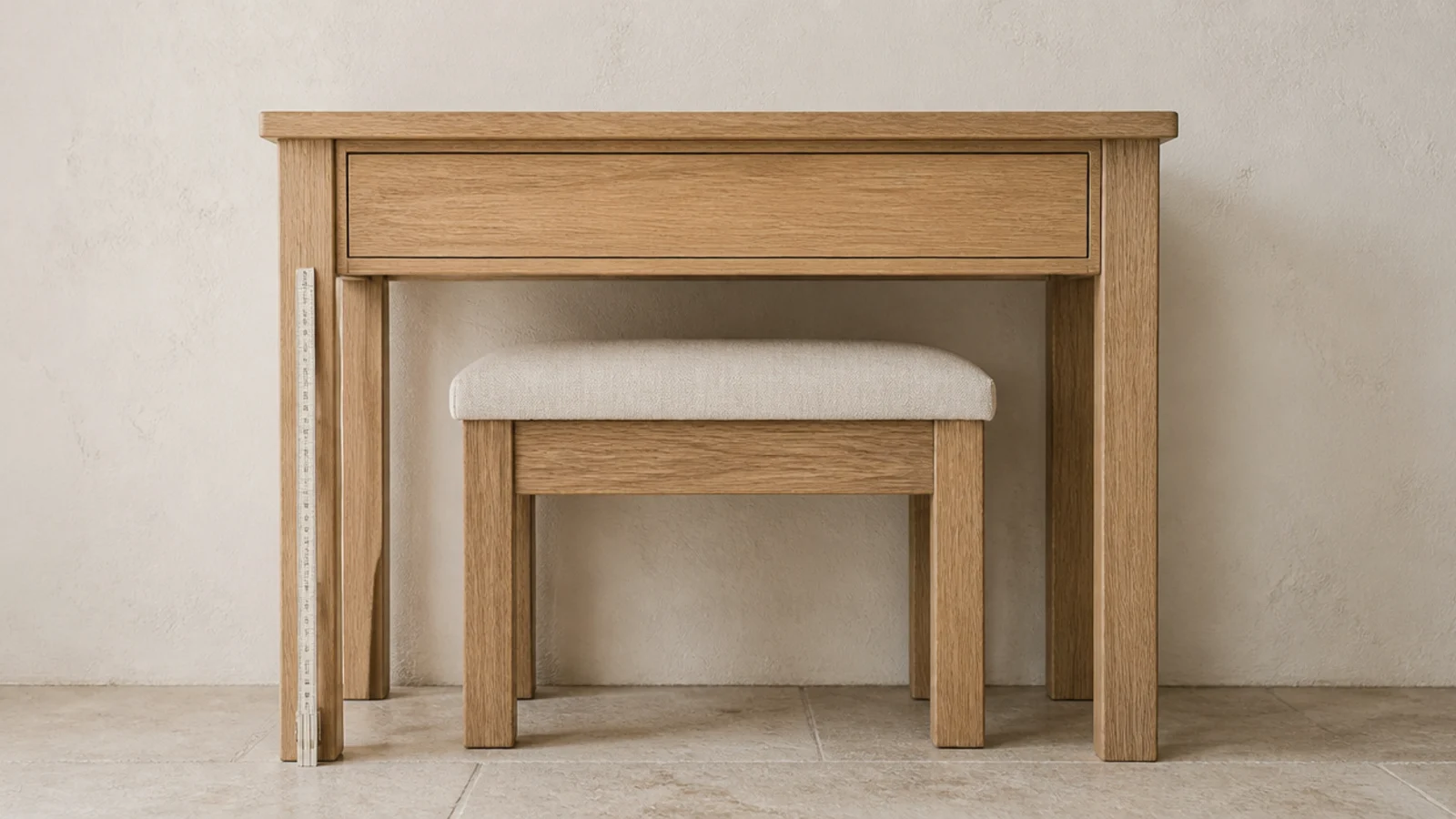
Set the table perpendicular to a window rather than facing it or backing onto it. Facing a window gives you glare and a silhouette; backing onto it puts your own shadow across the mirror.
Side light is the flattering, useful version, and it is free. In a north-facing room take the wall nearest the window and light both sides of the mirror to make up the difference.
2. Light the face from both sides
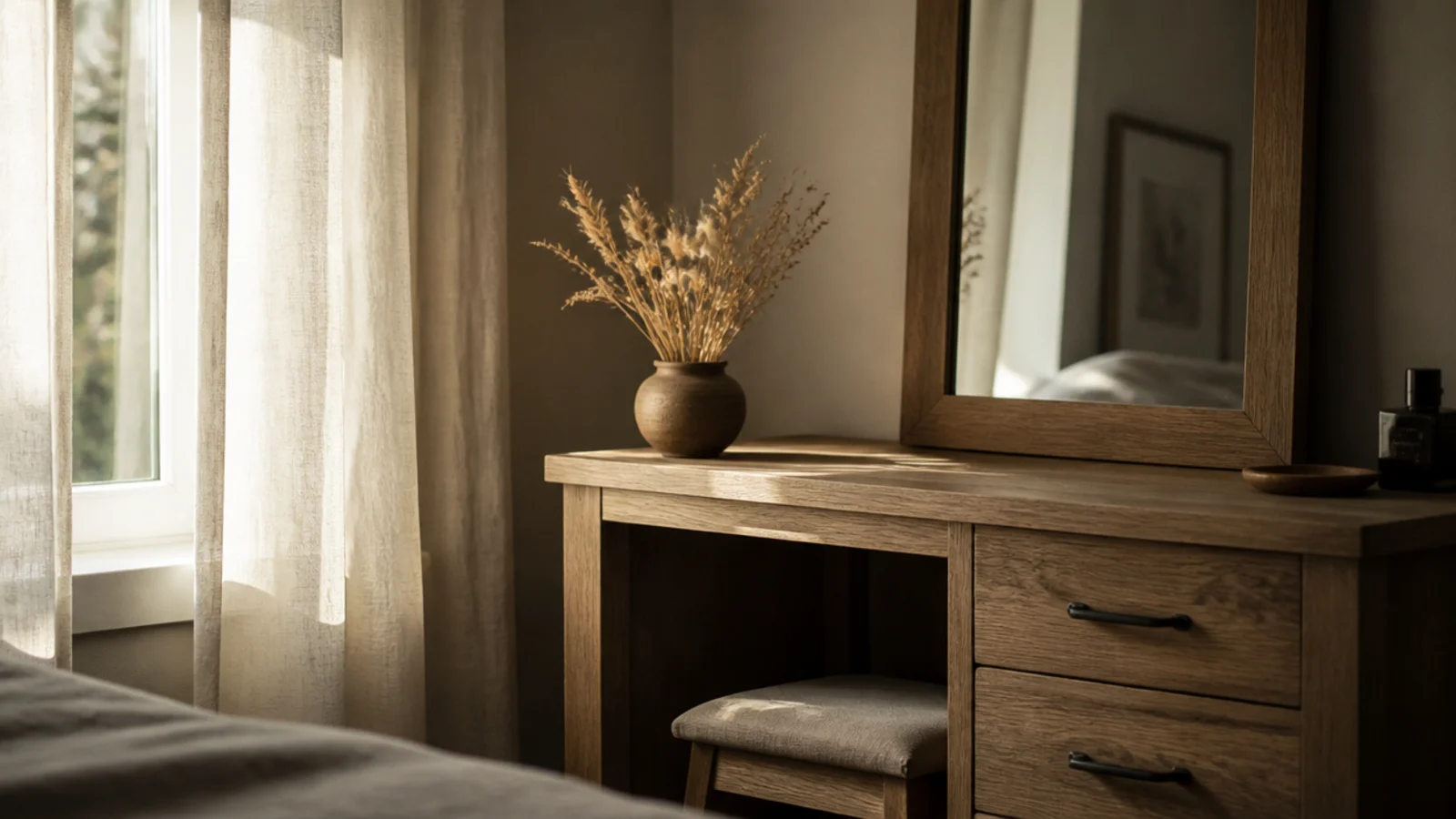
Two slim bars or two sconces flanking the mirror, centred at about 55 inches from the floor, is the whole trick. Overhead light drops shadow into your eye sockets and under your nose.
Stick to 3000K to 4000K and look for a high CRI figure on the box. Put it on a dimmer if the same fixture has to work as bedroom lighting at night. A pair runs $40 to $110 ($$).
3. Sort by routine order, not by category
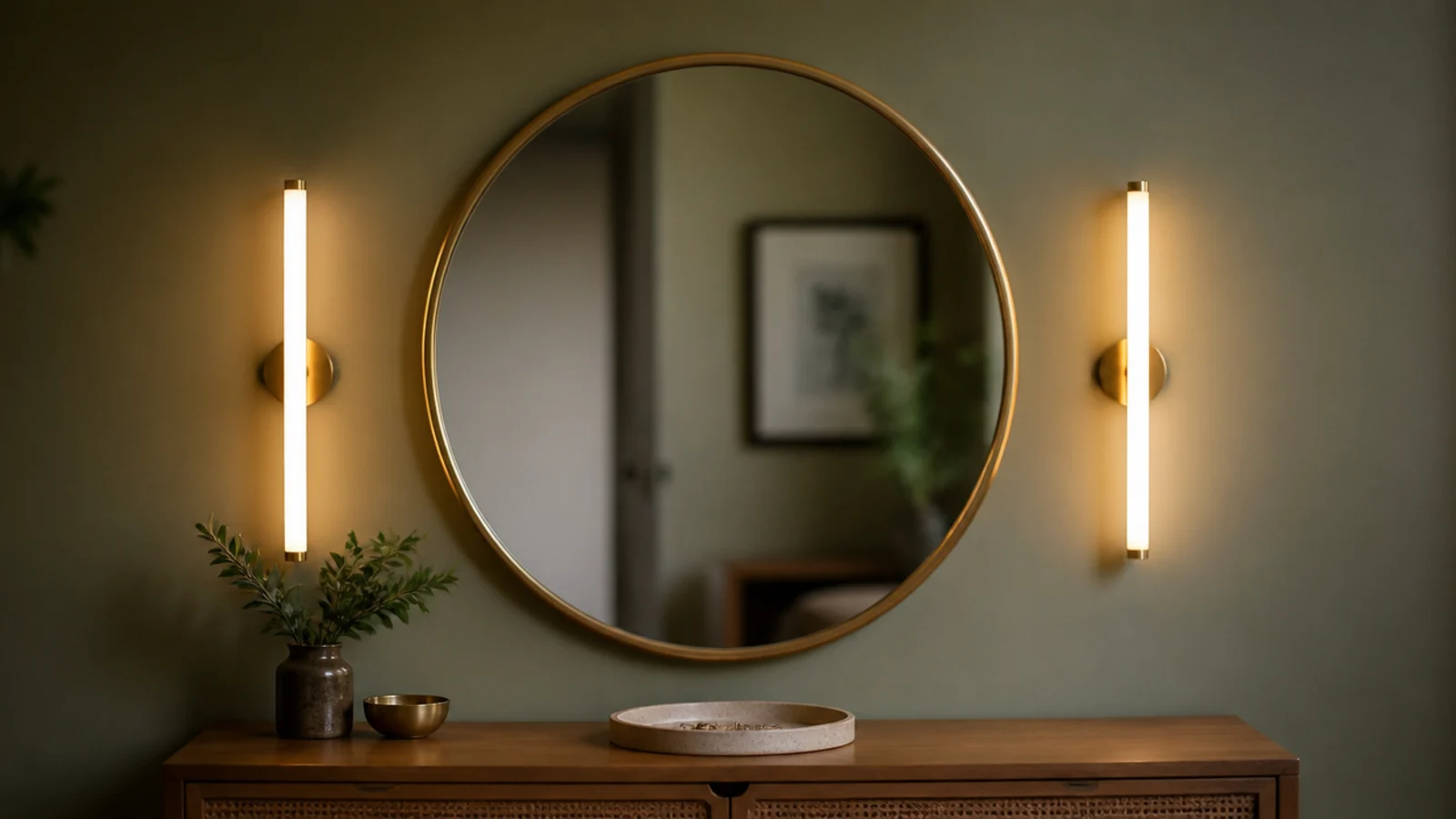
Lay the surface out cleanse, treat, colour, left to right. Your hand then travels in one direction and nothing gets picked up twice.
Sorting by category — all skincare here, all makeup there — reads tidier in a photograph and slows the actual morning down, because one step lives in three places. Routine order is free and it is the single change that sticks.

4. Daily items out, everything else in a drawer
A dressing table surface holds about eight objects before it stops reading as styled, and a tray counts as one. That is the ceiling to design against.
Everything you use less than daily goes into the drawer or the box. Most bedroom vanities are not short of storage; they are storing the weekly and the seasonal at arm's reach and the daily behind it.
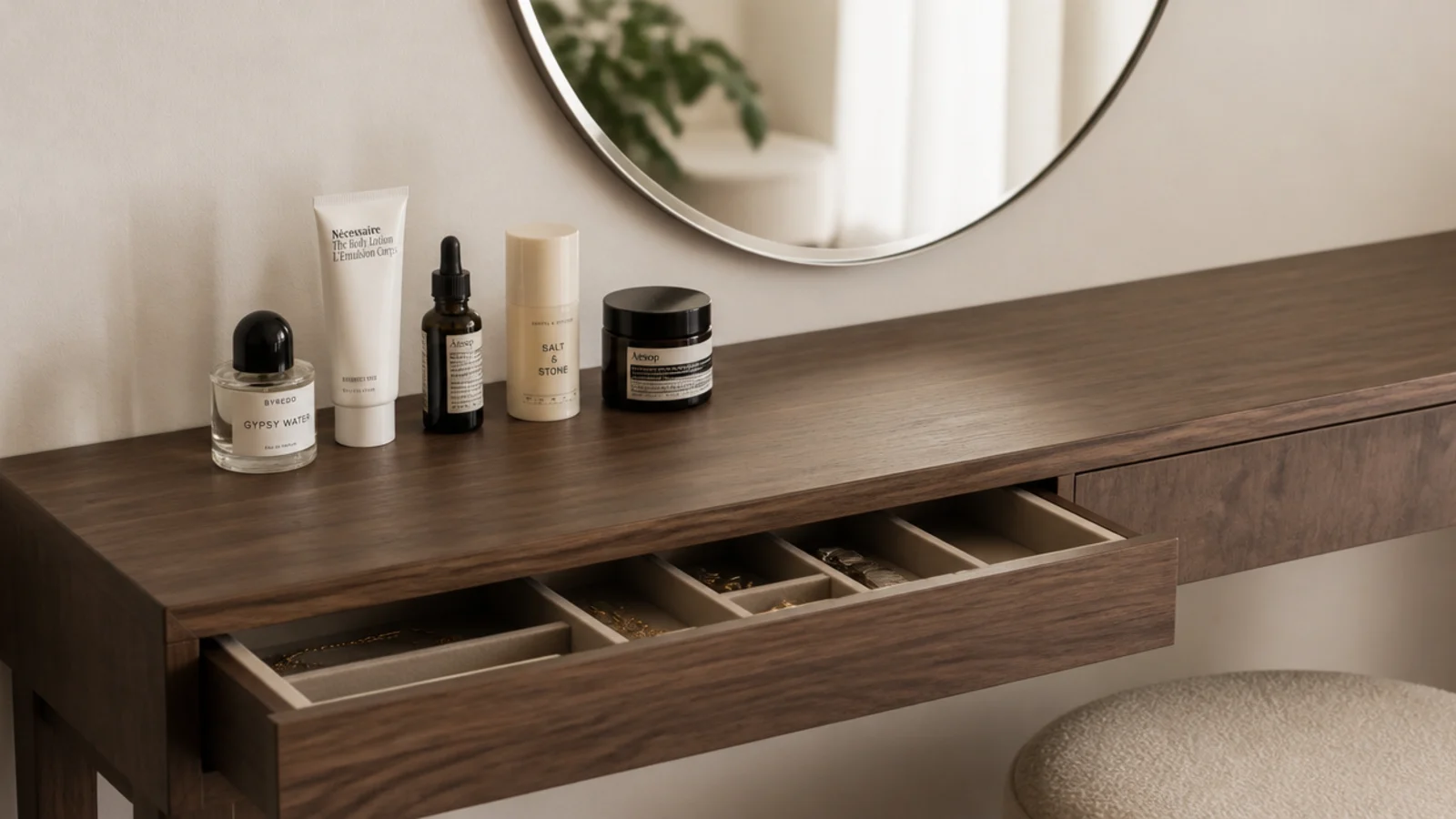
5. One tray to hold the morning five
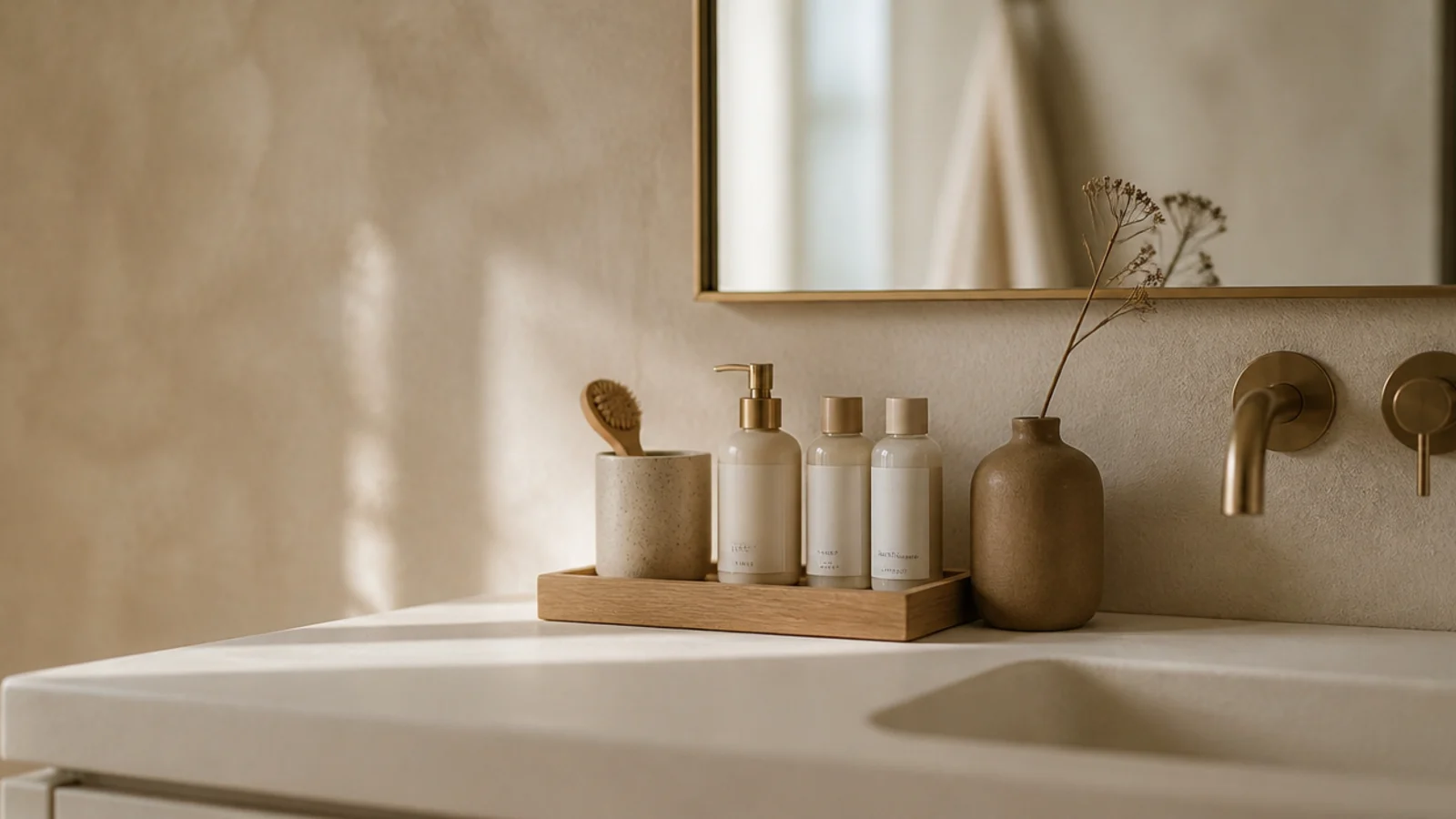
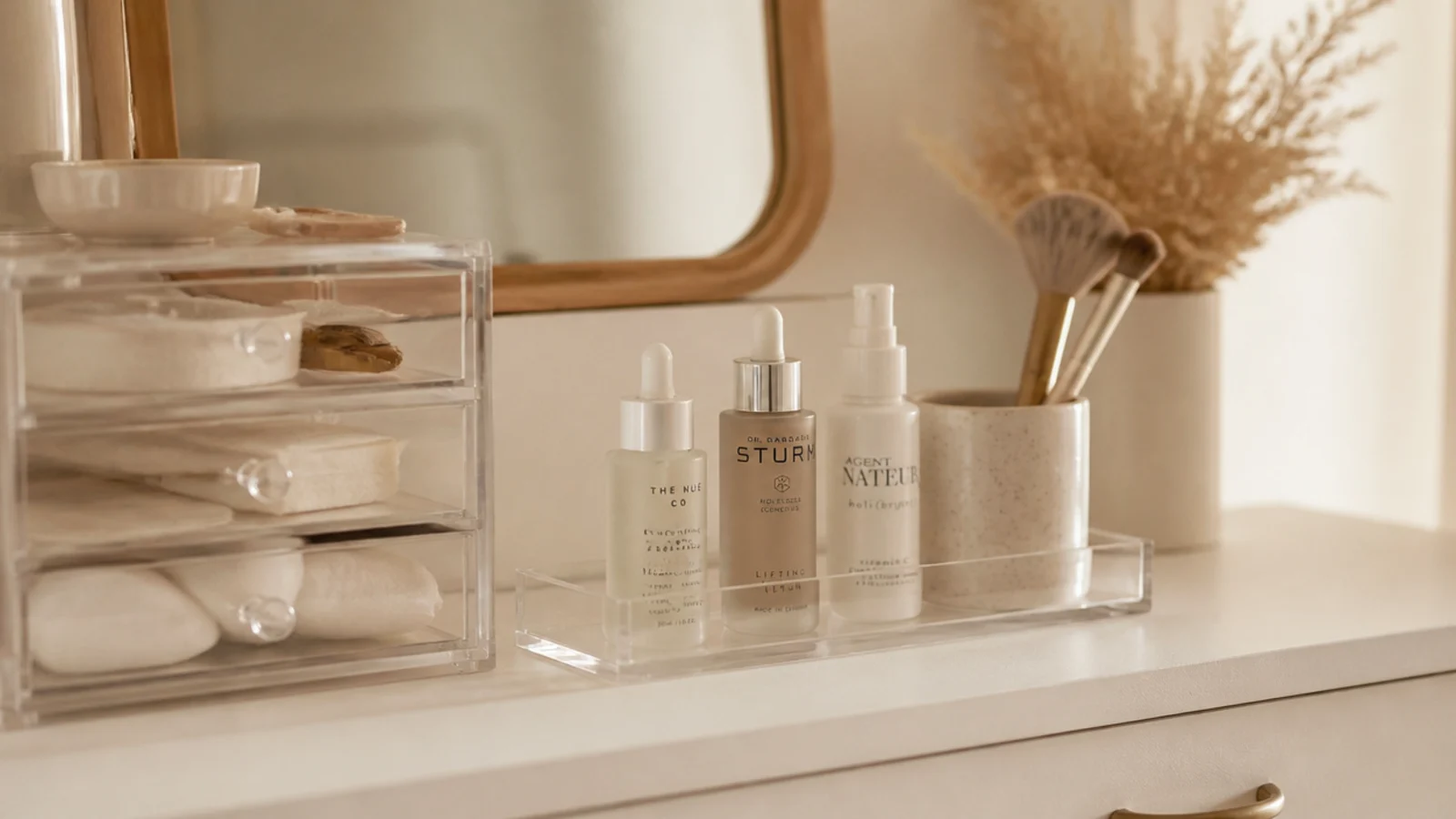
A tray about 12 by 8 inches with a quarter-inch lip turns five bottles into one composition and contains the spill when a serum tips over.
In a bedroom the tray does extra work, because it defines where the products stop. Without an edge, they creep across the whole surface within a fortnight. Stoneware, lacquered wood or a marble offcut, $12 to $30 ($), and vanity tray styling has the full arrangement.
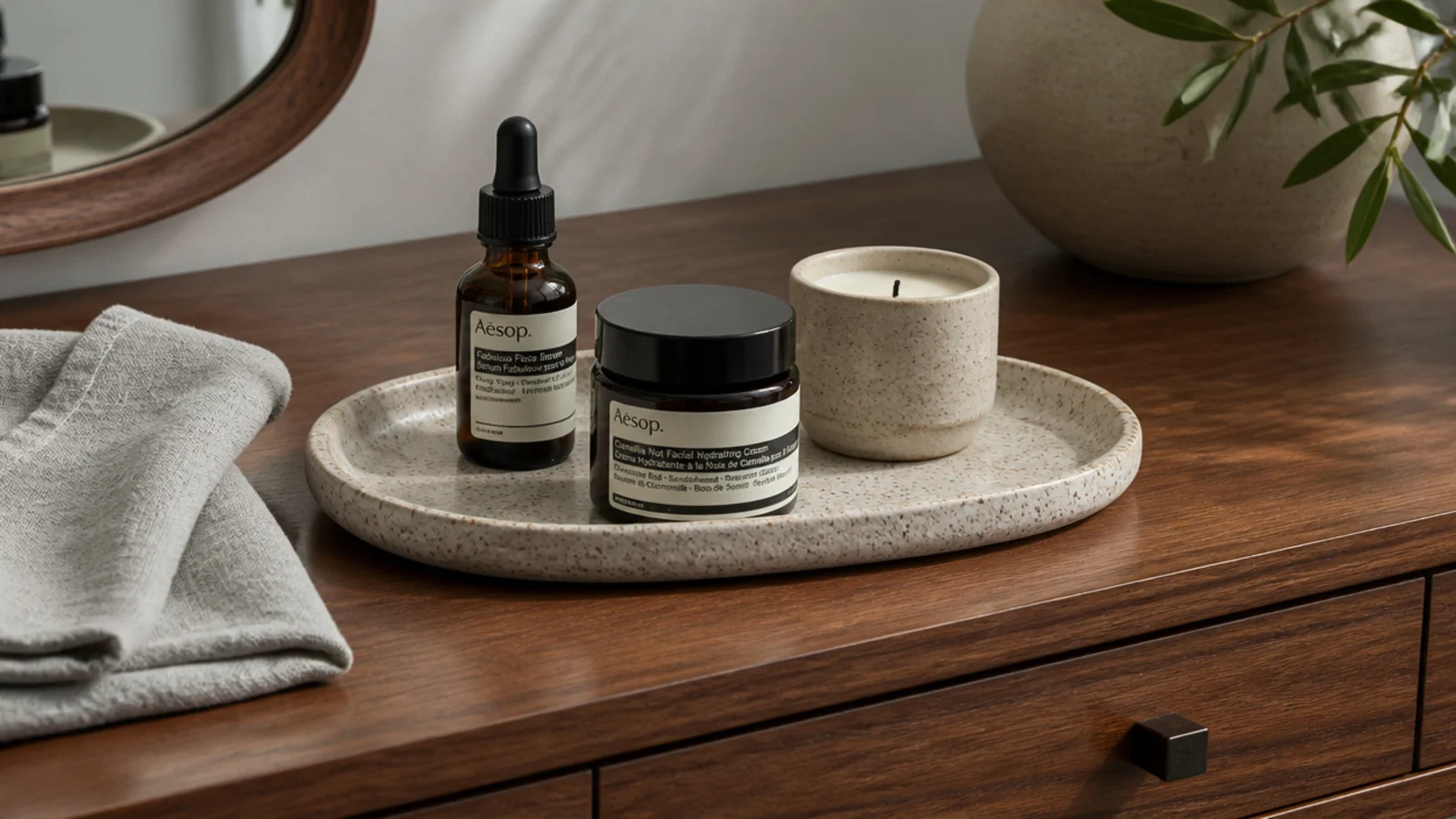
6. A weighted cup so brushes stand bristles-up
Brushes splay if they are stored flat or bristles-down, and the bend never comes out. They need to stand upright with air around them.
Weight is what matters. A light plastic cup tips as soon as ten brushes lean together. Stoneware, marble or thick glass at roughly three inches across holds eight to ten. Half an inch of glass beads in the base steadies a borderline one. $10 to $22 ($).
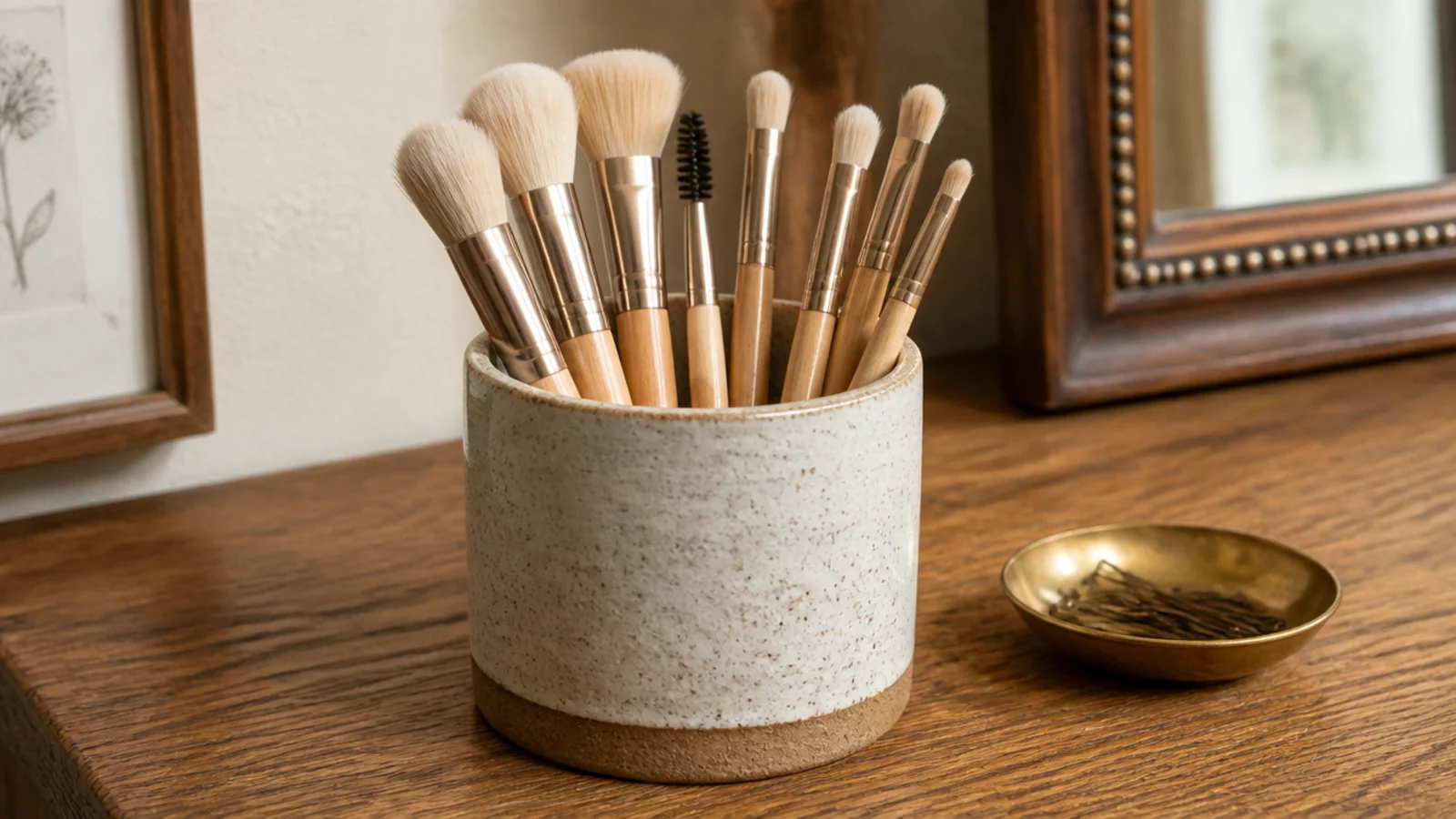
7. Measure the drawer interior before buying inserts
Inserts are sold by their outside dimensions and drawers are described by their outside width, so shopping to the label is how people end up with a set that stops the drawer closing.
Open the drawer, measure the internal width and depth, subtract an eighth of an inch and buy to that. Five minutes of measuring saves a return every time.
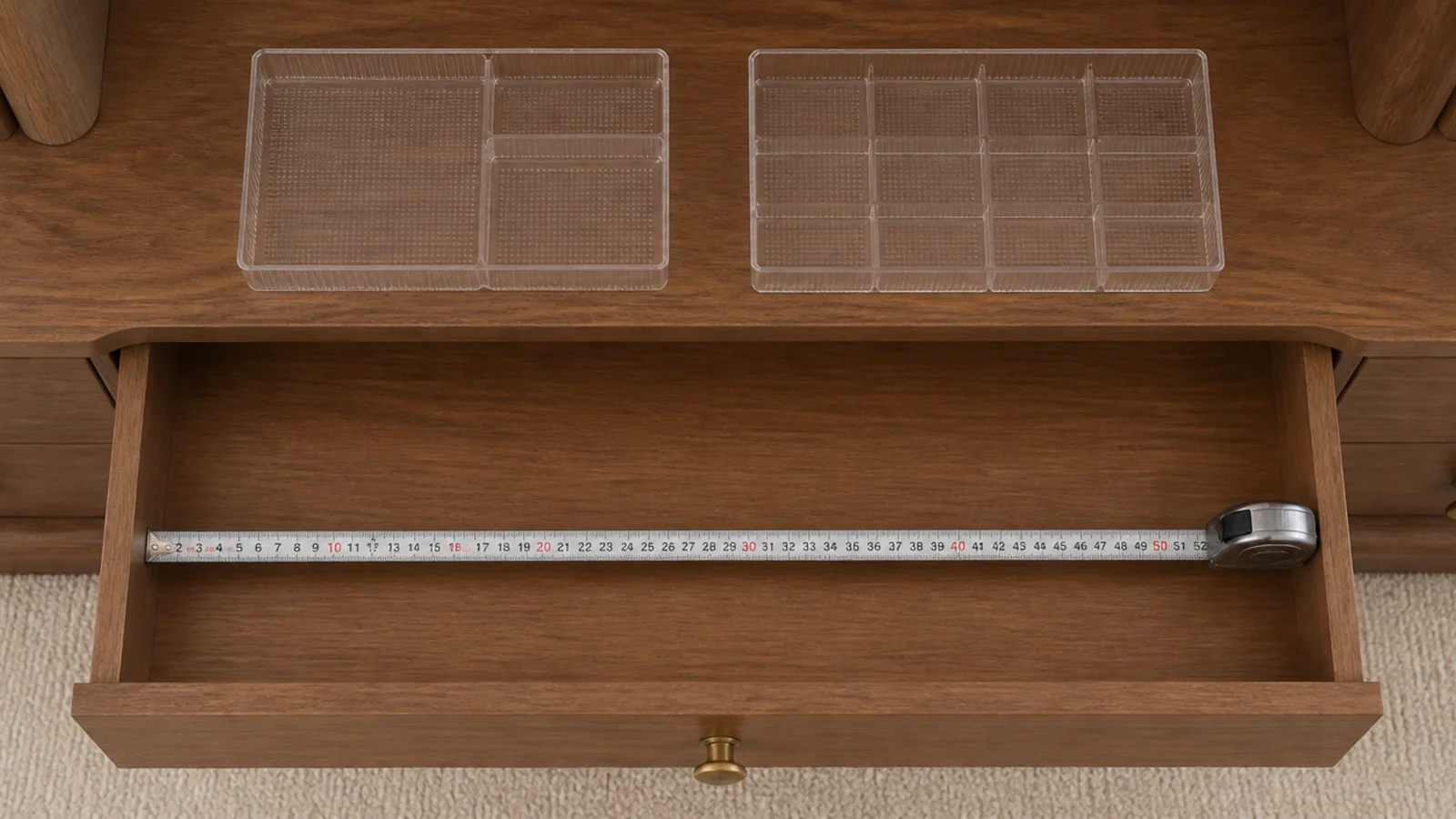
8. Two inches deep for flat things
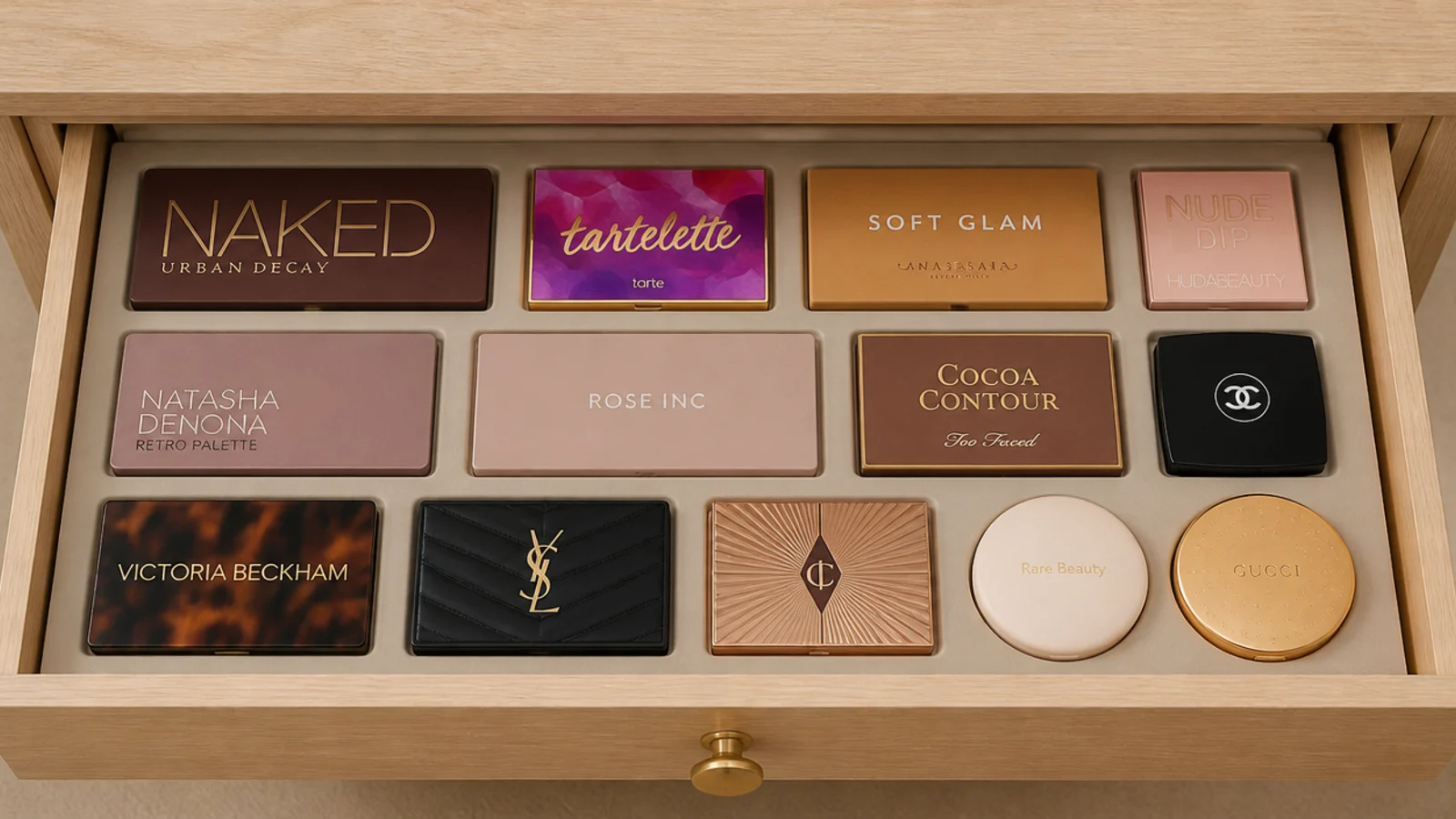
Palettes, compacts and pressed powders want a shallow tray about two to three inches deep so they lie in one visible layer.
Give them more depth and they stack, and a stack is a system for using the top item only. If it will not lie flat, it belongs in a deeper drawer rather than this one. A shallow insert runs $12 to $24 ($).
9. Four inches deep for bottles and pumps
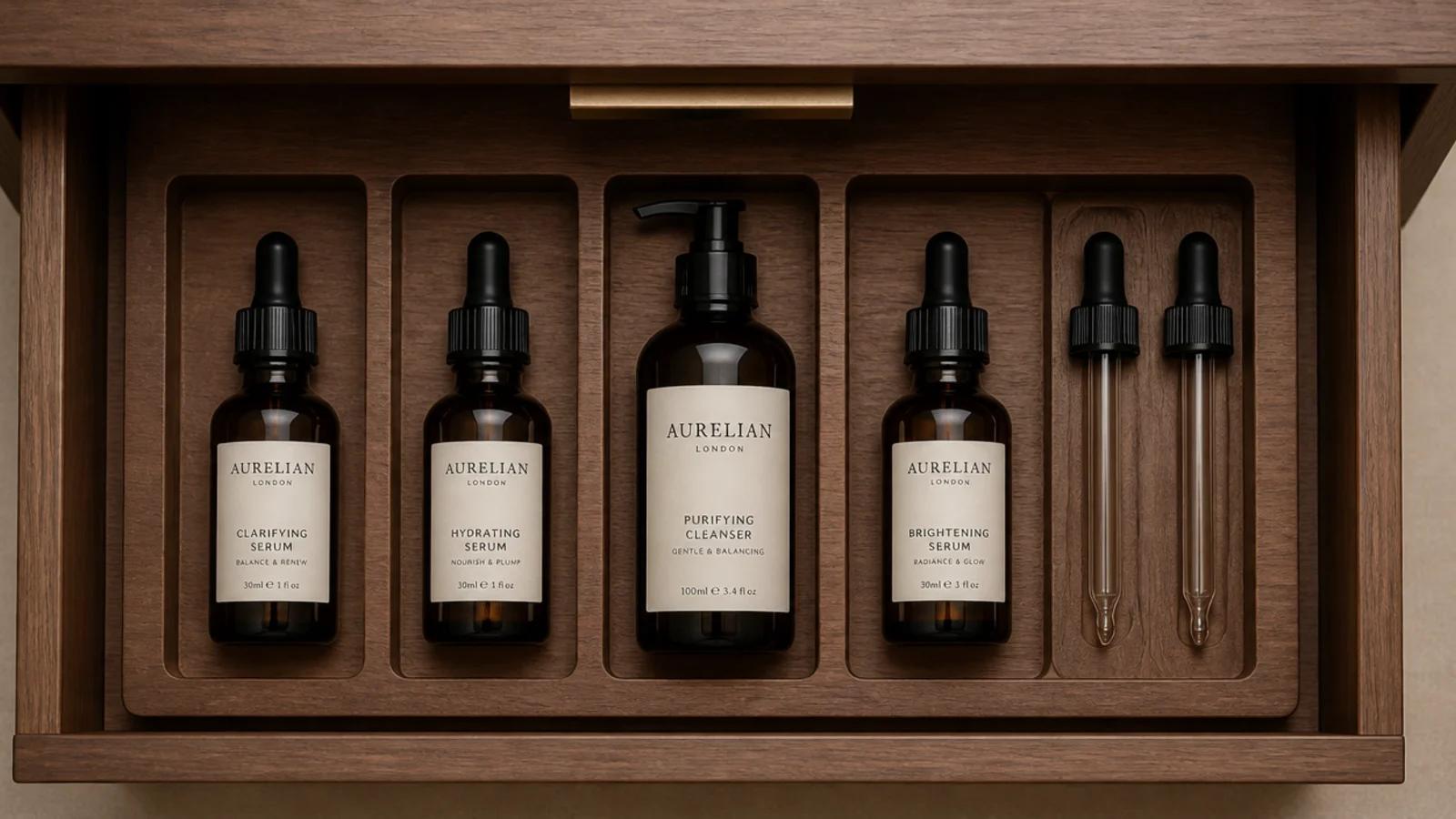
Serums, pumps and droppers want four to five inches of compartment so they stand upright without leaning on each other.
Upright matters beyond tidiness. A dropper on its side weeps into the drawer over weeks, and formulas separate in the tube. Height, not product type, is the right way to decide which drawer something lives in.
10. Jewelry in a slotted tray, inside the drawer
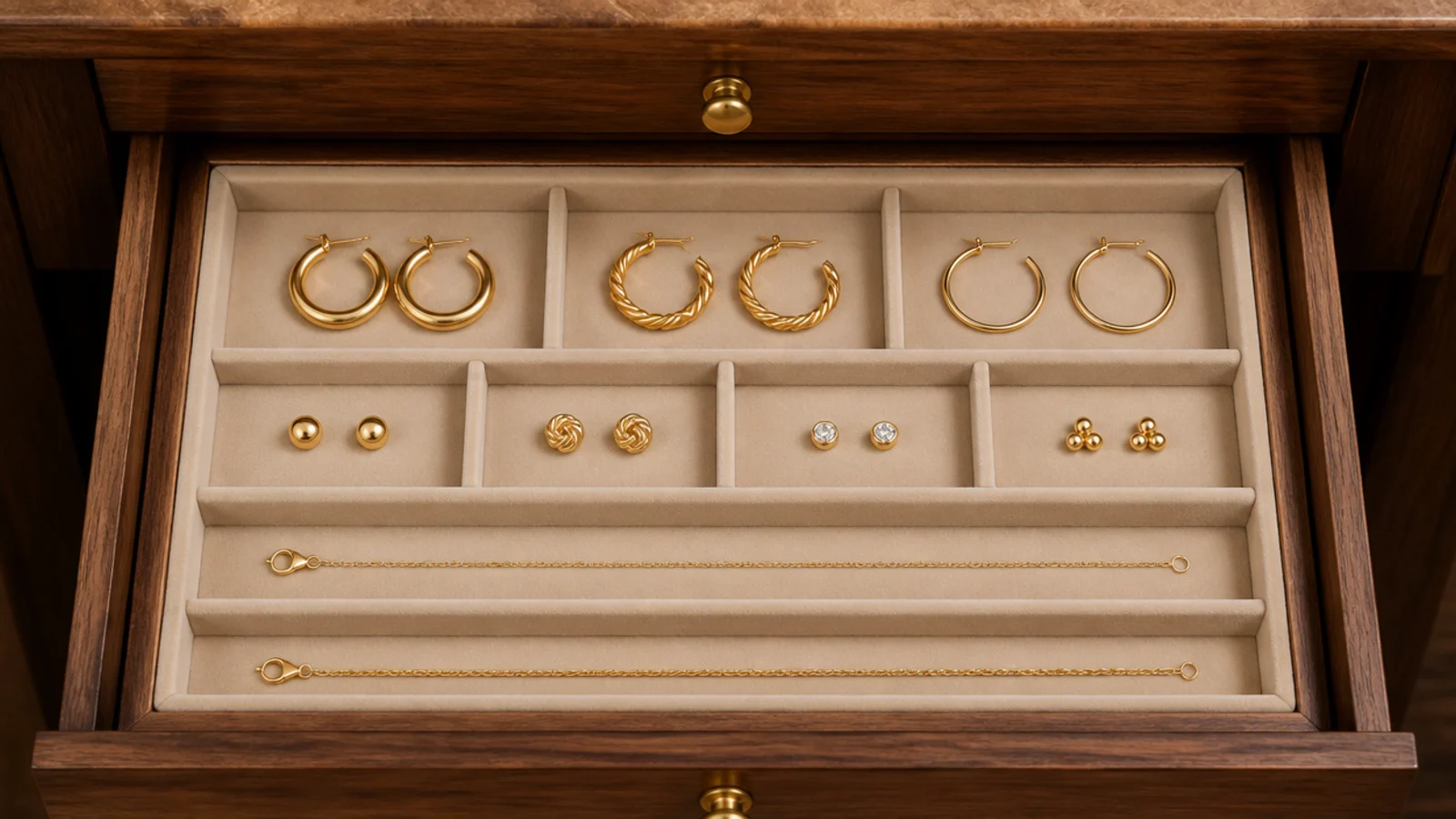
Bedrooms are dusty, and dust dulls metal and settles into chain links. A compartmented tray inside the top drawer keeps daily jewelry clean and findable.
Roughly 1.5-inch compartments, one pair per square. Lay fine chains flat and diagonally rather than coiling them, and keep silver in a closed box with a tarnish strip. $15 to $35 ($$).
11. Hooks for necklaces that tangle in trays
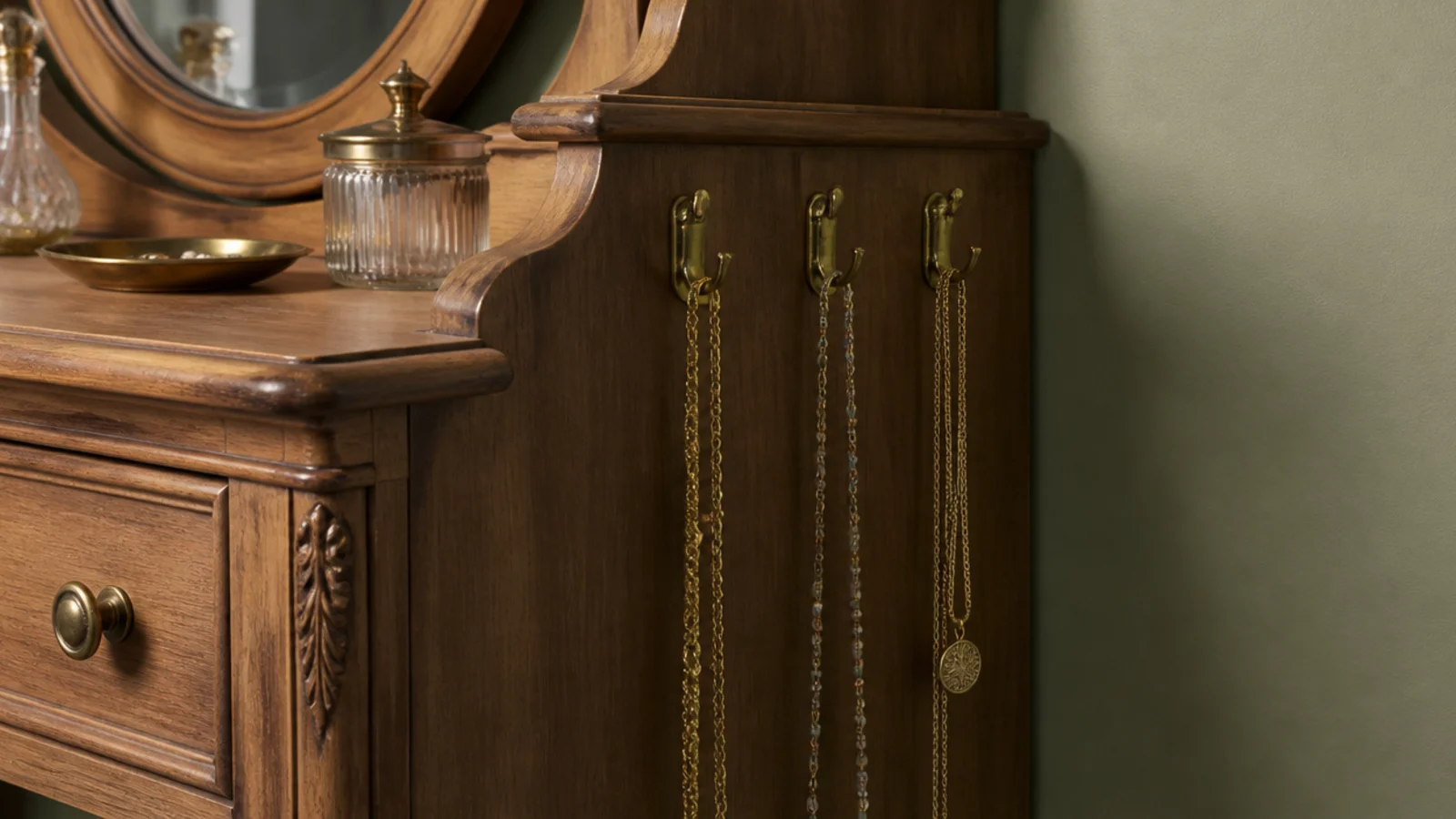
Anything longer than about 18 inches knots itself in a tray no matter how carefully you lay it down. Hanging is the only reliable answer.
Three small hooks on the side panel of the table, or inside a cabinet door, keep the length straight and the clasp reachable. Adhesive micro-hooks work on a painted side panel if you rent. Under $12 ($).
12. Perfume away from the window
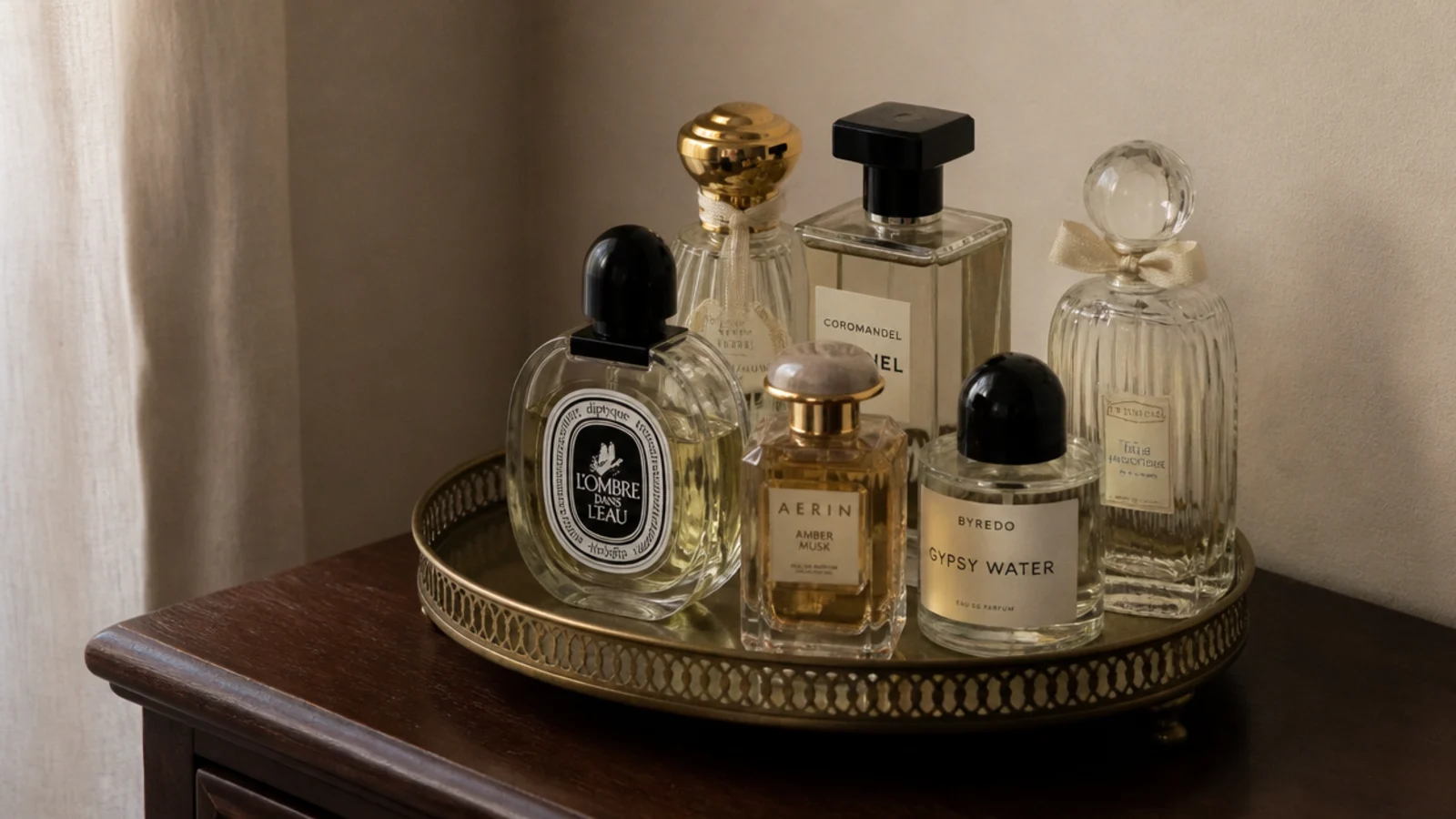
Sunlight and heat break down the top notes first, so a fragrance kept on a sunny sill smells thin within months and nobody connects the two.
Group the bottles on a small tray on the shaded side of the room, or keep them in a drawer in their boxes. A radiator underneath is just as damaging as the window above.
13. Actives stored in the dark
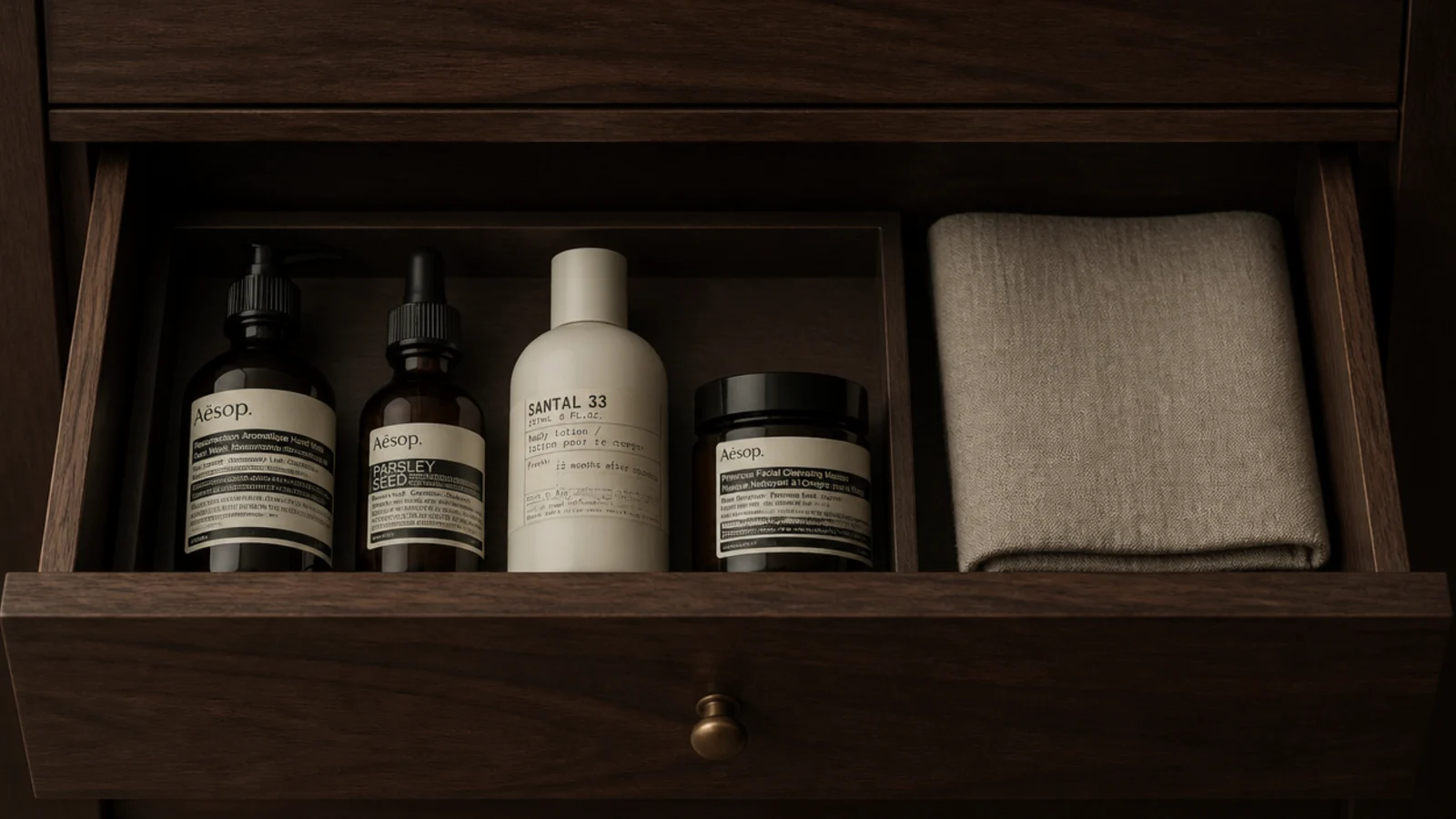
Retinol, vitamin C and most acids degrade under light and warmth. That is why they arrive in amber or opaque bottles, and it is why leaving them on a bright dressing table wastes them.
Give actives a closed drawer, standing upright. It costs nothing and it is the difference between a serum working for its full life and quietly turning useless.
14. A stool that tucks fully underneath
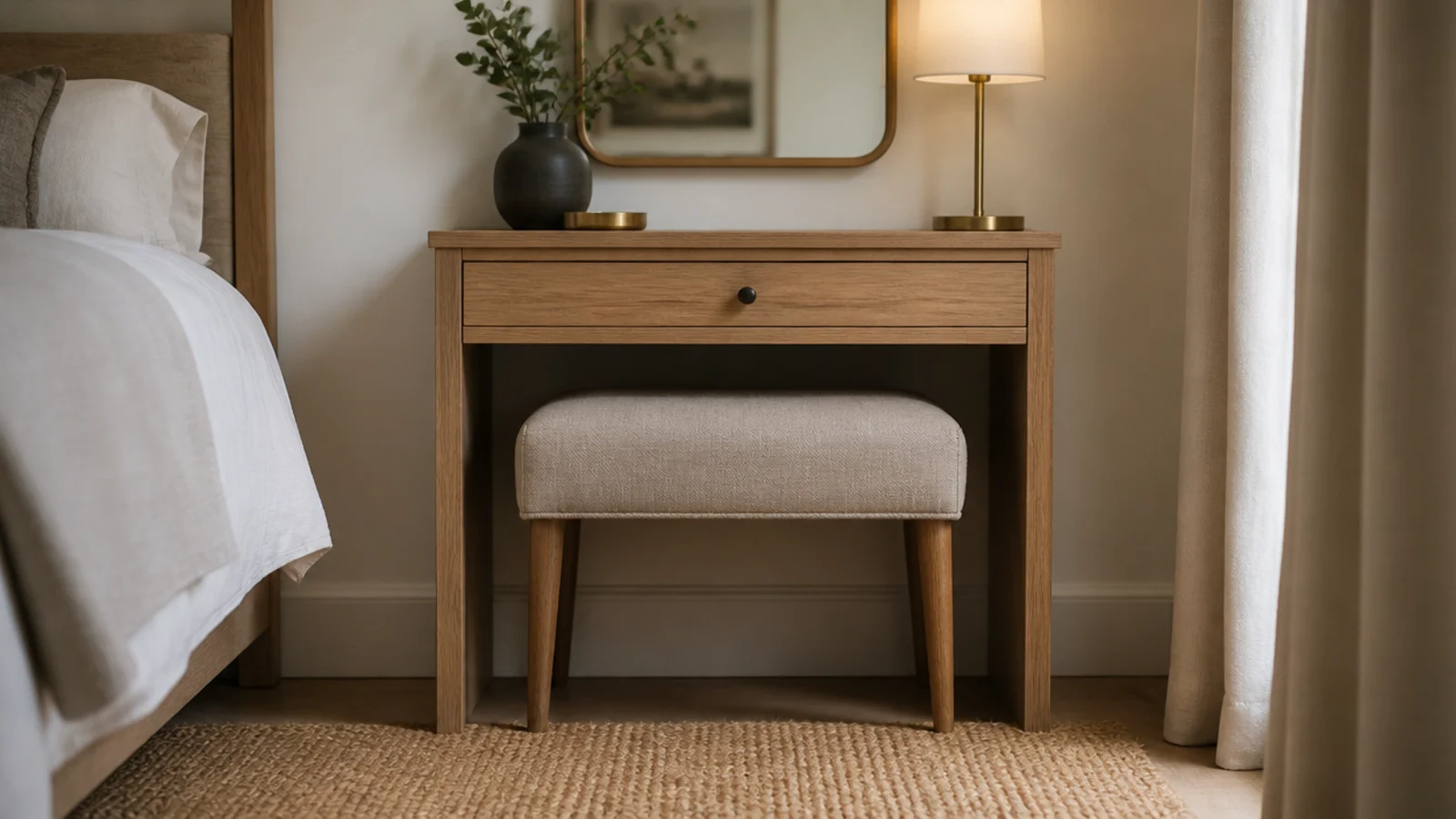
If the seat cannot slide all the way under, it lives in the walkway permanently and the room feels half a size smaller.
Measure the apron height under the table and buy a stool whose seat clears it. Eighteen to nineteen inches of seat height against a thirty-inch surface is the comfortable pairing. Upholstered linen or cane, $45 to $120 ($$).
15. A heat mat and a coiled cord
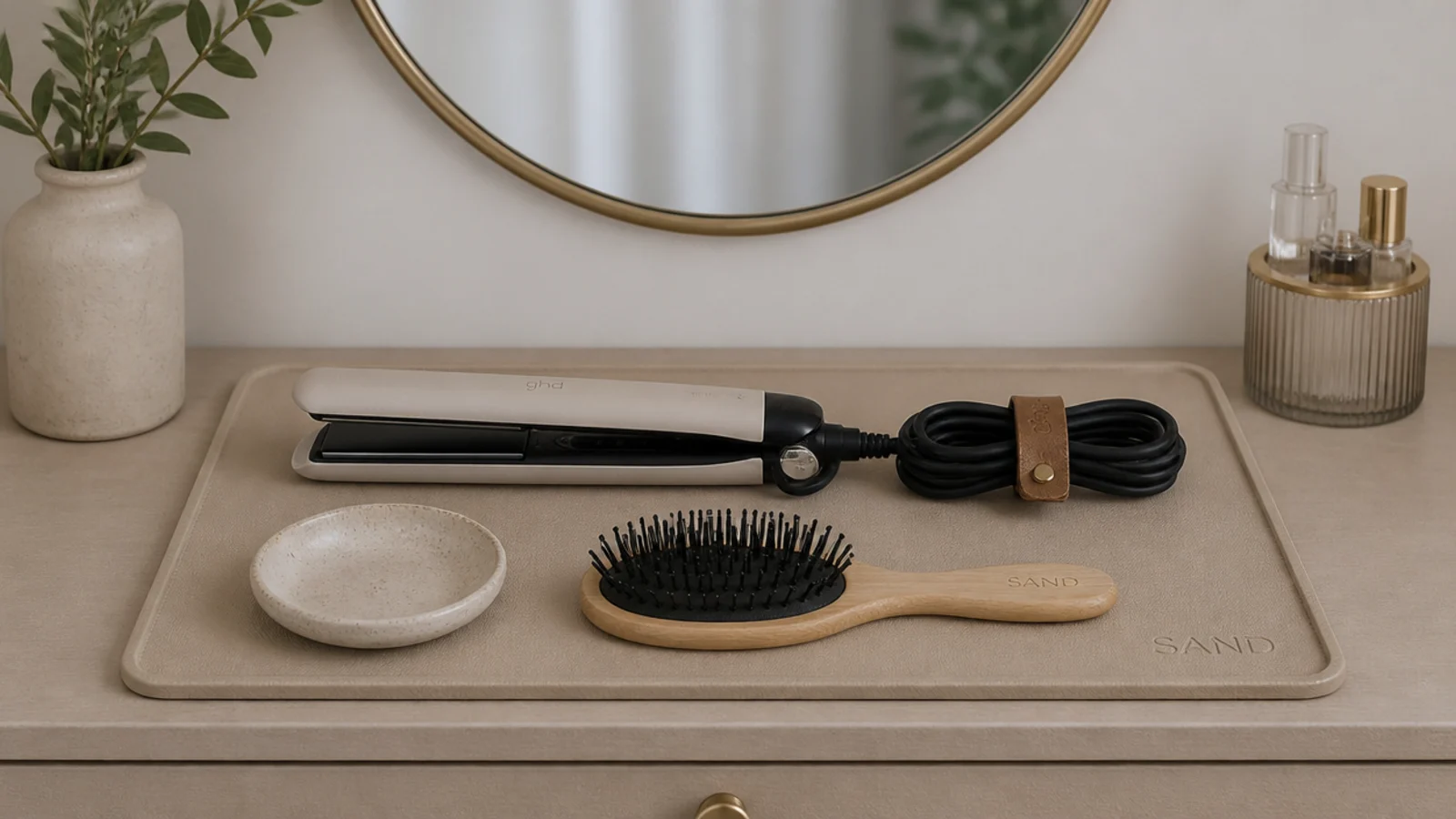
Hot tools make a dressing table look chaotic, and it is the cords doing it. A silicone mat gives a straightener a legitimate place to cool without scorching the wood.
Coil the cord palm-sized and hold it with a leather tie. Uncoiled cords take three times the room and drag other things off with them. Mat and ties, under $20 ($).
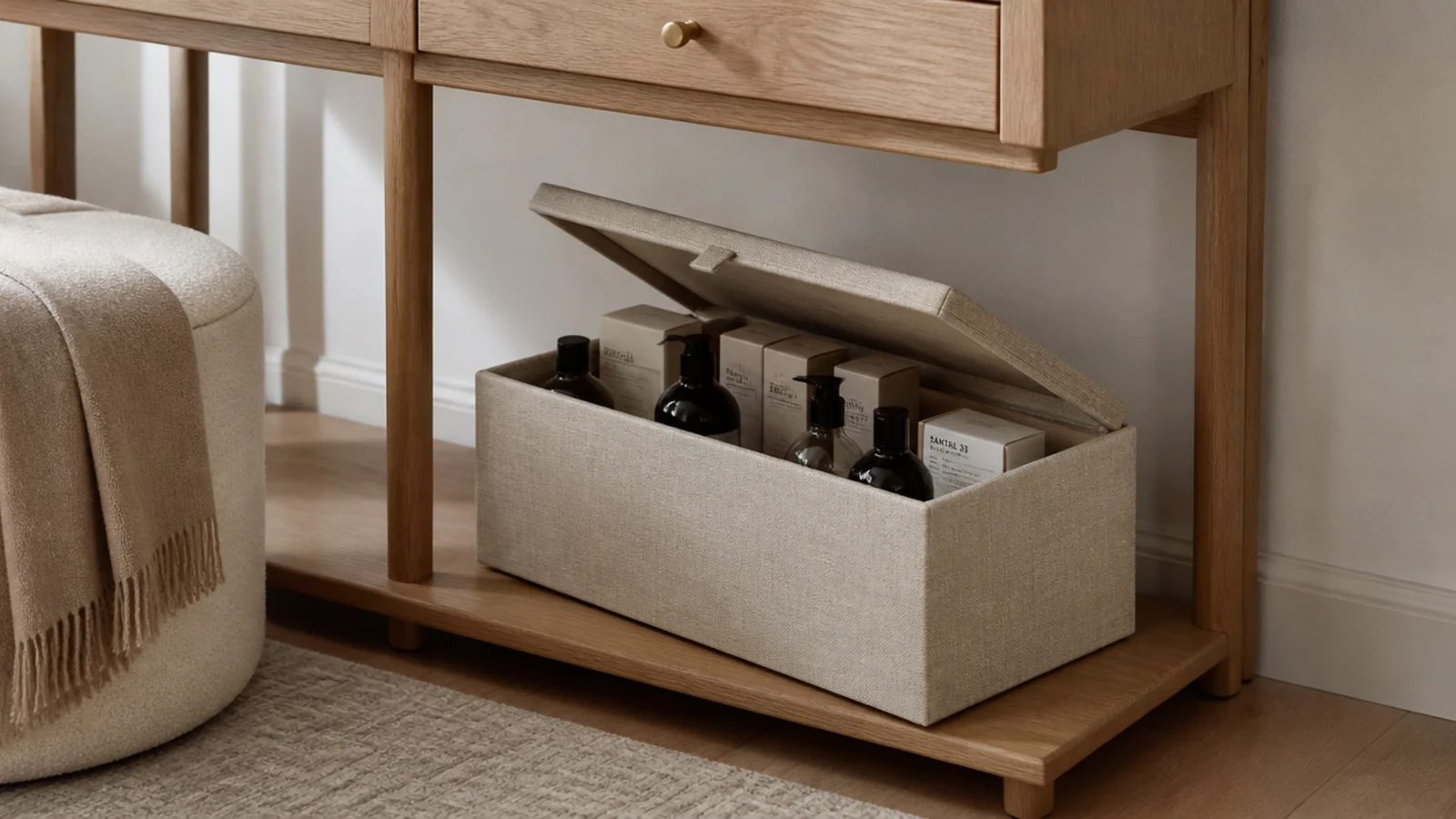
16. A lidded box for the backstock
Most cluttered dressing tables are storing three of everything. One lidded box, roughly shoebox size, holds every unopened backup in one place.
Two rules keep it honest: nothing new gets bought before the box is checked, and the box lives away from the window so heat does not age what is inside. Linen-covered, $12 to $25 ($).
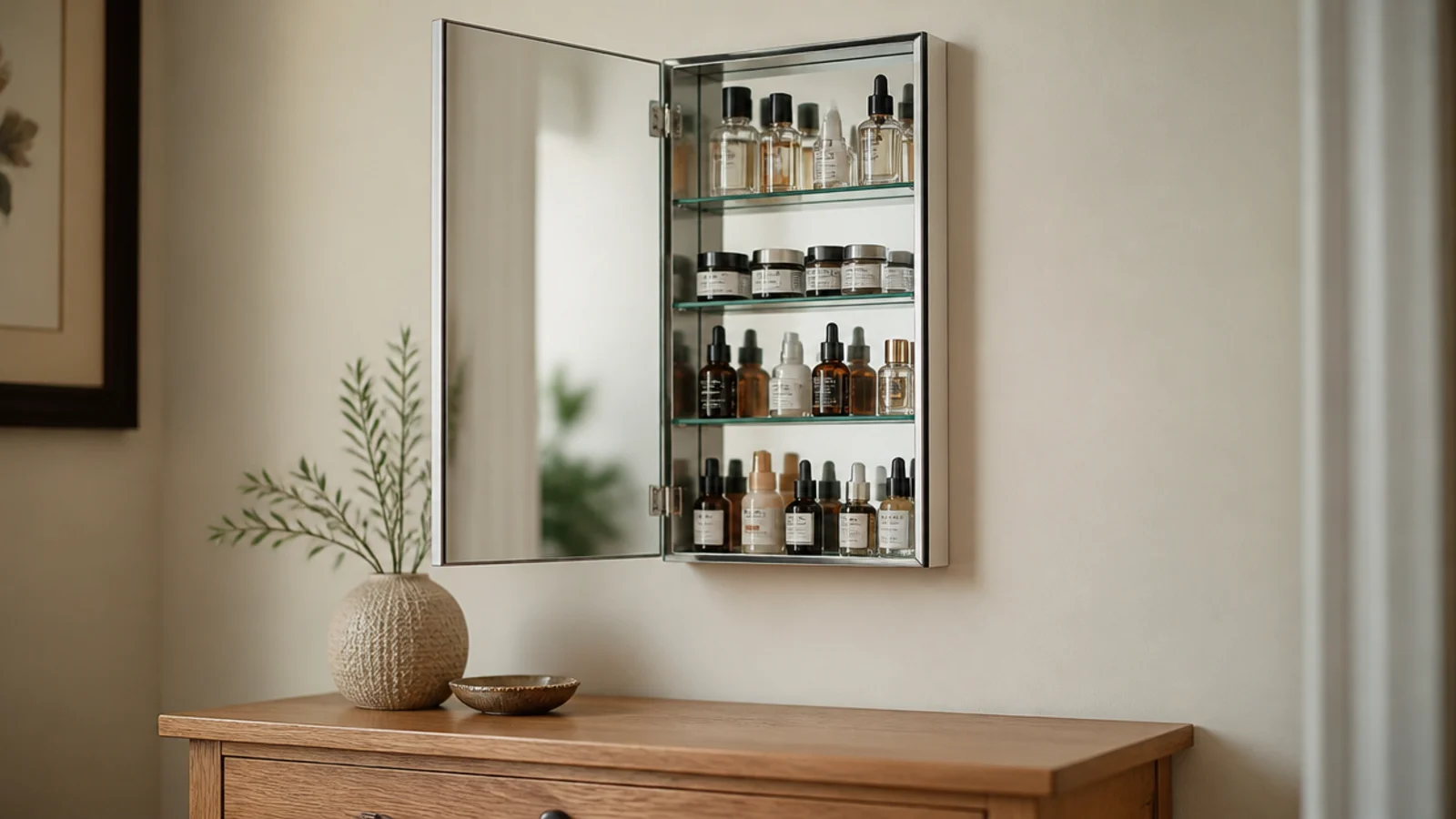
17. A shallow mirror cabinet that actually stores
A wall-hung mirrored cabinet only 3.5 inches deep holds a surprising number of small bottles and gives you a mirror at the same time.
Shallow is the key number — deeper than about 5 inches and it reads as a box on the wall rather than a mirror. Hang it so the centre sits at 60 inches. Renters can achieve the same thing with a leaning mirror and a drawer.
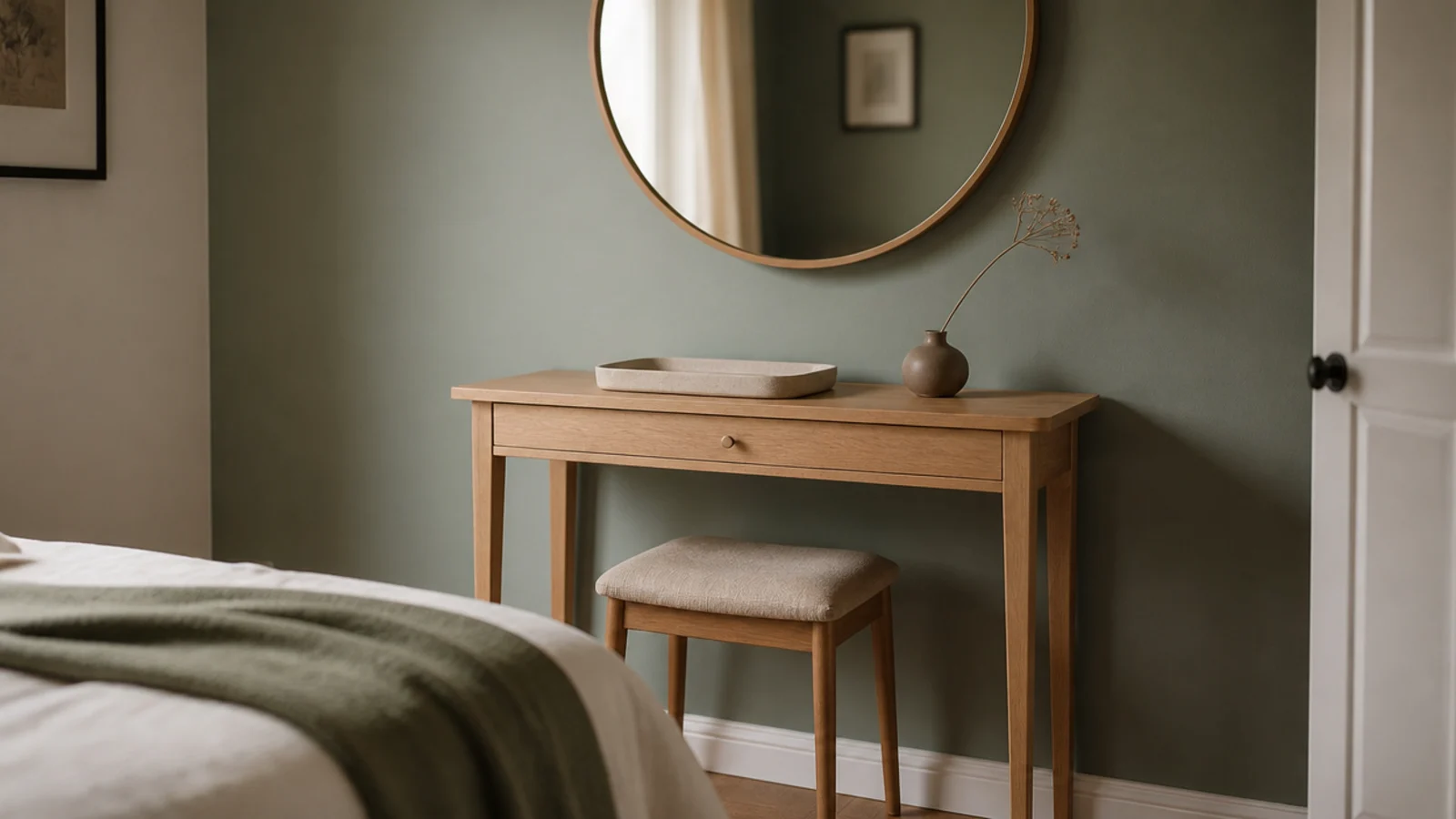
18. A narrow console when the room is tight
Thirty inches wide with one shallow drawer is a genuinely working dressing table, and it takes less floor than an armchair.
Pair it with a wall-hung mirror rather than a tabletop one so the whole surface stays usable. A tucked stool keeps the footprint at the table edge. There is more on tight layouts in small vanity organization.
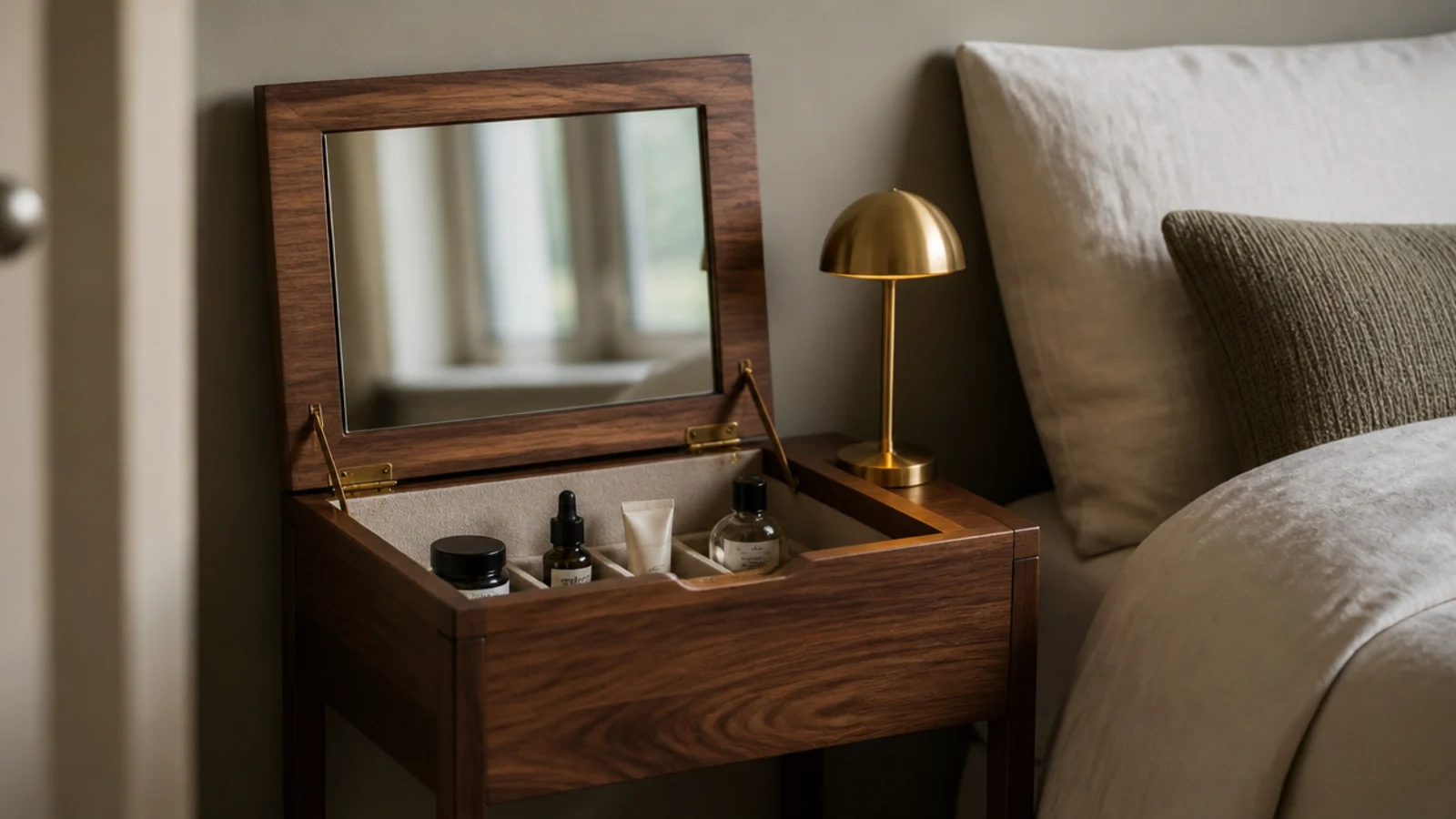
19. A nightstand that lifts into a mirror
In a room with no spare wall, a bedside table with a hinged lift-top mirror does both jobs in a footprint you already have.
The shallow well underneath takes the daily five and closes over them, which suits a bedroom where a surface collects dust. Look for a slow-close hinge; the cheap ones drop the lid onto glass.
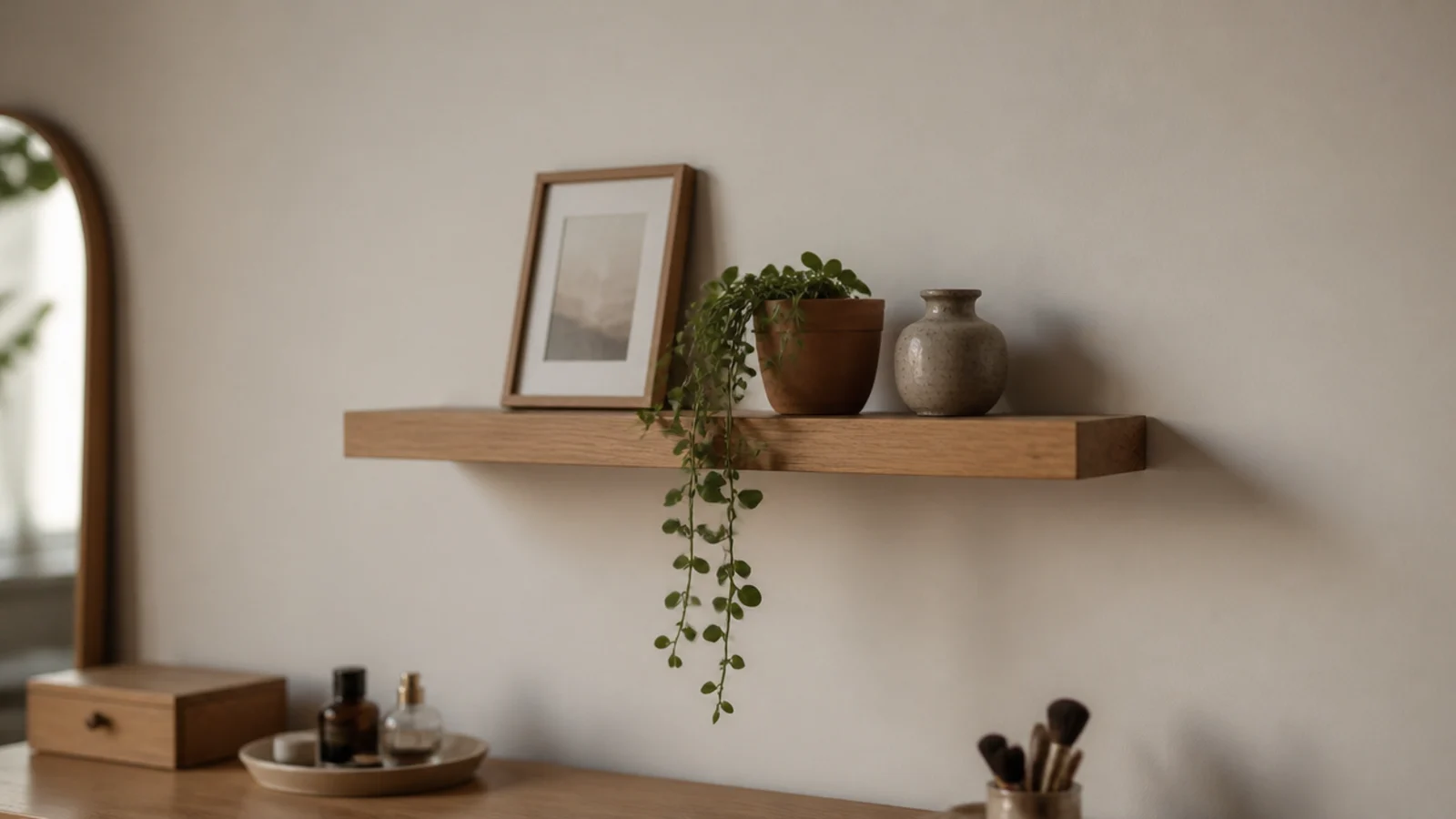
20. A floating shelf above for decor only
Resist storing anything on the shelf above the table. Keep it for one plant, one small framed print and a single vessel, and let the drawer do the work.
Mount it at least 20 inches above the surface so a lamp or a tall bottle fits beneath. That gap is what stops the wall feeling stacked. Around $25 to $50 ($$).
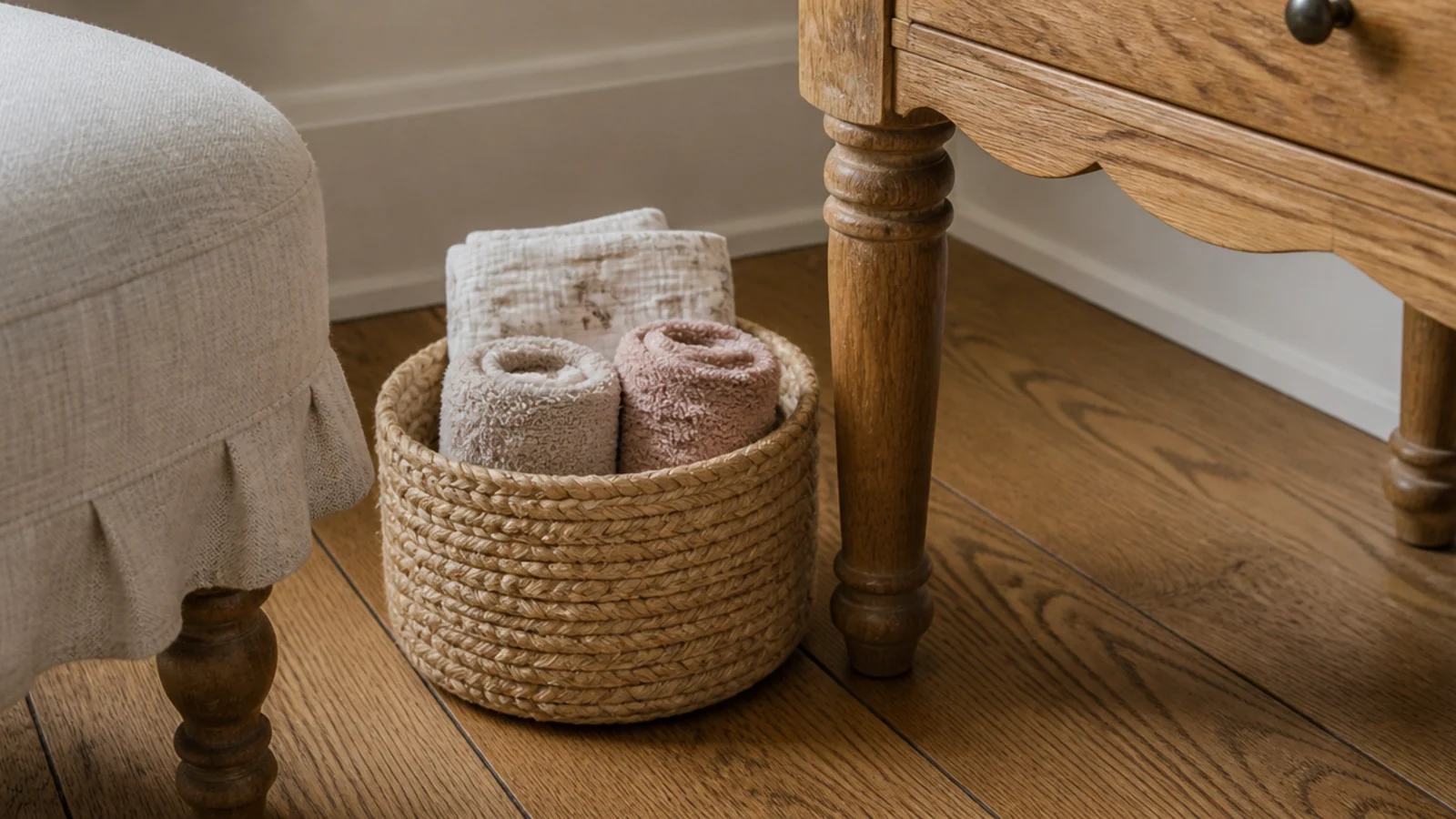
21. A basket for the laundry the vanity creates
Used washcloths, muslin cloths and hair ties end up in a drawer because there is nowhere else. A small jute basket by the table leg solves it in one move.
Size it for a week — roughly 10 inches across — so it gets emptied rather than becoming storage. Damp cloths in a closed drawer is how a bedroom develops a smell nobody can locate.
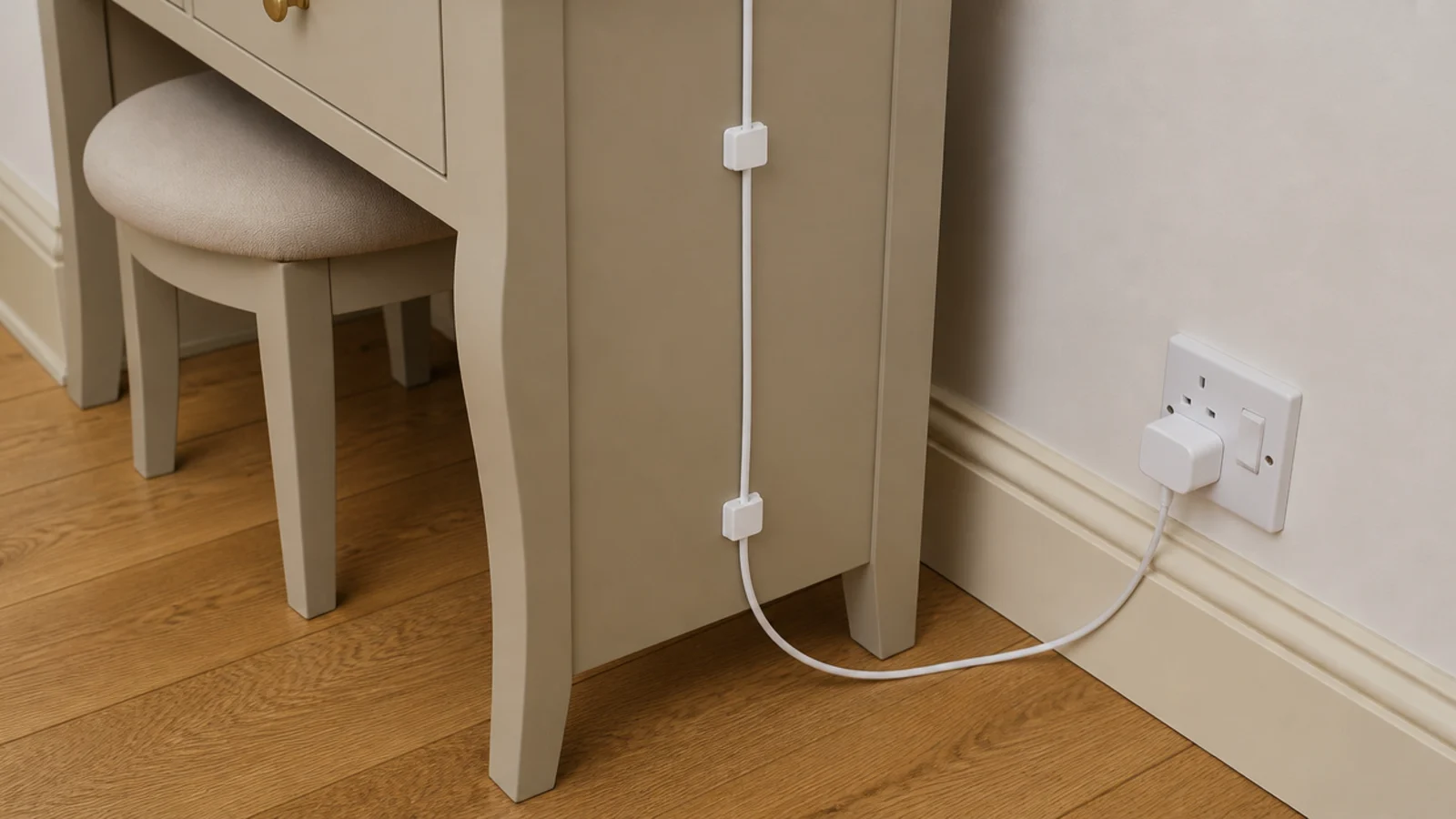
22. Cables run down the back leg
A charging cable draped across a dressing table cancels every other decision on it. Two small adhesive clips down the back leg hide the run completely.
Match the clip colour to the wood or the wall, whichever the cable crosses more. If the outlet is behind the table, leave a two-inch service loop so the plug is not pulled sideways. About $6 ($).
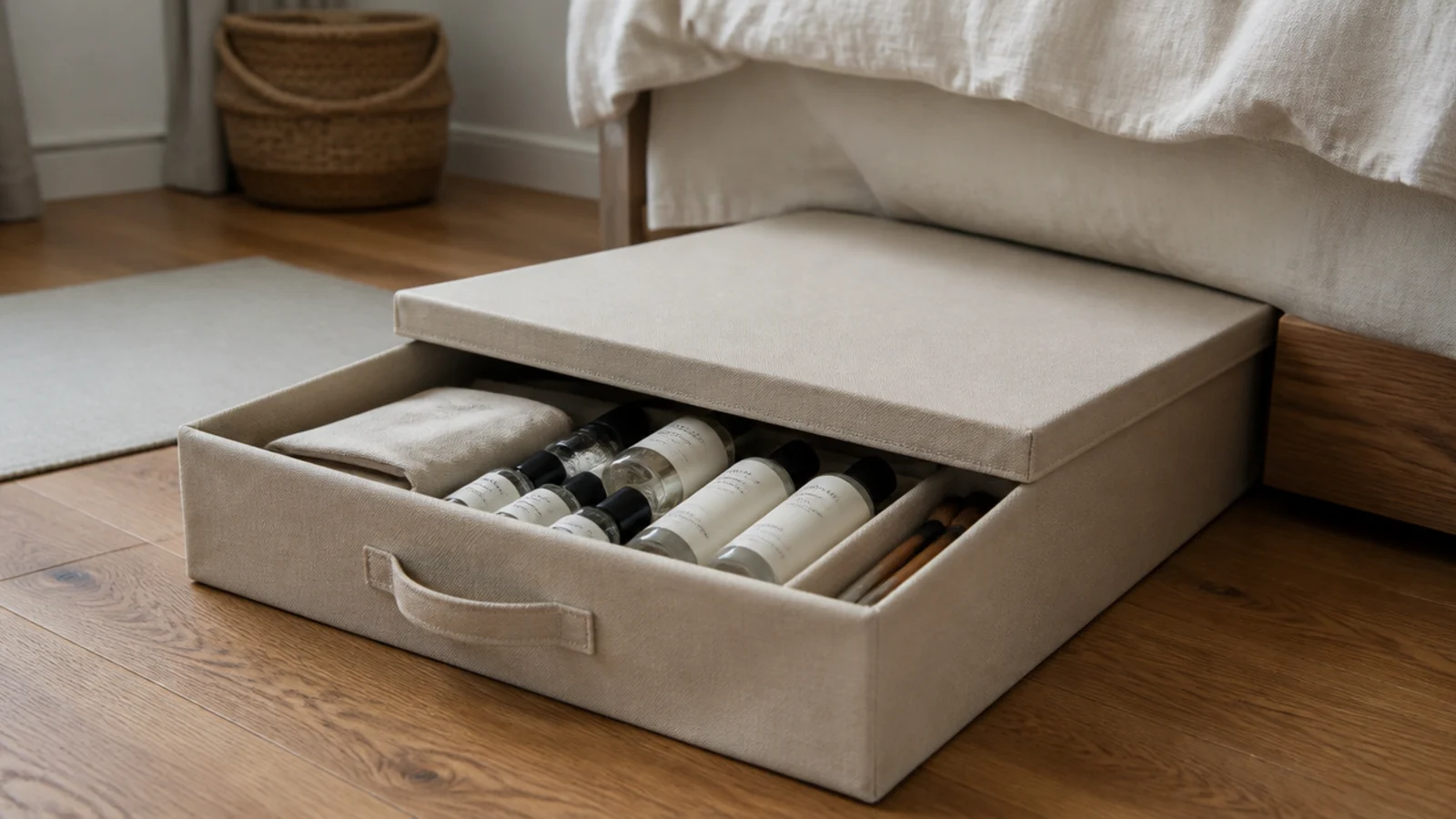
23. A seasonal swap box under the bed
Heavy winter creams, summer SPF and the second brush set do not need daily-reach storage. A flat lidded box under the bed takes them out of rotation without throwing them away.
Swap it twice a year with the same trip you use for the cull. Under-bed boxes want to be under 6 inches tall to clear most frames, and canvas beats plastic for dust.
24. A twice-yearly cull by date
The dates make the decision so sentiment does not have to. Mascara at three months, liquid foundation at six to twelve, powders at about two years.
Anything separated, changed in colour or smelling different goes regardless. Ten minutes in spring and autumn frees more space than any organizer, and it is the only step on this list that costs nothing at all.
25. One plant, one candle, one piece of art
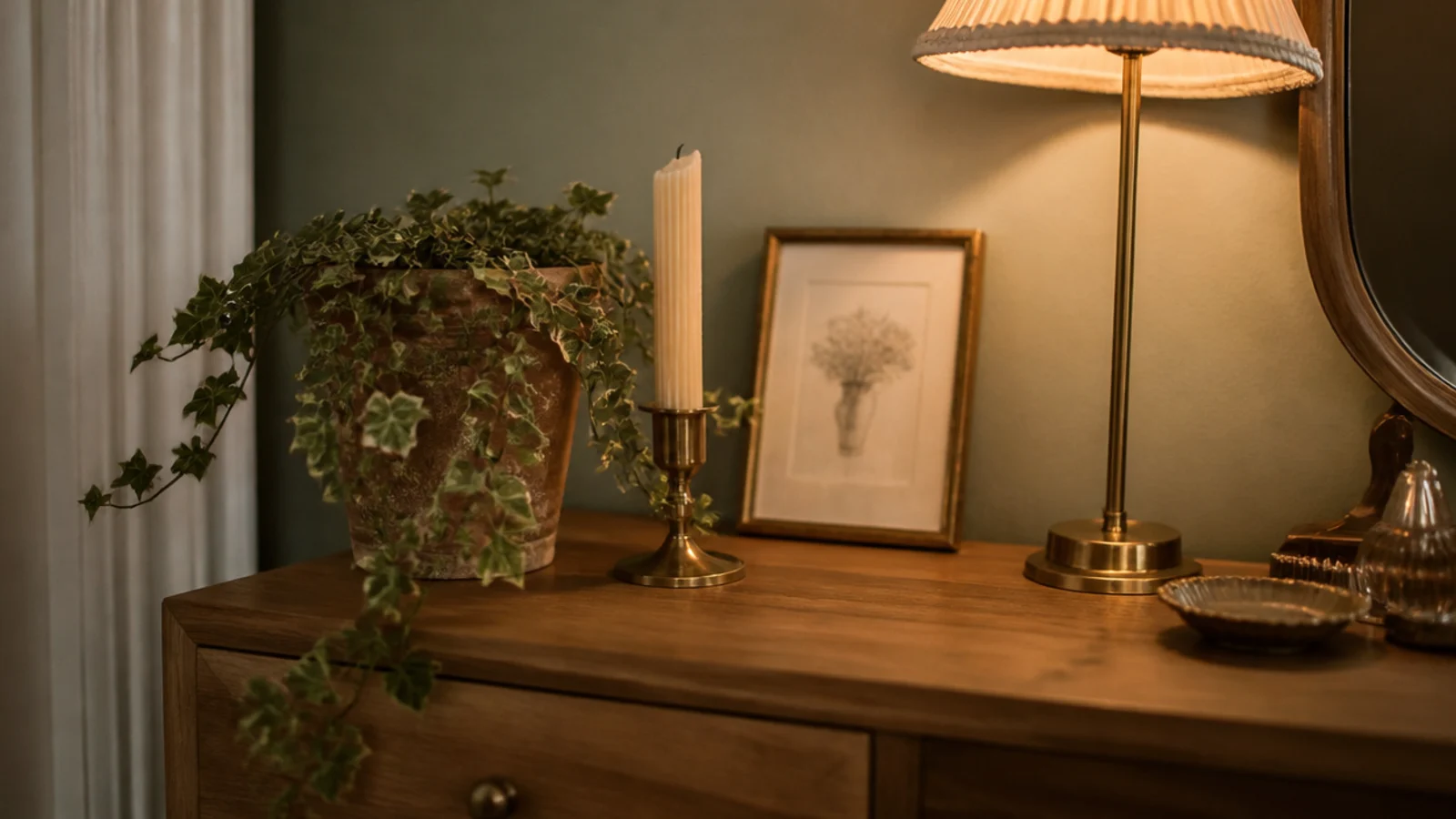
Once the storage works, three soft objects turn a storage table into a dressing table. A trailing plant, one candle and a small leaning print is the whole recipe.
Keep them at three different heights and group them at one end so the working surface stays clear. This is the layer that makes a bedroom vanity feel dreamy rather than administrative.
Mistakes to Skip
- Lighting the mirror from overhead only. It drops shadow under the brow and nose, and every colour decision made in it looks different outdoors.
- Leaving jewelry out in an open dish in a bedroom. Dust settles into the links within days, chains tangle, and silver tarnishes far faster in open air.
- Buying a vanity with a deep centre drawer. Anything over four inches deep in the middle bay means your knees never fit, and the table quietly becomes a desk nobody sits at.
Frequently asked questions
What height should a bedroom vanity table be?
Twenty-nine to thirty inches to the top surface, which matches a standard desk, with a stool seat at eighteen to nineteen inches. You need at least twenty-four inches of knee clearance underneath and a drawer no deeper than four inches in the centre bay, or your legs hit it every time you sit down.
How do I light a bedroom vanity mirror properly?
From both sides at roughly eye level, never from directly overhead. Two sconces or slim bars flanking the mirror at about fifty-five inches from the floor light the face evenly. Choose 3000K to 4000K with a high CRI rating so colour reads true, and put the whole thing on a dimmer if it doubles as bedroom lighting.
Where should jewelry live on a bedroom vanity?
In a compartmented tray inside the top drawer rather than out on the surface. Bedrooms are dusty places, and dust dulls metal and settles into chain links. Keep only what you wear weekly in the drawer tray, hang longer necklaces on small hooks so they cannot tangle, and store silver in a closed box with a tarnish strip.
How do I stop perfume going off on a dressing table?
Keep the bottles out of direct sunlight and away from a radiator. Heat and UV break down the top notes first, so a fragrance stored on a sunny windowsill smells thin within months. A drawer or a spot on the shaded side of the room is better, and the boxes they came in are genuinely useful for this.
Can a bedroom vanity work in a small room?
Yes, at thirty inches wide. A narrow console with one shallow drawer, a stool that tucks fully underneath and a wall-hung mirror gives you a functioning dressing table in less floor space than an armchair. In very tight rooms, a nightstand with a lift-top mirror does both jobs and keeps the footprint you already have.
Fix the light and the drawer first — those two decide whether the table gets used at all, and no amount of styling compensates for either. Then add the tray, the brush cup and the three soft objects on top. The measured method is in vanity drawer organization, and if your dressing area lives inside a wardrobe instead, small walk-in closet lighting covers the same both-sides rule. Save the pin so the heights are with you when you shop.
Want more like this? Browse all 15 vanity organization guides — they all use the same measurements and budget tiers.

Pin it for later
Save this to your Vanity Organization board
Pin it now so it is waiting for you when the tape measure comes out — and so the next person hunting for this idea can find it too.
Save this pinKeep going
More ideas worth saving while you have the tape measure out.