Small Walk-In Closet Ideas · Listicle
15 Affordable Small Walk-In Closet Ideas for Renters

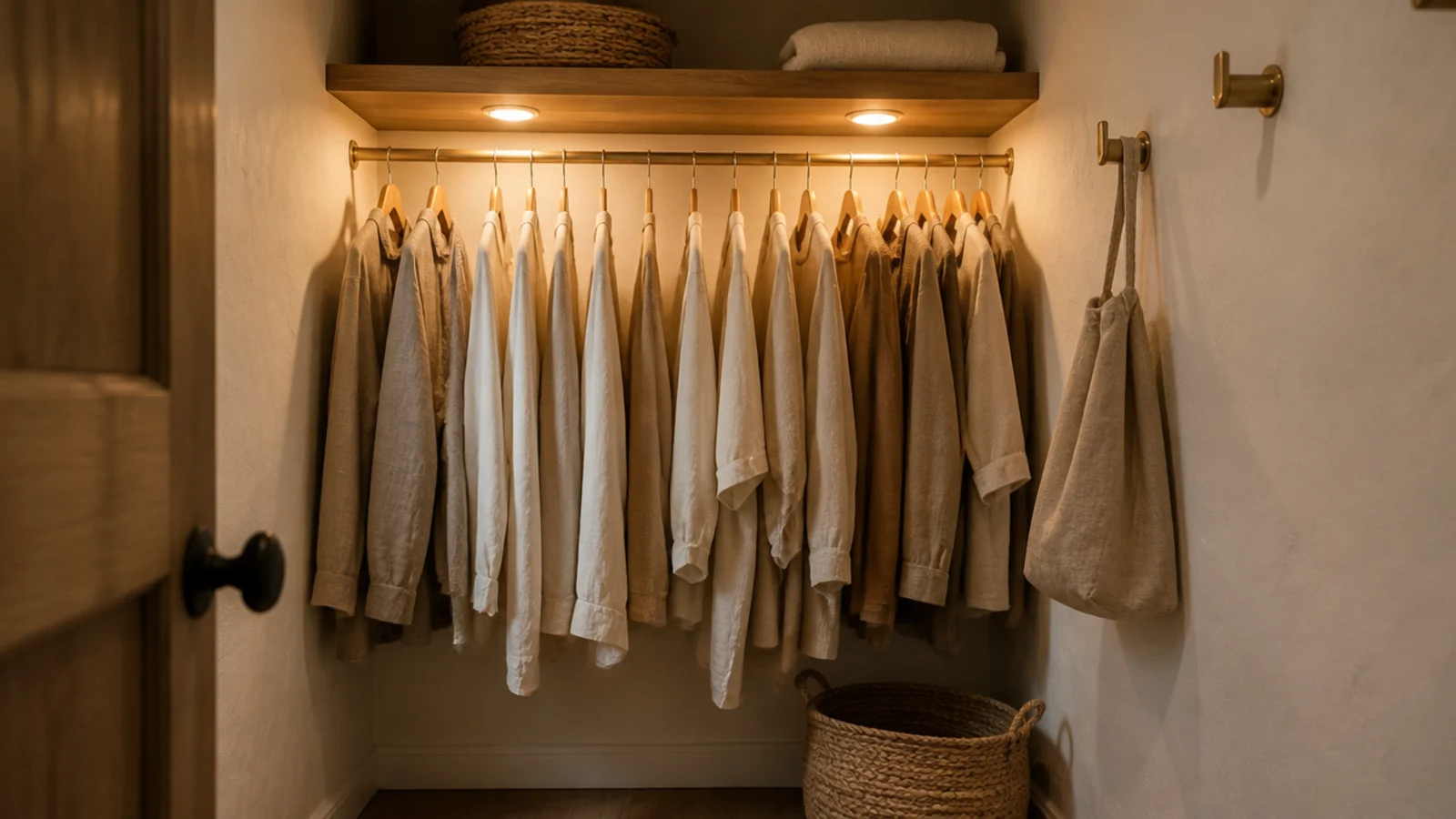
Small walk-in closet lighting is the cheapest upgrade in a rental, and the one most people skip because they assume it means calling an electrician. It does not. I have lit four rented closets with things that plug in, stick on or recharge over USB, and every one of them came out of the wall with me on moving day. Here are fifteen ideas that each cost under $75 and leave no holes behind.
In this guide17 sections — tap to openHide
- 1.What small walk-in closet lighting has to get right
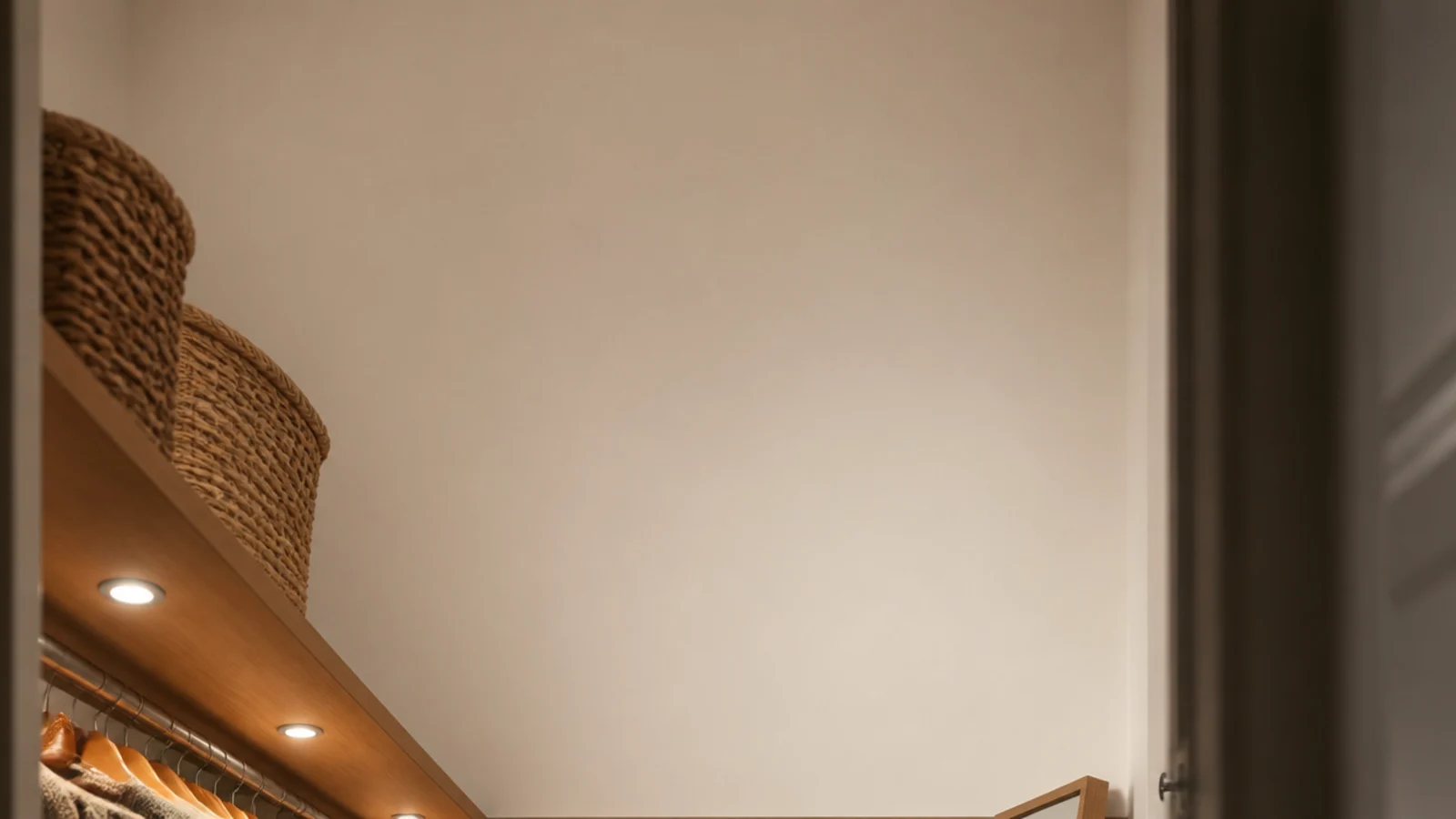
- 2.Rechargeable puck lights under every shelf
- 3.A motion-sensor bar along the rod
- 4.Warm LED tape stuck to the shelf underside
- 5.Swap the bulb before you buy a fixture
- 6.A plug-in pendant on a ceiling hook
- 7.Battery sconces beside the mirror
- 8.A clip-on lamp for the dead end wall
- 9.A plug-in picture light over the long-hang
- 10.A leaning mirror to bounce the light around
- 11.A tension rod for a second hanging line
- 12.A freestanding rack sized to the 24-inch depth
- 13.Canvas bins on the top shelf
- 14.An over-the-door rack for shoes and belts
- 15.A slim drawer tower instead of built-in drawers
- 16.A curtain instead of a door
- 17.Mistakes to Skip
What small walk-in closet lighting has to get right
Two numbers decide whether a closet light works: color temperature and where the light falls.
Stay at 3000K or warmer with a CRI of 90 or above. Anything cooler turns navy into black and makes camel and oatmeal read grey, so you get dressed in one set of colors and walk outside wearing another. High CRI costs about two dollars more per bulb and is the single most useful spec on the box.
Placement matters just as much. A light in the middle of the ceiling puts your own shadow onto whatever you are reaching for. Light belongs above and slightly in front of the rods, aimed at the clothes.
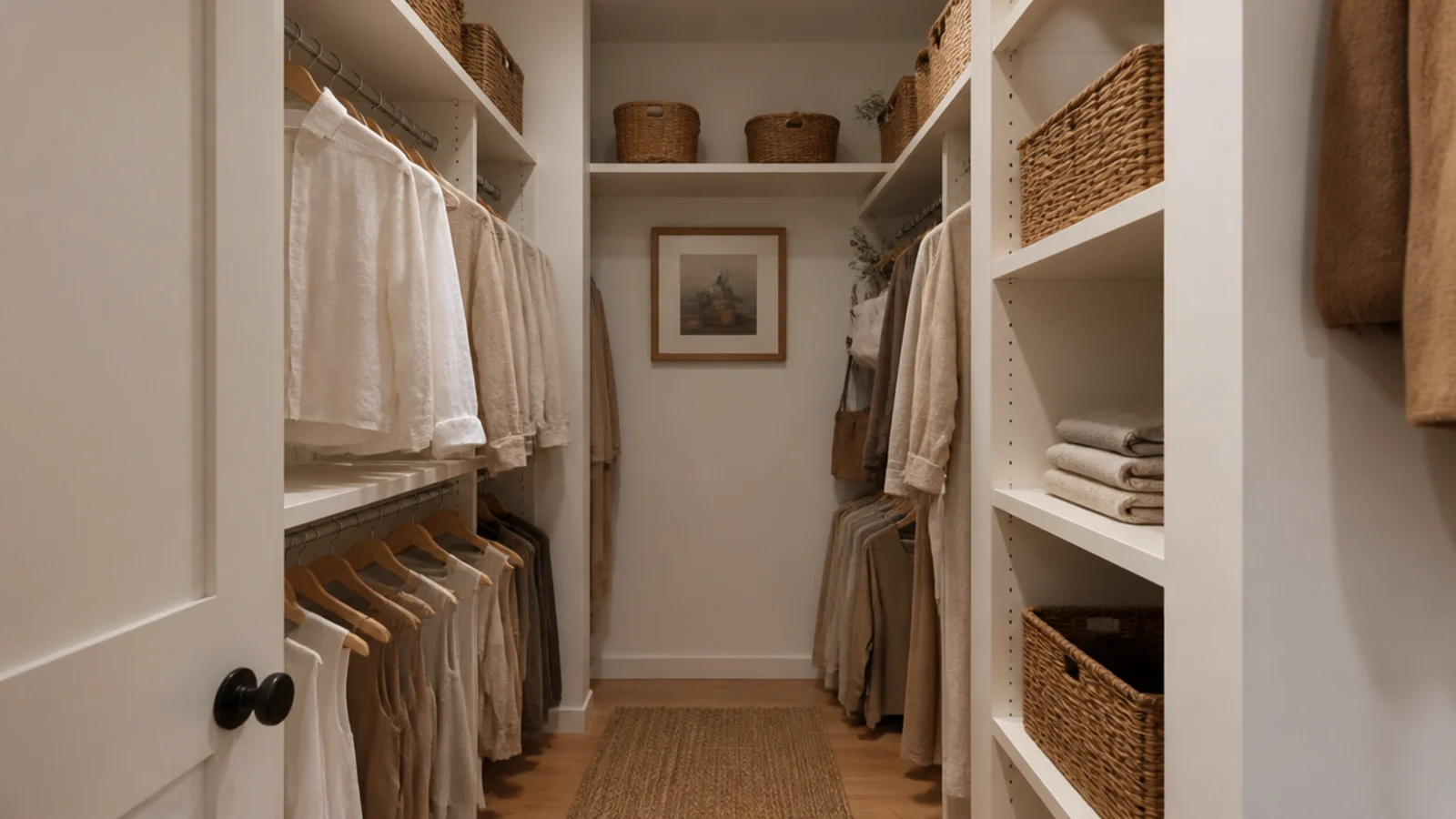
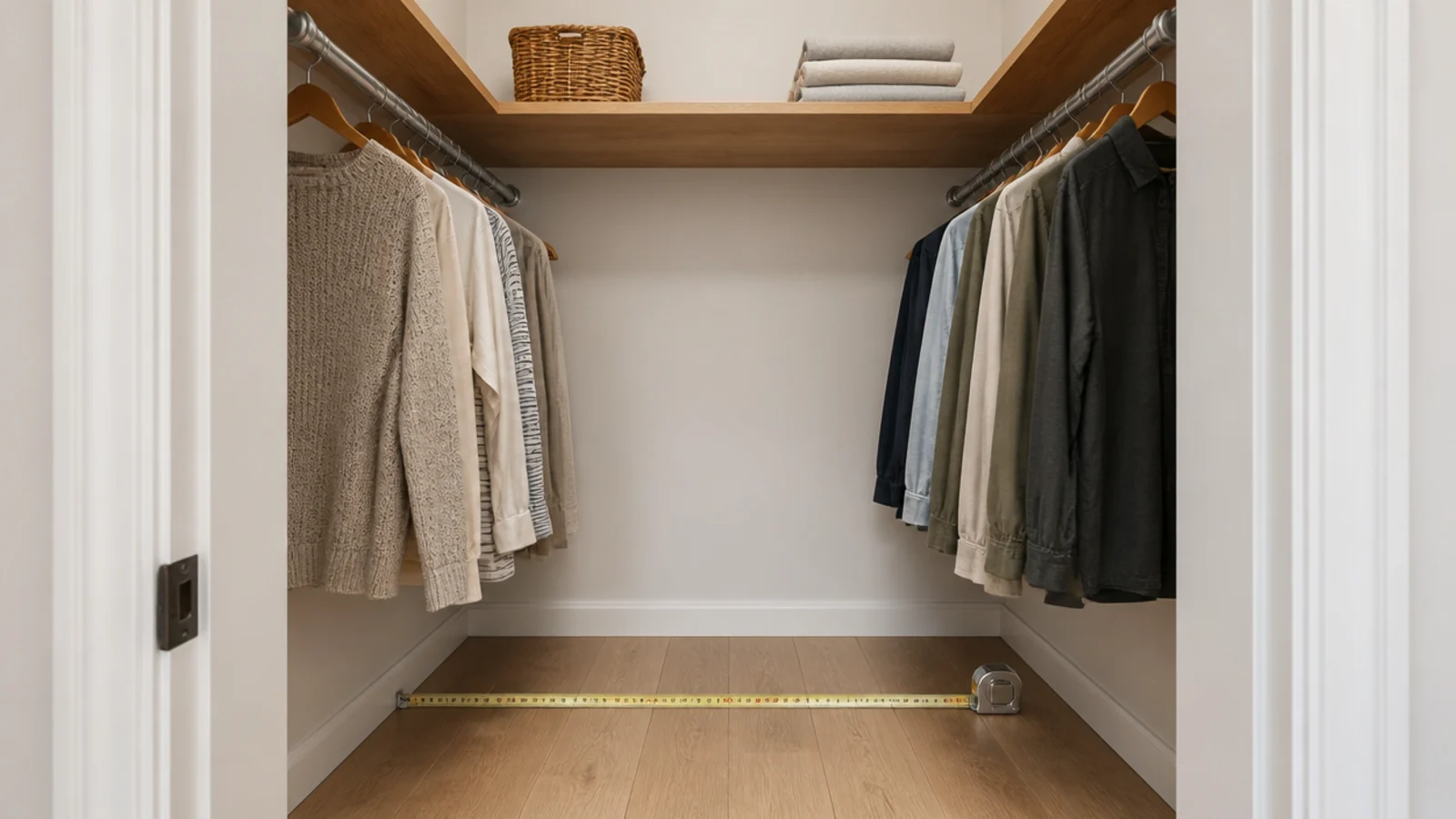
The geometry underneath all of it does not change because you rent. A hanging rod needs 24 inches of clear depth, because shoulders sit around 22 inches across and anything tighter creases sleeves against the back wall. Between two facing hanging walls, keep 36 inches of walkway, or 30 as an absolute squeeze you will regret in a coat.
Budget tiers here: $ under $75, $$ $75 to $250, $$$ $250 and up. Everything in this list sits in the first tier. And if a fix needs a junction box, a switch or anything tied into house circuits, that is electrician work, not a Saturday.
1. Rechargeable puck lights under every shelf
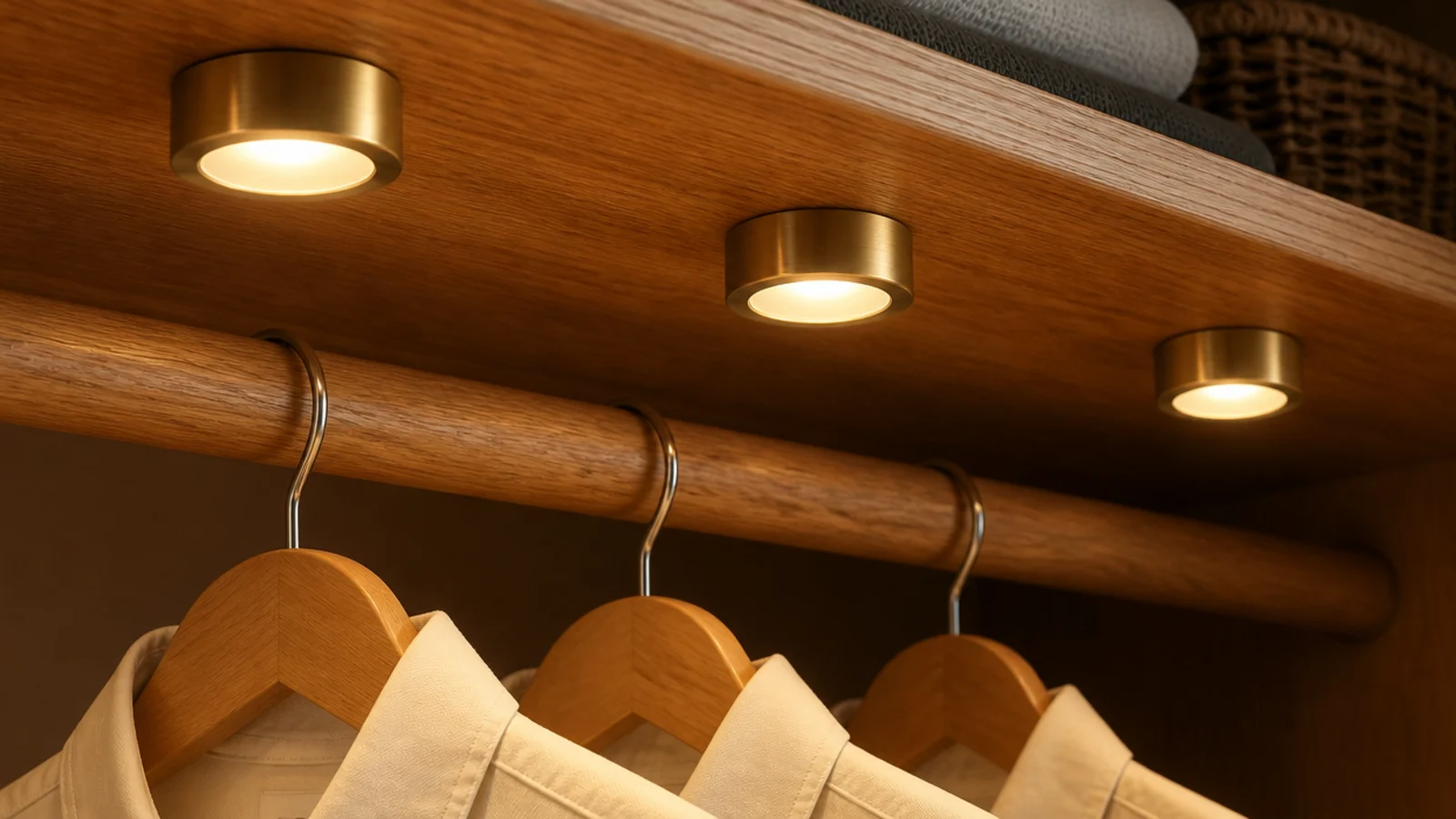
Three pucks spaced evenly under the shelf above your main rod does more than any ceiling fixture. They sit forward of the clothes, so the light lands on the garments instead of on your back.
Buy the magnetic kind: a steel plate goes up with adhesive, the puck lifts off for charging, and nothing gets unstuck monthly. Look for 3000K on the packaging, not just the word warm. Around $20 for a set of three, and a charge lasts six to ten weeks in a closet you use twice a day.
2. A motion-sensor bar along the rod
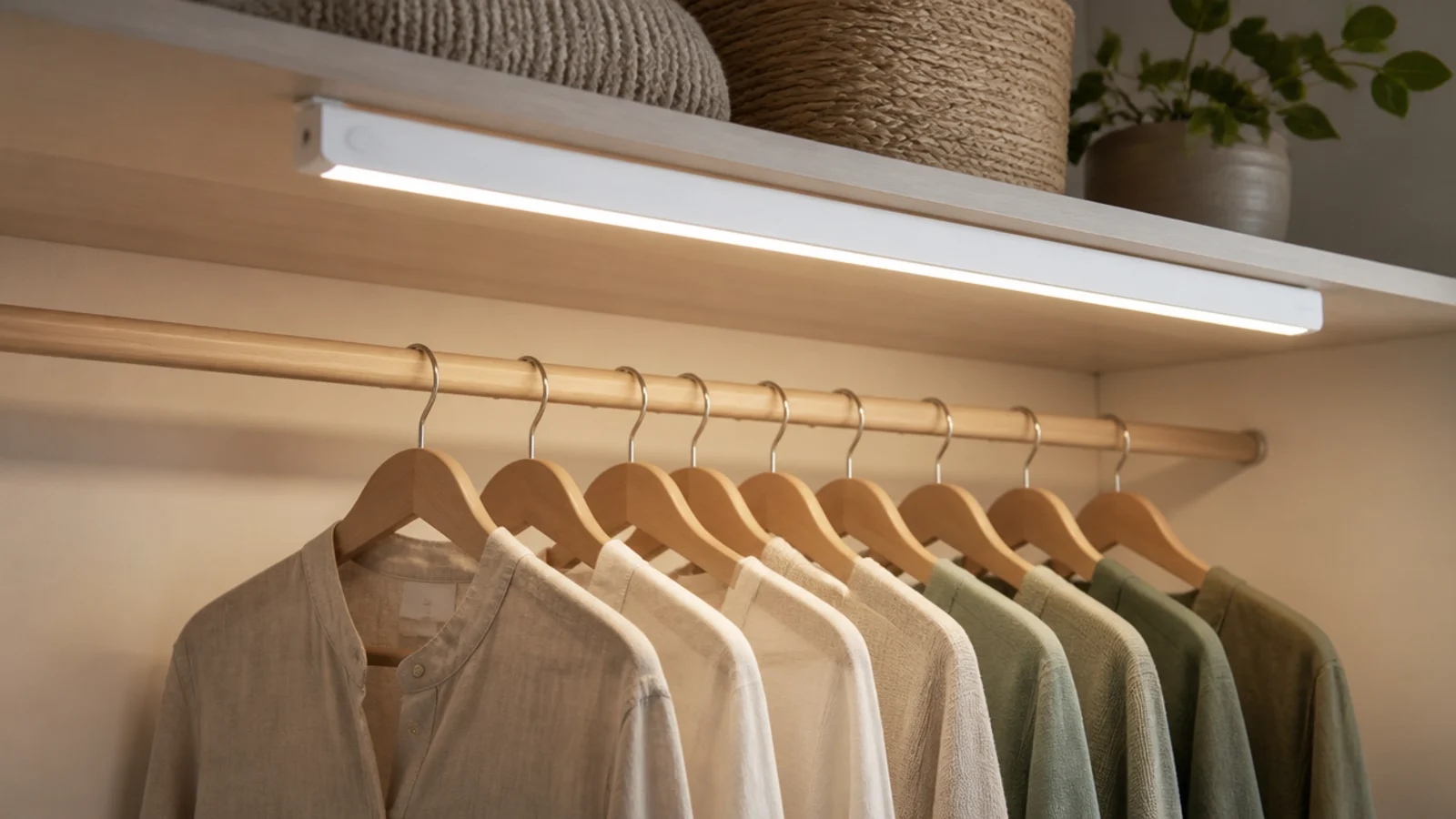
The whole point of a closet light is that your hands are usually full. A magnetic sensor bar mounted along the front edge of the shelf solves that for about $25.
Set the timeout to 20 or 30 seconds. Longer drains the battery for nothing, shorter leaves you waving at it. Keep the sensor pointed into the closet rather than out at the bedroom, or a passing cat runs it flat in a week. Sixteen to twenty inches of bar covers a standard four-foot rod comfortably.
3. Warm LED tape stuck to the shelf underside
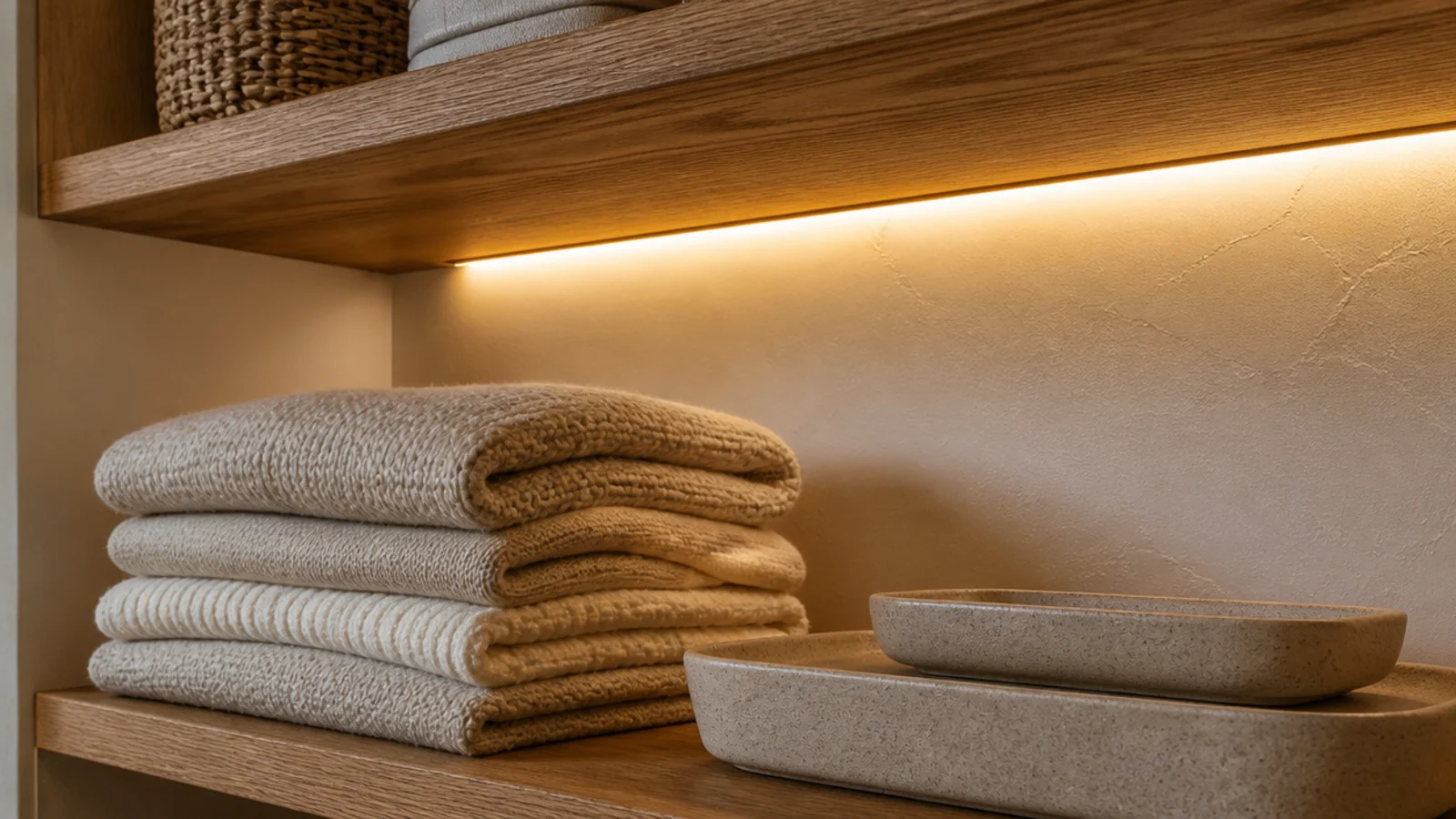
Tape gives you a continuous line rather than pools, which is the more expensive-looking result and costs less to buy. Run it under the shelf, set back an inch from the front edge so the strip itself never shows.
USB-powered tape plugged into a small power bank keeps it fully renter-safe if there is no outlet inside. Get 3000K and check the reel says high CRI. A 6-foot run costs $12 to $18. Clean the shelf underside with rubbing alcohol first or the adhesive lets go in July.
4. Swap the bulb before you buy a fixture
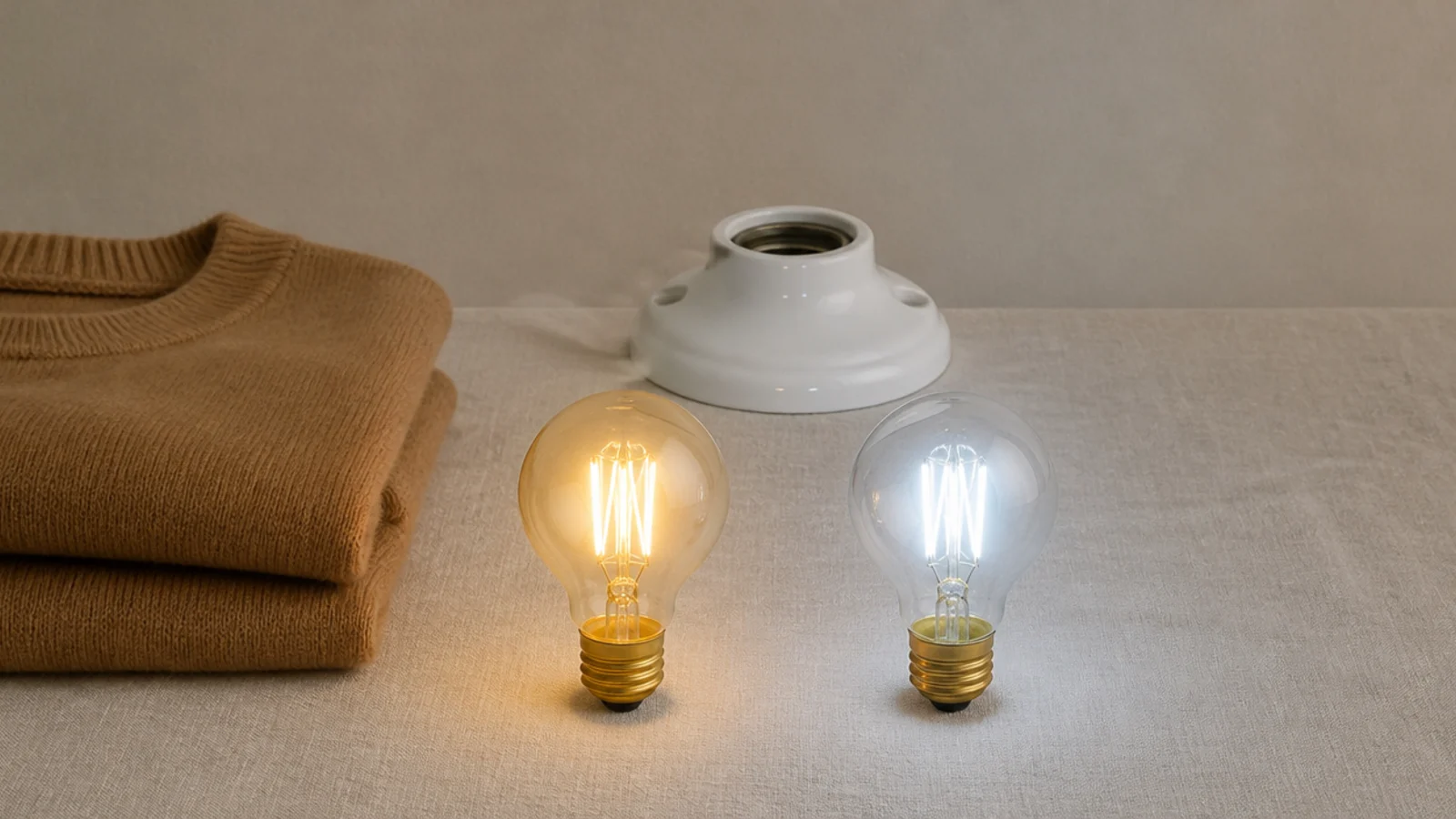
If your closet already has a bare fixture, change the bulb before you spend anything else. Most rentals ship with a 4000K or 5000K bulb because it is cheaper by the case, and that one part is usually the entire problem.
A 3000K bulb at CRI 90 costs about four dollars and takes ten seconds. I have walked into closets where the owner was budgeting for a full lighting overhaul and the fix was a bulb. Do this first, then decide whether you actually need anything else.
5. A plug-in pendant on a ceiling hook
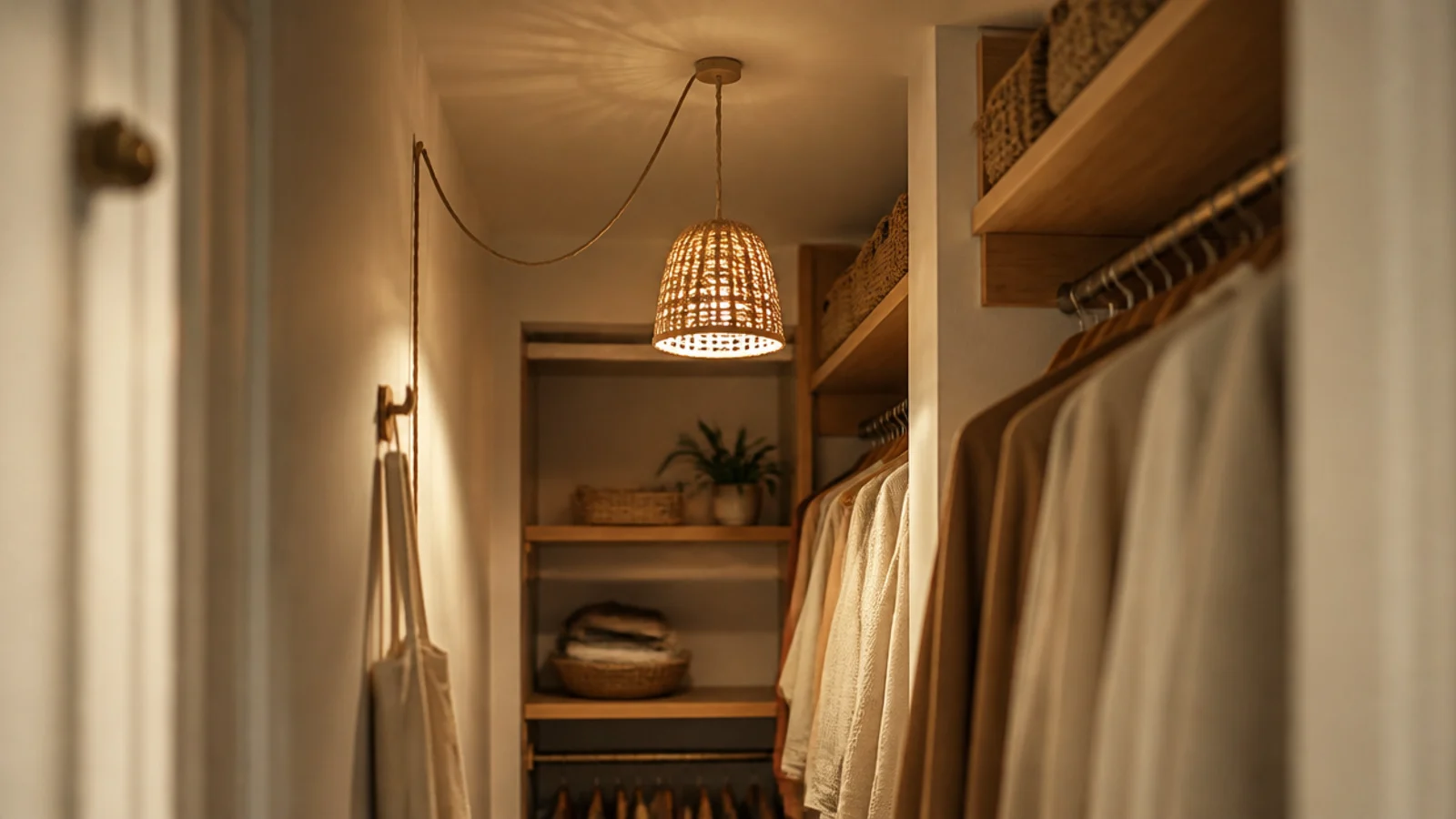
A pendant gives a small closet the one thing it never has, which is a reason to look up. Plug-in versions come with a fabric cord, a plug and a ceiling hook, so you hang it rather than wire it.
Two small screw hooks hold it: one above the fitting, one where the cord turns toward the wall. Keep the shade bottom at least 78 inches off the floor so nobody walks into it. Rattan, linen or opal glass at $35 to $70, and it comes down in a minute.
6. Battery sconces beside the mirror
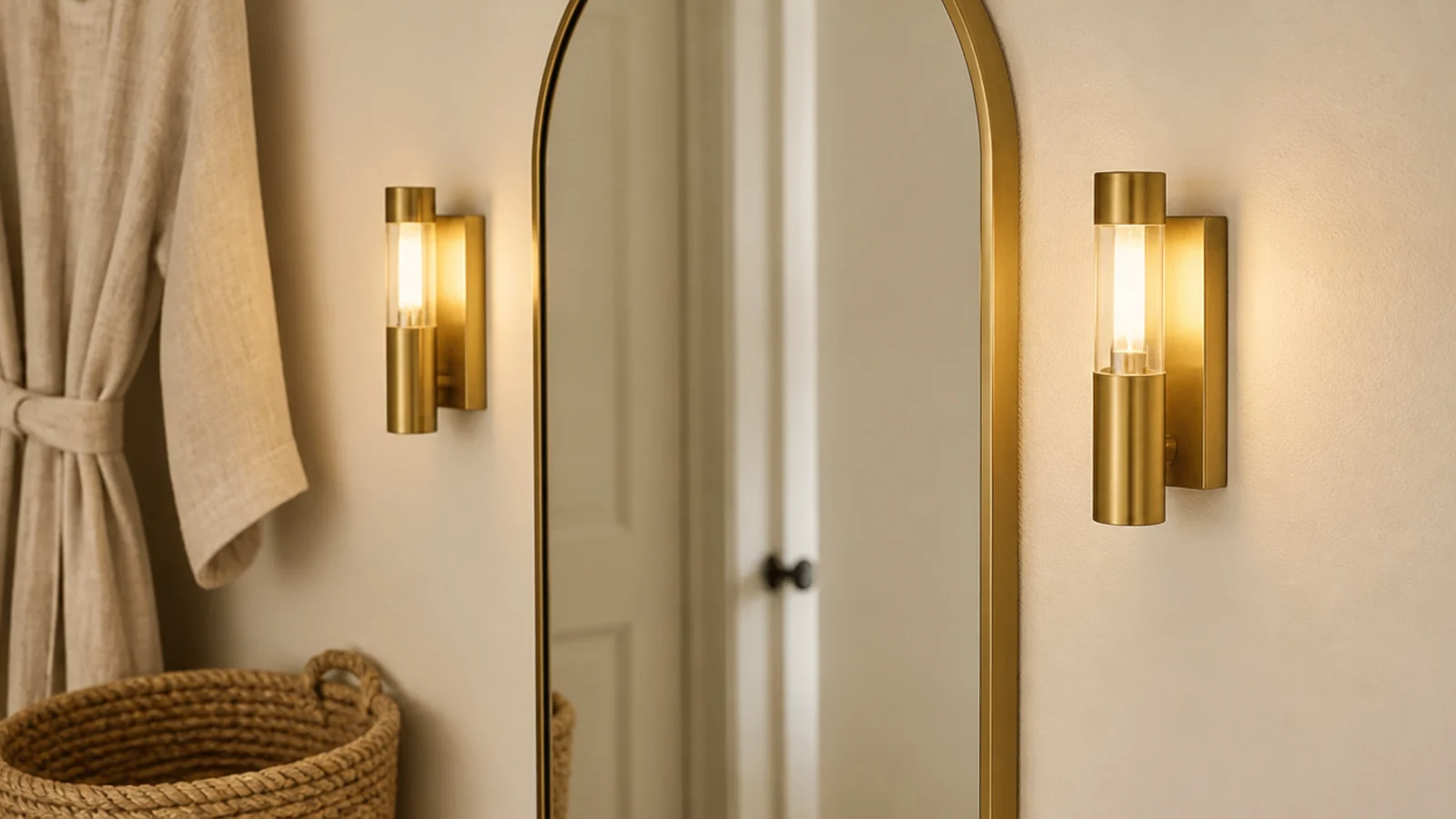
Overhead light is terrible for deciding whether something fits, because it lands on your shoulders and leaves your face in shadow. Two small sconces at eye level either side of the mirror fix that instantly.
Adhesive mounting plates hold a battery sconce fine at under a pound. Mount the centers at 62 to 66 inches, roughly 30 inches apart, and choose warm frosted glass rather than clear so you are not looking into a bare LED. Expect $25 to $50 a pair, and rechargeable beats disposable batteries within three months.
7. A clip-on lamp for the dead end wall
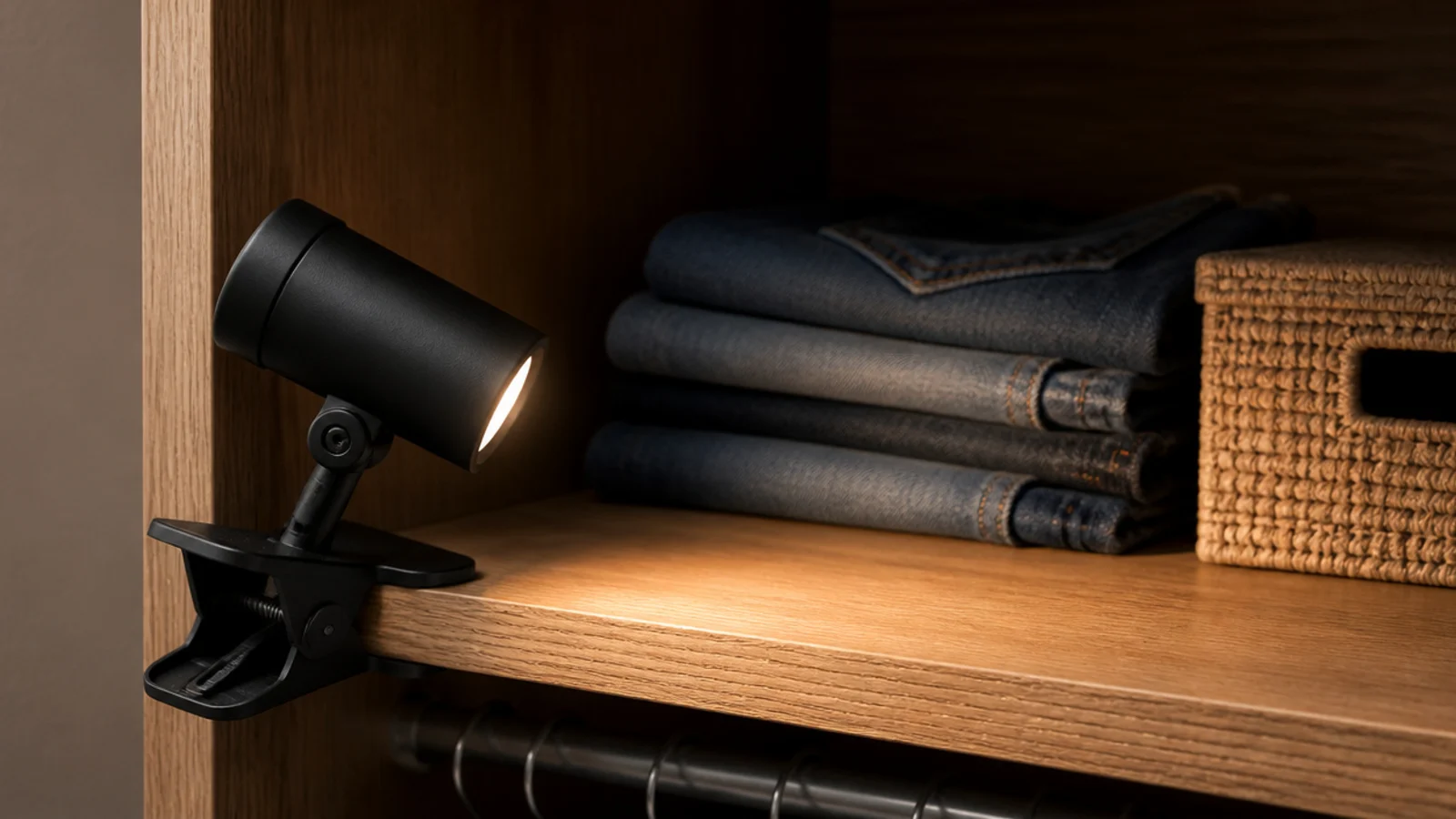
Every small walk-in has one corner the main light never reaches, usually the far end where the folded stuff lives. A clip lamp clamps onto a shelf edge and aims directly into it.
Look for a clamp with a rubber lining, a gooseneck of at least eight inches, and a shade that fully hides the bulb. Around $20 to $35. This is also the light I move around while reorganizing, because it points wherever the mess is, which no fixed light can do.
8. A plug-in picture light over the long-hang
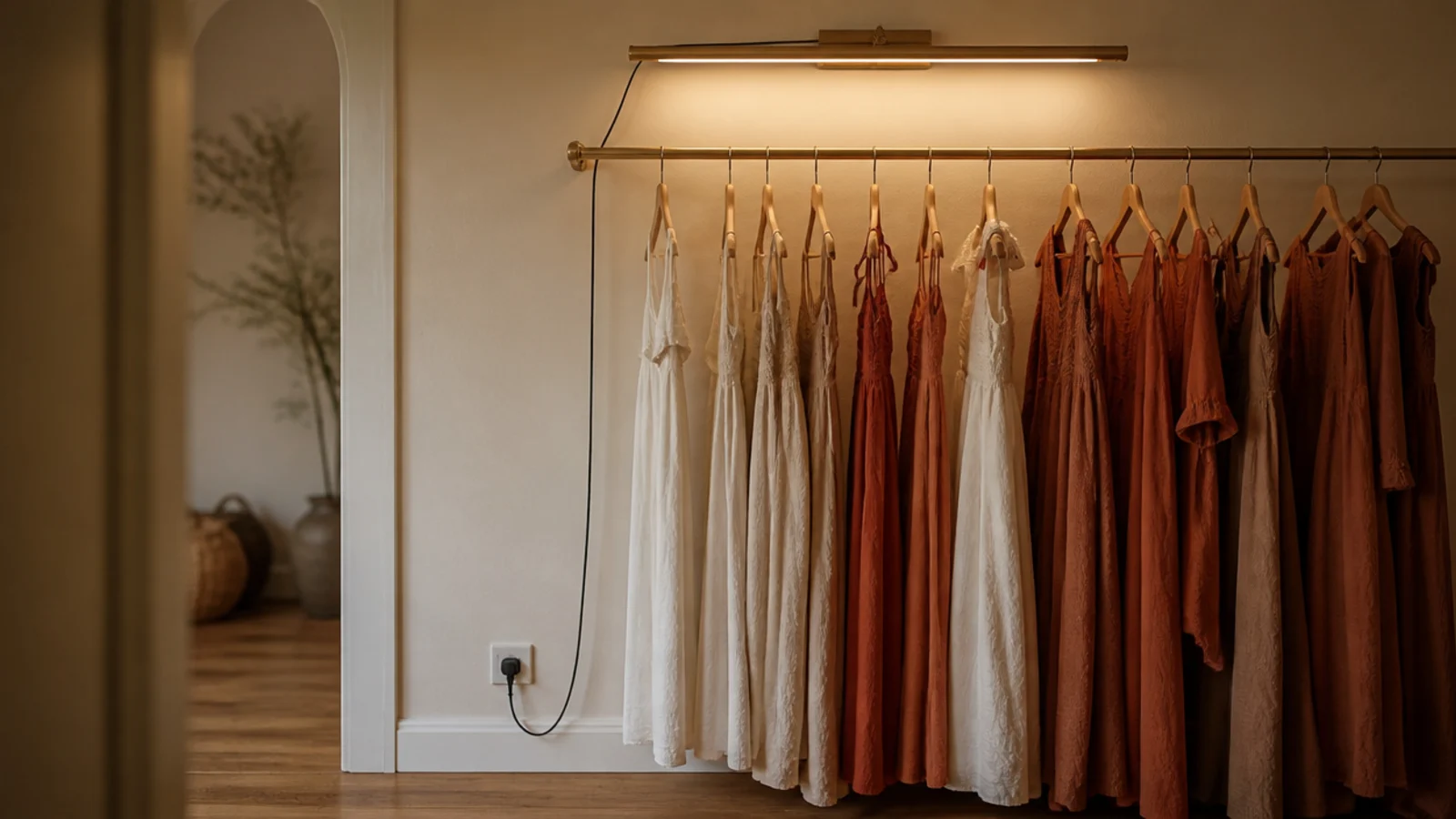
Long hanging garments need 66 to 70 inches of clear drop, and that tall column of fabric swallows light. A slim picture light mounted above it grazes down the full length so you can actually see the difference between charcoal and navy.
Plug-in versions have a visible cord, which reads fine in a closet. Choose 12 to 18 inches wide in brass or matte black, $30 to $60. Two adhesive plates or one small screw hold the weight, and the cord drops straight down into the nearest outlet.
9. A leaning mirror to bounce the light around
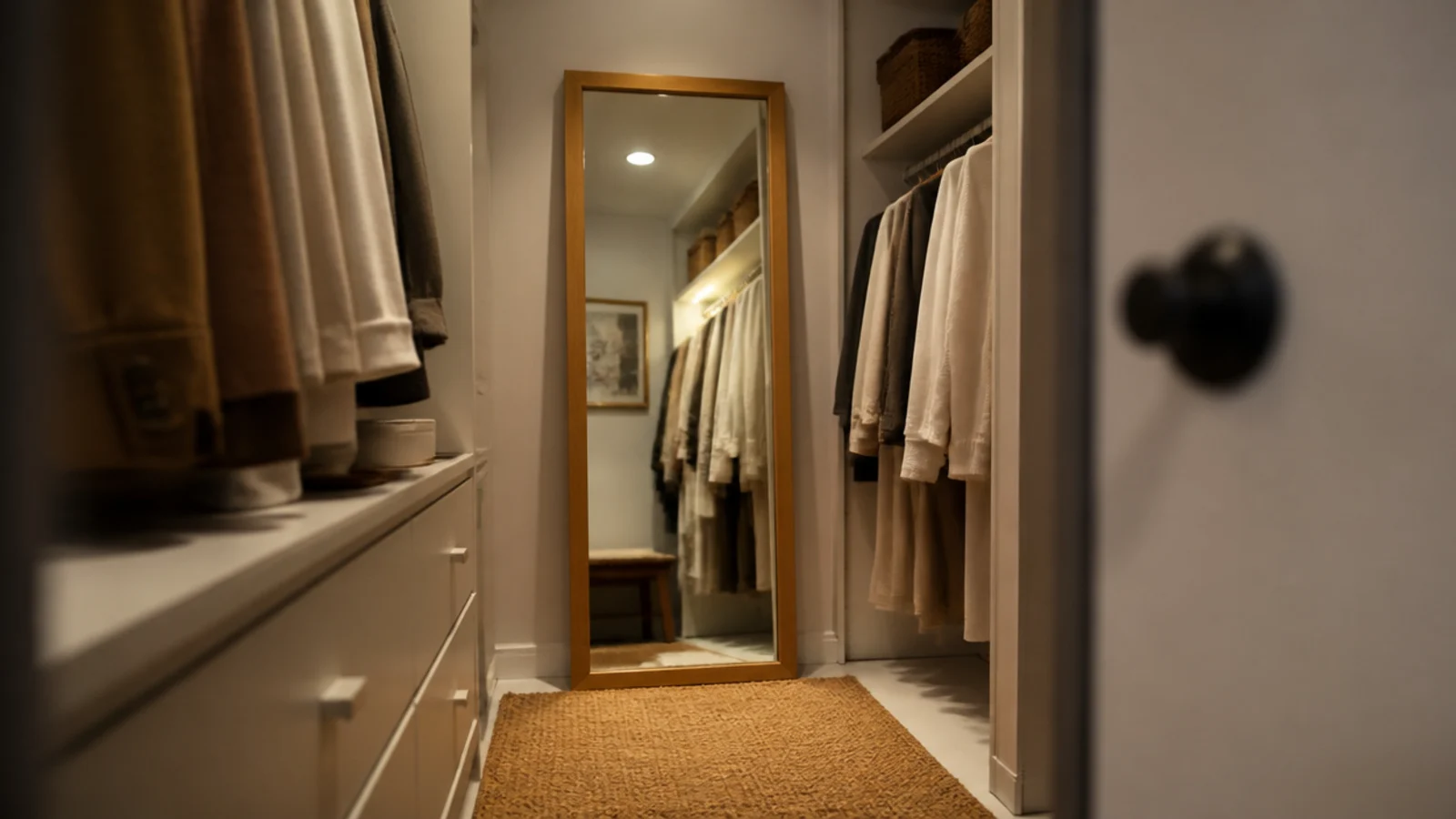
A full-length mirror is doing double duty in a small closet. It is the thing you need for dressing, and it is also the cheapest way to double the light you already installed.
Lean it against the end wall rather than mounting it, at 60 to 70 inches tall so you can see a full outfit. Put a felt pad under each bottom corner and one anti-tip strap into the wall if there are kids around. $60 to $140, and it faces whichever wall your light is on.
10. A tension rod for a second hanging line
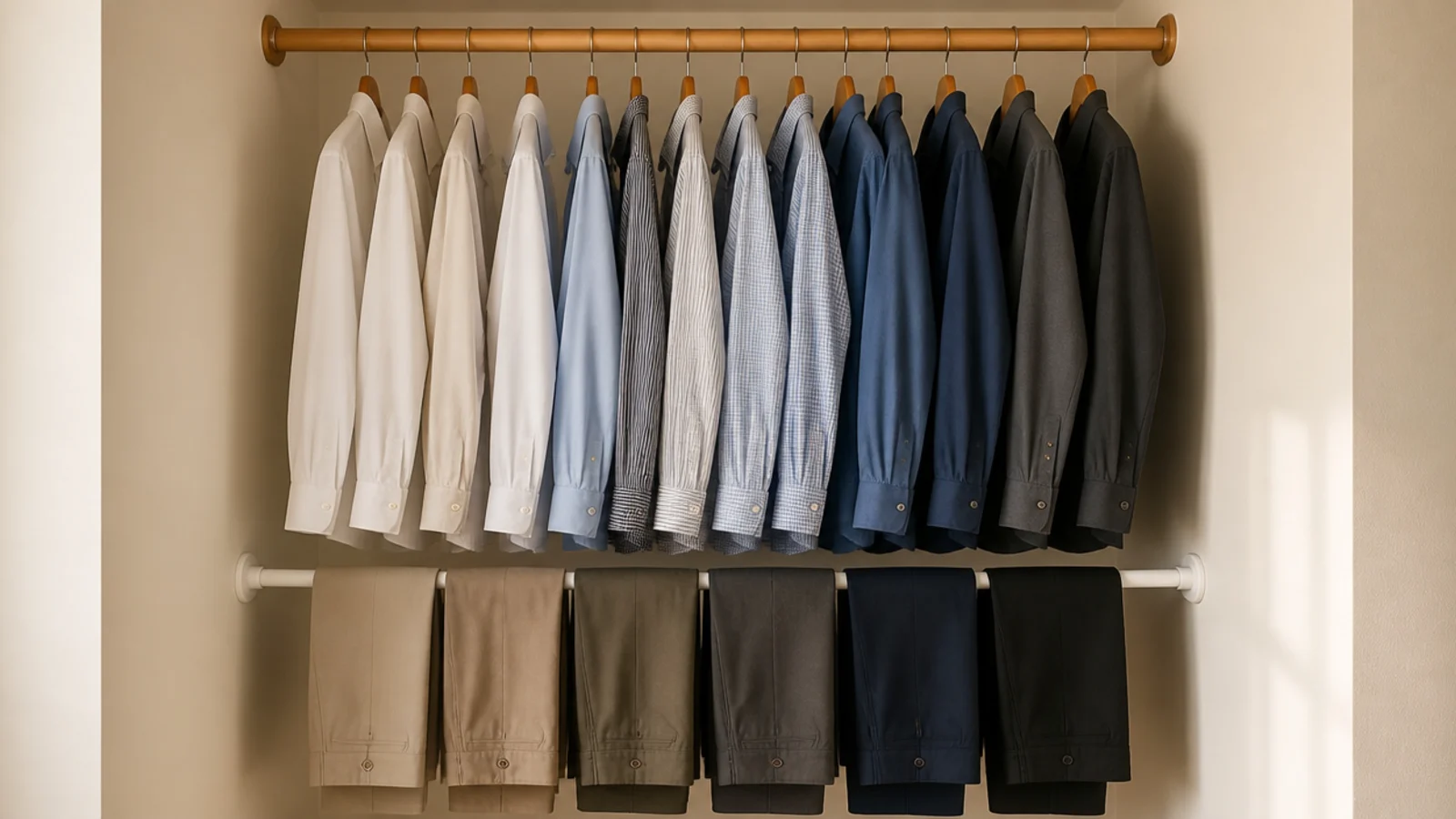
Most rental closets come with one rod at 66 to 72 inches, which is single-hang height, and about half of that vertical space sits empty under short shirts.
Add a tension rod below at 42 inches with the upper rod at 84, and you have a double-hang bay that holds twice the shirts and trousers. Buy a rod rated for the span with rubber end caps, and load it evenly. Between $15 and $30, no fixings, and the small walk-in closet layout guide covers which walls should get it.
11. A freestanding rack sized to the 24-inch depth
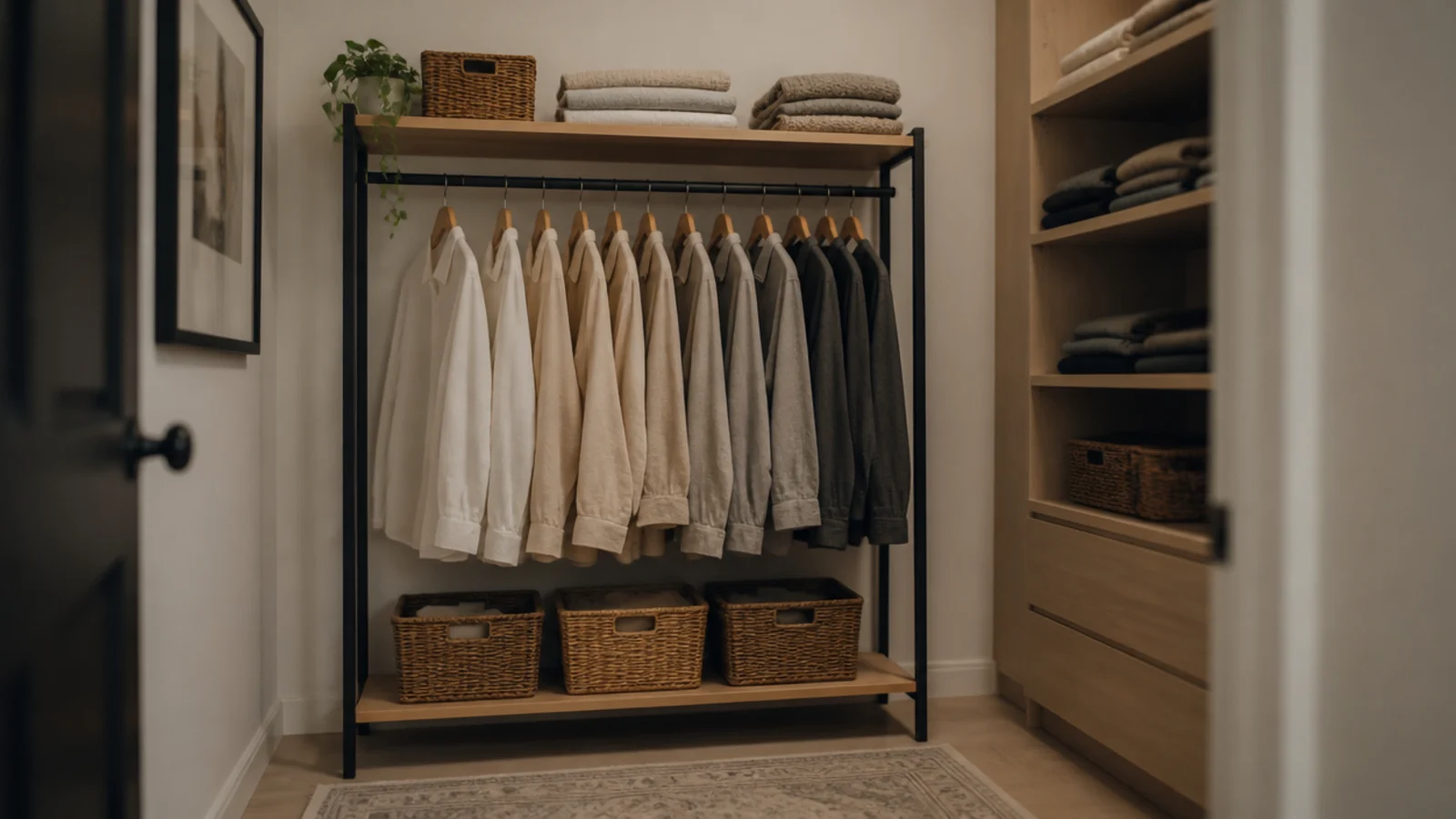
A freestanding rack lets you add hanging space to a wall that has none. The catch is depth, and it is where cheap racks fail.
Measure 24 inches of clear space from the back wall before you buy anything, because shoulders take about 22 and clothes pressed against plaster crease along the same line every day. Racks sold as 18 inches deep will hold coats badly forever. Oak and steel versions run $60 to $130, hold 60 pounds or more, and leave the wall untouched.
12. Canvas bins on the top shelf
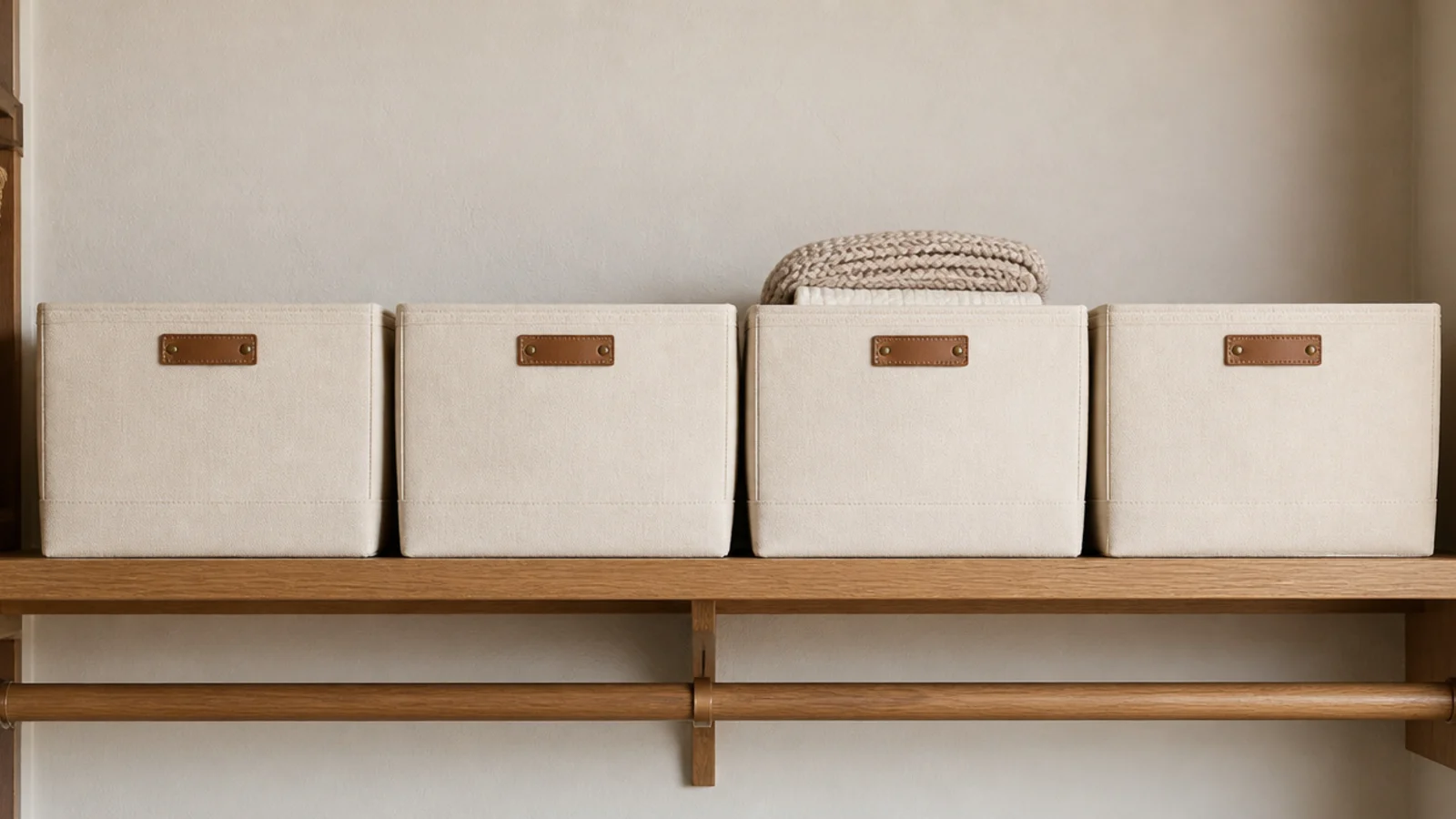
The shelf above the rod is usually deeper than it looks and gets used as a place things go to disappear. Matching bins turn it into real storage.
Standard shelves run 12 to 14 inches deep, which is exactly right for folded knits, so measure before buying bins rather than after. Fabric bins with a stiff frame and a leather label tab cost $8 to $15 each. Label the fronts even if you think you will remember, because you will not, and unlabeled bins get opened and never refilled.
13. An over-the-door rack for shoes and belts
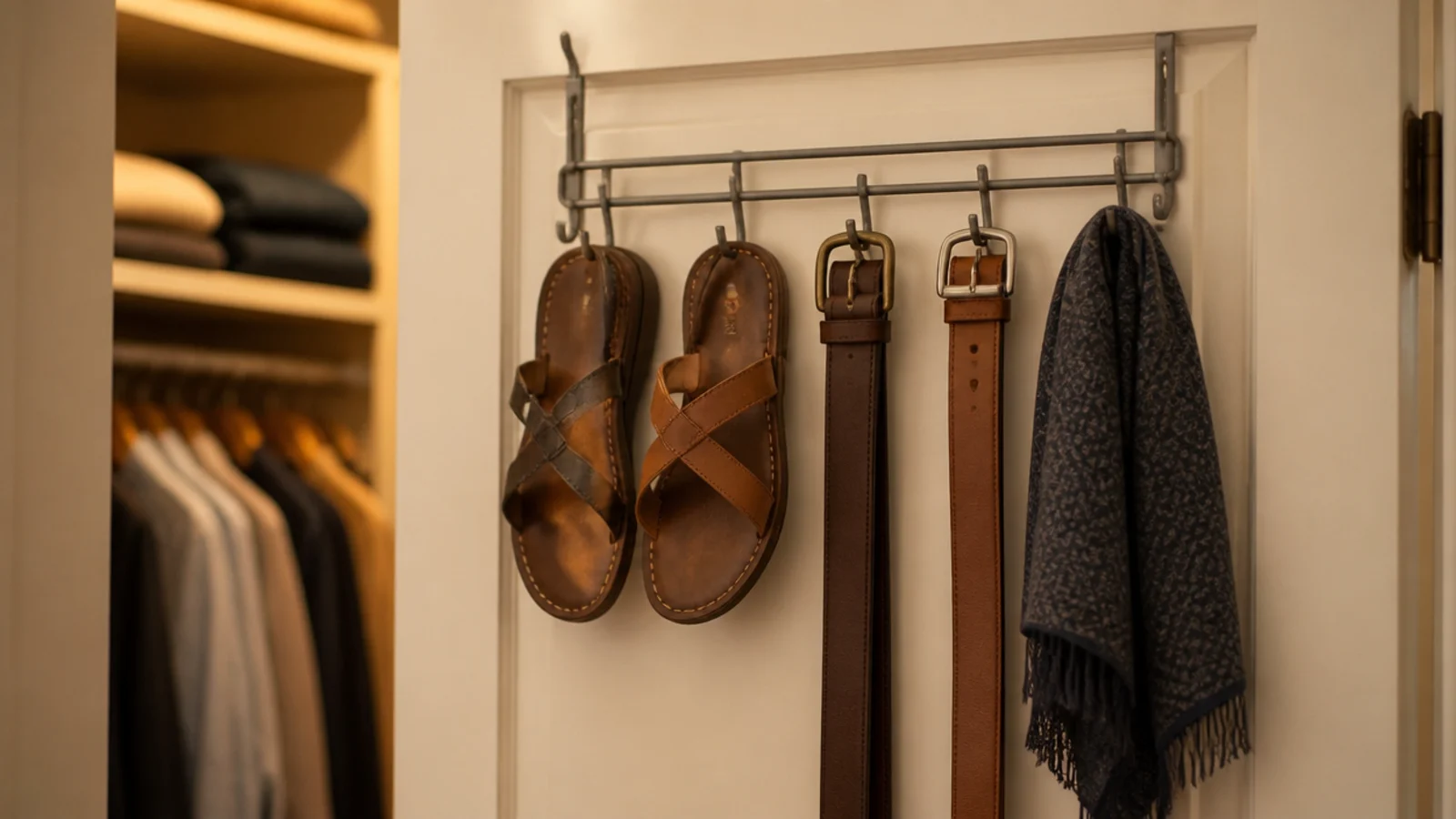
The back of the closet door is the last free surface in a small walk-in, and hanging racks use it without a single hole.
Check the door clears the frame with the hooks in place. Slim profiles under three inches deep usually do, thicker ones stop the door closing. Use it for shoes, belts, scarves and bags rather than anything heavy, and pad the hooks with felt so they do not mark the door edge. $15 to $30, and it moves house in a tote bag.
14. A slim drawer tower instead of built-in drawers
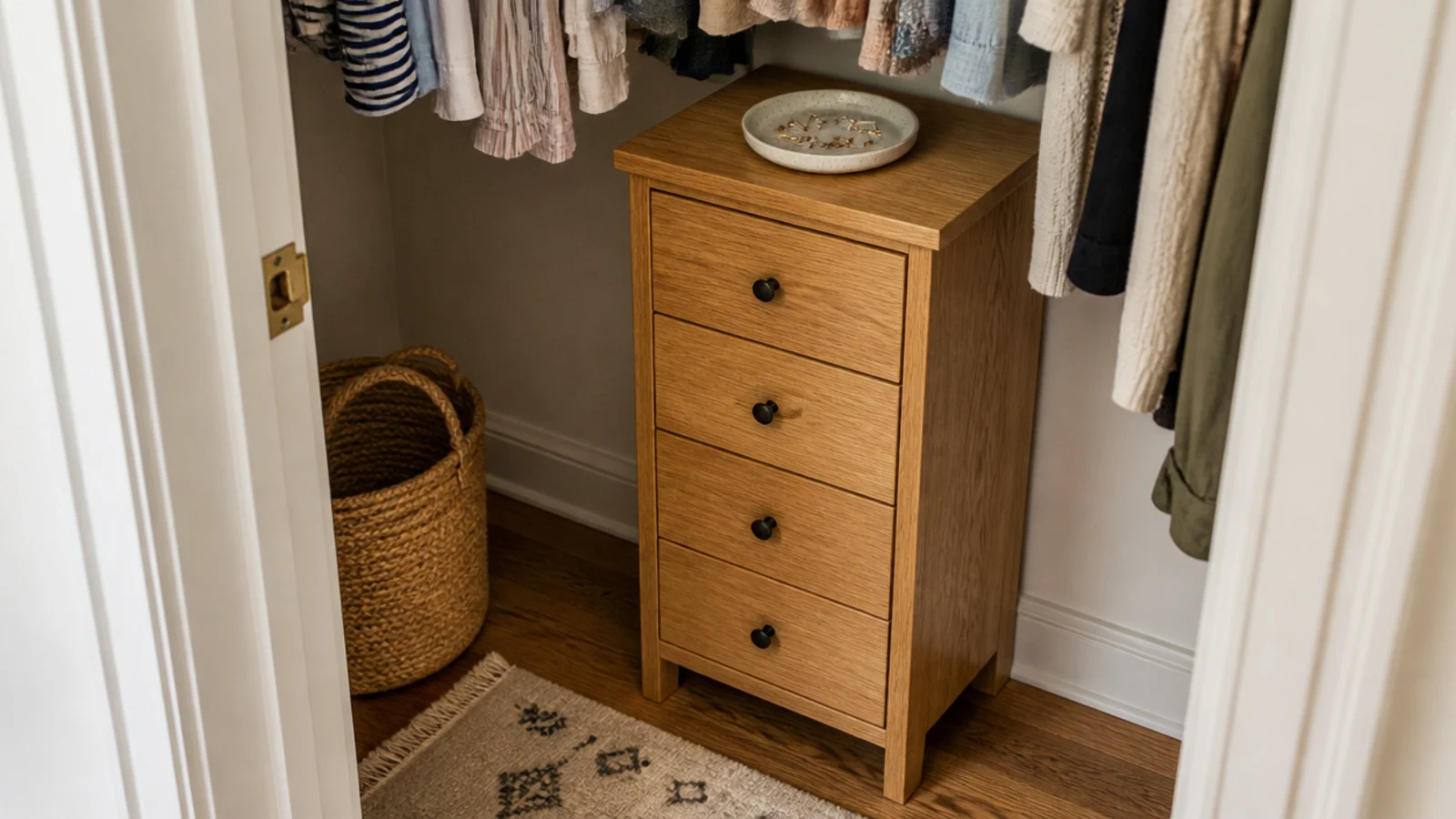
Built-in drawers are the single most expensive part of a closet system and the part a renter can never take with them. A freestanding tower does the same job for a fraction.
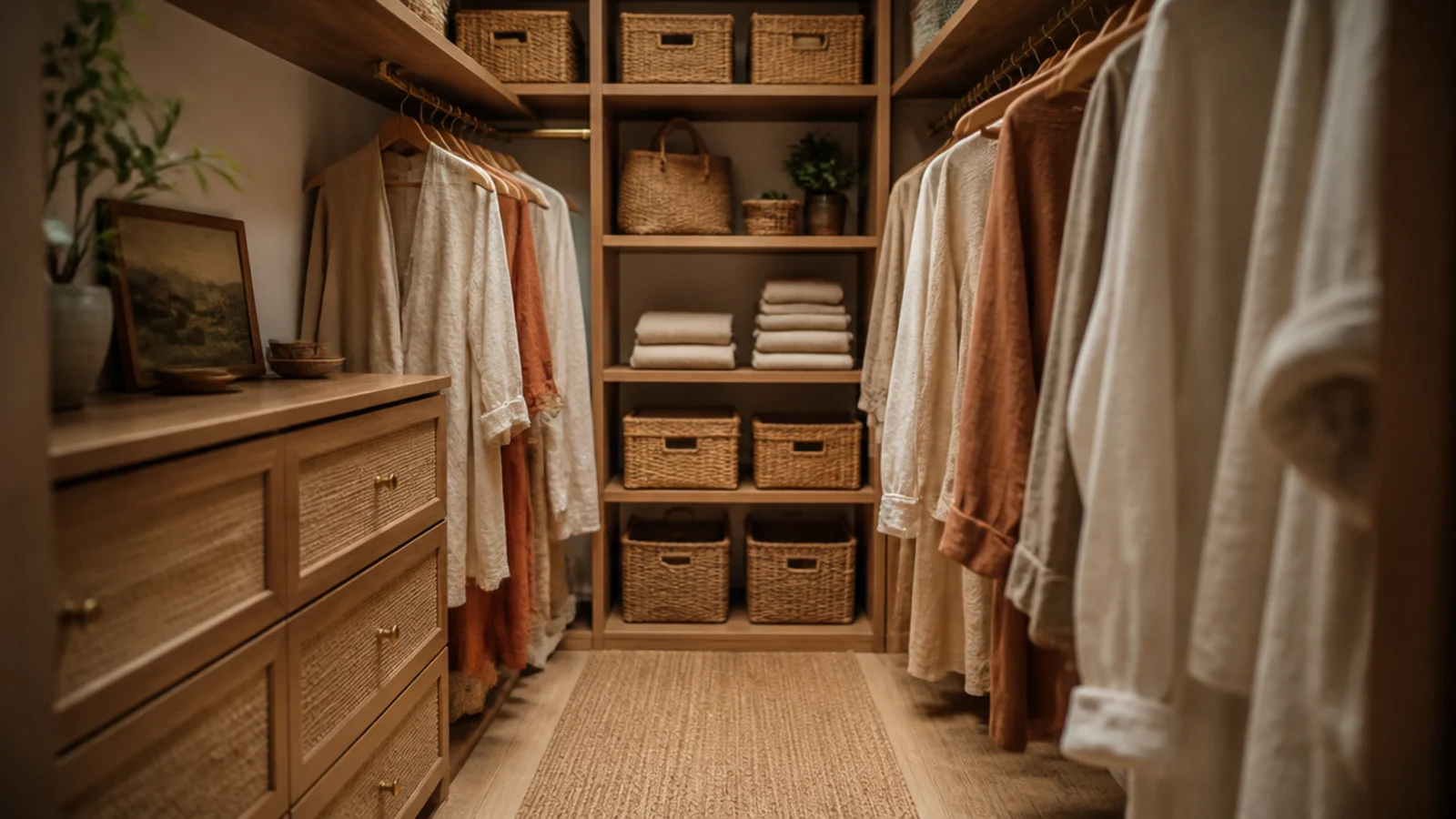
Look for one 14 to 18 inches wide so it tucks under short hanging without eating the walkway. Solid wood or steel frames outlast laminate boxes with stapled backs. $80 to $200 depending on drawer count, and there is more on comparing them in the best small closet systems roundup.
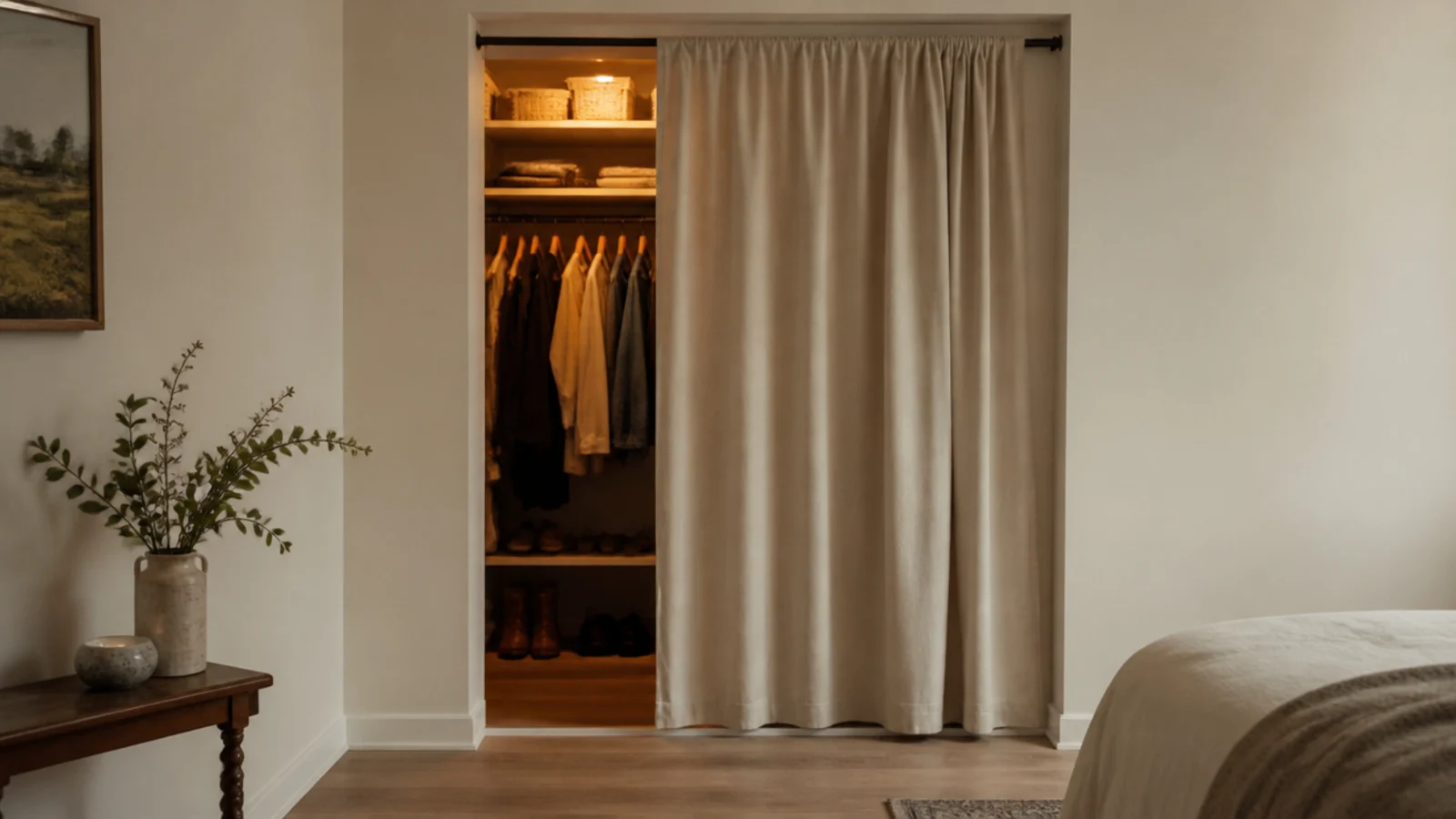
15. A curtain instead of a door
If the closet door swings into the closet, it is stealing about six square feet from a room that has none to spare. A curtain on a tension rod gives all of it back.
Use heavy linen or cotton canvas so it hangs straight, and hem it to finish half an inch above the floor. Two panels meeting in the middle look better than one and let you open just one side. $40 to $90 including the rod, and the door goes into the basement until you move out.
Mistakes to Skip
- Buying a 5000K daylight bulb because it looks brightest in the store. It is the fastest way to make every warm neutral you own read grey, and no amount of extra lumens fixes it.
- Mounting lights on the ceiling in the center of the walkway. You will stand between the light and the clothes every single time, and the closet will feel dim on a fixture rated for twice the space.
- Sticking adhesive fittings onto flat builder-grade paint without testing first. Flat paint peels off with the strip, and that is a deposit conversation over a $12 light.
Frequently asked questions
What color temperature should closet lighting be?
Stay at 3000K or warmer and look for a CRI of 90 or above. Cooler bulbs push navy toward black and make warm neutrals read grey, so you dress in one light and discover a different outfit outside. High CRI is the part people skip, and it matters more than brightness in a space this small.
Can renters add closet lighting without any wiring?
Yes, and it is the normal answer now. Rechargeable puck lights, USB LED tape, battery sconces and plug-in pendants on a ceiling hook all give real light with no junction box involved. Anything that means opening a wall, adding a switch or tying into house circuits is electrician work and a landlord conversation, not a weekend project.
How bright does a small walk-in closet need to be?
Roughly 400 to 800 lumens total for a closet under 40 square feet, split across two or three sources rather than one. A single bright ceiling light throws your own shadow straight onto the rod you are reaching into. Two modest lights placed above the hanging walls beat one powerful light in the middle every time.
Do motion sensor closet lights actually last on batteries?
A rechargeable bar used a handful of times a day typically runs six to ten weeks between charges, less if the sensor sits where a passing pet triggers it. Pick models with a magnetic mounting strip so you can lift the bar off to charge without unsticking anything, and set the timeout to 20 or 30 seconds.
Where should the light go in a narrow walk-in closet?
Above and slightly in front of the hanging rods, not overhead in the center. Light dropping straight down behind you lands on your shoulders and leaves the clothes in shadow. Mount pucks under the shelf that sits over each rod, aimed at the garments, and the whole closet reads brighter on fewer lumens.
Change the bulb first, add two lights above the rods second, and only then think about anything you have to mount. That order has fixed every rented closet I have lived with. The budget walk-in closet ideas guide covers the storage side for under $200, and if shoes are the real problem in yours, closet shoe storage that works has the racks and rise heights. Save the pin so the color temperature number is with you in the hardware aisle.
Want more like this? Browse all 15 small walk-in closet ideas guides — they all use the same measurements and budget tiers.
Pin it for later
Save this to your Small Walk-In Closet Ideas board
Pin it now so it is waiting for you when the tape measure comes out — and so the next person hunting for this idea can find it too.
Save this pinKeep going
More ideas worth saving while you have the tape measure out.