Small Walk-In Closet Ideas · Listicle
30 Beautiful Small Walk-In Closet Ideas to Steal Today

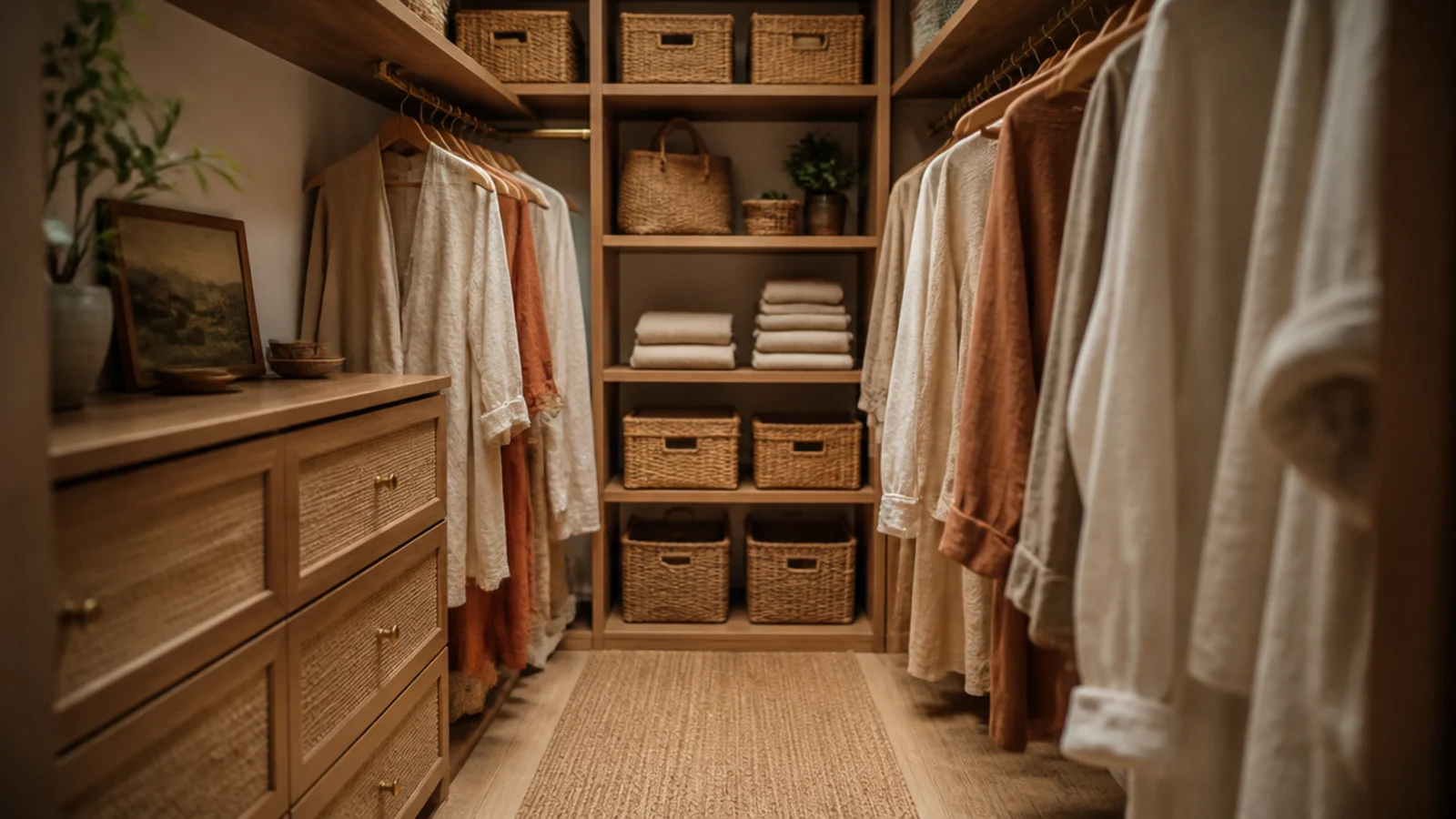
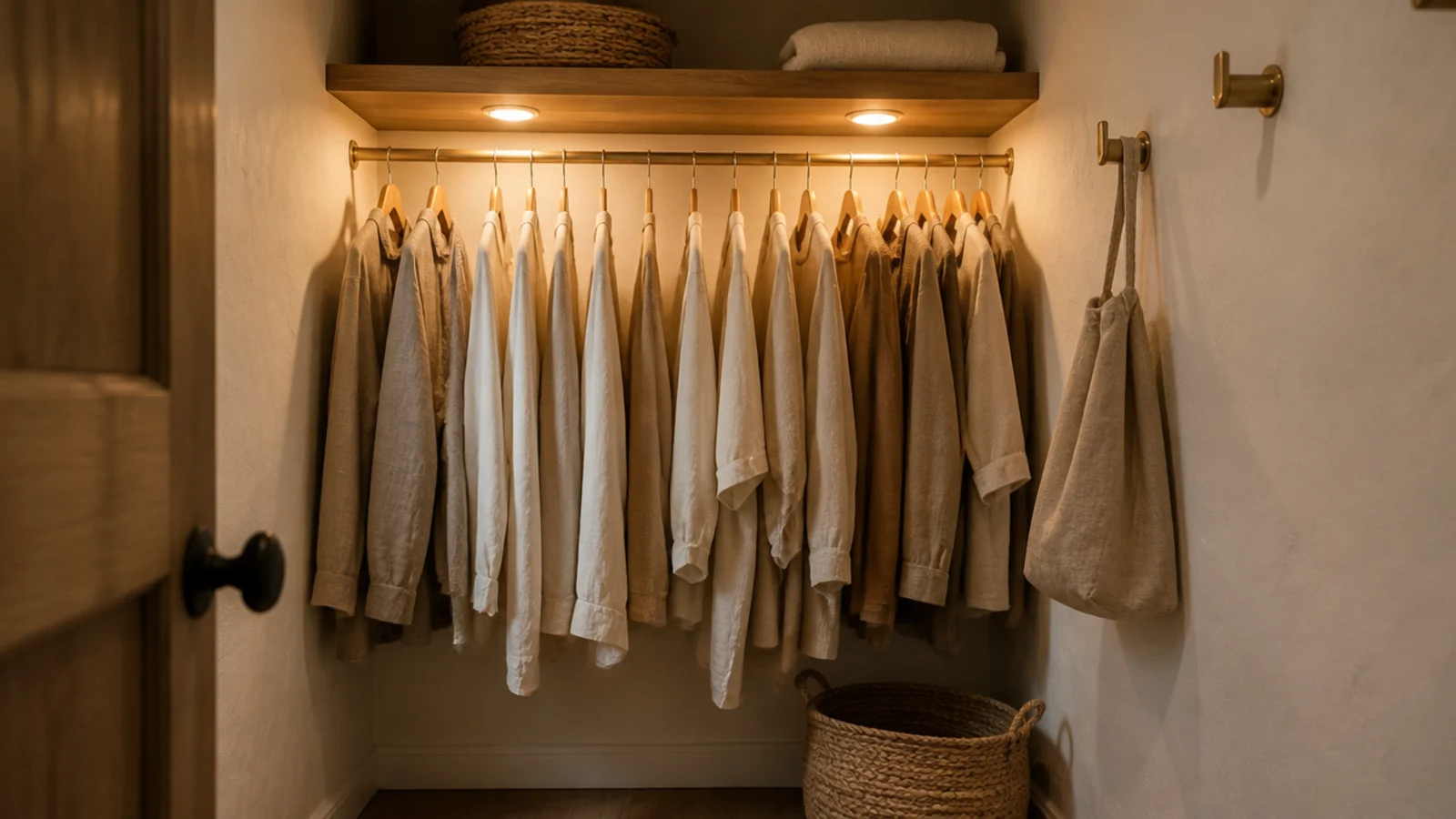
A boho walk in closet lives or dies on restraint, which sounds backwards for a look built on layering. Every version I have styled that worked used exactly three natural materials on repeat and kept every color inside one warm range. Every version that failed had four textures, five colors and no clearances. Thirty ideas below, all of them layered over a plan that still fits.
In this guide32 sections — tap to openHide
- 1.What makes a boho walk in closet work in a tight room
- 2.Replace the door with a linen curtain
- 3.Fit rattan-front drawer boxes
- 4.Add cane panels to closed storage
- 5.Run a jute runner down the walkway
- 6.Stand a clay vessel on the top shelf
- 7.Buy seagrass baskets in three sizes
- 8.Hang a woven piece on the end wall
- 9.Choose brass rods over chrome
- 10.Wrap shelf pulls in leather
- 11.Leave the shelving open
- 12.Lay a small patterned rug at the threshold
- 13.Swap the ceiling fitting for a rattan shade
- 14.Keep the light at 3000K or warmer
- 15.Use a woven hamper, not plastic
- 16.Switch every hanger to wood
- 17.Put a cane bench at the end wall
- 18.Stand dried grasses in a stoneware vase
- 19.Hang a plant only where there is daylight
- 20.Store off-season pieces in linen bags
- 21.Lean a ladder for throws and scarves
- 22.Paint the walls in warm clay
- 23.Line shelves in natural fiber
- 24.Corral jewelry on a woven tray
- 25.Build a hat wall on brass hooks
- 26.Lean a carved-frame mirror
- 27.Tie the curtain back with jute
- 28.Drape a fringed throw on the bench
- 29.Keep the palette inside one warm range
- 30.Add one vintage piece
- 31.Edit back to three materials
- 32.Mistakes to Skip
What makes a boho walk in closet work in a tight room
Texture does the work, not color. Pick three materials — rattan, jute and brass is the reliable set — and repeat them across shelves, baskets, hooks and handles. Then keep everything within cream, sand, clay and muted sage. Variety comes from weave and grain, never from hue.
That restraint matters more in a small room than a large one. In 40 square feet, a fourth material reads as clutter within a week.
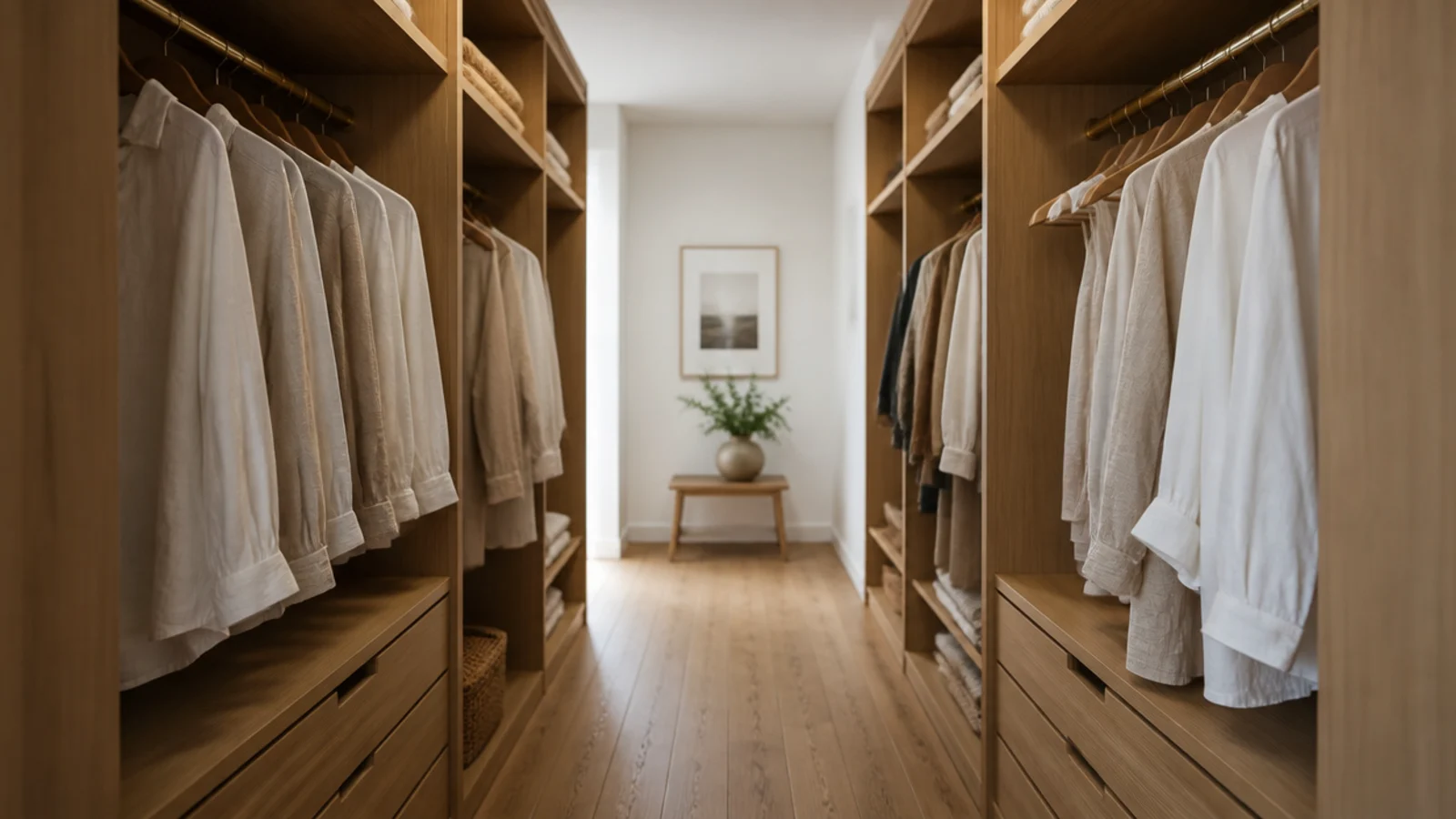
The measurements do not soften for a mood board. A hanging rod still needs 24 inches of clear depth, because a shoulder on a hanger is about 22 inches across. A walkway still needs 36 inches, 30 at the absolute squeeze. Shelves still want 12 to 14 inches for folded knits, and double-hang at 42 and 84 inches still doubles what a wall holds. Under 5 feet of room width, build a deep reach-in with no corridor at all.
Lighting is where this palette is won or lost. Every natural fiber in the room turns grey under cool light, so fit 3000K or warmer at a CRI of 90 or above.
Budget tiers below: baskets, trays, hooks and textiles run $10 to $40 a piece ($), rattan drawer fronts and a bench $150 to $400 ($$), and a full cane-fronted fit-out $1,500 and up ($$$).
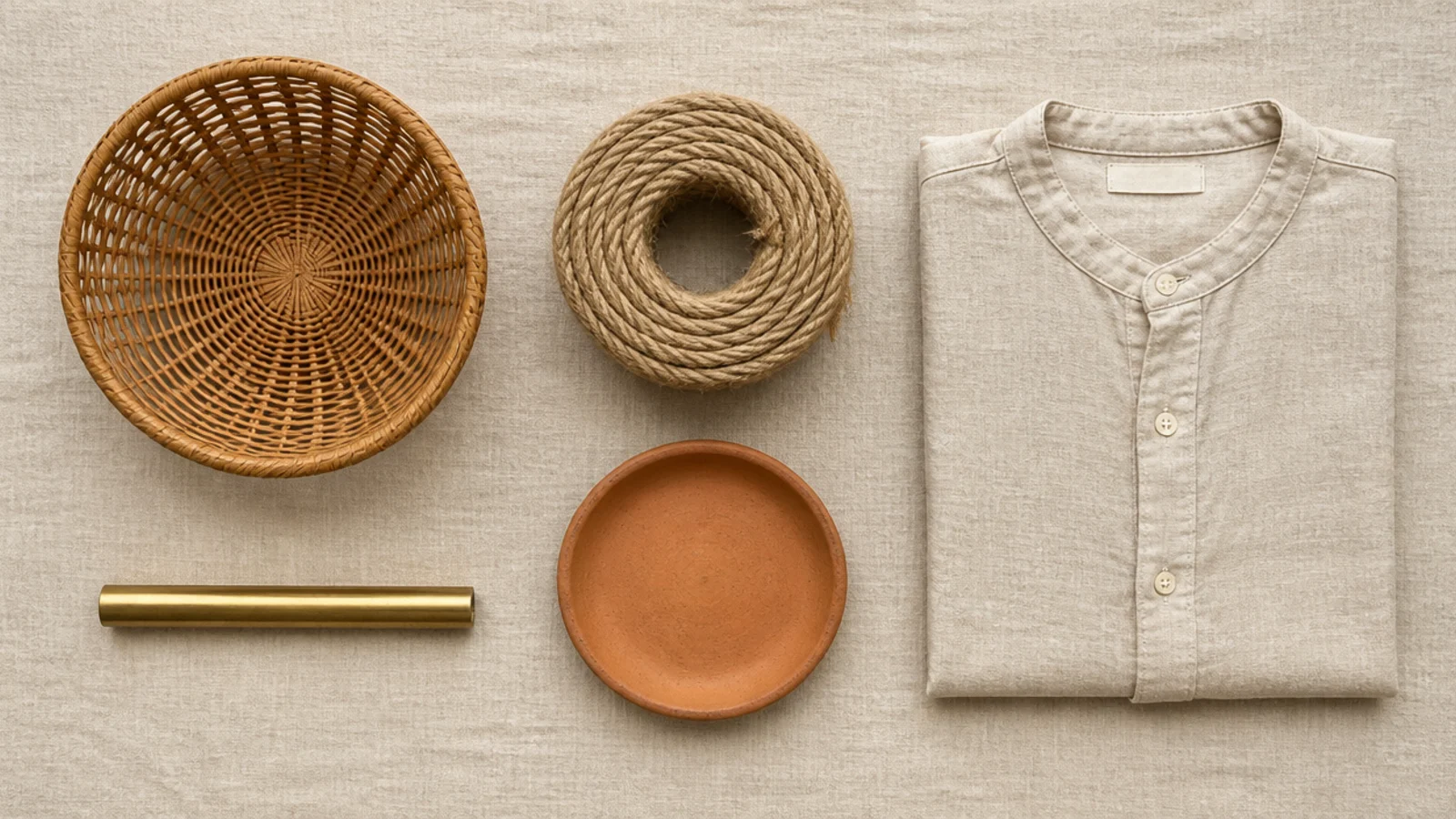
1. Replace the door with a linen curtain
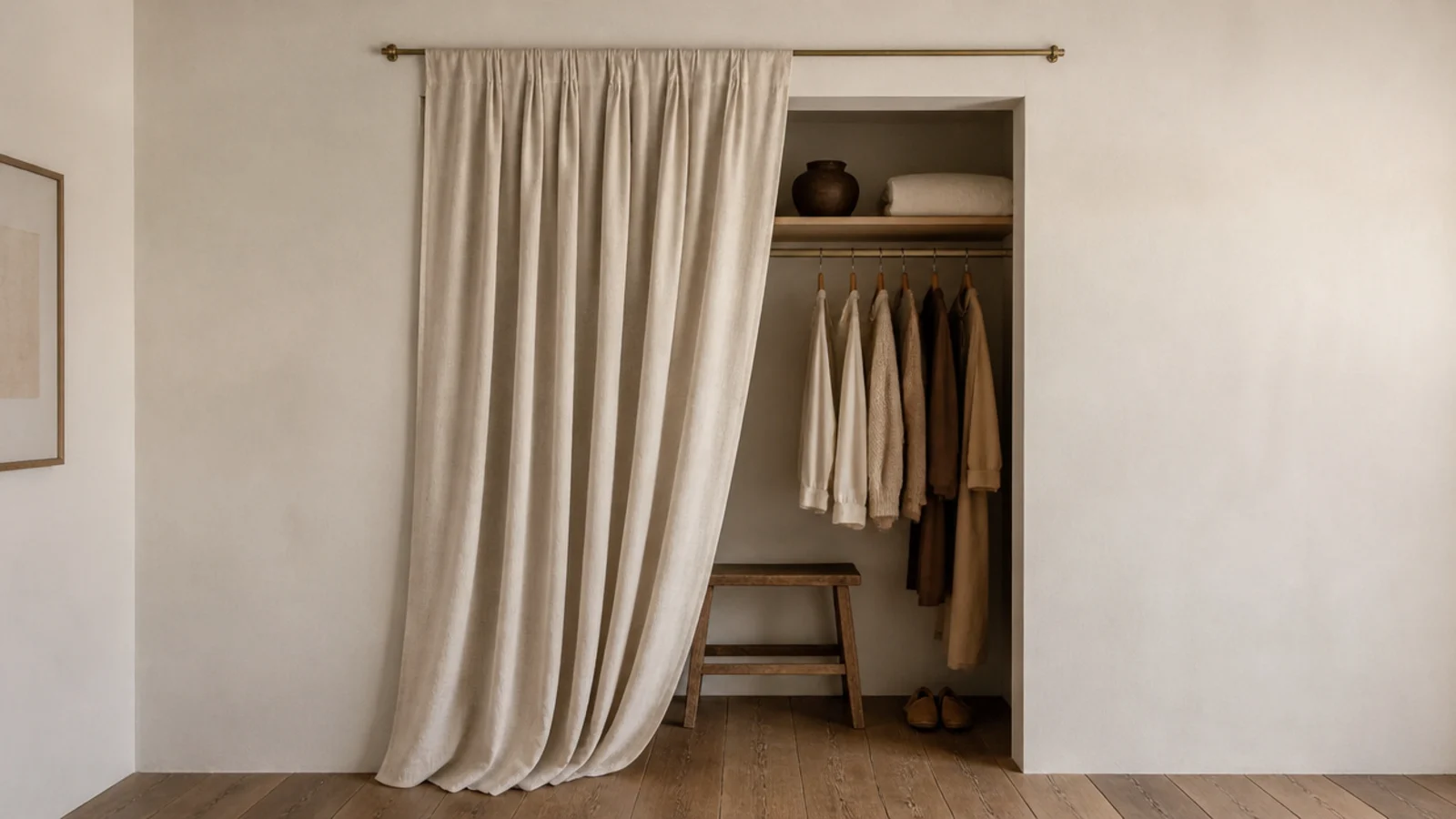
The fastest change in the room. A floor-length oatmeal linen curtain on a slim brass rod costs $30 to $70 and gives back the 30-inch arc a hinged door steals.
Mount the rod 2 inches above the opening and let the fabric break slightly on the floor. In a rental, a tension rod inside the frame means zero holes.
2. Fit rattan-front drawer boxes
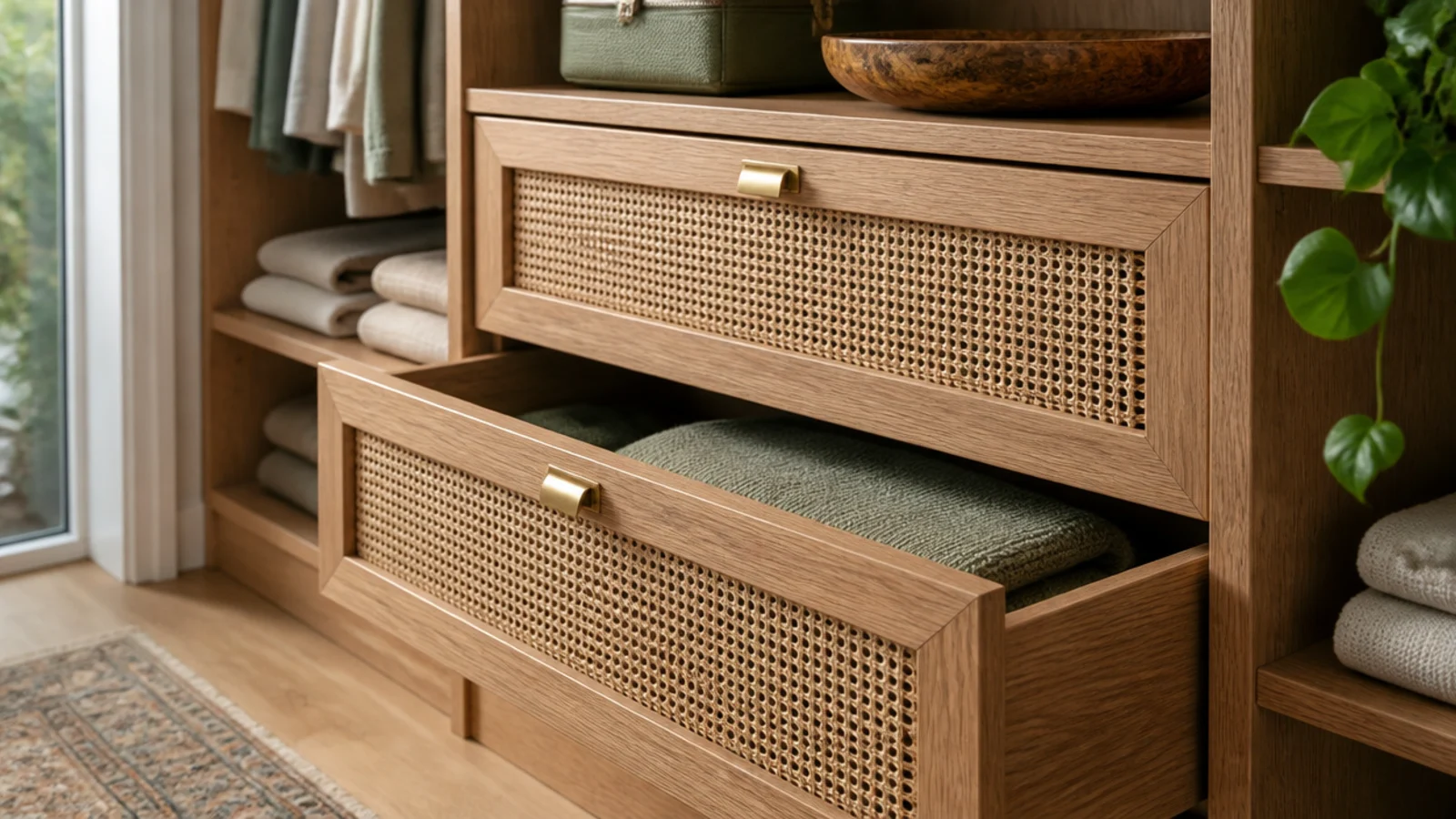
Swapping plain drawer fronts for woven rattan panels is the highest-impact detail here. Ready-made rattan fronts run $25 to $60 each, or cane webbing sheets cost about $20 a yard to inset yourself.
Rattan is light, breathable and forgiving in a closed space, which matters where damp collects. Pair with small brass pulls and stop there.
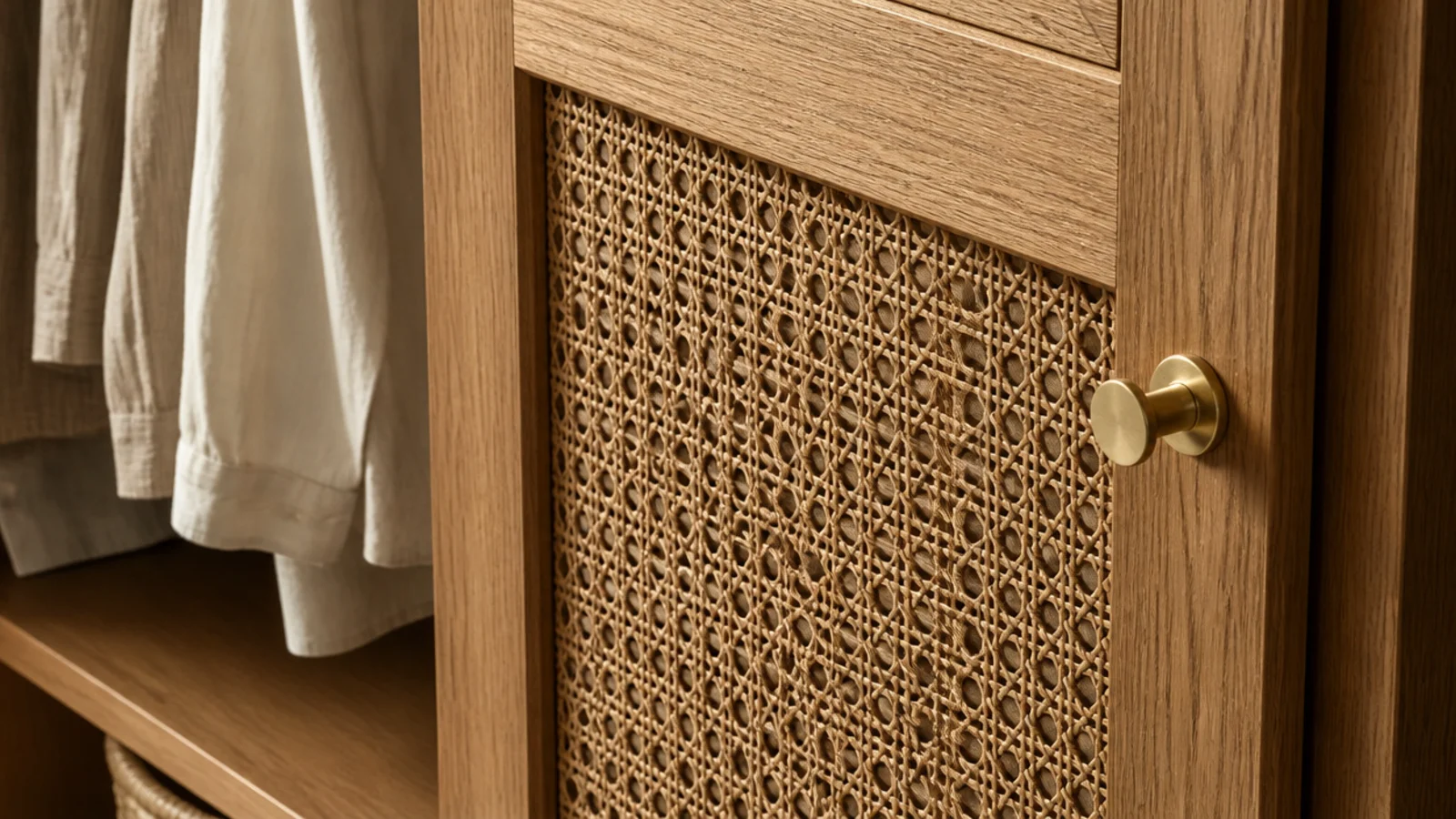
3. Add cane panels to closed storage
If you have closed cabinets, replacing solid panels with cane webbing lets air move and instantly softens a boxy run.
You need a groove and reed spline to fit it properly, or an adhesive-backed sheet for a simpler job. Never seal a closet with solid doors on an exterior wall — cane at least gives fabric somewhere to breathe.
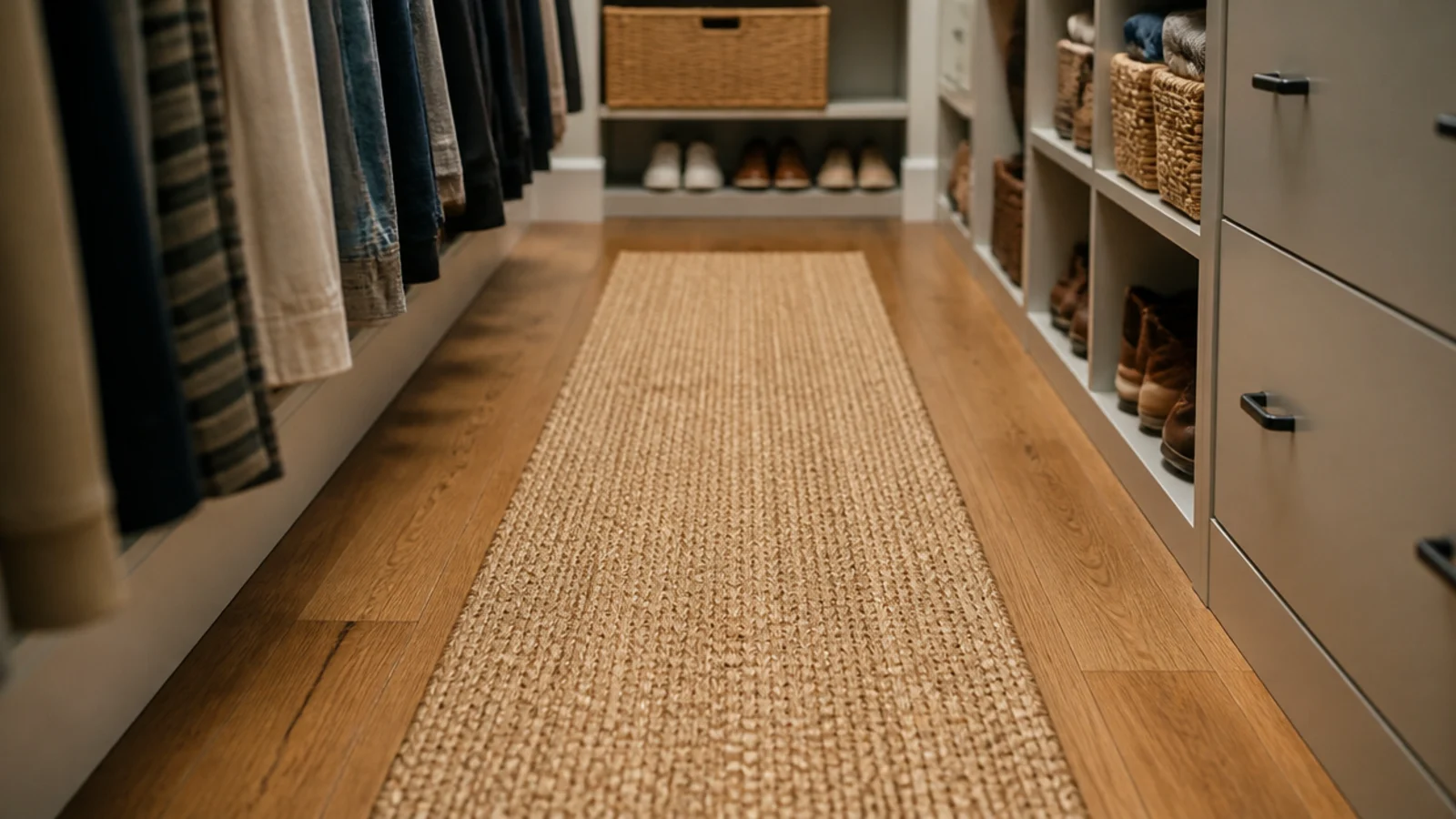
4. Run a jute runner down the walkway
A flat-woven jute runner warms the floor without adding height underfoot. Keep it 24 to 30 inches wide inside a 36-inch lane so it never becomes a trip edge.
Flat weave over pile, always — pile catches the bottom of hanging hems and collects dust. Expect $40 to $90 ($) for a good one.
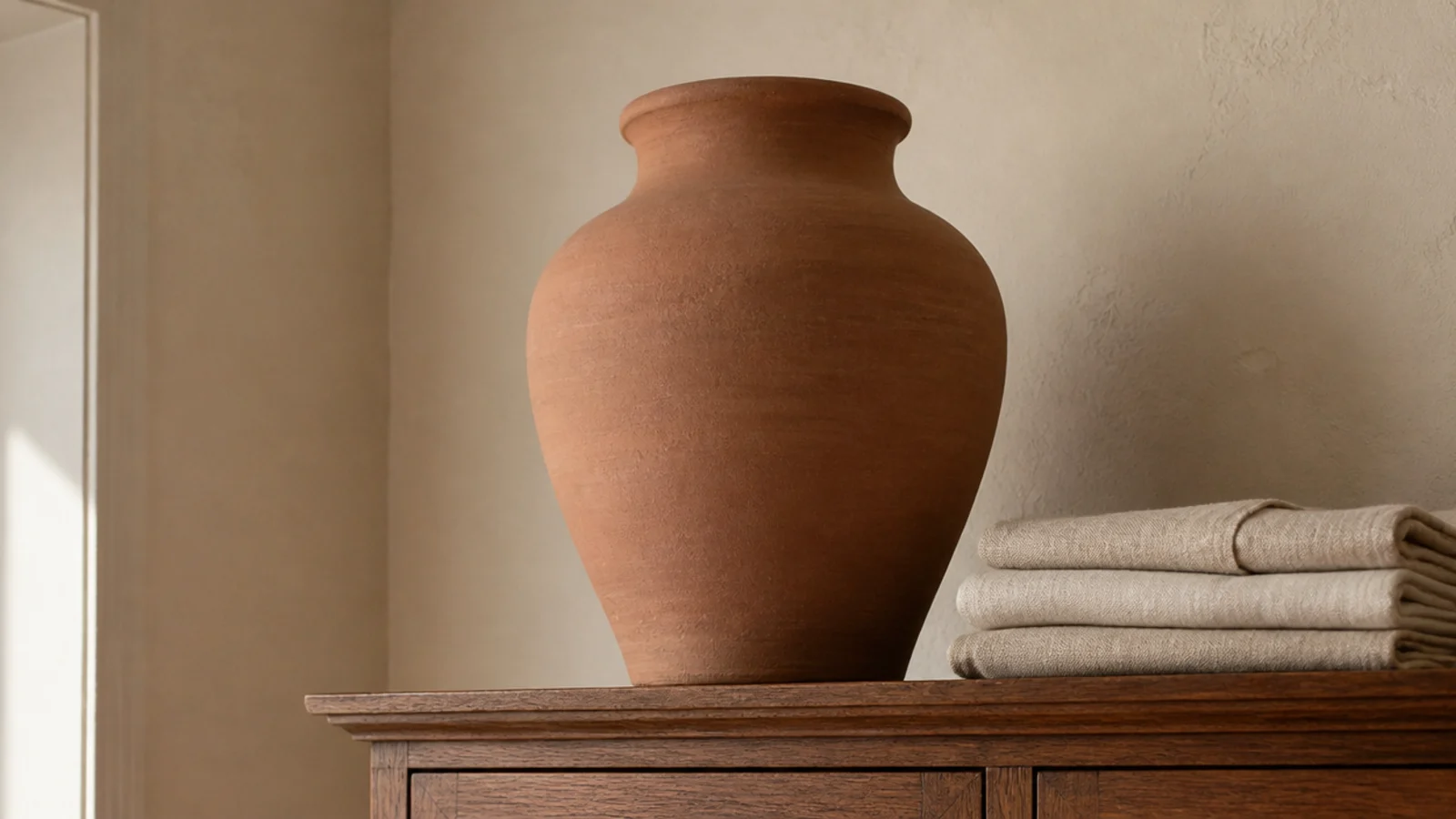
5. Stand a clay vessel on the top shelf
Above 84 inches, one large object reads better than five small ones. A big unglazed terracotta vessel does the whole job.
It gives the eye somewhere to rest at the top of the room and it is the only thing up there you never need to reach. Thrift these for $10 to $30 rather than buying new.
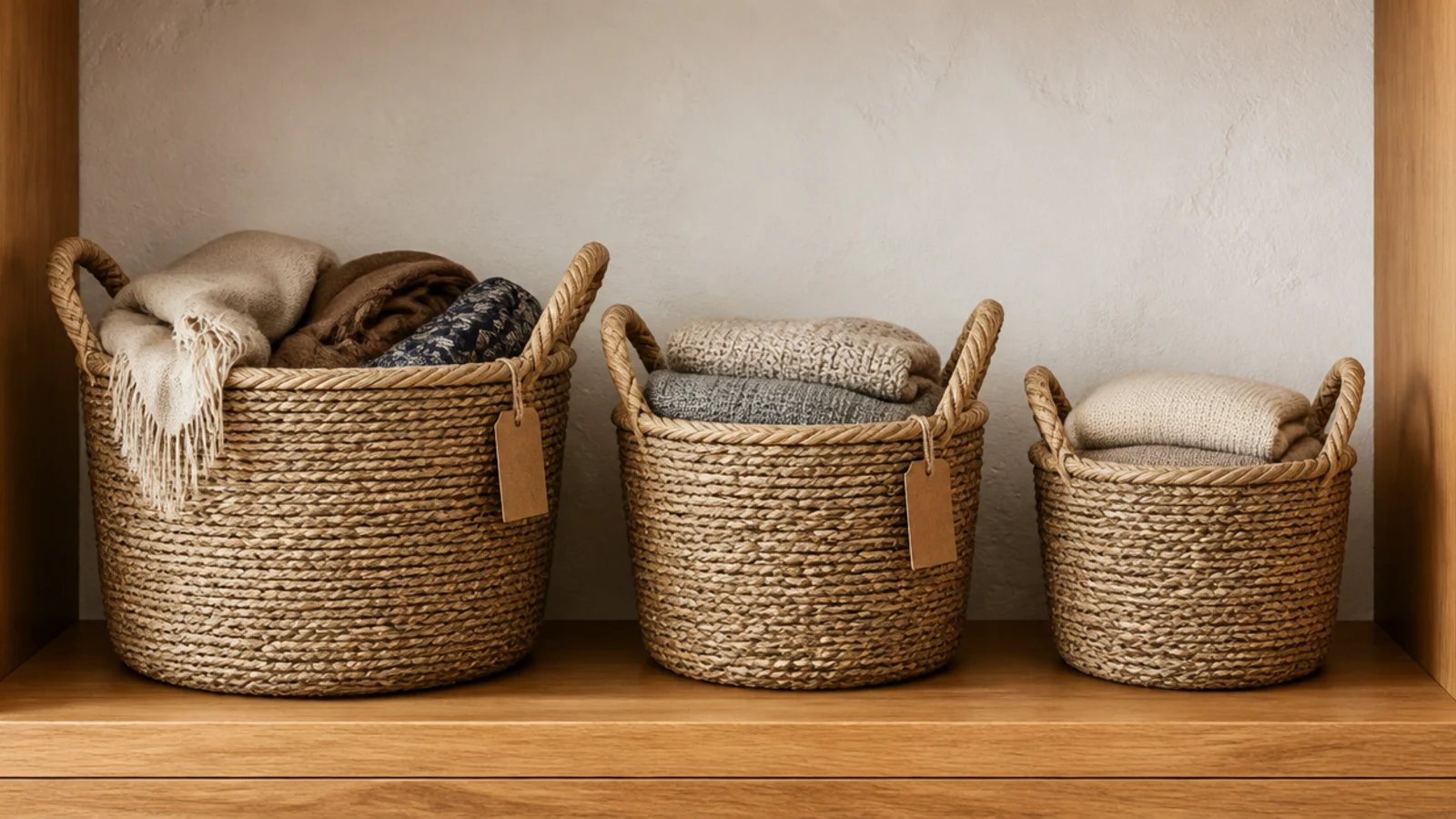
6. Buy seagrass baskets in three sizes
One weave, three sizes, repeated down a shelf. That combination reads as collected rather than randomly accumulated.
Measure the shelf first — a 14-inch shelf wants baskets 12 to 13 inches deep so nothing overhangs the edge. Line any basket holding fine wool with cotton, because loose weave snags cashmere. Budget $12 to $25 each.
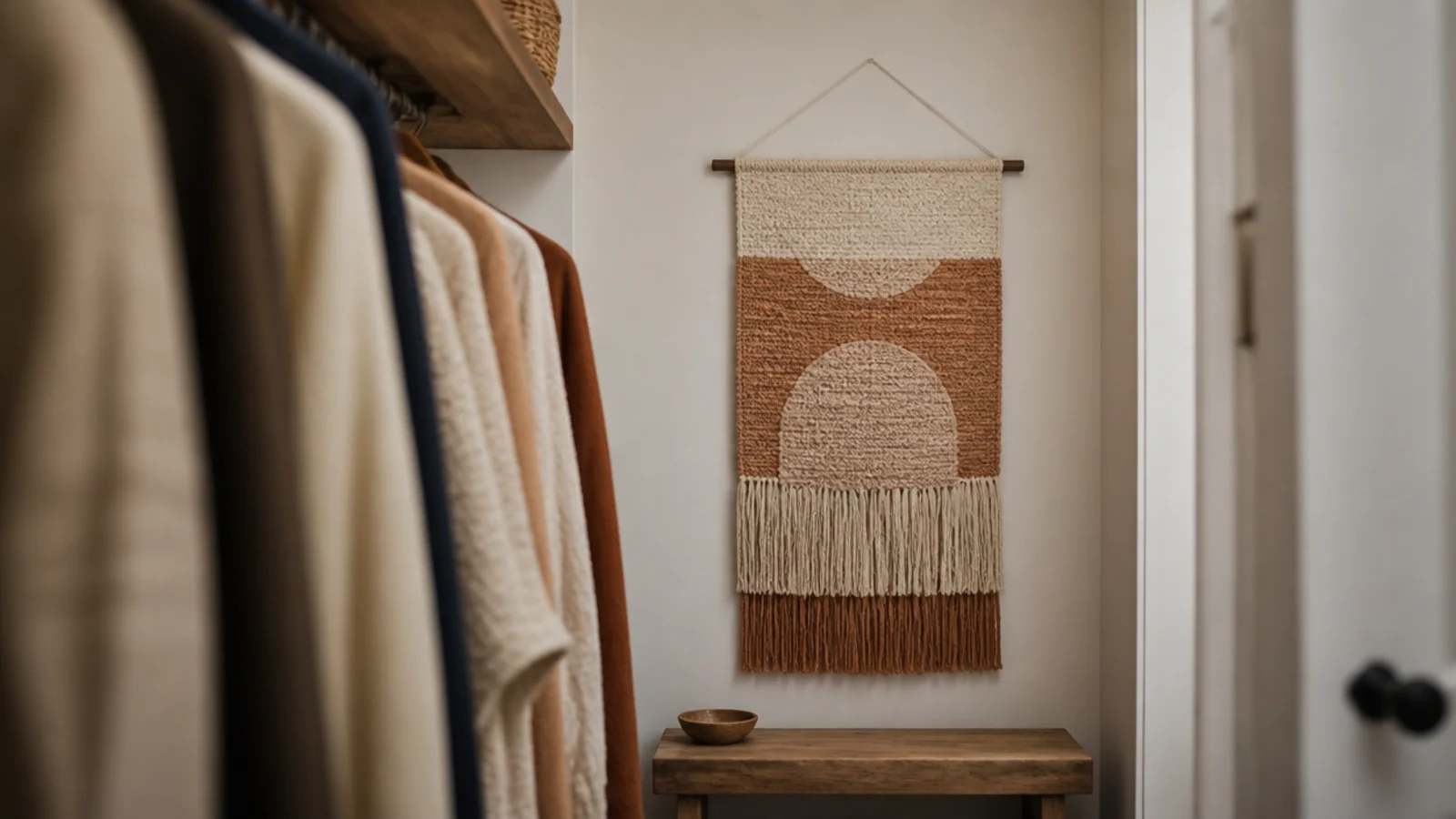
7. Hang a woven piece on the end wall
The narrow end wall is the only place art belongs in a small closet, because everywhere else is storage.
A neutral hand-woven hanging in cream and clay tones fills it without adding a single object to a shelf. Keep it under 30 inches wide so it does not crowd hanging on the return walls.
8. Choose brass rods over chrome
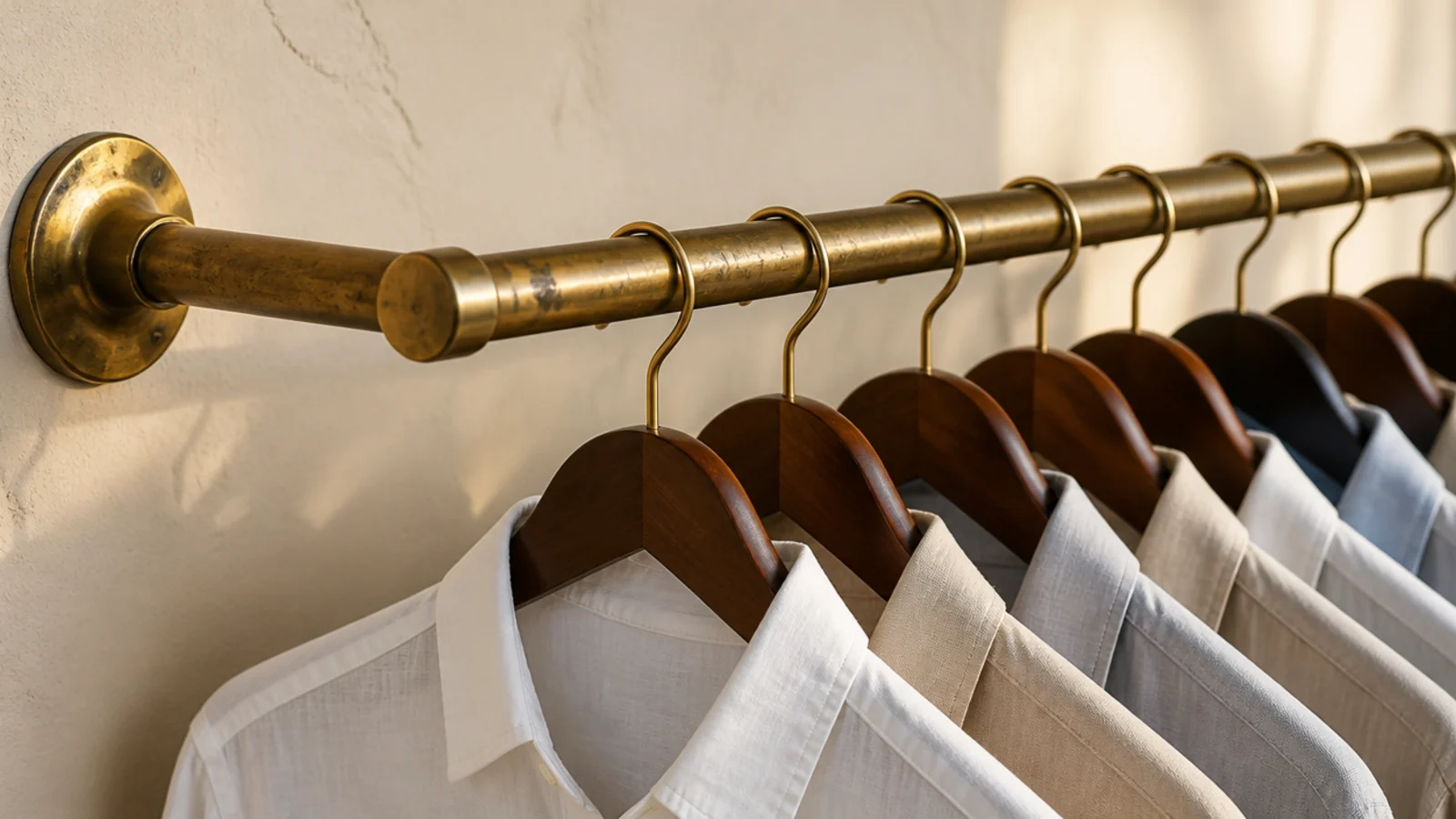
Chrome goes cold against every natural fiber in the room. Solid brass tube runs $25 to $50 for a 4-foot length and develops a patina painted steel never will.
Set the rod 2 inches back from a shelf front so hangers clear the lip, and keep 24 inches of clear depth in front of the wall.
9. Wrap shelf pulls in leather
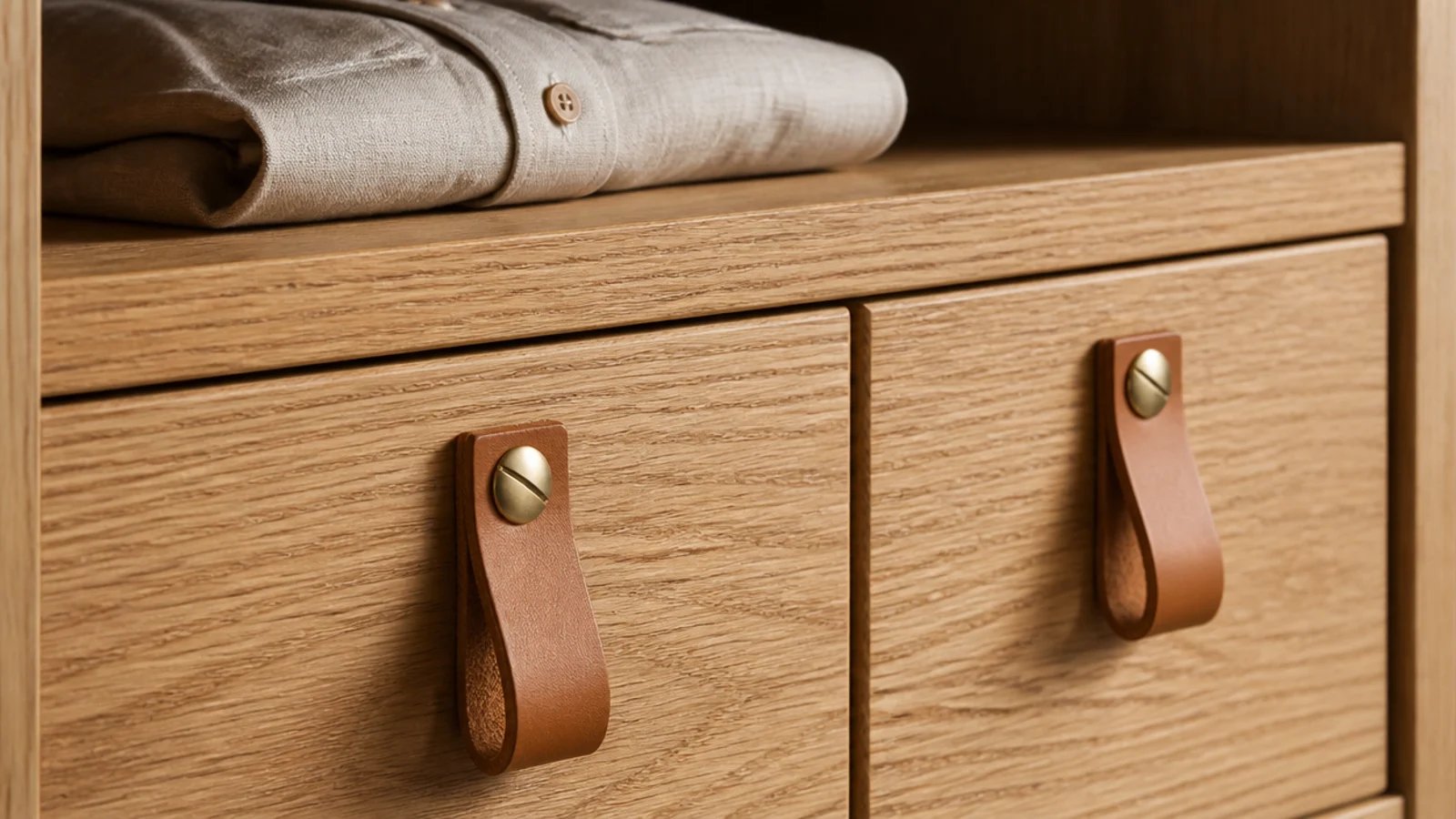
Tan leather strap pulls on brass screws cost $6 to $12 each and replace whatever generic handle came with the unit.
They soften a hard shelf edge, they age well rather than chipping, and they are one of the few upgrades you can do to a rented fitted closet with a screwdriver and reverse on move-out day.
10. Leave the shelving open
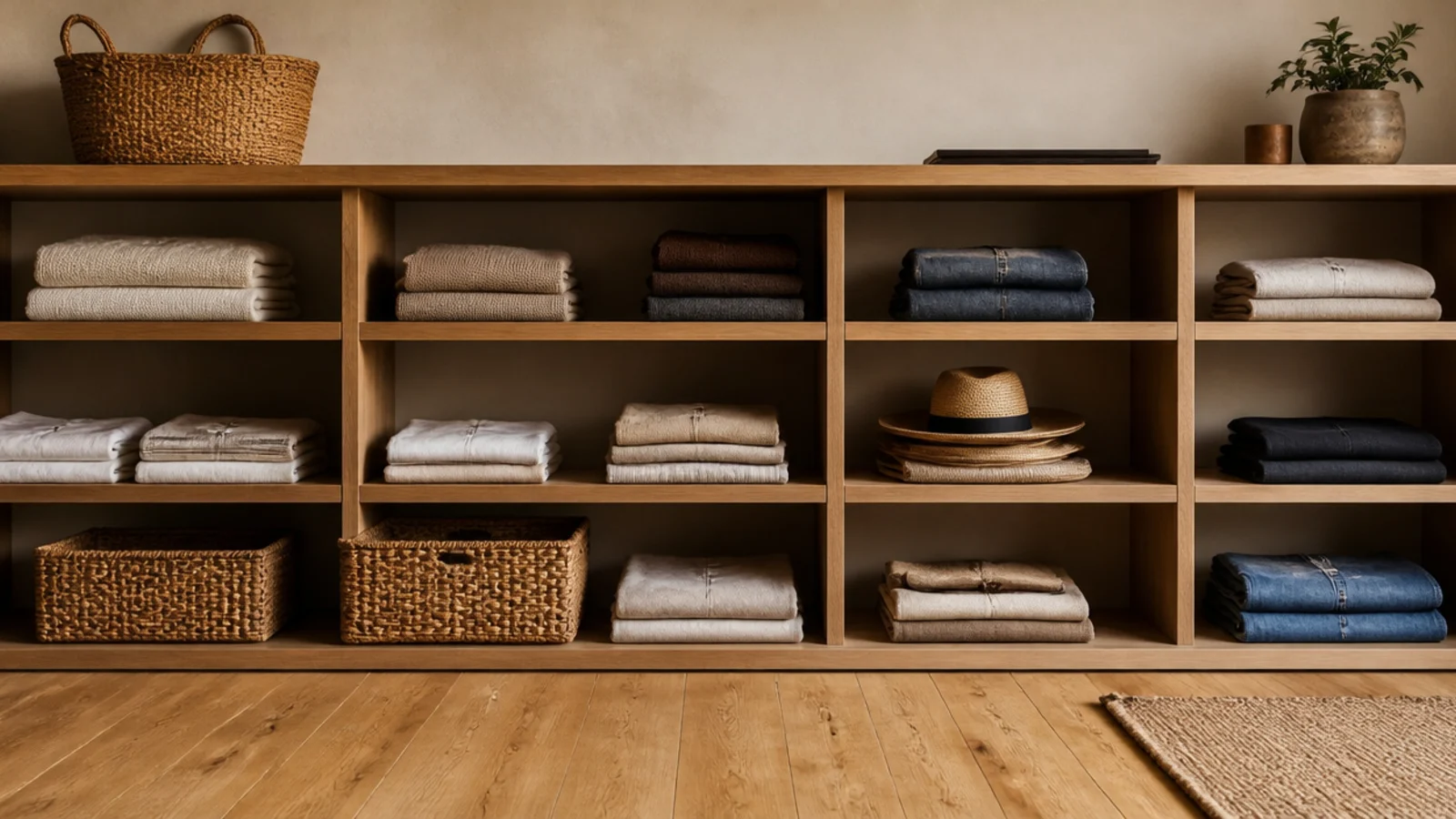
Closed doors fight this look and hide the textures you spent money on. Open shelves put folded linen, rattan and stoneware on show.
The trade is honest: open shelving forces you to keep it edited. If that sounds unlikely, keep doors on the lower half only and leave everything above 42 inches open.
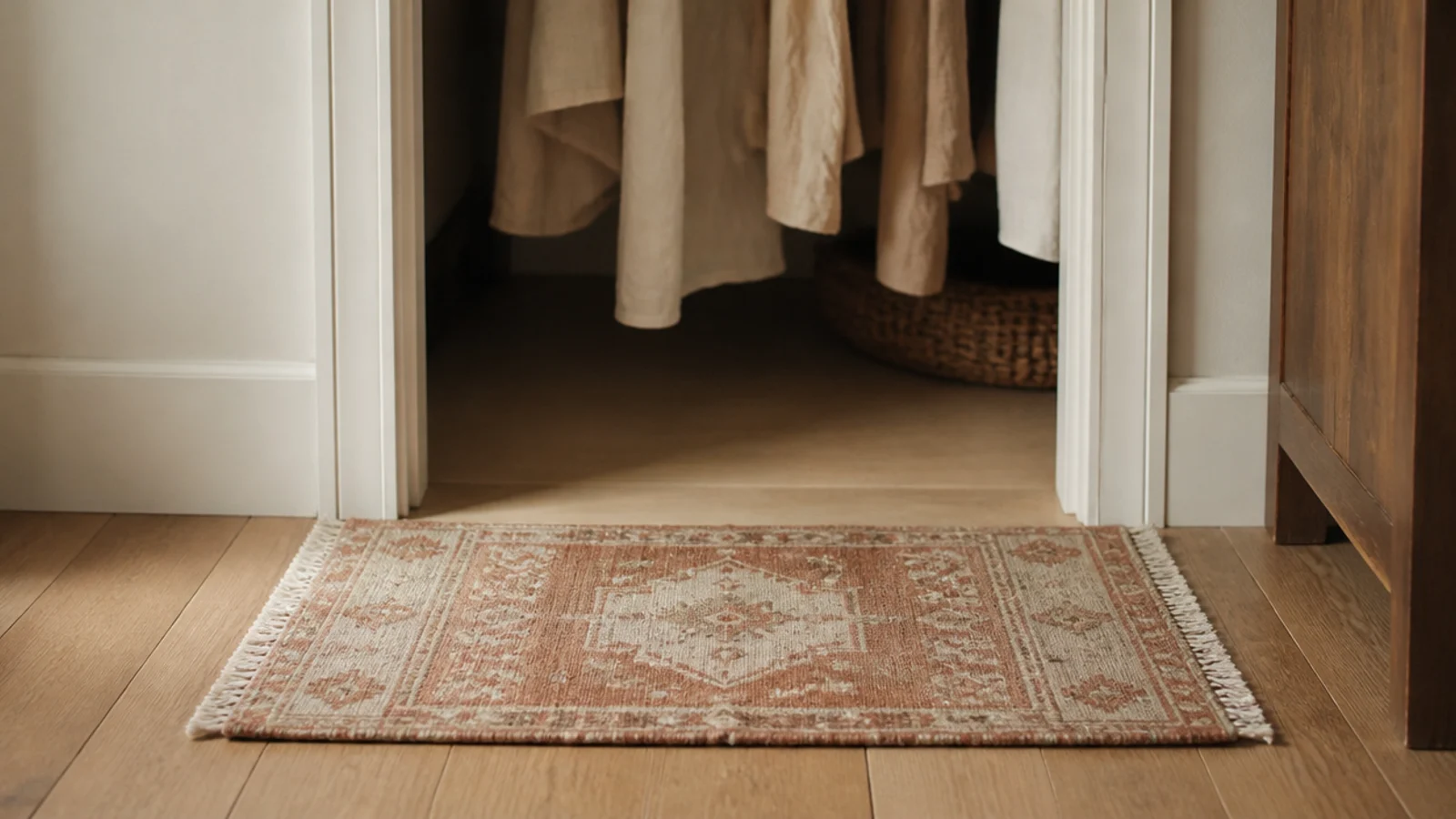
11. Lay a small patterned rug at the threshold
One flat-woven wool rug in faded terracotta at the closet entrance grounds the whole space.
One, not three. Layered rugs read as clutter in a room under 40 square feet, and they lift at the edges where you pivot. Vintage pieces at 2 by 3 feet run $40 to $120 and only get better.
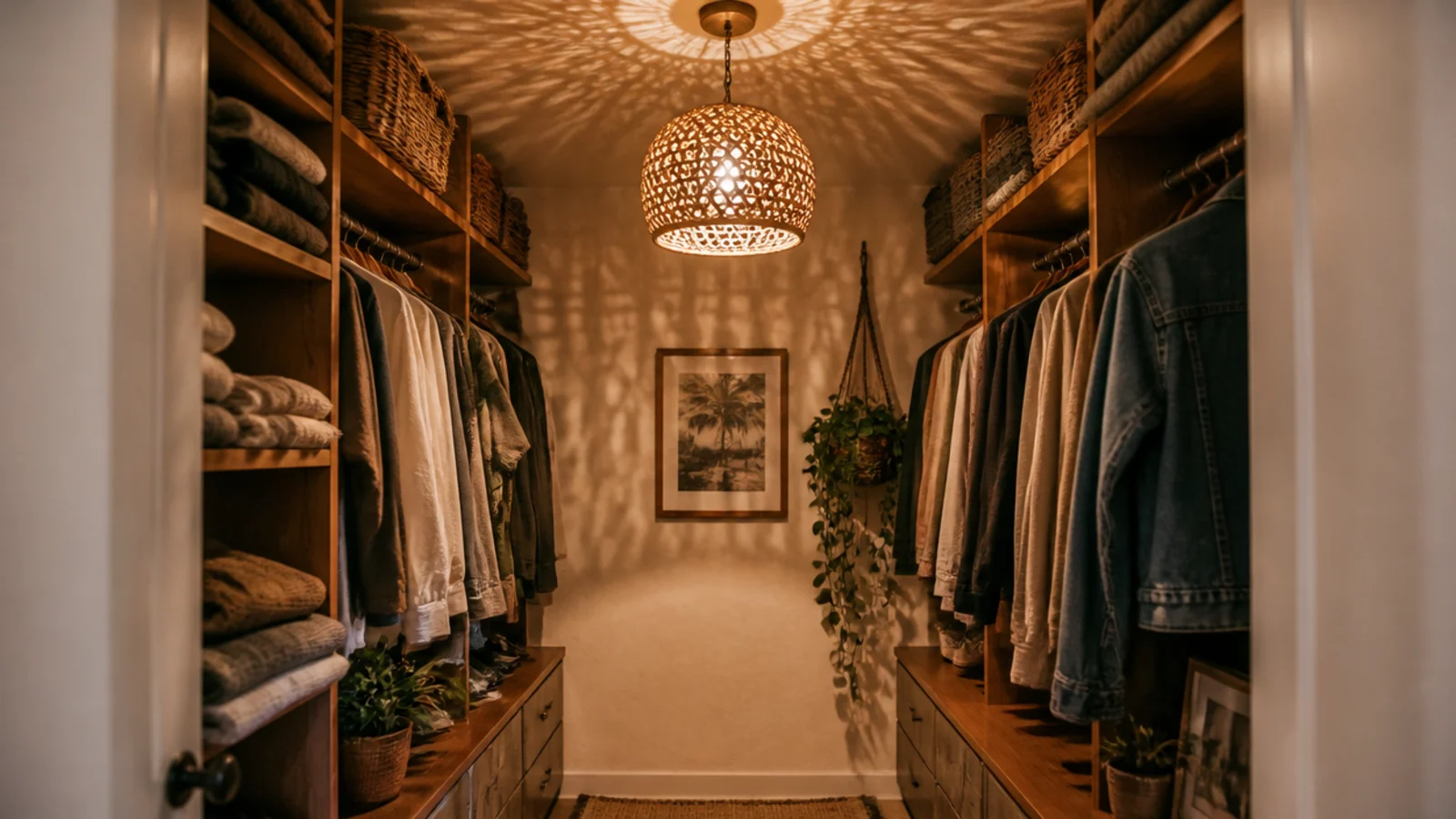
12. Swap the ceiling fitting for a rattan shade
A woven rattan pendant throws patterned warm light and costs $30 to $80. It is the single most photographed element of any boho closet.
Check headroom first: keep the bottom of the shade at least 78 inches off the floor, and set it over the walkway rather than over hanging clothes.
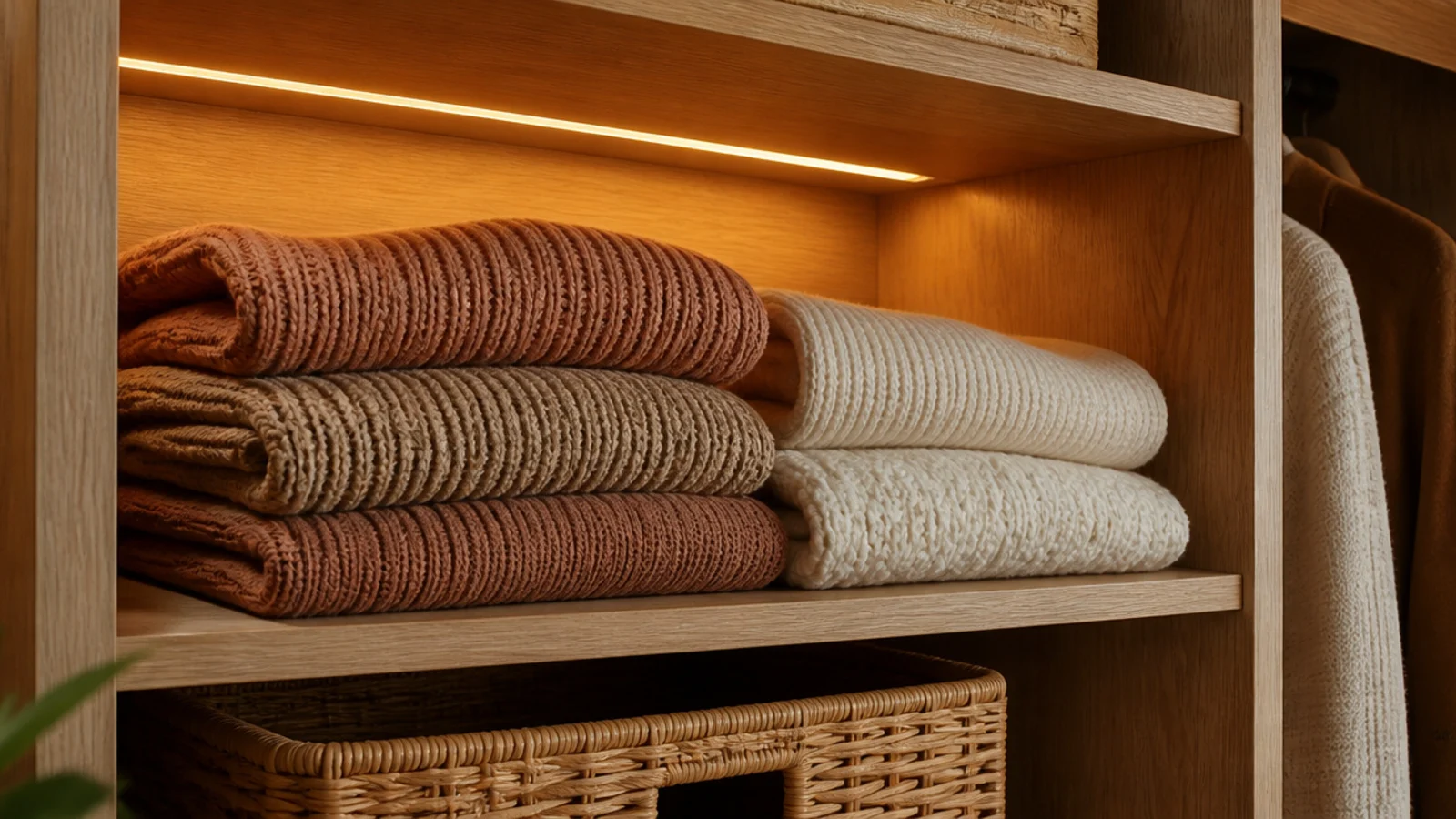
13. Keep the light at 3000K or warmer
Every natural fiber in this palette turns grey under cool light, and navy clothing reads as black. Fit 3000K or warmer at a CRI of 90 or above.
A rechargeable strip under each shelf front costs $18 to $30 ($) and needs no wiring. Small walk-in closet lighting covers layering it properly.
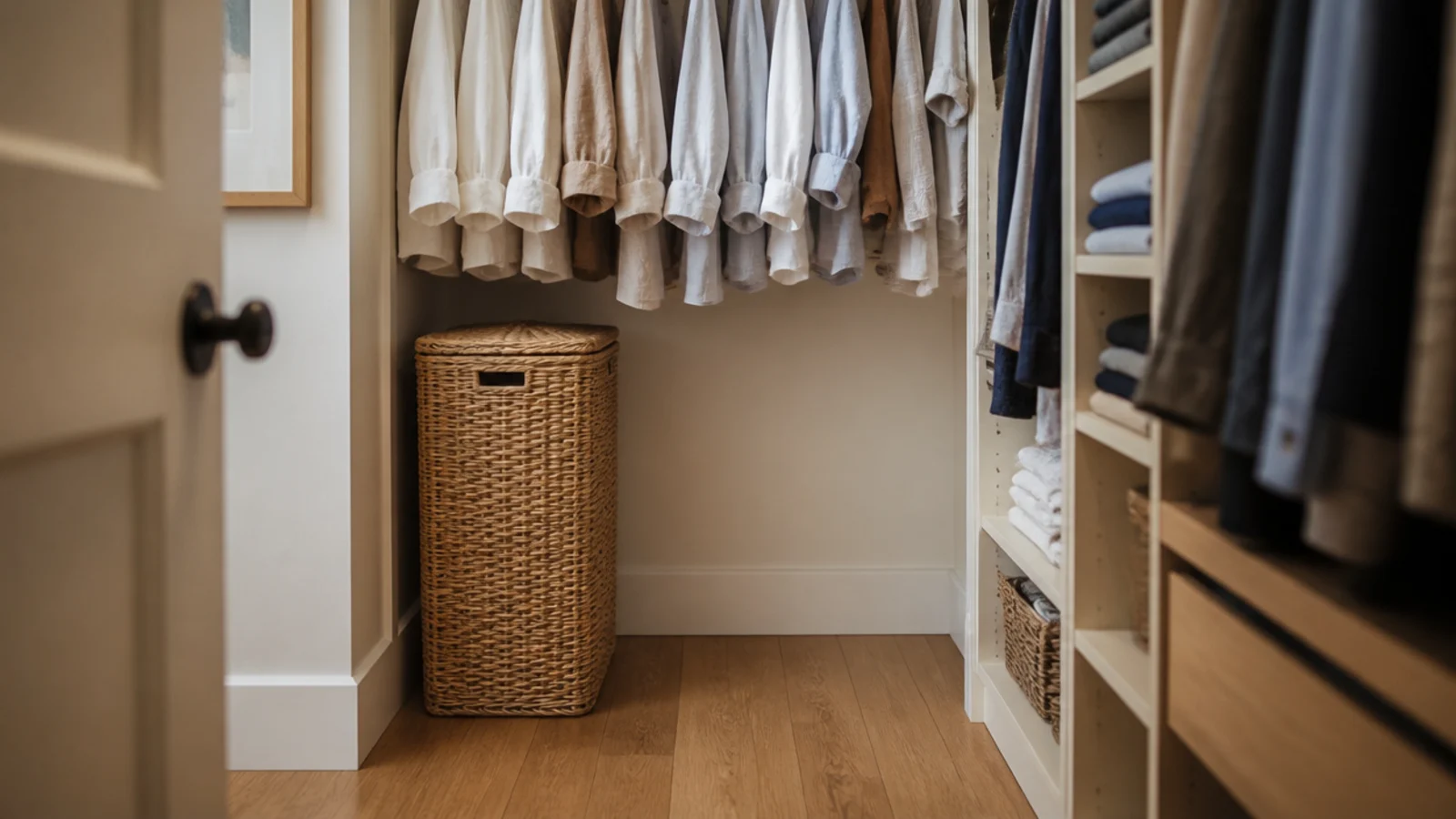
14. Use a woven hamper, not plastic
A lidded woven hamper is furniture; a plastic basket is never anything but a plastic basket, however tidy the rest is.
Stand it under a short hanging bay so it sits inside the 24-inch hanging depth and never crosses the walkway. Expect $40 to $90 for one that lasts.
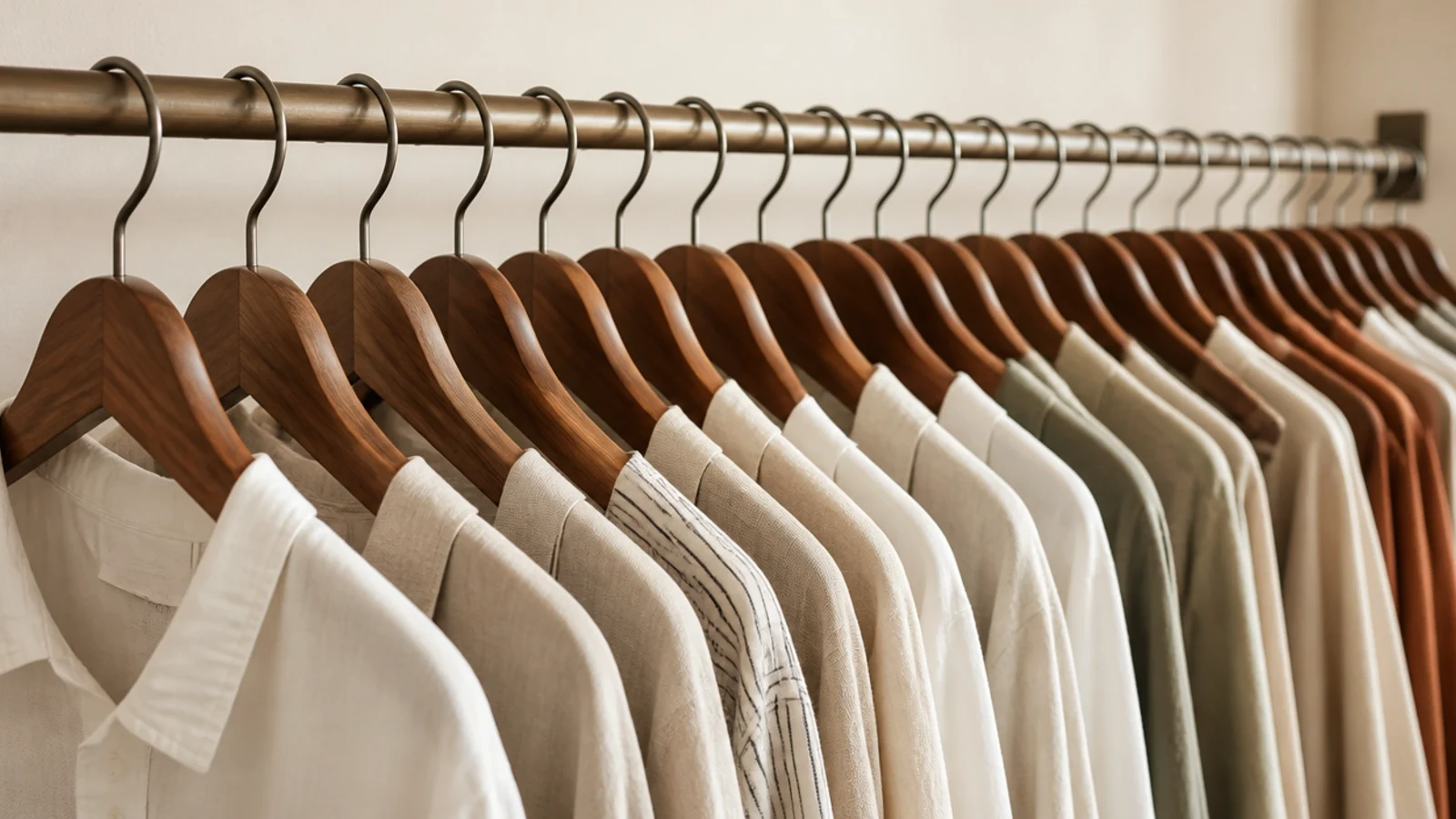
15. Switch every hanger to wood
Mixed hangers sit at different depths and make a rail look noisy, which undoes every calm material below it.
Matching walnut hangers run $2 to $4 each. A 48-inch rail that held 30 shirts on mixed hangers holds 36 on slim matching ones, so this earns its cost in rail as well as in looks.
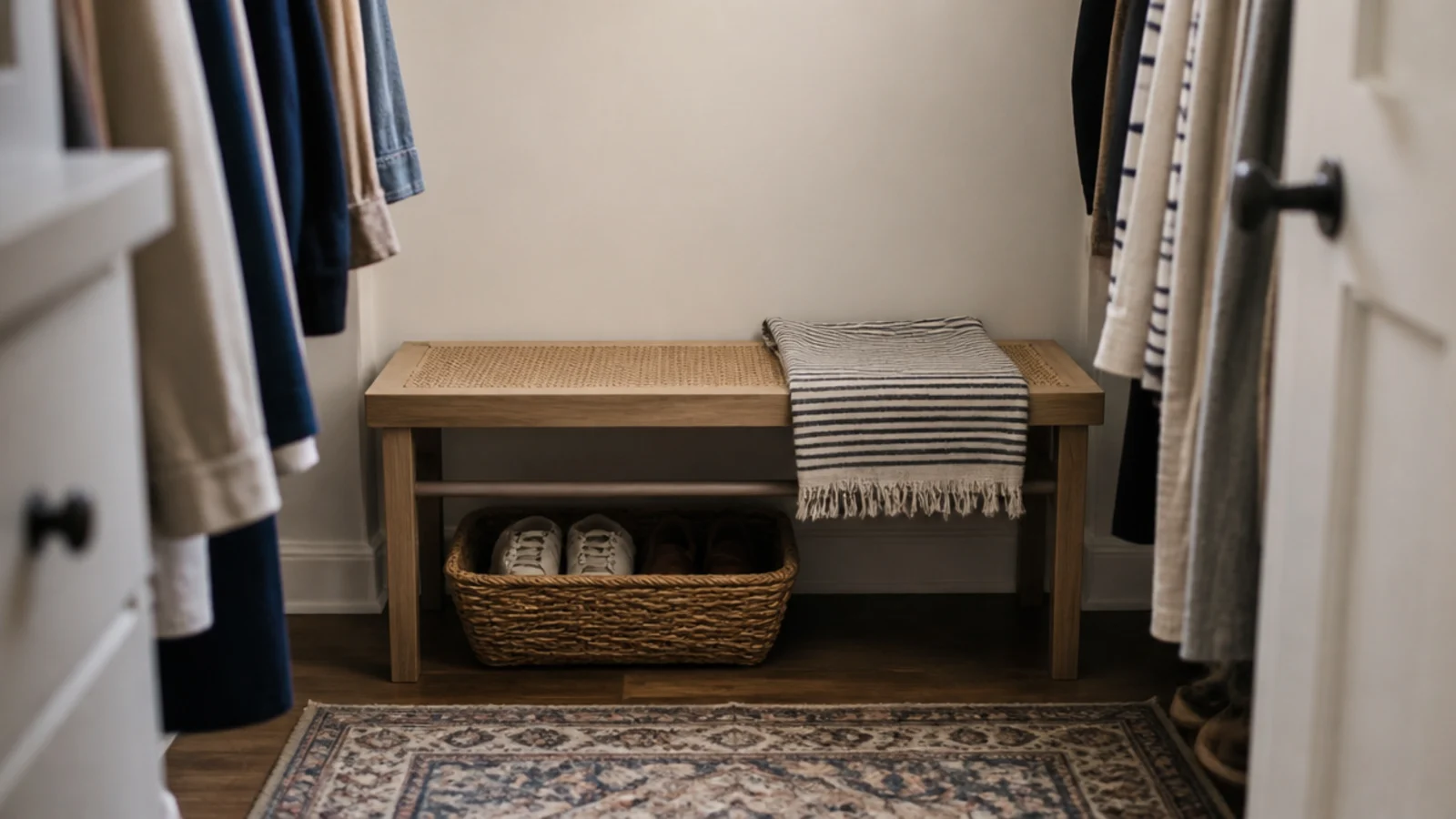
16. Put a cane bench at the end wall
A bench with a woven cane seat, 16 inches deep against the end wall, gives you somewhere to sit and fold without touching the 36-inch lane.
At $80 to $250 ($$) it does what most people want from an island, in a room nowhere near the 10 feet of width an island demands.
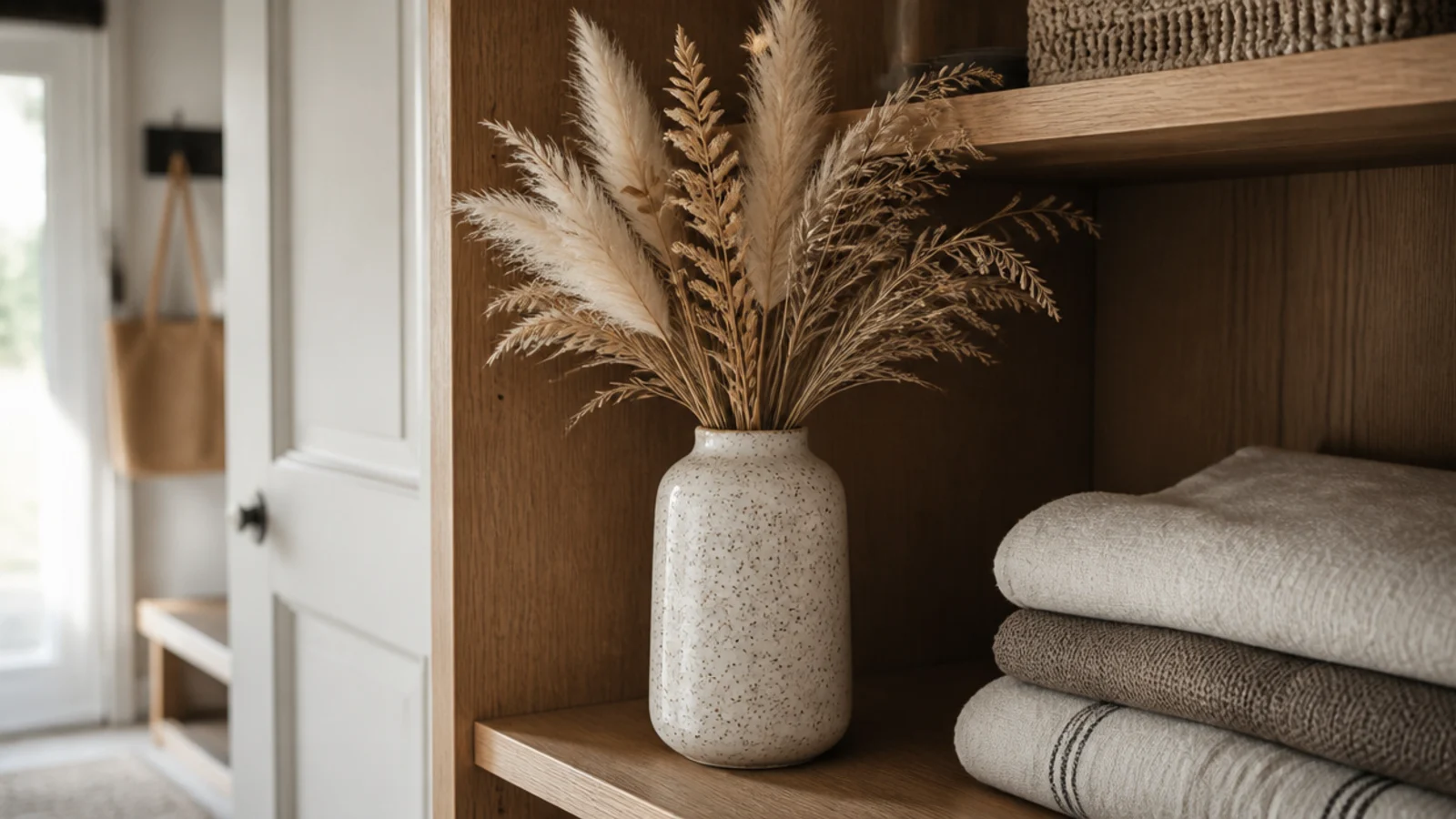
17. Stand dried grasses in a stoneware vase
Dried pampas, wheat or bunny tails in a speckled stoneware vase need no daylight and never wilt, which makes them the only sensible greenery for a windowless closet.
Keep the arrangement loose and one-sided. Refresh it once a year for about $15, and dust it with a hairdryer on cool.
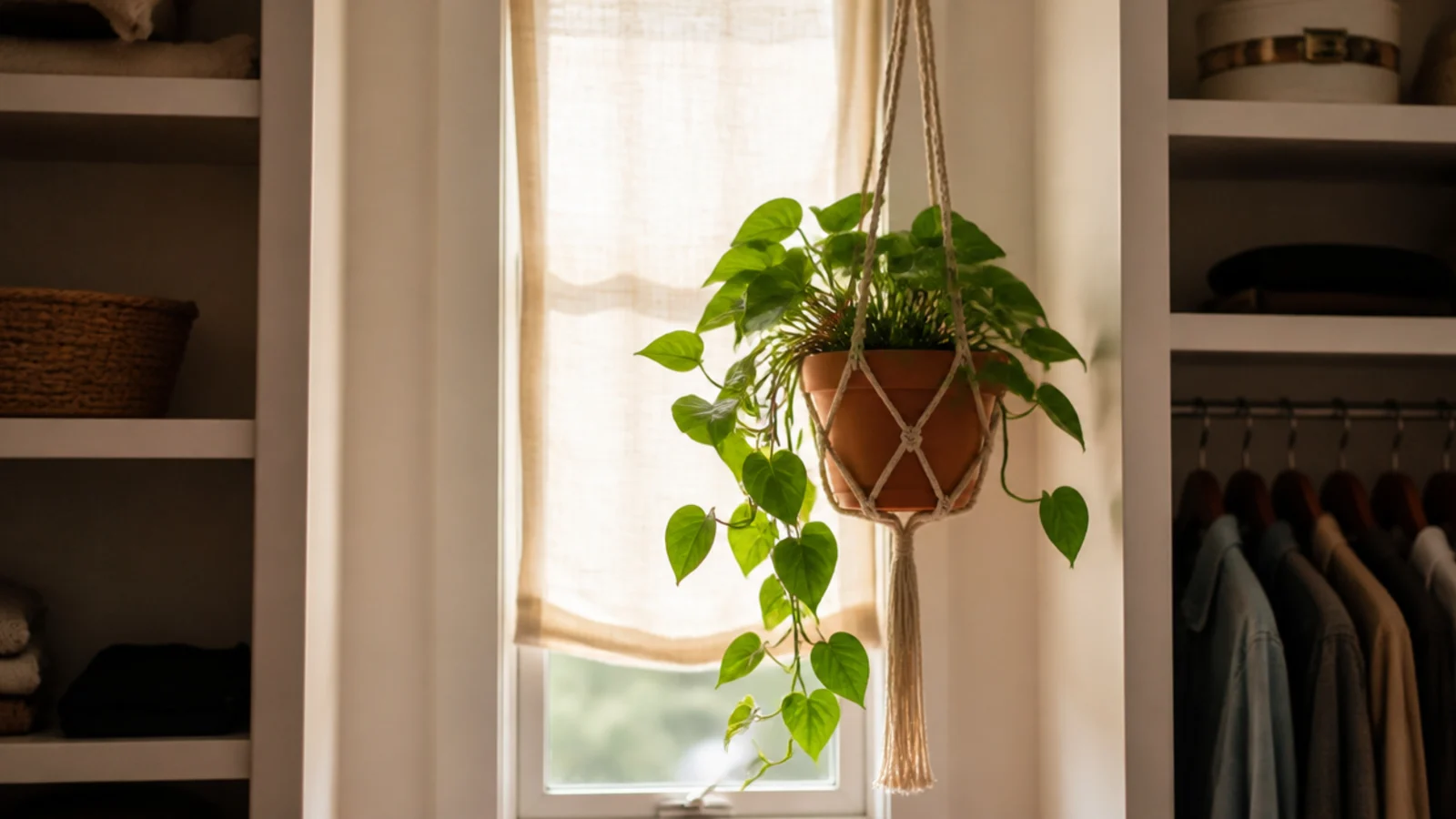
18. Hang a plant only where there is daylight
A trailing pothos in a macrame holder beside a closet window is lovely. The same plant in a windowless closet is dead within two months.
If your closet has a window, keep the shelving stopped either side of the reveal and hang the plant in the light. If it does not, use dried stems instead and skip the guilt.
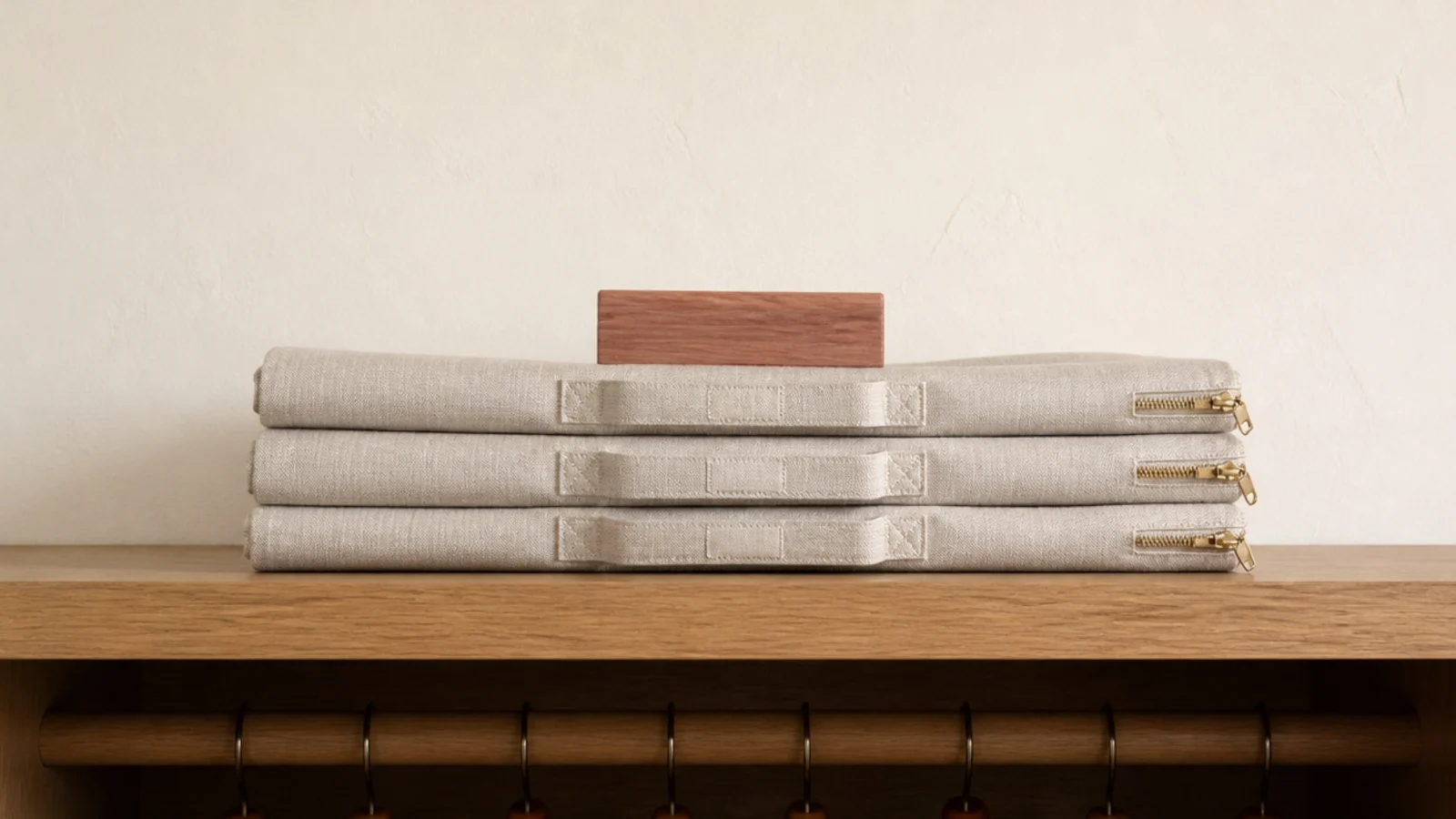
19. Store off-season pieces in linen bags
Natural linen garment bags let fabric breathe, unlike the plastic covers that trap moisture and yellow shoulders over a season.
Store them flat above 84 inches with a cedar block tucked in. Wash wool before storing — cedar deters moths but does nothing about larvae already in a garment. Bags cost $12 to $25 each.
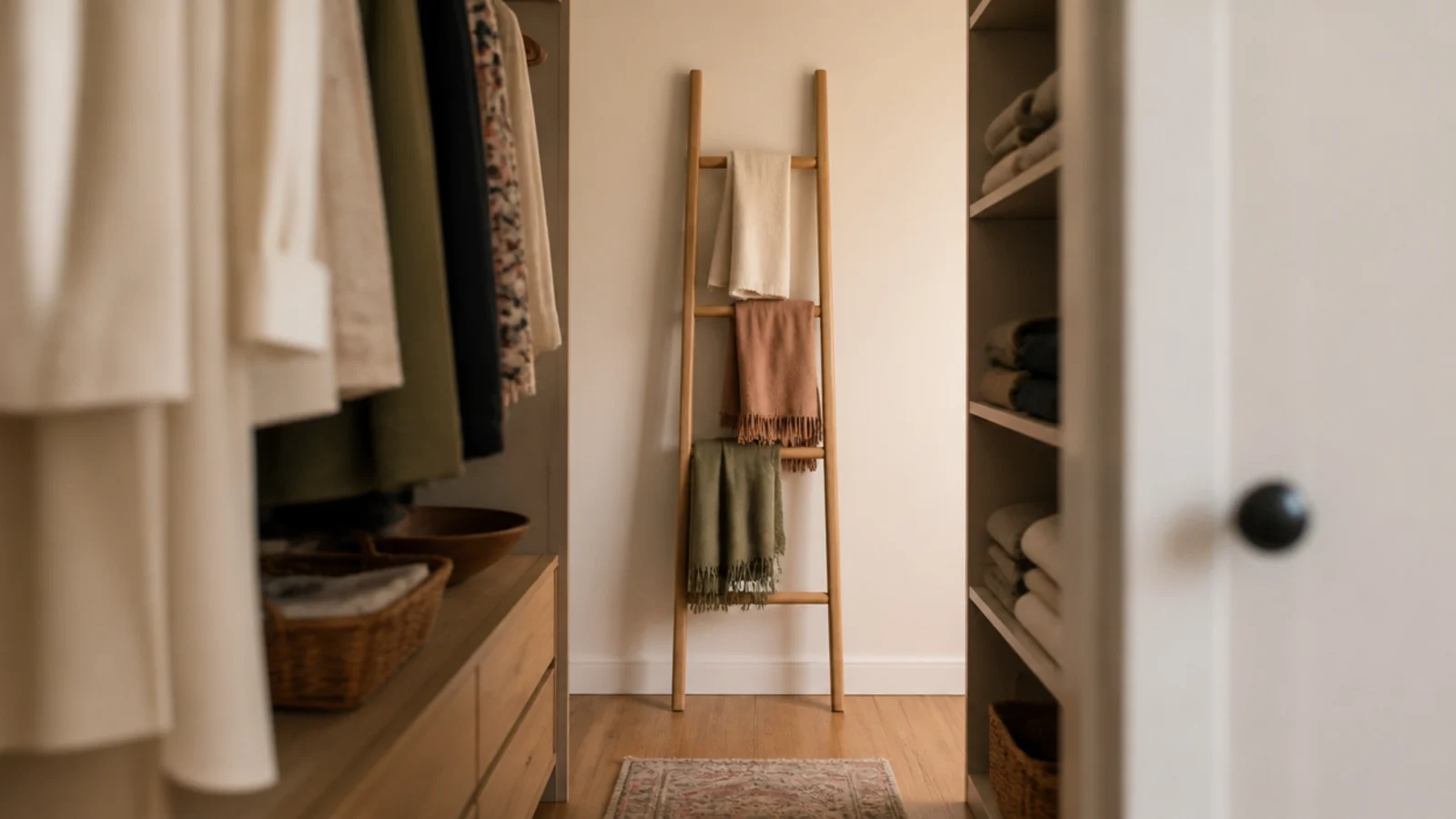
20. Lean a ladder for throws and scarves
A slim oak ladder leaning at about 15 degrees against the end wall holds scarves, throws and belts with no fixings at all.
Perfect for renters, and it takes 4 inches of depth. Drape three items maximum — a fully loaded ladder stops reading as styling and starts reading as a laundry pile.
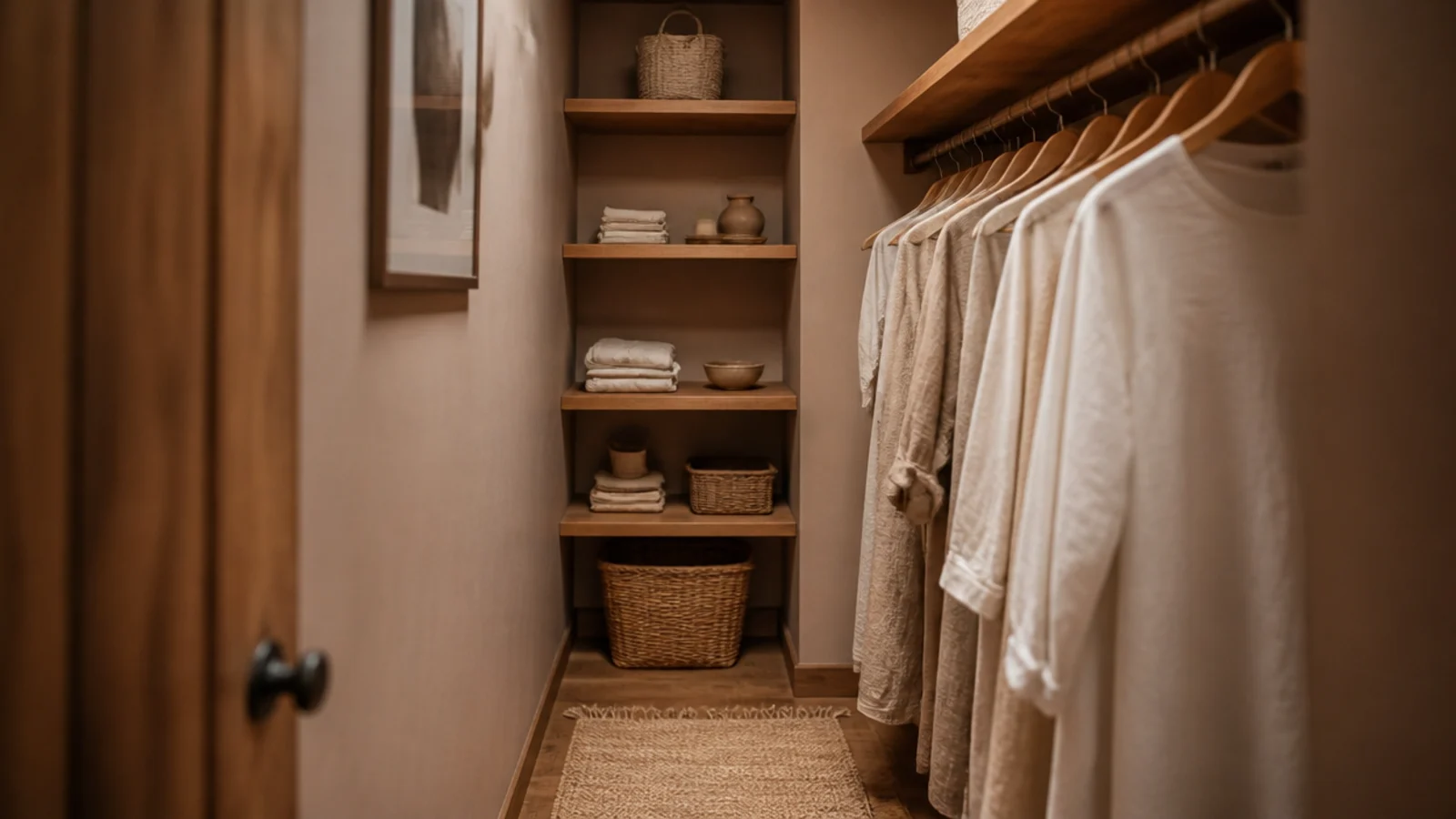
21. Paint the walls in warm clay
A soft matte clay or limewash finish makes oak, rattan and brass all look richer than they do against builder white.
A gallon runs about $45 ($) and one small closet takes a quart. Keep the shelving the same tone or in natural wood — what does not work is clay walls, white shelves and a third wood tone in the drawers.
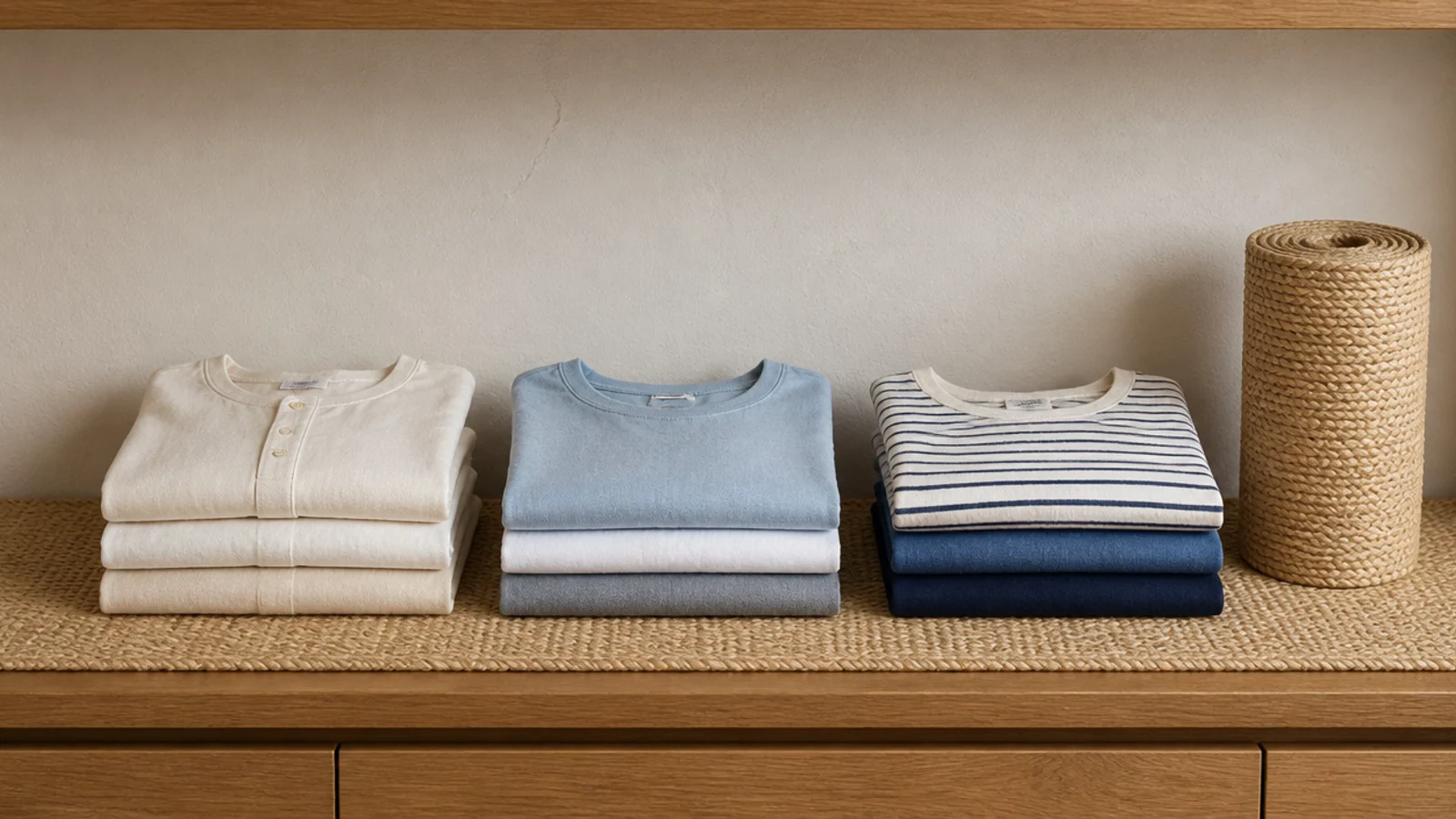
22. Line shelves in natural fiber
Woven fiber liner protects the shelf, stops folded stacks sliding, and adds a quiet texture under everything.
Cut it half an inch shorter than the shelf so it does not curl at the front edge. About $10 a roll, and it does the same job on a thrifted unit that a refinish would, in fifteen minutes.
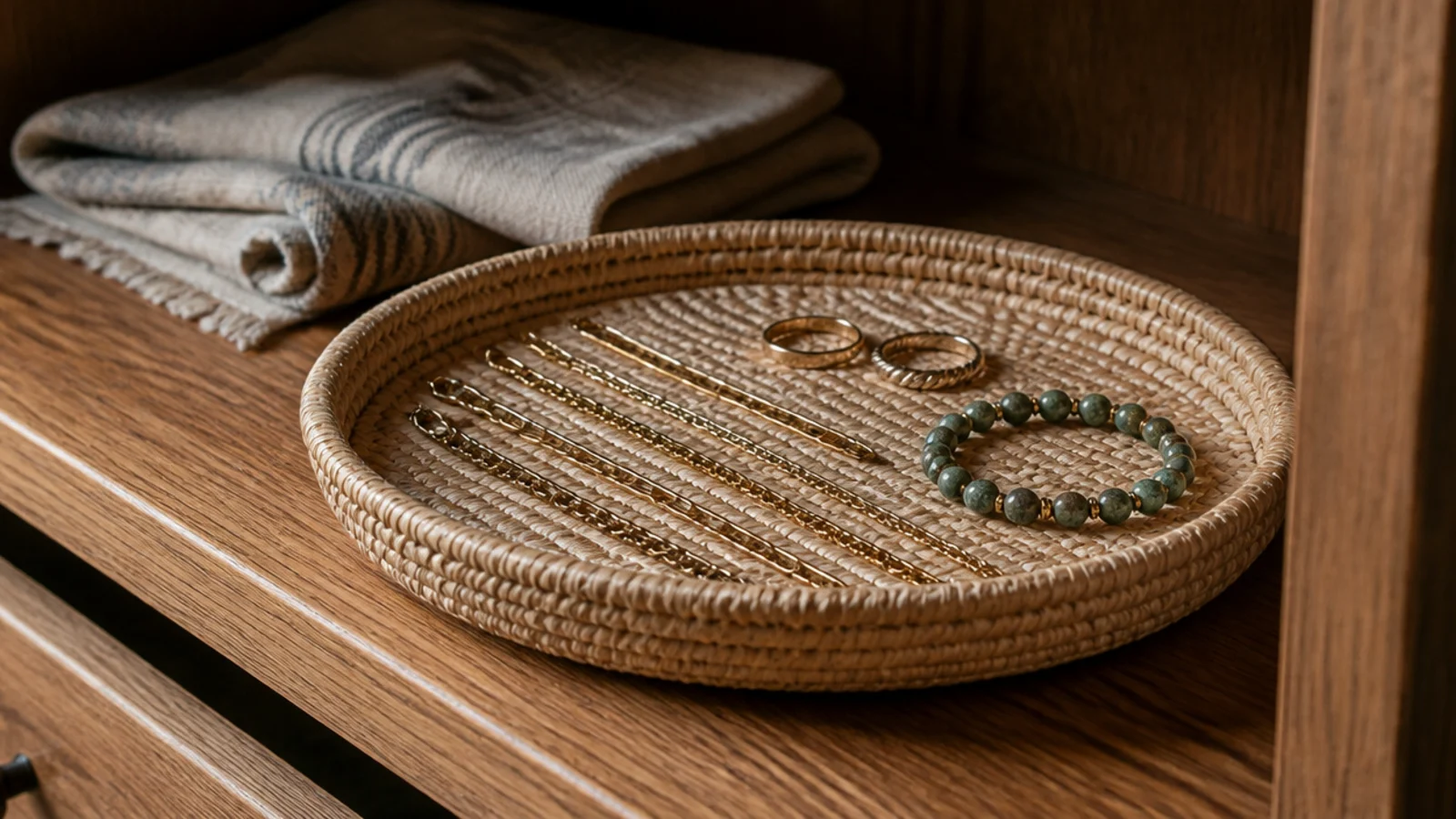
23. Corral jewelry on a woven tray
A shallow round woven tray, about 2 inches deep, keeps chains flat and visible instead of tangled in a box you stop opening.
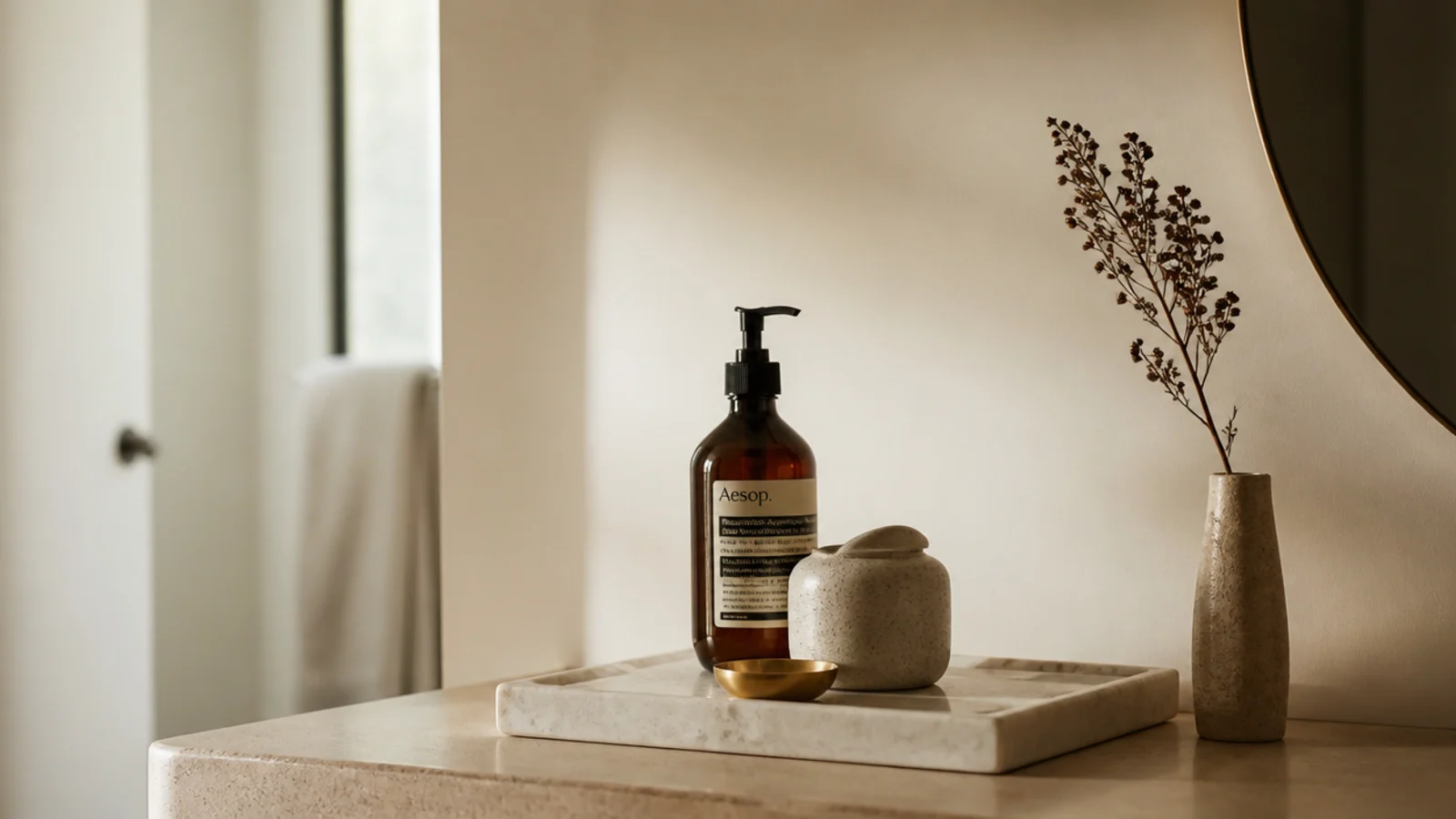
Lay necklaces out rather than coiling them and use a small stoneware dish for rings. The same shallow-and-visible logic behind good vanity tray styling applies exactly here.
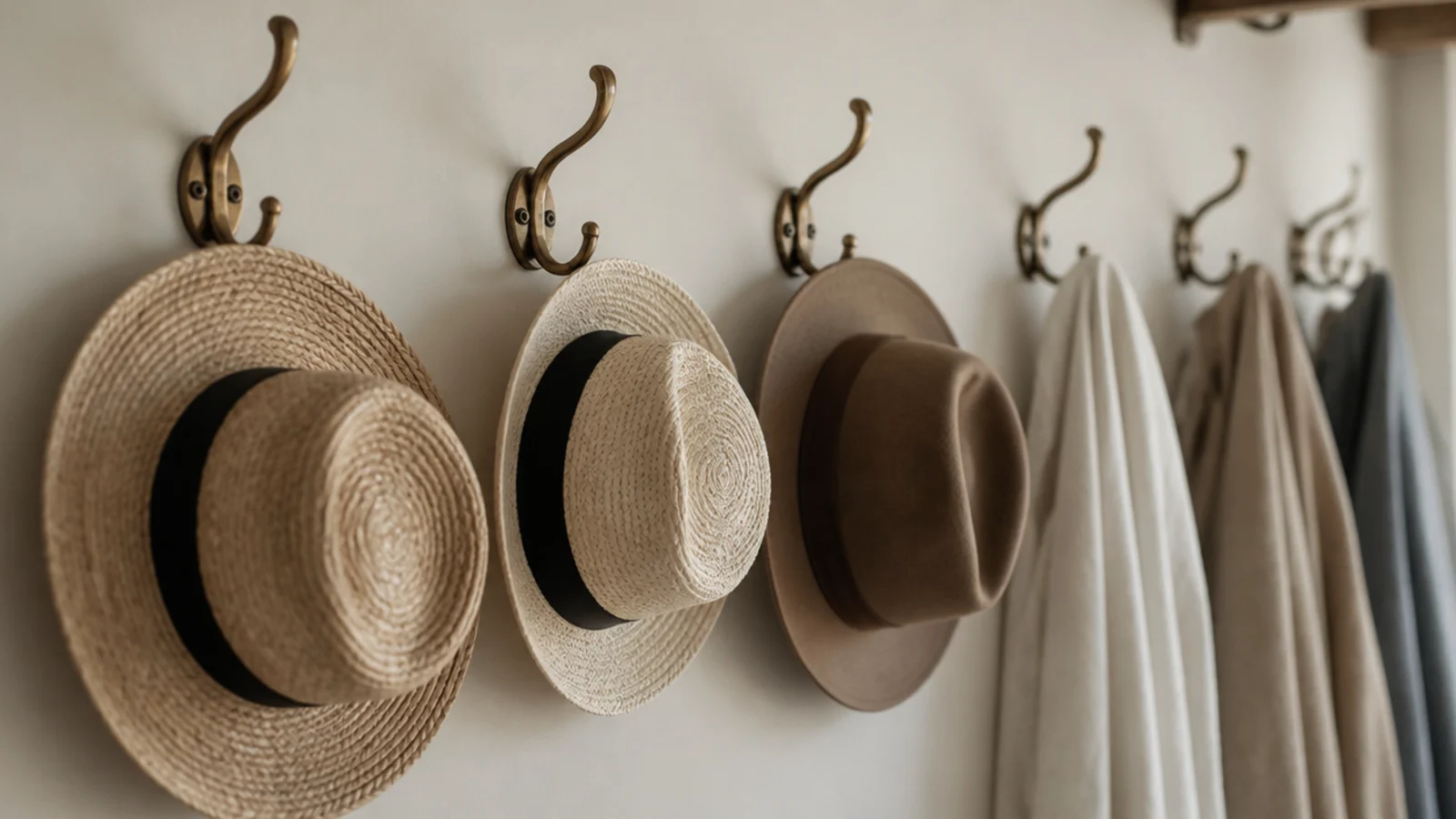
24. Build a hat wall on brass hooks
Hats stored flat get crushed and hats on a shelf get forgotten. On brass hooks at staggered heights they become the best-looking thing in the room.
Space the hooks 6 to 8 inches apart on the end wall at around 60 inches high. Adhesive hooks rated to 5 pounds handle straw and felt easily, so renters lose nothing here.
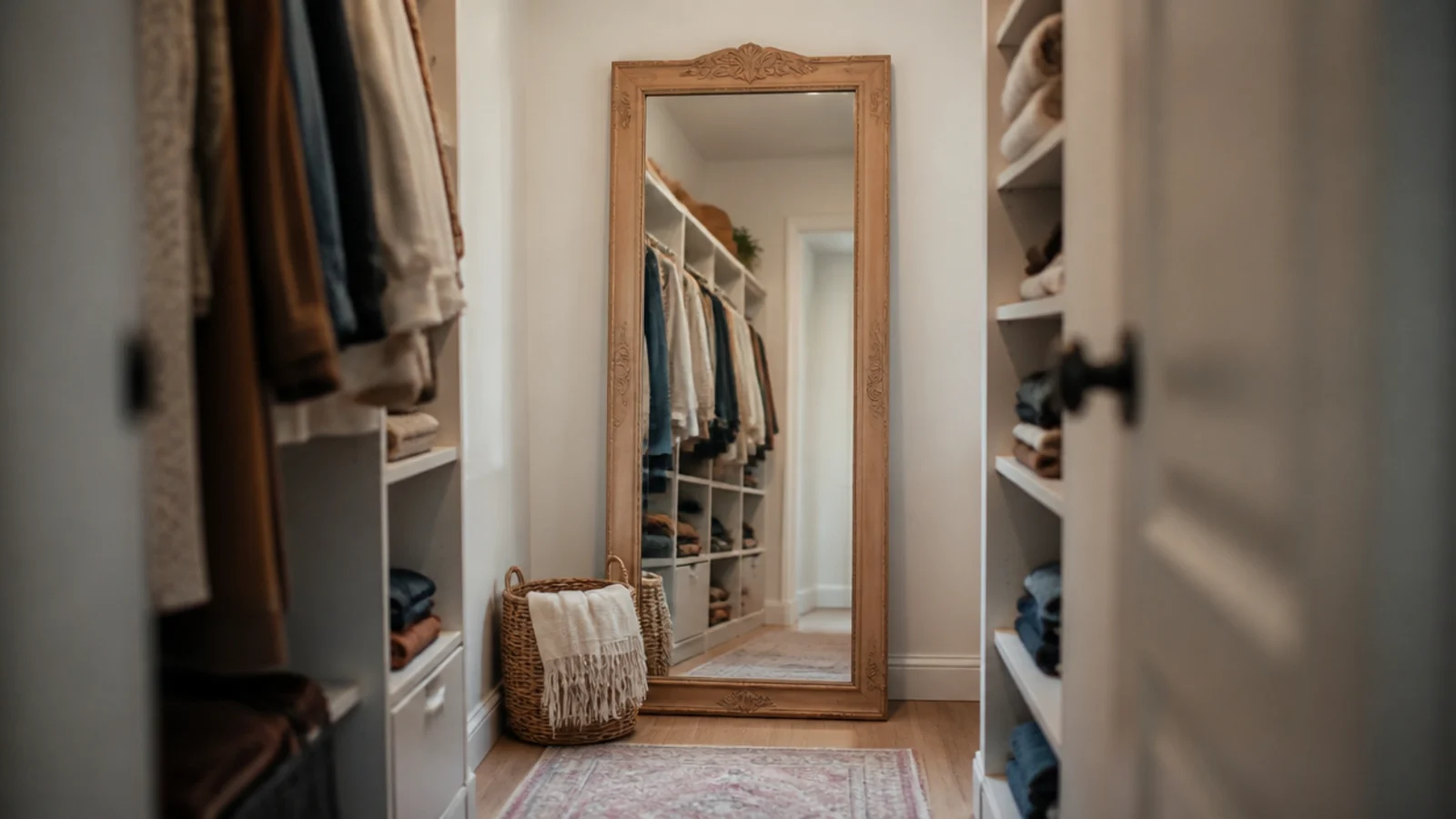
25. Lean a carved-frame mirror
A full-length mirror in a softly carved warm wood frame does what a plain frame cannot — it adds pattern without adding an object.
Secure it with one L-bracket even when leaning; a mirror at that size is genuinely dangerous loose. Thrifted frames run $30 to $90 and can be limewashed to match the walls.
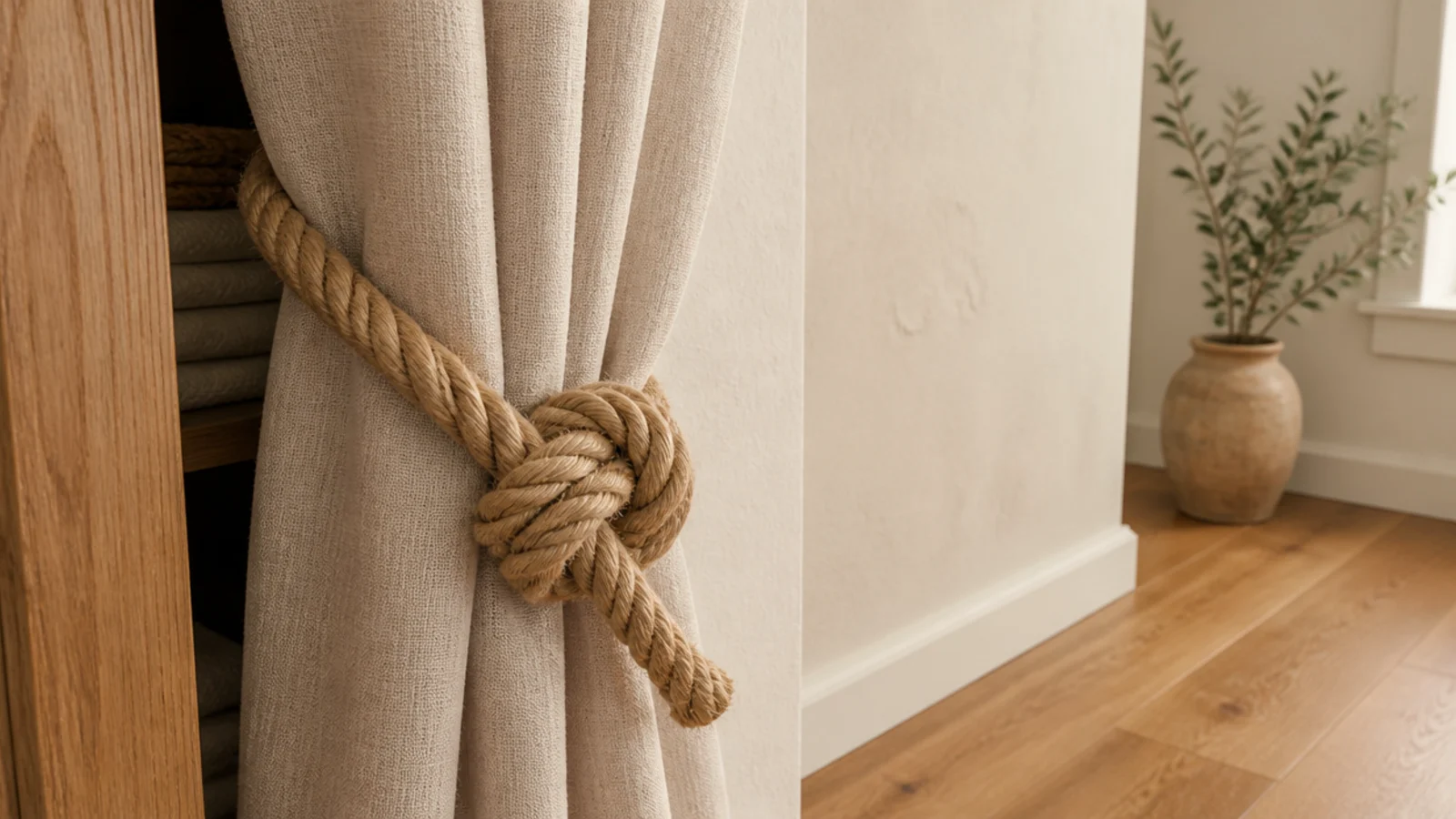
26. Tie the curtain back with jute
A thick jute rope loop holding the curtain aside costs about a dollar and finishes the opening better than any bought tieback.
Fix a small brass hook 40 inches off the floor to catch it. Details like this are why a boho closet looks assembled by a person rather than ordered as a set.
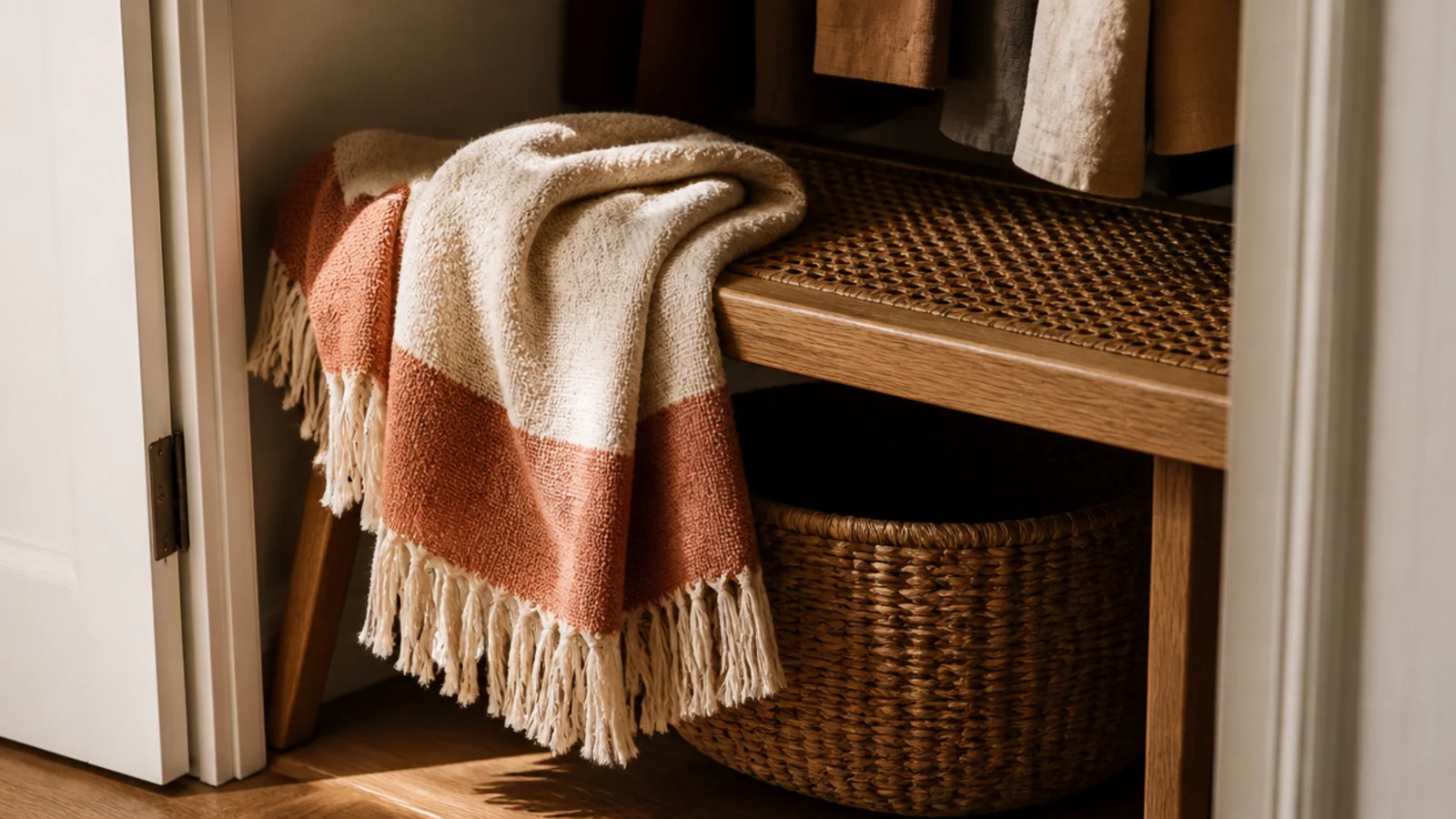
27. Drape a fringed throw on the bench
One cotton or wool throw with a fringed edge, draped loosely over a bench corner, softens the hard geometry of shelving.
Keep it in the same warm range as everything else and let it hang unevenly. A folded, squared throw reads as a showroom; a slightly slouched one reads as a room somebody uses.
28. Keep the palette inside one warm range
Cream, sand, clay, muted sage. That is the whole permitted range, and it is why a heavily layered closet can still feel calm.
Cool greys and true whites fight every natural fiber in here. If a piece you love falls outside the range, put it on the inside of a drawer rather than on an open shelf. Small walk-in closet organization covers what belongs where.
29. Add one vintage piece
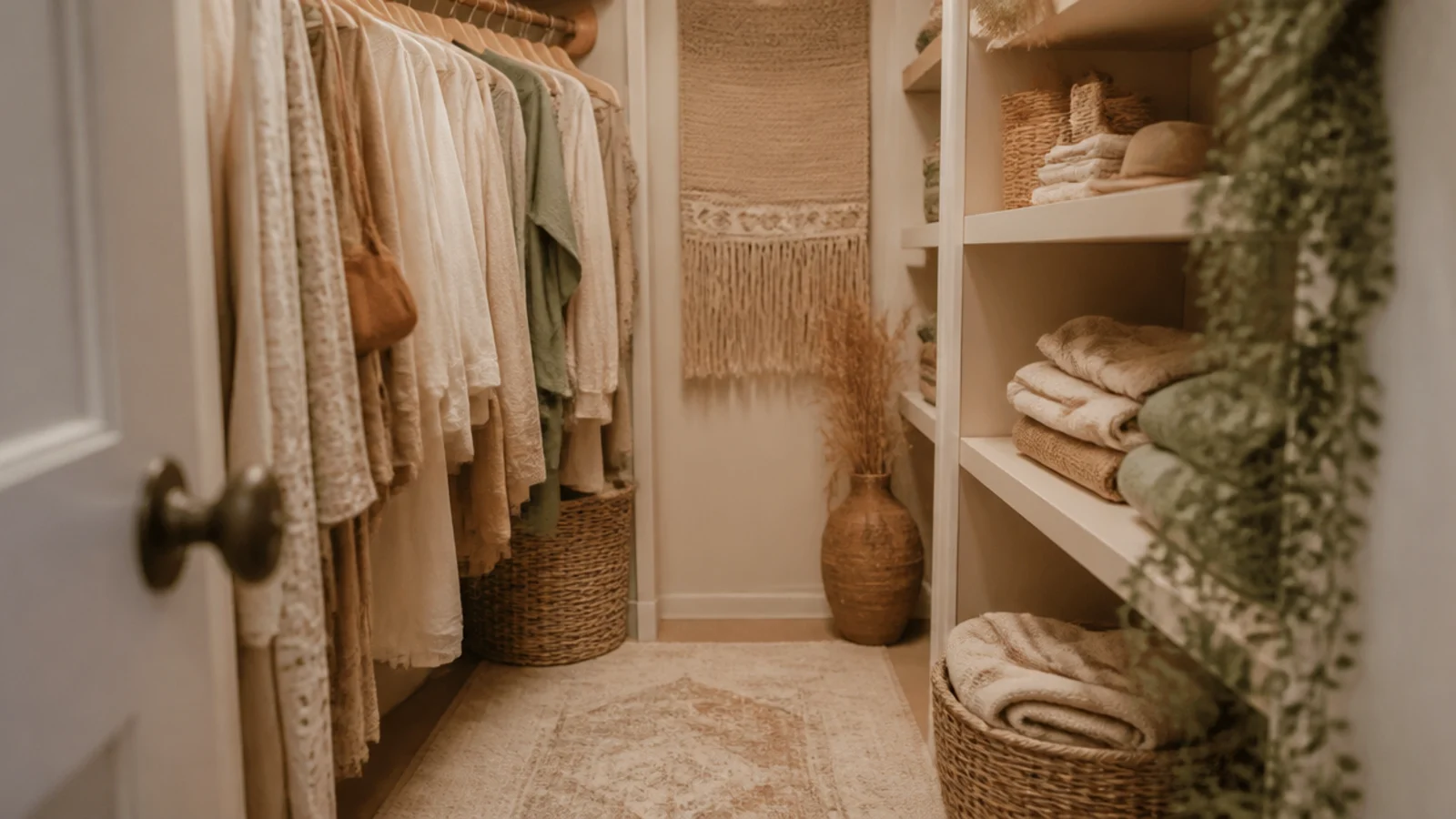
One genuinely old object — a worn stool, a carved box, a chipped stoneware jug — stops a closet full of new purchases looking like a catalog page.
Thrift it, do not distress something new. Age reads at a glance and fake age reads faster. Budget $15 to $60 and take your time finding it.
30. Edit back to three materials
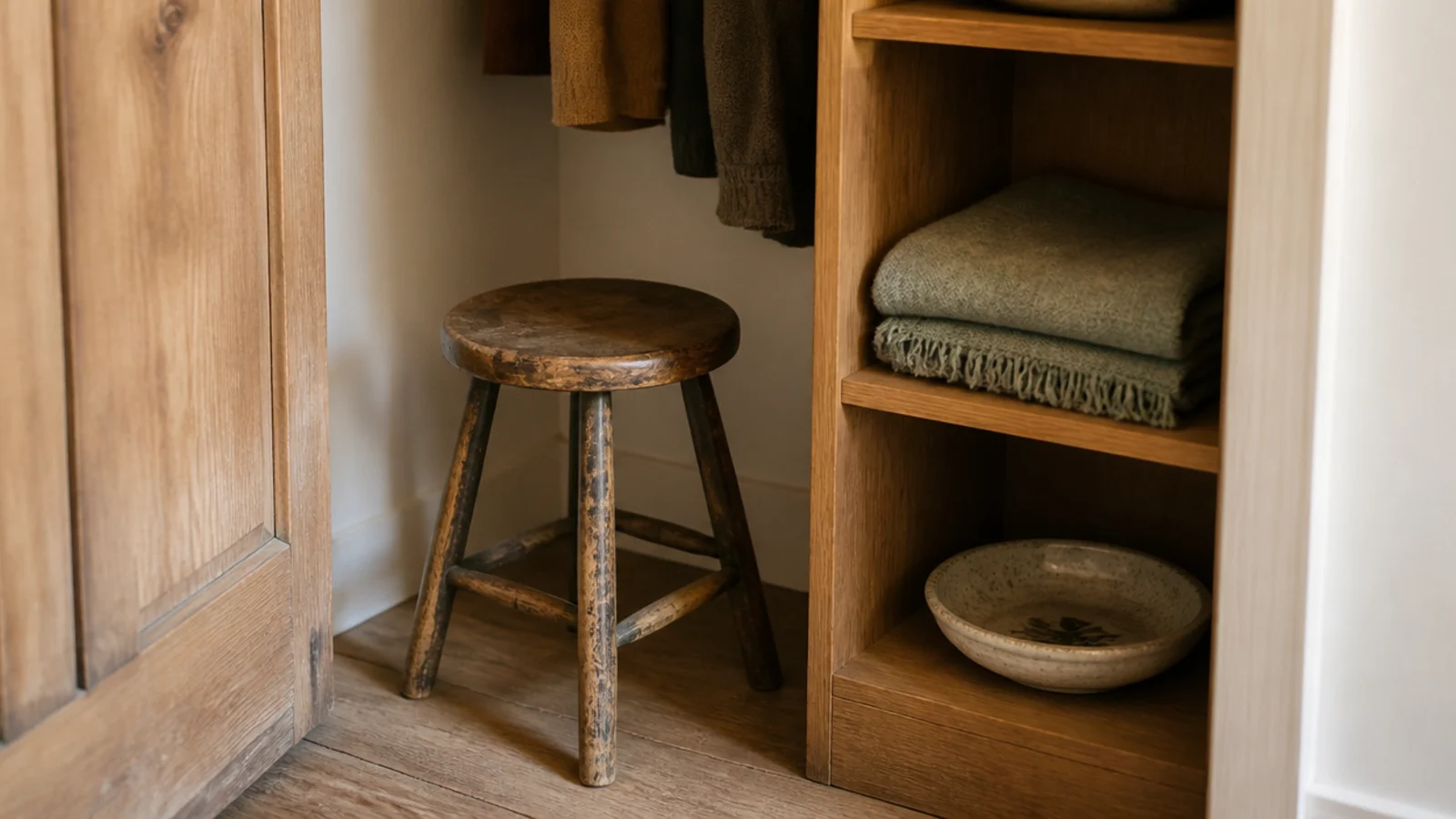
Once it is finished, count your materials. If there are more than three, take one out.
This is the step everybody skips and it improves every room I have ever styled. A minimalist walk-in closet is the same discipline taken further, and the boho version only works because the same restraint is hiding underneath all that texture.
Mistakes to Skip
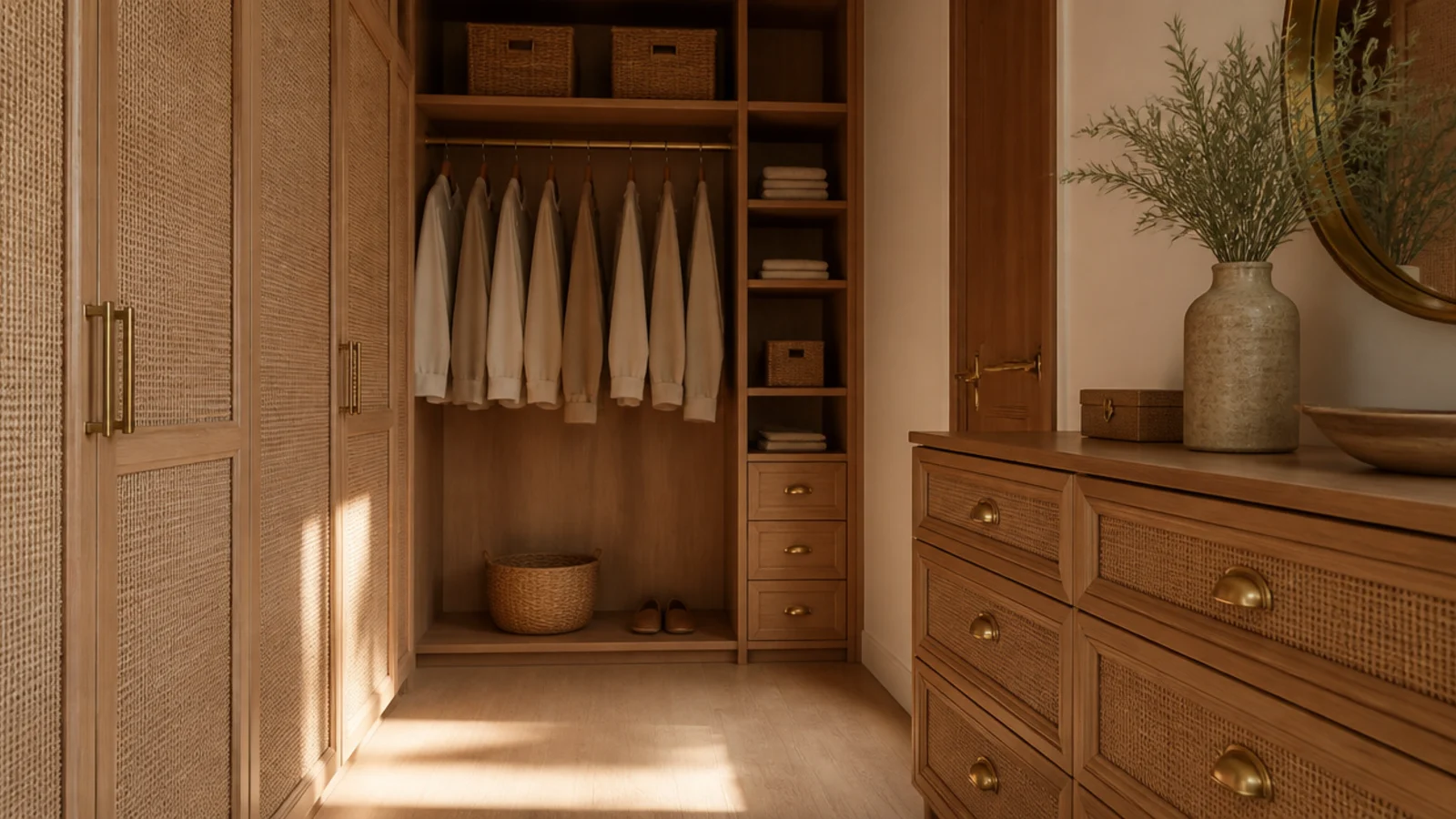
- Adding a fourth and fifth material because each one is lovely alone. In 40 square feet, three natural textures read as layered and five read as a jumble.
- Hanging a live plant in a windowless closet. It will be dead in eight weeks and you will have watered a shelf full of folded knits in the meantime.
- Letting texture excuse the clearances. Rattan does not shrink the 24 inches a rod needs or the 36 inches a walkway needs, and a pretty closet you cannot turn around in gets abandoned.
Frequently asked questions
How do you make a small closet feel boho without clutter?
Limit yourself to three natural materials and repeat them — rattan, jute and brass is a reliable set. Layering works when the textures change and the colors do not, so keep everything within a warm cream to terracotta range. Clutter comes from too many colors, not too many objects, which is why a busy boho closet still reads calm.
What colors work in a boho walk-in closet?
Warm white or soft clay on the walls, natural wood tones on the shelving, and accents in terracotta, muted sage and brass. Avoid cool greys, which fight every natural fiber in the room. A limewash or matte clay paint costs about $45 a gallon and gives the depth that flat builder white cannot.
Are rattan and cane practical in a closet?
Very, with one caveat. Rattan drawer fronts, cane panels and woven baskets are light, breathable and forgiving of humidity, which matters in a closed space. Line any basket that holds knitwear with cotton, because loose weave can snag fine wool. Expect $15 to $40 for a good basket and decades of use.
Can renters get a boho closet look without drilling?
Almost entirely. A tension rod holds a linen curtain in place of a door, adhesive hooks rated to 5 pounds carry hats and bags, and freestanding rattan units need no wall fixings at all. Baskets, runners, trays and a leaning mirror do the rest. Everything on that list leaves with you.
Does a boho closet still need the same measurements?
Yes, every one of them. A hanging rod needs 24 inches of clear depth, a walkway needs 36 inches, and shelves want 12 to 14 inches for folded knits. Texture never rescues a plan that does not fit. Get the clearances right first, then layer the rattan and jute over a closet that works.
Fix the clearances first, then pick your three materials and repeat them until the room feels finished — the layering is the easy part once the plan is right. Save the pin below so the palette range and the measurements stay together next time you go looking for baskets.
Want more like this? Browse all 15 small walk-in closet ideas guides — they all use the same measurements and budget tiers.
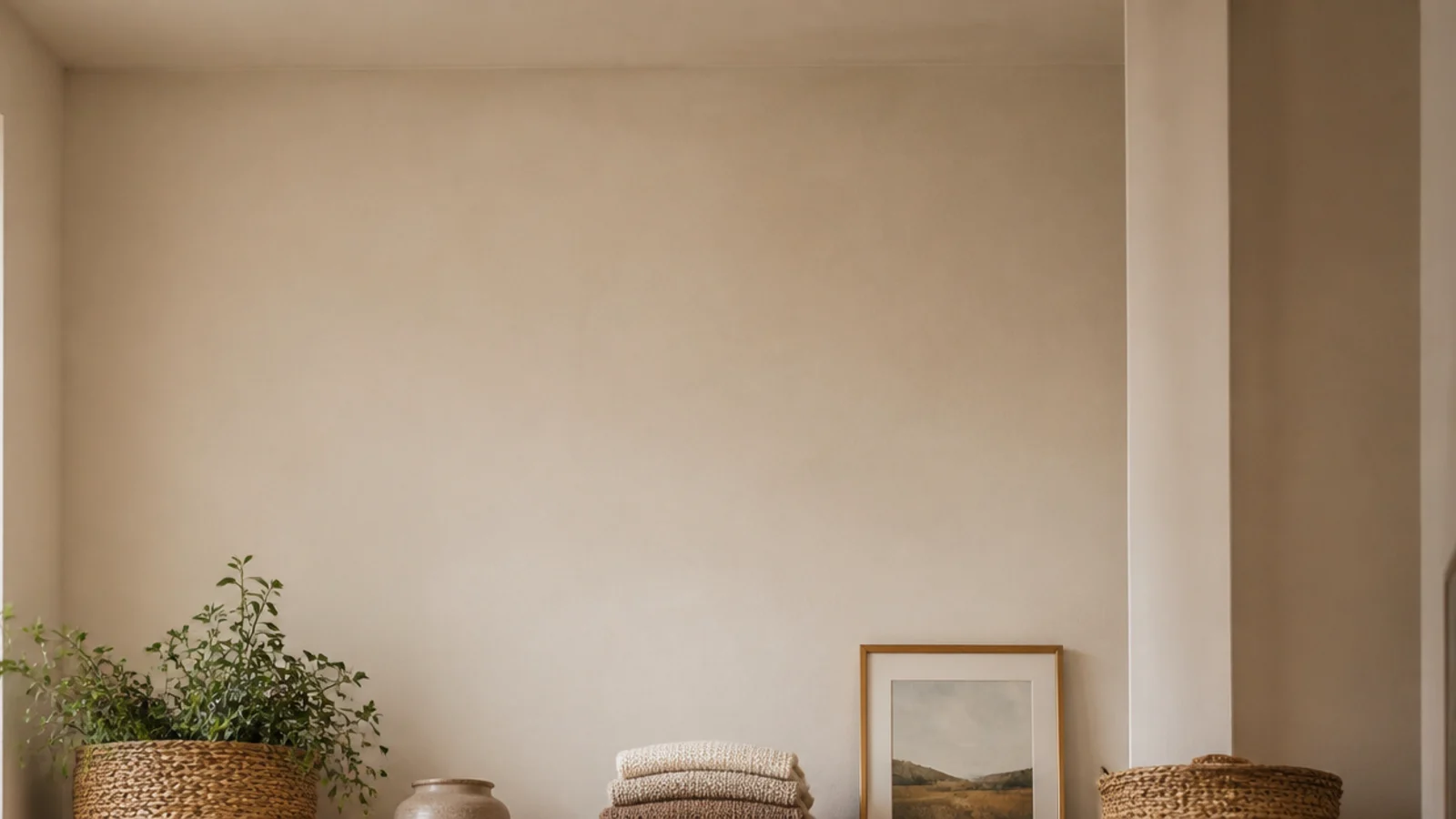
Pin it for later
Save this to your Small Walk-In Closet Ideas board
Pin it now so it is waiting for you when the tape measure comes out — and so the next person hunting for this idea can find it too.
Save this pinKeep going
More ideas worth saving while you have the tape measure out.