Small Walk-In Closet Ideas · Listicle
20 Creative Small Walk-In Closet Ideas Anyone Can Do

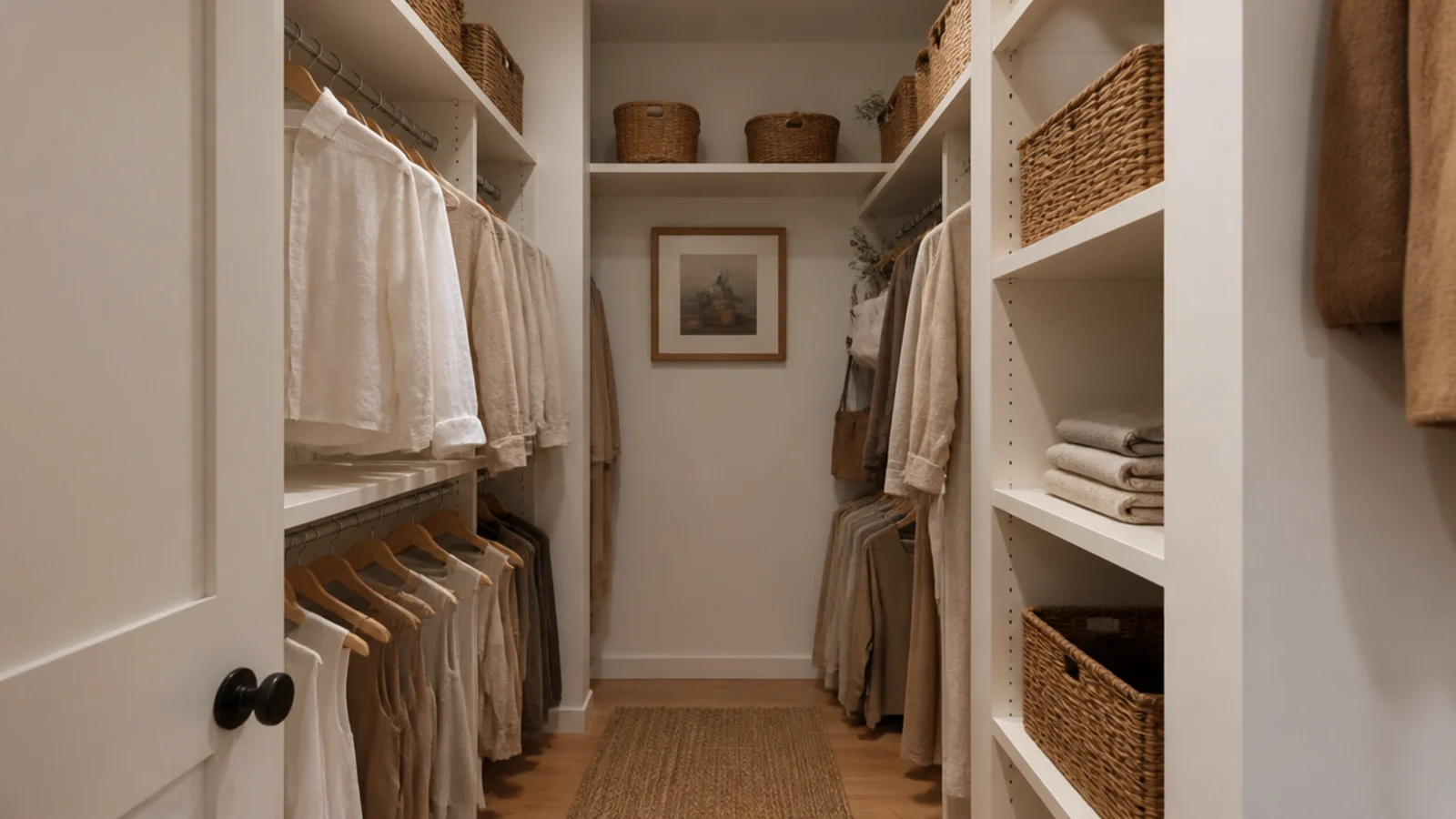
A walk-in closet on a budget fails in a predictable way: people spend the money on the parts you see from the doorway and none of it on the parts you use. Doors, trim and a fancy handle do nothing for how much fits. I have redone four of these for under $300 each, and every dollar that mattered went into rods, shelf depth and light. Here are twenty upgrades anyone can do.
In this guide22 sections — tap to openHide
- 1.What a walk-in closet on a budget should spend money on
- 2.Repaint the whole box in warm white
- 3.Swap wire shelving for painted plywood
- 4.Add a second rod and double-hang
- 5.Upgrade the rod itself
- 6.A 12-inch shelf above the rod
- 7.Matching slim hangers
- 8.Peel-and-stick wallpaper on the end wall
- 9.A thrifted dresser instead of built-in drawers
- 10.Shoe risers and stacked shelf inserts
- 11.A curtain in place of the door
- 12.Drawer dividers cut to fit
- 13.Canvas bins with labels on the top shelf
- 14.A pegboard end wall for bags and belts
- 15.Hanging fabric shelves on the rod
- 16.A valet rod for tomorrow
- 17.LED tape under the shelf
- 18.A rolling cart in the walkway
- 19.A jute runner down the middle
- 20.Hooks on the end wall for robes and totes
- 21.Cedar and a drawer liner refresh
- 22.Mistakes to Skip
What a walk-in closet on a budget should spend money on
Storage capacity in a closet is decided by three measurements, and none of them cost extra to get right.
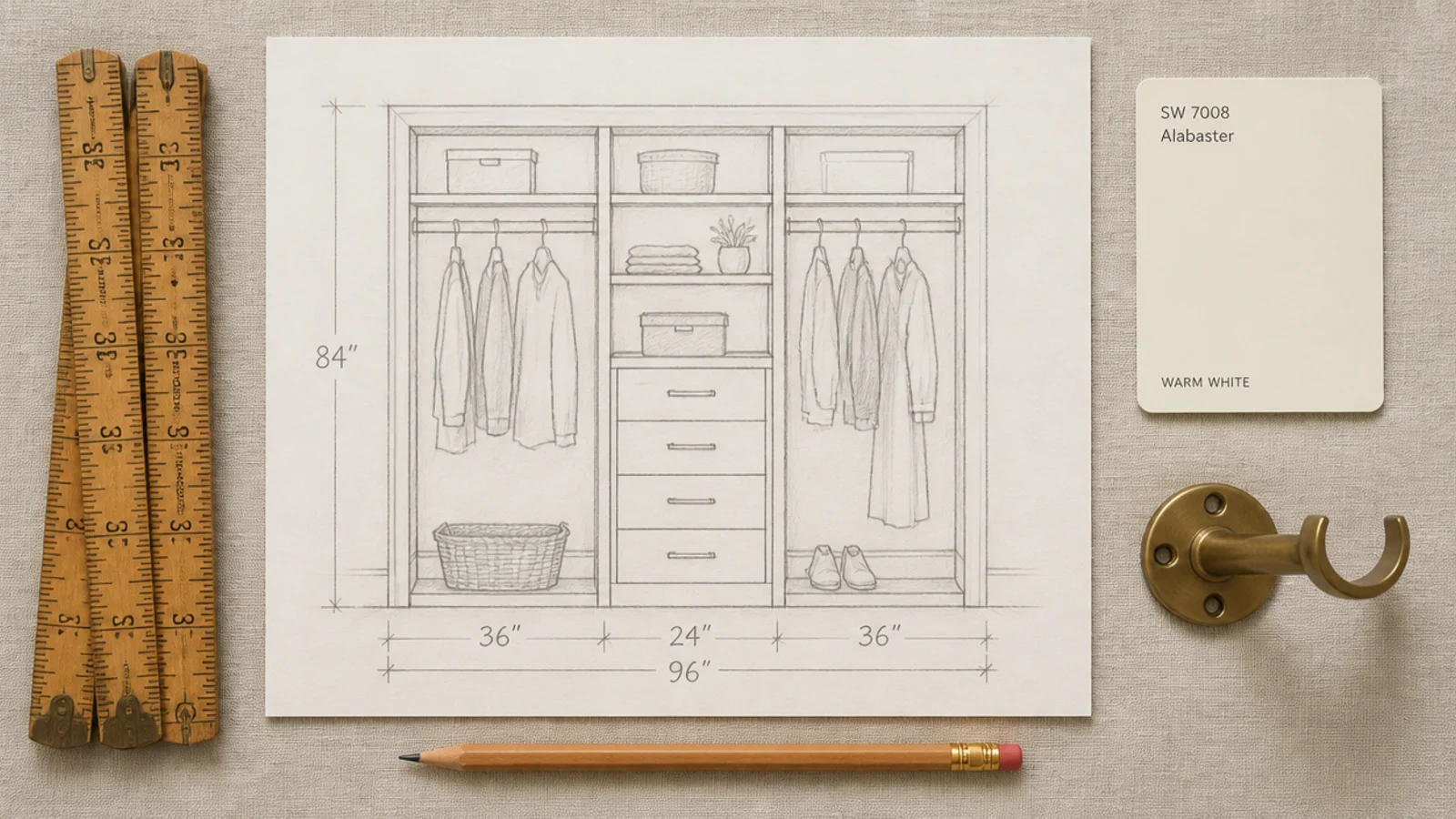
A hanging rod needs 24 inches of clear depth. Shoulders sit around 22 inches across, so anything shallower presses sleeves into the back wall and creases them along the same line every day. Between two facing hanging walls, keep 36 inches of walkway; 30 is the absolute squeeze and it feels like one.
Height is where the free capacity lives. A single rod usually sits at 66 to 72 inches, which leaves the entire lower half of that wall empty. Split it into double-hang at 42 and 84 inches and the same wall holds twice the shirts and trousers. Keep one bay as long-hang, which needs 66 to 70 inches of clear drop for dresses and coats.
Shelves want 12 to 14 inches of depth for folded knits. Deeper shelves just create a back row you forget about.
Budget tiers through this list: $ under $75, $$ $75 to $250, $$$ $250 and up. Fourteen of the twenty sit in the first tier.
1. Repaint the whole box in warm white
Closet interiors get builder-grade flat paint in a color chosen for coverage, not for light. Two coats of warm white in satin bounces light around and wipes clean where hangers scuff.
Satin matters more than the shade. Flat paint in a closet marks the first time a hanger drags across it. One gallon covers a small walk-in with paint left over, about $35, and it is the only change on this list that improves every other change.
2. Swap wire shelving for painted plywood
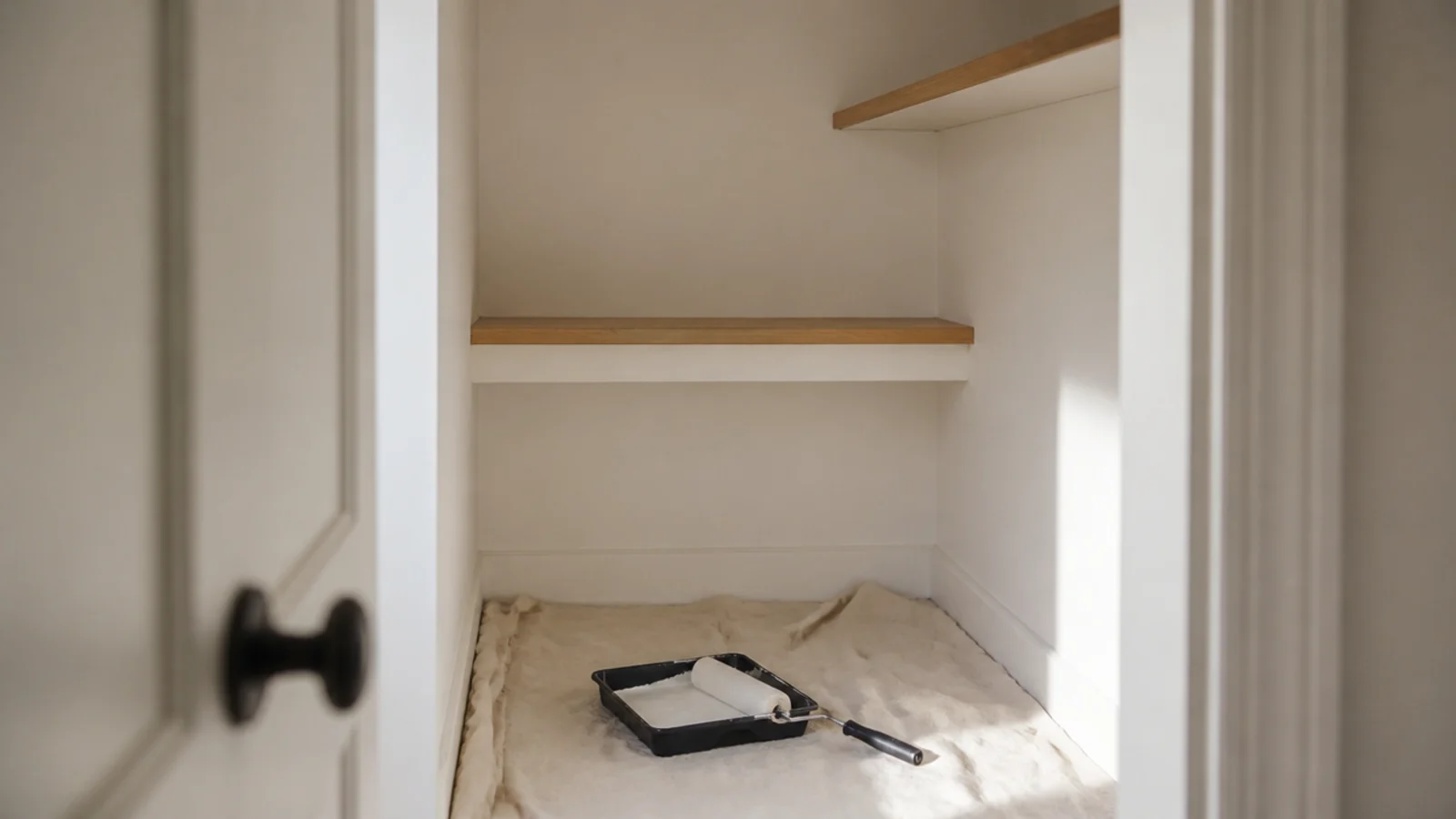
Wire shelving marks folded knits, drops small items through the gaps, and announces builder-grade from the doorway. The fix is cheaper than people expect because the brackets usually stay.
Have a sheet of three-quarter-inch birch plywood cut to 12 to 14 inches deep at the store, round the front edge with sandpaper, prime and paint. It drops straight onto the existing supports. Around $80 in materials for a small closet, and it is the single change most people read as custom.
3. Add a second rod and double-hang
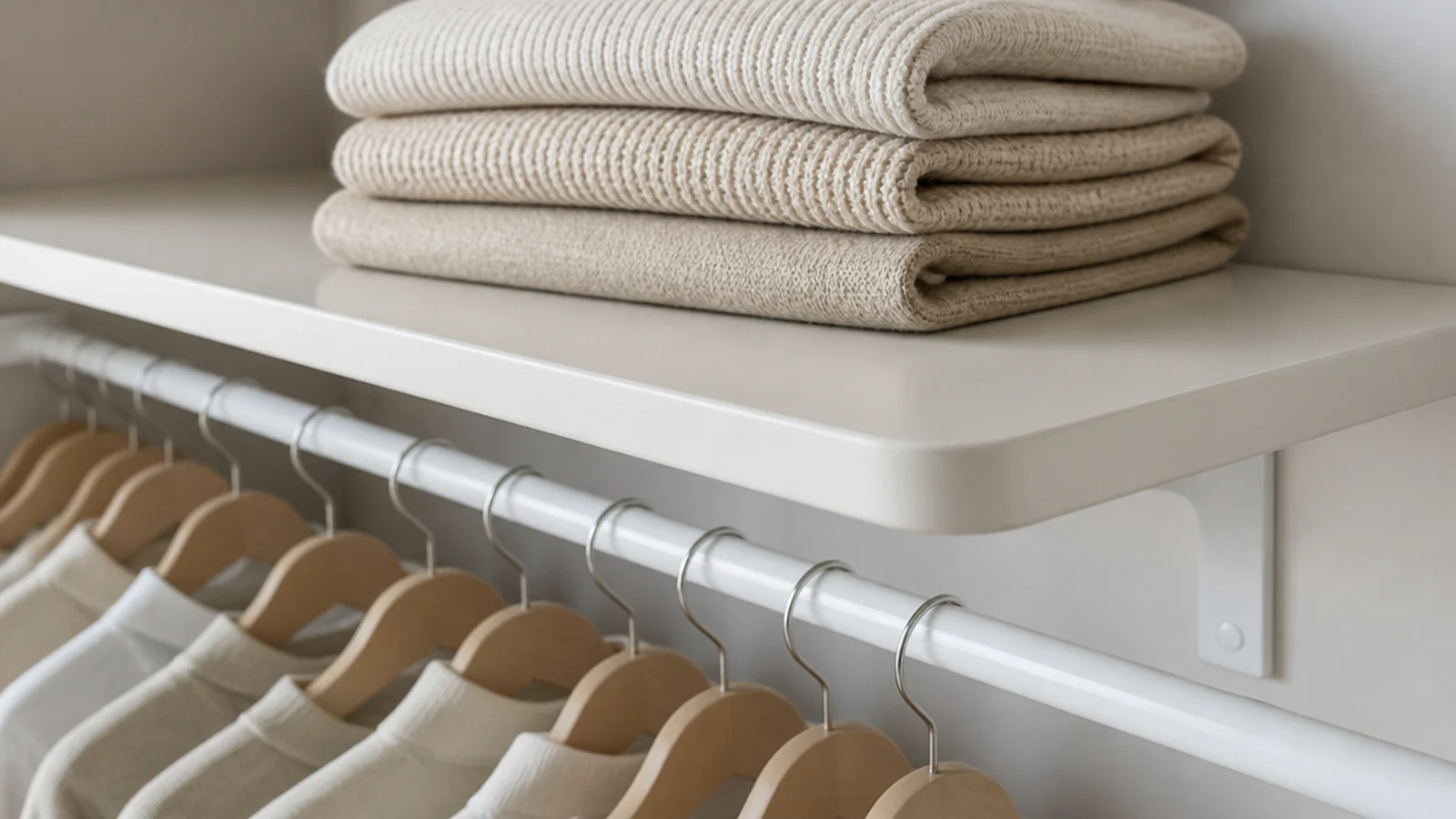
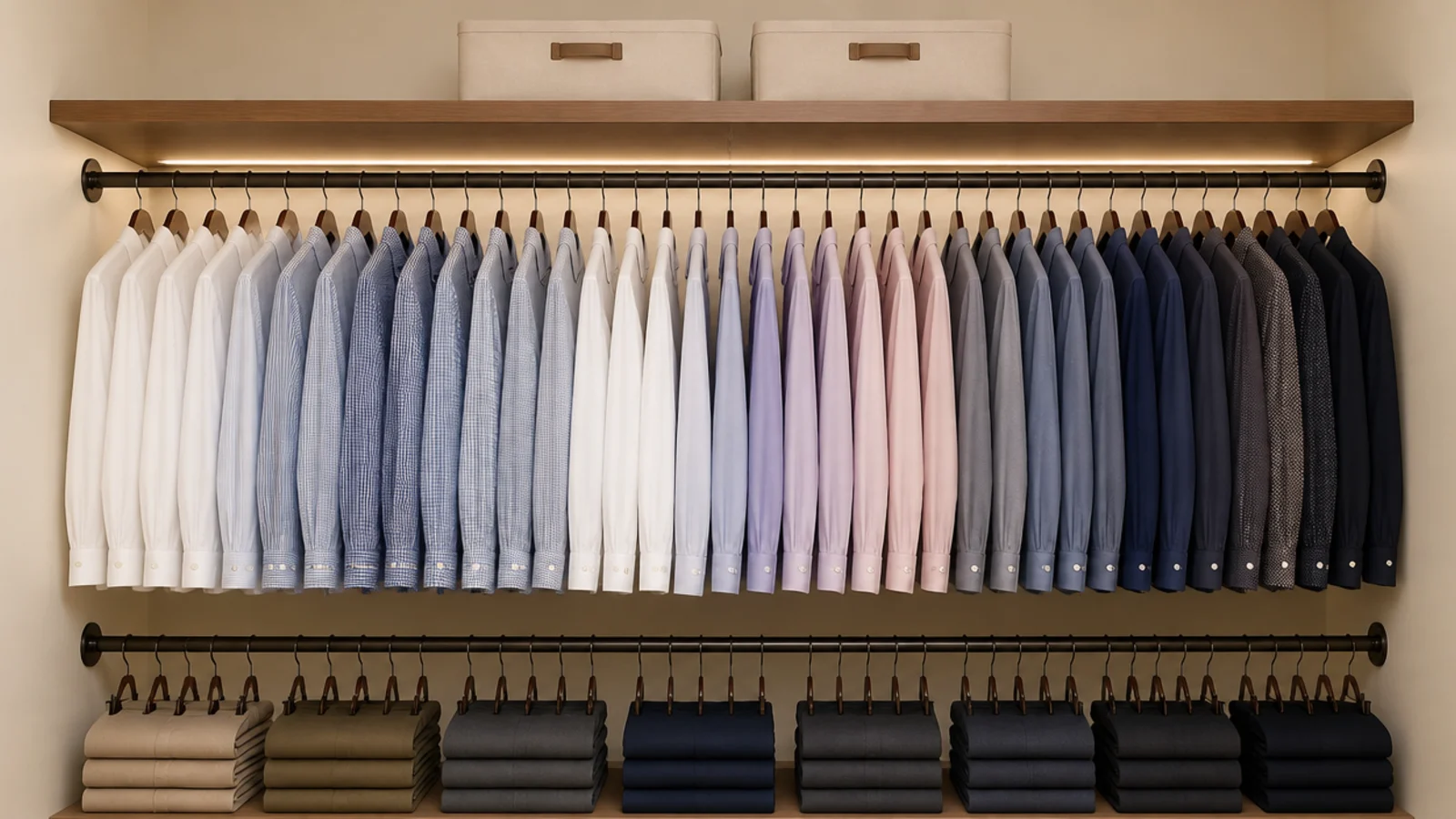
Half the wall in most closets is holding nothing but air under short shirts. A second rod ends that immediately.
Set the lower rod at 42 inches from the floor and the upper at 84. That gives clean clearance for shirts above and folded trousers below, and it doubles the capacity of that wall. Wall-mounted rail versions cost $30 to $60; a tension rod does it for $20 with no fixings at all in a closet with solid side walls.
4. Upgrade the rod itself
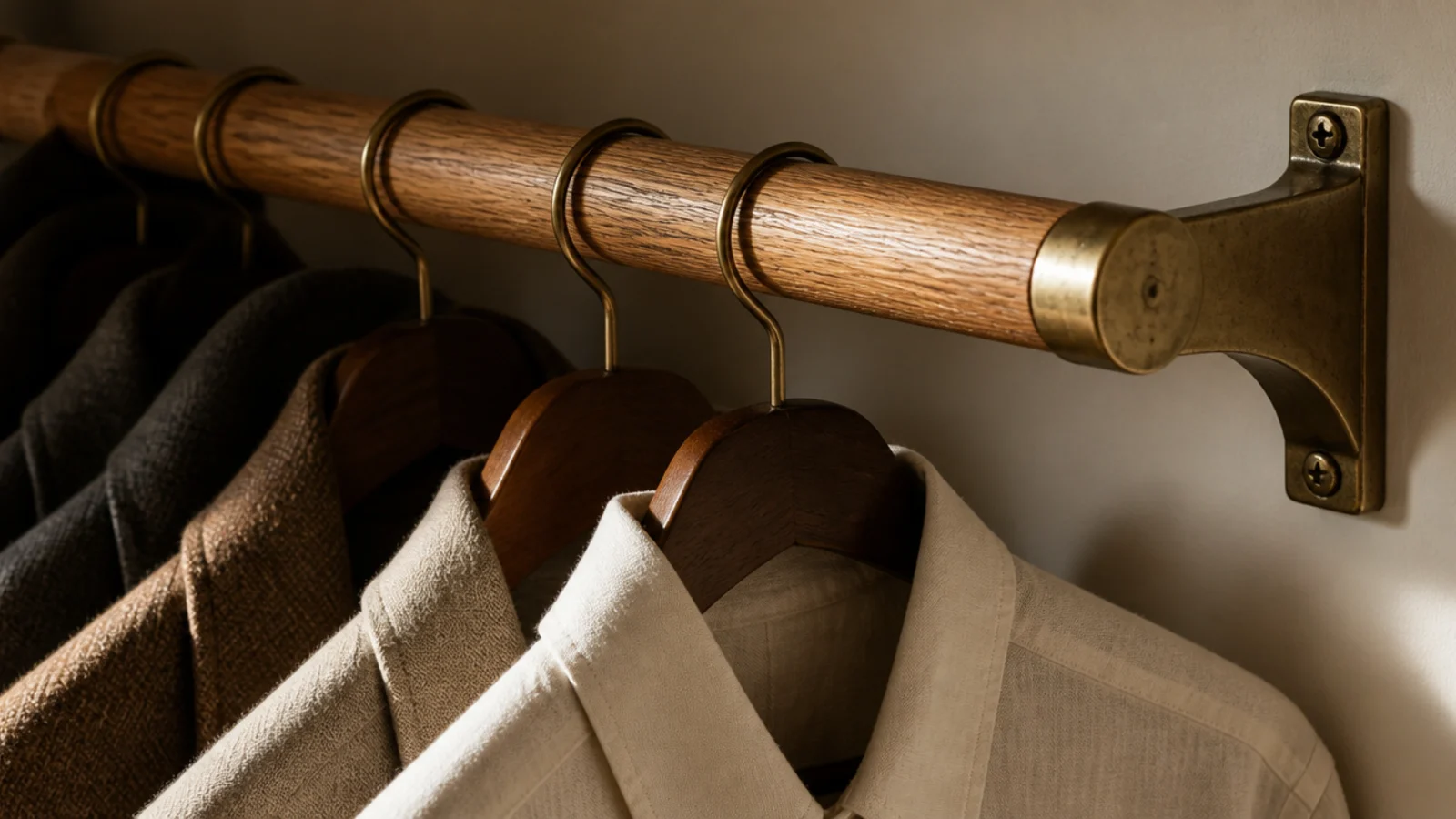
The thin chrome tube that came with the closet bows visibly under wool coats, and once a rod bows the hangers all slide to the middle.
A 1-3/8 inch solid oak dowel in brass end brackets holds a full run of winter coats without a sag, costs $25 to $45, and looks like part of a system rather than a fitting. Add a center support bracket on any span over 48 inches regardless of what the rod is made of.
5. A 12-inch shelf above the rod
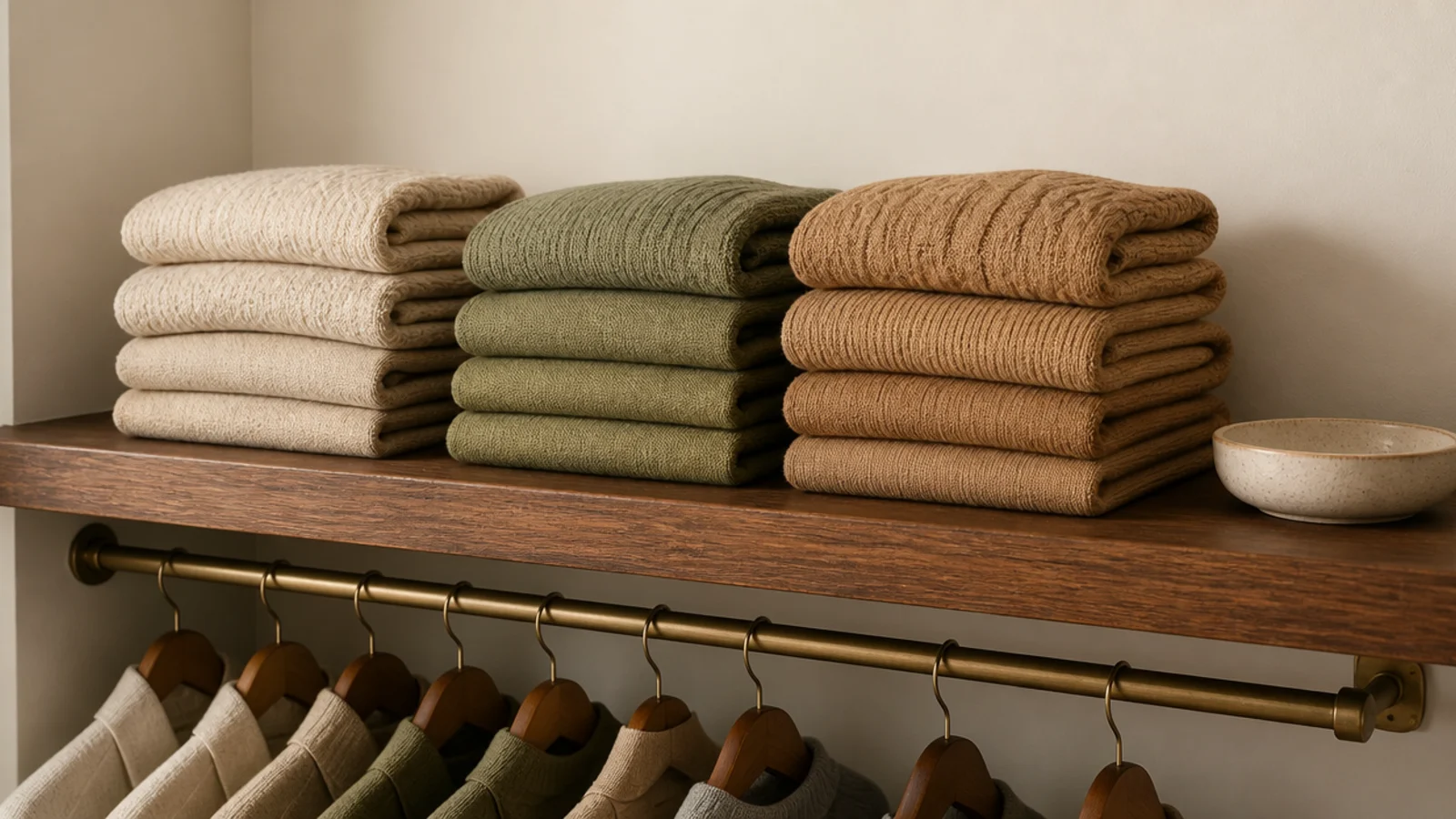
The gap between the rod and the ceiling is dead space in most closets, and a single shelf claims all of it.
Twelve to fourteen inches deep is the folded-knit number: deep enough for sweaters and jeans, shallow enough that nothing hides at the back. Mount it 10 to 12 inches above the rod so you can lift hangers off without knocking it. A cut and painted board with two brackets runs $30 to $50.
6. Matching slim hangers
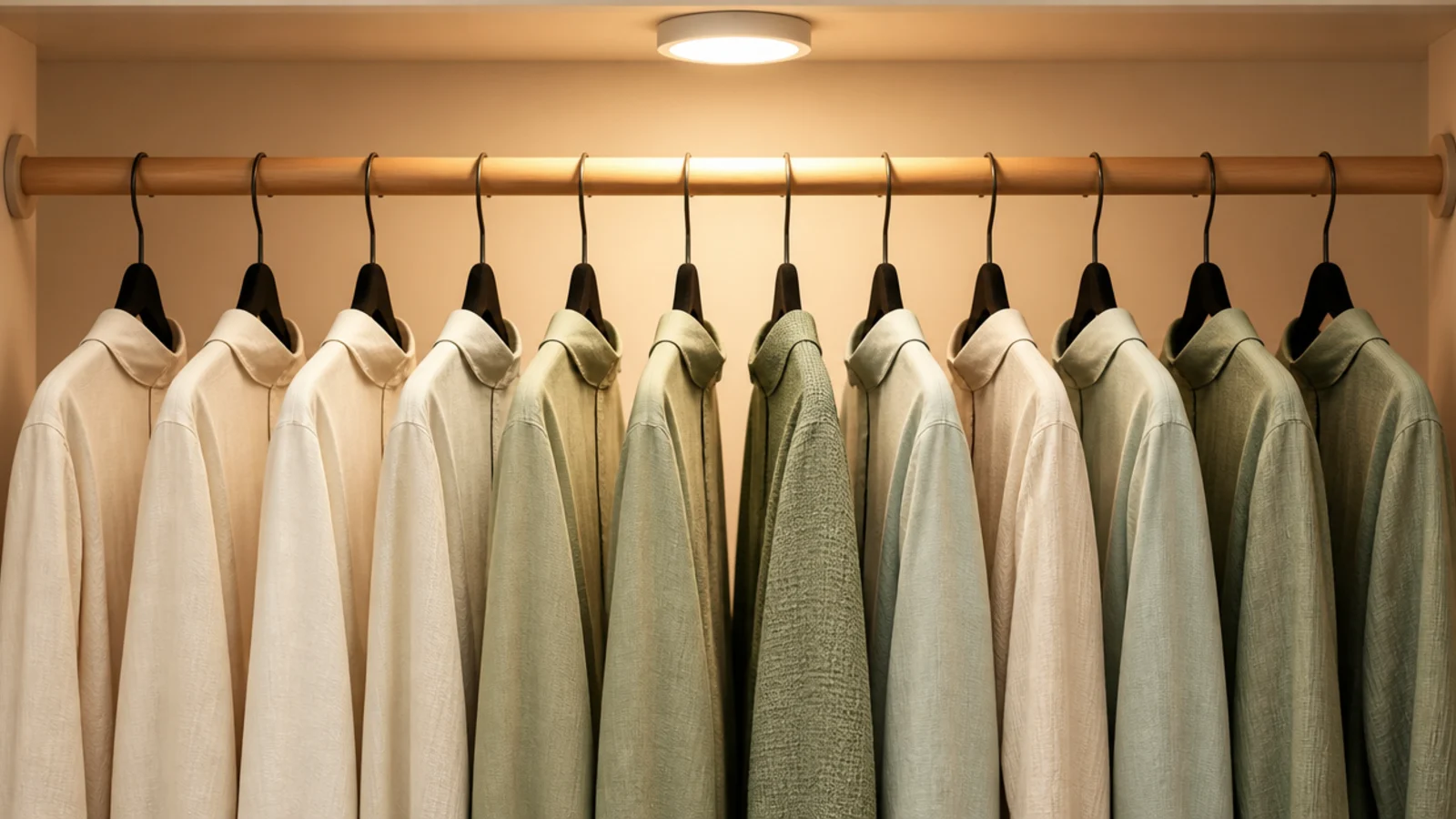
This is the cheapest thing on the list that changes how a closet photographs and how much fits in it.
Mixed plastic, wire and wooden hangers space clothes unevenly and waste four to six inches on a typical rod. A set of 50 slim velvet hangers costs $20 to $30 and gains you roughly a foot of rod across a small closet. Keep one set of wide wooden hangers for coats and tailored jackets, which slim hangers genuinely do not support.
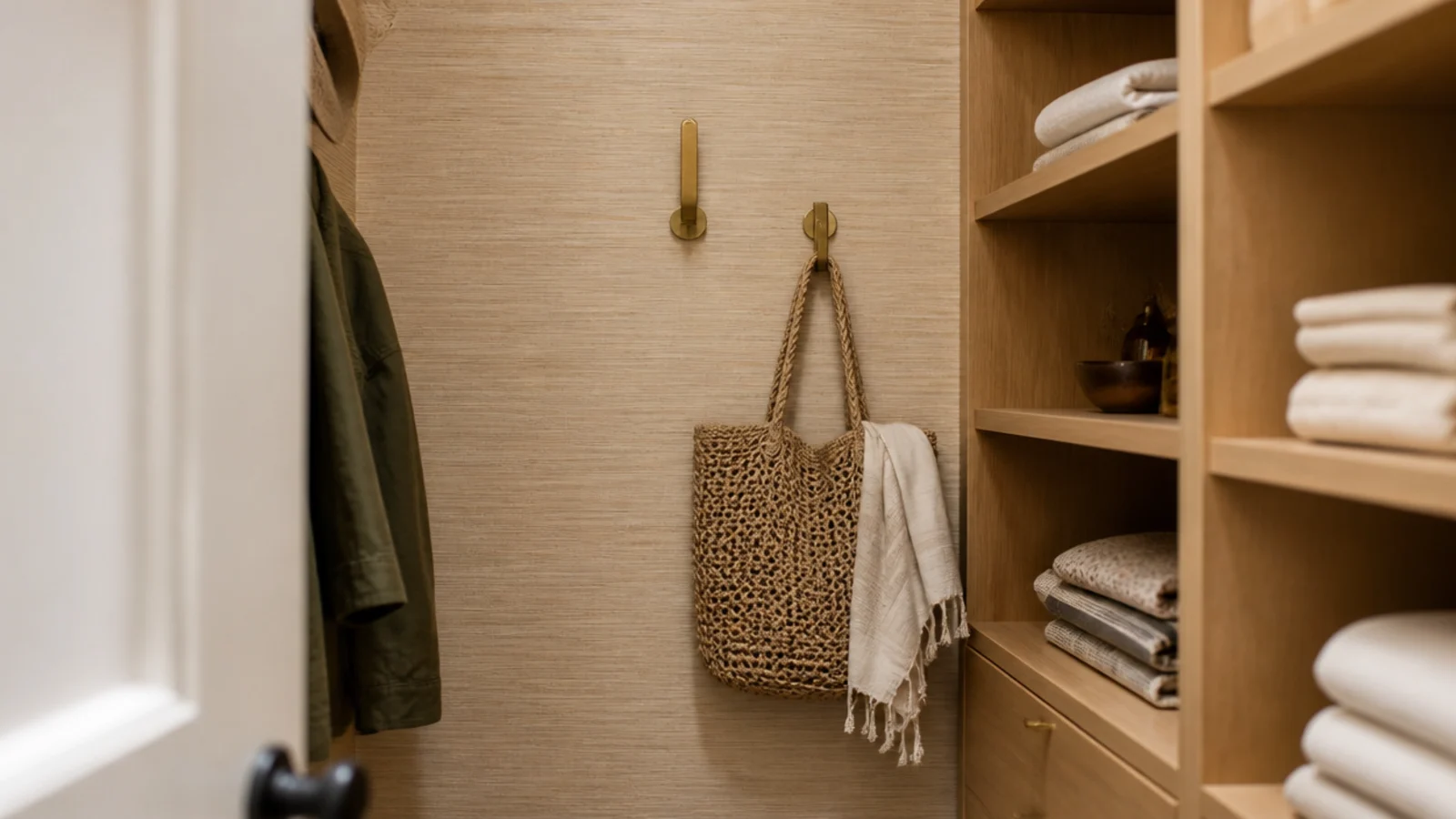
7. Peel-and-stick wallpaper on the end wall
A small closet has one wall you see straight down the walkway, and it is the cheapest place in the house to be brave.
A subtle grasscloth or fine stripe in warm sand keeps it calm rather than busy. One roll usually covers a closet end wall, $35 to $60, and it peels off cleanly on lease day. Test a corner on your paint first, because flat builder-grade paint sometimes comes away with the paper.
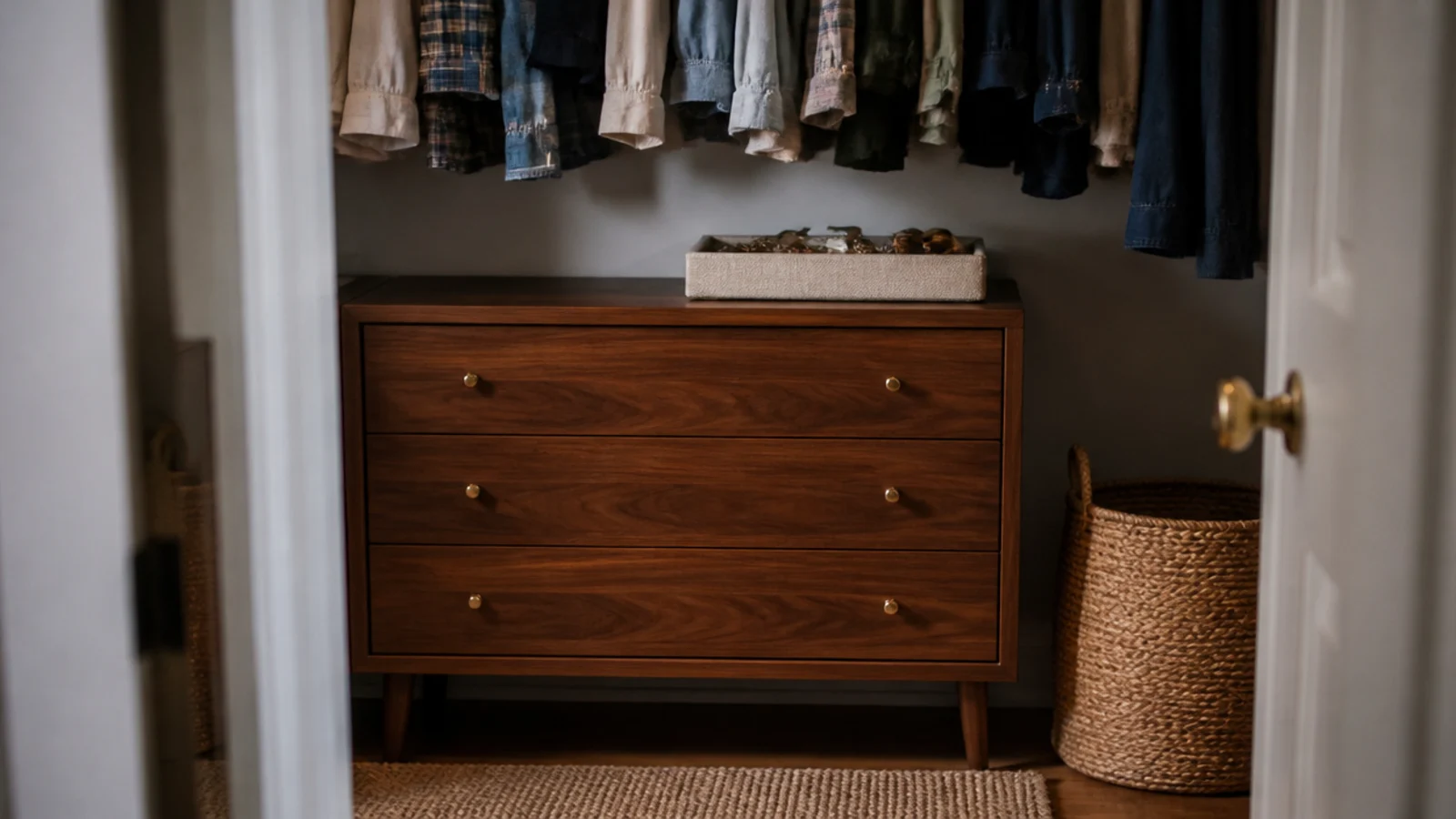
8. A thrifted dresser instead of built-in drawers
Drawers are the most expensive component in any closet system and the part that never moves house with you. A secondhand chest does the same work for a tenth of the money.
Measure the space under your short hanging first: 30 to 36 inches of height and 14 to 18 inches of depth tucks in without narrowing the walkway. Paint it the wall color and it reads built-in. I have paid $40 to $90 for the last three I used.
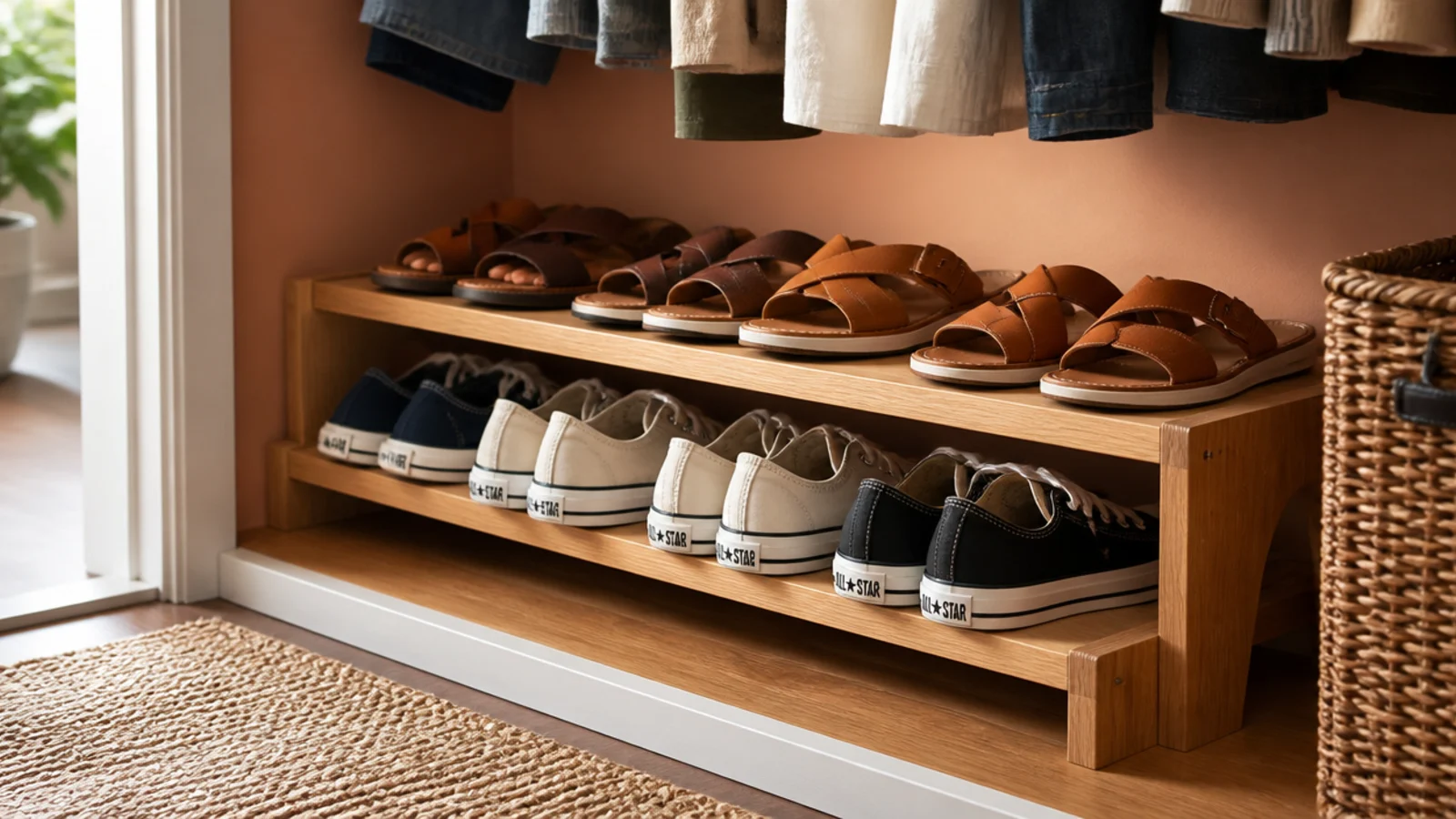
9. Shoe risers and stacked shelf inserts
A shoe shelf is usually half empty vertically, because a pair of flats takes six inches of height on a shelf spaced fourteen.
Simple wooden or acrylic risers stack a second row above the first and turn one shelf into two, about $10 to $25 for a pair. Angle the risers slightly so heels sit back and toes tip forward, which makes the row readable at a glance. There is more on this in closet shoe storage that works.
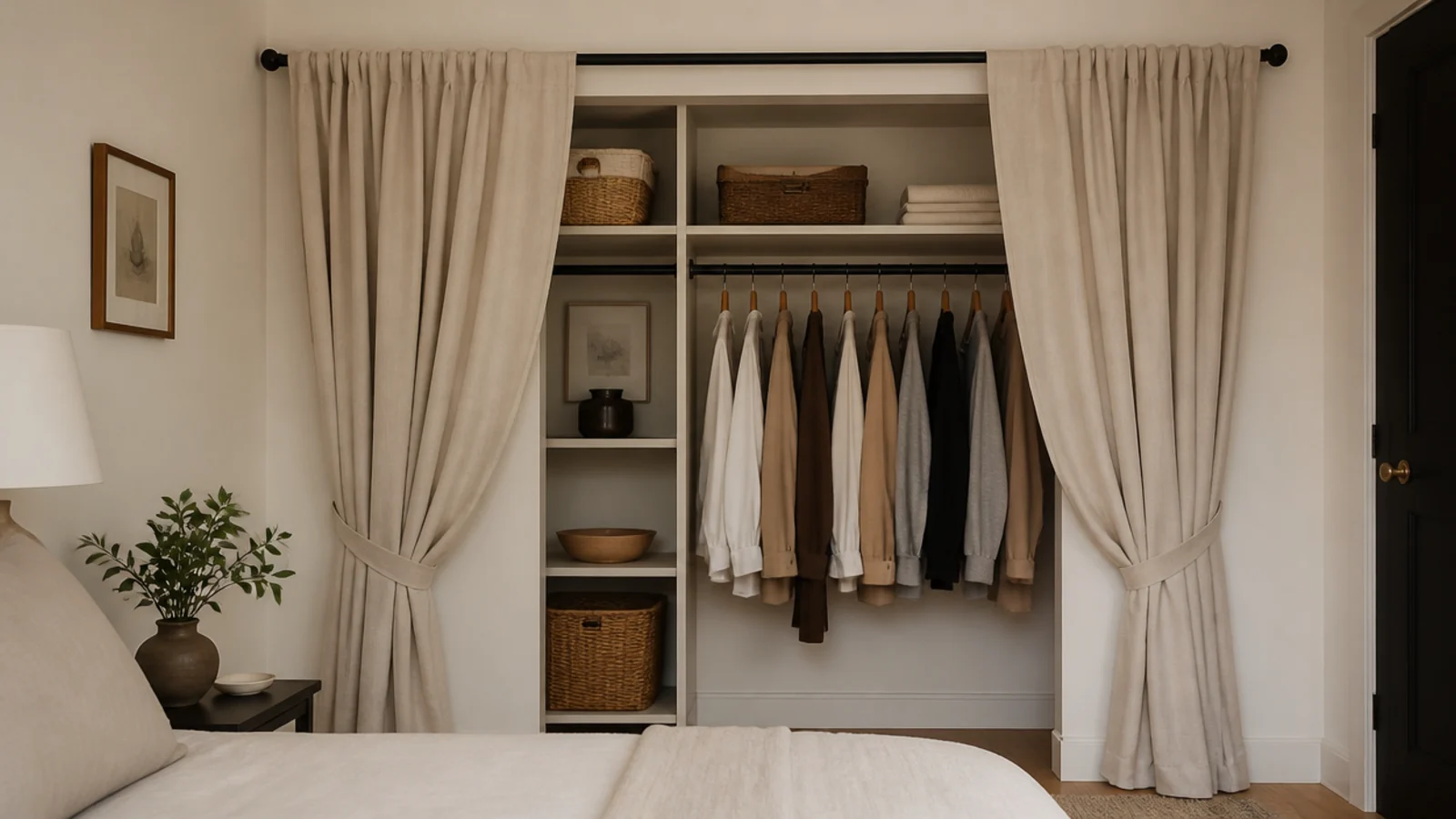
10. A curtain in place of the door
A bifold or swing door eats floor space and light in a room that has neither to spare. A curtain gives both back for very little.
Hang heavy linen or cotton canvas on a slim rod mounted two inches above the opening, hemmed to finish half an inch off the floor so it never drags. Two panels look better than one and let you open half. Rod and fabric together run $40 to $90, and the door waits in the basement.
11. Drawer dividers cut to fit
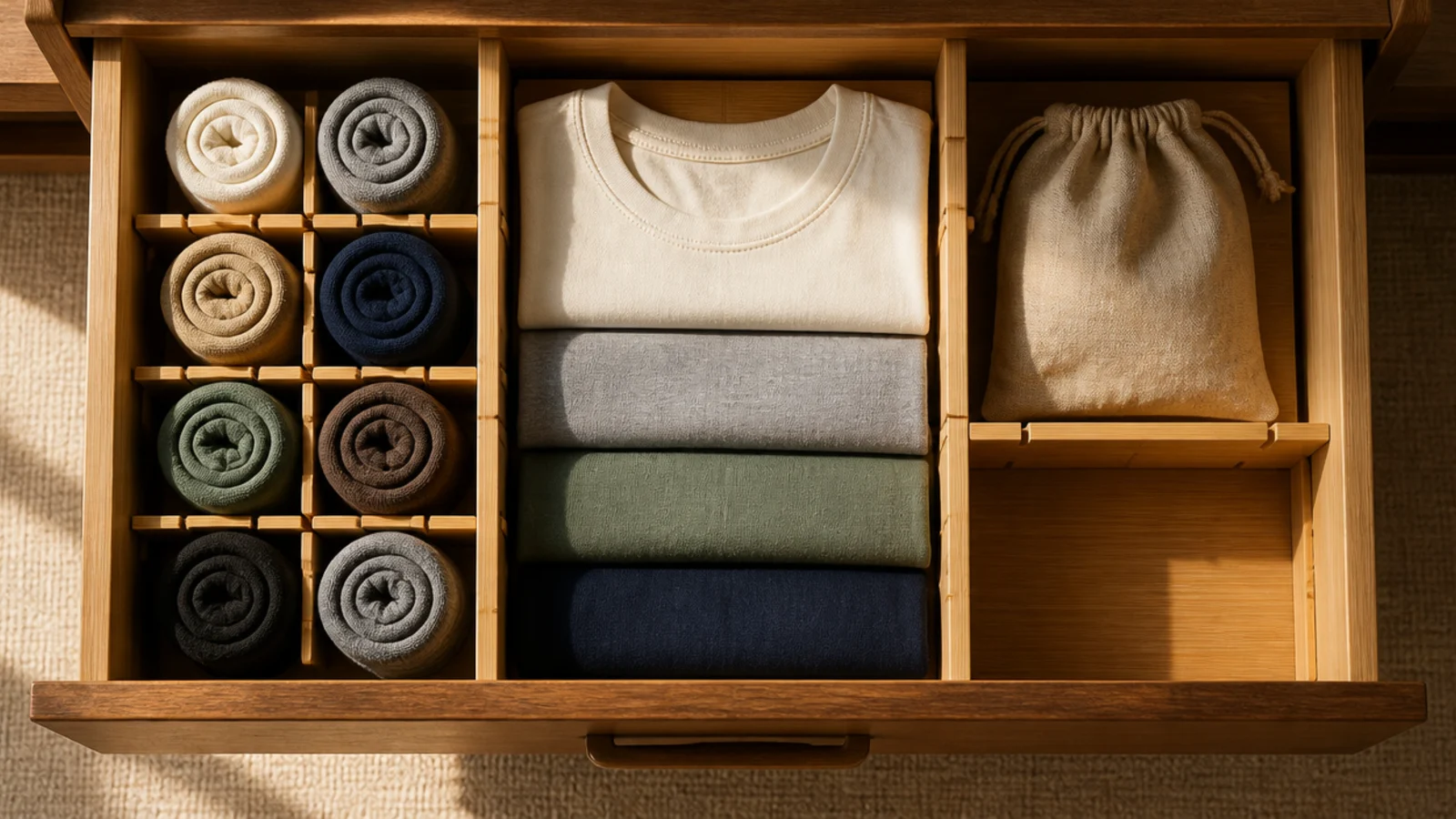
Before you buy more drawers, divide the ones you have. An undivided drawer holds about half what a divided one does because everything slides into one heap.
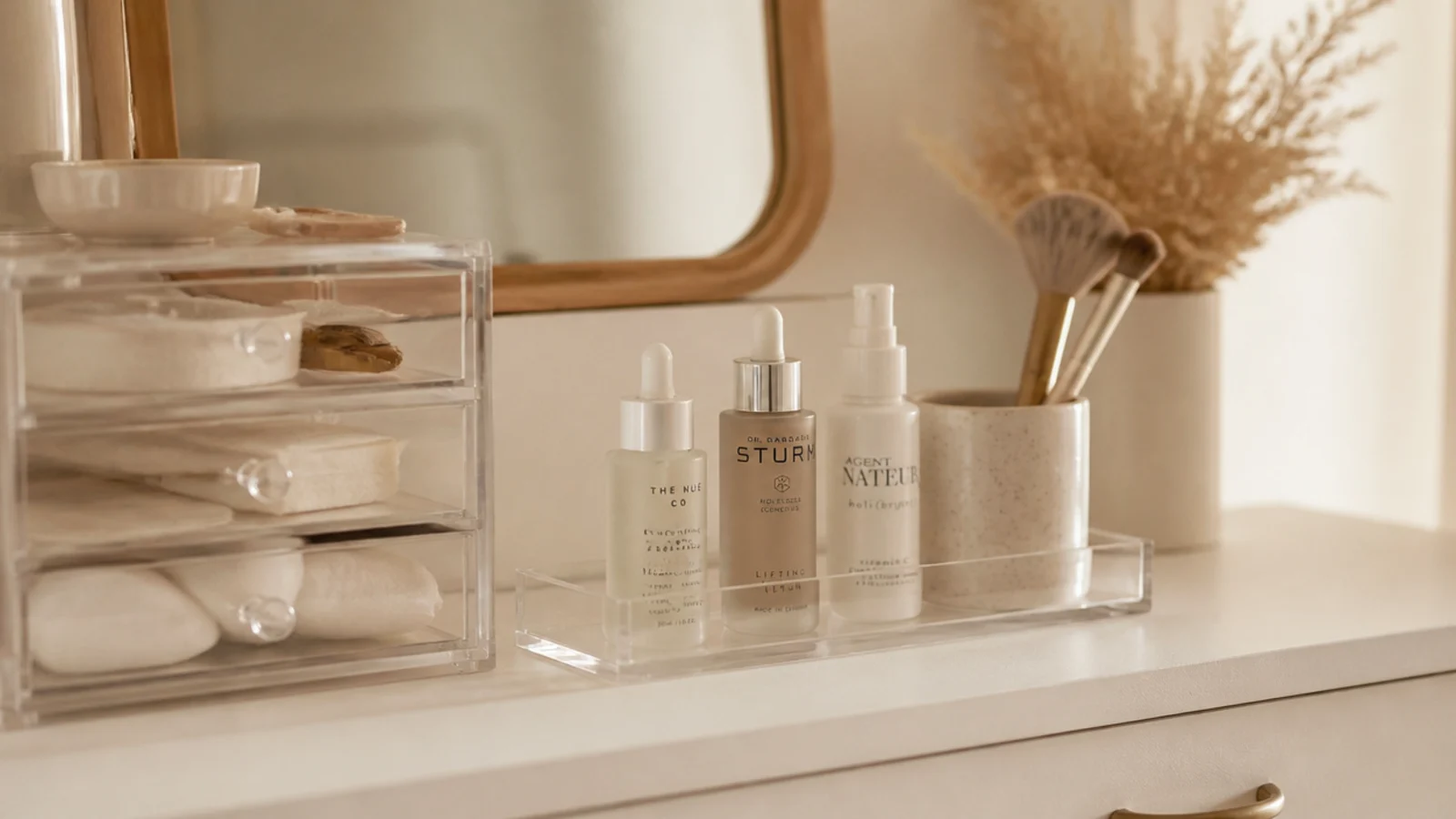
Adjustable bamboo dividers cost $12 to $20 a set and fit most drawers within a few inches. Rolled socks and tees stand upright in a divided drawer, which means you see all of them instead of the top three. This is the same principle behind good bedroom vanity organization.
12. Canvas bins with labels on the top shelf
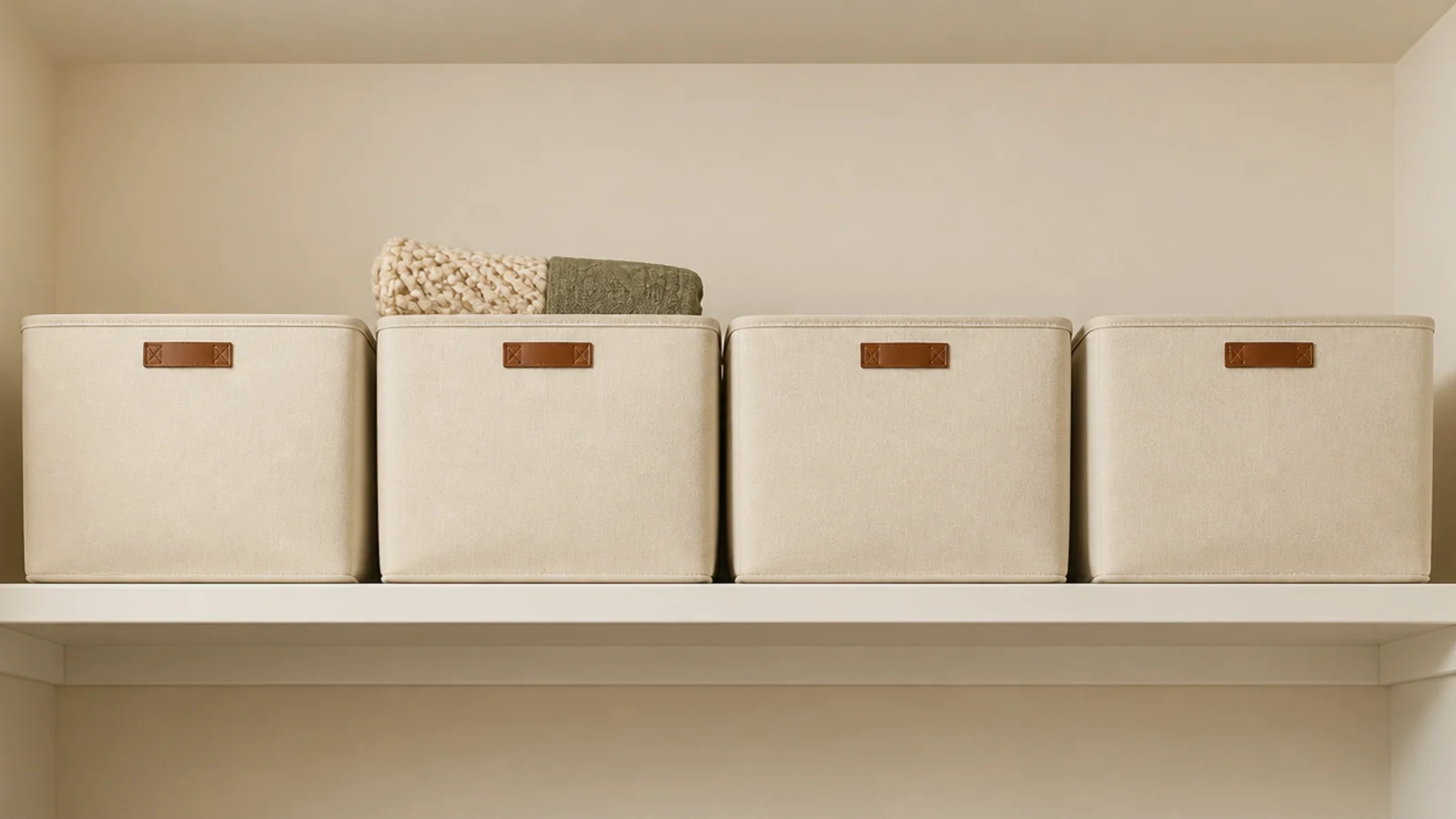
The high shelf is where things go to be forgotten. Matching bins with labels turn it into actual storage.
Buy bins with a stiff frame so they hold shape when half empty, sized to the shelf depth rather than eyeballed, at $8 to $15 each. Label every front even when you are certain you will remember. Off-season knits, spare bedding and travel bags belong up here; anything you touch weekly does not.
13. A pegboard end wall for bags and belts
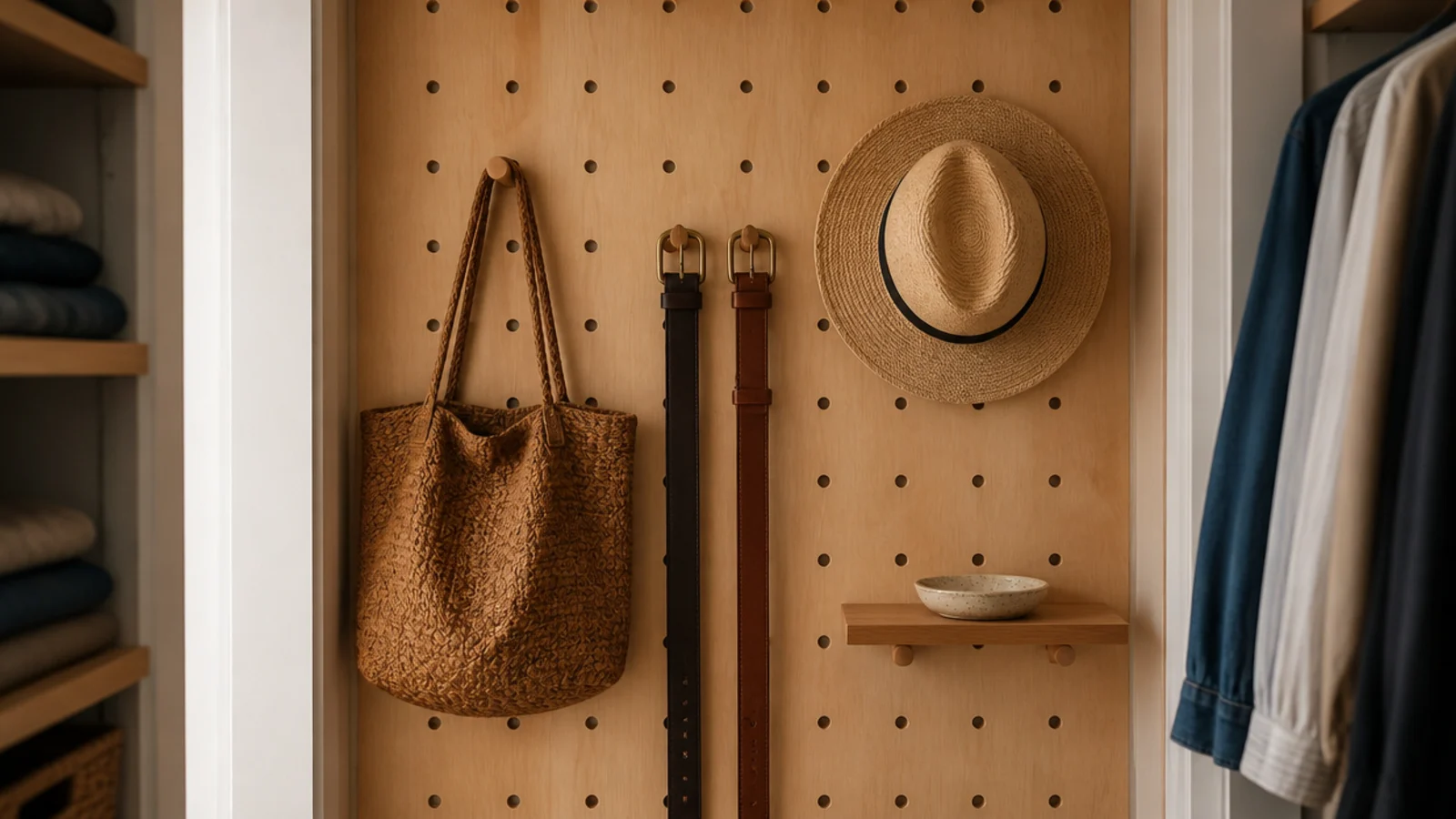
The end wall of a walk-in is rarely deep enough for shelving and perfect for a vertical surface that changes as your things do.
A birch pegboard panel, painted or left raw, holds bags, belts, hats and a small shelf, and every peg moves in seconds. A 2 by 4 foot panel with pegs and a couple of shelves runs $50 to $90. Mount it on furring strips so hooks have clearance behind the board.
14. Hanging fabric shelves on the rod
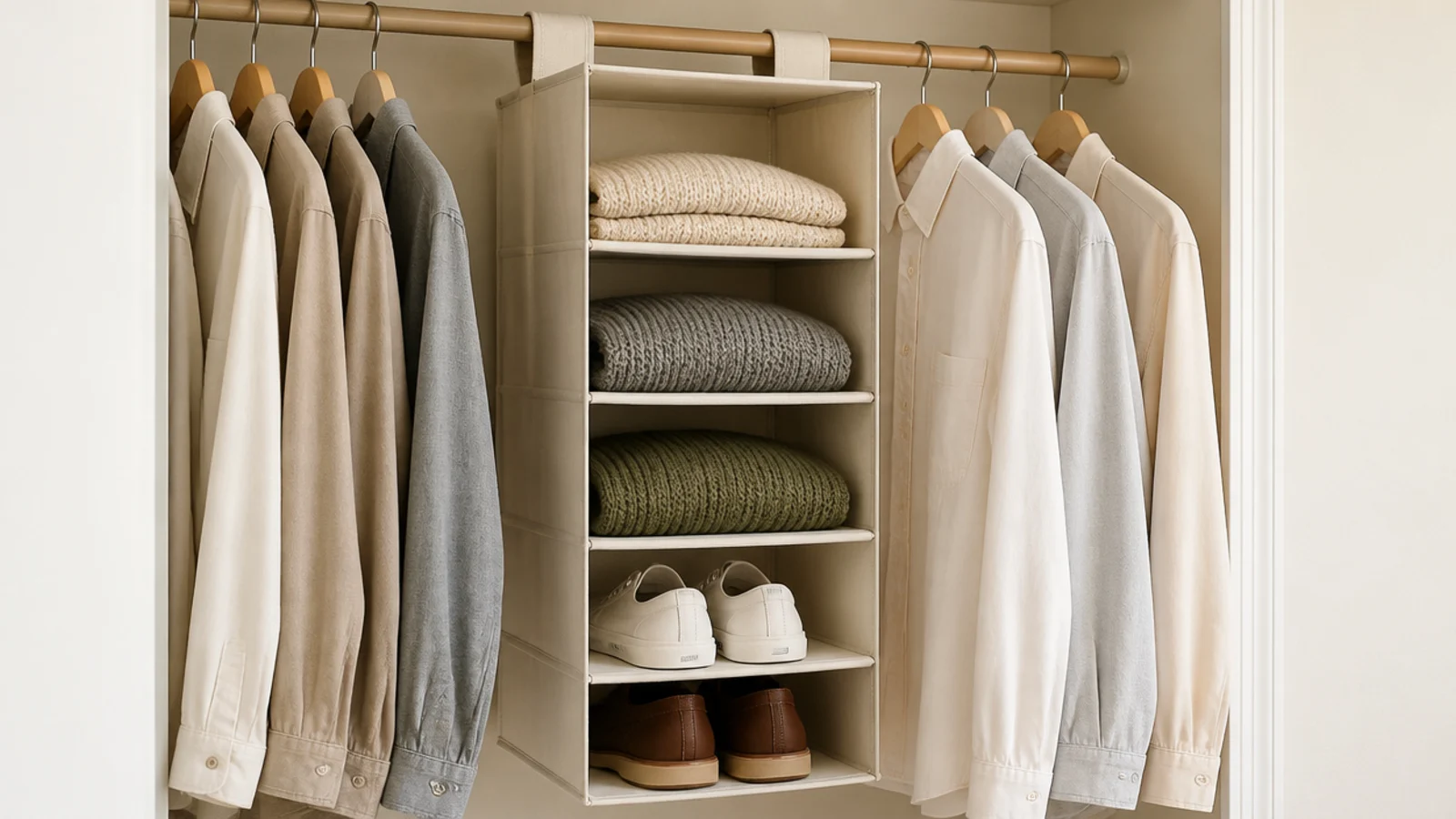
If you have rod space but no shelf space, a canvas hanging tower fixes it without any hardware at all.
They fasten around the rod with a velcro sleeve and give five or six compartments for folded knits or shoes. Look for a stiffened back panel; the floppy ones collapse into a sack within a month. Around $15 to $30, and it takes about 24 inches of rod, so plan that trade before you buy.
15. A valet rod for tomorrow
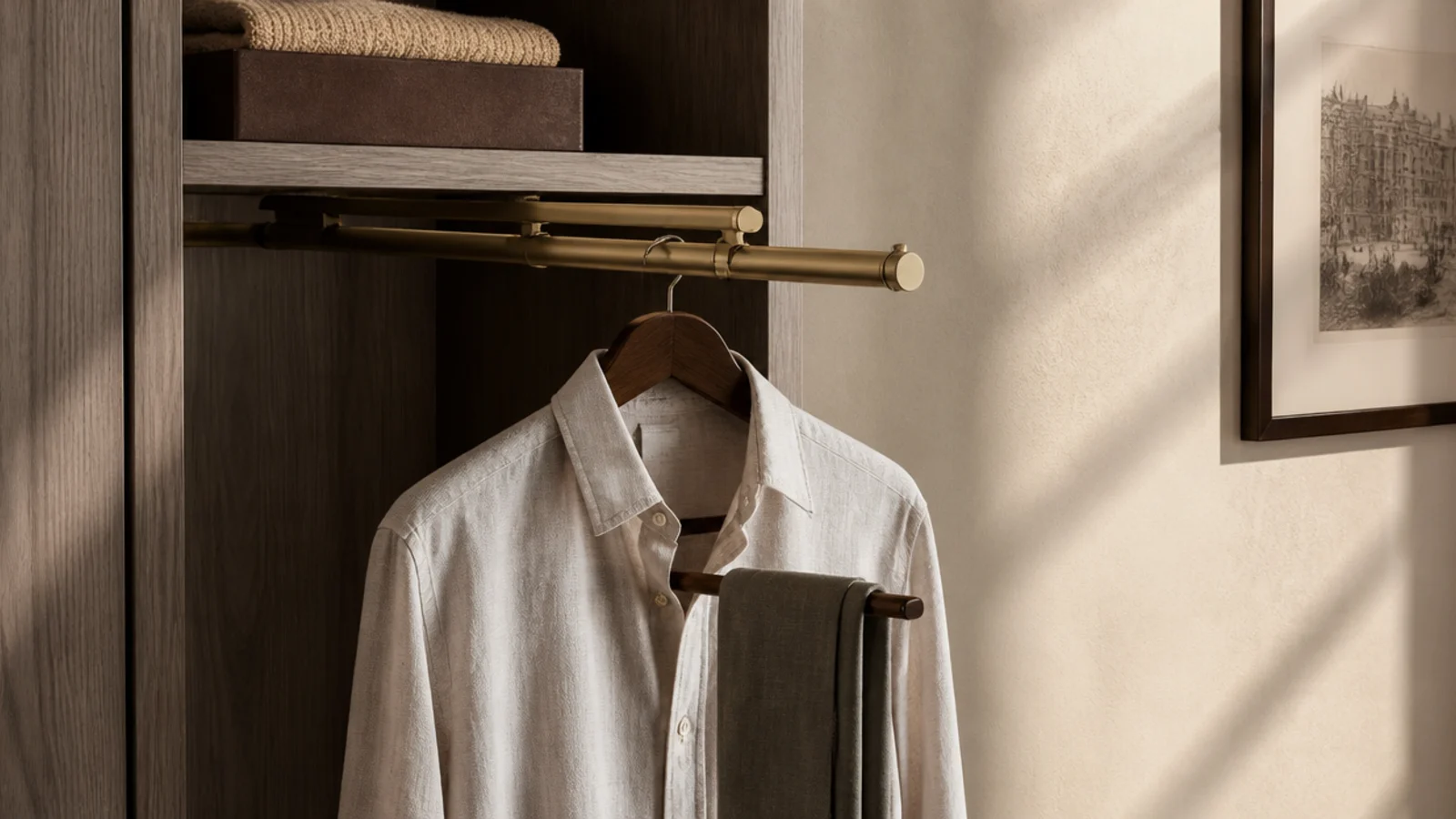
A six-inch pull-out rod under a shelf is the smallest piece of hardware in the closet and the one I would install first in any morning-rush household.
It holds tomorrow's outfit, complete, where you can see it. It also gives you somewhere to hang things while you decide, which is the actual reason clothes end up on a chair. Around $15 to $25, two screws, and it disappears when pushed in.
16. LED tape under the shelf
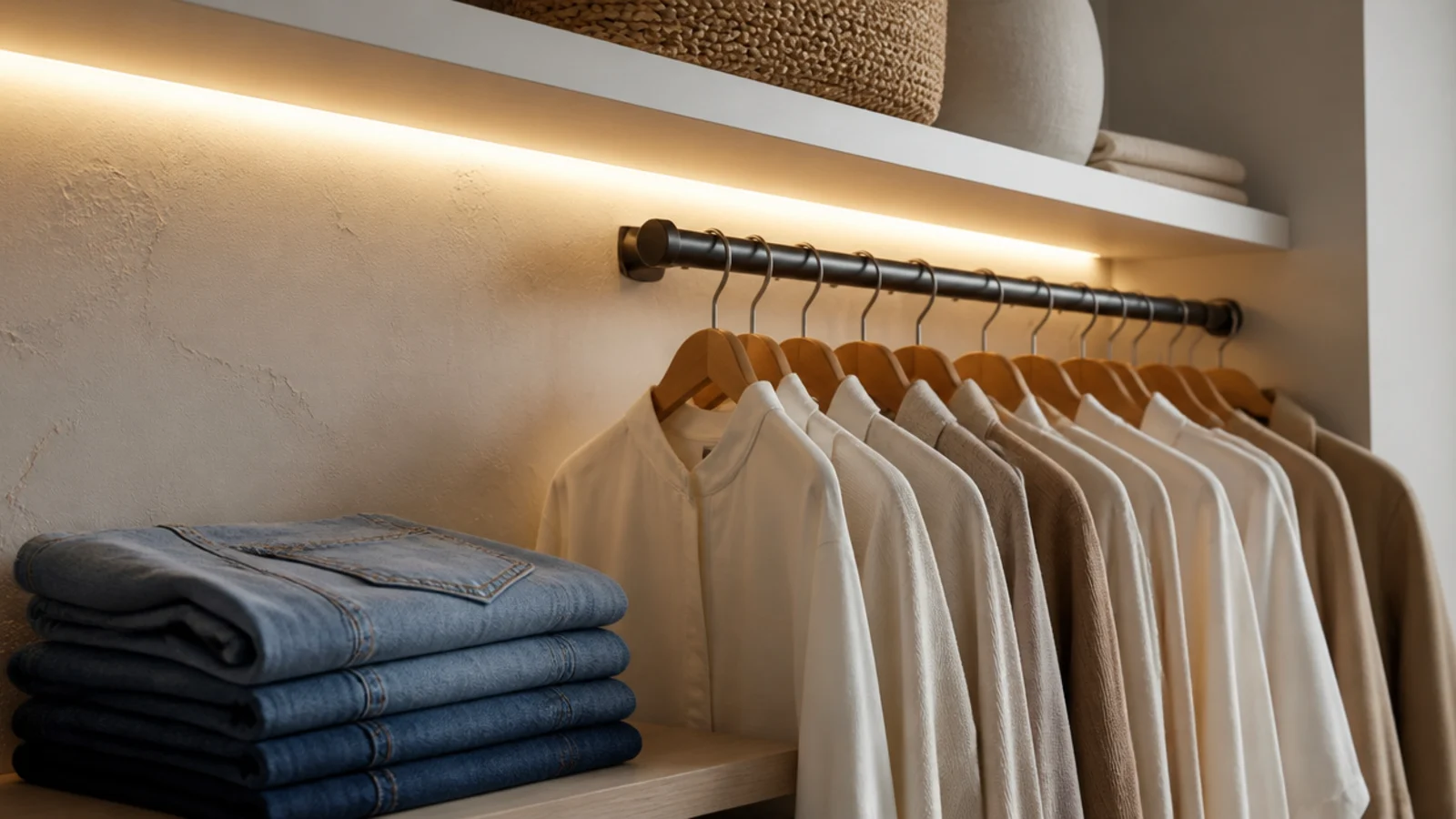
Even a well-organized closet reads dingy under a single bare bulb, and closets are usually the last place anyone upgrades.
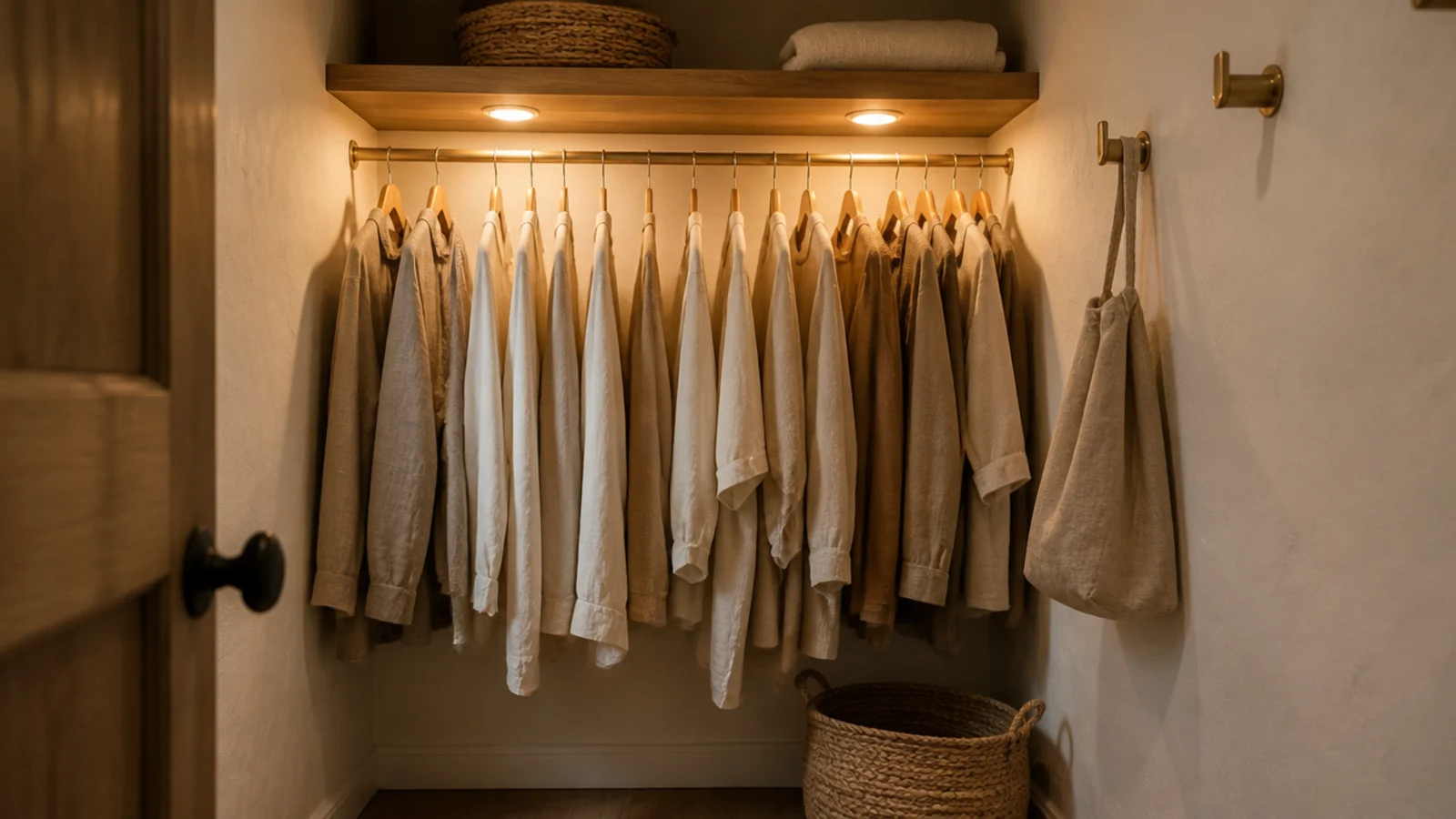
Run warm LED tape under the main shelf, set back an inch from the front edge, at 3000K with a high CRI rating. Cooler light makes navy read black and camel read grey, so you dress in one set of colors and step outside in another. A 6-foot USB reel costs $12 to $18. The renter lighting guide covers the no-drill versions.
17. A rolling cart in the walkway
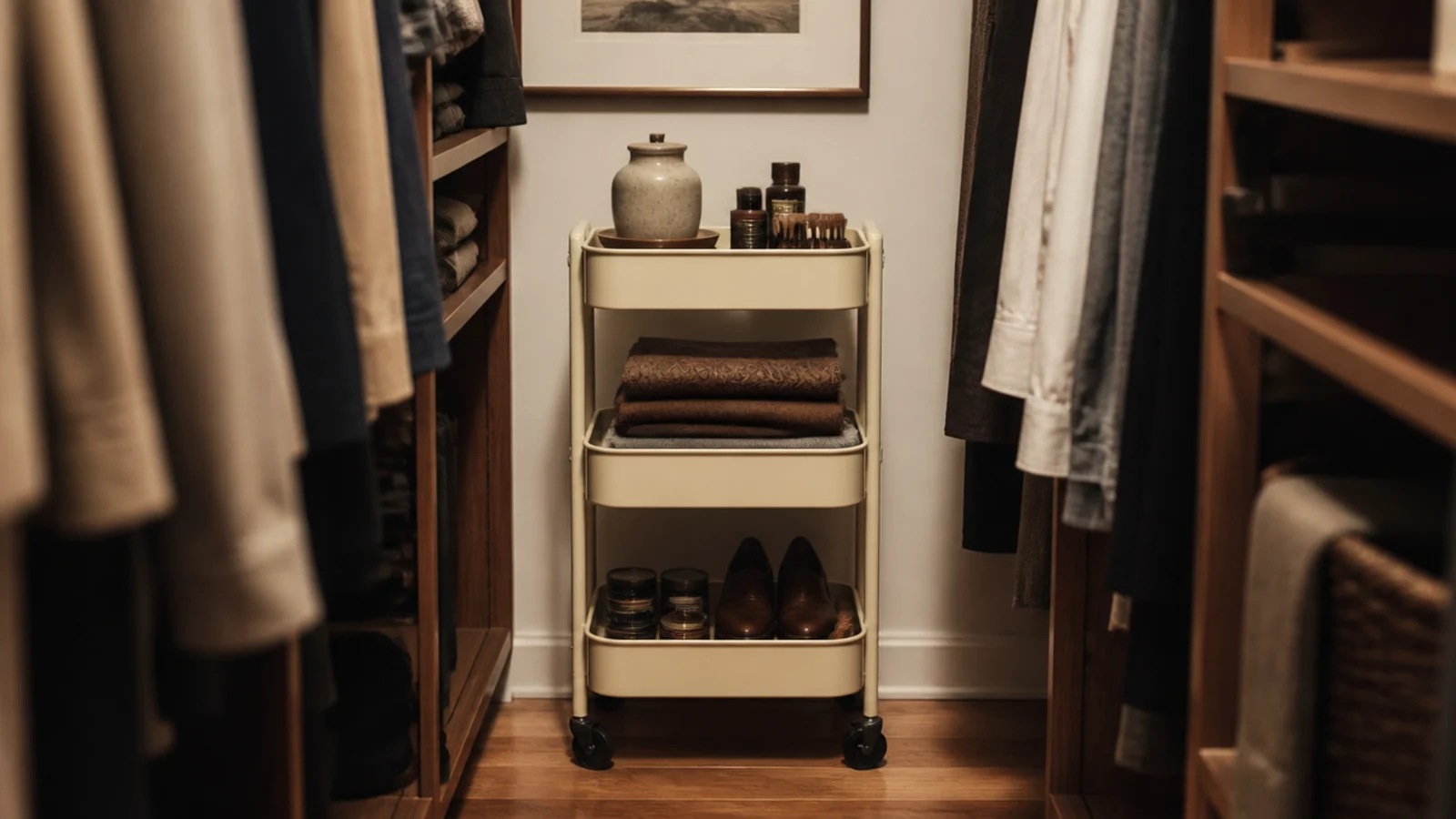
A slim cart gives you island-style surface without island-style width, but only if the math works.
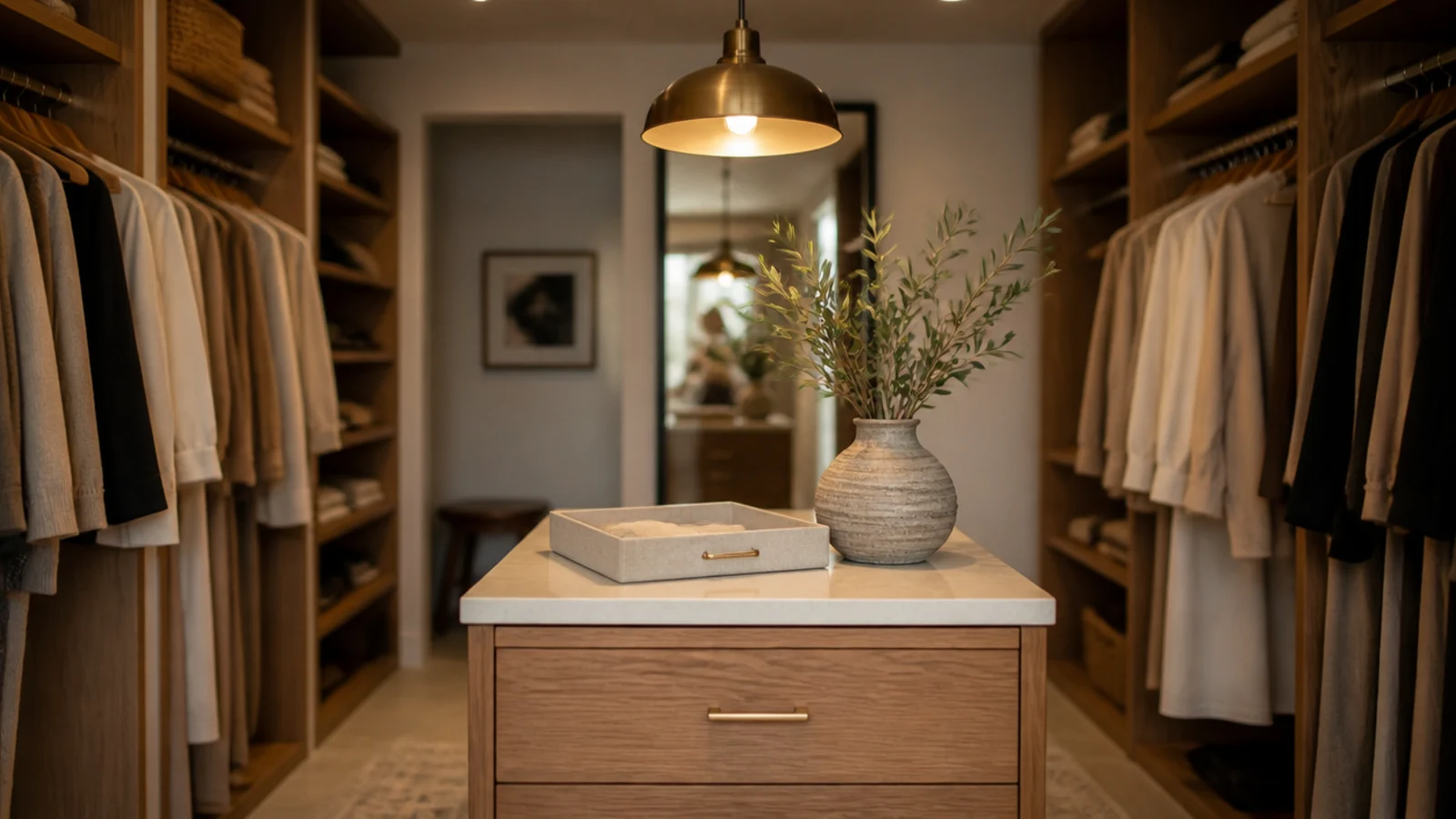
Measure your walkway first. You need 36 inches clear between hanging walls, so a 12-inch cart only fits where you have 48 inches or more. Below that it becomes something you turn sideways to pass daily. Where it does fit, $30 to $60 buys three tiers of accessible storage that rolls out when you need floor space.
18. A jute runner down the middle
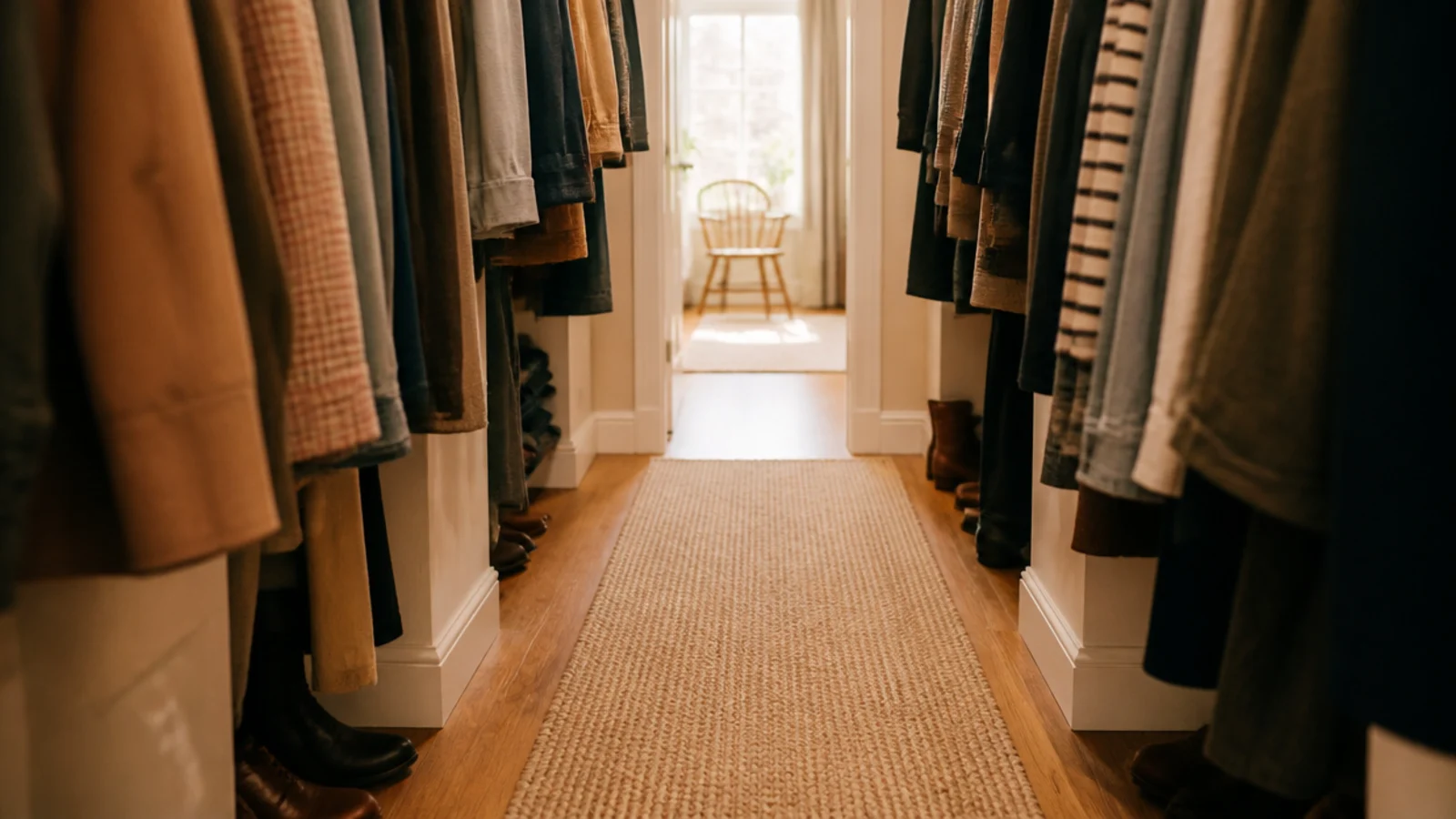
Closets get built as utility boxes and then we ask them to feel like rooms. A runner is the fastest bridge between those two things.
Choose a low-pile jute or flatweave 24 to 30 inches wide so it sits inside the walkway without curling at the edges, and add a thin non-slip pad underneath. Around $40 to $80. It also quiets the space, which you notice more than you expect at six in the morning.
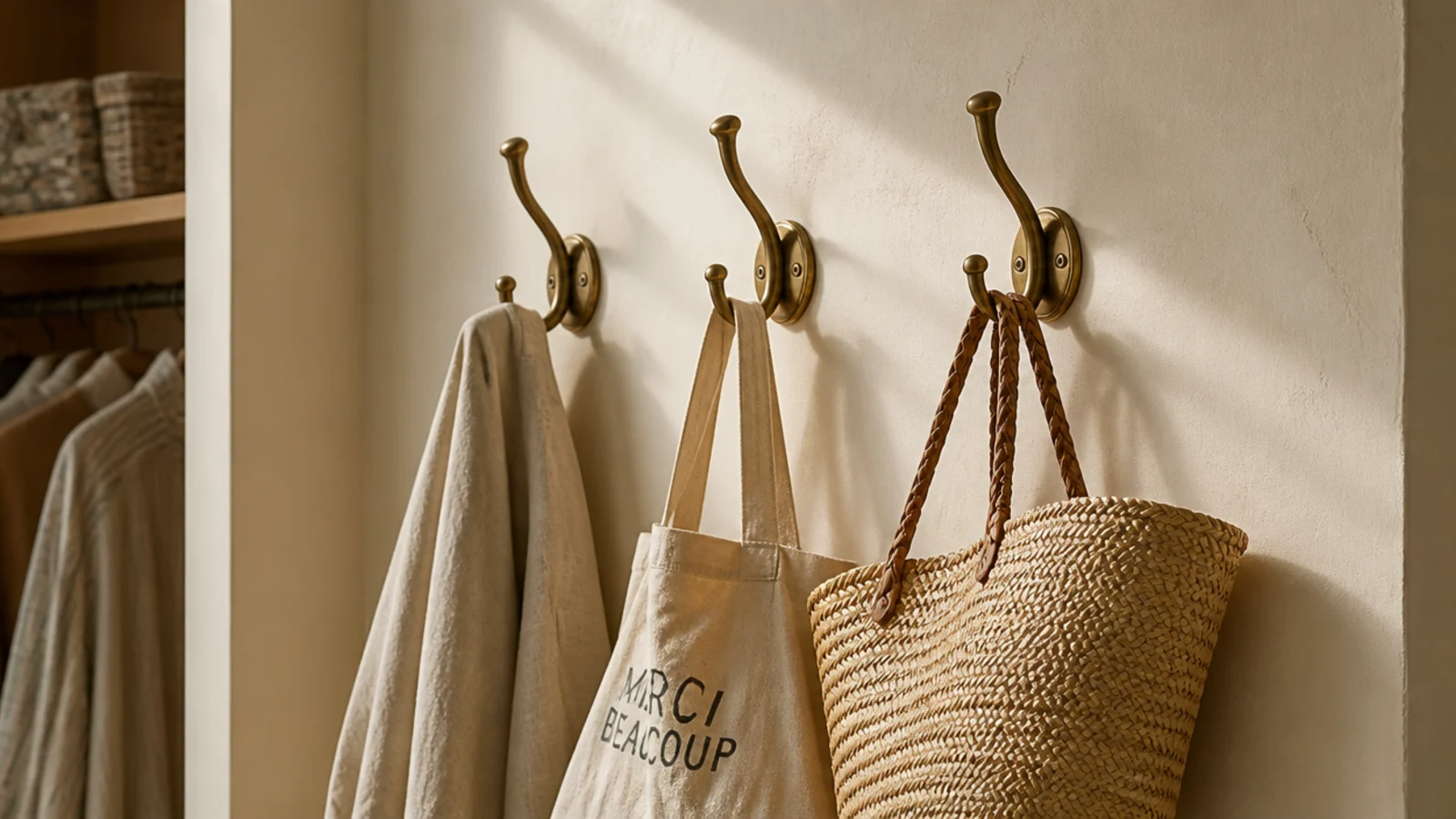
19. Hooks on the end wall for robes and totes
Hangers are for clothes you fold and press. Hooks are for the things that get grabbed, and every closet needs both.
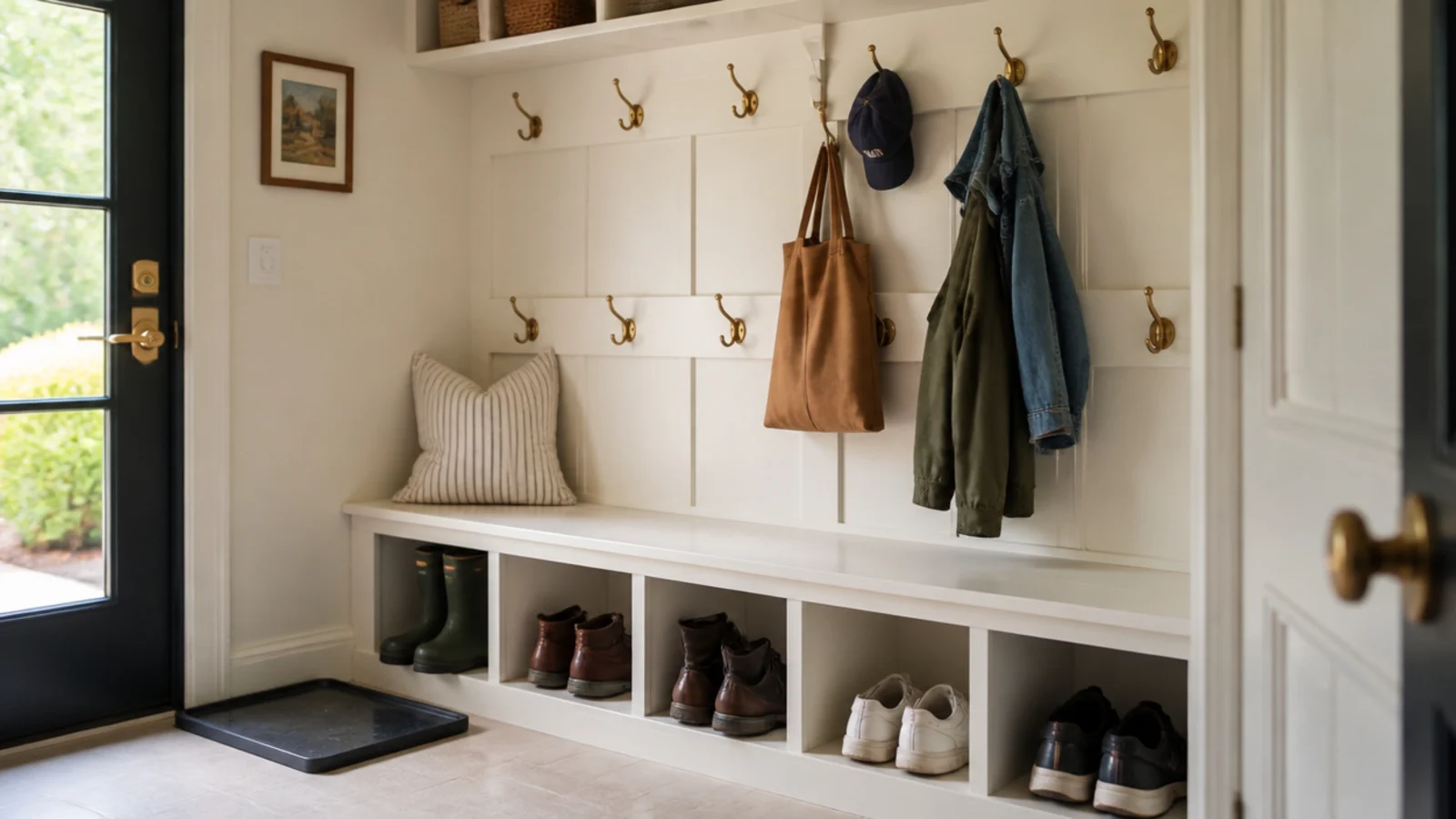
Three brass or matte black hooks at 60 to 66 inches on the end wall catch a robe, a tote and whatever you wore yesterday and are not ready to put away. Four dollars each, plus a wall anchor rated over 20 pounds since bags get heavy. Space them 10 inches apart so two coats do not fight.
20. Cedar and a drawer liner refresh
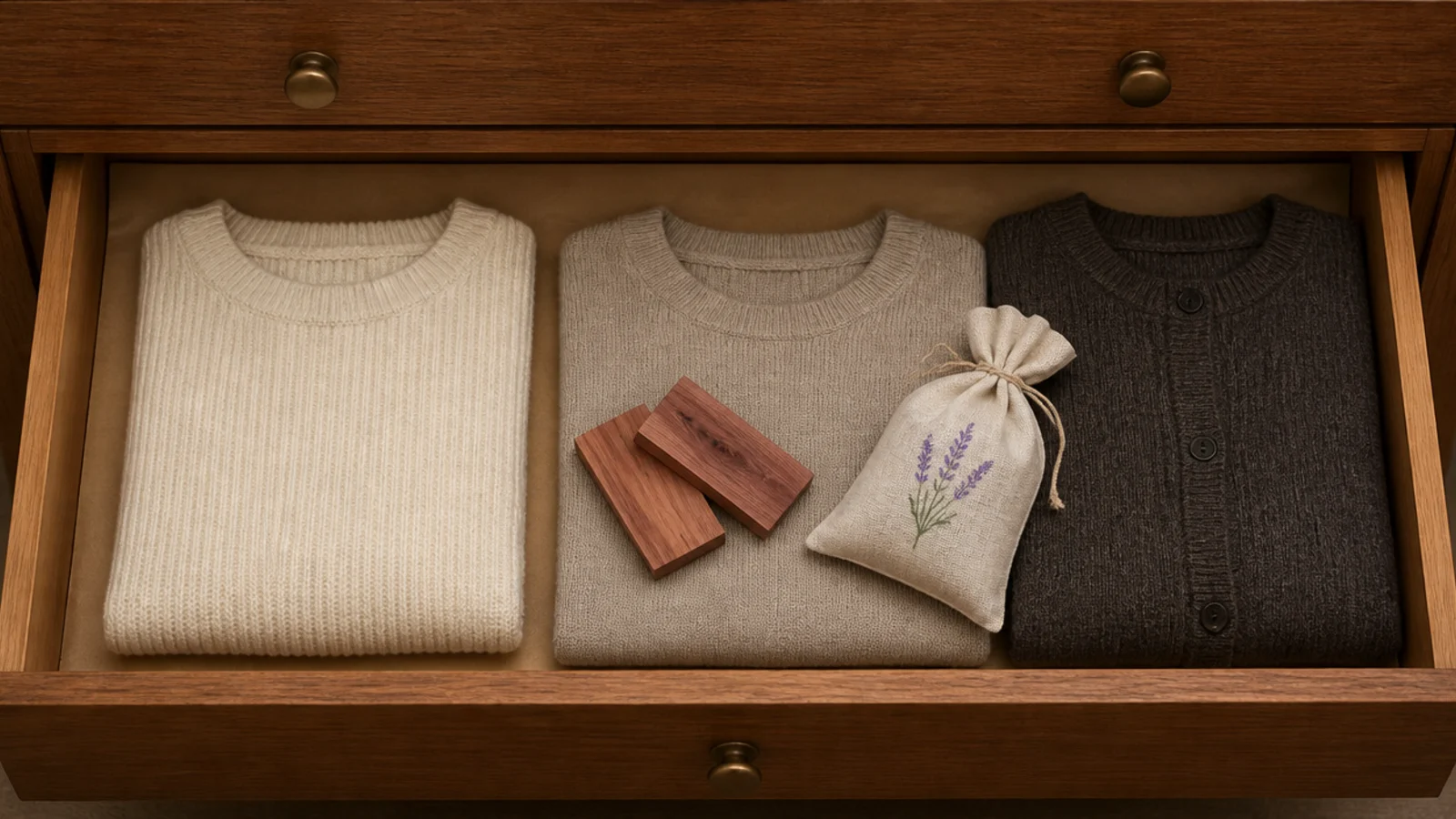
The last thing separating a budget closet from an expensive-feeling one is how it smells and how the drawers feel inside.
Plain natural liner paper and a few cedar blocks cost under $20 together and do more than any spray. Sand the cedar lightly once a year to bring the oils back rather than replacing it. Add a lavender sachet in the knitwear drawer and skip anything heavily perfumed, which transfers to clothes and outlasts its welcome.
Mistakes to Skip
- Buying a closet system before measuring the walkway. A 16-inch tower in a closet with 40 inches between walls leaves 24 inches to walk through, and you will turn sideways every morning for years.
- Hanging a rod at a height you guessed. Under 66 inches and long shirts brush the shelf below; over 84 and you cannot reach the back of the rod without a step stool.
- Spending the budget on doors and handles. Nobody has ever run out of storage because of a door, and that money buys a whole wall of double-hang instead.
Frequently asked questions
What is the cheapest way to improve a small walk-in closet?
Adding a second rod for double-hang, at roughly $25. Most closets come with one rod at single-hang height and leave the bottom half of the wall empty, so a lower rod at 42 inches with the upper one at 84 doubles what fits without touching the structure. Paint is the second cheapest and does the most for how it feels.
How much does a budget walk-in closet makeover cost?
A styling and rod refresh runs $75 to $150 including hangers, bins and a second rod. Swapping wire shelving for painted plywood on the same brackets adds $80 to $200 in materials. A full modular tower system for one wall lands between $250 and $600. Past that you are paying for installation rather than storage.
Is it worth replacing wire shelving in a closet?
Yes, and it is the upgrade people notice most. Wire shelves mark folded knits, tip small items through the gaps and read as builder-grade from the doorway. A painted plywood shelf cut to 12 to 14 inches deep drops onto the same brackets for well under $100 and instantly makes the closet look built rather than fitted out.
How deep do closet shelves need to be for folded clothes?
Twelve to fourteen inches handles folded knits, jeans and sweaters neatly. Deeper than that and things stack two rows back where you forget them. Hanging is the exception: a rod needs 24 inches of clear depth because shoulders measure about 22 inches across, and anything tighter presses sleeves into the back wall.
Can I do a walk-in closet makeover without drilling?
Most of it, yes. Tension rods, freestanding towers, over-door racks, adhesive hooks rated honestly and a curtain in place of the door all avoid holes. The things that genuinely need fixings are a wall-mounted rail system and anything carrying a full wall of hanging clothes, which is real weight on real brackets.
Start with paint, a second rod and matching hangers, then live with it for two weeks before buying anything else. Those three cost under $100 together and usually solve most of what felt wrong. The budget closet ideas roundup has thirty more at the same price point, and small walk-in closet organization covers what goes where once the structure is right. Save the pin so the rod heights are with you at the store.
Want more like this? Browse all 15 small walk-in closet ideas guides — they all use the same measurements and budget tiers.
Pin it for later
Save this to your Small Walk-In Closet Ideas board
Pin it now so it is waiting for you when the tape measure comes out — and so the next person hunting for this idea can find it too.
Save this pinKeep going
More ideas worth saving while you have the tape measure out.