Small Walk-In Closet Ideas · Review
25 Best Small Walk-In Closet Picks Worth Buying

Some links on this page may become affiliate links in future. I only recommend pieces I would put in my own home — see the affiliate disclosure.
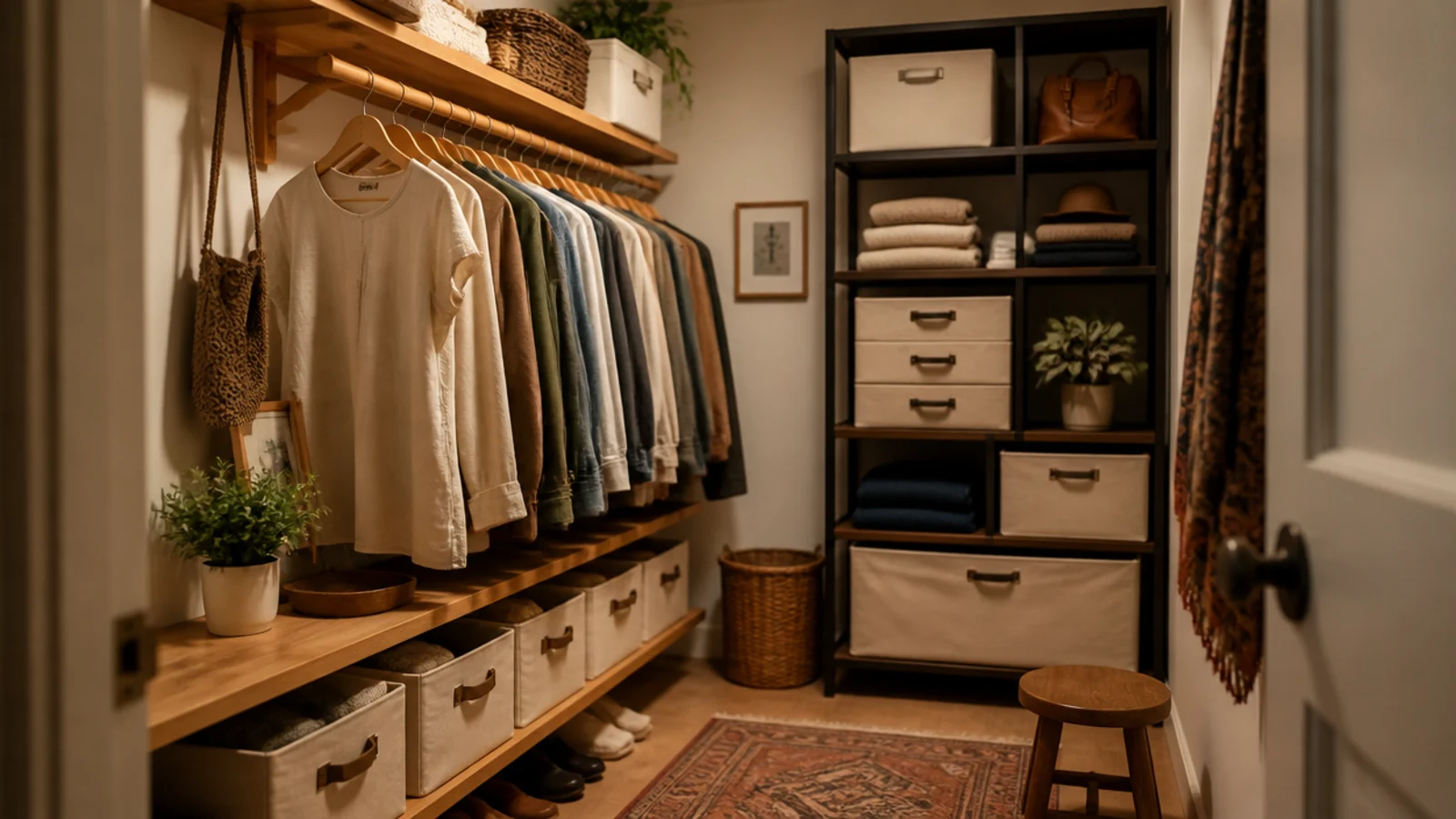
The best small closet systems are not the ones with the most components. They are the ones whose depth suits your walls and whose fixings suit your lease. I have installed, returned and rebuilt a lot of these in closets under eight feet wide, and the same handful keep earning their place. Below is every type worth considering, compared on the numbers that decide whether it works, plus eight I would buy again.
In this guide11 sections — tap to openHide
- 1.How I Chose the Best Small Closet Systems
- 2.The Full Comparison: 25 Small Closet Systems and Add-Ons
- 3.The wall-mounted track-and-bracket rail system
- 4.The freestanding modular tower
- 5.The double-hang rod add-on kit
- 6.The plywood cleat-and-shelf kit
- 7.The stackable drawer tower
- 8.The closet bench with storage
- 9.The rechargeable puck light set
- 10.The matching slim hanger set
- 11.What to Check Before You Buy
How I Chose the Best Small Closet Systems
I judged every type on five things, in this order.
- Whether it respects the geometry. A hanging rod needs 24 inches of clear depth, because shoulders sit around 22 inches across and anything tighter creases sleeves against the back wall. Between facing hanging walls you need 36 inches of walkway, or 30 as an absolute squeeze. Systems that quietly ignore those numbers fail no matter how good the hardware is.
- Capacity per linear foot. Double-hang at 42 and 84 inches carries roughly twice what a single rod at 66 to 72 inches does. Any system that cannot be split that way is giving up half a wall.
- Load path. Where does the weight go? A track screwed into studs carries a full wall of winter coats. A shelf on plastic drywall plugs does not, and that failure is slow rather than dramatic.
- Renter reversibility. How many holes, how big, how easily patched, and does it walk out with you. A freestanding tower and a wall system can hold the same clothes and represent very different commitments.
- What it does to folded knits. Shelf depth of 12 to 14 inches keeps a sweater stack visible. Wire shelving presses ridges into everything. This sounds small and it is the complaint I hear most.
I did not weight brand, catalogue styling, or how a system looks empty. Everything below is described by type and construction, because the same designs appear under a dozen labels at IKEA, Target, Amazon, Wayfair, The Container Store and the hardware aisle, and the construction is what you are buying.
The Full Comparison: 25 Small Closet Systems and Add-Ons
Price tiers: $ under $75 · $$ $75–$250 · $$$ $250+. Capacity figures assume correct fixings for the mounting type.
| Pick | Best for | Price | Why it wins |
|---|---|---|---|
| Wall-mounted track-and-bracket rail system | Whole small walk-ins | $$$ | One track carries rods, shelves and drawers |
| Freestanding modular tower | Renters who need drawers | $$$ | Real drawers with zero wall holes |
| Plywood cleat-and-shelf kit | A built-in look on a budget | $$ | Reads custom for the price of sheet goods |
| Adjustable steel wire system | Utility and overflow closets | $$ | Cheapest per foot, easy to reconfigure |
| Double-hang rod add-on kit | Wasted space under shirts | $ | Doubles a wall for the price of a rod |
| Tension-mounted rod | No-drill rentals | $ | Second hanging line with no fixings at all |
| Freestanding clothes rack | Walls that cannot be drilled | $$ | Adds 24-inch hanging where no wall works |
| Stackable drawer tower | Folded knits without built-ins | $$ | Drawers you take to the next house |
| Pull-out wire basket set | Deep existing shelving | $ | Turns a dead shelf into usable drawers |
| Shoe shelf riser set | Doubling shoe capacity | $ | Two rows inside one shelf height |
| Angled shoe rack rails | Seeing every pair at once | $ | Toes tip forward so the row stays readable |
| Over-the-door rack | Accessories and light shoes | $ | Uses the last free surface in the room |
| Hanging canvas shelf tower | Rod space but no shelf space | $ | Needs no hardware whatsoever |
| Pull-out valet rod | Morning outfit staging | $ | Six inches that ends the chair pile |
| Pull-out belt and tie rack | Small accessories | $ | Everything visible in one sweep |
| Slim island or peninsula unit | Closets past ten feet wide | $$$ | Folding surface plus a drawer bank |
| Closet bench with storage | Anything under ten feet wide | $$ | Seat and surface without the walkway cost |
| Pull-out hamper unit | Laundry that lands on the floor | $$ | Keeps the floor permanently clear |
| Rechargeable puck light set | Dark closets with no wiring | $ | Warm 3000K light and no electrician |
| Motion-sensor light bar | Hands full of laundry | $ | Comes on before you think to ask |
| Full-length leaning mirror | Dressing inside the closet | $$ | Doubles the light and the apparent length |
| Velvet drawer liner and dividers | Silk, knitwear and jewelry | $ | Stops everything sliding into one heap |
| Clear-front shoe boxes | Stacking without guessing | $ | One size stacks, three sizes never do |
| Lidded canvas archive boxes | Off-season above 84 inches | $ | Keeps the working rail 20 percent empty |
| Matching slim hanger set | Every closet, no exceptions | $ | Gains a foot of rod and an even shoulder line |
Eight of those are the ones I come back to.
1. The wall-mounted track-and-bracket rail system
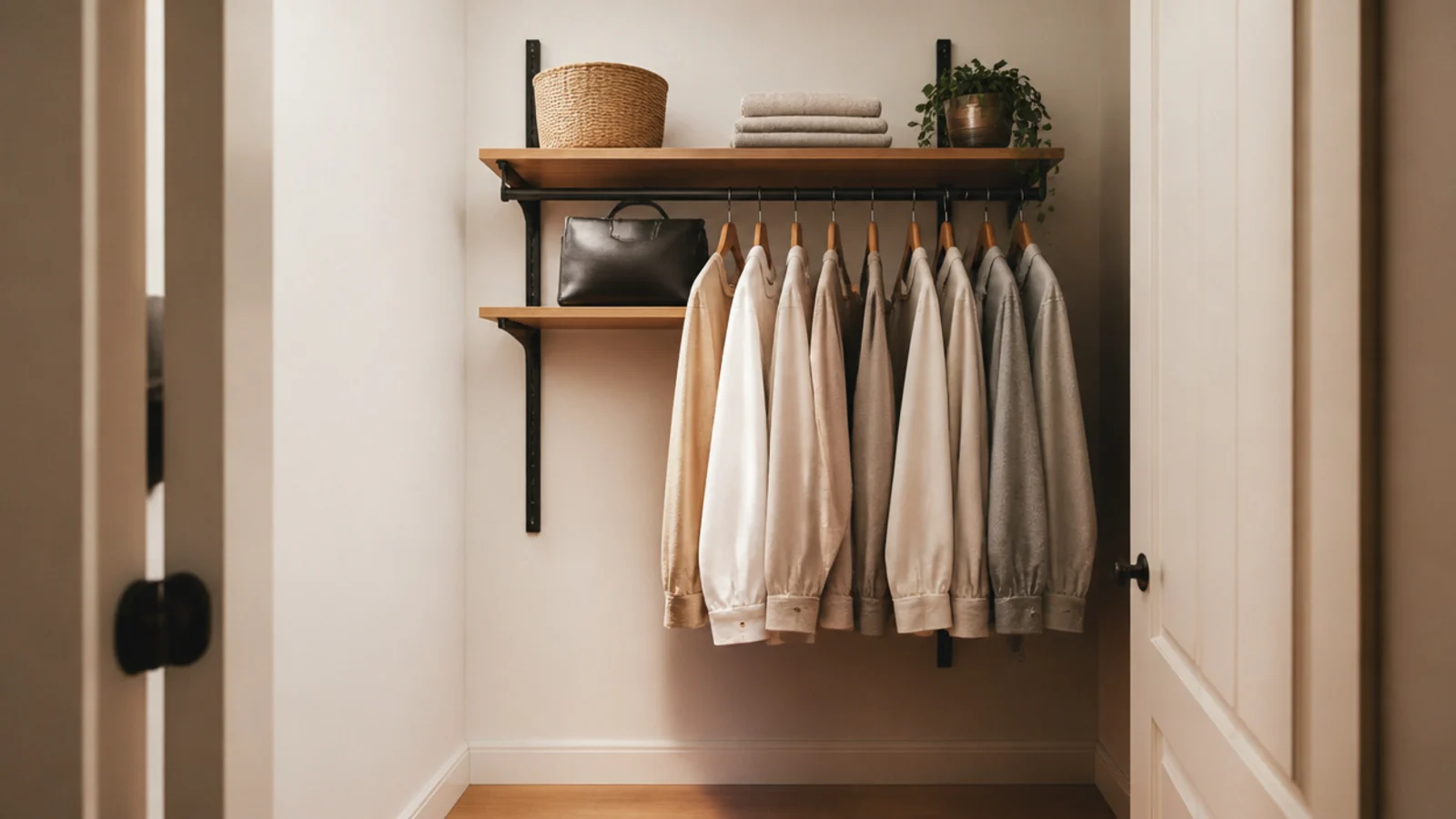
The most capable option for a small walk-in, and the one worth the fixings. A horizontal track screws into studs near the top of the wall, and vertical standards hang from it carrying rods, shelves and drawer boxes wherever you want them.
The value is that it moves. Six months in, when you discover the shoe shelf should be double-hang instead, you reposition brackets rather than repatch a wall. Look for steel standards rather than aluminium, and check the shelf brackets are rated per pair. Expect $250 to $600 in parts for a small walk-in.
2. The freestanding modular tower
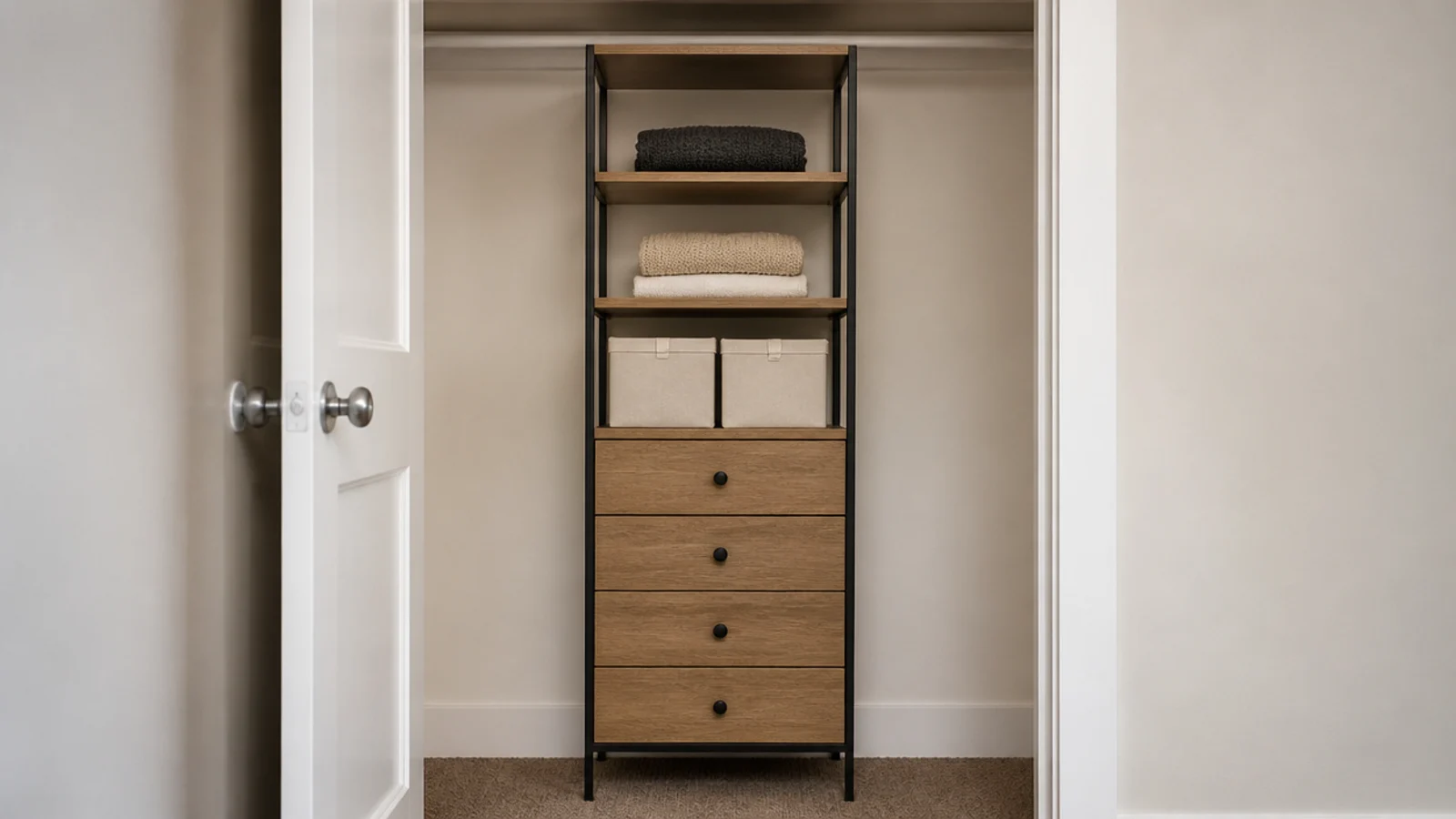
The honest answer for renters who need drawers, which is most renters. A tower 16 to 24 inches wide with four to six drawers, standing against a wall, holding what built-ins would hold.
Check the depth against your walkway before anything else, because a 20-inch tower in a closet with 46 inches between walls leaves 26 to pass through. Solid wood or a steel frame outlasts laminate boxes with stapled backboards, which sag inside a year. $150 to $400, and one anti-tip strap into the wall if there are children around.
3. The double-hang rod add-on kit
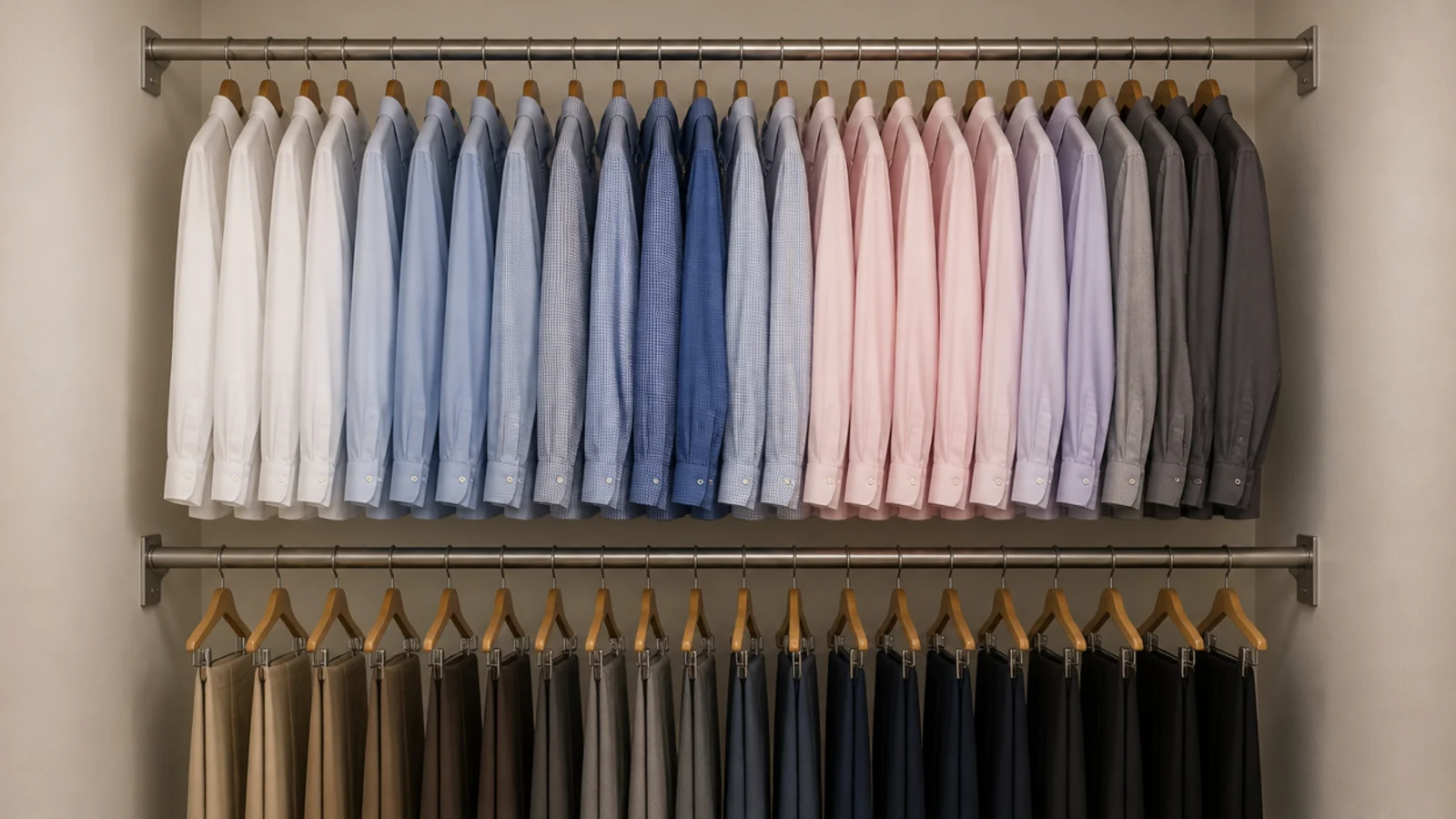
The best value purchase in this entire article. A second rod fitted below an existing one, at 42 inches with the upper at 84.
It roughly doubles the shirt and trouser capacity of that wall, and it usually empties the closet floor as a side effect, because whatever was living in baskets down there now has somewhere to go. Wall-mounted versions run $30 to $60; a tension rod does it for $20 with no fixings. Add a centre support on any span over 48 inches.
4. The plywood cleat-and-shelf kit
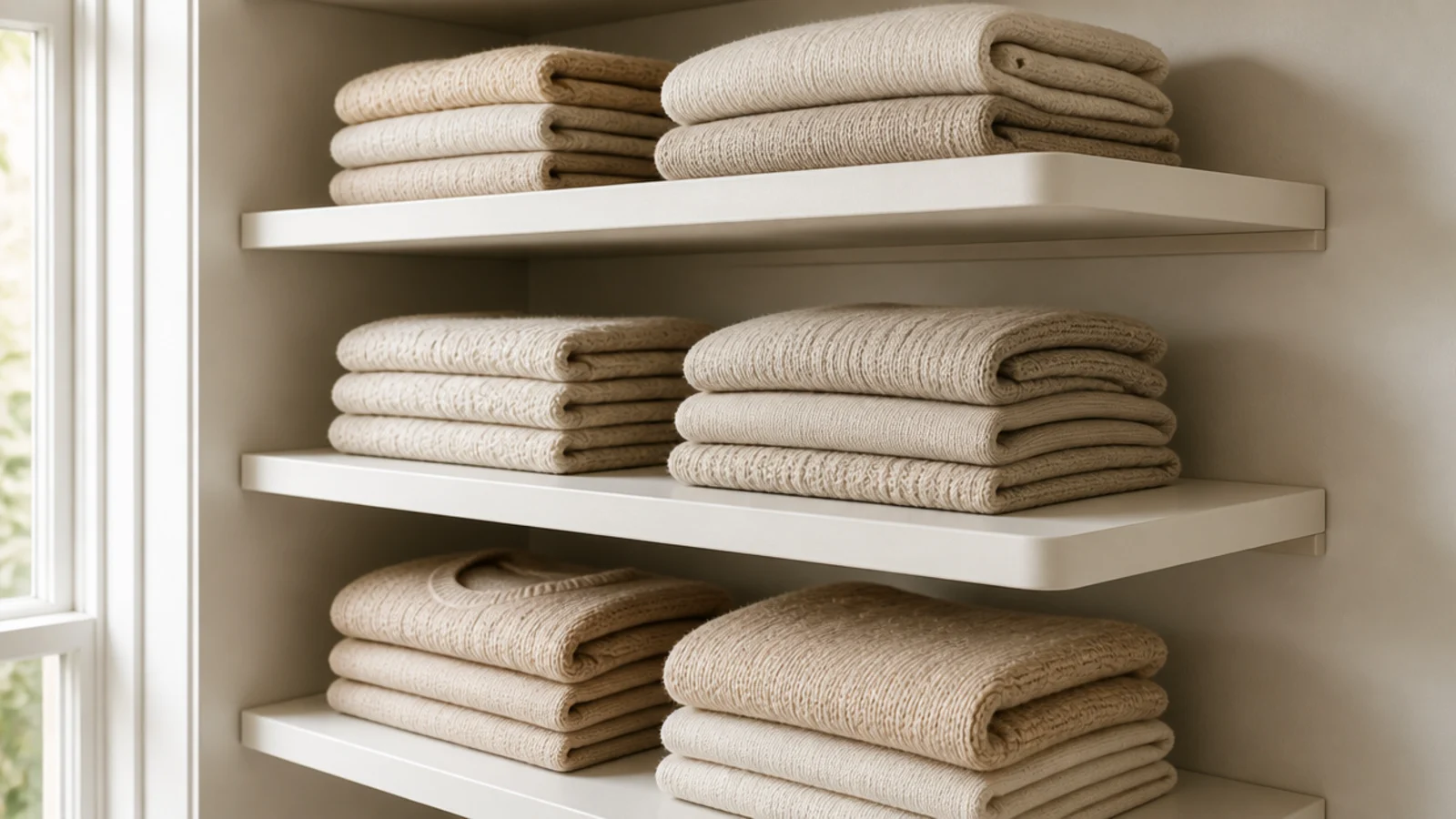
If you want the built-in look without the built-in invoice, this is how. Three-quarter-inch birch plywood, cut to 12 to 14 inches deep at the store, sitting on slim wall cleats rather than visible brackets.
Round the front edges with sandpaper, prime and paint, and it reads as joinery. It also solves the wire shelving problem permanently, since folded knits sit on a flat surface. Around $80 to $200 in materials for a small closet, plus two evenings. More layouts in small closet shelving ideas.
5. The stackable drawer tower
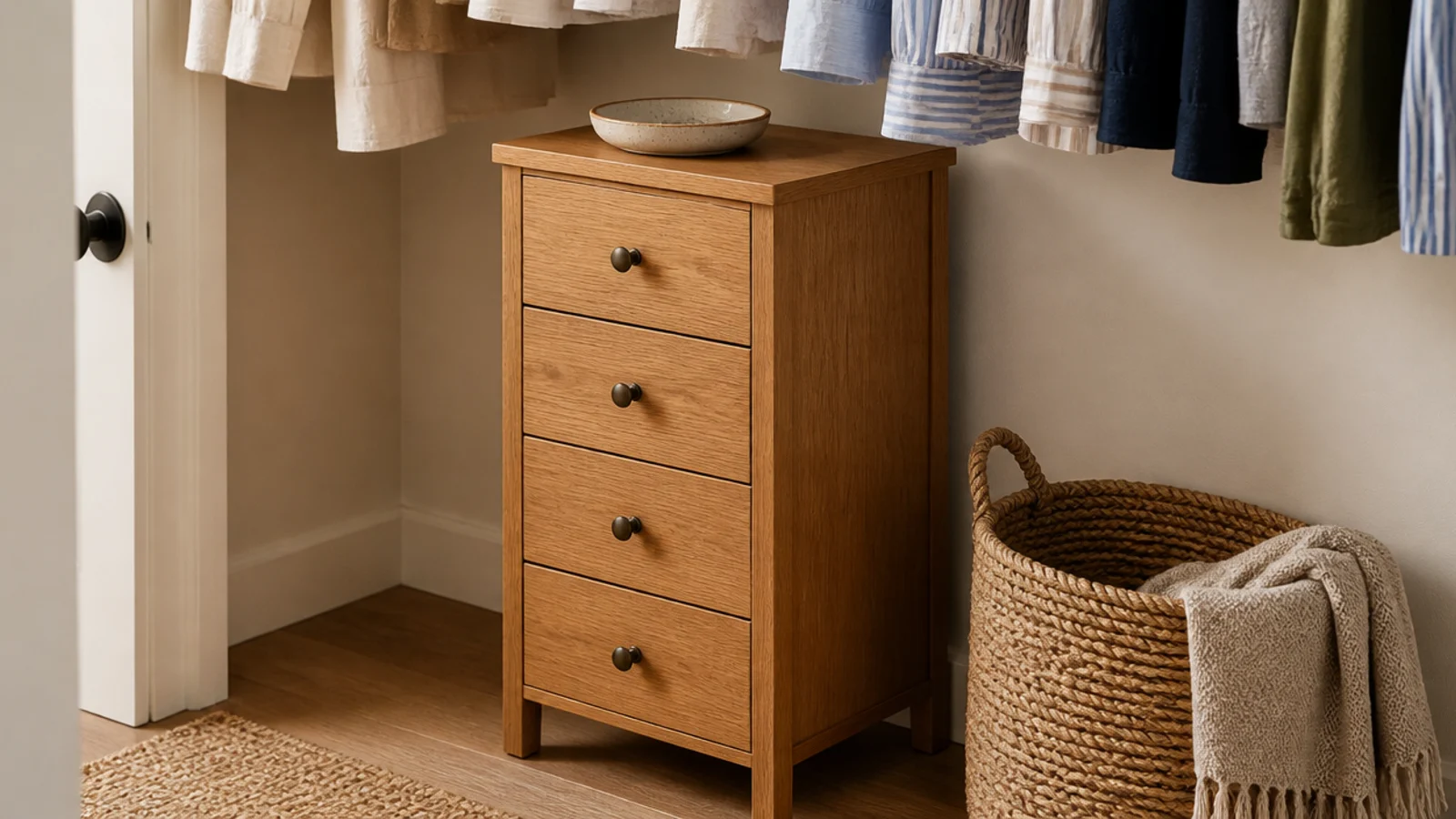
The lighter, cheaper cousin of the modular tower, and the right call under short hanging. Two or three shallow drawer units stacked to roughly 30 inches high, tucked beneath a rod at 42 inches.
Fourteen to eighteen inches wide keeps it out of the walkway. Look for full-depth drawer boxes rather than trays that stop short of the back, which is where cheap versions lose a third of their capacity. $80 to $200 depending on drawer count, and it needs no fixings at all.
6. The closet bench with storage
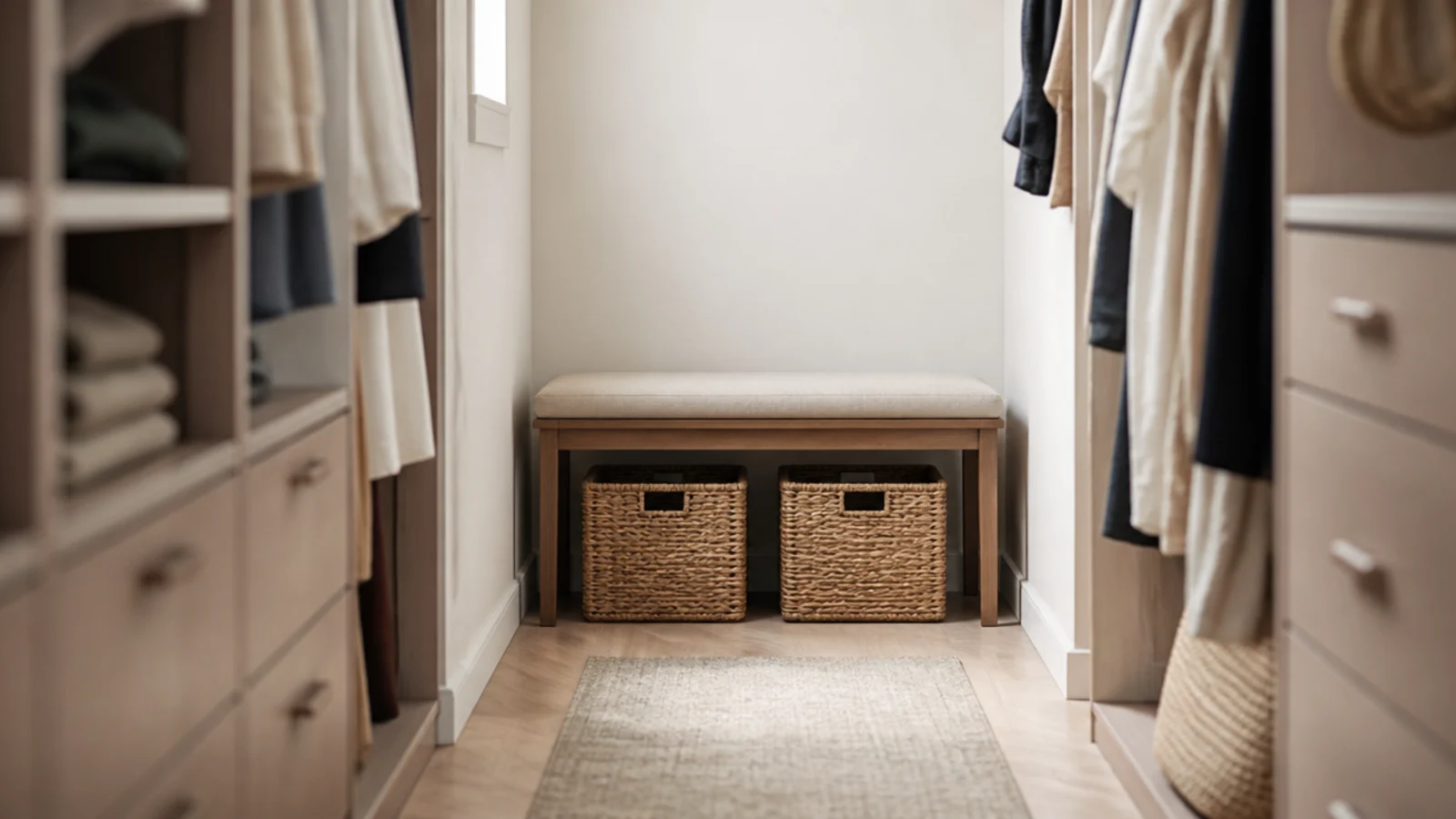
The alternative to an island, and in most small walk-ins the better buy. An island needs 36 inches of clearance on every side, so it only works past roughly ten feet of width. A bench needs none of that.
Eighteen inches deep by 36 to 48 long, against the end wall, with baskets or drawers underneath. You get the seat for buckling shoes and the surface for folding without touching the walkway. $120 to $300, and the full comparison sits in the island guide.
7. The rechargeable puck light set
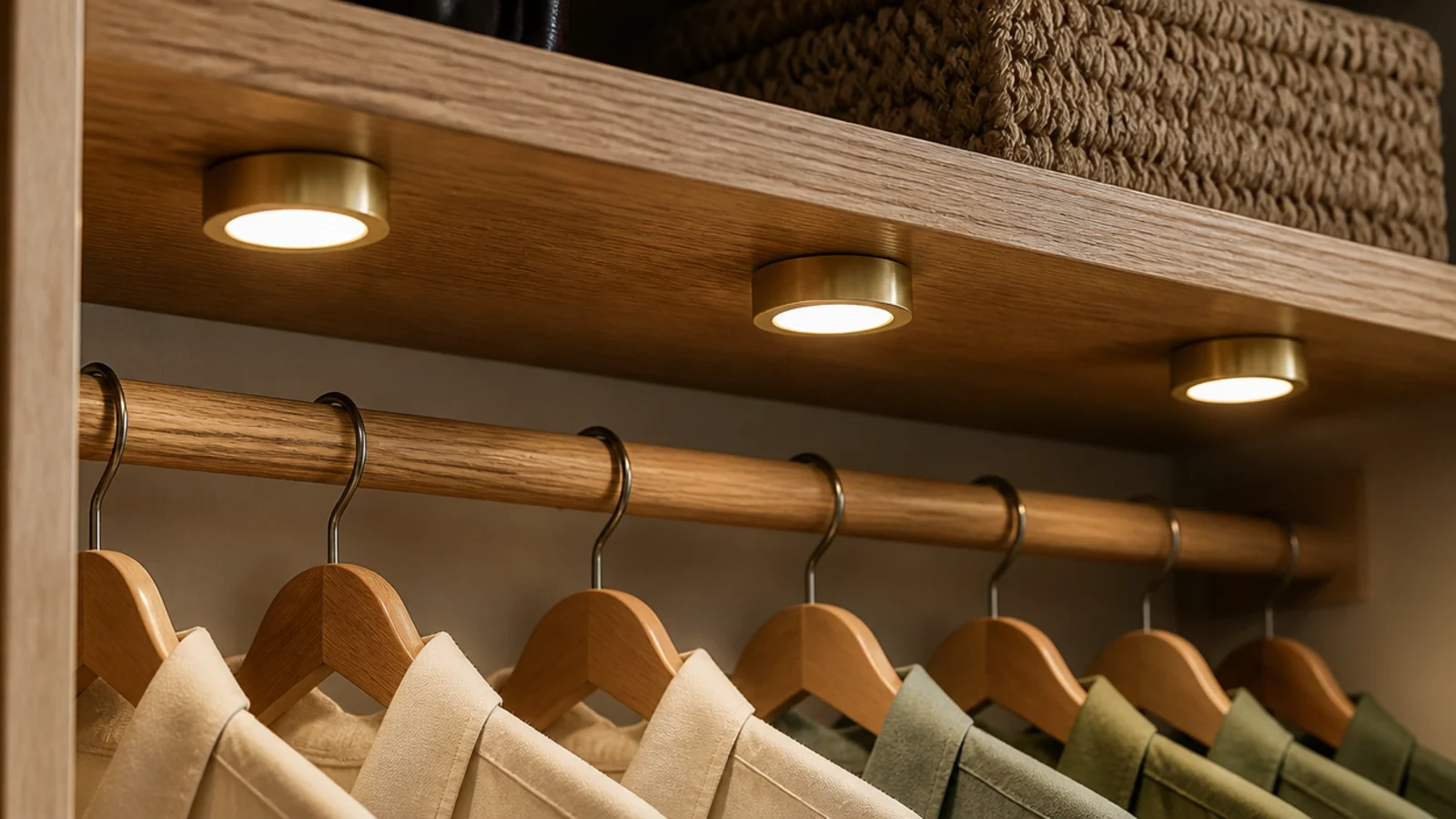
Closets are lit worse than any other room in the house, and this is the fix that needs no permission. Three magnetic pucks under the shelf above your main rod, aimed at the clothes rather than the floor.
Insist on 3000K or warmer with a CRI of 90 or above, or camel reads grey and navy reads black. Magnetic plates let you lift each puck off to charge without unsticking anything. About $20 to $40 a set. Hardwired fixtures are electrician work, not a weekend job.
8. The matching slim hanger set
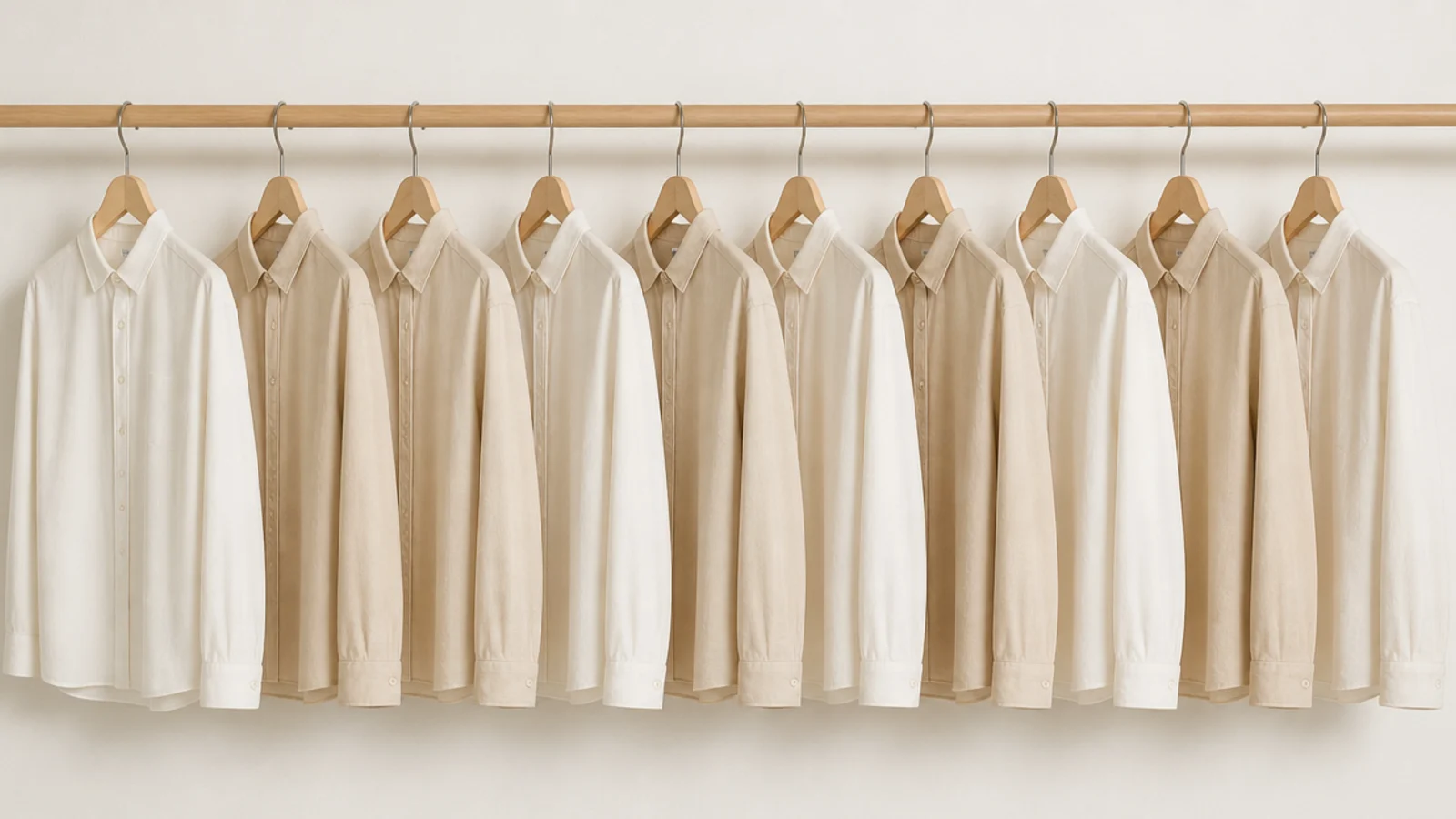
The cheapest thing here and the one I would buy first in any closet. Fifty slim velvet or natural wood hangers, replacing everything else on the rail.
Mixed hangers break the shoulder line, which your eye reads as clutter regardless of how tidy the clothes are, and bulky ones waste four to six inches per rod. Expect $20 to $35 for fifty. Keep one set of wide wooden hangers for coats and tailored jackets, which slim hangers genuinely cannot support.
What to Check Before You Buy
Measure the walkway before the wall. Any system's depth comes out of the middle of the room. Twenty-four inches of hanging depth on both sides plus 36 inches of walkway means the closet needs to clear 84 inches of width before you plan two hanging walls.
Check what the fixings actually are. Systems shipped with plastic drywall plugs are rated around 10 pounds each, and a loaded rail is 60 or more. Buy toggle bolts or find studs. This is the single most common failure and it happens slowly enough that nobody blames the anchors.
Read the shelf depth as the board width. Once the back edge meets a wall that is not quite square, you lose up to an inch of usable surface. Fourteen inches on the box is often thirteen in use, which still handles folded knits comfortably.
Decide about drawers before you buy anything else. Drawers are the most expensive component per cubic inch and the one renters cannot take with them. A freestanding tower and a built-in drawer bank hold identical amounts for very different money.
Look at what happens to knitwear. If the system is wire throughout, plan on adding shelf liners or a plywood top wherever folded clothes go, and budget for it now rather than discovering it in month two.
Confirm the closet is square before ordering a track system. In older houses it often is not, and a track fitted to a wall that leans gives you shelves that visibly slope. Hold a level against all four walls first.
Frequently asked questions
What is the best closet system for a renter?
A freestanding modular tower paired with a tension rod. Together they give you drawers, shelving and a second hanging line without a single hole, and both walk out with you at the end of the lease. Wall-mounted track systems hold more and cost less per foot, but they need real fixings into studs.
How much should a small closet system cost?
A double-hang rod kit and matching hangers land under $75 and fix the most common problem. A wall-mounted track system for a small walk-in runs $250 to $600 in parts. Freestanding towers with drawers sit between $150 and $400 each. Past about $1,200 for a closet this size you are buying installation rather than storage.
Are wood or wire closet systems better?
Wood or painted plywood for anything holding folded clothes, because wire shelving presses ridges into knitwear and lets small items fall through. Wire is fine for shoes, bags and utility storage, and it costs noticeably less per foot. Many good small closets mix the two, using wood at eye level and wire down low.
How much hanging space does a small walk-in closet need?
Plan roughly one linear foot of rod per twelve shirts on slim hangers, and keep 20 percent of every rod empty. A four-foot double-hang bay holds about 60 to 80 shirts and trousers. Add one long-hang bay at 66 to 70 inches of drop for dresses and coats, usually 30 to 36 inches wide.
Do I need to hire someone to install a closet system?
For rods, shelves and freestanding pieces, no. Hire out anything electrical, and consider help if the closet is out of square, which is common in older houses and the reason track systems come out crooked. A hardwired light or a new switch is electrician work regardless of how confident you feel with a drill.
Buy for the wall you have and the lease you are on, because depth and fixings decide whether a system lasts and everything else is arrangement you can change on a Sunday. Start with a double-hang kit and matching hangers under $75, then decide whether you genuinely need more. The budget walk-in closet guide covers the cheap end in order of value, and if shoes are the real problem, the best shoe storage picks covers those separately. Save the pin for the next shopping trip.
Want more like this? Browse all 15 small walk-in closet ideas guides — they all use the same measurements and budget tiers.
Pin it for later
Save this to your Small Walk-In Closet Ideas board
Pin it now so it is waiting for you when the tape measure comes out — and so the next person hunting for this idea can find it too.
Save this pinKeep going
More ideas worth saving while you have the tape measure out.