Vanity Organization · Listicle
30 Stylish Vanity Organization Ideas to Copy Now

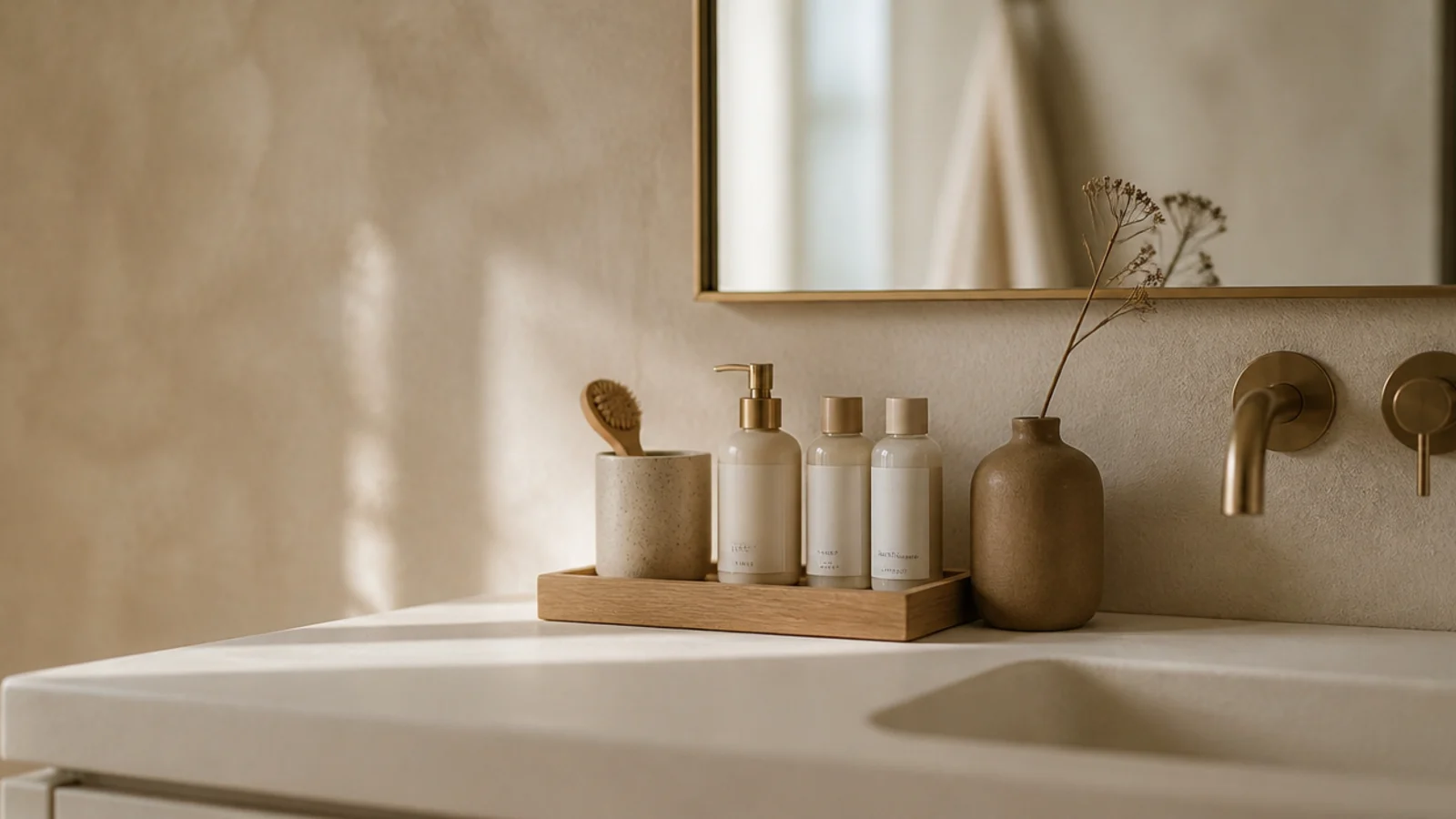
Minimalist vanity organization is not a shopping category, which is the part most guides get backwards. Buying a matching set of bins for thirty products you do not use is just tidier clutter. Every idea below is either a decision, a measurement or one small purchase that replaces three — and the ones that changed my own vanity most were free. Copy the first five and the rest get easier.
In this guide32 sections — tap to openHide
- 1.What minimalist vanity organization actually asks of you
- 2.Empty the whole thing before you decide anything
- 3.Run the seven-day test
- 4.Daily on the counter, everything else in a drawer
- 5.Lay the counter out in routine order
- 6.One tray with a raised lip
- 7.One weighted cup, bristles-up
- 8.Cull by date, not by feeling
- 9.One in, one out for colour
- 10.Decant the bulk packaging
- 11.Recycle the boxes
- 12.Measure the drawer inside, not the front
- 13.Shallow for flat, deep for bottles
- 14.One layer per drawer, nothing stacked
- 15.File palettes upright like books
- 16.Anything that can stand up, should
- 17.Two materials, plus glass
- 18.Hide the loud packaging
- 19.Leave a third of every drawer empty
- 20.One lidded box for backstock
- 21.Keep actives out of the sun
- 22.Buy light, not more storage
- 23.One mirror, not three
- 24.Hang the tools inside a door
- 25.One cord, coiled and clipped
- 26.A maybe box with a date on it
- 27.Buy refills, not new formats
- 28.Skip the sets and multipacks
- 29.Give samples a one-month clock
- 30.Wipe the surface every week
- 31.Reset twice a year and stop
- 32.Mistakes to Skip
What minimalist vanity organization actually asks of you
It asks you to separate the daily from the occasional, and then to hide the occasional properly.
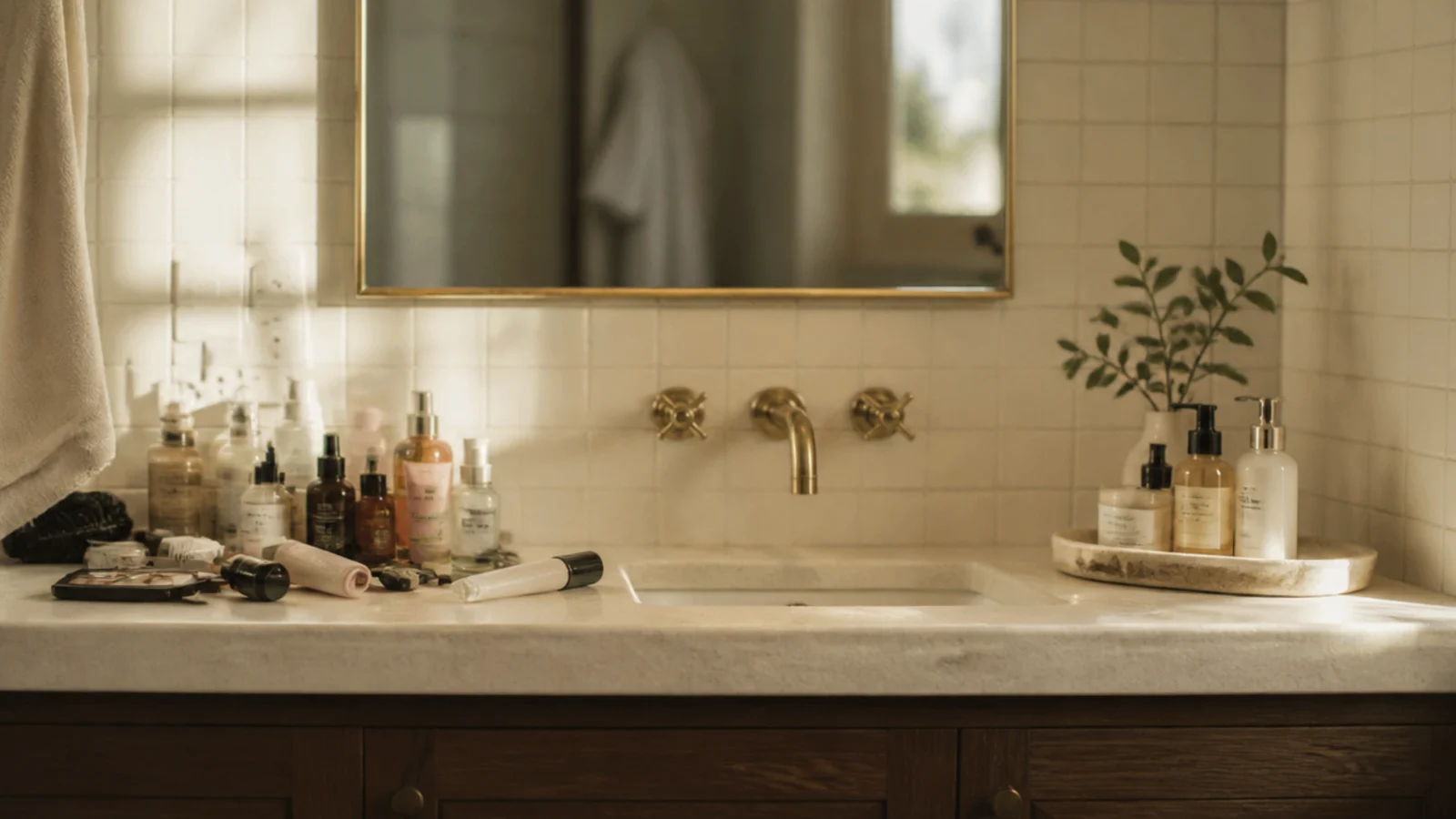
A counter holds about five objects comfortably and eight at a stretch, counting a loaded tray as one. Everything used less than daily belongs behind a drawer front. That single split does more than any product, because visible quantity — not actual quantity — is what makes a vanity feel chaotic.
Then lay out what stays in routine order: cleanse, treat, colour, left to right. Categories look neater in a photograph and make you open three containers to finish one step.
For the drawer, measure the interior rather than the drawer front, and subtract an eighth of an inch of clearance. Two to three inches of insert depth holds flat palettes and compacts in one layer; four to five inches holds bottles, pumps and droppers standing upright, which is the only way they should ever be stored.
Budget tiers: $ is under $20 — a tray, a cup, two canisters, a pack of felt pads. $$ is $20 to $70 for a measured insert set or lighting. $$$ is $70 and up, which at this level should be light or a mirror rather than more containers.
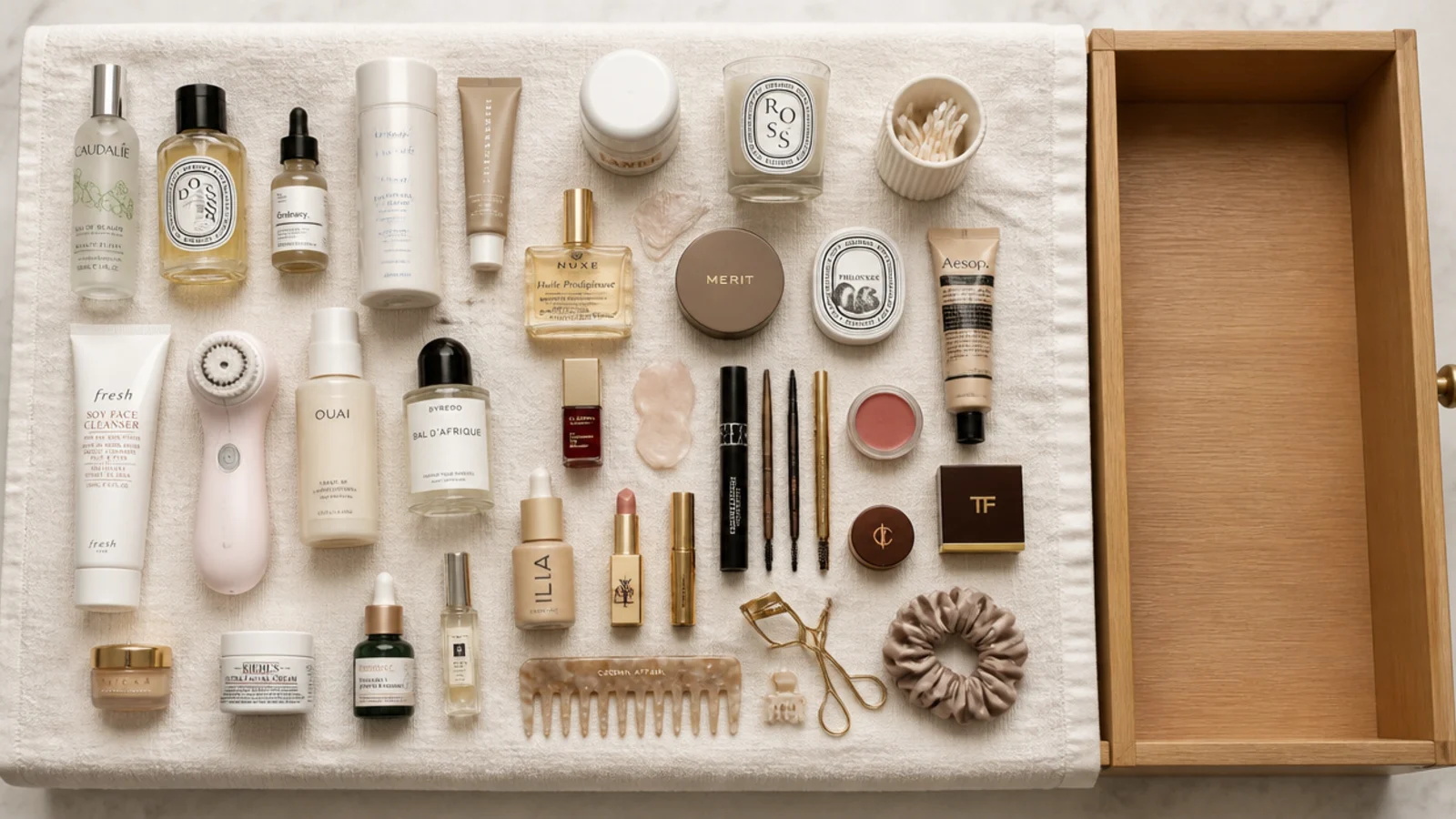
1. Empty the whole thing before you decide anything
Take every product out onto a folded towel. Editing in place always fails, because you end up defending arrangements you already made.
A bare counter and an empty drawer change what you are willing to put back. Allow ninety minutes the first time; almost all of it is decisions, not tidying.
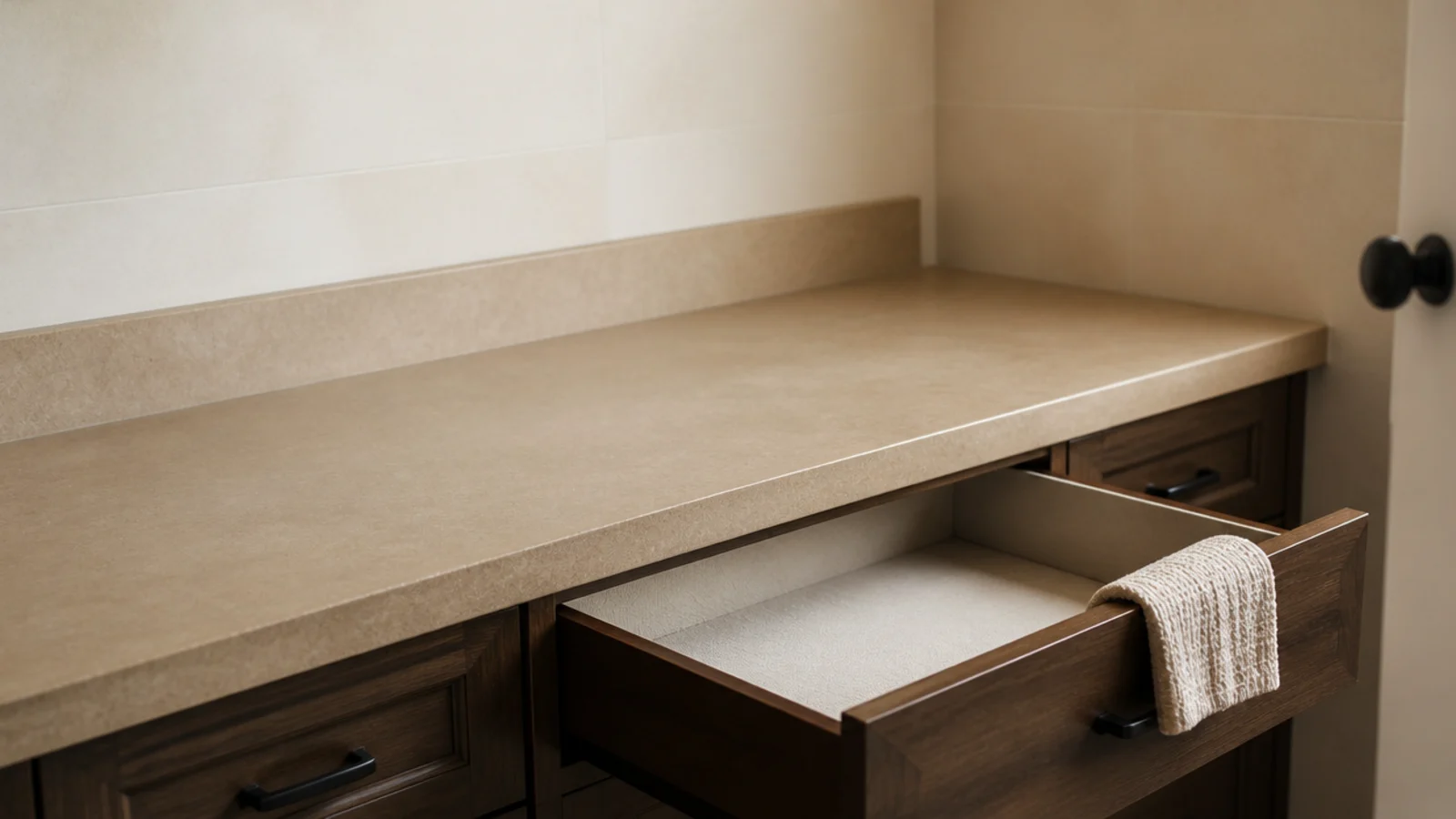
2. Run the seven-day test
For one week, move every product you actually touch to the left side of the counter. Whatever is still on the right on day seven is not part of your routine.
That group is the honest candidate for the drawer, the maybe box or the bin. It costs nothing and it beats every decluttering rule I have tried.

3. Daily on the counter, everything else in a drawer
The counter is display and daily use. The drawer is capacity. Confusing the two is the entire problem.
Keep the daily five out — cleanser, treatment, moisturiser, one colour item, one tool. Everything weekly, seasonal or aspirational goes in. You lose nothing and the surface stops looking like a shelf.

4. Lay the counter out in routine order
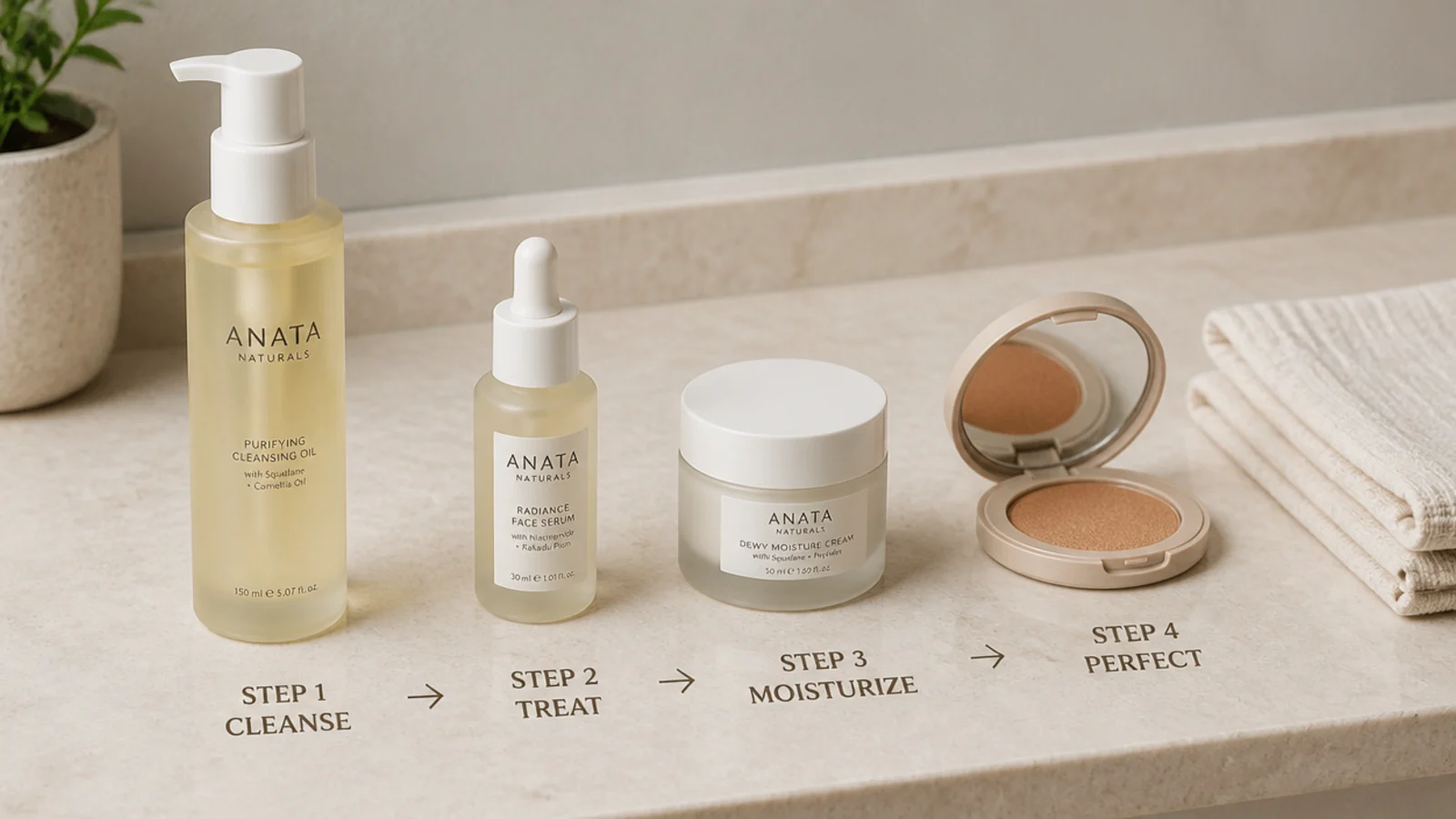
Cleanse, treat, colour, from left to right. One direction, no backtracking, nothing picked up twice.
It sounds trivial until you do it for a week. Sorting by category — all skincare here, all makeup there — is how a step ends up living in three places, and it is the most common reason a tidy vanity stops being tidy.
5. One tray with a raised lip
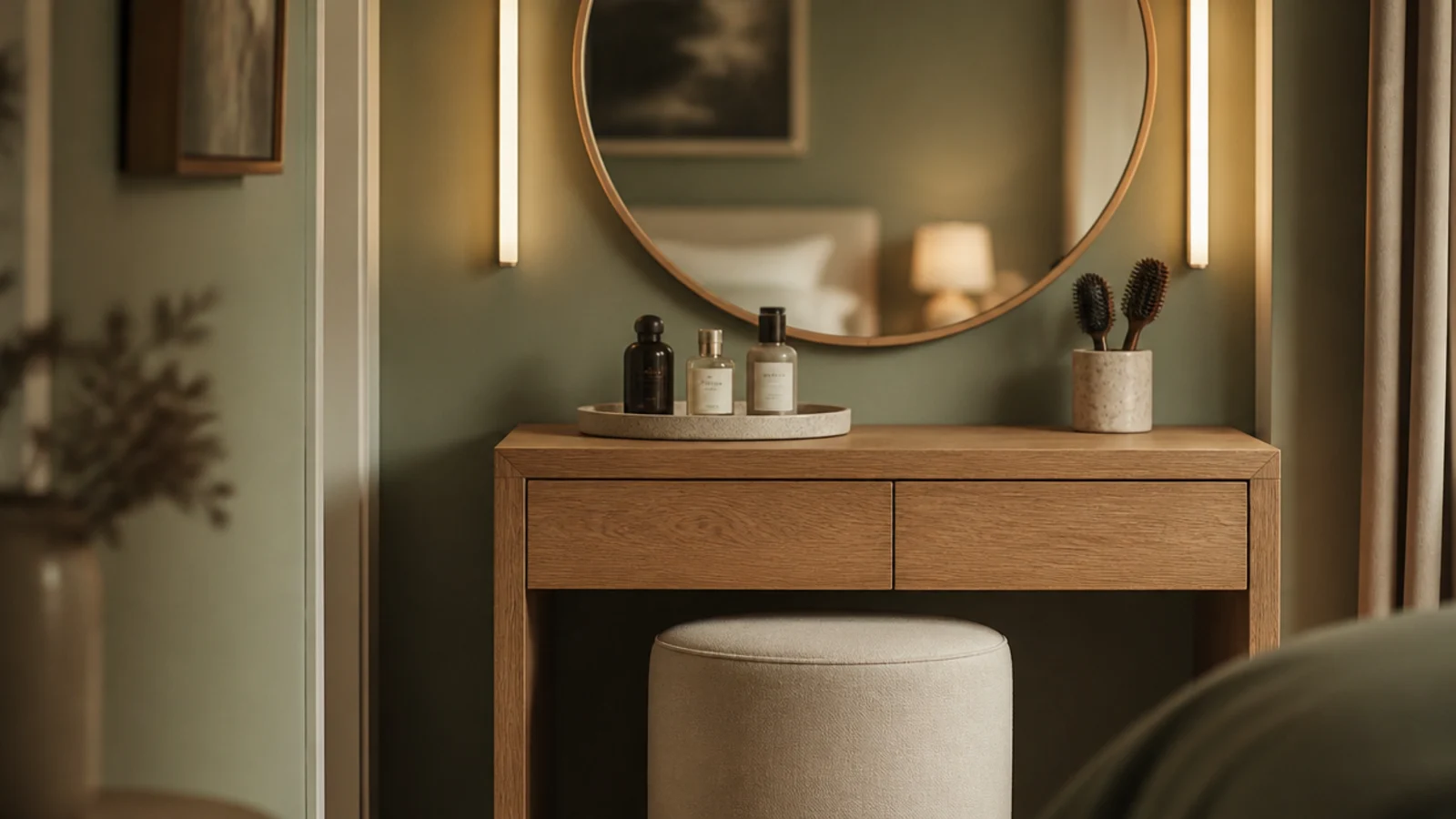
A tray about 12 by 8 inches with a quarter-inch lip turns five separate objects into one composition and contains a tipped serum instead of letting it run into the counter seam.
Wiping the surface becomes lift, wipe, replace. Stoneware, oak or a marble offcut, $12 to $30 ($).

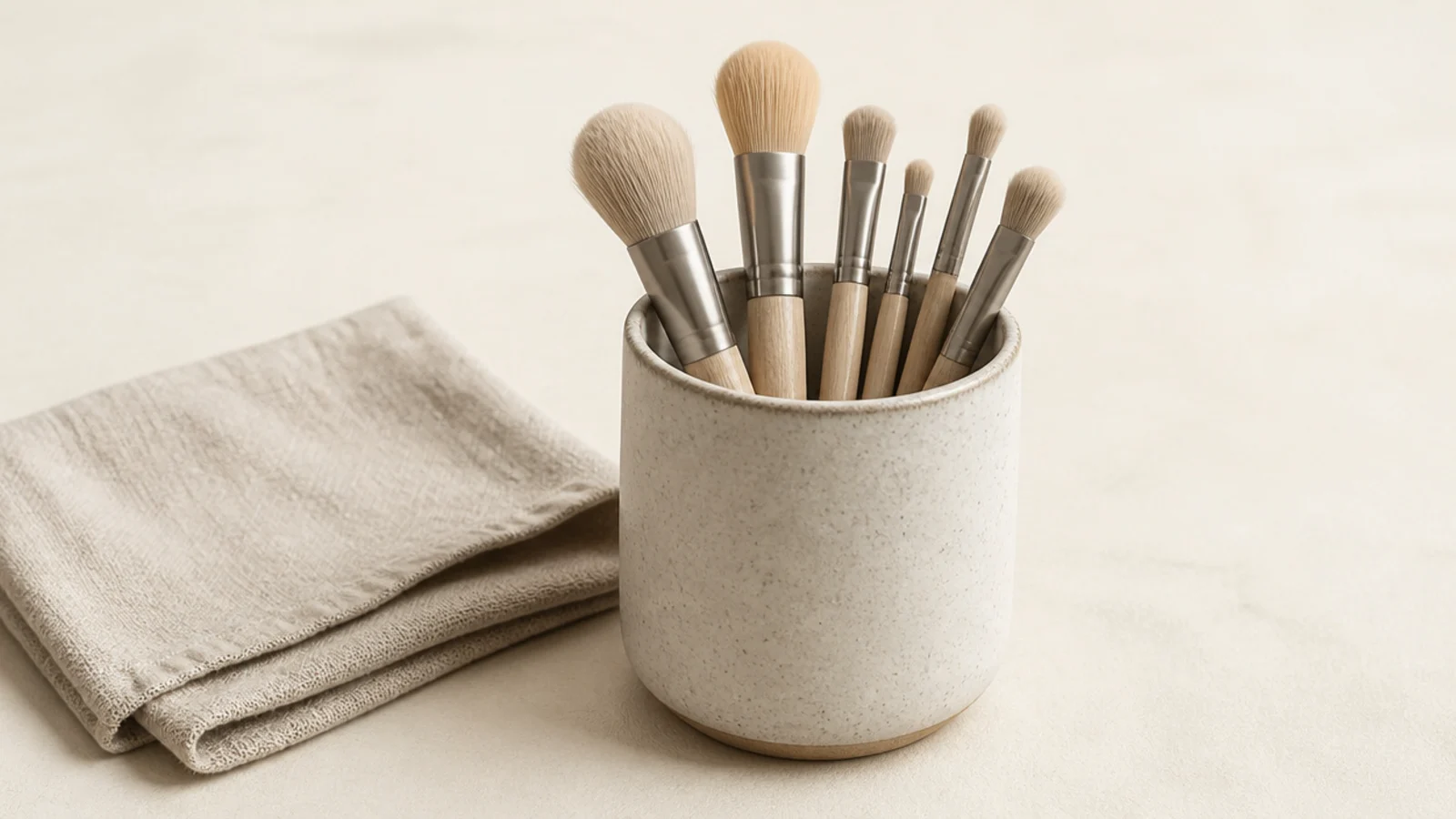
6. One weighted cup, bristles-up
Brushes must stand bristles-up or they splay permanently, and a light cup tips as soon as they lean together.
Stoneware, marble or thick glass, about three inches across. Six good brushes that dry properly beat twenty crammed in a jar. $10 to $22 ($).
7. Cull by date, not by feeling
Dates decide so sentiment does not have to. Mascara at three months, liquid foundation at six to twelve, powders at about two years.
Anything separated, discoloured or smelling different goes regardless of date. Ten minutes twice a year frees more space than any organizer sold to solve the same problem.

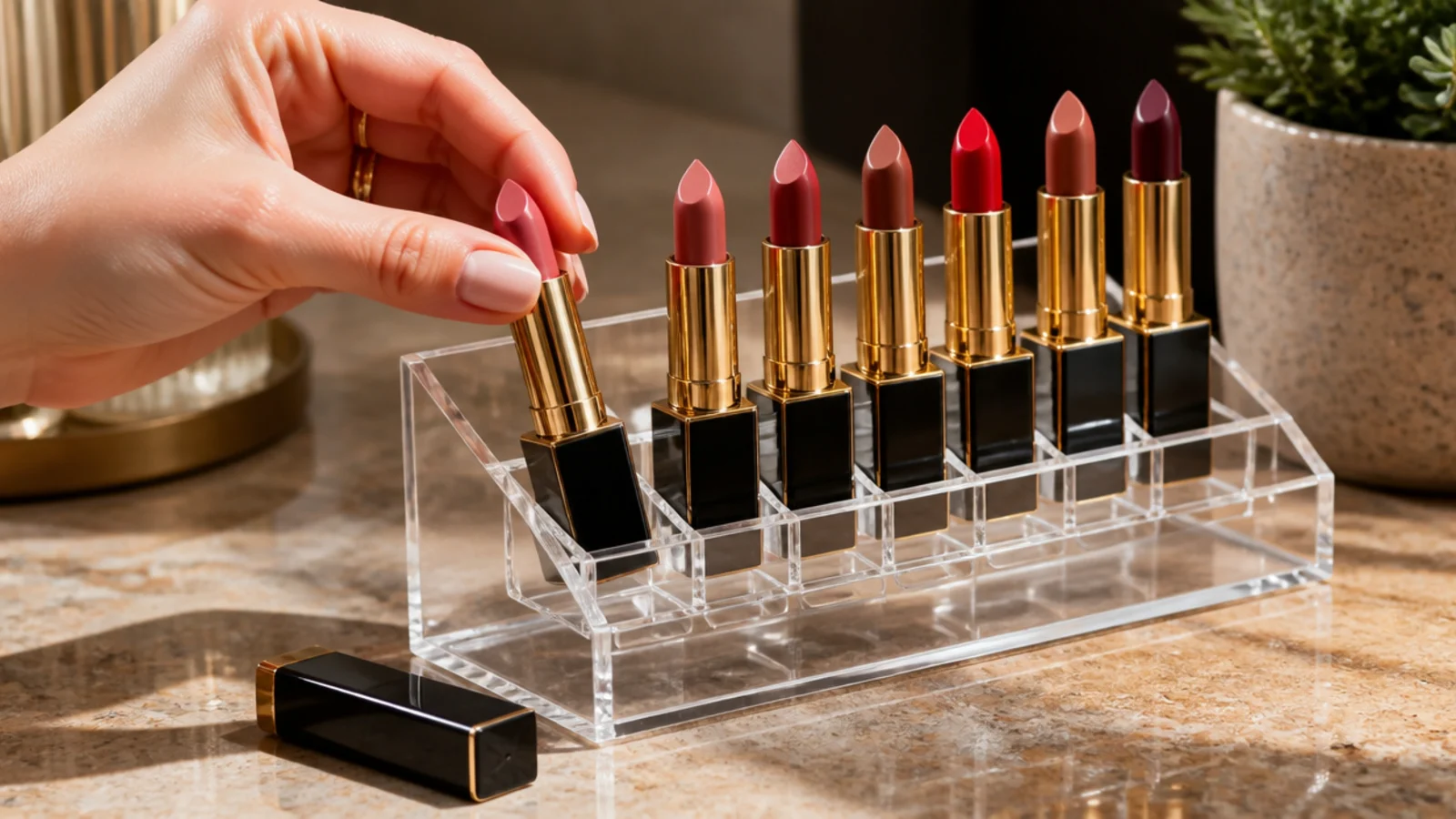
8. One in, one out for colour
Skincare gets used up; colour products do not. A lipstick lasts years and a collection grows silently.
So cap the category rather than the vanity. A new shade arrives only as an old one leaves, and the tier stays at the size that fits your drawer. This is the rule that keeps a reset from unwinding.
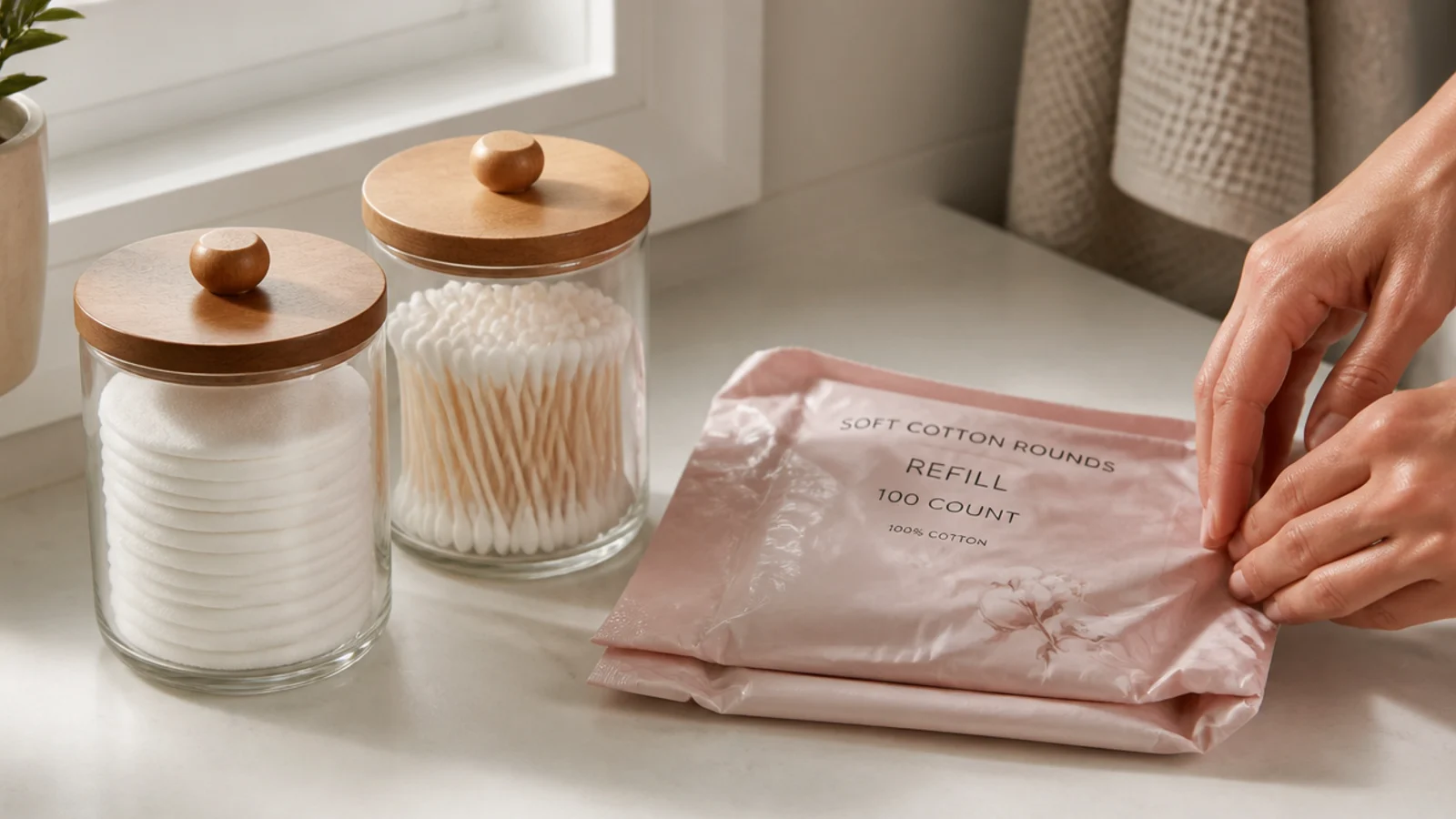
9. Decant the bulk packaging
Refill bags will not stand up, will not stack and take a shelf between them. Two glass canisters about 4 inches tall hold a month of cotton rounds and swabs.
Keep the bulk pack elsewhere and refill from it. Around $8 to $16 each ($), and it reads as styling while genuinely being a space decision.
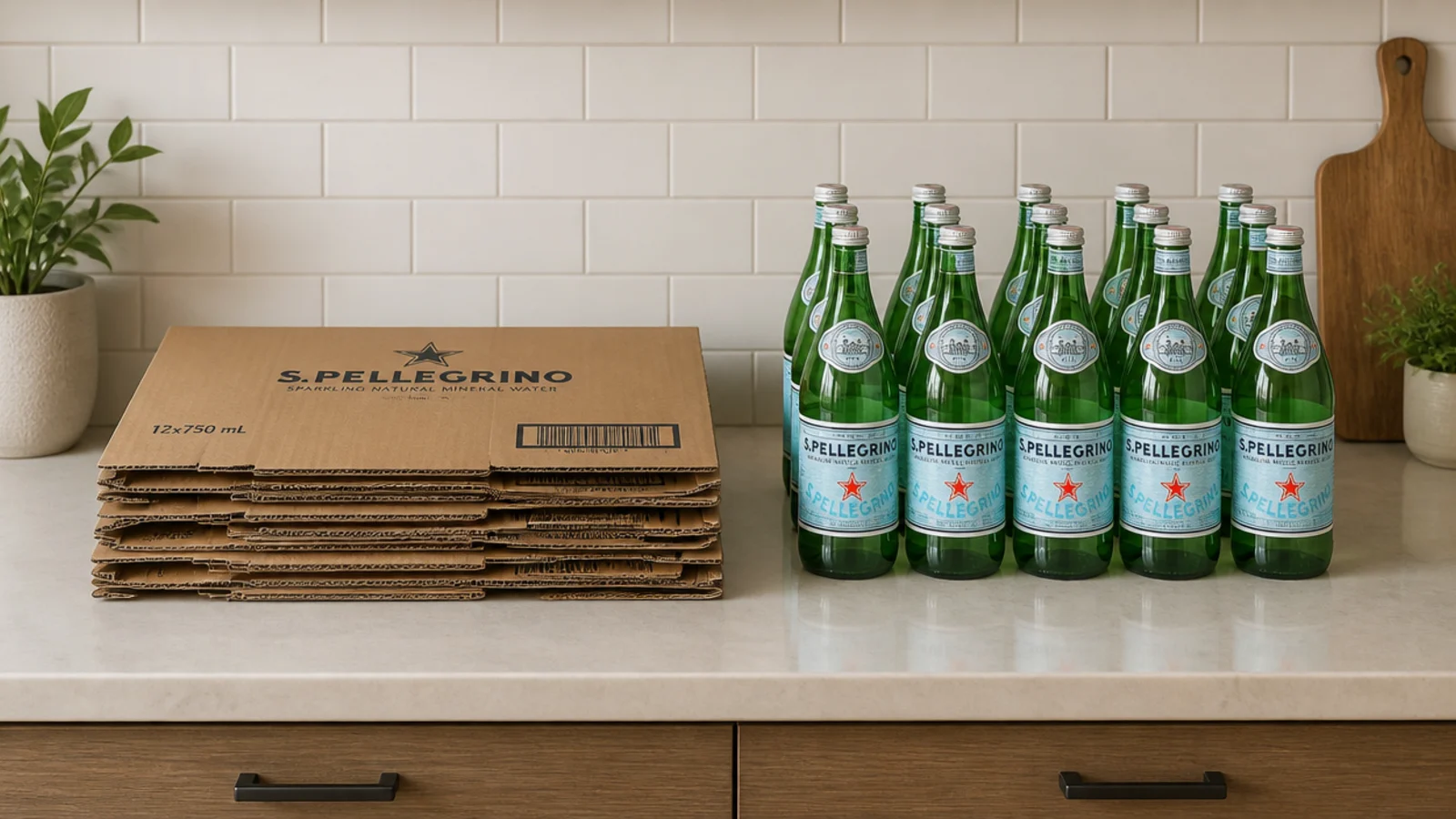
10. Recycle the boxes
Cartons are pure bulk. A drawer holding twelve boxed products holds maybe seven once the boxes go.
Keep the box only where it is doing a job — protecting a fragrance from light, or holding a warranty. Flatten the rest on the day the product opens, before they become a decision for later.
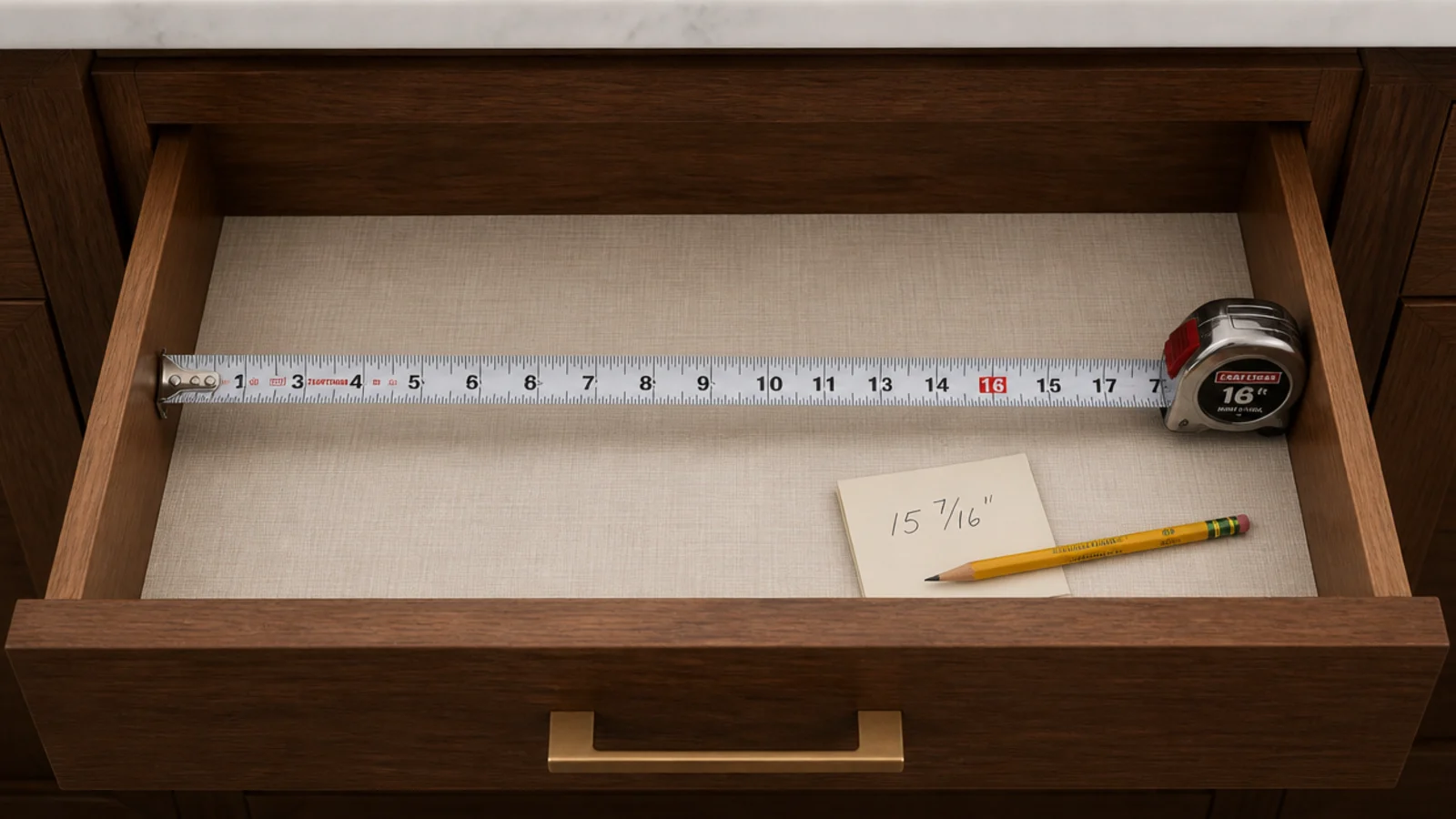
11. Measure the drawer inside, not the front
Inserts are sold by their outside dimensions and drawers are described by their outside width, so buying to the label is how people end up with a set that stops the drawer closing.
Measure the internal width and depth, subtract an eighth of an inch, shop to that number. Five minutes saves a return.
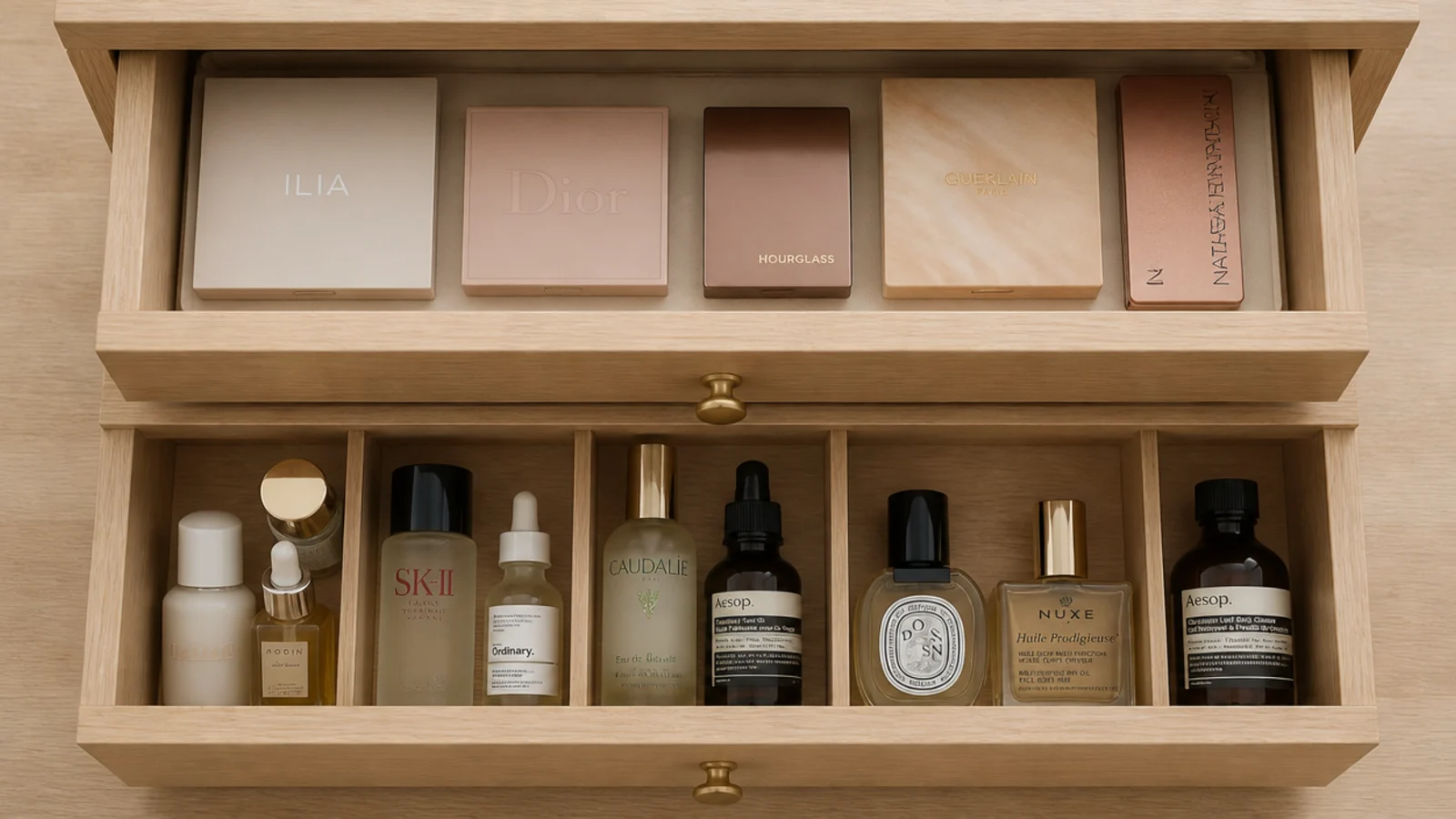
12. Shallow for flat, deep for bottles
Two to three inches of insert depth for palettes, compacts and pressed powders. Four to five inches for serums, pumps and droppers standing upright.
Sort by height rather than by product type and the drawers fill themselves correctly. It is the one rule that makes fitted inserts worth the money. A measured set runs $20 to $45 ($$).
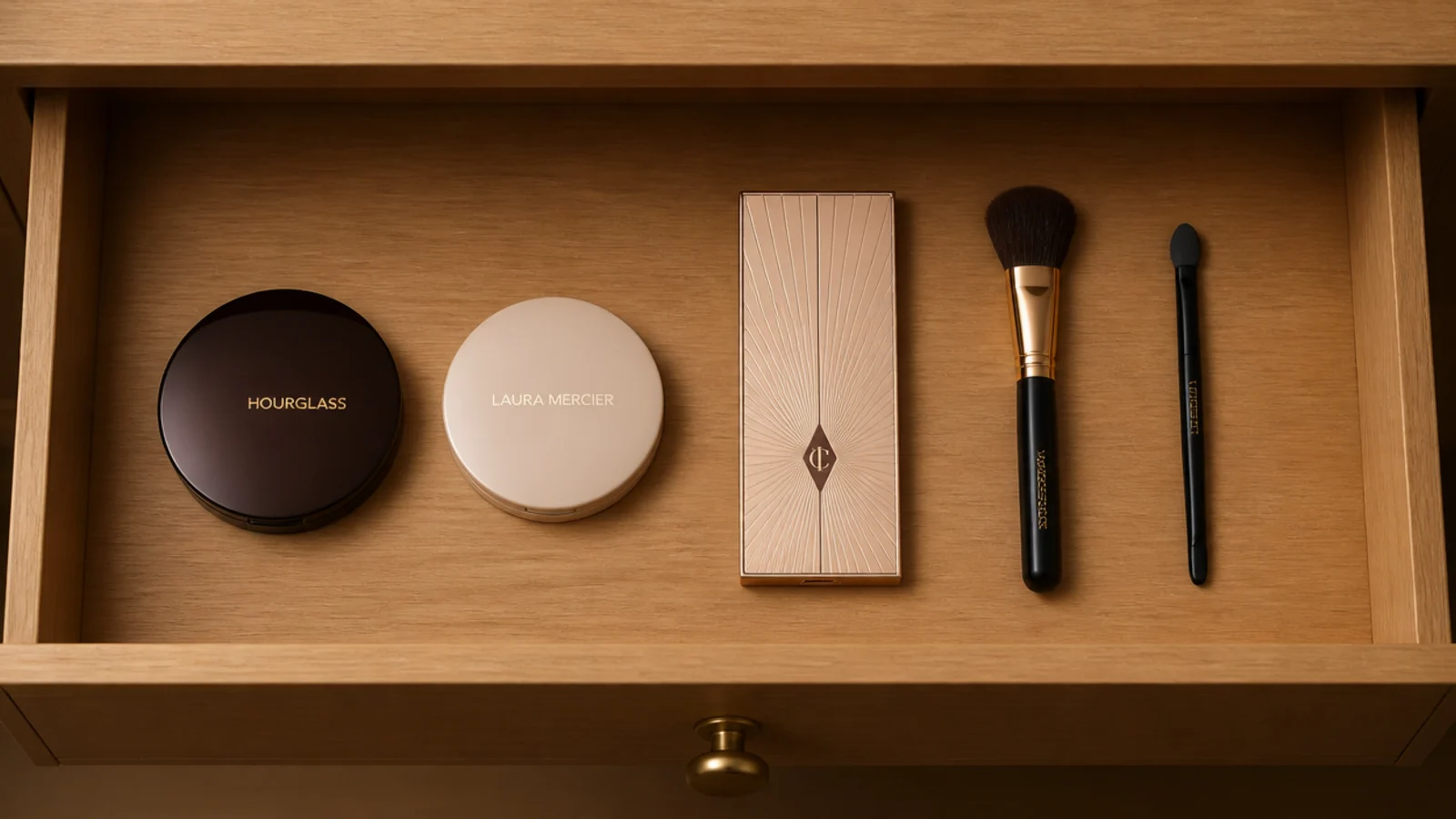
13. One layer per drawer, nothing stacked
If something is stacked on something else, only the top one gets used. That is true of palettes, compacts and folded cloths equally.
Give every drawer a single visible layer. If a layer will not fit, the answer is fewer items rather than a taller container. More on this in vanity drawer organization.
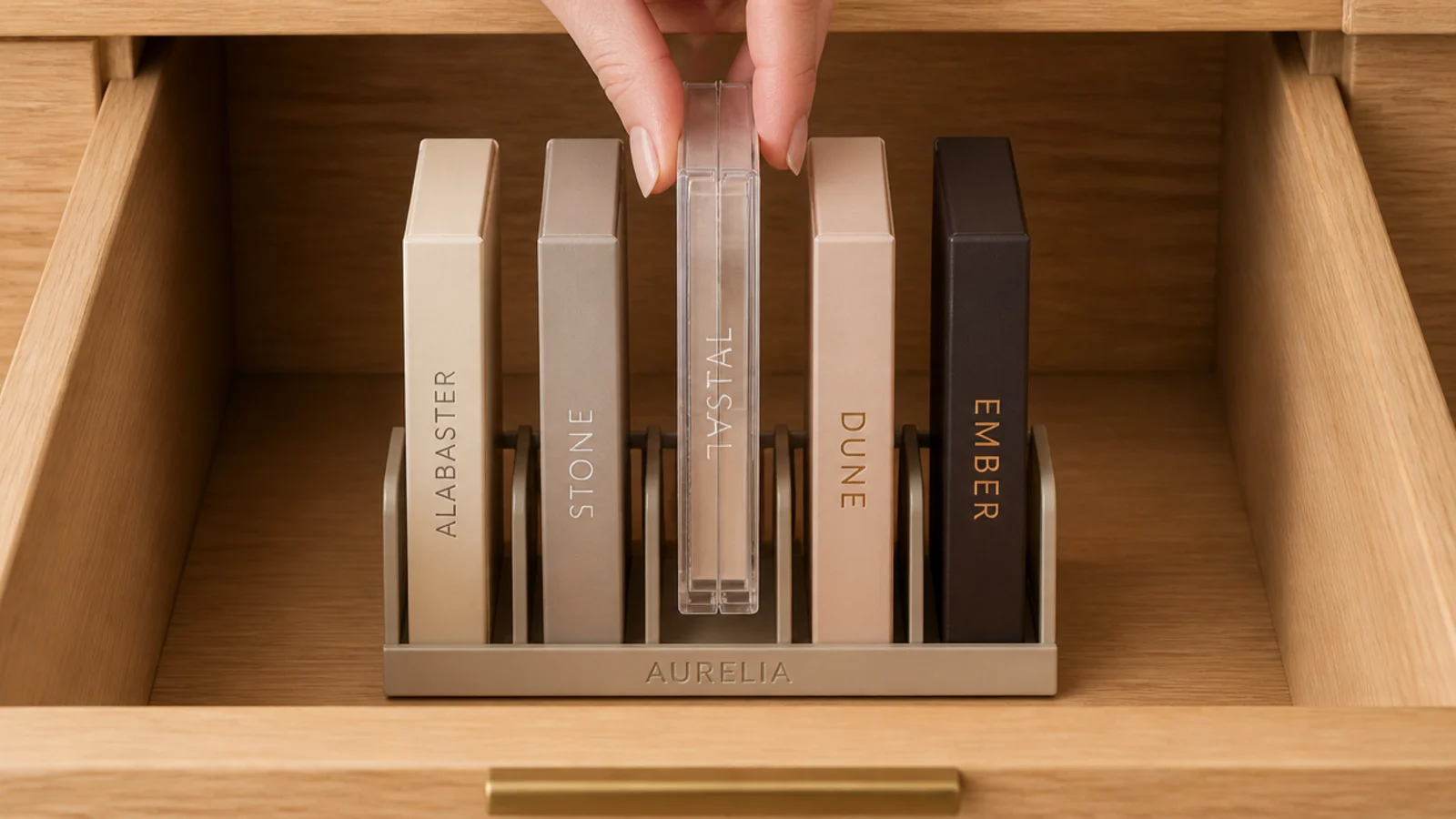
14. File palettes upright like books
Stacked palettes are a system for using only the top one. Filed on edge, you can read every spine and pull one without dismantling a pile.
Measure your thickest palette and add a sixteenth of an inch for the slot. Six slots covers most collections honestly, $15 to $30 ($$).
15. Anything that can stand up, should
Pumps and droppers stored on their side weep into the drawer over weeks and separate in the tube.
Upright is not a styling preference; it is how the formula stays intact. Give bottles a four-to-five-inch compartment and let them stand. Nothing that fits vertically should ever be laid flat.

16. Two materials, plus glass
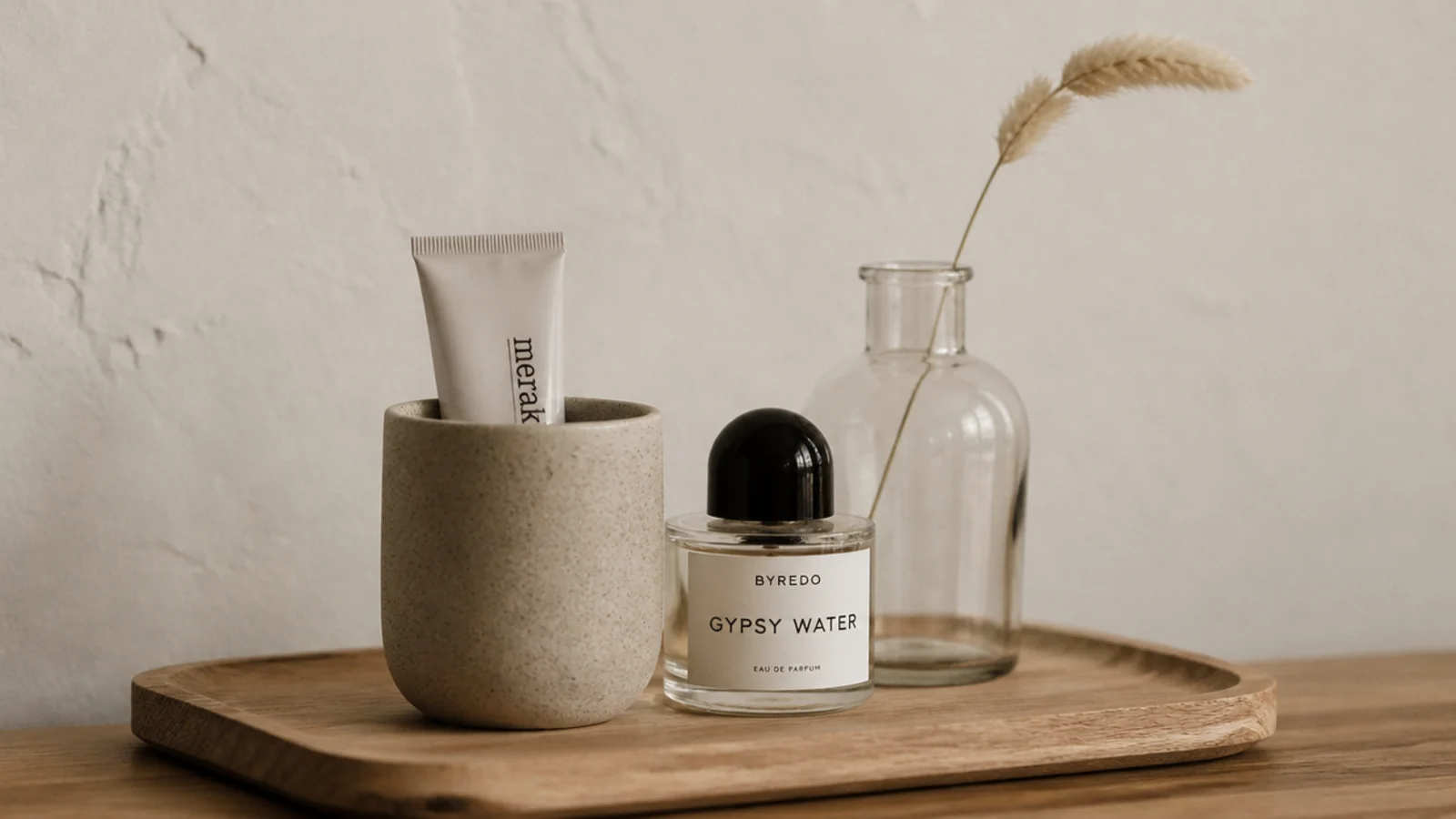
A minimal vanity that still feels warm usually runs on two finishes — oak and stoneware, or brass and linen — plus whatever glass the products arrive in.
Three or more finishes read as busy even when the count is low. Keep clear acrylic inside the drawer where daylight is not showing every fingerprint.
17. Hide the loud packaging
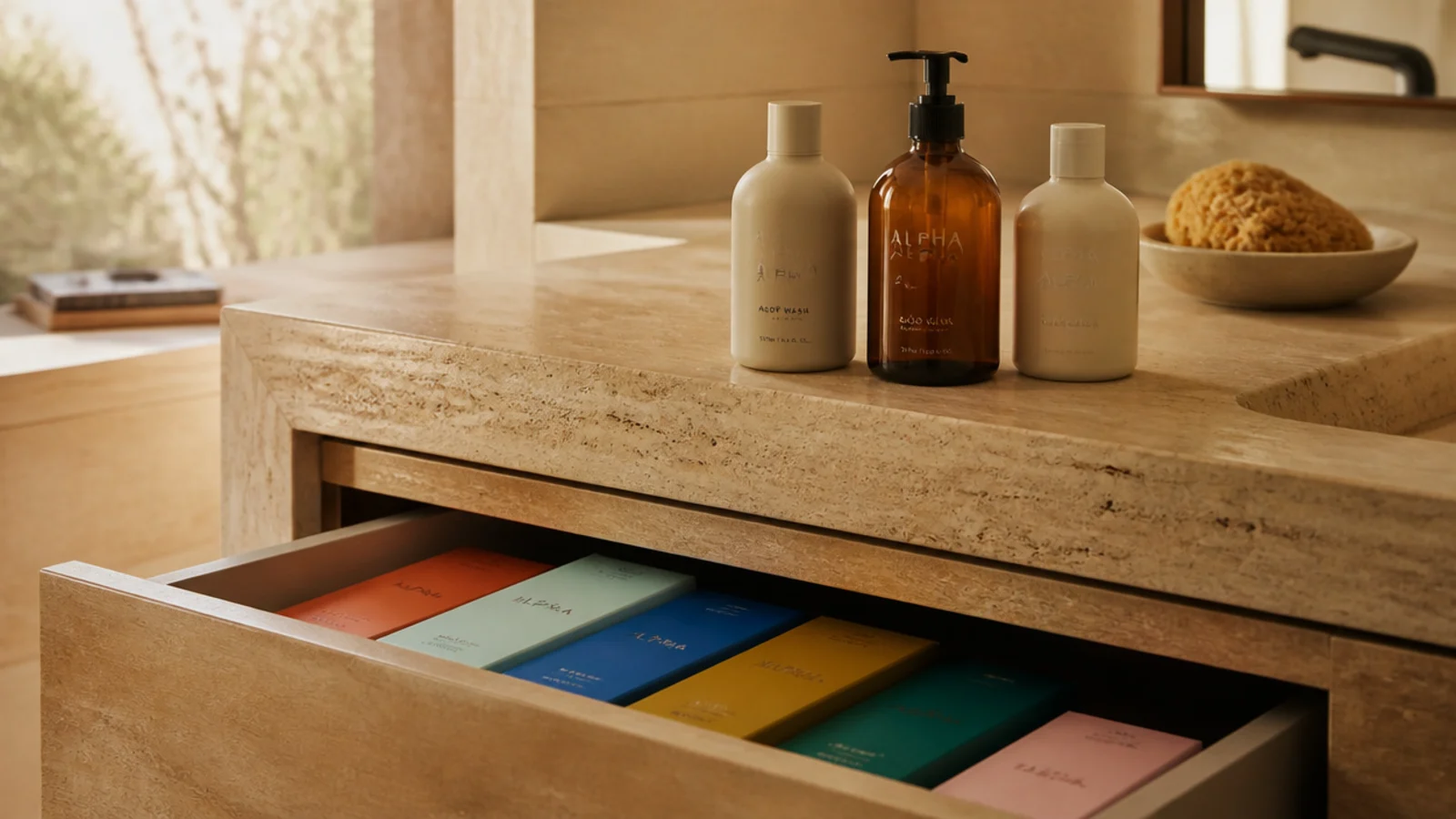
Half of visual clutter is branding. Three bright tubes will out-shout ten muted bottles every time.
Keep the loud packaging in the drawer and the quiet packaging out, regardless of which you use more often. Or decant the offenders into plain glass. This costs nothing and does more than most purchases.
18. Leave a third of every drawer empty
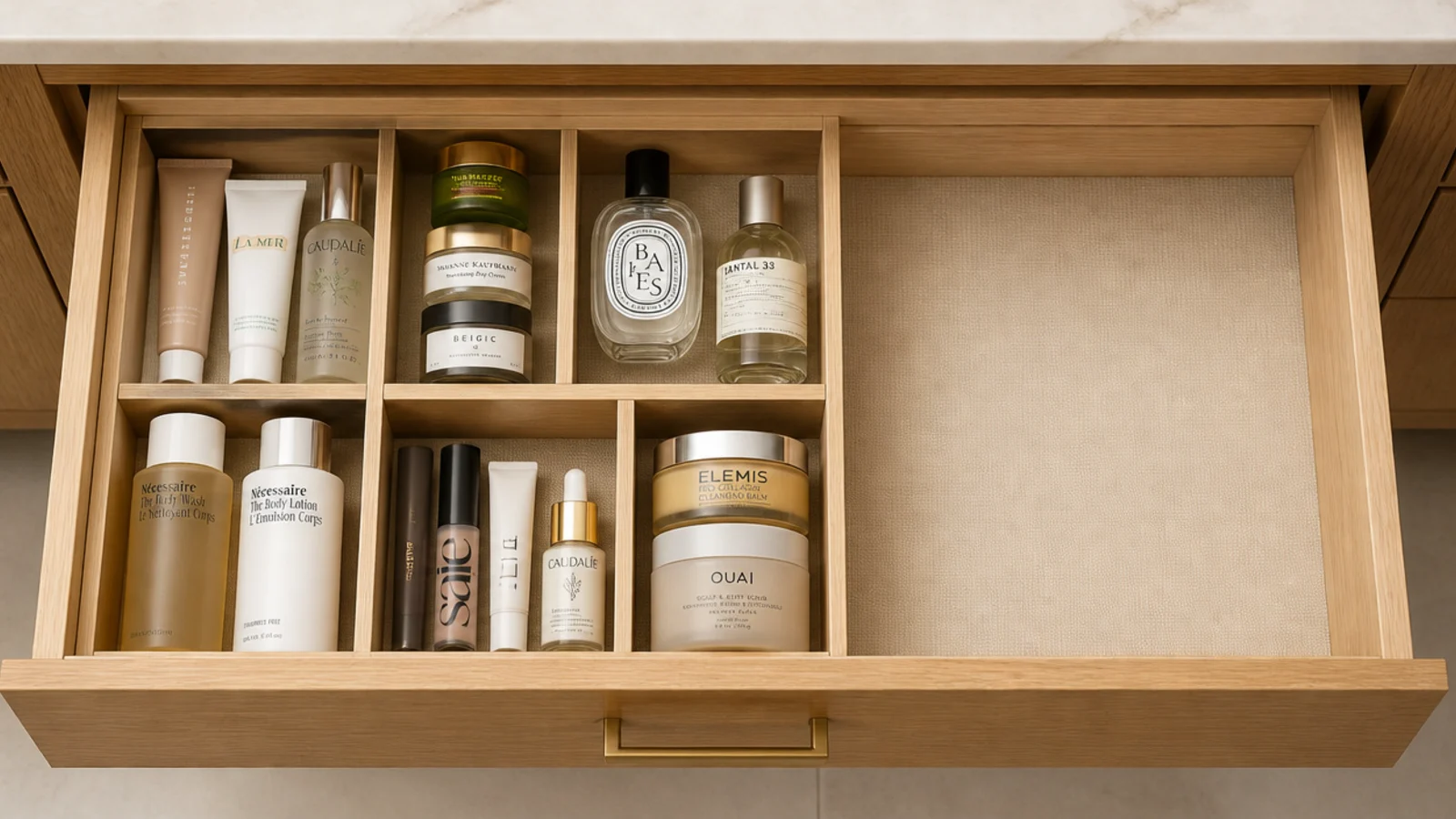
A full drawer has nowhere to absorb a new purchase, so the new thing lands on the counter and the counter starts over.
Aim for two thirds full. That empty third is also what makes a drawer pleasant to open, which sounds soft and is exactly why the system survives past week three.
19. One lidded box for backstock
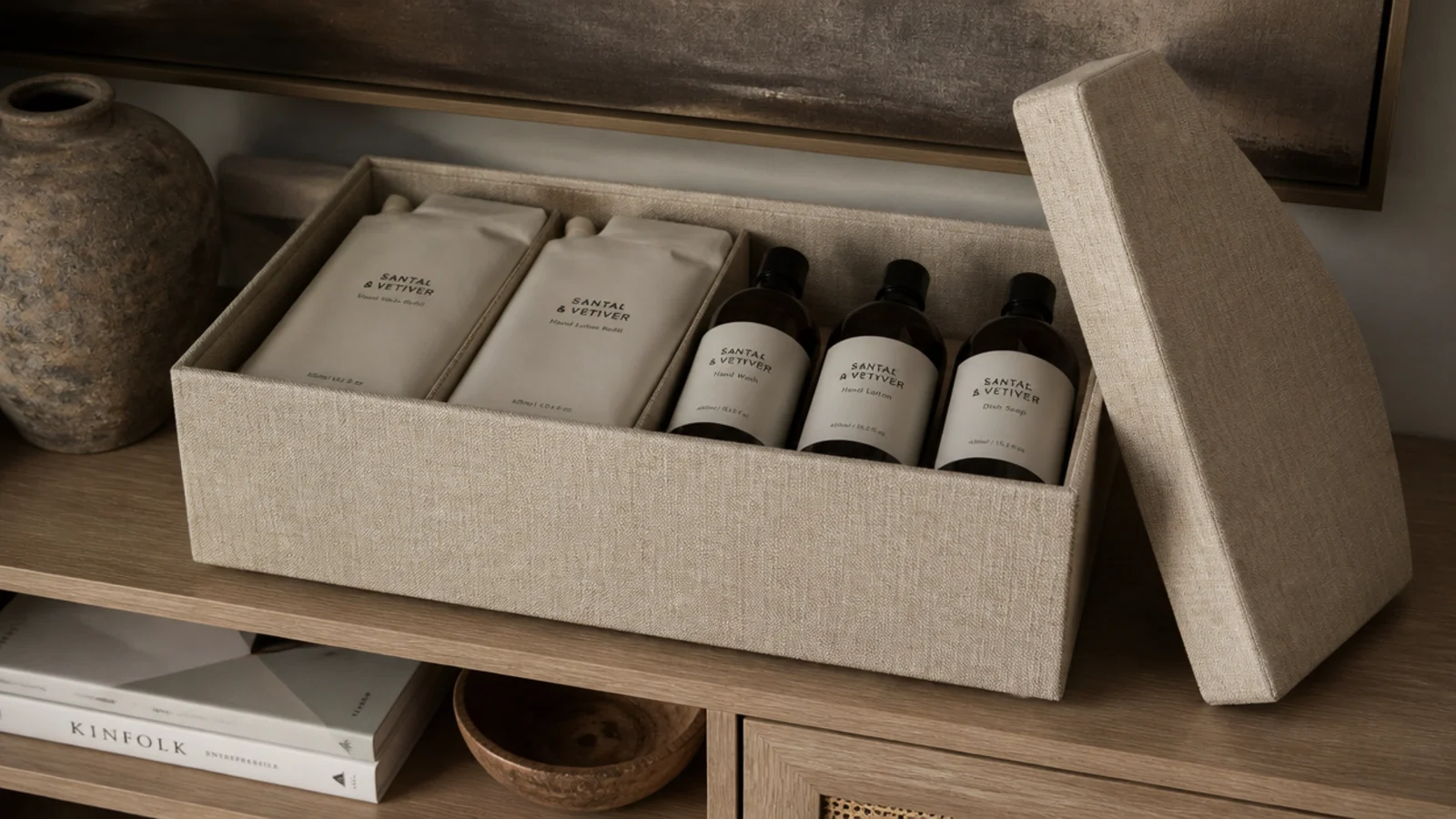
Every unopened backup goes in one box, roughly shoebox sized, stored away from the window.
Nothing new gets bought until the box is checked. Heat and sunlight age unopened products just as fast, so a warm windowsill is the worst spot for reserves. Linen-covered, $12 to $25 ($).
20. Keep actives out of the sun
Retinol, vitamin C and most acids break down under light and warmth, which is why they arrive in amber or opaque bottles.
A closed drawer, standing upright, is all they need. Leaving them on a bright counter is the most expensive habit on this list — it quietly wastes the products you spent the most on.

21. Buy light, not more storage
If a vanity feels wrong after editing, the problem is nearly always the lighting rather than the storage.
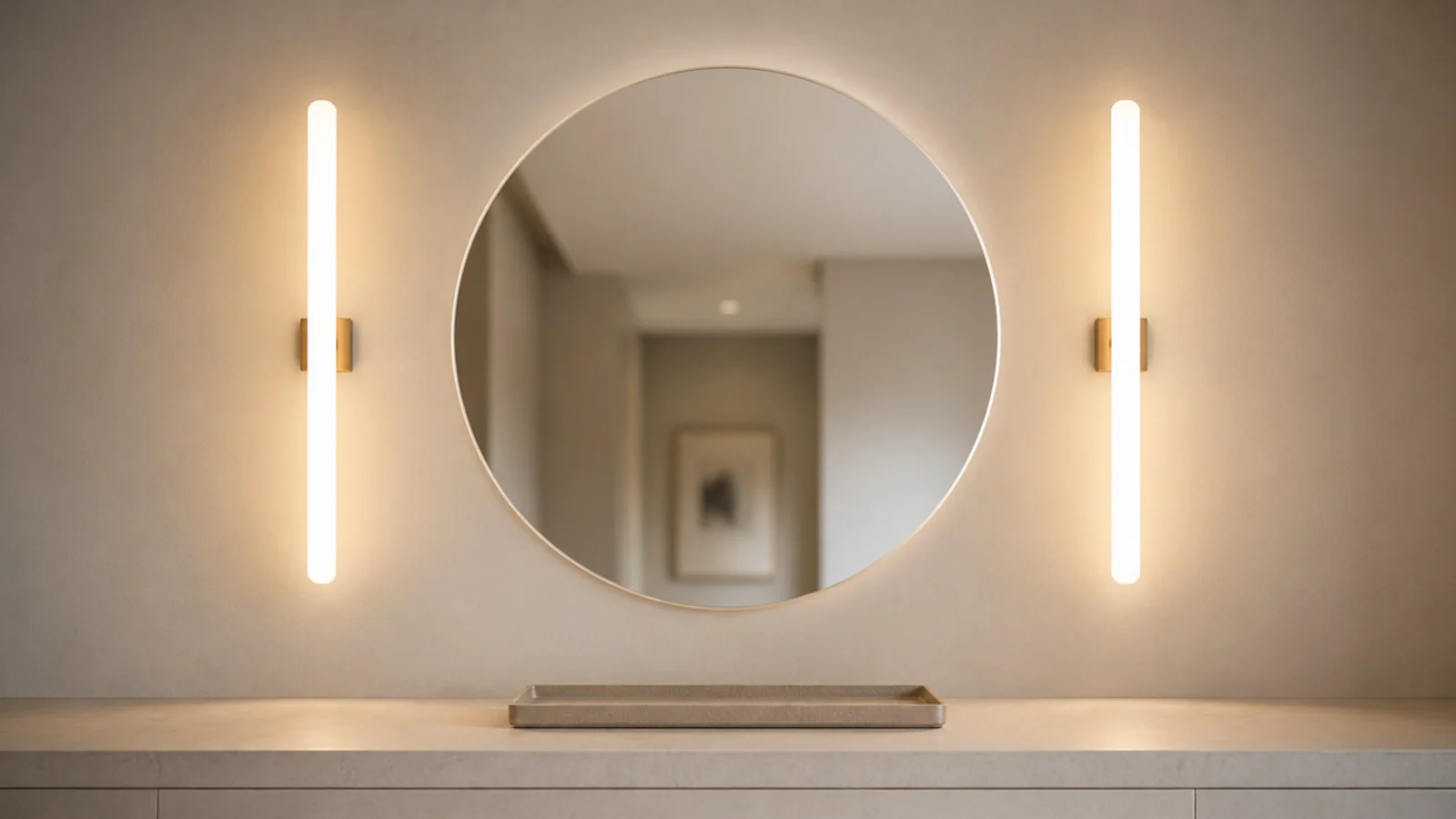
Two slim bars flanking the mirror at around 55 inches, 3000K to 4000K with a high CRI rating, light the face from both sides instead of dropping shadow from above. A pair runs $40 to $110 ($$).
22. One mirror, not three
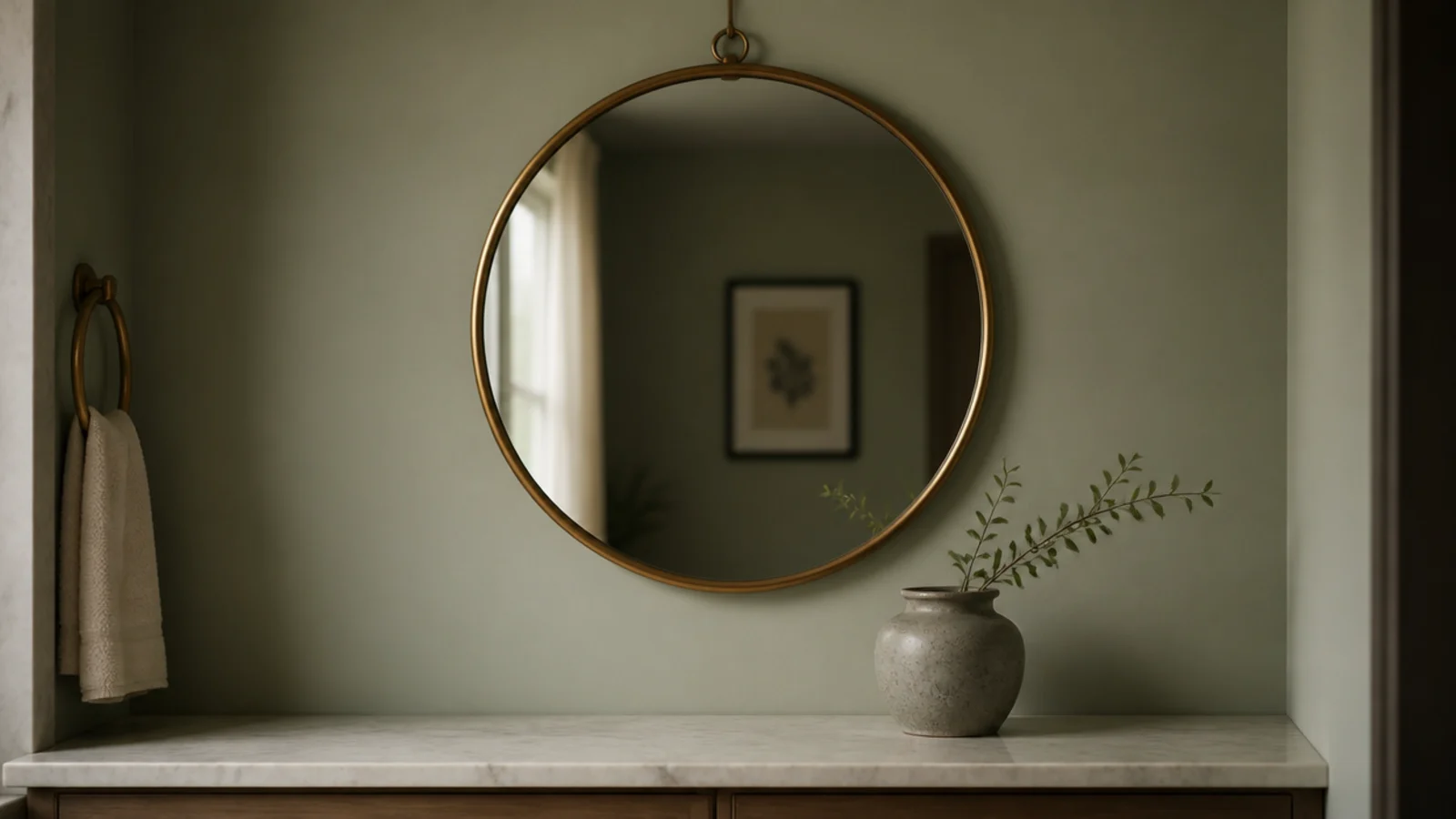
A magnifying mirror, a standing mirror and a wall mirror on one vanity is three surfaces to clean and two too many objects.
Hang one mirror with its centre at 60 inches. If you genuinely need magnification, choose one with a magnifying panel built in rather than adding a second object.
23. Hang the tools inside a door
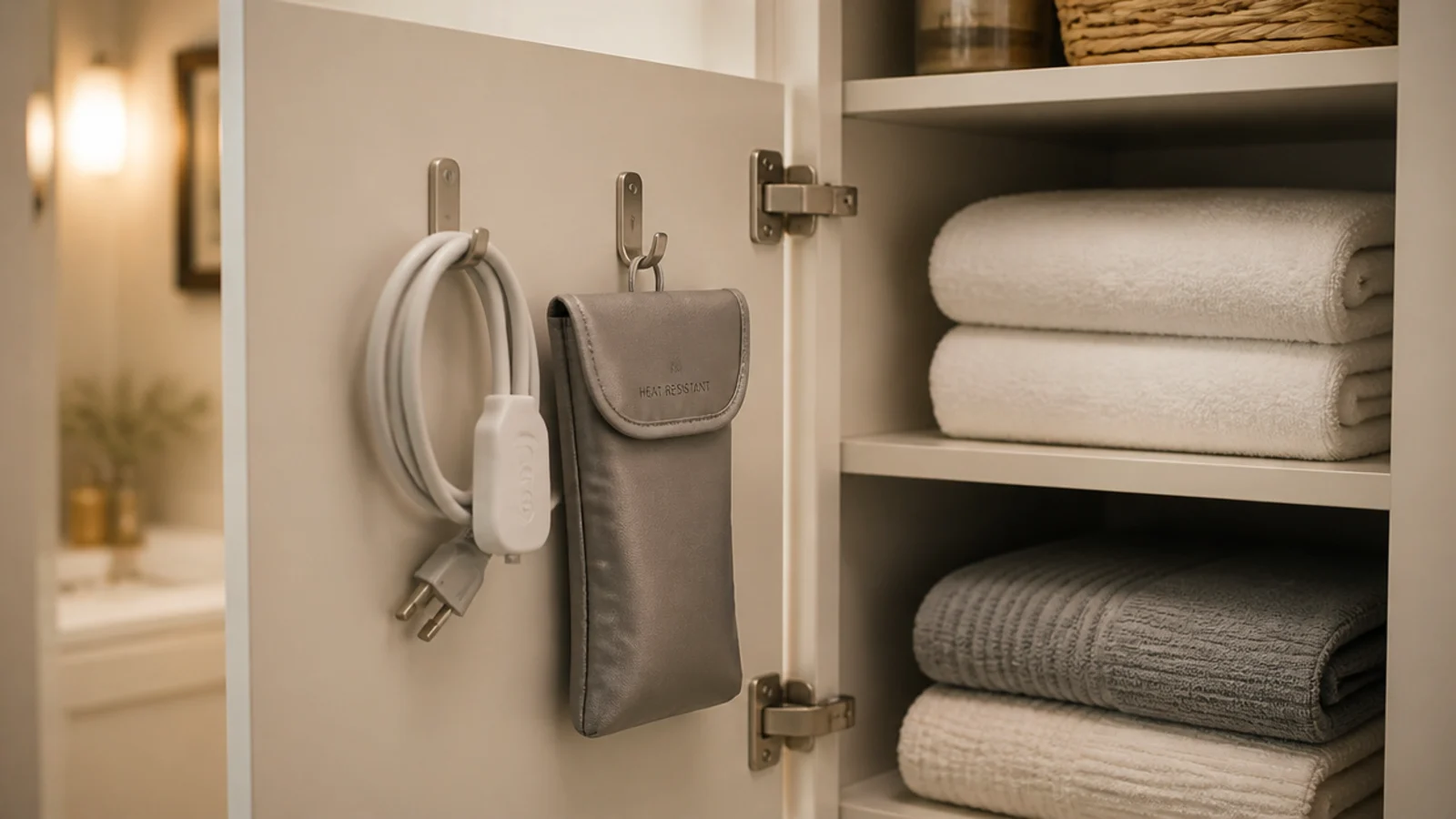
Hair tools are bulky, awkward and the main reason counters look chaotic. The inside of a cabinet door is empty and free.
Two adhesive hooks rated to three pounds hold a dryer by its cord loop and a heat-safe pouch. Allow 2 inches of clearance so the door still shuts. About $8 a pack ($).
24. One cord, coiled and clipped
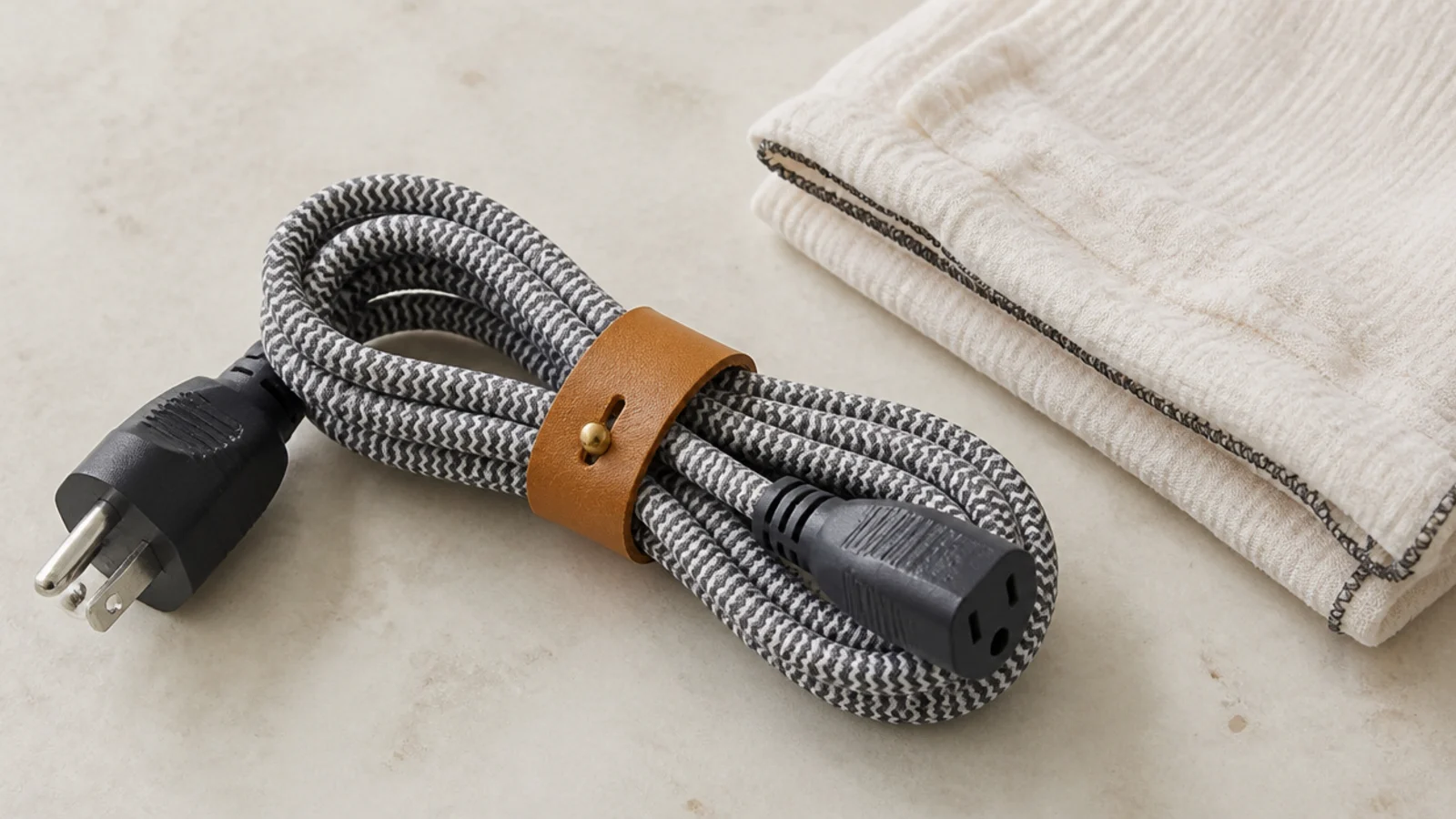
Coil each cord into a palm-sized loop and hold it with a leather tie or a velcro strap.
An uncoiled cord takes three times the space and drags other things off the counter with it. If a cable has to cross a visible surface, run it down a back leg with two small clips.
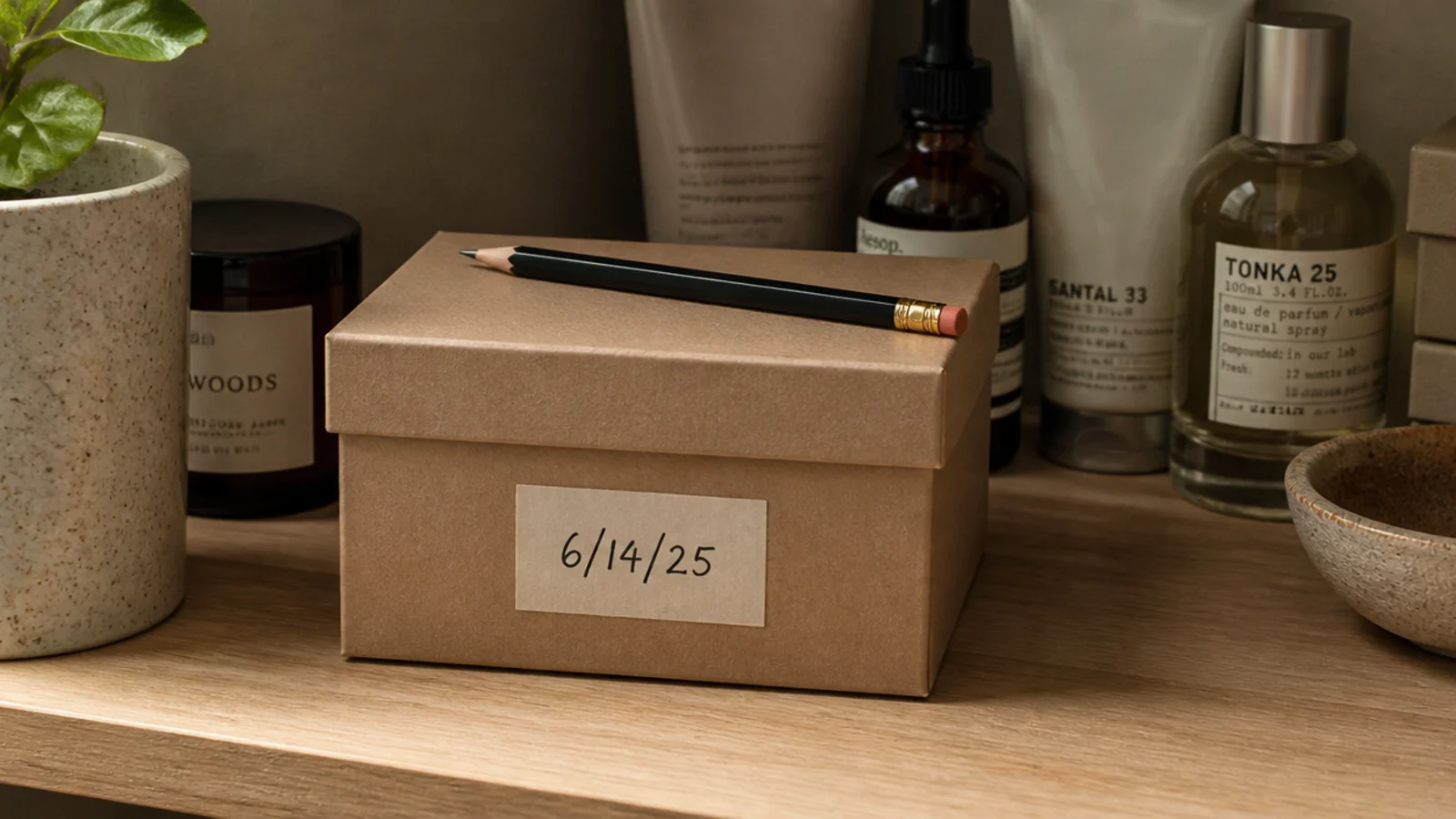
25. A maybe box with a date on it
For anything you cannot decide about, use a closed box with a date written on the lid — today plus thirty days.
If you have not opened the box by then, the answer is obvious and painless. It removes the emotional part of editing without forcing a decision you are not ready to make.
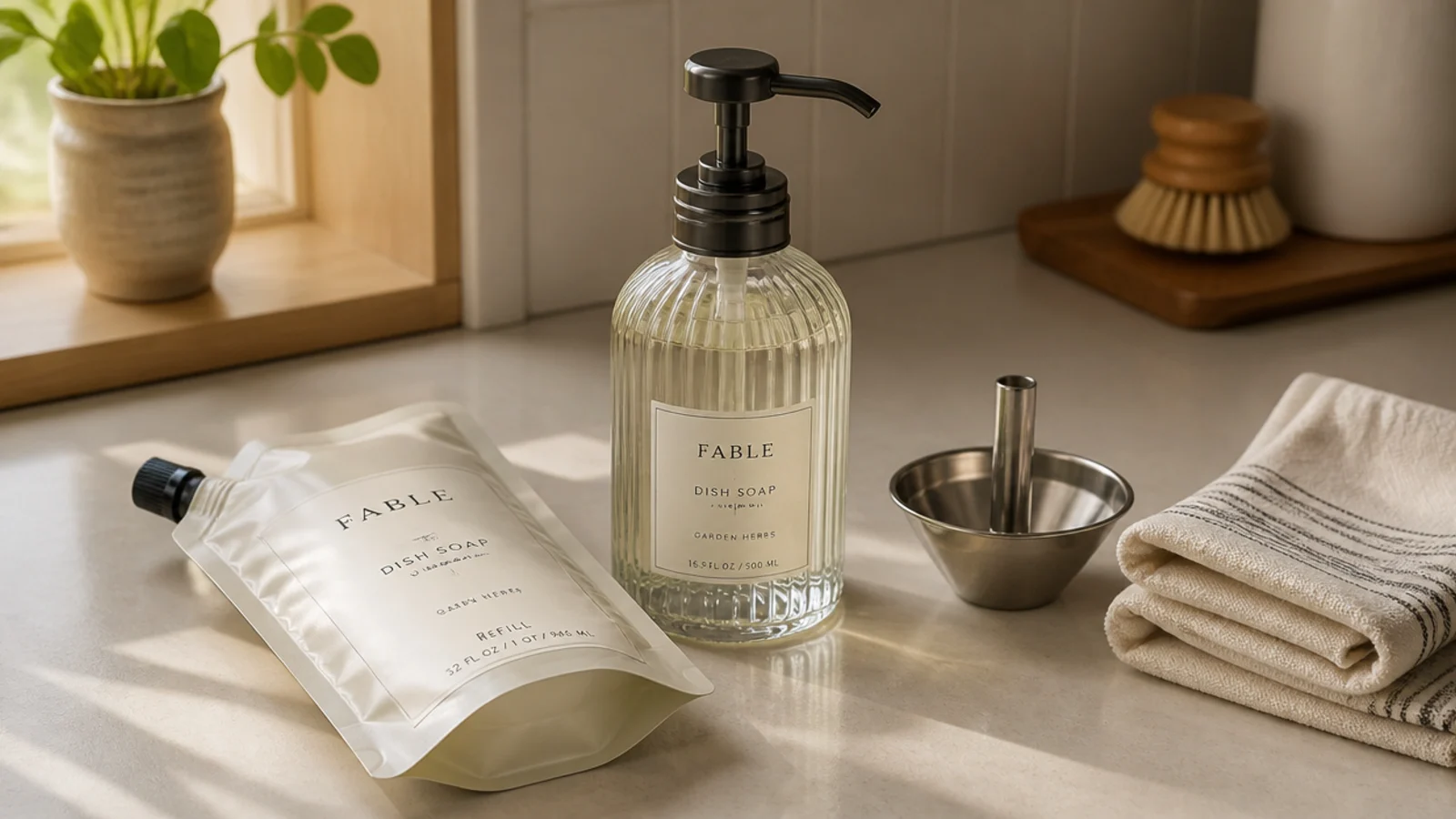
26. Buy refills, not new formats
Refill pouches keep the bottle you already like and cut the packaging bulk substantially.
They also stop the slow accumulation of half-used near-duplicates, which is how most vanities silently fill up. Decant with a small funnel and wash the bottle properly between refills.
27. Skip the sets and multipacks
A five-piece bundle at a good price is still five objects arriving at once, and usually two are things you would never have chosen.
Buy the one item you actually wanted. This is the single most effective budget rule I know, and vanity organization on a budget goes further into it.
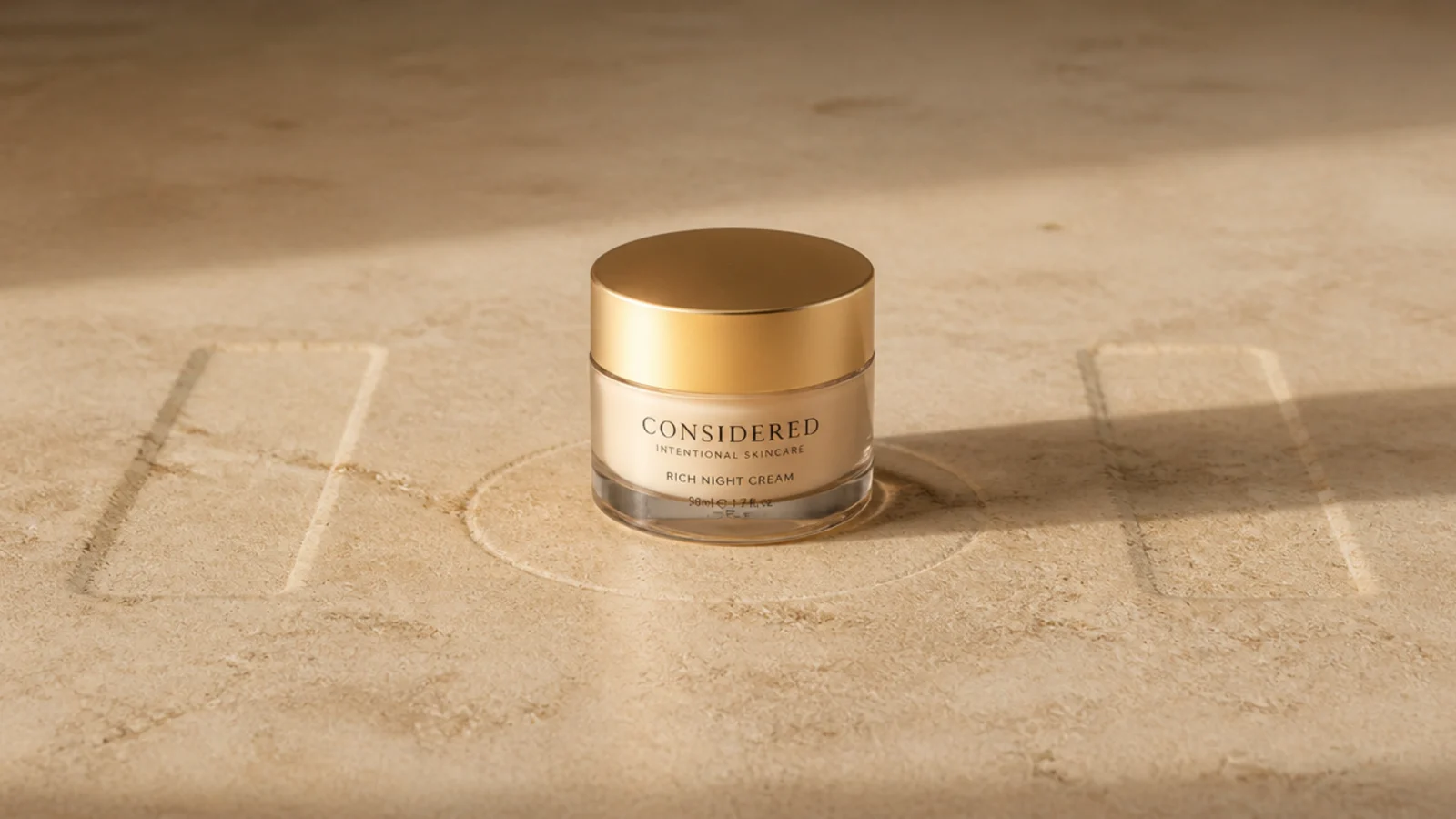
28. Give samples a one-month clock
Samples arrive free and cost you drawer space forever. Group them in one small dish and use them within a month.
Whatever is left after that goes. A sachet kept for two years is not a saving, it is a tiny piece of clutter with an expiry date already passed.

29. Wipe the surface every week
Lift the tray, wipe the counter, put it back. Four seconds, because the tray means there is one object to move rather than eight.
That weekly pass is what makes minimal storage stay minimal. Systems that require rearranging get abandoned; systems that require a wipe do not.

30. Reset twice a year and stop
Spring and autumn, fifteen minutes each, with the same three steps: cull by date, swap the seasonal box, top up the canisters.
Two resets a year keeps a vanity permanently finished. It is the reason this list has more habits than products in it — the habits are the part that lasts.
Mistakes to Skip
- Buying storage before editing. Containers bought for the current volume of stuff guarantee you keep the current volume of stuff, and half of them end up empty anyway.
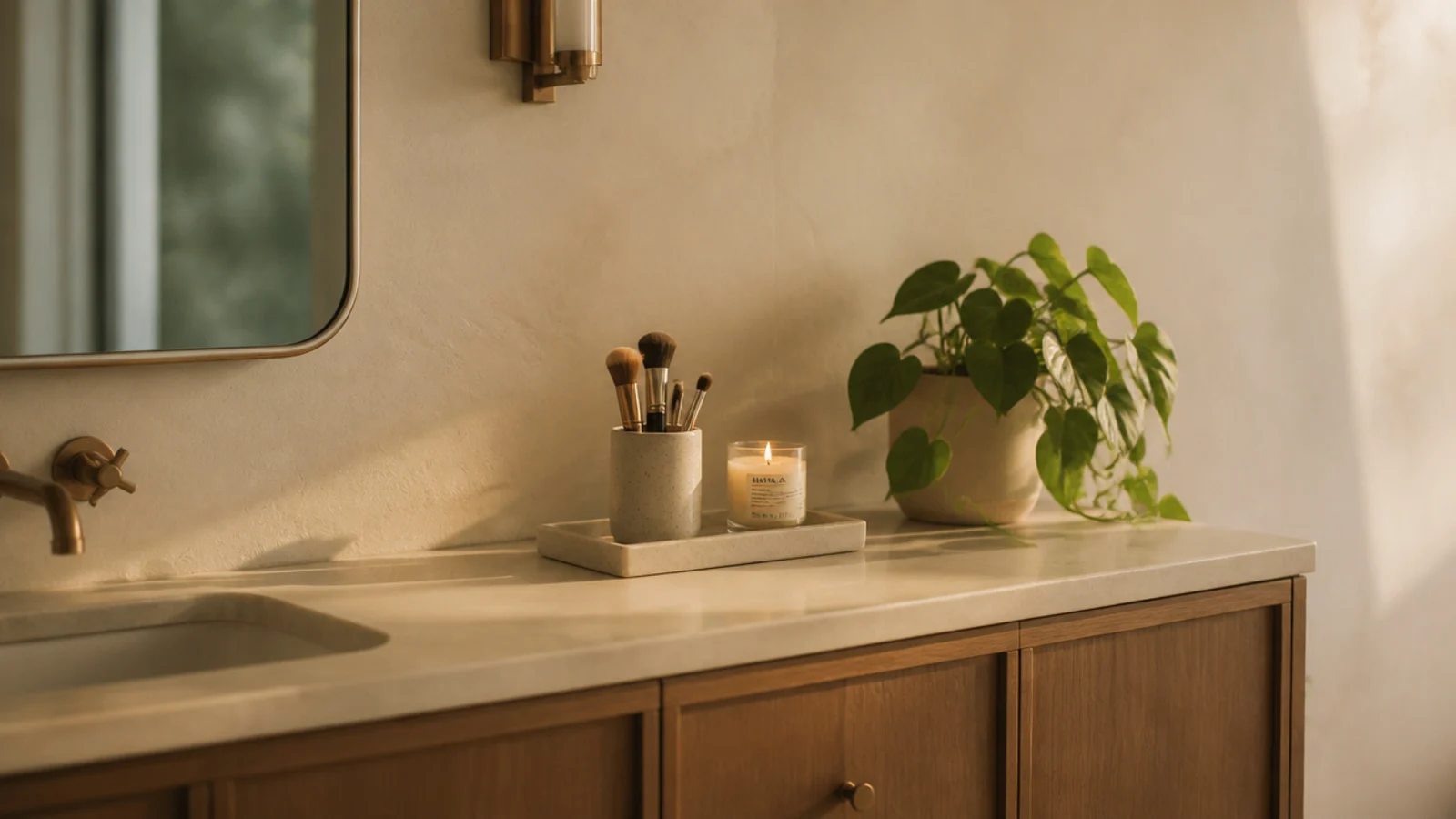
- Confusing bare with minimal. A counter with nothing warm on it feels like a hotel bathroom, and people quietly stop using it — one plant or one candle is the fix.
- Hiding everything behind identical opaque bins with no labels. If you cannot see it and cannot read it, you will buy a second one within a month.
Frequently asked questions
How many products should be on a vanity counter?
Around five, or eight if you count generously, and a tray holding several small things counts as one object. Past that, a counter stops reading as styled no matter how good the products look. Everything used less than daily belongs in a drawer, which is where the real capacity of any vanity actually sits.
How do I know what to throw away first?
Start with dates rather than feelings. Mascara goes at three months, liquid foundation at six to twelve, powders at about two years. Then remove anything that has separated, changed colour or smells different. Whatever survives both passes and was still not touched in the last seven days is the honest candidate for the maybe box.
Does minimalist vanity organization mean owning fewer products?
It means owning fewer active ones. A minimal counter with a full backstock box works perfectly well, because the daily surface stays calm while the reserves live behind a lid. The failure mode is not quantity but visibility — thirty things on display feels chaotic where thirty things in one closed box does not.
How do I make a minimal vanity feel warm rather than clinical?
Keep clear plastic inside the drawers and warm materials on the surface. One stoneware cup, one oak tray or one brass dish gives the eye somewhere to rest. Add a single soft object — a trailing plant or a candle — and stop there. Two materials plus glass is the ratio that reads calm rather than bare.
How long does it take to reset a vanity properly?
About ninety minutes the first time, if you empty everything out onto a towel before deciding anything. After that, a twice-yearly reset takes fifteen minutes and a weekly wipe takes under a minute. The first session is long because you are making decisions, not because you are organizing.
Do the seven-day test first, then the date cull — both free, and together they usually remove enough that the storage question answers itself. After that, one tray, one weighted cup and a measured insert set is a complete system. For a room-by-room version see vanity organization ideas, and if the same edit-first logic is heading into your wardrobe next, minimalist walk-in closet picks it up there. Save the pin for your next reset.
Want more like this? Browse all 15 vanity organization guides — they all use the same measurements and budget tiers.

Pin it for later
Save this to your Vanity Organization board
Pin it now so it is waiting for you when the tape measure comes out — and so the next person hunting for this idea can find it too.
Save this pinKeep going
More ideas worth saving while you have the tape measure out.