Vanity Organization · Listicle
25 Gorgeous Vanity Organization Ideas Worth Trying

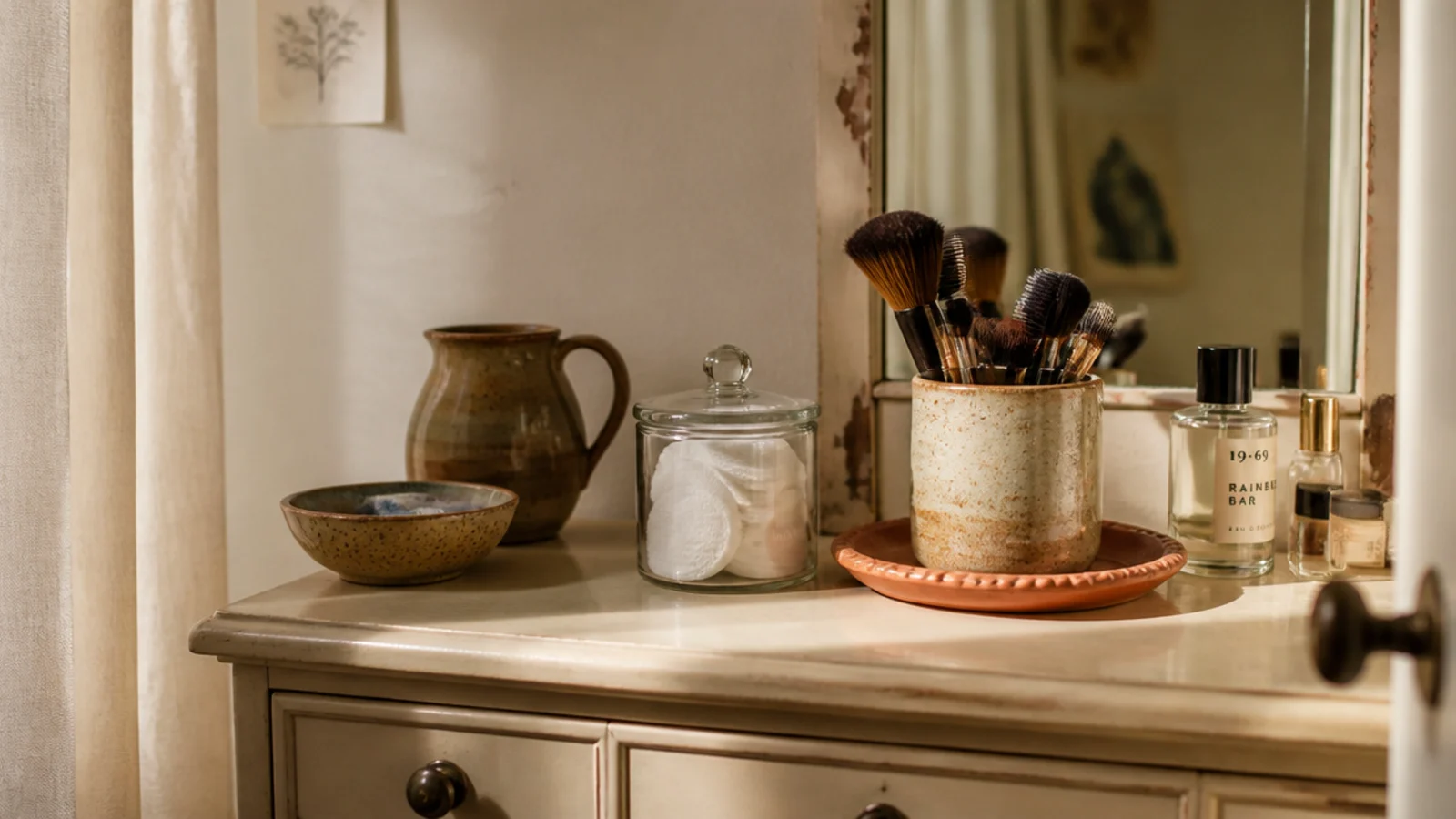
Vanity organization on a budget works far better than the expensive version, for one boring reason: when containers cost nothing you buy them last, after you have culled and measured, which is the correct order anyway. Almost everything here comes from a thrift store, the kitchen aisle or a cupboard you already own. Twenty-five ideas, honest prices, most of them under $10.
In this guide27 sections — tap to openHide
- 1.How vanity organization on a budget actually works
- 2.Shop your own house before any store
- 3.Cull by date before buying a thing
- 4.Use a clay plant saucer as the catch-all tray
- 5.Turn a heavy tumbler into the brush cup
- 6.Divide the drawer with a kitchen cutlery tray
- 7.Sort small things in a bead-storage box
- 8.Cut free dividers from cardboard
- 9.File palettes in a napkin holder
- 10.Hang a spice rack for small bottles
- 11.Stand hair tools in a magazine file
- 12.Tame the cords with binder clips
- 13.Hang sprays from a tension rod
- 14.Add adhesive hooks where a drill cannot go
- 15.Buy only the dollar-store shapes that last
- 16.Decant cotton pads into jars
- 17.Cut non-slip liner to size
- 18.Thrift a small wooden box as a riser
- 19.Give samples an egg carton
- 20.Repurpose a mug tree for chains and ties
- 21.Make a vanity from a thrifted side table
- 22.Hang a secondhand mirror and paint the frame
- 23.Fix the light for the price of a bulb
- 24.Decant a travel kit into what you own
- 25.Label with masking tape and a marker
- 26.Put the twice-yearly cull in the calendar
- 27.Mistakes to Skip
How vanity organization on a budget actually works
Do the free things first, because they change what you need to buy. Empty the vanity, check dates — mascara at three months, liquid foundation at six to twelve, powders at roughly two years — and bin what has expired. A single pass usually clears a third of the volume.
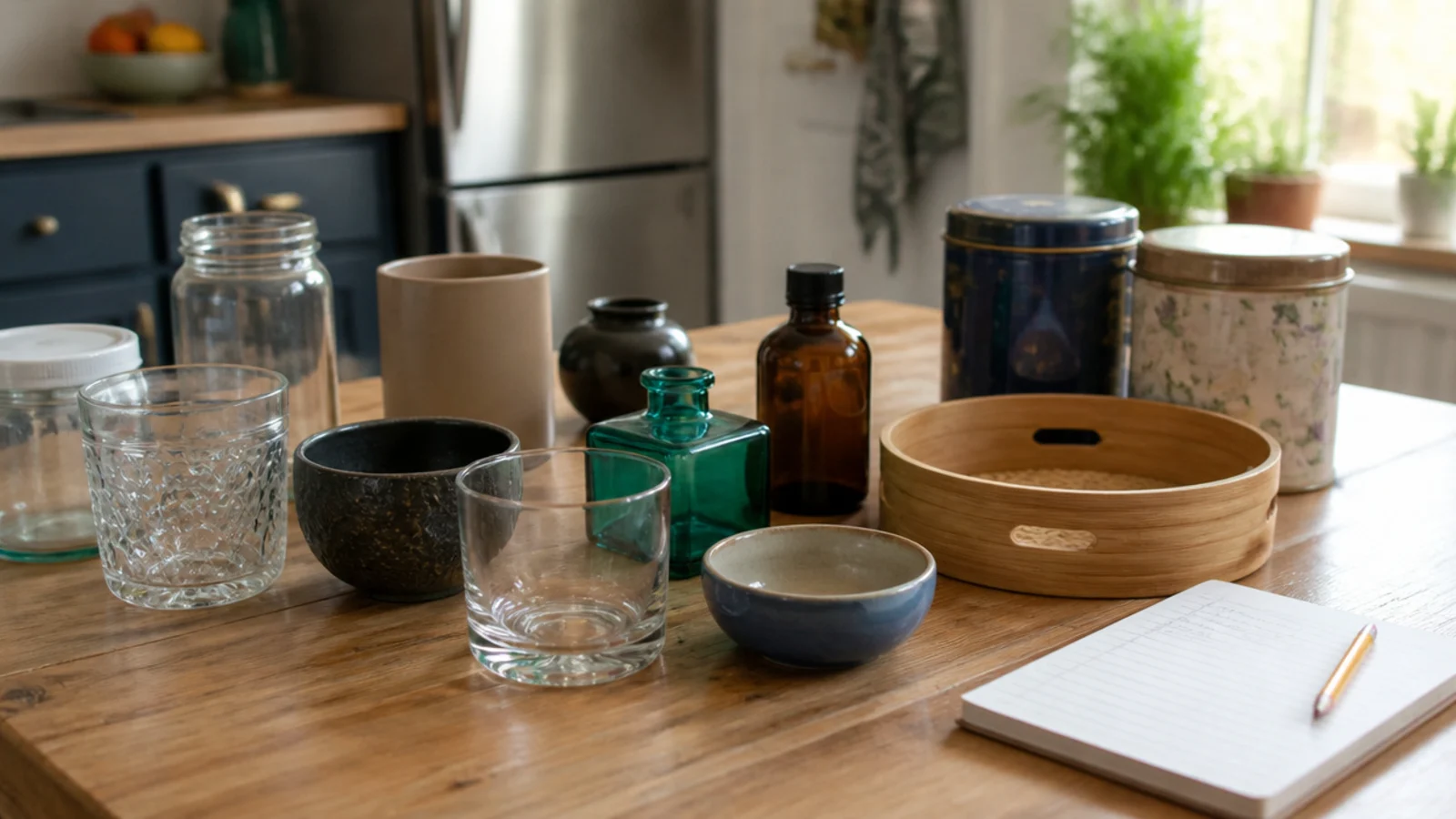
Then gather every candidate container in the house into one pile: glass tumblers, small bowls, tins, a cutlery tray, a wooden box. Most people already own eighty percent of what they were about to buy, scattered across four rooms so none of it reads as storage.
Now measure. Inserts get sized to the drawer's internal width and depth minus about 1/8 inch of clearance, with 2 to 3 inches of depth for flat items and 4 to 5 inches for bottles that must stand upright. Take those numbers to the shop or you will buy something an inch too wide.
Then set the rules that cost nothing: routine order — cleanse, treat, colour — only daily items on the counter, and every group on a tray.
Budget tiers below: Free, $ under $10, $$ $10 to $25.
1. Shop your own house before any store
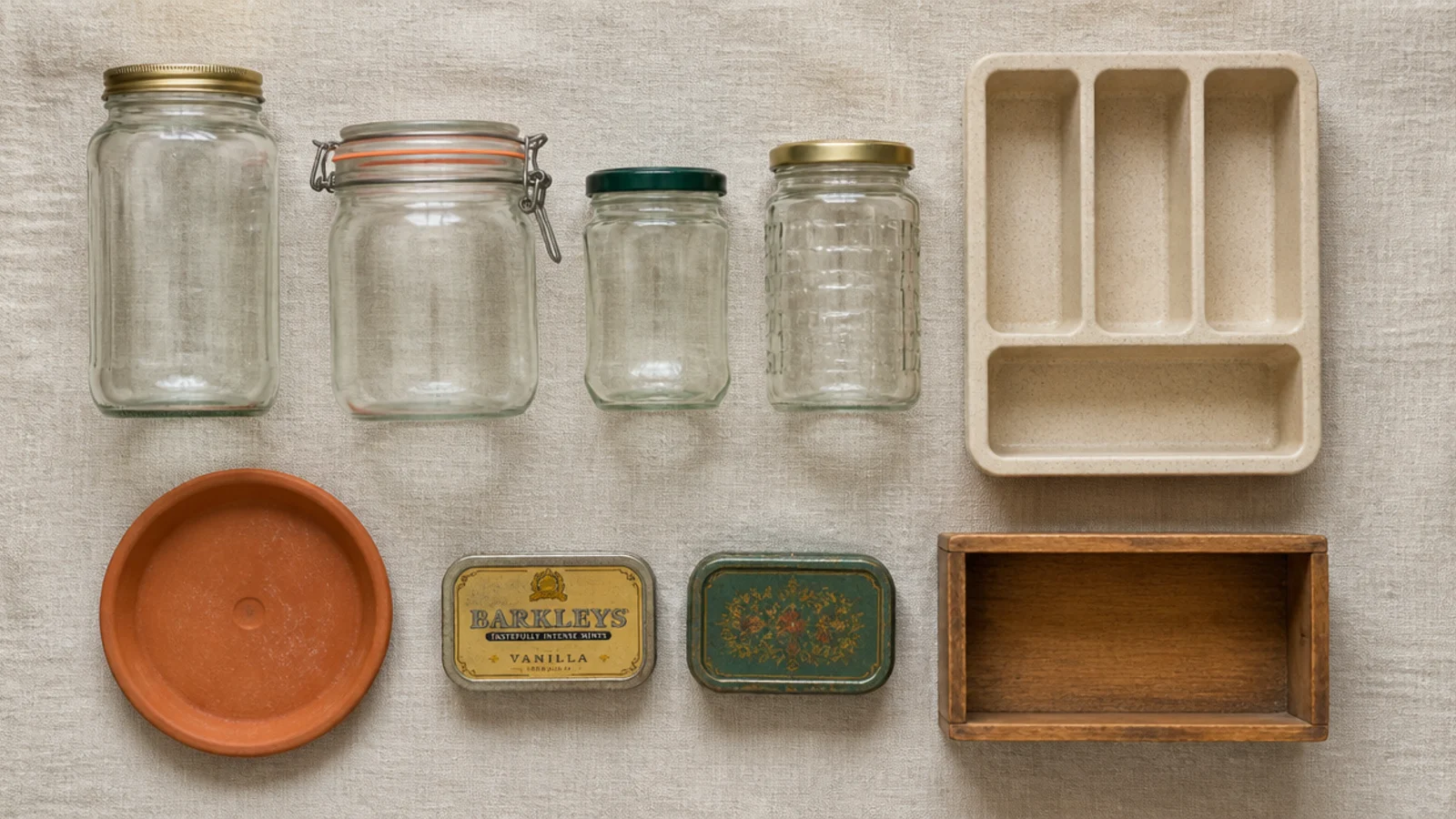
Walk through every room with a laundry basket and collect anything that could hold something: jars, tins, small bowls, a bamboo tray, a wooden box.
Wash it all, put it on the counter, and only then write a shopping list. Mine has never had more than three items on it after this exercise. Free
2. Cull by date before buying a thing
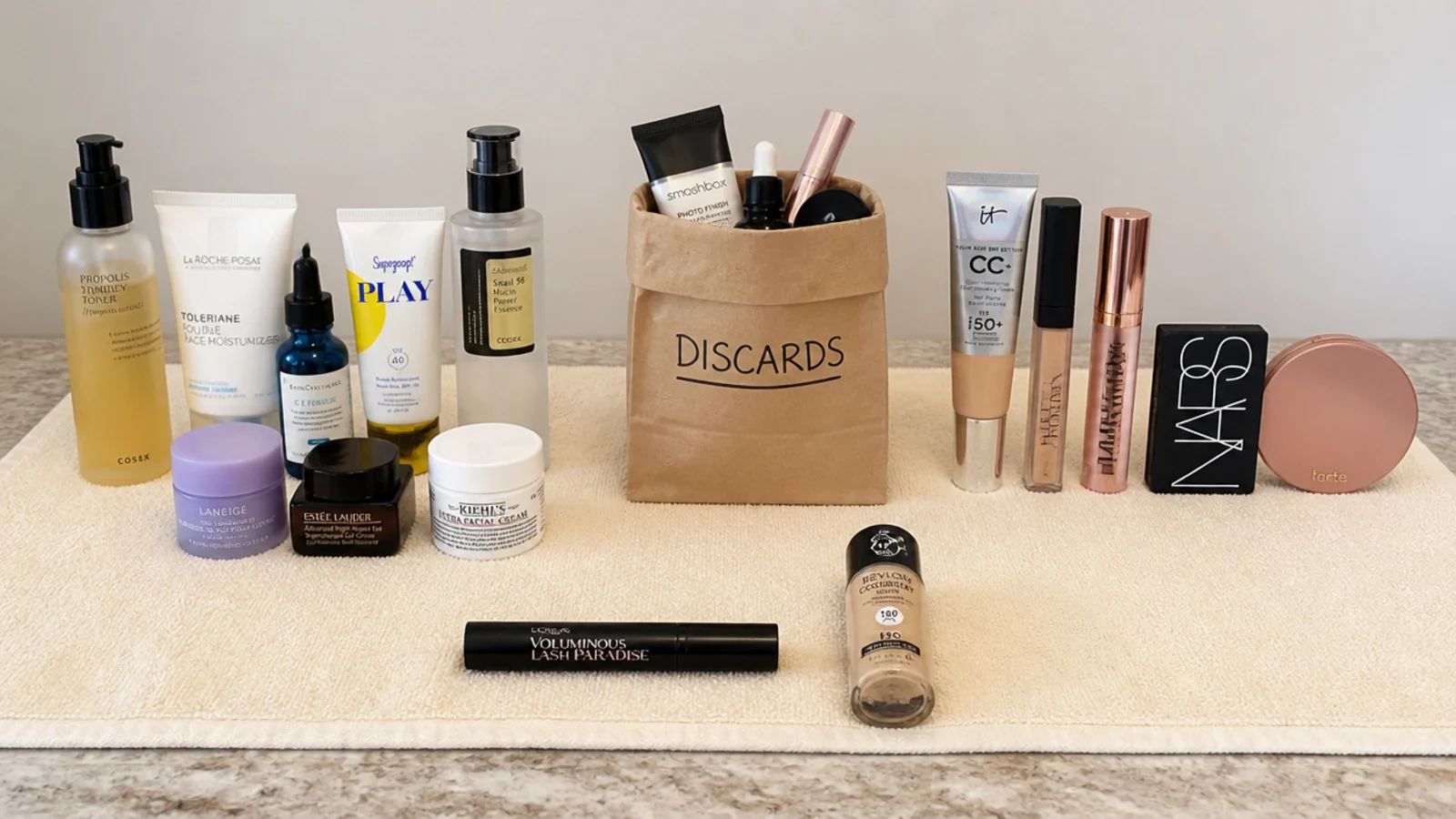
Sizing containers for products that should have left the house is the most common way to overspend on organizing.
Bin the expired, the separated and the shade you have never worn. It costs nothing, takes thirty minutes, and it usually removes more volume than the containers you were about to buy would have added. Free
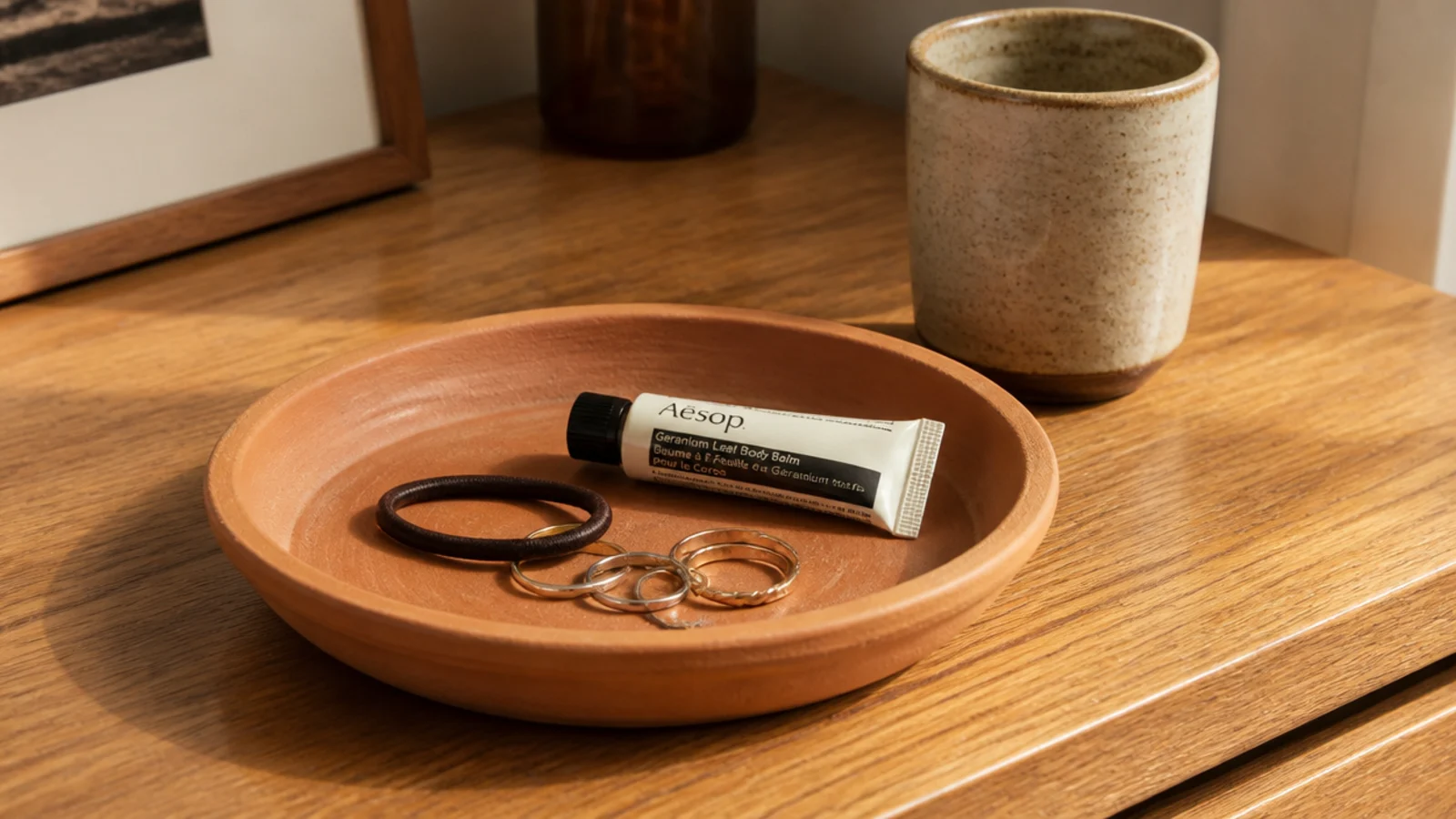
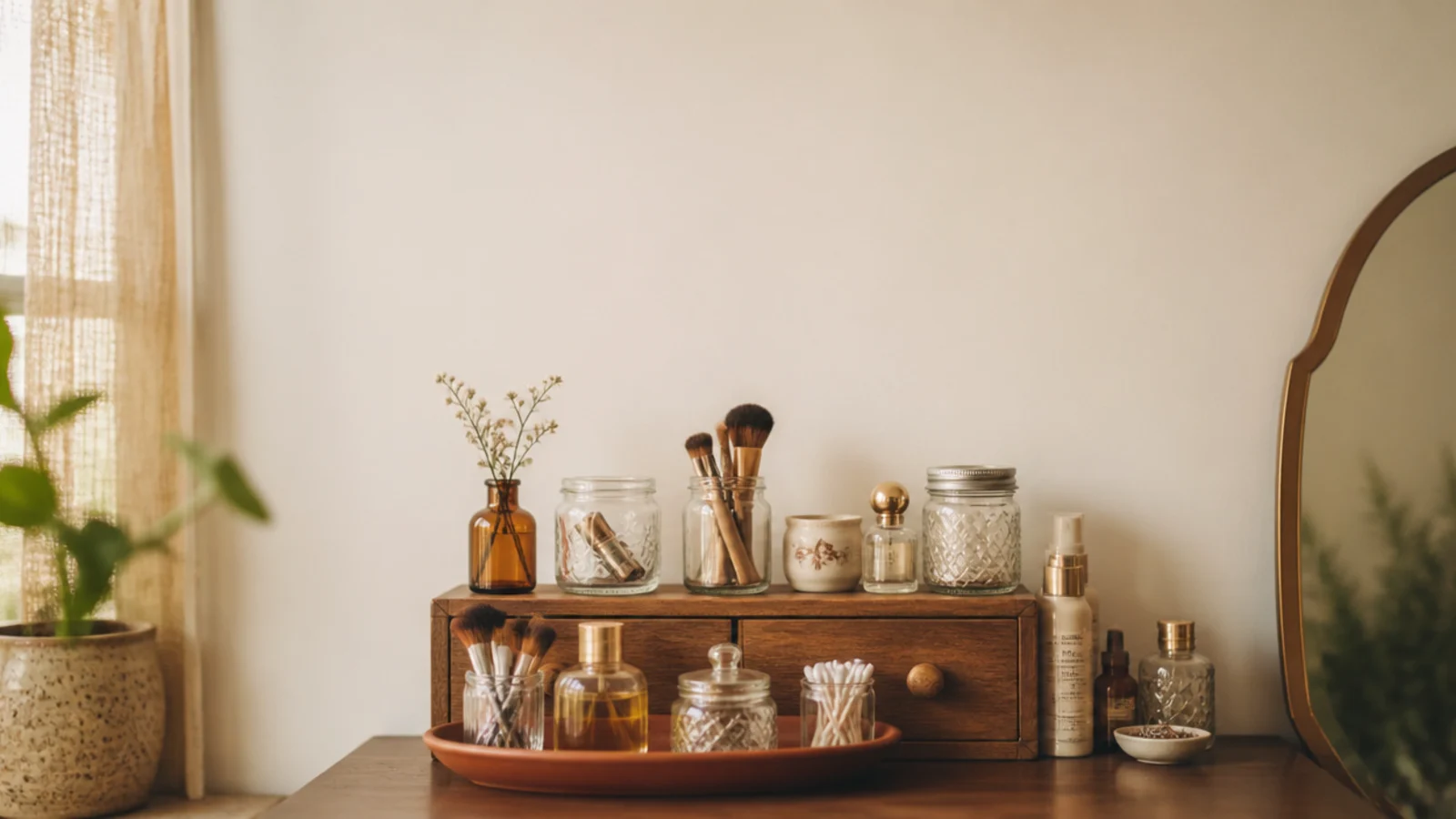
3. Use a clay plant saucer as the catch-all tray
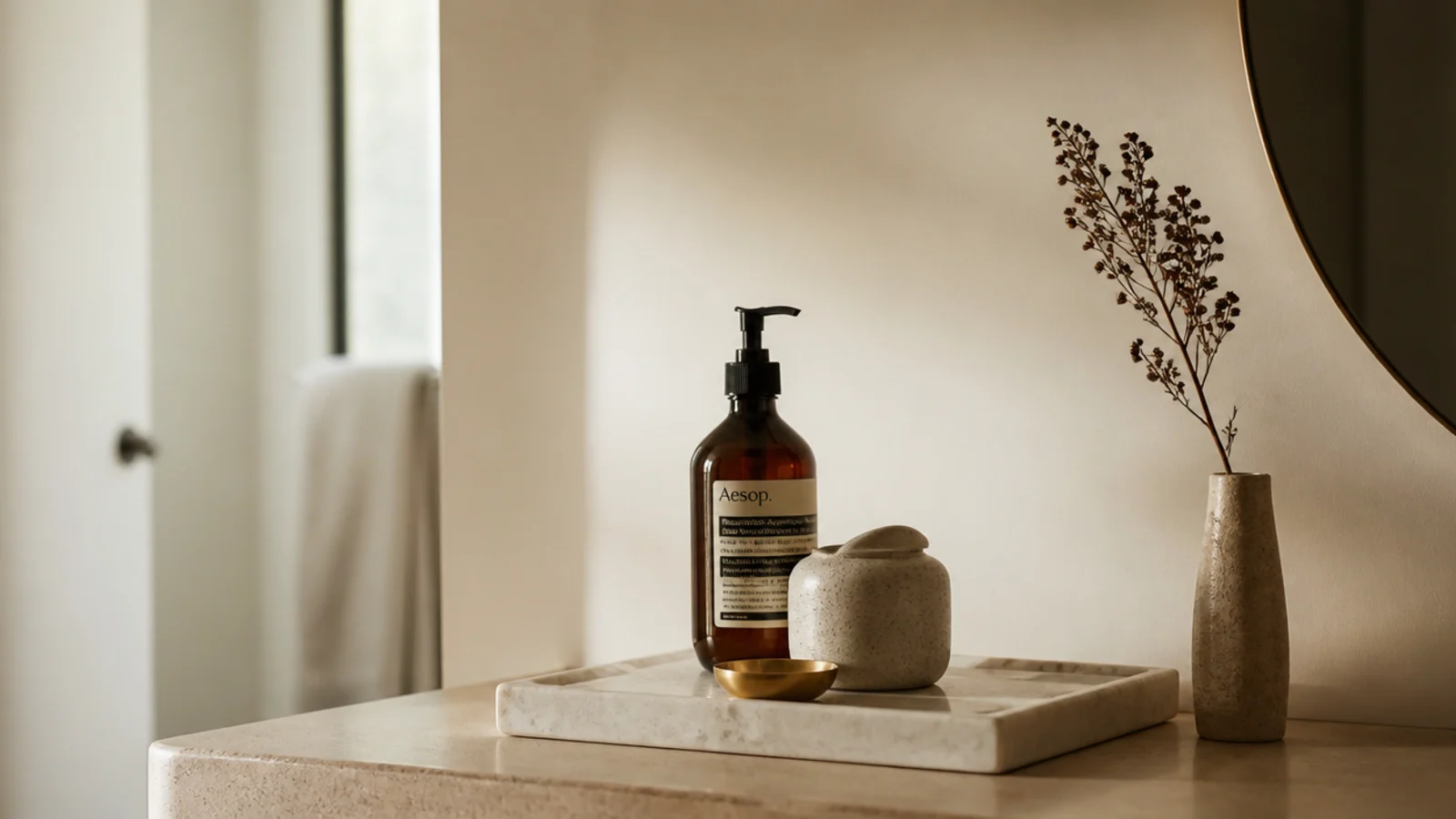
The unglazed terracotta saucers sold under plant pots are the best cheap trays in any store — warm colour, gently curved rim, about $6 for a wide one.
A tray catches drips and turns six loose objects into one composition. Any vanity near a door needs one, or small items scatter across the whole surface. $
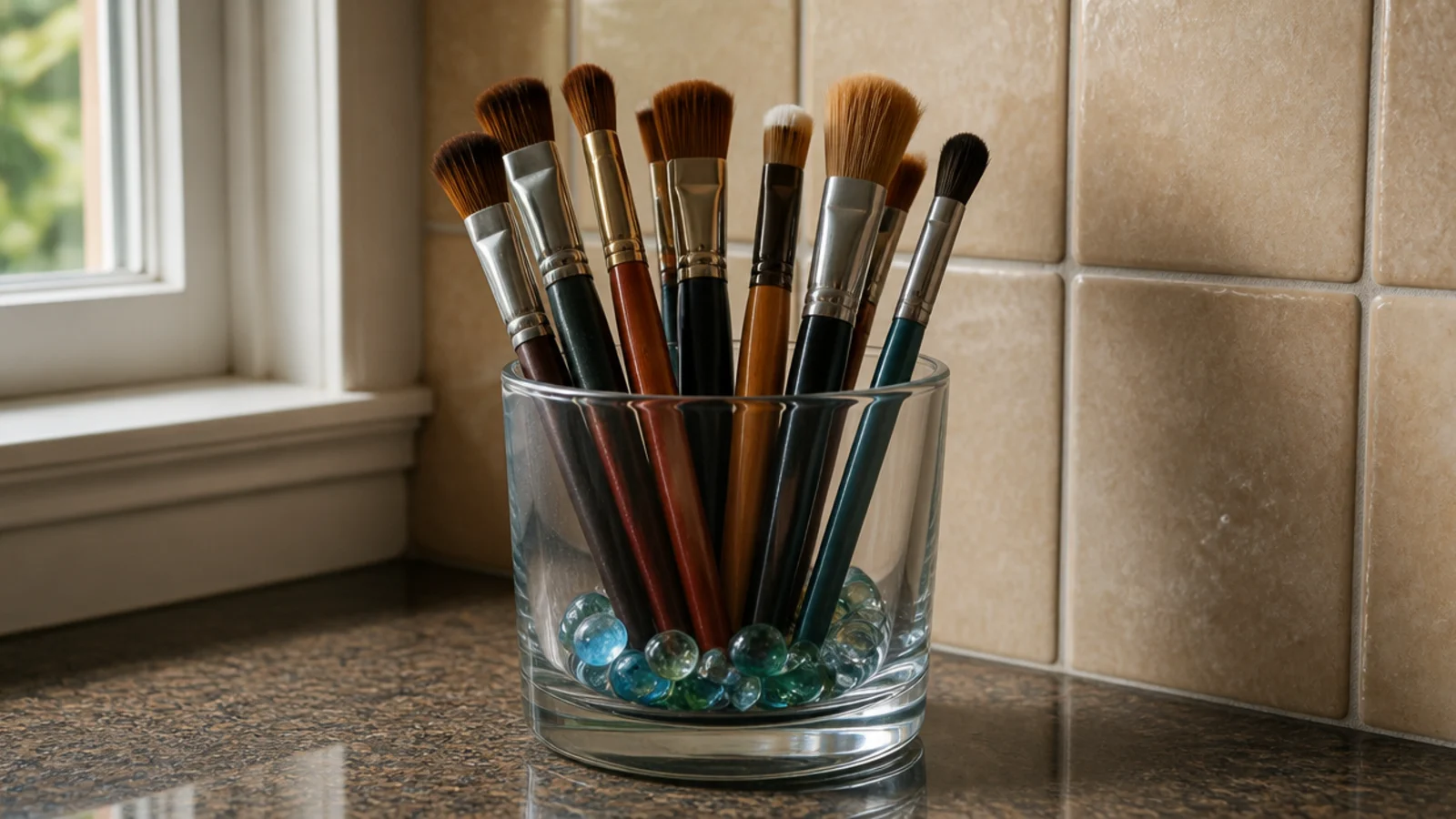
4. Turn a heavy tumbler into the brush cup
Brushes stand bristles-up in a weighted cup or they splay, and weight is the only specification that matters.
A thick-walled drinking glass 3 to 4 inches tall does it perfectly. If yours tips when you pull a brush out, drop in a handful of glass beads or a spoon of dry rice. Free–$
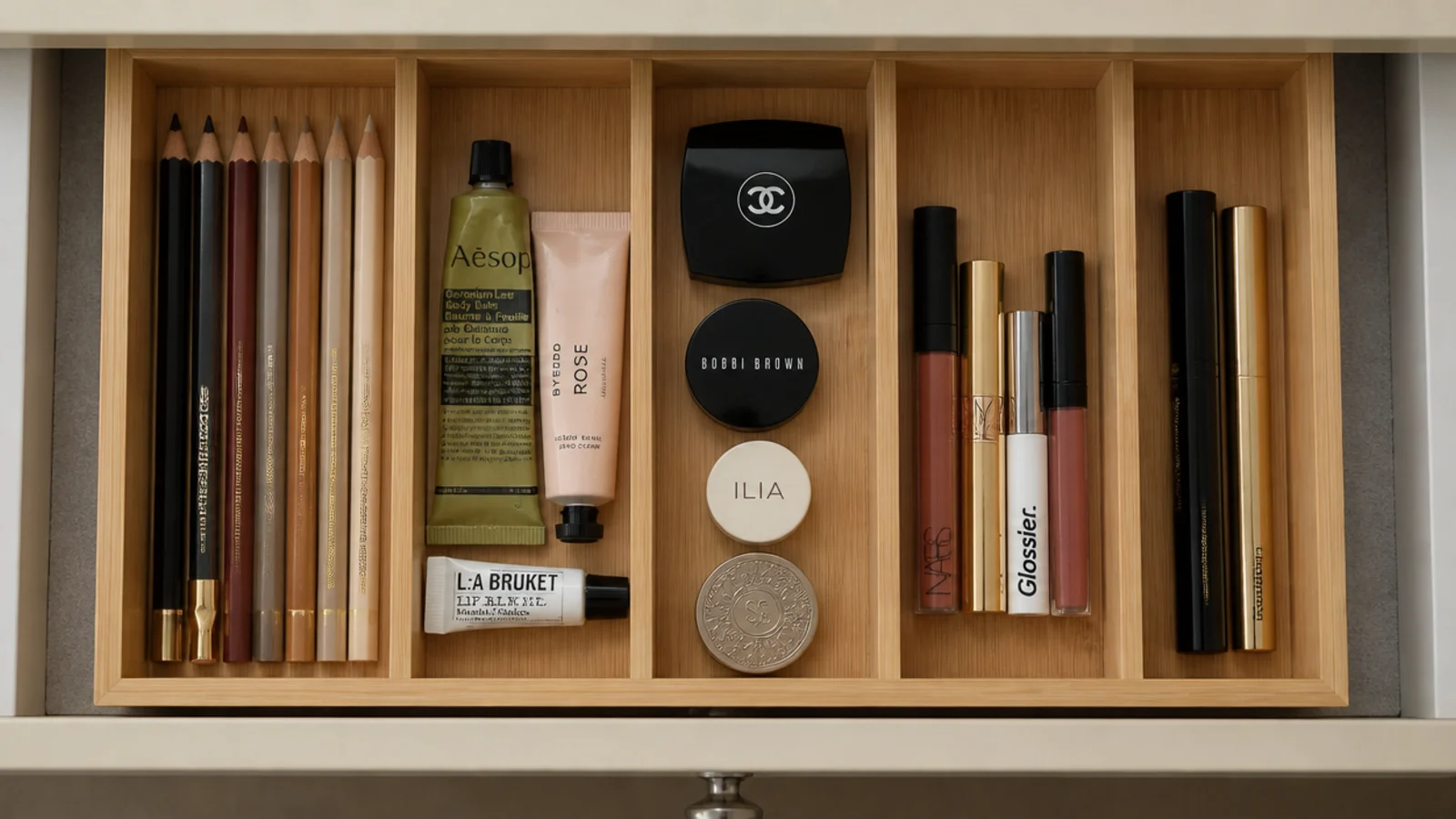
5. Divide the drawer with a kitchen cutlery tray
A bamboo cutlery tray is a better makeup insert than most things sold as makeup inserts, at about $6 for five channels.
Measure the drawer's internal width and depth first and subtract 1/8 inch. Avoid trays with sloped channels, since pencils and lipsticks roll straight to the back. $
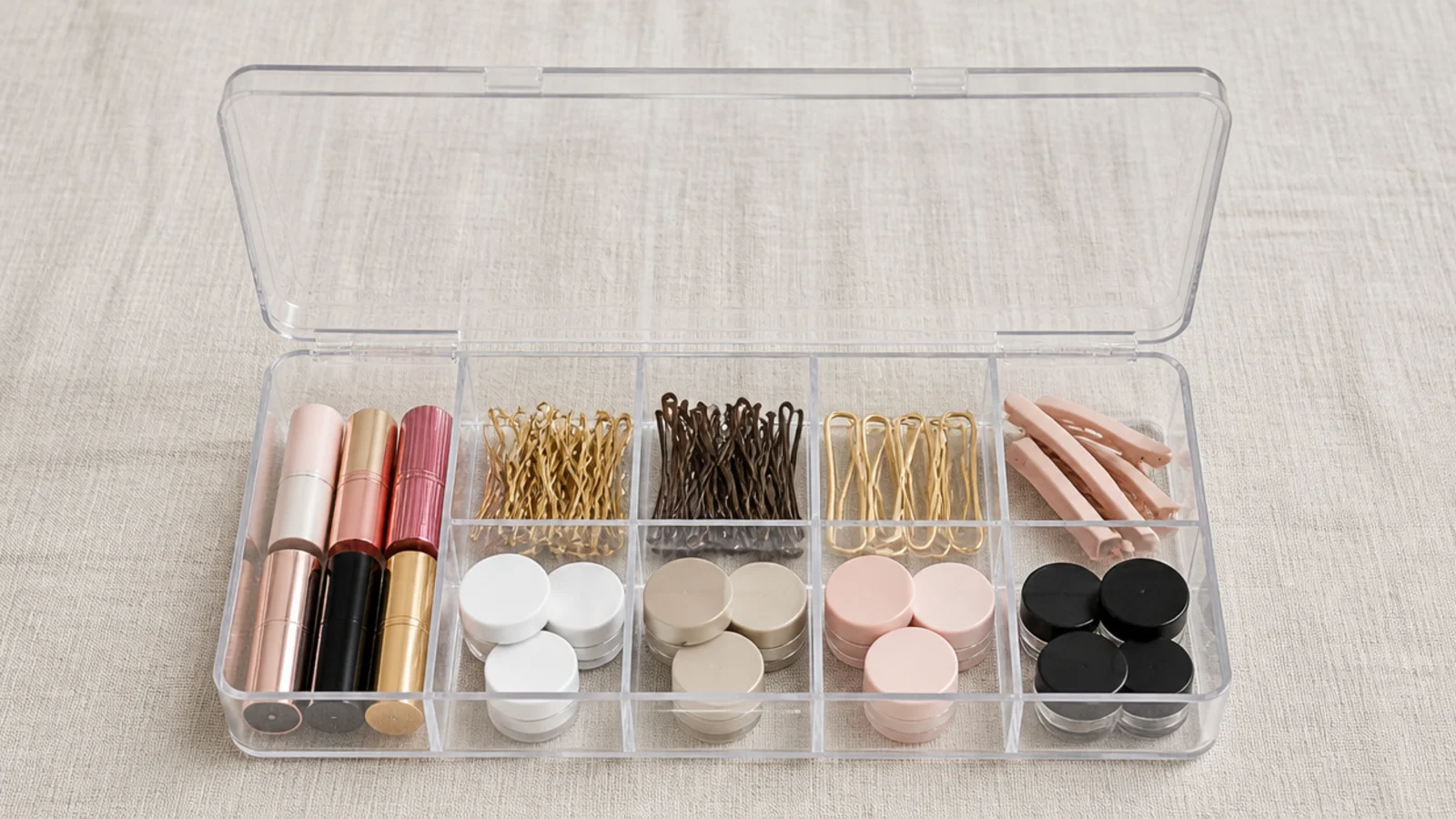
6. Sort small things in a bead-storage box
Craft-aisle compartment boxes run $6 to $9 for around fifteen sections, which is a fraction of the price of the same box labelled for cosmetics.
Sort lipsticks by shade family, not brand, because that is how you choose one in the morning. Duplicates become obvious within a minute. $
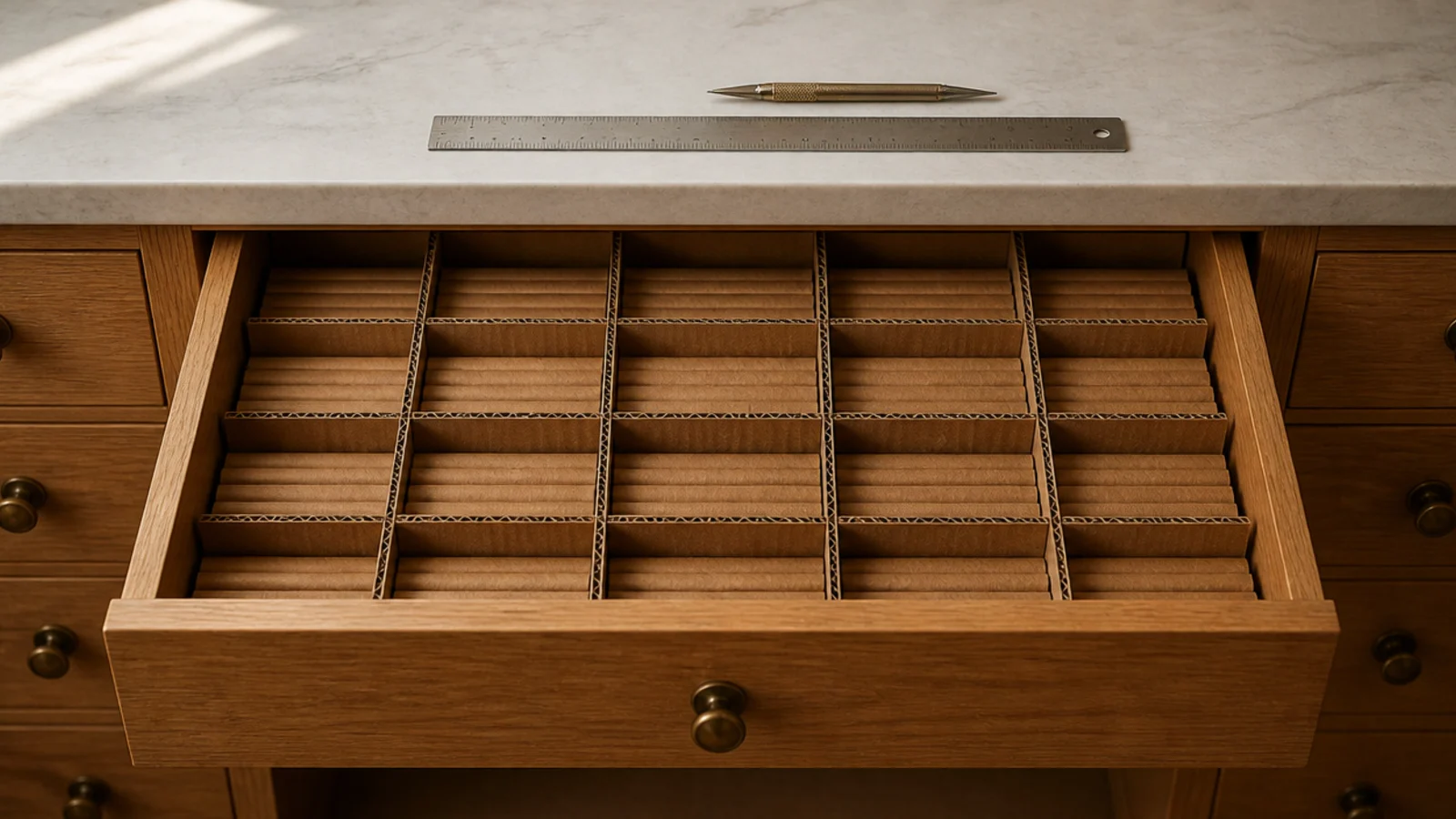
7. Cut free dividers from cardboard
Strips of corrugated card cut to the drawer's internal height and slotted in a cross pattern make custom compartments for nothing.
Wrap them in kraft paper or leftover wallpaper and they look deliberate. Use them for a month to learn what sizes you actually need before buying anything permanent. Free
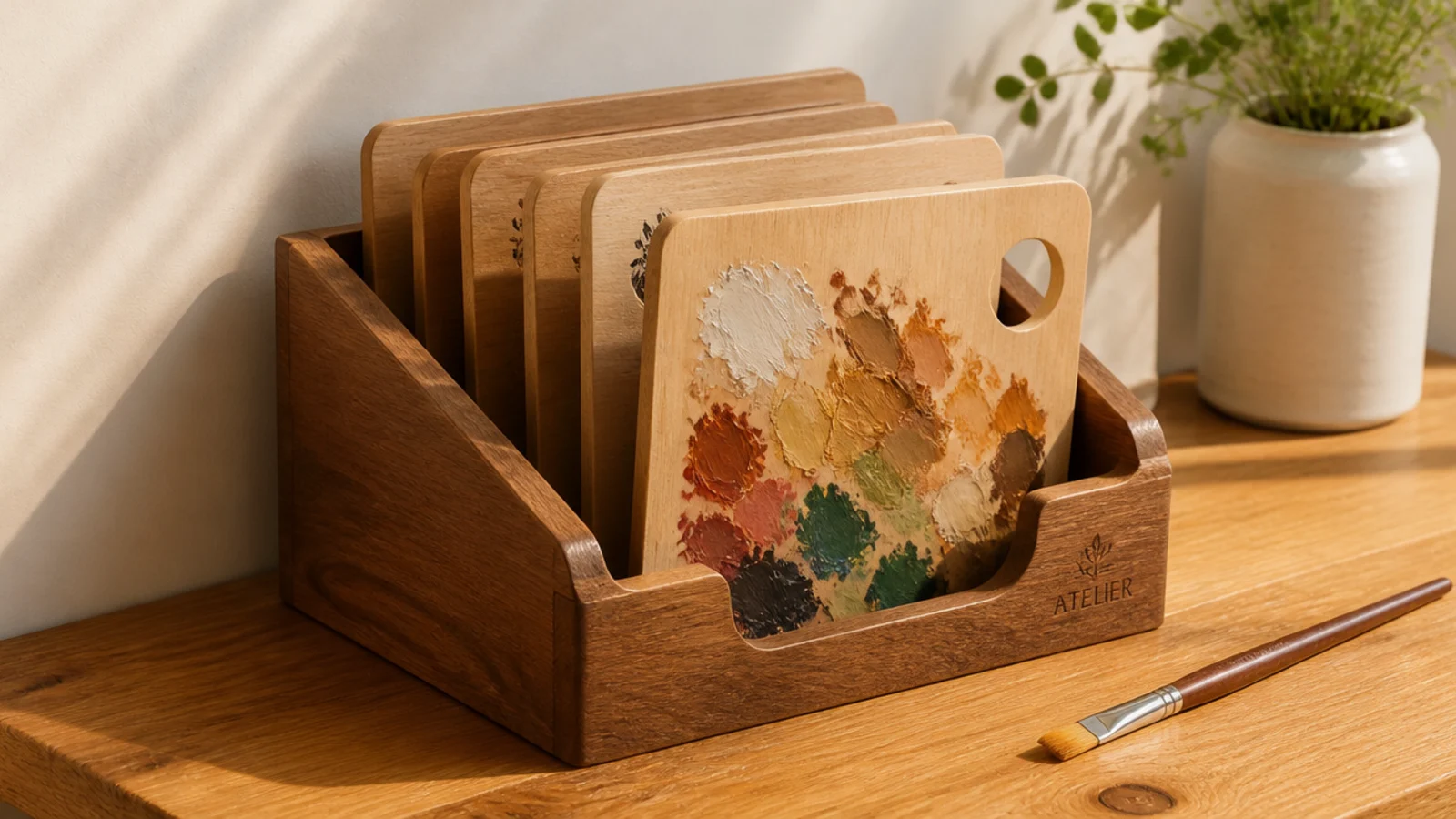
8. File palettes in a napkin holder
A wire or wooden napkin holder stands flat palettes on edge like records for about $5, so nothing gets buried under a second layer.
Slots around 1 1/4 inches apart suit most palettes. The bottom of a stack is invisible and therefore never used, which is the whole problem this solves. $
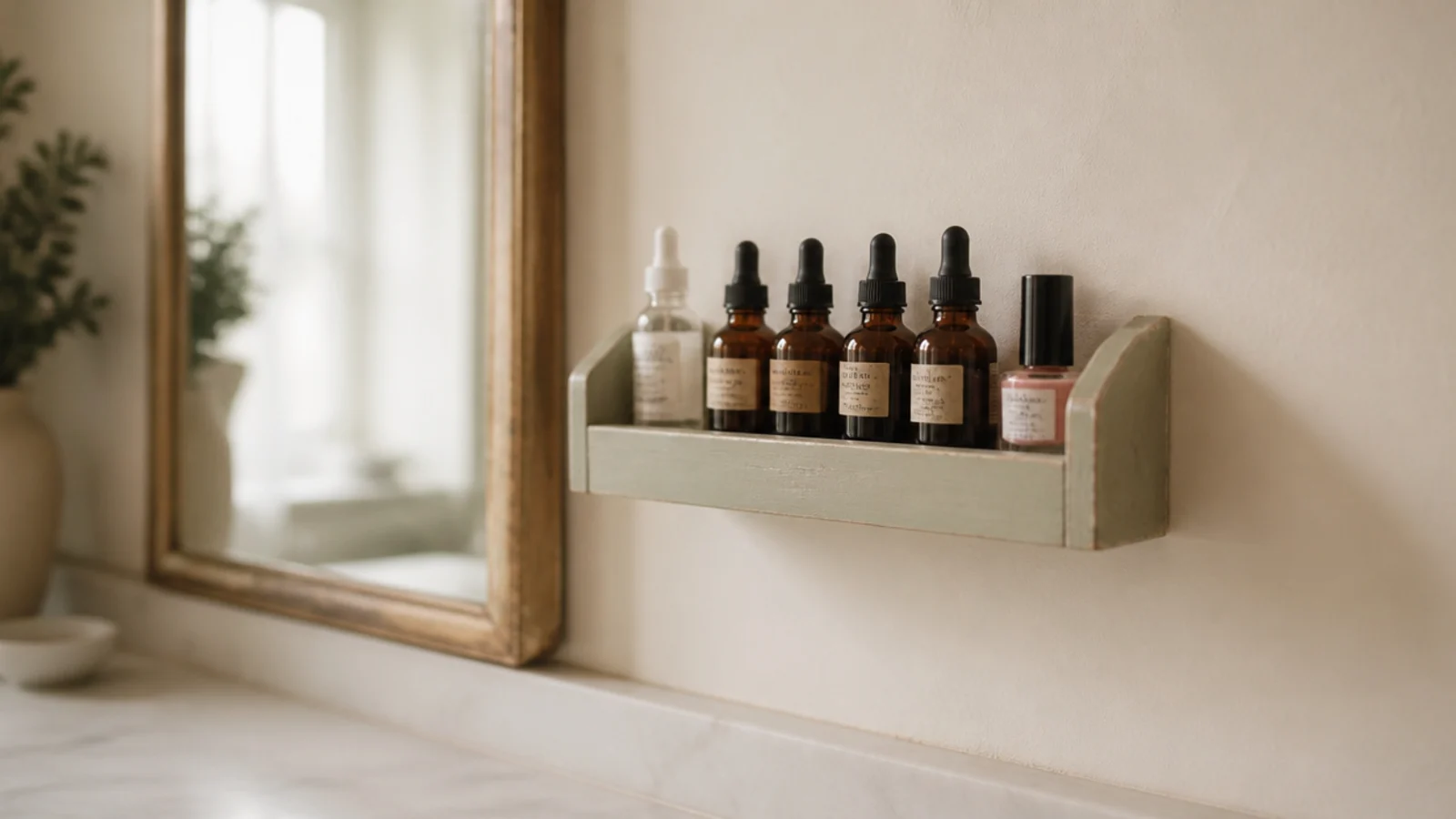
9. Hang a spice rack for small bottles
A narrow spice rack is 3 inches deep and holds a surprising amount of skincare — serums, nail polish, small droppers — on wall space that was doing nothing.
Paint it to match the wall and it disappears. Adhesive versions work in a rental if you keep the load light. $–$$
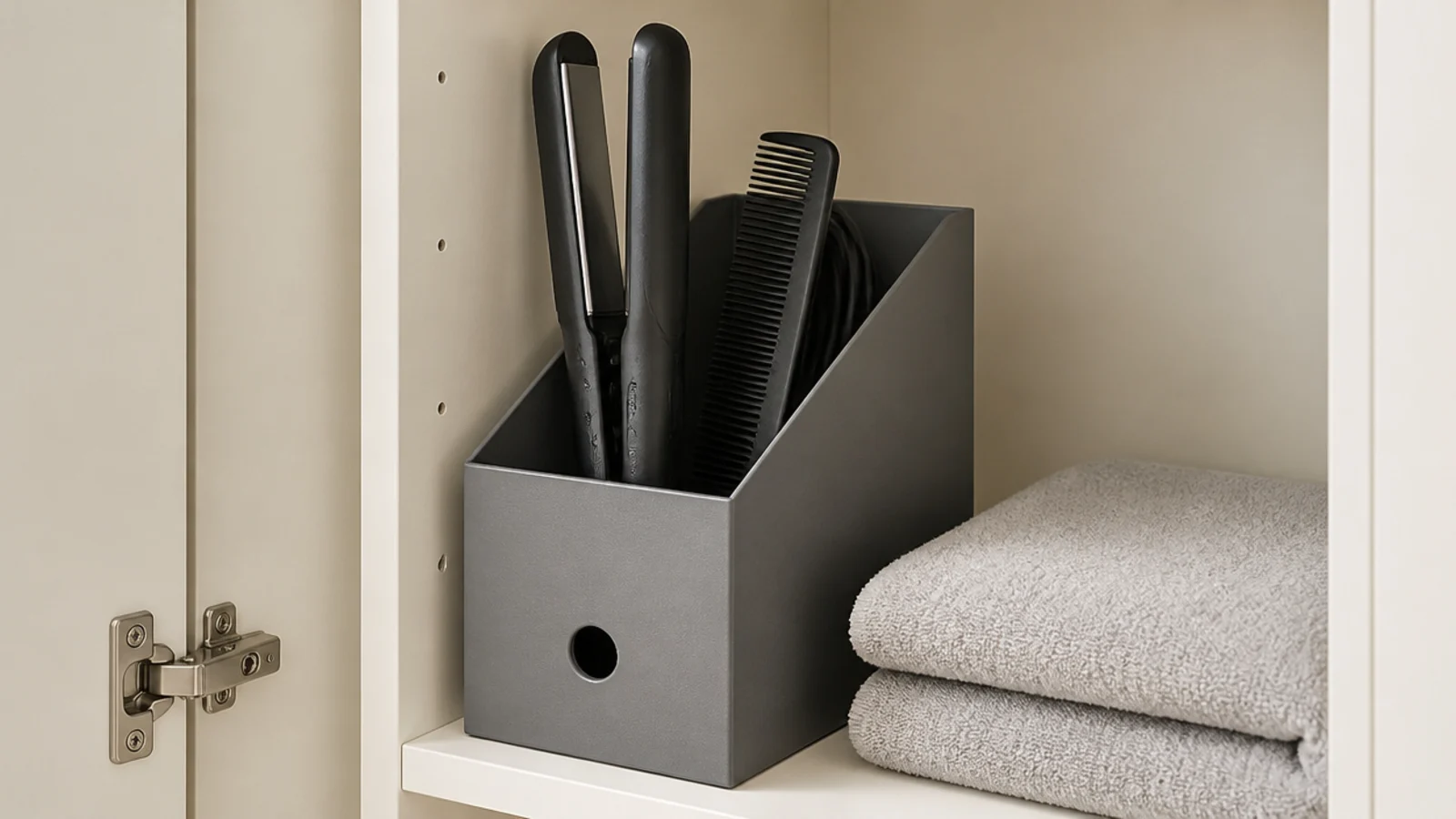
10. Stand hair tools in a magazine file
A card or metal magazine file holds a straightener and a comb upright inside a cabinet, cords tucked behind, for free from a desk drawer.
Use metal rather than card if the tool goes away warm, and coil the cord loosely with a fabric tie so it does not fail at the base. Free–$
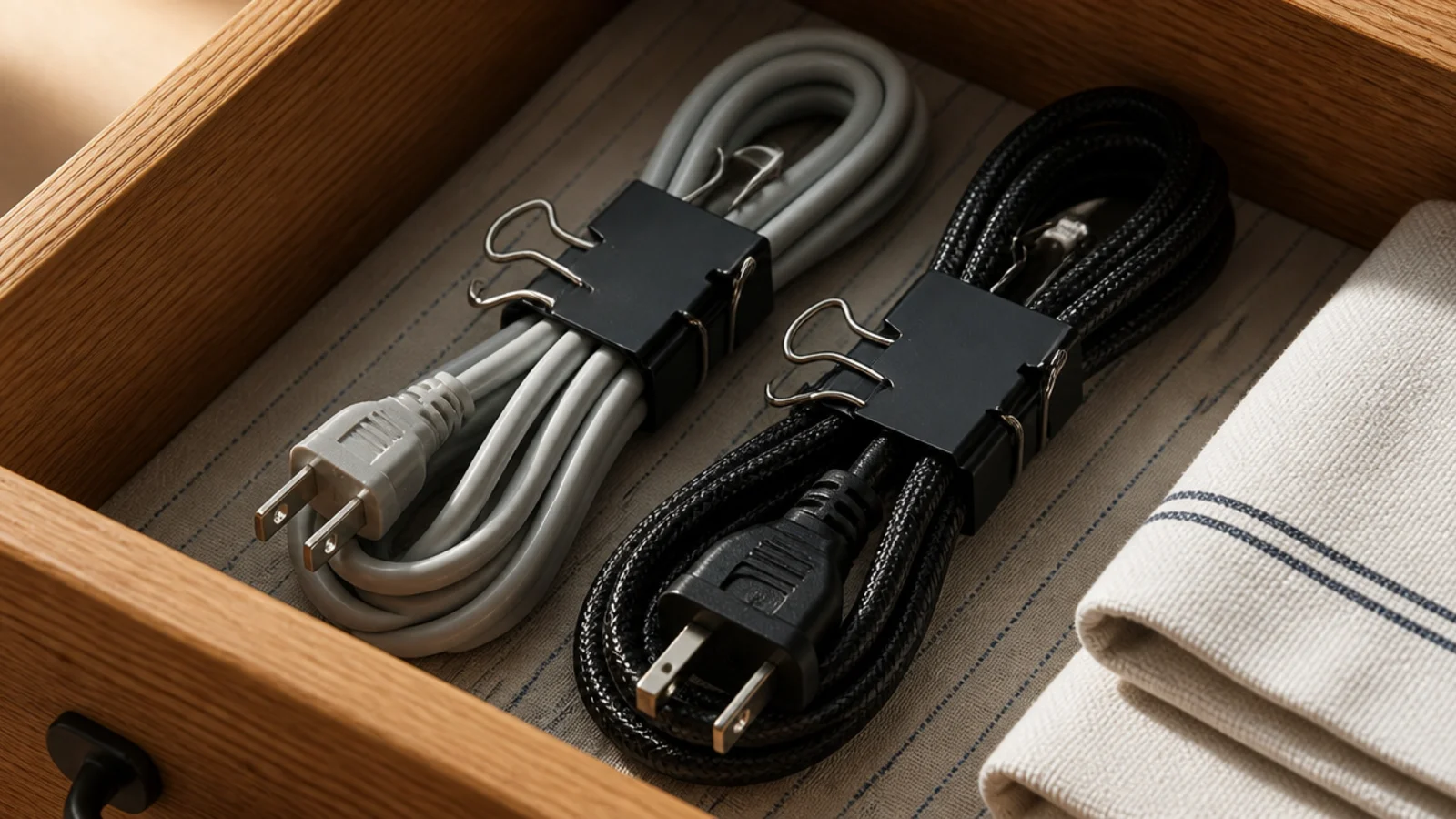
11. Tame the cords with binder clips
Two binder clips hold a coiled appliance cord neatly and cost nothing if you own a stationery drawer.
Clip the coil rather than wrapping it tightly around the tool, which is what cracks the cable at the base within a year. The same clips label bins if you slide a card under the arms. Free
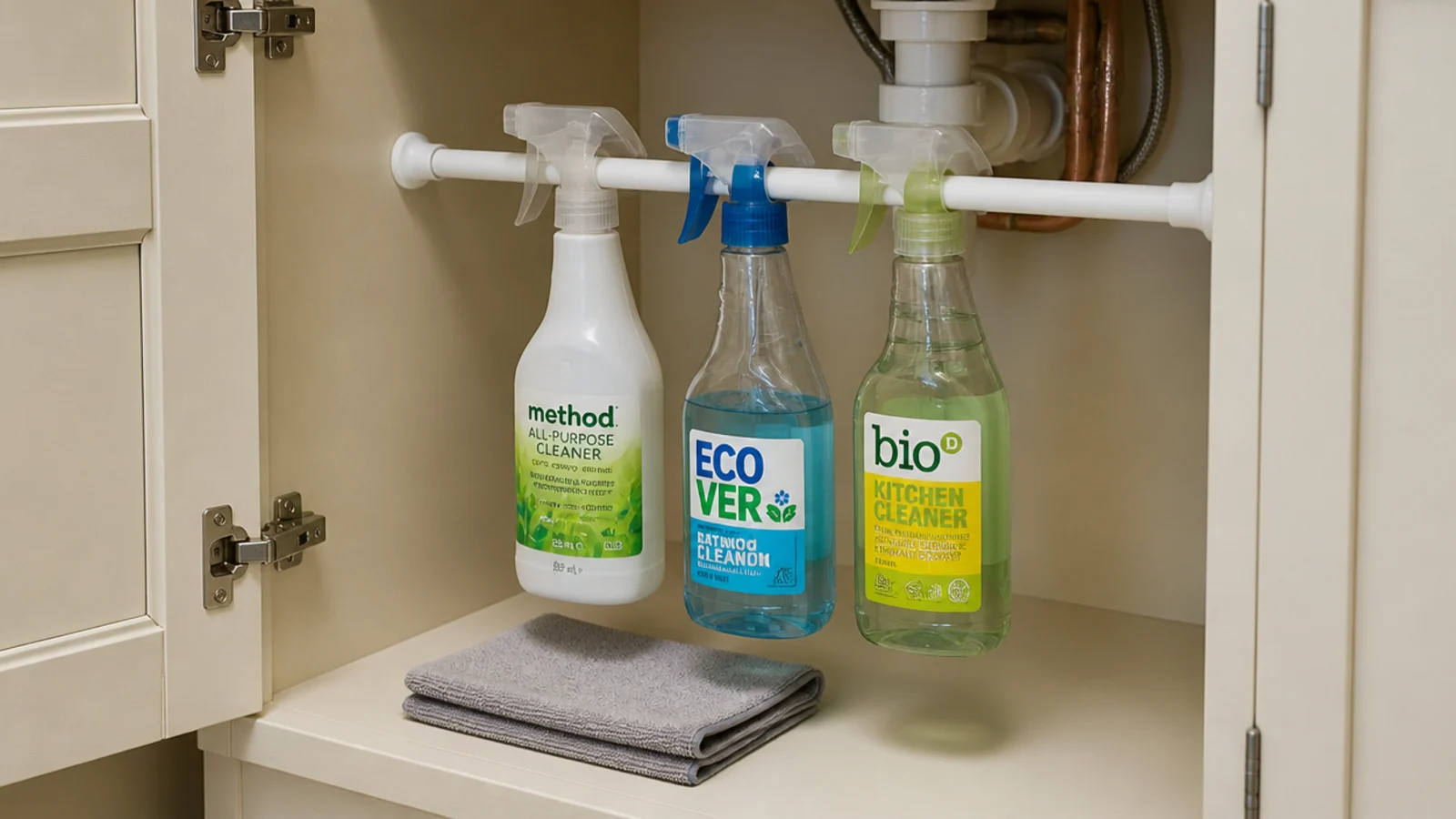
12. Hang sprays from a tension rod
A $6 tension rod fitted across an under-sink cabinet holds spray bottles by their triggers and frees the entire cabinet floor beneath them.
No fixings, no damage, and it comes out at move-out. It is the single best renter trick under a bathroom sink. $
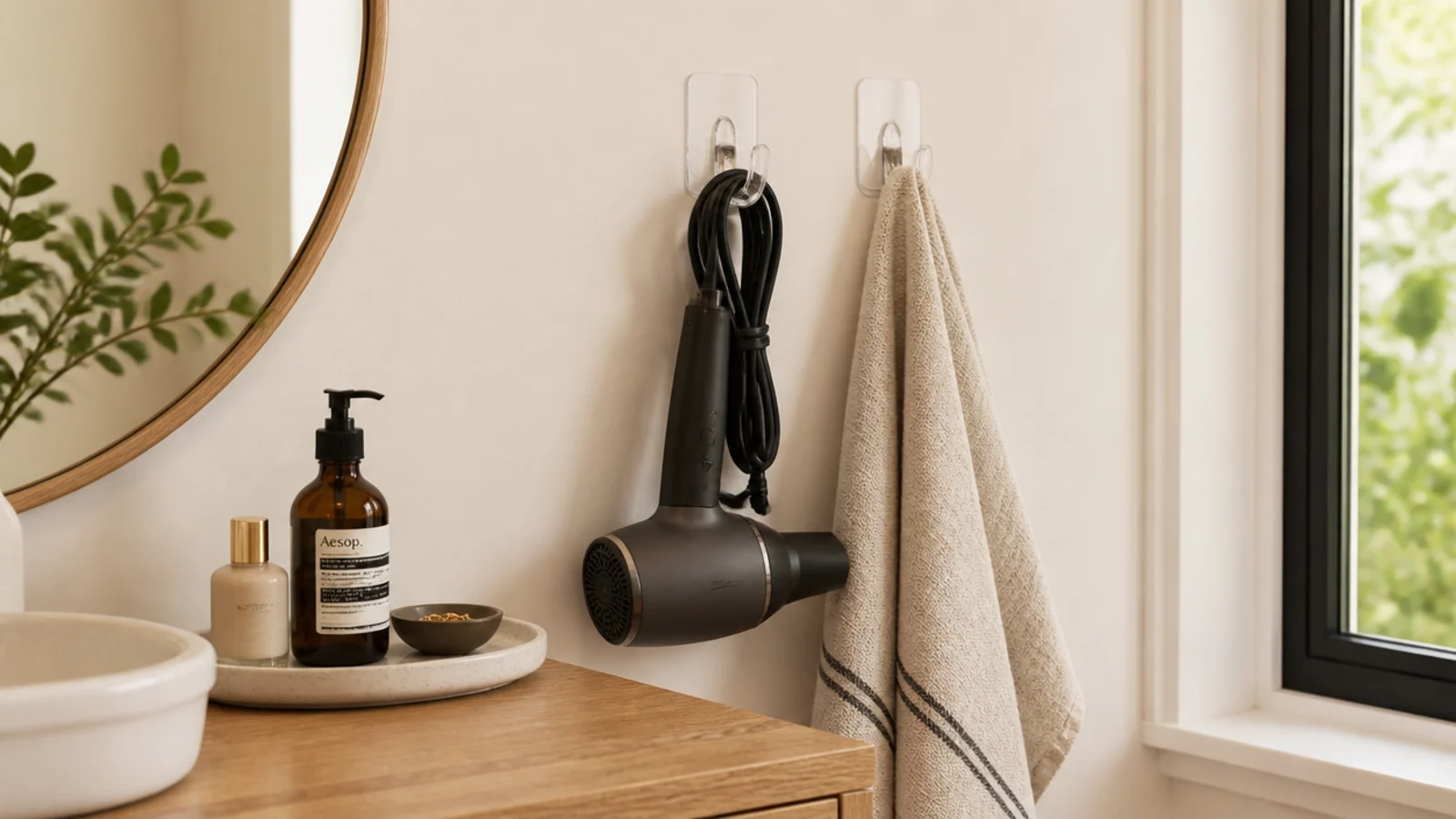
13. Add adhesive hooks where a drill cannot go
Adhesive hooks take a hair dryer, a towel or a small rail off the counter for a couple of dollars each.
Buy hooks rated above the load, press for thirty seconds, and wait an hour before hanging anything. Keep them off paint less than three weeks old or they take the paint with them. $
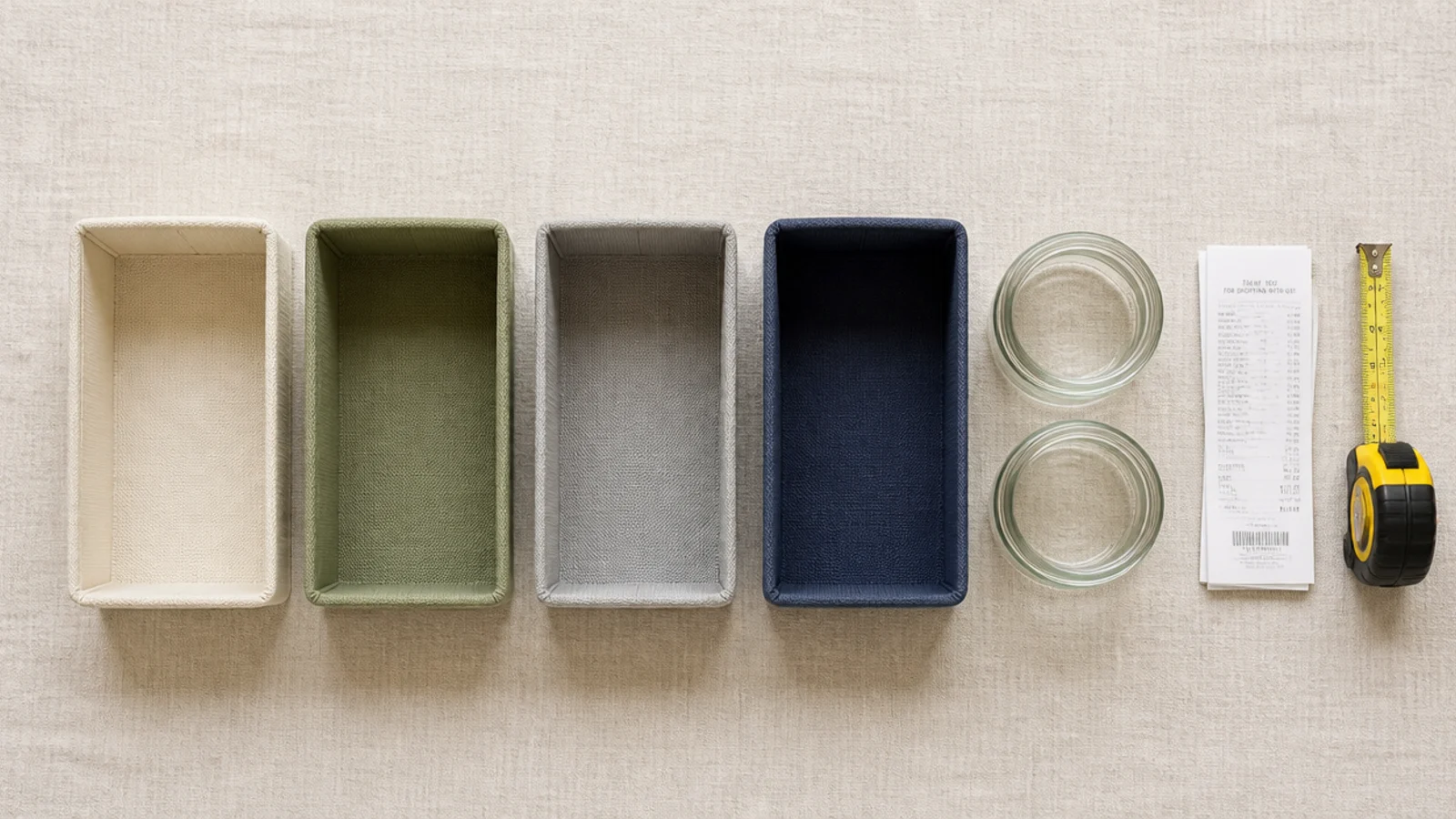
14. Buy only the dollar-store shapes that last
Simple open bins, thick-rimmed glass jars and sturdy caddies survive years. Thin hinged lids, clear brittle plastic and anything with moving parts crack within a season.
Take your drawer measurements with you. A bin an inch too wide is not a bargain, it is a donation with extra steps. $
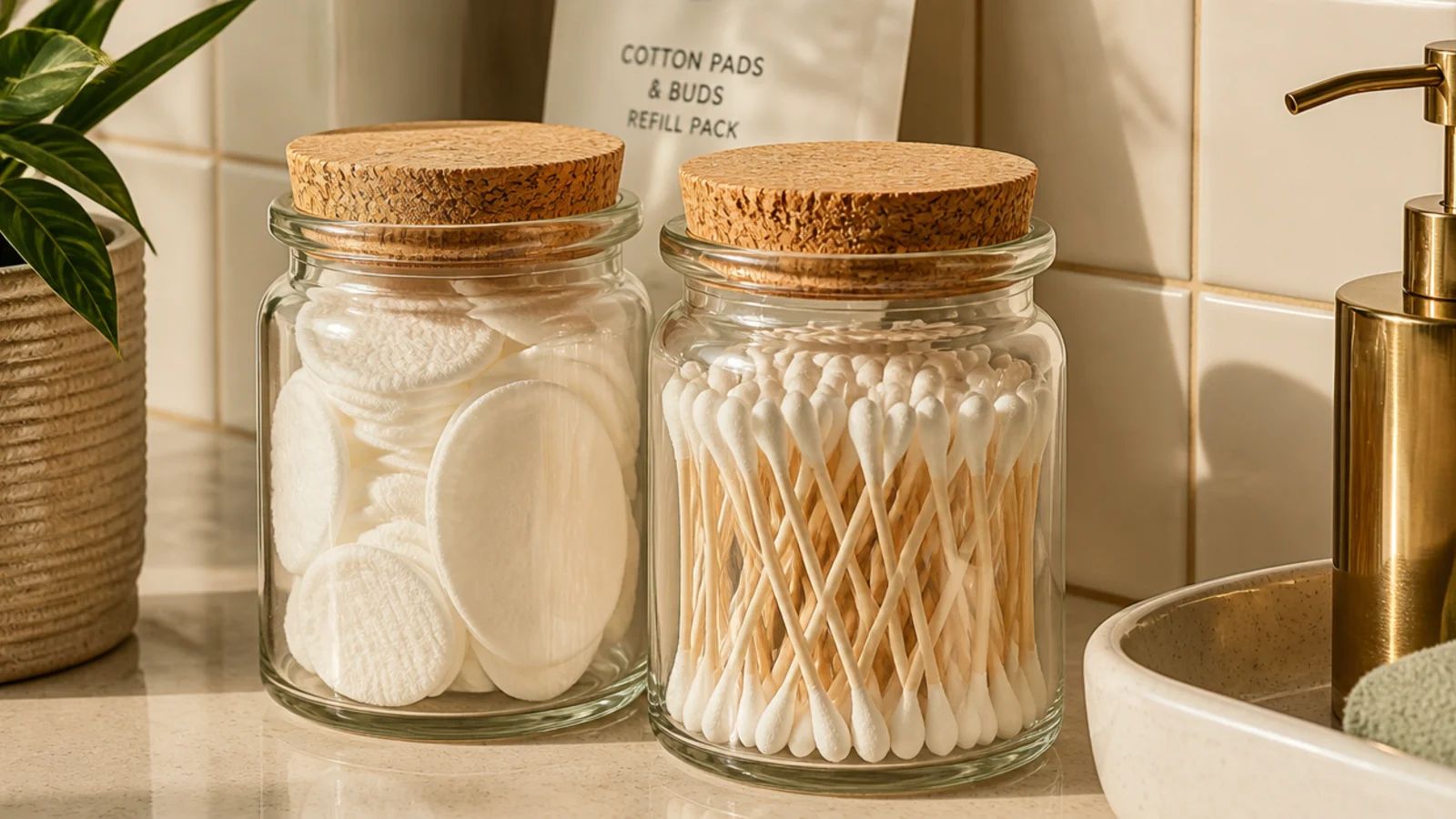
15. Decant cotton pads into jars
Two thrifted glass jars replace four crumpled plastic bags and keep pads clean in a humid room, for a dollar or two each.
Keep the refill packs elsewhere so the jars stay the working supply. Cork or wooden lids read warmer than plastic on a neutral vanity. Free–$
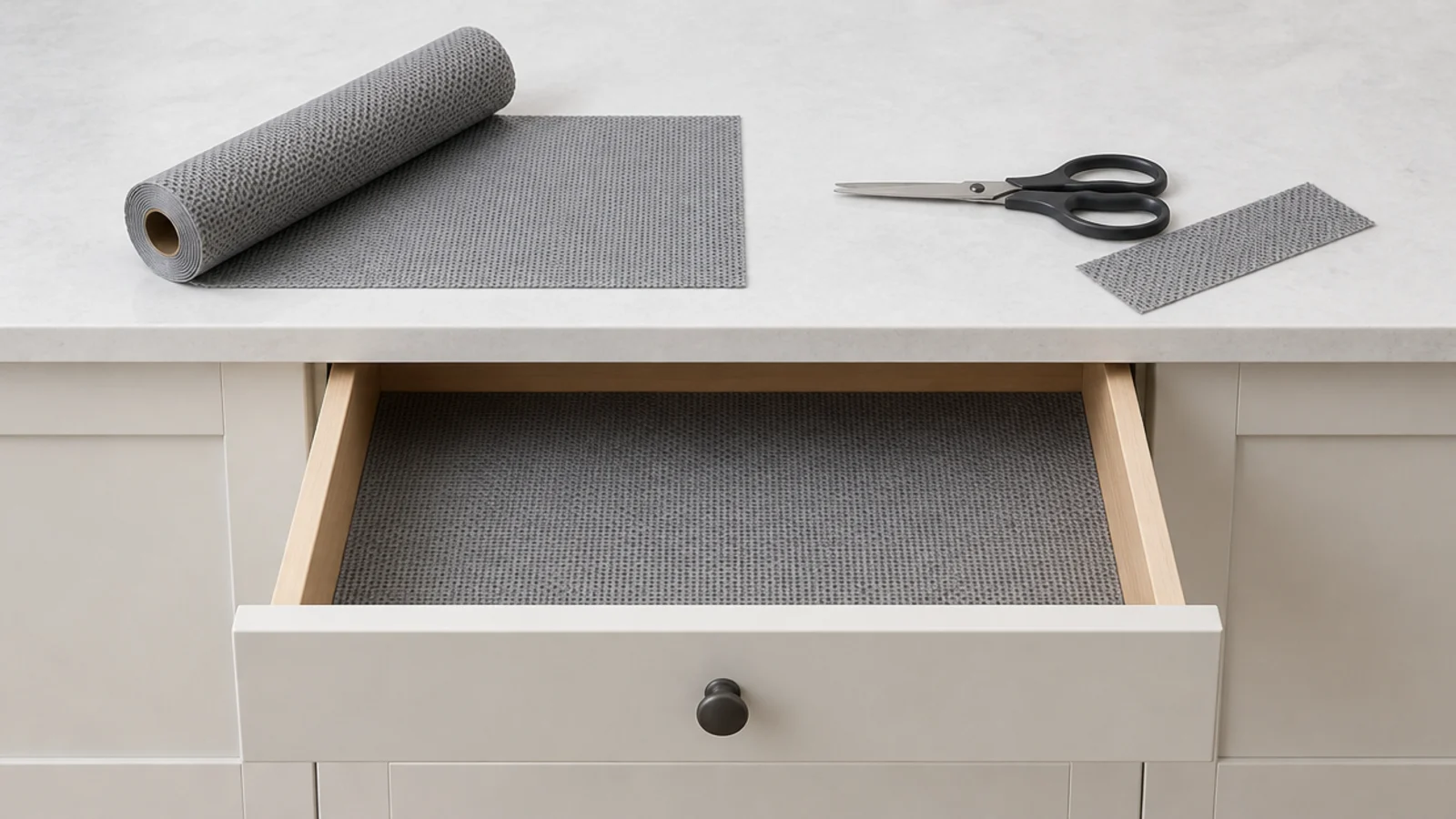
16. Cut non-slip liner to size
A roll of non-slip liner is about $8 and covers two or three drawers, stopping loose containers travelling every time you close one.
It also protects a laminate base from spills, which matters in a rental. Cut it with scissors to the internal dimensions and dry-lay it, no adhesive needed. $
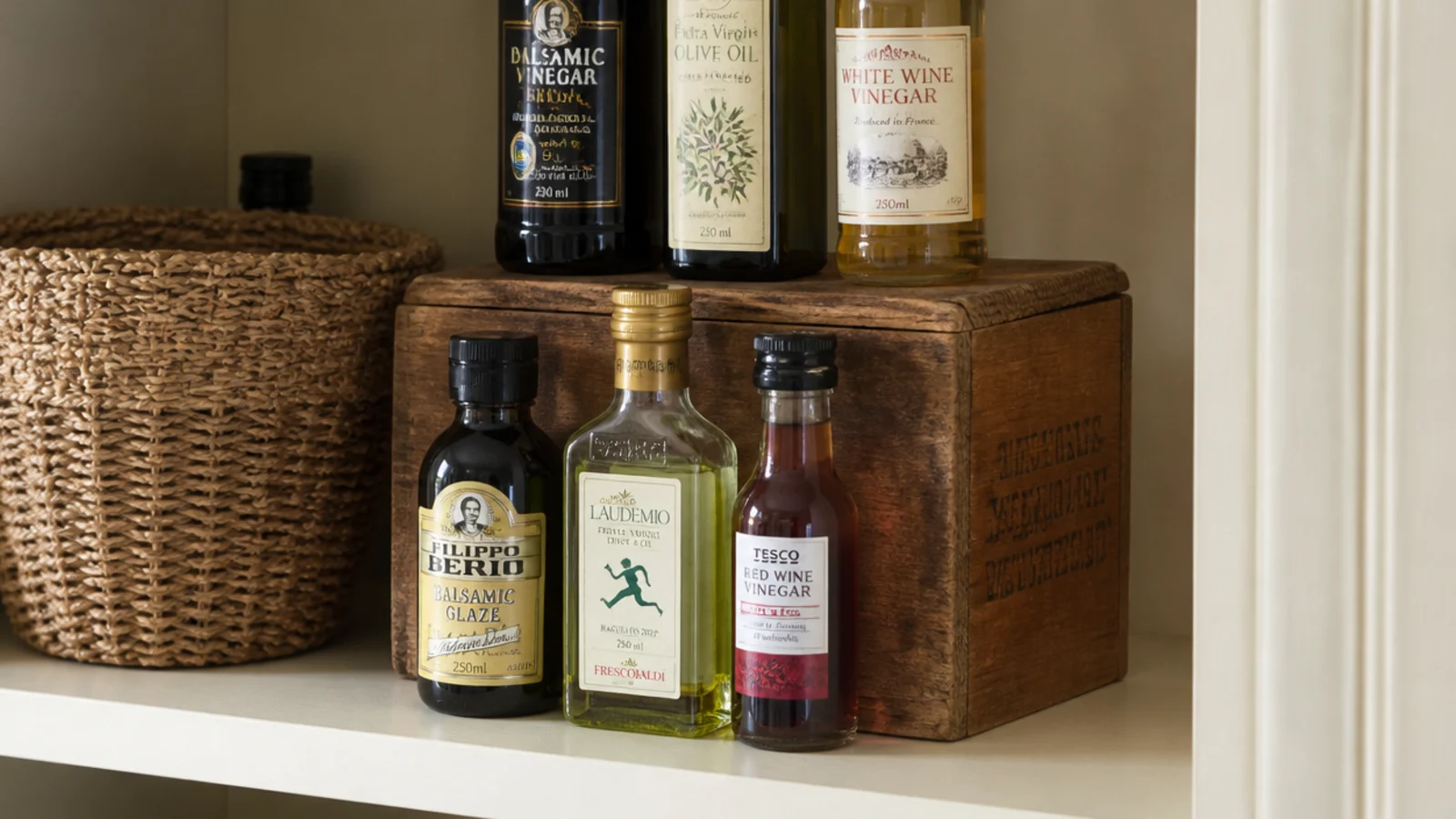
17. Thrift a small wooden box as a riser
A small wooden box turned upside down lifts the back row of a cabinet shelf by 3 to 4 inches so you can actually see it.
Thrift stores sell these for a couple of dollars. Right way up, the same box holds cotton pads or backstock, so it earns its place either way. $
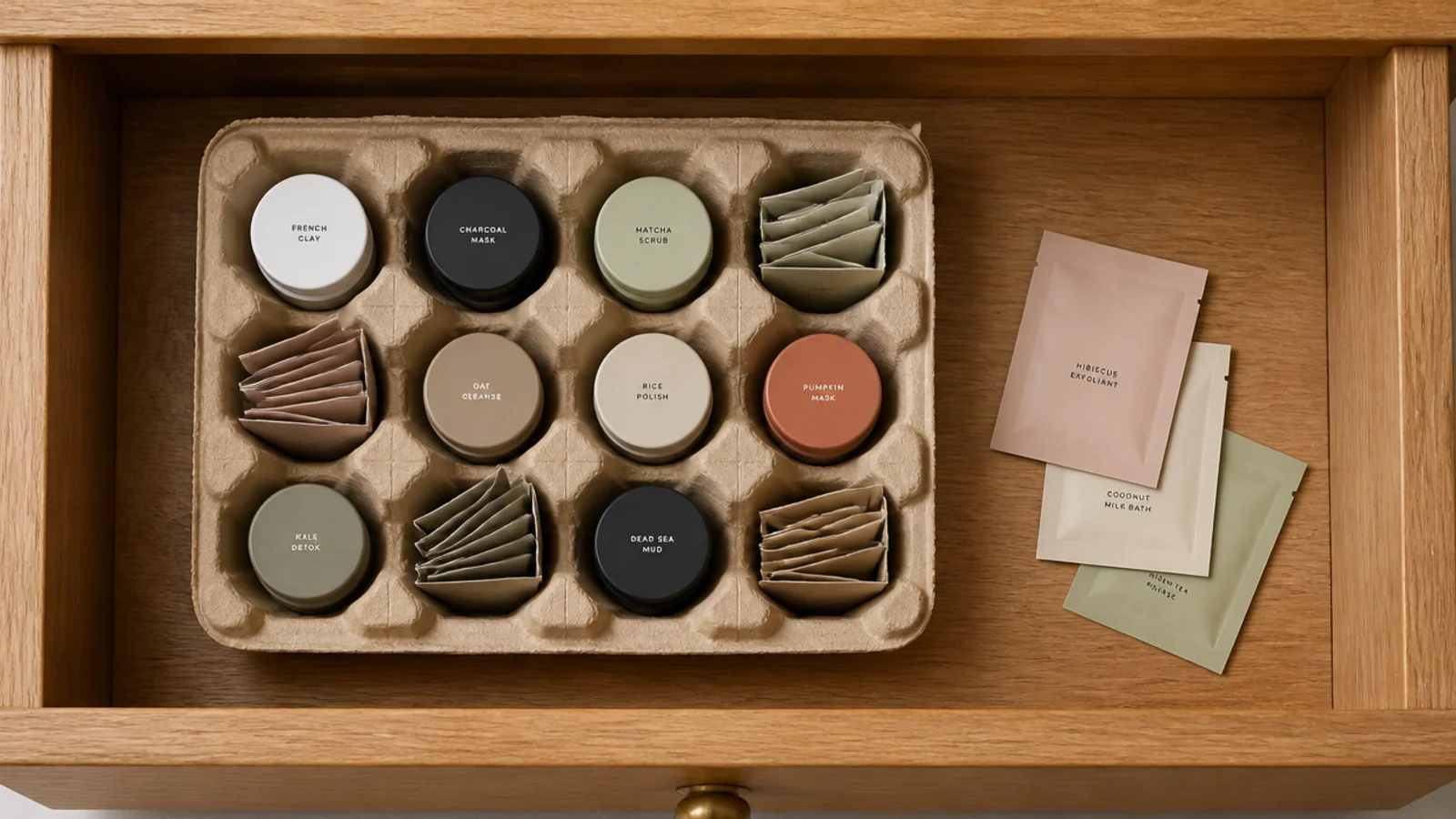
18. Give samples an egg carton
An egg carton holds sample pots and folded sachets upright in a drawer, keeps them visible, and costs nothing.
Sachets over a year old have usually oxidised, so bin those unopened. One carton is the whole sample allowance, and nothing new goes in until something comes out. Free
19. Repurpose a mug tree for chains and ties
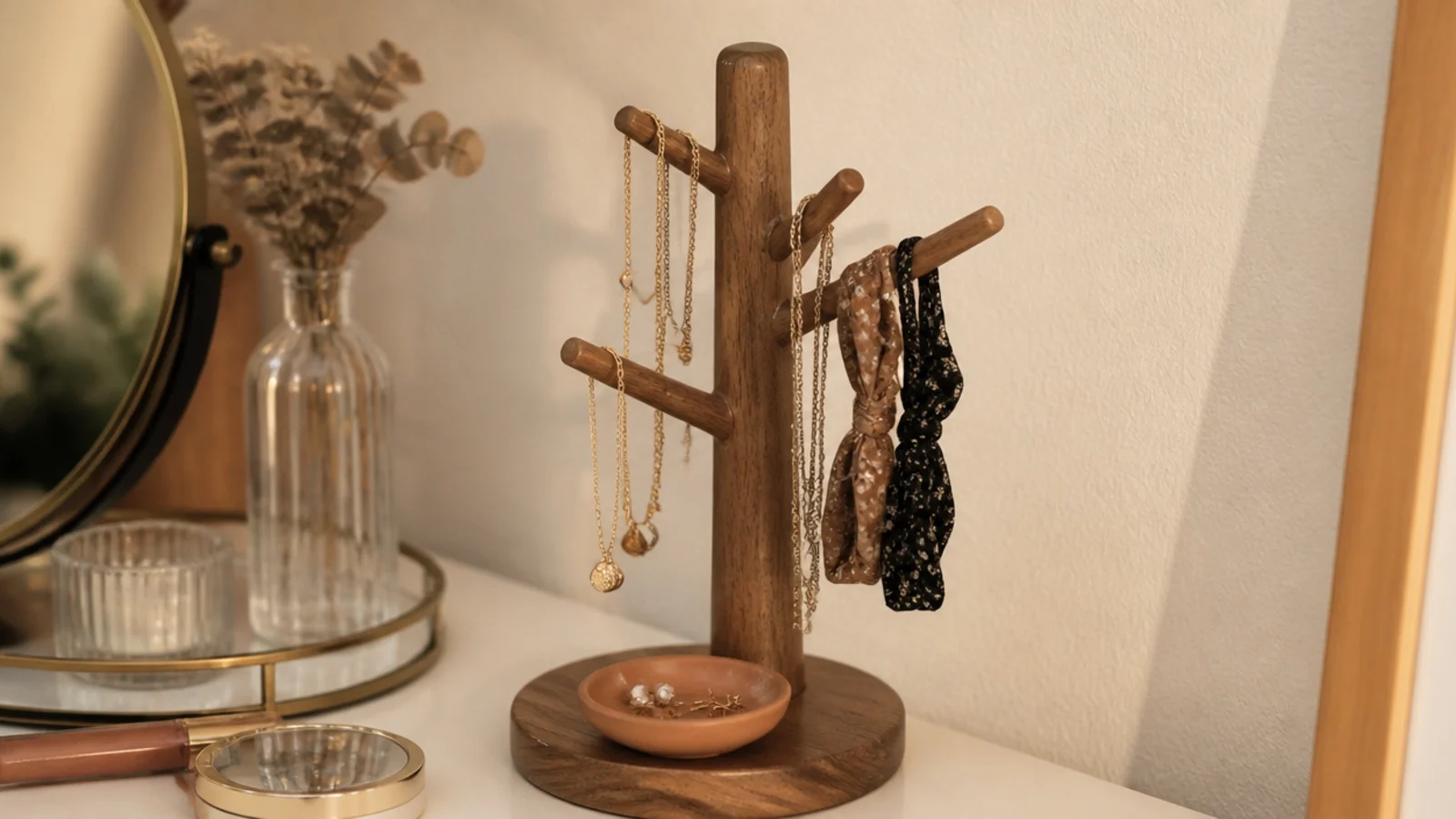
A wooden mug tree hangs fine chains straight so they stop knotting into a single lump, and it takes scrunchies and hair ties on the lower arms.
Thrifted for $3, it also solves the everyday jewellery that never makes it back into a box. A small dish at the base takes studs and rings. $
20. Make a vanity from a thrifted side table
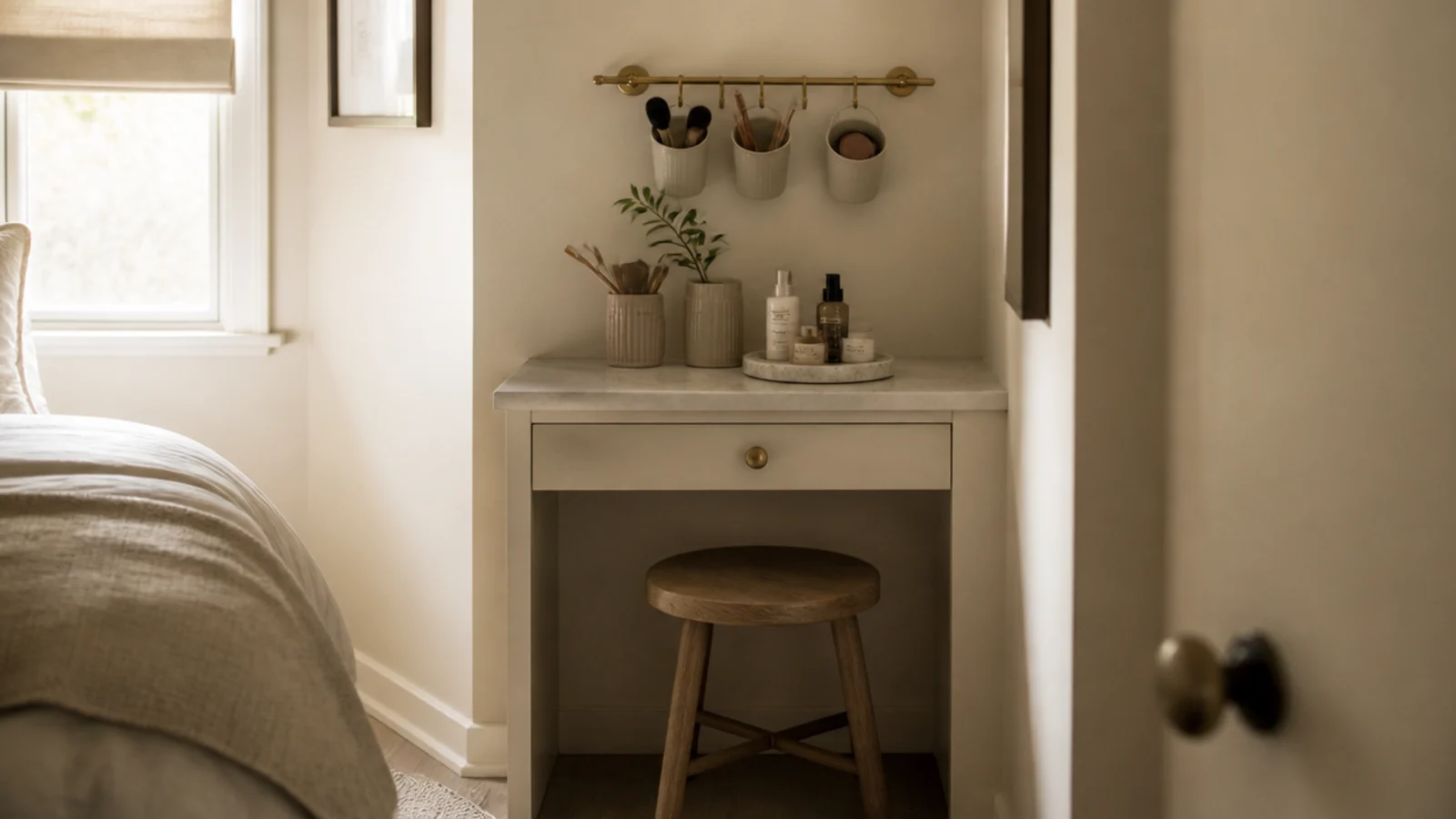
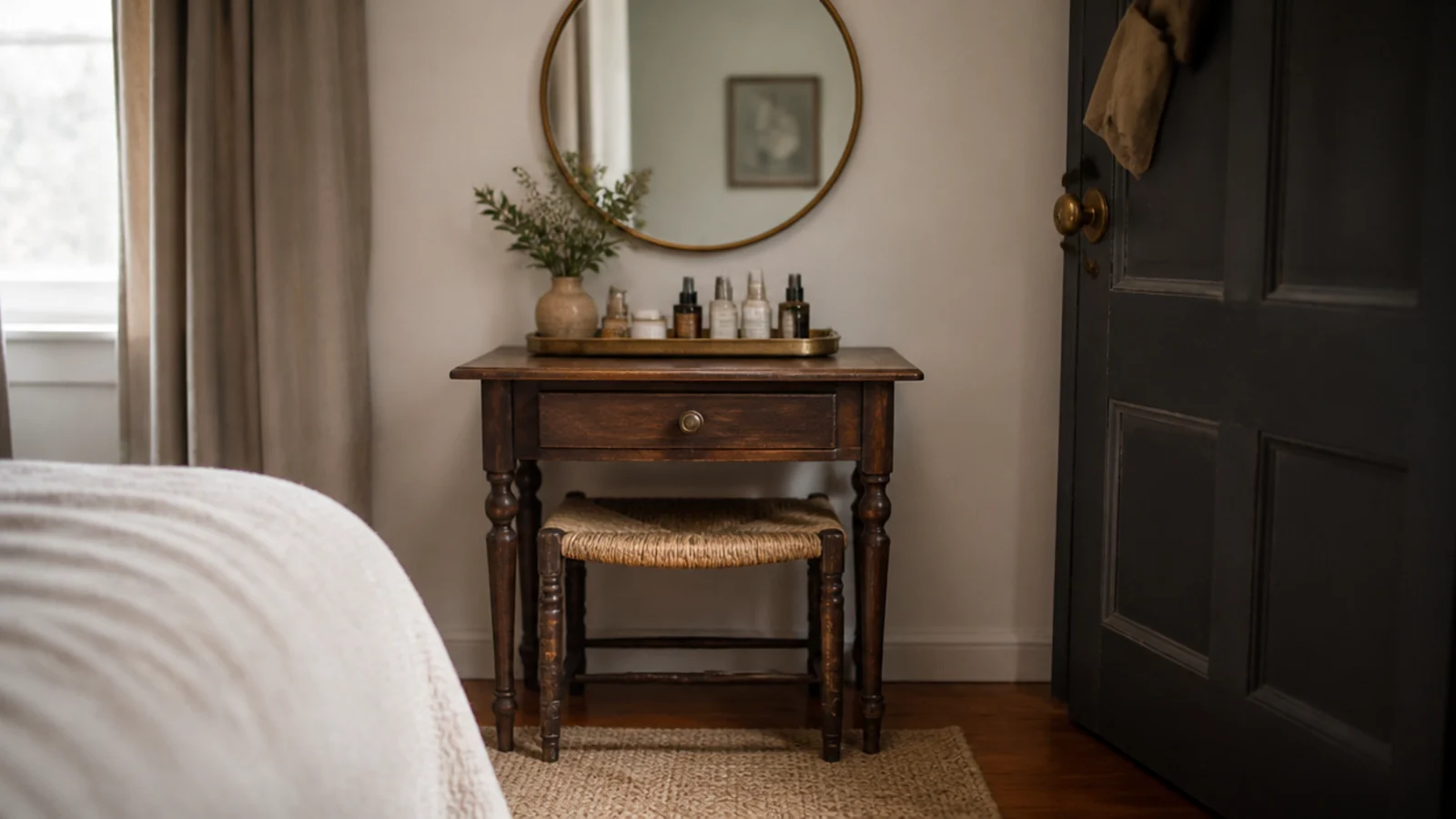
A small side table with one drawer becomes a bedroom vanity for $20 to $35, which is a fraction of anything sold as a vanity.
Check the height: 29 to 31 inches suits a standard 18 inch stool. Sand and wax the top rather than painting it, and it looks far more expensive than it was. $$
21. Hang a secondhand mirror and paint the frame
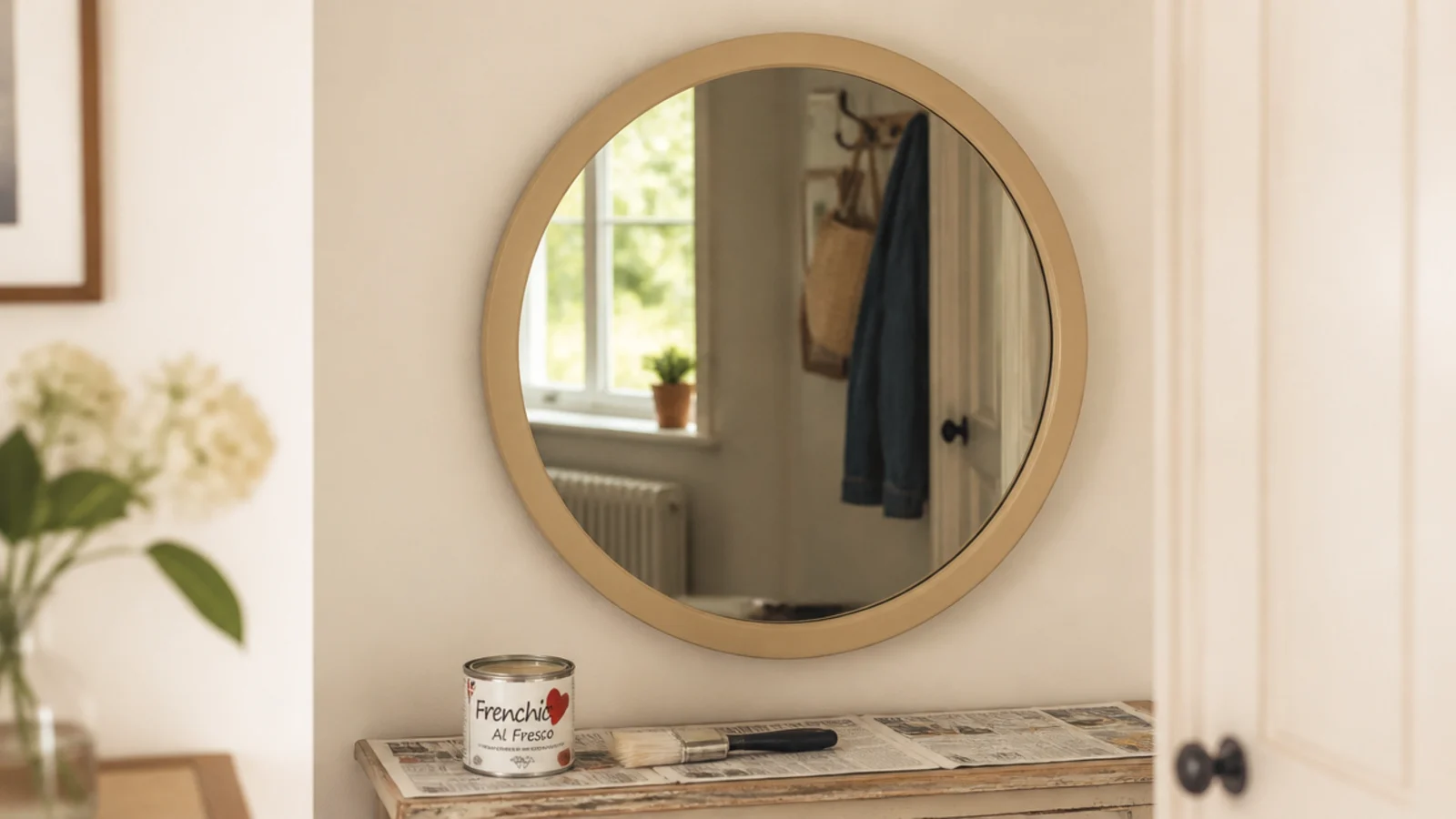
Thrift stores are full of mirrors at $10 to $20, and a sample pot of paint transforms a dated frame in an afternoon.
Round mirrors soften a boxy corner. Hang it so the centre lands on your eye line — usually 42 to 48 inches from the floor at a seated vanity. $–$$
22. Fix the light for the price of a bulb
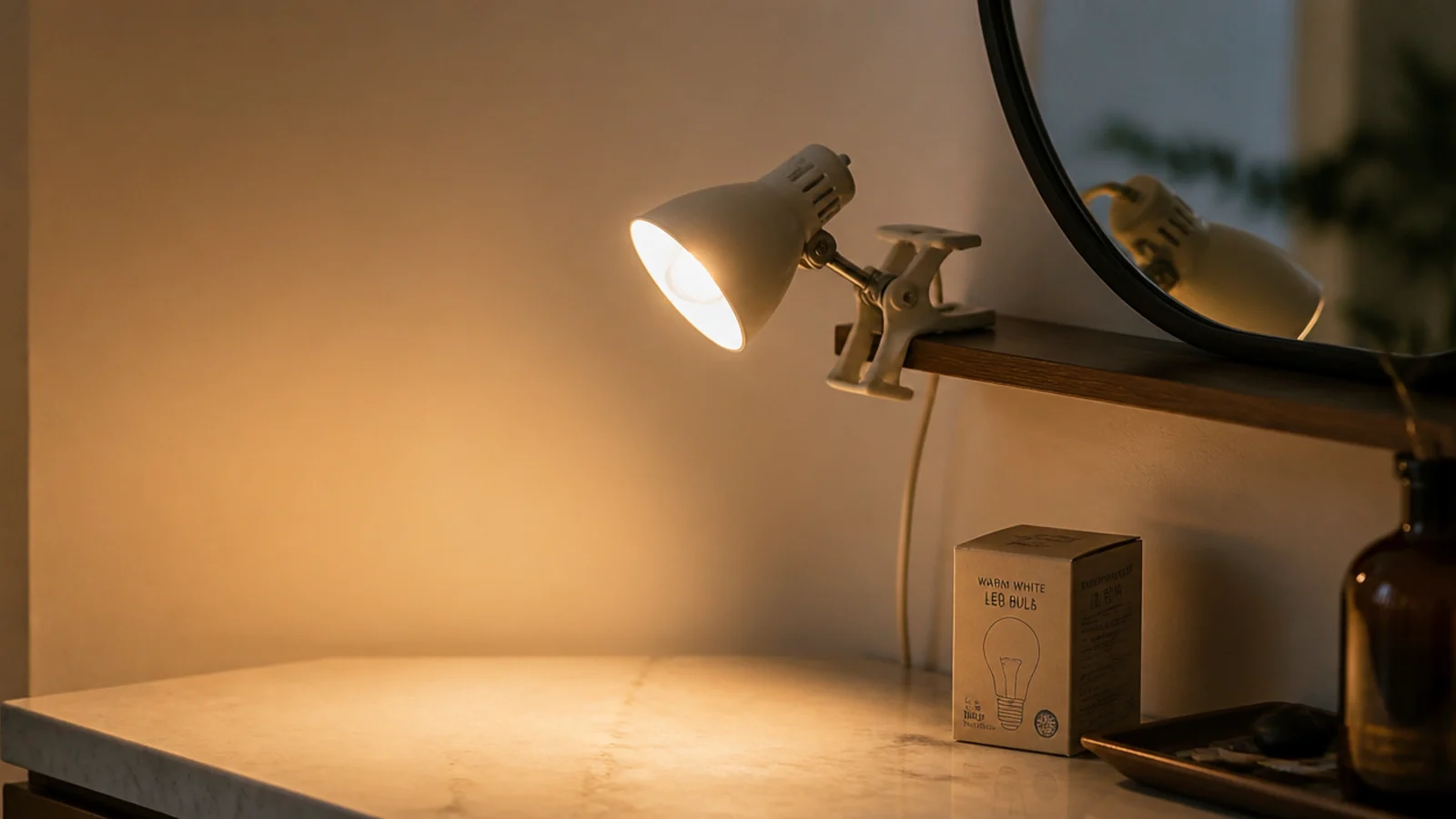
Swap to 3000K to 4000K bulbs with a high CRI rating and get light onto your face from both sides rather than from overhead, which shadows the eyes and jaw.
A clip-on lamp at eye level costs about $12 and beats an expensive fixture aimed at the ceiling. Cool 5000K bulbs make clay, brass and skin all look grey. $–$$
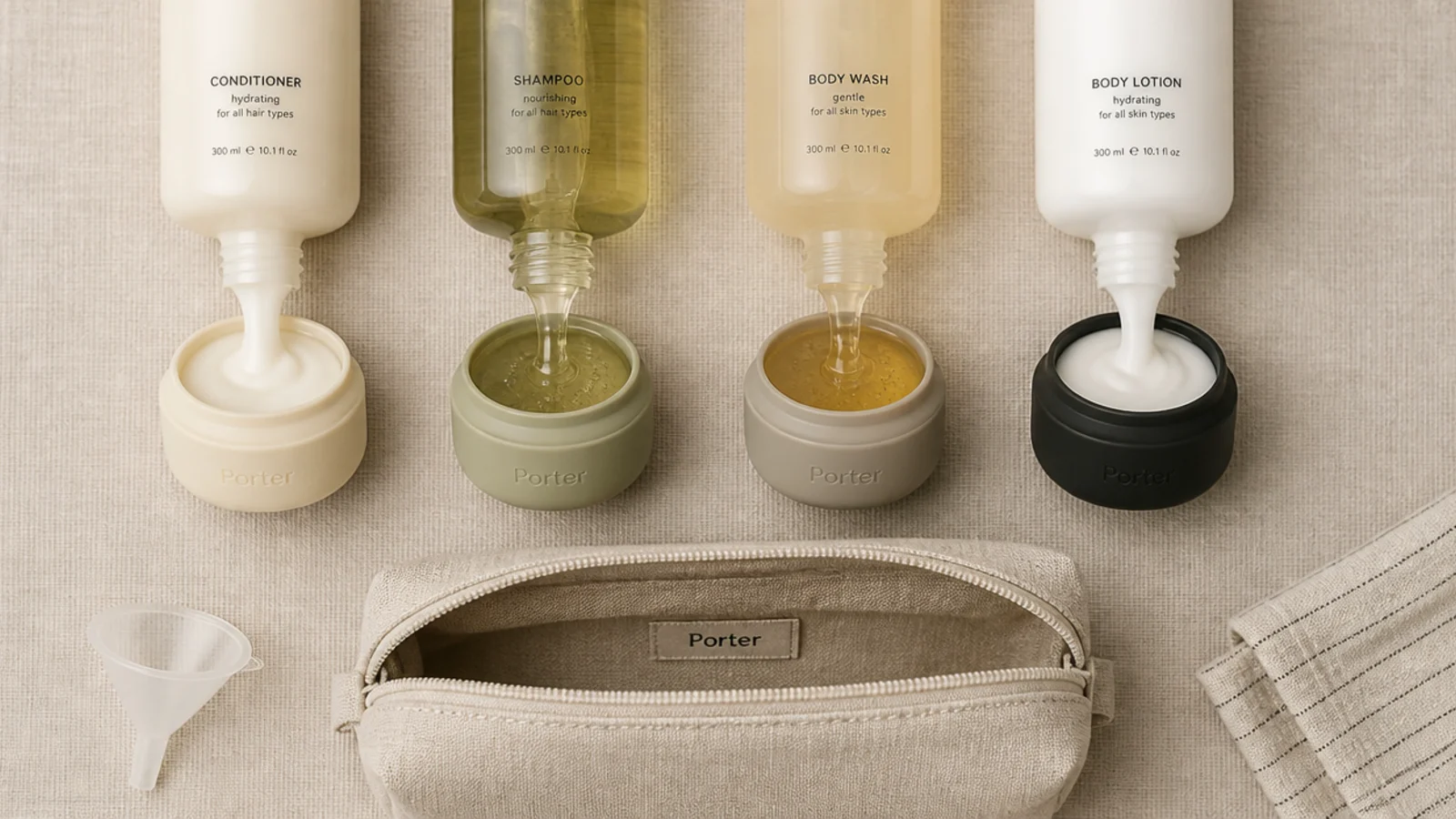
23. Decant a travel kit into what you own
Refilling small pots from full-size bottles beats buying minis before every trip, and the pots last for years.
Keep the kit permanently packed in a pouch so the drawer is never raided the night before. Anything with a pump or dropper still travels upright, in a sealed bag. Free–$
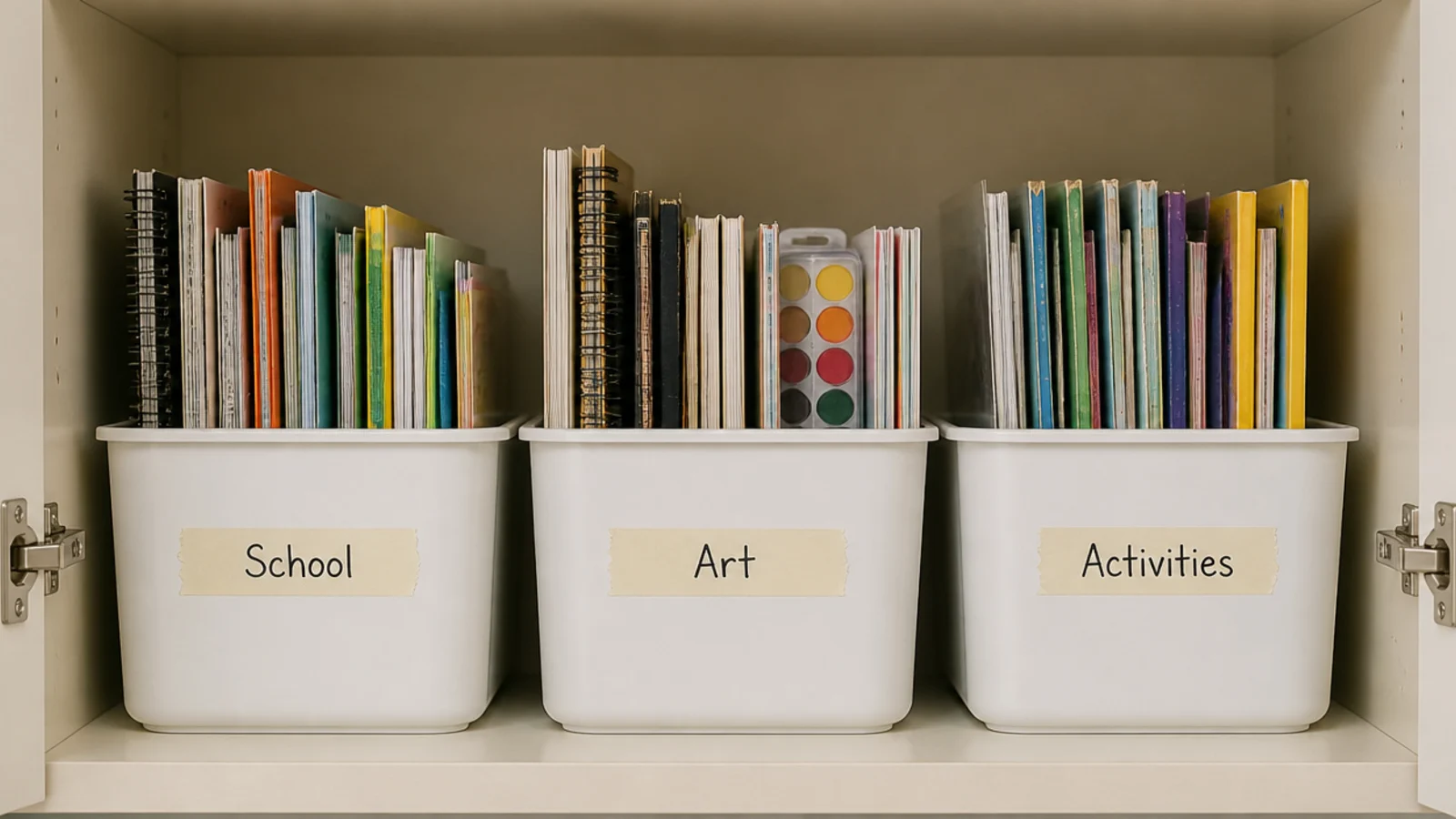
24. Label with masking tape and a marker
Labels are for everyone else in the house. An unlabelled bin gets refilled with whatever fits, and the system quietly dissolves.
Masking tape and a marker cost nothing and peel off cleanly when categories change. Write the category rather than the brand, and keep the handwriting consistent. Free
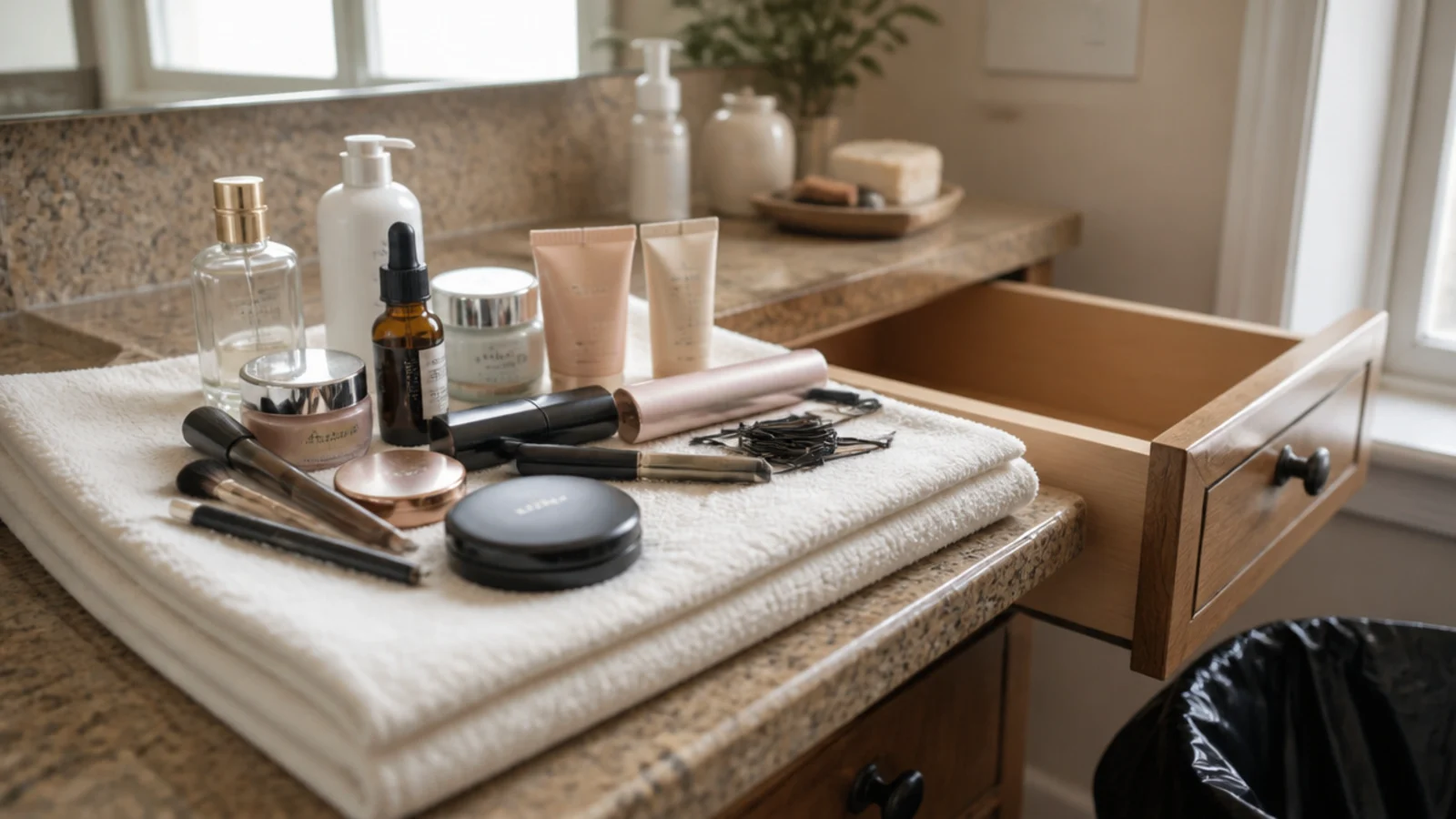
25. Put the twice-yearly cull in the calendar
Two dates a year: everything out onto a towel, dates checked, drawer wiped, only the survivors go back.
It is free, it takes under an hour, and it does more than any organizer you can buy, because containers manage volume and only a cull removes it. Free
Mistakes to Skip
- Buying a matching organizer set before culling. Sets are sized for the collection in the photograph, not the one in your drawer, and half the compartments go unused.
- Shopping without the drawer measurements. Internal width and depth minus about 1/8 inch is the difference between a bargain and a donation.
- Filling every surface because the containers were cheap. Price has no bearing on how much a small room can absorb, and the counter still needs clear working space.
Frequently asked questions
What is the cheapest way to organize a vanity?
Start by removing volume rather than adding containers. A date check usually clears a third of what is in the drawer, and that costs nothing. Then shop your own house before any store: a heavy tumbler becomes a brush cup, a cutlery tray becomes a drawer insert, and a clay plant saucer becomes the catch-all tray.
Are dollar store organizers any good?
Some are excellent and some warp within a month. Buy the simple shapes — small open bins, glass jars, plastic caddies with thick rims — and skip anything with a hinge, a thin clear lid or moving parts. Take your drawer measurements with you, because a bin an inch too wide is not a bargain at any price.
What can I use instead of makeup organizers?
A kitchen cutlery tray divides a shallow drawer for about $6, a napkin holder files palettes on edge, a bead-storage box sorts lipsticks, and a mug tree holds scrunchies and chains. Cardboard strips wrapped in kraft paper make free custom dividers while you decide whether you need anything permanent at all.
How do I make a cheap vanity look expensive?
Repeat one material three times across the counter, keep only daily items out, and put every group on a tray so six objects read as one composition. Then fix the light: a 3000K to 4000K high CRI bulb costs a few dollars and does more for how the whole corner looks than any container you can buy.
Is it worth thrifting vanity storage?
Yes, particularly for trays, dishes, small boxes and glass. Thrift stores price by size rather than style, so a heavy stoneware dish is a couple of dollars and looks better than plastic ever will. Wash everything in hot soapy water, and skip anything porous and unglazed that will sit somewhere permanently damp.
Do the cull and the house-wide gather first — together they cost nothing and they usually cut the shopping list to two or three items. Then buy the cheap things that genuinely work: a liner, a tray, a proper brush cup. For the full system, fifteen vanity organization ideas sets it out in order, vanity tray styling makes the counter look considered, and walk-in closet on a budget applies the same thrift-first thinking to clothes. Save the pin for your next thrift run.
Want more like this? Browse all 15 vanity organization guides — they all use the same measurements and budget tiers.
Pin it for later
Save this to your Vanity Organization board
Pin it now so it is waiting for you when the tape measure comes out — and so the next person hunting for this idea can find it too.
Save this pinKeep going
More ideas worth saving while you have the tape measure out.