Vanity Organization · Listicle
20 Genius Vanity Organization Ideas for a Cozy Home

Small vanity organization is a volume problem wearing a square-footage costume. A 24 inch counter holds a genuinely complete routine — the trouble is that most of us are storing three routines on it. These 20 ideas are what I use in narrow rentals, bedroom nooks and bathrooms where the door hits the stool, and every one of them comes with the clearance it needs.
In this guide22 sections — tap to openHide
- 1.What small vanity organization has to get right
- 2.Measure the footprint before you buy anything
- 3.Cut the collection to fit the vanity
- 4.Let only daily items hold the counter
- 5.Hang a rail above the counter
- 6.Add a narrow ledge above the mirror
- 7.Swap in a mirror with storage behind it
- 8.Stack two shallow drawers on the counter
- 9.Put a two-tier riser in the cabinet
- 10.Claim the back of the cabinet door
- 11.Hang an over-the-door organizer for backstock
- 12.Park a 12 inch rolling cart alongside
- 13.Choose a flip-top vanity in a bedroom nook
- 14.Turn a dead corner into the vanity
- 15.Slide a basket onto a riser under the sink
- 16.Fit shallow inserts to double drawer capacity
- 17.Stand bottles upright in a deep bin
- 18.Mount the hair tools on the wall
- 19.Light the mirror from both sides
- 20.Use a stool that stores something
- 21.Run one in, one out
- 22.Mistakes to Skip
What small vanity organization has to get right
Three measurements decide whether a small vanity is pleasant or maddening. Knee space wants 24 to 30 inches of clear width and about 24 to 26 inches of height under the counter, so a standard 18 inch stool tucks fully away. Walkway wants at least 30 inches so the stool pulls out without hitting a door.
The third is the wall. Almost every small vanity has 20 to 30 inches of unused wall above the counter, and that is where the extra storage actually lives — a rail, a narrow ledge, a mirror cabinet.
Then the rules that make it work. Only daily items on the counter; everything else behind a door. Sort by routine order — cleanse, treat, colour — since that is the sequence a hand actually moves in. Bottles stand upright, brushes stand bristles-up in a weighted cup, and inserts get sized to the drawer's internal dimensions with about 1/8 inch of clearance.
Budget tiers below: $ under $10, $$ $10 to $25, $$$ $25 to $50.
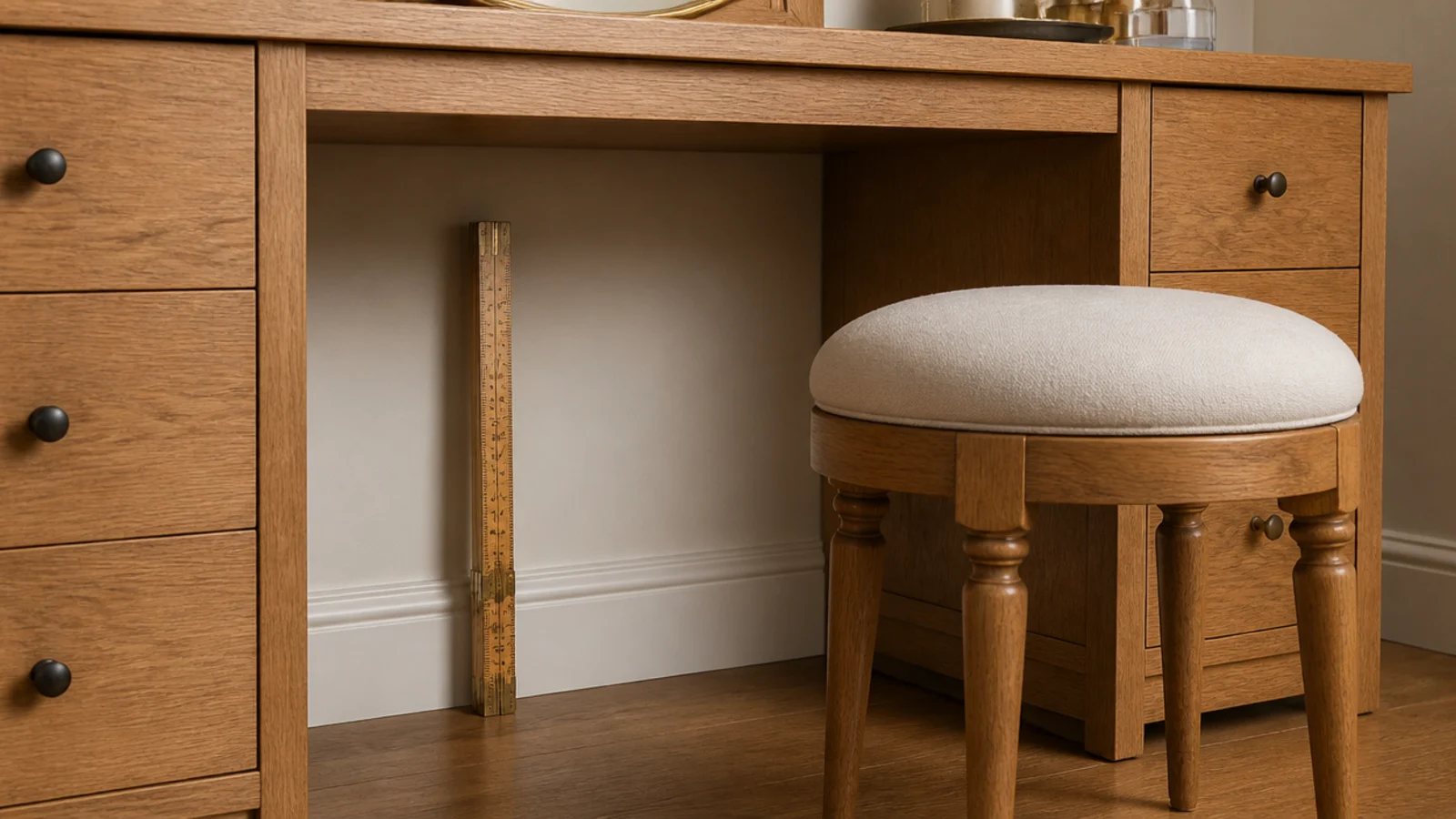
1. Measure the footprint before you buy anything
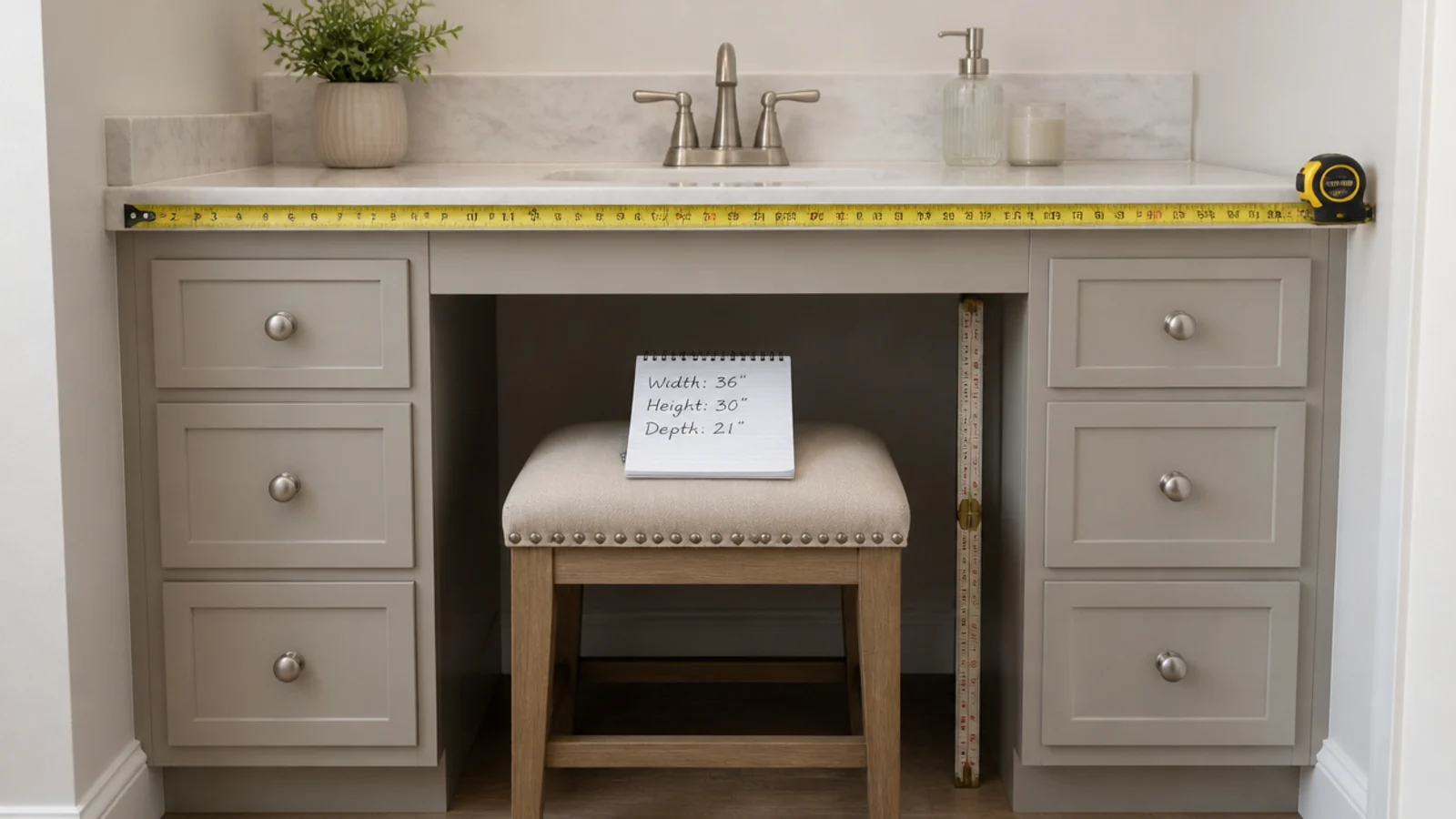
Take four numbers: counter width, counter depth, clear knee width and the height from floor to the underside of the counter. Add the walkway in front.
Those numbers rule out half the internet immediately, which is the point. A cart that does not fit the walkway, or a stool that will not tuck under, wastes the whole nook and usually cannot be returned once assembled. Free
2. Cut the collection to fit the vanity
Before adding storage, remove volume. Mascara is finished at three months, liquid foundation at six to twelve, and powders at roughly two years, so a date check usually clears a third of what you own.
Then be honest about duplicates. Two cleansers, one foundation, three lipsticks you actually wear. Small vanities punish hoarding faster than any other spot in the house. Free

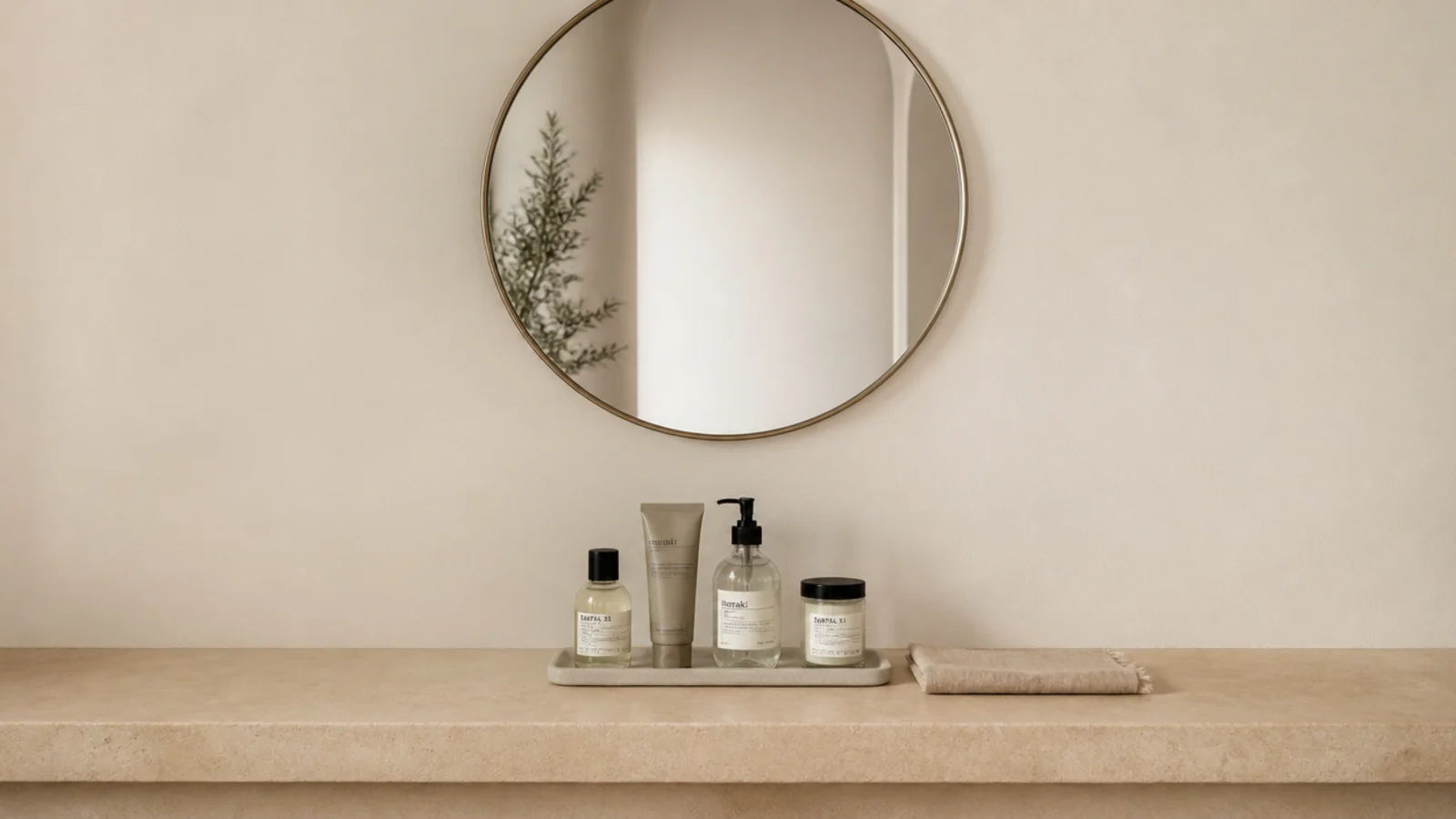
3. Let only daily items hold the counter
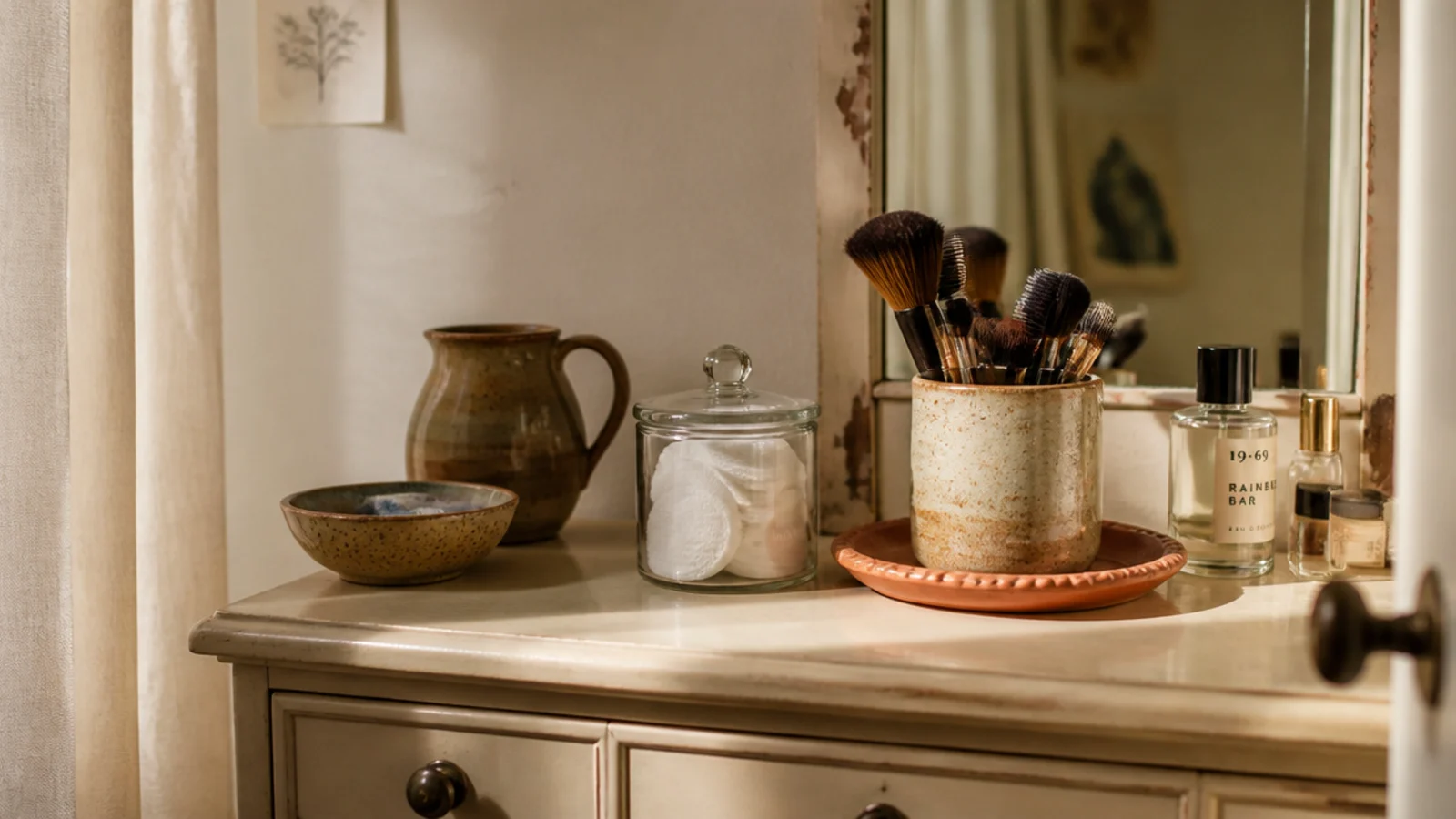
Cap the counter at five to eight things you touch every day, all on one tray. Everything weekly or seasonal moves behind a door.
The point is not minimalism, it is working surface: a small counter needs a clear spot to put things down while you use them. Leave the front 6 inches completely empty. Free
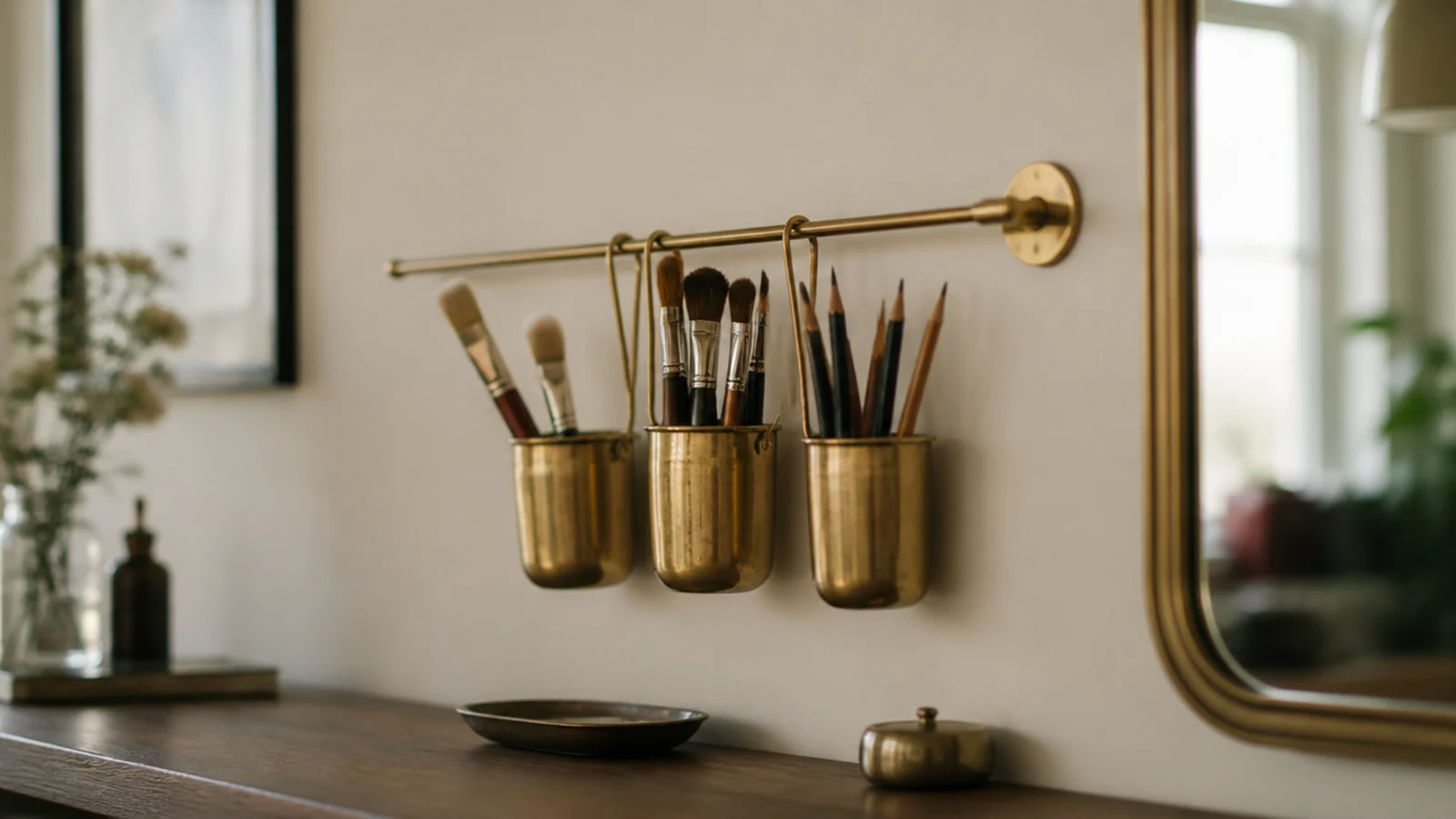
4. Hang a rail above the counter
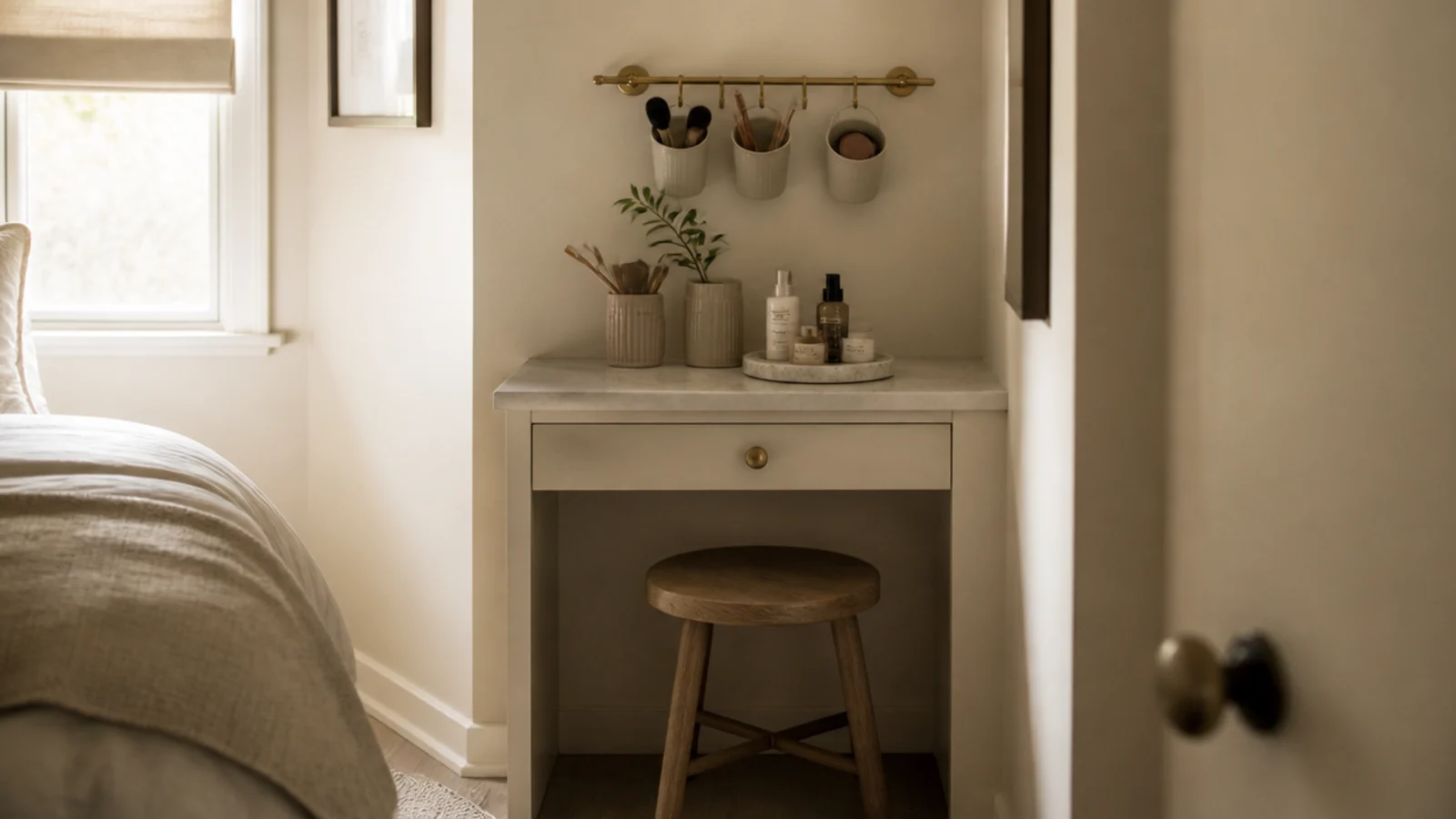
A slim rail with two or three hanging cups takes brushes, pencils and cotton buds off the surface entirely for around $15.
Mount it 8 to 10 inches above the counter so tall bottles still slide underneath. Adhesive rails hold a light load fine in a rental; keep them off paint that is less than three weeks old. $$
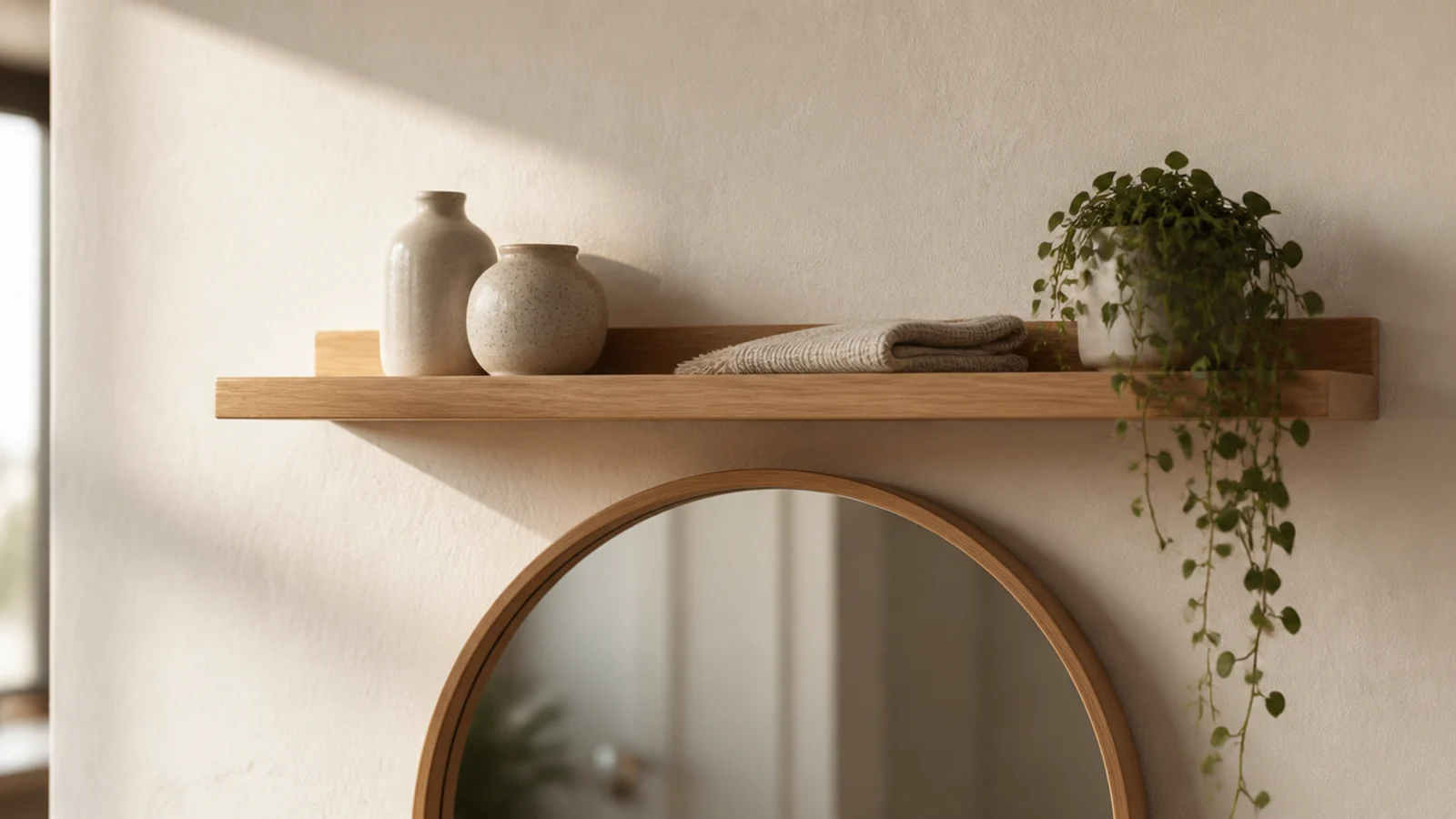
5. Add a narrow ledge above the mirror
A 4 inch deep ledge above or beside the mirror carries backstock, a small plant and a folded cloth without intruding on the room.
Anything deeper starts to feel like a shelf you walk into. Mount it at least 12 inches above the mirror so the reflection stays uncluttered, and keep the loaded weight modest on adhesive mounts. $–$$
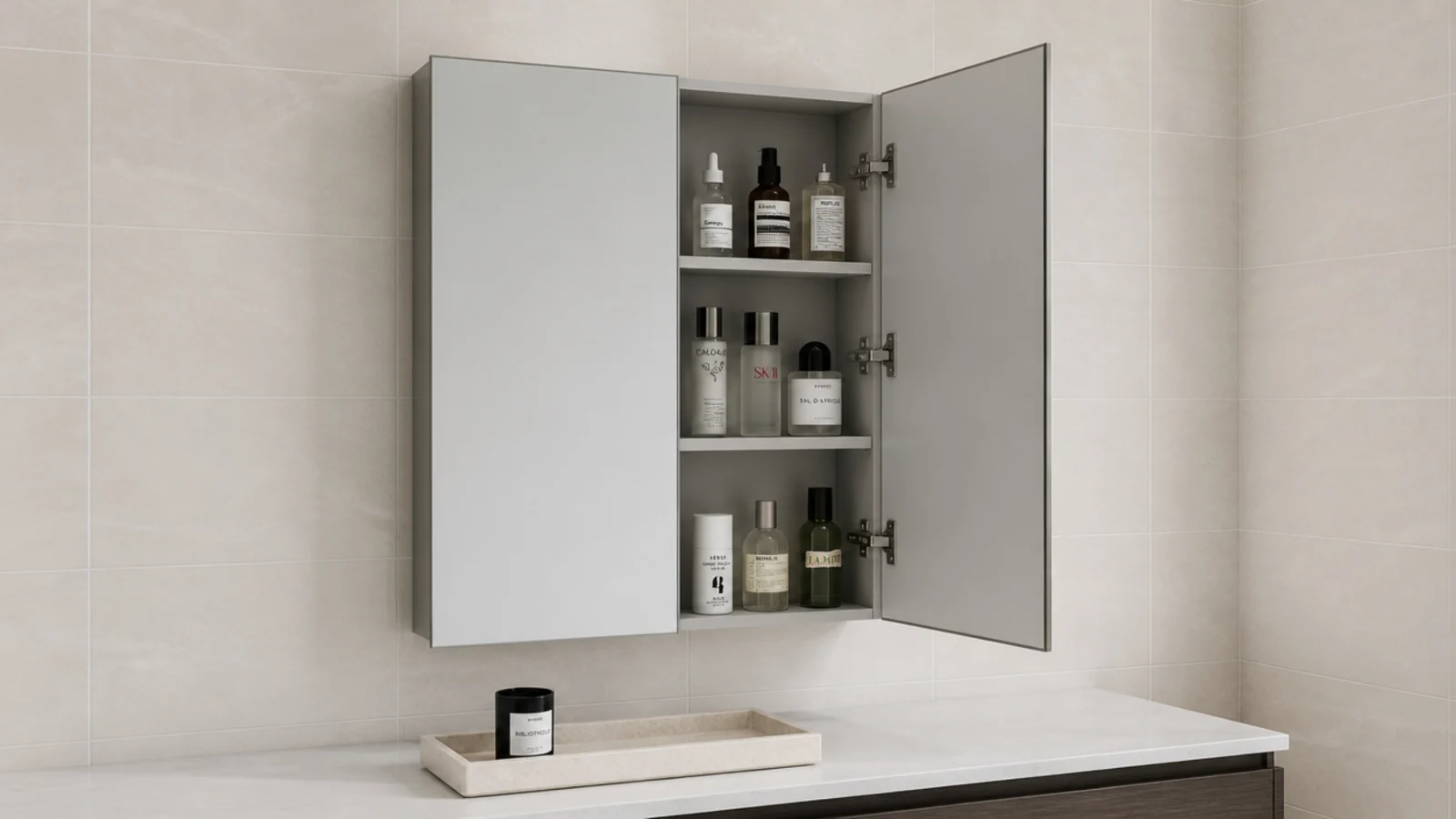
6. Swap in a mirror with storage behind it
A mirror cabinet turns 4 inches of wall depth into three shelves, which in a small bathroom is often more storage than the vanity itself holds.
Surface-mounted versions need no wall surgery and start around $60. If you rent, this is a landlord conversation rather than a weekend job, but it is usually a welcome upgrade. $$$
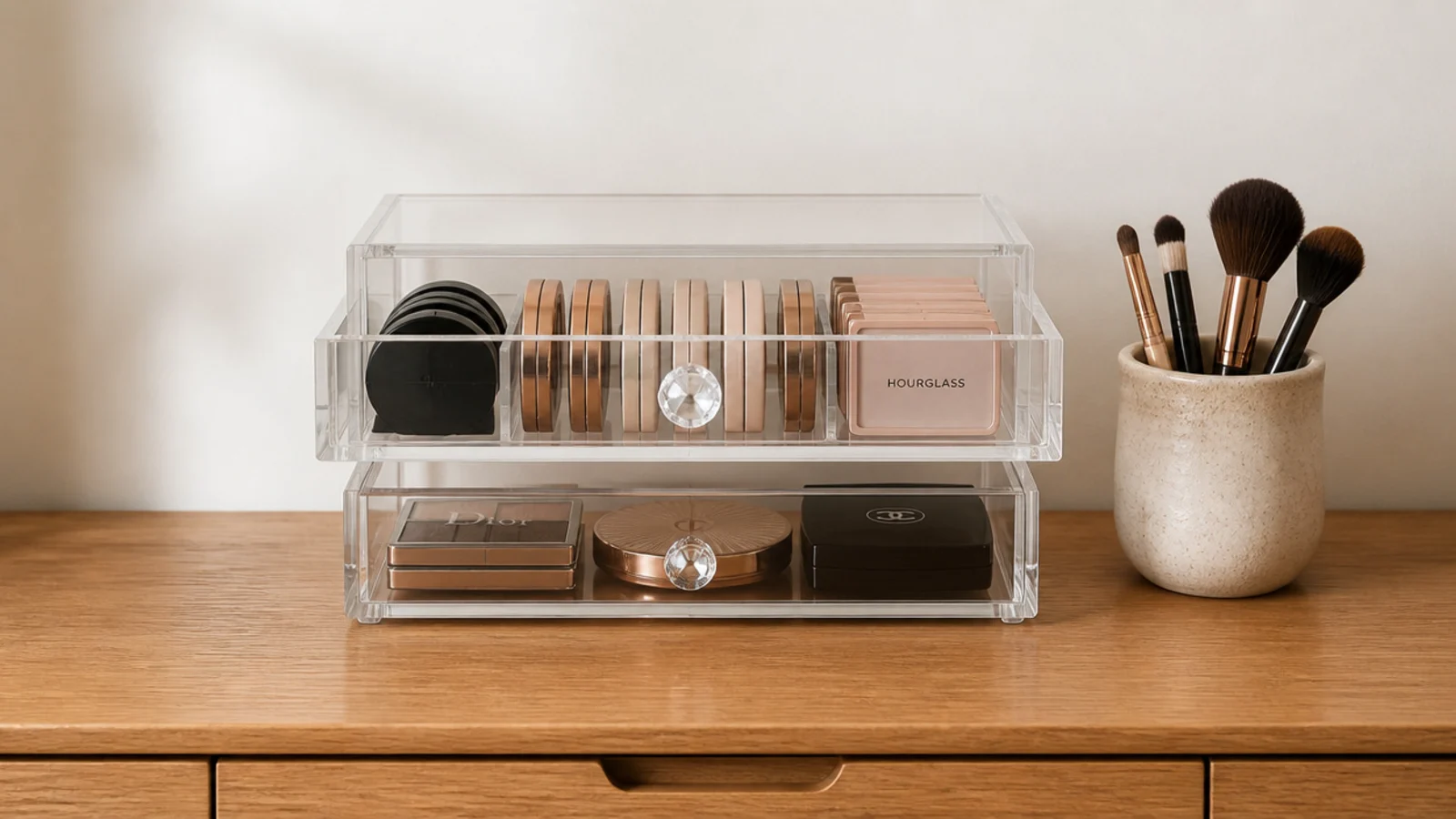
7. Stack two shallow drawers on the counter
Two shallow stacking drawers with a 10 by 8 inch footprint hold more usable product than one deep box, because nothing gets buried under a second layer.
Give the top drawer to daily items and the lower to weekly. Look for drawers 2 to 3 inches deep, which suits palettes, compacts and pencils lying flat. $$
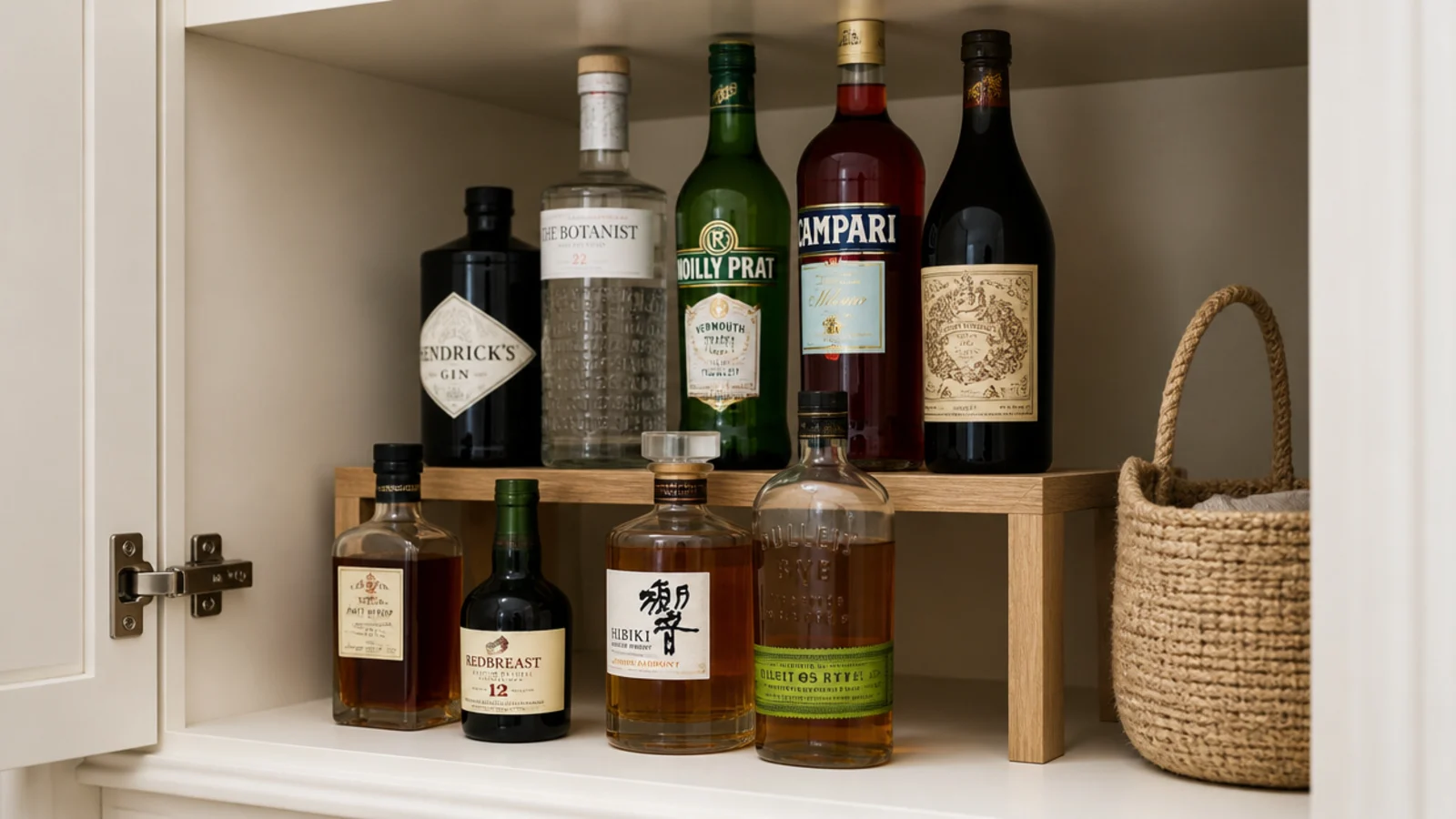
8. Put a two-tier riser in the cabinet
The back half of a cabinet shelf is wasted because you cannot see it. A 3 inch step riser lifts the back row so every bottle is readable at a glance.
Bamboo versions run about $12; an offcut of 2 by 4 timber under a plank does it for the cost of the wood. Either way it roughly doubles what the shelf holds. $–$$
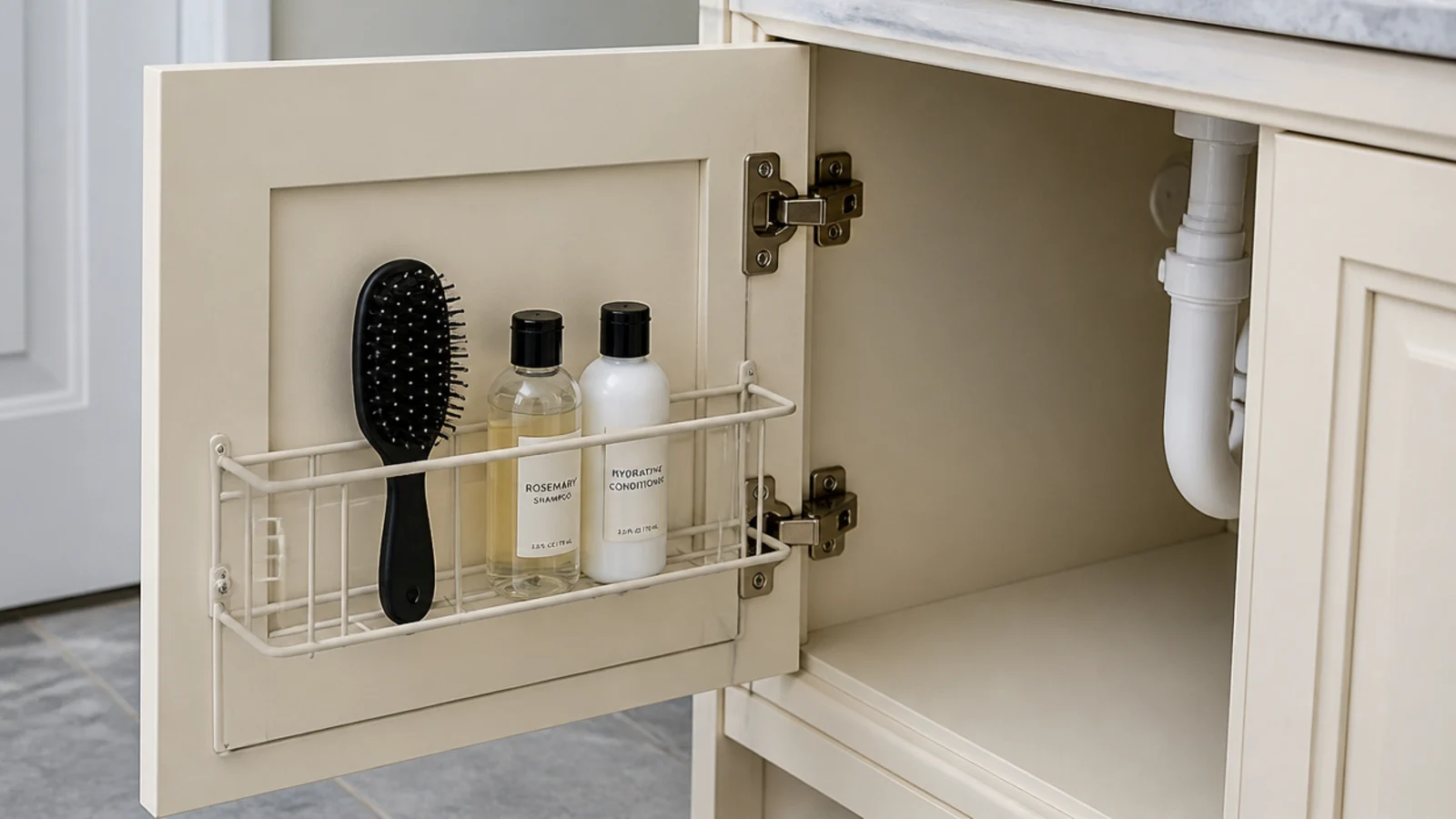
9. Claim the back of the cabinet door
The inside of a vanity door is 2 to 3 inches of storage nobody uses. A shallow adhesive rack takes a hairbrush, a comb and spray bottles.
Check the door clears the plumbing as it closes, and keep loads under about 5 pounds on adhesive mounts. It is the cheapest capacity gain in a cabinet with no drawers. $–$$
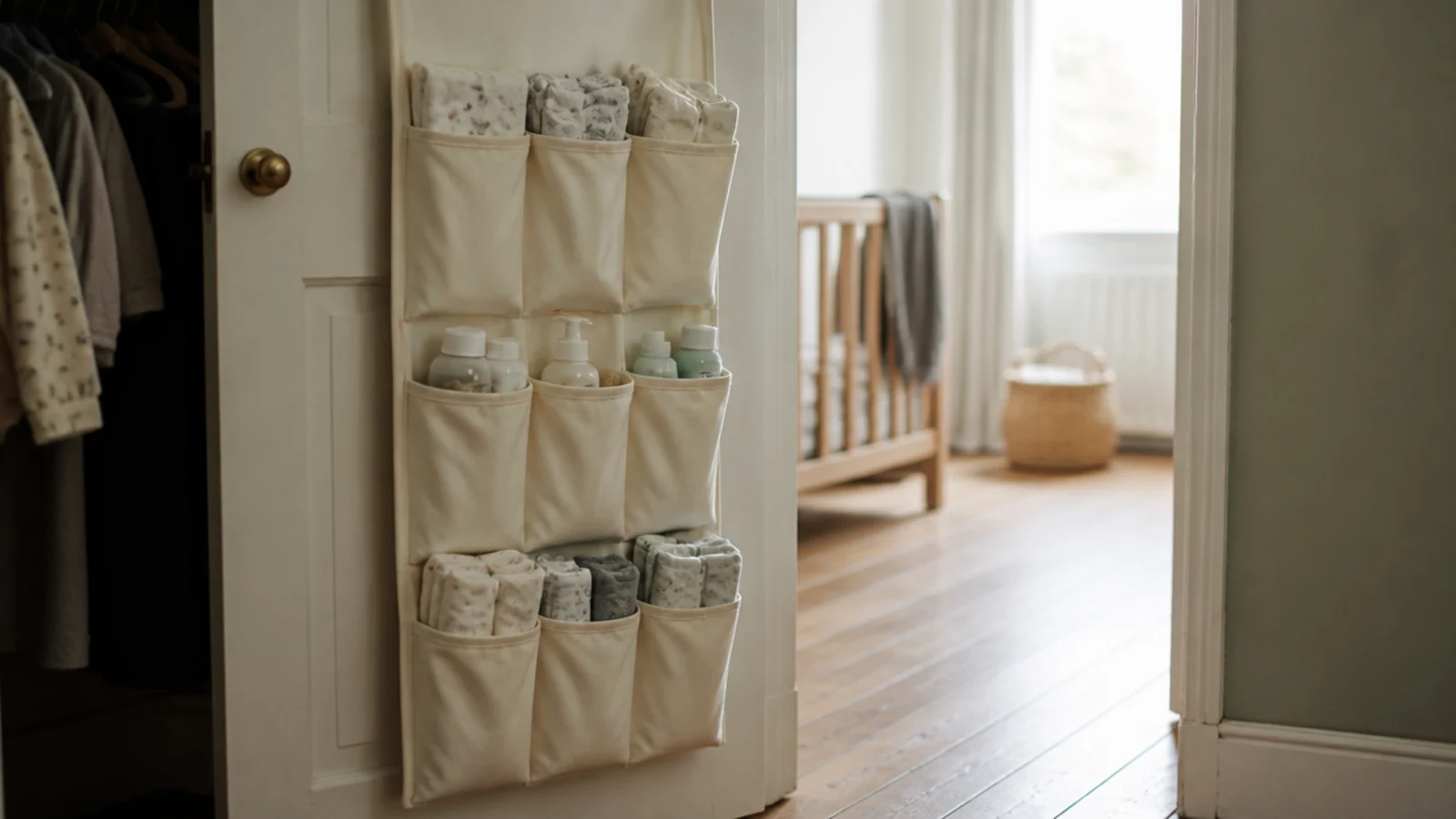
10. Hang an over-the-door organizer for backstock
A fabric pocket organizer on the back of the bathroom or closet door absorbs backstock, tools and flannels for about $20, with no fixings at all.
Give it the bulk so the vanity itself only carries the working supply. Clear pockets are easier to shop from; canvas looks calmer if the door is visible from the bedroom. $$
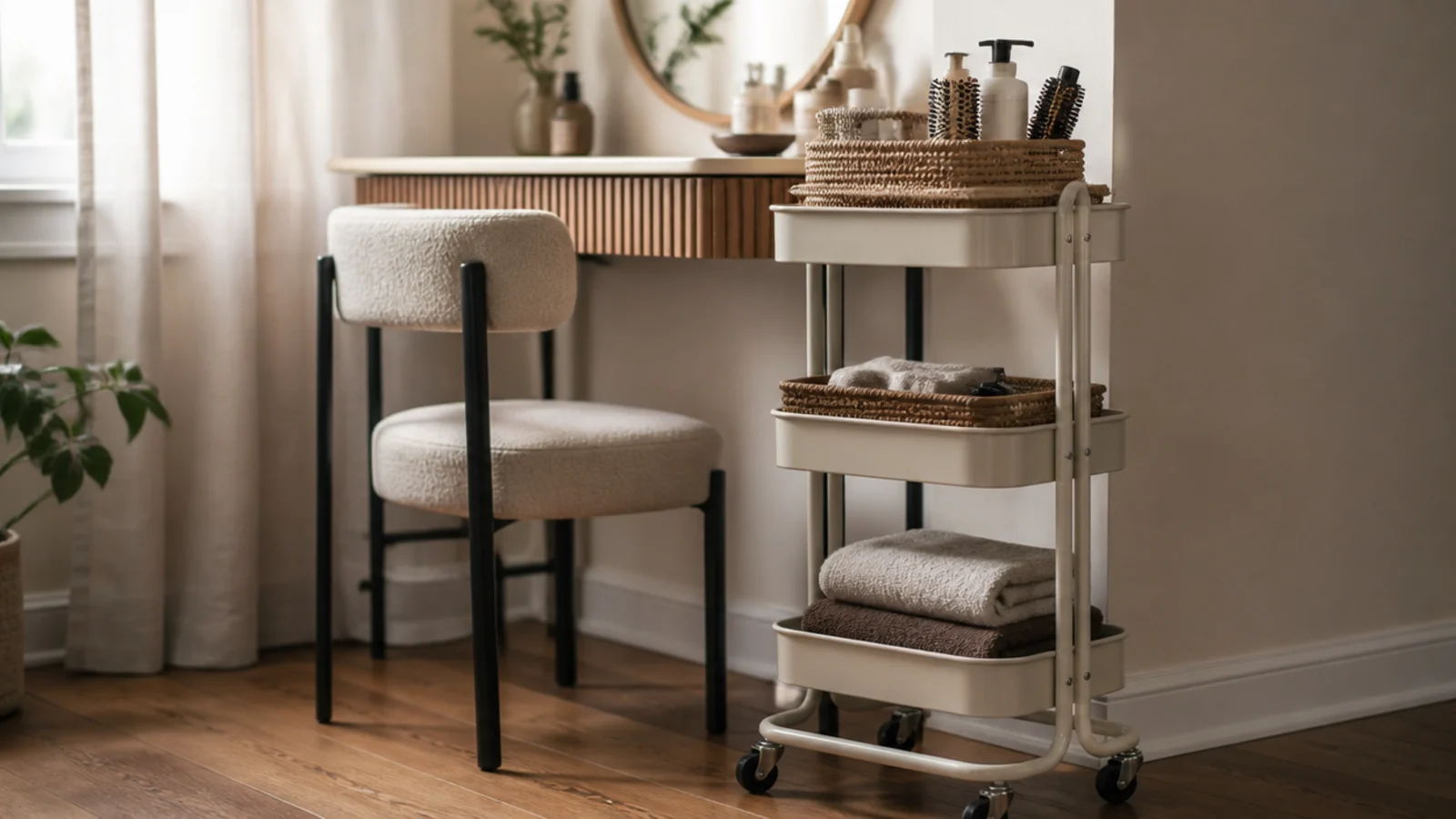
11. Park a 12 inch rolling cart alongside
When the vanity is genuinely too small, a 12 inch wide three-tier cart adds about a vanity worth of storage for $25 to $40 and rolls into a closet when guests arrive.
Baskets on each tier stop small items rolling. Top tier for tools, middle for backstock, bottom for towels. Check it clears the walkway and the door swing before buying. $$$
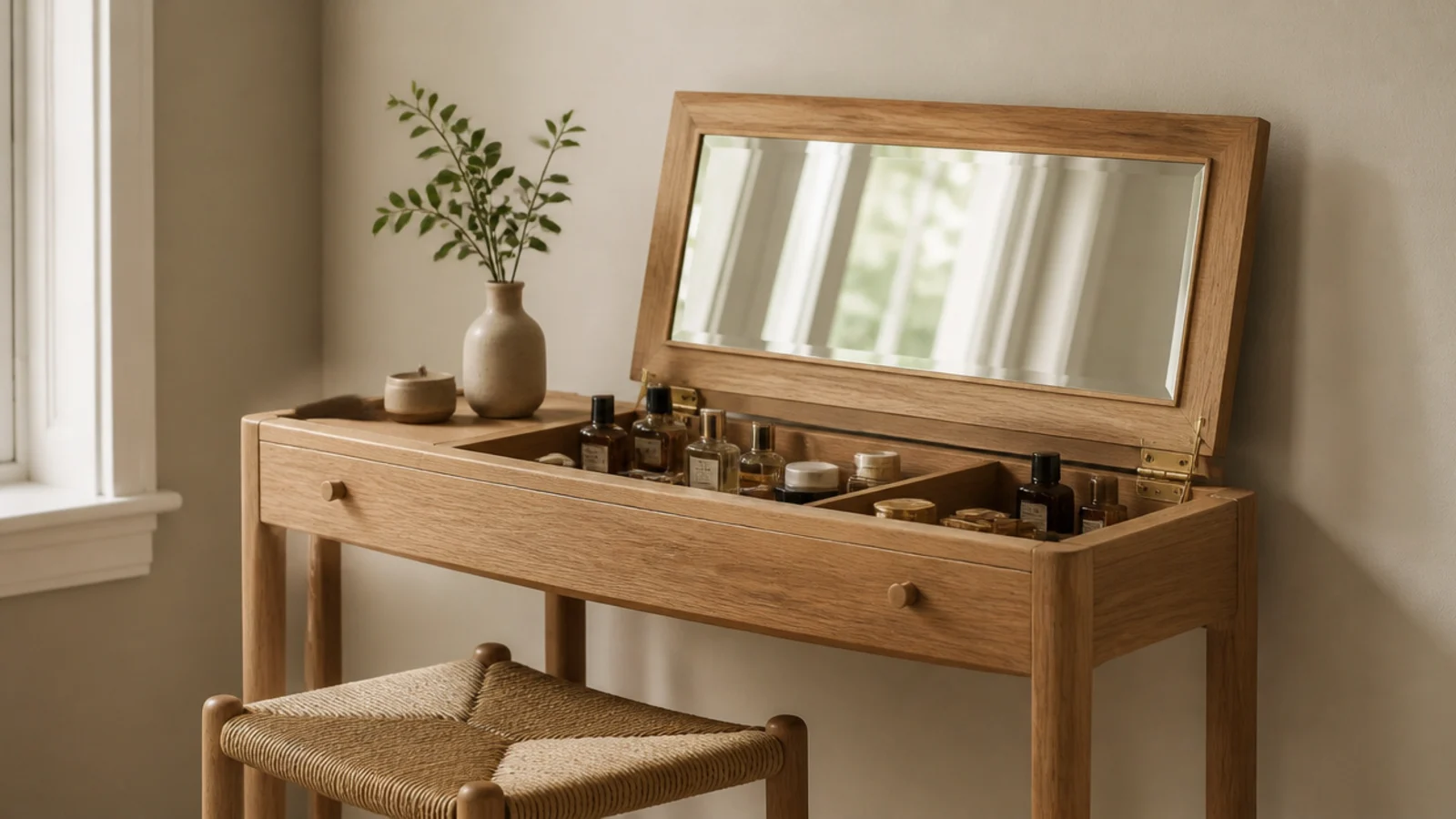
12. Choose a flip-top vanity in a bedroom nook
A console with a hinged lid and an inset mirror is a desk when closed and a vanity when open, which suits a bedroom that cannot spare a dedicated 30 inch station.
Look for at least 4 inches of internal depth so bottles stand upright inside. Keep the surface clear so the lid actually closes, which is the discipline this piece enforces. $$$
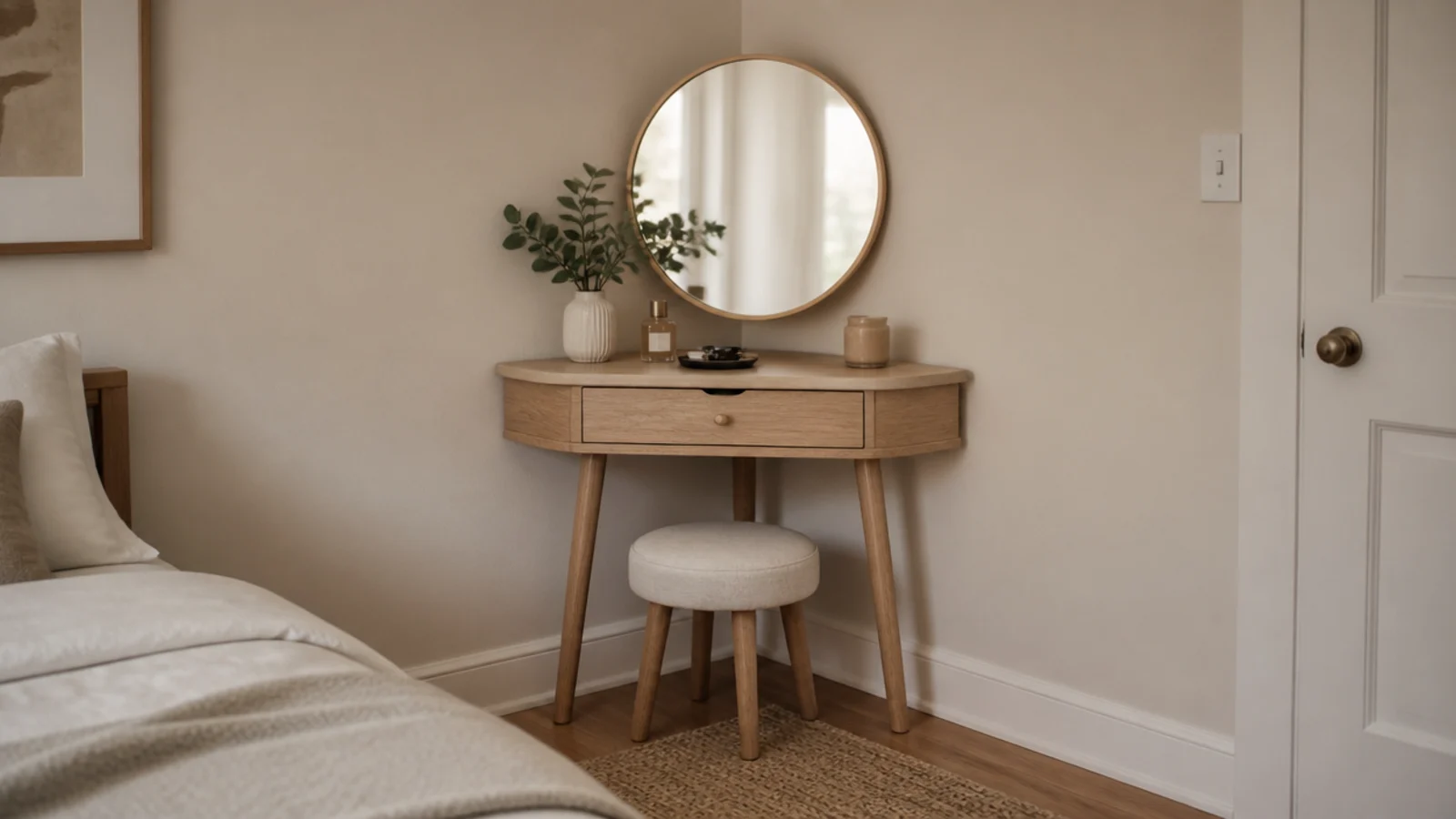
13. Turn a dead corner into the vanity
A corner takes a 24 inch vanity in a footprint no other furniture wants, and it gives you two walls for rails, ledges and lighting.
Allow 30 inches of clear floor in front for the stool and check that neither wall carries a door swing. A triangular top with a rounded front edge stops the corner catching hips. $$$
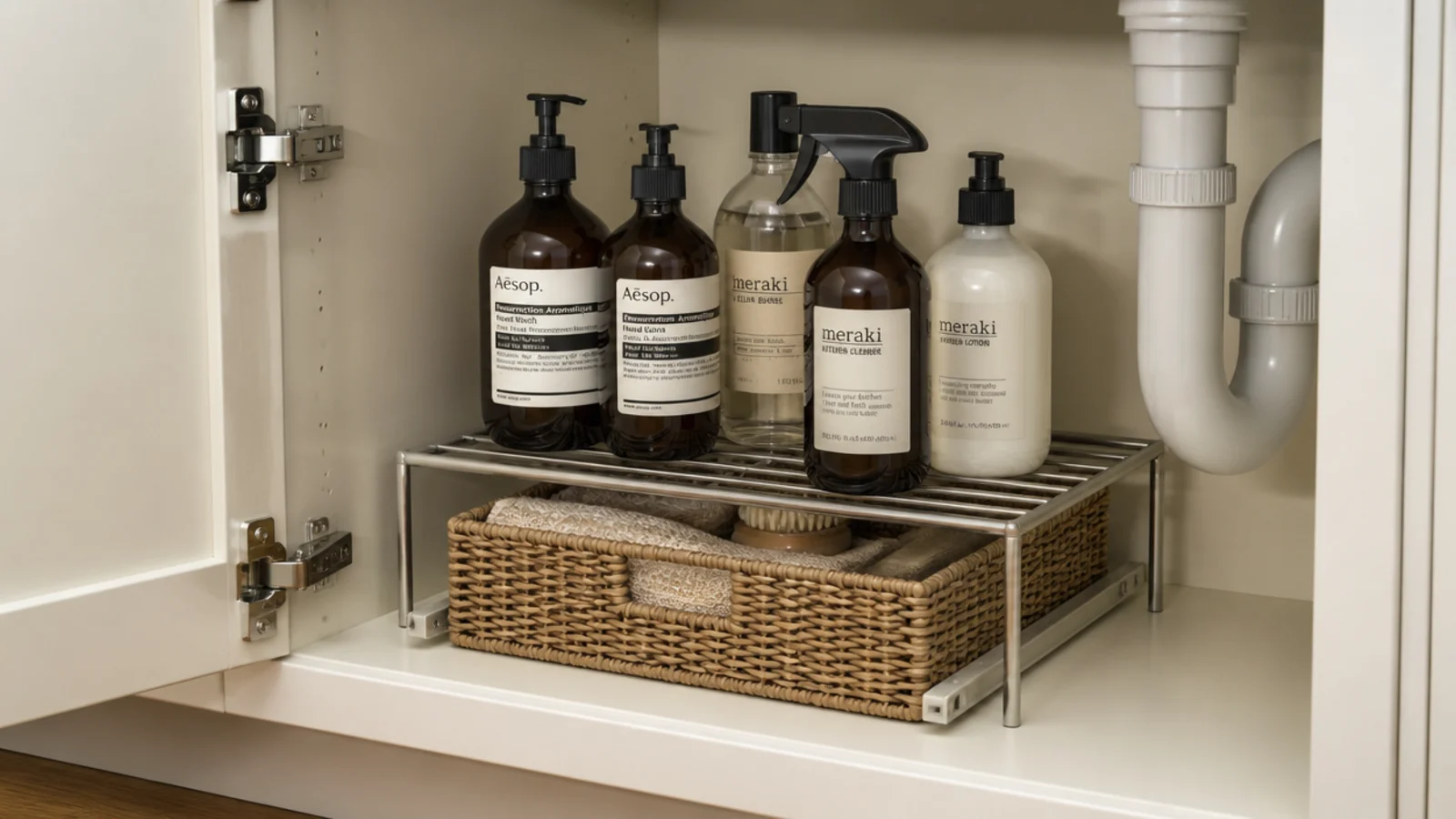
14. Slide a basket onto a riser under the sink
A low shelf riser inside the cabinet creates a second level for about $12, and a shallow basket slides underneath it.
Give the riser the bottles and the basket the soft things — flannels, cotton pads, a spare towel. Measure the clear height beside the trap first, because that is the number that decides. $–$$
15. Fit shallow inserts to double drawer capacity
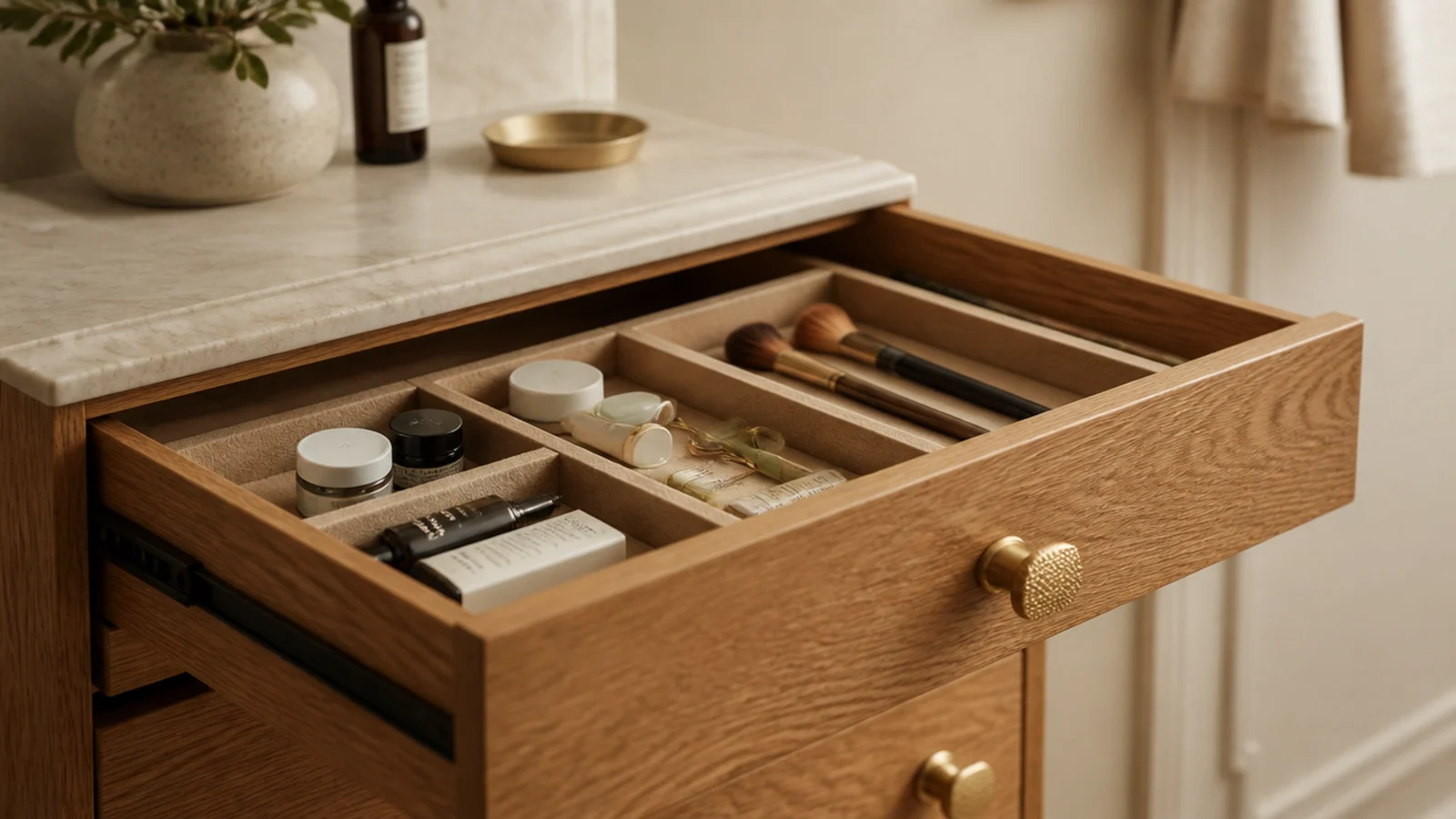
One shallow drawer holds a surprising amount once it has lanes. Size inserts to the drawer's internal width and depth minus about 1/8 inch of clearance, and choose 2 to 3 inches of depth for flat items.
Bottles want 4 to 5 inches instead, so if the drawer is shallow they belong in a cabinet bin. Full detail lives in vanity drawer organization. $$

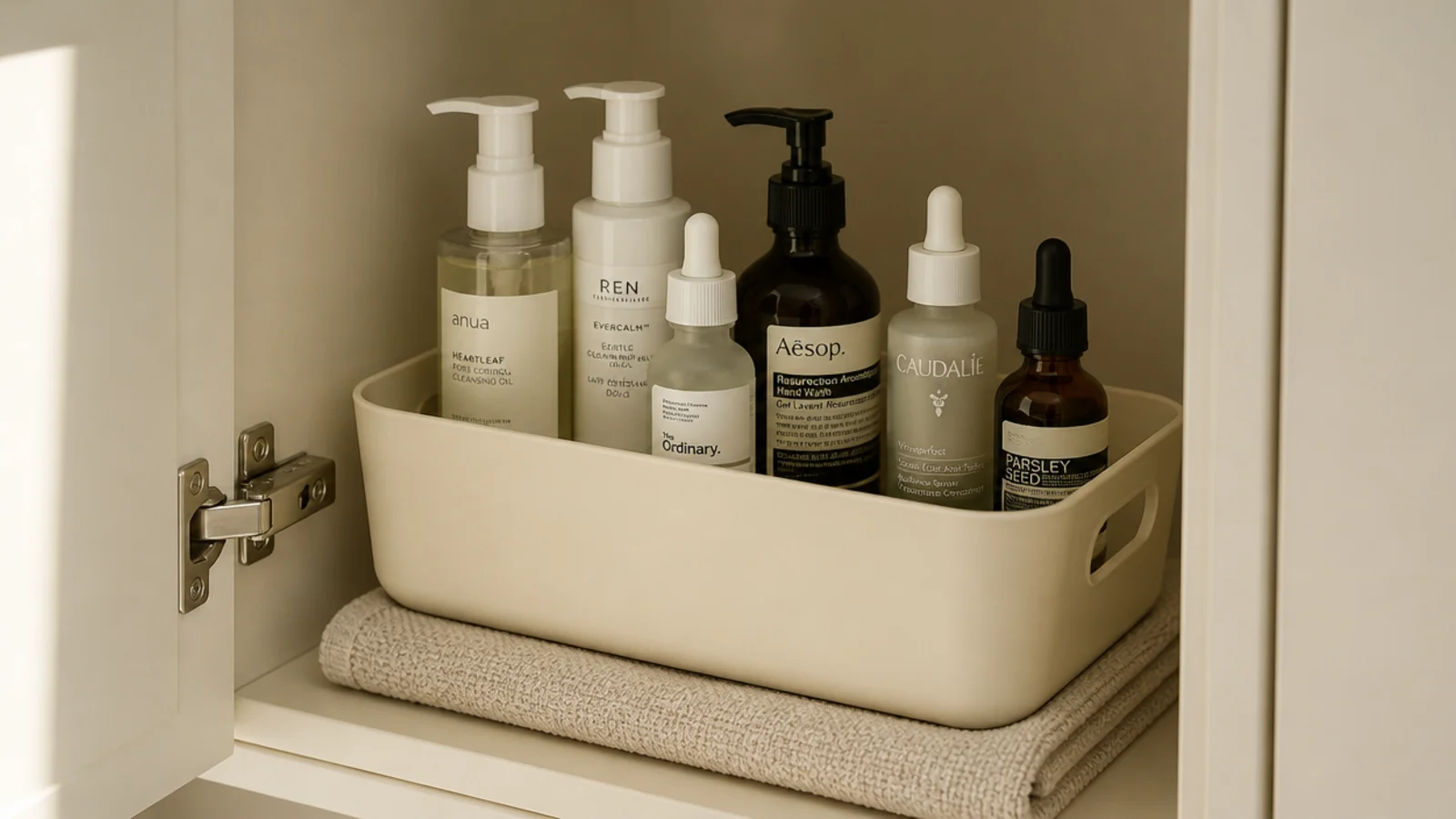
16. Stand bottles upright in a deep bin
A standing bottle uses about half the footprint of one lying down, and anything with a pump or a dropper has to stand anyway or it leaks.
A bin roughly 4 by 6 inches and 5 inches deep holds six bottles tight enough that they hold each other vertical. Line the base with a folded cloth to catch drips. $
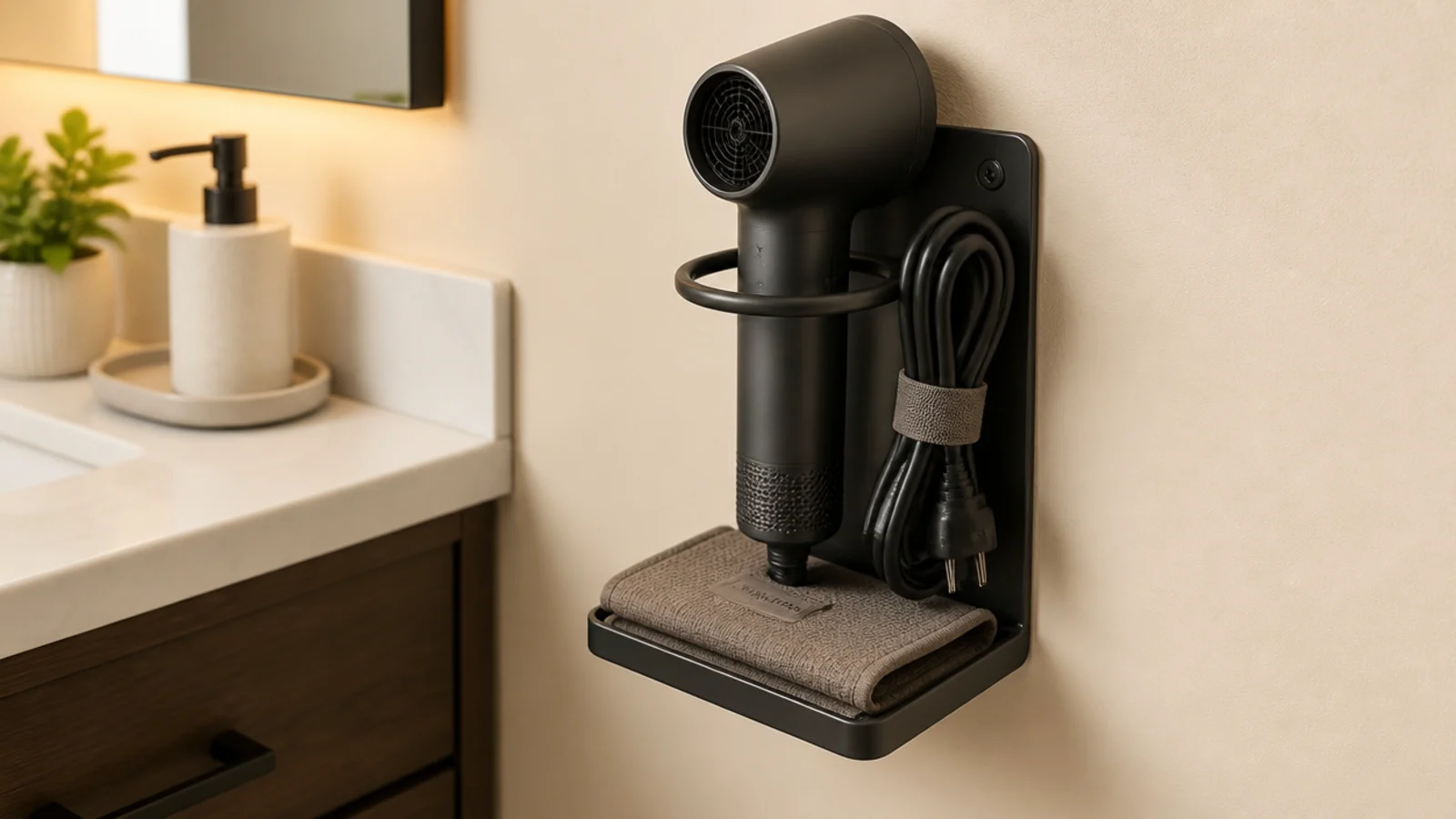
17. Mount the hair tools on the wall
A wall-mounted metal holder beside the vanity takes the dryer off the counter and out of the cabinet, and metal handles residual heat safely.
Coil cords loosely and secure them with fabric ties, since tightly wrapped cords fail at the base within a year. Adhesive versions exist for renters at about $12. $–$$
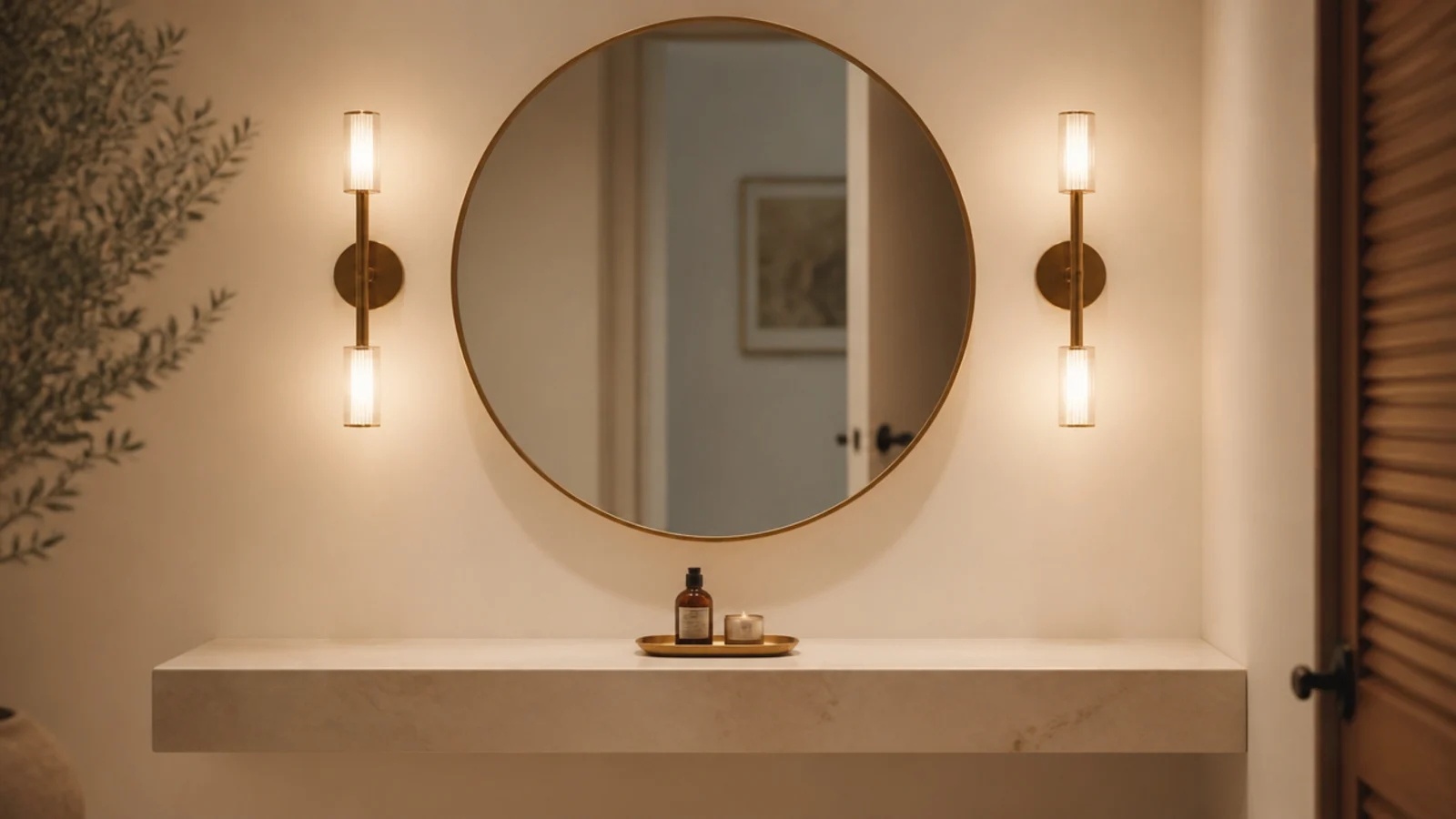
18. Light the mirror from both sides
A bulky table lamp eats the counter of a small vanity. Two slim sconces at eye level flanking the mirror give better light and take none of the surface.
Use 3000K to 4000K bulbs with a high CRI rating, and light your face from both sides rather than overhead, which shadows the eyes and jaw. Plug-in sconces with adhesive cord channels work in a rental. $$–$$$
19. Use a stool that stores something
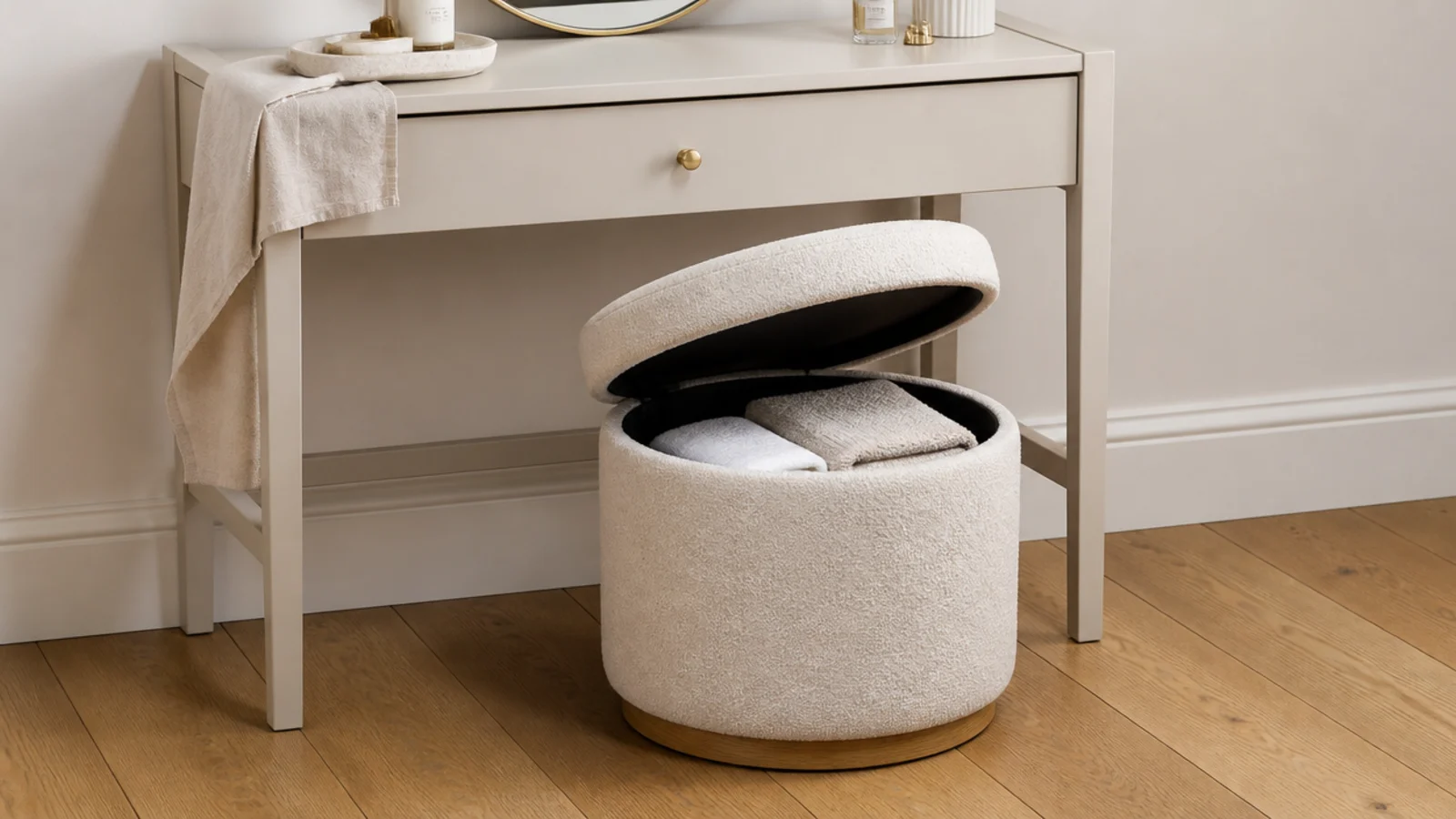
A lift-lid stool or one with a basket underneath adds a cubic foot of storage in space the stool was occupying anyway.
Keep it to soft, light things — towels, flannels, a hairdryer diffuser — so the lid stays easy to lift. An 18 inch seat height suits a counter at 30 inches. $$–$$$
20. Run one in, one out
A small vanity stays organized only if volume stays fixed. One new product means one old product leaves, and backstock is capped at one spare of each.
Add two culls a year to catch what slipped through. Containers manage volume; only a cull removes it, and in a small space that difference shows within a fortnight. Free

Mistakes to Skip
- Buying storage before culling. A small vanity fills again within a month if the collection never shrank, and now you own containers too.
- Ignoring the walkway and door swing. A cart or stool that blocks either one gets moved daily and eventually abandoned in a hallway.
- Using the wall only for a mirror. The 20 to 30 inches above a small counter is the single biggest piece of unused storage in the room.
Frequently asked questions
How do you organize a very small vanity?
Cut the collection first, then build upward. Keep only daily items on the counter, move everything else into stacking drawers or a cabinet bin, and use the wall above the counter with a rail or a narrow ledge. In a small vanity the limit is almost always volume rather than square inches of surface.
How much clearance does a seated vanity need?
Allow 24 to 30 inches of open width for knee space and about 24 to 26 inches of height from floor to the underside of the counter, so a standard 18 inch stool tucks fully under. Leave at least 30 inches of walkway in front so the stool can pull out without hitting a door or a bath.
How high should a vanity mirror be?
Centre it on your eye line when seated, which usually puts the middle of the glass 42 to 48 inches from the floor for a seated vanity and 60 to 65 inches for a standing one. Light it from both sides at 3000K to 4000K with a high CRI bulb, since overhead fixtures shadow the eyes and jaw.
What storage works in a rental bathroom with no drawers?
Stacking clear drawers on the counter, an over-the-door organizer, a tension rod under the sink and a rolling cart cover nearly everything without a single hole. Adhesive rails handle light loads if you keep them off freshly painted walls for three weeks. All of it moves house with you, which is the real advantage.
Is a rolling cart worth it beside a small vanity?
Yes, if it is narrow. A 12 inch wide three-tier cart adds roughly a vanity worth of storage for $25 to $40 and rolls into a closet when guests arrive. Give the top tier to tools, the middle to backstock and the bottom to towels, and put baskets on each shelf so small items stop rolling.
Measure first, cull second, and only then decide what to hang on the wall — in that order most small vanities need one rail and one riser rather than a whole system. For the surface rules, vanity countertop organization goes further, budget-friendly makeup vanity organization covers the products themselves, and shoe storage for a small space uses the same vertical thinking by the door. Save the pin so the clearances come with you.
Want more like this? Browse all 15 vanity organization guides — they all use the same measurements and budget tiers.
Pin it for later
Save this to your Vanity Organization board
Pin it now so it is waiting for you when the tape measure comes out — and so the next person hunting for this idea can find it too.
Save this pinKeep going
More ideas worth saving while you have the tape measure out.