Corner Shelf Ideas · Listicle
15 Cozy Corner Shelf Ideas That Look Pricey

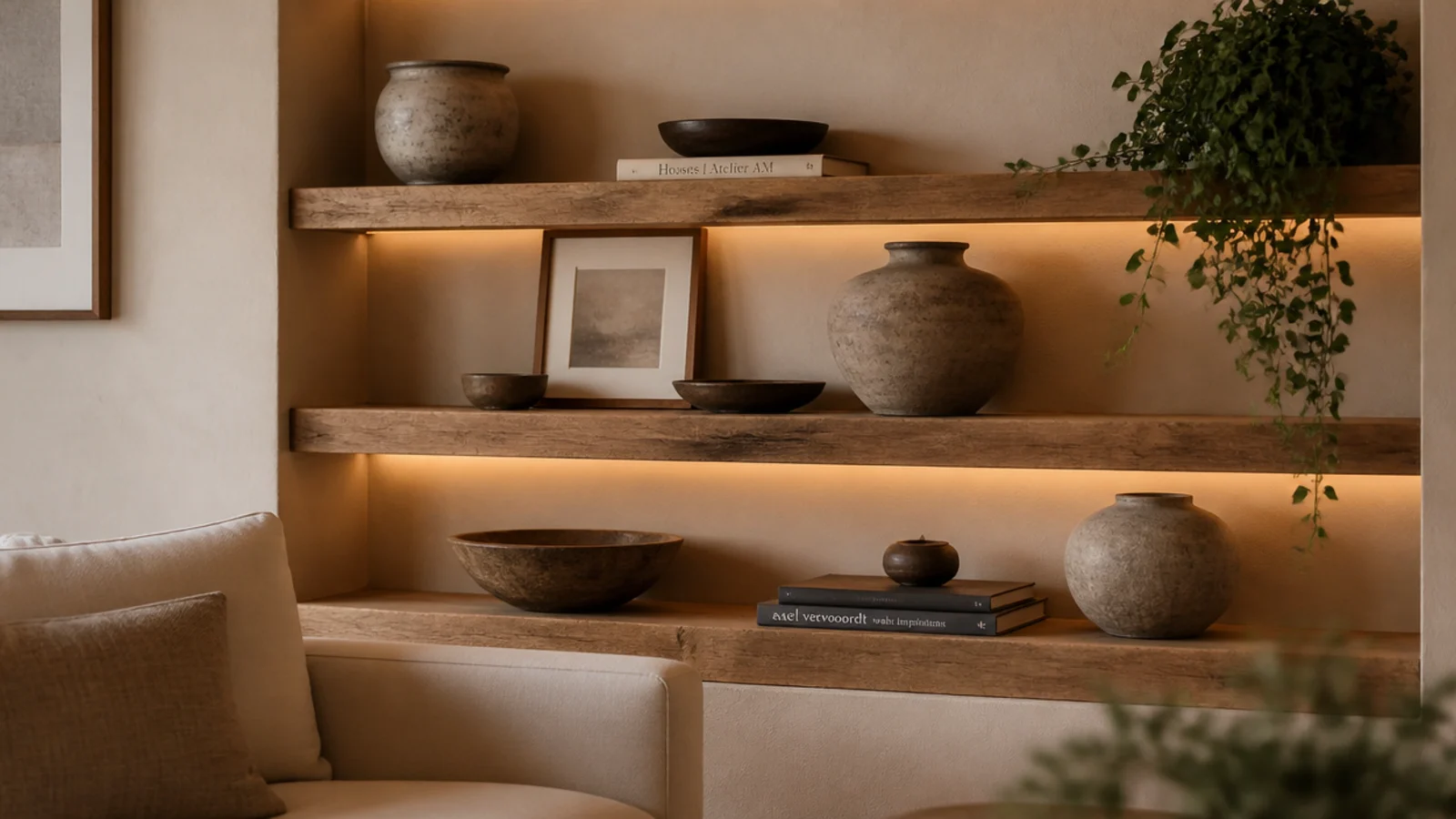
Corner shelves living room setups are the easiest place in a house to spend $300 and end up with something that looks like it cost $40 — or the reverse. The gap is almost never the shelf itself. It is board thickness, bracket visibility, light temperature and how much you leave empty. Here are the 15 decisions that make a cheap corner read as expensive.
In this guide17 sections — tap to openHide
- 1.What makes corner shelves living room displays read as expensive
- 2.Paint the shelf and the wall the same color
- 3.Build the board up to an inch and a half
- 4.Hide or paint out every bracket
- 5.Add warm light under the top shelf
- 6.One oversized object instead of five small ones
- 7.Repeat one material three times across the stack
- 8.Leave a full third of every shelf empty
- 9.Layer a leaning artwork behind the objects
- 10.Match the wood tone to one other thing in the room
- 11.Put round shapes against the straight lines
- 12.Use a real plant, never a fake one
- 13.Take the dust jackets off your books
- 14.Stagger the shelf lengths as they climb
- 15.Use warm bulbs only, at 2700K
- 16.Anchor the corner with one object on the floor
- 17.Mistakes to Skip
What makes corner shelves living room displays read as expensive
Your eye prices three things before it registers anything else: the thickness of the front edge, whether it can see hardware, and the quality of the light falling on it. Everything else — the wood species, the pottery, the books — is secondary.
That is genuinely good news, because all three are cheap to fix. A half-inch board reads as flimsy no matter what sits on it, but two half-inch boards glued into a built-up box read as a solid inch-and-a-half slab for the cost of a tube of wood glue. Bare galvanised brackets announce a flat-pack kit; two coats of wall-colored sample paint make them disappear. And a $12 warm strip light under the top shelf changes a corner more than $100 of new objects.
The fourth factor is restraint, and it is free. Living rooms are where people sit and look at the same corner for an hour at a time, so density registers far more than it does in a hallway you walk past. A third of every shelf left empty is the single most reliable signal of a considered room.
Work in that order — thickness, hardware, light, restraint — and stop when the corner looks right. Most do after the first three.
1. Paint the shelf and the wall the same color
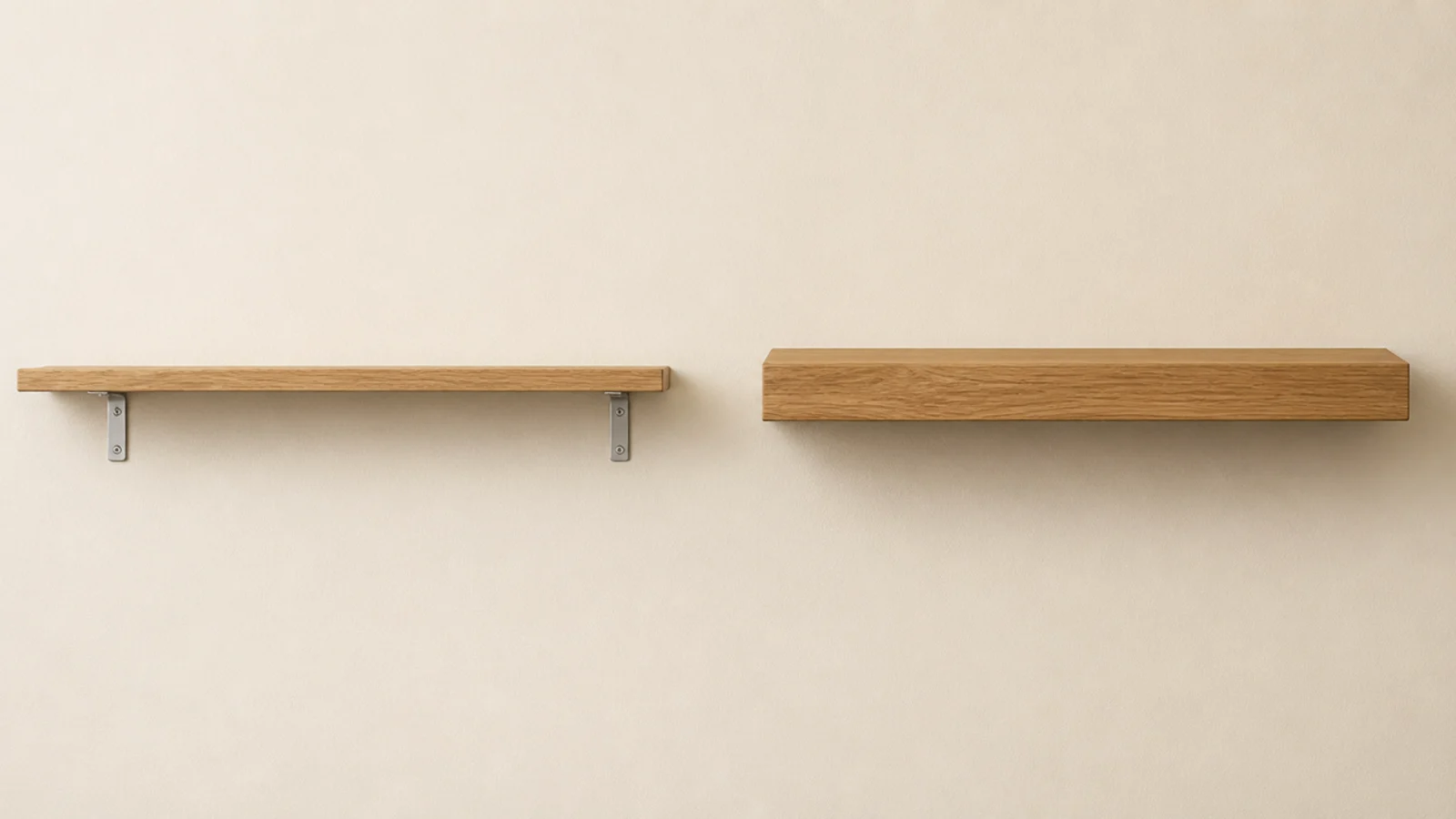
A shelf painted the exact wall color stops being an object stuck to a wall and starts reading as part of the room's structure. In a small living room this is transformative, because the corner recedes and the objects on it come forward.
Take a paint chip to be color-matched, or use leftover wall paint. Satin sheen on the shelf against matte on the wall gives a subtle definition that stops it looking flat.
2. Build the board up to an inch and a half
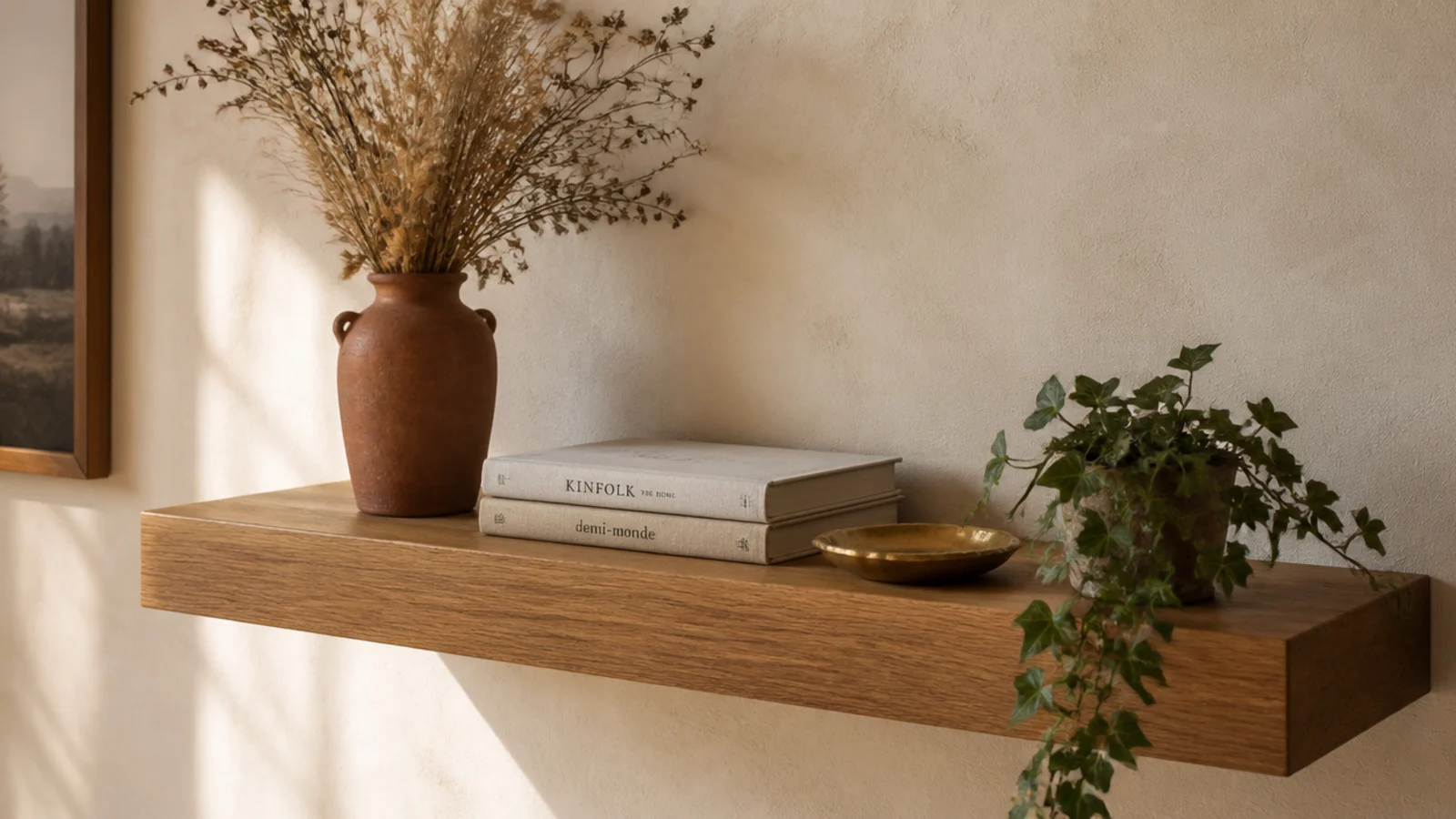
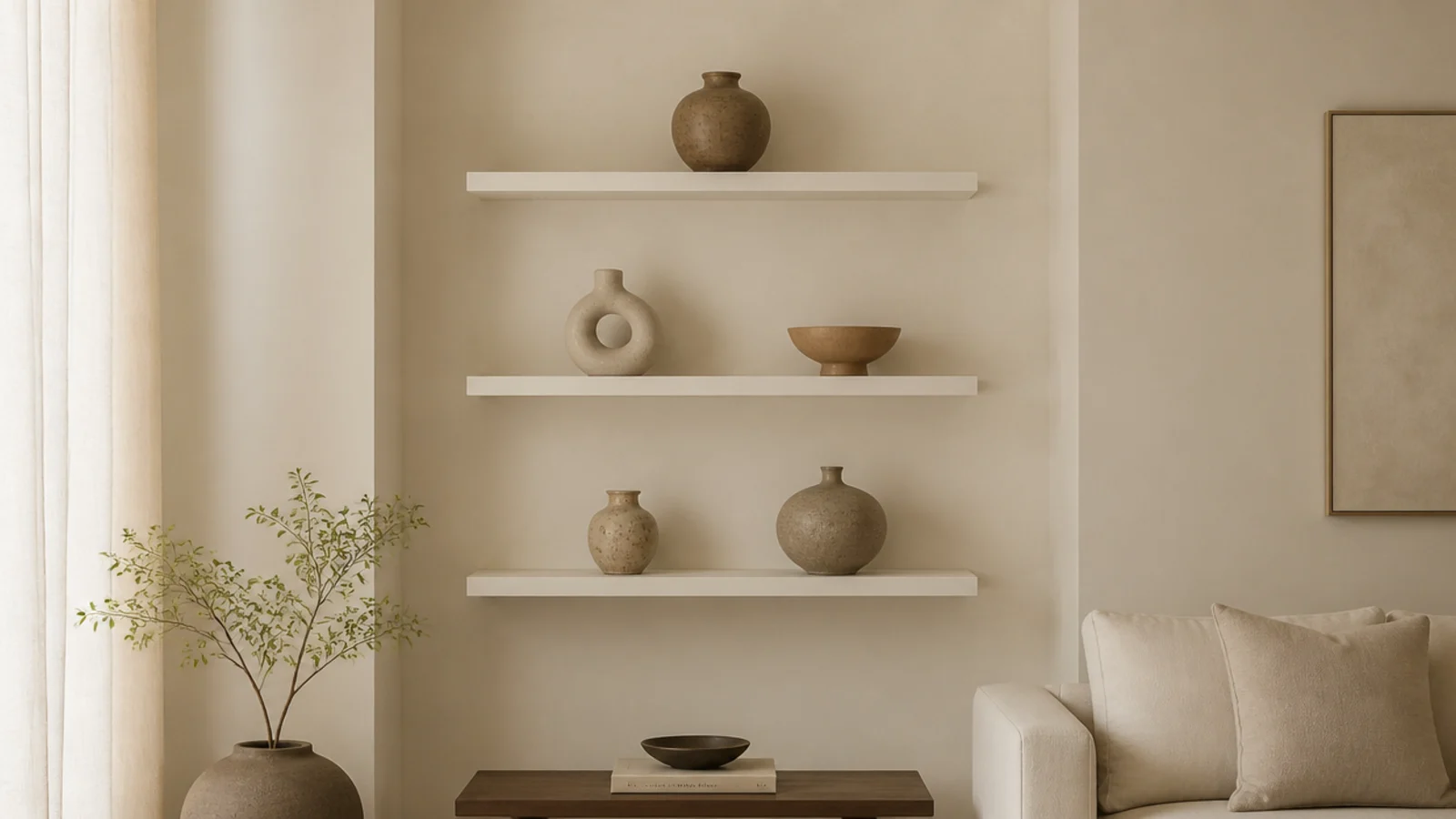
Front-edge thickness is what your eye reads as substance. A three-quarter-inch board looks like a shelf; an inch-and-a-half board looks like a slab.
You do not need thick lumber. Glue a three-quarter board to a narrower strip underneath so the front edge shows the full depth, and the shelf looks solid from every normal viewing angle at half the material cost. The full build walkthrough covers the joinery.
3. Hide or paint out every bracket
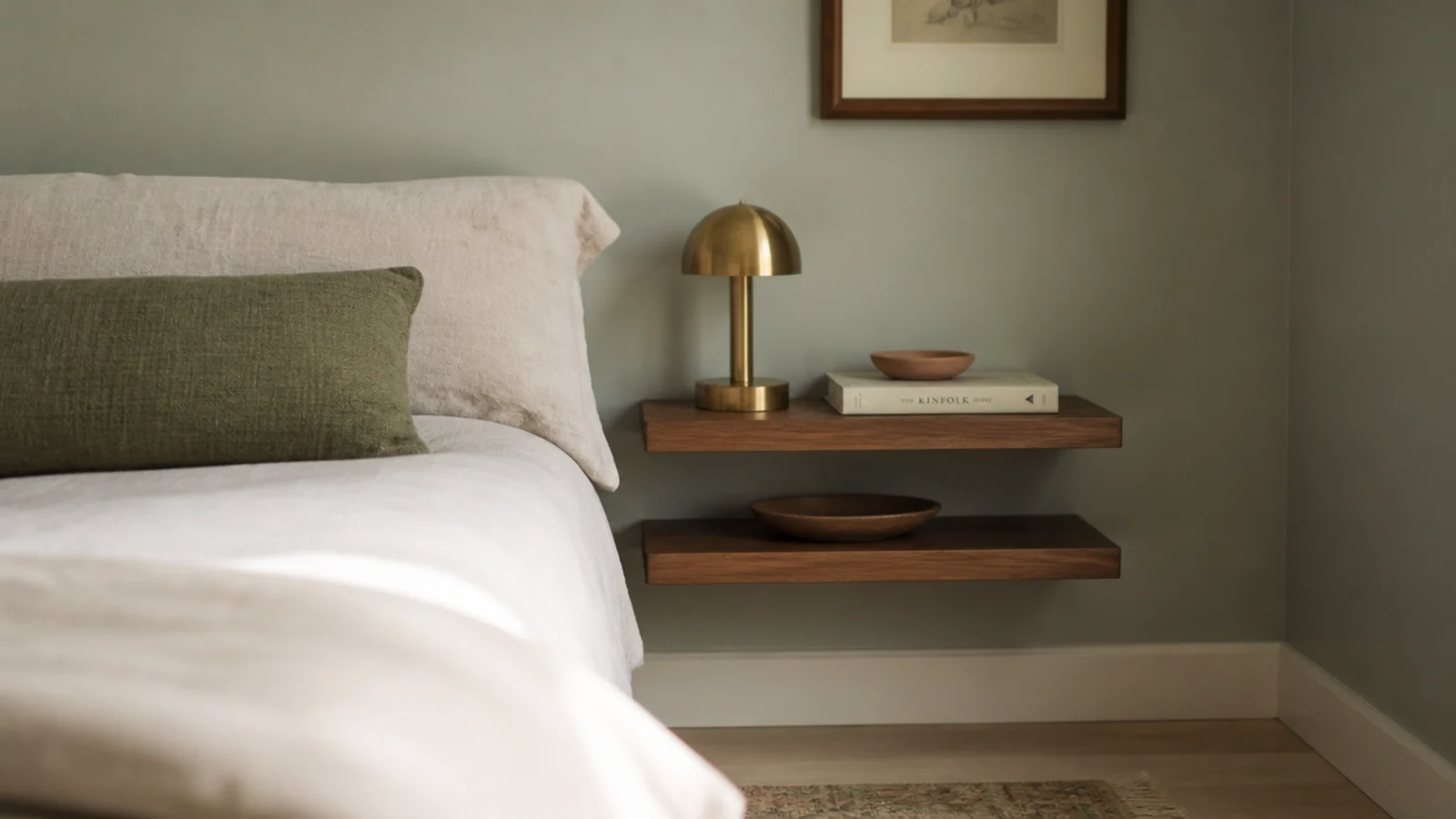
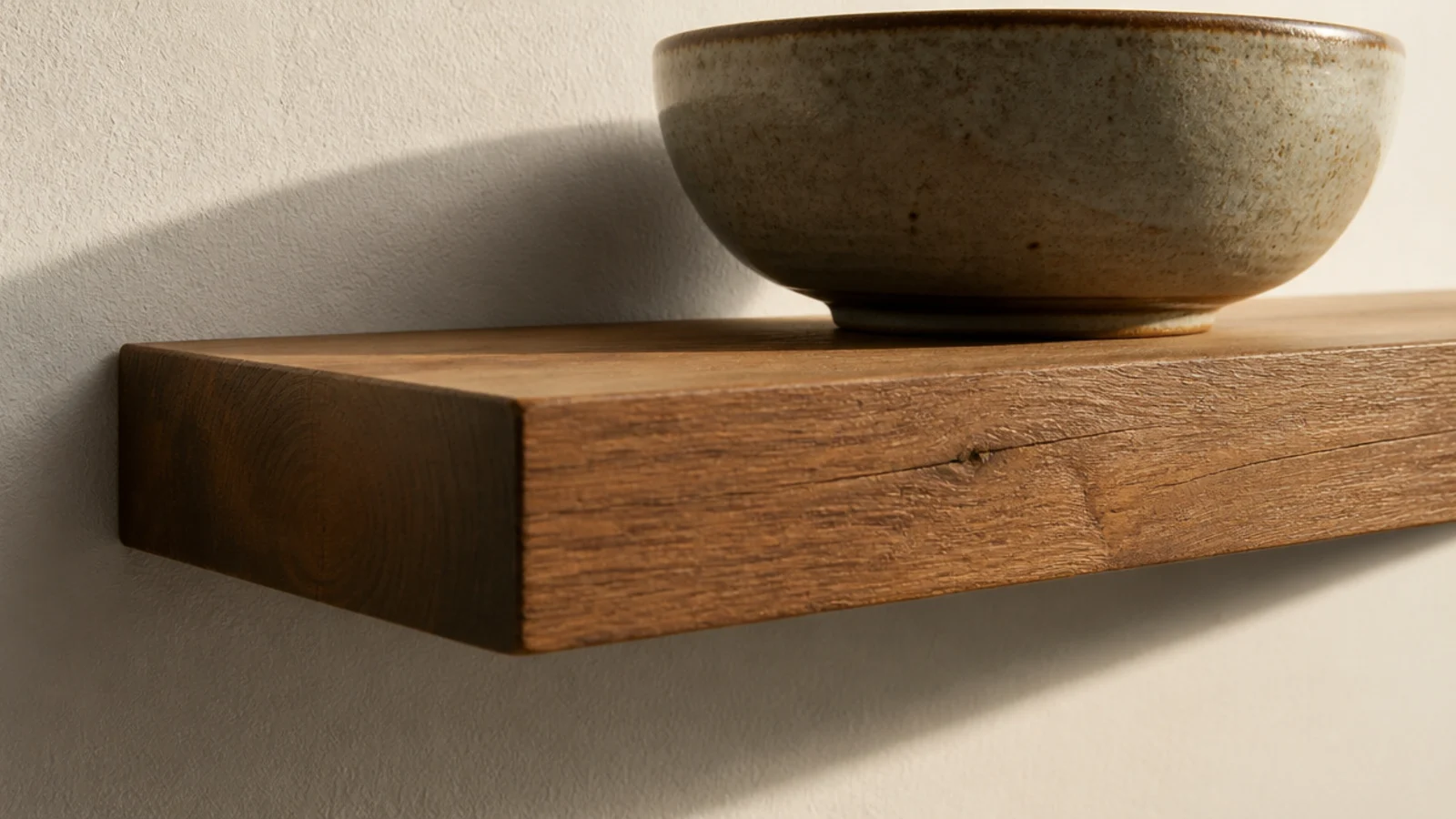
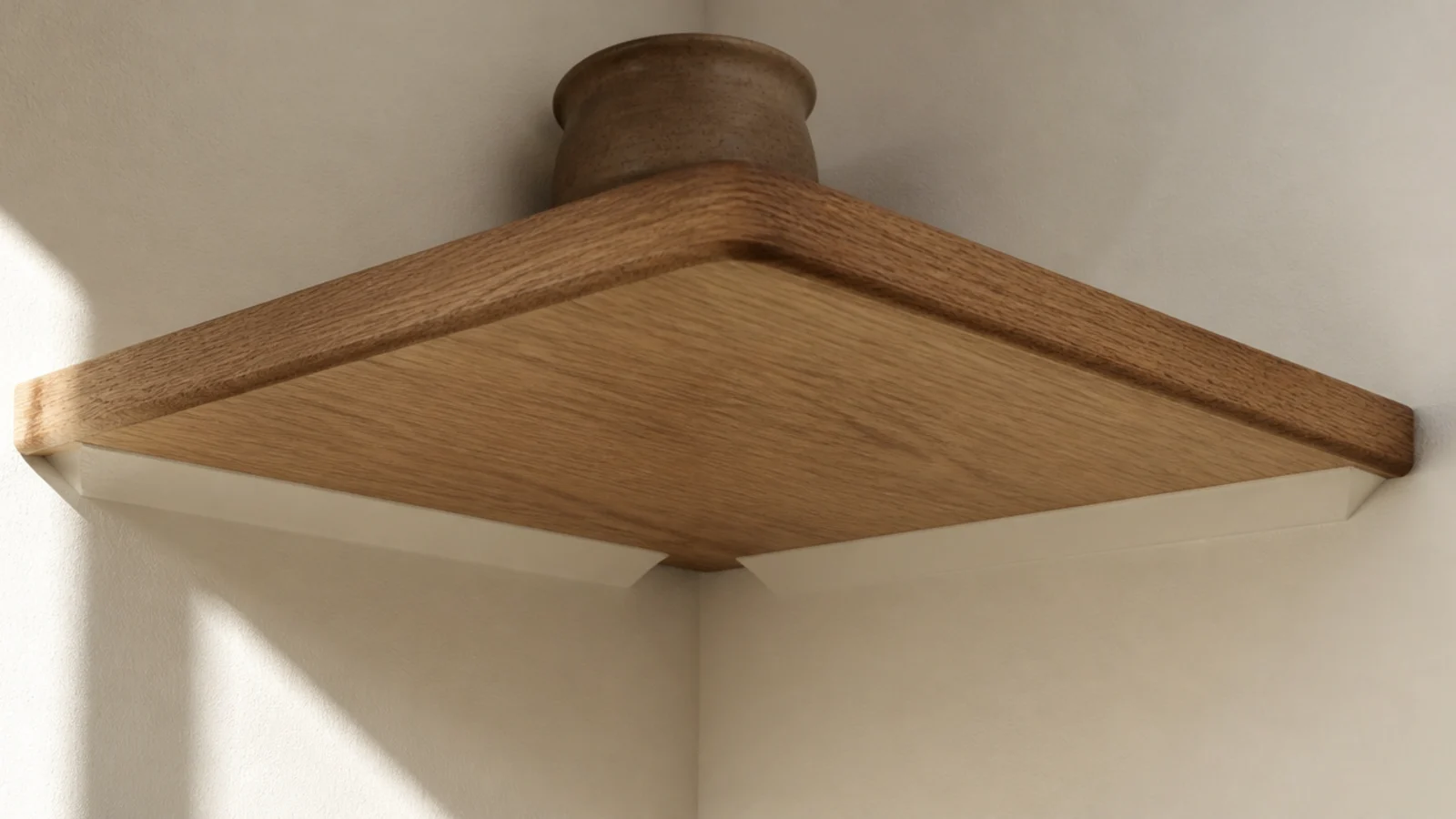
This is the cheapest upgrade on the list and the one most people skip. Bright steel or galvanised brackets under a warm wood shelf pull your eye straight to the hardware, and hardware is what reads as flat-pack.
Two coats of wall-colored paint on the bracket plates, or black on a dark wall. Ten minutes, a few dollars, and the shelf appears to float.
4. Add warm light under the top shelf
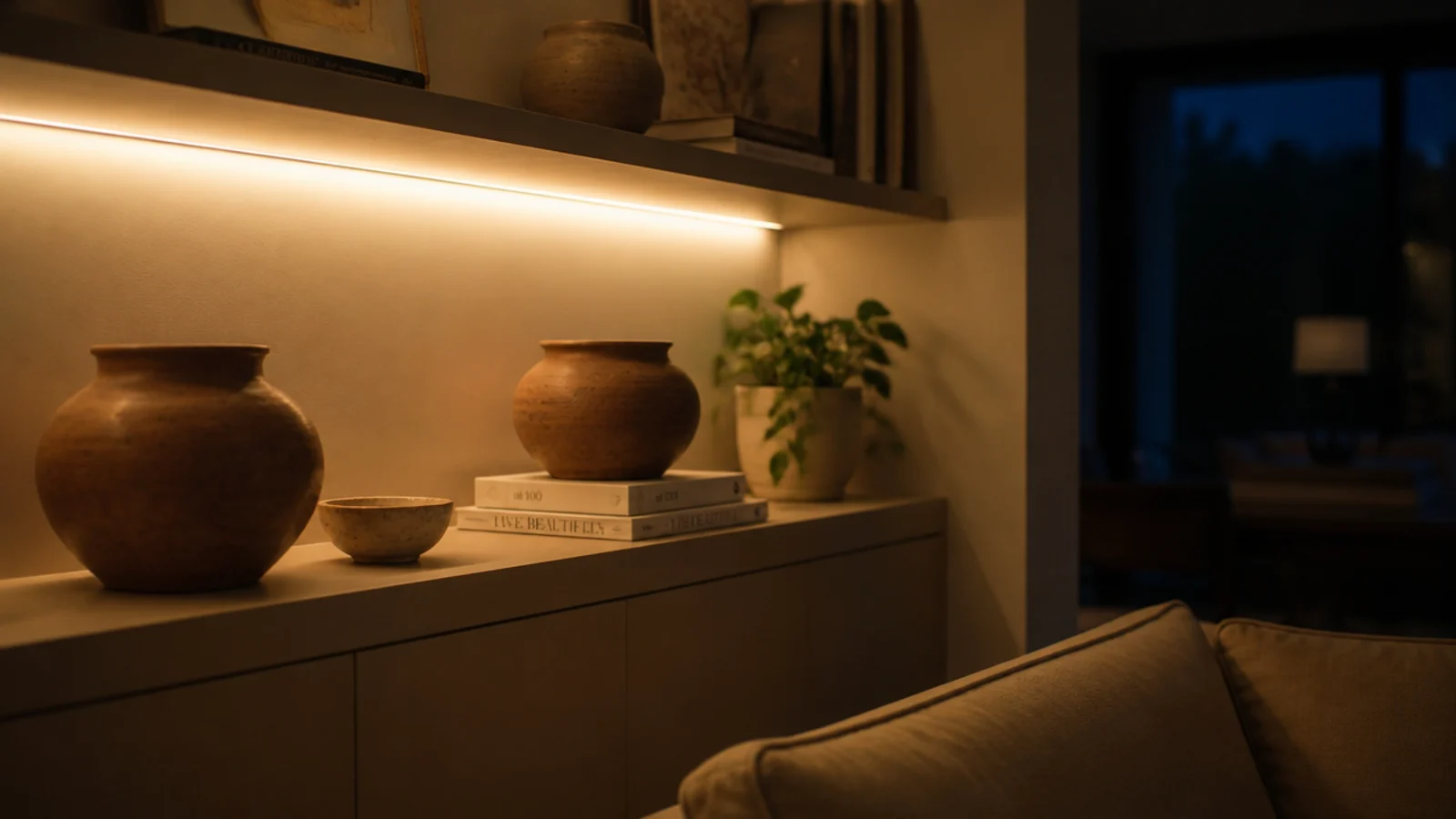
Light is the cheapest luxury available in any room. A warm LED strip or two puck lights fixed under the top shelf pools light down onto everything below.
Buy 2700K, never daylight white. Warm light makes clay, wood and linen look rich; cool light makes all three look grey and synthetic. Rechargeable stick-on pucks avoid any wiring at all.
5. One oversized object instead of five small ones
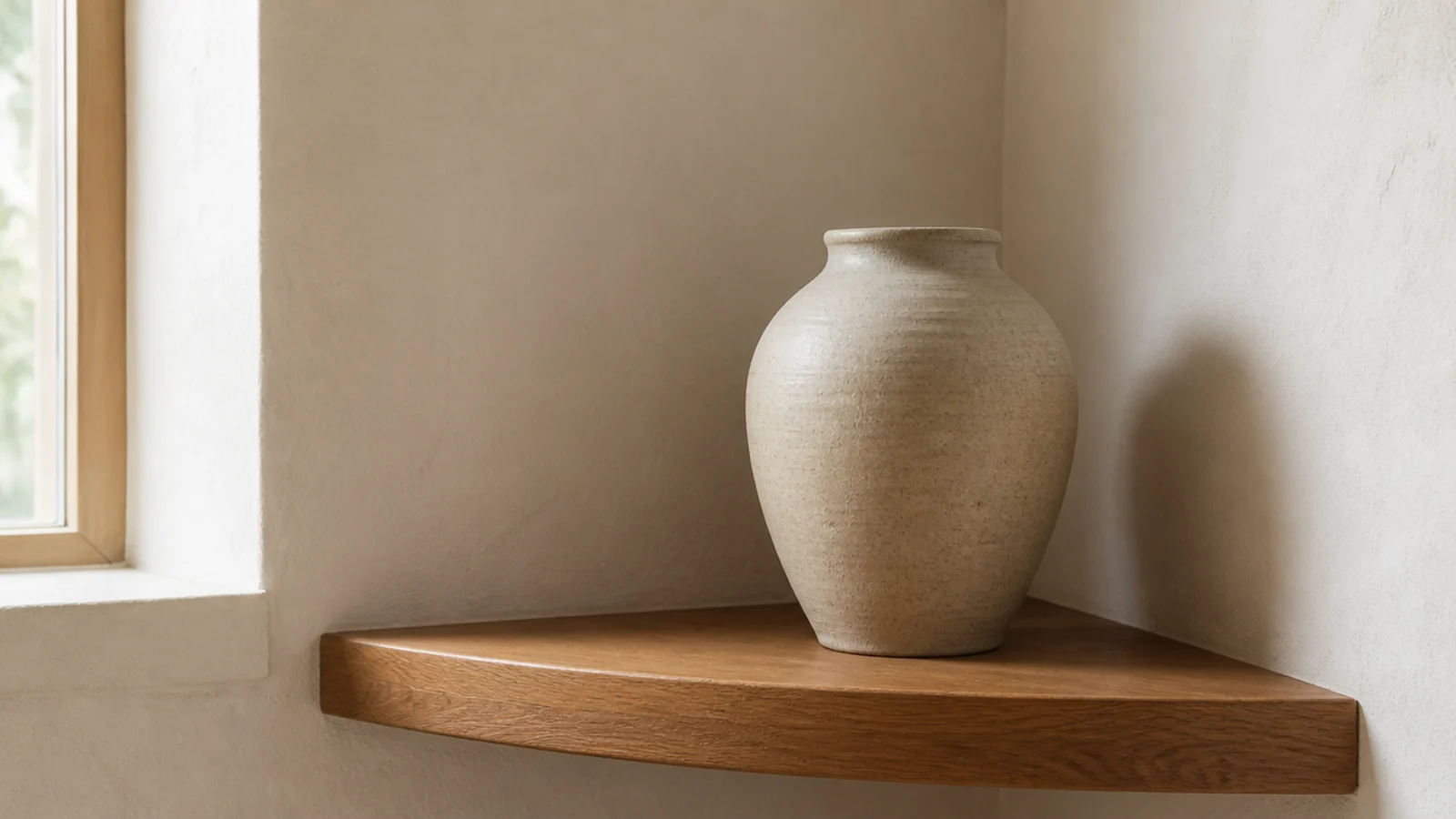
A single large stoneware vessel on an otherwise empty shelf reads as confident. Five small objects on the same shelf read as things you had nowhere else to put.
Large pieces cost more individually but you need far fewer, and thrift stores price large pottery surprisingly reasonably because most people have nowhere to put it. As a rough guide, the biggest object on a 24-inch shelf should be around 10 to 12 inches tall — big enough that it visibly owns the shelf. Aim for one piece per corner that is genuinely bigger than feels comfortable, then let the shelves around it stay quiet.
6. Repeat one material three times across the stack
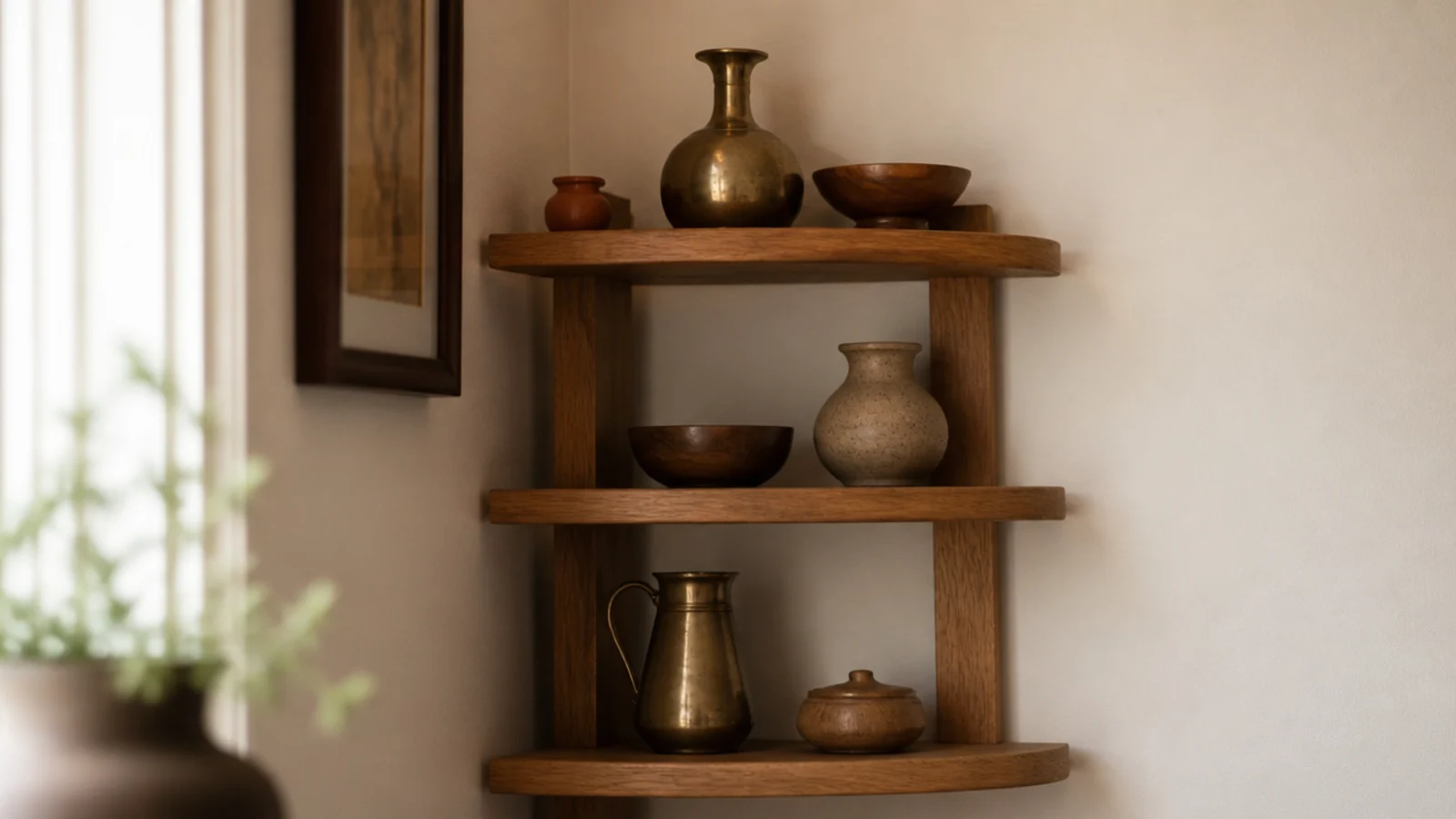
Pick one material — brass, black metal, pale ceramic — and place it three times at spaced intervals up the display.
Your eye follows repetition and reads it as intention. This is precisely why professionally styled shelves look composed while holding completely mismatched objects: the objects do not match, the rhythm does. It costs nothing if you own the pieces already.
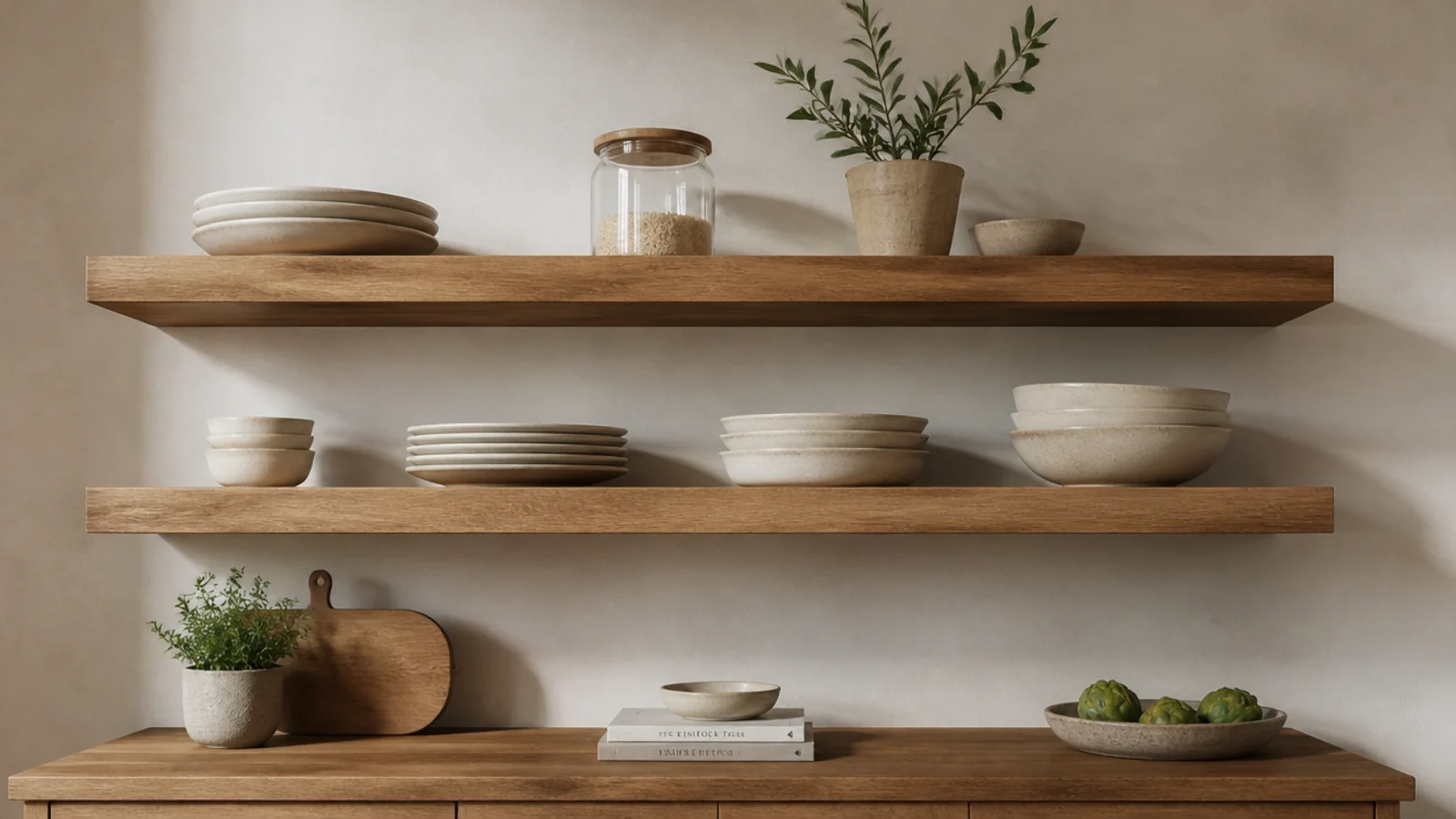
7. Leave a full third of every shelf empty
Empty space is the most expensive-looking thing you can put on a shelf, and it is free.
Style the corner however you like, then remove a third of what is on it and walk away for a day. Almost every corner I have styled professionally has been improved by that step, and it is the single change clients are most reluctant to make and most pleased with afterwards.
8. Layer a leaning artwork behind the objects
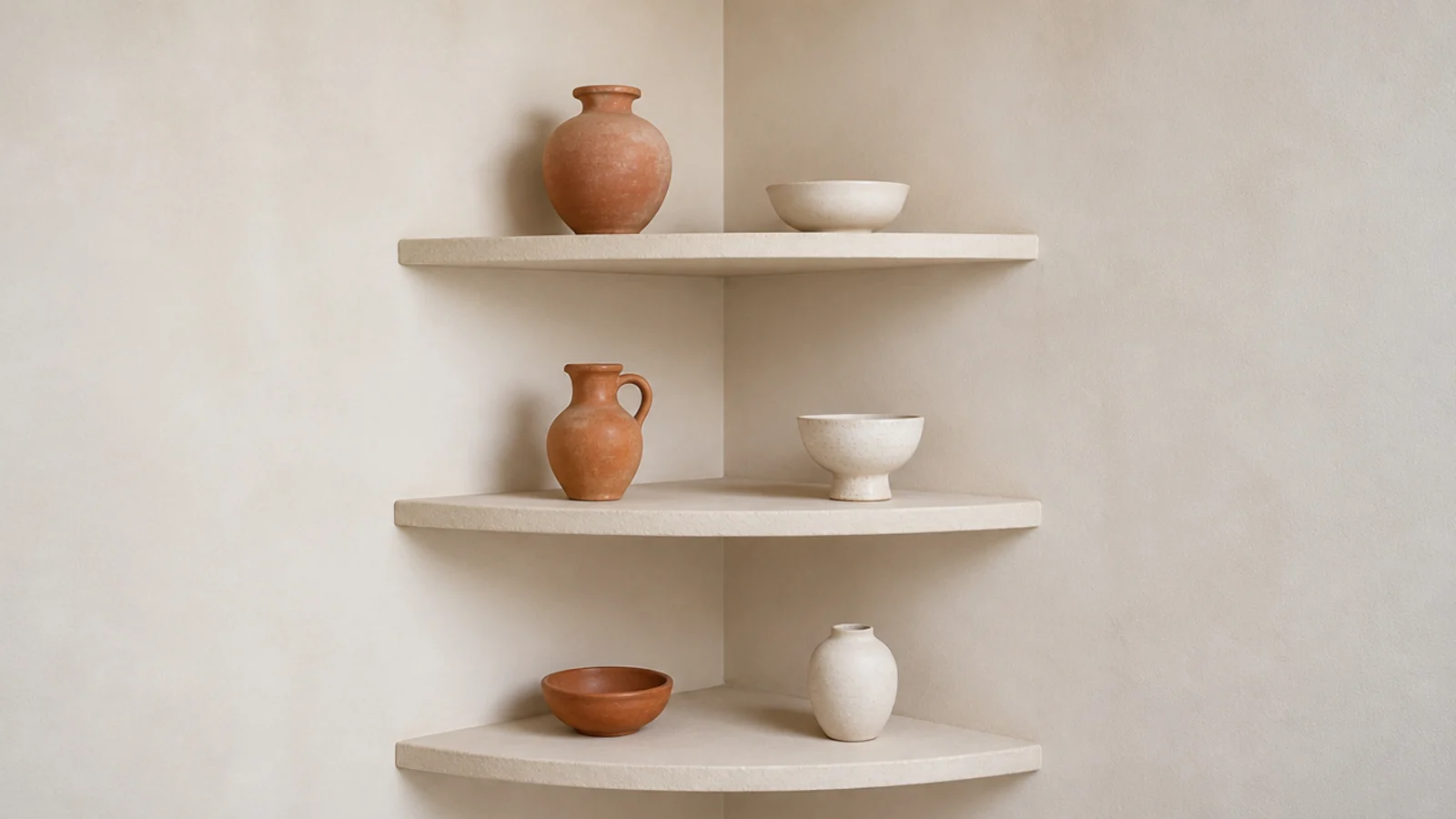
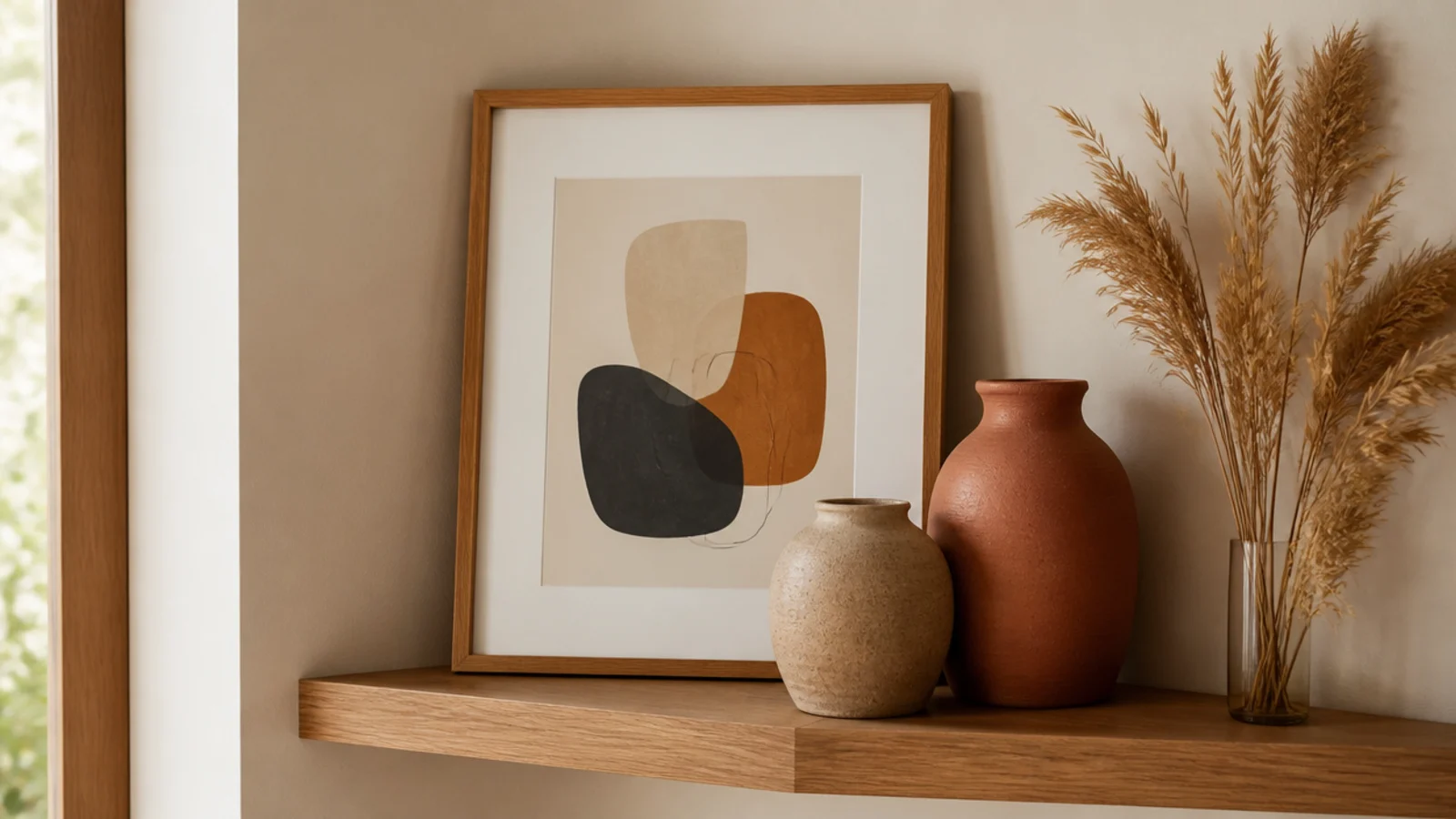
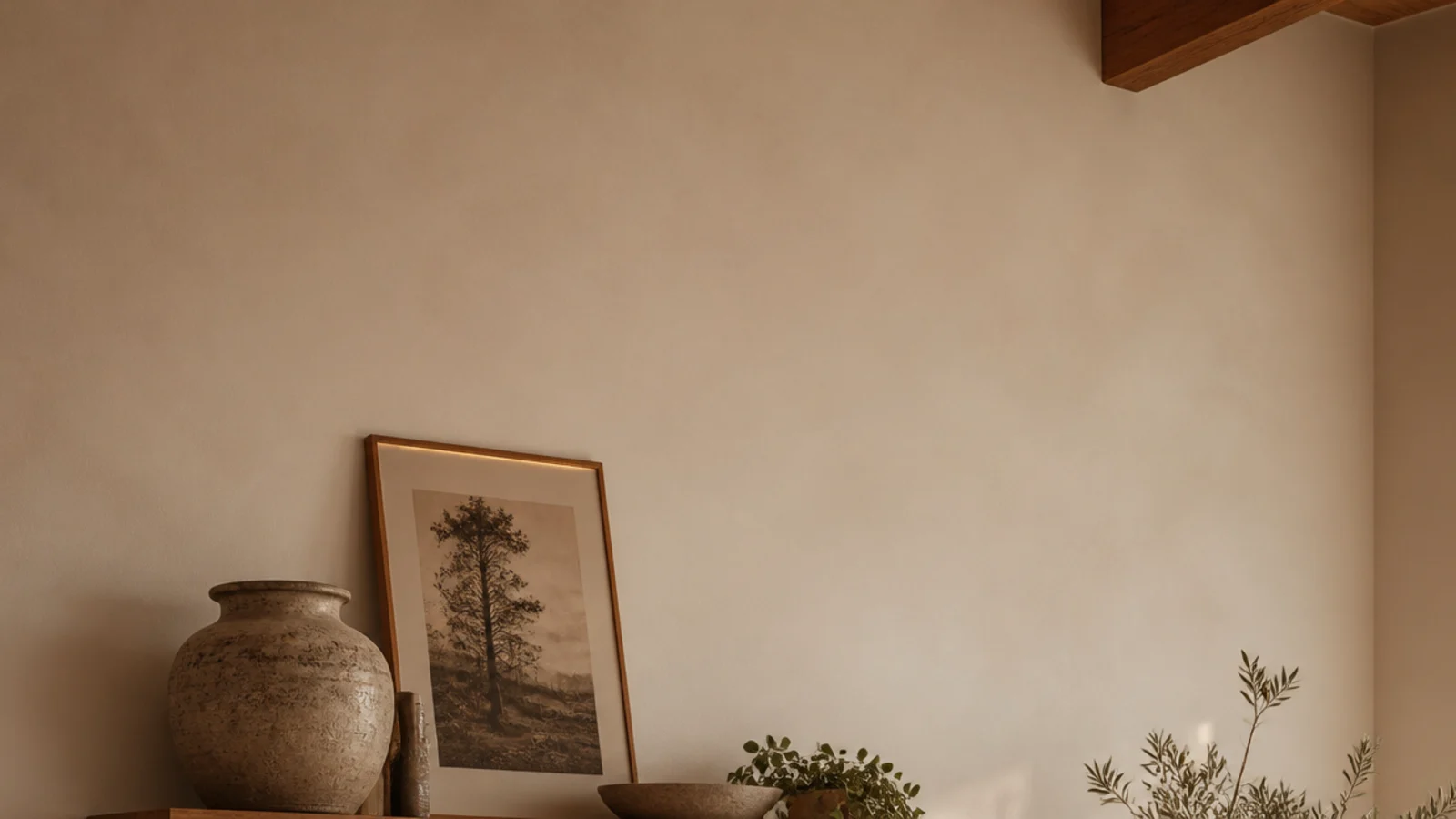
Depth is what separates a styled shelf from a lined-up one. Lean a framed print against the wall and place two objects in front of it so they overlap.
A medium frame — 8x10 to 11x14 — works better than a large one on a corner shelf, and leaning means no holes and a five-minute restyle whenever you want one.
9. Match the wood tone to one other thing in the room
A wood tone that repeats something already in the room reads as chosen. A wood tone that matches nothing reads as bought.
Hold a sample against your coffee table, your floor and your nearest furniture before buying. If nothing matches, paint the shelf instead — a painted shelf in the wall color is always safer than a wood tone fighting three others. More on species and finishes in wooden corner shelves.
10. Put round shapes against the straight lines
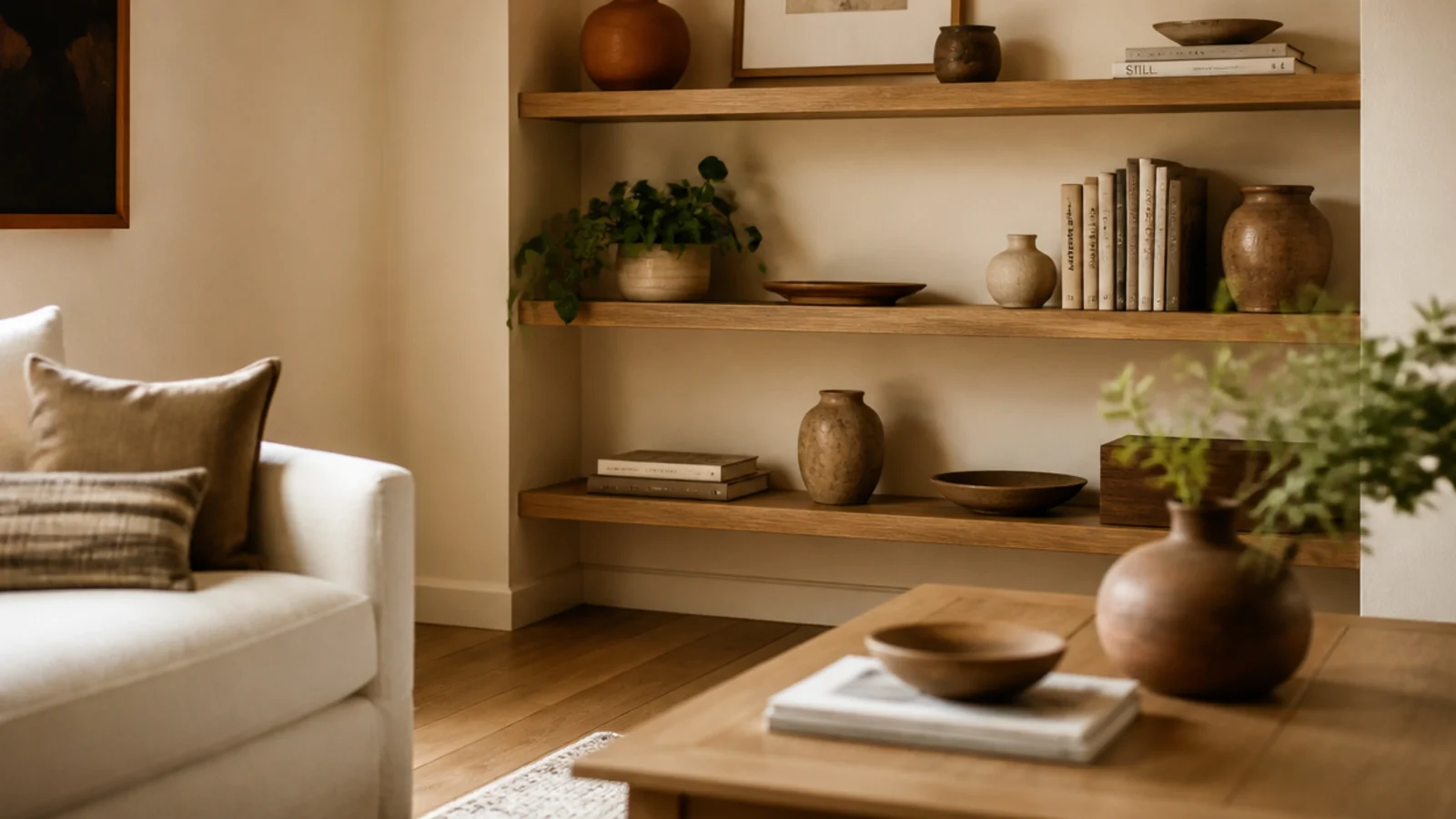
Shelves are an aggressive grid of horizontals and verticals. Round objects are what stop that grid reading as storage.
Wide shallow bowls, bulbous vases, spherical stone objects, a coiled rope basket. Aim for at least one clearly round form per shelf. It is the difference between a display that feels warm and one that feels like a filing system.
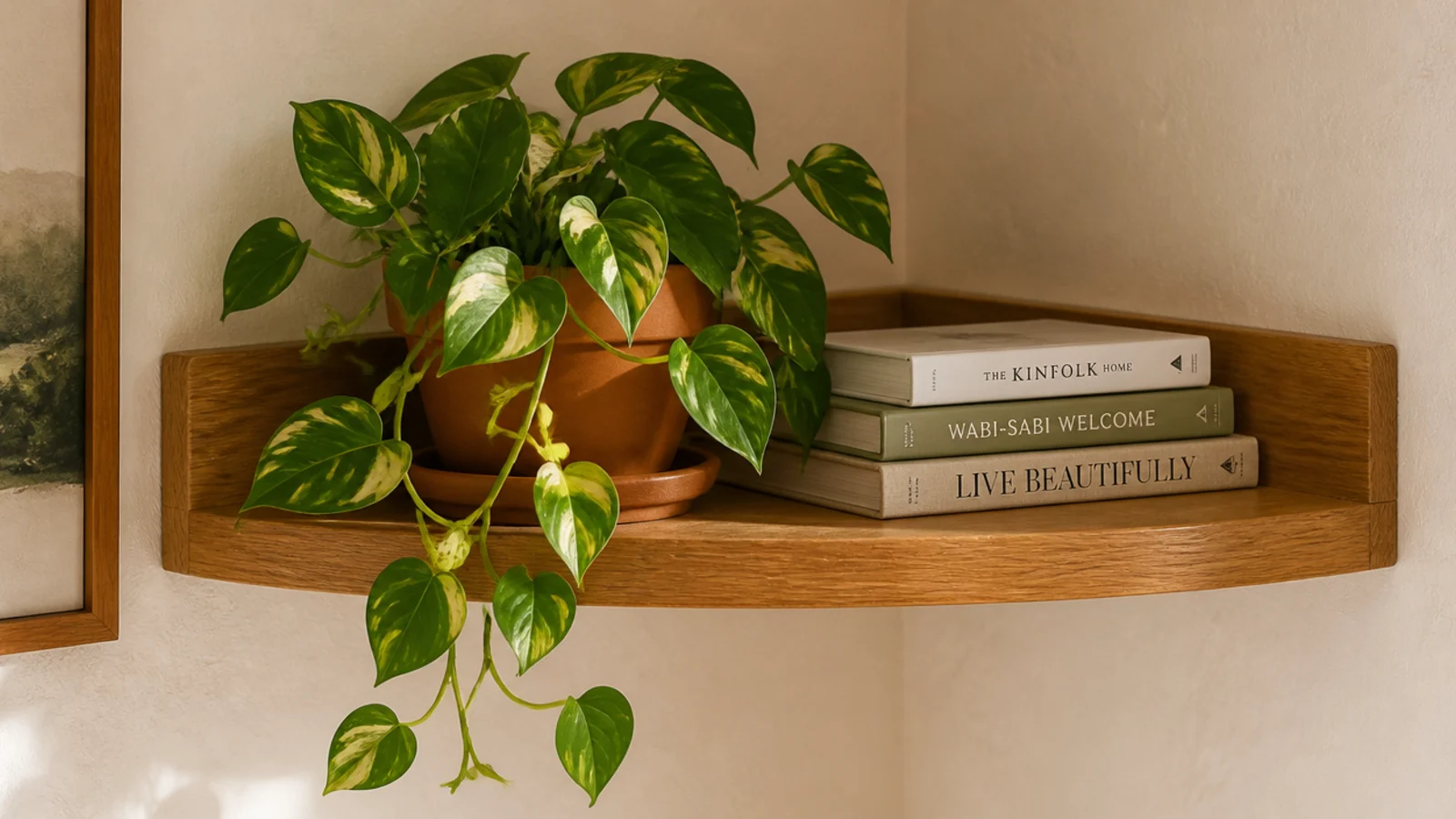
11. Use a real plant, never a fake one
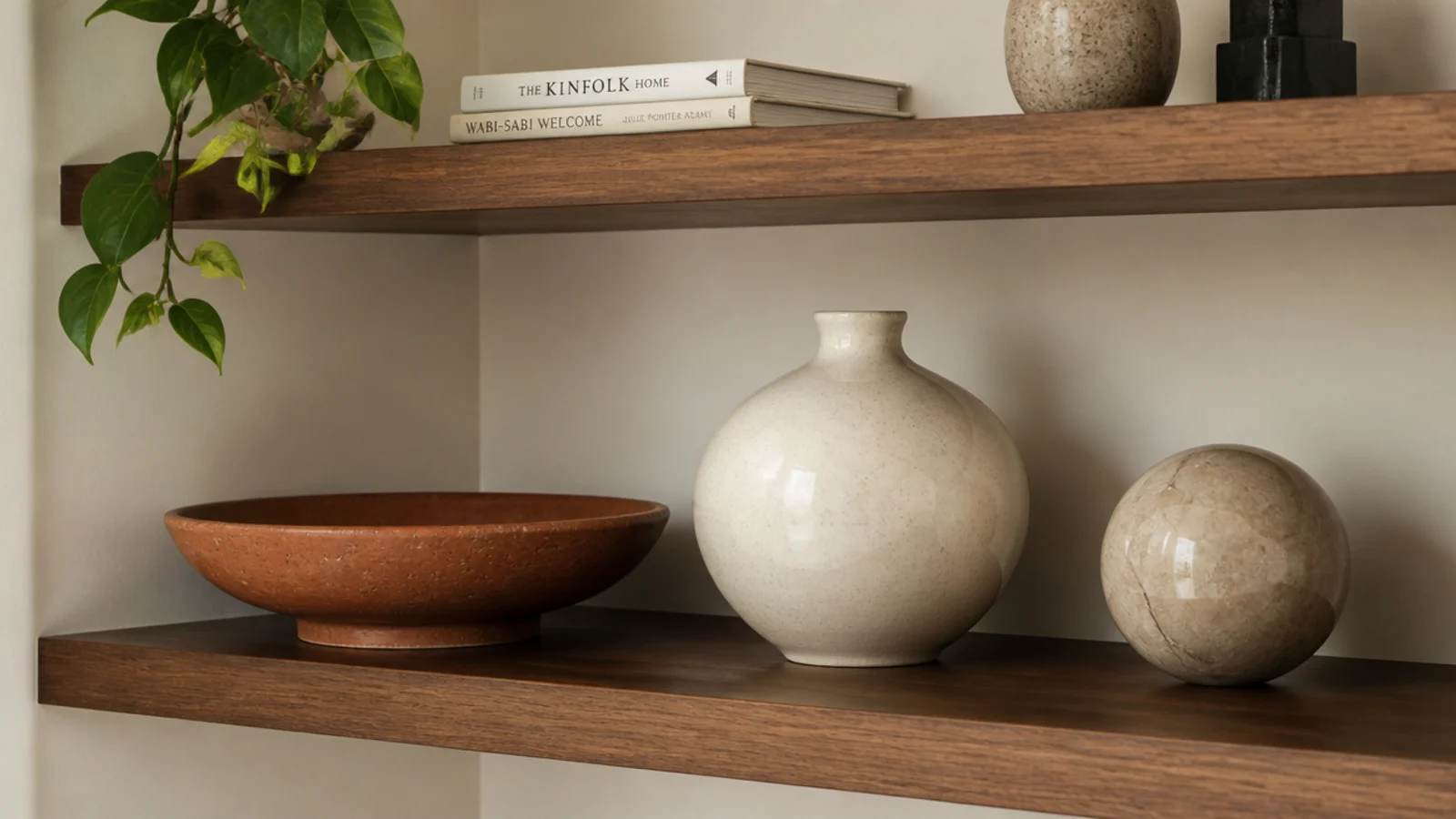
Live leaves have translucency and irregularity that catch light. Plastic ones absorb it and read as matte plastic from across a room, no matter how good they looked in the store.
If the corner is genuinely too dark, use a pothos, ZZ plant or snake plant — all three survive several feet from a window and weeks of neglect, which is what a shelf plant actually faces. Water pothos when the top inch of soil is dry, roughly every ten days indoors. If even that is too much, use dried stems: dried grasses are honest about what they are, and fake ferns are not.
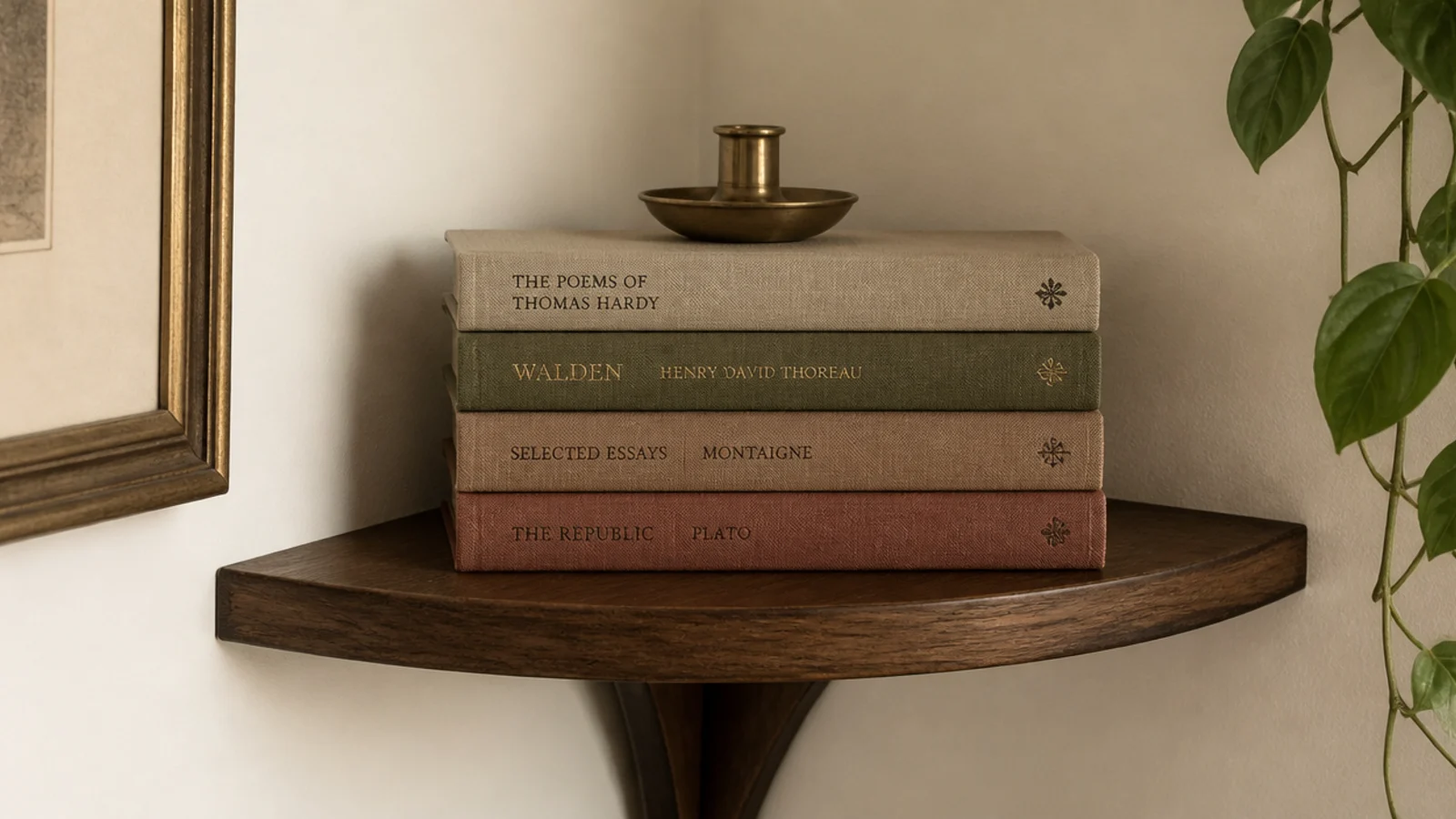
12. Take the dust jackets off your books
Publisher dust jackets are designed to shout on a shop table. The cloth binding underneath is usually a muted sand, olive or clay that sits perfectly in a warm neutral room.
Remove them, keep them in a drawer if you care about resale, and stack the books with the cloth showing. It costs nothing and instantly calms a shelf that felt busy.
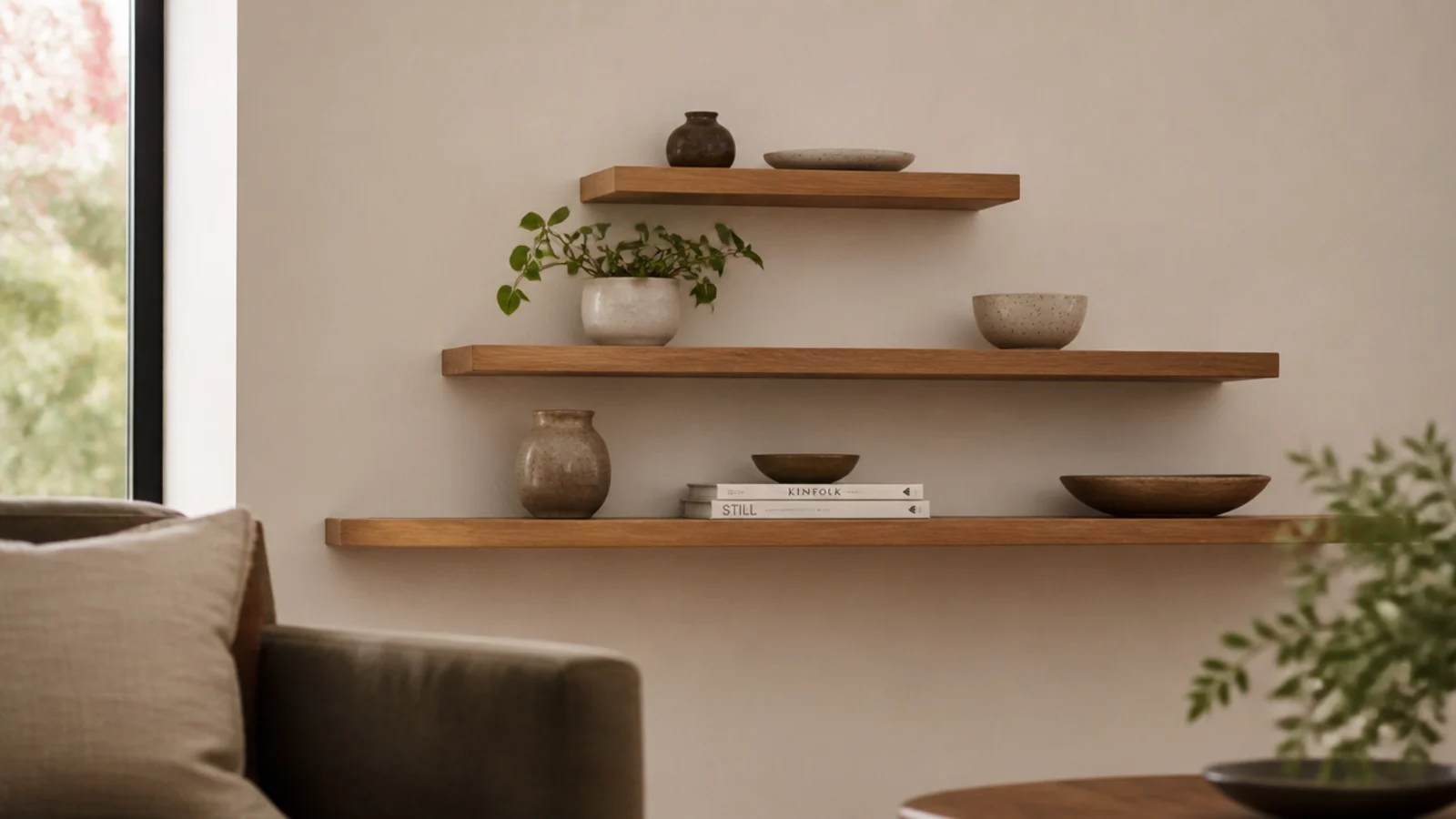
13. Stagger the shelf lengths as they climb
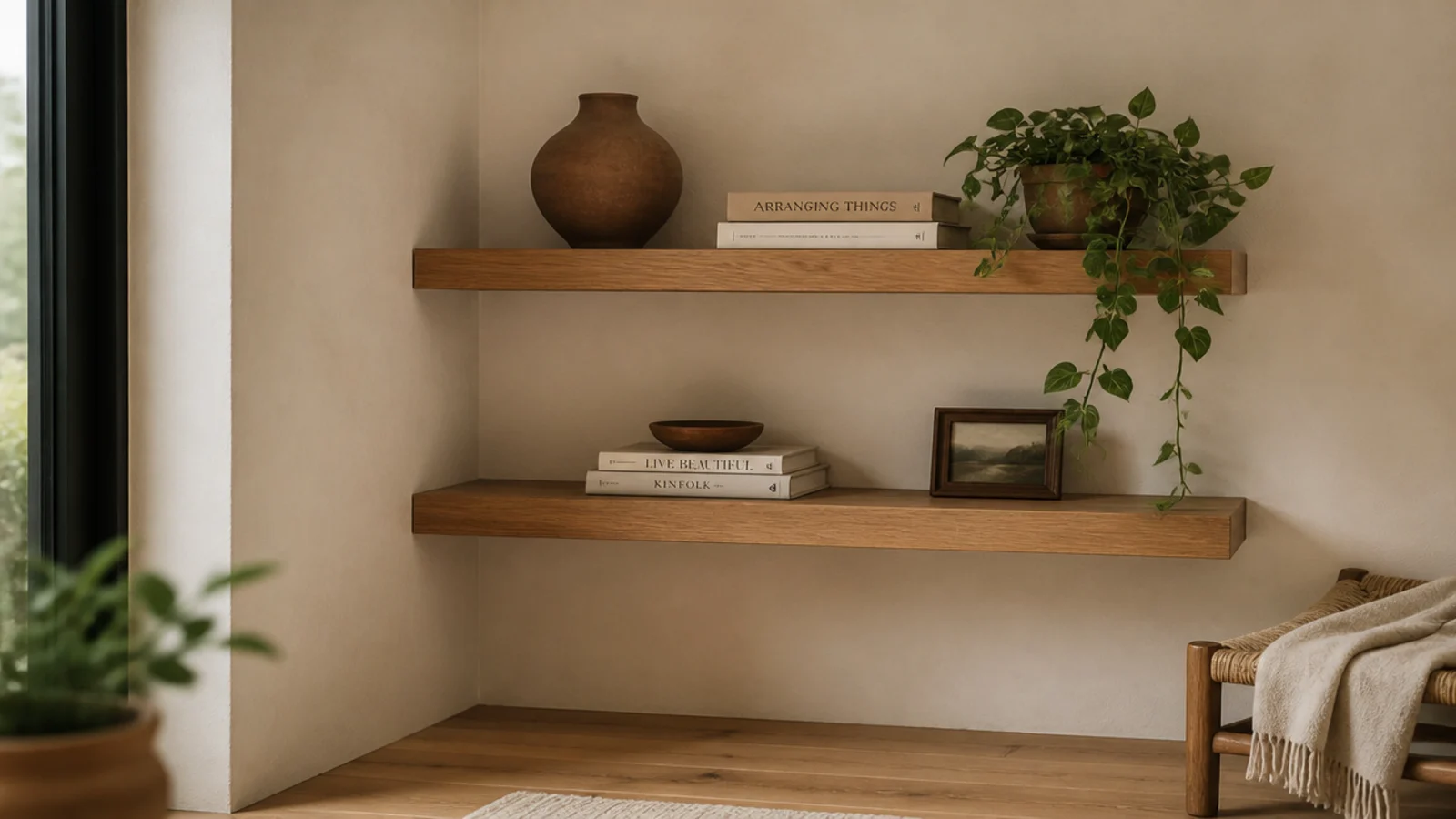
Three shelves of identical length form a block. Three shelves at roughly 24, 20 and 16 inches, shortest on top, form a taper your eye climbs.
The taper also puts the widest surface at the bottom where the heaviest objects belong, which is where they should be structurally anyway. Two design decisions solved by one cut list.
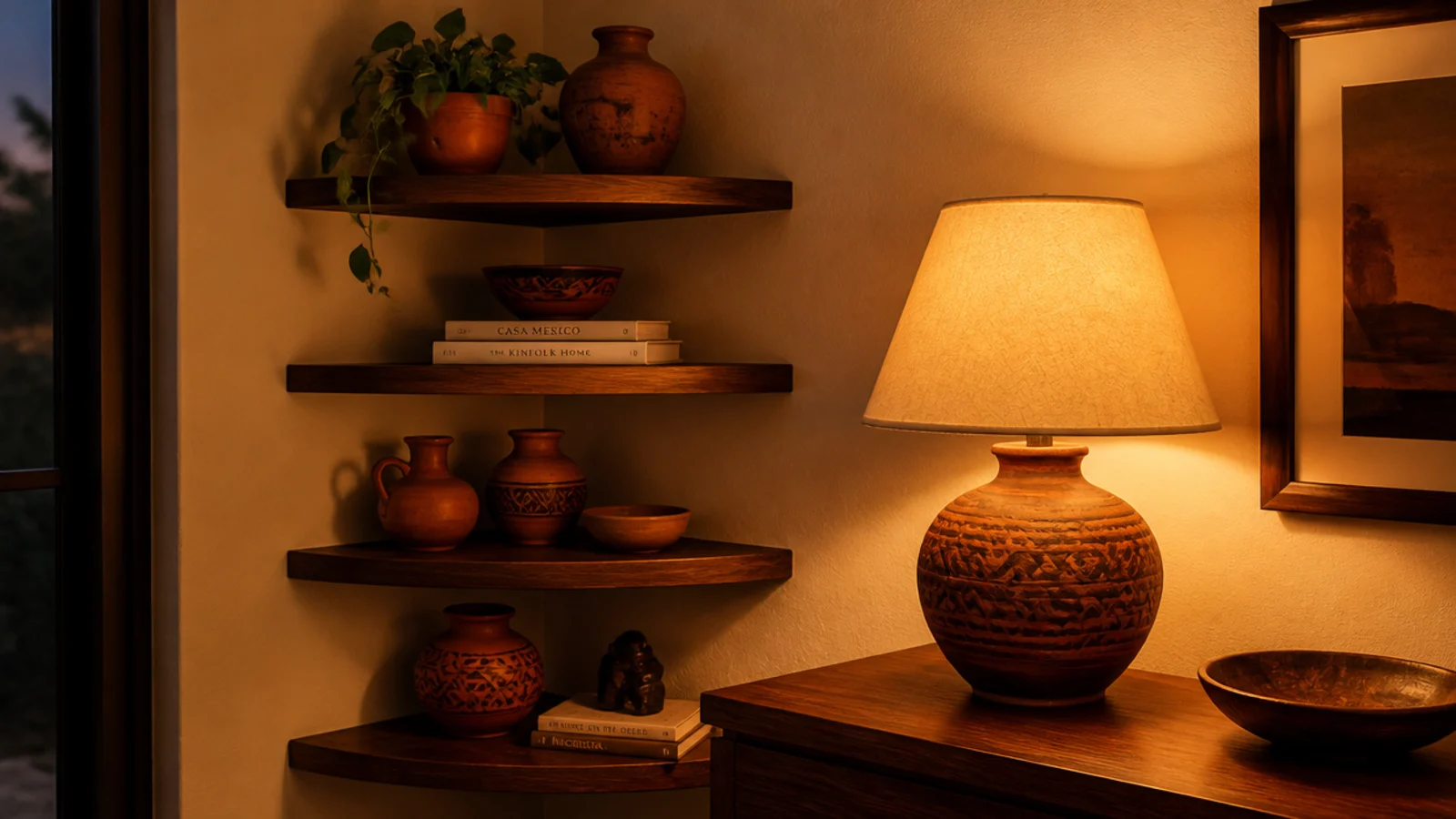
14. Use warm bulbs only, at 2700K
Every nearby lamp affects how the corner reads. A 4000K bulb in a floor lamp two feet away will make terracotta look grey and walnut look flat, undoing every material choice you made.
Check the box: 2700K is warm white, 3000K is acceptable, anything above reads clinical in a living room. This is a $4 fix that people spend hundreds trying to solve with new objects.
15. Anchor the corner with one object on the floor
Shelves alone leave a visual gap between the display and the floor, and rooms read as unfinished when that gap is empty.
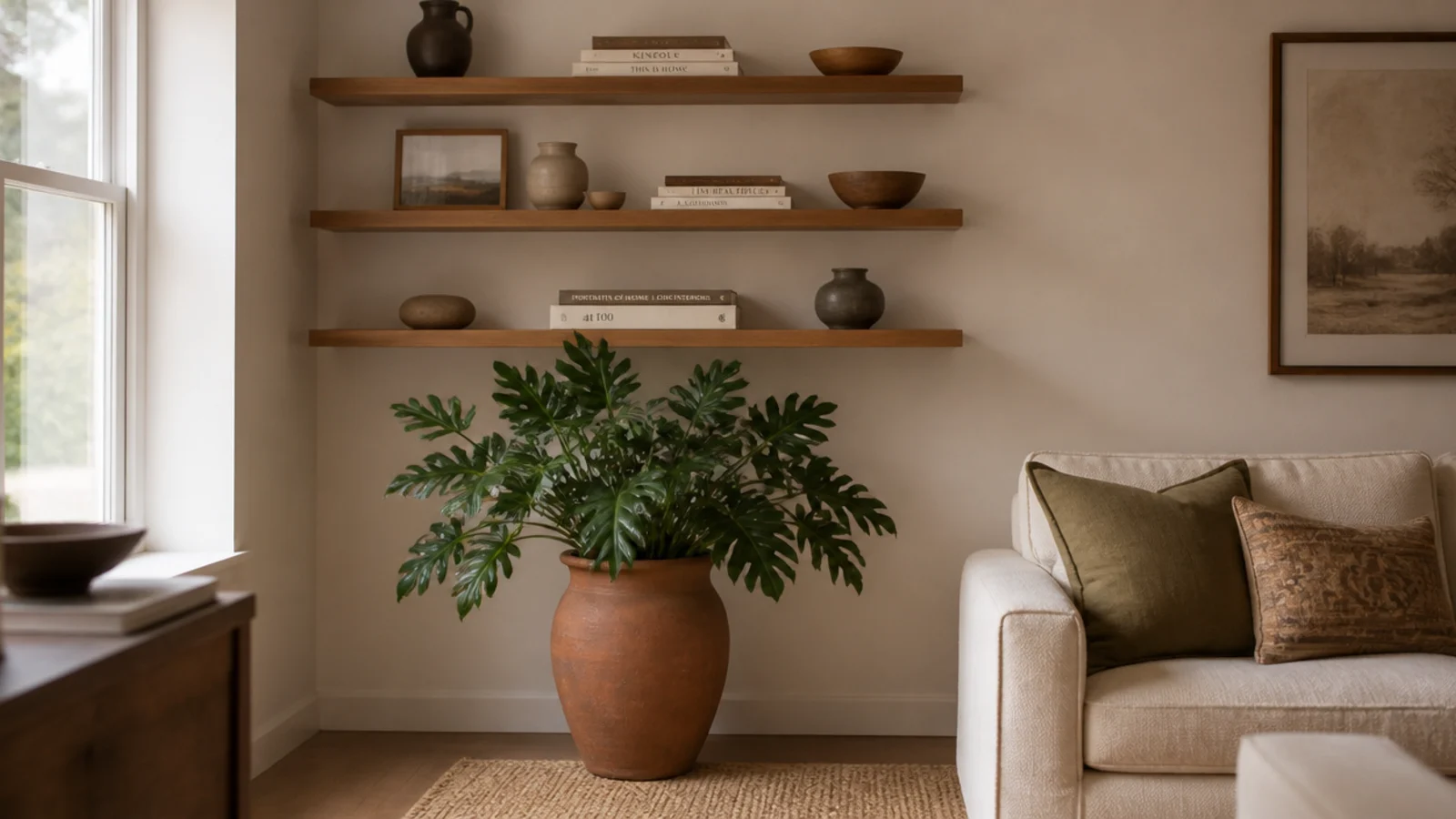
One large floor planter, a stack of oversized books, or a tall basket directly beneath the shelves connects the corner to the ground. Size it generously — a planter under 14 inches tall reads as a stray object rather than an anchor, and in a corner you have the floor space precisely because nothing else wants it. This is the step most people miss, and it is often what is wrong when a well-styled shelf still looks slightly off.
Mistakes to Skip
- Leaving the brackets bare. It is the single fastest way to make a considered corner look like a kit, and painting them costs almost nothing.
- Using half-inch boards on a 24-inch span. They bow under books within a month, and a bowed shelf reads as cheap even when nothing else does.
- Mixing three wood tones in one corner. Two is a scheme, three is an accident — paint one of them out if you are stuck.
Frequently asked questions
How do I make cheap corner shelves look expensive?
Three things, in order: paint the brackets the wall color, build the board up to an inch and a half thick, and add warm light under the top shelf. Together they cost under $40 and they change how the shelf reads more than any upgrade in material. Visible hardware and thin boards are what the eye registers as cheap.
How high should corner shelves be in a living room?
Start the lowest shelf around 42 inches from the floor, which clears most sofa backs and side tables, then work upward in 13-inch increments. If the corner sits beside a sofa rather than behind it, drop to 36 inches so the shelf relates to the seated eye level instead of the standing one.
What color should living room corner shelves be?
Match the wall if you want the corner to feel calm and the objects to carry the attention — this is almost always right in a small living room. Choose a wood tone only if it repeats a wood already in the room, like the coffee table or floor. A wood that matches nothing else is what makes a corner look bought rather than designed.
Should corner shelves be the same length?
No. Staggering them — roughly 24, 20 and 16 inches, shortest on top — gives the stack a line to climb and stops it reading as a block. Equal lengths look fine empty and heavy once loaded. The taper also puts the widest shelf where the heaviest objects belong.
How many objects should be on each corner shelf?
Three per shelf at three different heights, with about a third of the surface left empty. In a living room, where people sit and look at the corner for long stretches, restraint reads as expensive and density reads as storage. Rotate objects seasonally rather than adding more.
Do corner shelves work beside a TV?
They work well as long as they are not competing for the same visual weight. Keep the shelf contents low-contrast and matte beside a large black screen, and skip anything reflective. If the TV is on the same wall, run the shelves at a height that relates to the top of the screen rather than floating between.
Do the first three in order — thickness, hardware, light — and stop to look before you buy a single object. Most living room corners are fixed by then. For the full room-by-room placement list see fifteen corner shelf ideas, for what actually goes on the shelves see corner shelf styling, and the same thickness-and-light rules apply on a straight wall in floating shelves for the living room. Save the pin for the next time the corner bothers you.
Want more like this? Browse all 15 corner shelf ideas guides — they all use the same measurements and budget tiers.
Pin it for later
Save this to your Corner Shelf Ideas board
Pin it now so it is waiting for you when the tape measure comes out — and so the next person hunting for this idea can find it too.
Save this pinKeep going
More ideas worth saving while you have the tape measure out.