Attic Bedroom Ideas · Listicle
25 Dreamy Attic Bedroom Ideas Aesthetic Fans Love

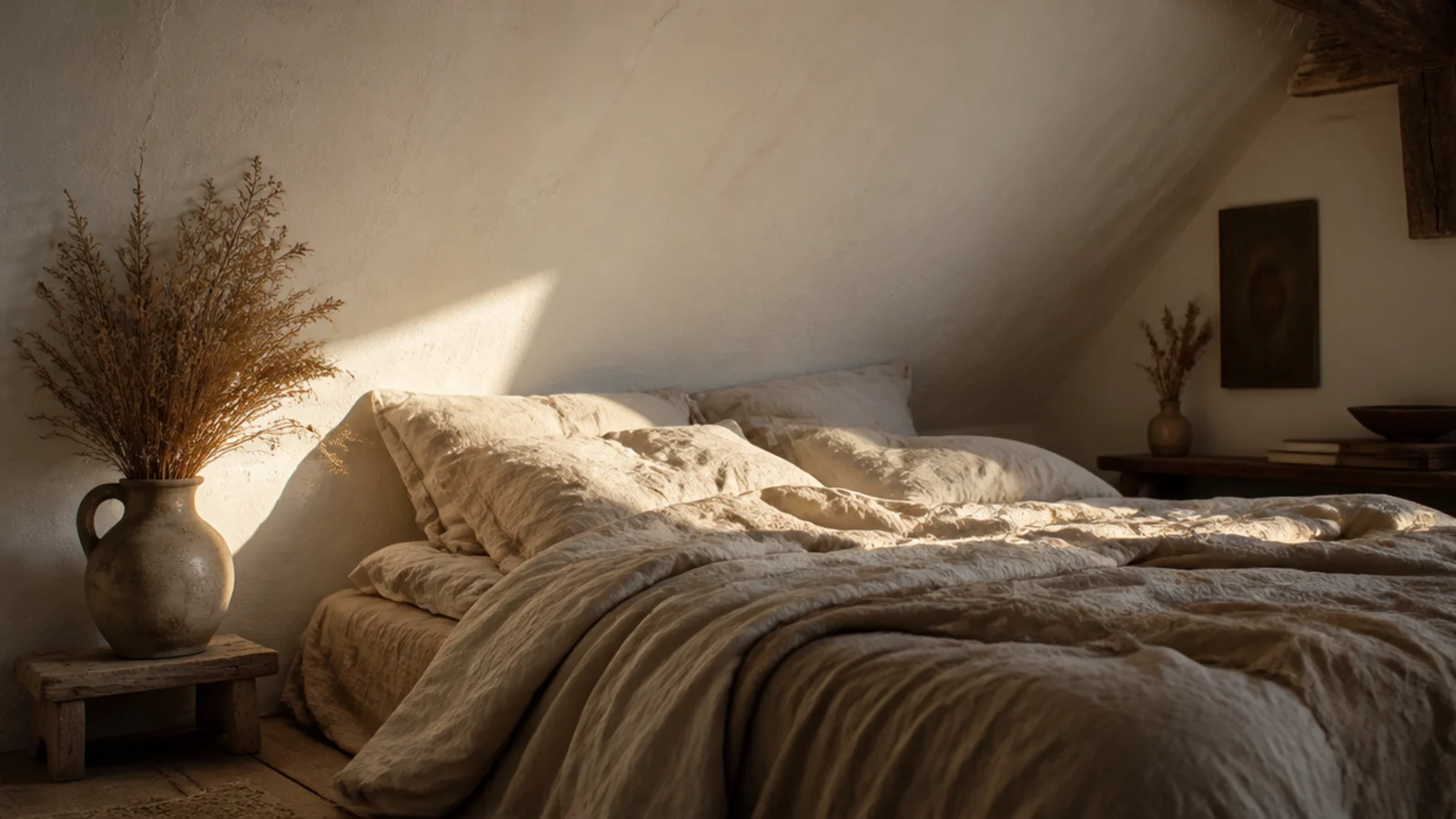
Lofts photograph better than almost any other room, and it is not the styling doing it — it is the geometry. Sloping plaster catches light in a gradient that a flat ceiling never will. What follows are twenty-five attic bedroom ideas aesthetic enough to hold up in real life rather than only on a screen, with the numbers underneath each one so the room still works at 7am.
I have styled two loft rooms for photography and slept in one of them for years. The two lists barely overlapped until I stopped adding things and started subtracting.
In this guide27 sections — tap to openHide
- 1.What makes attic bedroom ideas aesthetic and not just pretty
- 2.Choose one chalky off-white and use it everywhere
- 3.Layer three warm lights instead of one bright one
- 4.Heap the bed with washed linen two sizes up
- 5.Frame the sky with a rooflight over the pillow
- 6.Hang a muslin canopy from the ridge
- 7.Add LED string lights along the rafter line
- 8.Put a vintage rug on bare boards
- 9.Keep every timber raw or waxed, never glossy
- 10.Group dried stems rather than fresh flowers
- 11.Lean a tall mirror against the gable
- 12.Use LED candles near anything soft
- 13.Build a low reading corner in the eaves
- 14.Repeat one metal and stop there
- 15.Choose a linen curtain over a blind on the gable
- 16.Stack books on the knee wall capping shelf
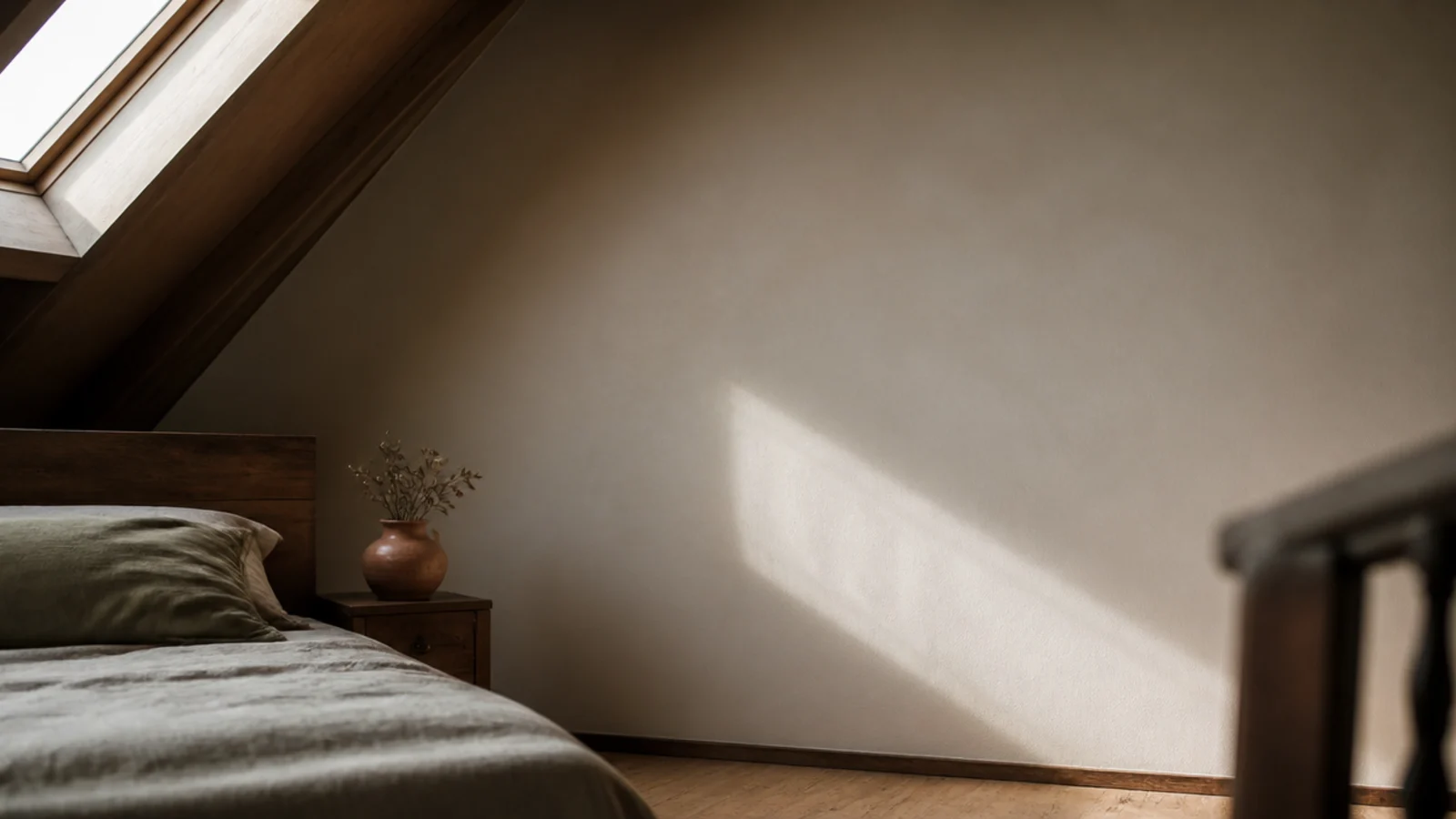
- 17.Let one wall stay completely empty
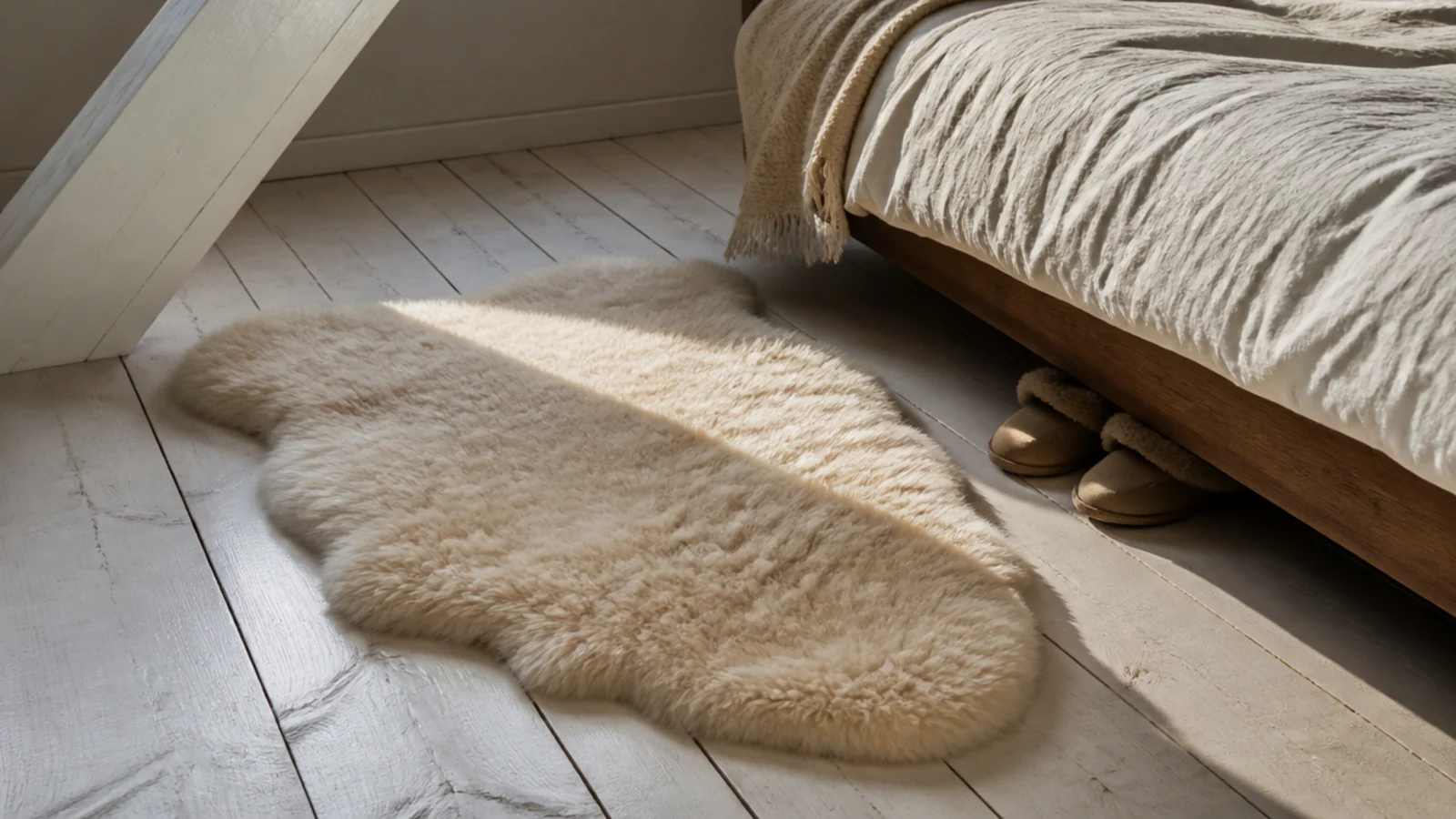
- 18.Add a sheepskin where the floor is coldest
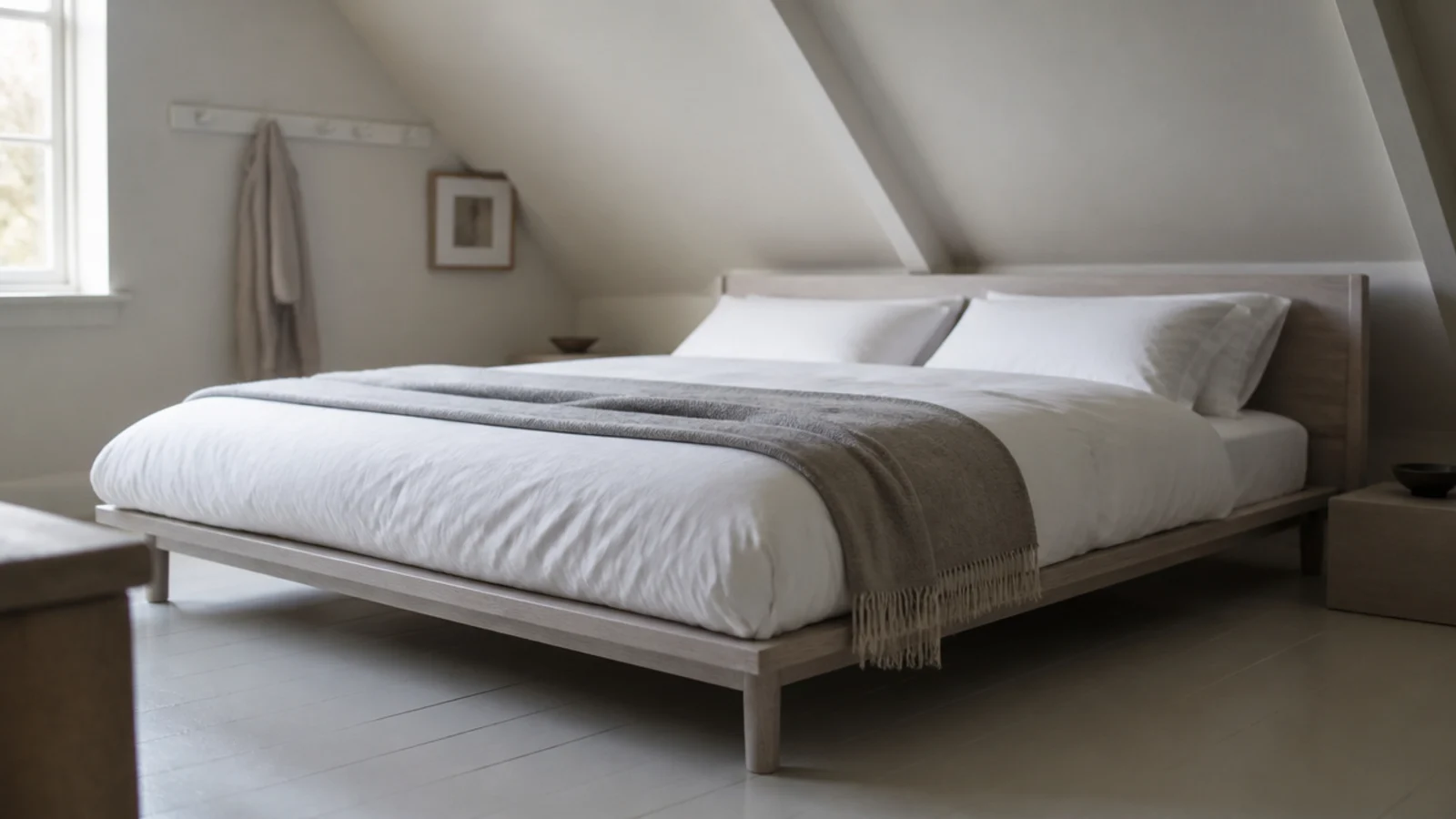
- 19.Choose a low bed frame in pale timber
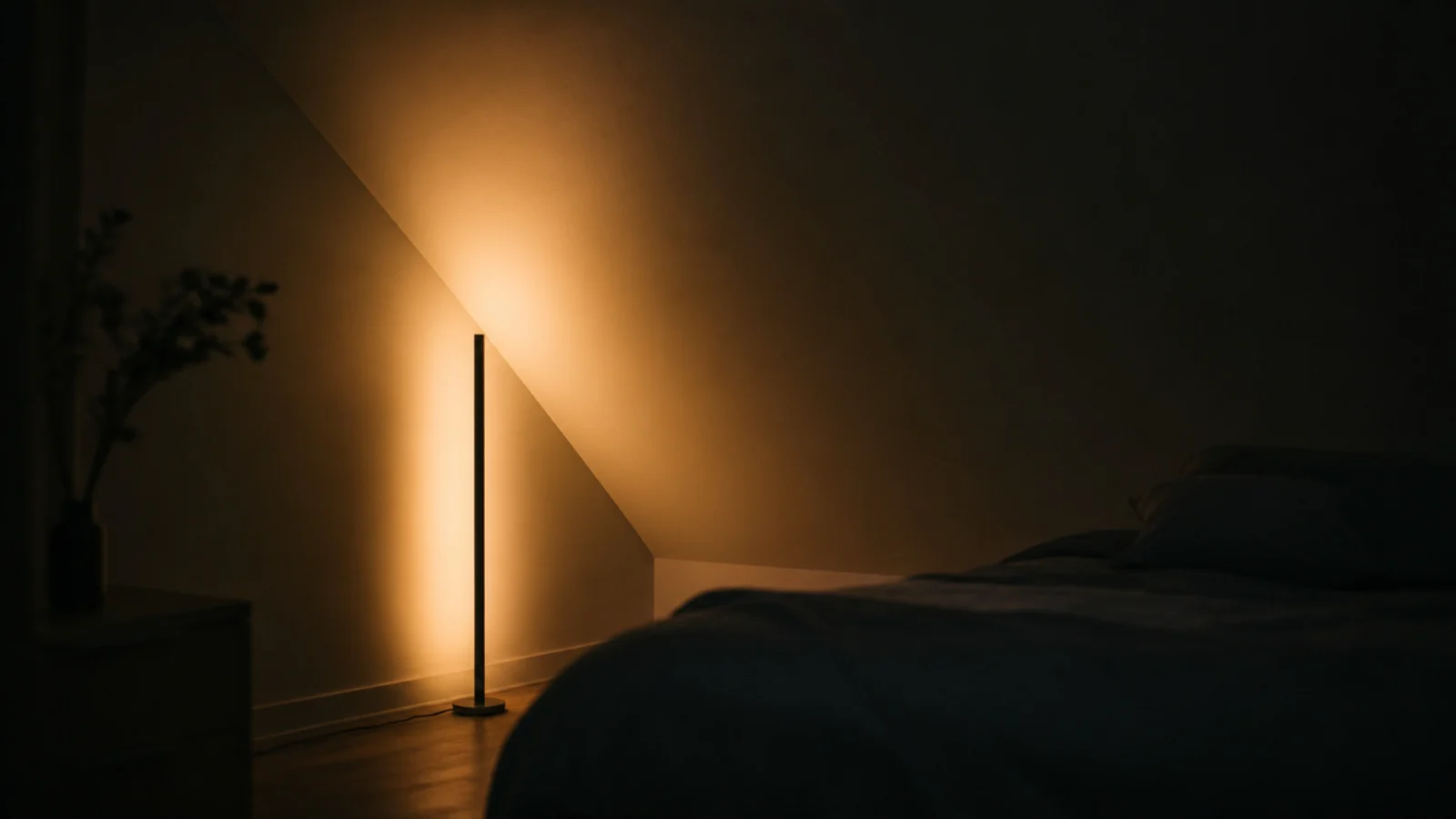
- 20.Wash the slope with light from below
- 21.Keep the palette to chalk, oat and clay
- 22.Hang one large piece, not a gallery wall
- 23.Fit a blackout blind and hide the housing
- 24.Leave the ridge strip clear of everything
- 25.Keep the escape window styled but never blocked
- 26.Photograph it at dusk and adjust from there
- 27.Mistakes to Skip
What makes attic bedroom ideas aesthetic and not just pretty
Decide the palette and the textures before you buy anything. Three tones is the working limit — chalk, oat and clay is the combination that keeps appearing because it never argues with old timber. Then four textures: linen, wool, raw timber, matte plaster. That is the entire scheme, and holding to it is what separates a calm loft from a cluttered one.
Light is the other half. A sloped ceiling sits close to your head and bounces light back at you from short range, so everything reads brighter and every colour-temperature mismatch shows. Keep every bulb at 2700K, and use three sources of 300 to 400 lumens rather than one 900-lumen fitting overhead.
None of this overrides the structural facts. A sleeping room needs its emergency escape and rescue opening — commonly 5.7 square feet net clear, 24 inches minimum height, 20 minimum width, sill within 44 inches of the floor — kept permanently clear, and habitable ceiling height is a regulated minimum enforced by your local building department. Behind the knee wall, insulation and a clear soffit-to-ridge air path matter more than anything on this list, because damp plaster is not a look you can style around.
Budget: paint at $60 to $120, linen bedding at $120 to $300, a vintage rug at $150 to $400, LED string lights at $15 to $30.
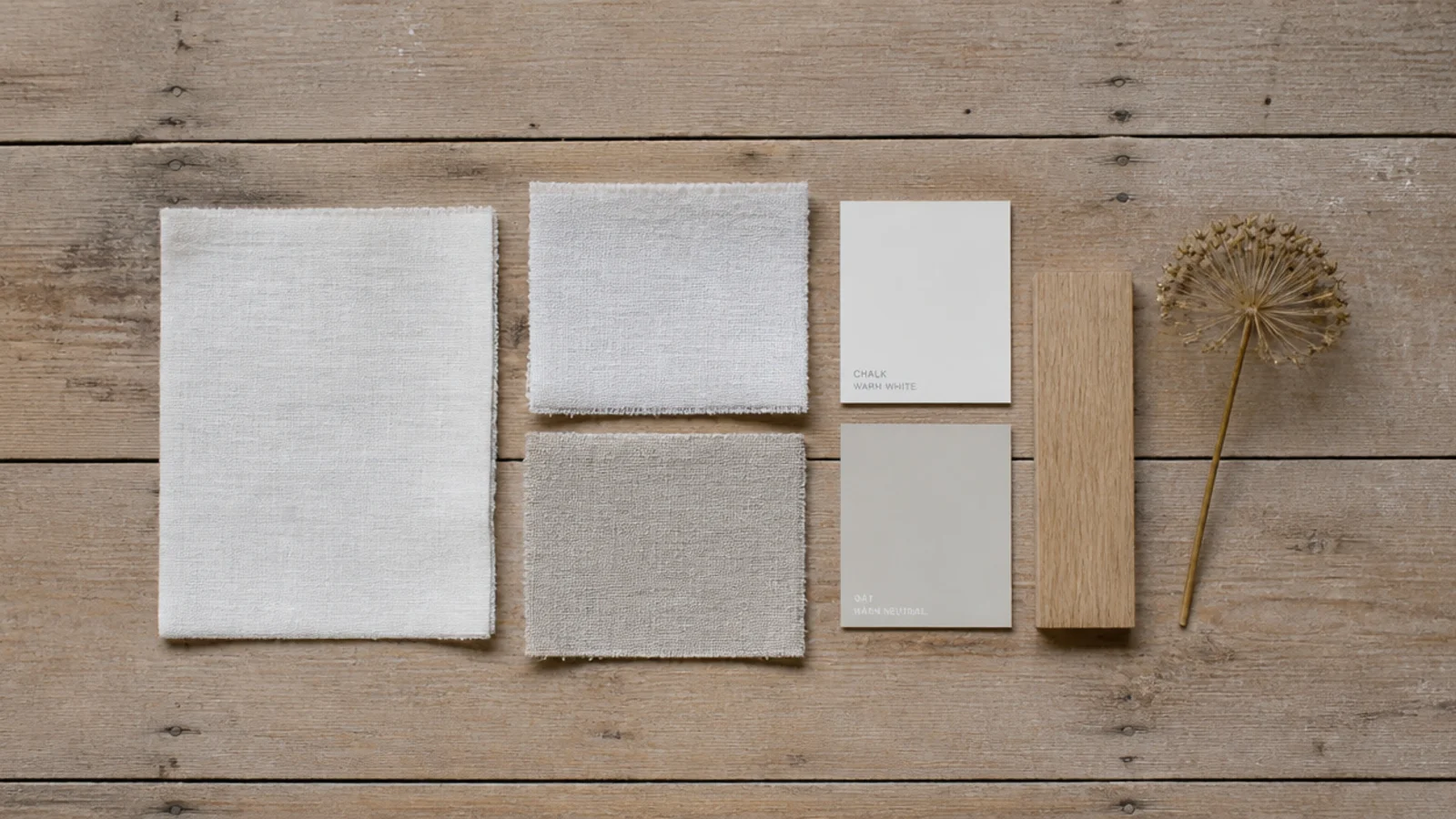
1. Choose one chalky off-white and use it everywhere
Pick a warm off-white with light reflectance somewhere around 78 to 84 and take it across the walls, the slope and the flat ceiling in the same dead matte finish. Brilliant white goes cold and grey on a north-facing pitch. The attic paint comparison has the specific tones and how each behaves at different orientations.
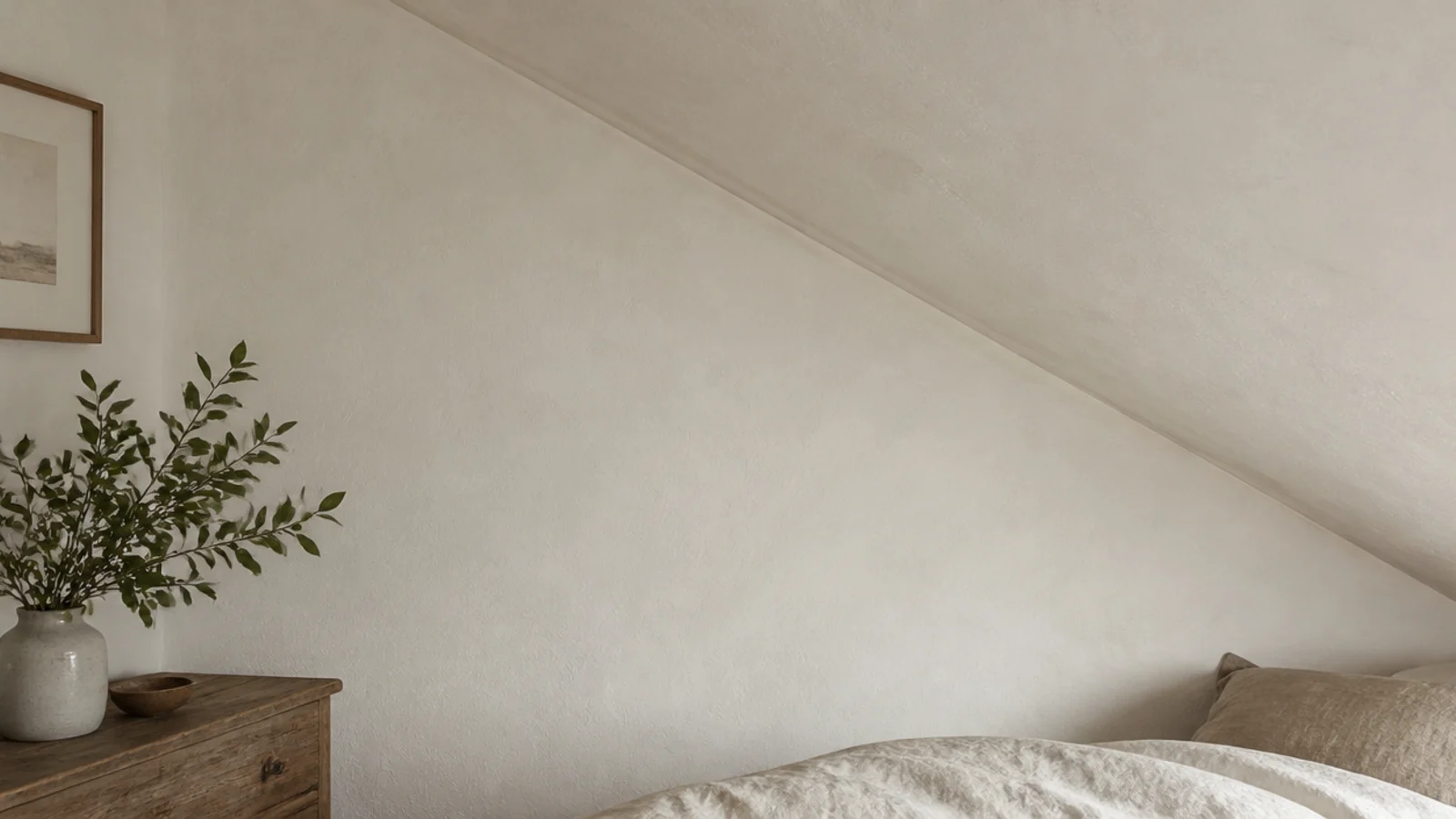
2. Layer three warm lights instead of one bright one
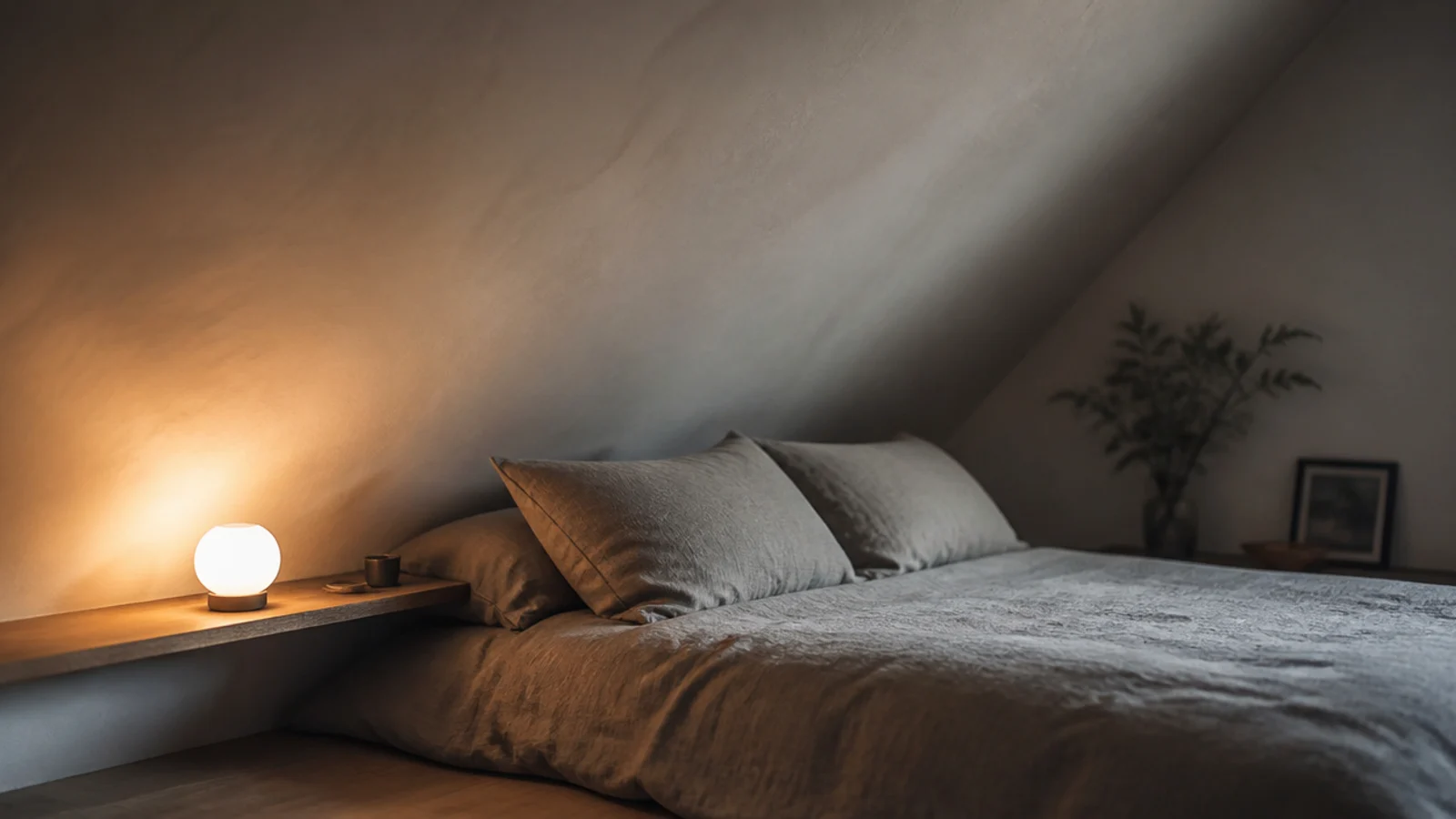
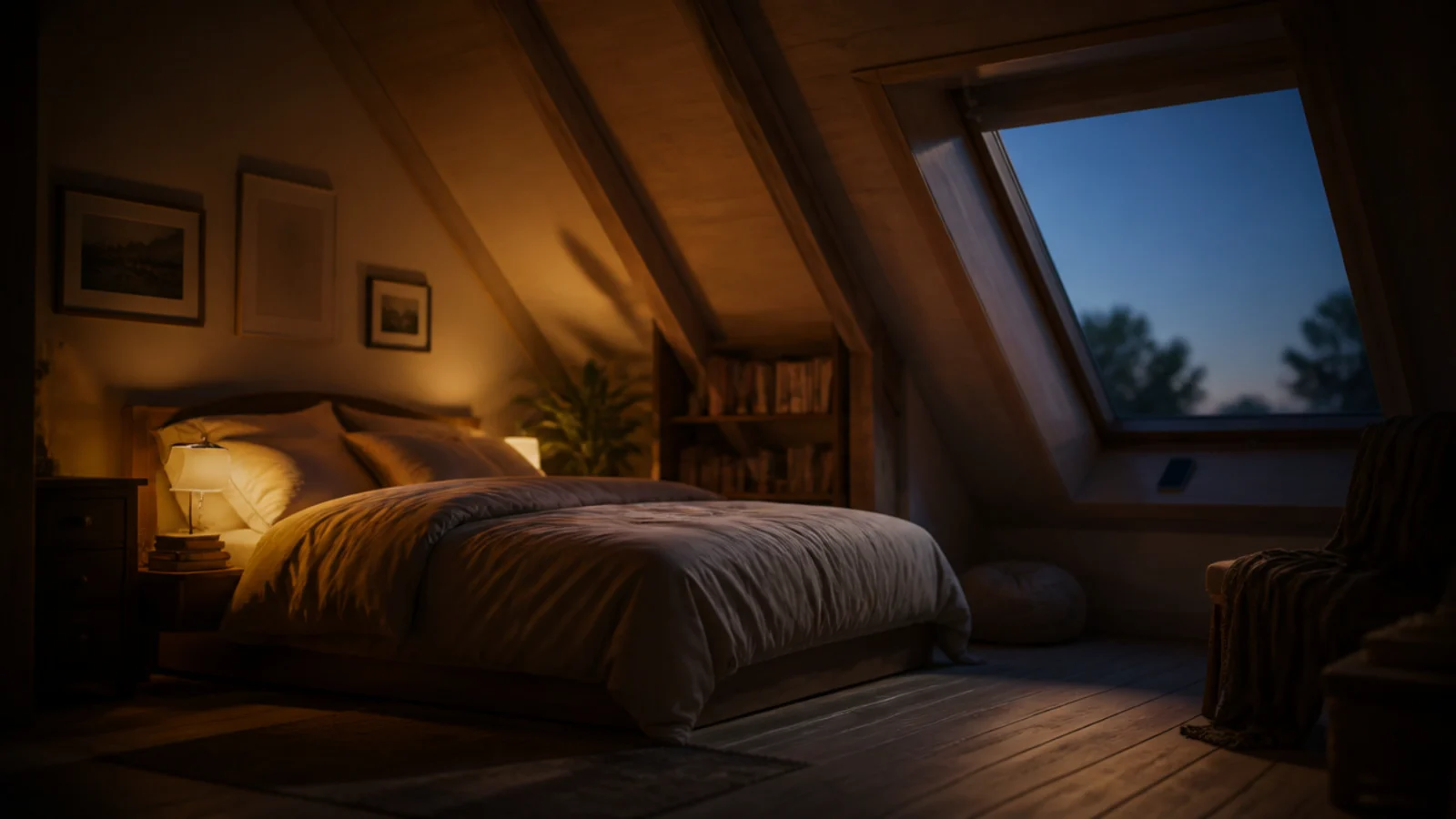
A single ceiling fitting flattens a loft and throws hard shadows up the pitch. A low floor lamp, a small wall light at the pillow and one candle-style bulb on a ledge give you the same total output with none of the glare. All at 2700K, all on separate switches if you can manage it.
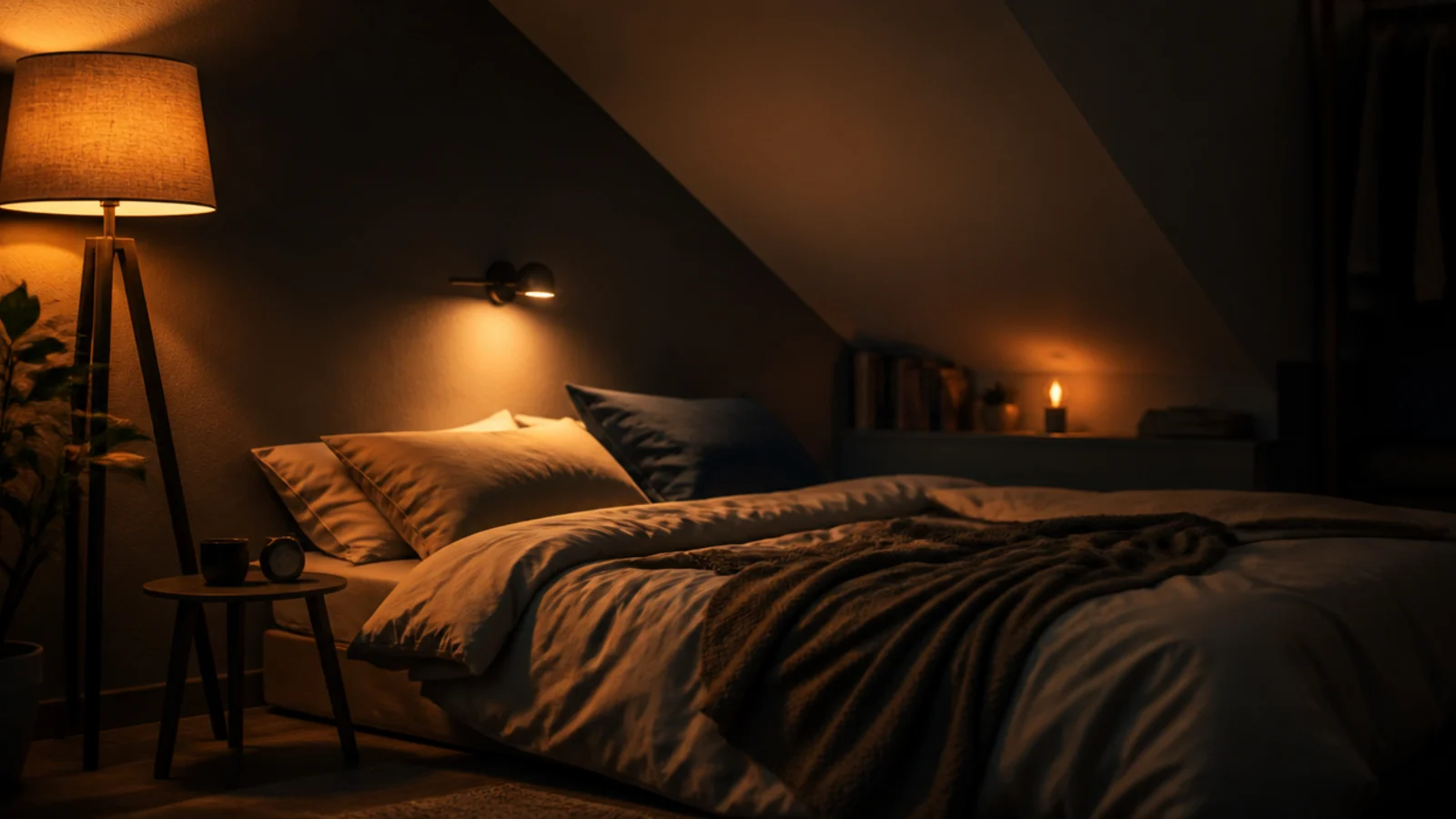
3. Heap the bed with washed linen two sizes up
Buy the duvet cover one size larger than the mattress. Fabric that spills over the edges is the thing that reads as soft in every loft photograph you have saved, and it costs nothing extra beyond the size step. Washed linen at $120 to $300 for a set softens further with every wash.
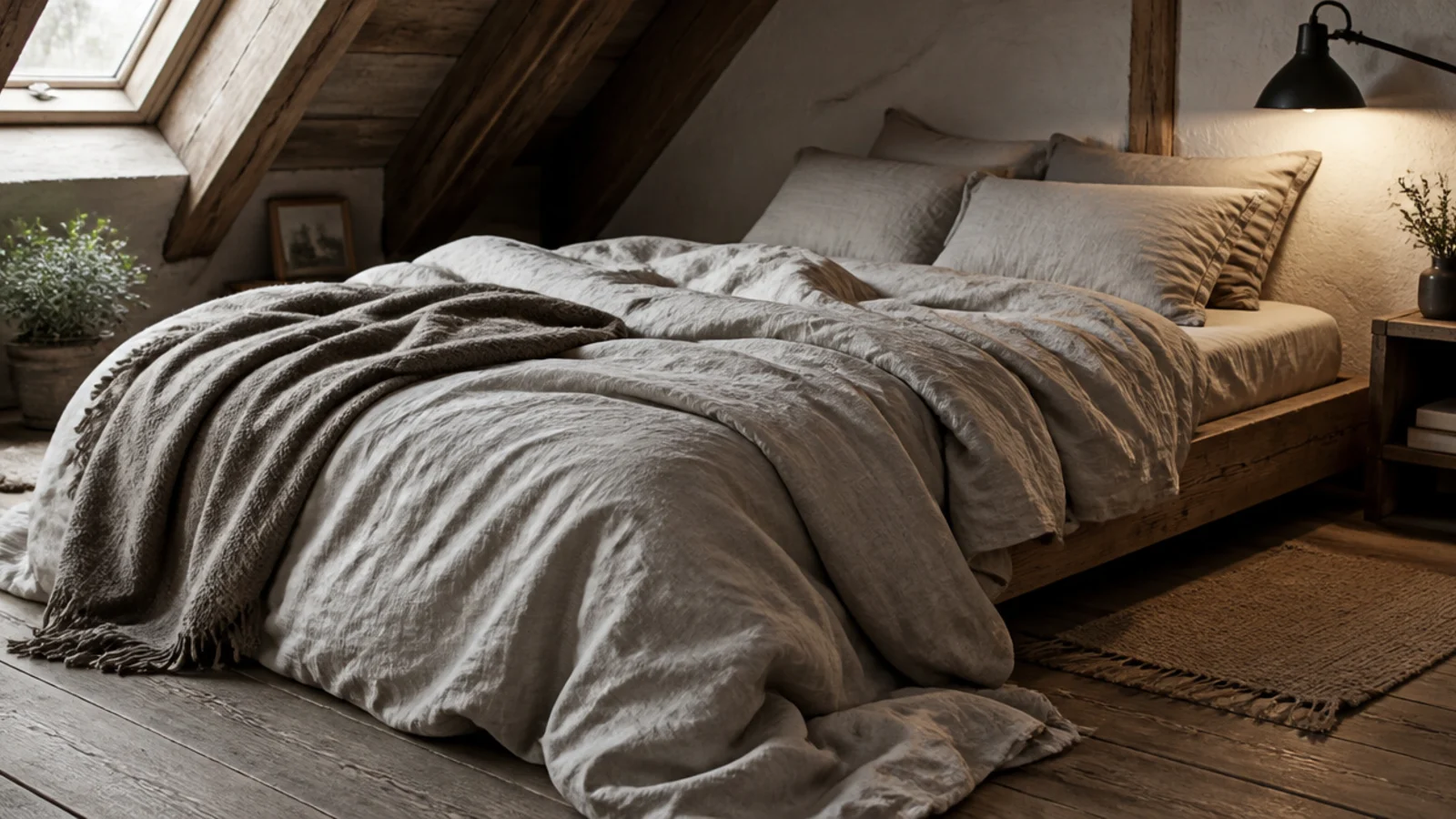
4. Frame the sky with a rooflight over the pillow
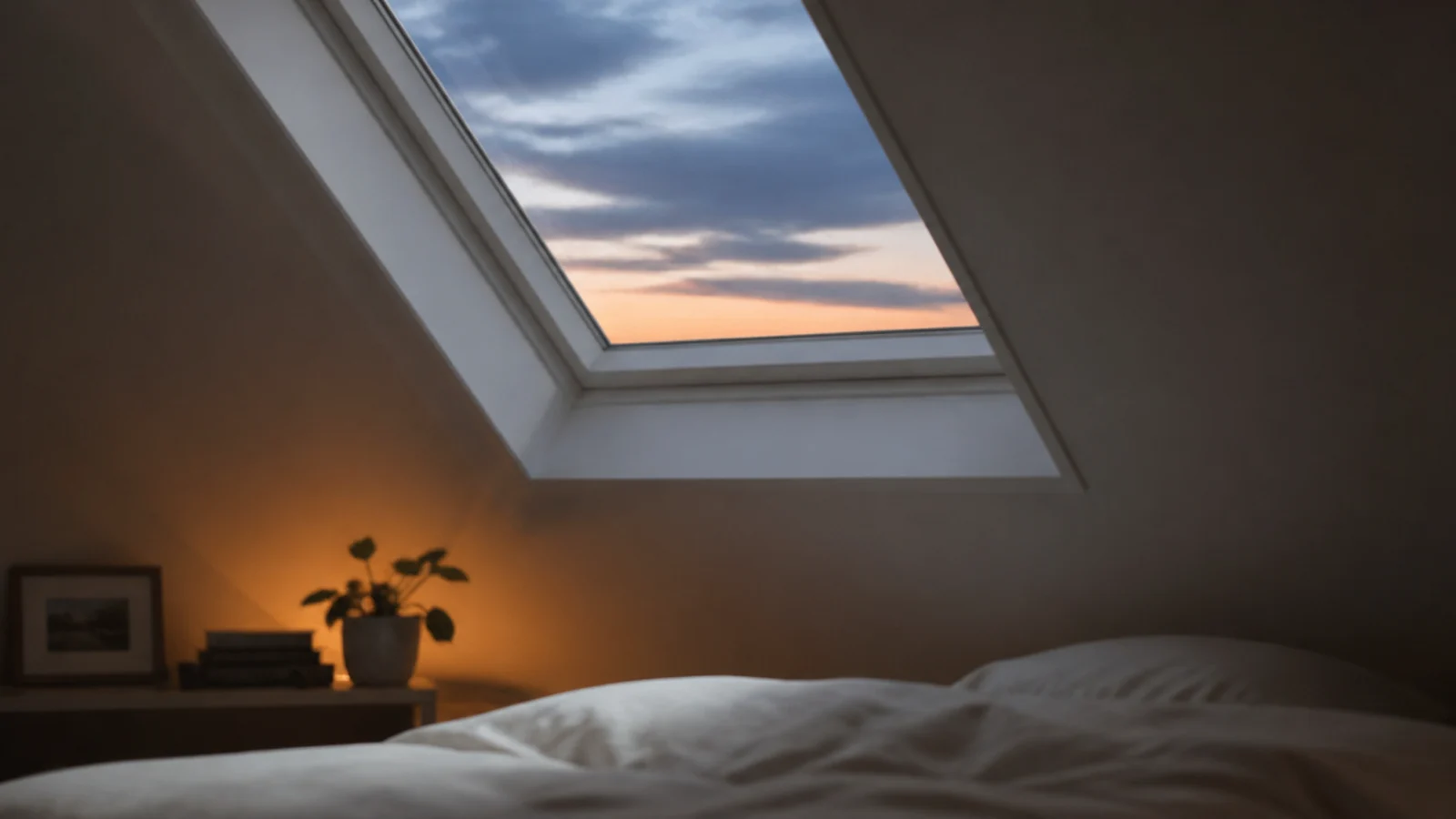
A roof window faces open sky rather than a neighbour's wall, so it delivers more light and a better view than a vertical window of the same size. Around 30 by 46 inches suits most bedrooms. Positioned where you see it lying down, it becomes the room's only artwork.
5. Hang a muslin canopy from the ridge
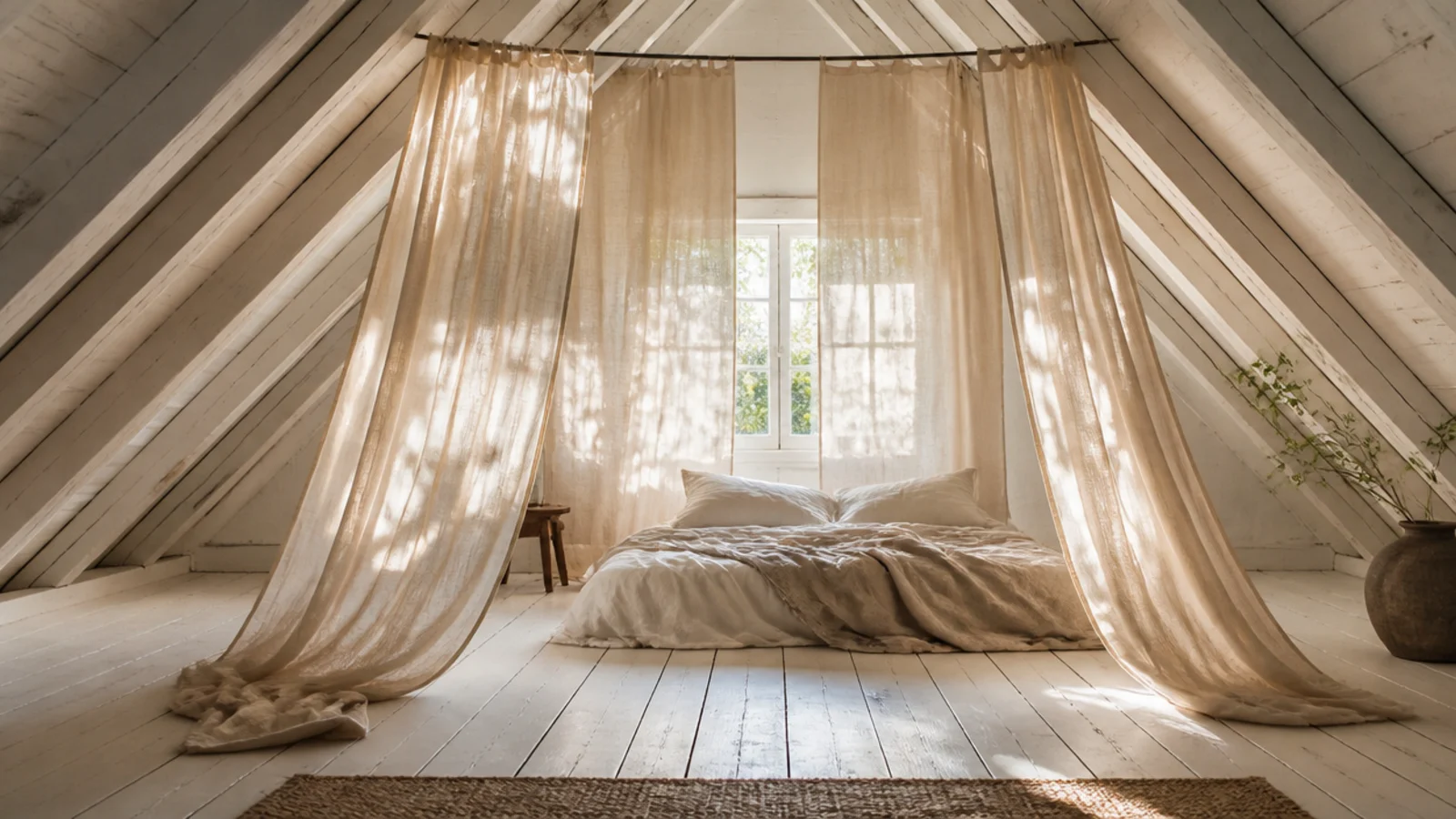
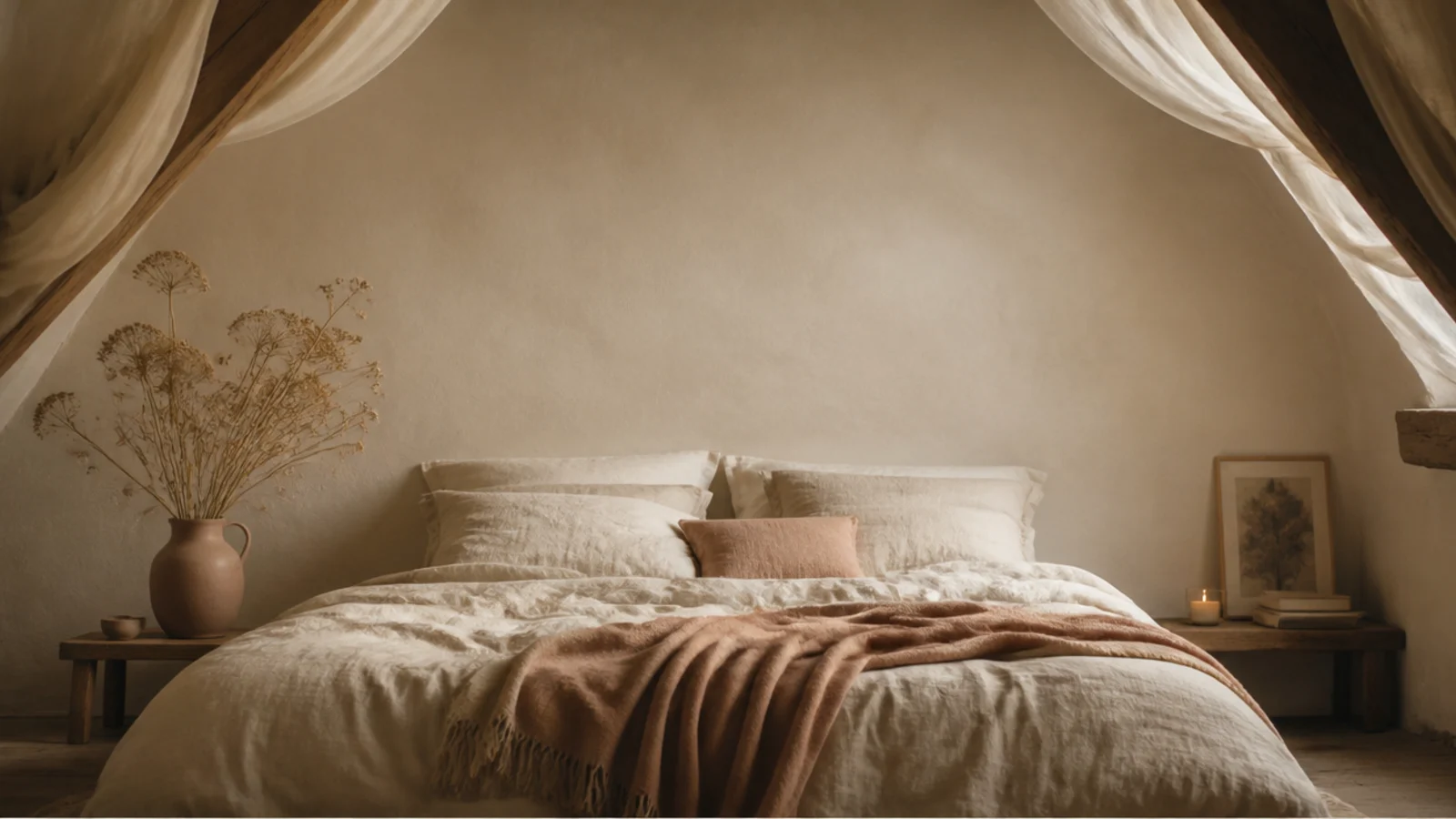
Two panels of unbleached muslin on a slim rail at the ridge, falling loosely either side of the bed. It softens the angle without hiding it, costs $30 to $60 in fabric, and moves in the draught from an open rooflight — which is most of the charm.
6. Add LED string lights along the rafter line
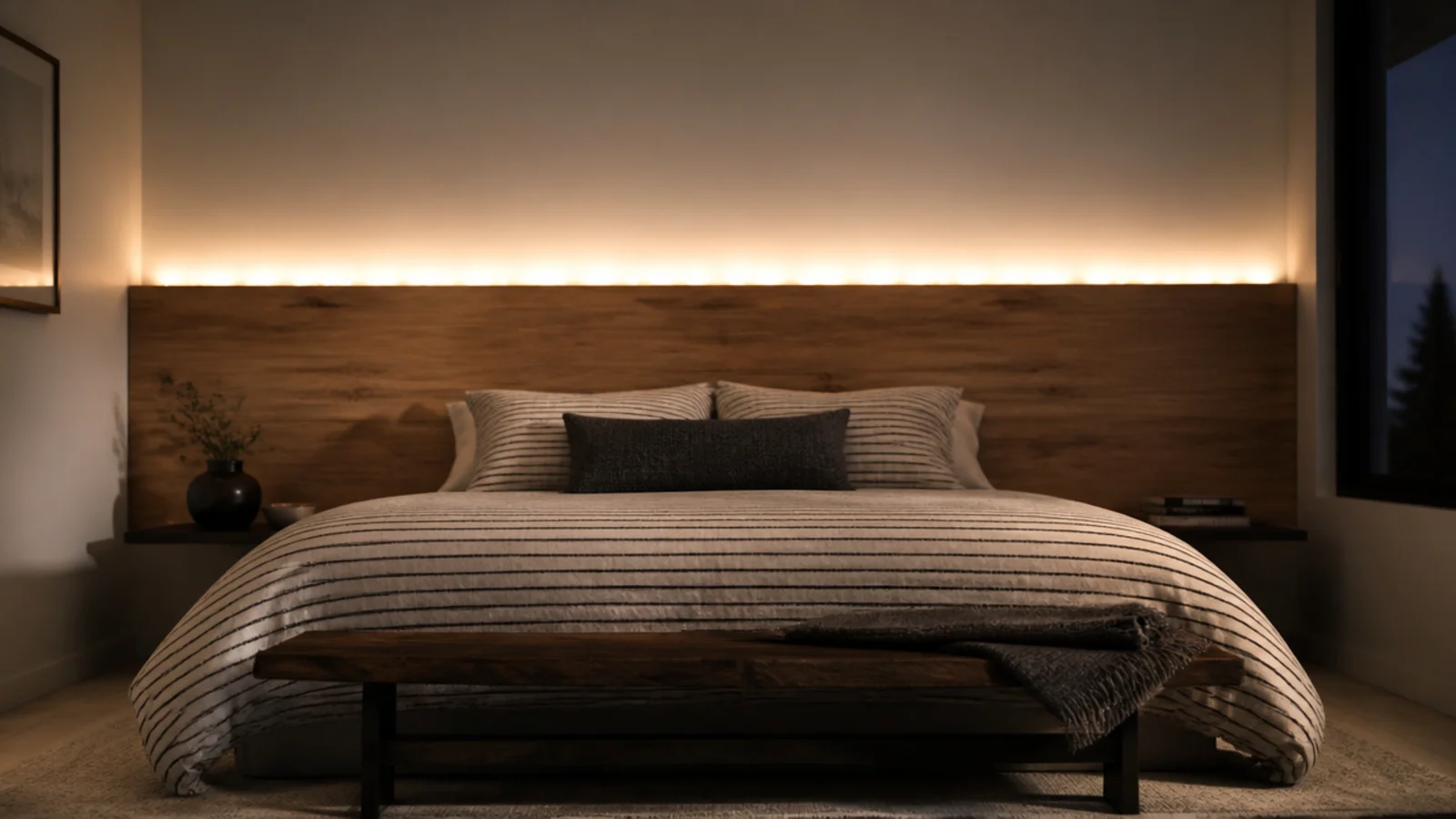
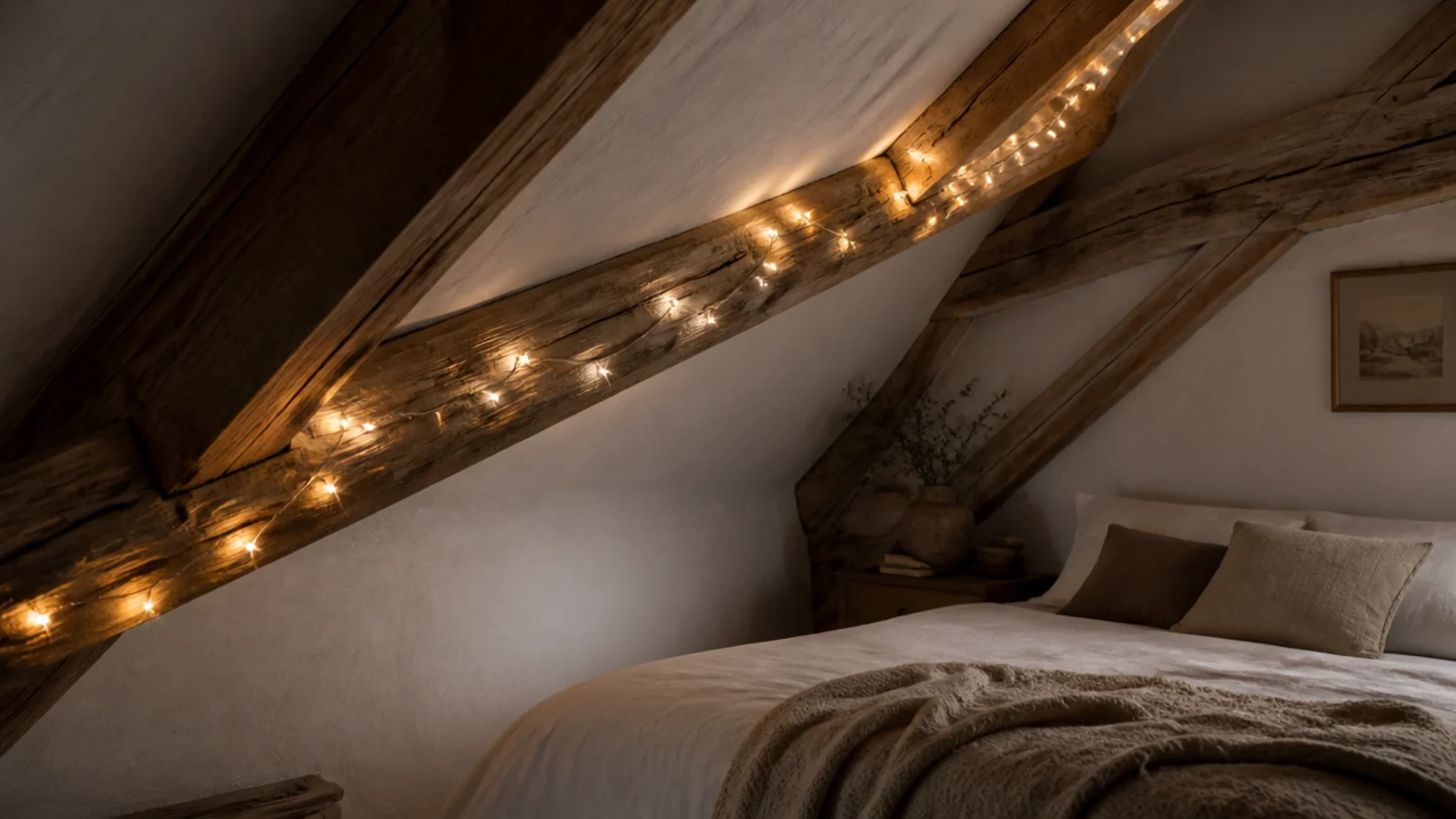
LED strings run cool, which is exactly why they belong in a room where fabric sits close to the ceiling. Thread a warm white set along an exposed rafter and keep the driver and plug block off any soft surface. Never substitute real flames near a canopy or a low slope. The cozy fairy light guide covers placement in more detail.
7. Put a vintage rug on bare boards
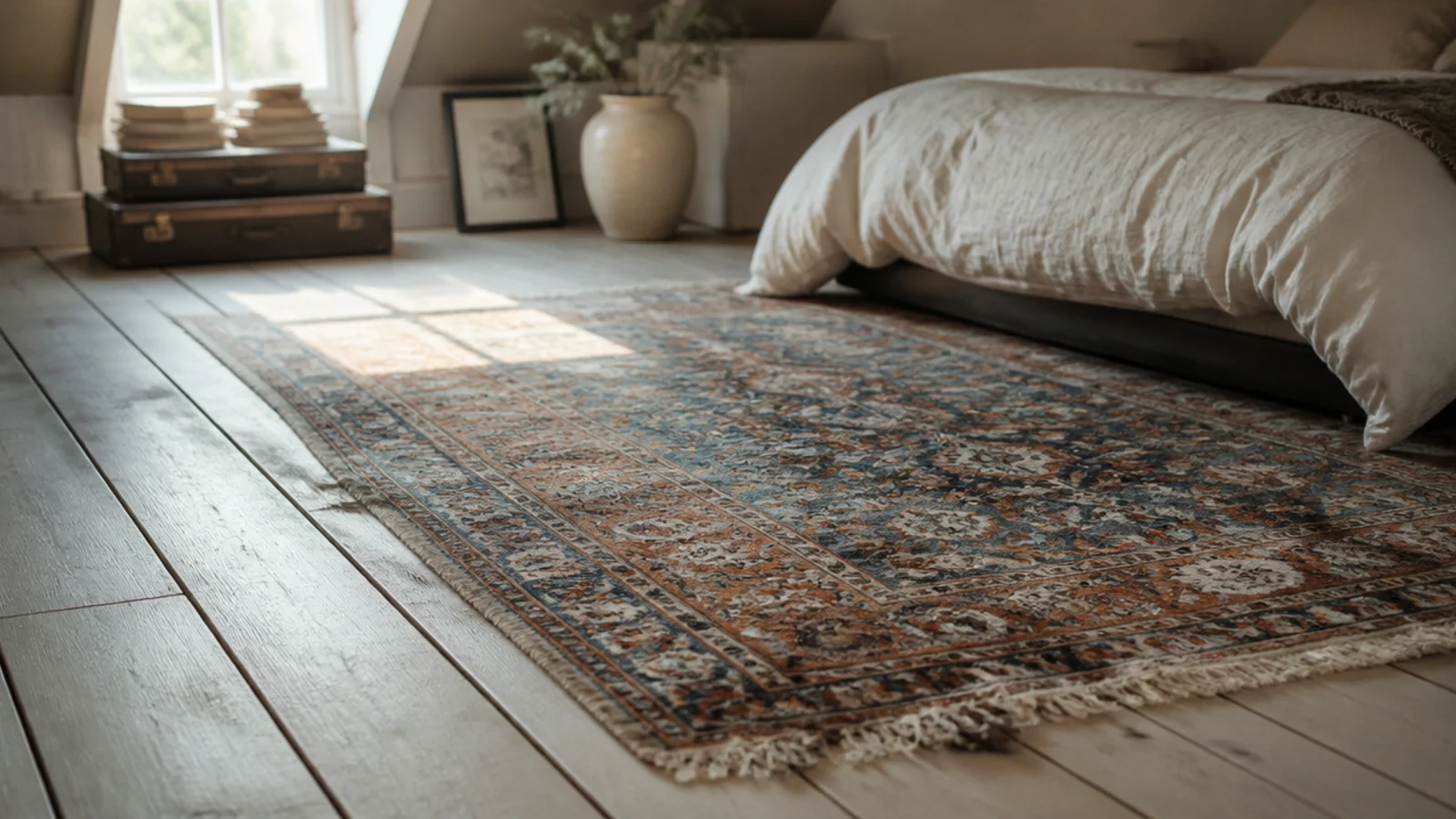
Faded rust and washed-out blue against pale boards gives a nearly colourless room its only colour, and the wear is doing work that a new rug cannot fake. Budget $150 to $400 for a genuine worn piece around 5 by 8 feet.
8. Keep every timber raw or waxed, never glossy
Varnish reflects, and reflection is the enemy in a room where the ceiling is close. Raw oak, waxed ash or a soft oiled finish sits quietly beside chalky plaster. If a piece arrives glossy, a light sand and a coat of hard wax oil fixes it for about $25.
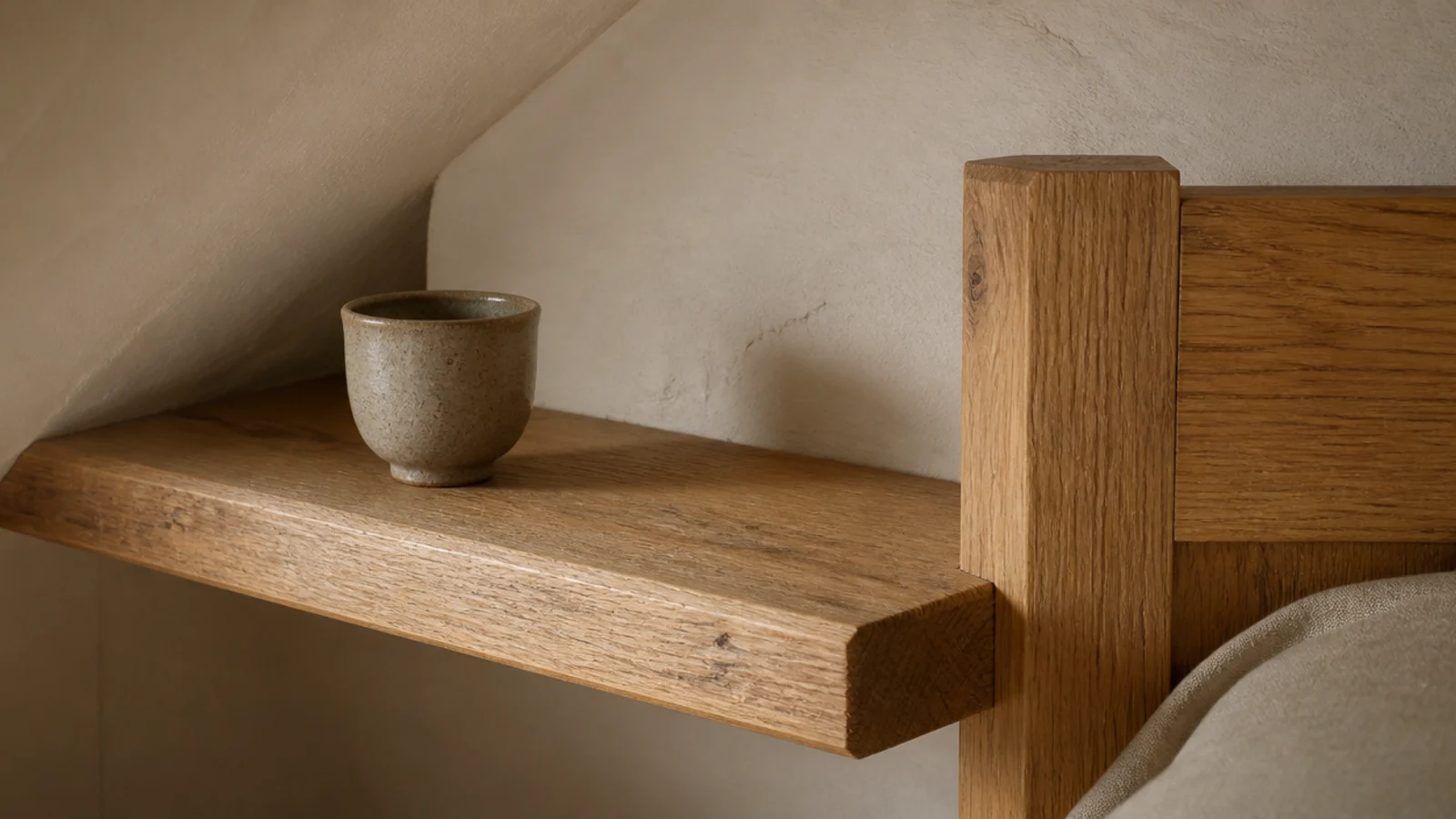
9. Group dried stems rather than fresh flowers
Dried grasses hold for a season, need nothing, and suit the dusty tones of a loft better than anything fresh. One heavy jug of tall stems on the knee wall shelf does more than three small vases. Keep them away from a rooflight that opens, or you will be collecting seed heads off the bed.
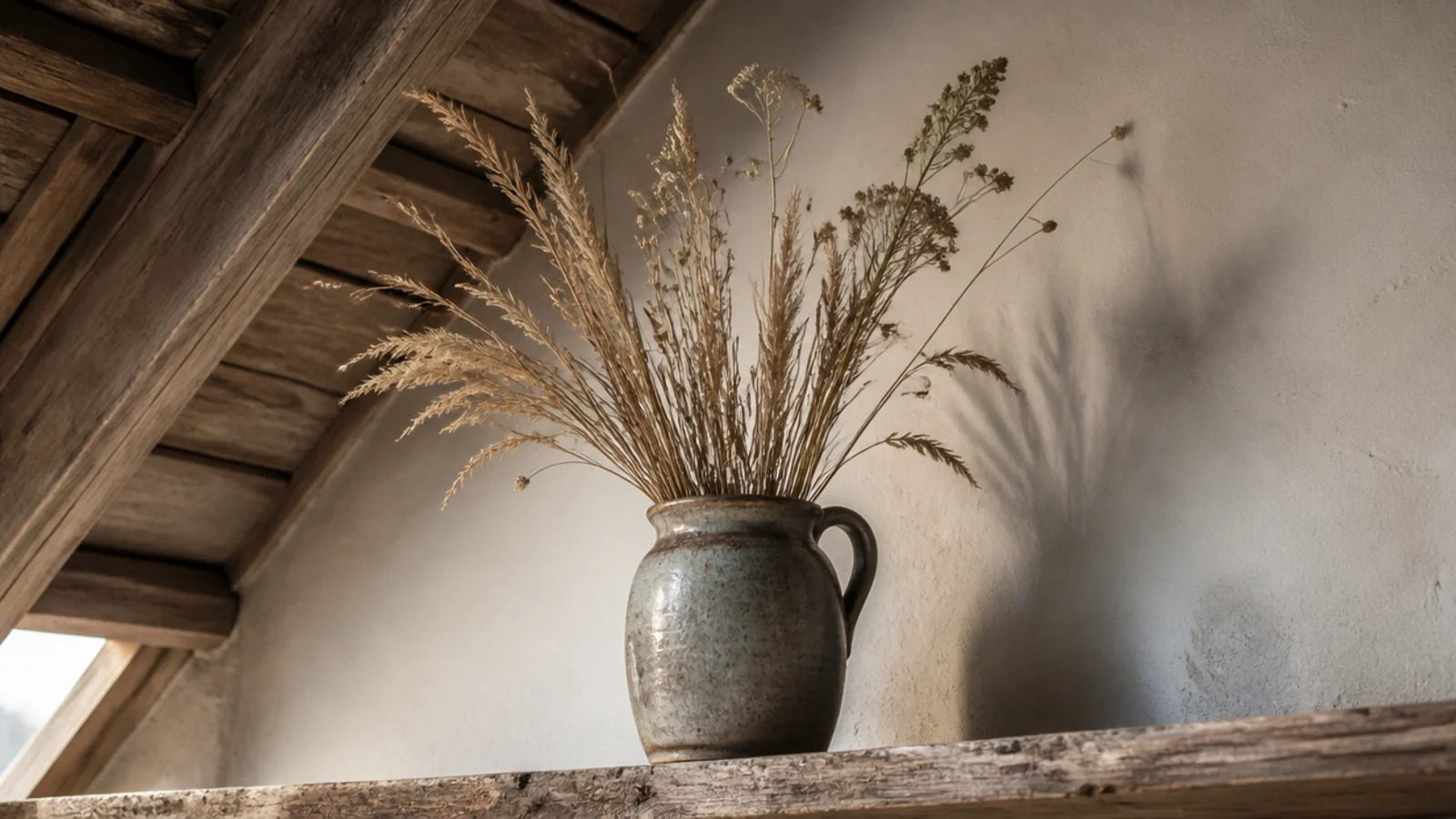
10. Lean a tall mirror against the gable
The gable is the only wall with full height, so it is the only place a big mirror works. Leaning reads softer than hanging, but strap or bracket anything over 40 inches into the wall — a leaning mirror in a bedroom needs a fixing rather than good intentions.
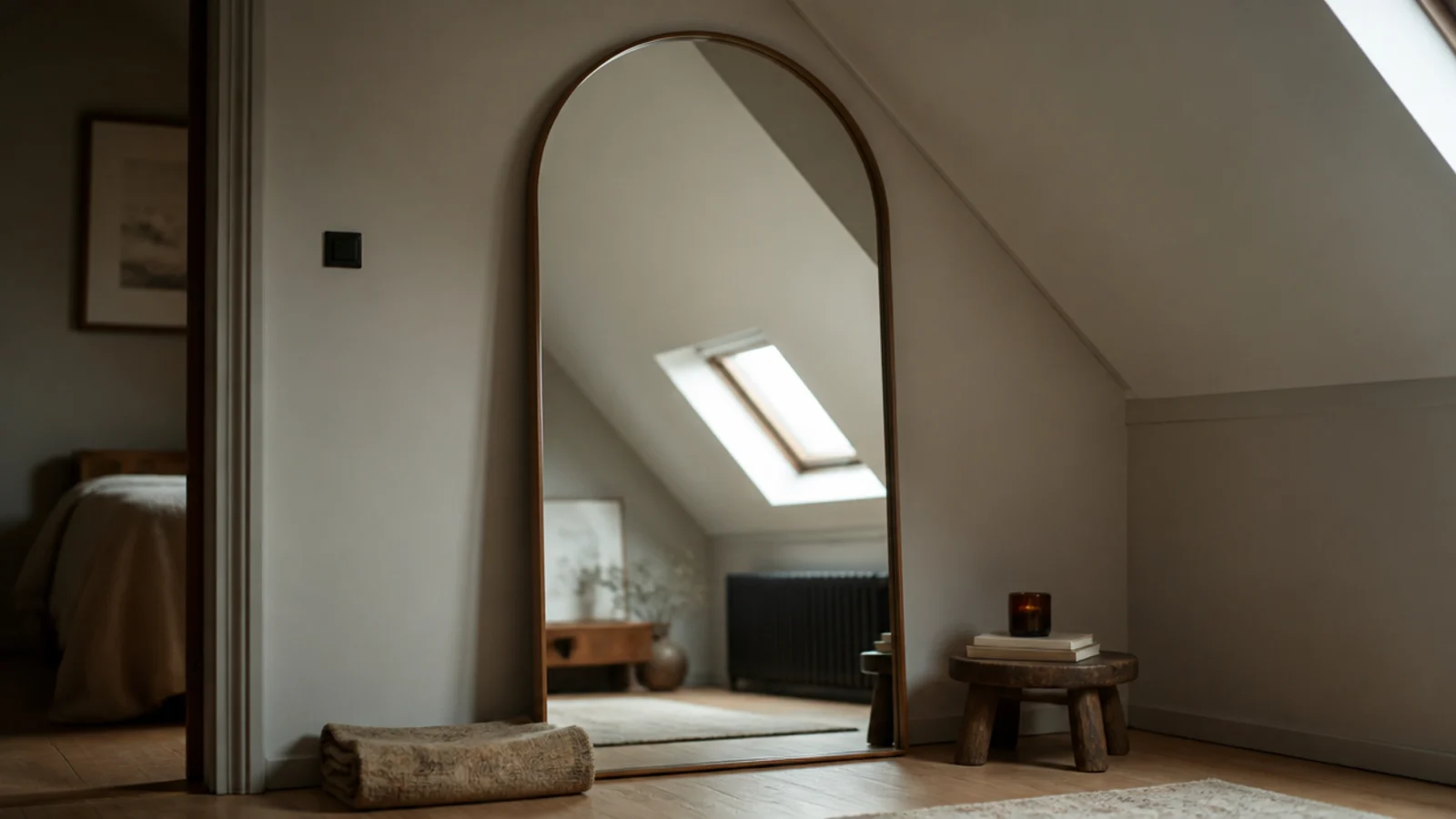
11. Use LED candles near anything soft
Candlelight is half of what makes a loft feel like a retreat, and a low sloped ceiling with linen close by is exactly where an open flame does not belong. Good flameless pillars flicker convincingly at $8 to $20 each. For the styling itself, aesthetic candle decor has the grouping rules.
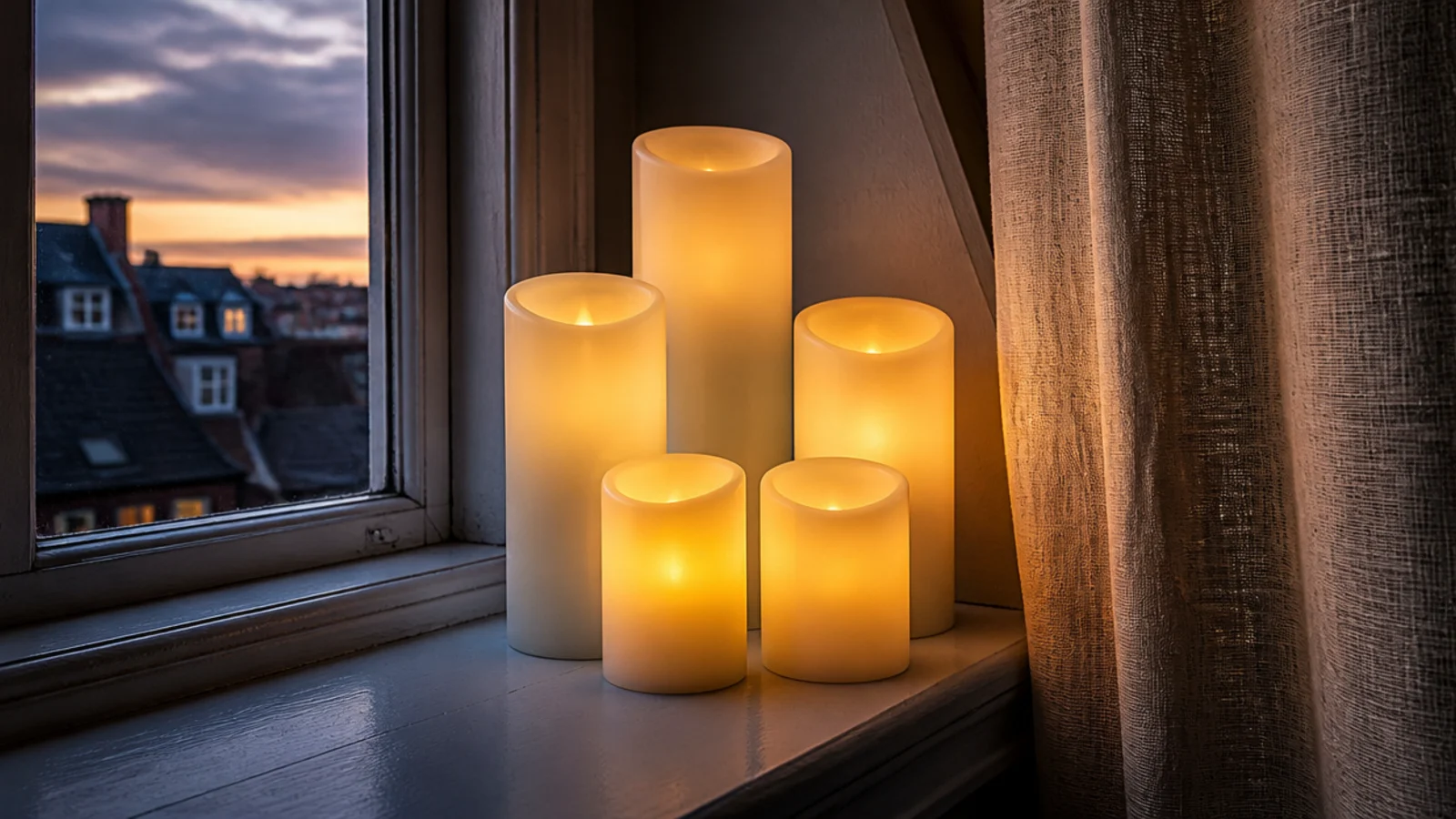
12. Build a low reading corner in the eaves
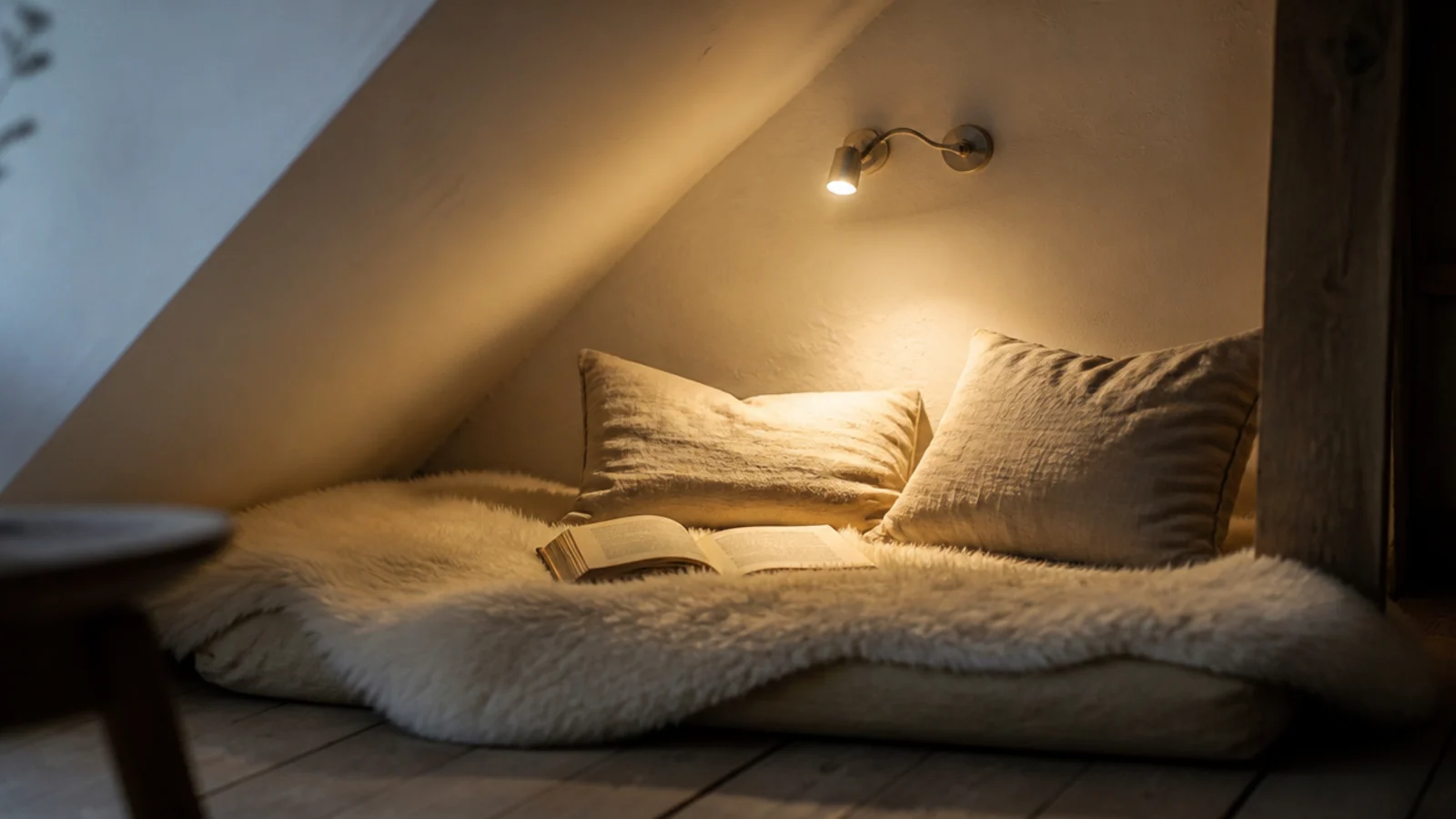
You need about 40 inches of height above a seat to sit comfortably, which the eaves almost always provide. A cushion, a sheepskin and a clip light turn the least usable part of the plan into the part everyone photographs.
13. Repeat one metal and stop there
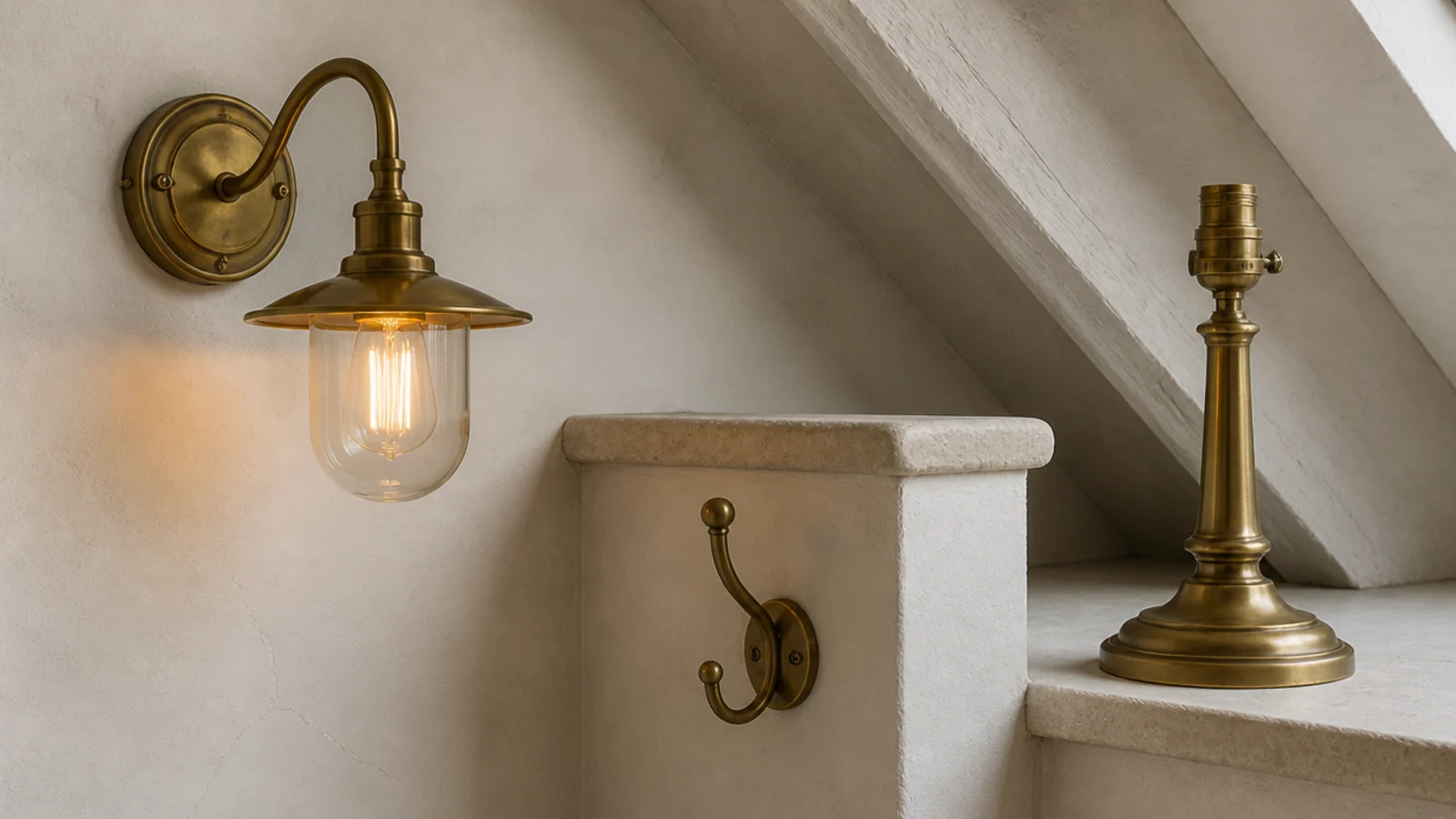
Aged brass on the wall light, the hooks and the lamp base. Choosing one finish and repeating it three times reads as a considered scheme; three finishes read as whatever was in stock. It is the cheapest coherence you can buy.
14. Choose a linen curtain over a blind on the gable
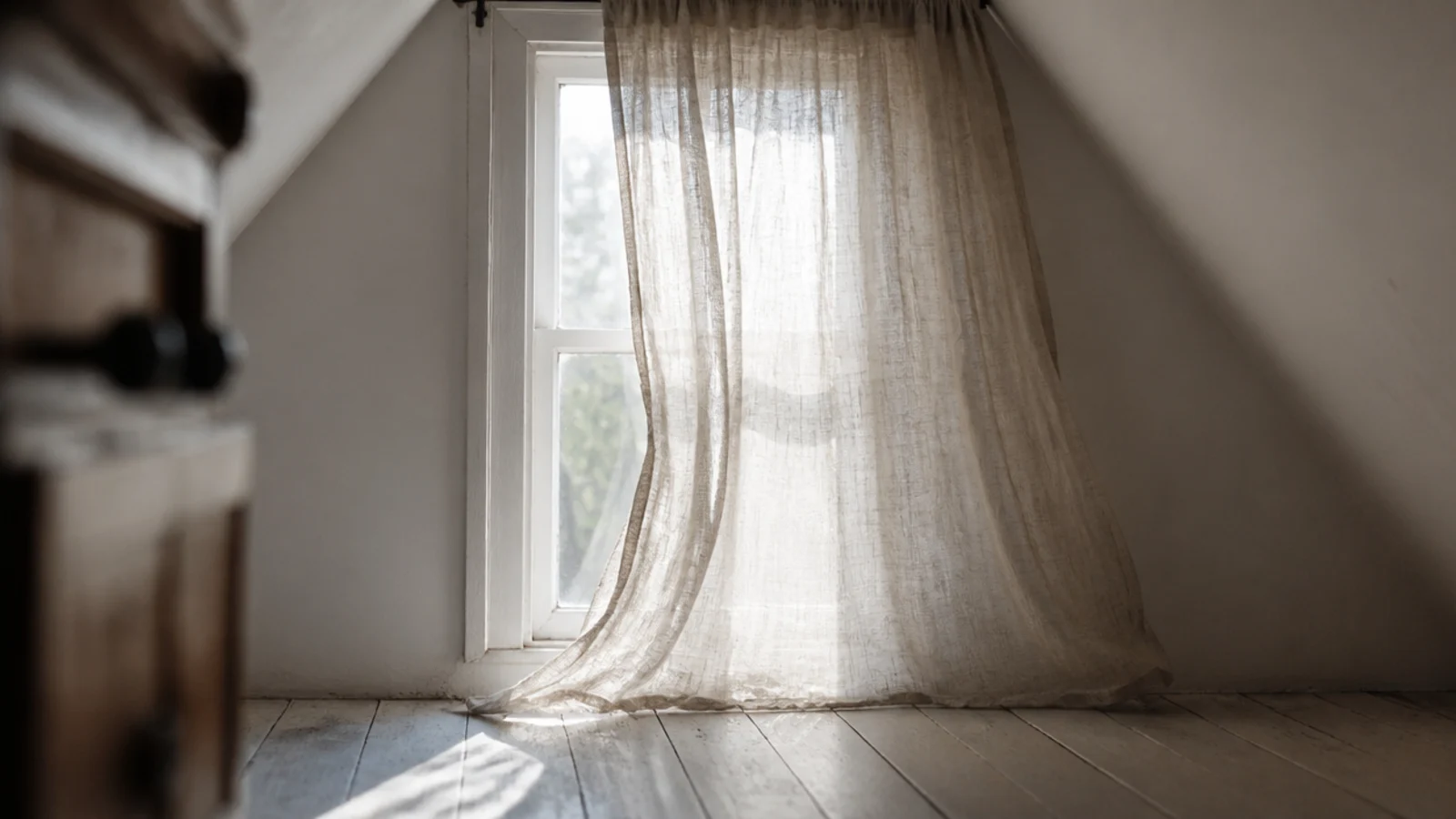
An unlined linen curtain turns hard morning light into something diffuse and moves when the window is open. Hang the track at ceiling level rather than above the frame so the drop is full height. Blinds are for the rooflight, where blackout actually matters.
15. Stack books on the knee wall capping shelf
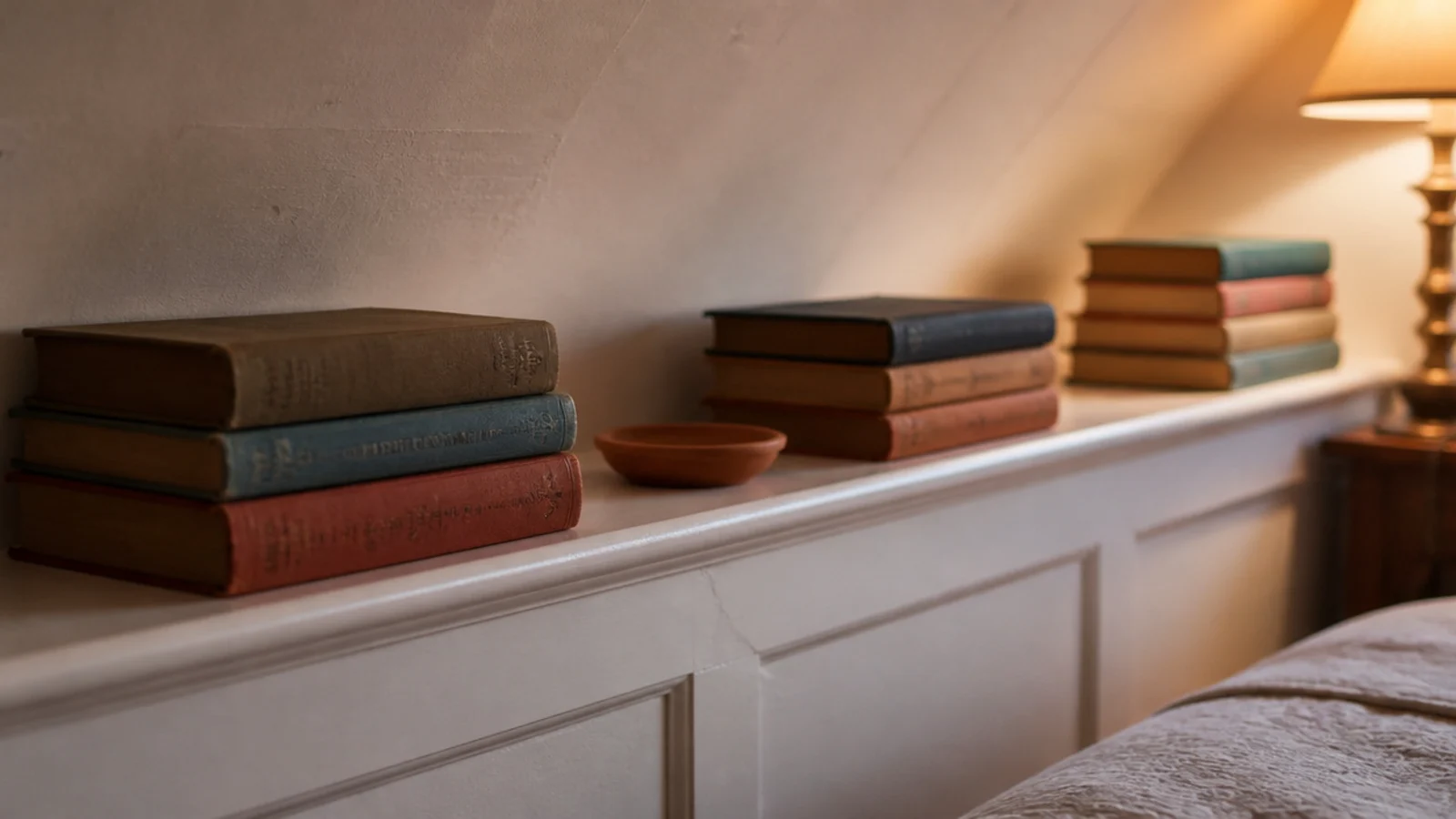
A 6-inch capping shelf along the top of a knee wall is a display surface at a height nothing else in the room can occupy. Low horizontal stacks with the spines showing, two or three groups, generous gaps between. Books are the only styling most lofts need.
16. Let one wall stay completely empty
In a room full of angles, an untouched plane of plaster is a relief. Pick the wall you see from the bed and leave it bare. It is free, it takes discipline rather than money, and it does more for the atmosphere than anything you could hang there.
17. Add a sheepskin where the floor is coldest
Attic floors sit above an unheated void in many houses and stay cold underfoot even with insulation below. One sheepskin at the side of the bed where your feet land costs $40 to $90 and solves a real problem while looking like a styling choice.
18. Choose a low bed frame in pale timber
A frame at 10 to 14 inches to the mattress top gives you a foot of headroom back and keeps the horizontal line low, which makes the slope read as generous. Pale ash or oak against chalk plaster is the combination doing most of the work in the images you have saved.
19. Wash the slope with light from below
An uplighter at the base of the pitch throws a soft gradient up the plaster and makes the surface look handmade. Around 600 lumens aimed at the ceiling is enough. It is the single most effective evening lighting trick in a loft, and a floor uplighter costs $40 to $90.
20. Keep the palette to chalk, oat and clay
Chalk on the walls, oat in the linen, clay in the pottery and one cushion. Three tones, no fourth. The discipline is what makes a room with almost no colour look intentional rather than unfinished.

21. Hang one large piece, not a gallery wall
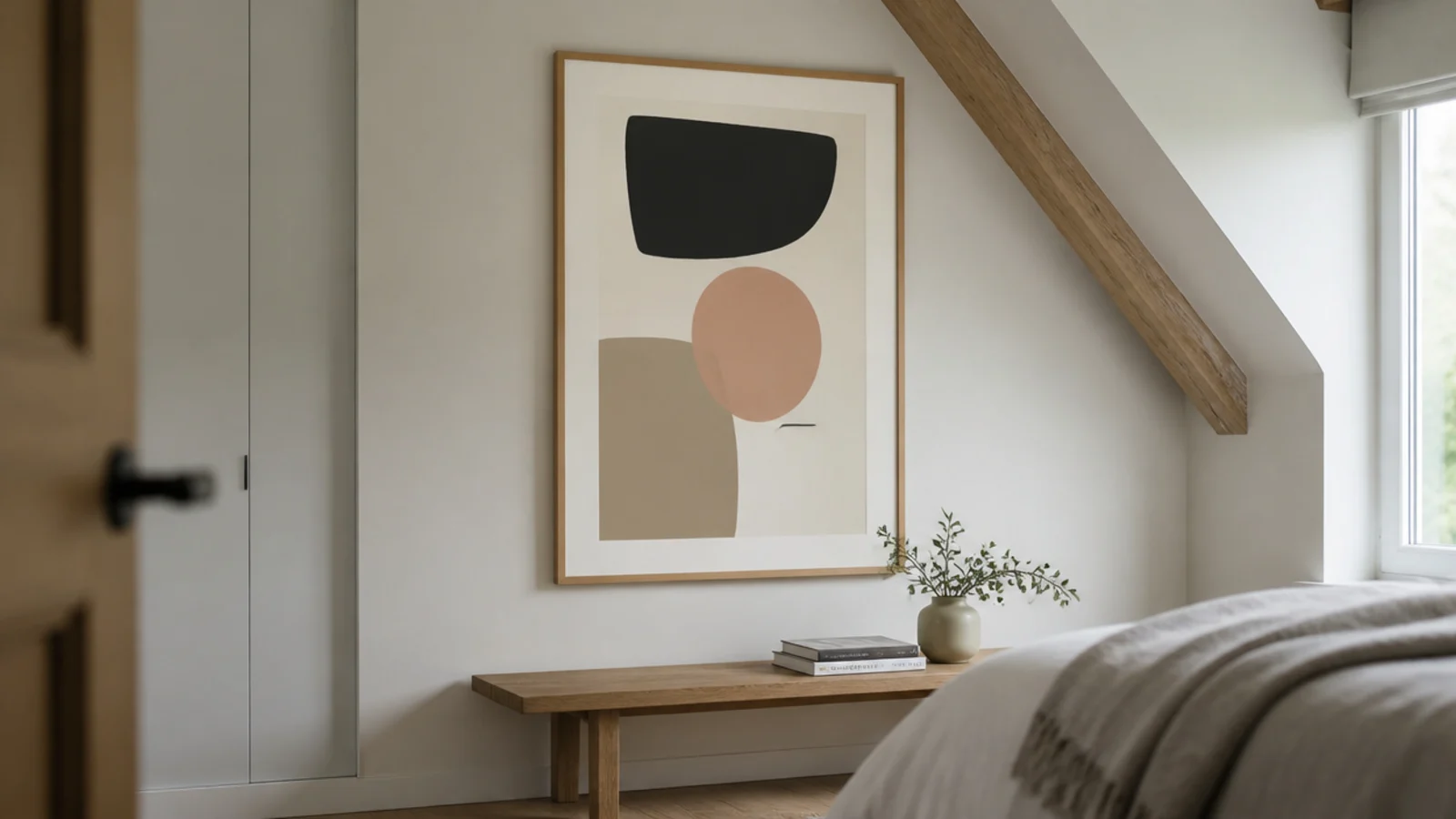
Small frames scattered across a short vertical wall look like clutter under a slope. One large piece, hung with its centre around 48 inches, holds the whole wall. Under an angled ceiling, art belongs on the vertical face only.
22. Fit a blackout blind and hide the housing
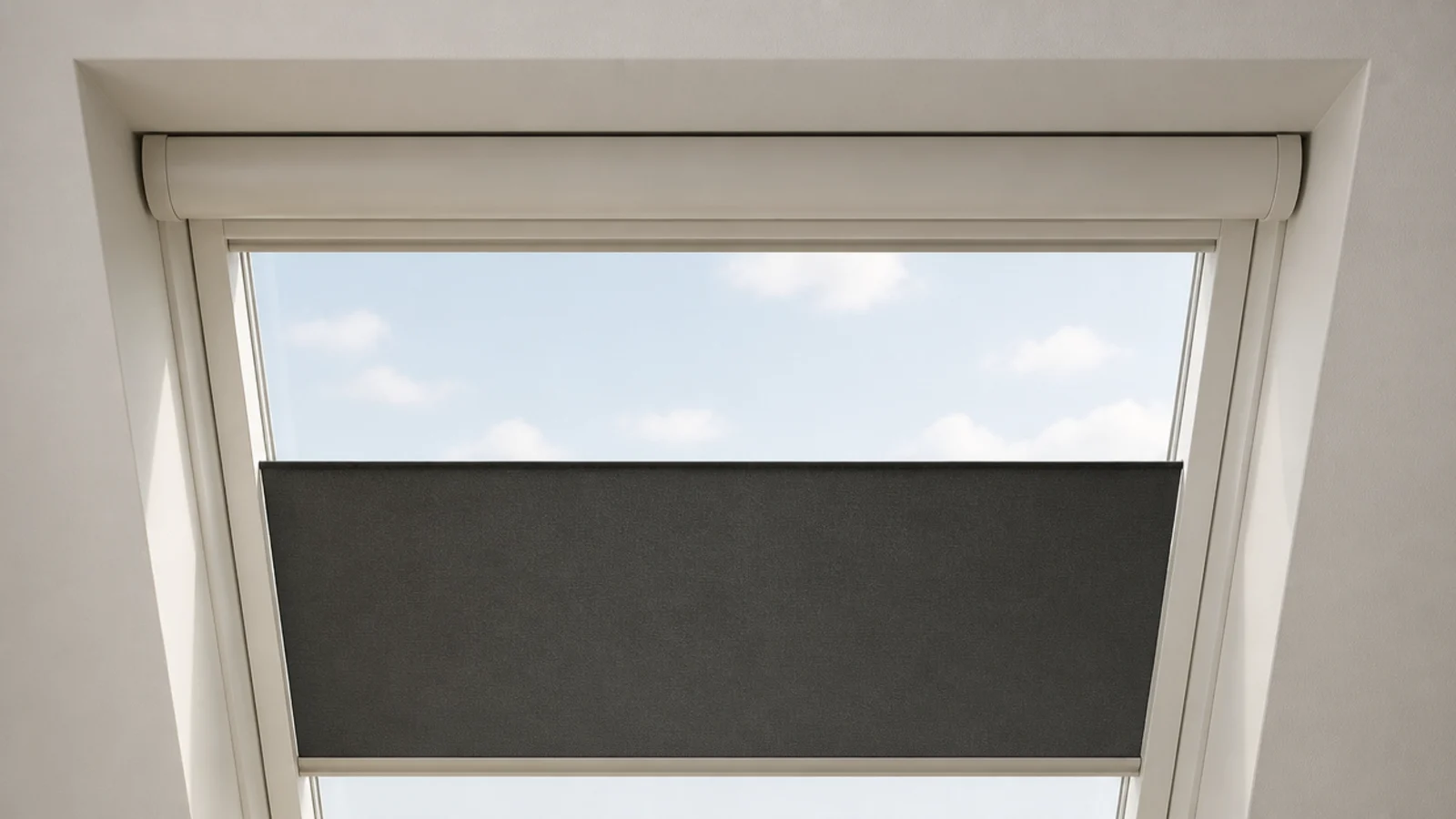
A rooflight is bright hours before a vertical window is, and in June that means four in the morning. A blind that runs in the frame channels with the cassette recessed into the head costs $60 to $150 and looks like part of the window rather than an addition.
23. Leave the ridge strip clear of everything
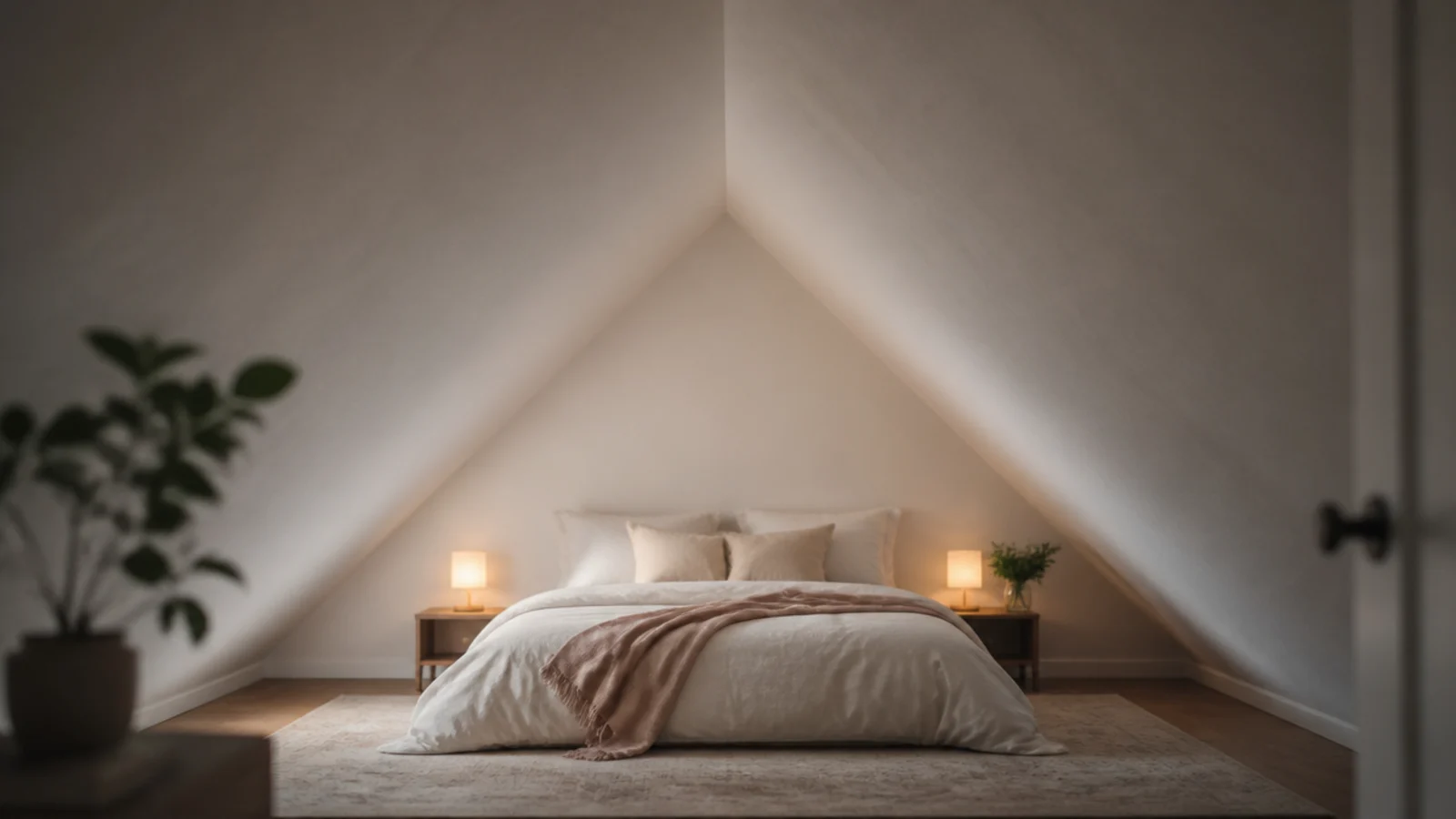
The two feet of slope nearest the ridge is what tells anyone walking in that the ceiling is high. Fix nothing there — no hooks, no lights, no hanging plants. An unbroken ridge line is worth more visually than whatever you were going to put on it.
24. Keep the escape window styled but never blocked
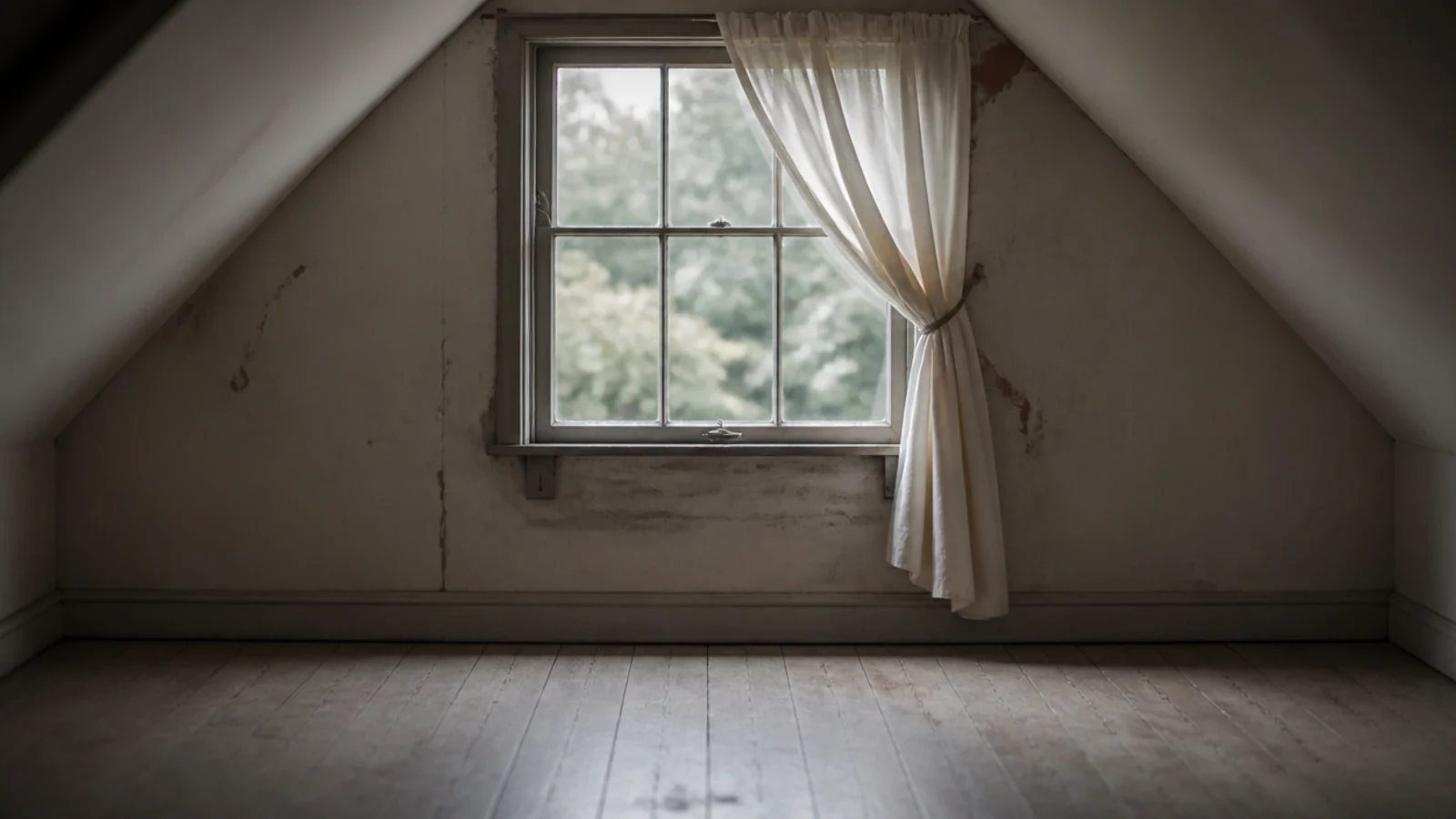
Dress it with a single light curtain that ties fully back, and keep the floor in front of it clear of benches, baskets and laundry. The escape opening is a regulated minimum, and it stays available whatever the room looks like.
25. Photograph it at dusk and adjust from there
Turn the lamps on while there is still blue in the rooflight and take one picture. Dusk is the moment a loft looks its best and the moment any styling mistake shows most clearly. Remove whatever looks worst in the frame and the room is finished.
If the room needs the practical layer first, the main attic bedroom guide covers bed placement, knee walls and lighting positions with the measurements attached, and the small attic bedroom layouts handle tight footprints before styling goes anywhere near them.
Mistakes to Skip
- Adding a fourth colour once the room is nearly done. It always feels like the piece that was missing and always makes the scheme look accidental.
- Using real candles near a canopy, a drape or a low sloped ceiling. LED pillars give the same glow with none of the risk in a room where fabric sits close overhead.
- Buying bedding in the mattress size. The generous overhang is the whole look, and a duvet that fits exactly reads as a hotel room rather than a retreat.
- Fixing hooks, plants or lights along the ridge because it is empty. That empty strip is the feature, and filling it lowers the ceiling visually by a foot.
- Styling in front of the escape window because it is the prettiest wall. Egress openings and headroom minimums are regulated and must never be blocked, however good it looks.
Frequently asked questions
What makes an attic bedroom look aesthetic rather than cluttered?
Restraint in the palette and generosity in the texture. Three tones across the whole room, then linen, wool, timber and plaster doing the work that colour would otherwise do. Lofts photograph well because the angles already provide interest, so adding pattern and colour on top is what tips them into busy.
What colour temperature should attic bedroom lighting be?
Warm, at 2700K across every fitting in the room. A sloping ceiling reflects light back at you from close range, so mismatched colour temperatures are far more obvious in a loft than downstairs. Three sources of three hundred to four hundred lumens each beats one bright central fitting every time.
Are fairy lights safe in an attic bedroom?
LED string lights run cool and are fine near fabric, which is why they suit lofts where bedding sits close to the slope. Keep any driver or plug block off soft furnishings, use indoor-rated sets only, and never use real candles near a canopy, a drape or a low sloped ceiling.
How do you get the soft plaster look on an attic slope?
A chalky matte emulsion in a warm off-white, applied over a properly filled and sanded surface, gets you most of the way for around sixty to a hundred and twenty dollars a room. Limewash gives more depth and movement but needs a mineral primer on plasterboard to hold properly.
Does an aesthetic attic bedroom still need to meet safety rules?
Always. The emergency escape opening in a sleeping room and the habitable ceiling height are both regulated minimums enforced by your local building department, and no drape, storage bench or canopy may reduce either. Styling sits on top of those numbers rather than negotiating with them.
Want more like this? Browse all 15 attic bedroom ideas guides — they all use the same measurements and budget tiers.
Pin it for later
Save this to your Attic Bedroom Ideas board
Pin it now so it is waiting for you when the tape measure comes out — and so the next person hunting for this idea can find it too.
Save this pinKeep going
More ideas worth saving while you have the tape measure out.