Attic Bedroom Ideas · Review
15 Attic Bedroom Paint Ideas Compared Side By Side

Some links on this page may become affiliate links in future. I only recommend pieces I would put in my own home — see the affiliate disclosure.
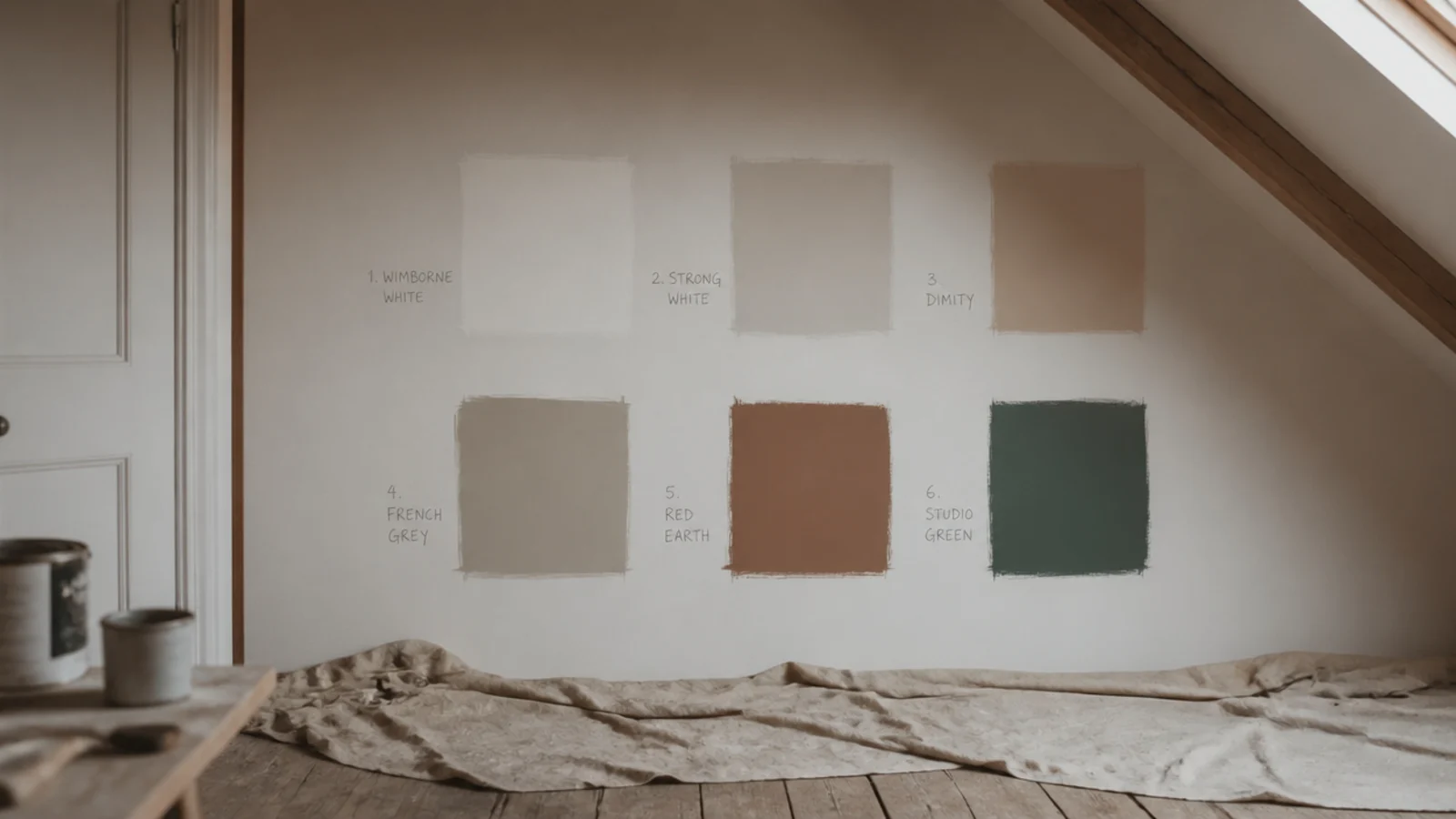
Paint is the cheapest square footage in a loft and the only decoration that touches every surface at once. It is also the decision most often made from a card held against a vertical wall, which is exactly the wrong test. Below are fifteen attic bedroom paint ideas compared on the numbers that decide them — light reflectance, sheen, and how each one behaves on a surface that leans over your head.
In this guide11 sections — tap to openHide
- 1.How I Chose These Attic Bedroom Paint Ideas
- 2.The Full Comparison: 15 Attic Paint Approaches
- 3.Warm off-white at LRV 78 to 84
- 4.Chalky bone white at LRV 84 to 88
- 5.Soft greige at LRV 60 to 68
- 6.Pale clay pink at LRV 65 to 72
- 7.Muted sage at LRV 45 to 55
- 8.Deep forest green at LRV 12 to 18
- 9.Limewash on a flat-skimmed slope
- 10.Colour-drenching the whole loft in one tone
- 11.What to Check Before You Buy
How I Chose These Attic Bedroom Paint Ideas
I judged every option on five things, in this order.
- How it reads on a pitch, not a wall. A sloping surface takes light at a glancing angle and reads roughly two shades darker than the same colour on a vertical wall in the same room. Every colour here was tested as a large square painted on an actual slope, not a sample board.
- Light reflectance value. LRV runs from 0 for black to 100 for pure white and tells you how much light a colour throws back. In a loft it matters more than downstairs because the ceiling sits close to your head and bounces light onto you from short range.
- Behaviour under north light versus south light. A north-facing rooflight delivers cool, even light that pushes greys and brilliant whites toward blue. A south-facing one delivers warm, strong light that makes the same white glare. Orientation changes the answer more than taste does.
- How much old plaster it forgives. Attic plaster follows a century of roof movement and is never flat. Anything above about 5 percent sheen picks out every ripple in bands. All of these are assessed in a dead matte, with a note where a tougher finish is worth the trade.
- Whether it survives being used on everything. The single most effective move in a loft is carrying one colour across wall, slope and flat ceiling with no cut line. A colour that only works as a feature wall is not much use here.
I did not weight brand, trend or how a colour photographs in someone else's loft under someone else's sky. Colours below are described by family and LRV band rather than by product name, because the same tone appears under a dozen different names and the number is what actually predicts the result.
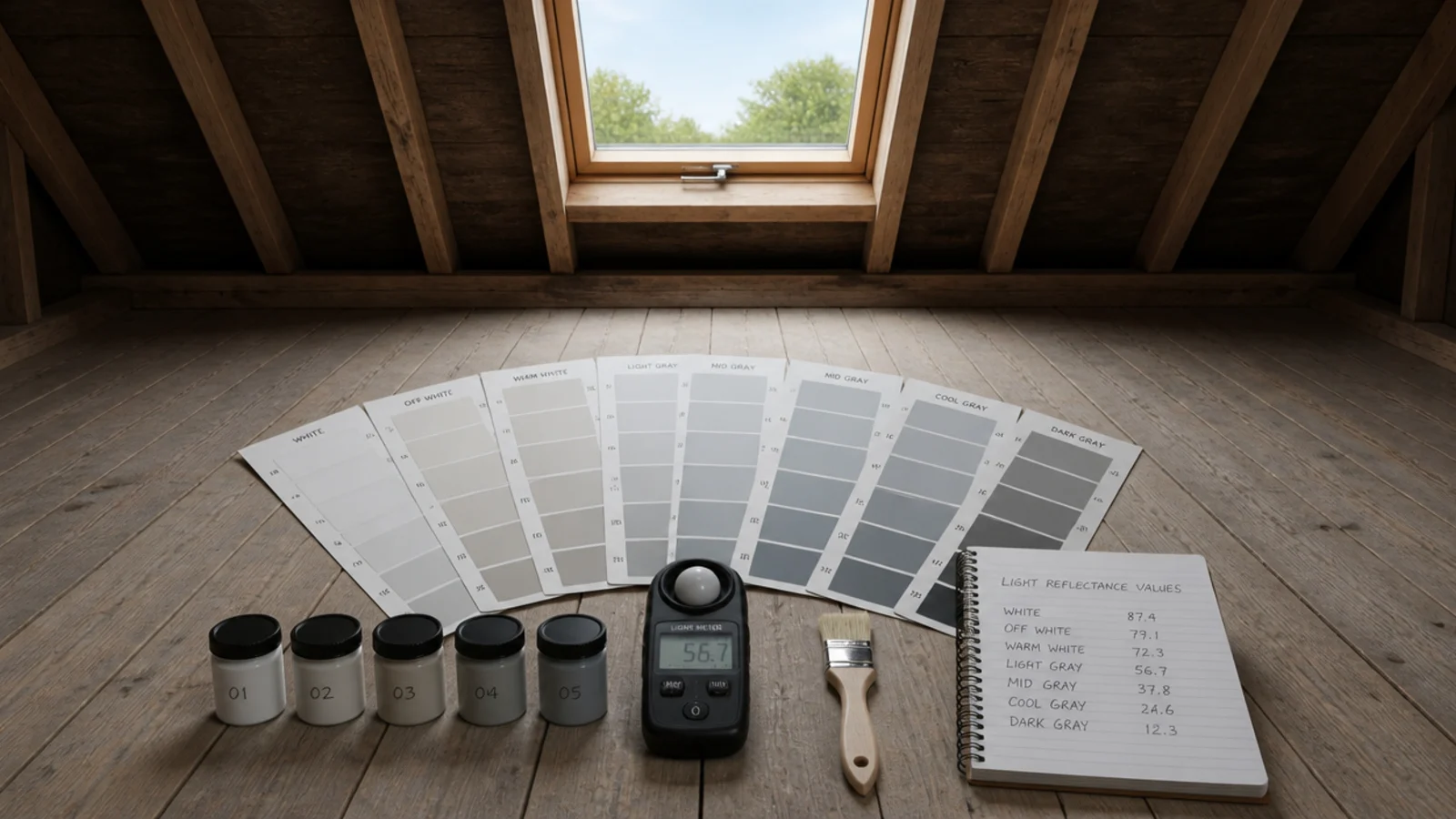
The Full Comparison: 15 Attic Paint Approaches
LRV bands are approximate. Sheen assumes a dead matte at 2 to 5 percent unless noted.
| Approach | LRV band | Best for | Watch out for |
|---|---|---|---|
| Warm off-white | 78–84 | North-facing lofts, most rooms | Can read yellow under warm south light |
| Chalky bone white | 84–88 | Dark lofts with one small window | Needs warm bulbs or it goes clinical |
| Brilliant white | 88–92 | Strong south-facing rooflights only | Turns grey and cold on a north slope |
| Soft greige | 60–68 | Bright lofts that glare | Loses depth in a genuinely dark room |
| Warm grey | 55–62 | South-facing rooms with big glazing | Goes blue fast under north light |
| Pale clay pink | 65–72 | Cold north light needing warmth | Reads pinker on a slope than on a wall |
| Muted sage | 45–55 | Garden-facing lofts with green outside | Needs a warm floor tone to balance it |
| Deep forest green | 12–18 | Cocoon rooms with a decent ridge | Only works applied to every surface |
| Ink blue | 8–14 | Teen rooms with good daylight | Shows dust and brush marks on a slope |
| Charcoal | 8–12 | One knee wall below a pale slope | A whole dark room needs real glazing |
| Soft blush | 70–78 | Children's lofts, north aspect | Dates faster than any neutral here |
| Ochre accent | 40–48 | Inside eaves cupboards and niches | Overwhelming across a full slope |
| Burnt clay | 25–35 | Knee wall base under a pale pitch | Needs a clean junction line to work |
| Limewash finish | Varies | Flat-skimmed slopes wanting texture | Needs mineral primer on plasterboard |
| Single-tone drench | Any | Small lofts with awkward angles | Woodwork must be included or it fails |
Eight of those are the ones I keep specifying.
1. Warm off-white at LRV 78 to 84
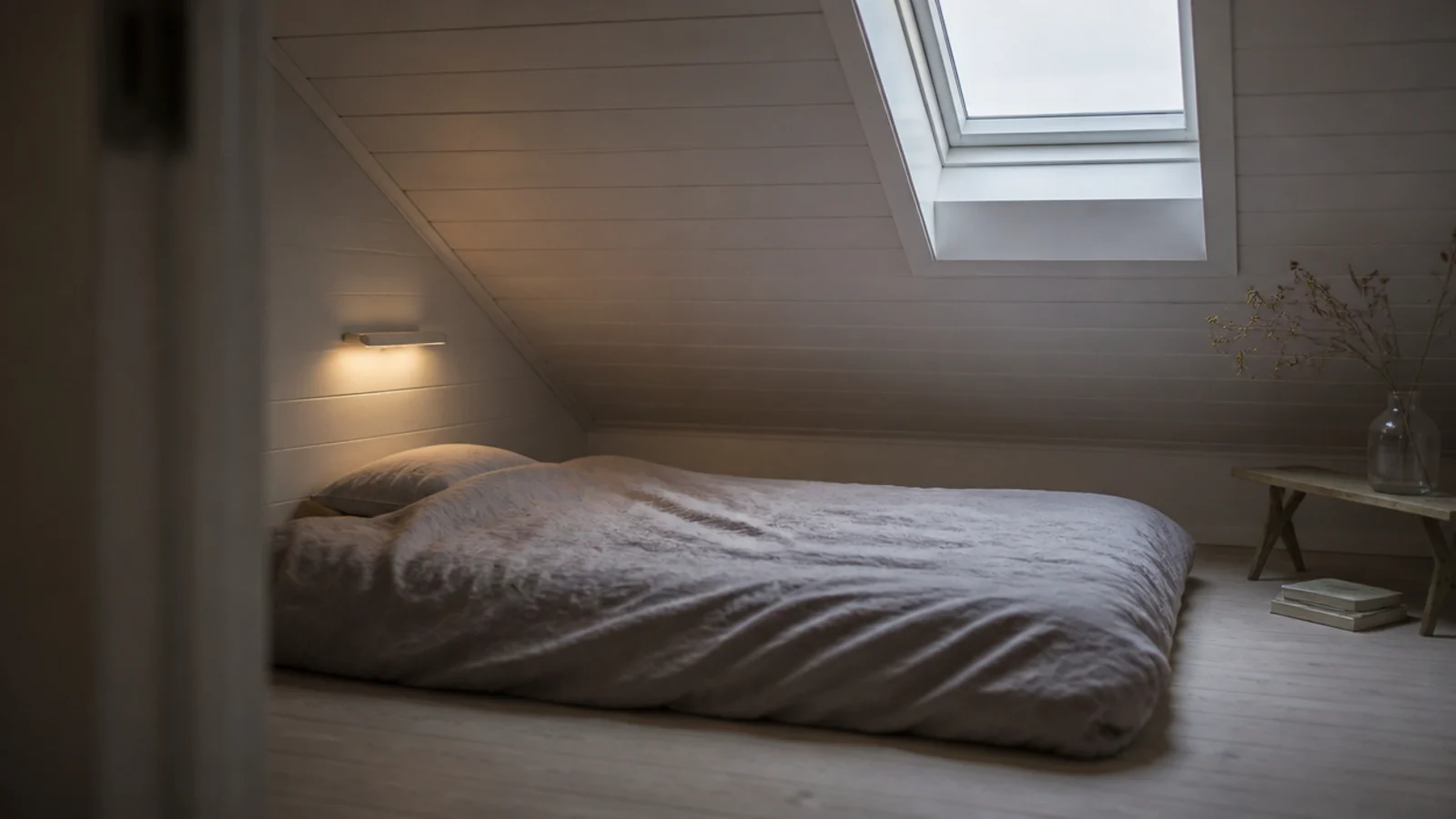
The default answer, and it deserves to be. High enough reflectance to lift a dim room, warm enough not to go grey when the only daylight comes from a north-facing rooflight.
It works because it brightens without announcing itself, and because at that reflectance band the gradient of light up a slope reads as soft rather than as a hard change of tone. Use it on wall, slope and ceiling in the same dead matte. Expect $60 to $120 in materials for a whole loft including primer and filler.
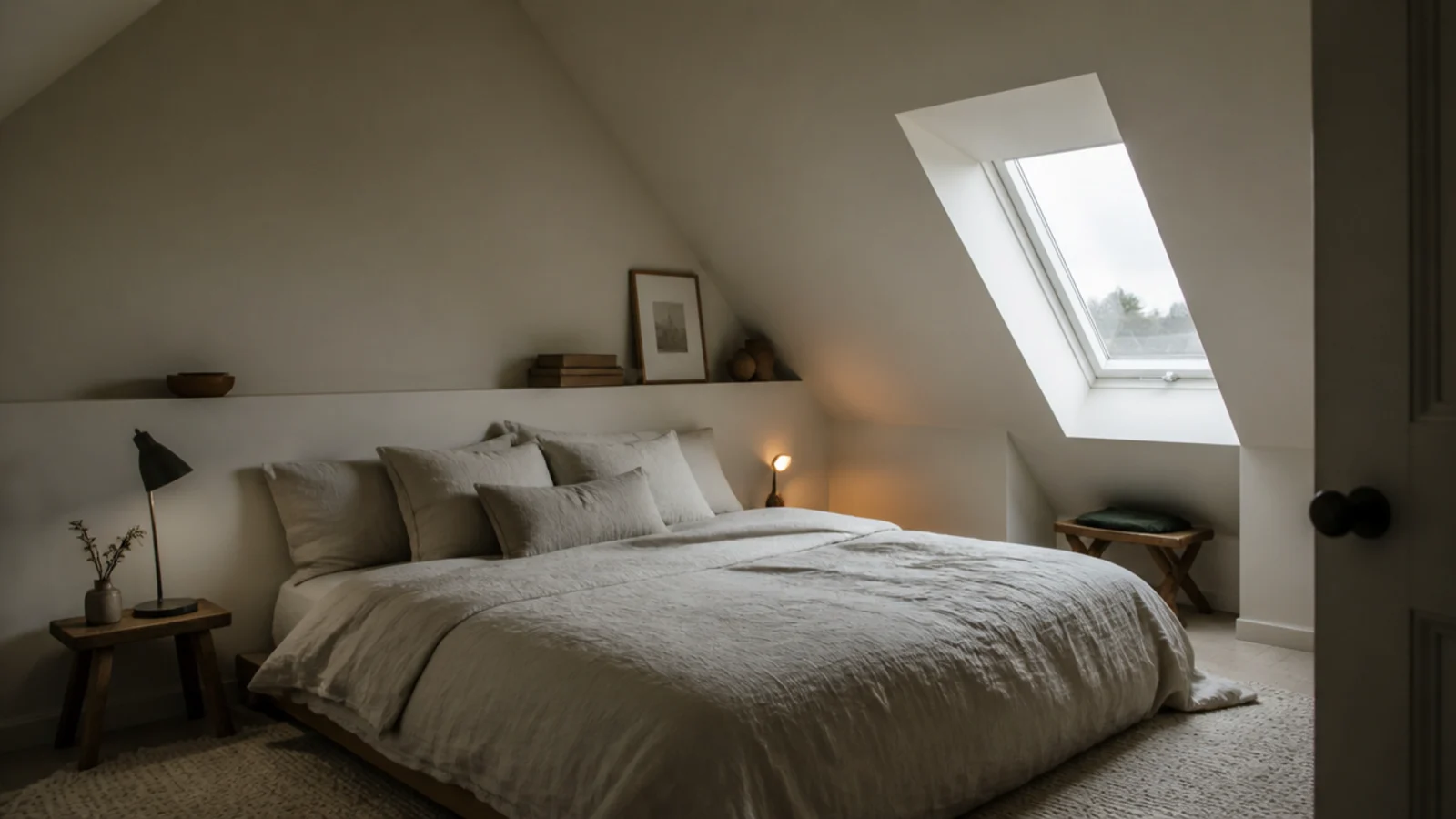
2. Chalky bone white at LRV 84 to 88
For a loft with one small window and a long dark slope, the extra few points of reflectance are worth having. Bone white keeps a trace of warmth that stops the room going hospital-white.
The trade is that at this brightness the colour does very little on its own, so the room has to earn its character from texture and light. Pair it with warm 2700K bulbs and one dark object at floor level, or it reads as unfinished rather than serene.
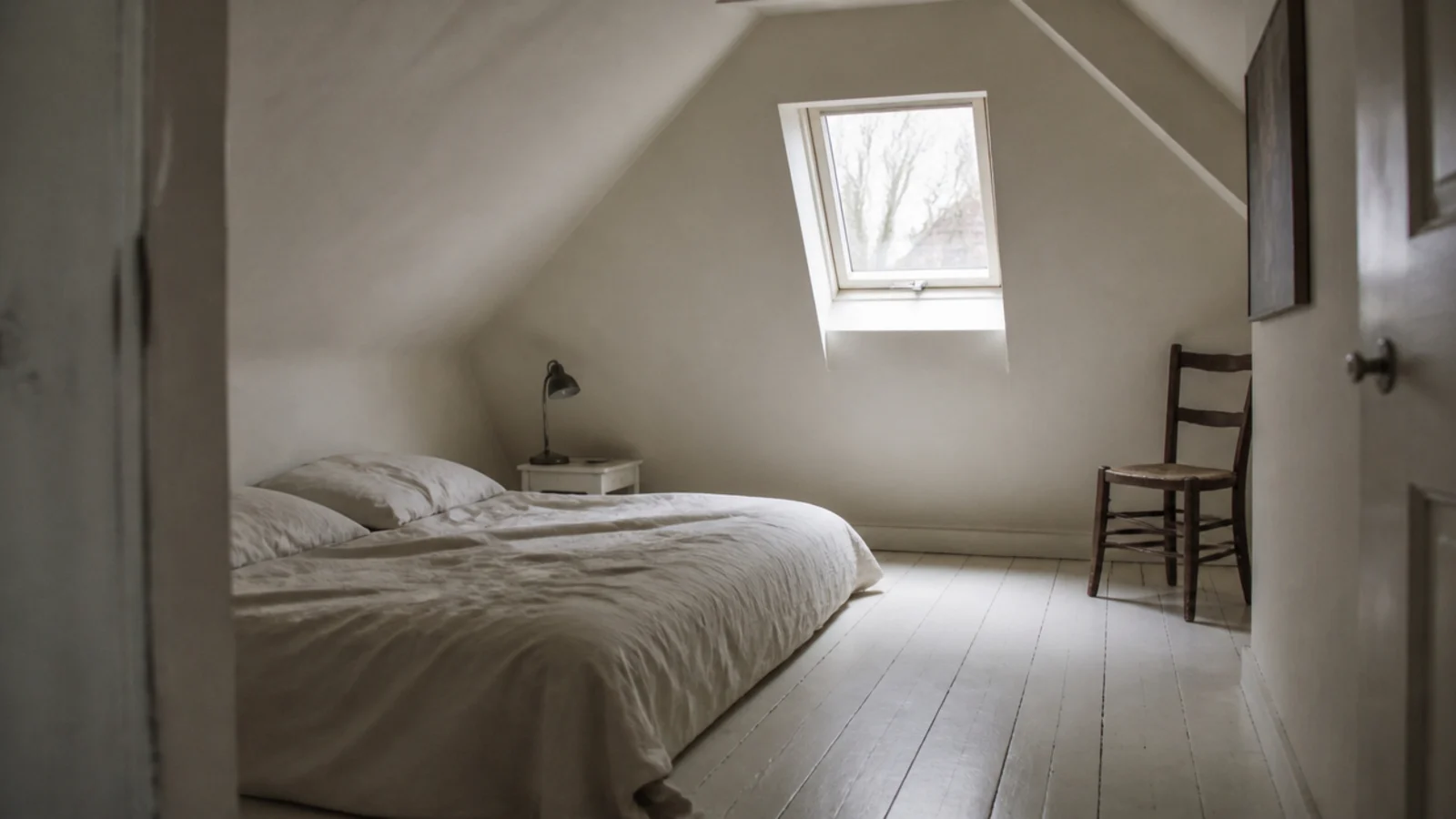
3. Soft greige at LRV 60 to 68
The right answer for a loft that is actually bright — a south-facing rooflight, or two windows on opposite slopes. In those rooms a white slope glares and the room feels hard.
Greige at this band takes the edge off without darkening anything meaningfully. It also flatters old timber, which most lofts have somewhere. On a north aspect it can go flat and slightly dirty, so this is a bright-room colour rather than a universal one.
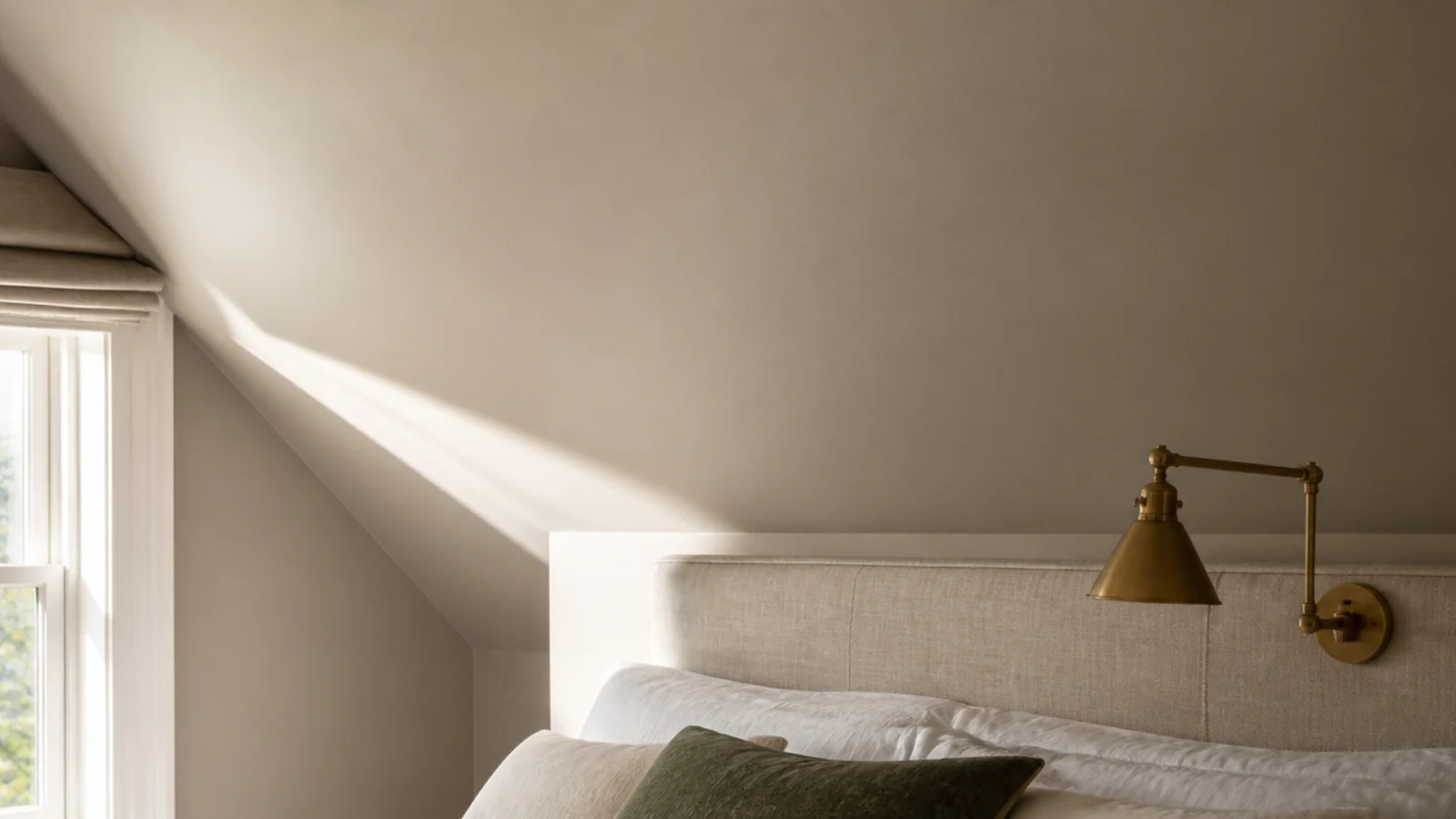
4. Pale clay pink at LRV 65 to 72
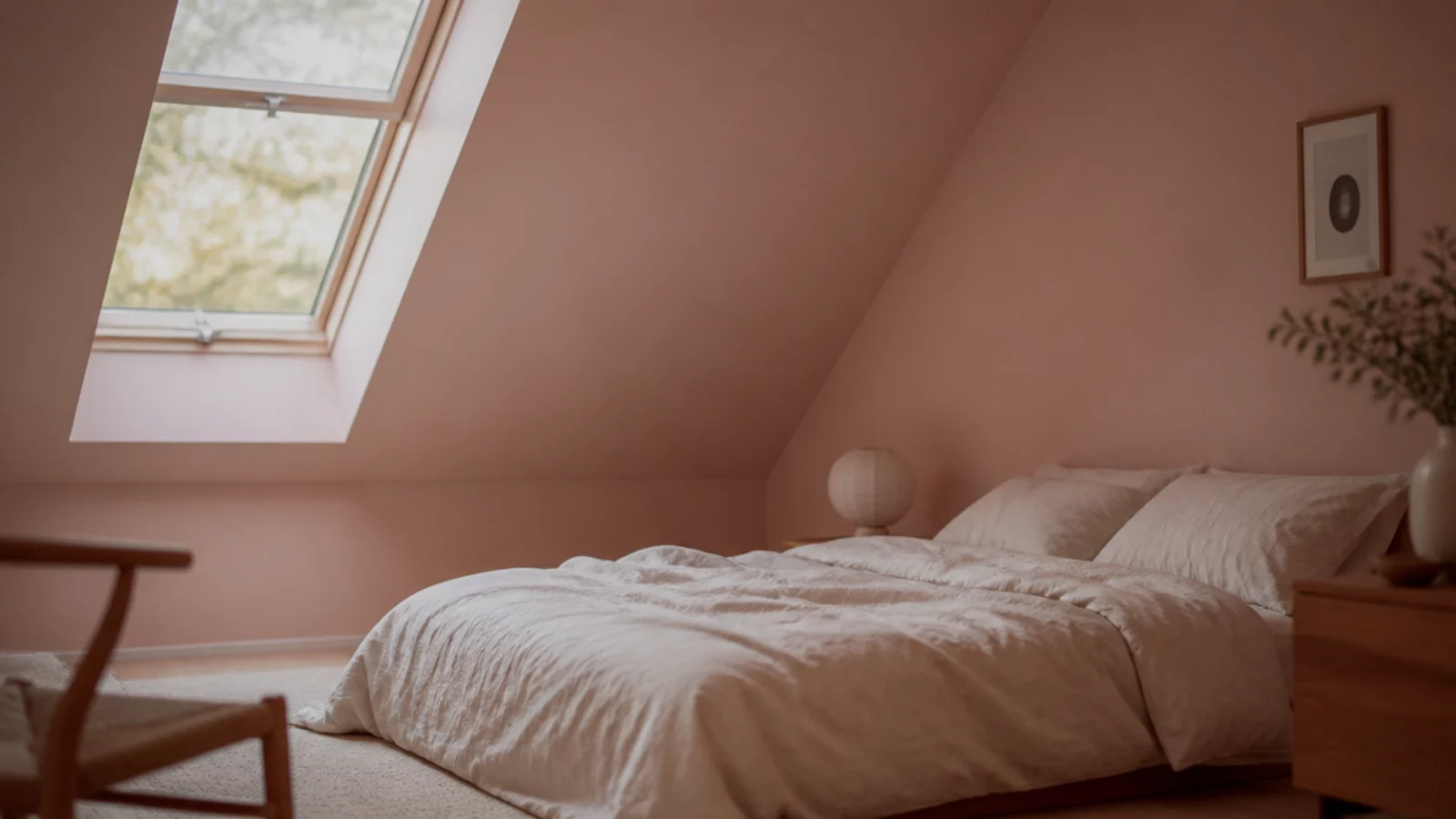
Underrated and the fix for a specific problem: a north-facing loft where every white you try looks grey. A clay-toned pink cancels the blue cast in the light rather than fighting it.
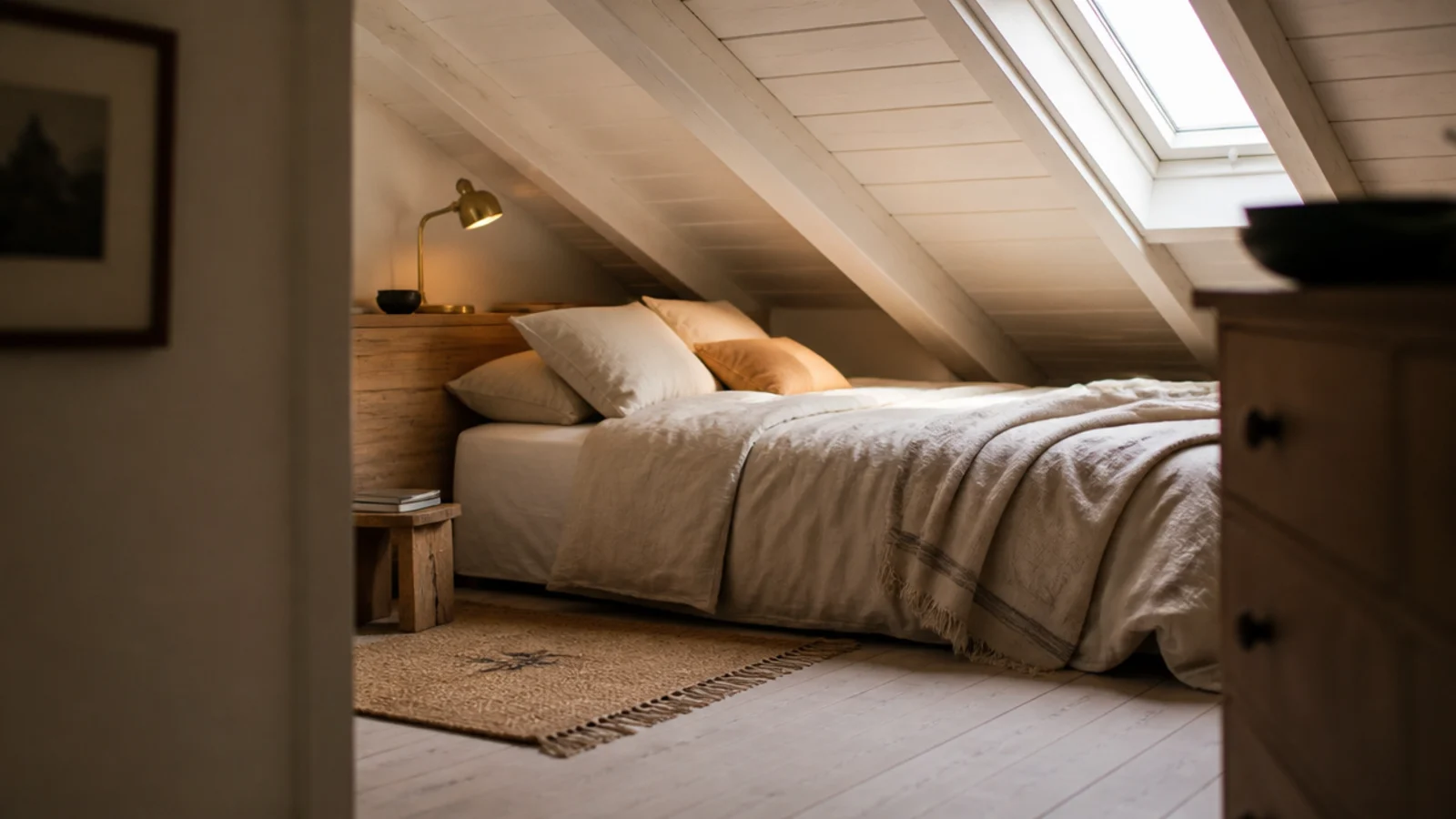
It reads considerably pinker on a slope than on a vertical wall, so test large. Paired with cream bedding and warm timber it reads as plaster rather than as a colour choice, which is why it works in rooms where an obvious pink would not.
5. Muted sage at LRV 45 to 55
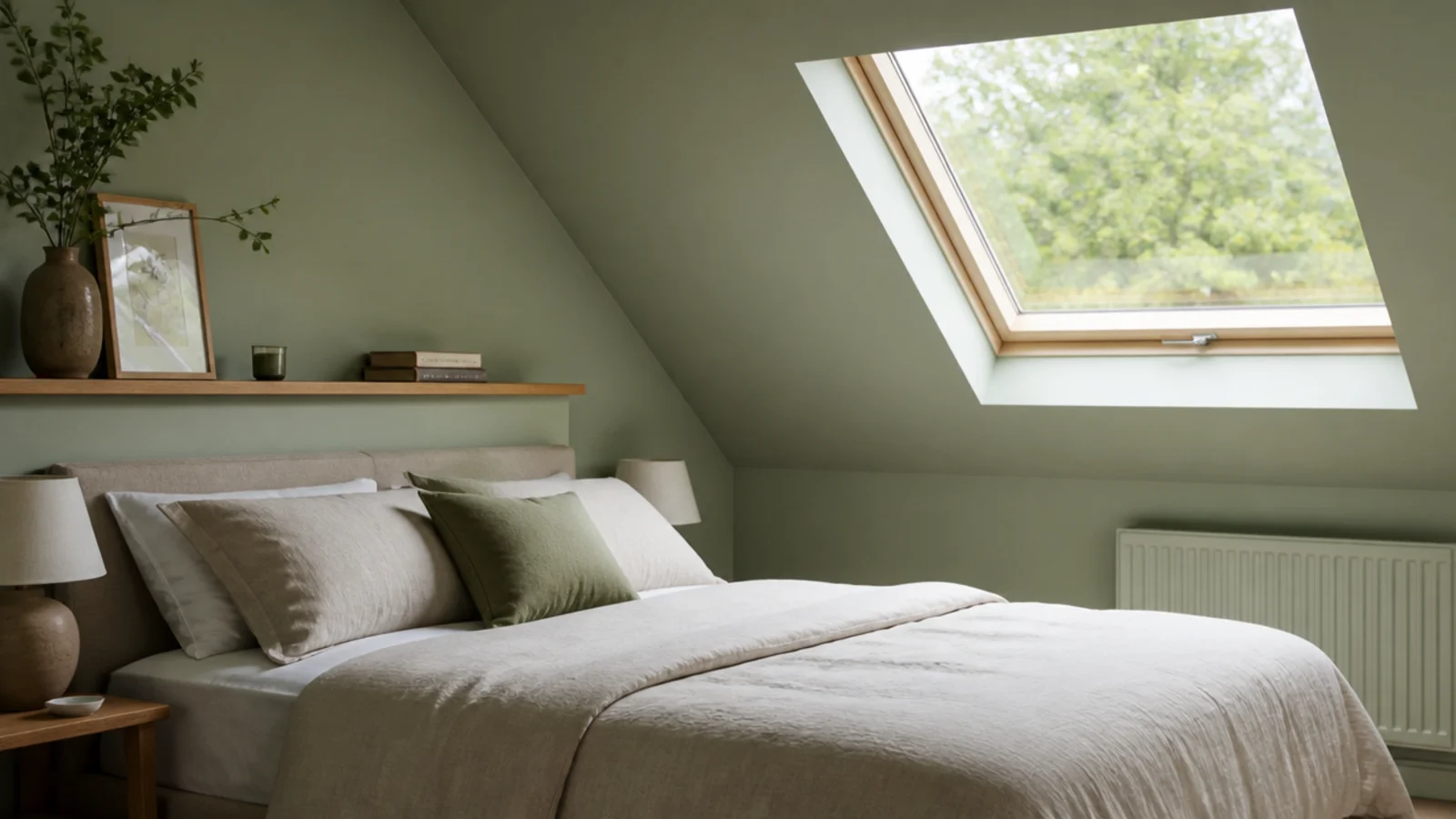
For lofts with a window looking into trees. A muted sage picks up the green outside and makes the rooflight feel like part of the room rather than a hole in the ceiling.
At this reflectance band you lose some brightness, so it needs a pale floor and generous artificial light to stay comfortable. Sage is also one of the few mid-tones that does not look cold on a north slope, which makes it unusually flexible.
6. Deep forest green at LRV 12 to 18
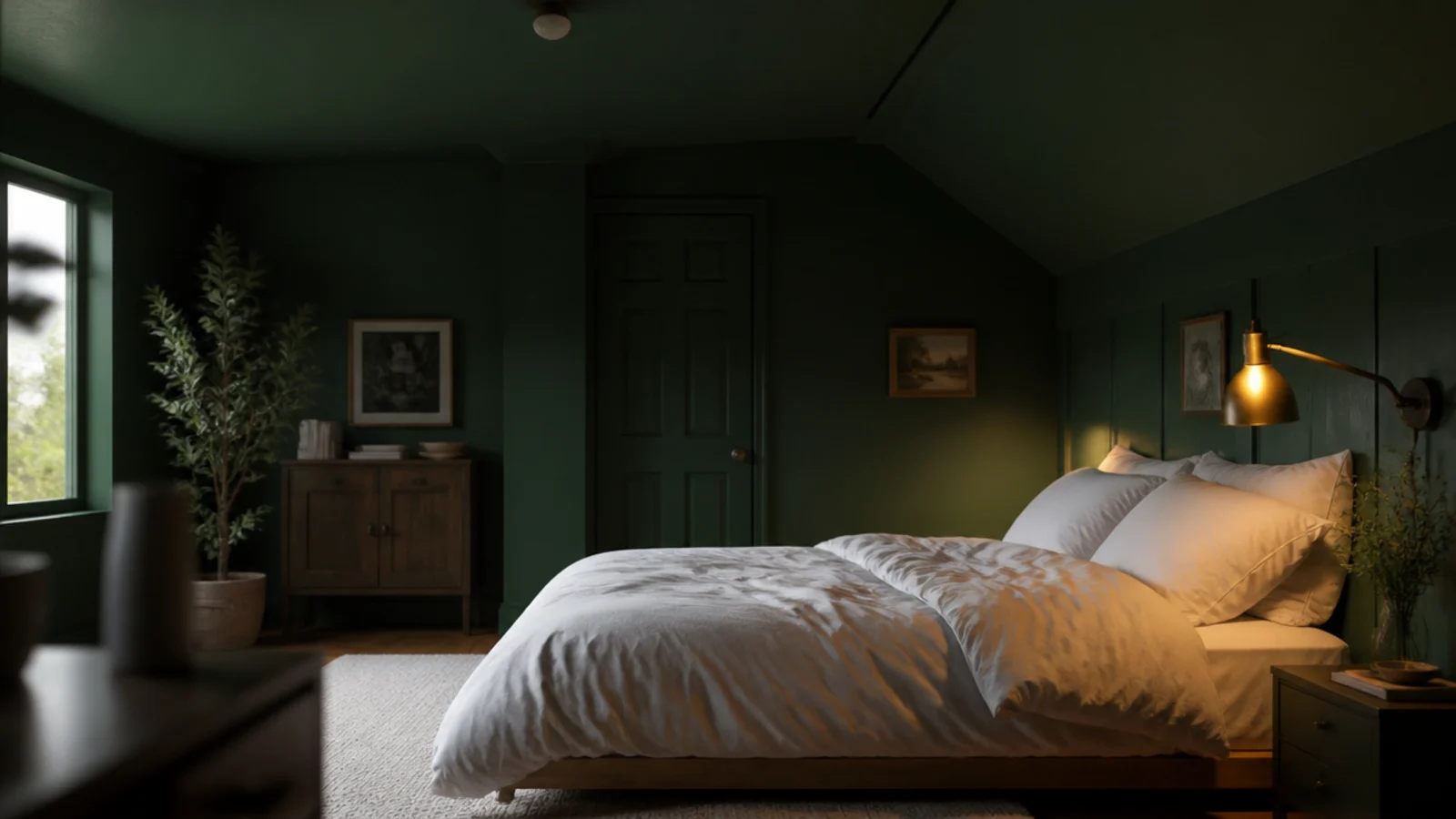
The high-risk, high-reward option, and it only works one way: on every surface. Wall, slope, flat ceiling, skirting, door, joinery. Applied continuously, a dark colour removes the edges of the room and the eye stops measuring where the ceiling comes down.
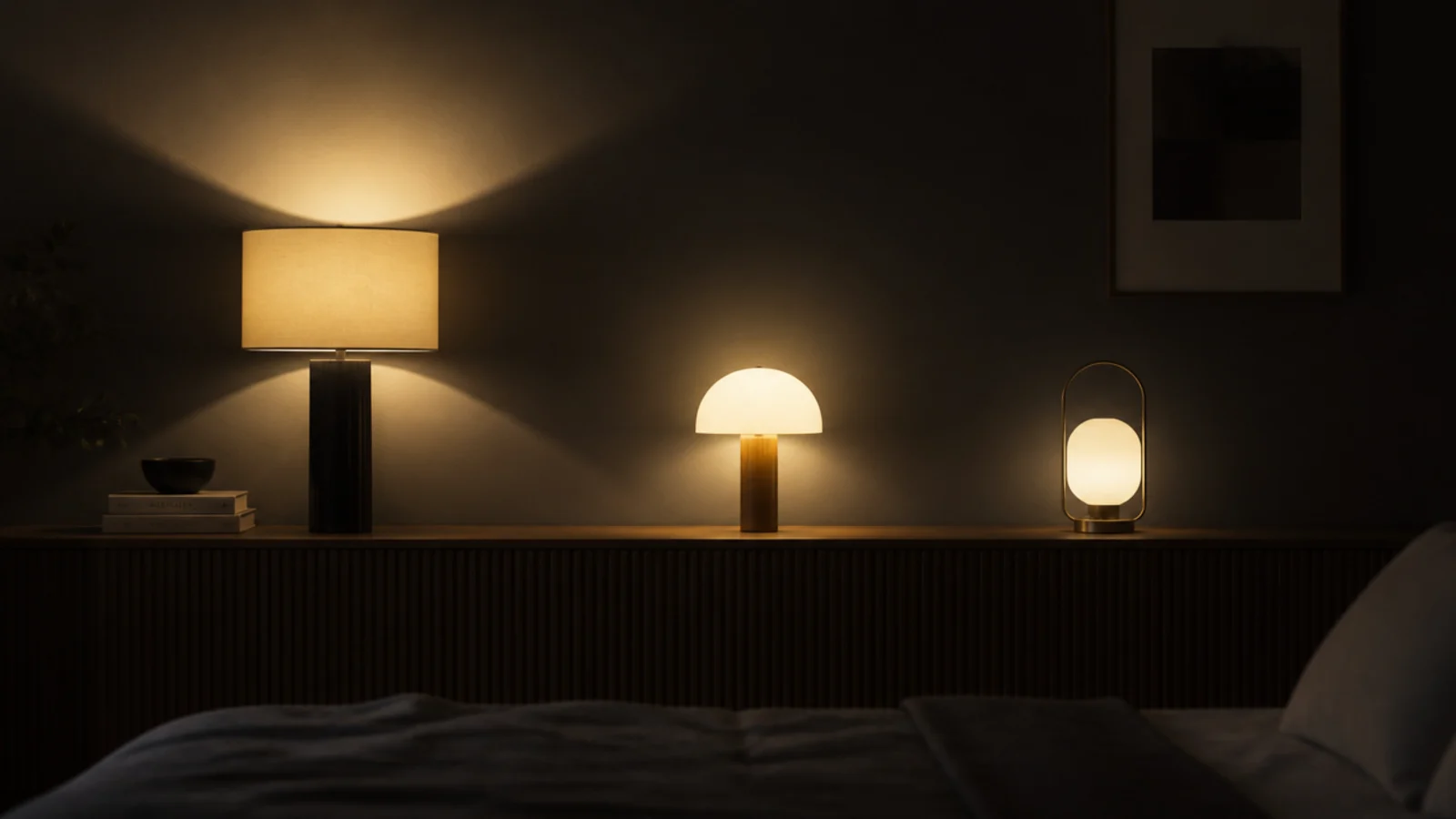
Applied to one wall it does the opposite and makes a small loft feel exactly as small as it is. You need a decent ridge height and warm layered lighting — three sources at 2700K rather than one. The aesthetic attic guide covers the lighting that a dark loft needs.
7. Limewash on a flat-skimmed slope
Limewash gives a slope depth and movement that flat emulsion cannot, and on a large uninterrupted pitch that movement is genuinely beautiful. It also hides minor unevenness in a way sheen never will.
Two conditions. The plaster needs to be freshly skimmed and flat, because limewash reveals shape even as it disguises texture. And on plasterboard it needs a mineral primer to bond properly. Reckon on $150 to $300 for a loft, and allow for a slower, messier application.

8. Colour-drenching the whole loft in one tone
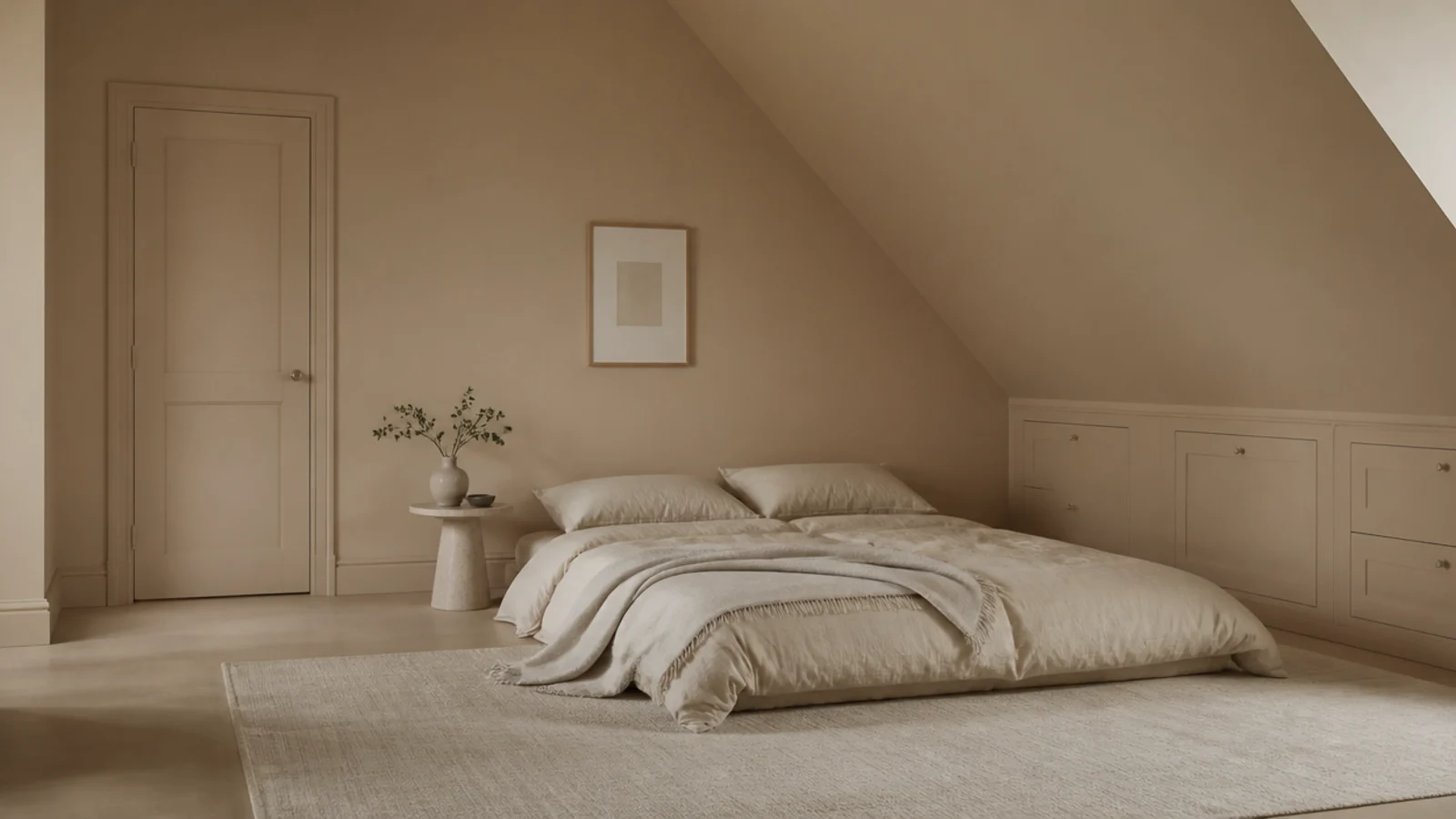
Not a colour but a method, and the single most reliable thing on this list. Take one tone across walls, slope, ceiling, skirting, architrave, door and any built-in joinery, all in the same matte finish.
In a room defined by awkward angles, drenching removes every line the eye would otherwise use to measure the space. It works at any LRV — it is as effective in a bone white as in a deep green. The only rule is that the woodwork has to be included. Leave a white skirting or a white door in a drenched loft and the whole effect collapses.
What to Check Before You Buy
Test on the slope, at three times of day. Paint a square metre directly on the pitch and look at it in morning light, afternoon light and lamplight. A sloped surface reads about two shades darker than a vertical one, which is why so many attic rooms end up gloomier than the sample promised.
Check which way the rooflight faces. North gives cool even light that pushes greys and brilliant whites toward blue. South gives warm strong light that makes the same whites glare. This single fact rules out more colours than personal taste does.
Buy dead matte for the slope, whatever you do elsewhere. Two to 5 percent sheen. Attic plaster is never flat, and a pitch catches raking light all day. In a child's room, a scrubbable matte on the slope with an eggshell on the lower wall is the sensible compromise.
Buy more than the floor area suggests. Sloping surfaces are larger than the plan implies, and old plaster drinks the first coat. A typical loft bedroom takes 2.5 to 4 litres for two coats. Running out mid-slope means a visible join.
Fill and sand before you commit to a finish. Matte hides sheen, not shape. Filler, a sanding block and an hour saves you looking at a hollow every sunny morning for a decade.
Include the woodwork in your calculation. If you are drenching, the skirting, door and architrave all need the same colour in a suitable finish. Buy the woodwork paint at the same time and match it to the wall colour rather than defaulting to white.
Get an extension pole for the roller. Painting a slope overhead with a hand roller turns a weekend job into three days and gives you a worse finish. Around $20, and it is the best value item in the whole project.
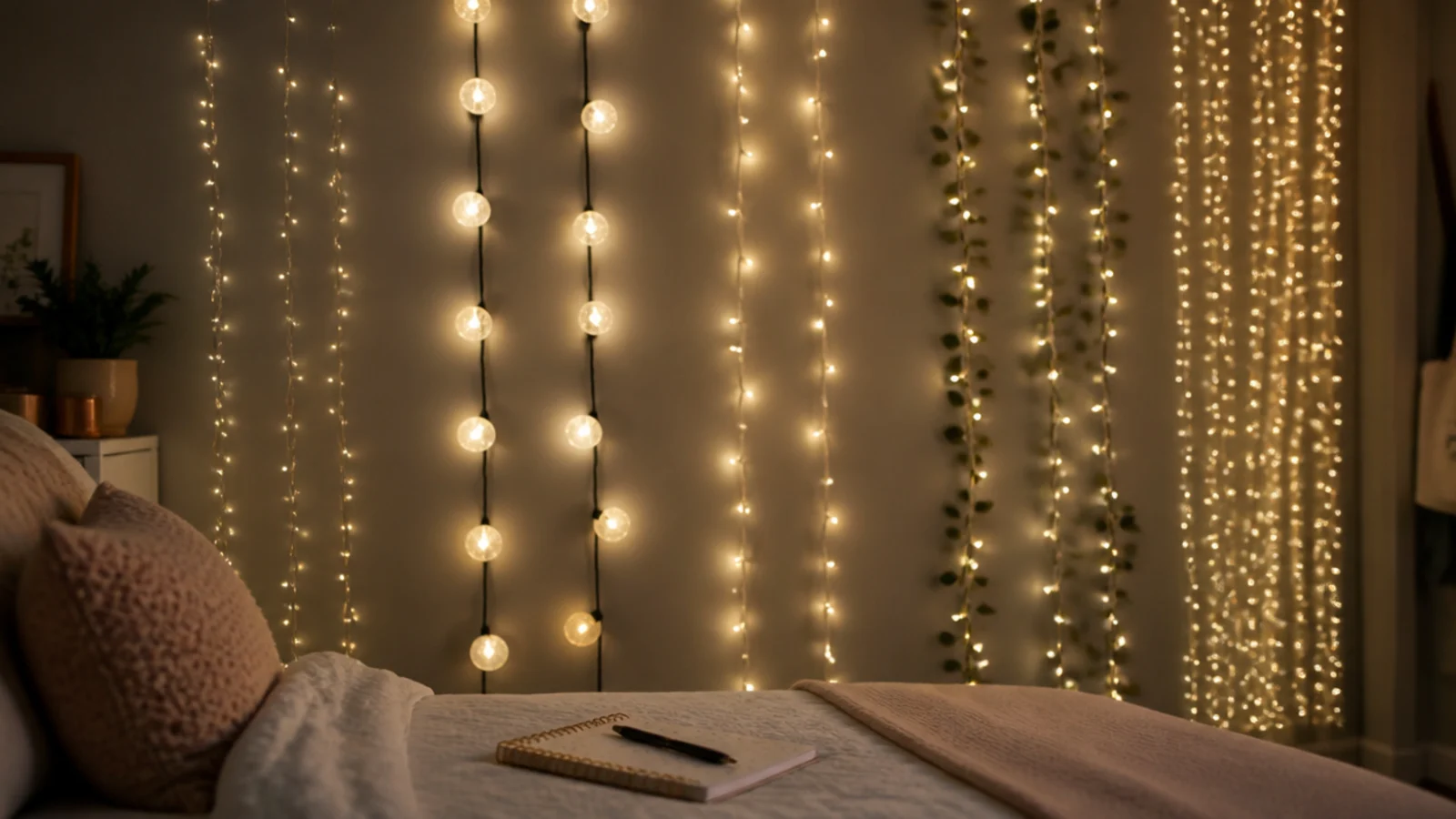
Paint is the one change in a loft where the cheapest option is also usually the best one, and where the method matters more than the colour. Carry a single tone across every surface, keep it dead matte on the slope, and let the room's angles do the rest. The main attic bedroom guide covers what goes into the room once the walls are done, and fairy lights in the bedroom plus aesthetic candle decor both cover the warm layer a dark loft needs after sunset — LED rather than flame anywhere near a low sloped ceiling.
Frequently asked questions
What is the best paint colour for an attic bedroom?
A warm off-white with light reflectance around seventy-eight to eighty-four suits more lofts than anything else, because it brightens without going cold on a north-facing slope. The colour matters less than the decision to carry one tone across wall, slope and flat ceiling in the same finish.
What does LRV mean when choosing attic paint?
Light reflectance value, on a scale where zero is black and one hundred is pure white. It tells you how much light a colour bounces back. In a loft it matters more than usual because a sloping ceiling sits close to your head and reflects light onto you from short range.
Should an attic ceiling be painted white?
It should be painted the same colour as the walls, whatever that colour is. Painting the ceiling separately draws a line along the junction exactly where the room is lowest. A pale tone helps a dark loft, but continuity helps more than brightness on its own.
What paint finish is best on a sloped attic ceiling?
A dead matte, around two to five percent sheen. Attic plaster follows a century of roof movement and is never flat, and a sloping surface catches raking light from a rooflight all day. Anything sheenier picks out every ripple as alternating bright and dark bands.
Can you use a dark colour in a small attic bedroom?
Yes, provided it goes on every surface including the slope and the flat ceiling. A dark colour applied continuously removes the edges of the room and reads as enveloping. The same colour on one wall only makes a small loft feel exactly as small as it is.
How much paint does an attic bedroom need?
A typical loft bedroom takes about two and a half to four litres for two coats, more than the floor area suggests because the sloping surfaces are larger than a flat ceiling would be. Budget sixty to a hundred and twenty dollars including primer, filler and a roller extension pole.
Want more like this? Browse all 15 attic bedroom ideas guides — they all use the same measurements and budget tiers.
Pin it for later
Save this to your Attic Bedroom Ideas board
Pin it now so it is waiting for you when the tape measure comes out — and so the next person hunting for this idea can find it too.
Save this pinKeep going
More ideas worth saving while you have the tape measure out.