Bedside Table Ideas · Review
15 Bedside Table Lamp Ideas Compared By Brightness

Some links on this page may become affiliate links in future. I only recommend pieces I would put in my own home — see the affiliate disclosure.
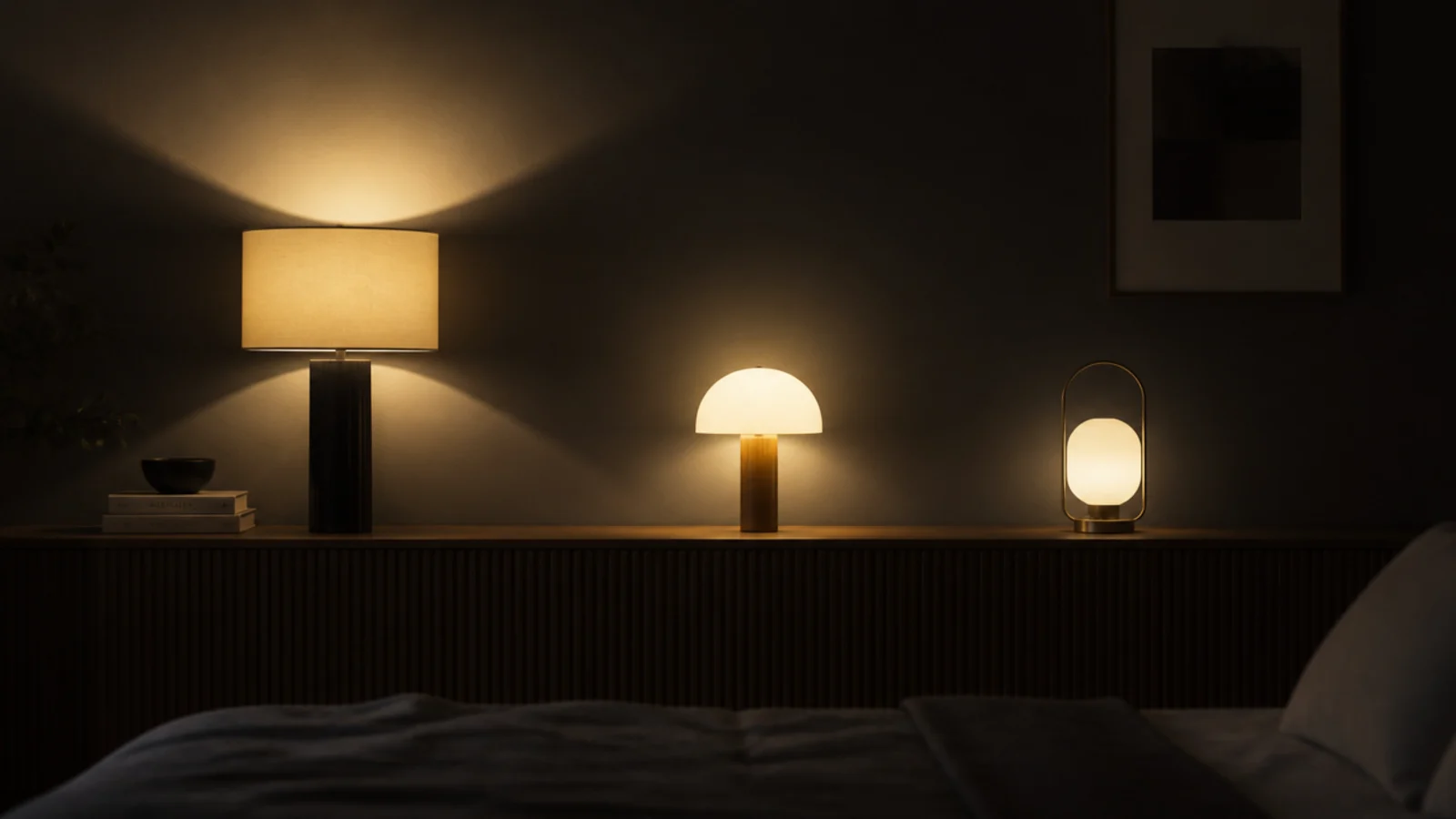
Bedside table lamp ideas are almost always chosen on shape and almost never on output, which is why so many bedrooms end up with a beautiful lamp nobody can read by — or one so bright it wakes the person on the other side of the bed. Brightness is a number, it is printed on the box, and it decides more about how a bedroom works at night than the base material ever will. I have measured light at the page across every type below. Here is what the numbers actually say.
In this guide10 sections — tap to openHide
- 1.How I Chose These Bedside Table Lamp Ideas
- 2.The Full Comparison: 15 Bedside Light Types
- 3.The warm dimmable ceramic table lamp
- 4.The hardwired swing-arm sconce
- 5.The clip-on reading light
- 6.The cordless rechargeable lamp
- 7.The smart bulb retrofit
- 8.The paper-shade diffuser lamp
- 9.The motion-sensor floor night light
- 10.What to Check Before You Buy
How I Chose These Bedside Table Lamp Ideas
I judged every type on five things, in this order.
- Lumens at the page, not at the bulb. A 450-lumen bulb inside a dense fabric shade delivers far less light to a book than a 250-lumen directional head aimed at it. What matters is illuminance on the page, and the practical band for comfortable reading is roughly 300 to 450 lumens from a diffuse source, or 100 to 200 from a directed one.
- Spill across the bed. The single biggest difference between types is how far light travels sideways. A fabric-shaded table lamp lights the full width of a double bed; a clip light lights about eight inches. If you share a bed, this matters more than every other criterion combined.
- Colour temperature and dimming range. Everything here should be 2200K to 2700K. I gave extra weight to anything that dims genuinely low — down to five or ten percent — because a lamp that only goes from off to full is a lamp you turn off early.
- Footprint on the table. A wide ceramic base takes 30 to 50 square inches off a top that only has 200. Anything that moves the light to the wall or removes the base entirely gives that surface back.
- What it costs to install. Plug-in is free, a smart bulb is ten dollars, and hardwiring a sconce means a rated wall box and, in most cases, an electrician.
I have not ranked by brand, and every pick below is described by type and construction, because the same lamp appears under a dozen labels at IKEA, Target, John Lewis and every marketplace seller. If the surface itself is the constraint rather than the light, the table sizing guide covers footprints.
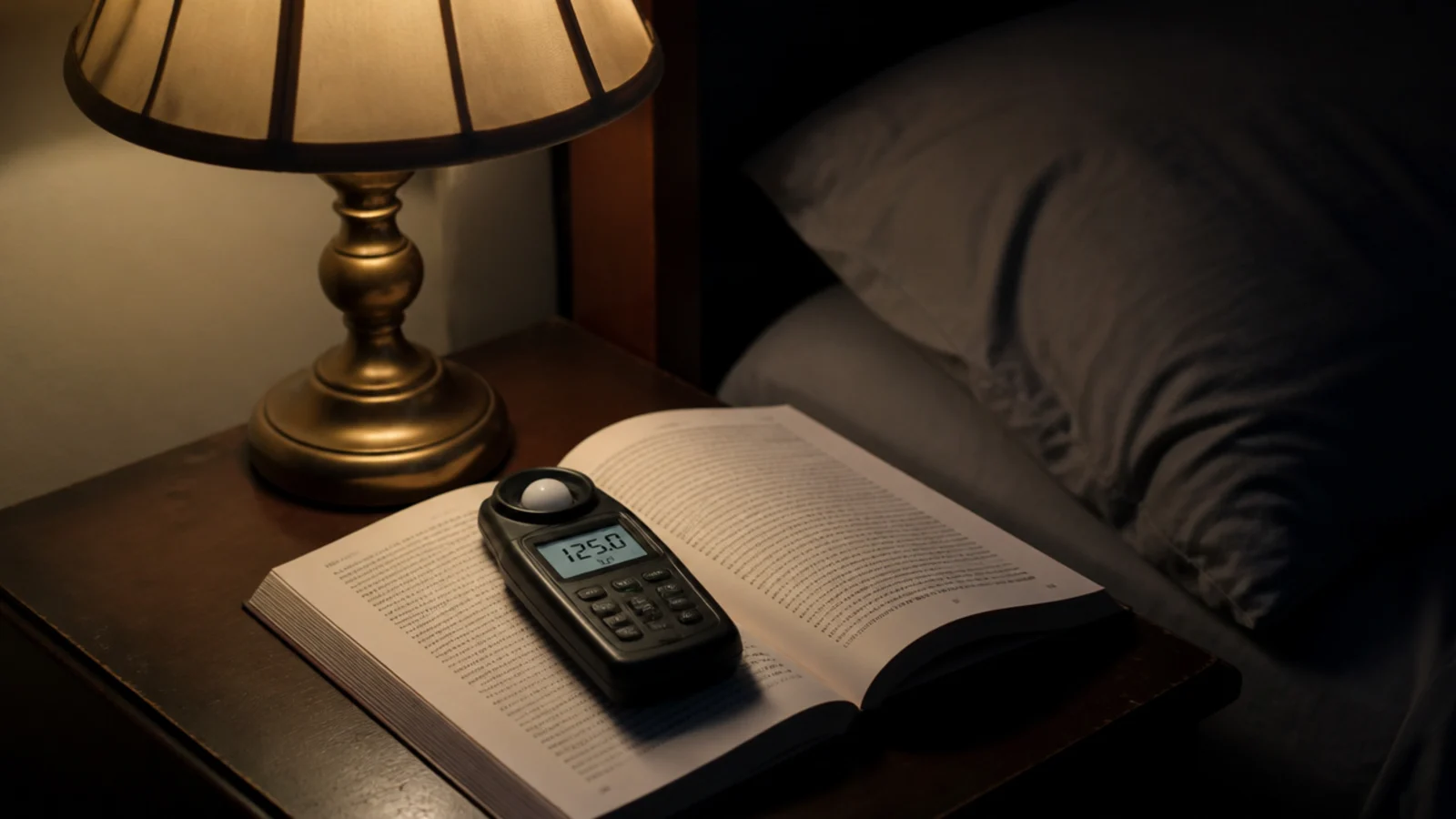
The Full Comparison: 15 Bedside Light Types
Output figures are typical rather than absolute. Price bands: $ under 40 · $$ 40 to 120 · $$$ over 120.
| Type | Typical output | Spill | Price | Best for |
|---|---|---|---|---|
| Warm dimmable ceramic table lamp | 300-450 lm | Wide | $$ | The reliable default |
| Three-way switched lamp | 150 / 300 / 450 lm | Wide | $$ | Stepped control, no dimmer |
| Touch-dimmer lamp base | 50-400 lm | Wide | $$ | Finding the switch half asleep |
| Hardwired swing-arm sconce | 250-400 lm | Narrow | $$$ | Shared beds, clear tabletop |
| Plug-in swing-arm sconce | 250-400 lm | Narrow | $$ | Renters who cannot wire |
| Clip-on book light | 5-30 lm | Very narrow | $ | Reading beside a sleeper |
| Cordless rechargeable lamp | 150-300 lm | Medium | $$ | No socket, no cable at all |
| Smart bulb in an existing lamp | 100-800 lm | Wide | $ | Cheapest route to dimming |
| Pharmacy task floor lamp | 400-600 lm | Narrow | $$ | Rooms with no bedside table |
| Rice paper shade lamp | 200-350 lm | Wide, soft | $ | Even glow with no hot spot |
| Opal glass globe lamp | 200-400 lm | Very wide | $$ | Ambient light, poor for reading |
| Under-shelf puck light | 80-150 lm | Narrow | $ | Floating shelves and ledges |
| Amber low-output night light | 5-15 lm | Small pool | $ | Children and night waking |
| Motion-sensor floor light | 10-40 lm | Floor only | $ | Getting up without waking |
| Pendant dropped beside the bed | 400-800 lm | Wide | $$$ | Freeing the table completely |
Seven of those are the ones I recommend most often, and they cover almost every bedroom.
1. The warm dimmable ceramic table lamp
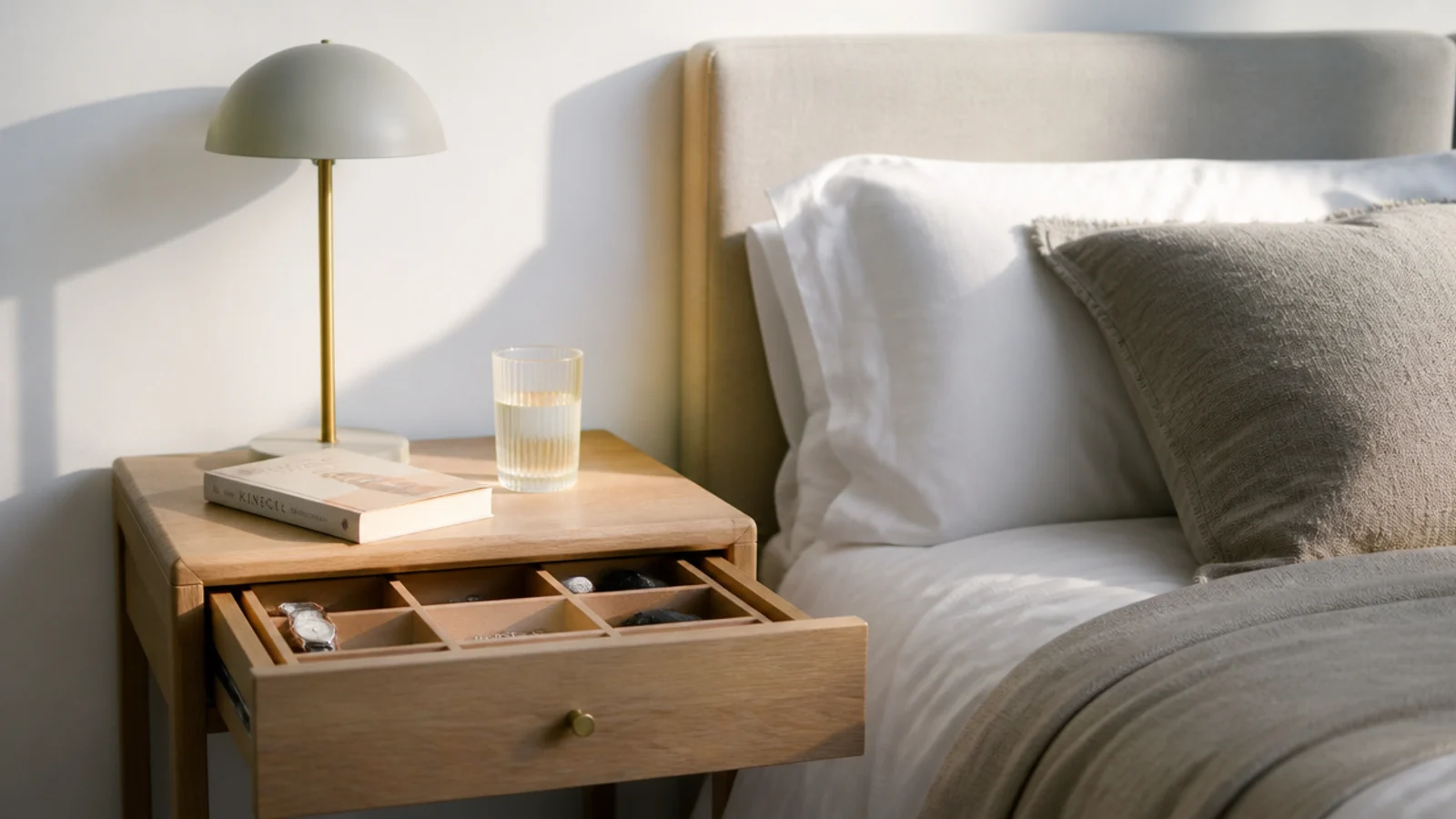
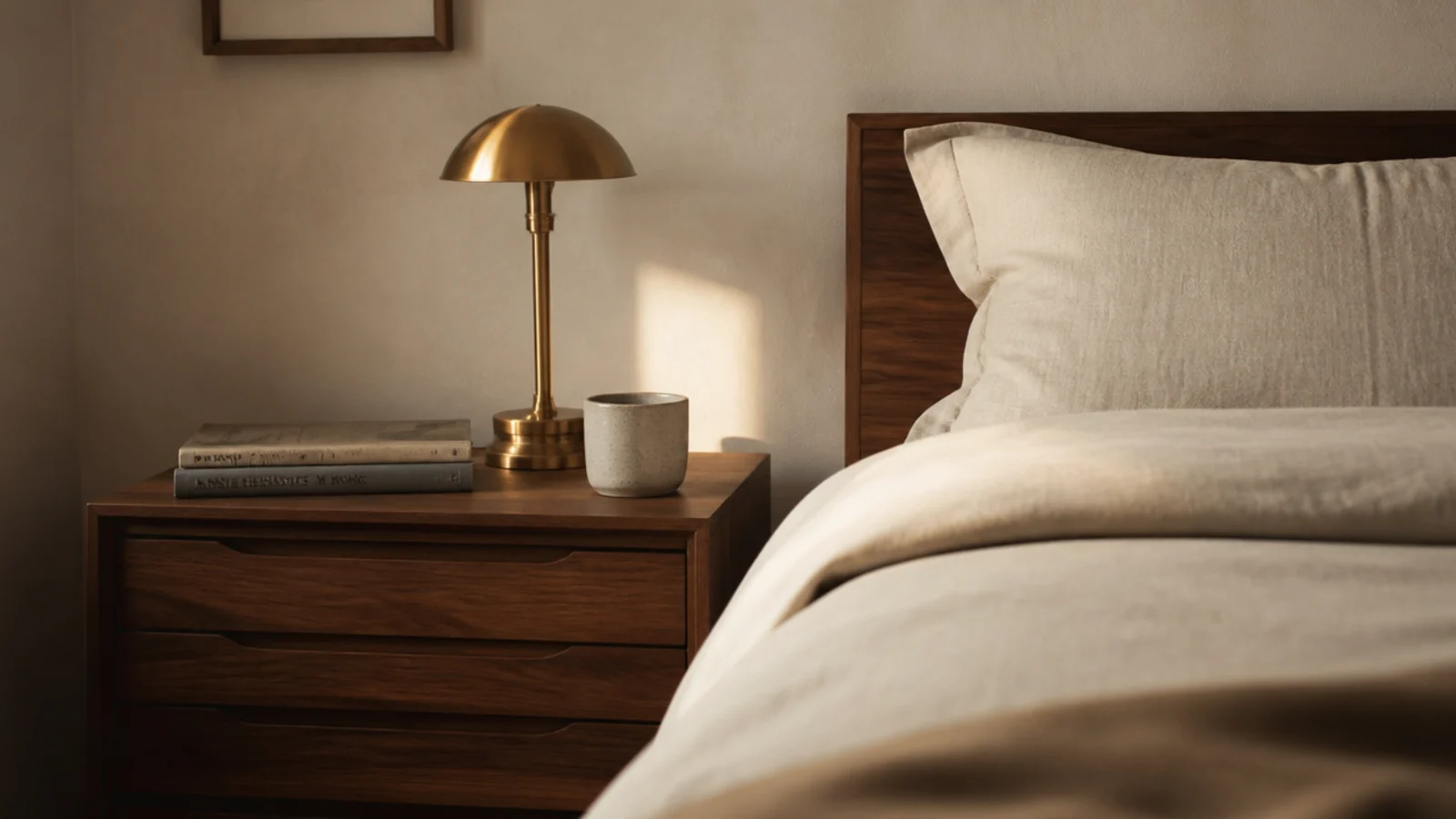
The default, and it earns the position. A ceramic or stoneware base holds a 300 to 450 lumen bulb at the right height, the weight keeps it stable when you knock it reaching for a glass, and a fabric shade gives soft light in every direction.
Buy on three numbers: base width under 6 inches so it does not eat the tabletop, total height 24 to 28 inches so the shade bottom lands at eye level when you sit up, and a bulb at 2700K with a CRI of 90 or better so book pages look white rather than yellow. Add an in-line cord dimmer for about 12 dollars if the base has no switch of its own. Expect 45 to 120 dollars.
2. The hardwired swing-arm sconce
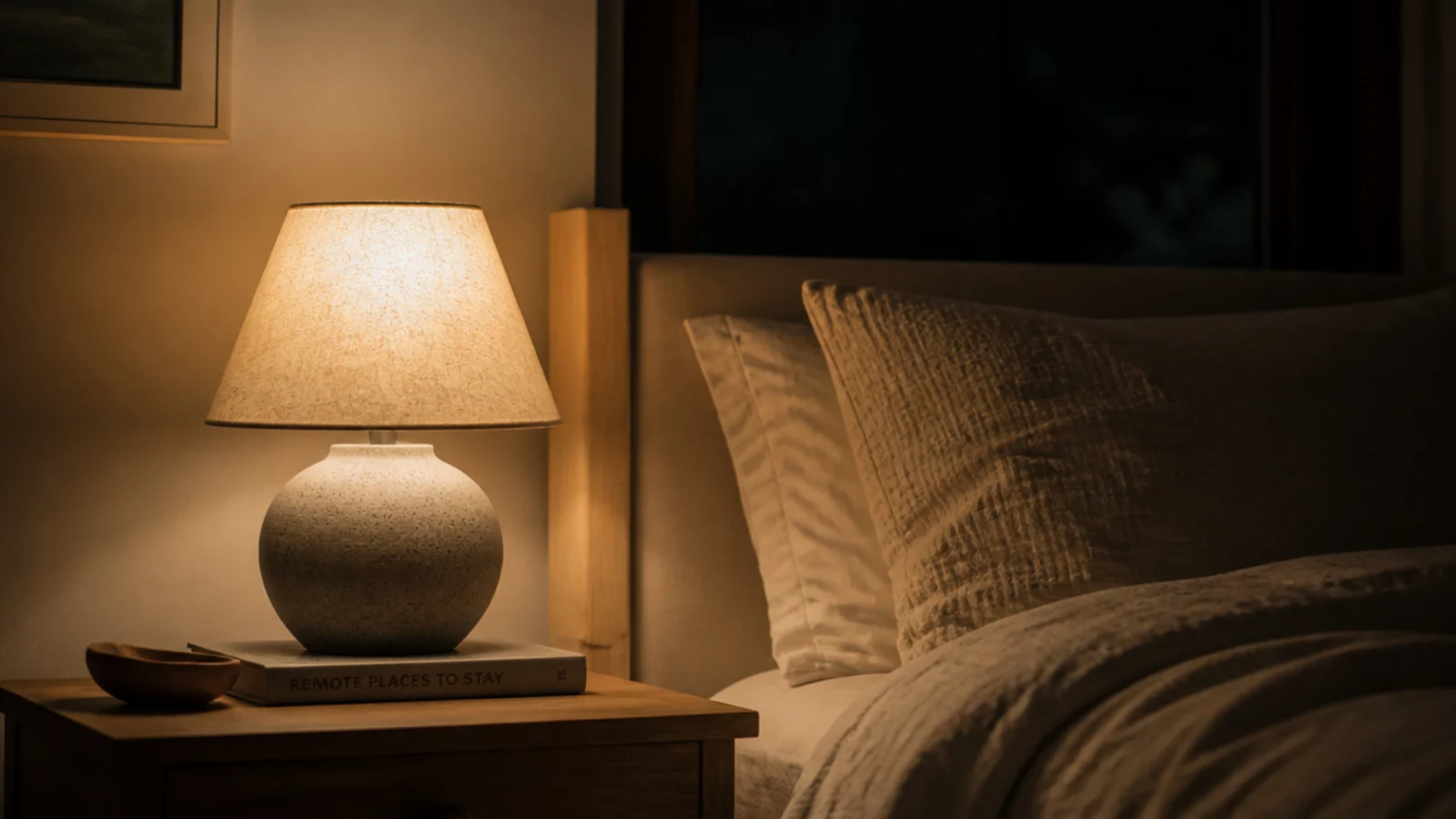
The best answer for a shared bed, and the only one that gives you the whole tabletop back. An articulated arm lets you put 250 to 400 lumens directly onto the page while the pillow eighteen inches away stays dark.
Mount the plate 40 to 48 inches above the floor, or roughly 24 inches above the mattress, and set it slightly behind your shoulder rather than in front. Hardwiring means a rated wall box and an electrician in most homes, so budget 120 to 300 dollars for the fitting plus installation. The plug-in version with a cord cover does the same optical job for renters at about half the cost.
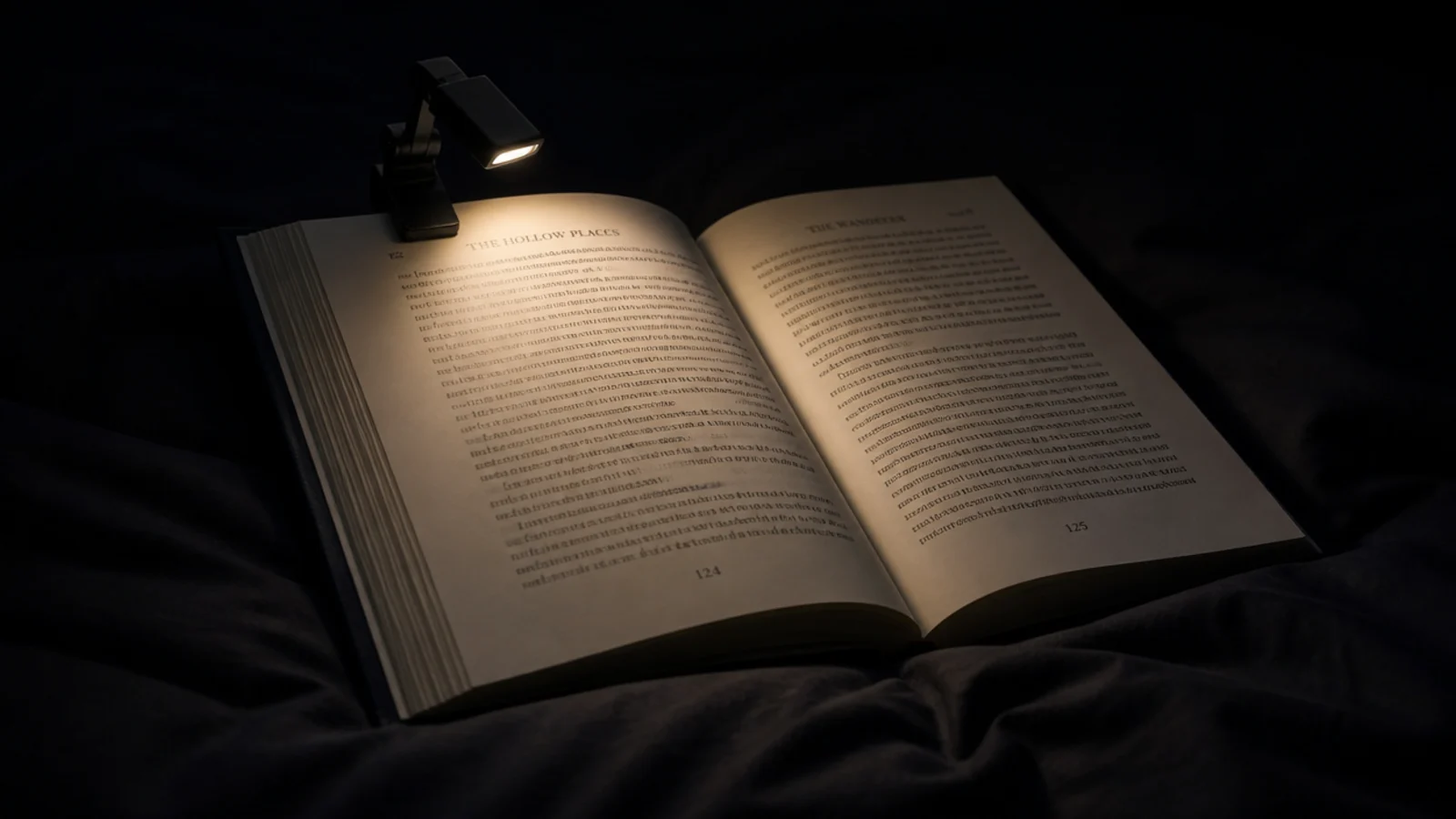
3. The clip-on reading light
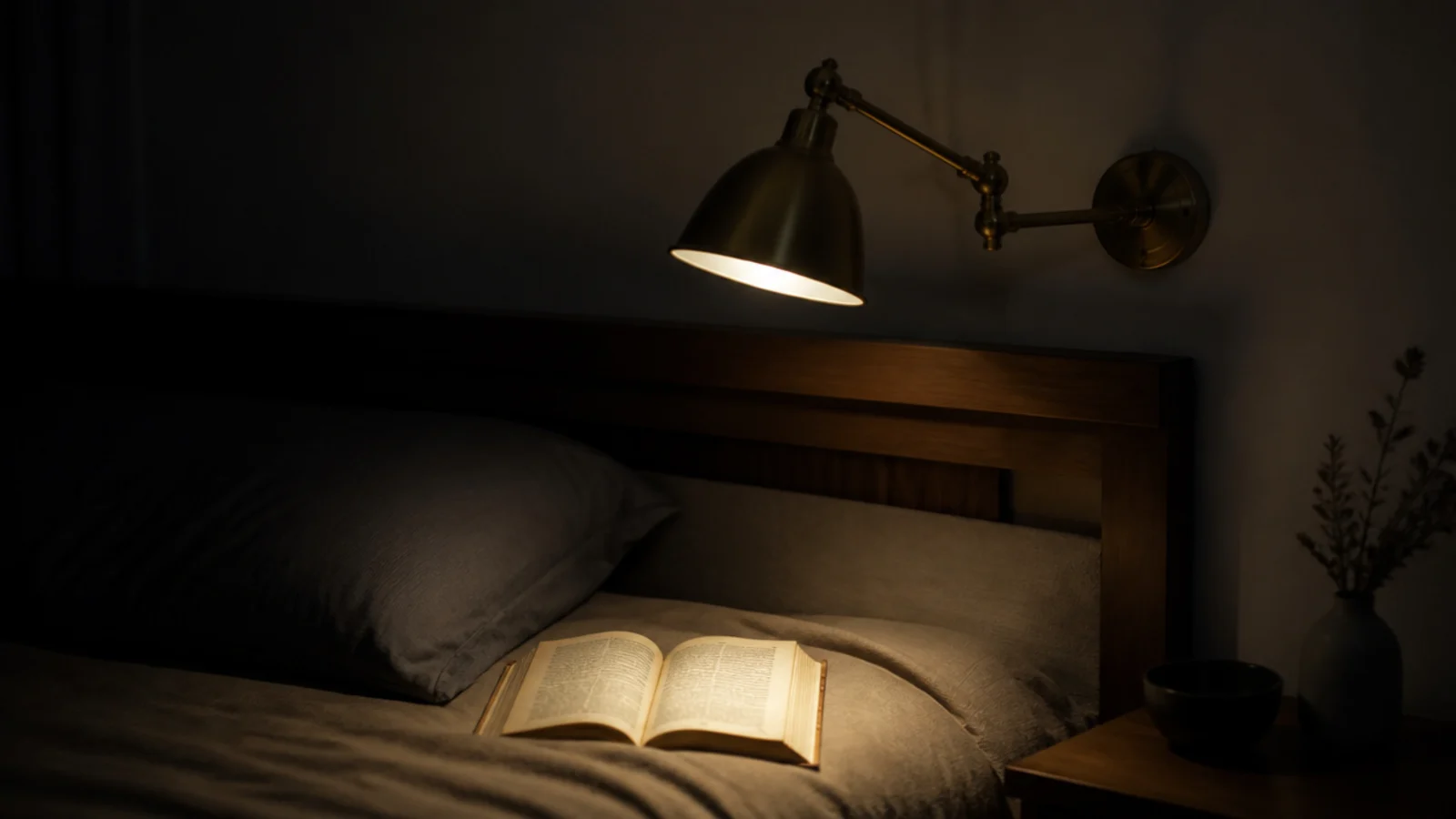
The cheapest genuinely effective solution on this list, and the one I recommend most for couples with different bedtimes. Five to thirty lumens sounds absurdly low until you understand it is landing entirely on two pages rather than being spread across a room.
Look for a clamp that opens to at least 25mm so it grips a hardback, a warm 2700K LED rather than the harsh cool white common on cheap units, and at least two brightness steps. Rechargeable models run 8 to 40 hours per charge. Expect 12 to 30 dollars. The only real limitation is that it lights the book and nothing else, so you still want something for getting out of bed.
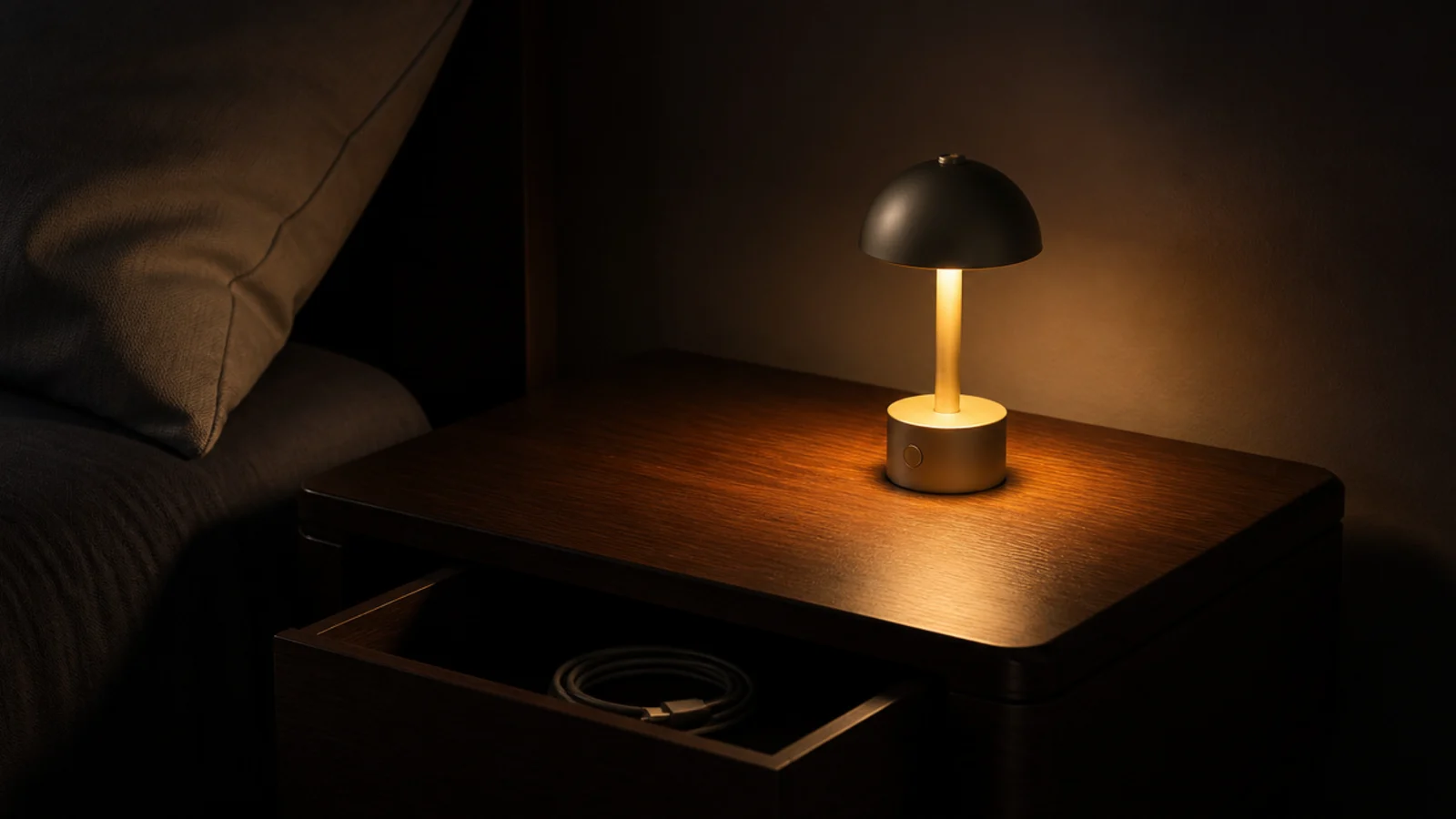
4. The cordless rechargeable lamp
Genuinely useful rather than a novelty. Removing the flex solves the cable problem, the socket problem and the switch position problem in one purchase, and the lamp moves to a shelf, a bath edge or a balcony table.
Check the stated lumens: anything under about 120 on maximum is mood lighting rather than reading light. Good units give 150 to 300 lumens with three or four steps, 8 to 20 hours of runtime, and USB-C charging in two to three hours. The better ones use a real metal or glass body rather than moulded plastic, which matters because you handle it constantly. Expect 60 to 200 dollars.
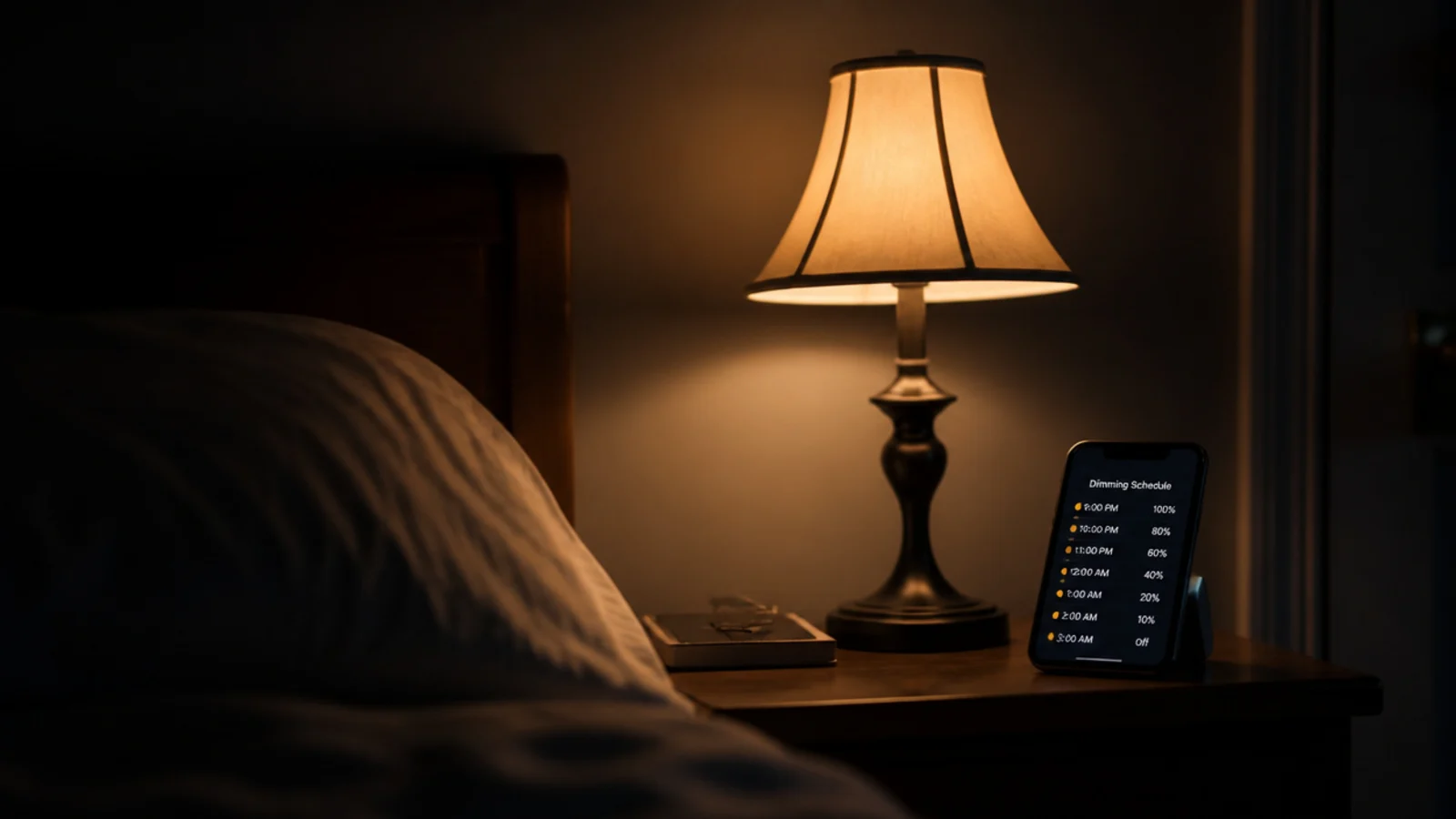
5. The smart bulb retrofit
Ten to twenty dollars turns any lamp you already own into a dimmable, schedulable light without changing anything visible. It is the highest-value purchase here by some distance.
Choose a warm-dimming bulb that shifts toward 2200K as it dims rather than holding a fixed colour temperature, since that mimics what a filament bulb does and reads far more restfully. Set a fade that drops the output over twenty or thirty minutes rather than switching off in one step. Check the bulb physically fits the shade carrier — smart bulbs are typically 10 to 15mm longer than a standard LED, which is enough to foul a small clip-on shade.
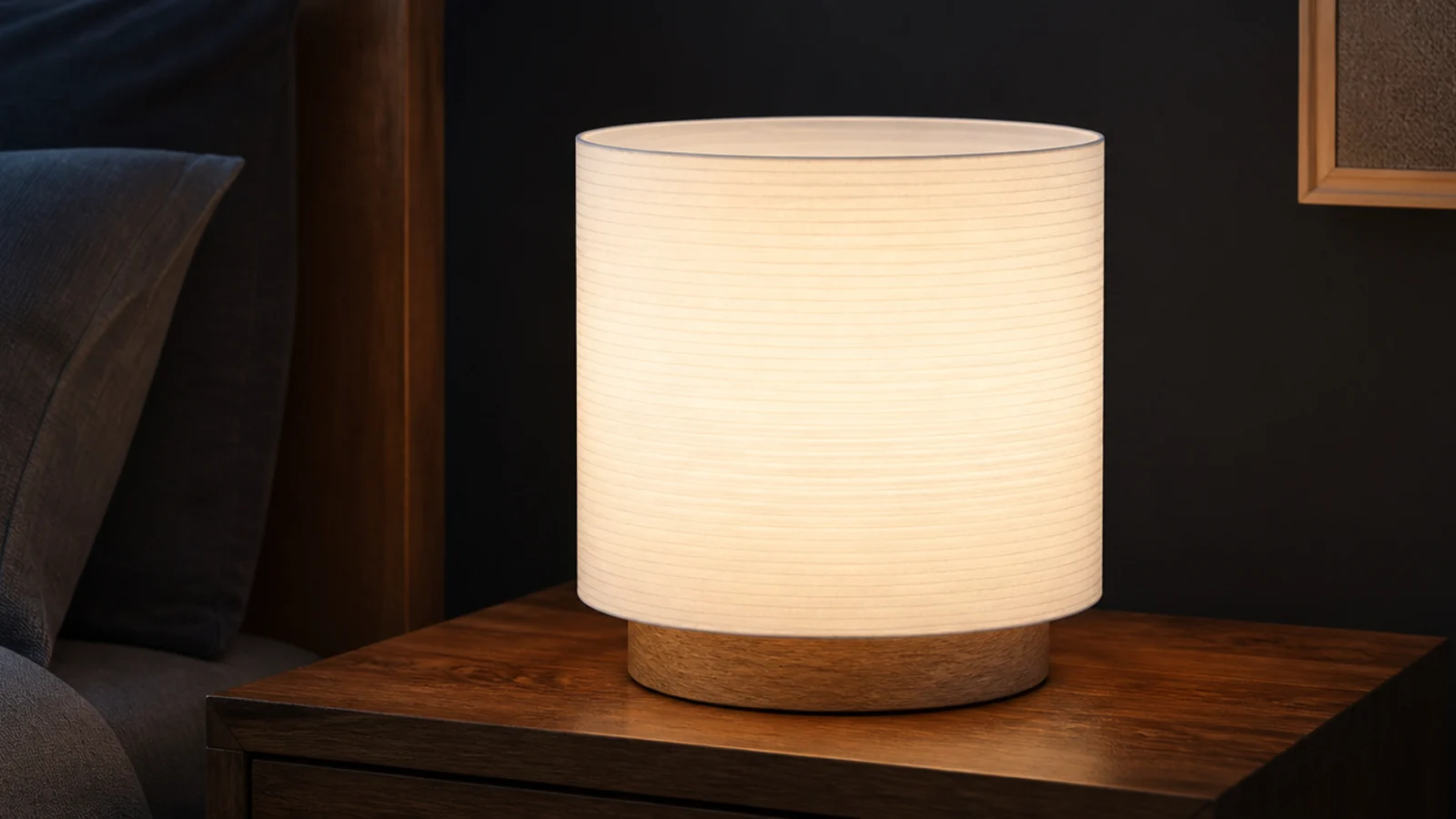
6. The paper-shade diffuser lamp
A rice paper or parchment shade spreads light evenly across its whole surface with no bright hot spot, so the lamp itself is comfortable to look at directly. That is unusual, and it is why paper shades suit a bedroom where you are lying at eye level with the shade.
The tradeoff is output at the page: much of the light goes sideways into the room rather than down, so a 350-lumen bulb reads more like 200 on a book. Treat it as a beautiful ambient light with reading as a secondary function. Keep it away from anything that could tip against it, and use LED only — paper close to a hot filament bulb is a genuine fire risk. Expect 25 to 80 dollars.
7. The motion-sensor floor night light
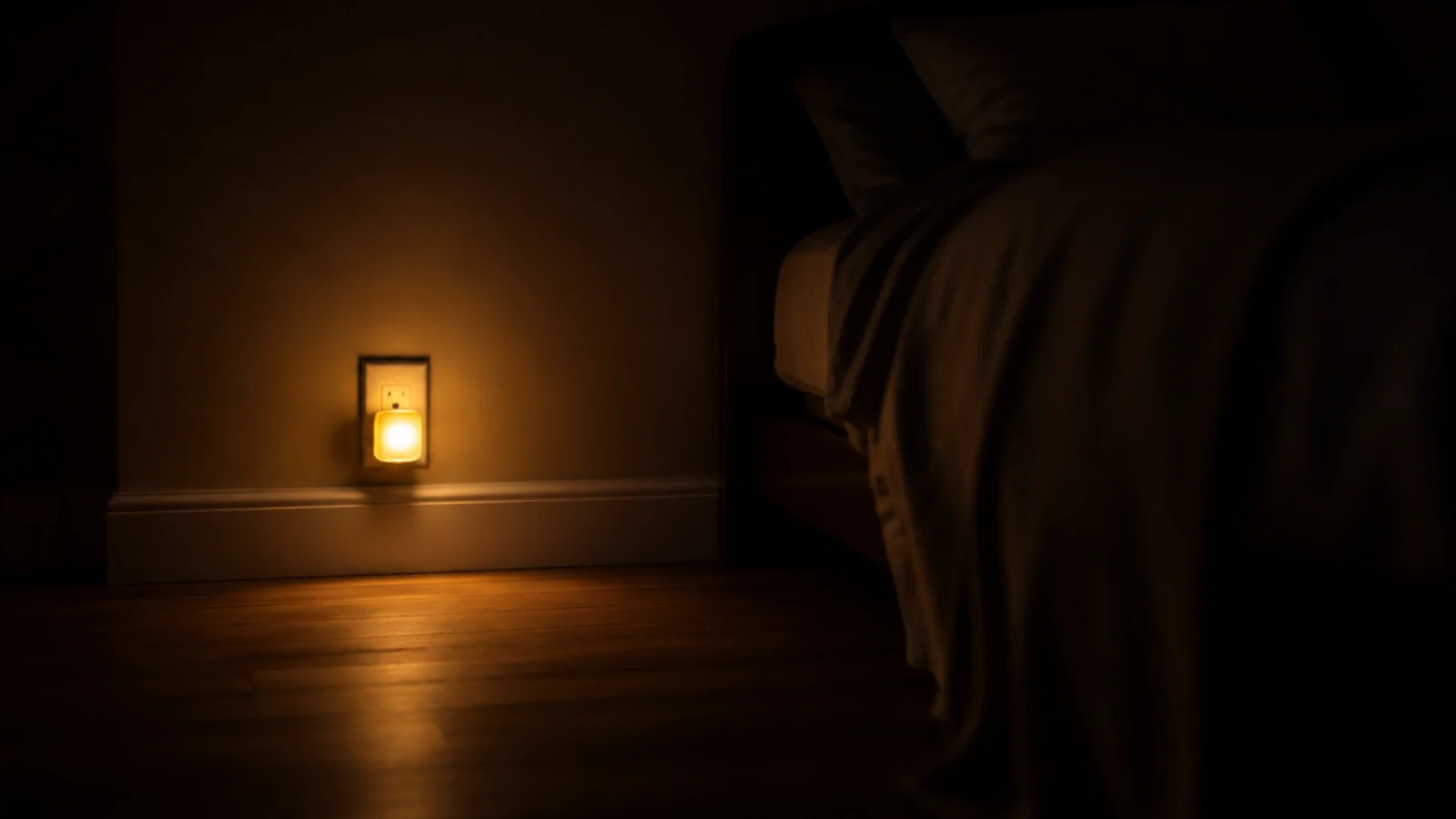
The pick people never think of and always keep. Ten to forty lumens at floor level, triggered by movement, lights the route from bed to door without anything reaching pillow height.
Choose amber or a 2200K warm white rather than cool white, since amber has almost no short-wavelength content and will not reset your body clock at 3am. Plug-in units cost 8 to 20 dollars for a pack; battery versions stick anywhere and last months on a set of AAs. In a child's room this replaces the overhead light entirely, which is the difference between a wake-up and a return to sleep. For the same reason, use LED rather than any open flame near bedding.
What to Check Before You Buy
Read the lumens, not the watts. Wattage tells you consumption, not output. A 5W LED and a 9W LED can both deliver 450 lumens depending on efficiency, and the number you want is printed in small type on the side of the box.
Check the colour temperature is 2700K or below. This is the most common error in an otherwise well-chosen bedroom, and a 4000K bulb in a beautiful lamp will make the whole room feel like a corridor at night.
Measure the height against your own mattress. The shade bottom wants to sit 24 to 26 inches above the dressed mattress. Lamp height is quoted from the base, so a tall bed and a short lamp put the bare bulb straight in your eye line.
Look for a dimming floor, not just a dimming range. A lamp that only drops to fifty percent is barely dimmable. Ten percent or lower is what lets you keep a light on while someone else sleeps.
Check the base footprint against your tabletop. Anything wider than about 6 inches takes a quarter of a 16-inch top. The styling method explains how the remaining surface has to be allocated.
Decide where the switch is before you buy. A switch on the cord or under the shade is fine; a switch at the back of the base is not, because you cannot find it in the dark without sitting up and leaning over.
Plan the cable route. A lamp with a 1.5 metre flex and a socket three metres away means either an extension across the floor or a lamp in the wrong place. Measure it before delivery day.
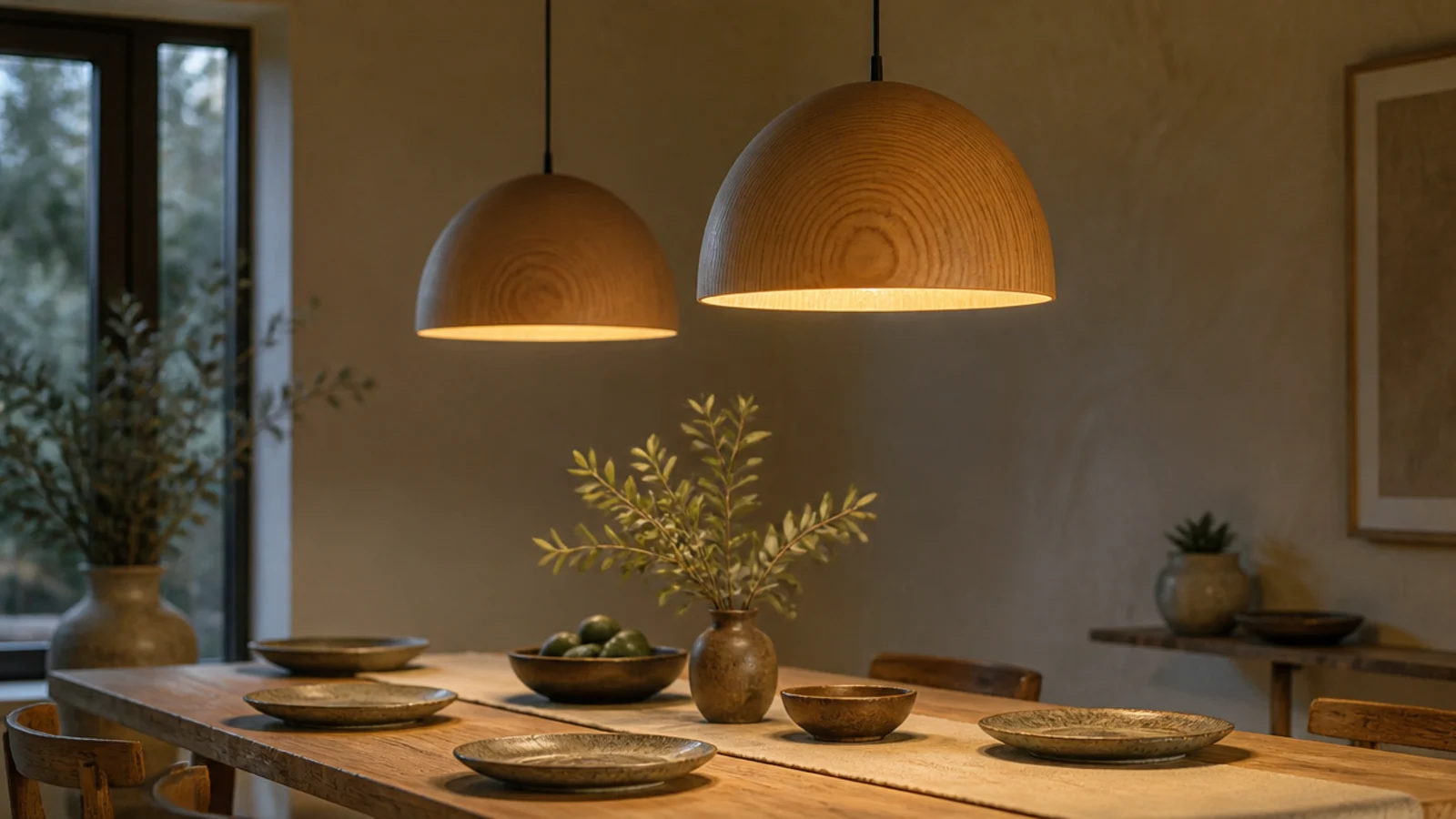
For a warm secondary glow that needs no wiring at all, aesthetic candle decor covers safe placement near bedding, and always favour an LED over a live flame within reach of a duvet. If you would rather drop the light from above and clear the table entirely, bedroom pendant lighting explains the drop heights and the rated ceiling box a hanging fixture needs.
Frequently asked questions
How many lumens should a bedside lamp be?
Between 300 and 450 lumens for reading a printed book, at 2700K or warmer. Below 250 you strain to read small type, and above roughly 500 you are lighting the whole room rather than the page. If you share a bed, a directional source at the lower end of that range beats a brighter omnidirectional one.
What colour temperature is best beside a bed?
Between 2200K and 2700K. Warmer light contains less of the short-wavelength blue that suppresses melatonin, so it interferes less with falling asleep. Anything at 4000K or above reads as office lighting in a bedroom, and it is the most common reason a well-designed room feels wrong at night.
Are cordless rechargeable lamps bright enough to read by?
The better ones are. Look for a stated output around 150 to 300 lumens on the top setting with at least three dimming steps, which is enough for a paperback held at arm reach. Battery life runs 8 to 20 hours depending on the level used, and most recharge over USB-C in two to three hours.
How high should a bedside lamp be?
The bottom edge of the shade should sit roughly level with your eyes when you are sitting up in bed, which is usually 24 to 26 inches above the mattress. Higher and you see the bare bulb; lower and the light pools on the table instead of the page. Total lamp height of 24 to 28 inches suits most beds.
What is the best bedside light if you share a bed?
A directional source that puts light on the page and nothing on the pillow beside you: a clip-on book light at 5 to 30 lumens, or a swing-arm sconce angled down over your own shoulder. Both keep spill under about eighteen inches, where a table lamp with a fabric shade throws light across the full width of the bed.
Want more like this? Browse all 15 bedside table ideas guides — they all use the same measurements and budget tiers.

Pin it for later
Save this to your Bedside Table Ideas board
Pin it now so it is waiting for you when the tape measure comes out — and so the next person hunting for this idea can find it too.
Save this pinKeep going
More ideas worth saving while you have the tape measure out.