Fairy Lights Bedroom · Review
15 LED Fairy Lights Bedroom Strings Compared

Some links on this page may become affiliate links in future. I only recommend pieces I would put in my own home — see the affiliate disclosure.
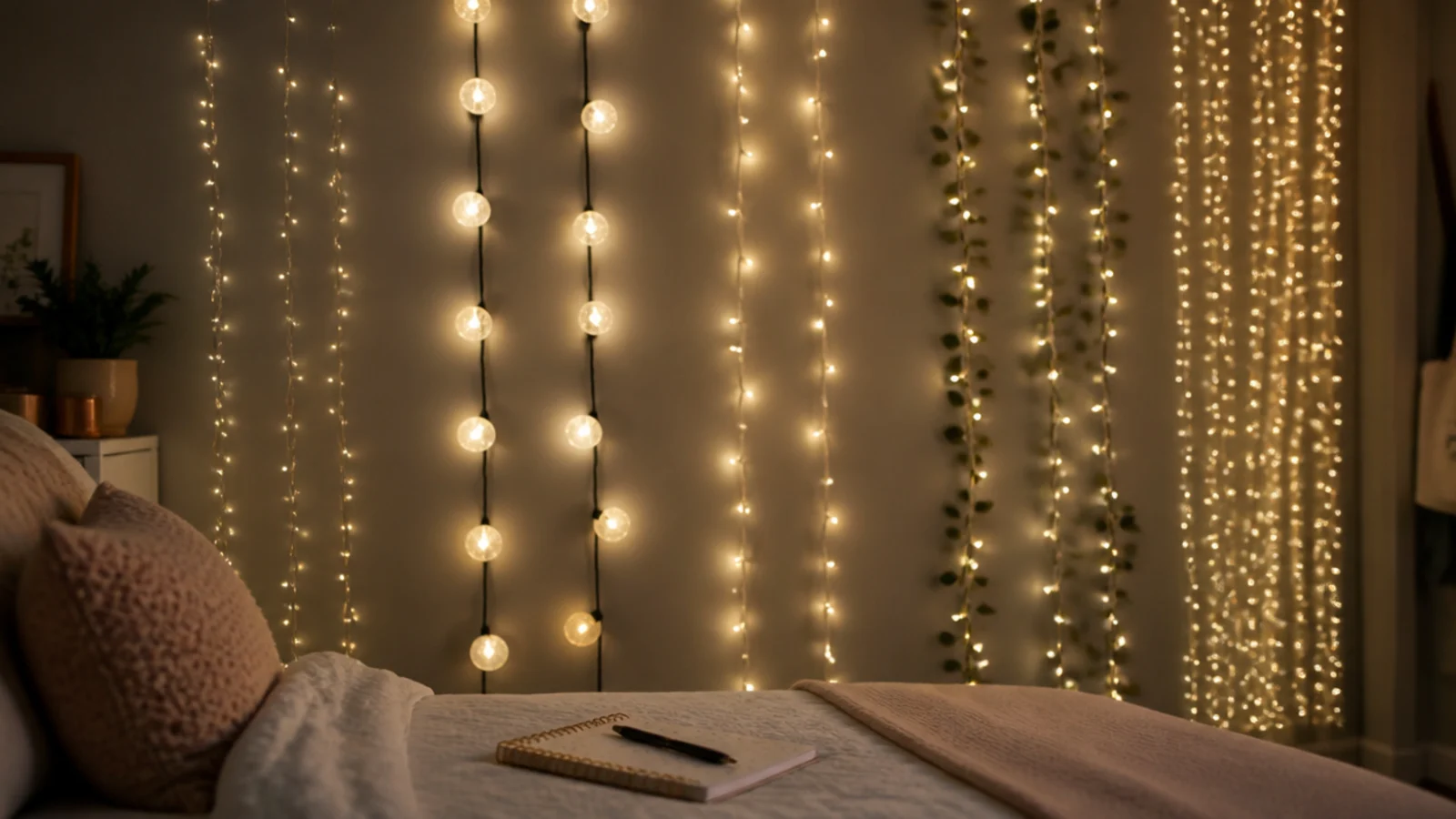
The best LED fairy lights bedroom sets are almost never the ones with the longest listing. They are the ones with a Kelvin figure printed on the box, a bulb spacing that suits the run, and a timer built in. I have bought about twenty sets across five rooms, kept roughly half, and replaced two after a single winter. Below is every type worth considering, compared on the things that actually change how a bedroom looks and feels, plus the seven I keep buying.
In this guide10 sections — tap to openHide
- 1.How I Chose These LED Fairy Lights Bedroom Strings
- 2.The Full Comparison: 15 LED String Types
- 3.The warm white copper wire USB strand
- 4.The battery strand with a built-in timer
- 5.The G40 globe strand
- 6.The curtain light panel
- 7.The photo clip strand
- 8.The plain strand on a smart plug
- 9.The commercial-grade low-voltage strand
- 10.What to Check Before You Buy
How I Chose These LED Fairy Lights Bedroom Strings
I judged every type on five things, in this order.
- Colour temperature. The single biggest factor, and the one most often left off the packaging. Anything at 2000K to 2200K reads like candlelight; 2700K is a warm bulb; 3000K and above turns a bedroom into a corridor. A set with no Kelvin figure printed anywhere is a set I put back.
- Bulb spacing and length together. Copper wire sets space LEDs about 4 inches apart, so 100 LEDs is roughly 33 feet. Spacing decides whether a run reads as a line of dots or a wash, and it matters far more than the raw bulb count in the listing headline.
- Power and run time. A 100 LED strand draws under 5 watts, so plug and USB sets cost almost nothing to run. Battery sets eat three AA cells in under a week at six hours a night unless they have a built-in six hour timer, which roughly quadruples the life of a set of cells.
- Cable quality. The bulbs almost never fail. The cable does, usually at a moulded joint or a pinch point. I looked for a properly moulded connection at the pack or transformer and a sheath thick enough to survive being clipped and re-clipped.
- Price per foot. A plain warm white strand should land at 25 to 40 cents a foot. Above 60 cents you are paying for a remote, a receiver or a colour chip. I weighted plain sets heavily, because the money is better spent on a second strand.
I did not weight brand, packaging or how a set photographs against a white studio wall. Everything below is described by type and construction, because the same strand appears under a dozen different labels and construction is what you are buying. For the layouts these go into, the main ideas guide has twenty-five worked out.
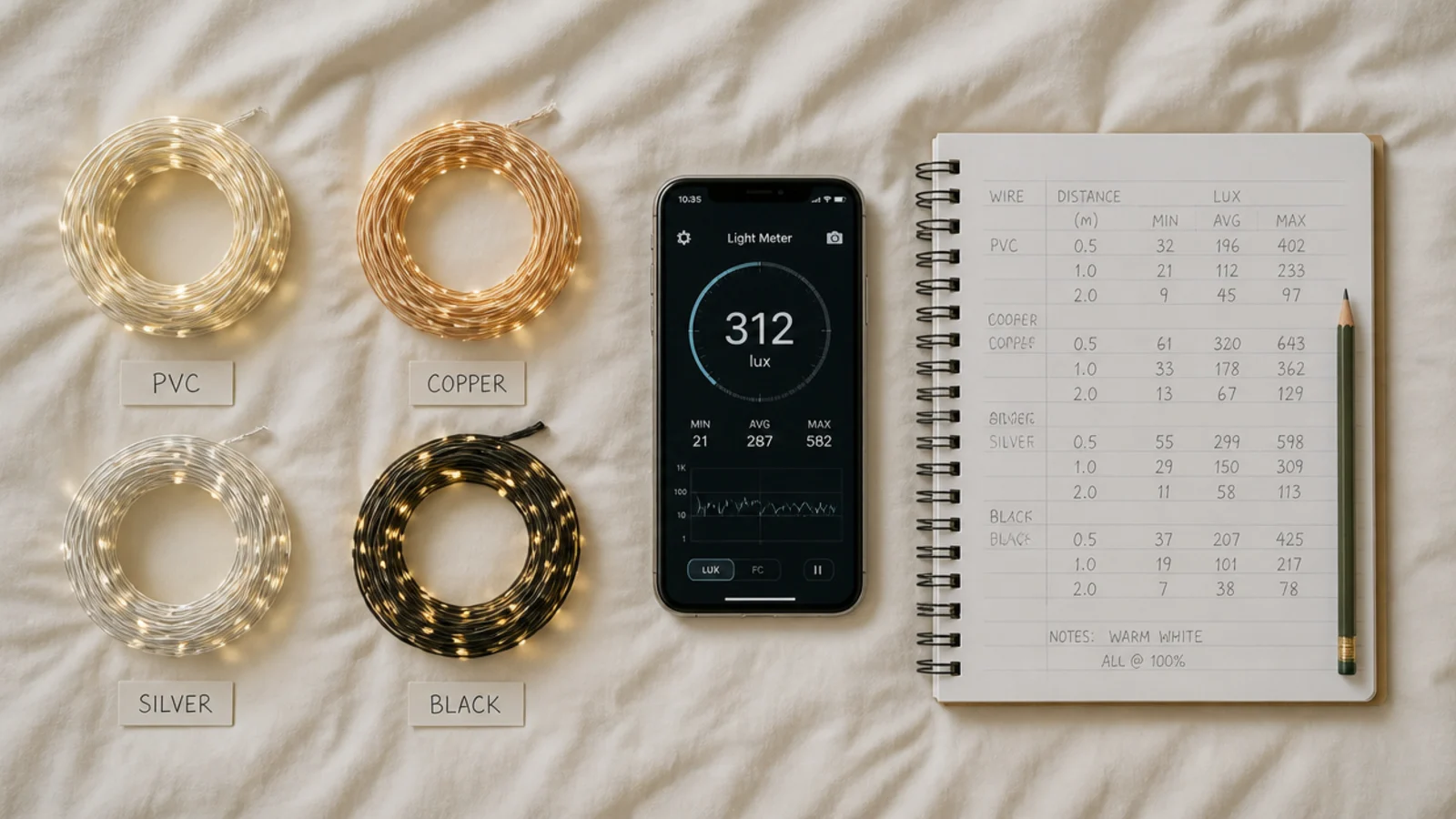
The Full Comparison: 15 LED String Types
Price tiers: $ under $15 · $$ $15–$40 · $$$ $40+. Lengths and counts are the common retail sizes, and lumen figures are for the whole strand rather than per bulb.
| Type | Best for | Typical length and count | Power | Price |
|---|---|---|---|---|
| Copper wire micro LED, USB | Almost every bedroom layout | 33 ft, 100 LEDs at 4 in spacing | USB, under 5 W | $ |
| Copper wire micro LED, battery | Corners with no socket nearby | 16 ft, 50 LEDs, three AA cells | 18–24 hrs per cell set | $ |
| Enamelled silver wire micro LED | Pale walls where wire must vanish | 33 ft, 100 LEDs, very fine wire | USB or plug | $ |
| Green wire mini LED | Foliage, garlands and vines | 33 ft, 100 LEDs at 4 in spacing | Plug, low voltage | $ |
| Clear wire mini LED | Ceiling star fields | 33 ft, 100 LEDs on clear wire | Plug, low voltage | $ |
| G40 globe strand | A real light source on a wall | 25 ft, 25 bulbs at 12 in spacing | Plug, roughly 25 W | $$ |
| G45 café globe strand | Balconies and heavier looks | 48 ft, 24 bulbs at 24 in spacing | Plug, roughly 24 W | $$ |
| Curtain light panel | Instant full wall coverage | 10 by 10 ft, around 300 LEDs | Plug, under 15 W | $$ |
| Net light | Fast cover on a small panel | 6 by 4 ft rigid mesh grid | Plug, under 10 W | $ |
| Photo clip strand | Print displays and gallery walls | 10 ft with 20 wooden clips | Battery or USB | $ |
| Cork bottle insert | Jars, bottles and small vessels | 6.5 ft, 20 LEDs on a cork cap | Button cells | $ |
| Colour-changing RGB micro strand | Rooms that want a colour option | 33 ft, 100 LEDs, remote receiver | Plug or USB | $ |
| App-controlled smart string | Scenes and voice control | 33 ft, 100 LEDs, wifi module | Plug, under 8 W | $$ |
| Solar LED string at a window | Sills with strong daylight | 33 ft, 100 LEDs, small panel | Solar, 6–8 hrs after full sun | $ |
| Commercial-grade 24 V strand | Sets you will re-hang for years | 33 ft, heavier gauge, transformer | Plug, low voltage | $$$ |
Seven of those are the ones I keep buying.
1. The warm white copper wire USB strand
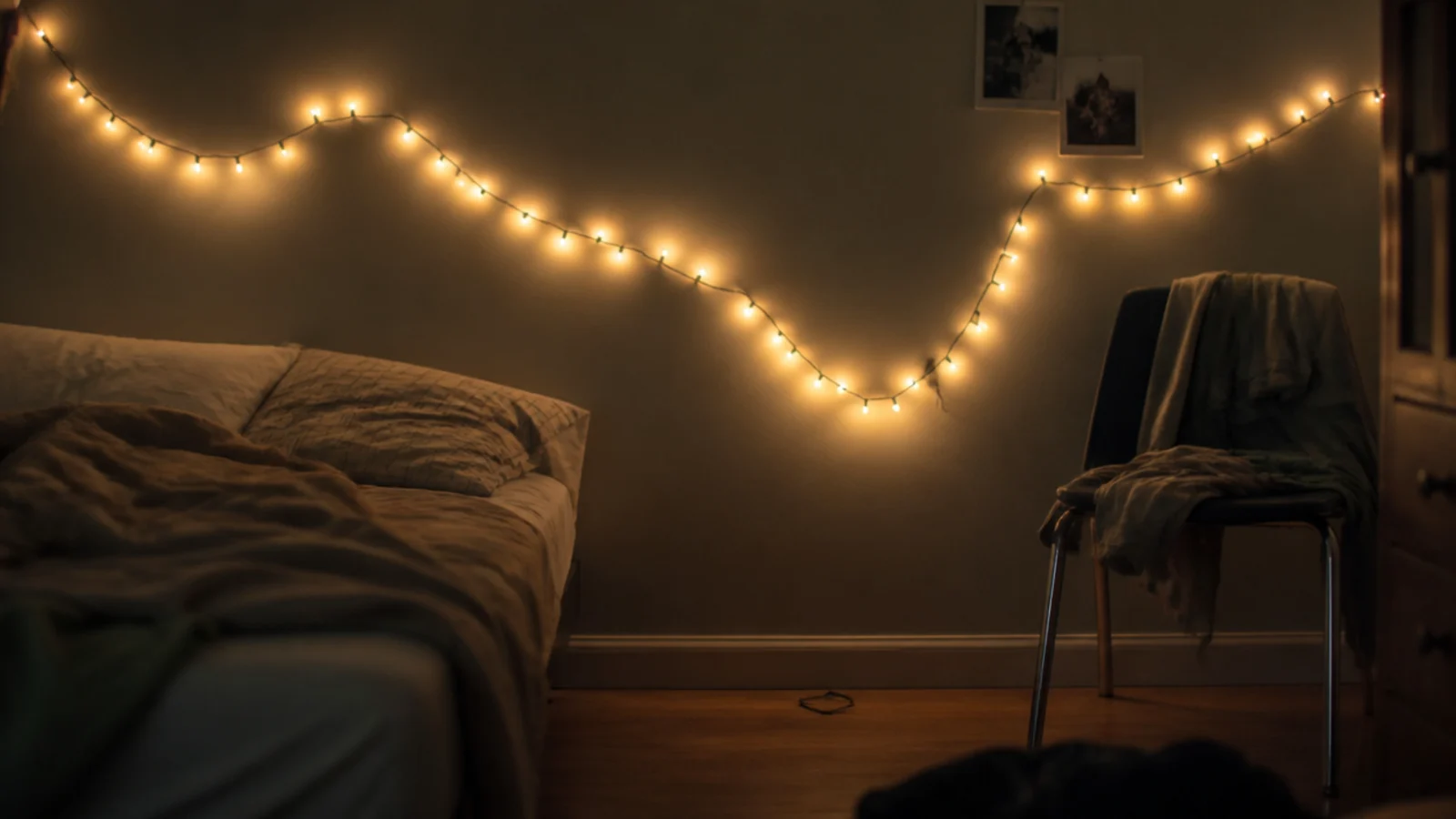
The default, and about two thirds of the string lighting in my flat. Hair-fine wire, LEDs at roughly 4 inch spacing, 33 feet for 100 bulbs, and a total output near 40 to 60 lumens.
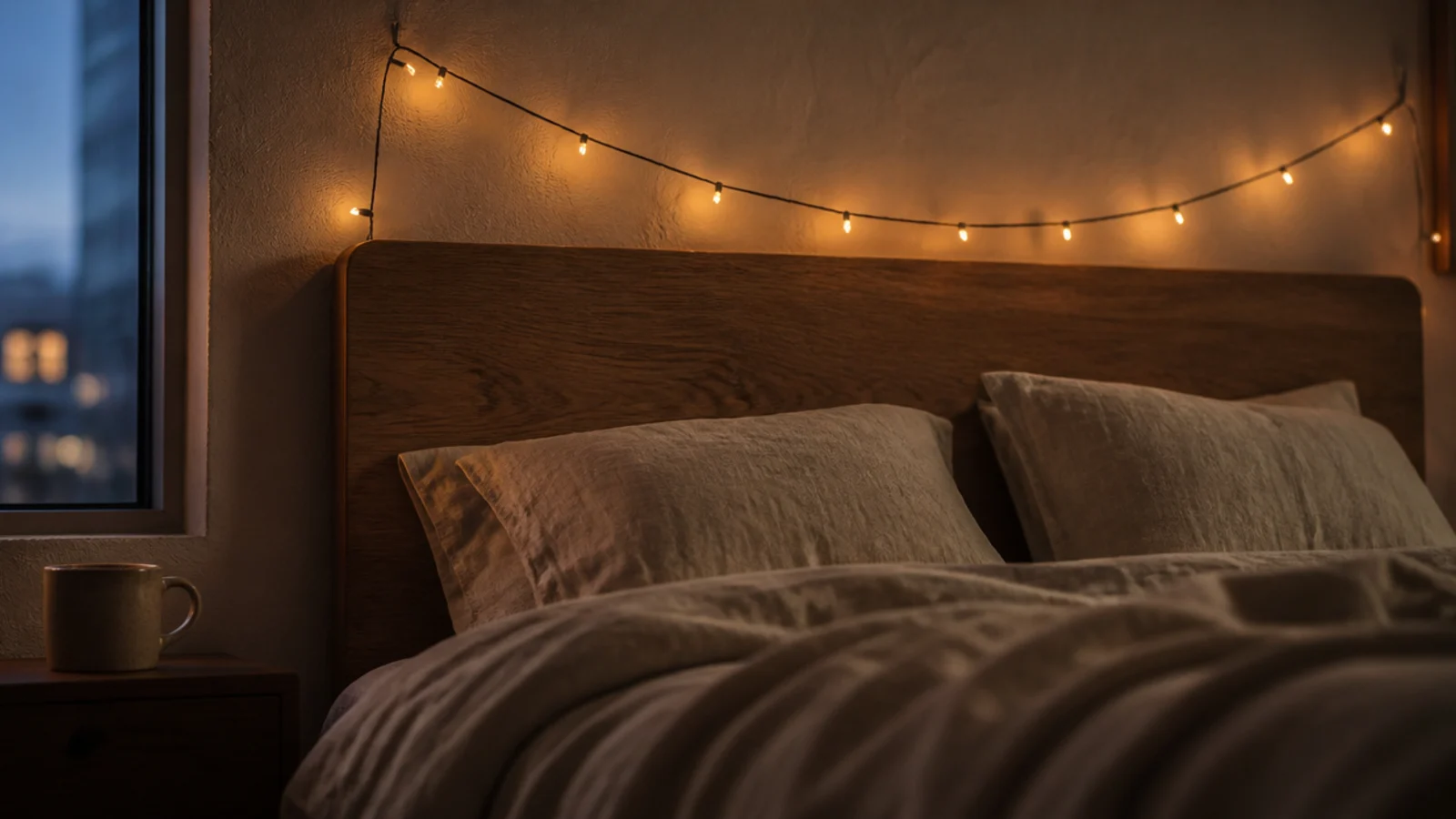
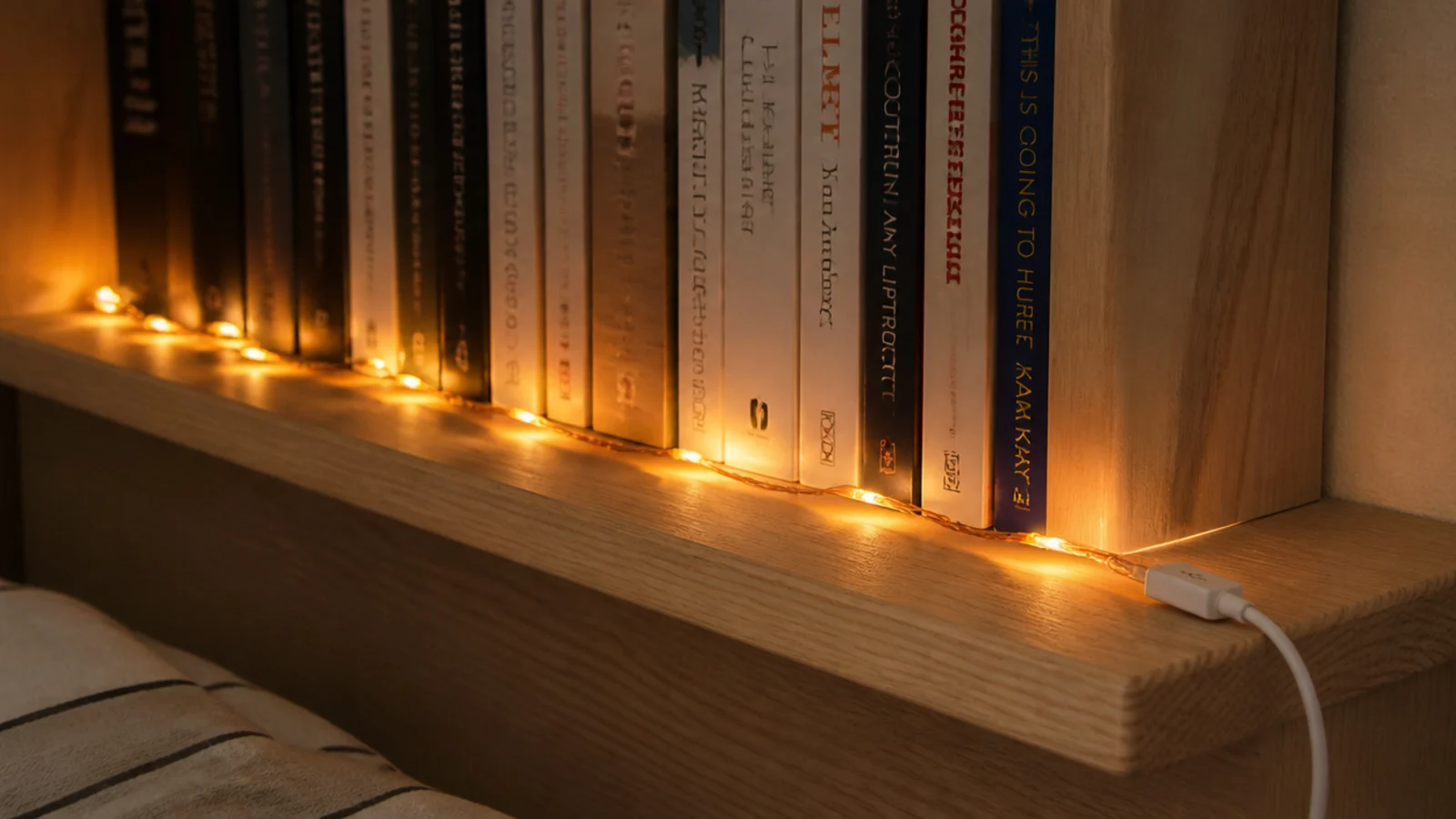
It works because the wire disappears. Bent by hand it holds a shape, which means you can set a curve above a headboard and it stays. USB power means a phone brick or a power bank runs it, and the whole set weighs about 3.5 ounces so half-pound clips have six times the margin they need. Expect $8 to $14, and buy the 2200K version rather than anything vaguer.
2. The battery strand with a built-in timer
The same strand without the cable problem, and the timer is the entire reason to choose one version over another.
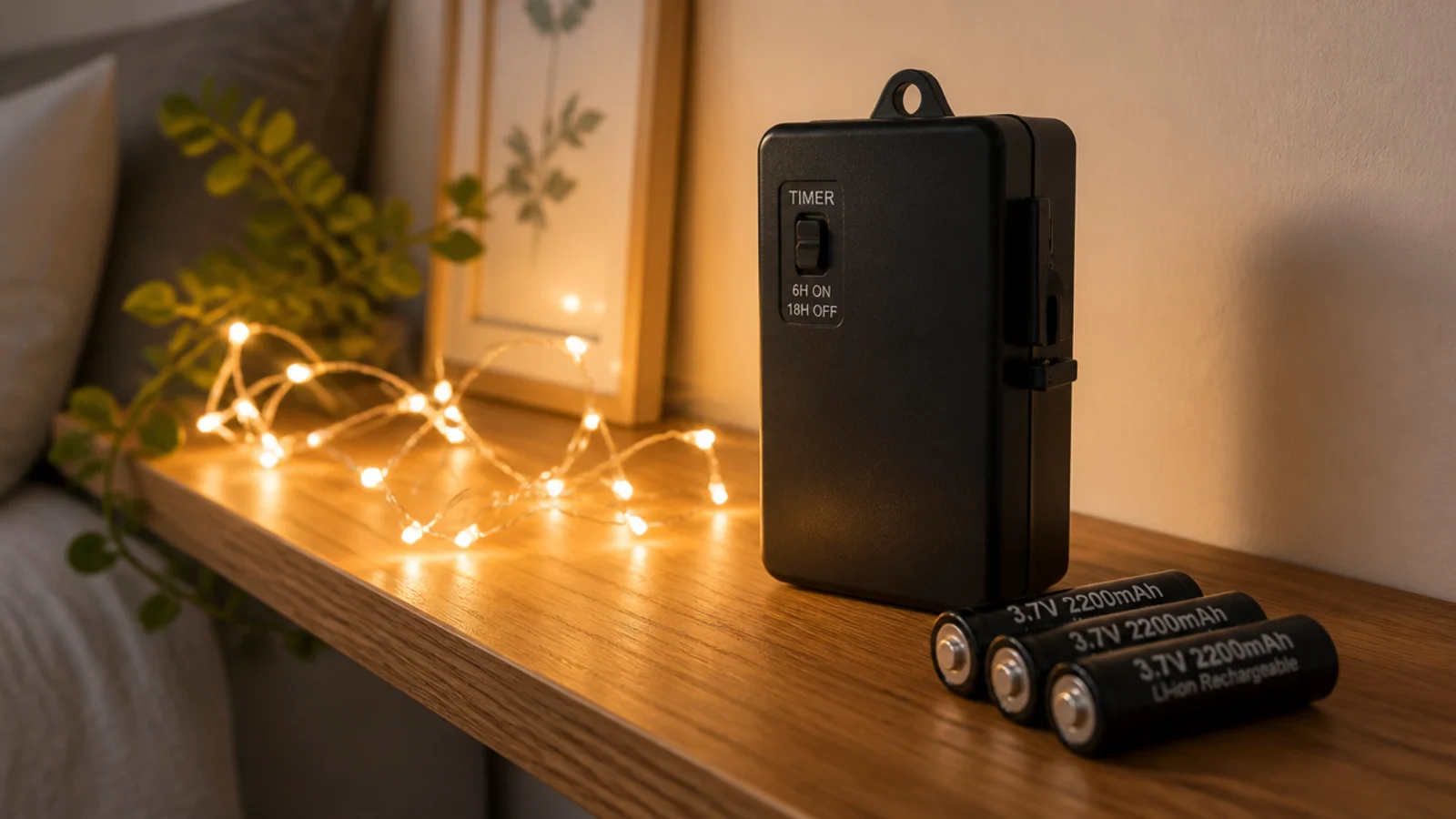
Three alkaline AA cells run 100 LEDs for 18 to 24 hours continuously, which is under a week at six hours a night. With the six hour timer switched on, a set of rechargeable cells lasts about a month. The pack has to sit in open air — on a shelf, in an open basket, clipped to a wall — never buried in bedding or a cushion where it cannot lose heat or be reached. Expect $6 to $12.
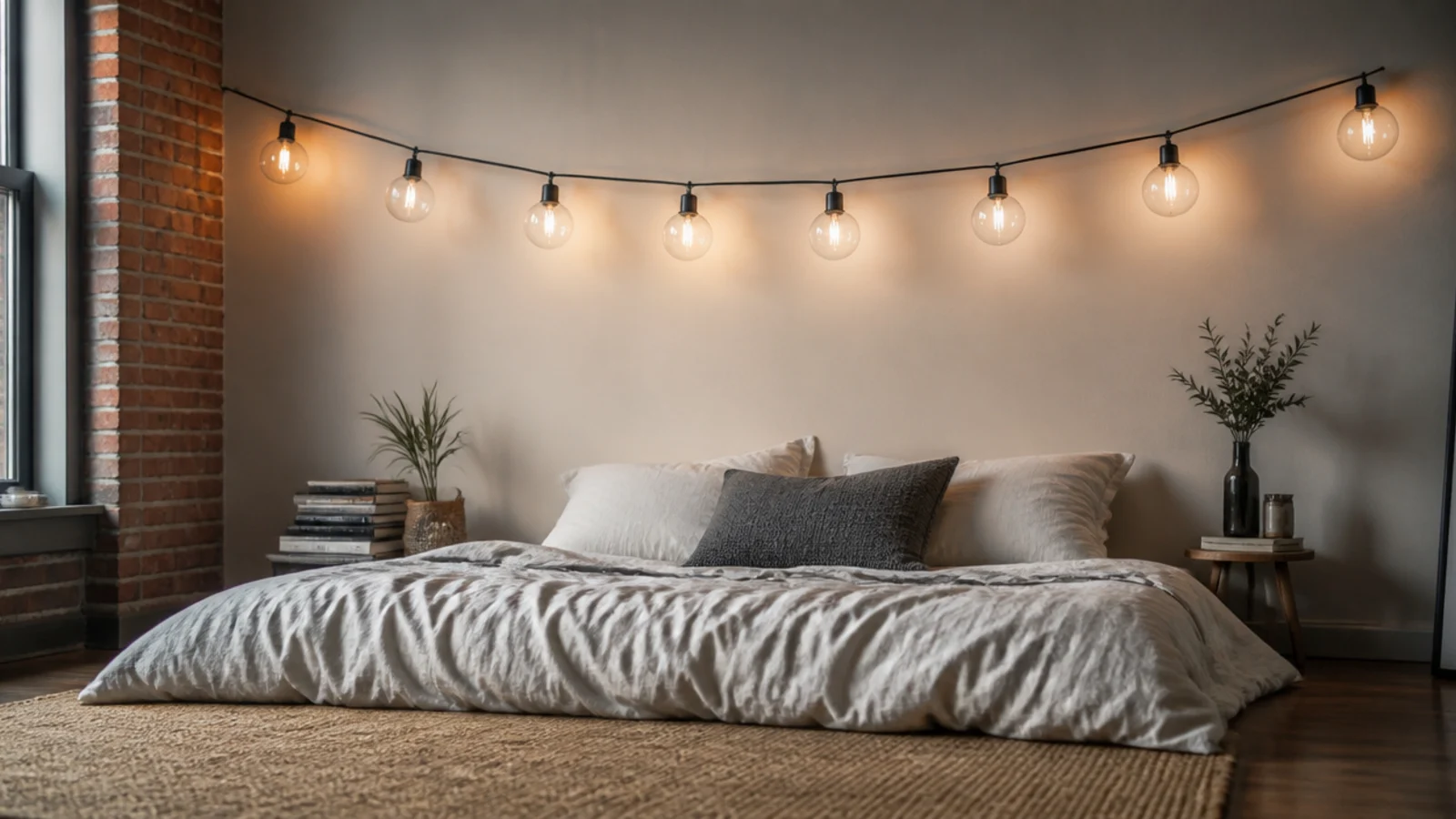
3. The G40 globe strand
The only type here that produces enough light to genuinely change a room rather than decorate it. Twenty-five one-watt bulbs at 12 inch spacing give roughly 300 to 400 lumens across 25 feet.
The trade is weight. A globe strand with a heavy black cable needs proper fixings — hooks into something solid rather than adhesive pads, particularly on a ceiling run. Buy the shatterproof plastic bulbs rather than glass for a bedroom, and check the bulbs are replaceable individually. Expect $25 to $40, and treat it as a fixture rather than a decoration.
4. The curtain light panel
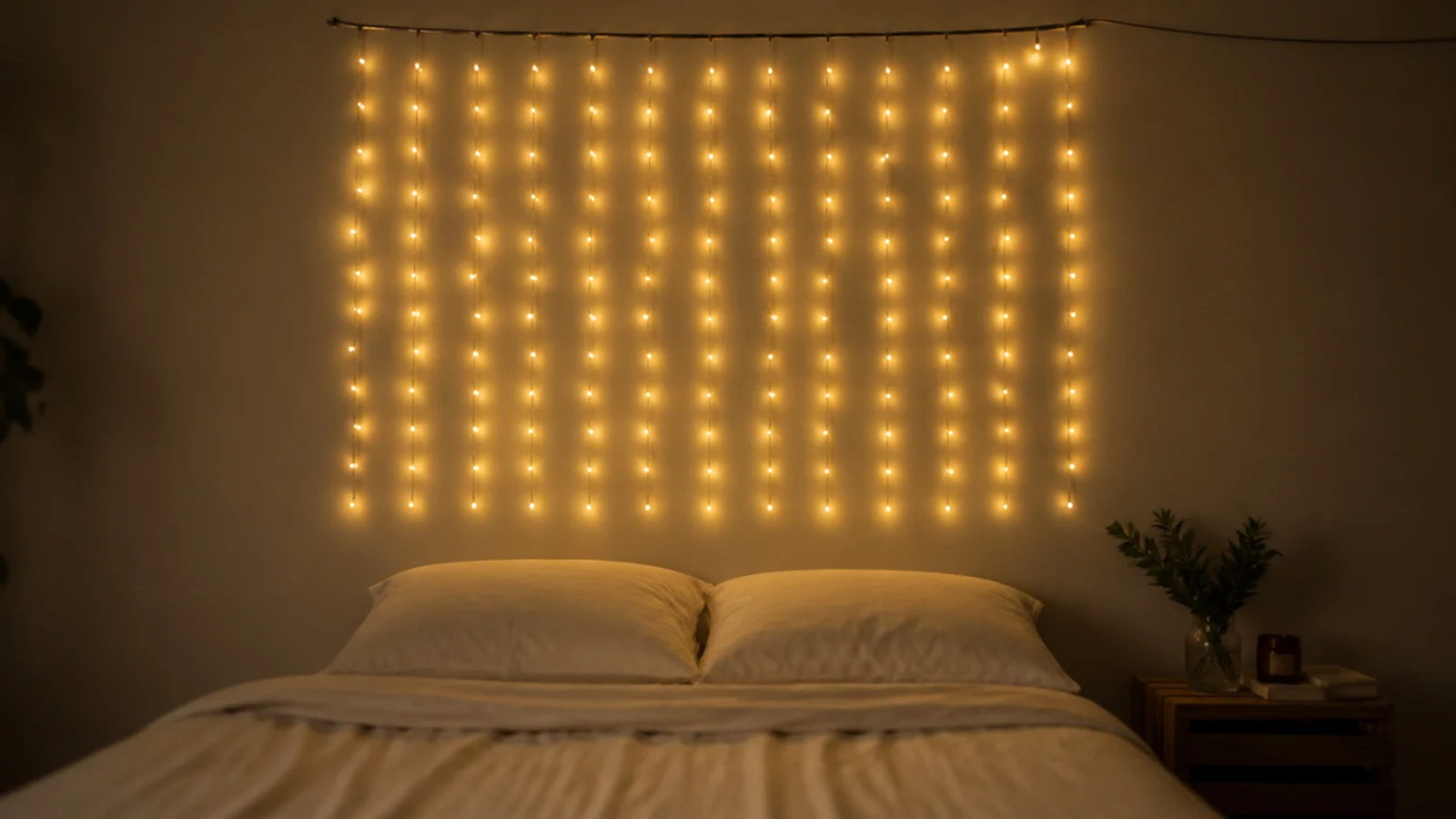
Fast coverage of a whole wall, and the one I have the most mixed feelings about. A 10 by 10 foot panel with 300 LEDs costs $15 to $25 and goes up in twenty minutes.
The catch is that the drop spacing is fixed at whatever the factory chose, usually 8 to 10 drops across 10 feet, and you cannot change it. Five separate strands hung as drops cost about the same and let you set your own spacing. Buy the curtain if you want the wall covered this evening; buy strands if you want it right.
5. The photo clip strand
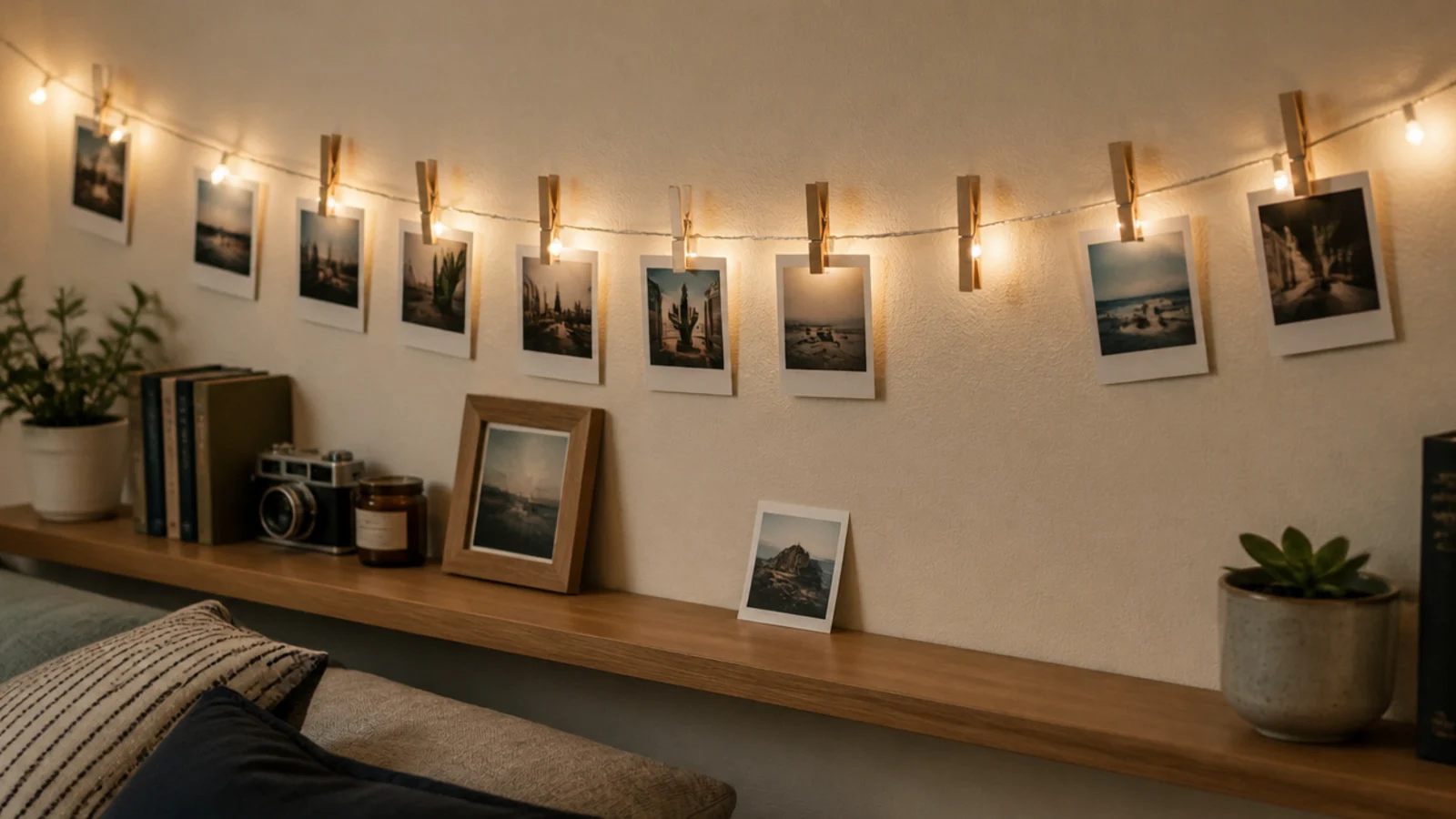
A 10 foot strand with 20 small wooden clips at $8 to $12, and the only set on this list that gives you something to do rather than something to look at.
The clips take a 4 by 6 print easily and nothing heavier — card and paper only, never a framed piece. Prints at drugstore sizes cost about 20 cents each, so a full wall lands under $15 against $60 or more in frames. Run it on its own clips rather than pinning the cable, and swap the prints seasonally.
6. The plain strand on a smart plug
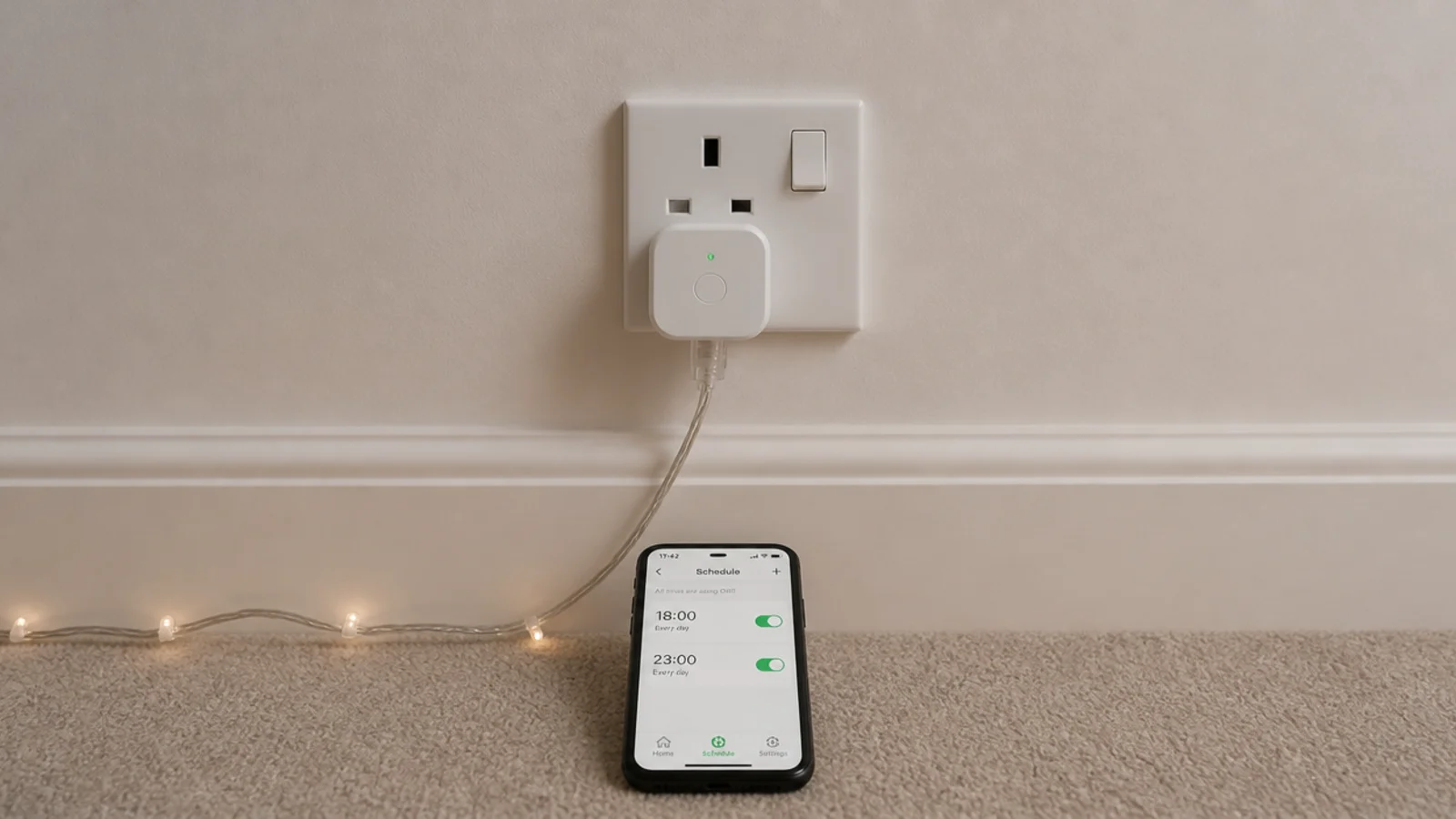
Not a set at all, but the combination I recommend most often. A plain warm white strand plus a $10 to $15 smart plug gives you scheduling, sunset triggers and voice control without a receiver box moulded into the cable.
App-controlled strings cost $25 to $40 and put their electronics in the visible part of the run. The plug keeps all of that at the socket where nobody looks, works with every strand you already own, and moves house with you. It is the single best $12 in this article.
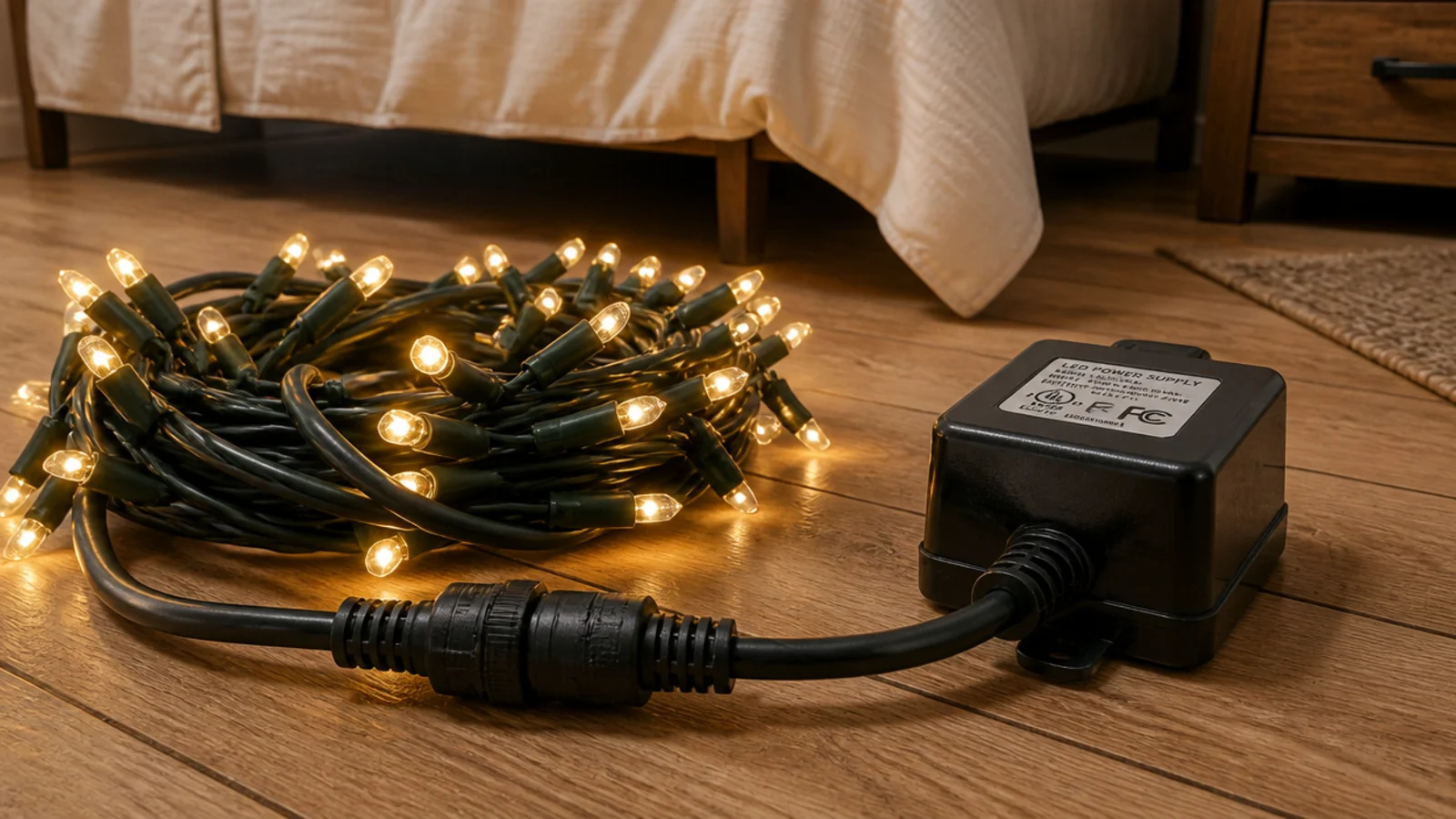
7. The commercial-grade low-voltage strand
Heavier gauge cable, a proper transformer and moulded connectors rated for repeated use. It costs $40 to $80 for 33 feet against $10 for a copper wire set, which sounds absurd until you have replaced the cheap one three times.
This is the type to buy for a run you will take down and re-hang each year, or for a set that has to survive being coiled into a box between houses. Check the stated maximum number of sets you may connect end to end before you buy two, because that number is a current limit for the first plug in the chain rather than a suggestion. There is more on the fixings in my hanging mistakes.
What to Check Before You Buy
Find the Kelvin figure. If it is not printed on the box or in the specification, assume the worst. Warm white as a phrase covers everything from 2200K to 3500K, and the difference between the two ends of that range is the difference between a bedroom and a stairwell.
Check bulb spacing, not just bulb count. Two hundred LEDs sounds generous until you find they are spread over 66 feet at the same 4 inch spacing as a 100 LED set. Spacing decides density; length decides coverage; the headline number tells you neither on its own.
Read the daisy-chain limit on the tag. Every set states the maximum number you may connect end to end. It is a current limit for the first plug in the chain, and exceeding it overheats that connector. If a far corner needs light, run a second strand on its own plug rather than a longer chain.
Insist on LED for anything near fabric. LED bulbs sit close to body temperature while incandescent minis reach 60°C and up. Near a duvet, a canopy or curtains, LED is the only sensible choice, and the strand should be draped rather than wrapped so air moves around it.
Look at where the pack or transformer sits. It needs open air and it needs reaching when something fails. A driver designed to be buried behind a headboard, or a battery box with no accessible cover, is a set that becomes rubbish the first time a cell leaks.
Check the return window before the first hour. Dead sections on sealed copper wire strands cannot be repaired. Lay every new set out flat, plug it in and walk its length before a single clip goes on the wall.
Buy two shorter sets rather than one long one. Low-voltage runs dim along their length, so the far end of a 66 foot strand reads visibly weaker. Two 33 foot sets fed from opposite ends cost the same, light evenly, and a failure takes out half a wall rather than all of it.
Frequently asked questions
What are the best LED fairy lights for a bedroom?
A warm white copper wire strand at 2000K to 2200K, 33 feet with 100 LEDs, run from USB or a plug with a timer. It costs $8 to $14, weighs about 3.5 ounces and suits almost every layout. Everything else on this list is a specialised version of that basic set.
How many lumens do LED fairy lights produce?
A 100 LED copper wire strand puts out roughly 40 to 60 lumens spread across 33 feet, which is atmosphere rather than task light. A 25 foot G40 globe strand with 25 one-watt bulbs gives more like 300 to 400 lumens in total, enough to light a corner but still not enough to read by comfortably.
Are LED fairy lights safe to use near bedding?
LED strings are the only type I would use anywhere near a duvet, a canopy or curtains, because the bulbs sit close to body temperature while incandescent minis reach 60°C and up. Keep the driver or battery pack in open air, never tuck a strand into bedding, and never run a cable under a rug.
How long do battery LED fairy lights run?
Three AA cells give roughly 18 to 24 hours of continuous light on a 100 LED strand, which is under a week at six hours a night. Sets with a built-in six hour timer stretch a set of rechargeable cells to about a month, and they cost the same as sets without one.
Is it worth buying smart or colour-changing LED strings?
Rarely, in a bedroom. The colour settings get used once or twice and the receiver box moulded into the cable is visible from the doorway. A plain warm white strand on a $12 smart plug gives you scheduling and voice control without any of that, and it costs less.
Buy warm, buy plain, and put the cleverness in a smart plug rather than in the cable. If you want to see how each type behaves over a longer stretch, a year of tested looks has the honest verdicts, aesthetic candle decor covers the flameless glow that pairs with the same warm palette, and hanging lights in a bedroom is the guide when a decorative strand is no longer enough light. Save the pin for the next shopping trip.
Want more like this? Browse all 15 fairy lights bedroom guides — they all use the same measurements and budget tiers.

Pin it for later
Save this to your Fairy Lights Bedroom board
Pin it now so it is waiting for you when the tape measure comes out — and so the next person hunting for this idea can find it too.
Save this pinKeep going
More ideas worth saving while you have the tape measure out.