Teen Boy Bedroom · Listicle
20 Creative Teen Boy Sports Bedroom Ideas To Copy

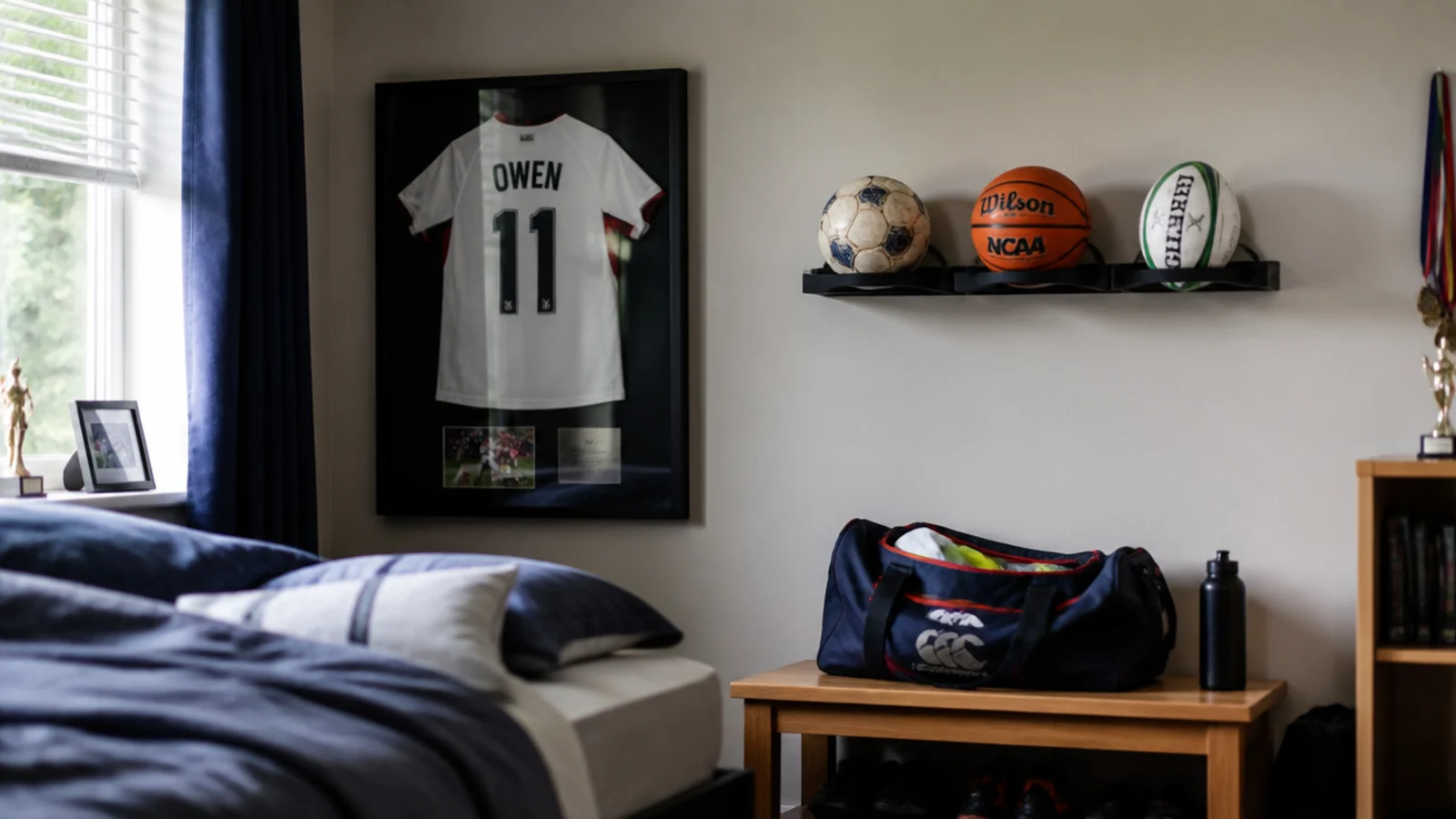
A sports room fails on storage long before it fails on decoration. The kit is bulky, some of it is wet, some of it is muddy, and none of it fits in a drawer. A teen boy sports bedroom that works is really a small equipment room with a bed in it, and the decisions that matter are where the bag lives, where wet kit dries, and how the display gets edited so it reads as a record rather than a shop window. I have done several of these and the same three things go wrong every time. Here are twenty ideas that fix them, with the dimensions attached.
In this guide22 sections — tap to openHide
- 1.What a teen boy sports bedroom has to store
- 2.Keep team colours in the accents
- 3.Size the kit storage to the actual bag
- 4.Rack the balls on the wall
- 5.Frame one shirt properly
- 6.Air the kit rather than hiding it
- 7.Put a bench by the door for boots
- 8.Keep the trophy shelf shallow
- 9.Hang the medals on a rail
- 10.Give fixtures and numbers a pinboard
- 11.Choose vintage over new merchandise
- 12.Paint a court line, not a mural
- 13.Fix the hoop to the frame, not the door
- 14.Light the display, not the ceiling
- 15.Use a floor that survives studs and weights
- 16.Keep the weights over the joist ends
- 17.Build a stretch and recovery corner
- 18.Add a rail for wet kit
- 19.Build a bottle and gear station
- 20.Use numbers and type, not logos
- 21.Rotate the display every season
- 22.Mistakes to Skip
What a teen boy sports bedroom has to store
Measure the actual kit before planning anything. A hockey or full kit bag is commonly around 36 by 18 by 18 inches, which is four cubic feet and needs its own floor space — it will never go in a wardrobe. A size 7 basketball is 9.5 inches across, a size 5 football about 8.7. Boots need a tray, not a shelf, because mud dries and falls.
Then the wet problem. Damp kit sealed in a bag or a lidded box is what creates the smell, and it also pushes bedroom humidity up. Keep relative humidity under about 60 percent, hang wet things on an open rail, and open the window while they dry. A closed room with drying kit in it will grow mould behind the wardrobe within a season.
Last, editing. Six items on display read as a collection; thirty read as clutter. Everything else goes in a labelled, dated box. For the boot-and-bag zone by the door, entryway ideas has bench and tray layouts that work just as well in a bedroom.
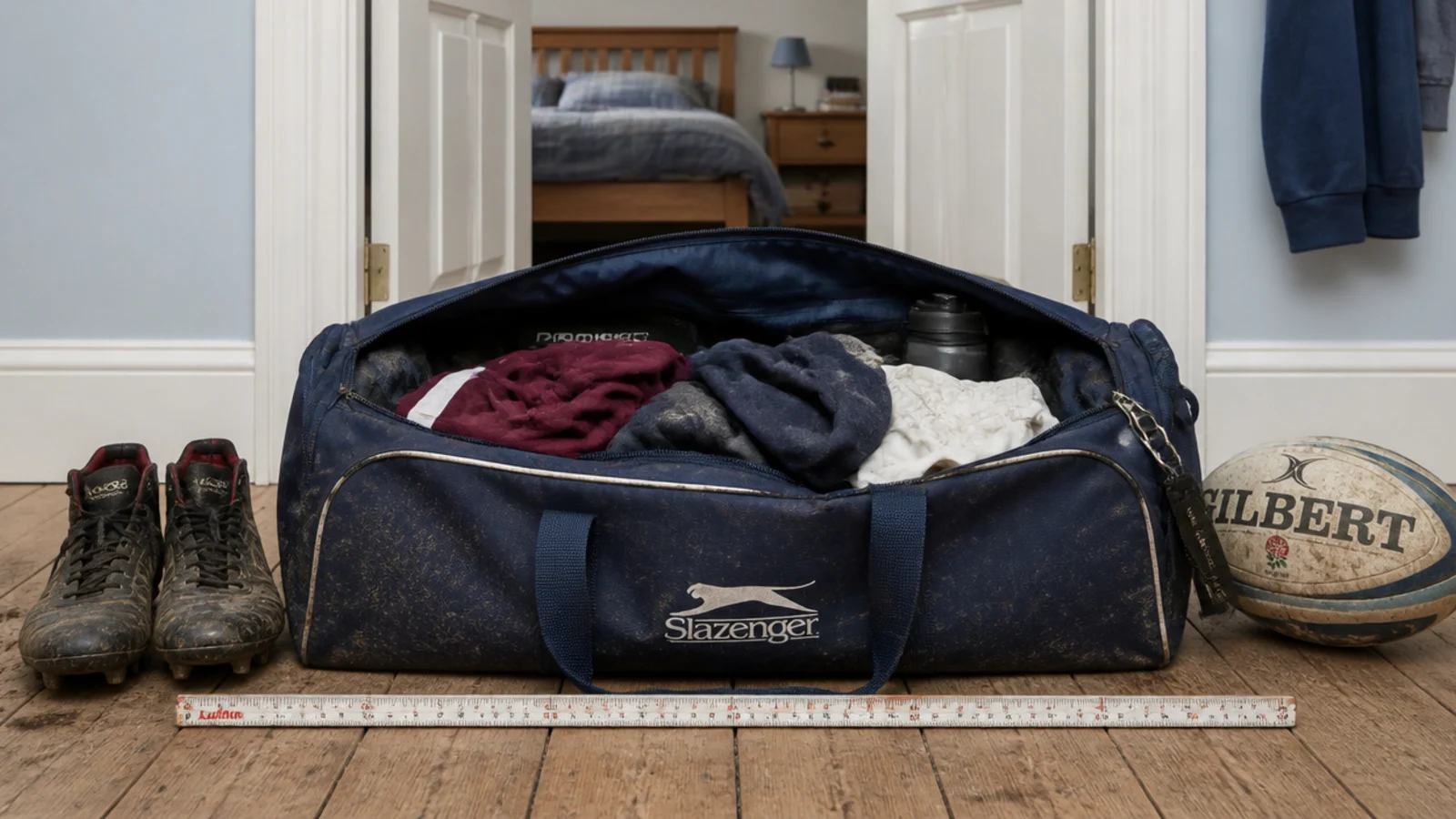
1. Keep team colours in the accents
A room painted in club colours dates the moment he changes club, changes sport, or turns seventeen. Keep the walls neutral — greige or warm grey around an LRV of 55 to 62 — and let the colour arrive through a blanket, a cushion and one framed print. Those three things cost under $80 to change completely, and a repaint does not.
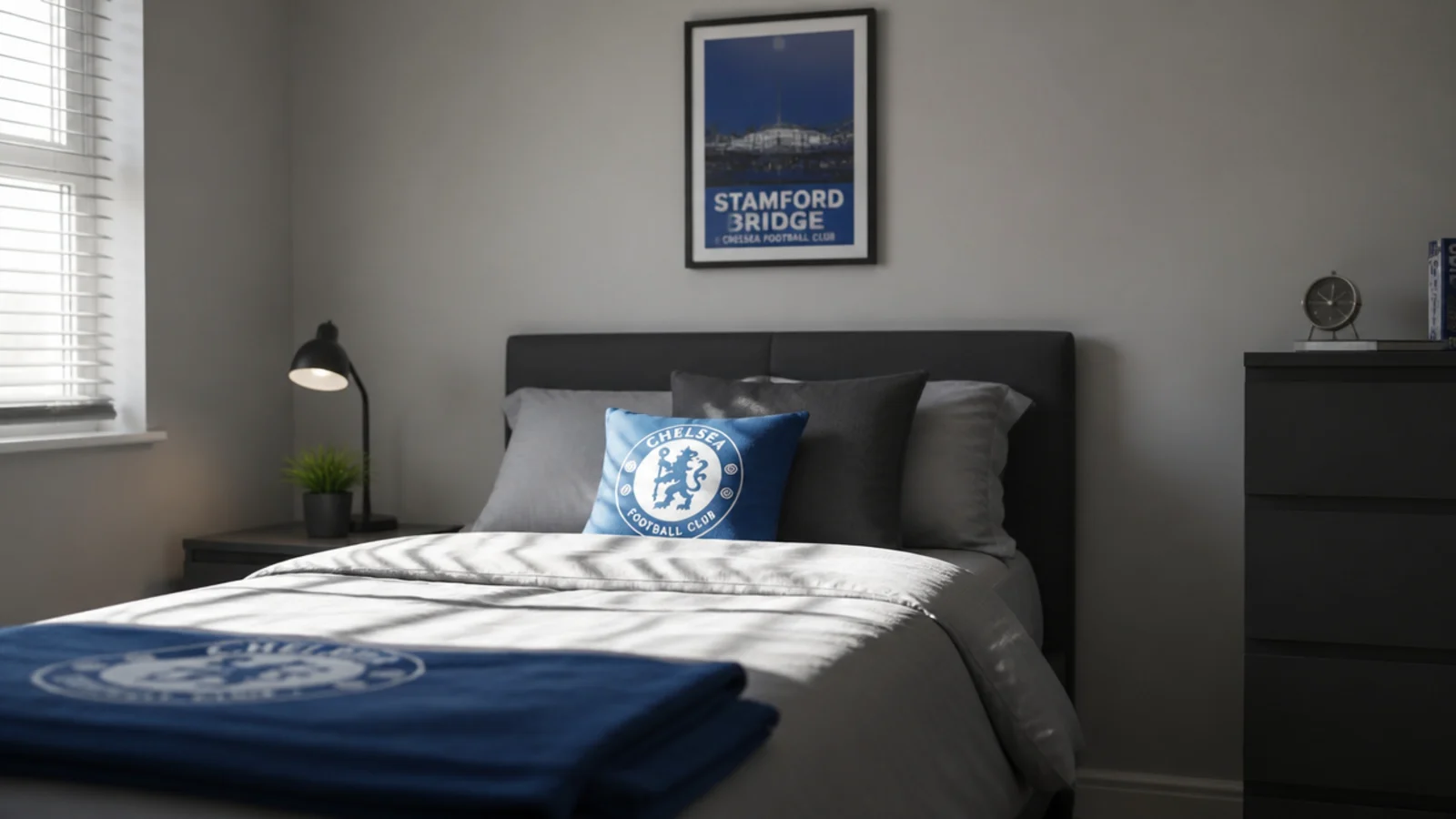
2. Size the kit storage to the actual bag
The bag is the biggest single object in the room after the bed. Measure it loaded, add four inches, and build or buy to that. An open cubby under a bench is better than a cupboard because the bag goes back in one movement — anything requiring a door to be opened and the bag to be lifted will end up on the floor instead.
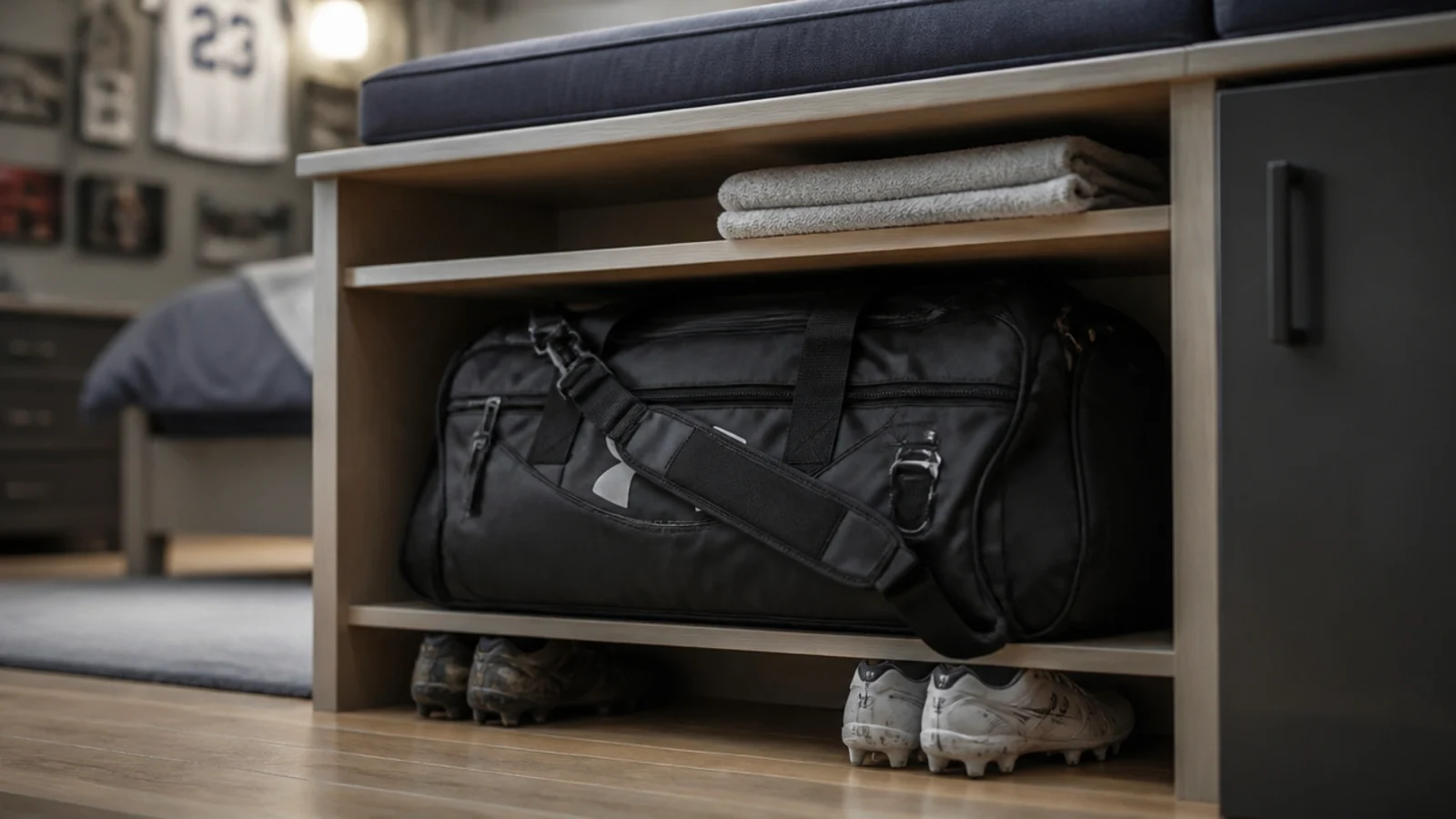
3. Rack the balls on the wall
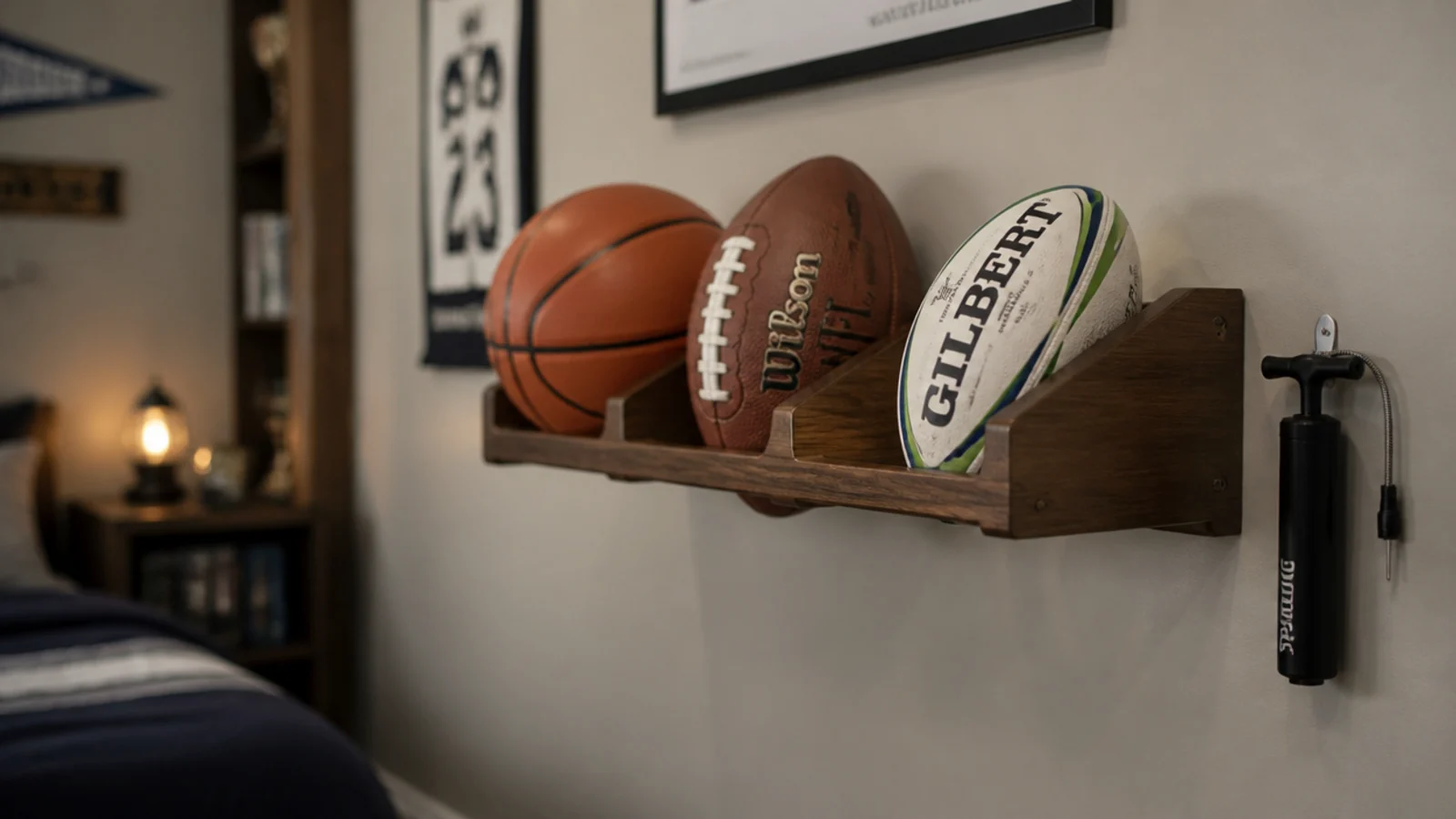
Balls roll, get trodden on and end up under the bed. A wall rack holding three at $25 to $50 keeps them visible and off the floor, and it reads as display rather than storage. Fix into a stud — three balls is only about six pounds, but the rack gets grabbed at, which is shock loading rather than dead weight.
4. Frame one shirt properly
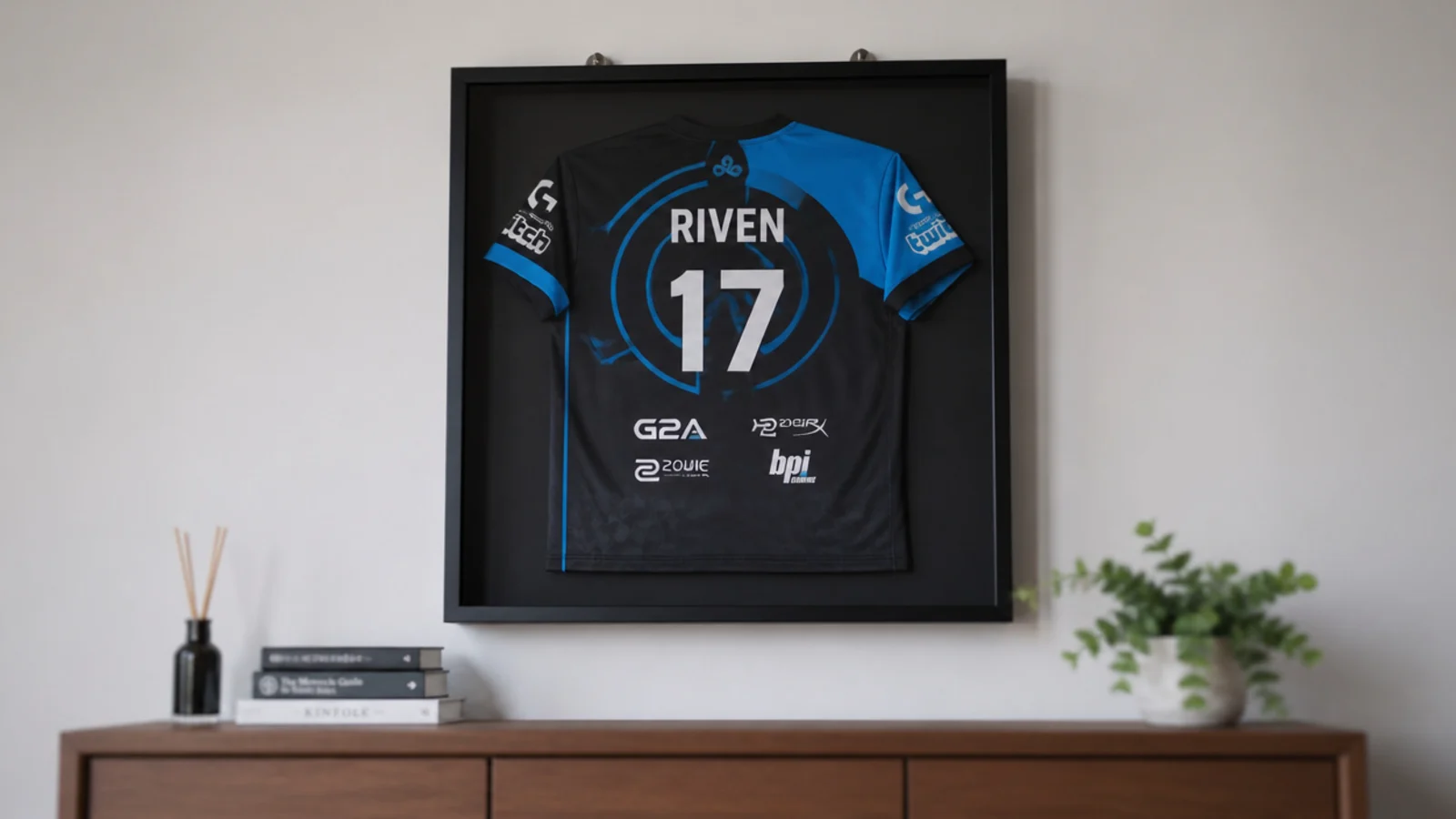
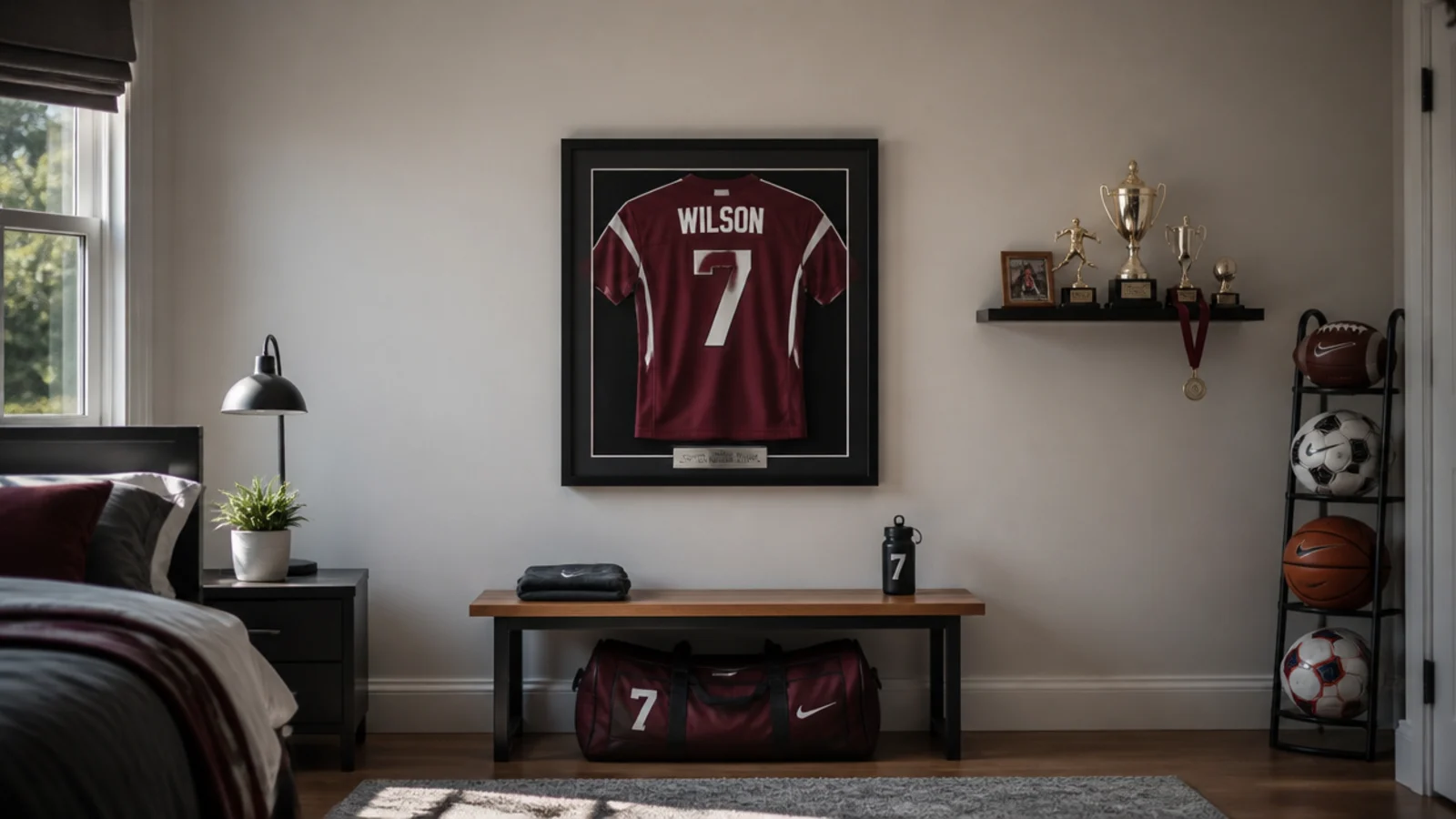
A signed or first-team shirt mounted flat in a shadow box at roughly 32 by 40 inches is a genuine centrepiece, and it costs $60 to $150 framed. Pinning six shirts to a wall is not the same thing at all. A large shadow box weighs 8 to 12 pounds, so use two hooks spread wide into studs.
5. Air the kit rather than hiding it
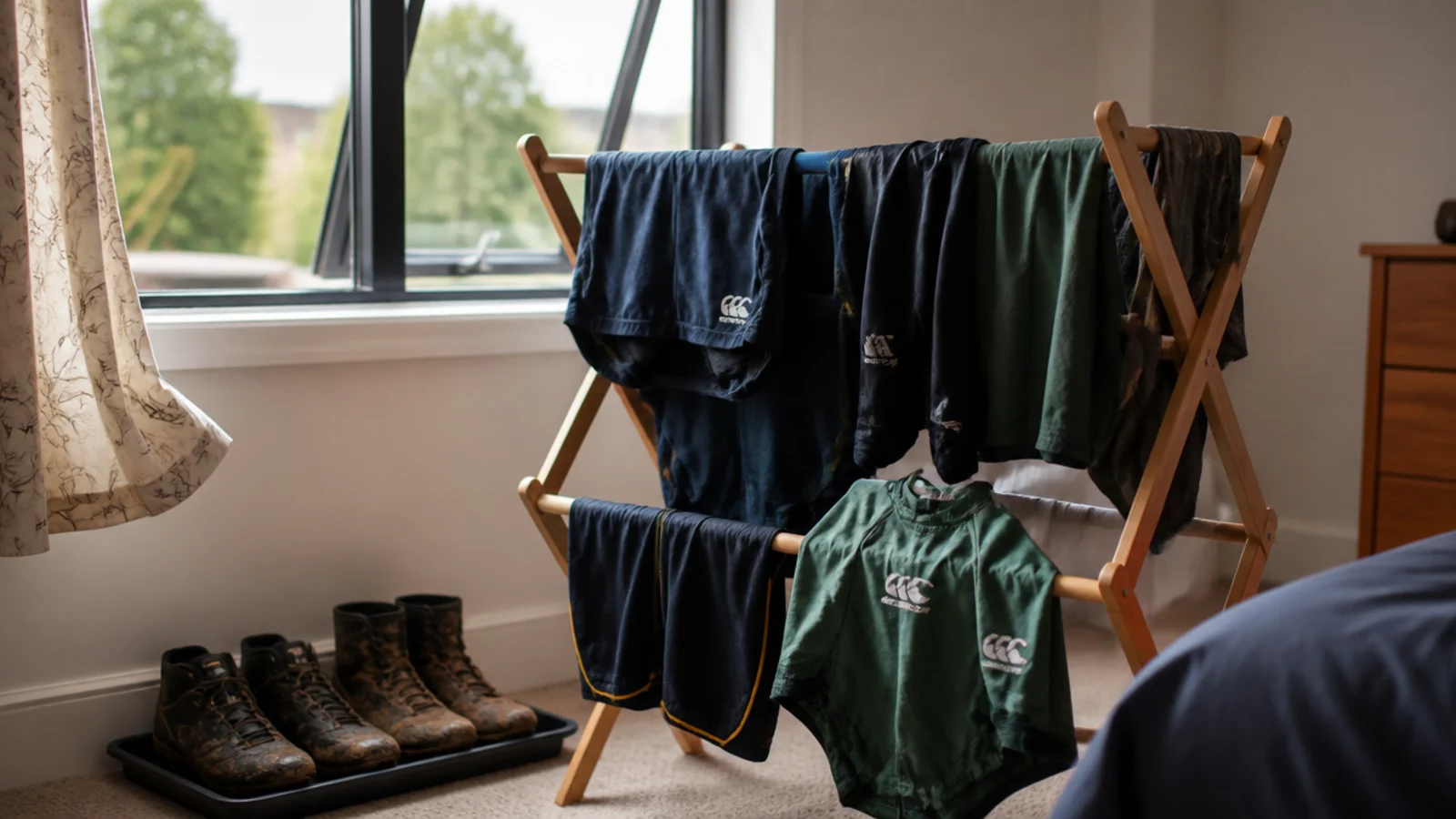
This is the single most useful habit in the room. Wet kit comes out of the bag the moment he gets home and goes onto an open rail, with the window cracked for ten minutes. A folding rail is $25 to $50 and collapses to about four inches. A lidded hamper does the opposite of what you want here.
6. Put a bench by the door for boots
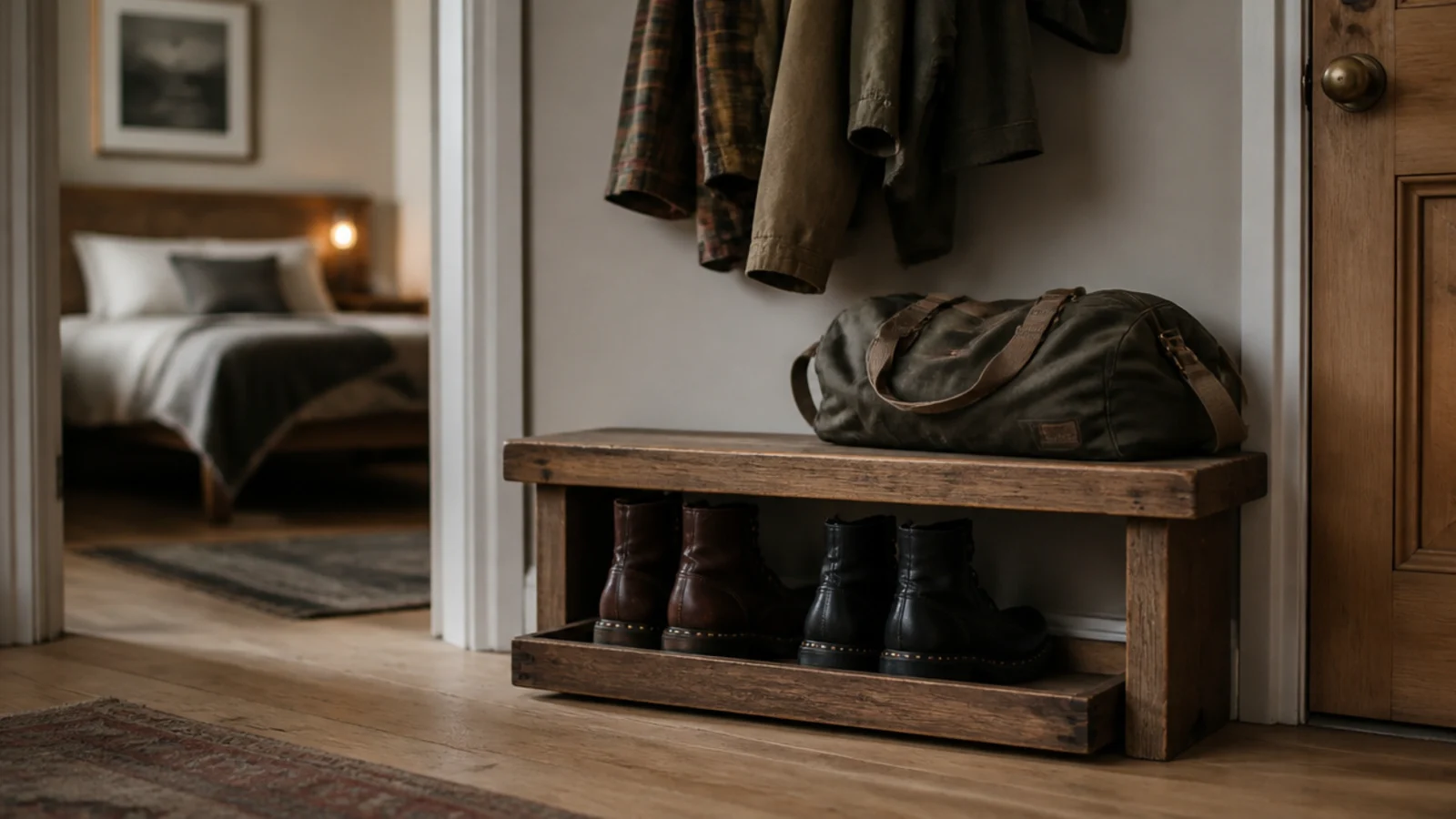
A low bench at 17 to 19 inches high with a shallow boot tray beneath it stops studded boots crossing the room. Trays are $10 to $25 and catch dried mud, which is easier to deal with once a week than daily. Never wear studs on a timber floor — they mark it permanently within a few passes.
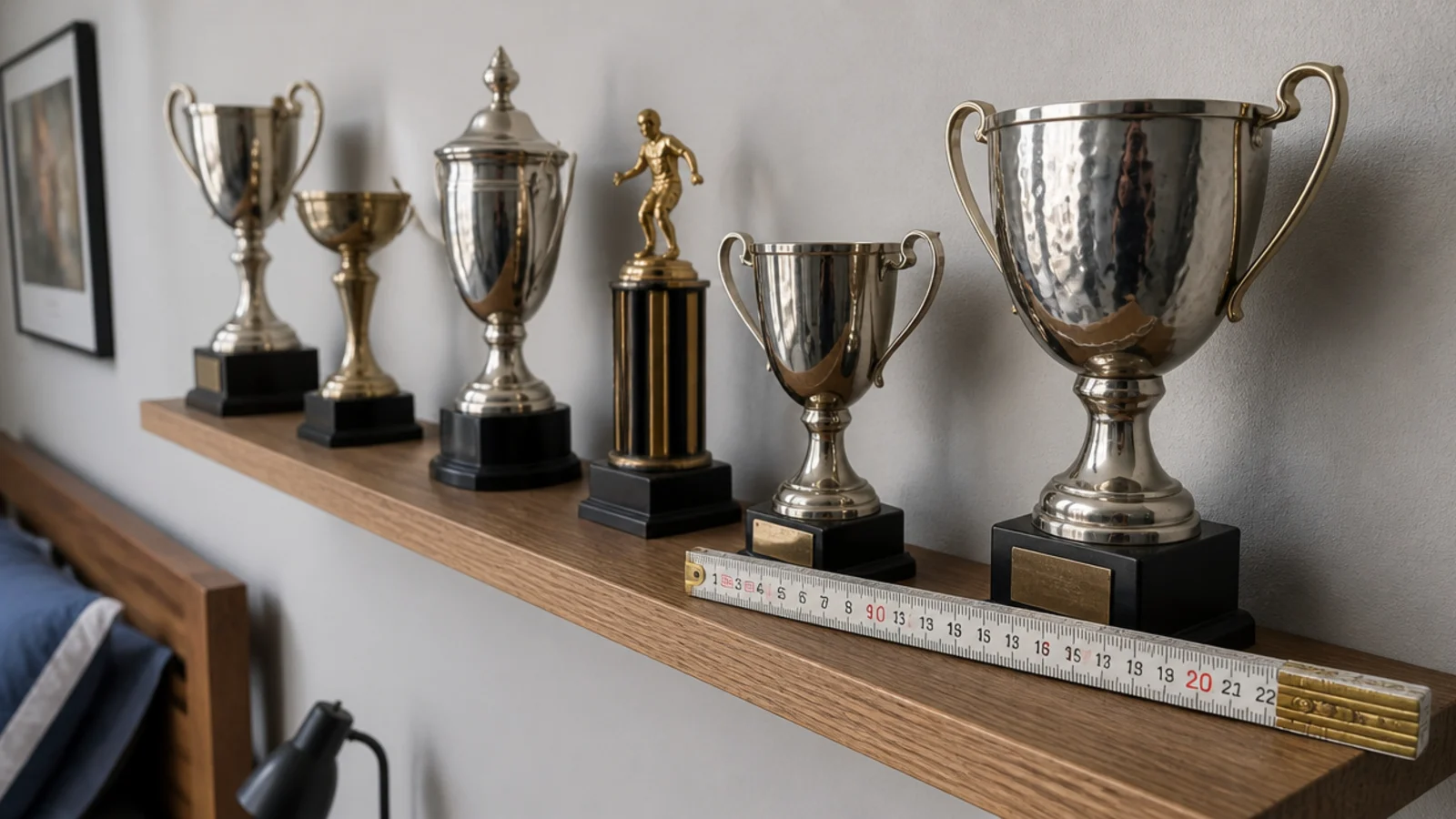
7. Keep the trophy shelf shallow
Four to six inches of depth holds almost every trophy and keeps the shelf out of any walkway. Hold the span between fixings at or under 32 inches in three-quarter-inch stock, because a full run of metal and stone bases is heavier than it looks. A front lip stops anything walking off during a door slam.
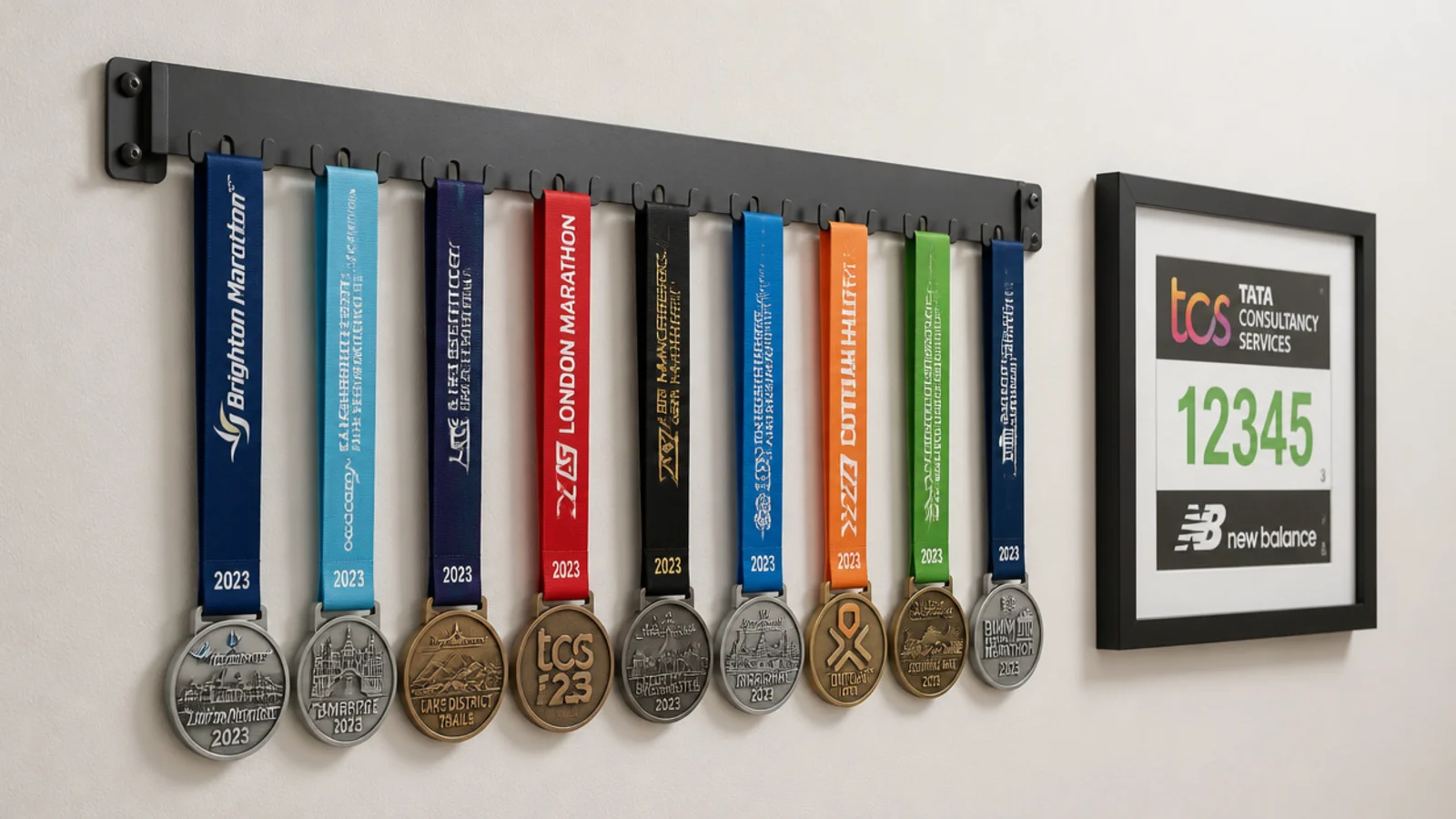
8. Hang the medals on a rail
A 24-inch display rail holds roughly twenty medals with their ribbons hanging straight, and it costs $20 to $40. Hung in a row they read as a record of years; heaped on a shelf or a door handle they read as junk. Mount it at about eye level beside the trophy shelf rather than above it.
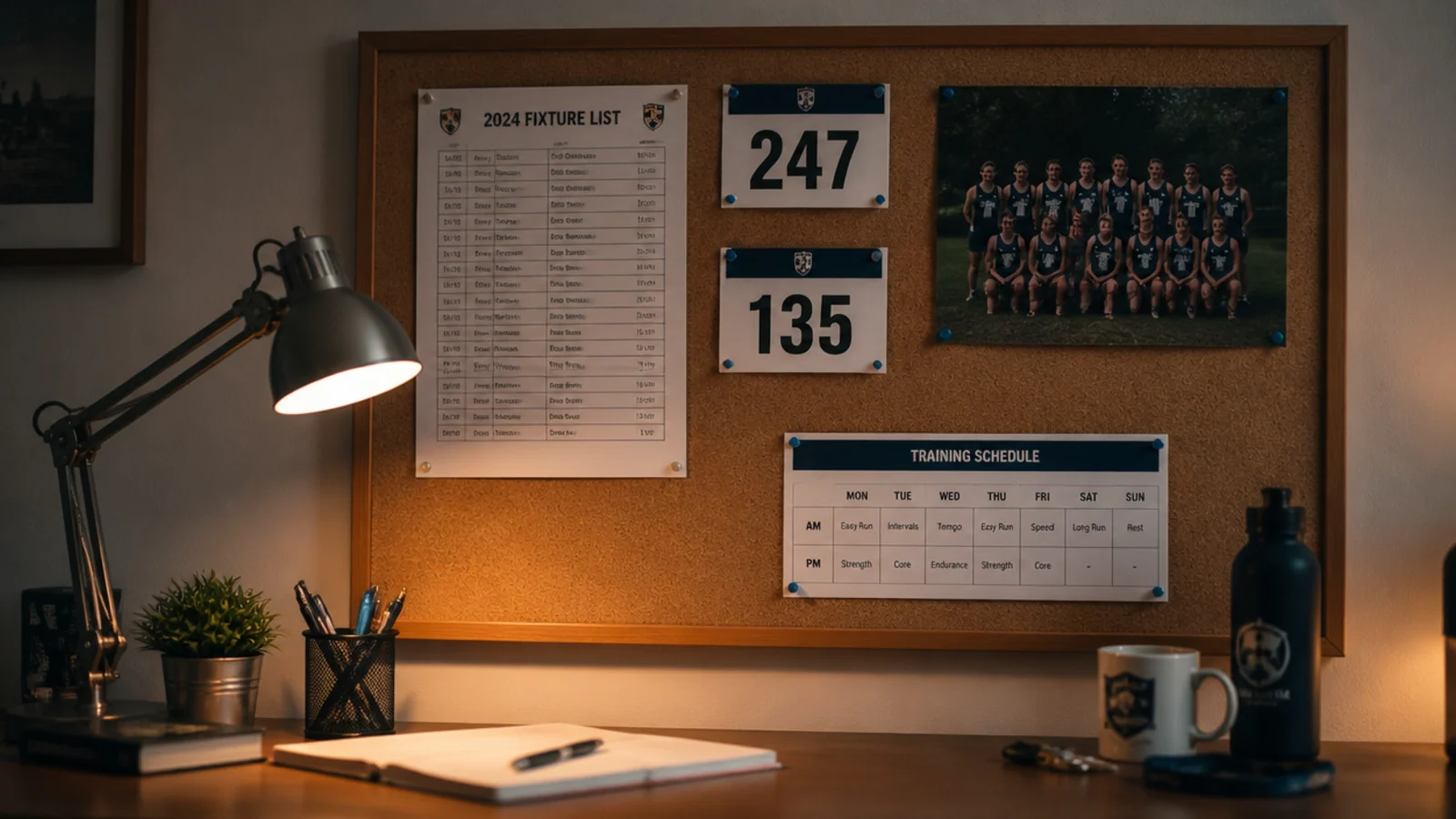
9. Give fixtures and numbers a pinboard
Fixture lists, race numbers, training schedules and team photographs all change constantly, and a pinboard absorbs that without touching the paint. A 24 by 36 inch cork board at $25 to $50, fixed into two studs, keeps the changing content in one defined rectangle and the rest of the wall calm.
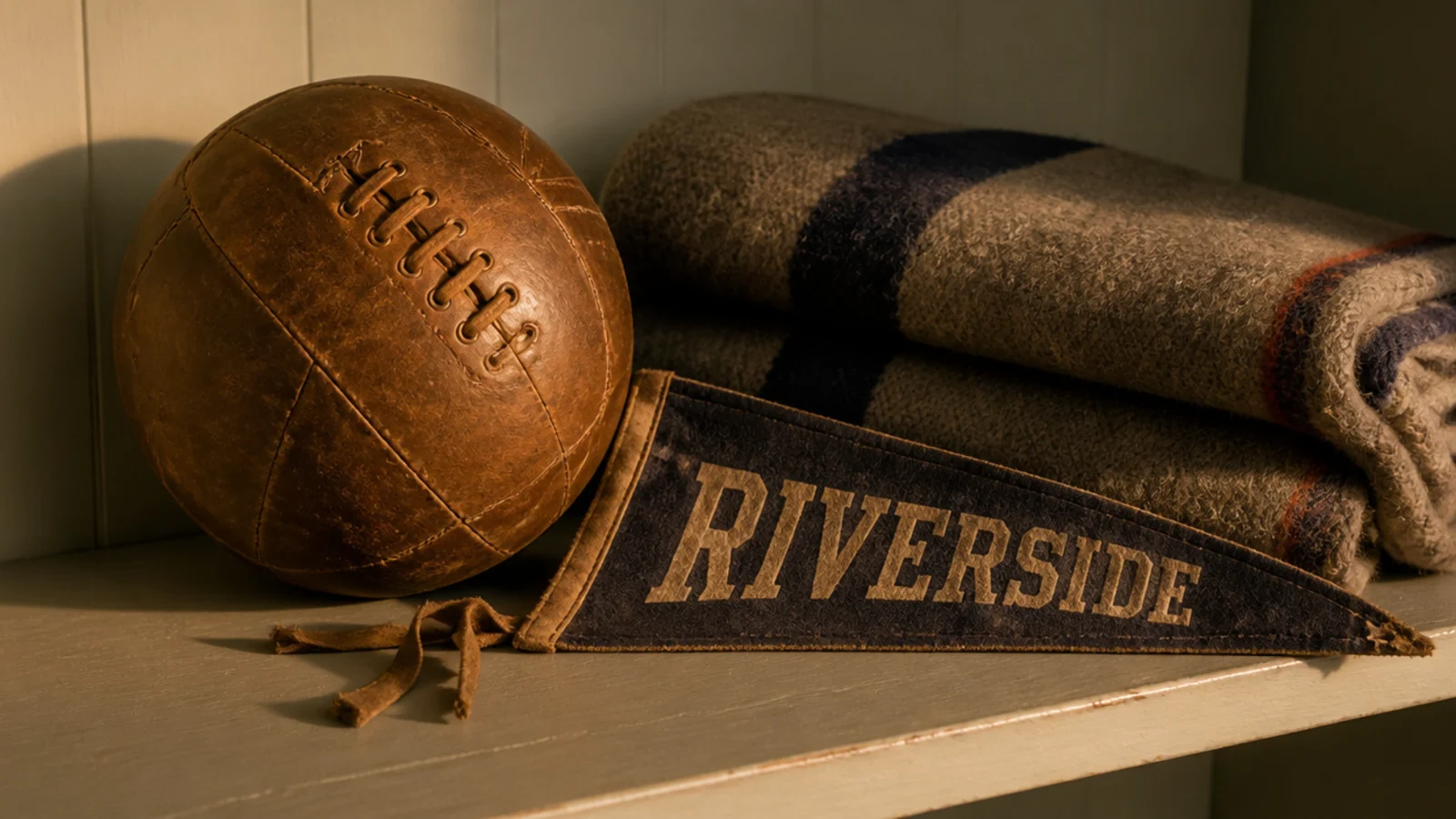
10. Choose vintage over new merchandise
One worn leather ball, an old pennant or a genuinely old programme carries more character than a wall of new printed goods, and it usually costs less. Charity shops and car boot sales are where this look comes from. Age is the one quality reproduction cannot fake, and it is what stops the room reading as a gift shop.
11. Paint a court line, not a mural
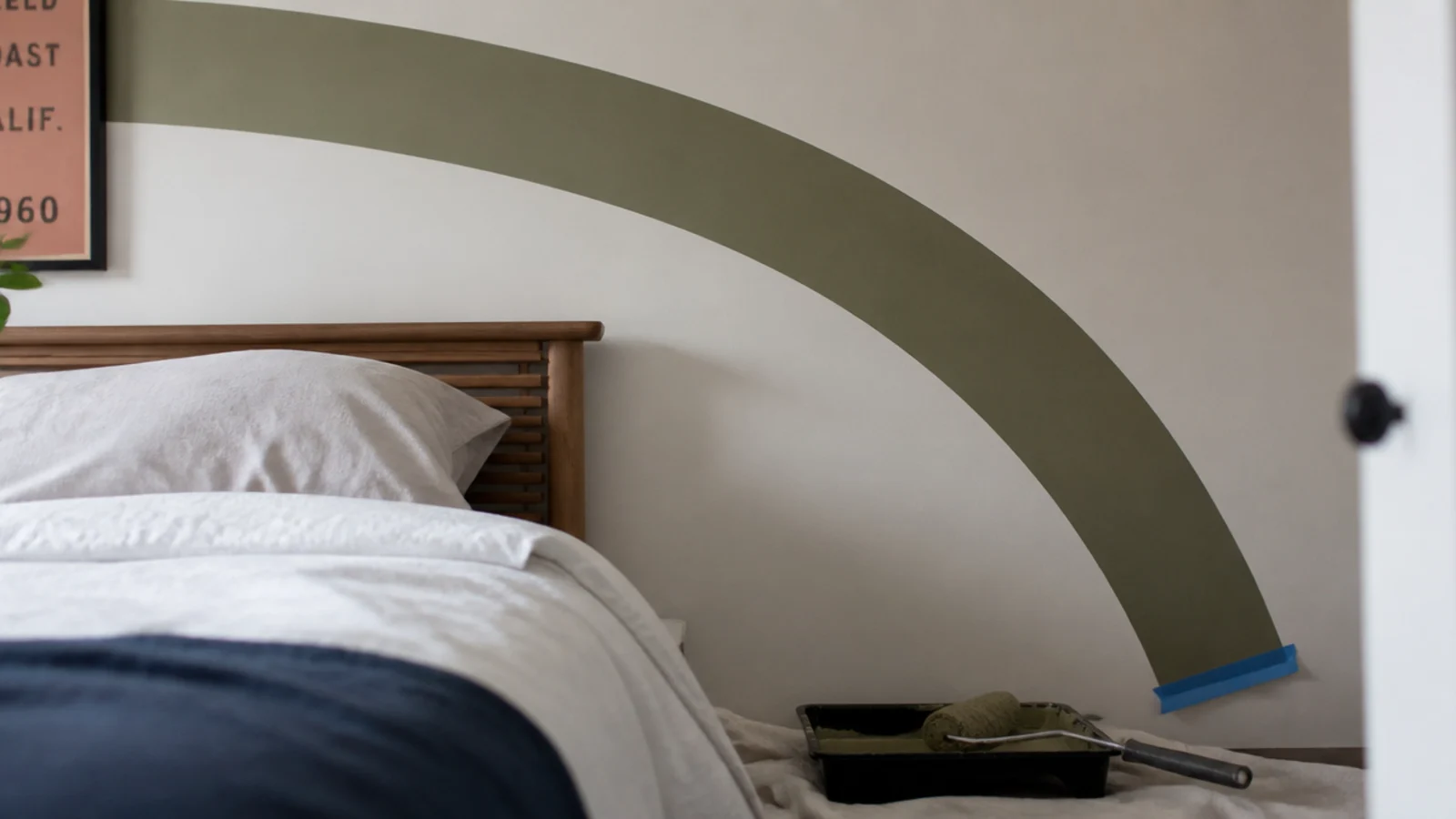
A single painted arc or a pair of parallel court lines on an otherwise plain wall is graphic, cheap and reversible in an afternoon. Mark it with a pencil and string compass, run low-tack tape, seal the edge with the base colour first so nothing bleeds, then paint. A quart is plenty and it costs about $20.
12. Fix the hoop to the frame, not the door
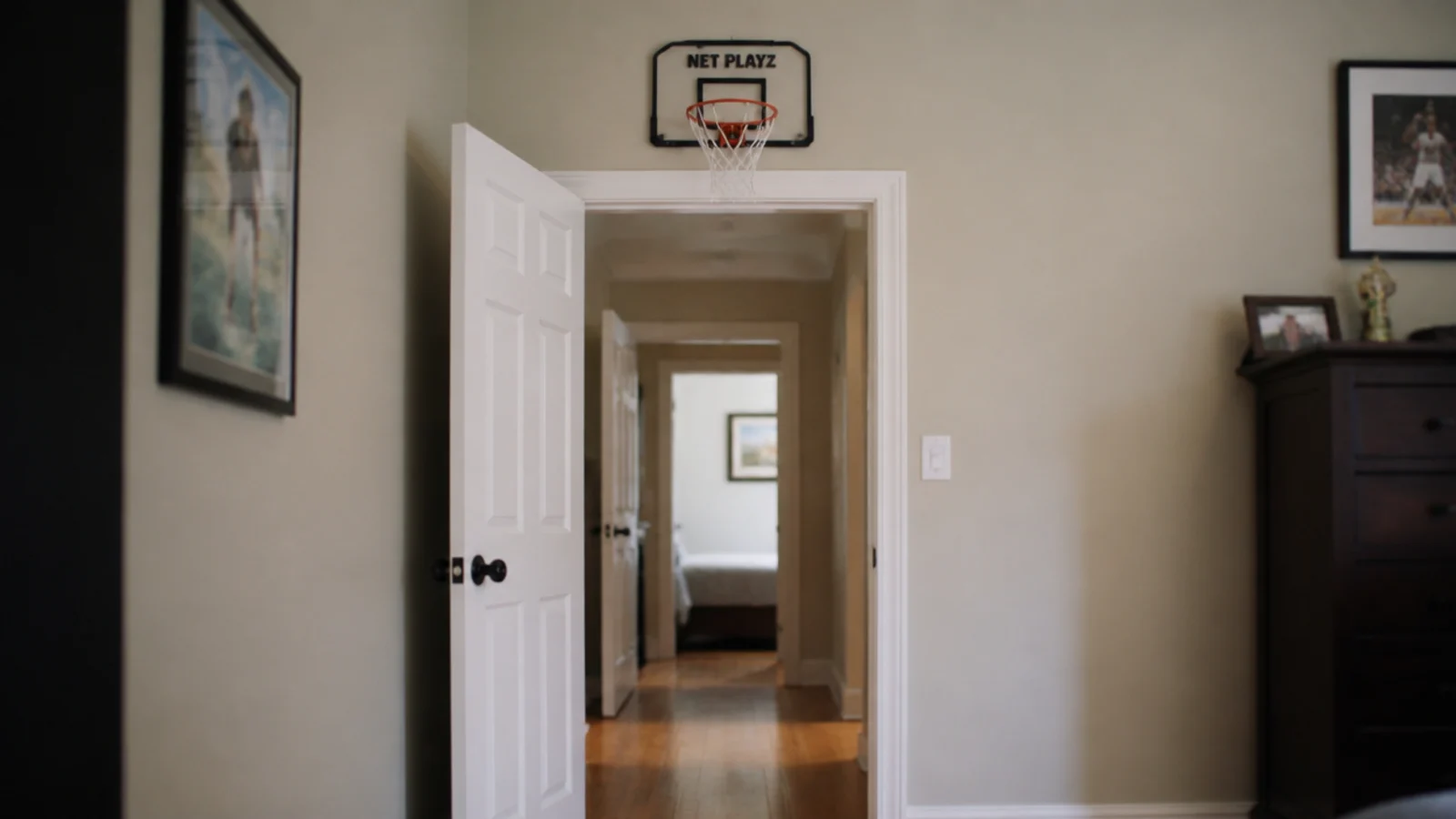
A mini hoop hooked over the door leaf slams the door on every shot and splits the top rail eventually. Screw it to the wall above the frame instead. Keep the landing zone clear of lamps, screens and glass, and never mount one over a bed where a rebound lands on someone sleeping.
13. Light the display, not the ceiling
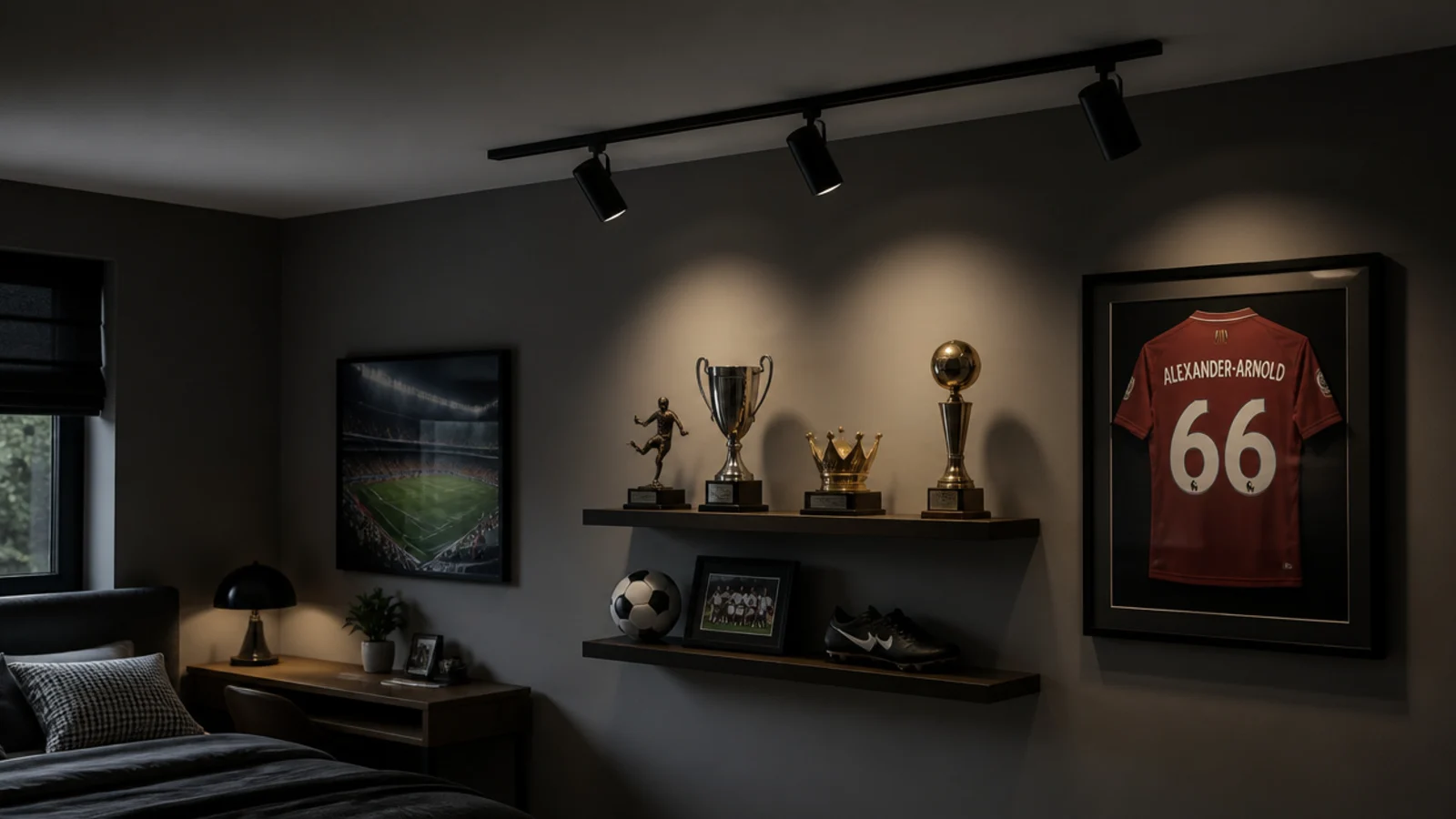
Three adjustable heads on a ceiling track aimed at the shelf, the framed shirt and the pinboard make the display read as intentional. Budget about 20 lumens per square foot overall for the room. Track needs a rated ceiling box behind it rather than a plasterboard fixing, and an electrician if the supply is moving.
14. Use a floor that survives studs and weights
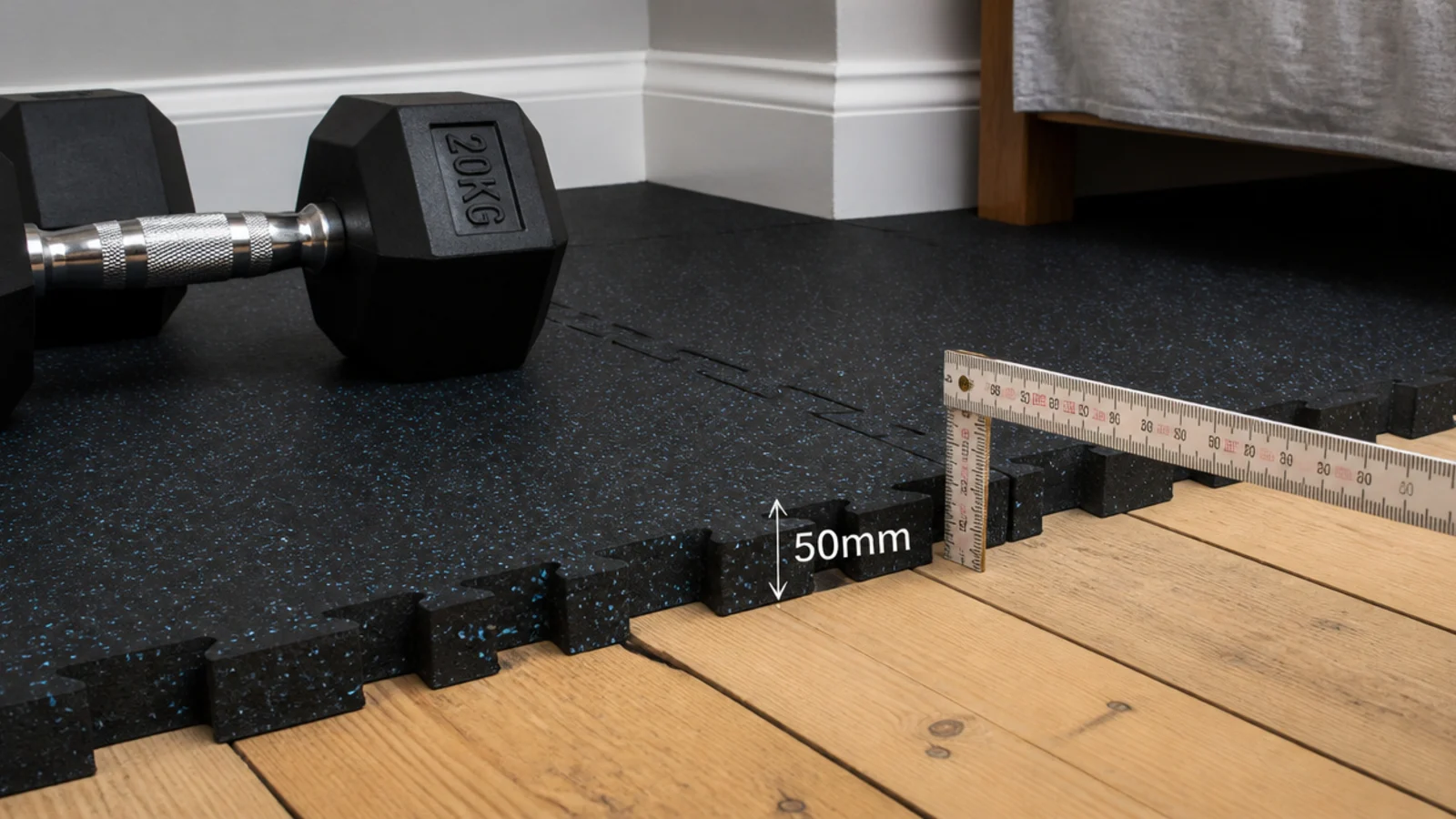
Interlocking rubber tiles at 3/8 of an inch thick, laid in the corner where the weights and the mat live, protect the floor beneath and cut the noise downstairs. A four-tile square is $30 to $60. Keep them out of the walkway, because the raised edge is a genuine trip point in the dark.
15. Keep the weights over the joist ends
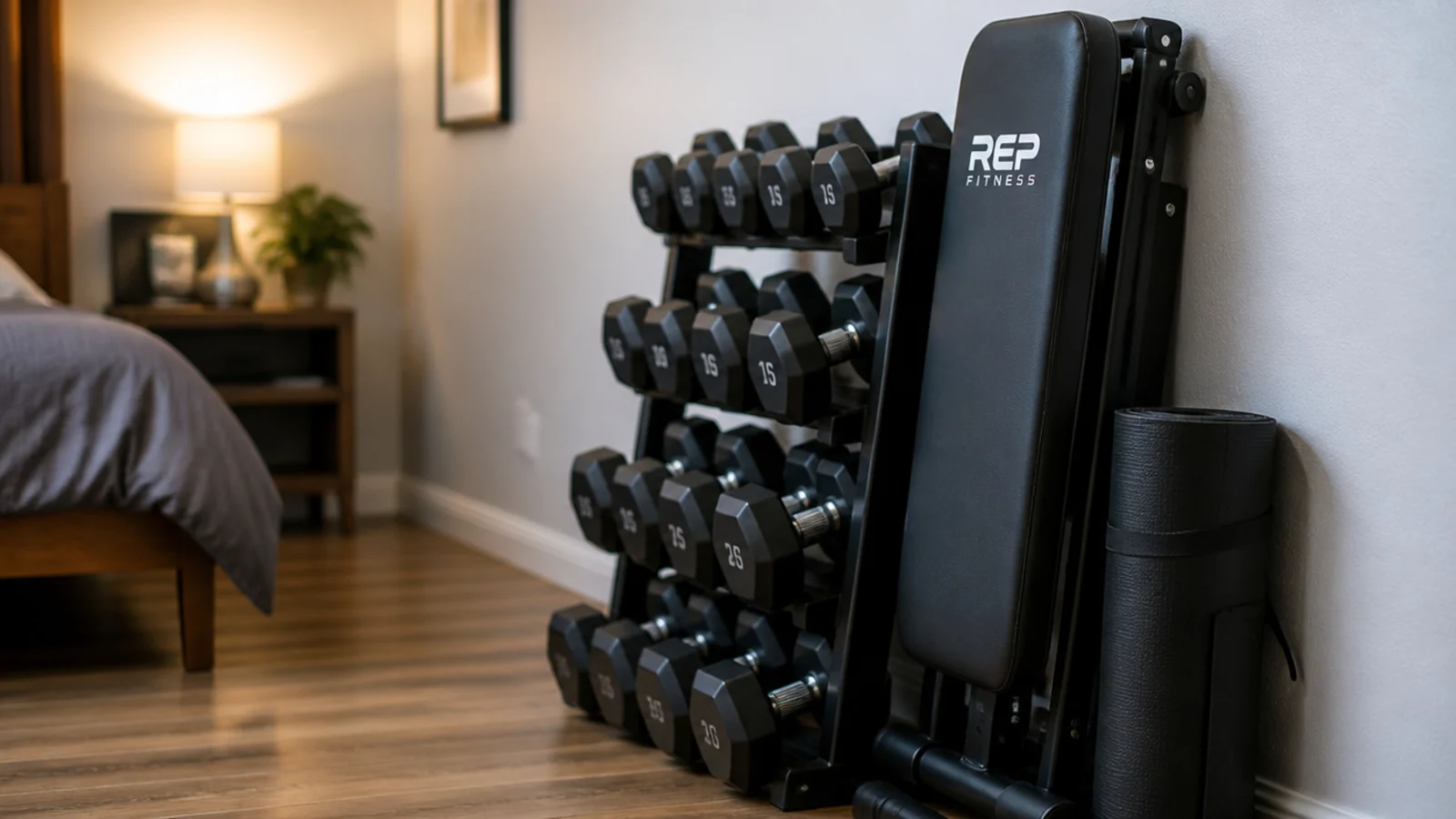
A pair of dumbbells and a bench spread about 100 pounds over four square feet, which is 25 pounds per square foot against a typical 40 pounds per square foot residential live load. That is fine, but keep it against a wall over the joist ends rather than in the middle of a span, where deflection and noise are worst.
16. Build a stretch and recovery corner
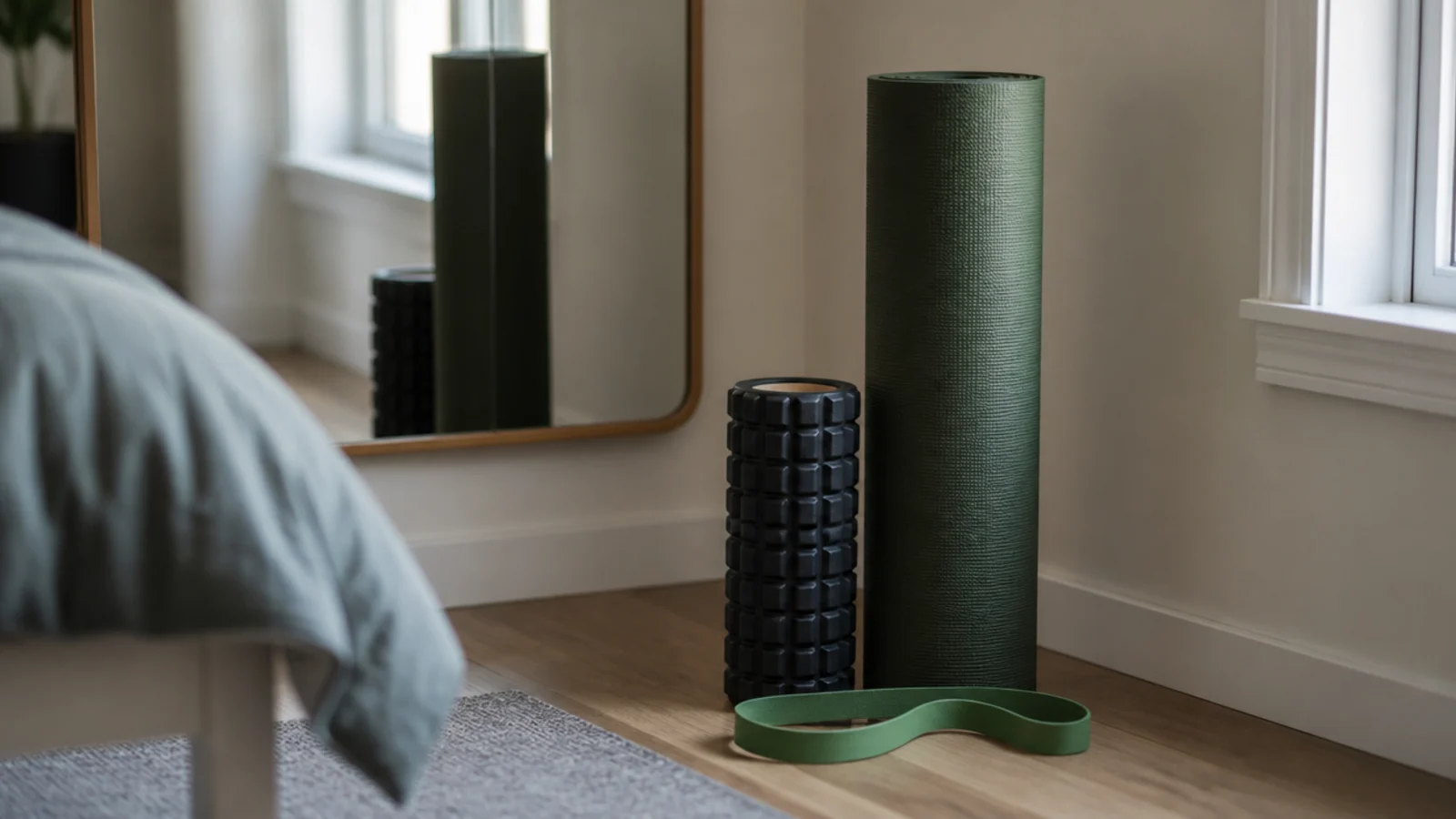
The requirement is simply clear floor — a standard mat is 24 by 68 inches, so about six feet by two. Roll the mat and stand it on end when it is not in use. A foam roller, a band and the mat come to $40 to $80, and they get used far more when the space to use them is permanently available.
17. Add a rail for wet kit
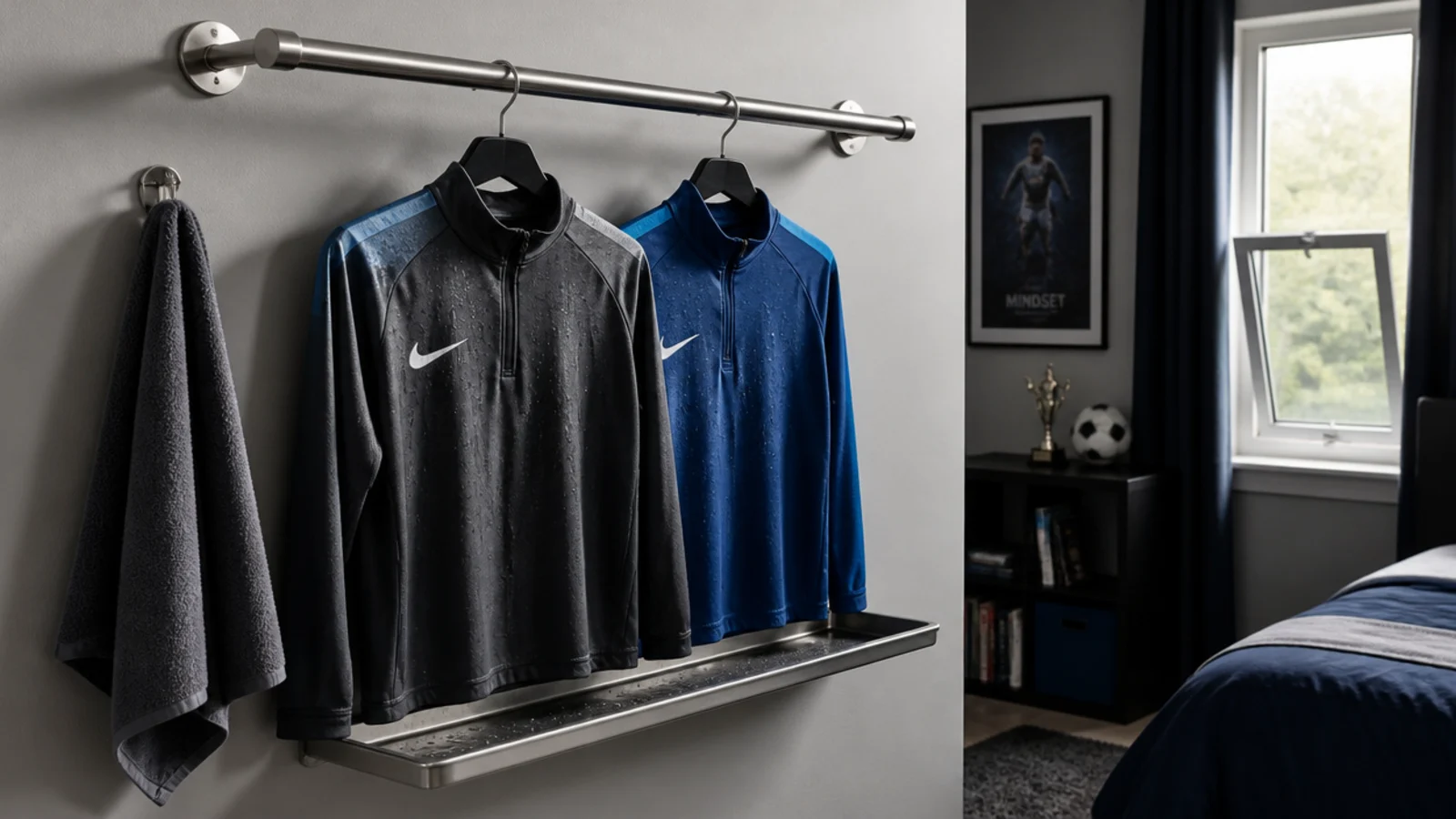
A short wall rail with a drip tray beneath, near the window, gives training tops somewhere to hang the moment he walks in. It is $20 to $40 for the rail and it does more for the smell of the room than any amount of spray. Keep it clear of the radiator, since drying directly on heat raises humidity fastest.
18. Build a bottle and gear station
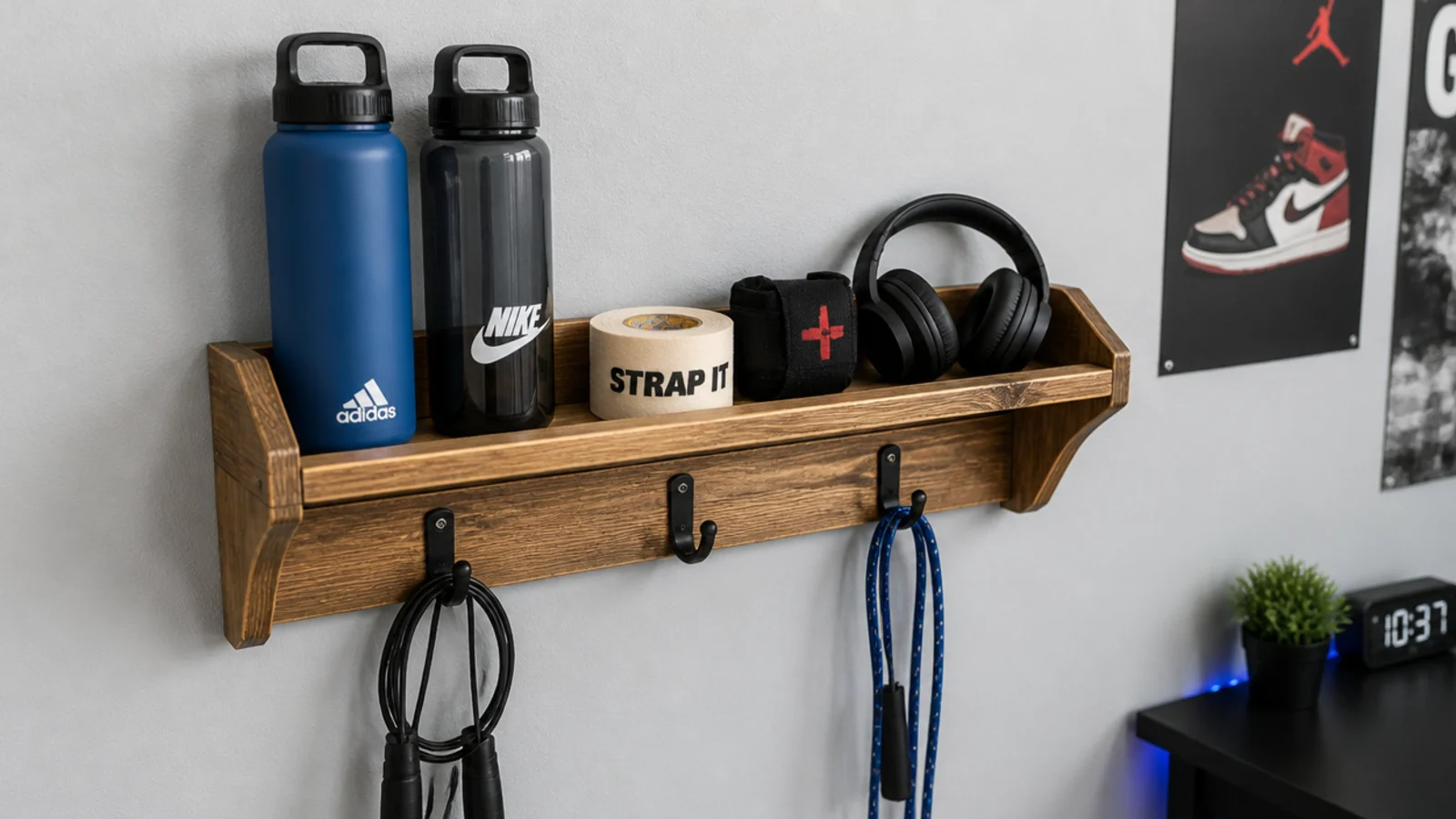
Bottles, strapping tape, supports, a skipping rope and a set of headphones all belong in one place, on a shelf about 12 inches wide beside the door. It takes a minute to pack a bag when everything lives together, and about fifteen when it does not, which is the difference between arriving on time and not.
19. Use numbers and type, not logos
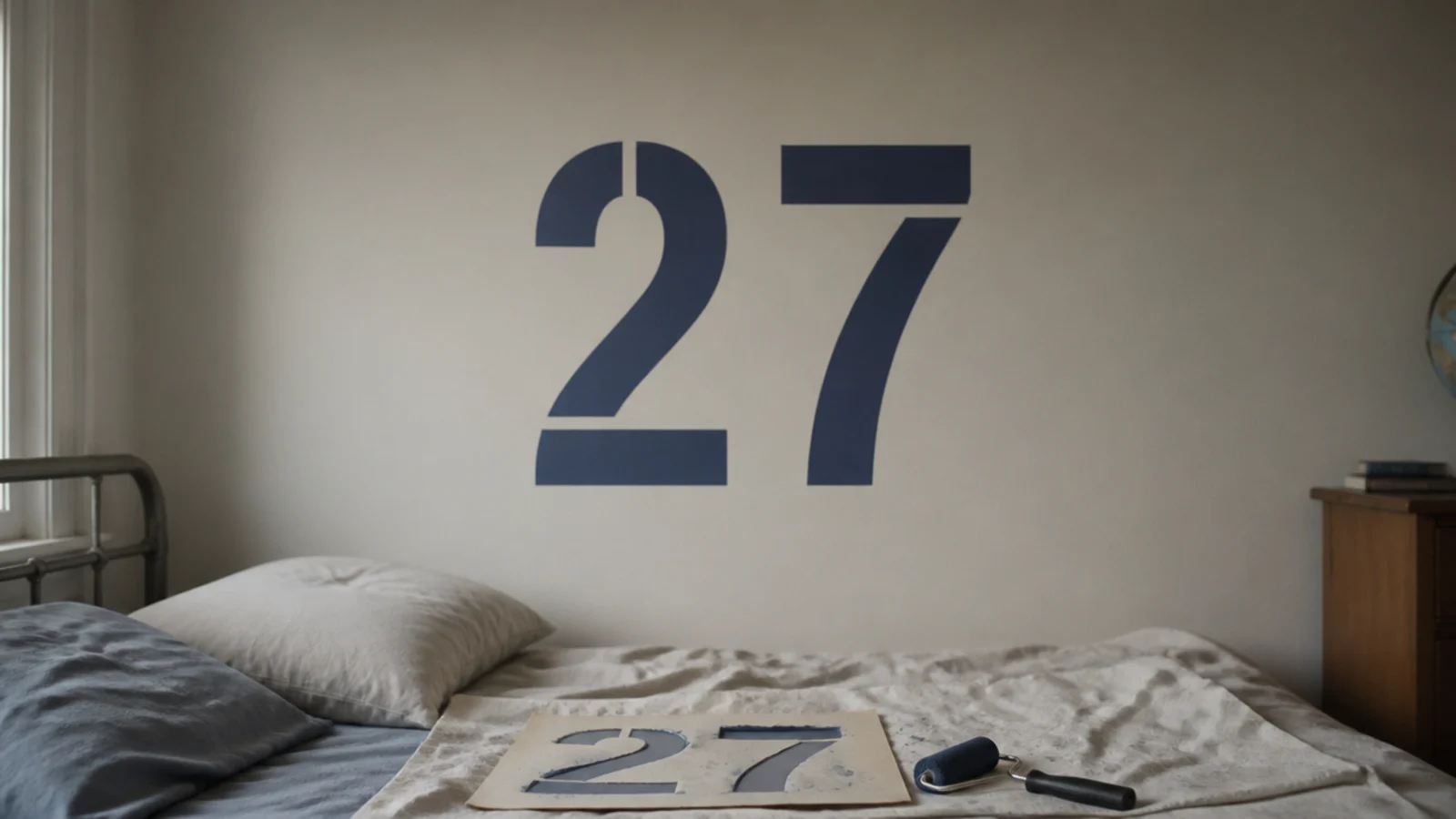
A large stencilled number — his shirt number, a distance, a year — painted in one deep tone reads graphic rather than childish and costs a quart of paint. Logos date and belong to someone else. Numbers stay his. Keep the stencil simple and centre it on a wall he sees from the bed.
20. Rotate the display every season
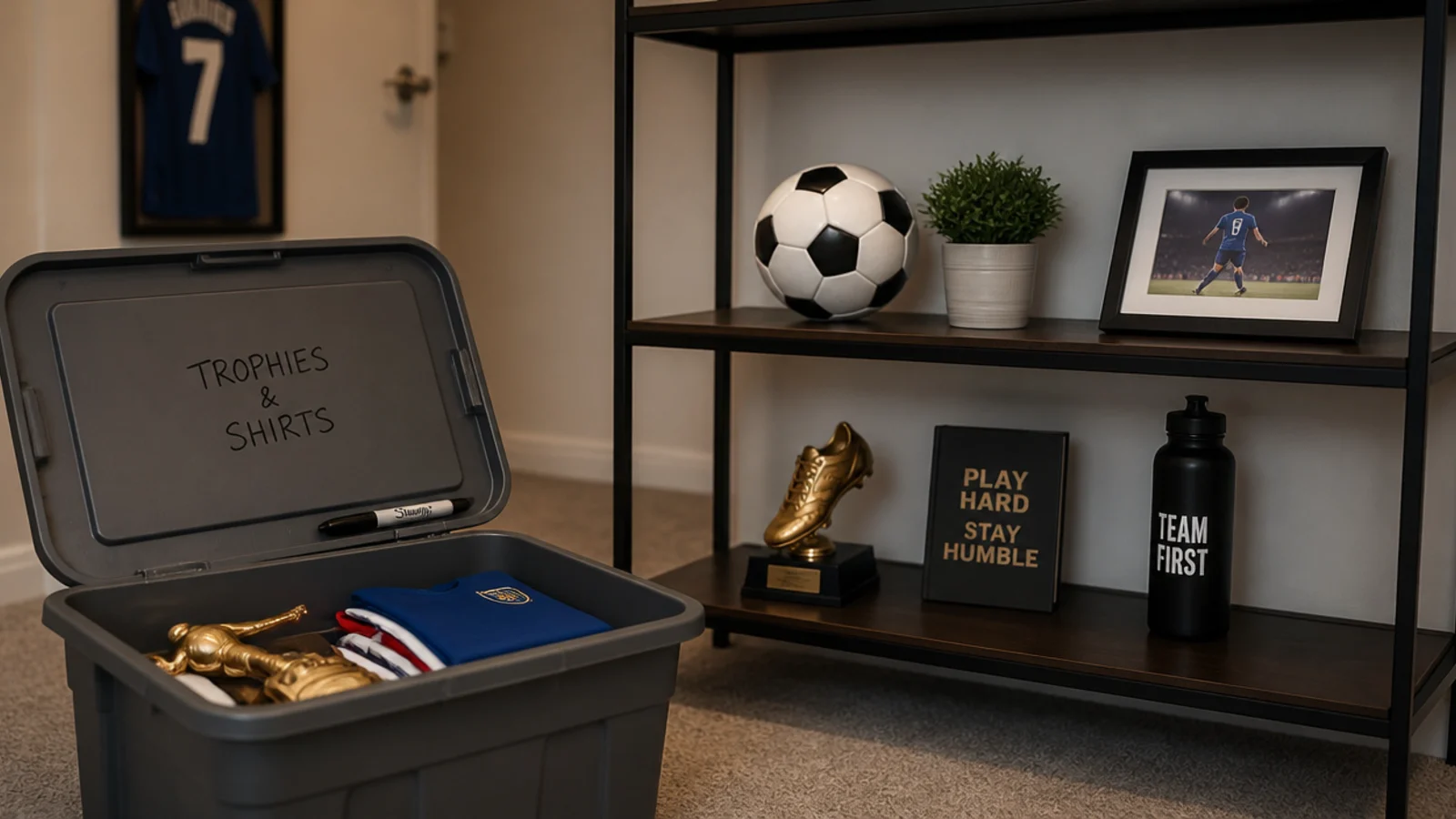
Six items on show, the rest in a labelled and dated box on the wardrobe top. Rotating at the end of each season keeps the display current, keeps it small, and gives the older material a chance to be interesting again later. It also stops the shelf slowly becoming the only surface in the room.
For the buys that survive four years of this kind of use, teen boy bedroom decor has the ratings and price bands. If you want the sports interest present without the room being themed, teen boy bedroom aesthetic covers the quieter version, and the same restraint applied to a much younger room runs through toddler bedroom girl.
Mistakes to Skip
- Painting the walls in club colours. A repaint costs a weekend and sixty dollars, and the club allegiance can change faster than the paint cures.
- Storing damp kit in a lidded box or a closed bag. That is where the smell starts, and in a closed bedroom it also feeds mould behind the furniture.
- Hooking a hoop over the door leaf. Every shot slams the door, and the top rail of a hollow door splits within a few months of that.
- Putting a deep shelf of trophies above the pillow end of a bed. Anything that can be knocked belongs behind the pillow line or on a different wall.
Frequently asked questions
How do I store sports kit in a bedroom without it smelling?
Air moves the problem, not containers. Wet kit in a closed bag or a lidded box is what creates the smell, so hang it on an open rail with the window cracked and keep relative humidity under sixty percent. A folding rail holds two loads and collapses to about four inches when it is not needed.
How deep should a trophy shelf be?
Four to six inches suits most trophies and medals, and it keeps the shelf from projecting into a walkway. Keep the span between fixings at or under thirty-two inches in three-quarter inch stock, and fix into studs, because a full run of metal and marble trophies is heavier than it looks.
Is it safe to keep weights in an upstairs bedroom?
For a normal home gym set, yes. A pair of dumbbells and a bench spread about a hundred pounds over four square feet, which is well inside a typical forty pounds per square foot residential floor rating. Keep them against a wall over the joist ends rather than in the middle of a span.
Can I put a basketball hoop on a bedroom door?
A mini hoop over a door works, but fix it to the frame or the wall rather than hooking it over the door leaf, which slams every shot and eventually splits the top rail. Keep the landing area clear of glass, screens and lamps, and do not mount one above a bed.
How do I display sports memorabilia without it looking childish?
Frame one thing properly instead of pinning six. A shirt in a shadow box, a single vintage pennant or a framed race number reads as a collection, while a wall of printed merchandise reads as a shop. Keep team colours in the accents and leave the walls neutral.
Want more like this? Browse all 15 teen boy bedroom guides — they all use the same measurements and budget tiers.
Pin it for later
Save this to your Teen Boy Bedroom board
Pin it now so it is waiting for you when the tape measure comes out — and so the next person hunting for this idea can find it too.
Save this pinKeep going
More ideas worth saving while you have the tape measure out.