Teen Boy Bedroom · Listicle
20 Teen Boy Bedroom Aesthetic Looks On A Budget

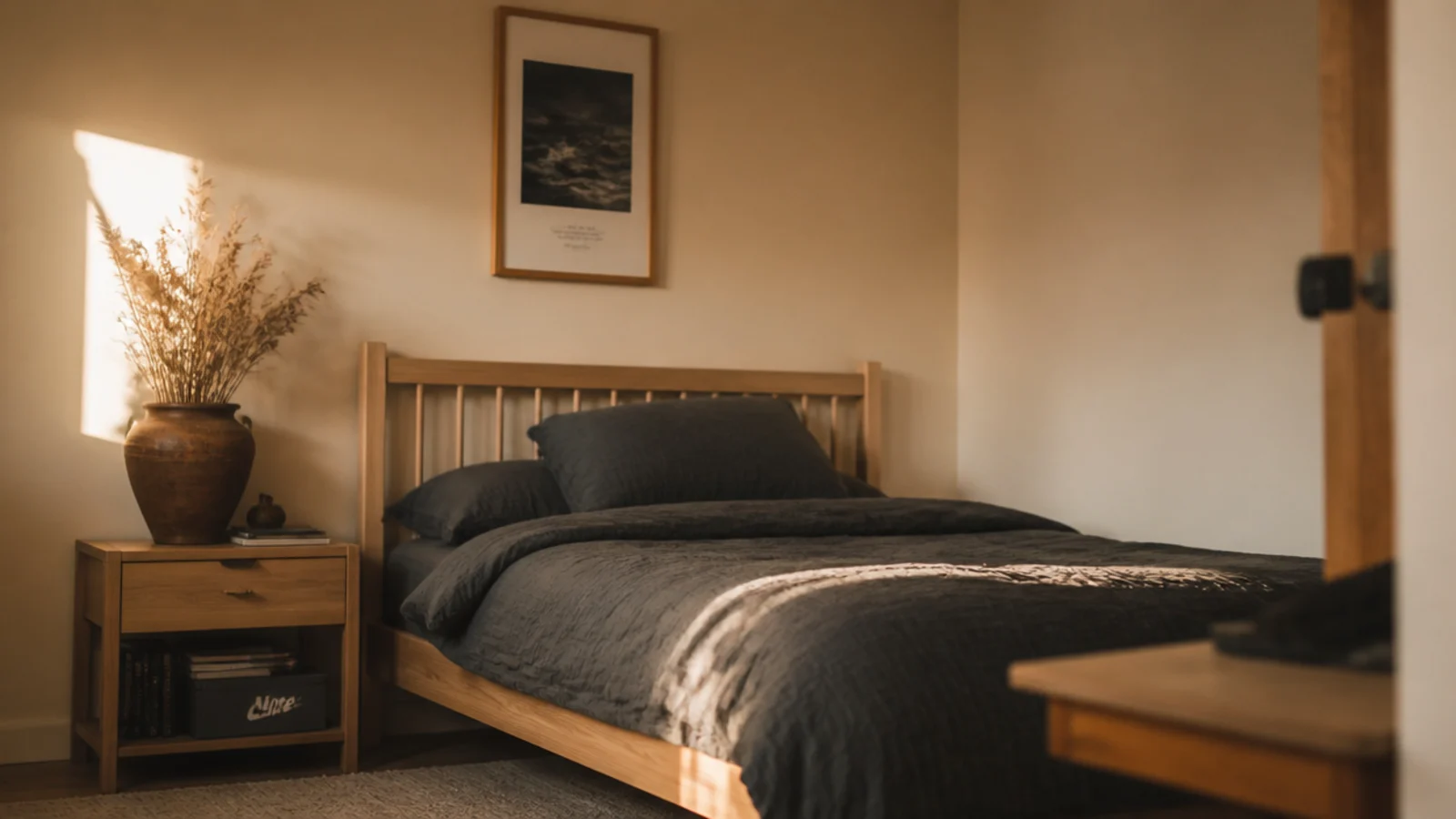
Most of the rooms that get saved and copied are running three colours and one material, and that is the whole trick. It is not budget that separates them from the version you end up with at home — it is repetition, and repetition is free. A teen boy bedroom aesthetic falls apart when six unrelated things arrive over two years, each bought on its own merits. Decide the palette and the material first, then buy only what fits. Below are twenty complete looks with what each one genuinely costs, the paint values behind them, and the material that carries them.
In this guide22 sections — tap to openHide
- 1.How to build a teen boy bedroom aesthetic cheaply
- 2.Warm minimal in three tones
- 3.Dark academia on a student budget
- 4.Skate and street on plywood
- 5.Industrial with pipe and plank
- 6.Japandi with a low bed and paper light
- 7.Coastal without a single shell
- 8.Nineties grunge behind glass
- 9.Monochrome with one loud object
- 10.Retro gaming without the neon
- 11.Expedition in canvas and olive
- 12.Music-led with instruments on the wall
- 13.Cyber, but only one hidden strip
- 14.Vintage sport without the memorabilia wall
- 15.Earthy in clay, olive and oak
- 16.Blueprint and architectural drawings
- 17.A film photography wall
- 18.A library corner in a small room
- 19.Workshop with a pegboard wall
- 20.All black, carried by texture
- 21.Layered neutrals with a plant corner
- 22.Mistakes to Skip
How to build a teen boy bedroom aesthetic cheaply
Three tones and one material. Write them down before spending anything, and refuse everything that does not fit.
Paint is the cheapest lever. Two gallons covers a standard 10 by 12 bedroom in two coats for about $60, since a gallon covers 350 to 400 square feet per coat and a room that size has roughly 316 square feet of wall after a door and window come off. Bedding is second at $50 to $110 for a plain set. Lighting is third — warm 2700K bulbs on a $20 dimmer change a room more than any object you can buy for the same money.
Decorative objects are the most expensive route and the least effective. Almost every look below is carried by paint, one material and two or three things he already owns. And nothing on this list involves an open flame near bedding — LED candles only, because bedrooms are the room where candle fires most often start. For cheap builds to fill these rooms out, study desk decor ideas DIY has the projects.
1. Warm minimal in three tones
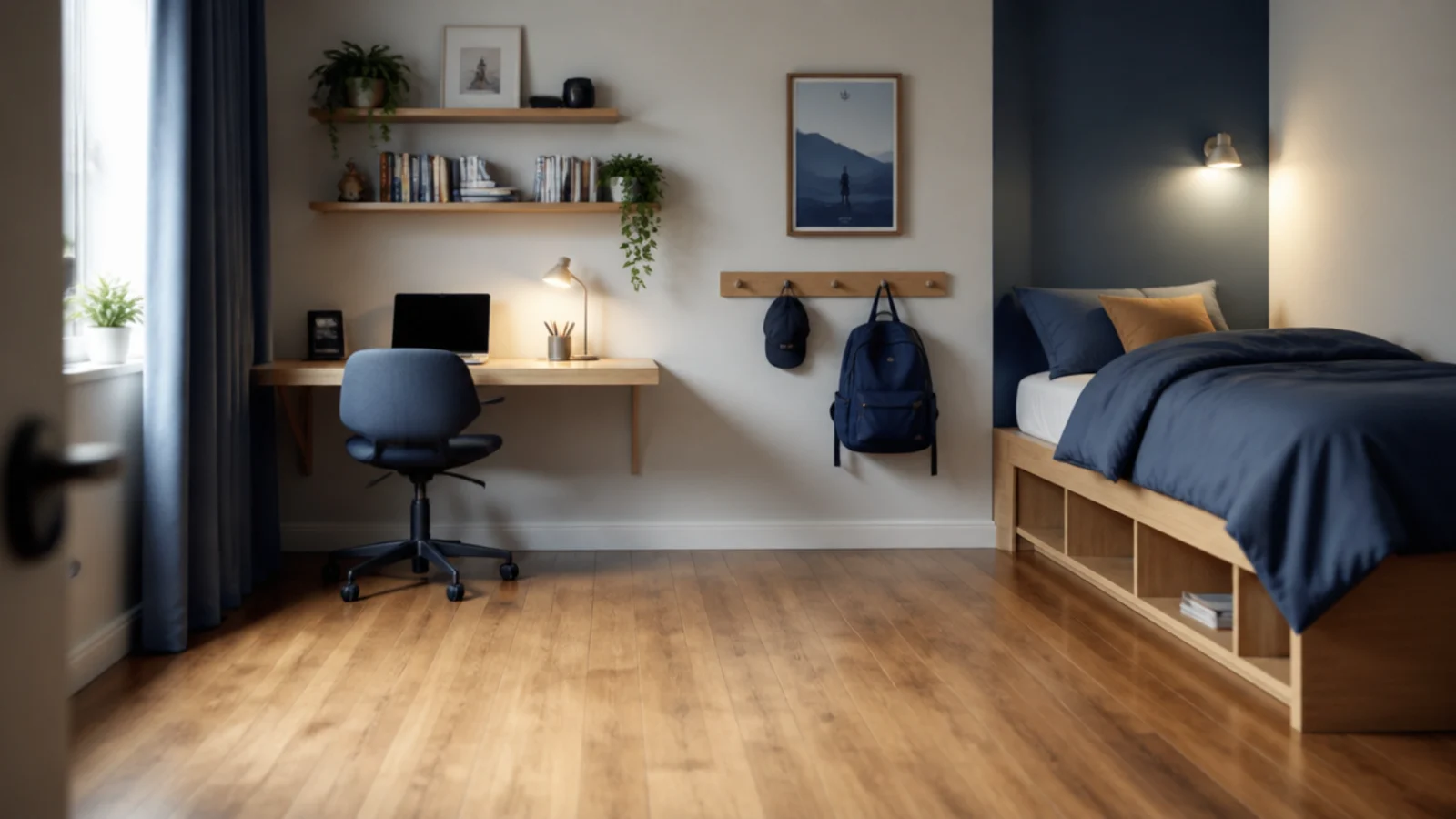
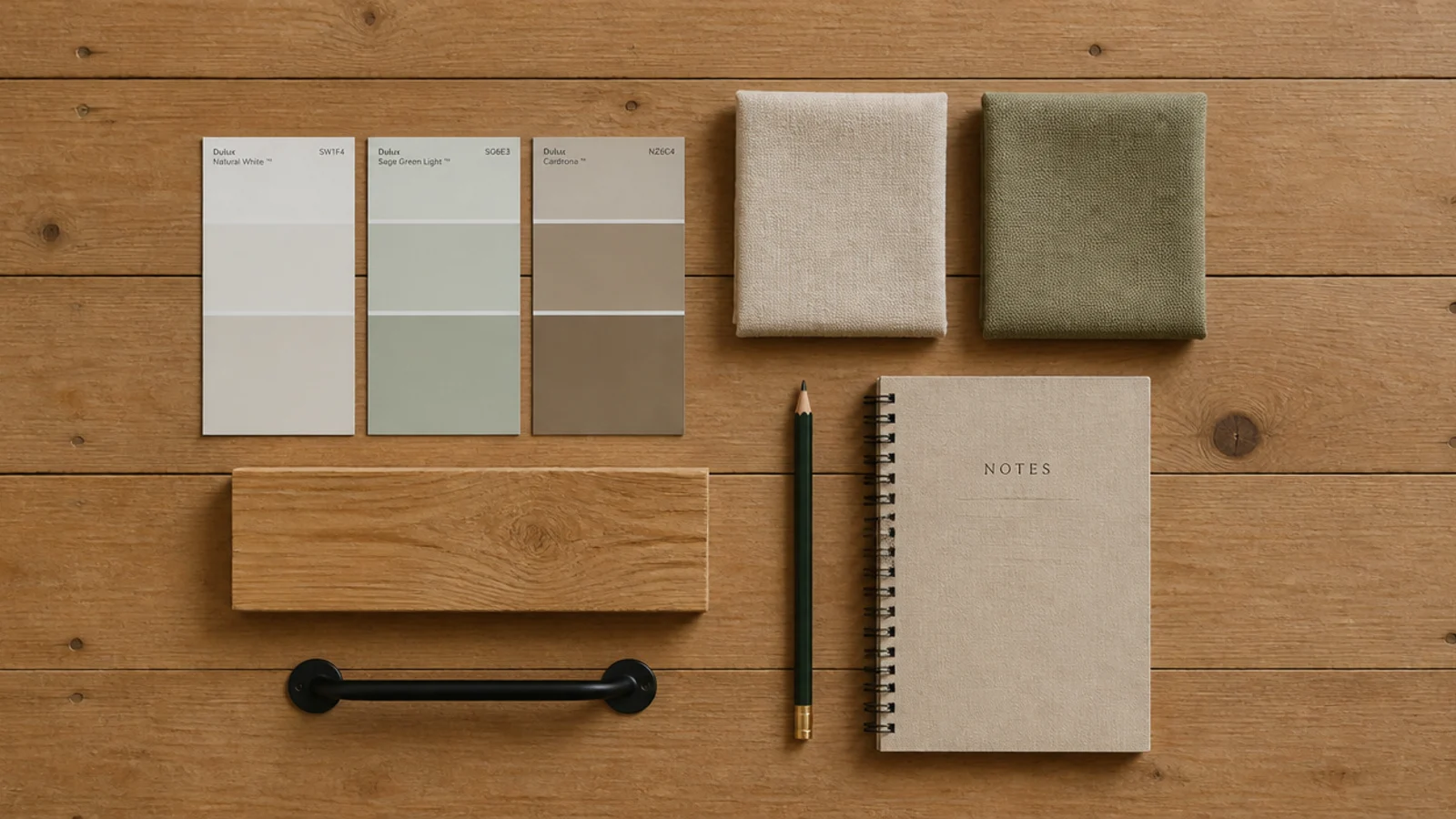
Oatmeal walls around an LRV of 65, pale timber, charcoal textiles. Nothing patterned anywhere. It is the most forgiving look here because it takes whatever he adds later without breaking, and it is genuinely cheap — paint, one plain bedding set and a timber shelf come to about $150. The discipline is in what you leave out rather than what you buy.
2. Dark academia on a student budget
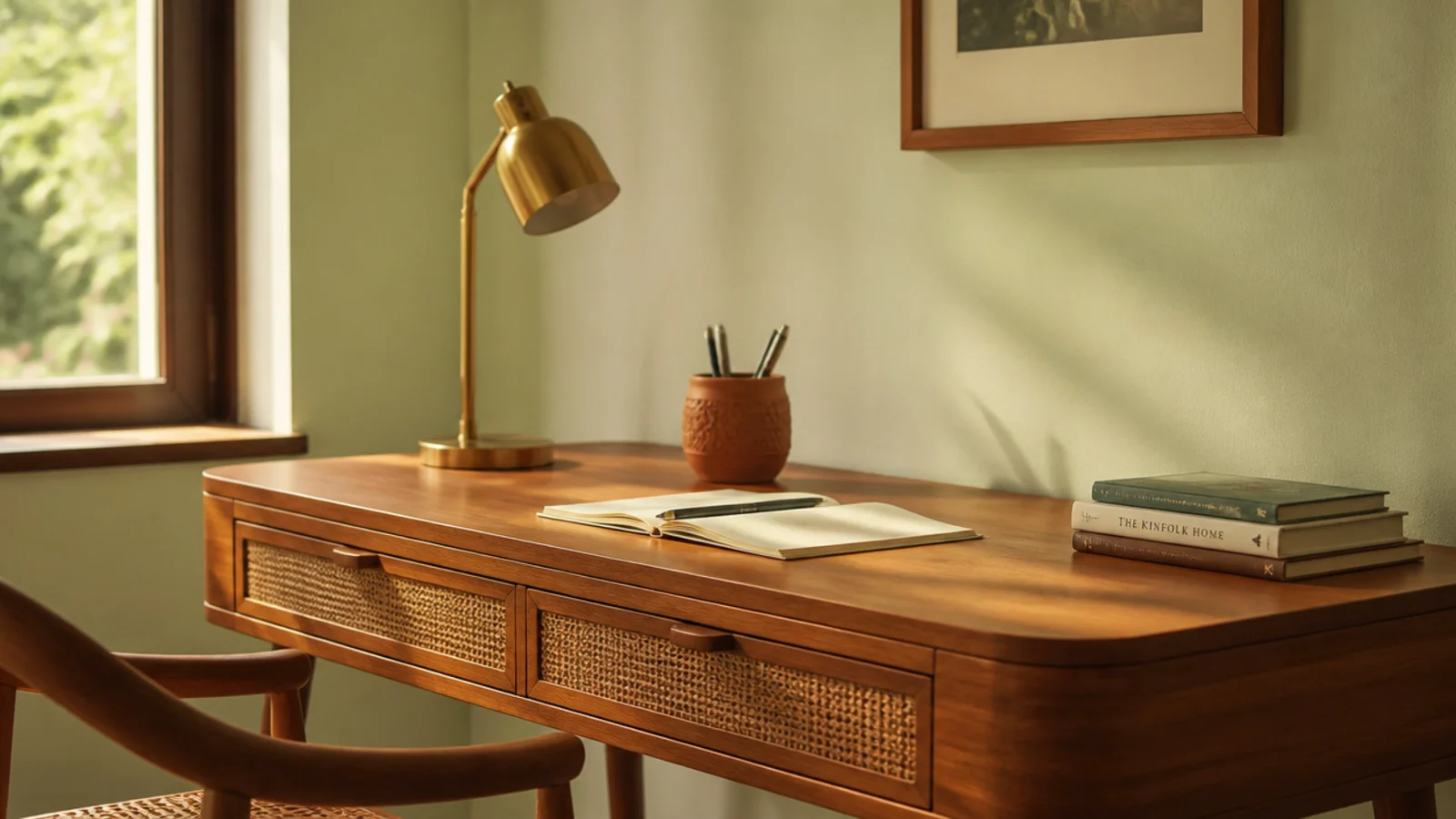
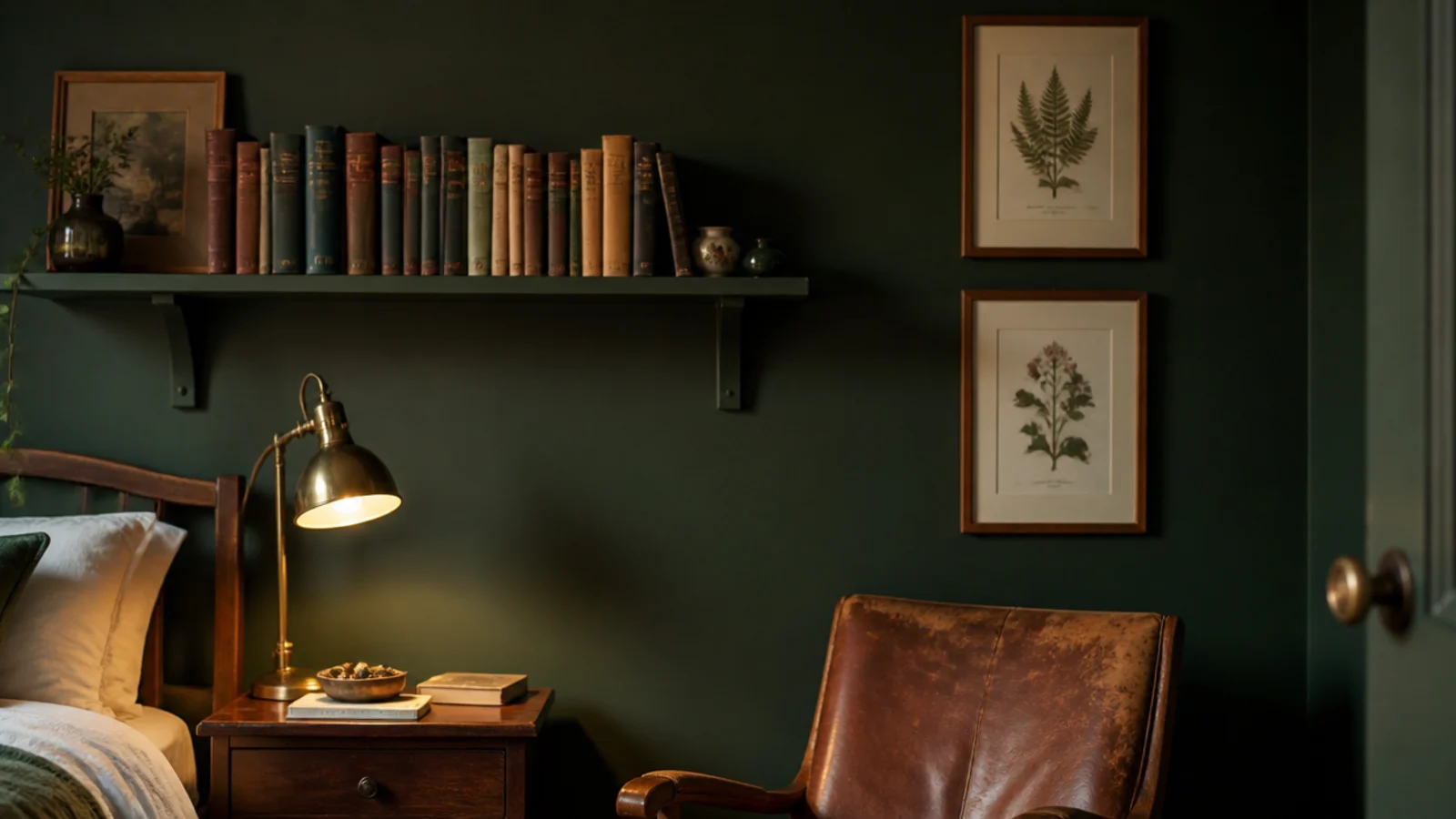
A deep green or oxblood wall below an LRV of 20, secondhand hardbacks, one brass lamp and a couple of framed prints. Charity shop books at a dollar or two each do almost all of it — twenty of them fill a shelf for under $40. Keep the lamp warm at 2700K and skip anything that looks like a costume prop.
3. Skate and street on plywood
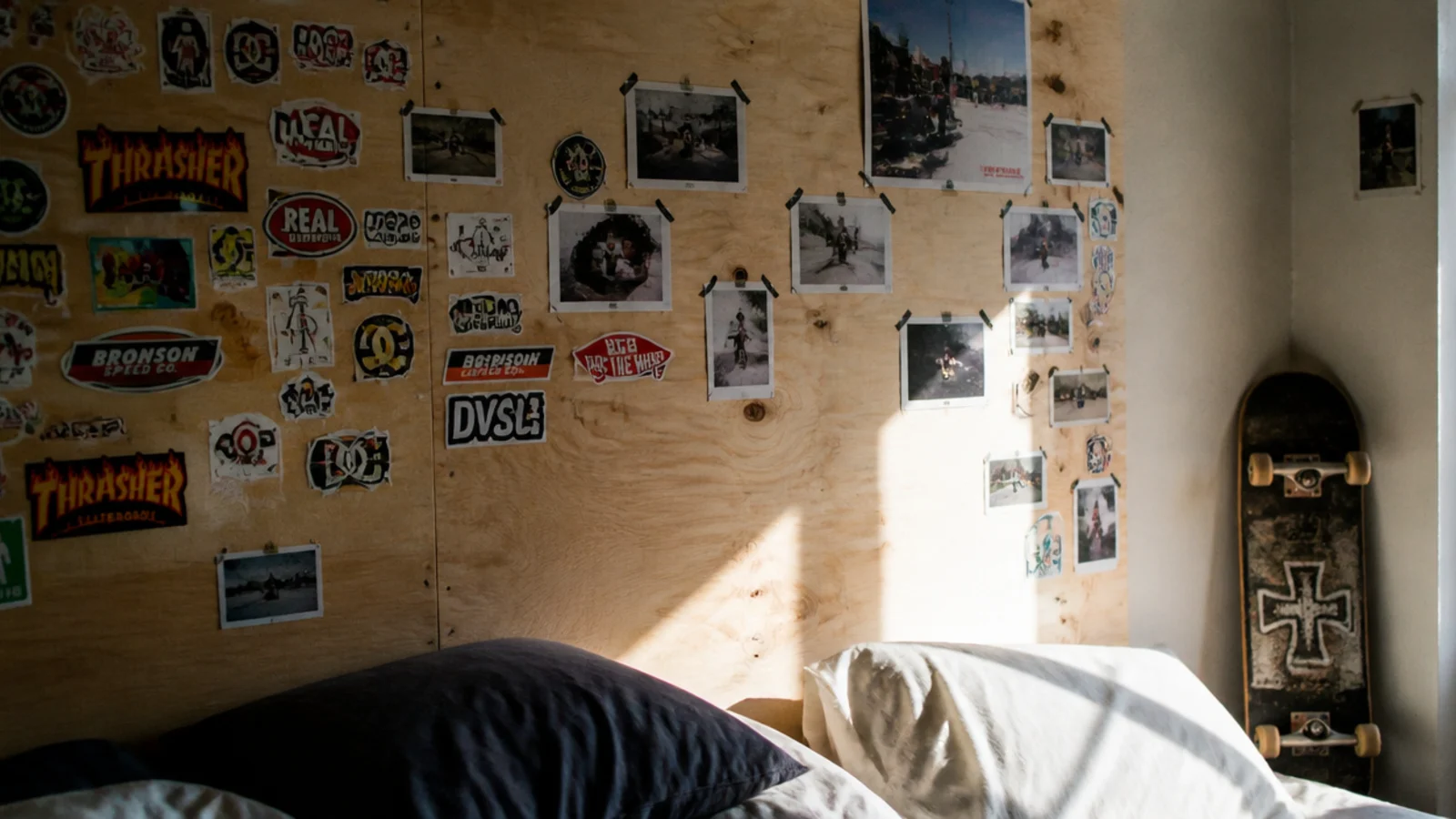
A half-inch birch ply panel screwed to one wall, handed over entirely for stickers, tape and marker. It costs $25 to $50, protects the plaster underneath, and ends the argument about what is allowed on the walls. Prime the face with a stain-blocking primer first if you want to paint it, because ply resin bleeds yellow through emulsion.
4. Industrial with pipe and plank
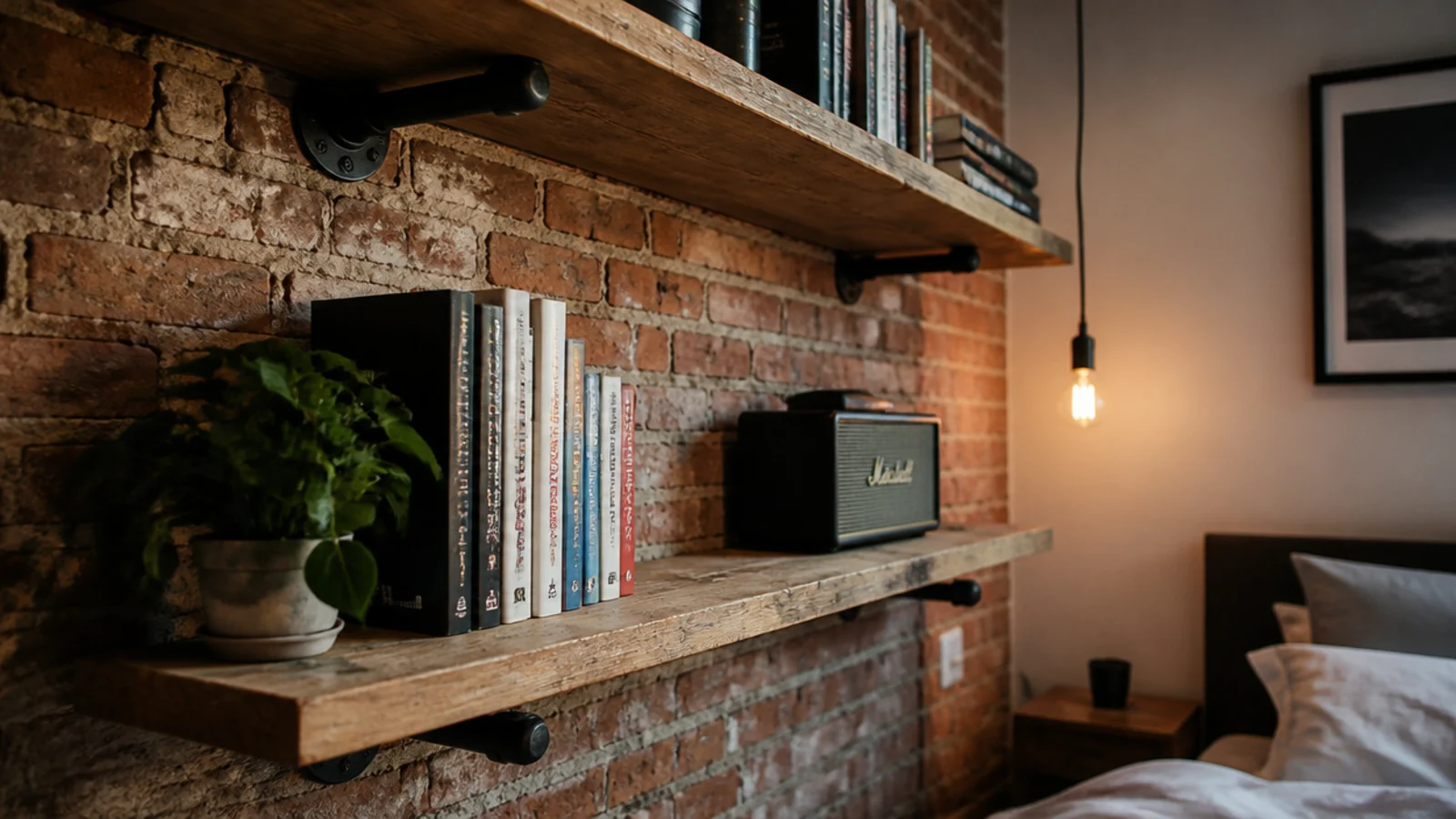
Scaffold boards on black iron pipe brackets, a bare filament bulb, and paint in a grey around an LRV of 45. An inch-and-a-half plank spans 36 inches under books without sagging, so the shelving is genuinely structural rather than decorative. Every bracket into a stud. A three-shelf run costs $90 to $160 in materials.
5. Japandi with a low bed and paper light
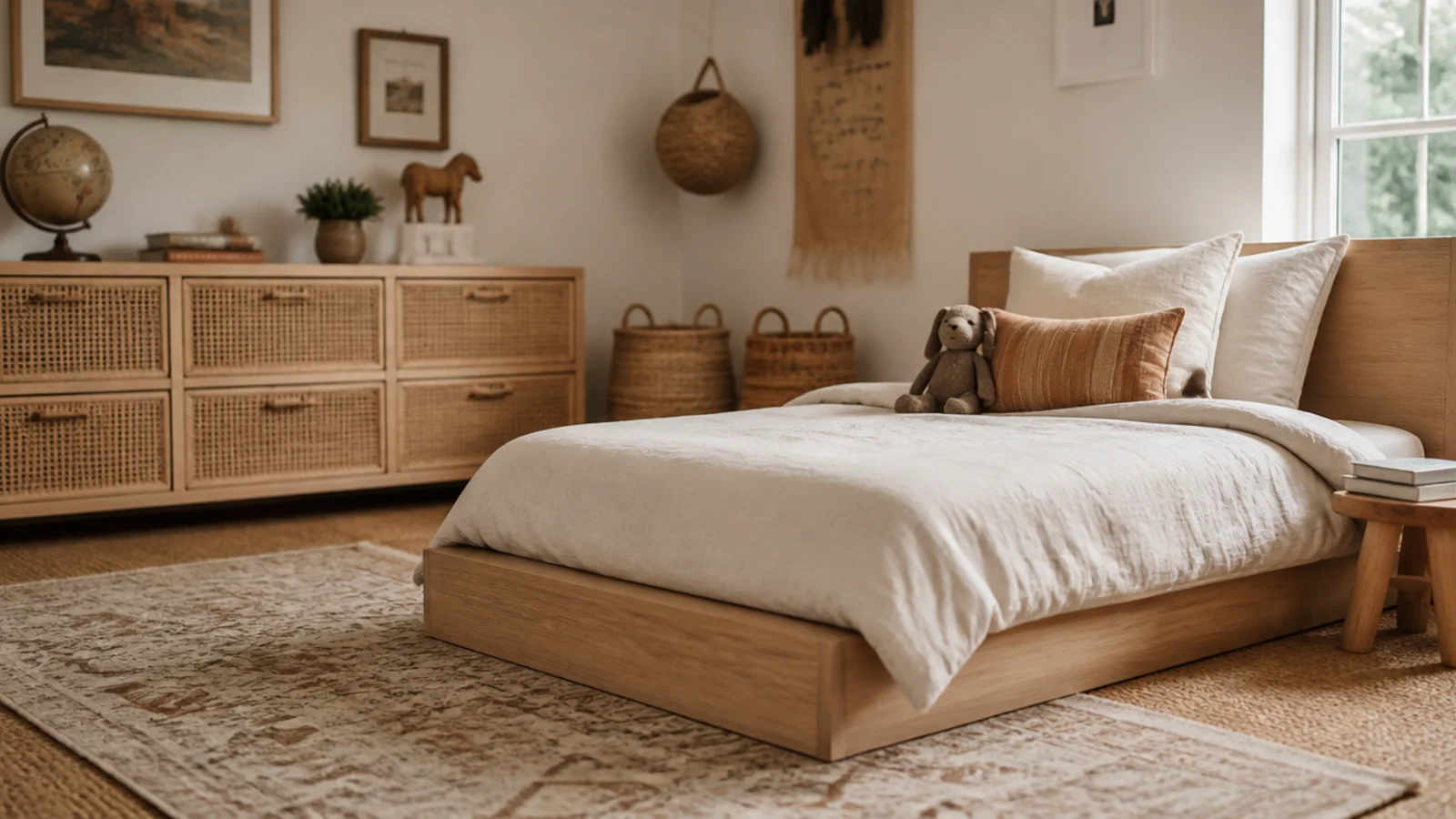
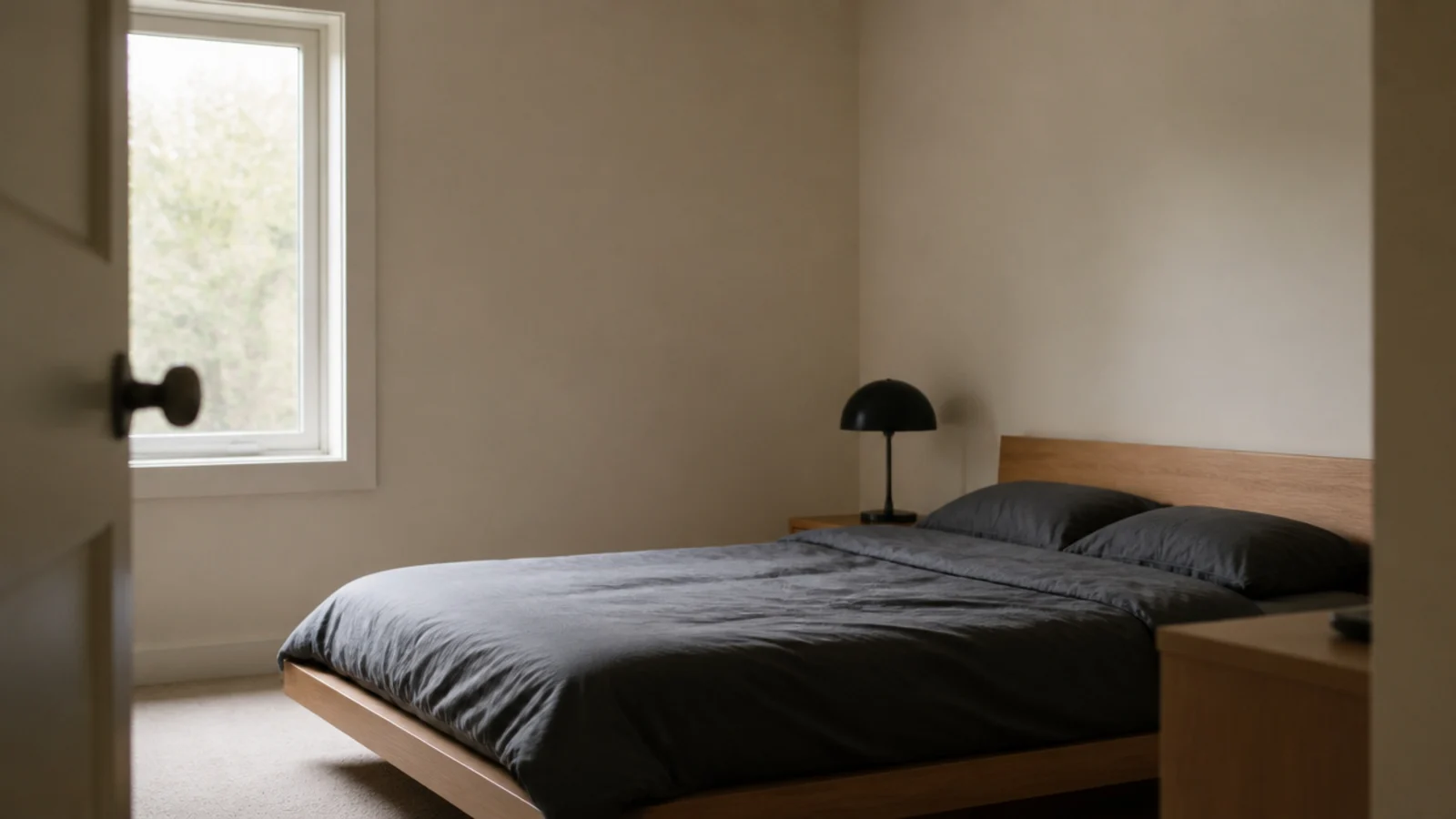
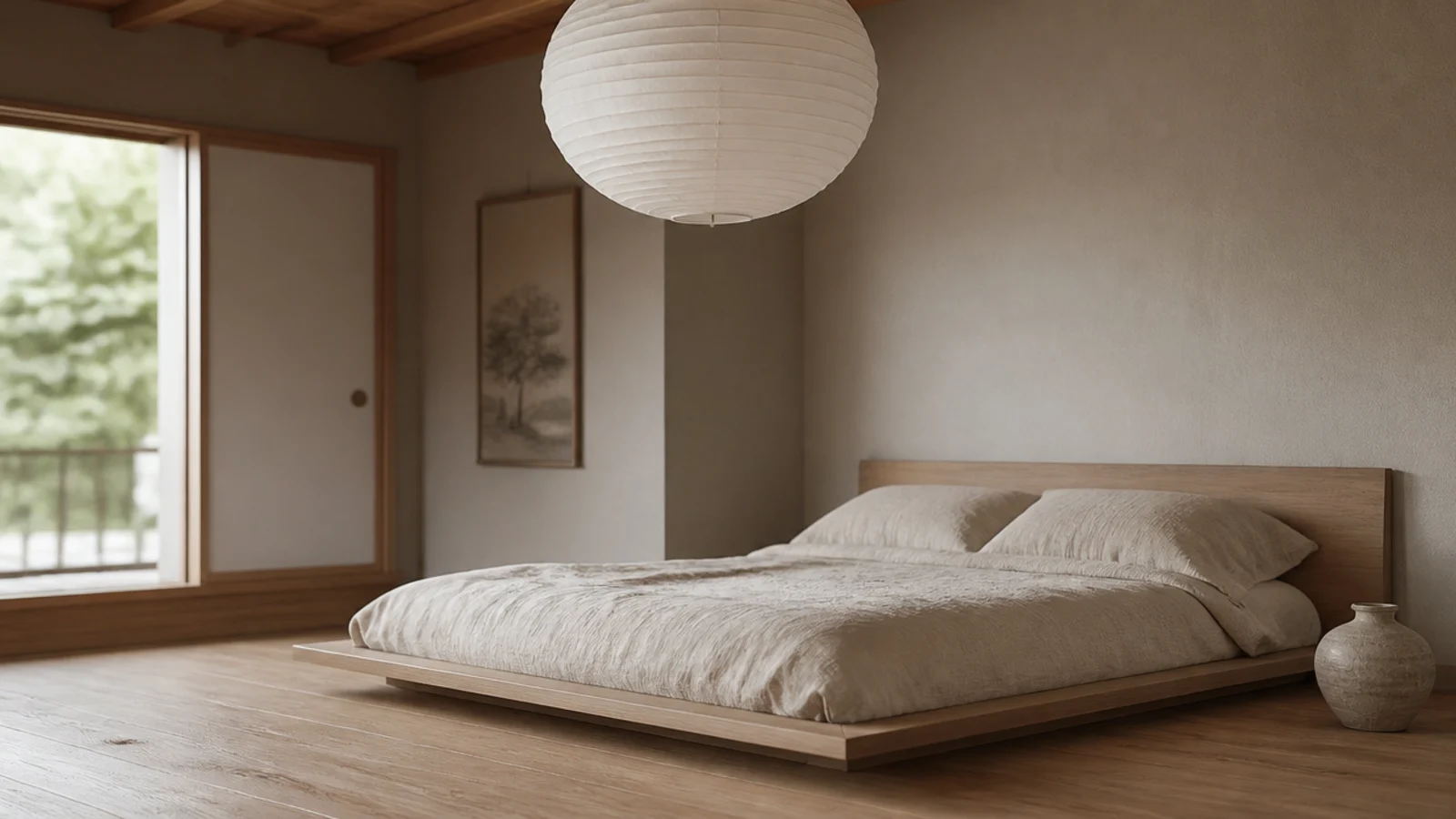
A platform base 8 to 12 inches off the floor, pale timber, plain oatmeal bedding, and one large paper globe pendant at $25 to $50. The low bed is what makes the ceiling read higher, so the look and the spatial trick are the same decision. Keep the floor as clear as you can stand — that is the whole aesthetic.
6. Coastal without a single shell
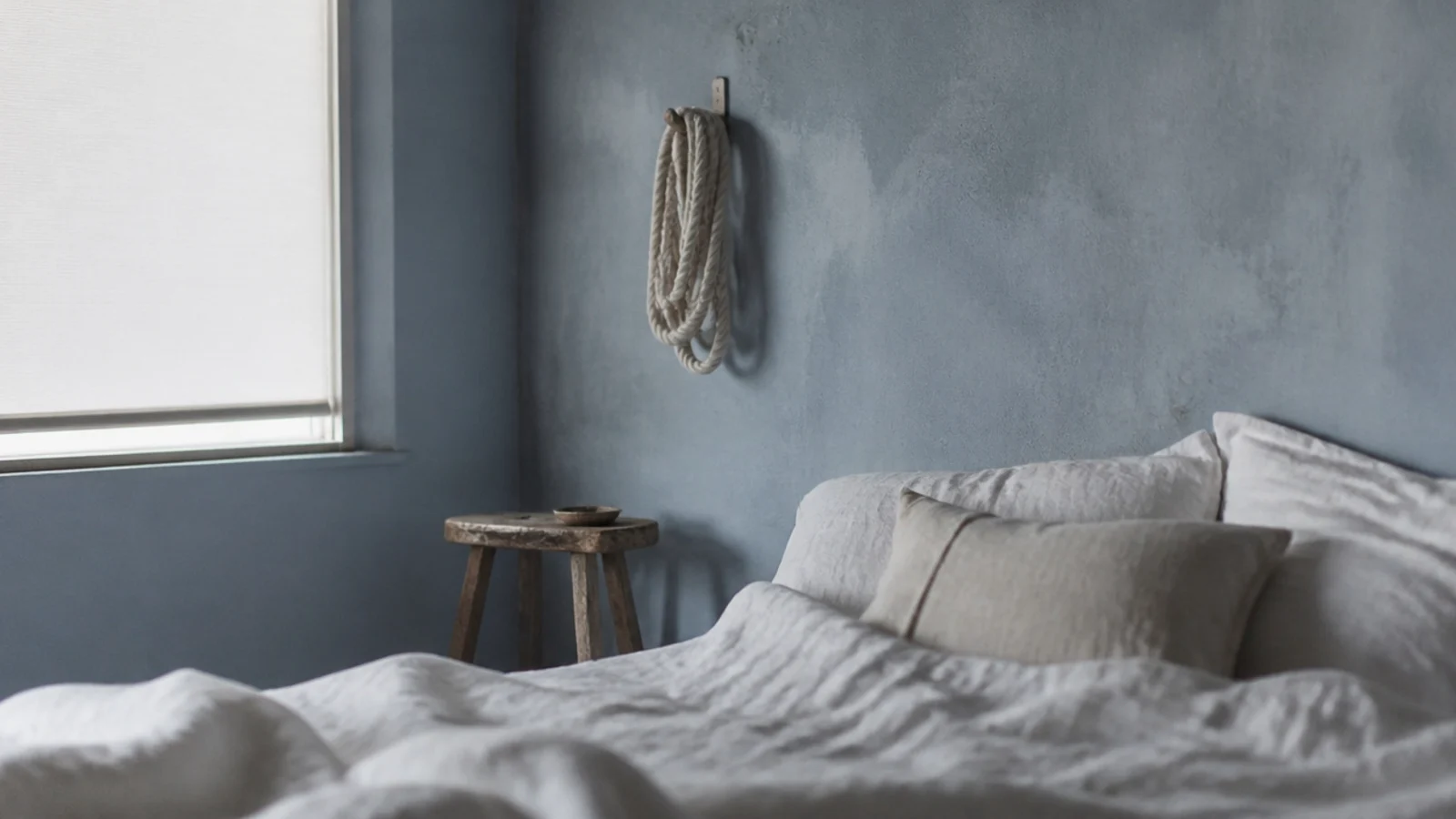
Washed blue-grey walls in the LRV 55 to 62 range, crumpled white linen, weathered timber and one coil of natural rope. The rule is texture over motif: no anchors, no shells, no rope-effect anything. Done this way it reads calm and slightly worn rather than themed, and it survives well past sixteen.
7. Nineties grunge behind glass
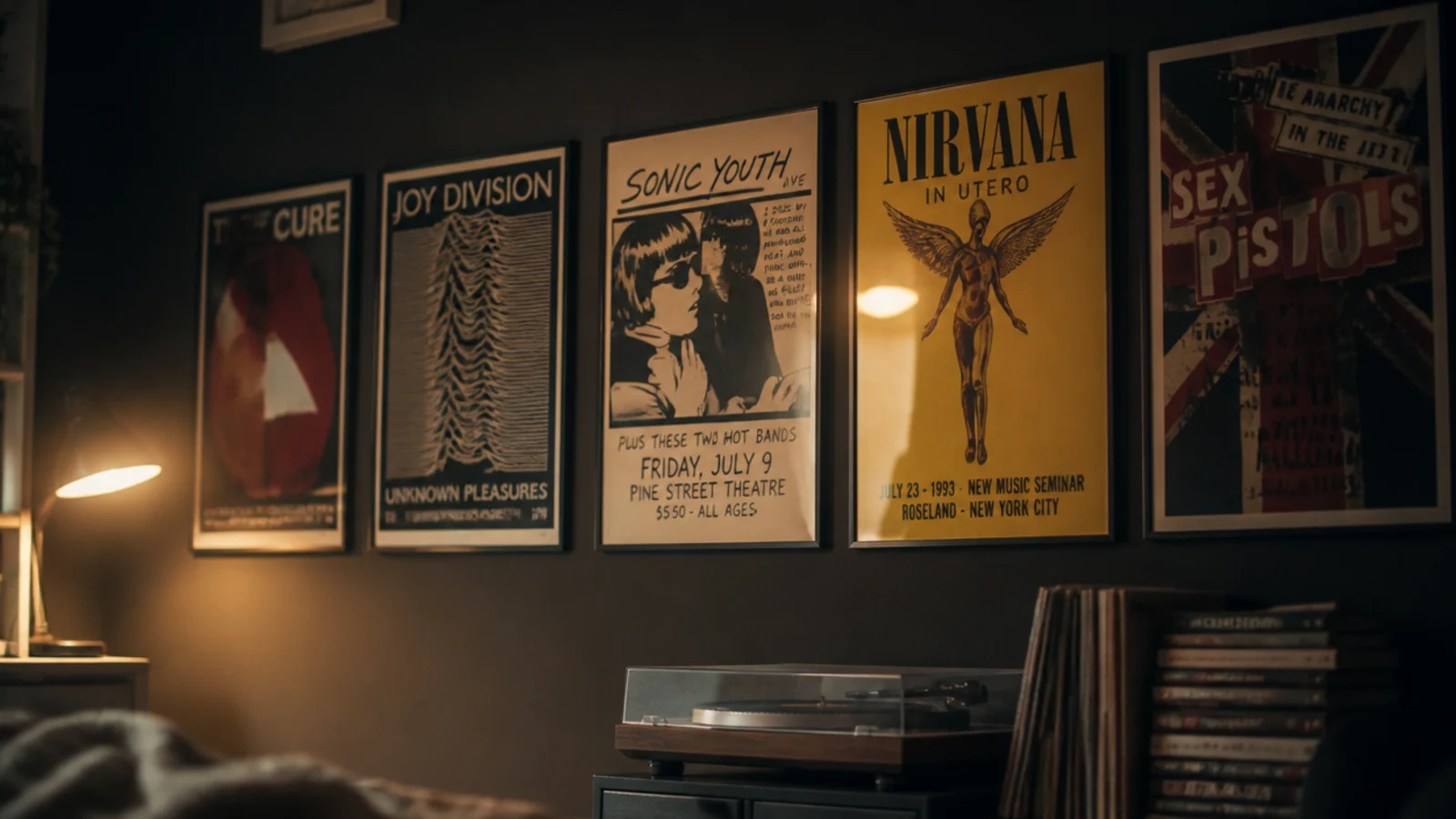
Layered band posters, but in slim clip frames rather than taped up. Frames at $8 to $15 each turn the same posters into something that reads as a collection and survives a house move. Hang them tightly with 2 to 3 inch gaps against a dark wall, and let the density do the work.
8. Monochrome with one loud object
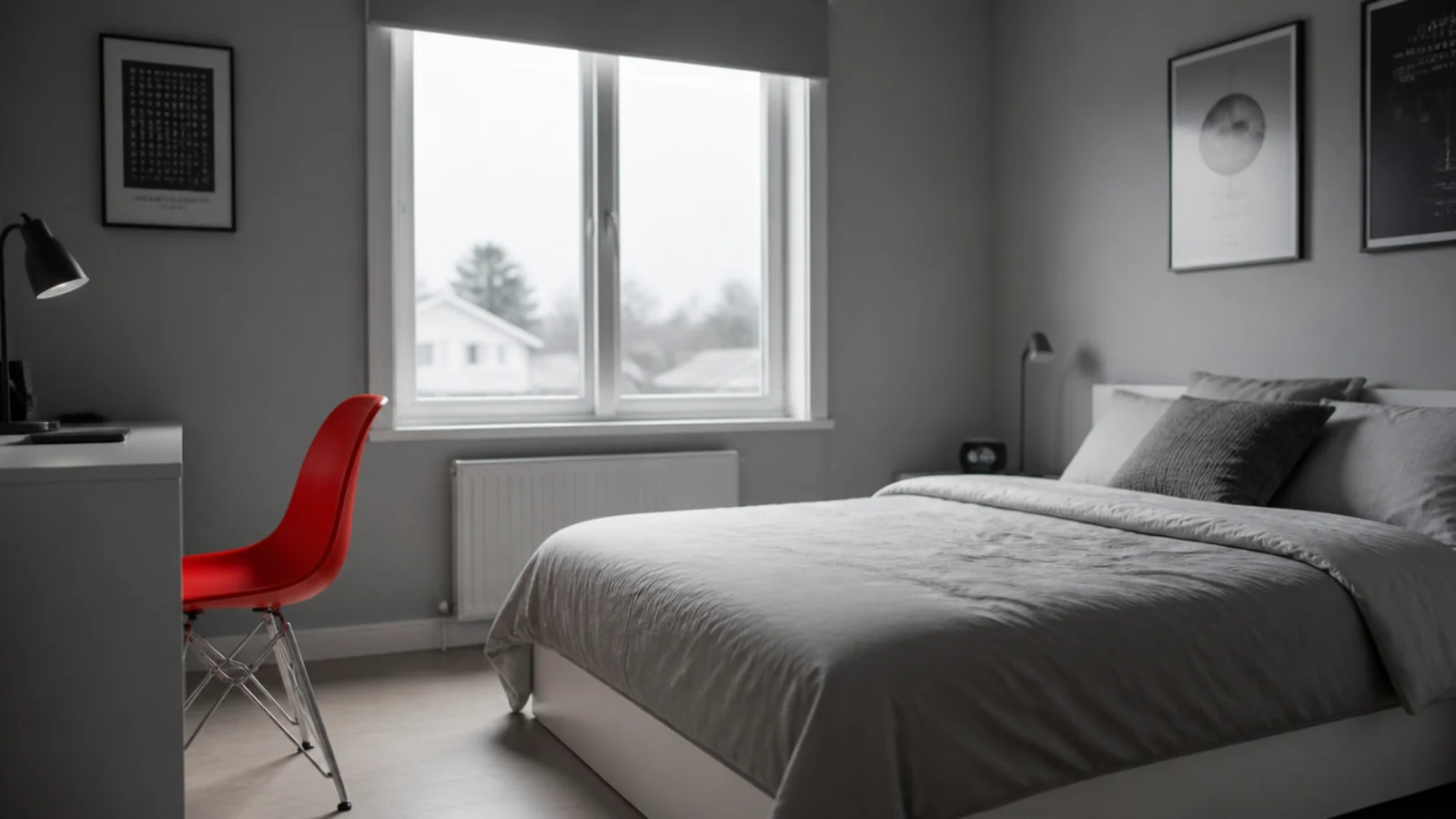
Grey walls, grey bedding, black hardware, and exactly one object in a genuinely strong colour — a chair, a beanbag, an instrument. The restraint is what makes the accent land. It is also the cheapest look to change later, because swapping that one object rewrites the room without a repaint.
9. Retro gaming without the neon
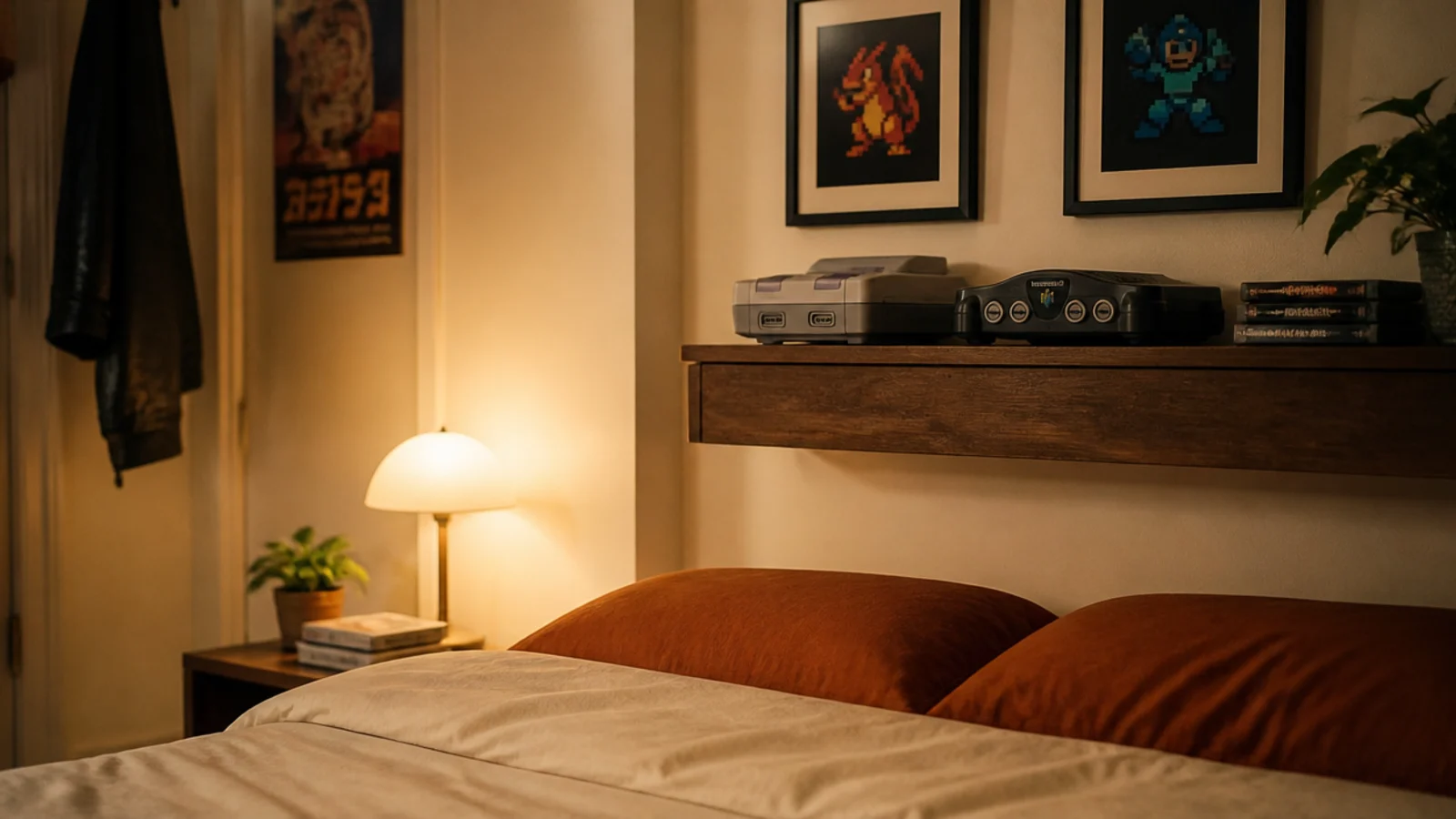
Muted cream and burnt orange, consoles displayed as objects on a shelf, framed pixel art at $15 to $30 a frame. Playing the period colours quietly rather than going full arcade neon is what stops it looking like a bar. Two old consoles on a shelf carry more character than any amount of coloured lighting.
10. Expedition in canvas and olive
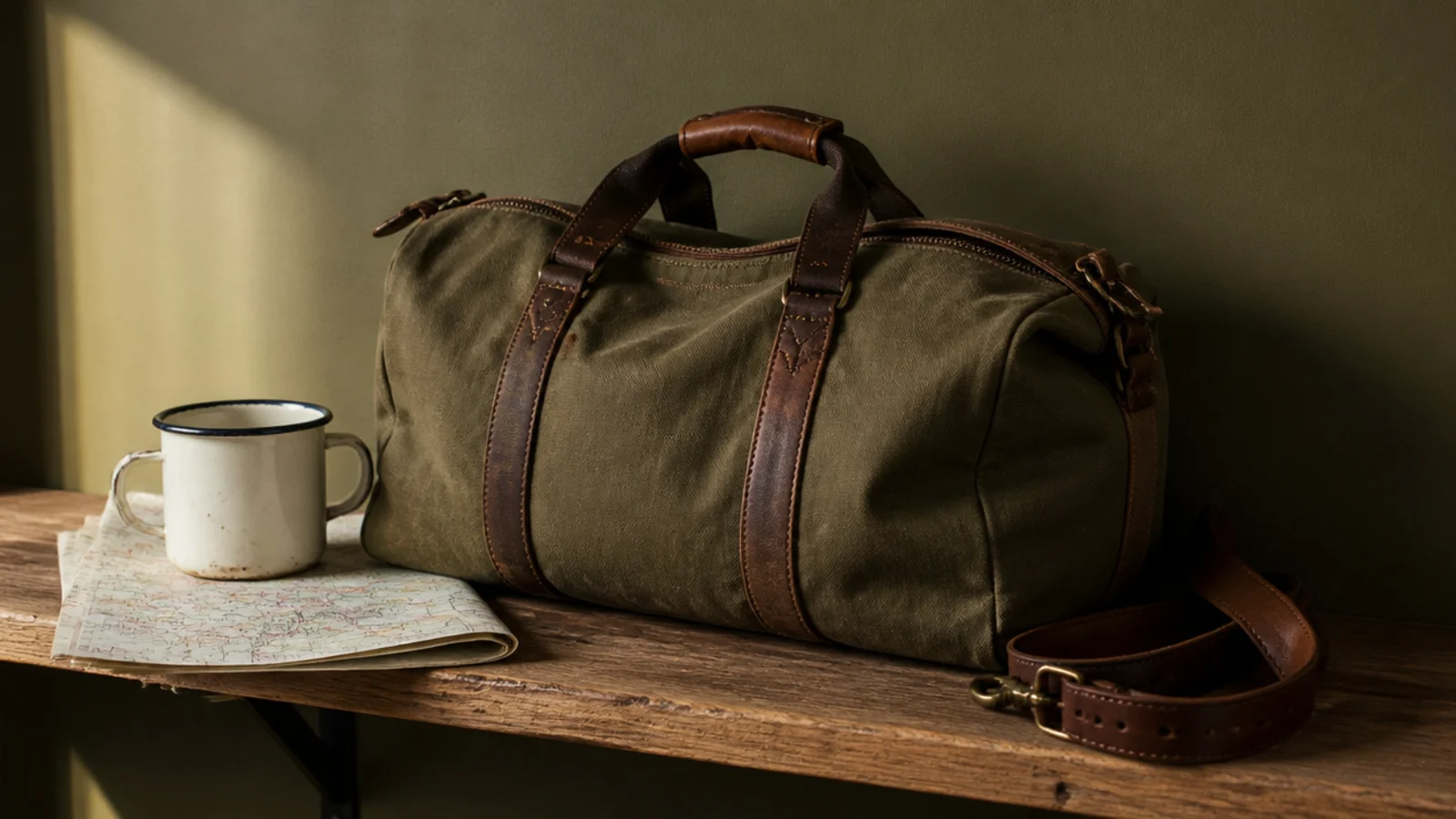
Olive walls in the LRV 25 to 32 band, canvas, worn leather, a folded paper map, one enamel mug. Materials rather than printed images, which is why this ages well — a canvas bag on a hook still works at twenty-two, a jungle mural does not. Most of it can be thrifted for under $60.
11. Music-led with instruments on the wall
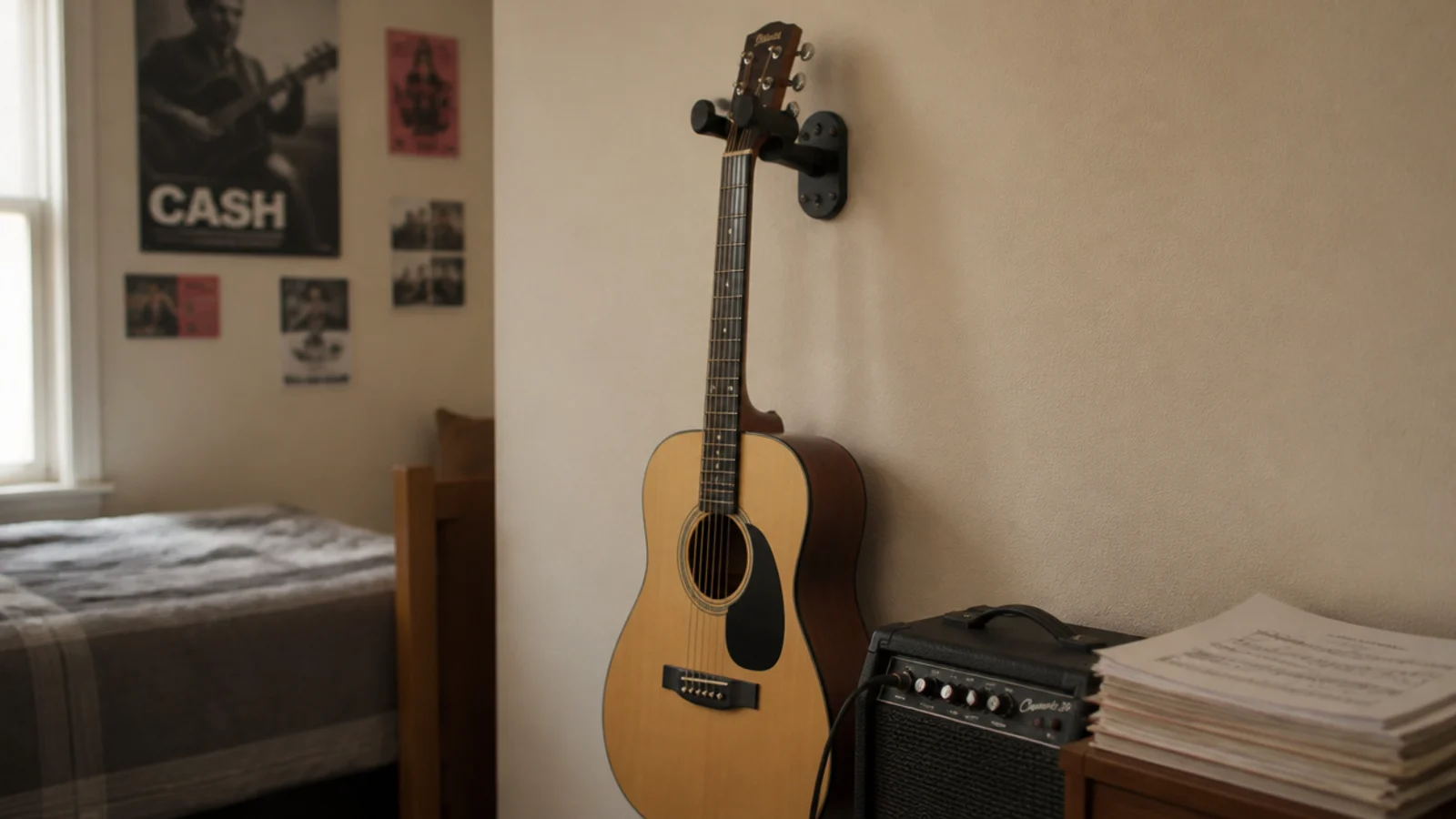
A guitar on a padded wall bracket is free wall art he already owns, and it makes the instrument more likely to be picked up. Fix the bracket into a stud, and keep it off an outside wall where temperature swings are worst for a wooden instrument. Brackets are $12 to $25.
12. Cyber, but only one hidden strip
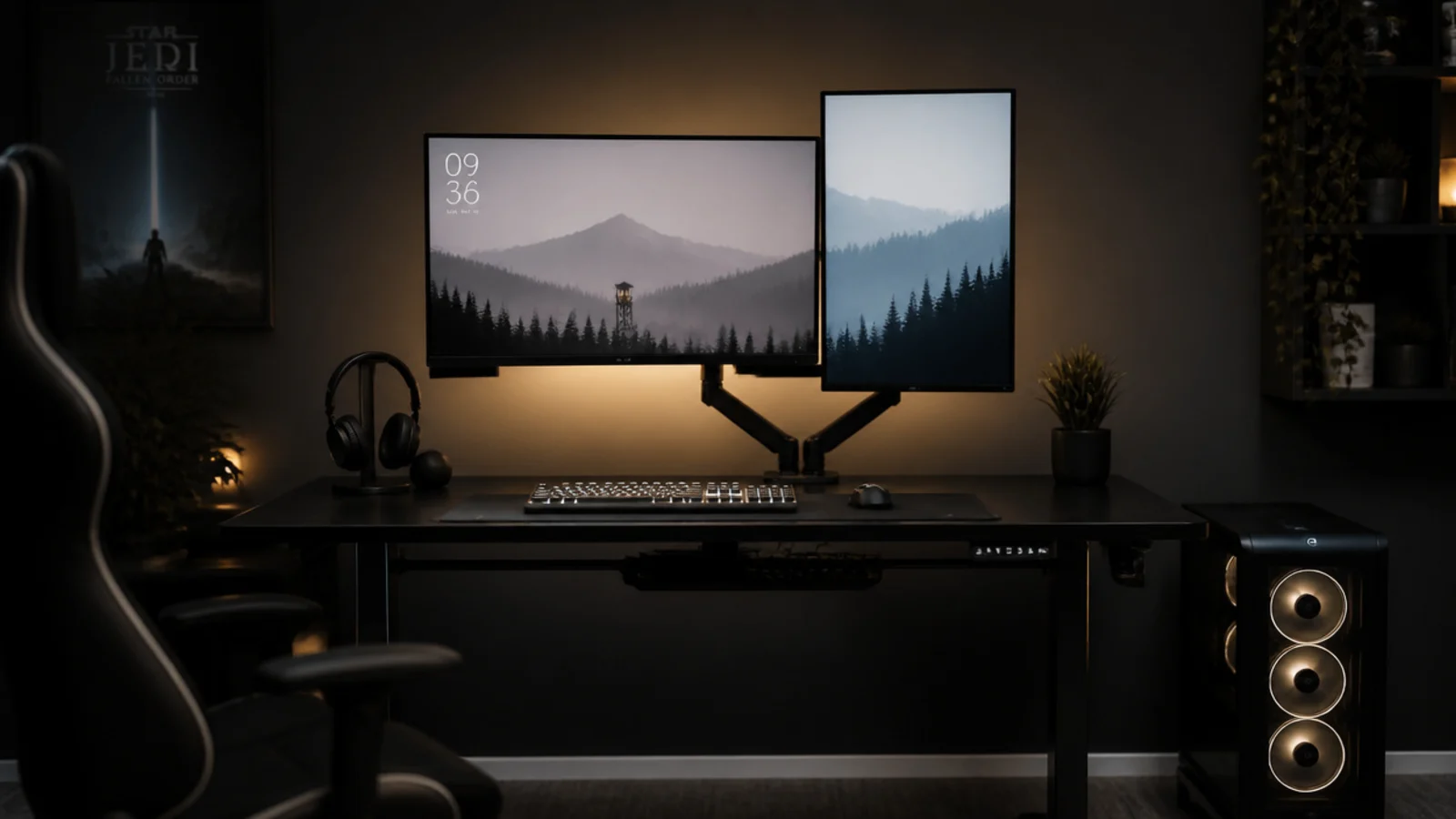
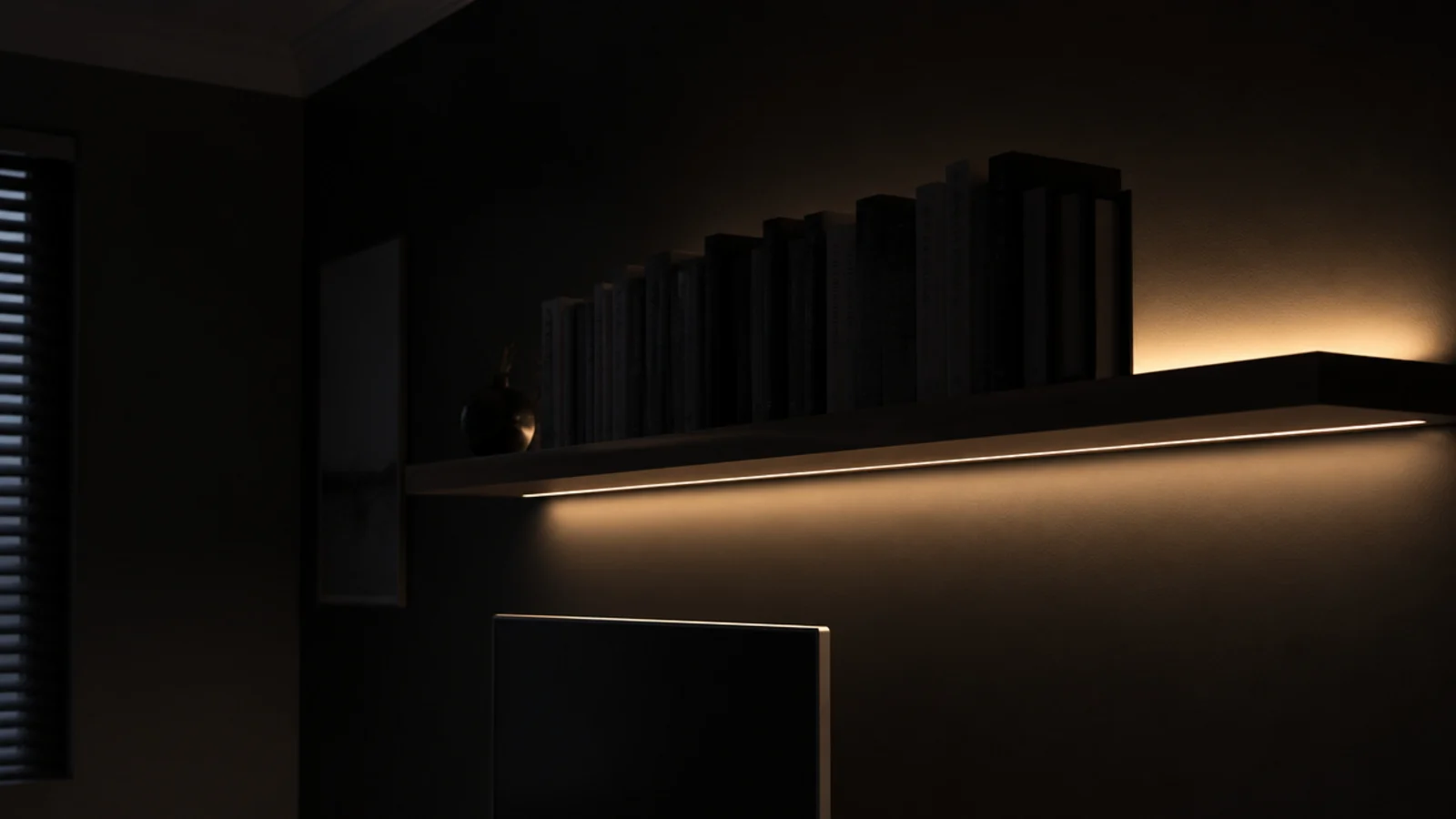
If he wants the glow, give him one hidden run behind the monitor or under a shelf lip in a neutral 6500K, and keep every other surface quiet. That reads as lighting design. Coloured tape stapled around the ceiling perimeter lights the ceiling instead of the room and is the purchase most regretted a year later.
13. Vintage sport without the memorabilia wall
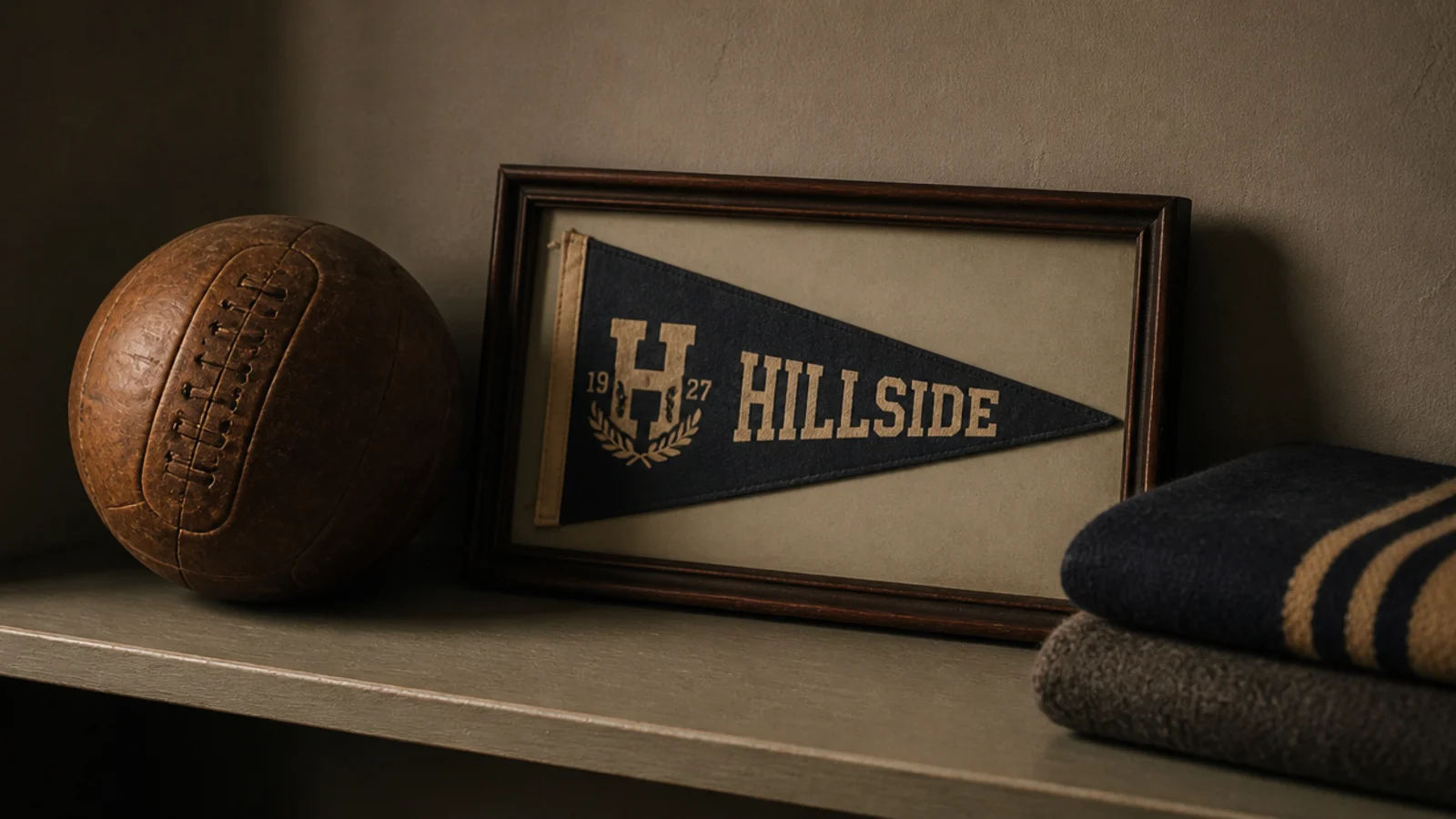
One worn leather ball and one framed pennant on a plain shelf beat a wall of new printed merchandise, and cost less. Age is the point — a genuinely old object has a surface that new reproductions cannot fake. Charity shops and car boot sales are where this look actually comes from.
14. Earthy in clay, olive and oak
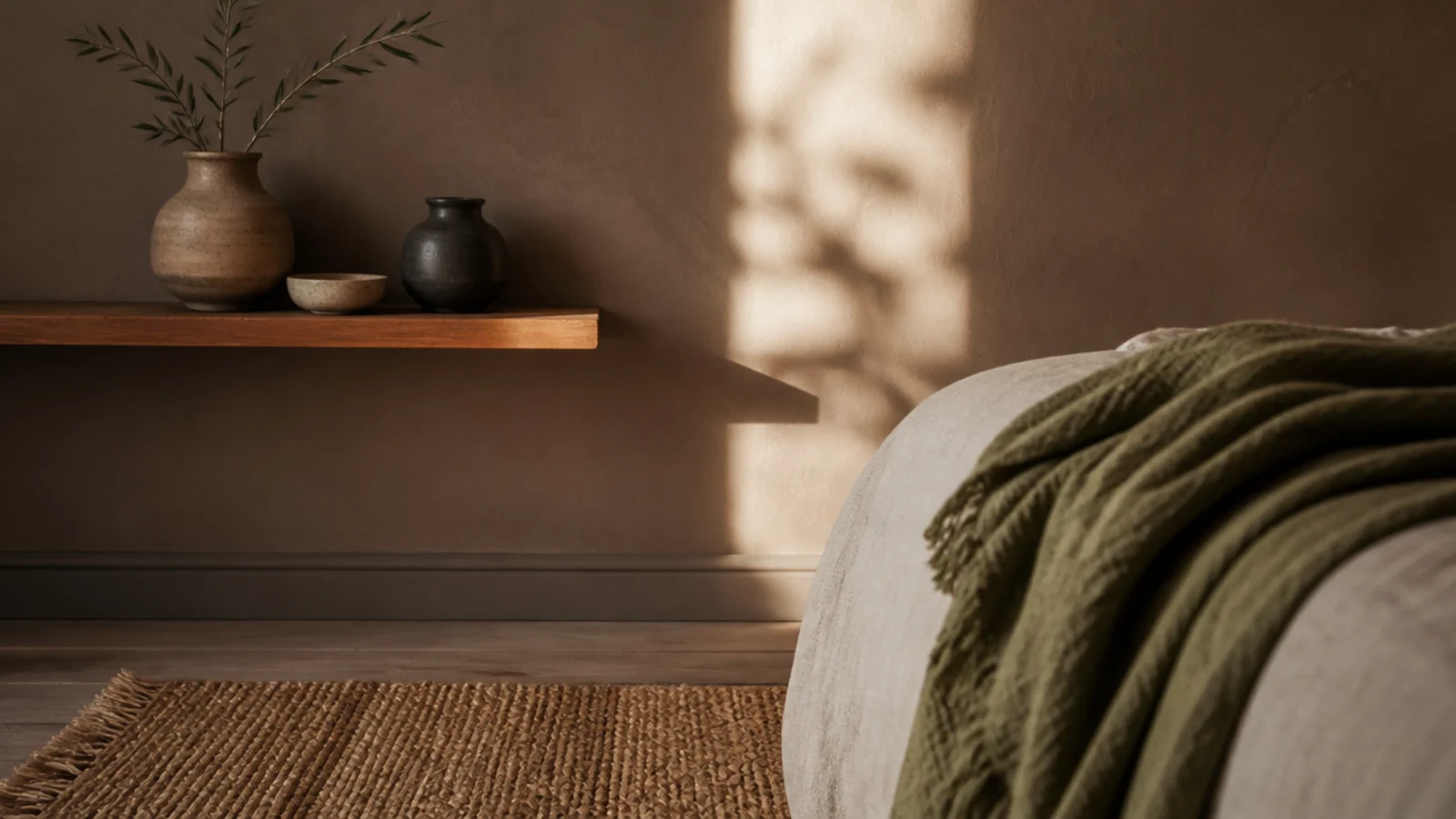
A clay wall around an LRV of 40, oak shelving, stoneware, jute underfoot. It is warm without being soft, which is exactly the register most teenage boys will accept. It also photographs well in low light, which matters for a room that is mostly used in the evening.
15. Blueprint and architectural drawings
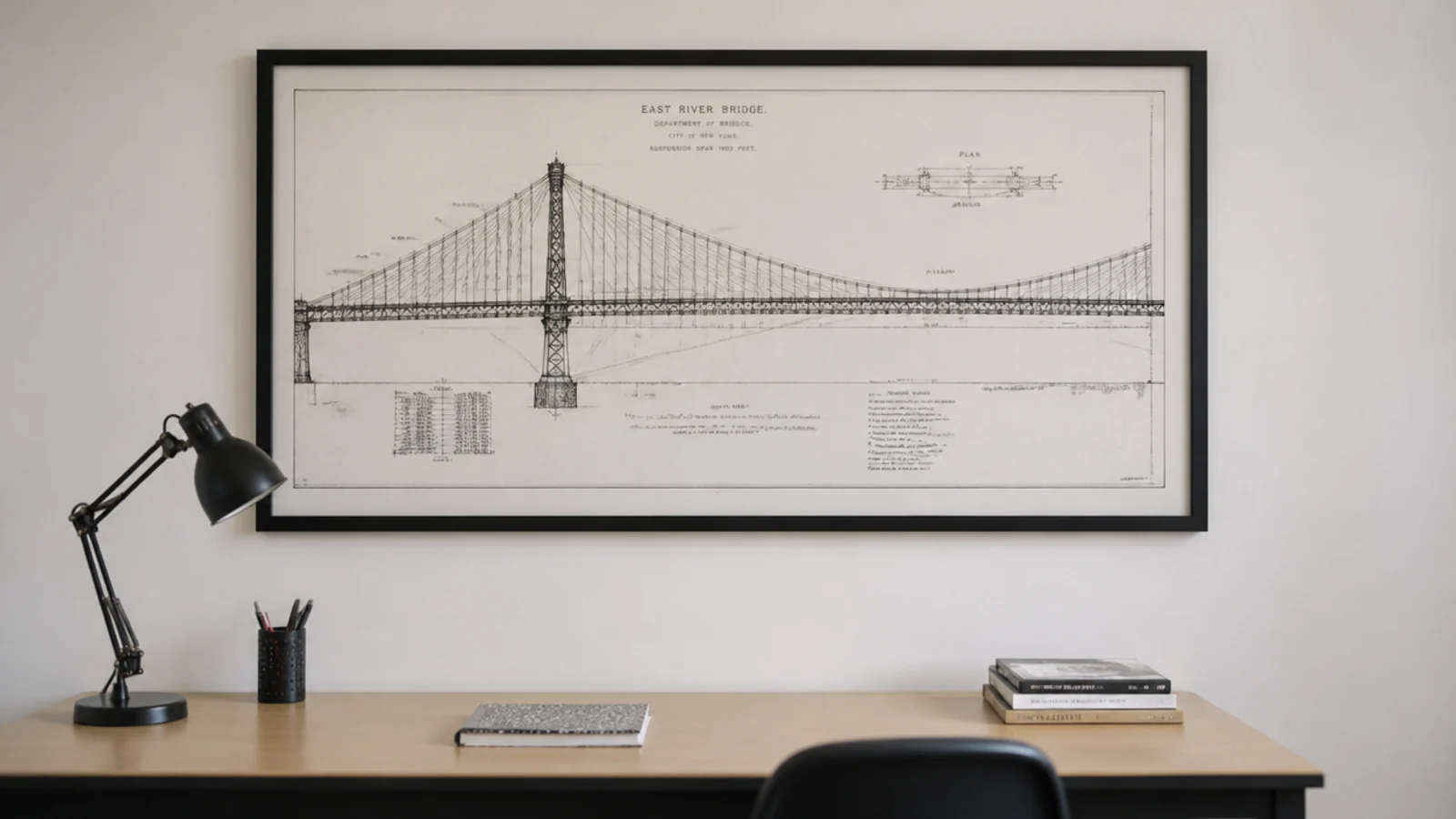
One large framed technical drawing at 24 by 36 inches or bigger holds a whole wall. Drawings, maps and cross-sections age far better than posters of things, and they read as an interest rather than a fandom. Hang the centre at about 57 inches, or 8 to 10 inches above furniture.
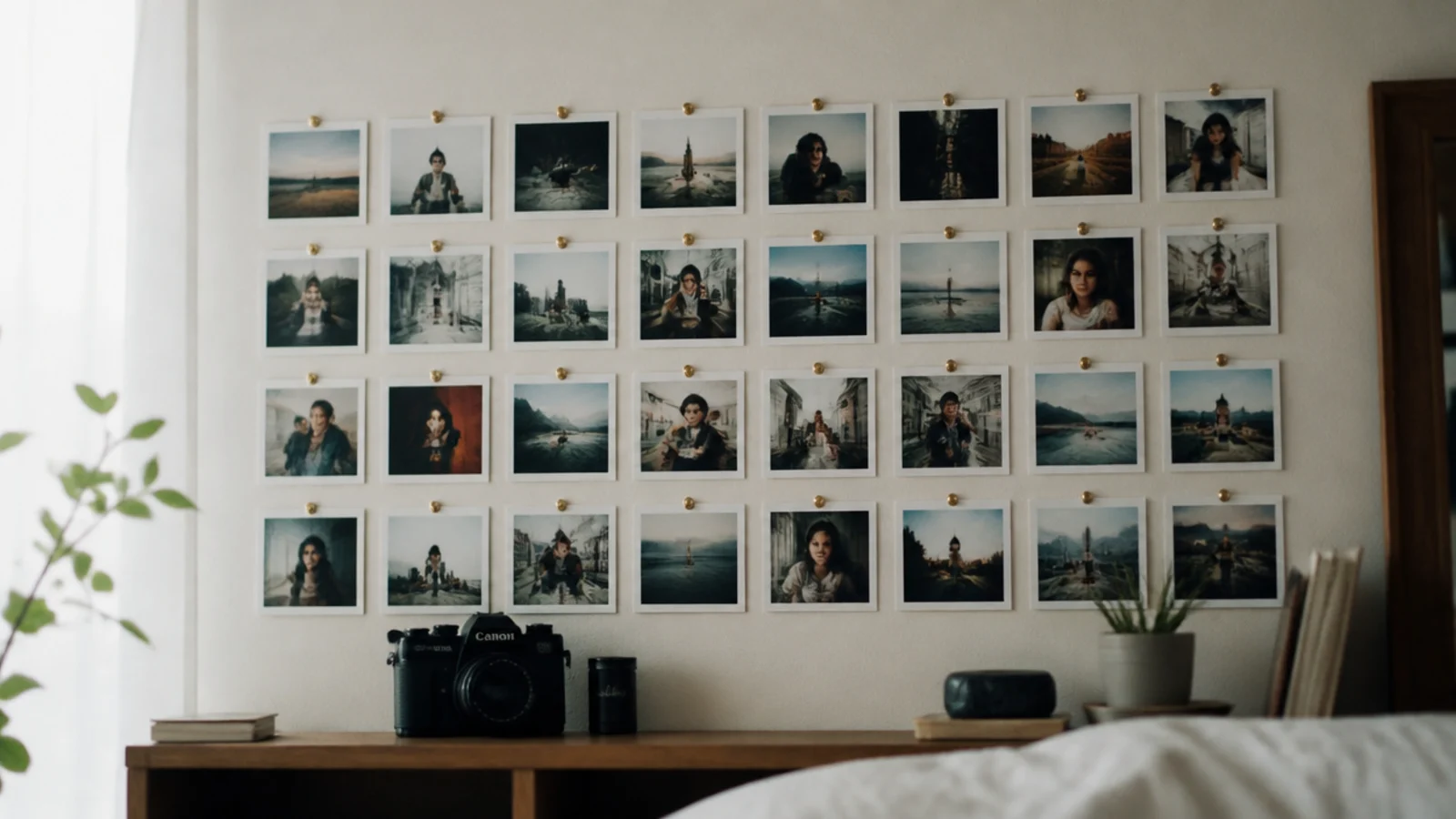
16. A film photography wall
His own photographs, printed 4 by 6 and pinned in an even grid with consistent gaps. Prints cost pennies each, the wall becomes personal in a way nothing bought can be, and it changes whenever he shoots more. Use a pinboard or a ply panel rather than pinning into plaster.
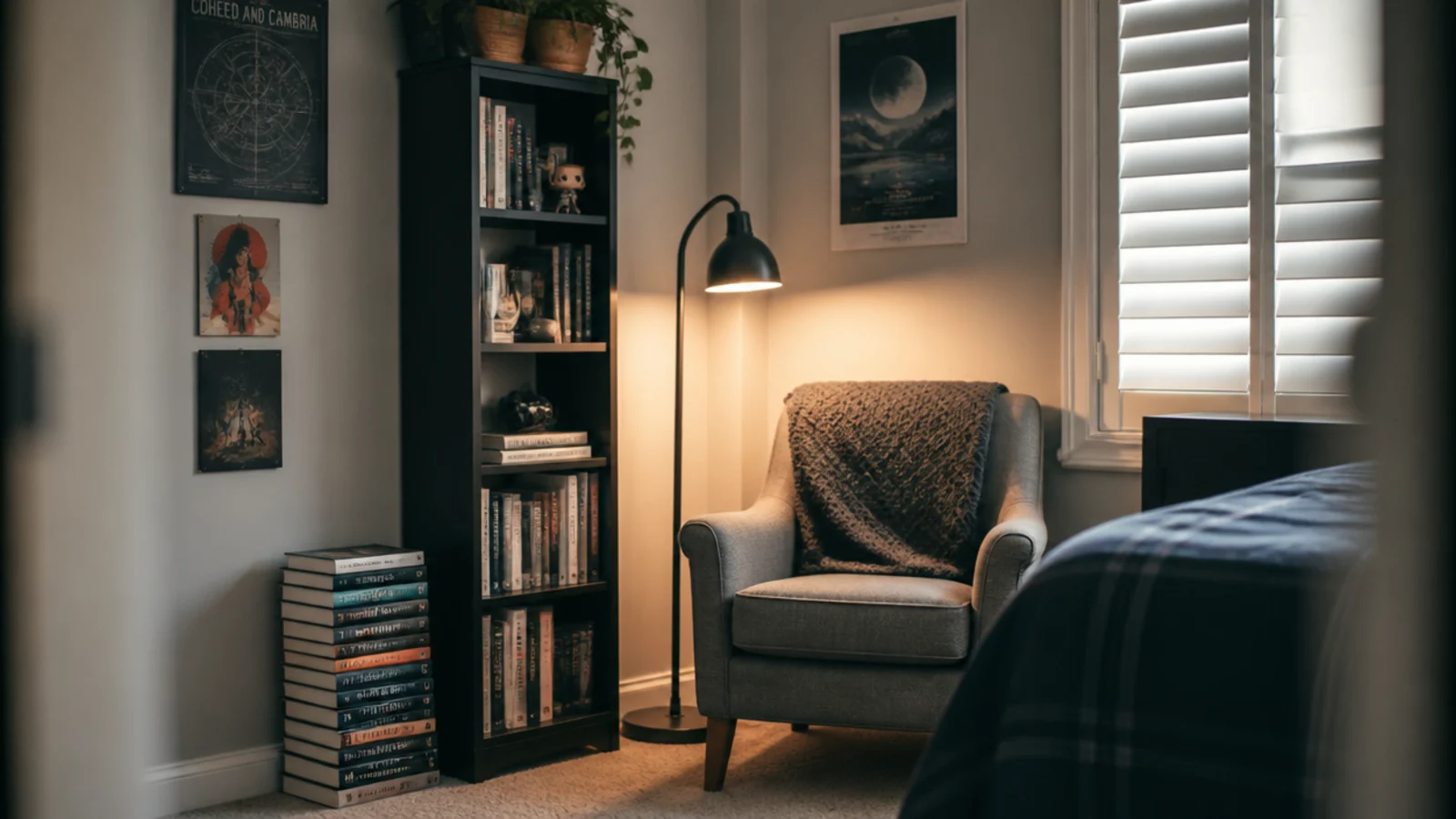
17. A library corner in a small room
A narrow bookcase, one armchair with a 30 by 32 inch footprint, and a floor lamp at 450 to 700 lumens. Three pieces in one corner make a second zone in a room that has no space for one. Strap the bookcase to a stud — a loaded case passes 200 pounds and narrow ones are the tippiest shape there is.
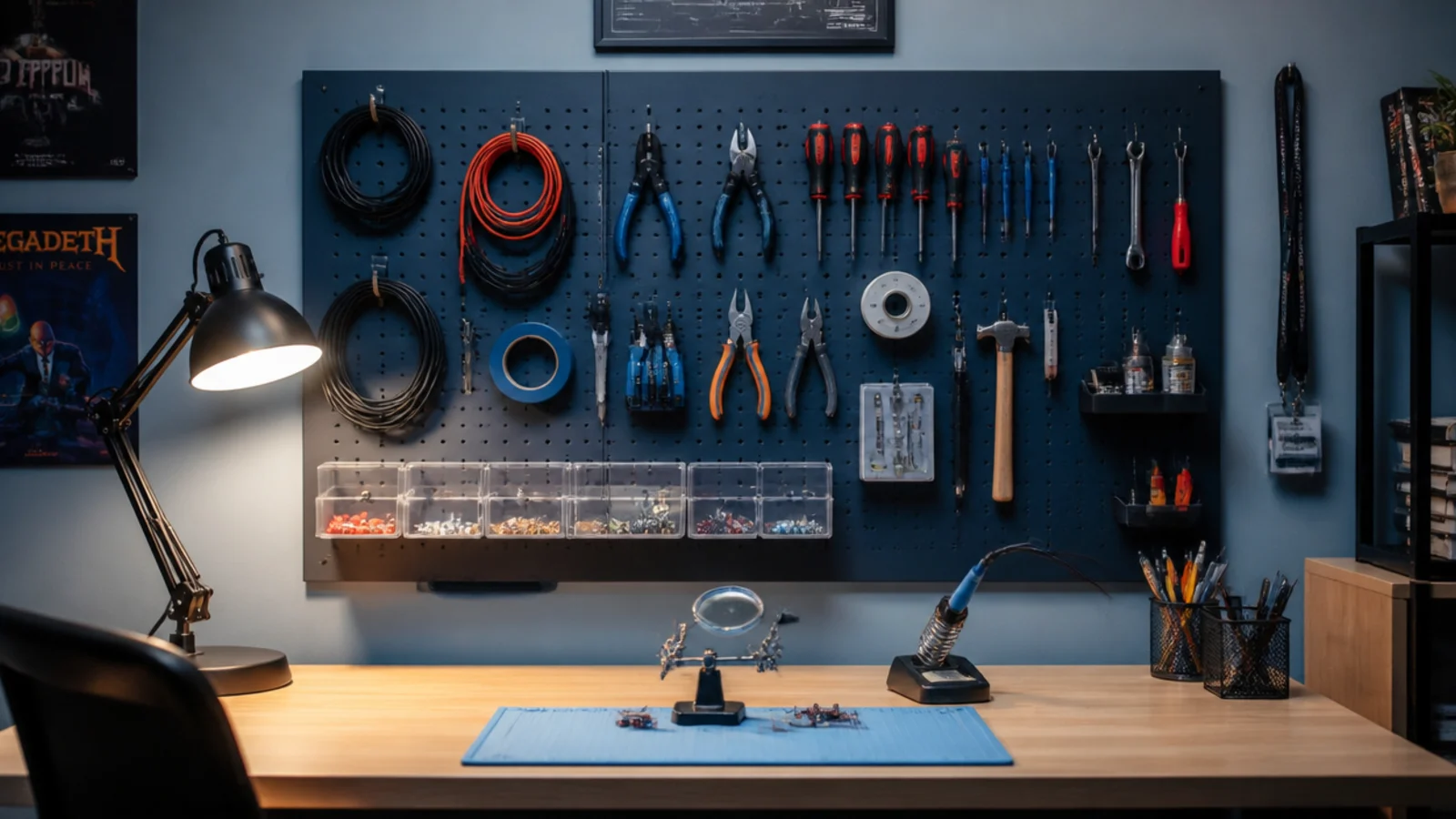
18. Workshop with a pegboard wall
If he builds, repairs or solders, put the tools on display. A 24 by 48 inch pegboard on 3/4-inch battens with a starter set of hooks is $40 to $70, and the tools become the decoration. Add task lighting at 500 lux or more over the work area, which is brighter than a normal desk needs.
19. All black, carried by texture
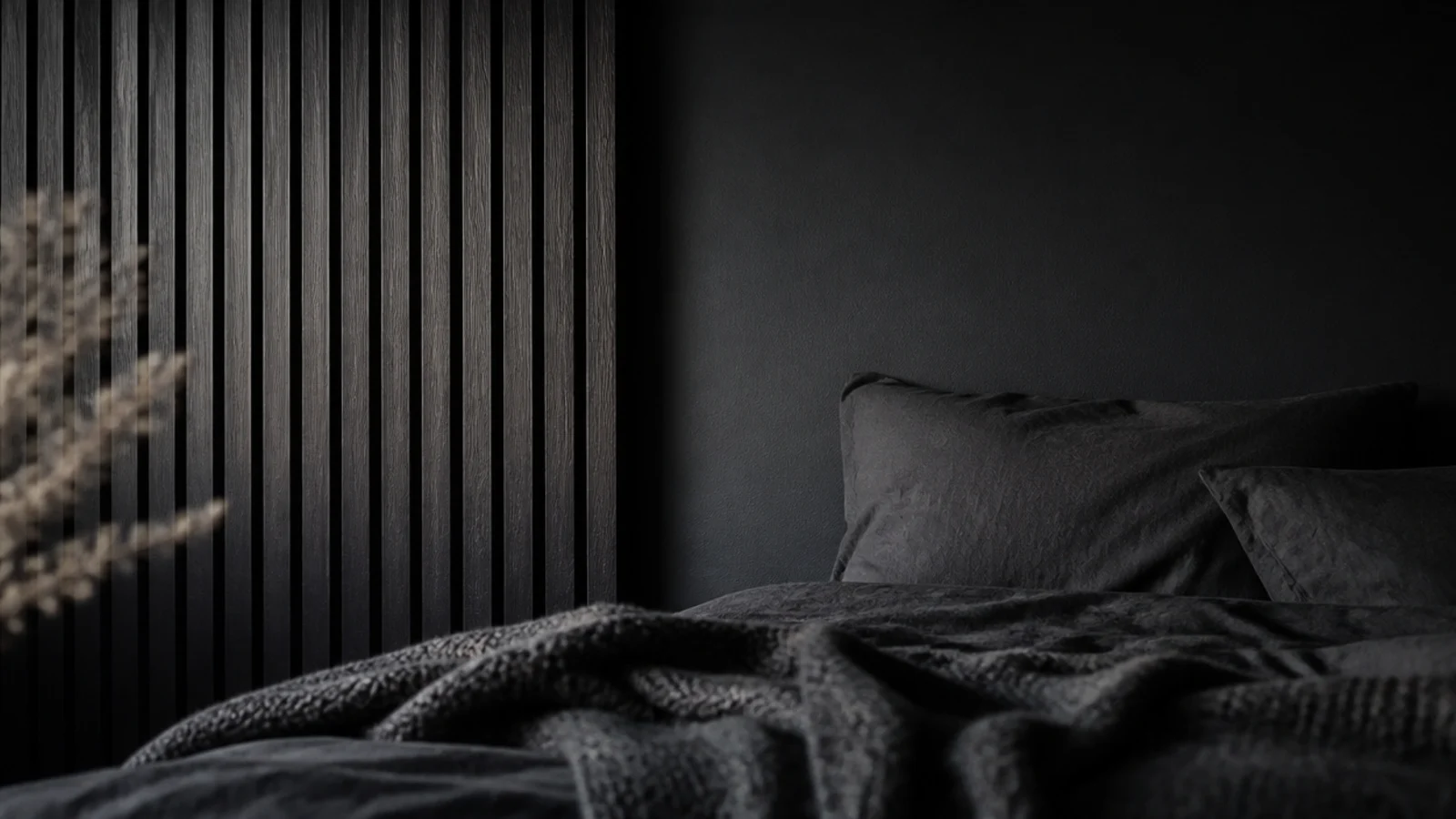
Black only works if three or four different textures are doing the work — matte paint, slatted timber, a heavy weave, some leather. Flat black on every surface reads cheap and swallows the room. Add two separate light sources, because a black room under one ceiling bulb is genuinely unusable.
20. Layered neutrals with a plant corner
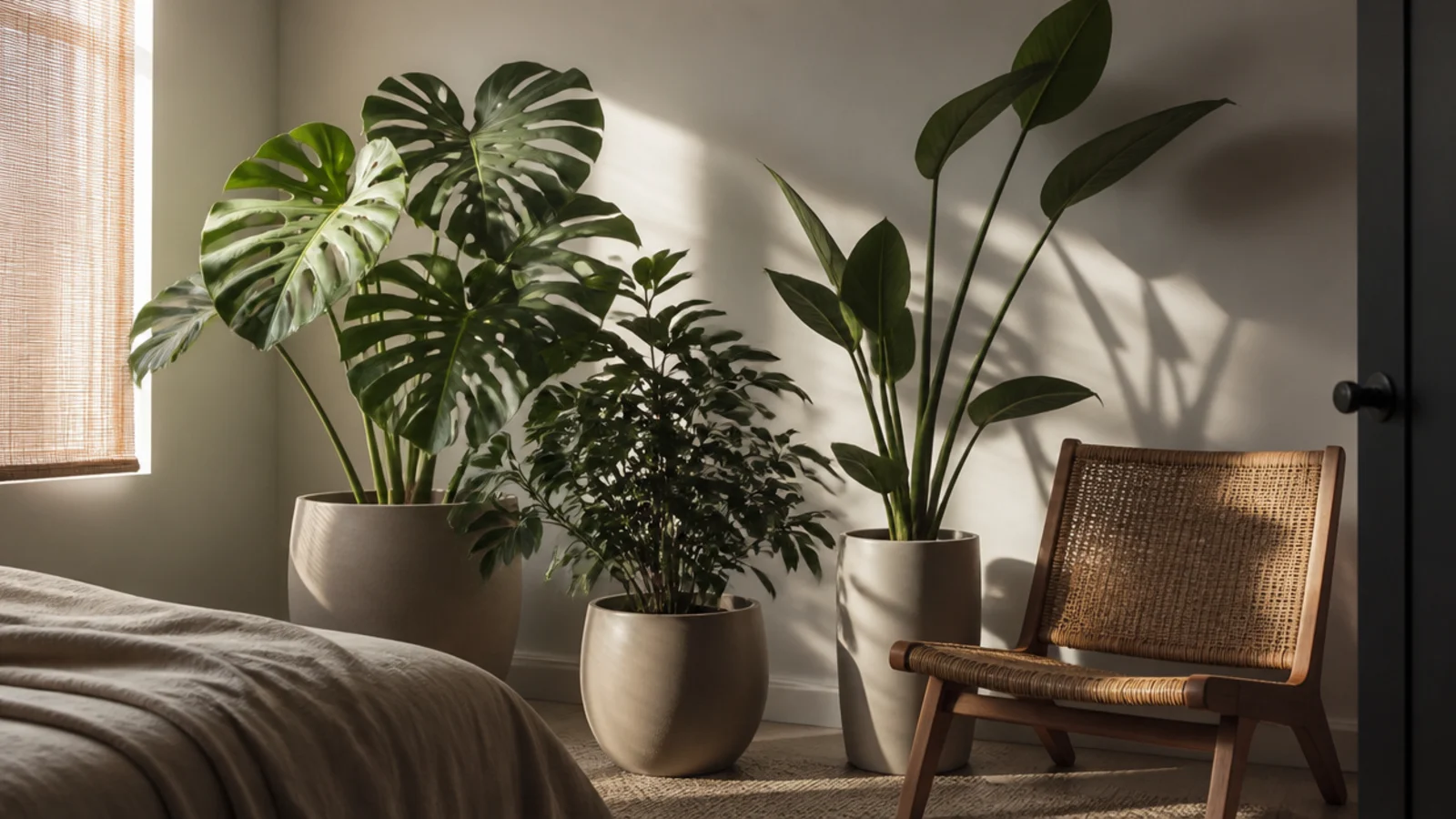
Three large plants in matte pots in one corner supply the only pattern in an otherwise plain room, and leaf shadows on a pale wall do more than any print. Choose things that survive neglect — a snake plant, a ZZ plant and a pothos will all take low light and a fortnight of being ignored.
For a stricter, more architectural version of several of these, modern teen boy bedroom has the same budget spent differently. The colour values behind every look here are worked through in teen boy bedroom paint, and if flameless candles are part of the mood, aesthetic candle decor covers safe grouping and placement.
Mistakes to Skip
- Buying decorative objects before paint. Sixty dollars of paint changes a room more than three hundred dollars of ornaments, and the ornaments still need somewhere to sit.
- Running a printed mural or licensed wallpaper. It has a shelf life of about two years and removing it usually takes the plaster surface with it.
- Lighting a whole aesthetic with coloured tape. The colour lands on the ceiling, the room reads flat, and every material in it loses its texture.
- Putting a real candle on a desk covered in paper and cables. Bedrooms are where candle fires most often start — use a battery LED version instead.
Frequently asked questions
How do I give a bedroom an aesthetic without spending much?
Pick three tones and one material and repeat them. Almost every look that reads expensive is doing that and nothing more. Paint is the cheapest way in at around sixty dollars for a whole room, and textiles are second. Buying individual decorative objects is the most expensive route and the least effective.
What is the cheapest way to change how a bedroom looks?
Paint, then bedding, then lighting, in that order. Two gallons covers a standard bedroom in two coats for about sixty dollars, a plain bedding set is fifty to a hundred and ten, and swapping to warm bulbs on a dimmer is under thirty. That is under two hundred dollars for a genuinely different room.
Do LED strips make a room look better or worse?
Hidden they help, visible they date. A neutral strip tucked behind a shelf lip, a headboard panel or a monitor reads architectural. A coloured rope stapled around the ceiling perimeter lights the ceiling rather than the room and is usually the first thing regretted a year later.
How do I stop a themed bedroom looking childish?
Keep the theme in materials rather than in printed images. Olive canvas, worn leather and a folded map read as expedition; a wallpaper mural of a jungle reads as a nursery. Materials age with him and can be reused elsewhere, while printed graphics have a shelf life of about two years.
Are candles safe in a teenage bedroom?
Use flameless LED candles rather than wax anywhere near bedding, curtains or a desk covered in paper and cables, because a bedroom is the single most common room for candle fires. Battery LED versions give the same warm flicker at a fraction of the risk and can be left on while he falls asleep.
Want more like this? Browse all 15 teen boy bedroom guides — they all use the same measurements and budget tiers.
Pin it for later
Save this to your Teen Boy Bedroom board
Pin it now so it is waiting for you when the tape measure comes out — and so the next person hunting for this idea can find it too.
Save this pinKeep going
More ideas worth saving while you have the tape measure out.