Study Desk Decor · Listicle
20 Study Desk Decor Indian Style Ideas To Steal

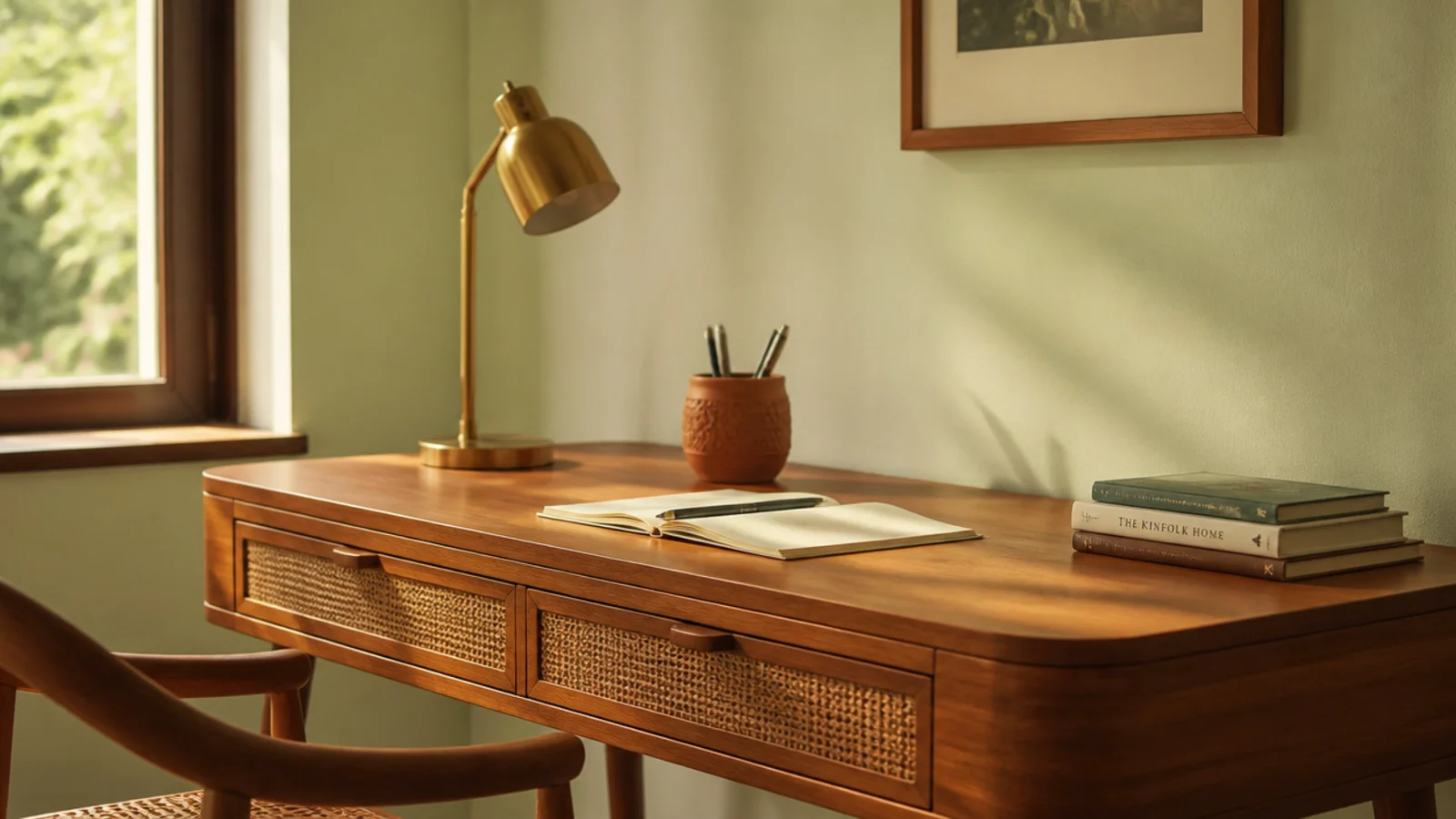
Study desk decor indian homes rely on tends to solve two problems that Western setups rarely have to: heat and light that arrives hard and bright for most of the year. That is why so much of it is solid wood rather than board, why stone tops turn up in the hot months, and why the desk almost never faces the window. The materials — teak, brass, cane, block-printed cotton — are the part everyone copies. The planning underneath is the part worth stealing. Twenty ideas below, each with the measurement, material or brightness that makes it work.
In this guide22 sections — tap to openHide
- 1.What study desk decor indian homes get right about light
- 2.Set the top at 28 to 30 inches and adjust with the chair
- 3.Turn the desk side-on to the window
- 4.Choose a solid sheesham or teak top
- 5.Repeat brass exactly three times
- 6.Put a jaali panel behind the desk
- 7.Use cane webbing on the drawer fronts
- 8.Make the pinboard from block-printed cotton
- 9.Pick a brass lamp with a 600 lumen bulb
- 10.Keep pens in terracotta, not plastic
- 11.Add a low chowki for floor-level study
- 12.Hang the book shelf at twenty inches
- 13.Keep the mandir shelf out of the work zone
- 14.Use a stone top for the hot months
- 15.Lay a handloom durrie under the chair
- 16.Drop to 2700K after nine at night
- 17.Hang cotton curtains rather than blackout
- 18.Fit a wooden pegboard with brass hooks
- 19.Slide a jute basket under the desk
- 20.Paint an ochre or indigo panel behind the desk
- 21.Plan for the ceiling fan
- 22.Mistakes to Skip
What study desk decor indian homes get right about light
Three decisions that come before any of the pretty parts.
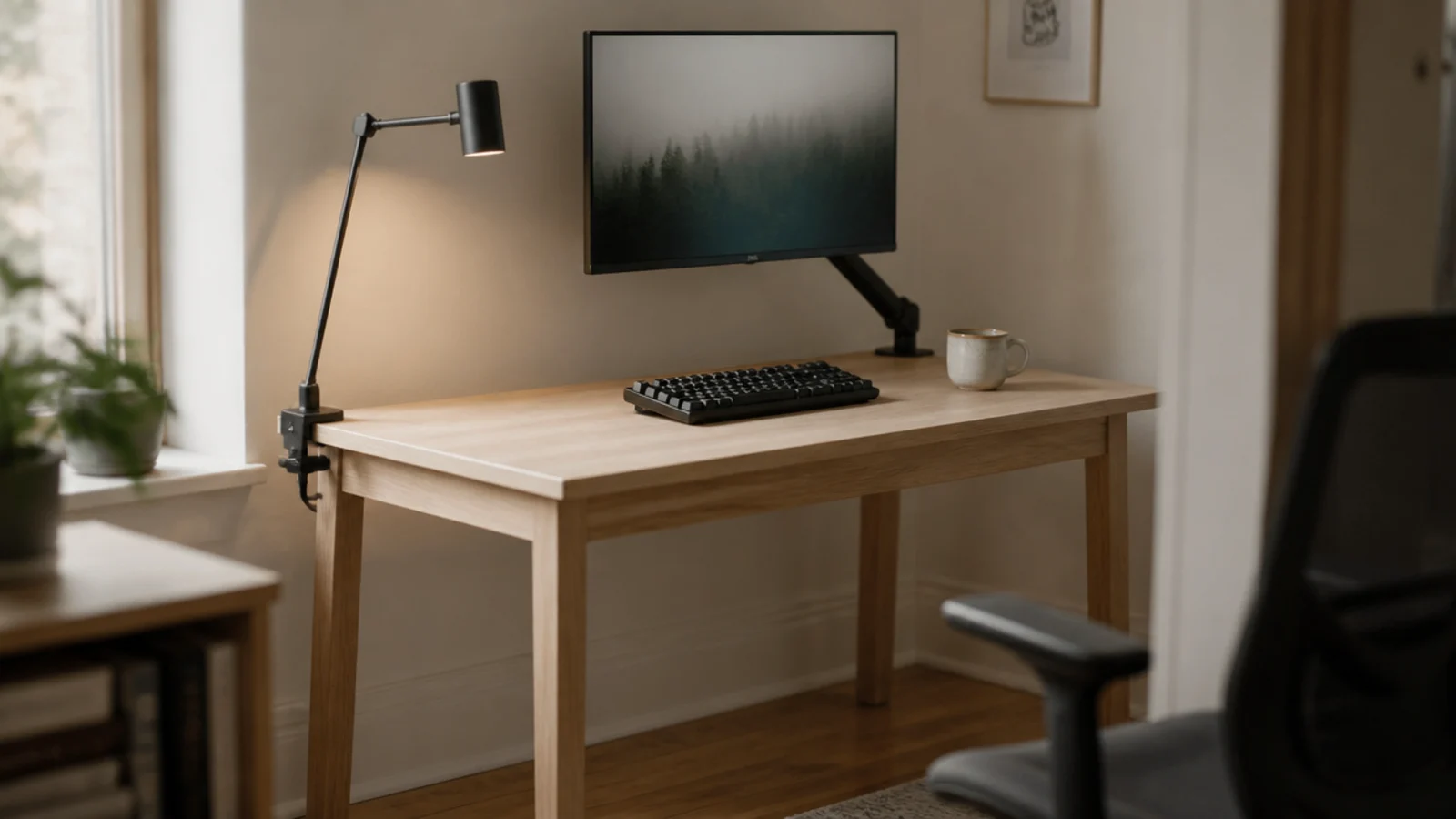
Orientation. The desk goes side-on to the window. Facing it means squinting through the brightest hours of the day; backing onto it puts glare straight across a screen. Perpendicular gives you daylight across the page and a clean monitor, and keeps the surface out of the worst direct afternoon sun.
Two colour temperatures. Neutral 4000K holds attention through an afternoon of study; 2700K makes the same corner liveable at eleven at night. One lamp with switchable temperature at 450 to 800 lumens does both, standing on the side opposite your writing hand.
Material that survives humidity. Solid sheesham, teak or mango wood at around an inch thick will stay flat for decades. Veneered board swells at the edges within a few monsoons, and a laminated top starts lifting at the corners.
The usual heights still apply: desk at 28 to 30 inches, shelf underside 18 to 24 inches above it, 8 to 10 inches deep. For the plain version of those numbers, the study desk decor guide works through each one.
1. Set the top at 28 to 30 inches and adjust with the chair
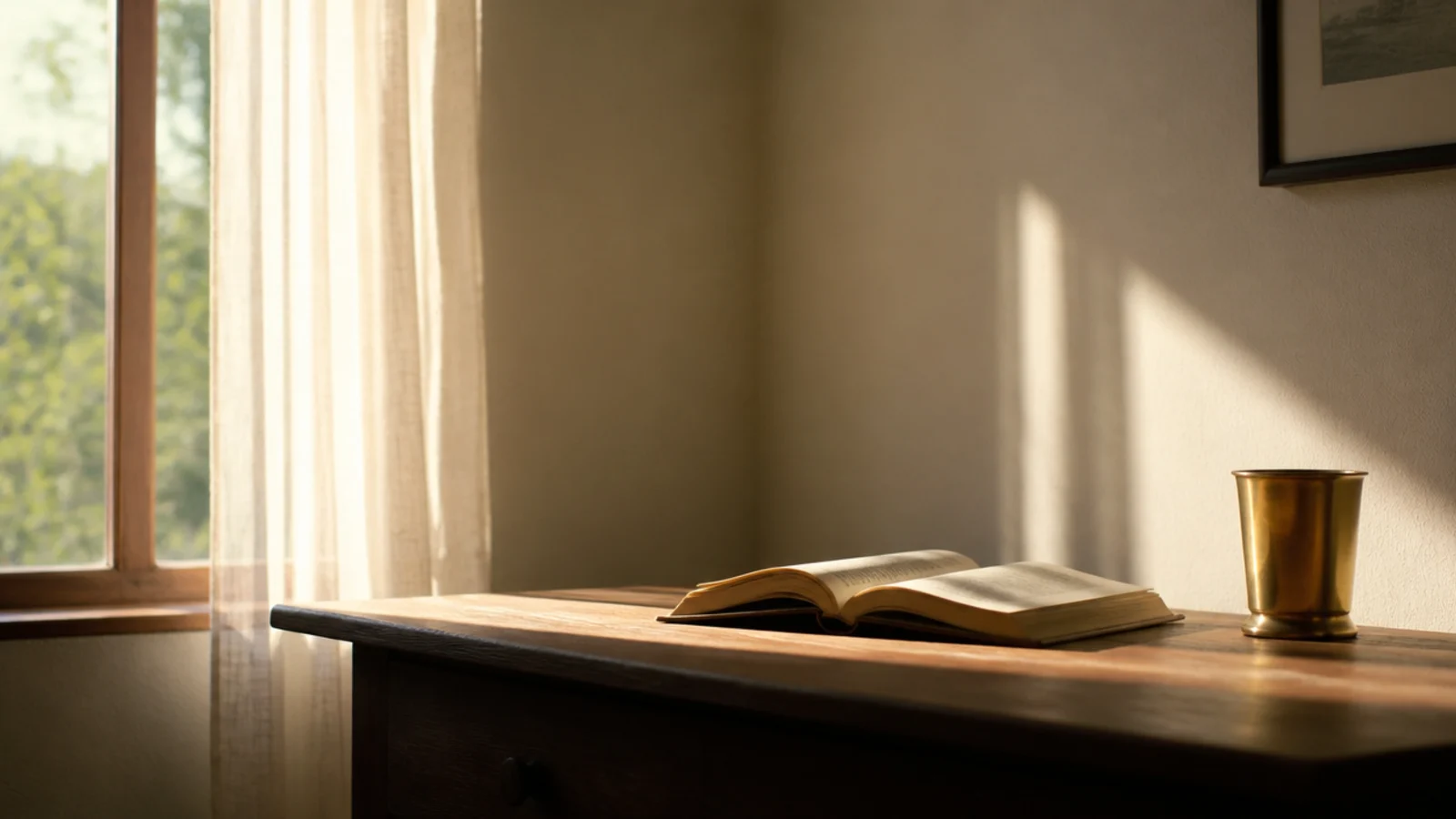
Solid wood desks are rarely adjustable, so the chair does the work. Sit down, drop your shoulders and let your forearms fall level — that height is your target, usually 29 inches. If the desk sits higher than that, raise the chair and add a footrest rather than living with lifted shoulders for the next three years of exams.
2. Turn the desk side-on to the window
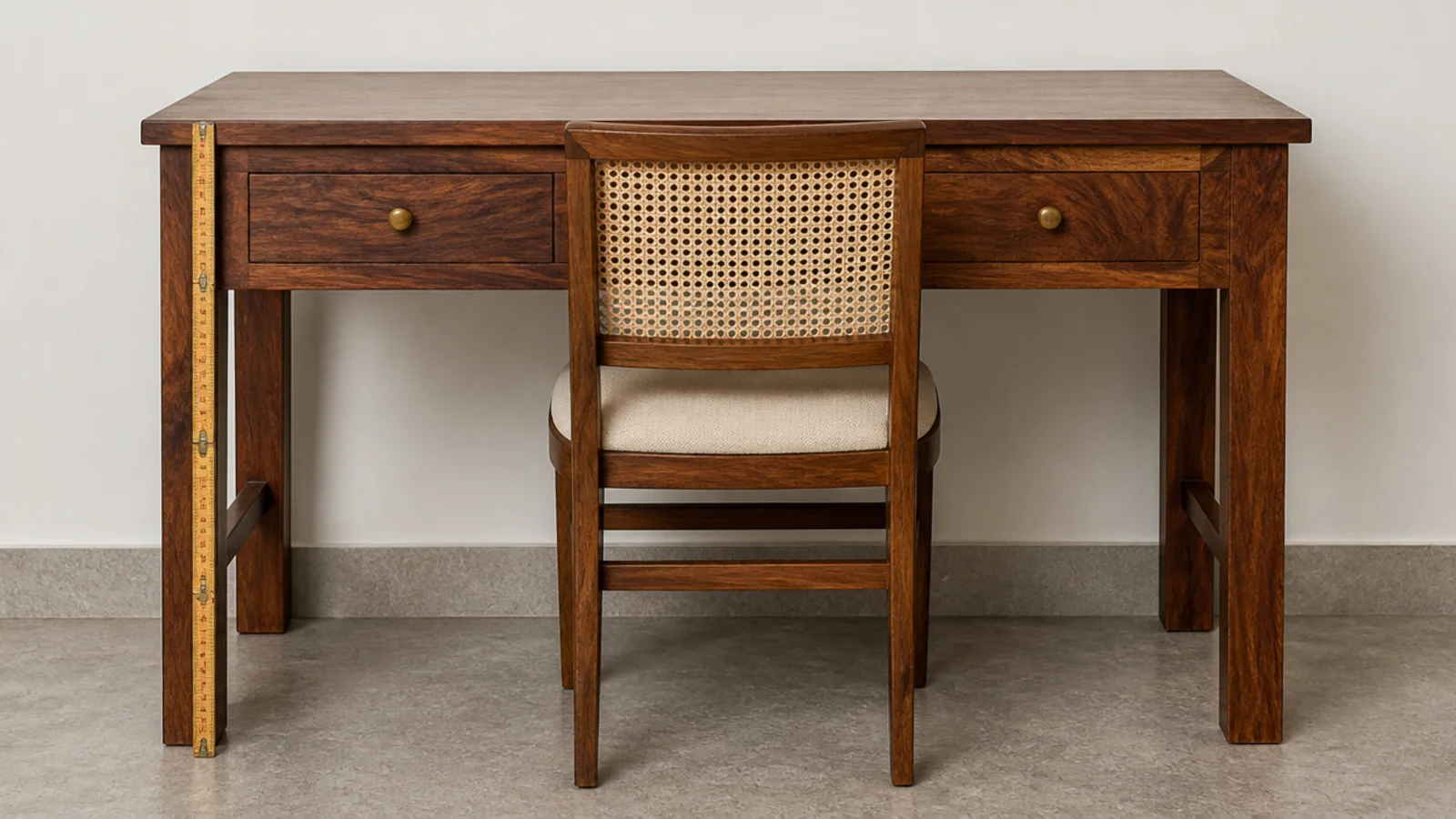
This one costs nothing and changes everything. Light arriving from the side lands across the page instead of into your eyes, and the screen stays free of the bright rectangle that a facing window reflects. It also keeps the desk out of the hardest afternoon sun, which matters for both paper and laptop.
3. Choose a solid sheesham or teak top
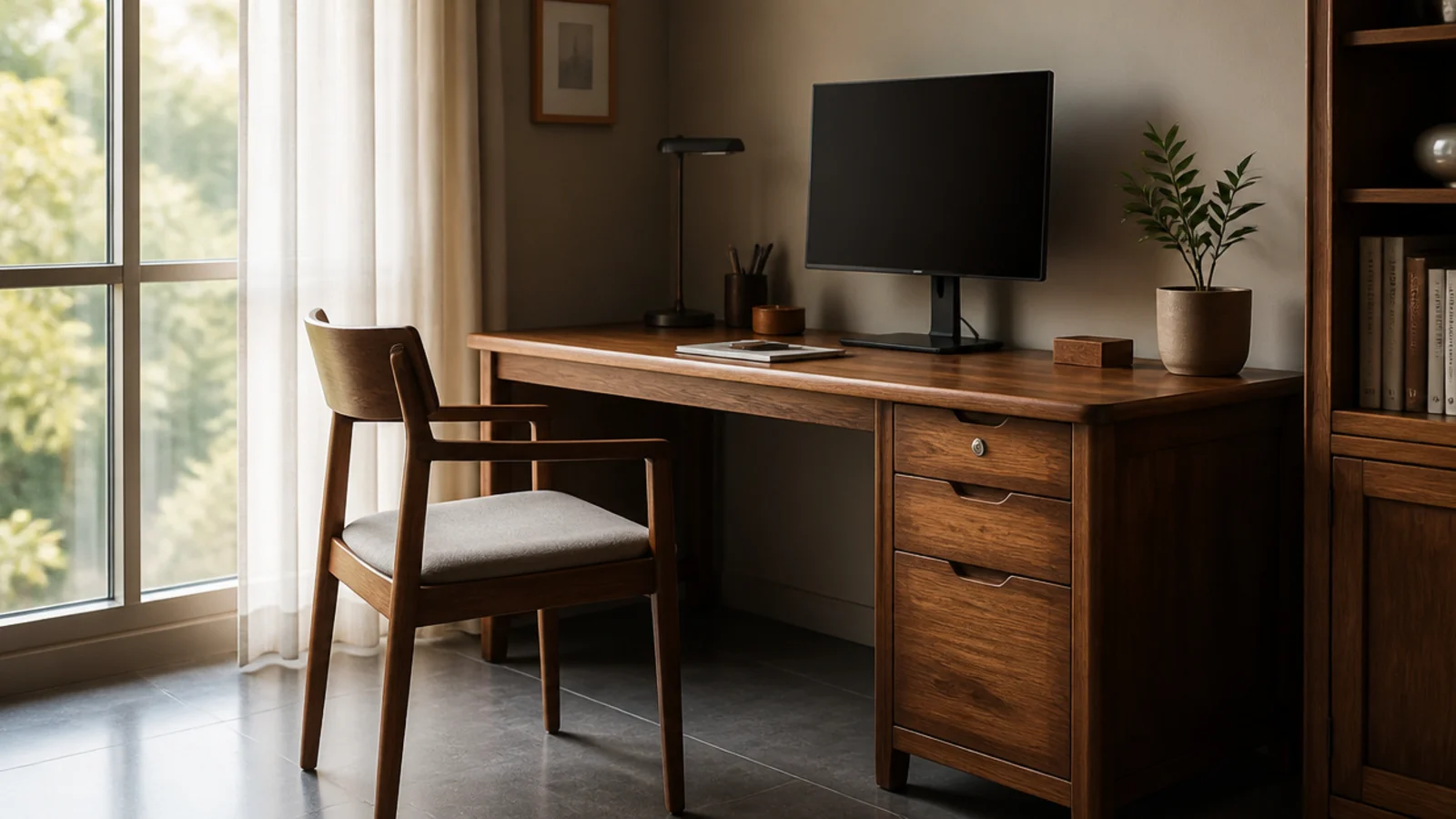
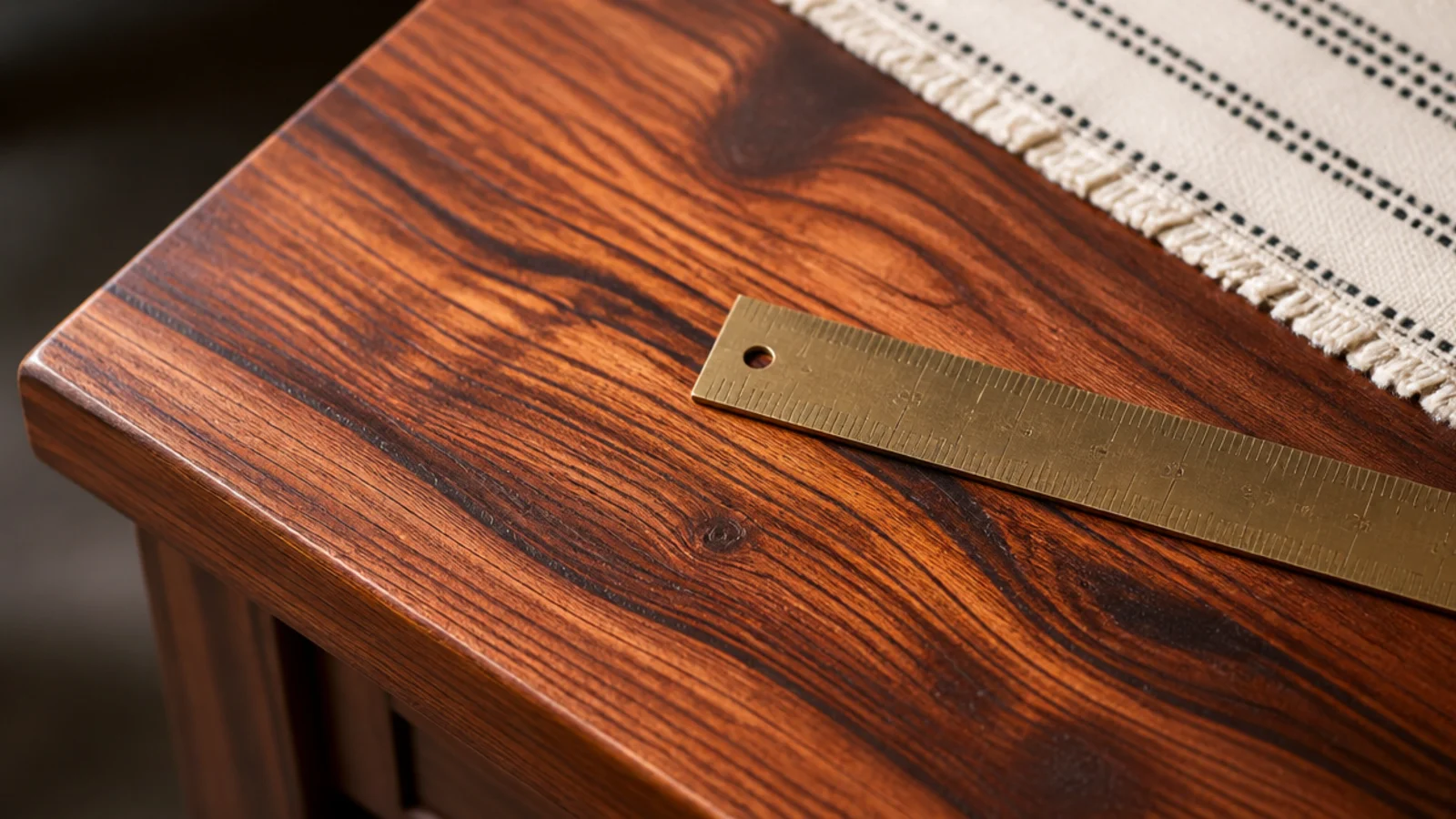
An inch of solid wood costs more up front and behaves for decades. Board tops swell along the edges in humidity, laminate lifts at the corners, and neither can be repaired. Oil a solid top once a year with a hardwax or a plain furniture oil and it takes mug rings and pen pressure without complaint.
4. Repeat brass exactly three times
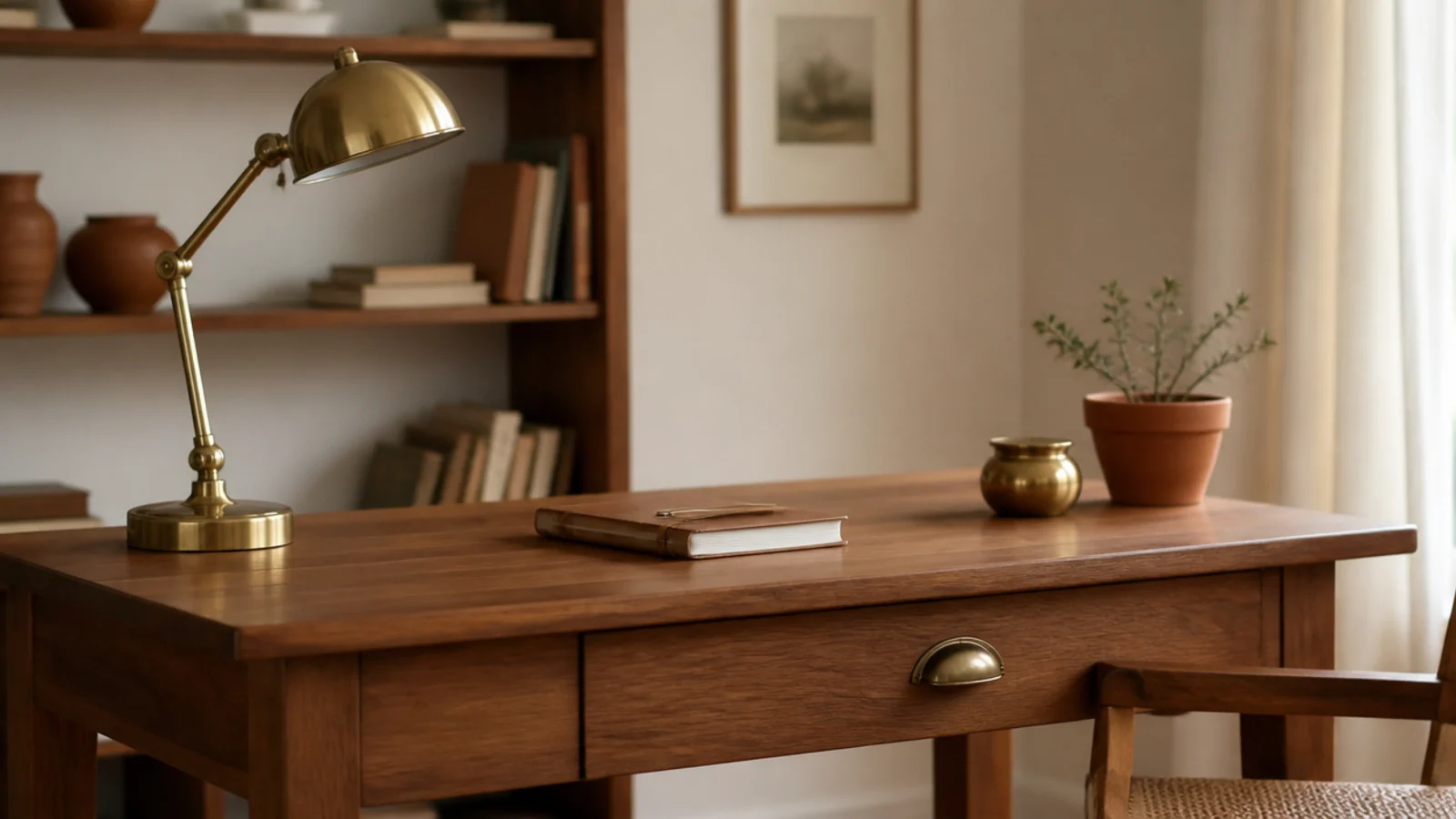
Brass is the metal that carries this look, and the trick is restraint. The lamp, one drawer pull and a small pot is a scheme. Six brass objects on one desk is a display cabinet. Let everything else be wood, terracotta and undyed cotton so the three points of metal actually register.
5. Put a jaali panel behind the desk
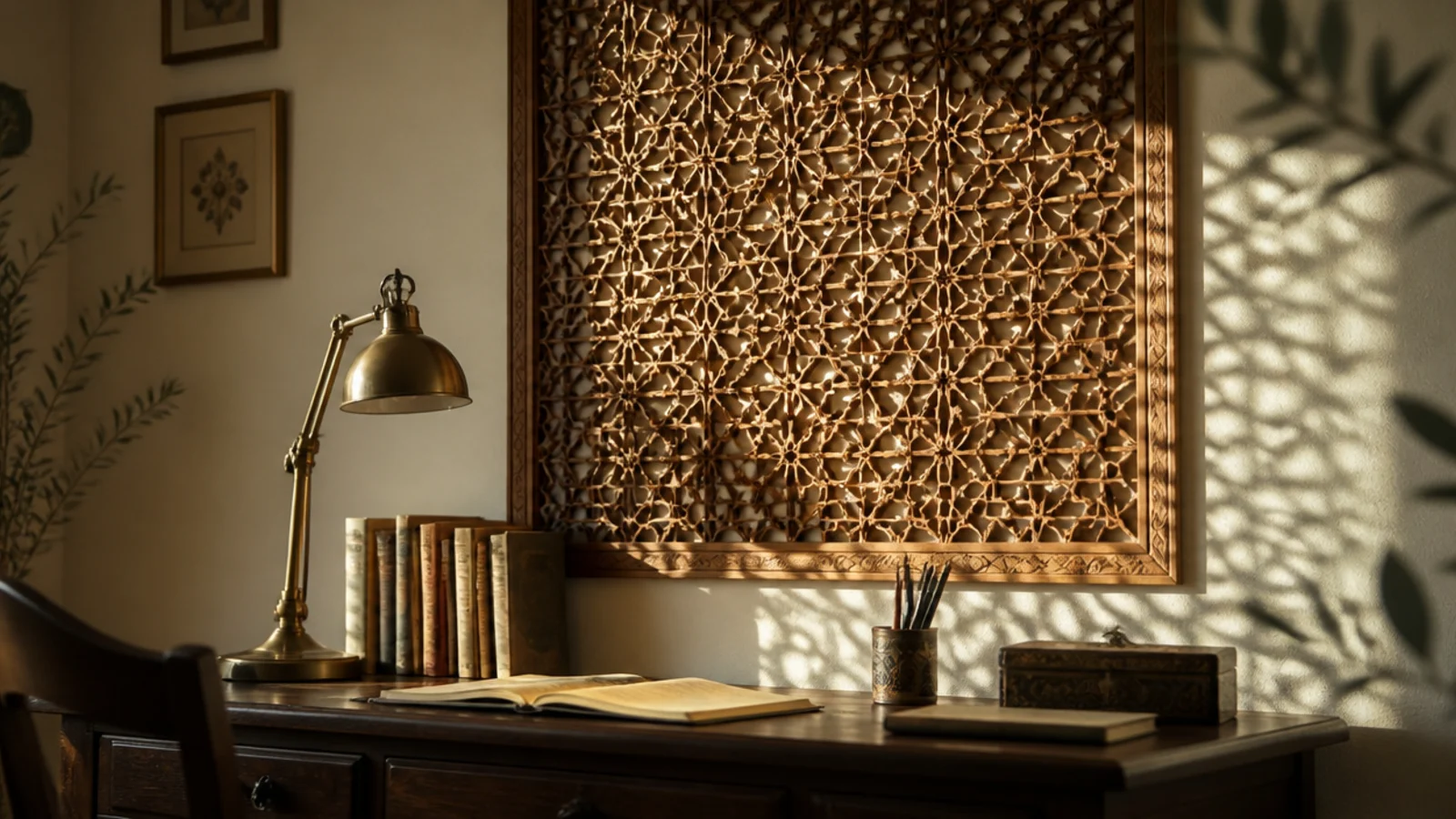
A carved timber or MDF lattice fixed to the wall behind the desk throws a fine shadow pattern that changes across the day, and it adds interest without adding colour. Keep it shallow, under an inch proud, so the desk still sits flush, and keep it clear of the patch directly behind a monitor.
6. Use cane webbing on the drawer fronts
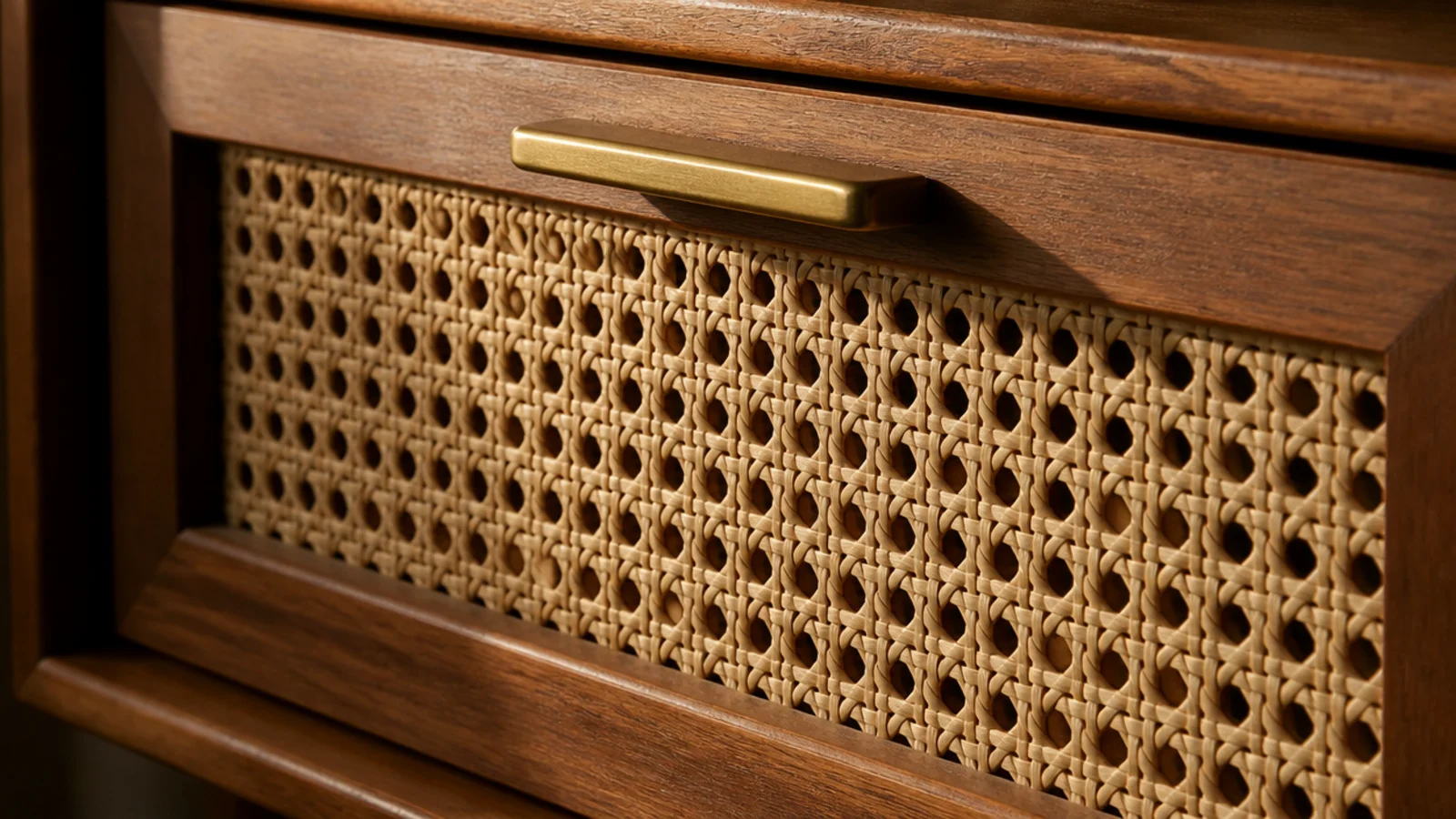
Cane brings texture into a room without introducing a pattern you will tire of, and it breathes, which matters for a drawer holding paper in a humid month. A pre-woven roll is inexpensive and can be set into a plain drawer front in an afternoon with beading and a staple gun.
7. Make the pinboard from block-printed cotton
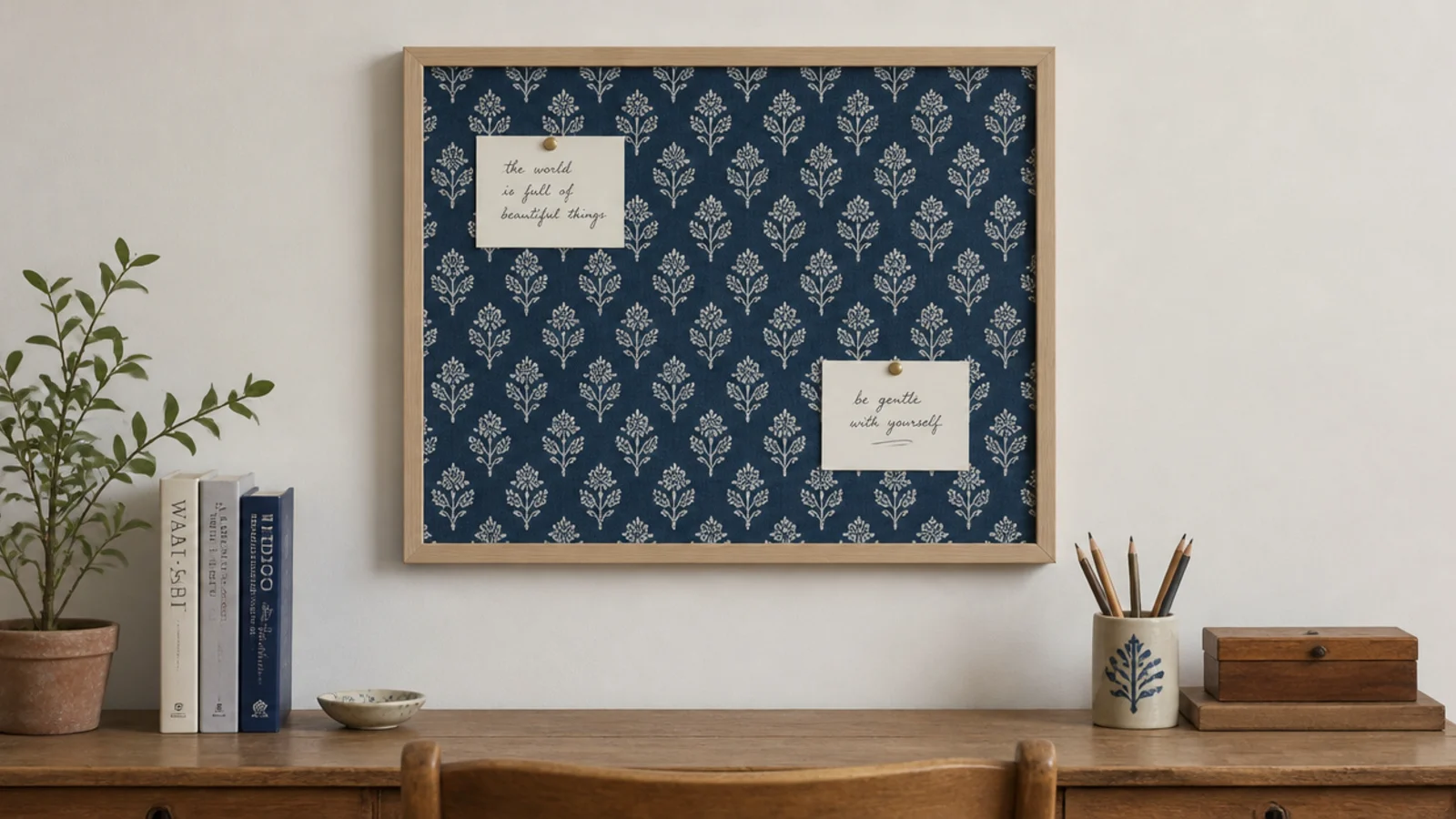
Stretch block-printed cotton over a cork tile or a plain board and frame it in timber. It takes pins as well as bare cork, it photographs far better, and it softens a hard plastered wall. Size the board to the desk width and hang the bottom edge 10 to 12 inches above the surface.
8. Pick a brass lamp with a 600 lumen bulb
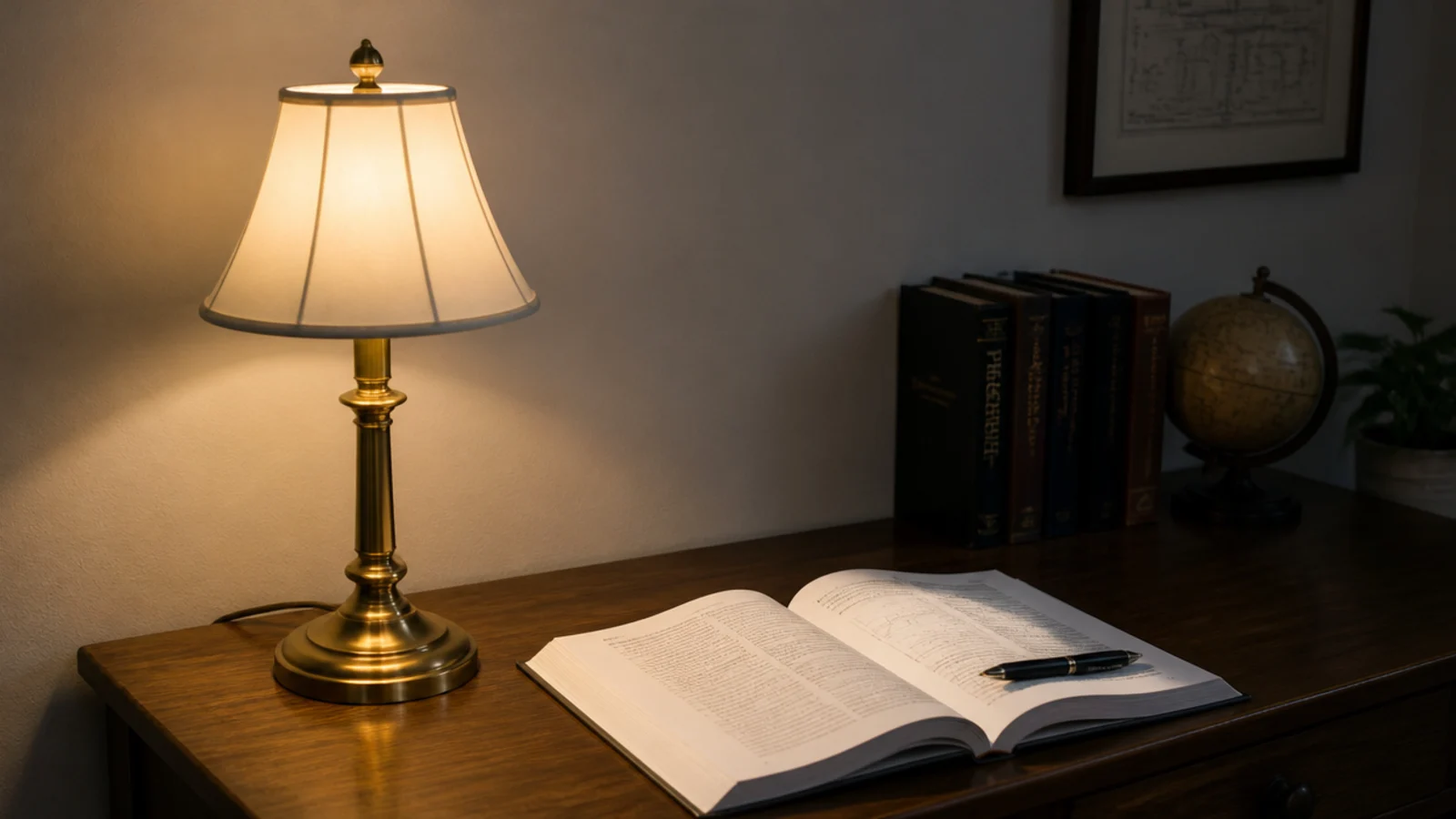
A brass base with a cotton or paper shade suits the material palette and diffuses light more kindly than a bare metal cone. Put 600 lumens in it at 4000K, set the shade 15 to 18 inches above the desk, and place it 12 to 16 inches to the side of the page.
9. Keep pens in terracotta, not plastic
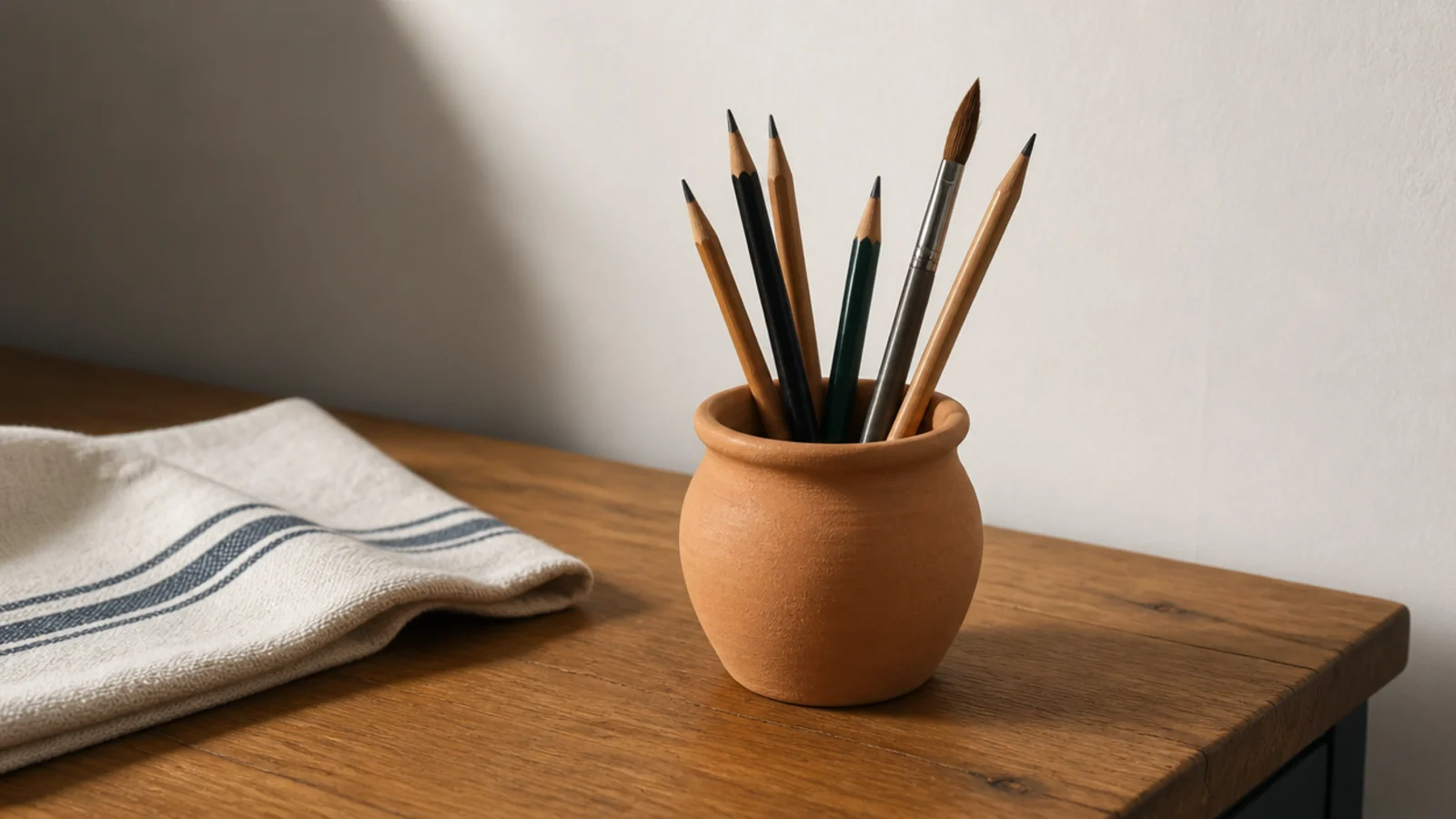
An unglazed terracotta or stoneware pot under 4 inches across holds the pens you actually use and ages into the desk rather than yellowing on it. Keep to one pot. A row of three containers is storage pretending to be styling, and it eats surface you need for an open book.
10. Add a low chowki for floor-level study
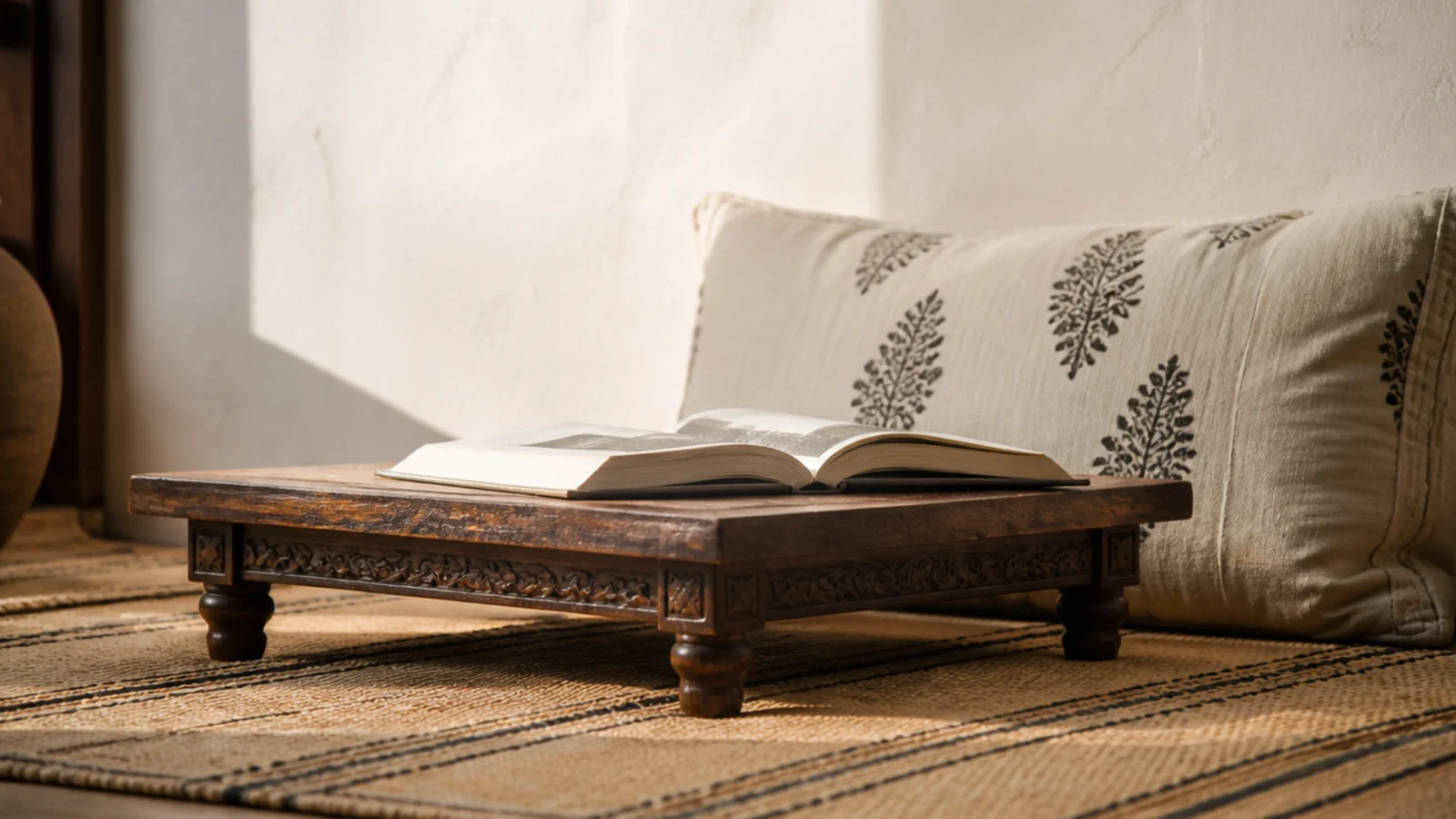
A low carved table 12 to 14 inches high with a firm cushion works well for an hour or two of reading, and many homes keep one alongside a proper desk. Put a backrest against the wall behind it — without something to lean into, the lower back gives up long before the concentration does.
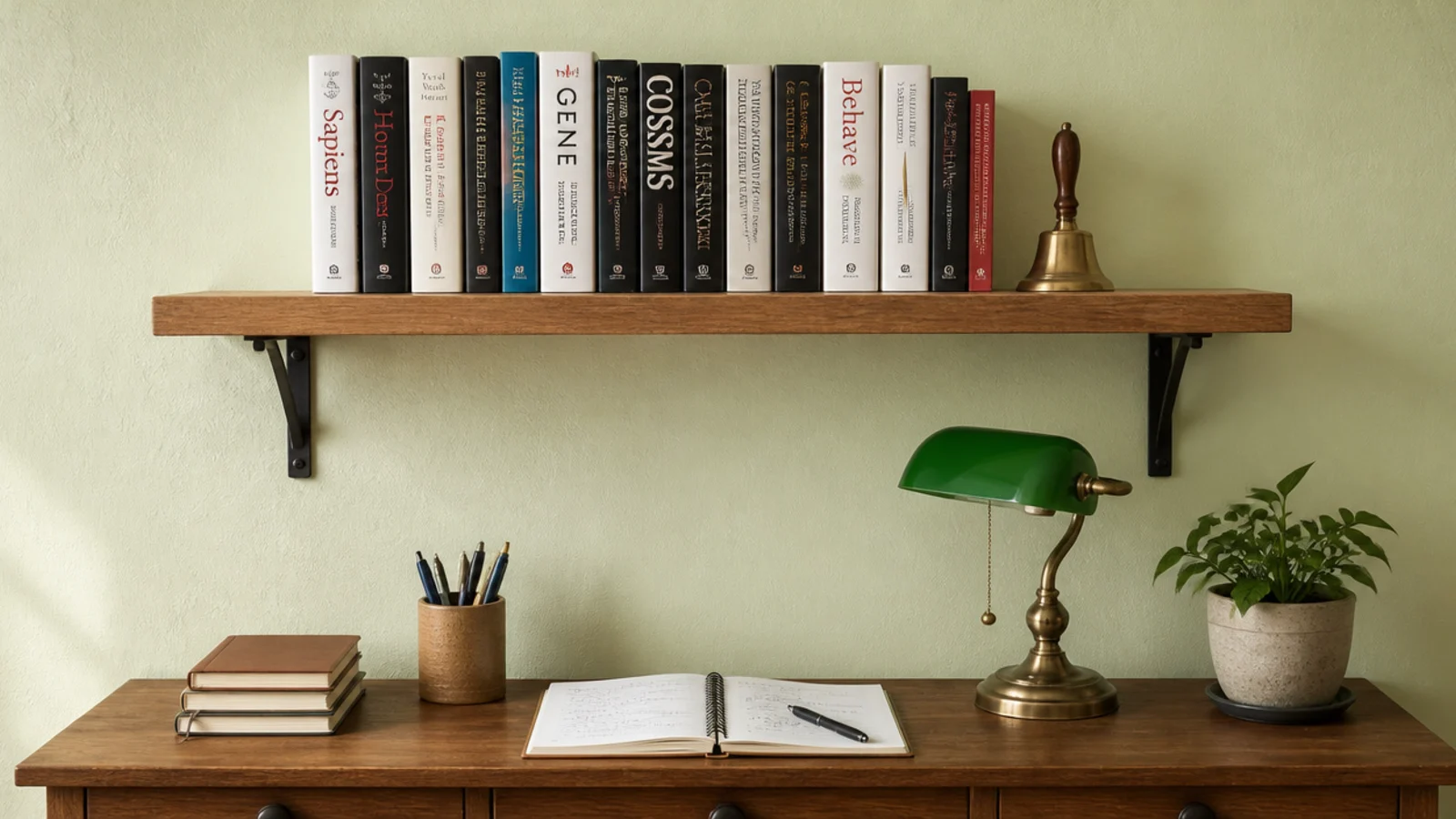
11. Hang the book shelf at twenty inches
Twenty inches of clear wall between the desk and the underside of the shelf clears a monitor on a riser and keeps your head safe when you lean forward. Keep the shelf 8 to 10 inches deep and fix iron brackets into solid masonry with proper plugs — textbooks run 20 to 25 pounds per foot.
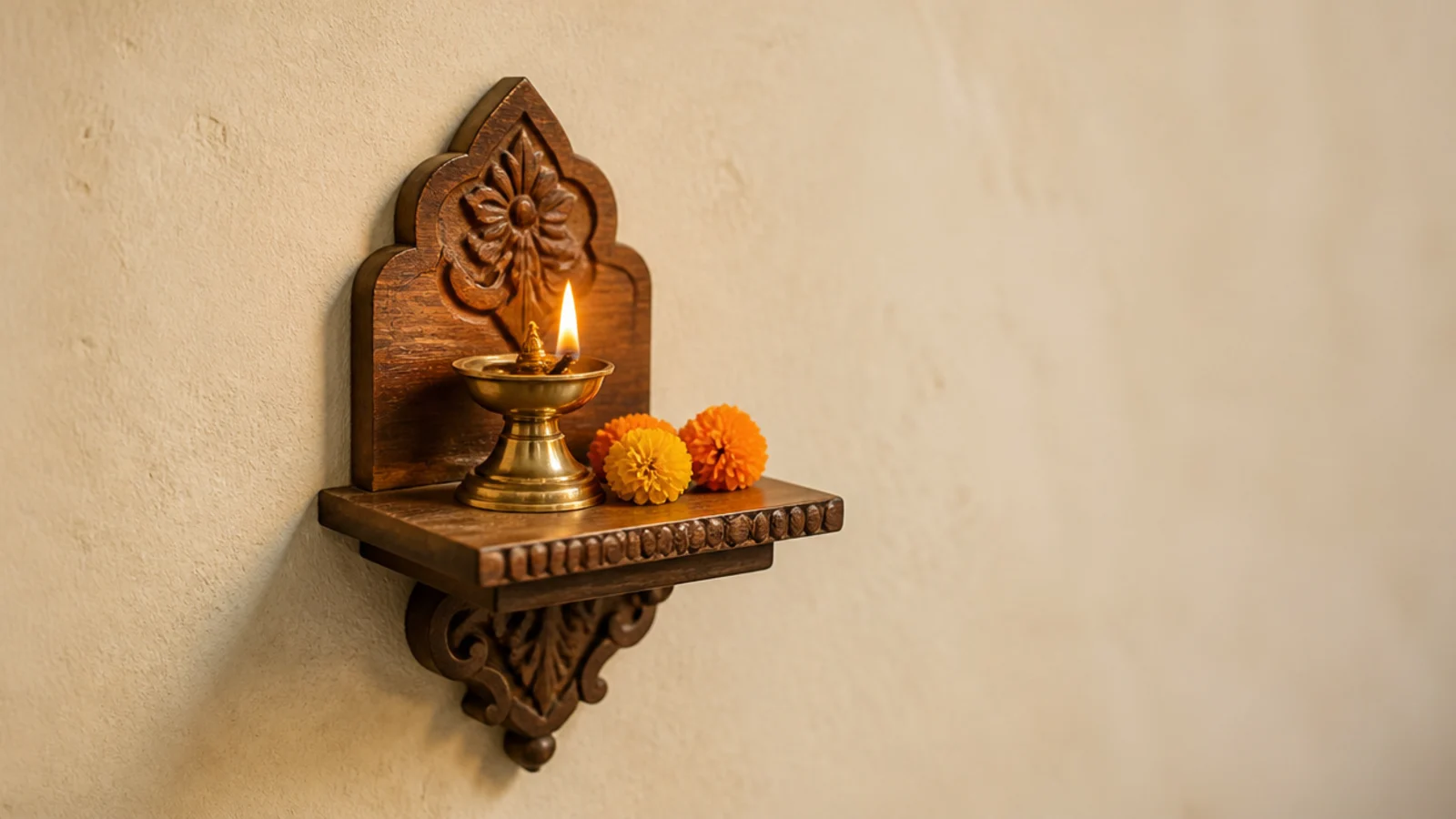
12. Keep the mandir shelf out of the work zone
If a small shrine shelf shares the room, give it its own wall rather than the one above the desk. It keeps the quiet corner quiet, and it keeps loose paper, cables and a running laptop well away from an oil lamp or an incense holder — which is the practical reason as much as the respectful one.
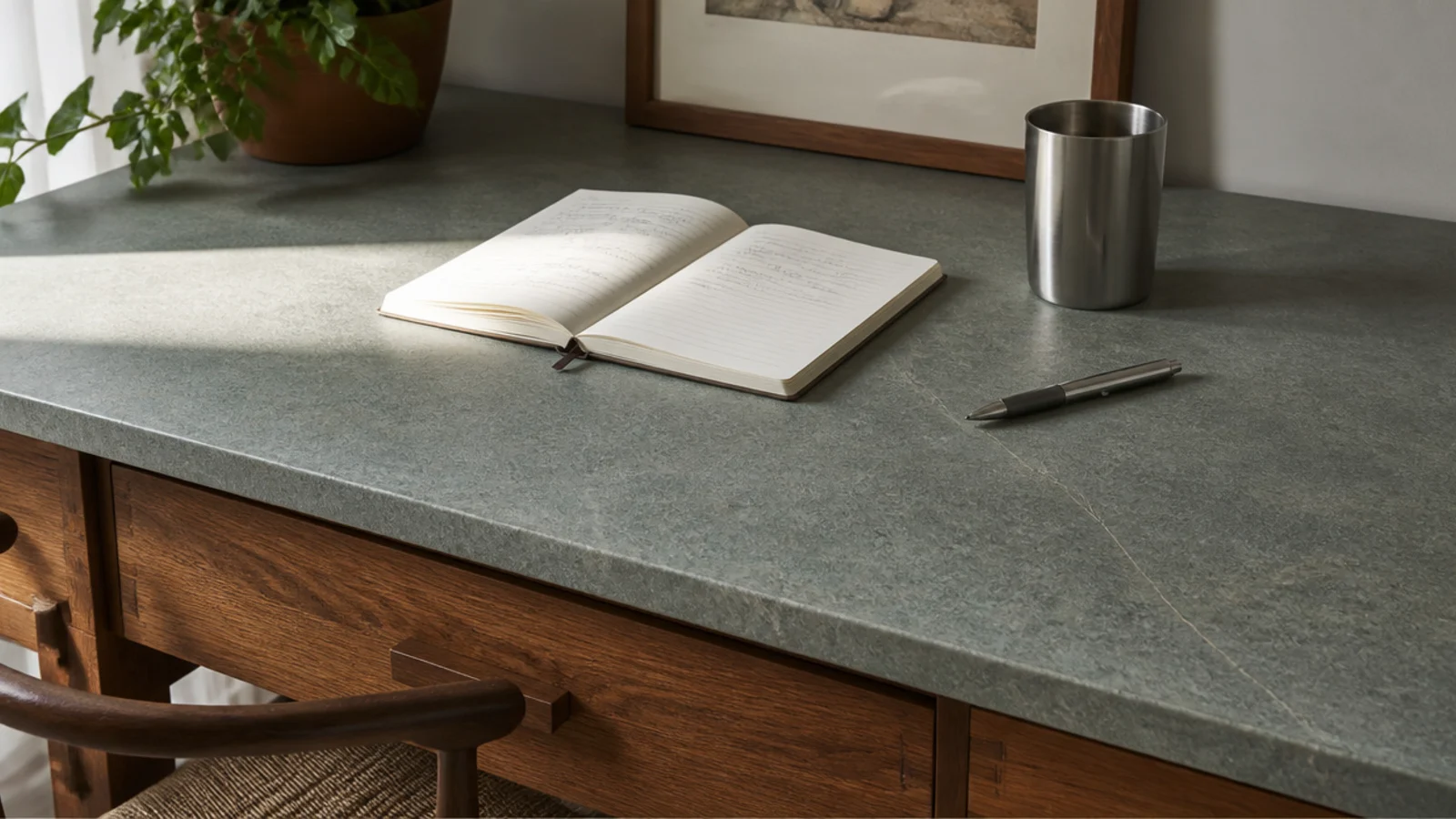
13. Use a stone top for the hot months
Kota, granite or marble stays cool to the wrist through a hot afternoon, never rings from a glass and cleans with a damp cloth. A honed slab on a timber base is a common combination. Seal a porous stone once a year or water marks become permanent.
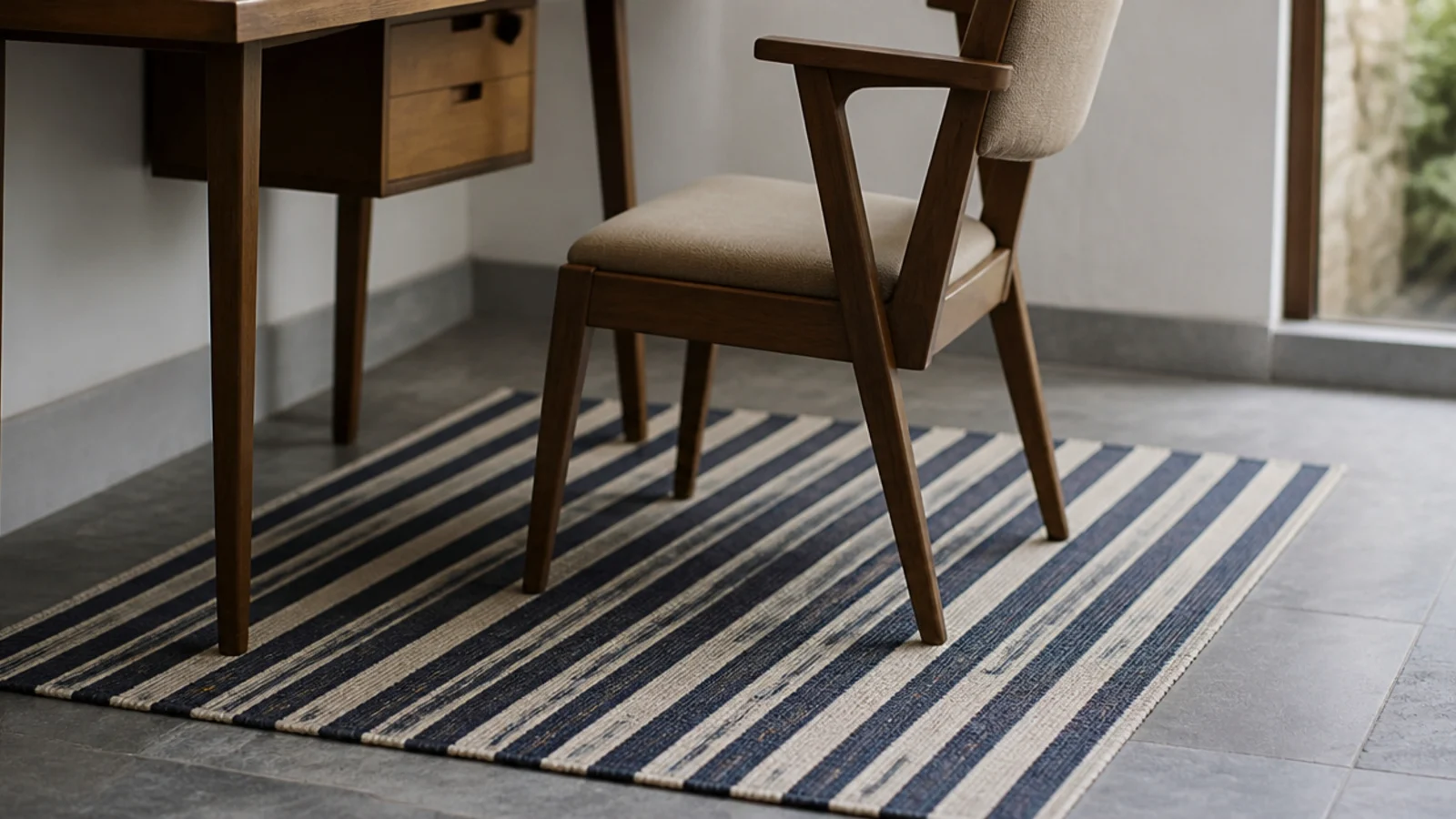
14. Lay a handloom durrie under the chair
A flat cotton durrie roughly 2 by 3 feet defines the study corner and comes up for a wash, which a thick pile rug in a dusty month will not. Keep the weave flat so a chair still slides, and let the durrie stop short of the doorway so the room does not read as chopped up.
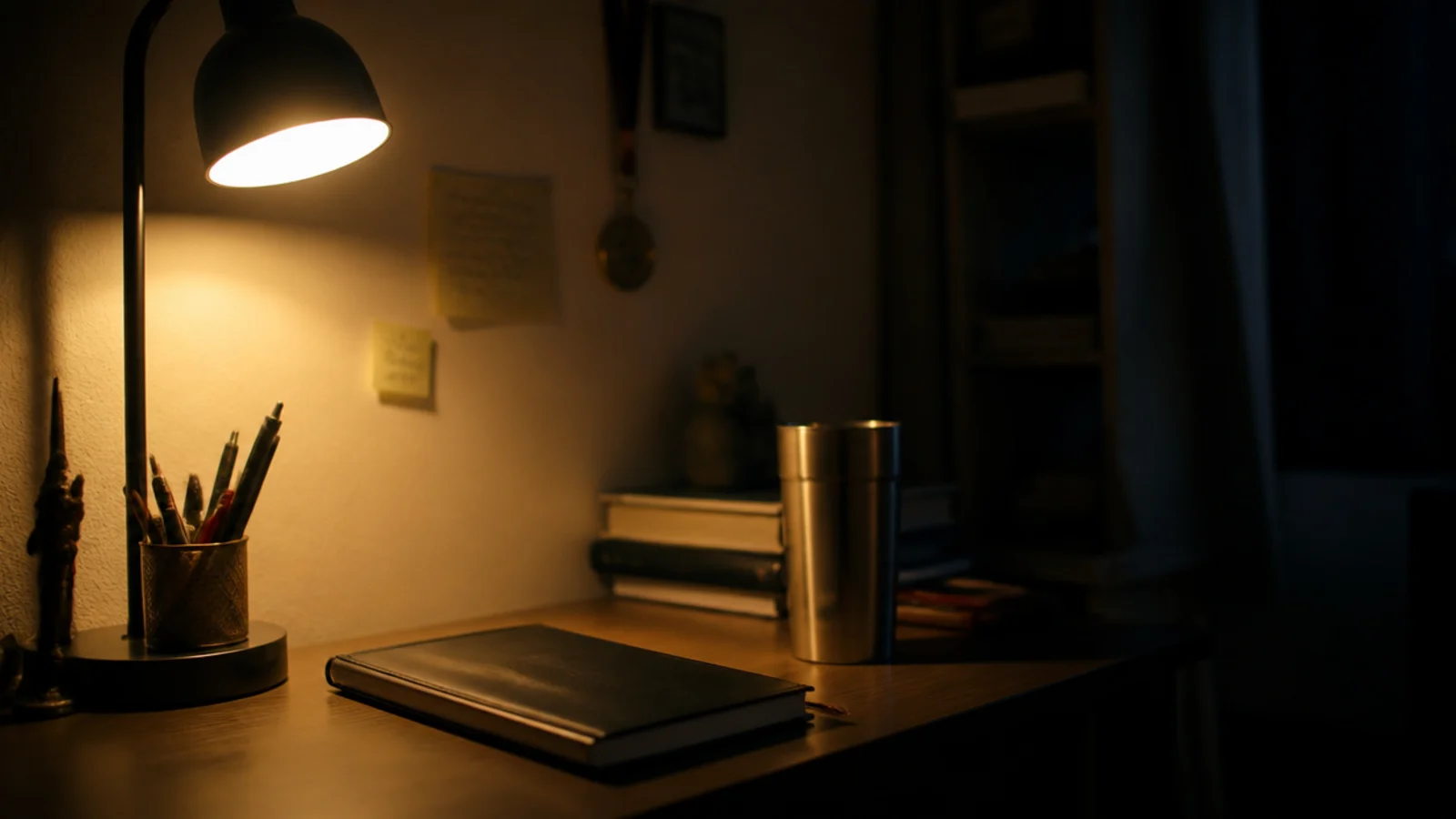
15. Drop to 2700K after nine at night
Late revision is normal, and neutral white at midnight makes it harder to stop. A lamp with switchable temperature costs $25 to $45 and lets the same fitting run 4000K through the afternoon and 2700K after nine, when warm light tells the room the day is closing.
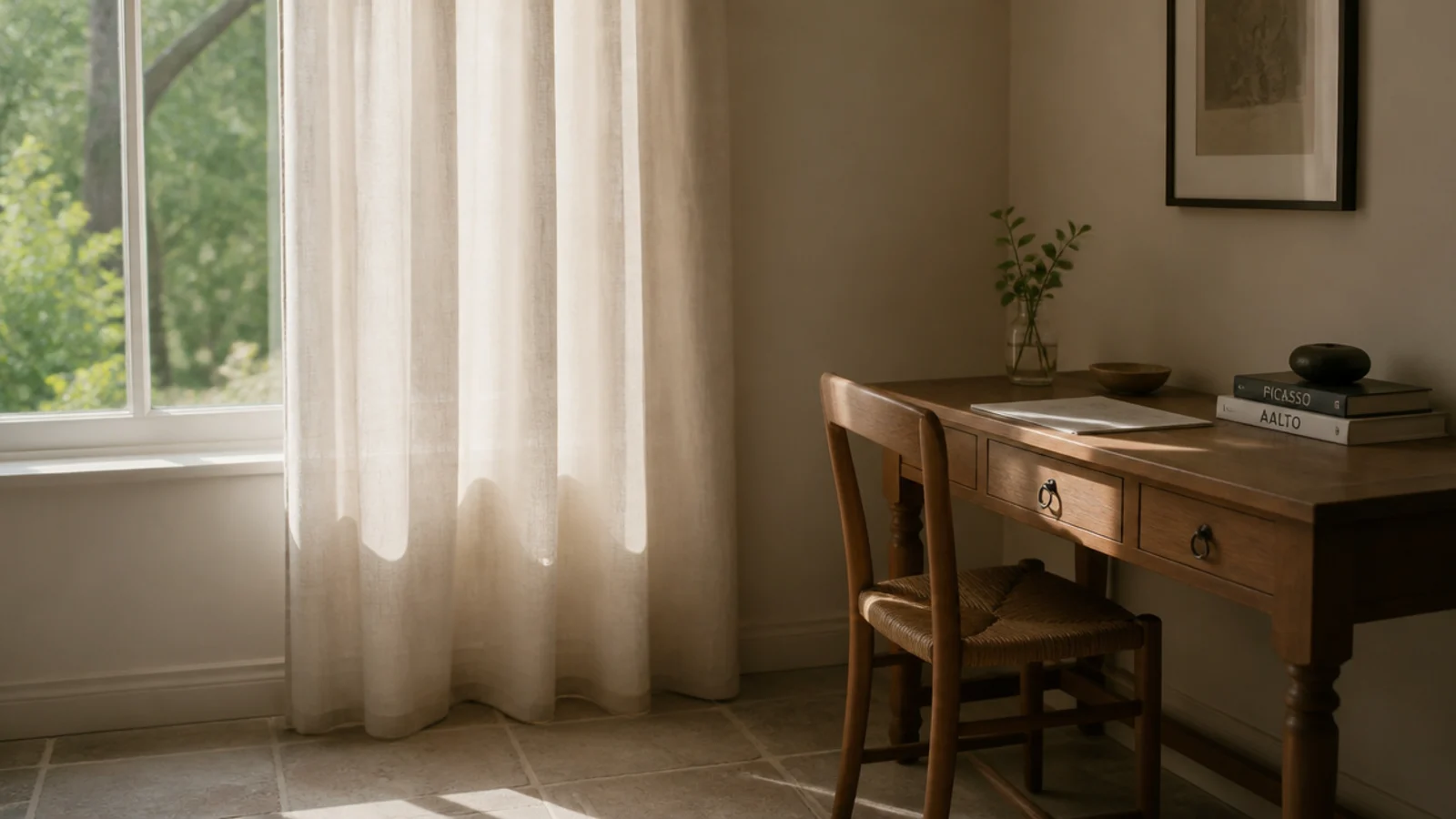
16. Hang cotton curtains rather than blackout
An unlined cotton or voile panel takes the hard edge off midday sun without darkening the desk into needing a lamp at noon. Blackout fabric turns a bright room into a cave and then you are lighting it artificially all day. Two thin layers beat one heavy one.
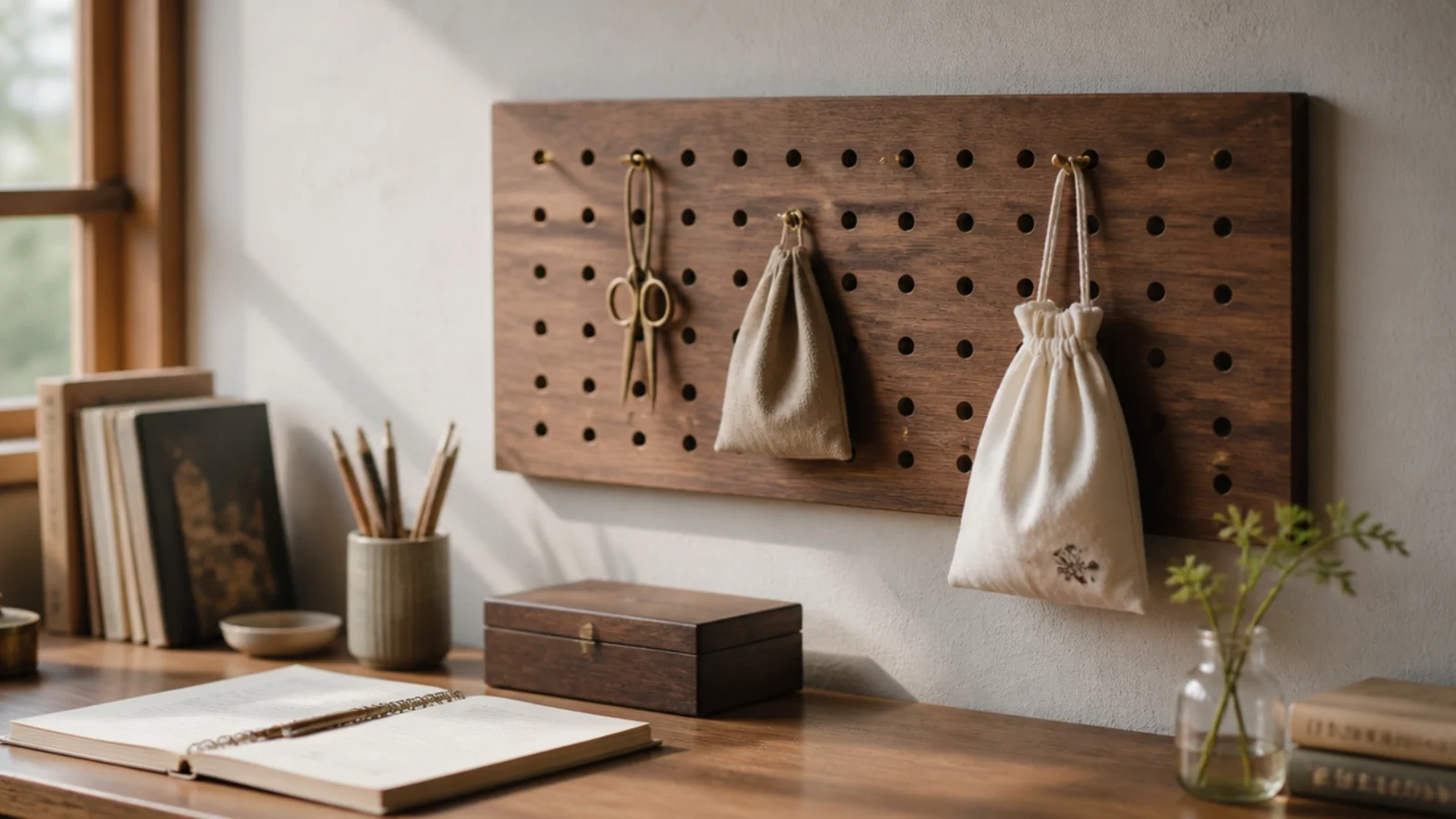
17. Fit a wooden pegboard with brass hooks
A timber pegboard with brass hooks holds scissors, pouches and headphones in a way that matches the desk instead of fighting it. Mount it on half inch battens so the hooks can seat, and leave 12 to 16 inches of clear wall above the desk before the bottom edge.
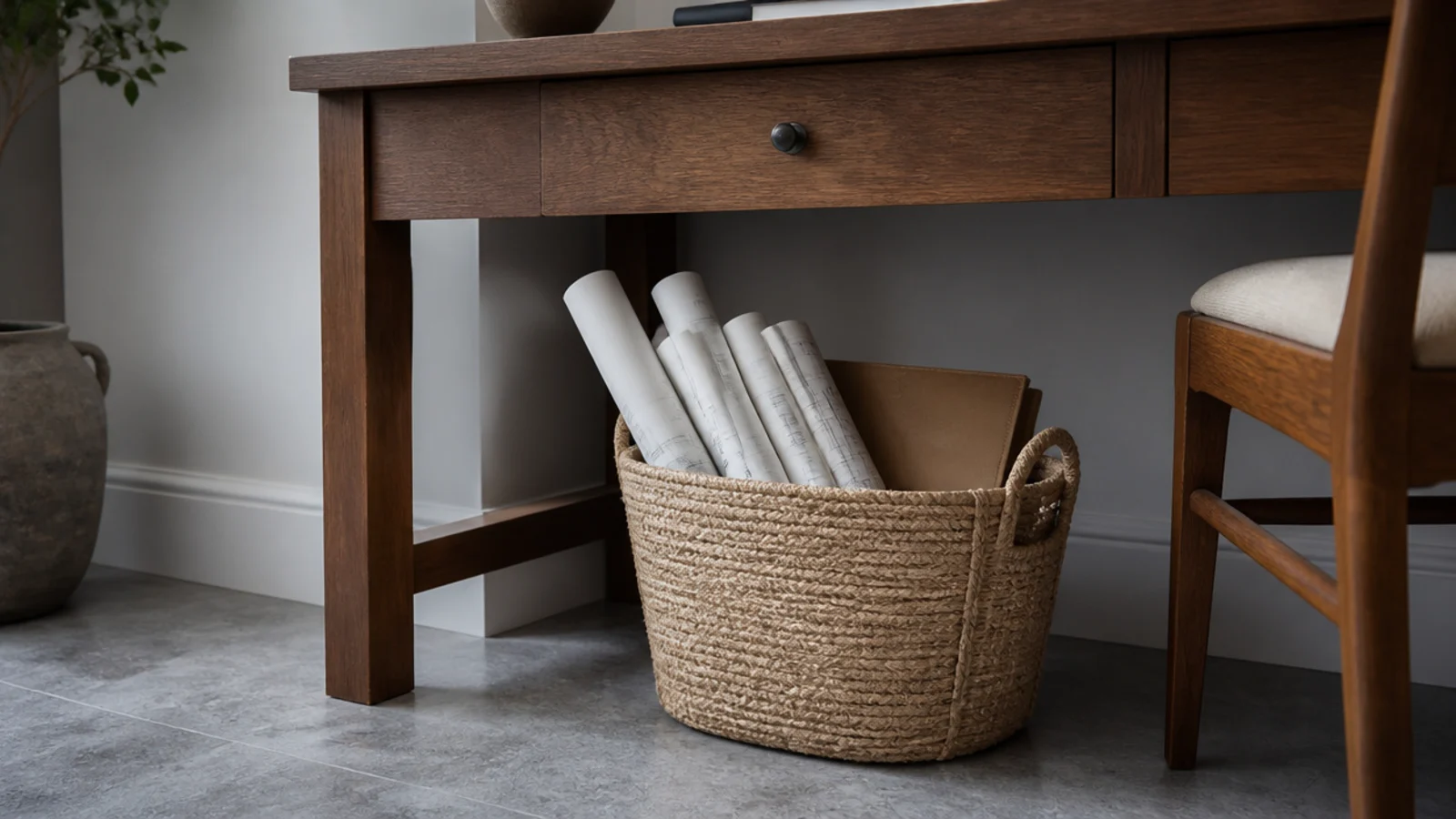
18. Slide a jute basket under the desk
A woven basket under the desk takes rolled papers, folders and the things that would otherwise stack on the floor. Keep it against the back or the side rather than under your knees, and keep it off any run of cable so nothing gets dragged when it is pulled out.
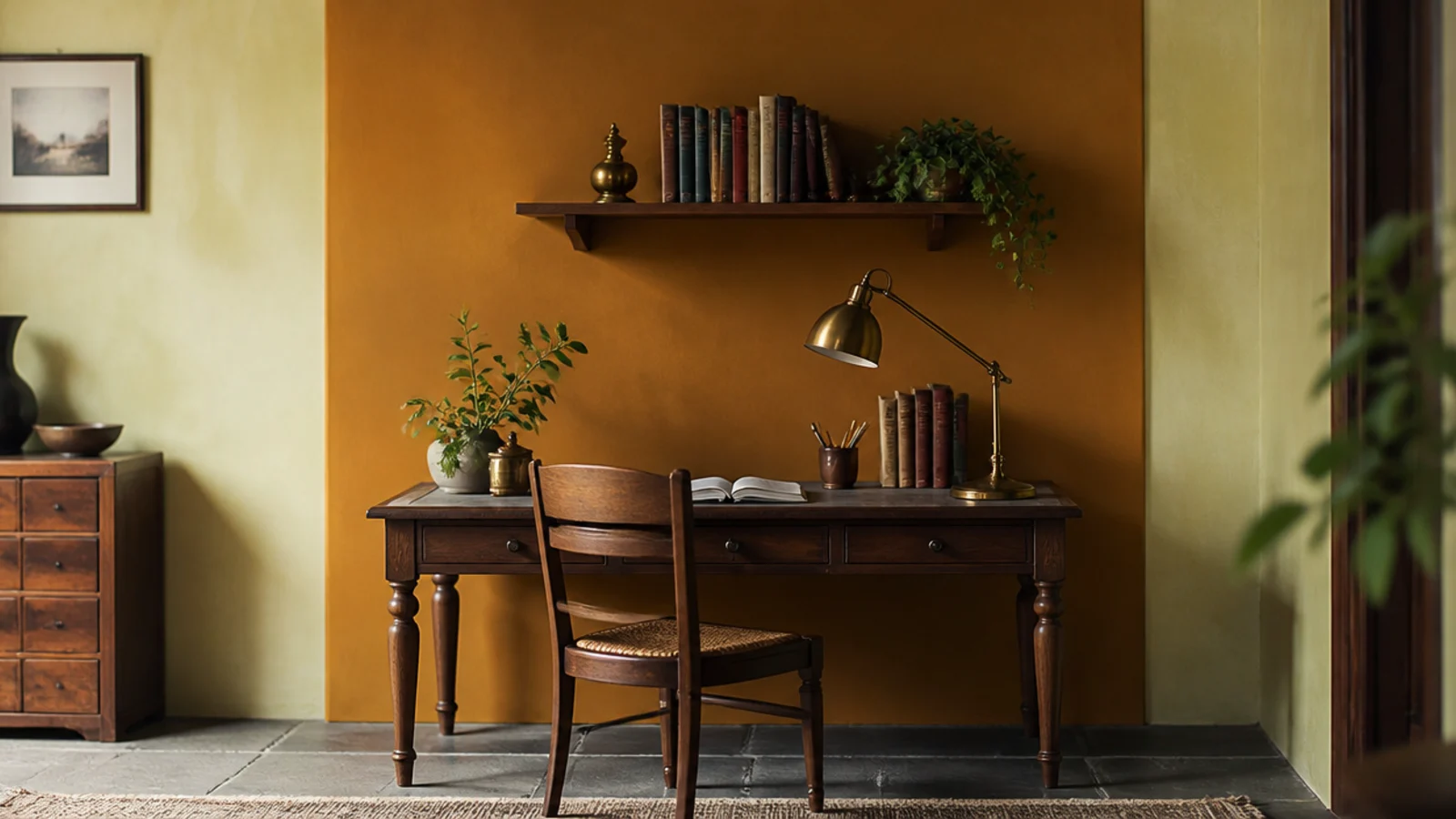
19. Paint an ochre or indigo panel behind the desk
A deep panel behind the desk frames the corner and gives the screen a calmer background than bright white. Take the colour to the shelf line and stop in a clean horizontal cut. Matt finish only — anything with sheen bounces the lamp straight back at you when you sit down.
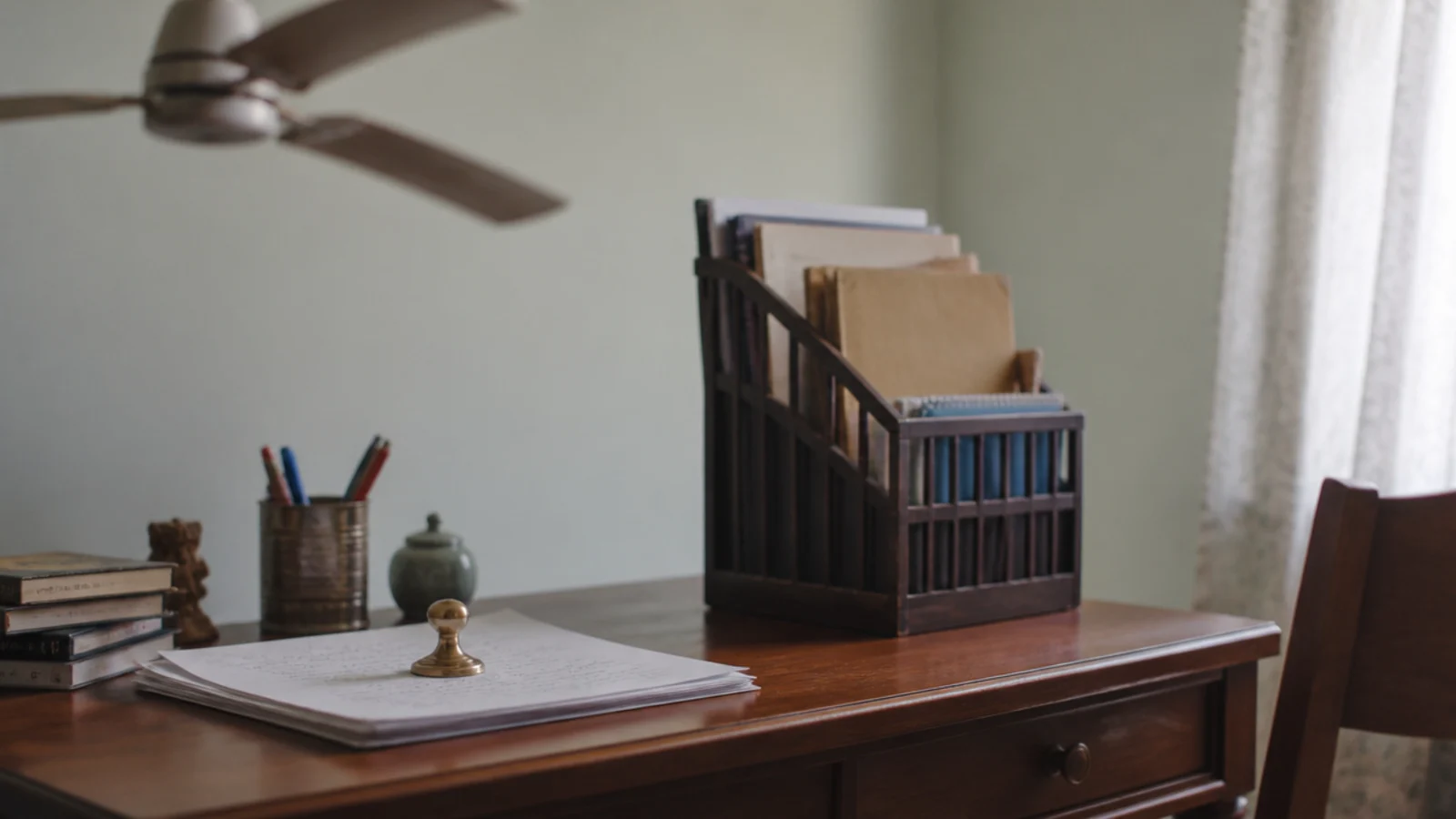
20. Plan for the ceiling fan
A fan running above a desk lifts loose paper and flickers shadows through a pendant light. Keep sheets in a rack or under a small weight, use a wall or table lamp rather than a hanging one over the desk, and route every cable along the wall or under the desk rather than looping it upward where a blade could catch it.
For the wall above this desk in sequence, the study desk wall decor steps cover heights and fixings in order. Corner shelf ideas suit the awkward return wall beside most desks, and the bedroom hanging lights guide covers ceiling fixtures that work alongside a fan.
Mistakes to Skip
- Buying a veneered board desk because it looks like teak. It swells at the edges within a few humid months and there is no way to repair a lifted veneer.
- Facing the desk out of the window for the view. The glare is there every afternoon, and a bright rectangle reflected in a screen ruins any long session.
- Putting six brass objects on one desk. Brass works as a repeated accent and stops working the moment it becomes the main material on the surface.
- Running a pendant light directly over a desk under a ceiling fan. The moving blade chops the beam and throws a flicker across the page that is genuinely tiring.
Frequently asked questions
What wood suits a study desk in a warm, humid climate?
Solid sheesham, teak or mango wood, all of which move far less with humidity than particle board or veneered MDF. A one inch solid top will stay flat for decades where a laminated board swells at the edges within a few monsoons. Oil it once a year rather than sealing it under varnish.
Where should a study desk go in relation to the window?
Side-on, so daylight arrives across the page rather than into your eyes or onto the screen. Facing the window means squinting through the brightest hours, and backing onto it puts glare straight across the monitor. Perpendicular also keeps the desk out of the hottest direct afternoon sun.
How bright should the lamp be for late-night revision?
Four hundred and fifty to eight hundred lumens landing on the page. Use a neutral 4000K bulb during the day and drop to 2700K after nine at night. Put the lamp on the side opposite your writing hand so it does not throw a shadow, and keep the bulb out of your direct sightline.
How do I plan a study desk around a ceiling fan?
Keep loose paper weighted or in a rack, position the desk out of the strongest downdraught, and route every cable along the wall or under the desk rather than looping upward. A pendant lamp under a running fan also flickers shadows across the page, so a wall or table lamp works better.
Can a floor-level study setup work for long sessions?
For an hour or two, yes, on a low chowki around 12 to 14 inches high with a firm cushion and a backrest against the wall. Beyond that most people need a chair, because the lower back has nothing to lean into. Many homes keep both and switch depending on the task.
Want more like this? Browse all 15 study desk decor guides — they all use the same measurements and budget tiers.
Pin it for later
Save this to your Study Desk Decor board
Pin it now so it is waiting for you when the tape measure comes out — and so the next person hunting for this idea can find it too.
Save this pinKeep going
More ideas worth saving while you have the tape measure out.